

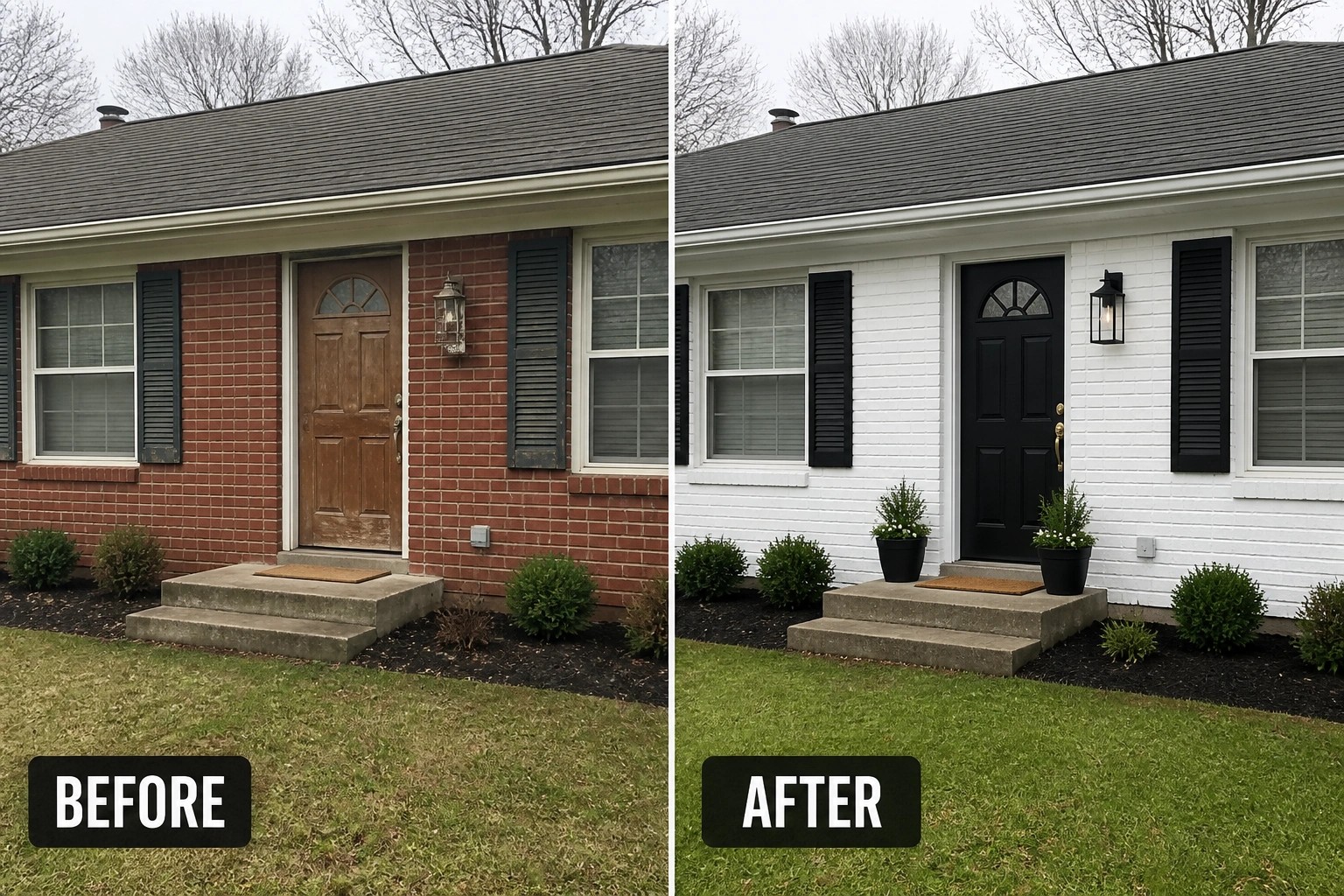
Older suburban homes often carry faded siding and entry details that no longer sit well with the surrounding streets.
A new paint color on the shutters or a rebuilt front step can pull the whole face of the house back into balance without any major construction.
Small fixes add up quickly here.
I tend to notice how clearing an overgrown walkway and adding a simple light fixture near the door makes the house look occupied rather than left behind.
Many of these updates work because they keep the original proportions while addressing the parts that weather and time have worn down.
Paint The Brick Exterior To Refresh An Older Home
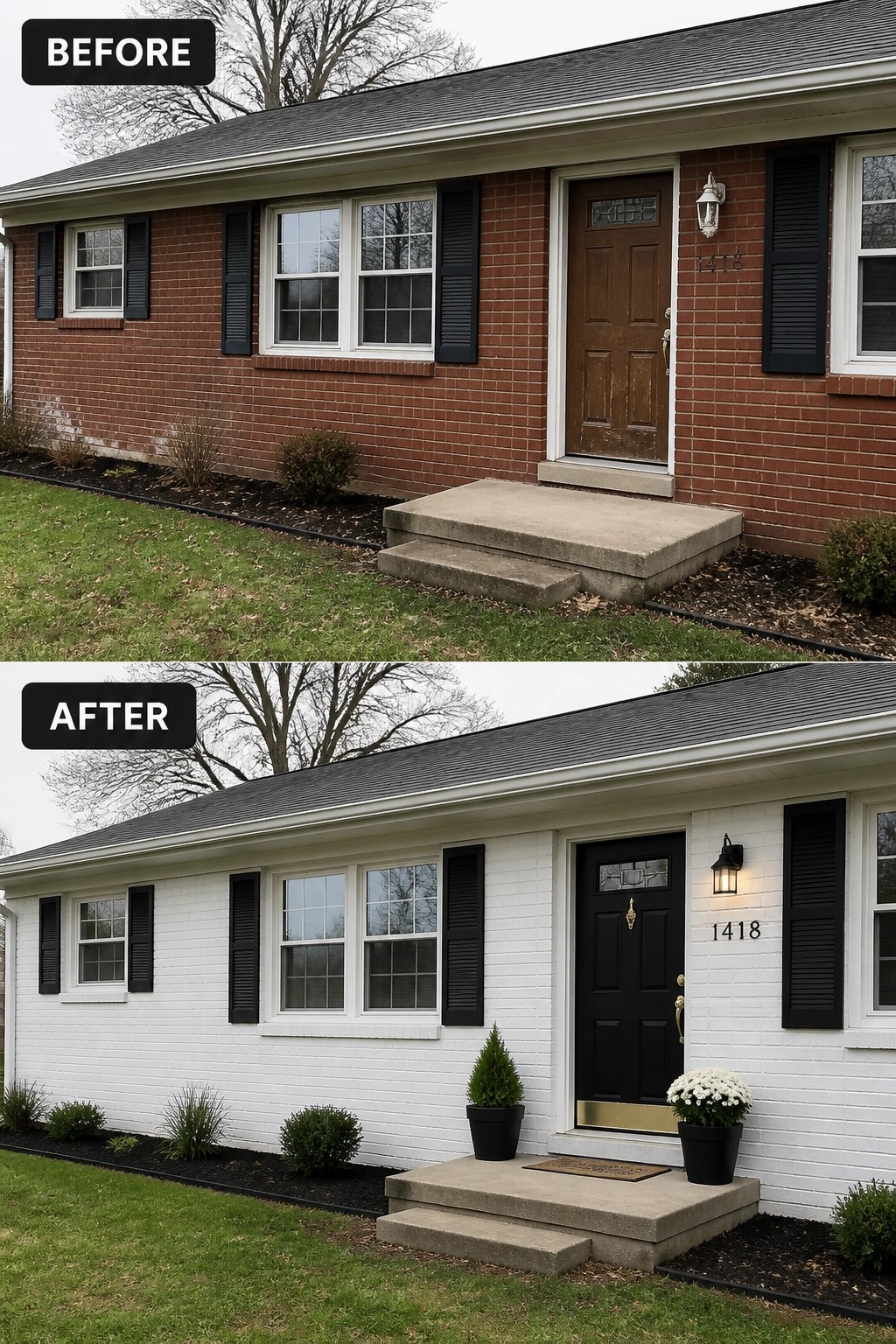
Painting the brick changed the whole feel of this house. The red brick looked dated and heavy, but covering it with white paint lightened the facade and made the black shutters and door stand out. Adding a couple of simple planters by the steps completed the update without any major construction.
This approach works well on many suburban homes from the same era. Choose a light paint color if you want the house to feel brighter, and keep the trim and door in a strong contrast color. Test a small patch first so you can see how the paint sits on the brick texture before committing to the full job.
Update Exterior Siding Color And Add Stone Accents
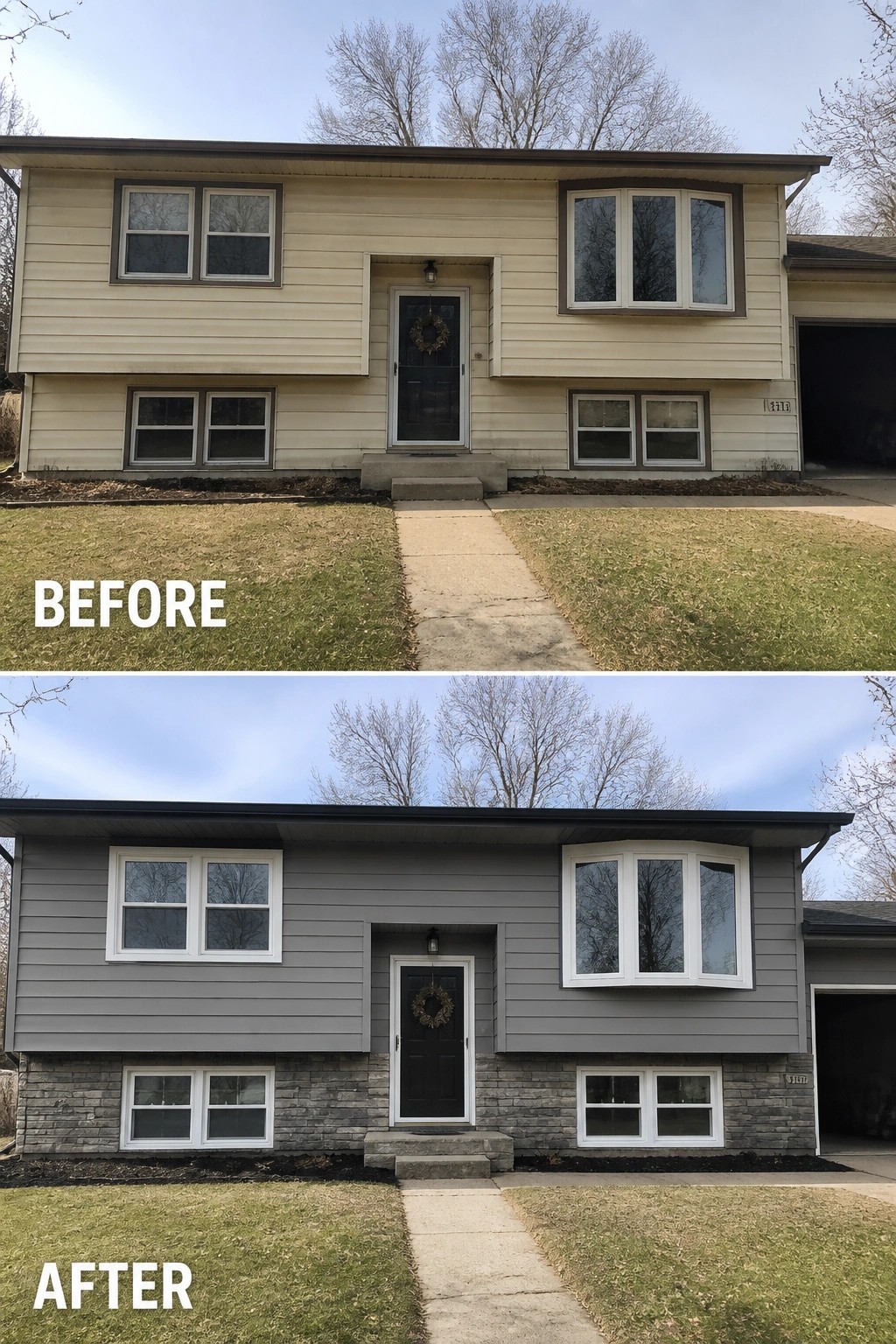
Many older suburban homes end up with flat beige siding that makes the whole front feel tired. Switching the main color to a deeper gray and adding a stone base on the lower level gives the house more weight and definition without any major structural work.
This approach works well on two-story homes where the original siding still has life left in it. Keep the change simple by matching the new trim and window frames to the darker color so everything feels pulled together. The result is a cleaner curb appeal that still fits the neighborhood scale.
Add A Covered Porch To Make The Entry More Welcoming
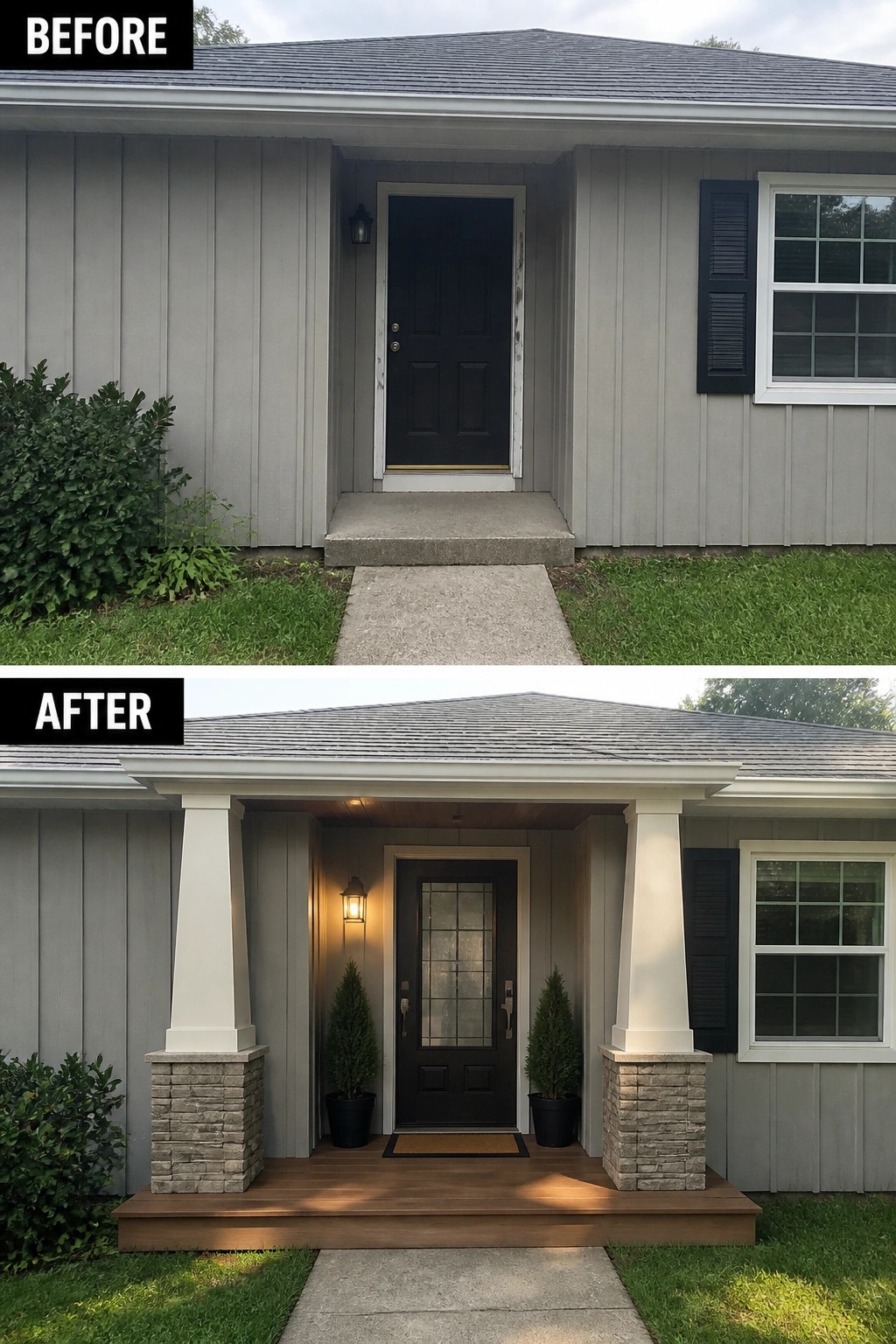
Many older suburban homes have a flat facade with just a basic door and a concrete step. Adding a covered porch gives the entry real structure and makes the whole front feel finished instead of bare.
This idea works best on homes with simple siding where the roofline can be extended without major changes. Keep the scale modest, match the trim color to the house, and use sturdy materials that can handle weather so the porch stays useful year after year.
Update Garage Doors To Match The Rest Of The House
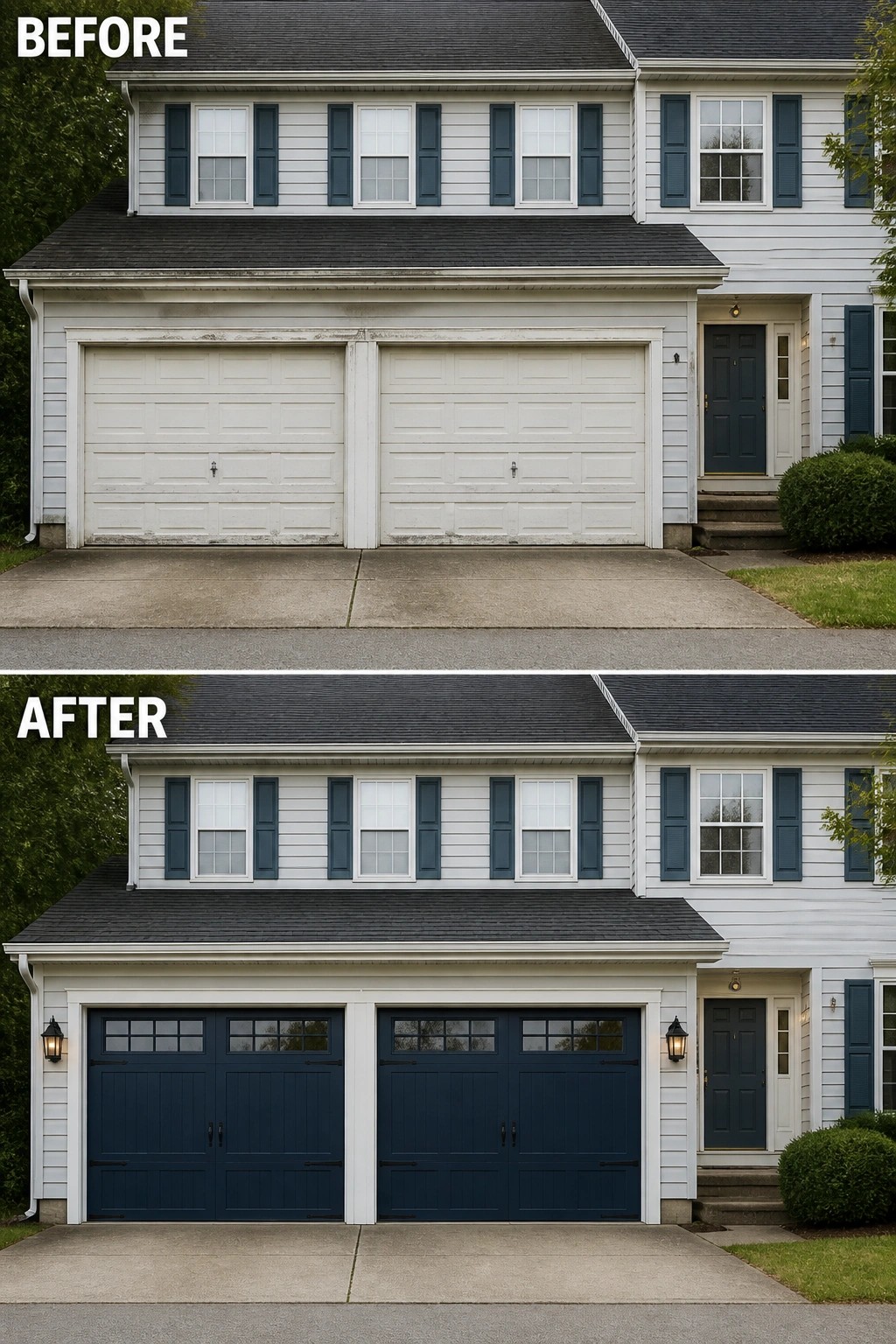
Many older homes end up with garage doors that feel separate from everything else. Painting them a darker color that already appears on the shutters and front door helps the whole front tie together without any major construction.
This approach works best on homes where the garage takes up a large part of the facade. Pick a color used elsewhere on the exterior, add matching hardware, and keep the trim light so the doors read as intentional rather than an afterthought.
Add Shutters And Window Boxes To Refresh A Plain Exterior
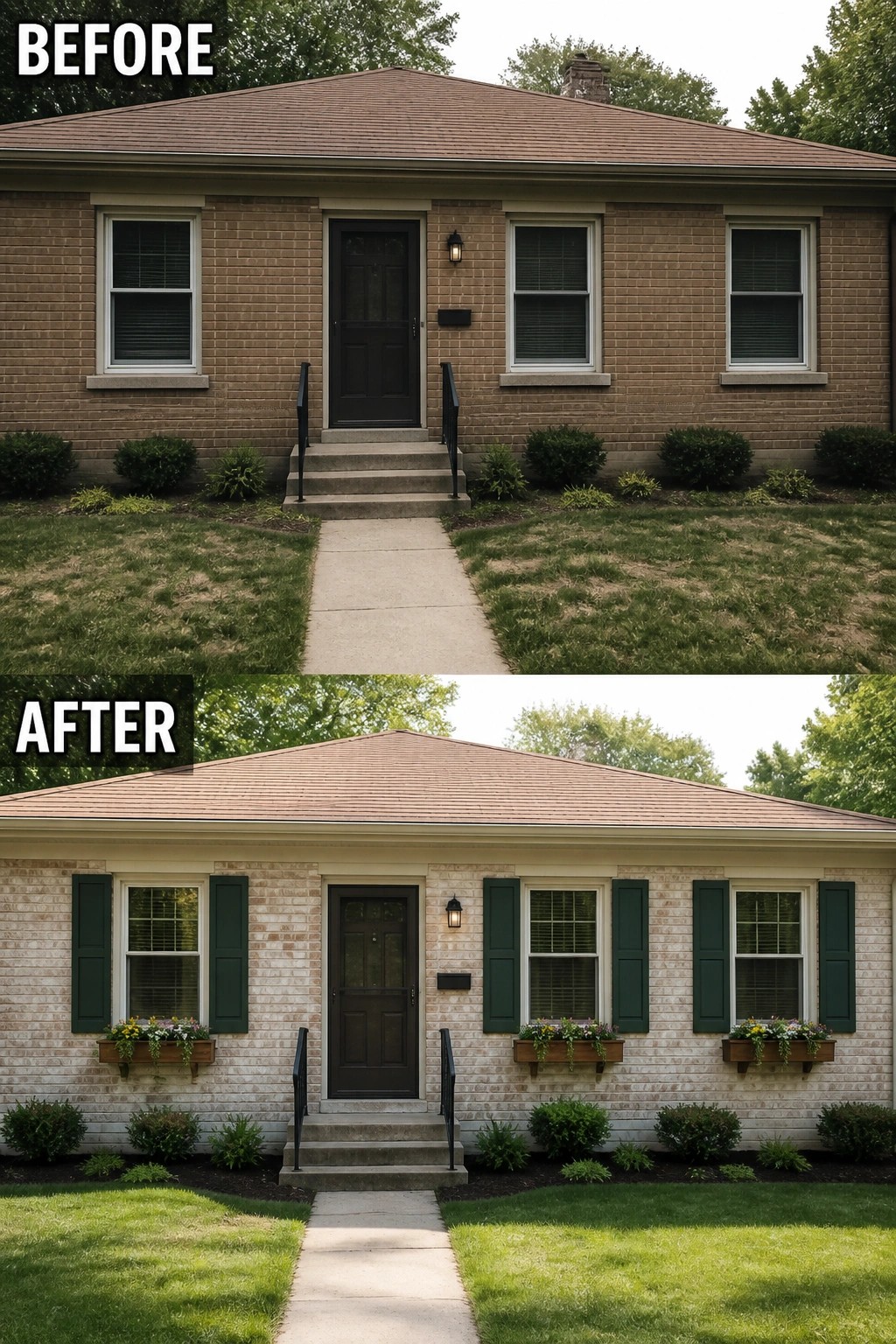
Many older suburban homes have simple brick fronts that feel flat once you look at them for more than a minute. Adding shutters to the windows and flower boxes below them gives the facade structure and a bit of color without touching the roof or siding.
This works best on homes that already have a centered door and evenly spaced windows. Pick a shutter color that stands out from the brick, keep the boxes modest in size, and change the plants with the seasons so the look stays fresh. It is an easy first step before spending money on bigger exterior changes.
Update Rusty Railings And The Front Door
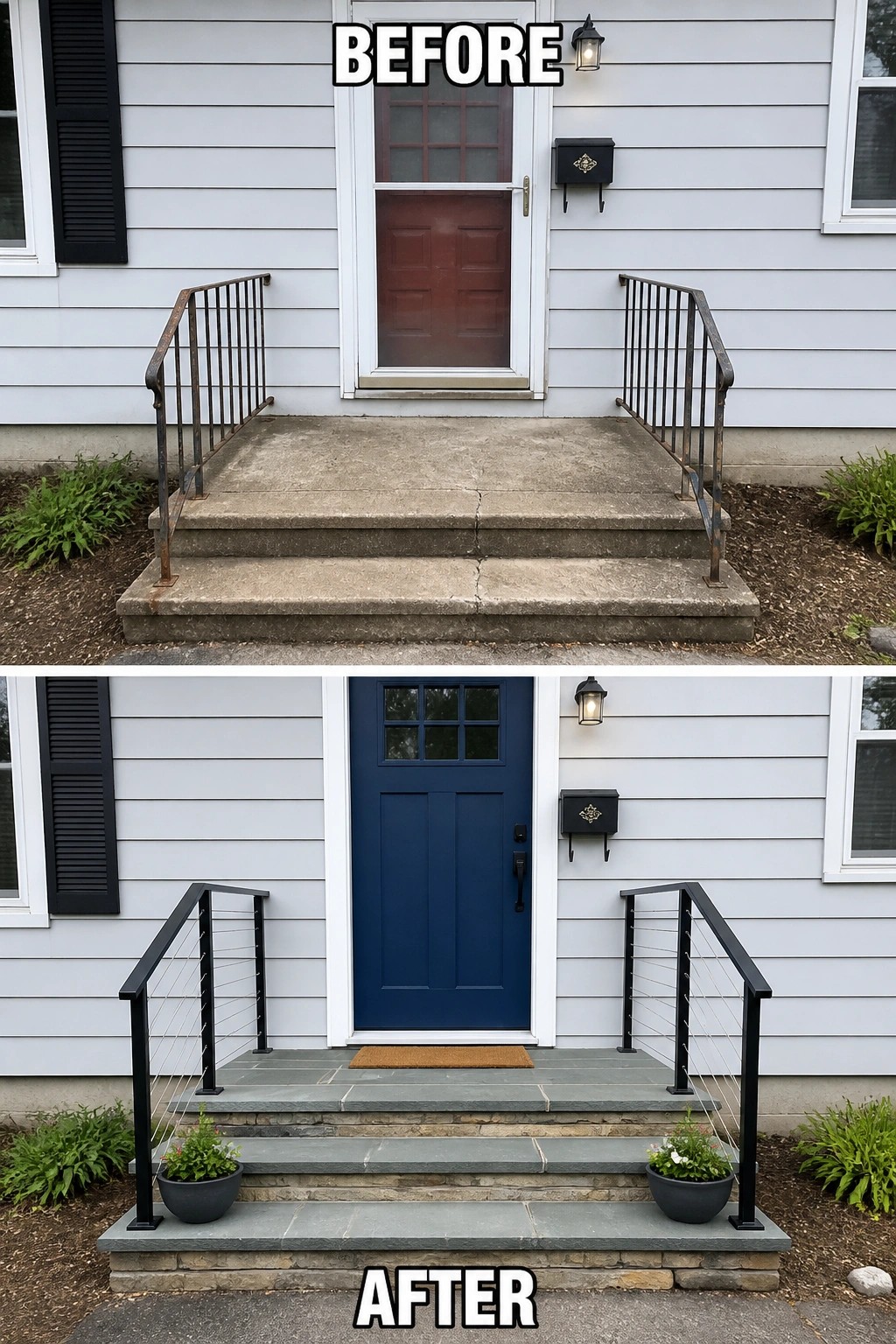
Older homes often have functional but dated railings that start to look tired after years of weather. Swapping them for a cleaner modern style, along with a fresh door color, can make the whole front of the house feel updated without major construction.
This approach works well on suburban homes where the entry steps are still solid but the details have aged. Focus first on the railings and door since those changes give the biggest visual shift, then add simple planters if there is room. Keep the new railings simple so they do not compete with the house itself.
Add A Pergola To Define The Front Entry
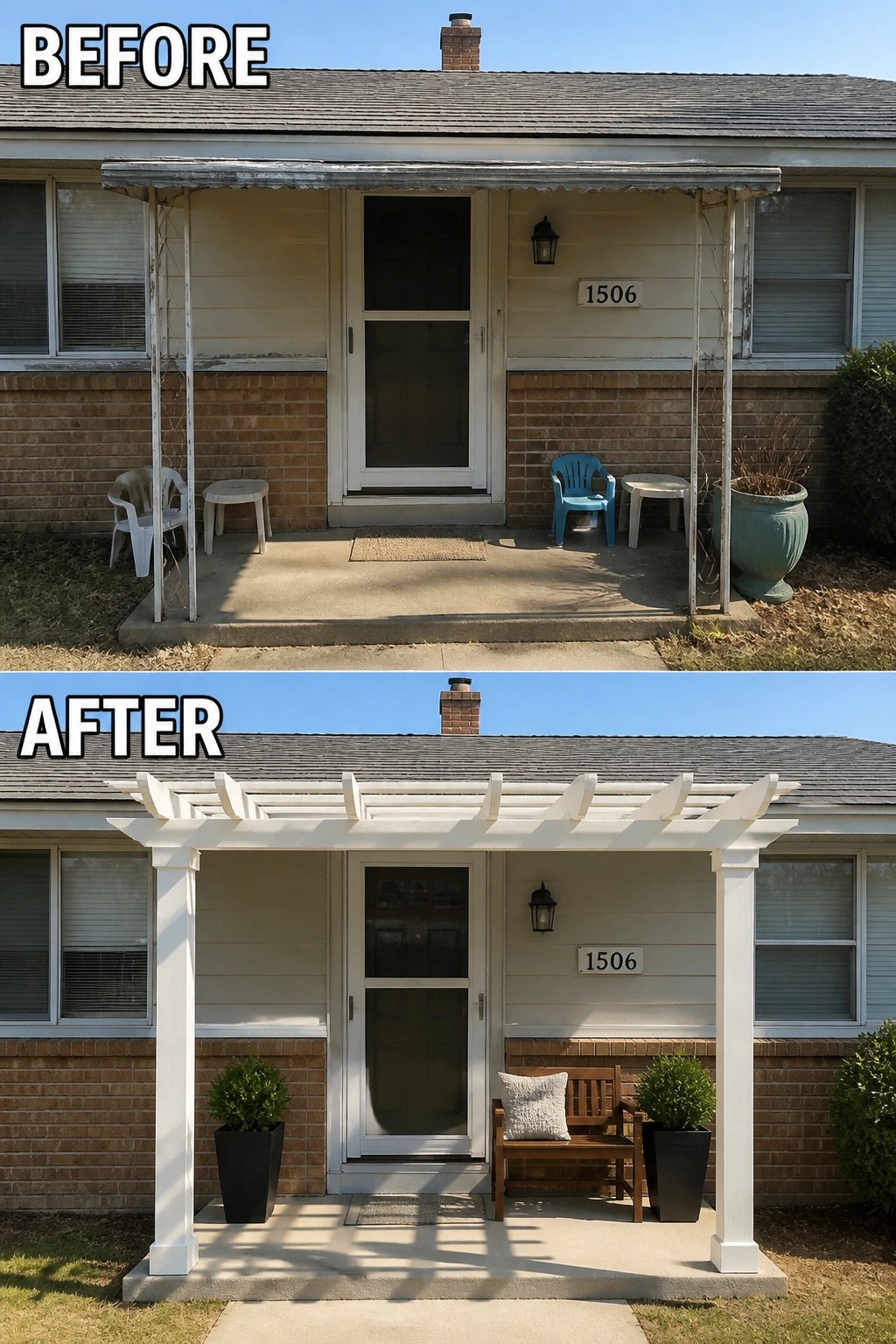
A simple metal awning can leave the front of an older home looking unfinished. Replacing it with a white pergola adds height and clear lines that make the entry feel more intentional without changing the whole house.
This approach works well on suburban homes with basic porches. Keep the posts and beams straightforward, then add a couple of matching planters at the base so the structure feels grounded. Avoid filling the space with too many extras at once.
Add Shutters To Refresh An Older Home Exterior
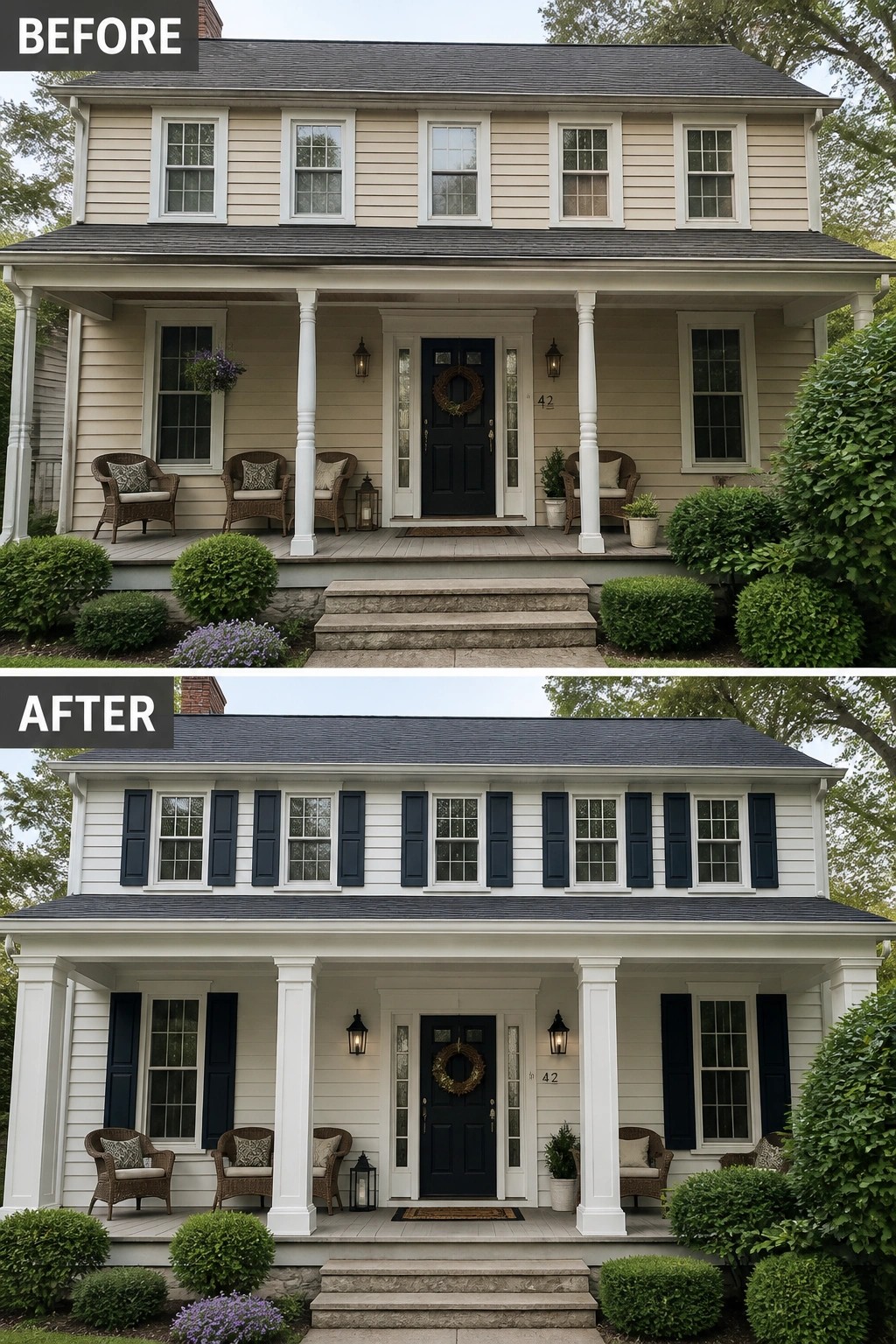
Many older suburban homes end up with flat-looking siding because the windows lack any frame or detail. Adding shutters gives each window a clear boundary and makes the whole front feel more finished without major construction.
This approach suits two-story homes that already have a porch and simple trim. Pick a color that contrasts with the siding, measure the windows so the shutters look proportional, and start with the most visible side of the house before adding more.
Add Structure To The Front Path
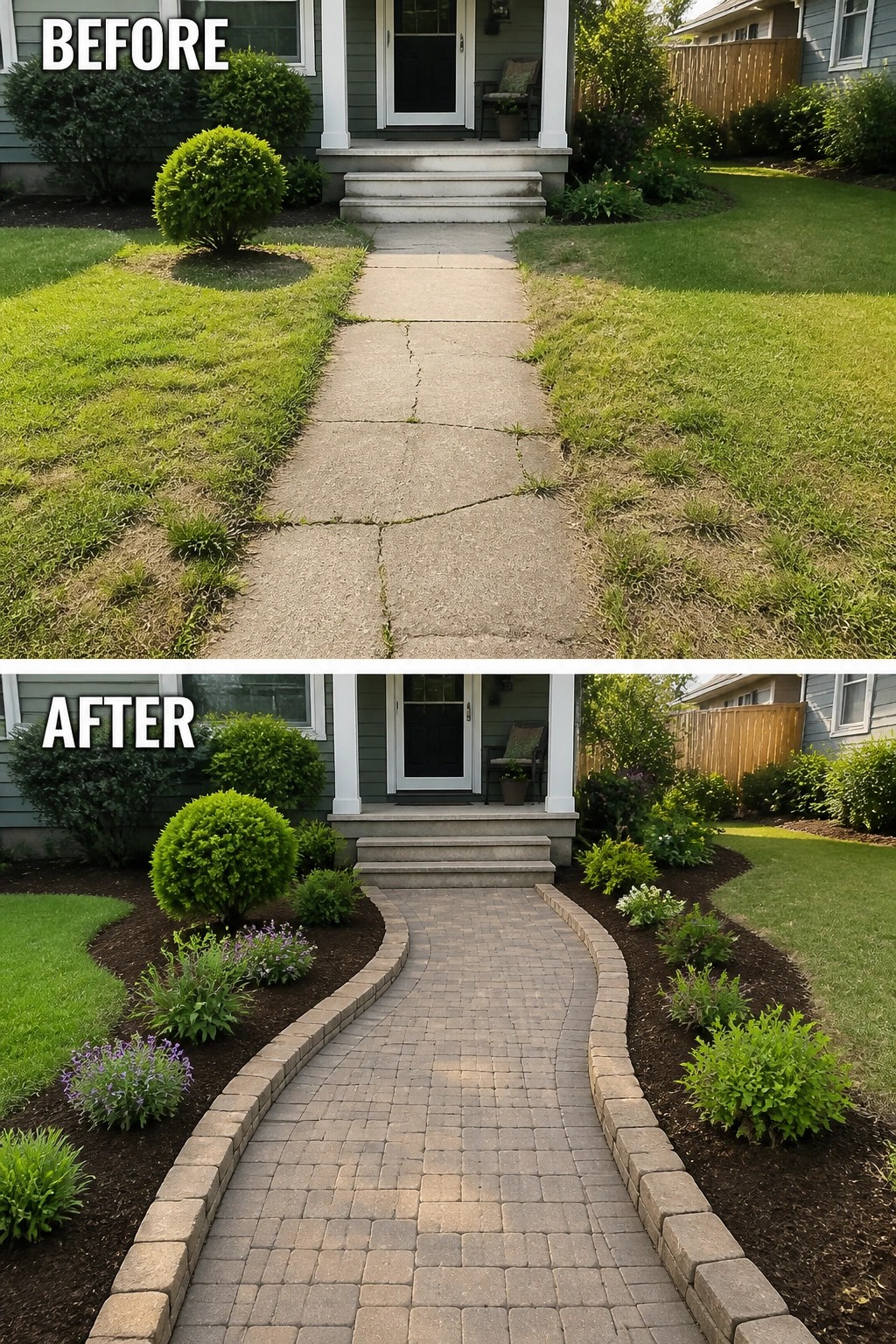
A straight cracked concrete walk makes the front of an older home feel tired and unplanned. Switching to a curved paver path with clean borders and mulched beds gives the entry a clear shape and makes the whole yard feel more put together.
This approach works well on suburban homes where the lawn runs right up to a plain walkway. Start with the path first so the garden beds have something to follow, then keep the planting simple and repeat a few plants along both sides.
Update Exterior Colors To Refresh An Older Home
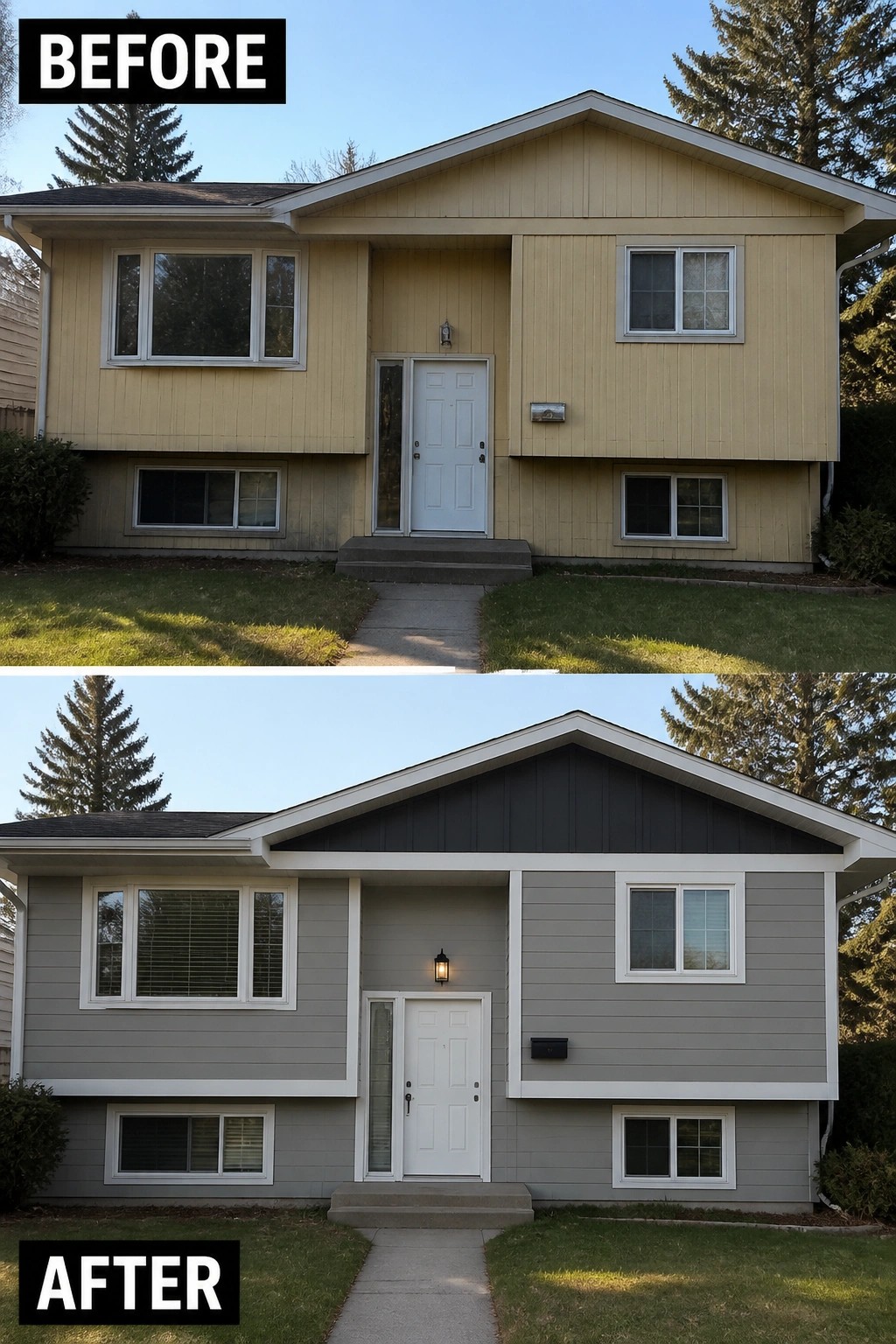
Many older suburban homes end up with siding colors that no longer suit the house. A change to a calmer gray palette, paired with a dark gable and fresh white trim, gives the facade a cleaner look while keeping the original shape and windows intact.
This idea works best on simple two-story homes where the goal is a noticeable update without major construction. Focus first on the main body color, then add one darker accent and white trim around windows and edges. The result feels current without overpowering the neighborhood.
Add Trim Around Windows To Refresh A Plain Exterior
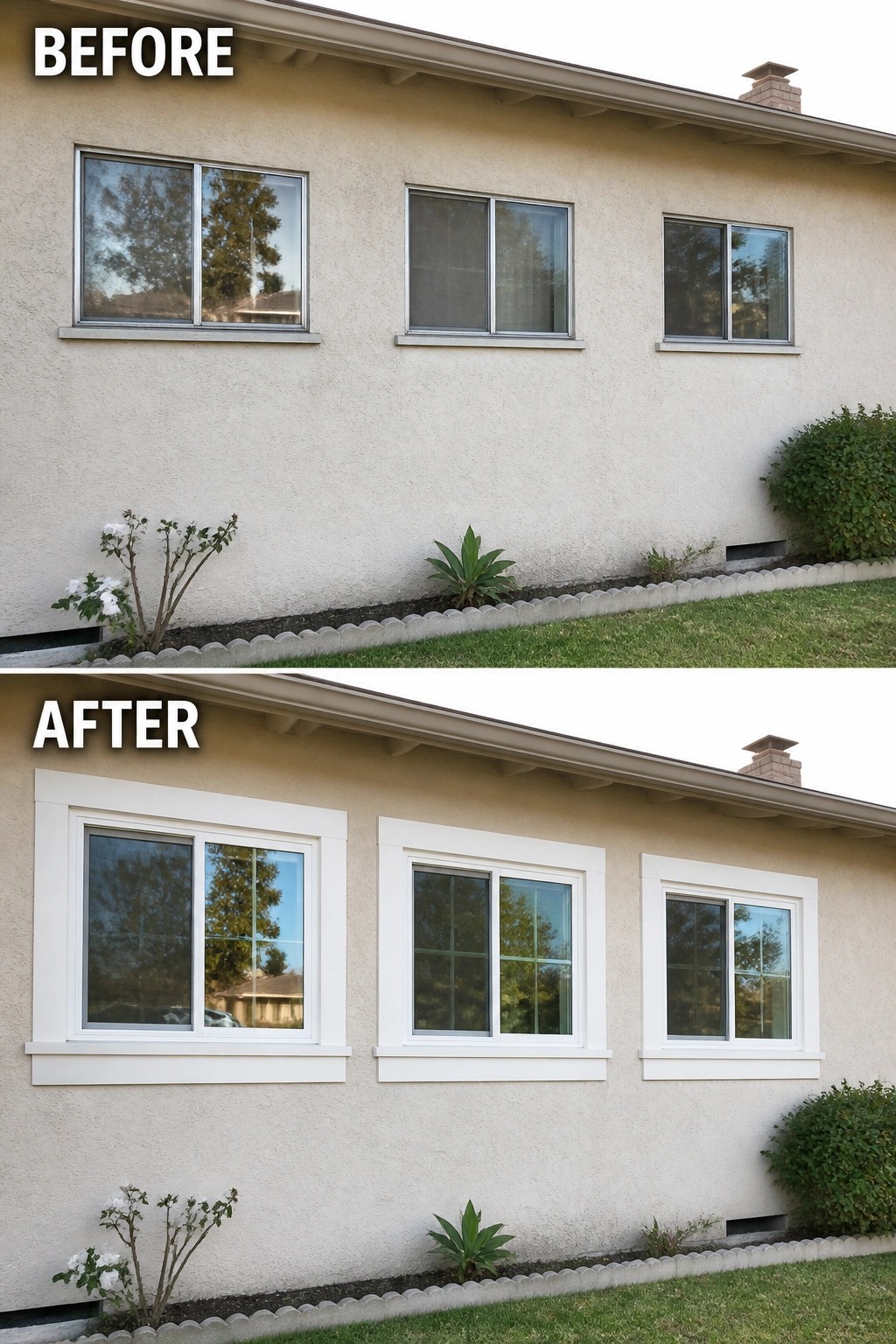
Many older suburban homes have flat stucco walls and basic windows that disappear into the background. Adding simple white trim around the windows gives them shape and makes the front of the house look more finished without major construction.
This works especially well on ranch homes or any house with a plain facade. Focus on the windows that face the street first, keep the trim style simple, and use a bright white to create contrast against the existing wall color.
Refresh A Dated Porch With New Screening
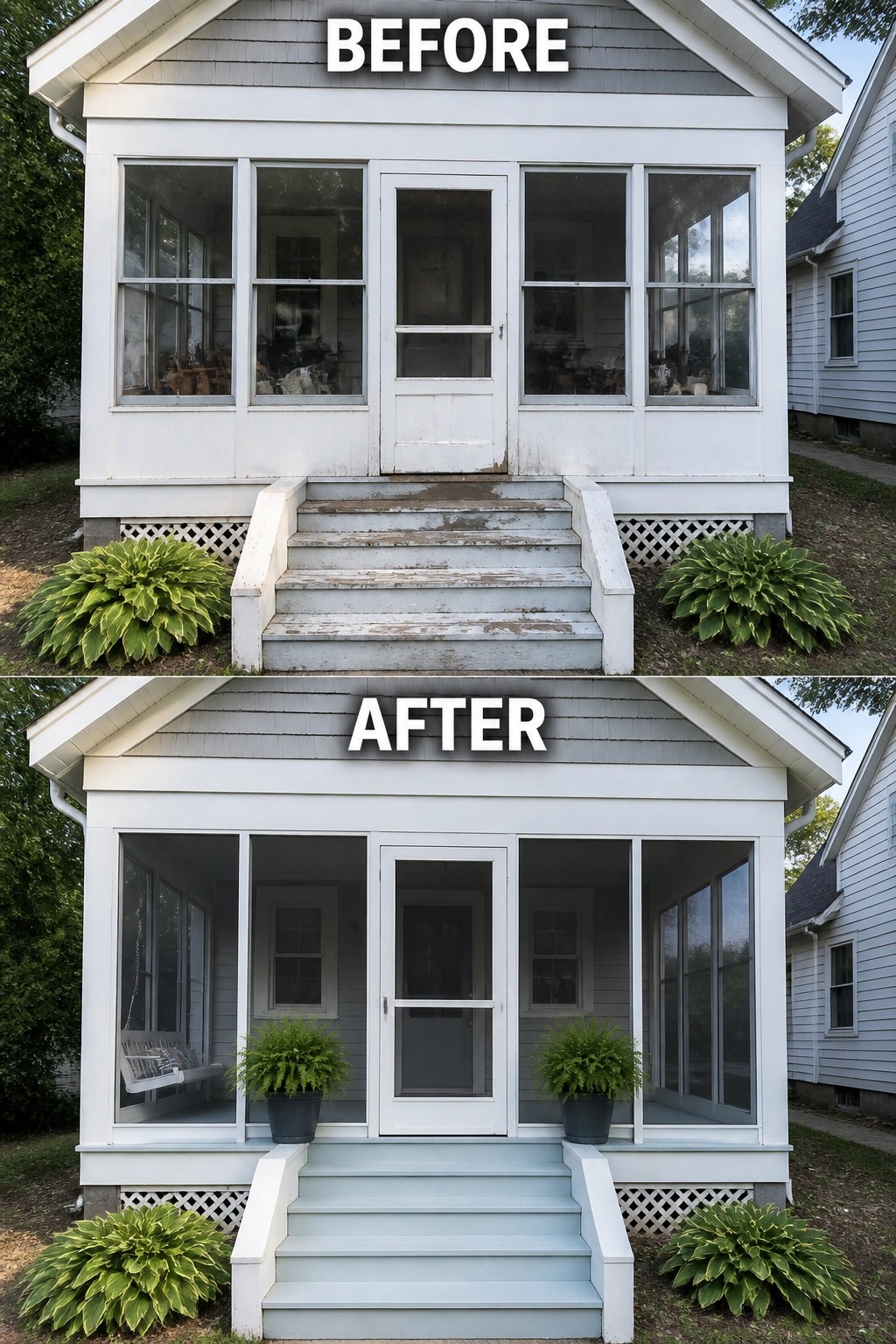
Many older homes have porches that were once fully enclosed with heavy or clouded screening. This blocks light and makes the entry feel closed off. Replacing the screening with a lighter version and painting the steps a soft color opens up the space and makes the front feel more welcoming right away.
This approach works well on suburban homes where the porch is a main feature. Start by repairing or replacing the screens first, then add a couple of potted plants near the door. Keep the furniture simple so the area stays easy to maintain and still leaves room to walk through.
Replace Rusty Gutters To Refresh The Exterior
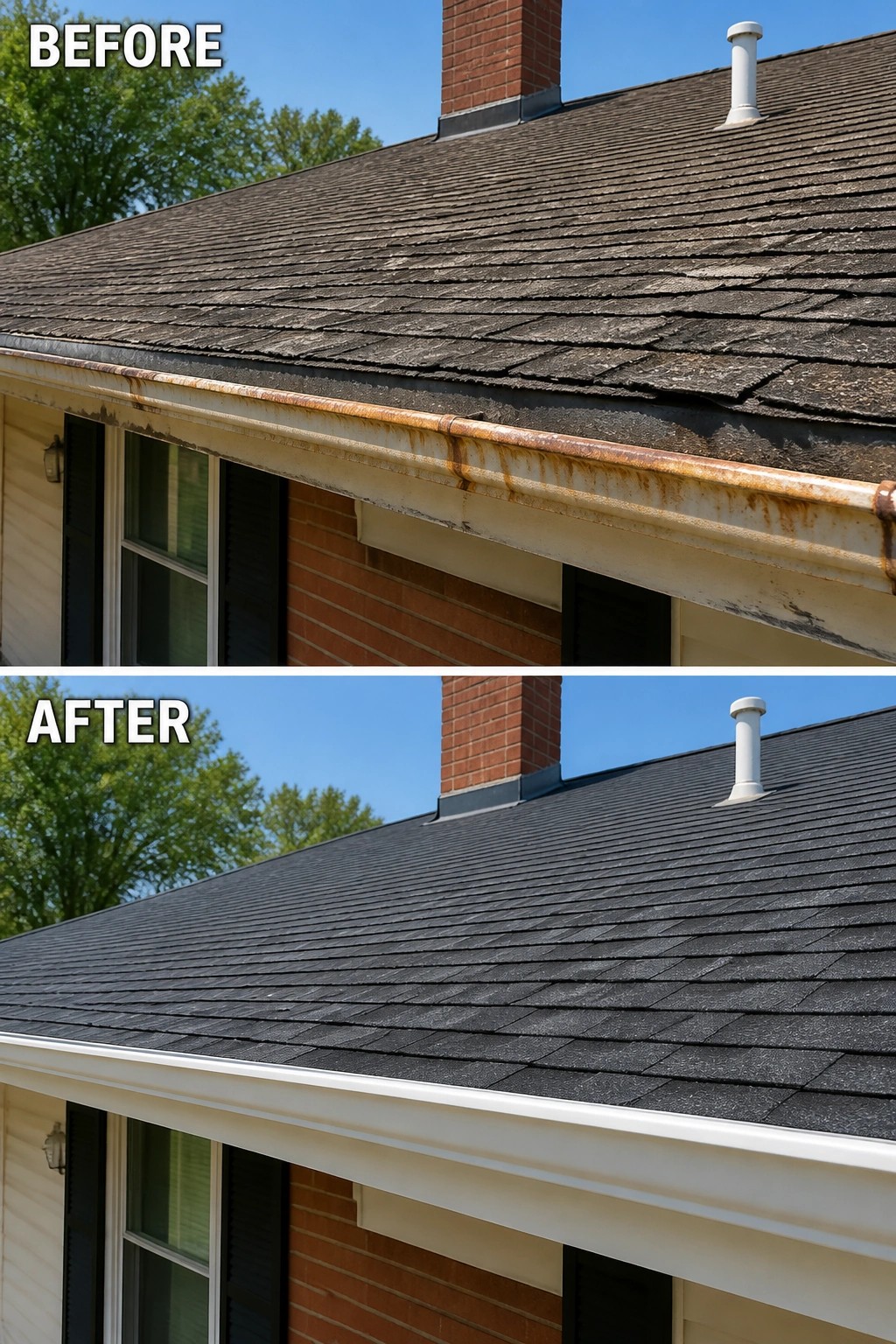
Many older homes develop rusty, stained gutters that drag down the whole look of the roofline. Switching to clean white gutters and fresh trim removes the eyesore and instantly makes the eave area look sharper without touching the rest of the house.
This works best when the roof and siding are still sound. Start with the gutters because they sit at eye level from the street and often need attention first on suburban homes from the 1970s and 1980s. Keep the new color simple so it blends with the existing trim rather than fighting it.
Add A Deck To Create A Proper Entry
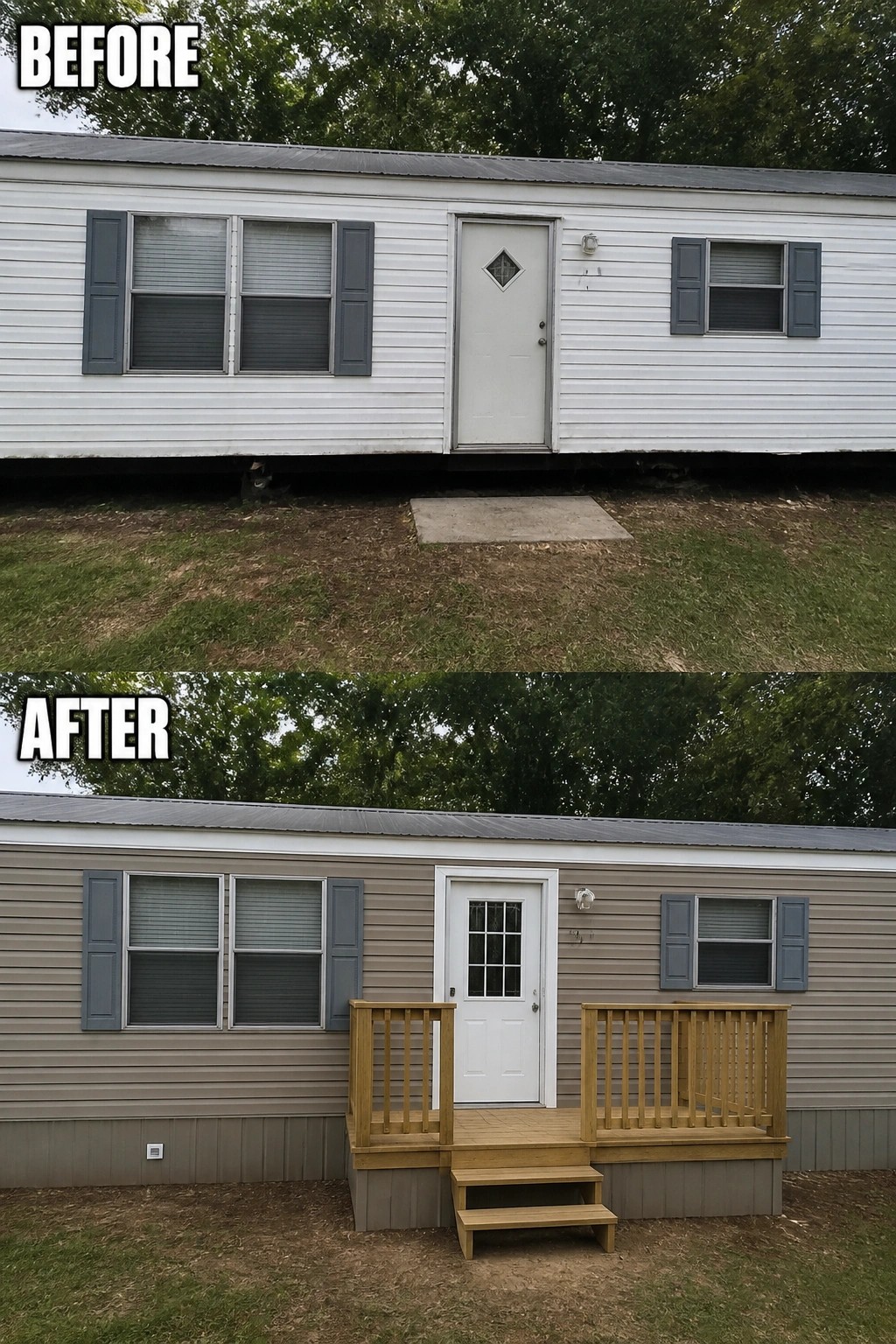
Many older homes sit high off the ground with nothing more than a small concrete pad at the door. Adding a simple wooden deck with stairs and railings turns that bare spot into a usable entry that feels finished instead of temporary.
This approach works especially well on raised homes or mobile homes where the original setup leaves the door floating above the yard. Use pressure-treated lumber, keep the railings straightforward, and match the wood tone to any existing trim so the new deck blends with the house rather than competing with it.
Brighten A Front Entry With Recessed Porch Lights
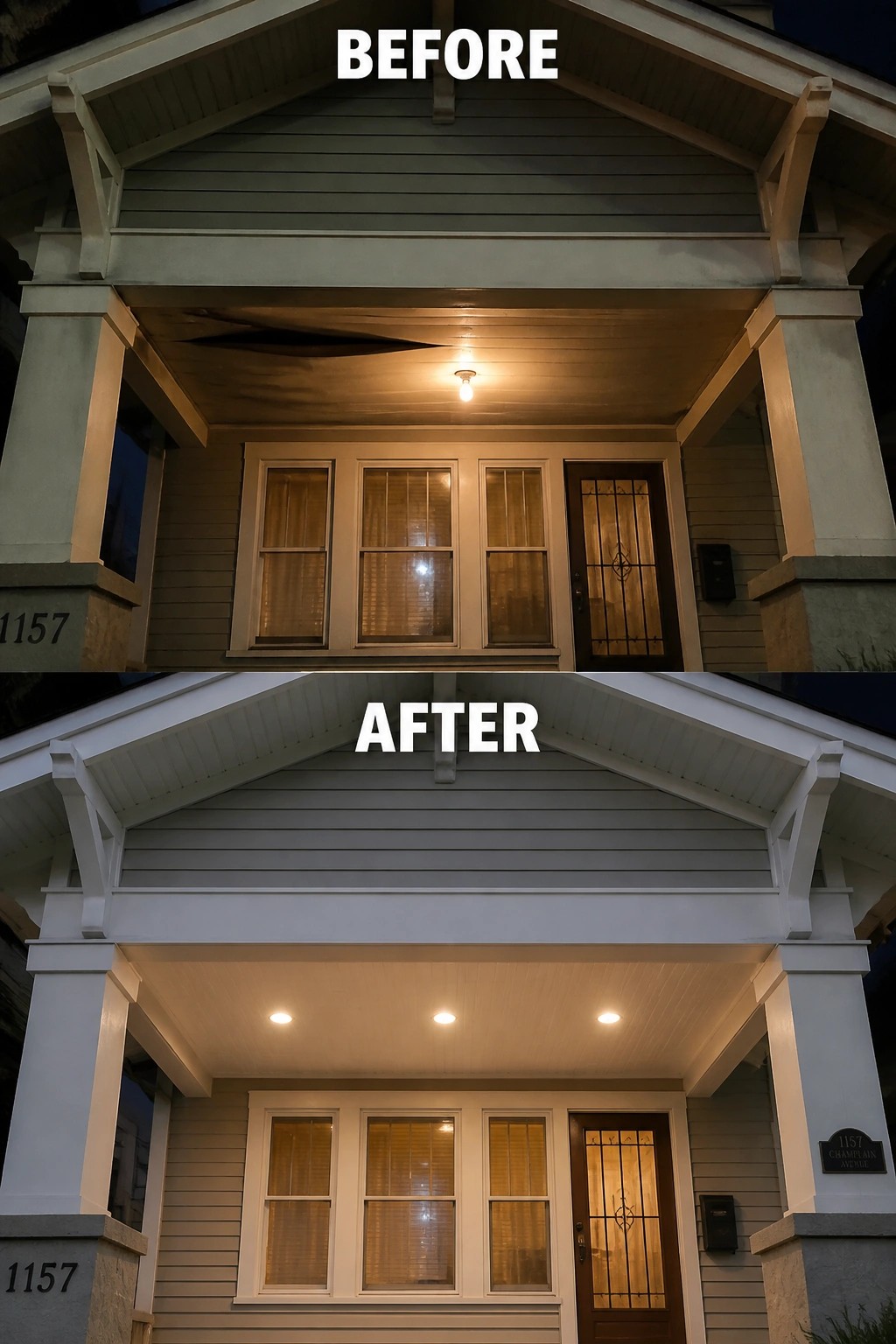
Many older homes still rely on one overhead bulb on the porch, which leaves the entry looking dim and dated. Switching to several small recessed lights spreads the light more evenly and makes the whole space feel cleaner. Painting the ceiling white helps reflect that light instead of absorbing it.
This approach works well on suburban homes where the porch is mostly functional rather than a full outdoor room. Focus first on the ceiling and lighting before adding other details. Keep the number of fixtures modest so the look stays simple and the wiring stays straightforward.
Give A Bare Porch A Clear Purpose
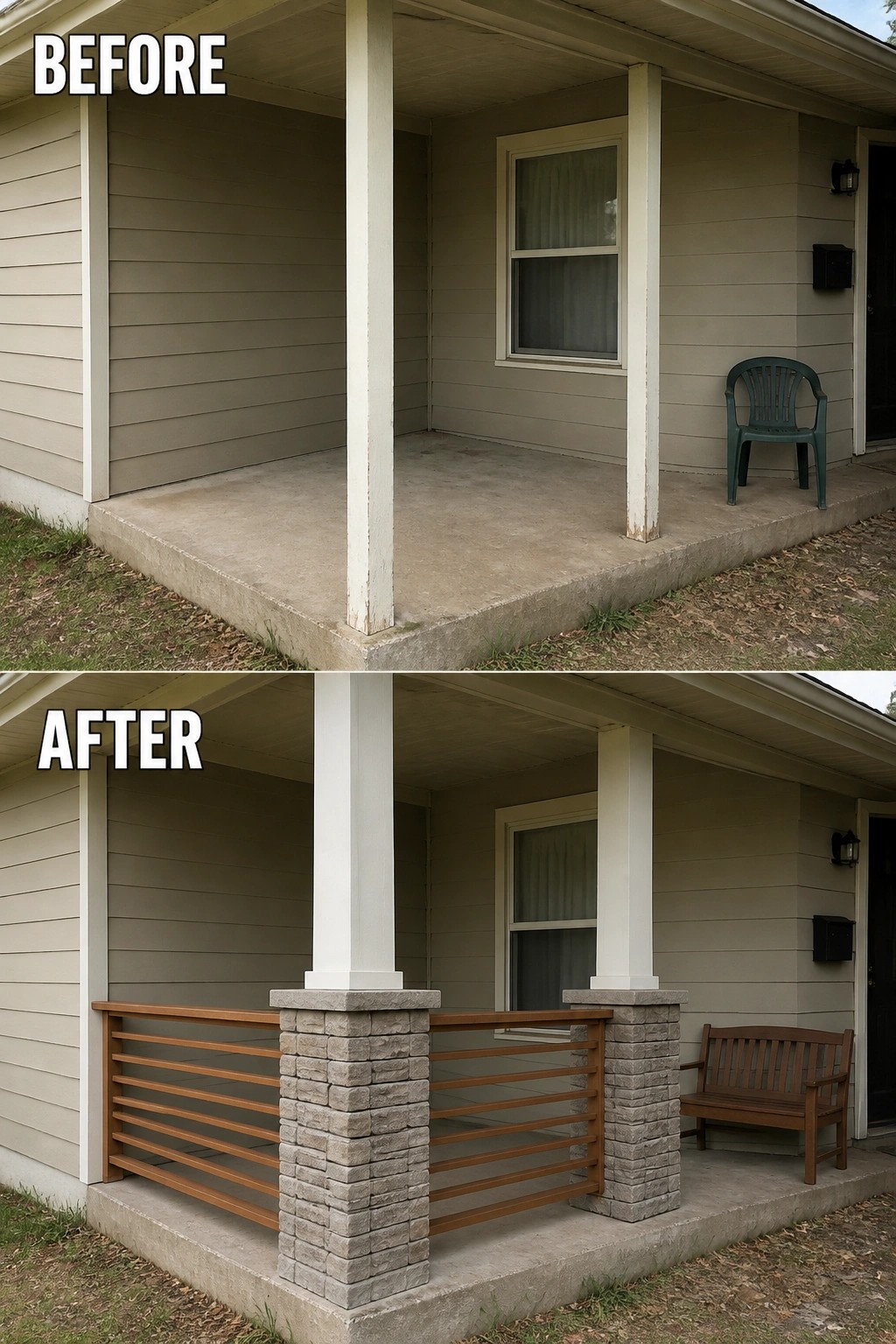
An open concrete porch often feels unfinished because there is nothing to mark the edge or create a sense of enclosure. Adding railings with solid posts changes that quickly and makes the space feel like an actual room instead of just a slab in front of the door.
This idea works best on older homes where the porch was built without rails or with very basic supports. Keep the railing height modest, use materials that match the house, and leave enough open space for a bench or a couple of chairs so the area stays usable rather than crowded.
Update The Front Door Color For Stronger Curb Appeal
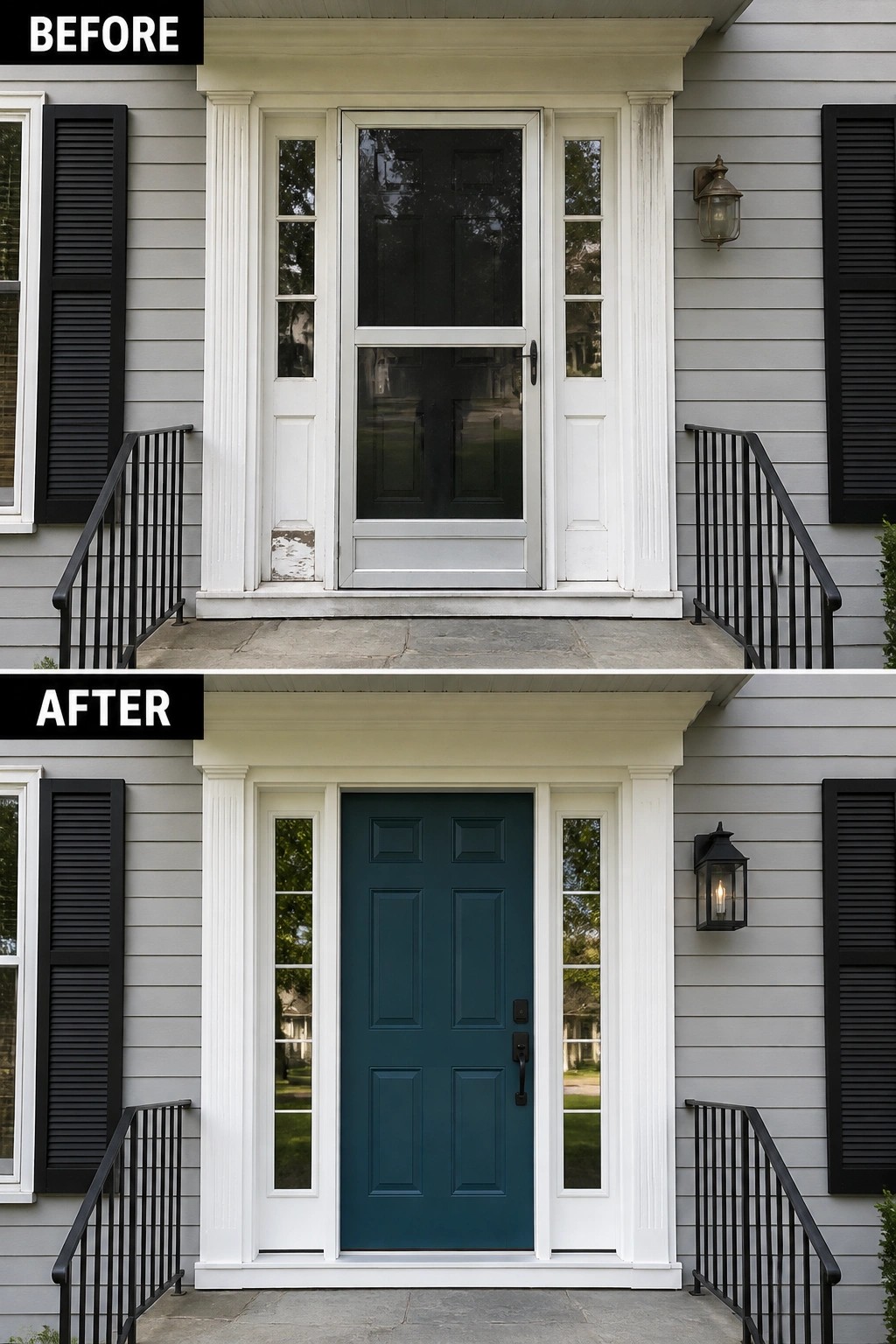
Many older homes have a front door that fades into the siding and trim. A deeper, bolder color gives the entry a clear focal point and makes the whole facade feel more finished without any structural changes.
This idea works best on homes with simple gray or neutral siding. Pick a color that contrasts enough to stand out but still suits the age and style of the house, and remove a storm door if it covers the new paint.
Replace Overgrown Hedges With Defined Garden Beds
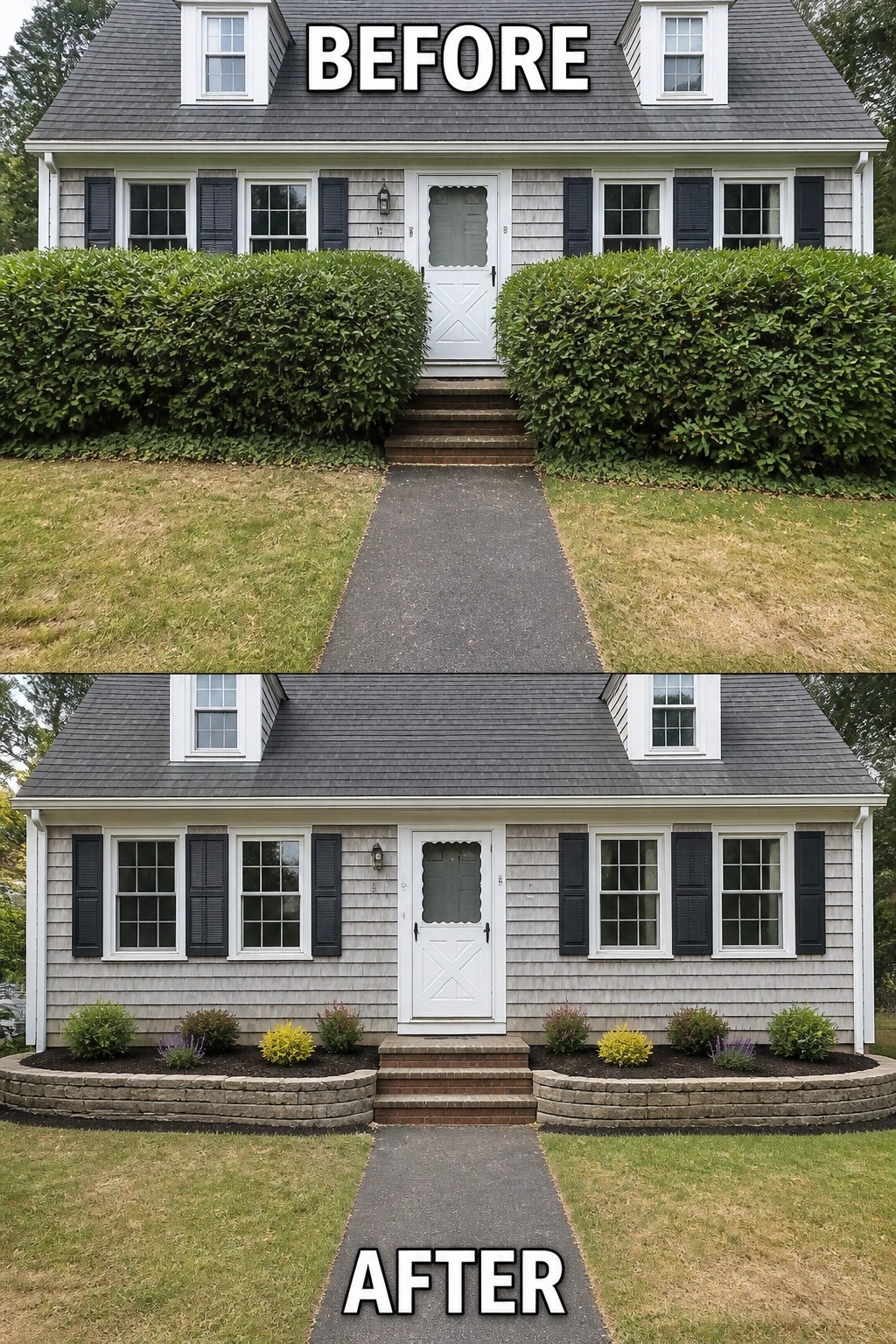
Tall foundation hedges often hide the house and make the front feel closed in. Removing them and adding low stone edging with smaller plantings opens up the view, shows the windows and door clearly, and gives the whole front a neater shape without losing any greenery.
This approach works best on older suburban homes where shrubs have grown past their useful size. Keep the new beds narrow enough to leave room for the lawn and path, and choose plants that will stay low so the house stays visible year after year.
Add A Stone Mailbox Pillar To Anchor The Front Yard
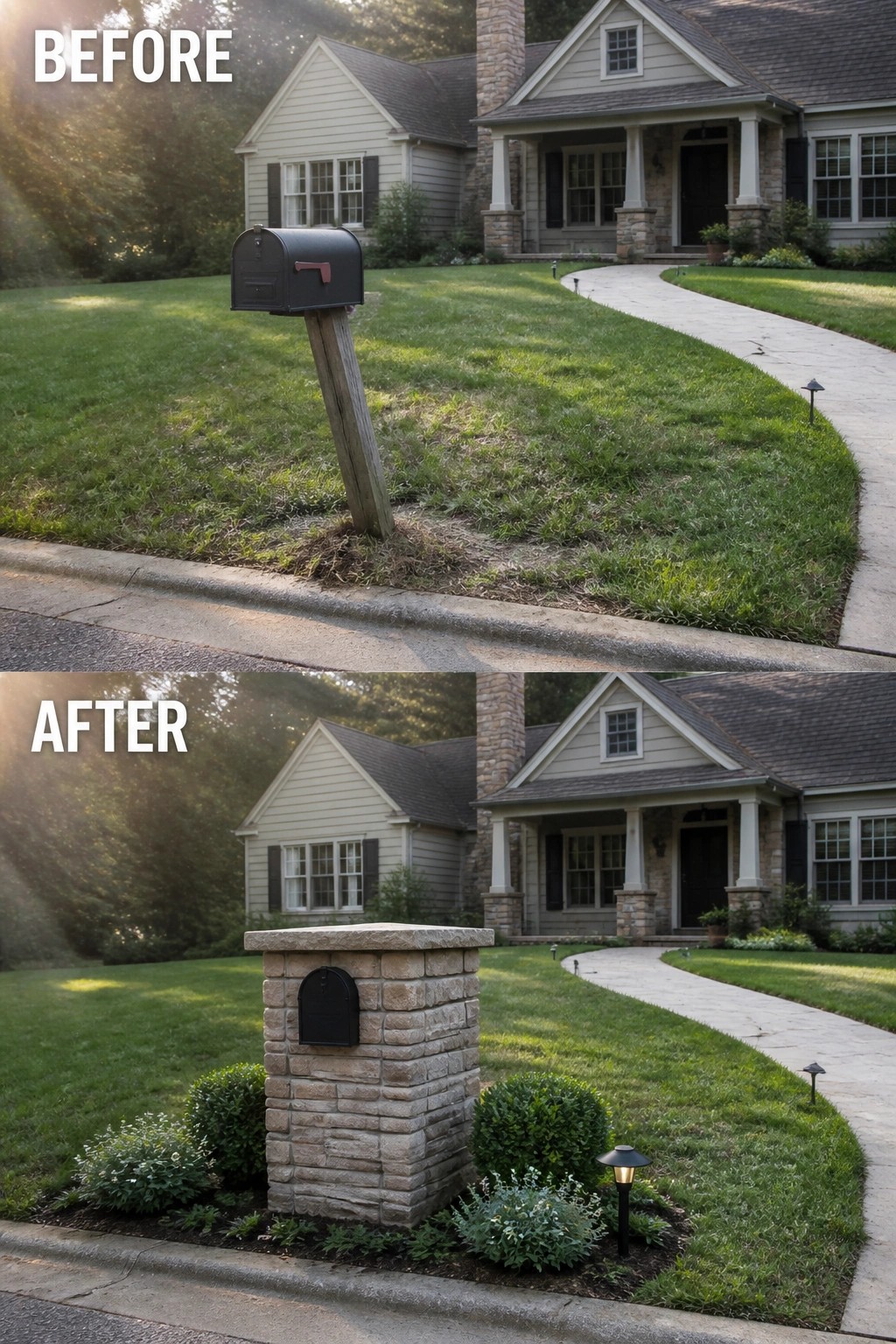
A plain wooden mailbox post often looks temporary and can lean or weather over time. Replacing it with a stone pillar gives the front lawn a solid starting point and lets simple planting beds take shape around it. The change also makes the whole entry feel more intentional without touching the house itself.
This works well on older suburban lots where the lawn runs right up to the street. Start with a masonry base that matches any existing stone on the property, then add low shrubs and ground cover on either side. Keep the beds narrow so the mower still has room and the walkway stays clear.
Update Concrete Steps And Add Planters To Frame The Entry
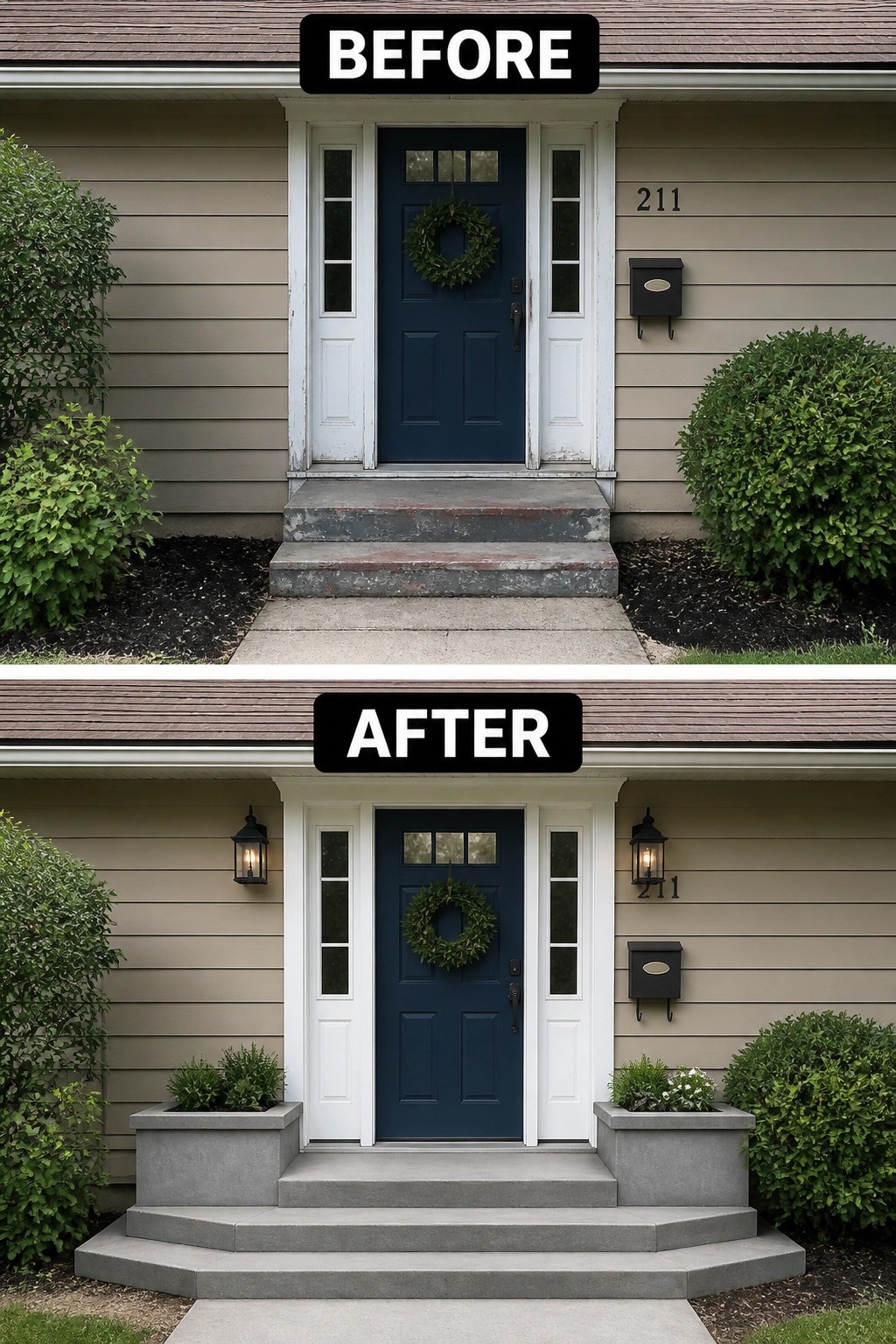
Many older homes have basic concrete steps that look worn and unfinished over time. Replacing them with wider, structured steps in a matching gray tone gives the front a cleaner base, while adding built-in planters on each side creates natural spots for greenery without crowding the walkway.
This approach works well on suburban homes where the entry feels flat or dated. Focus first on fixing the steps if they show cracks or uneven edges, then choose simple rectangular planters that echo the new material. Keep the planting low so it does not block the door or walkway.
Add Dark Trim And Gable Details To Refresh The Exterior
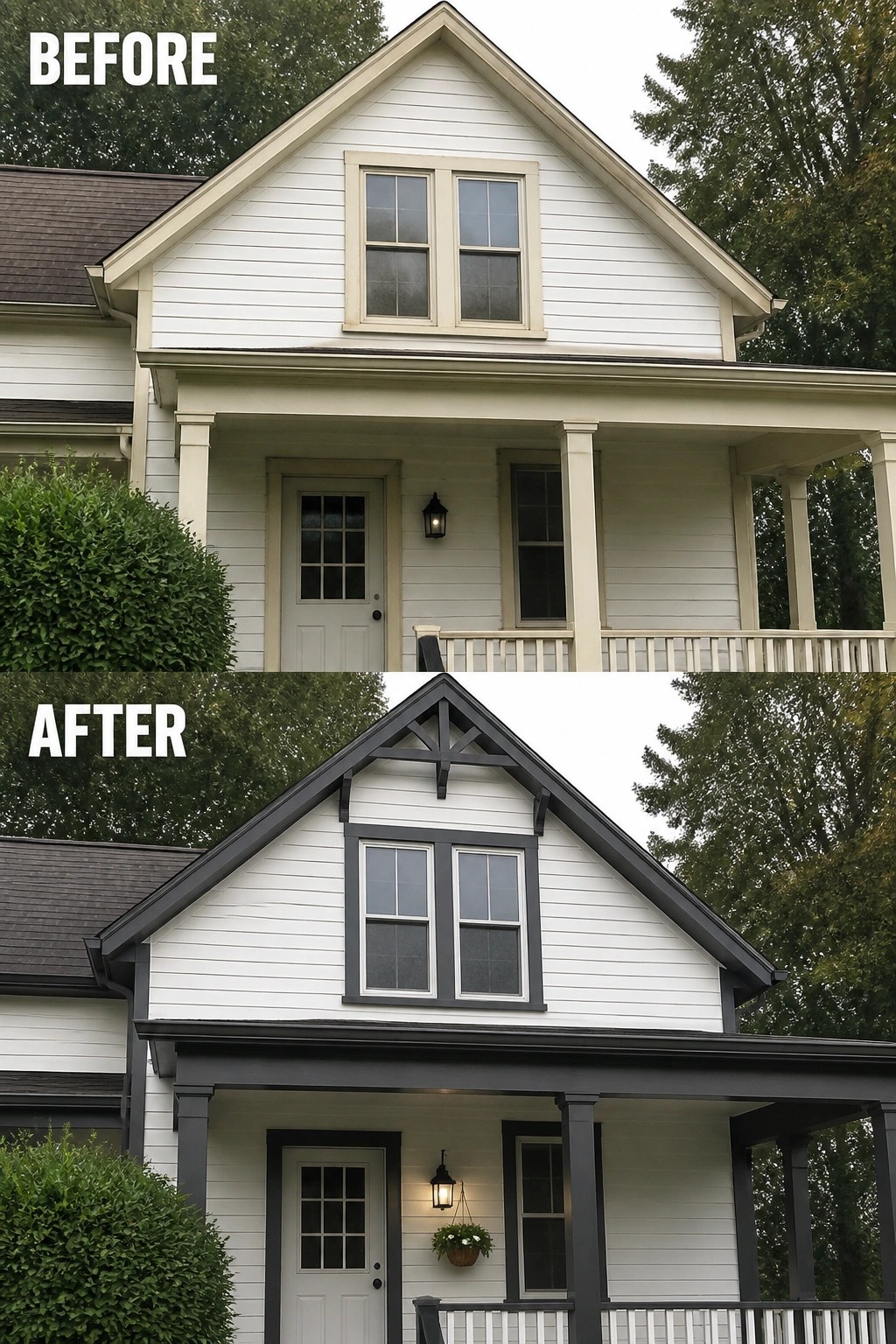
Many older suburban homes have simple gables that look flat from the street. Painting the trim dark and adding a few brackets to the peak gives the roofline clear shape and makes the whole front feel more finished without major construction.
This approach works well on houses that already have decent proportions but lack definition. Start by painting the existing trim and porch posts a deep color that contrasts with the siding, then add brackets or simple woodwork to the gable if the budget allows. The change stays practical and reversible while giving the house more presence from the curb.
Replace Old Railings To Update Your Front Entry
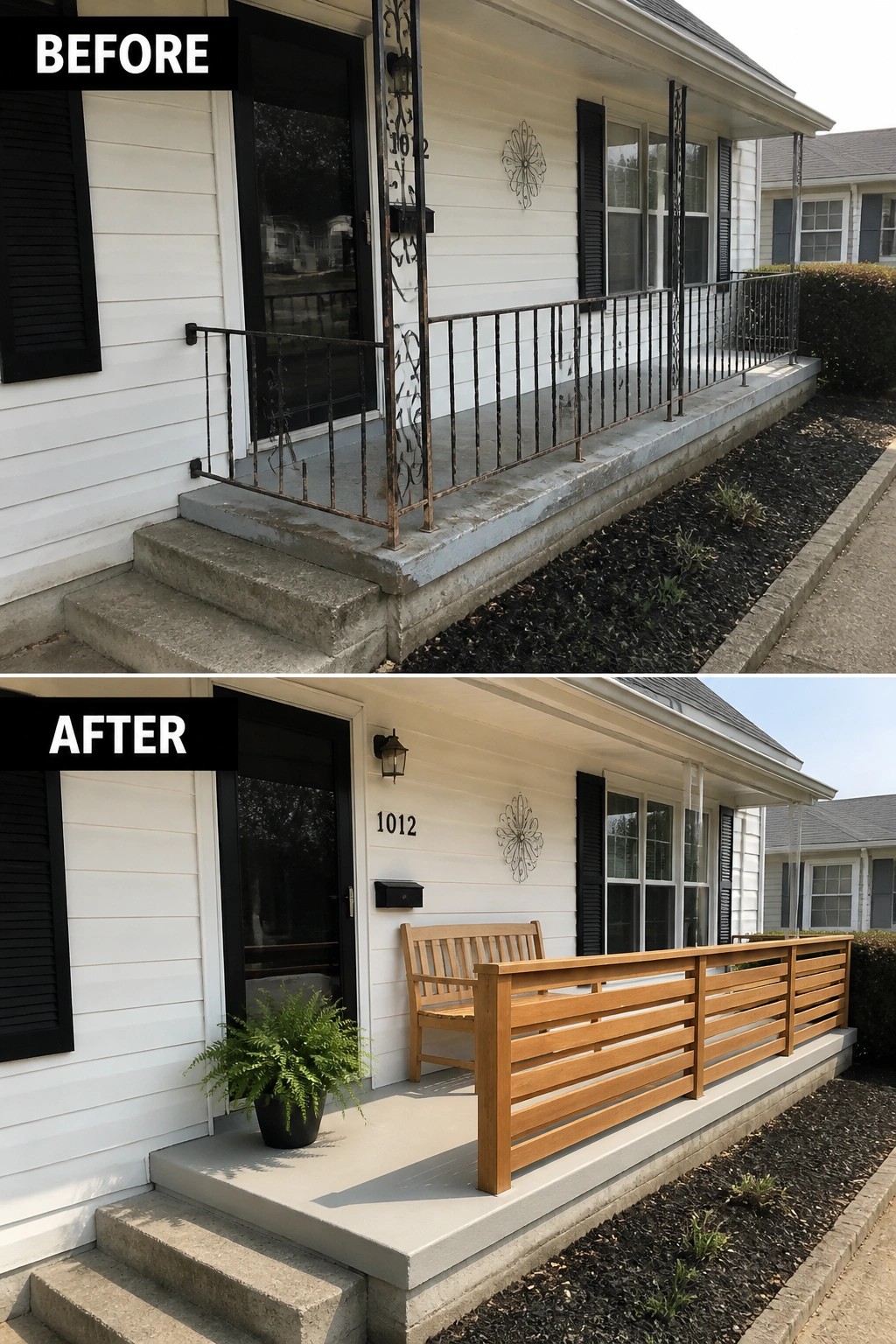
Swapping the rusty metal railings for simple wooden ones makes the biggest difference here. The new horizontal design feels cleaner and more current, and adding a bench turns the small concrete porch into a spot that actually gets used.
This idea works well on older suburban homes where the original railings have started to look tired. Keep the change focused on the railing style and one or two pieces of seating so the entry stays open and easy to maintain.
Frequently Asked Questions
Q: Should I replace my aluminum siding or just cover it with vinyl?
A: Vinyl works well if your current siding is in decent shape underneath. It goes up fast and hides dents.
Q: Can I update just the front door and shutters without touching the whole house?
A: Yes, start there to get a quick win. Pick door and shutter colors that tie into your existing siding tones. Keep the scale similar to what is already there.
Q: How do I know if adding a new roof overhang will look right on my 1960s split level?
A: Look at the before and after photos for homes with similar rooflines. Measure your current overhang and add only a foot or two at most. Sketch it out on paper first to check the proportions.