

Some links on this page are affiliate links (for example Amazon). If you buy through them I may earn a small commission, at no extra cost to you. How this works.
Hickory and maple are two of the most common solid-wood choices in kitchen cabinet catalogs, and they could hardly look more different. Hickory is bold and busy, with streaks of pale cream next to dark caramel in the same door. Maple is calm and even, with a fine, tight grain that reads almost smooth from across the room.
Both are hard, durable woods that will survive a busy kitchen. The real decision is about looks, about whether you want to stain or paint, and about how much color variation you are happy to live with. This guide walks through each of those so you can choose with confidence.
At a glance
| Hickory | Maple (hard maple) | |
|---|---|---|
| Look | Strong grain, dramatic light-to-dark color variation | Fine, even grain, creamy pale color |
| Hardness (Janka, approx.) | Around 1,800 lbf, one of the hardest domestic woods | Around 1,450 lbf |
| Takes stain | Well, but variation stays visible | Can blotch with darker stains unless pre-conditioned |
| Takes paint | Grain texture can show through | Excellent, a favorite for painted cabinets |
| Style fit | Rustic, farmhouse, lodge, transitional | Shaker, modern, traditional, painted kitchens |
| Typical cost | Similar to or a little above maple, depending on the line | Mid-range for solid wood |
Janka figures vary by species and source, so treat them as a rough guide. Either wood is far harder than pine or alder.
What hickory looks like in a real kitchen
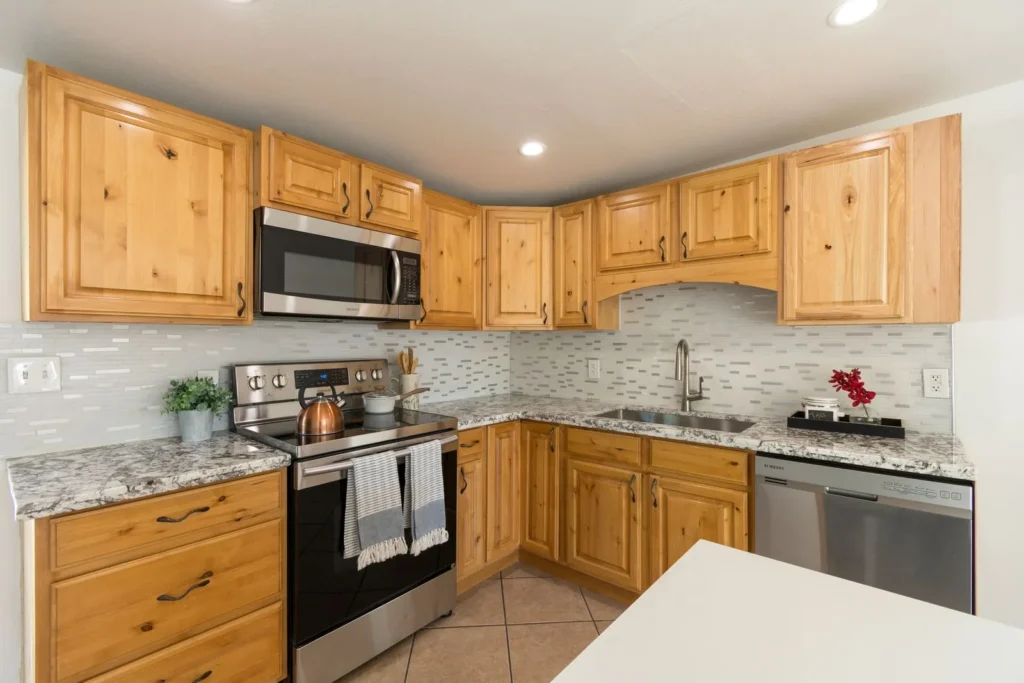
Hickory’s appeal is its character. Each board mixes pale sapwood with darker heartwood, so a run of cabinets will never look uniform. In a big kitchen with simple countertops, that variation feels warm and lively. In a small kitchen with a busy backsplash and patterned floor, it can tip into chaotic.
Many cabinet makers sell “rustic” or “character” grades of hickory that include knots and mineral streaks on purpose. If you want calmer hickory, ask for a select grade and look at a full door sample, not a small chip.
Hickory works best when:
- You love natural wood and plan to show it off with a clear or light stain.
- The rest of the kitchen is quiet: plain countertops, a solid backsplash, simple flooring.
- You want something that hides small dents and wear well.
What maple looks like in a real kitchen
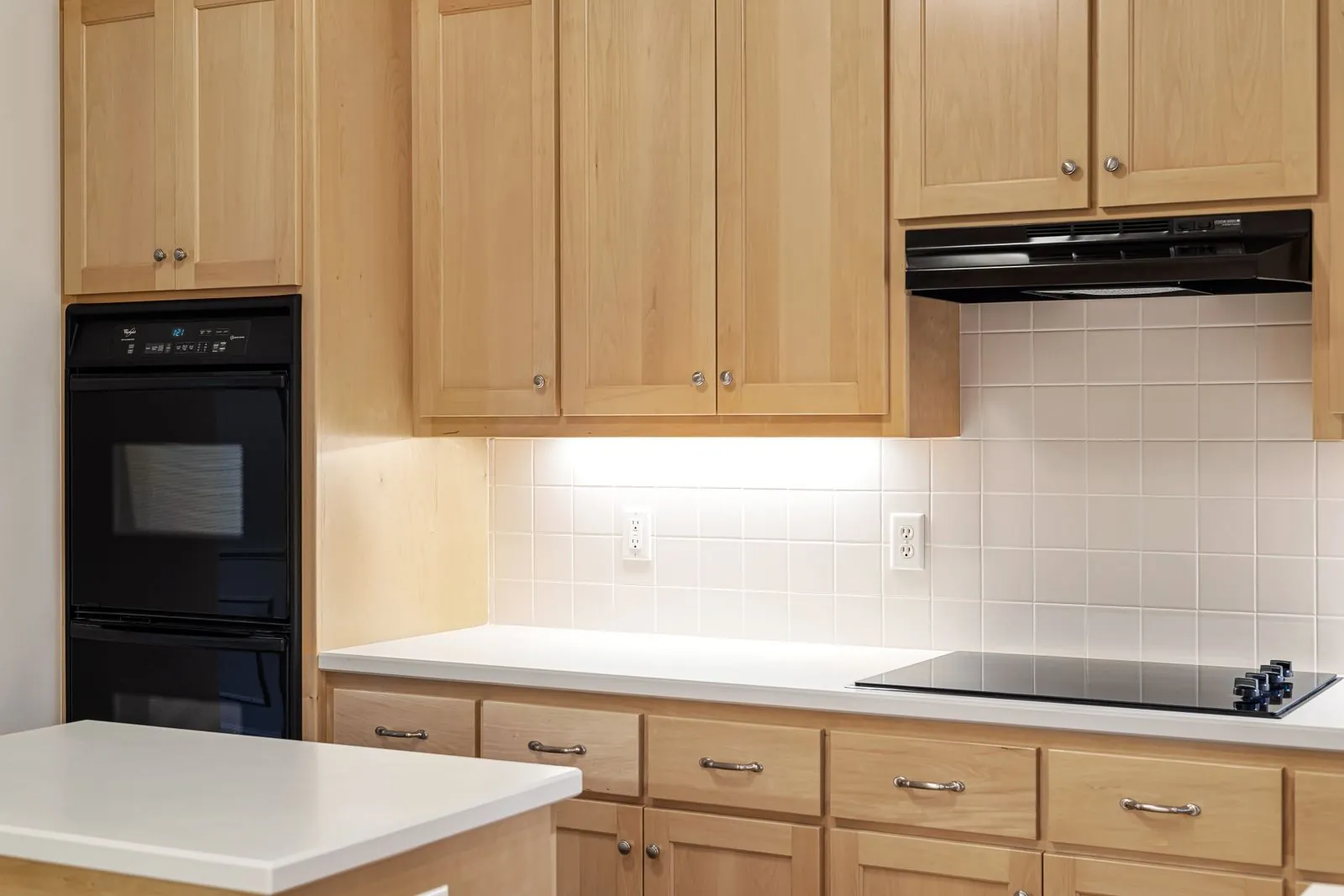
Maple is the reason so many kitchens look clean and even. The grain is fine and closed, so a clear finish gives a soft, pale wood look, and paint goes on smooth without the texture of open grain showing through.
Maple’s one known weakness is staining. Hard maple can absorb dark stain unevenly and look blotchy. Good cabinet makers use toners, gel stains or a conditioner to avoid it, which is why factory-finished dark maple usually looks fine. If you plan to restain maple yourself, test on the back of a door first.
Maple works best when:
- You want painted cabinets, or plan to paint later.
- You prefer a modern, Shaker or classic look with an even color.
- You are pairing cabinets with a statement backsplash or stone countertop.
Durability: both are tough
Both woods are hard enough for everyday kitchen use. Hickory is harder on paper, so it resists dents slightly better, and its busy grain hides the marks it does get. Maple’s smooth, even surface shows a dent more easily, especially in a painted finish.
In practice, cabinet durability depends more on construction than species. Look at:
- Box material: plywood boxes hold screws and resist moisture better than particleboard.
- Door construction: solid-wood frames with a center panel that can expand and contract.
- Finish: a factory catalyzed finish is far more durable than most site-applied finishes.
- Hardware: soft-close hinges and full-extension drawer slides wear better over time.
Staining and painting
If you are choosing between the two specifically to paint, maple is the easy winner. Its closed grain gives a smooth painted surface. Hickory has a more open, textured grain that will show through paint unless the doors are grain-filled first.
For a stained look, both work. Hickory gives a rustic, high-contrast result. Maple gives a uniform result if it has been finished well. If you are planning a repaint later, our comparison of Insl-X Cabinet Coat vs Benjamin Moore Advance covers the two most popular cabinet enamels and the prep that makes paint last.
Cost
Prices depend much more on the cabinet line, door style and construction than on species. Within the same line, hickory and maple are often close, with hickory sometimes priced a little higher. Rustic or character grades of either wood can be cheaper than select grades, because more of each log can be used.
To compare fairly, ask for quotes on the same door style, box construction and finish in both woods.
How to pair each wood with color
With hickory: keep the palette simple so the wood leads. Off-white or soft gray walls, black or bronze hardware, and a plain quartz or soapstone-look counter all work. Green and blue accents are a nice contrast to hickory’s warm tones.
With maple: natural maple suits crisp white, sage or navy accents. Painted maple is a blank canvas. If you are choosing a paint color, our ideas for kitchen color schemes with wood cabinets show how wall colors play with natural tones, and our blue kitchen cabinet ideas are a good place to see painted options.
My recommendation
Choose hickory if you love visible wood character and want cabinets that hide everyday wear. Choose maple if you want a calm, even look, plan to paint now or later, or are pairing the cabinets with a bold countertop or backsplash. Whichever you pick, look at full-size door samples in your own kitchen light before you order, because both woods look different under warm and cool light.
A quick decision checklist
- Want painted cabinets now or later? Maple.
- Want visible wood character that hides dents? Hickory.
- Busy countertop or backsplash? Maple keeps things calm.
- Plain countertop and simple floor? Hickory can be the star.
- Want a very dark, even stain? Maple finished at the factory, with a toner or gel stain to avoid blotching.
Frequently asked questions
Can you mix hickory and maple in one kitchen?
Yes. A common approach is painted maple perimeter cabinets with a hickory island, so the wood character is concentrated in one place.
Which wood is better for a rental or a home you plan to sell?
Maple in a simple painted or light natural finish has broad appeal. Hickory is more of a style statement, which some buyers love and others do not.
Is hickory stronger than maple?
Hickory is harder on the Janka scale, so it resists dents a little better. Both are strong enough for kitchen cabinets.
Does maple turn yellow?
Natural maple darkens and warms with age and light exposure, often toward a honey tone. Clear finishes with UV inhibitors slow this down.
Can I paint hickory cabinets?
Yes, but the grain texture will usually show through unless you use a grain filler first. Prep, degreasing and a bonding primer are essential.
Which is better for a small kitchen?
Maple is usually easier in a small space because its even grain feels calmer. Hickory can still work if everything else in the room is kept simple.