

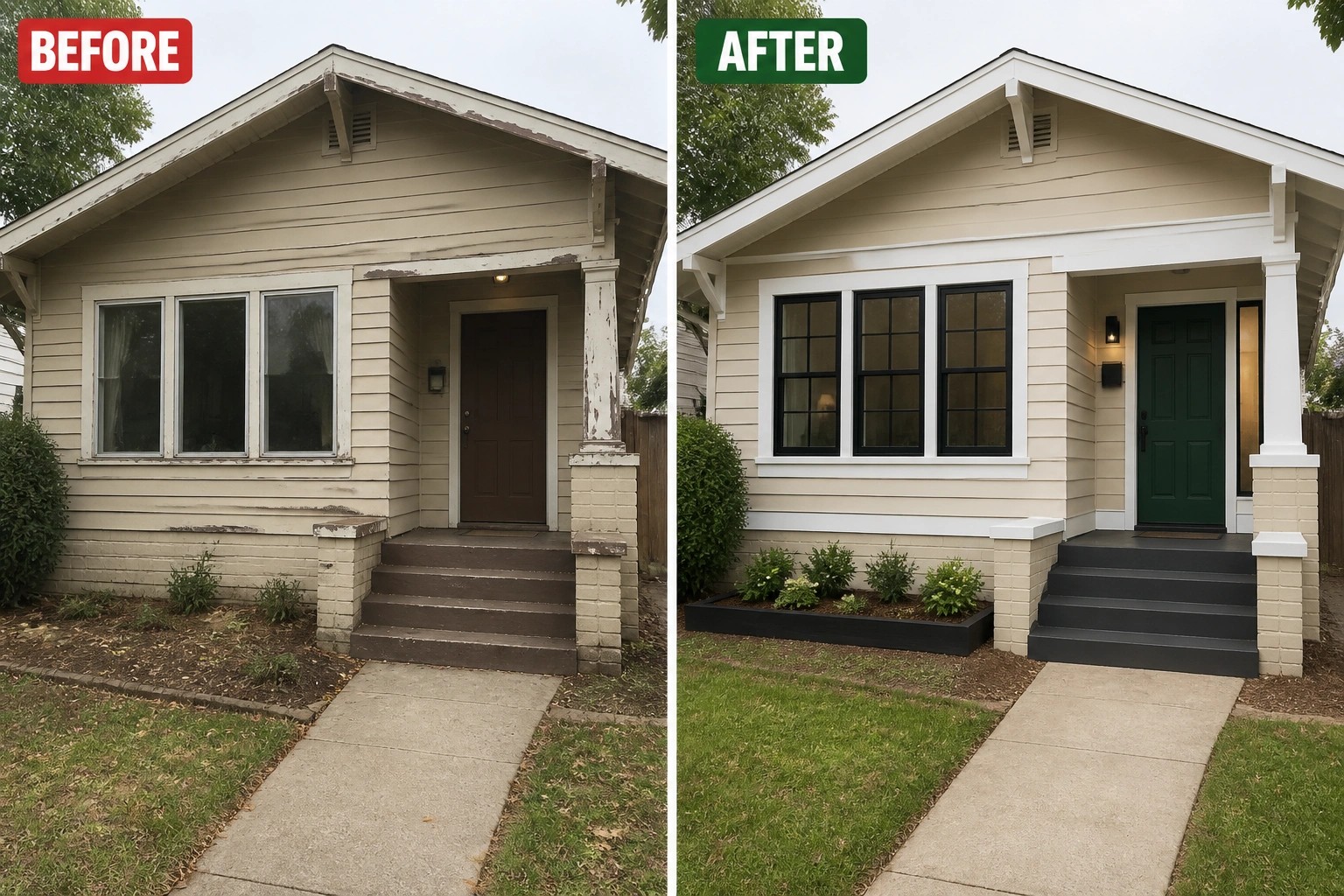
I often notice how the front of a house can feel a bit neglected when the trim and windows look worn down over time.
Updating those details along with the entry can shift the whole look in a way that feels more intentional without a major project.
Small changes add up quickly here.
It is satisfying to see homes where small adjustments to the facade make the place seem better maintained and more like someone actually lives there.
I would probably start by testing new trim ideas on my own house to see what works best.
Update Trim And Window Frames To Strengthen The Entry
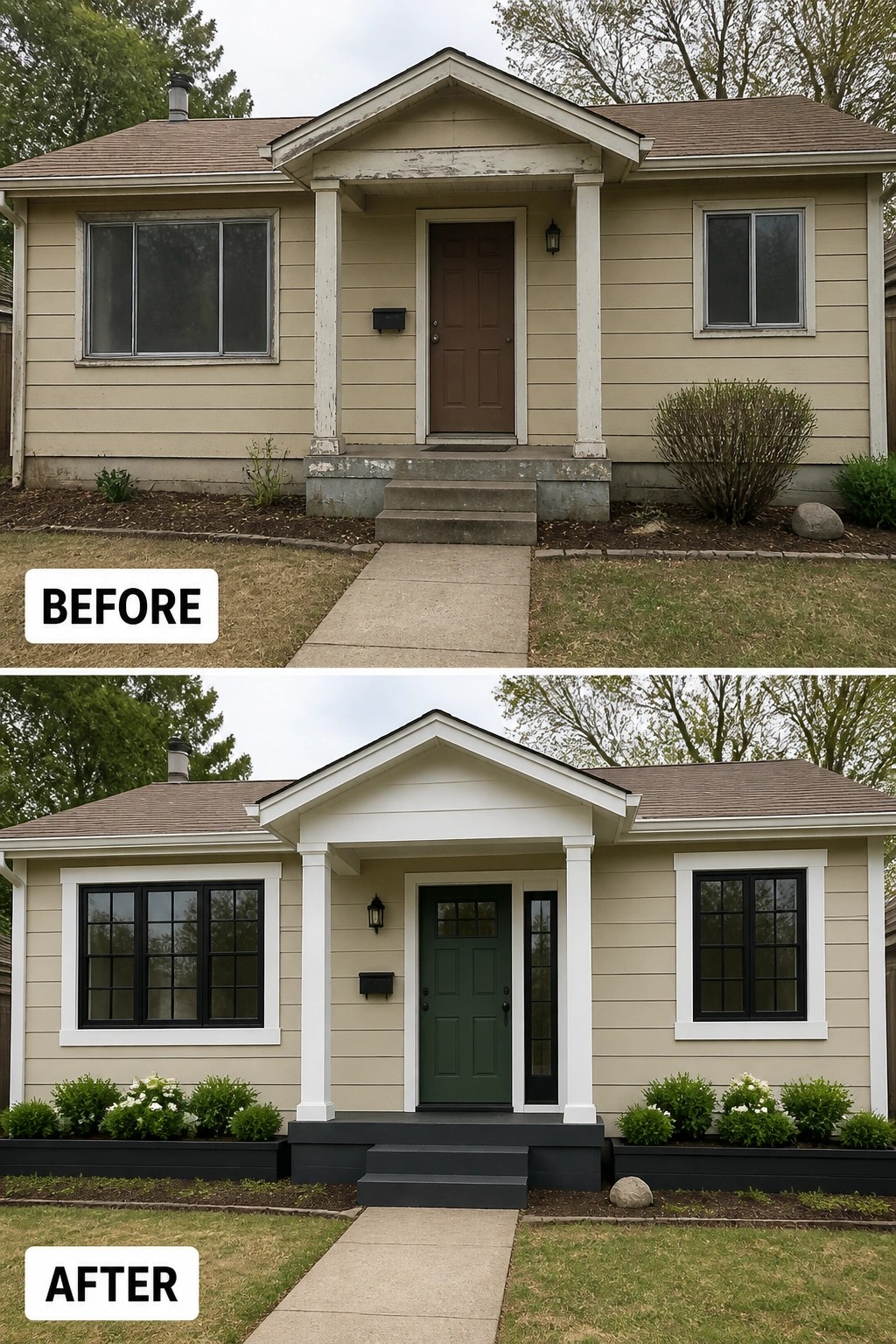
Focusing on trim and window details can make a plain house exterior feel more finished. Here the trim was painted crisp white and the windows were given black frames. The door was changed to a deep green while the base and steps were painted dark. These simple updates create clearer lines and draw attention to the entry.
This idea works best on homes with basic siding and a centered front door. Choose trim and frame colors that contrast with the siding so the windows stand out. Keep the planting low and simple along the front so it supports the entry without competing with it. The same approach can be used on many ranch or traditional homes where the goal is better curb appeal without a full renovation.
Add Shutters And Window Boxes To Refresh A Brick Exterior
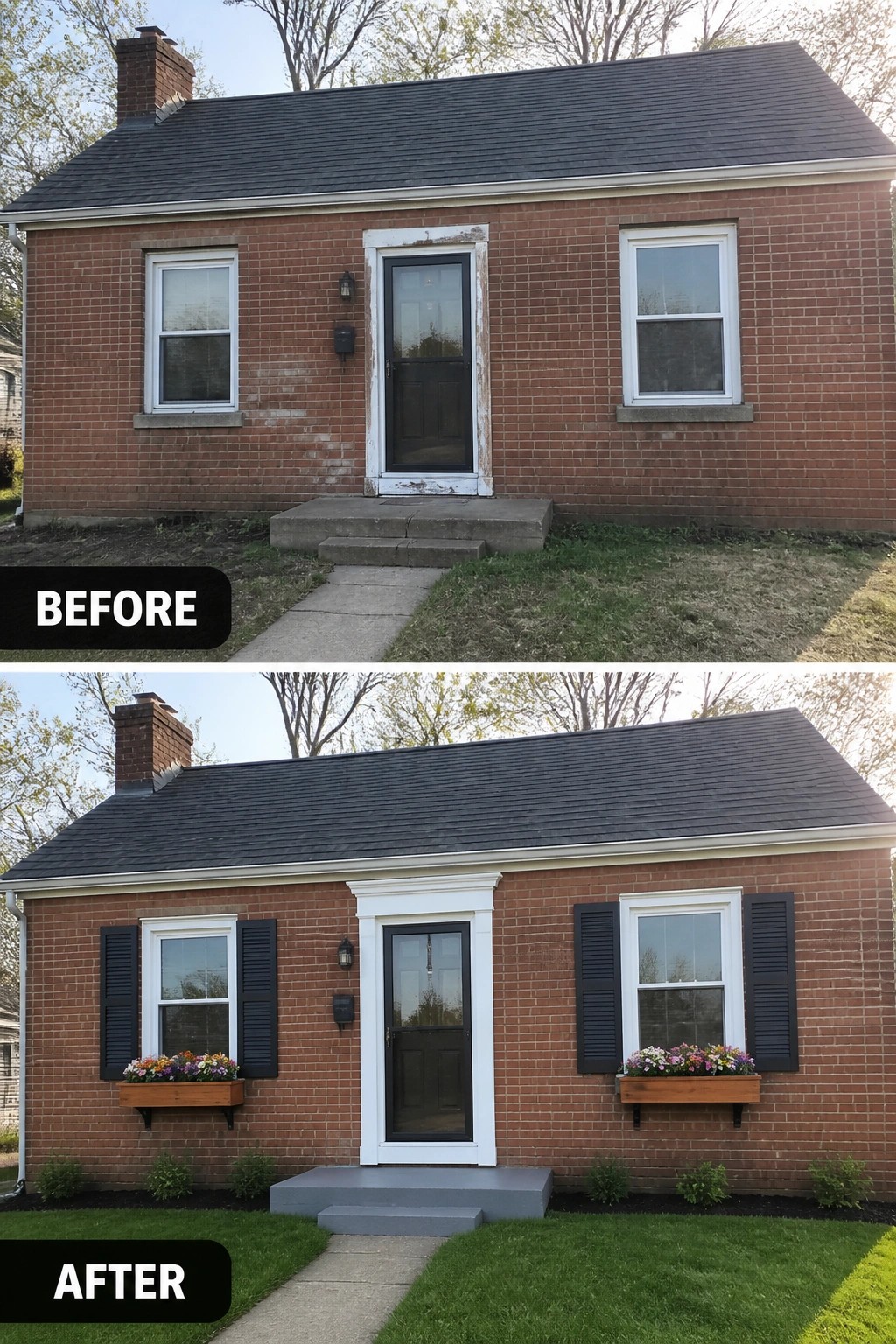
A plain brick house often looks unfinished when the windows sit bare. Adding shutters and window boxes gives the front a clearer structure and draws attention to the entry without changing the brick itself.
This idea works best on smaller homes where the windows are the main feature. Choose a dark shutter color that stands out against the brick, and keep the boxes low so they do not block light or require constant upkeep.
Update Brick Exteriors With Paint And Trim
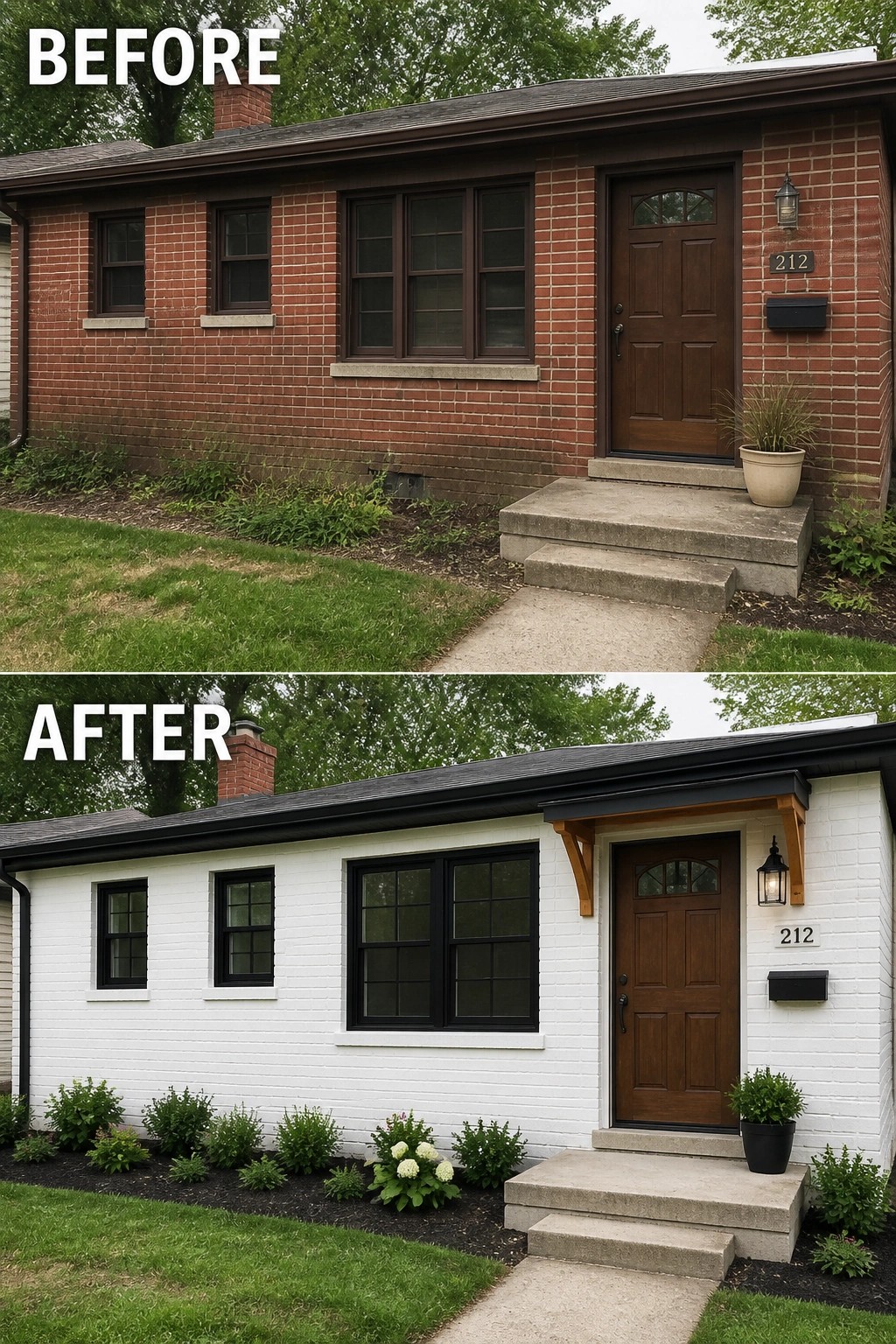
Painting brick can completely change how a house reads from the street. In this case the dark brick and brown trim made the home feel heavy and dated, while the white paint and black window frames opened it up and gave it a cleaner shape. The new brackets at the entry also help the door feel more intentional without any major construction.
This approach works well on smaller brick homes where the original color has faded or feels too dark. Choose a bright white or soft off-white for the main body, then use black or a deep charcoal on the windows and trim to create contrast. Keep the changes focused on the front facade first so the update stays affordable and easy to maintain.
Add A Covered Entry To A Plain Facade
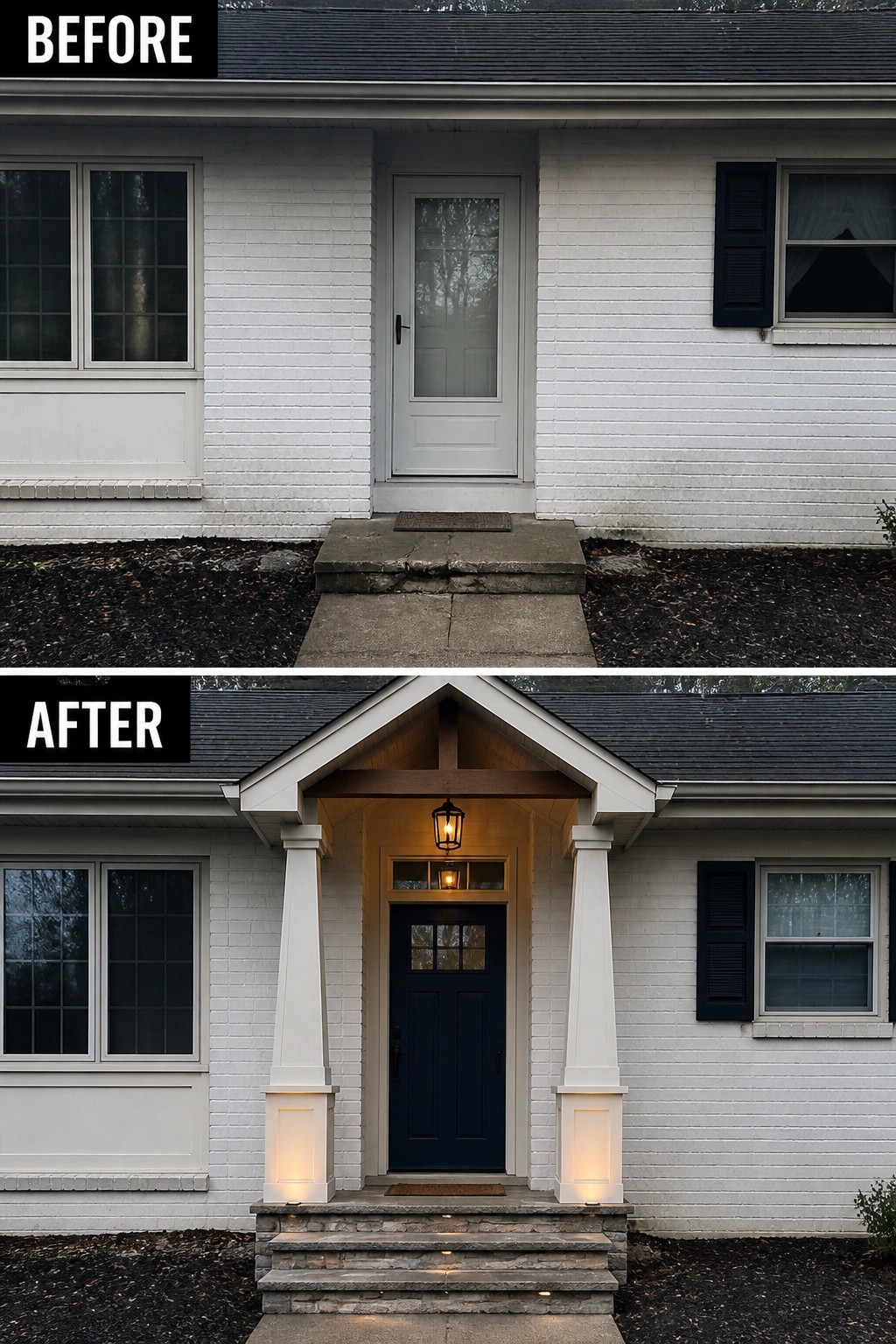
Many houses have a flat front that feels unfinished because there is nothing to mark where the door actually belongs. Adding a small gable with columns and a light overhead gives the entry a clear shape and makes the whole house feel more intentional. The change works because it turns a plain opening into something that looks built in rather than just placed on the wall.
This idea suits homes with simple brick or siding where the door sits flush with the facade. Start with the roofline and posts first, then add lighting at the base of the columns so the steps feel safer at night. Keep the scale modest so the new structure does not overwhelm the rest of the house.
Replace Small Windows With Larger Ones For Better Curb Appeal
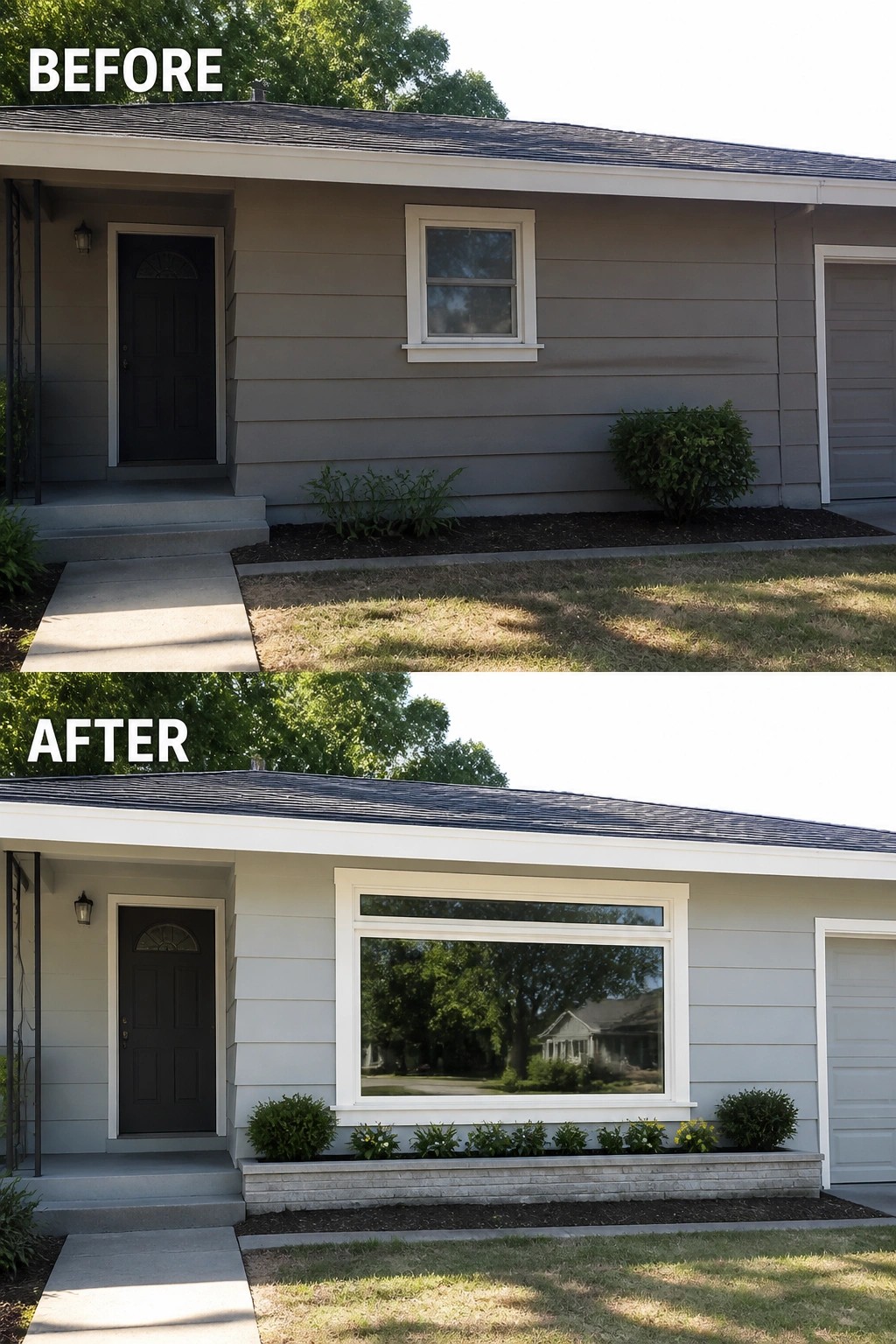
Many homes from a certain era have windows that feel too small for the wall space. Swapping the original small window for a much larger one with clean white trim instantly changes how the front reads. The bigger glass brings in more light from inside and makes the whole facade feel more open without any other major changes.
This approach works well on ranch homes or any simple one-story house where the siding looks flat. Focus on the window first, then add a low planter bed beneath it to finish the look. Keep the trim color crisp and match it to the existing door or garage for a cohesive result.
Add Trim Details To Strengthen A Plain Entry
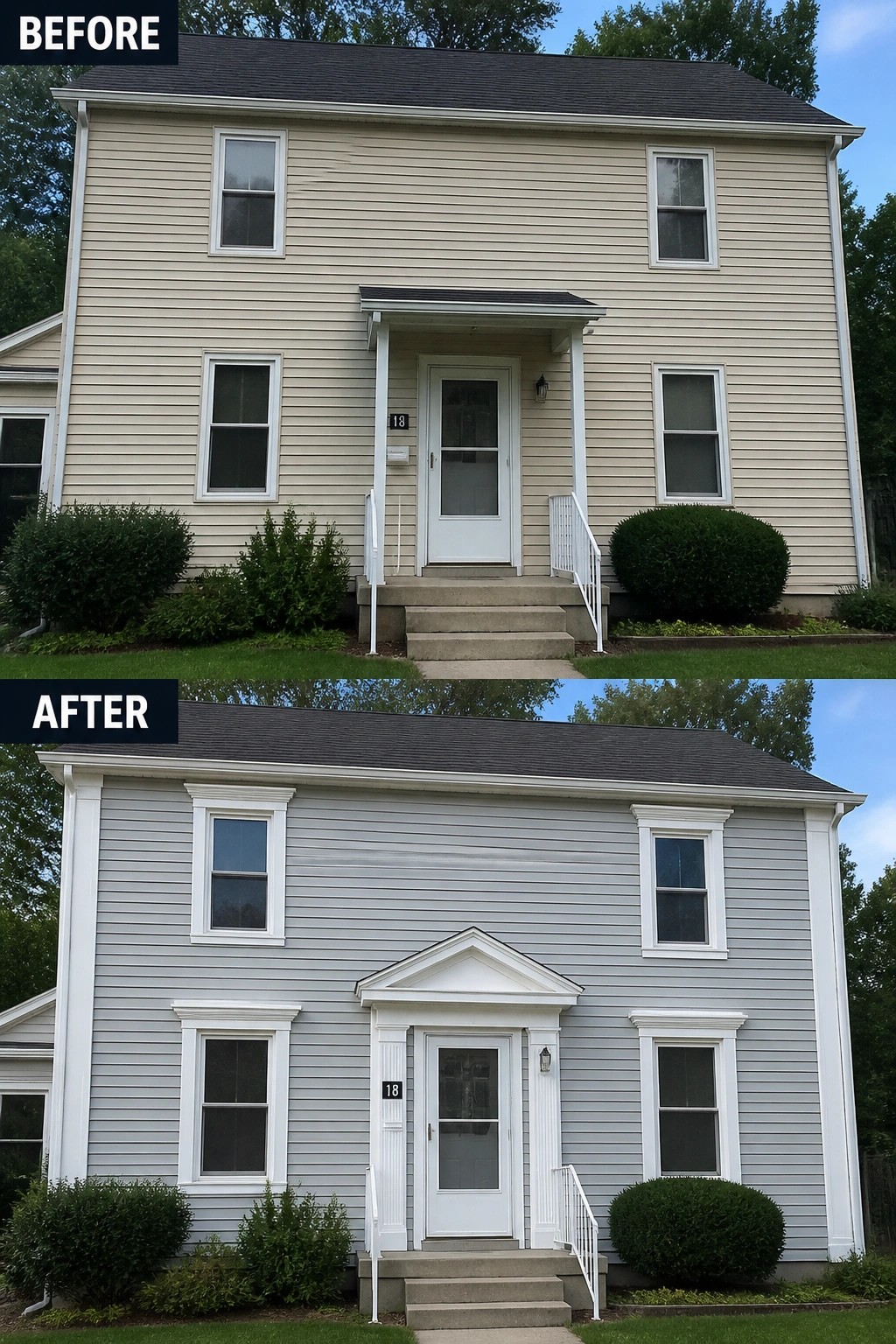
A simple color change on the siding combined with a new pediment over the door can make a flat facade feel much more finished. The beige house looked basic and a little lost, while the gray siding and added gable give the entry a clear focal point without any major construction.
This approach works well on two-story homes with a centered door and little existing detail. Start with the paint color first, then add basic trim pieces around the door and a small pediment if the roofline allows it. Keep the rest of the trim white so the new shape stands out.
Add A Bay Window To Give A Flat Wall More Character
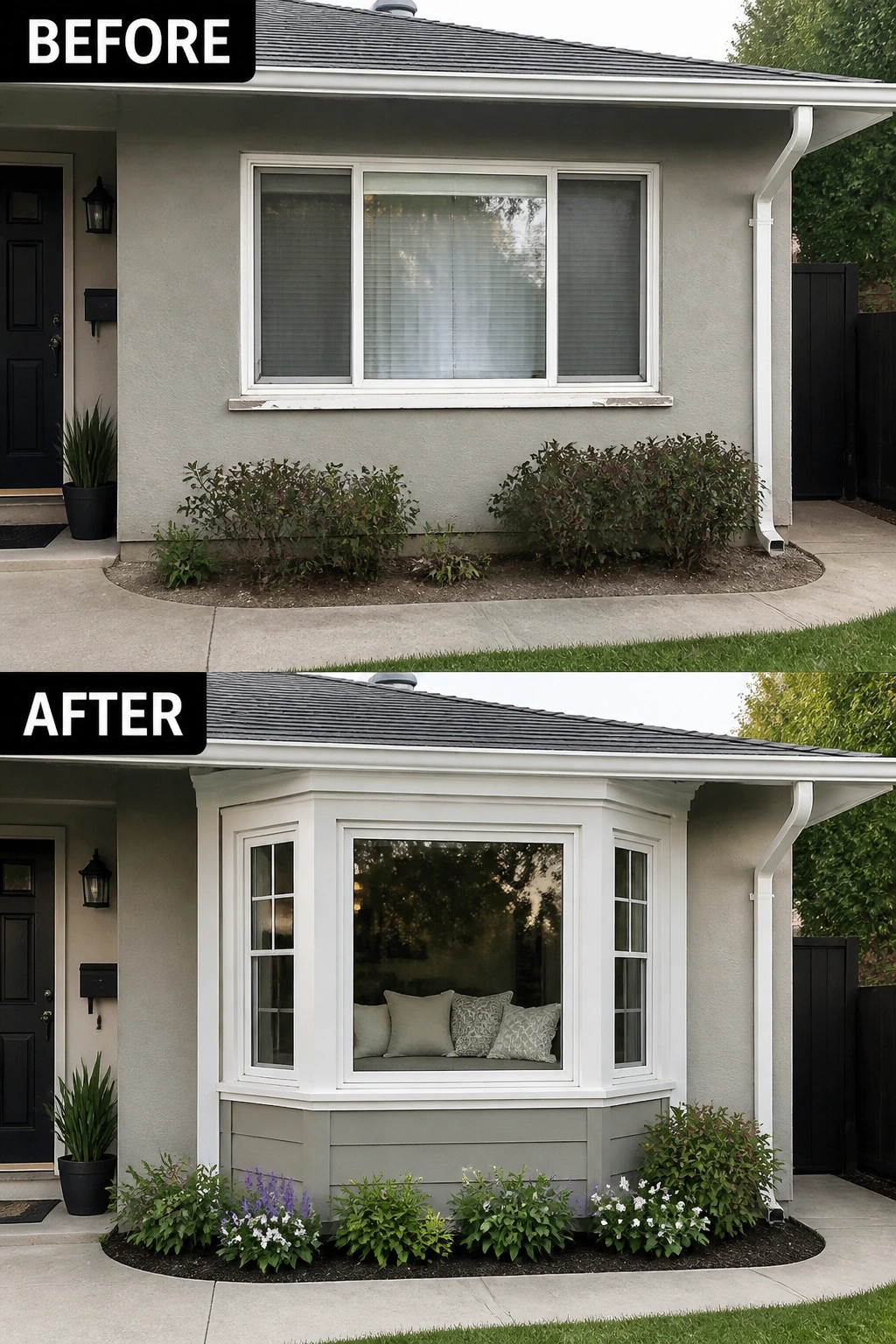
A simple change like swapping a basic window for a bay window can make a big difference on a plain house exterior. The new window pushes out from the wall, adds white trim, and creates a small seating area inside that gives the facade real depth without any major structural work.
This idea works well on homes with long, flat walls where the windows feel too small or plain. Keep the scale reasonable so it does not overwhelm the rest of the front, and match the trim color to other details like the door or gutters for a cleaner look.
Frame A Plain Entry With Trim And Columns
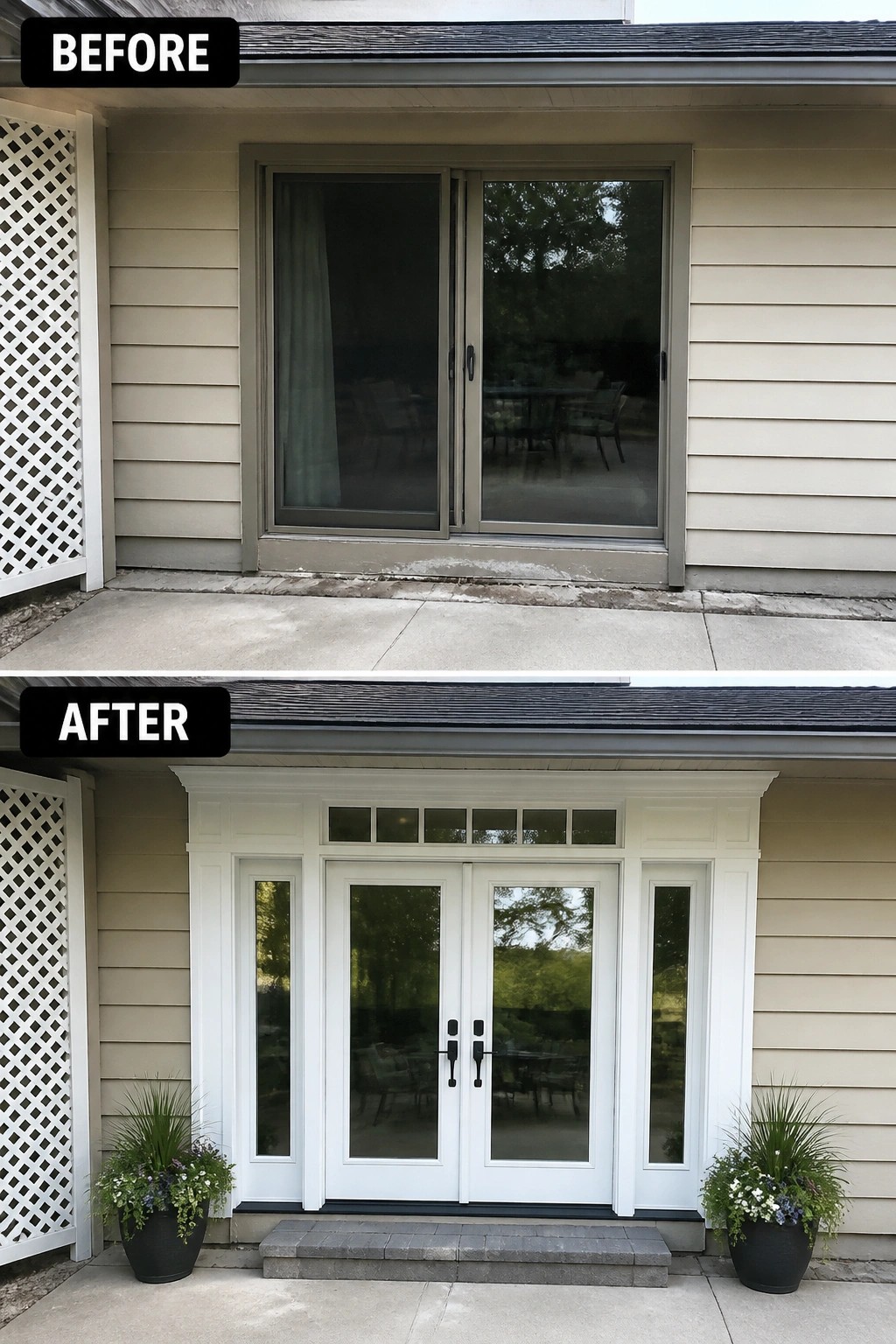
Adding trim and columns around a basic set of doors can make a flat facade feel much more finished. In this case, the original sliding doors sat almost flush with the siding and had little definition. The update creates a clear entry by building out white trim, adding sidelights, and giving the doors a proper surround that stands out from the rest of the wall.
This approach works especially well on homes with simple siding where the entry feels like an afterthought. Start with the area right around the main doors rather than trying to redo the whole front at once. Keep the trim style consistent with the house, and use a couple of large planters on either side to help anchor the new look.
Update The Garage Door To Refresh The Facade
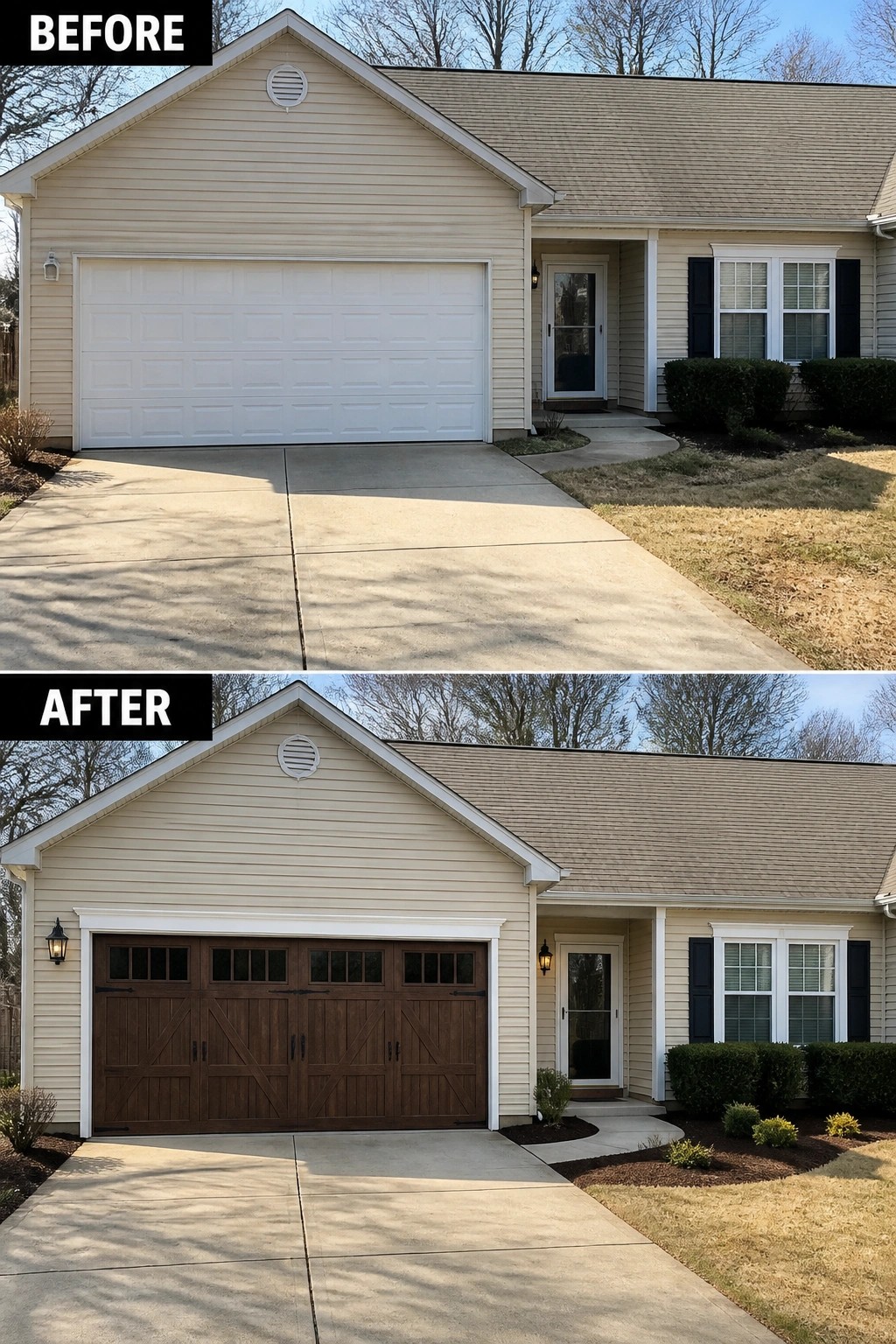
A large garage door can make the front of a house feel flat and basic. Replacing a plain white door with one that has a wood tone, small windows, and simple hardware gives the whole facade more shape. Adding a pair of lights beside the entry also helps tie the door into the rest of the house.
This approach works well on homes where the garage takes up most of the front view. Focus on the door first, since it covers so much space, then add lights that match the style of the house. The change stays practical because it improves curb appeal without needing new siding or major construction.
Frame The Entry With New Trim And A Better Door
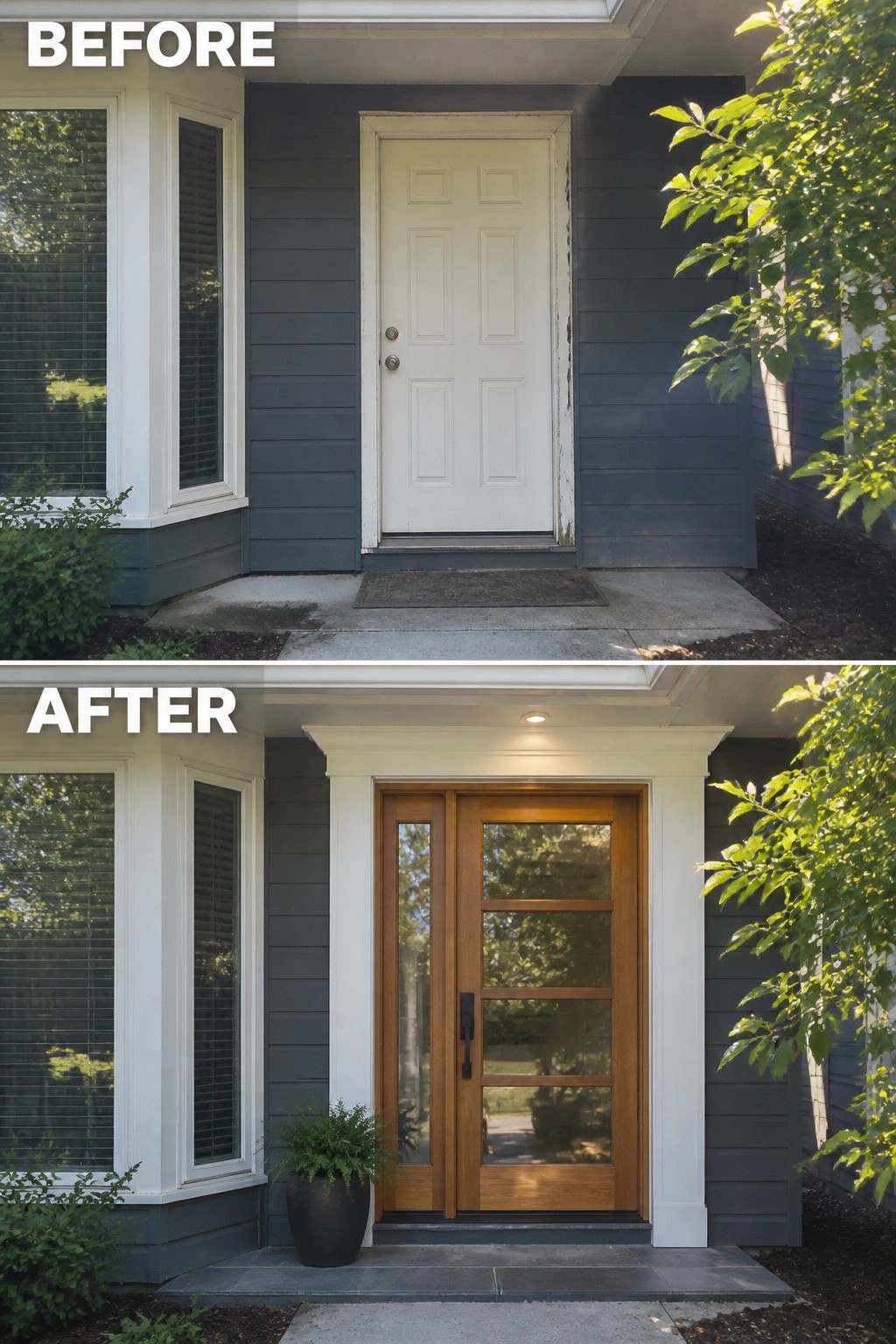
A plain white door on dark siding can make the whole front of a house feel flat and forgettable. Swapping it for a wood door with glass panels and adding clean white trim around the opening gives the entry a clear focal point without any major construction.
This approach works best on homes where the siding is already in good shape but the entry looks unfinished. Keep other changes small, such as one potted plant and updated steps, so the new door and trim stay the main feature.
Refresh A Plain Exterior With Dark Trim And Door Color
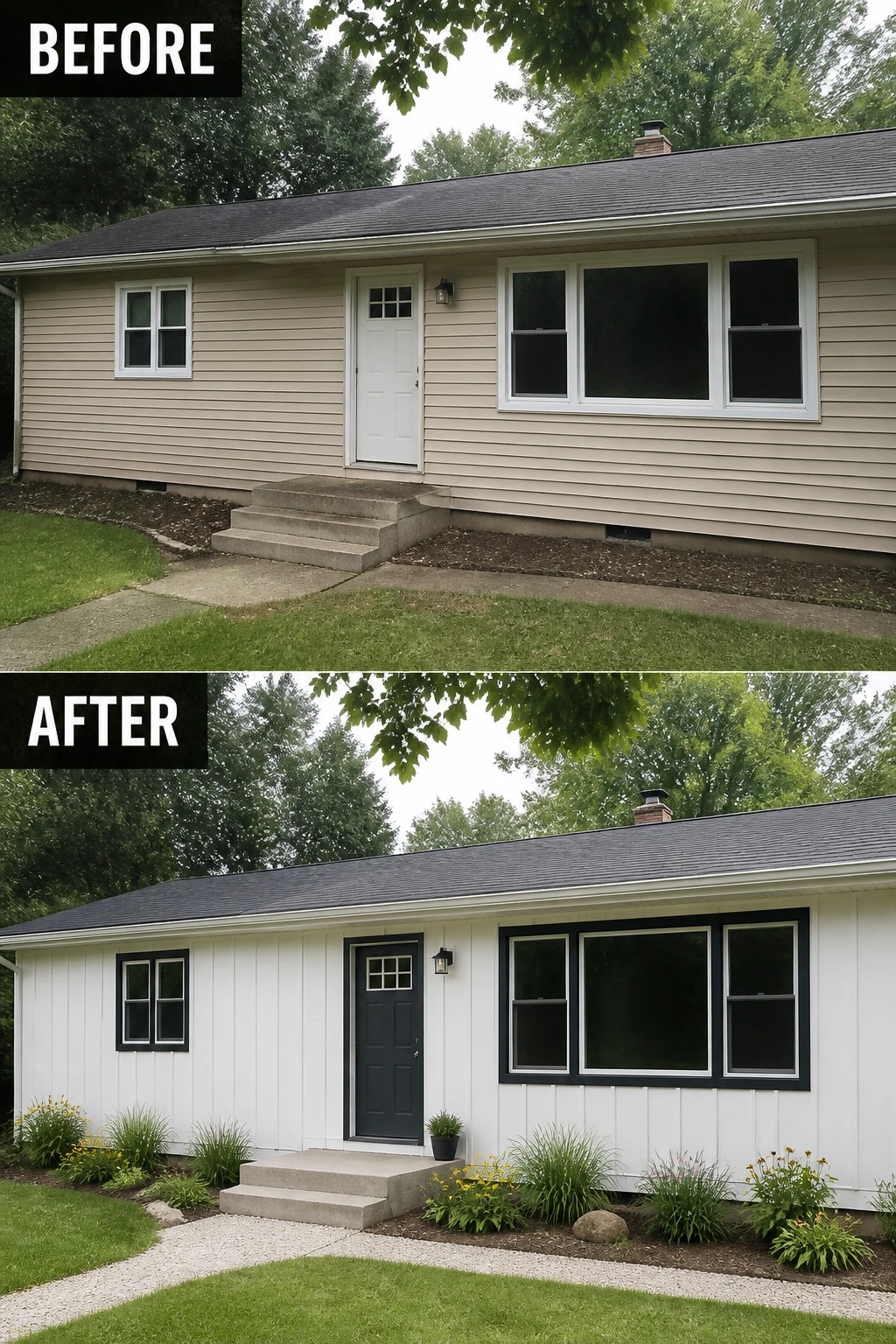
A simple color change on the siding combined with darker trim around the windows and door can make an older ranch feel more defined. The beige walls and white frames in the before photo blended together and gave the house a flat look, while the after version uses white siding and black trim to make the windows and entry stand out.
This idea works best on homes that already have decent window placement but need more contrast. Choose one trim color that stands out against the siding, then match the door to it so the front feels intentional. Keep any added plants low and simple so the new trim and door stay the main focus.
Add Trim And A New Door To Refresh A Plain Facade
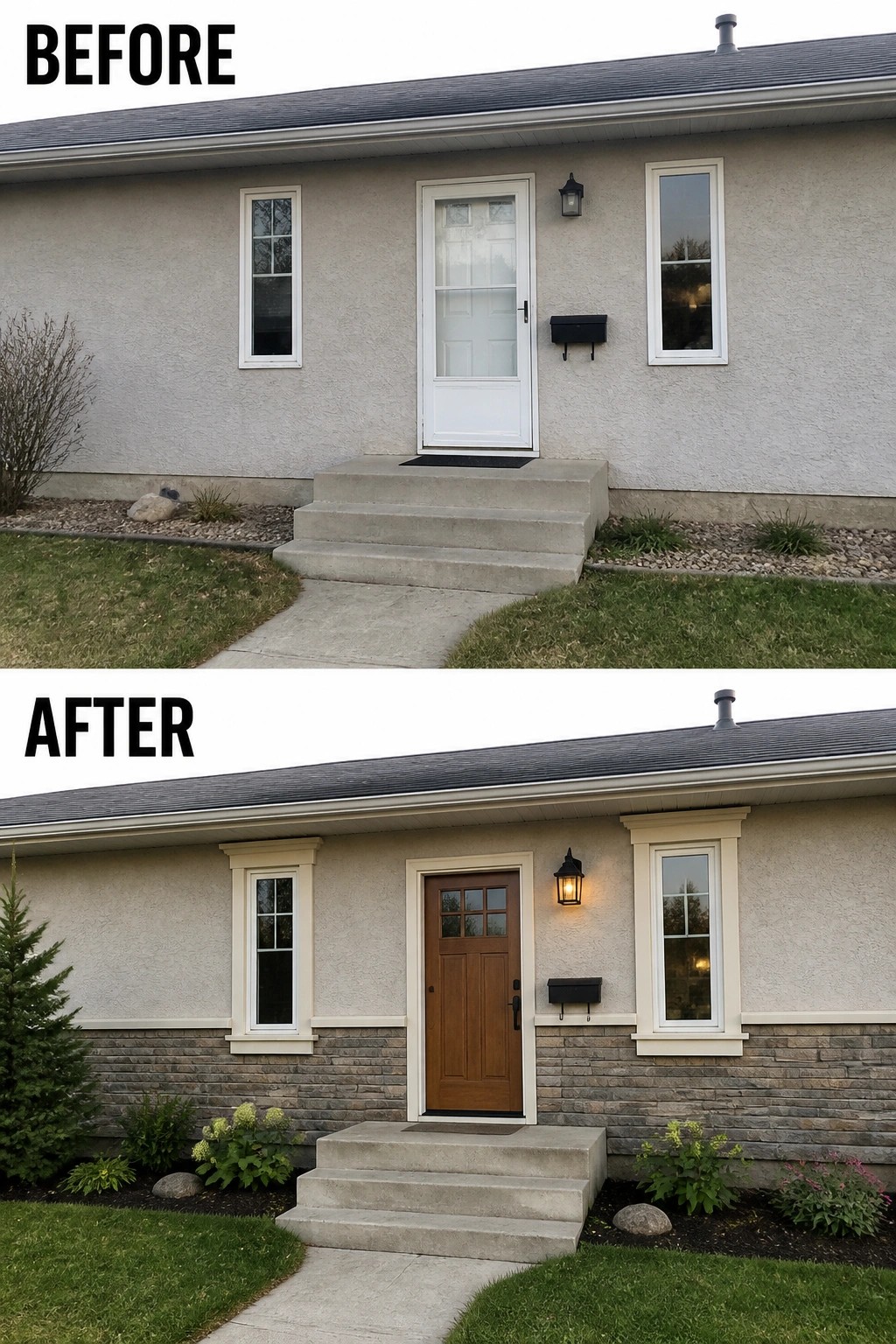
Many houses with simple stucco exteriors end up looking flat because the windows and door have no definition. Adding trim around the openings and switching to a wood door with a stone base gives the front a clearer structure and makes the entry feel more intentional.
This idea works best on homes where the architecture is already sound but the details are missing. Focus first on the door and window trim since those changes deliver the most impact without major construction. Keep the trim color close to the siding so it blends rather than fights with the rest of the house.
Refresh A Dated Exterior With New Paint And Trim
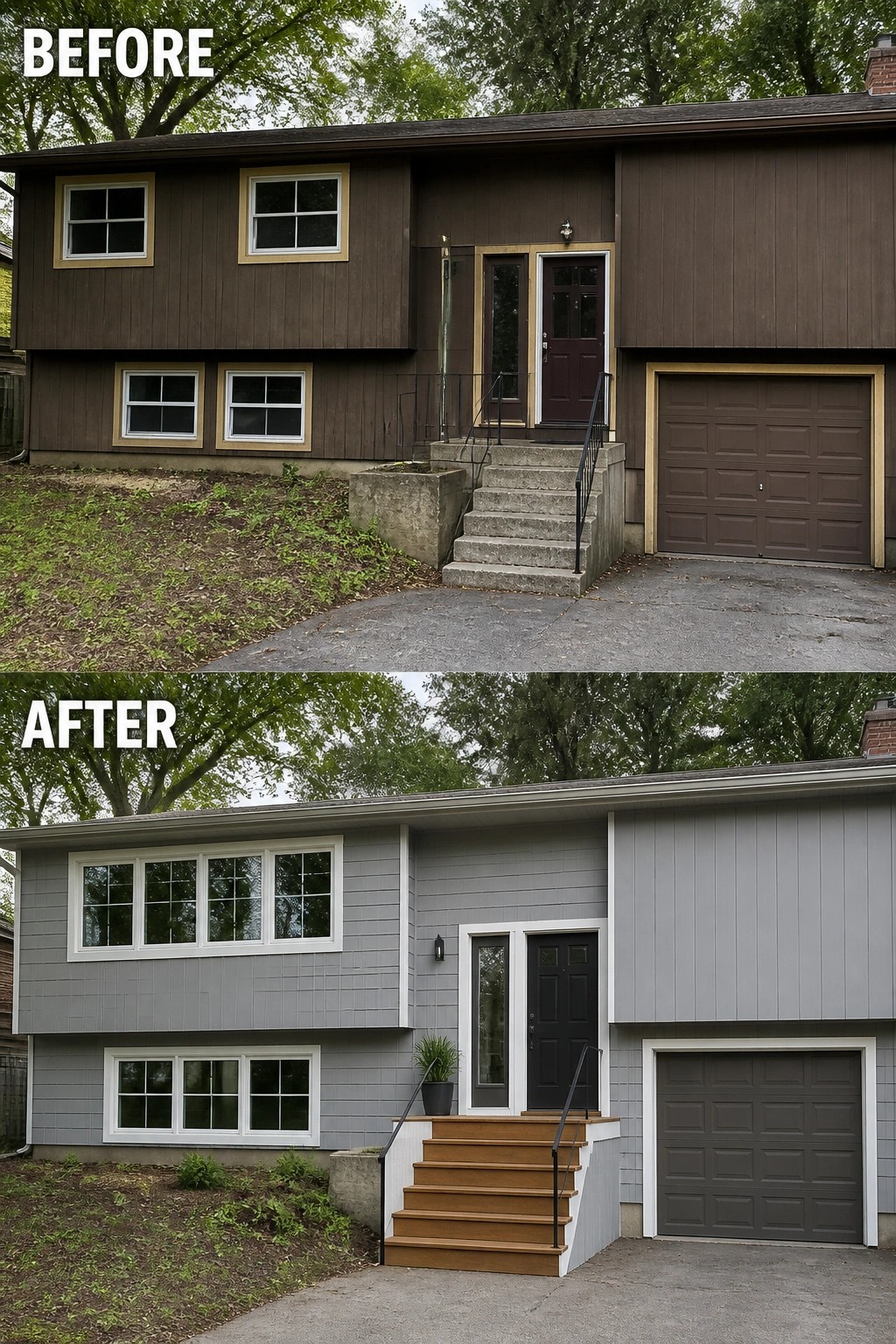
Many homes from earlier decades end up looking heavy because of dark siding and mismatched trim around the windows and doors. Changing the main color to something lighter and updating the trim gives the whole front a cleaner, more current look while keeping the original structure.
This works especially well on split-level houses where the shape is still good but the finishes feel dated. Start with the siding color first, then pick trim that frames the windows and door without adding extra layers. The same idea can help many homes that just need a surface refresh before any larger changes.
Add Shutters And A New Door For A Fresher Look
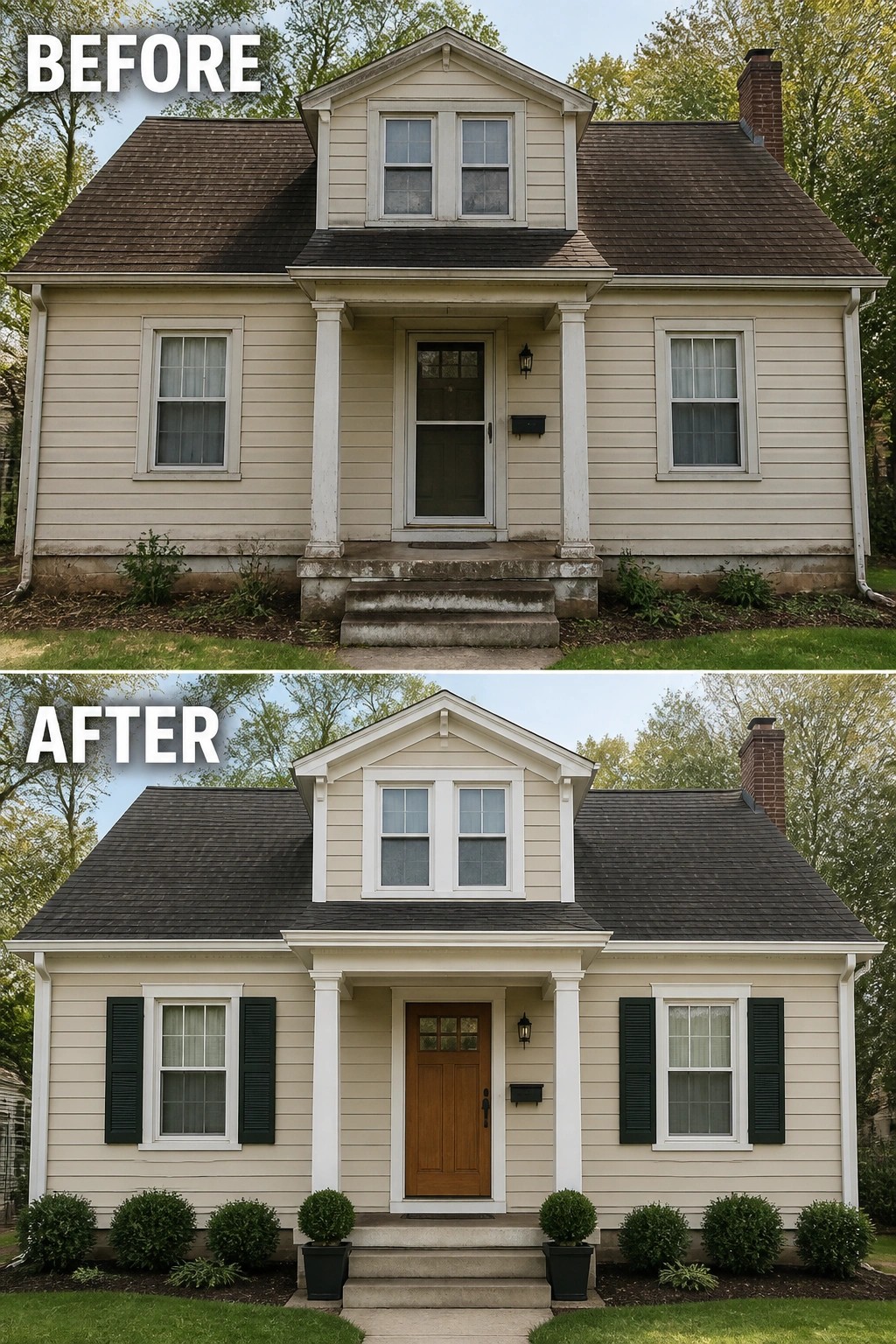
A plain house front can feel unfinished when the windows and entry lack any detail. Adding shutters to the windows and replacing the door with a warmer wood version gives the facade more shape and makes the entry feel more intentional.
This works best on homes with simple siding where you want quick impact without a full repaint. Match the shutter color to any existing trim so the changes feel connected, and keep the rest of the landscaping light so the new details stay the focus.
Refresh The Entry With Trim And A New Door Color
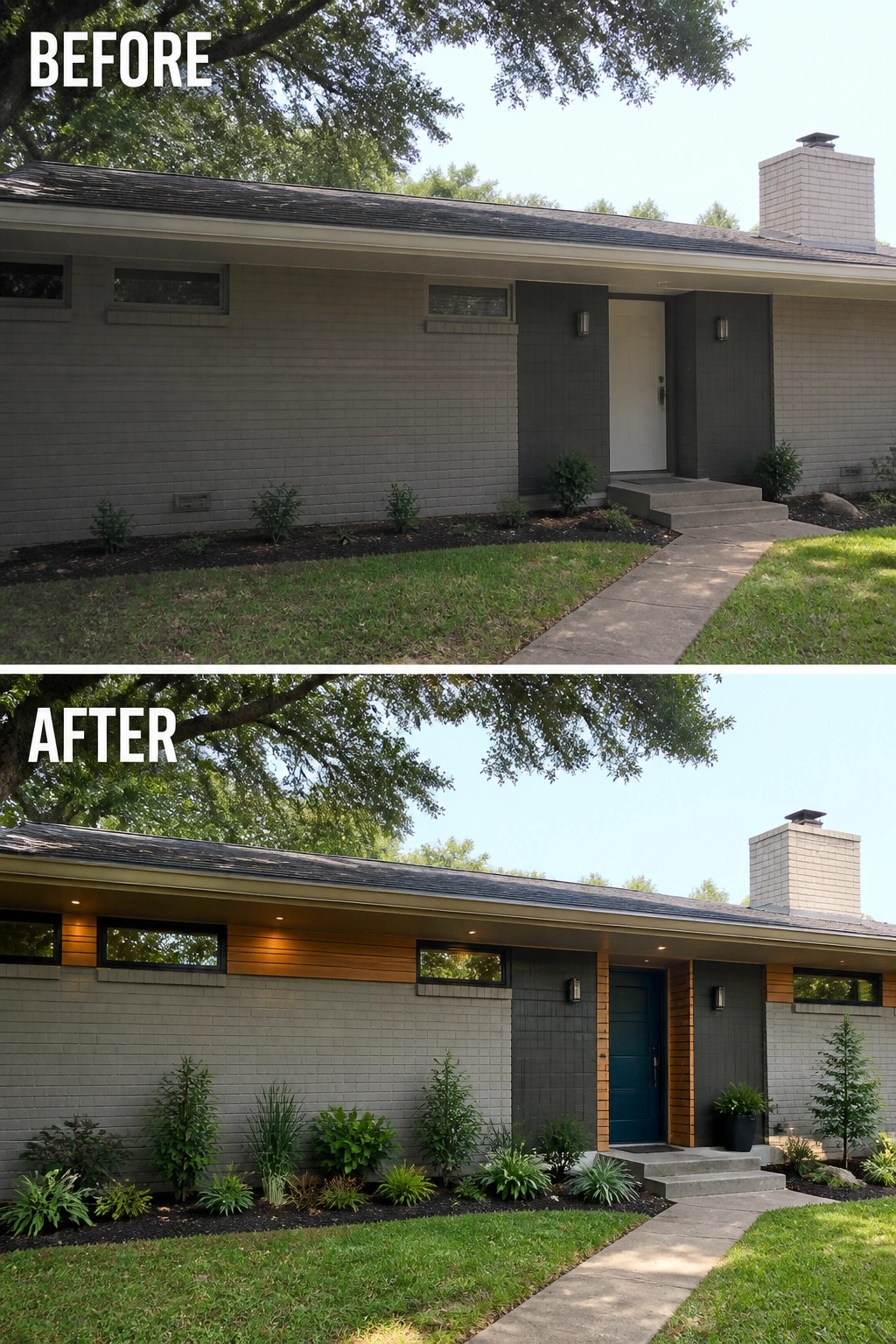
Many homes have a flat facade that feels dated once you look at it for a while. Adding simple wood trim and changing the door color gives the entry a clear focal point without major construction. The before photo shows a plain gray brick front with little definition around the door. The after photo shows how the added trim and deeper door color pull the whole front together.
This approach works best on homes with straight rooflines and basic brick or siding. Pick one accent material and repeat it in a few spots so the update feels planned instead of busy. It is a good first step if you want to improve curb appeal before thinking about larger changes like new windows or siding.
Add A Simple Porch Structure To Frame The Entry
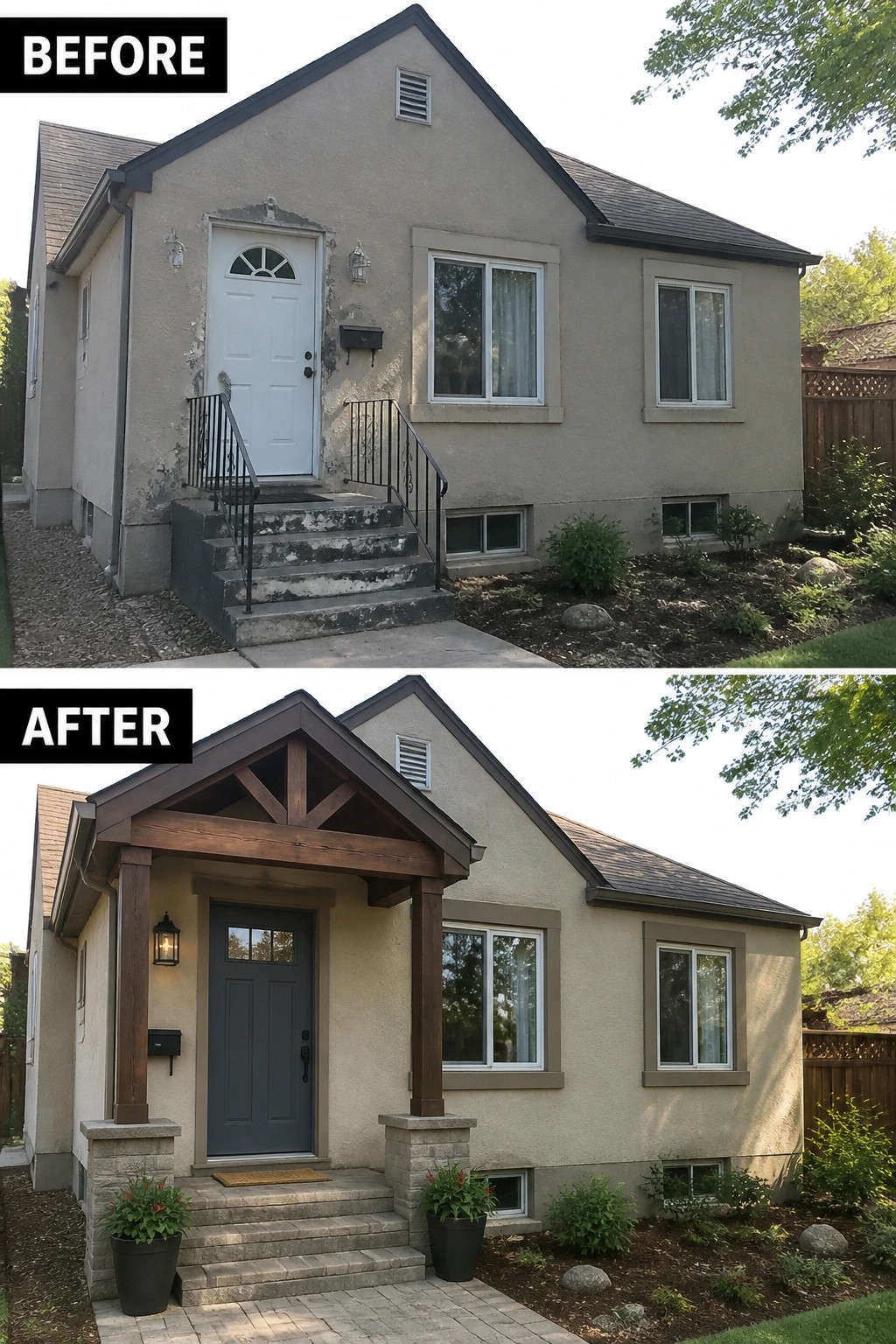
Many houses have a front door that sits flat against the wall with little to mark it as the main entrance. Adding a small gabled porch with wood posts and beams gives the door a clear frame and makes the whole facade feel more finished. The new overhang and columns create depth that was missing before.
This approach suits homes with plain stucco or siding where the entry needs more presence. Use wood that matches the roof color, keep the posts substantial, and add simple stone bases if the budget allows. The change stays modest but shifts how the house reads from the street.
Refresh The Entry With Paint And Trim Updates
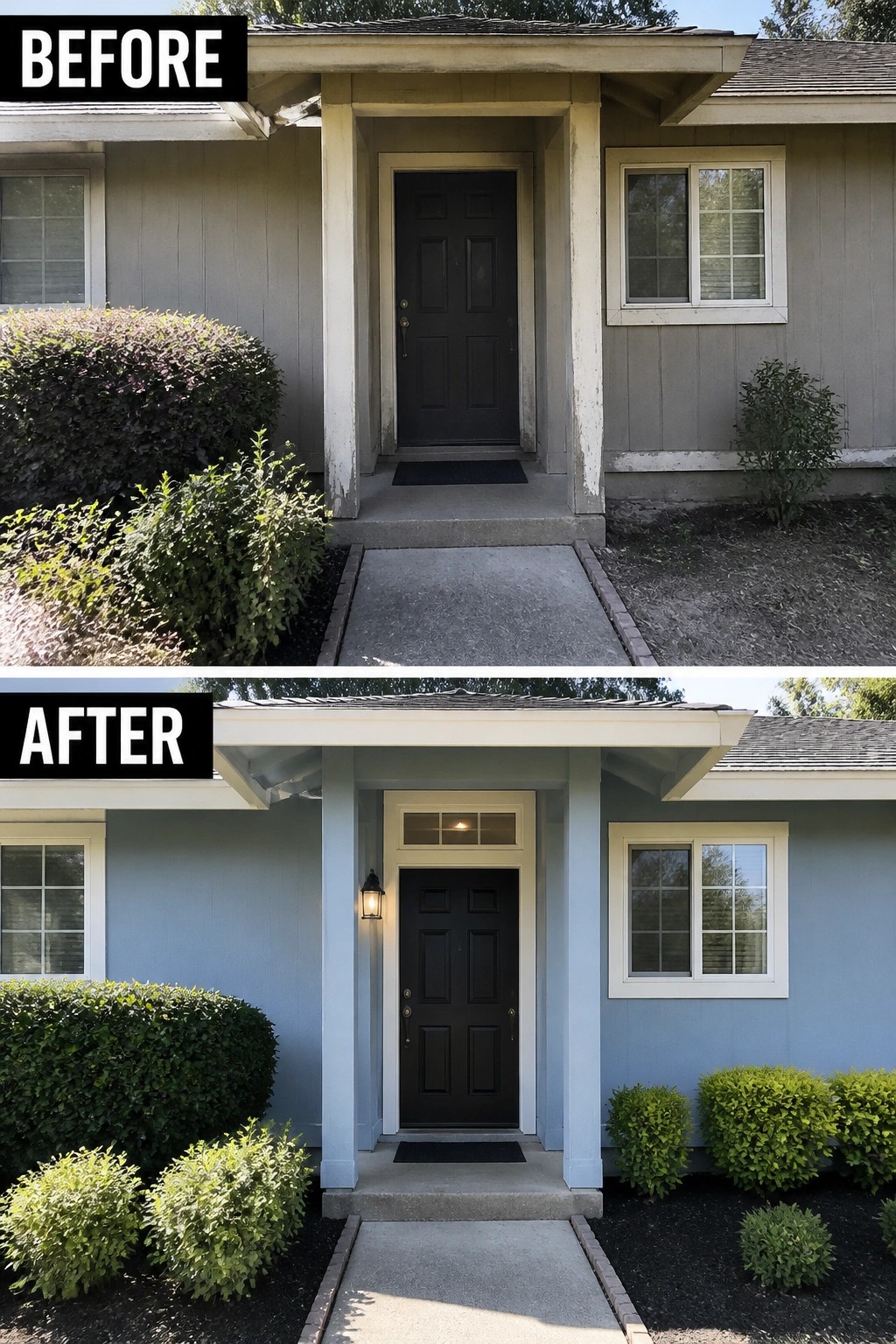
Many homes end up looking tired once the original paint fades and the trim starts to peel. Changing the siding to a soft blue and adding clean white trim around the door and windows gave this entry a much sharper look without any major construction.
This kind of update works best on houses that still have good bones but need a quick refresh. Start with the area around the front door since that draws the eye first, and pick a color that works with the roof and any existing hard surfaces. Keep the trim simple and consistent so the entry feels intentional rather than busy.
Add Shutters And Update The Door Color
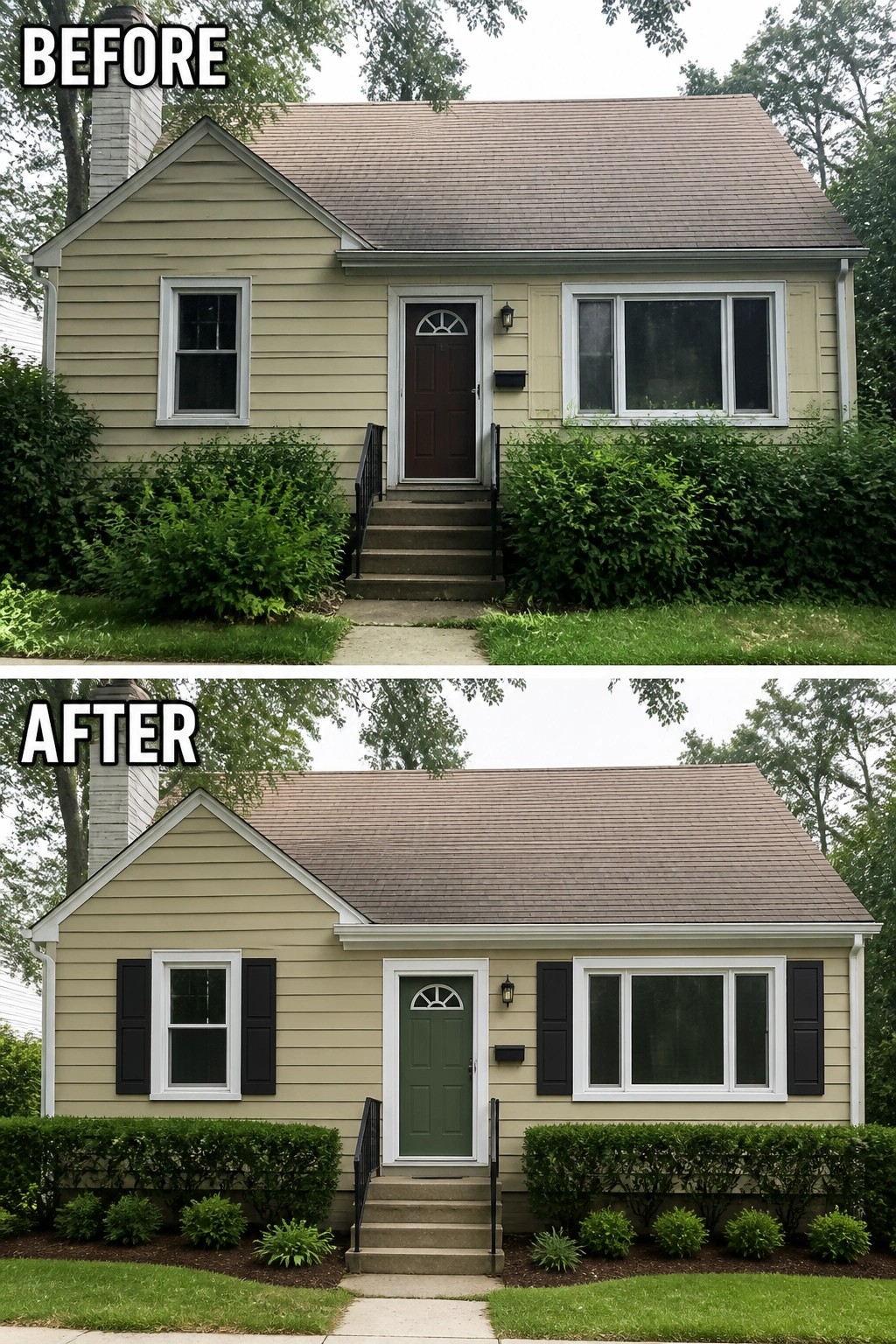
Adding shutters and changing the front door color gives a plain house exterior more structure without any major construction. The before photo shows a simple facade with bare windows and a dark brown door that blends into the siding. In the after photo the black shutters define each window and the green door creates a clear focal point at the entry.
This approach works well on ranch-style homes or any facade that feels flat. Start with the windows that sit closest to the door so the changes feel balanced. Choose a door color that contrasts with the siding but still fits the neighborhood, and keep the shutter color consistent across the front.
Add A Porch To Give Your Entry More Purpose
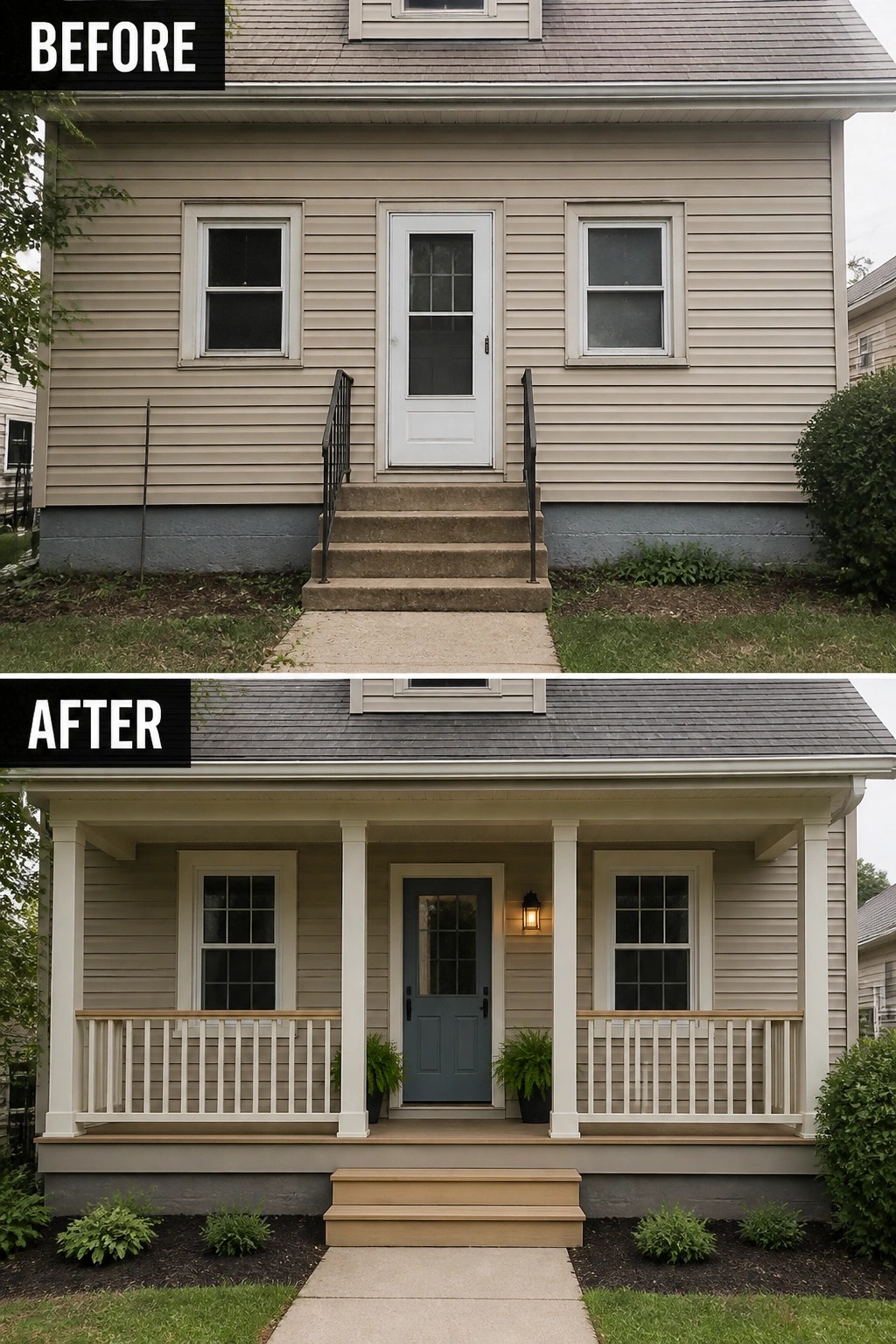
Many houses have just a set of stairs leading to the door with no real structure around it. Adding a porch changes that by creating a clear entry area that feels settled and intentional.
This approach works well on simple homes where the facade looks flat. Start with basic columns and railings in a style that matches the house, then use a stronger door color to pull the whole front together.
Update Windows And Trim For A Cohesive Look
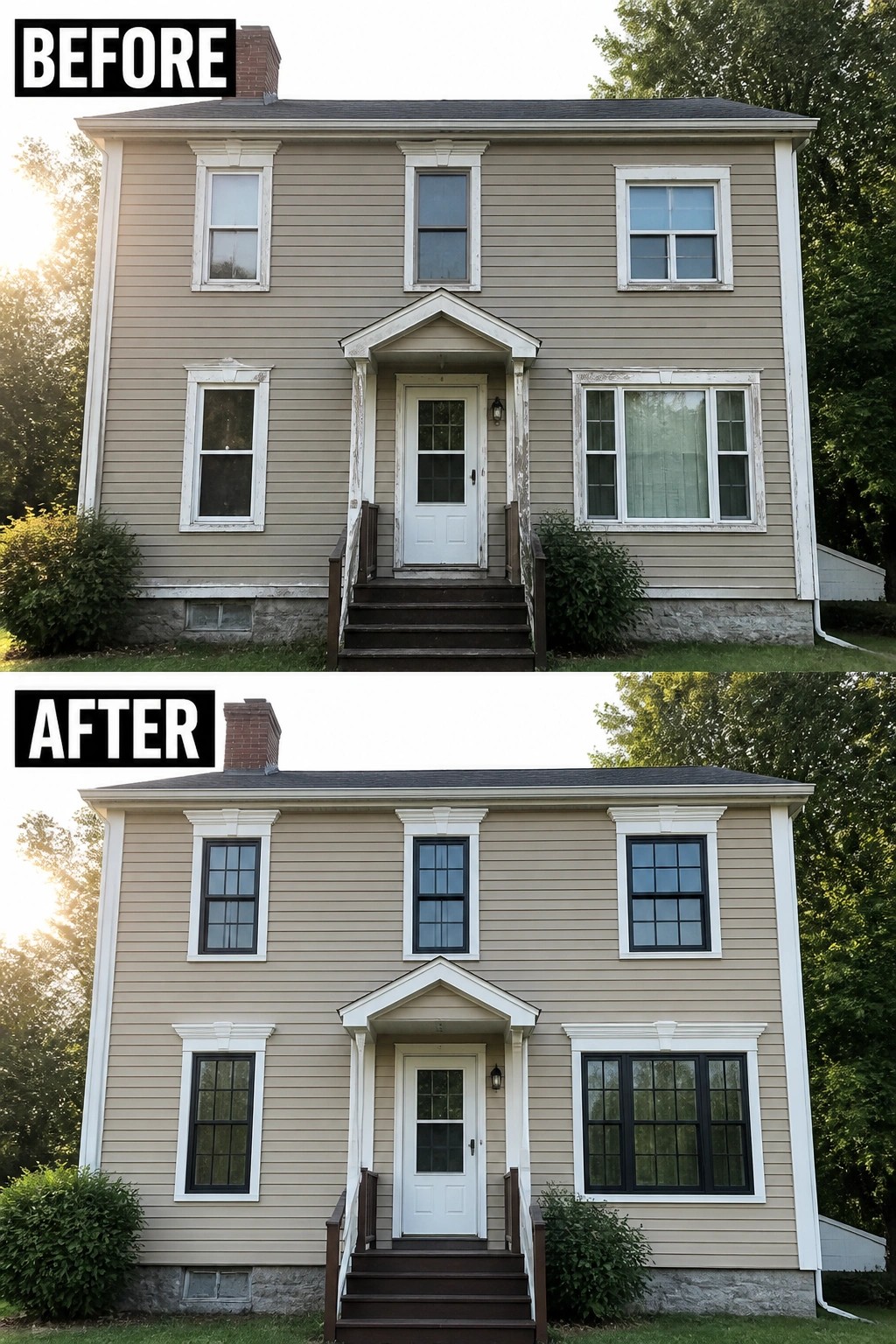
Many older homes end up with a mix of window styles over time, which can make the front of the house feel scattered. Swapping them for matching black frames and tightening up the trim gives the whole facade a cleaner, more intentional appearance without changing the siding or roof.
This approach works especially well on two-story homes where the windows are a big visual element. Focus first on the front elevation, pick one frame color that contrasts with the siding, and make sure the trim around the door and gable stays simple and consistent.
Upgrade Porch Columns To Give The Entry More Weight
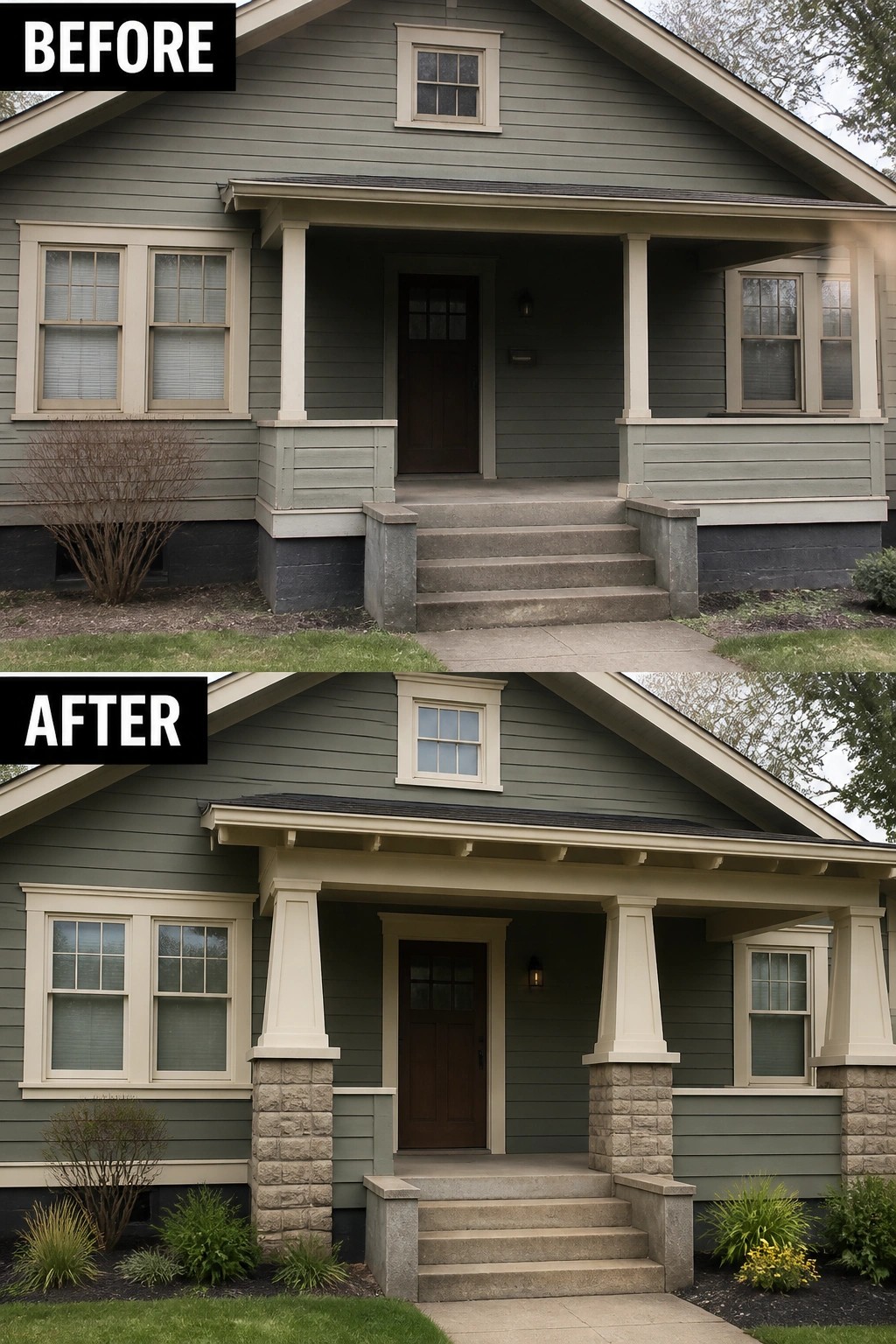
Thin columns often make a front porch feel light and unfinished even when the rest of the house is sound. Replacing them with thicker, more solid columns that sit on stone bases immediately changes how the whole facade reads. The new columns support the roof better visually and create a clearer sense of arrival at the door.
This approach works well on older homes that already have a porch structure but lack presence at the entry. Keep the scale realistic so the columns do not overwhelm the windows or siding, and match the base material to any existing stone or brick on the house. The rest of the update can stay simple since the columns now carry the main improvement.
Add Exterior Lighting To Highlight The Entry
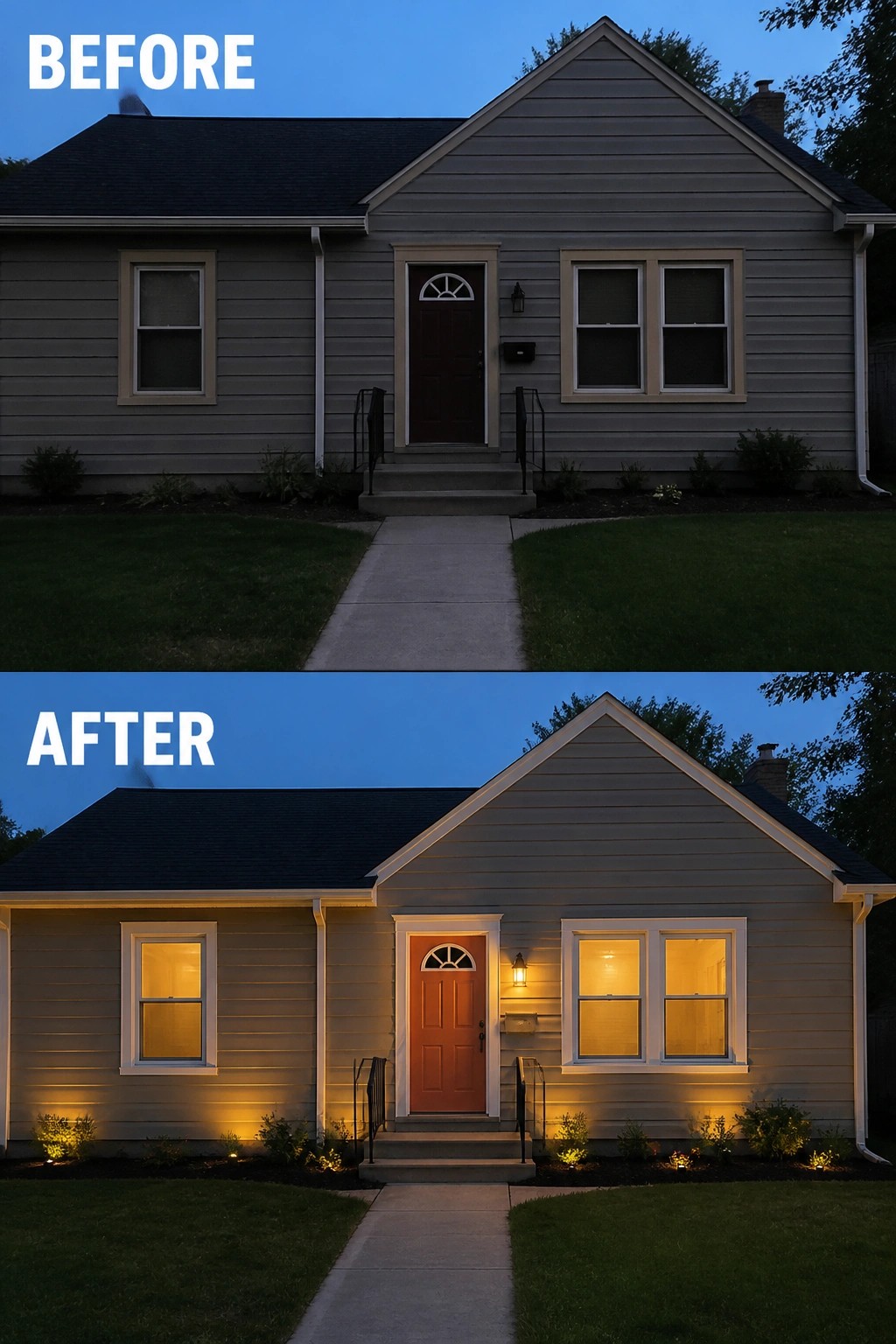
A simple way to improve curb appeal is to add targeted lighting around the front door and foundation. In this case the before photo shows a dark door and no lights at dusk, while the after shows warm lights on the shrubs and a brighter door that draws the eye straight to the entrance. The change makes the house feel occupied and welcoming instead of flat.
This idea works best on houses that already have decent windows and trim but look dull at night. Start with one or two fixtures beside the door and a few low lights along the planting beds. Keep the fixtures simple and the bulbs warm so the effect feels natural rather than harsh.
Frequently Asked Questions
Q: What if my windows still work but look dated next to the new trim ideas?
A: Keep the windows in place and build out the casing with thicker boards. This frames them better and makes the whole front feel updated without a full swap.
Q: How wide should the new trim be around the entry door?
A: Start with boards about five inches wide on each side. That width adds presence without overwhelming the door itself.
Q: Should the trim color match the door or stand apart from it?
A: Let the trim stay lighter or darker than the door so the entry reads as one clear feature. A soft contrast helps the details pop from the street.