

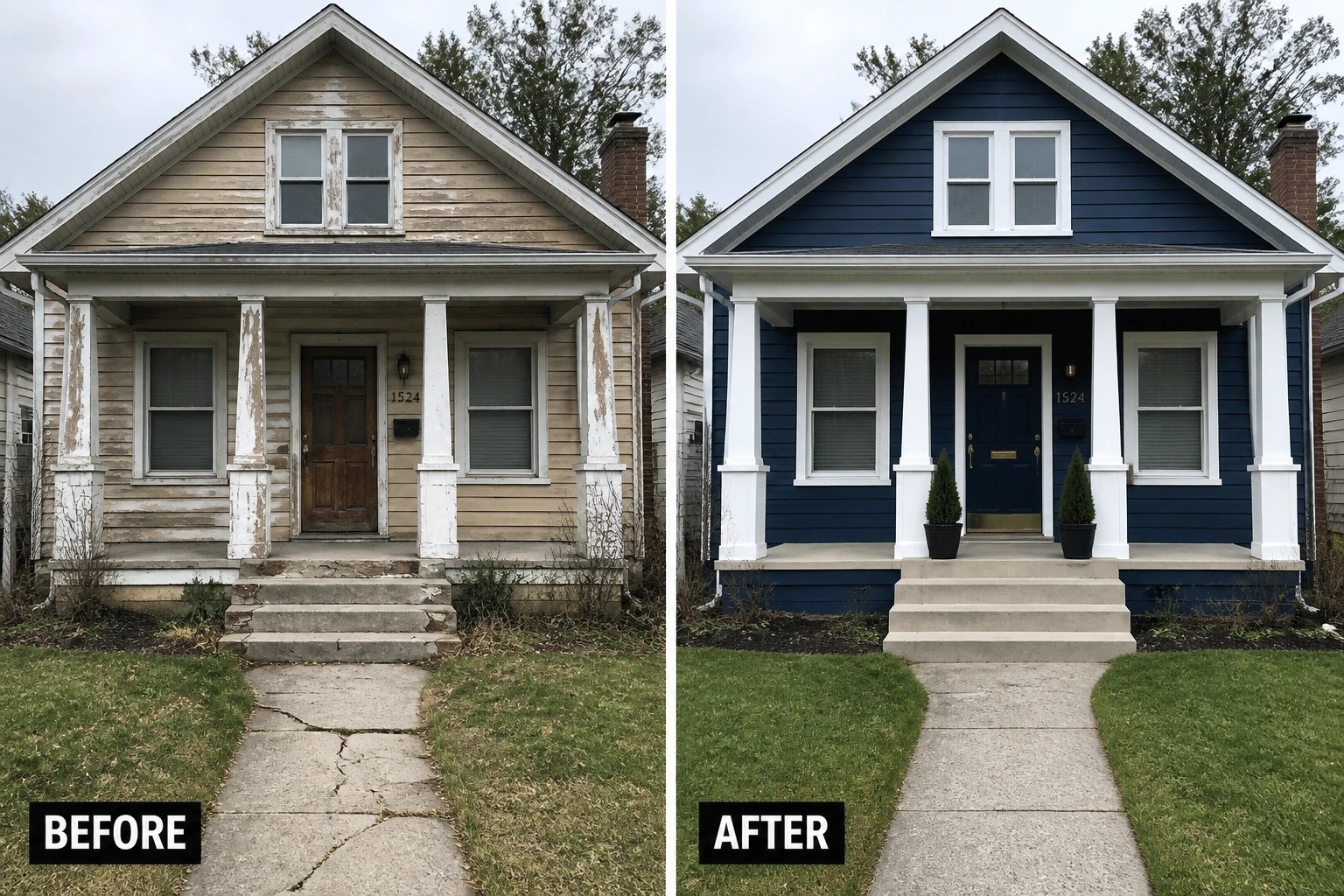
I have always noticed how the front of an older home can start to show its age through worn trim and faded paint long before anything inside needs attention.
Updating those classic details like the entryway or porch columns brings back some of the original character without requiring major structural work.
Small fixes add up quickly.
I tend to start with the windows and door surround first because those changes seem to lift the entire look of the house right away.
Over time these kinds of updates help the home sit better on its lot and feel less forgotten by the street.
Refresh An Older Home Exterior With Fresh Paint And Trim
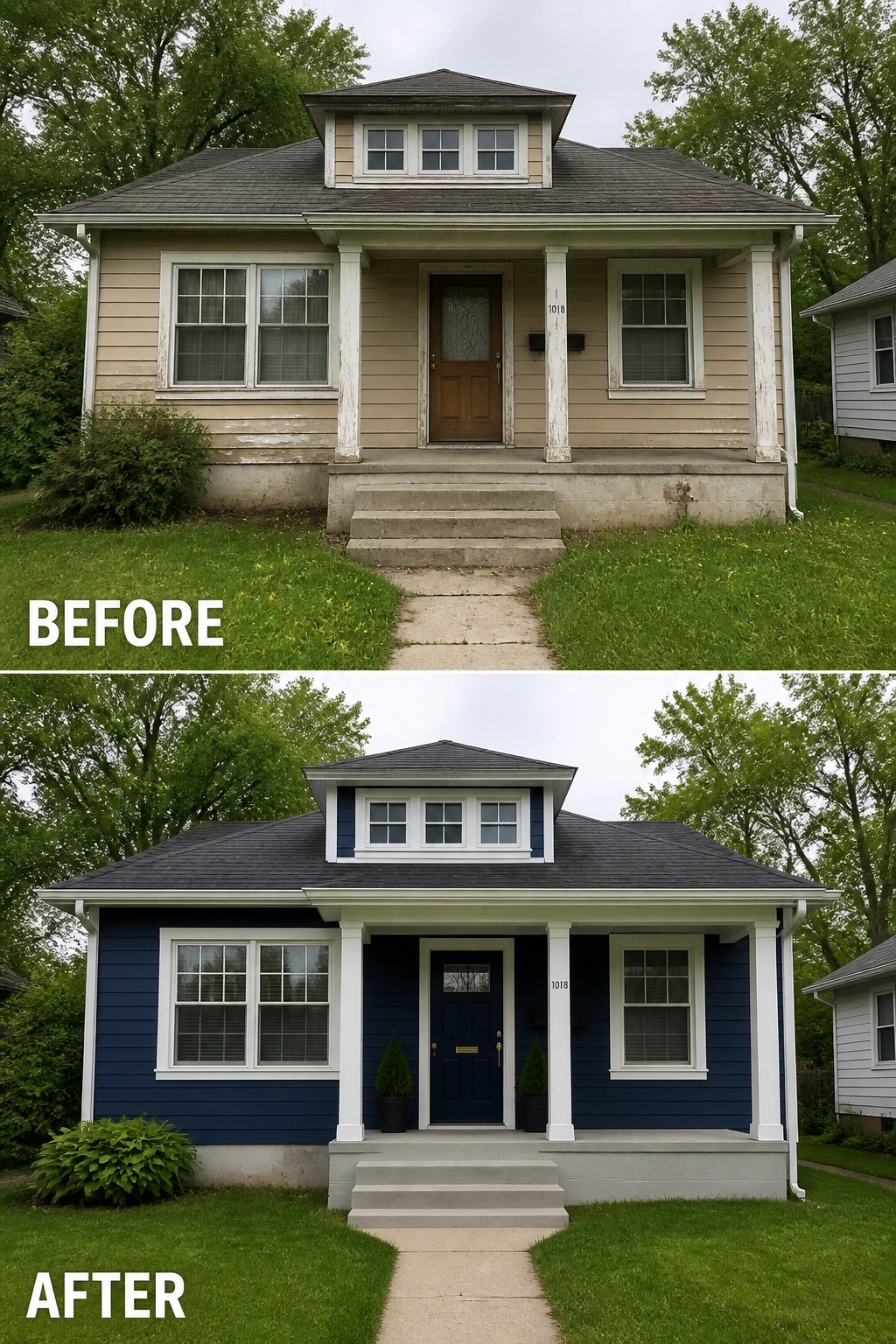
Many older homes end up with faded siding and worn trim that make the whole front feel tired. A deeper paint color on the main body, paired with clean white trim and a darker front door, can shift the look without changing the structure or layout.
This idea works best on homes that still have good bones but need a quick update. Start with the siding and trim first, then add small touches like planters only after the paint is done. It keeps the project realistic and helps the house fit better with its surroundings.
Refresh An Older Home With New Exterior Paint And A Dark Door

Many older homes end up with faded siding and a plain white door that make the whole front look tired. Switching the siding to a deeper gray and painting the door black gives the house a cleaner, more current look without changing the structure. The contrast makes the entry stand out and helps the windows feel more balanced.
This approach works well on ranches and simple one-story homes where the roof and trim stay the same. Pick a siding color that sits a few shades darker than the roof so the house does not feel washed out. Add a few low plants along the foundation to finish the update without needing a full garden overhaul.
Refresh An Older Home Entry With Paint And A New Door Color

Many older homes have front entries that look tired after years of exposure. Painting the columns and trim a clean off-white while switching the door to a deep green color instantly makes the porch feel more put together. Refinishing the steps to a darker tone also helps tie the whole front together.
This idea works best on homes with straightforward porches that do not need major structural work. Focus on the door and trim first, then add a couple of planters if space allows. It suits classic houses where simple updates can improve curb appeal without a full renovation.
Add Shutters To Refresh A Tired Facade
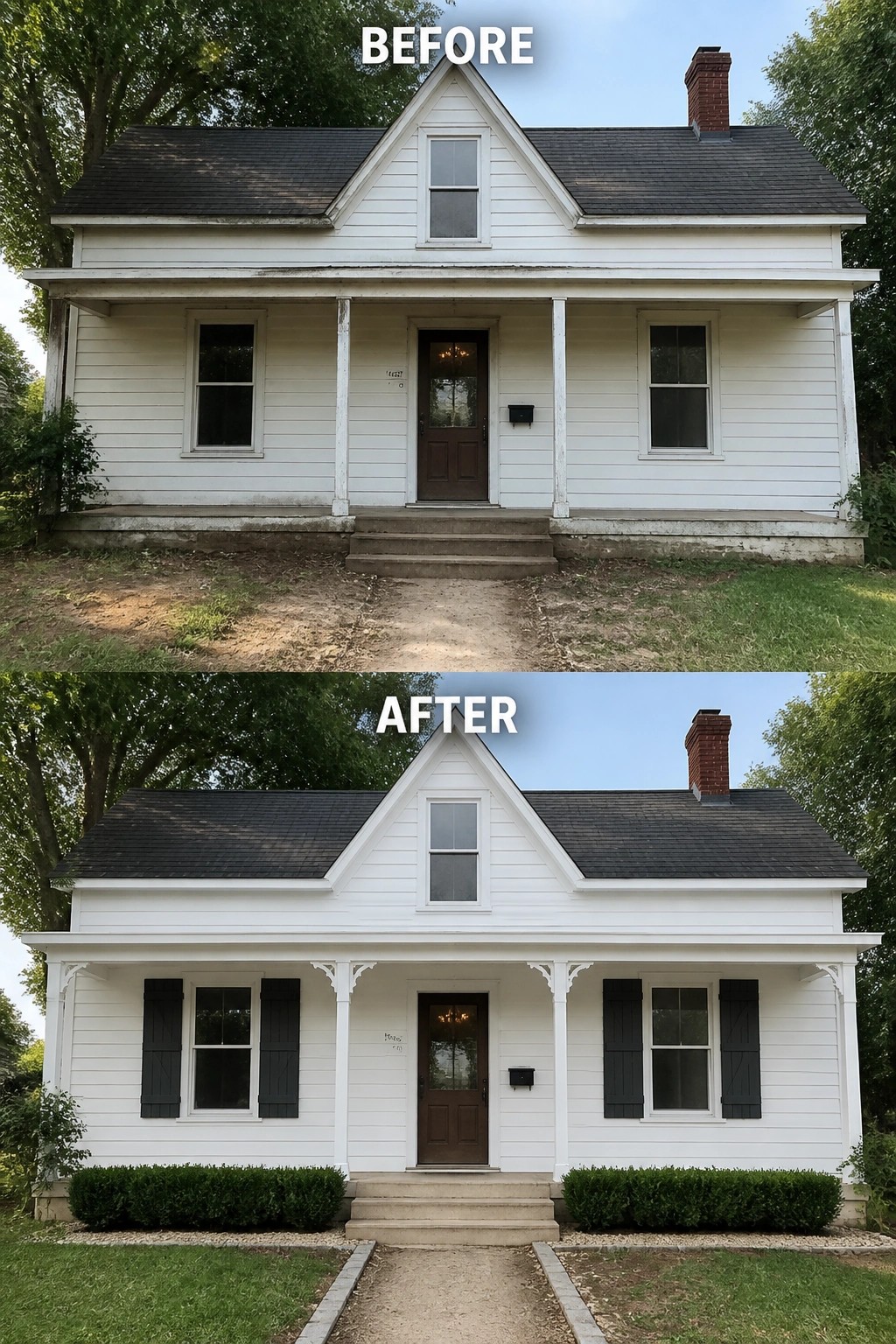
Many older homes lose character when the windows sit flat against the siding with nothing to frame them. Adding shutters gives the windows weight and breaks up a plain wall without any major construction. In this case the before photo shows bare openings while the after shows dark shutters that make each window feel intentional and finished.
This idea works well on homes with simple siding and standard window sizes. Keep the shutters sized to match the glass so they look built in rather than stuck on. Pair them with a quick cleanup of the planting beds and you get a noticeable lift in curb appeal without touching the roof or paint.
Replace A Straight Walk With A Curved Stone Path
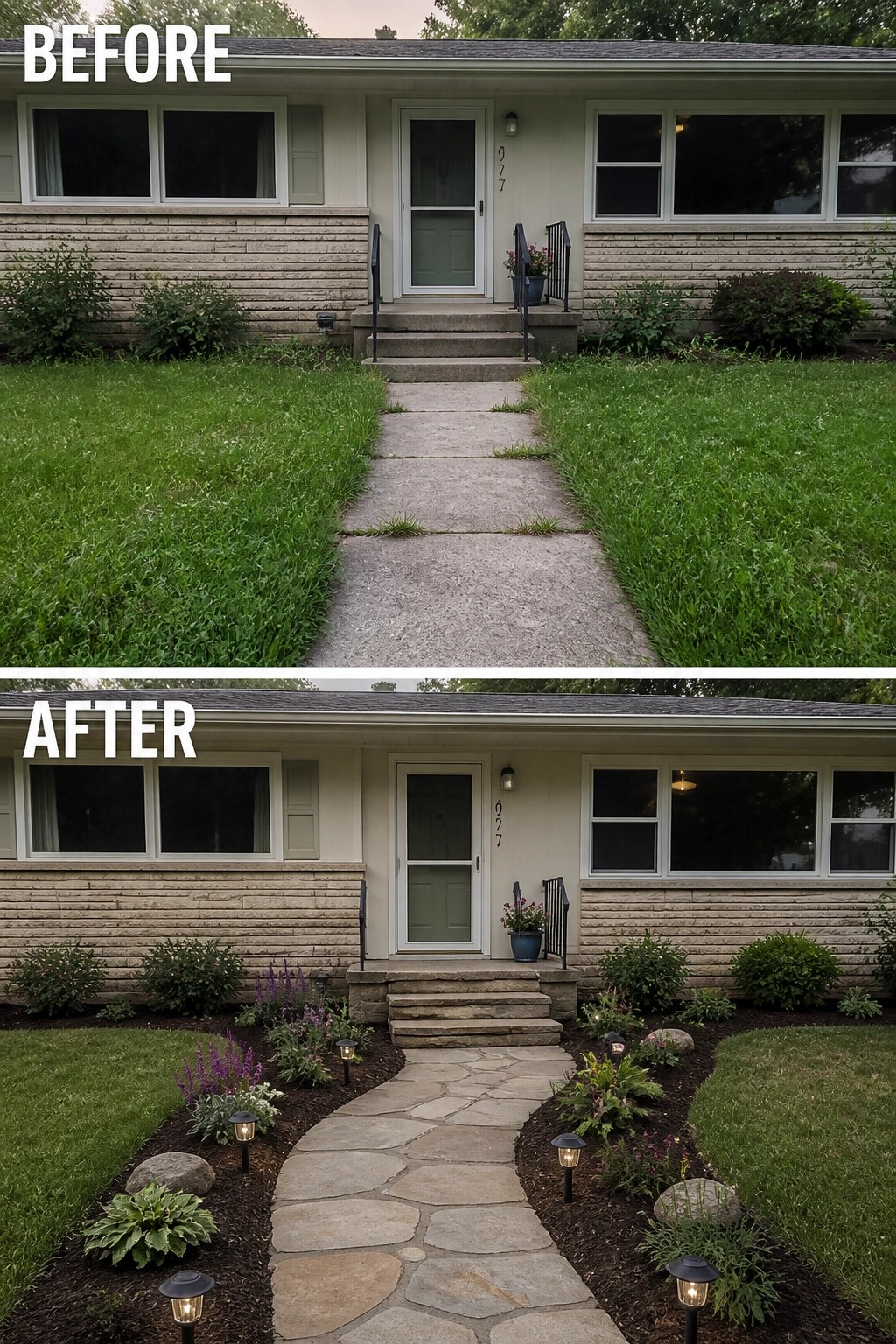
A straight concrete path cutting through the lawn often looks flat and unfinished on older homes. Switching to a wider stone path that curves gently toward the door, with planted beds along both sides, gives the front yard a clearer sense of direction and makes the entrance feel more settled.
This approach works best when the original path is still usable but lacks any real edge or planting. Keep the beds simple with a mix of low shrubs and ground cover, and add a few lights along the route so the walk stays practical at night. The goal is structure first, then a few plants that can fill in over time.
Add A Porch To Make A Plain Facade More Welcoming
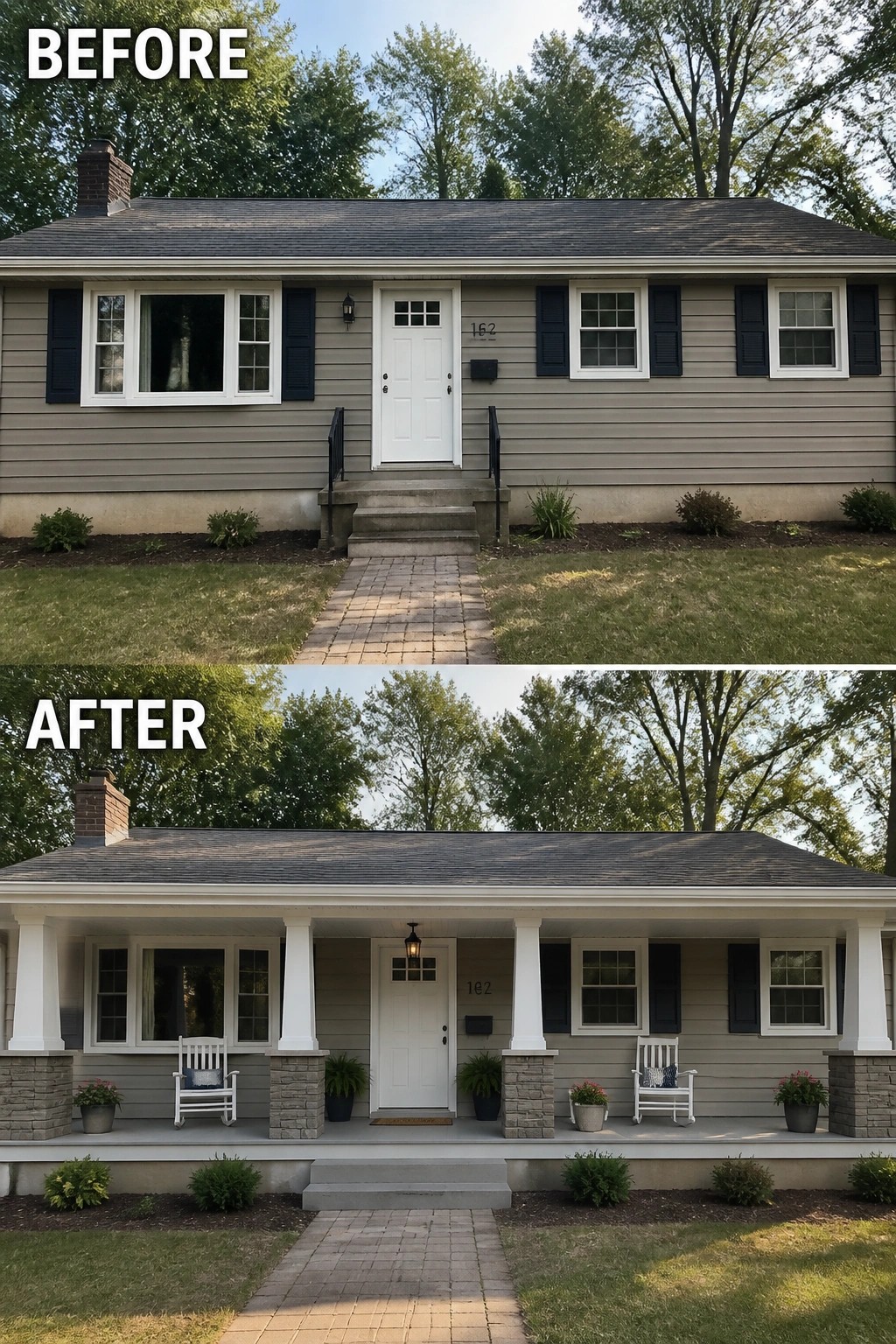
Many older homes have a flat front that feels unfinished once you look at it for more than a minute. Adding a covered porch with basic columns gives the house a clear entry point and a bit of shade, turning a set of plain steps into something that actually invites people to pause.
This idea works best on ranches and similar low-profile homes where the original design left the door exposed. Keep the columns and trim simple, match the roof pitch to the house, and add just a couple of chairs so the space feels usable instead of crowded.
Paint Brick And Trim To Refresh An Older Facade
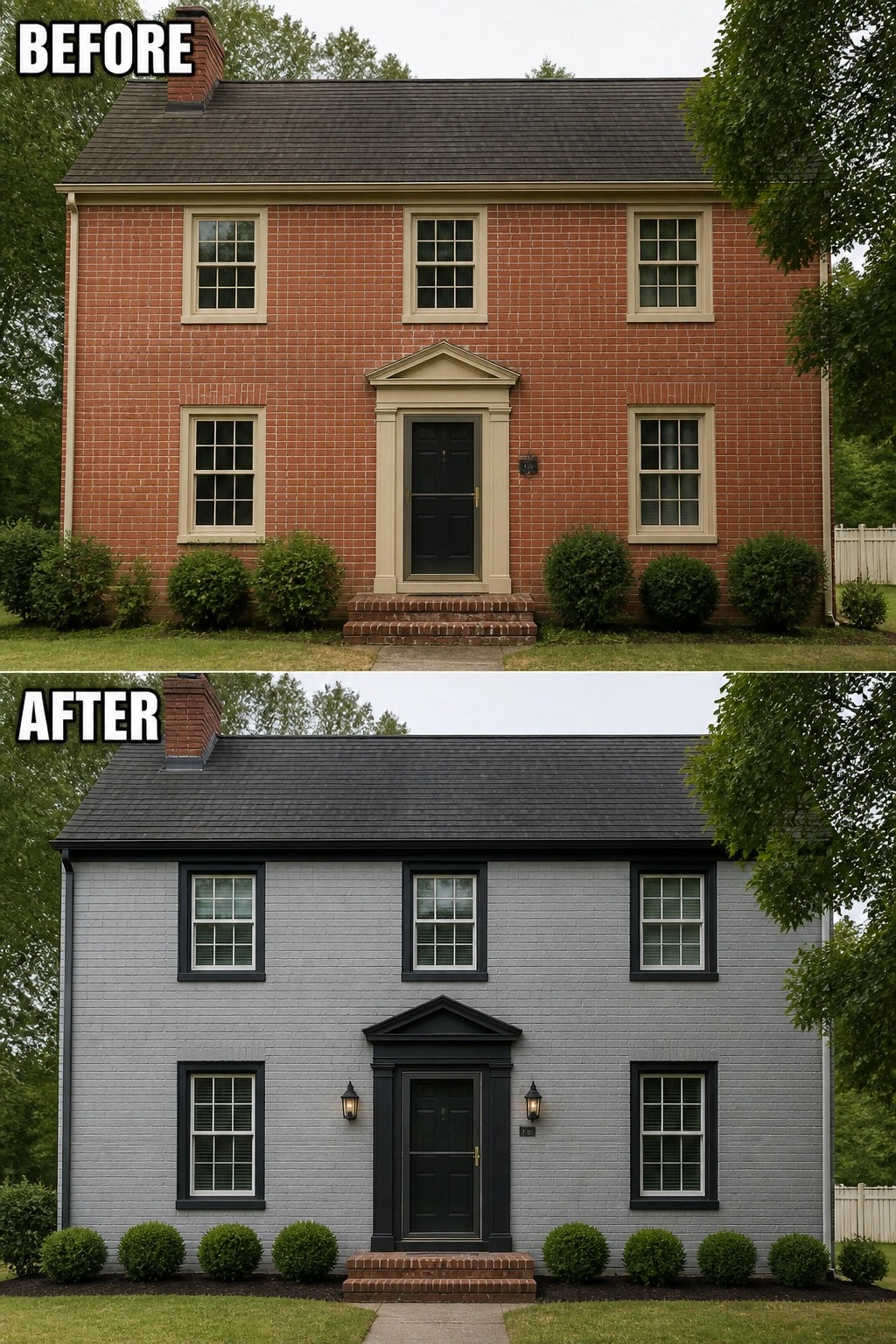
Painting the brick on an older home can give it a cleaner, more current look without major construction. In this case the red brick was covered in a soft gray and the trim plus door surround were painted black. The change makes the windows and entry stand out and gives the whole front a sharper outline.
This approach works well on simple two-story brick houses where the original color feels dated. Start with a good exterior primer made for masonry and choose a trim color that contrasts enough to define the windows and door. Keep the rest of the updates minimal so the paint job stays the main focus.
Refresh A Worn Porch With Paint And Stone Bases
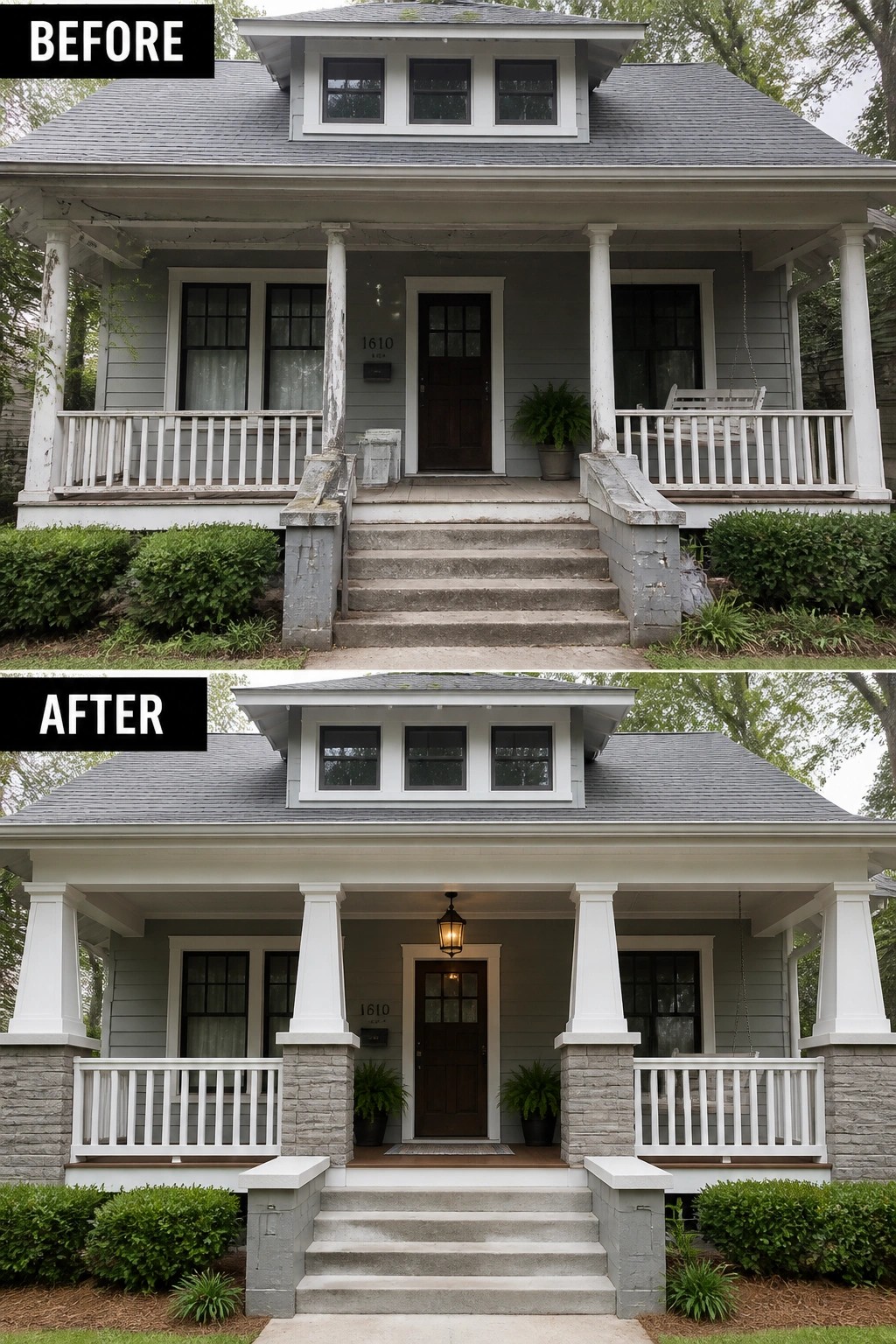
Many older homes have front porches that still work but look tired from years of wear. The main change here was covering the peeling column bases with stone and repainting the trim and railings a clean white. This one update makes the whole entry feel solid again without changing the original structure.
The idea works best on homes where the porch frame is still good but the details have faded. Start with the columns and railings first, then add a simple light over the door and a couple of planters. Keep the changes practical so the new surfaces hold up to weather and daily use.
Add Stone Veneer To The Foundation Of An Older Home
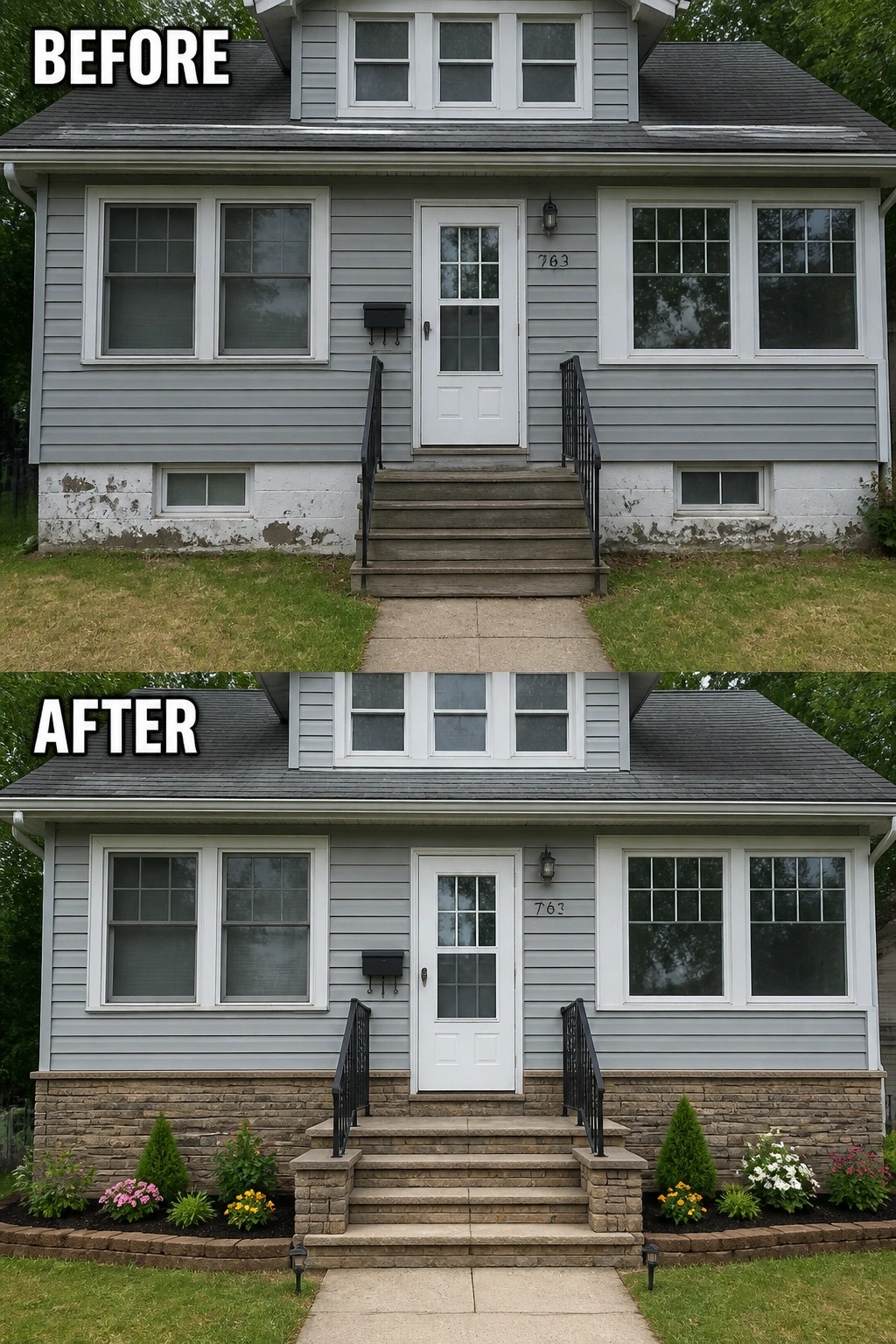
Many older homes have a tired base where the siding meets the ground. Covering that area with stone veneer gives the whole front a more finished and solid look without changing the upper siding or roof. The steps were also rebuilt with matching stone, which helps the entry feel more grounded.
This approach works well on homes where the foundation shows wear or the lower siding has aged poorly. Focus on the front only if the budget is tight, and keep the plantings simple so the stone remains the main feature.
Add Balanced Lighting To Your Front Entry
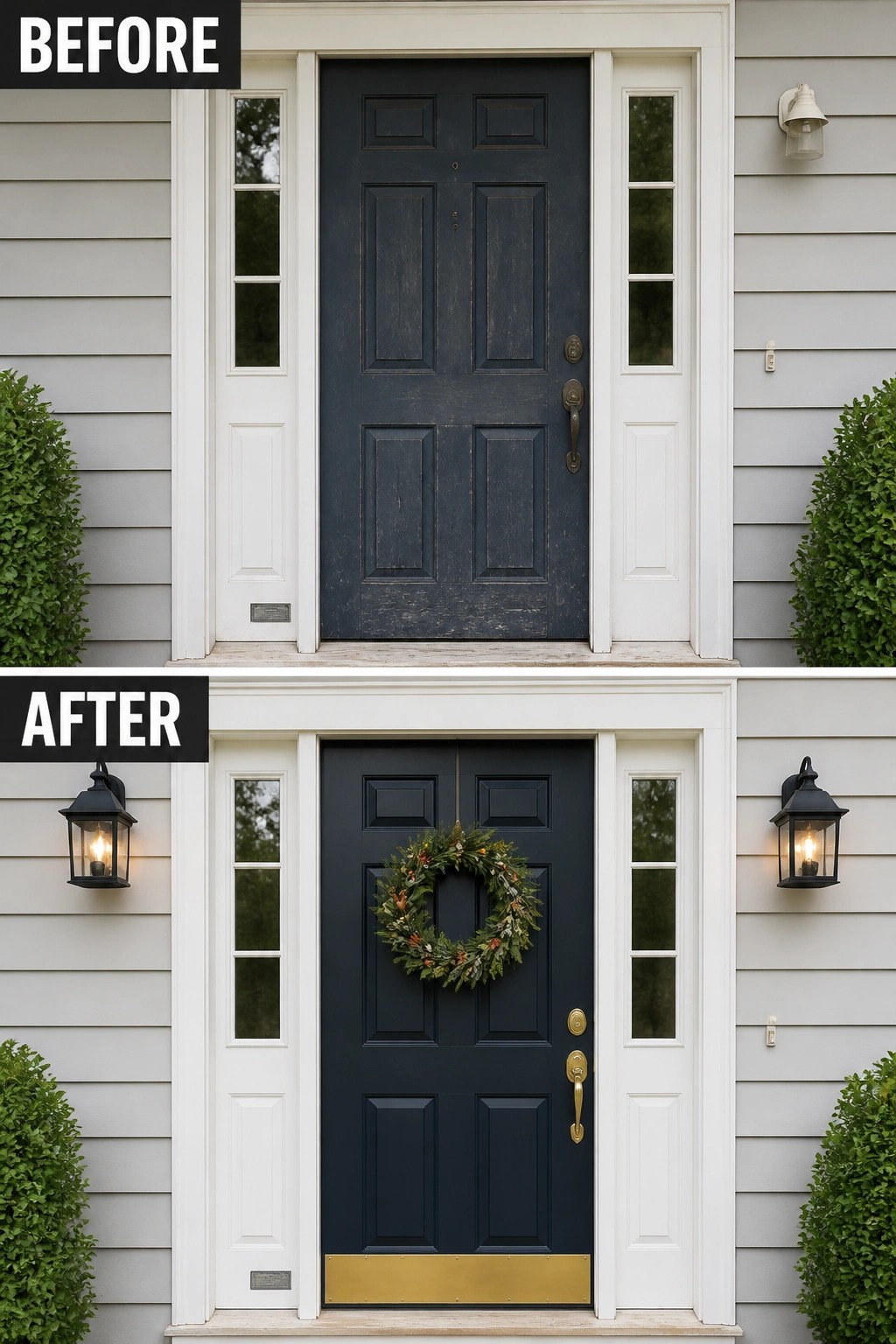
Many older homes have one off-center light by the door that leaves the entry looking uneven. Swapping it for a matching pair of sconces on both sides instantly makes the door feel centered and more welcoming. The change also adds useful light at night without needing a full renovation.
This works well on homes with simple trim and a solid front door. Keep the fixtures in scale with the door size and choose styles that match the house age. A wreath or new hardware can support the look, but the lights do most of the work for curb appeal.
Add Shutters To Frame Windows On A Plain Exterior
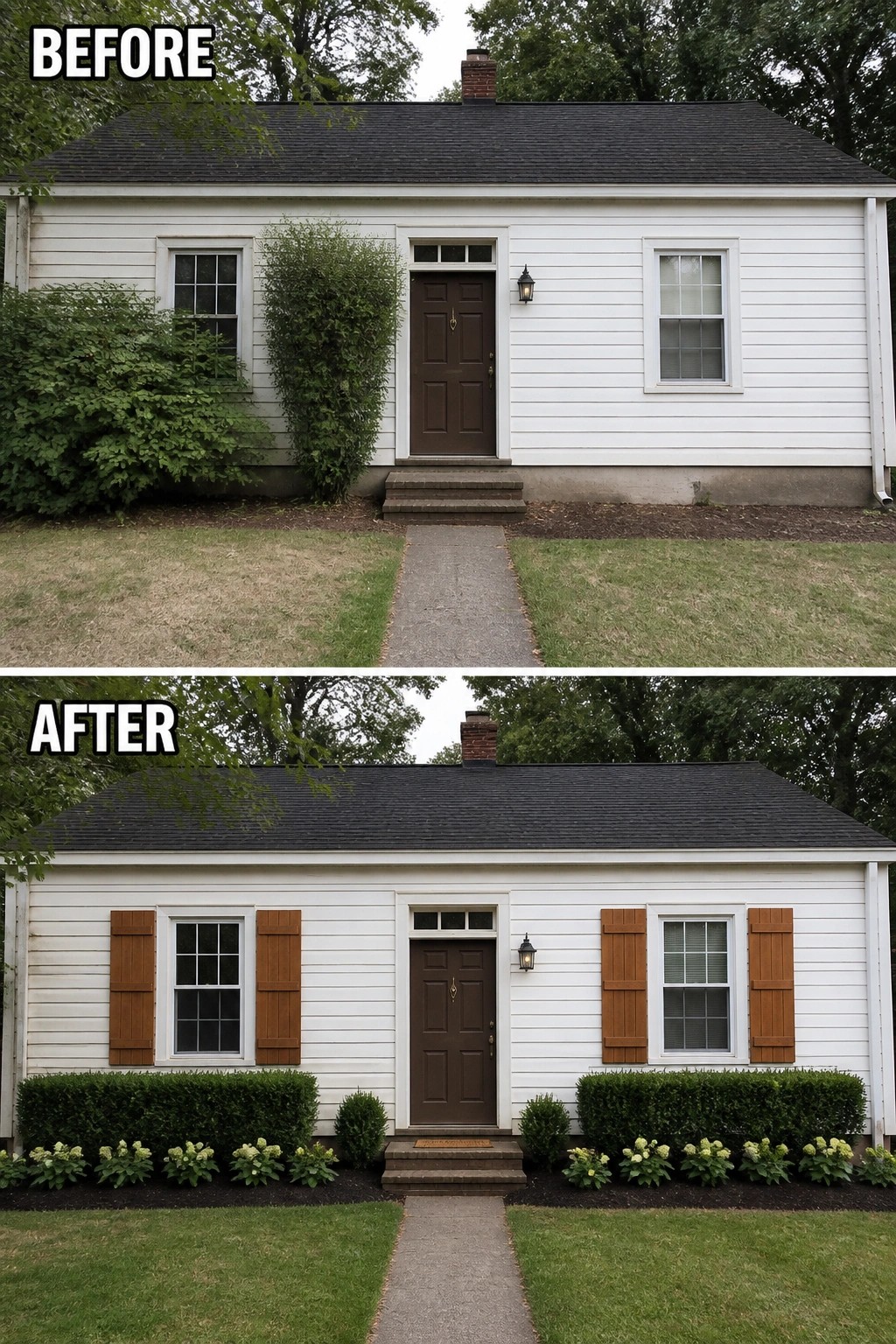
Many older homes have simple window openings that can look unfinished next to the siding. Adding shutters on both sides of each window gives the facade some needed structure and helps the windows feel more intentional.
This idea works best on smaller homes with straightforward siding where you want to add character without changing the overall shape. Keep the shutter color tied to the front door or trim so everything reads as one update, and make sure any new planting stays low enough not to hide the windows.
Update The Garage Door To Refresh The Front Facade
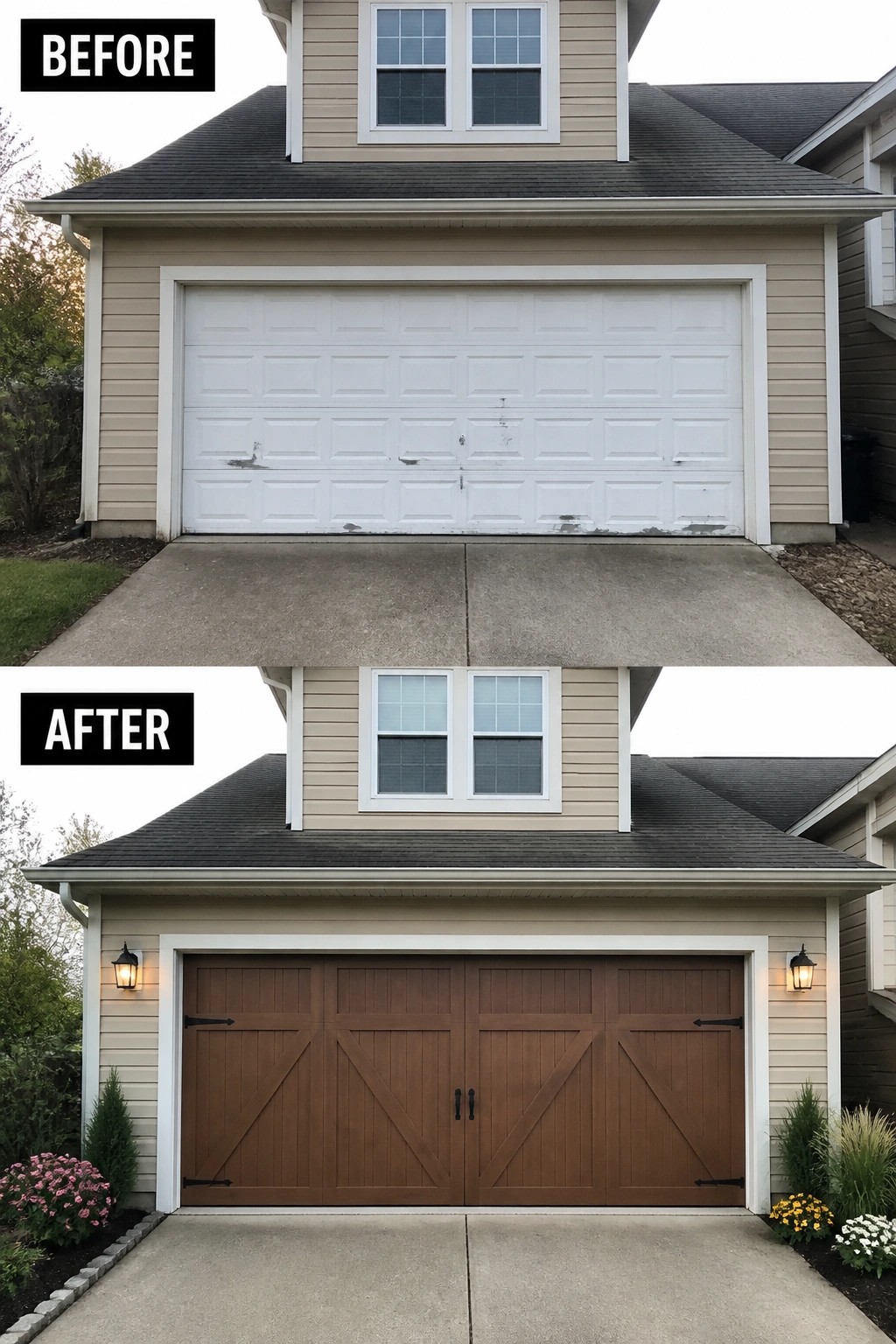
Many older homes have a large garage door that dominates the front and starts to look tired over time. Swapping the plain white door for a wood-style carriage door with simple hardware gives the whole facade a more finished and intentional look. Adding a pair of wall sconces on either side completes the change without any major construction.
This approach works well on homes where the garage takes up most of the visible front wall. Focus on choosing a door style that matches the house trim and roof color, and keep the lighting modest so it highlights the door rather than competing with it. The rest of the landscaping can stay simple as long as the door itself feels updated.
Add A Foundation Planter For A Cleaner Front Look
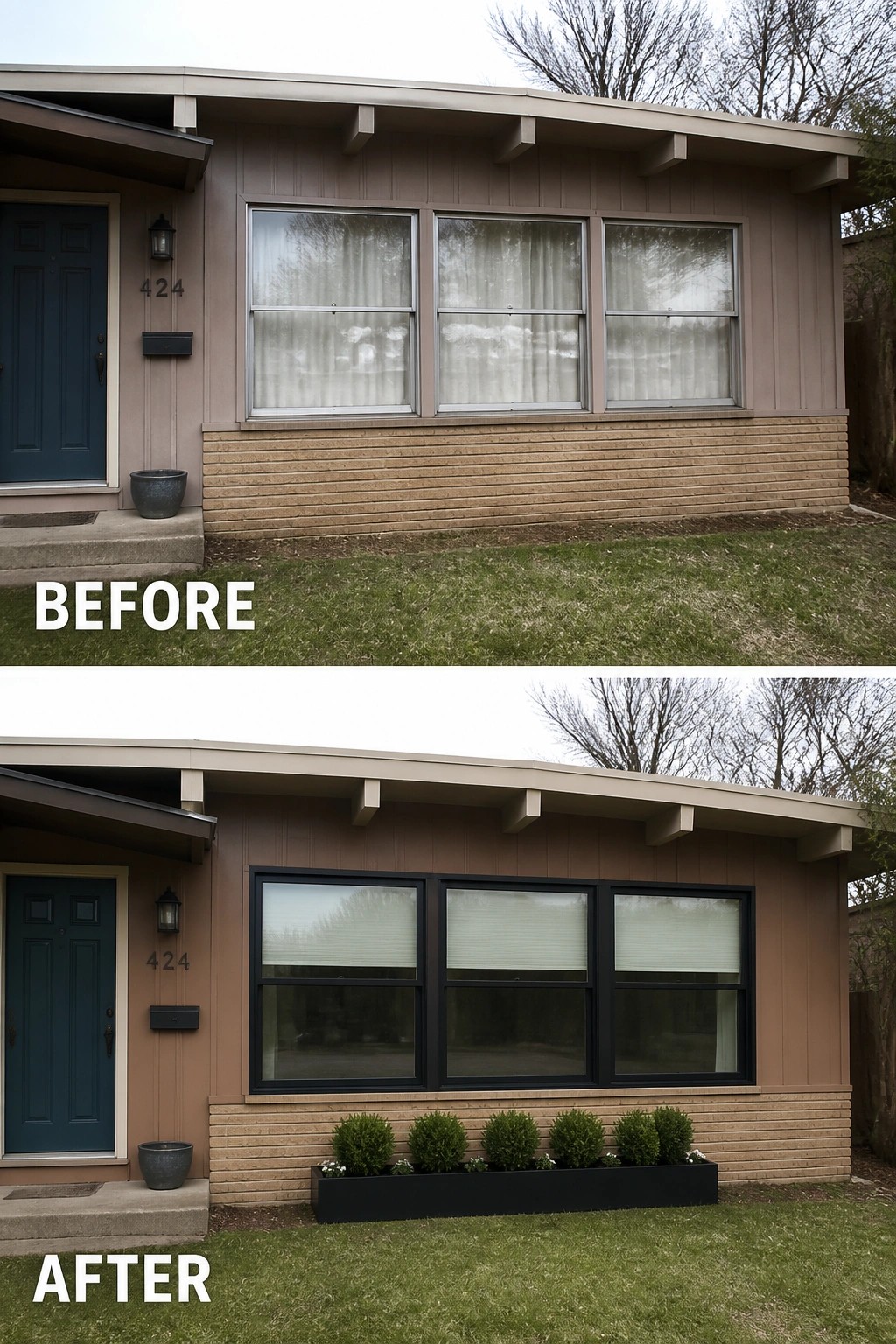
Many older homes have a blank stretch of siding right above the grass that makes the whole front feel unfinished. Adding one long planter box along the foundation gives that area purpose and creates a simple line between the house and the yard. The black frame on the box also ties in with updated window trim, so the changes feel connected instead of random.
This approach works best on ranches or single-story homes where the foundation sits low and visible. Keep the planting simple with a row of shrubs and a few small flowers, and make sure the box sits level with the ground so it does not block any windows or doors. It is an easy first step before considering bigger changes like new siding or a full repaint.
Add A Portico To Strengthen A Plain Front Entry
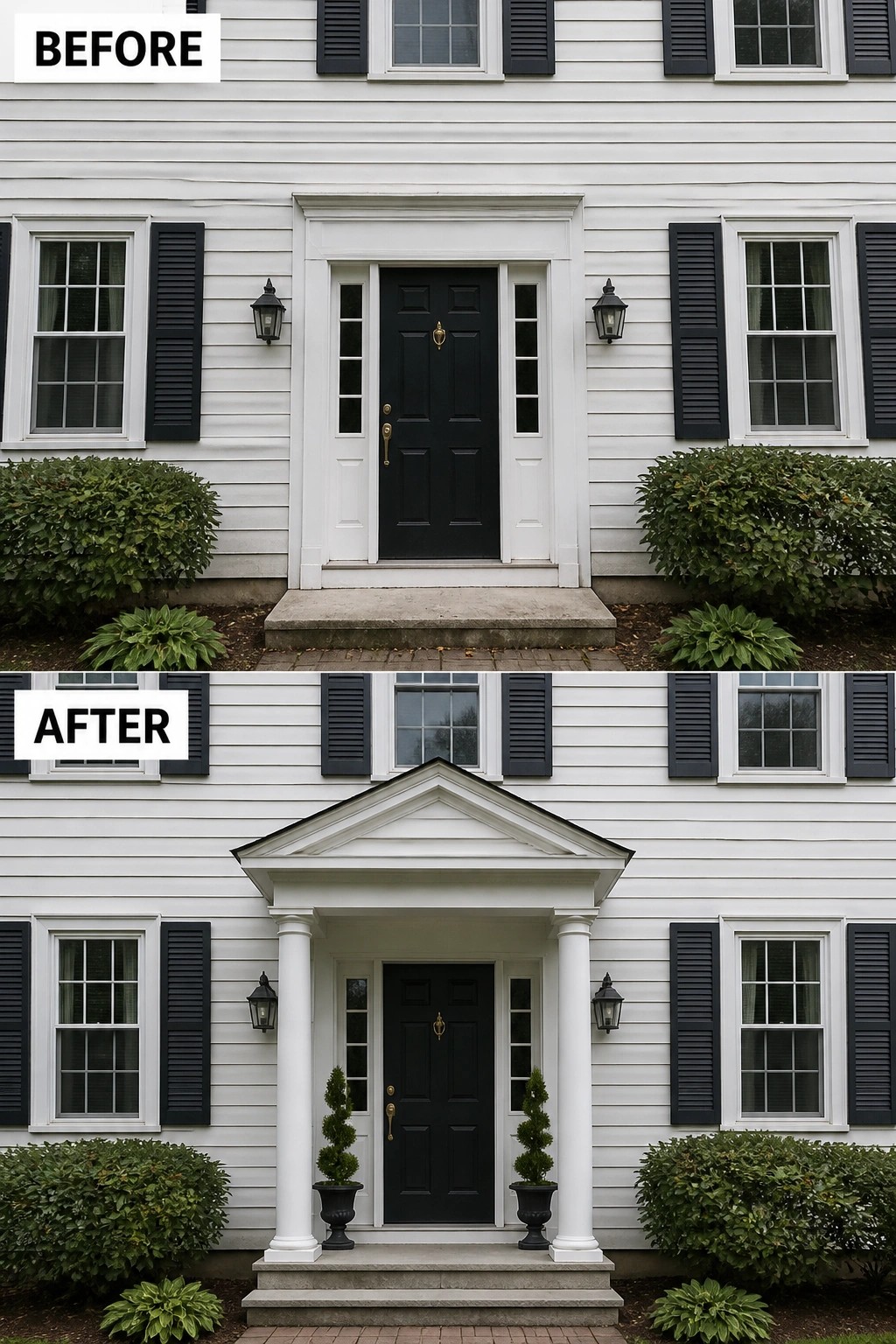
Many older homes have a front door that sits flat on the facade with no real definition. Adding a portico with columns and a pediment gives the entry a clear structure and makes the whole front feel more finished.
This change works best on homes with simple siding and modest trim. Match the new details to the existing window and door casings so the addition looks like it belongs rather than an afterthought.
Give A Bare Porch A Clear Purpose
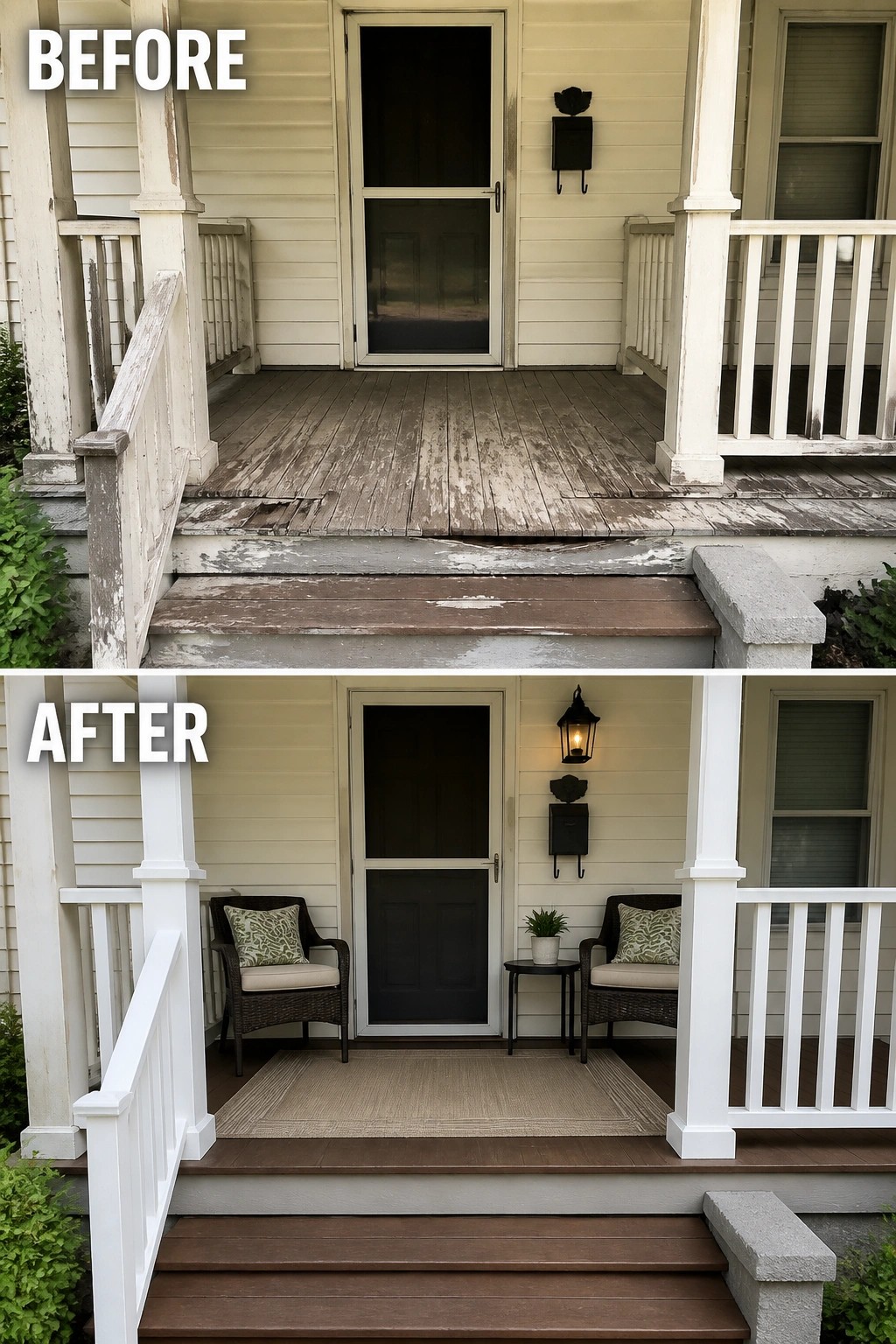
An empty, worn porch often feels like wasted space even when it sits right at the front door. The simplest fix is to add a couple of chairs, a small table, and a rug so the area reads as a place to sit rather than just a walkway. Once those pieces are in place the porch stops looking tired and starts looking intentional.
This approach works best on older homes where the structure is still sound but the details have faded. Keep the furniture scale modest so there is still room to walk through, and choose pieces that can stay outside year-round. A single rug is usually enough to mark the seating zone without crowding the steps.
Add Landscape Lighting To Highlight The Front Entry
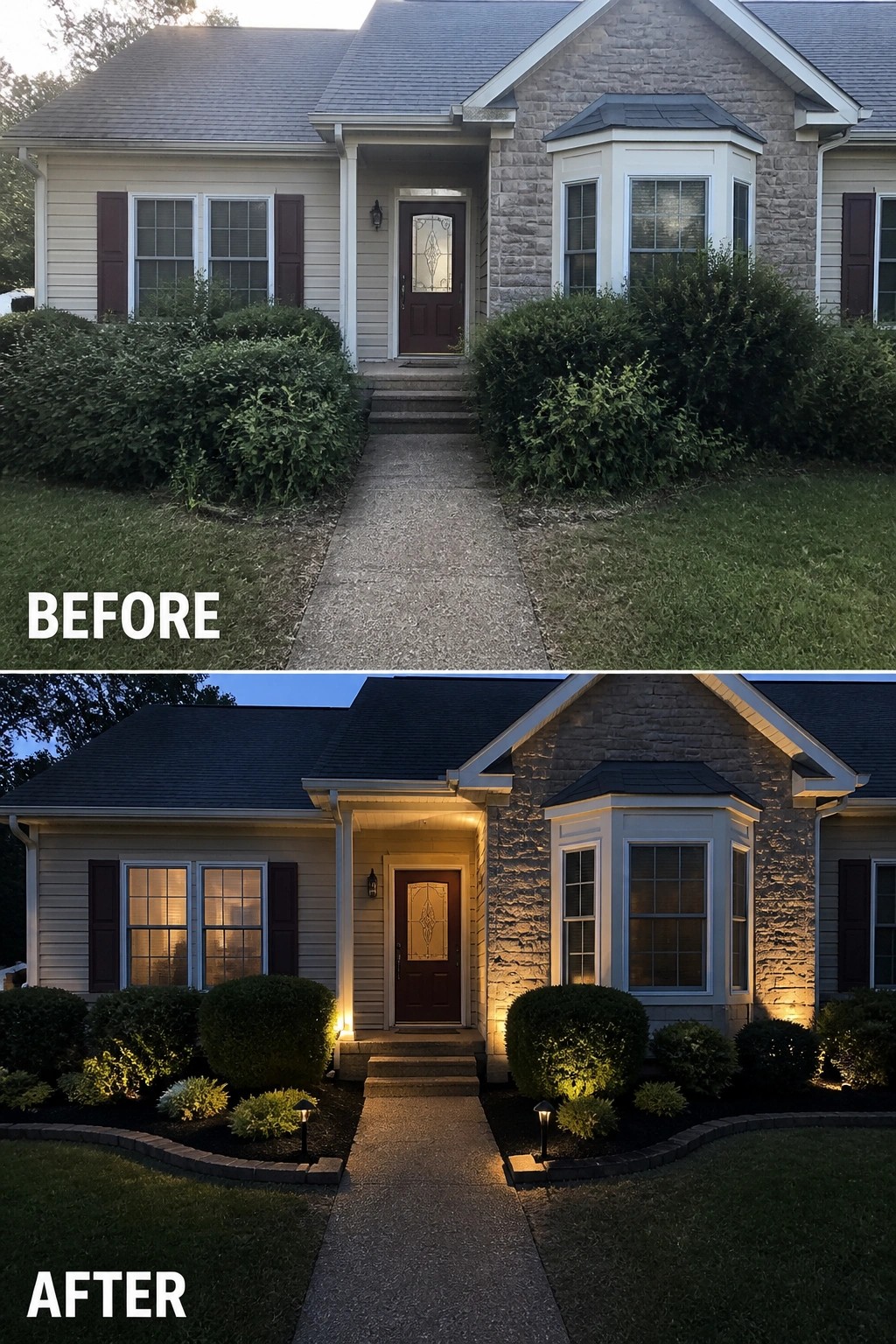
Many older homes have a plain front that fades into the background once the sun goes down. Adding a few well-placed landscape lights draws attention to the entry, the stonework, and the planting beds without any major construction. The change is simple but noticeable right away.
This approach works best on homes where the architecture is already solid but the yard feels flat at night. Start with low-voltage path lights along the walkway and a couple of uplights on the main shrubs or corners of the house. Keep the fixtures small and aimed low so they do not glare into the street or windows.
Upgrade The Mailbox Post To Improve Curb Appeal
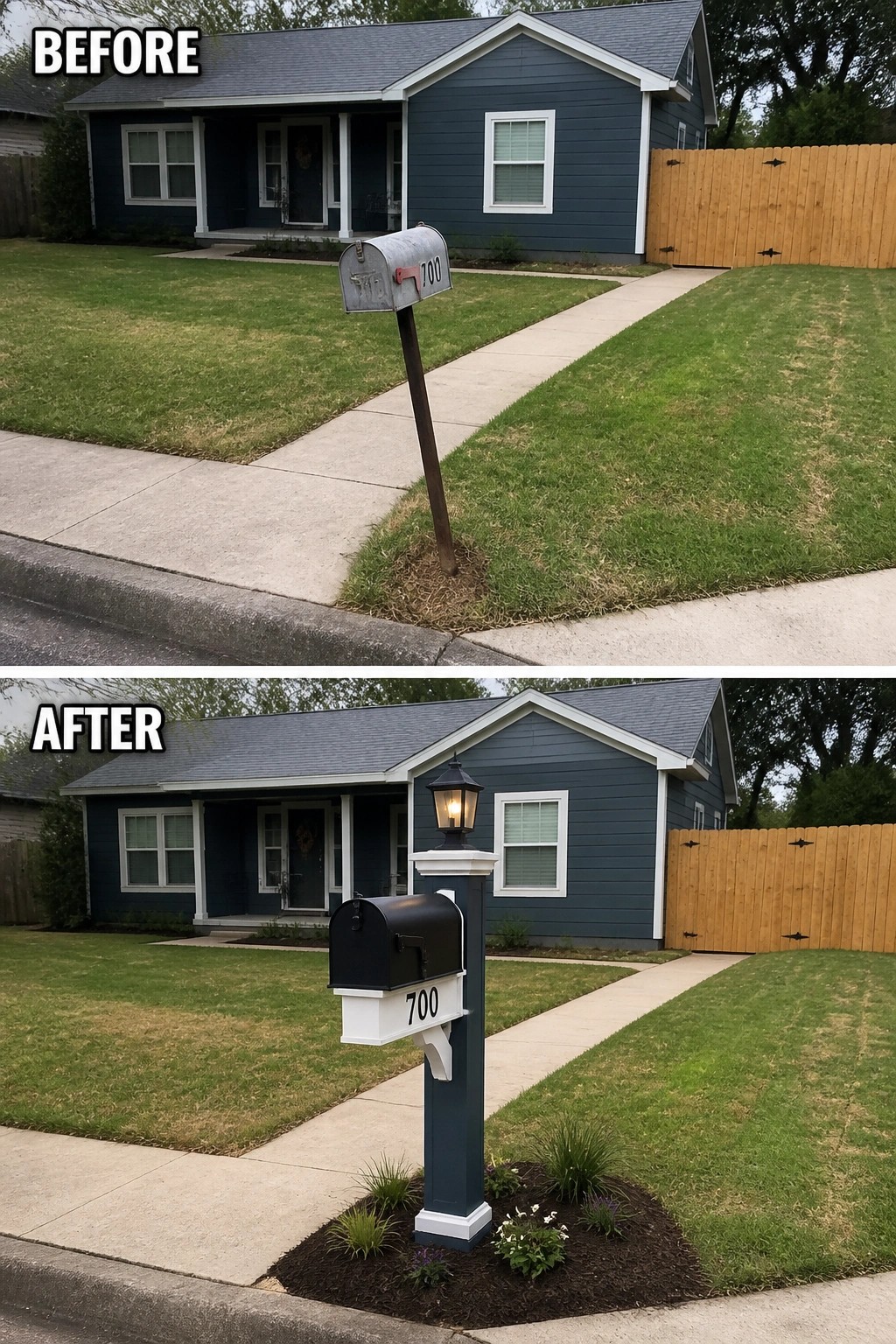
Many older homes still have a basic metal mailbox on a single pole that leans over time and does little for the front of the house. Replacing it with a proper post that holds the box, adds a light on top, and includes a small planted base gives the entry a finished look without major construction.
This approach works well on homes where the front is mostly lawn and the mailbox sits near the sidewalk. Keep the post color close to the house trim, use a simple light that stays on at night, and add a few low plants in mulch rather than filling the whole strip with flowers. It keeps the change practical and easy to maintain.
Give A Bare Porch A Clear Purpose
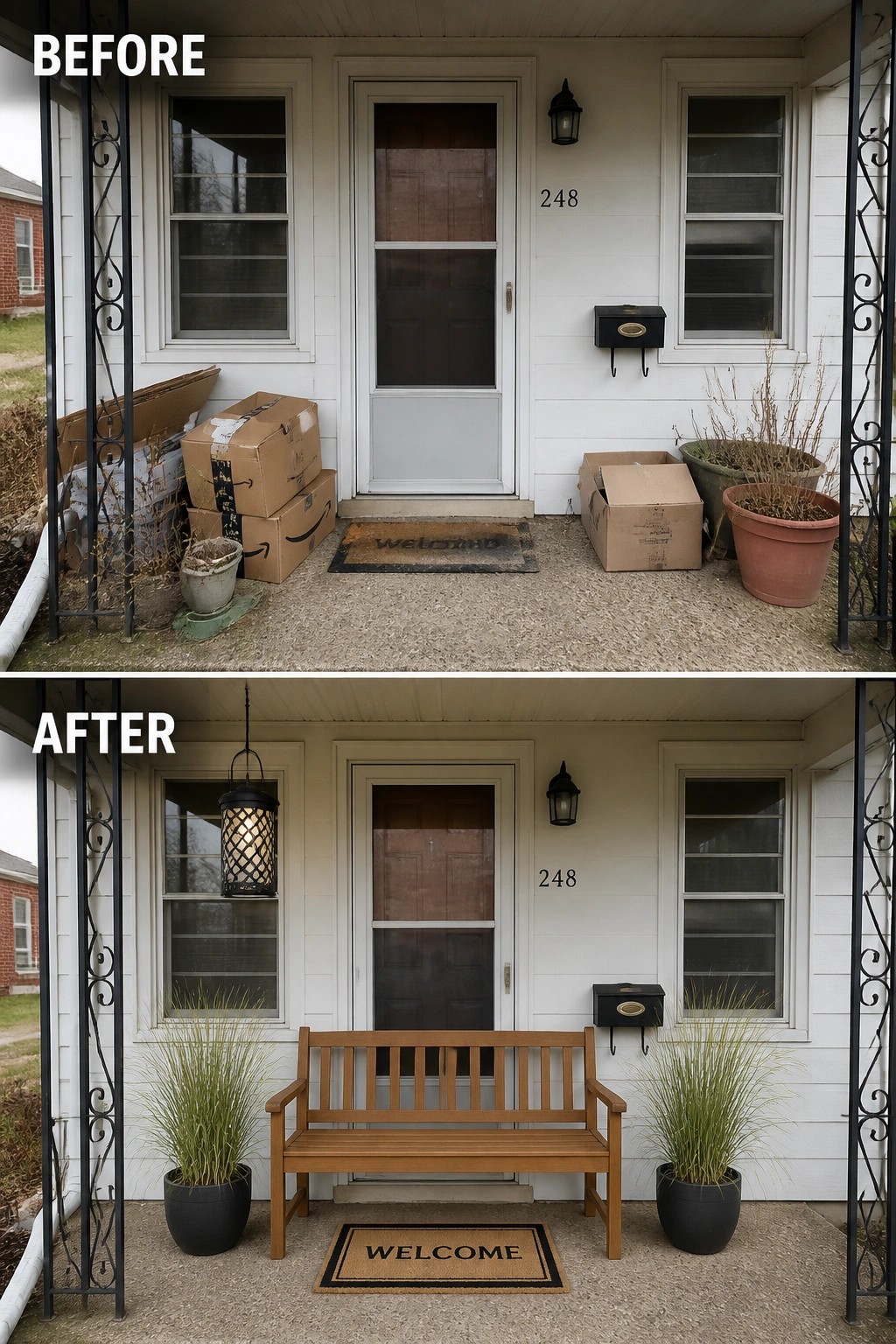
Many older homes end up with a front porch that collects boxes and odds and ends because it never had a real job. Clearing the clutter and adding one bench with two matching planters gives the space a simple reason to exist and makes the entry feel intentional instead of neglected.
This idea works best on small porches where you can see the whole area from the street. Stick to one main piece of seating and keep the planters low so the walkway stays open. The same approach can help any older house that needs a quick way to look more cared for without major construction.
Paint Tired Steps And Frame The Door With Planters
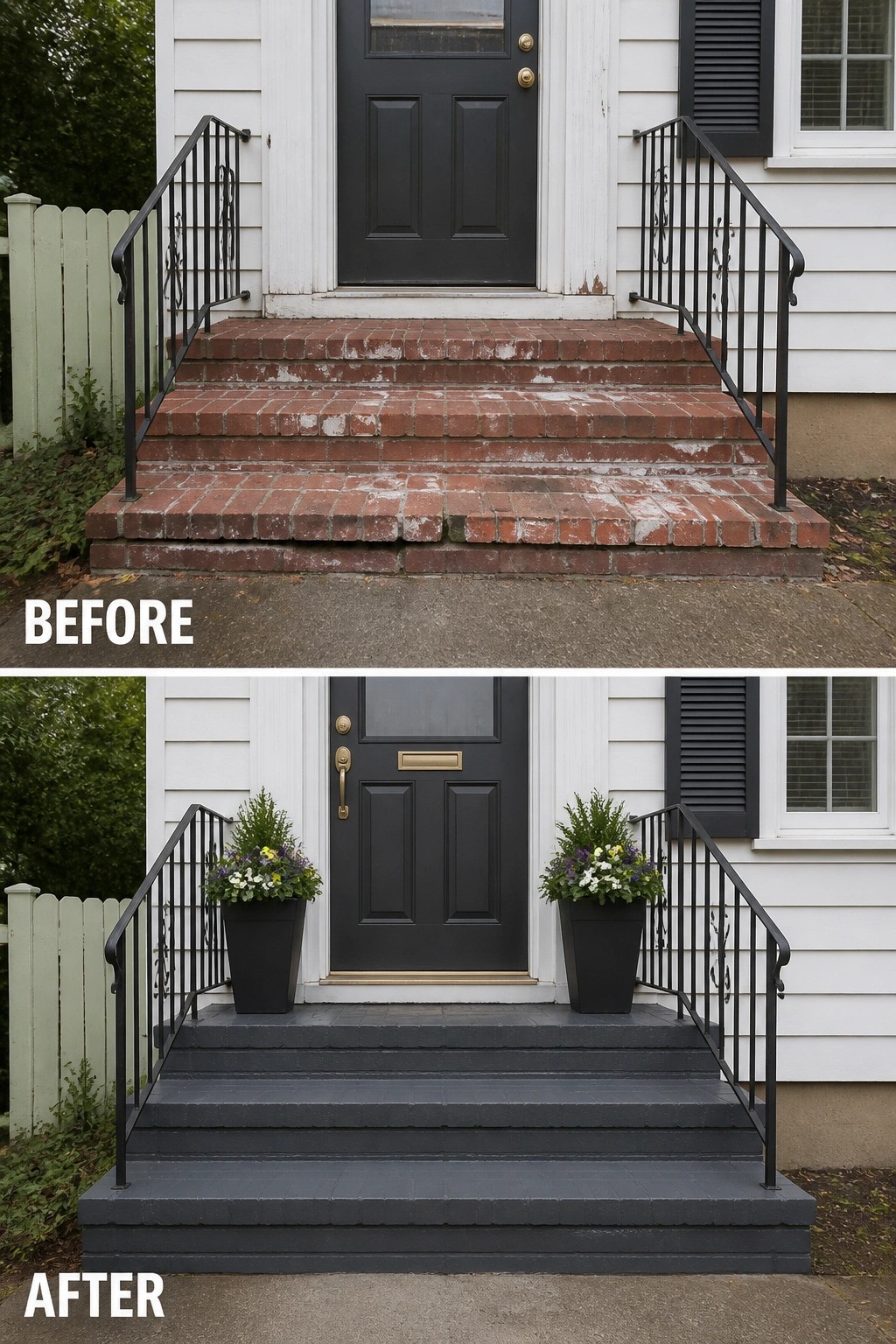
Many older homes have brick steps that have seen better days. A coat of exterior paint in a solid dark color gives the stairs a clean, updated look without the cost of replacement. Adding two matching planters on either side of the door then pulls the whole entry together and makes it feel more intentional.
This approach works well on homes where the basic structure is still sound but the details have faded. Choose a paint made for masonry and keep the planters simple so they do not compete with the door. The result is a modest change that improves curb appeal and makes the front feel more cared for.
Refresh A Plain Exterior With Paint And Stone Accents
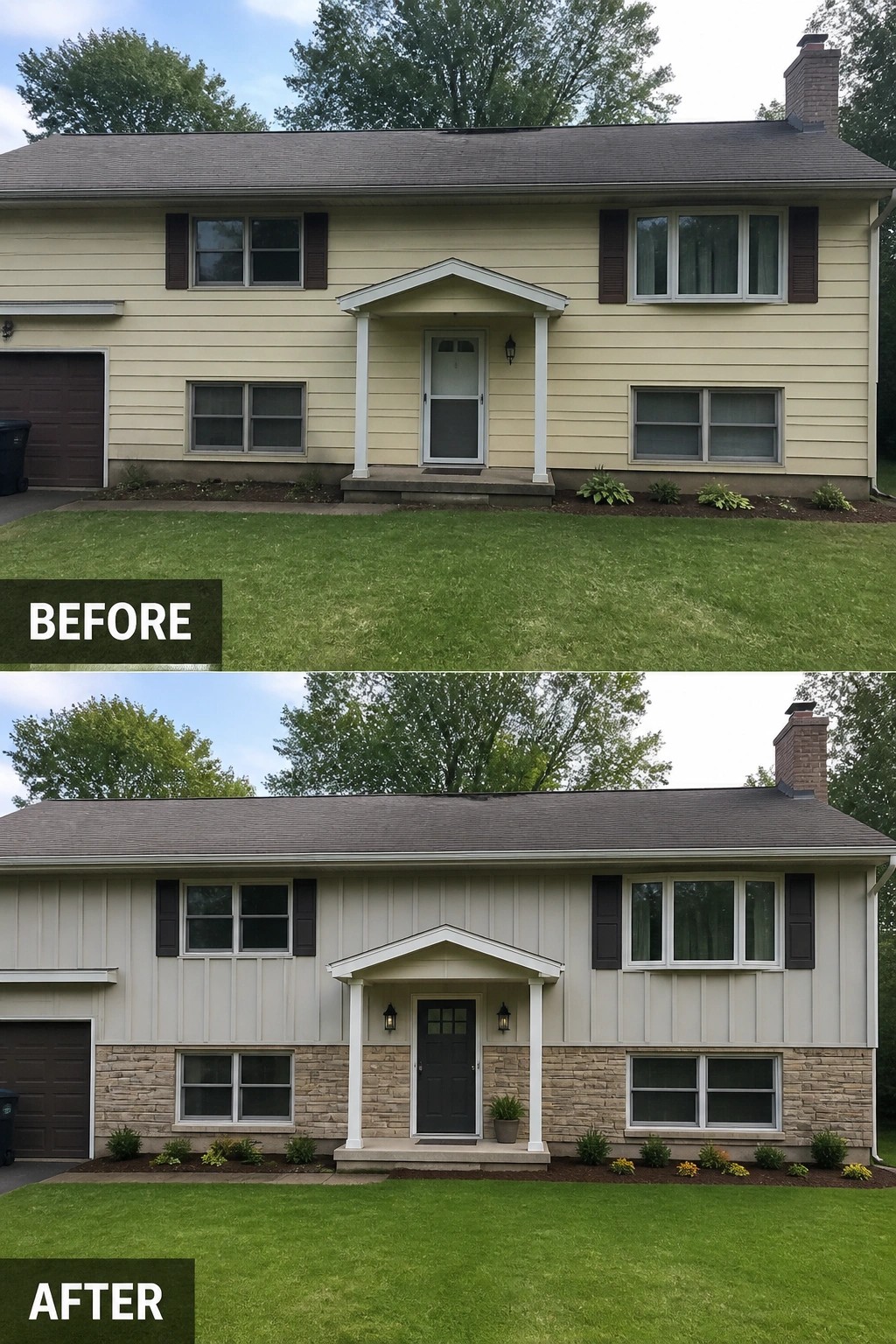
Many older homes have flat siding and no real base detail, which makes the whole front look dated. Changing the paint color, adding a stone veneer along the bottom, and switching to a darker door gives the facade more weight and makes the entry feel intentional.
This approach works well on simple ranch or two-story homes where you want to avoid a full siding replacement. Focus first on the lower third of the house and the front door area, then keep the planting low and neat so the new materials stay visible.
Add Railings And Lattice To Finish An Open Porch
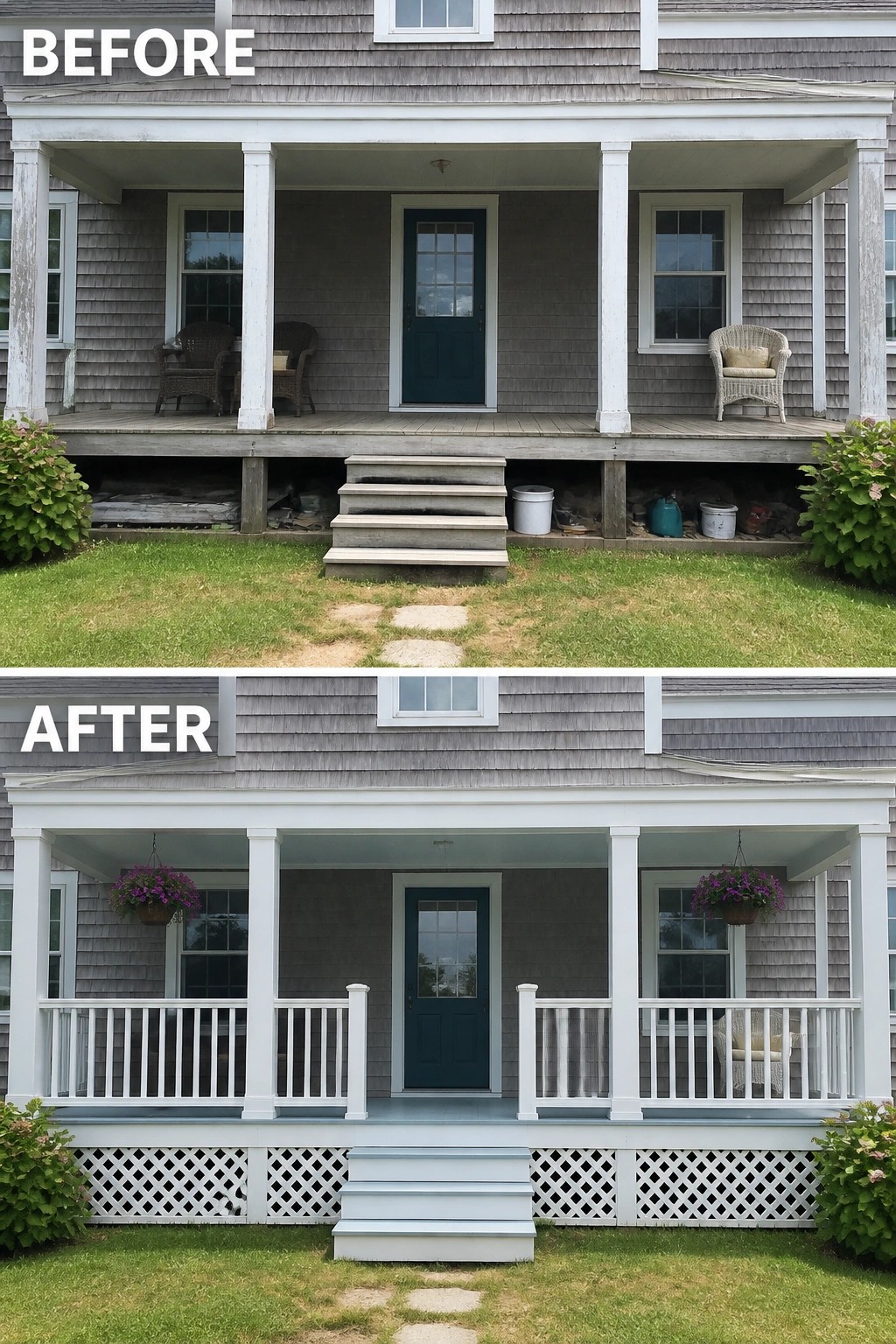
An open porch often looks unfinished and can feel unsafe without any boundaries. In this case the simple addition of white railings along the front and sides, plus lattice panels below, gave the porch clear edges and made the whole front of the house feel more complete.
This approach works well on older homes where the porch sits high off the ground. Start with sturdy railings that meet code, then use lattice or similar screening to hide the open space underneath. Keep the color light if your trim is white so the new pieces blend with the existing architecture rather than stand out.
Paint The Trim And Door To Refresh A Tired Facade
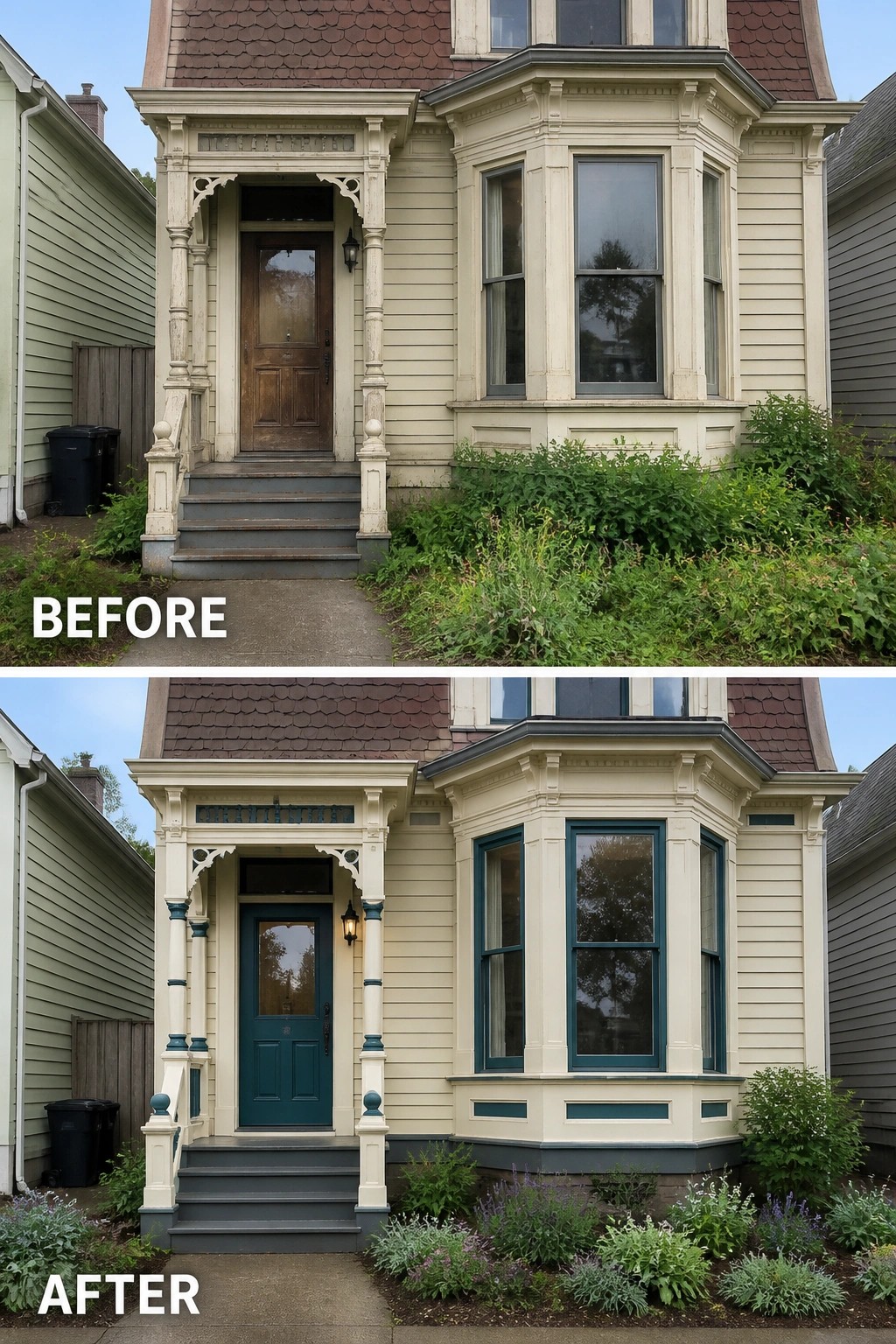
Many older homes lose their charm when the trim fades and the front door blends into the background. A simple color update on the trim and door can pull the whole entry back together without major construction. The before photo shows worn paint and a plain brown door that made the facade feel flat. In the after, the teal accents on the columns and new teal door give the entry a clear focal point.
This approach works well on homes with existing architectural details that just need emphasis. Focus on the trim around the door and porch first, then choose a door color that stands out from the siding. It is an affordable starting point before considering larger exterior work, and it helps the house feel cared for from the street.
Frequently Asked Questions
Q: What if my budget only covers one or two changes?
A: Start with the front door and its trim. Those two updates pull the whole facade together faster than most people expect.
Q: How do I pick paint colors that suit an older home?
A: Check the original style of your house and test samples right on the siding. Warm neutrals paired with a stronger door color tend to feel natural.
Q: My windows are too far gone to repair. What should I do?
A: Choose new ones with simple divided-light patterns that match the house age. Keep the frames the same size so the openings stay balanced.
Q: Should I replace everything at once?
A: Tackle the worst problems first and live with the results for a season. You will spot what still needs work without rushing into extra projects.