

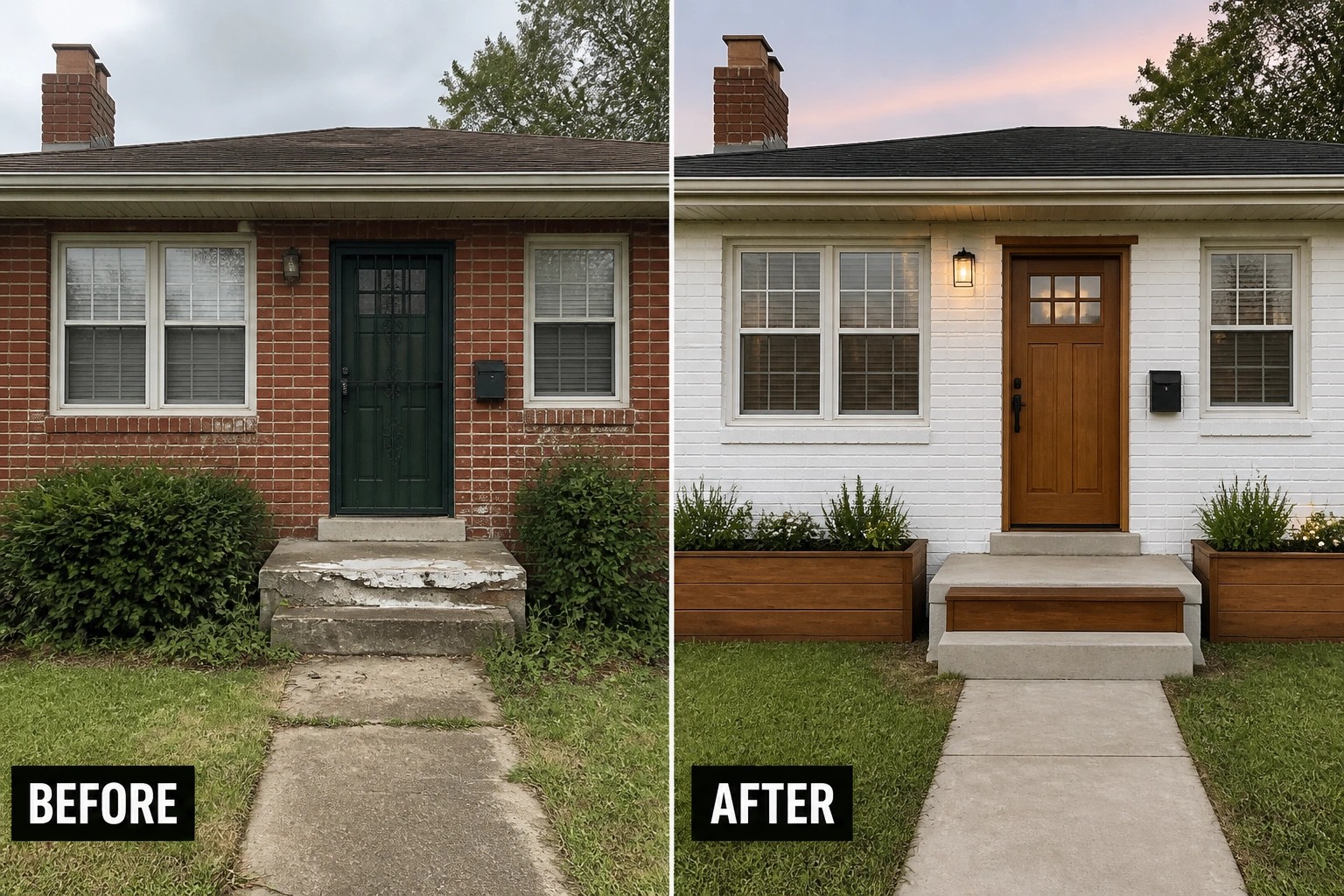
Many homes end up with front exteriors that feel flat after years of exposure, especially when siding starts to fade or entries lack any clear material focus.
I often notice that swapping in brick sections or wood trim can pull the whole look together without touching the structure itself.
Materials like these add depth because they create contrast and texture that plain walls usually miss.
The right combination tends to make a house read as more intentional from the street.
Sketching out a few material swaps on my own place usually shows which ones will hold up over time.
Paint Brick Exteriors White And Add Wood Accents
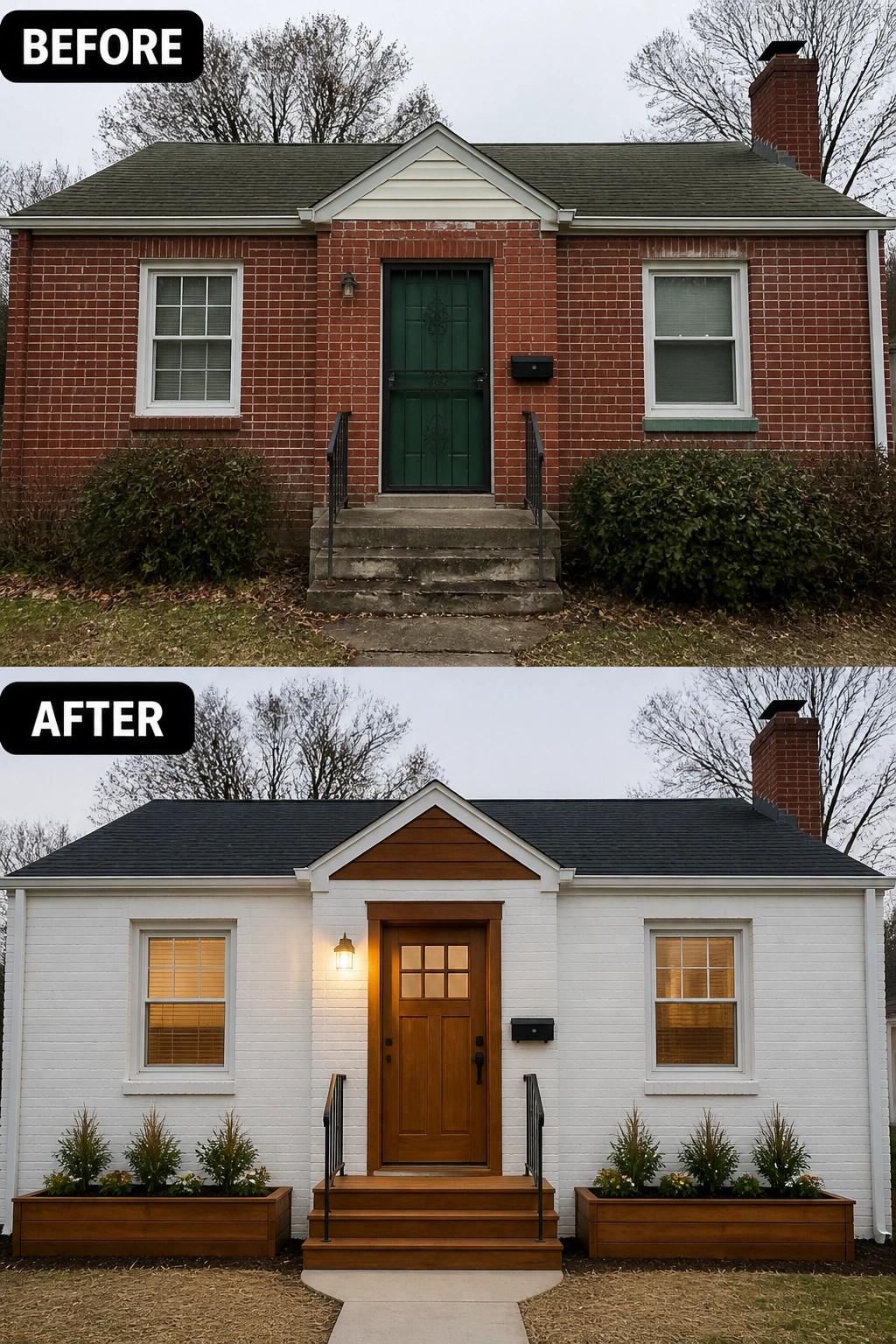
Many older brick homes end up looking heavy and dated over time. A simple coat of white paint can change that fast. In this case the brick was covered completely, the dark green door was swapped for natural wood, and the entry steps were rebuilt in the same wood tone. The result feels much lighter without losing the house shape.
This approach works well on small to medium brick homes that need a quick refresh. Start with a good exterior primer made for masonry, then pick wood tones that match your roof or trim. Keep the rest of the details simple so the white and wood stay the main focus.
Update A Plain Exterior With Siding Color And Wood Accents
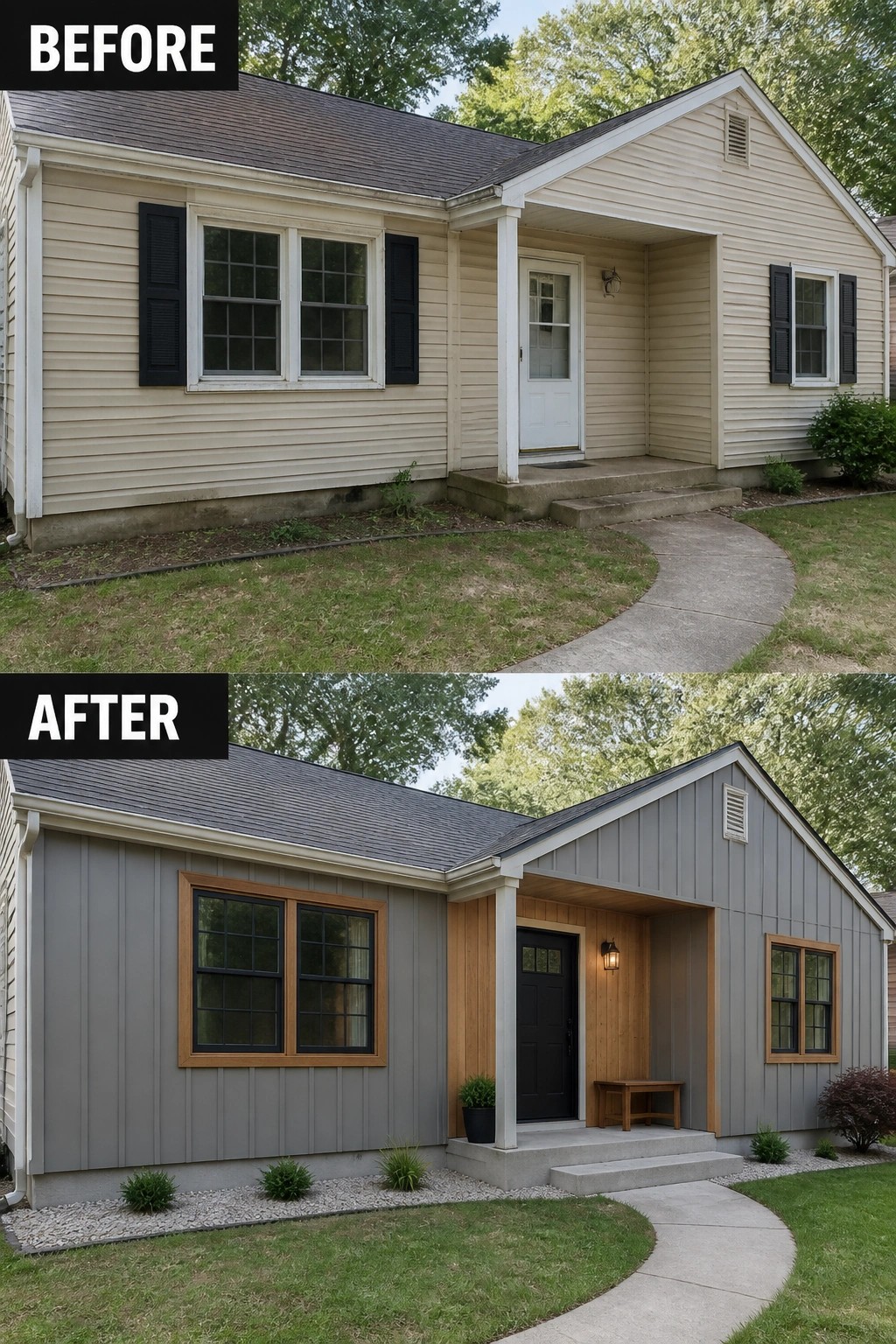
A simple color change on the siding can shift the whole feel of a house. In this case, the light beige was swapped for a muted gray, and wood accents were added around the windows and entry to give the front a cleaner, more structured look. The darker door also helps the porch area feel more grounded instead of blending into the background.
This approach works well on smaller homes or ranches where the facade is fairly flat. Focus on the main entry first, then add wood trim to one or two window groupings so the materials feel intentional rather than scattered. Keep the rest of the house simple so the updates do not compete with each other.
Extend The Roofline To Add A Real Front Porch
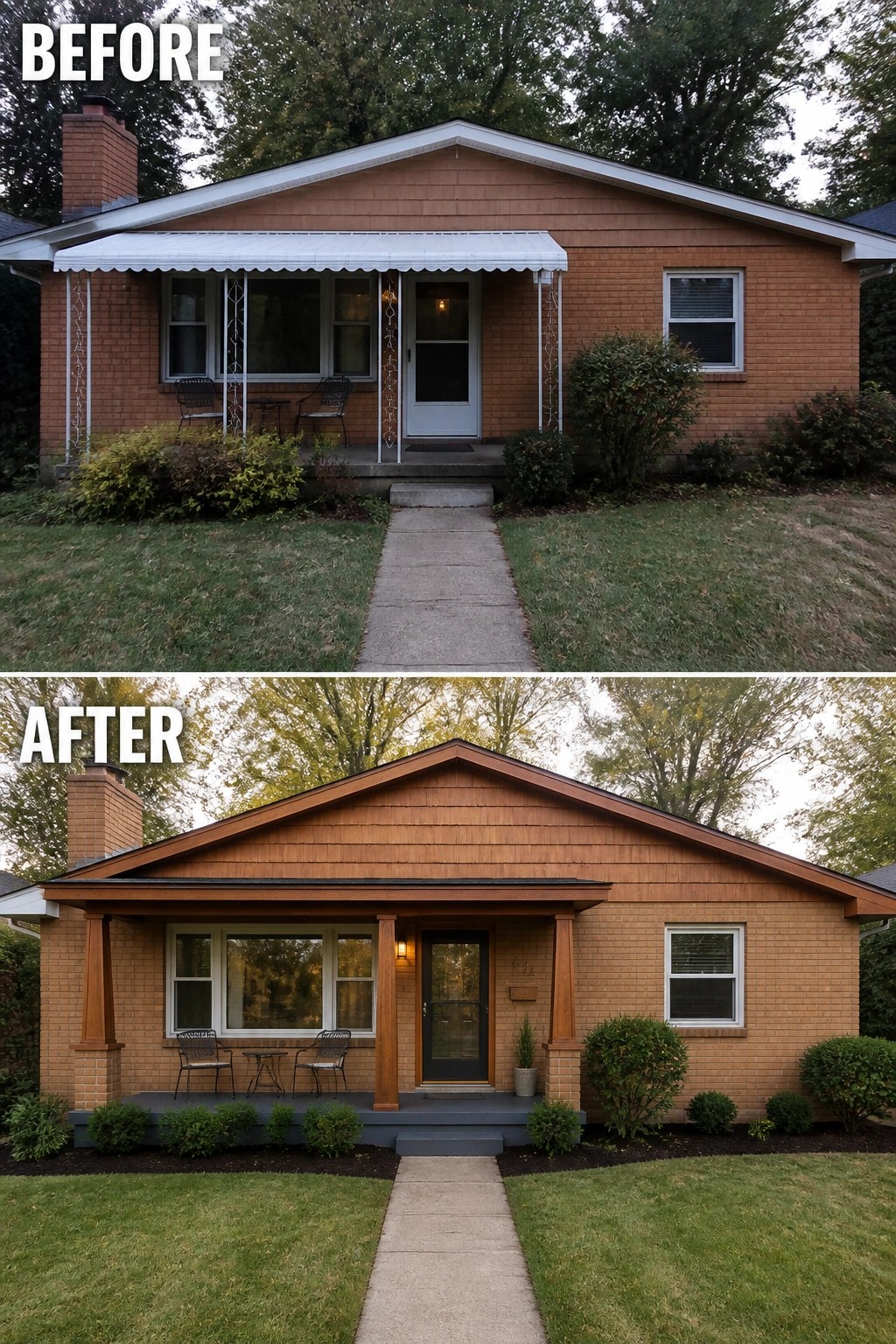
Many brick homes from earlier decades have a shallow entry with just an awning or no cover at all. Extending the roof and adding simple wooden columns turns that flat space into an actual porch that gives the whole front a more solid look. The change moves the house from looking basic to looking finished without needing to replace the brick.
This idea works well on single-story homes where the roof can be adjusted without major structural work. Focus first on the overhang and supports, then choose a darker door and a few low shrubs to keep the porch feeling open but defined. It suits older ranch or cottage styles that already have brick and just need more depth at the entry.
Refresh A Brick House Exterior With Dark Color And Wood Accents
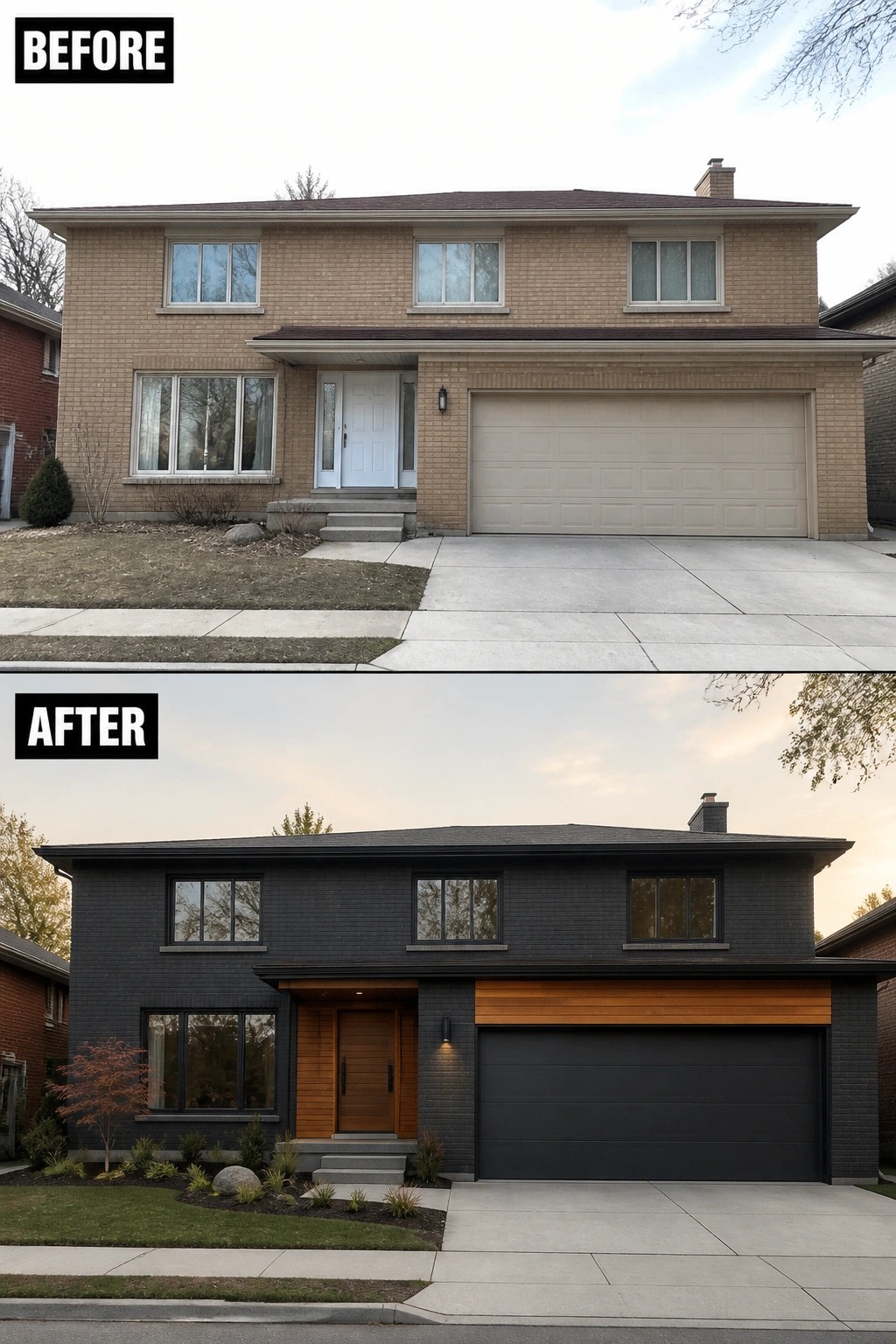
A light brick facade often reads flat and dated once the original color starts to look tired. Switching to a dark exterior color and adding wood at the entry and garage gives the house more weight and a cleaner modern look without needing a full rebuild.
This idea works best on two-story homes with attached garages where the front feels wide and plain. Choose a dark neutral that still shows some texture, then use wood only on the door and a section of the garage so the change stays simple and balanced.
Add Shutters And Window Boxes To Refresh A Simple Exterior
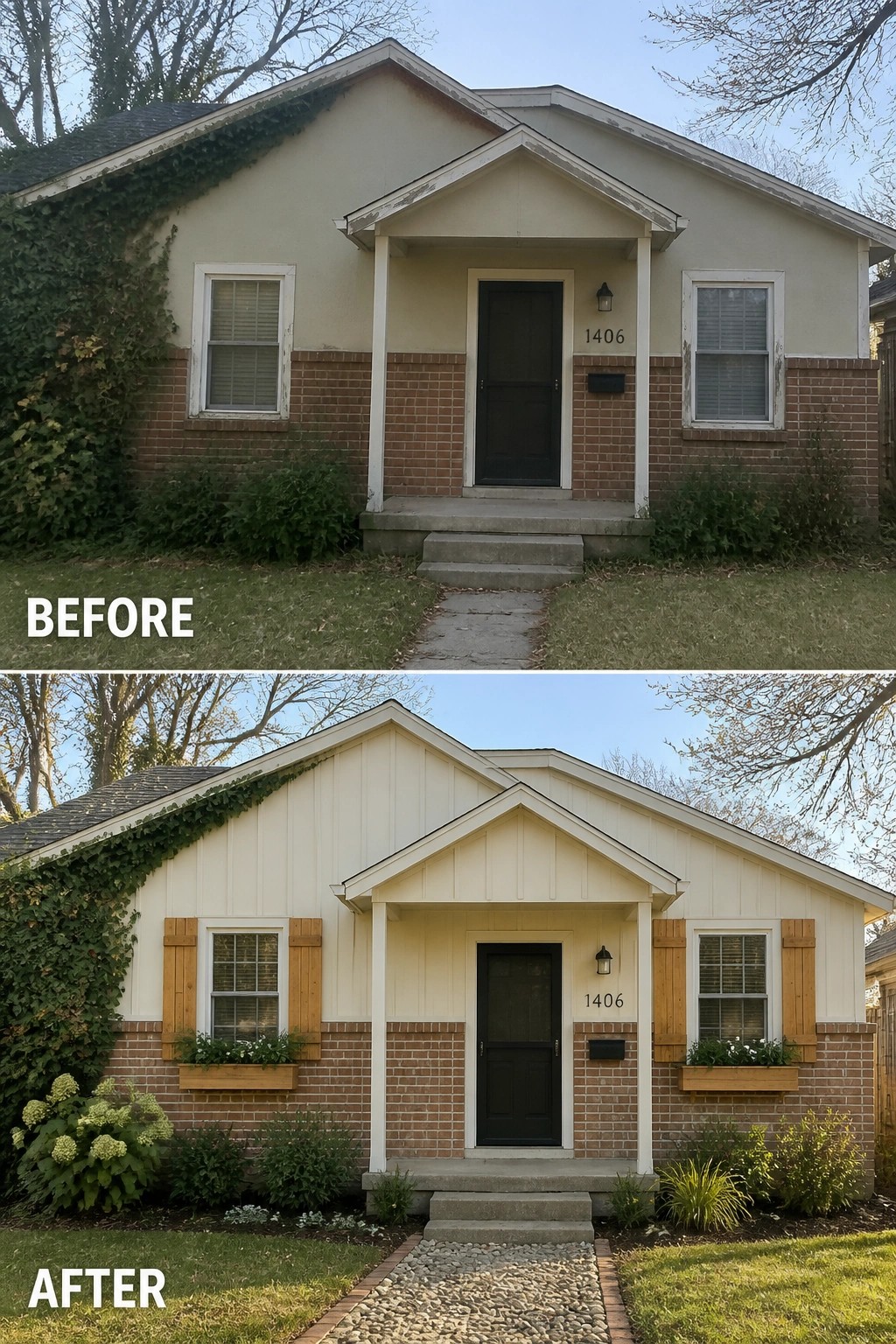
A plain house exterior often looks unfinished when the windows sit bare against the siding. Adding shutters and window boxes gives the facade structure and a bit of warmth without changing the main materials. The before version here shows flat windows and basic trim while the after adds wooden shutters and flower boxes that make the front feel more complete.
This idea works best on homes with straightforward brick and siding where you want quick visual interest. Keep the shutter color and wood tone consistent with the door and trim so everything feels connected. Start with a few well-placed boxes under the main windows rather than trying to cover every opening.
Frame The Entry With Vertical Wood Accents
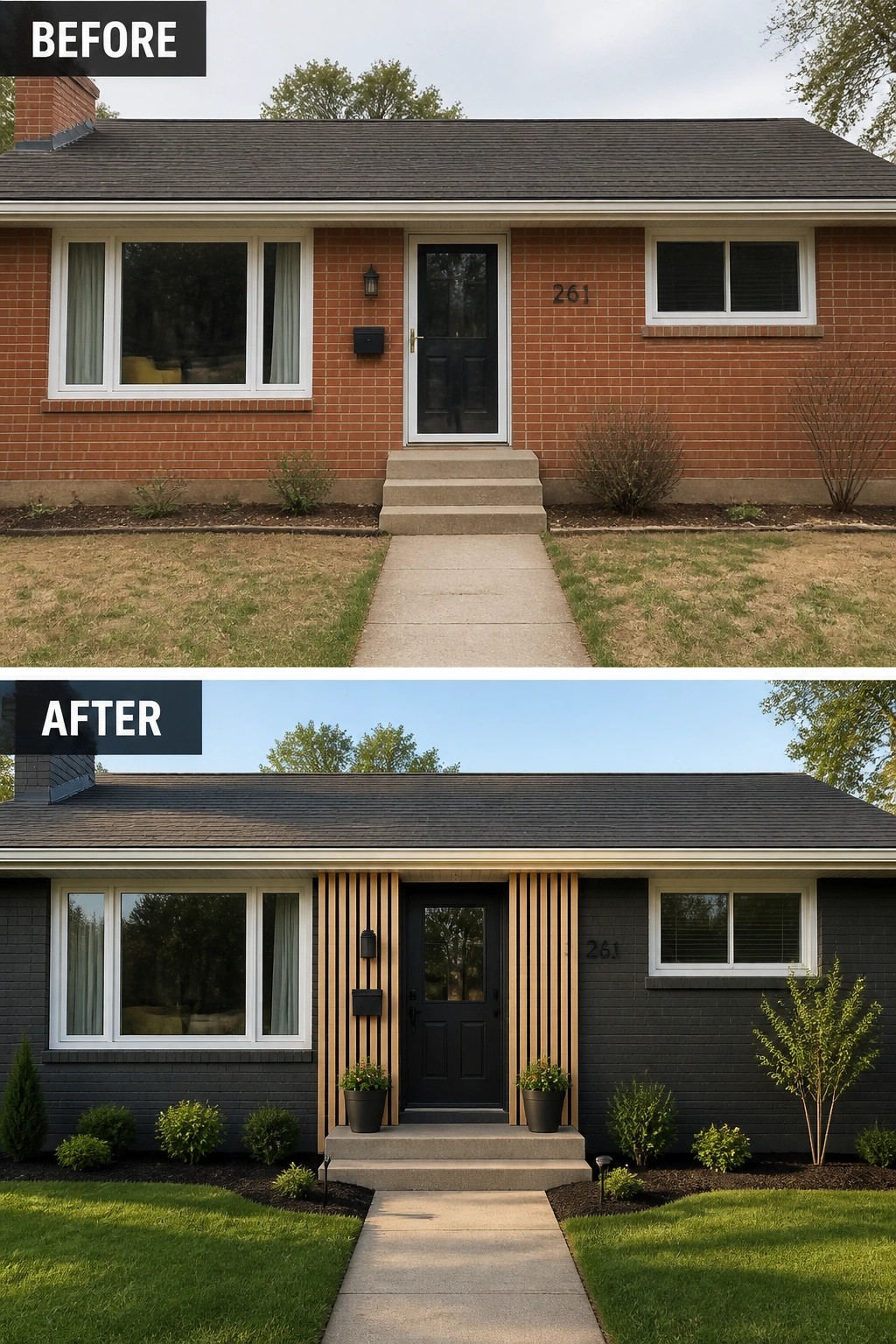
A plain brick front can start to feel flat after a while. Painting the house dark and adding a few vertical wood slats on either side of the door gives the entry a clear center point without any major construction. The change turns a basic set of steps into something that feels more intentional.
This approach works well on simple ranch homes or any facade that already has a centered door. Keep the wood a light natural tone so it stands out against the darker siding, and limit the width of the slats so they do not overwhelm the entrance. Start with the paint and the wood before adding planters or new shrubs.
Add Wood Accents To Refresh A Brick Porch
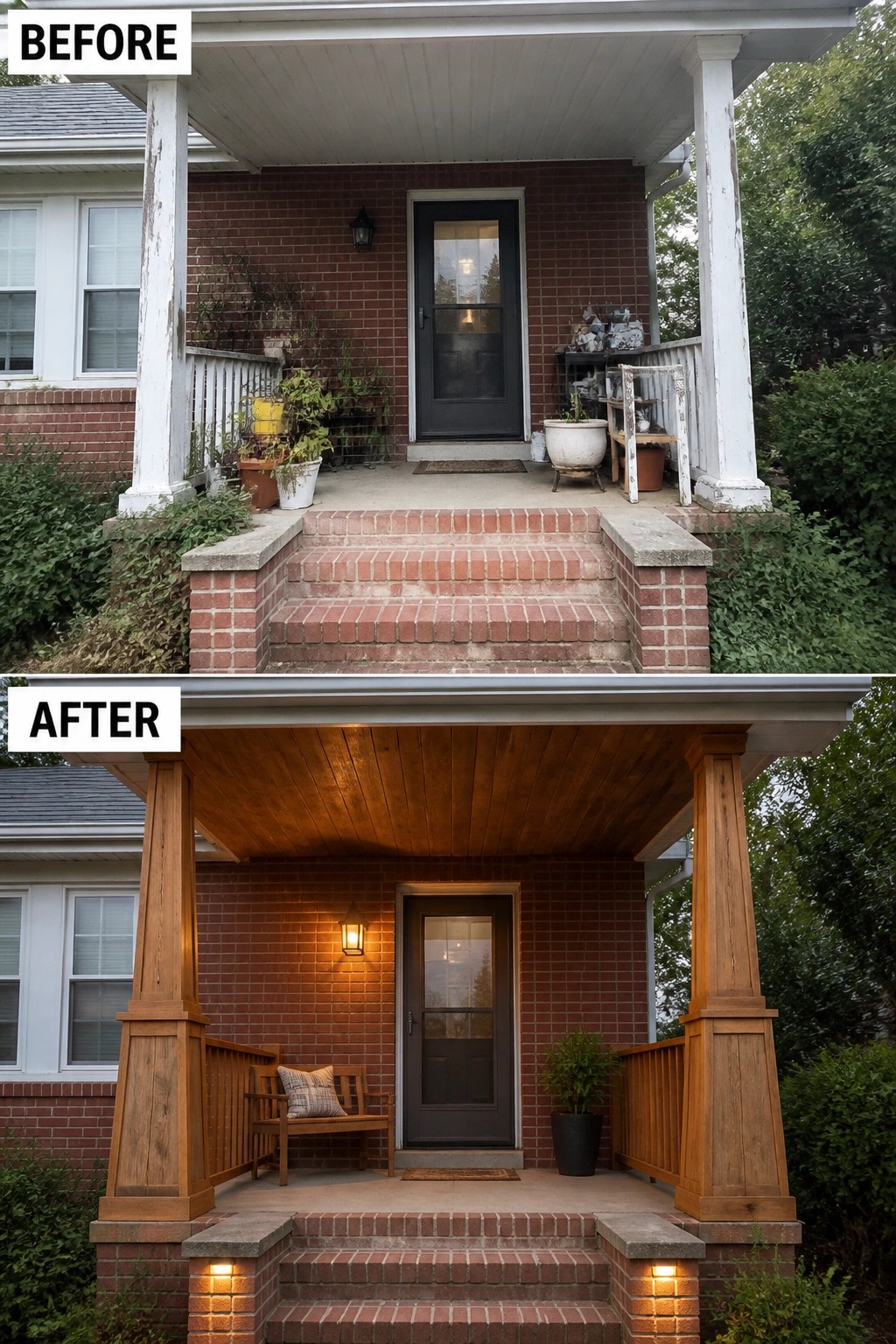
Many older brick homes have porches with painted columns that eventually peel and look tired. Switching those columns and railings to stained wood gives the entry a warmer look and ties the brick to the rest of the house without major construction. The simple change from white painted posts to solid wood ones makes the whole facade feel more finished.
This approach works well on homes where the brick is still in good shape but the trim needs updating. Keep the wood tone consistent across columns, railings, and any new benches or planters so the porch reads as one piece. Start with the structure before adding lights or seating so the wood remains the main feature.
Refresh Siding Color And Garage Door For A Cohesive Look
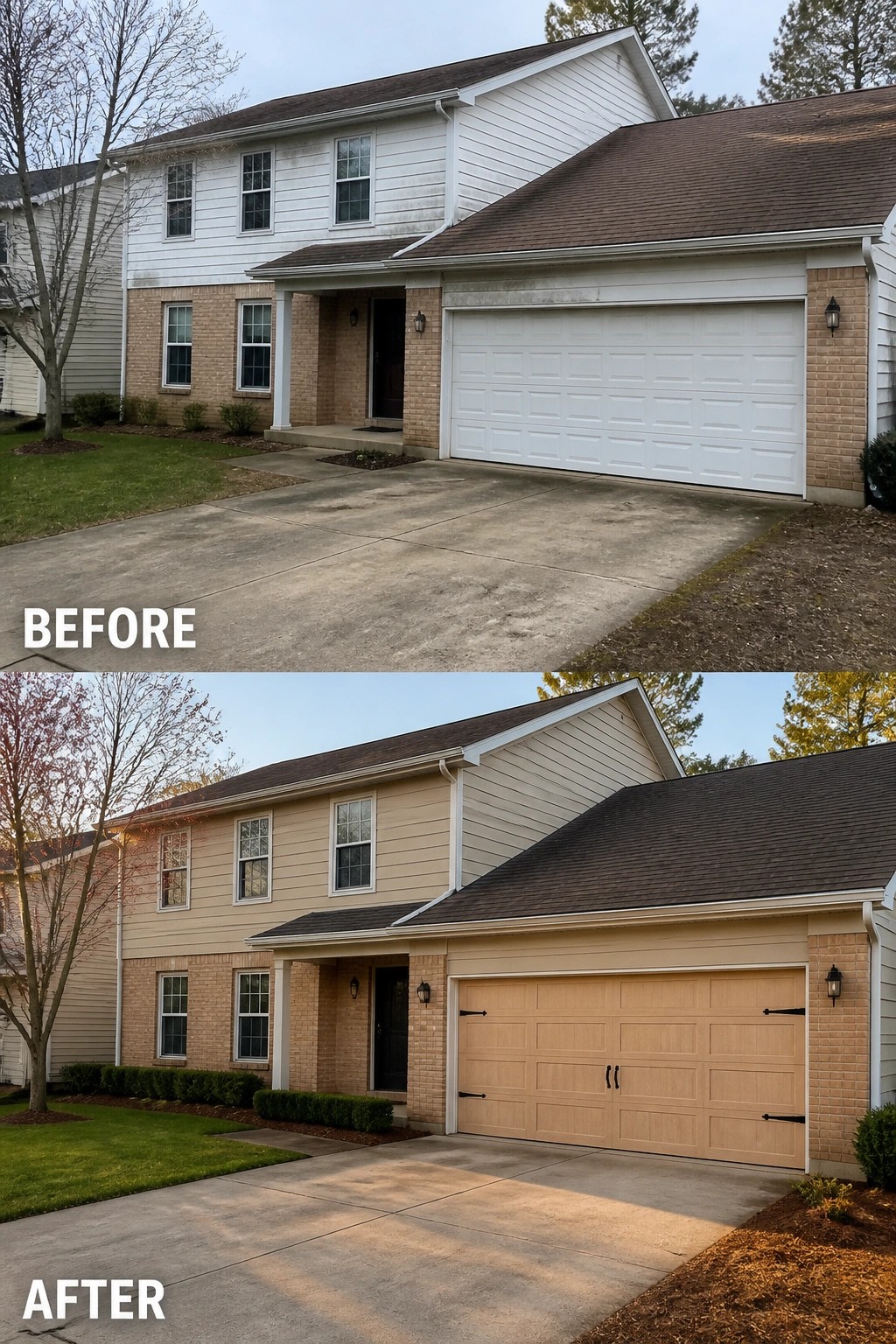
Painting the siding a warmer tone and switching to a wood-style garage door can pull together a mixed brick and siding house. The before photo shows a cool white exterior that feels flat next to the brick. After the change the colors sit better together and the front feels more finished without any major structural work.
This approach works best on homes where the siding is still in good shape but the color has grown tired. Pick a shade that picks up tones already in the brick, then match the garage door finish to that same palette. Keep the trim and roof the same so the update stays focused and the cost stays reasonable.
Add Contrast With Dark Trim And A New Front Door
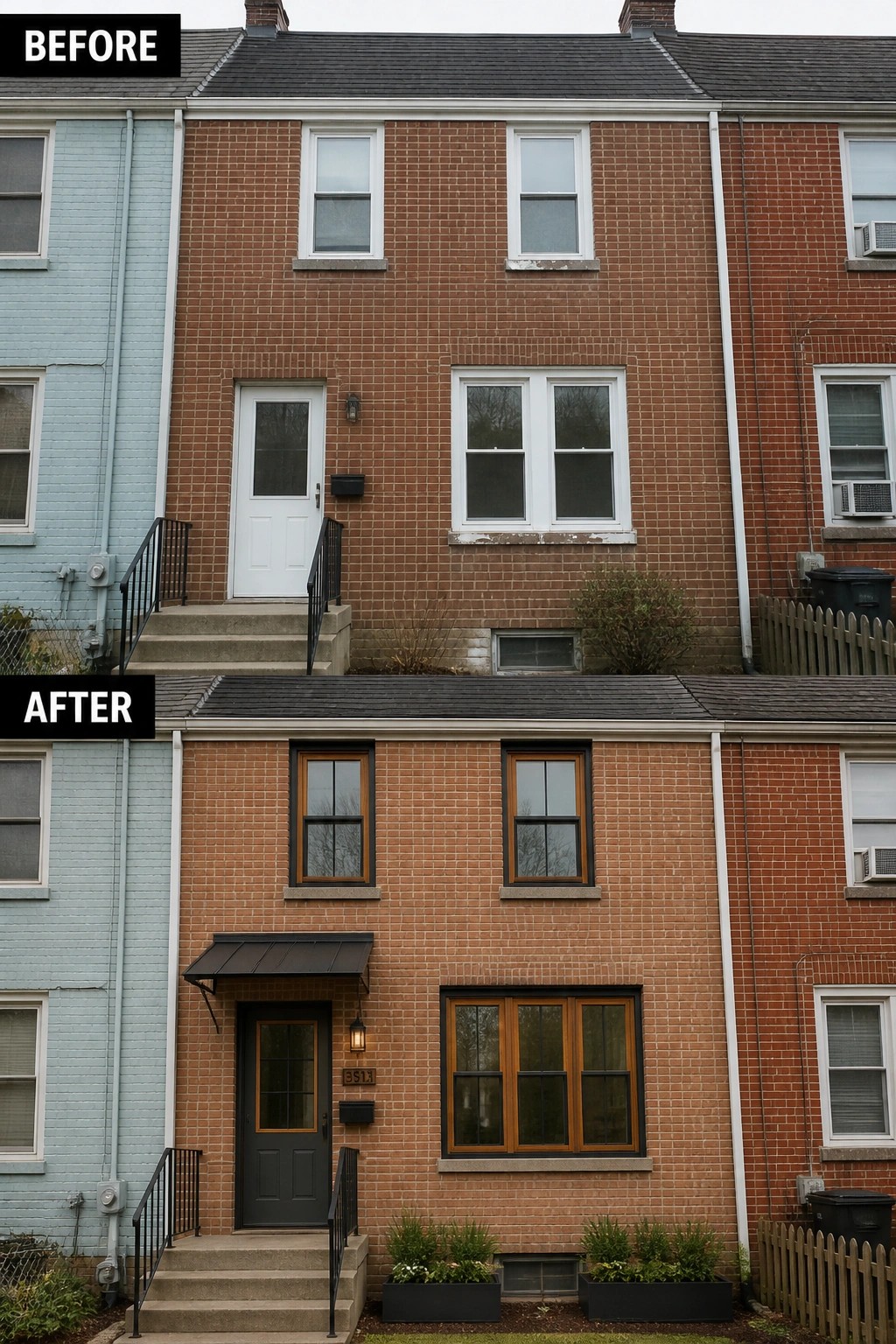
A plain brick facade can start to feel flat when everything blends together. Swapping the white door for a dark one and adding black frames around the windows creates a stronger focal point at the entry. The small awning and updated lighting help tie the changes together without any major construction.
This approach works well on row homes or simple brick houses where you want quick impact. Pick one dark color for the door and trim, then keep the rest of the brick clean. It is usually easier to start with the door and windows before adding planters or other details.
Mix Materials To Refresh Plain Siding
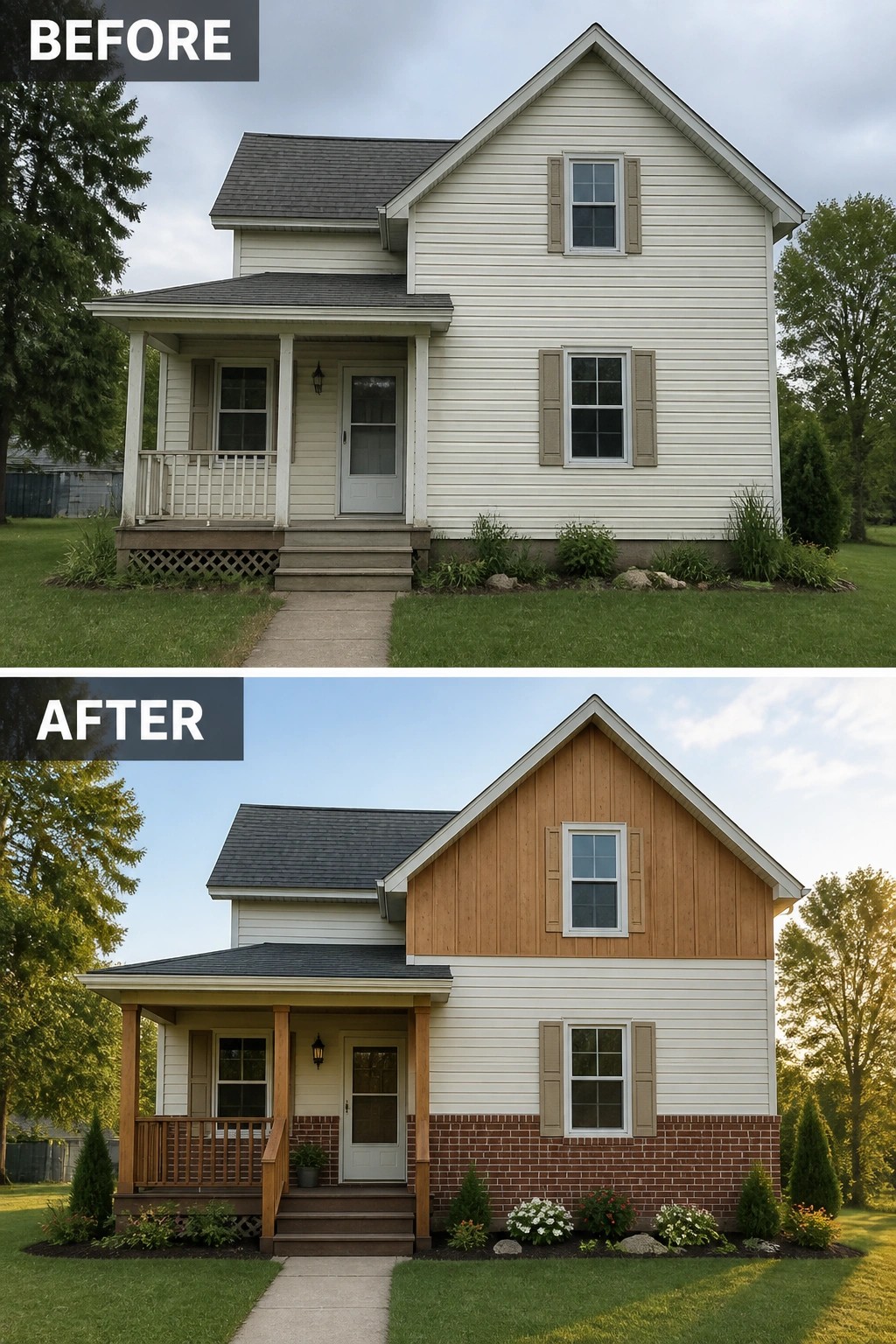
Many houses with basic siding end up looking flat because everything is the same material and color. Adding wood to the gable and brick along the lower walls breaks up the surface and gives the facade more structure.
This works best on homes where the shape is already decent but the exterior feels plain. Start with one or two key areas like the gable or foundation, match the new trim to the existing porch, and keep the rest of the siding as is so the change stays simple and affordable.
Add A Wood Screen And Raised Bed To Define A Brick Front
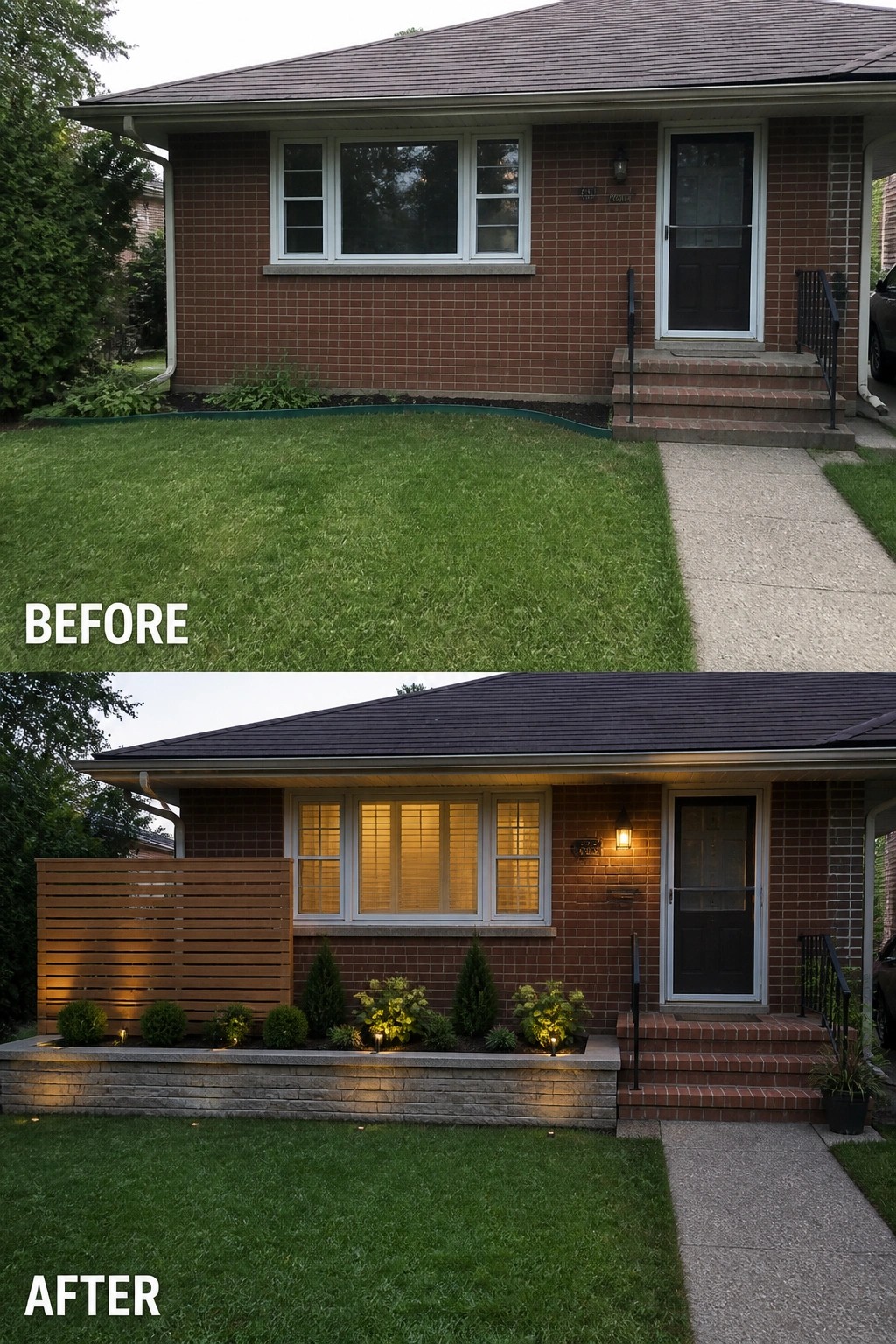
A plain brick house often looks unfinished where the foundation meets the lawn. Adding a raised stone bed with a horizontal wood screen creates a clear edge and gives the front a more structured look without major construction.
This approach works well on homes that already have a solid brick base. Keep the screen height modest so it frames the windows instead of blocking them, and use simple evergreen shrubs and low lighting to keep the bed looking neat year round.
Add A Wood Entry Porch To Refresh The Facade
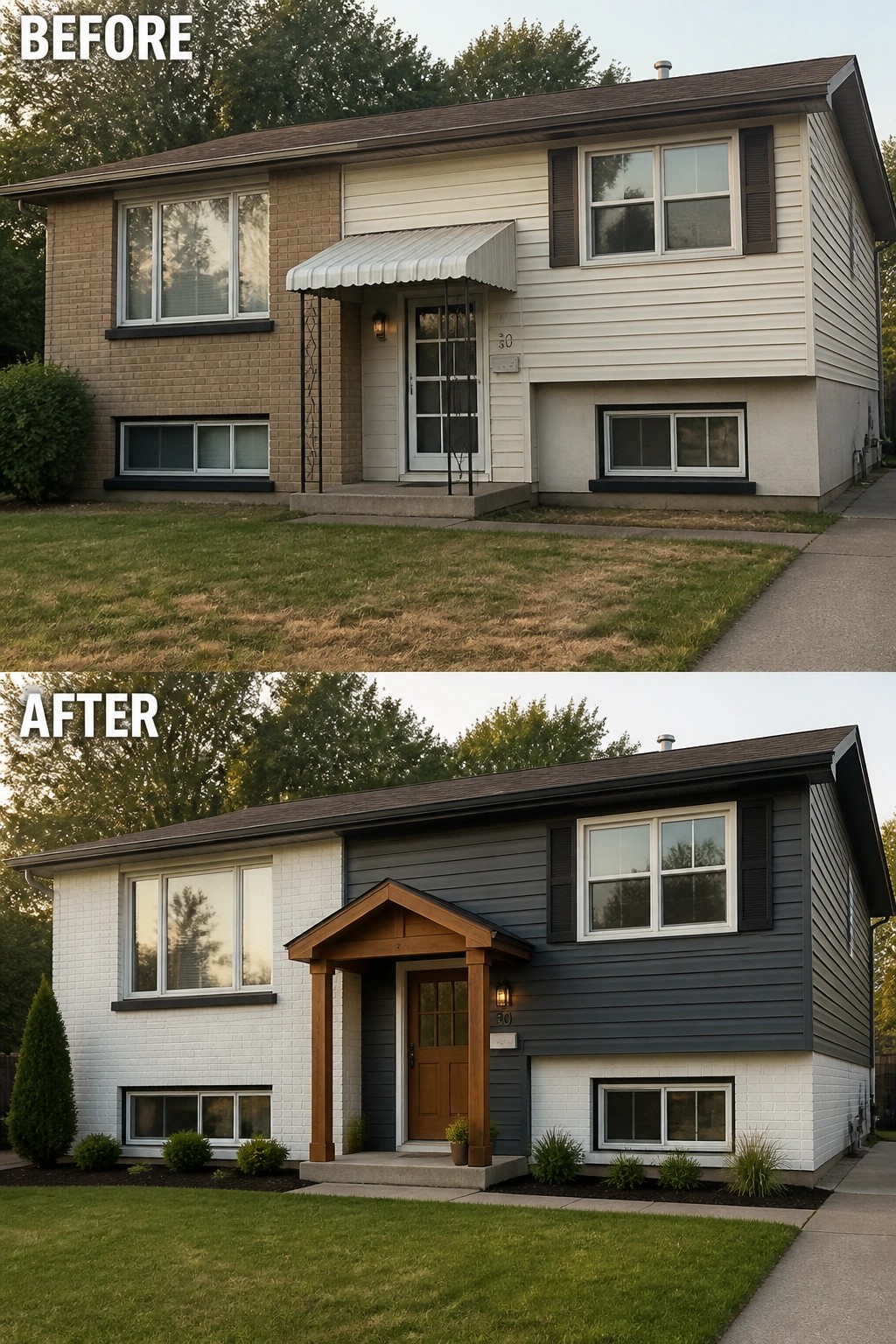
Many homes from a certain era have a flat front entry that feels dated once the rest of the neighborhood updates. In this case the change starts with swapping the old metal awning for a simple wood gable porch and shifting the siding to a cleaner two-tone palette. The new structure gives the door a clear focal point and makes the whole front feel more finished without major construction.
This approach works well on split-level or two-story homes with plain siding. Keep the porch modest in size so it fits the scale of the house, and match the wood tone to any other trim you plan to keep. Start with the color change and the entry structure before adding plants or lighting.
Update A Plain Garage Door With Wood Accents
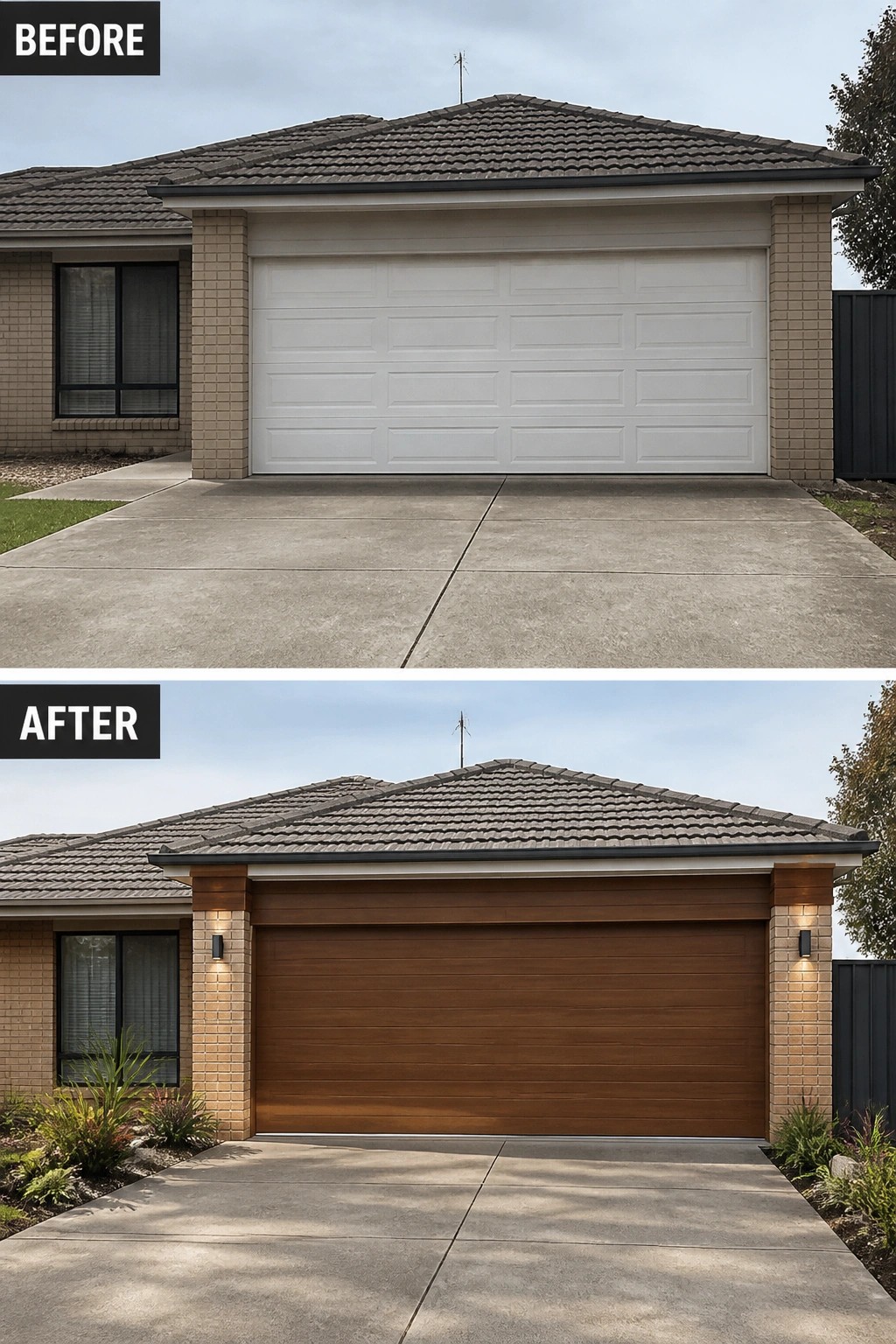
A basic white garage door can make the whole front of a house feel flat. Switching it out for a wood version adds warmth and texture that works well with brick. Adding a pair of simple wall lights on the pillars helps too, since they frame the door and make the entry feel more finished.
This idea works best on homes where the garage takes up a lot of the facade. Keep the rest of the changes light so the new door stays the main feature. Match the wood tone to any existing trim or fencing if you can, and test the lights at night before you install them.
Add Wood Accents To Refresh A Brick Porch
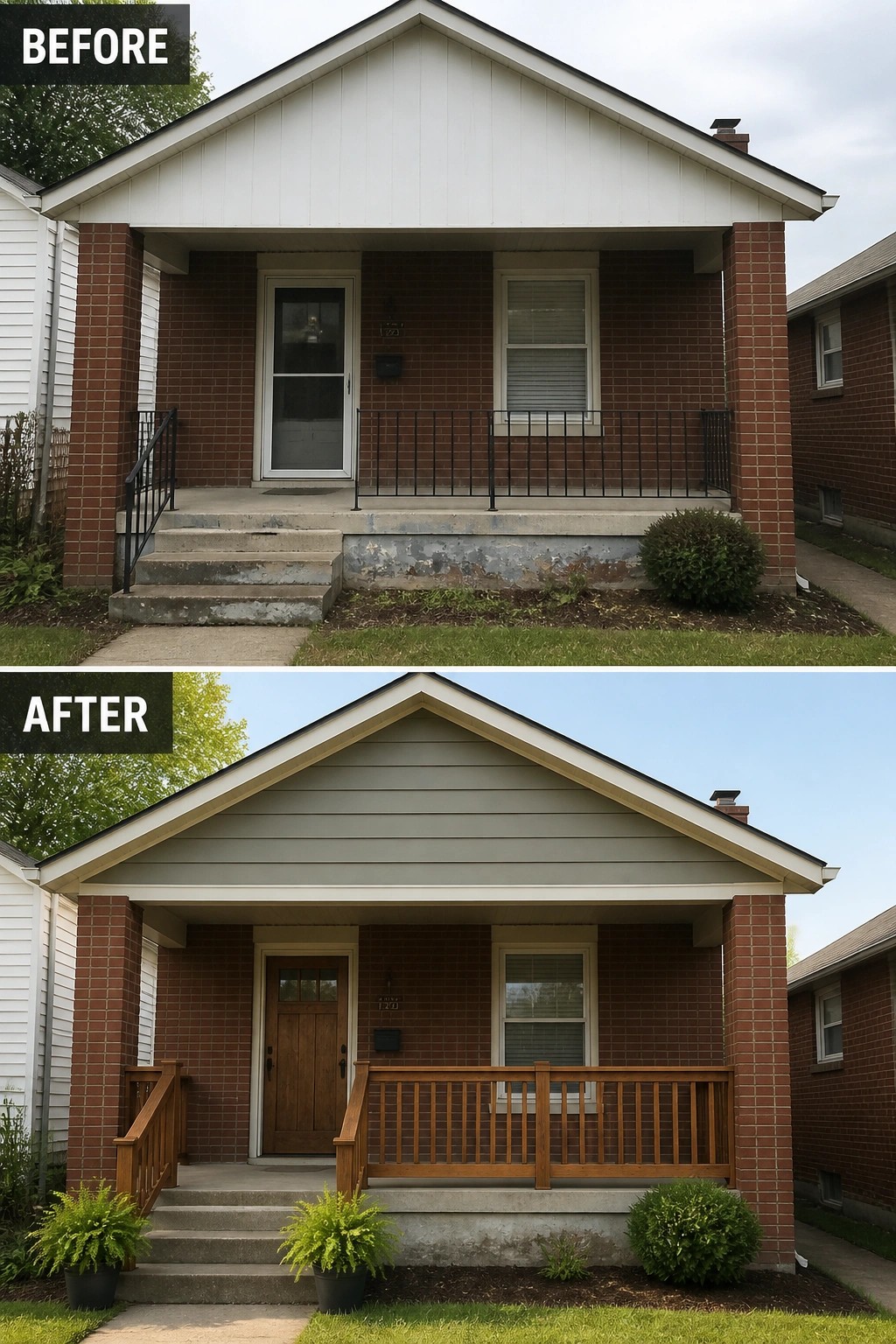
Replacing the old metal railing with a simple wood version makes the biggest difference here. The new wood railing, matching posts, and updated front door bring warmth to the brick and give the entry a much cleaner, more finished look without changing the whole house.
This approach works well on smaller brick homes where you want to keep the original material but need something softer at the porch level. Start with the railing and door if your budget is tight, then add a couple of planters to finish the steps. Keep the wood tone consistent so the changes read as one update rather than several separate fixes.
Refresh Siding Color With Wood Accents
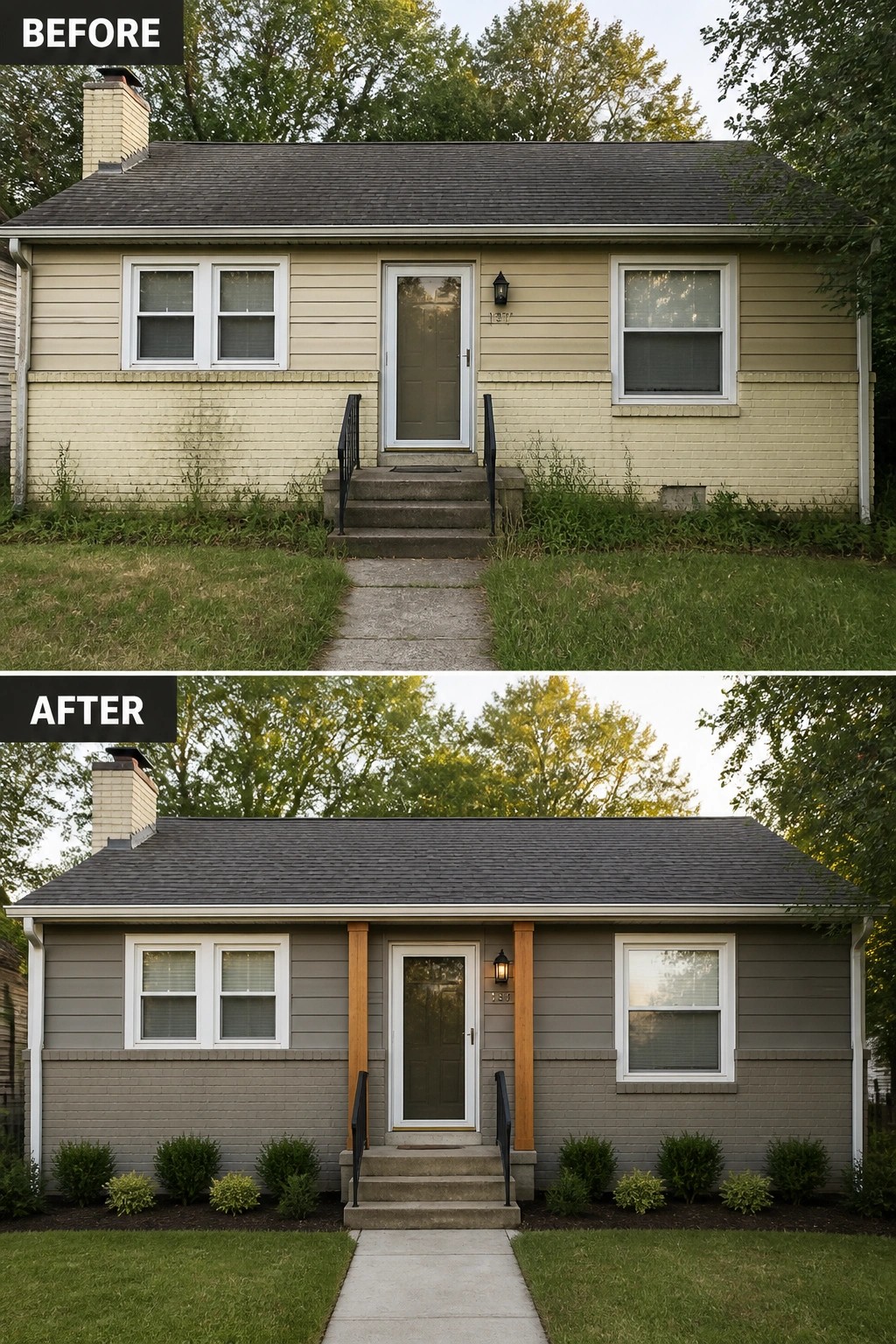
A simple color change on the siding can make an older house feel current again. In this case the light beige was replaced with a gray tone, and vertical wood pieces were added on either side of the door to frame the entry and break up the flat wall.
The same approach works on many single-story homes with plain siding. Choose a slightly darker shade than the original, then add a natural wood accent in one or two spots such as the entry or a porch column. Keep the rest of the trim white so the new color and wood stand out without needing a full renovation.
Add A Low Fence To Frame The Front Walkway
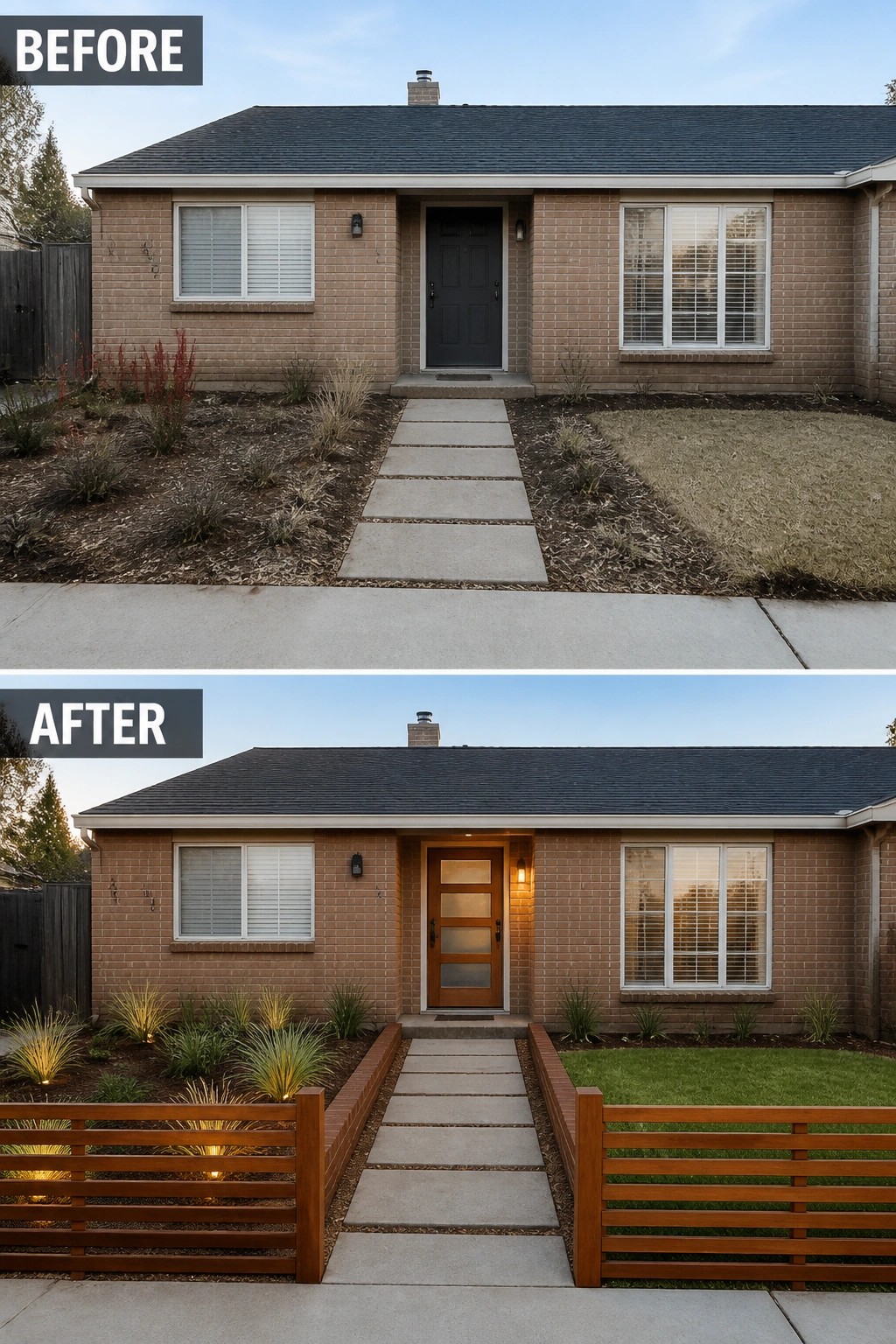
A plain concrete path leading to the door often feels unfinished, especially on a brick house with open lawn on both sides. Adding a low wood fence with matching brick edging gives the walkway clear boundaries and makes the entry feel more intentional without blocking the view.
This works well on homes where the front yard is mostly flat and simple. Keep the fence height modest so it guides visitors without overwhelming the space, and match the wood tone to any existing trim or door details for a cohesive look.
Add Wood Structure To Frame A Plain Entry
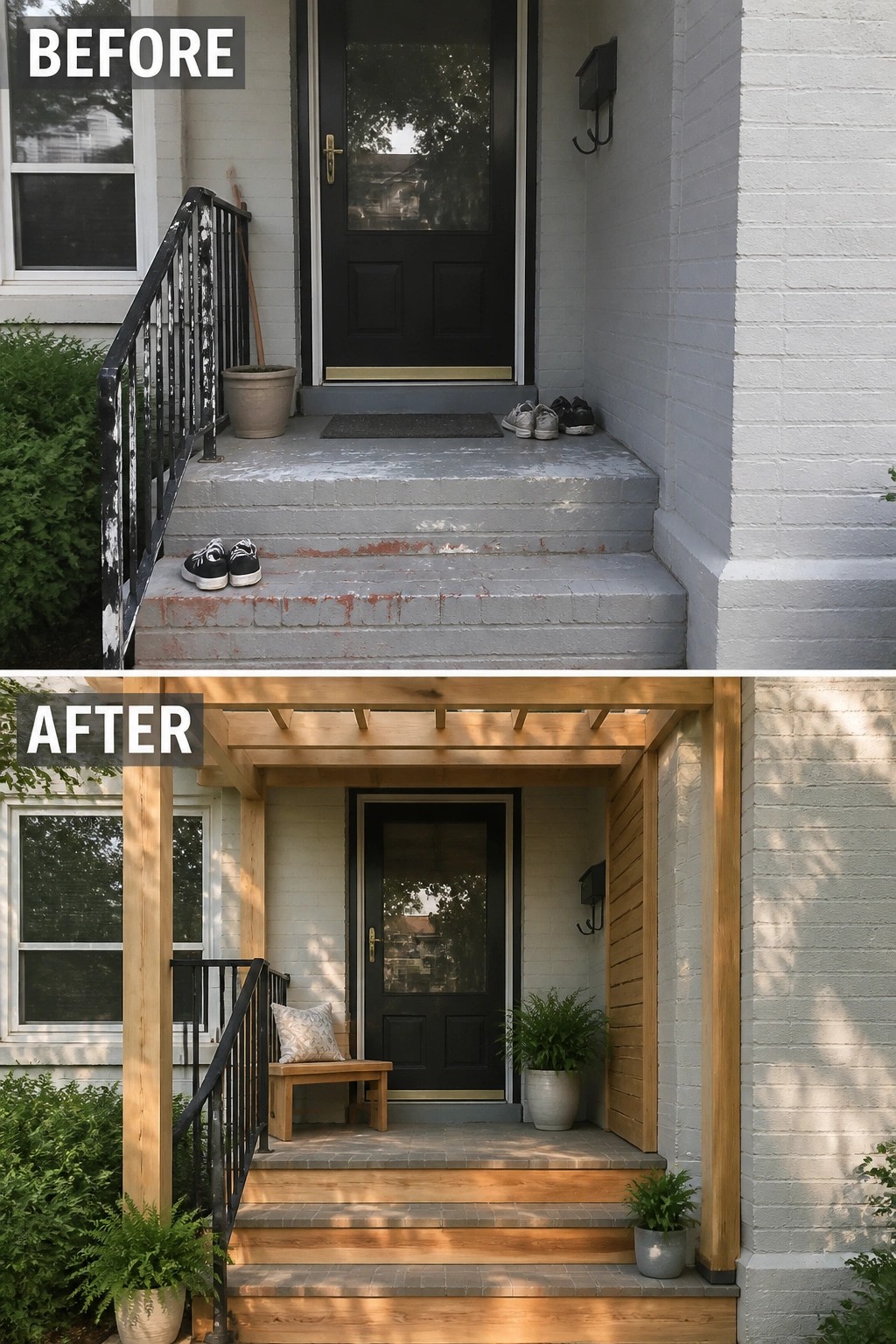
A plain set of concrete steps can feel unfinished next to a simple brick facade. Adding a basic wood frame overhead and replacing the steps with wood gives the entry a clear shape and makes the whole front feel more intentional. The change turns an open stoop into something that actually looks like a porch.
This idea works best on smaller homes where the entry sits close to the street. Keep the wood tone natural so it contrasts with the brick and white siding without competing. Start with the frame first, then add one or two planters and a small bench so the space stays usable rather than crowded.
Add Shutters And Trim To Warm Up A Brick Exterior
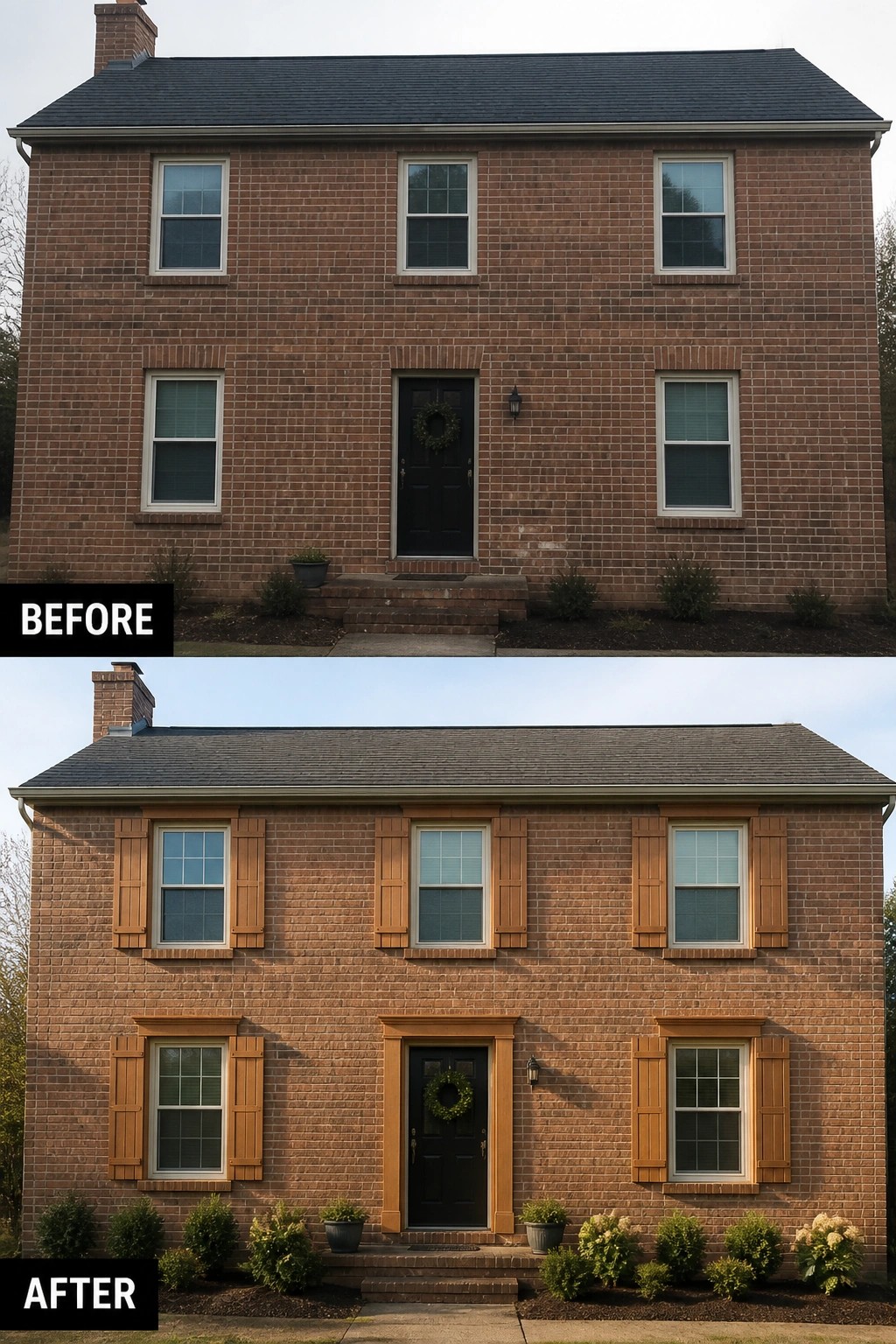
A plain brick house often looks flat because the windows and door have no frame around them. Adding shutters and changing the trim color gives the facade clear lines and makes the whole front feel more finished.
This idea works best on homes that already have solid brick and just need a few details to feel less bare. Pick a trim color that contrasts with the brick, keep the shutters simple, and focus on the windows and entry first before adding anything else.
Add Vertical Siding And A Portico To Define The Entry
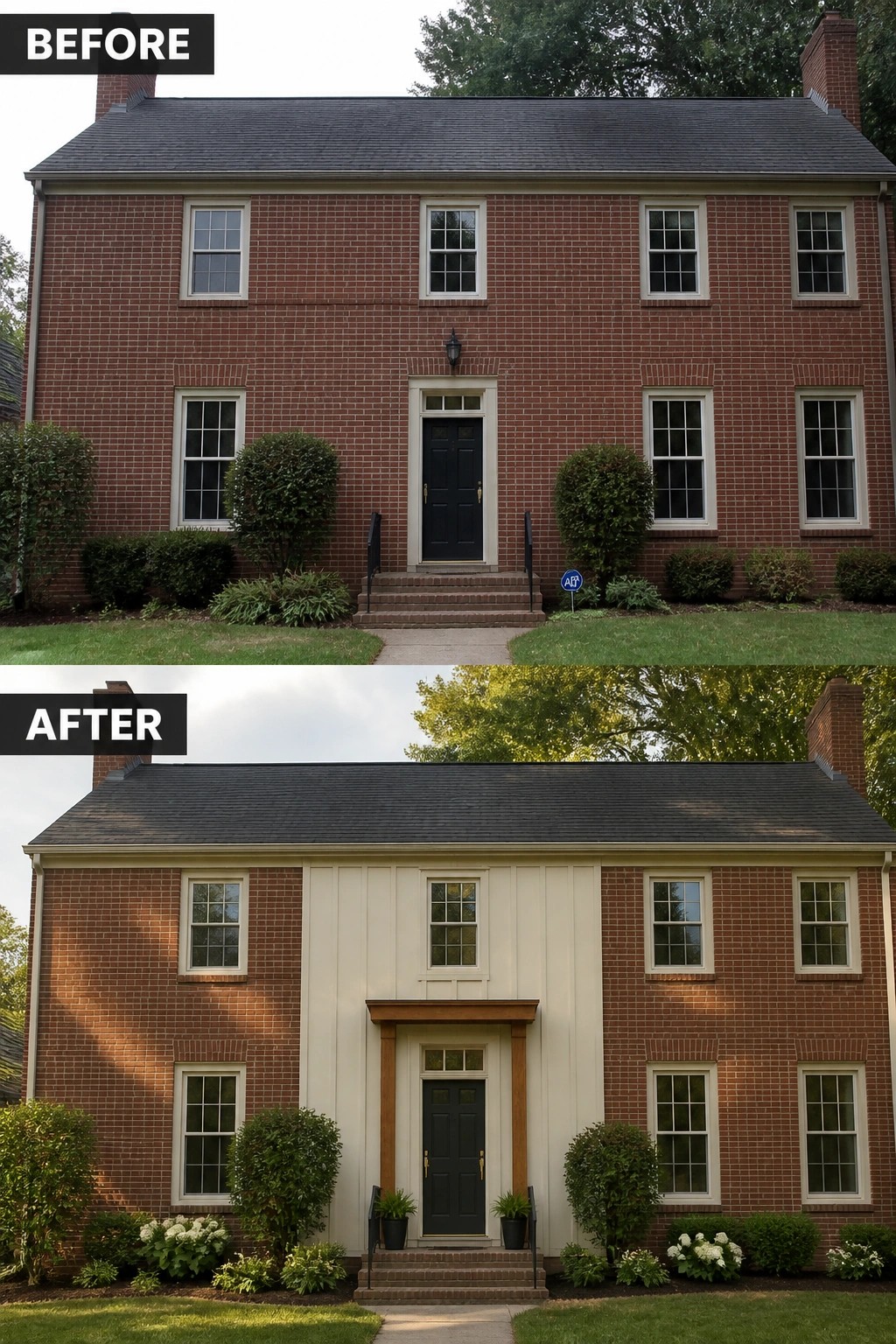
A wide brick facade can feel flat when the front door blends in with everything around it. Adding a vertical siding panel right above the door, plus a simple wooden portico, gives the entry a clear center point without covering the whole house. The change turns a plain brick wall into something that looks more intentional and welcoming.
This idea works best on two-story brick homes that lack trim or contrast around the door. Keep the siding color light so it stands out against the brick, and match the wood tone to any other accents you already have. It is a fairly simple update that can be done before investing in bigger changes like new windows or roof work.
Update Siding Colors To Create A Cohesive Look
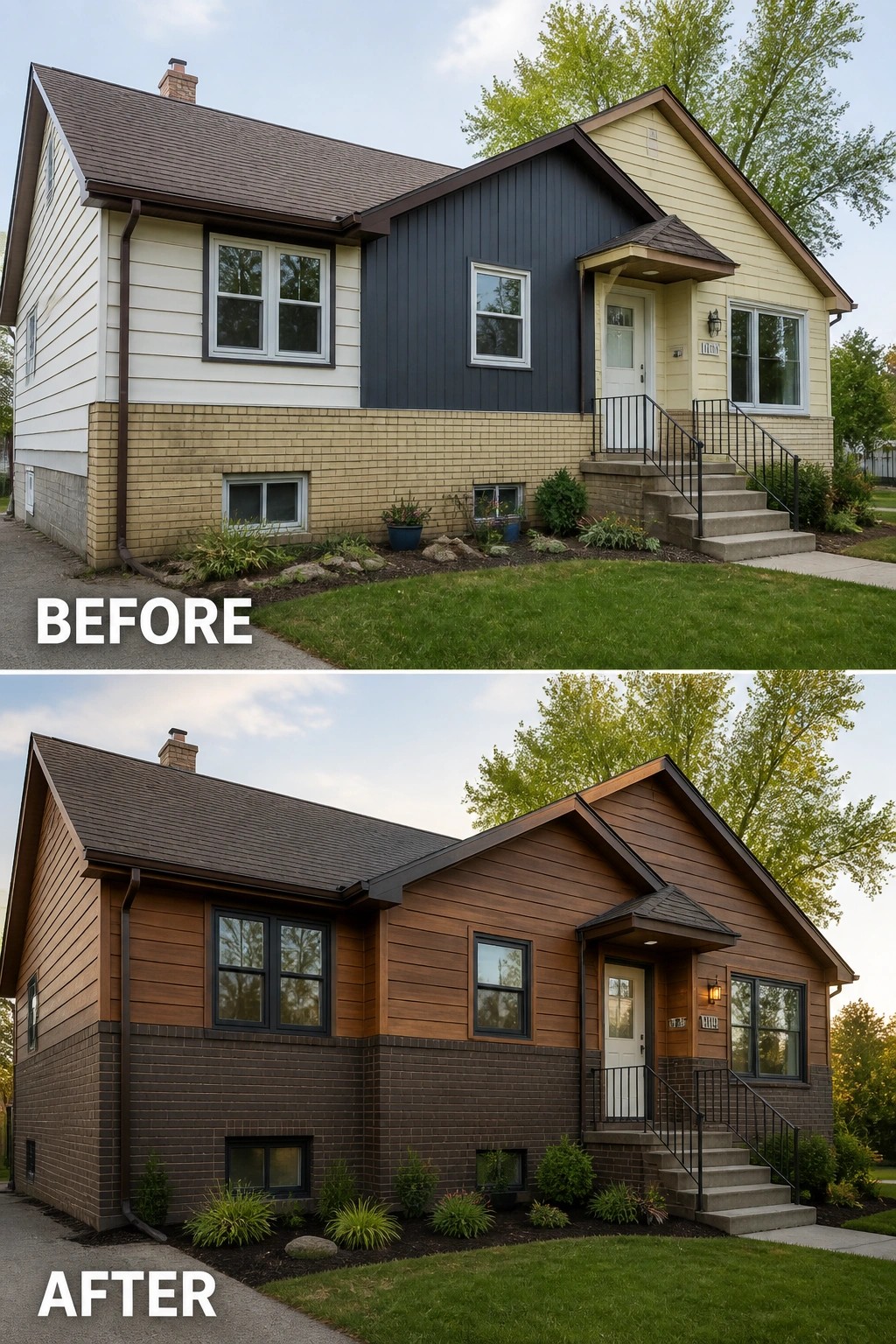
Many older homes end up with several siding materials and colors that no longer work together. Switching the upper level to one consistent wood-tone siding while darkening the brick base pulls the whole facade into one clean look.
This idea suits houses that already have a mix of materials but need a simpler color story. Keep the trim dark and minimal so the new siding can carry the update without extra details.
Add Wood Accents To Refresh A Brick Exterior
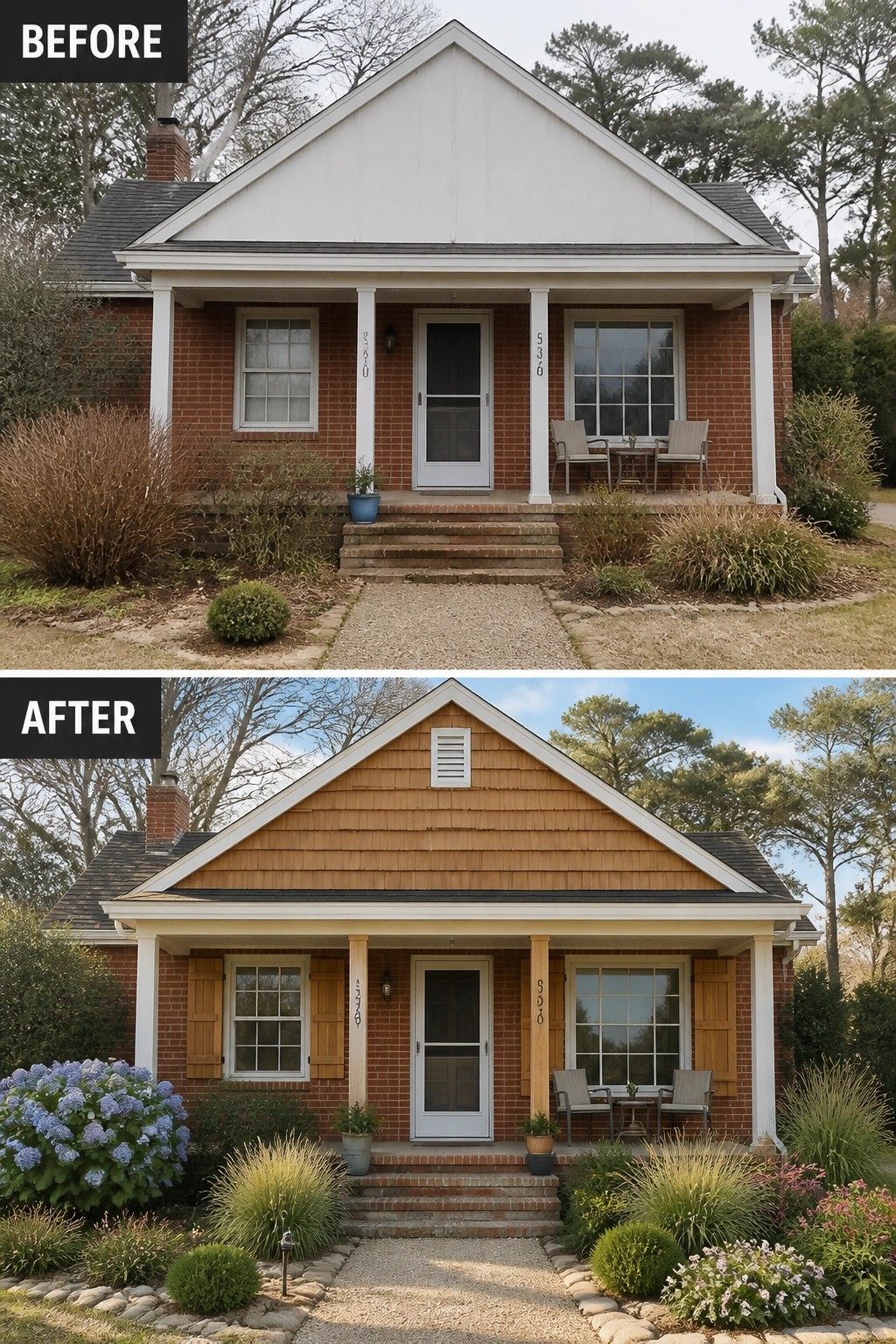
Many brick houses end up looking plain because the upper gable and window trim stay too simple. Switching the gable to wood shingles and adding shutters gives the front a warmer, more finished look while keeping the brick as the main material.
This idea works best on smaller homes where you want to add character without changing the whole structure. Match the shutter color to the new wood so the changes feel connected, and keep the rest of the trim simple so the wood stands out.
Add Wood Accents To Frame A Brick Entry
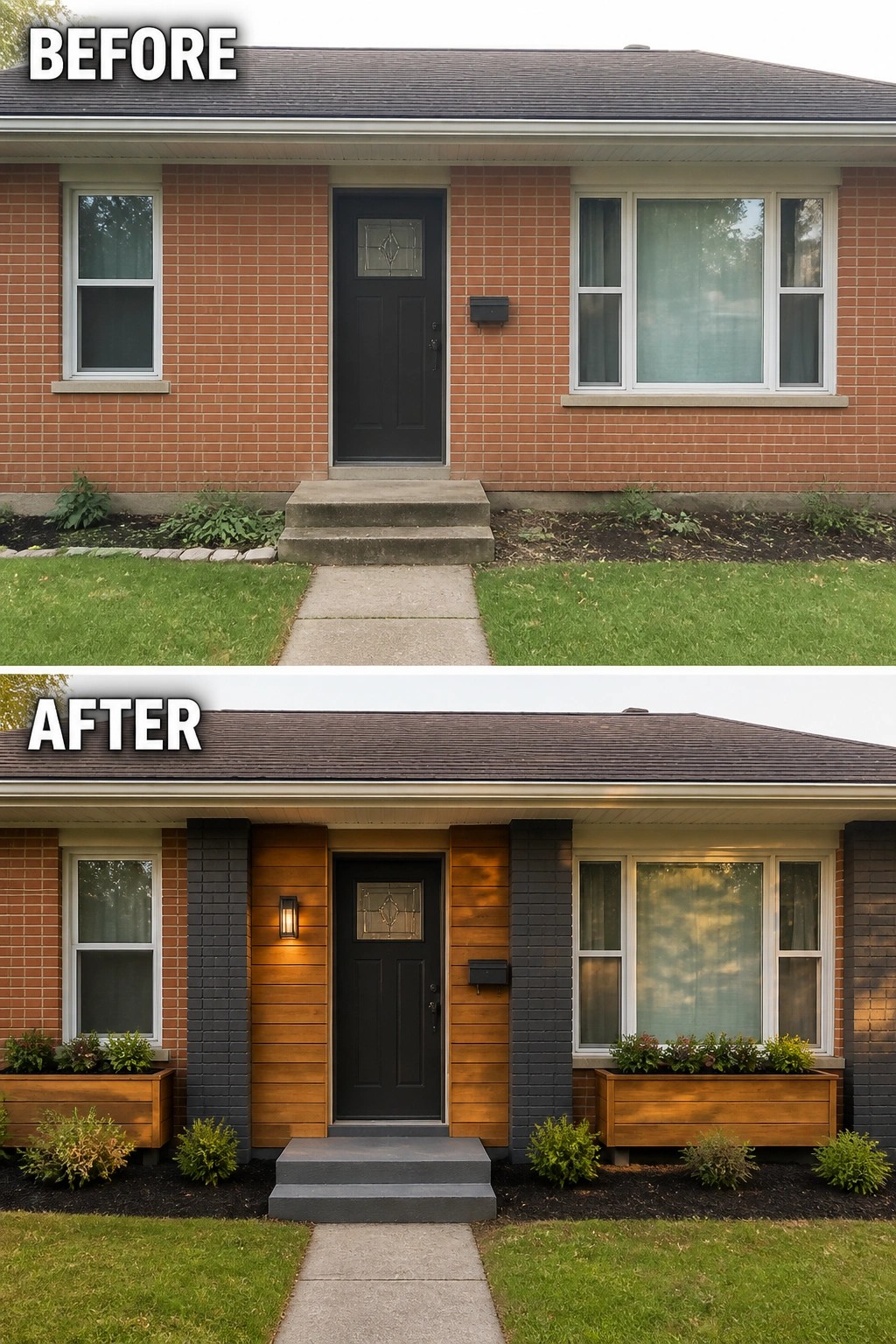
Many brick homes look solid but flat around the front door. Adding a band of horizontal wood siding on each side of the door and placing matching wood planters below the windows gives the entry more structure and warmth while keeping the original brick intact.
This idea works best on simple one-story homes where the brick is still in good condition. Match the wood tone to any other accents you add, such as a new light fixture or painted steps, and keep the planting low so the changes stay easy to maintain.
Replace Thin Porch Columns With Substantial Wood Posts
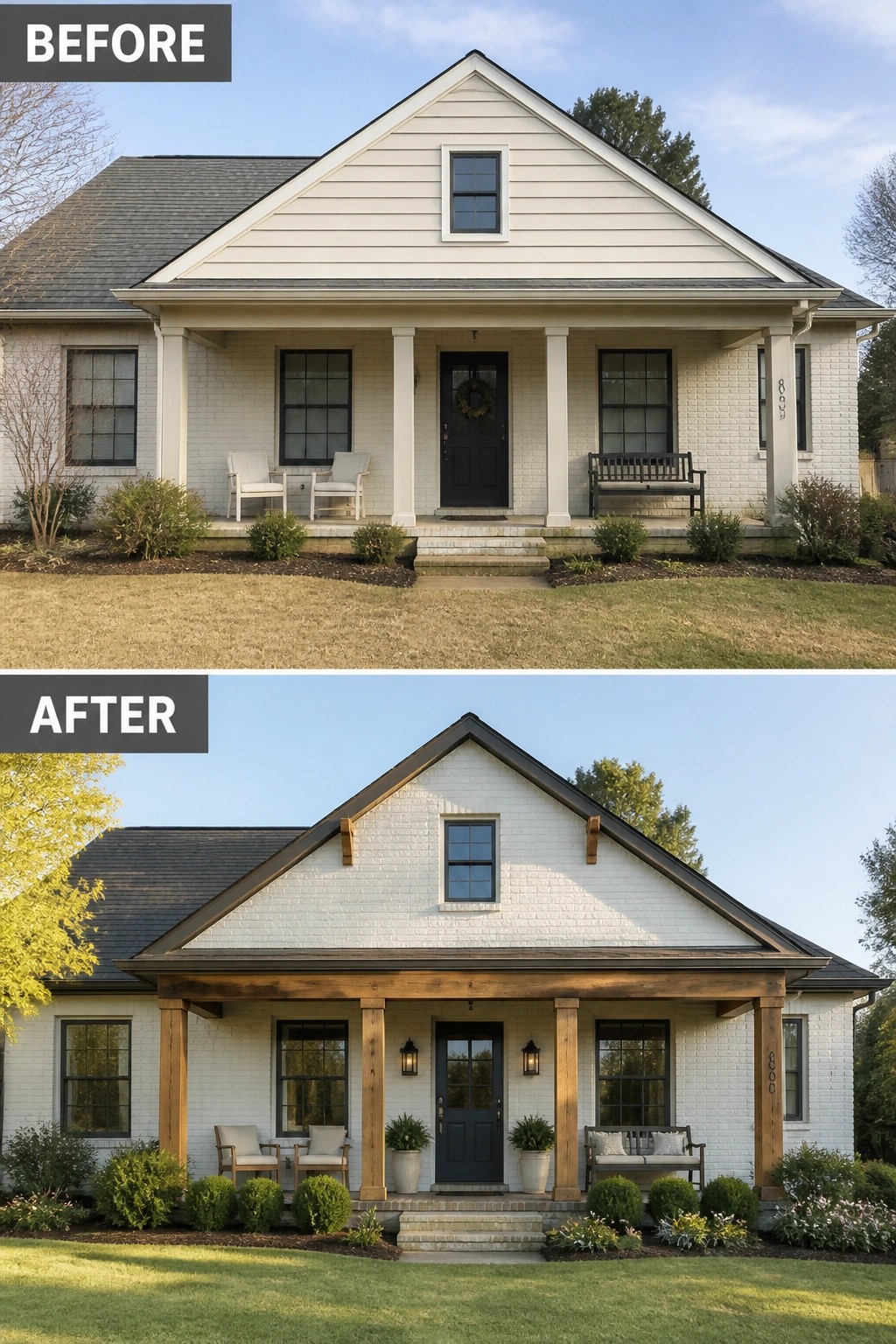
Many homes have front porches that feel too light because the columns are thin and the trim is minimal. In this case the change came from swapping those slender white supports for thick timber posts and adding matching beams along the roofline. The result makes the whole entry feel grounded and more in scale with the house.
This approach works well on homes that already have brick or siding but need a bit more presence at the front. Start by looking at the structure of your own porch and consider whether heavier wood elements would balance the roof and door better. Keep the rest of the updates simple so the wood remains the main focus.
Update A Plain Entry With Wood And Simple Planters
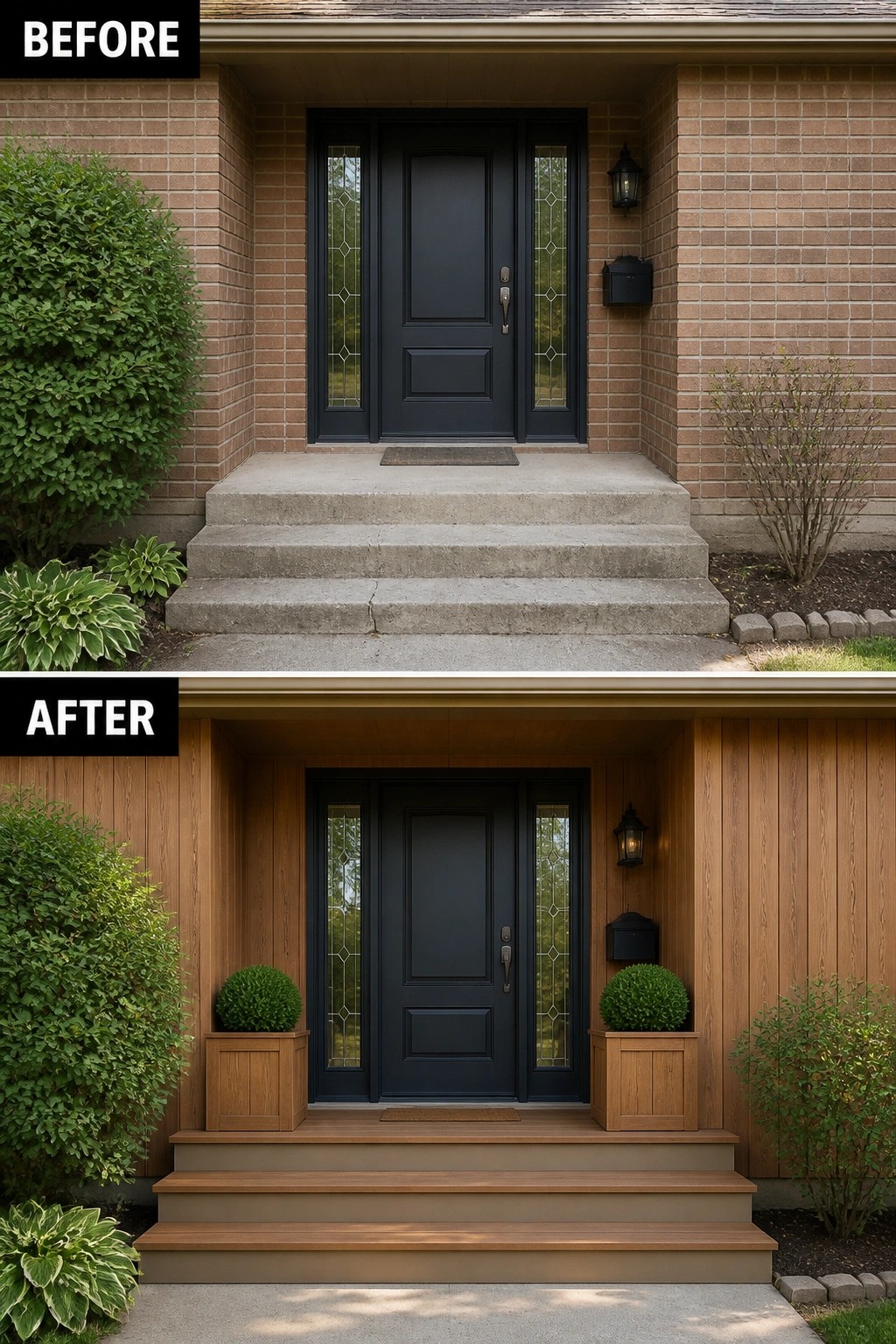
Many homes with brick exteriors end up with a flat looking front entry once the basic structure is in place. The concrete steps and plain surround do the job but give little sense of welcome. Switching the steps to wood, adding matching wood panels on the walls, and placing two matching planters beside the door brings warmth and structure without changing the whole facade.
This approach works well on houses where the brick is still in good shape but the entry feels unfinished. Focus on the steps and the immediate wall area first, then add planters in a matching tone so the eye moves naturally toward the door. Keep the planting simple and repeat the wood tone in at least two places so the change feels intentional rather than scattered.
Frequently Asked Questions
Q: How do I choose between different brick colors for my update?
A: Match the new brick to the original as closely as you can. This keeps the house looking like one whole design instead of patched together.
Q: What works best for adding wood to a siding facade?
A: Pick cedar or a similar durable option. It adds warmth without needing a total overhaul of your current siding.
Q: Will these changes affect my home’s energy efficiency?
A: Proper insulation behind new siding helps a lot here. But test a small sample first to see how it performs in your weather.