

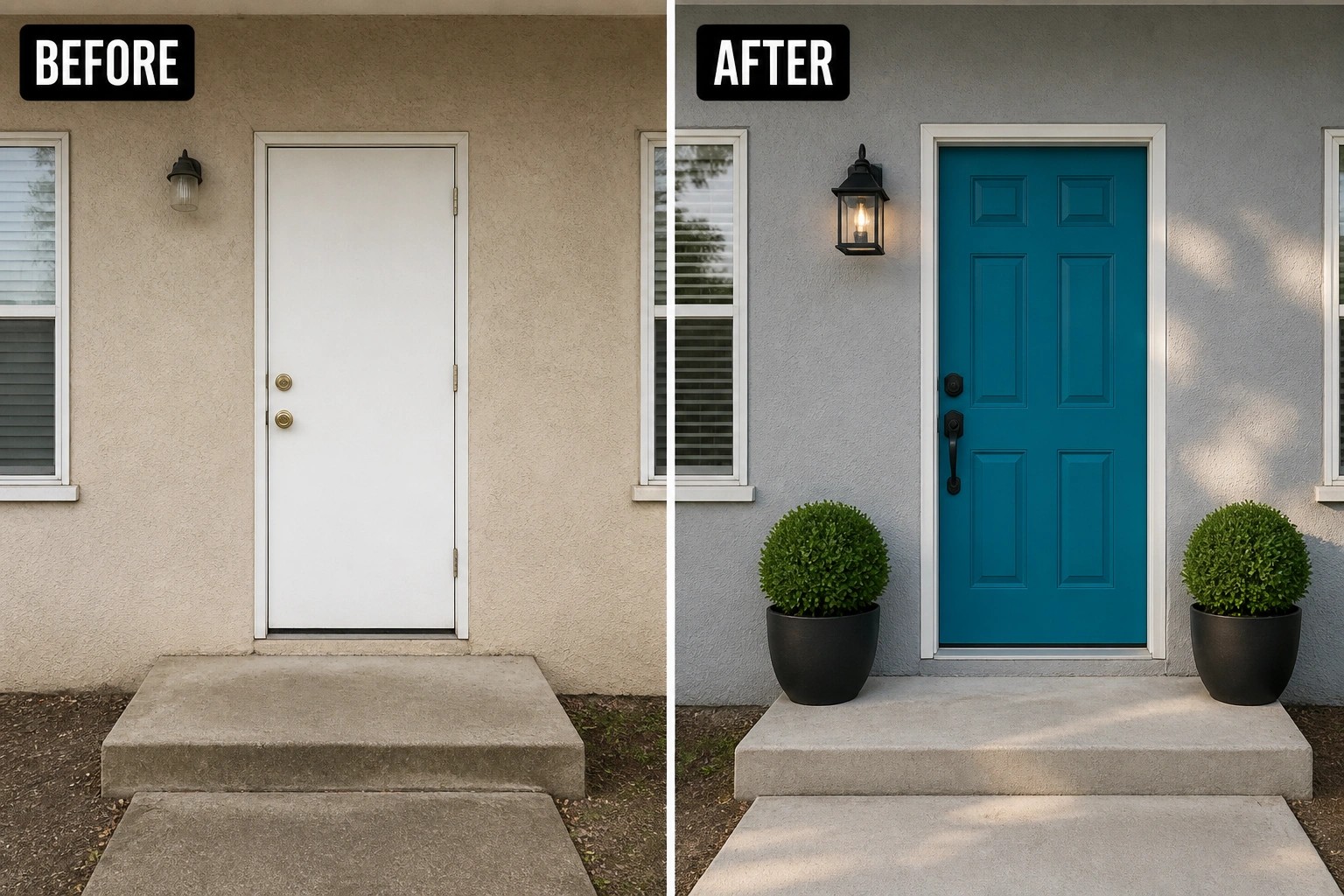
Many homes with flat front walls and plain entries can look a bit unfinished because nothing breaks up the wide surface or draws the eye to the door.
Small changes like adding trim pieces or rethinking the paint colors around the entry often help the whole facade feel more balanced and settled.
I have noticed that these kinds of updates make a house seem more cared for from the street even when the rest of the exterior stays the same.
Trying out new siding details or simple porch brackets gives ways to work with what is already there instead of starting from scratch.
Some of the ideas are simple enough to try on your own front wall first.
Give A Plain Entry More Presence With Door Color And Planters
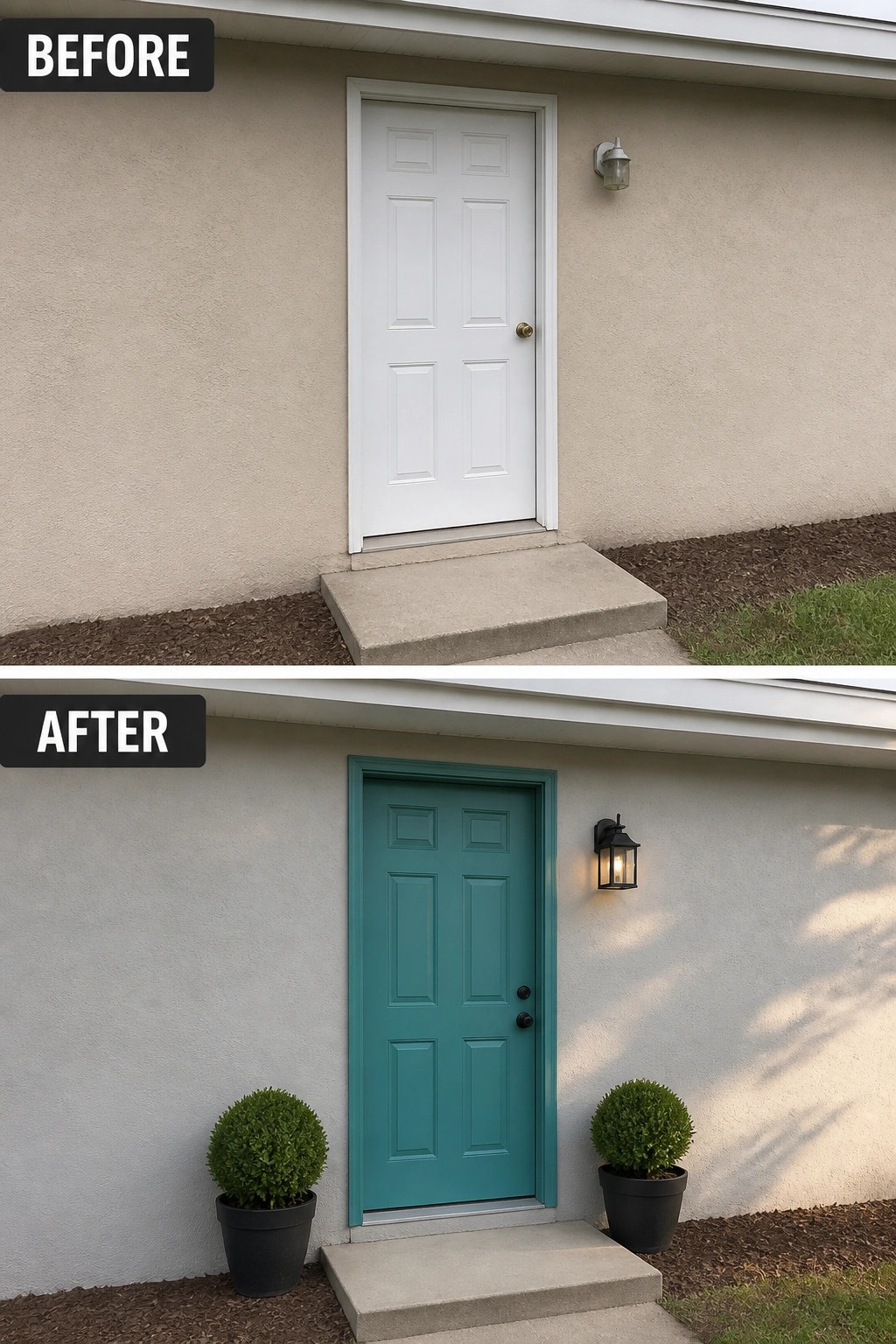
A flat wall with a basic door often needs one strong change to feel complete. Painting the door a deeper color and adding matching planters on each side turns the entry into the main focal point. The concrete step stays the same, but the new color and plants make the whole area look more intentional.
This approach works best on simple stucco or siding homes where there is little trim or detail. Choose a door color that contrasts the wall, then use two identical pots so the look stays balanced. Keep the plants compact so they do not block the door or walkway.
Add Shutters And Trim To Define A Basic Entry
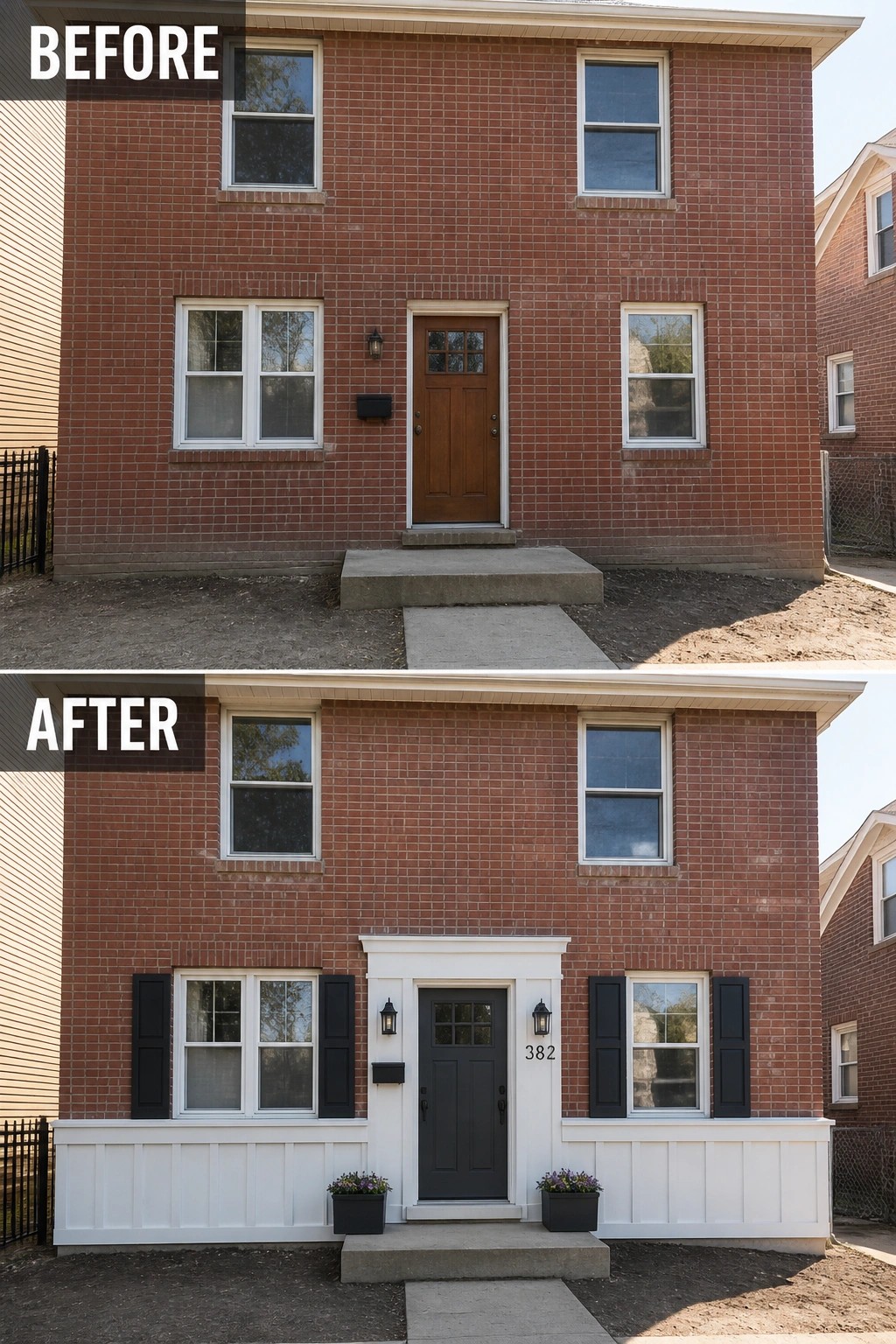
A flat brick front can look unfinished when the entry has no clear frame. In this case the before photo shows a plain brown door sitting directly on the brick with nothing to mark it as the main feature. Adding black shutters on the windows, a white surround around the door, and a darker door color pulls the whole facade together without any major construction.
This approach works well on simple two-story brick homes where the wall feels wide and empty. Start with the door and trim since those changes give the biggest visual shift, then add shutters if the windows need balance. Keep the trim color light so it stands out against the brick, and make sure the shutters are sized to match the window width rather than just filling space.
Add A Porch Structure To A Flat Entry
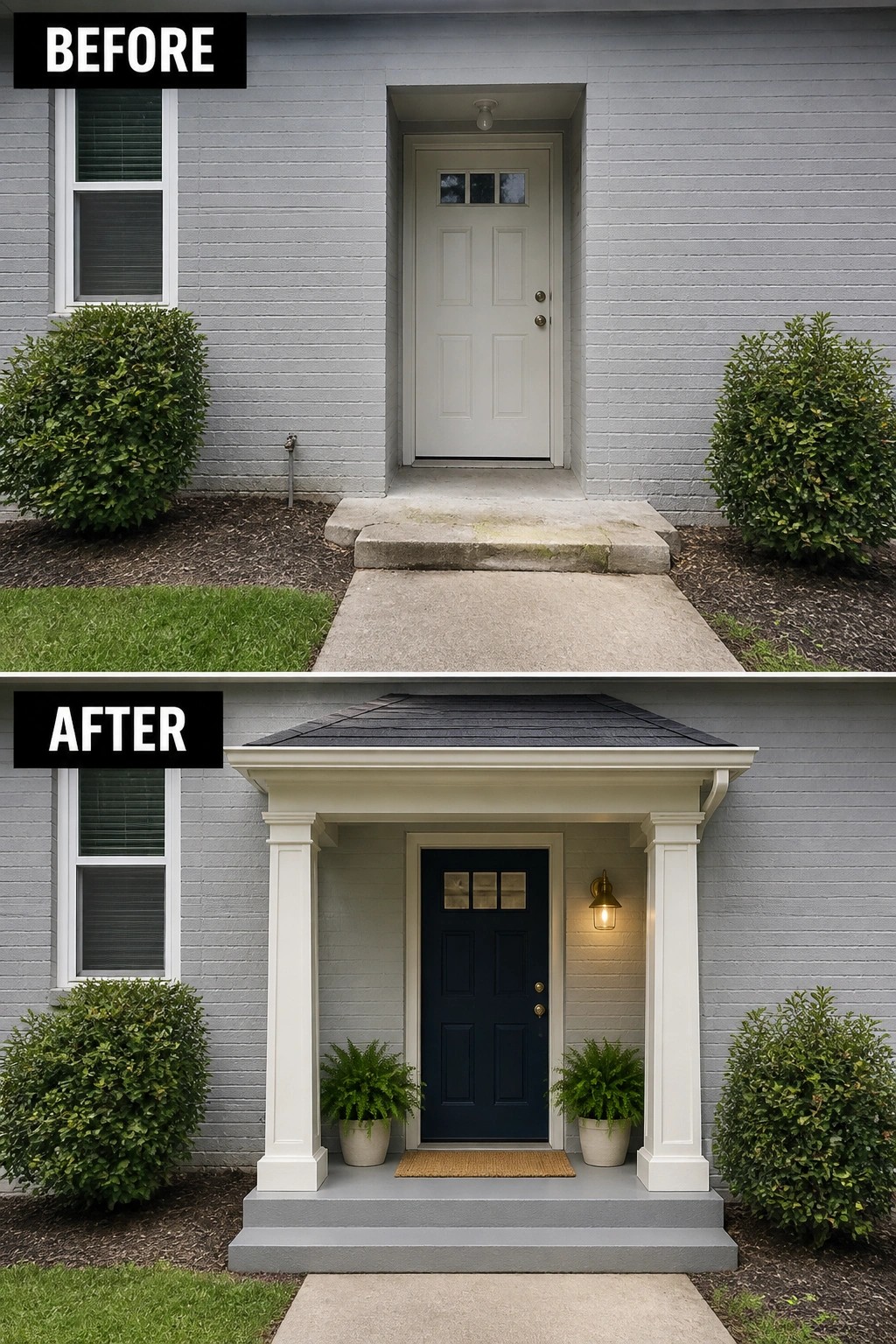
Many homes have a front door that sits flat against the wall with only a couple of steps leading up to it. Adding a small roof overhang with simple columns gives the entry a clear shape and makes the house feel more finished from the street.
This approach works well on houses with long, plain walls where there is no natural focal point. Start with the basic frame and roof, then choose a darker door color and add a pair of planters at the base. It keeps the change practical while giving the facade more presence without a full rebuild.
Add Horizontal Wood Accents To A Plain Front Wall
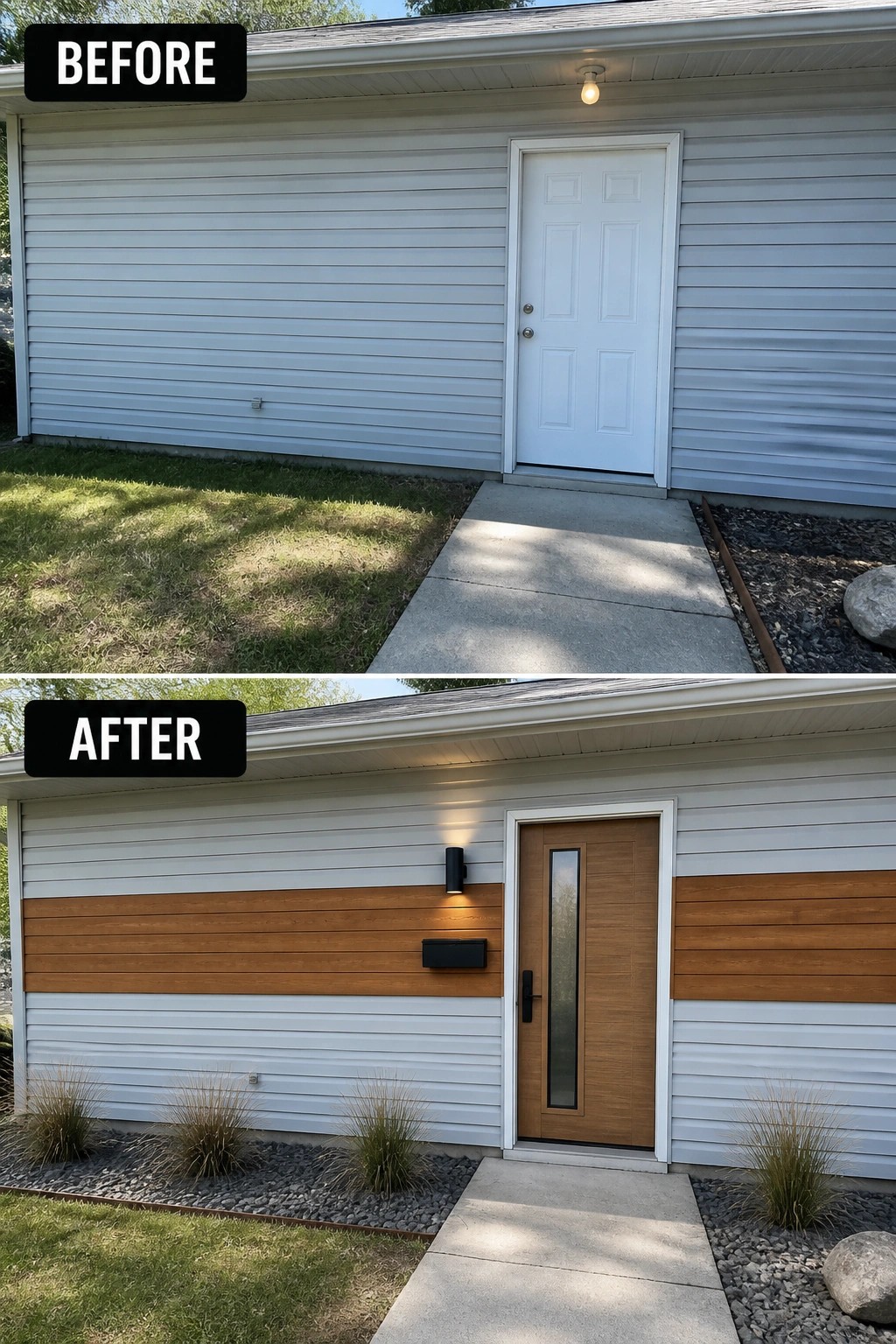
A long stretch of plain siding often makes the front of a house look flat and unfinished. Adding a section of horizontal wood cladding right around the entry breaks up that surface and gives the door a clear place to stand out.
This idea works best on homes with simple vinyl siding where you want to improve curb appeal without a full repaint or new siding job. Keep the wood band narrow and centered on the door, then add one light and a updated door to finish the look.
Frame A Basic Front Door With Trim And Sidelights
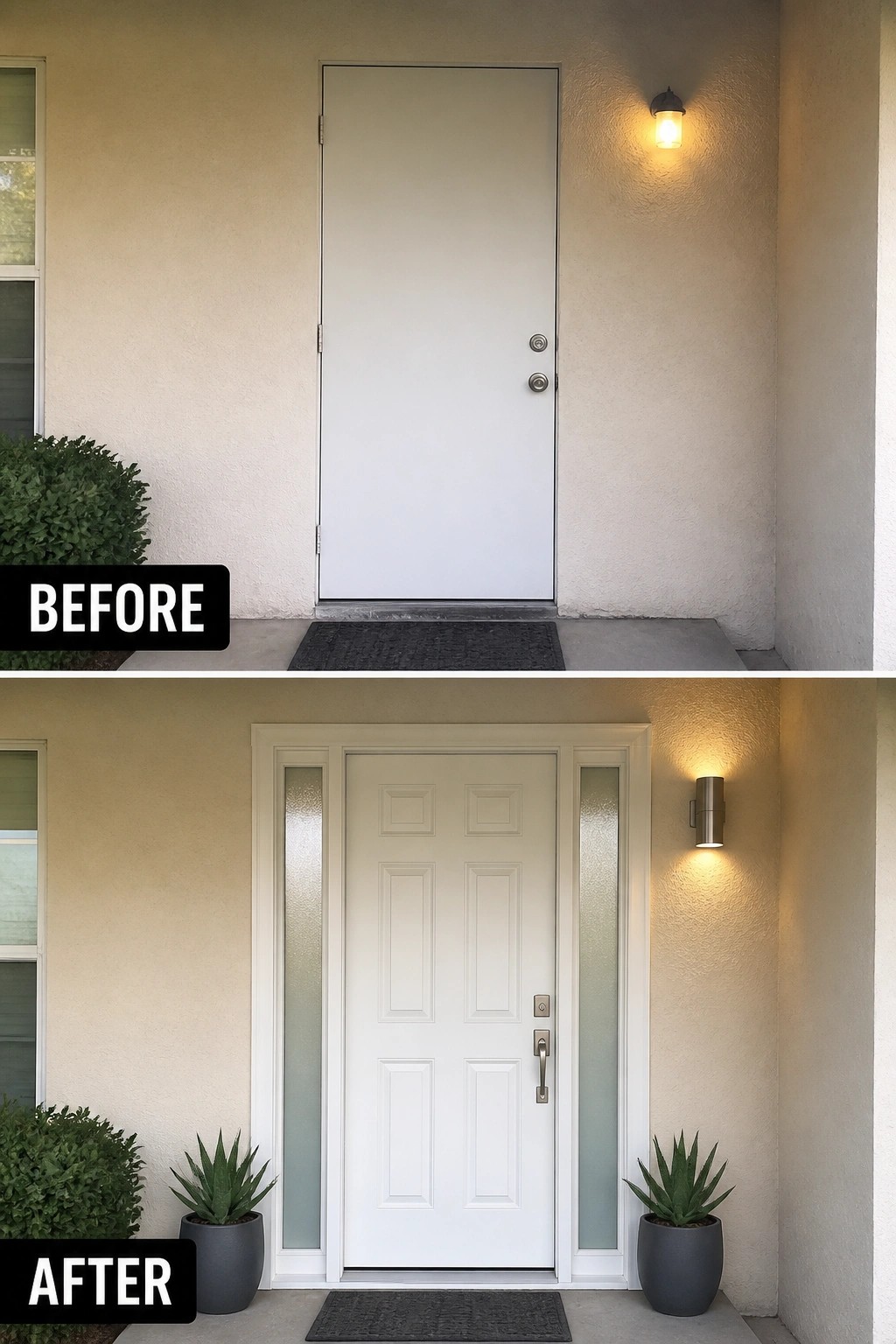
A plain door set into a flat wall often looks unfinished. Adding a simple frame with sidelights on both sides gives the entry more structure and makes the whole facade feel more intentional. The change is mostly visual, but it shifts how the door sits on the wall and draws attention without any major construction.
This approach works well on houses with minimal architectural detail around the entry. Keep the trim width modest so it does not overwhelm a small porch, and match the finish to the existing door color. Adding two matching planters on either side helps balance the new frame and keeps the update feeling practical rather than overdone.
Frame A Plain Entry With Shutters And Planters
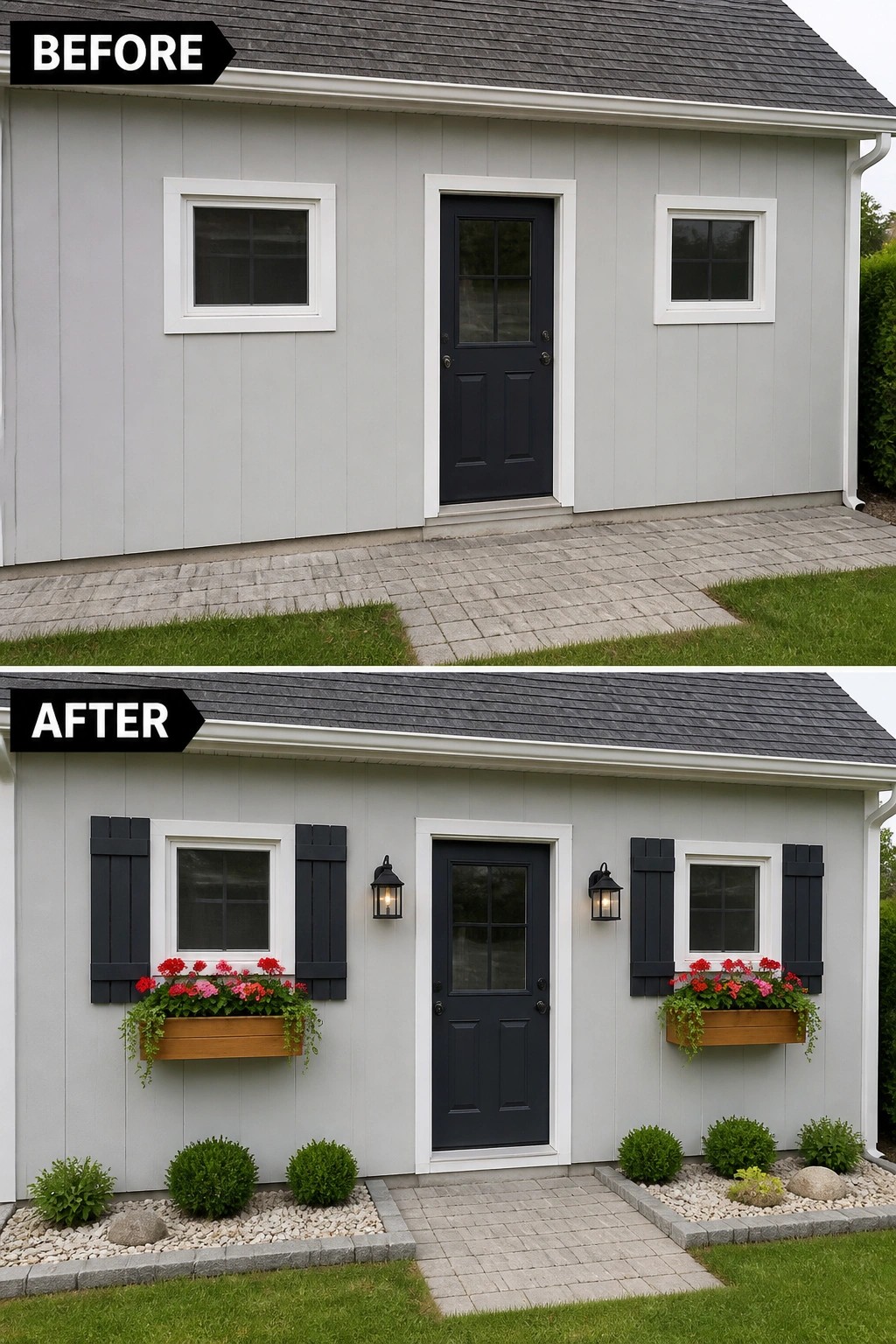
A flat front wall often looks unfinished when the windows and door sit there with nothing around them. Adding shutters on both sides of the windows and a pair of window boxes below gives the entry some structure and makes the whole wall feel more intentional. The black shutters match the door color, which ties everything together without needing a full repaint.
This approach works well on simple ranch or cottage-style homes where the facade is mostly siding and you want quick visual weight. Keep the boxes at a workable height for watering and choose plants that match your local light conditions so they stay full. Start with the shutters and boxes first, then add a couple of low shrubs at the base if you want more definition.
Add Stone Veneer To A Flat Front Wall
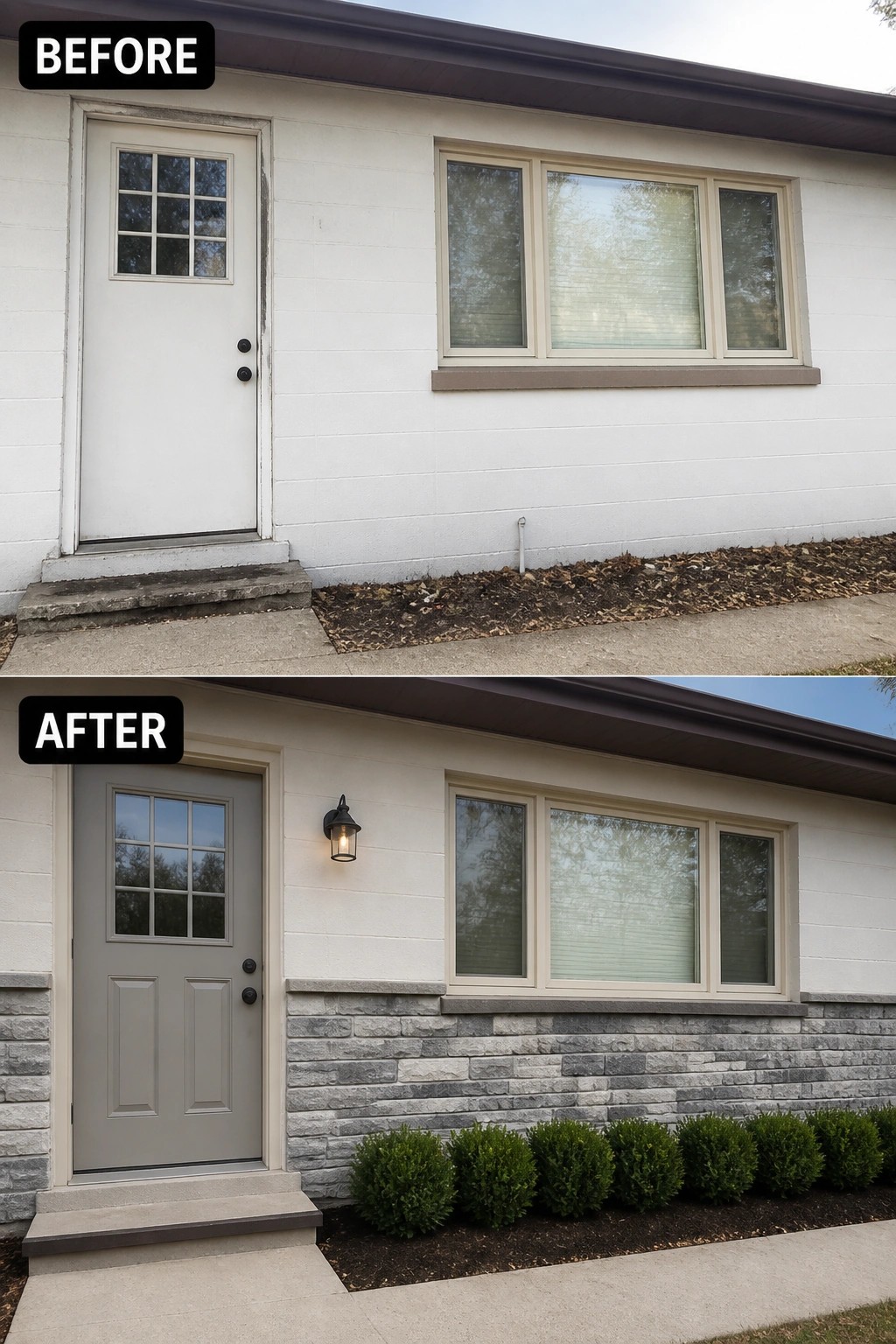
A flat wall with plain siding can look unfinished next to the entry. Adding a stone base gives the wall some weight and breaks up the long horizontal lines. Painting the door a deeper color and adding one light fixture next to it helps tie the whole area together without needing major construction.
This approach works well on simple ranch or split-level homes where the front wall feels tall and bare. Keep the stone low, around the height of the door, so it grounds the entry rather than overwhelming it. Match the door color to the stone tones and add a few shrubs in front to soften the line where the new material meets the ground.
Define A Basic Entry With Planting Beds And Simple Seating
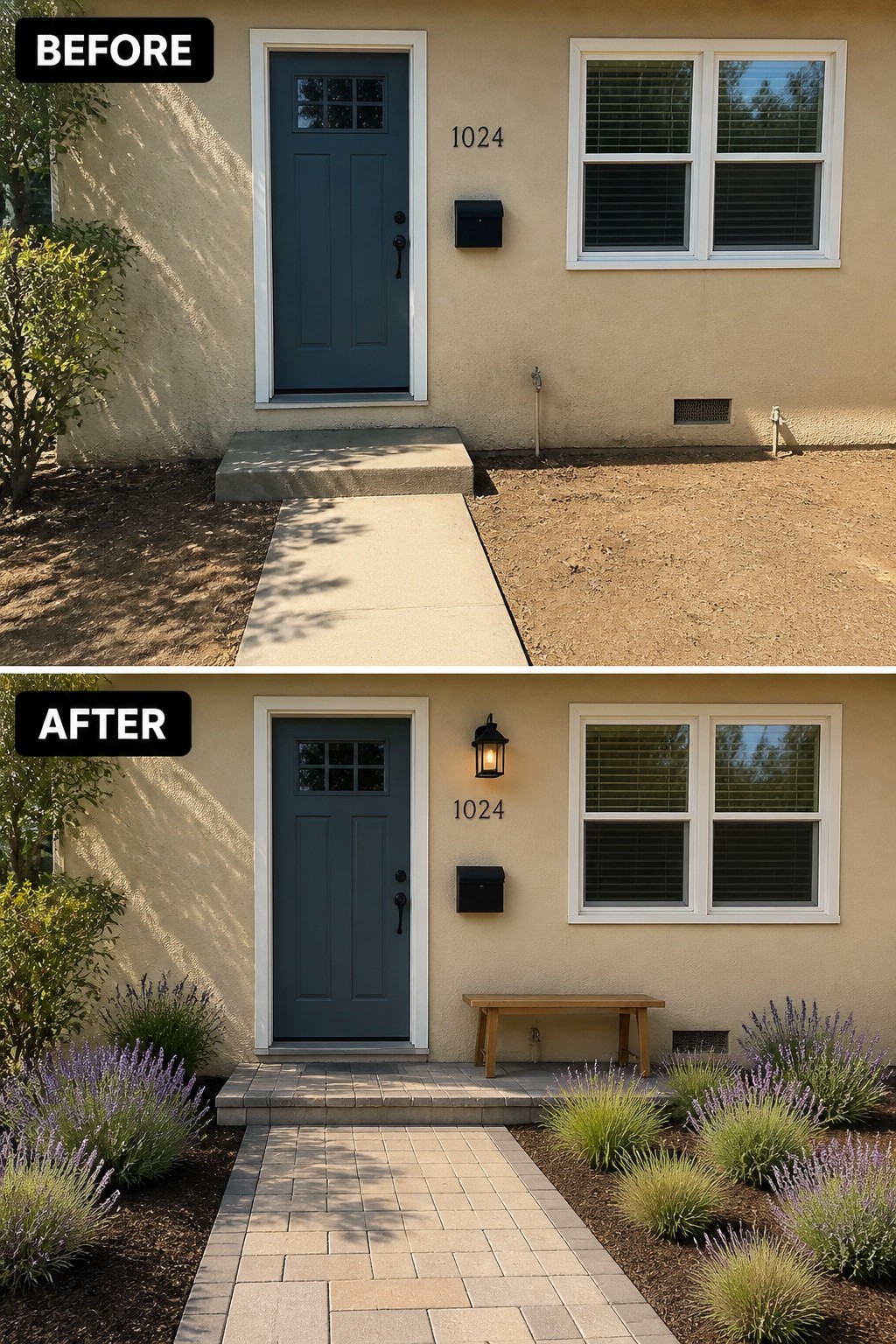
A flat front with just a door and some dirt can feel unfinished. Adding low planting beds along the sides and placing a small bench creates clear boundaries and gives the entry a reason to pause. The paver path and steps replace the plain concrete, which helps the whole area feel more intentional without any major construction.
This approach works especially well on houses with simple stucco or siding and limited space in front. Keep the plantings low so they do not block windows, and choose a bench that can stay outside year-round. Start with the beds and path first, then add one or two pieces like the bench or a light so the entry stays easy to maintain.
Add A Trellis To A Blank Exterior Wall
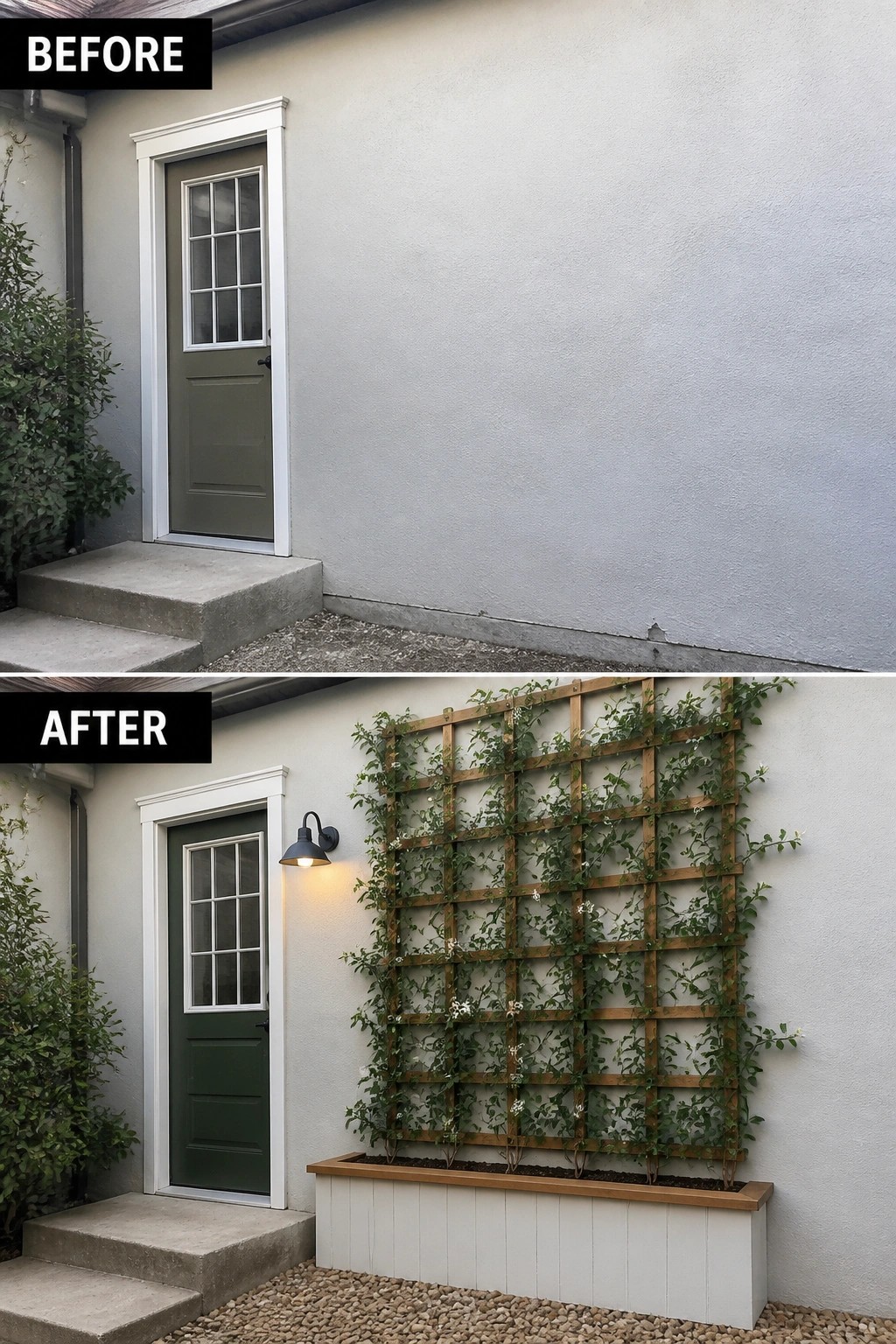
A flat wall next to an entry often leaves the front of a house looking unfinished. Placing a wooden trellis against it and adding a planter box at the base gives the wall purpose and breaks up the empty space.
This works best on homes with simple siding or stucco where there is little detail to work with. Keep the trellis size in proportion to the wall and choose climbing plants that match your climate so the feature stays easy to maintain.
Add Wall Sconces And A Canopy To Frame A Basic Entry
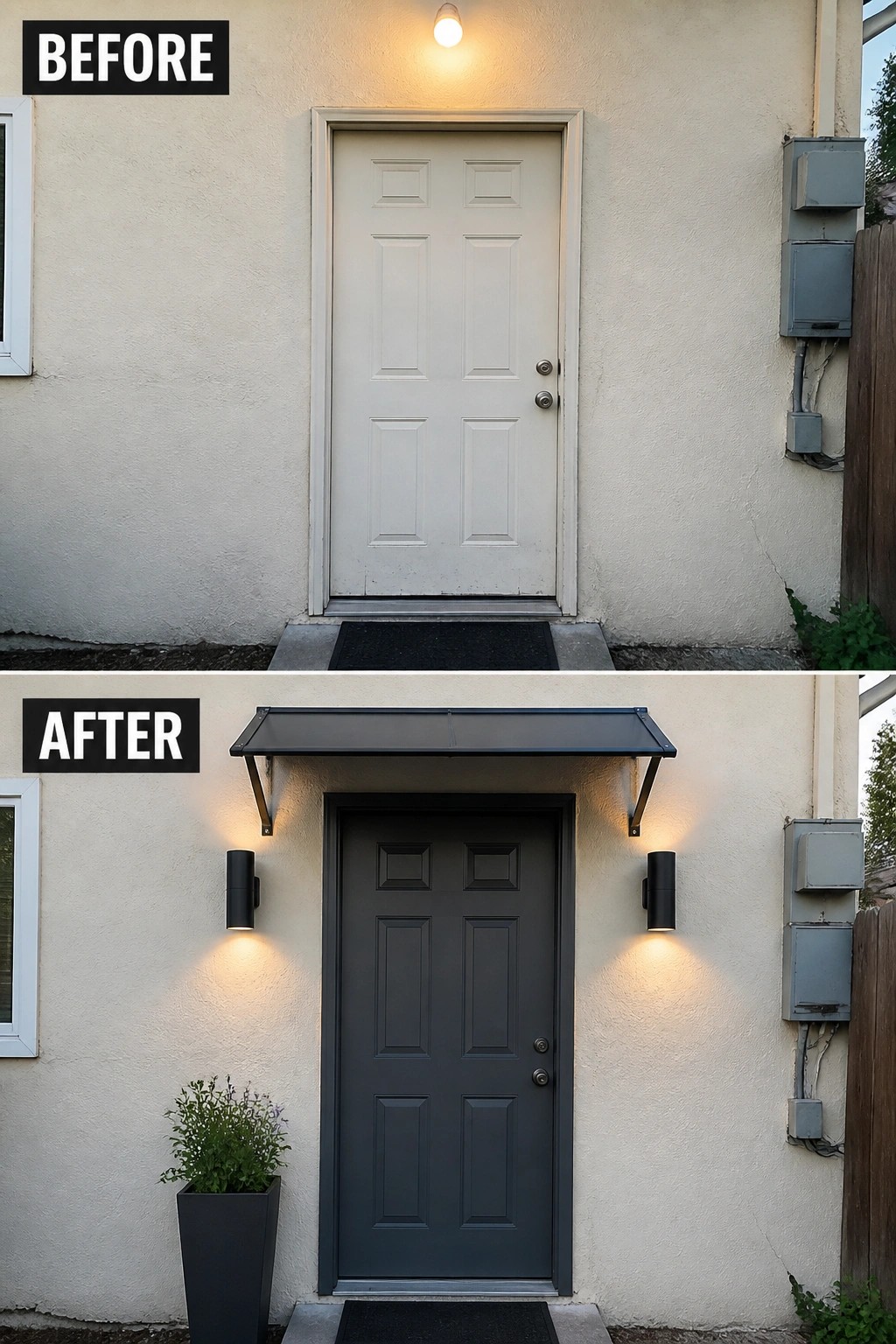
A single overhead light often leaves a front door looking flat and uninviting. Swapping it for two wall sconces and adding a modest canopy gives the entry a clear frame and spreads light more evenly across the door.
This works best on simple stucco or siding walls that lack trim or overhangs. Match the canopy width to the door and keep the sconces modest so they do not overwhelm the facade. The change stays practical for most homes and can be done without major construction.
Add A Small Porch To A Flat Entry
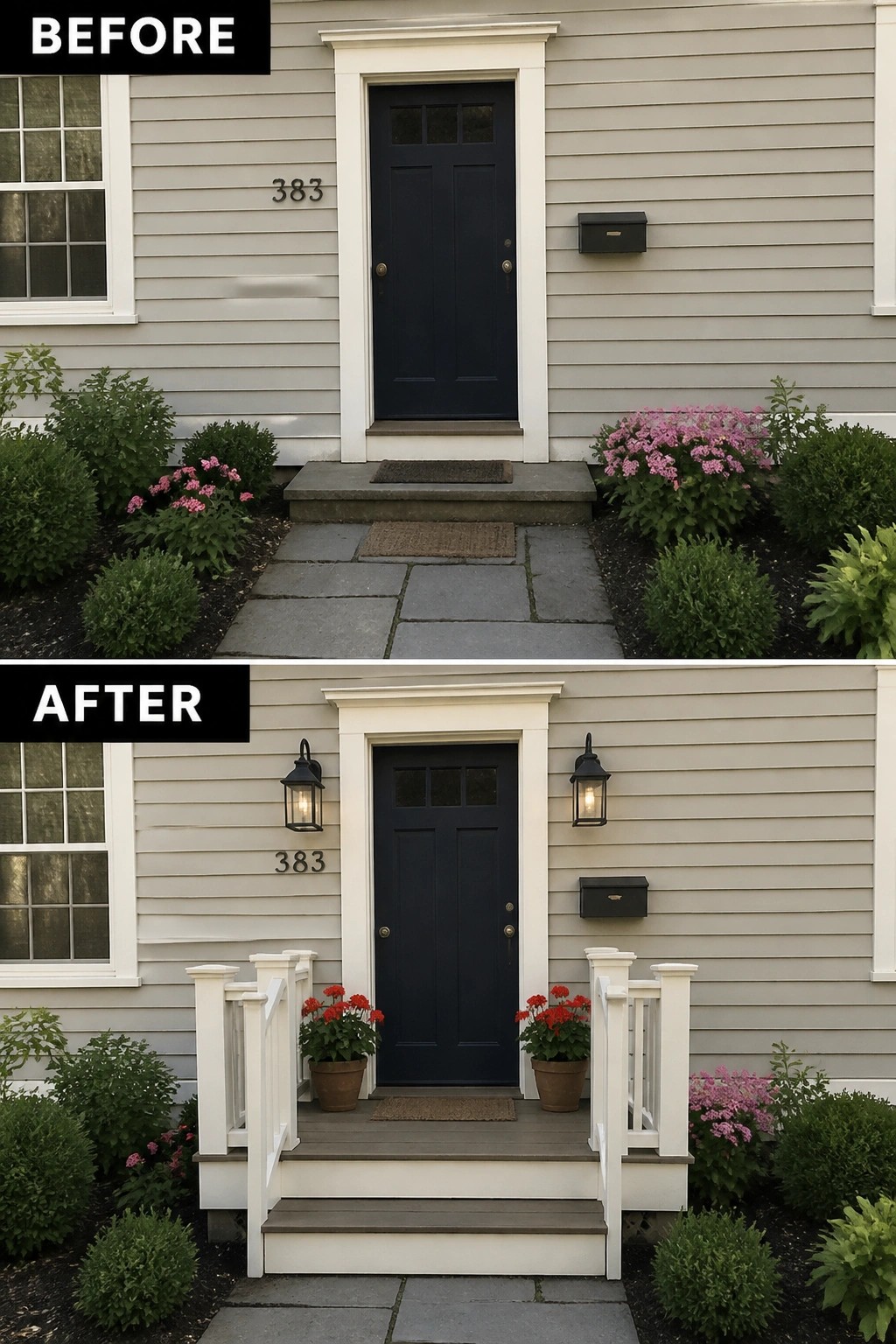
A plain front door set right against the siding often looks unfinished. Building a small raised porch with simple railings gives the entry a clear boundary and makes the door feel more intentional. In this case the addition of white railings and a wooden deck surface instantly changes how the house meets the walkway.
This approach works well on houses with shallow steps and little overhang. Keep the porch modest in size so it does not crowd the front walk, and match the railing style to the existing trim. Adding a pair of lights beside the door helps the new structure look complete even before any extra plants or furniture are added.
Use Paint And Trim To Refresh A Flat Facade
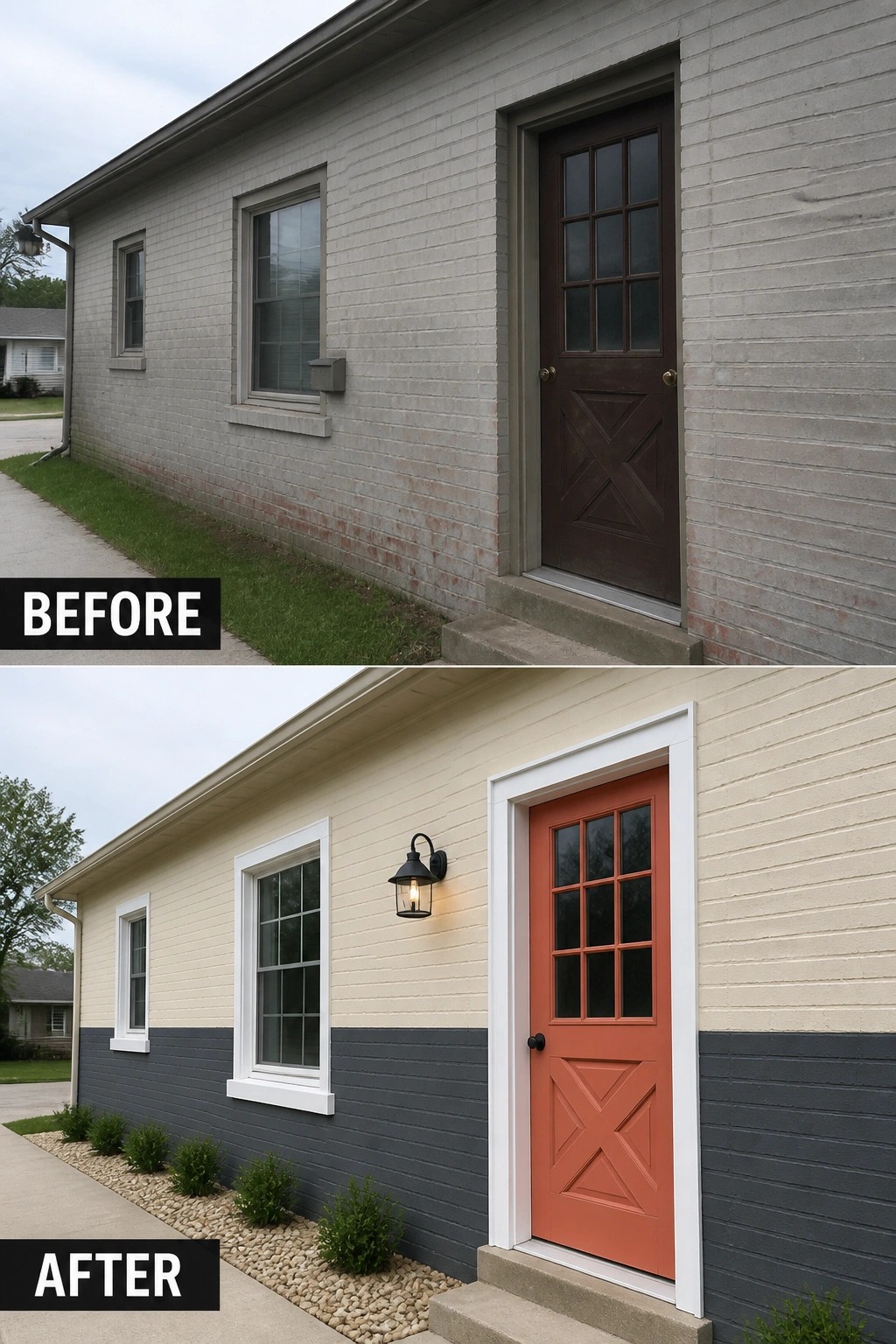
Painting the siding in two tones and adding white trim around the windows and door gives a plain wall more shape without any structural changes. The single color exterior becomes easier to read once the lower section is darker and the trim creates clear lines around openings.
This works best on simple ranch or ranch style homes where the front wall has few details. Keep the upper color light and the lower section darker so the house does not feel top heavy, and use the door color to mark the entry.
Add Trim To Frame A Plain Front Door
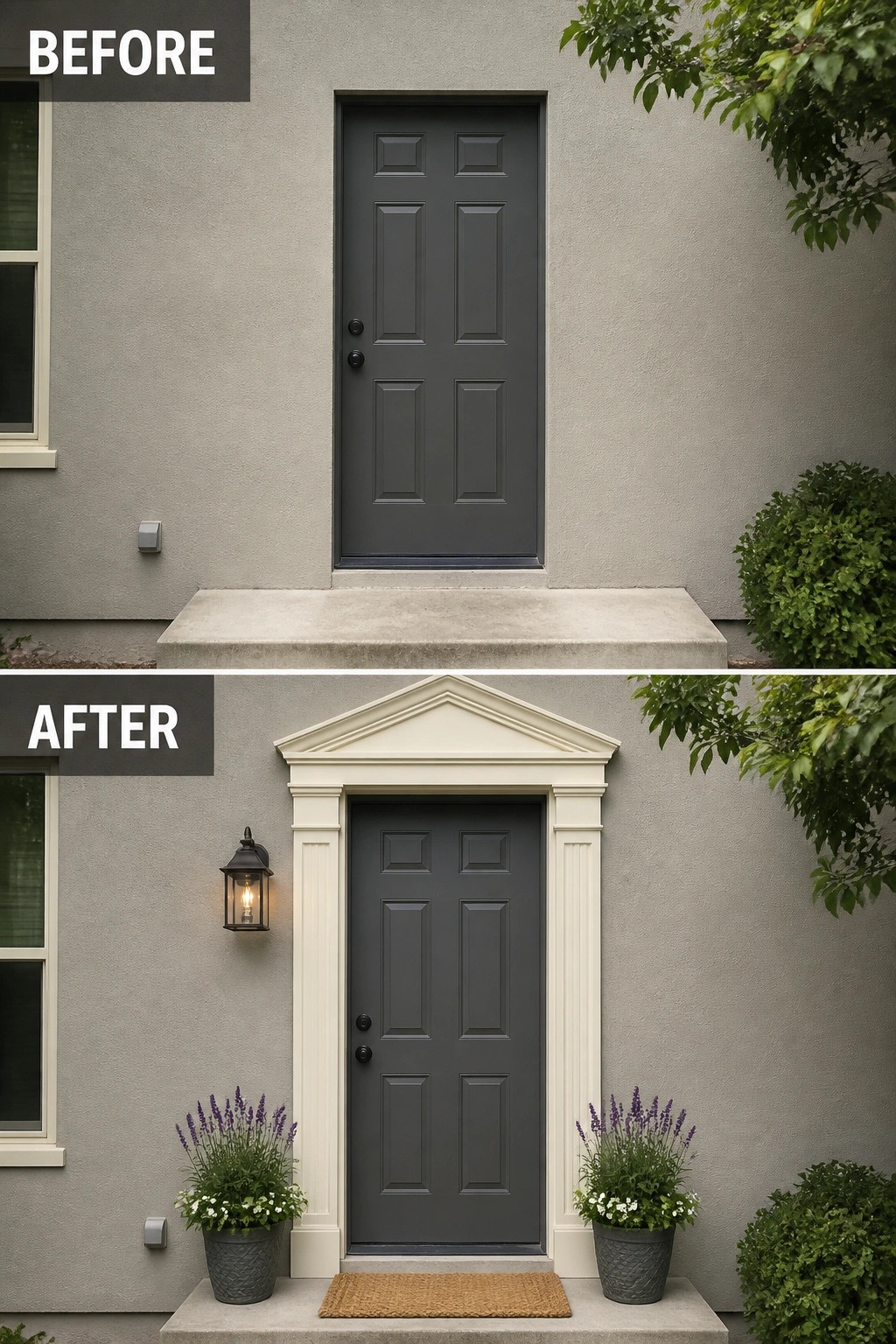
A flat facade often makes the front door feel like it is just part of the wall. Adding a simple surround with columns and a pediment gives the entry clear shape and makes the door the main feature.
This approach suits homes with stucco or smooth siding where the entry lacks definition. Match the trim width to the door size, then add a pair of matching planters and one light so the update stays balanced. Avoid overcrowding the step with too many extras.
Add Trim To Give A Flat Front More Structure
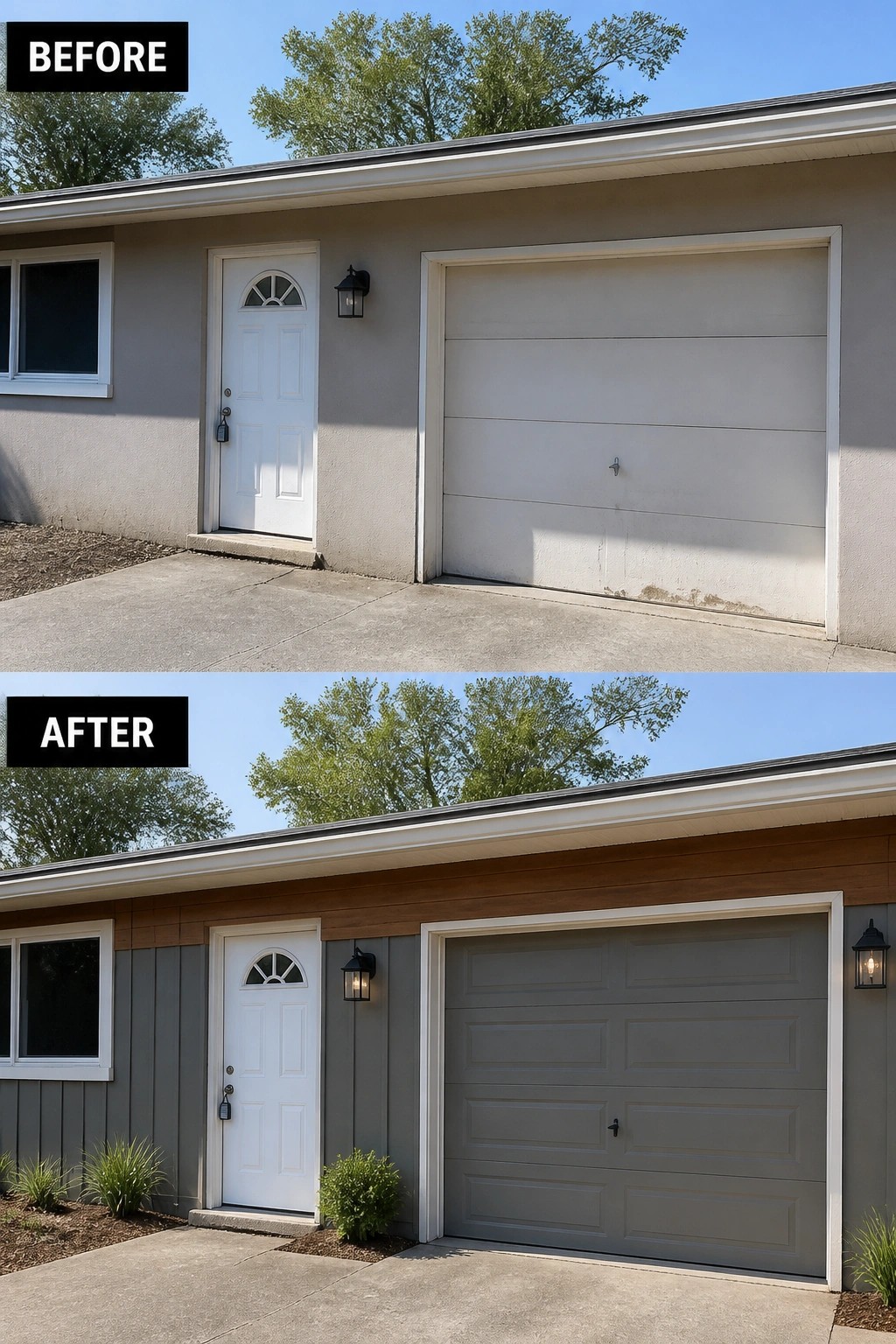
A plain exterior wall can feel unfinished when there is no break in the surface. In this case the change came from adding a simple horizontal wood band across the top of the door and garage. The new band, along with a shift to a darker siding color below it, gives the front a clearer shape without any major construction.
This idea works well on ranch-style homes or any house with a wide, flat wall. Start by deciding where the trim line should sit so it lines up with the tops of the windows and doors. Keep the rest of the update simple with one new paint color and a few shrubs so the trim stays the main feature.
Add Vertical Wood Accents To A Flat Facade
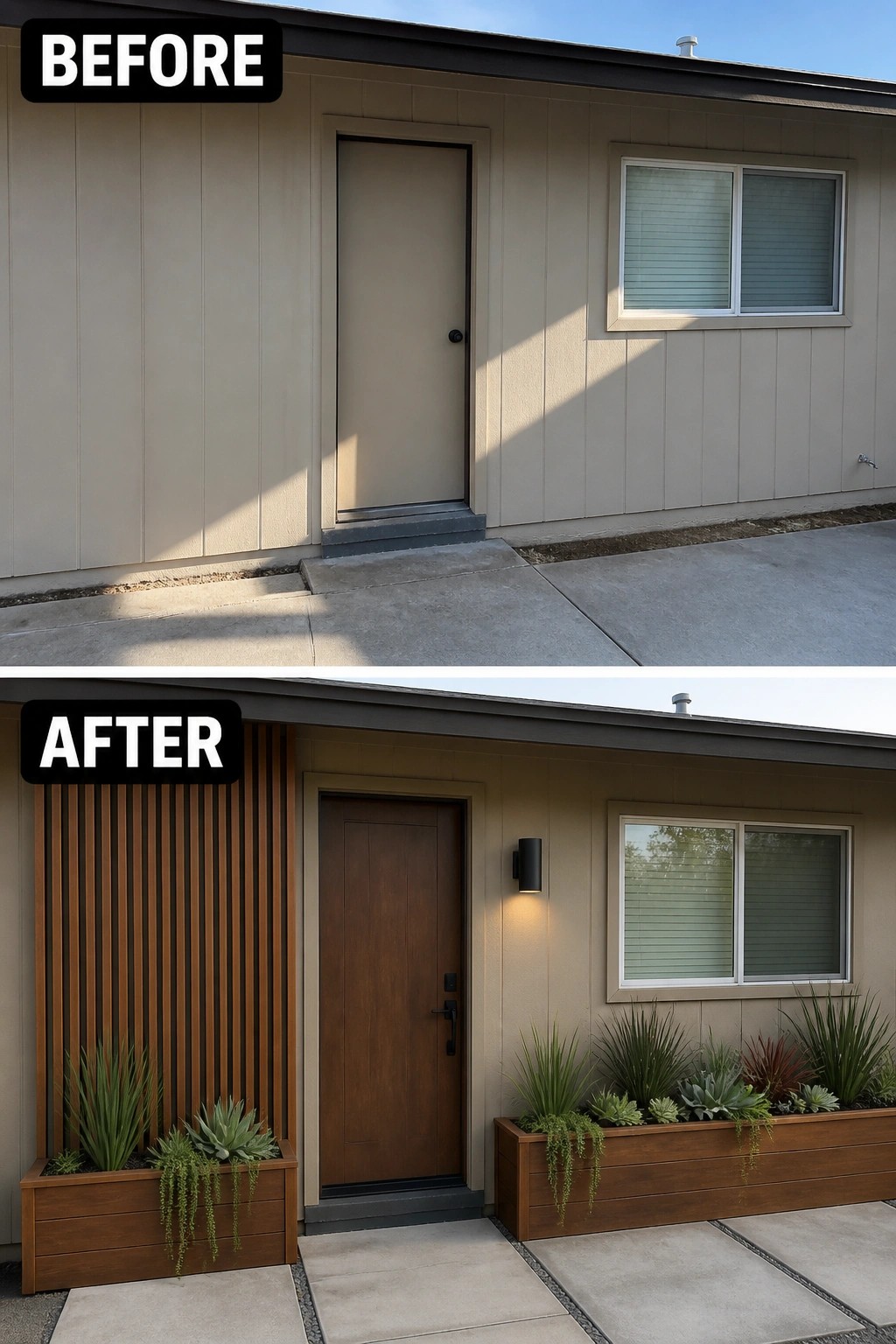
A plain stretch of siding next to a basic door often looks unfinished. Adding a panel of vertical wood slats beside the entry breaks up the wall and adds texture that makes the whole front feel more intentional. The wood planters at the base help connect the house to the ground and soften the concrete.
This idea works best on homes with simple stucco or horizontal siding where you want to add interest without major changes. Match the wood tone to your door or trim so the new section feels like part of the house rather than an add-on. Keep the planting low and simple so the walkway stays clear.
Add An Awning And Lighting To A Flat Entry
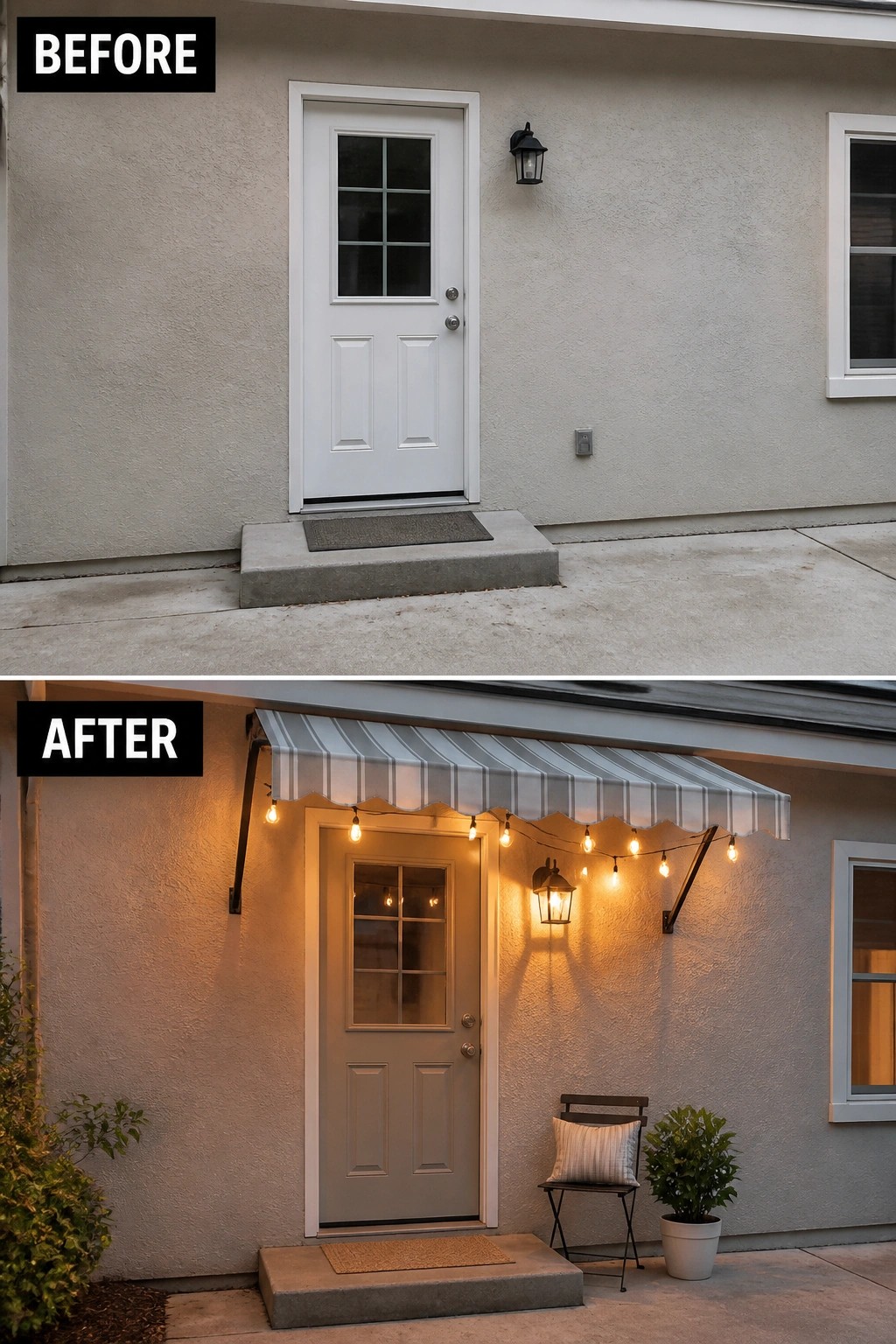
A basic front door on a flat wall often looks unfinished without any overhead cover. Adding a striped awning gives the entry a clear shape and some protection from weather, while string lights and a simple lantern help it feel occupied at night.
This works best on homes with plain siding or stucco where the facade has little detail. Keep the awning color soft so it blends with the house, and use lights that match existing fixtures. It is a straightforward way to add presence without a full renovation.
Add Wall Sconces To Brighten A Flat Front Wall
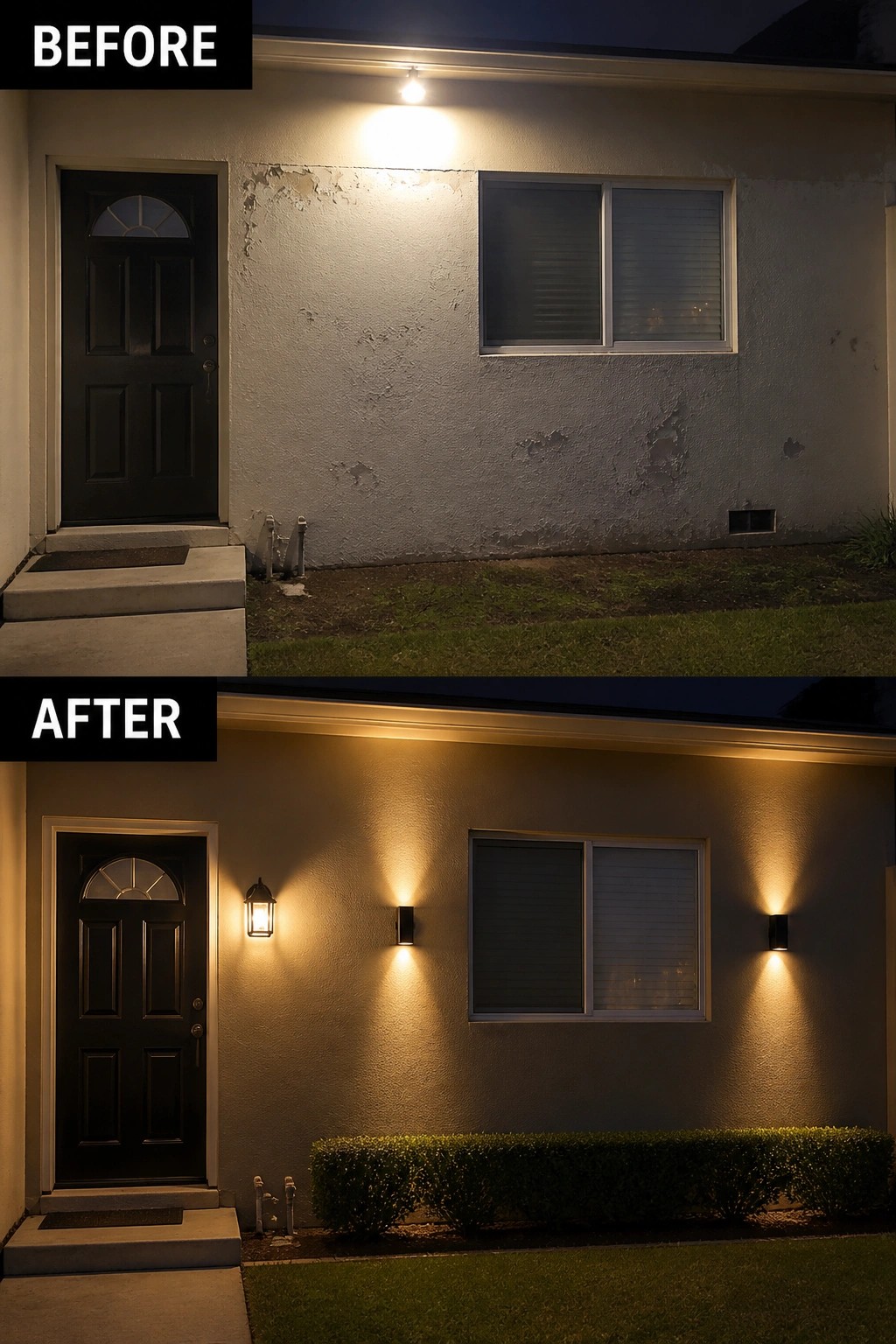
A single overhead light often leaves flat exterior walls looking plain and a bit dark. Switching to several wall sconces spreads the light more evenly and gives the surface some shape without any major changes to the structure.
This approach works best on simple stucco or painted fronts where you want to add interest on a budget. Mount the lights at a consistent height beside windows or doors, and use warm bulbs so the glow feels soft at night. Keep the number of fixtures modest so the wall does not feel crowded.
Update A Dated Front Door For Better Curb Appeal
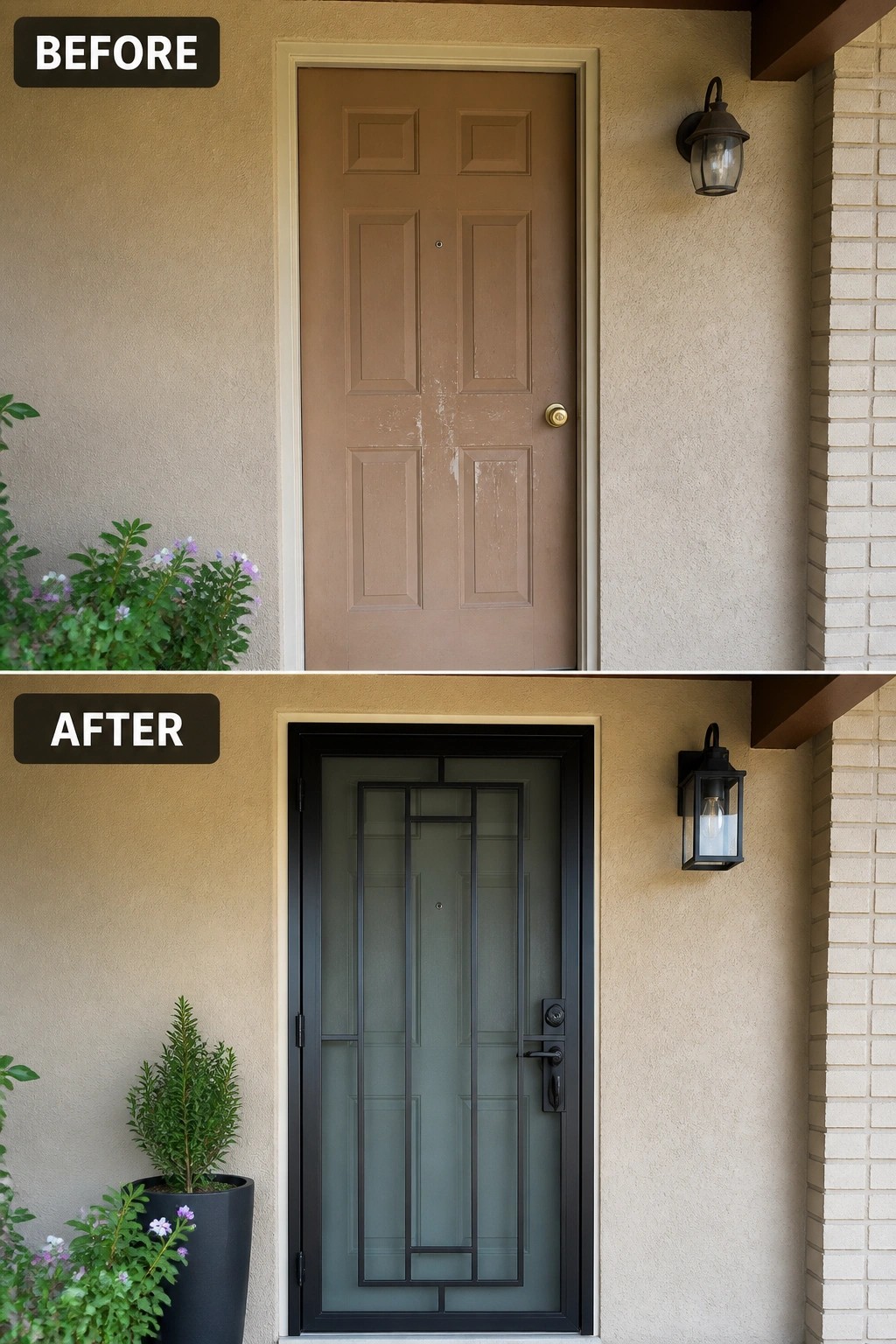
Replacing an old solid door is one of the simplest ways to give a flat front wall more presence. The change from a worn brown door to a black-framed model with glass panels instantly makes the entry feel lighter and more current without any other major work.
This approach works best on simple stucco or painted exteriors where the door is the main feature. Pick a frame color that contrasts with the wall and make sure the glass style fits the scale of the house so the update feels balanced rather than overpowering.
Update A Plain Exterior Using Paint And A New Door Color
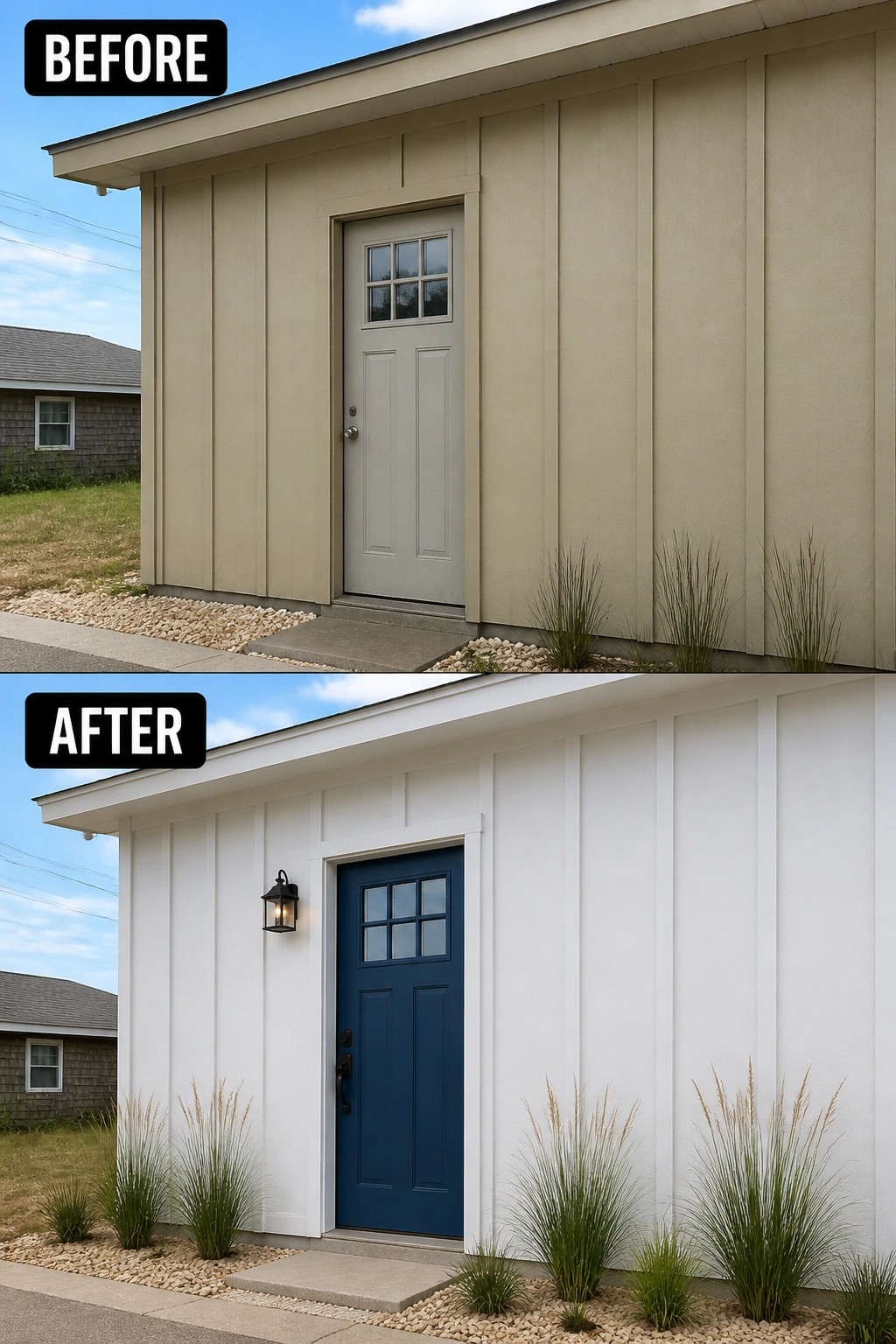
A simple color change can make a flat house front feel much more finished. In this case the beige siding was painted white, the trim details were cleaned up, and the door was switched to a deep blue. The new door color creates a clear focal point while the white siding makes the whole front look brighter and more defined.
This approach works well on basic homes with little architectural detail. Start by picking one strong color for the door and keep the siding light so the contrast stays balanced. Add one light fixture beside the door if the entry feels dark. The goal is to keep the update simple and avoid adding too many extra elements at once.
Frequently Asked Questions
Q: How do I add depth to a flat wall if I skip bigger builds like a new porch?
A: Paint a couple of vertical panels in slightly different shades to fake some shadow. Mount slim wood strips along the edges of those panels for an easy frame effect. This trick works well on basic entries too.
Q: What should I do with the door area if my entry sits right on the sidewalk?
A: Swap the plain door for one with simple panel lines or a fresh color that pops against the wall. Add a narrow overhang above it using basic brackets to keep rain off without crowding the walk. A small bench or hook rack beside the door gives you a spot to drop things.
Q: Can I use plants on a flat front without them looking messy after a season?
A: Stick to a row of tall planters that match the wall color and fill them with evergreens that stay neat. Water them on a schedule so they do not spill over the edges. Trim once a month to hold the shape.