

I often notice that older suburban homes end up looking a bit tired because the original siding or trim has faded over the years.
A few targeted updates to the entry or windows can shift how the whole front reads without touching the structure.
I would start by testing paint colors on a small section first.
Those kinds of adjustments tend to make the house feel more looked after when you drive up.
Some of the approaches feel practical enough that I could picture trying them on my own place.
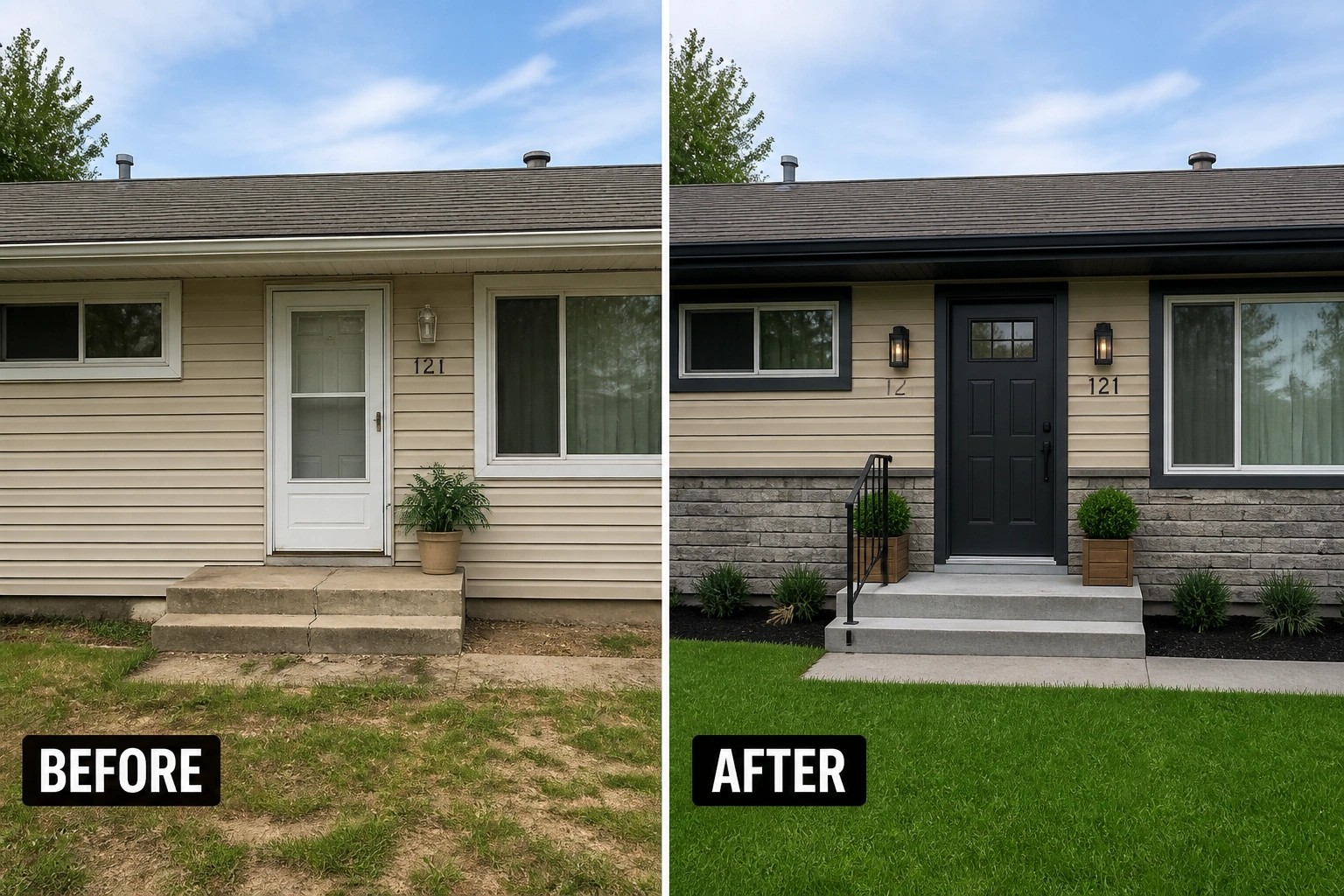
Use Dark Trim And A New Door To Refresh A Dated Facade

Many older suburban homes have that flat, all-beige look that blends into the background. Switching the front door to black and adding matching trim around the windows and shutters gives the whole front a clearer shape and makes the entry feel more important. The change is simple but it shifts how the house reads from the street without touching the roof or siding.
This approach works well on ranch-style homes or any exterior that feels washed out. Start with the door and shutters, then add a couple of wall lights beside the entrance so the new color shows up at night. Keep the rest of the updates modest so the contrast does the main work.
Paint Brick And Update Shutters For Better Curb Appeal
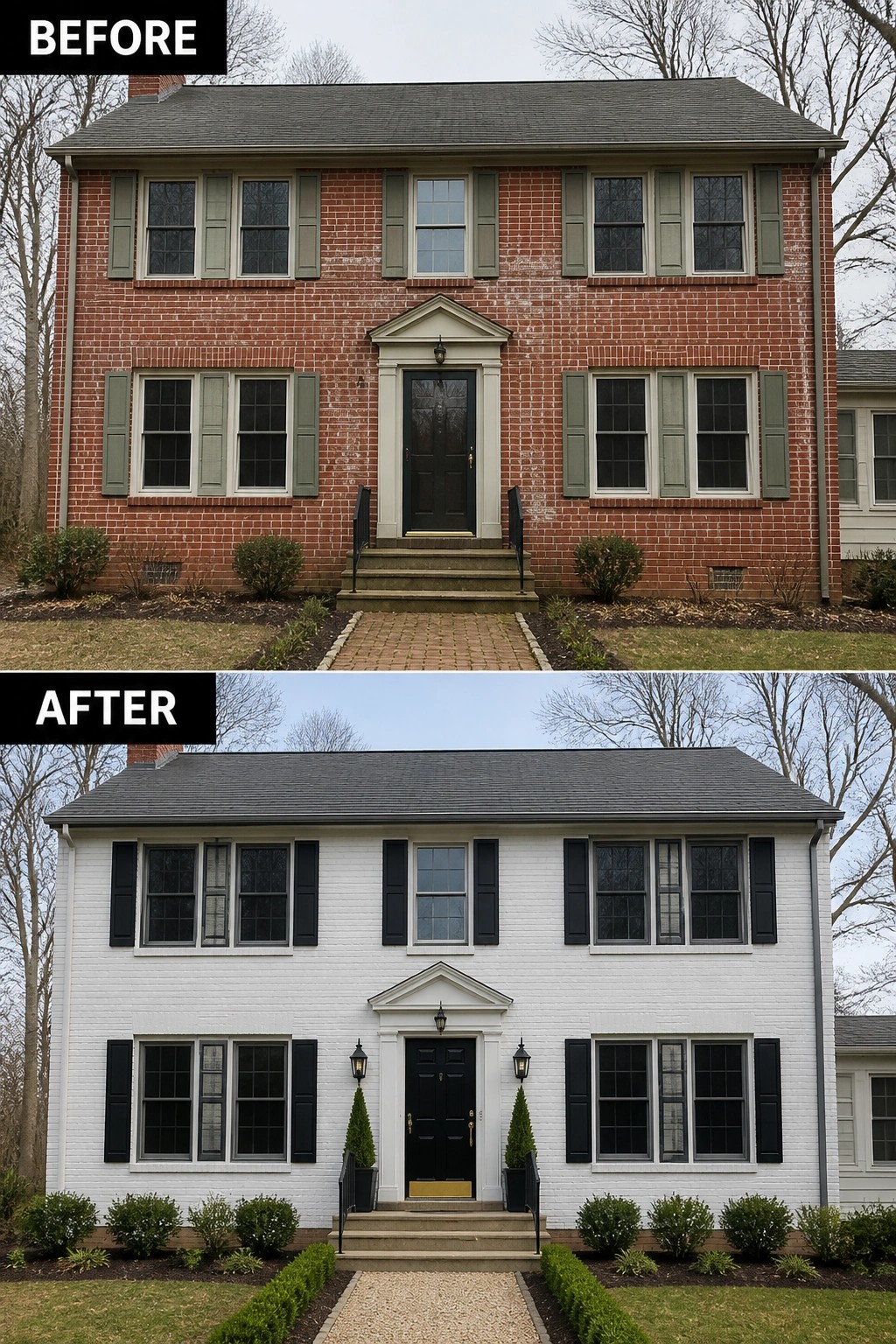
A red brick house with faded green shutters can start to feel heavy and dated. Painting the brick white and changing the shutters to black lightens the whole facade and gives it a cleaner, more current look without any major construction.
This idea works best on simple two-story homes where the brick is still sound. Test the paint on a small patch first, then pick shutters that line up with the new trim and door color so everything feels pulled together.
Add A Portico To Update The Front Entry
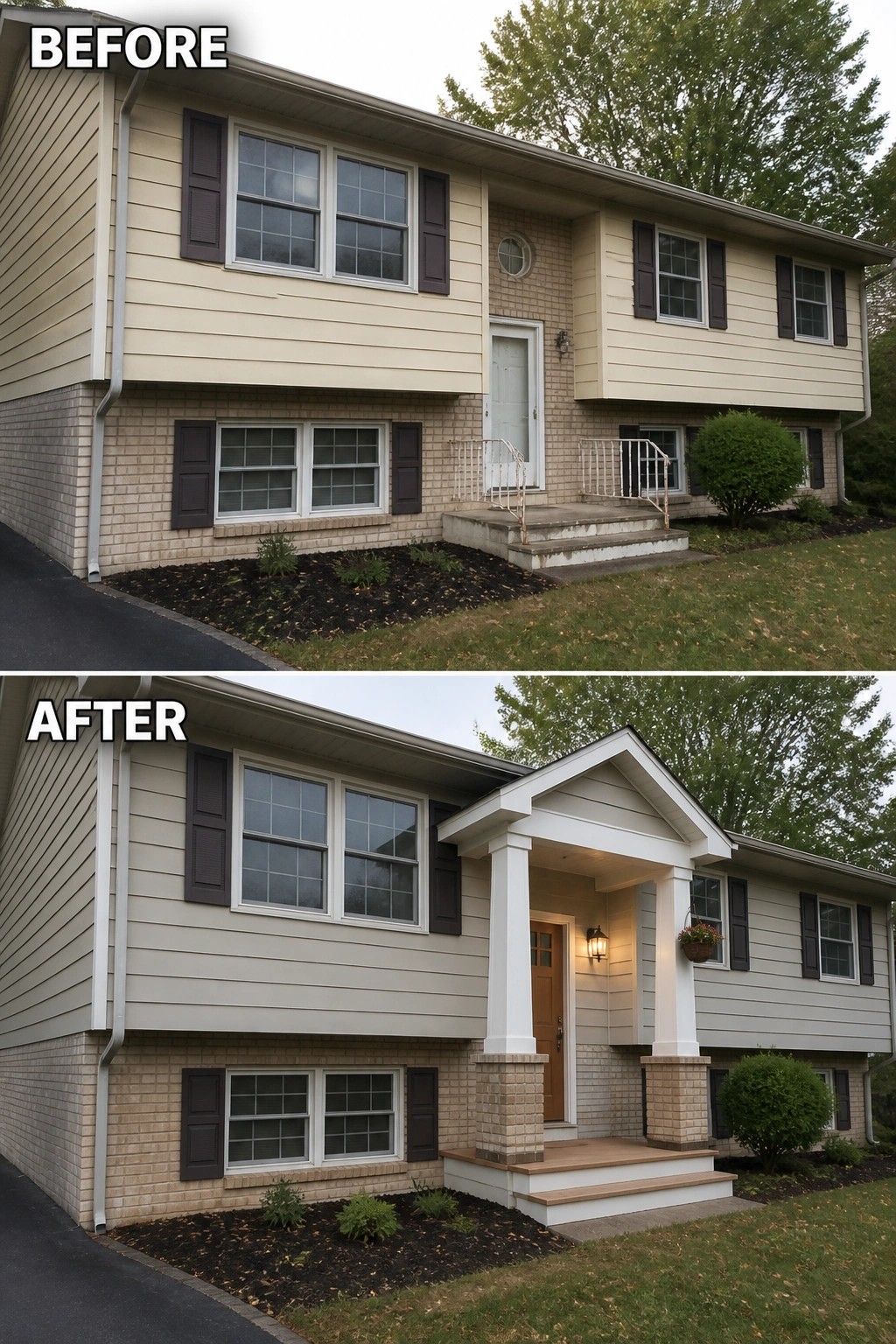
Many suburban homes from past decades have a flat entry that feels exposed and unfinished. Adding a gabled portico with simple columns gives the door a clear sense of arrival and protects the space from weather.
This change suits homes with plain siding where the entry needs more weight. Match the trim color to the existing house and keep the scale modest so it does not overwhelm the facade. Start with the structure itself before adding lights or planters.
Add A Wood Accent To Refresh A Dated Entry
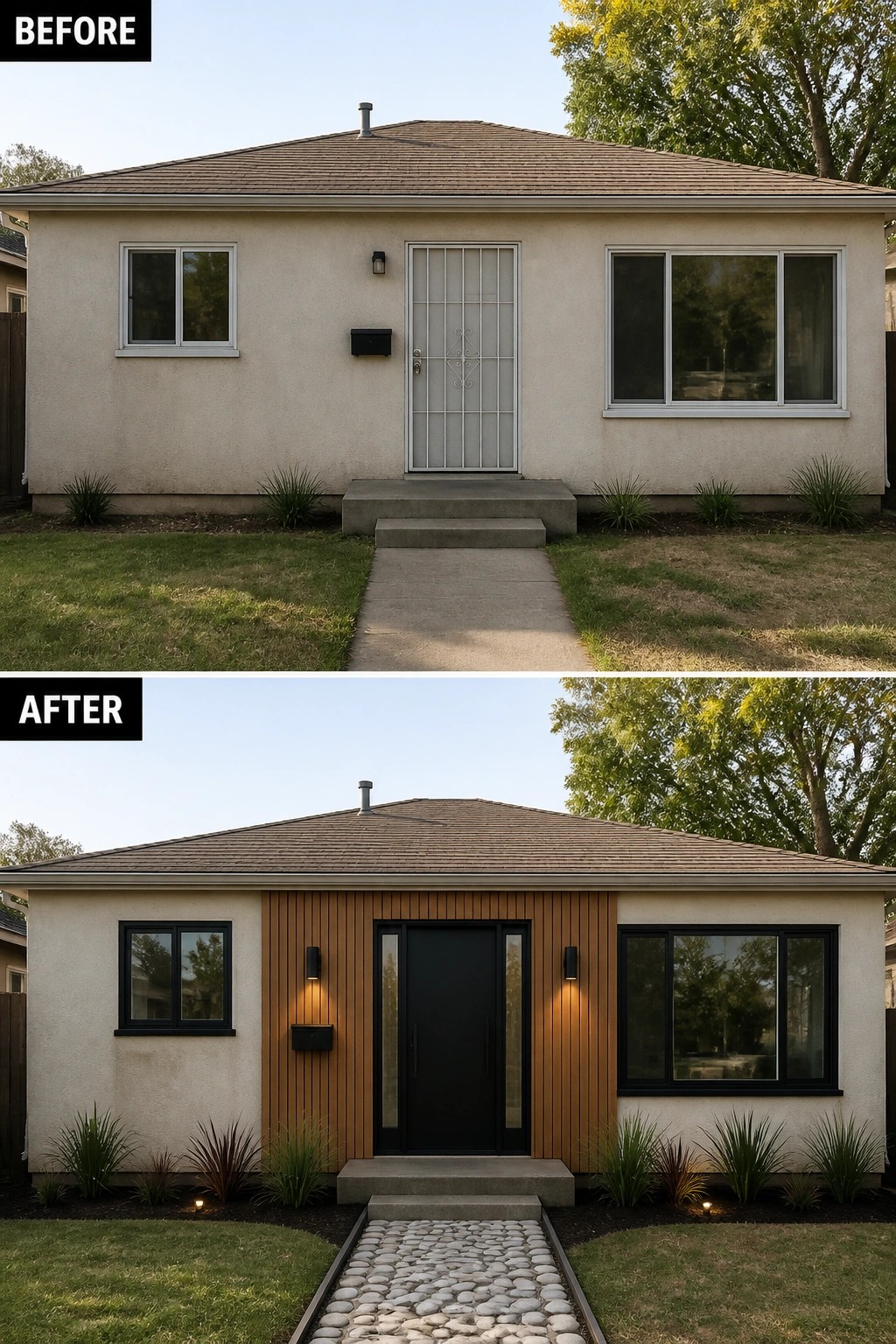
Many suburban homes from past decades have plain stucco fronts that feel flat and uninviting. Adding a simple wood accent panel around the front door gives the entry definition and warmth while keeping the rest of the facade mostly unchanged.
This idea works best on homes with basic concrete steps and few architectural details. Choose a dark door color, add a pair of slim wall lights, and update the walkway with pavers or stone to tie the new entry into the yard. The goal is to create one clear focal point instead of trying to update the entire house at once.
Update The Garage Door To Refresh Curb Appeal
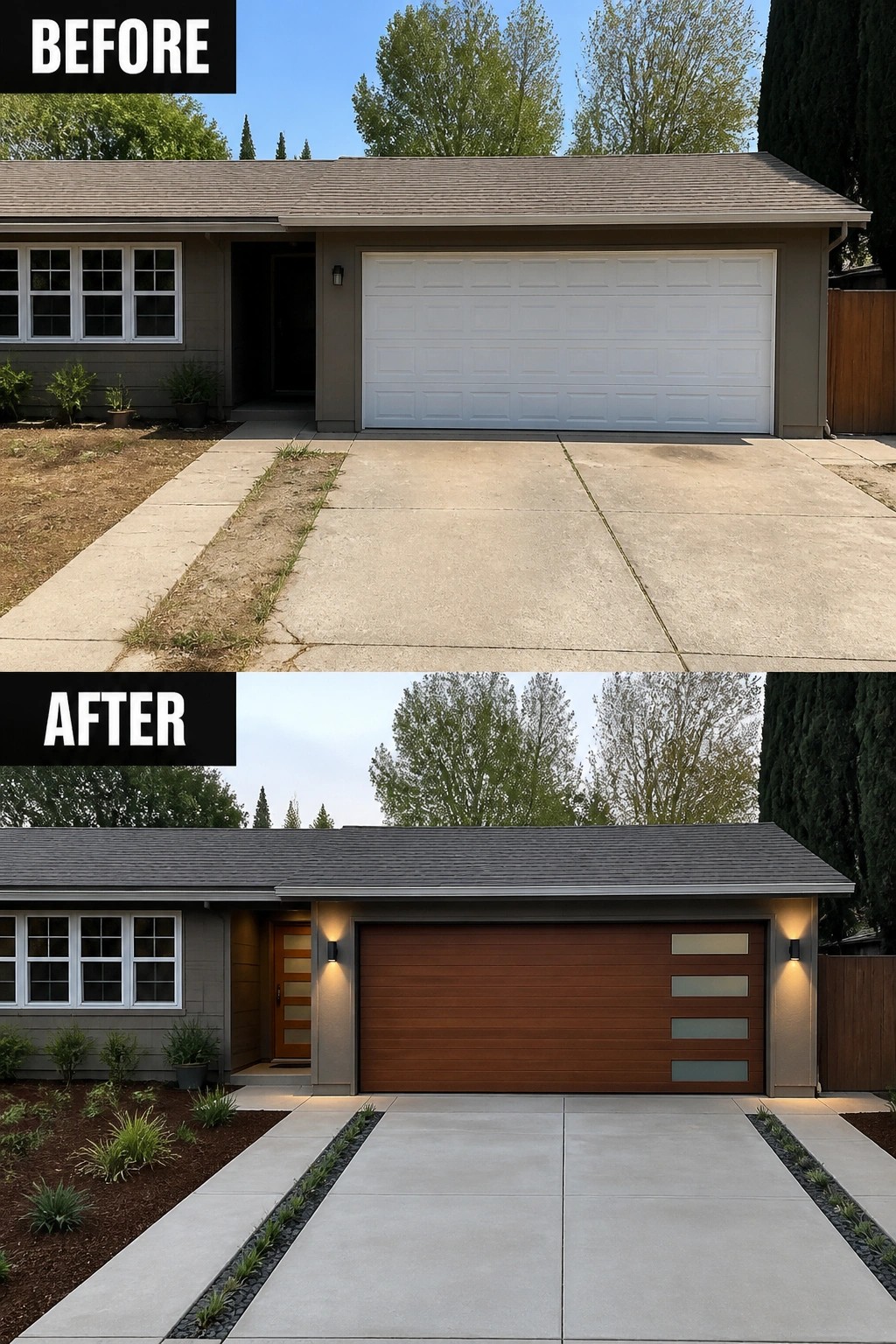
A plain white garage door often makes the front of a house look flat and dated. Replacing it with a wood-tone door that has horizontal lines and a few glass panels changes how the whole facade reads. Pairing that with a new front door and a couple of wall lights gives the entry more presence without touching the roof or siding.
This idea suits suburban homes where the garage takes up a big part of the front view. Start with the door and lighting first, then add simple planting along the driveway if you want more impact later. Keep the changes in the same color family so the update feels pulled together instead of busy.
Add Structure To An Overgrown Front Yard
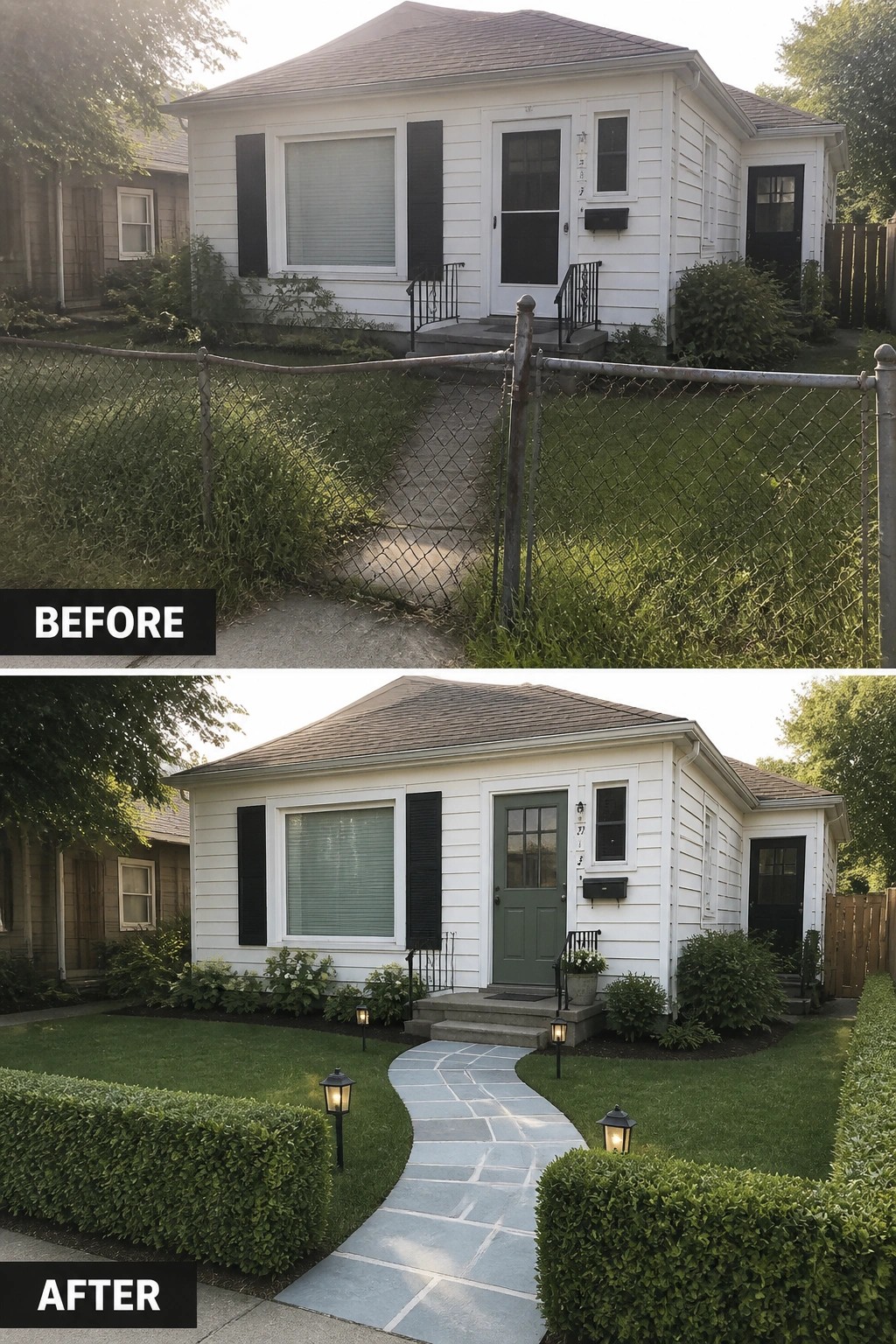
Many dated homes end up with front yards that feel neglected because of old fencing and grass that has grown out of control. Swapping the chain link fence for trimmed hedges and replacing the rough path with a laid stone walkway makes the whole entry look intentional and easier to care for.
This idea works best on smaller suburban lots where the goal is to make the house feel connected to the street without major construction. Start by clearing the old fence and overgrowth, then shape the path so it curves gently toward the door before filling in the borders with simple shrubs that stay neat year after year.
Update The Front Door And Roof Color For Better Curb Appeal
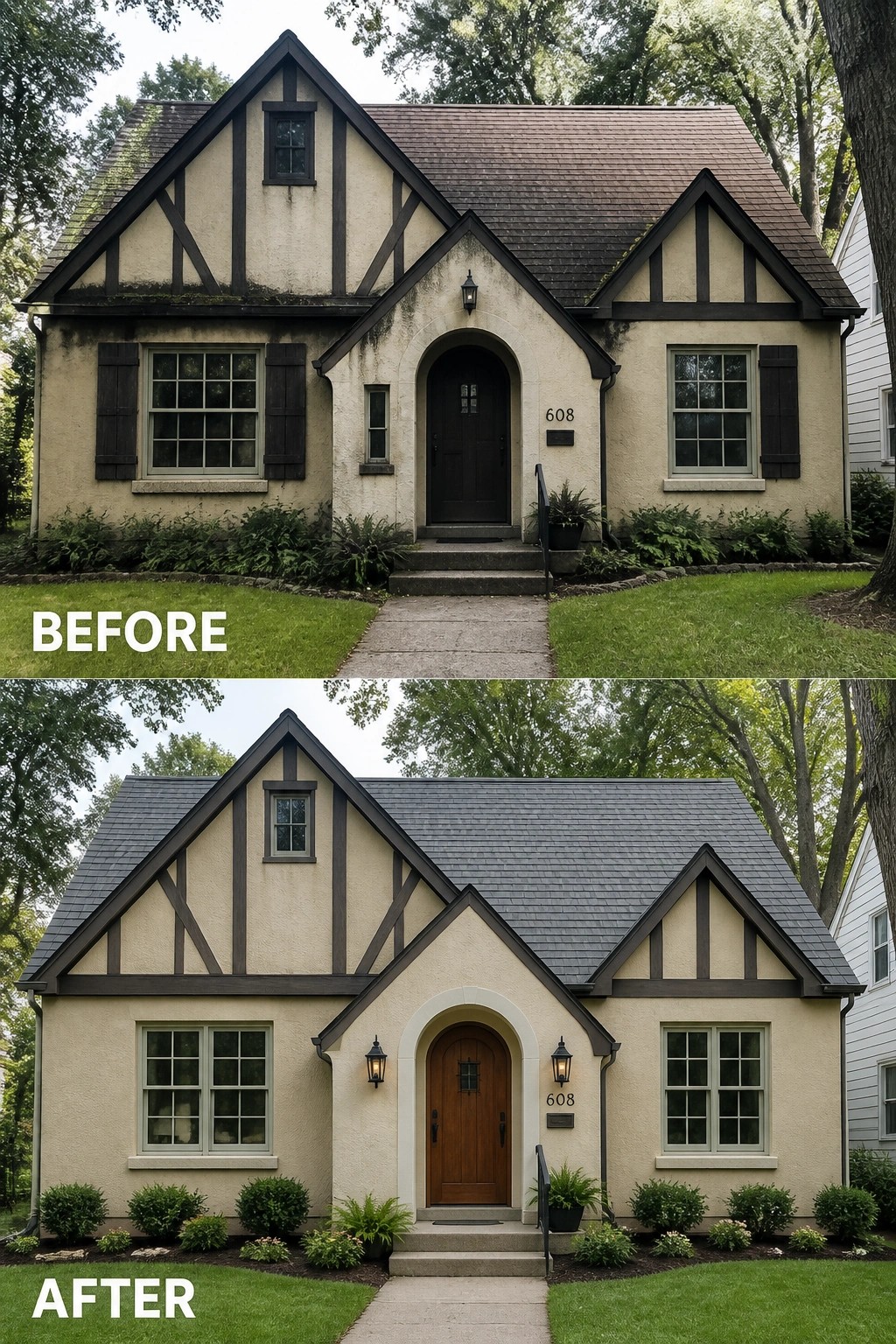
Many older homes end up looking dated because the door and roof no longer work with the rest of the house. In this case, replacing the dark door with a warmer wood tone and changing the roof to a softer gray instantly made the whole front feel lighter and more current.
This kind of update suits suburban homes that still have good bones but need a simpler refresh. Focus on colors that tie in with the siding first, then add a couple of lights by the door so the entry feels intentional rather than an afterthought.
Refresh A Dated Exterior With Paint And Shutters
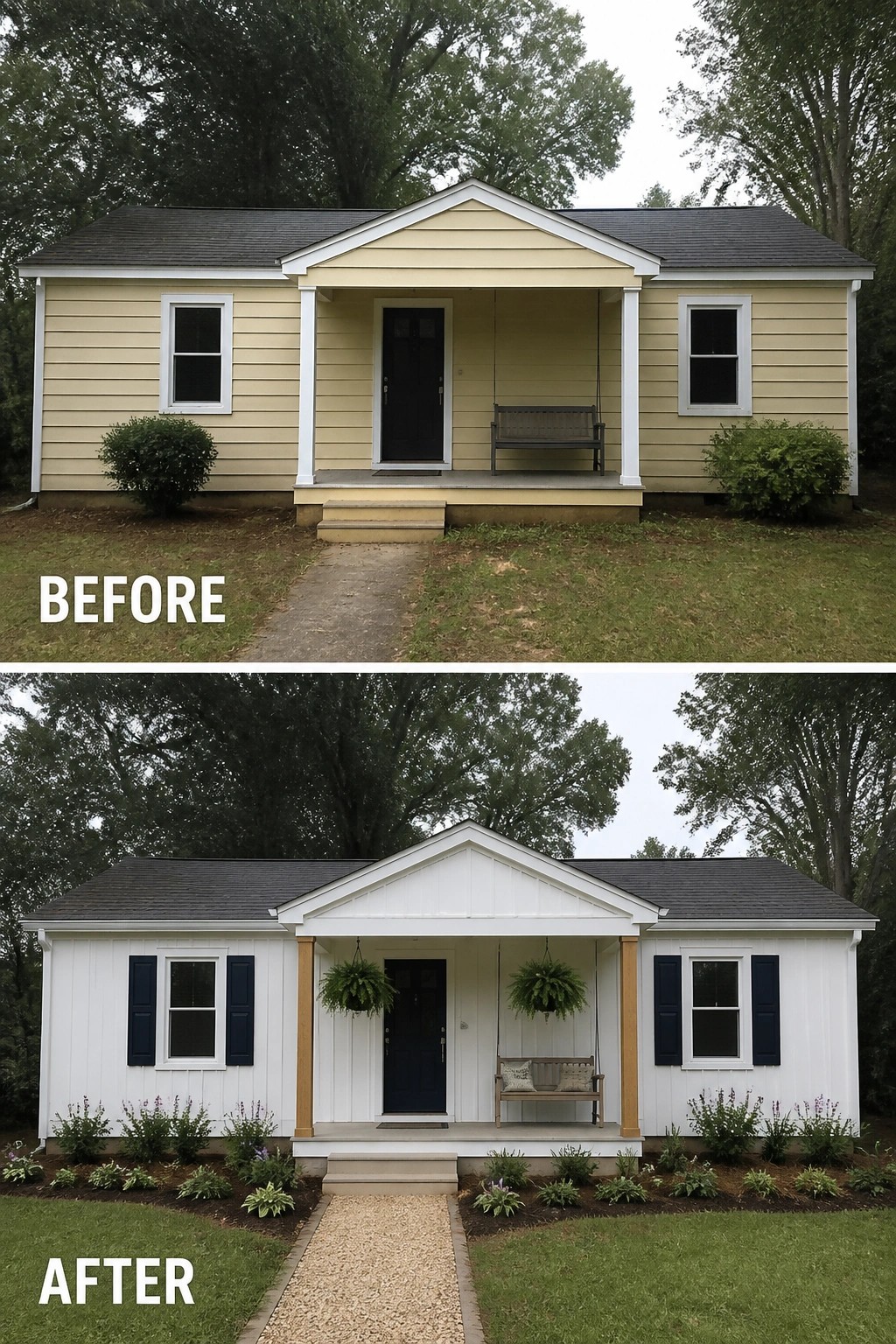
Many suburban homes from past decades still carry siding colors that now look tired. Switching to a clean white and adding dark shutters gives the front a sharper, more current appearance without any structural work. The yellow siding and plain trim in the first photo shift to white walls and navy shutters that frame the windows and tie the whole facade together.
This idea suits simple one-story houses where the goal is quick visual improvement rather than a full renovation. Choose a color that contrasts with the existing trim and door, and make sure the shutters match the window size. It keeps the project realistic and focused on the parts of the exterior that people notice first.
Turn A Bare Porch Into A Simple Seating Area
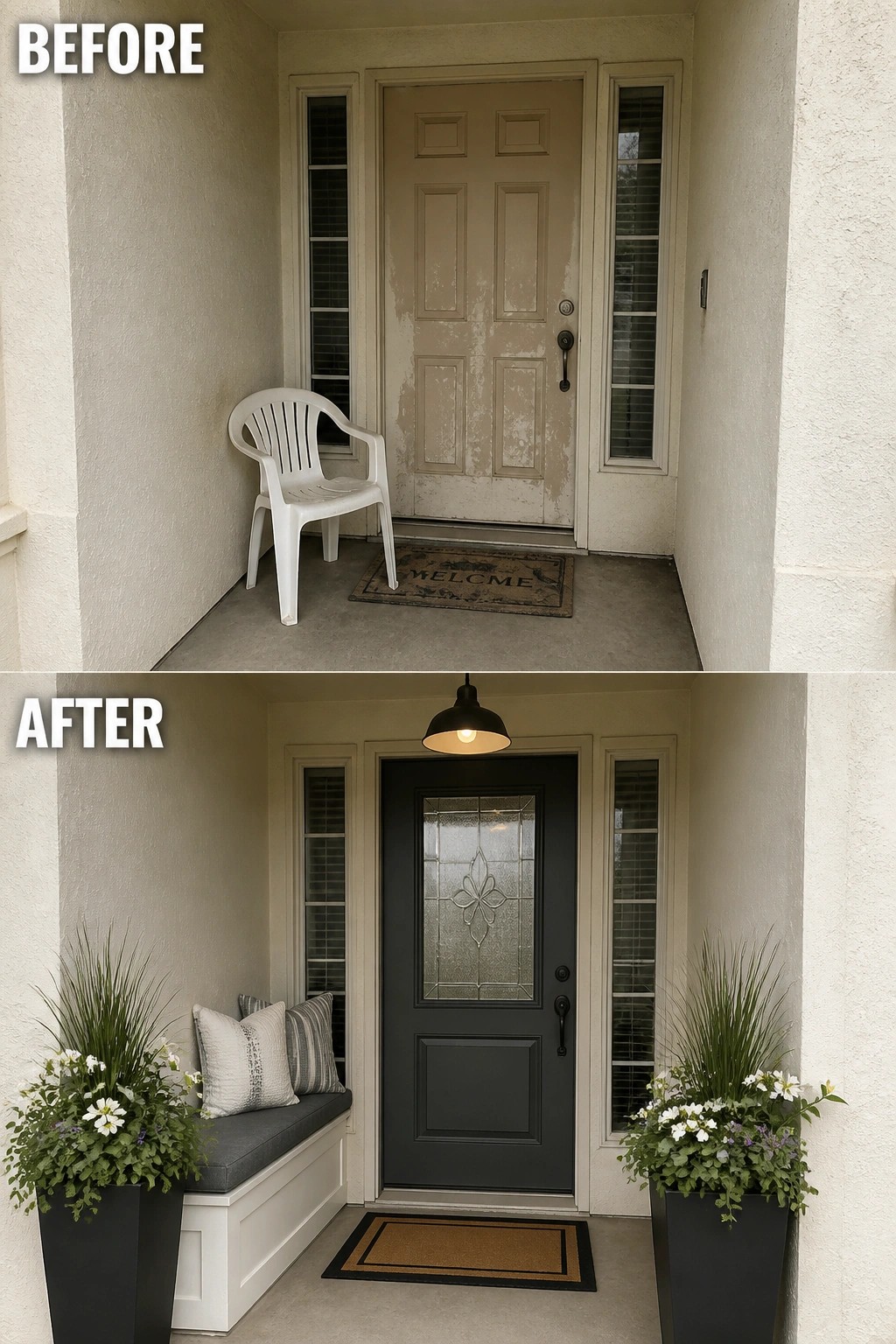
A small front porch often ends up as wasted space when it has nothing but a lone chair and an old mat. In this case, swapping the plastic chair for a built-in bench with cushions and adding tall planters on each side gave the entry a clear reason to exist. The bench provides real seating without taking up floor space, and the planters frame the door so the whole area feels intentional instead of leftover.
This approach works well on narrow porches where furniture would block the walkway. Keep the bench low and the planters tall so the path stays open. Choose weatherproof cushions and sturdy containers that match the house trim, and you end up with a spot that feels useful instead of just decorative.
Define Front Beds With A Low Retaining Wall
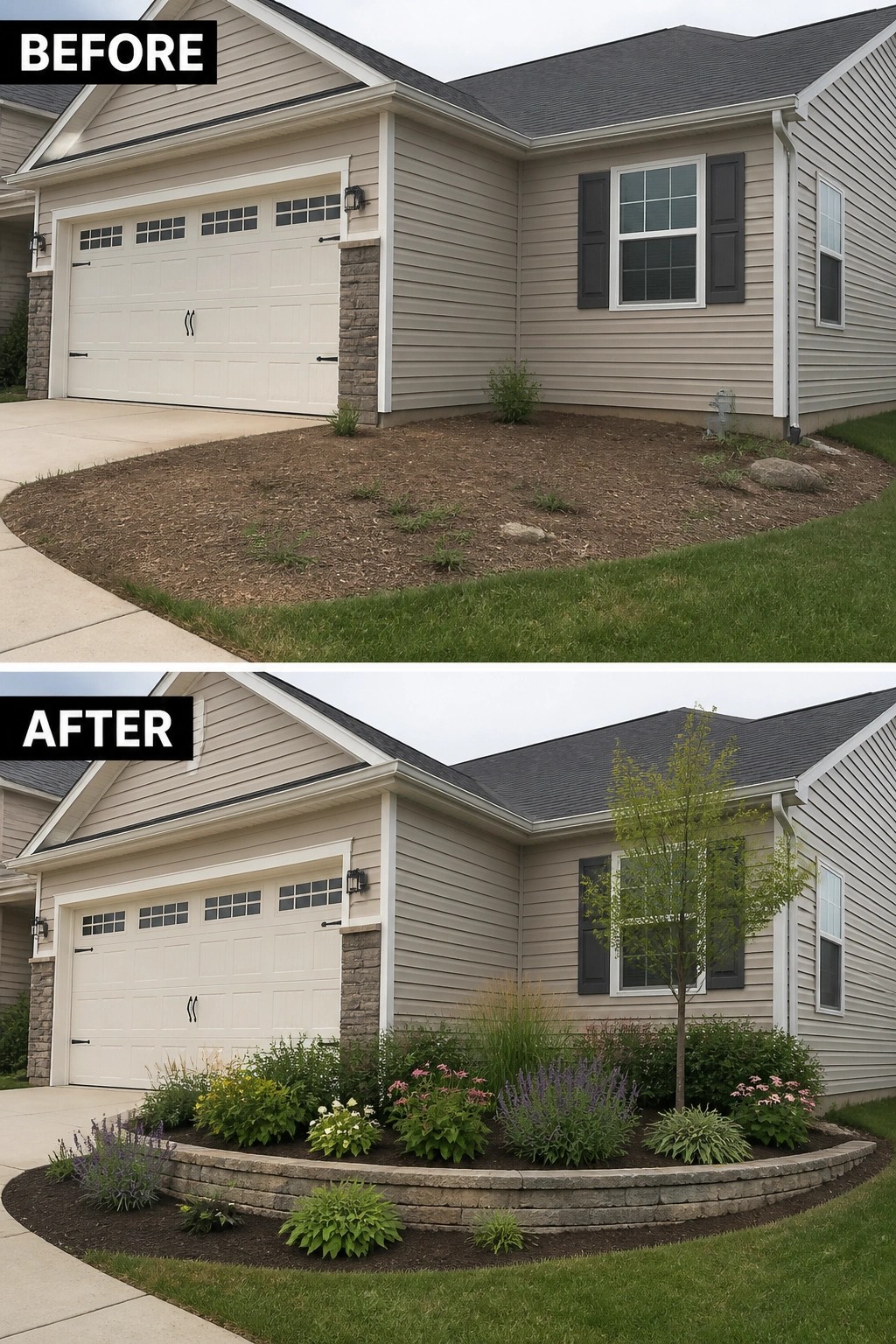
A bare strip of mulch along the foundation rarely does much for a house. Adding a low stone retaining wall creates a clear edge, raises the planting area, and turns the same space into a finished garden bed. The curved shape also softens the straight lines of the garage and siding.
This approach works well on homes with a gentle slope or wide foundation strip. Keep the wall low so it does not block windows, and choose plants that stay in scale with the bed size. Start with the wall and basic soil work before adding too many plants.
Refresh Dated Front Steps With Updated Railings
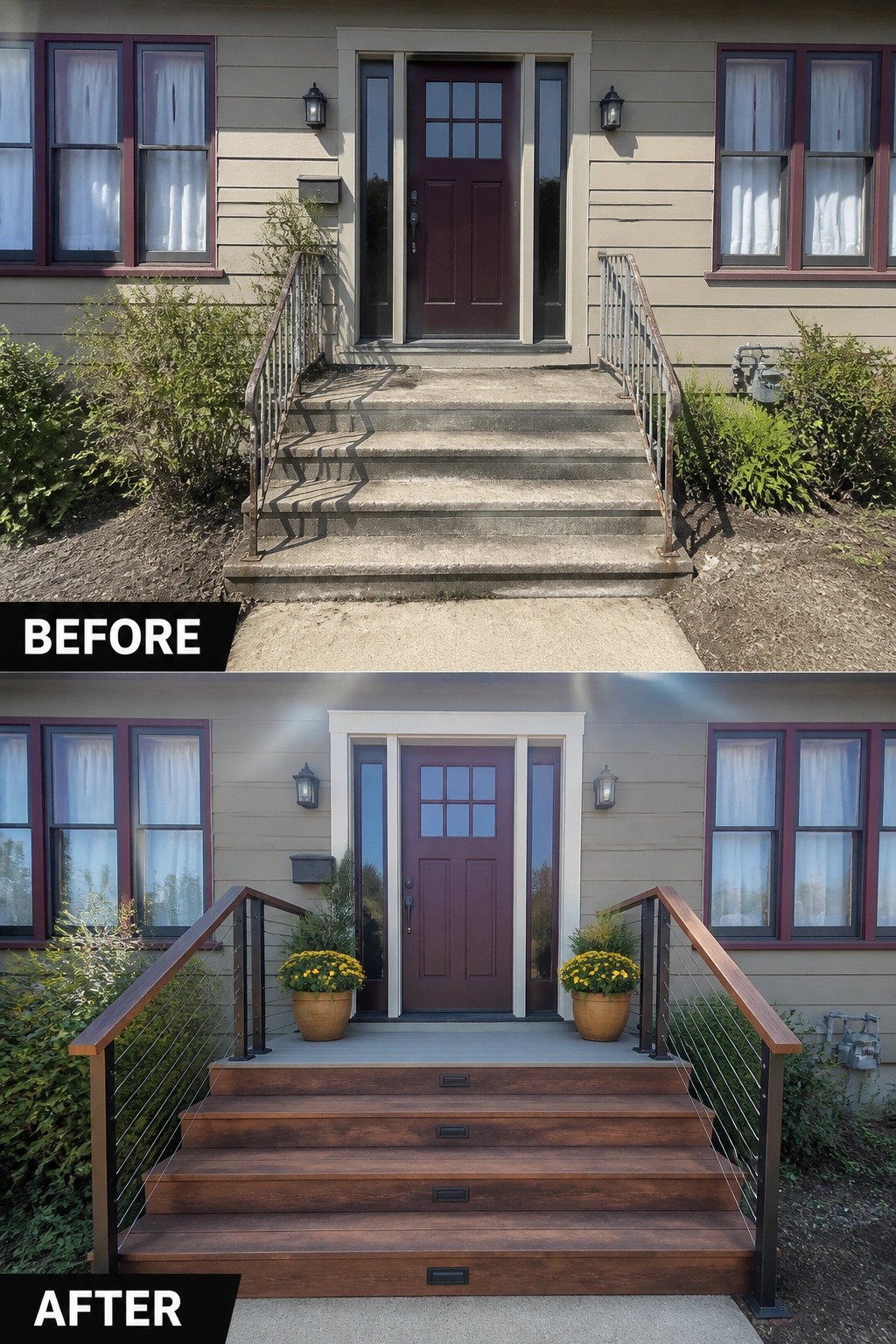
Many suburban homes end up with plain concrete stairs and rusty railings that make the entry feel neglected. Swapping the old railings for a mix of wood and cable and adding wood treads on the steps gives the whole front a much cleaner look. A pair of planters on the landing also helps make the door feel more intentional.
This approach suits homes with basic facades where the stairs are the main focal point. Start by replacing the railings and treads before adding any extra decor. Keep the materials simple and weatherproof so the update lasts without constant upkeep.
Add Structure To An Overgrown Front Yard
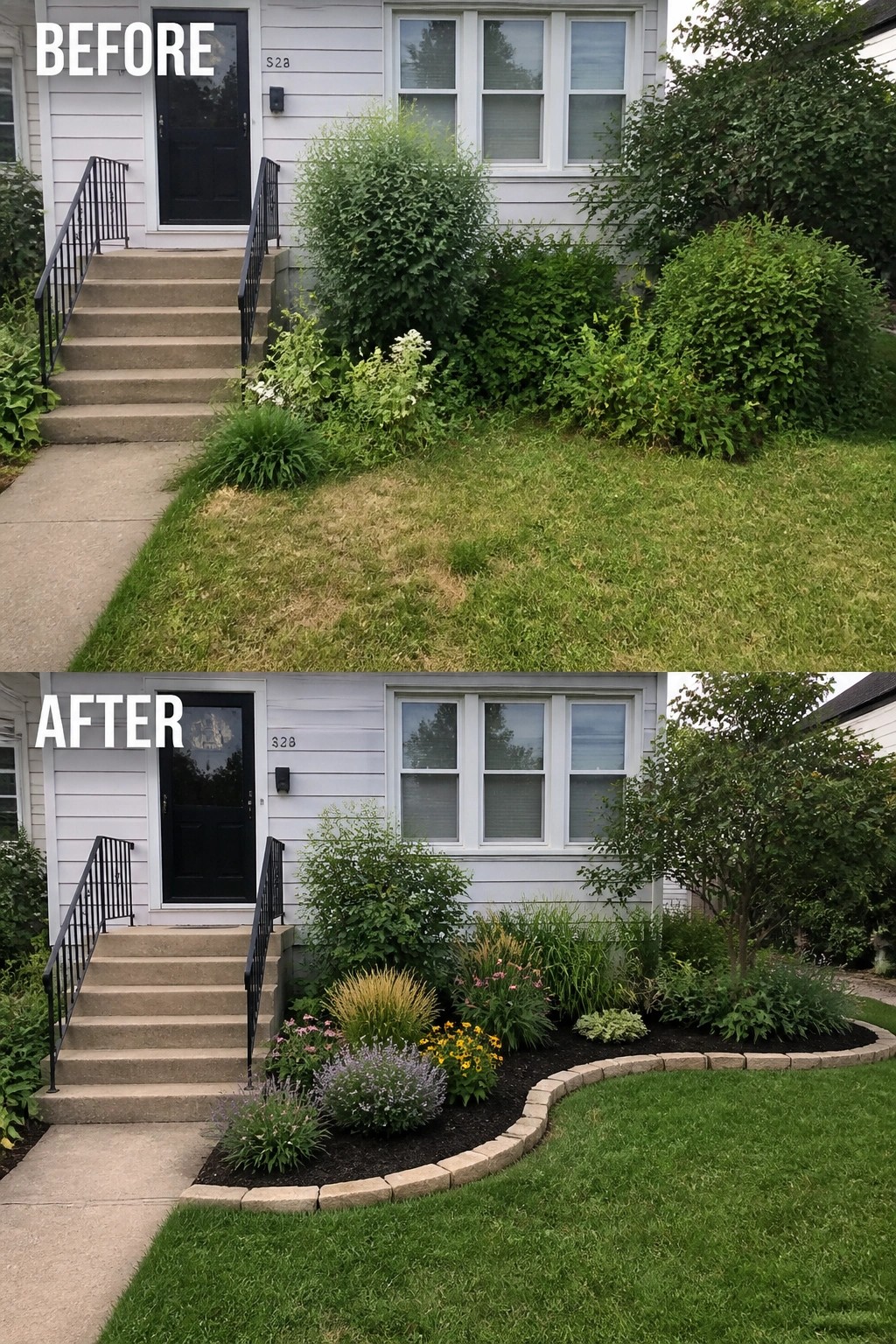
The front of this house looked messy because the shrubs had grown wild and the lawn edge was unclear. Adding a low stone border and mulched beds with a mix of smaller plants created a clean line that makes the entry feel intentional instead of neglected.
This approach works well on older suburban homes where the original landscaping has filled in too much. Start by cutting back the biggest plants, then lay out a simple edge before choosing new shrubs and perennials that stay in scale with the house. The result is easier to maintain and gives the whole facade a tidier look without major construction.
Update The Front Entry With A New Overhang
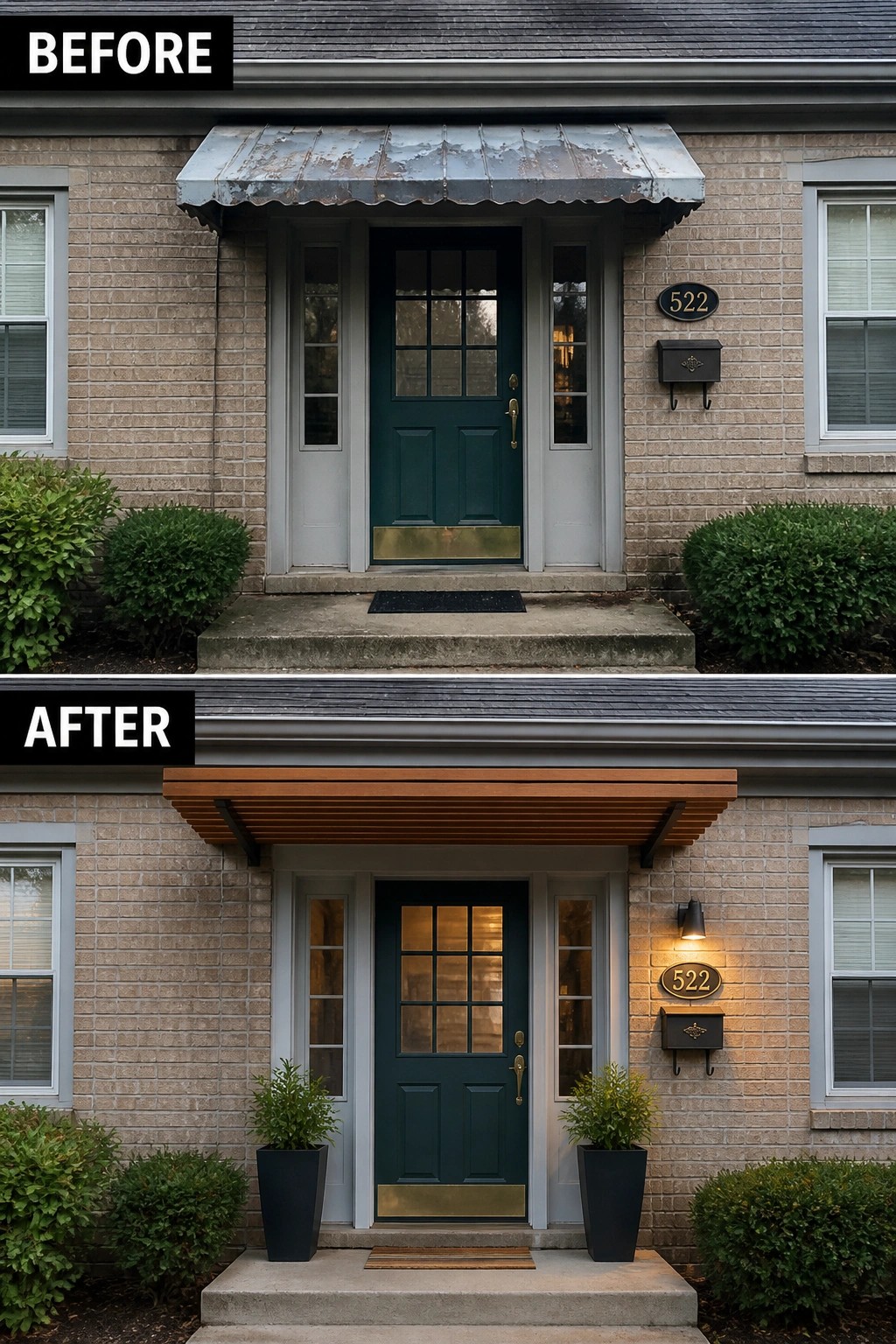
Many homes from past decades still have old metal awnings that look worn and dated. Replacing one with a simple wooden overhang gives the entrance a cleaner shape and adds a bit of warmth that the original never had.
This change works best on brick homes where you want to keep the existing walls but make the door area feel more finished. Add two matching planters on the steps and one new light beside the door. It suits straightforward facades that do not need a full renovation, just one clear update at the entry.
Update The Exterior With Fresh Paint Colors
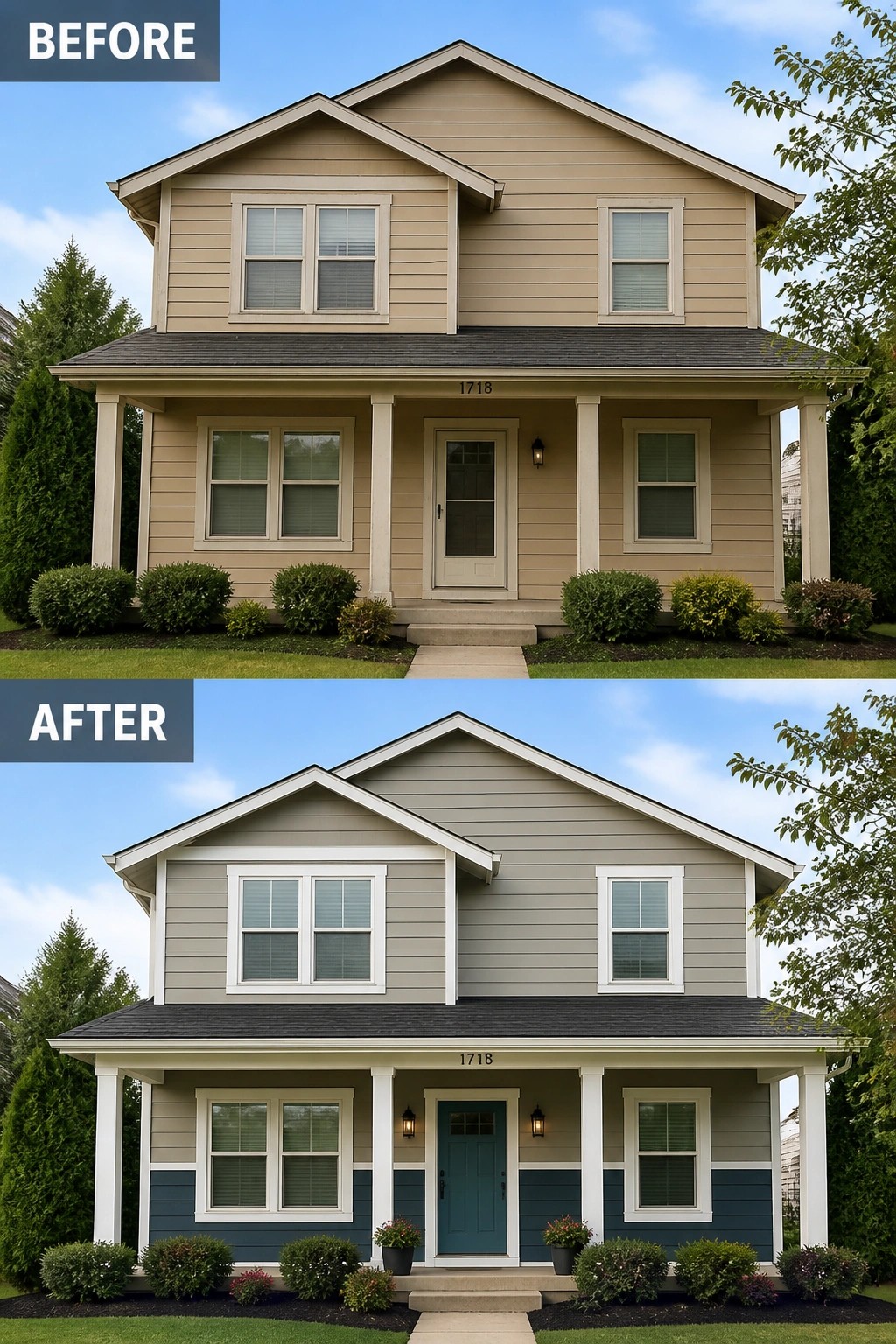
Many older suburban homes have that flat beige look that makes the whole front feel tired. Switching the siding to a soft gray with white trim and adding a deeper blue on the lower level instantly gives the house more shape and presence. The teal door adds a simple focal point that makes the entry feel more welcoming without any major construction.
This approach works well on homes that still have good bones but need a quick visual lift. Choose colors that play off each other rather than matching exactly, and test samples on the actual siding first since light changes how they read. Keep the changes to siding, trim, and the front door if you want the biggest impact with the least effort.
Add Structure To An Overgrown Front Yard
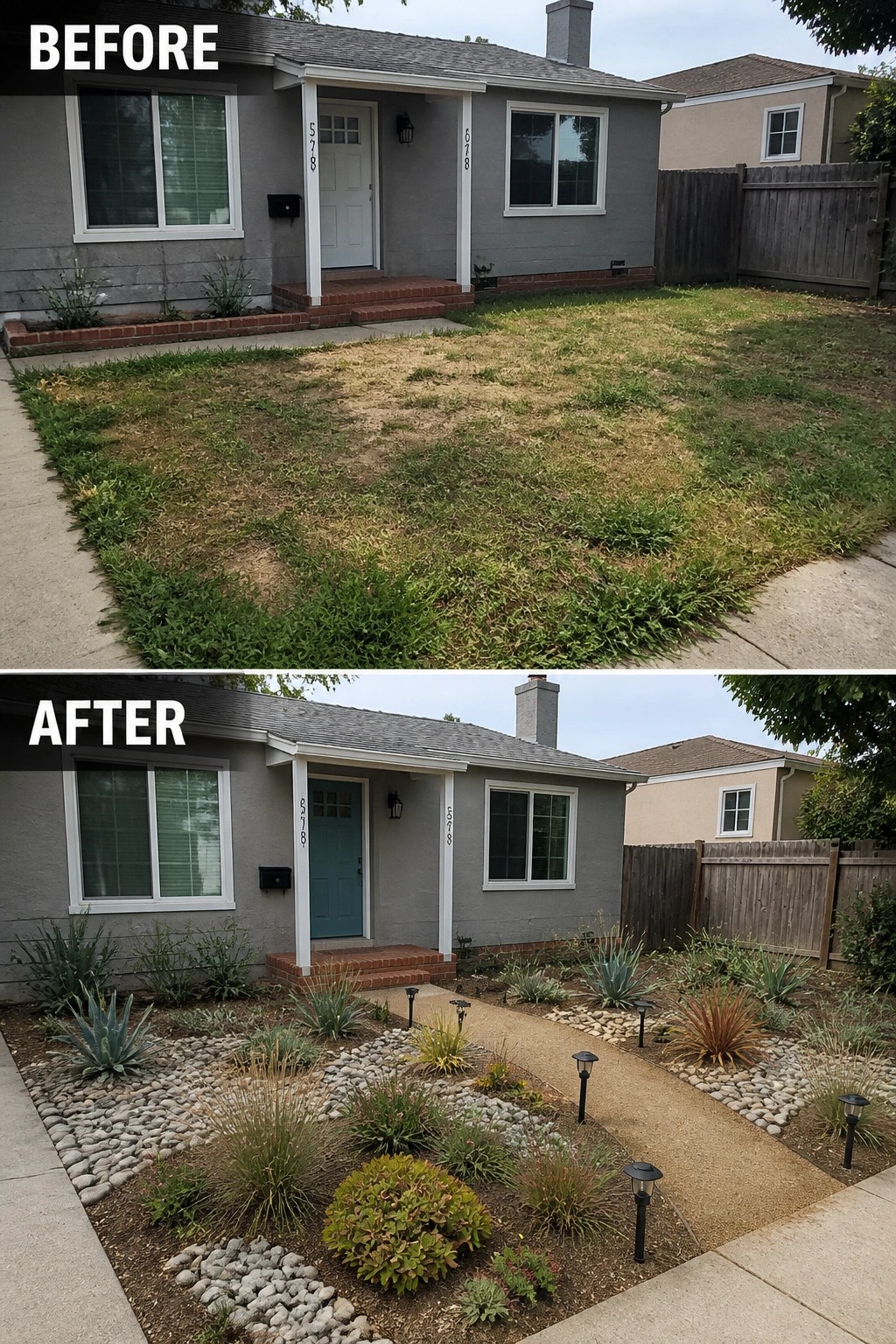
Many front yards lose their shape over time and end up as a mix of weeds and bare patches. Clearing the struggling grass and replacing it with defined beds and a simple path gives the space a clear layout that is easier to maintain.
This approach works best on smaller suburban lots where a full lawn is not practical. Outline the beds first with gravel or rocks, add a path to guide foot traffic from the sidewalk to the door, and fill the beds with low-water plants. The result feels planned rather than neglected.
Add Shutters And Lights To Give A Plain Exterior More Shape
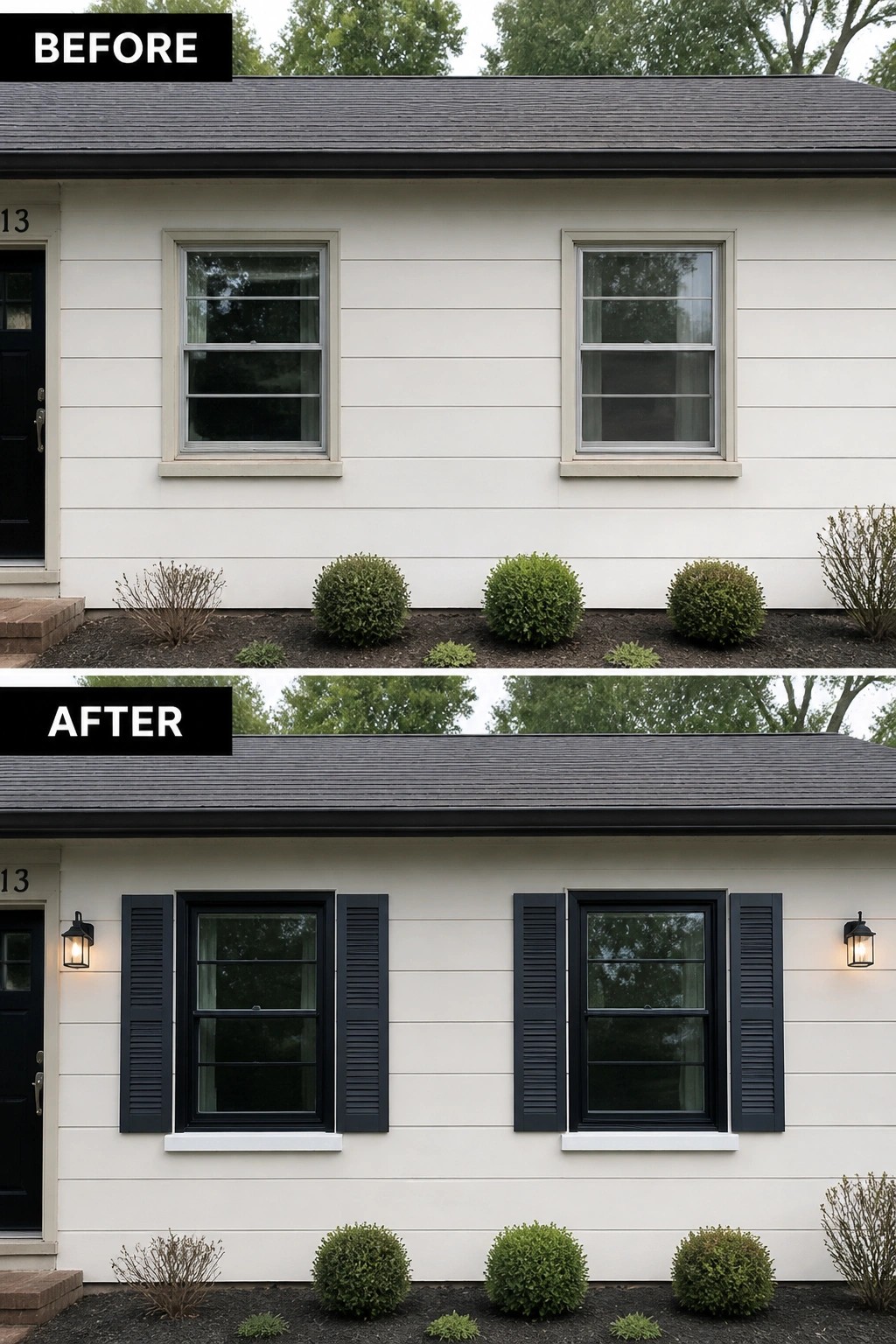
Many suburban homes have simple siding and basic windows that leave the front looking flat. Adding shutters on either side of the windows and placing a light between them creates clear vertical lines and breaks up the wall. The dark shutters also tie in with the door and roof trim, so the whole front starts to feel more put together without any major construction.
This approach works well on houses that already have decent proportions but lack detail. Keep the shutters the same width as the window and match their color to another trim element on the house. Add one light per window rather than scattering fixtures around, and make sure the lights sit at a comfortable height for both looks and function.
Add A Front Porch To Create A Welcoming Entry
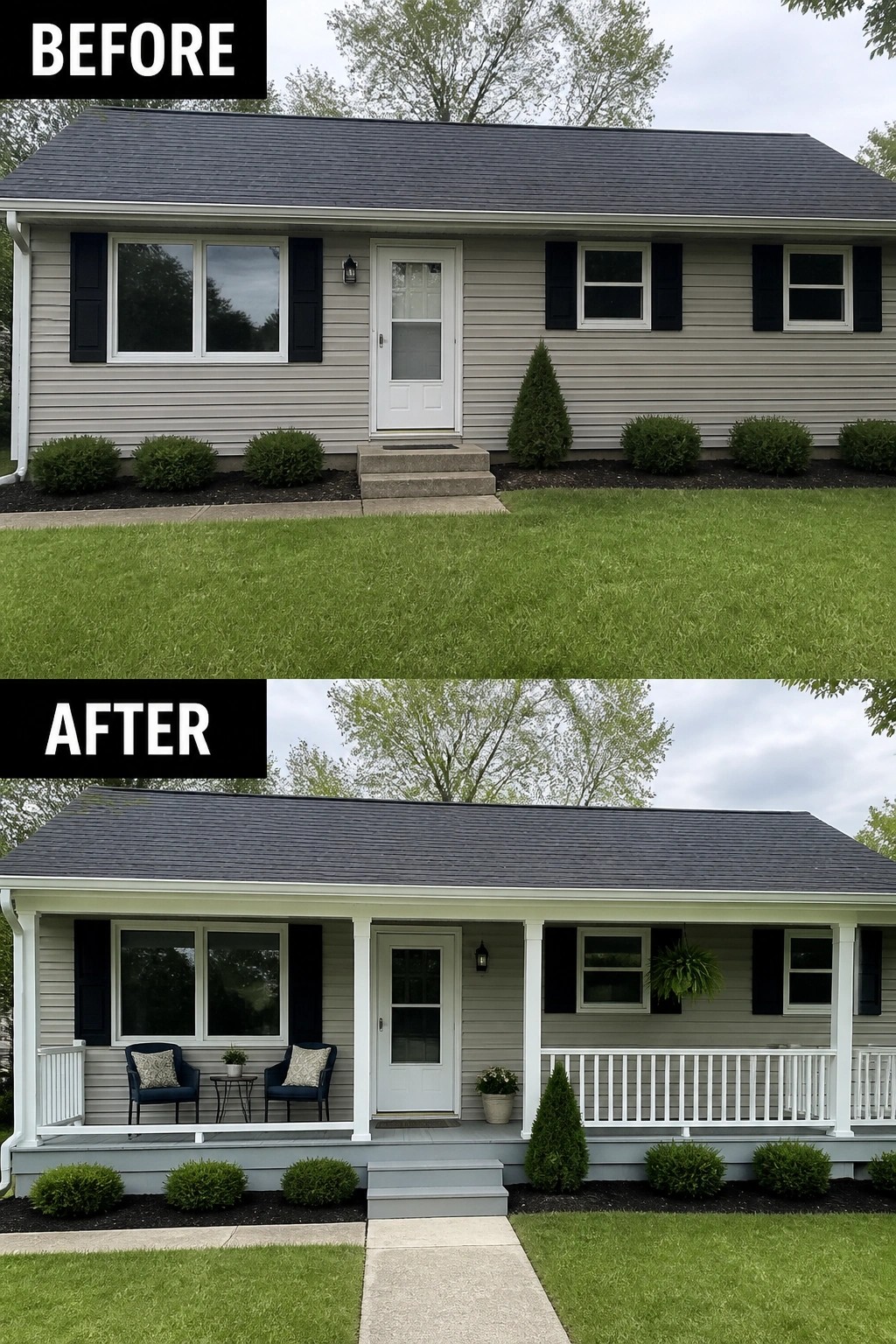
Many older suburban homes have a basic front door with just a couple of steps, which leaves the entry feeling flat and unfinished. Adding a simple porch with columns, railings, and a small seating area gives the facade a clear purpose and makes the house feel more approachable.
This idea works best on homes where the roofline can be extended without major changes. Keep the porch furniture light and weatherproof, and match the trim color to the existing house so the new structure blends in rather than standing out.
Paint The Front Door A New Color
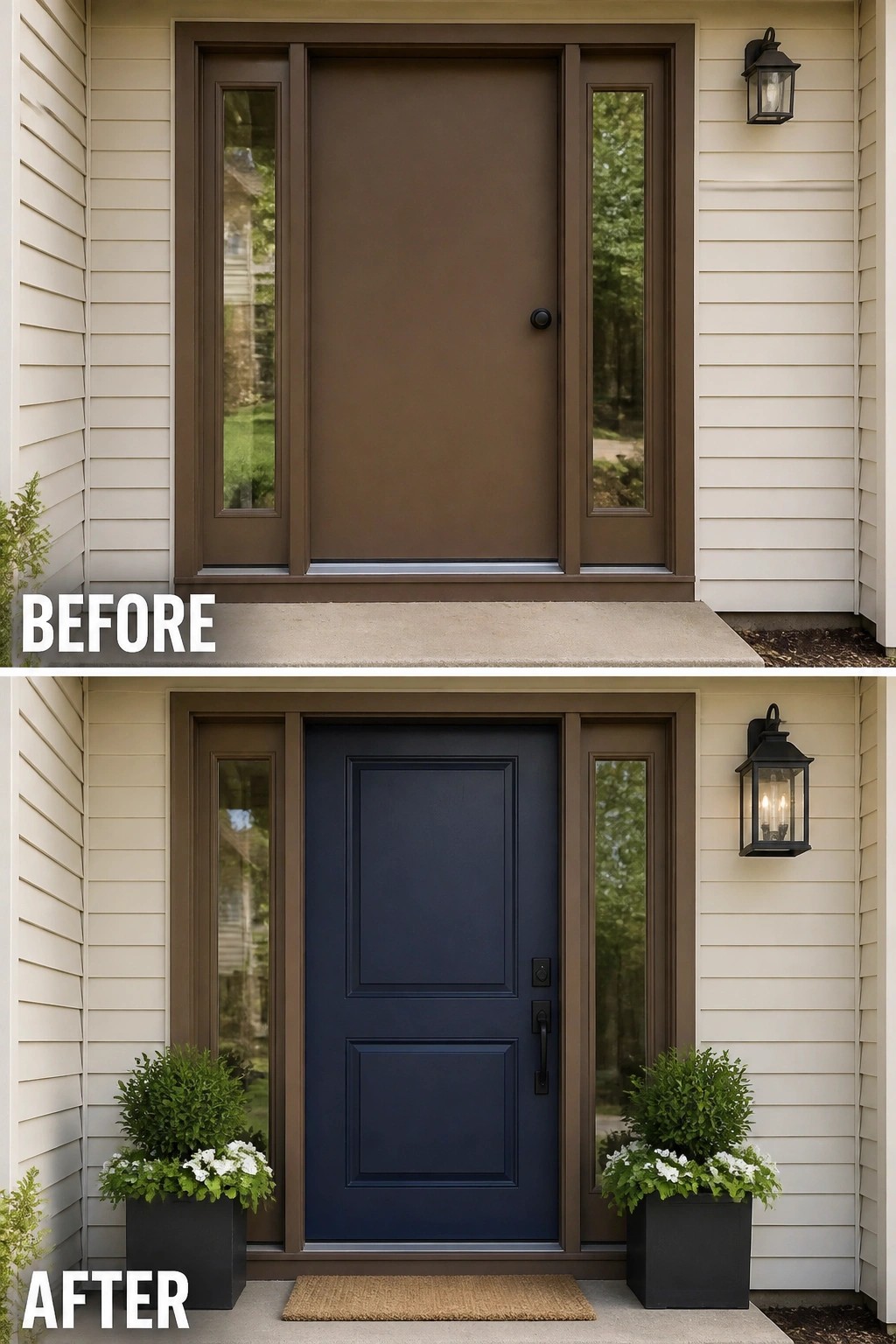
A simple change to the front door color can shift how the whole house feels from the street. In this case the brown door blended into the trim and siding, while the deep navy version stands out and gives the entry a clearer sense of arrival. Adding two matching planters on either side and a doormat finishes the look without any major construction.
This approach works especially well on suburban homes that still have a solid door and frame but feel flat. Choose a color that contrasts with the siding and trim, keep the planters in scale with the door, and start with just those two elements before adding more. It is an easy project that can be done in a weekend and often makes the biggest difference in curb appeal.
Add Defined Garden Beds To Frame The Front Entry
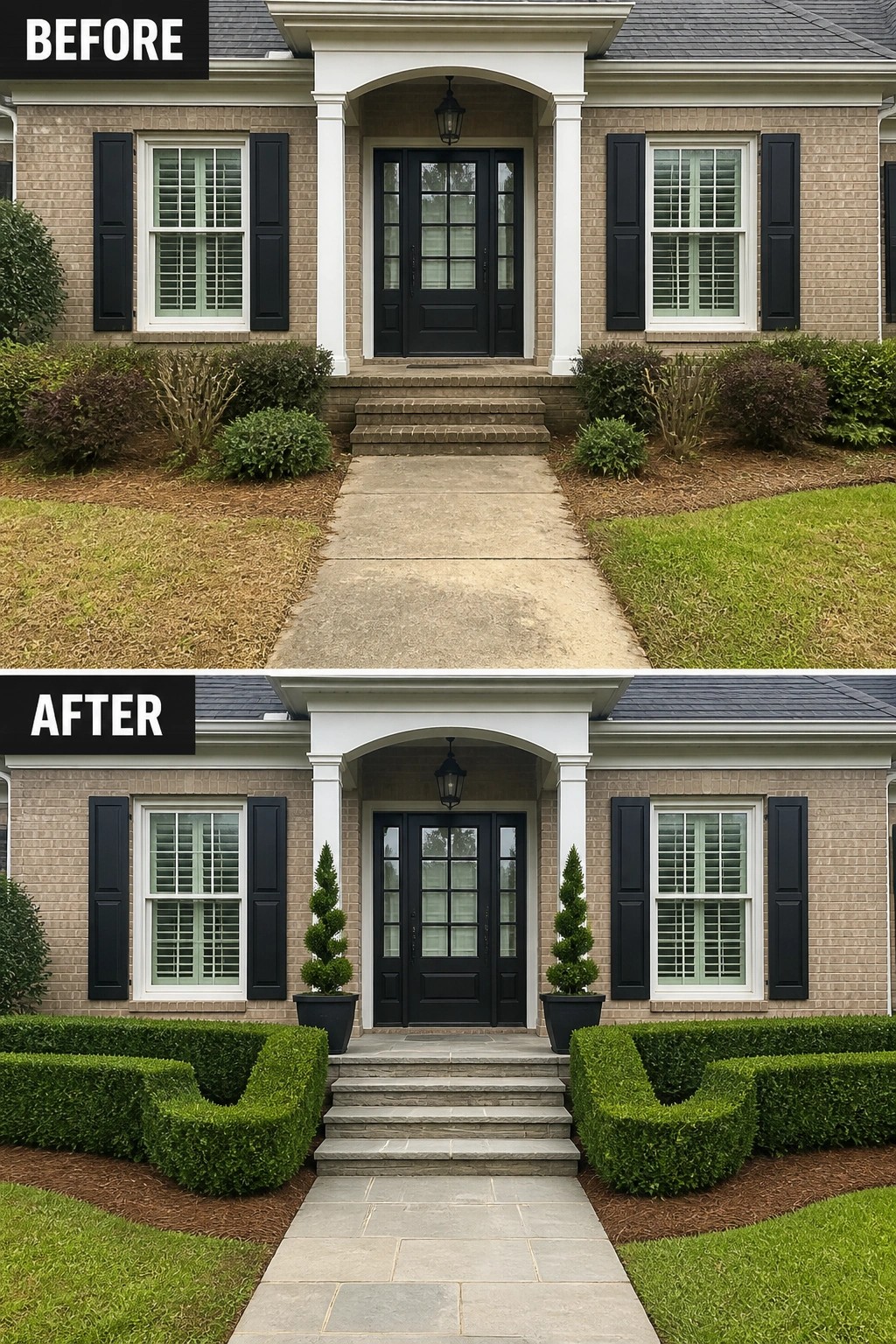
The main change here is how the front yard went from a flat stretch of lawn and scattered shrubs to a clear, structured approach. Low boxwood hedges now form a gentle U-shape that leads the eye straight to the steps, while the new stone path and pavers replace the plain concrete slab. This simple layout makes the entry feel intentional instead of just a walkway across grass.
This idea works well on suburban homes where the front feels a bit flat or unfinished. Start by cleaning up the existing beds and lawn edges, then add low hedges or shrubs that repeat the same shape on both sides of the path. Keep the scale modest so the beds guide movement without crowding the walkway, and choose paving that matches the house rather than trying to match every plant.
Add Exterior Lighting To Highlight A Plain Facade
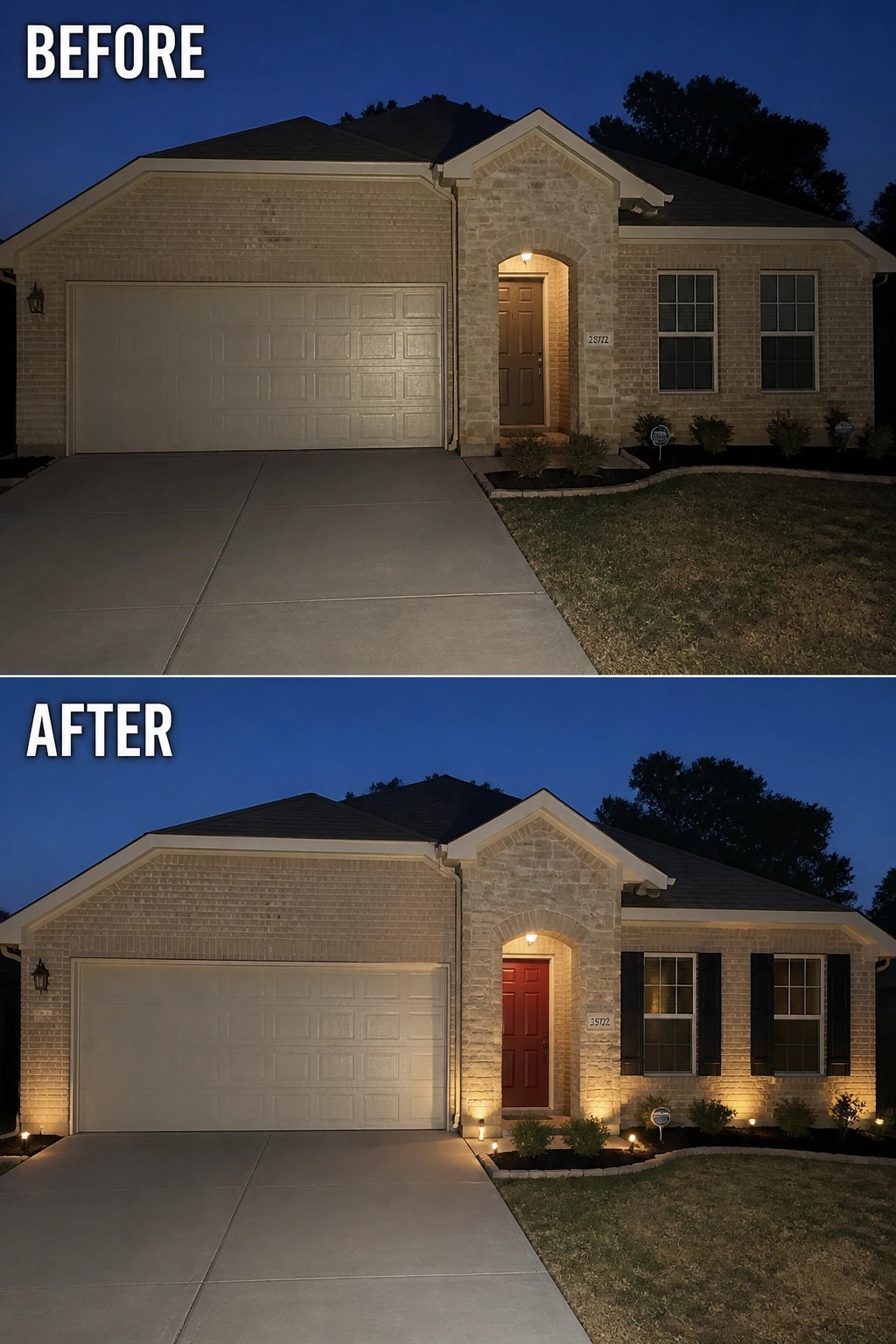
Many homes look flat at night because nothing draws attention to the front. Here the change comes from a few well-placed lights along the foundation and under the garage that lift the brick and frame the entry. The red door adds a clear focal point that works with the new light.
This idea suits brick or stone homes that already have a simple shape. Place lights low and aim them at the door and any stone details rather than flooding the whole wall. Keep the number of fixtures modest so the effect stays clean and the house does not compete with the rest of the street.
Replace Heavy Porch Columns With Slim Posts
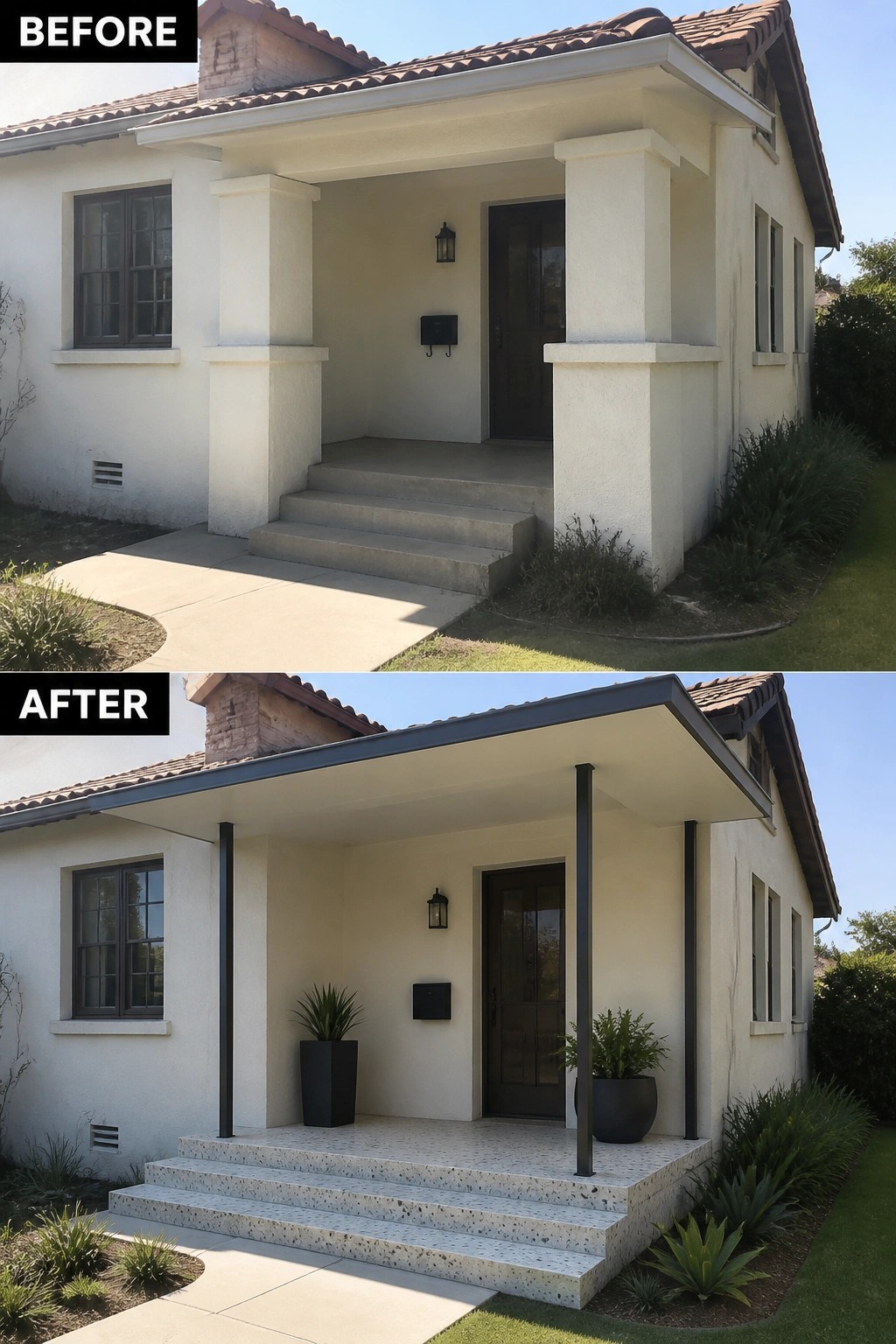
Many older homes have front porches that feel bulky because of thick stucco columns. Swapping those for slim black posts opens up the space and gives the entry a lighter, updated look. The new steps with a speckled finish also help the porch feel more finished without adding much extra detail.
This idea works well on simple suburban houses where the original porch looks plain. Focus first on the posts and roof edge, then add a couple of planters if you want. Keep the changes modest so the update stays practical and does not overwhelm the rest of the facade.
Add Shutters And Window Boxes To A Plain Exterior
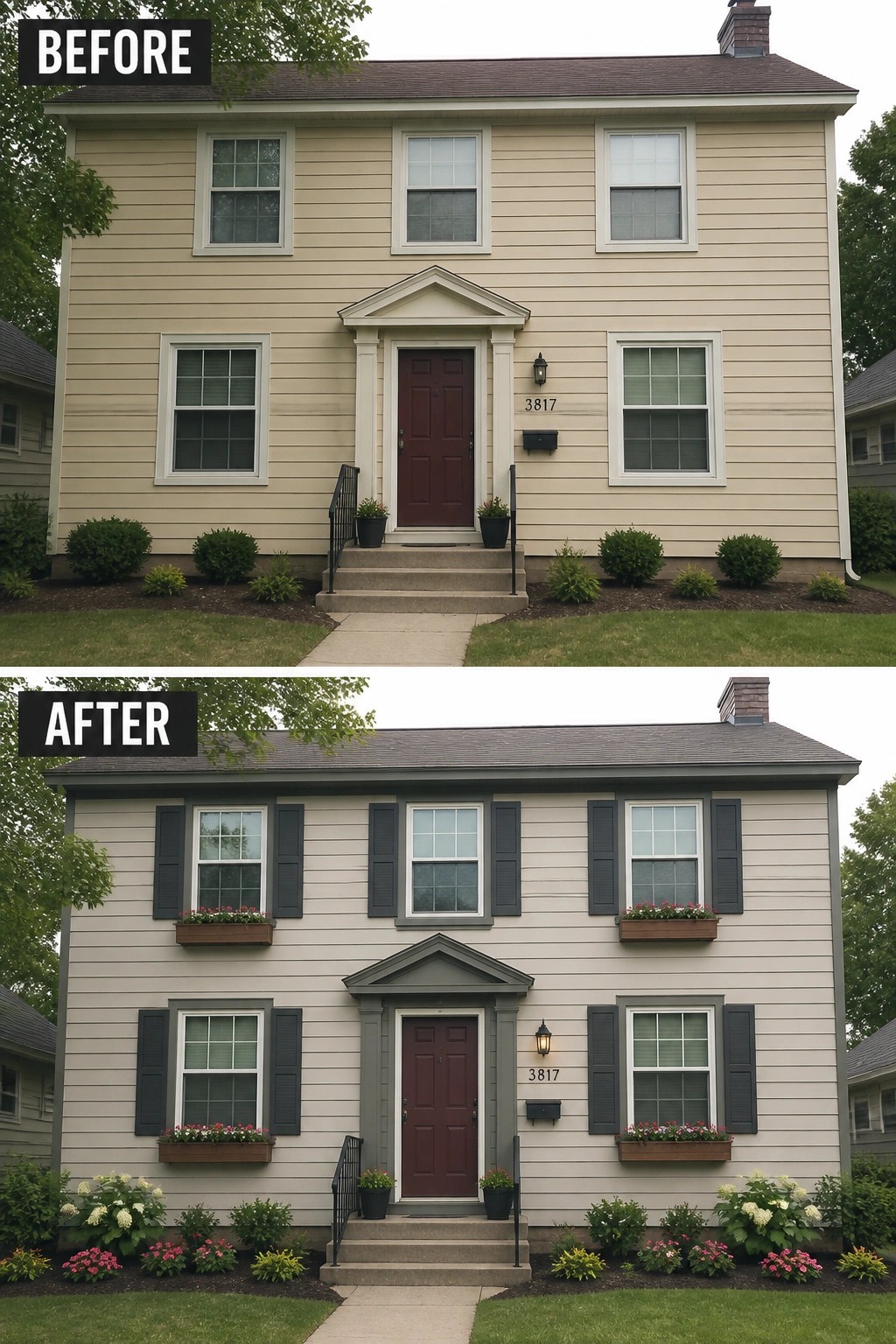
Many suburban homes from a certain era have flat siding and windows that sit without much frame. Adding shutters and simple window boxes gives the windows purpose and breaks up the wall in a way that feels balanced rather than busy.
This approach works best on houses with evenly placed windows and a straightforward roofline. Pick a shutter color that contrasts the siding, keep the boxes modest in size, and match the trim color on the door surround so the changes read as one decision rather than scattered updates.
Define The Front Path With Pavers And Edging
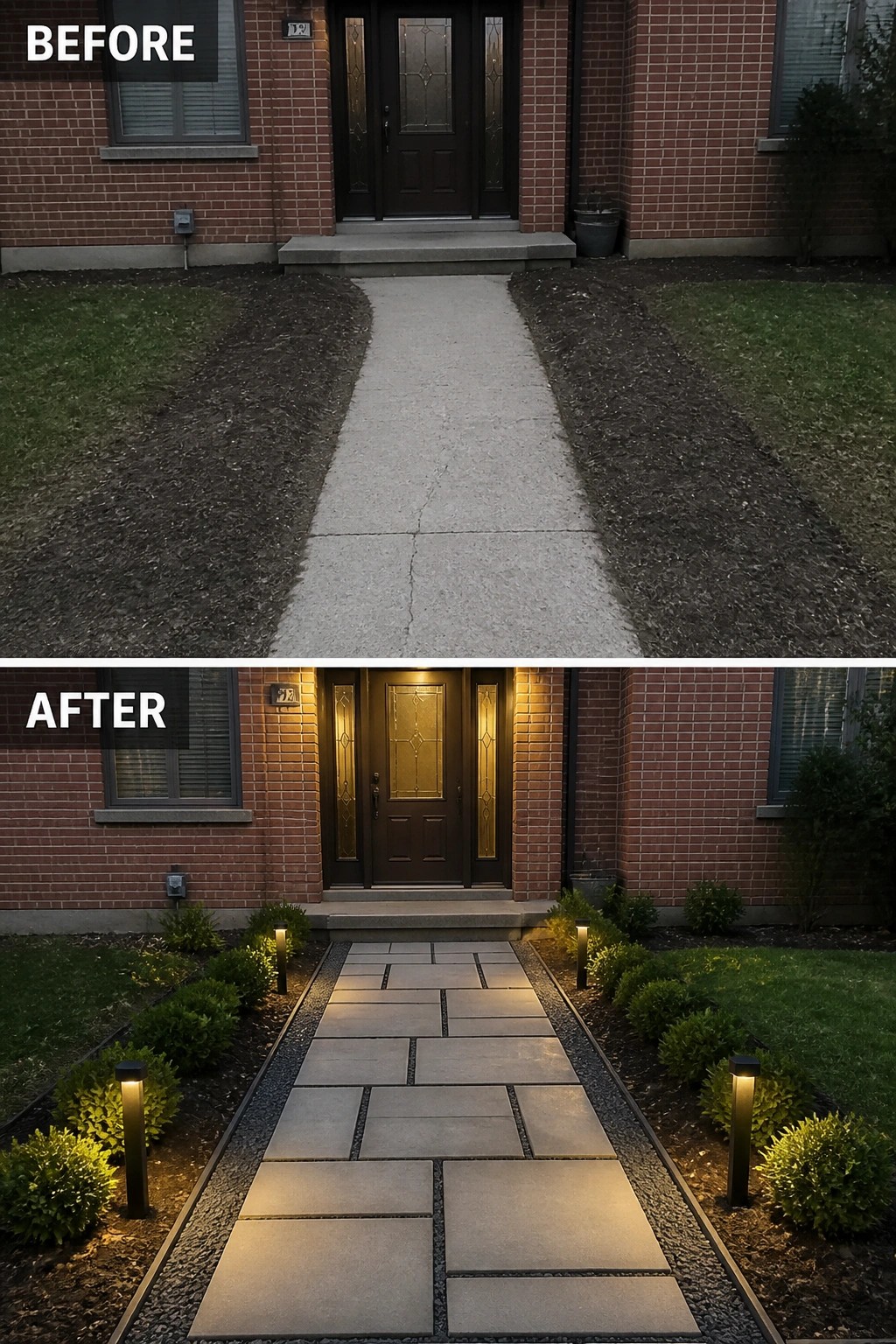
A plain concrete walkway often makes the front of a house feel unfinished. Replacing it with pavers set in a simple pattern and adding gravel along the edges gives the path a clear shape and makes the approach to the door feel more intentional. The garden beds on both sides help frame the walkway instead of leaving strips of bare dirt.
This approach works well on suburban homes where the front path is the main feature visitors see. Keep the paver layout straightforward so it does not compete with the house, and use low lighting along the beds if you want the path to be easy to follow at night. Start with the hardscaping before adding too many plants so the layout stays easy to maintain.
Change The Front Door Color For A Quick Exterior Update

Many dated homes have light or worn front doors that make the whole entry feel tired. Switching to a darker color gives the facade more weight and makes the entrance feel more intentional, especially when you also refresh the lighting above the door.
This idea works best on simple suburban houses where the siding is staying the same. Choose a color that contrasts with your house color, then add a couple of small lights under the overhang so the door stays visible at night.
Turn A Bare Porch Into A Seating Area
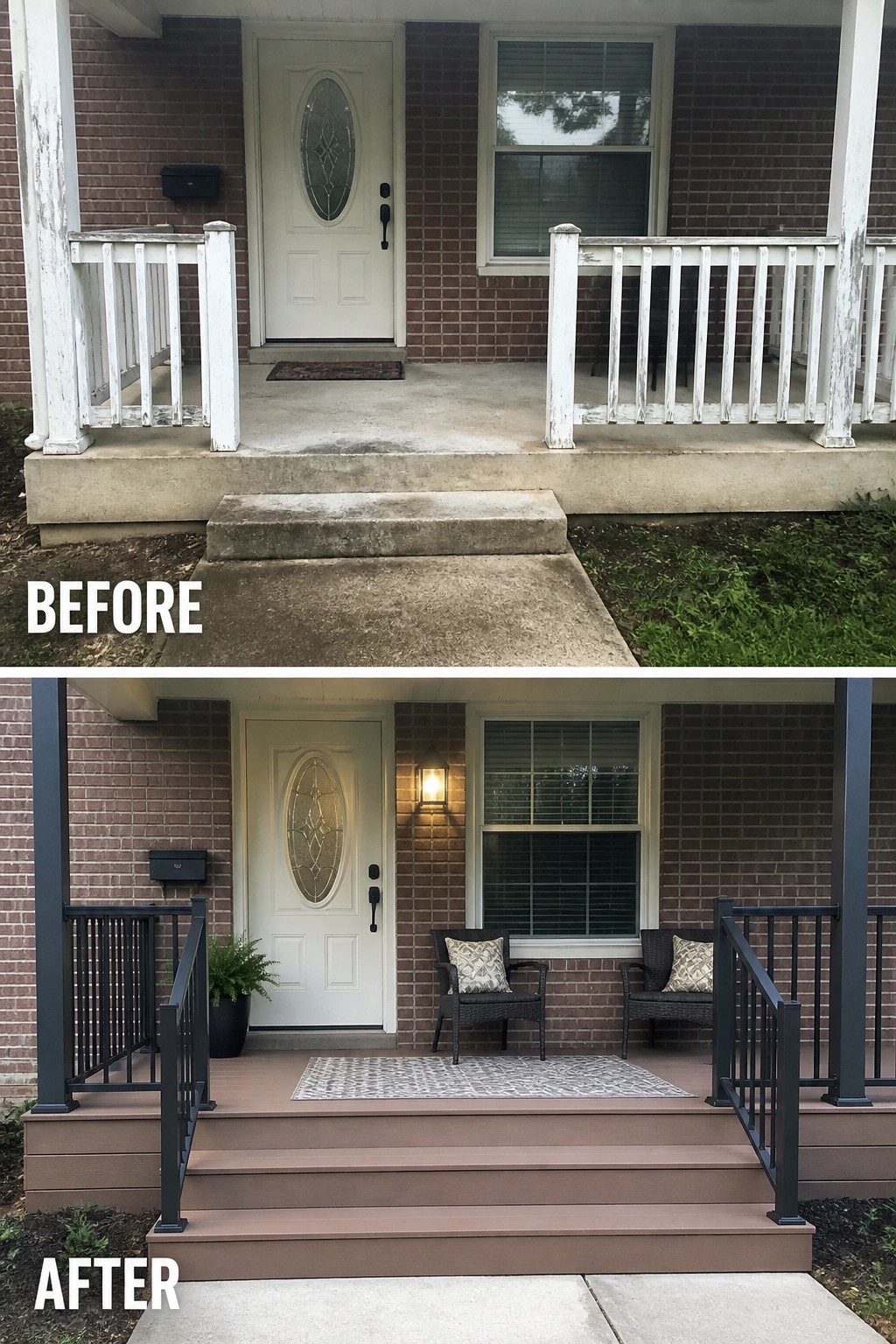
A dated front porch often sits empty because it feels like just a transition space. Adding a simple seating zone with a couple of chairs and a rug turns it into an outdoor room that gets used instead of walked past.
This idea suits suburban homes with a small but usable porch. Keep the furniture scale modest so the entry stays clear, and choose pieces made for weather. One rug is usually enough to mark the seating area without crowding the steps.
Frequently Asked Questions
Q: Can I update my facade without touching the roofline? A: Focus on the walls and entry area to refresh the look fast. New siding panels or added trim around windows shift the style without major construction. Many dated homes gain years of appeal this way.
Q: What works best if the budget stays under a few thousand dollars? A: Swap out the front door and add matching hardware for instant change. Layer on some affordable shutters or window boxes next. These small swaps add character without draining the account.
Q: How long does a typical facade project take? A: Most simple updates wrap up in a weekend or two if you plan well. Bigger material changes might stretch to a month with weather delays. Start with the easiest tasks to see progress right away.