

As someone who’s spent weekends fiddling with curb appeal, I’ve learned that small shifts around a brick facade, like changing mortar color, adding a low planting bed, or softening a stoop with vines, can make a house look cared for without a full renovation.
Brick can feel heavy or dated when plantings are absent, uneven, or competing with clutter, so blending edging, layered shrubs, and a clear entry line helps the whole face of the house read as intentional.
Small changes go a long way.
I usually test one or two ideas at a time, such as replacing a narrow strip of turf with a mix of perennials or training a climbing vine up a trellis, so I can judge scale, maintenance, and seasonal interest before doing more.
Save a few of these approaches to try on your own facade, adapt them to your sun and soil, and enjoy the satisfaction of a clearer, more cohesive curb appeal when planting and brick work together.
Give The Front Entry A Simple Face Lift
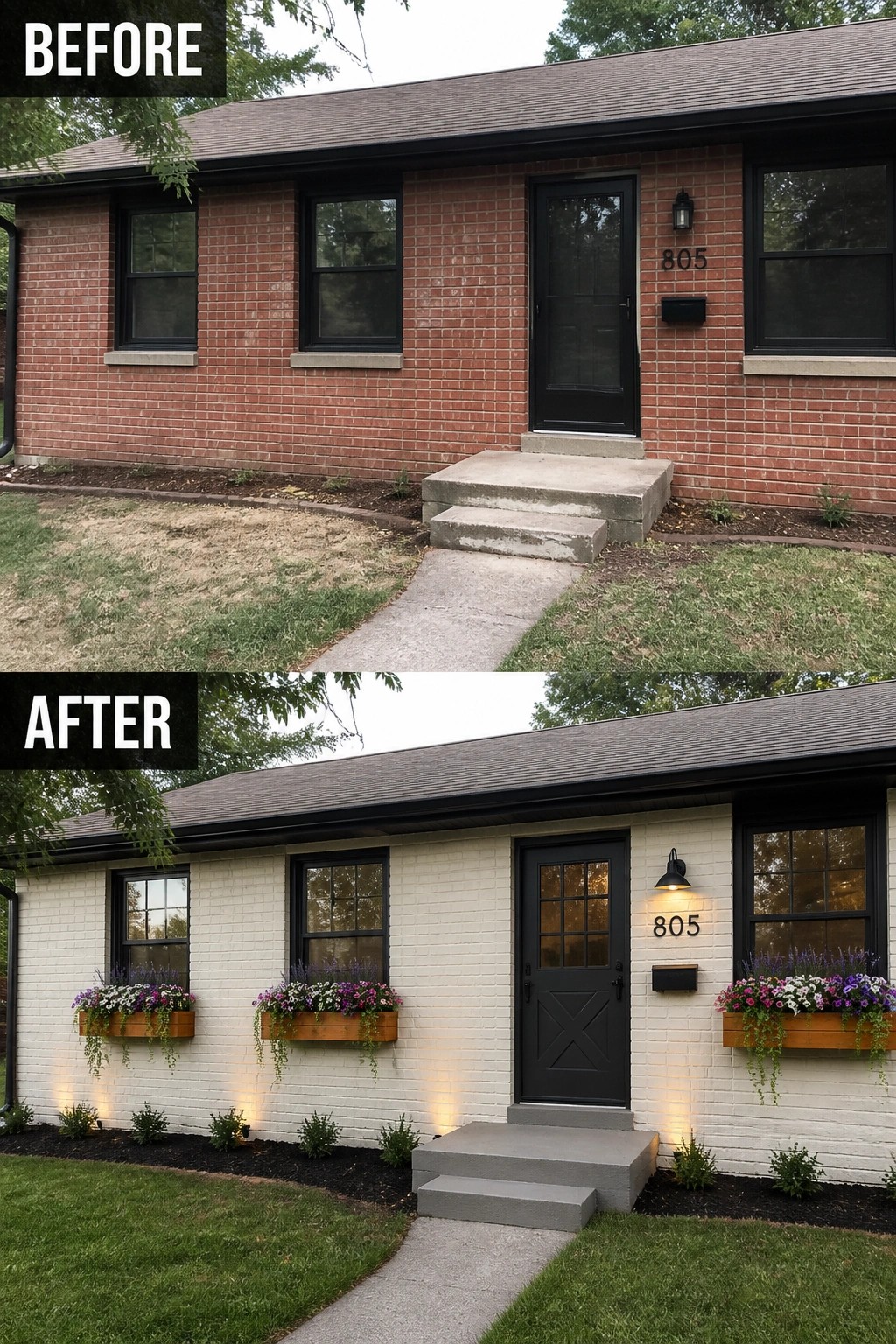
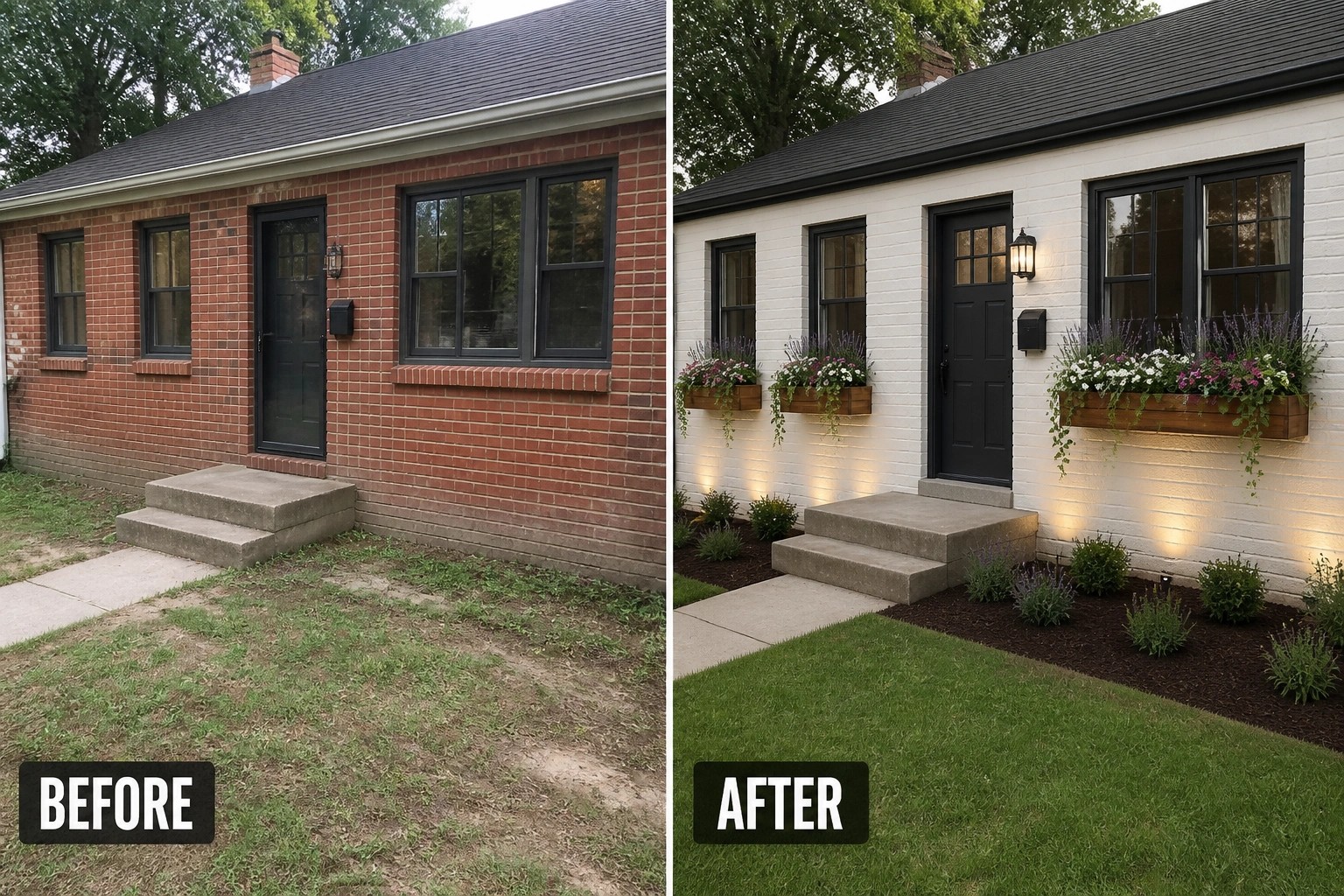
A quick way to make a plain brick facade feel intentional is to treat the entry as the focal point: paint the brick a lighter, neutral color to refresh the whole face, then add window boxes to bring in color and soften the base. In the example, the red brick was lightened and matched with darker trim while simple flower boxes punctuate the windows, turning an anonymous wall into a welcoming front.
To copy this, start with a thorough cleaning and use an exterior masonry paint made for brick; pick one trim color and stick with it for windows and the door so everything reads as one move. Install window boxes sized to the window width, choose spillover annuals for easy seasonal color, and tidy the planting bed below with mulch and small, low shrubs so the entry feels neat and intentional. Small, well-placed changes like these make a modest house look cared for without a major renovation.
Soften A Blank Brick Wall With Vertical Planting
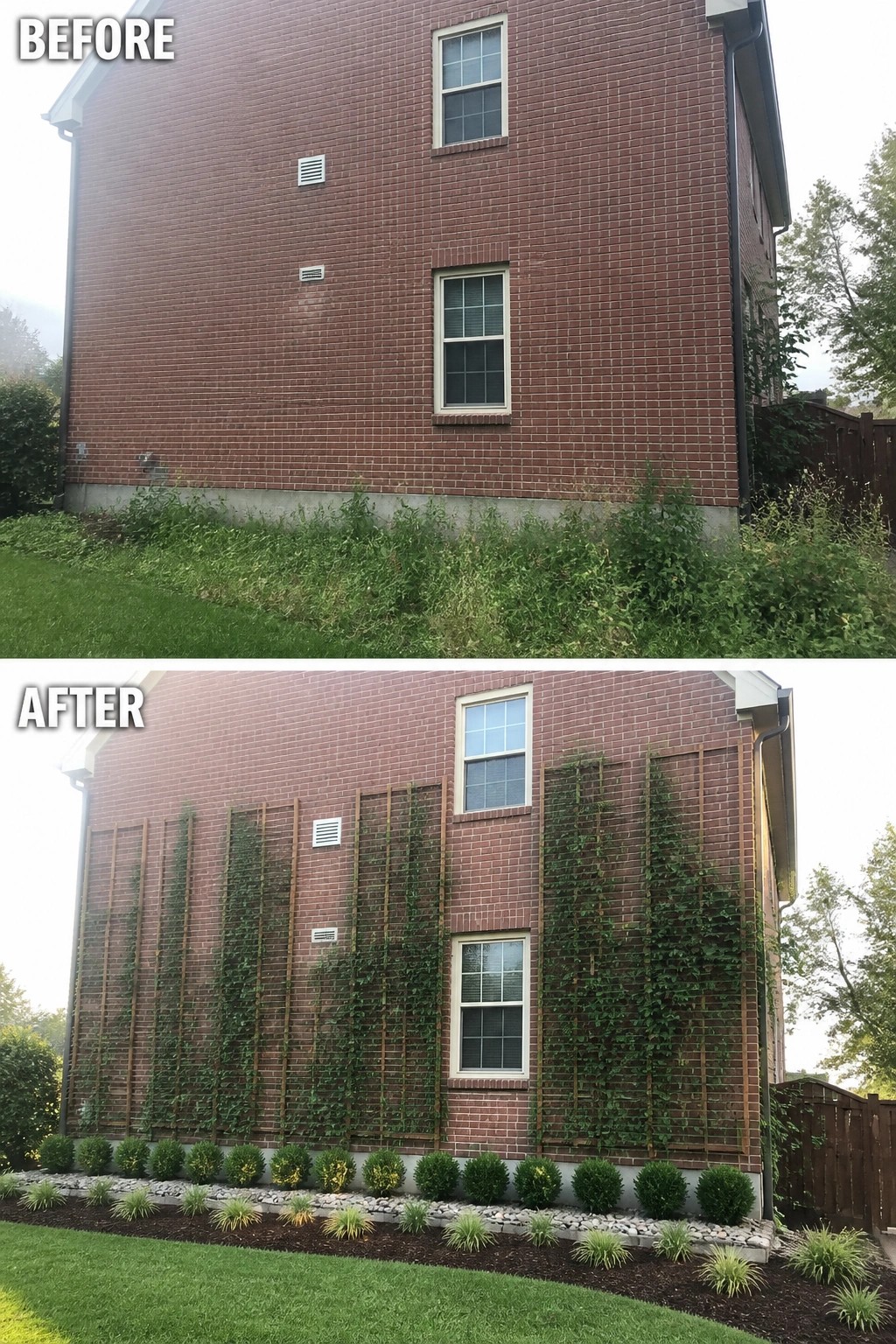
A row of slim wooden trellises and climbing vines is an easy way to break up a large expanse of brick and make the house feel connected to the yard. In this example a previously overgrown base was cleared and replaced with evenly spaced trellises and a tidy planted border, which lifts the facade without any major construction.
To use this idea, mount lightweight trellis panels a few inches off the wall and choose non‑adhesive climbers that can be trained up the supports (pick species suited to your climate). Add a low, structured planting strip at the base—small evergreen shrubs or grasses—to give year‑round shape and hide the trellis bases. Start small, space the trellises to match window lines, and avoid vines that cling directly to mortar on older brick.
Give A Bare Porch A Clear Purpose
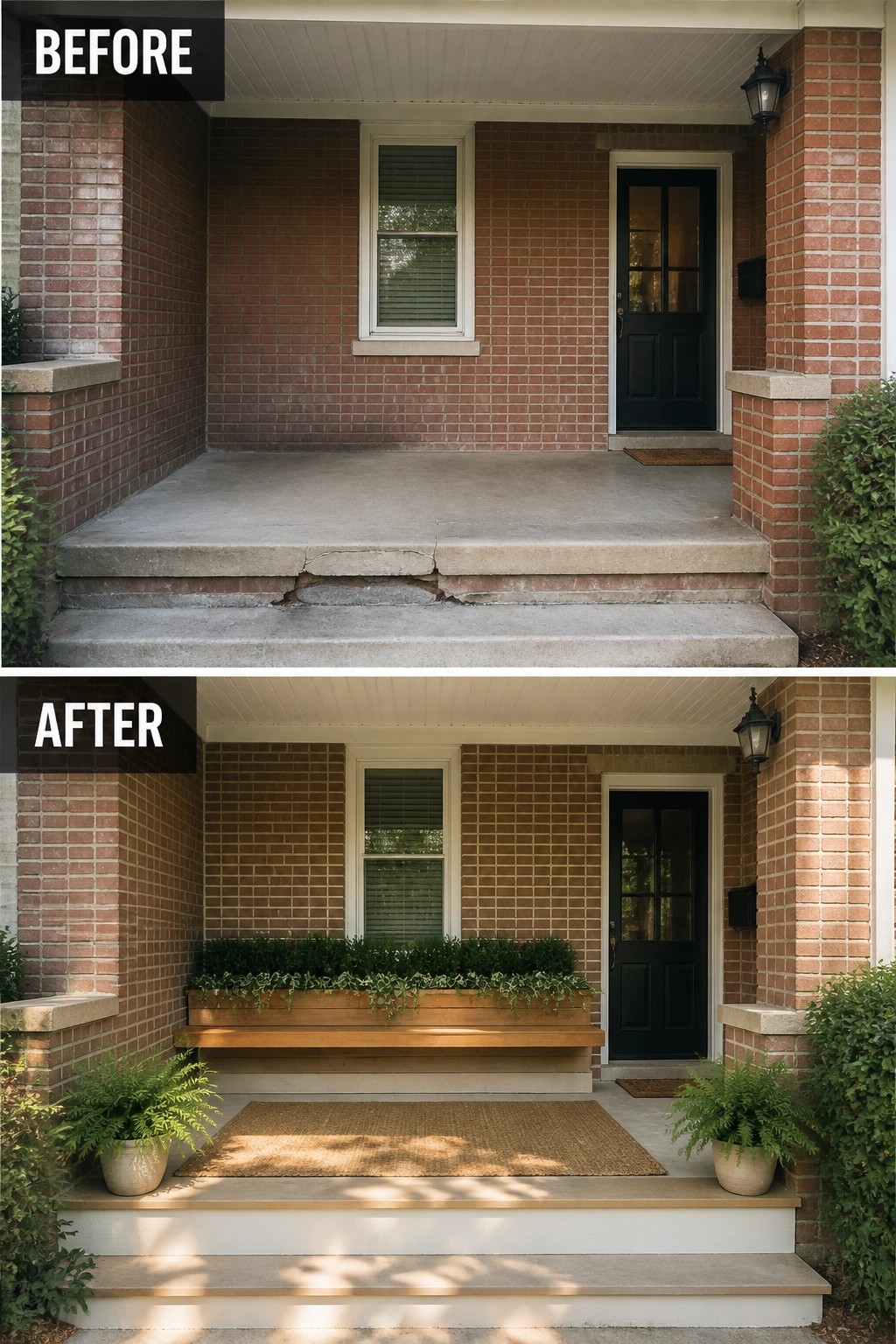
An empty concrete stoop becomes useful and welcoming when you give it a simple function — in this case a bench with an integrated planter and a natural-fiber rug. Replacing nothing with a purposeful seating/planting combo makes the entry feel intentional rather than neglected, and the planter provides green interest without taking up floor space.
To copy this, start by fixing any broken steps and finishing the risers so the base is tidy. Add one long bench or planter at a scale that lets people pass comfortably, choose hardy evergreens or spillover vines for low maintenance, and anchor the spot with a weatherproof rug and a pair of pots. Keep the layout uncluttered so the bench reads as both seat and curb appeal element — practical and simple.
Create A Defined Planting Bed To Anchor A Brick Facade
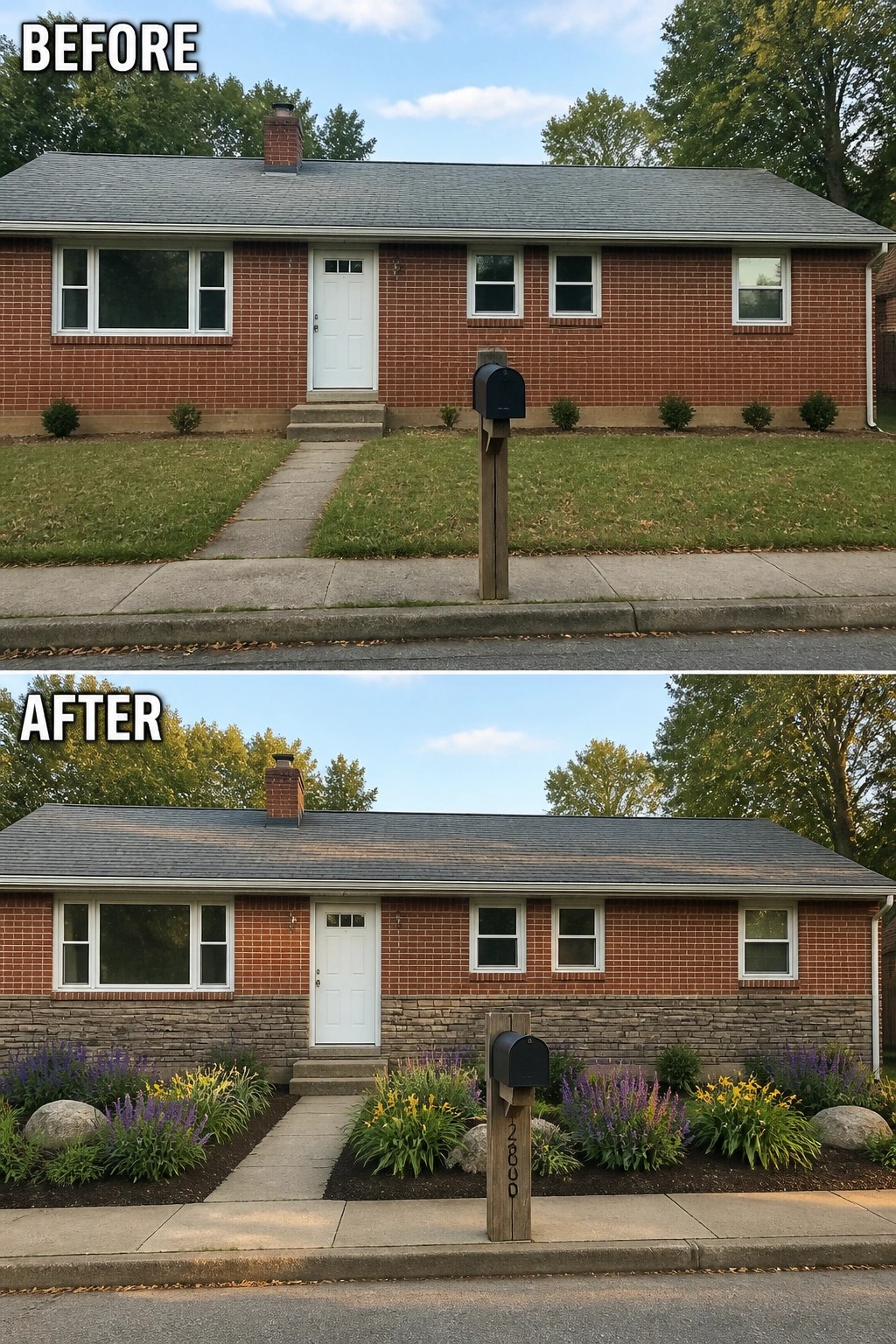
Turning the narrow strip of grass in front of a brick house into a continuous garden bed instantly links the landscaping to the building. In this example a low stone skirt along the foundation and a planted border of repeatable perennials replace the empty lawn, giving the facade a finished base and a softer, more intentional edge.
To copy the idea, start by removing the turf along the foundation and installing a clean edge, then add a layer of mulch to keep the bed tidy. Choose a few hardy perennials you can repeat across the front so the planting reads as one unified band, keep the tallest plants nearer the house, and use a couple of rocks or a simple mailbox post as anchors so the bed looks planned rather than crowded.
Add Structure With Defined Garden Beds Along Walkways
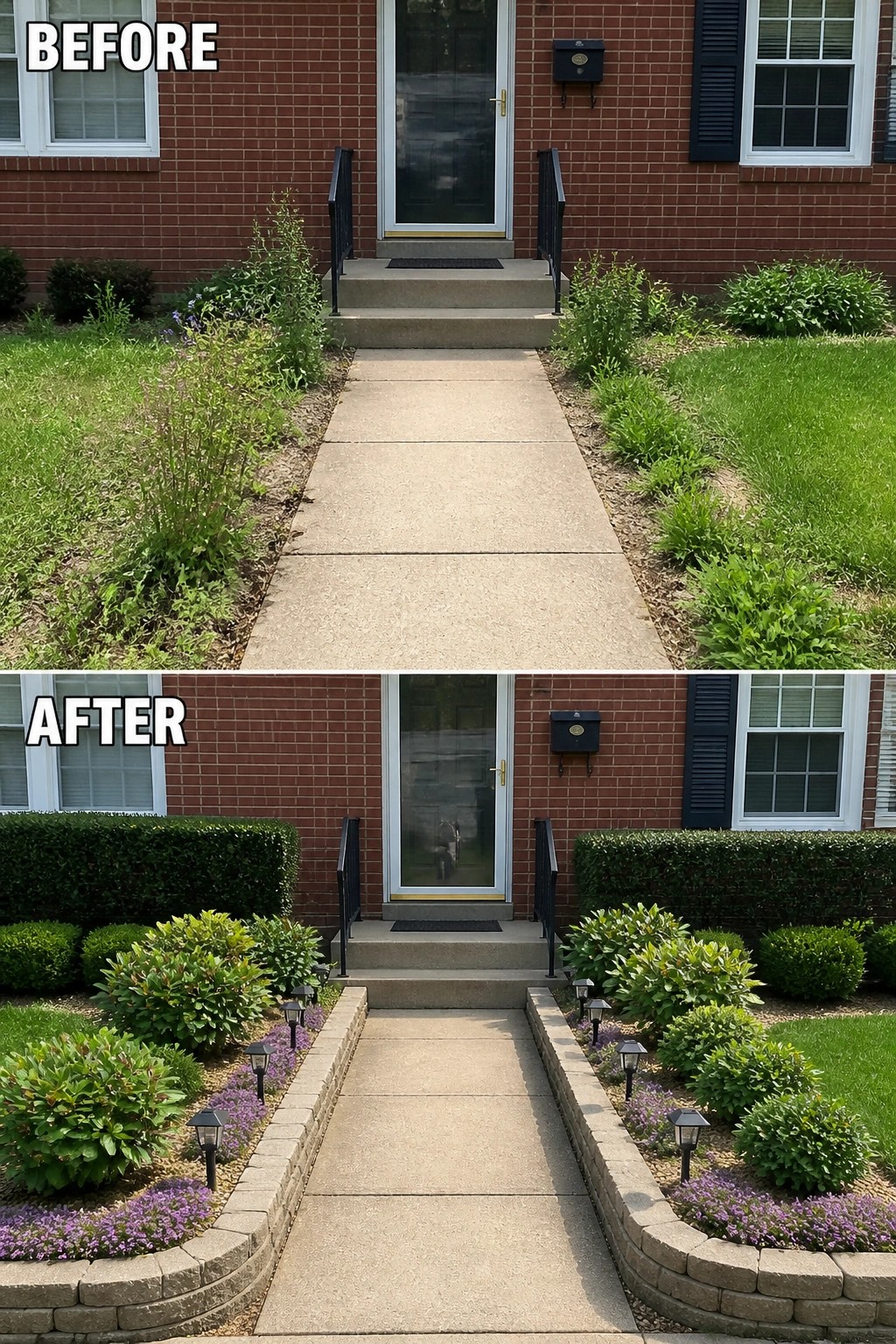
A plain concrete path can feel unfinished when its edges are overgrown. Giving the walk a clean frame — in this case low stacked stone walls, repeated round shrubs, a strip of purple groundcover and a few pathway lights — turns an incidental walkway into a purposeful entry. The hard edge and repeated planting create rhythm and make the facade read as part of the landscape, not an afterthought.
Start by clearing the messy edge, then set a simple row of pavers or low retaining blocks to hold a planting bed. Plant in small, repeated groups so the eye follows the path, use a low groundcover or mulch to keep weeds down, and add a couple of low lights for evening curb appeal. Keep the scale appropriate to the sidewalk width and pick plants that fit your sun, soil, and maintenance preferences so the crisp look lasts.
Make A Plain Entry Feel Welcoming
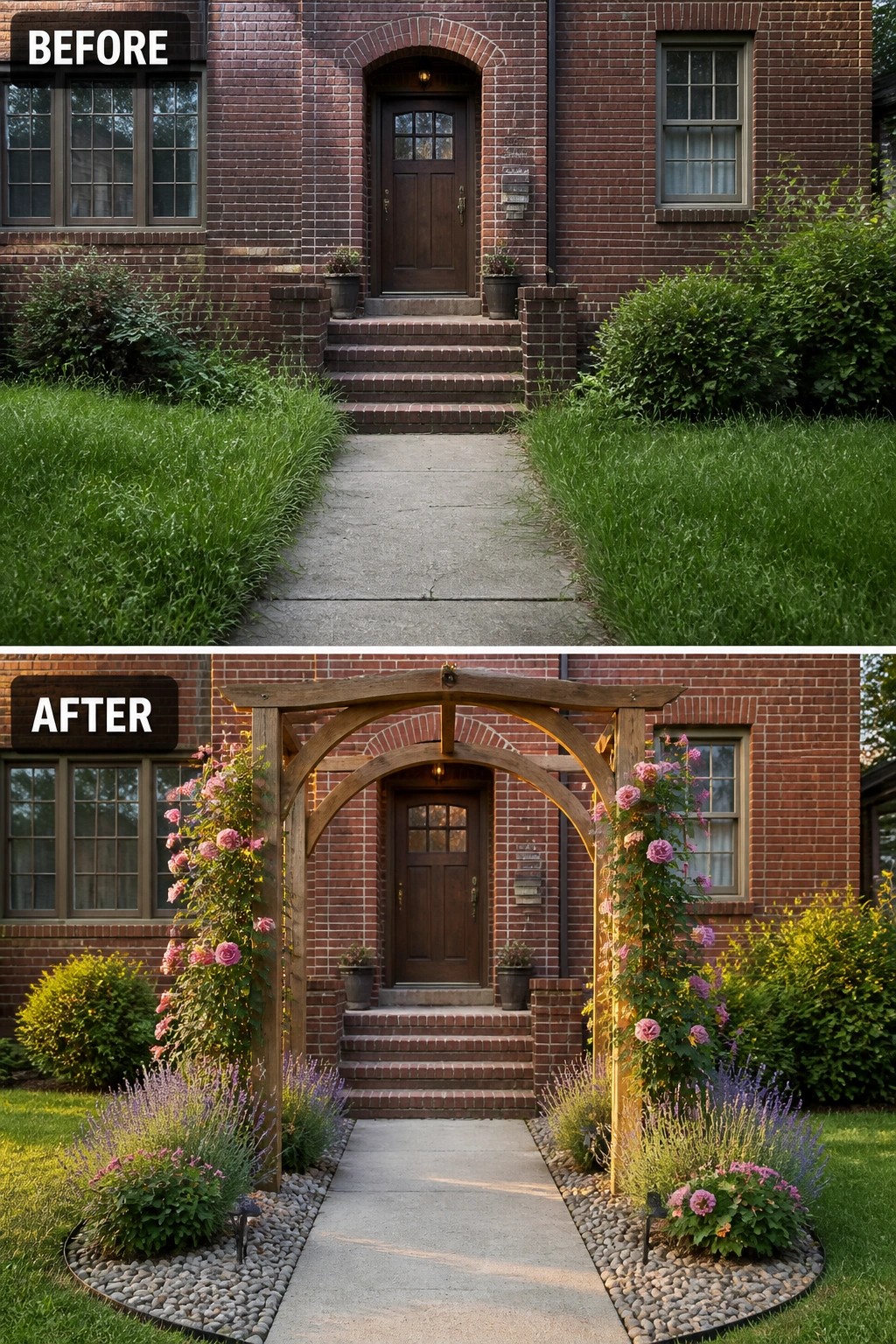
A simple frame and tidy planting beds can turn a forgettable walkway into a clear, inviting entry. In the before image the path ran through overgrown lawn; in the after a modest wooden arbor plus narrow, well-edged beds (climbing roses and low lavender) now frame the door and give the approach a purpose.
Use this idea where you have a straight path to the front door and a small strip of lawn to work with. Pick an arbor sized to the scale of your steps, train a climbing plant up each post, and plant low, repeat-flowering perennials along the edge for season-long color. Keep the path width clear so people can walk comfortably, use simple edging or river rock to separate grass from the beds, and add low-path lighting if you want the effect to read at night.
Use Raised Brick Planters To Define Your Entry
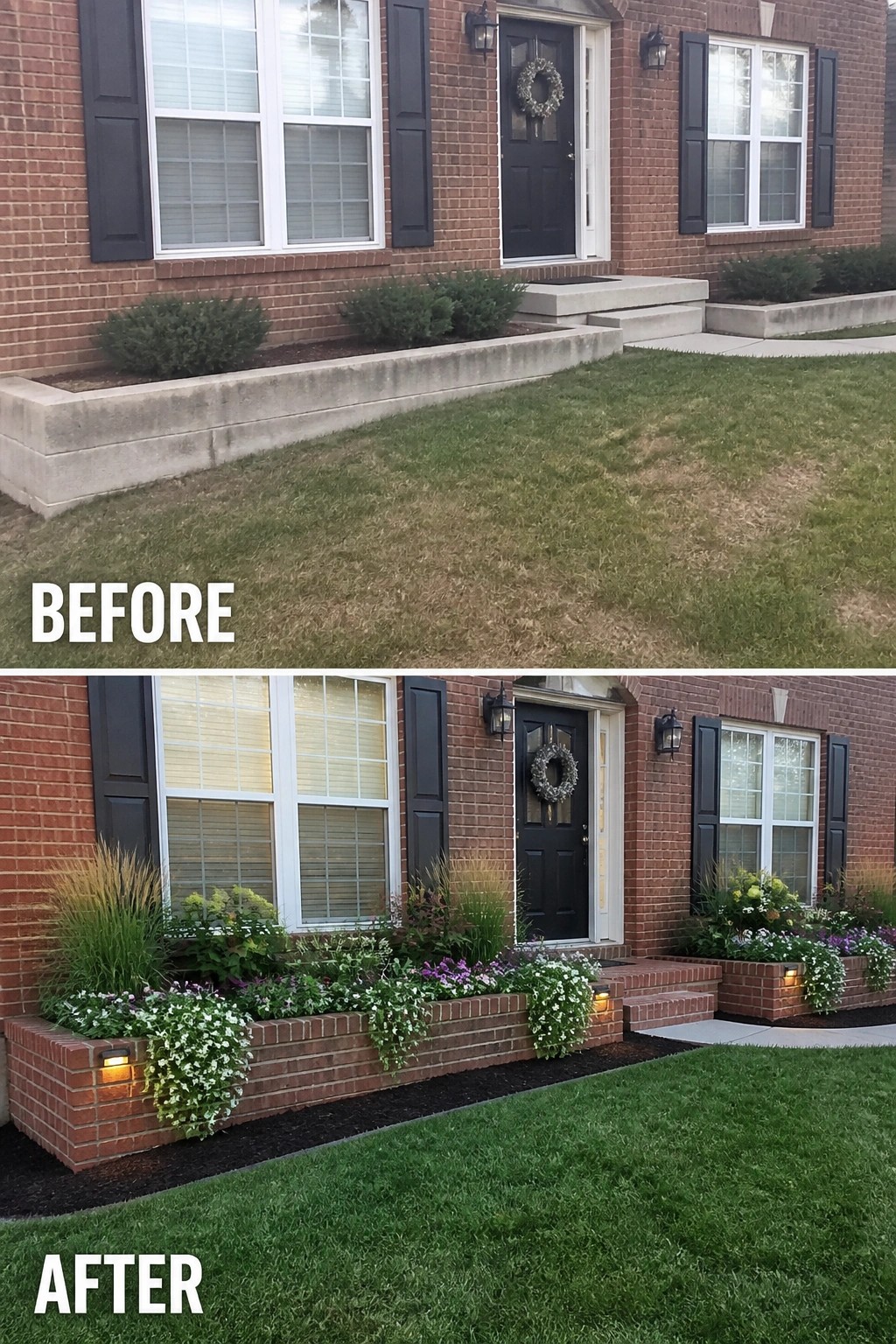
Swapping plain concrete beds for low brick planters instantly frames the doorway and gives the front a clearer purpose. In this example the new brick edge, planted with layered greenery and accented by low lights, breaks up the lawn and makes the entry read as an intentional, welcoming zone rather than leftover edging.
To copy this, match the planter material to your house for a cohesive look and keep the height low so windows and sightlines stay open. Plant a mix of vertical accents (ornamental grass or small shrubs) and trailing annuals for seasonal color, add simple recessed or step lighting for evening curb appeal, and keep mulch and edging neat so the planters look intentional, not tacked on.
Give A Bare Porch A Clear Purpose
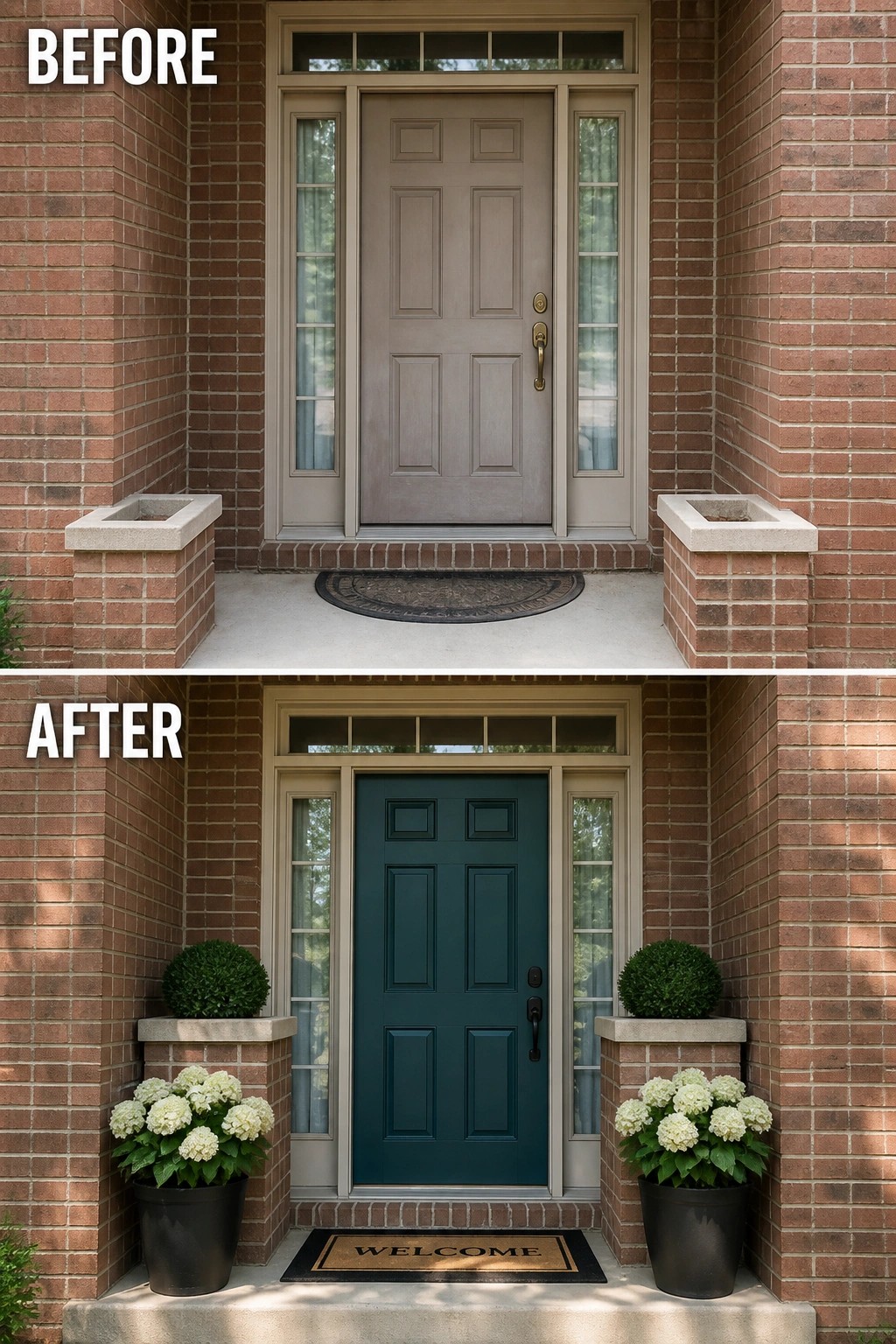
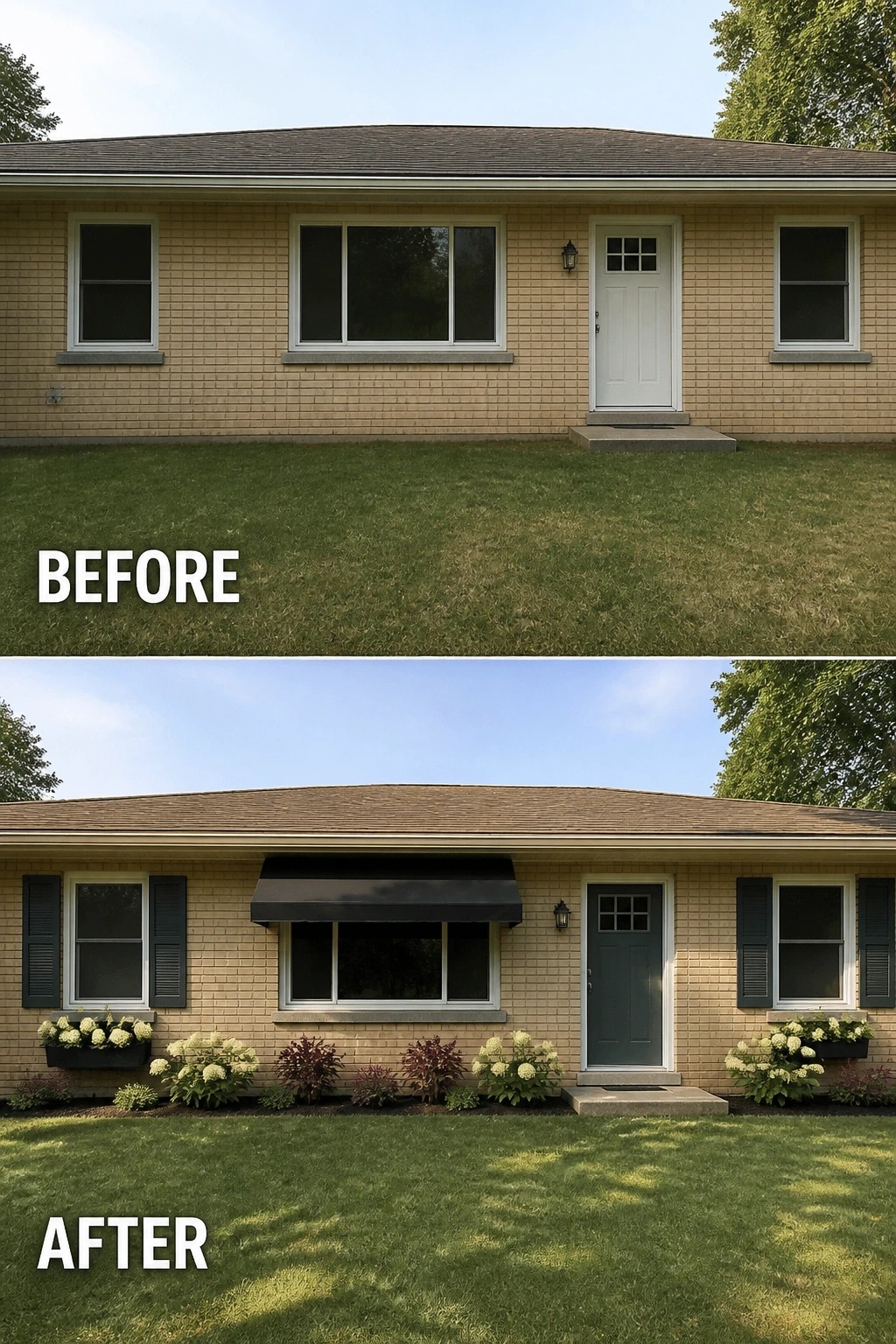
A small, plain entry can feel finished with just two moves: paint the front door a confident color and add matching planters and a doormat. The new door color becomes an instant focal point while the paired pots and welcome mat tie the house to the landscaping, so the facade reads as one composed scene instead of an afterthought.
To copy this, pick a door hue that complements your brick or siding and repeat that tone in simple planters or a small accessory. Use evergreen shapes for year-round structure and swap seasonal flowers for color, choose sturdy outdoor pots and a weatherproof mat, and keep the layout uncluttered so the entry stays functional as well as pretty. Simple, realistic changes.
Add Shutters And A Low Garden Bed To Update A Brick Facade
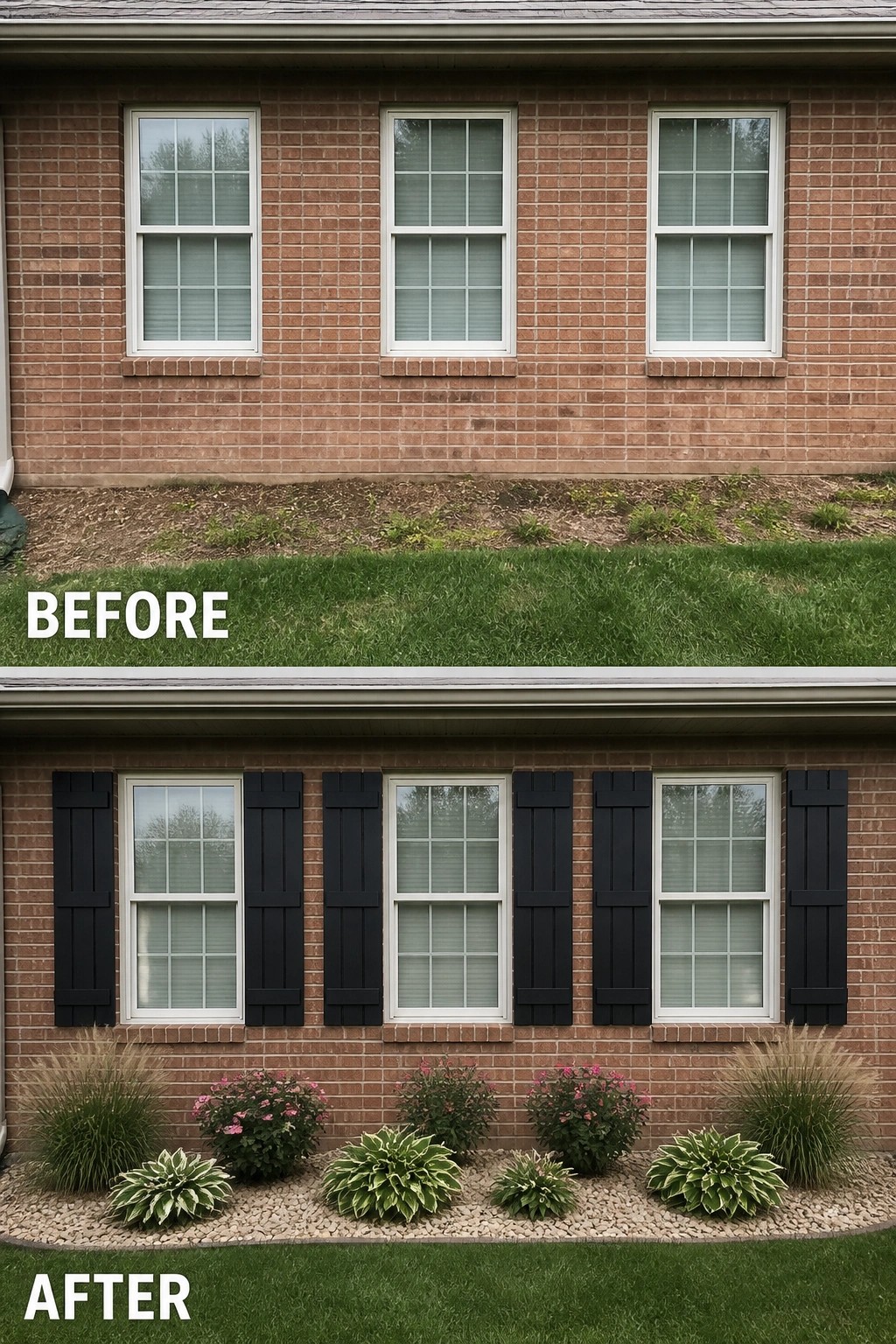
A pair of well-proportioned shutters and a narrow, planted bed instantly finish a plain brick wall. In this example, adding dark shutters beside each window and replacing bare soil with a gravel-edged bed of low hostas, shrubs, and grasses gives the
Give A Bare Porch A Clear Purpose
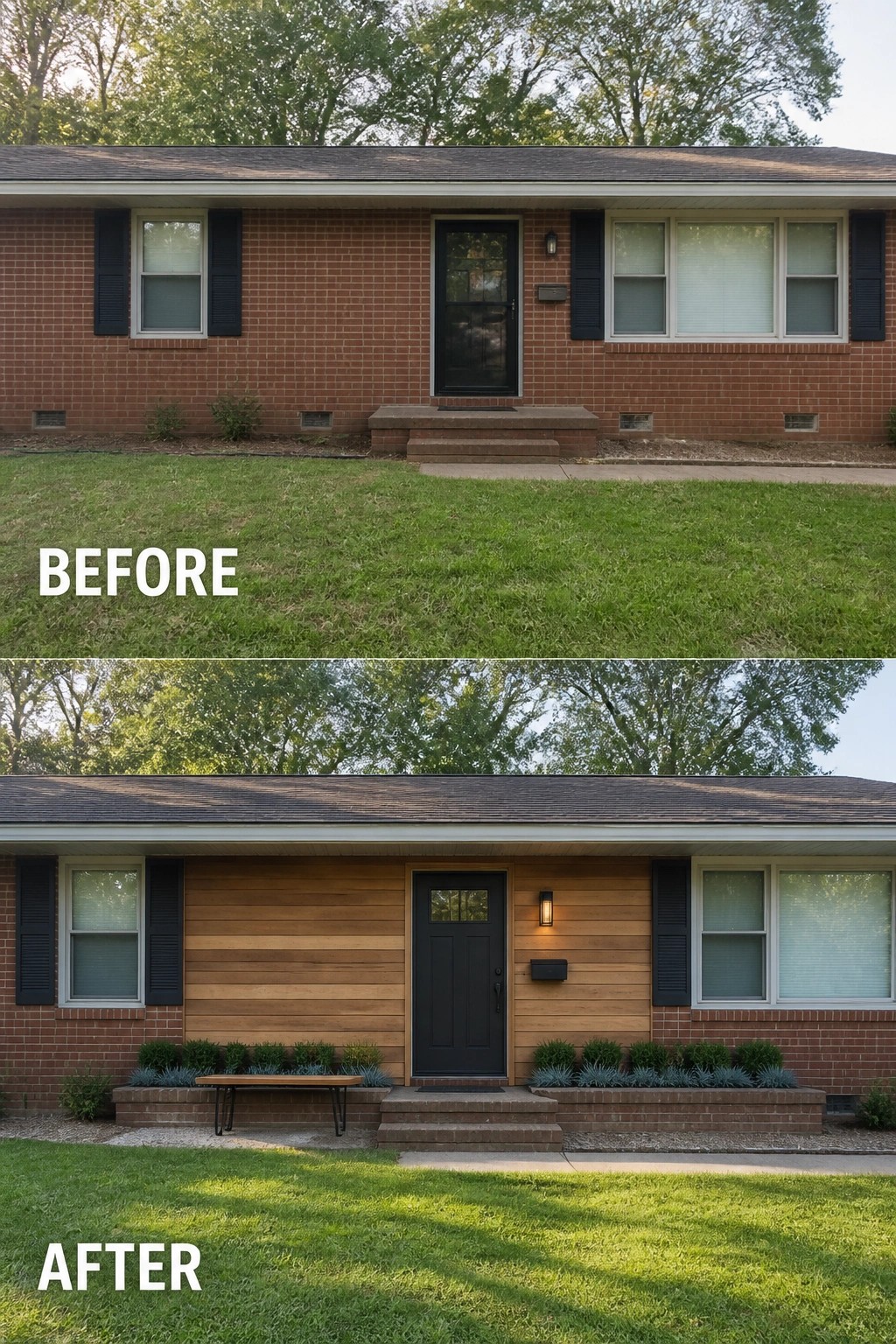
Carve out the front entry as its own design moment by changing the material around the door and adding a narrow planted border. In the example the plain stretch of brick gets a band of horizontal wood cladding that highlights the door, while low beds on either side of the steps give the entry a finished, intentional look.
To replicate this, pick one contrasting material or finish and use it only around the doorway so the change feels deliberate, not busy. Frame the steps with shallow, low-maintenance planting that won’t block windows, and keep a few simple repeats in color or texture (door, light, mailbox) to unite the detail. Start small. Choose weather-resistant cladding and plants suited to your light and maintenance level.
Soften A Plain Brick Wall With Espalier Trees
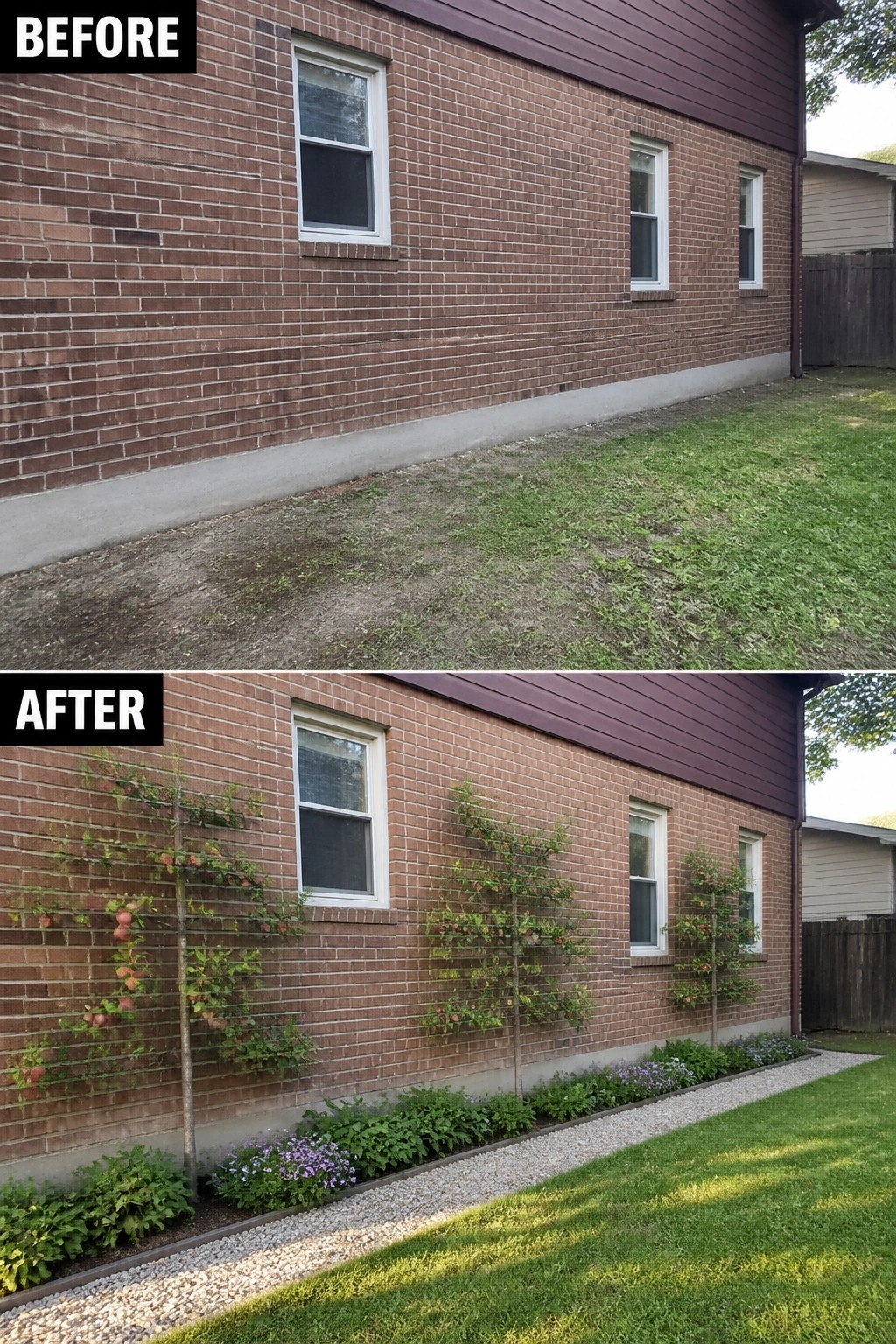
A slim planted bed and a few espaliered trees are a quiet way to bring life to a long, blank brick facade. In the after, a narrow strip of gravel and low perennials plus three fruit trees trained flat to the wall add vertical interest and a finished edge without stealing yard space.
To copy the idea choose dwarf or fan-trained varieties and mount simple horizontal wires for support, then plant a row of low perennials or groundcover in front to hide the soil. Use gravel or metal edging to keep the bed tidy and leave room to walk for pruning and harvesting; this works especially well on narrow side yards or under windows where you want a neat, low-maintenance look.
Use Lighting To Make A Plain Facade Feel Welcoming
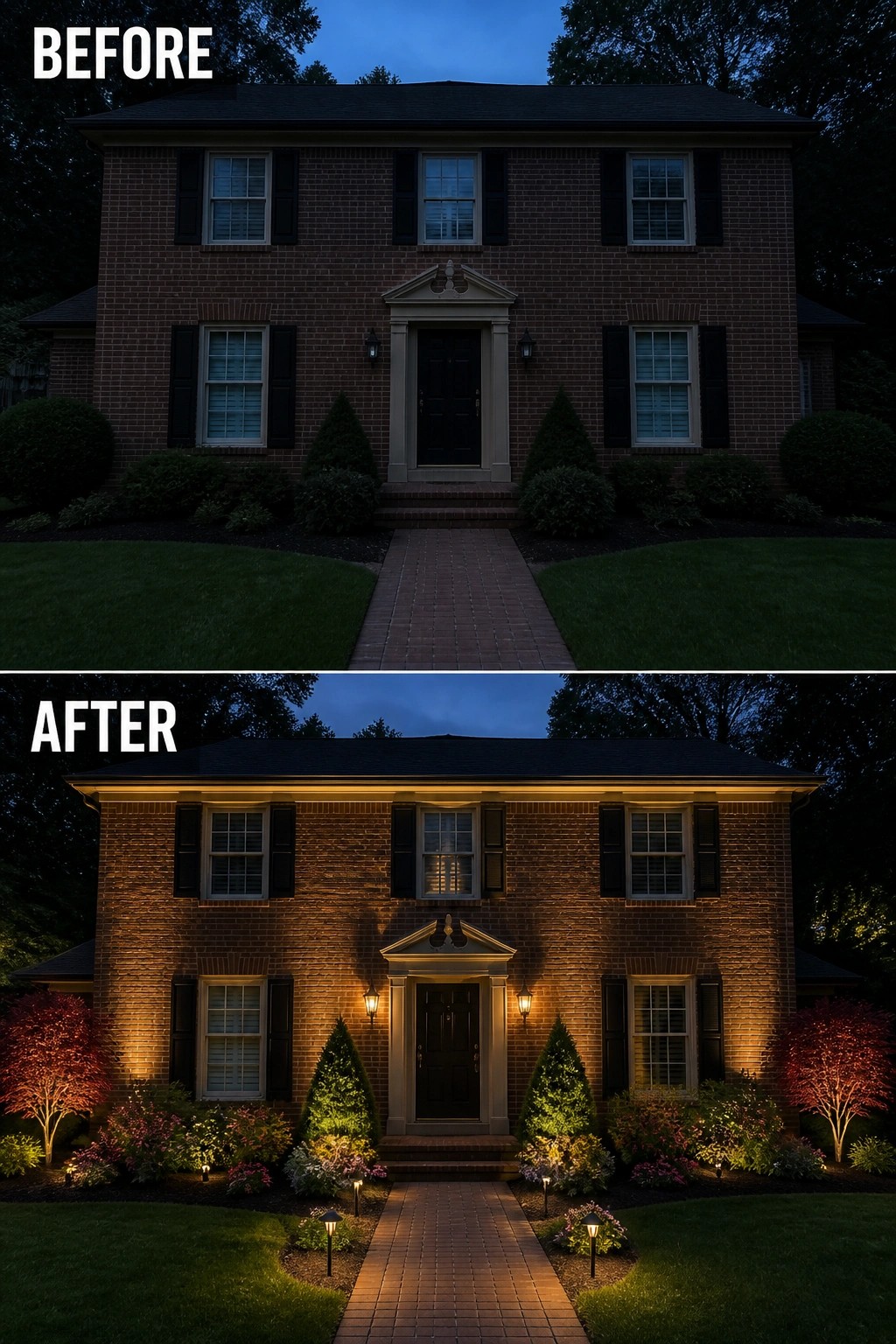
A layer of thoughtfully placed exterior lights can turn a dark, anonymous brick front into a friendly, finished entry. In this example, a pair of wall lanterns at the door, low path lights, and a few uplights on the shrubs and brickwork create depth and guide the eye to the entry instead of letting the house disappear at night.
Start simple. Place one reliable fixture at the door, add path lights for safety, then introduce a couple uplights to reveal texture and shape where you want focus. Use low-voltage warm LEDs (around 2700–3000 K), aim fixtures to avoid direct glare, and control them with a photocell or timer so the effect is consistent without being harsh. This approach suits traditional brick homes or any facade that benefits from gentle highlighting and clear access routes.
Add A Path And Planting To Frame The Entry
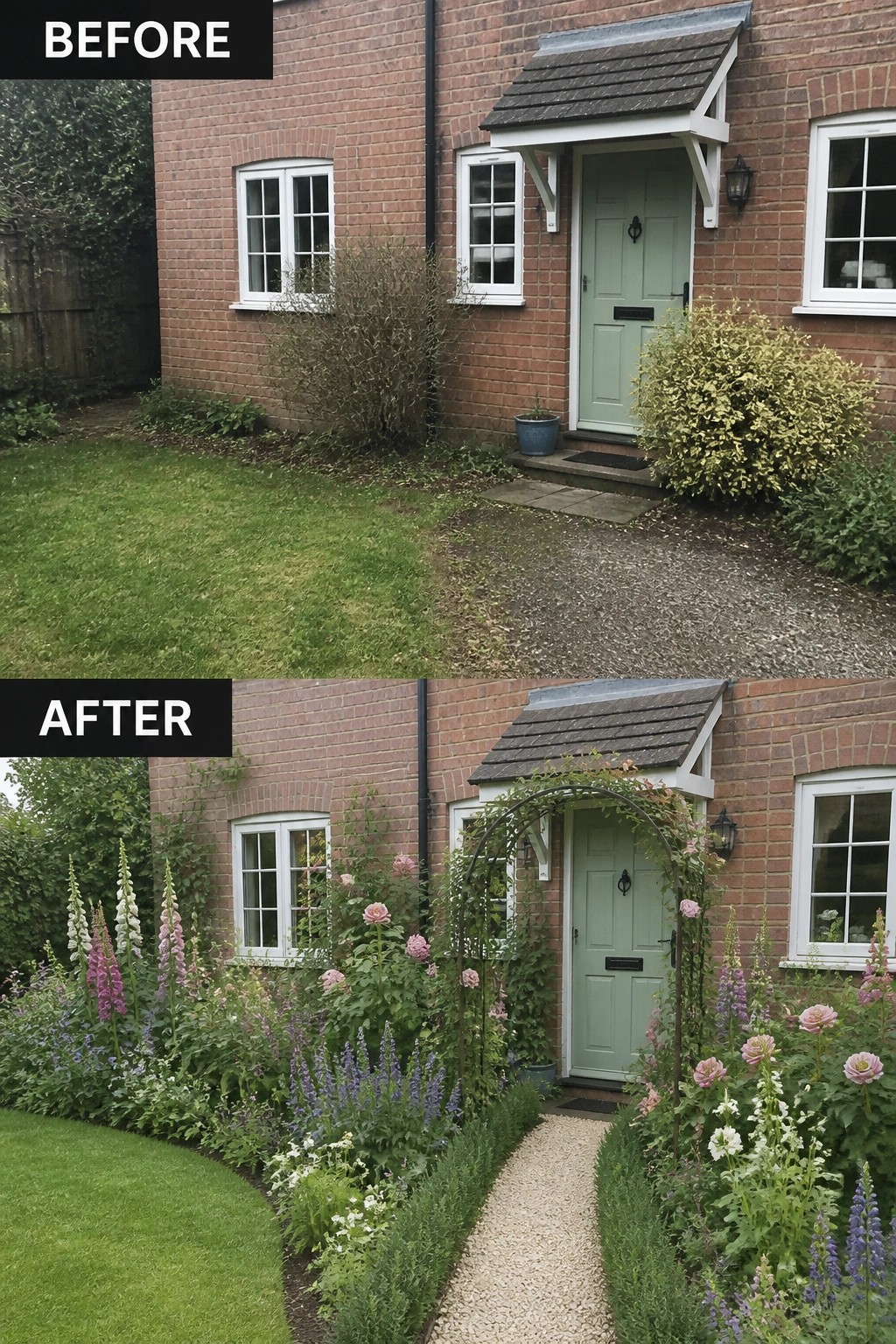
A narrow gravel path and layered garden beds can make a plain brick facade feel intentional and welcoming. Instead of leaving the front yard as just lawn and a couple of scraggly shrubs, create a clear approach to the door with a simple walk, low edging and taller perennials or a climbing arch to draw the eye.
Start by
Add Defined Garden Beds And A Clear Path
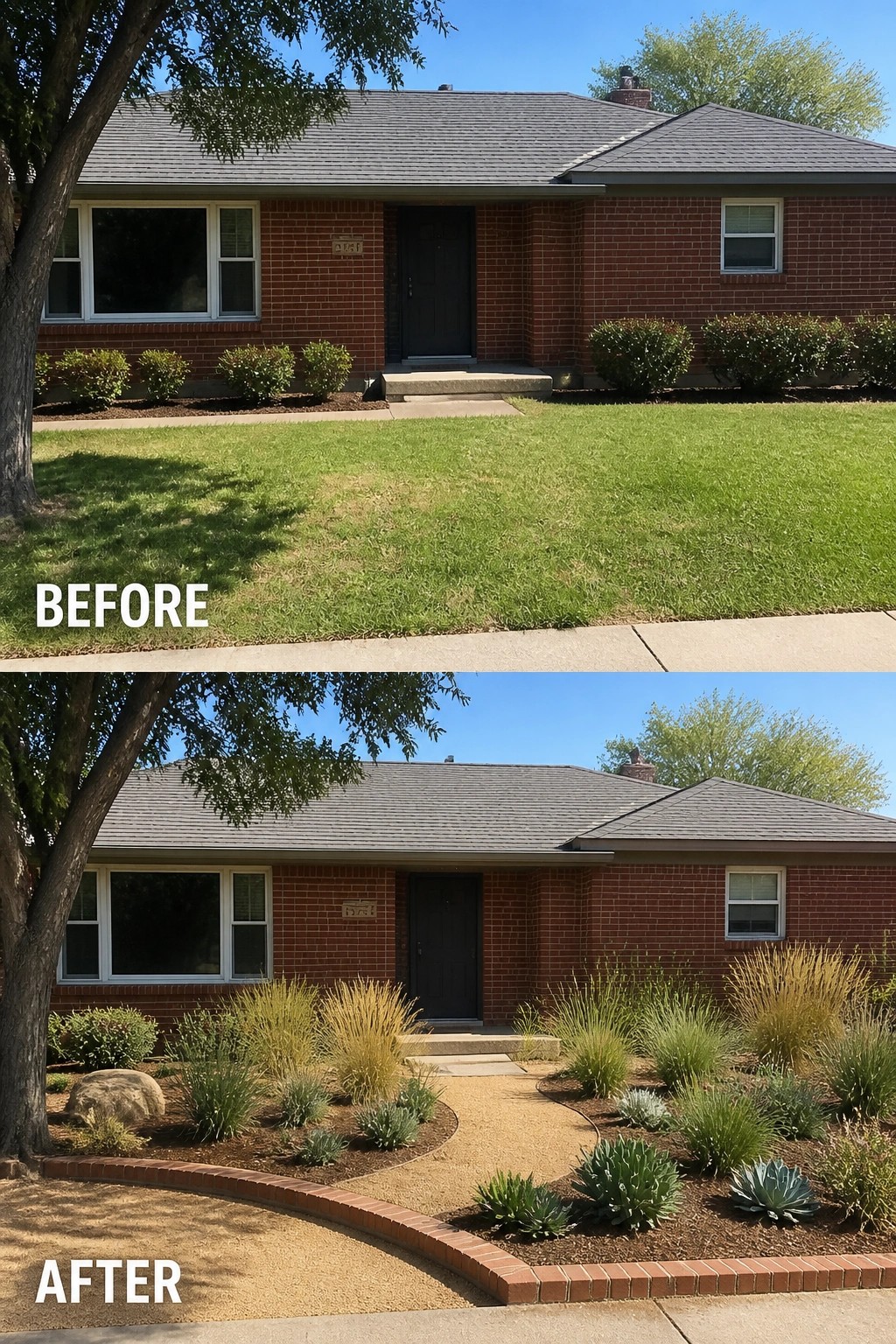
Swapping a square of lawn for curved, brick-edged garden beds and a compact gravel path instantly makes a plain front facade feel intentional. A single winding path and repeated planting groups (ornamental grasses and low succulents, for example) frame the entry, cut down on mowing, and introduce texture that reads nicely against brick walls.
Start by removing a manageable strip of turf and marking a gentle curve for the walkway, then lay a compacted base and gravel or decomposed granite for low-maintenance footing. Use a simple edging material that echoes the house—brick here—and plant in groups with taller grasses toward the back and shorter succulents up front so the composition reads from the street. Keep the path wide enough to move comfortably and leave room for future pruning. Simple, effective.
Use A Low Retaining Wall And Bench To Define A Sloped Front Yard
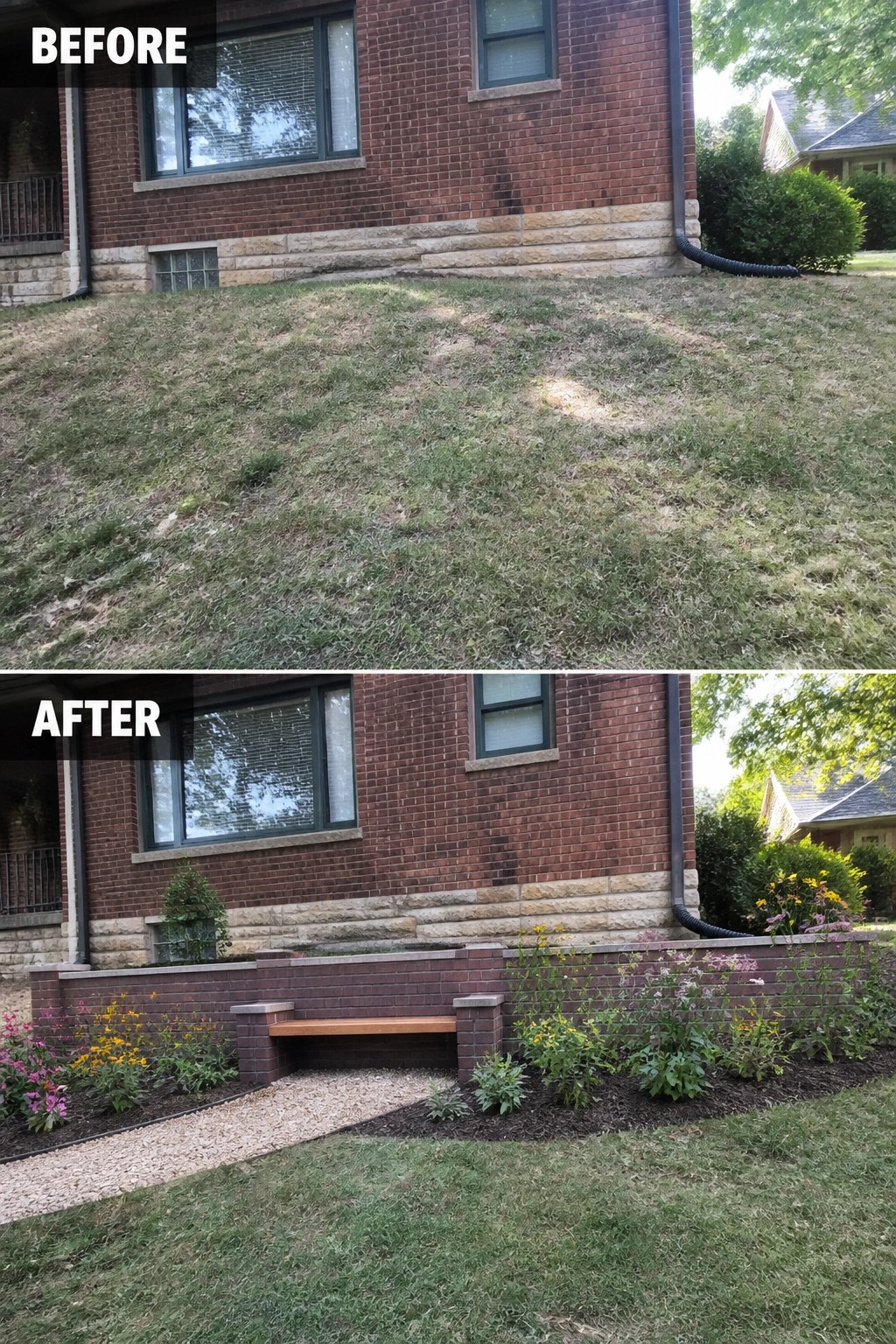
A bare slope in front of a brick house often reads as wasted space. Adding a short brick retaining wall that doubles as a bench and planting narrow flower beds in front gives the facade a clear edge and a focal point, so the yard feels intentional instead of neglected.
To try this at home, pick a wall height that stays readable at the street—low enough to sit on, high enough to hold soil—and use materials that match the house (it ties the new work to the existing facade). Start by fixing grading and drainage, leave a walking path or gravel strip for access, and choose easy-care perennials and mulch so the new bed looks tidy without constant work.
Use A Curved Paver Path To Connect The Yard To The Front Door
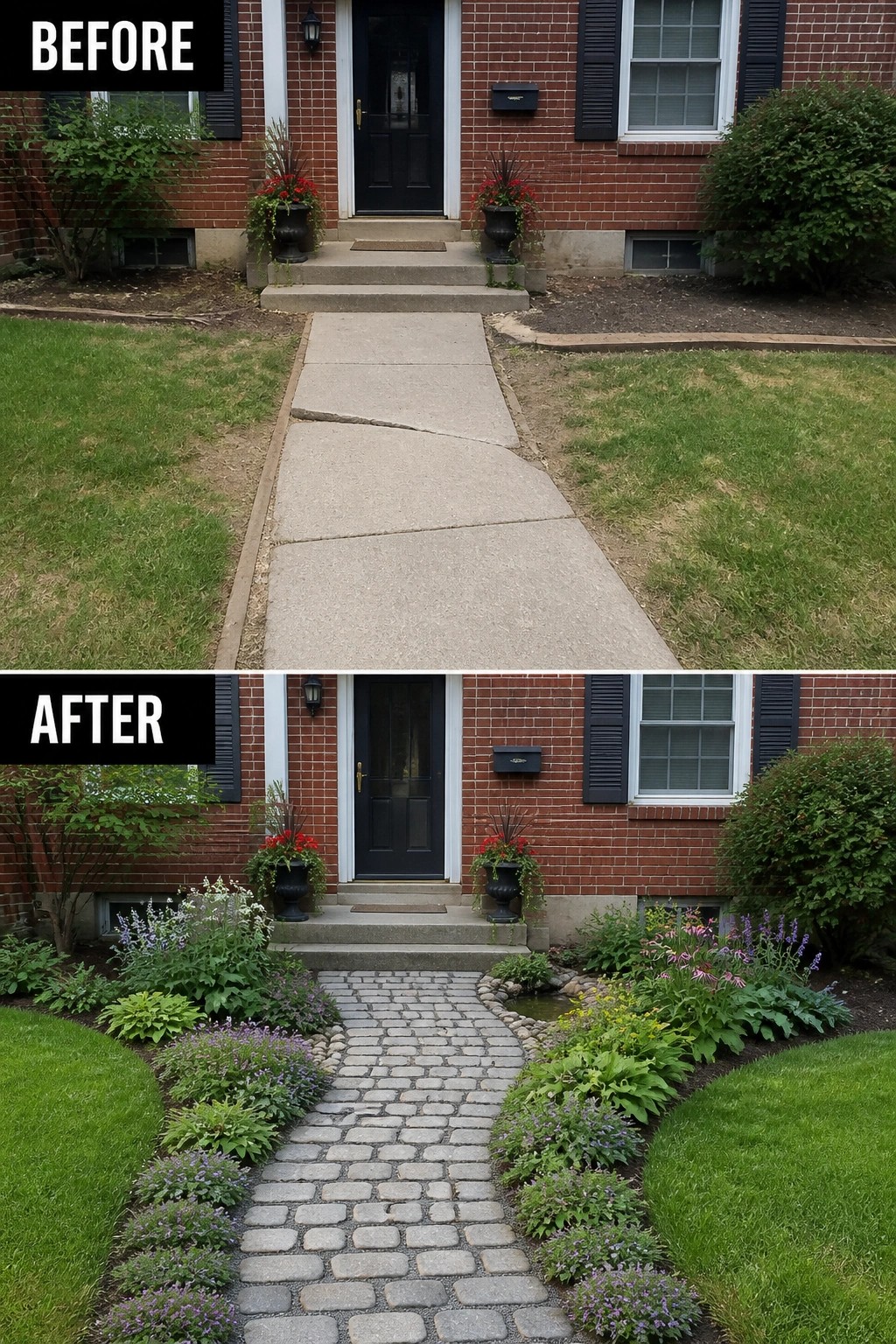
Replacing a straight, cracked concrete strip with a gently curved paver path instantly gives the entry some structure and personality. The stone adds texture and a human scale that complements brick, while the planted edges soften the route and visually link the lawn to the house — one small change that makes the facade feel finished.
If you want to copy this, keep the curve subtle and the path wide enough for two people to pass (about 3 to 4 feet). Match paver tones to your brick, install a proper base and edging for long life, and plant low mounding perennials or neat groundcovers on either side (repeat one or two species for cohesion). It’s a durable, low-fuss upgrade that works well on older homes with plain
Make A Plain Garage Façade Feel Welcoming
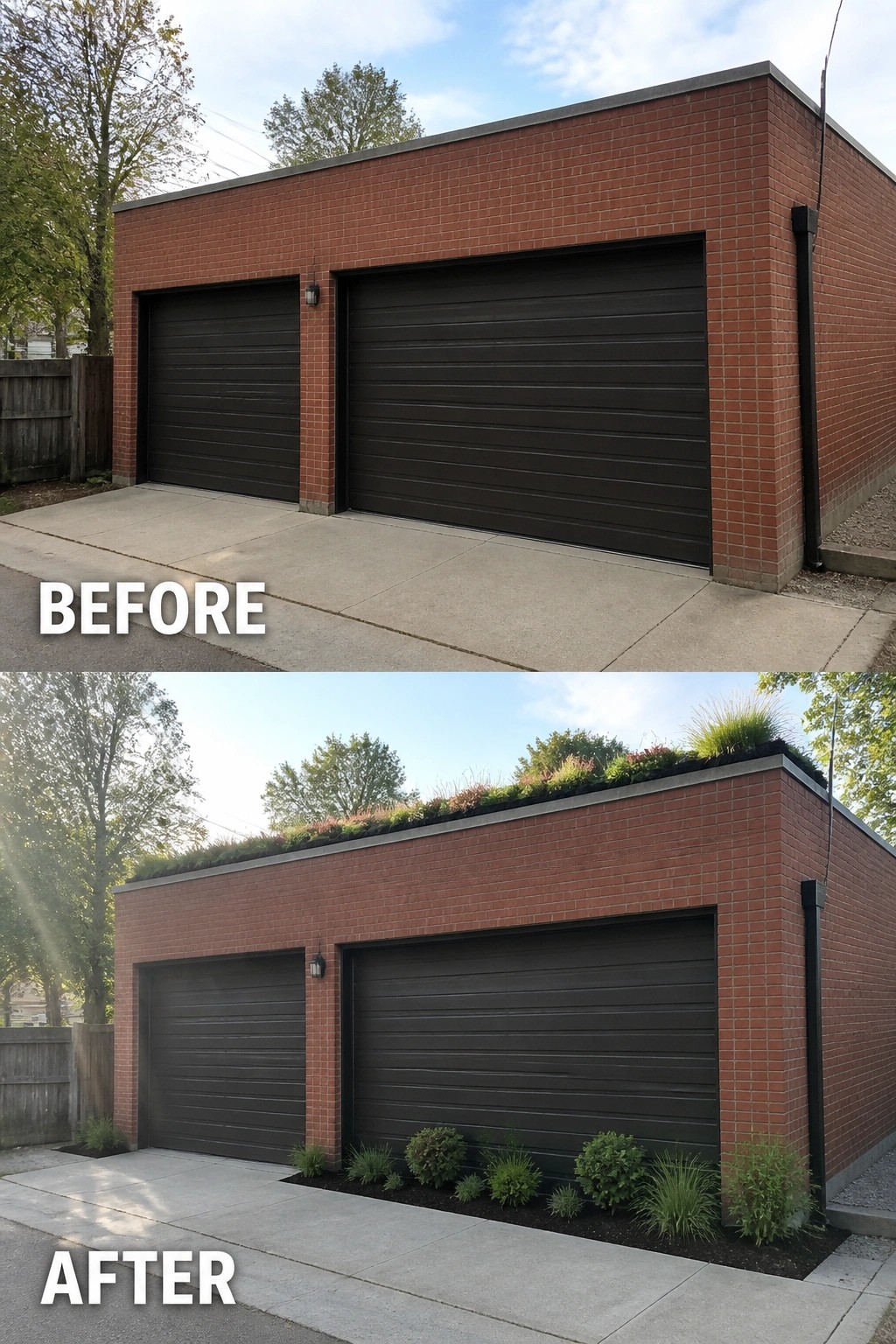
A narrow planting bed at the base of a garage and a strip of planted roof immediately soften a hard, utilitarian wall and help the building read as part of the garden rather than an afterthought. In this simple approach, low shrubs and ornamental grasses break the concrete edge and a green roof adds height, color, and seasonal texture without changing the brickwork.
To copy this idea, keep the planting scale modest so the bed does not block doors or movement. Choose low-maintenance, shallow‑rooted perennials and grasses for the border and repeat one or two species for a tidy, unified look. For a planted roof, confirm the roof structure and drainage with a contractor and use an appropriate substrate and irrigation system. Small steps here make a
Give A Bare Porch A Clear Purpose
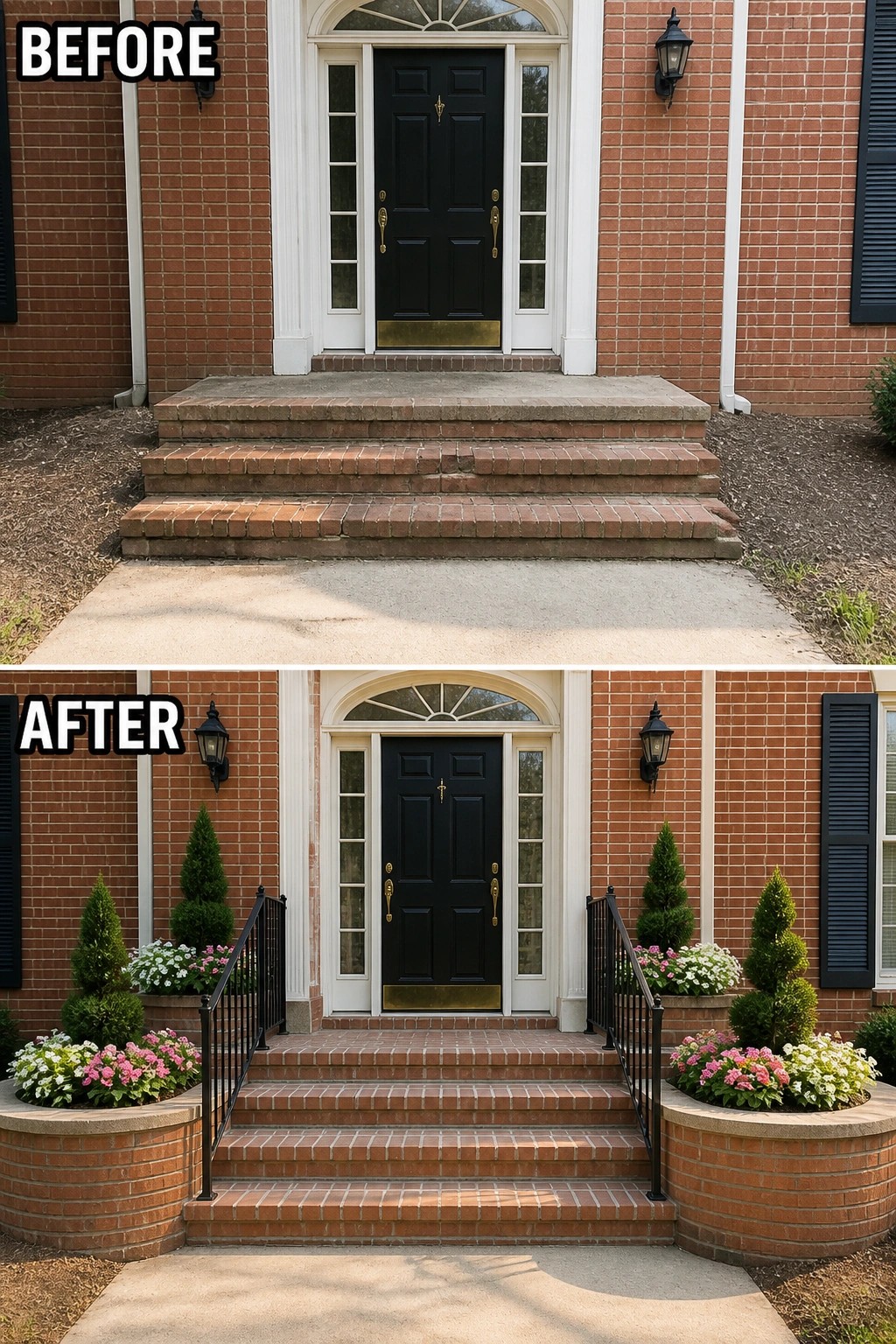
A plain stoop becomes a welcoming entry when you frame it with matching planters and a simple railing. In this example the homeowner added low curved brick planters and black iron railings, then planted upright evergreens and seasonal flowers to give the doorway scale, color, and a clear approach. The change is small but it turns a bare step into a purposeful, finished entry.
You can copy this idea whether your house is traditional or modern. Use materials that echo the house so the planters read as part of the facade, choose one taller plant for vertical height plus a mix of lower blooms for color, and keep the walkway clear for traffic (and add a railing if steps are steep). Pick low-maintenance perennials or repeatable annuals so it looks good each season without a lot of fuss.
Give A Bare Porch A Clear Purpose
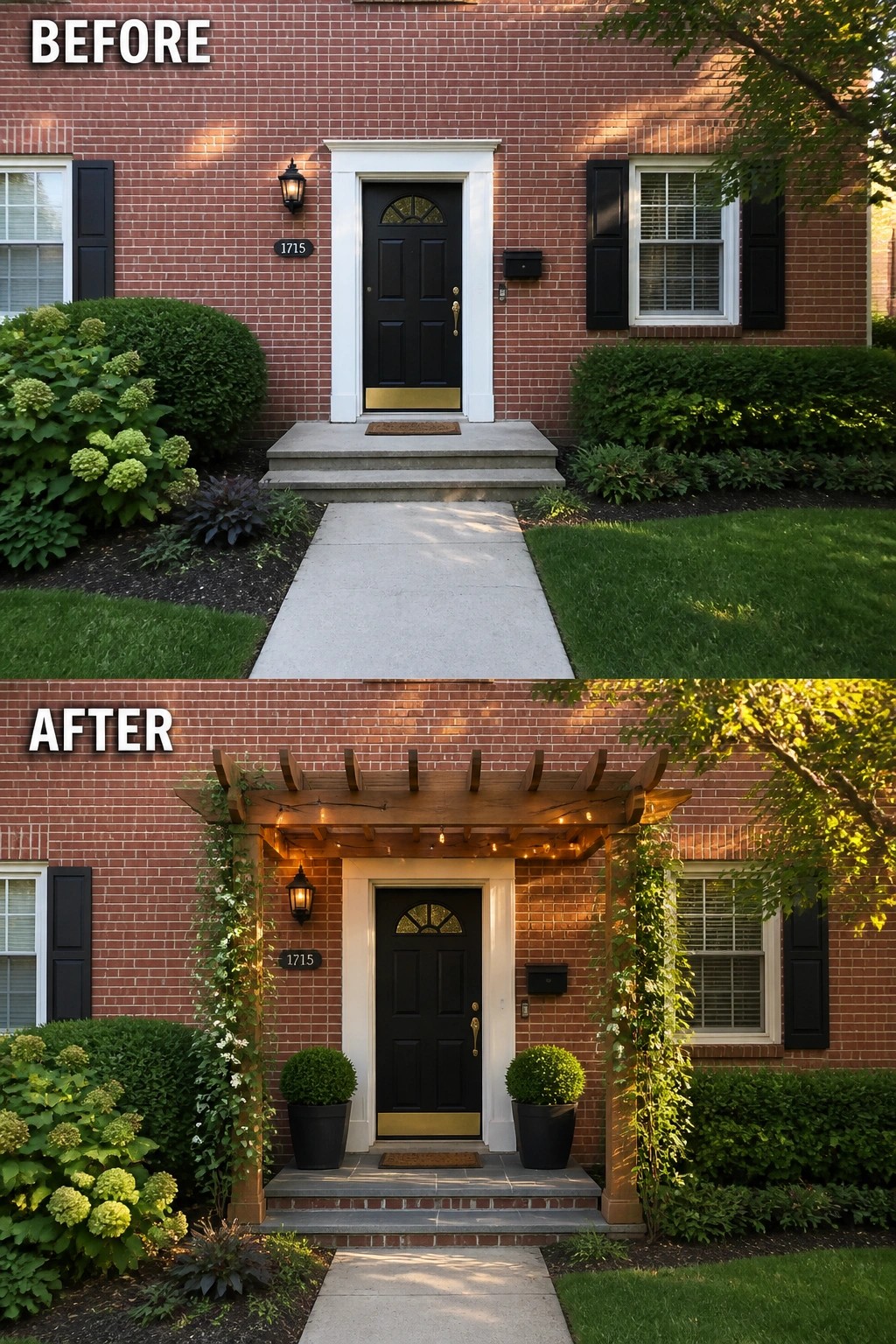
A simple rooflike frame and a couple of matching planters can turn a bland entry into a front porch that feels intentional. In this update a wooden pergola was added to frame the door, and symmetrical pots and lights make the arrival sequence read as a welcoming, usable space instead of just a stoop.
If you want the same effect, size the overhead element to the width of your doorway so it looks like part of the house, not an afterthought. Add durable planters and a pair of low-maintenance shrubs or climbing vines for year-round shape, and include at least one hardwired or string light so the entrance works after dark — keep the path clear and avoid too many extras so movement in and out stays easy.
Create A Layered Foundation Bed To Soften The Brick
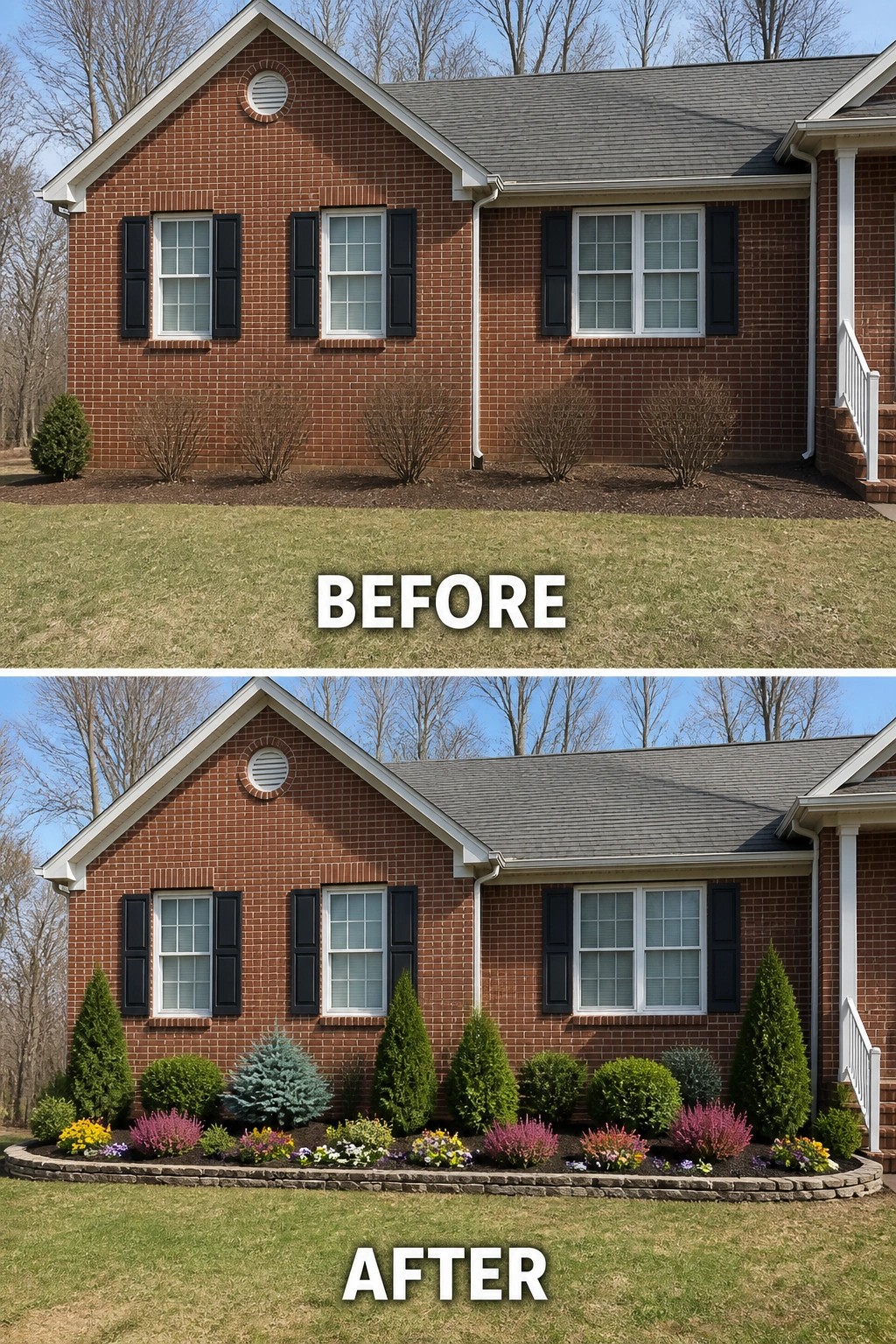
A simple strip of planting in front of a brick facade can change a plain wall into a welcoming edge. In this example the bare foundation was filled with a low stone border, a few upright evergreens for year-round shape, and mixed shrubs and flowering perennials to add color and texture. The result is a softer transition from lawn to house that reads intentional rather than empty.
To copy this, start with two or three structural plants (tall evergreens or columnar shrubs) spaced to frame windows, then fill with lower shrubs and seasonal flowers for interest. Use a shallow stone or paver edge and fresh mulch to define the bed, pick plants that suit your growing zone, and leave room for future growth and maintenance access. Small change, big impact.
Refresh Brick With Paint And Coordinated Planting
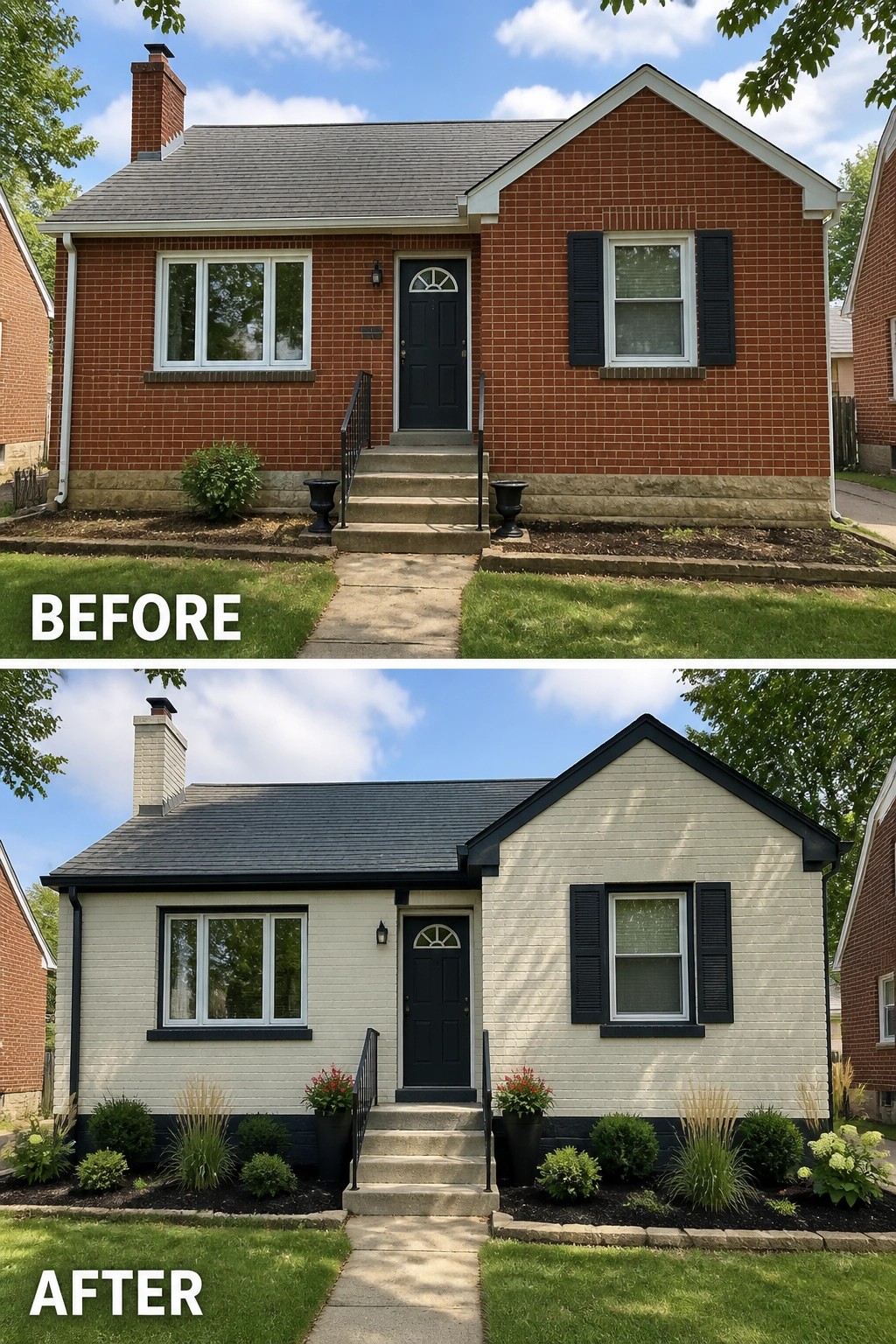
A coat of masonry paint plus a simple planting plan is an easy way to modernize an old brick house. Here the red brick was lightened to a soft cream and the trim, shutters, and door were painted a dark charcoal, then matched with black planters and a neat bed of low shrubs. That single change brightens the facade and makes the landscaping feel deliberate rather than an afterthought.
If you try this, test paint on a small area first and use a breathable paint made for masonry so moisture can escape. Choose one trim color and repeat it in shutters, pots, or light fixtures so the eye reads the front as one composition. Keep plantings low near windows, use mulch or edging to define beds, and size pots to the porch so nothing overwhelms the entry. This approach works best on simple facades and small yards where a few coordinated moves do most of the work.
Clean Up The Foundation With A Defined Perennial Bed
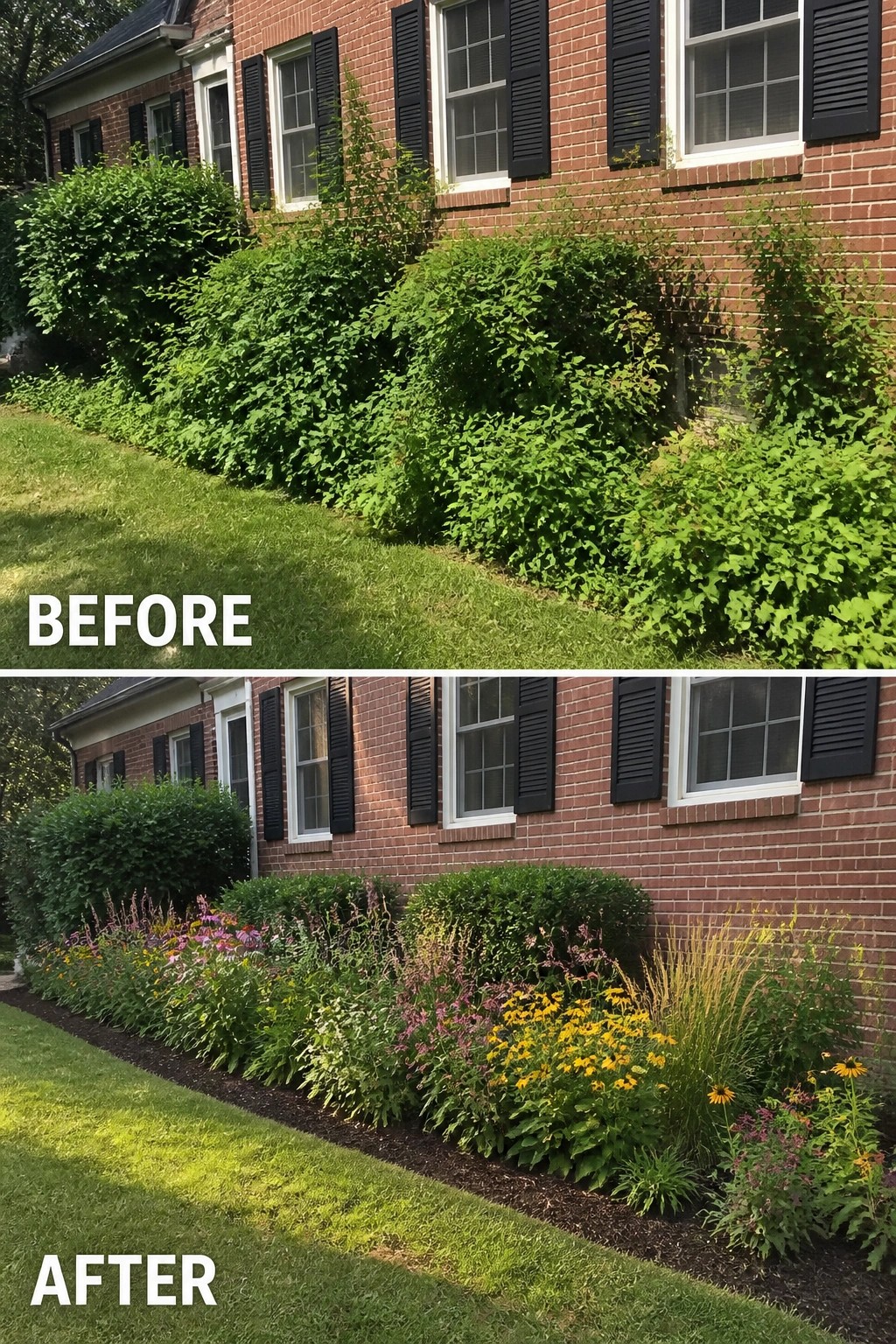
Replacing an overgrown, sloppy foundation line with a neat, mulched planting bed full of layered perennials is one of the easiest ways to refresh a brick facade. In the photo the big, unruly shrubs were tamed and a lower ribbon of flowering perennials, grasses, and clean mulch was added—this gives the wall breathing room and steady seasonal color without blocking windows.
To try it yourself, start by removing or heavily pruning any invasive growth, then install a simple edge and a 2–3 inch layer of mulch. Plant a repeating palette of 2–4 perennials plus an upright grass for height, keeping the tallest plants below the window sills so the house stays visible. This approach works well on older brick homes and small yards—minimal maintenance, clear lines, and plants you can divide or swap out as needed (repeat a few plants for cohesion).
Frequently Asked Questions
Q: Can I plant vines directly against my brick, or will they damage the mortar?
A:
You can use vines, but choose non-clinging varieties and train them on a freestanding trellis a few inches off the wall (this keeps roots and tendrils from gripping mortar). Keep an eye on moisture and remove any growth that tucks into cracks. Occasional inspection and light pruning will keep the brick happy and visible.
Q: Which plants pair nicely with red or warm-toned brick?
A:
Cool, blue-green foliage and silvery plants make warm brick pop, while white-flowering shrubs add crisp contrast. Mix in a low evergreen for year-round structure and a seasonal blooming plant for color changes through the year. Think texture as much as color—grasses and broadleaf perennials play nicely together.
Q: How do I place planters so they won’t trap moisture against the wall?
A:
Leave a small gap between the planter and the brick and use well-draining soil and pots with drainage holes. Avoid piling mulch against the wall and check that water from downspouts is directed away.
Q: What’s the easiest way to highlight both my brick and the landscaping at night?
A:
Use soft uplighting to wash the brick and low-angle spotlights for specimen plants so neither overpowers the other. Position fixtures to create layered light rather than a single bright glare, and aim lights up at a slight angle to keep textures visible.