

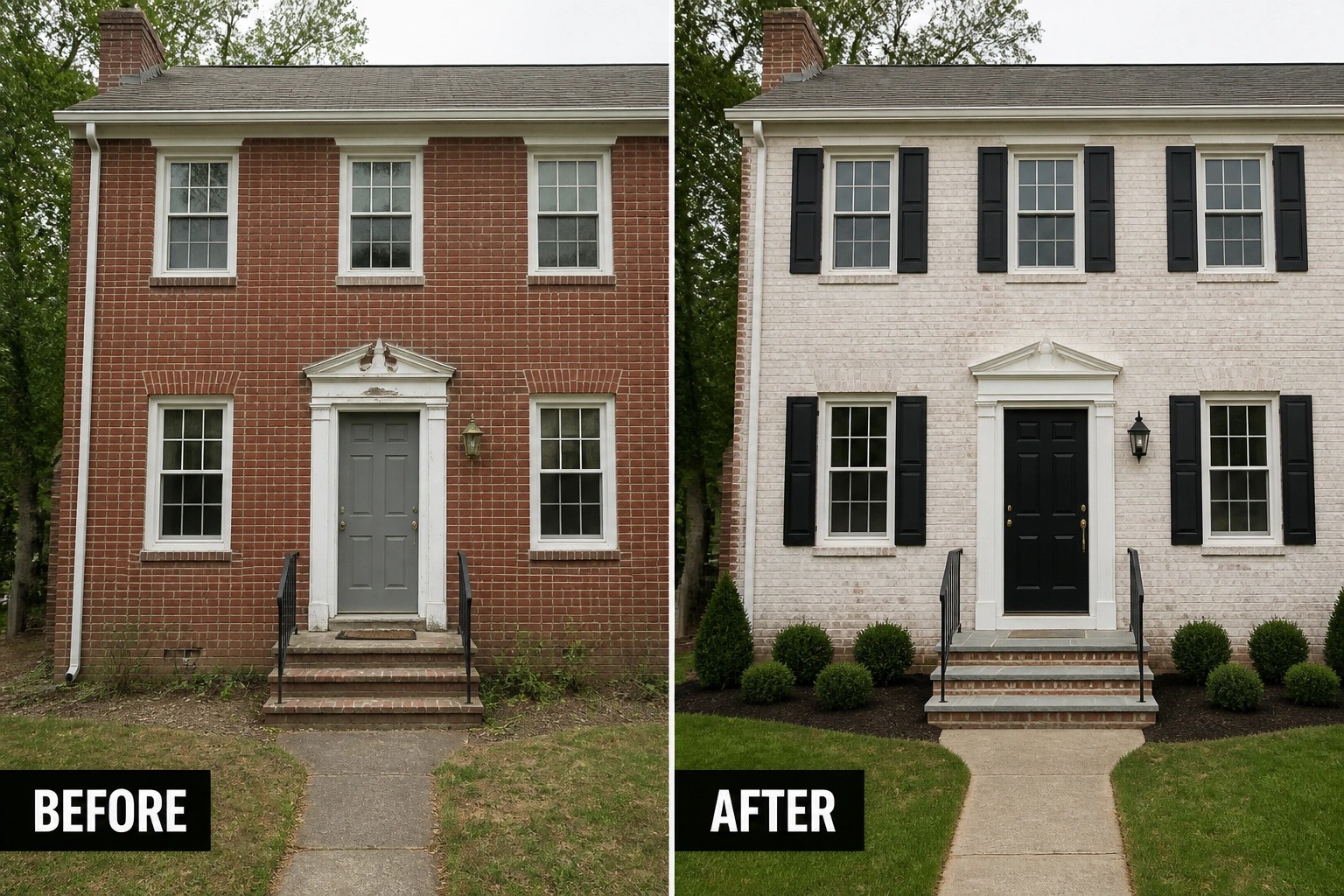
Classic brick facades on Colonial and cottage homes can look underwhelming not because the bones are bad but because details like tired trim, dull doors, and cluttered porches hide their character.
A few well-chosen updates, like cleaned mortar, painted or repaired trim, new lighting, and layered plantings, can sharpen proportions, highlight architecture, and make the house read more cared-for without gutting anything.
Small changes often deliver the biggest curb appeal.
I often try a bold door color or updated hardware first, since those moves are reversible and quickly tell you whether the direction suits the house.
Save a handful of ideas to test on the entry or porch, and mix what works for scale, period, and budget until the whole facade feels like it belongs together.
Paint Brick And Add Contrasting Trim For Instant Curb Appeal
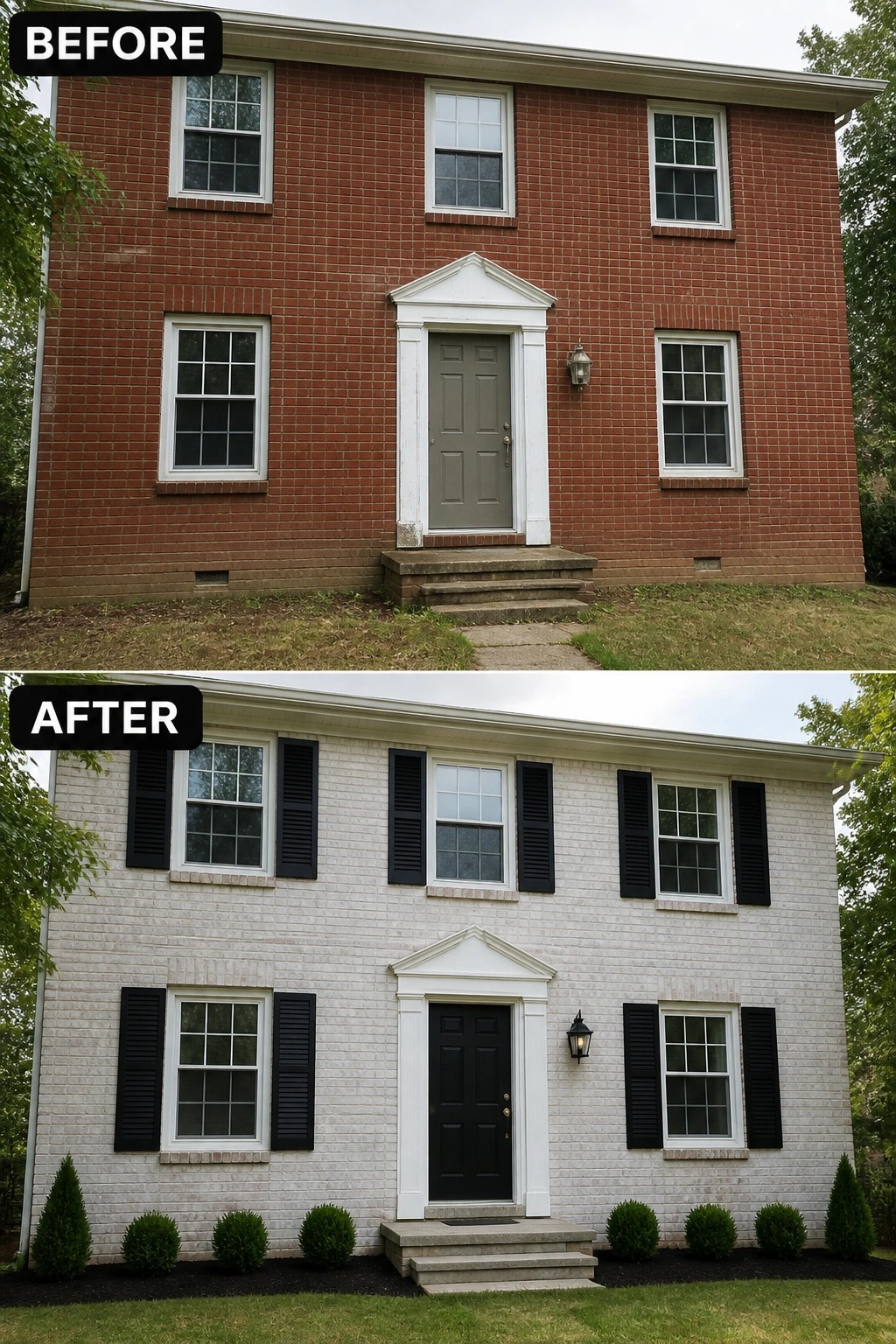
A fresh coat of breathable masonry paint and a bold trim color can change a plain colonial facade without a major remodel. In this example the red brick was lightened and paired with black shutters and a black front door, which brightens the house and makes the entry read as the focal point.
To try it yourself, test paint on a small area and pick a masonry-specific product so moisture can escape. Keep the palette simple—repeat the trim color on shutters and the door, add a single statement light and low foundation plantings, and you’ll get a cleaner, more intentional look that suits many colonials and cottages.
Improve Curb Appeal With A Fresh Door And Window Boxes
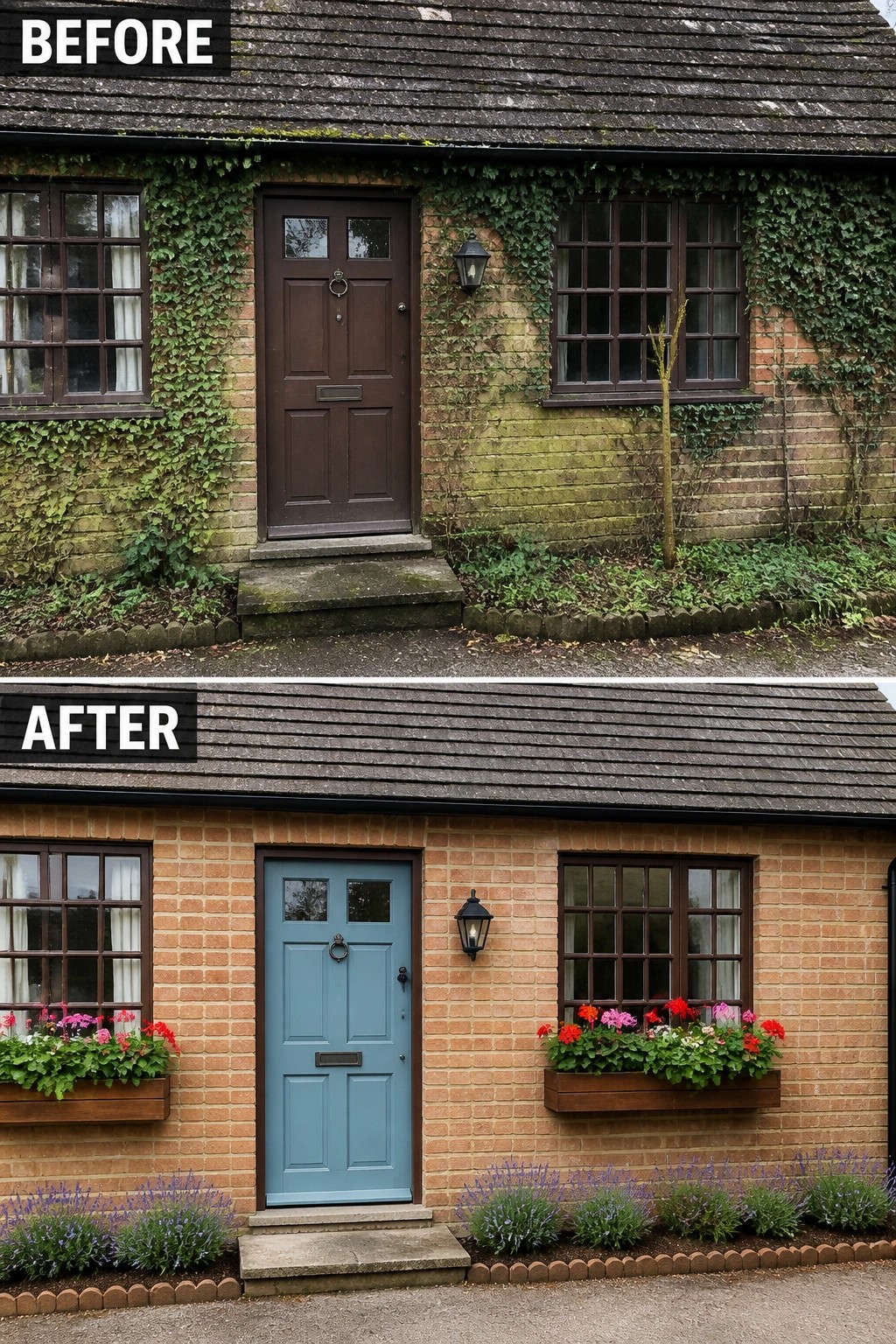
A single bright door and a pair of window boxes can change the way a brick cottage reads from the street. In the after photo a painted blue door and neat flower boxes replace the tired, mossy facade and overgrown ivy, giving the entry a clear focal point and a cared-for feel. Simple but effective.
To try this at home, start by pressure-washing or gently cleaning the brick so the new paint and planting look intentional, not pasted on top of neglect. Choose a door color that complements your brick tone, upgrade hardware and the porch light, then add window boxes with easy-care annuals and a low border planting for year-round outline; this approach suits small colonial and cottage facades where one strong focal change is all you need.
Use A Curved Paver Path To Add Structure
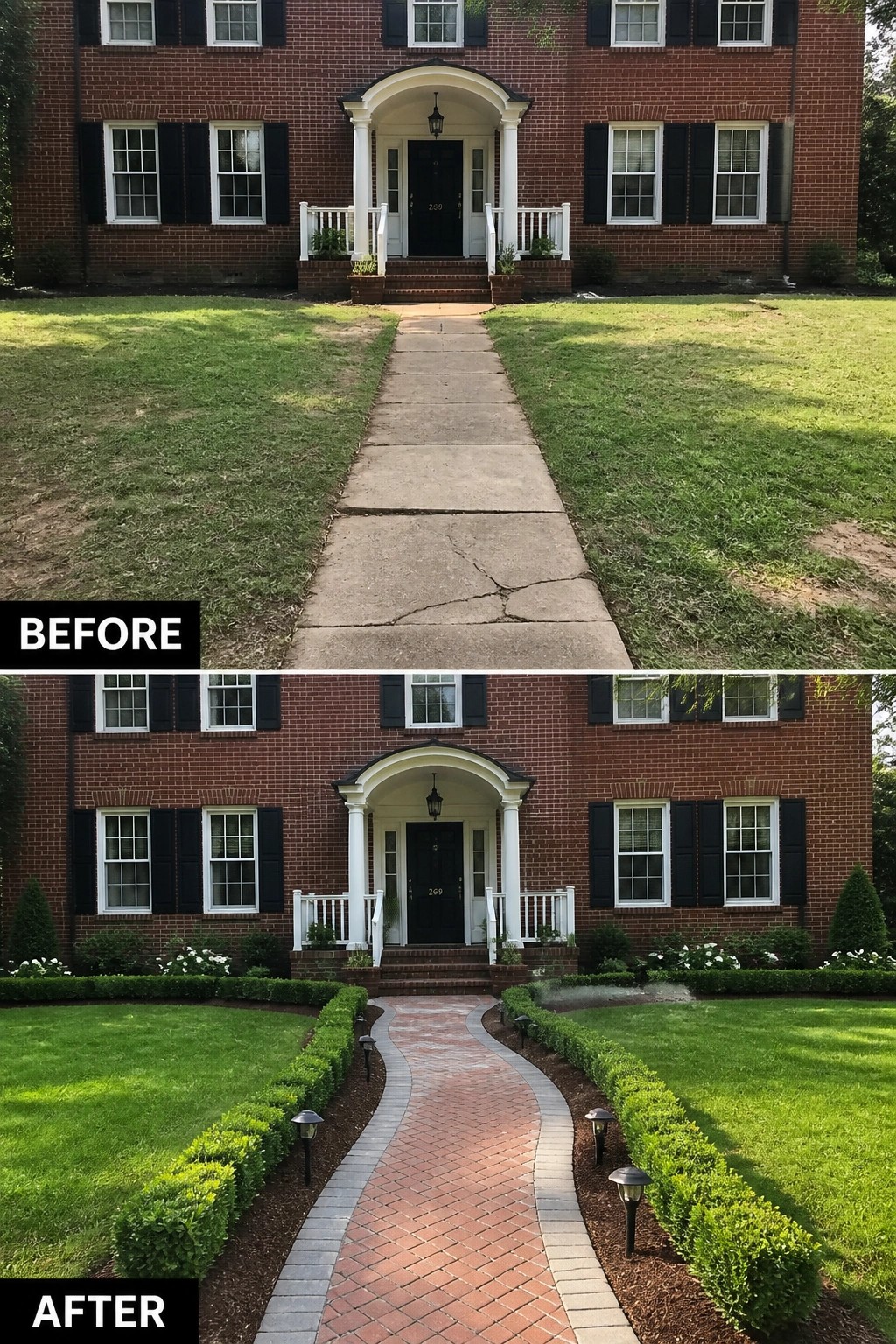
A simple swap of a straight, cracked concrete walk for a curved brick paver path instantly gives a front yard purpose and polish. In this photo the new gently winding pavers, a contrasting stone edge, and low boxwood borders tidy the approach and connect nicely with the brick facade, while small path lights help define the route after dark.
To copy this, pick pavers in a color that complements your house and keep the curve gentle so the path stays functional. Use a proper compacted base and edge restraints so the pavers stay level, then anchor the route with low hedging or mulch beds and spaced low-voltage lights; it works especially well for Colonial or cottage-style homes but watch scale—don’t make the path so wide or curvy that it swallows the yard.
Give The Front Entry A Distinct Focal Point
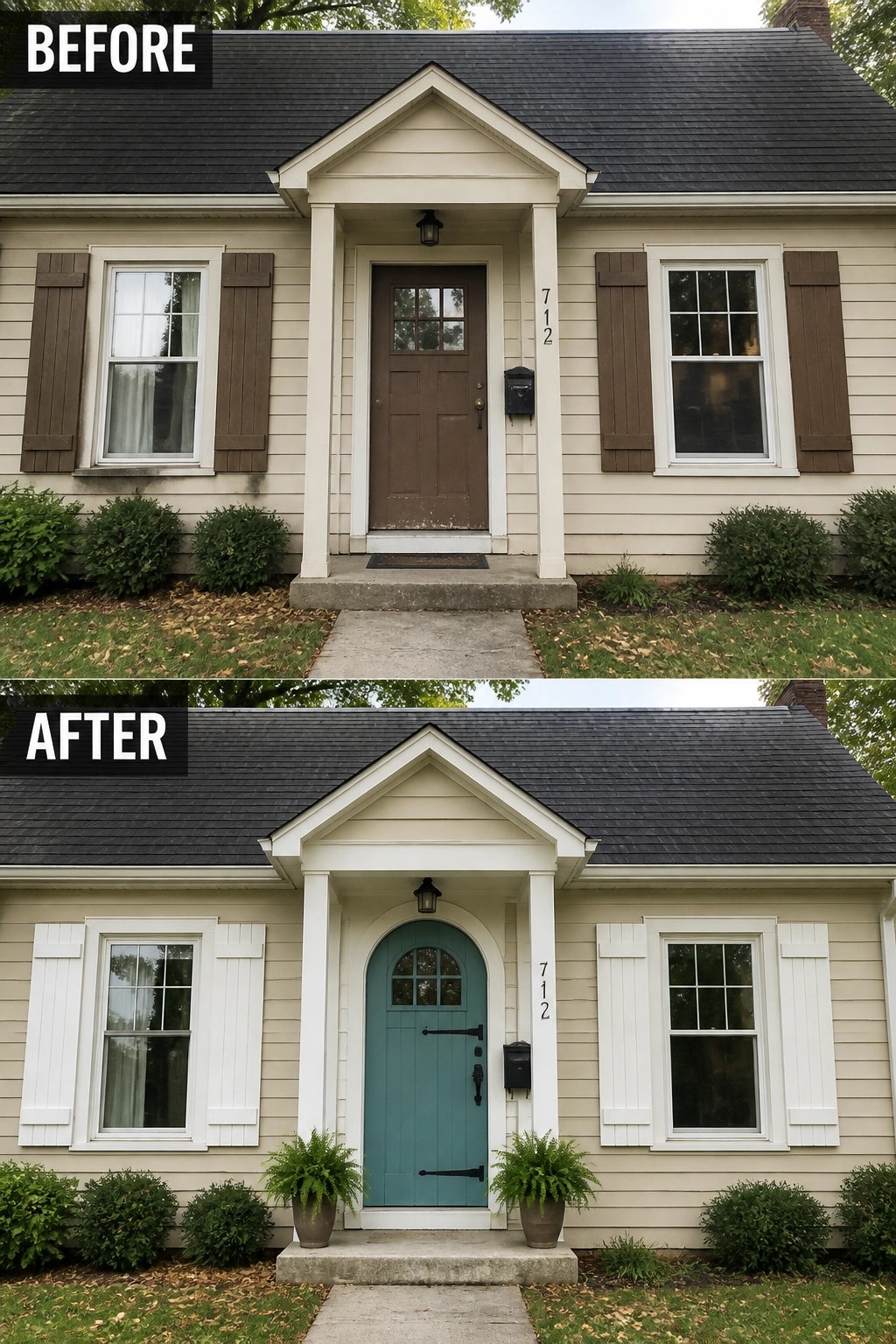
A focused entry refresh — one strong change plus a few matching details — can turn a plain porch into a purposeful, welcoming face for the house. In this example the original flat brown door was swapped for an arched teal door and the shutters and trim were brightened to white, while paired planters add balance; that single color choice makes the doorway the obvious focal point.
To copy this at home, pick one main move first: a bold door color or a new door style. Update a couple of supporting elements to match, like shutters, simple iron hardware, house numbers, and a pair of pots for scale. Keep proportions right for your porch, use exterior-grade paint and finishes, and avoid crowding the entry so the main change still reads clearly.
Give A Bare Porch A Clear Purpose
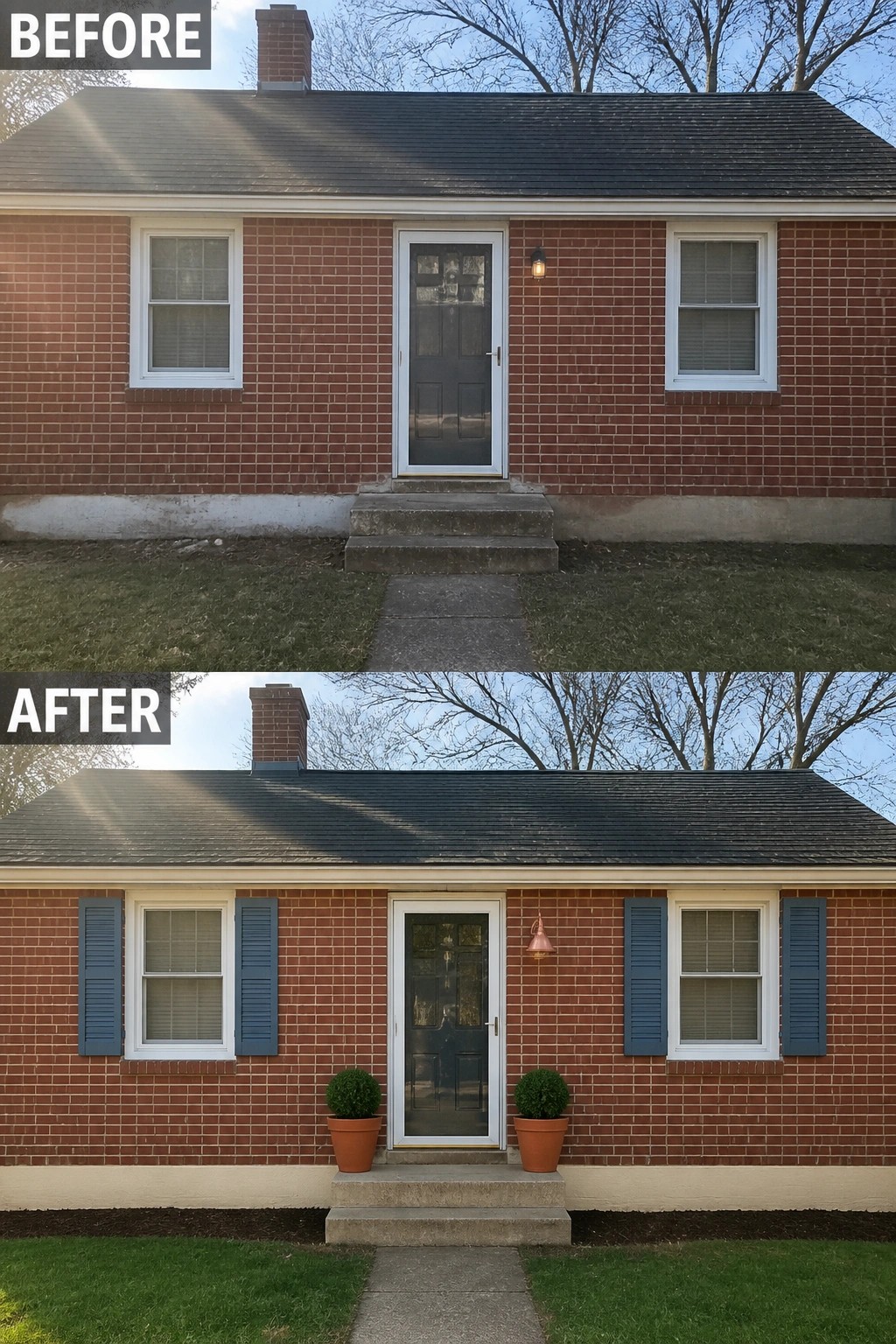
A few small, well-chosen touches can turn a plain brick entry into a purposeful front porch. Framing the door with painted shutters, swapping a tiny bulkhead light for a single statement fixture, and adding a pair of matching potted plants creates an obvious focal point and makes the approach feel deliberate rather than neglected.
To try this on your own, start by cleaning and freshening the trim or painting the foundation band so the base looks crisp. Pick one accent color for shutters and hardware that complements the brick, use symmetrical planters to define the steps, and choose an outdoor-rated light placed at eye level. It works on small colonial and cottage facades and is easy to do in stages if you want to spread the work out.
Use Trim And Shutters To Give A Brick Facade Instant Curb Appeal
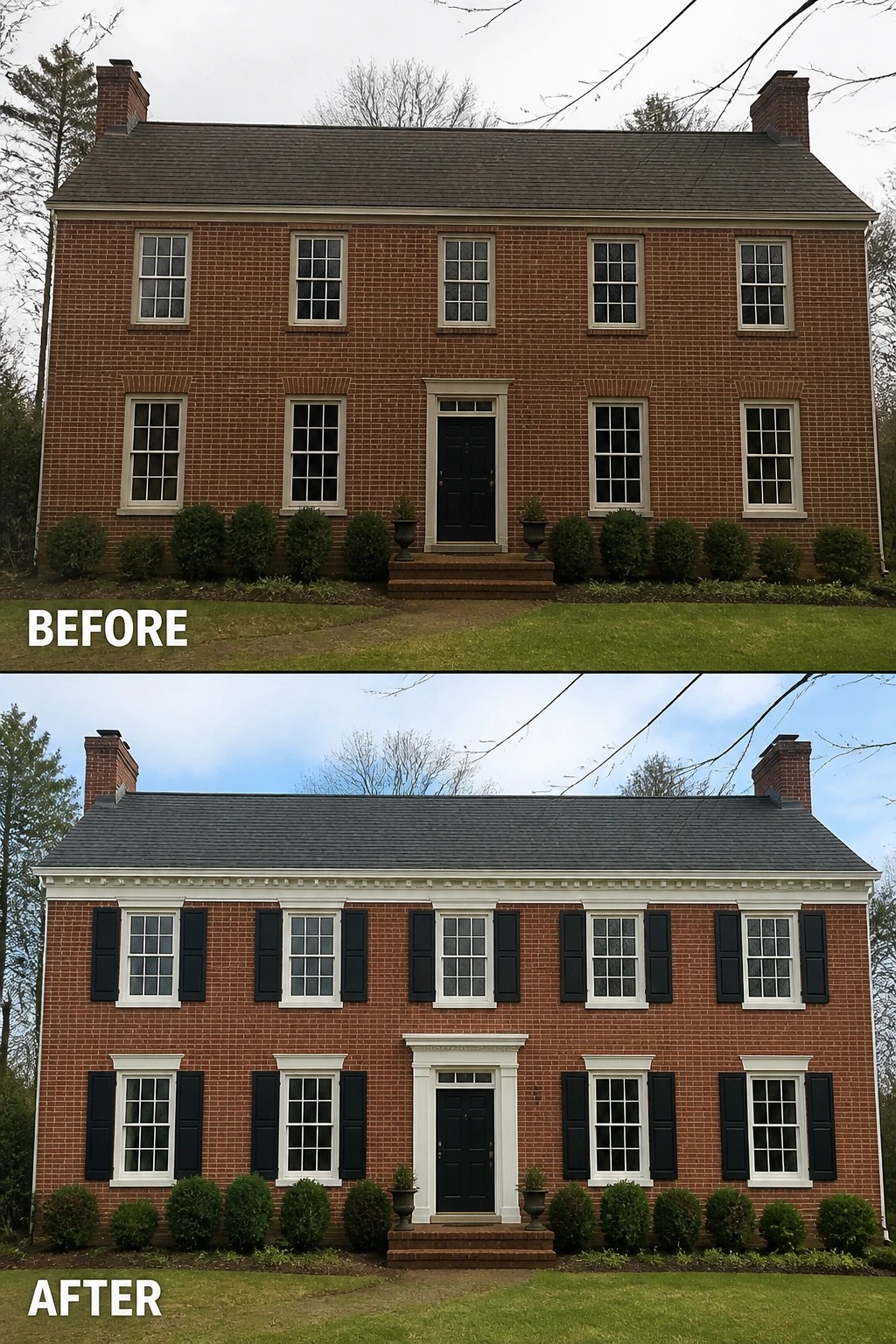
A few well-chosen pieces of trim and a set of shutters can make a plain brick house feel finished and intentional. Swapping bare openings for bold white window and door surrounds and adding black shutters creates contrast, repeats a classic palette, and gives the elevation rhythm without changing the brick. Classic and simple.
To try this at home, start small: add a defined door surround or a single pair of shutters to see the effect, then match the scale and proportion to the windows before doing the whole facade. Choose weatherproof materials and get proper masonry anchors for shutters, repeat one strong color for continuity, and keep the detailing consistent across the front for a neat, traditional look.
Turn An Empty Porch Into A Seating Area
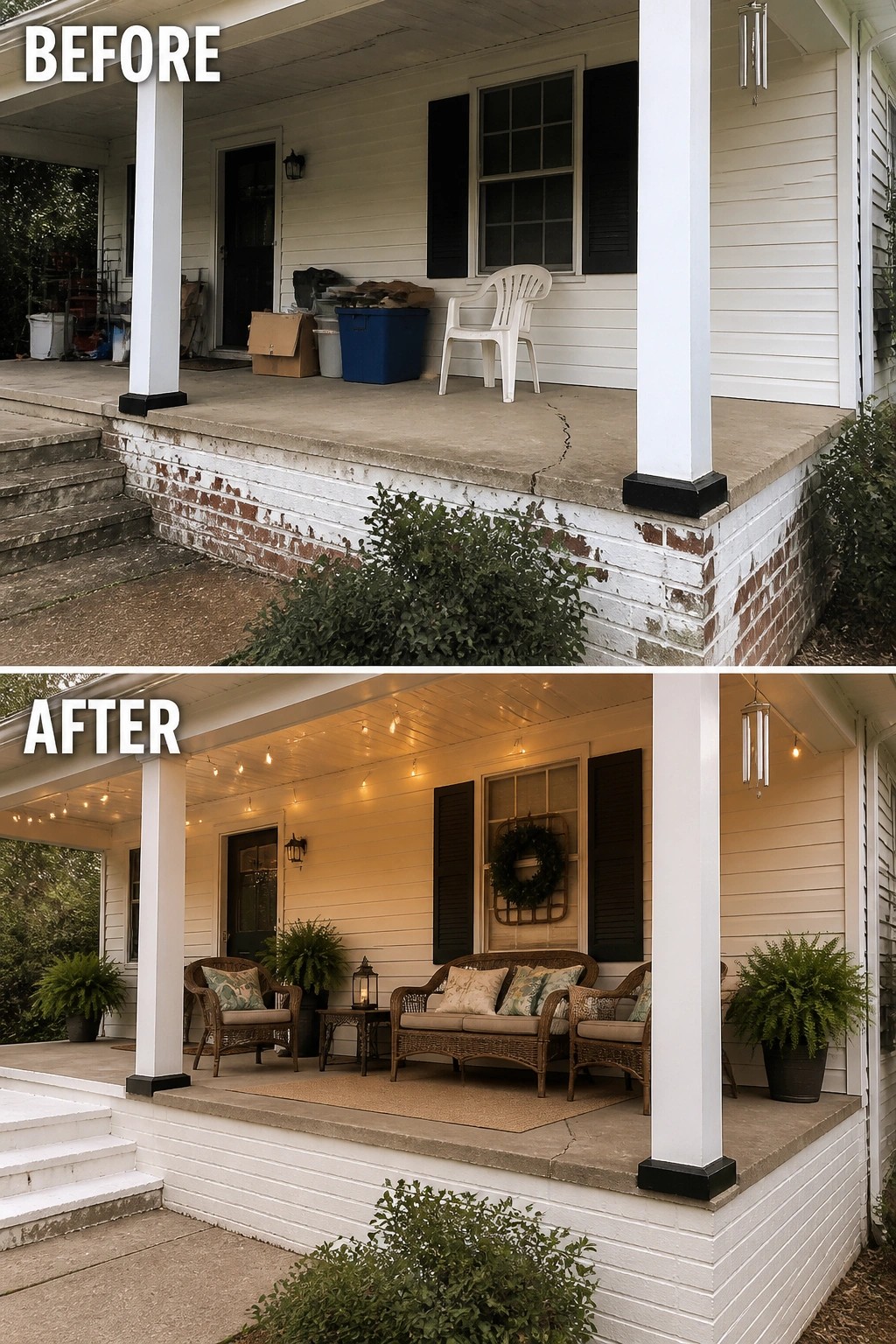
A bare concrete porch is easy to ignore, but it becomes useful simply by giving it a purpose: an outdoor room for sitting. In this example the empty slab was defined with a small wicker seating group, a natural-fiber rug, potted ferns, and string lights — enough to make the porch feel like a place to spend time rather than a storage spot.
Do it with scale and protection in mind: pick compact, weather-rated furniture that leaves a clear path to the door, anchor the group with an outdoor rug, and add overhead or task lighting where people actually sit. Frame the entry with a pair of planters or a wreath, and you’ll get a cottage-appropriate porch that works day and night.
Make The Front Door The Focal Point
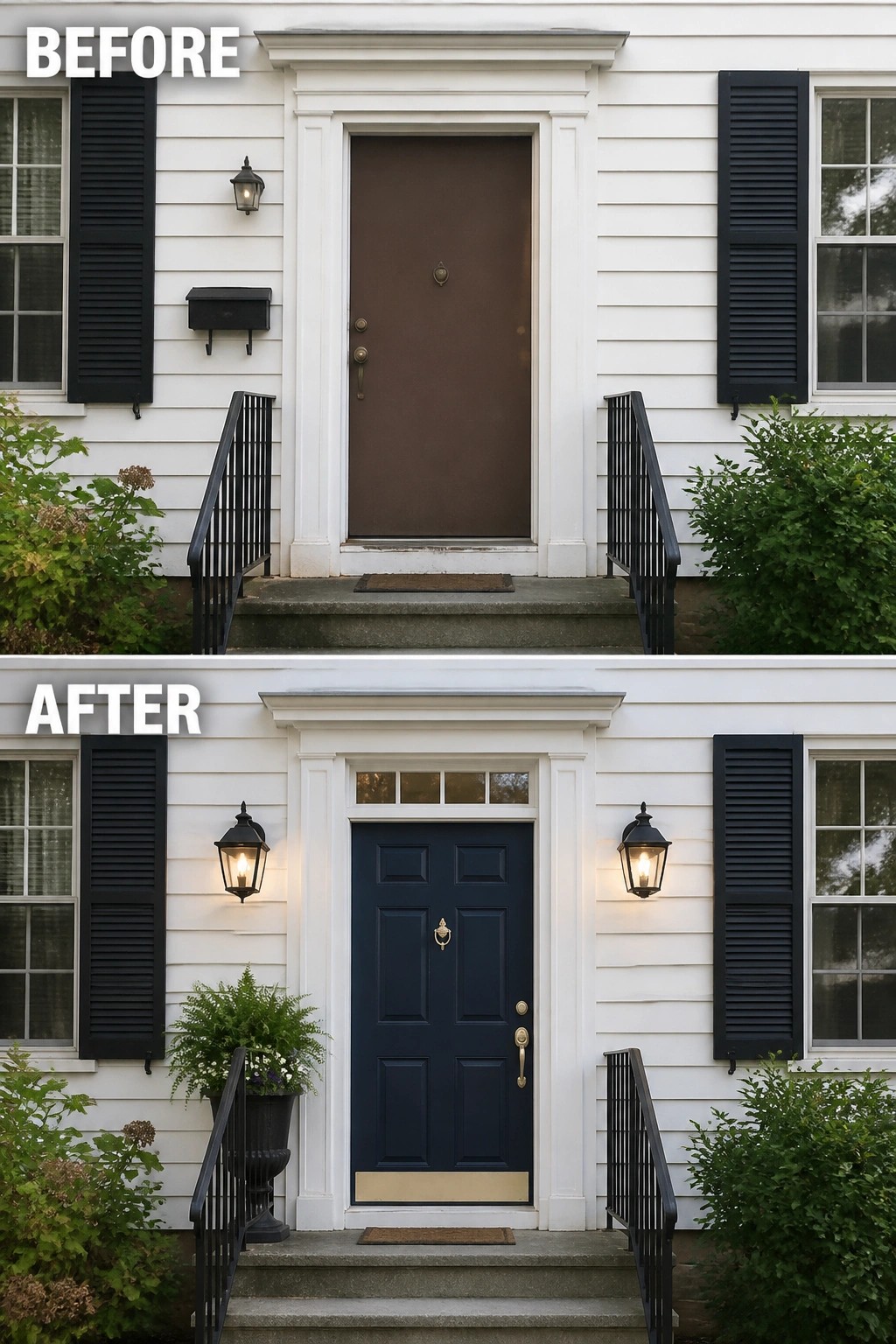
A fresh, well-chosen front door color can change a plain facade into a welcoming entrance. Here a simple brown slab becomes a paneled navy door with polished brass hardware, and that single change makes the entry feel deliberate and finished rather than forgotten.
To copy this, start by repairing trim and painting the door a color that contrasts but still complements your siding. Pick one metal finish for the knocker, handle, and threshold so everything reads as a set. Then add two practical extras: balanced wall lanterns and a single large planter to frame the door without crowding the steps. Works best on colonial and cottage facades where a clear focal point helps the whole house look put together.
Create Defined Garden Beds With Simple Edging
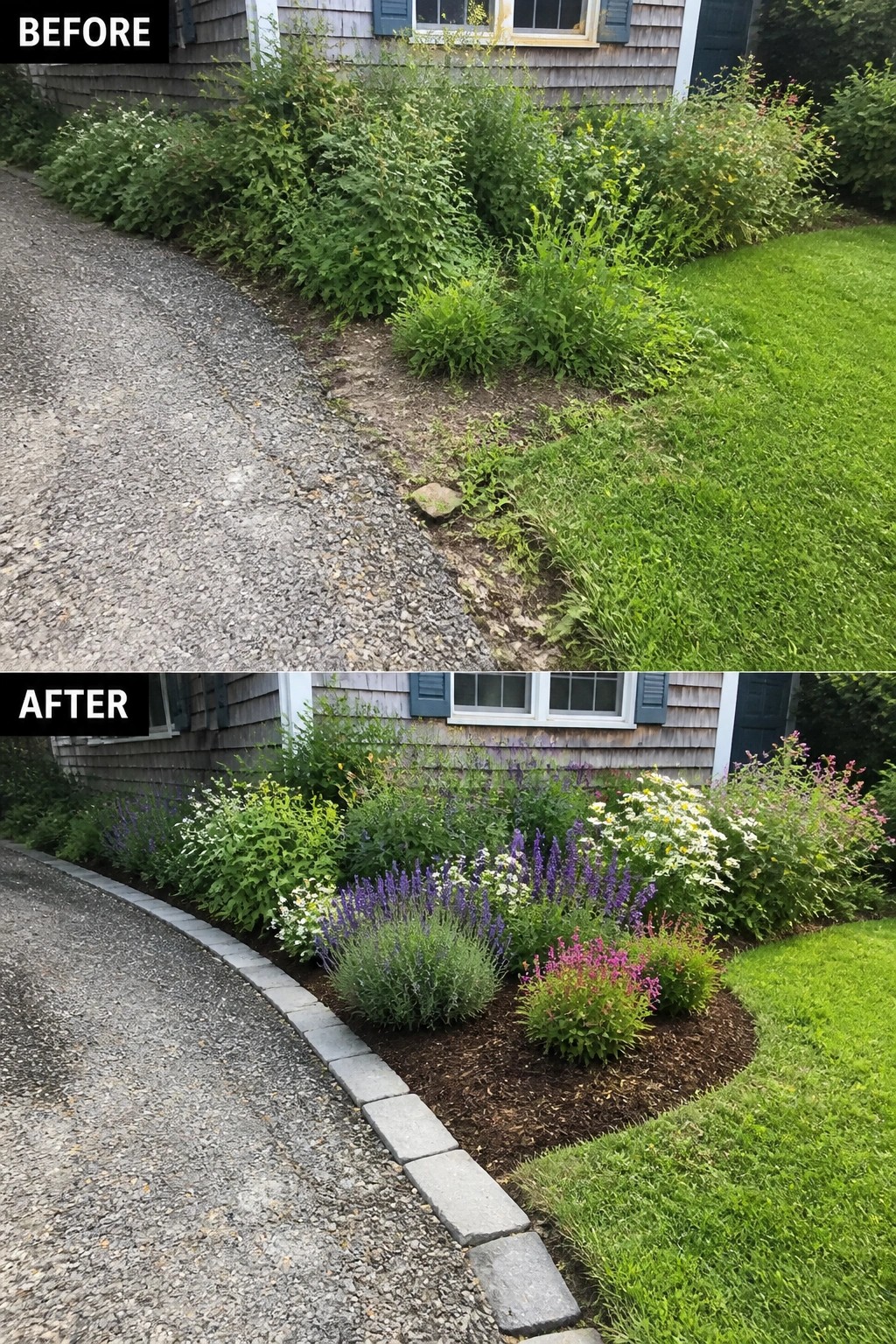
Taming an unruly border is one of the easiest ways to lift a cottage or colonial facade. A low row of stone pavers, a clean band of mulch, and a few repeat perennials turn a messy strip into a neat, intentional planting bed that reads as part of the house instead of an afterthought.
Do it by clearing the old growth, setting a compacted base and laying a single-course paver edge, then adding 2–3 inches of mulch and planting clusters of hardy perennials for season-long color. This approach works well on small driveways and front lawns, suits traditional homes, and stays low maintenance if you keep plant scale appropriate and refresh the mulch yearly.
Frame The Entry With A Classical Portico
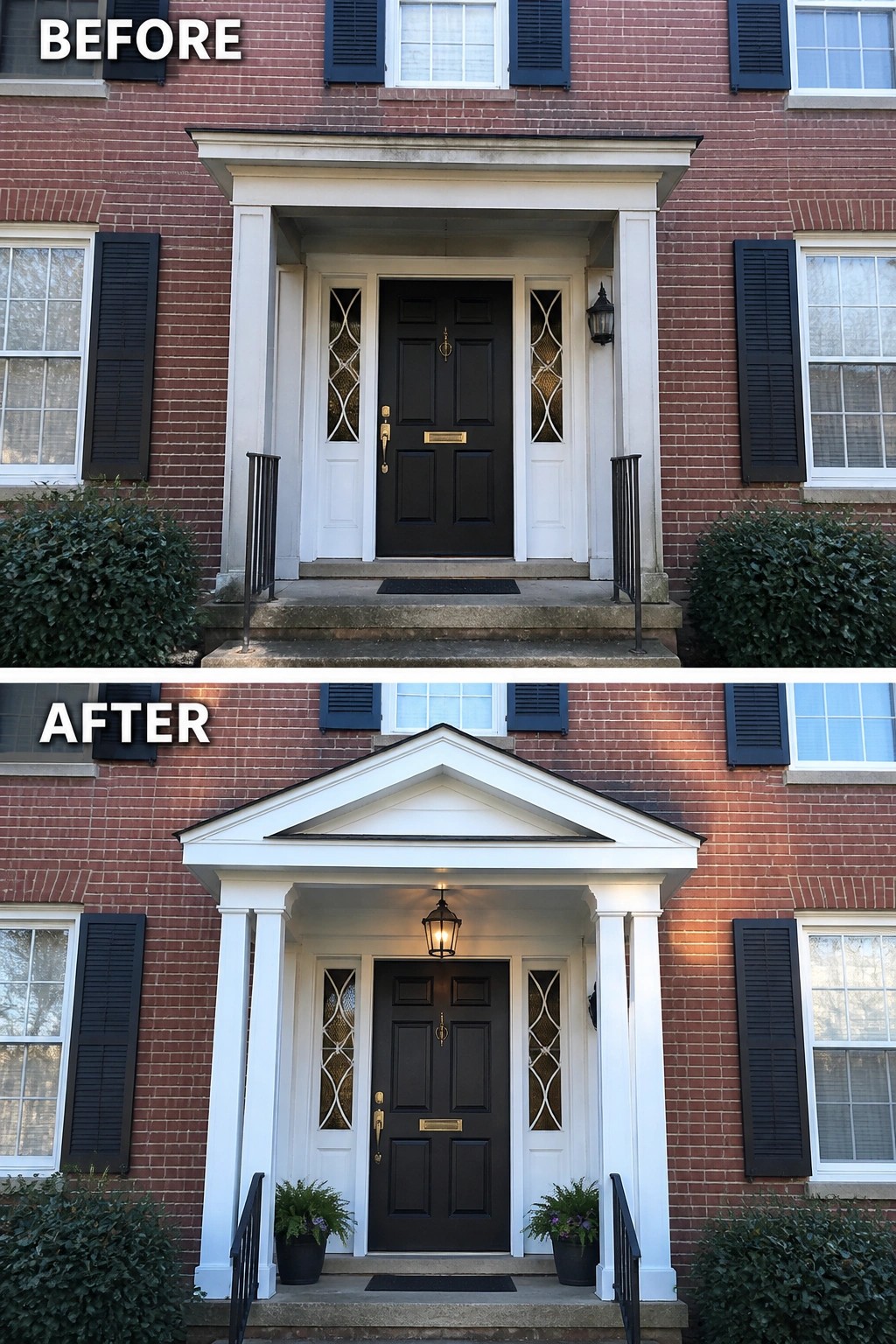
A small, structured portico can turn an anonymous stoop into a proper front entry without a full remodel. In this example the flat doorway is framed by a classical pediment and columns and finished with a pair of matching planters, which immediately reads as intentional and welcoming rather than leftover or unfinished.
This approach works especially well on brick colonials and cottages where a little trim goes a long way. Start by sizing the roof and columns to the scale of your door, paint the trim a crisp contrast color, and use weatherproof planters with simple greenery so the look stays tidy year-round. Small moves like proportionate trim and one or two planted pots are low-cost and make the entry feel like it belongs to the house.
Create Defined Garden Beds With A Pebble Path
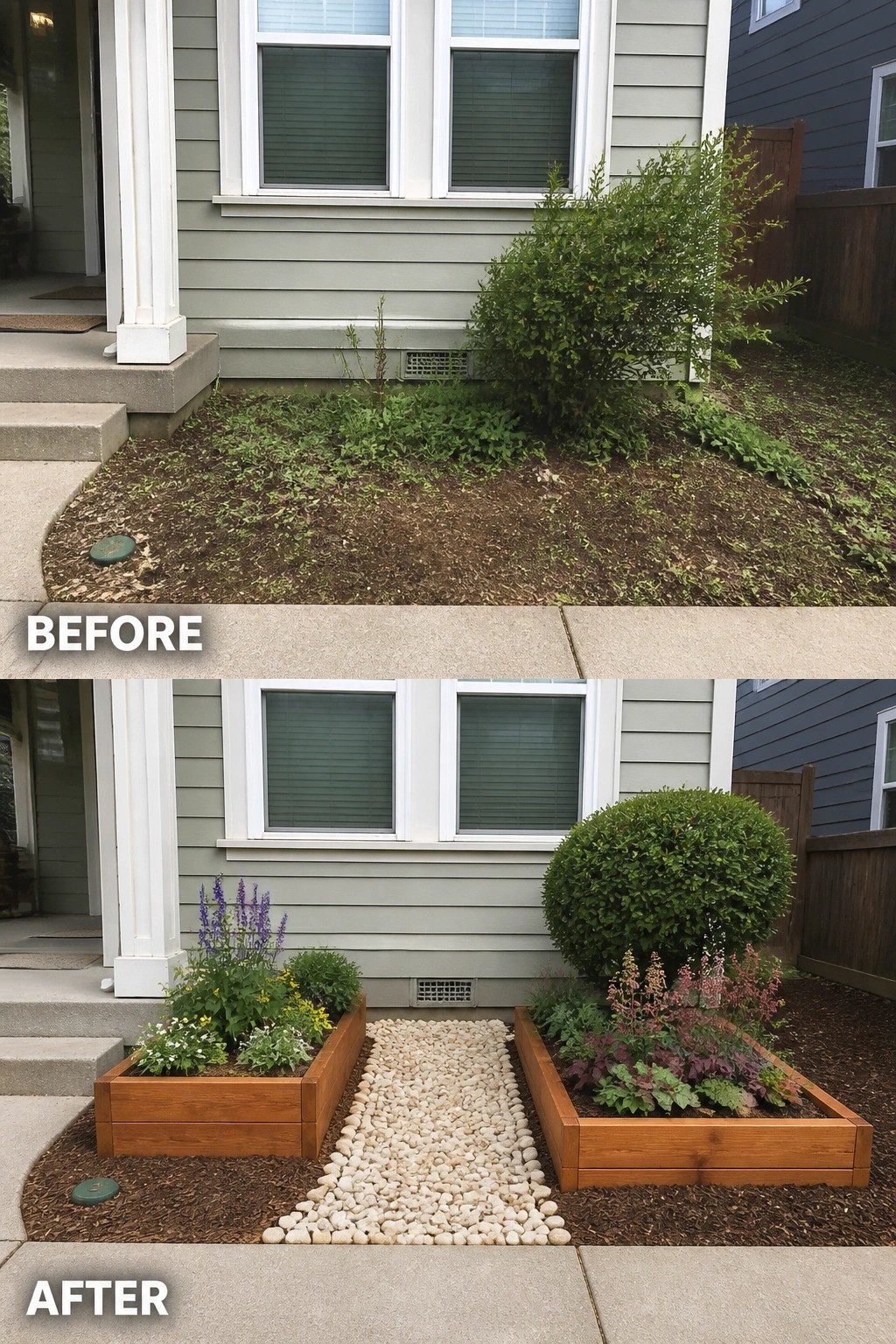
Take a tired, overgrown strip and give it clear edges: two low raised beds and a narrow pebble path make a small entry feel planned instead of neglected. Framing plantings in wooden beds instantly looks neater, keeps soil and mulch contained, and the light gravel path gives a simple route to the door while adding contrast against mulch.
This works well on narrow front yards or cottage-style homes where you want a tidy, low-maintenance look. Use rot-resistant lumber or prebuilt boxes, fill with free-draining soil, plant a mix of a small shrub plus perennials, and top with mulch. Lay pea gravel or river rock for the path and keep it wide enough to walk comfortably (about 2 to 3 feet) while leaving access to vents or service points (keep them clear).
Give Your Front Steps A Classic Update
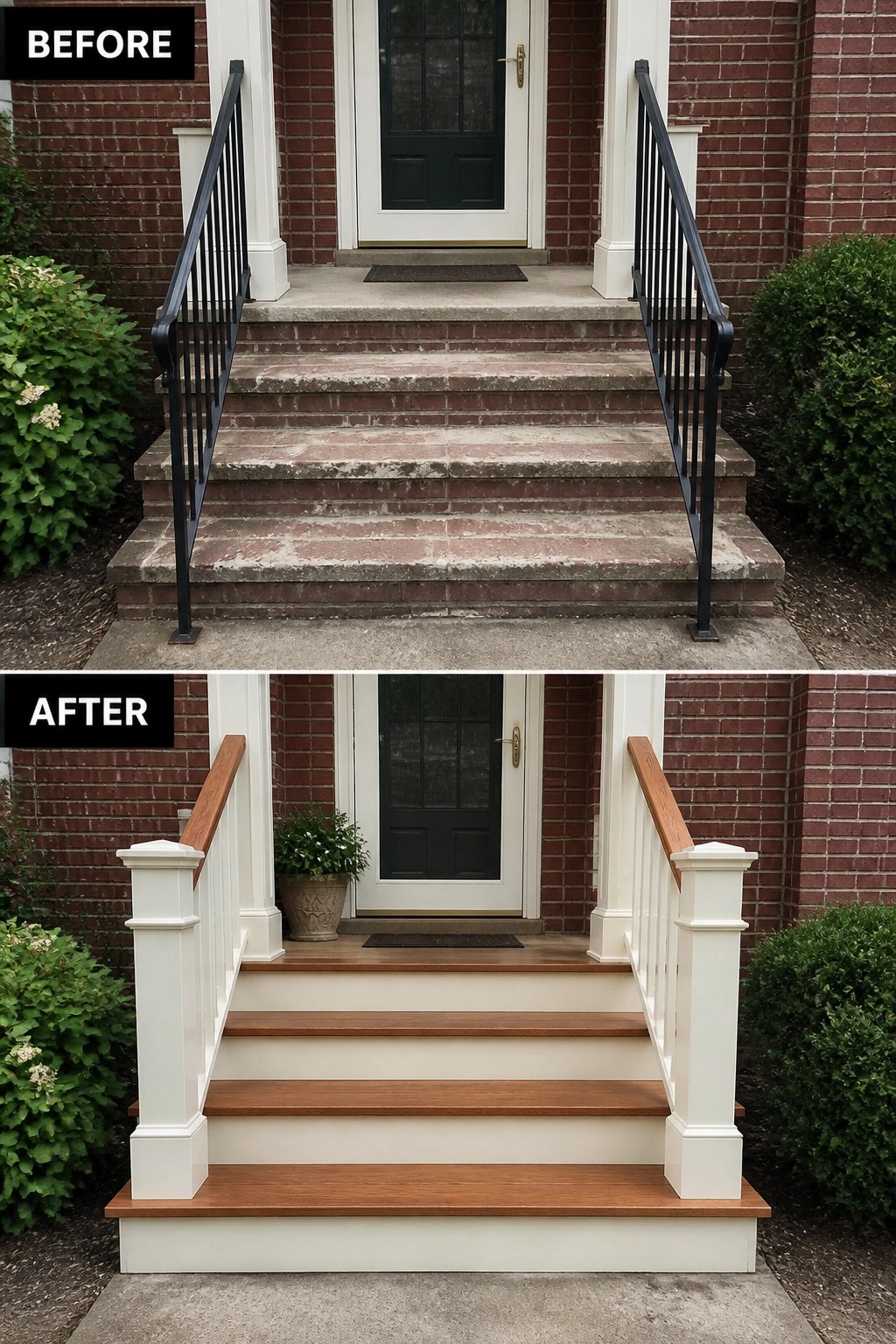
A scuffed brick stoop and thin metal railings can age a handsome colonial quickly. Replacing the worn steps with warm wood treads, painted risers, and solid newel posts instantly refreshes the entry while staying true to the home’s style — it feels cared for, not overhauled.
This approach suits many colonial and cottage facades because it focuses on proportion and material rather than a full rebuild. Pick rot-resistant wood or a quality composite for treads, match the riser and post paint to existing trim, and make sure rail height and grip meet code. Add a simple planter or mat if you want a final personal touch.
Break Up A Large Brick Facade
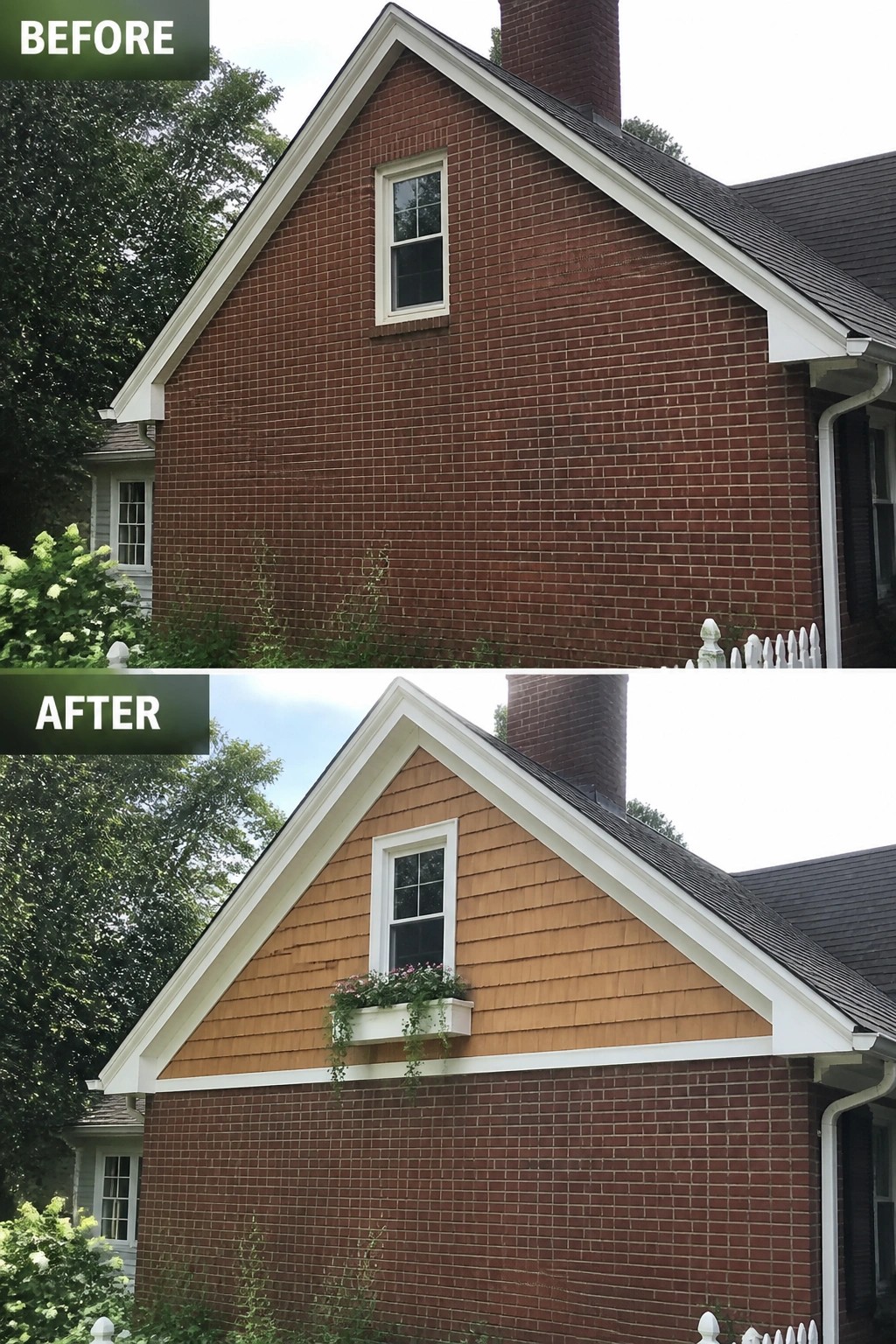
A heavy expanse of brick can feel flat and overly dominant on a cottage or colonial, so replace or inset the upper gable with a contrasting siding and a little trim to change the scale. In this example the plain brick gable is softened by warm shingle siding and a crisp white trim band plus a small window planter—simple changes that add texture, proportion, and a cottage touch without rebuilding the whole wall.
To copy this, pick a siding material and color that complements your brick rather than matching it exactly, and add a horizontal trim line where the two meet to make the division look intentional. A modest window box or shutter is enough to introduce human scale and greenery; keep the proportions in mind so the new siding balances the brick below, and choose exterior-grade materials that stand up to weather.
Finish A Bare Foundation With Trim And Planting
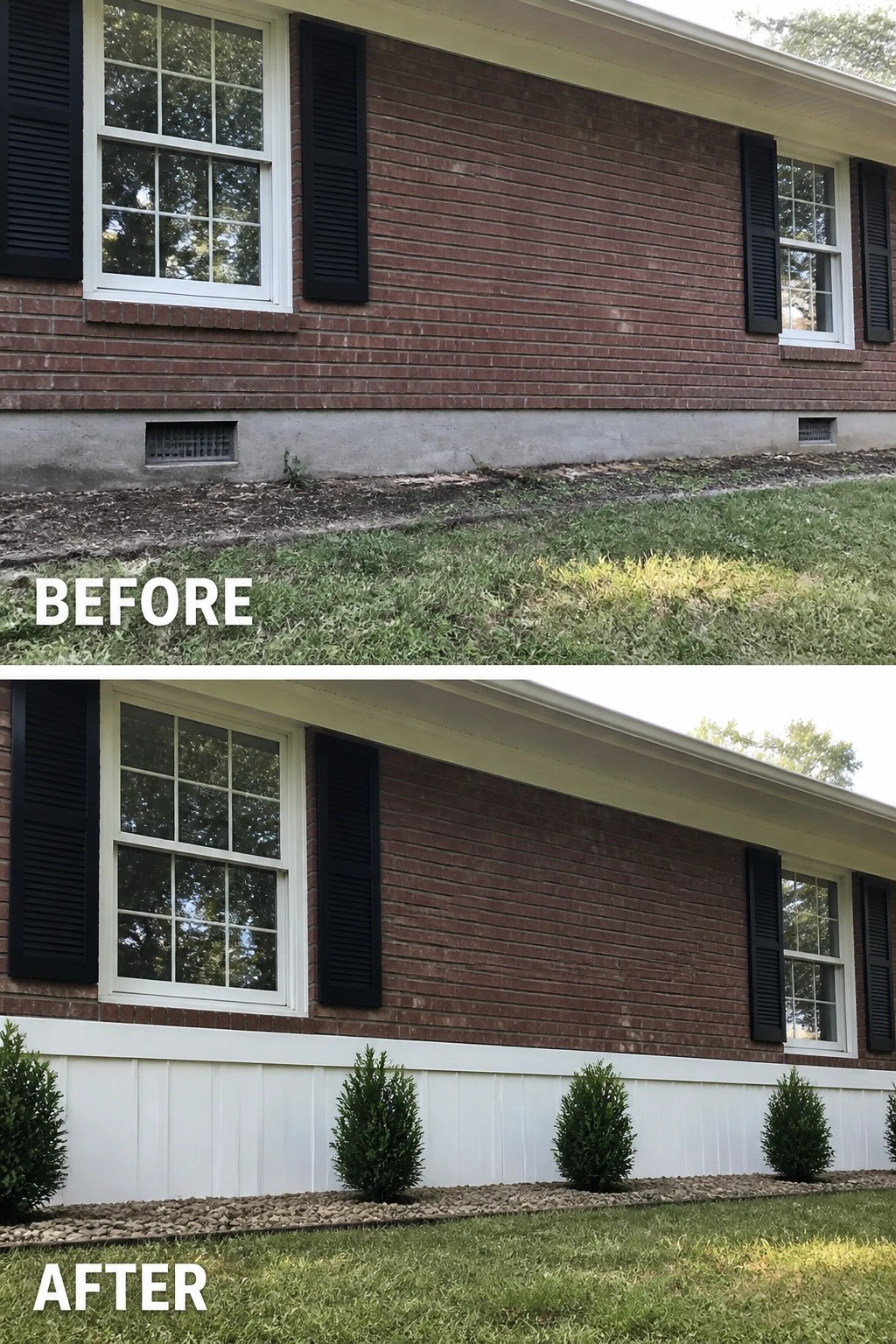
A simple skirt and a narrow planting bed can make a plain concrete foundation look intentional instead of neglected. In this example a white vertical trim panel replaces the exposed concrete and a line of small evergreen shrubs in a gravel strip ties the wall to the yard, creating a neat, cottage-friendly base for the brick facade.
Do this with materials and scale that match your house: pick a trim panel or skirt board in a trim color that complements your windows, and keep the height modest so the foundation feels finished but not oversized. Plant low, slow-growing shrubs (boxwood or dwarf yew work well) on a gravel or mulch strip to reduce maintenance, and make sure vents and drainage remain accessible before you close anything up.
Replace A Storm Door With A Welcoming Front Entry
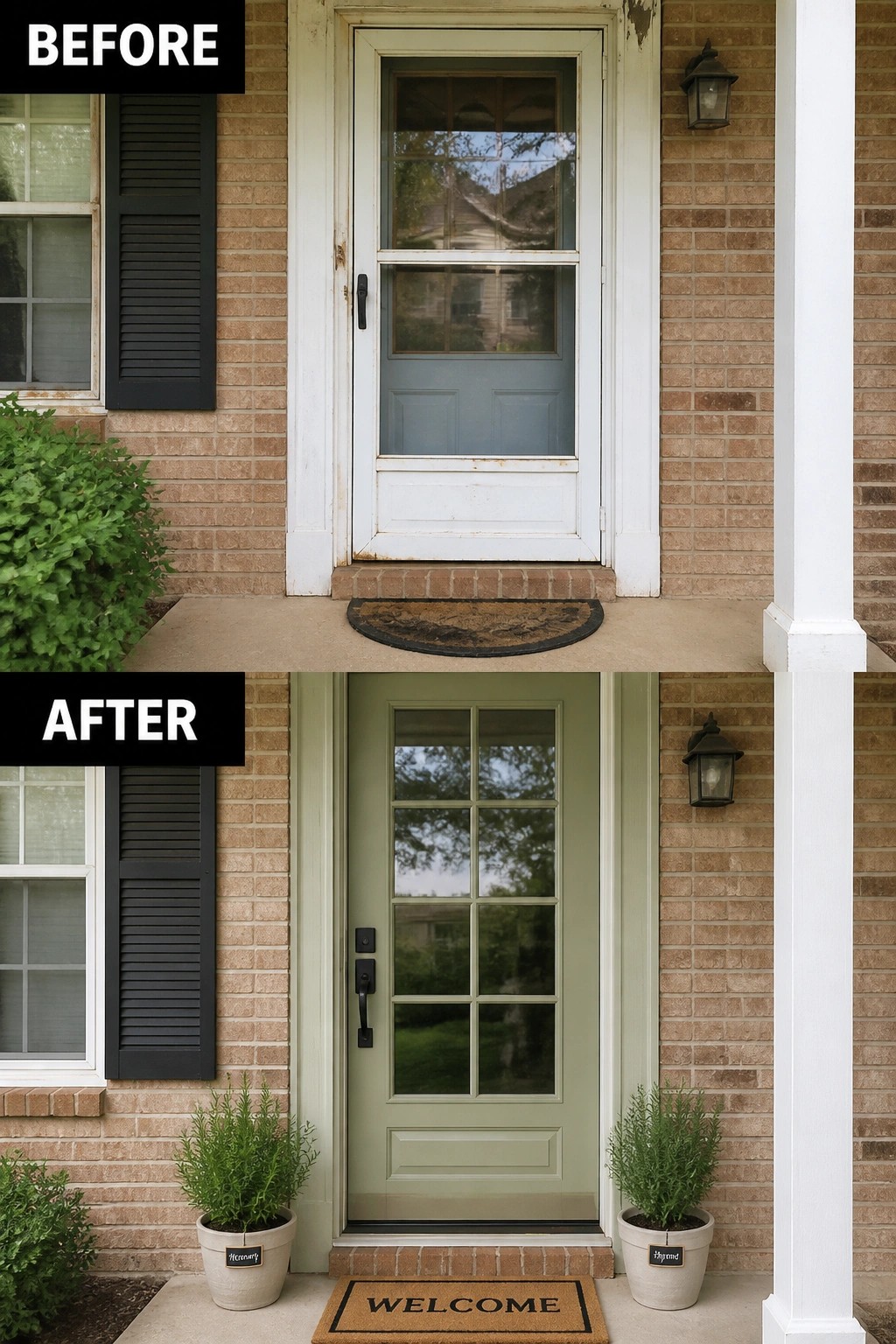
Replacing a utilitarian storm door with a single, glass-paneled entry and a few well-placed accessories is an easy way to turn a bland stoop into a proper front entry. In the photo the old worn storm door is swapped for a painted paneled door with divided glass, then balanced with matching planters and a welcome mat to create a clear focal point and a sense of arrival.
Start with the door as your main move: choose a durable finish and a color that complements the brick, then add two simple planters and a small outdoor rug to define the landing and scale the space to the house. Keep the layout symmetrical if your porch is narrow, pick weatherproof materials, and make sure you leave enough room for the door swing and foot traffic. Keep it simple.
Refresh Your Front Entry With Paint And Hardware
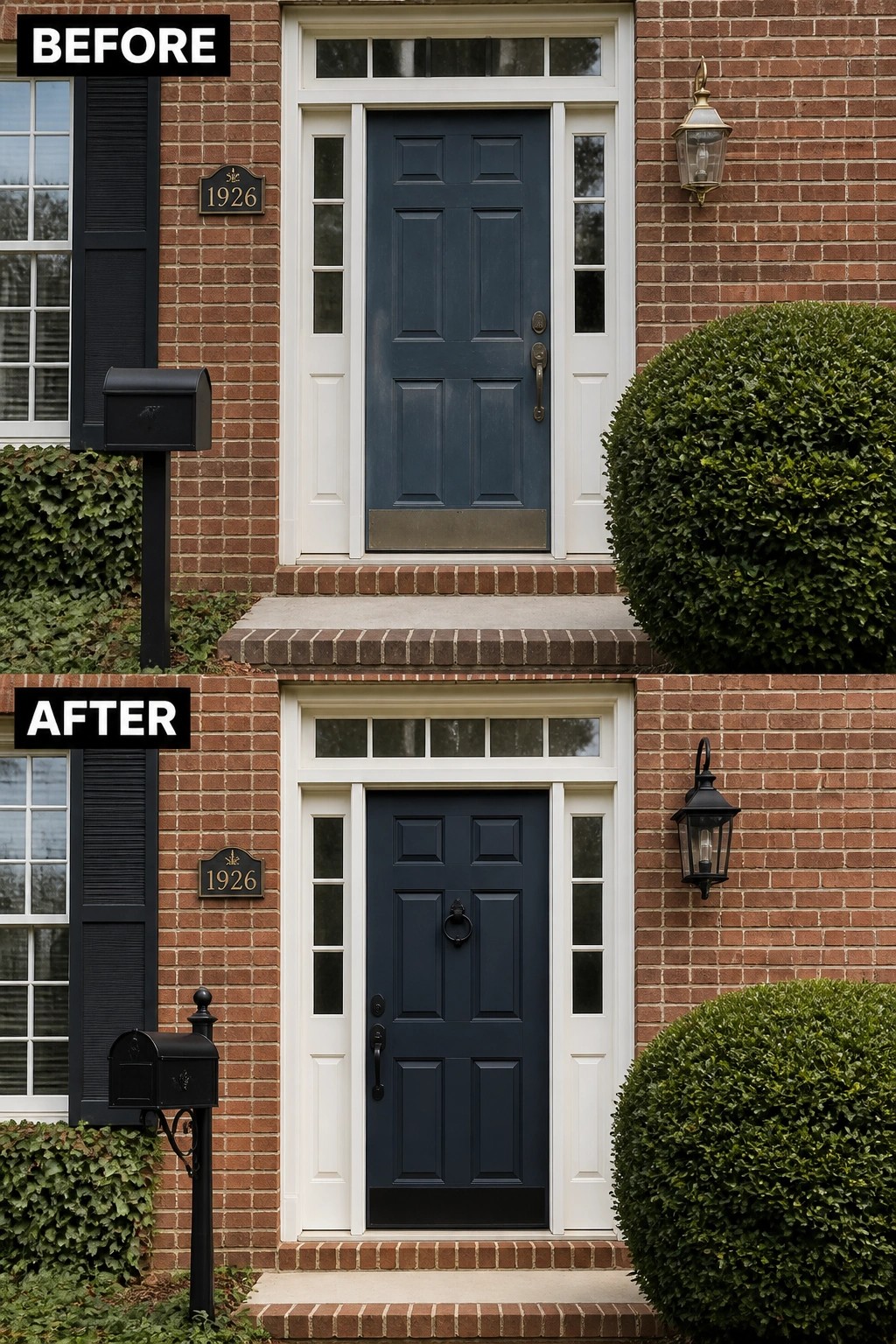
A simple coat of paint plus new hardware can change how a home reads from the street. In this example the plain door and older brass fixtures were replaced with a deep navy door and matching matte-black handle and lantern, giving the brick facade an immediate, pulled-together look. Color gives the entry a focal point while consistent metal finishes make small updates feel intentional.
To try this at home, pick a door color that contrasts the brick but still feels in scale with the house, and choose one finish for all visible hardware so everything ties
Define The Entry With A Low Hedge And Gate
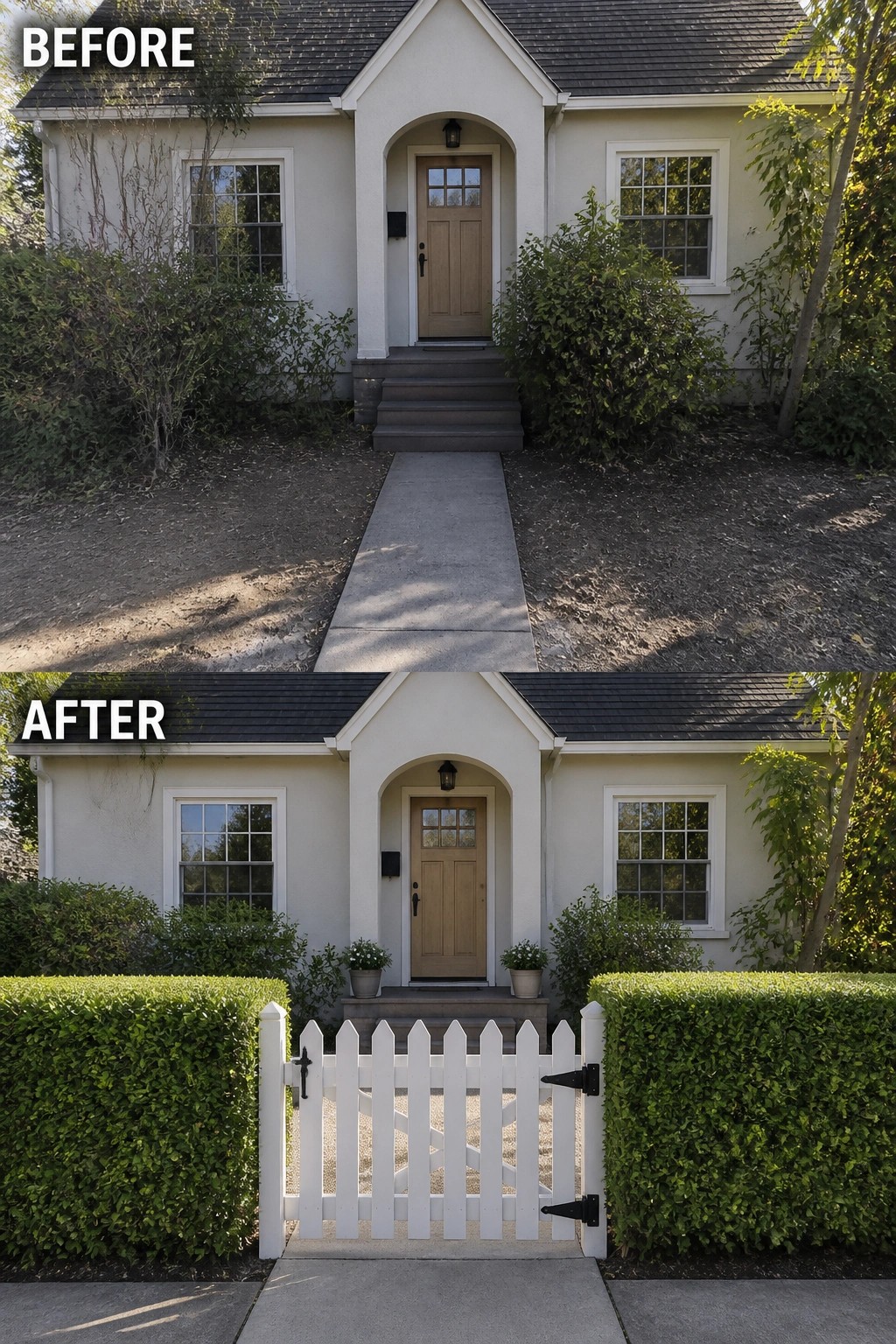
A narrow front yard can stop feeling like an afterthought when you frame the path to the door. In this example a plain dirt yard and overgrown shrubs were replaced with neat low hedges, a white picket gate, and a couple of matching planters at the top of the steps to give the porch a clear, welcoming approach. The gate and hedges set a small, human scale that suits older cottages and colonials especially well.
To copy the idea, start by clearing out dead growth and level the path area, then plant a compact evergreen hedge (boxwood, dwarf holly, or yew) at the sidewalk edge and place a simple gate centered on the walkway. Keep the hedge height low so the house stays visible, add identical planters or lanterns at the steps for symmetry, and choose a low-maintenance surface (gravel, pea stone, or compacted decomposed granite) behind the gate. Start small.
Define The Front Slope With A Low Stone Wall
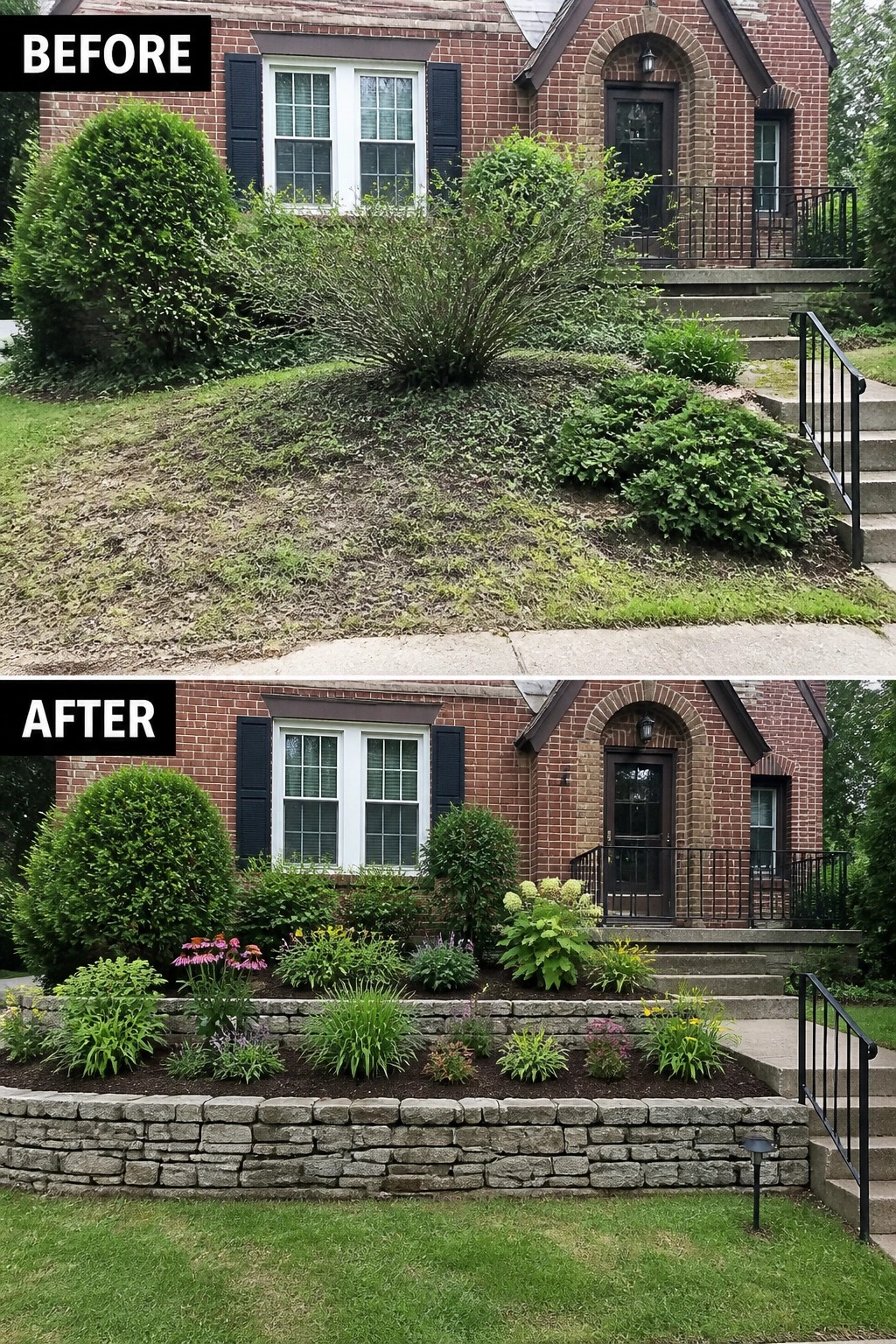
A short, stacked-stone retaining wall instantly turns a patchy front mound into tidy, tiered garden beds that complement a brick facade. Instead of fighting the slope, the wall creates flat planting levels, so a few repeatable perennials and fresh mulch read as a planned border rather than an overgrown mess.
This works especially well on small front slopes and on cottage or colonial homes where a clear edge feels right. Keep the wall low and proportional to the house, choose hardy, repeating plants for easy maintenance, leave room for the steps, and add a couple of simple lights for night visibility. Less fuss, more curb appeal.
Frequently Asked Questions
Q: Can I paint my brick to change the look of a colonial or cottage home?
A: Yes, painting brick is a common way to update a house, but start by testing a small, hidden area to see how the finish looks. Use a breathable masonry paint so moisture can escape and plan for a few years of touch-ups since painted brick shows wear faster than bare brick. If the mortar is crumbling, fix that before painting.
Q: How do I pick trim and shutter colors so the house feels colonial or cottage rather than mismatched?
A: For a colonial vibe, choose crisp contrasts like deep shutters against a lighter brick; for a cottage look, go with softer, muted hues or a cheerful pop on the door. Always test paint chips against the brick in both morning and evening light. A few small samples on the trim will tell you whether the combination reads classic or quirky.
Q: Will changing the mortar color really change the whole look?
A: Absolutely. Dark mortar makes brick read more dramatic and modern, while lighter mortar softens and brightens the pattern. Mortar color can be changed by tuckpointing or using a masonry stain, but leave structural tuckpointing to a mason so you do not damage the wall.
Q: After a brick makeover, how much maintenance am I signing up for?
A: Not much if you keep up basic tasks like cleaning gutters and trimming plants away from the walls. Painted brick will need occasional touch-ups and a gentle cleaning every few years, while unpainted brick mostly needs the occasional mortar repair and a pressure wash when it looks grimy.