

I enjoy working on brick houses because small, inexpensive edits can sharpen curb appeal without a full renovation, and I’ve learned that simple fixes often do the heavy lifting.
Start small.
A deep clean of brick and gutters, fresh paint on trim, swapped hardware, and a few well-placed plants usually read as care rather than cost, and I often test one change at a time so the result feels right for the home.
I sometimes try a new front door color or light fixture first because those moves are easy to reverse and tell you whether a style is worth keeping.
If you save a handful of ideas to try or adapt, you can make the house look like someone is paying attention without spending much, and that quiet improvement is always satisfying to see.
Give A Bare Porch A Clear Purpose
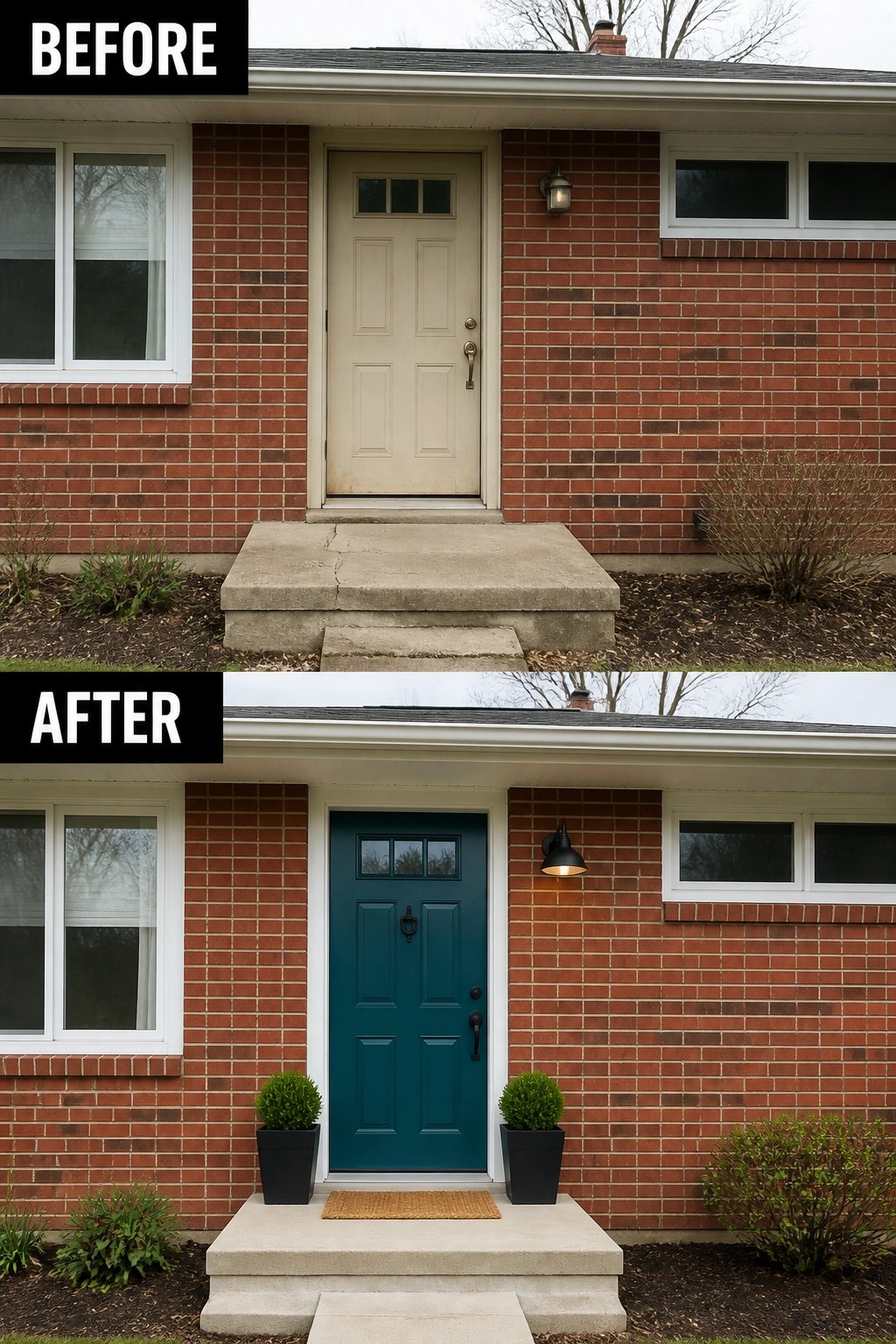
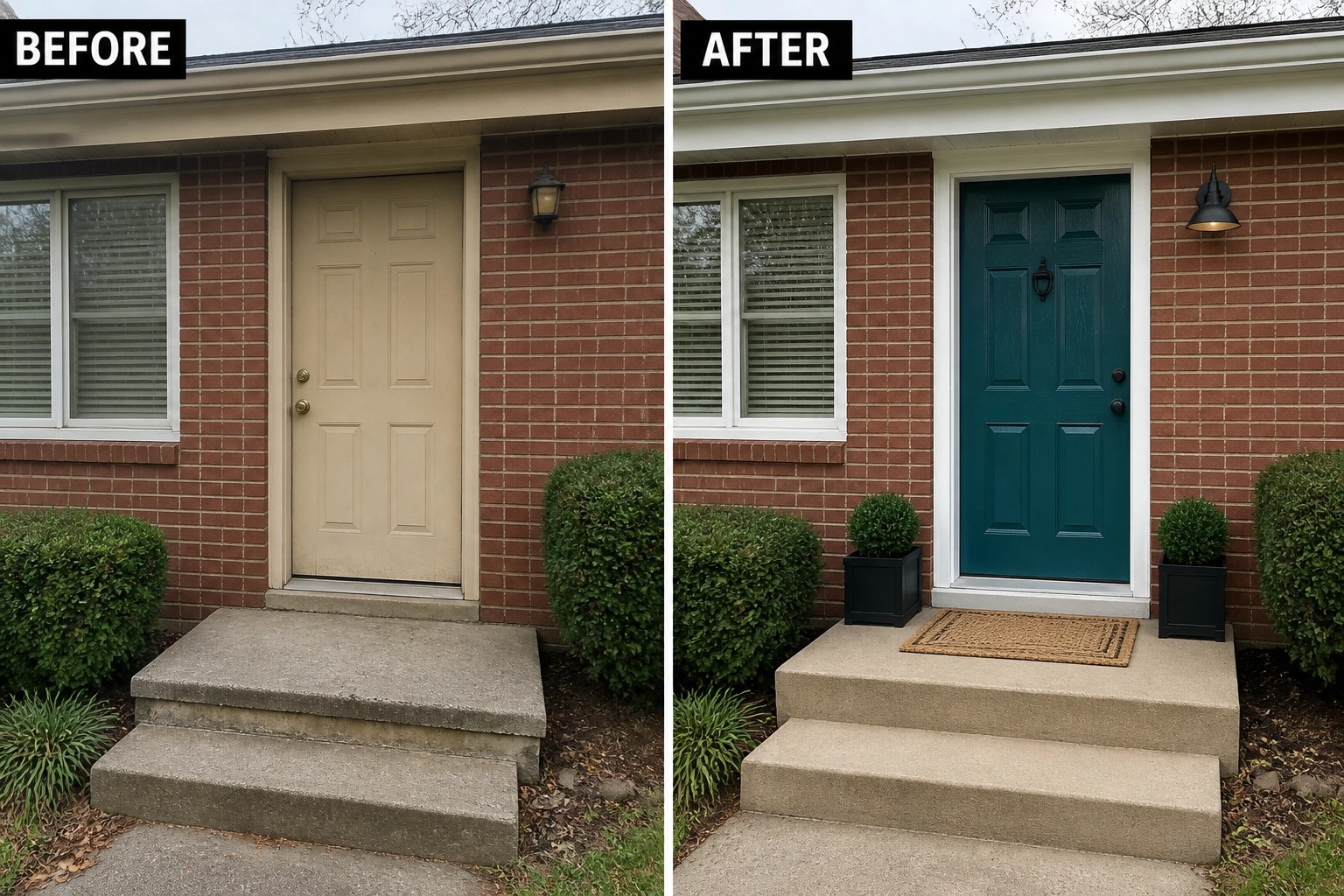
A simple, low-cost way to boost curb appeal is to make the front door the focal point and style the small porch around it. In this example the house goes from a bland beige entry to a painted teal door with matching hardware, a new wall light, a doormat, and two potted evergreens—those few changes make the entrance read as intentional instead of accidental.
How to do it yourself: start with a fresh coat of exterior paint in a color that complements your brick, pick one upgraded light and one set of new door hardware so finishes match, and add a pair of weatherproof planters to create symmetry. Keep scale in mind—choose narrow pots and a slim mat for small stoops—and clean the porch surface first so the new pieces look crisp. Start small and stop when the entry feels like a purposeful, usable spot.
Define The Foundation With Simple Planting
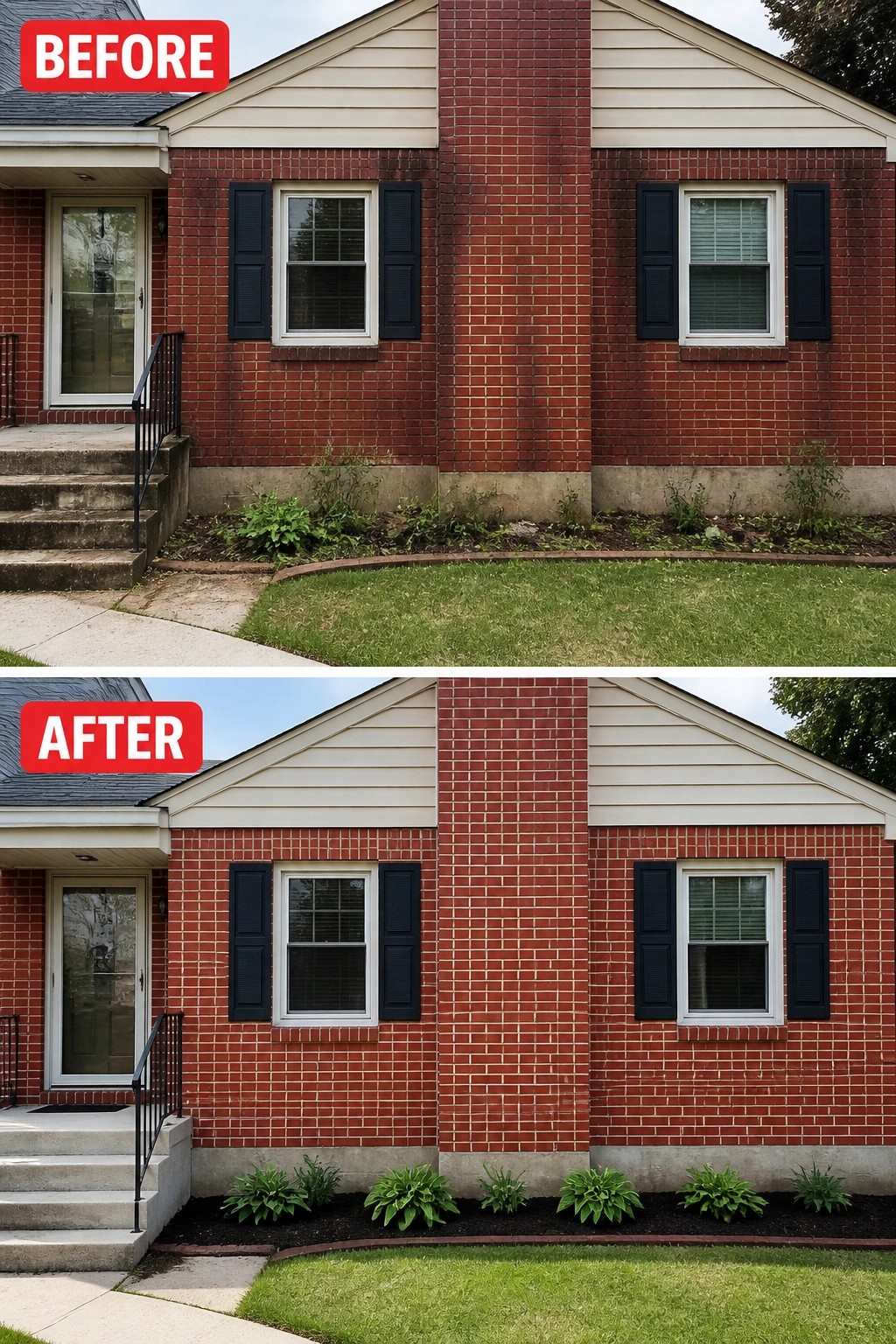
A narrow band of tidy planting along the base of the house instantly makes a brick facade look cared for. Clearing the overgrown strip and replacing it with a shallow, edged bed, dark mulch, and a row of repeating low plants (hostas in the photo) gives the front a neat, intentional look without a big budget.
Start by removing weeds and adding a simple clean edge to separate lawn from bed. Lay mulch, then plant one or two reliable varieties spaced evenly so the bed reads calm and ordered; keep plant heights below the windows and leave room for growth. This approach suits older brick homes and small front yards—low cost, low maintenance, and easy to update later.
Add Shutters To Frame A Plain Brick Facade
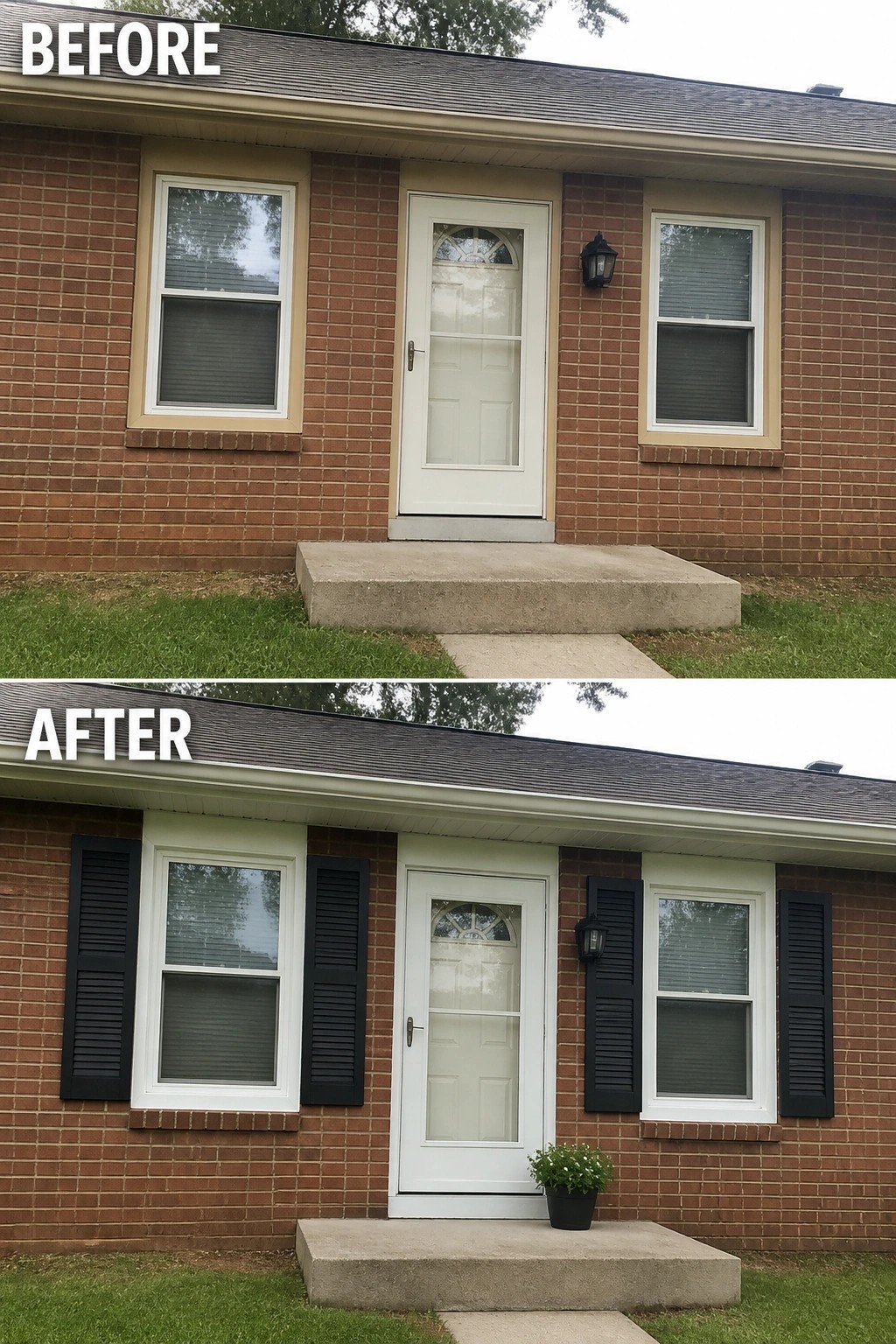
A few well-chosen shutters and a small planter can make a bare brick front feel finished. Swapping the plain trim for dark, louvered shutters instantly breaks up the flat brickwork and gives the windows and entry something to read as a focal point, so the whole house looks more intentional without a big budget.
To copy this on your own home, pick shutters sized for each window and a contrasting color (black or charcoal is a reliable choice on red brick). Use low-maintenance materials like PVC or composite and anchor them properly to masonry, then add one or two simple pots by the door to soften the concrete step. It’s a small, inexpensive update that works especially well on single-story or ranch-style brick homes—measure carefully and keep hardware weather-rated.
Use Window Boxes To Boost Curb Appeal
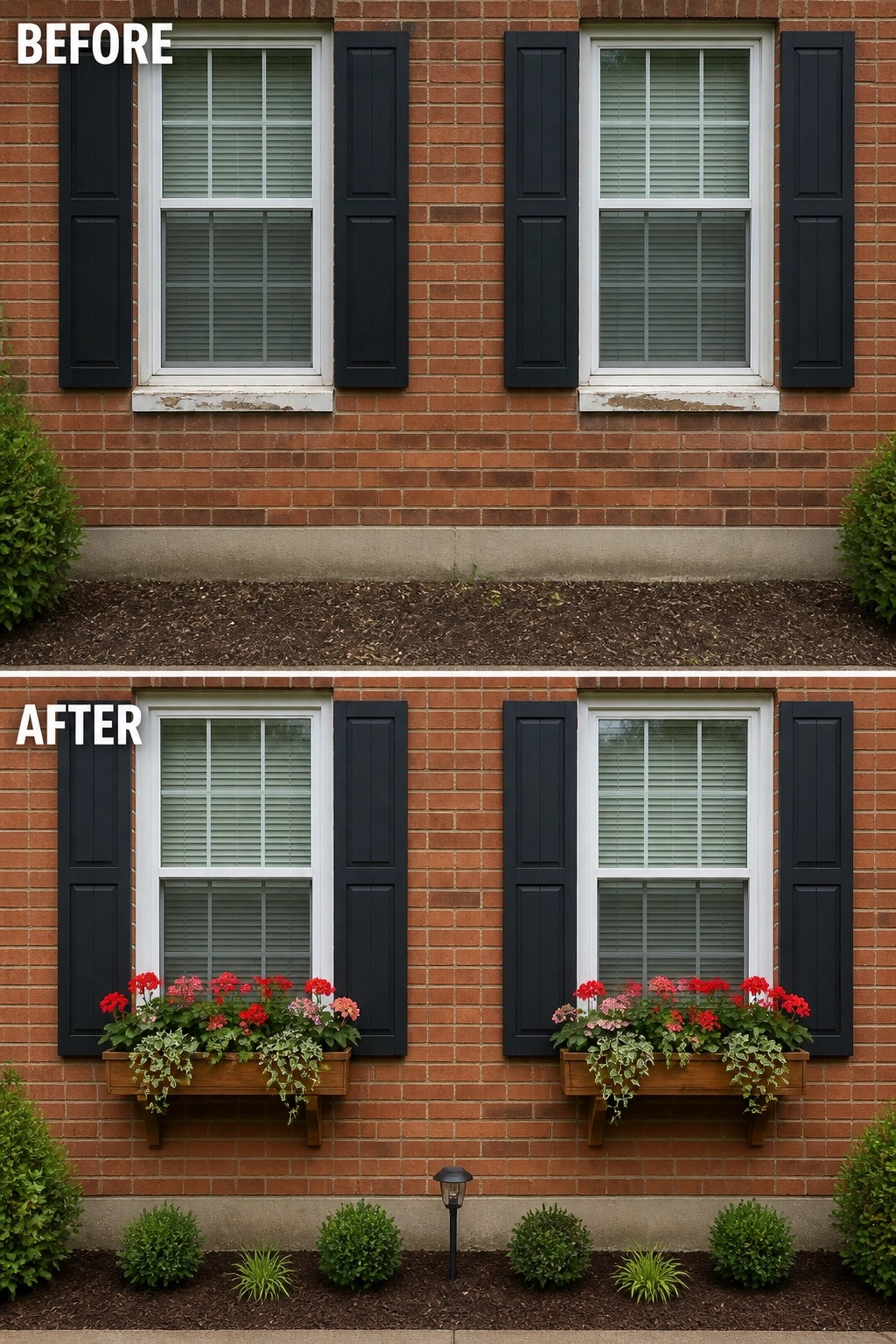
A pair of window boxes and a tidy planting strip are one of the fastest ways to dress up a plain brick facade. In the photo the worn sills and bare bed become wooden window boxes filled with flowering annuals and a neat row of low shrubs, which instantly softens the front and gives the house a cared-for look without major work.
To copy this, start with a quick cleanup and level the bed, pick boxes sized to your windows, and choose plants that suit your light and how much time you want to spend watering. Ensure boxes have drainage and are securely mounted to brick, add mulch and a few evergreen clippings for winter structure, and keep the scale small so the look stays tidy and low-maintenance.
Use Layered Lighting To Upgrade A Plain Entry
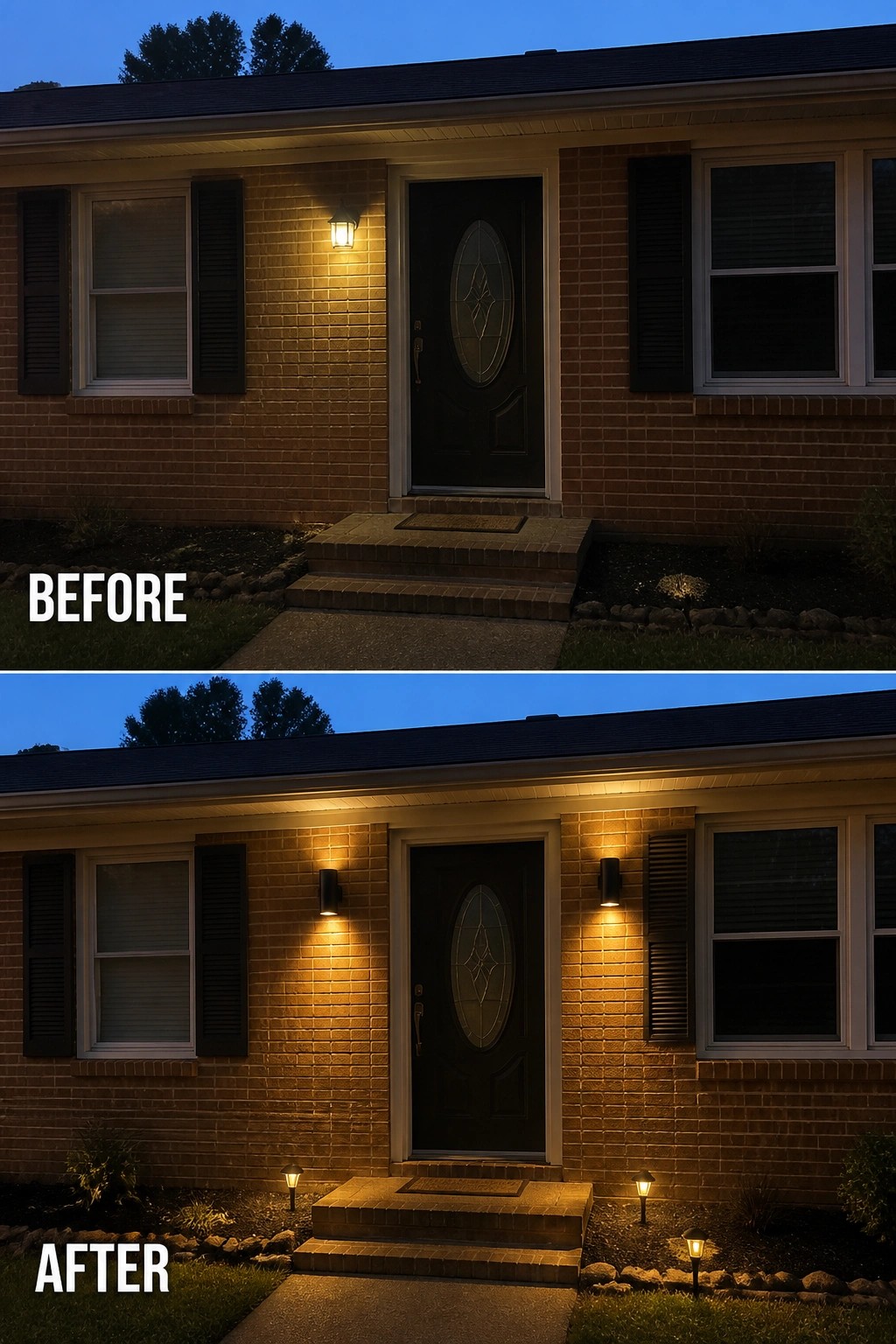
Swapping one small porch light for a pair of matching wall sconces and adding a few low pathway lights instantly changes how a front door reads. The symmetry of two fixtures frames the entry and the ground lights guide the eye and the feet, so the house looks cared for and is safer at night. It’s a simple, affordable tweak that lifts curb appeal more than a coat of paint will.
Do it affordably by choosing LED fixtures in a finish that fits your home, and pick a warm color temperature (2700–3000K) so the light feels pleasant. Mount the sconces at about eye level and use low-voltage or solar path lights to mark steps and the walkway. Keep fixture size proportional to the door and avoid harsh glare so the lighting feels intentional, not overpowering.
Use Pavers And Gravel To Define Your Front Walk
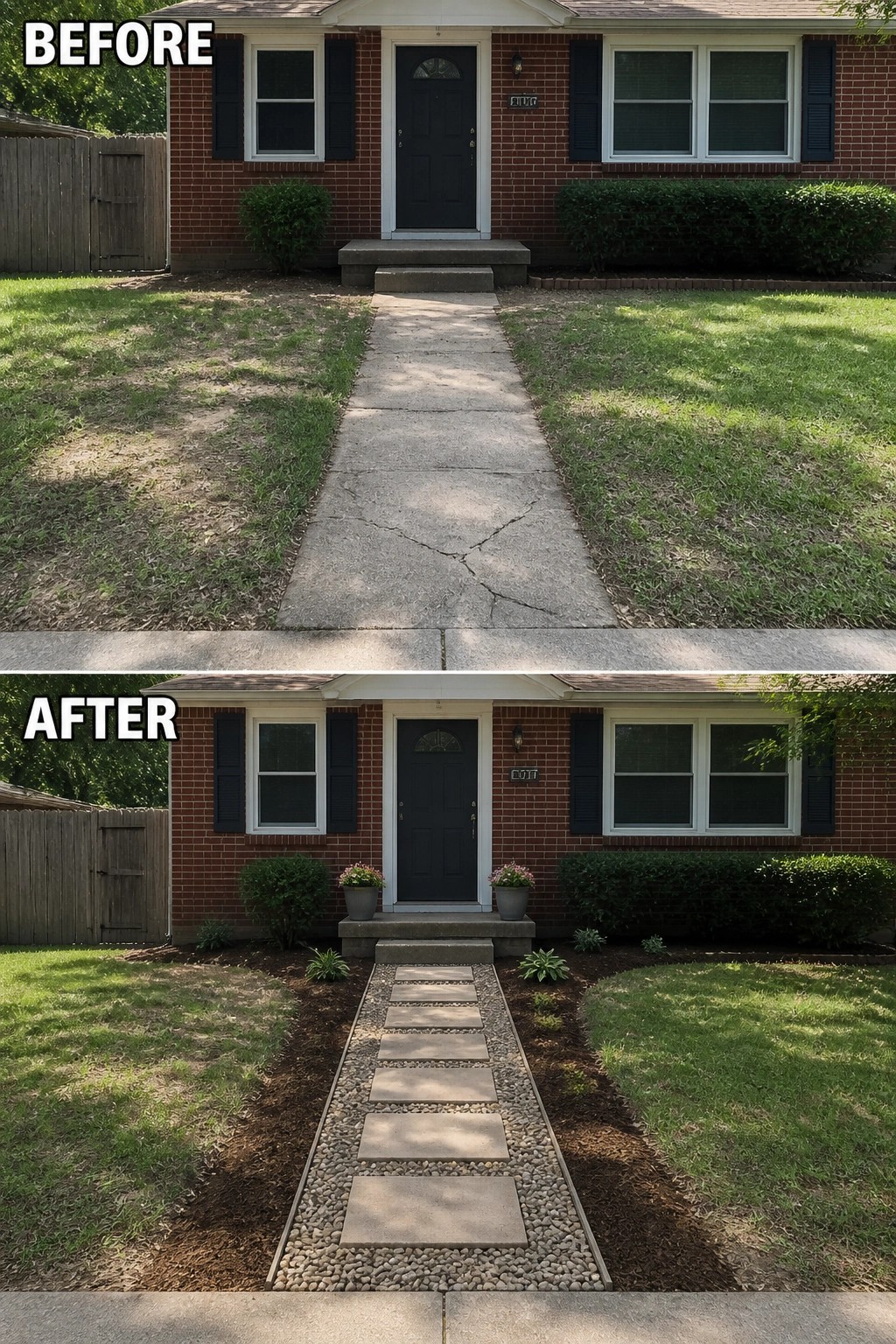
Replacing a patchy concrete slab with simple pavers set into pea gravel instantly gives the entry a cleaner, more intentional look. In the photo the cracked sidewalk is swapped for evenly spaced square pavers with a gravel band and neat metal edging, plus a little mulch and a couple of planters to frame the door — small changes that read as a finished path.
This works best on narrow approaches where you want structure without a big budget. Pick low-cost concrete pavers, compacted crushed stone under the gravel, and a thin metal or plastic edge to keep everything tidy. Repeat one or two easy-care plants near the steps, mulch the beds, and leave comfortable spacing between pavers for a natural stride — simple materials, simple install, big visual payoff.
Use Paint And Planters To Refresh A Plain Brick Entry
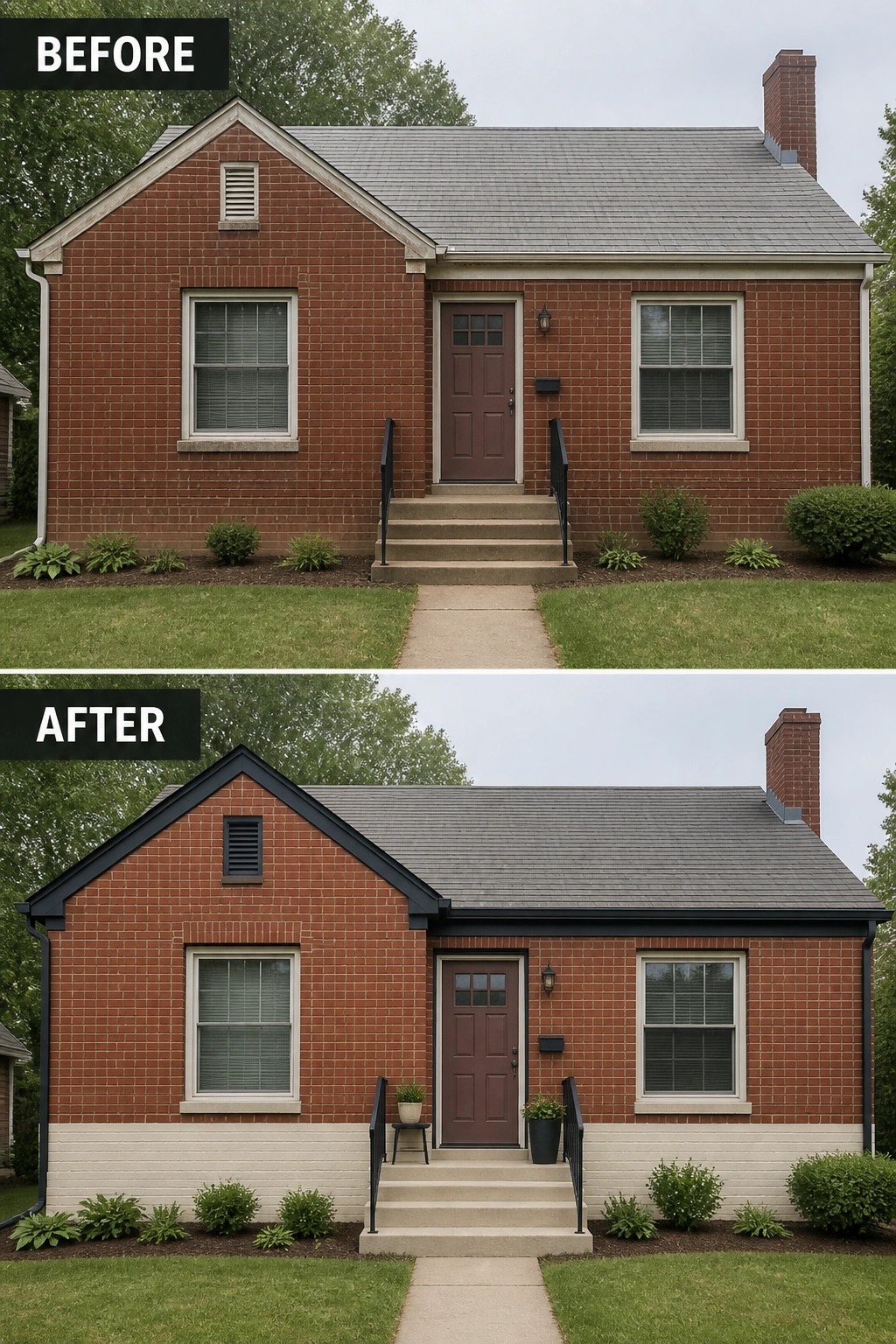
A quick way to lift a simple brick facade is to add a contrasting trim color and a couple of well-placed planters at the steps. Painting the eaves, window trim, and a lower brick band creates clean lines and a lighter base, while a pair of pots brings immediate color and scale to the entry. That small combination makes the whole front feel cared-for without a big budget.
To copy it, pick one dark or crisp trim color to repeat around windows, gutters, and the porch, and paint only the lowest course of brick or the foundation to brighten the base. Use masonry paint and a test patch first, then add two weatherproof planters with low-maintenance greenery that matches your home’s scale. Keep the layout simple so the path stays clear and the entry reads intentional, not crowded.
Refresh A Small Porch With Seating And Planters
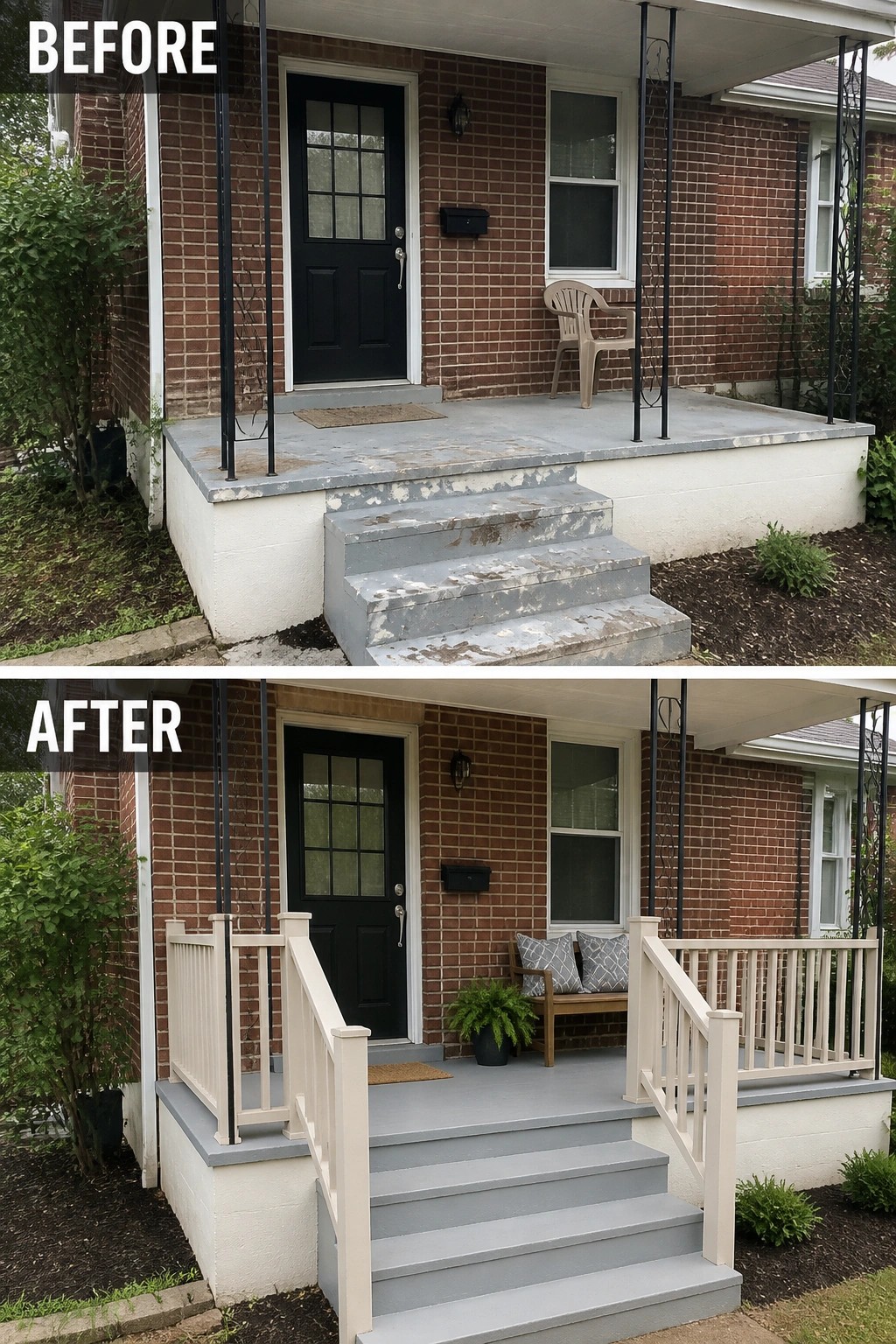
A small front porch can feel like wasted space until you give it a clear function. In this makeover the worn concrete was refreshed with paint and the space was anchored by simple railings and a small bench with a planter, which instantly turns the landing into a usable, welcoming entry rather than an afterthought.
To copy this at home, start by cleaning and painting the porch floor and steps to make everything look intentional. Add a slim bench or chair for seating, a planter for greenery, and a low-cost railing if you need more safety or definition—keep the pieces narrow so you still have a clear path to the door and choose weatherproof cushions that can handle the elements.
Paint Your Garage Door And Add Simple Hardware
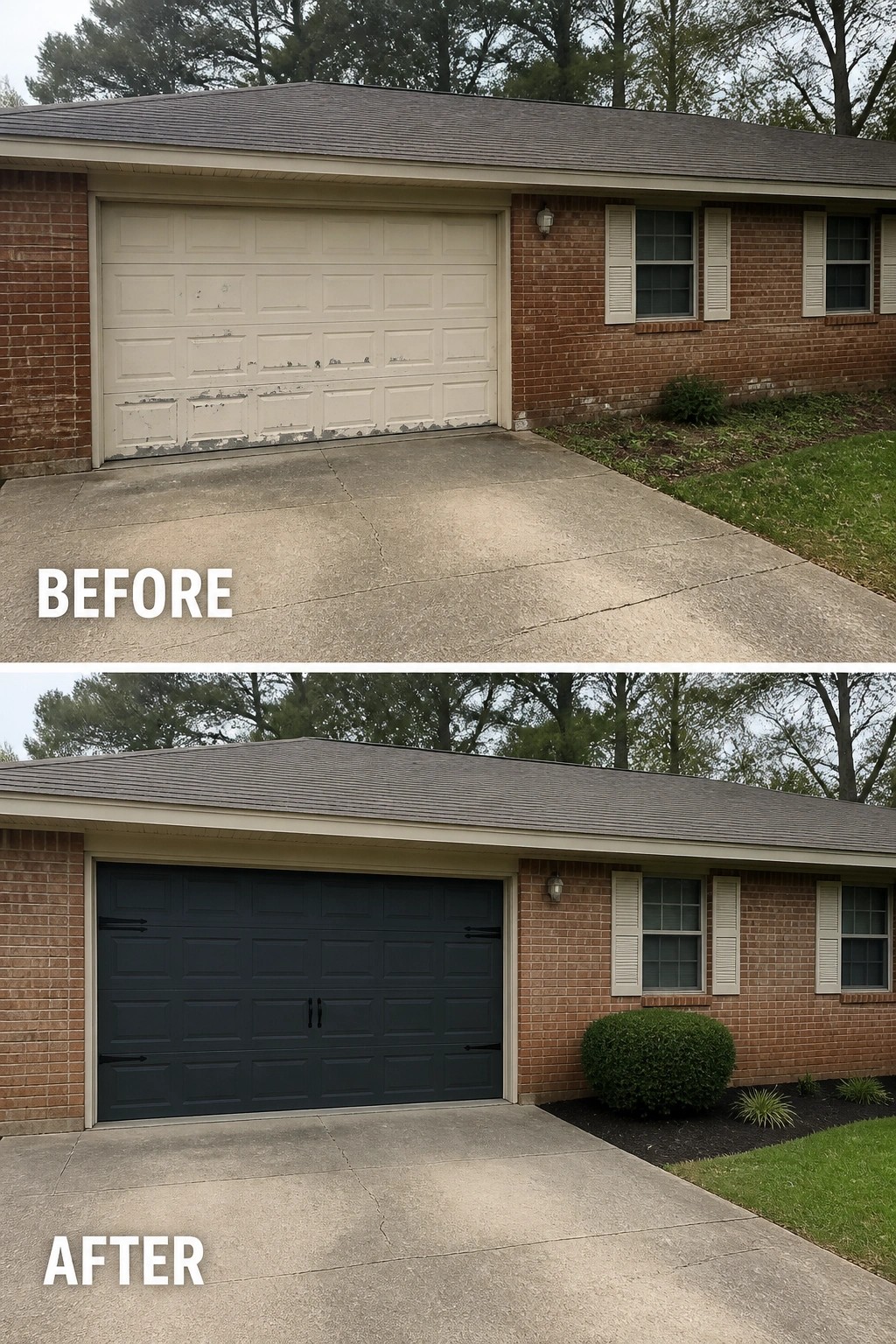
A fresh coat of paint on a garage door is one of the fastest, most affordable ways to lift curb appeal. In this example the old, chipped door was painted a deep charcoal and given basic strap hinges and handles, which turns a battered surface into a clean, intentional focal point without replacing the door.
Do the prep work first: clean, sand loose paint, prime, and apply two coats of a quality exterior paint made for doors. Choose a dark neutral for contrast with brick, test a small patch, and finish with inexpensive faux hardware and a tidy planting bed or single clipped shrub to anchor the look. Works especially well on brick ranches and other simple facades where one bold element can make the whole front feel updated.
Create A Clean, Edged Flower Bed
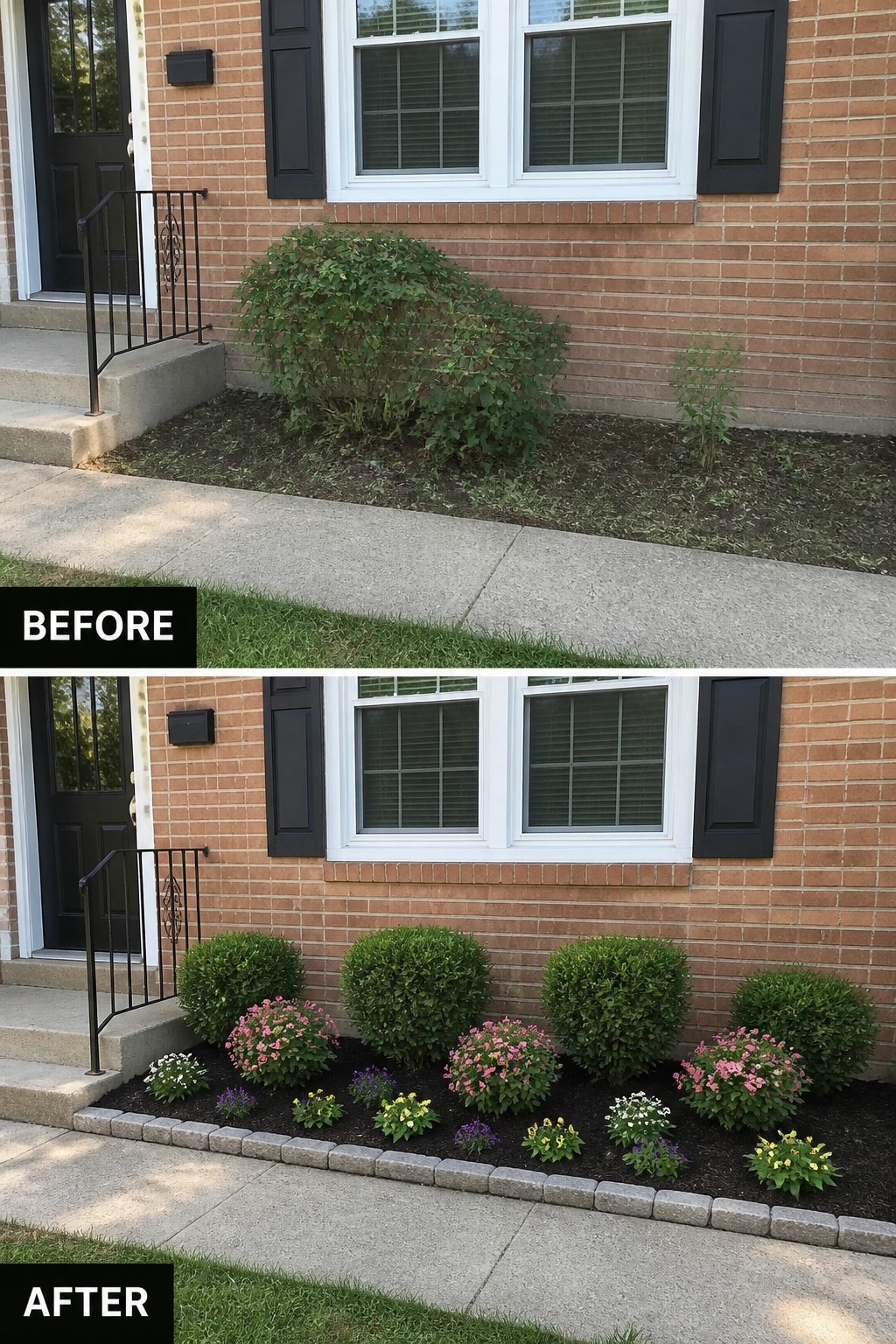
A tidy, defined bed instantly boosts curb appeal without a big budget. In this example an overgrown strip was cleared, given a simple paver edge and dark mulch, and planted with a few repeat shrubs and small flowering annuals to create structure and color. That combination—edge for shape, shrubs for height, low flowers for seasonal interest—makes the whole front look cared for and intentional.
To copy this, start by removing weeds and trimming any messy growth, then install an inexpensive edging material (stone pavers, brick, or plastic) to separate soil from the walkway. Add a layer of mulch to hide bare earth and plant a few evenly spaced, low-maintenance shrubs with small annuals in front for pops of color. Works well on small beds next to entryways; just keep plants far enough apart to avoid overcrowding and allow for simple upkeep.
Use Pathway And Accent Lighting To Brighten Your Entry
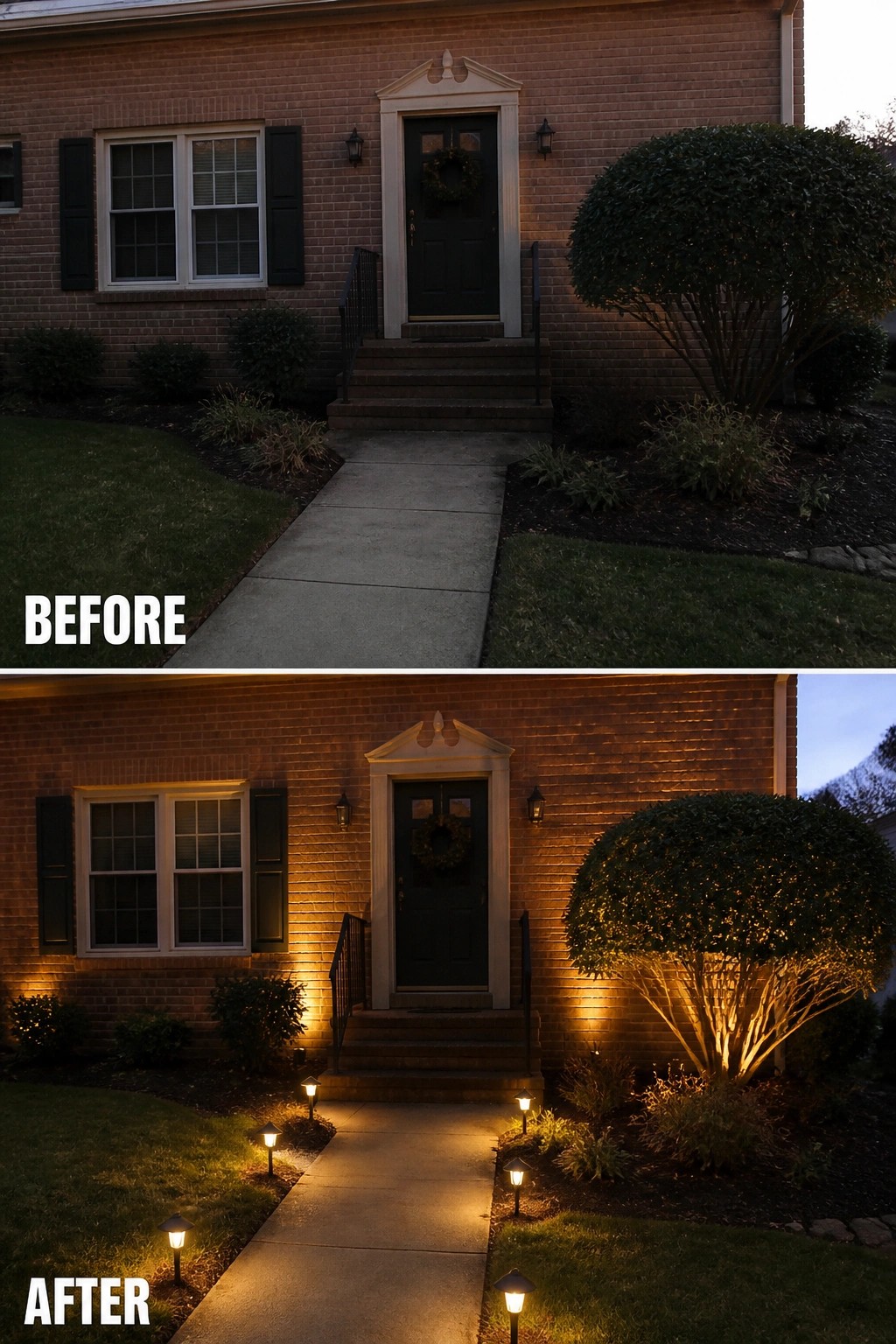
A few inexpensive pathway stake lights and a couple of low uplights can do more for curb appeal than a big renovation. In the before image the entry is dark and undefined; in the after, soft lights line the sidewalk and wash the brick and shrub, which makes the approach feel safer and more intentional without much cost.
To copy this, start with a line of low-voltage or solar pathway lights spaced about 6 to 8 feet apart, then add one or two small uplights aimed at a focal shrub or the doorway trim to create depth. Choose LED fixtures in the 2700–3000K range, hide wiring or stakes in the mulch, and use a dusk-to-dawn sensor or timer so the display runs automatically. Budget-friendly.
Create A Defined Mailbox Bed
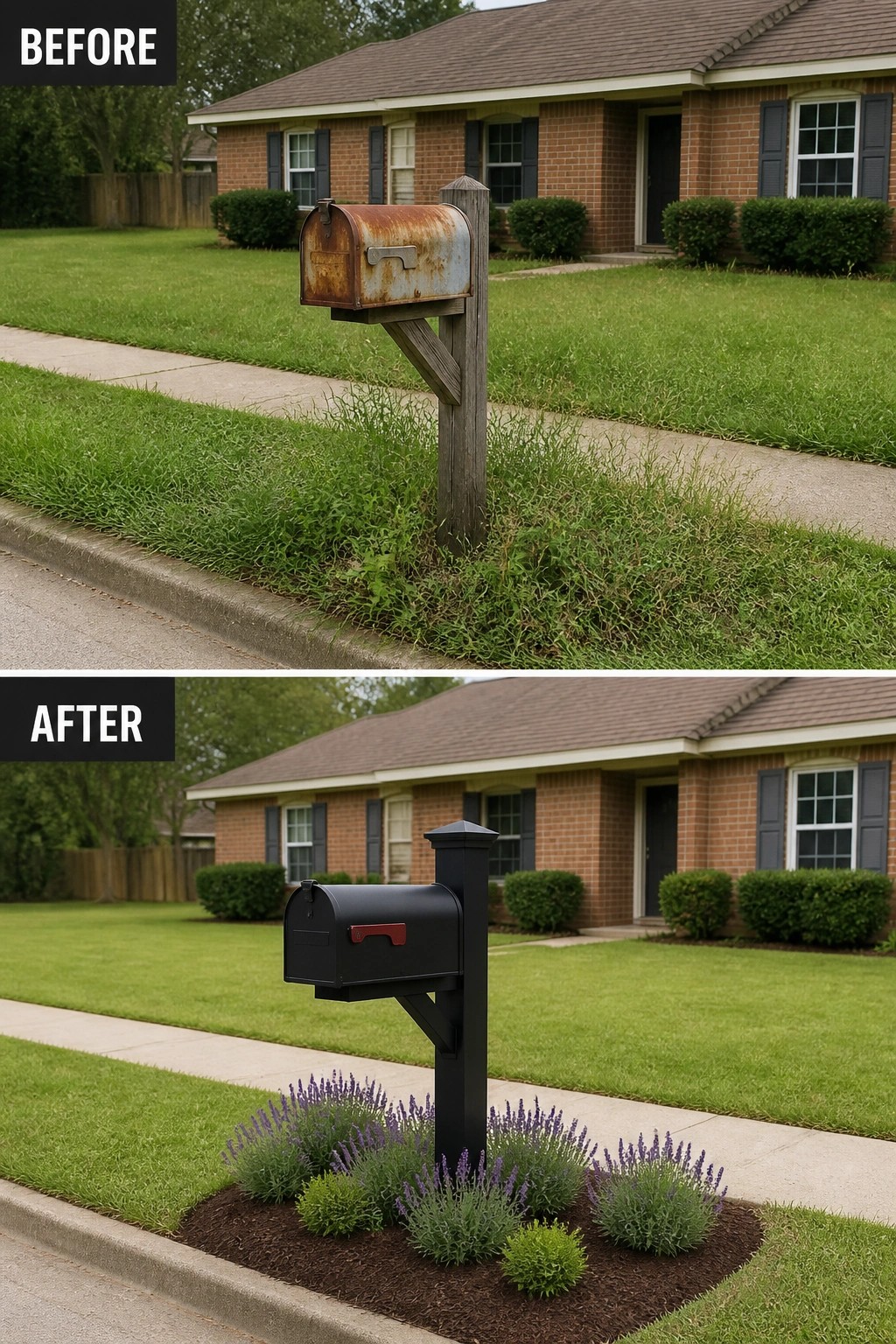
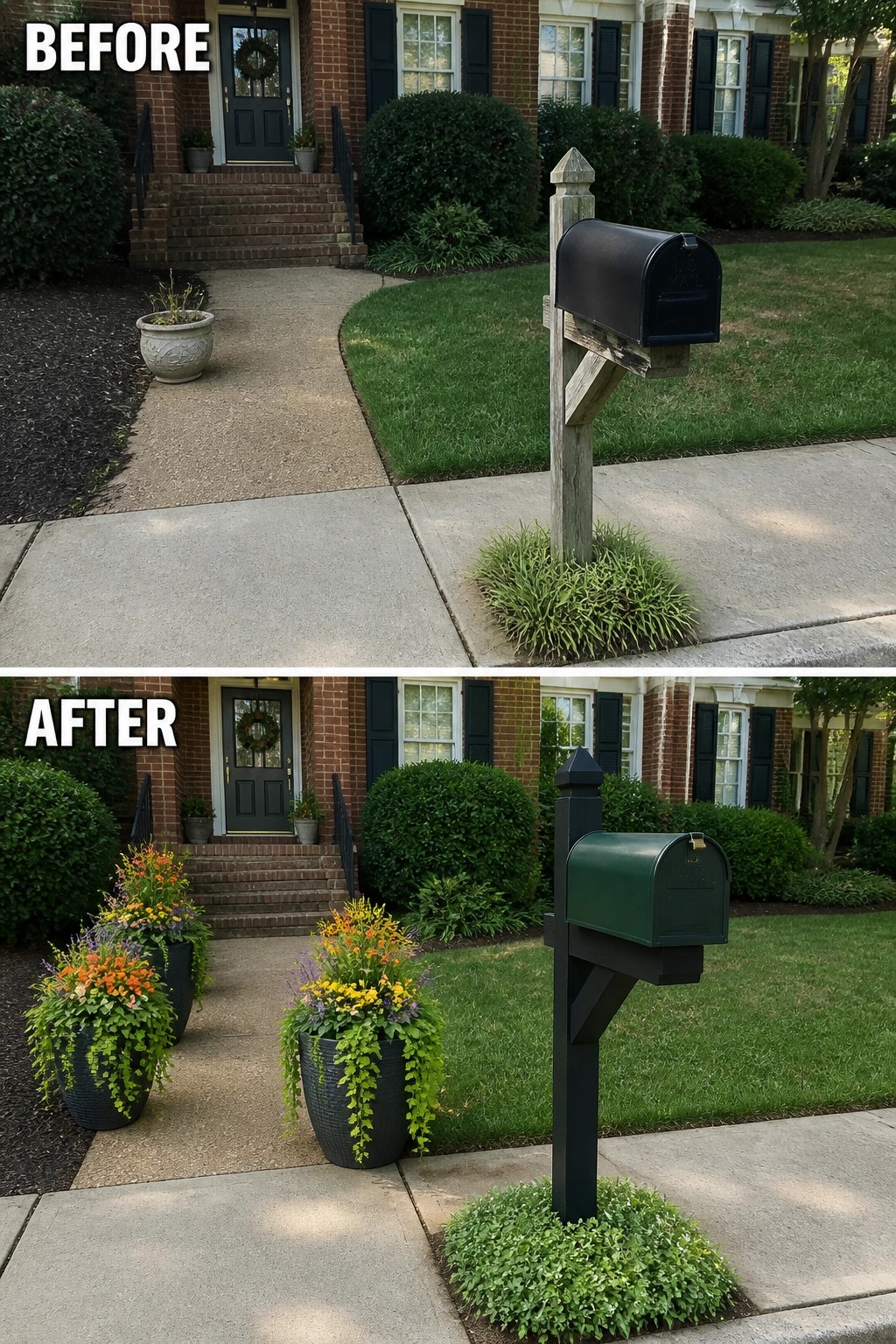
A small, well edged planting bed around the mailbox turns an overgrown strip of lawn into a tidy curb feature. Replacing the tired post and weeds with a simple mulched ring and a few low shrubs or flowering clumps (lavender is a good choice) instantly looks more intentional and cared for.
Start by clearing grass and weeds, cut a clean edge, and lay down a thin layer of landscape fabric if you want less weeding. Plant two to three repeat varieties for a neat, low-maintenance look, add 2–3 inches of dark mulch, and keep the bed small so the mail carrier still has room—works great on brick homes and takes only a little seasonal upkeep.
Give A Plain Brick Facade Instant Curb Appeal
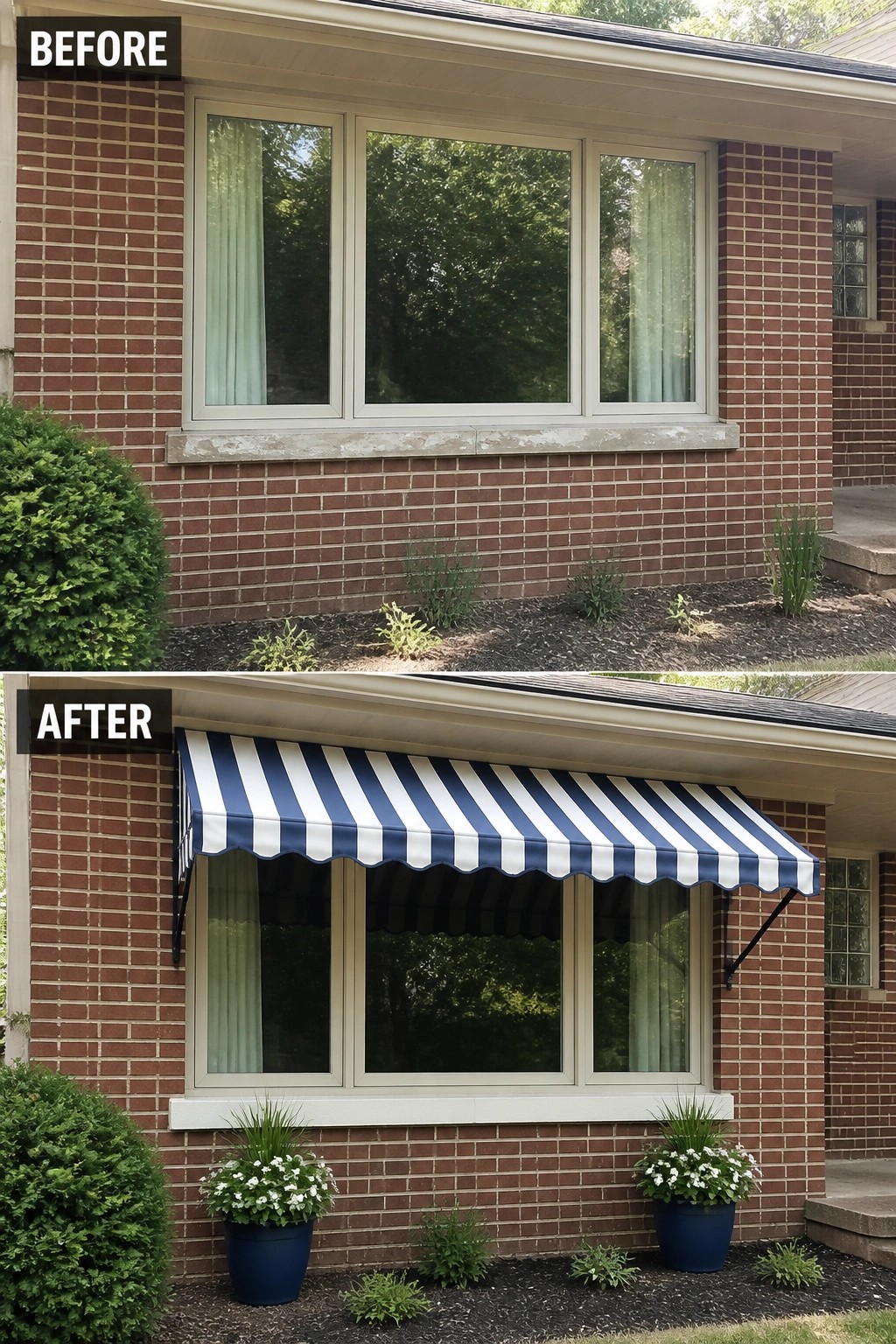
A striped awning and a pair of matching planters are an easy way to lift a bare brick front without a major remodel. Replacing an empty window opening with a small bracketed awning introduces color, shade, and a clear focal point, while the pots echo that color and tie the look together.
Keep it simple when you do this yourself: pick an awning width that suits the window and roofline, choose durable outdoor fabric or metal for your climate, and mount into masonry or studs for safety. Use two similar planters on either side to balance the composition, plant low-maintenance greenery and seasonal blooms, and repeat one color from the awning in the pots to make the whole update feel intentional and budget-friendly.
Add A Pergola And String Lights To Define A Porch
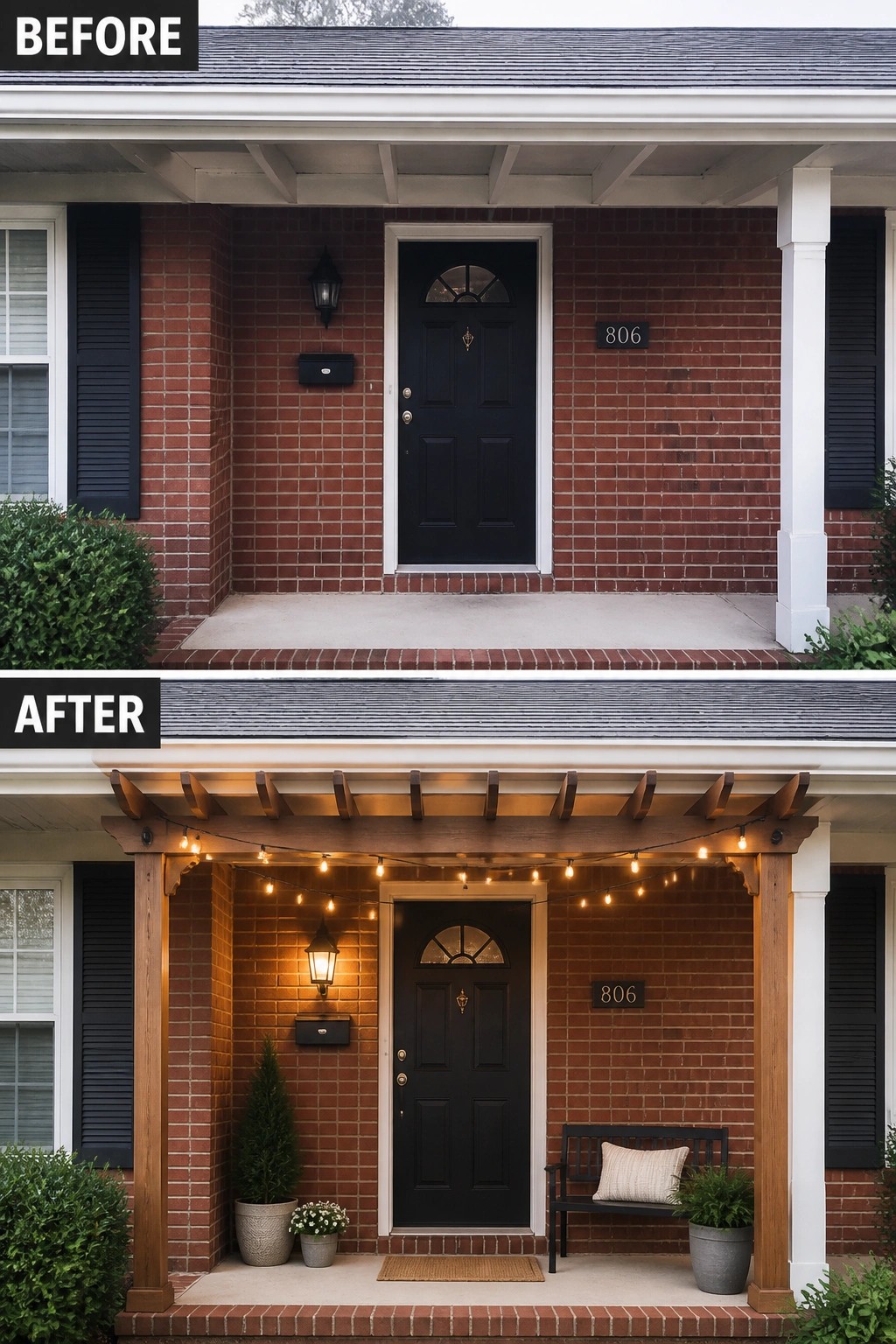
A small porch does not need a big budget to feel usable. Framing the entry with a simple wooden pergola, a string of lights, and one bench instantly defines the space and signals that this is a place to pause, not just pass by. In the before-and-after here the plain stoop becomes a framed, welcoming entry with a few well-chosen elements.
To copy this on a budget, start by picking one focal piece—usually seating or a light—and build around it with matching materials and two symmetrical planters. Keep proportions in mind so you do not block the door, choose weatherproof furniture, and anchor soft lighting to the new overhead frame for evening use. Simple upgrades like a doormat and a potted evergreen finish the look without crowding the entry.
Upgrade Front Steps With Paint And Potted Plants
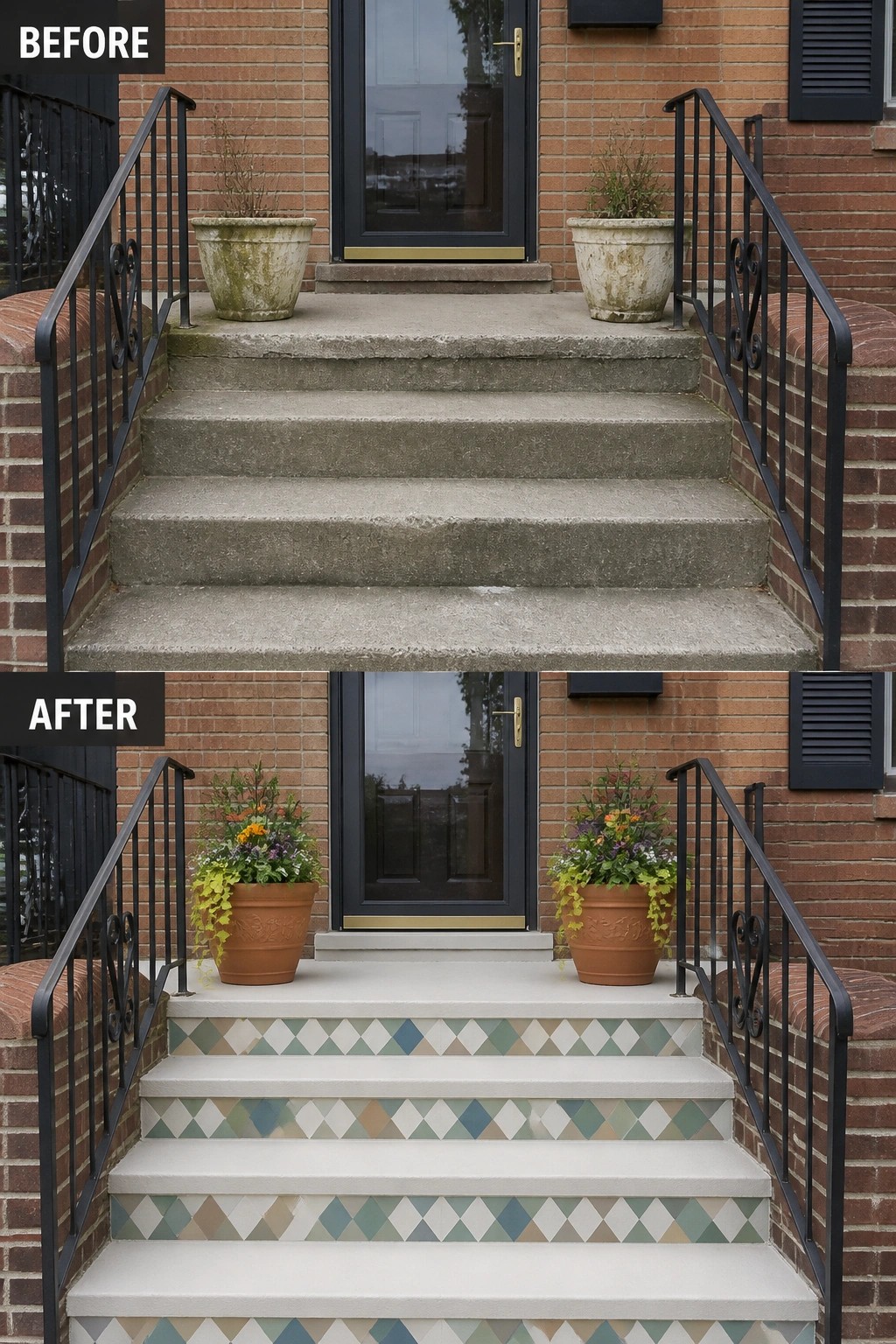
A set of plain, weathered steps can make an entryway look unfinished, so give it a clear purpose by treating the stairs as a small design feature. In this example the homeowner painted the treads, added patterned risers, and flanked the top step with matching potted plants to turn a utilitarian stoop into a welcoming approach.
Start with cleanup and minor repairs (start with cleanup). Use exterior concrete paint on the treads and durable outdoor tile or adhesive stair tiles on the risers, and pick planters that fit the scale of your steps so you don’t block the path. This works well on older brick or masonry homes and is budget-friendly if you focus on prep, choose weatherproof materials, and keep the changes simple.
Give A Bare Porch A Clear Purpose
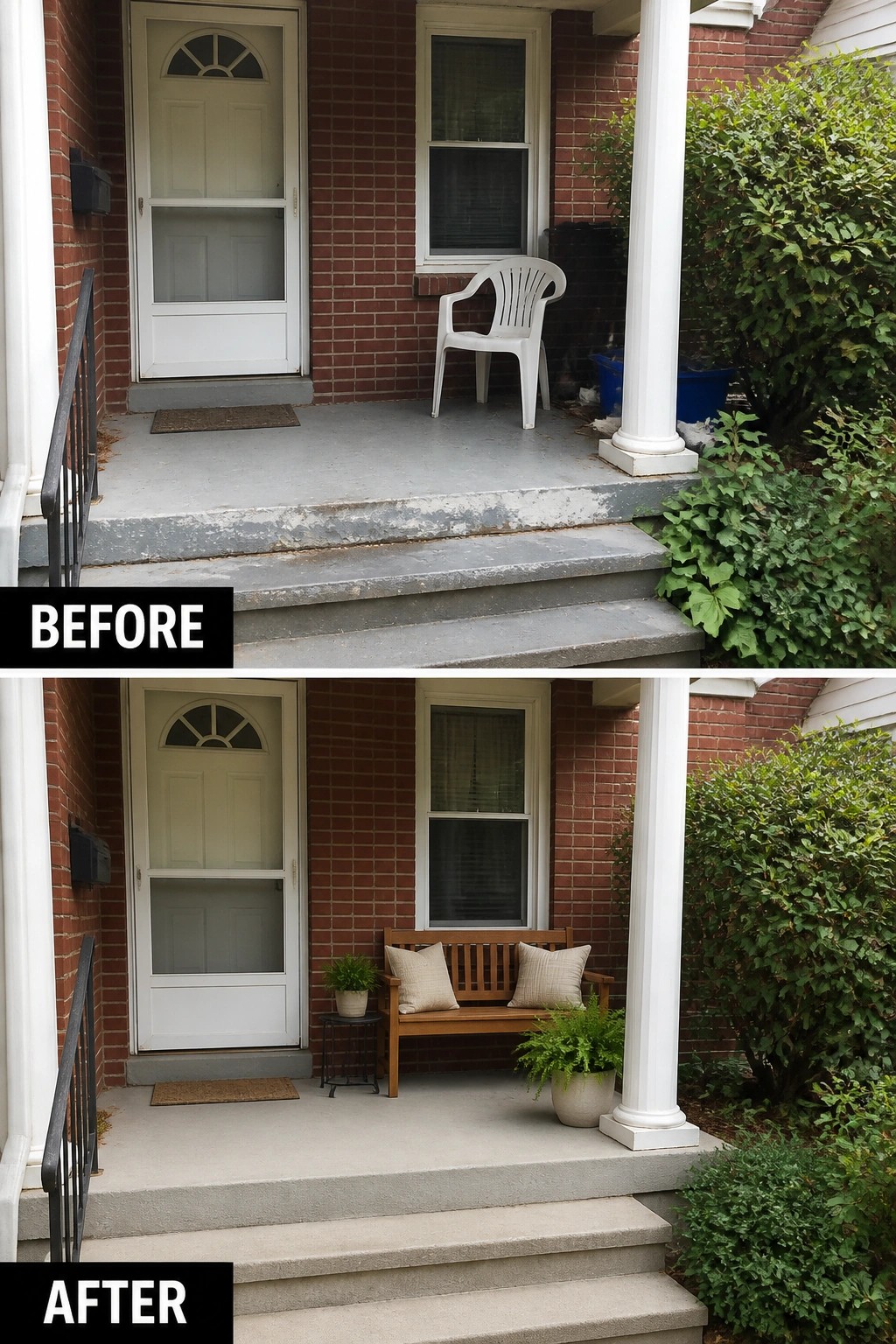
A small covered porch stops feeling like wasted space when you give it a clear function. Swapping a single plastic chair and rough concrete for a simple wooden bench, a welcome mat, and a couple of planters turns the entry into a place to sit, pause, and greet guests without any major work. The change works because it introduces one practical focal point rather than scattering mismatched items.
Start by cleaning or painting the concrete so new furnishings look intentional. Choose a weatherproof bench that fits the porch depth and leave a clear path to the door, then anchor the seating with two planters or a small side table and a pair of cushions (stick to durable outdoor fabrics). This approach suits narrow, covered porches on older homes and keeps costs low while making the front of the house feel looked after and useful.
Use Stone Veneer And Lighting To Define The Entry
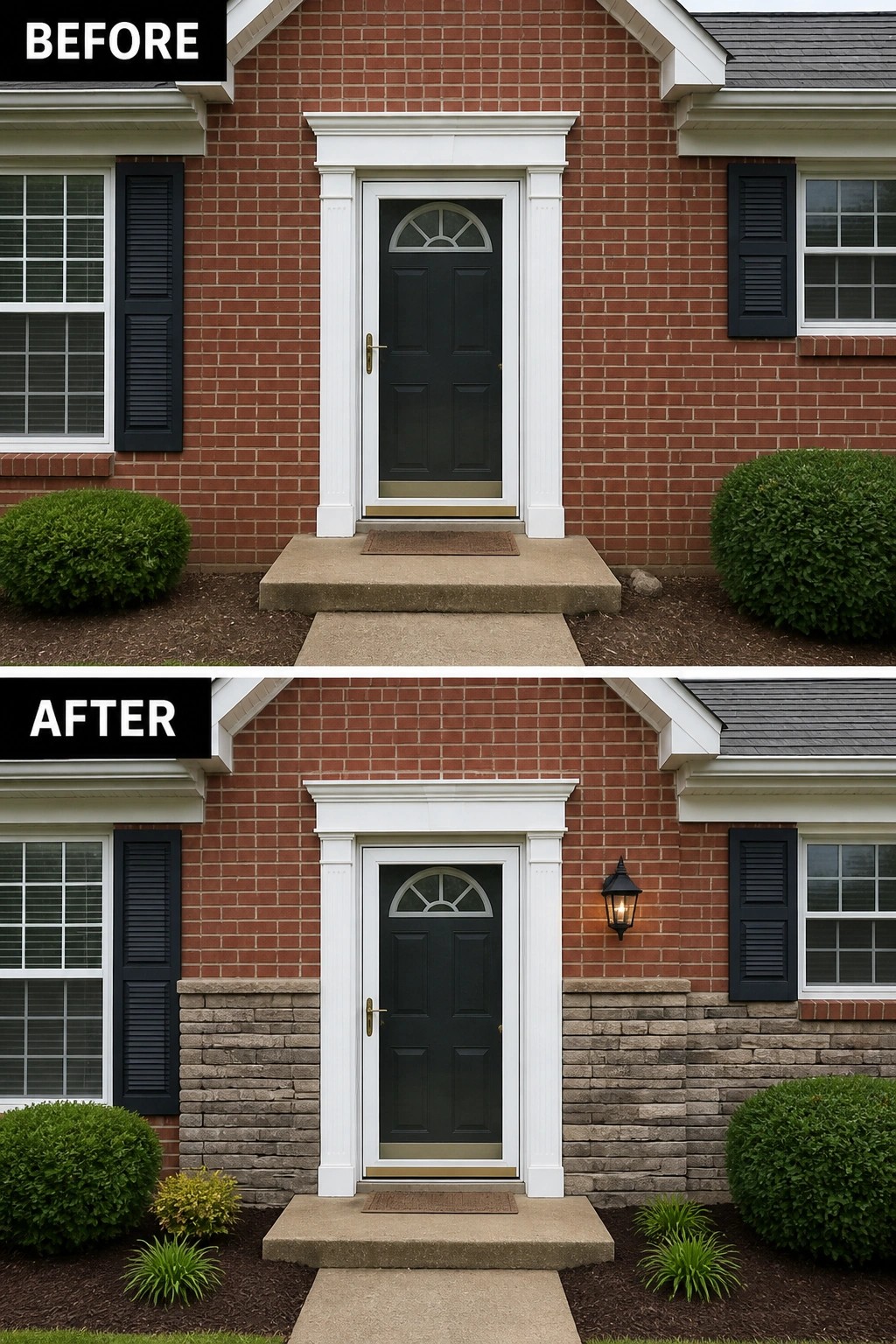
A short band of stone veneer along the lower facade plus a single wall lantern can turn a flat brick entry into a clear, welcoming focal point. Instead of redoing the whole exterior, the after shows how adding a stone “skirt” at eye level and one lantern gives the doorway purpose and visual
Use A Trellis And Planting To Dress A Plain Brick Facade
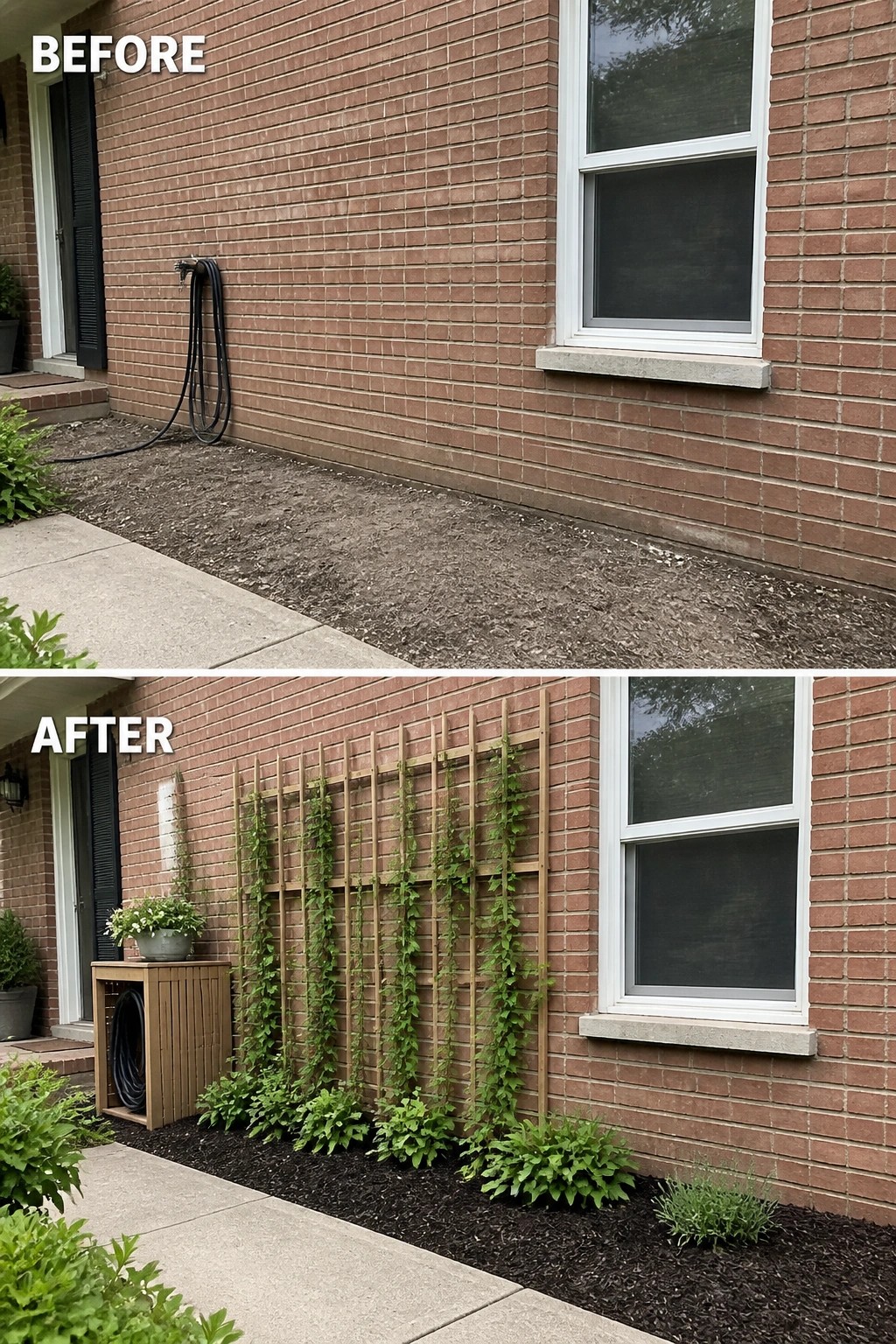
A plain strip of dirt next to a brick wall is a missed opportunity. Installing a simple wooden trellis and planting a row of climbing vines instantly adds height and texture, while a tidy layer of mulch and a small hose cabinet keep the area looking finished. That one vertical element gives the eye something to follow and turns an empty run of wall into a deliberate part of the yard.
This idea works best on narrow beds where you want visual impact without big changes. Start by cleaning the bed, adding a thin layer of compost, and planting a mix of low perennials at the base with fast-climbing vines trained on the trellis (morning sun varieties if that side is bright). Use a freestanding trellis or attach it to mortar lines to avoid damaging brick, mulch for low maintenance, and tuck utility items like hoses into a little cabinet so the planting stays the focal point.
Create Defined Garden Beds To Frame The Entry
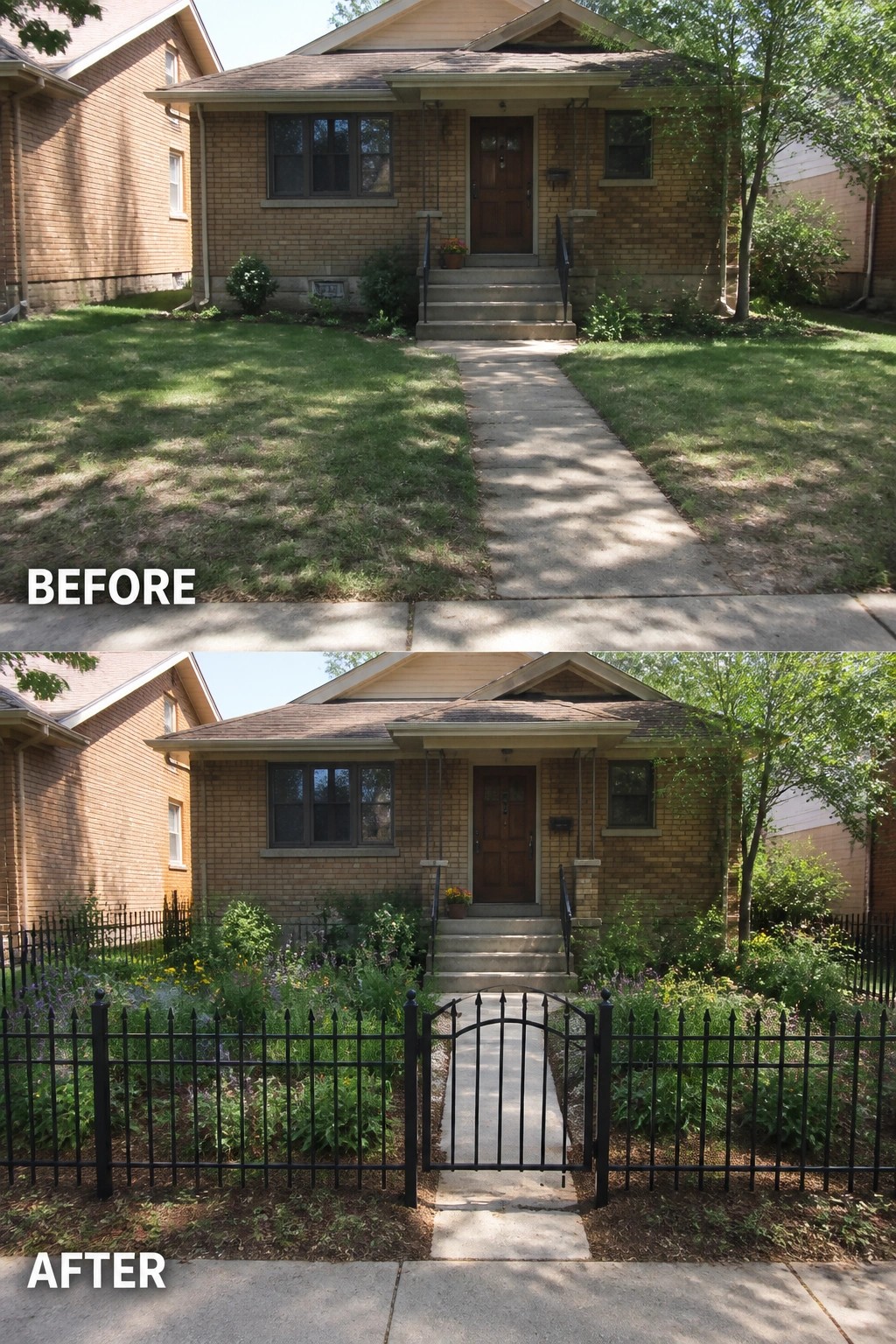
Swapping a strip of plain lawn for dug-out garden beds and a low fence instantly gives a narrow front yard purpose and shape. In this example the empty grass is replaced by layered plantings and a simple black gate that aligns with the sidewalk, so the path reads as the entrance rather than a random slab of concrete.
To copy it, mark the bed edge first so you keep a clear walk to the door, then remove the turf, loosen the soil, and plant in groups (tall toward the house, low along the path). Use mulch to cut maintenance and pick hardy perennials or local natives for season-long interest. A short decorative fence or metal edging helps keep the beds tidy and gives a finished look without a big budget (start small if funds are tight).
Frequently Asked Questions
Q: Can I paint my brick without causing damage or hurting resale value?
A: Yes, you can paint brick, but pick a breathable masonry paint and fix any mortar or moisture problems first. Painted brick changes the home’s look and may not appeal to every buyer, so consider a neutral color and test a small area first (start with one side of the entry). Plan to touch up or repaint every several years because paint on brick wears differently than on siding.
Q: What one budget update will make the biggest immediate impact?
A: A good power wash, fresh house numbers, and a bold new doormat or potted plants can transform the look in a day. Those fixes are cheap, visible from the street, and make the house feel cared for without a big project.
Q: Do I need a pro or permit to replace exterior light fixtures or add pathway lights?
A: Swapping out fixtures usually doesn’t need a permit if you’re only replacing like-for-like and you’re comfortable working with wiring. If you run new wiring, move circuits, or aren’t sure about the electrical side, hire a licensed electrician—safer and saves headaches.
Q: How can I choose low-maintenance plants that still look good year-round?
A: Mix a few evergreen shrubs for structure with seasonal annuals in containers you can swap out easily. Pick drought-tolerant and native species to cut watering and pruning, and use mulch to keep beds tidy and reduce chores.