

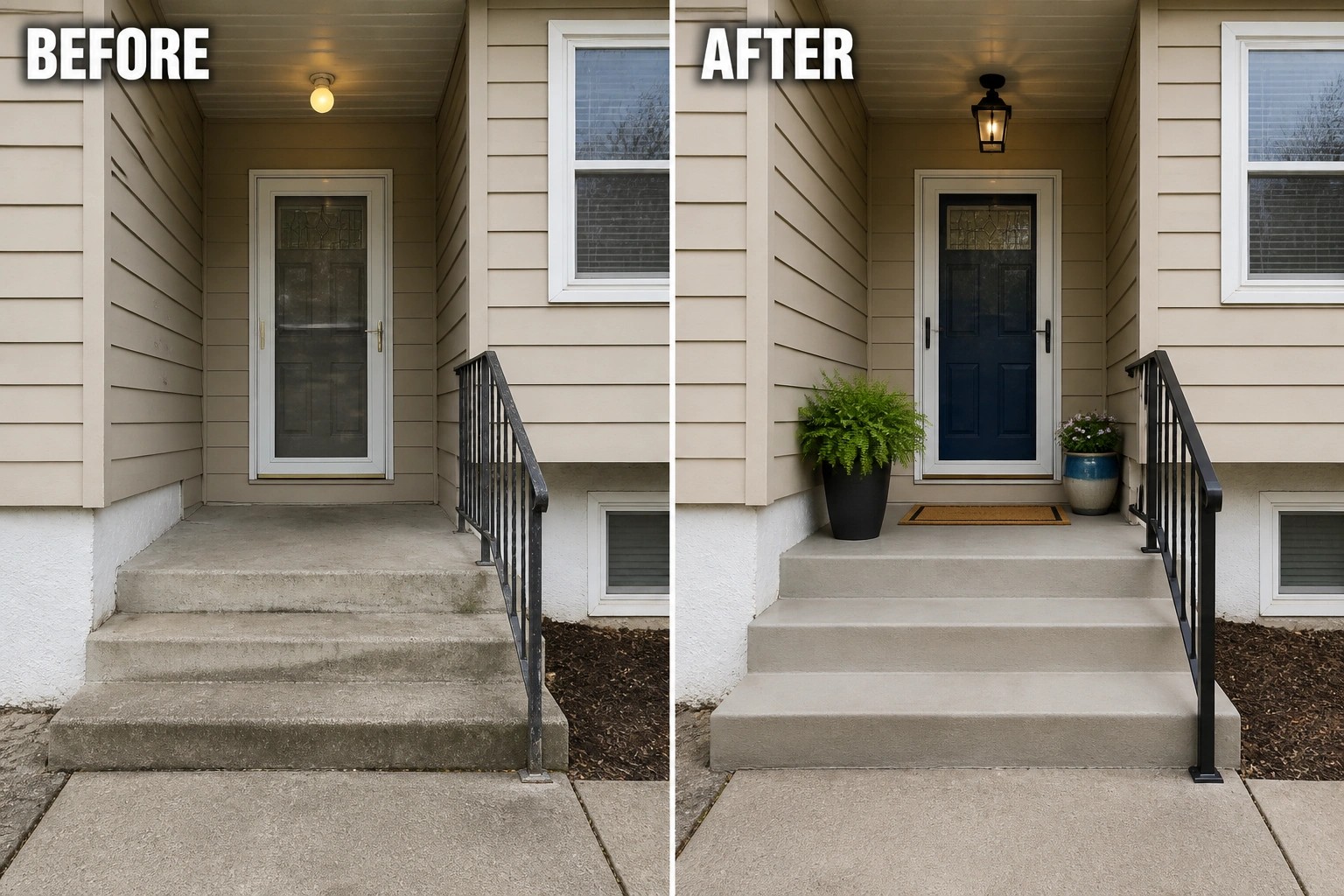
Split foyer homes often tuck the front door into a shadowy alcove that makes arrival feel flat instead of welcoming, and curb appeal around a recessed entry usually comes down to a few clear, fixable details.
A fresh coat of paint on the door and trim, smarter exterior lighting, simple railings or steps that read as intentional, and a couple of well-placed planters can lift the whole facade without a full renovation.
Small moves add up.
I tend to test lighting first because it immediately reduces the cave-like feel and shows what color and hardware will actually look like in the evening, and from there it’s easy to mix in practical touches like a sturdier mailbox or a clearer path.
Many of the suggestions are worth saving, adapting, or testing on your own until the entry reads as intentional and the house looks cared for.
Give A Bare Recessed Entry A Clear Purpose
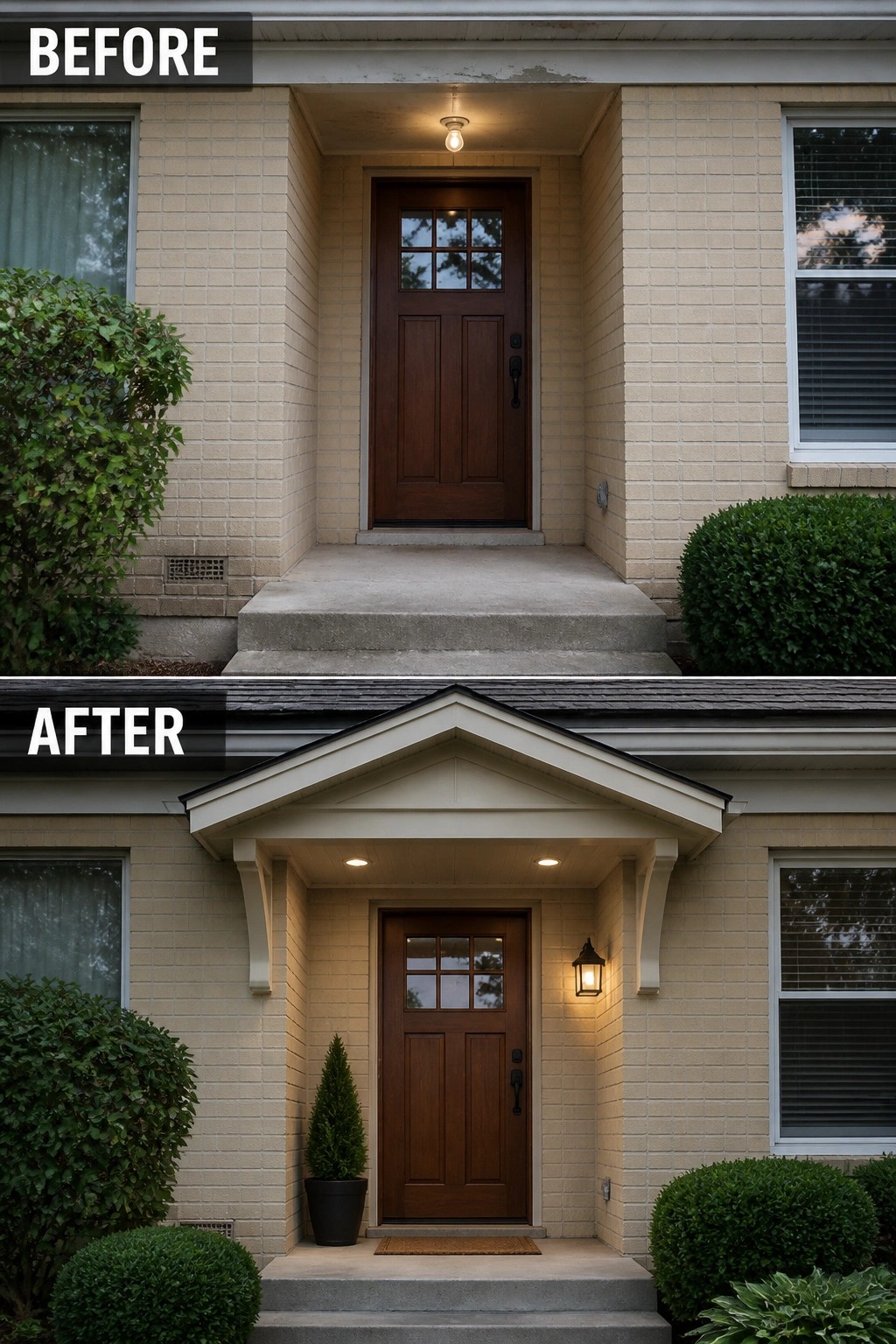
A small roof and a few finishing touches can turn a recessed, unused doorway into a purposeful front entry. Adding a simple gabled canopy with recessed lights and a wall lantern gives the approach structure and safe lighting, while a single potted plant and a doormat define the spot as an entrance rather than just a step. Those few changes make the entry more usable and easier to read from the street.
Copy the idea by keeping the additions modest and proportionate to the opening. A narrow gable or awning is often enough and usually easier to add than a full porch—match trim color to existing siding and use exterior-grade fixtures and fasteners so it lasts. Place one or two low-maintenance planters and a durable mat so the space looks cared for without crowding the step, and check for needed permits or flashing details before you build.
Make A Recessed Entry Feel Like A Front Door
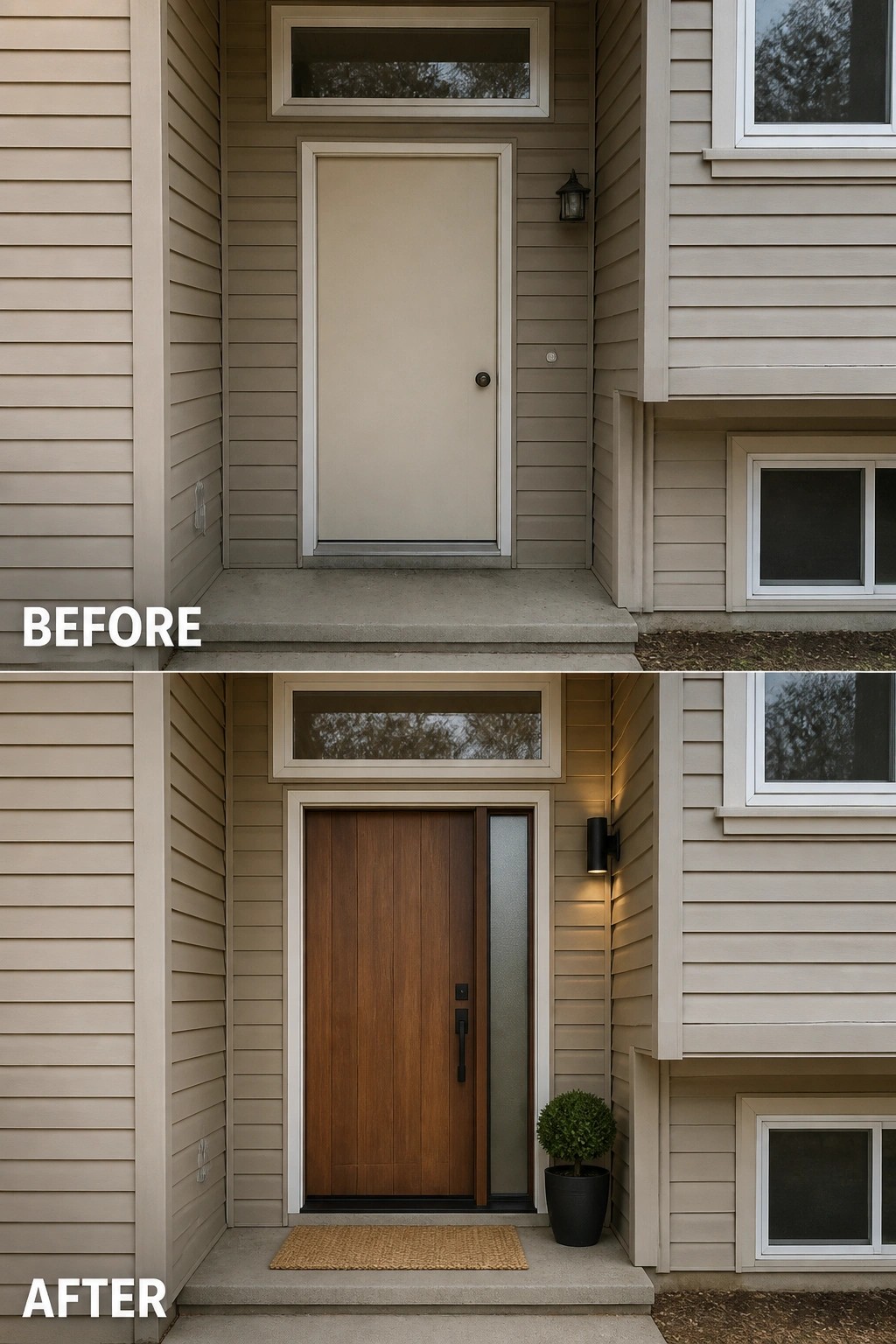
Swap a bland slab for a purposeful front door and a couple of small accents to give a recessed entry real curb appeal. In this example the plain door is replaced with a warm wood door and a narrow frosted sidelight, and a modern wall light plus a simple doormat and potted plant give the space scale and welcome without crowding it.
Start with the door choice — pick a style and finish that contrasts the siding but stays in the same tone family. Add one compact light at eye level and a slim glass sidelights if you can, so the entry feels brighter and safer while keeping privacy. Use weatherproof hardware and small, low-profile planters or a mat so the area looks finished but still leaves room to step in.
Upgrade A Bare Porch With Coordinated Masonry And Lighting
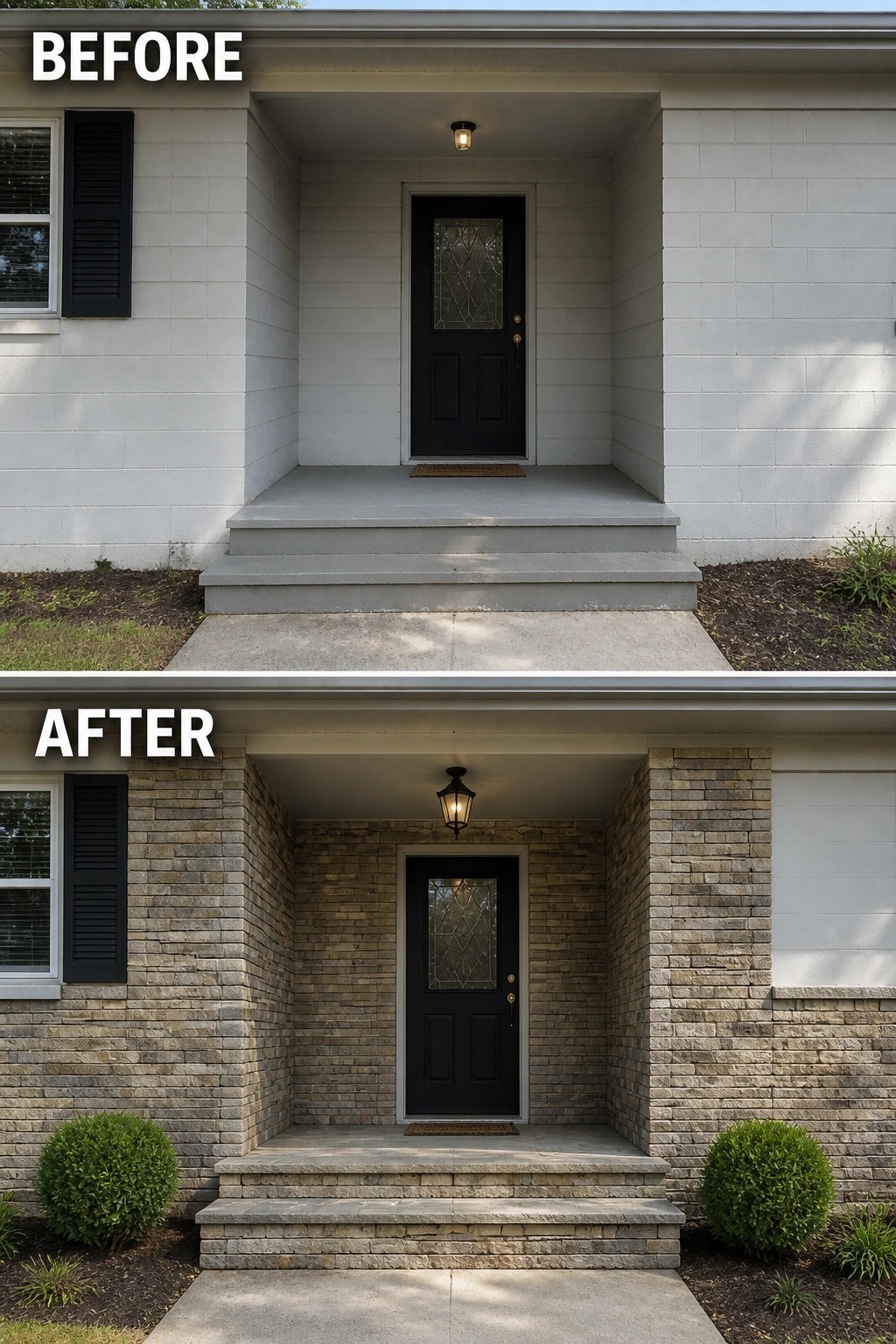
Swapping plain painted block for a consistent masonry finish and a proper light instantly gives a recessed entry a job to do: it becomes a front door you notice. In this example the stone-clad walls and matching stepped treads (plus a centered lantern and pair of small shrubs) add material weight and symmetry so the alcove reads as an intentional porch rather than leftover concrete.
To copy this idea, pick one durable facing material to wrap the recessed walls and steps so the entry reads as a single element, not an afterthought. Keep plantings low and balanced, choose an outdoor-rated fixture sized for the ceiling height, and make sure the new tread material meets slip- and step-depth needs; a single well-chosen upgrade goes a long way toward improving curb appeal and usability (start small if you need to).
Turn An Empty Porch Into A Seating Area
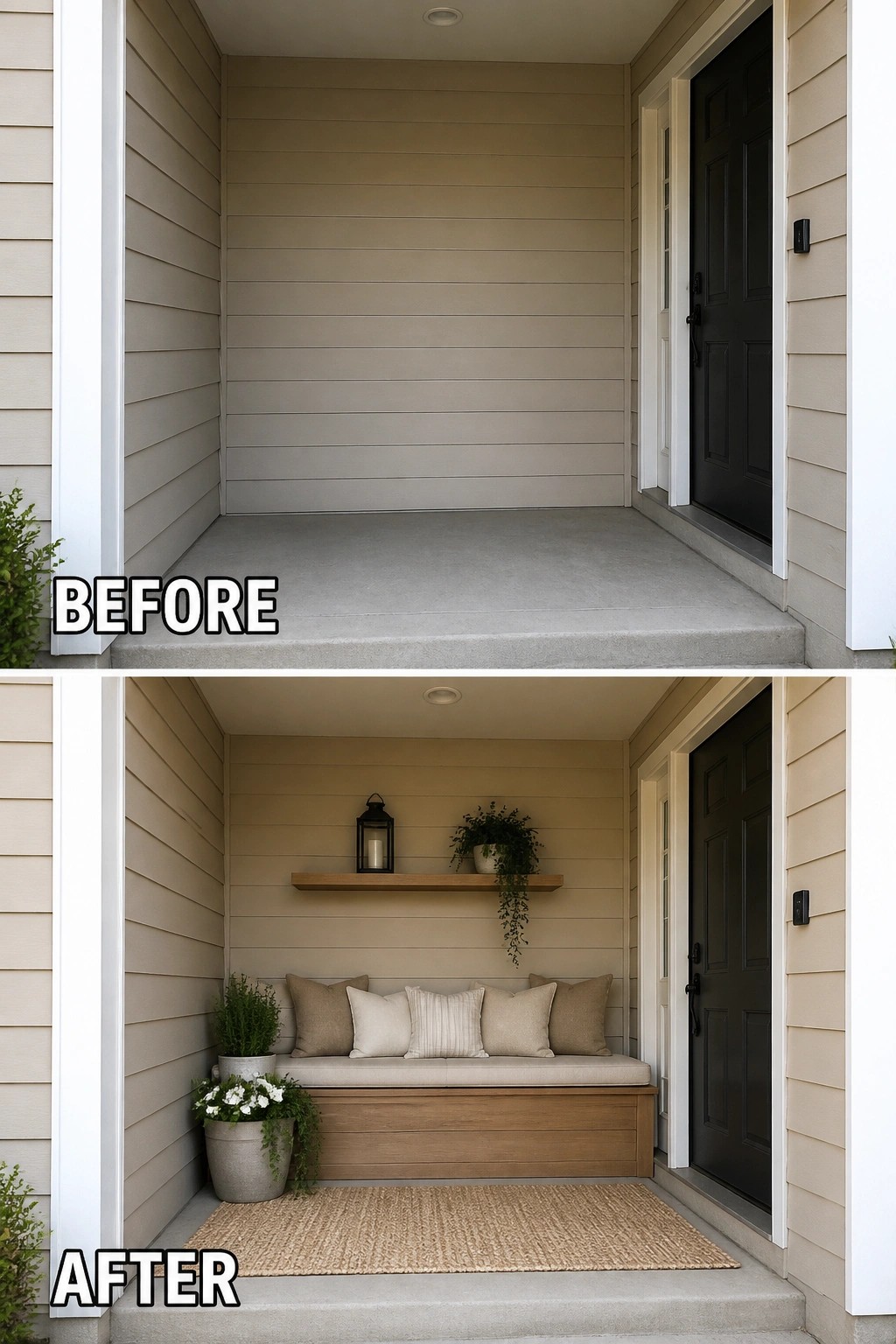
A recessed entry can feel like wasted space, but a single compact bench plus a rug and a planter gives it instant purpose. In the after photo a low bench with cushions and a natural fiber rug define a small seating zone and a shelf with a lantern provides a simple focal point, turning bare concrete into a useful pause spot at the door.
When you try this, keep scale in mind: choose a narrow bench or storage seat so the door still clears easily, and pick outdoor-grade cushions and a washable rug. Anchor the area with one taller planter and a single wall element like a shelf or lantern so it feels styled but not crowded (storage under the bench is a big help).
Add Contrast And Simple Decor To Define The Entry
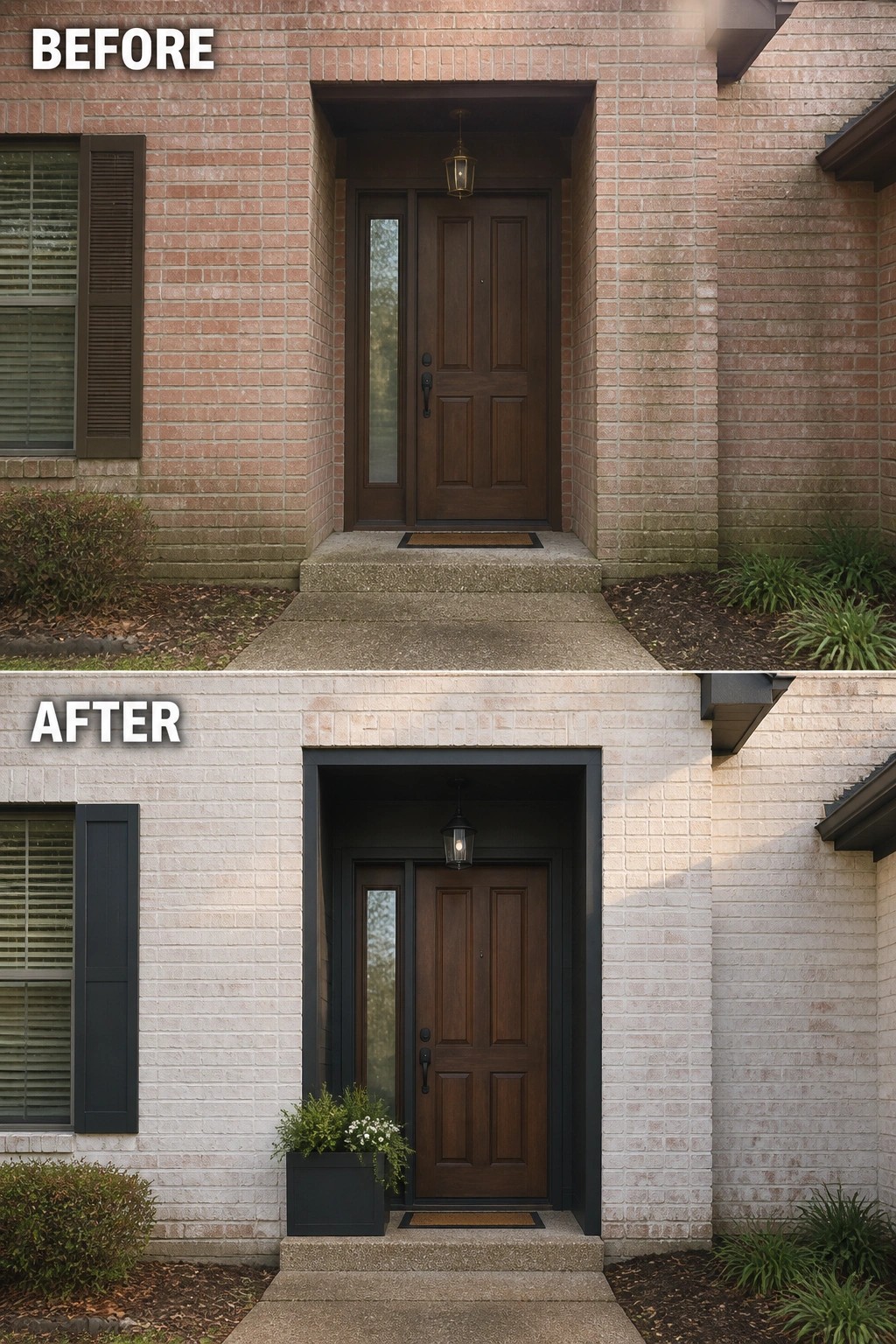
A recessed entry often reads as leftover space. Paint the recess and trim a deep, contrasting color, swap in a scaled-down lantern, and add a single planter to make that niche read as an intentional doorway instead of a shadowed alcove. In the image a dark frame around the door and a neat planter immediately change the feel from neglected to purposeful.
This works best when you keep the changes simple and proportional. Choose a trim color that complements your door and hardware, pick a light fixture that fits the recess height, and use a single, weatherproof planter sized to leave the step clear. It’s a low-cost way to boost curb appeal on split-foyer homes and it won’t overwhelm a small entry. Simple but effective.
Use Layered Lighting To Brighten A Recessed Entry
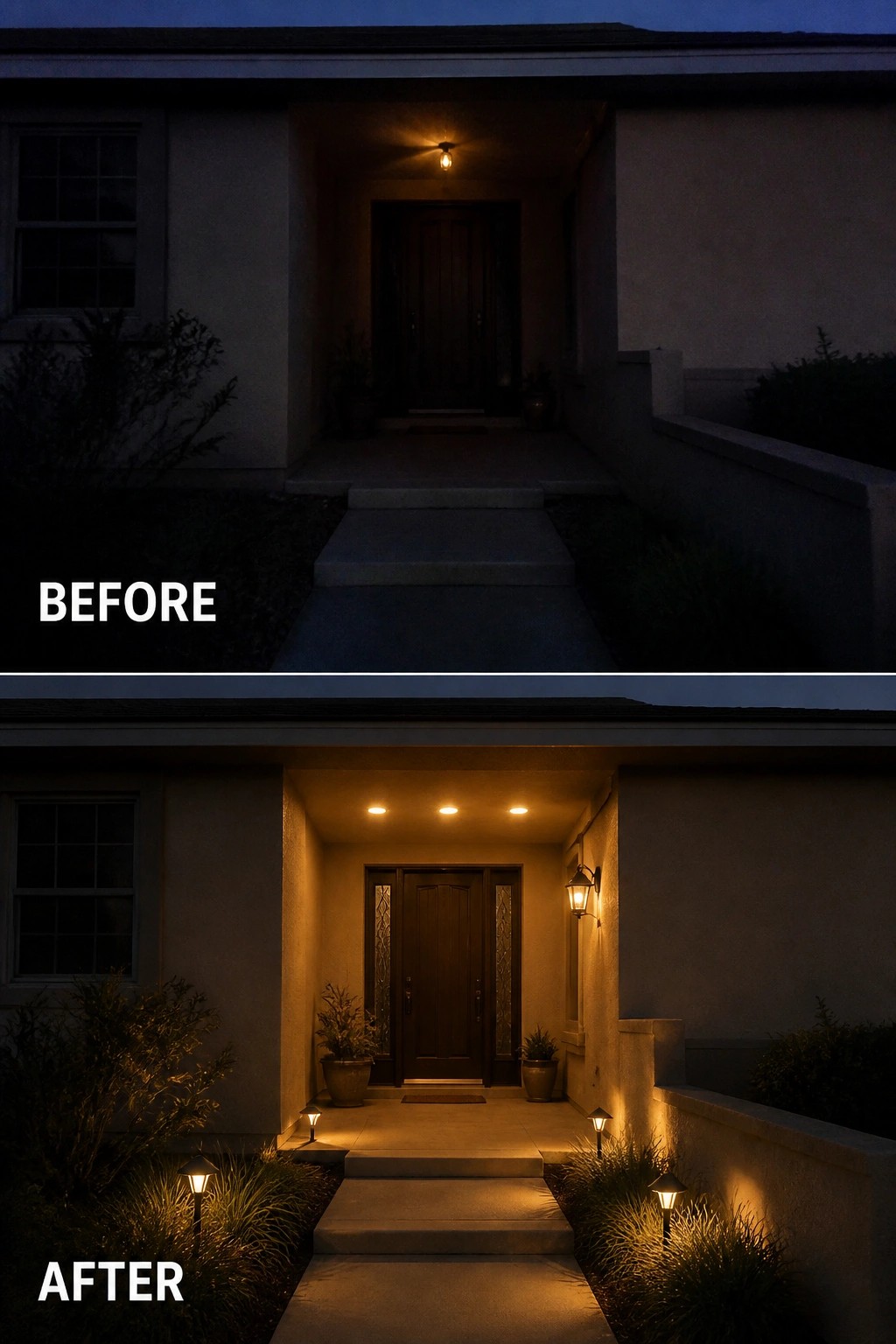
A recessed entry can feel closed off when it’s left dark. Adding layers of light — overhead recessed fixtures plus low pathway lanterns — immediately makes the approach safer and more welcoming while keeping the architecture visible. Even a couple of well-placed lights changes how the porch reads from the street and makes the door easy to find at night.
Start with an overhead source to light the porch surface, then add low-level path lights so steps and edges are visible. Choose warm LED bulbs (around 2700–3000K), fixtures sized to your porch, and simple controls like dusk-to-dawn sensors or a motion-activated circuit. Keep planting and pots to the sides so light can do its job without glare. It’s a practical, relatively low-cost upgrade that works on most homes.
Create A Defined Paver Walkway To Frame A Recessed Entry
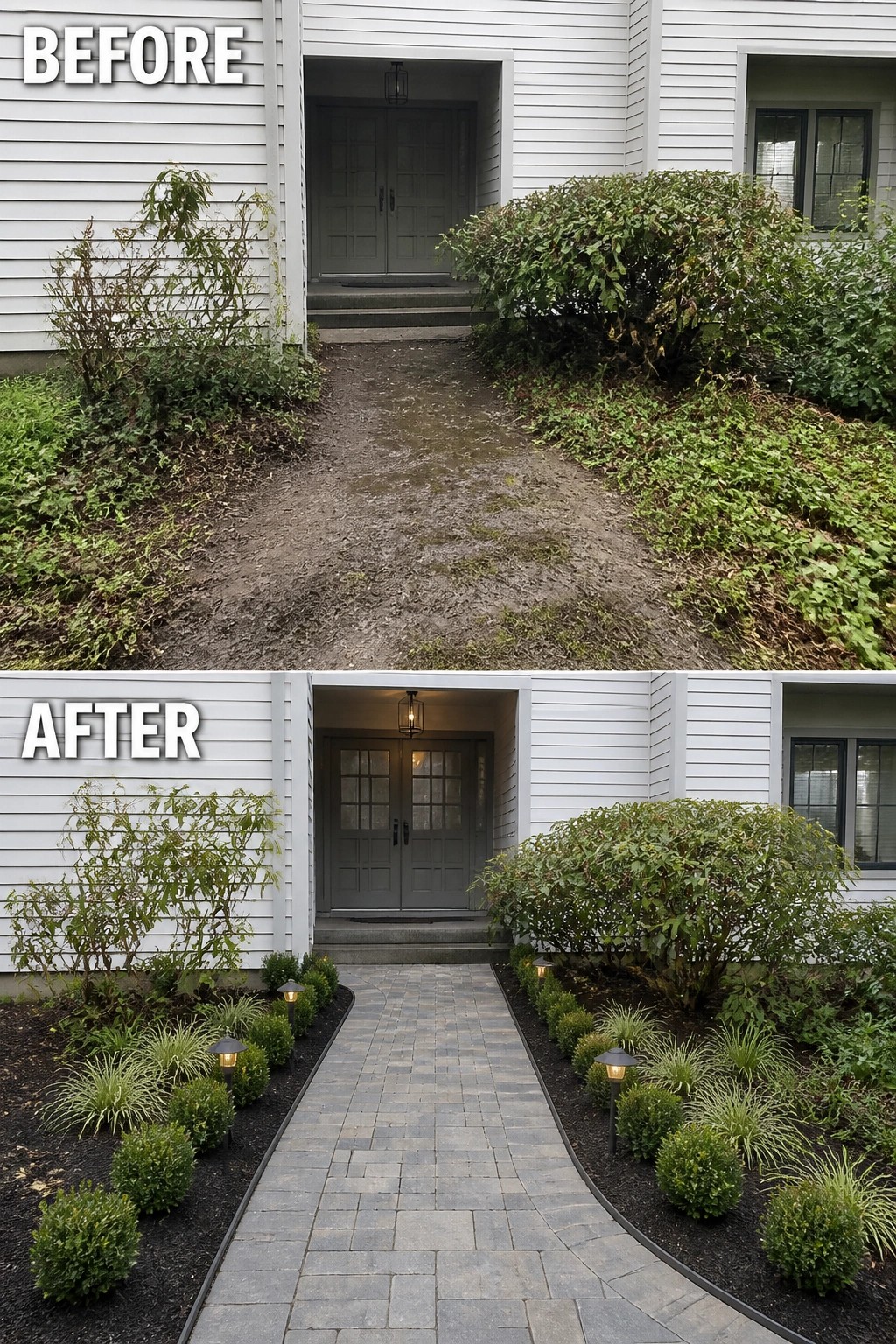
A clean paved path instantly gives a recessed entry a purpose. Swapping a muddy strip for a laid paver walkway with simple metal edging and low plantings turns an undefined approach into a clear, durable route and makes the front door feel intentional instead of hidden.
To copy the idea, start by cleaning and grading the approach so water drains away from the steps. Install a compacted base and an edge restraint, pick pavers in a color that complements the siding, and keep surrounding plants low so the entry stays visible. Add small path lights for safety and evening curb appeal, and aim for a comfortable width (about 3 to 4 feet) so people can pass easily.
Make A Bare Recessed Entry Feel Welcoming
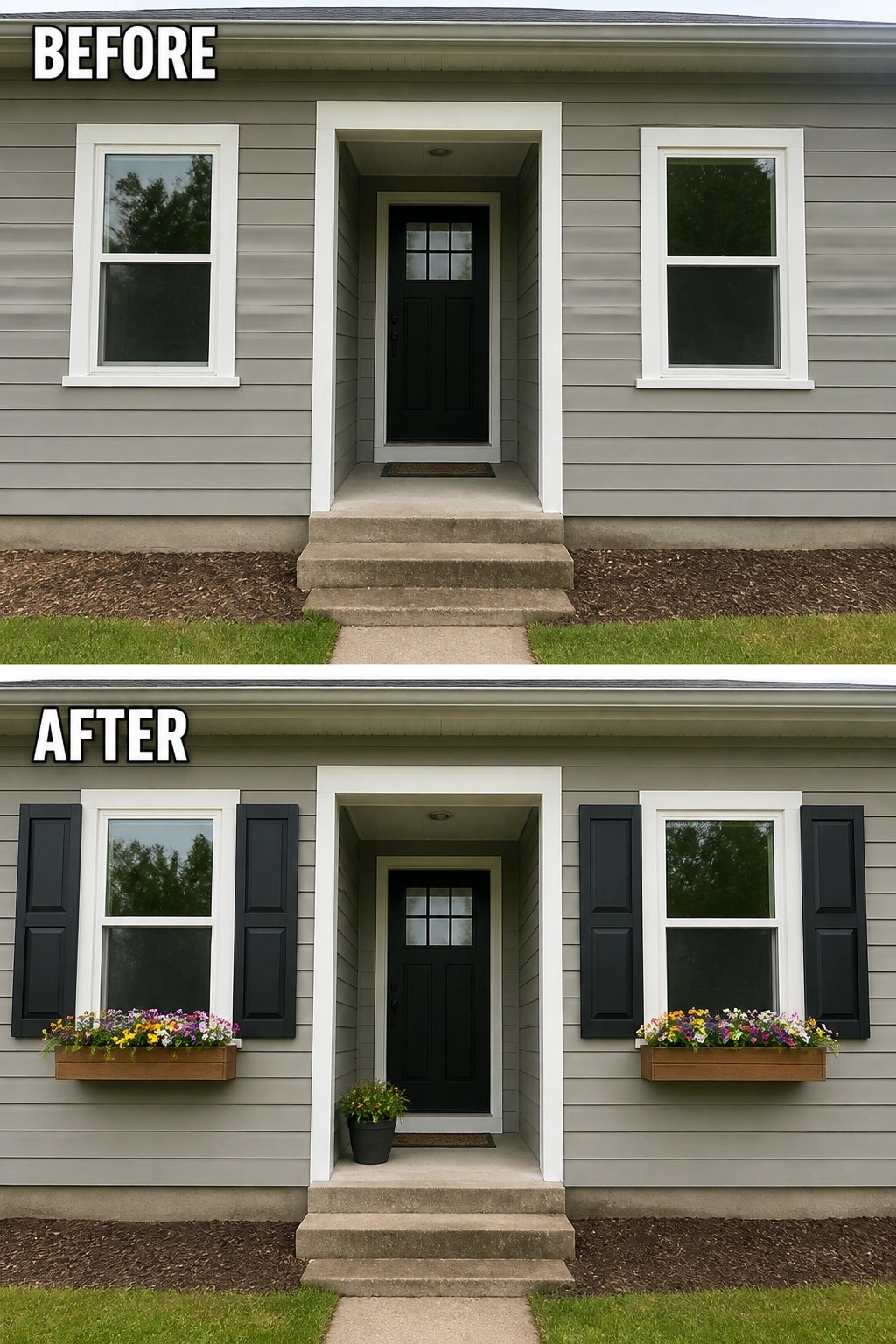
A recessed entry can look flat and forgettable, but simple accents bring it to life. Adding shutters at the windows and wooden window boxes with seasonal flowers frames the façade, introduces color, and gives the front door a clearer focal point without a big renovation.
To copy this, pick shutters and a box size that match the scale of your windows and paint the shutters a color that ties to the door for a cohesive look. Use sturdy, weatherproof boxes with liners and drainage, choose low-maintenance plants for easy color changes, and keep the stoop clear so the entry stays functional as well as pretty.
Add Warm Cladding And A Simple Planter For Entry Definition
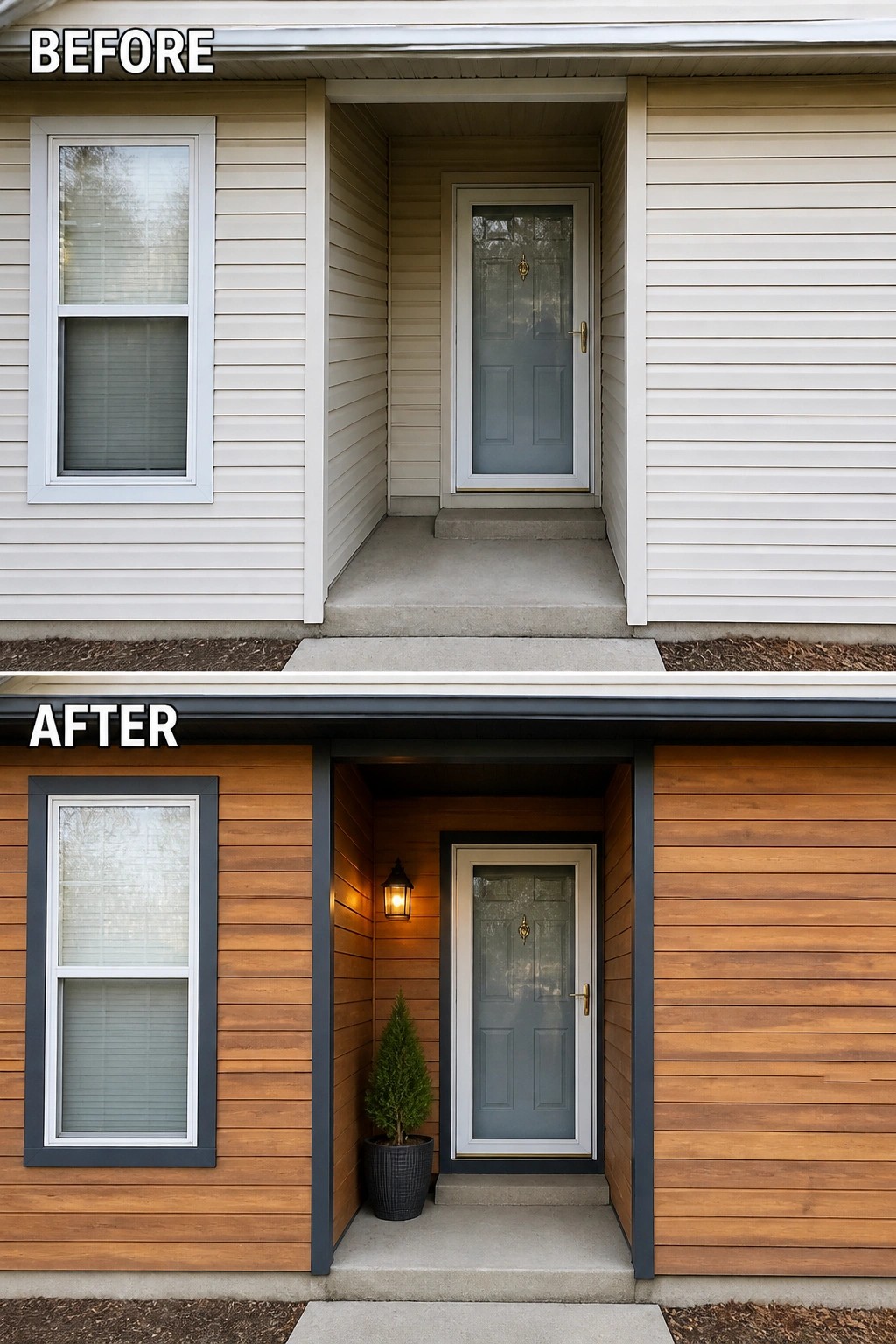
A recessed entry can disappear into the facade when it is framed by plain siding and no details. Replacing the bland vinyl with warm horizontal cladding, adding darker trim, a simple wall lantern, and one scaled planter gives the niche definition and makes the doorway feel deliberately finished and welcoming.
Use this idea on small porches or split-foyer entries where you need impact without clutter. Choose low-maintenance materials that mimic wood if you do not want constant upkeep, pick one light at eye level for useful illumination, and keep a single planter so the path stays clear. Simple but effective.
Refresh A Plain Porch With Patterned Tile And Planters
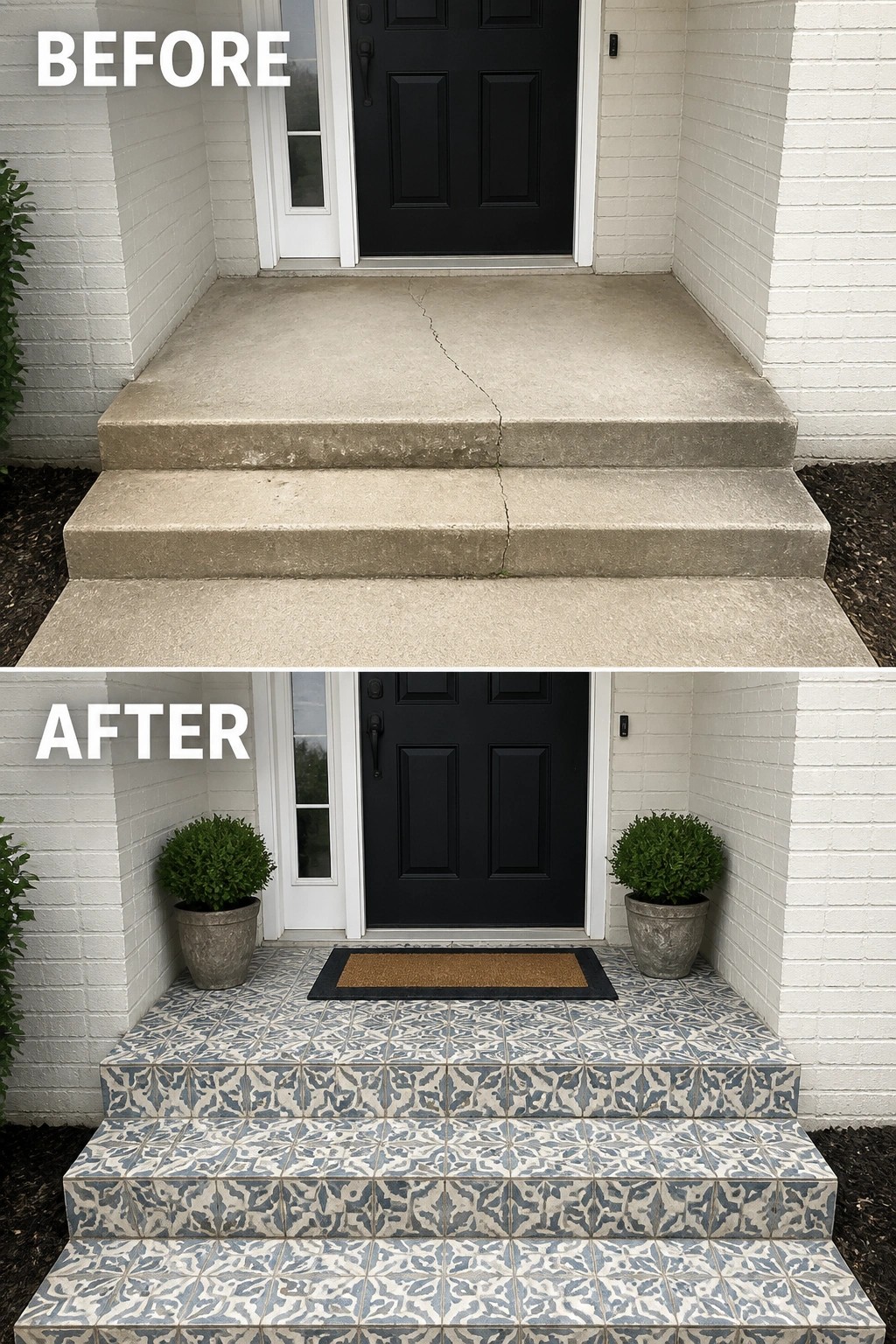
Covering a bare concrete landing with a patterned, weather-rated tile and a couple of matching planters instantly gives a recessed entry a purpose. The tile hides stains and cracks while adding visual interest, and paired pots on either side of the door introduce scale and a human touch so the whole approach reads as intentional instead of an afterthought.
To do this yourself, pick outdoor porcelain or cement-look tiles rated for frost and slip resistance, and keep the pattern small enough to suit a narrow porch. Repeat the tile on the step risers for a tidy, cohesive look, use a low-profile doormat so the door clears, and choose compact, evergreen plants that won’t block the doorway. Proper surface prep and the right adhesive matter—if you want a cheaper short-term option, consider outdoor tile stickers or paint stencils—but for longevity a professional install is worth it.
Add A Canopy And Tall Planters To Anchor The Doorway
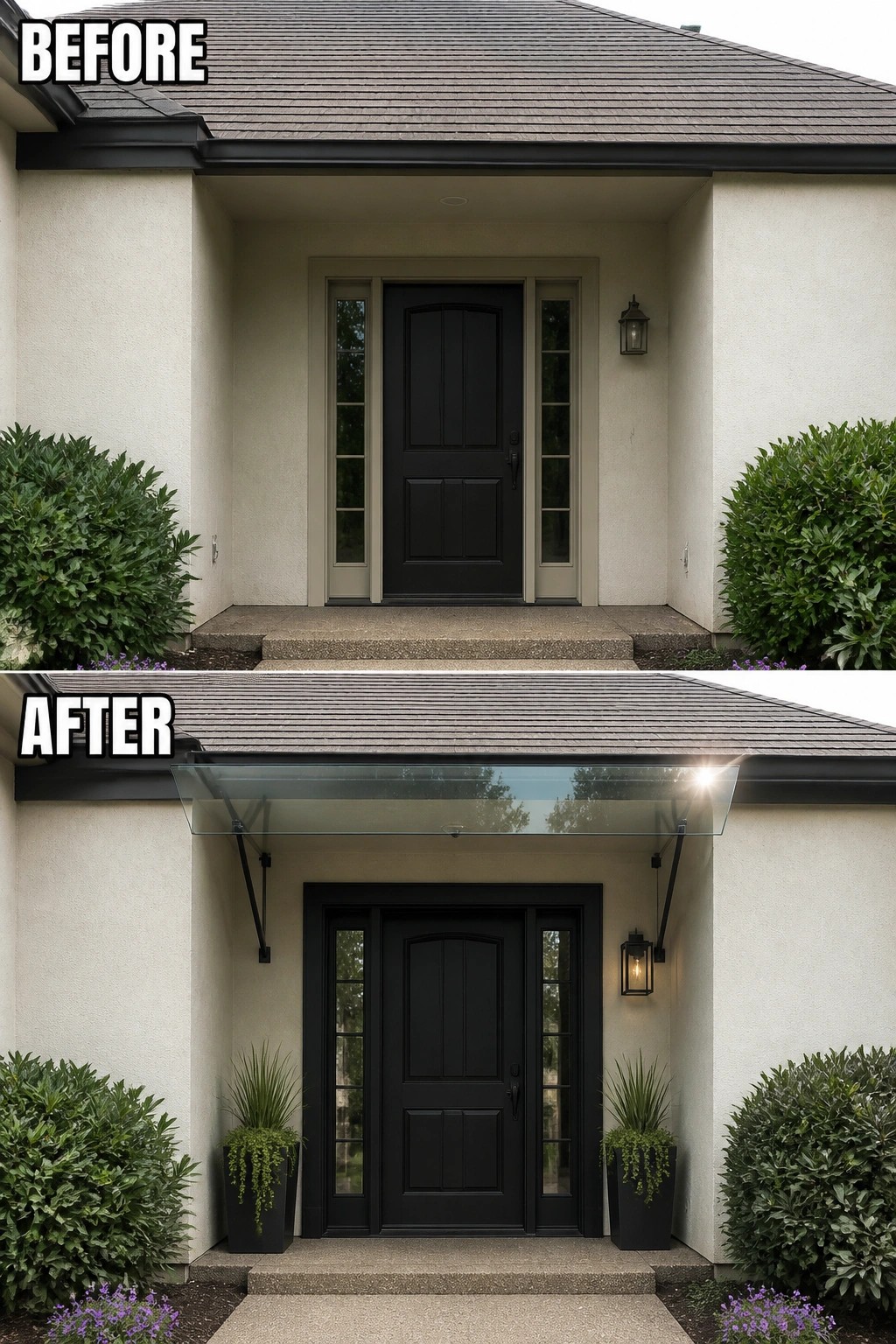
A slim overhead canopy plus a couple of tall planters and a new wall lantern can turn a recessed, anonymous entry into a purposeful front door. The canopy shelters the step and draws the eye up, while matching planters and a single light anchor the doorway so it reads as an intentional arrival point instead of an afterthought.
Pick a low-profile canopy that follows the roofline so it does not overwhelm the recess, and use narrow, tall planters to fit the limited floor space while adding vertical interest. Match finishes to your door hardware, double-check clearance for doors and gutters, and choose weatherproof materials so the styling holds up. Simple and effective.
Frame A Recessed Entry With Low Planting And Lighting
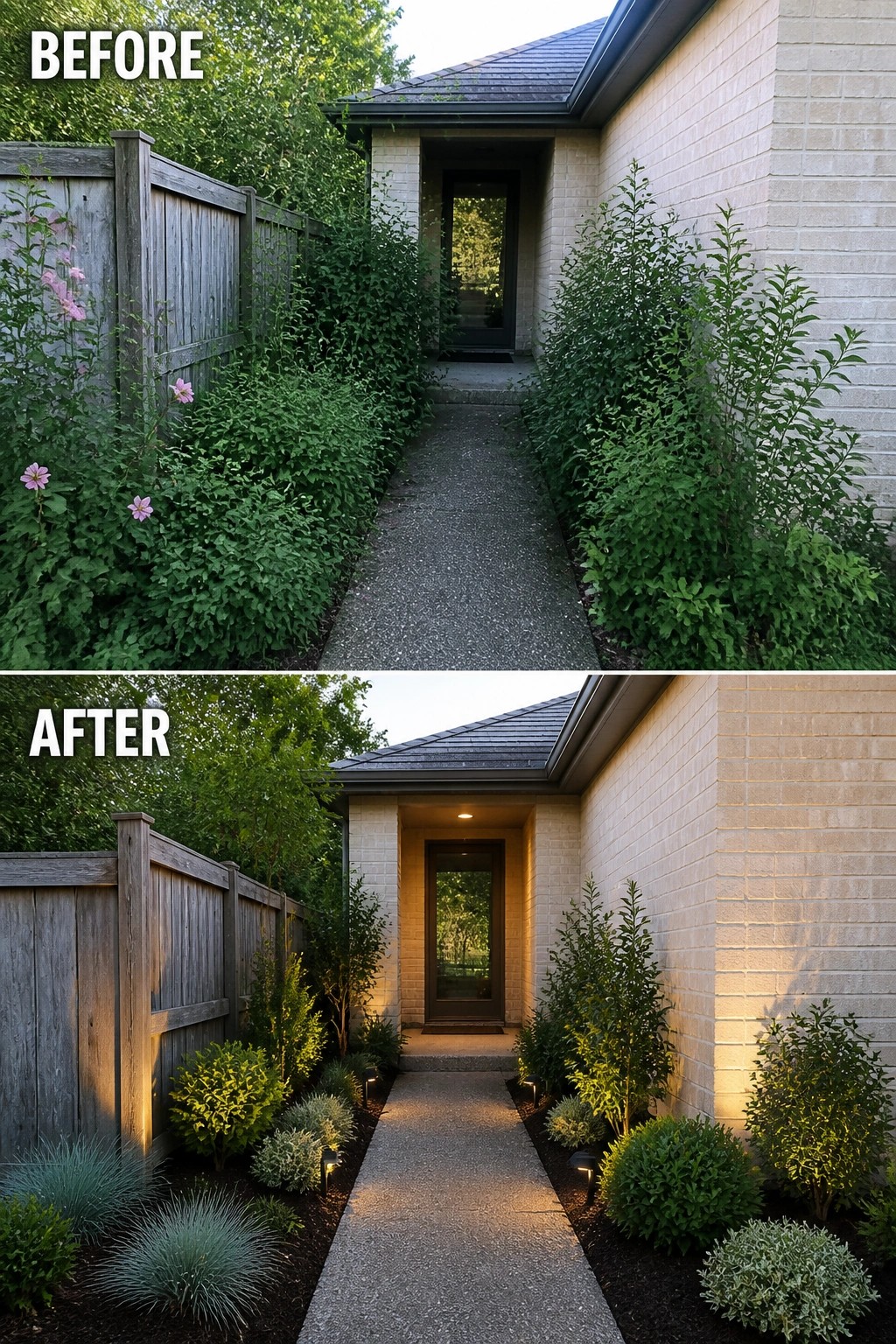
A narrow recessed entry can feel dark and unloved until you give it a clear edge and a simple light plan. Replacing tall, overgrown weeds with low, repeatable shrubs and clumping grasses, then adding small path lights and a few uplights, instantly defines the walkway and makes the entry readable at night as well as by day.
To copy this, start by clearing the old growth and laying a tidy bed of mulch. Plant two or three compact species that stay narrow and low, repeat them on both sides to create rhythm, and leave enough room to walk. Install low-voltage path lights spaced evenly and one or two uplights to wash the wall or highlight a shrub, and put them on a dusk-to-dawn timer so the entrance reads as intentional every evening.
Refresh The Front Door With Simple Welcoming Accents
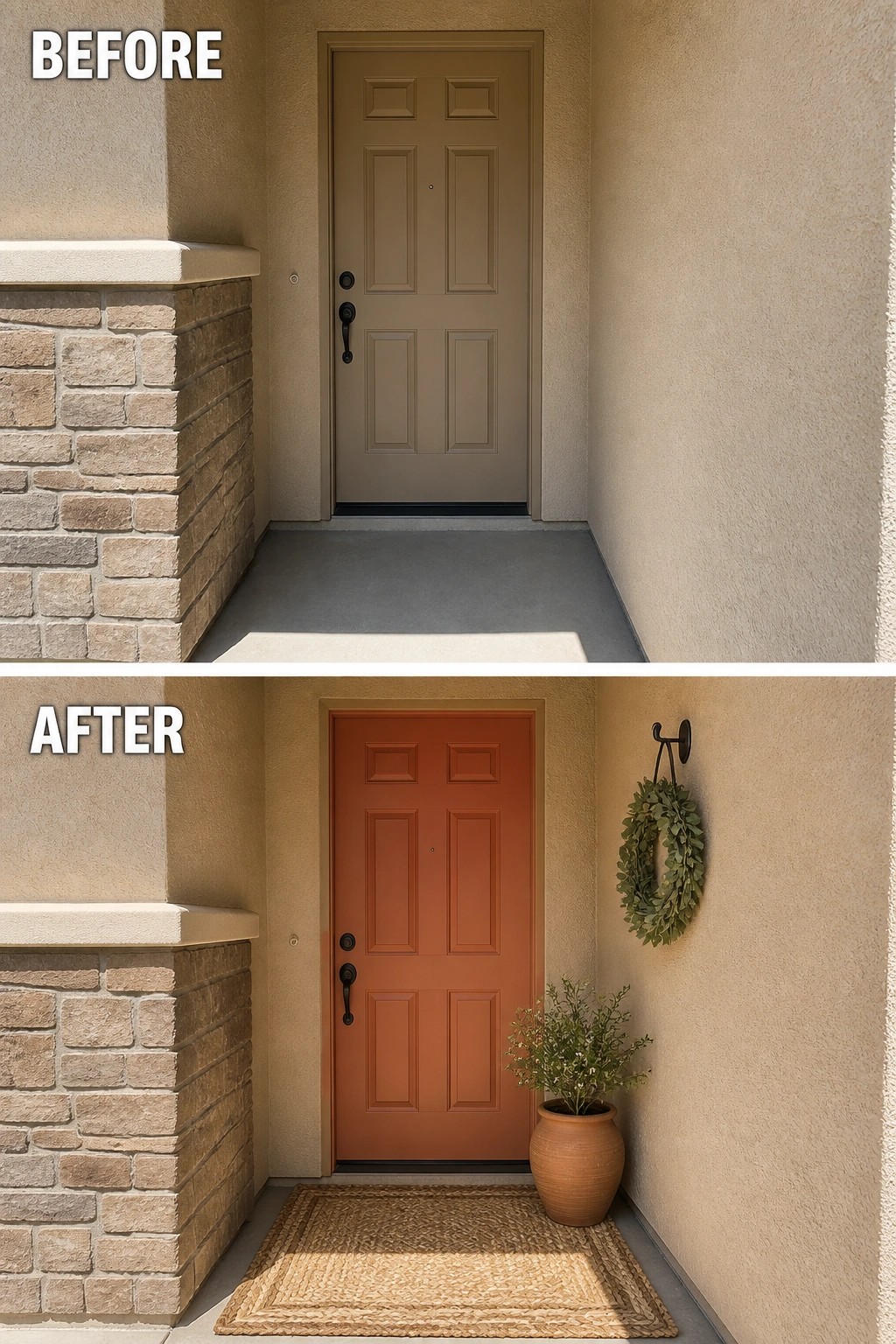
A recessed entry can feel neglected because it has no focal point. A fresh door color plus a couple of purposeful accessories quickly fixes that. In this example the plain door is repainted a warm hue and the space is anchored with a woven mat, a single terracotta planter, and a simple wreath—small changes that turn an anonymous alcove into a useful, welcoming threshold.
To copy this, pick one clear focal move first—usually a contrasting door color—and add one or two weatherproof items that provide scale and texture: a low-profile outdoor rug, a single roomy planter, and a wall hook for seasonal decor (choose a mat that won’t block the door). This approach works well on narrow or recessed split-foyer entries where you must keep paths clear but still want personality. Start small and stop before it feels crowded.
Turn A Recessed Entry Into A Welcoming Porch
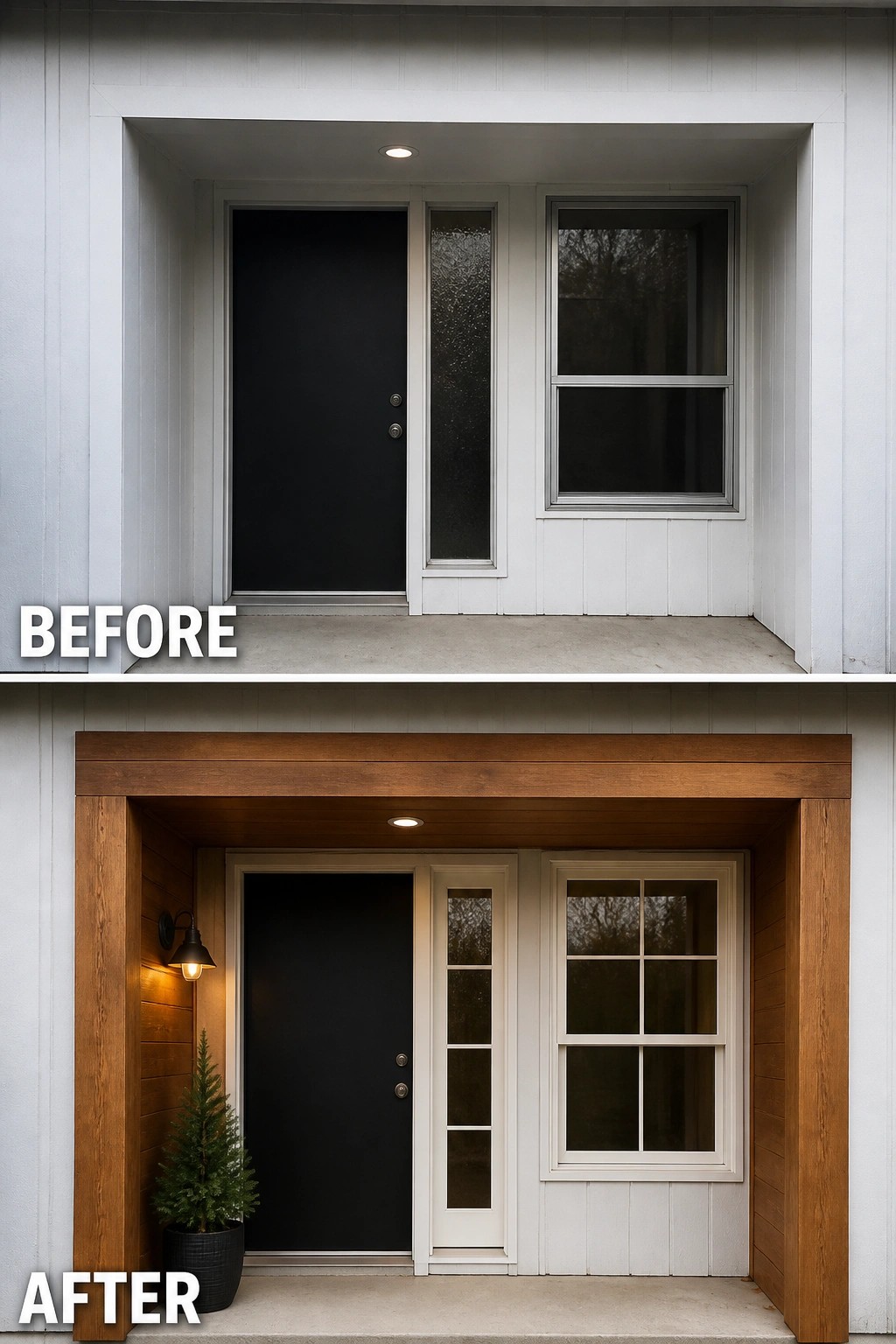
A recessed entry often reads as leftover space rather than an arrival point. Framing the alcove with a warm wood surround, adding a single wall sconce and a potted plant gives it instant purpose and presence. You don’t need a full remodel to change how the approach feels; a framed opening and one well-placed light make the spot read as a porch instead of an empty niche.
Use this idea on split-foyer homes or any recessed doorway where scale is tight. Keep the changes simple: one consistent material for the surround, a wall light mounted at eye level, and a single planter sized to the entry. Choose rot-resistant cladding or composite, flash and seal edges, and leave enough room for the door to open—small, focused updates that make the entry usable and inviting.
Make The Front Door The Focal Point With Simple Upgrades
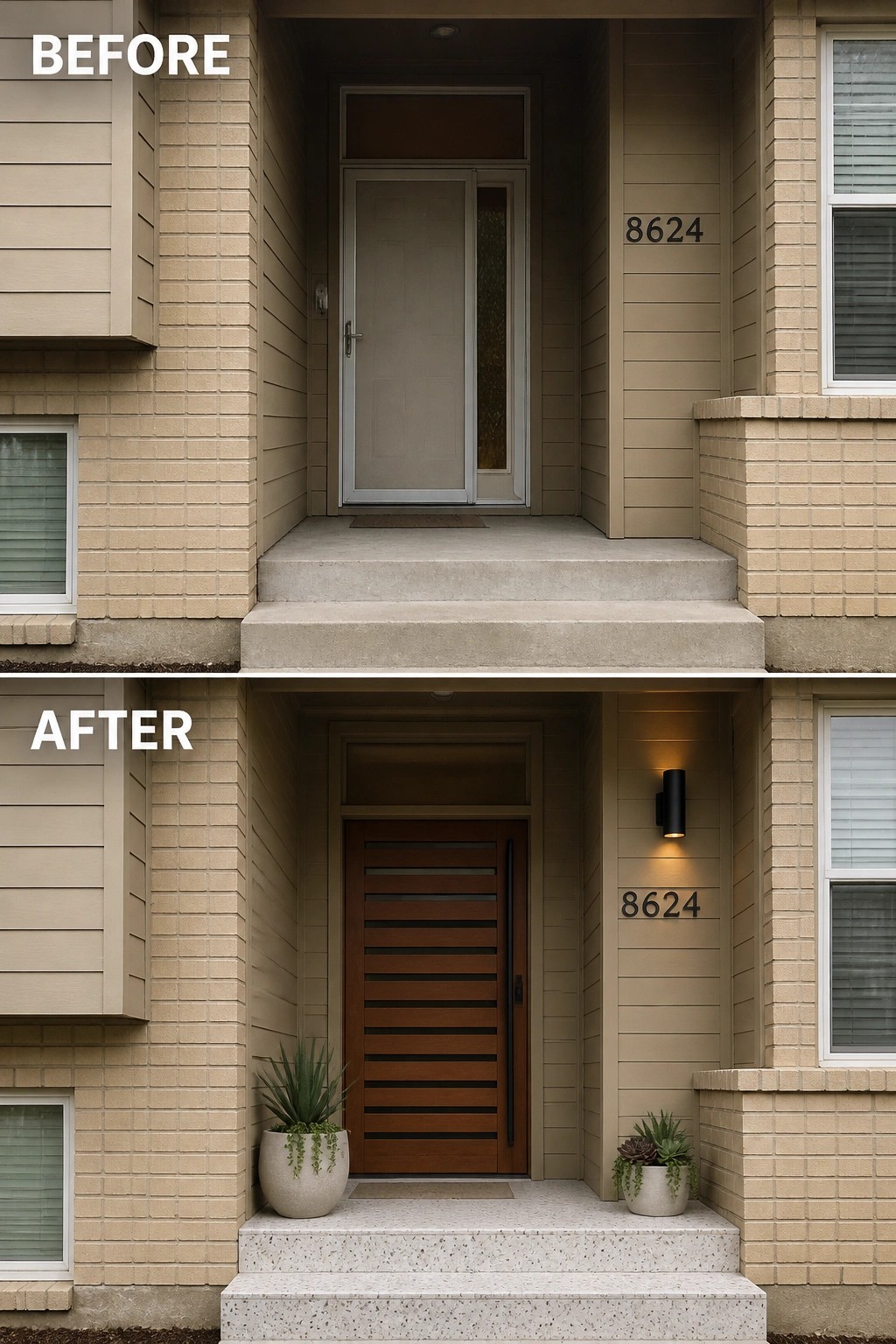
A recessed split-foyer entry can look unfinished until you give it a single clear role: a welcoming front door. Replace a generic storm door with a strong, purposeful front door (or at least swap the face and hardware), then add one or two planters and a simple wall sconce. The door becomes the focal point, the pots soften the hard edges, and the light makes the space usable at night.
To copy this, pick one main upgrade and build around it. If a new door is out of reach, upgrade the handle, paint, and add a vertical light next to the numbers. Use just a couple of well-sized pots rather than many small items, choose durable finishes for steps and lighting, and leave enough clearance so the entry
Frequently Asked Questions
Q: How can I make my split-foyer recessed entry feel more welcoming on a small budget?
A:
A fresh coat of paint on the door and trim in a contrasting but complementary color instantly lifts the space, and swapping a single light for layered lighting like a sconce plus a downlight makes the recess feel open and safe. Add a durable welcome mat and a pair of simple planters to finish the look without spending much.
Q: Will adding a small landing or steps ruin the split-foyer character?
A:
No, not if you respect the original proportions—choose a low, wide landing that matches the house materials so it reads as part of the design rather than an afterthought. Keep the scale modest and use the same railing style or trim to blend the new work with the existing architecture.
Q: I get water pooling in the recessed entry—what should I do first?
A:
Start by checking that gutters and downspouts are clear and direct water away from the entry, then add a slight slope or a discreet drain at the low point to move standing water out of the recess. If water is coming from the roof or flashing, get a professional to inspect before you spend on surface fixes.
Q: Can landscaping actually improve a recessed entry, and what should I avoid?
A:
Yes—low, layered plantings and pathway lighting draw the eye to the entry instead of hiding it, and seasonal potted plants add color and scale. Avoid tall or overgrown shrubs that block sightlines or make the approach feel cramped.