

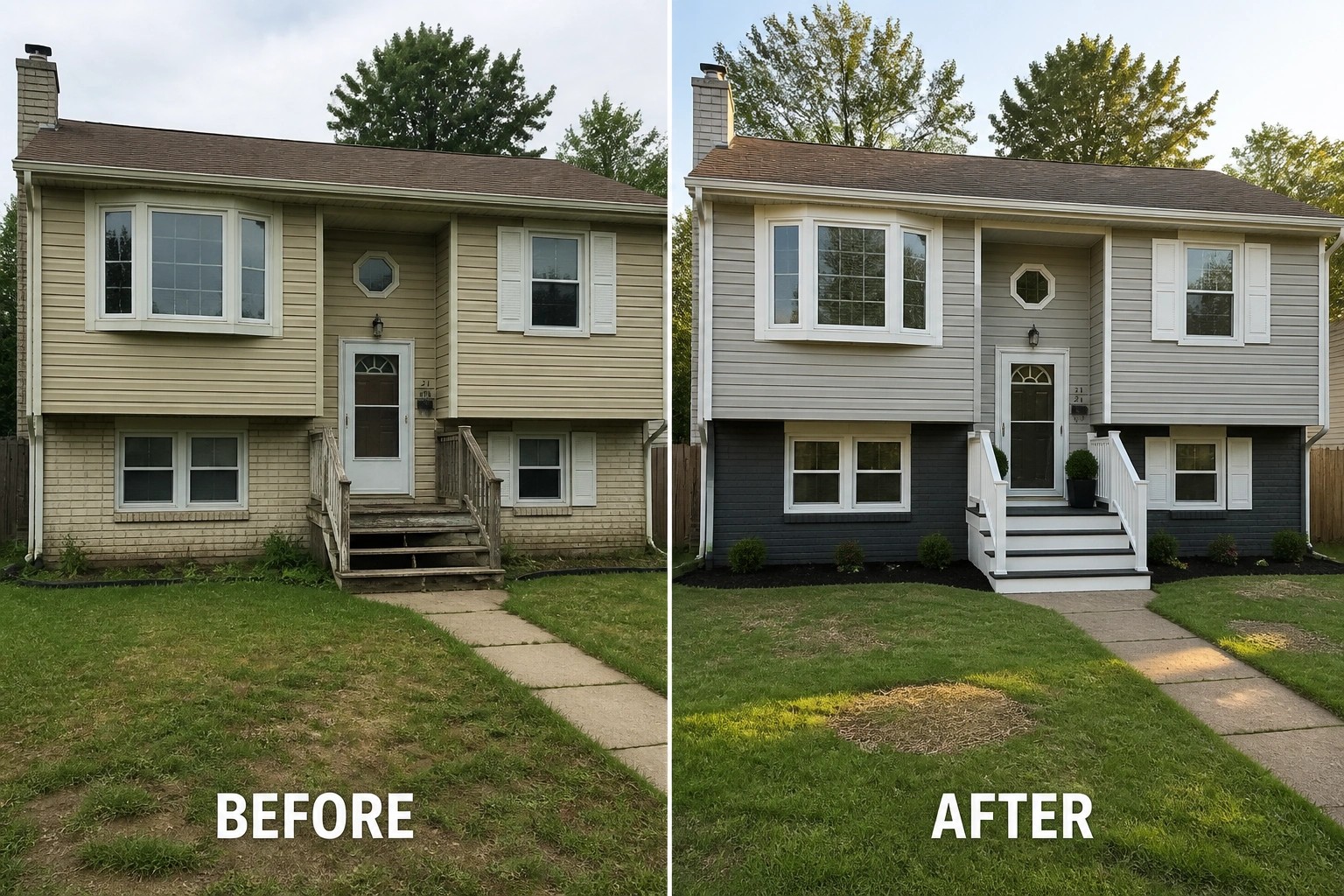
I live in a neighborhood full of split-level houses, and I notice how small inconsistencies, peeling paint, mismatched siding, and a cramped entry can make a home look overlooked.
A few sensible, affordable updates to the facade, porch, and trim often bring a much clearer sense of intent, whether that means a unified paint palette, new hardware, or a brighter entry light.
You do not need a major renovation.
I usually start with one visible change, like swapping a light or testing a trim color, so I can judge how it works with the house’s angles and the street view.
When those small moves read well together the whole place feels more cared for, and many of the suggestions are worth saving, adapting, or trying on a weekend.
Add Shutters And Window Boxes To Make A Facade Feel Welcoming
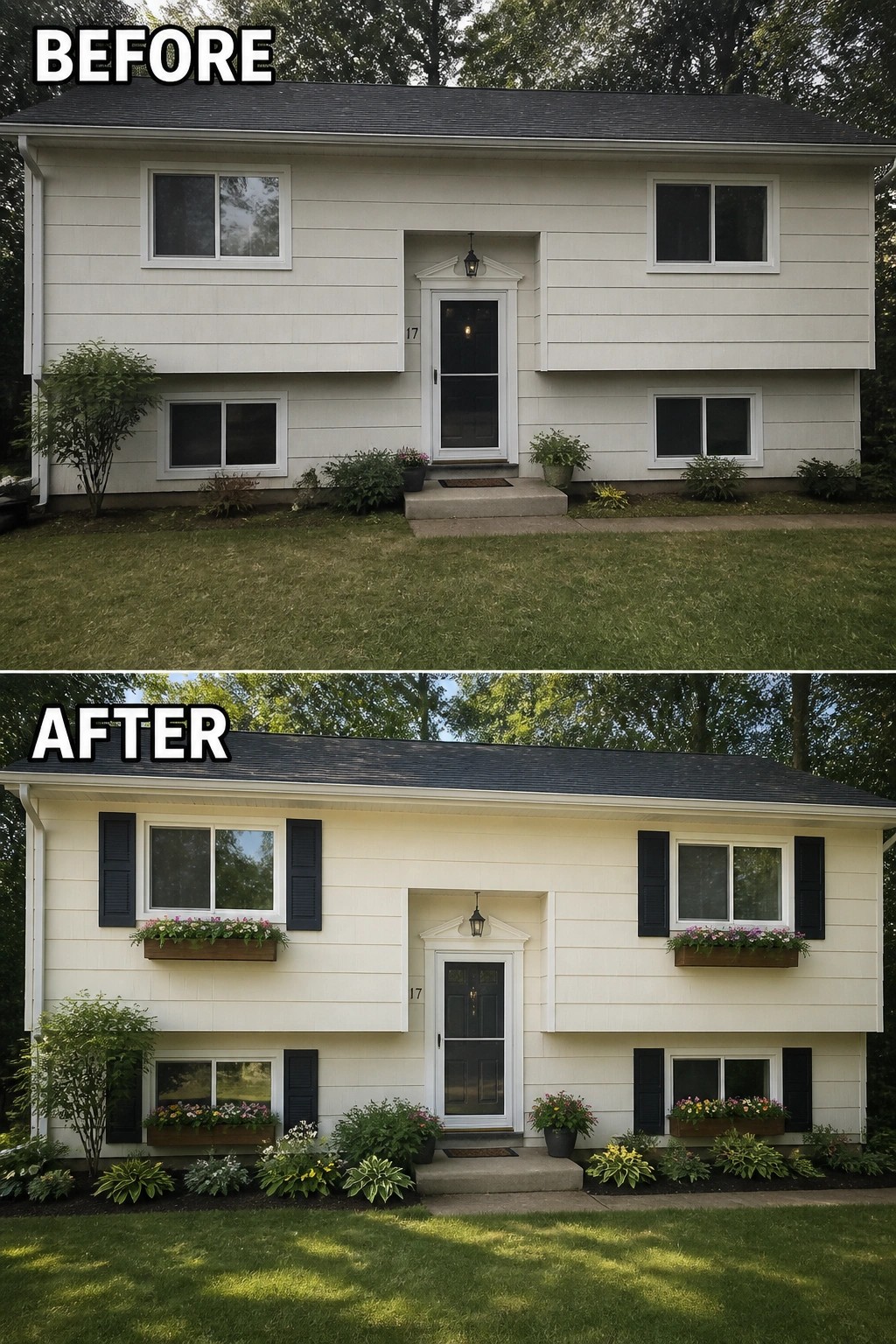
A few simple additions — a pair of dark shutters and matching window boxes — can give a flat split-level front a lot of personality. In this example the house keeps its neutral siding, but the shutters and flower boxes add scale and rhythm to the facade while the new planting beds at the foundation tie everything to the lawn. It’s a quick, affordable way to stop a plain entry from feeling anonymous.
To copy the idea, start by measuring your windows so shutters and boxes look proportional (too big or too small will look off). Pick a contrasting paint color for the shutters and choose hardy, seasonal plants for the boxes so they stay attractive with little work (petunias, calibrachoa, or trailing ivy are good bets). Clean and edge the bed, add a few low foundation plants, then mulch for a finished look. Small houses benefit most from this kind of targeted styling; don’t overcrowd the window area and plan for seasonal refreshes. (Inexpensive but high impact.)
Refresh Trim And Windows To Modernize The Facade
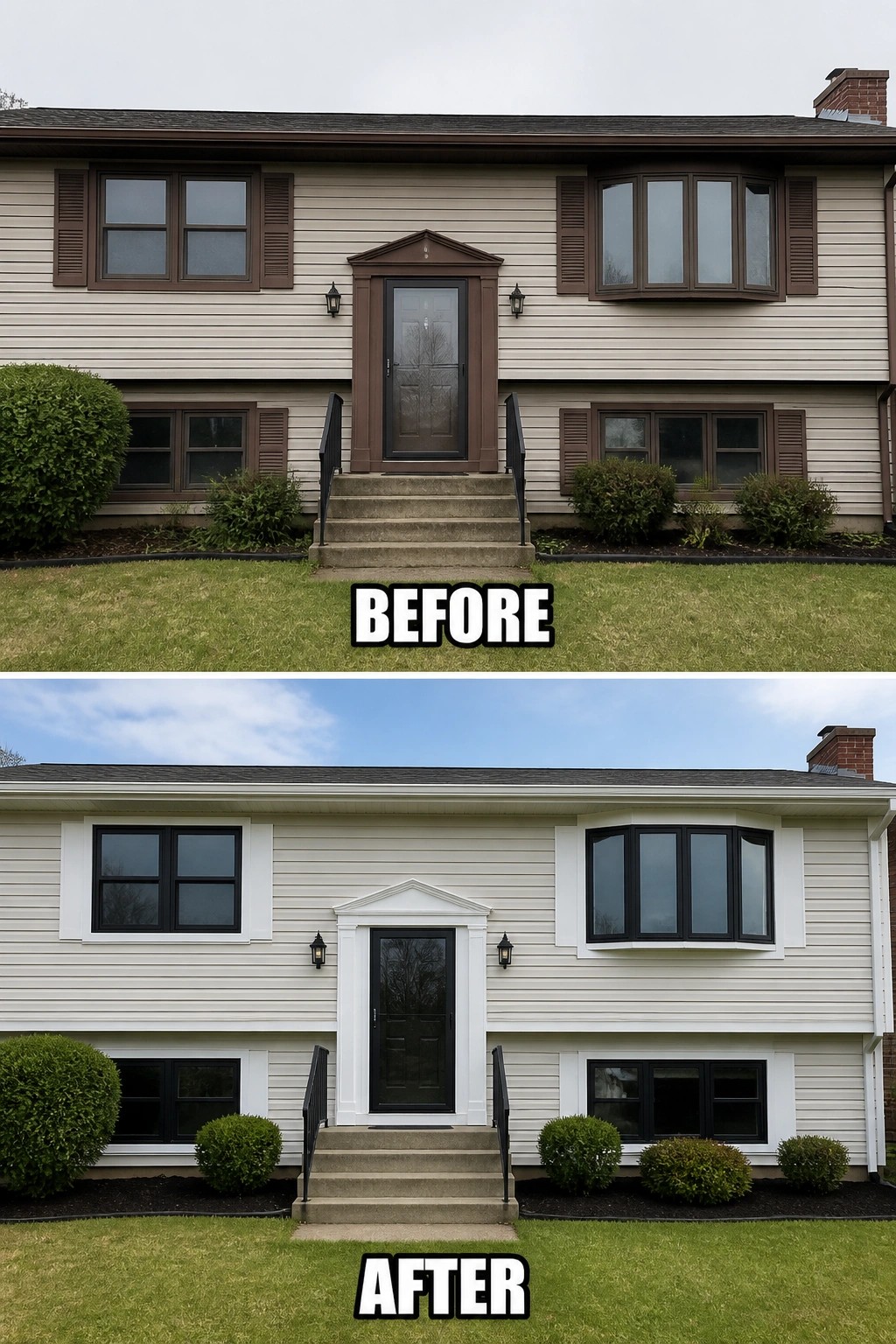
A simple way to give a tired split-level an instant lift is to tackle the trim and window frames. Repainting the heavy brown trim to bright white and switching to slim black window frames (or painting existing sashes) cleans up the lines of the house and makes the entry feel more intentional without a full remodel.
Focus your effort on the areas people see first: the front door surround, the bay window, and the upper window casings. Paint or replace only the trim if your siding is in good shape, use exterior-grade products and proper priming for vinyl, and keep nearby shrubs trimmed so the new contrast shows. It’s an affordable update that plays well with other small fixes like new porch lights or a refreshed door color.
Define The Front Entry With Pavers And Planting
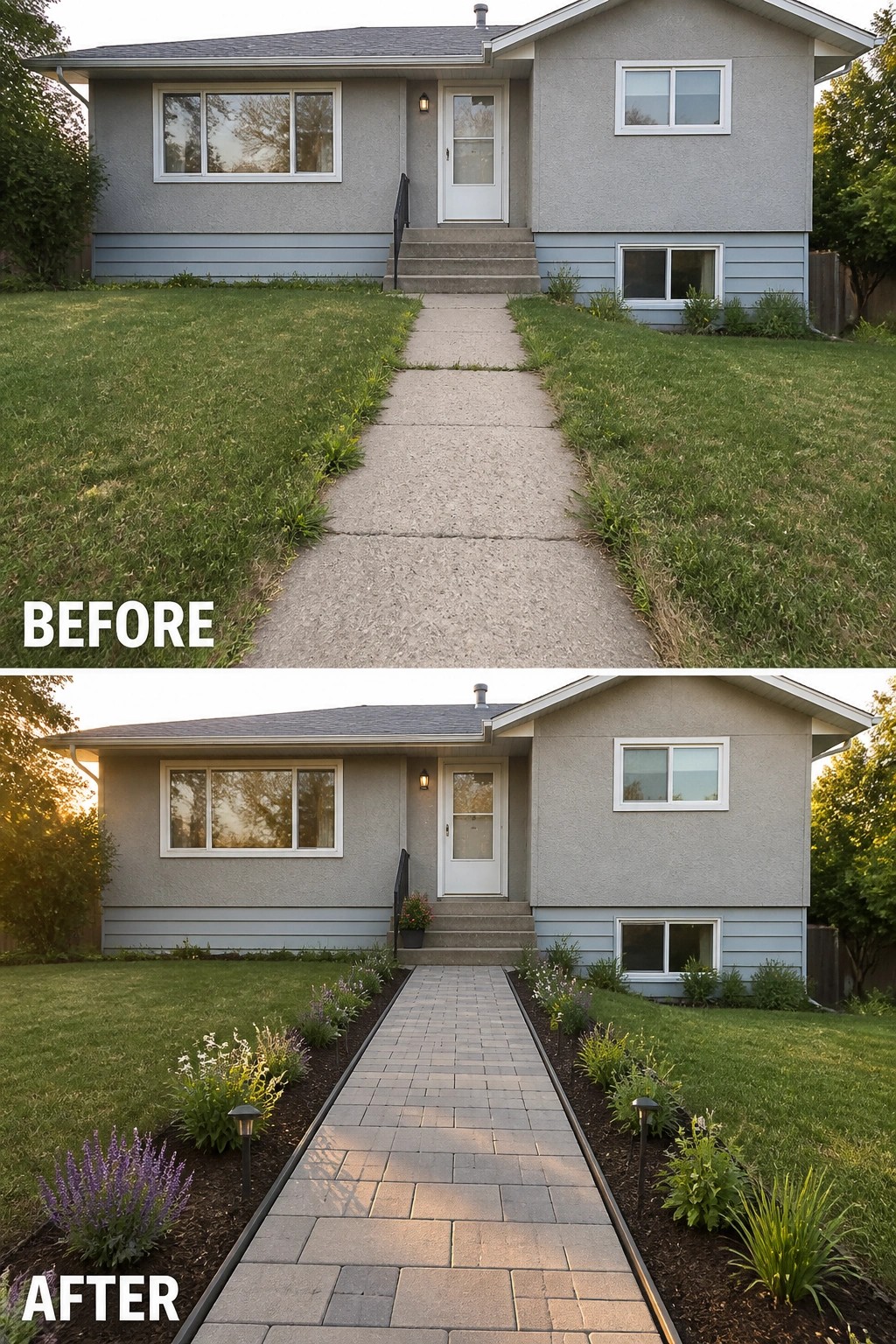
Swap an uneven concrete strip for a proper paved walkway and narrow planting beds to give a tired facade instant structure and polish. Replacing the plain path with interlocking pavers and edging, then adding low-growing shrubs and a few path lights, makes the approach feel intentional instead of neglected.
This works best when you match the scale of the path to the house (aim for about three feet of clear walking space) and keep the planting simple so mowing stays easy. Use a firm edge to hold mulch and soil, choose hardy perennials for low maintenance, and add lighting for safety and curb appeal—do the hardscaping first, then add plants over time if you need to spread the cost.
Update A Tired Entry With Paint And Accessories
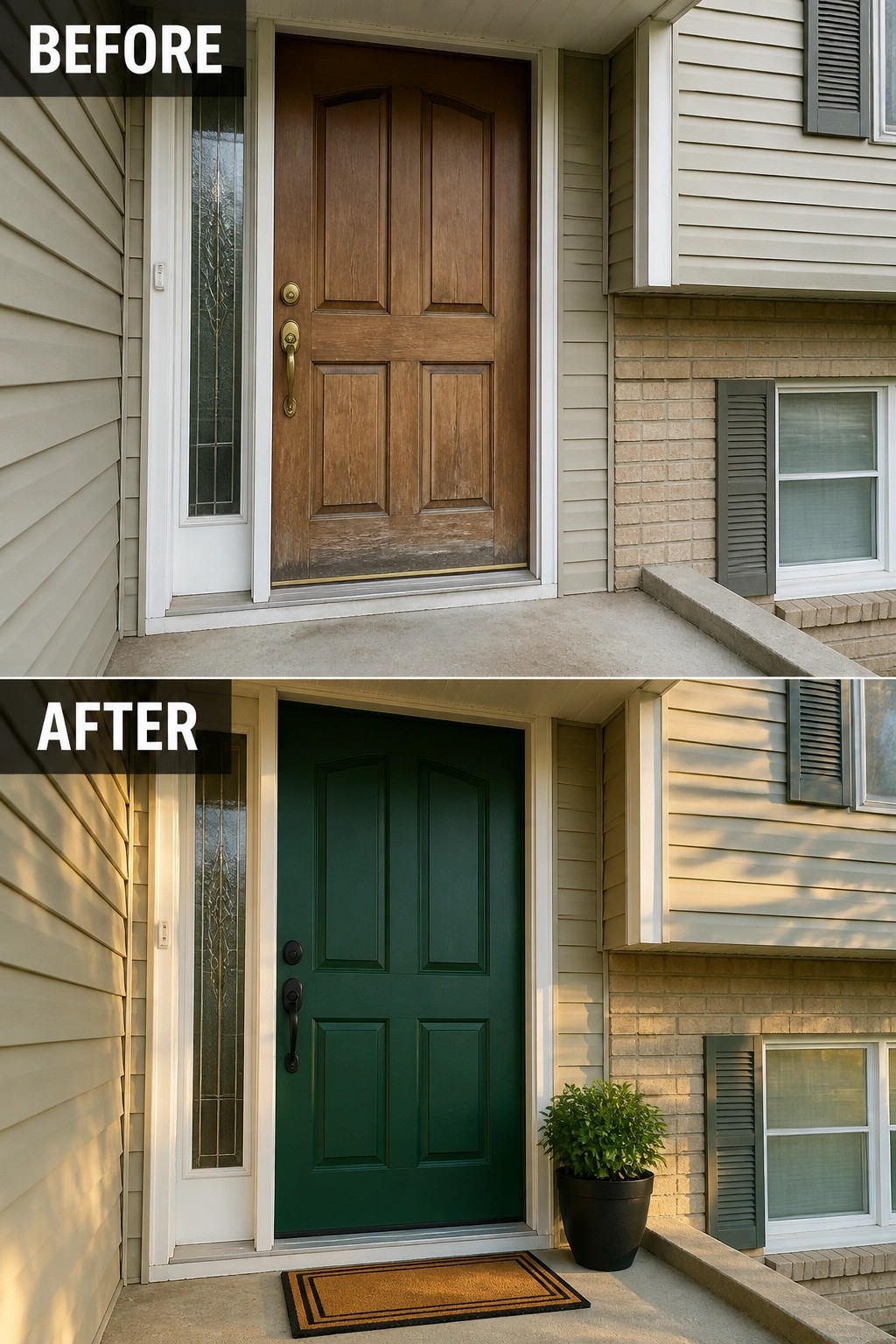
A fresh coat of paint on the front door and a quick hardware swap are one of the fastest ways to lift a split-level facade. In this example a deep green door and dark new handle create a clear focal point against neutral siding and brick, while a doormat and a single potted plant make the small stoop feel finished without clutter.
This is a low-cost, low-effort update that works on almost any suburban entry. Test a paint swatch against your siding and brick (paint a 1-foot sample panel), use exterior-grade paint and weather-resistant hardware, and keep accessories scaled to the porch so the door stays the star. One weekend and a few materials can make your house read as cared-for rather than tired.
Give A Bare Porch A Clear Purpose
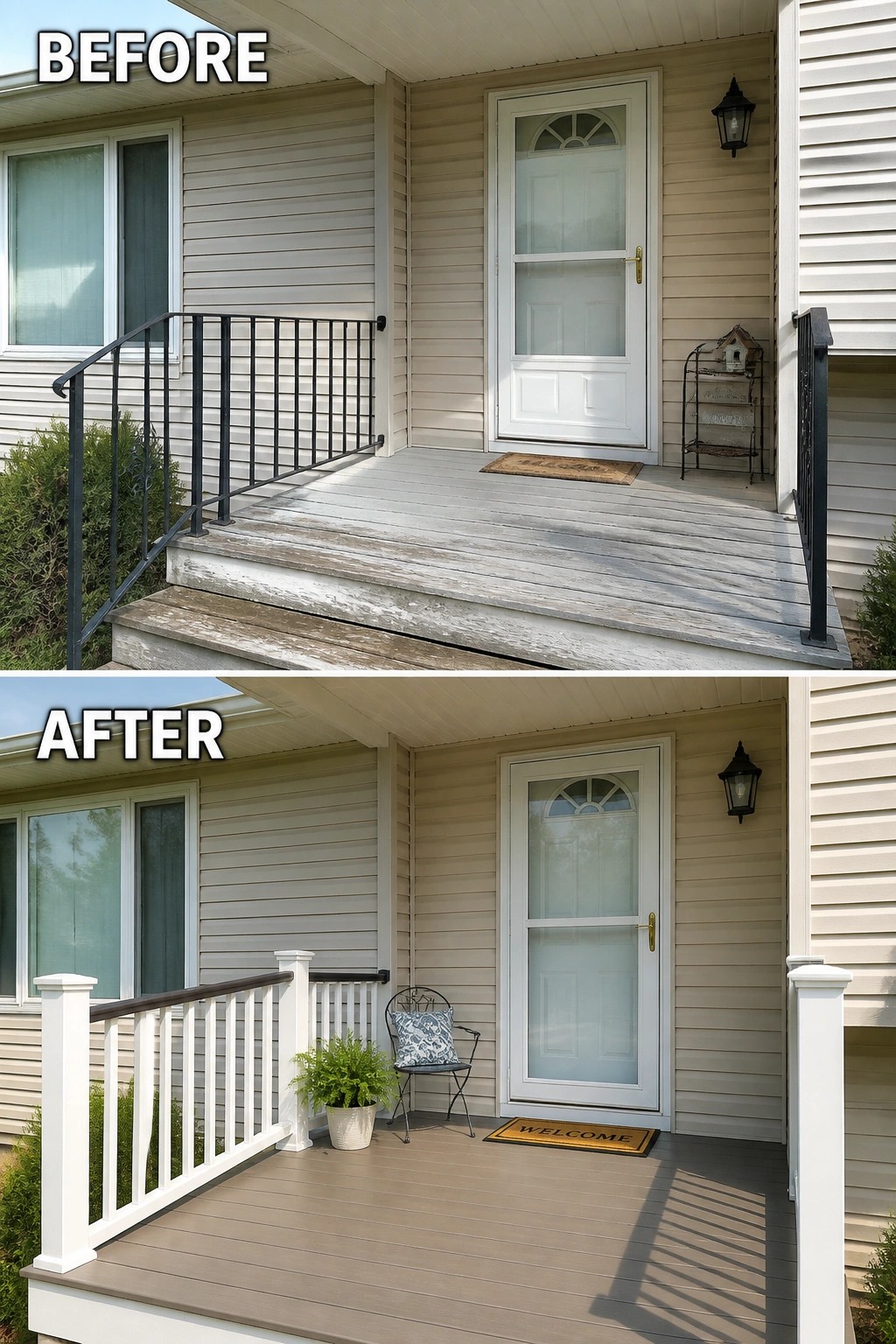
A simple porch update can turn a neglected entry into a usable spot without much expense. In this example the homeowners added a sturdy railing and a small chair with a potted plant and mat, which immediately signals the space is meant to be used rather than ignored. Those two moves—defining the edge and adding a single functional seat—make the whole front feel intentional and cared for.
Use the idea on any small porch: clean and repair the floor first, then define the boundary with a low-cost railing or posts and add one comfortable seat and a hardy planter. Keep furniture scale small so the door path stays clear, choose weatherproof materials, and repeat one color from your house so the new elements look like they belong. Start small.
Create Defined Garden Beds With A Low Retaining Wall
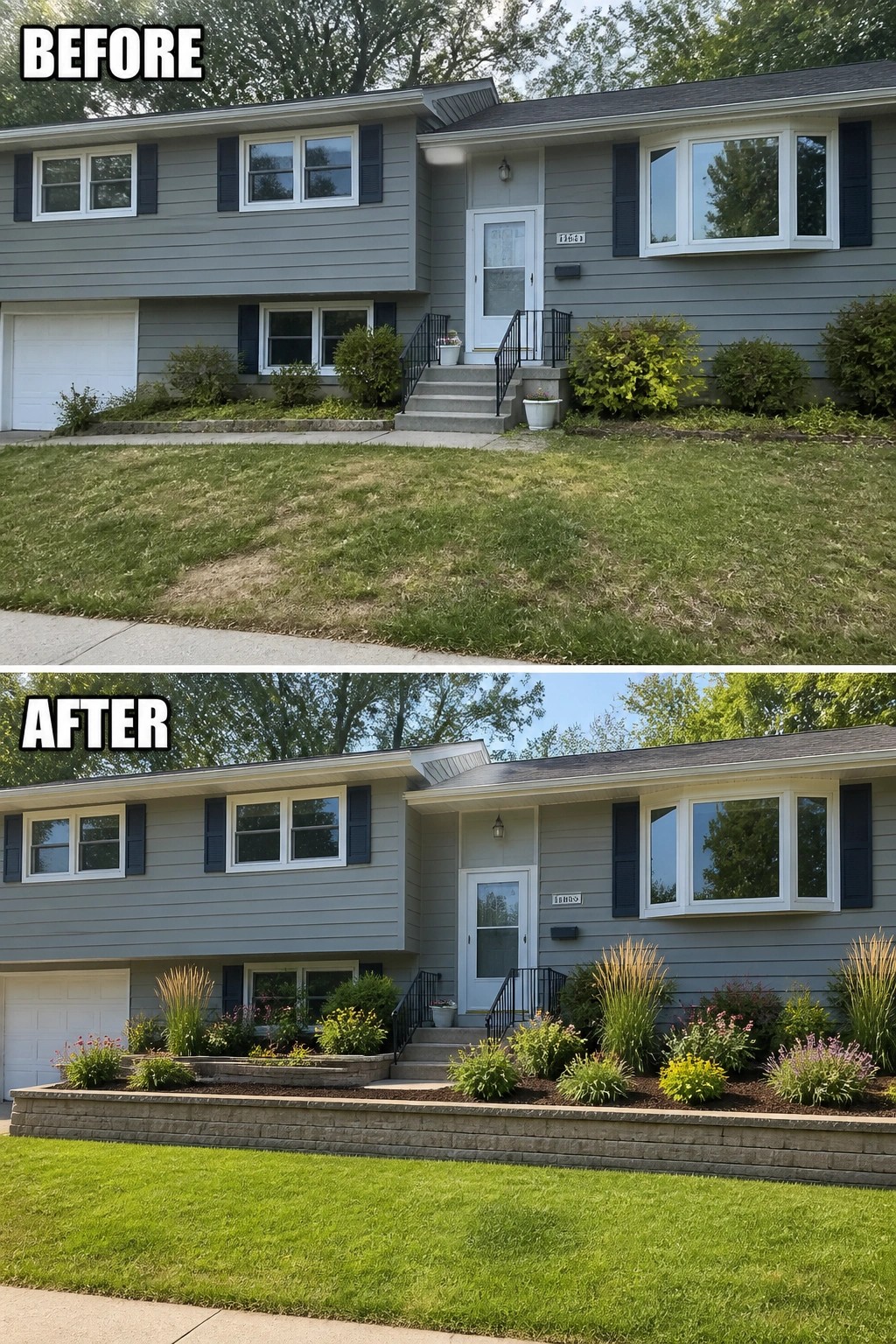
A low retaining wall and crisp planting beds instantly tidy a tired front yard and give the facade a clear edge. In the after shot a simple stacked-stone wall and fresh mulch frame the entry, replacing a patchy lawn and scattered shrubs. That kind of hard-edge plus repeatable planting makes the whole house feel cared for without changing the structure.
Start by clearing out old overgrowth, building a short wall or strong edging to hold soil, and filling the beds with good topsoil and mulch. Pick a small palette—one taller vertical grass at the back, a couple of mid-height perennials, and a groundcover in front—and repeat it across the bed for cohesion. Leave space for the walkway and think about drainage; stacked concrete block or modular stone keeps costs down and plants will do most of the long-term maintenance. Small change, big payoff.
Frame The Entry With Vertical Siding And A Wall Lantern
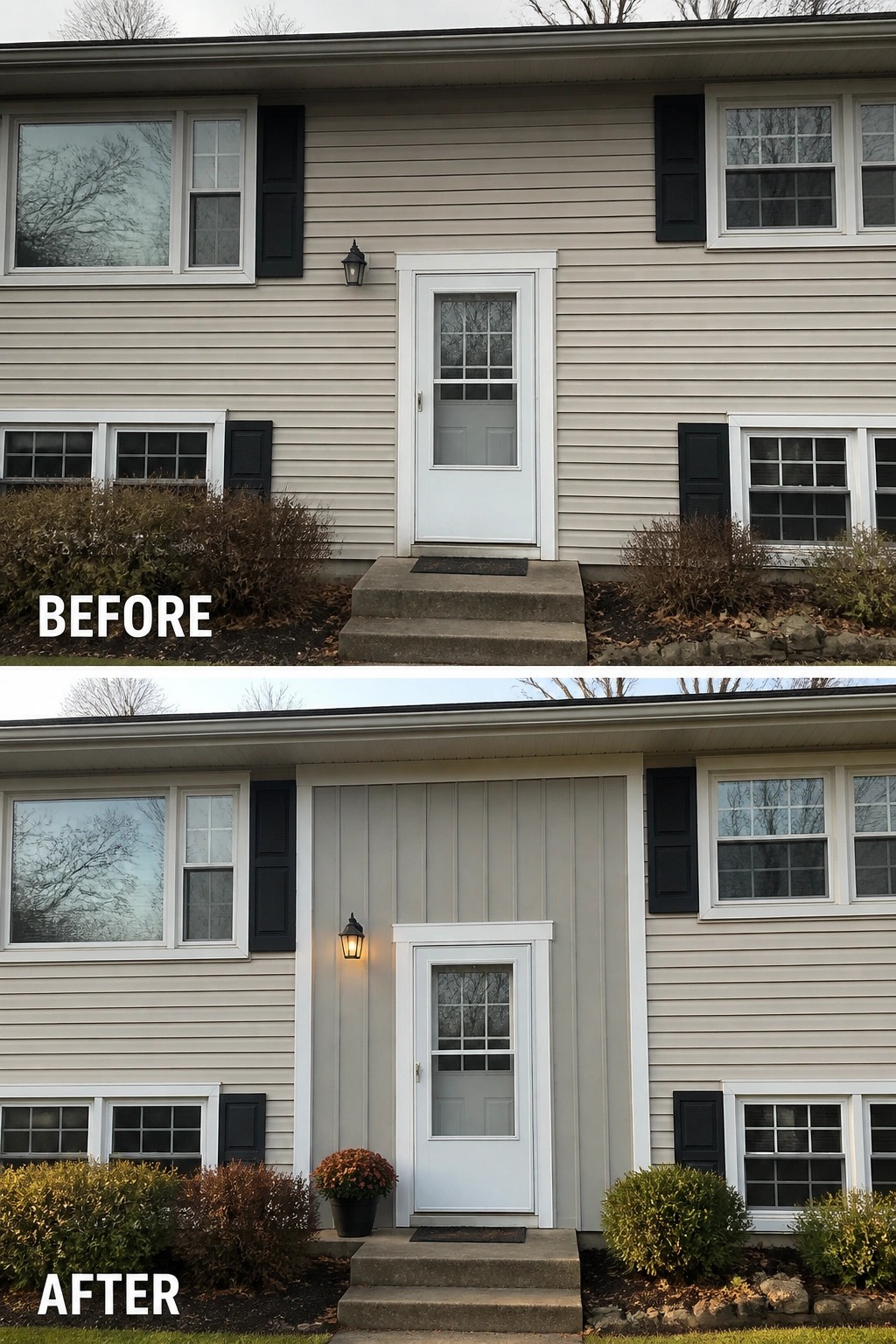
A narrow band of vertical siding, a simple wall lantern, and a couple of potted shrubs can turn an anonymous entry into a readable front door. Framing the door with a different siding orientation and fresh trim creates a small focal point so visitors instantly know where to approach, and the light makes the spot feel intentional even when the landscaping is minimal.
Start with cleanup. Then pick one clear change you can live with—a vertical board-and-batten panel, a new exterior light, or matching trim—and do that first rather than a full overhaul. Choose fixtures and planters that match the house scale, use low-maintenance plantings, and keep the step and walkway unobstructed so the entry feels purposeful and easy to use on a daily basis.
Turn An Empty Porch Into A Seating Area
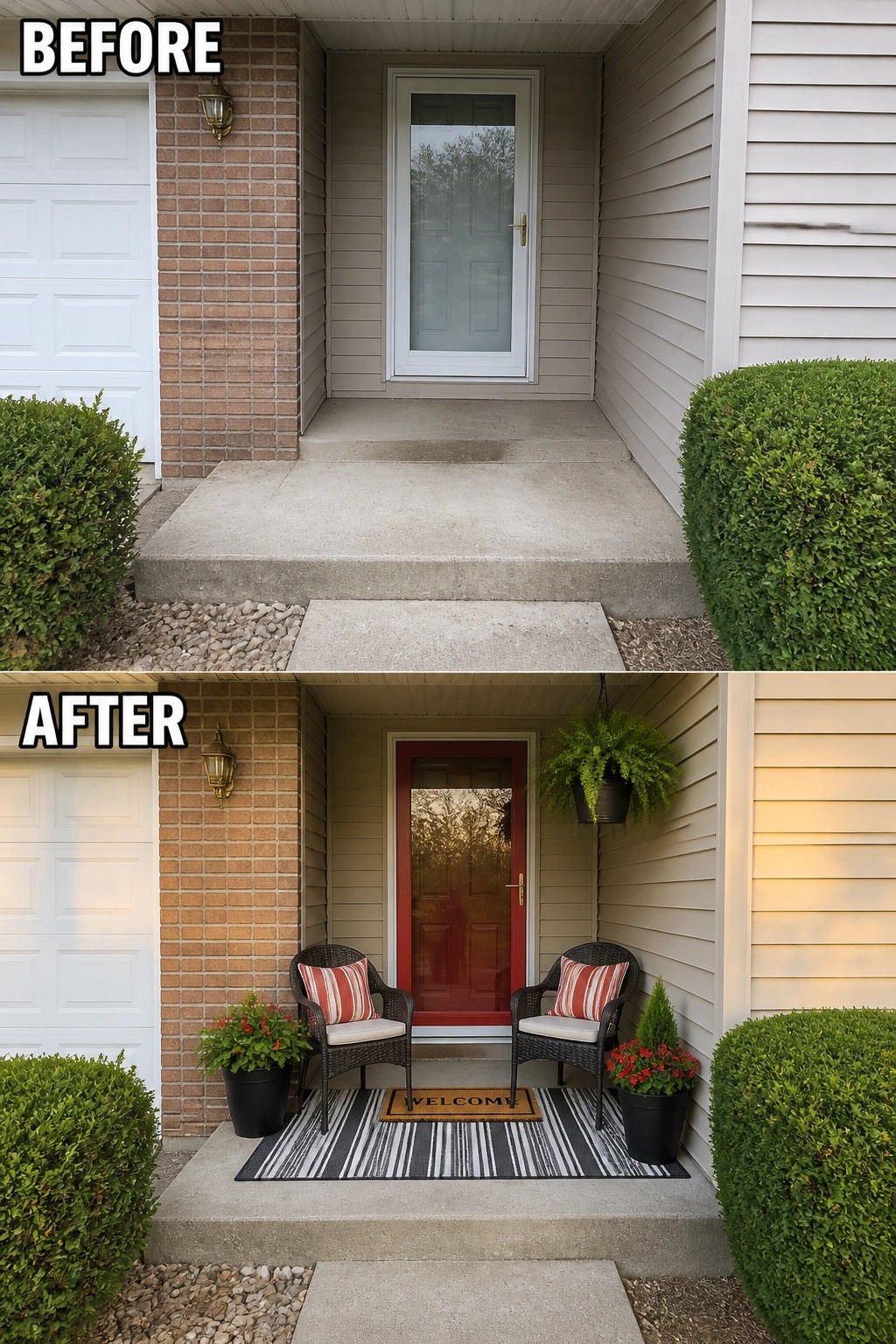
A bare concrete porch is an easy, inexpensive space to upgrade by giving it a simple purpose: seating. Lay down an outdoor rug and add two compact chairs to define a usable zone right at the door. That small change makes the entry feel intentional and gives you a spot to sit, set packages, or greet guests without any major work.
Keep the setup practical. Choose weatherproof furniture that fits the width of the porch so you still have a clear path to the door, and anchor the chairs with a rug sized to leave a few inches of concrete visible. Add one or two planters or a hanging plant for height and repeat a single color (on cushions or the door) to tie everything together—small touches that are easy to swap as seasons or style change.
Refresh Trim And Gutters To Lift Curb Appeal
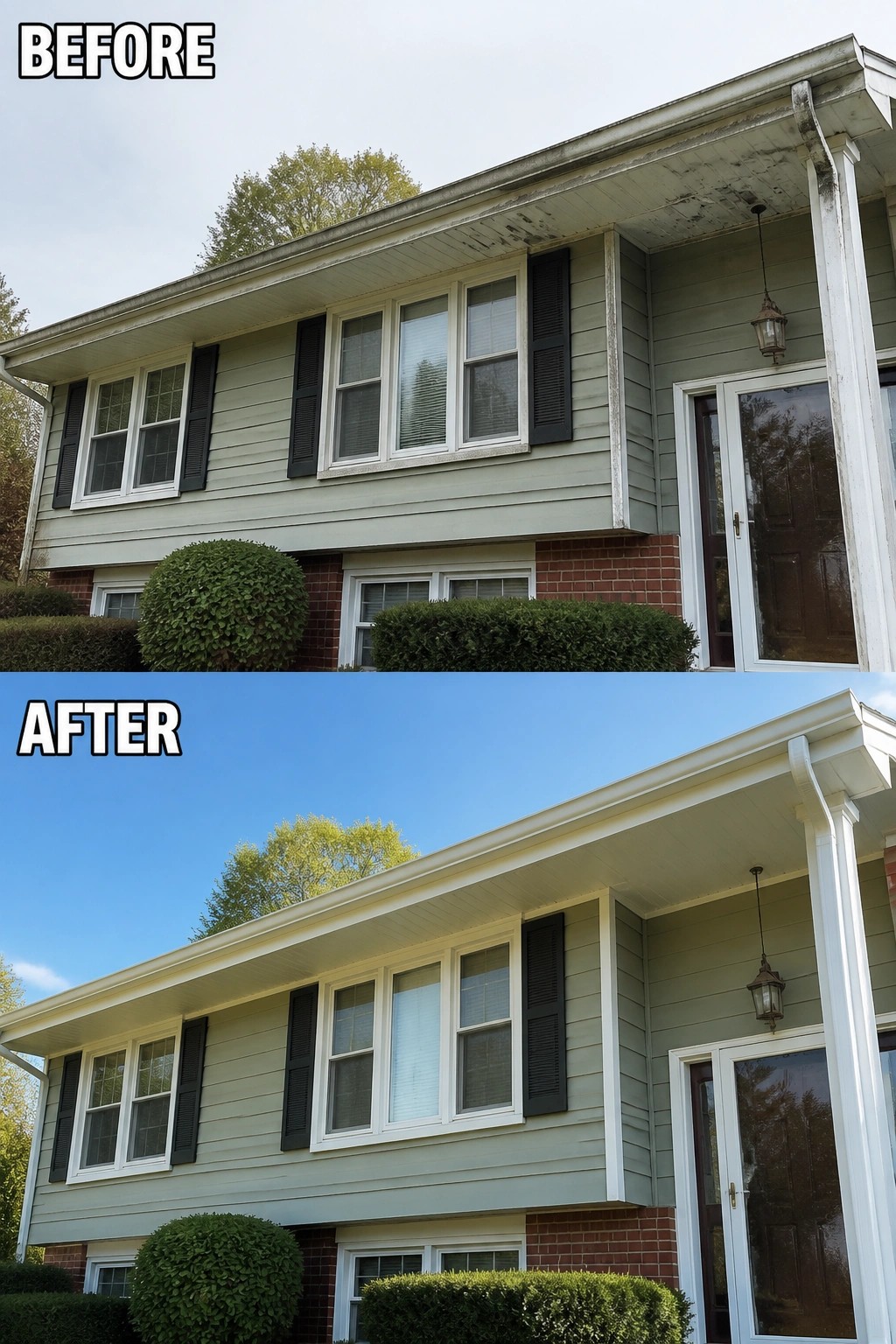
A quick refresh of soffits, fascia and gutters is one of the fastest ways to make a tired split-level look cared-for again. In this example, replacing or repainting the white trim and cleaning the gutters brightened the whole front facade and made the existing siding and shutters read fresher without a full renovation.
Start by power-washing and inspecting trim for rot, then scrape, prime, and repaint or install low-maintenance PVC/aluminum trim and gutters where needed. Keep the palette simple (a clean white against your siding works for most homes), fix any leaking or sagging gutters while you’re at it, and choose weatherproof materials so this small job lasts.
Add Planters And A Contrasting Door To Define The Stoop
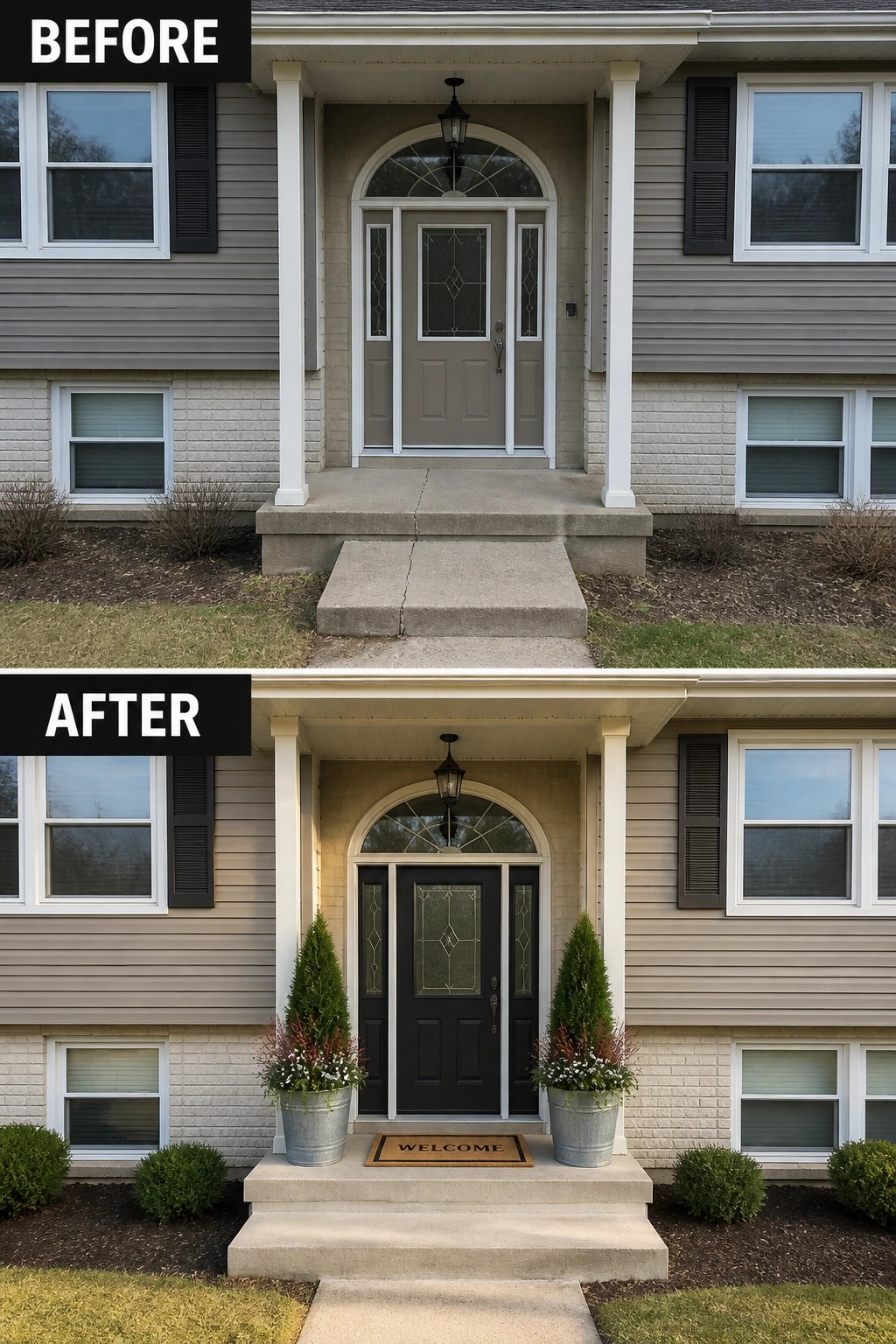
A few focused updates turn a blank concrete stoop into a proper front entry. Paint the door a contrasting, deeper color and add a pair of matching planters plus a welcome mat to create an instant focal point and sense of arrival. Those two moves give the porch a purpose without redoing the whole facade.
Do the work in this order: clean and patch the concrete, paint the door and trim, then stage with two tall but narrow containers to keep sightlines open. Choose hardy evergreens or structured shrubs for year-round shape and add seasonal flowers for color. Keep the scale proportional to the steps and leave room to move—practical, weatherproof pieces make this an inexpensive, low-maintenance update. Simple but effective.
Define The Driveway With A Simple Garden Border
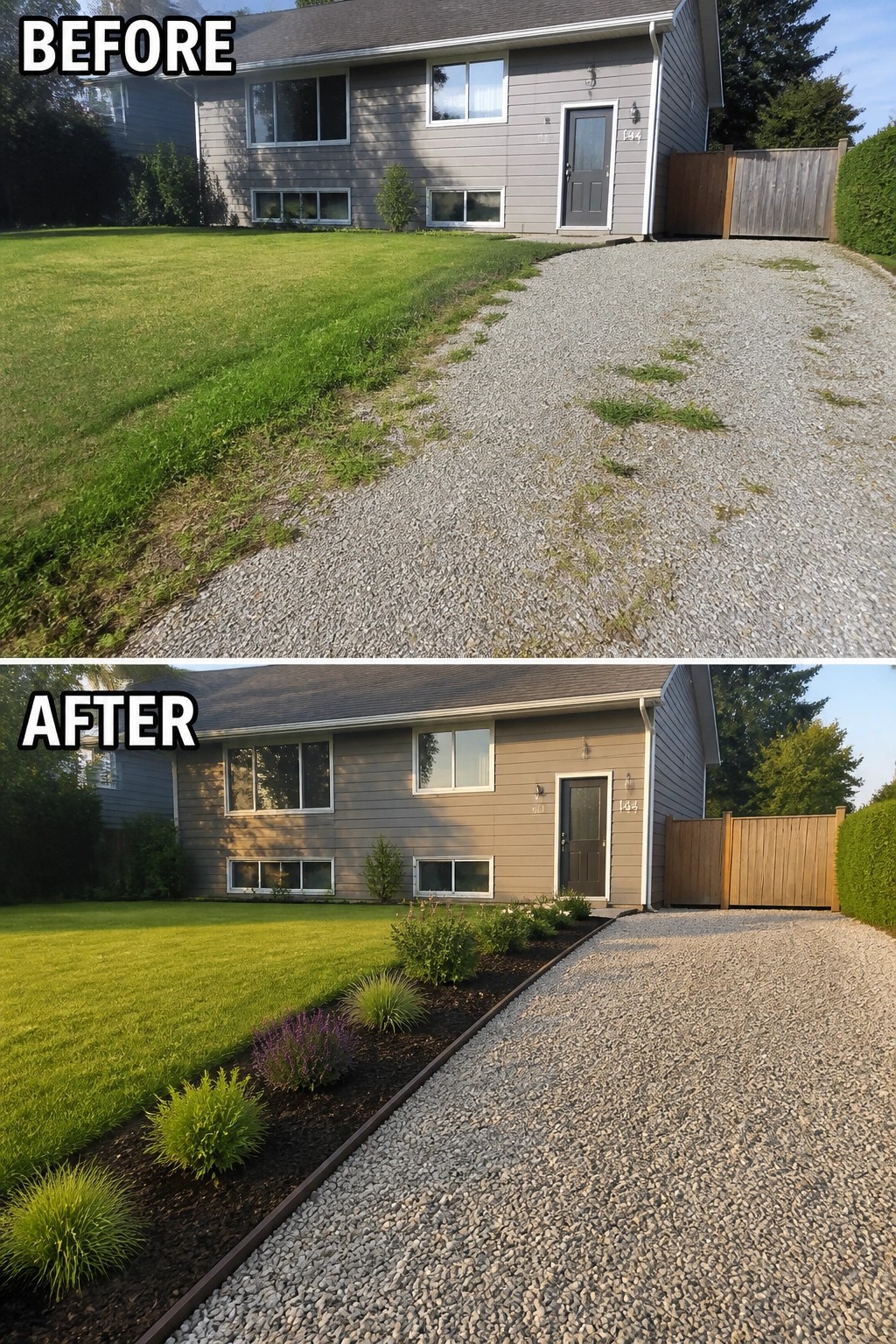
A tidy edge and a planted strip along a gravel drive can change a tired front yard more than a big budget refresh. In this example a narrow mulched bed with clean edging and repeating low shrubs turns a ragged lawn-to-driveary line into a deliberate border, which makes the whole facade read as cared for rather than neglected.
You can copy this on most suburban lots. Clear the weeds, set a shallow edge (steel, recycled metal, or heavy plastic) to hold gravel and mulch apart, then fill with a few low-maintenance plants and a dark mulch to make the gravel pop (easy weekend project). Keep the bed only a few feet wide so it fits small yards, repeat the same two or three plants for a cohesive look, and leave room to mow and weed without special tools.
Create Defined Garden Beds To Tidy An Overgrown Front Yard
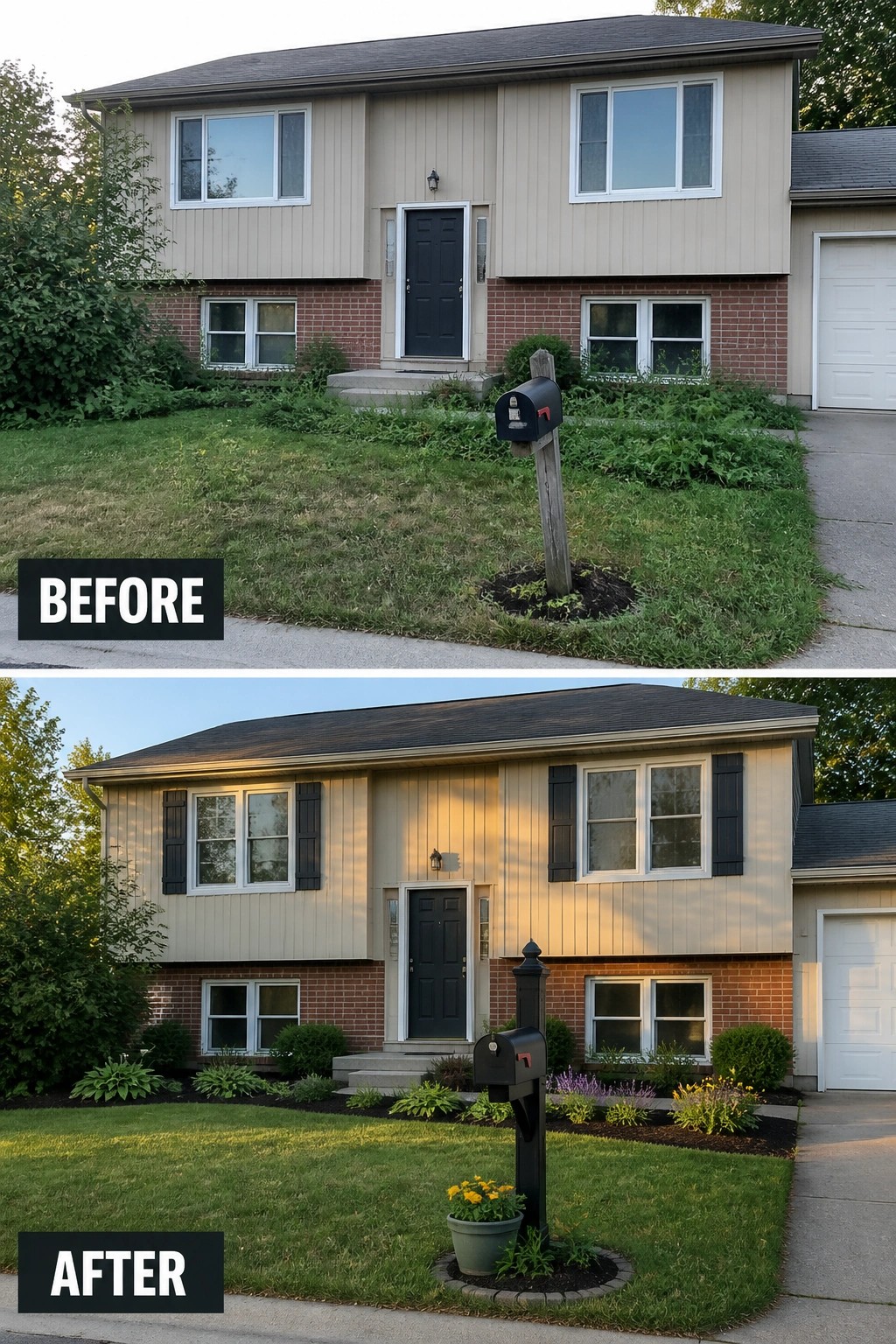
Clearing overgrowth and carving neat planting beds is one of the quickest ways to refresh a tired suburban facade. In the example shown, messy grass and weeds were removed and replaced with crisp, mulch-bordered beds planted with low shrubs, which instantly makes the front look cared for rather than neglected.
Start by pulling weeds and mowing, then mark your bed lines and install simple edging to keep grass from creeping back. Use a small palette—one evergreen or shrub for structure, one mid-height perennial, and a groundcover—and spread 2 to 3 inches of mulch to reduce maintenance. It’s a budget-friendly approach that suits small lots and split-levels, and it pays off fast
Frequently Asked Questions
Q: How much will these split-level curb updates cost me?
A: Small fixes like painting the front door, swapping hardware, adding lighting, or redoing flower beds often run under a few hundred dollars. Mid-range projects such as new railings, refreshed siding panels, or a simple porch redo usually land in the low thousands. Pick a couple of high-impact items and you’ll stretch your budget farther.
Q: Which jobs from the list are truly DIY-friendly?
A: Tasks like power washing, painting, planting, replacing house numbers, and installing outdoor lights are easy to tackle on a weekend with basic tools. Leave structural work, complex electrical, and roof repairs to licensed pros to stay safe and avoid costly mistakes.
Q: How do I choose paint colors so my split-level doesn’t look dated?
A: Start with a neutral trim and pick one bolder tone for the main body to update the look without drama (try large poster-board swatches). Test samples on different sides of the house and view them at morning and evening light before committing.
Q: Will these updates help sell my house faster or add value?
A: Fresh curb appeal makes a real difference in buyers’ first impressions and often speeds up showings. You may not recoup every dollar spent, but visible, inexpensive fixes generally deliver the best return on investment.