

Mobile homes often feel stuck in a kind of dated limbo, where flat paint, weak lighting, and a bare entry or porch make the whole place look overlooked instead of cared for.
I’ve learned that small, focused changes, like fresh paint, brighter bulbs and better fixtures, and a few well-placed planters, can help rooms and exteriors read as more intentional and useful.
They do not have to be expensive.
I’ll point out practical swaps, simple paint tricks, lighting upgrades, and planter ideas you can try one at a time until the place starts to feel more settled.
Save a few of these ideas, adapt them to your layout, and enjoy the quiet satisfaction when a modest change makes a space feel less forgotten.
Give A Bare Porch A Clear Purpose
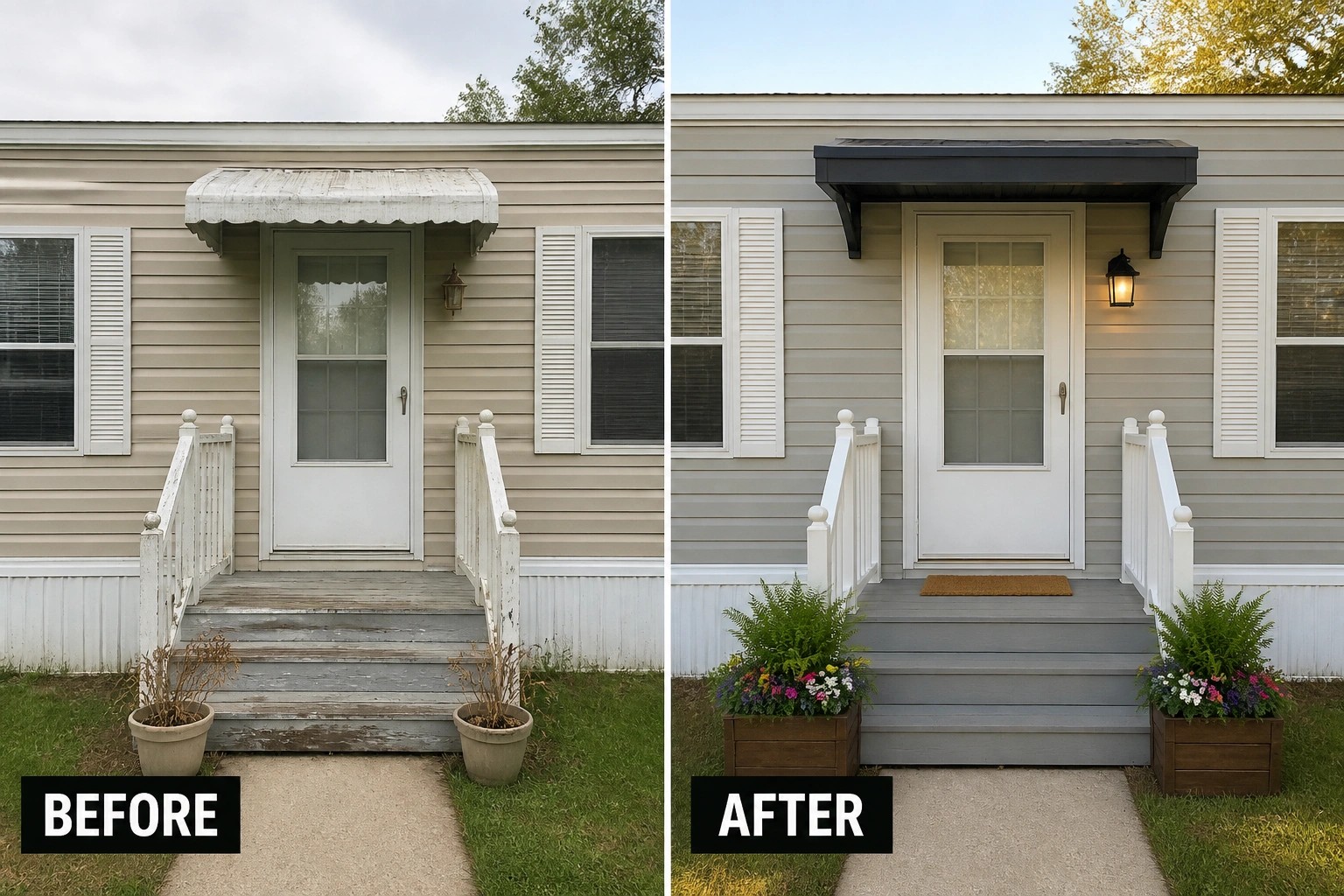
A few targeted changes can make a tiny porch feel intentional instead of forgotten. In this example the homeowner painted the small awning a darker color, swapped the old fixture for a simple outdoor lantern, and flanked the door with two matching planters. Those moves create a clear focal point and give the entry a purpose without a big renovation.
To try this at home, pick one main change first — new light, painted trim, or a bold awning — then add two matching planters or a single bench to anchor the doorway. Use containers and plants sized for the steps, choose weatherproof finishes, and keep the walking path clear so the décor doesn’t block function. Simple and affordable.
Make Mobile Home Steps Safer With Repairs And Step Lighting
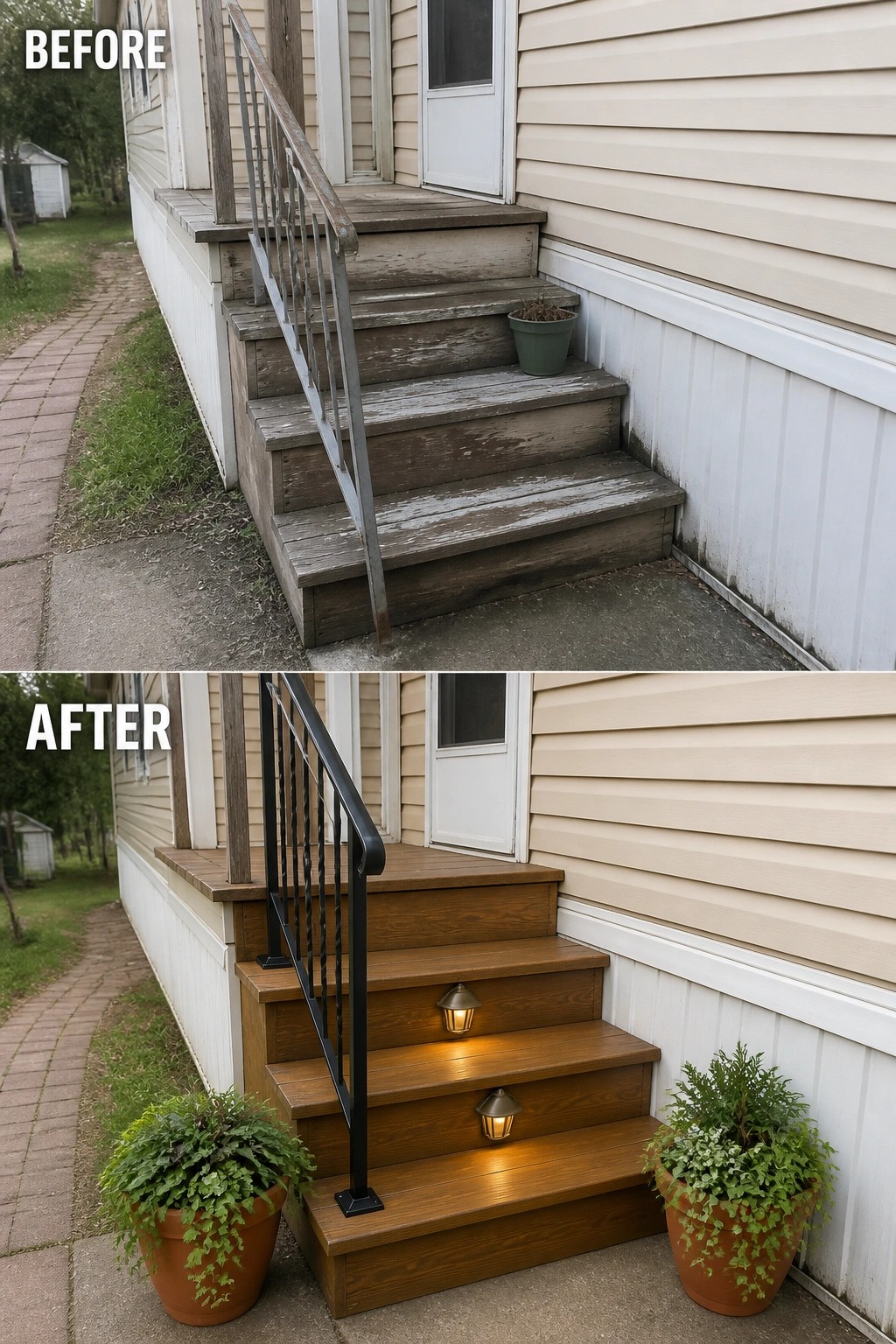
A small, neglected entry suddenly feels intentional when the steps are repaired and given purpose. Refinishing or replacing worn treads and installing low-profile step lights turns a slippery, forgotten stair into a safe, usable approach, and a matching dark rail pulls the whole look together.
Do this where space is tight: fix or replace the treads first, then add weatherproof, low-voltage or solar step lights aimed at the risers so they actually illuminate your feet. Keep accents simple—one or two matching planters to frame the bottom step and a single-color railing—so the entry reads as welcoming without crowding a narrow porch.
Use Planters To Finish A Plain Exterior
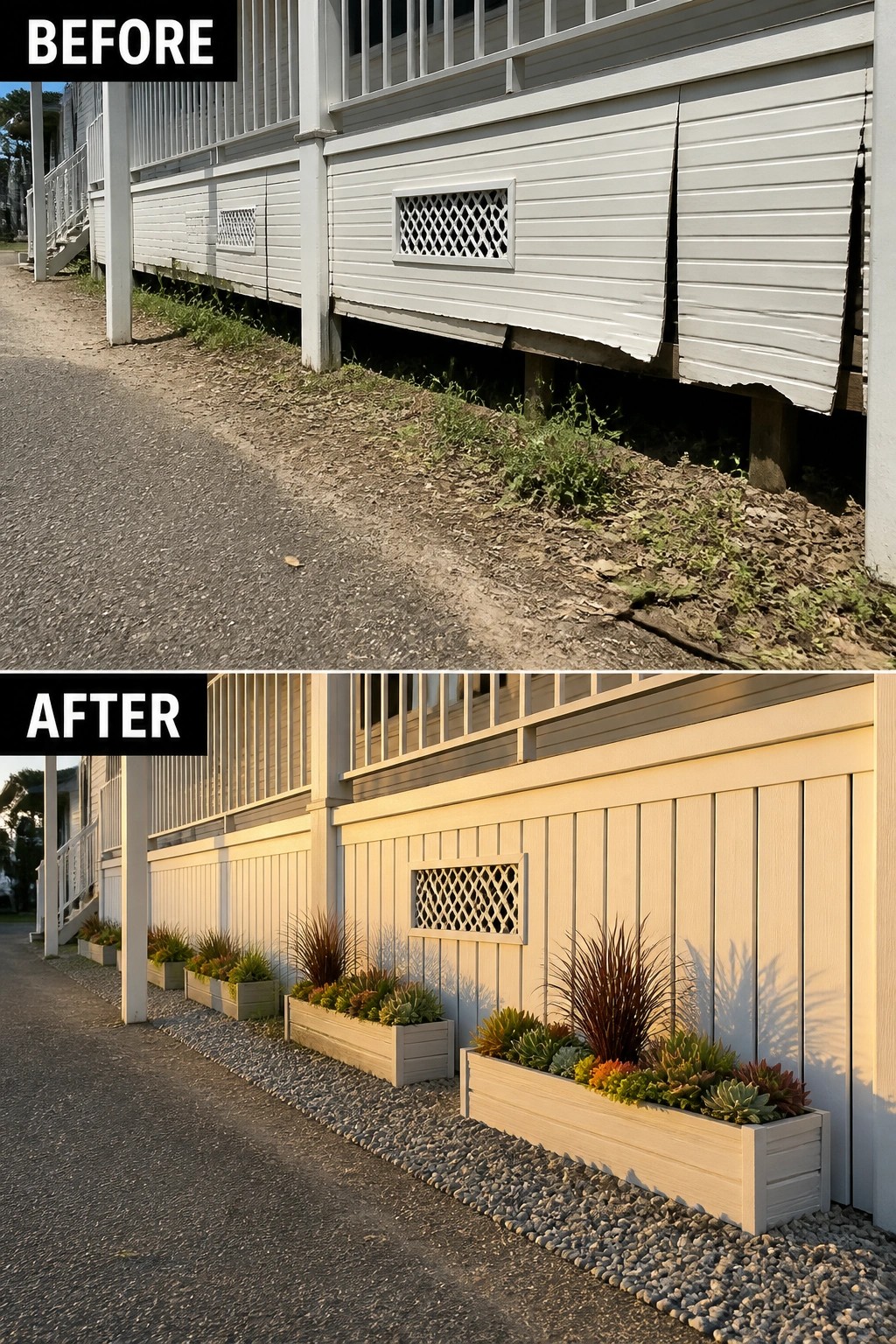
A simple row of matching planters instantly dresses up an otherwise plain or tired skirting area. Replacing damaged panels with clean vertical boards and laying a gravel strip gives the base a neat backdrop, then repeating the exterior color in wooden boxes ties everything together so the lower edge looks intentional instead of neglected.
How to copy it: clear brush and loose material first, then install low-profile planters that fit the walkway so they do not block access to vents. Keep the palette limited — one paint color and one planter style — and use low-maintenance plants (succulents or drought-tolerant perennials work well) plus a gravel bed to cut down on weeding. Leave space for service access and avoid overcrowding the boxes; simple repetition is more effective than a jumble.
Turn A Bare Porch Into A Cozy Seating Area
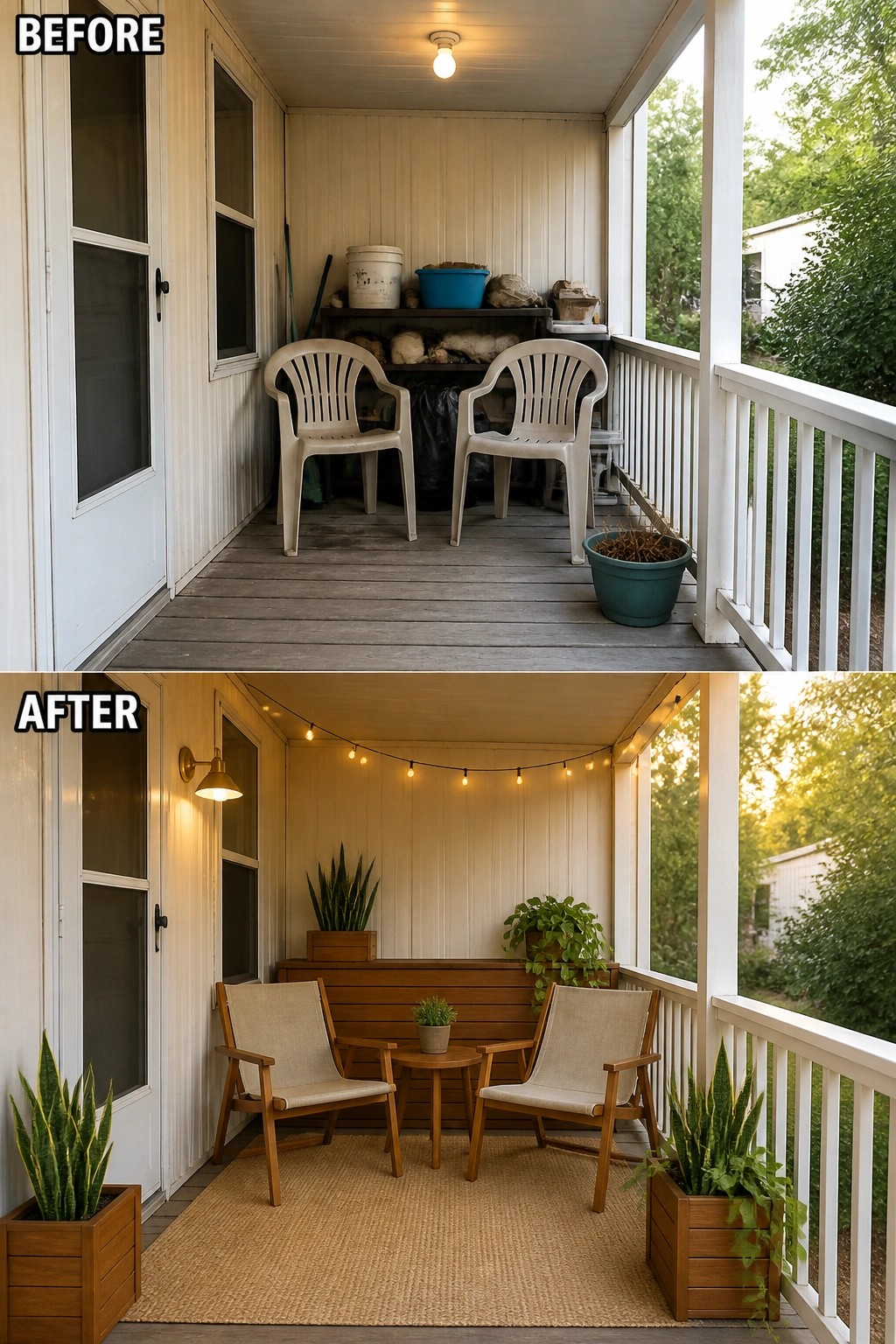
Replace an underused porch with a small, deliberate seating zone to make the space feel useful and welcoming. Swapping plastic chairs for a pair of compact lounge seats, adding a natural-fiber rug, a small side table, a couple of planter boxes, and soft string lights gives the porch a clear purpose without crowding it.
Start by clearing and sweeping the floor, then pick furniture scaled to the width of the porch so you can still pass by easily. Use an outdoor rug to define the sitting area, choose weatherproof materials in a single warm tone, and place taller plants at the back for privacy and height. Hang lights where people actually sit so the space works after dusk. Simple and effective.
Update The Entry With A Fresh Door Color, Lighting, And Planters
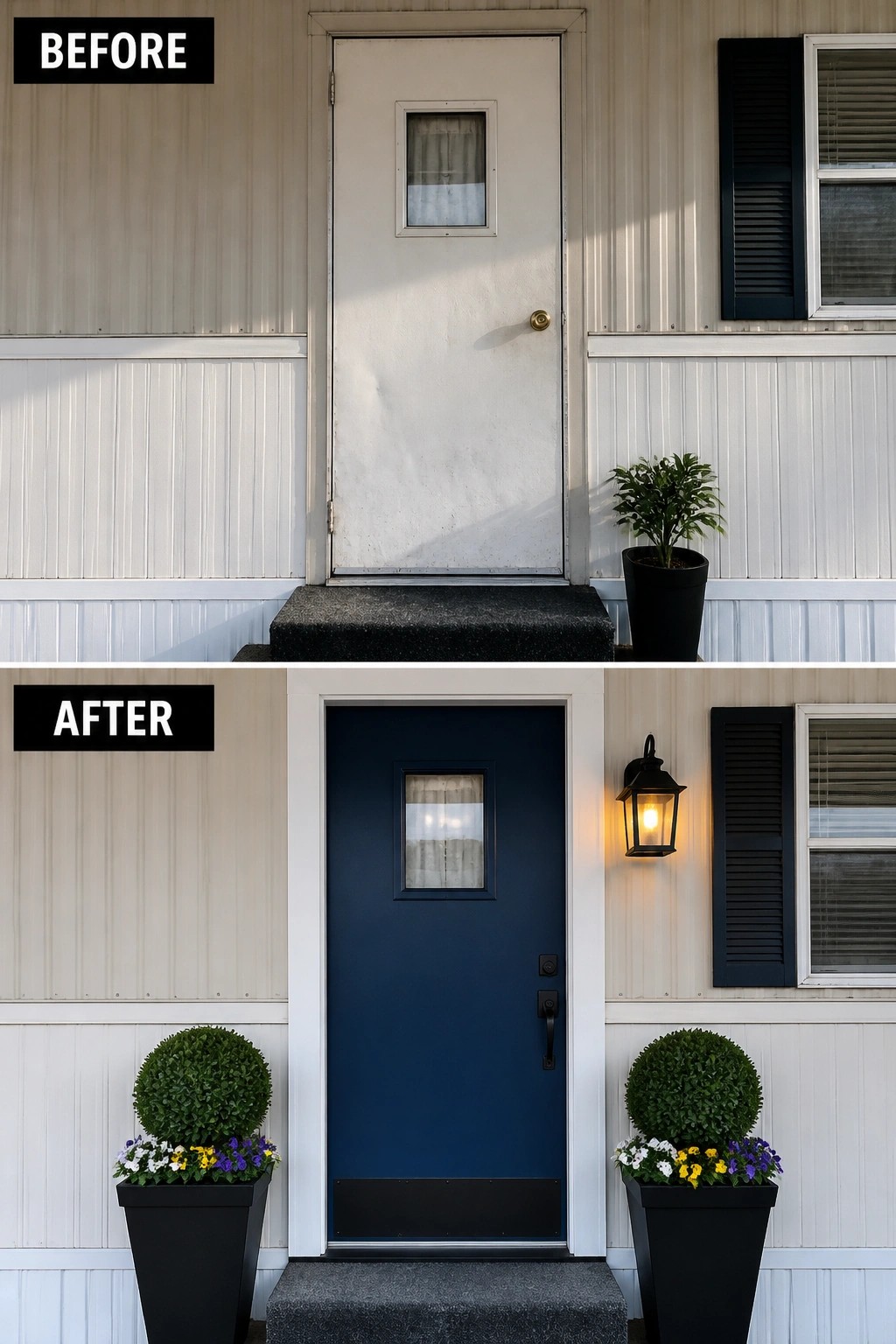
A small, focused change at the front door makes a big difference. Swapping a tired white door for a rich blue, adding a simple wall lantern, and placing matching planters gives the porch a clear focal point and a sense of welcome without a major renovation.
To copy this, choose a door color that contrasts your siding but feels natural with existing shutters or trim, and pick hardware that matches the light finish. Use two identical planters for symmetry and plants that hold up to your climate (evergreens or seasonal pansies are good choices), and size the pots so they don’t block the step or door swing. Simple upgrades like these work especially well on narrow porches and mobile-home entries.
Turn An Empty Patio Into A Cozy Outdoor Room
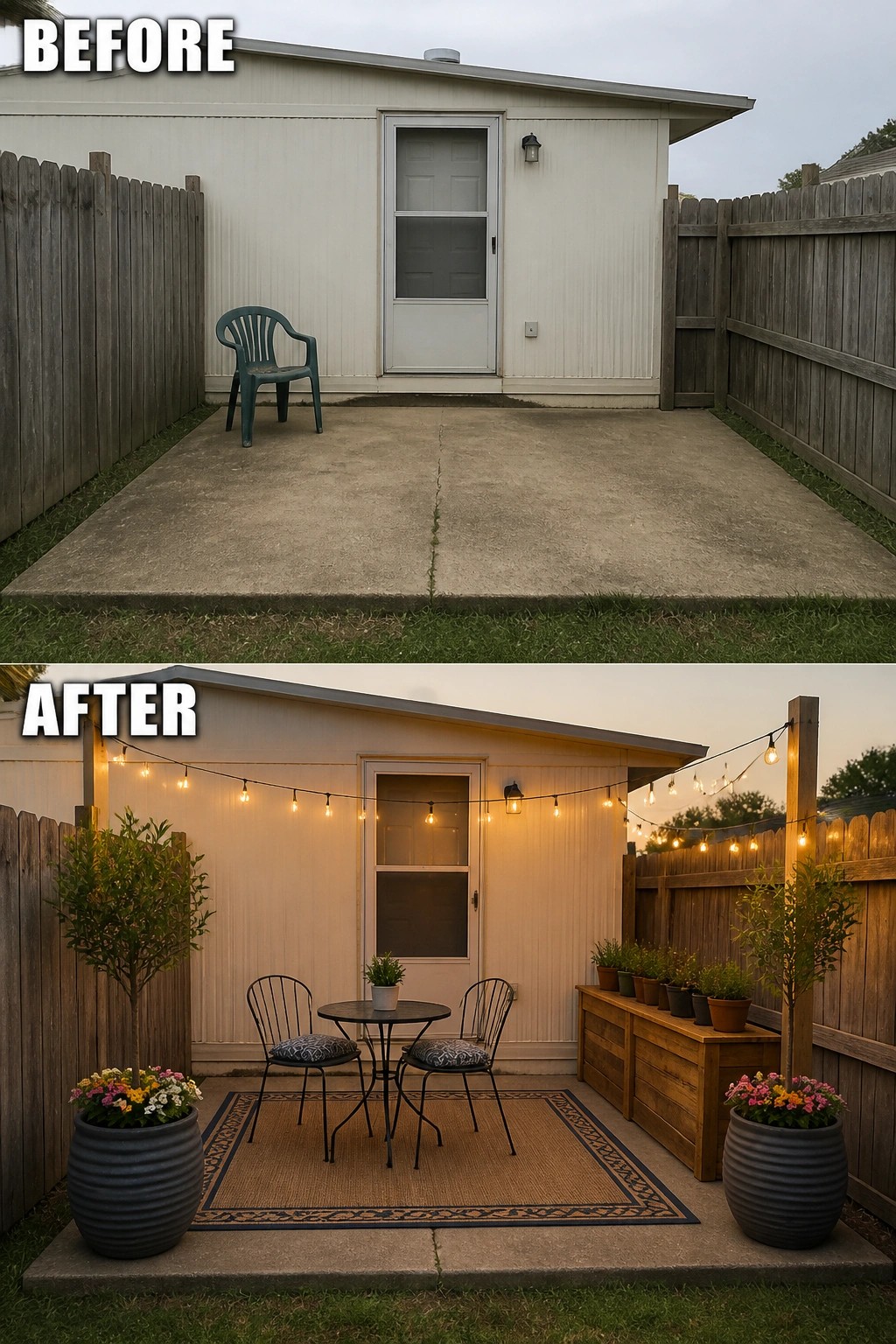
A plain concrete slab can feel useless until you give it a clear purpose. Lay down an outdoor rug to define the seating zone, add a small bistro table and chairs for scale, and hang a strand of bulbs to make the area usable after dark — a couple of planters at the edges finishes the look and hides the fence line. That simple shift from bare slab to a defined outdoor room makes the space feel intentional and comfortable without major work.
Start with a clean surface and pick pieces that match the patio size so you do not overcrowd it. Use a weatherproof rug to anchor the furniture, choose compact seating (bistro sets are perfect for small slabs), and fasten lights to posts or the wall so they sit over where people actually sit. Frame the sides with tall planters for a bit of privacy, and leave a clear path to the door. Keep it simple.
Brighten A Bare Porch With A Wall Lantern And Hanging Planters
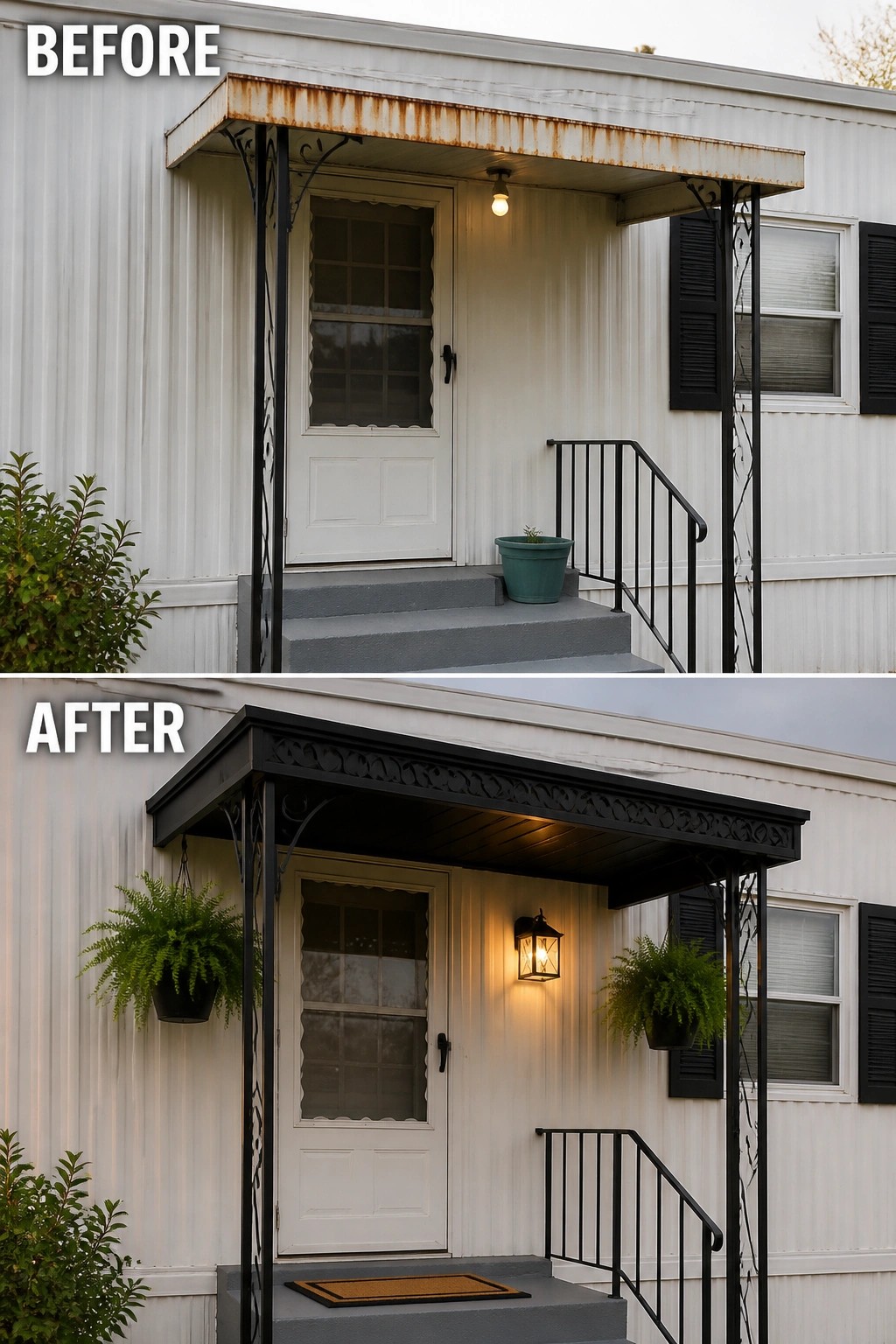
A tiny entry needs a focal point more than a lot of stuff. Swapping the bare bulb for a proper wall lantern and adding a pair of hanging planters instantly gives the porch a welcoming purpose and looks cared for without a major overhaul. Those two changes read as intentional and make the door feel like a real front entry.
Start by cleaning and touching up the trim, then pick a weather-rated light that matches your rail or awning finish so everything feels cohesive. Hang planters at eye level to frame the doorway, add a simple doormat, and leave enough clearance to open the door easily—this
Add Defined Garden Beds To Frame The Entry
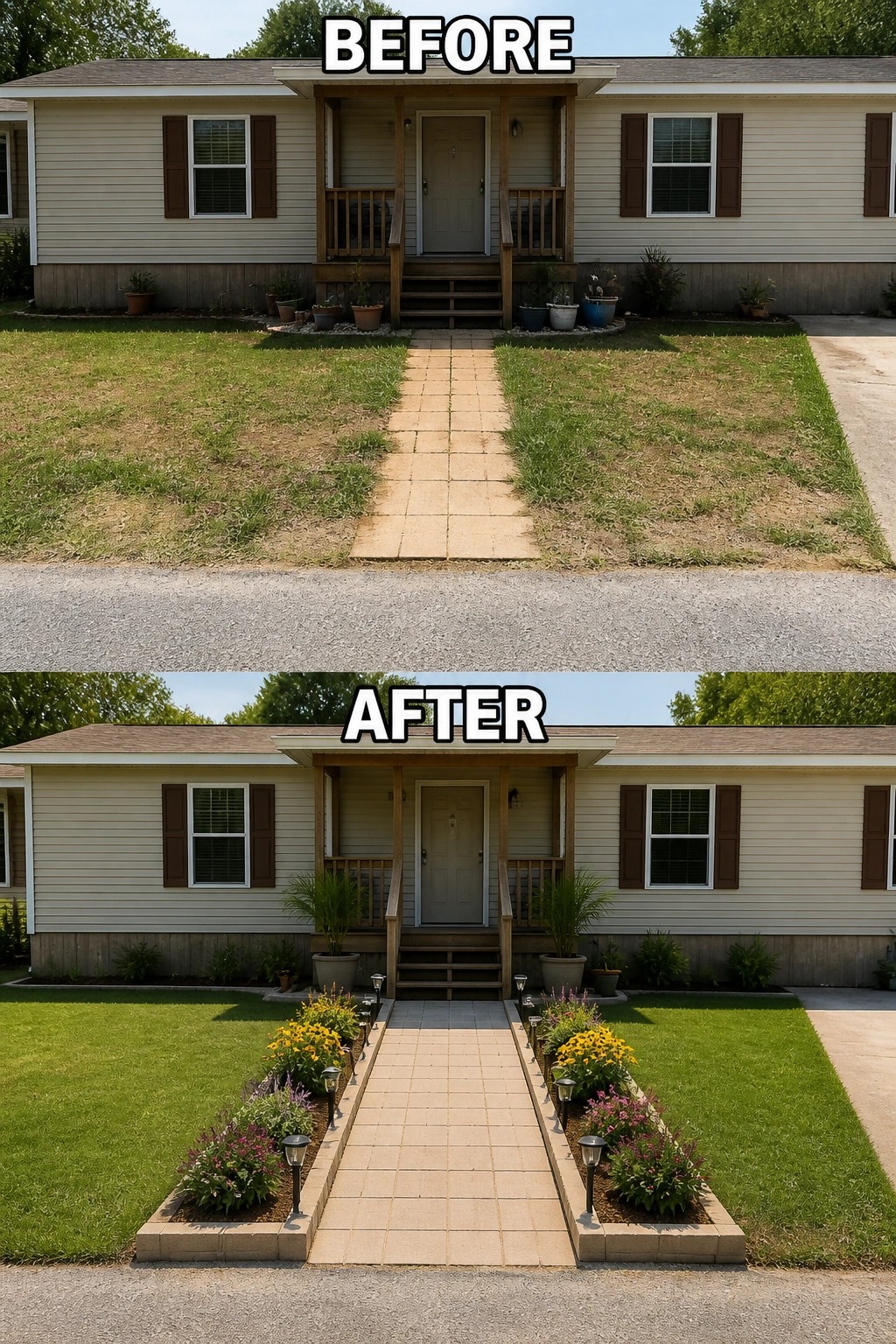
A simple pair of low, raised beds along the walkway instantly gives a plain front yard purpose. Framing the pavers with neat edging, repeat plantings, and a few pathway lights turns a wandering strip of grass into a clear approach to the porch without a big budget or major construction.
Start by defining the edges with inexpensive pavers or concrete blocks, add a shallow raised bed filled with quality soil, and pick 2–3 easy perennials you can repeat on both sides for symmetry. Keep the beds narrow so the yard still feels open, add mulch to cut maintenance, and finish with small solar lights and a couple of matching pots by the steps to anchor the entrance.
Paint Cabinets And Add A Wood Countertop To Warm A Small Kitchen
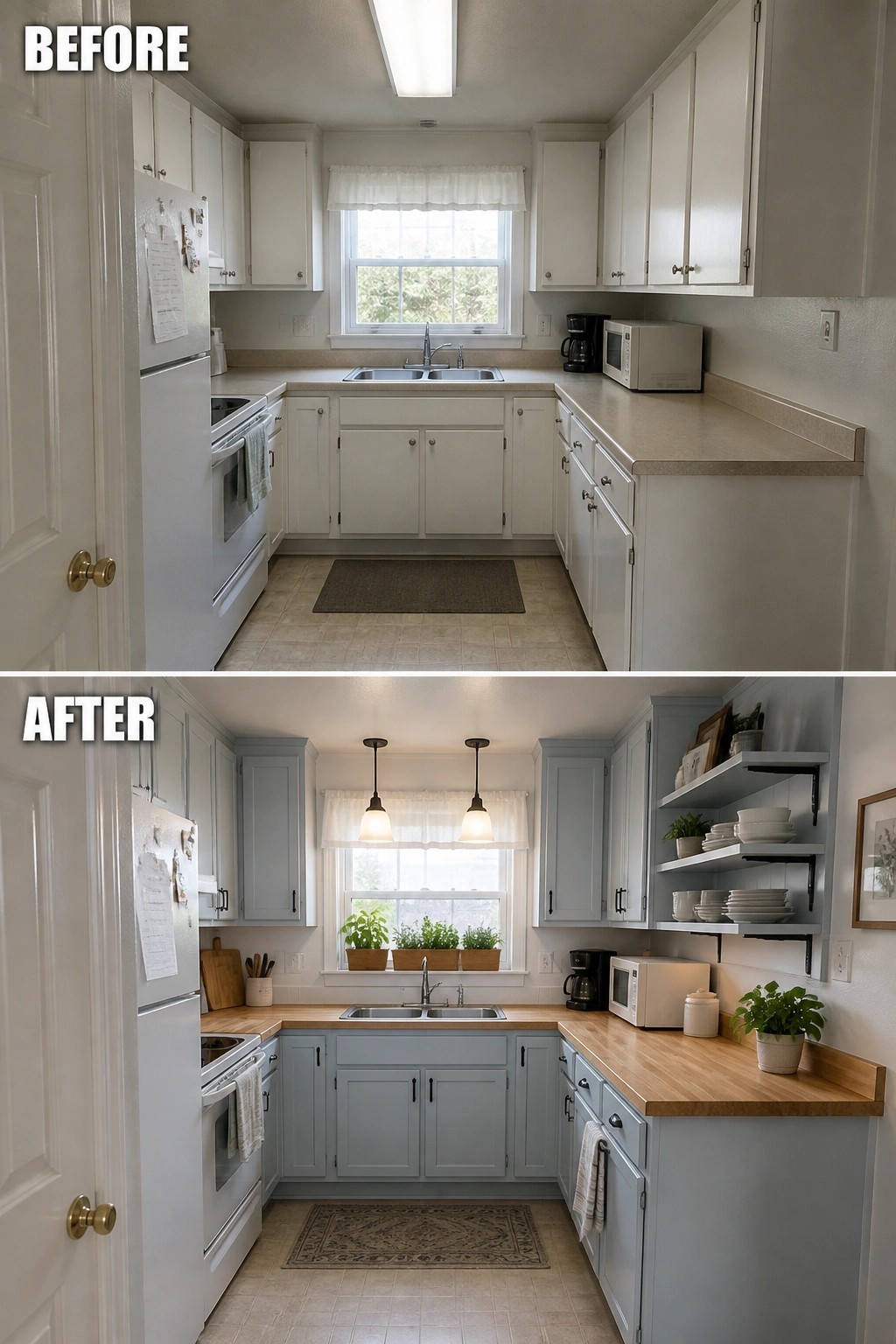
A fresh cabinet color and a warm wood worktop are an easy way to lift a plain galley kitchen. In this update the cabinetry was painted a soft blue and the laminate counters were replaced with butcher-block, which instantly feels more intentional and less clinical than the original all-white surfaces. The change steadies the room without needing a full remodel.
You can copy this in stages to keep costs down: start by painting the cabinets and swapping the hardware, then add a sealed wood butcher-block or a wood-look top when your budget allows. This works best in small kitchens where a single color and a natural surface read across the whole space; add a couple of task lights and a small plant or two to finish it off (no full tear-out required).
Make A Plain Room Feel Warmer
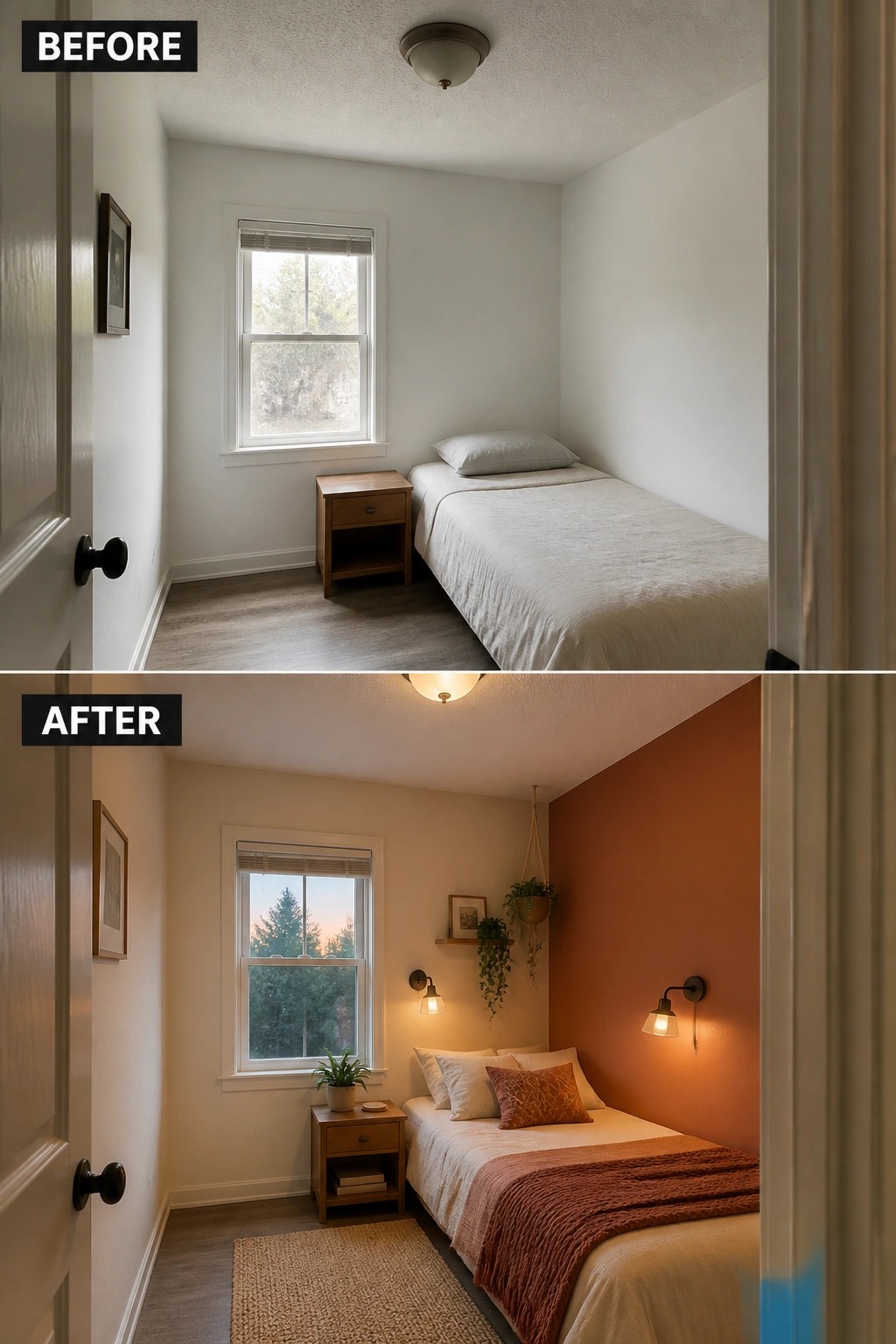
A single painted accent wall paired with simple changes like wall-mounted lights and soft textiles can turn a bland small bedroom into a cozy, finished space. In this example the warm terracotta wall and two bedside sconces create a clear focal point and replace the room’s hollow, unfinished look with a calm, lived-in feel.
Start with the wall. Pick the wall behind the bed and try a small paint sample first so you can see it at different times of day. Add sconces to free up nightstand space and provide useful reading light, then layer in a rug, a throw, and one or two plants to introduce texture and repeat the accent color in small pillows or accessories. Keep the layout simple so a tiny room still feels airy while looking intentional.
Make A Plain Hallway Feel Finished
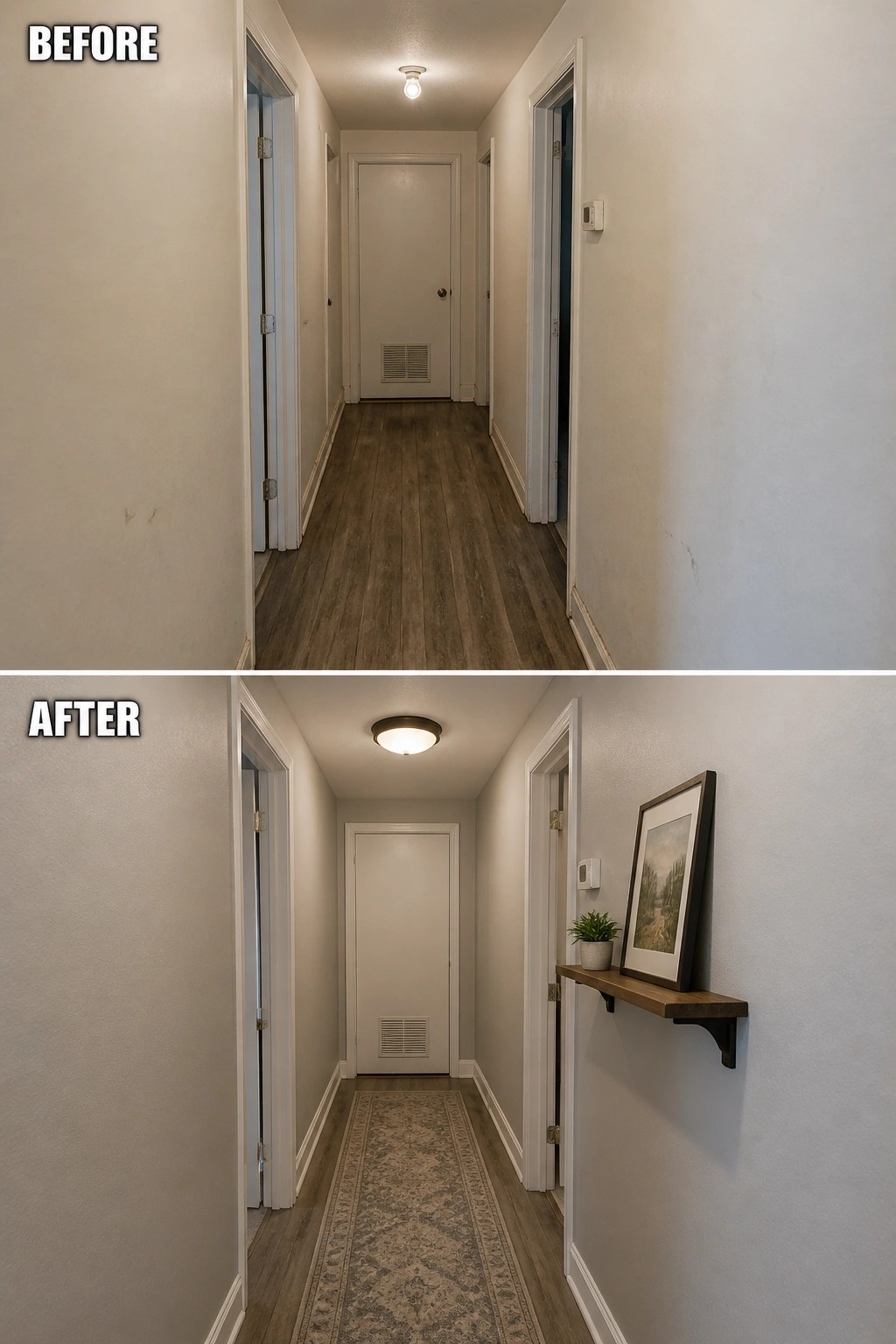
A narrow hallway can stop feeling like a passageway with just a few small changes. Laying down a long runner and adding a slim floating shelf with a framed print and a small plant gives the space scale and a clear focal point, so the corridor feels intentional instead of neglected.
To copy this look, pick a runner that leaves a few inches of floor visible on each side so the hall still reads as roomy. Mount a low-profile shelf at eye level for one or two simple items and keep clutter off the floor for easy traffic flow; if your ceiling light is a
Improve Curb Appeal With Paint And Planters
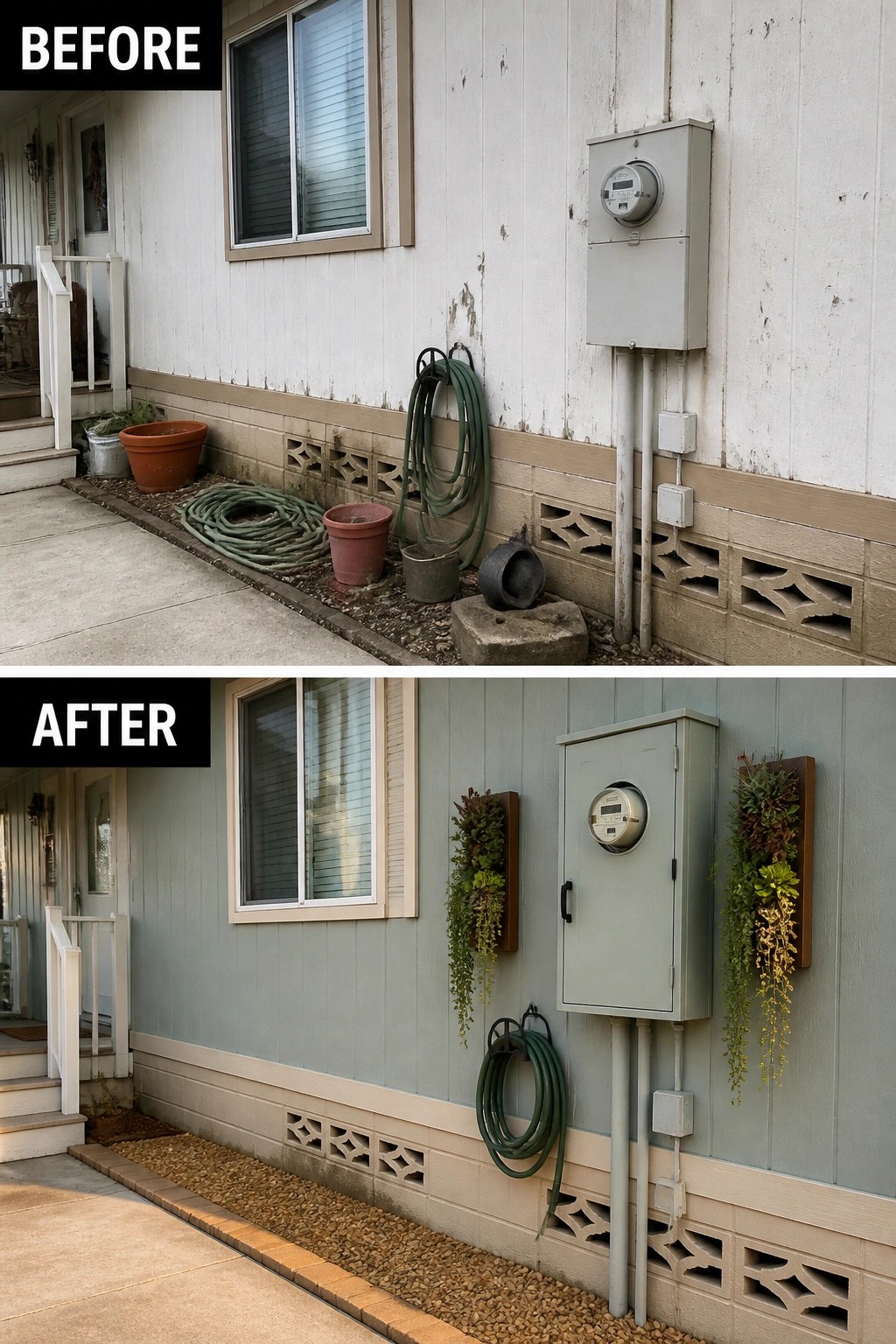
A little paint and a bit of tidy landscaping go a long way on a small facade. Refreshing the siding and trim into a coordinated palette and replacing scattered pots with a narrow gravel bed and a couple of mounted planters instantly makes the wall look cared for and purposeful rather than neglected.
To copy this, start by cleaning and repairing the siding, then pick two exterior colors—one for the body and one for trim—for a neat, unified look. Add slim wall planters to frame a utility area, choose low-maintenance trailing plants, and lay pea gravel with a simple edge for an easy, low-water groundcover. Keep the scale modest and leave room for access to hoses and meters. Simple, effective.
Add Window Boxes And Simple Lights To Lift A Plain Facade
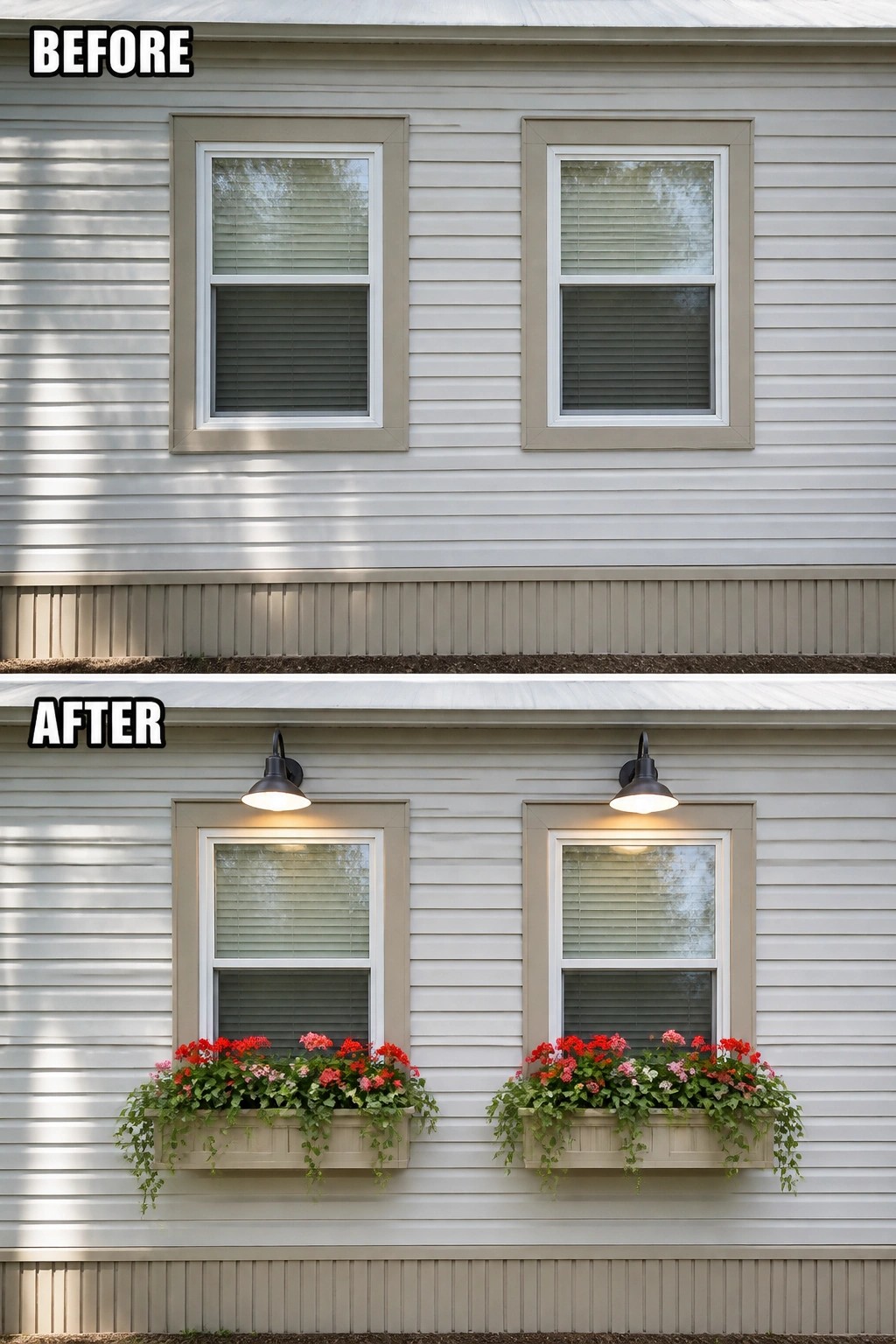
A pair of painted window boxes and two small gooseneck lights are an easy way to give a blank exterior some personality. The plants add color and a soft edge to otherwise flat siding, while the focused lights make the windows feel intentional and usable in the evening. Together they turn an anonymous wall into a friendlier frontage without heavy construction.
This works best on small homes or mobile units where scale is modest and one or two repeated elements read clearly. Choose shallow, weatherproof boxes and plants that suit your sun exposure so they stay tidy through the season, and mount lights centered above each window at a height that avoids glare. Keep materials and paint colors simple so the added items look like part of the house, not an afterthought.
Finish A Covered Porch With A New Ceiling And Better Lighting
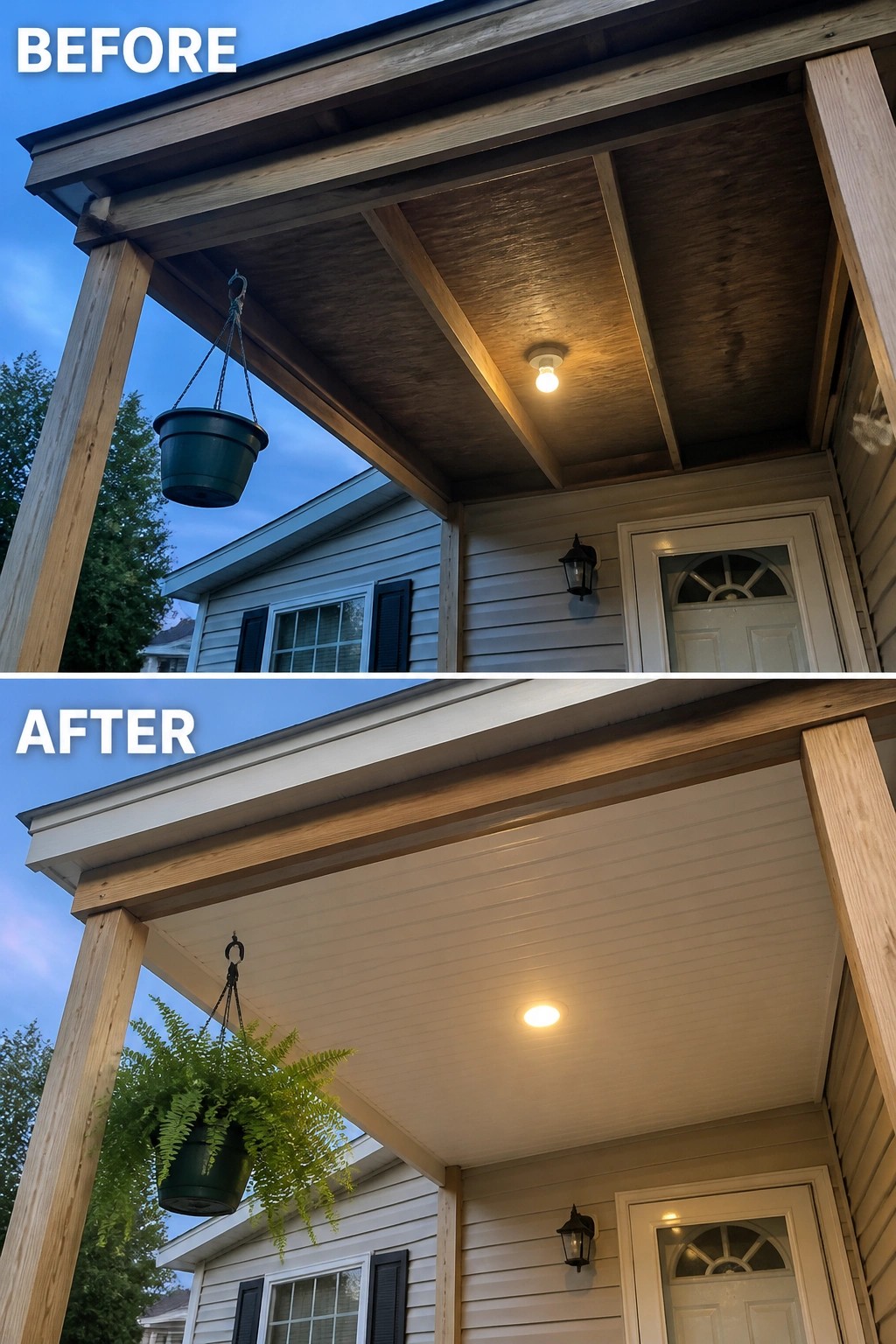
A small covered entry can read as unfinished if the ceiling is exposed and the lighting is a single bare bulb. Finishing the soffit with prefinished beadboard or tongue-and-groove panels and swapping in a damp-rated recessed or flush fixture instantly makes the space feel purposeful, especially when you drop in one hanging planter for a touch of green.
This approach works well for tight porches and mobile-home entries where a full remodel isn’t practical. Keep the scale modest so you don’t lose headroom, choose materials made for exterior moisture, and match the trim paint to the house so the update looks intentional rather than tacked-on. A neat ceiling, proper light, and one plant go a long way.
Make A Plain Facade Feel More Welcoming
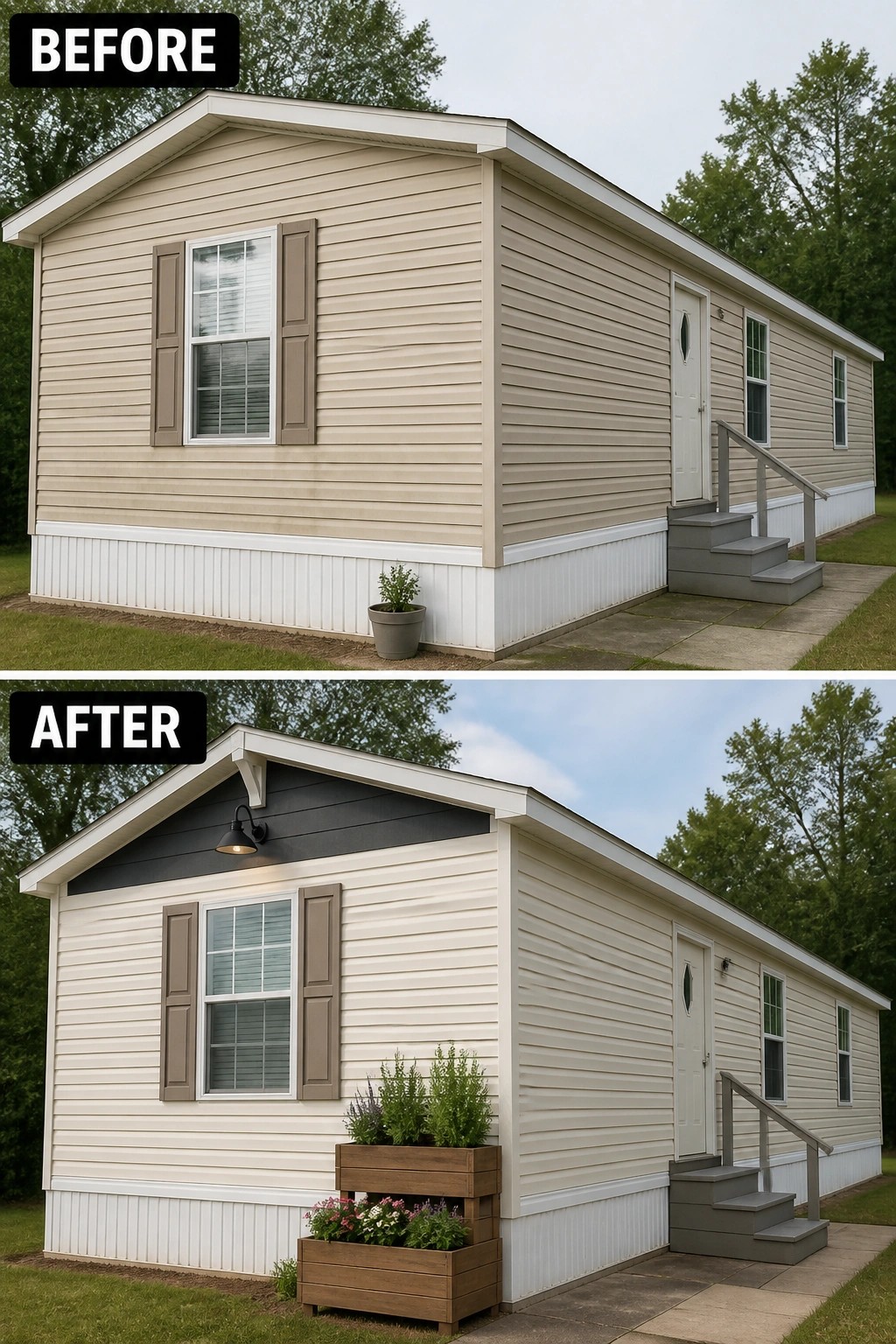
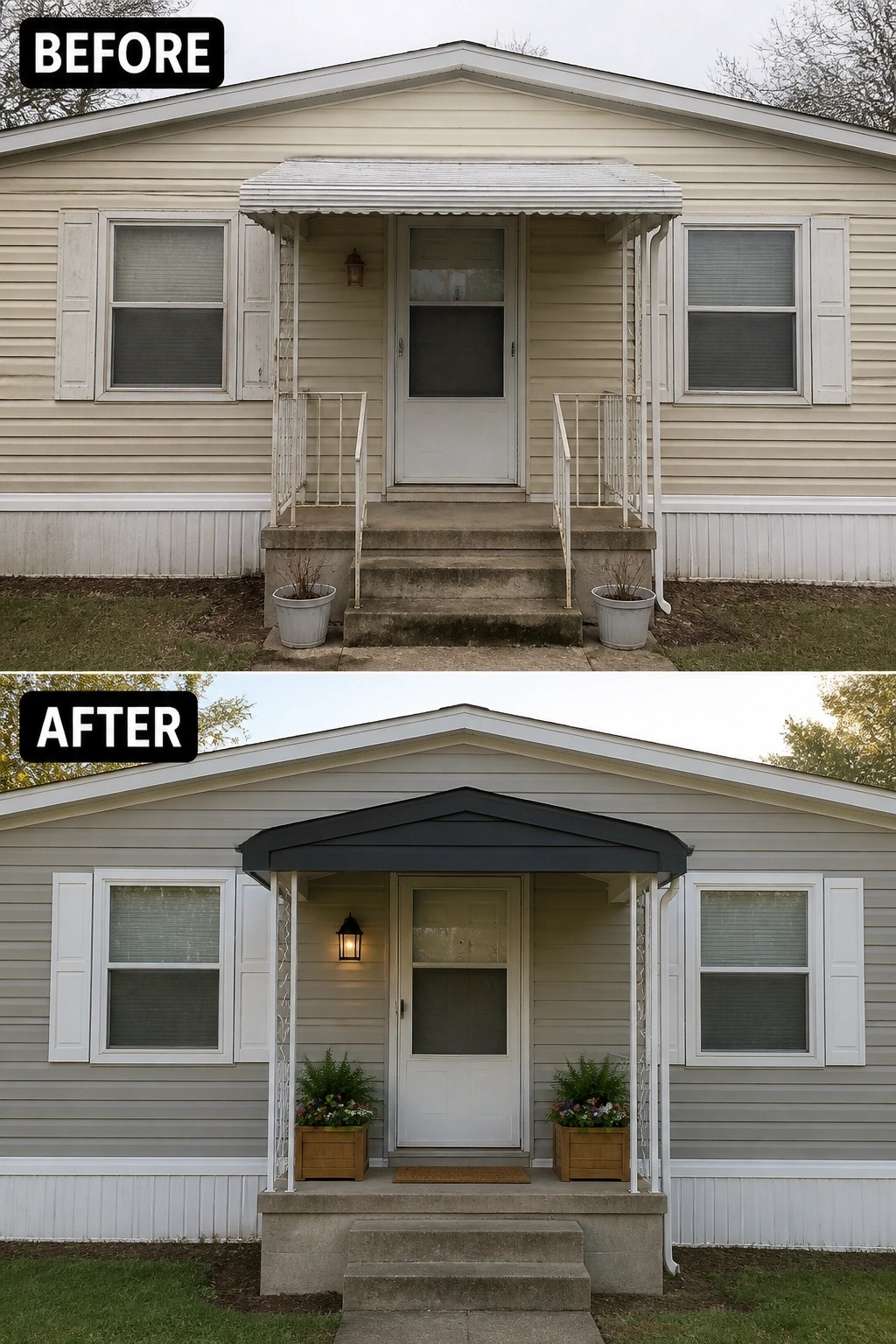
A few focused updates can turn a bland mobile-home front into a friendlier entry without a full renovation. In this example the homeowner painted the small gable a contrasting dark color, added a simple exterior light, and placed tiered wooden planters by the steps to create a clear focal point and a sense of purpose at the doorway.
Try the same approach on your own place: pick one small architectural area to highlight—gable, trim, or the door—then add a weatherproof sconce where it actually lights the path. Keep planters proportional to the porch width and choose low-maintenance, seasonal plants so the look stays tidy year-round. Start small and repeat one or two colors from shutters or trim to make the update feel intentional rather than busy.
Frequently Asked Questions
Q: Can I paint my mobile home myself or should I hire a pro?
A: Honestly, a fresh coat of paint makes the biggest visual difference and DIY is doable for most people. Spend time on prep—power wash, scrape loose paint, and use primer where metal or bare wood shows—then use a quality exterior latex paint and the right ladders or scaffolding. If you have high, steep areas or serious siding damage, hire a pro for safety and repair work.
Q: What paint finish works best for siding to hide imperfections and still clean up easily?
A: But choose a low- to medium-sheen like satin or eggshell because those levels hide flaws without showing dirt too quickly. They wipe clean better than flat paint and don’t highlight bumps the way high gloss does. Match the paint type to your siding material—acrylic latex for vinyl or aluminum is a safe bet.
Q: How can I add exterior lighting without rewiring the whole place?
A: Look at solar fixtures, battery-powered options, or plug-in lights that need no new wiring and give instant improvement. Motion-sensor solar lights work well for security and porch lights, while battery lanterns and string lights add ambiance without an electrician. If you want bright, reliable porch lighting, have one or two key fixtures hardwired later.
Q: Will planters damage my porch or skirting, and how do I avoid that?
A: Keep planters off direct contact with wood or skirting by using feet, brackets, or a simple shelf so water drains away. Use light-weight containers and saucers to catch runoff, and make sure drainage holes point away from the structure so soil and moisture don’t sit against the siding.