

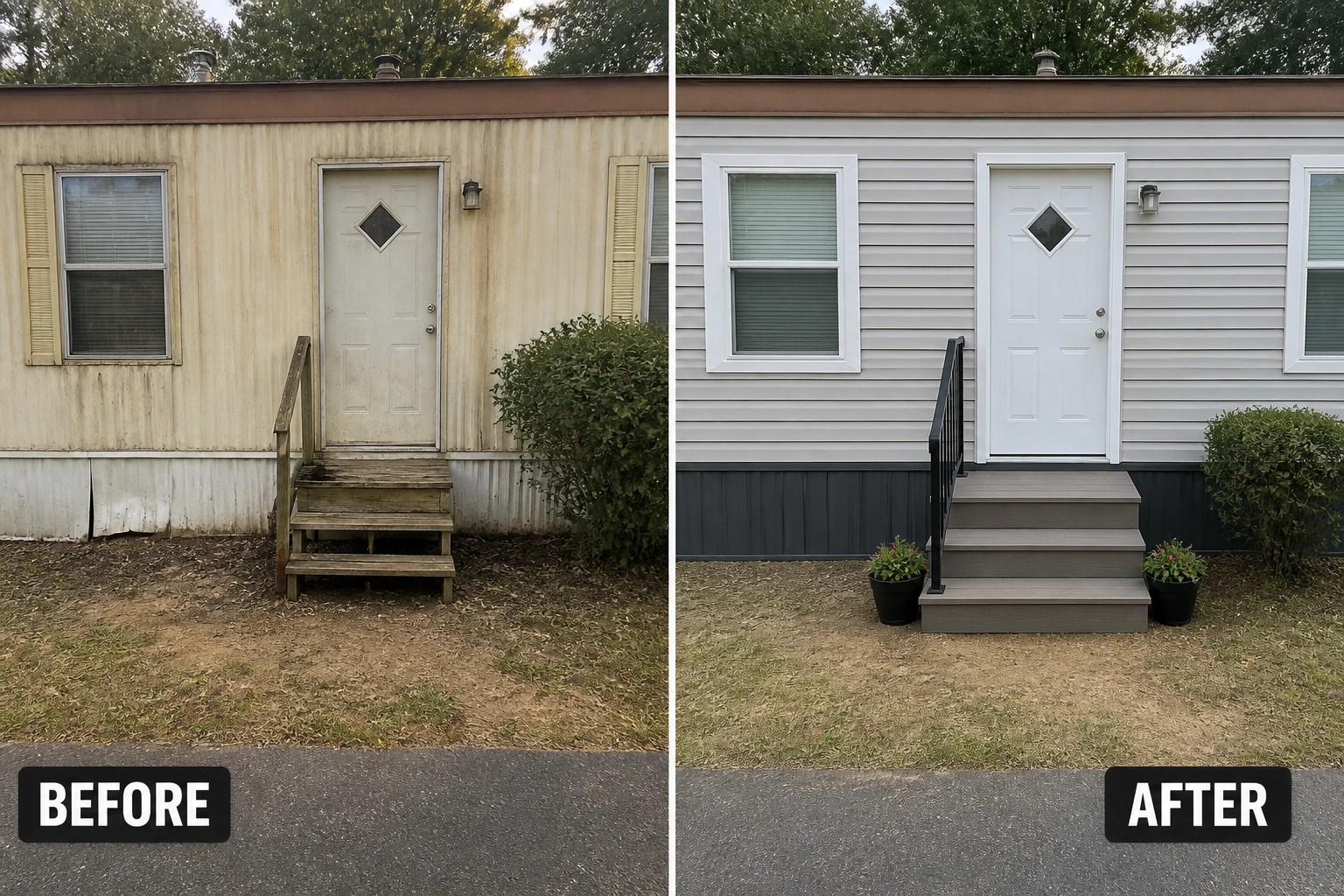
Single wide trailers often look neglected when the siding is dull and the entry feels flimsy, so I like to focus on simple fixes that give the exterior a cleaner, more cared-for look.
Small choices like fresh paint, replaced trim, better flashing, or cleaner cladding profiles can make the facade read as intentional rather than patched.
Stairs matter.
I often start with the entry because a solid set of steps and a tidy landing change how you feel about the whole place, and some ideas here are ones I would actually try on a tight budget.
Simple details like consistent trim, a clear path, and routine cleaning deliver real satisfaction, and you can save or adapt several of these tweaks to suit your site without a full rebuild.
Refresh Siding And Entry Steps For Instant Curb Appeal
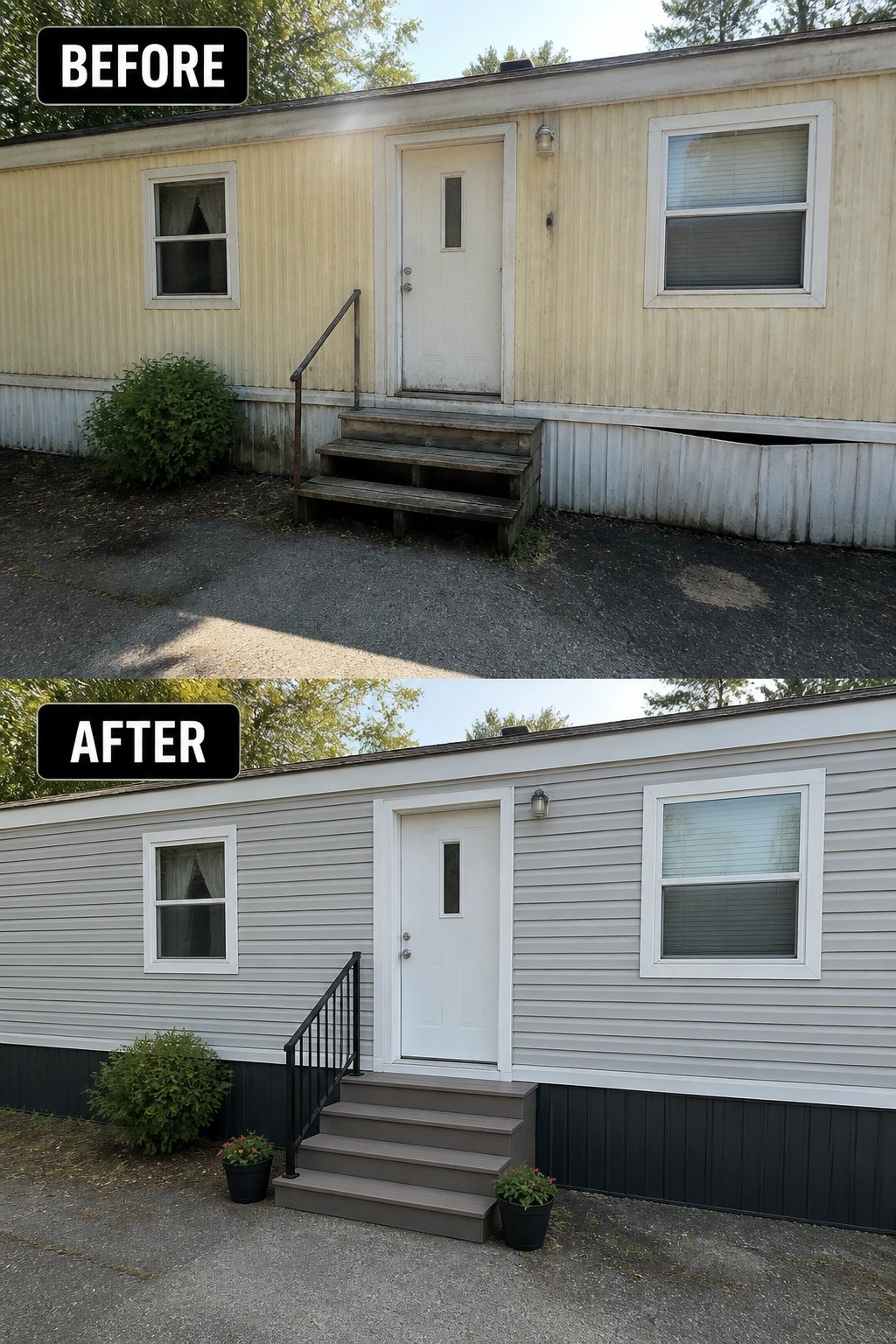
A quick way to make a single-wide feel finished is to focus on the facade and the front steps. Replacing worn, dirty siding and skirting with clean, low-maintenance panels and adding a proper set of steps with a sturdy handrail immediately lifts the look and signals the house is cared for — it’s simple, visible, and affordable compared with larger projects.
Do this in stages: clean and repair the old cladding, pick a durable siding color that contrasts the skirting, and install composite or treated wood steps sized to your door. Add a basic metal handrail for safety and two small planters to soften the entry. Keep materials weatherproof and the scale modest so the changes look deliberate, not oversized.
Give A Bare Porch A Clear Purpose
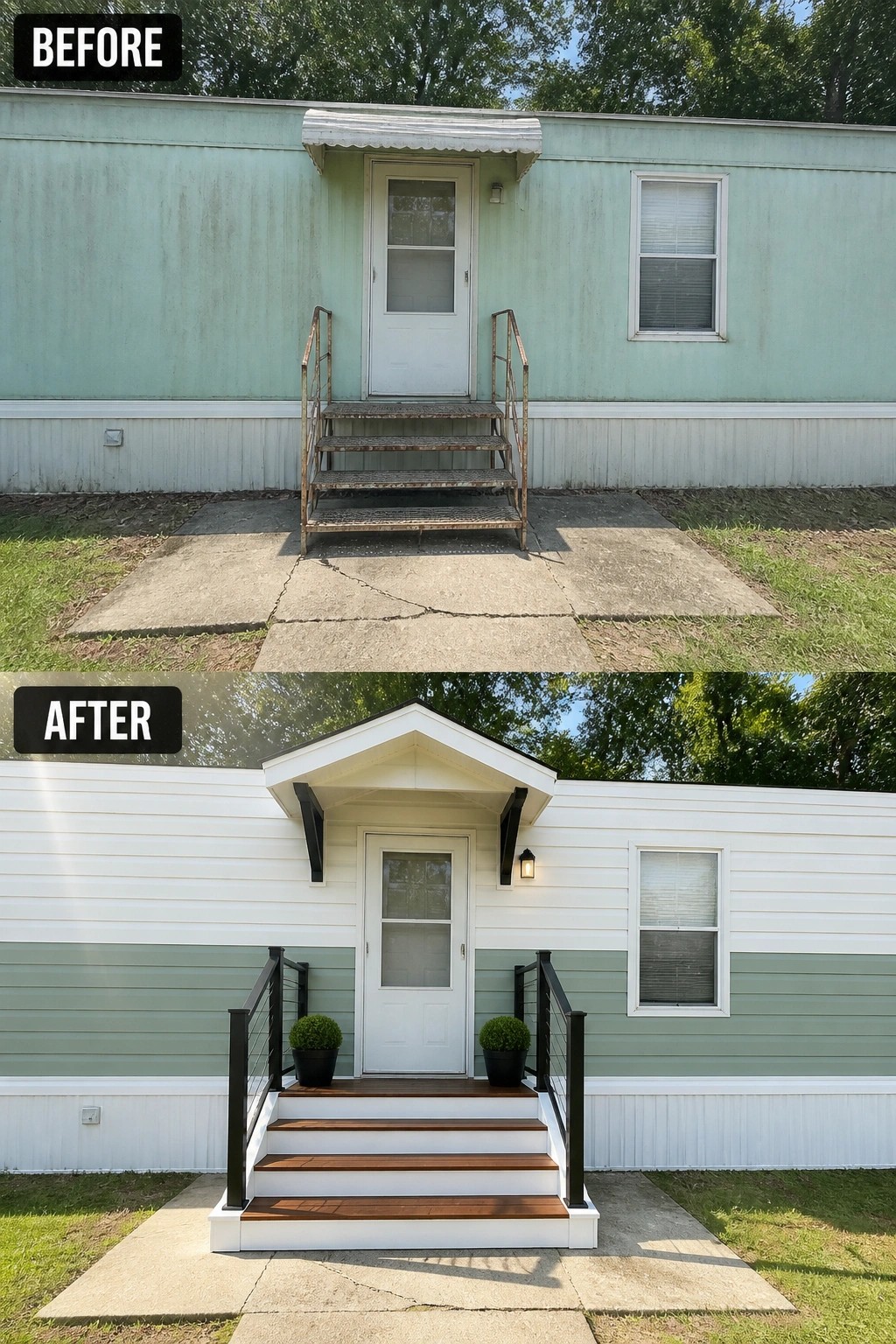
A tidy, purposeful entry makes even the humblest single-wide feel like a real home. In this example the old rusted steps were swapped for a solid, framed stair and a small gabled hood was added over the door, which immediately reads as an intentional front entry instead of a random landing.
You can copy the idea without a huge budget: start by replacing unsafe stairs with a simple, well-built set sized to the trailer’s proportions, add a modest covered hood or awning for shelter, and finish with a contrasting paint or stain to define the step edges. Keep details small and weatherproof so the entry looks finished but stays low-maint
Give A Neglected Entry A Tidy Paver Landing
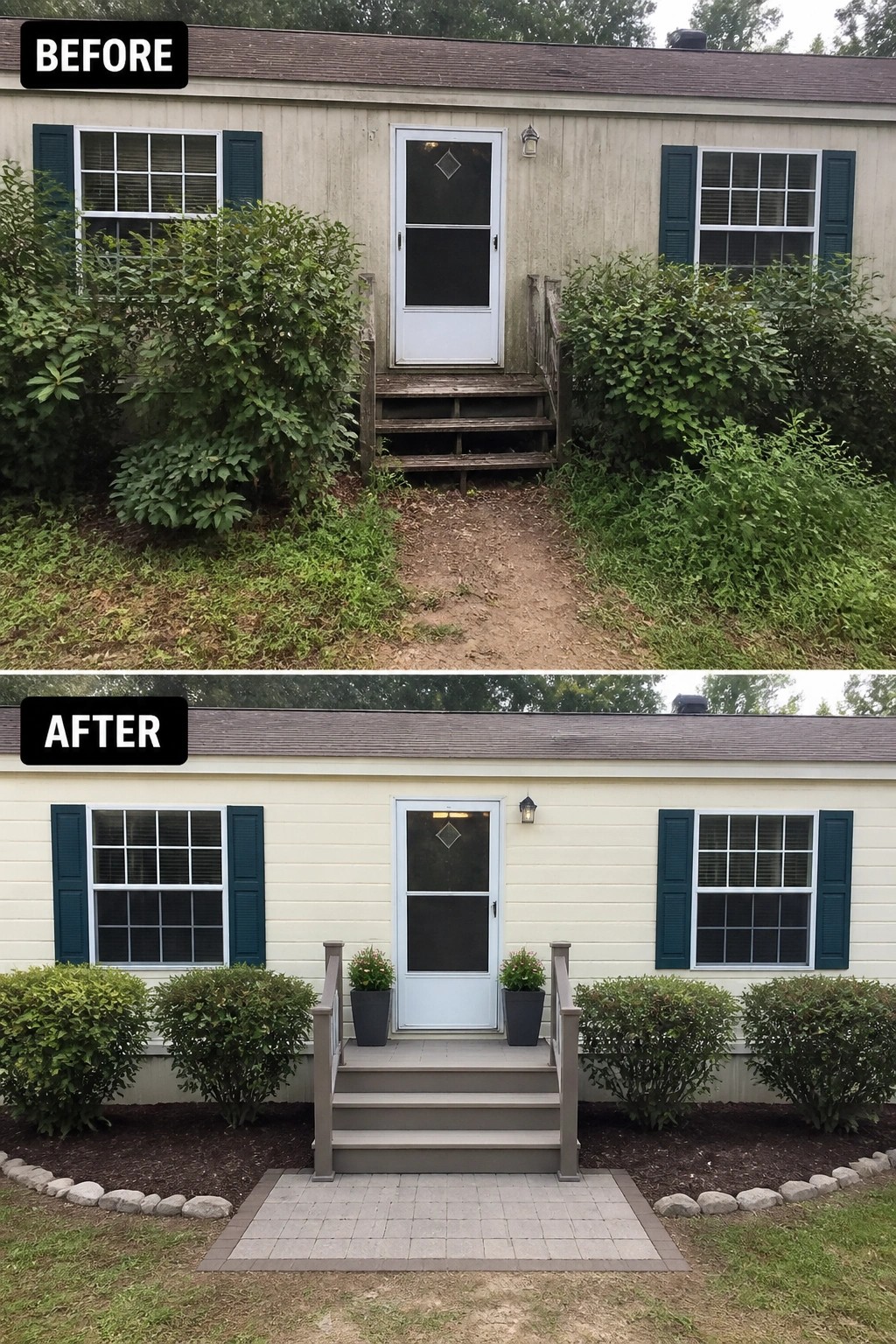
A narrow, neglected entry becomes useful and tidy when you build a small, finished approach instead of leaving a set of rotting steps and a dirt path. Replacing the stairs with a low-profile porch and adding a neat paver landing immediately gives the facade a clear focal point, while trimmed shrubs and fresh mulch keep the area looking cared for without extra fuss.
To copy this on a single-wide, start by clearing overgrowth and checking the step heights. A prefab or composite stair kit plus a compact paver pad is an easy, low-maintenance solution that fits tight yards. Add a pair of matching planters and a simple exterior light, and edge the planting bed with stones or mulch so maintenance stays minimal. Keep proportions small so the entry reads intentional but doesn’t overwhelm the front yard.
Make The Entry A Welcoming Focal Point
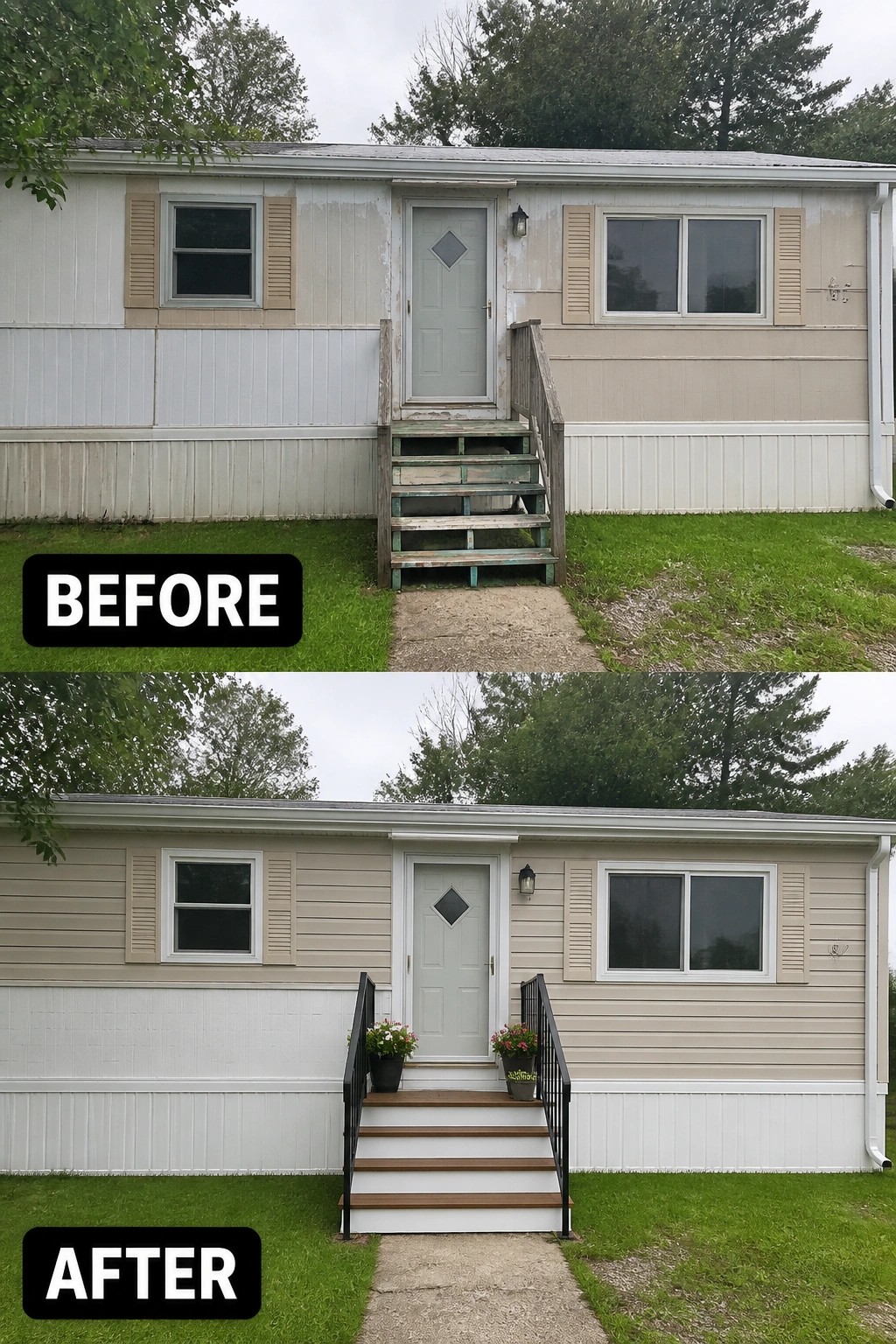
A tidy set of steps and a small bit of siding work can turn a neglected entrance into a clear, welcoming focal point. Replacing rickety, weathered stairs with solid, uniform steps and simple metal railings instantly organizes the front and feels intentional, while matching siding and a light fixture finish the look.
Start with safety and scale: repair treads and risers first, then choose low-maintenance stair materials or a prefabricated kit that complements the siding color. Add one pair of planters and a single porch light rather than crowding the entry, and keep the path straight so people arrive at the door with a clear approach. Small investment, big payback.
Give A Bare Entry Simple Steps And Modern Railings
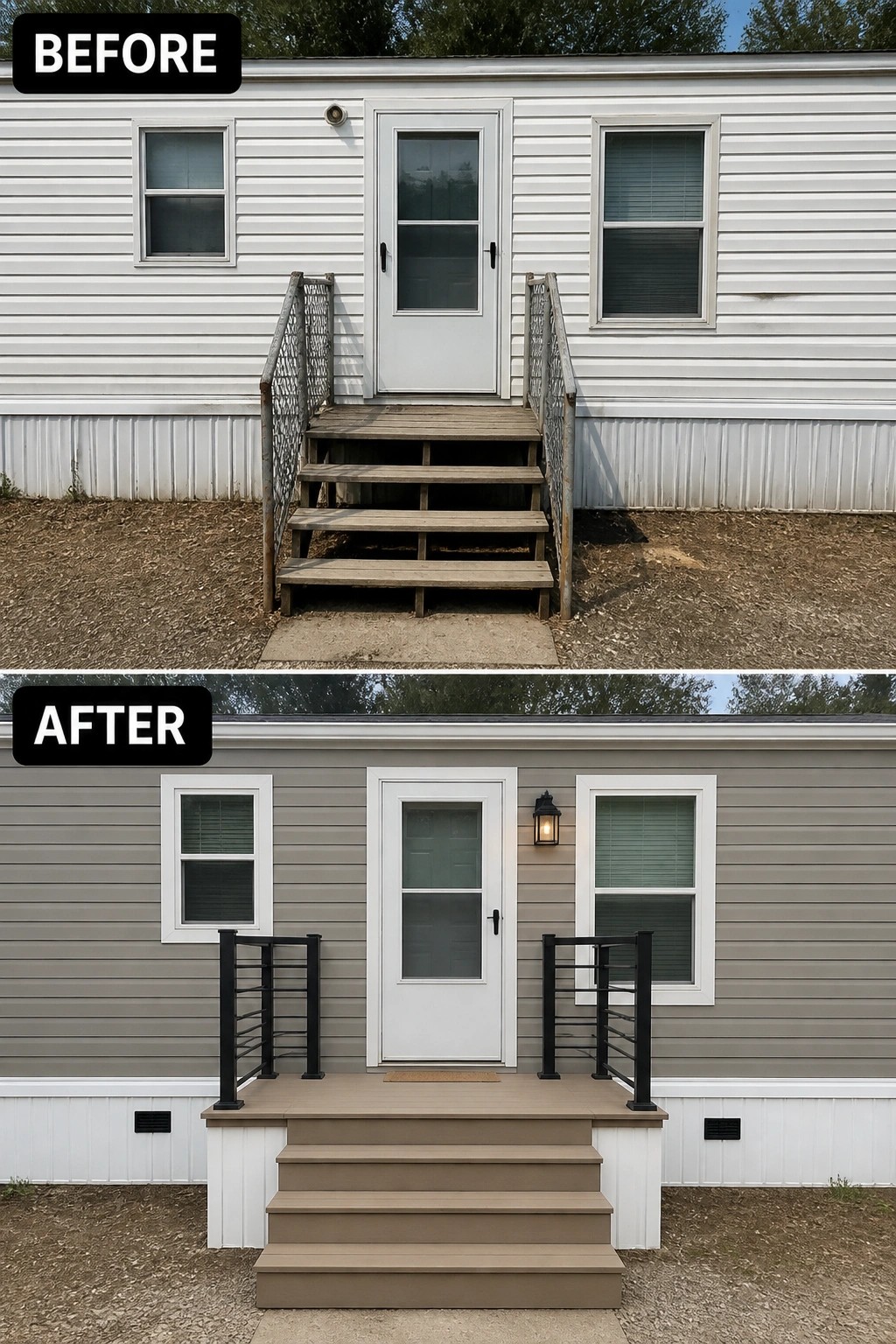
Swapping a rickety set of stairs for a clean, wide platform and slim metal railings gives a tiny entry instant curb appeal and real function. The idea is to make the front step feel like a deliberate part of the house instead of an afterthought — a sturdy composite landing and low-profile black railings read as intentional and stay low maintenance.
Do the basics first: clear away the old steps, check the door height and landing depth, and pick materials that handle moisture and wear (composite or rot-resistant wood are good choices). Keep the scale modest so a small trailer porch still feels roomy, use simple rail posts that bolt to the deck for easy installation, and add a small exterior light so the entry reads as a proper arrival point at night.
Add Wider Wooden Steps With Built-In Planters
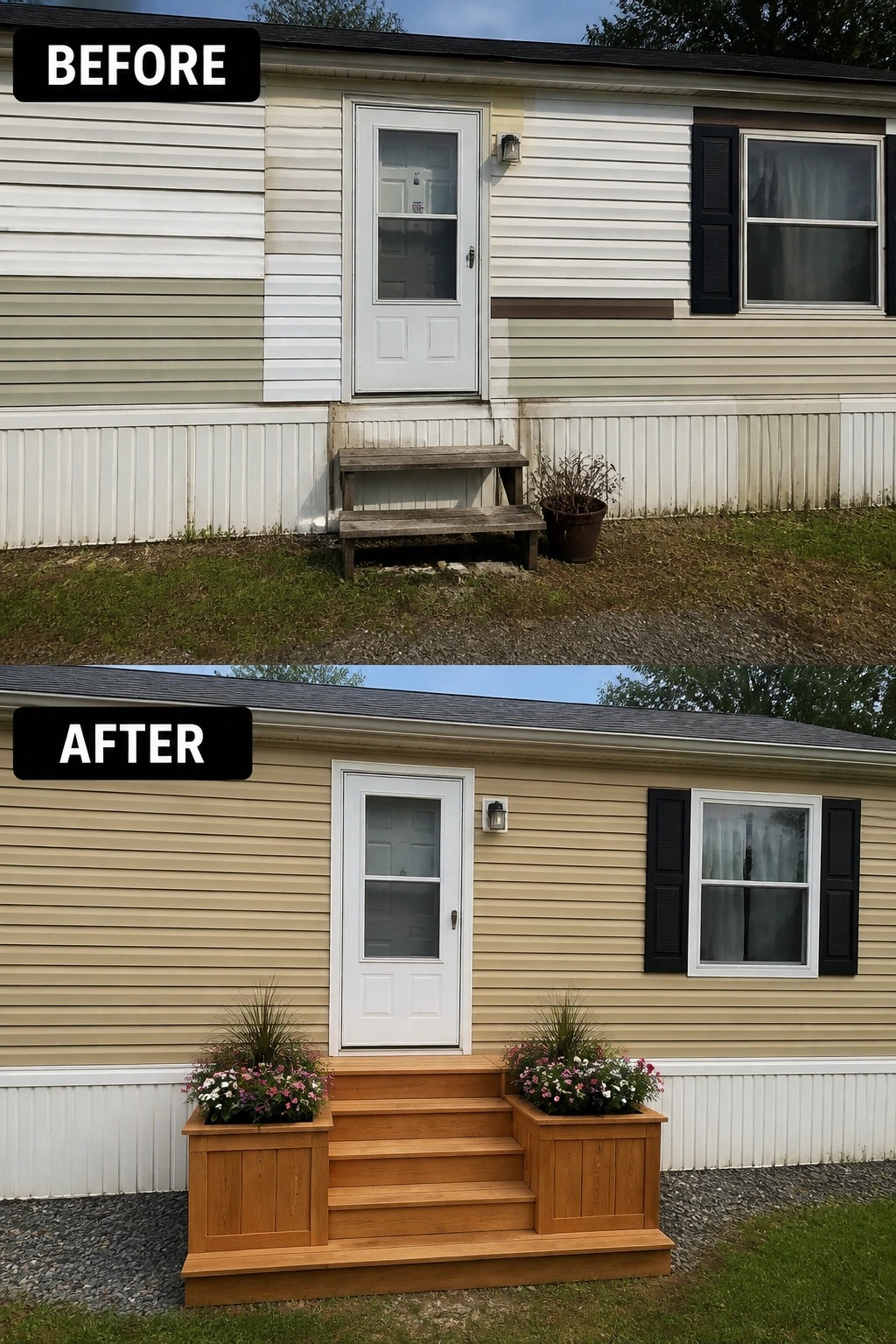
A single, purpose-built entry can change a trailer’s whole curb appeal. Swapping a rickety step for solid, wider wooden stairs with built-in planters turns an awkward door into a clear focal point and makes the façade read as finished rather than temporary.
Do this where space is tight and scale matters: measure door height and tread depth first, choose rot-resistant wood or a low-maintenance composite, and design the planter boxes so they drain and don’t block the path. Keep plants simple and maintenance low so the entry stays neat and useful year-round.
Give A Bare Trailer Entry A Clear Purpose
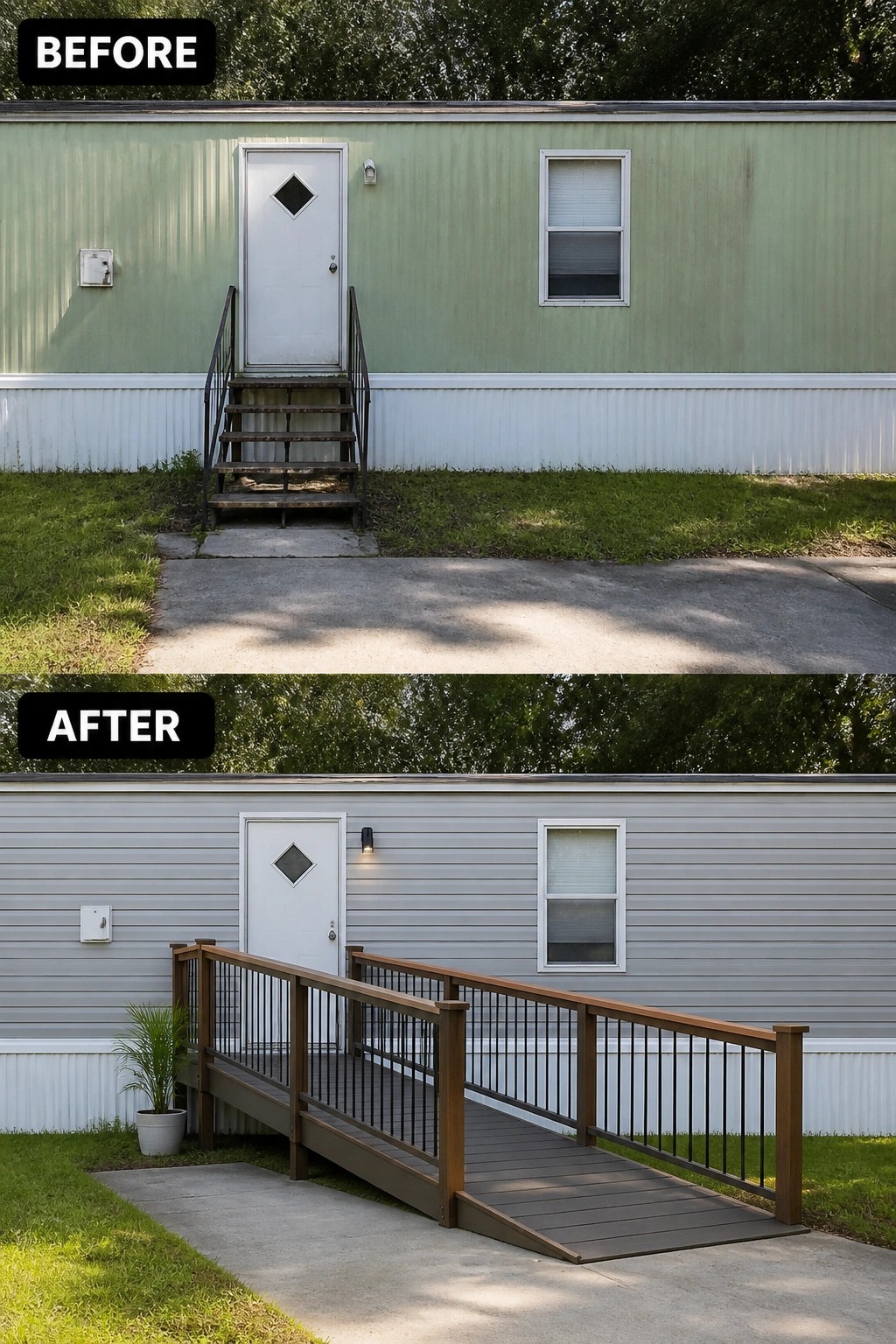
Swap the tiny metal steps for a purposeful entry ramp and a couple of simple accents and the whole front feels finished. A framed ramp with proper railings not only makes the trailer easier to use, it gives you a clear place to add a porch light and a planter so the entry reads as intentional rather than an afterthought.
This works best on single-wides and small facades where you want cleaner curb appeal without a lot of fuss. Keep the scale modest, leave a few feet of clear walkway at the bottom, and choose weatherproof decking and low-maintenance railings (composite boards and metal balusters are an easy win). Add one outdoor light and a pot for personality, and check local steps and ramp rules so the new entry is both safe and simple.
Create A Low Wide Entry With Pavers And Planters
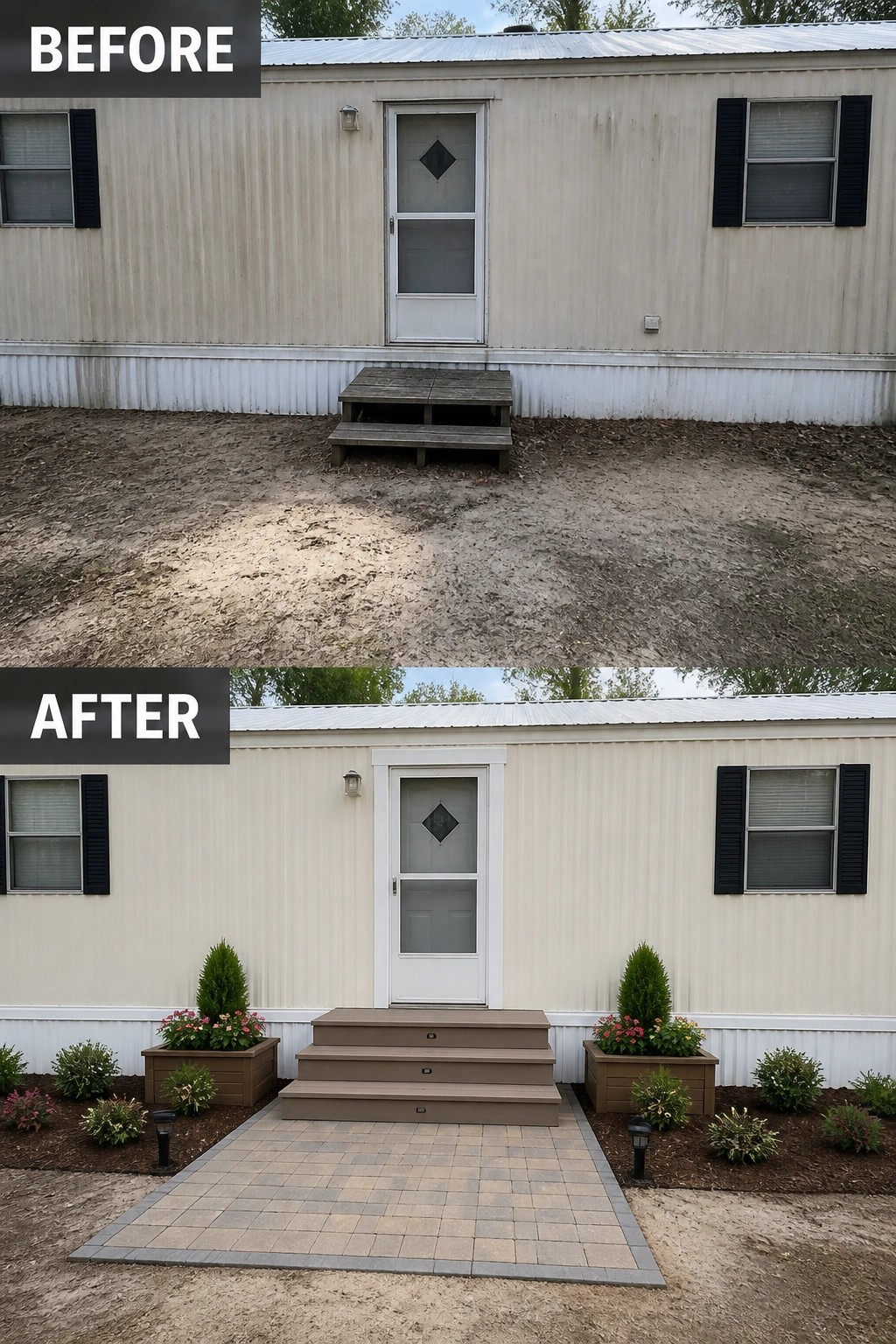
A small, undefined entry looks unfinished no matter how clean the siding is. Replacing a rickety two-step approach with a low, wide stair, a paved landing, and matching planters creates a single focal point that reads as an intentional doorway instead of an afterthought. Just one well-scaled change like a paver pad and proper steps makes the whole facade feel tidier and gives visitors somewhere to step and pause.
Do the heavy lifting first: level the ground, add a compacted base for pavers, and pick weatherproof steps that match your home’s trim. Keep the landing slightly wider than the door and add two equal planters or small evergreen columns to frame the entry (neutral tones work best). Finish with a narrow mulch bed and a couple of low pathway lights so the approach stays usable and low maintenance for a single-wide trailer.
Upgrade A Small Entry With Boxed Steps And Fresh Trim
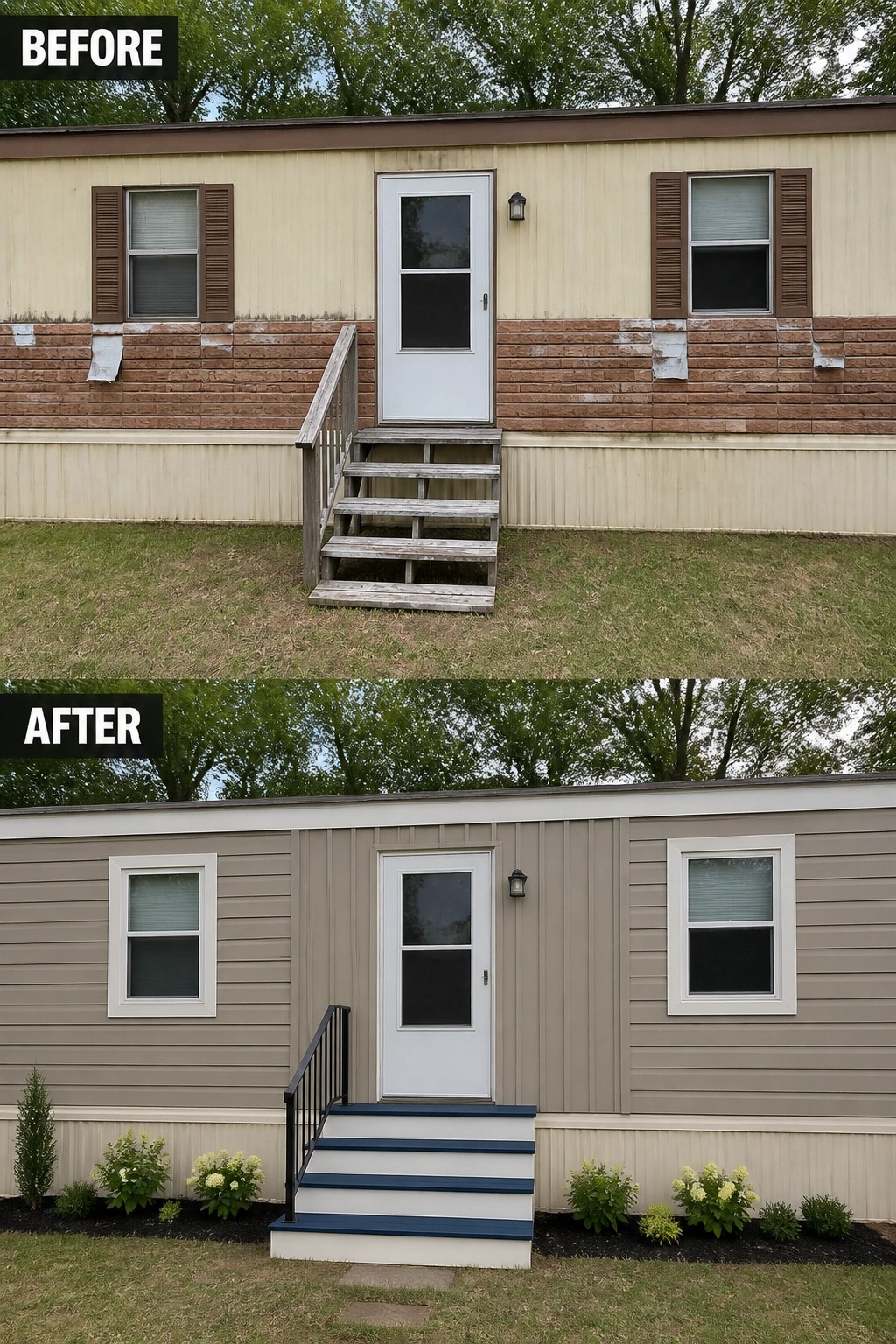
Updating a tiny trailer entry is mostly about purpose and proportion. Swapping the rotted, open-frame steps for a low boxed stoop with a simple metal railing and fresh siding trim instantly gives the facade a focal point and makes the whole front look intentional rather than neglected. One neat, well-sized set of steps and crisp trim around the door read as care and make the home feel finished.
Do the prep work first: clean or replace the siding panels nearest the door and pick one neutral body color with contrasting trim to keep things tidy. Choose a compact boxed stair or a prefabricated kit that fits the door height, add a basic metal railing for safety, and plant a narrow bed of low shrubs or mulch under the skirting to anchor the entry. This approach suits single-wides and narrow fronts where you need impact without overpowering the facade; keep the scale small and follow local stair and railing codes.
Update Entry Steps And Siding For Cleaner Curb Appeal
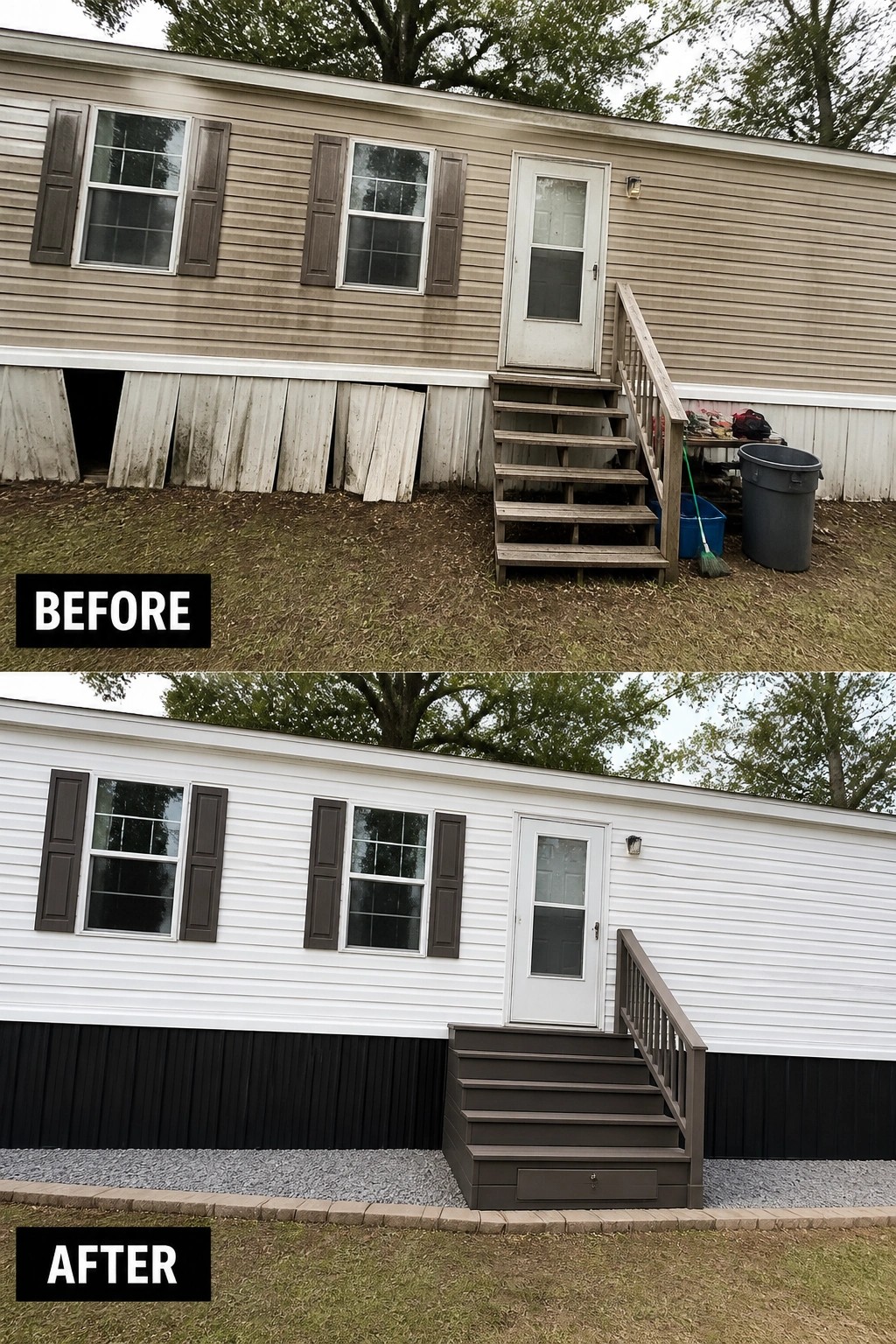
A tired single-wide can be renewed with two simple moves: fresh, clean siding and a proper set of entry steps. Swapping dingy, stained siding and broken skirting for bright, cleaned or replaced siding and a dark, low-maintenance skirting plus solid new steps instantly makes the front look cared for instead of neglected.
Start by cleaning or replacing the siding and fixing damaged skirting panels, then focus on the entry—install prebuilt composite steps or rebuild wooden ones and add a handrail for safety. Finish with a gravel strip or simple paver edge at the base to keep mud away and make maintenance easier. This approach is budget-friendly and especially effective on narrow trailer fronts where a few visible updates go a long way.
Create A Centered Doorway With Neat Entry Steps
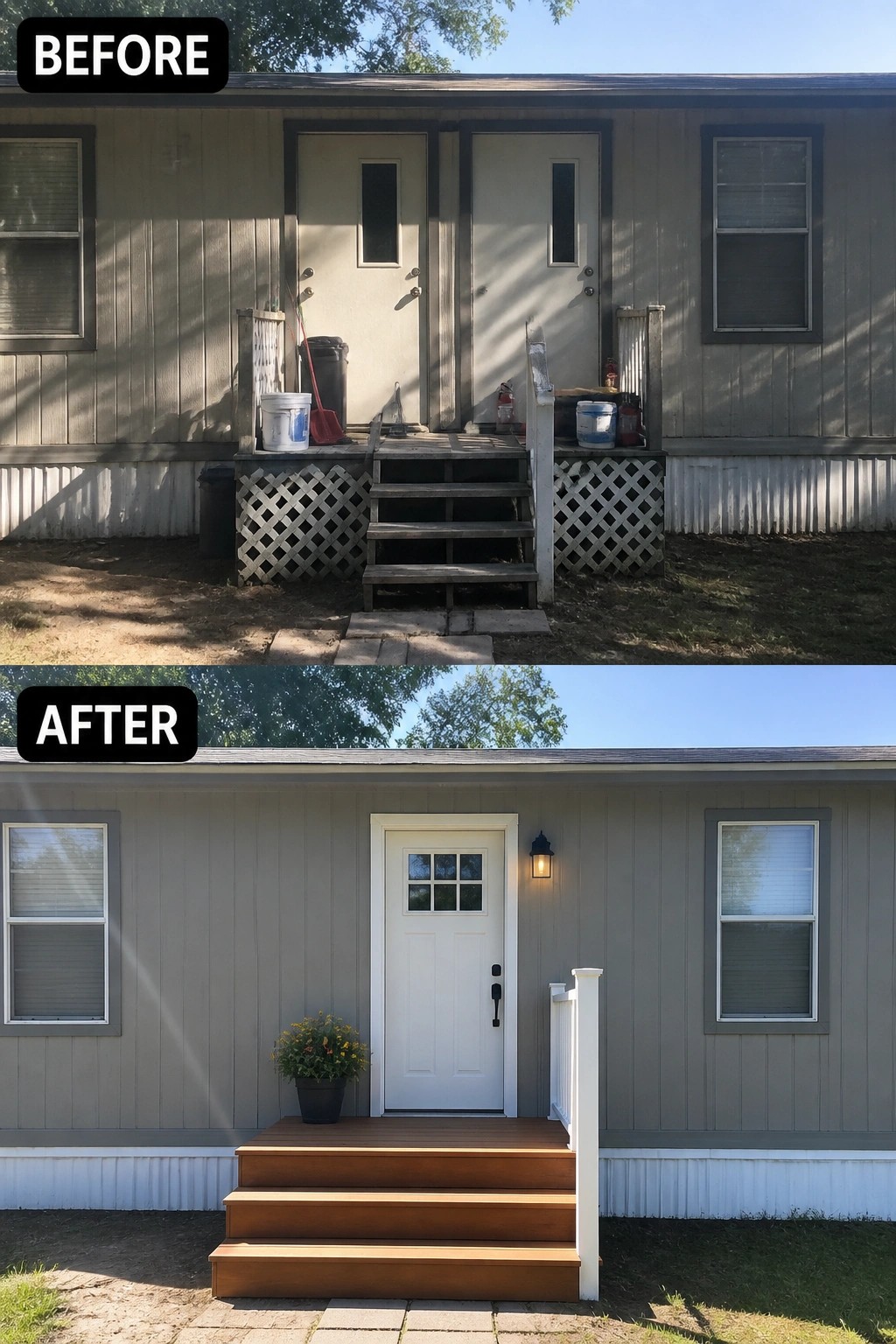
A simple, focused entry makes a small trailer look cared for and intentional. Swapping a cluttered dual entry and rickety makeshift stairs for a single centered door and a neat set of steps with a railing gives the facade an immediate focal point and a sense of order without expensive work.
To copy this, start by clearing debris and choosing one clear focal door. Build a compact set of steps sized to the door and porch opening using low-maintenance materials, add a single exterior light beside the door, and place one planter for scale. This approach suits narrow single-wide homes where a tidy, properly scaled entry will make the whole exterior read cleaner and more finished.
Make A Plain Entry Feel Welcoming With A Small Covered Porch
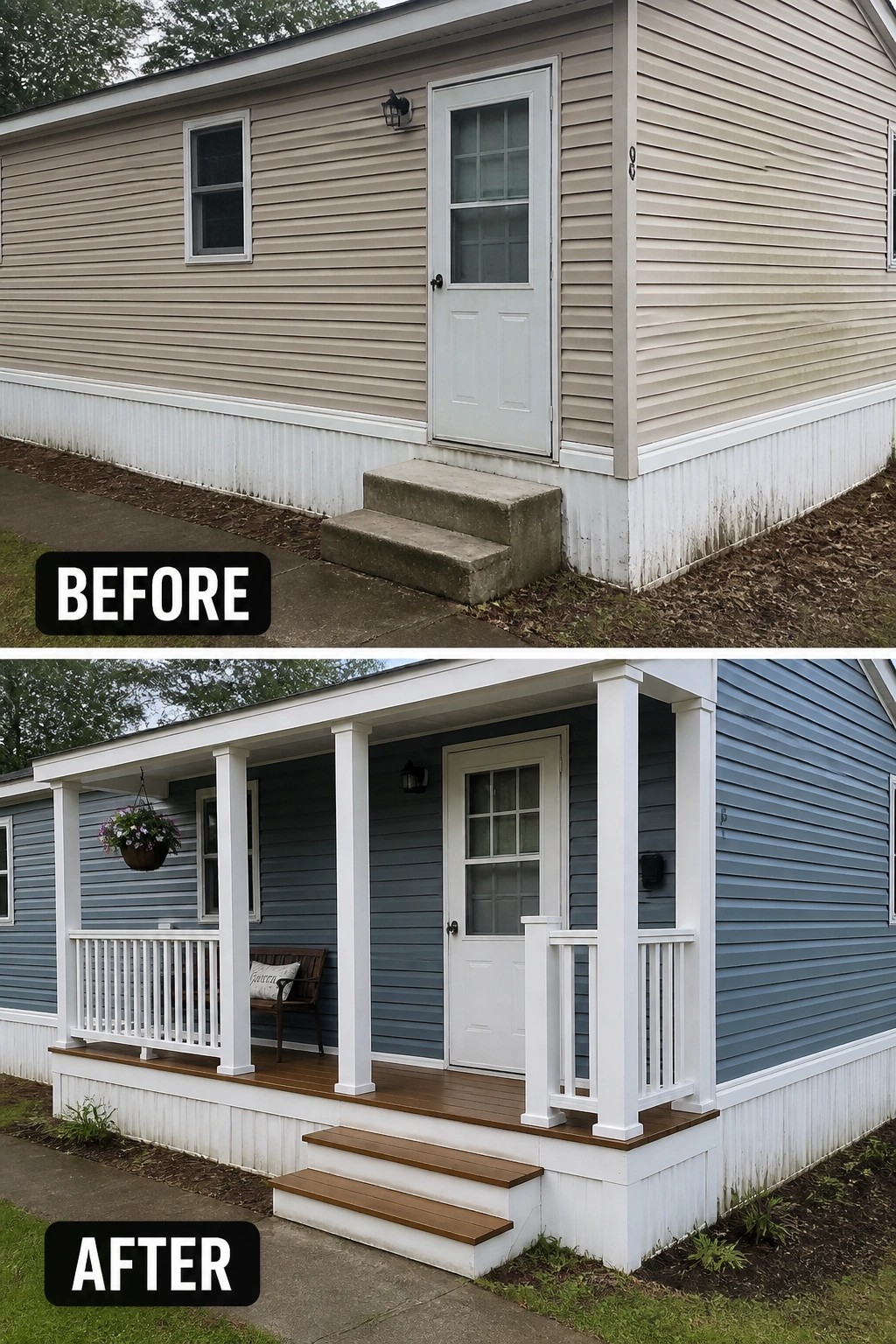
A compact covered porch and proper steps can do more for curb appeal than a full renovation. Swapping a couple of bare concrete steps for a shallow deck with columns and a railing (and refreshing the siding color) gives the front door a purpose and shelter, so the entry looks planned instead of tacked on. It also creates a tiny place to sit or stage a plant, which makes the whole facade read as intentional.
If you want to copy this, size the porch to the door and keep proportions simple so it does not overwhelm a single-wide. Use rot-resistant decking or composite for low upkeep, match trim and railing color to your skirting for a neat look, and leave a clear path from the sidewalk. Add one bench and a hanging plant rather than clutter, and check local setback and skirting access rules before you build.
Update A Plain Entry With Clean Siding And Better Steps
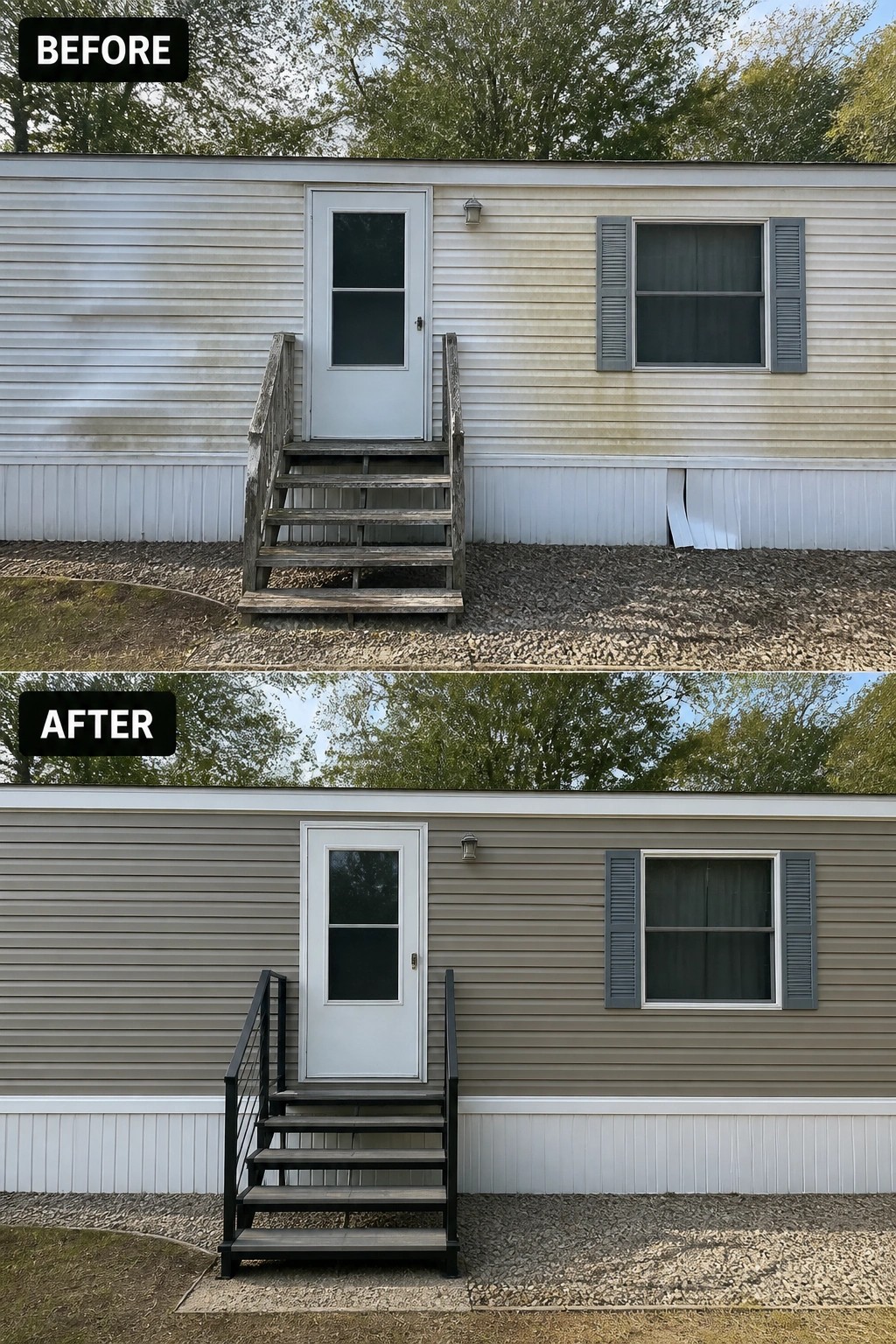
A tired single-wide can look years younger by fixing two obvious things: the siding and the steps. Replacing stained or damaged panels and swapping rotted wood stairs for a compact, sturdy metal stair instantly sharpens the facade and gives the home a clear, usable entry.
Start by pressure washing or replacing the worst siding panels so the color and texture read as one surface. Then pick a stair that fits the door height and the narrow footprint of a single-wide (prefab metal stairs are a good, weatherproof choice). Add a simple handrail, set the base on a small concrete or paver pad, and keep nearby plantings low so the approach stays safe and visible.
Brighten The Entry With Lanterns And Matching Planters
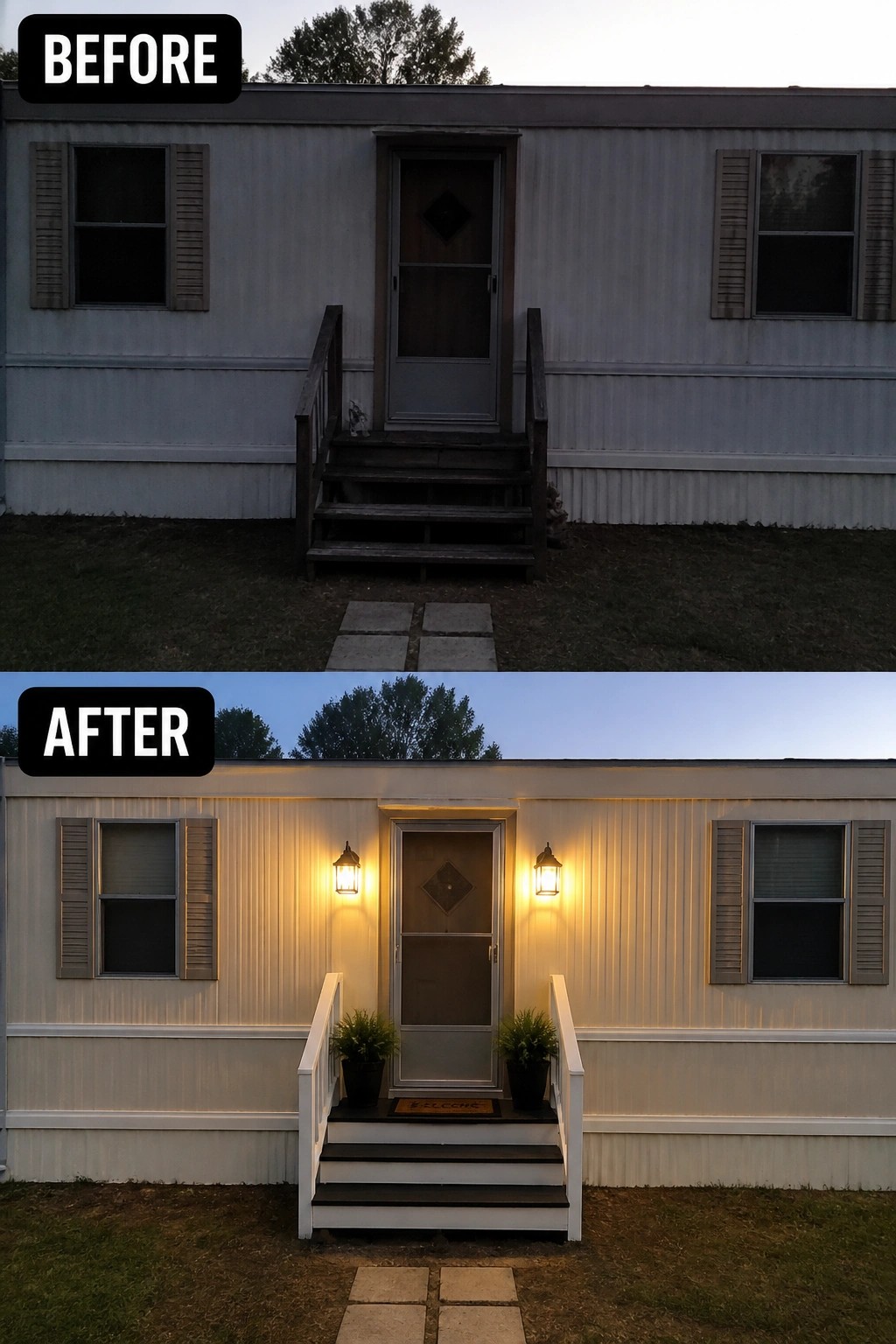
A few focused changes to the entry can make a small trailer feel put together. Repainting and adding simple railings and risers, installing two matching wall lanterns, and placing a pair of potted plants and a welcome mat turn an otherwise dark, undefined set of steps into a proper front landing. That single focal spot makes the whole facade read as cared for rather than neglected.
Start by repairing and cleaning the treads, then pick one finish to repeat—paint the rails and step fronts to match trim, choose outdoor-rated lights that sit at eye level, and use two identical planters for symmetry. This works best on narrow porches where adding furniture would crowd the space; keep the scale modest, secure fixtures to solid backing in the siding, and choose materials that resist moisture and sun (simple and cheap upgrades often make the biggest difference).
Add Composite Steps With Recessed Lighting And A Bench
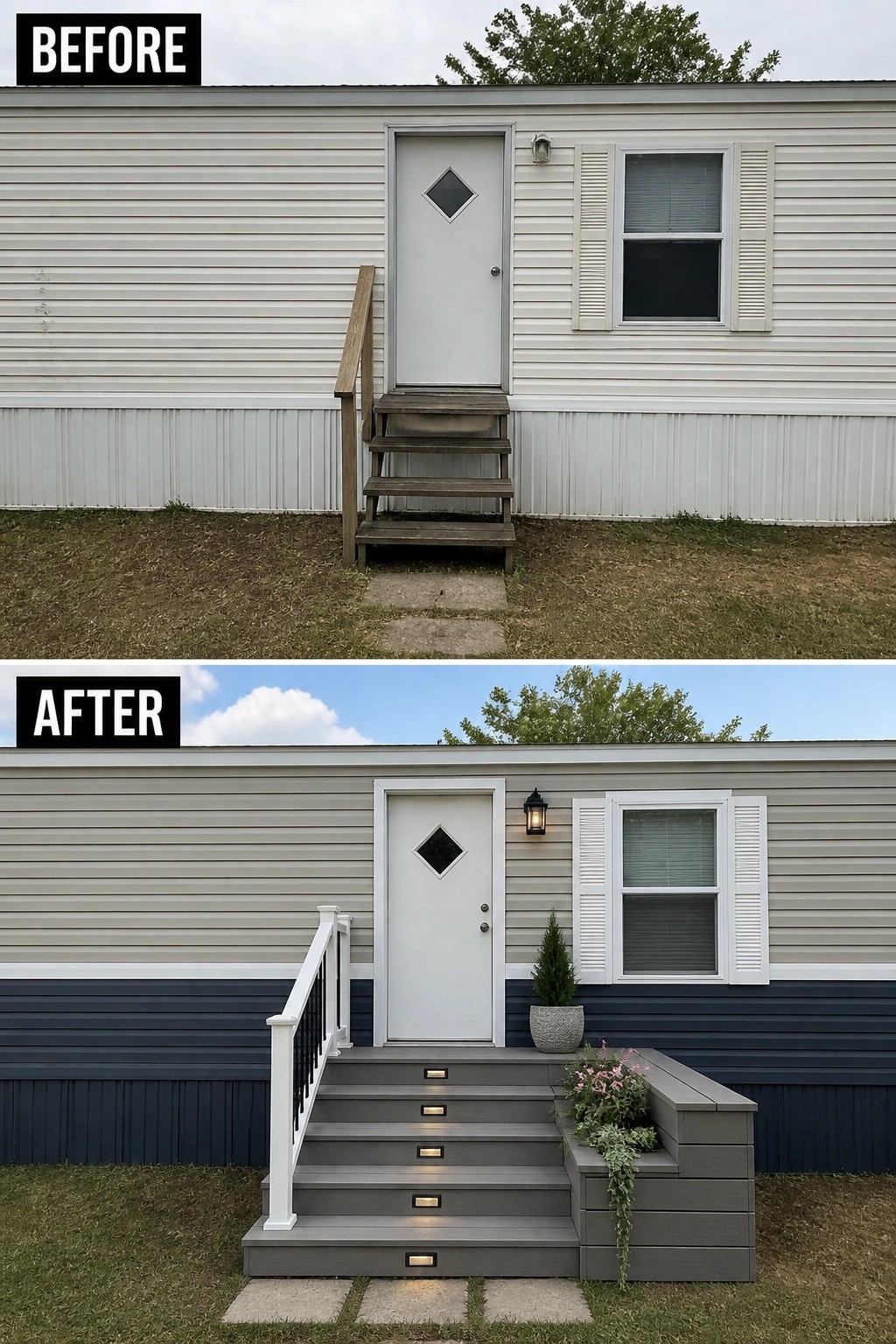
A small, practical entry can feel a lot more welcoming by turning a few crude steps into a real porch: swap the weathered treads for low-maintenance composite steps, add a proper handrail, tuck recessed step lights into the risers, and build a short planter bench at the side. The result is not just prettier — it makes the doorway usable for small tasks like sitting, swapping shoes, or placing a welcome pot.
Start with the basics: choose a durable decking material and keep the scale compact so the porch fits the trailer’s proportions. Add a railing for safety and recessed lights in the steps for night-time visibility. A simple built-in planter or bench gives a spot for greenery without eating yard space. Check local codes and make sure the porch has proper footings and drainage, but otherwise this is a straightforward upgrade that greatly improves curb appeal and everyday use.
Refresh Weathered Steps With Painted Rails And Planters
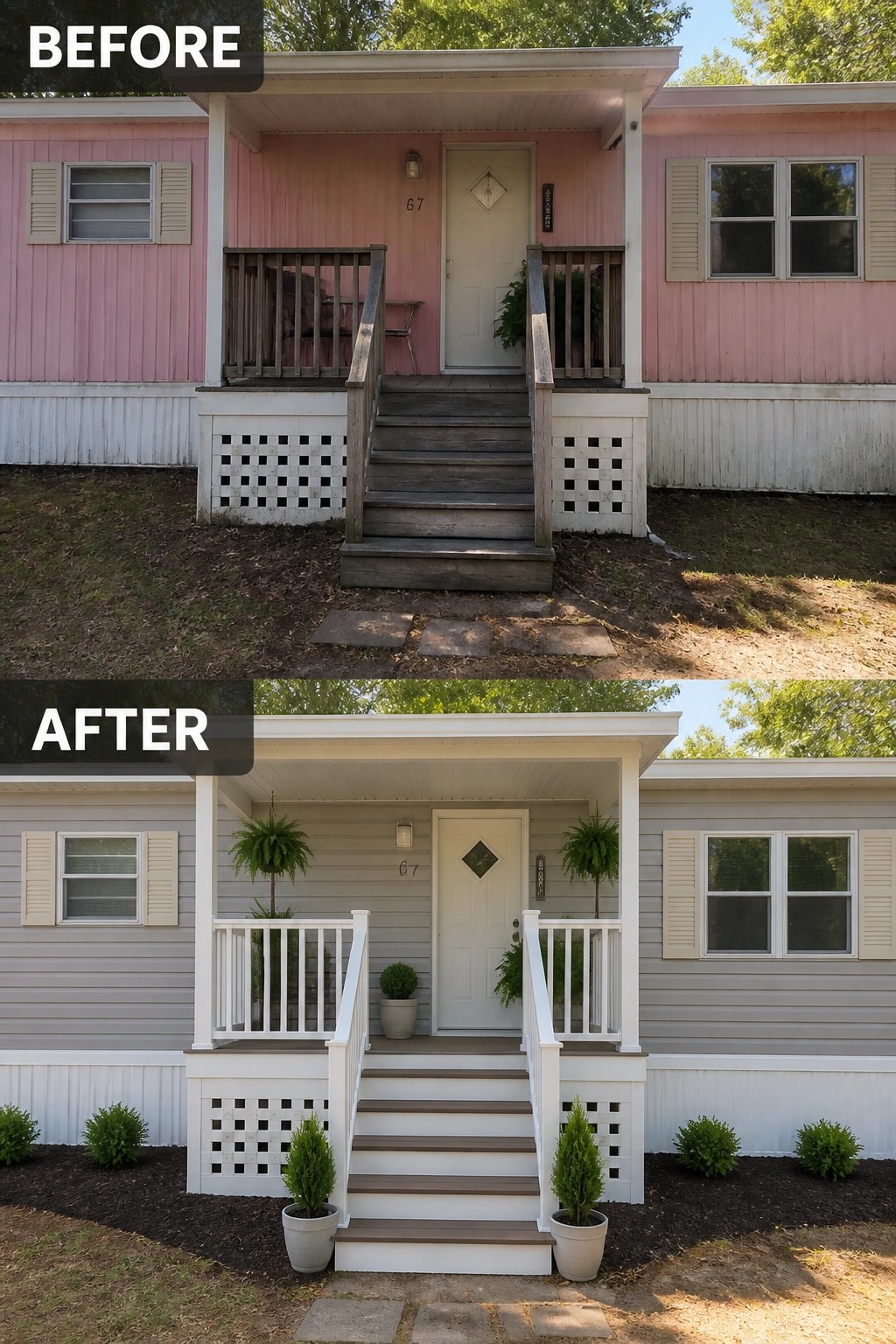
A small, focused update to the entry turns a neglected porch into a proper front door. Fix the structure, swap weathered steps and railings for a simple painted set, and add a couple of matching planters and a tidy skirt board so the whole facade reads intentional instead of neglected.
Start with the basics: repair or replace any rotten treads and make sure the handrail meets code, then pick a two-tone paint or stain for trim and steps so the porch reads as one piece. Use low-maintenance planters and a narrow bed or mulch strip to frame the stairs, keep accessories minimal, and leave a clear path — small work, big payoff.
Frequently Asked Questions
Q: How much should I budget for re-siding and updating entry steps on a single wide?
A:
For a basic siding refresh with vinyl panels and a prefab step kit you can often stay in the low thousands, while a fuller upgrade with insulation, better trim, and custom steps may climb into the low tens of thousands. Get a few quotes and set aside a small contingency for proper flashing and unexpected repairs.
Q: Can I tackle the siding and steps as a DIY project?
A:
Yes, you can do simple siding replacement and install prefabricated steps if you have basic carpentry skills and the right tools. But structural changes, footing work, or moving doors are worth hiring out—don’t skimp on proper support for steps and railings.
Q: What siding material gives a clean, low-maintenance look without overloading a single wide?
A:
Choose lightweight, low-maintenance options like vinyl or engineered wood panels that won’t add too much weight but still look tidy. Whatever you pick, focus on good flashing and sealing around openings so water stays out.
Q: My lot is narrow—how do I make entry steps safe without taking up all the space?
A:
Use compact landings, shorter runs with taller rises, or angled/wrap-around steps to fit the footprint while keeping treads safe. Add a proper handrail and a slightly larger top landing so you can step out the door comfortably; modular metal steps are a handy space-saving choice.