

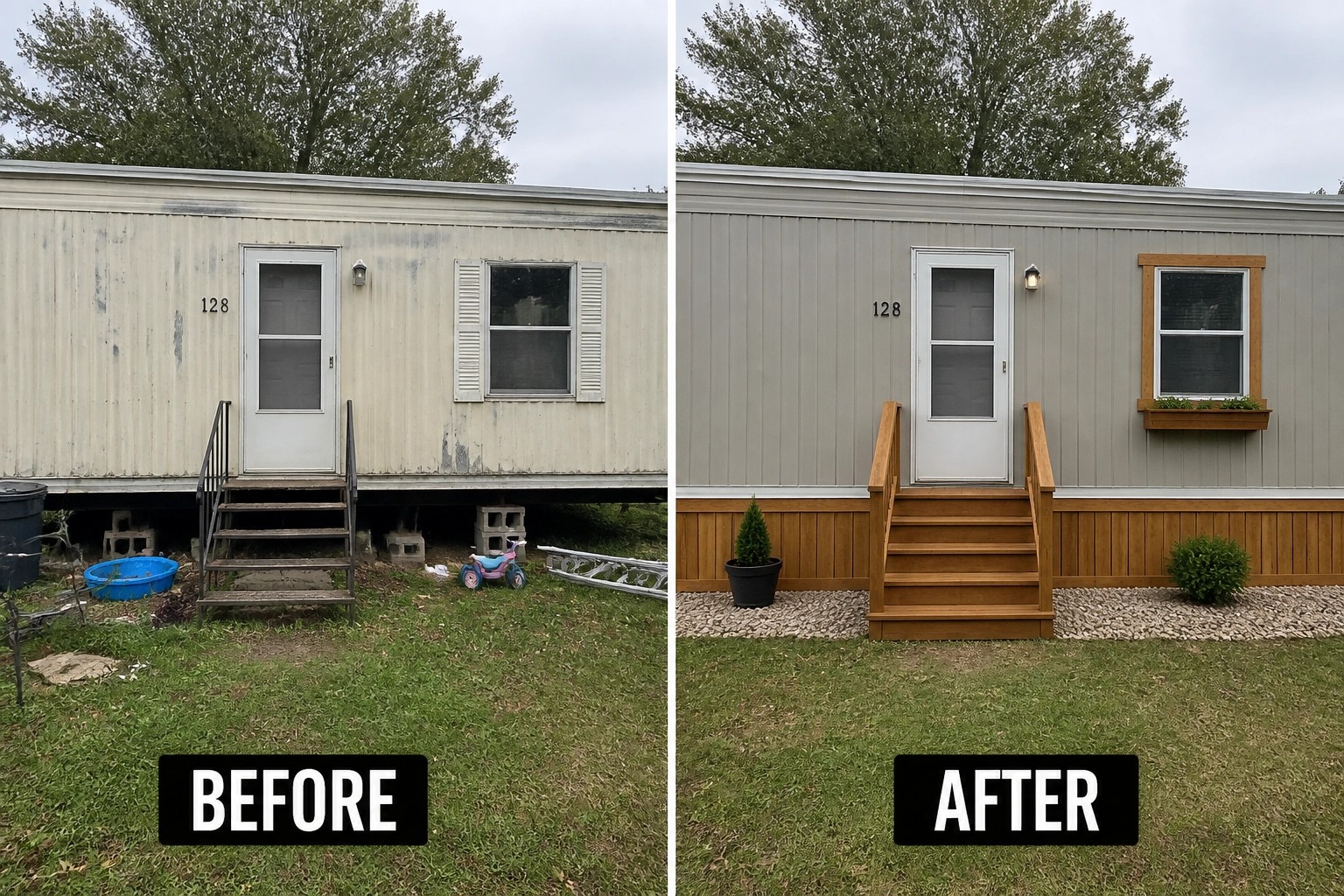
A trailer’s exterior can look forgotten when the skirting is mismatched, the trim is worn, and the siding reads flat, so small targeted fixes matter.
I often start by tightening the skirting details and adding warm wood accents because those moves ground the base and make the whole place read as intentional.
It feels quietly more cared for.
Thoughtful color choices, proportionate skirting height, and a few well-placed boards around entries or windows can sharpen lines and improve curb presence without a major renovation.
Some ideas are easy to try on a small section so you can judge how materials and finishes wear over time before committing to larger work.
Use Wood Skirting To Update A Plain Trailer Exterior
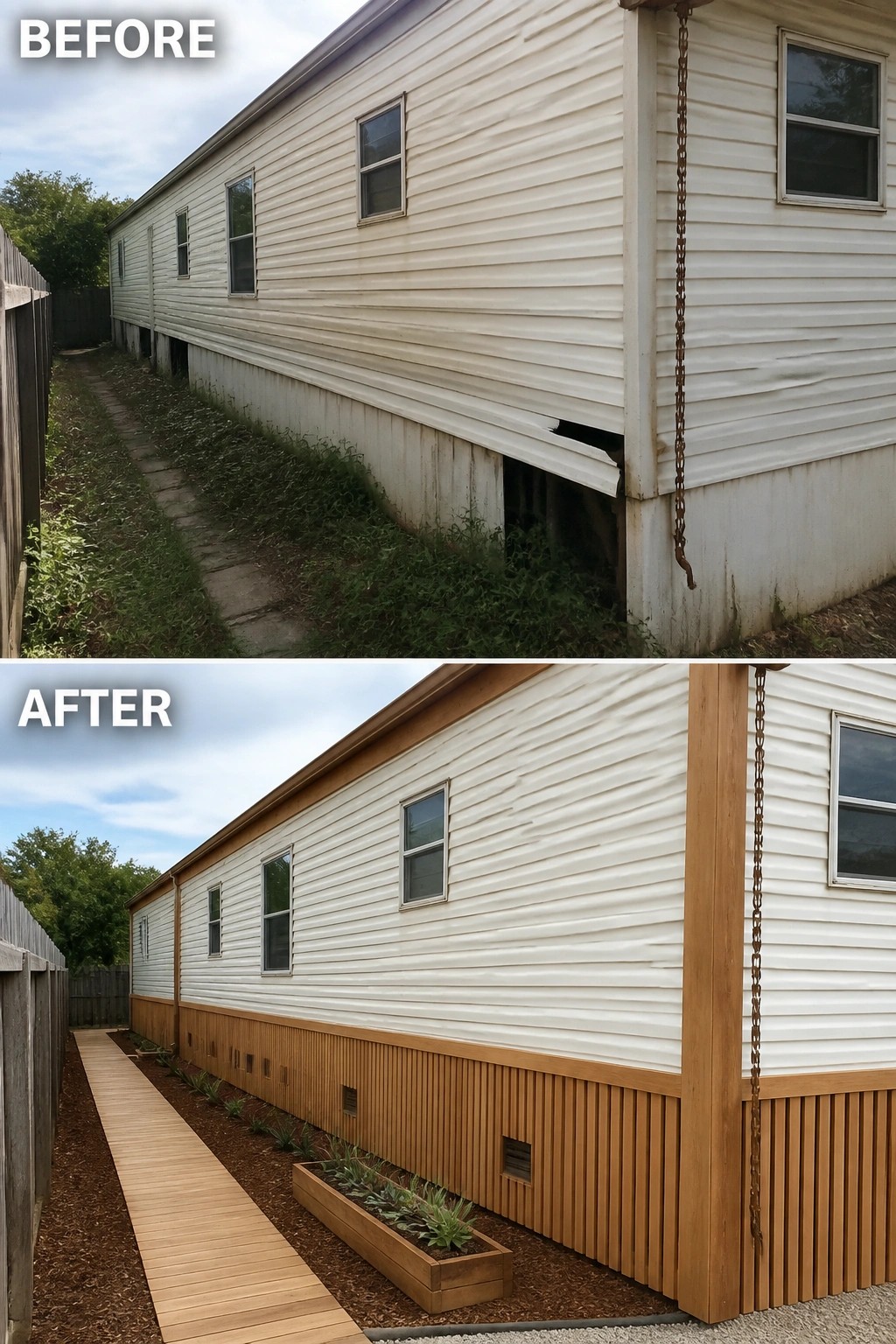
Swapping out dented or missing skirting for a simple vertical wood slat base and matching trim instantly anchors a plain trailer and hides worn areas. In this makeover a clean band of wooden skirting plus a narrow boardwalk and a planted box tidy the edge of the home, giving the whole side a finished, intentional look without changing the siding itself.
Do it by choosing rot-resistant wood or a low-maintenance composite, and plan for vents or removable panels so under-home access stays easy. Keep slat spacing small enough for airflow but wide enough to snag less debris, stain the wood to tie into the trim, and add a skinny path or planter to define the walkway and suppress weeds. Small budget, noticeable improvement.
Update Cladding And Skirting To Boost Curb Appeal
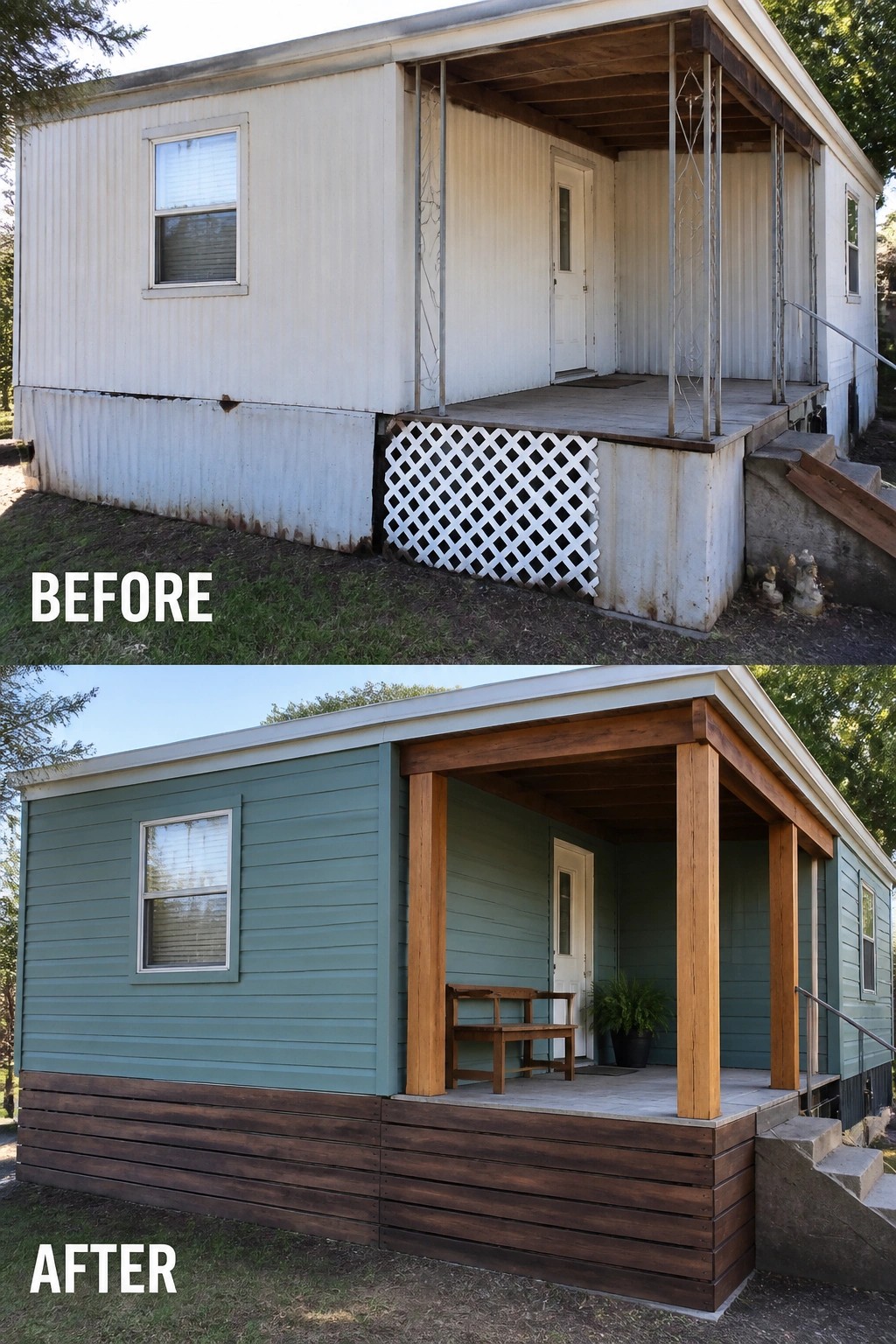
A small trailer porch gets a big lift when you treat the exterior like a proper entry. Replacing flimsy metal lattice and vertical panels with painted horizontal siding, solid timber posts, and stained wood skirting turns a neglected step into a framed, finished porch that reads intentional rather than temporary.
This approach works well on older mobile homes and small cabins where budget is limited but impact matters. Start by repairing or replacing damaged skirting and keeping ventilation openings, then attach horizontal boards (cedar or pressure-treated) for a clean base. Add simple square posts and a header to define the porch, choose durable exterior paint or stain, and keep a couple of weatherproof pieces of furniture so the space actually gets used.
Give A Bare Porch A Clear Purpose
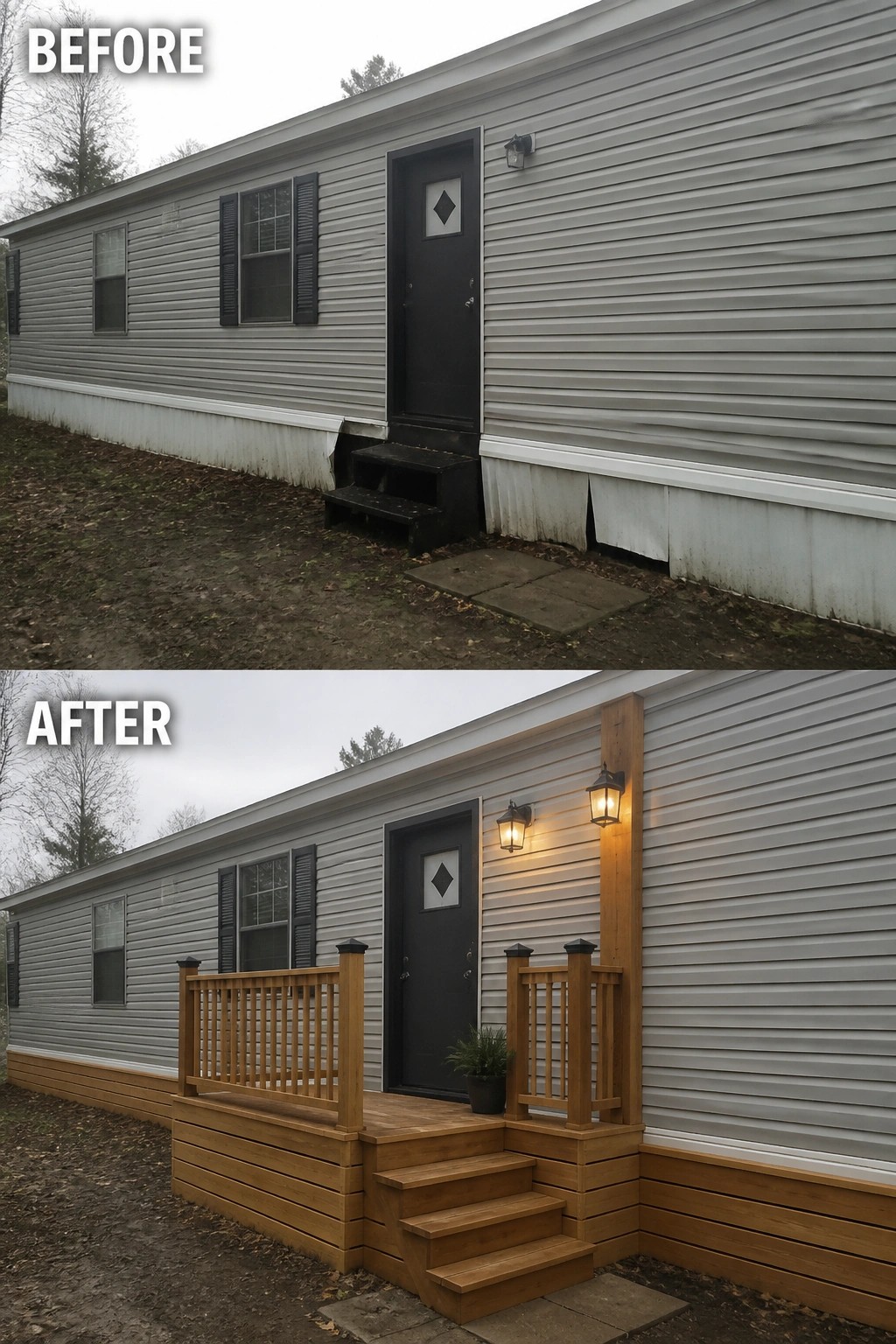
A small, well-built stoop can change how a plain trailer entrance reads. Adding a compact wooden deck as a proper landing and a pair of exterior lanterns gives the doorway purpose and makes the entry feel finished instead of temporary. Small change, big difference.
Keep the scale simple: a low platform with a couple of steps and a modest railing fits most trailers and keeps circulation easy. Box the base with horizontal boards or matching skirting to hide the crawl space, use pressure-treated lumber or a low-maintenance composite, and place weather-rated lights at eye level so the entry works day and night. Check step height and local codes,
Refresh A Plain Trailer With Color And Wood Accents
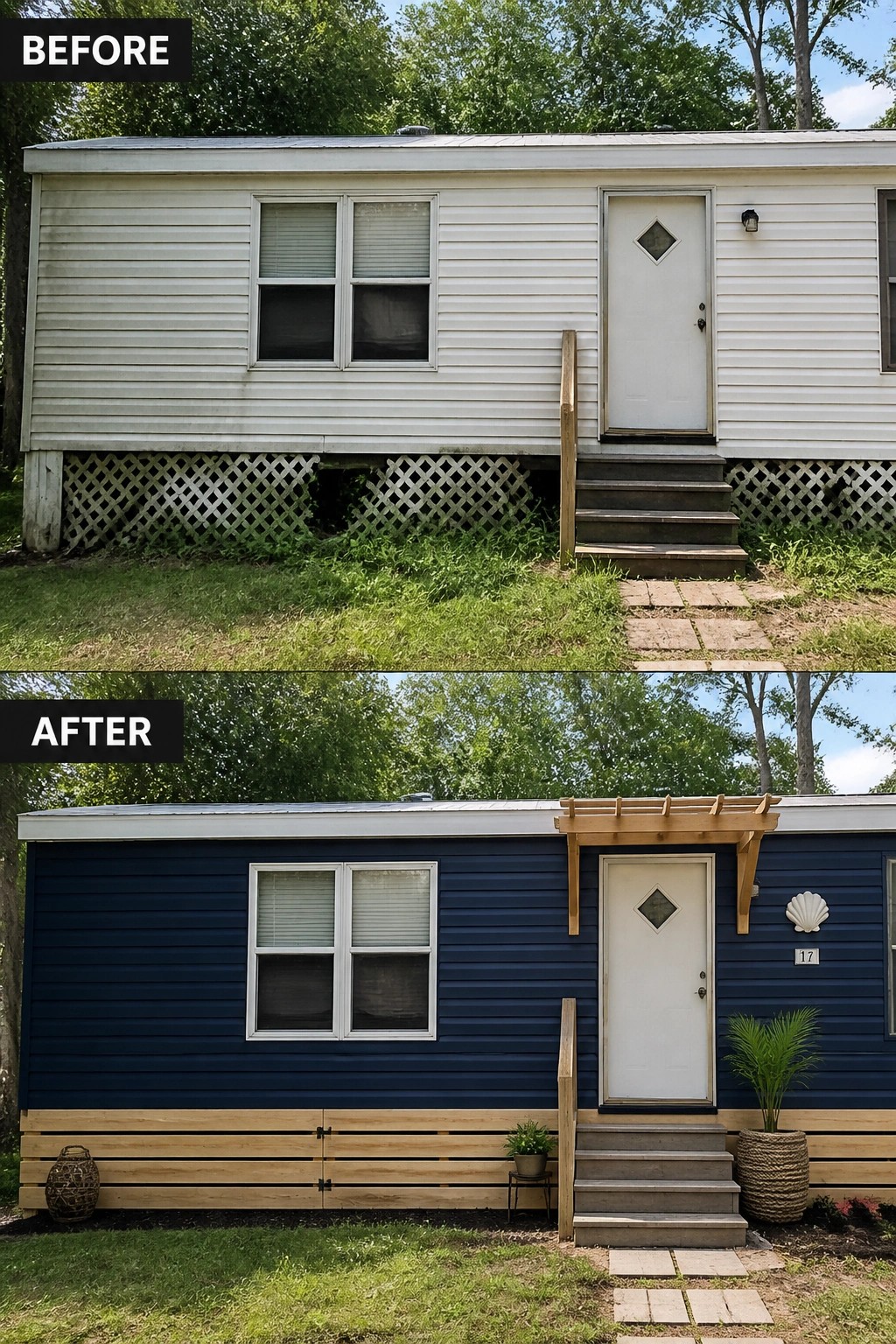
A fresh color and a couple of wood details are one of the easiest ways to lift a bland trailer facade. Swapping faded white for a deep, saturated paint and adding natural wood slatted skirting and a small timber awning at the door gives the whole exterior a curated, finished look without heavy construction.
Start by cleaning and prepping the siding, then pick an exterior paint formulated for your surface. Add lightweight slatted skirting panels and a simple over-door awning or pergola sized to the entry, and seal the wood rather than overpainting it so the grain provides contrast against the paint. This approach works especially well on small homes and rental trailers where a few well-placed details create big curb appeal with low cost and easy upkeep.
Use Skirting And Wood Trim To Boost Curb Appeal
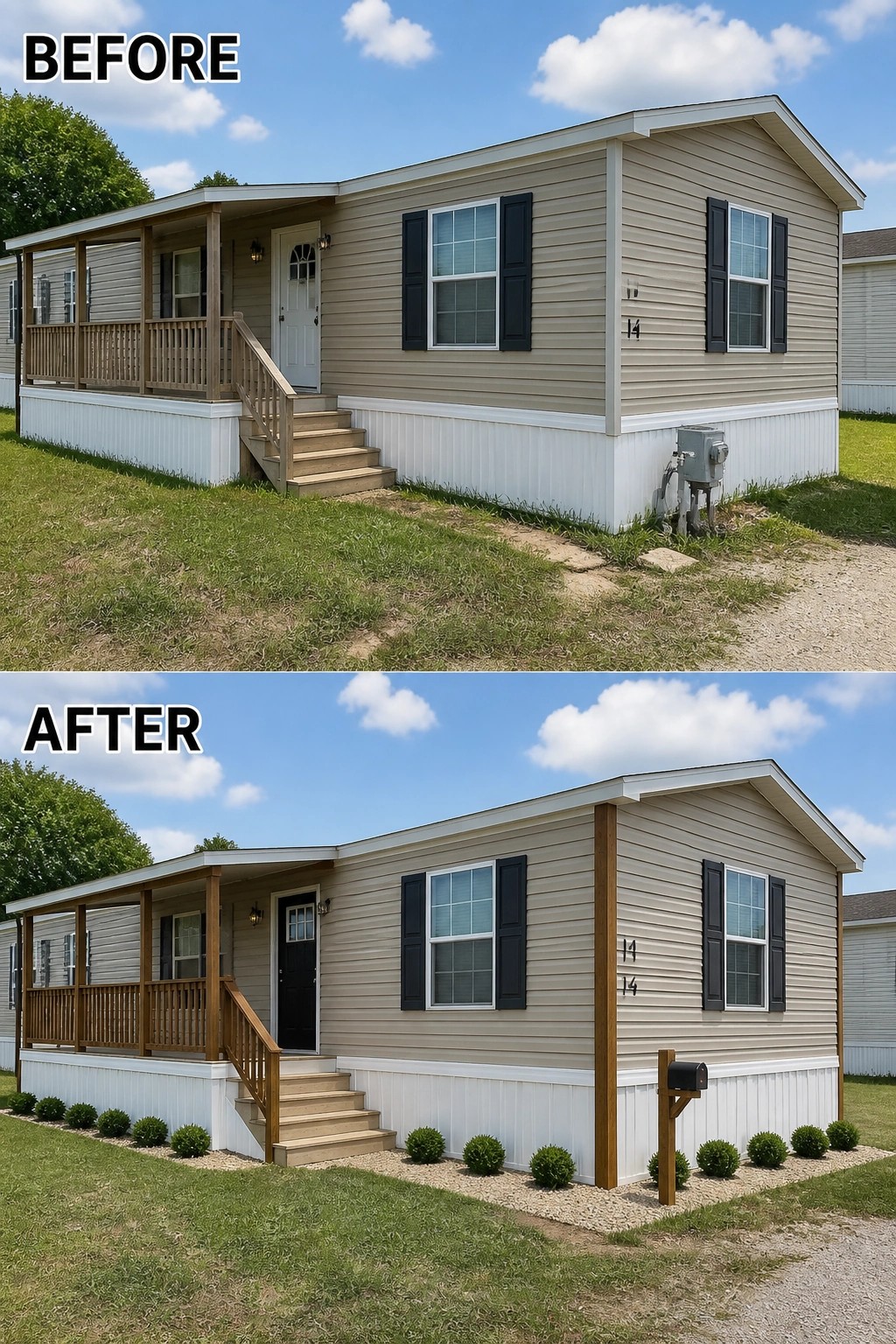
A simple way to make a plain trailer facade feel finished is to add a few wood accents and a tidy planting edge. In this example, stained corner posts and a matching porch railing break up the flat siding and give the entry some weight, while a low row of shrubs set in a gravel bed defines the base of the home and reads more intentional than bare grass.
You can copy the idea in a weekend: pick one wood tone and repeat it on posts, railings, and a mailbox post so the detail feels cohesive. Keep plantings low and regular in scale so they do not overwhelm the small porch,
Make A Plain Trailer More Inviting With Wood Skirting
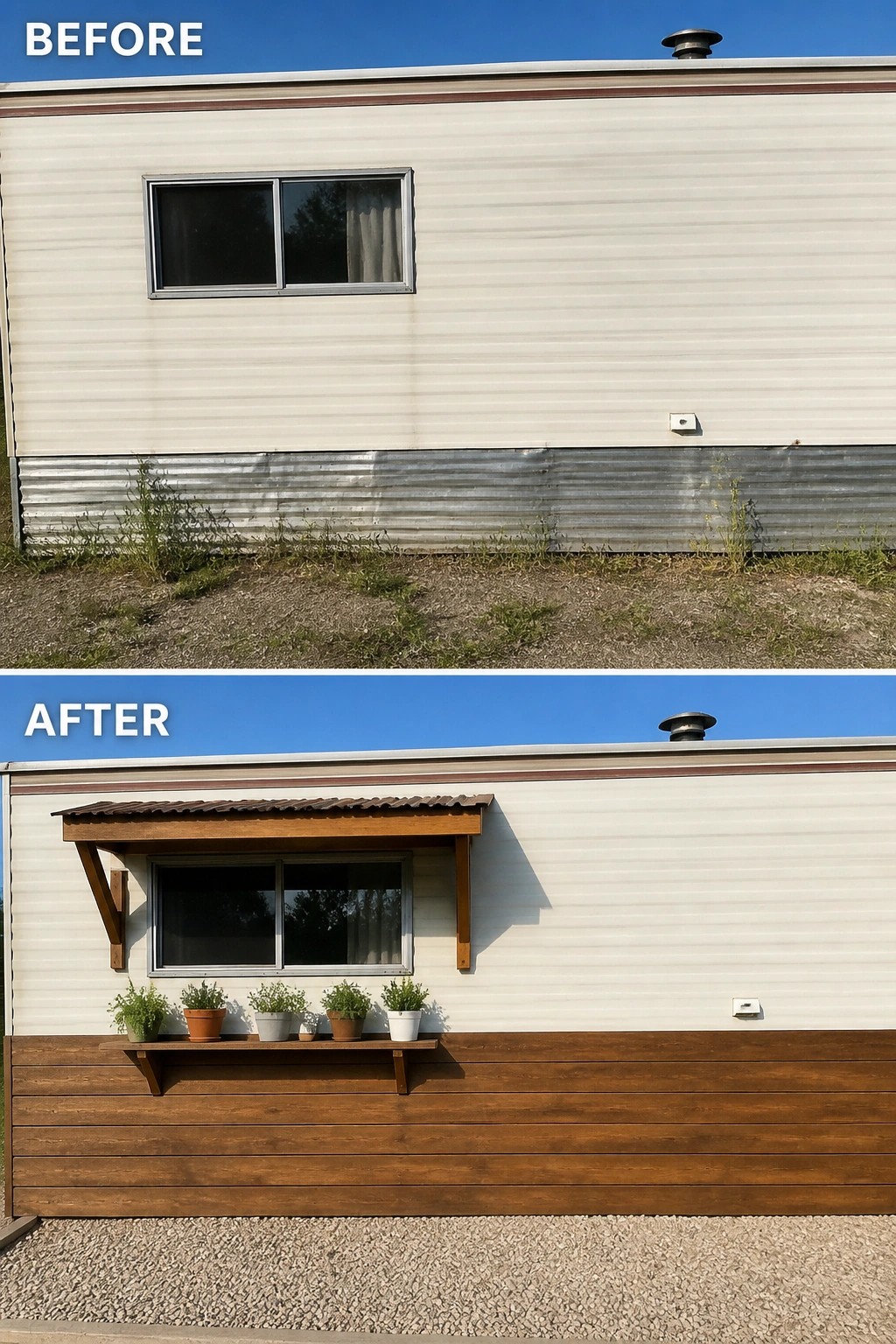
Replacing tired metal skirting with horizontal stained wood and adding a small window shelf and awning instantly gives a trailer a clearer, more intentional look. The change creates a low, balanced focal band across the facade and the little shelf with potted plants brings life and scale at eye level without needing a big renovation.
To copy this, choose rot-resistant boards or composite panels and finish them with exterior stain or sealant so they hold up. Mount the shelf and awning to studs or to a solid furring strip, keep planters small and low-maintenance, and leave vents and access panels clear. Start small and focus on proportion—the skirting should sit low and uninterrupted so the window feature reads as the main accent.
Give A Trailer A Cleaner Look With Wood Skirting
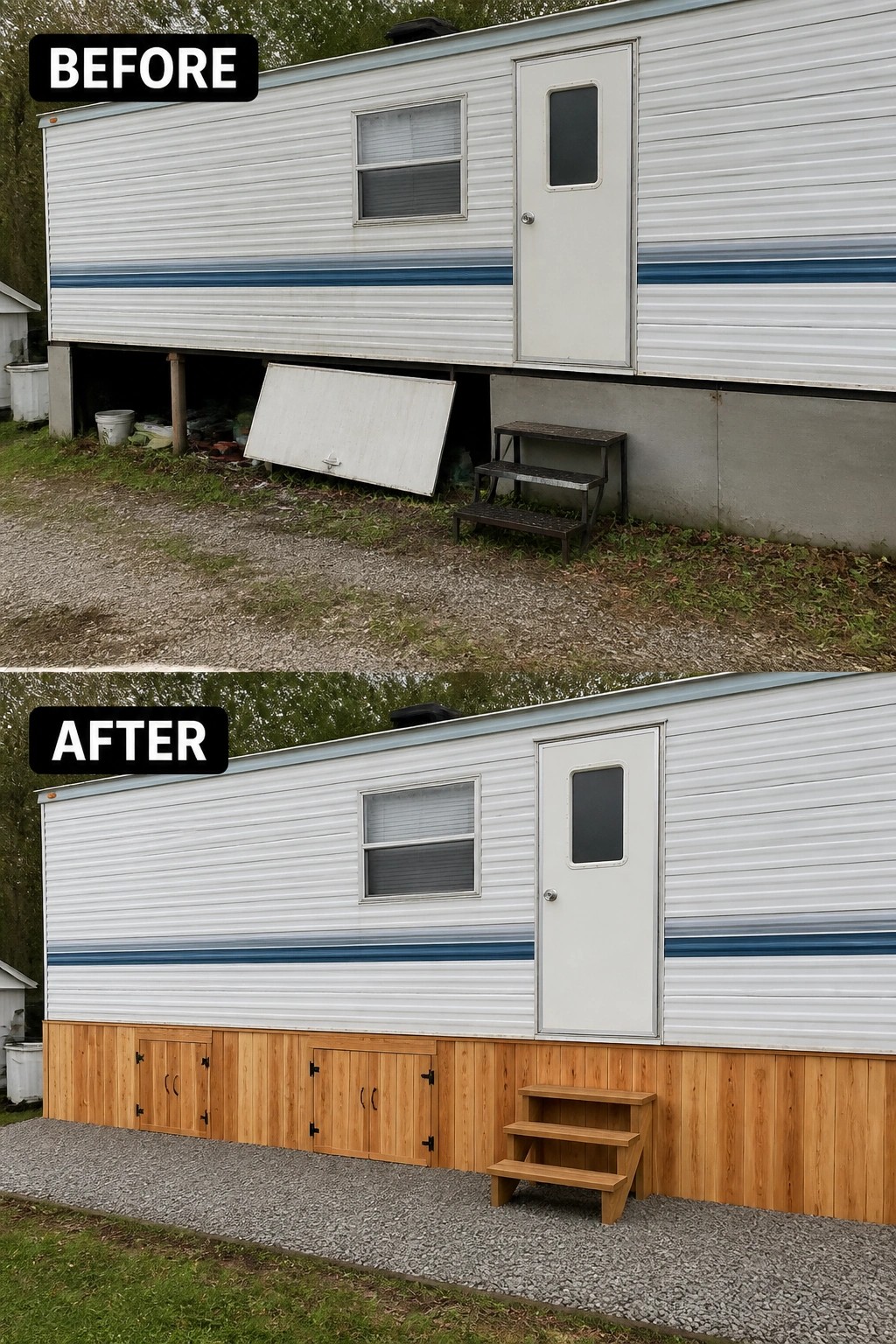
Covering the open space under a trailer with vertical wood panels instantly tidies the facade and hides stored items and supports. Adding a couple of small access doors and a simple wooden step (as in the after photo) keeps the area functional while turning that empty gap into a finished base that looks intentional.
For a practical approach, use rot-resistant boards like cedar or pressure-treated pine, and leave a small gap at the bottom for airflow and water run-off. Build removable panels or hinged doors for utility access, set a gravel strip for drainage in front of the skirting, and pick a stain or finish that complements the trailer trim so the new skirt reads as part of the house, not an afterthought.
Give A Plain Trailer A Defined Front Entry
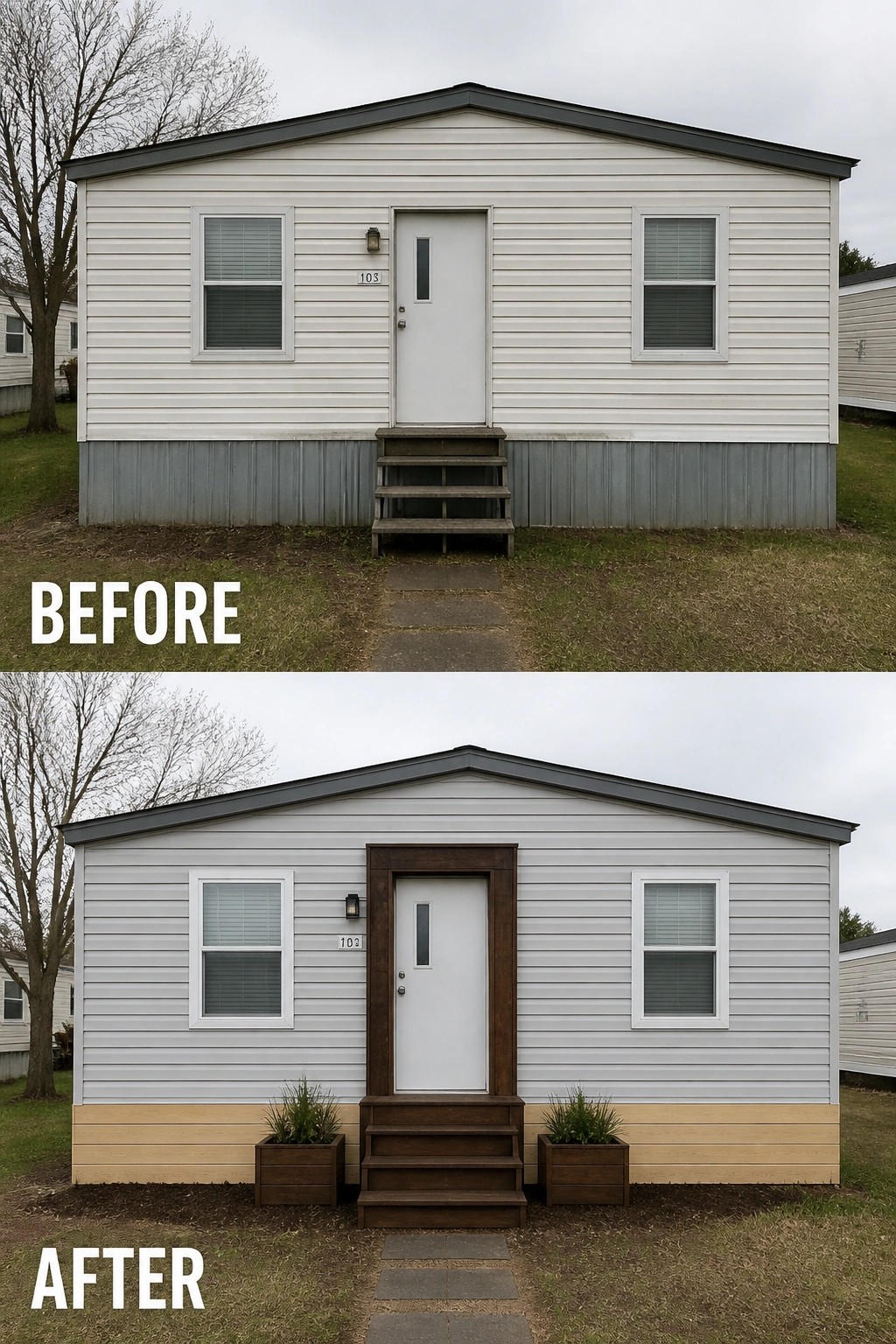
A narrow, featureless facade can look finished with one clear focal move: frame the door and tie the base together. Here a simple dark wood surround around the door and new wood-look skirting replace the bland metal base, while stepped treads and matching planters make the entrance feel intentional. That single framed element draws the eye and makes the whole front read as a designed entry rather than an afterthought.
To copy it, choose one durable trim material—stained cedar, Ipe, or a composite board—and use it for the door surround and lower skirting so the finishes read as one cohesive band. Keep the scale modest for a small trailer, add two matching planters and a weatherproof light, and use rot-resistant fasteners and finish so the look holds up with minimal upkeep.
Create A Welcoming Covered Porch For A Small Trailer
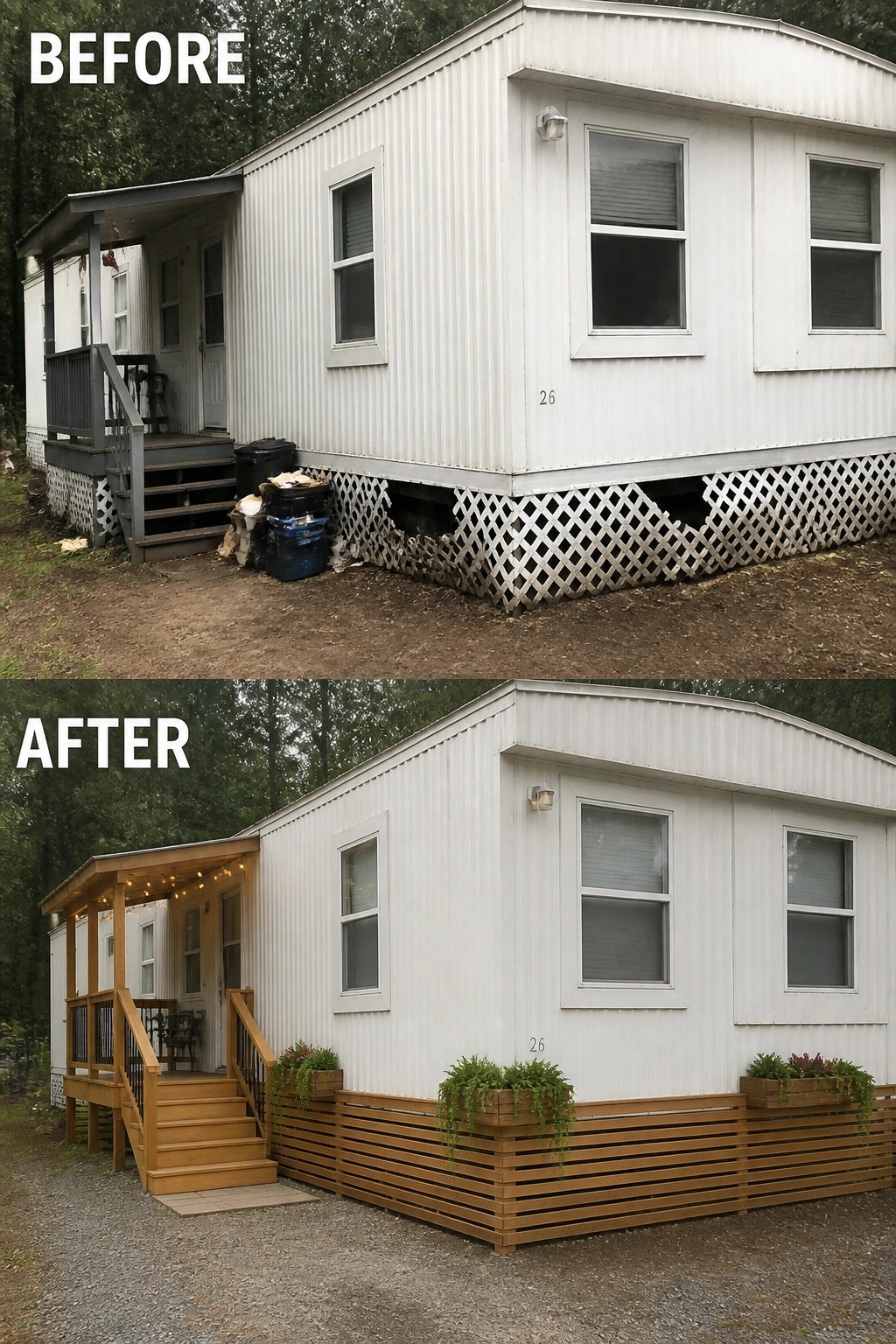
Swap out tired lattice and a handful of mismatched bins for a simple covered porch and low horizontal skirting to give a small trailer a real entry. The change creates a clear focal point and hides the uneven foundation at ground level, while a few planters and string lights make the entrance feel used and intentional instead of neglected.
This approach works well on small homes where a full renovation isn’t possible—build a compact porch that matches the trailer’s scale, use pressure-treated wood or composite for long life, and leave access panels for ventilation and utilities. Add a couple of matching planters and modest lighting to soften the look and make the door area something you actually want to use.
Frame A Trailer Entrance With A Simple Porch Roof
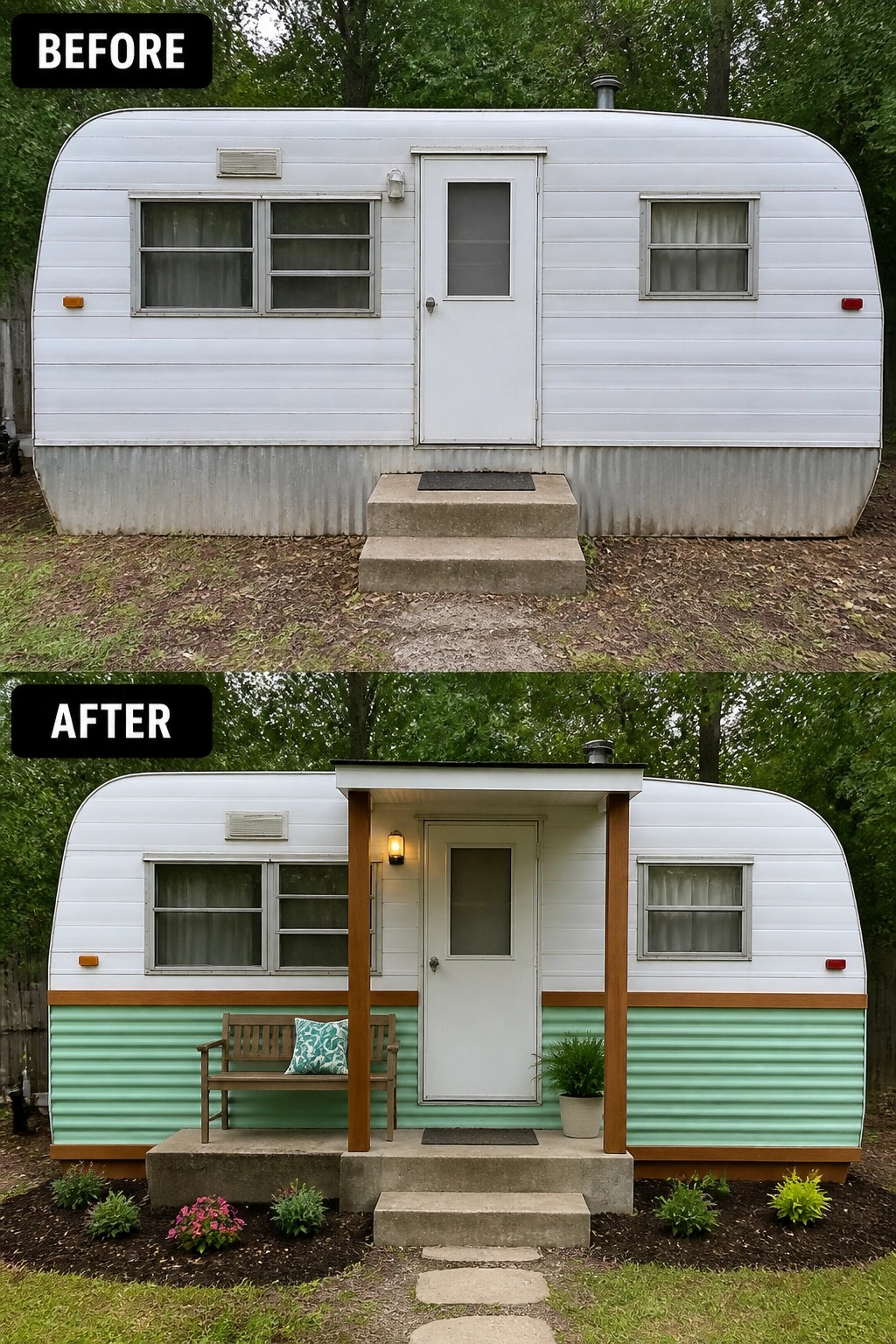
A small, purposeful entry can change how a trailer feels from anonymous to welcoming. In this example the lower skirting was painted a soft color and a simple porch roof with wooden posts and a wall light were added, which together frame the door and make the concrete steps feel like an actual threshold instead of just a landing.
To copy the idea, pick one strong change first—painted skirting or a modest roof—and keep the scale simple so the addition does not overwhelm the trailer. Use outdoor-grade wood or metal for posts, a single practical light by the door, and a couple of low plants or a bench to suggest use without crowding the steps. Small, durable touches make the entry feel intentional and work for tiny homes, campers, and older trailers alike.
Use Wood Skirting And Window Boxes To Boost Curb Appeal
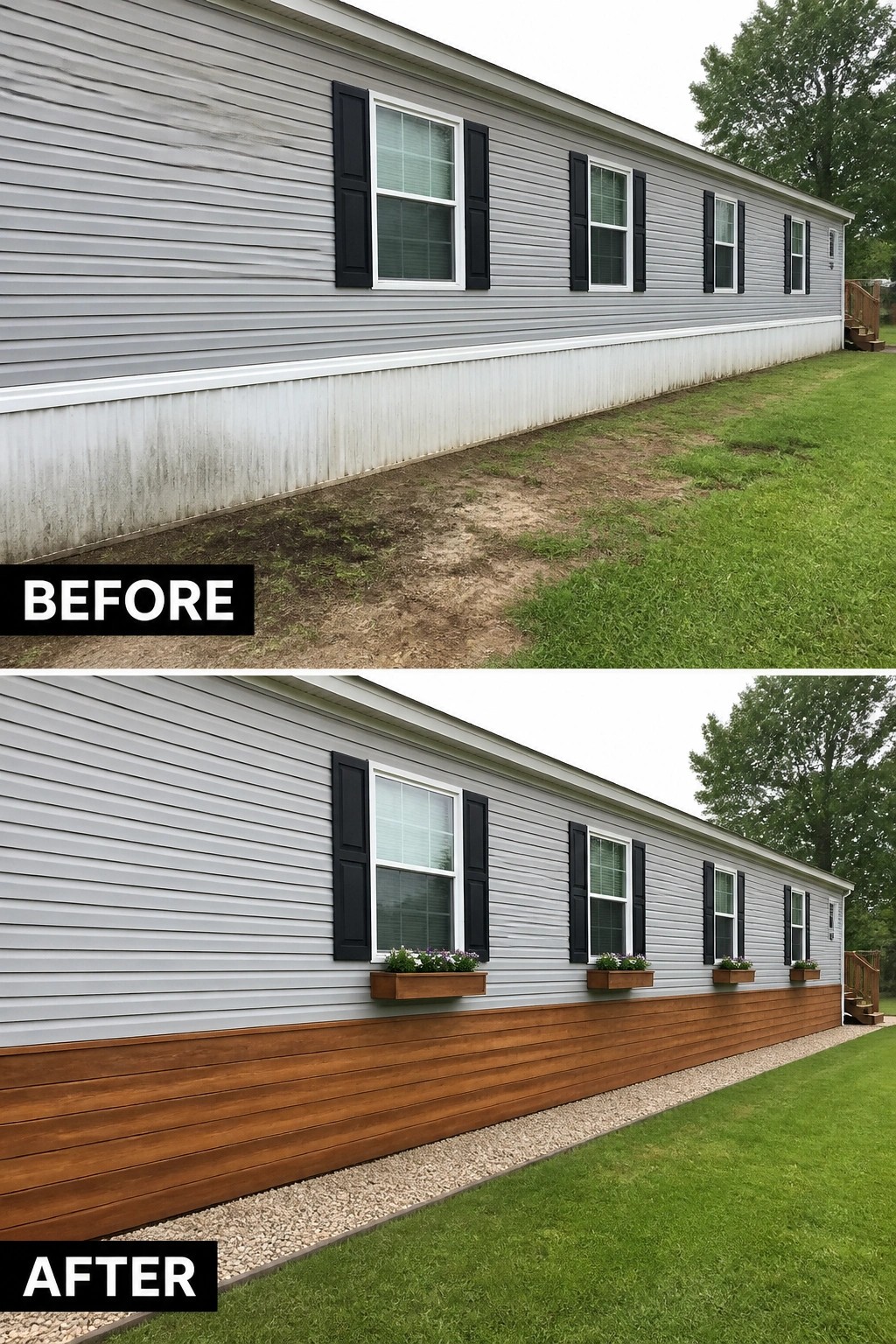
Swapping tired white vinyl skirting for horizontal wood planks is an easy way to give a trailer a cleaner, more polished look. Pairing the new skirting with a simple gravel strip and a few window boxes creates a neat base that feels intentional instead of neglected. You only need one solid material change plus a bit of planting to make the facade read as finished.
To copy this, pick a rot-resistant wood or a composite that can handle ground moisture and stain it for low maintenance. Keep ventilation and access to under-trailer components in mind when installing panels, and run a gravel bed or weed barrier along the base for drainage and neatness. Mount window boxes to the siding studs or use wall anchors so they stay secure, and scale everything to the height of the home so the look stays balanced.
Use Skirting And Wood Accents To Upgrade A Plain Trailer Entry
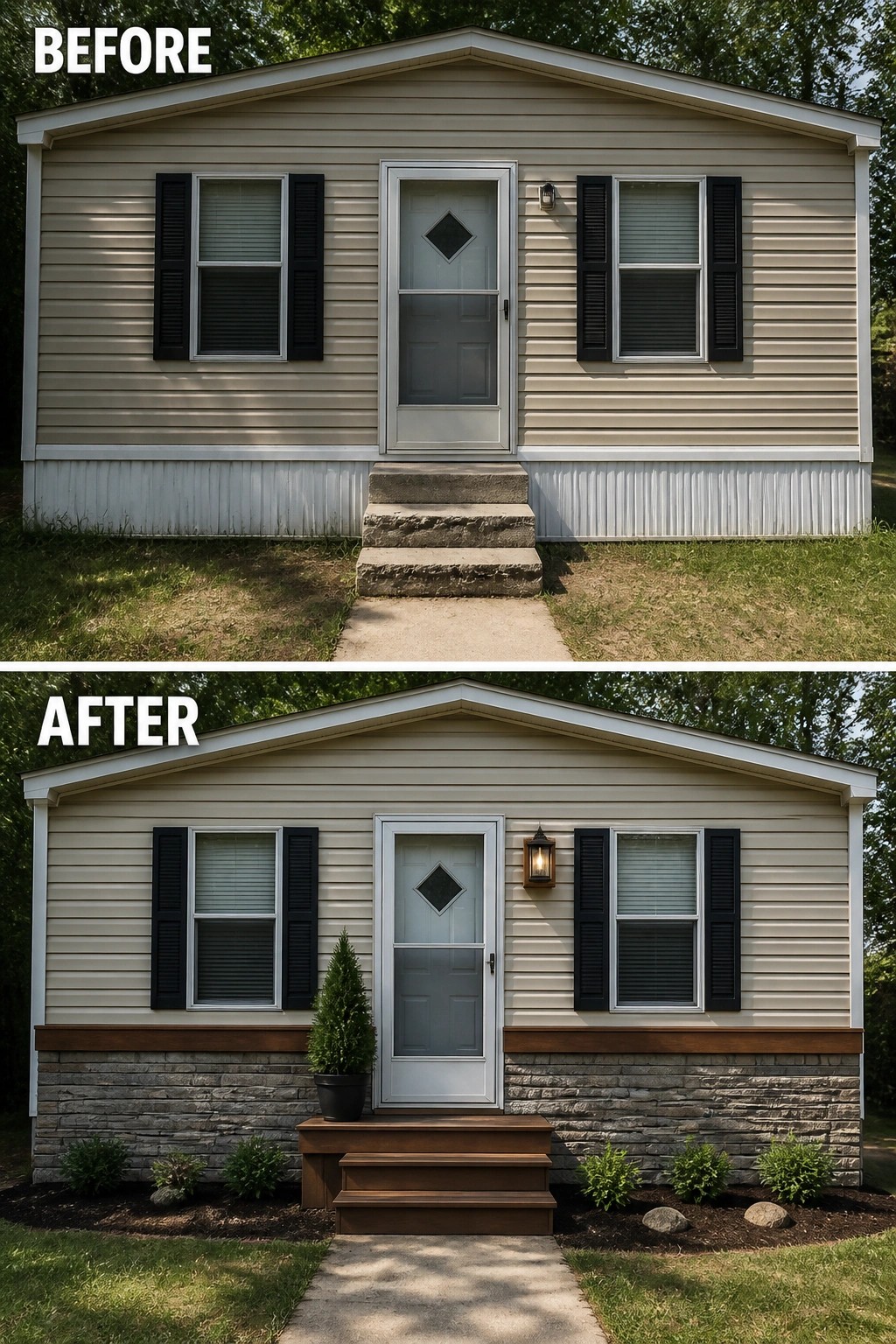
A low-cost way to make a plain trailer facade feel finished is to give the base some weight and add a small wooden stoop. Replacing plain white skirting with a stone-look base and adding a compact set of wood steps and a trim band instantly raises the visual height of the home and makes the front door read as a proper entry. A single outdoor light and a potted evergreen are enough to sell the idea.
This works best on modest, narrow fronts where a full porch would be out of scale. Start by installing weatherproof skirting or manufactured stone to hide the crawlspace, then add a simple modular stoop sized to your door opening. Match the wood tone in a thin trim band around the facade and keep planting minimal—one tall planter plus a few low shrubs—so the entry stays neat and easy to maintain. Also allow for access panels and drainage when planning the skirting.
Add A Simple Wooden Deck For A More Usable Trailer Entry
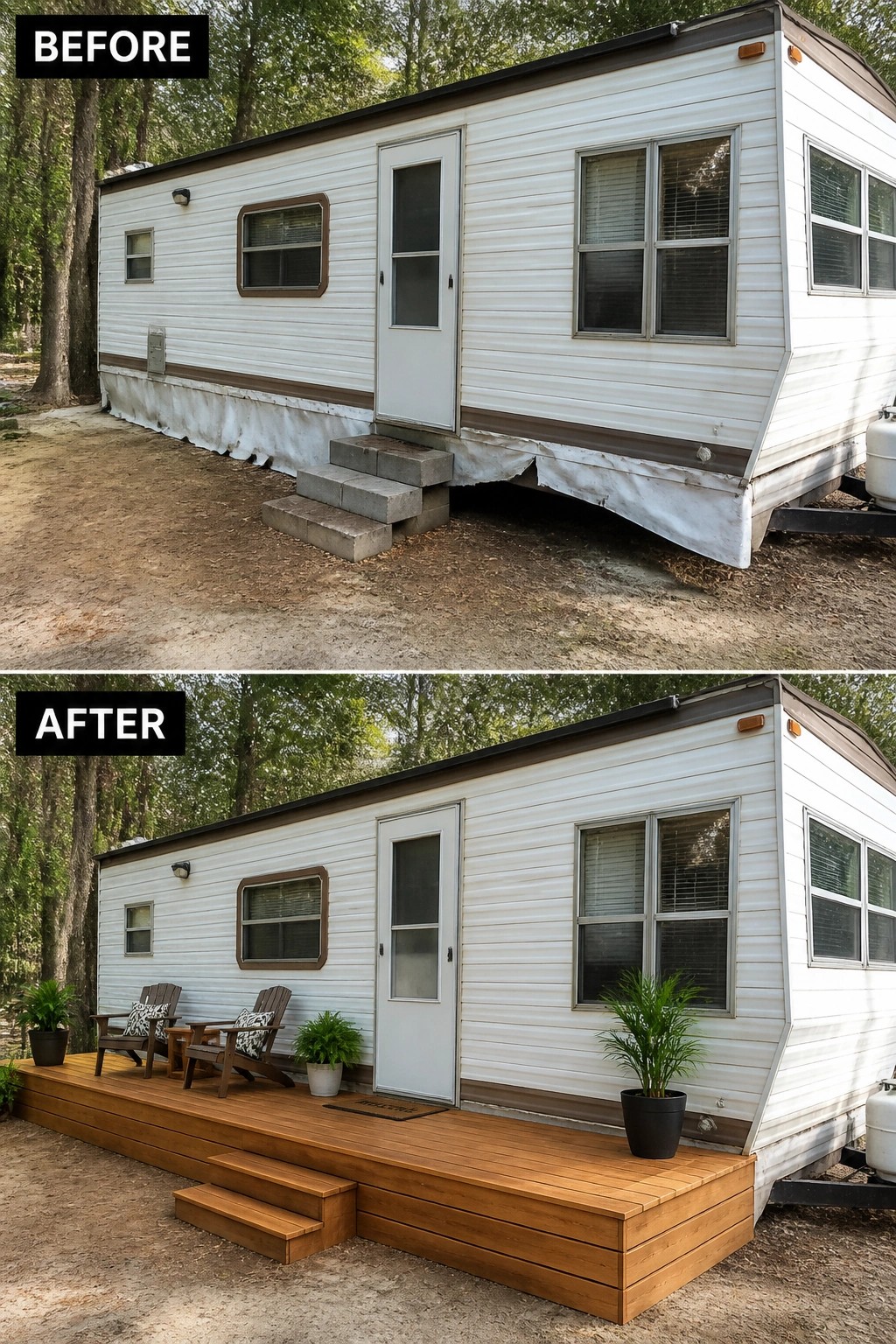
A simple low deck is one of the fastest ways to turn an unloved trailer entry into a usable outdoor spot. Replacing torn skirting with a modest wooden platform and a couple of chairs (plus a planter or two) hides the undercarriage and creates an instant place to sit, sip coffee, or greet guests without a big renovation.
Keep it small and practical: build the deck to the door height, add a short set of steps, and leave an access panel for utilities. Use rot-resistant lumber or composite decking so it lasts, choose a scale that fits two chairs rather than trying to fill the whole yard, and finish with a few weatherproof planters to soften the edges and make the porch feel intentional.
Improve Curb Appeal With Skirting And Wood Trim
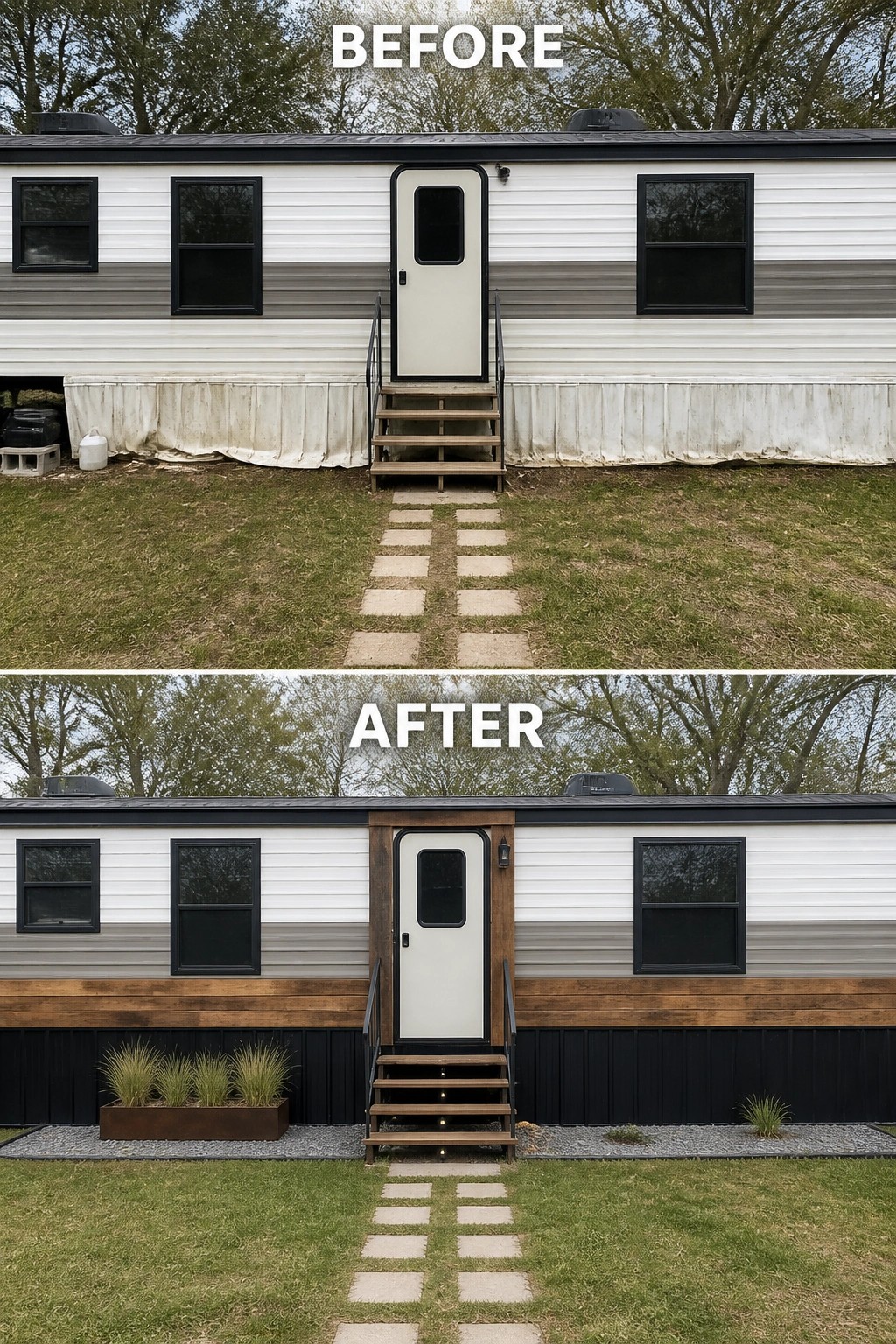
A quick way to make a plain trailer look finished is to fix the base and give the entry a frame. Replacing ragged vinyl skirting with a clean, darker skirt and adding a horizontal wood band plus a wood-clad door surround turns an anonymous facade into a neat, intentional front that reads more like a small house than a temporary unit.
To do this yourself, start by repairing or swapping damaged skirting for a durable, weather-resistant option and pick a darker color to visually lower the structure. Add a simple wood or composite trim around the door and a matching band across the
Make A Plain Trailer Facade Feel More Welcoming
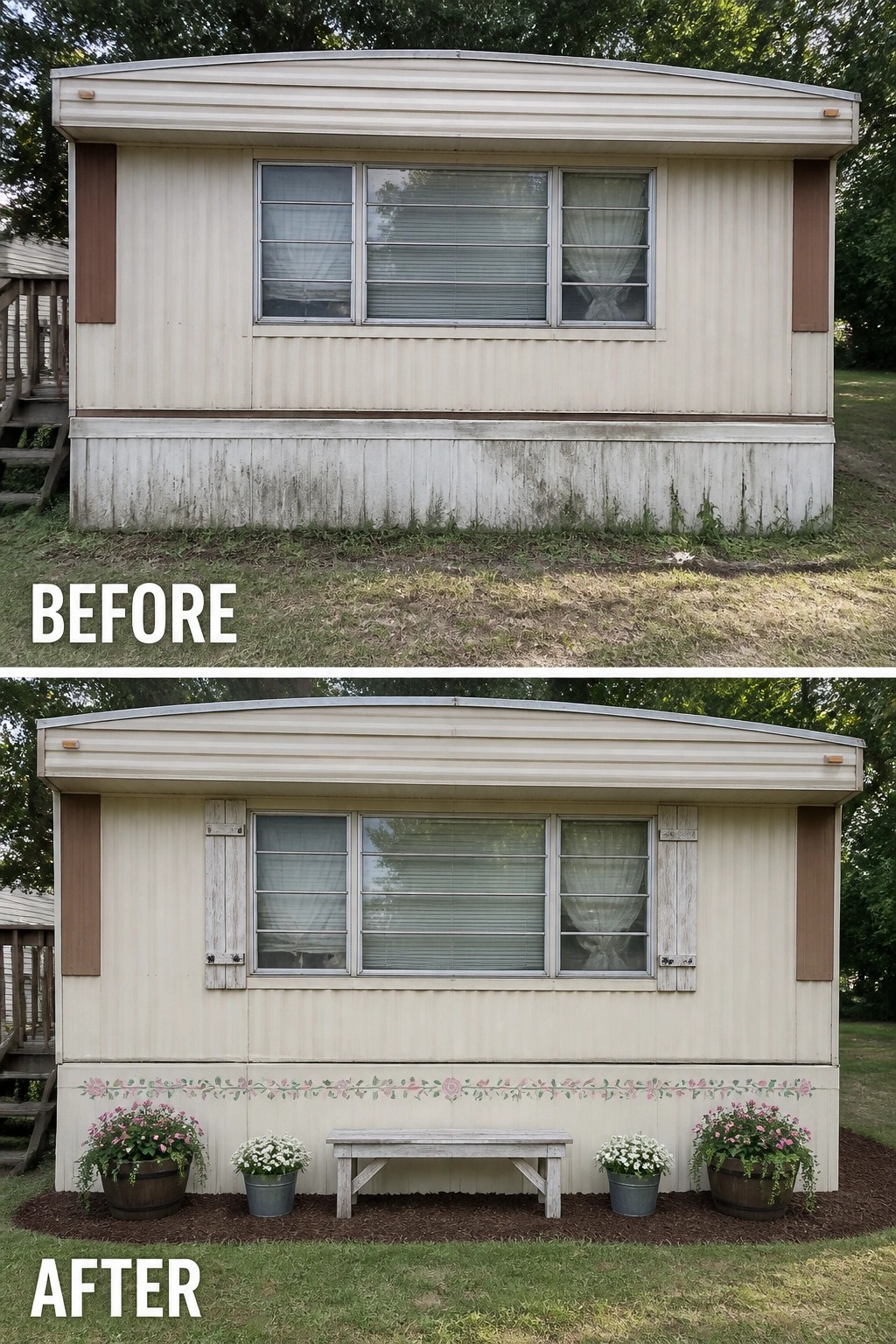
A few small, low-cost additions can turn a bland exterior into a friendly entry without major construction. In this example the owner framed the window with rustic wood shutters and added a low bench plus matching planters to create a focal point, which instantly makes the facade feel intentional and cared for.
To copy the idea, start by cleaning or repainting the skirt so the base looks tidy, then add one or two wooden accents to frame the largest window (shutters, a narrow ledge, or a simple trellis). Lay a thin mulch strip and place paired planters and a bench at a comfortable scale to the siding; choose weatherproof finishes and plants that need low maintenance so the setup stays attractive with minimal upkeep.
Swap Lattice Skirting For Horizontal Wood Panels
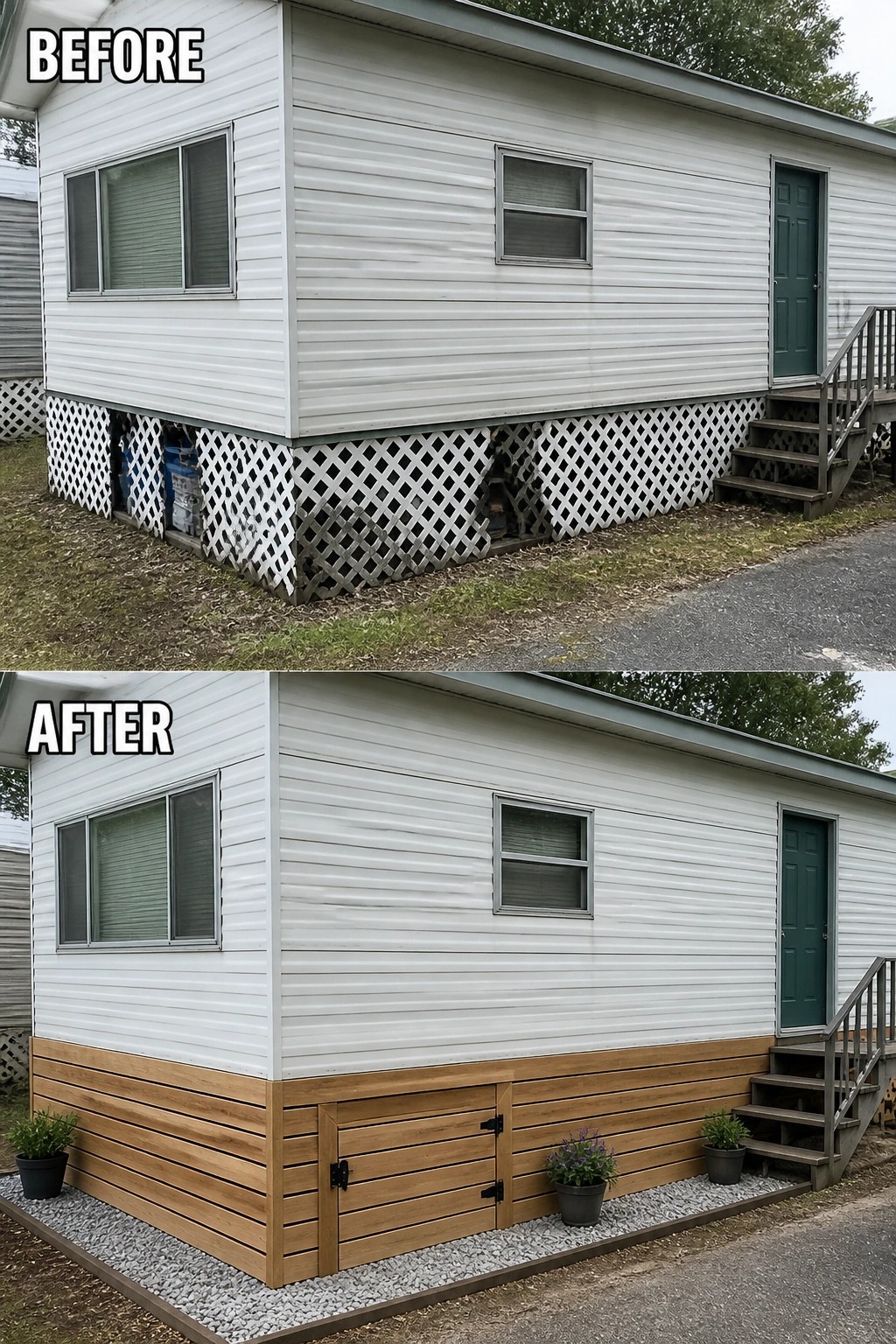
Replacing battered lattice with a run of horizontal wood slats instantly tidies the base of a trailer and gives the whole exterior a more intentional, finished look. Here the torn white lattice is replaced by clean, stained wood panels with a small hinged access door, which hides utilities and reads like a proper foundation instead of an afterthought.
This works well on single-wide trailers and small cottages because the scale is simple and easy to install. To copy it, frame the opening first, use rot-resistant boards or composite, leave small vents for airflow, and build a hinged access panel for storage or service points; finish with a clear sealer and a narrow gravel edge or a few potted plants to keep the area neat and low maintenance.
Add Wood Trim And Planters To Define A Trailer Facade
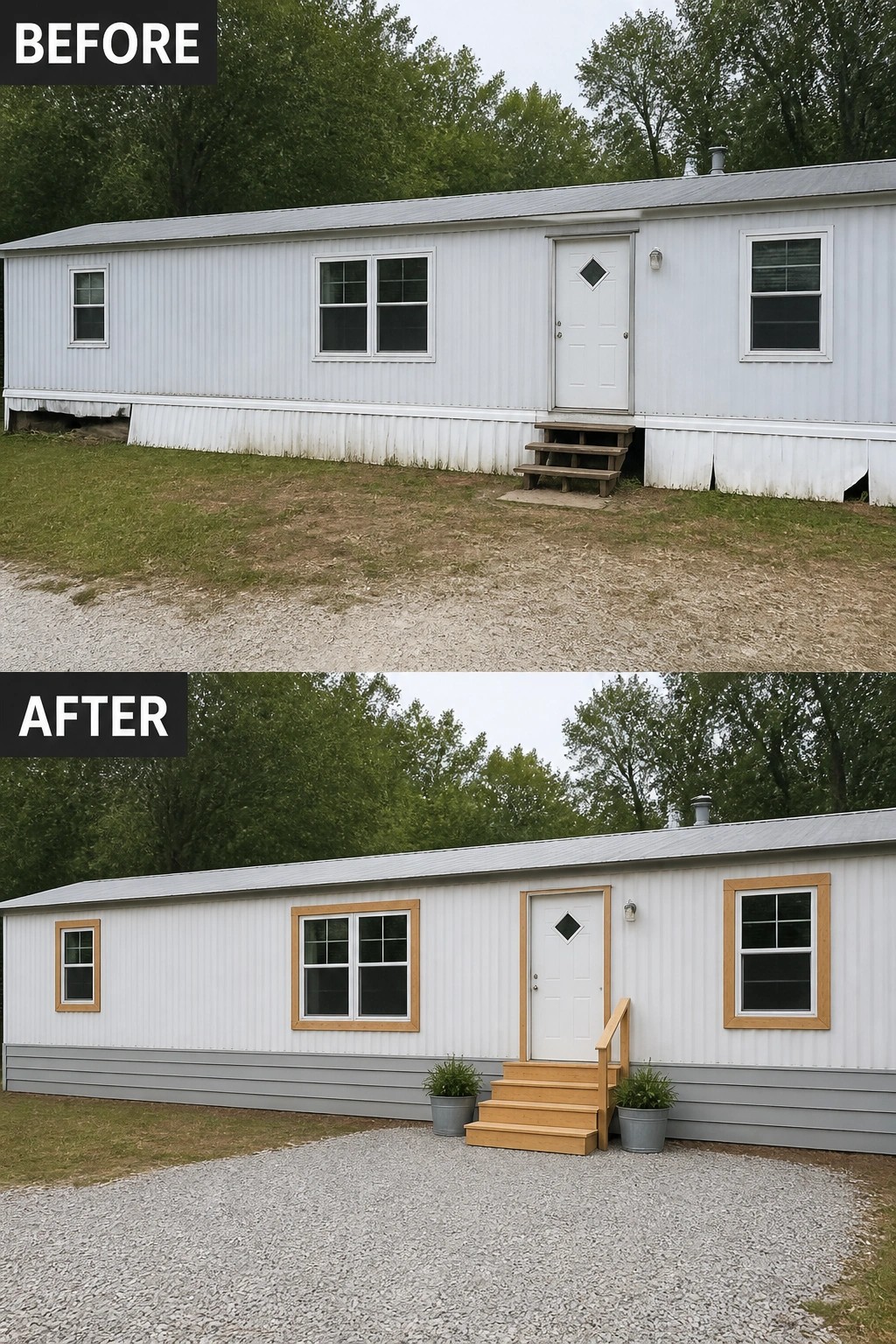
A few focused exterior tweaks can turn a bland trailer into a neat, approachable home. Adding simple wood trim around windows and the door and swapping ragged skirting for a clean, horizontal panel gives the whole facade definition, while a small set of properly built stairs and matching planters make the entry feel intentional instead of improvised.
You can copy this on a budget by using rot-resistant lumber or a composite for trim (cedar or treated pine work well), staining or painting it slightly darker than the siding for contrast, and installing ready-made modular stairs if you don’t want to build from scratch. Replace or repair skirting so it sits level, add a gravel or paver landing to stop mud, and use one matching planter on each side of the steps to balance the entrance and add a little life.
Give A Trailer A Finished Base With Wood Skirting
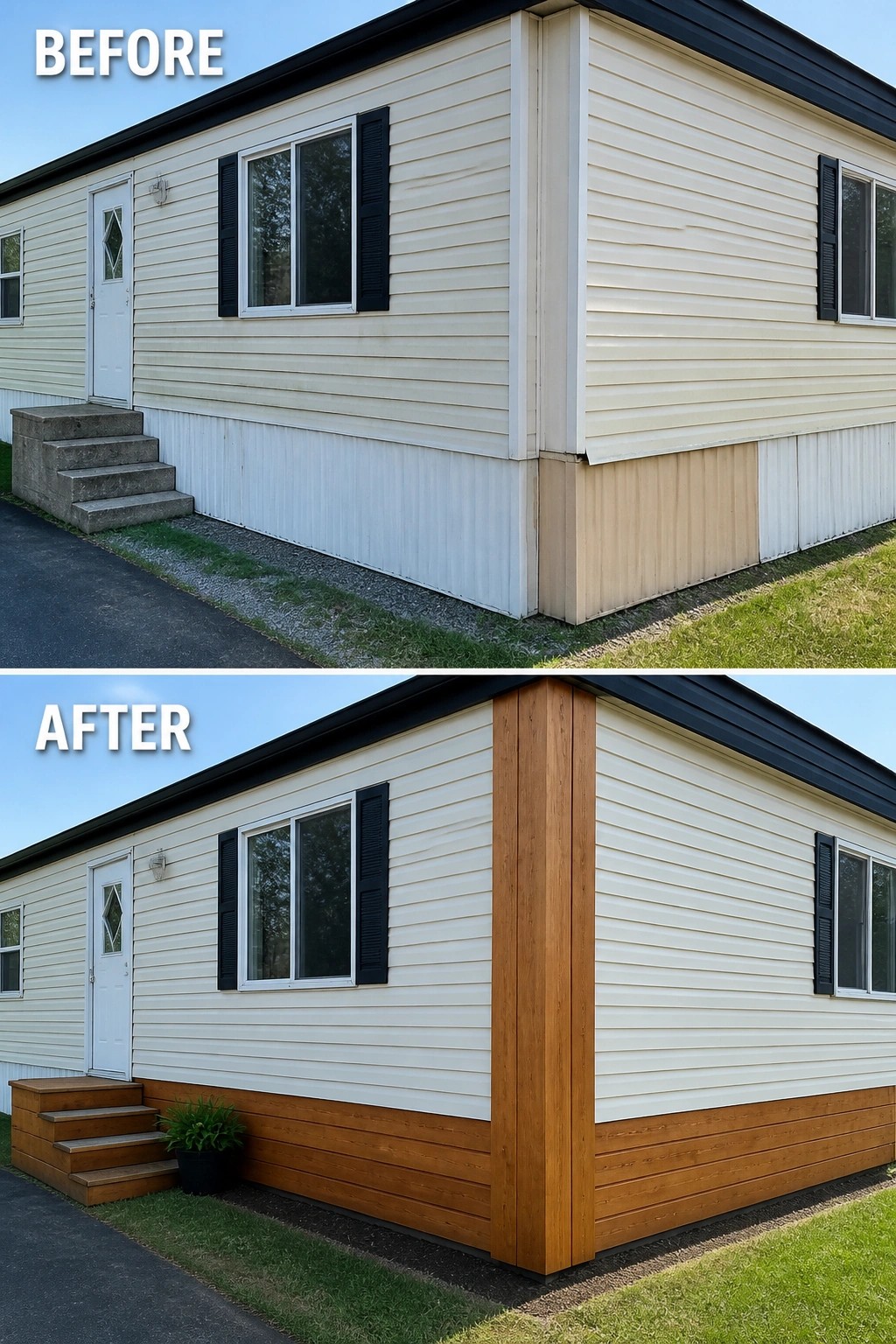
Swap out plain vinyl skirting for stained horizontal boards and a vertical corner column to give a trailer a stronger, more intentional base. That single material change makes the exterior feel finished instead of temporary, and adding small wood steps or a planter ties the look together without a big remodel.
Use rot-resistant wood or a weatherproof composite (or composite boards) cut to the skirting height, seal before you install, and be sure to keep access panels and vents unobstructed. This approach suits single-wide homes and small trailers best—keep the wood low and simple so
Make A Plain Facade More Welcoming With Planters
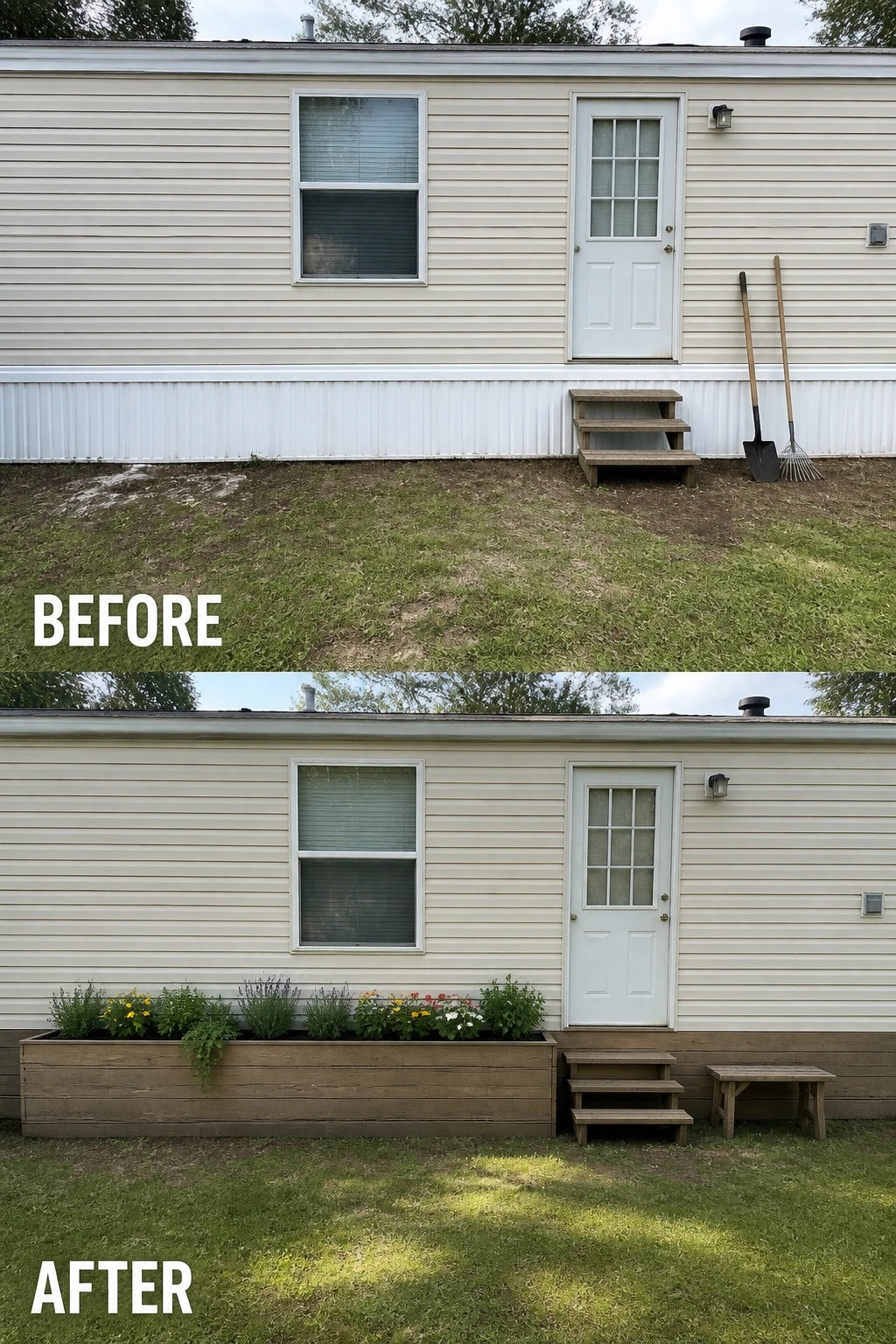
A single long, low wooden planter and matching wood skirting can do a lot for a blank trailer wall. Placing a raised box under the window and tying the wood tone to the steps gives the entry visual weight, hides the plain vinyl base, and adds instant seasonal color without a major renovation.
To try it yourself, size the planter to run under the main window so it feels balanced with the door, keep the height low so sightlines stay open, and build it from treated lumber or composite for weather resistance. Line the box for drainage, choose a mix of hardy perennials and a few annuals for steady blooms, and match the stain to your steps or skirting so the whole front feels pulled together—just leave room for access to the door.
Frequently Asked Questions
Q: Can I install skirting and wood accents myself, or should I hire someone?
A:
You can handle basic skirting and simple wood trim if you have basic carpentry skills and common tools. Measure carefully, use exterior-grade materials, and follow the product instructions. Call a pro if the job involves electrical, plumbing, or structural changes.
Q: How do I protect wood accents from rot and sun damage?
A:
Choose exterior-grade or pressure-treated wood and seal it with a quality outdoor finish. Leave a small gap at the bottom for airflow and check the finish yearly so you can touch up cracks or peeling before moisture gets in.
Q: Will skirting actually make my trailer warmer in winter?
A:
Yes. Skirting blocks cold drafts under the trailer and helps keep pipes and tanks from freezing, so your heating system does less heavy lifting. It isn’t a substitute for insulation inside, but you should notice steadier temperatures.
Q: What color and stain combos look good with wood accents without going overboard?
A:
Pick a neutral body color like soft gray, cream, or warm beige, and pair it with a mid-tone wood stain for natural contrast. Add one darker trim color—on the door or window frames—to anchor the look, and always test a small swatch outside before committing.