

When the siding on a house begins to show its age, the overall look from the street can start to feel a little flat even if nothing else has changed.
I have found that working with the surfaces that are already there often gives better results than I expect at first.
Choosing colors and textures that complement the windows rather than compete with them tends to keep the whole exterior balanced.
Paying attention to details like trim lines and how they meet the roof edges can quietly improve the way the front presents itself without any structural work.
Some of these updates are easy to test on a small area first.
Refresh Plain Siding With A Two-Tone Update
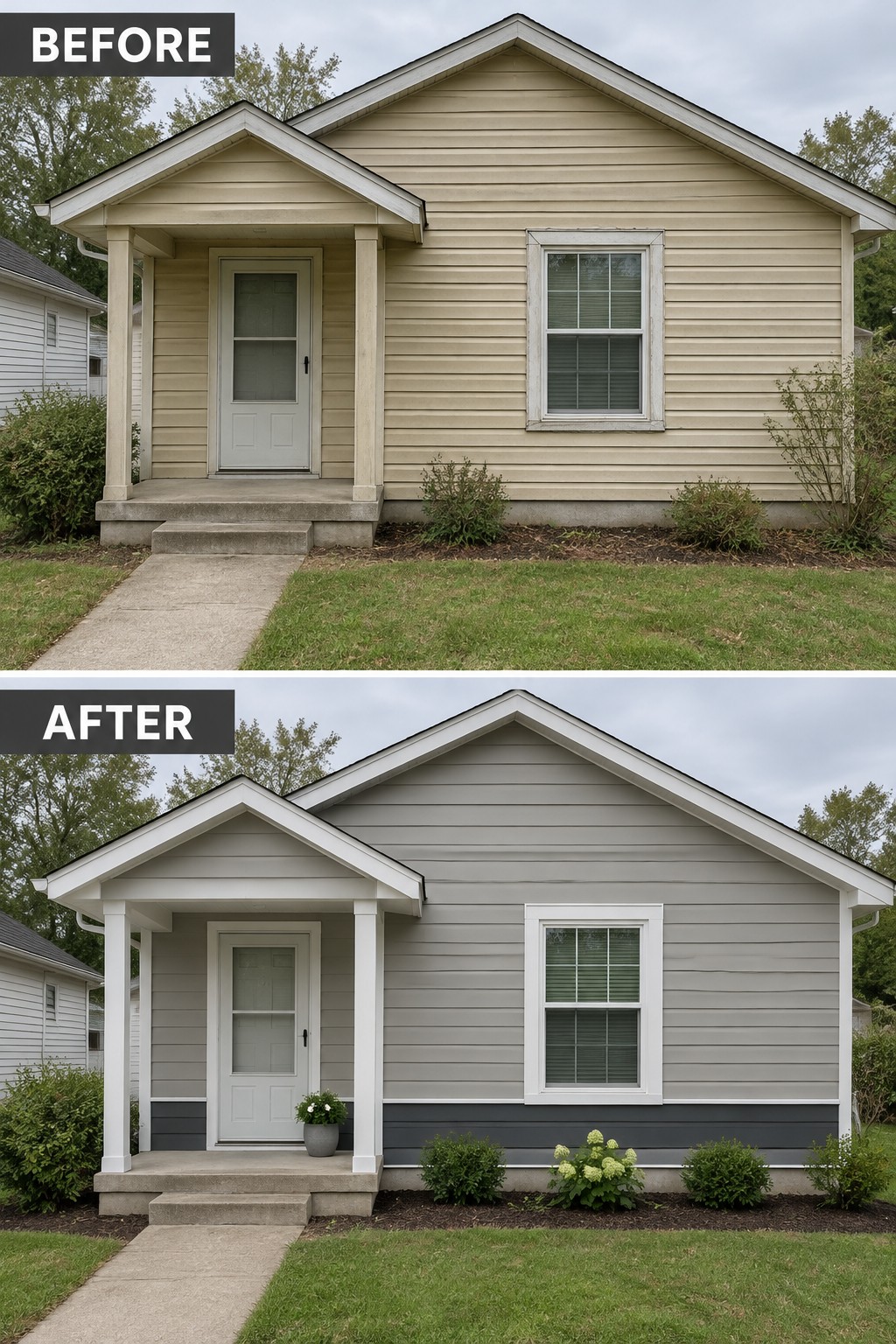
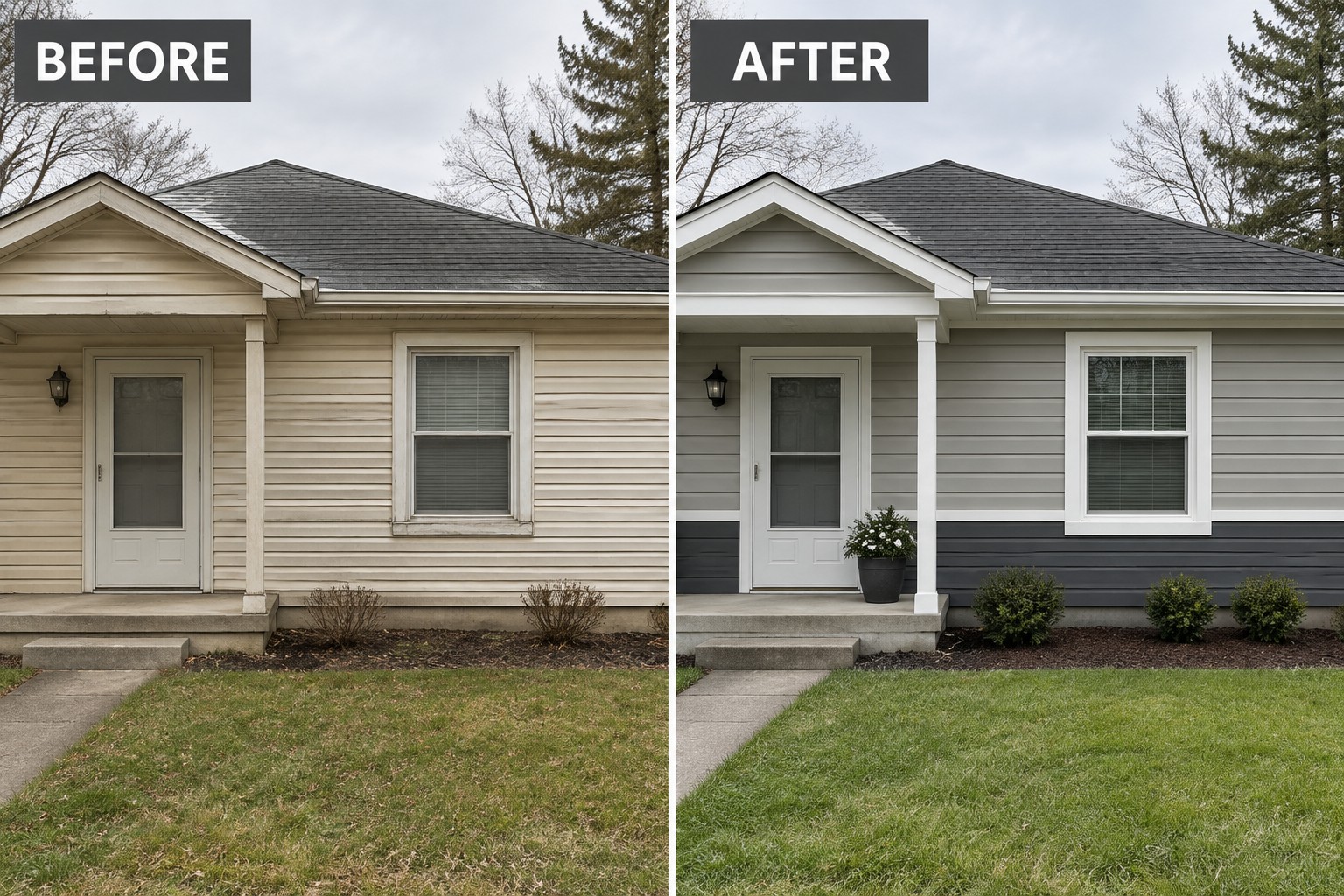
A straightforward way to update an older home exterior is to repaint the siding and add a darker band along the lower section. The beige color here gave way to a soft gray with a charcoal base, which adds definition and makes the front feel more finished while the windows and porch structure stayed exactly the same.
This idea works best on houses where the siding itself is sound but the color has grown tired. Choose two tones that create clear contrast at the base line, keep the trim light, and limit any new plantings to one or two spots near the door so the update stays simple and affordable.
Switch To Vertical Siding For A Cleaner Exterior Look
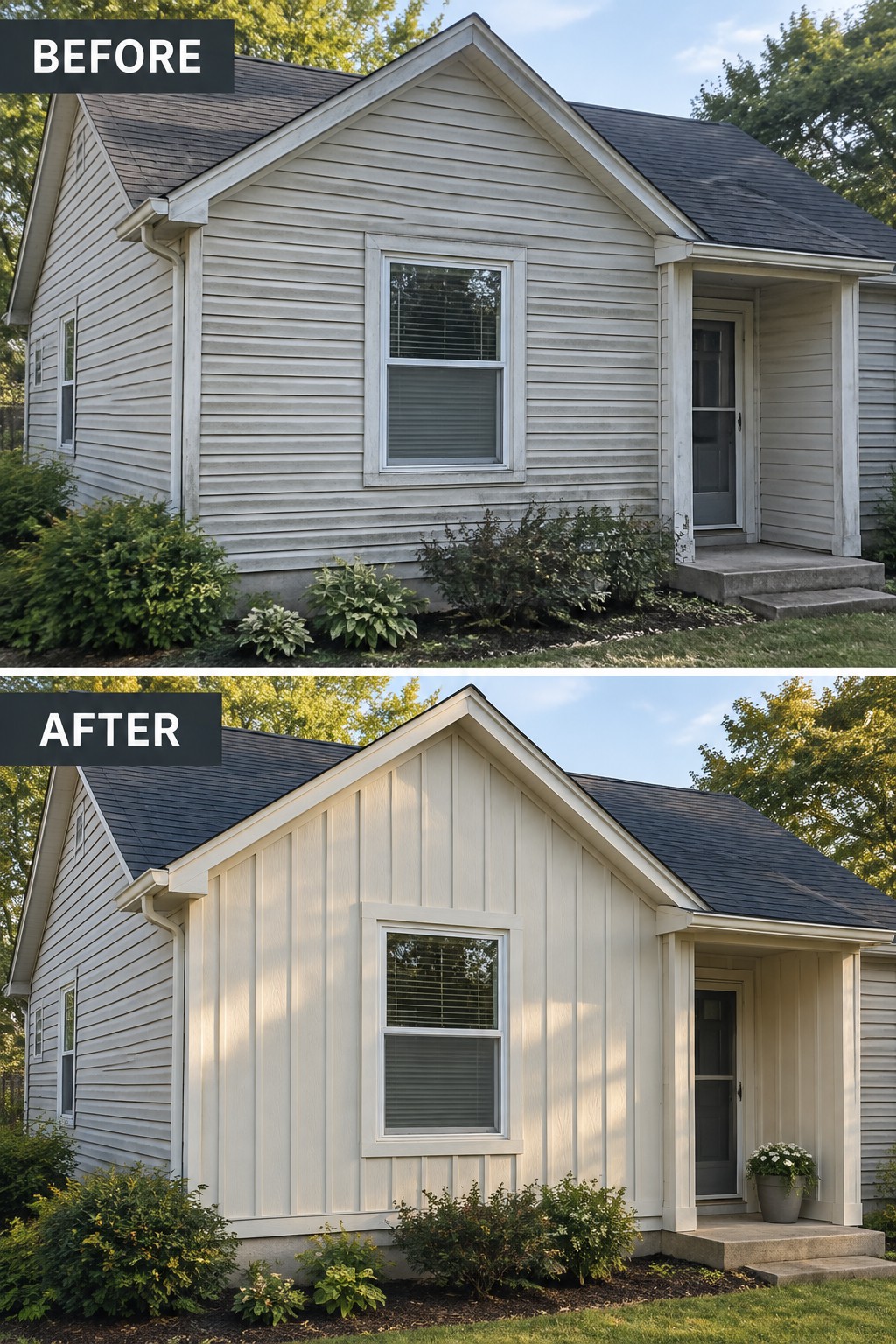
Many older homes end up with horizontal siding that feels flat and dated after years of weathering. Switching the direction to vertical boards gives the facade more height and structure while keeping the same windows and roofline intact. In this case the new boards run top to bottom and the color shifted to a warmer off-white that catches light better than the old gray tone.
This approach works well on simple one-story houses where the siding is the main surface you see from the street. Keep the trim and gutters the same color as the new siding so the change reads as one clean surface rather than a patchwork of details. It is also a practical step before adding shutters or planters, since the vertical lines already give the house a finished shape.
Add Stone Veneer To The Foundation
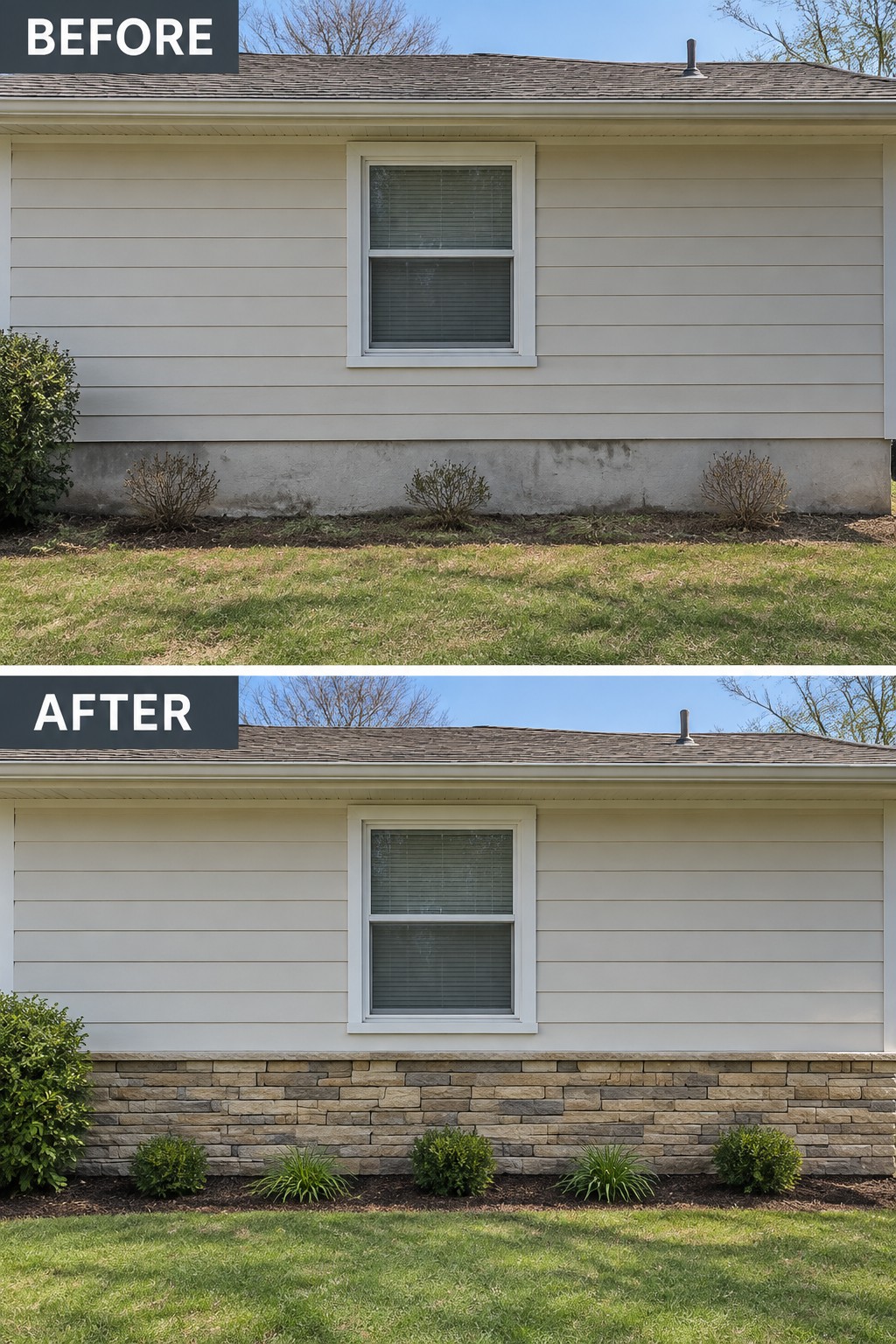
Covering a plain concrete foundation with stone veneer gives the whole side of the house a finished look without any work on the windows or roof. The before photo shows how bare and unfinished the lower section felt next to the siding. Once the stone is in place the house sits better on the lot and the eye moves more easily from the ground up to the roofline.
This approach works best on homes where the foundation sits high and looks out of place with the rest of the exterior. Clean the surface first and check that it can support the added weight. After the stone goes on, the landscaping has a clearer base to work from, so the plants and mulch feel more intentional rather than scattered.
Add Shutters And Lanterns To Refresh A Plain Exterior
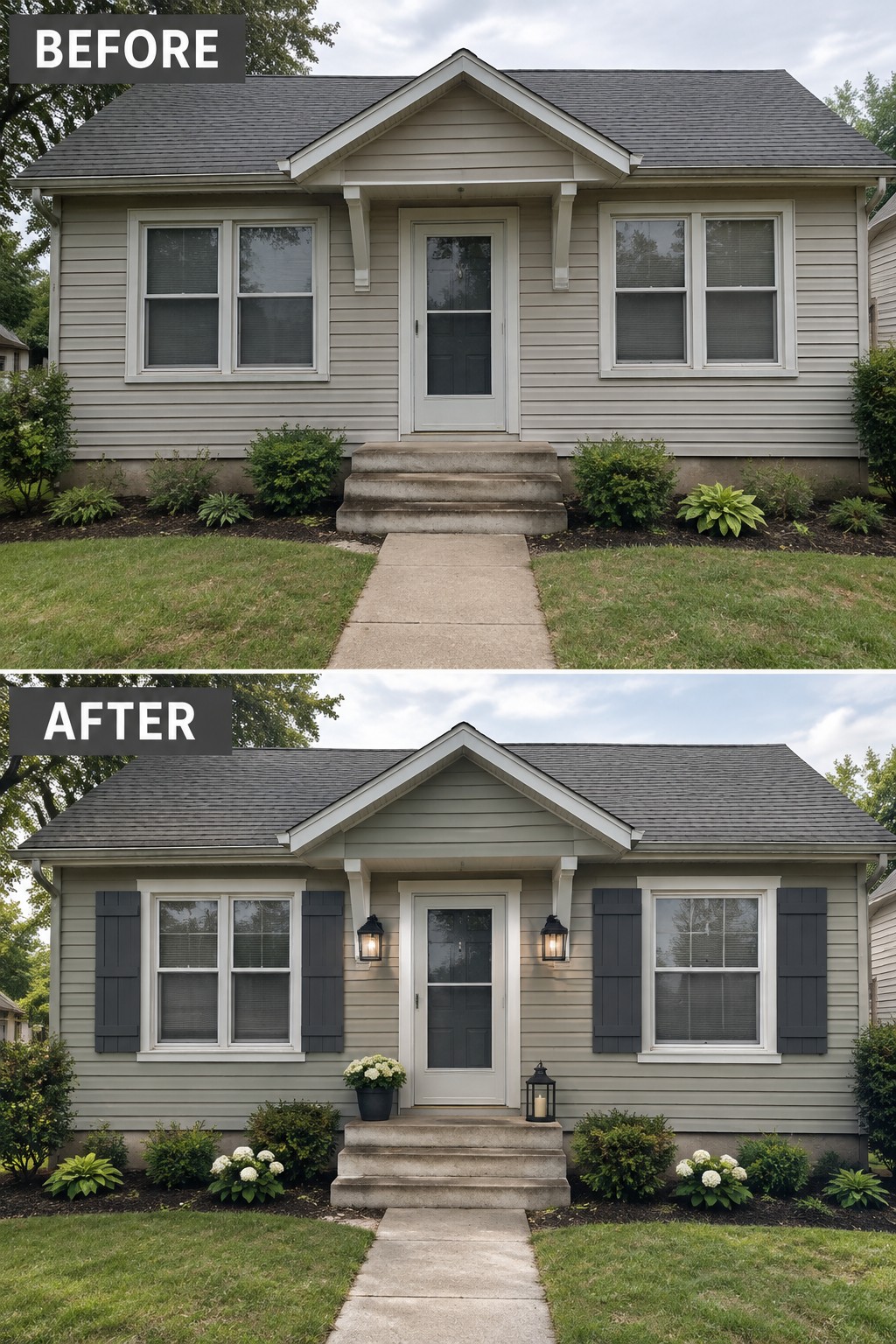
Adding shutters and a couple of lanterns can give a simple house front more shape without touching the windows or siding. In the before photo the windows sat flat against the siding with nothing to frame them. The after shows how dark shutters and black lanterns on either side of the door pull the whole front together and make the entry feel more finished.
This approach works well on homes with basic horizontal siding where the windows look a little lost. Choose shutters in a color that contrasts with the siding and keep the lanterns simple so they do not compete with the existing trim. Start with the windows you see most from the street and add just enough lighting to mark the door.
Turn A Bare Porch Into A Welcoming Entry
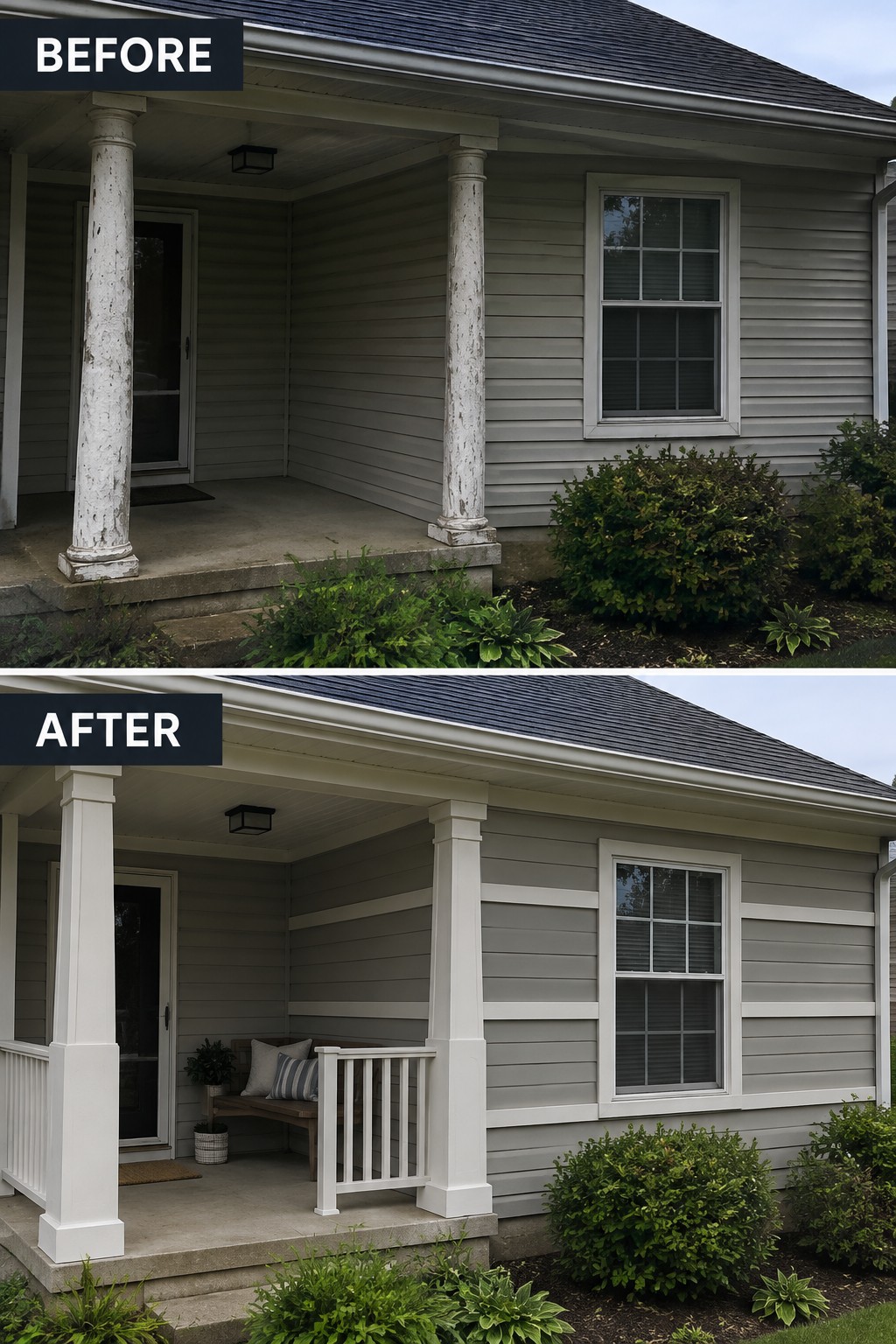
Painting the columns and adding a simple railing can give a plain porch a clear sense of purpose. In the before photo the space felt unfinished, with peeling paint and no real boundary between the entry and the yard. The after version shows how a coat of white paint on the columns plus a low railing and bench creates a defined spot that feels intentional rather than leftover.
This approach works well on older homes where the porch is still sound but lacks structure. Start by cleaning the existing surfaces and painting the trim to match or contrast with the siding. Then add one or two pieces of seating and a railing that meets code. The result refreshes the whole front without touching the windows or siding itself.
Add Wood Accents To Refresh Plain Siding
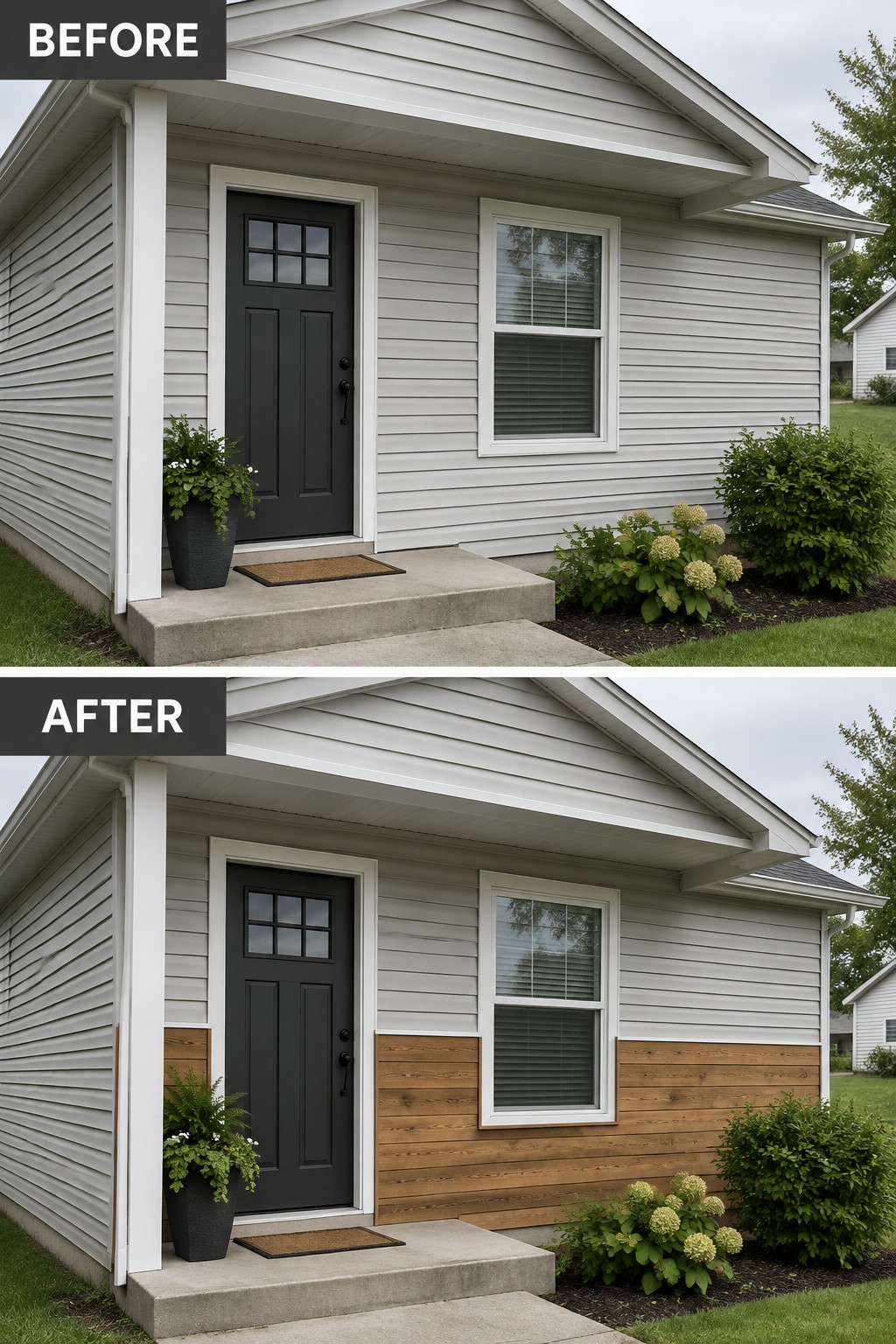
One easy way to update a plain exterior is to add wood accents on the lower walls. The siding stayed the same, but the area around the door and under the window got a band of horizontal wood panels. This small change breaks up the flat look and gives the front more depth.
This works best on homes with large stretches of plain siding. Keep the accents low and simple, and seal the wood well so it holds up outside. It is an affordable step that makes the house feel more finished without replacing windows or doing a full siding job.
Add Window Trim To Refresh Plain Siding
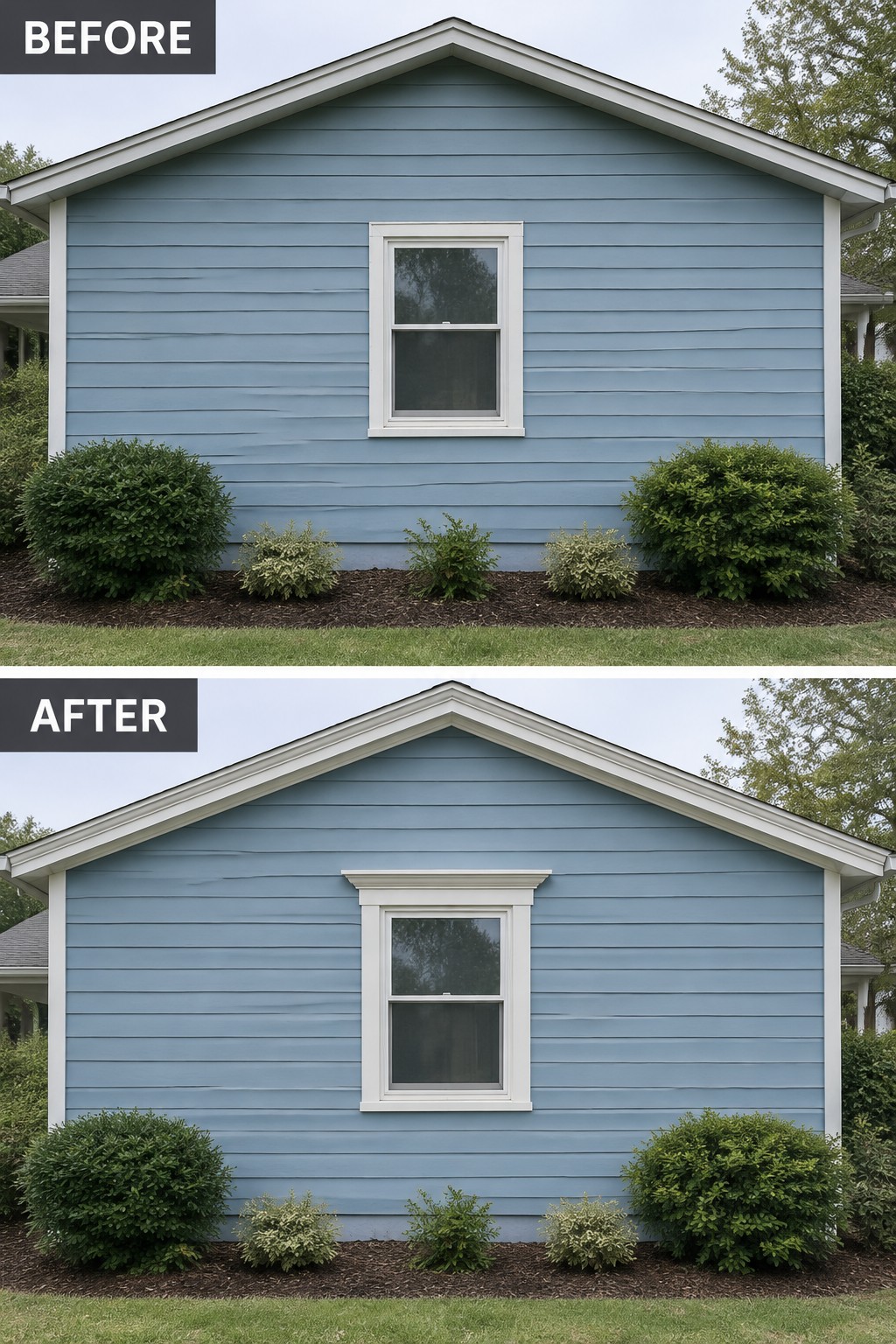
One simple way to update a house exterior without replacing windows is to add trim around them. The before photo shows a basic frame sitting flat against the siding. After adding a wider casing and a small header piece, the same window gains definition and makes the whole facade feel more intentional.
This approach works well on homes with simple siding where the original trim feels too thin. Match the new trim to your existing window color, keep the profile modest, and focus on the front-facing windows first. It gives the siding a bit more structure while staying within a modest budget.
Paint Around The Front Door To Give It A Clear Frame
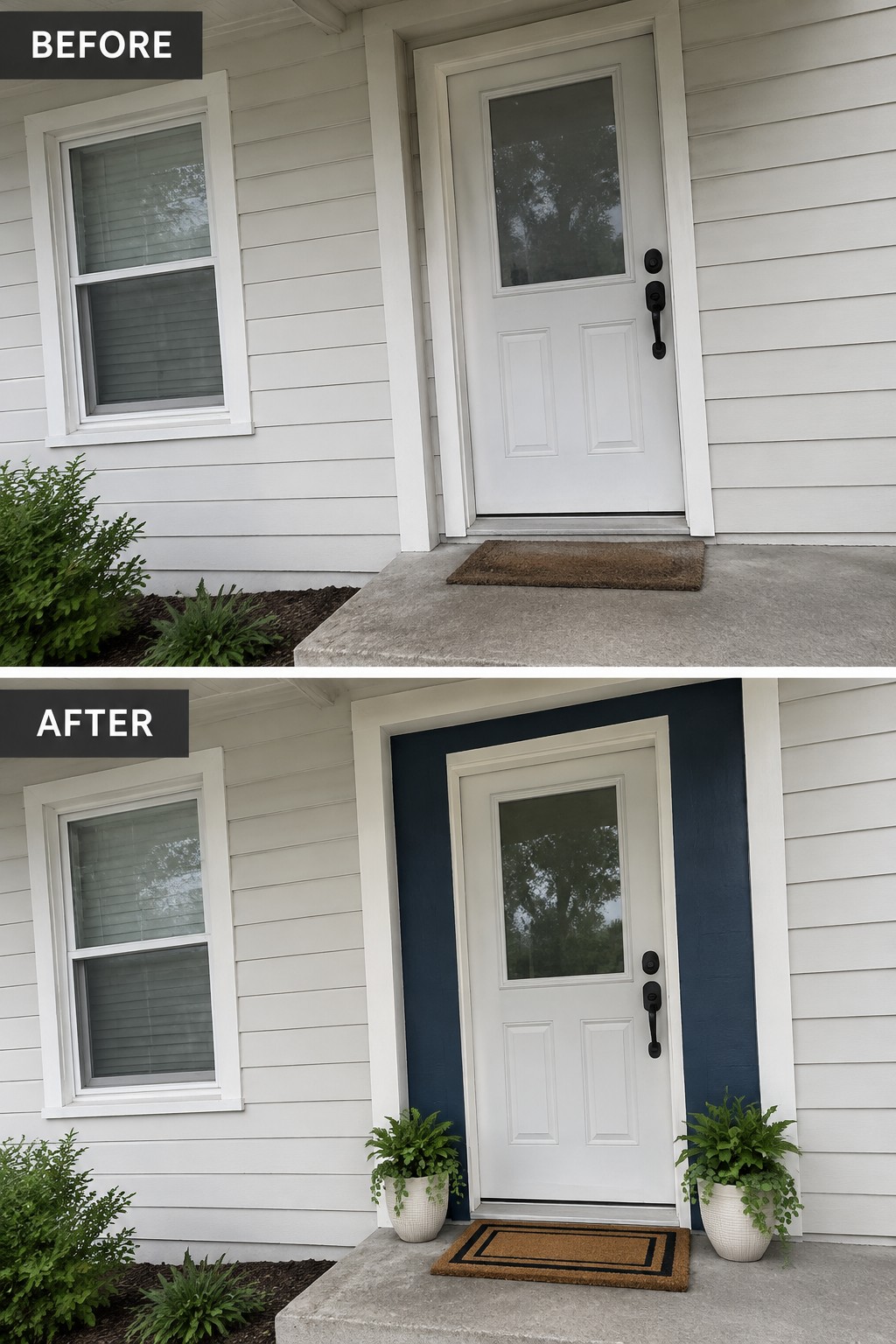
A plain front door often disappears against matching siding. Adding paint to the wall area around the door creates a simple border that makes the entry stand out without any structural changes. Here the owner used a deep navy on the section surrounding the door and set two matching potted plants on the step.
This idea works well on houses with flat siding and a standard entry. Keep the painted area even on both sides of the door, choose a color that contrasts with your siding, and use two plants of similar size so the look stays balanced. It is a low-cost change that can be done in a day and improves curb appeal right away.
Add Shutters To Refresh Siding Without Replacing Windows
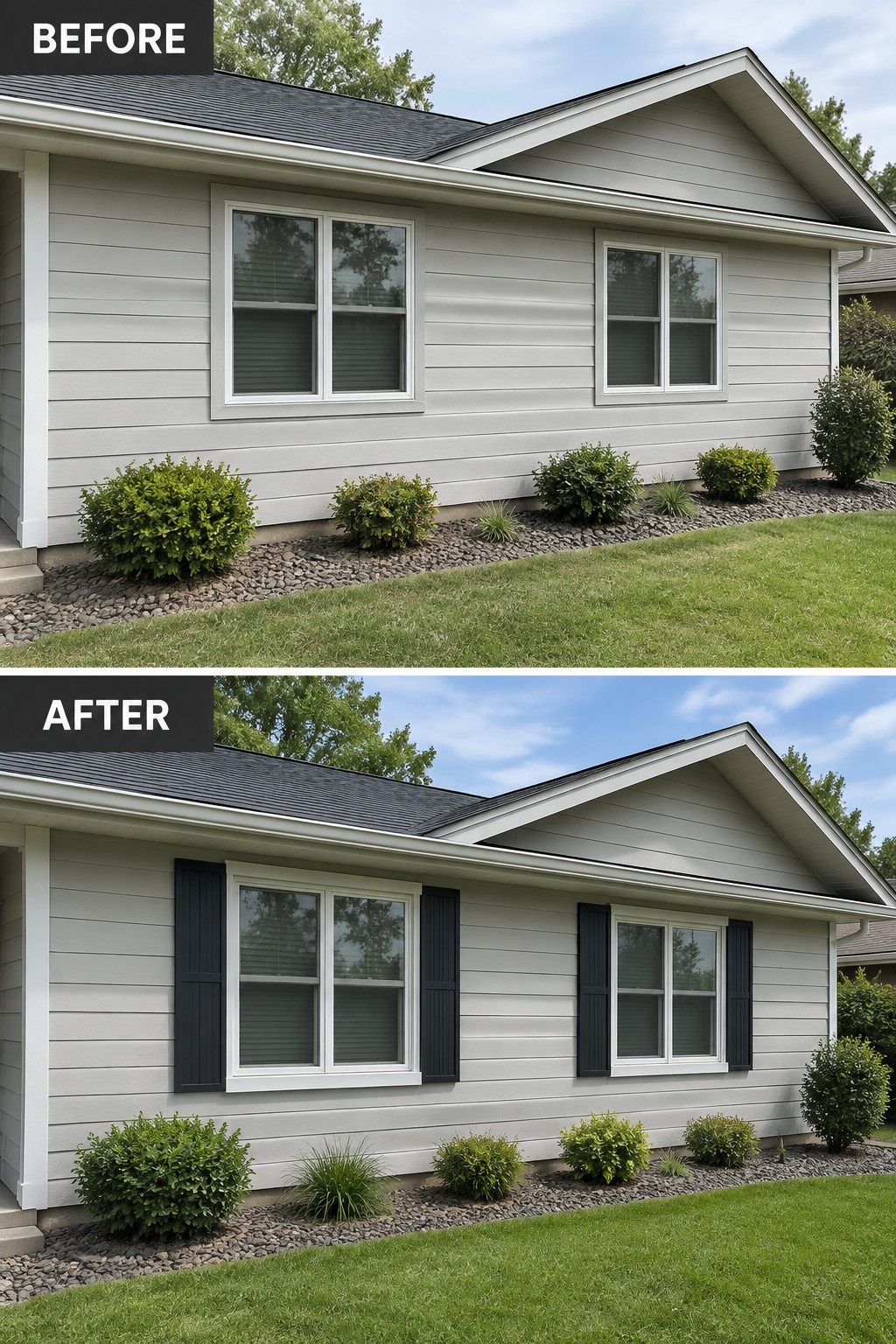
Adding shutters is one of the simplest ways to give siding more shape and presence. The before photo shows a plain stretch of siding with bare windows that blend into the wall. Once the dark shutters were added, the windows gained clear edges and the front of the house felt more finished.
This idea works best on homes with light or mid-tone siding and standard window sizes. Pick shutters that sit right at the window edges and match the trim color or create a gentle contrast. It stays affordable, avoids window work, and gives the exterior an instant lift without any major construction.
Clean The Siding First For An Easy Exterior Refresh
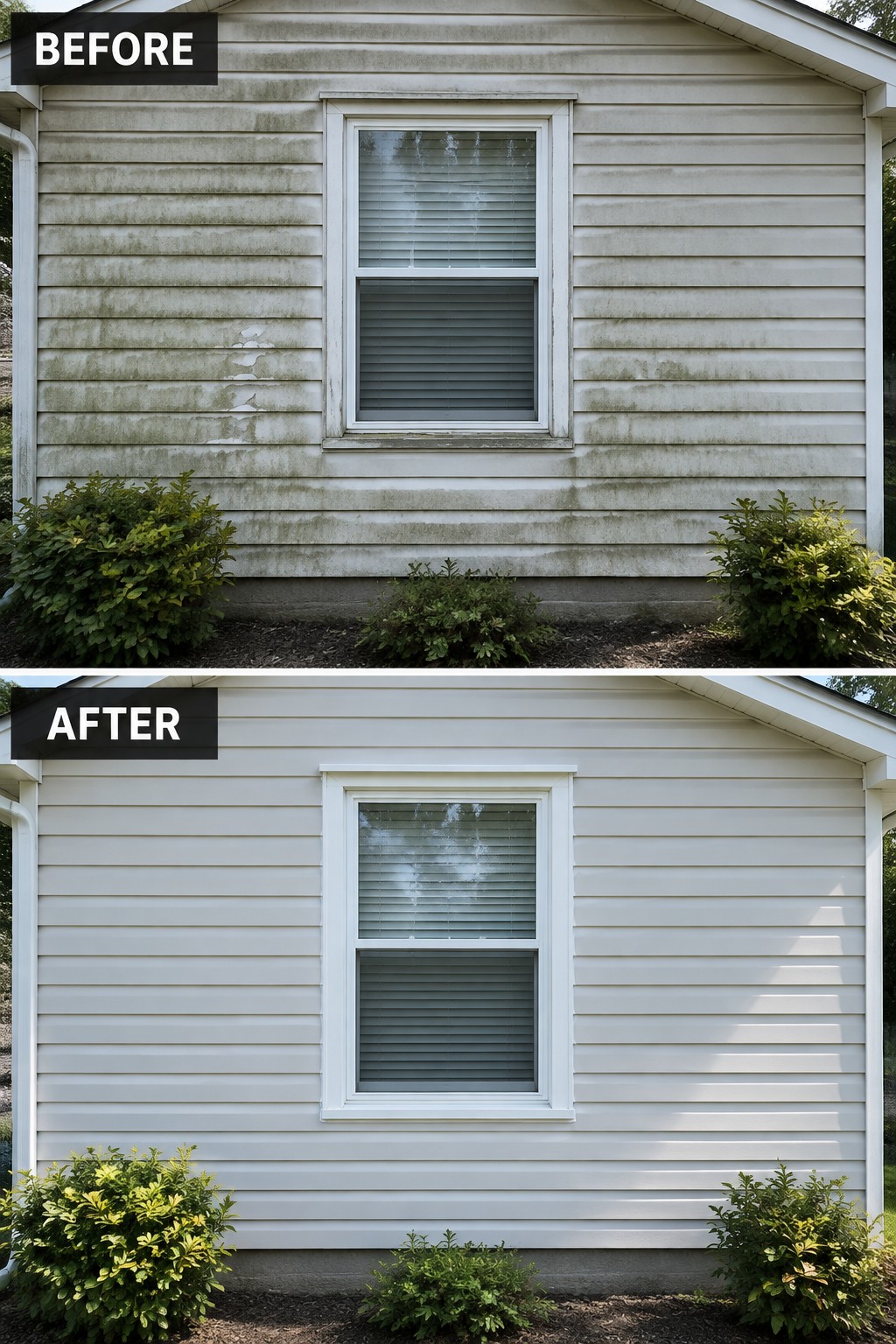
The main change here is simply washing the siding. Years of dirt and mildew had built up and made the house look tired. Once that layer was removed, the same siding and window suddenly looked much brighter and newer without any other work.
This idea works on most homes with vinyl or painted siding that has started to look dull. A thorough cleaning is often enough to improve curb appeal before you spend money on paint or new details. It also helps the landscaping around the base of the house show up better once the background is fresh again.
Add A Trellis And Window Box To Refresh A Plain Exterior
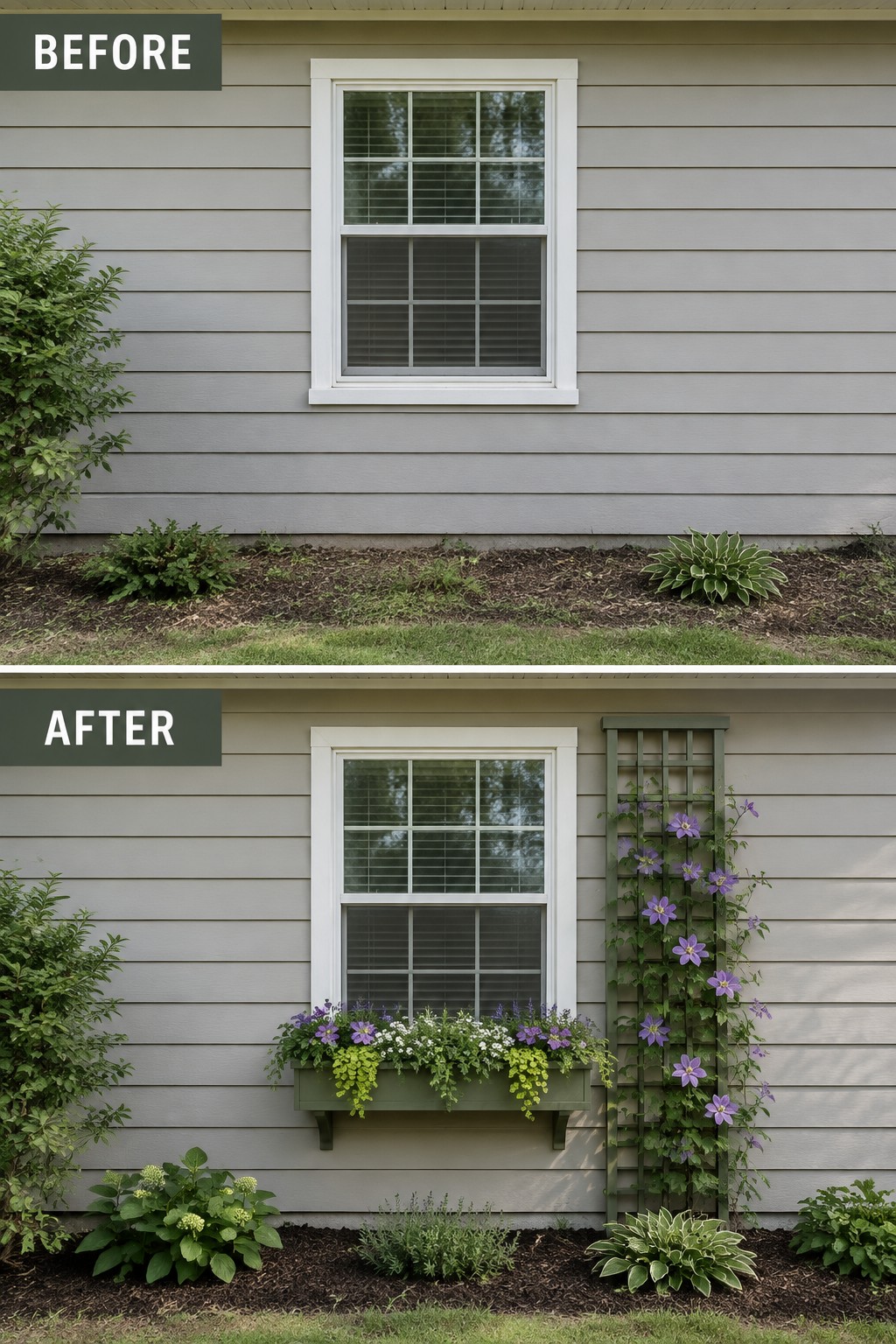
One simple way to give a flat house wall more life is to add a window box and a tall trellis beside it. The before photo shows just bare siding and a basic window with nothing to break up the surface. In the after photo a green window box sits under the glass and a matching trellis covered in purple blooms stands to the right, giving the whole area shape and color.
This works best on homes with large stretches of siding that feel empty. Choose a trellis that lines up with your trim color and plant something that will climb it over time. Keep the window box narrow so it does not block light or look too heavy. The goal is to add a little structure and softness without changing the windows or siding.
Use Two Siding Styles To Add Dimension To A Plain Exterior
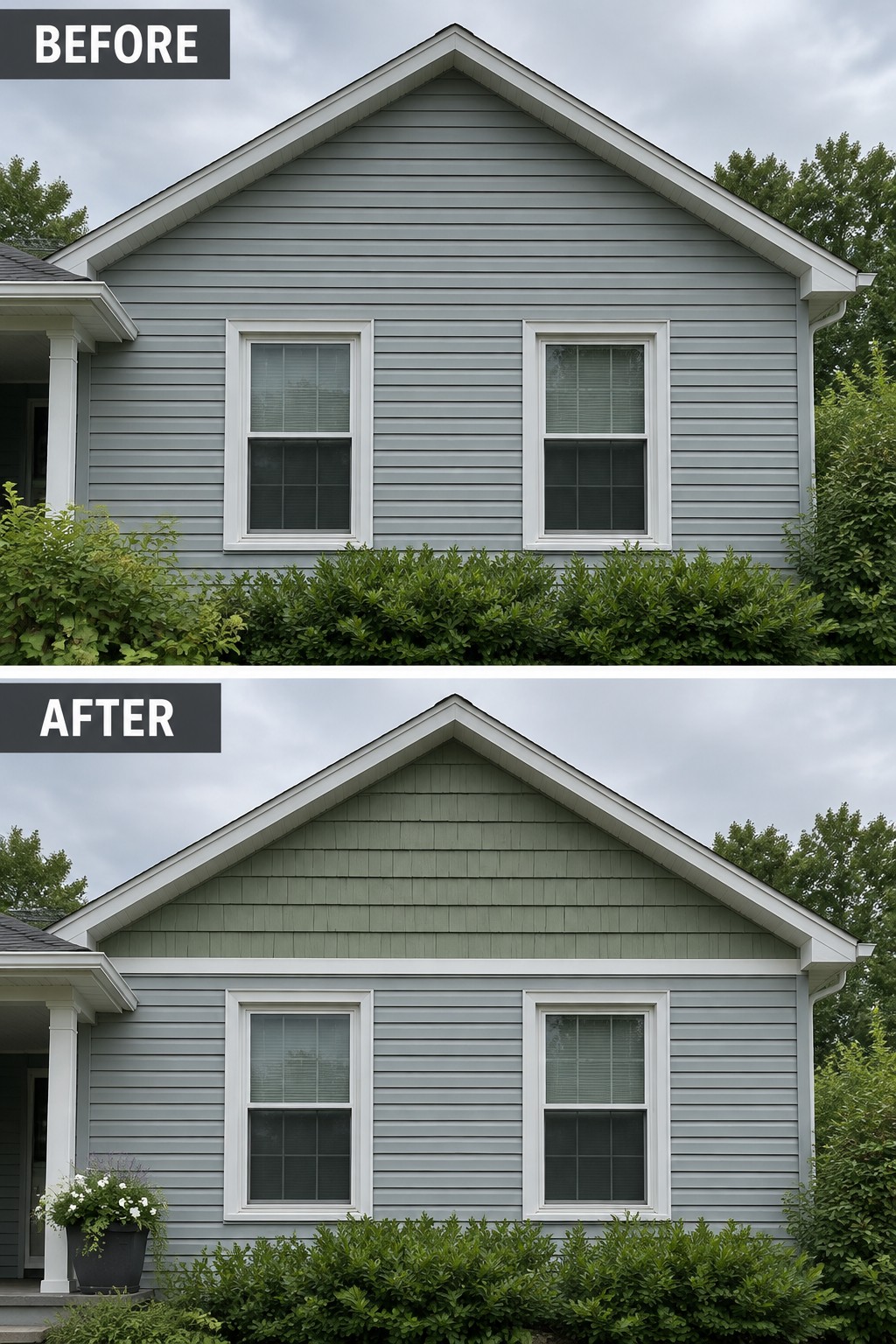
The before photo shows a house with one long stretch of horizontal siding that makes the front feel flat. In the after photo, the upper gable section was switched to a textured shingle-style siding in a soft green while the lower walls stayed in the original gray. That single change breaks up the large wall and gives the house more shape without any window work.
This approach works well on homes that have a big triangular gable or second-story area. Pick a color that sits close to your existing siding so the shift feels natural, and keep the texture simple so it reads as an update rather than a full replacement. Start with the upper section only if you want to test the look before committing to more changes.
Add Vertical Trim To Break Up Plain Siding
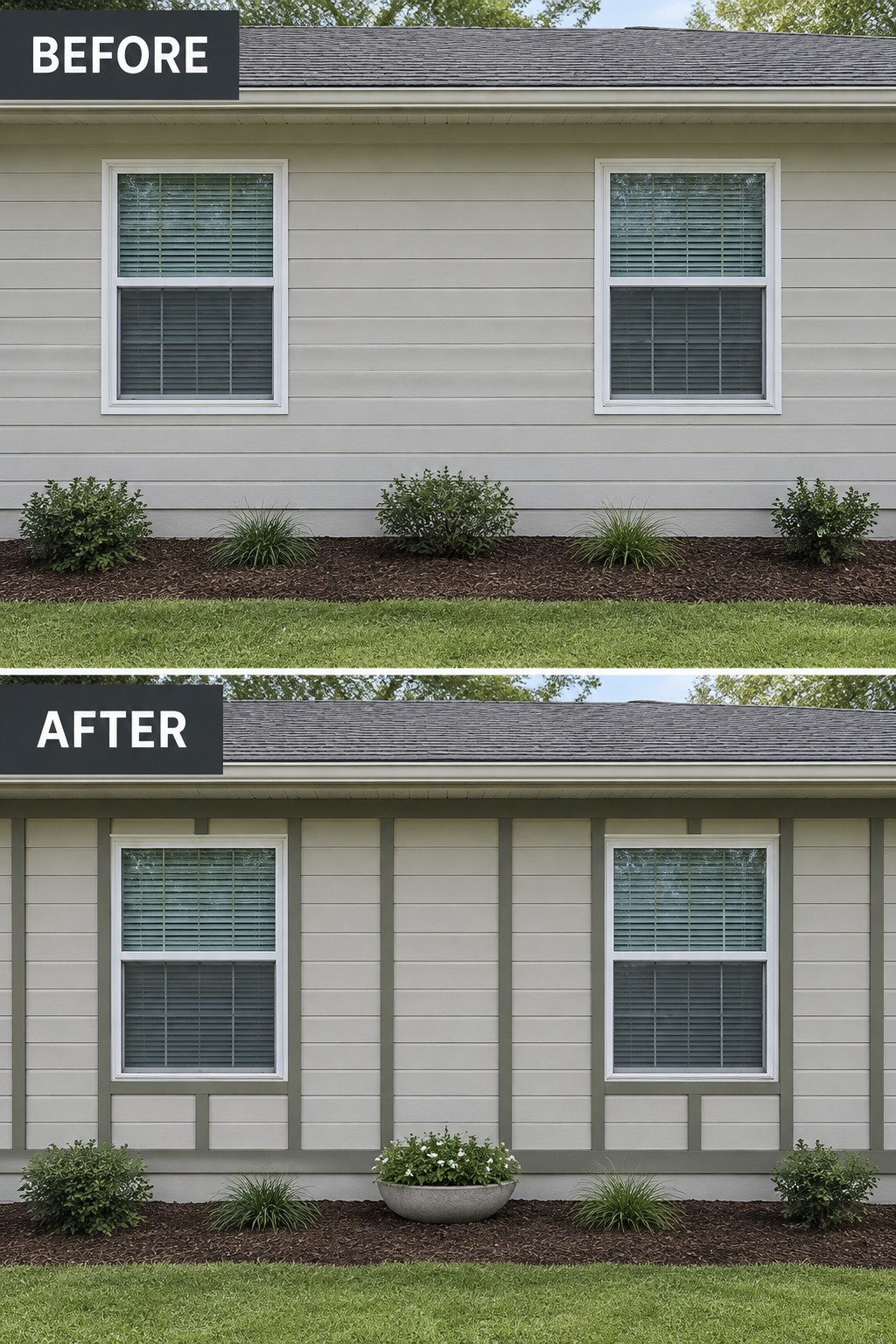
Adding vertical trim is an easy way to give flat siding more shape without touching the windows. The before photo shows a wide, plain wall that makes the house feel a bit blank. Once the trim goes on, the same wall breaks into clear panels that pull the windows together and make the front look more finished.
This idea works best on homes with long stretches of siding where the windows sit too far apart. Keep the trim simple, paint it a slightly darker shade than the siding, and stop once the panels feel balanced. You do not need to cover the whole house. Just focus on the main wall that faces the street.
Give Porch Columns A Brick Base For More Character
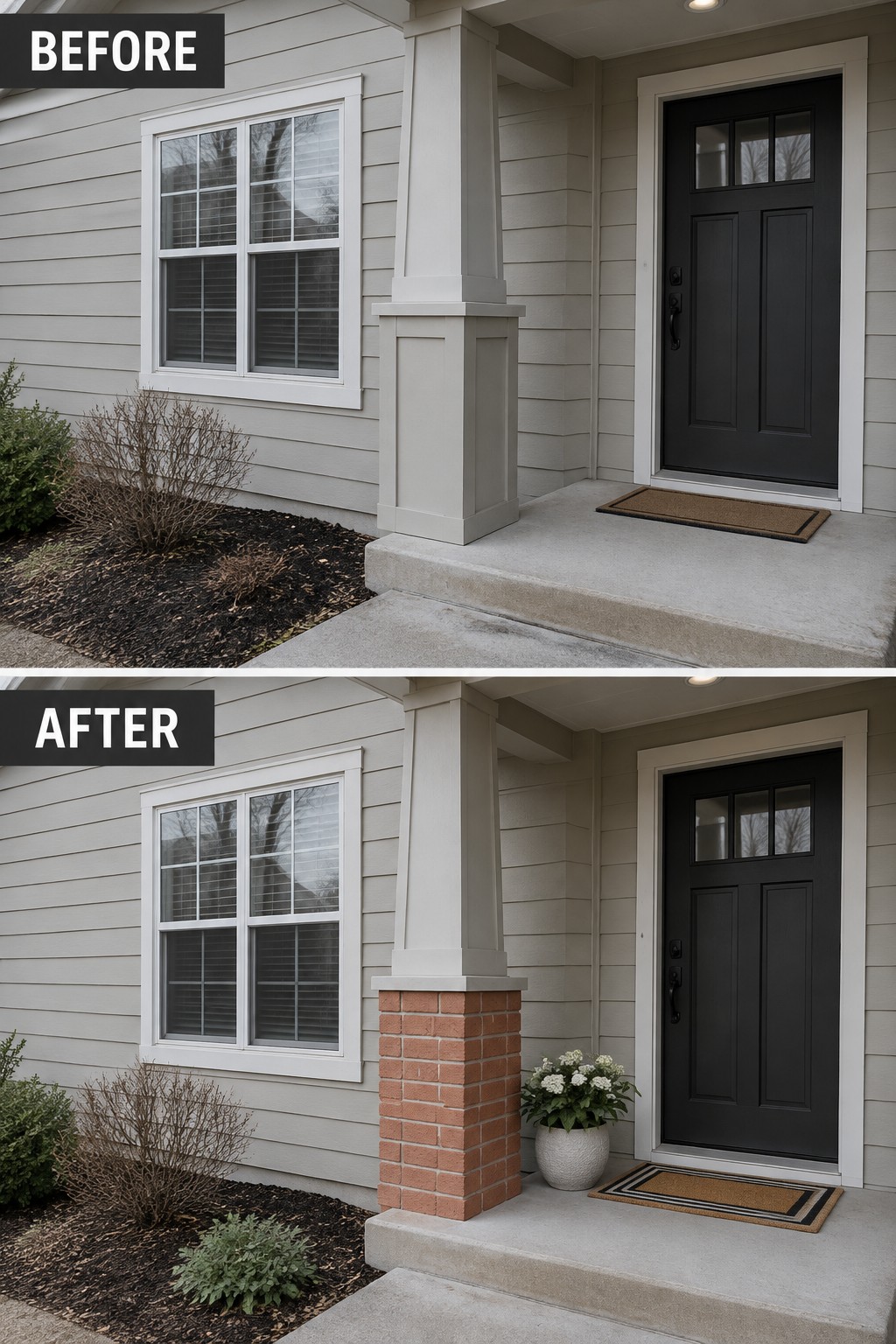
Many homes have plain painted columns that can feel a little flat against the siding. Wrapping just the lower section in brick adds texture and a bit of weight that makes the whole entry feel more grounded. In this case the change is small, but it shifts the porch from looking unfinished to looking intentional.
This approach works well on homes where the siding is already in good shape and you want to avoid a full renovation. Keep the brick color simple so it reads as part of the architecture rather than a separate feature. One plant near the step is usually enough to finish the look without crowding the walkway.
Add Contrast Trim To Define The Roofline
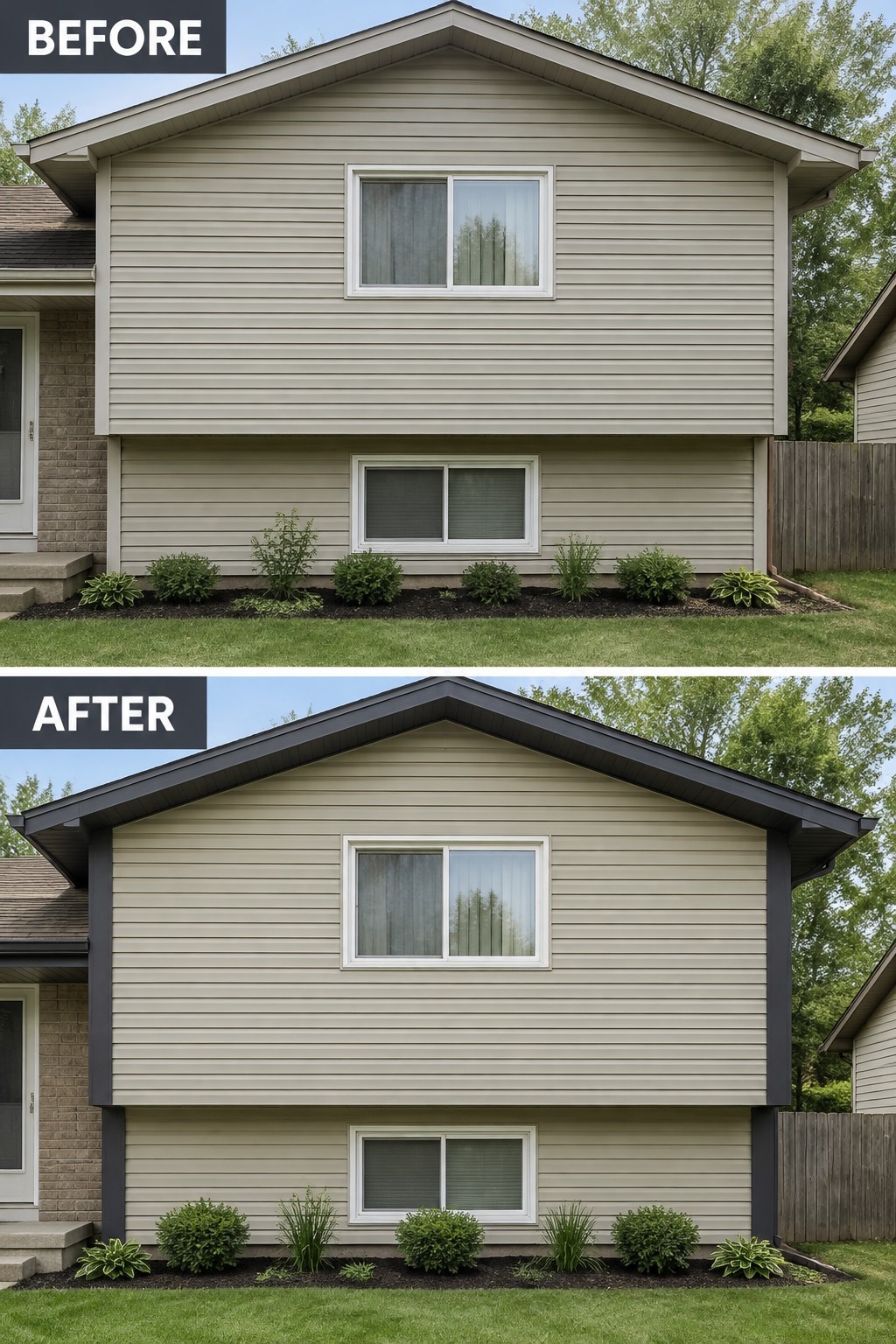
Many houses with plain siding end up looking flat because the roof edge blends right into the walls. Adding dark trim along the gables and eaves creates a clear break that gives the house better shape and makes it feel more finished.
This works well on simple two-story homes where you want to update the look without replacing siding or windows. Use affordable trim boards painted in a dark color that contrasts with the siding, and keep the changes focused on the roof edges and corners so the update stays simple and affordable.
Add Horizontal Trim To Break Up Plain Siding
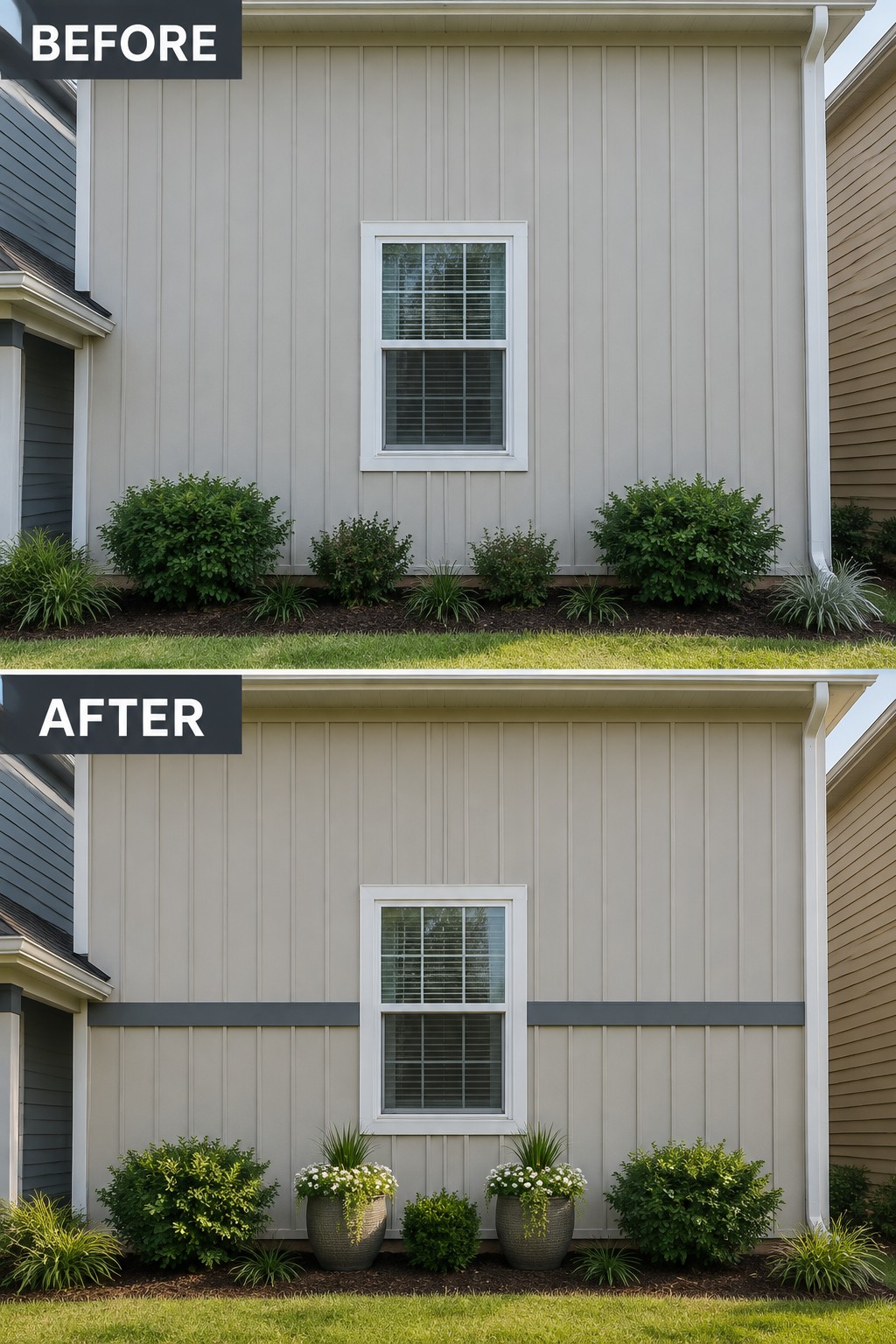
A plain wall of siding can look flat and unfinished, especially on taller sections of a house. Adding one horizontal trim band gives the surface a clear stopping point and breaks up the height without touching the windows or doing a full repaint. The change is simple but makes the whole side of the house feel more finished.
This idea works best on homes with large, uninterrupted siding areas. Run the band at the bottom of the windows so it lines up with an existing architectural feature, and choose a color that contrasts just enough to be visible from the street. Keep the rest of the siding the same and focus the effort on that one line.
Add Wood Accents To Frame The Front Entry
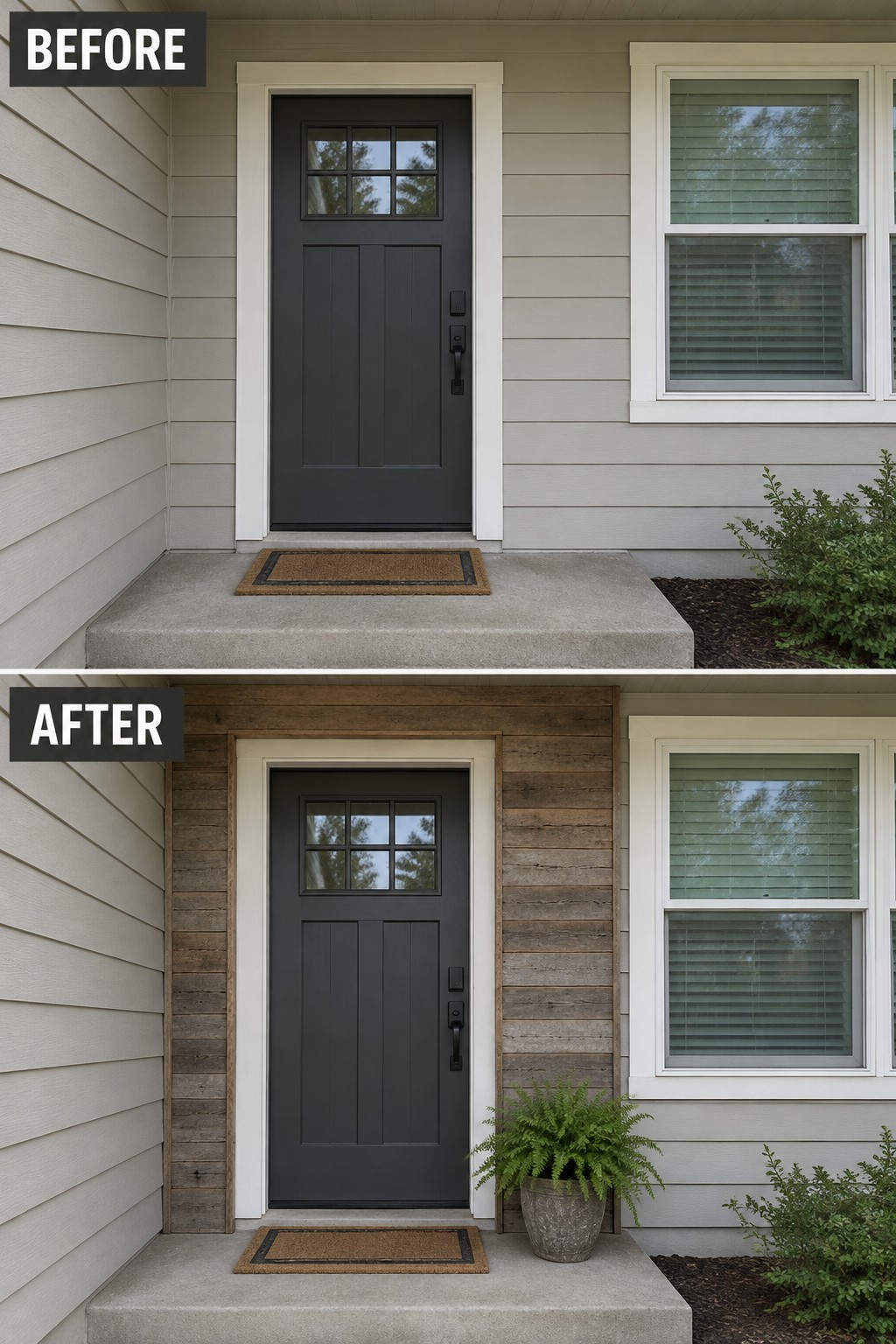
The main change here is the addition of vertical wood planks on either side of the door. This simple detail breaks up the flat siding, gives the entry a more defined look, and makes the dark door feel more intentional without touching the windows or doing a full siding replacement.
This approach works best on homes with basic fiber cement or vinyl siding that is still in good condition. Focus on a narrow band of wood around the door only, keep the color contrast soft rather than bold, and add one or two potted plants at the base. It is an easy weekend project that adds texture without requiring major construction.
Use Lighting To Refresh Your Siding
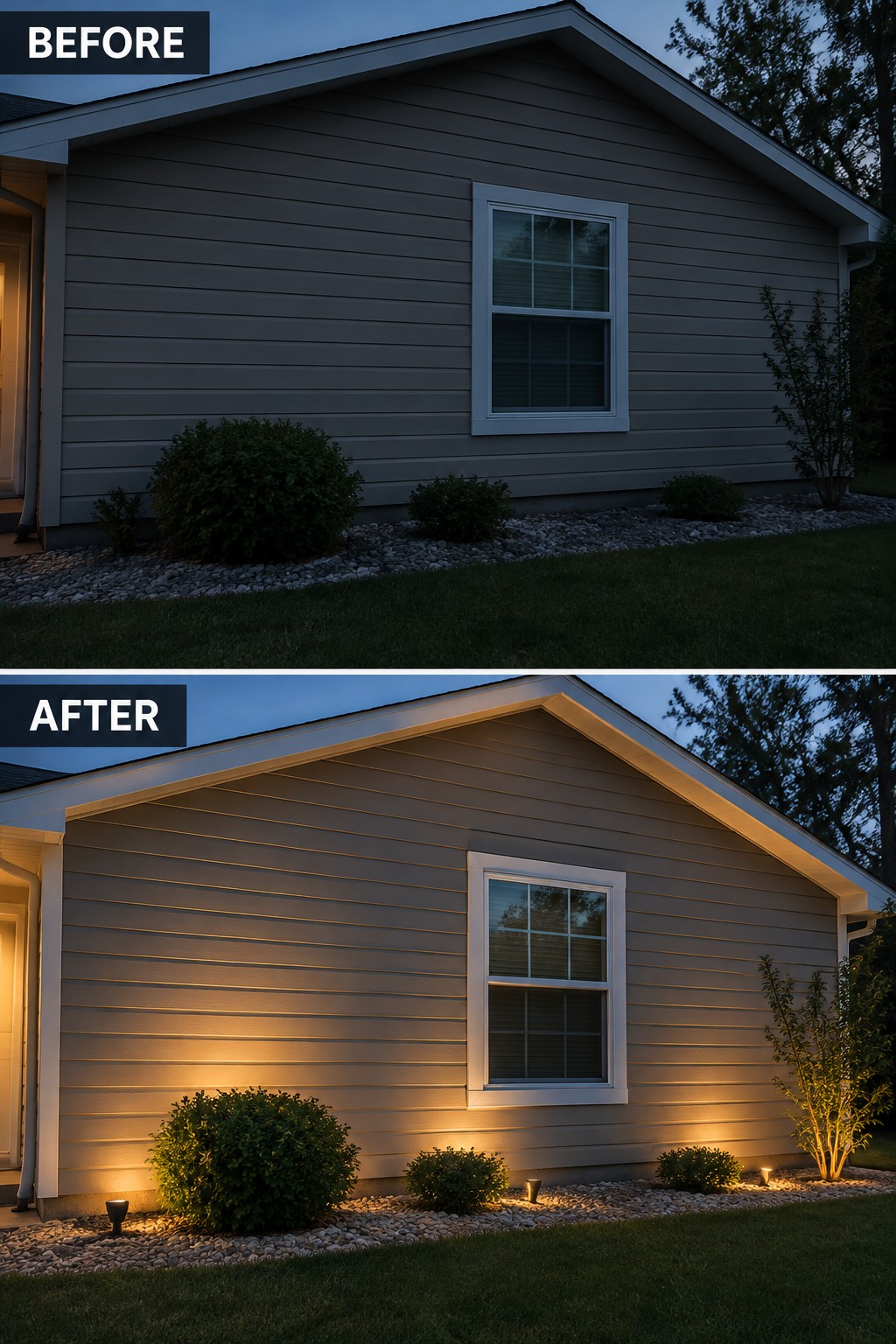
Adding a few well-placed lights can completely change how siding looks after dark. In the before photo the walls sit flat and dull once the sun goes down. The after shows how soft uplighting brings out the texture and color without any new paint or siding work.
This works well on homes where the siding is still in good shape but feels plain at night. Place small fixtures low and angle them up so the light grazes the surface. Keep the fixtures simple and weather-rated, and test the angle before you mount them so the glow stays even instead of creating harsh spots.
Frequently Asked Questions
Q: Will adding new siding layers make my windows look smaller or out of place?
A: You can add thin panels that stop short of the window frames. This keeps the original proportions intact. Check the fit around each window as you go.
Q: How often will I need to maintain these budget friendly updates?
A: Most options need a quick cleaning once a year. Touch up any worn spots with matching paint or sealant. That prevents bigger repairs down the road.
Q: What if my house has mixed siding materials already?
A: Focus your refresh on the main material first. Blend the updates so they flow together visually.