

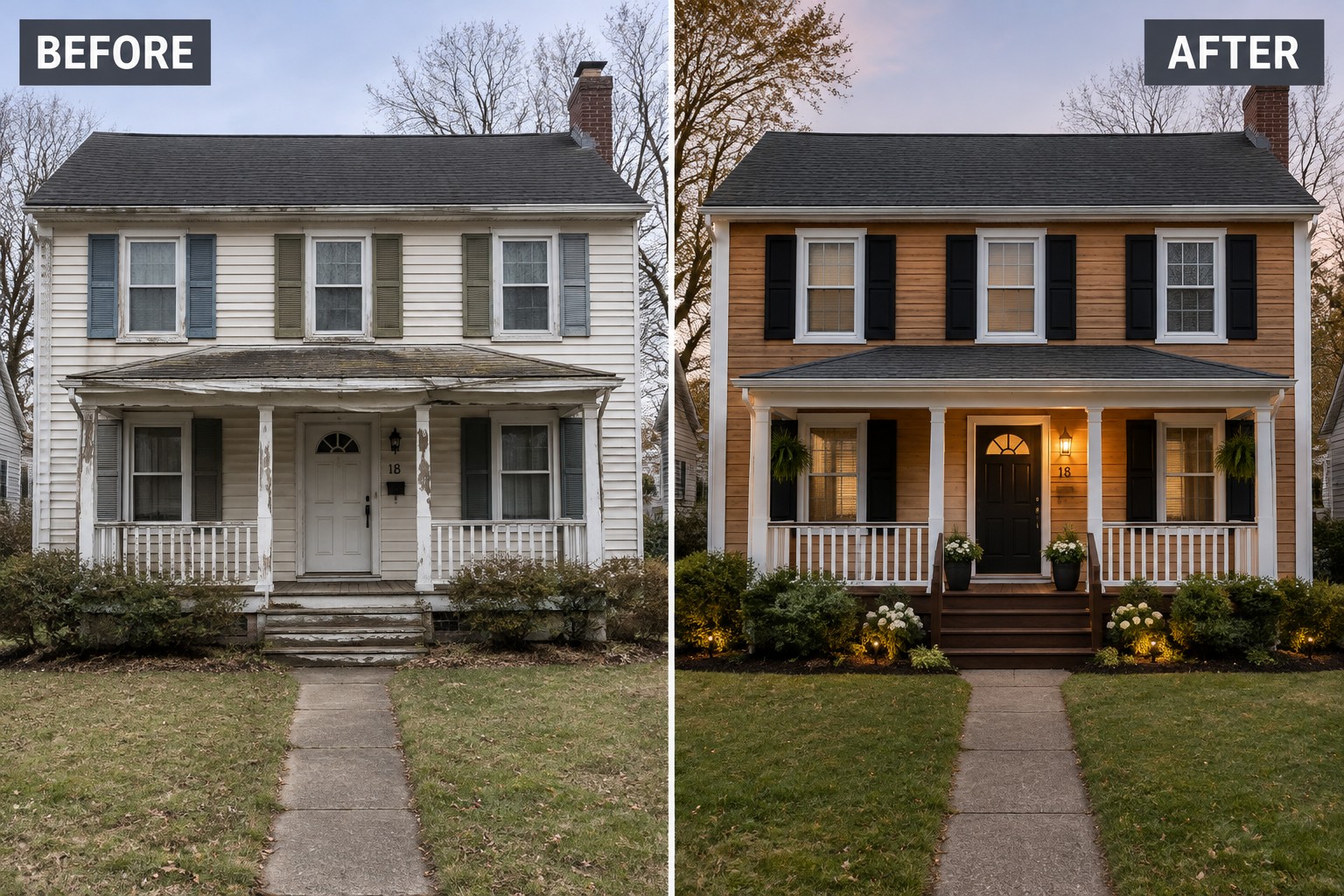
I often think the siding on a traditional house does more to shape its character than most people realize at first.
A faded or mismatched exterior can make the whole property feel a little overlooked, even when the inside is in good shape.
Cedar look materials give a way to refresh that surface while respecting the original lines and details.
Some updates are simpler than they appear.
I would probably start with the ones that match the roof and trim colors I already have.
Update Traditional Siding With Cedar-Look Color
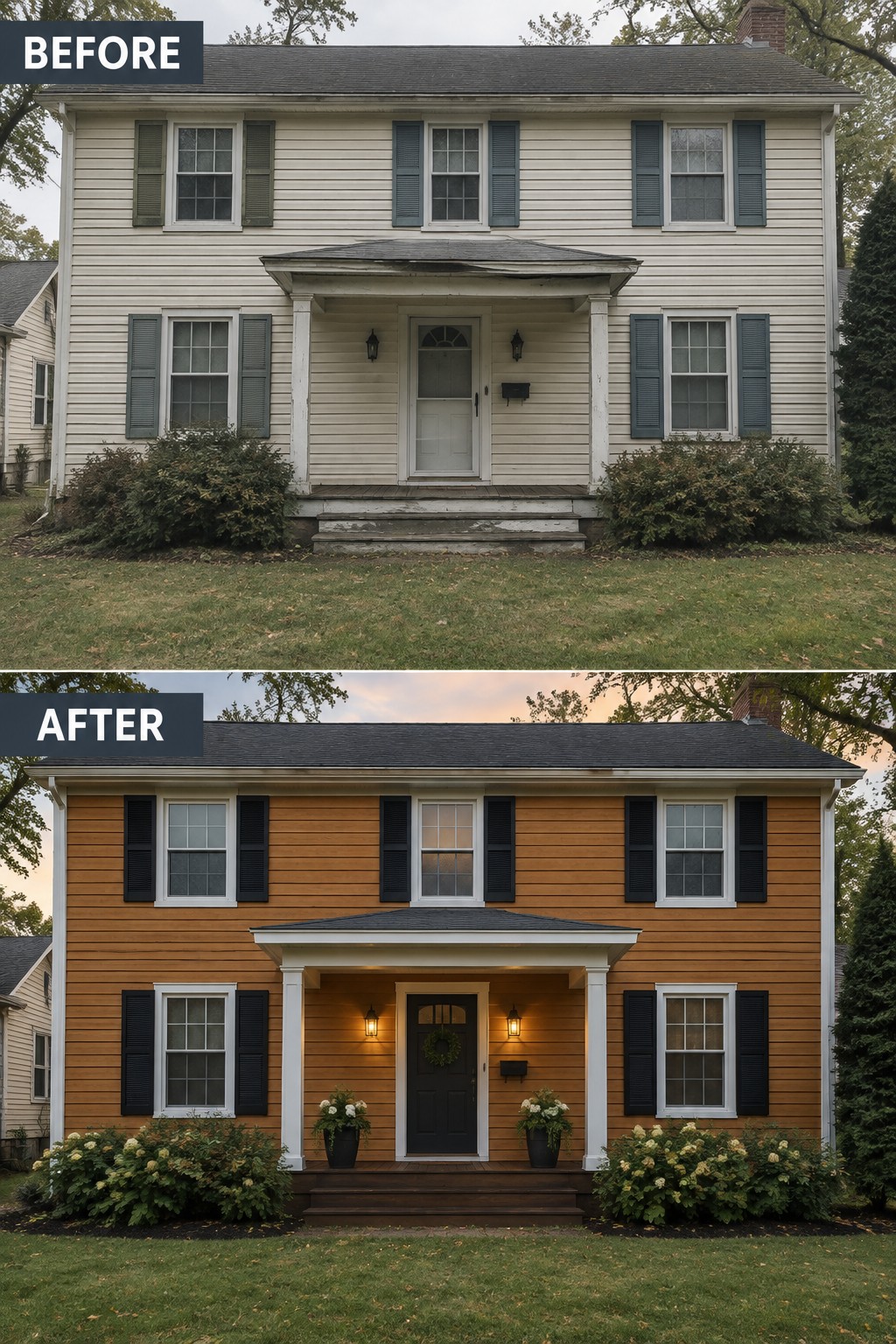
Many older homes start to look tired when the siding fades to a flat off-white. A cedar-tone finish brings back depth and makes the house feel more grounded without any major structural work.
This approach suits two-story homes with straightforward shapes. Keep the trim crisp and switch the shutters to a dark color so the new siding tone stands out. A few simple planters and better lighting at the entry help tie the whole front together.
Refresh A Plain Ranch Exterior With Cedar Look Siding
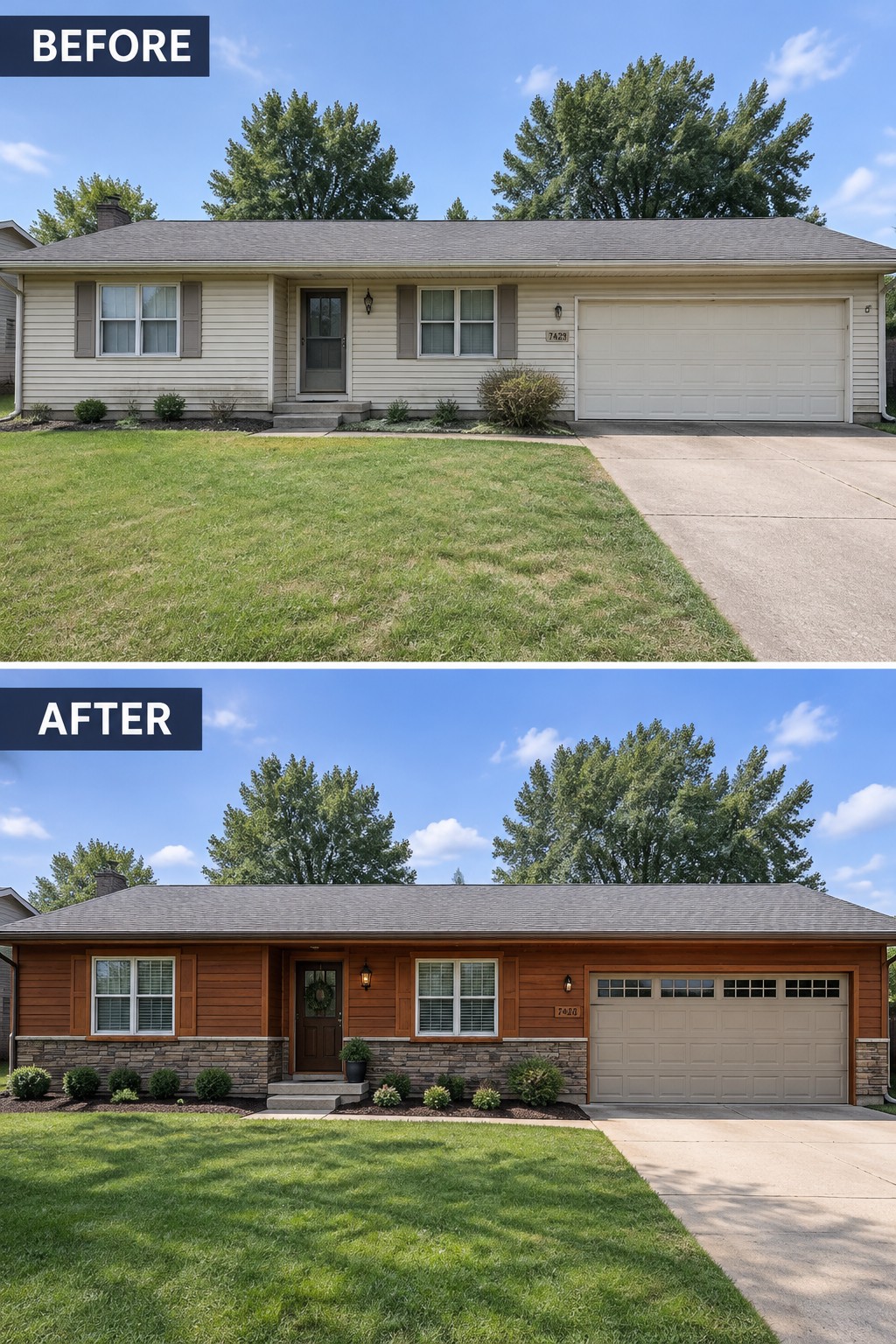
Many older ranch homes end up with flat beige siding that makes the whole front feel dated and a little dull. Switching to cedar look siding in a warm brown tone adds instant depth and makes the house feel more solid. The stone base along the bottom helps tie everything together and gives the facade a bit more weight.
This approach works best on simple traditional houses where you want to keep the original shape but make it feel more finished. It is usually smartest to start with the siding change first, then add smaller details like a new garage door or front door color once the main surface is set.
Add Cedar-Look Siding To The Gable
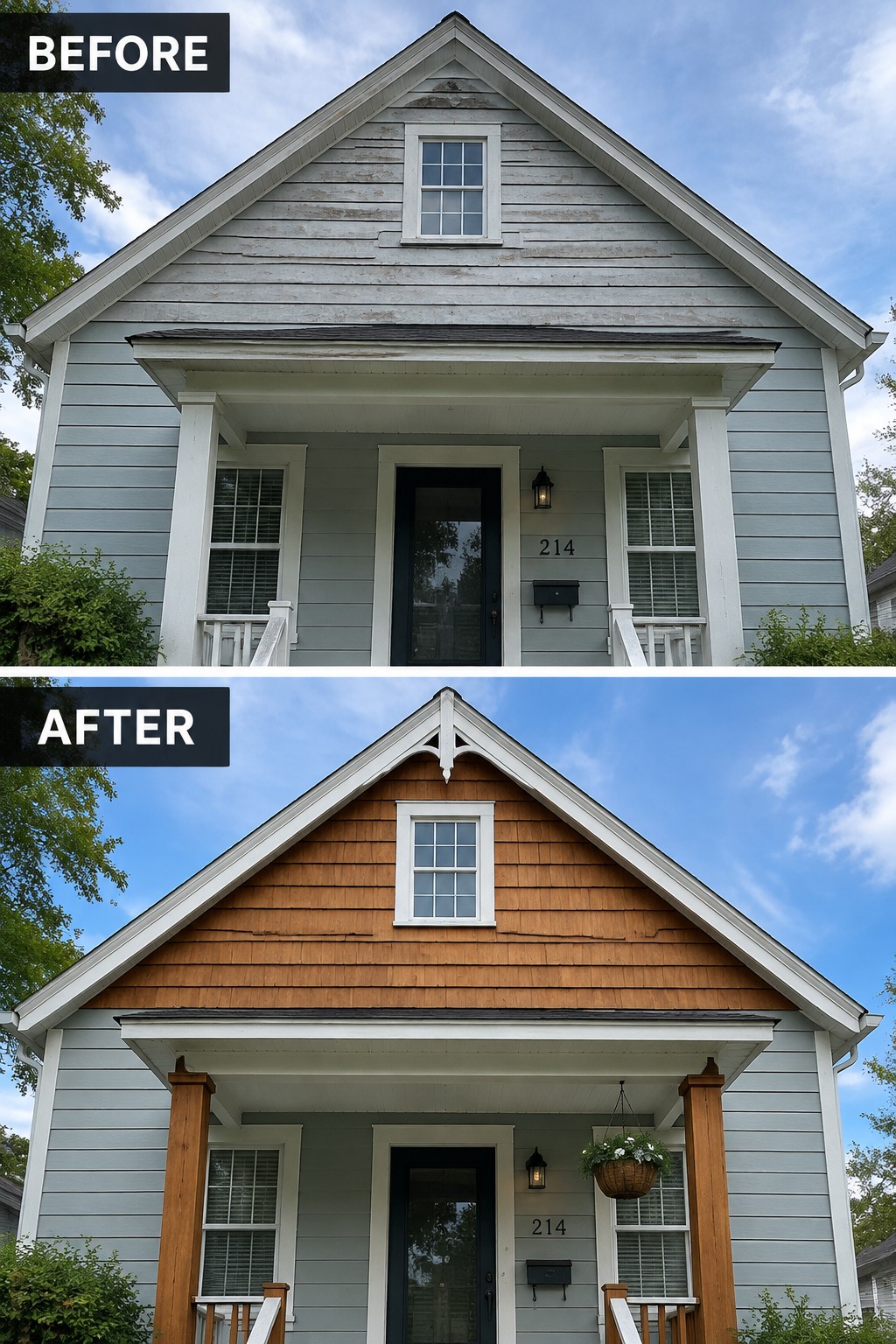
Many traditional houses have a big empty gable that makes the front look flat. Covering just that area with cedar-look shingles adds texture and warmth while the rest of the house stays the same.
This approach works well on homes where the lower siding is still in decent shape. Focus the change on the most visible triangle above the porch and match it with simple wood posts below. The contrast between the wood tone and the original siding does most of the work.
Refresh A Tired Porch With Cedar-Look Siding
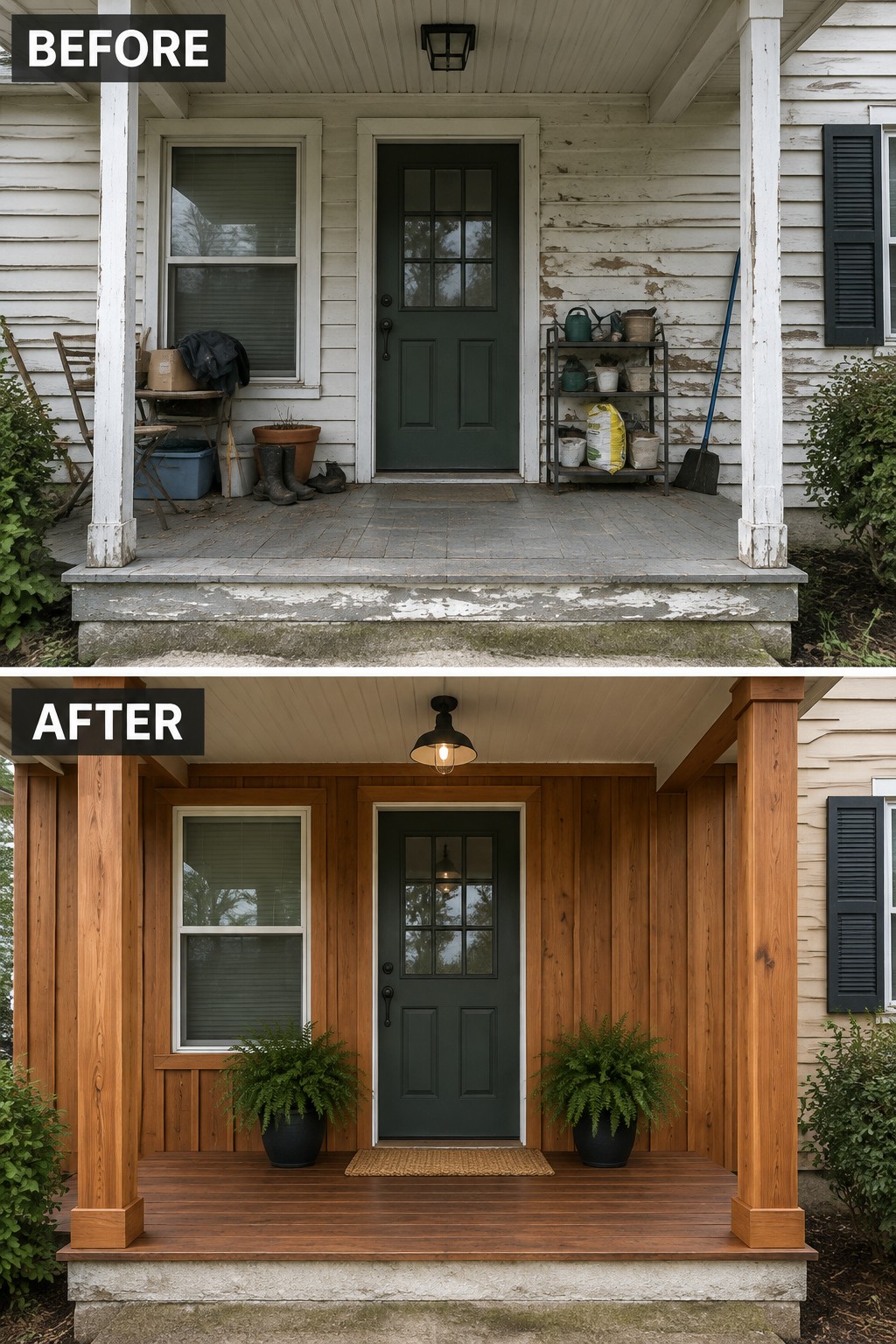
Many older homes end up with porches that look faded and cluttered after years of wear. Switching the siding and posts to a cedar-look finish gives the entry a warmer tone and makes the whole front feel more put together. The after photo shows how the wood siding and new porch floor pull everything into one clean look, with just a pair of ferns helping frame the door.
This idea suits traditional houses that still have good bones but need a surface update. Focus first on the main visible parts like posts and siding, then keep any added items small so the porch stays easy to walk through. It works best when you match the wood tone to other trim on the house rather than trying to add too many new colors at once.
Add Cedar Siding To The Gable
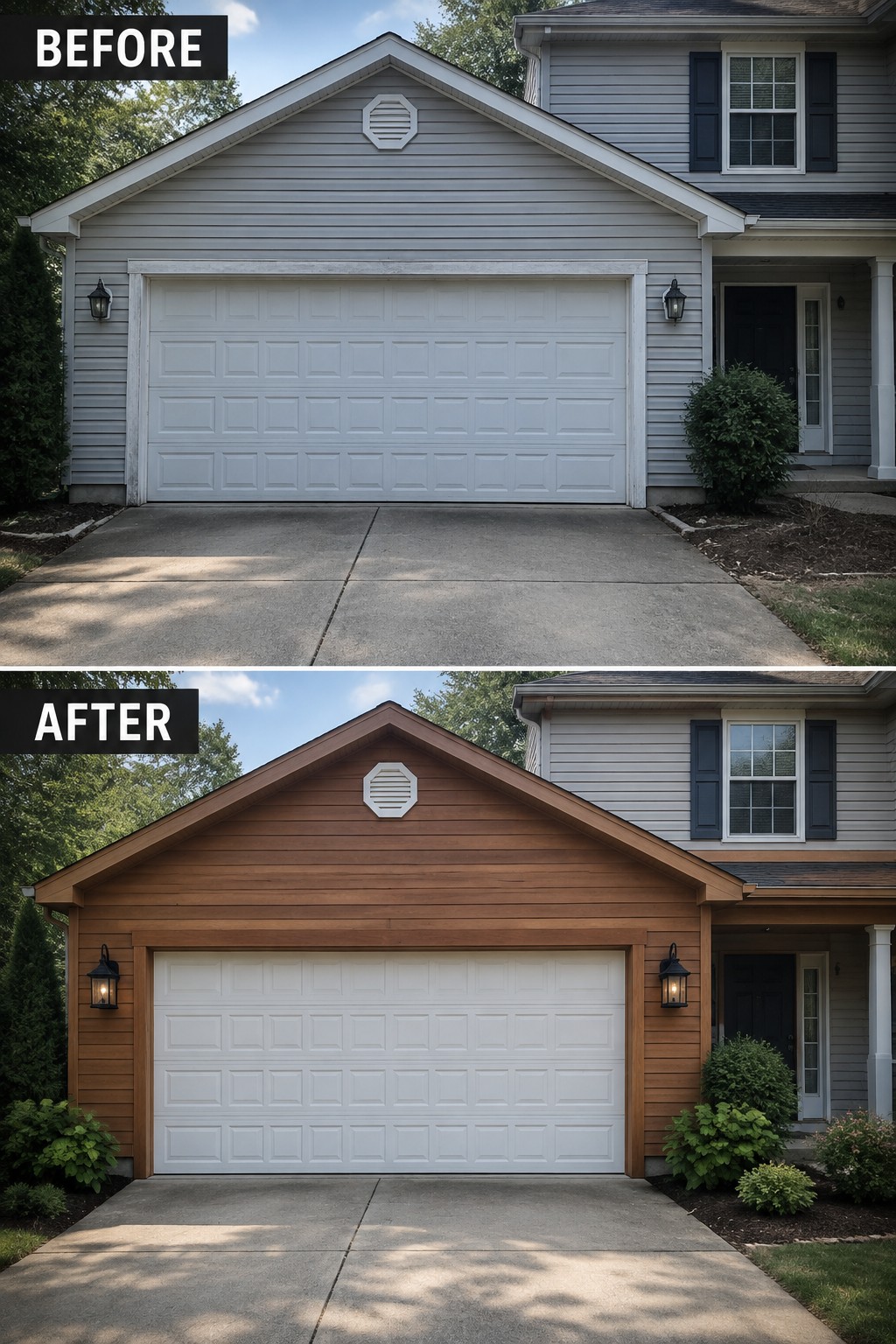
Many traditional houses have a big flat gable that makes the front look plain. Adding cedar-look siding just to that section brings warmth and texture while leaving the rest of the house untouched.
This works well on homes with light siding because the wood tone stands out without needing a full repaint. Start with the gable if you want a noticeable change that still feels like the original house. It suits older neighborhoods where you want to update the look without changing the overall shape or style.
Update Traditional Dormers With Cedar-Look Siding
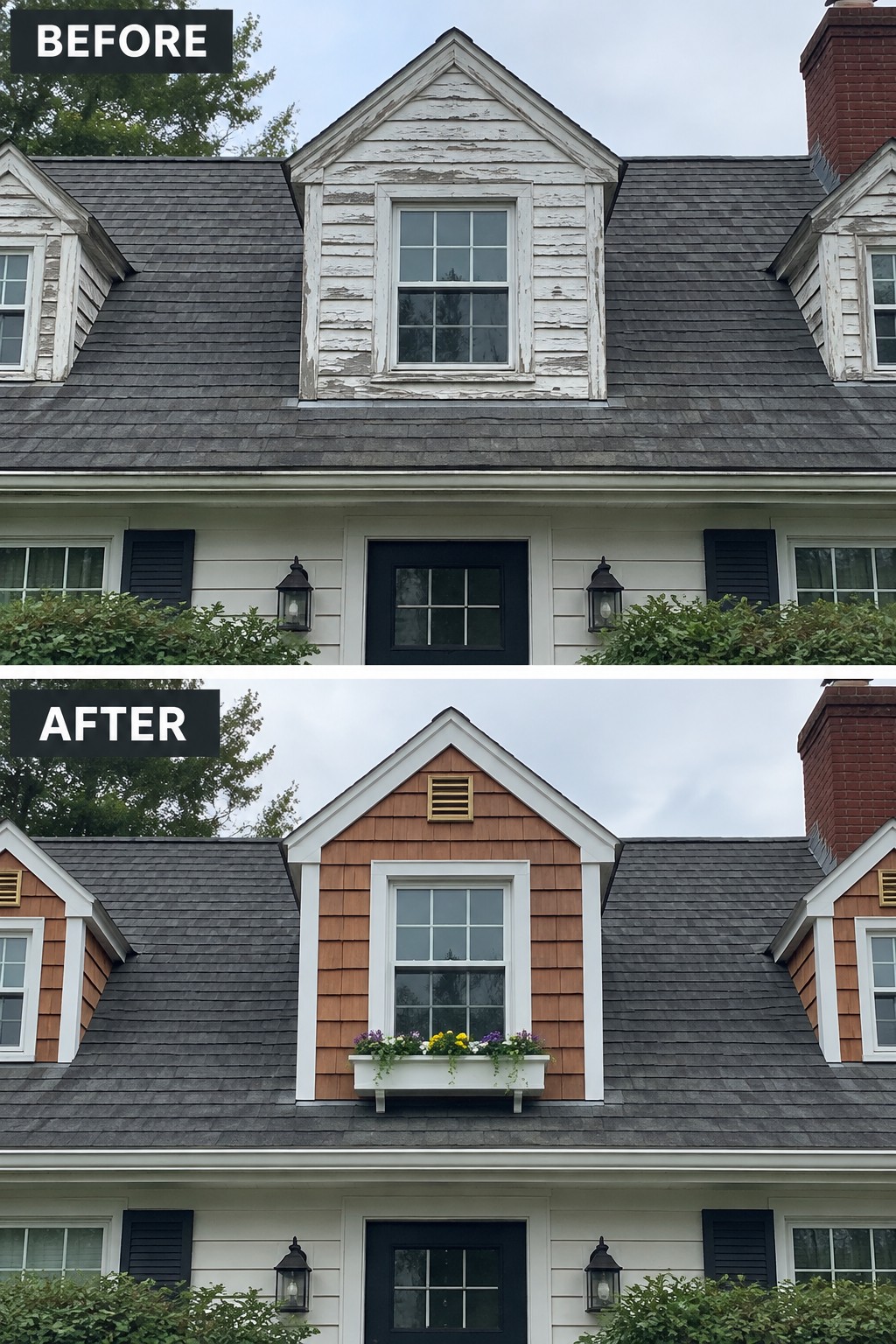
Many older homes end up with peeling paint on the dormers because the surfaces take a beating from weather. Replacing that worn paint with cedar-look shingles gives the roofline a tighter, more finished look that holds up better over time.
This works well on traditional houses where the dormers sit high and catch the eye. Focus on the central gable first, match the material to the roof scale, and keep any added details like a window box small so the siding stays the main feature.
Refresh A Bay Window With Cedar Look Siding
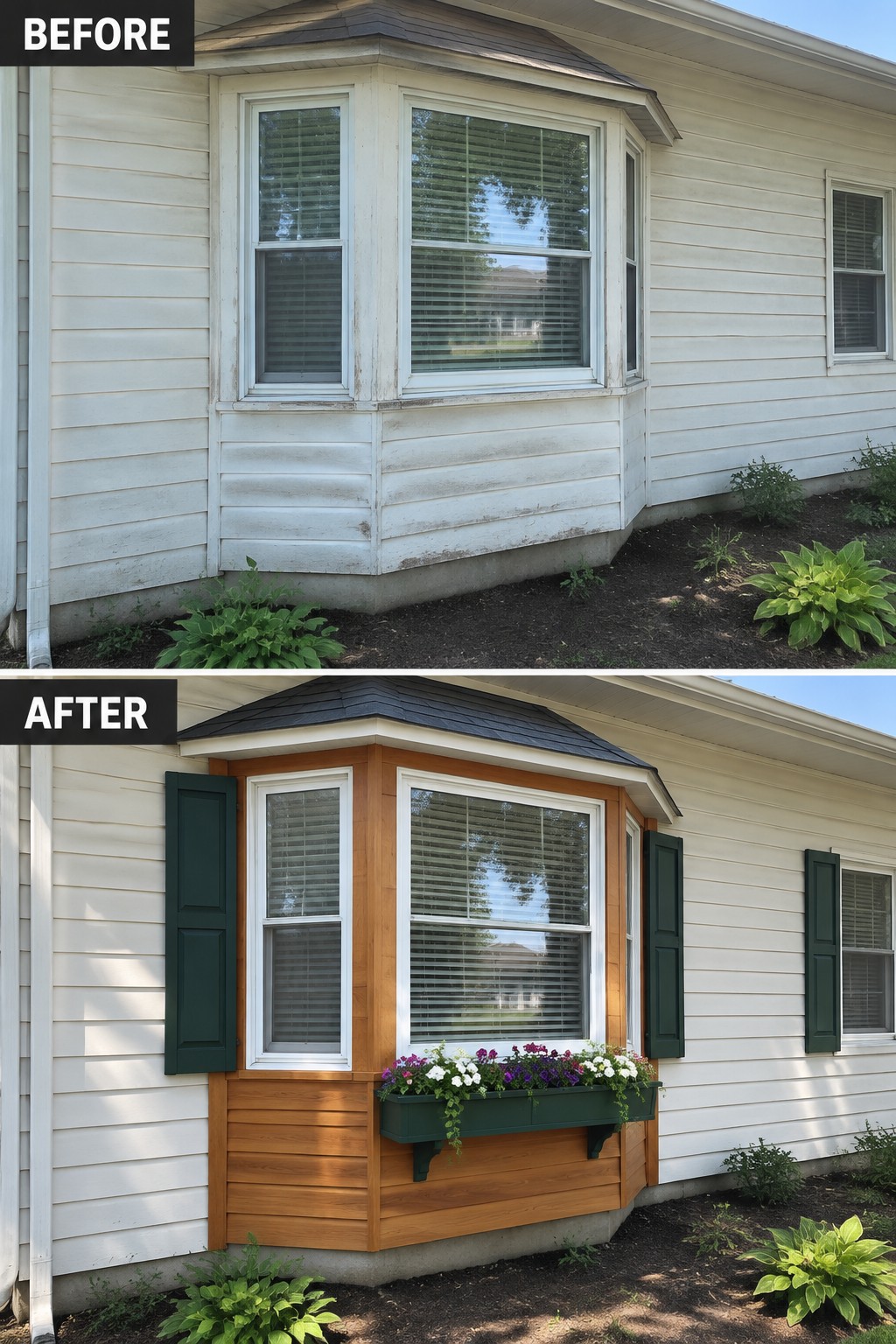
A bay window that once looked tired with peeling paint and flat white trim can become a focal point when you wrap it in cedar look siding. The wood tone adds warmth and depth while the clean lines make the whole front feel more finished. Adding matching shutters on the sides and a simple flower box underneath ties everything together without overcomplicating the look.
This approach works well on traditional homes where the bay window already has good bones but needs better definition. Keep the siding tone consistent with any other wood accents on the house and choose shutter and box colors that match your existing trim. It is a straightforward update that gives noticeable curb appeal without requiring a full siding replacement.
Refresh Traditional Siding With Cedar-Look Panels
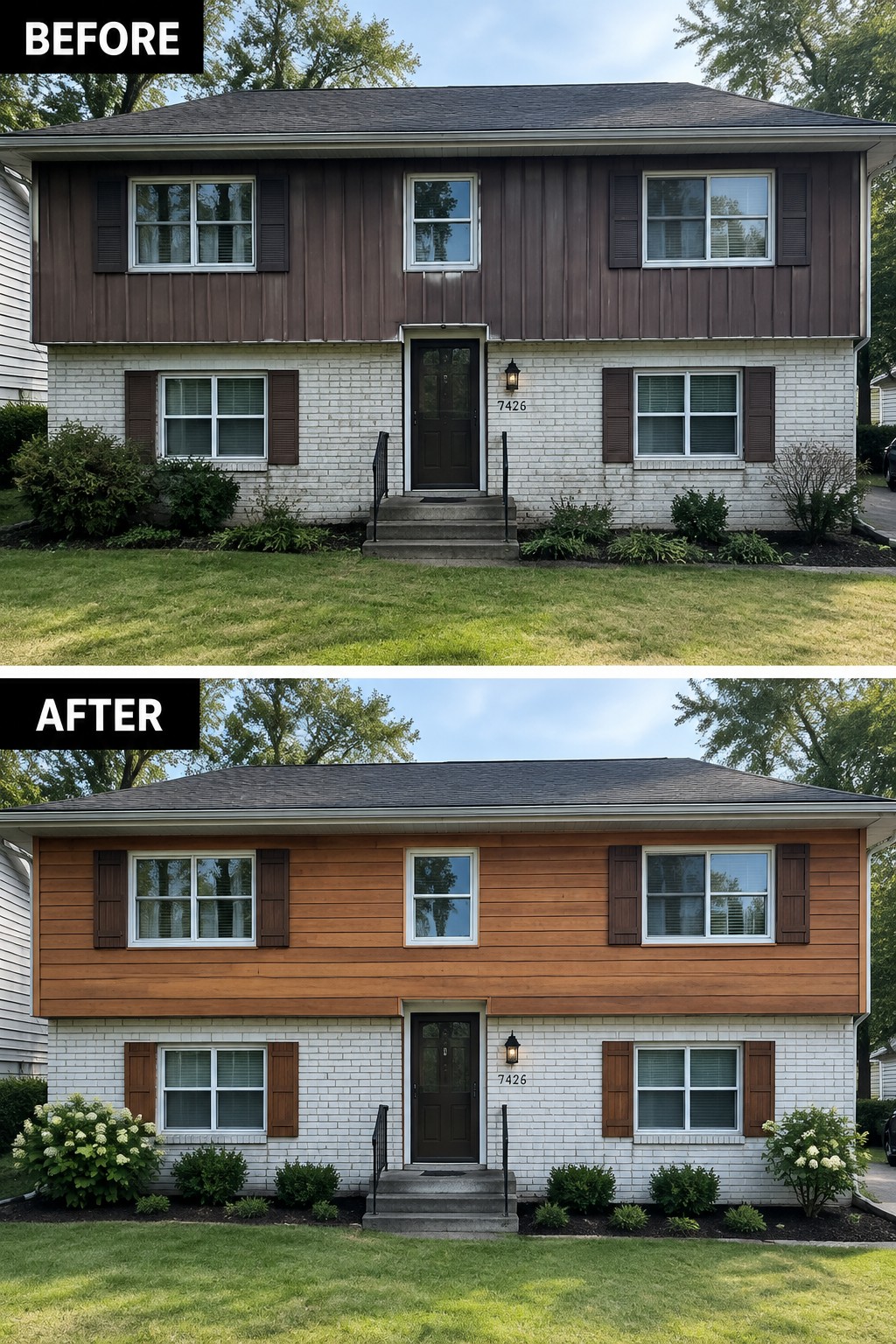
Many older two-story homes end up with a heavy look when the upper level uses dark vertical siding against a lighter brick base. Switching to horizontal cedar-look panels lightens the whole facade and gives it a cleaner, more current traditional feel without changing the brick or the front door.
This approach works best on homes that already have a solid brick foundation and simple window placements. Keep the shutters and trim in a matching wood tone, and add a few flowering shrubs at the base so the new siding color has something to connect with at ground level.
Refresh A Traditional House With Cedar-Look Siding
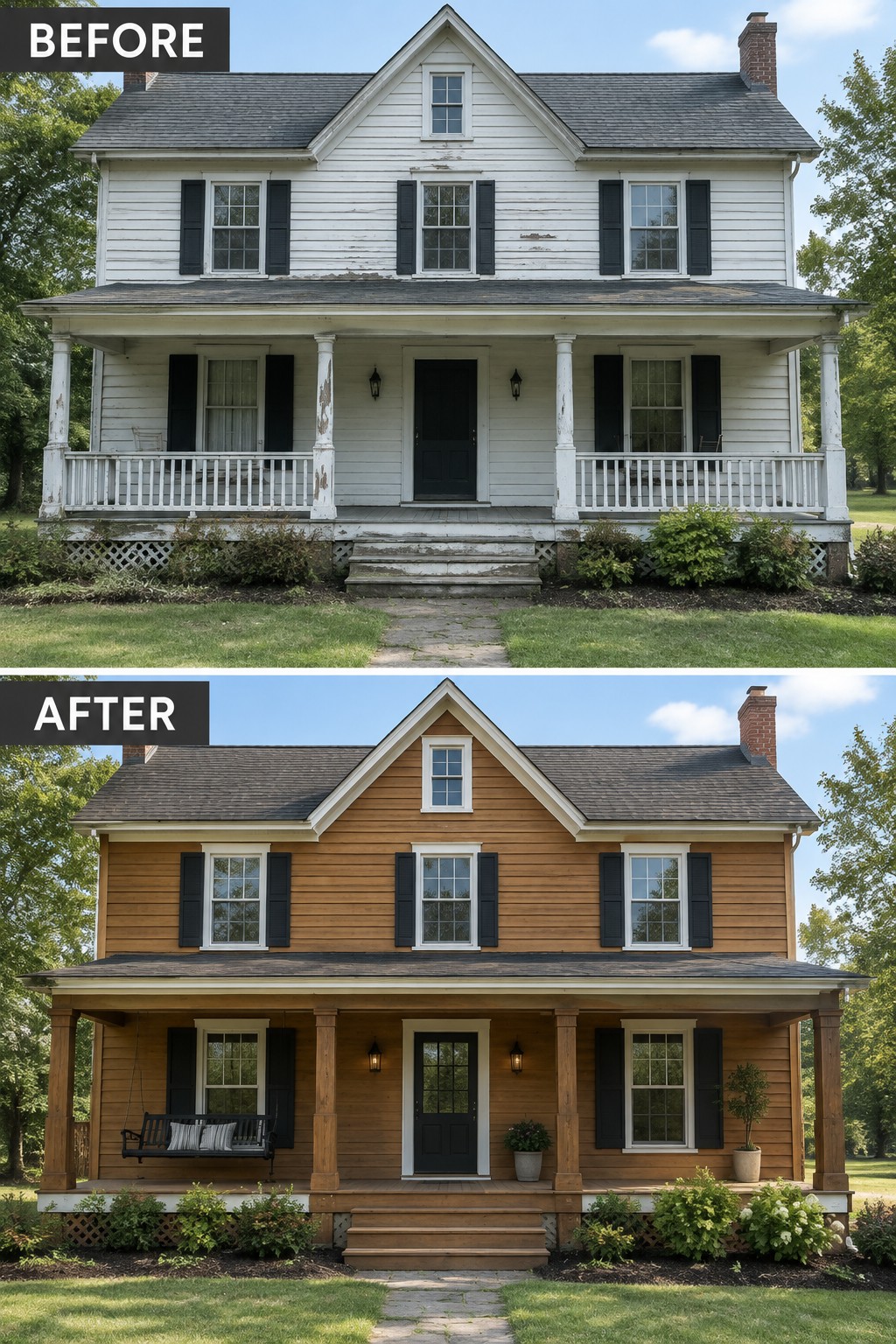
Older homes with peeling white paint often look neglected even when the structure is sound. Switching to cedar-look siding in a warm brown tone gives the facade a solid, updated feel without changing the overall shape or roofline. The porch also benefits from the shift, since the darker siding makes new details like the bench swing and simple planters stand out more clearly.
This idea suits traditional two-story homes that still have good proportions. Start with the siding color and let that guide smaller choices like door color and porch furniture. Keep the trim simple so the wood tone does the main work.
Update Traditional Siding With Cedar-Look Panels
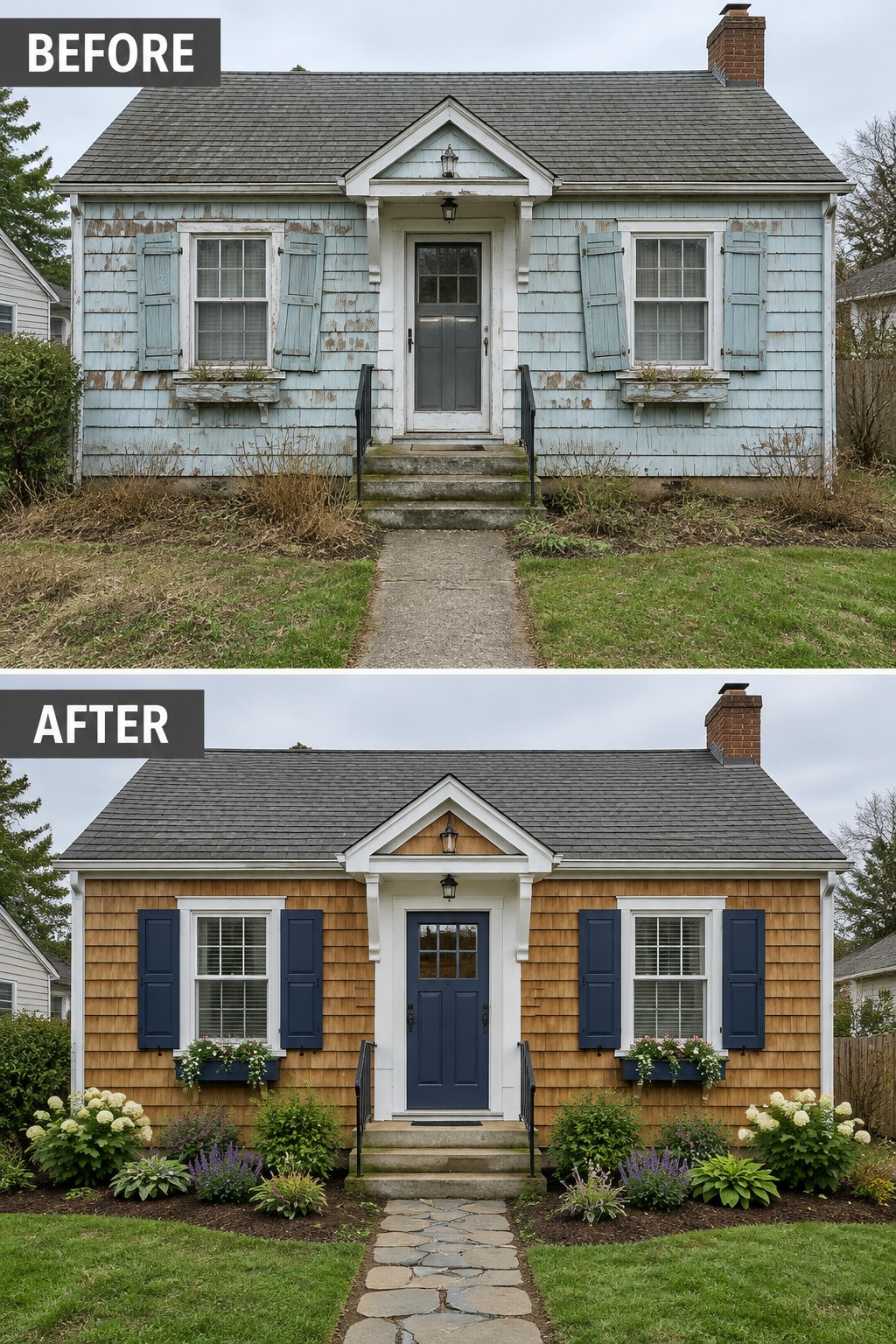
Many older homes end up with siding that has simply worn out. The peeling paint and faded color make the whole front look tired, even when the structure itself is still sound. Changing to cedar-look siding replaces that worn surface with a warmer, more natural texture that suits the shape of the house.
This works especially well on traditional homes where you want to keep the original lines but need a practical refresh. Choose a mid-tone wood finish, then coordinate the shutters and door in a deeper color so the front feels balanced. The new walkway and border planting help complete the look without requiring a full redesign.
Refresh Traditional Siding With Cedar-Look Shingles
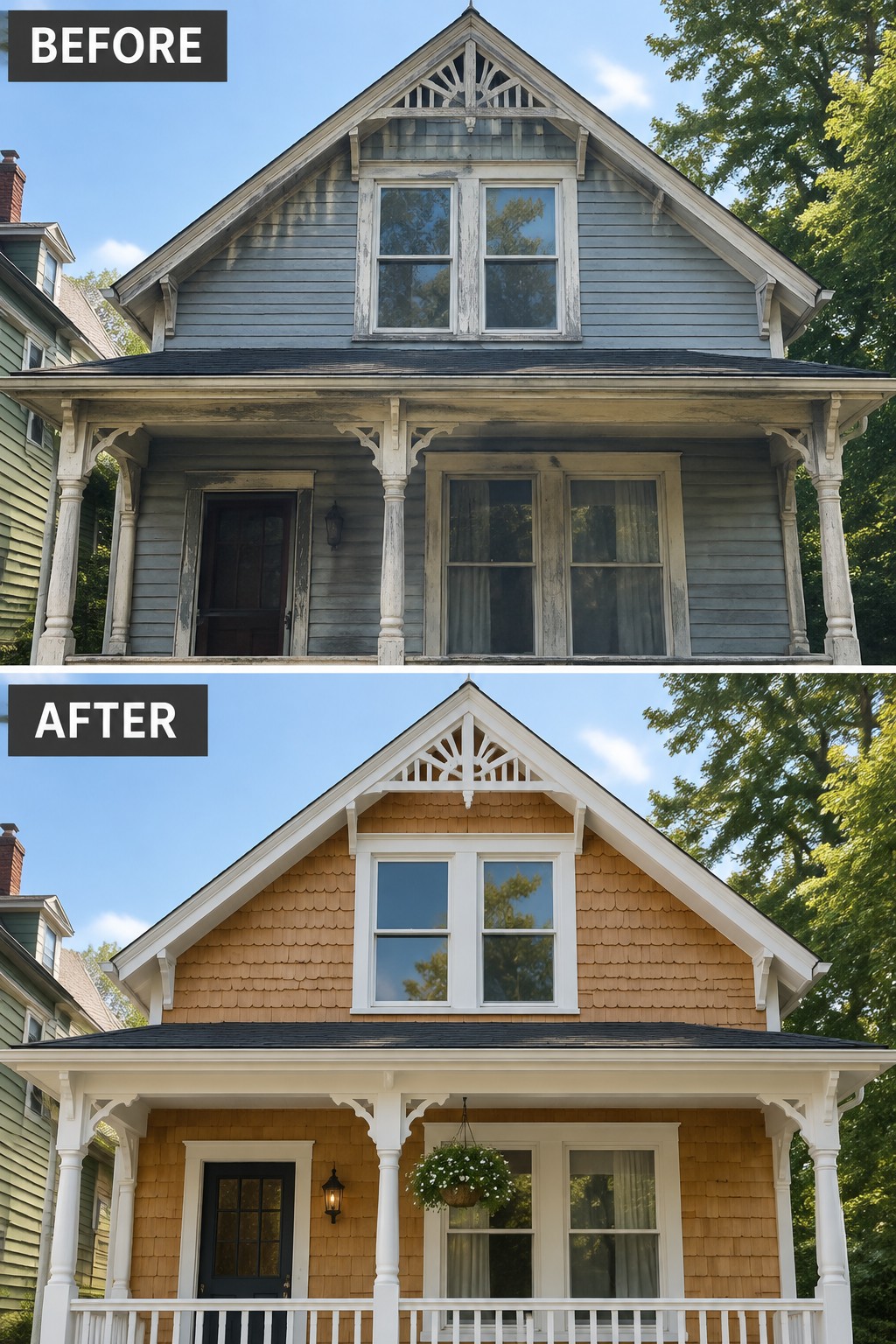
Many older homes show their age through faded paint and worn siding that no longer protects or looks sharp. Replacing the surface with cedar-look shingles in a warmer tone gives the whole facade a cleaner finish while keeping the original roofline and porch structure intact. The white trim then pulls the new siding together and makes the windows and gable details stand out more clearly.
This update suits traditional houses that still have solid bones but need surface work. Choose a cedar shade that sits well with the roof color, then keep the trim crisp so the architectural lines stay visible. It is an effective step when you want noticeable improvement without a full rebuild.
Refresh Traditional Siding With Cedar-Look Tones
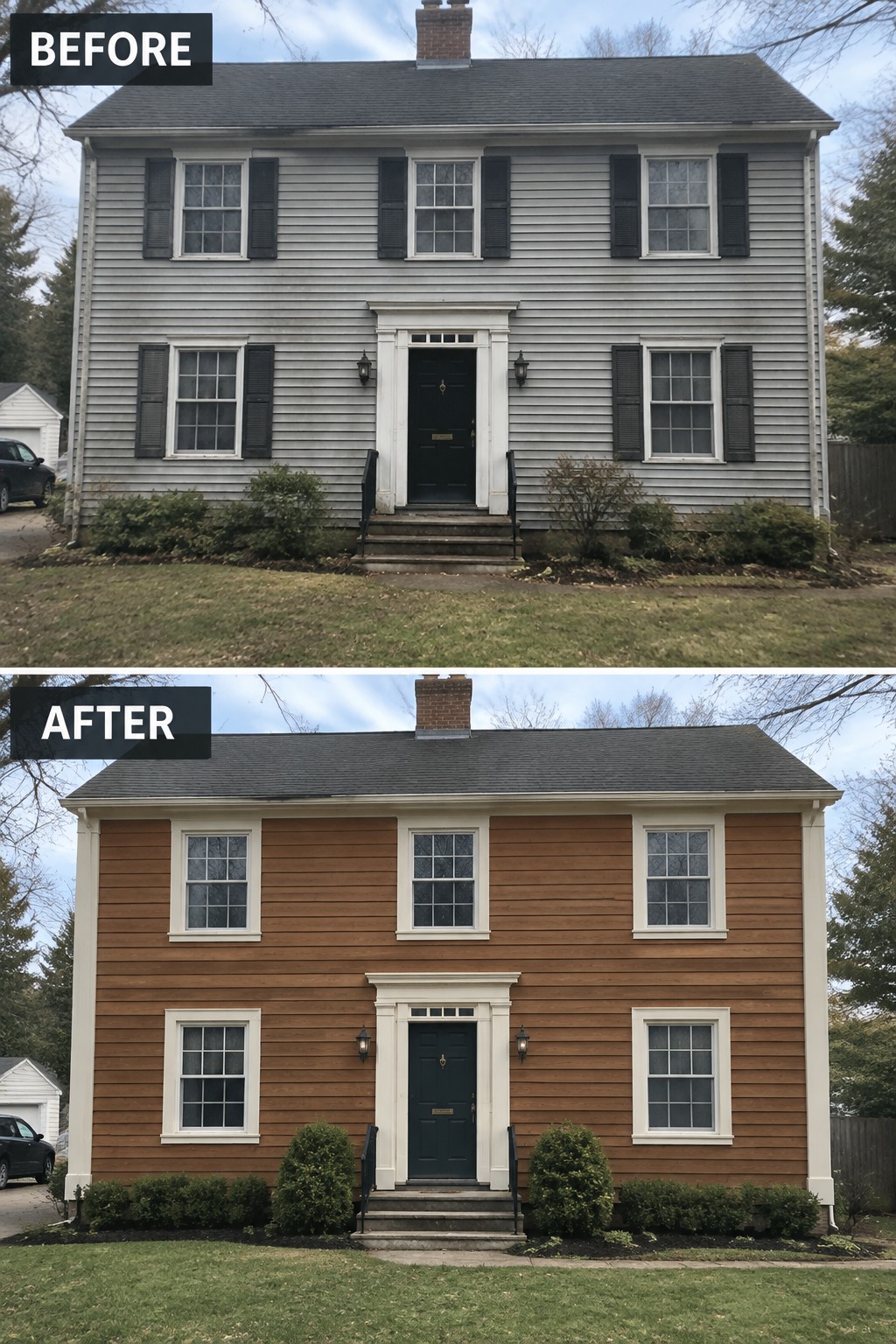
Many older homes end up with siding that feels flat and dated after years of the same color. Switching to a cedar-look finish adds warmth and texture while keeping the original shape of the house intact.
This approach works well on two-story traditional homes. Pick a medium brown tone that sits nicely with the roof, then paint the trim and window frames white so the details stand out. The change makes the whole front feel more welcoming without any major structural work.
Replace Peeling Stucco With Cedar-Look Siding
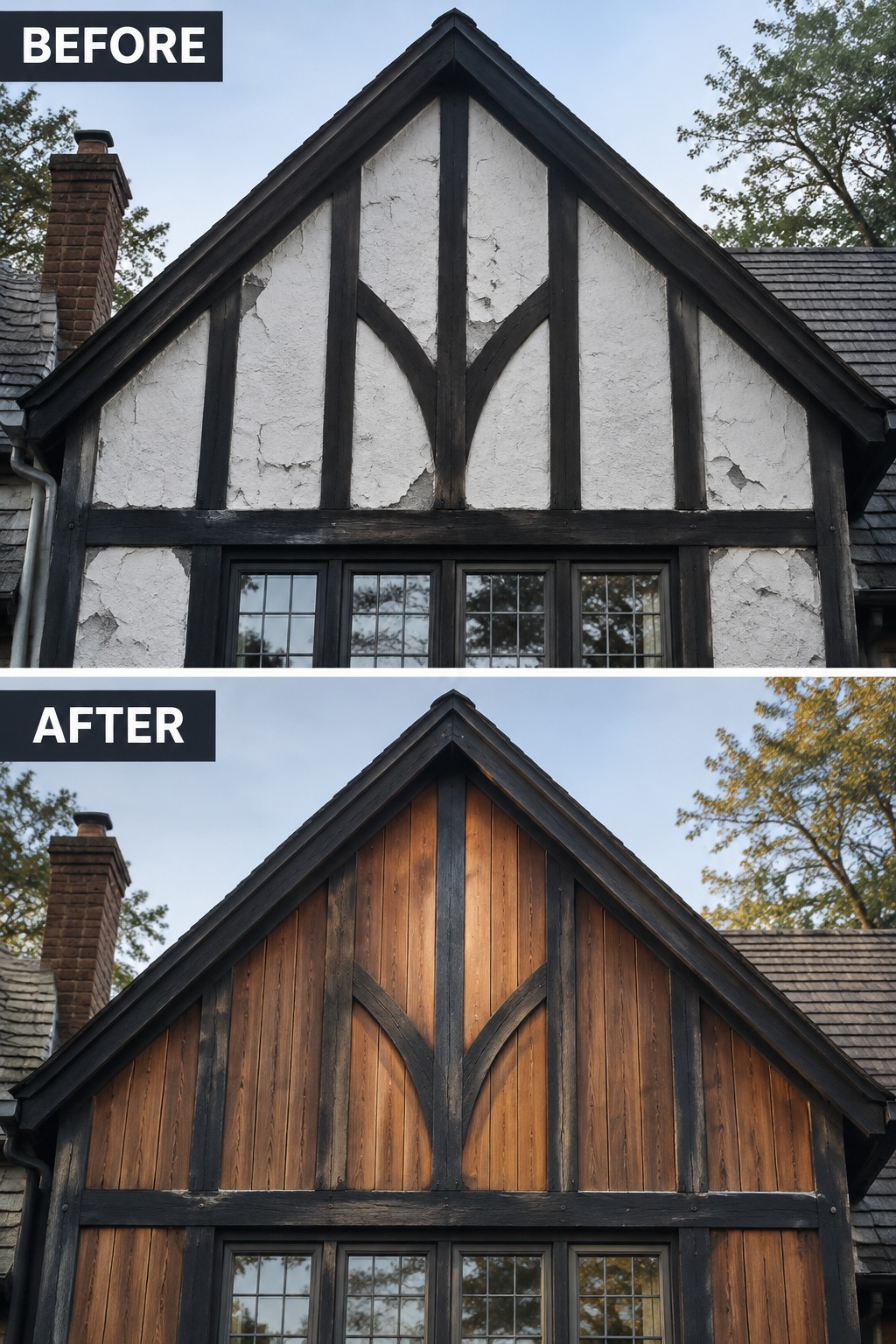
Many older timber frame homes end up with cracked or failing stucco between the beams. Swapping that surface for cedar-look siding gives the house a warmer, more finished look without changing the original structure. The wood tone softens the contrast with the dark framing and makes the whole facade feel more cohesive.
This approach works best on traditional houses where the beams are still in good shape. Choose a cedar tone that sits between too orange and too gray so it reads naturally next to black trim. Start with any necessary repairs to the framing, then install the siding in vertical boards to keep the lines clean.
Update Traditional House Siding With Cedar Look Wood
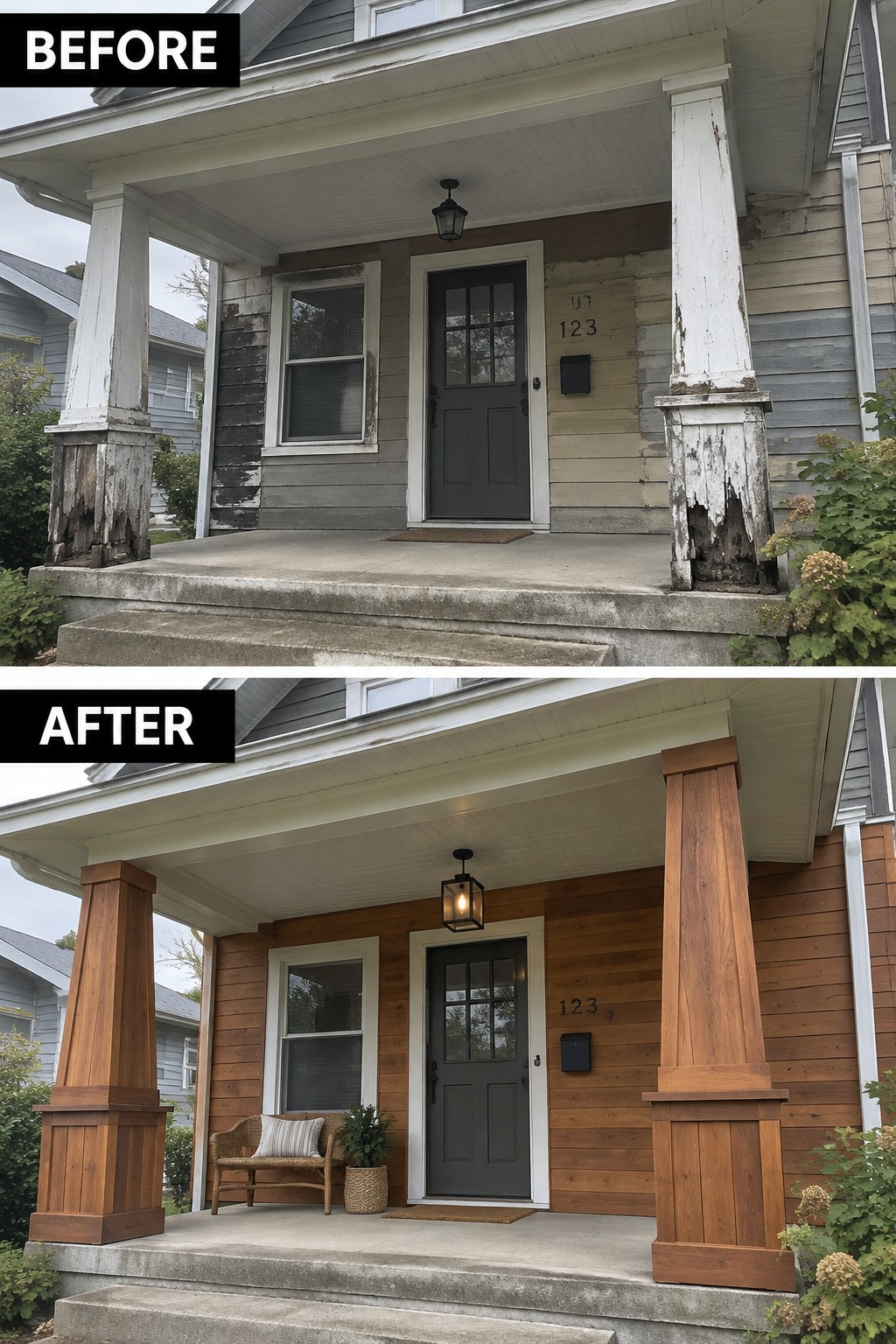
The old siding and columns had peeling paint that made the front of the house look worn down. New horizontal cedar look wood siding and solid wood columns gave the porch a fresh, warm surface that matches the traditional style without changing the overall shape.
This idea works best on older homes where the exterior paint is failing but the structure is still sound. Focus on the main visible areas first, like the porch and entry, and pick a wood tone that sits well with the roof and trim colors already in place.
Refresh A Dated Porch With Cedar Look Siding
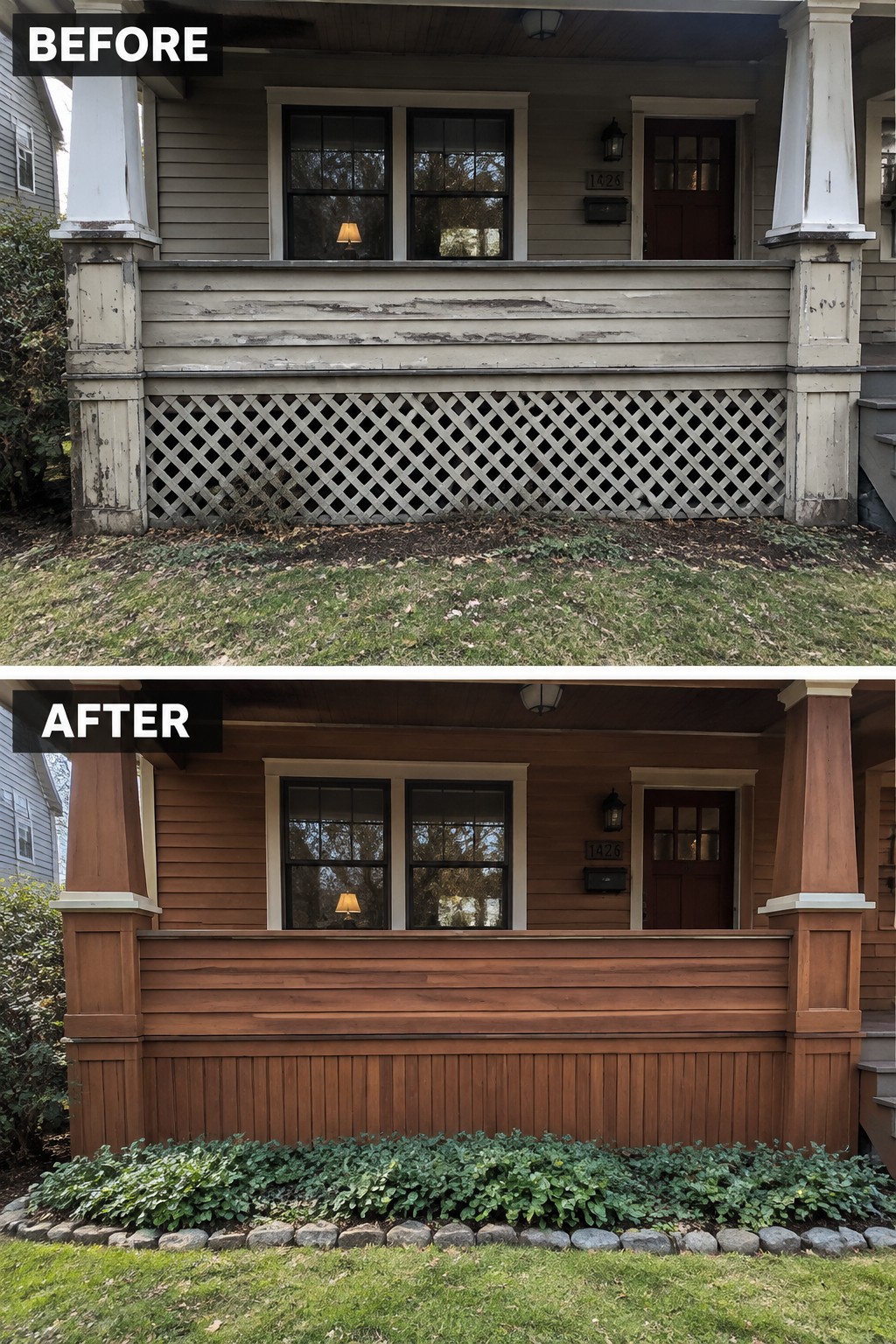
The old lattice under the porch and peeling paint on the columns made the whole front look worn out. Replacing that section with horizontal cedar look siding and wrapping the posts in the same material gave the entry a solid, updated appearance that fits the style of the house.
This works especially well on traditional homes where the porch sits front and center. Start with the lower porch wall and columns first, then add a simple row of shrubs along the base to soften the line and keep the update feeling balanced.
Refresh A Dated Entry With Cedar-Look Siding
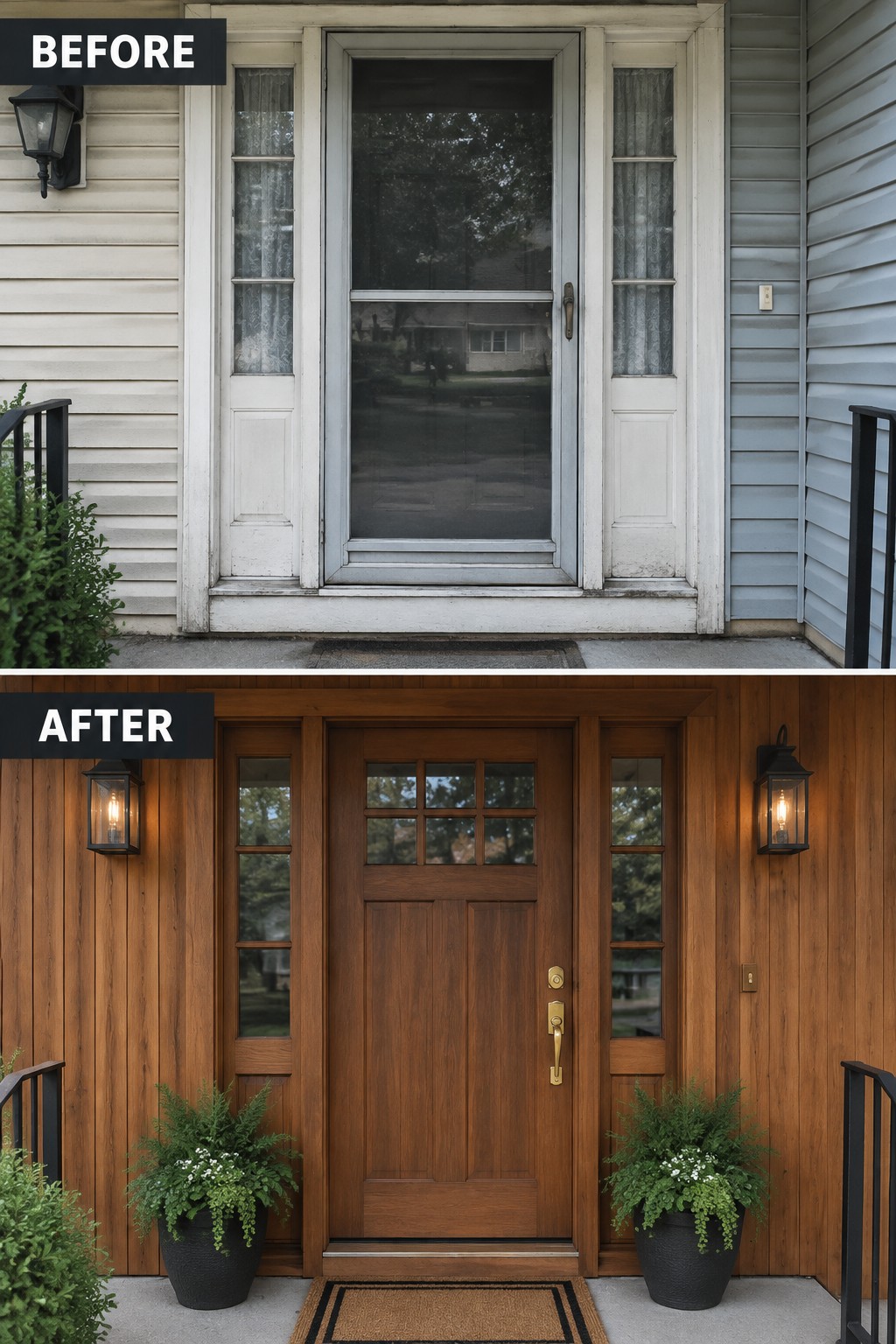
Many older homes have faded siding and a basic screen door that make the front feel tired. Switching to cedar-look siding and a solid wood door gives the entry a warmer, more finished appearance without a full renovation.
This works especially well on traditional houses where you want to keep the original character but update the materials. Start with the siding and door as the main change, then add a pair of planters and simple wall lights to finish the look.
Update A Traditional House With Cedar-Look Siding
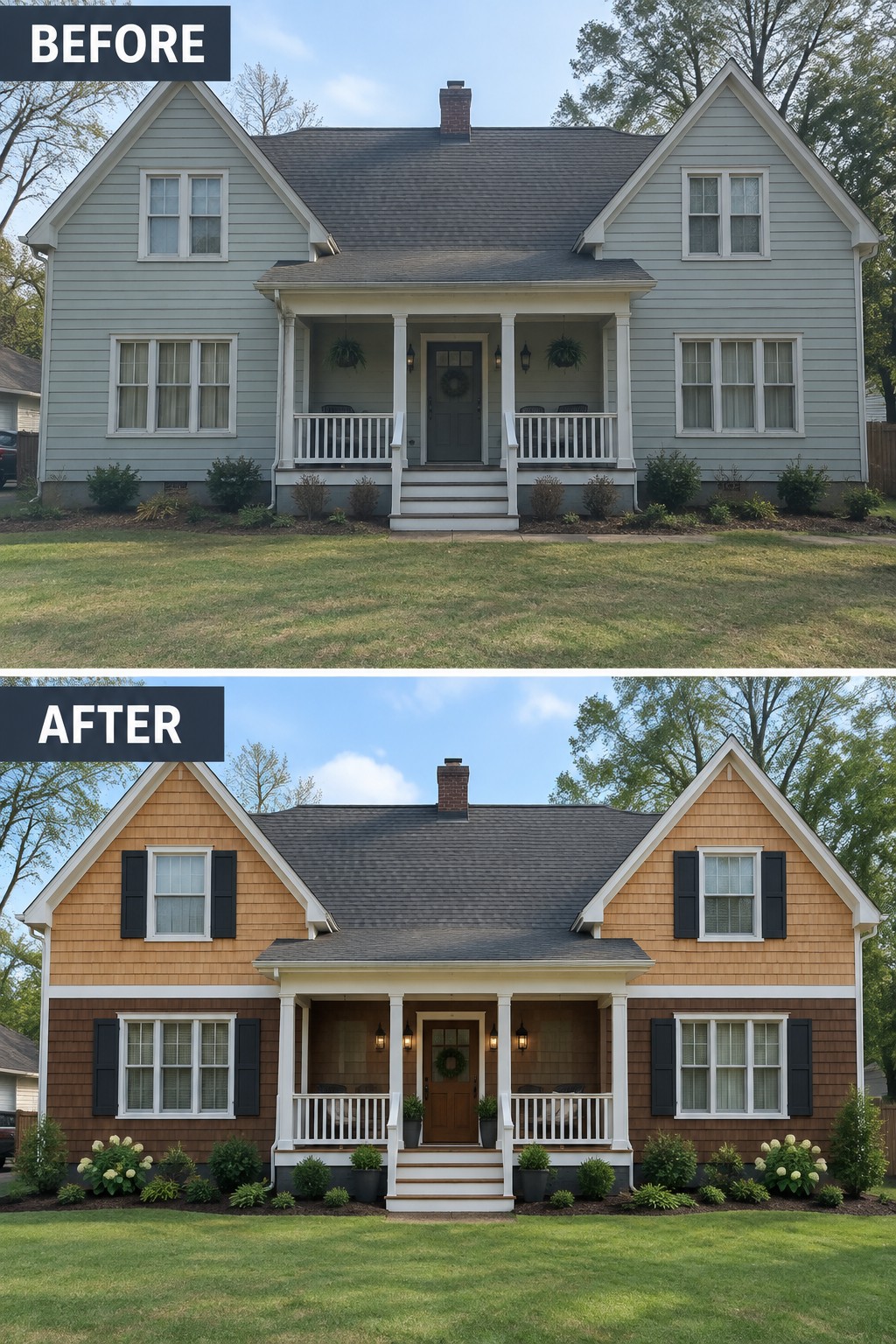
Many traditional homes end up with flat-looking siding that does little to show off their shape. Switching to cedar-look siding in warm tones gives the facade more depth and makes the house feel more welcoming right away.
This works especially well on two-story homes with gables because the texture catches light differently across the upper and lower sections. Keep the trim simple and add dark shutters to define the windows without overcomplicating the look.
Update Weathered Siding With A Fresh Cedar Tone
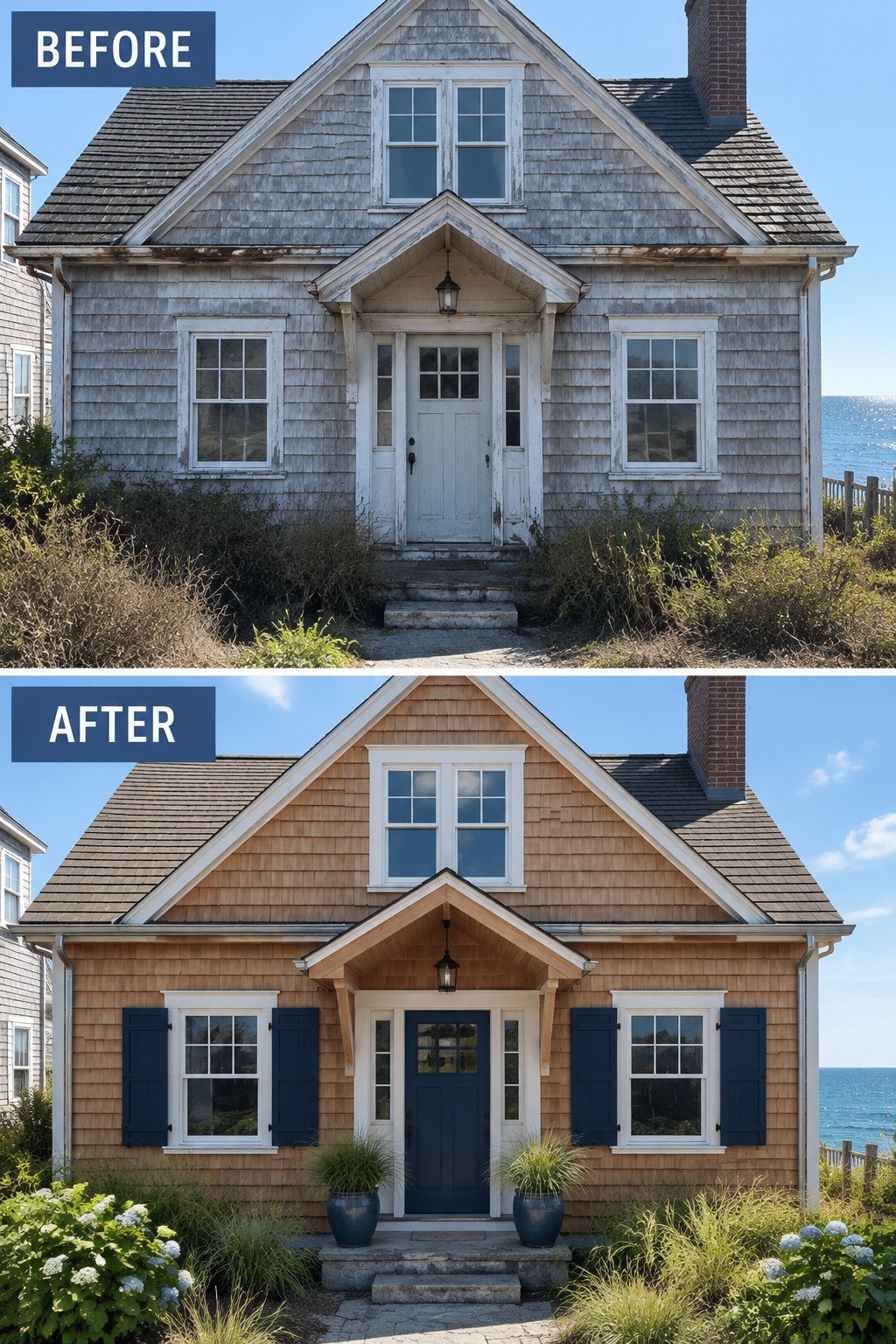
Many older homes end up with siding that looks tired and dull after years of sun and salt air. Switching the faded gray shingles to a warm cedar tone instantly makes the house feel brighter and more put together. The addition of navy shutters and a deep blue door gives the entry a clear focal point without needing major structural changes.
This idea works especially well on traditional houses near the coast or in older neighborhoods where you want to keep the original shape but freshen the look. Start with the siding color, then pick one or two accent colors for the shutters and door so the updates feel balanced rather than busy.
Frequently Asked Questions
Q: How do I choose a cedar shade that fits my traditional home without clashing?
A: Start by looking at your roof and any brick or stone already on the house. Pick a cedar tone that echoes those colors closely. Test a sample board in different lights before committing.
Q: Will cedar-look siding hold up if my area gets lots of rain?
A: Most options resist moisture well with proper gaps at install. Repaint every few years.
Q: Can I swap just one wall to cedar-look siding for a quick update?
A: Focus on the front facade first to see the effect. Make sure the new siding lines up with your current trim heights. This keeps the change feeling intentional rather than patchy.