

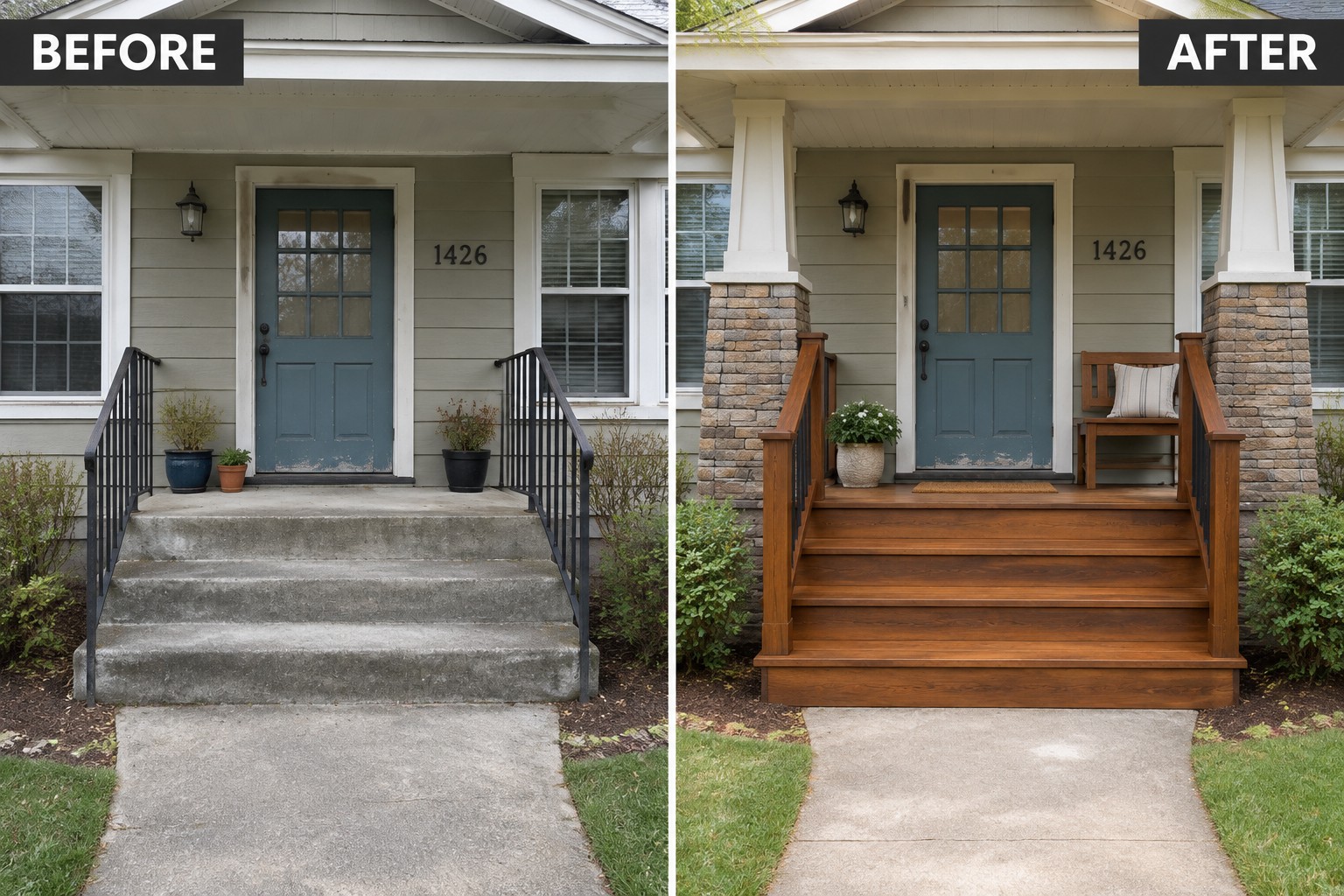
The front of the house often feels a bit flat when the porch lacks texture or natural materials.
I have found that mixing wood with stone accents tends to give the entry a sturdier look that holds up better over time.
It is satisfying to see how those details shift the overall impression without touching the rest of the facade.
A few of the approaches in this article strike me as adaptable for homes that need only light updates.
Trying one or two seems like a reasonable starting point.
Use Wood And Stone To Frame Plain Concrete Steps
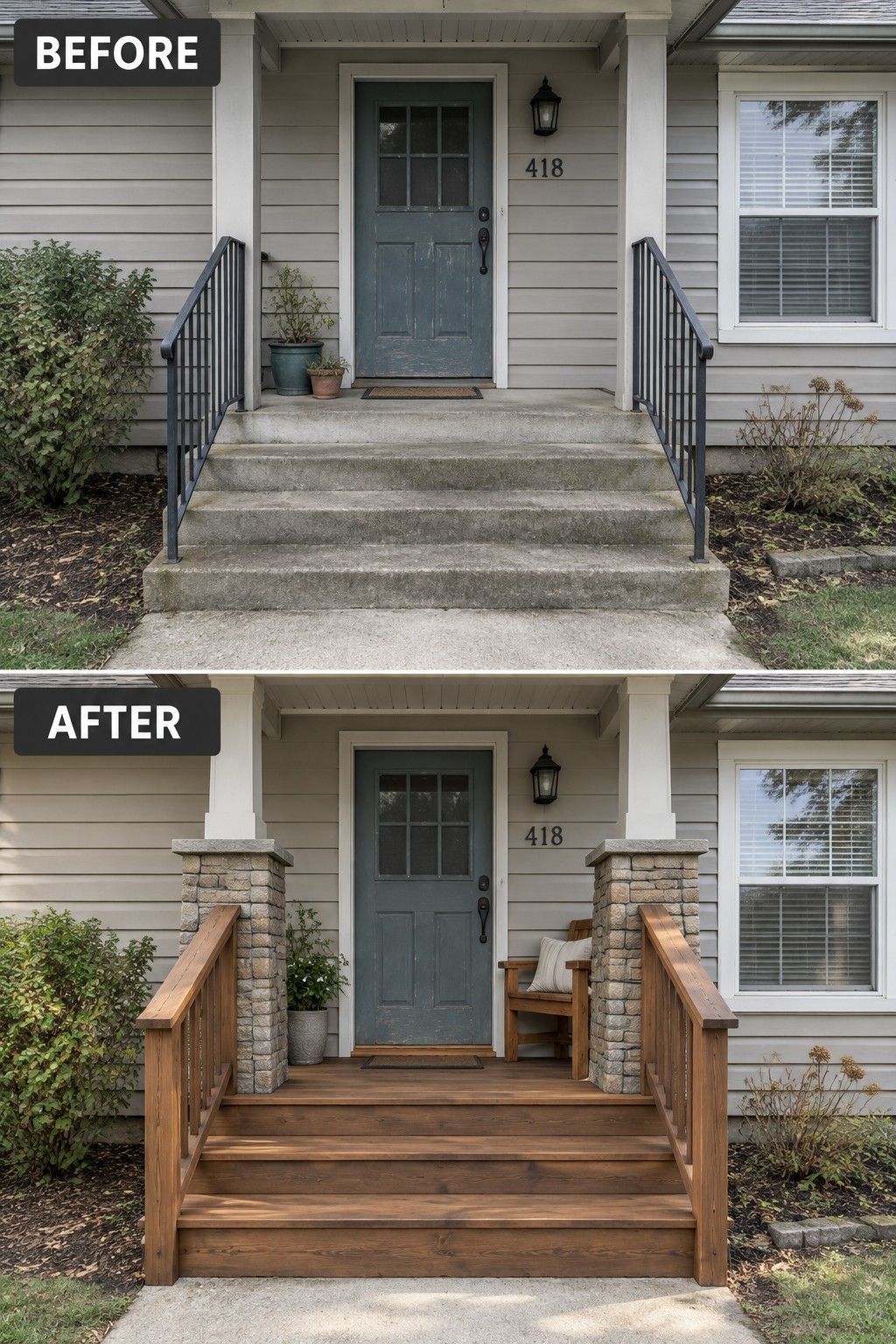
Many older homes have basic concrete porches that feel flat and cold over time. Switching the steps to wood treads and replacing the thin metal rails with thicker wood ones set on stone pillars gives the entry real weight and warmth without changing the whole house.
This approach works best on homes with simple siding and modest trim. Keep the wood tone consistent across the steps and rails, and let the stone stay natural so the materials do the work. Start with the railings and pillar bases if a full rebuild feels like too much.
Turn Concrete Steps Into A Wood And Stone Porch
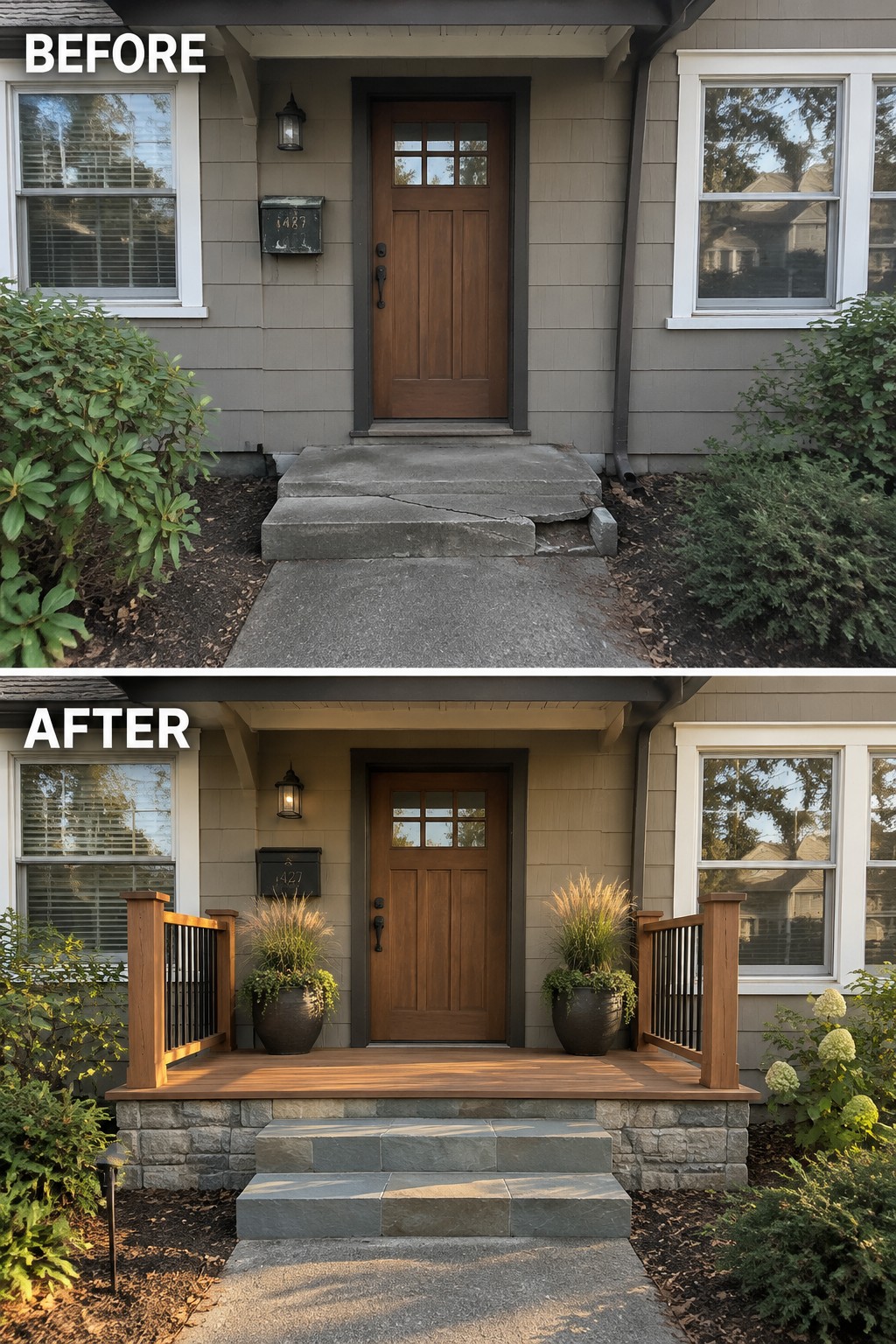
Old cracked concrete steps make an entry feel unfinished and hard to use. Replacing them with a raised wood deck and a stone base gives the front a clear platform that feels stable and intentional. The simple railings on each side help define the space without closing it in, while the potted plants soften the edges.
This approach works well on homes where the original entry sits low or looks flat against the siding. Start by checking that the new deck height lines up with the door threshold, then choose weather-treated wood and a stone that matches any existing foundation. Keep the planting simple so the structure stays the main feature.
Refresh A Plain Porch With Wood And Stone
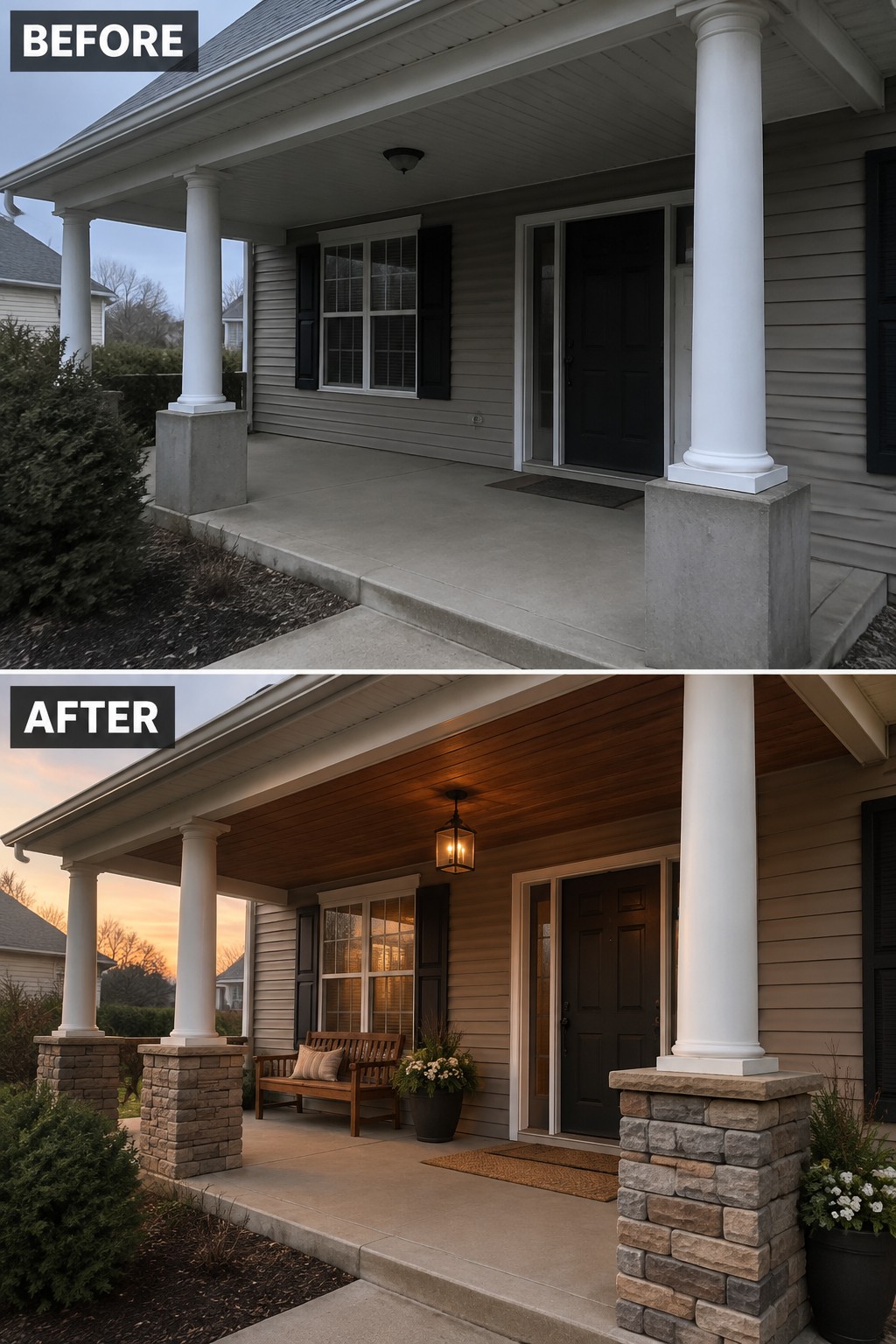
A bare concrete porch with basic columns often feels unfinished and unwelcoming. Switching the ceiling to wood and wrapping the column bases in natural stone gives the space instant warmth and structure while keeping the rest of the house exterior intact.
This idea works best on homes with simple siding where the front porch needs presence but not a full rebuild. Focus on the ceiling and column bases first, then add a bench and a few planters so the entry feels purposeful without crowding the walkway.
Replace Concrete Steps And Walk With Wood And Stone
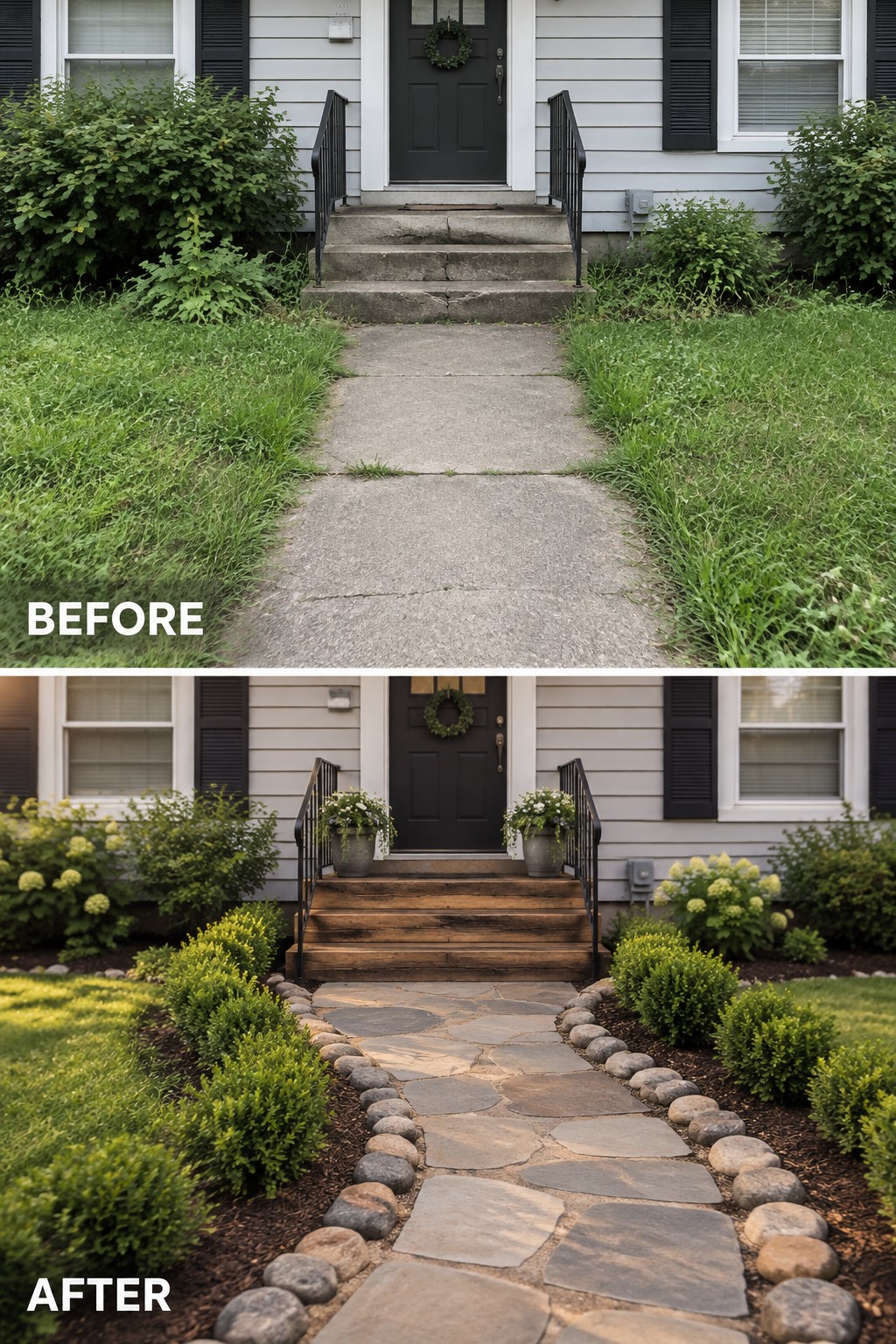
The original concrete steps and walkway looked worn and plain against the house. Switching to wooden treads on the stairs and laying a stone paver path with rock borders gives the entry a clearer shape and a warmer feel without any major construction.
This idea suits homes where the front walk has started to crack or simply feels too stark. Focus on the path and steps first, keep the plantings simple along the edges, and let the natural materials do the rest of the work.
Frame The Front Door With Stone Veneer
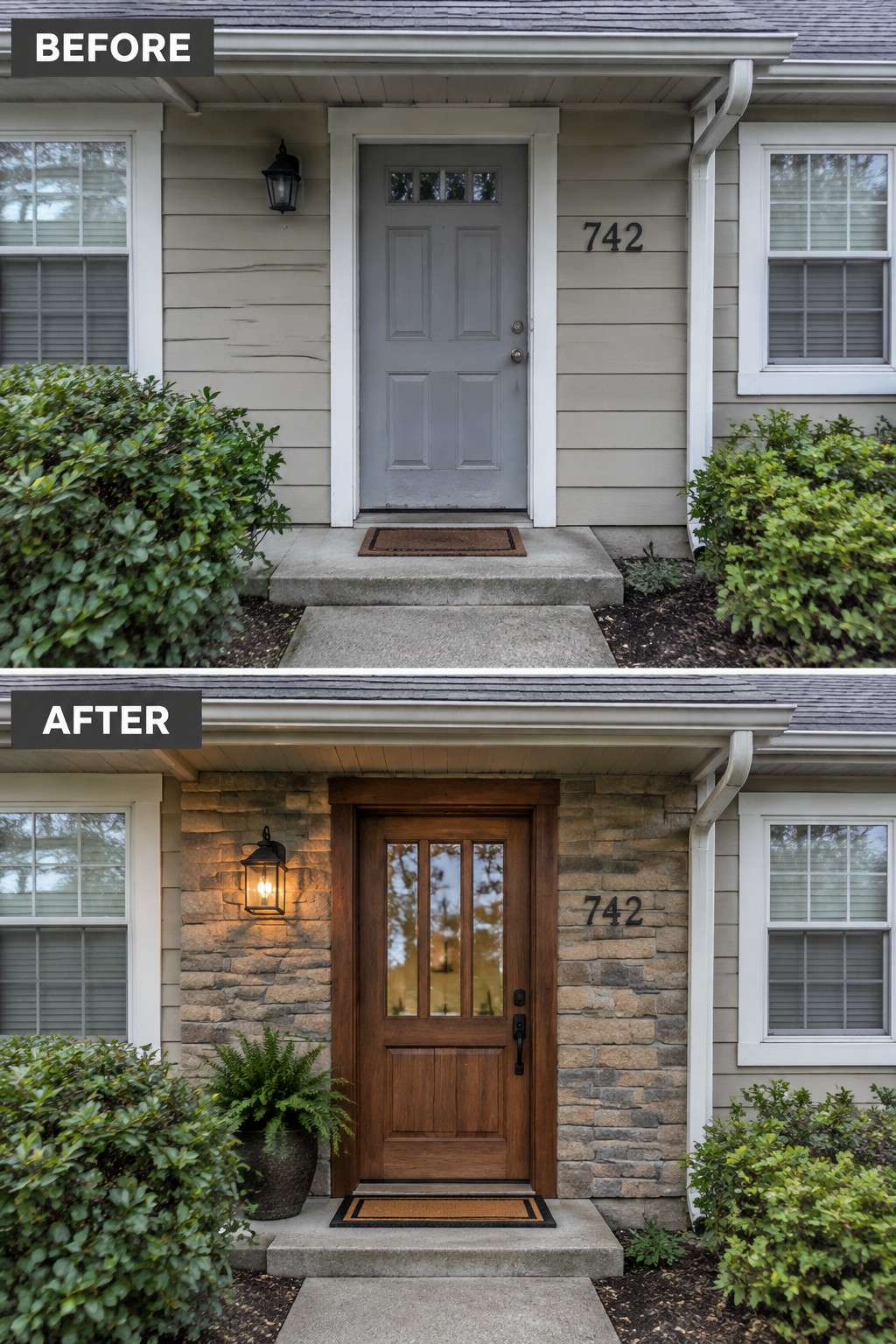
A plain entry can look flat when the door sits right against the siding. Adding stone veneer around the door gives the area weight and makes the whole front feel more finished, especially when paired with a wood door that adds warmth.
This approach works best on homes with simple siding where you want to improve curb appeal without a major overhaul. Keep the stone to the immediate area around the door so it reads as a deliberate accent rather than an afterthought, and choose a color that ties into your roof or trim.
Add A Pergola To Give A Porch More Structure
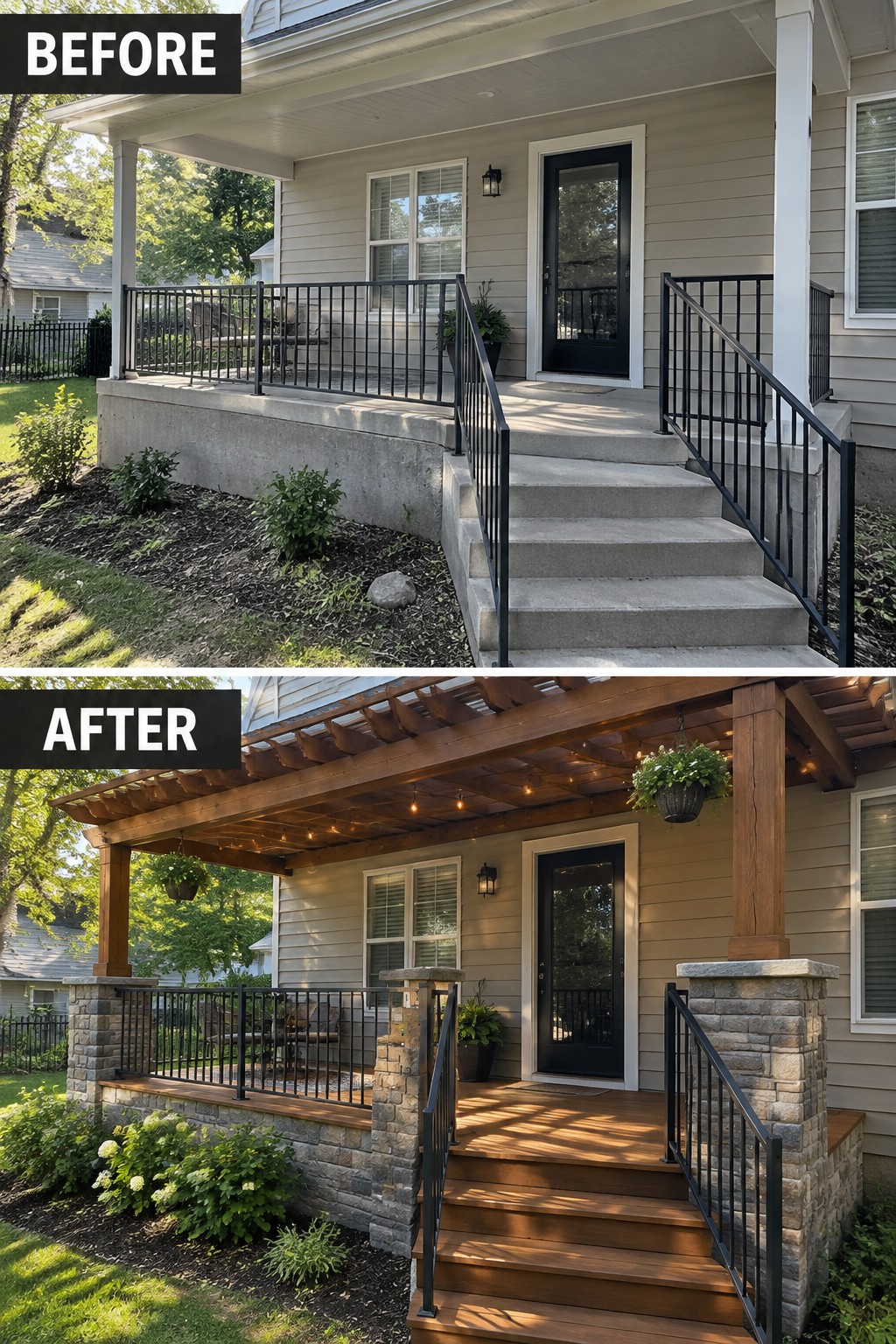
A basic concrete porch with metal railings often feels exposed and unfinished. Adding a wooden pergola overhead, along with wood decking and stone column bases, instantly creates a defined roofline and makes the space feel more like an intentional outdoor room instead of just a set of steps.
This approach works well on homes with simple entries that need a bit more presence. Start with the pergola and decking first, then layer in the stone accents. Keep the scale modest so the structure does not overwhelm the house, and use weather-rated wood that can handle sun and rain without constant upkeep.
Add Wood Posts And Stone To Update A Plain Porch
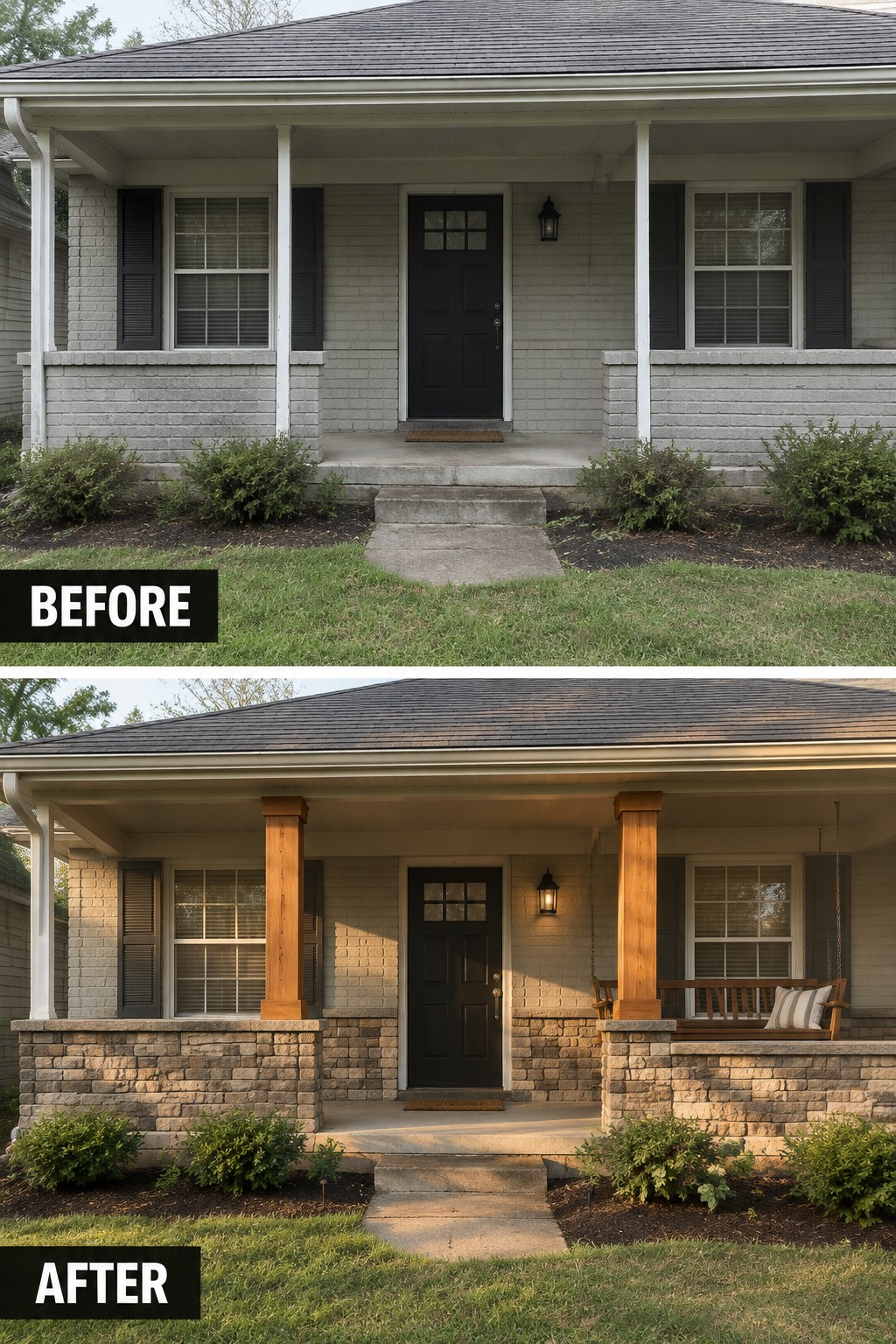
Many older porches have thin columns and a flat base that make the whole front of the house feel light and unfinished. Swapping the white posts for thicker wood ones and adding a stone veneer along the bottom gives the porch real weight and makes the entry feel more solid without a full rebuild.
This approach works well on brick or painted homes that need a bit more texture at ground level. Keep the wood tone warm but not too dark, and match the stone to any existing hardscape so the new materials feel like they belong rather than just get added on.
Give A Cluttered Porch A Clear Purpose
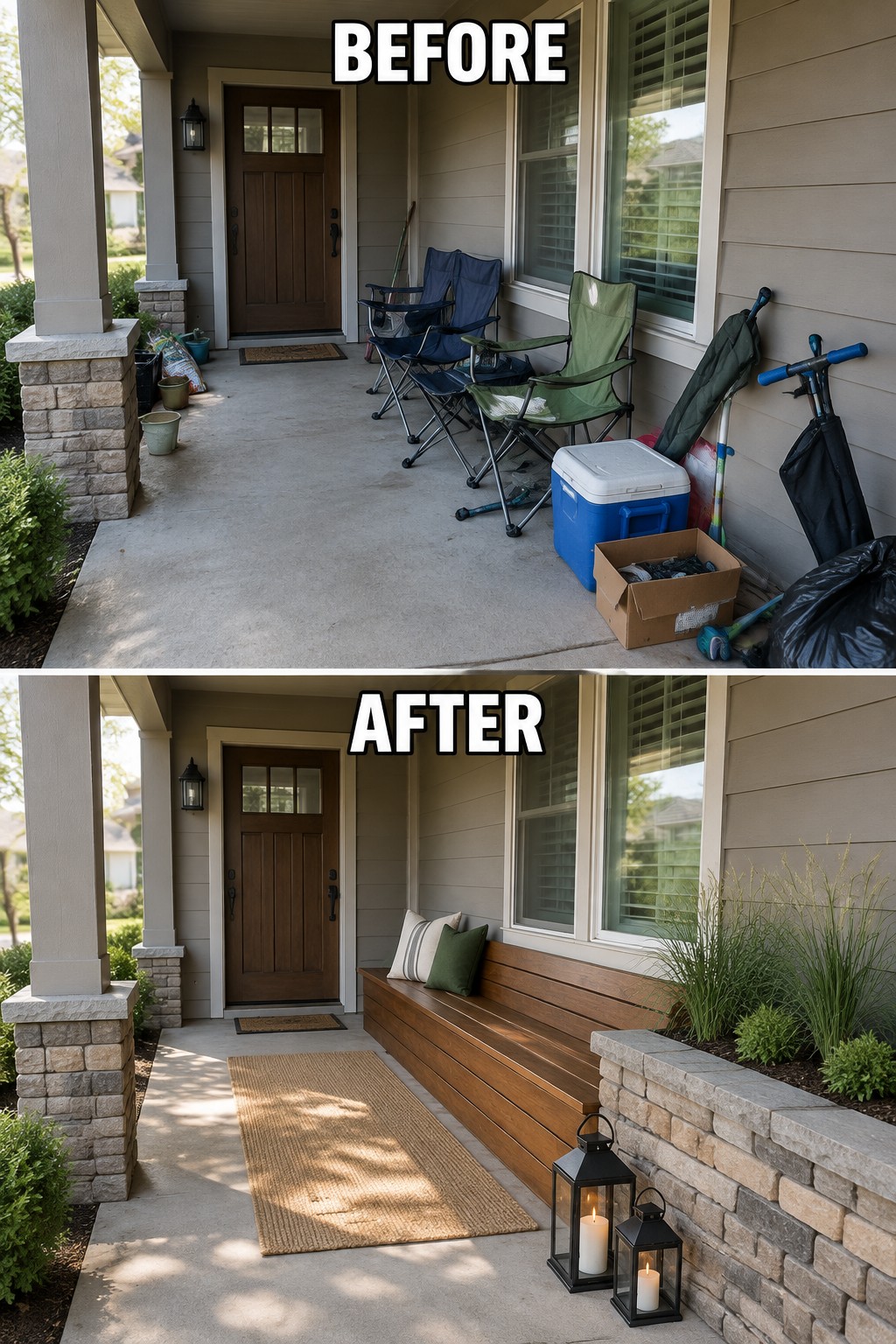
The main improvement came from removing the folding chairs, cooler, and scattered boxes that filled the porch. Replacing them with one long bench created a defined spot for sitting while keeping the walkway open.
This approach works well on front porches that get daily use. Start by clearing everything that does not belong, then add a bench sized to fit the space. Keep extras like a rug and lanterns to a minimum so the area stays practical.
Give Your Porch A Built-In Bench With Planters
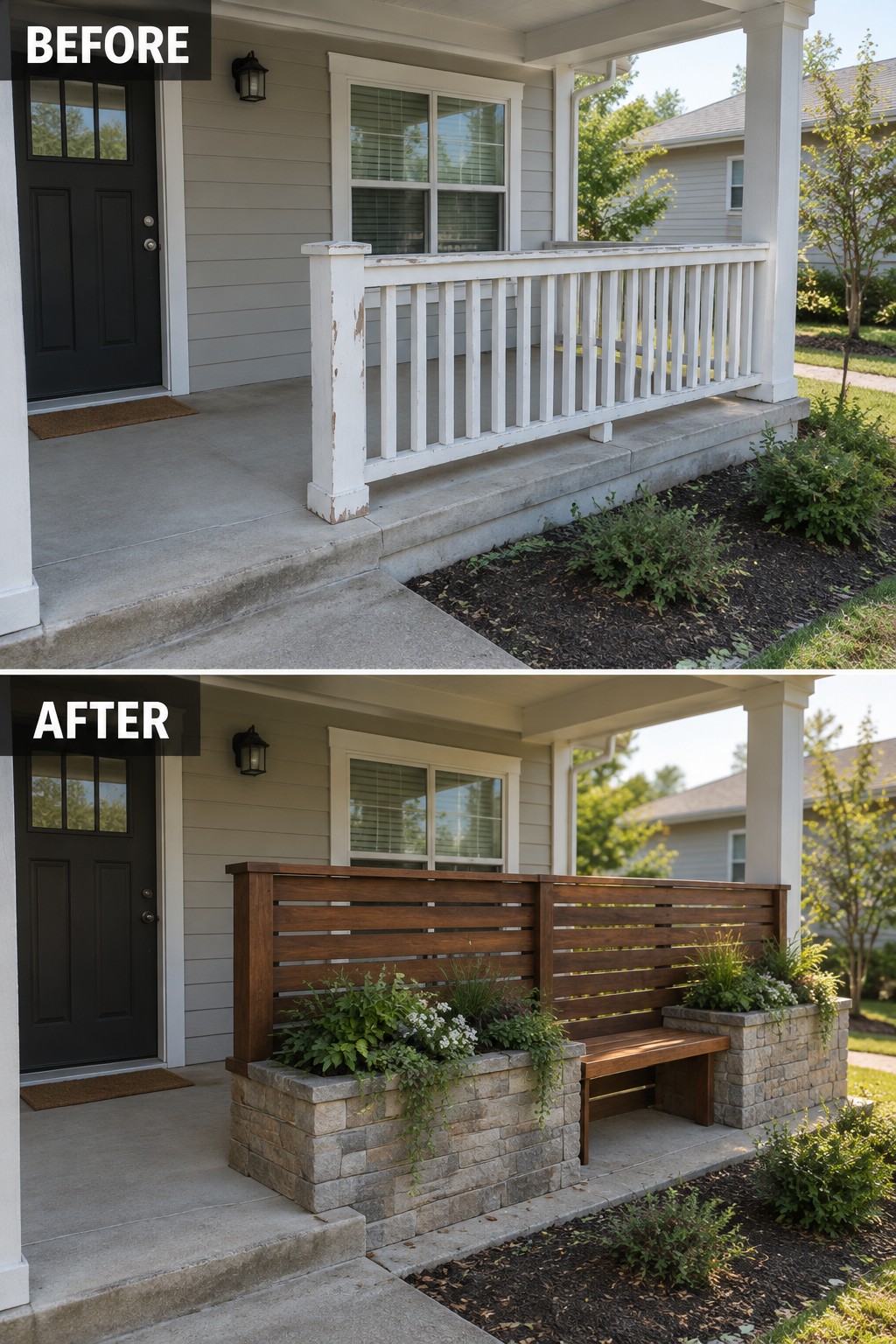
A plain railing often leaves the front porch feeling like just a walkway. Swapping it for a wood slat screen set into low stone planters instantly gives the space a purpose. The bench sits at a comfortable height between the planters, and the plants soften the edge without blocking the entry.
This setup works well on porches that get regular use but lack seating. Use pressure-treated wood and simple stone blocks so everything holds up to weather. Keep the bench narrow enough that people can still walk past easily, and choose plants that stay tidy with little trimming.
Add A Covered Entry Porch Using Wood And Stone
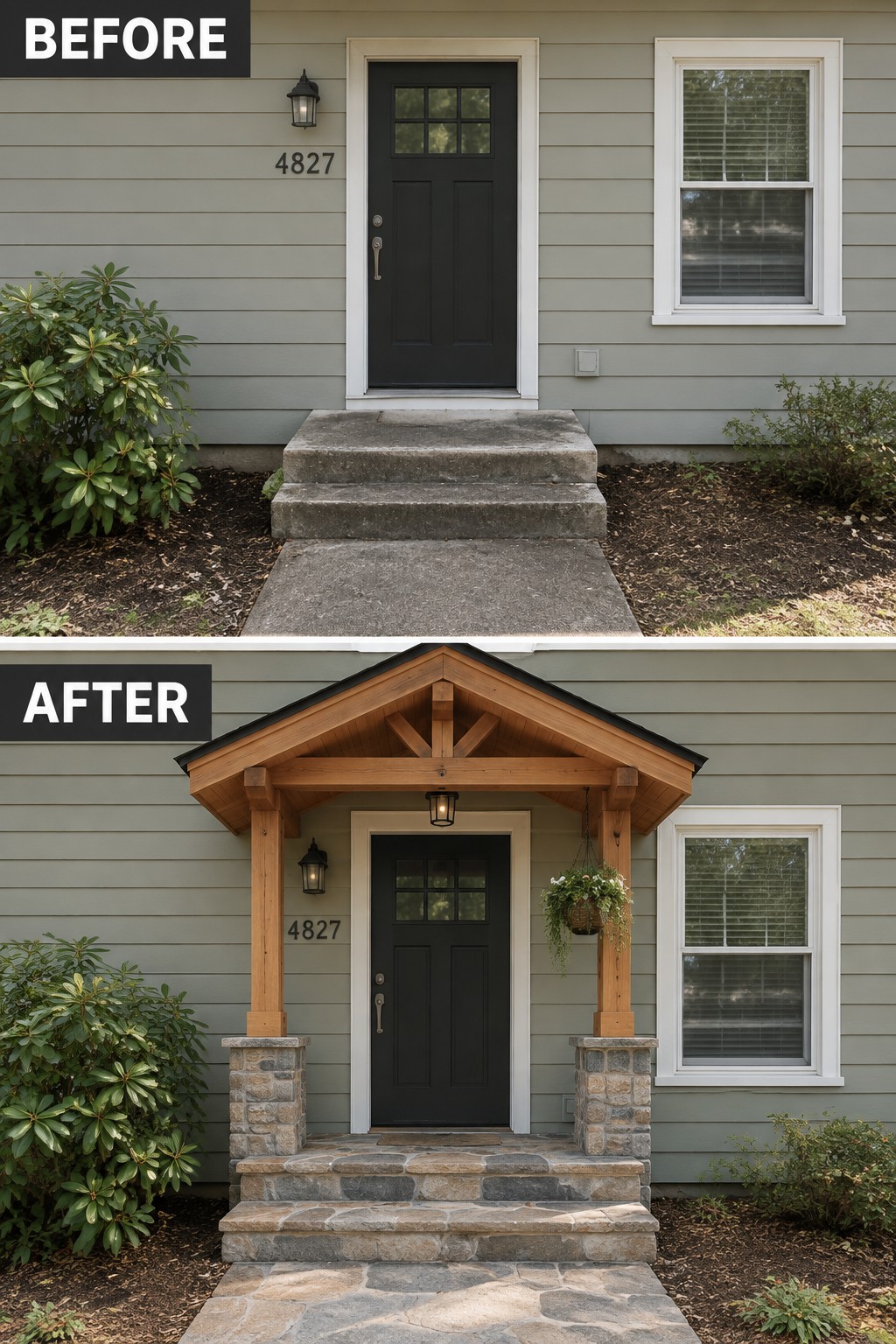
The biggest shift here is adding a gabled wood roof over the front door, held up by posts that rest on stone bases. This gives the entry a clear sense of shelter and structure that the original flat steps and bare siding lacked. The new stone steps also replace the old concrete, which helps the whole front feel more connected.
This idea works well on homes with simple siding that need the door to stand out more. Match the roof pitch to the rest of the house, keep the wood natural, and pick stone that blends with any existing hardscaping. It improves curb appeal without a full exterior overhaul.
Use Wood Decking To Warm Up A Plain Concrete Porch
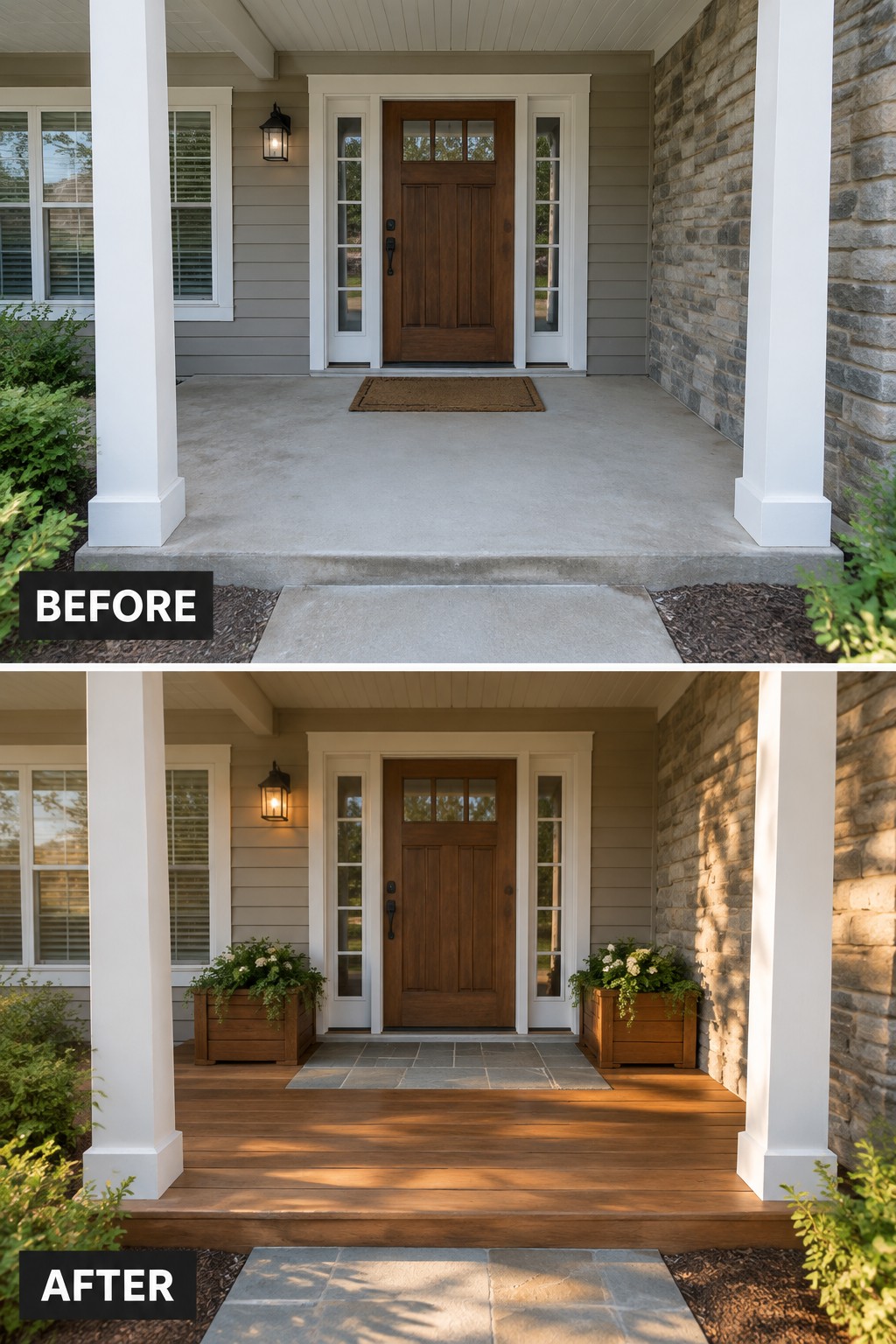
A bare concrete porch often feels cold and unfinished, even when the rest of the house looks fine. Switching to wood decking gives the surface warmth and texture right away, while a pair of simple planters on either side helps frame the entry and make it feel more intentional.
This approach works well on homes with existing concrete pads that still have good structure. Keep the deck boards in a natural tone that matches any stone or trim you already have, then add just enough planting to soften the edges without crowding the walkway.
Add Wood And Stone To Give A Plain Porch More Character
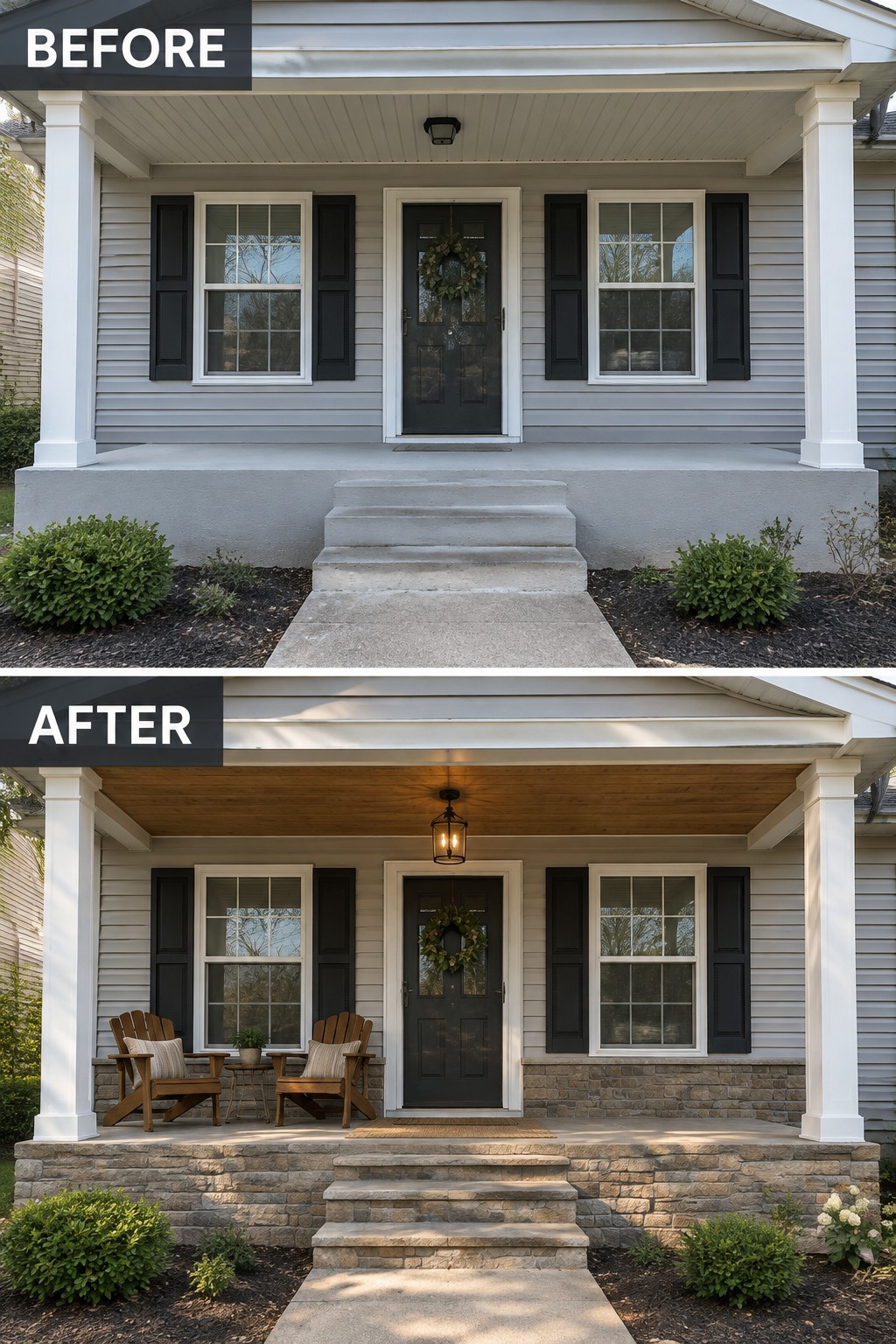
A basic front porch with plain concrete and siding can feel unfinished because it has no real materials to work with. Adding a wood ceiling and wrapping the base in stone instantly gives the space weight and warmth while keeping the overall look simple.
This idea suits homes that already have a porch but need a quick refresh rather than a full rebuild. Start with the ceiling since it covers the most visible area, then use stone on the lower walls or steps to connect the house to the ground. Keep seating minimal so the materials stay the main feature.
Use Stone And Wood To Define The Entry Path
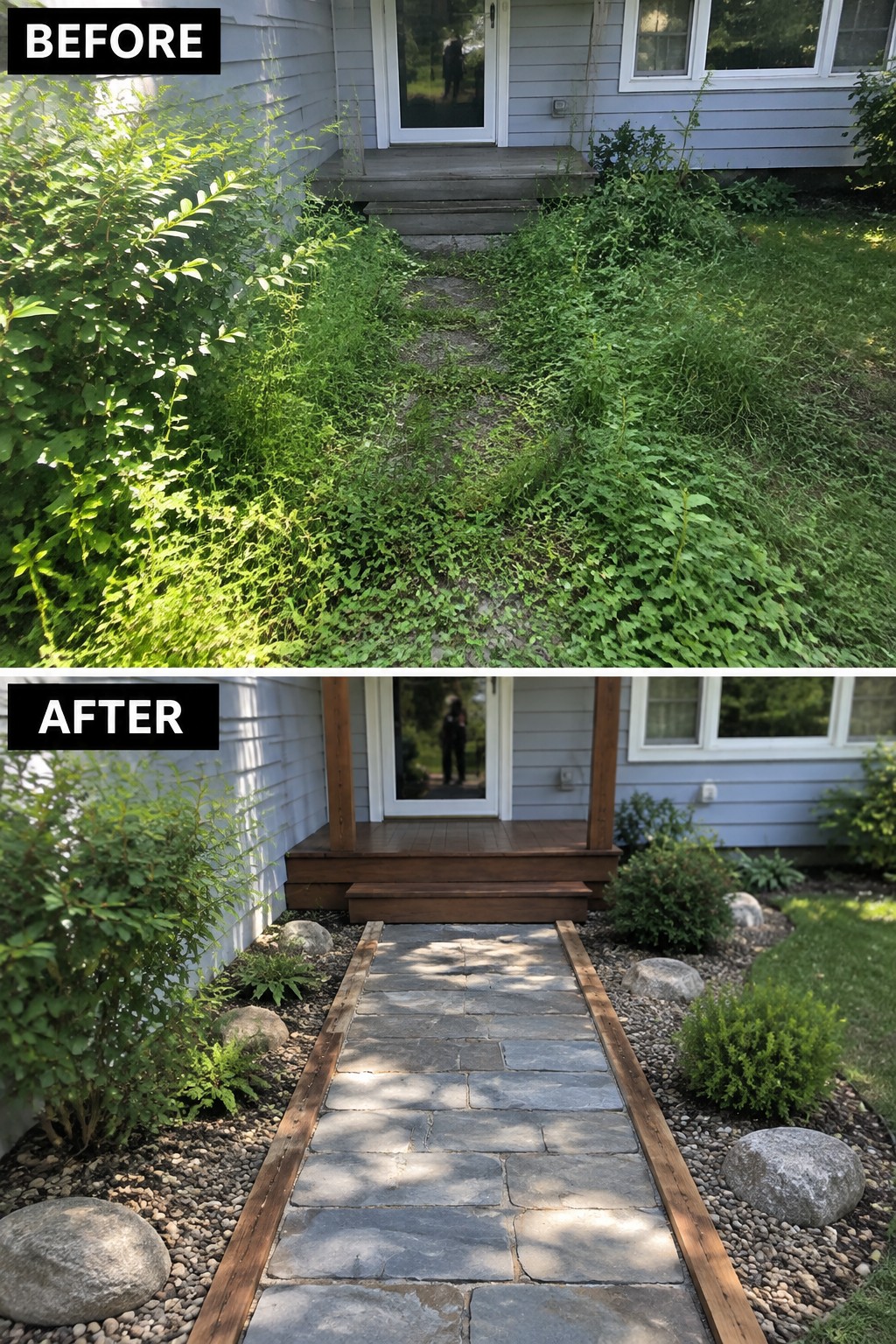
Clearing the thick weeds that had taken over the walkway made the biggest difference here. A simple stone path with wood borders now leads straight to the door and gives the whole front a much more organized feel. The gravel on either side keeps the planting contained and stops the mess from creeping back in.
This approach works well on homes where the front path has gotten lost in the landscaping. Start by removing the overgrowth completely, then lay a path wide enough for comfortable walking. Natural stone and wood trim hold up outside and blend with most house styles without needing a big budget.
Wrap Porch Columns In Stone
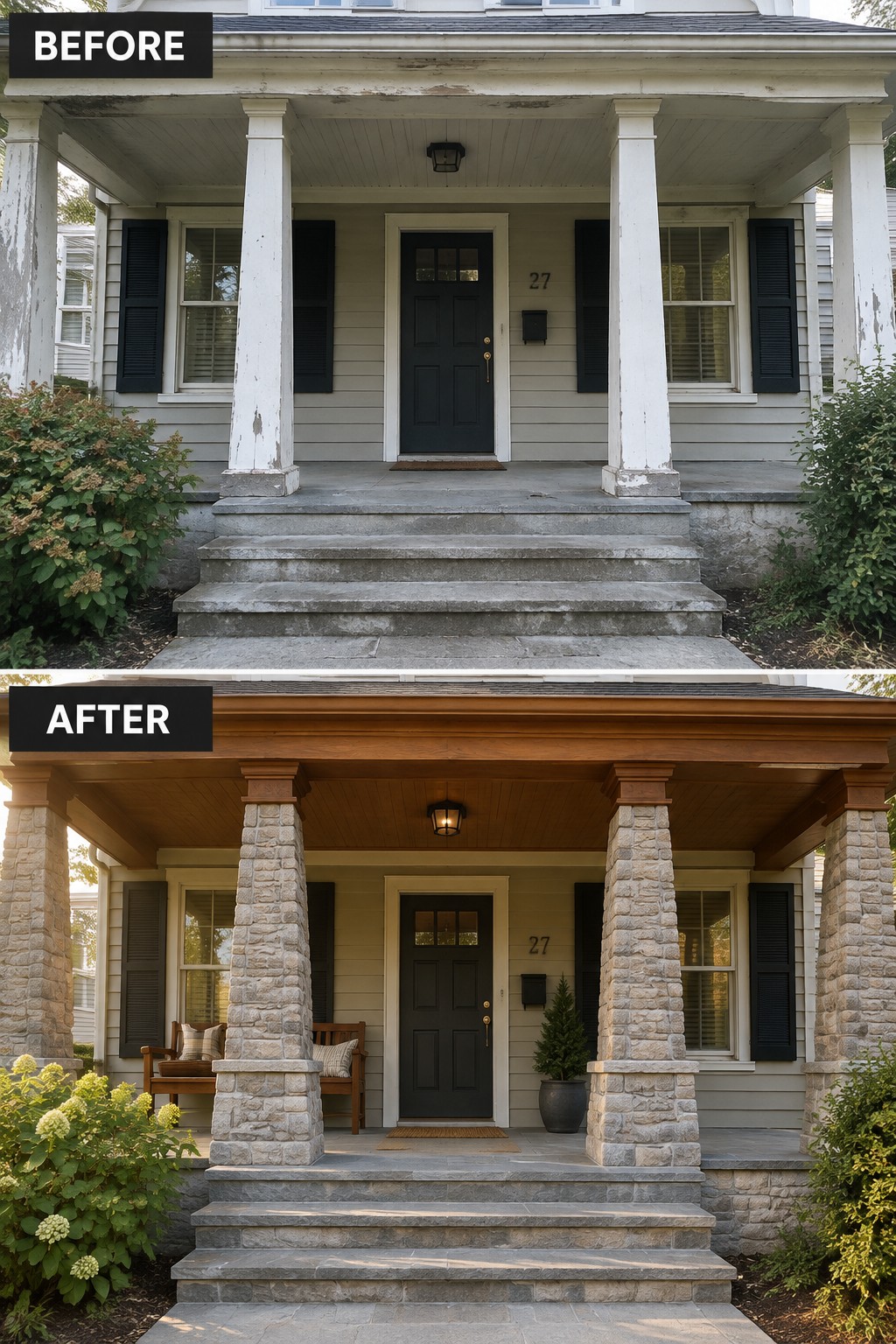
Many older porches start with plain or peeling columns that make the whole front feel tired. Covering them in stacked stone gives the structure weight and texture while keeping the original shape. The wood ceiling addition in this case ties everything together and warms up the space without major construction.
This approach works well on homes with simple column styles and concrete steps. Focus on the posts first, then add one or two wood beams overhead. It suits houses where the foundation and roof are still solid but the details need refreshing. Keep the stone color close to your siding so the change feels natural rather than forced.
Add A Wood Header To Frame The Entry
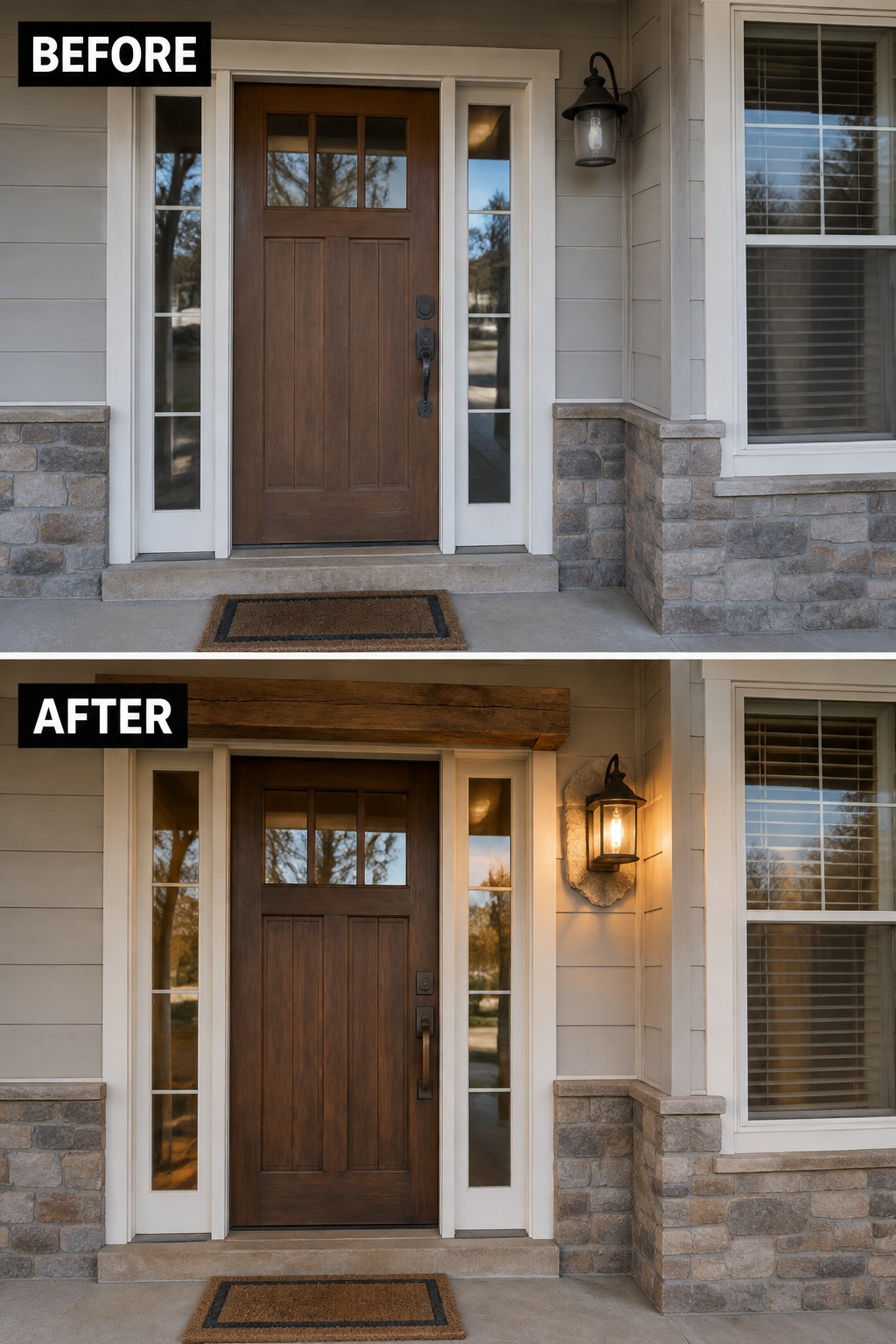
A plain front door can look a little lost when the trim and siding run straight across with nothing to break the line. Adding a thick wood header above the door gives the entry a clear top edge and makes the whole facade feel more put together. The change is simple but it shifts the entry from basic to intentional without touching the door itself.
This works best on homes that already have some stone or wood tones nearby. Match the beam to the door color or keep it a bit darker so it reads as a deliberate accent. Start with the header and a better light before you consider bigger updates like new siding or windows.
Give A Bare Porch A Defined Path With Wood And Stone
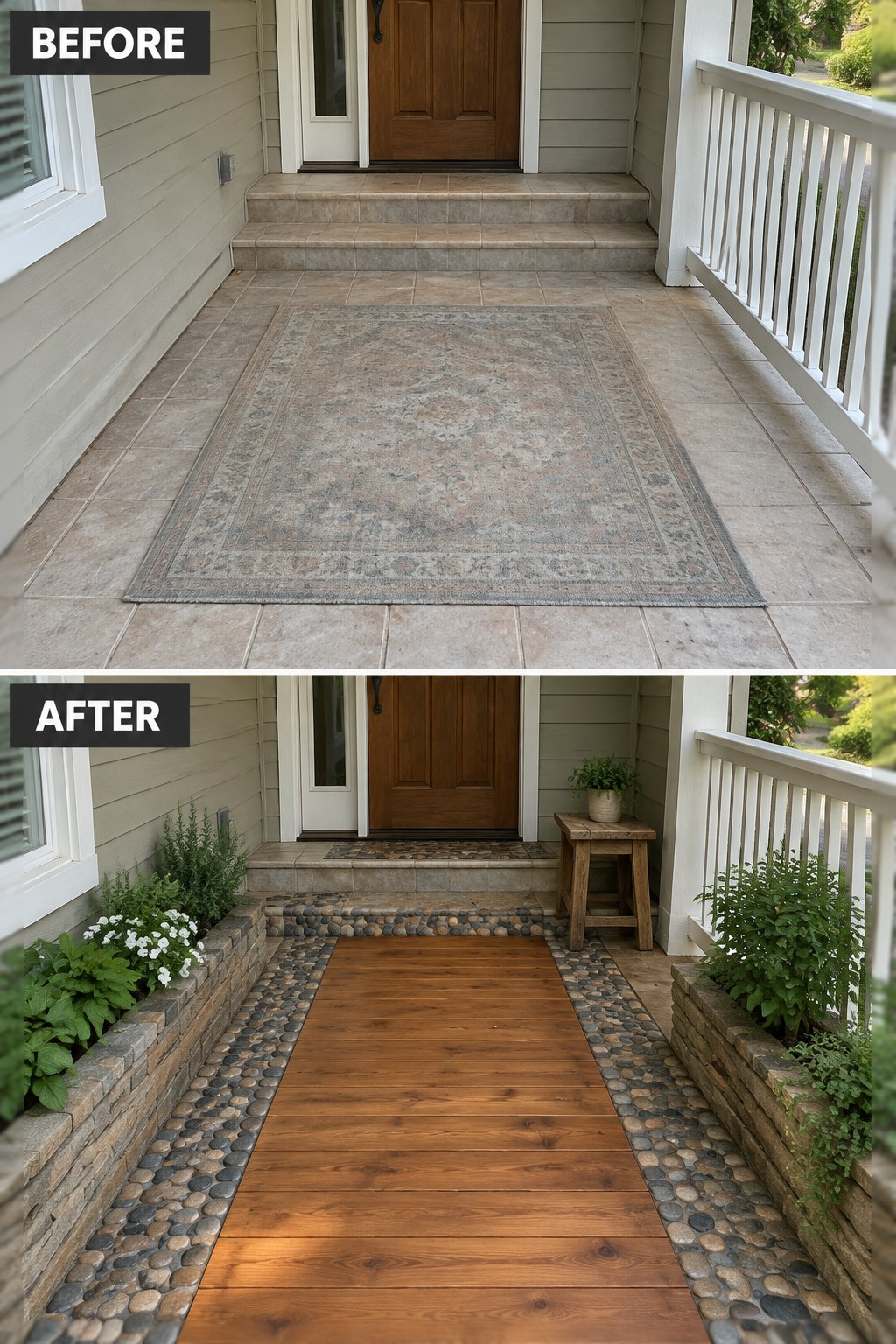
A plain tiled porch can feel unfinished when it just sits there with no clear direction. Replacing the center section with wood decking and adding pebble borders on both sides creates a walkway that leads the eye straight to the door. The borders also give you a natural place to add low planters, which softens the edges without taking up walking space.
This approach works well on front porches that feel too open or flat. Start with the path and borders first, then add plants that can handle sun and rain. Keep the wood and stone tones simple so they tie into the house rather than compete with it.
Add Wood Railings And Decking To A Plain Concrete Entry
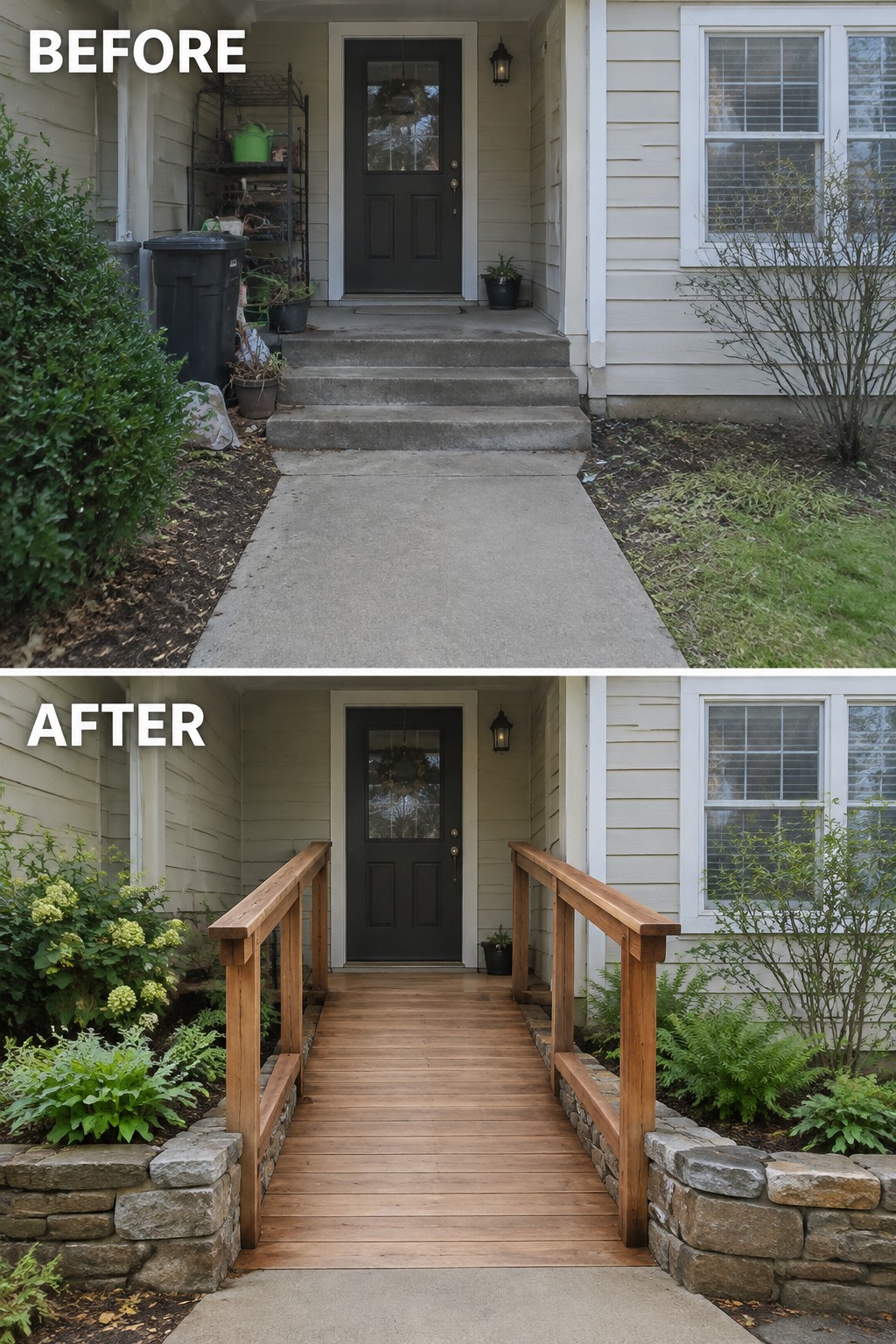
A bare concrete walkway and steps can make the front of a house feel unfinished, even when the rest of the exterior is in good shape. Switching to a wood deck surface with matching railings gives the entry a clear structure and makes it feel more connected to the house.
This approach works best on homes with simple, functional entries that lack any sense of enclosure. Keep the railings straightforward and let the wood and stone do the work, then add low stone borders on either side to help the new porch meet the garden without looking like an afterthought.
Add Stone And Wood Accents To A Plain Porch Foundation
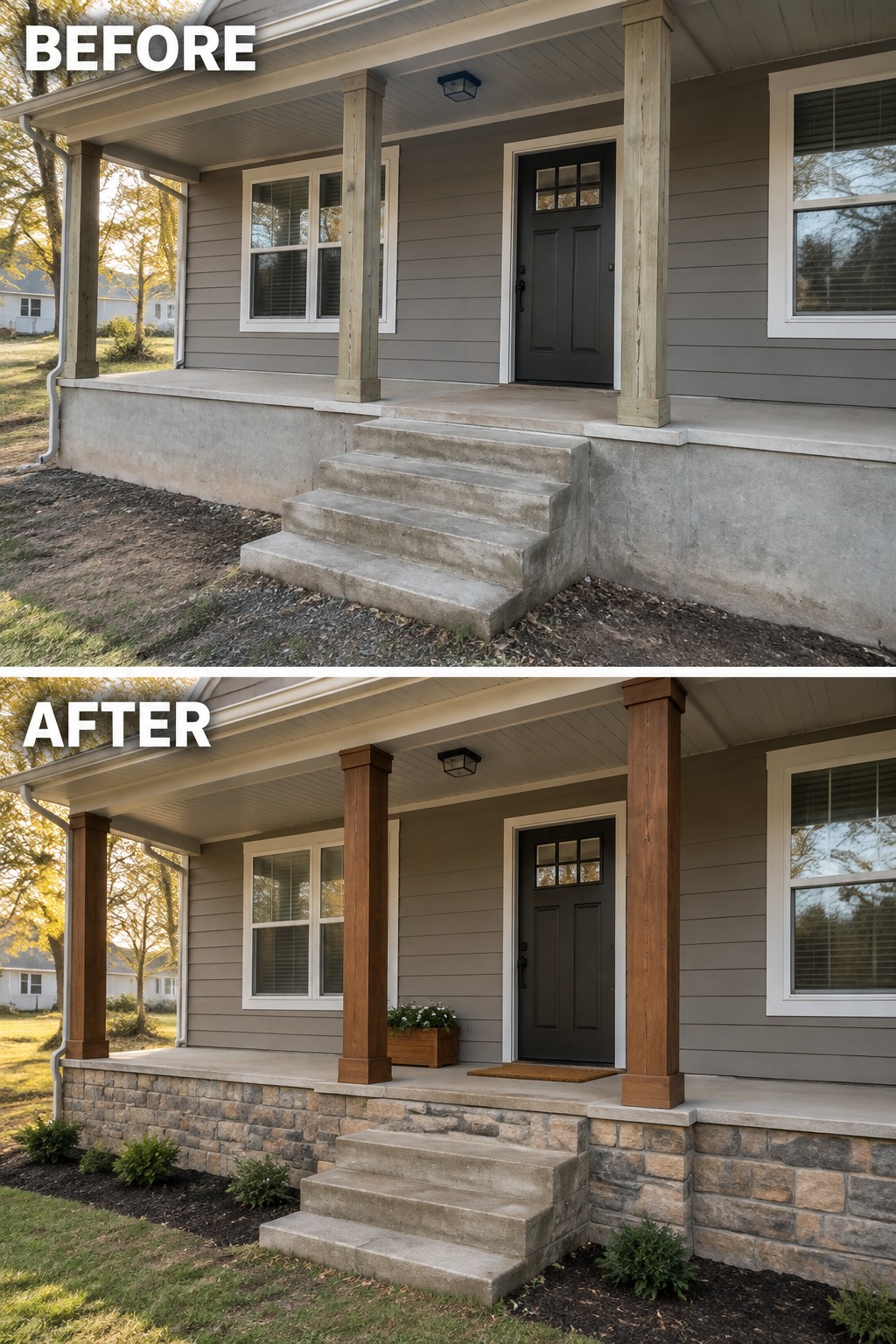
Covering the exposed concrete base with stone veneer and staining the porch posts a warm wood tone gives the whole entry a more finished look. The before image shows how bare concrete and raw posts can make even a simple porch feel incomplete, while the after version shows how those two materials add weight and cohesion without changing the structure itself.
This idea works best on homes where the porch sits above a visible foundation. Start with the lower section first, since the base affects how the rest of the porch reads. Keep the stone and wood tones close in warmth so they balance each other instead of competing.
Turn A Bare Concrete Porch Into A Seating Area
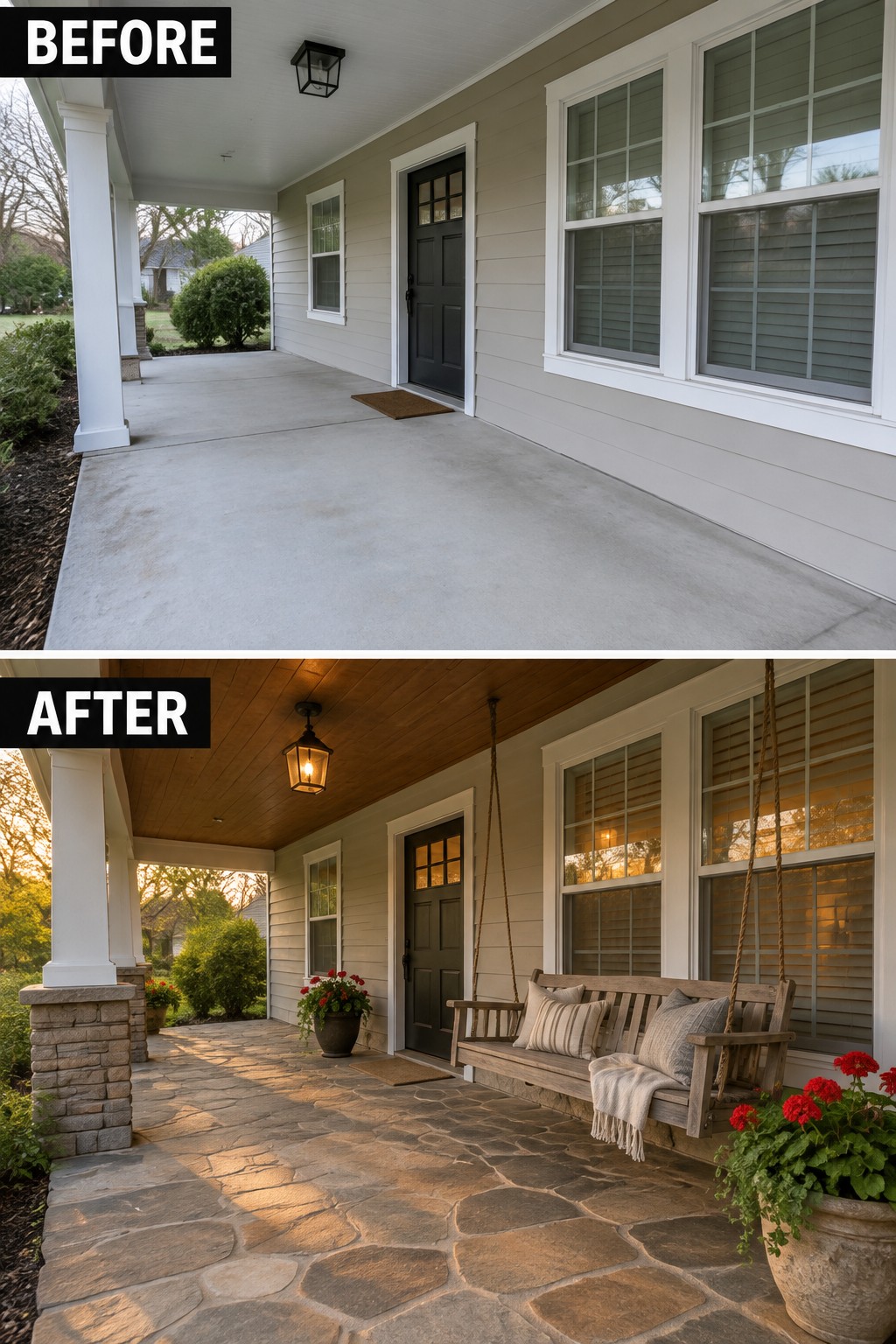
A plain concrete porch often feels like wasted space because there is nothing to invite you to stay. Switching the floor to stone pavers and adding a wooden swing gives the area a clear purpose so it starts to work like an outdoor room. The swing anchors the seating while the pavers add texture and warmth underfoot.
This idea suits any front porch that gets decent shade and has room for one solid piece of furniture. Begin with the flooring if the concrete is cracked or stained, then choose a swing or bench that fits the scale of the space. Keep extra plants in pots so you can adjust them without crowding the walkway.
Frame Your Entry With Wood And Stone
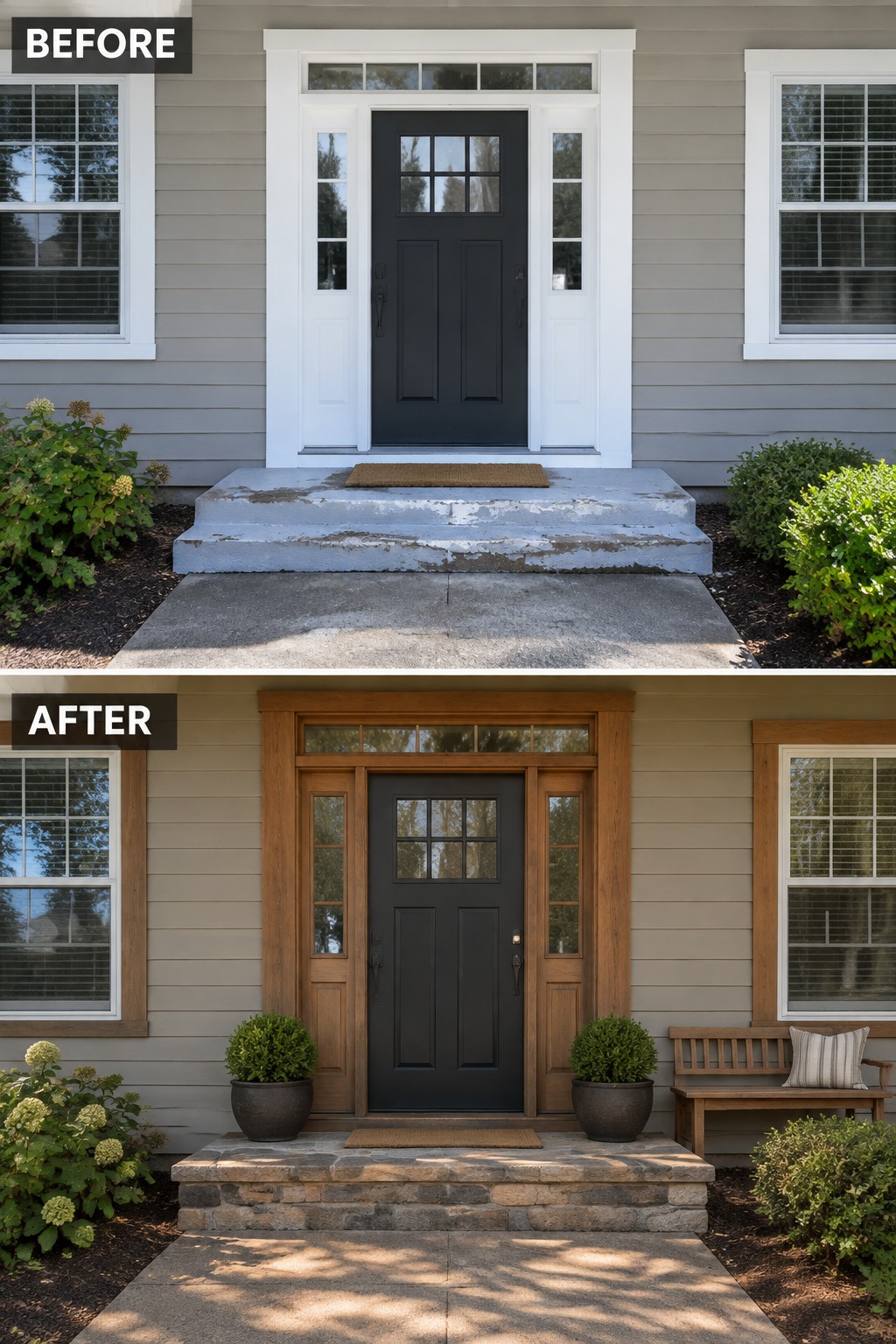
Adding a wood frame around the door and sidelights, along with stone on the steps, gives this entry a much more finished look. The wood creates a clear border that makes the black door stand out, while the stone replaces the plain concrete and adds texture that connects better with the house.
This idea works especially well on homes with simple siding where the entry feels flat. Match the wood tone to any existing trim, then pick a stone that sits well with your house color. Keep the rest of the porch uncluttered so the new frame and steps remain the main feature.
Bring Warmth To A Plain Porch With Wood And Stone
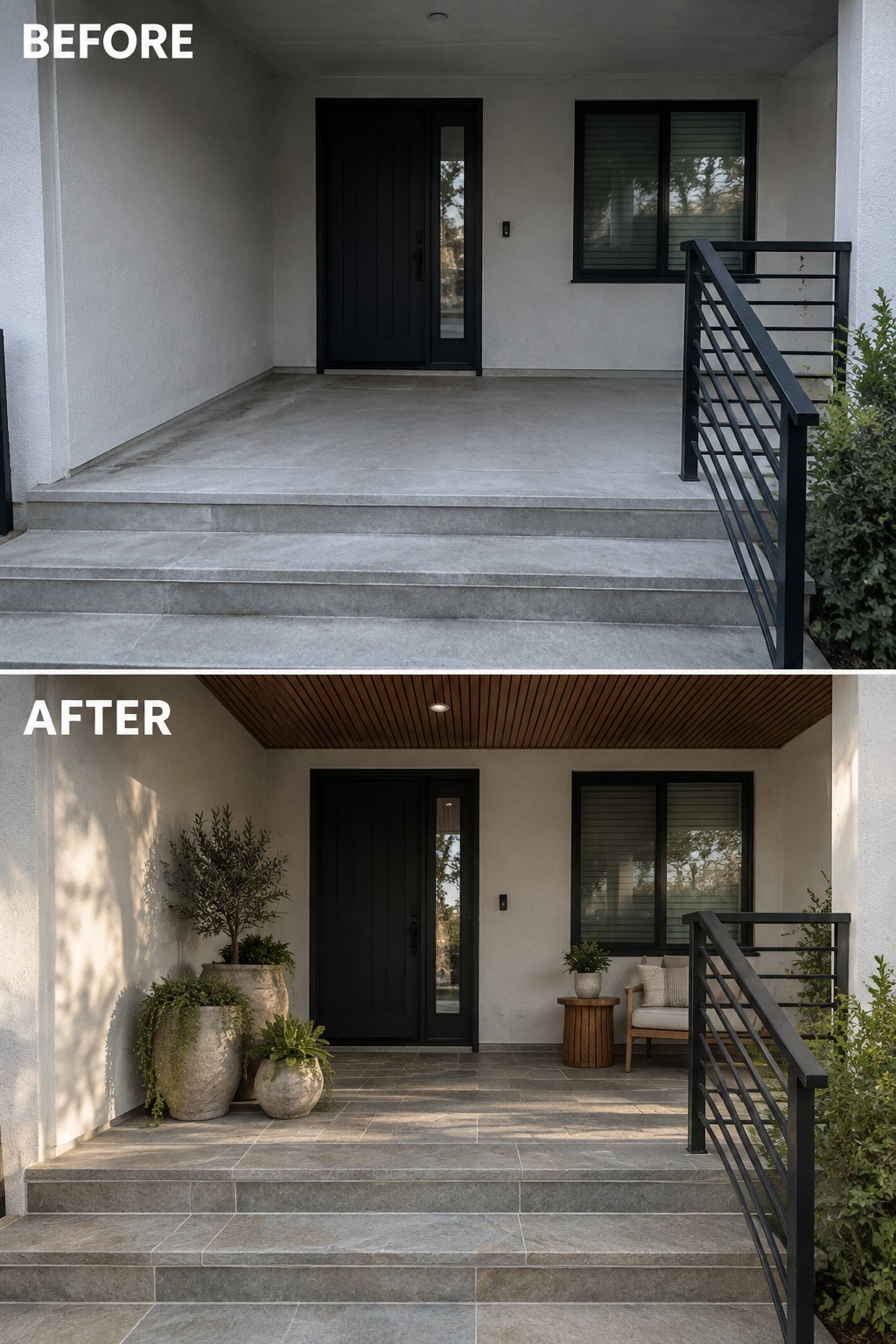
A bare concrete porch often feels unfinished because it lacks any sense of material or purpose. In this case the addition of a wood ceiling and stone tile flooring immediately changed the space from cold and empty into something that feels grounded and intentional. The planters add a bit of life without crowding the area.
This approach works well on homes with simple stucco or concrete exteriors where you want to add character without a full renovation. Start with the overhead and floor materials first, then layer in a few plants and one or two pieces of seating. Keep the scale modest so the porch still feels open and easy to move through.
Turn A Basic Stoop Into A Covered Porch
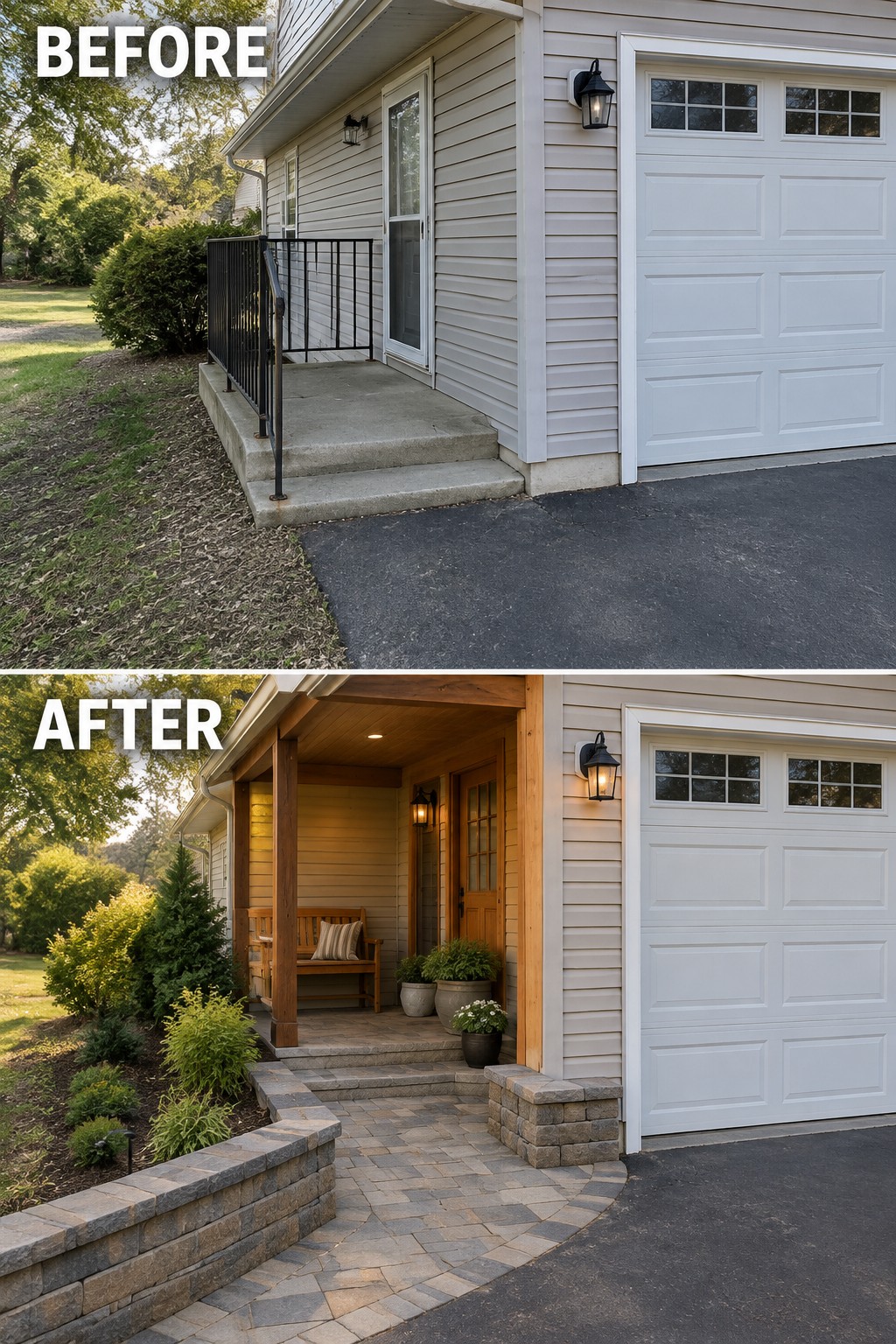
Many homes have nothing more than a small concrete step leading to the door. Extending the roofline and adding wood posts with stone bases turns that plain entry into an actual porch where people can sit or set down packages.
This approach works best on houses that already have a simple roof overhang to build from. Start with the structure and basic materials first, then add a bench and a couple of planters once the main frame is in place. Keep the posts in scale with the house so the addition feels like it belongs rather than tacked on.
Use Wood And Stone To Update A Basic Front Porch
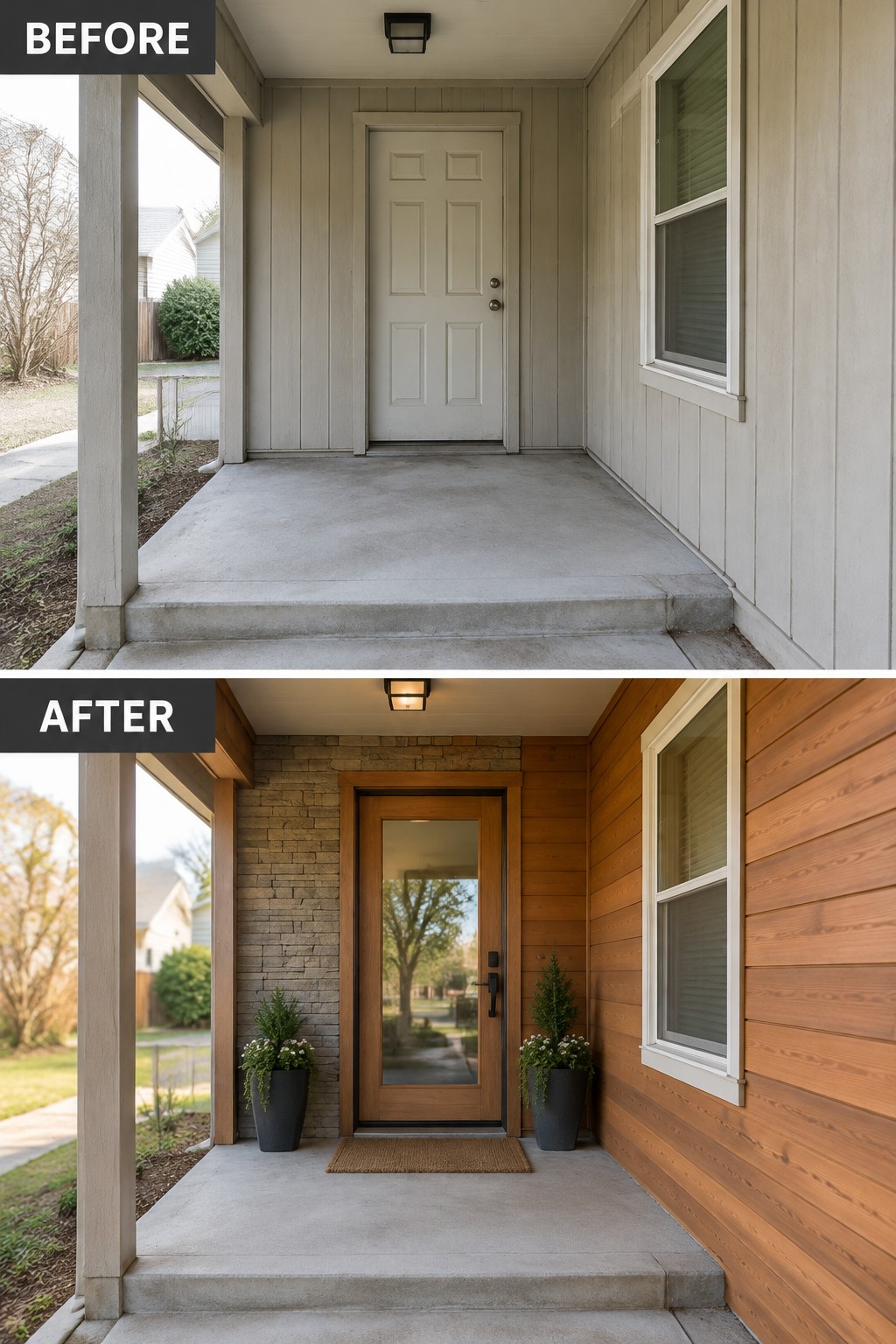
A plain porch with flat siding and bare concrete often feels unfinished. Adding wood cladding on the walls and a stone accent around the door brings texture and warmth that makes the entry feel more connected to the house.
This idea suits homes with simple exteriors where a full rebuild is not practical. Focus on one or two materials first, keep the planters simple, and let the natural tones do the work.
Define Your Front Entry With Wood And Stone
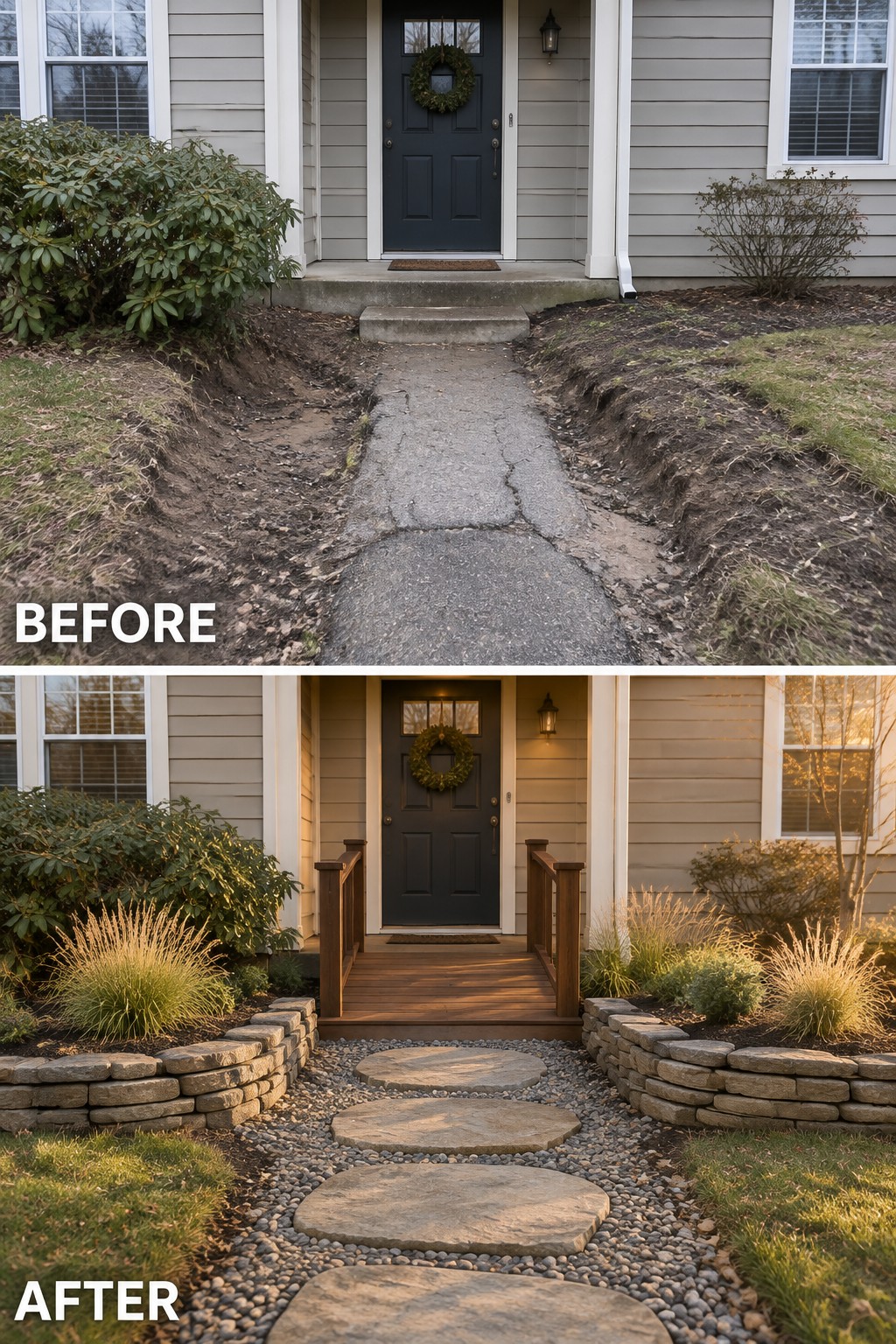
A cracked concrete path and bare dirt slopes make any front door feel unfinished. Adding a small wooden porch platform with simple railings and replacing the walk with stone stepping pads set in gravel instantly gives the entry a clear shape and purpose. The stone retaining walls on both sides keep the beds neat and stop erosion, which matters on sloped yards like this one.
This approach works best on houses with a short walk from the street and a plain concrete slab. Start with the hardscaping and path before adding plants or lighting. Keep the wood tones warm and the stone natural so the materials tie the porch to the surrounding beds without looking overdone.
Frequently Asked Questions
Q: How do I protect the wood accents from rain and snow? A: Apply a good sealant every couple of years. This keeps moisture out and prevents warping. Check the surface each spring for any spots that need touch ups.
Q: Should I go with rough cut stone or smoother slabs for the steps? A: Rough cut stone gives more grip when it is wet. It also matches the natural look of the wood better. Start with samples from your local yard to see what feels right underfoot.
Q: What if the wood starts to gray out after a few seasons? A: A light sanding brings back the original color fast. Then reseal it right away.