

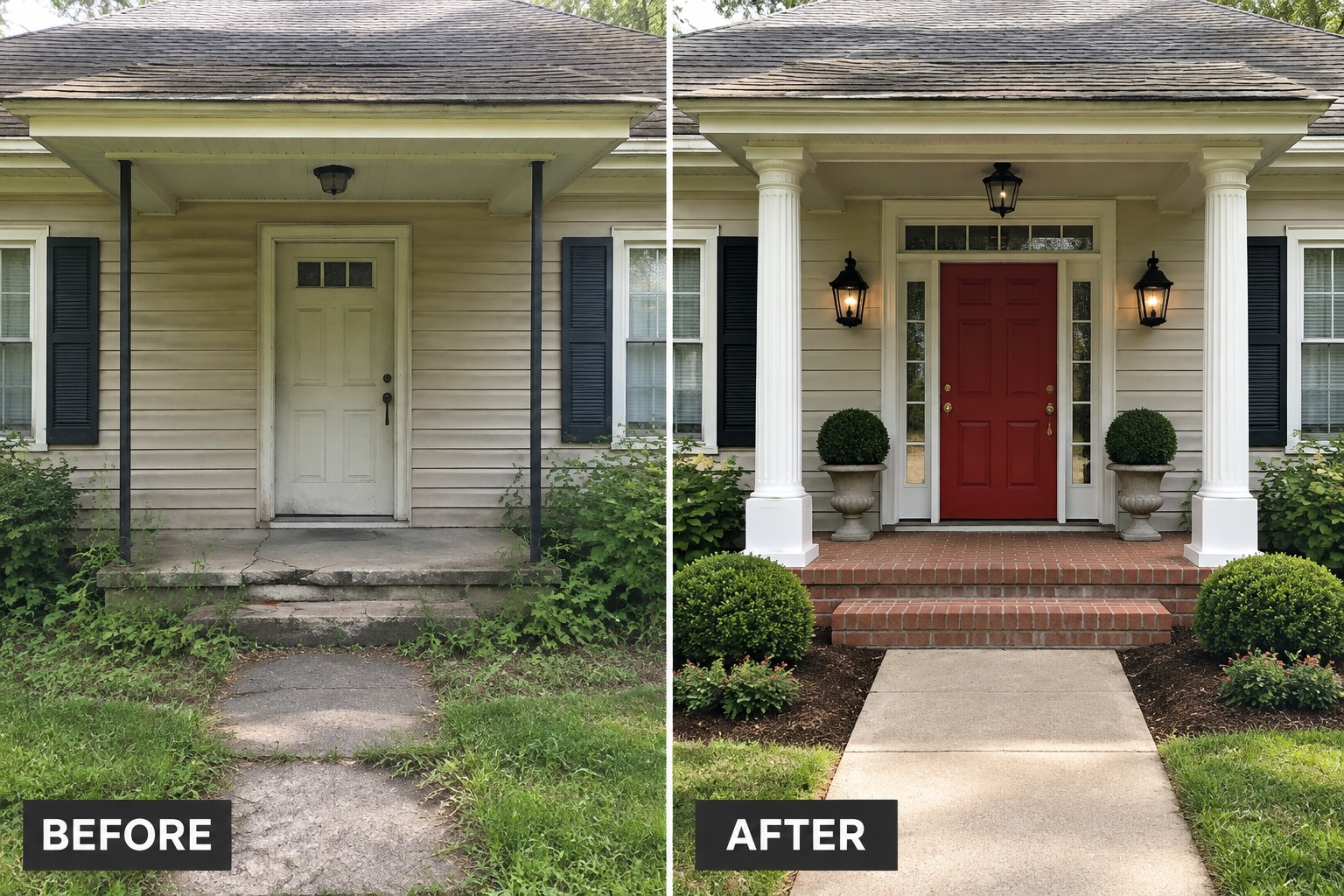
The front porch sets how the rest of the house reads from the curb, and colonial styles in particular depend on those matching lines to keep everything feeling steady.
I often look at the door area first because that is where small fixes like even lighting or balanced trim tend to pull the facade into better shape without a full repaint.
Paired elements do a lot of the work here.
It is surprising how much difference it makes when the seating or planters mirror each other instead of sitting wherever there is space.
Trying a few of these paired updates on your own entry can show whether that kind of order suits the house before committing to larger changes.
Frame The Entry With Matching Columns
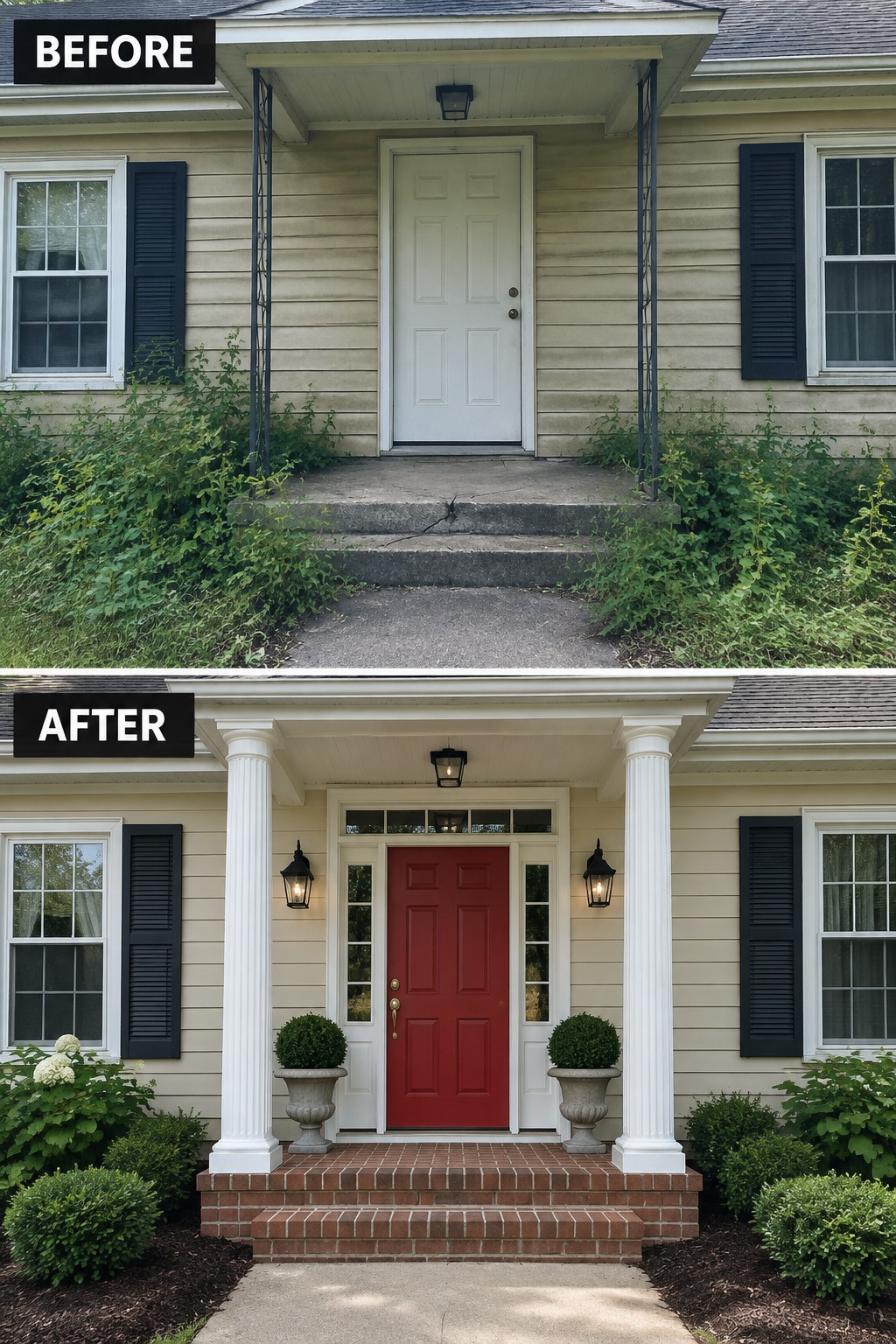
Adding a pair of matching columns on either side of the door instantly gives the porch a clear shape and makes the whole front feel more intentional. The before photo shows a flat facade with nothing to guide the eye toward the door, while the after shows how two simple white columns create balance and pull the entry together without any major construction.
This approach works especially well on colonial homes where the goal is symmetry. Keep the columns in proportion to the porch height, match the planters on each side, and choose a door color that stands out against the siding. The result feels finished even before you add lighting or extra planting.
Add Symmetry With Matching Planters And Railings
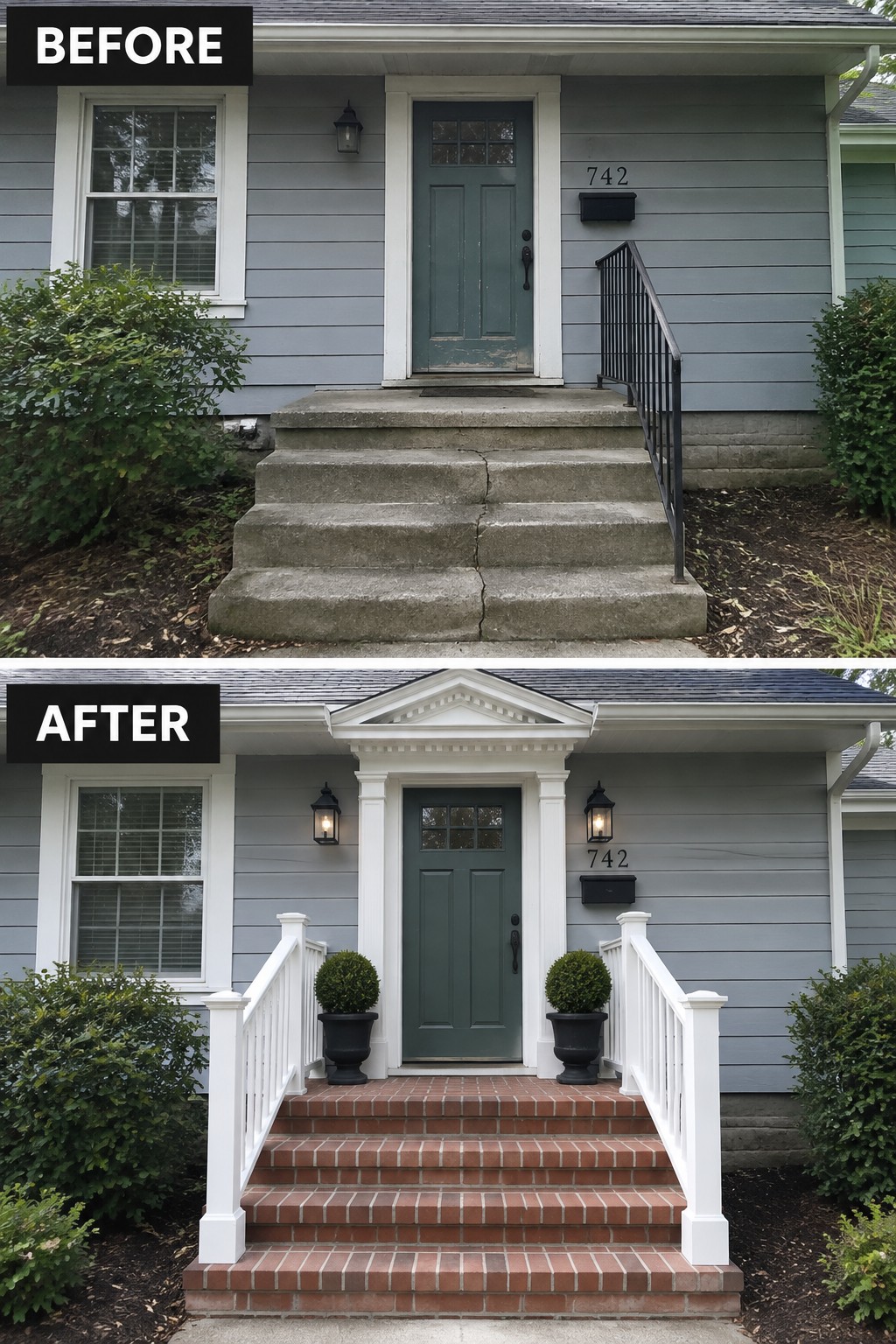
The biggest shift here comes from adding matching planters and white railings on both sides of the door. The old cracked steps felt off balance and unfinished. Once the brick stairs went in and the same elements were placed evenly, the entry suddenly looked planned rather than just patched together.
This approach works well on older homes that already have a centered door but need more structure. Pick one or two matching items, keep them the same size, and place them the same distance from the door on each side. That single move does more for curb appeal than adding lots of different pieces.
Frame The Porch Entry With Symmetrical Hedges
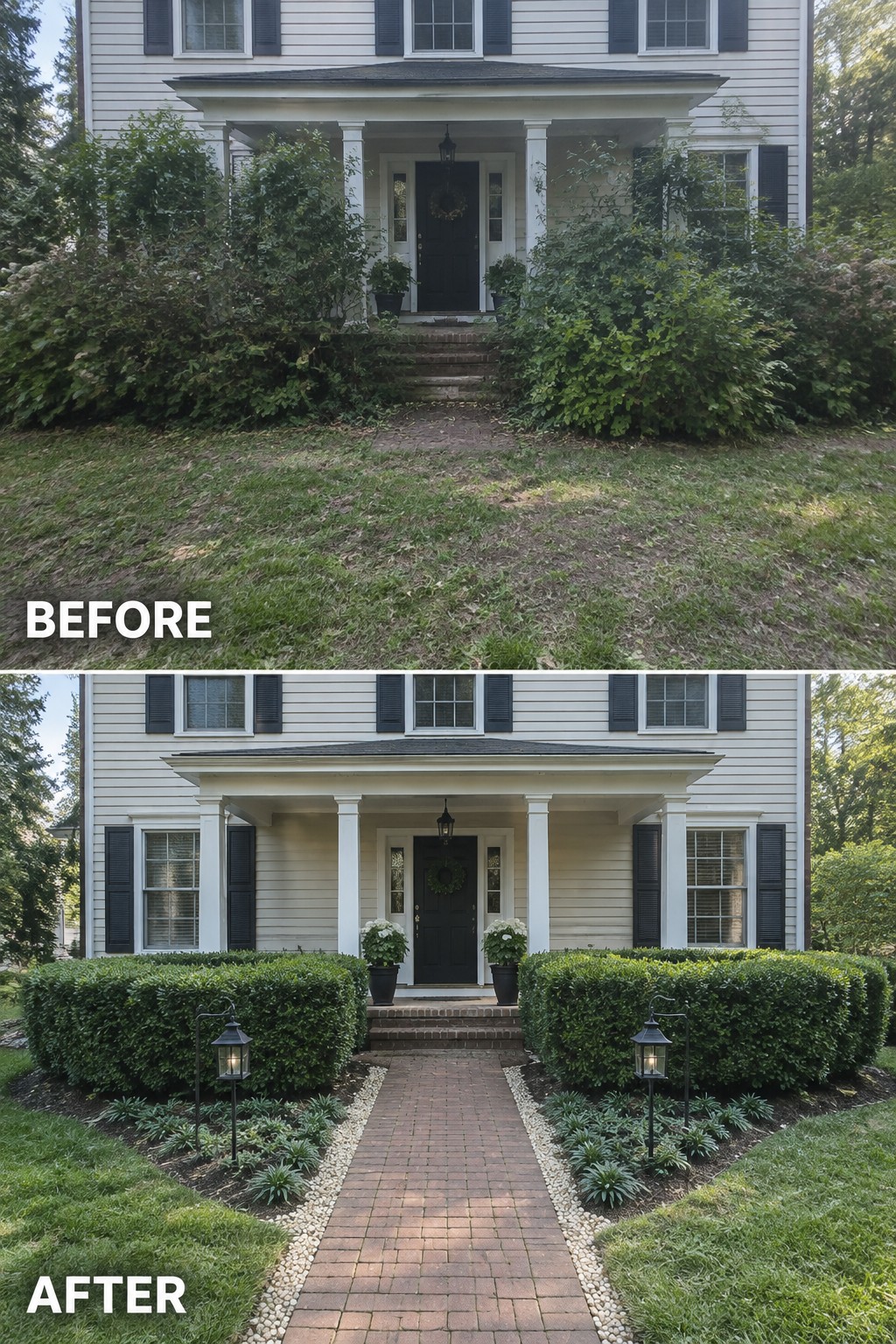
The main change here is replacing loose, overgrown shrubs with low, rectangular boxwood hedges that sit at matching heights on either side of the steps. This simple swap gives the porch a clear frame so the door and columns read as the focal point instead of disappearing behind greenery. The new brick path reinforces the center line and makes the whole entry feel intentional rather than accidental.
This idea suits colonial houses that already have balanced windows and a centered door. Clear the overgrowth first, then plant or shape hedges so each side mirrors the other in height and distance from the walk. Keep the beds narrow enough that the path still feels open, and use a simple edge like gravel to hold the shape over time.
Give A Bare Porch A Clear Purpose
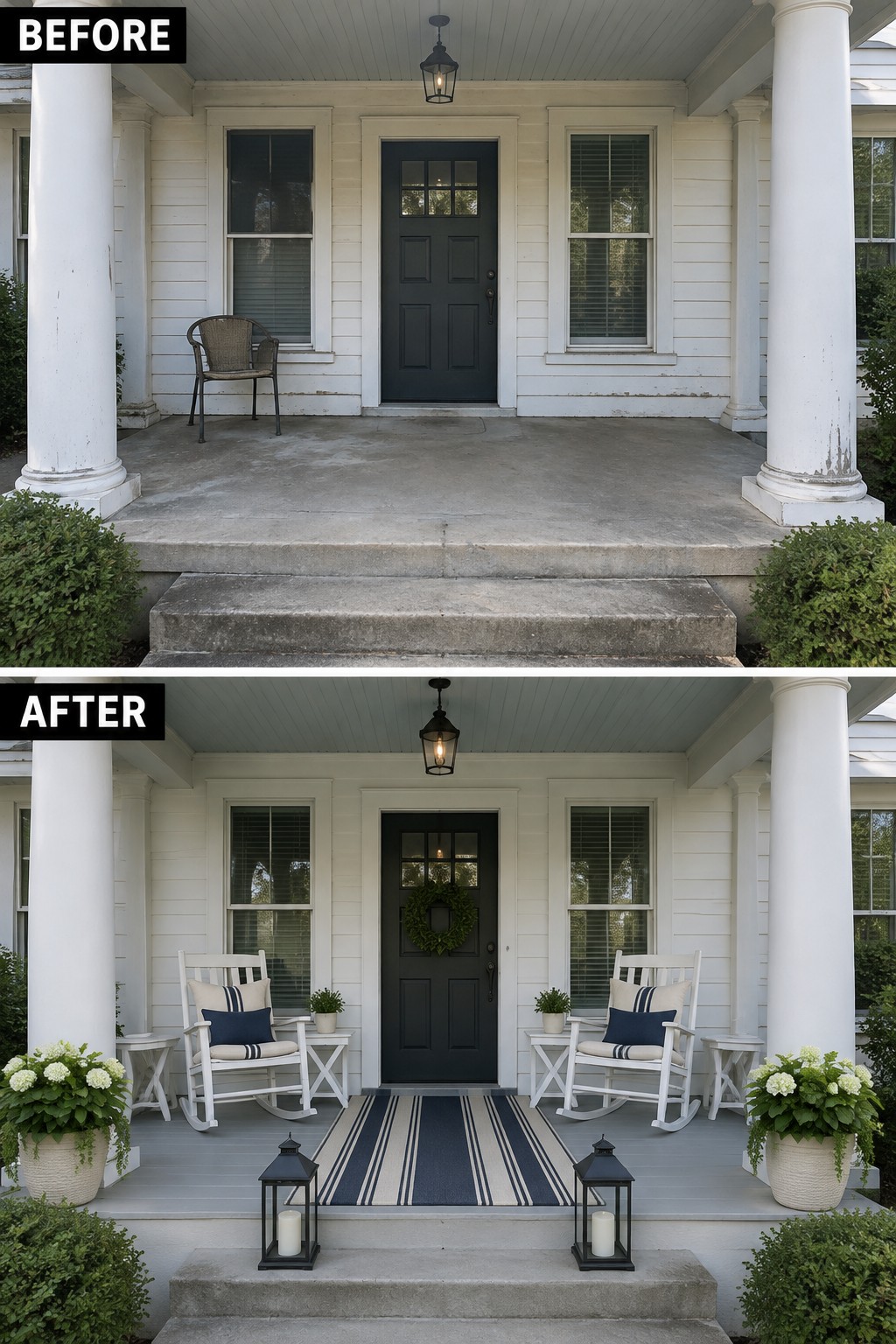
A front porch with nothing but one stray chair tends to feel like leftover space rather than a real part of the house. Adding two matching rocking chairs, a simple striped rug, and a pair of lanterns gave this porch a reason to exist and made the entry feel balanced without crowding it.
This idea works best on homes that already have a centered door and even windows. Place the chairs evenly on either side, keep the rug just large enough to hold the seating area, and skip anything that blocks the walkway. The result feels intentional and still leaves room to move.
Balance The Entry With Matching Lanterns And Planters
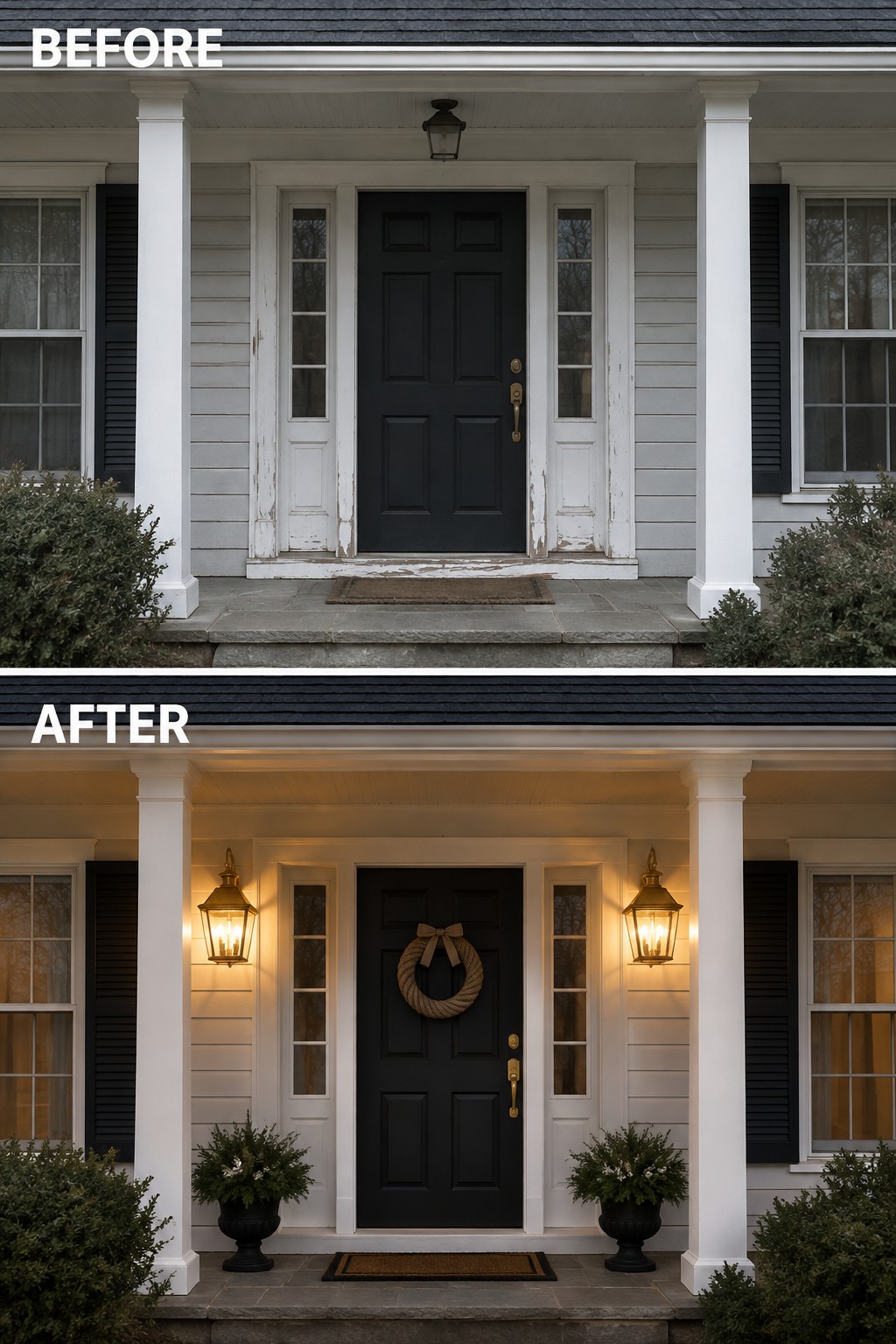
The before photo shows a plain front door with no side lighting or flanking elements, which left the entry feeling flat and unfinished. Adding a pair of matching lanterns and large planters on either side creates instant symmetry and draws the eye straight to the door. This simple change makes the whole facade feel more pulled together without any major construction.
This approach works especially well on colonial homes where the architecture already leans formal. Place the lanterns at the same height on both sides of the door and choose planters that sit at a similar scale. Keep the planting simple so the focus stays on the balanced shape rather than competing colors or textures.
Add Shutters To Strengthen Symmetry On A Colonial Facade
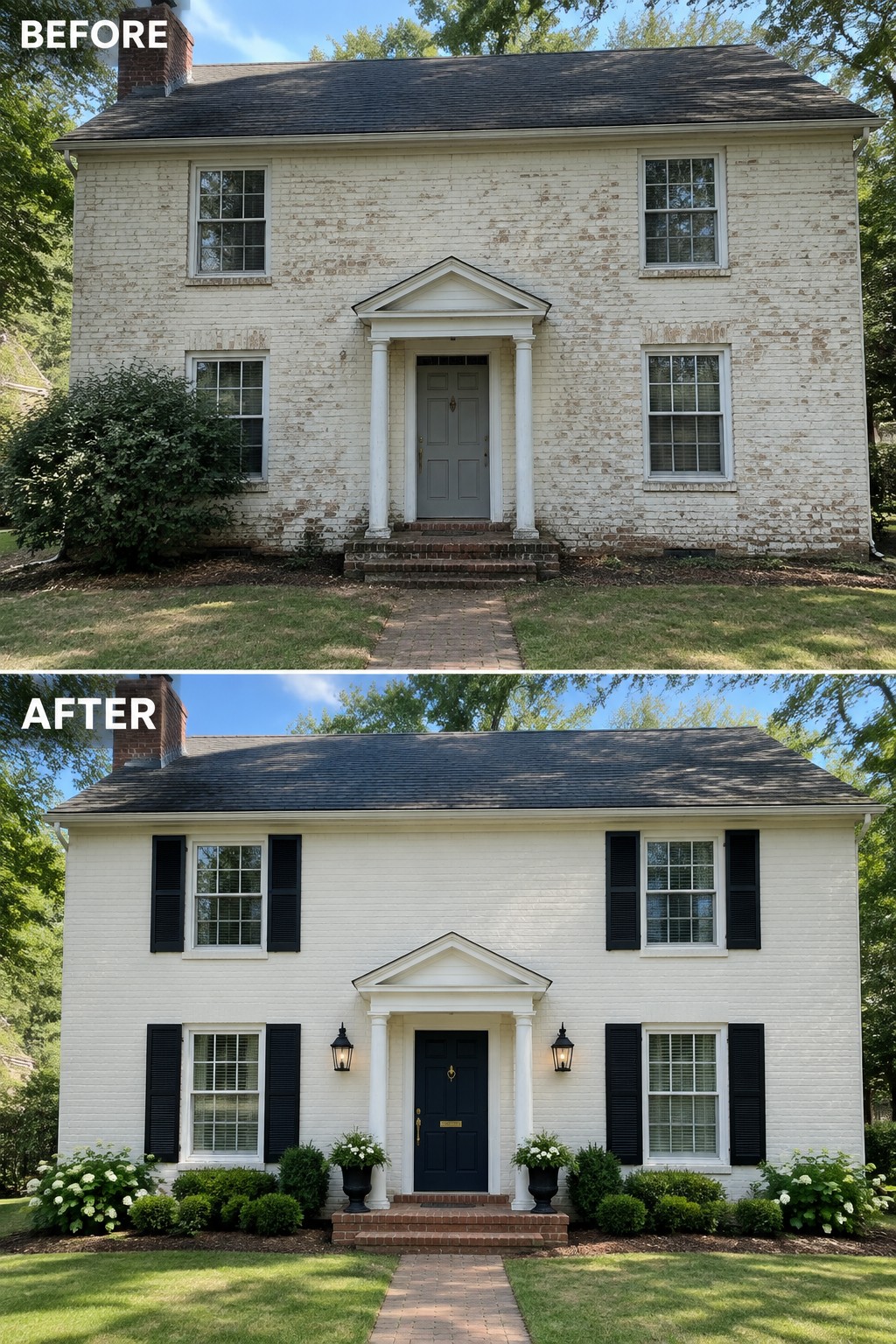
Many older colonials can look a little plain when the windows have no trim or framing. Adding black shutters to every window gave this house clear lines and better balance without changing the brick or roof. The darker front door helped anchor the center and made the entry feel more defined.
This works best on homes that already have a symmetrical layout. Match the shutter size to your windows and keep the color simple so it reads as part of the architecture rather than decoration. Start with the shutters and door color before adding planters or lighting.
Create Symmetry With Matching Planters
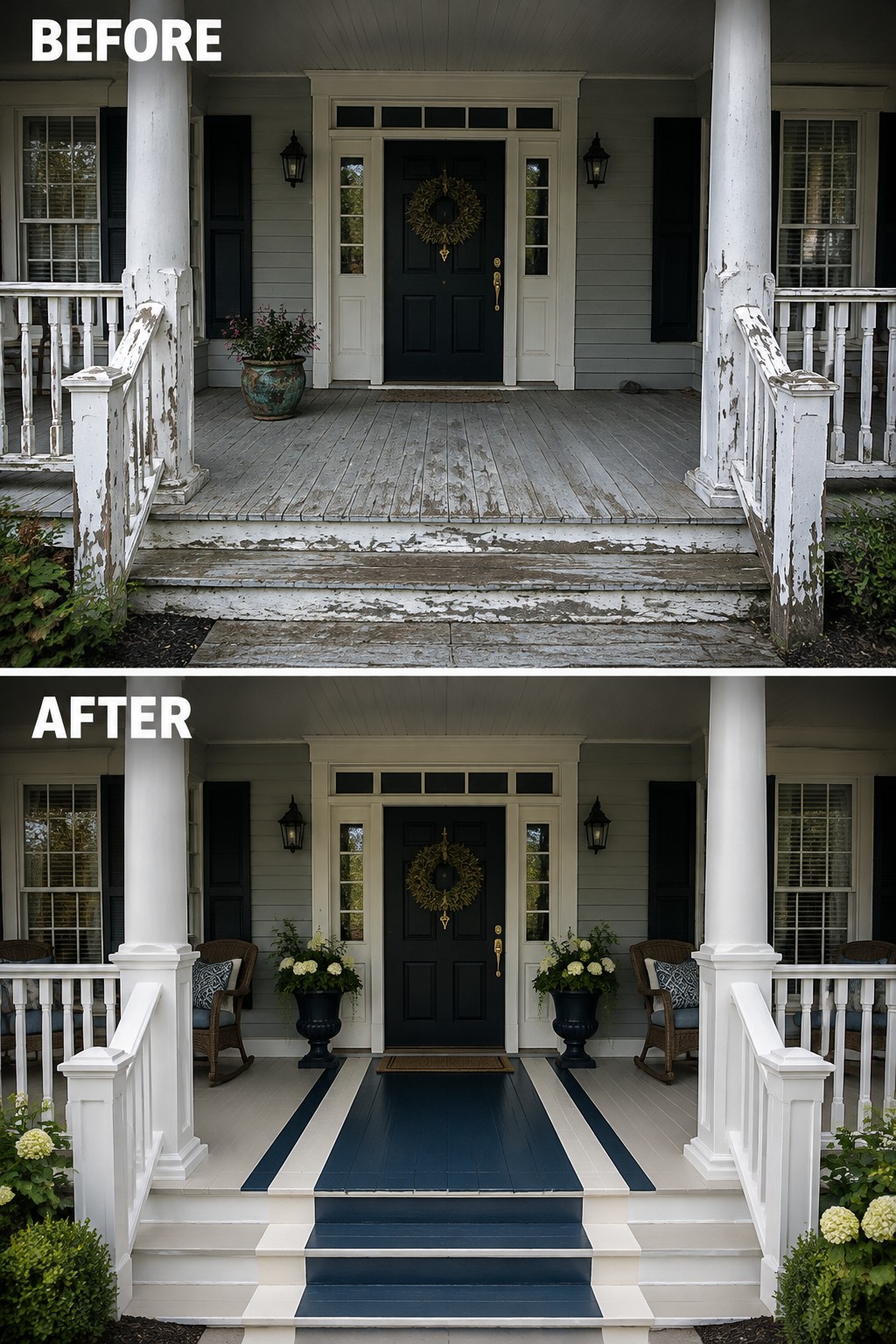
The biggest shift here comes from placing two large, identical planters on either side of the door. That simple move gives the whole entry a balanced look that feels intentional instead of scattered. The striped runner down the center reinforces the same idea by pulling the eye straight to the door instead of letting the porch feel wide and empty.
This approach works especially well on colonial homes where the architecture already leans formal. Start by painting the porch and railings so the new planters stand out cleanly, then choose pots of the same size and color. Keep the rest of the styling light so the symmetry stays the main feature rather than getting lost in extra furniture or decor.
Add Shutters And A Painted Door To Frame The Entry
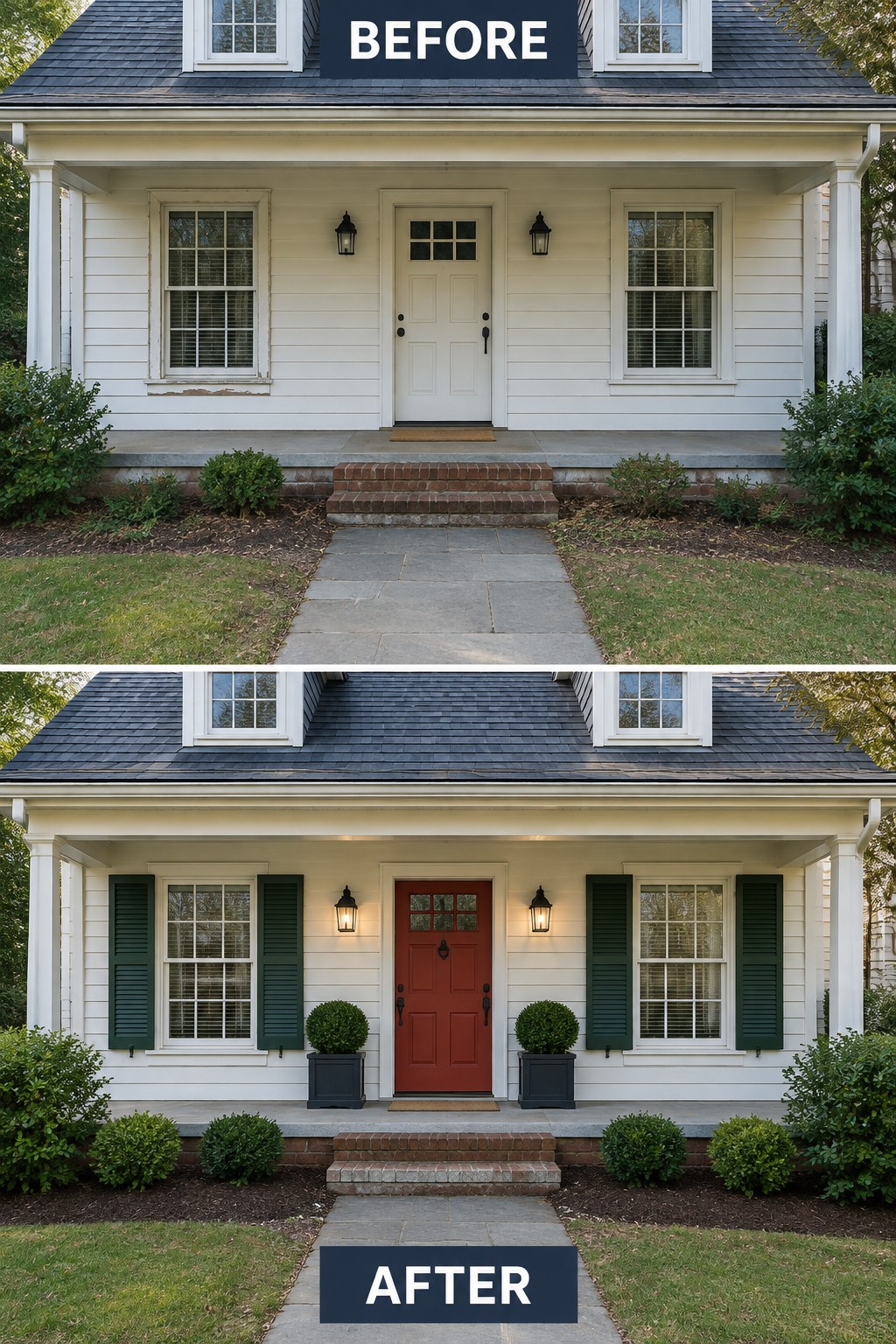
A plain white colonial often looks flat because nothing pulls the eye to the center. Adding matching shutters on either side of the windows and switching the door to a strong color gives the whole front a clear focal point. The change is simple but it makes the house feel finished instead of bare.
This approach works best on houses that already have a centered door and evenly spaced windows. Keep the shutter color deep and the door color bold but not too bright so the look stays classic. Start with the shutters and door before adding planters or lighting so the main lines stay clean.
Add Columns And A Pediment To Create A Symmetrical Entry

Adding a classical portico with two columns and a pediment gives a plain colonial facade a balanced, finished look. The before photo shows a flat overhang with worn paint and no real structure around the door, while the after version frames the entry properly so the whole front feels centered and intentional.
This approach suits older colonials that lost their original porch or never had one. Keep the scale modest so the new details match the house size, and match the trim color to the existing siding for a seamless result.
Add Matching Planters And Lanterns For Symmetrical Entry Details
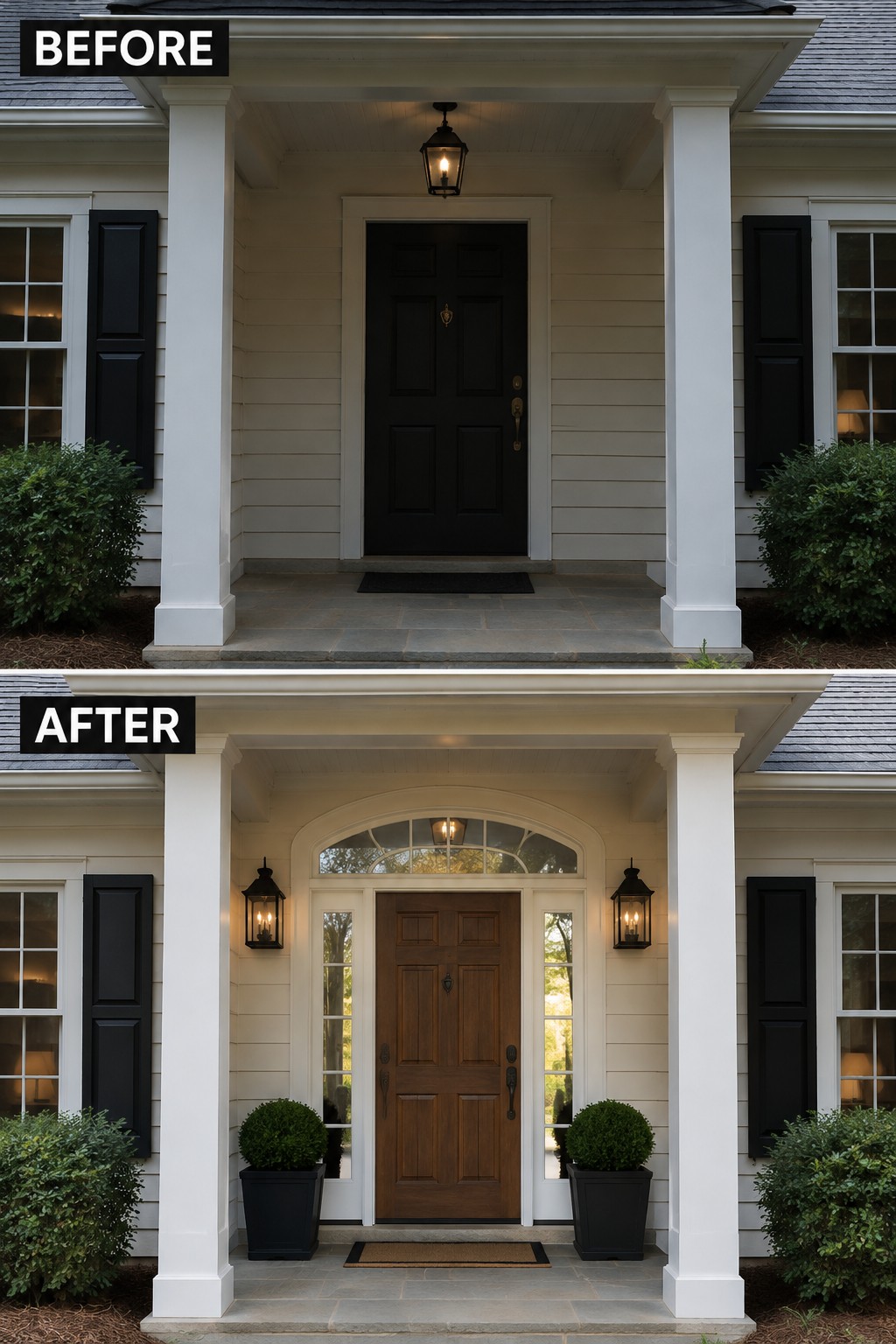
The before photo shows a basic front entry with a dark door and little else to draw the eye or create balance. In the after photo the door was swapped for a wood version with sidelights, and a pair of black planters with round shrubs now sits on either side, matched by lanterns mounted on the columns. Those two simple additions give the whole facade a centered, finished look without any major construction.
This approach works best on colonial or traditional homes where the architecture already has some symmetry. Place one planter and one light on each side of the door at roughly the same height and distance, and keep the plants compact so they do not block the walkway. Choose weatherproof materials and repeat the same container style so the balance stays clear even as the seasons change.
Define The Entry With A Brick Path And Hedges
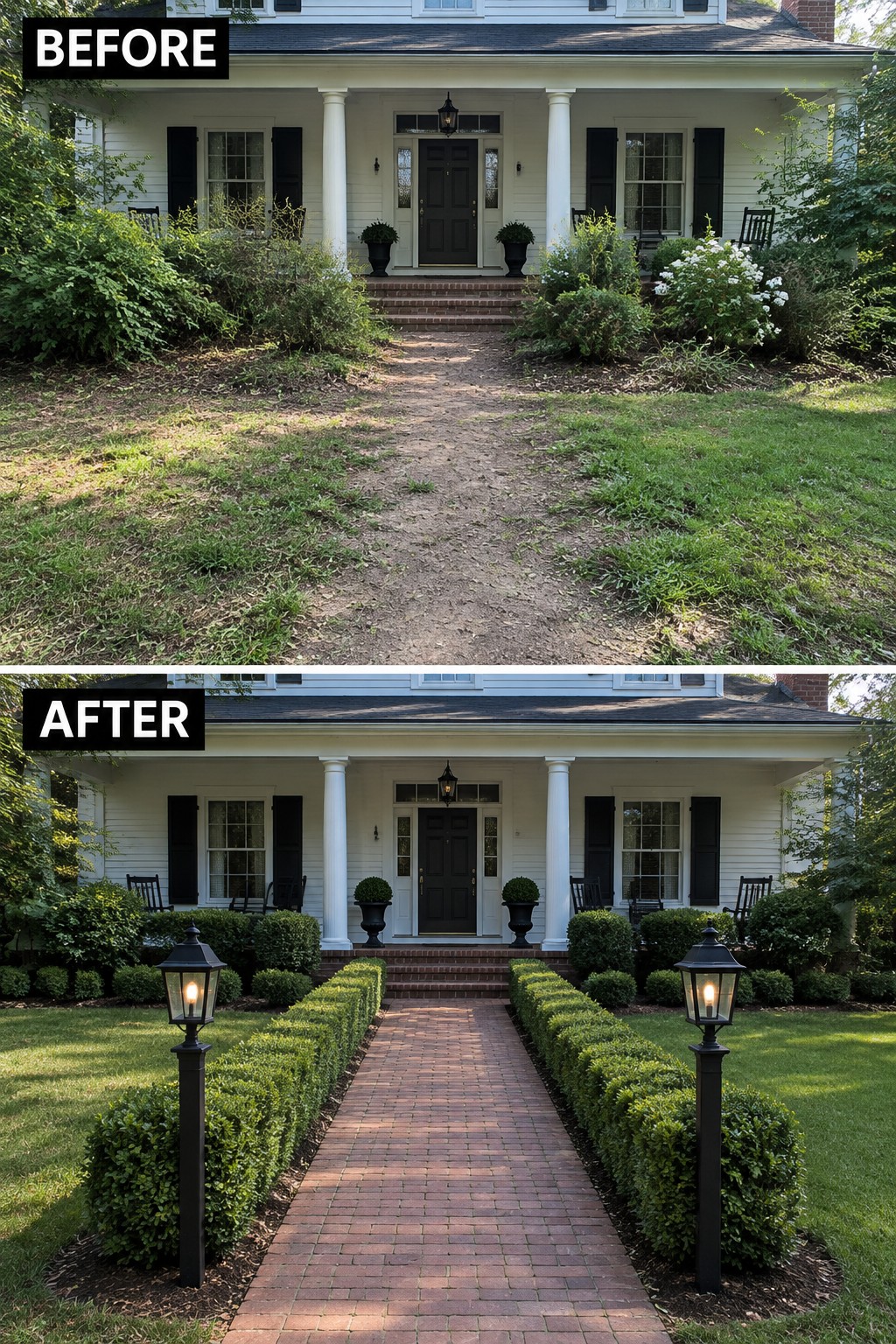
A dirt path and loose shrubs make the front of a house feel unfinished, even when the porch itself looks fine. Switching to a straight brick walkway lined with low, clipped hedges gives the whole approach a clear shape and makes the house feel more settled.
This idea works best on colonial or traditional homes where symmetry already exists. Keep the plantings simple and repeated on both sides, add a pair of lights near the start of the walk, and make sure the path is wide enough for two people to pass comfortably. Start with the hardscaping before worrying about extra decor.
Add Symmetrical Railings To The Front Porch
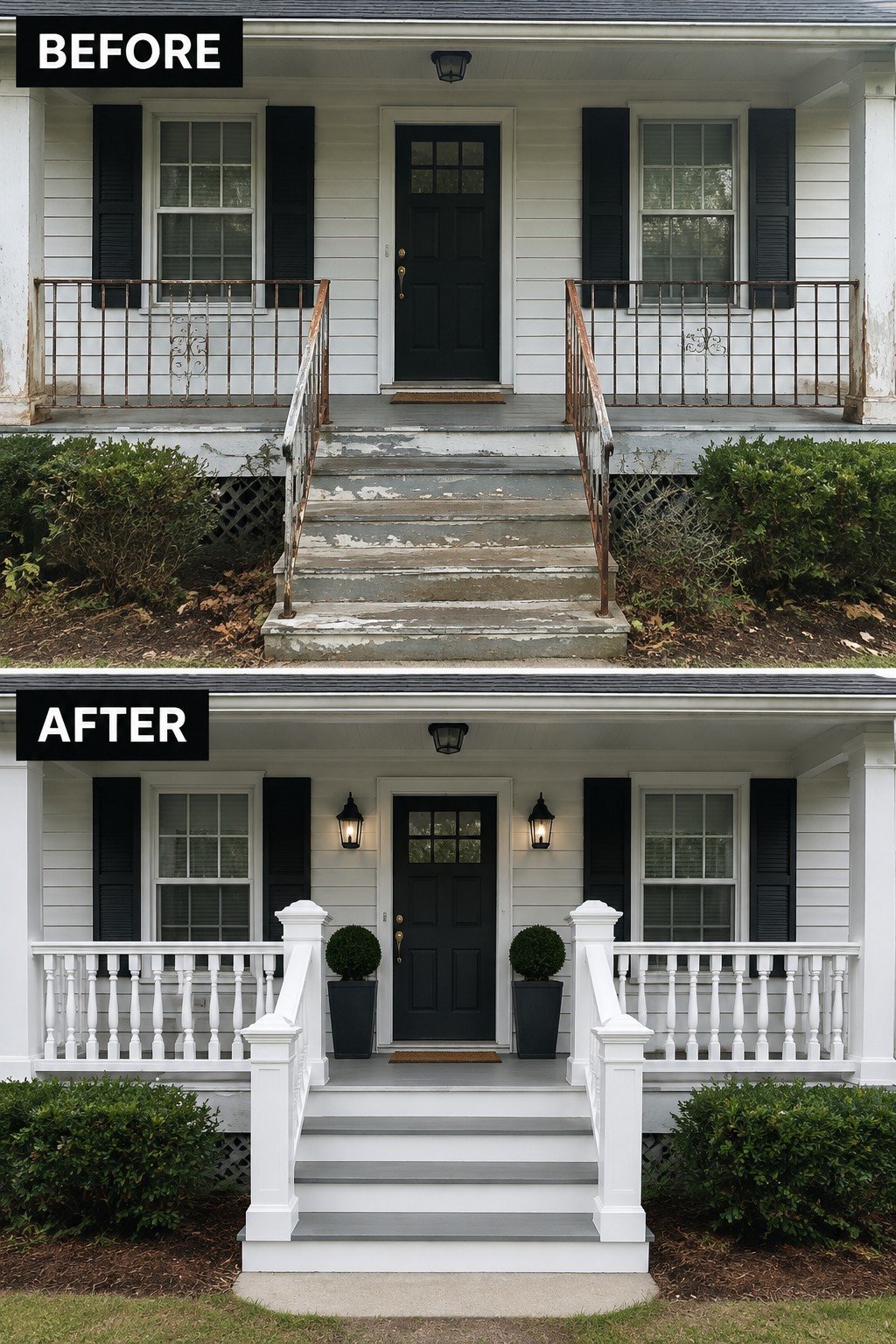
The biggest change here is swapping the old rusty railings for clean white ones with matching posts on both sides of the steps. This simple swap gives the whole entry a balanced, finished look and makes the door feel more centered and welcoming. The new railings also tie in nicely with the existing shutters and trim.
This idea works especially well on colonial homes where the entry already has some symmetry to build on. Focus on the railings and posts first before adding planters or lights. Keep the scale modest so the porch still feels open and the walkway stays easy to use.
Use Matching Planters To Frame The Front Door
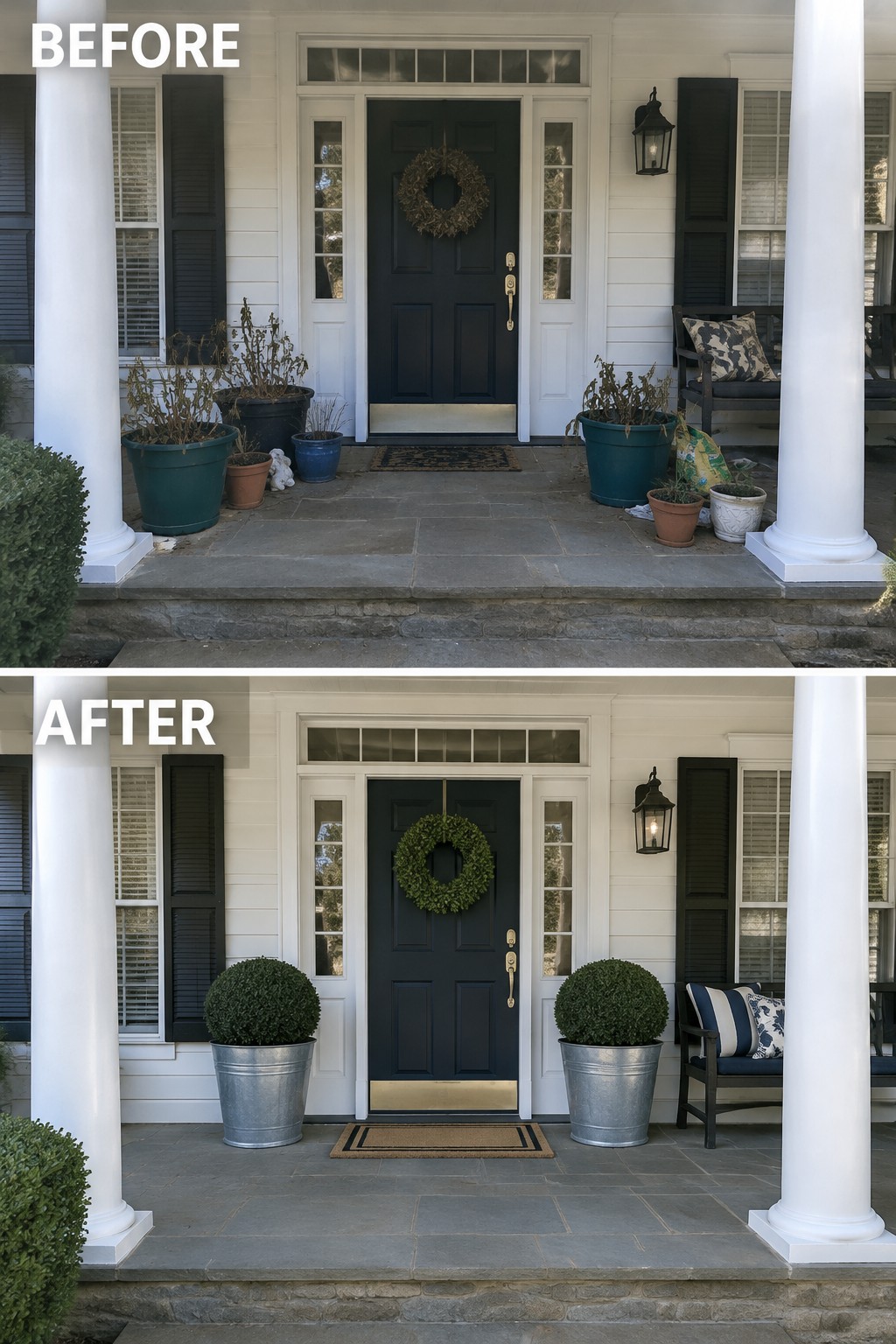
Many older homes collect an assortment of mismatched pots over time, and the result often looks scattered rather than welcoming. Replacing them with two identical metal tubs planted with simple round shrubs gave this entry a much cleaner, balanced look without adding much else.
This idea works especially well on symmetrical colonial facades. Keep the containers the same size and material, choose one type of plant for both sides, and make sure the pots can handle weather so the arrangement stays neat through the seasons.
Add Columns To Frame A Plain Colonial Entry
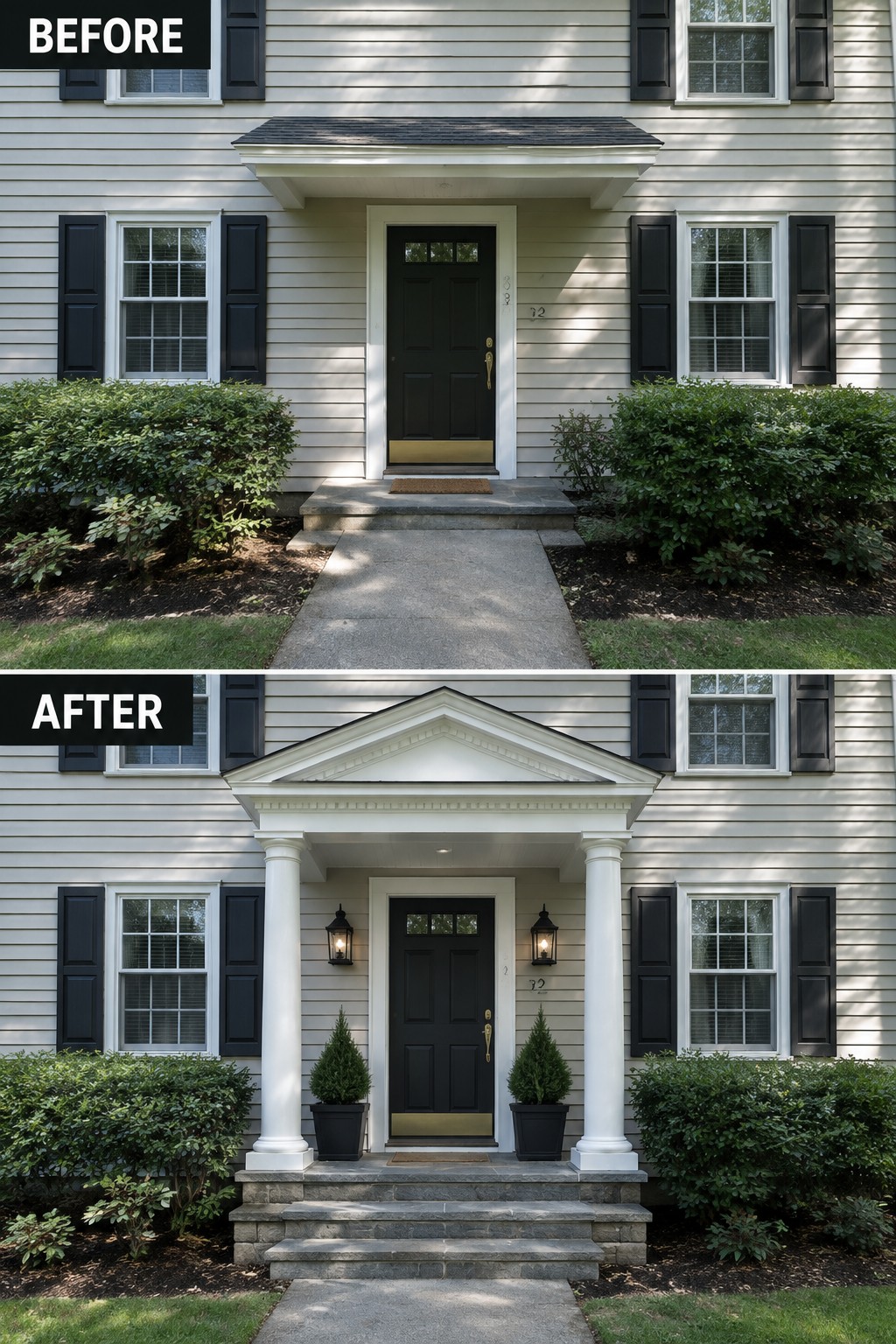
A flat overhang over the door can make even a nice colonial house feel unfinished. Adding a full portico with two columns and a simple pediment gives the entry real structure and creates the balanced look these homes are known for. The stone steps and potted evergreens on either side of the door help reinforce that symmetry without adding much clutter.
This approach works best on houses that already have a centered door and evenly spaced windows. Keep the columns in scale with the house, and match the trim details to what is already on the facade so the new porch feels like it belongs. Once the main structure is in place, a pair of lanterns and matching planters are usually enough to finish the look.
Give A Front Porch Clear Purpose With Symmetrical Seating
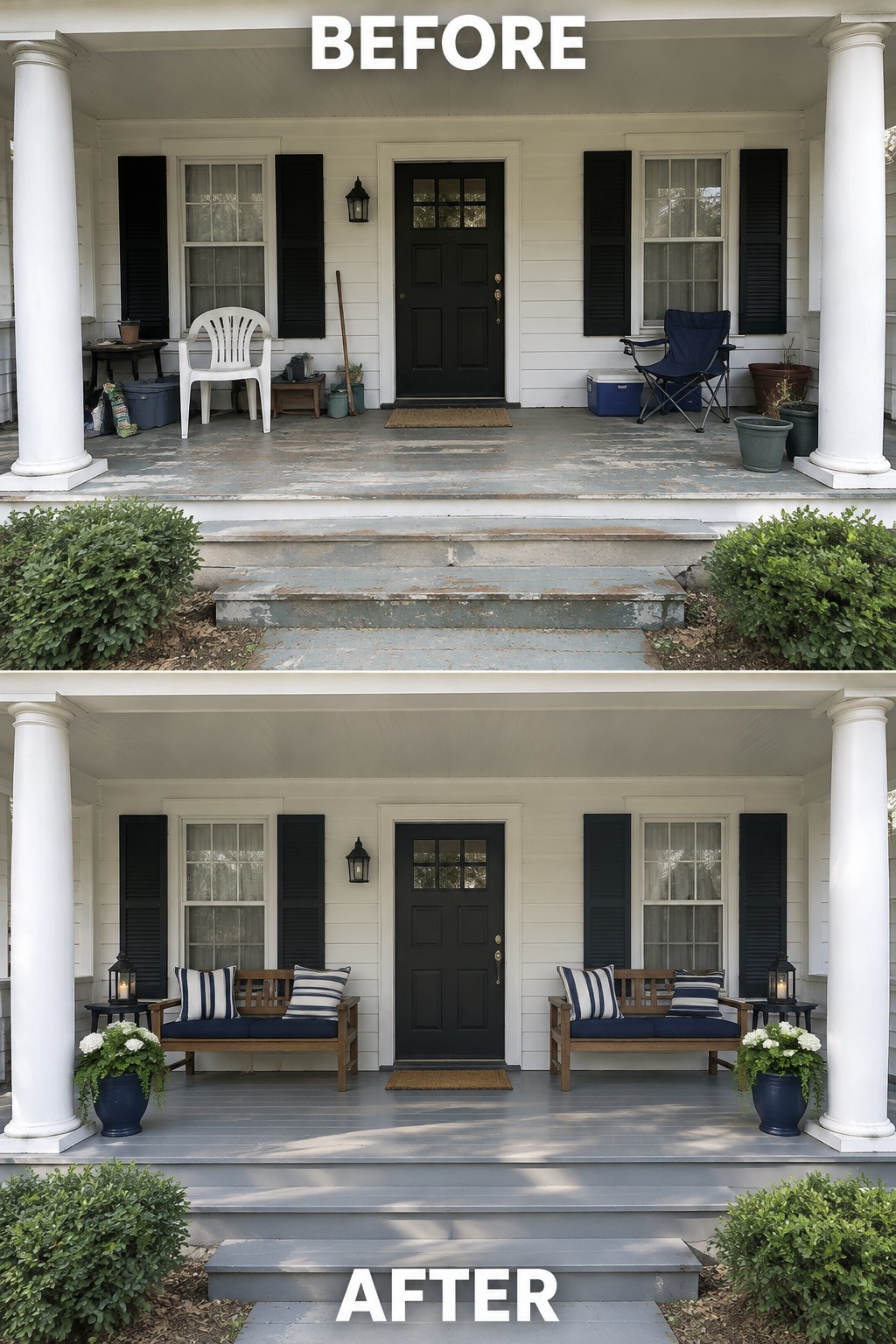
The before photo shows a porch that had no real plan. Random chairs, bins, and loose items sat wherever there was space, which made the whole entry feel scattered. Adding two matching benches with the same cushions on either side of the door instantly gives the porch a reason to exist and makes the front door the clear center.
This approach works best on homes that already have some built-in symmetry, like many colonial styles. Keep the benches or chairs the same size and color, line up the planters at the same distance from the steps, and add a pair of lanterns if you want evening light. The goal is balance without crowding the walkway.
Add Shutters And Window Boxes To Strengthen Symmetry
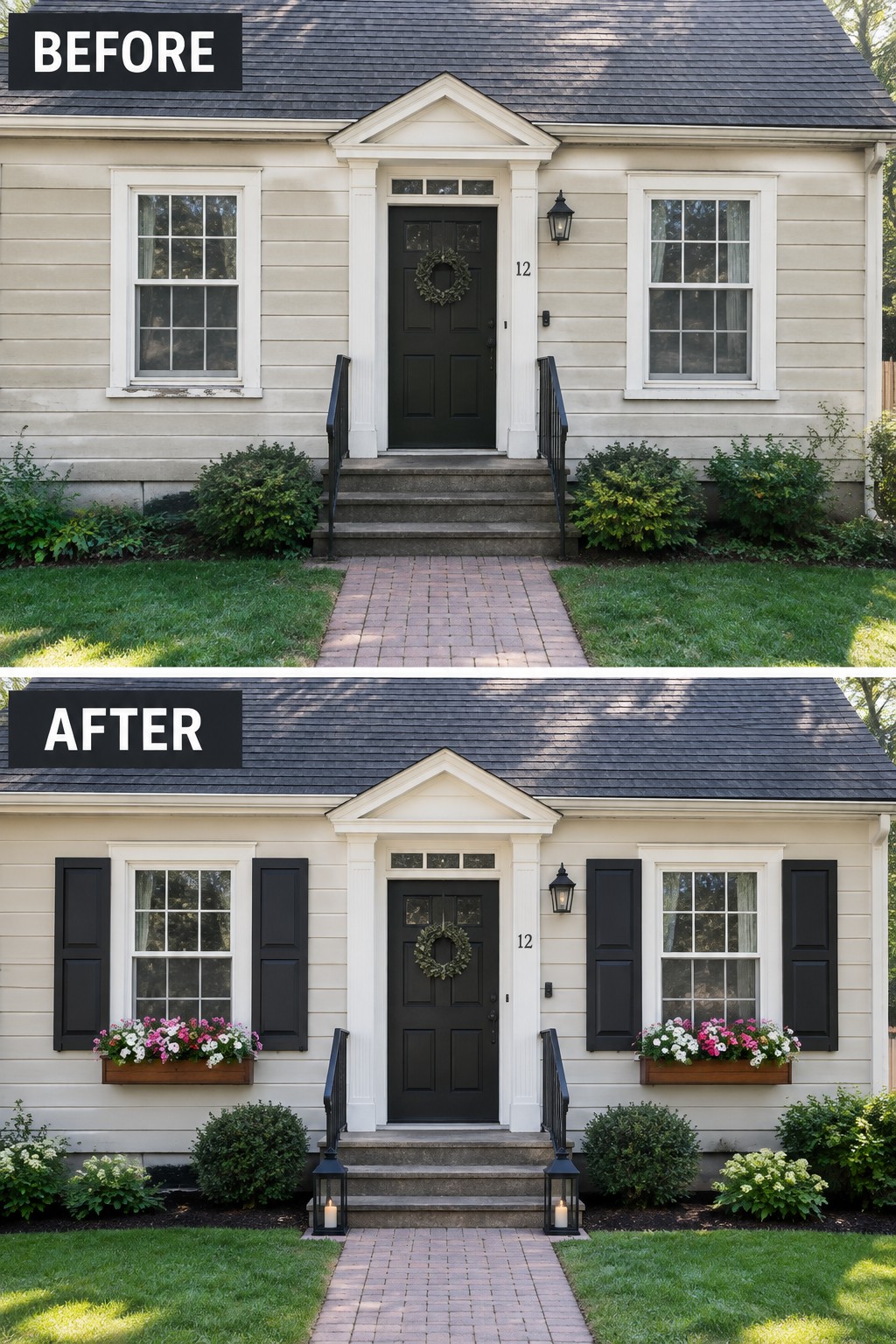
One straightforward way to improve a colonial entry is to add matching shutters and window boxes on either side of the door. The before photo shows bare windows that left the front looking a bit flat. Once the black shutters and flower boxes were added, the whole facade gained a clearer frame around the entry.
This idea works best on homes that already have a centered door and evenly spaced windows. Keep the shutters in proportion to the glass and choose boxes that sit below the sill so they do not block light. The change is simple, but it makes the entry feel more intentional and balanced.
Add Matching Planters And Lights For Entry Symmetry
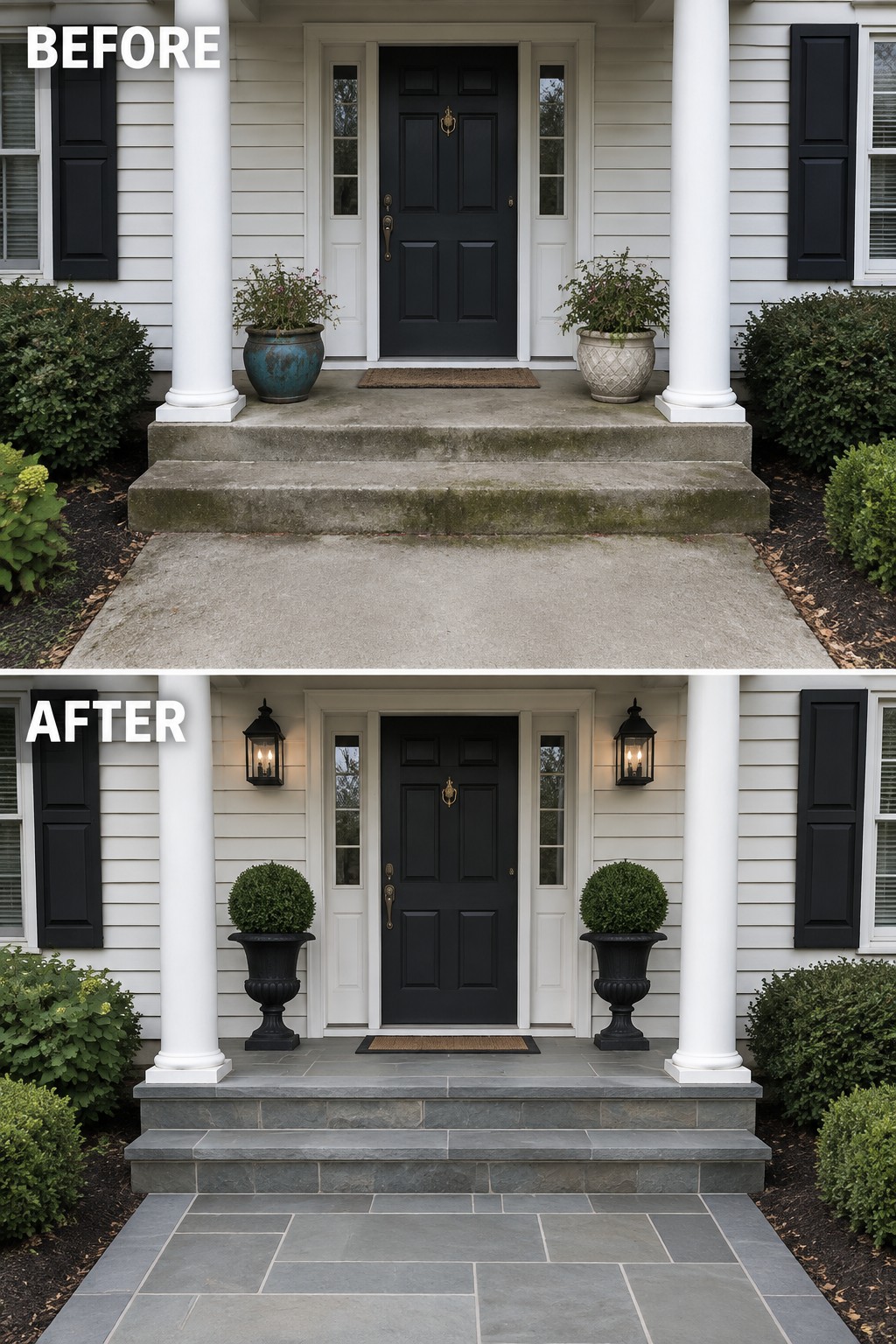
The before photo shows two different planters sitting unevenly on the porch, which made the entry feel a bit scattered. In the after, a matching pair of dark urns sits in the same spot on each side of the door, and simple wall sconces were added above them. That one change pulls the whole front together and makes the door the clear center.
This works best on homes with a centered door and simple trim. Pick two planters in the same material and size, then repeat the same light fixture on each side. Keep the walkway clear so the symmetry stays easy to see from the street.
Update The Front Door Color And Add Matching Planters
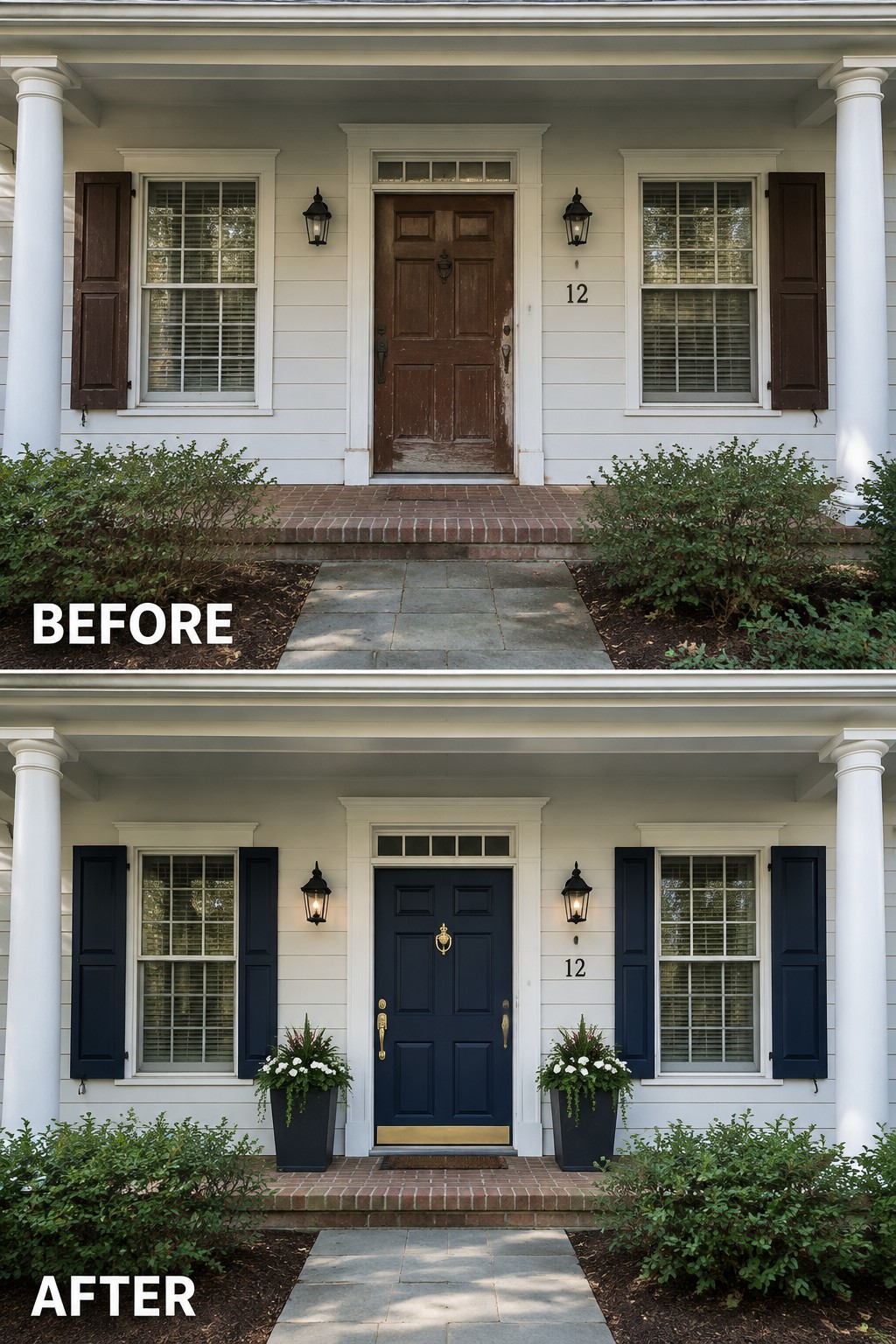
Many colonial homes start with a brown door that fades into the siding. Painting the door and shutters a deep navy blue gives the entry a clear focal point while the two matching planters on either side create the balanced look the style needs.
This works best on houses with a centered door and even window placement. Keep the planters the same size and shape, and choose a door color that contrasts with the siding but still feels traditional. The rest of the porch can stay simple.
Add Lighting To Frame A Symmetrical Entry
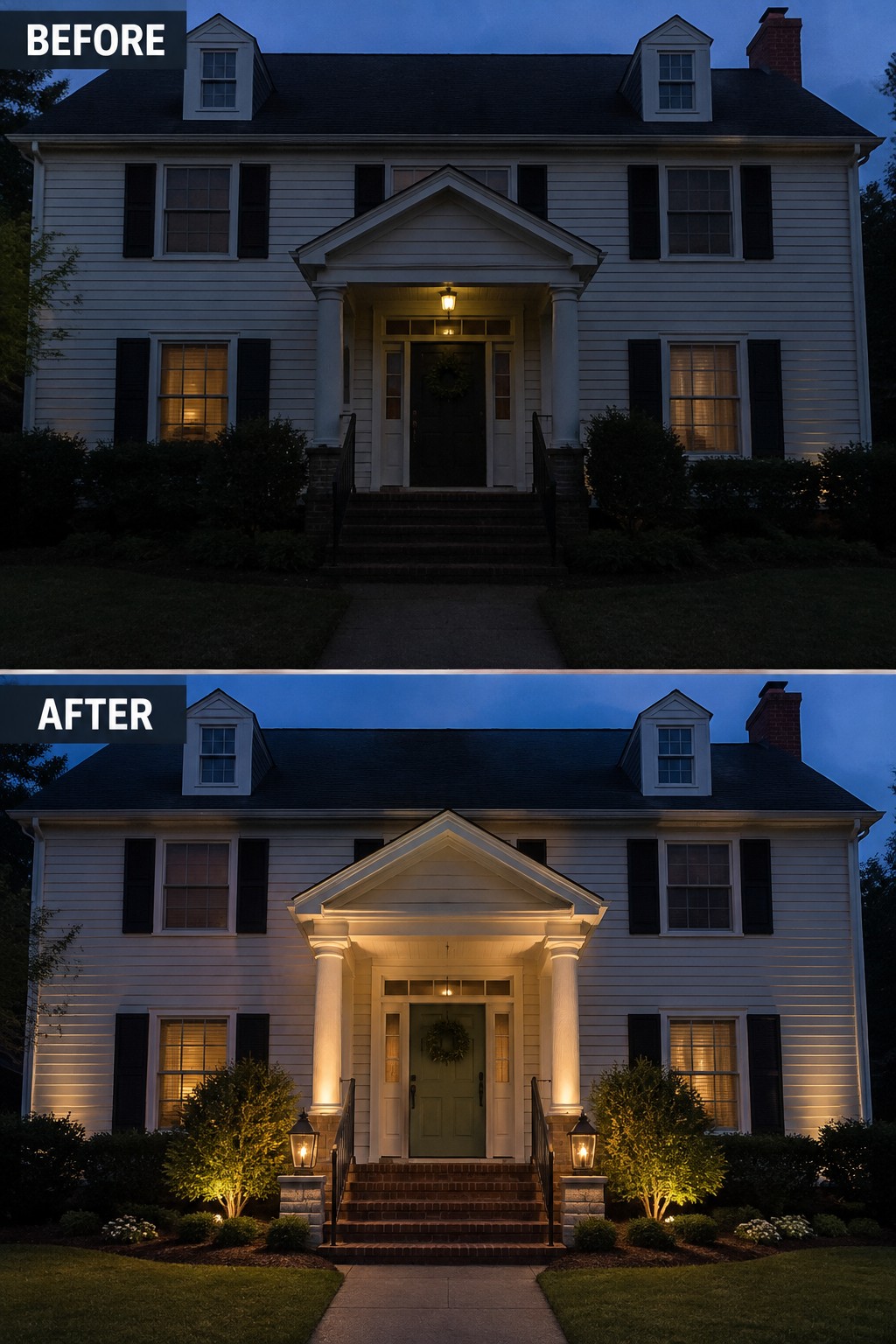
One of the simplest ways to improve a colonial entry is to add lighting that follows the existing symmetry. The before photo shows a fairly plain facade at dusk, while the after version uses matching lanterns on the pillars plus low lights in the beds to pull the eye straight to the door and keep the balance even on both sides.
This idea suits classic homes that already have a centered porch and balanced windows. Place one fixture on each side of the door first, then add a couple of ground lights to lift the shrubs. The goal is to make the entry readable at night without adding too many new elements that break the original lines.
Add A Picket Fence To Define The Entry
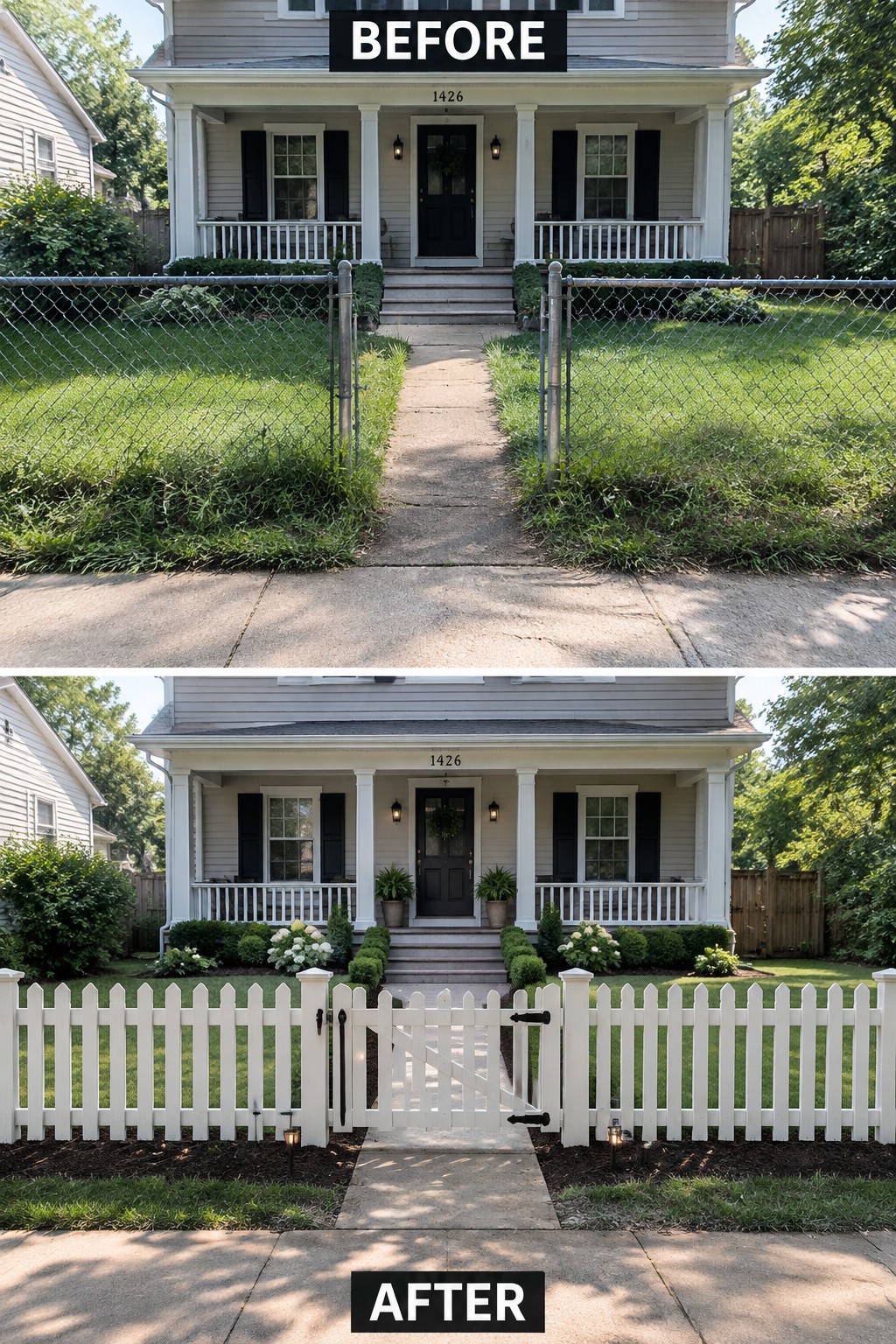
A chain link fence often makes the front of a house feel open and unfinished. Switching to a white picket fence gives the entry a clear boundary that leads straight to the centered door and balanced windows.
This idea works best on colonial homes with symmetrical porches. Keep the fence height modest so it frames the steps without blocking the view, and match the gate width to the walkway for an easy path to the door.
Add Matching Lanterns And Planters To Frame The Entry
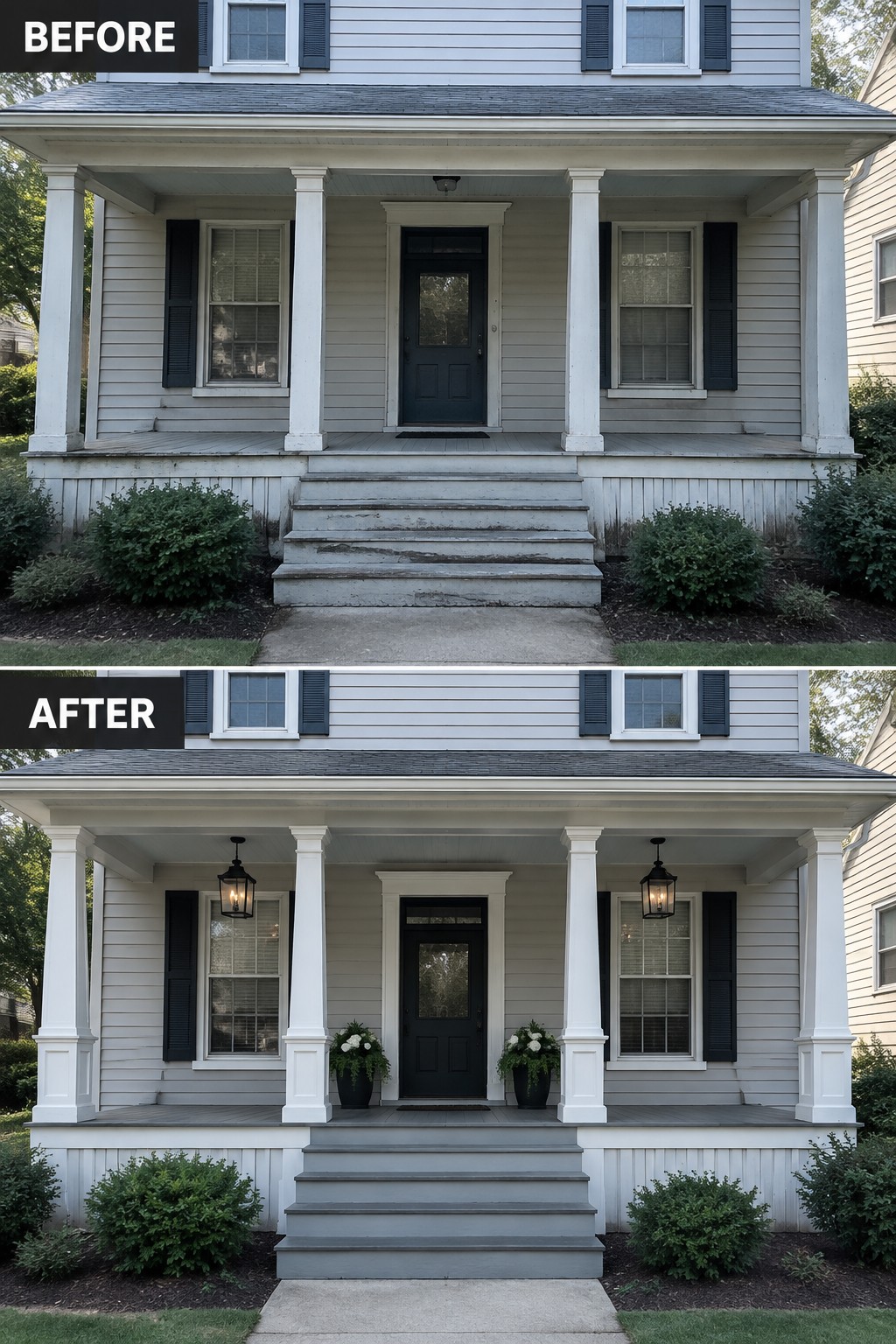
A plain front entry often feels unfinished even when the house itself is in good shape. Here the before photo shows an empty porch with no lighting or decoration around the door. The after version adds a lantern on each side and a planter at the base of the columns, which gives the doorway a clear focal point without any major construction.
This idea works best on colonial homes that already have balanced windows and columns. Hang one light fixture at the same height on each side of the door, then set matching planters below them. Keep the scale modest so the additions highlight the architecture instead of competing with it.
Frame Your Colonial Entry With Matching Lanterns And Planters
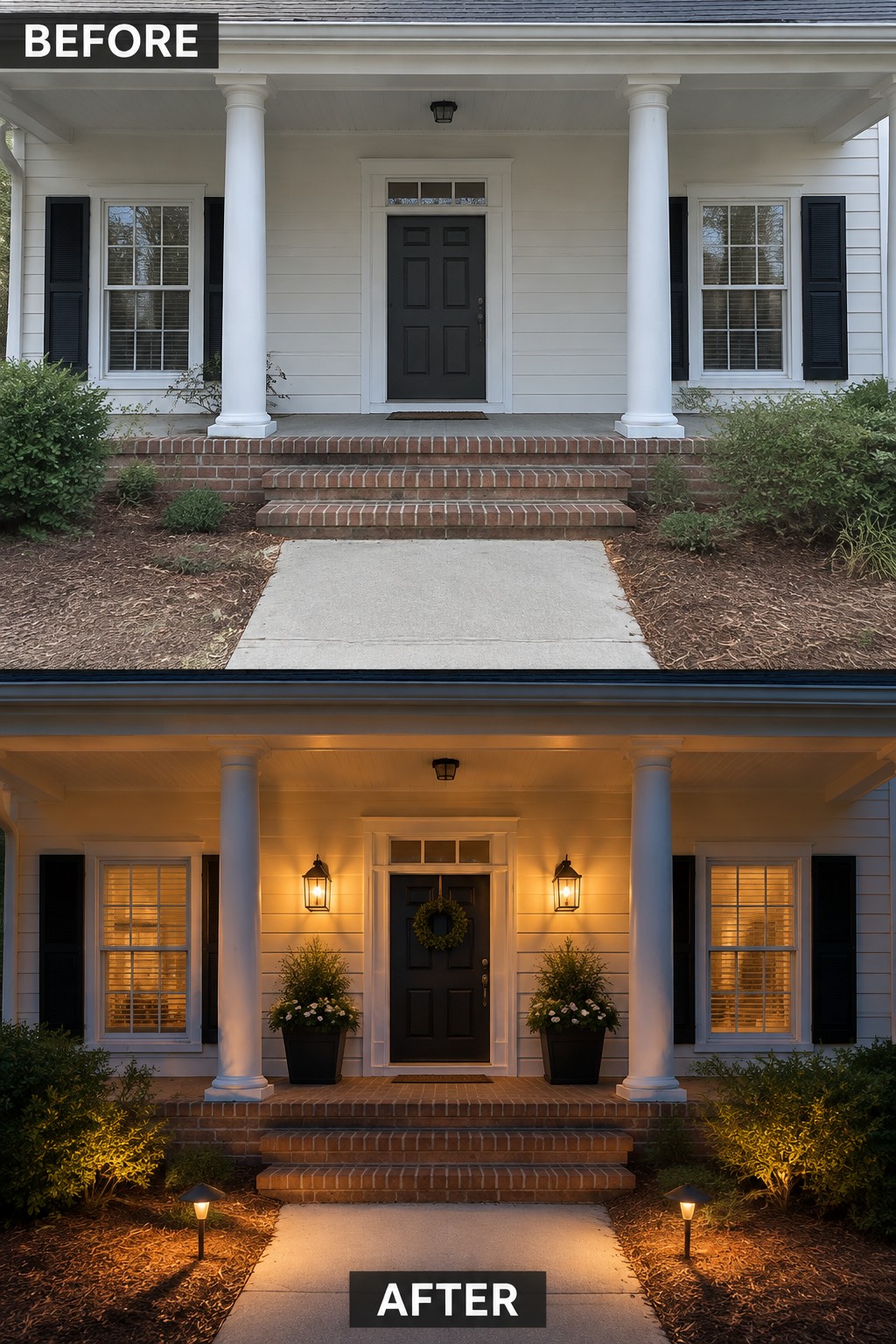
A plain front entry often feels flat because it lacks simple finishing details. In this case, adding a pair of wall lanterns on either side of the door and matching planters below them gave the porch clear structure and made the doorway the natural focal point.
This idea suits colonial homes especially well since the architecture already favors balance. Place the lanterns at eye level and keep the planters the same size and color so the arrangement feels intentional rather than scattered. Add one small wreath on the door and a couple of low path lights to finish the look without crowding the steps.
Frequently Asked Questions
Q: How do I pick lights that fit the symmetrical colonial entry without looking too modern? A: Go for simple black or brass lanterns and hang one on each side of the door at the same height. This keeps the balance while brightening the porch at night. Skip anything with fancy curves or extra arms.
Q: What plants should I use to frame the front door? A: Boxwoods in matching pots work well on either side. They stay compact and give a neat shape year after year. Place them at the same distance from the steps to hold the symmetry.
Q: My door is off center. How can I still get that even look? A: Add matching shutters on both sides of the nearest window to pull the eye back into balance. Paint the door a deeper color than the trim so it draws attention straight ahead.