

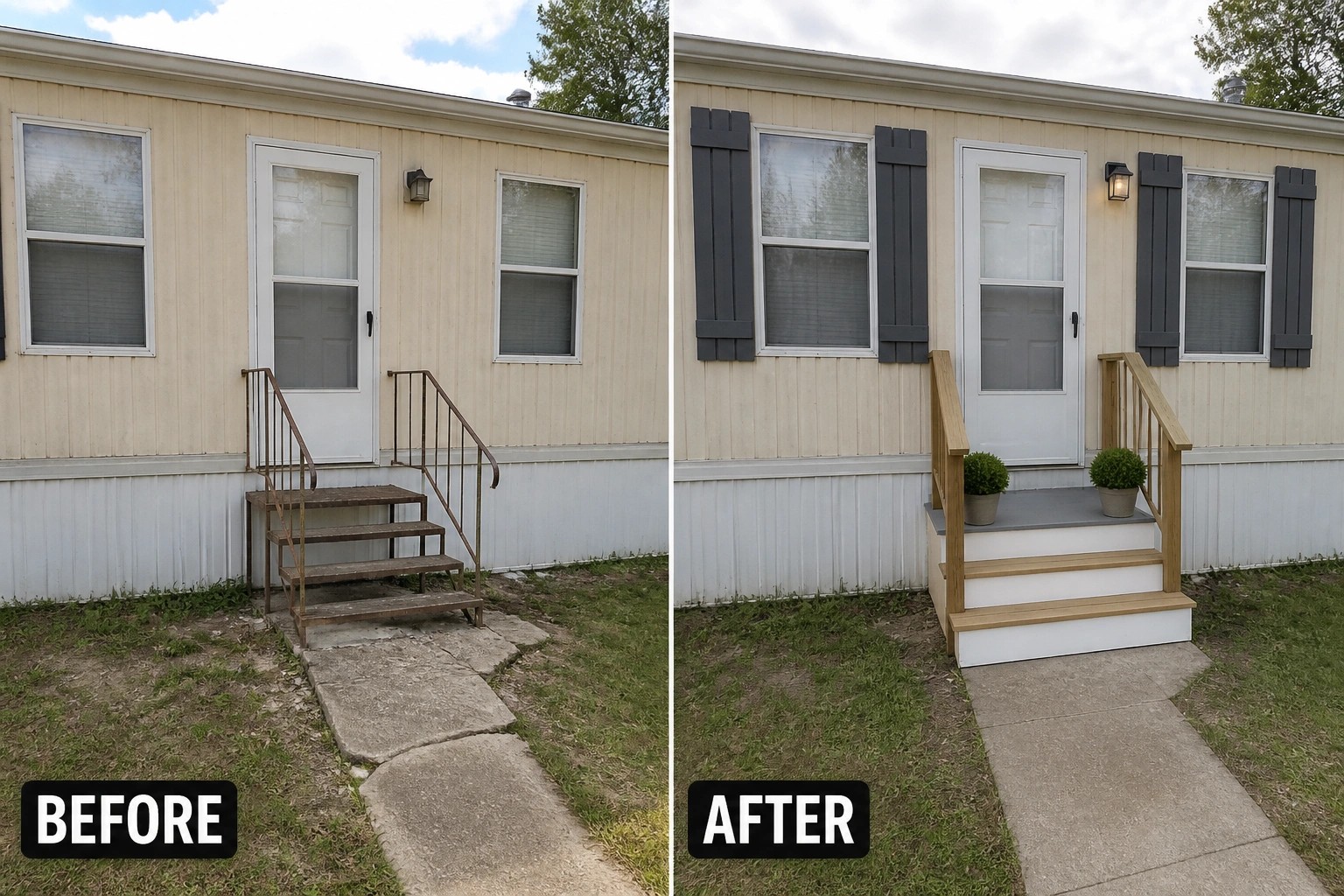
I know how a simple pair of shutters, a fresh coat of paint, or a small porch update can make a mobile home read as cared for instead of overlooked, because the facade is what people notice first.
When siding looks flat and entries lack definition, the whole place can feel underwhelming, so focusing on trim, hardware, and porch details usually delivers the most visible improvement without a full renovation.
Small, smart choices matter.
I tend to test affordable fixes first, like swapping to shaker-style shutters, adding a low-maintenance railing, or replacing a porch light, and I’ve watched those small moves lift curb appeal while keeping costs down.
I’m saving a few of them to try on my own porch this season.
Give A Small Mobile Home A Defined Wooden Entry
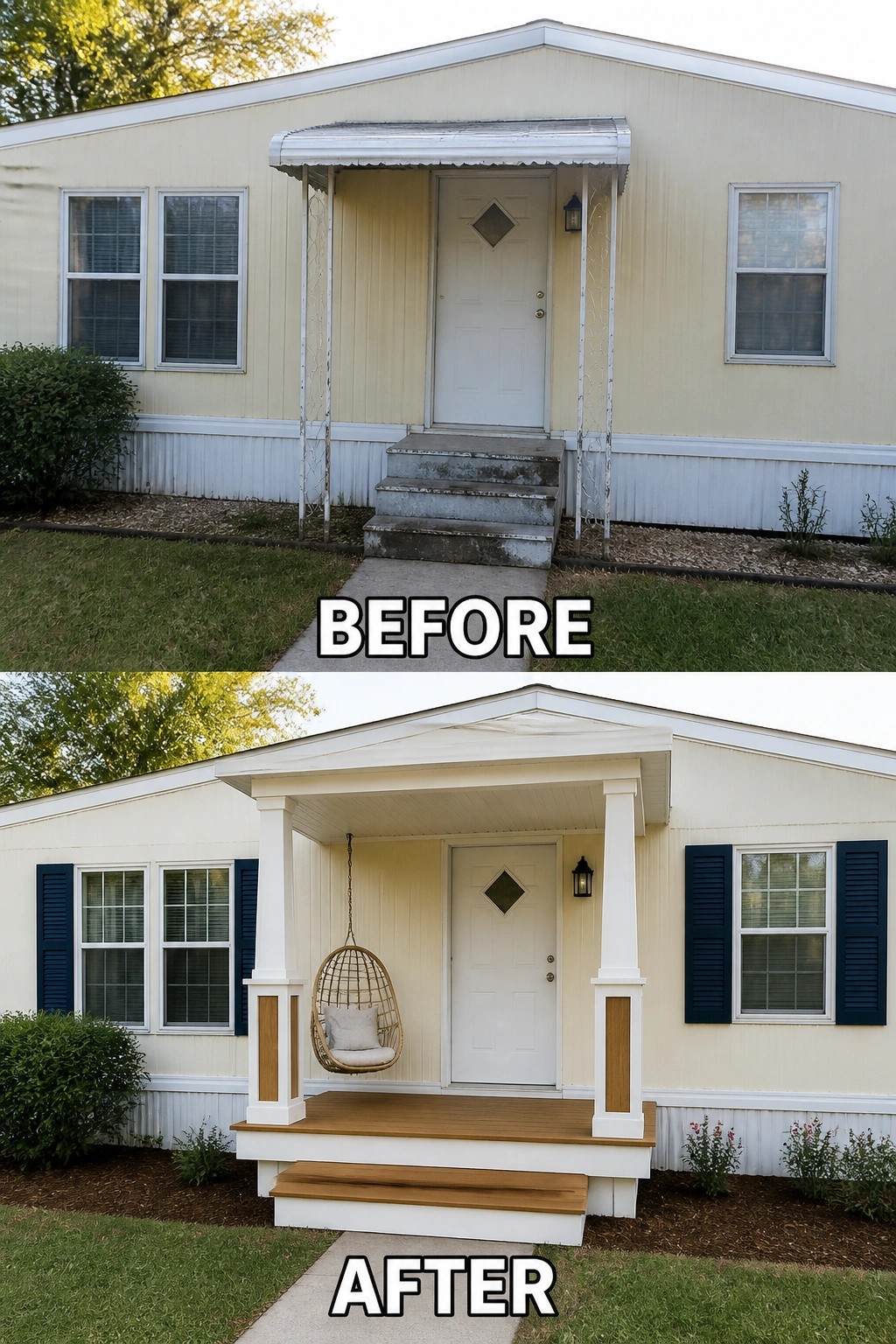
A tiny entry can feel accidental or unfinished until you give it a clear function. Replace a bare concrete stoop with a simple framed porch and a single focal seat to make the front feel intentional. Even modest changes like adding square columns, a small wood deck and a hanging chair (plus a light and shutters for contrast) turn a bit of step into a place you might actually pause.
Keep it practical. Start by sizing the porch to match your home and walkway so traffic still moves comfortably. Use budget-friendly deck boards or painted tongue-and-groove for the floor, prefab posts or boxed columns for a finished look, and one weatherproof chair or bench so the space reads as seating, not just decoration. Finish with a porch light and a couple of low plantings to anchor the new entry without crowding it.
Add Shutters And Railings To A Small Porch
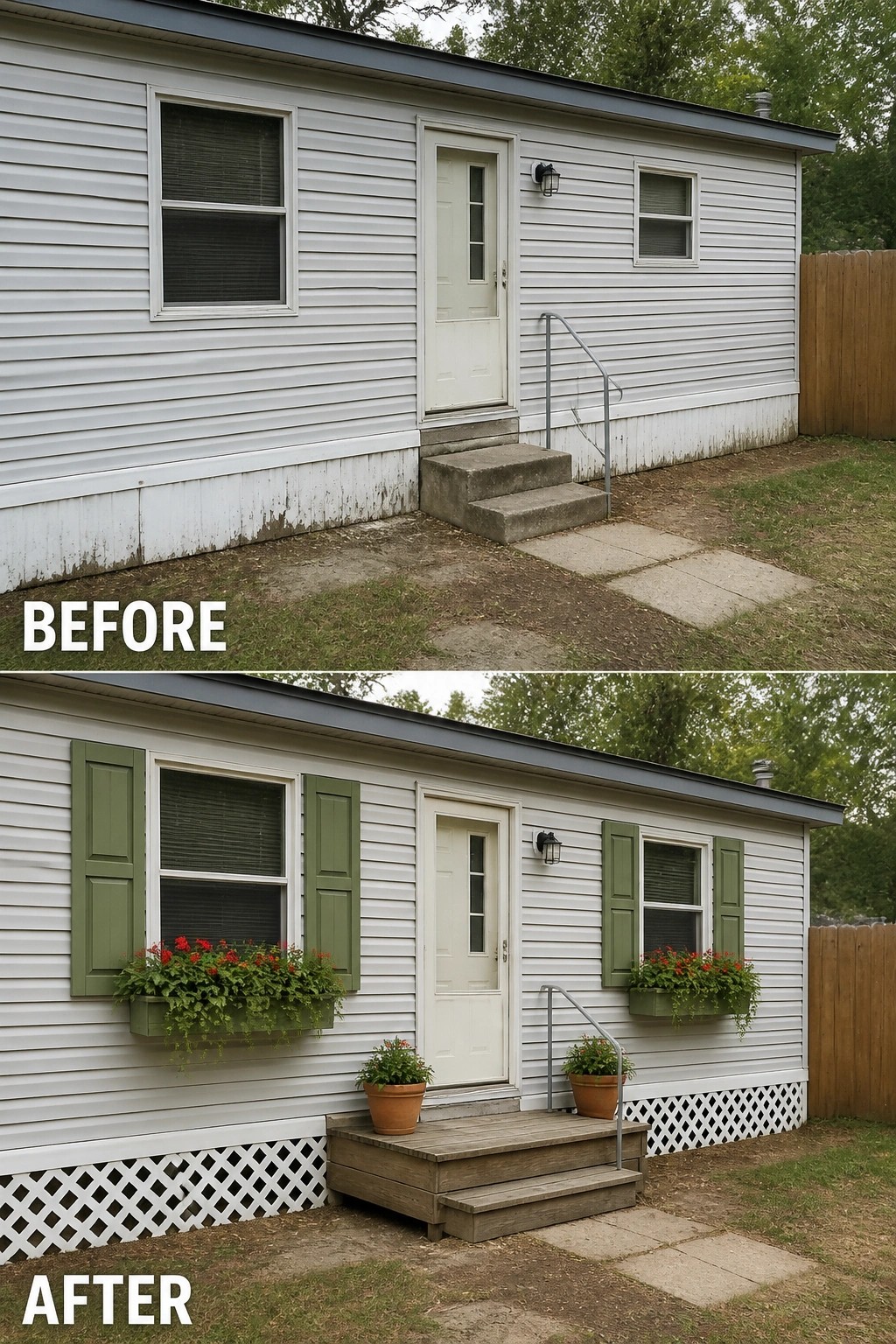
A tiny entry can look unfinished without a simple focal point. Replacing a few concrete steps with a modest wooden platform and adding shutters and window boxes gives the facade a clear purpose: a front door that feels like an entrance, not just a slab in the yard. The change is small but visible, and it makes the whole exterior read as intentional.
Use the idea where space is tight—mobile homes, narrow facades, or small cottages—by matching the scale of the porch and shutters to the door and windows. Start with a basic cleanup, then add a low platform (even a prebuilt deck), lightweight shutters, a couple of window boxes and potted plants for seasonal color, and lattice to hide the foundation. Keep materials weatherproof and keep the setup compact so the entry stays practical and easy to maintain.
Create A Welcoming Screened Mobile Home Entry
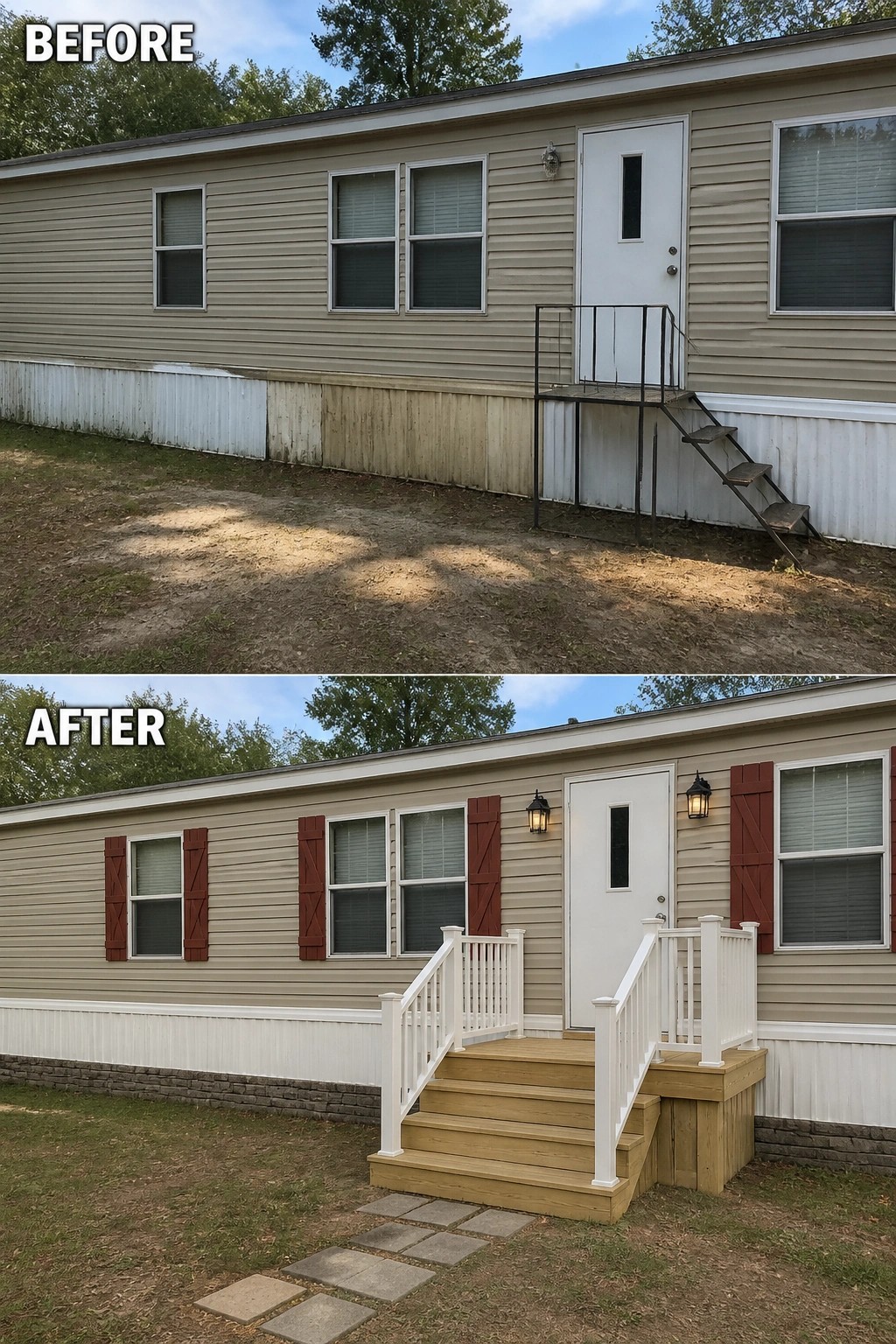
A tiny, flimsy set of steps makes an entry look accidental. Replacing them with a modest, well-proportioned wooden landing and simple white railings instantly defines the doorway and makes the whole facade read as intentional — add a pair of shutters and a wall lantern for balance and practical light. This kind of change is one of the easiest ways to improve curb appeal without touching the siding or roof.
Do it by keeping scale and budget realistic: measure the opening so the porch doesn’t overwhelm the narrow face of a mobile home, use pressure-treated lumber or composite for low maintenance, and choose basic picket rails for a clean look. Add a short paved path to lead to the steps and pick shutters or trim in a contrasting color to repeat across the facade; and check local step and railing codes so the new entry is both safe and useful.
Give A Bare Mobile Home A Welcoming Entry
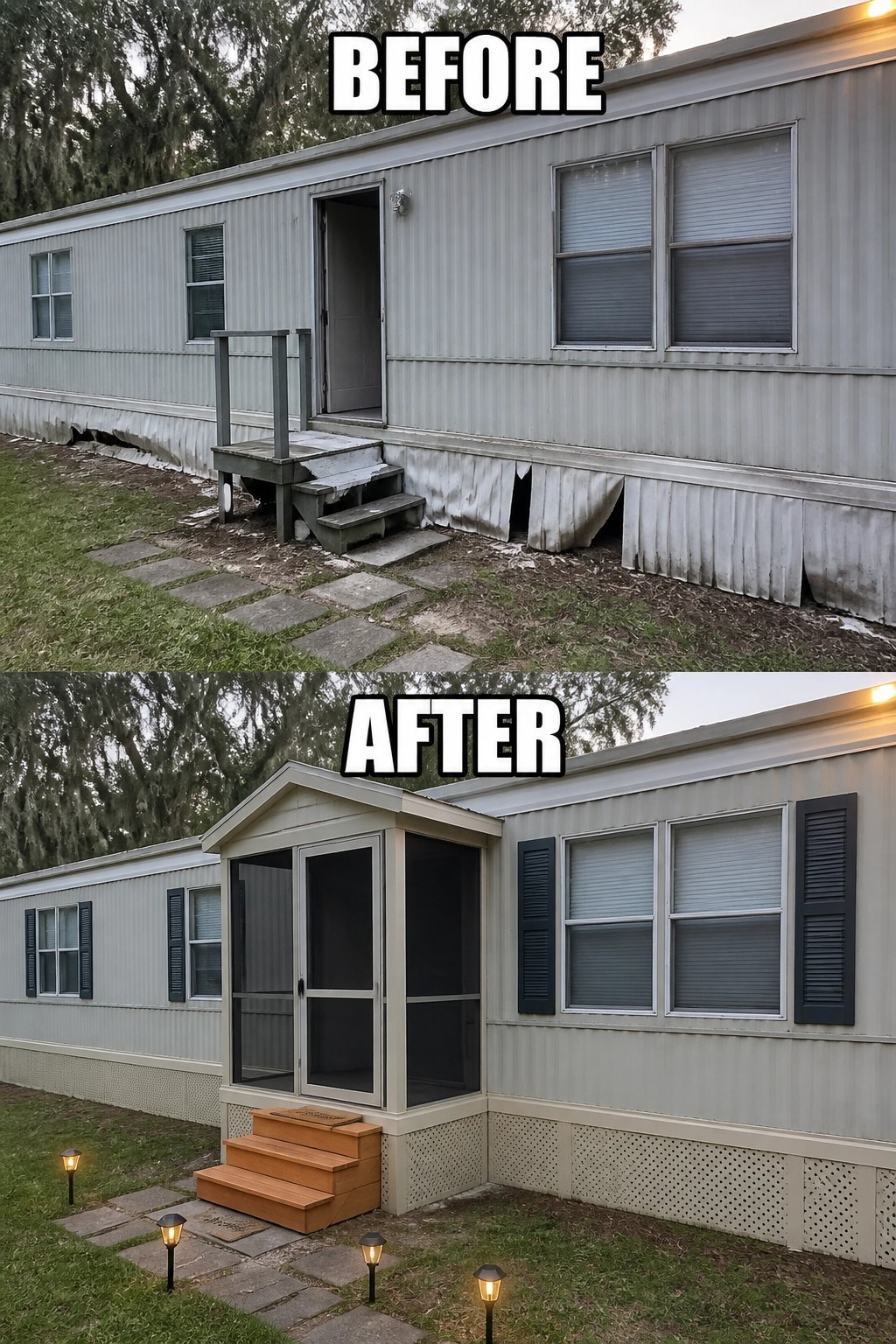
A compact screened porch is one of the simplest ways to give a bland exterior a clear purpose. Adding an enclosed entry and replacing torn skirting and makeshift steps creates a tidy, protected threshold that reads as intentional instead of an afterthought.
You can keep this quick and affordable: pick a prebuilt screen kit or build a small framed porch that ties into your mobile home trim, add a sturdy three-step stair, and finish the base with perforated skirting or lattice to hide the undercarriage. Use matching trim and a couple of low-voltage or solar path lights to finish the look without overscaling the house or blowing the budget.
Turn A Bare Porch Into A Cozy Outdoor Room
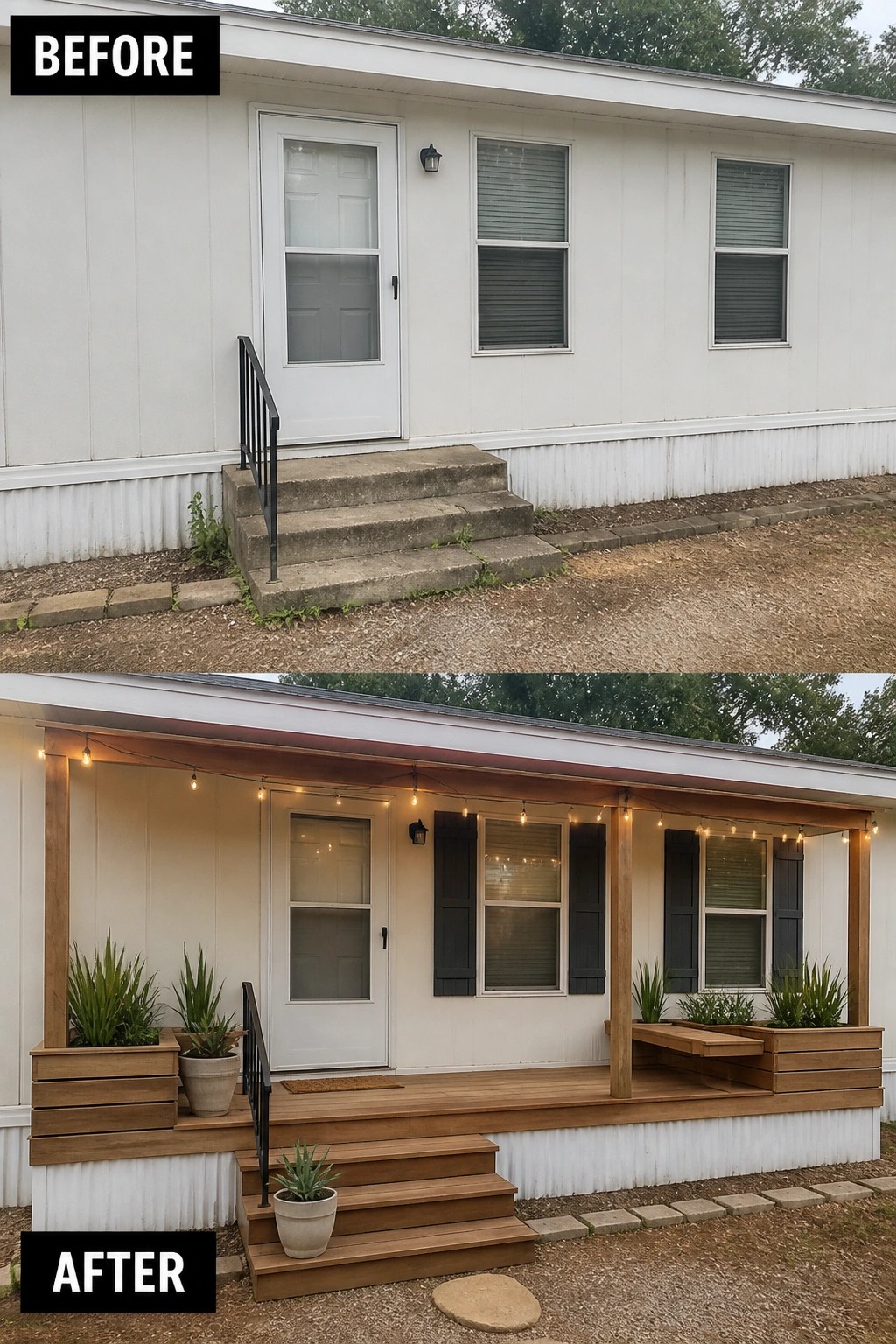
Take a plain, unusable entry and make it into a small outdoor room by adding a simple platform, built-in planters, and a covered header with lights. Replacing worn concrete steps with a low wooden deck and a couple of planter boxes creates an obvious place to pause, sit, and decorate, and the overhead string lights make the space useful after dark. The change makes the front feel intentional rather than leftover porch steps.
This idea works especially well for narrow or mobile-home fronts where space is limited. Keep the scale modest so the deck doesn’t overwhelm the facade, use rot-resistant wood or composite for low maintenance, and anchor the design with one repeating material (planters, posts, or trim). Leave a clear path to the door, add weatherproof lighting where people will actually stand or sit, and use a couple of pots or built-in boxes to add year-round interest.
Frame A Mobile Home Entry With A Small Covered Porch
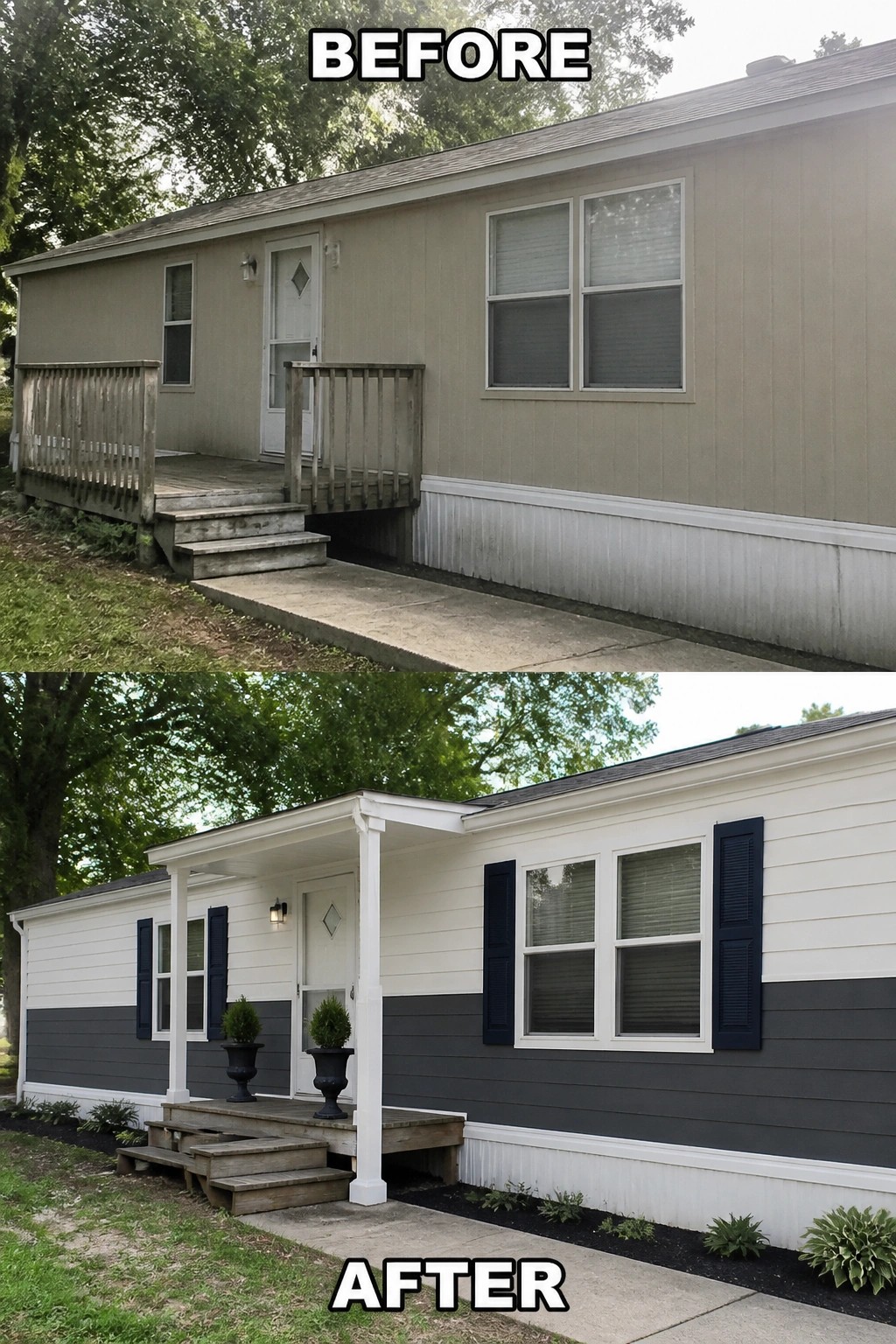
A tiny covered entry and a few well-chosen details can turn a plain mobile-home facade into a welcoming front. Adding a small porch roof with simple posts, a pair of shutters, and matching planters creates a focused arrival point so the door reads like an intentional entry rather than an afterthought.
This works best on narrow frontages where you want impact without big construction. Keep the porch proportionate to the doorway, pick one accent color for shutters or pots, install an outdoor light, and refresh the lower siding in a darker tone to visually anchor the house. Little changes—safe steps, two matching planters, and a centered light—go a long way on budget and can often be done in stages.
Refresh Porch Steps With Stone Look Details
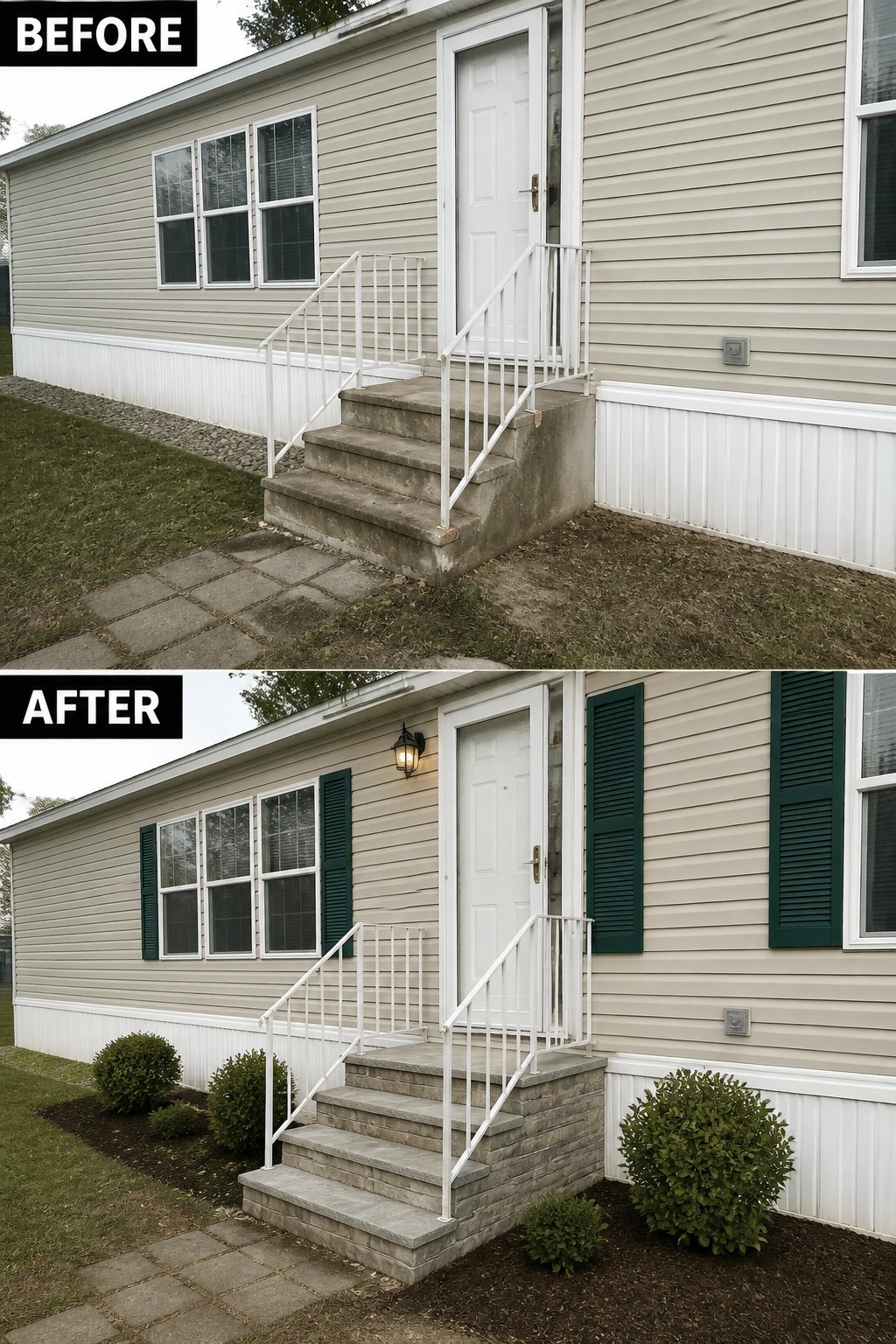
A tiny, well-built porch instantly makes a mobile-home entry read as intentional instead of an afterthought. In this update the plain concrete steps were faced with a stone-look cladding, a wall lantern was added, and a few low shrubs were planted—those simple moves make the door feel like an actual front porch rather than just an access point.
To copy the idea, start by fixing any structural issues and then refinish the steps with an affordable thin-stone veneer or stacked concrete blocks so you get the look without heavy construction. Add a weather-rated sconce for real evening use, pick shutters or trim in a repeatable color to tie the facade together, and plant two small evergreen shrubs with fresh mulch to frame the entrance. Keep everything to scale so the porch feels grounded but not oversized for a modest home.
Give A Bare Porch A Clear Purpose
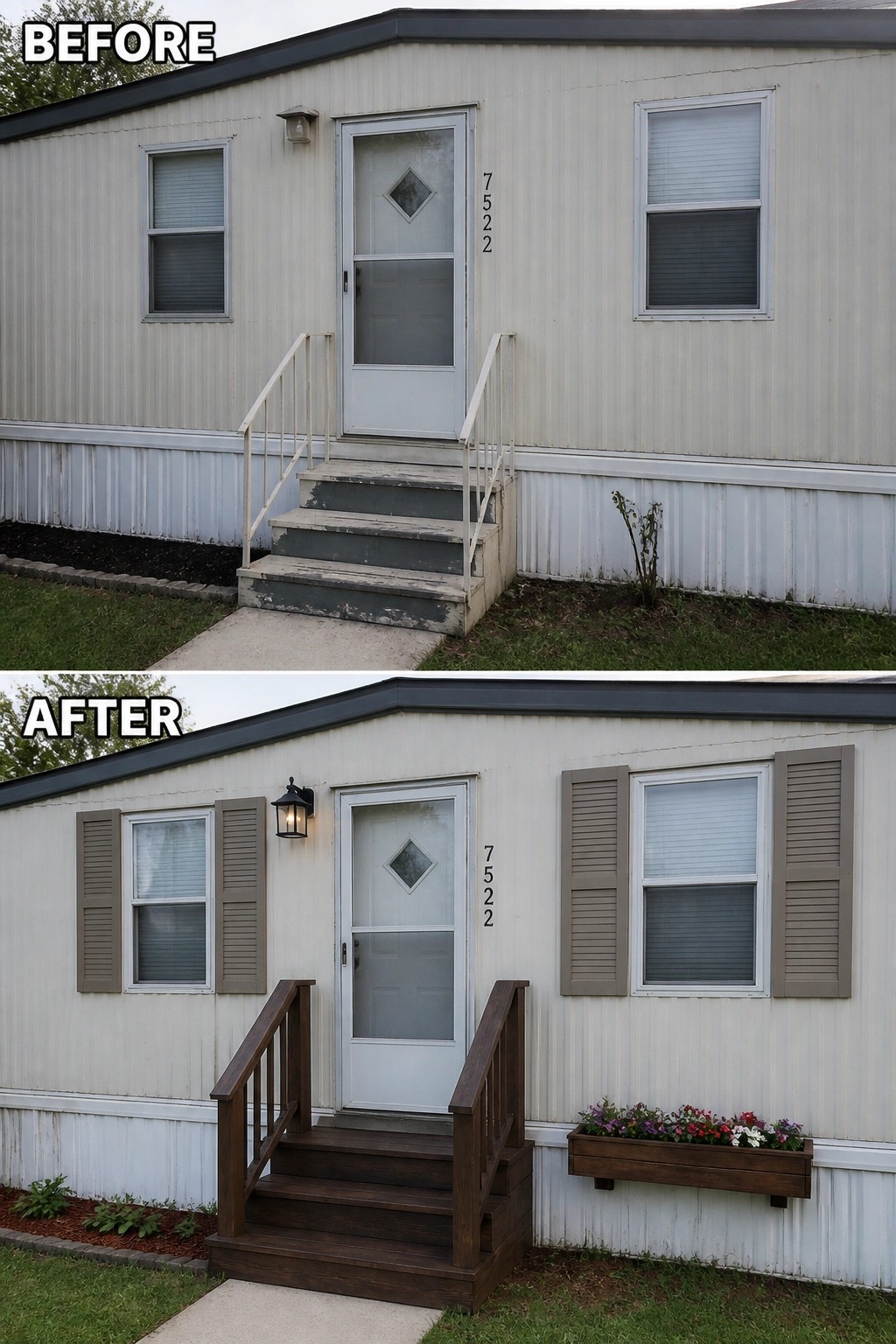
A tiny, focused front porch can change a bland entry into something that actually feels usable. In this example the old metal steps were replaced with a compact wooden stair and rail, and simple shutters, a wall lantern, and a planter box were added to frame the door. Those modest changes turn a walk-up into a small, intentional landing that reads like an entrance instead of an afterthought.
To copy this, start with scale: keep the porch just big enough for one person to pause comfortably and match the material to the home (stained pressure-treated wood or a small prefab kit work well). Add one light beside the door and matching shutters to balance the windows, and use a shallow planter for seasonal color without crowding the skirt area. Make sure the steps meet local safety rules and leave room for the sidewalk—small, practical updates go a long way.
Define A Mobile Home Entry With New Steps And Shutters
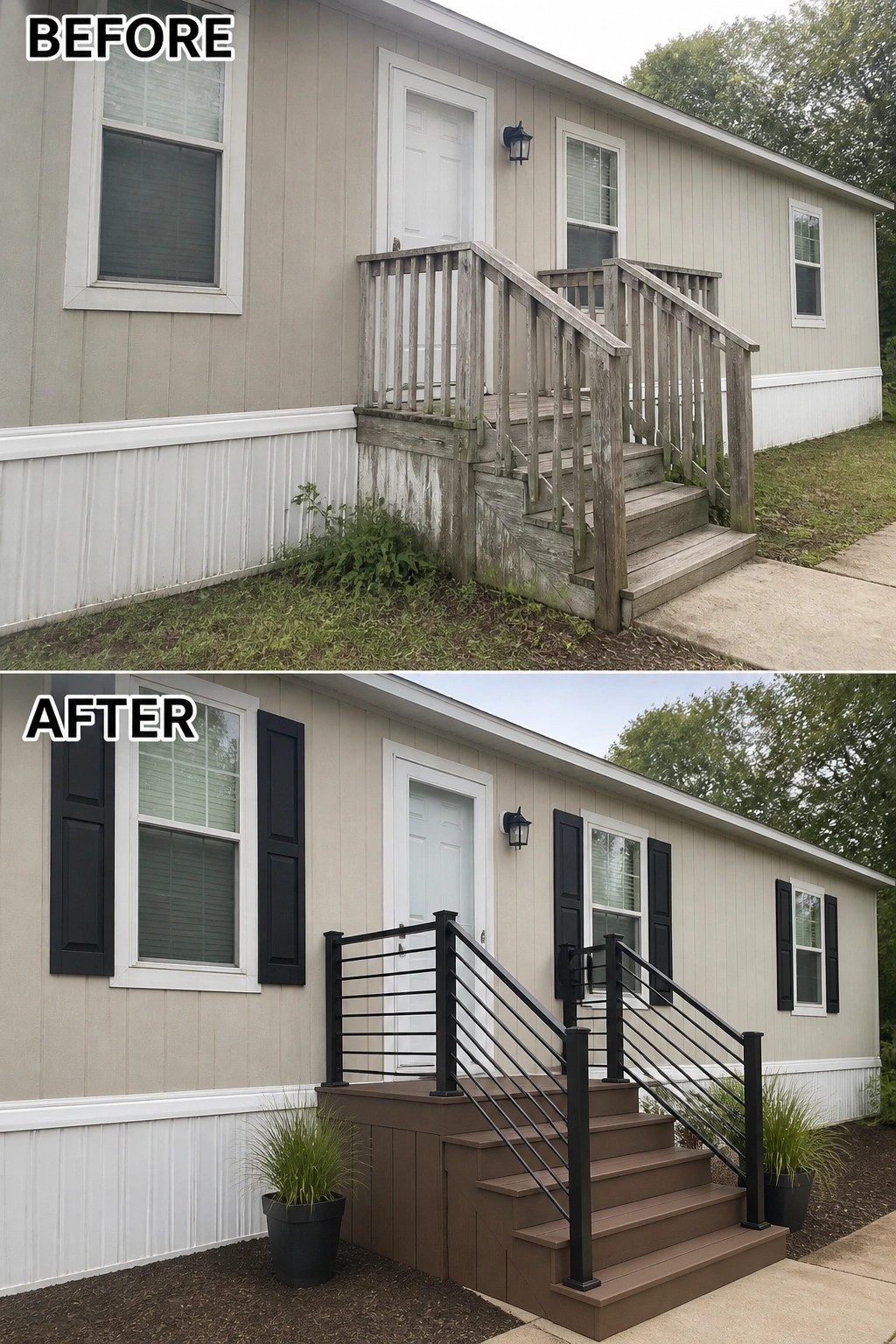
A small, neglected entry can go from ignored to intentional by focusing on structure and materials. Replacing the rotted wood with a low-maintenance composite platform and switching the chunky balusters for a simple black metal railing makes the porch read as a usable, finished space rather than an afterthought. Those two changes alone tidy the facade and lift the whole curb appeal without a full remodel.
Start by addressing any rot or safety issues, then choose durable decking and a railing style that complements your house trim. Keep the scale small so the steps fit the walkway, and add one or two matching planters or a light to anchor the spot and show it’s meant to be used. This approach works great for mobile homes and modest entries where a focused update gives big visual payoff.
Frame A Small Porch With Shutters And Matching Planters

A tiny porch can feel neglected or useless until you treat it like a proper entry. In this example the homeowners framed the front window with painted shutters and replaced the worn steps while adding matching planters at the base. Those two moves—visual framing and a clean, usable step up—turn an unloved stoop into a purposeful welcome.
Start with structural repairs so the porch is safe, then pick one or two finishing touches that repeat a color or material. Shutters are an inexpensive way to add personality and balance to a plain facade, and a simple set of new steps or a wood-clad landing makes the space usable. Finish with a pair of weatherproof planters and low skirting to hide the undercarriage; keep scale small so you don’t block the entrance or crowd a narrow lot.
Add A Functional Storage Bench To A Cluttered Entry
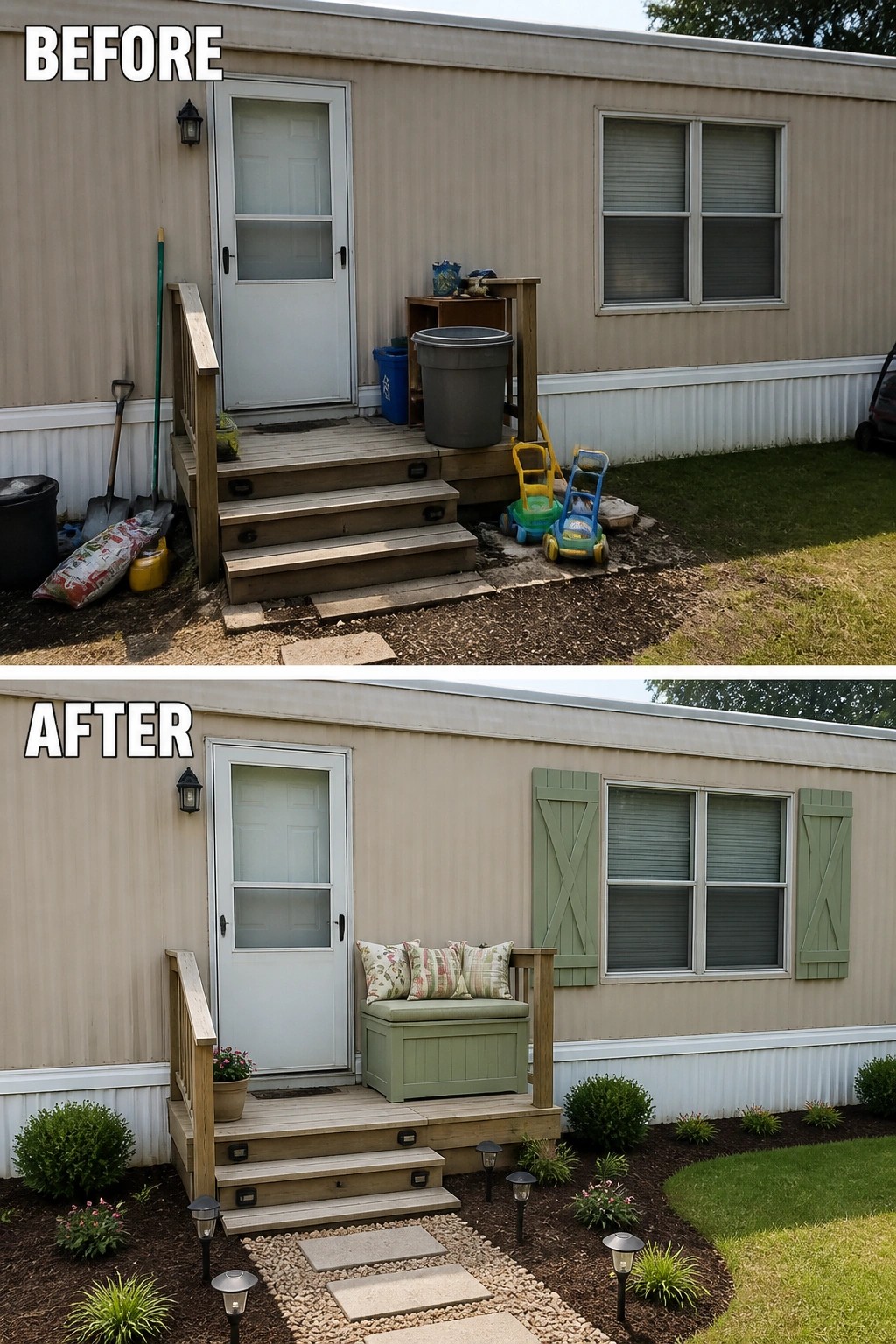
A tiny, cluttered entry can feel aimless—so make it do one job. In this makeover the clutter was cleared and a single functional focal point was added: a painted storage bench with cushions paired with
Create A Covered Entry With Simple Porch Accents
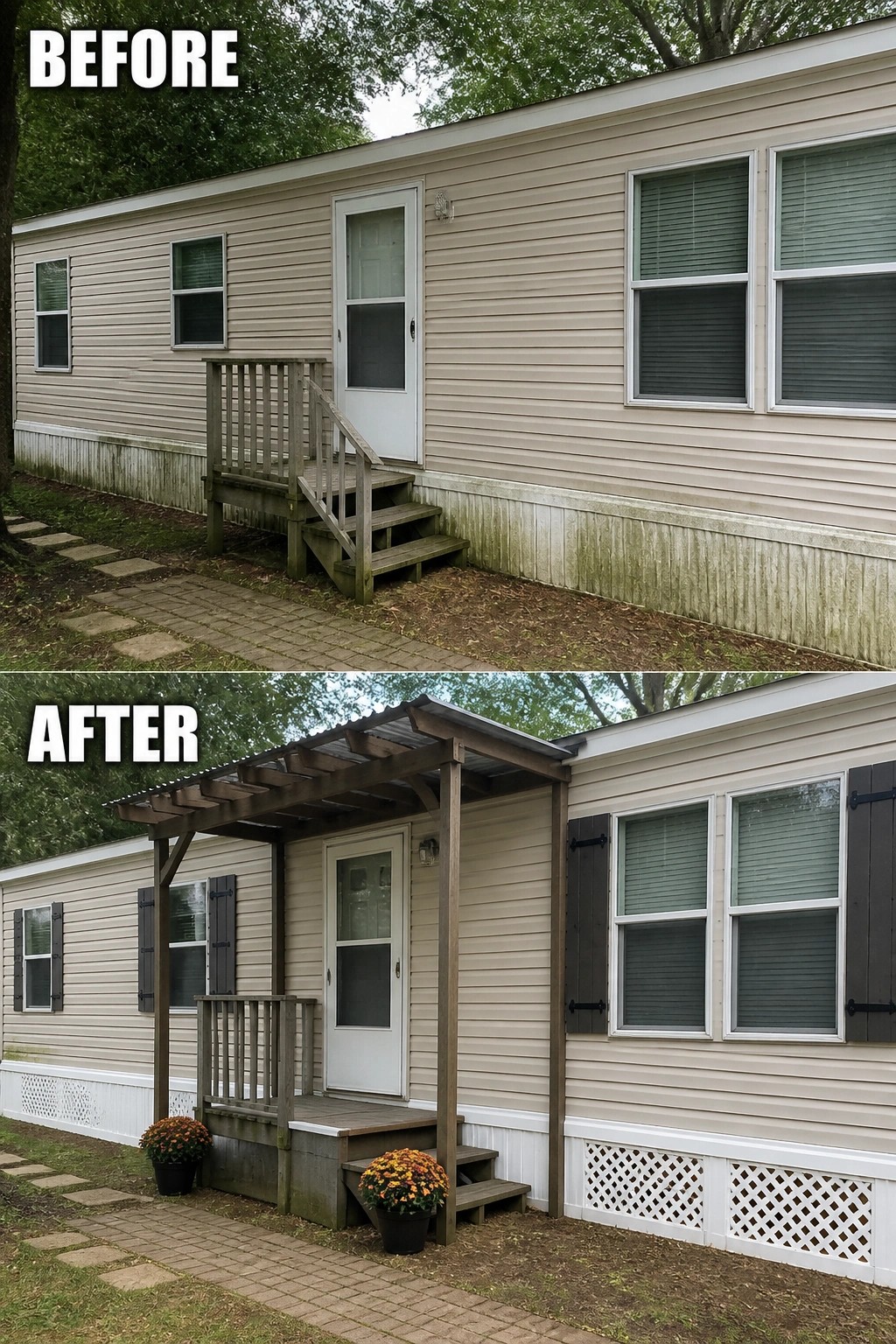
A tiny roof and a few simple accents can turn an anonymous entry into a real front porch. Adding a small covered pergola above the steps (and a pair of shutters or matching planters) creates a defined spot for coming and going, so the door reads as an entrance instead of just a hole in the siding.
Use modest-scale elements so the change fits the house—think a slim post-and-beam cover, two outdoor pots, and a length of lattice skirting to tidy the base. Choose rot-resistant wood or prefinished materials, pick one paint or stain color to repeat for cohesion, and leave enough step and walkway space so the porch feels useful, not crowded.
Brighten A Mobile Home Entry With Awnings And Plants
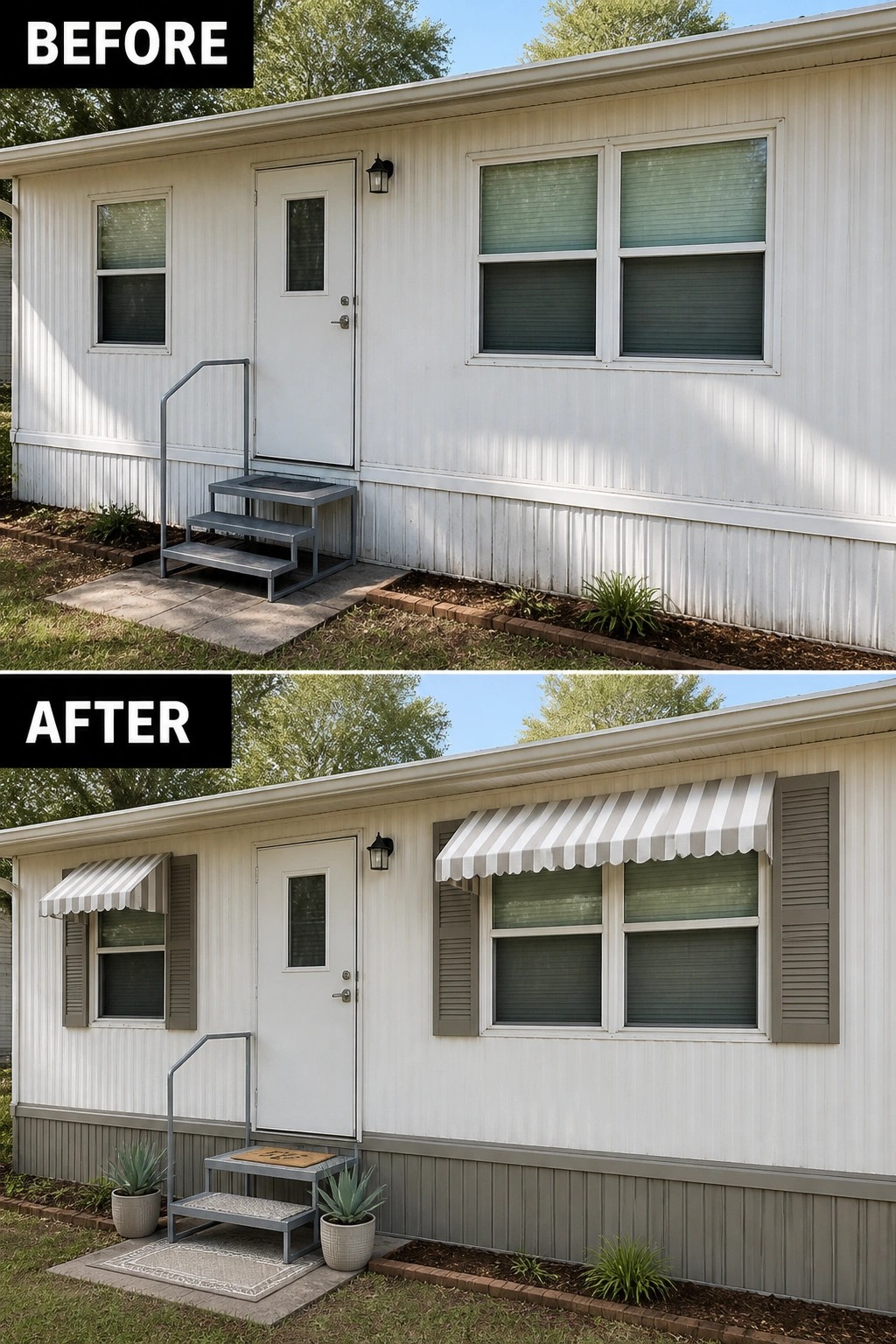
A simple entry refresh can make a small mobile-home facade feel intentional. In this example, adding striped window awnings and a pair of matching potted plants frames the doorway and turns a plain step into a usable, welcoming landing. The visual cue of a defined entry tells visitors where to come and helps the whole exterior read as cared for.
To copy this, pick one strong focal upgrade first—awnings or shutters—and match their color to the skirting or trim so the change feels cohesive. Then add two same-size planters and a small outdoor rug or mat to define the step area and provide scale. Keep pieces weatherproof and low in number so the space stays easy to use and maintain. Small touches go a long way.
Build A Compact Porch With Railings And Storage
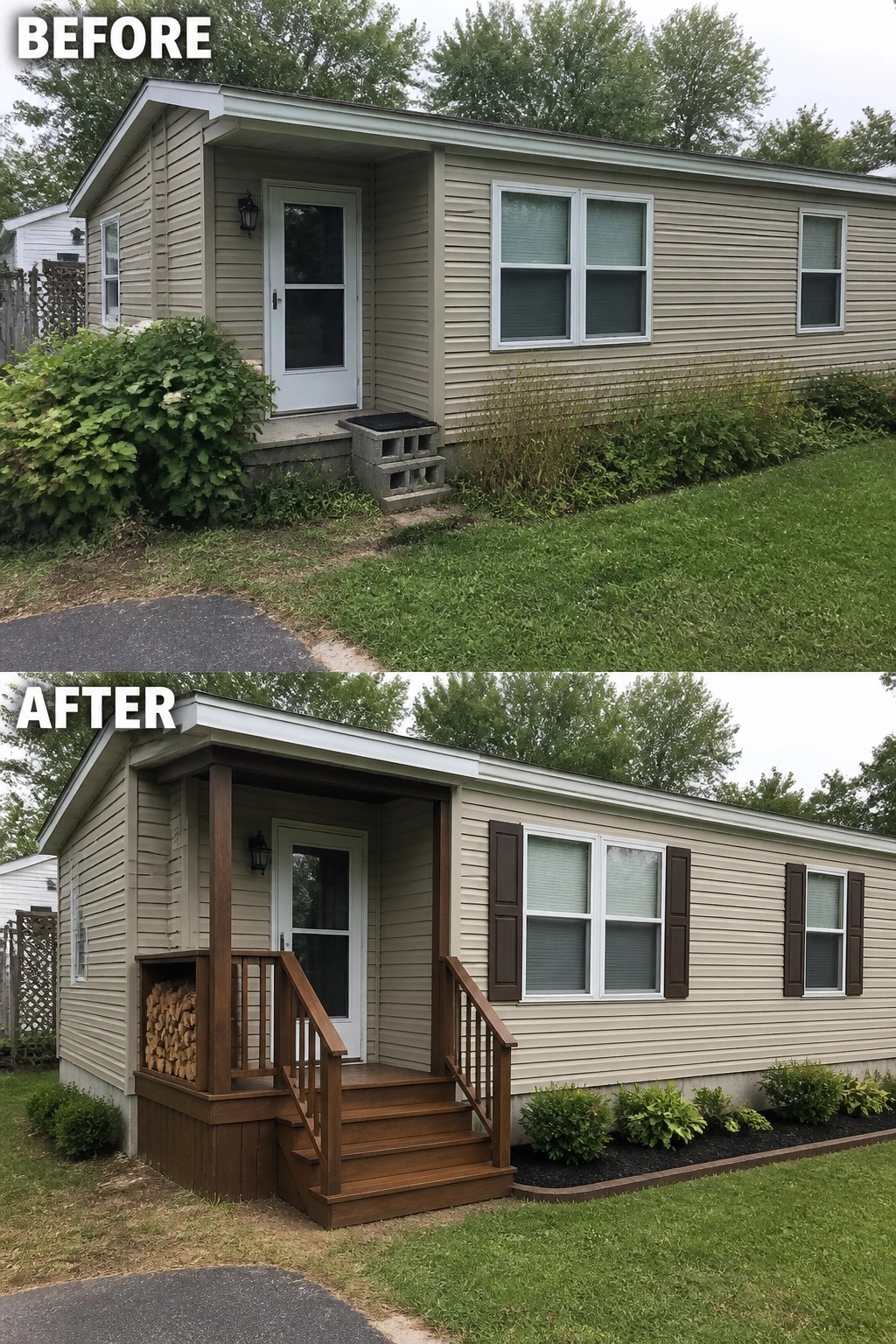
A small covered porch and proper steps can completely change a bland entryway into a welcoming, useful spot. In this example the plain concrete stoop becomes a compact wooden porch with railings and storage space while simple shutters and a planted bed tidy the facade, giving the front a clear focal point and purpose.
You can do this on a tight budget by building a modest framed porch rather than a full deck: keep it low, match the stain to trim, and add simple railings for safety. Pair the new steps with a narrow planting bed or potted shrubs to soften the base and use under-porch cubbies or built-in wood storage so the space stays tidy; just check local step and railing requirements so the small upgrade is both attractive and code-compliant.
Style A Small Porch With Painted Shutters And Topiaries
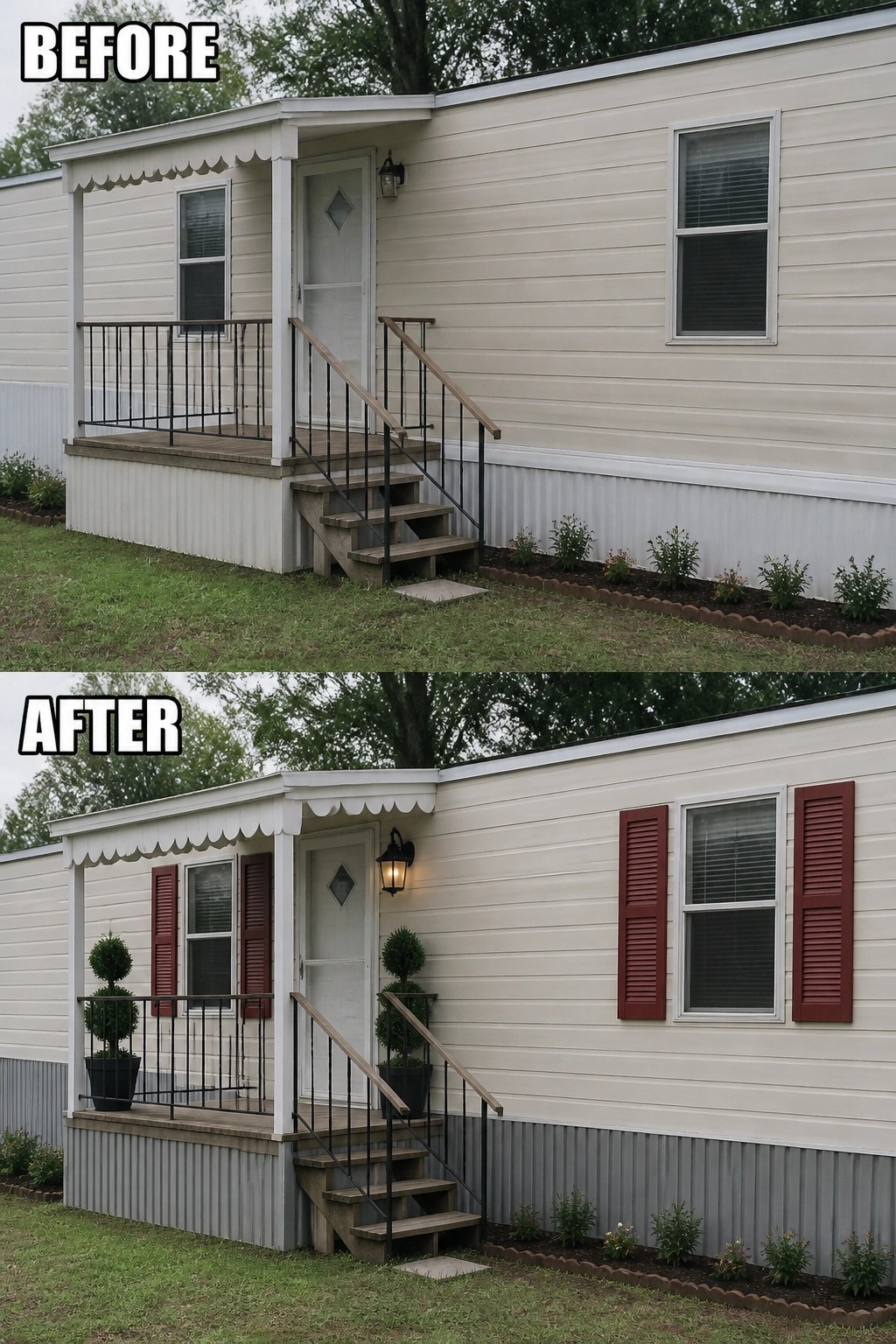
A plain entry becomes purposeful when you add a few deliberate accents. In this makeover the biggest moves were a pair of painted shutters and matching potted topiaries flanking the door; those two elements give the porch a clear focal point and make the whole facade feel intentional instead of bare.
To copy the idea, pick one or two visible accents and repeat their color or shape so the small space reads as a complete look. Choose pots and plants that fit the stair width, use weatherproof materials, and add a simple wall lantern or mat to finish the spot without crowding it. This works especially well on narrow mobile home porches where small, well-placed details make a big visual difference.
Add New Steps And Planters For A Welcoming Entry
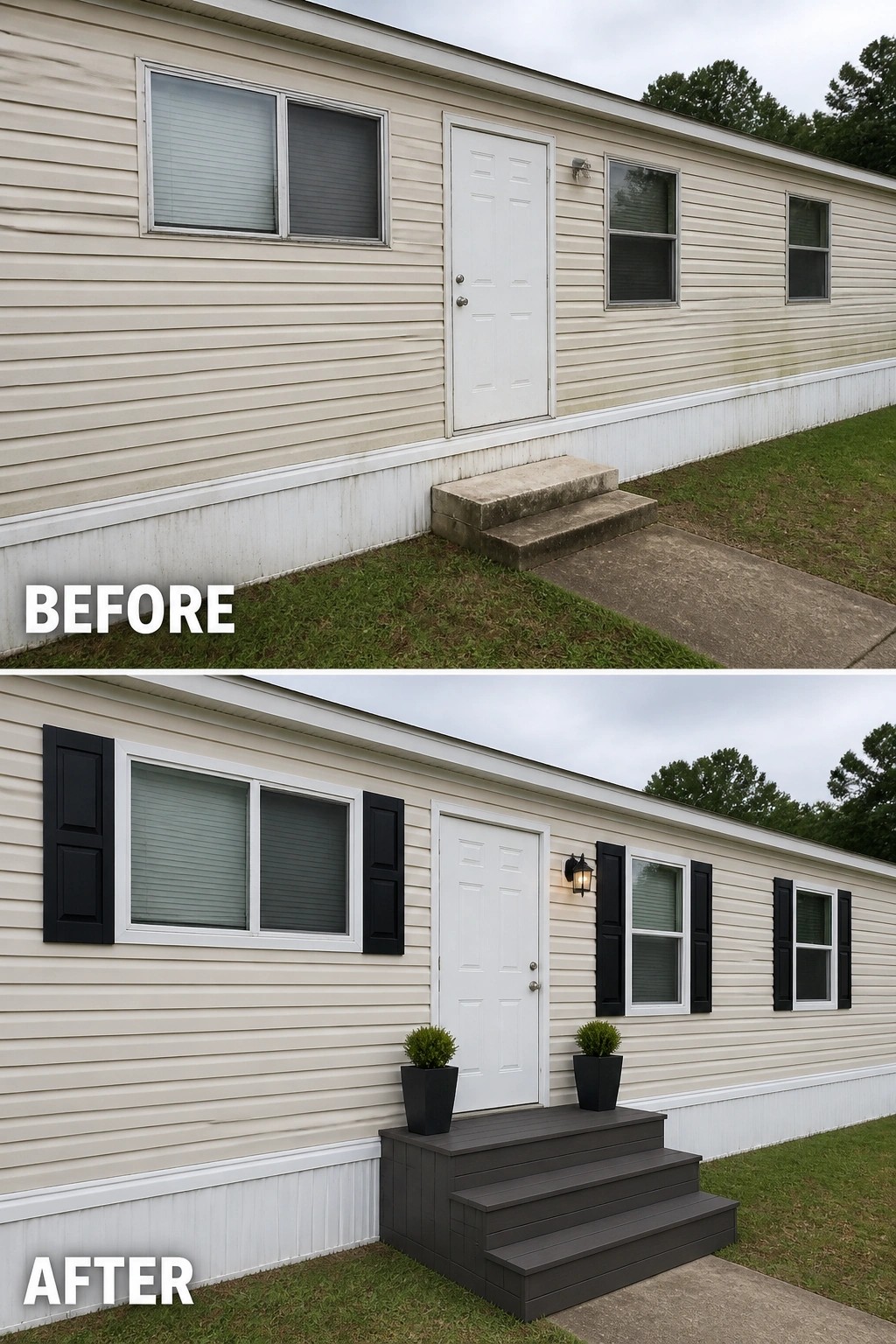
A small, focused entry upgrade can make a mobile home feel cared for without a big budget. Adding a compact set of front steps creates a proper landing and tells visitors where to go, while a couple of matching planters and a simple light fixture turn a bland door into a finished entry. You get more presence from a few well-chosen pieces than from trying to decorate the whole facade.
Do it simply: choose prebuilt or composite steps sized to your door height, anchor them securely, and pick two identical planters for instant symmetry. Repeat one accent color (on shutters, pots, or the light) so the new elements read as a group, and use weatherproof materials so the small investment lasts. Keep the walkway clear and allow room to move so the entry feels practical as well as welcoming.
Create A Low Cost Covered Porch With Plantings
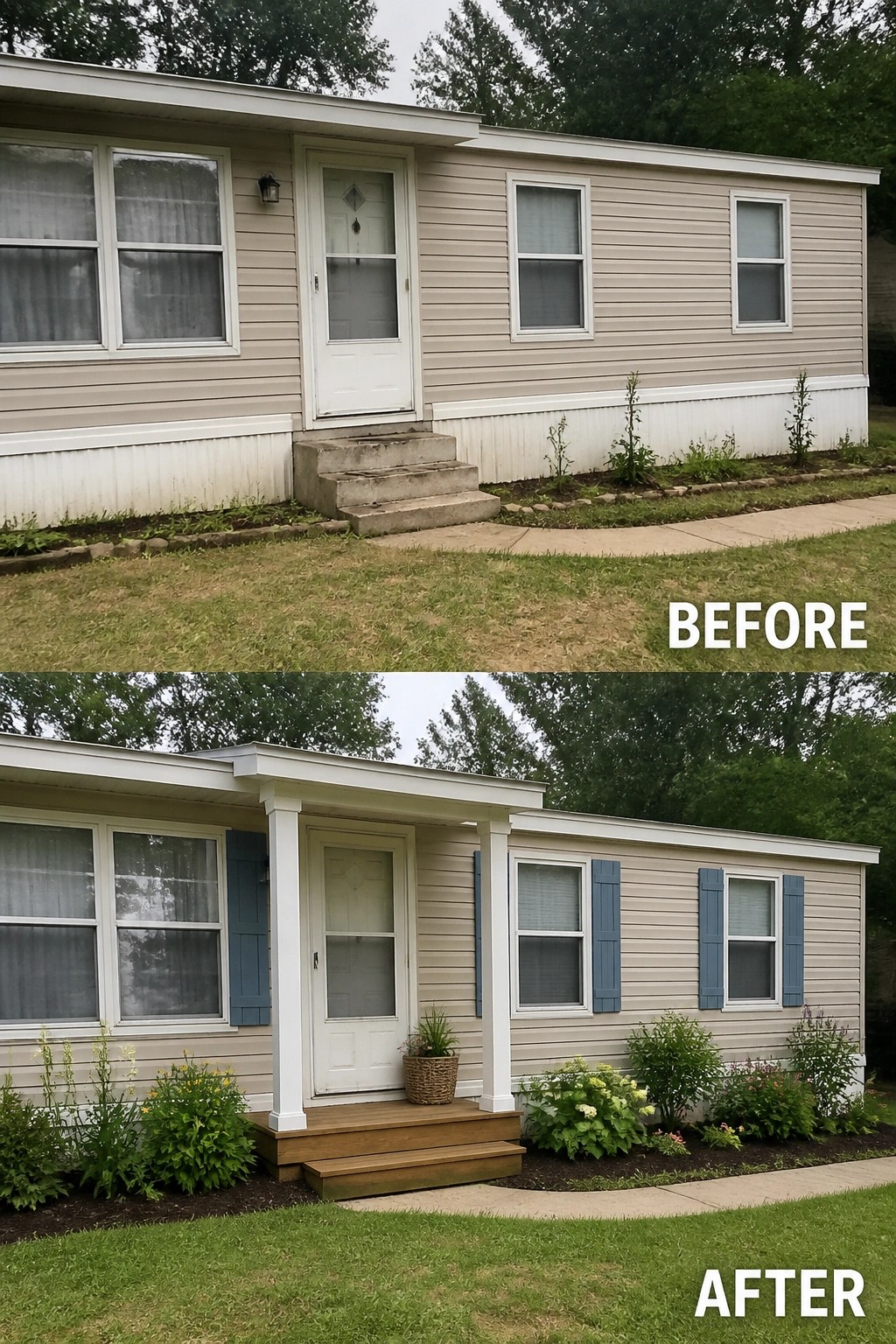
A small covered porch can change a plain mobile home facade into a focused, welcoming entry without a big budget. Swapping crude concrete steps for a compact wooden platform and posts gives the door proper scale, while a tidy planted border anchors the porch and softens the front. That single addition makes the whole exterior read as intentional rather than unfinished.
Start small. Build a low-rise porch or use a prefabricated kit so proportions stay in scale with a narrow home, and choose pressure-treated wood or composite for low maintenance. Frame the new steps with mulch and a few hardy perennials, add a single planter by the door, and match the porch trim to existing siding so everything feels cohesive. Works well on mobile homes and cottages where a modest, practical entry makes the biggest curb appeal gain.
Frequently Asked Questions
Q: Can I install shutters myself or should I hire someone?
A: Yes, most decorative shutters are DIY-friendly if you have basic tools and a helper. Measure carefully so the shutters look proportionate, use exterior-grade screws and anchors, and predrill to avoid cracking siding. If the shutters will be functional or you must anchor through thin siding, consider adding backing blocks or hiring a pro.
Q: What shutter style works best on a small mobile home?
A: Pick narrow, simple styles like single-panel or louvered shutters so they don’t overwhelm the facade. Aim for shutter width around one-quarter to one-third of the window width for balanced proportions. Matching the shutter style to your home’s vibe—clean lines for modern, board-and-batten for farmhouse—keeps everything feeling intentional.
Q: Do I need a permit to add a front porch or steps?
A: Small decorative steps and railings often don’t need permits, but full porches that attach structurally to the home usually do because of load and anchoring rules. Call your local building department and ask about porches for mobile homes so you know what’s required. Getting approval now avoids having to rebuild later.
Q: What’s a low-maintenance finish for shutters and porch trim?
A: Use exterior acrylic latex paint and choose semi-gloss for trim so it’s easy to wipe clean. Prime new wood or unpainted surfaces first (test a small area) to improve adhesion and longevity. Keep up with small touch-ups every few years and clean off dirt so the finish lasts longer.