

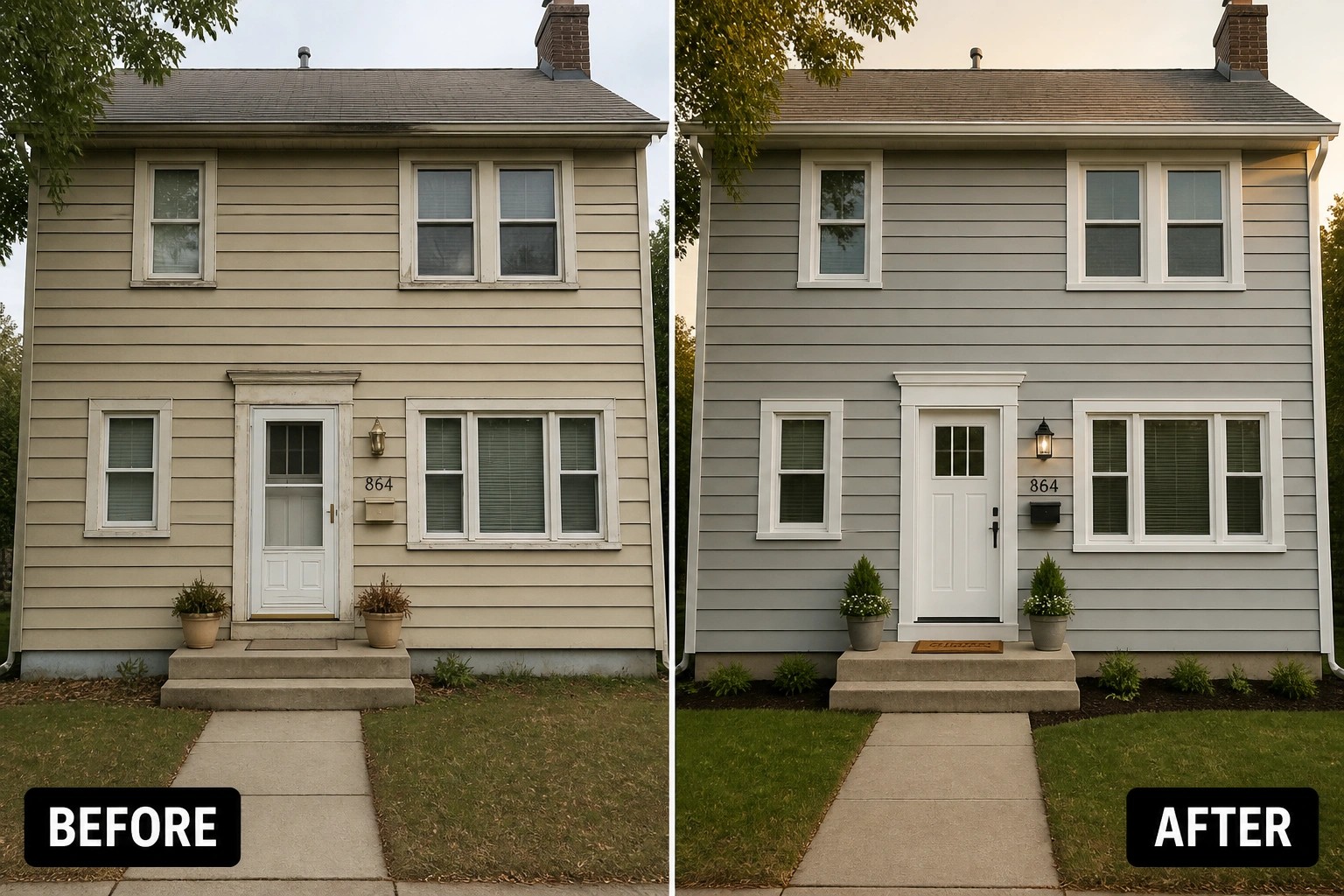
I have noticed that dated siding and trim can make even a solid house look like it has been overlooked for years.
A few targeted updates around the entry often shift how the whole place reads from the street.
I keep coming back to the fact that these changes rarely require tearing anything down yet still make the home feel more looked after.
Some fixes are simpler than they seem.
Seeing what actually worked on other houses gives me a clearer sense of what might suit mine.
Give Dated Siding And Trim A Fresh Color Update
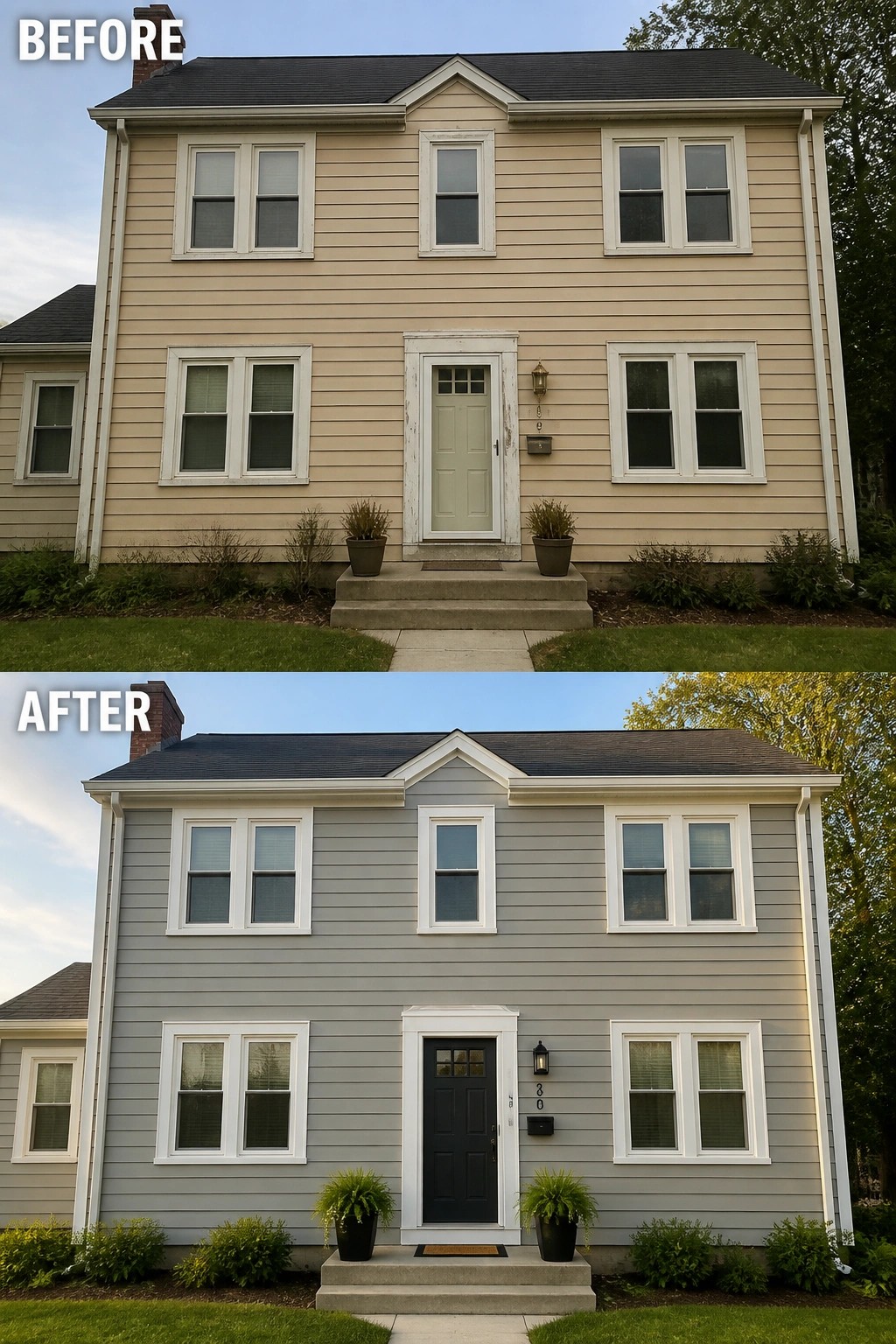
Changing the siding color is often the fastest way to make an older house feel current. In this case the shift from a faded beige to a soft gray, paired with crisp white trim, instantly cleans up the whole facade and gives the windows more definition. Swapping the light door for a dark one adds contrast right at the entry and makes the front feel more intentional.
This approach works well on homes where the structure is still sound but the colors have aged. Focus first on the siding and trim, then use the door color to tie everything together. Keep the palette simple so the changes read as one update rather than scattered fixes.
Use Paint To Refresh Dated Siding And Entry
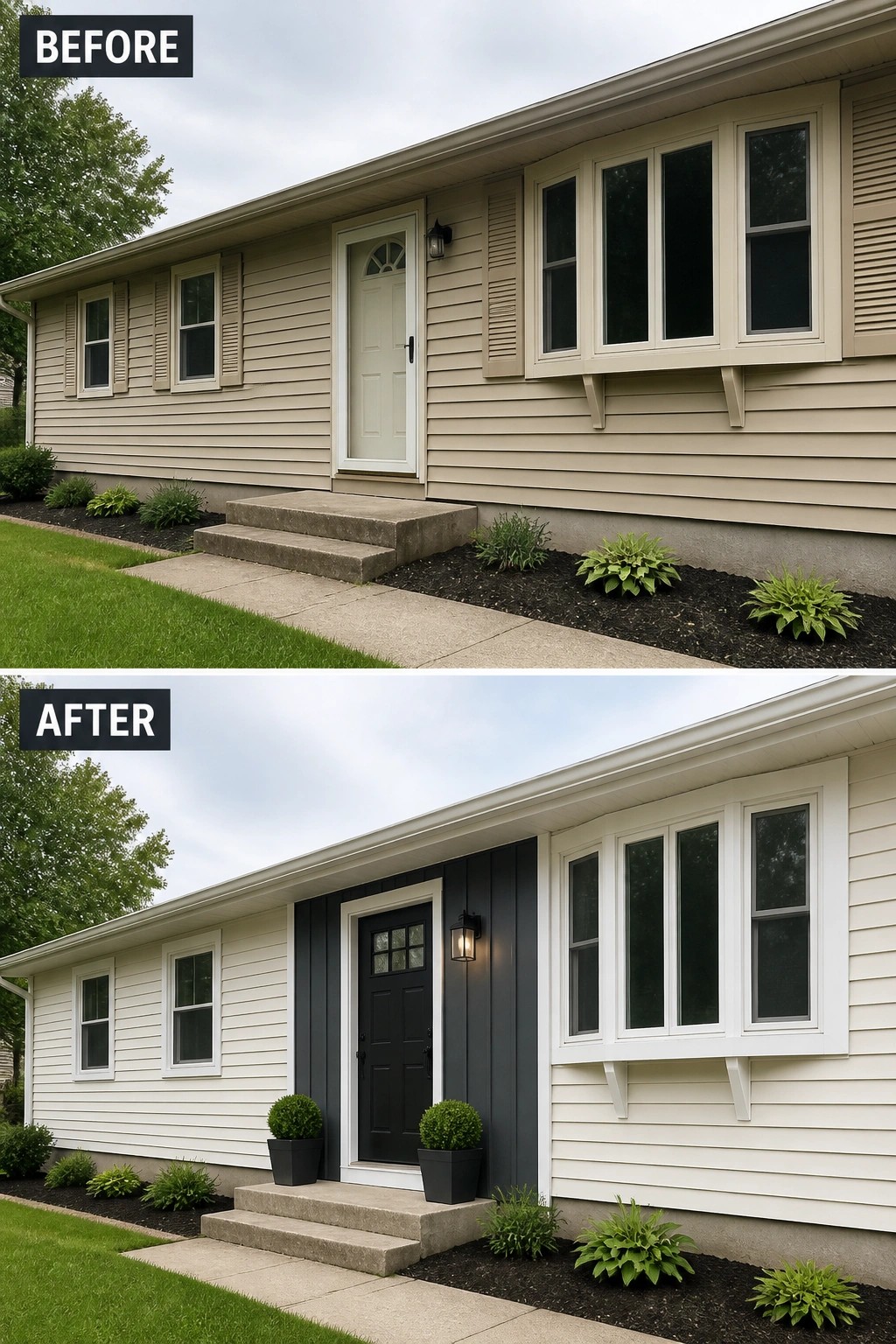
A simple color change can make a big difference on an older home. The before photo shows a house with all-over beige siding and a plain white door that blends into the background. In the after photo, white siding paired with a dark vertical accent and a black door gives the entry a clear focal point and makes the whole front look more current.
This approach works well on ranches or single-story homes where the facade feels flat. Start by picking one darker color for the area around the door or for shutters, then keep the main siding light. Add a couple of matching planters on the steps if you want a bit more polish without spending much.
Paint Dated Brick Siding White With Dark Trim
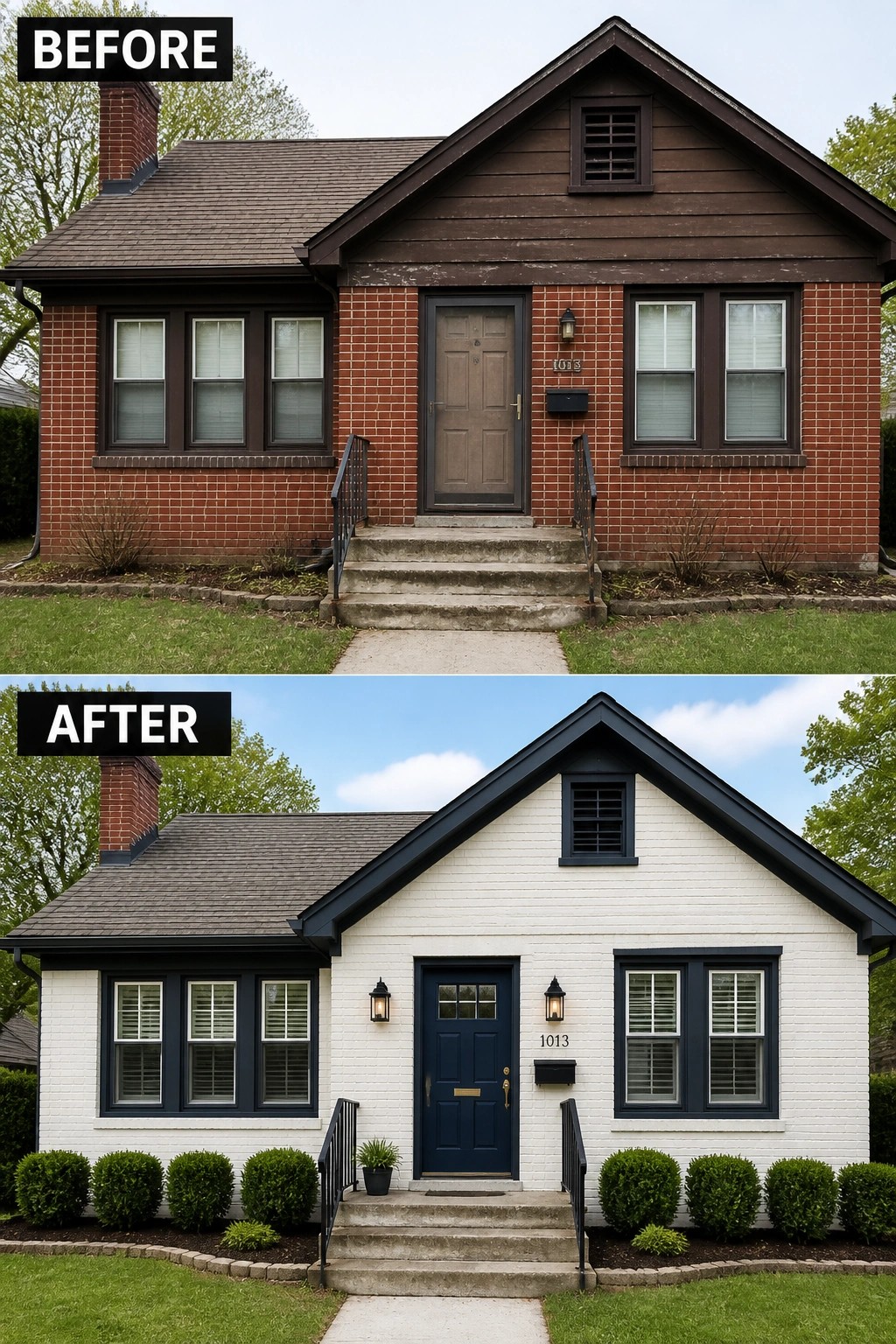
Many older brick homes end up looking heavy because the original color and trim have aged poorly. Painting the brick a bright white and switching the trim to a dark shade immediately lightens the facade and gives the house a cleaner, updated appearance.
This works best on smaller homes where the siding is still in good shape but the color feels tired. Focus on the brick first, then match the new trim, shutters, and door color so the changes feel connected rather than scattered.
Refresh A Dated Entry With A New Door And Trim
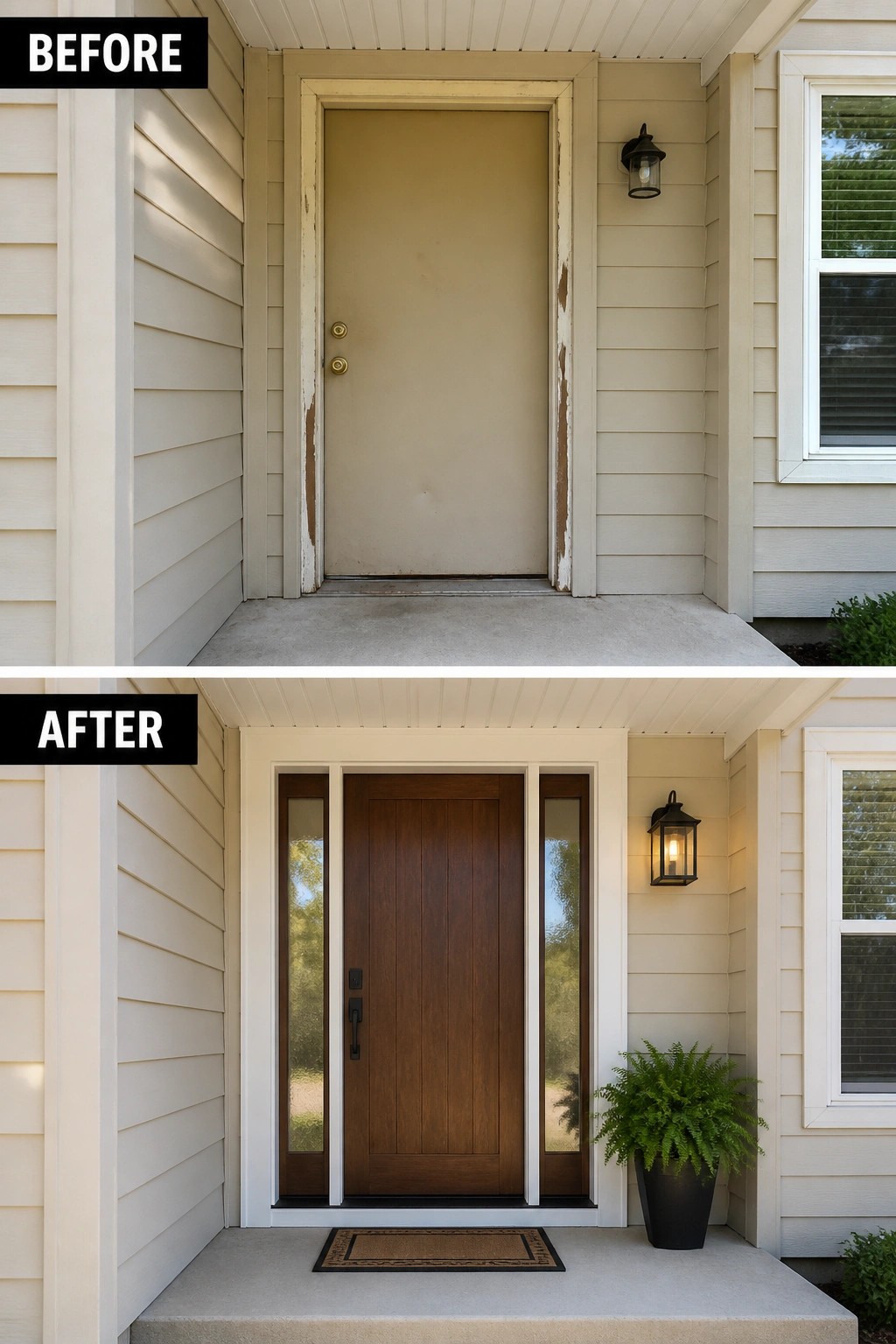
A plain front door with peeling paint can make the whole house look older than it is. Swapping it for a solid wood door with sidelights, painting the trim white, and adding a new lantern gives the entry a cleaner and more finished look without changing the siding.
This works well on homes where the door and trim are the main dated elements. Keep the rest of the facade simple and focus on one strong door style, good lighting, and a single plant or mat so the update feels balanced rather than busy.
Refresh A Dated Porch With New Columns And Railings
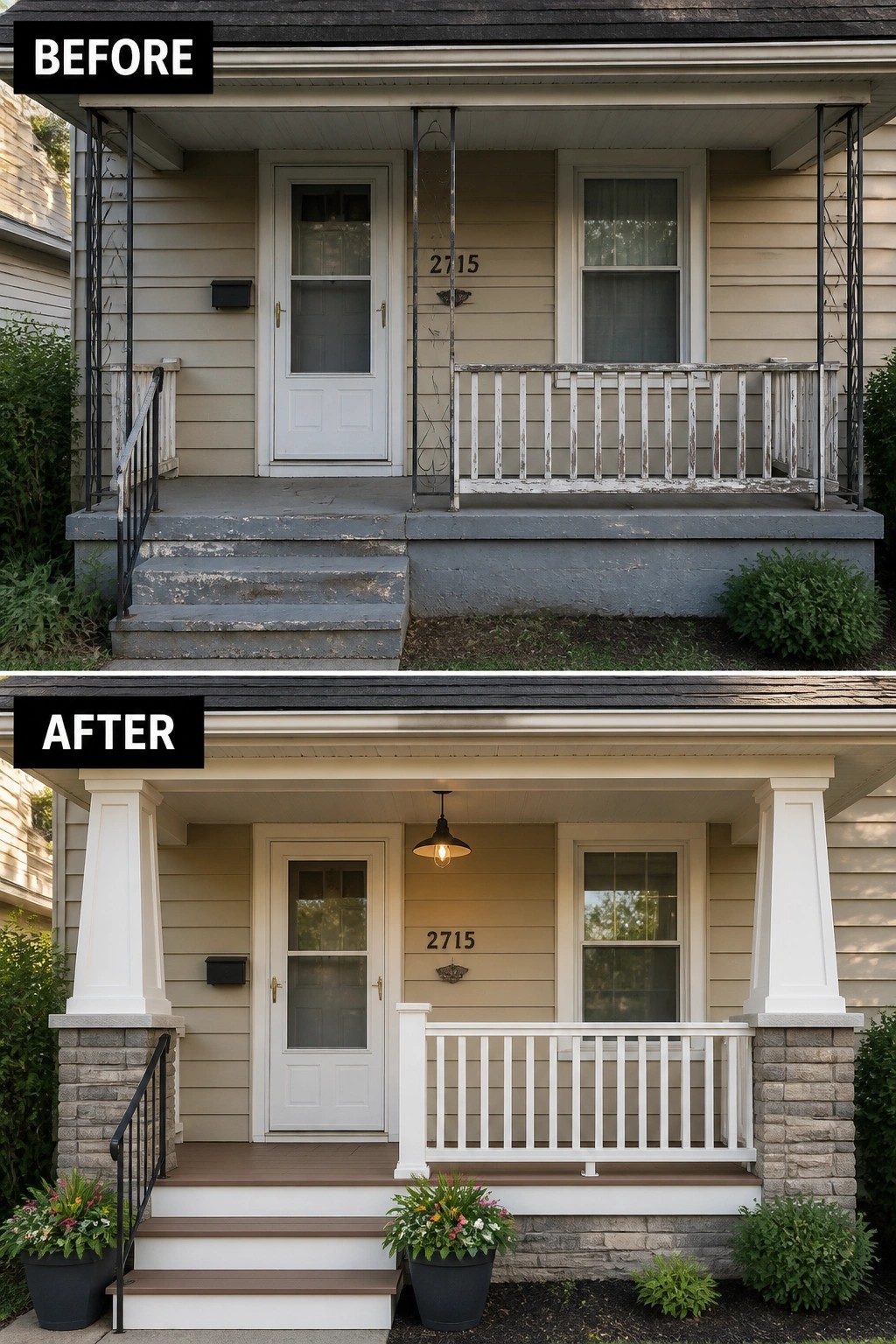
Many older homes have front porches that feel tired because the original railings and supports have worn down or look too thin. Swapping in wider columns set on stone bases and adding a clean white railing gives the entry more presence without changing the whole house.
This idea works best on homes with simple siding where the porch is the main feature people notice first. Start with the posts and railings, then add a few planters at the base of the steps. It keeps the update practical and helps the entry look more finished even on a modest budget.
Use Lighting To Make A Plain Entry Feel Welcoming
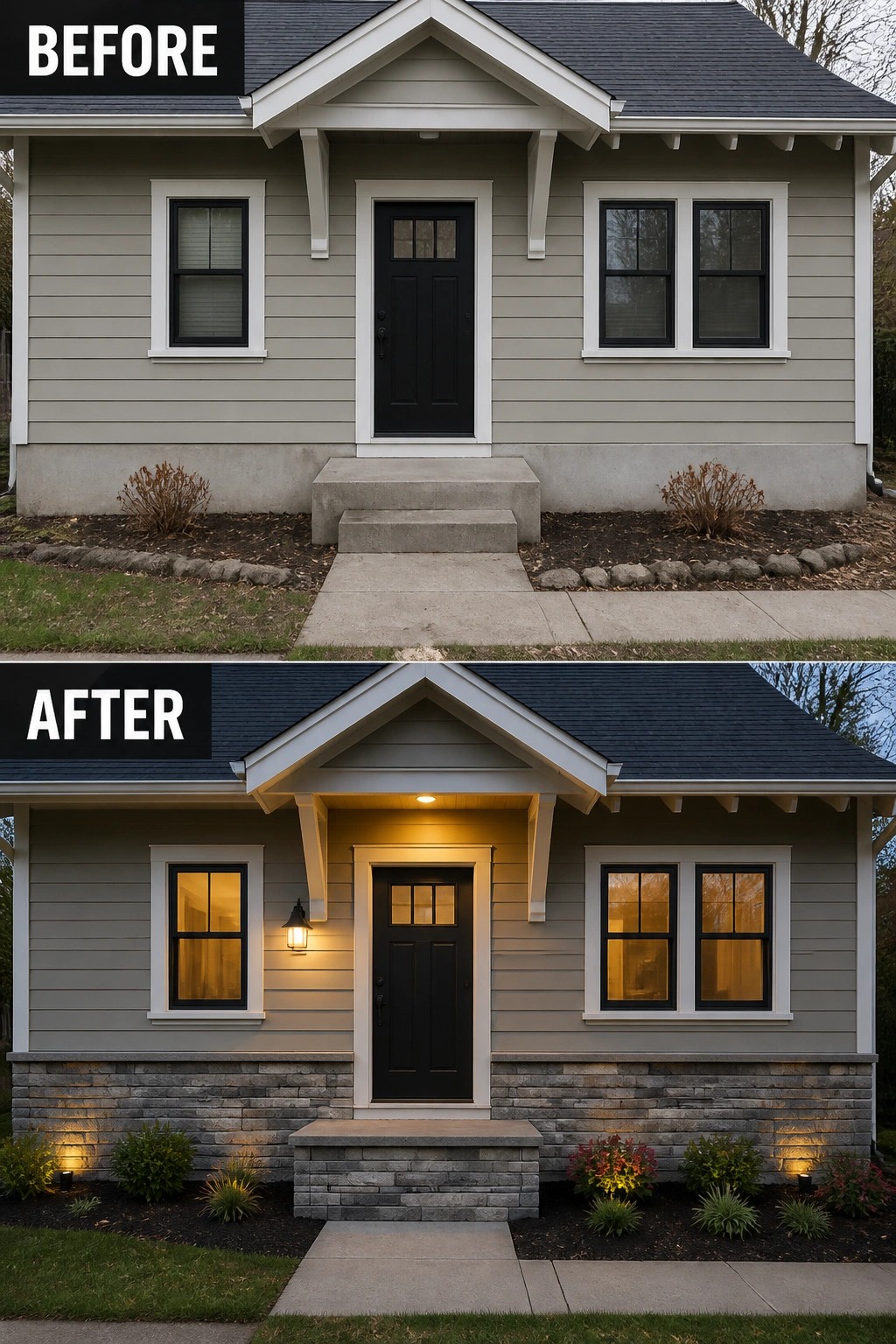
Many homes with dated siding and trim look flat around the front door because there is no light to draw attention to the entry at night. In this case the before photo shows a plain concrete stoop with no fixtures and nothing to soften the base of the house. Adding a simple wall sconce beside the door plus a few low landscape lights immediately changes how the whole facade reads.
The same approach works on most single-story homes where the entry sits in the middle of the elevation. Start with one or two fixtures that match the door hardware, then add a couple of small ground lights near the planting beds. Keep the light warm rather than cool white so the siding and trim do not look washed out. This small change often gives more impact than repainting the entire house.
Match All Shutters To One Color
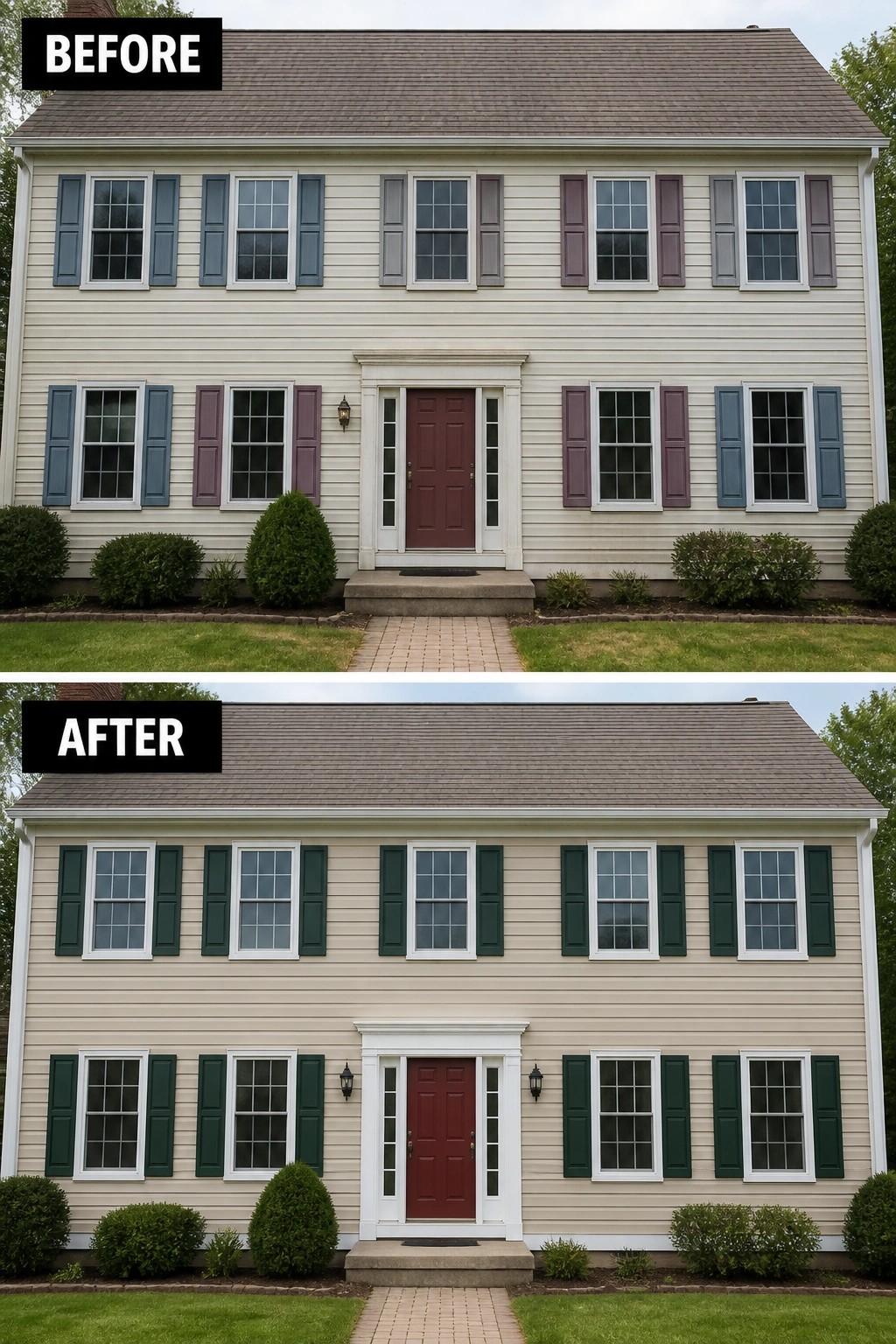
The top photo shows shutters in several mismatched shades scattered across the front. Painting them all the same deep green creates a much cleaner and more intentional look that ties the whole facade together.
This works especially well on older homes where shutters have been replaced or repainted over the years. Choose one color that complements your siding and trim, then update every shutter to match. It is a straightforward project that improves curb appeal without touching the roof, windows, or structure.
Add Structure To A Plain Front Entry
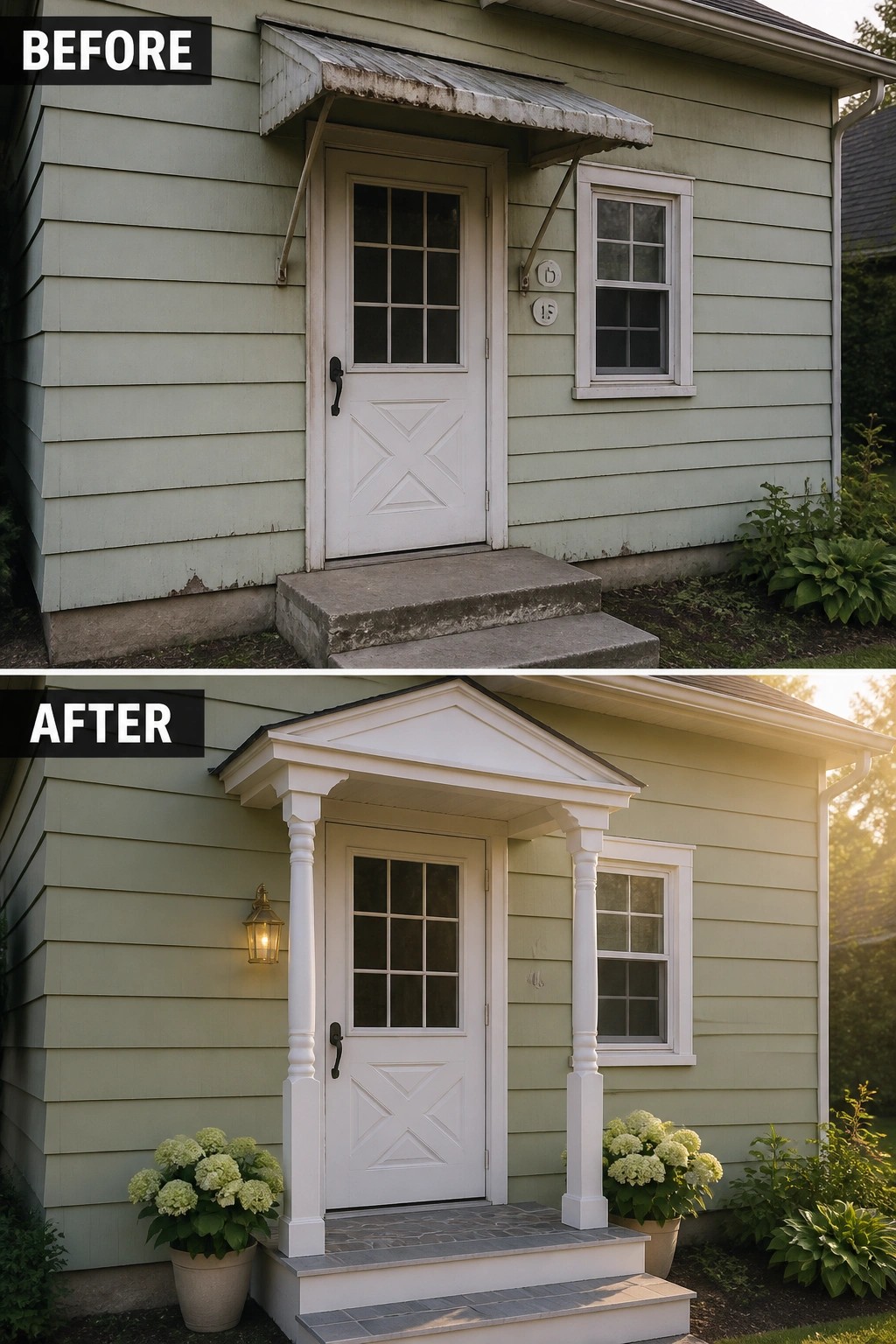
A basic door with a small metal awning can make the front of a house feel unfinished. Adding a simple portico with columns and a pediment gives the entry a clear shape and makes the whole facade feel more complete. The change also lets you update the steps and add a couple of planters without the space looking cluttered.
This idea works well on homes with older siding where the entry looks too flat. Keep the portico modest in size so it fits the scale of the house, and choose materials that match the existing trim. It is often easier to start with the structure before worrying about lighting or extra planting.
Paint The Front Door A Bold Color
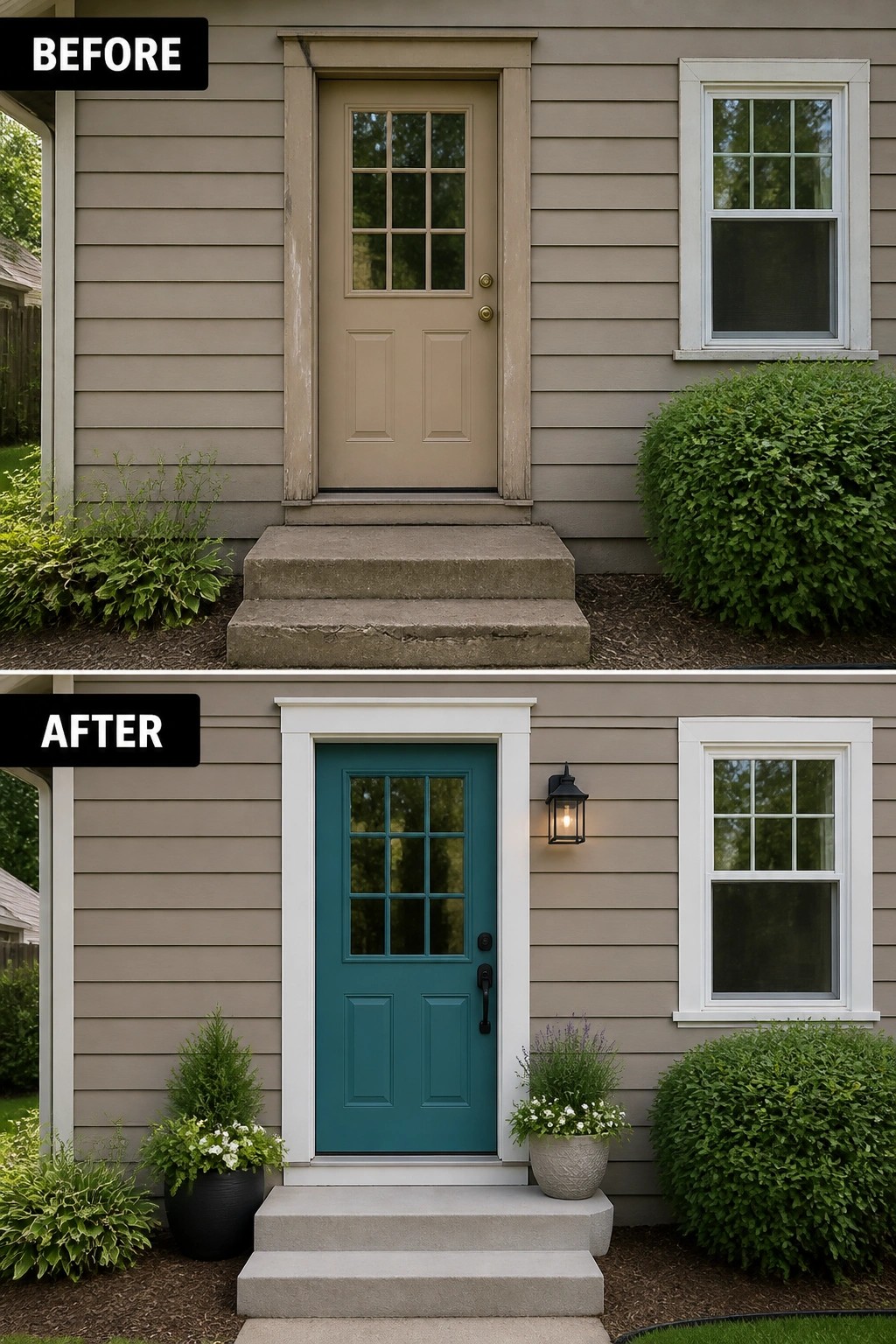
Many older homes have a front door that blends into the siding and feels flat. Switching to a strong color like teal makes the entry stand out right away and gives the whole facade a cleaner, more current look without major construction.
This works well on homes with simple siding where the door can become the main focal point. Keep the surrounding trim white so the new color pops, and add one light fixture and a couple of planters to finish the space. The change stays practical because it uses just paint, trim boards, and small accents rather than replacing windows or siding.
Refresh Dated Siding With Updated Window Frames
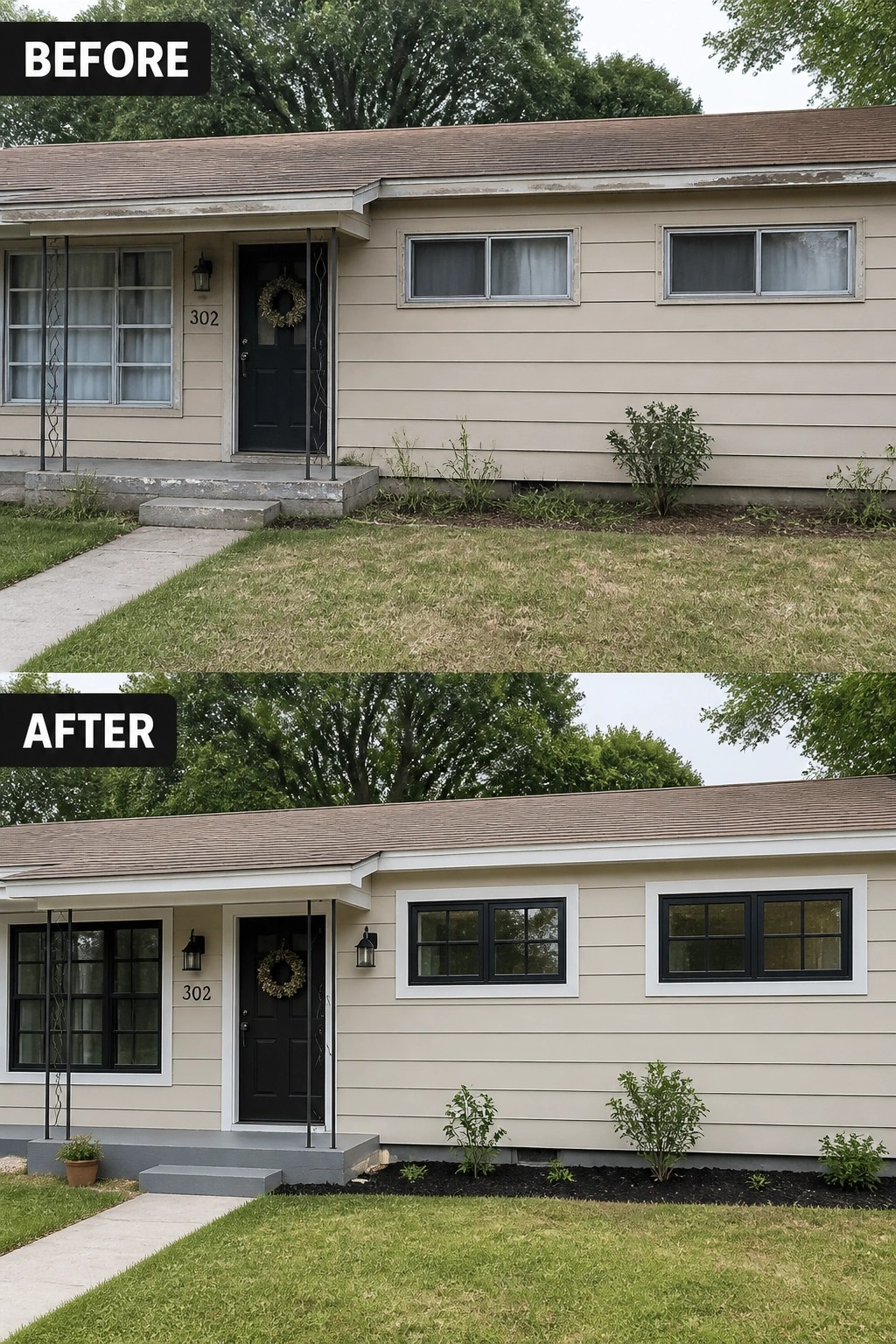
Many older homes have plain windows that make the siding look flat and tired. Adding black frames with divided panes and white trim around the openings gives the whole front a sharper, more finished look without replacing the siding itself. The simple change also makes the entry feel more intentional.
This approach works well on ranches and single-story homes where the windows are a main visual feature. Start by choosing a frame color that contrasts with the siding, then add matching trim if needed. Keep the rest of the updates minimal so the windows remain the focus.
Refresh Dated Siding And Trim With A New Color
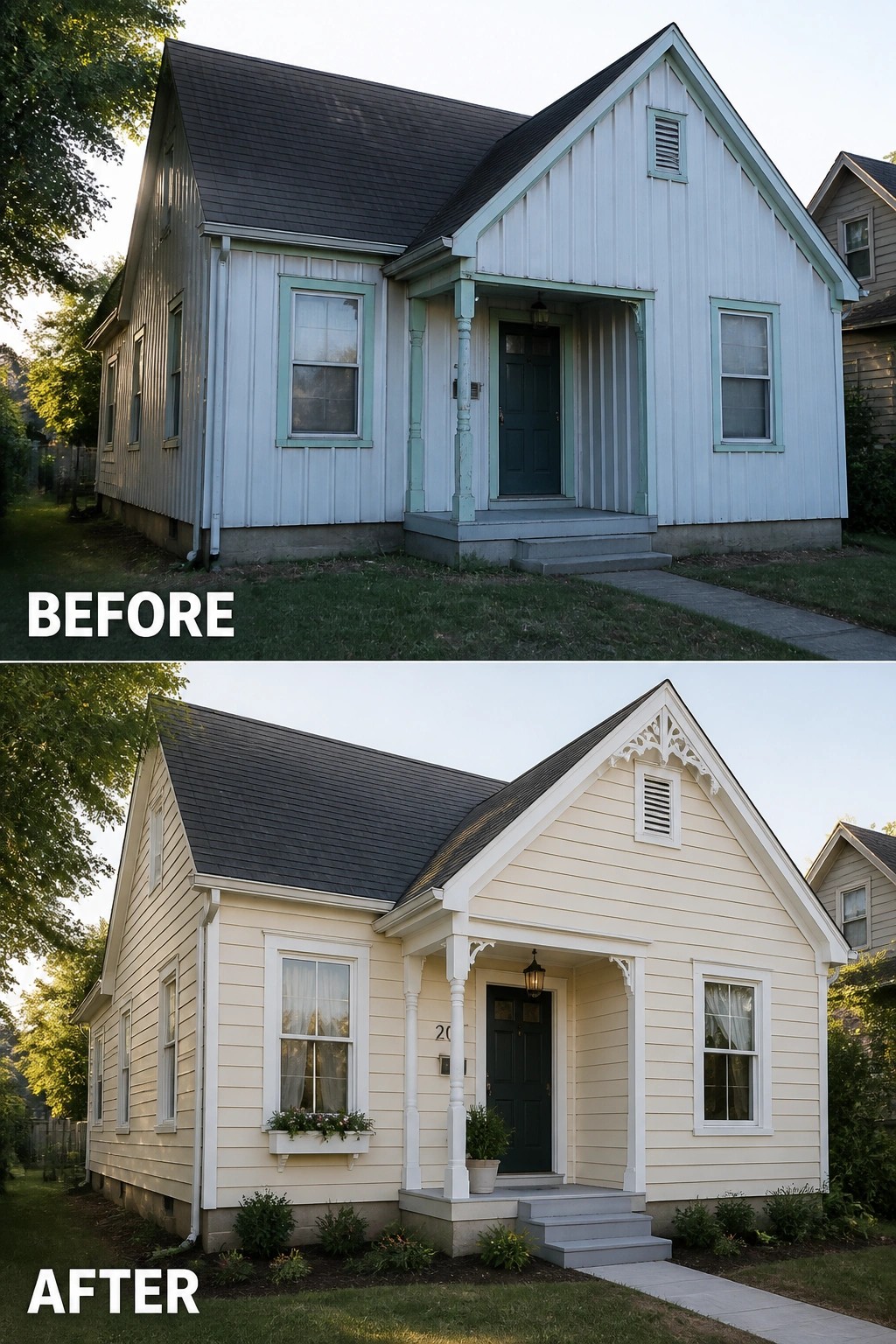
A simple change in paint color on the siding and trim can make an older house look much cleaner and more current. In this case the white walls and green accents were replaced with a warmer cream tone and crisp white trim, which instantly softens the whole front and works better with the dark door.
This approach works well on small homes where the siding is still sound but the colors have grown tired. Focus first on the main body and trim, then add a few practical touches like a window box or better porch lighting if the budget allows. Keep the new colors light and coordinated so the house feels brighter without needing major repairs.
Update Your House Exterior With Fresh Paint And Trim Colors
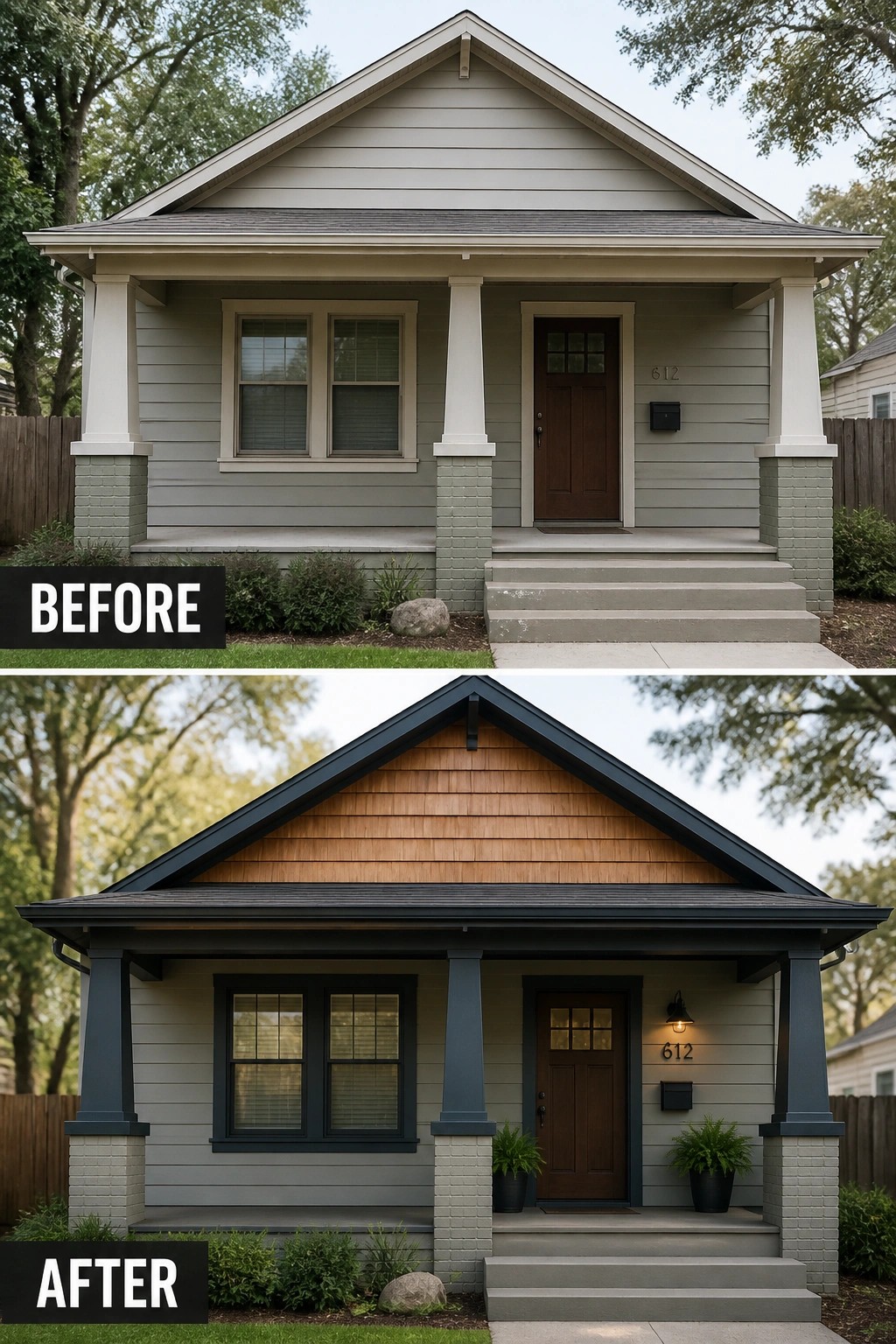
Many homes with plain siding end up looking flat because everything blends together. Painting the trim, columns, and gable in darker tones while adding wood shingles above the porch gives the front a clearer shape and makes the entry feel more important.
This kind of update works best on smaller homes where you want to avoid replacing the siding. Start with the trim and gable first, then add simple planters near the steps to finish the look without crowding the porch.
Update The Garage Door And Trim For Better Curb Appeal
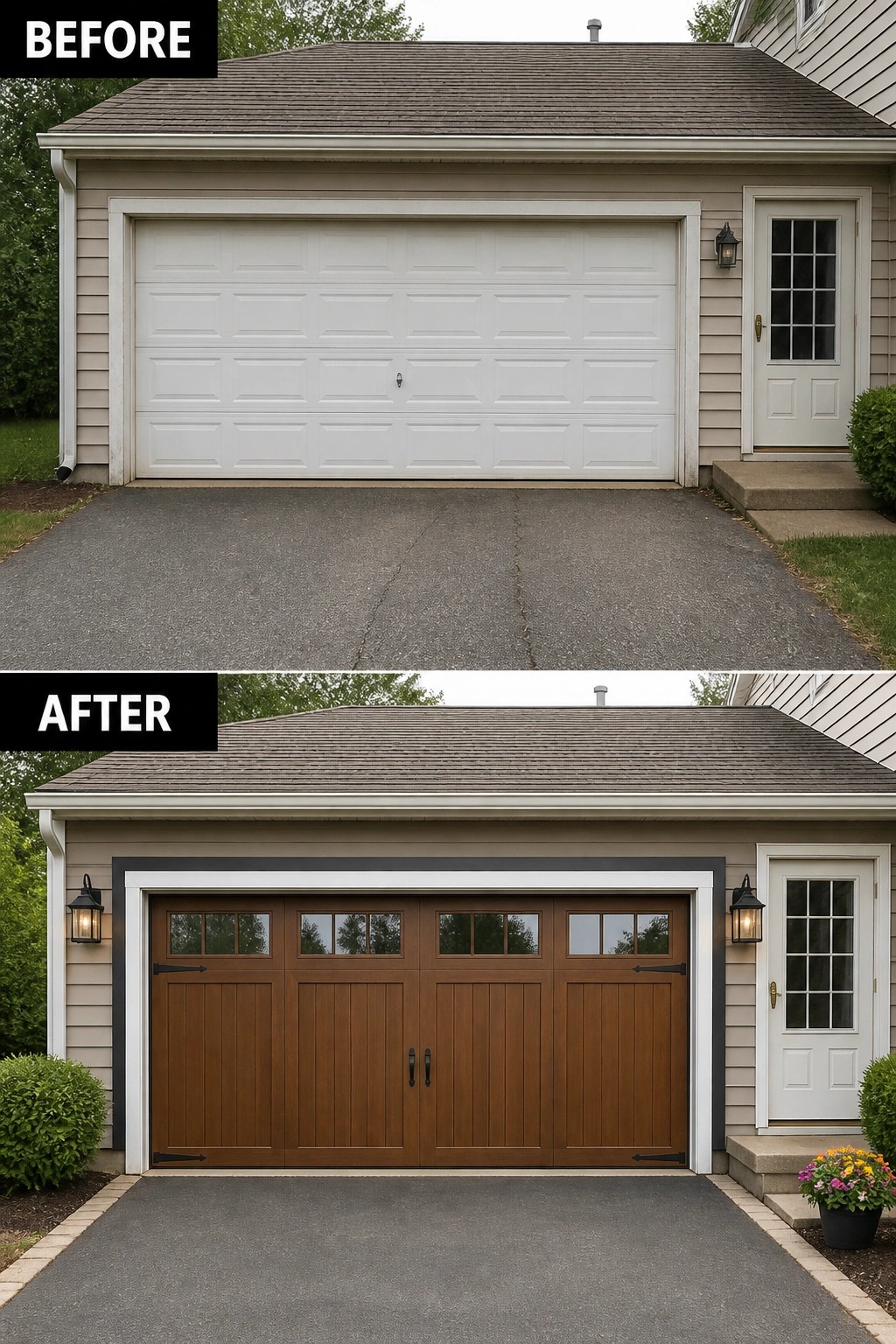
A dated garage door often makes the whole front of the house feel flat. Swapping the plain white door for a wood-style door with windows and adding a dark trim frame around the opening gives the facade a much cleaner structure without any major construction.
This idea works best on homes where the garage takes up most of the front view. Keep the rest of the siding and entry door simple so the new door and trim become the main focal point. Stick to one accent color for the trim and hardware to avoid a busy look.
Refresh Dated Exterior Trim To Improve Curb Appeal
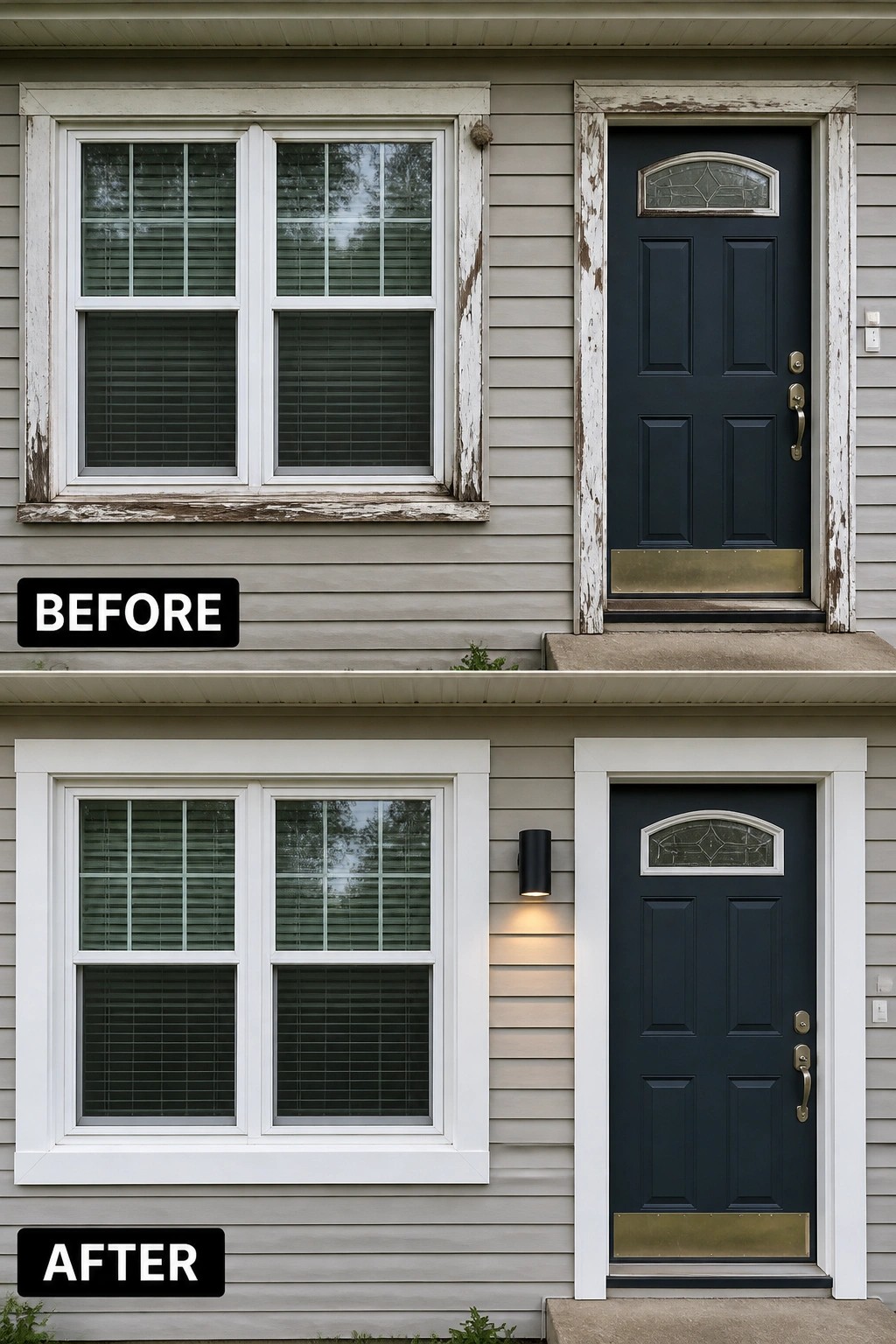
Painting the trim around windows and doors can make a plain house look much newer without touching the siding. Here the old peeling frames were replaced with clean white trim, and the door surround was squared off and painted to match.
This idea works best on homes where the siding is still sound but the details have faded. Start with scraping and priming the old surfaces, then choose a bright white or light contrast color so the windows and entry stand out.
Add Defined Garden Beds Along The Walkway
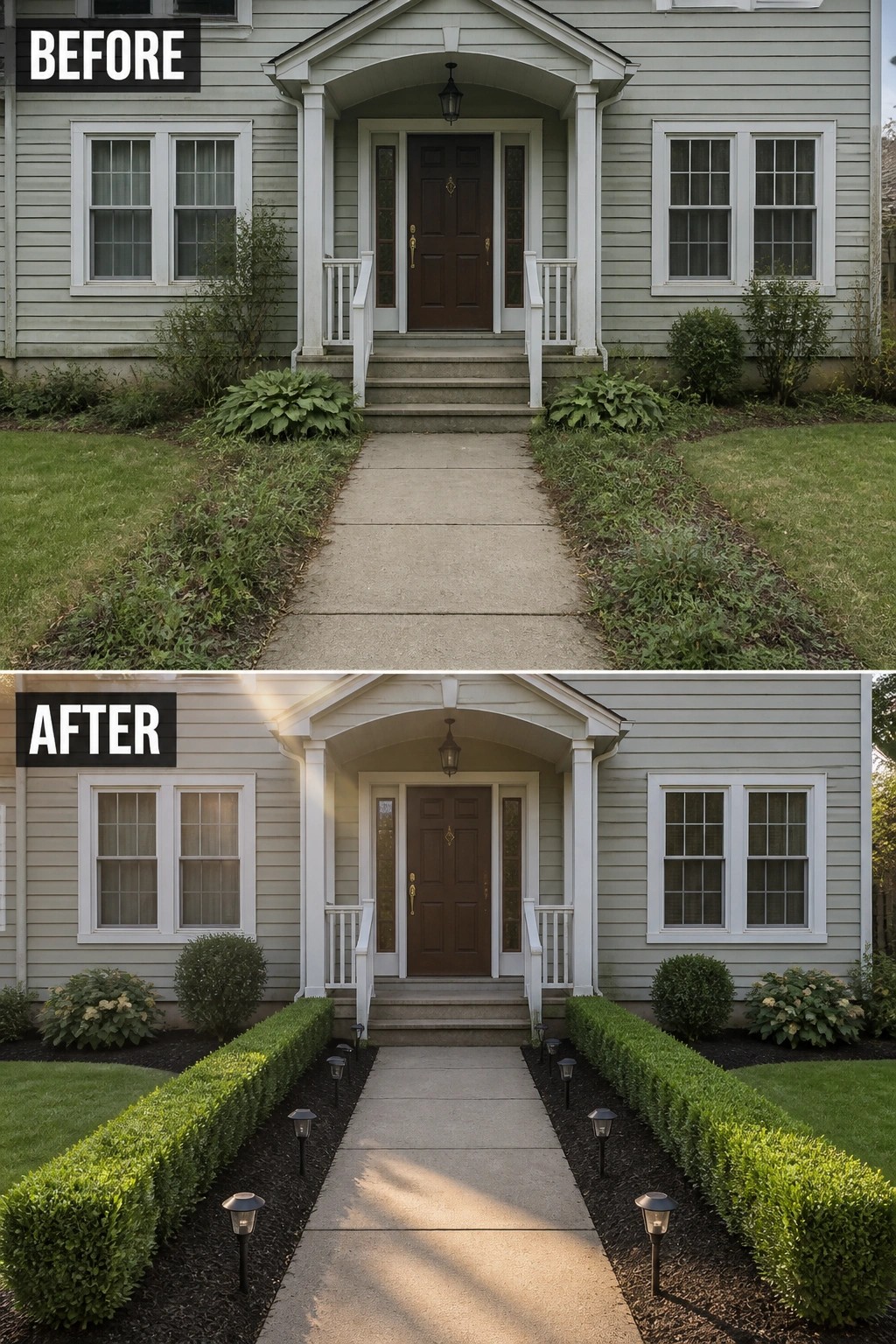
The before photo shows a walkway lined with messy, uneven plantings that make the front of the house feel neglected. In the after version, low boxwood hedges planted in fresh mulch beds create clean lines that lead the eye straight to the door. The simple borders make the whole entry feel more intentional without any major construction.
This approach works well on older homes where the siding and trim are still in decent shape. Start by clearing out the old growth, then lay down mulch and plant a low, repeating hedge to hold the shape. The beds keep grass from creeping in and make mowing easier, and the lights tucked along the edges add safety at night without needing much wiring.
Tile Concrete Steps To Refresh A Dated Entry
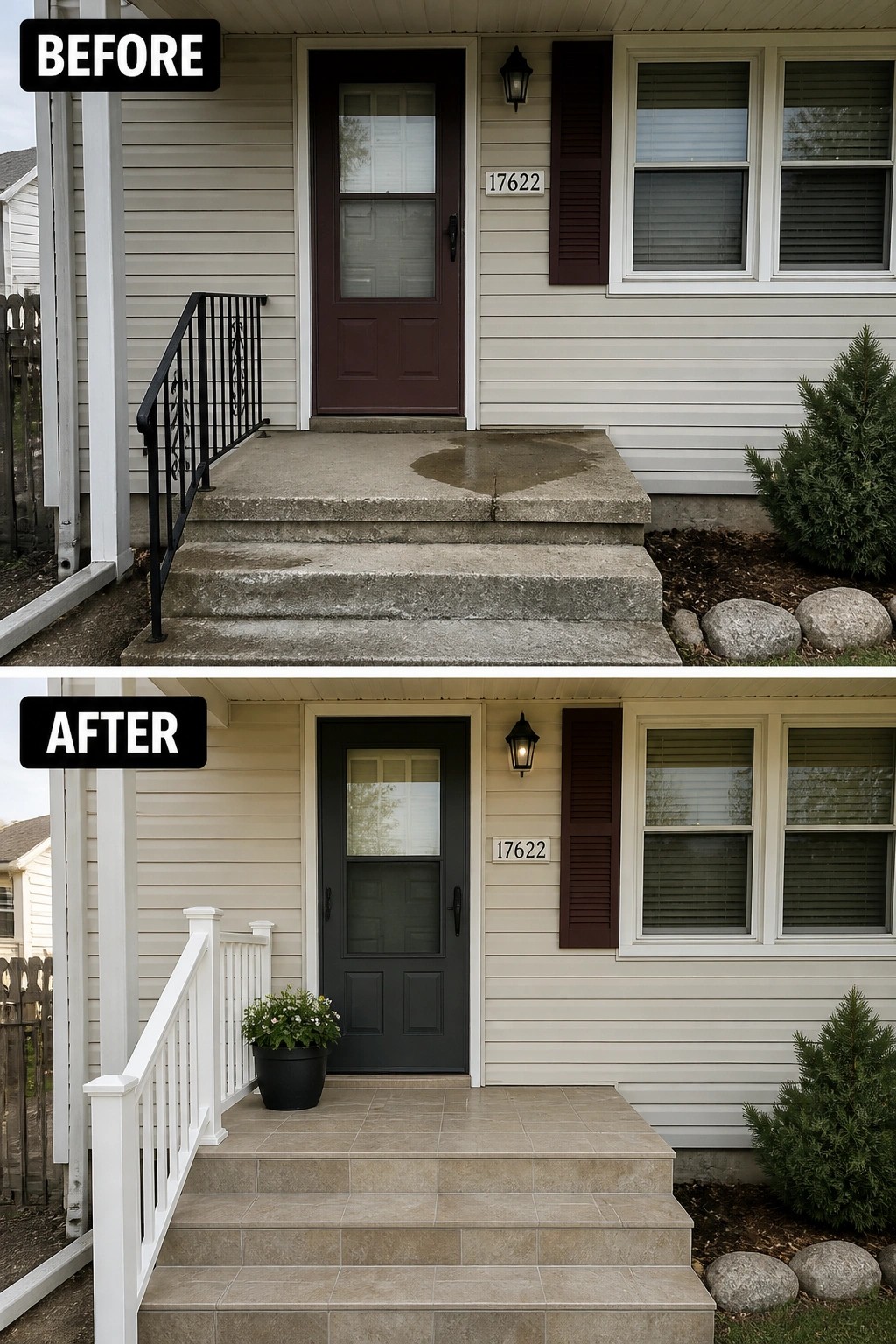
Replacing worn concrete steps with tile gives the front of a house a much cleaner and more finished look. The before photo shows plain gray steps and a dark metal railing that made the entry feel heavy. In the after photo the steps are covered in light tile and the railing has been changed to simple white wood, which instantly brightens the whole front.
This idea works well on houses that already have solid steps but need a surface update. Choose outdoor-rated tile that can handle weather, keep the railing style simple, and add one potted plant near the door. It is a practical change for homes with basic concrete entries that do not need a full rebuild.
Add Shutters And Window Boxes To Plain Windows
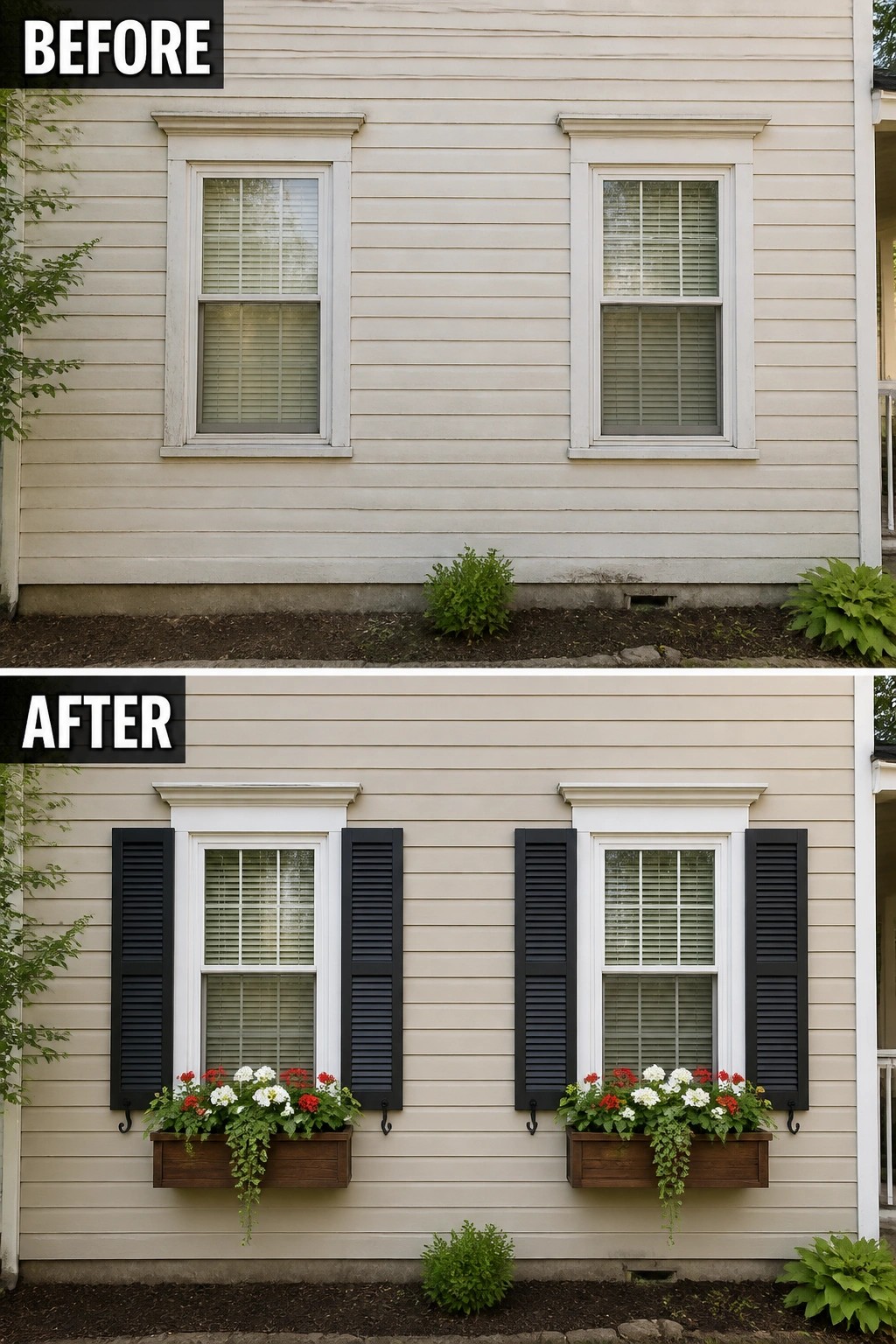
Many houses with simple siding end up looking flat because the windows have no frame or detail around them. Adding shutters on both sides and a window box below each window gives the facade some needed structure and makes the whole front feel more complete.
This idea works especially well on older homes where the windows sit right on the siding with little trim. Keep the shutters in a dark color that contrasts with the house and choose boxes wide enough for real plants. It stays simple and affordable while making the exterior feel more welcoming.
Add Lighting To Make The Entry Feel More Welcoming
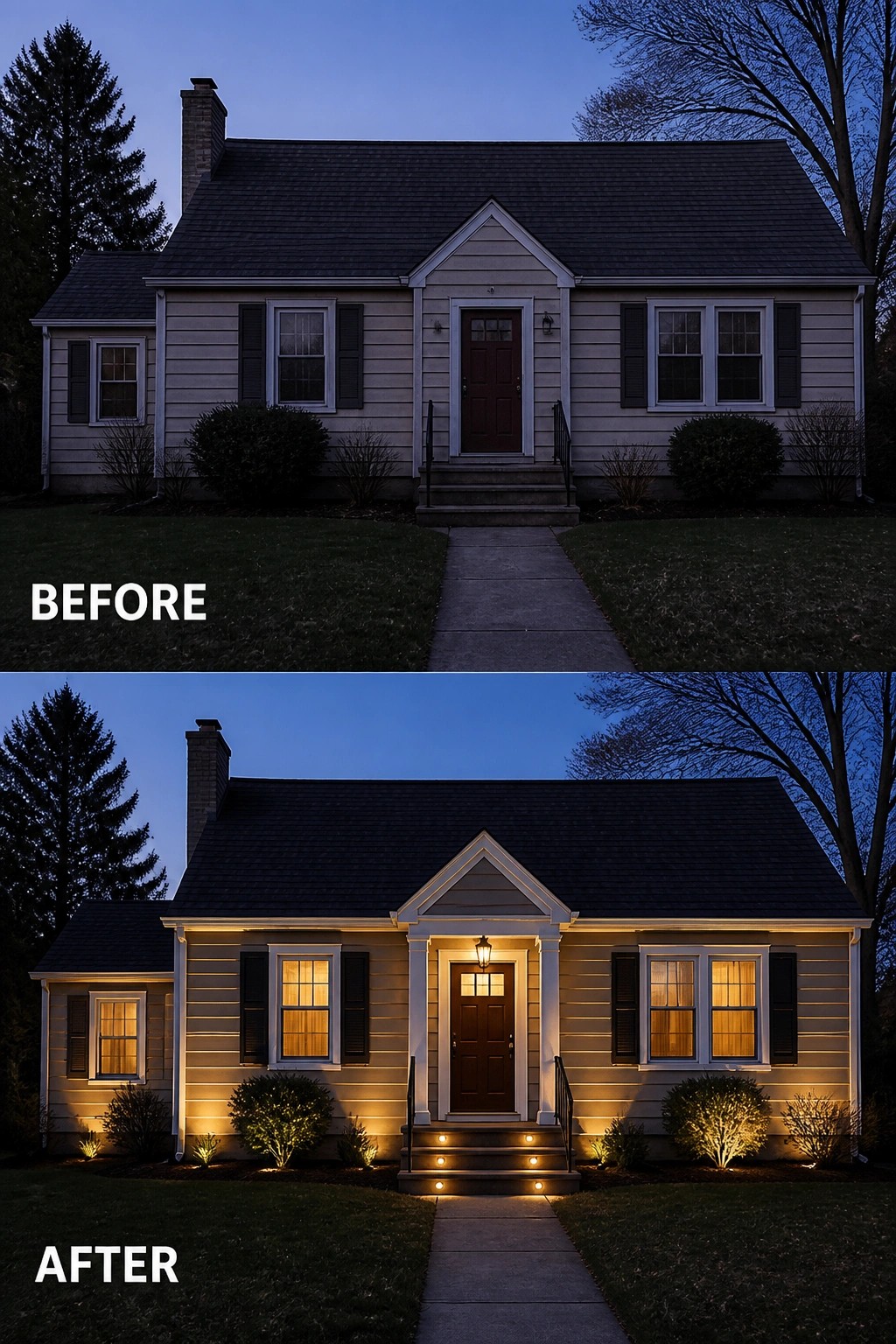
Many older homes look flat once the sun goes down. A few simple lights can fix that fast. Here the house shifts from dark and plain to softly lit along the base, steps, and door, which makes the whole front feel finished.
This idea works on houses with basic siding and trim. Focus lights low near the foundation and along the walk so they graze the walls and mark the entry. Start with the steps and front door area first. It adds presence without changing the structure or spending much on new materials.
Update The Front Door And Trim
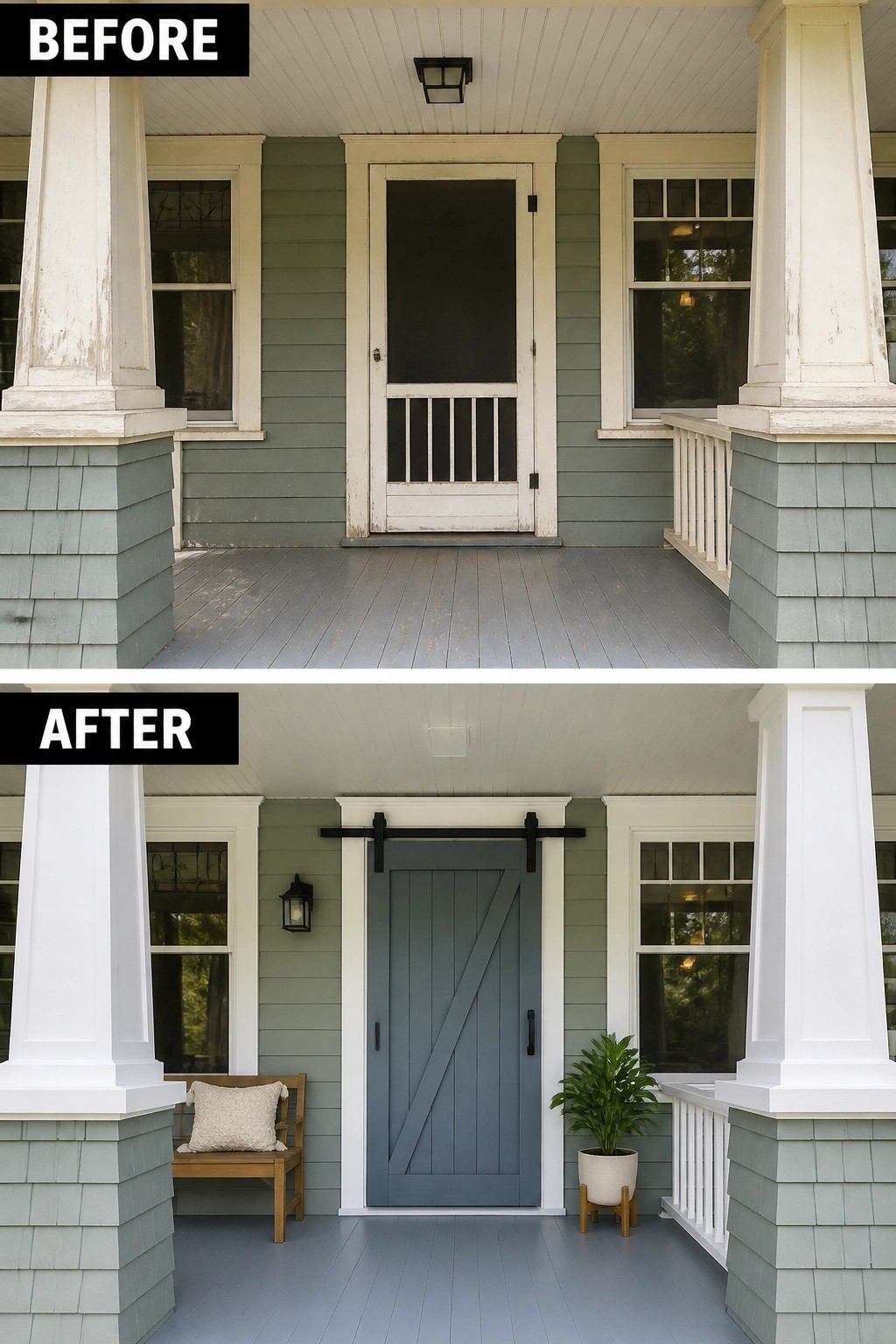
An old screen door with peeling white paint can make the whole front of a house look worn out. Replacing it with a solid door in a calm blue and repainting the trim and columns fresh white gives the entry a cleaner, more finished look right away.
This idea works best on older homes where the door and trim have faded over time. Choose a door style that suits the house, keep the color simple, and focus on getting the trim sharp so the change feels intentional rather than scattered.
Refresh An Old Porch With New Railings
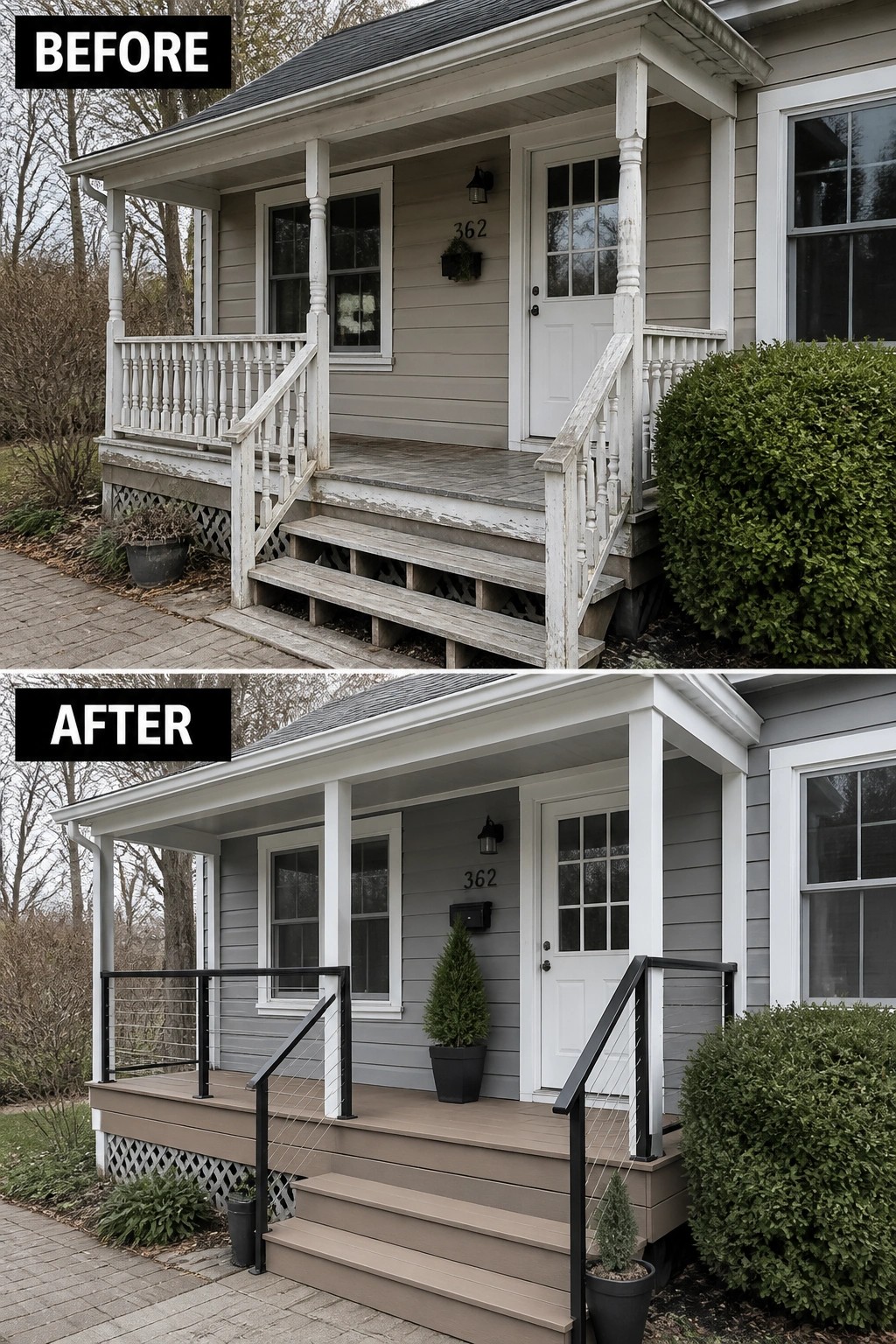
Replacing worn wooden railings and faded steps can make a front porch feel current without major construction. In this case, the old turned spindles and peeling paint gave way to simple black metal railings with horizontal cables, while the decking was stained a warm taupe. The change immediately cleans up the entry and pairs better with the updated siding color.
This approach works well on older homes where the porch structure is still solid. Focus on one or two strong updates like railings and deck color rather than adding too many accessories. Keep the new materials low-maintenance so they hold up to weather and daily use.
Update Plain Siding With A Two-Tone Color Scheme
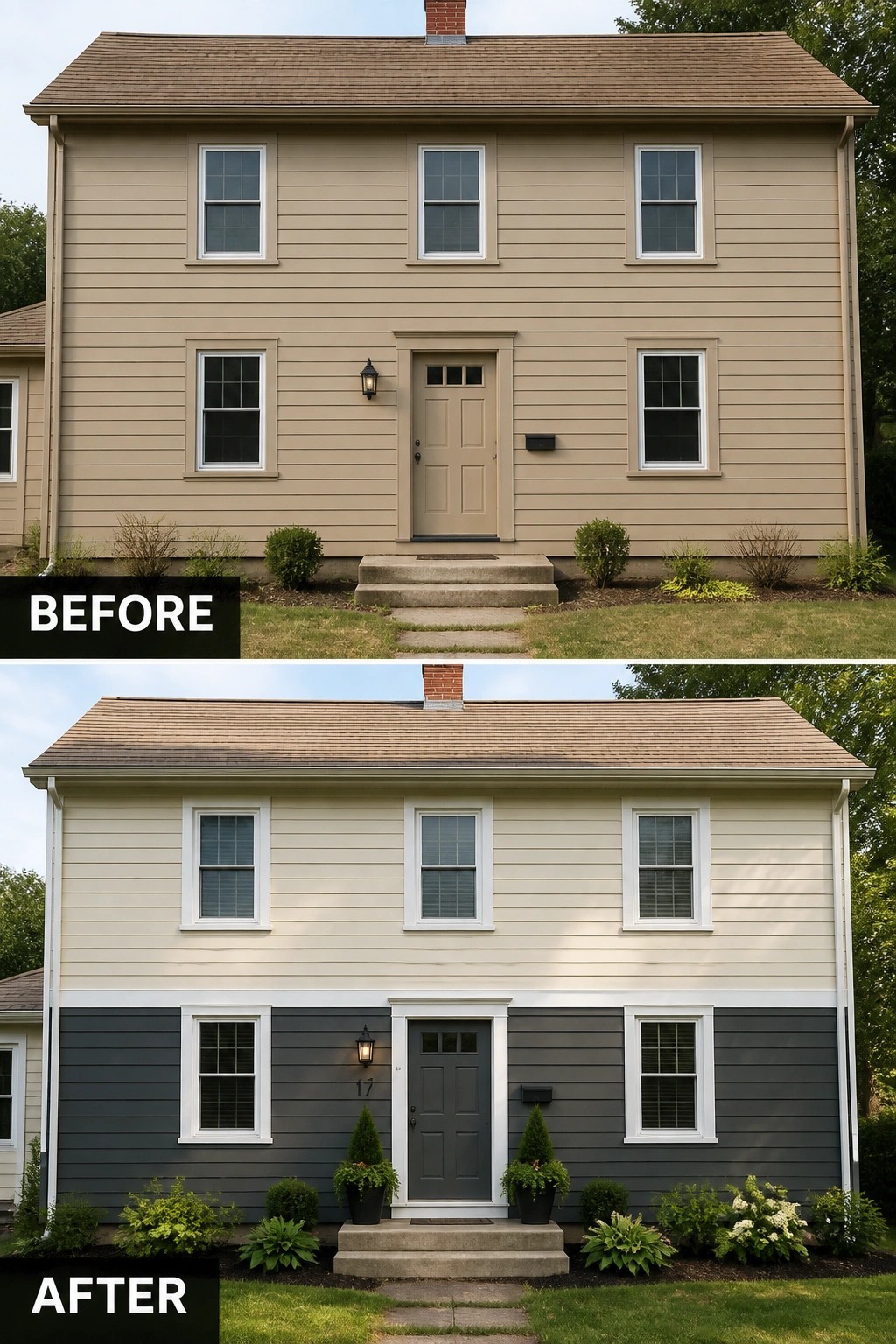
Many older homes have large areas of single-color siding that can start to feel flat over time. Splitting the siding into two shades gives the house more structure without any major construction. The lower portion takes a darker color while the upper section stays lighter, and fresh white trim around the windows and door helps everything feel more defined.
This approach works especially well on simple two-story homes where the siding runs the full height. It adds visual weight at the base and makes the entry feel more grounded. Keep the color change at a natural break like a belt line or window height so the result stays balanced.
Replace Old Lattice Skirting With Horizontal Slats
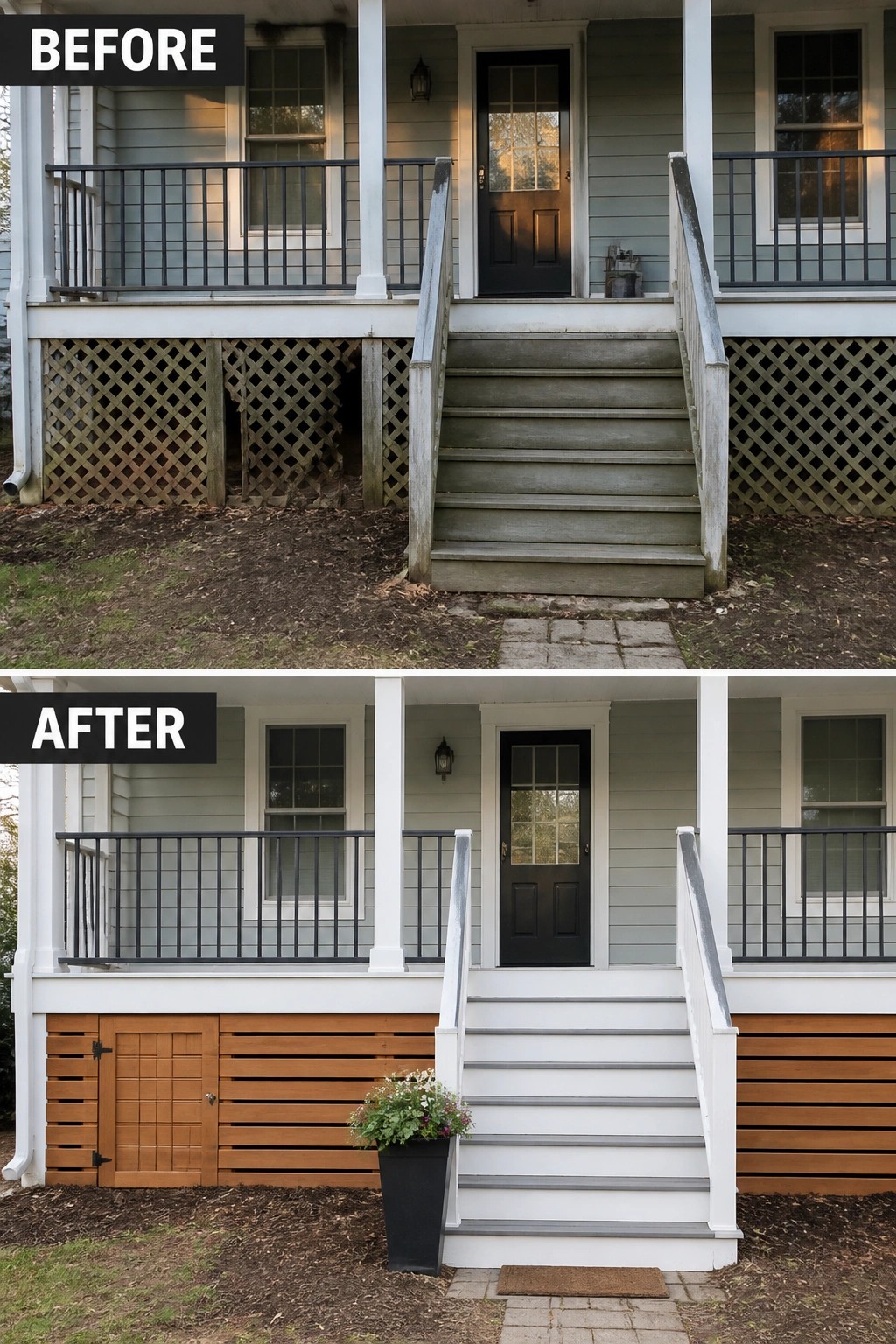
Many older homes have lattice under the porch that eventually looks tired and broken. Switching it out for horizontal wood slats gives the base a much cleaner and more solid appearance. The change also works with a fresh coat of white paint on the stairs and trim to tie everything together.
This approach suits homes with raised porches where the understructure shows. Keep the slats simple and match the spacing to your railing style so the update feels intentional rather than busy. A single planter near the steps can finish the entry without adding clutter.
Add A Porch Structure To Define The Entry
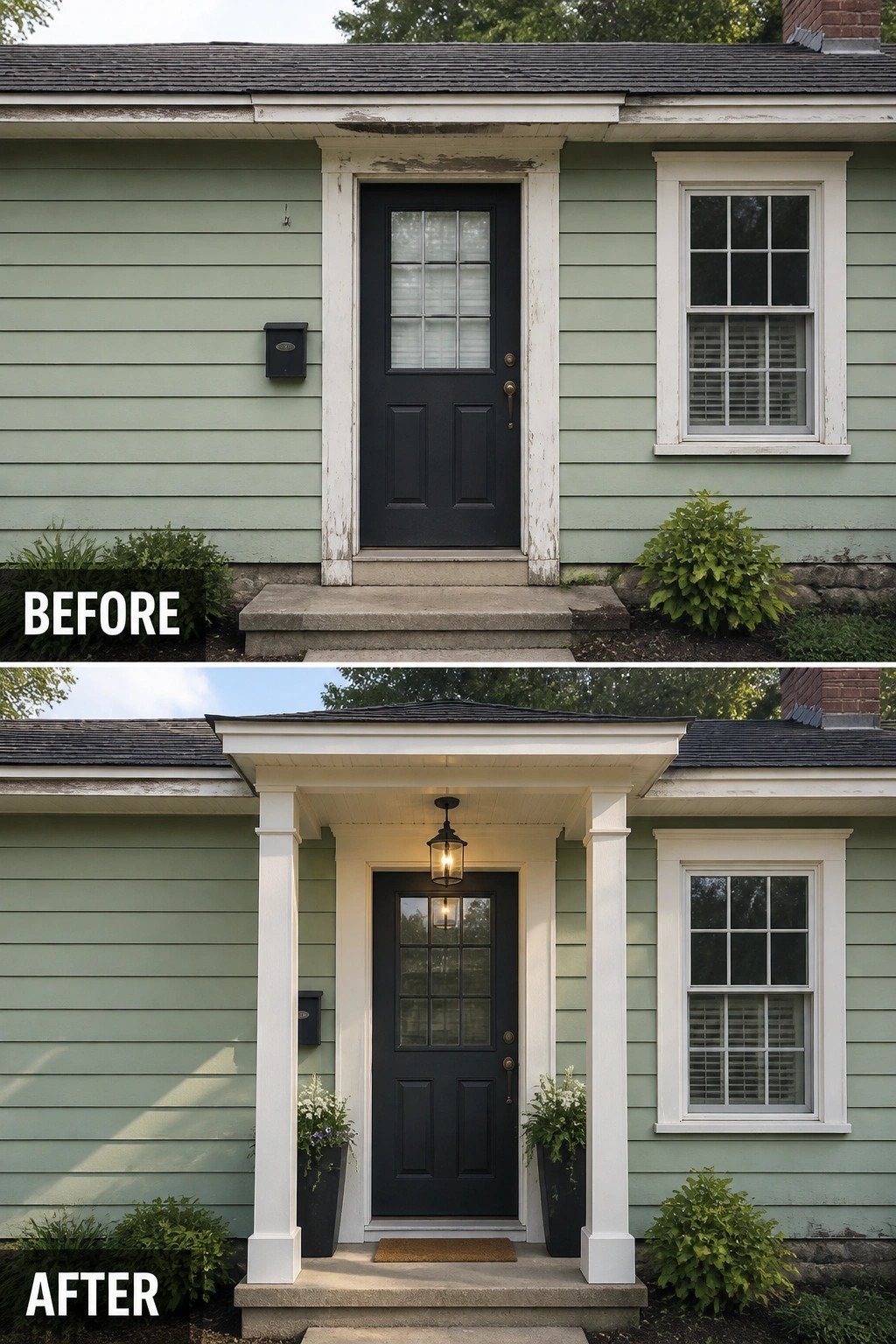
A simple porch with columns and an overhang gives this entry a clearer sense of arrival. The before photo shows the door sitting flat against the siding with only basic steps, while the after adds a roofline and supports that pull the whole facade together.
This approach works best on homes where the entry feels exposed or unfinished. Keep the scale modest so the new structure matches the house rather than overpowering it, and use the added shelter for a light fixture and a couple of planters.
Refresh Dated Siding And Trim For Better Curb Appeal
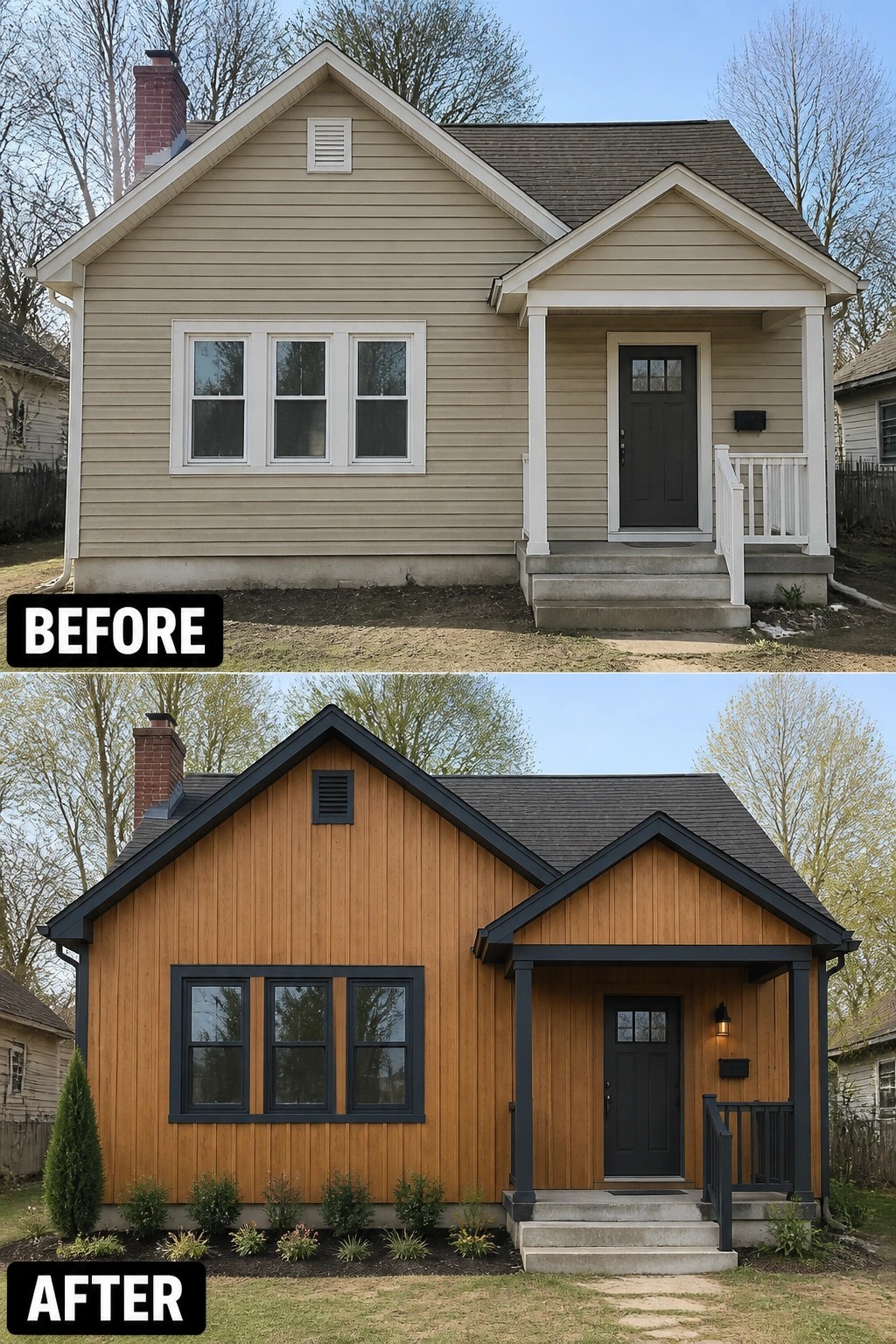
Many older homes have plain siding and basic trim that make the whole front look tired. Changing the siding color and updating the trim gives the house a cleaner, more current shape without a full rebuild. In this case the beige walls became warm wood tones and the white trim shifted to black, which made the entry feel more solid right away.
This approach works well on simple one-story homes where the main goal is curb appeal on a budget. Start with the siding and trim first, then add small details like a new light or better porch railings. It keeps the project focused and helps the house feel finished even if the landscaping stays simple for now.
Add Trim Around The Door To Refresh A Plain Entry
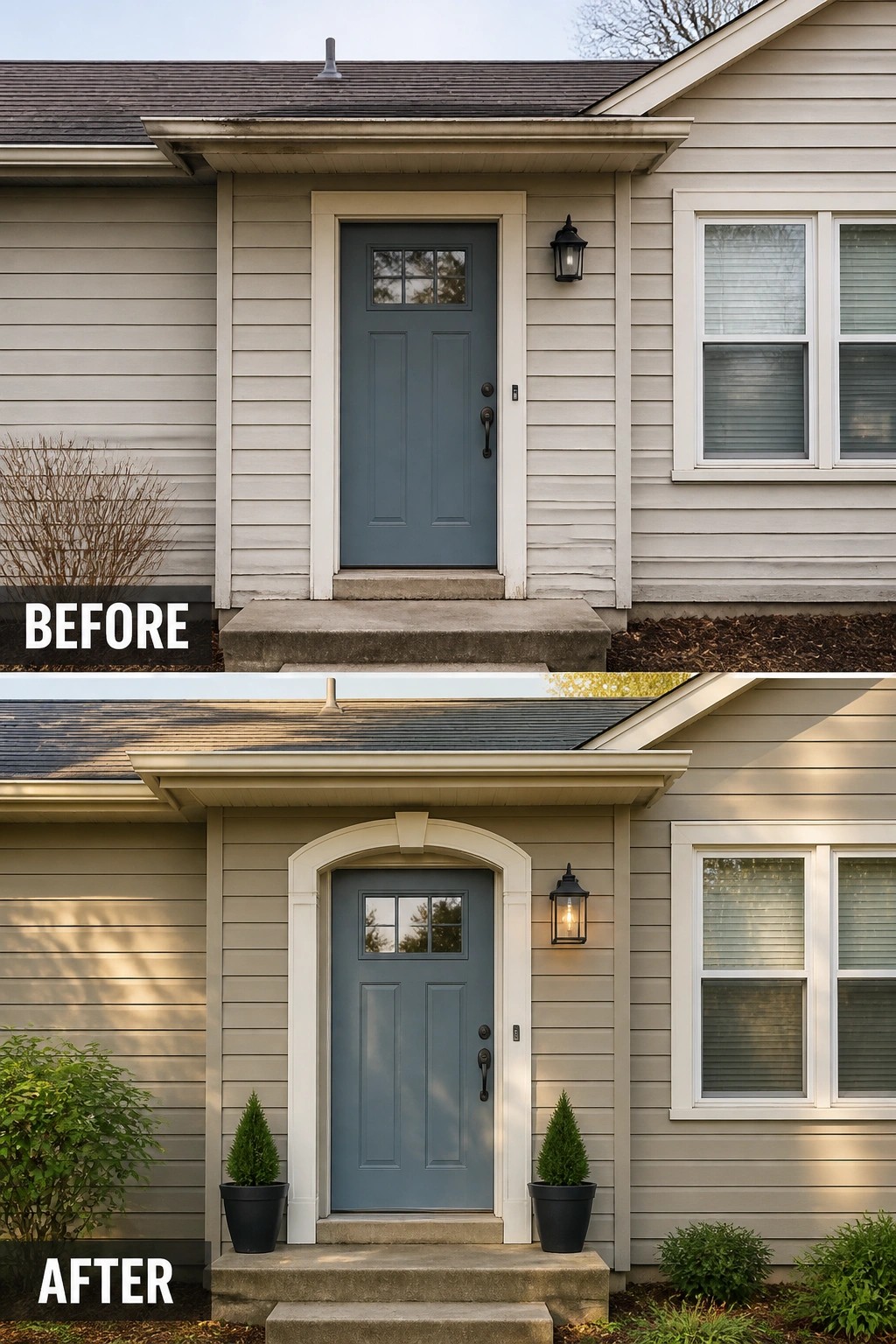
A simple front door on a house with basic siding often looks flat and dated. Adding a shaped trim piece above the door creates a clear focal point and makes the whole entry feel more finished. In this case the change from a basic rectangular opening to an arched frame, along with a couple of planters, shifts the look without touching the siding or roof.
This idea works well on houses where the entry is the main thing you can change. Keep the trim color the same as the existing casing so it reads as an intentional update rather than a new color scheme. Start with the shape and scale so the trim fits the door size, then add one or two planters to balance the steps.
Frequently Asked Questions
Q: What if my budget won’t cover all twenty five ideas at once?
A: Start with the entryway since it makes the biggest first impression. Paint the door and add new hardware for under two hundred dollars. That change alone freshens up the whole front.
Q: How do I know which siding update will suit my house style?
A: Look at homes nearby with similar architecture. Copy the trim details that already work on your street. Simple board and batten often fits most older houses without looking out of place.
Q: Should I replace the trim around my windows or just paint it?
A: Paint works fine if the wood is still solid. Scrape off loose bits first and use exterior grade paint. Replacement only makes sense when rot has set in.
Q: Will new siding make my house stand out too much from the rest of the block? A: Match the color to your roof for a quieter shift. Neighbors rarely notice small updates unless they clash hard with everything around them.