

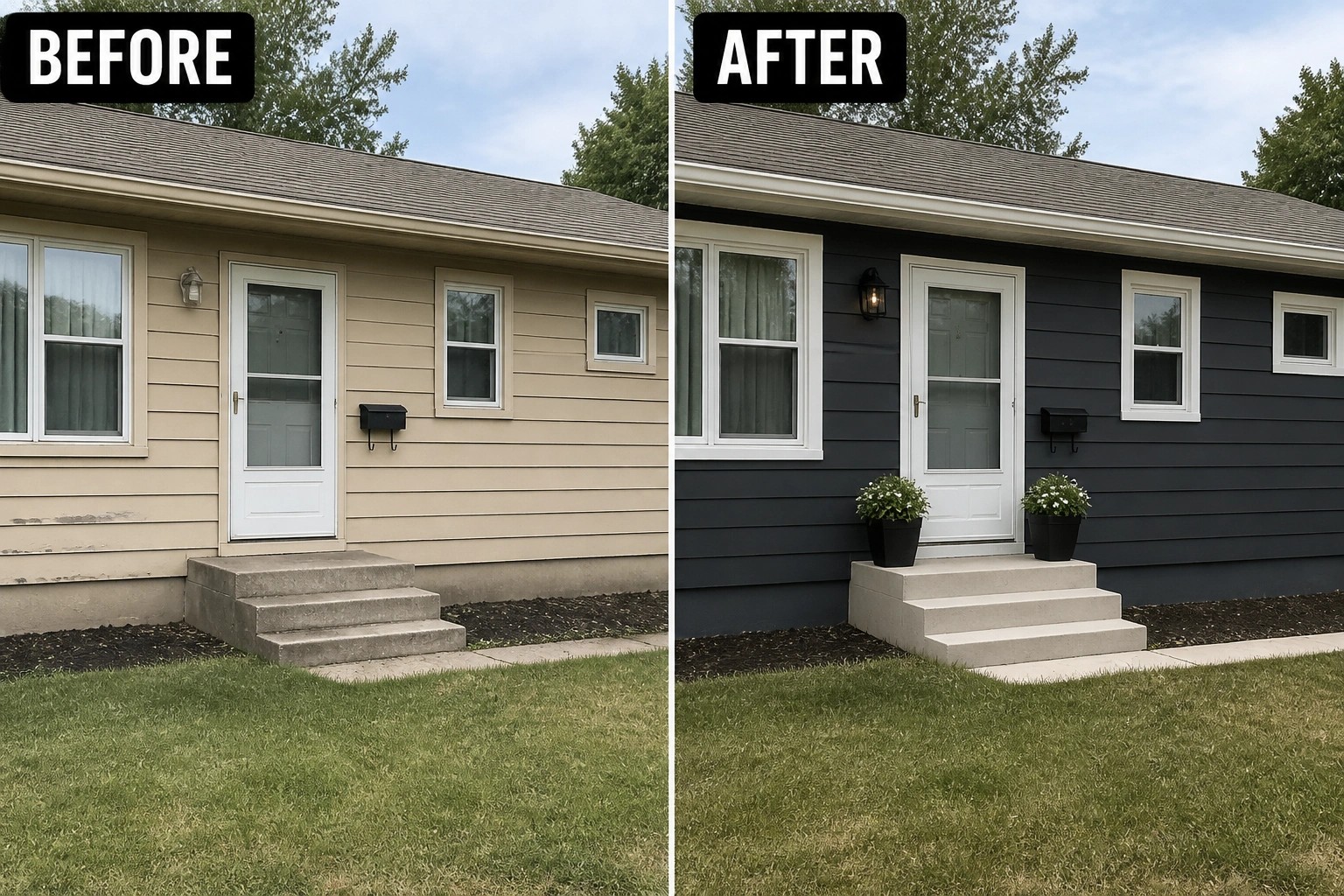
The front of a house often loses its cohesion after years of weather and small additions that never quite matched.
I have noticed that starting with the main surfaces like siding or paint tends to make later additions feel more intentional.
Adjusting the porch or entry details can then bring a sense of order that was missing before.
Those adjustments rarely require a complete rebuild.
Many homeowners find that testing a couple of these changes helps them decide what fits their own front view without committing to everything at once.
Update Exterior Siding Color For Stronger Curb Appeal
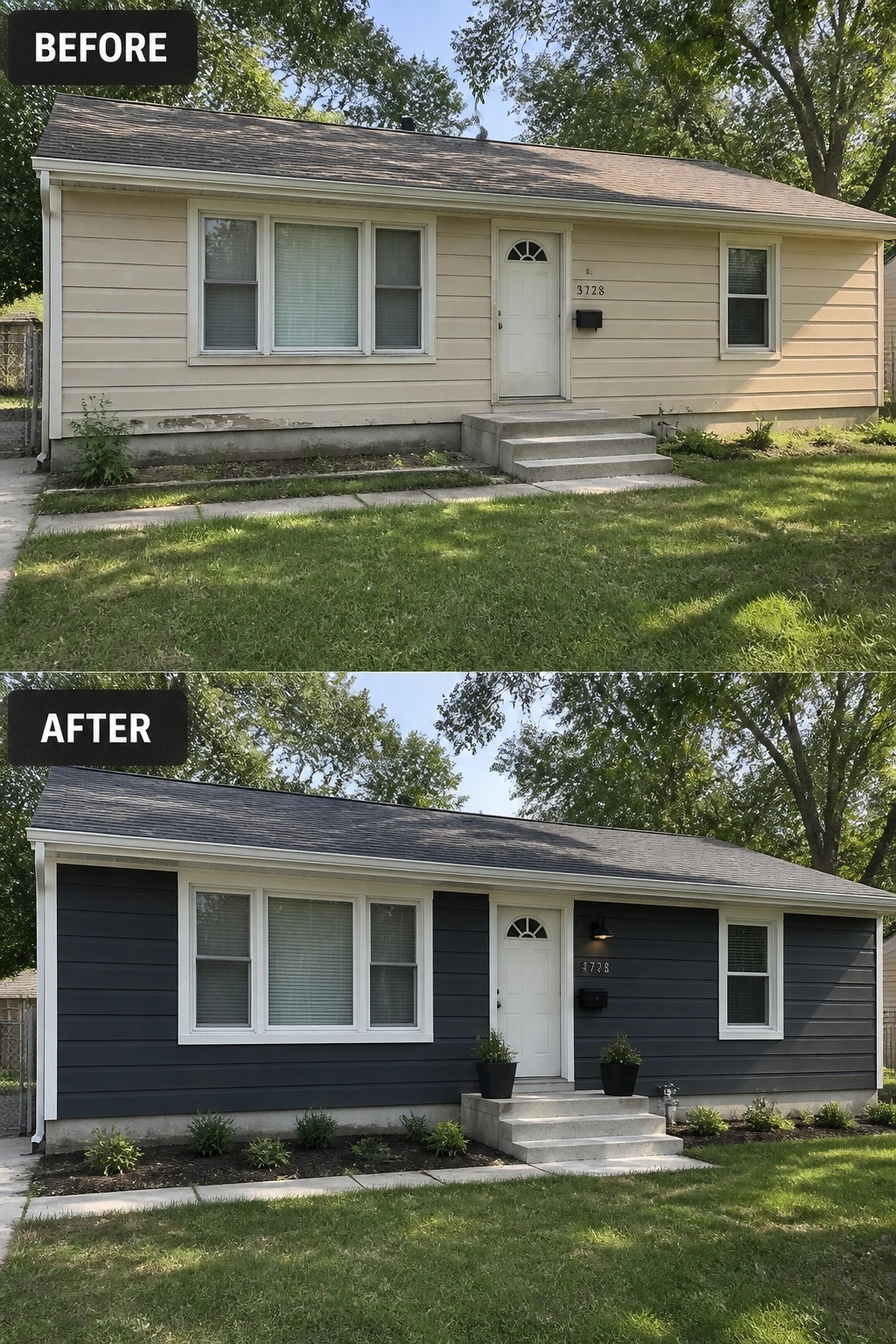
Many houses with plain siding start to look flat after a while. Changing from light beige to a deep gray with crisp white trim gives the whole front a sharper, more finished look. The addition of two simple planters by the steps also helps the entry feel more defined.
This idea works best on smaller homes where the siding makes up most of the visible surface. Choose a color that creates clear contrast with the trim and door so the change reads from the street. Focus on the siding first if you want the biggest impact without adding lots of new features.
Update The Front Door To Improve Curb Appeal
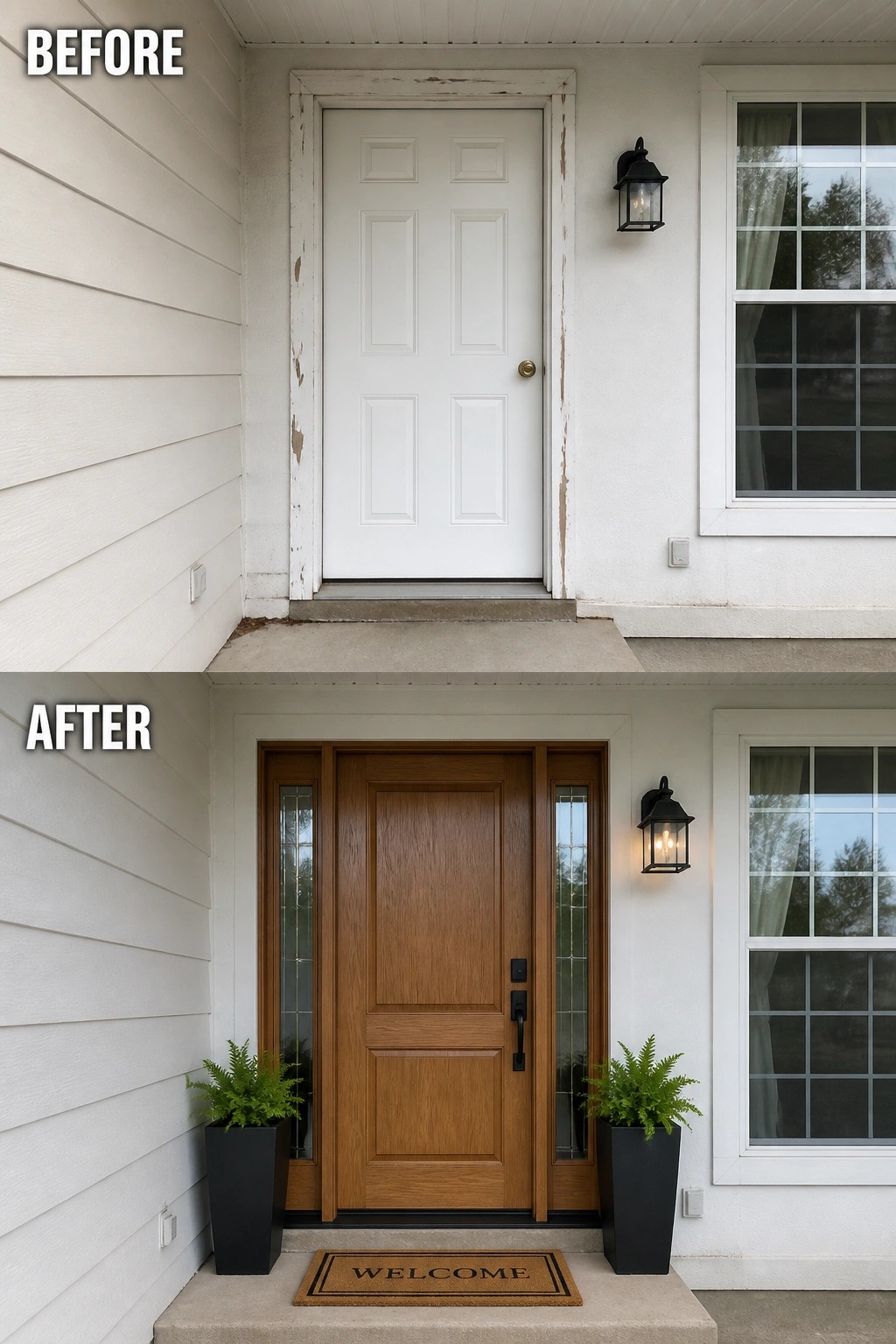
An old or plain front door often makes the whole house look dated even when the rest of the exterior is fine. Switching to a solid wood door with glass sidelights gives the entry more weight and presence right away.
If your door is faded or the trim is peeling, start with a replacement before adding other details. Keep the surrounding changes simple, like a pair of planters and a doormat, so the new door stays the main focus.
Add A Porch To Give A Plain Entry More Presence
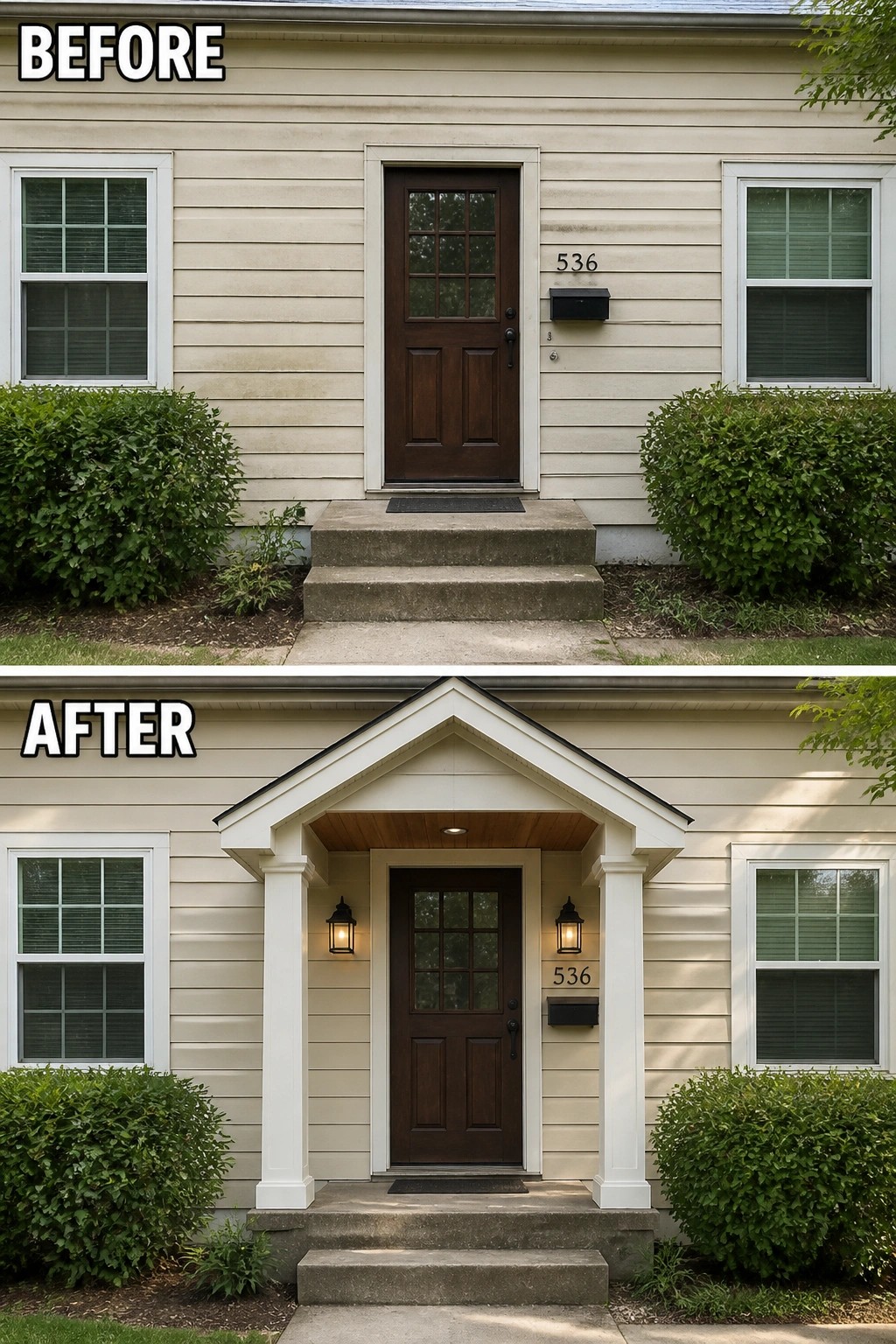
A front door that sits flat against the house with nothing but steps leading up to it often feels unfinished. Adding a gabled porch with simple columns creates a clear entry point and gives the facade better balance.
This approach suits homes with basic siding and little architectural detail. Keep the porch size in proportion to the house, and focus first on the roof shape and support posts before adding lights or other extras.
Add Stone Veneer To The Foundation
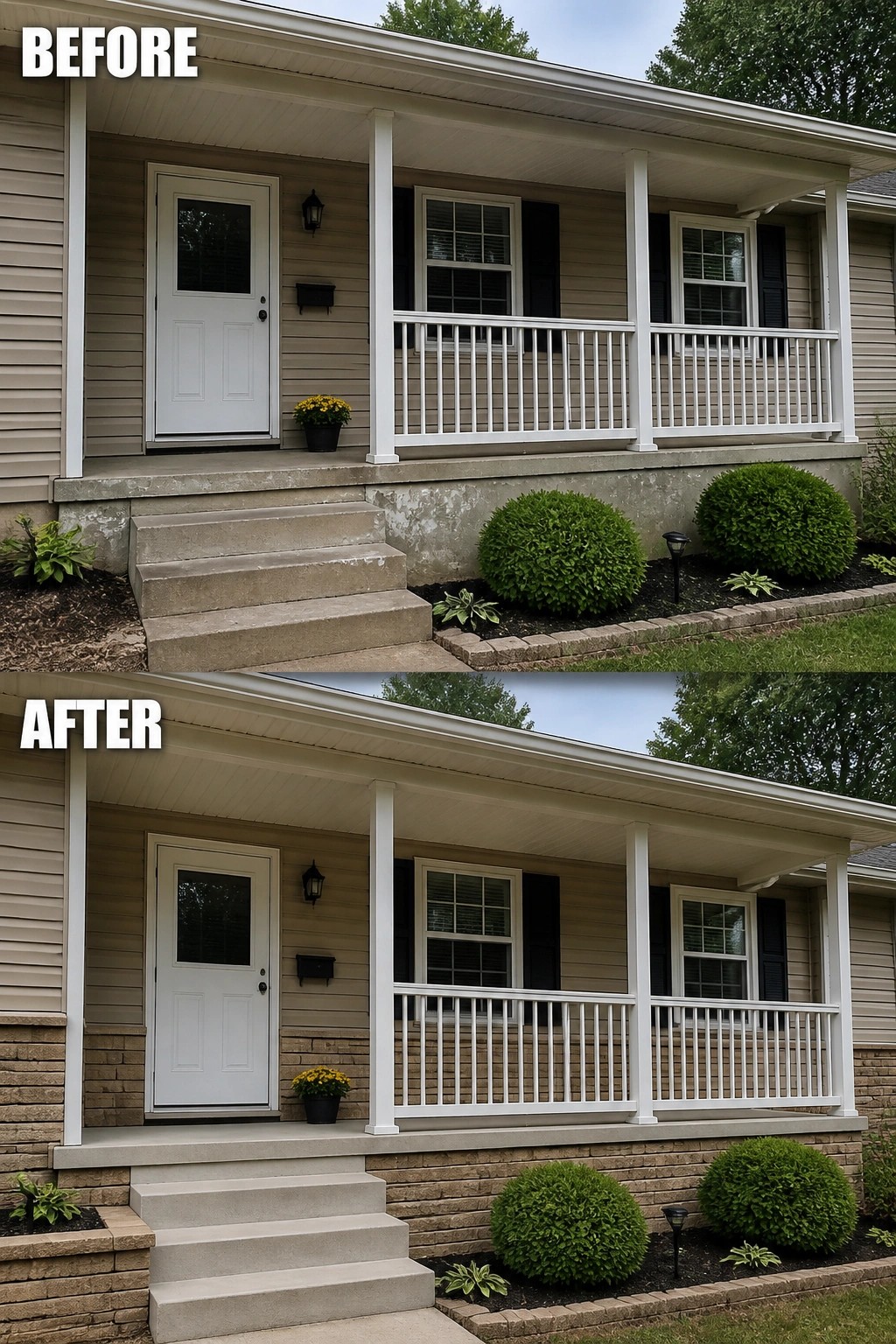
Covering an exposed concrete foundation with stone veneer gives the front of a house a more finished and solid look. The before photo shows a plain concrete porch base that makes the whole entry feel a bit unfinished. Once the stone is added the porch sits lower and blends better with the rest of the house.
This idea works best on homes where the foundation sits higher than the surrounding grade. Choose a stone that matches the siding color and keep the pattern straightforward so the new material does not compete with the rest of the exterior. It is a moderate update that improves curb appeal without requiring a full siding change.
Add A Covered Porch To Improve The Entry
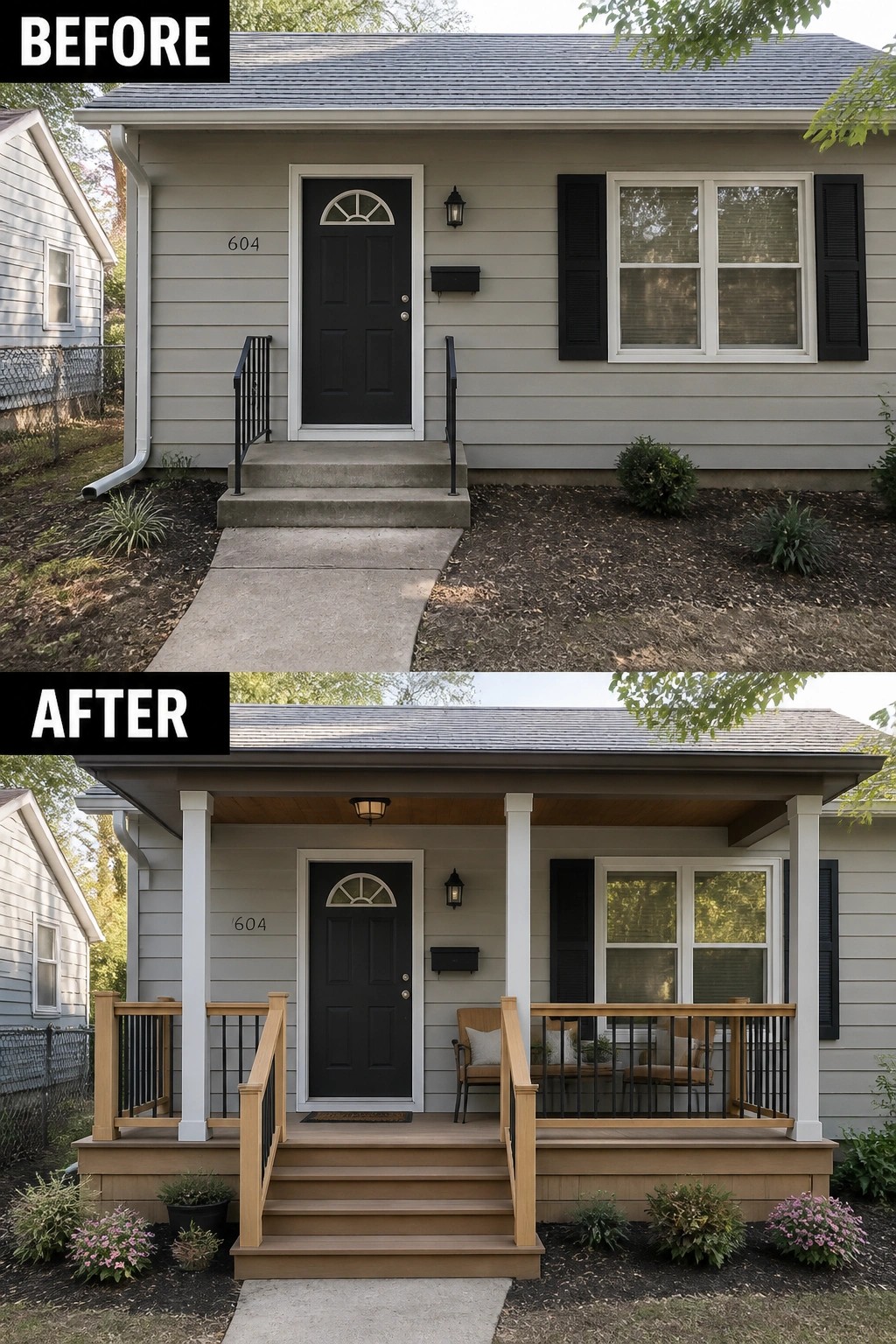
A simple set of concrete steps can leave the front of a house feeling unfinished. Adding a covered porch with posts, a roof extension, and wooden steps gives the entry a clear structure and makes the whole facade feel more complete. The change turns an exposed door into a defined space that looks more intentional.
This idea works well on houses that already have a basic front but lack any overhang or depth. Start by checking how far the roof can extend without major structural work, then match the porch materials to the existing siding and trim. Keep the railing style simple so it does not overwhelm a smaller facade.
Replace An Old Garage Door To Improve Curb Appeal
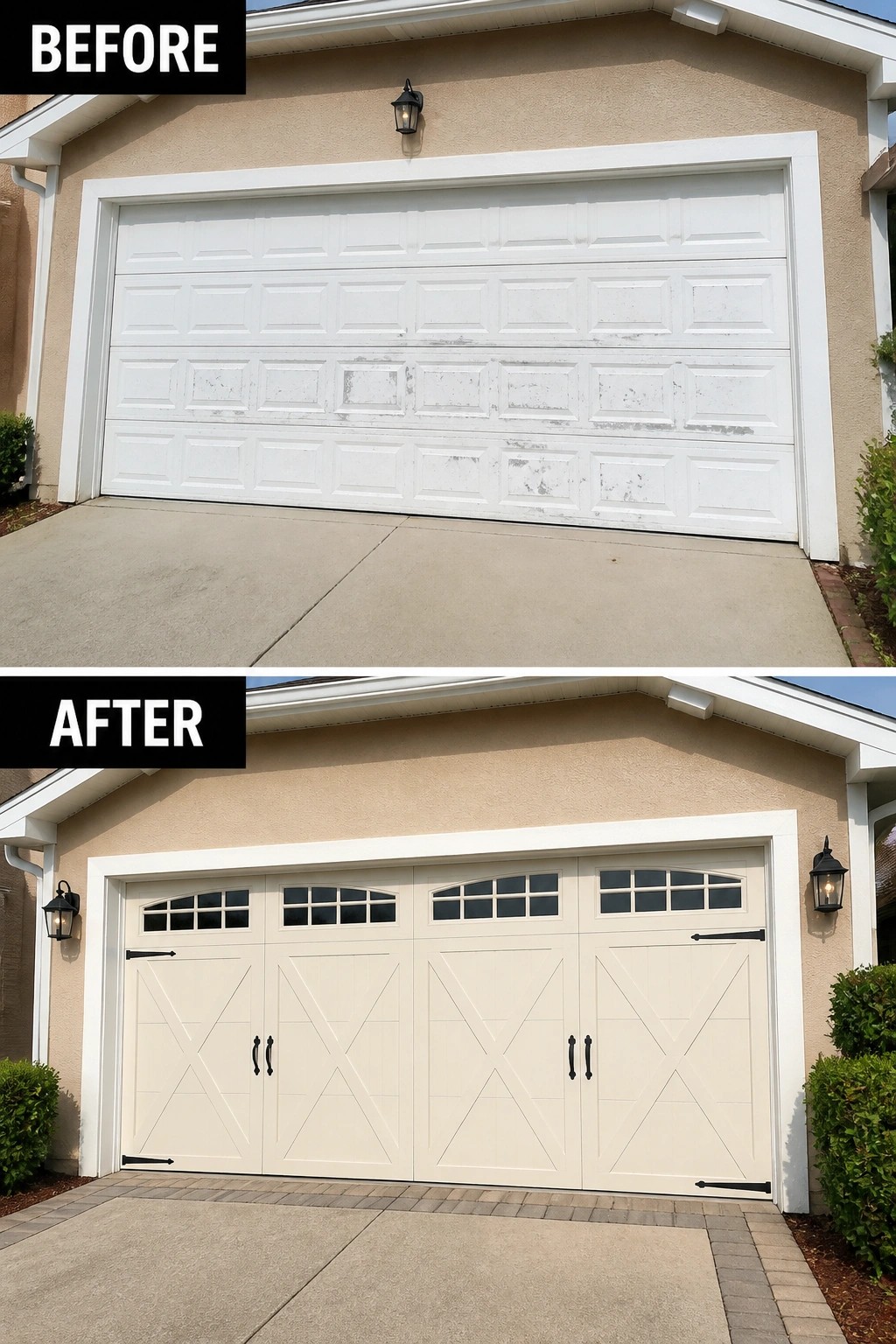
An old garage door often drags down the look of the whole house. Swapping a faded white door for a cream carriage-style version with windows and black hardware immediately makes the front feel more put together.
This change works on many homes because the garage door covers such a large part of the facade. Pick a color that sits well with the siding and keep any added details simple so the update feels natural rather than overdone.
Add Shutters And Window Boxes To A Plain Exterior
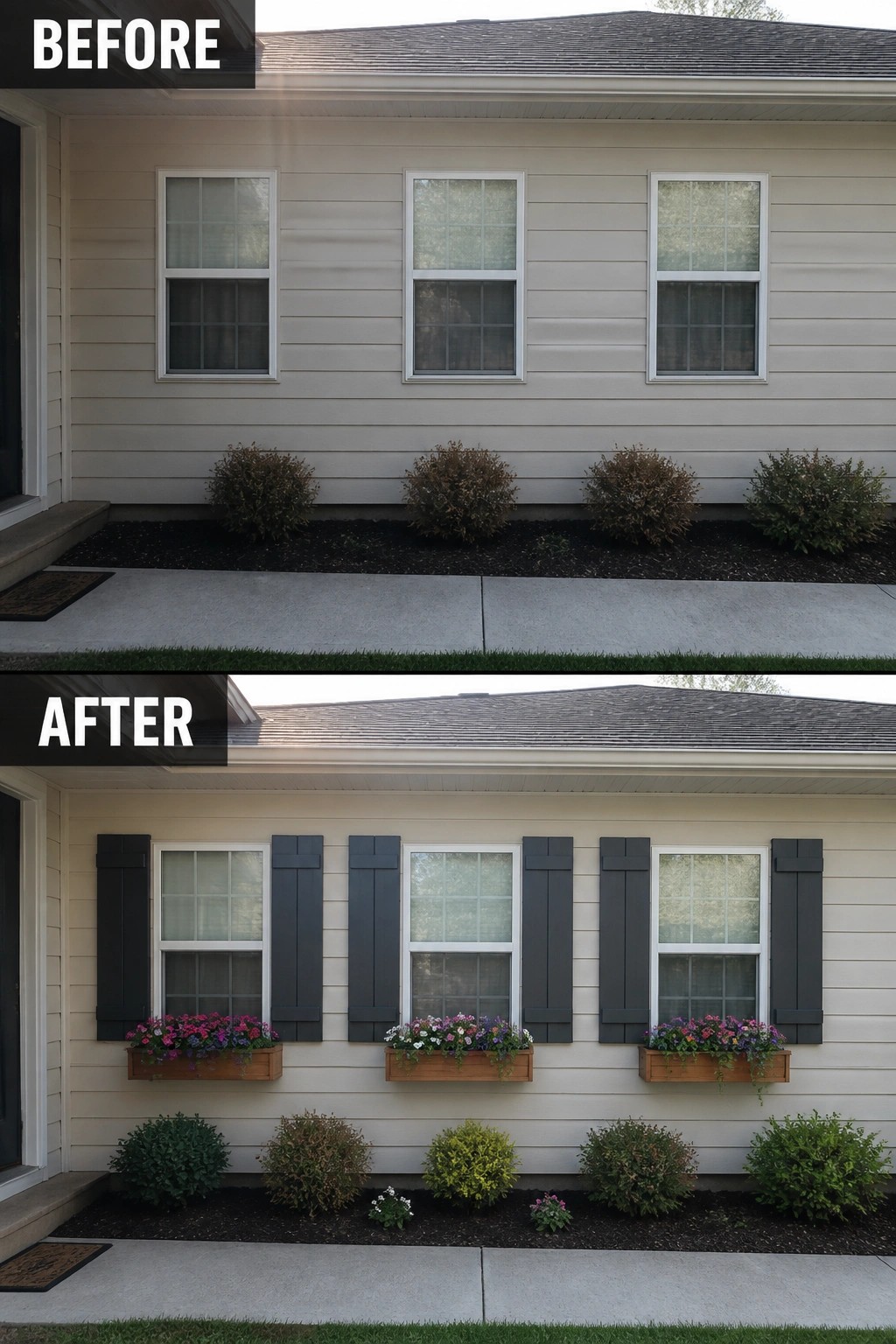
Adding shutters and window boxes gives a simple house exterior more structure and interest. The before version shows a flat wall of siding with nothing to break up the windows, while the after adds dark shutters that frame each opening and wooden boxes that bring color right at eye level.
This approach works best on homes with basic siding where the windows feel lost on the wall. Match the shutter color to your trim or door so everything feels connected, and pick boxes that are deep enough for real soil and drainage so the plants last through the seasons.
Paint A Brick House White To Refresh The Exterior
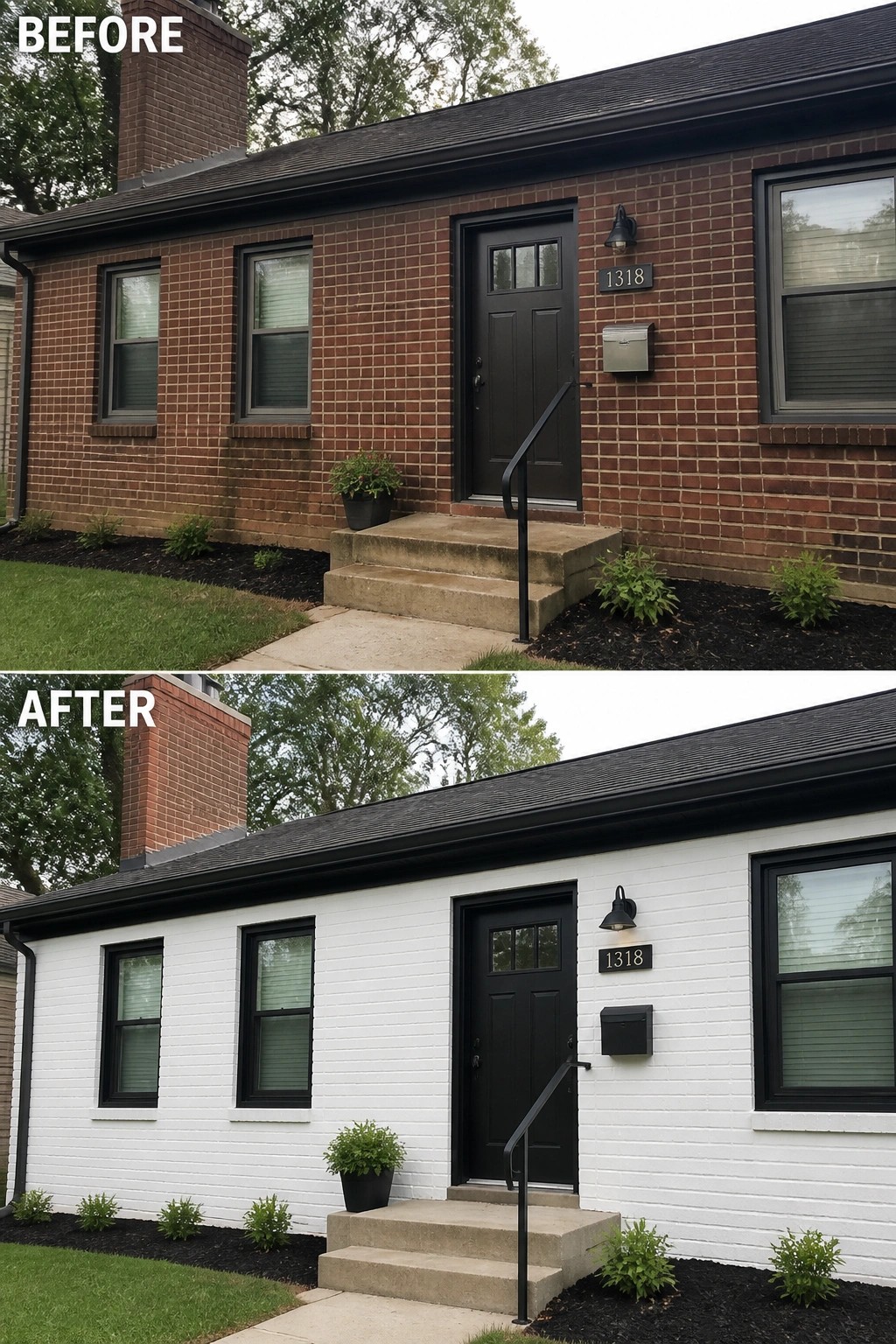
Painting the brick exterior white gave this house a much lighter and cleaner front view. The dark brick made the whole facade feel heavy, while the new white finish brightens the entry and helps the black door and windows stand out.
This approach works well on older brick homes that need a quick update without major construction. Stick to one main color for the walls and keep the trim simple so the change feels cohesive rather than busy.
Update Window Frame Color For A Cleaner Exterior
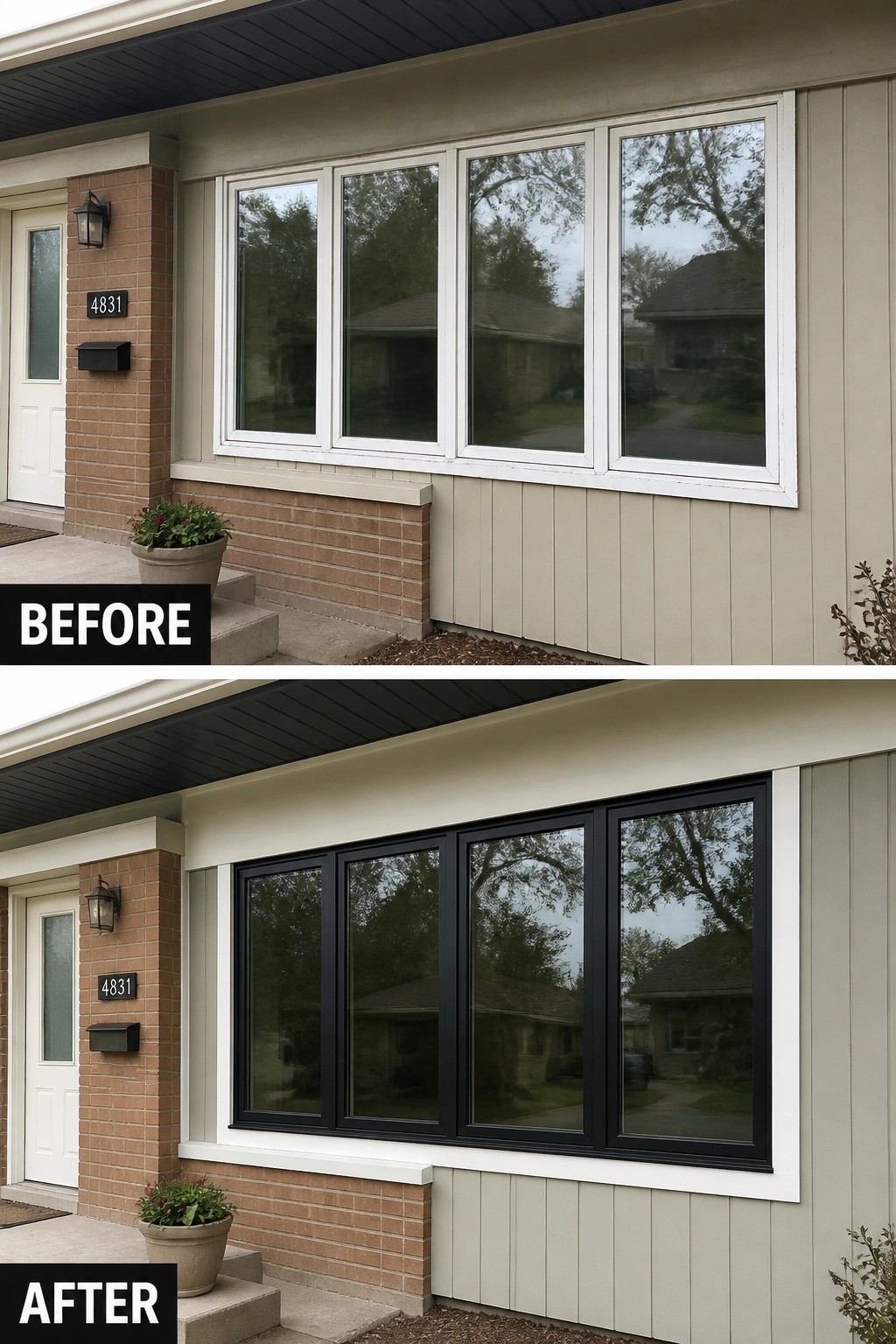
Swapping the window frames from white to black gives the front of the house a sharper, more current look. The old frames had a worn finish that made the whole wall feel dated, while the new black frames sit cleanly against the siding and tie the windows together as one strong feature.
This change works well on homes with simple siding and brick accents because it adds contrast without needing a full repaint. If your windows still function well, focus on the frames first and keep the rest of the facade as is until you are ready for bigger work.
Update A Concrete Walkway With Stone Pavers
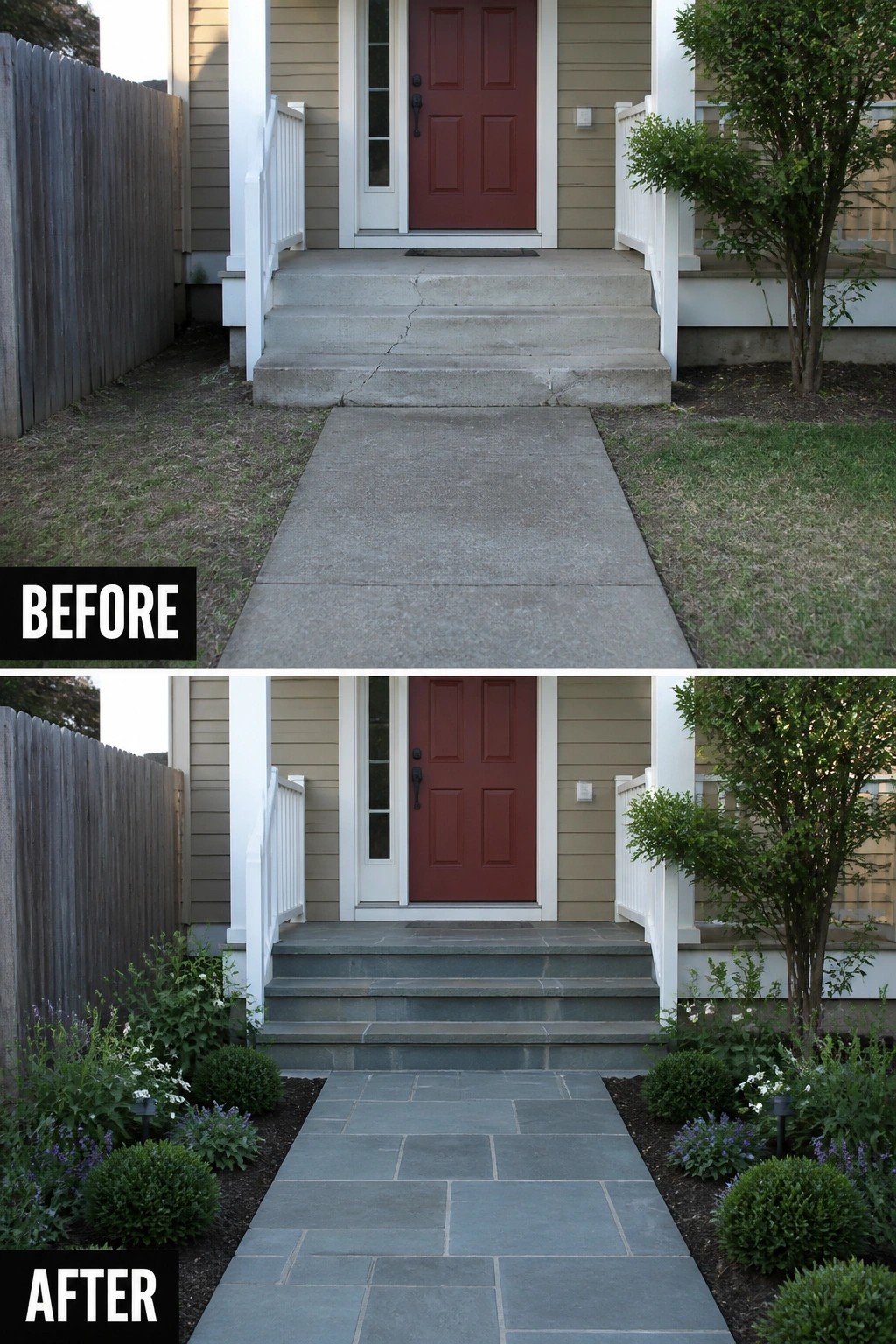
A plain concrete path often makes the front of a house feel unfinished. Switching to stone pavers gives the walkway more weight and texture, while the new garden beds on each side help frame the entry and soften the approach.
This idea works best on homes with a straightforward front layout. Keep the pavers in a simple running pattern, choose low shrubs that will not block the path, and use mulch in the beds so the area stays neat without constant upkeep.
Update The Exterior Color For Better Curb Appeal
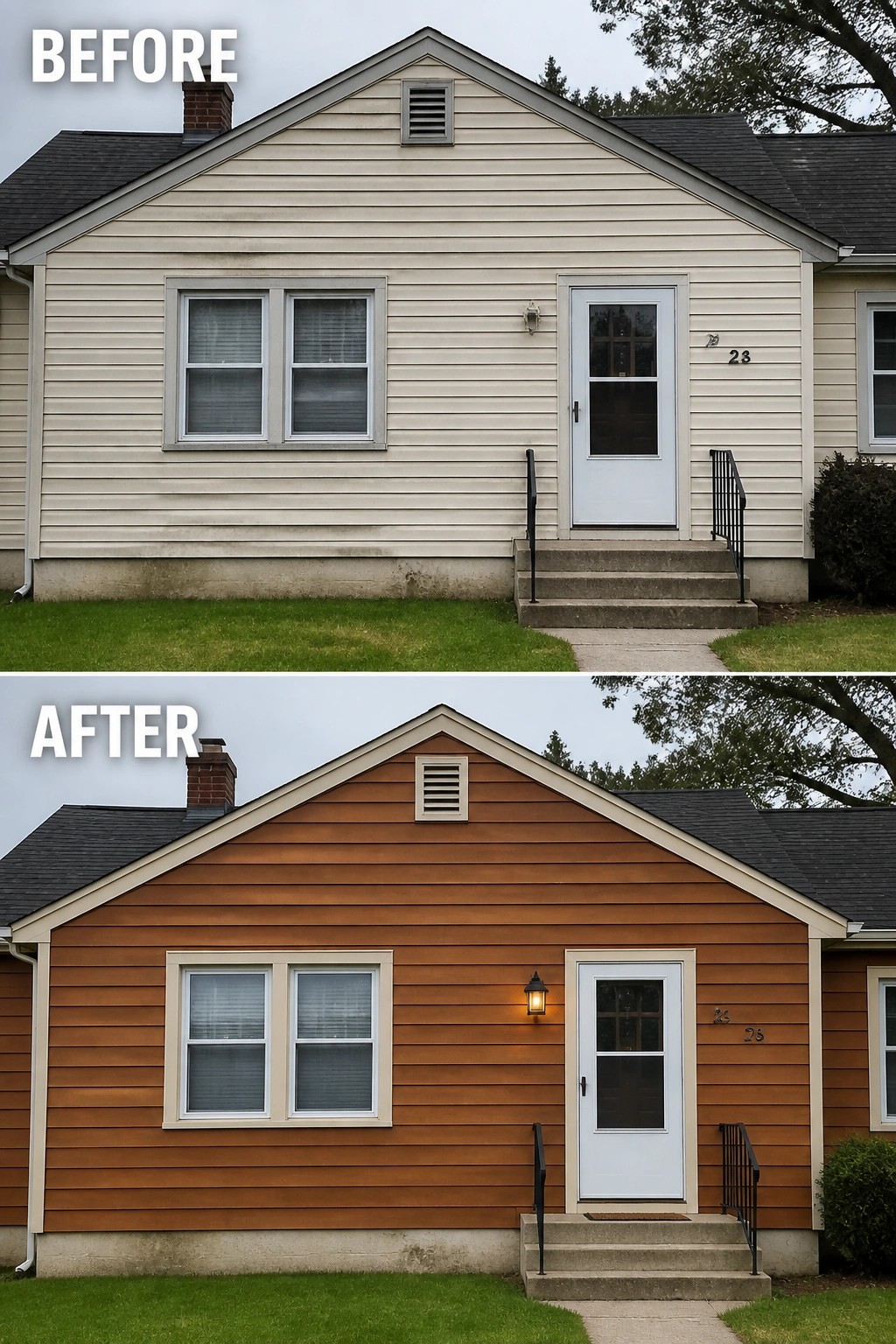
A simple color change on the siding can make a house feel completely different. The before photo shows a plain beige exterior that blends into the background, while the after shows a warm brown that gives the house more presence. Adding one small light beside the door also helps the entry feel more finished without any major construction.
This idea works well on homes with basic shapes and few details. Focus on picking a color that still fits the neighborhood, then add one or two small accents like lighting or trim. It is often easier and cheaper than replacing windows or doing a full renovation.
Add An Awning And Planters To Frame The Entry
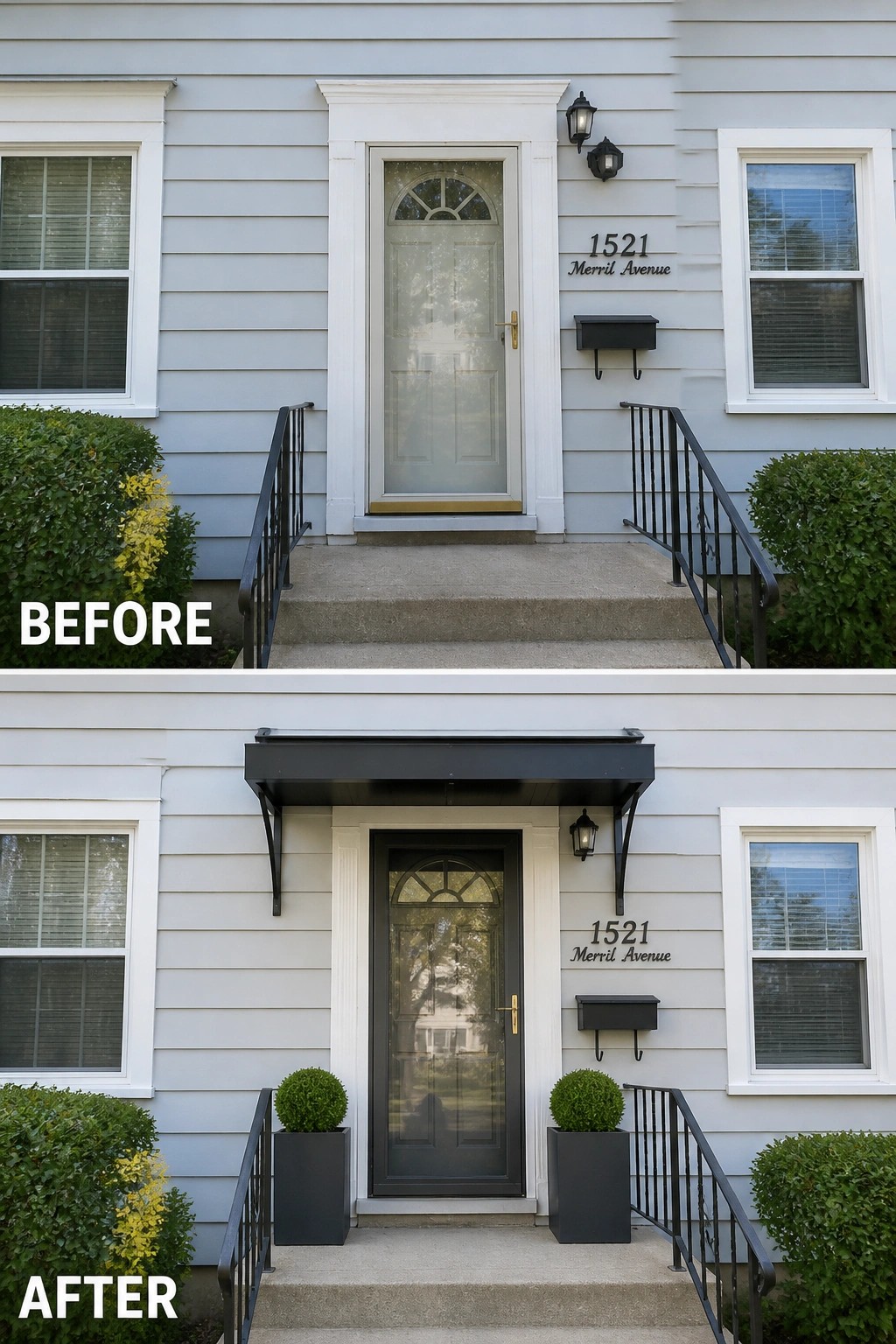
Adding a simple awning above the front door gives the whole entry a more finished look. In the before photo the door sat flat against the siding with nothing to mark its importance. The after photo shows how a dark overhang immediately creates shade and draws the eye straight to the door.
This approach works well on houses that have a plain facade and no existing porch cover. Keep the awning narrow so it does not overpower the windows, then add two matching planters on either side of the steps to finish the frame. The same idea can be used on any modest home where you want the entry to feel more intentional without a full porch addition.
Add A Gate To Define The Front Entry
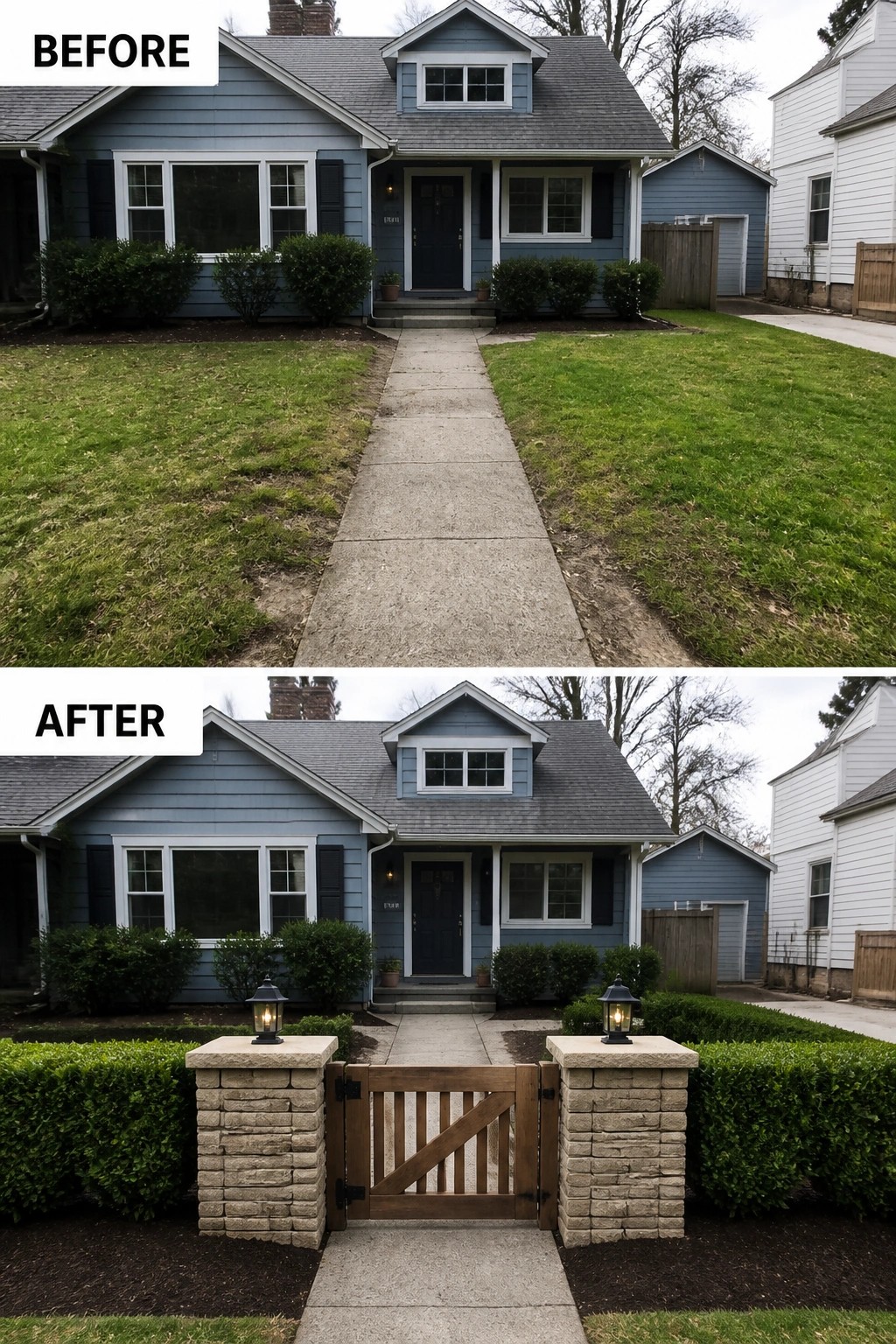
Many homes have a clear path to the door but the front still feels open and unfinished. Adding a gate between two low pillars gives the walkway a real starting point and makes the entry feel more set apart from the street.
This idea works best on homes with a straight front walk and some lawn on either side. Use simple wood or metal for the gate and keep the pillars low so they do not block the view of the house. The small hedges beside the pillars help soften the look and keep the whole front feeling neat without much extra work.
Add Wood Siding To Warm Up A Plain Exterior
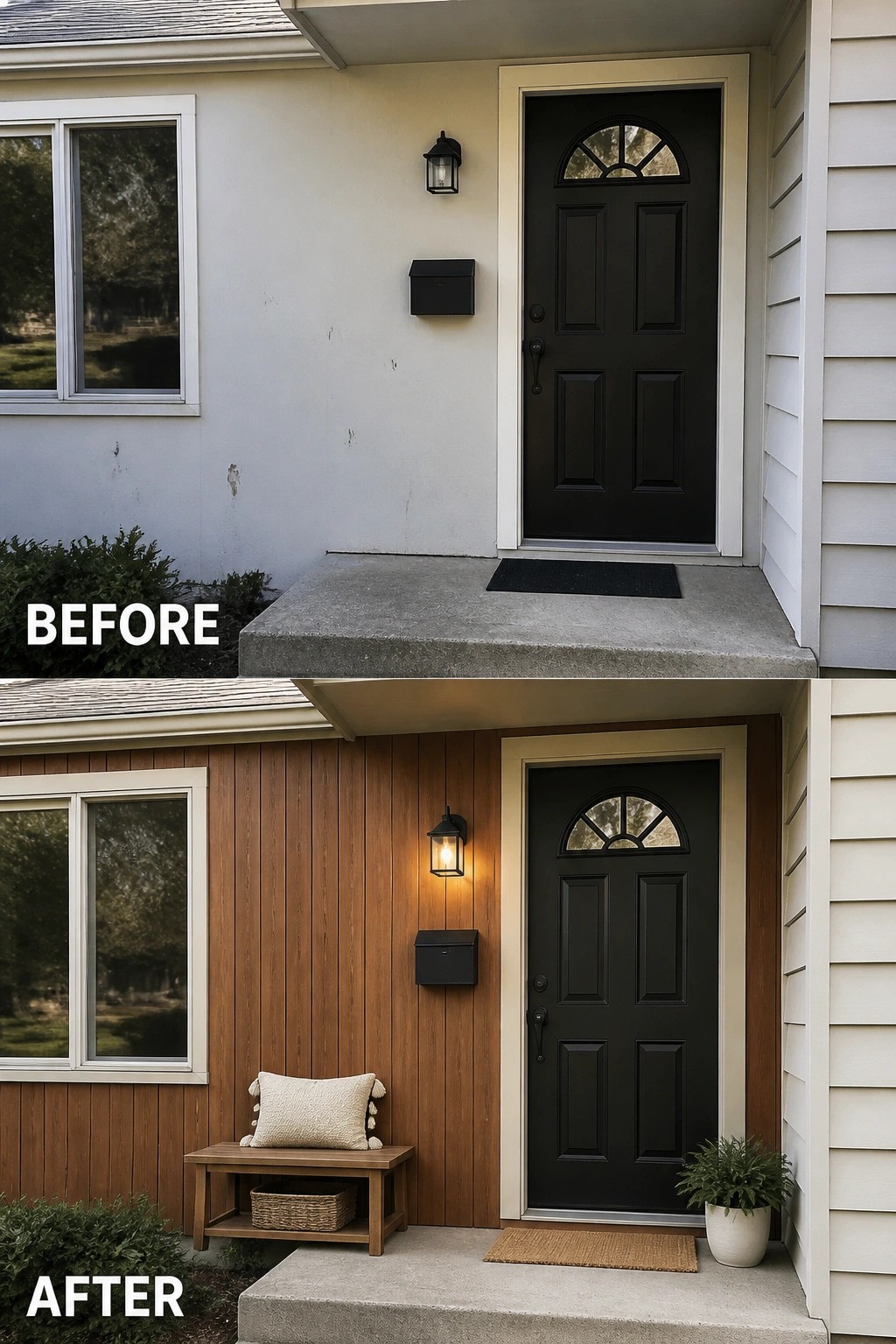
Many houses have a flat look because the siding runs the same all the way across. Adding wood in one section around the entry breaks up that surface and gives the front a warmer feel without changing the whole house.
This idea works best on homes with simple or light-colored siding. Keep the wood section fairly narrow so it frames the door, then add one or two small pieces like a bench or a planter to finish the space.
Update Dated Railings To Refresh The Entry
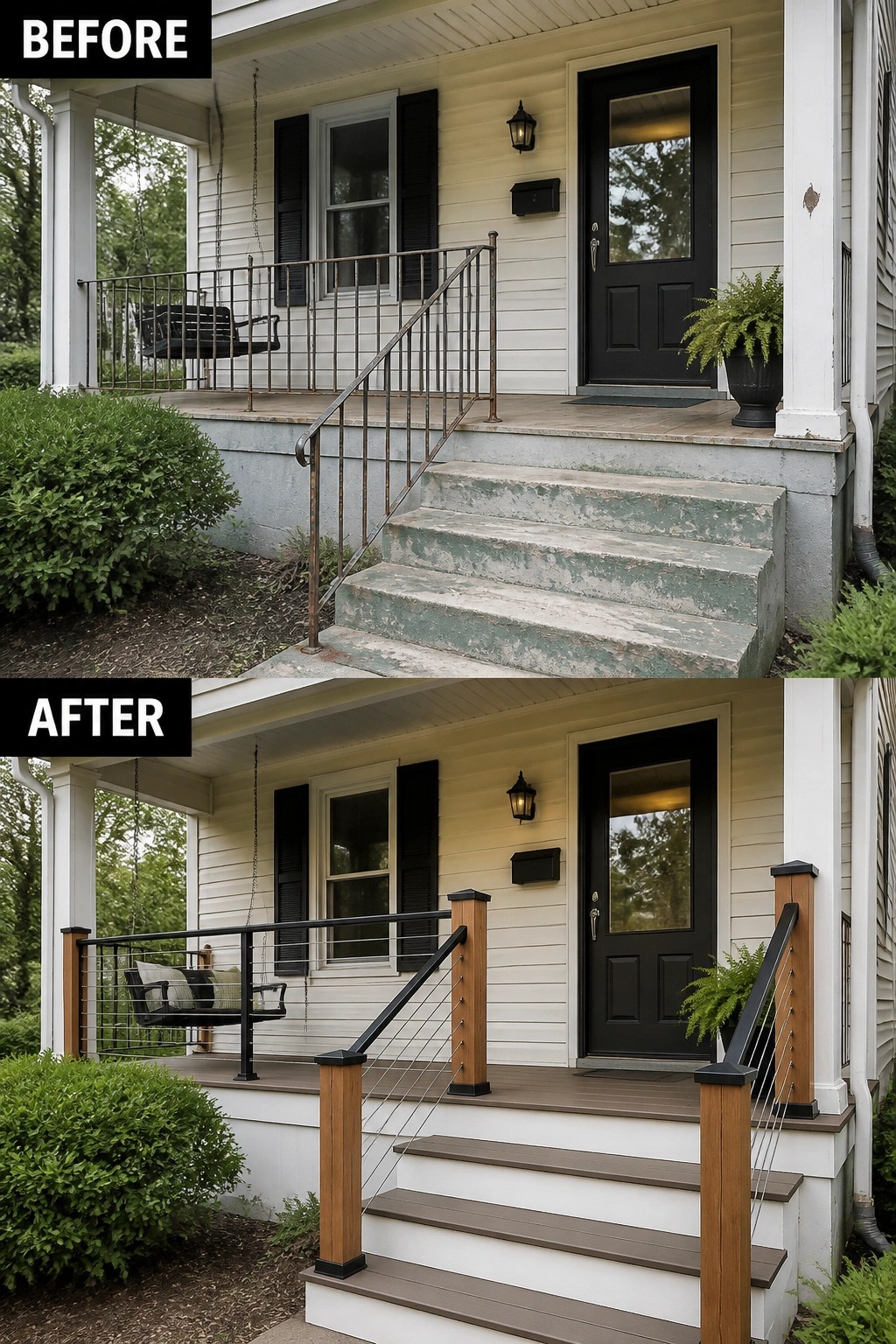
Old metal railings often make a porch feel dated even when the house itself is still solid. Replacing them with wood posts and horizontal cables opens up the view, lightens the look of the stairs, and gives the whole front a more current feel without major construction.
This change works best on homes where the original railings are rusty or overly ornate. Match the wood tone to any existing trim and keep the cable sections simple so the update stays practical and easy to maintain over time.
Add A Pergola Over The Front Entry
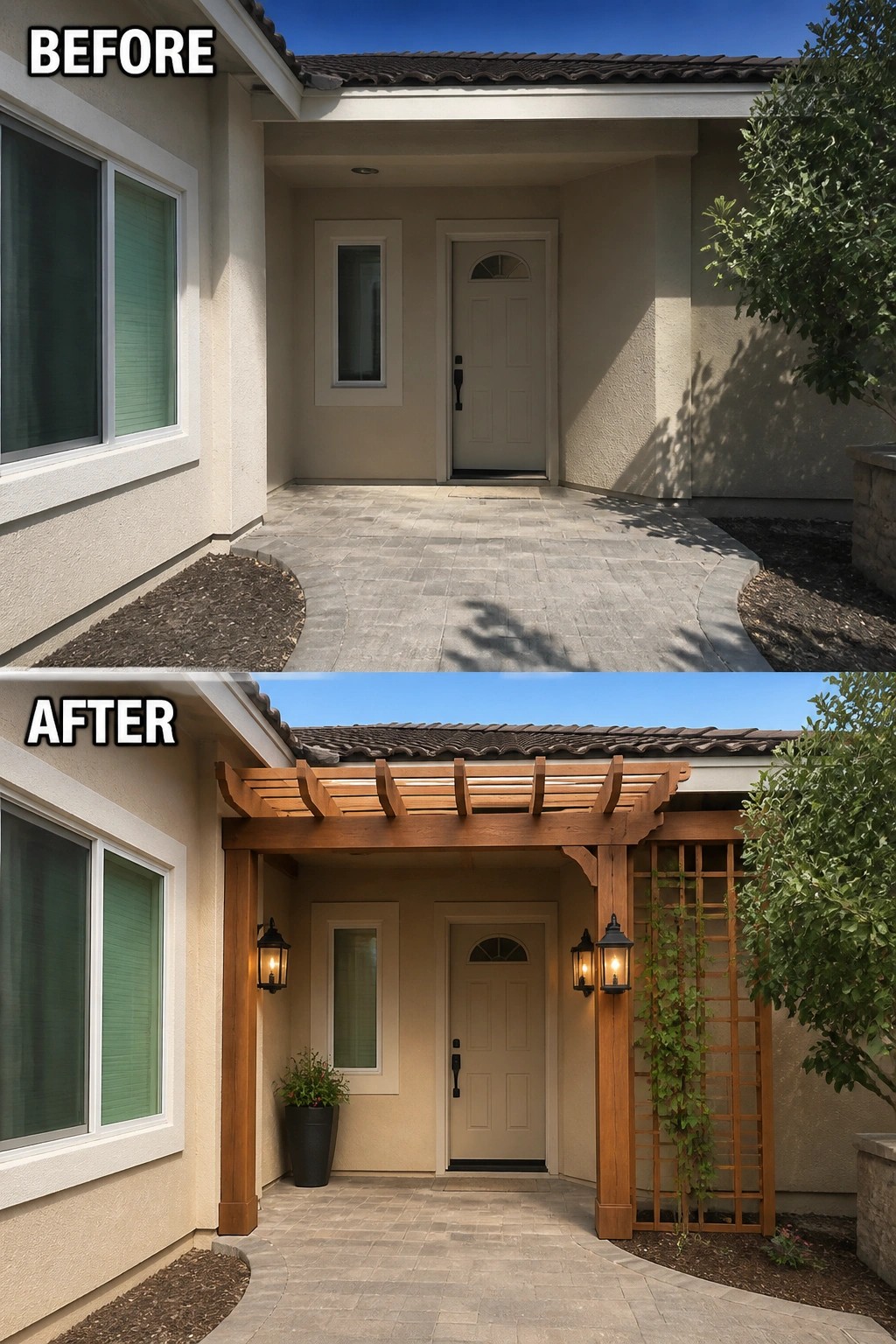
A plain entry can feel unfinished even when the house itself is in good shape. Adding a pergola gives the door a clear sense of arrival and breaks up the flat wall above it. In this case the change is simple. A wooden structure was added to create shade and definition right over the door, with a couple of lights tucked underneath.
This idea works well on houses that already have a covered porch but lack any overhead detail. Keep the pergola size in scale with the door so it does not overwhelm the front of the house. Choose a wood tone that matches existing trim or doors, and add just enough lighting to make the entry usable at night.
Add Trim To Give A Plain Exterior More Character
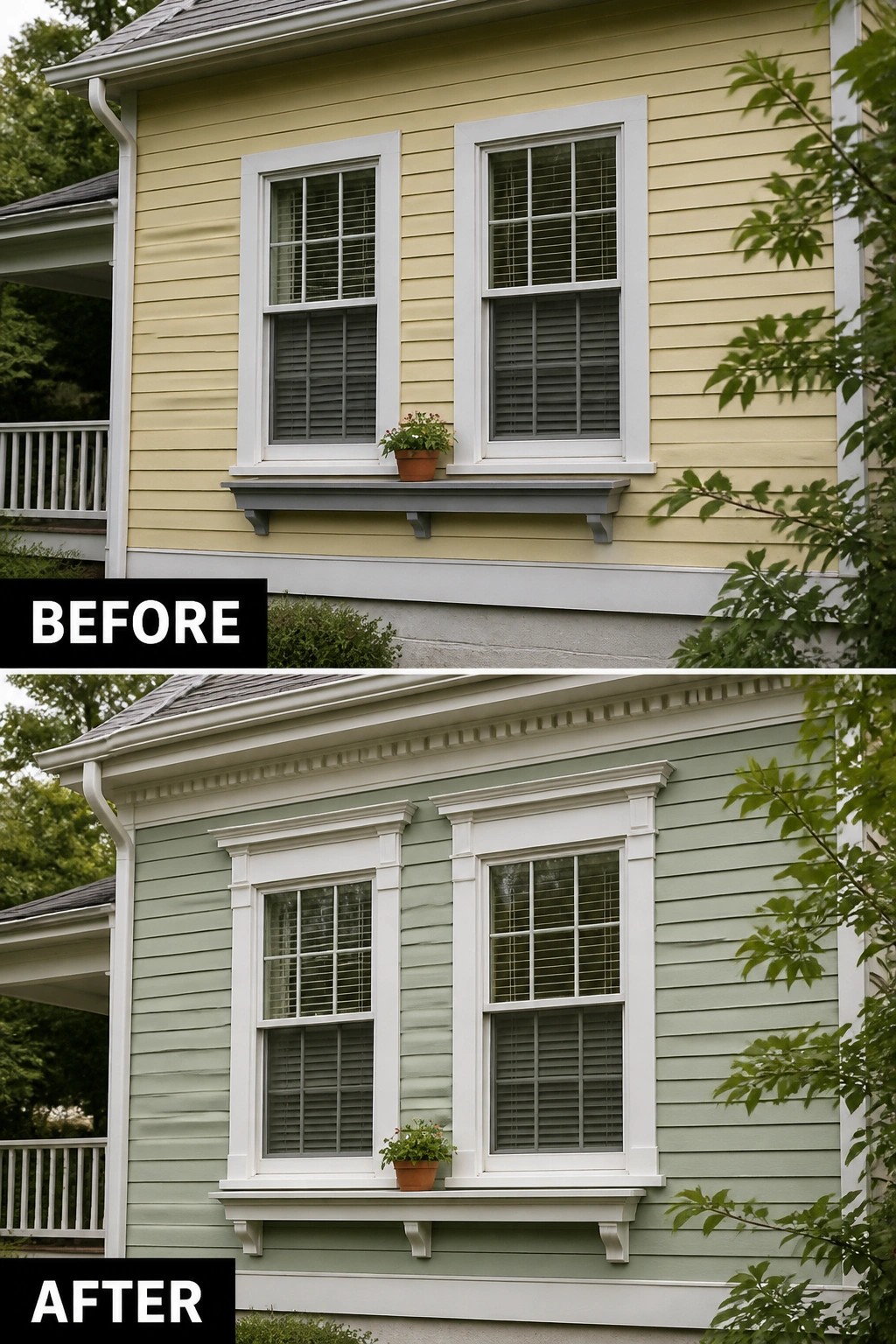
Many houses start with simple windows and flat siding that leave the front looking unfinished. Adding trim around the windows along with a fresh paint color gives the facade clear lines and makes the whole house feel more put together without any major construction.
This approach works well on older homes or basic builds where the original details are minimal. Focus on the windows first since they are the most visible part from the street, then choose a color that helps the new trim stand out. It is an affordable step that often improves curb appeal more than people expect.
Update A Cracked Front Walkway With Brick Pavers
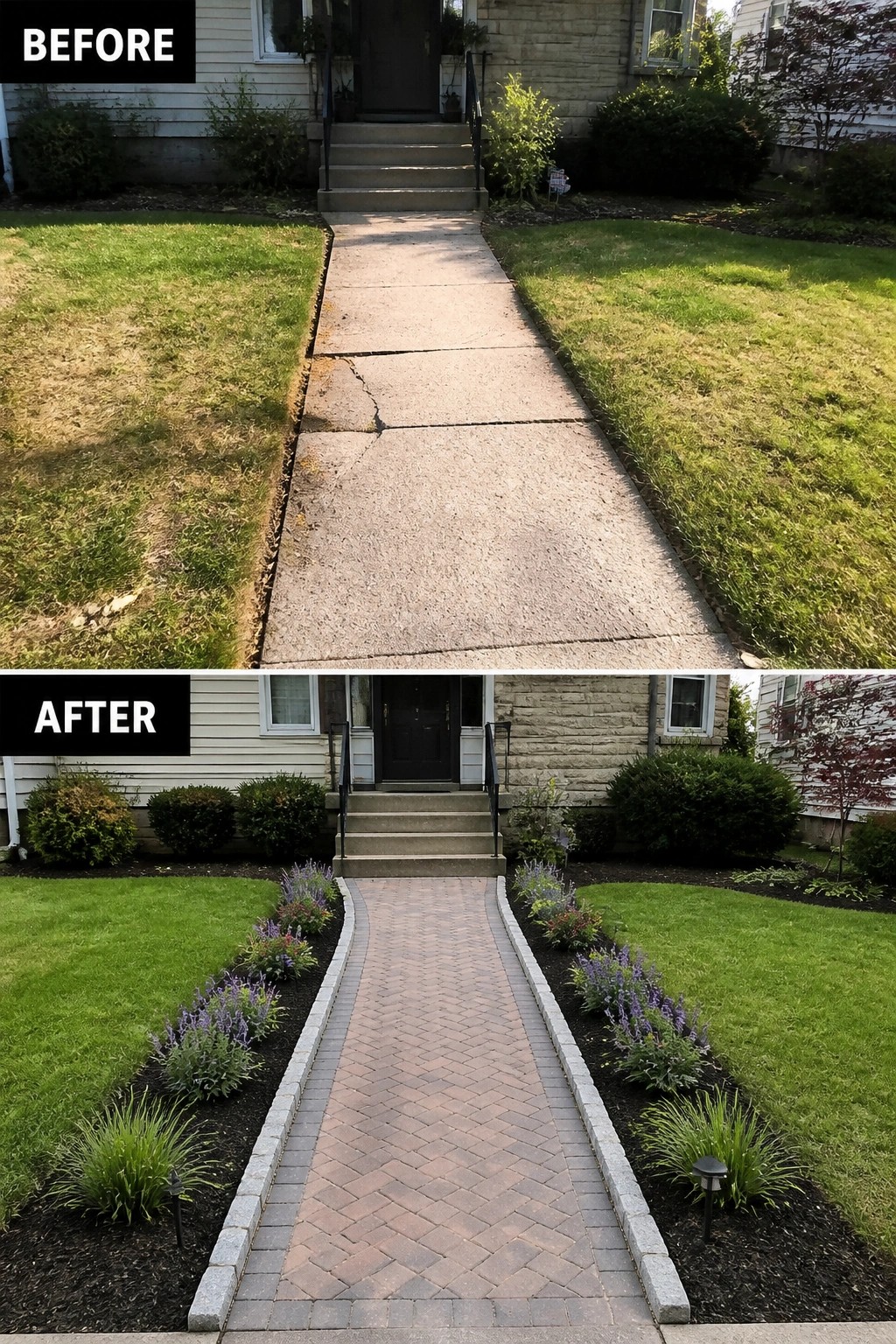
A plain concrete path that has cracked over time can make the whole front of a house feel neglected. Switching to brick pavers laid in a simple pattern gives the walkway a finished look and helps it blend better with the house and lawn.
This approach works well on older homes where the original path has aged poorly. Start by choosing a paver style that matches the color of your siding or stonework, then add a low border on each side so the path feels intentional rather than just a strip of concrete. Keep the new beds narrow enough that they do not crowd the walkway.
Use Outdoor Lighting To Highlight The House Exterior
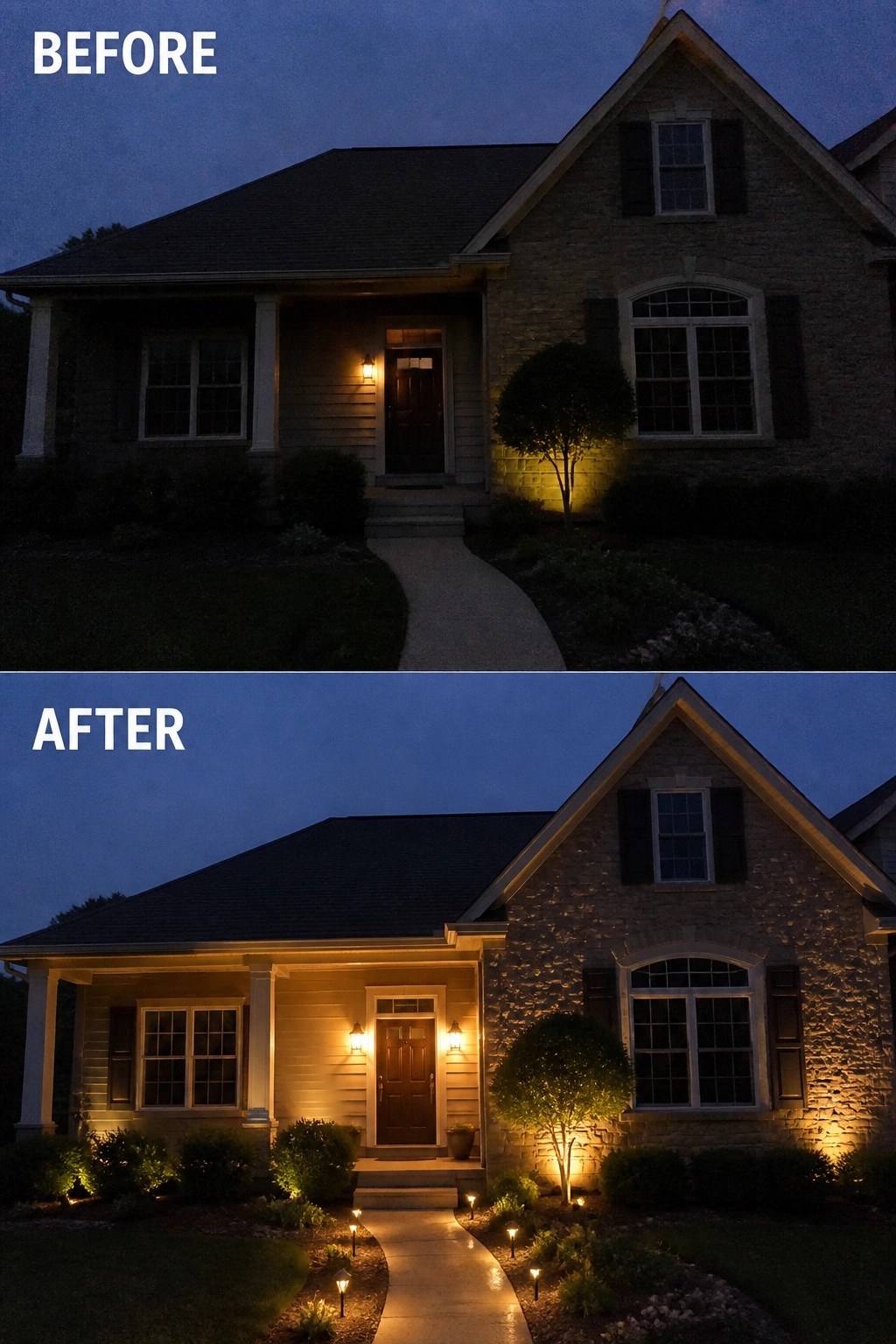
Many homes look flat at night because they only have one or two lights near the door. Adding a few well-placed fixtures along the path, on the walls, and aimed at the stonework makes the whole front feel finished and much easier to navigate after dark.
Start with path lights so visitors can see where they are walking, then add a couple of sconces by the door and one or two uplights on the main architectural features. This approach works on most single-story or two-story homes with visible stone or siding, and it does not require major construction. Just keep the number of fixtures modest so the result stays balanced rather than overly bright.
Frame The Entry With Dark Trim
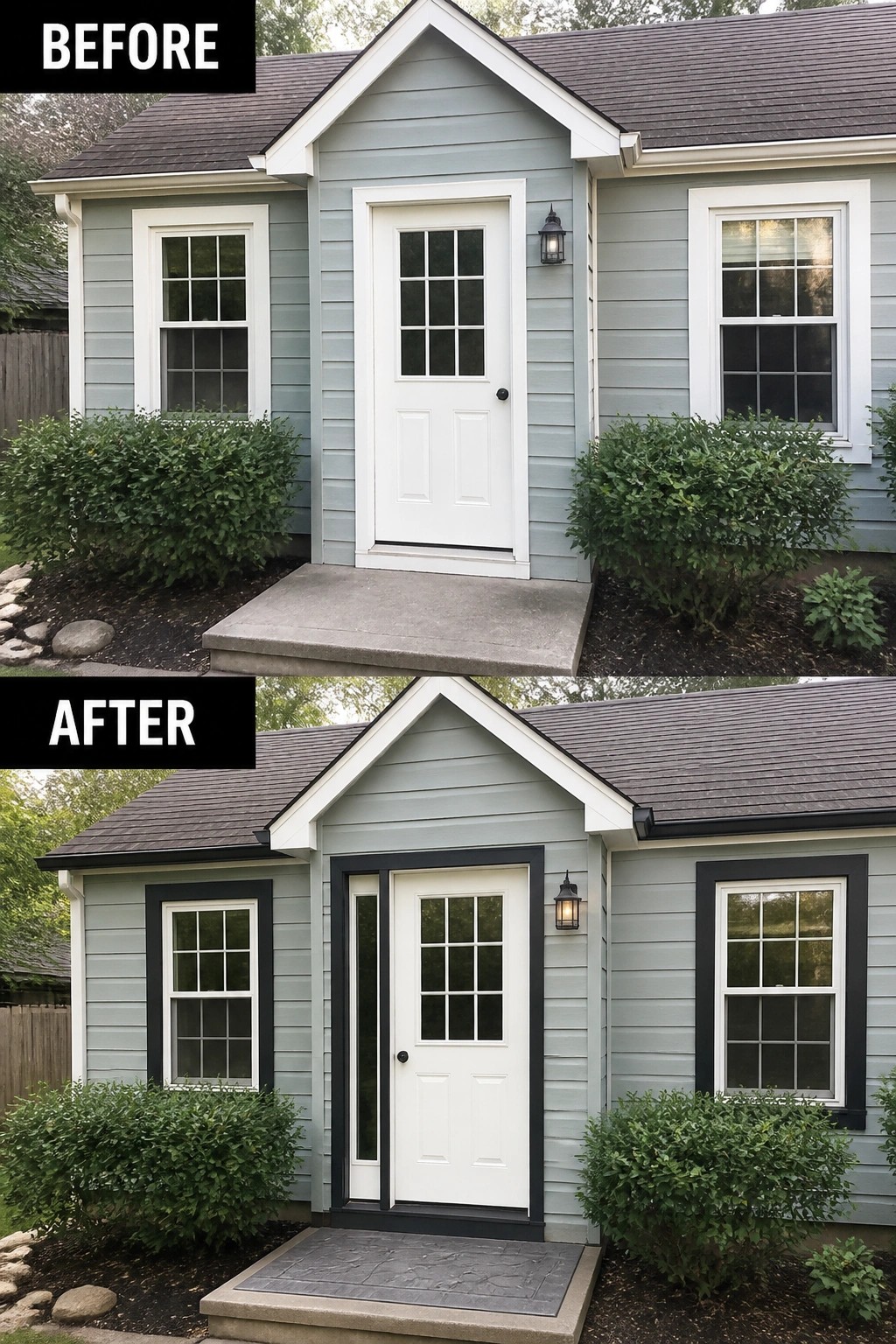
Adding a dark frame around the front door and windows can give a simple house exterior more structure without any major construction. In this case the white door now sits inside black trim that also wraps the sidelight and nearby windows, while the step gained a new surface. The change makes the entry feel intentional instead of flat against the siding.
This approach works well on homes with plain lap siding where you want the door to become the main focal point. Keep the trim width consistent and choose a color that contrasts with both the siding and the door itself. Start with just the entry area before deciding whether to carry the same trim to other windows.
Replace An Old Screen Door To Brighten The Entry
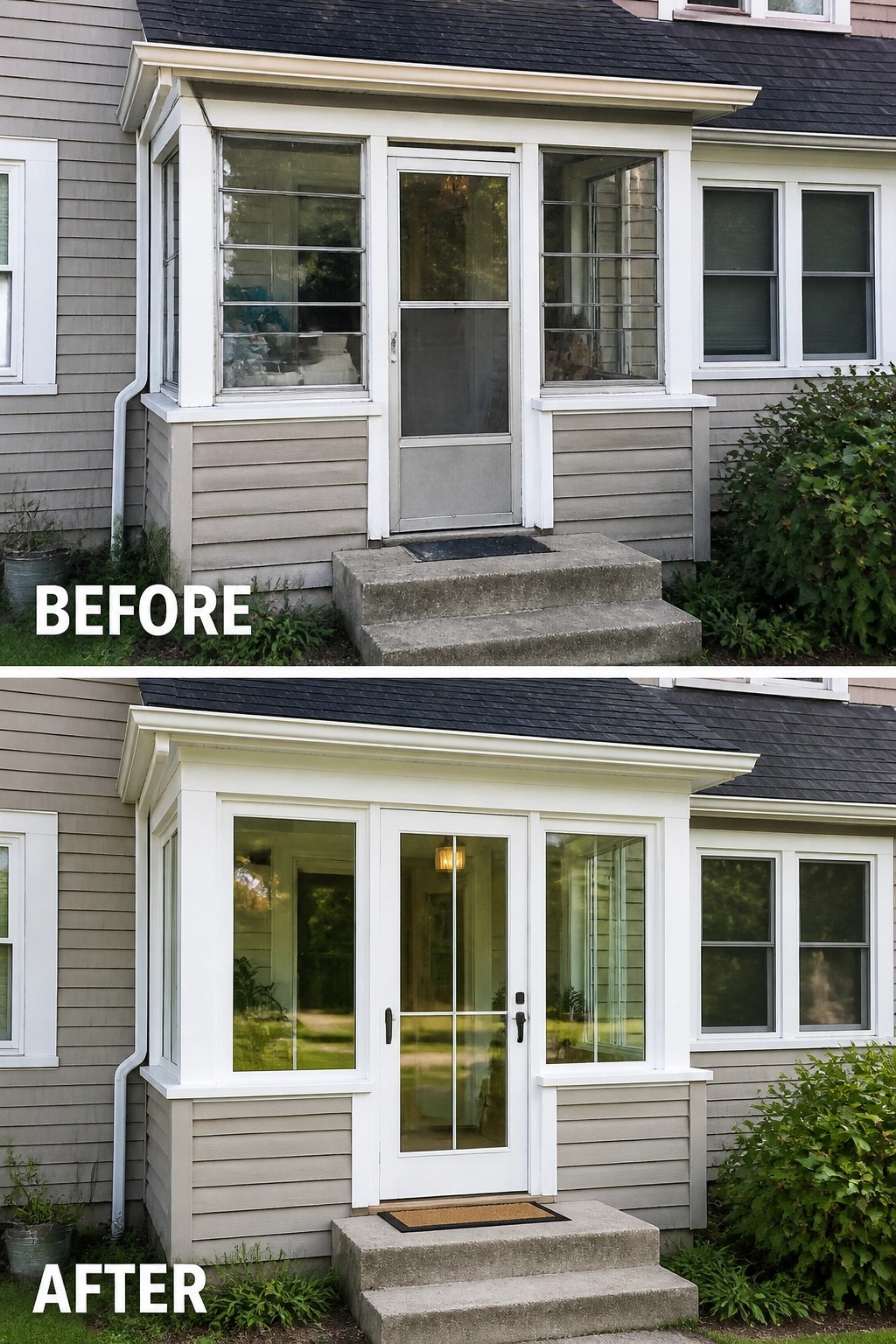
Many older homes still have a basic screen door over the main entry. Swapping it for a full glass door immediately changes how the front feels. The new door lets light through and makes the space look more open without any major construction.
This idea works well on homes with a small enclosed entry or porch. Focus on the door first, then match the trim and side windows so everything feels consistent. Keep the scale simple and choose glass that still offers some privacy if the entry sits close to the street.
Refinish The Deck And Stairs For A Cleaner Entry
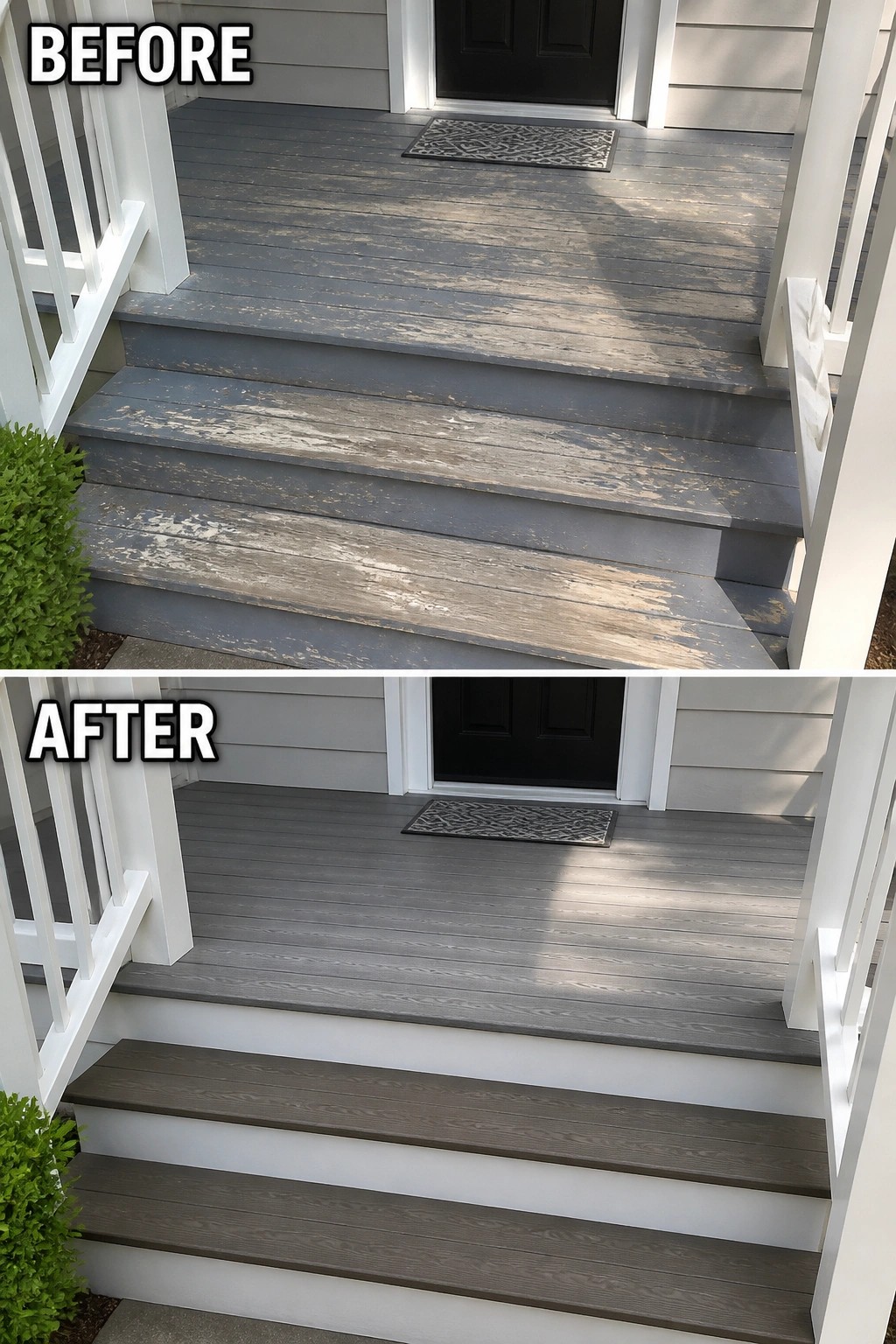
A faded and peeling porch surface makes the whole front of a house look tired. In this case the old gray finish had worn away in patches, leaving the wood looking neglected. A solid new coat of paint or stain, plus white risers on the steps, instantly makes the entry look cared for without any other changes.
This idea works well on any home with a wooden porch that still has good structure. Clean and sand the boards first, then choose an exterior product meant for foot traffic. It is one of the simpler updates that improves curb appeal before you spend money on larger projects.
Frame The Front Entry With Matching Hedges
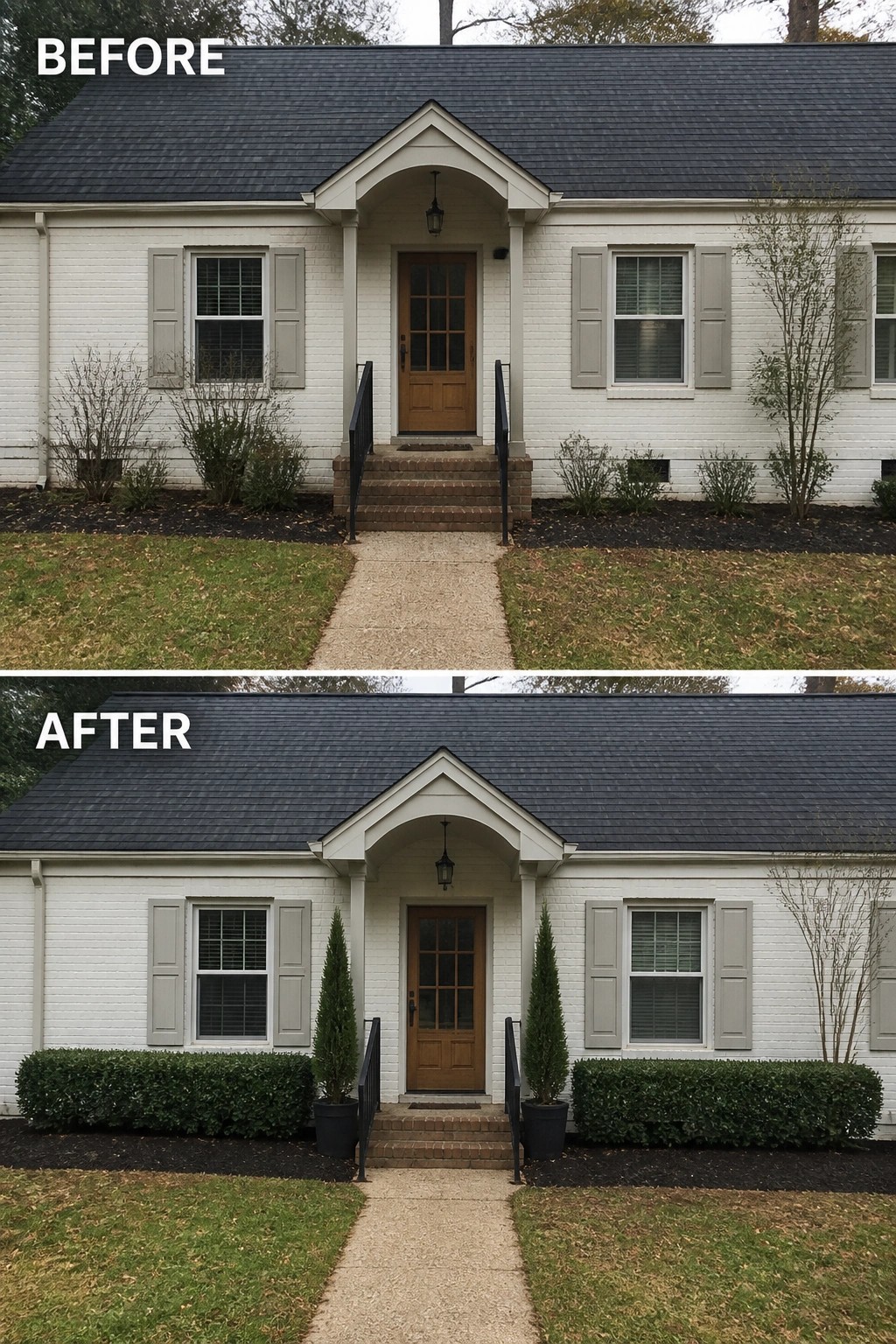
The biggest change here is how the entry feels more balanced. In the before photo the shrubs were scattered and low, which left the front door looking a bit exposed. Adding low boxwood hedges along the foundation and a pair of tall potted evergreens beside the steps gives the door a clear frame without any major construction.
This approach works well on houses that already have a simple shape and just need better definition. Keep the hedges at a consistent height and choose pots that match the scale of the steps. It is an easy way to make the entrance feel intentional without spending on new siding or a different door.
Refresh An Older Home With New Exterior Paint
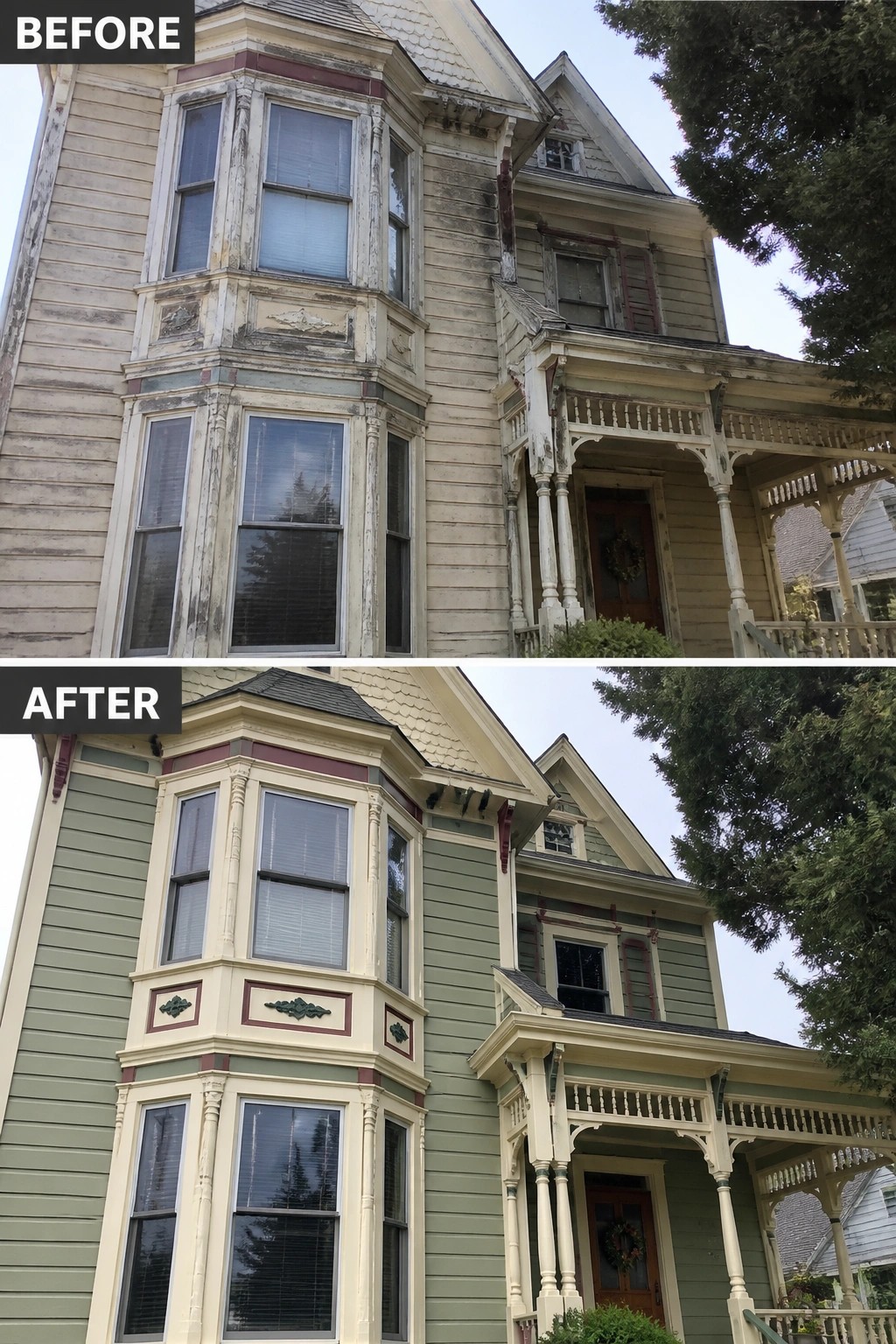
A fresh coat of paint can completely change how an older house looks from the street. In this case the siding moved from a tired beige to a soft green while the trim was brought back to life with cream and deeper accents that highlight the windows and details.
This idea suits homes with good bones but faded finishes. Focus on prepping the surfaces well and picking colors that work with the existing architecture rather than fighting it. Test samples on different sides of the house first so you see how the light affects them throughout the day.
Frequently Asked Questions
Q: My house has a weird roofline that makes some ideas look off. Which changes still work?
A: Focus on updates lower down like fresh siding or bigger windows to balance things out. Skip tall additions until the roof gets sorted.
Q: How do I choose paint colors that actually suit my neighborhood?
A: Drive around and snap photos of houses with similar shapes to yours. Test two or three shades on a small wall section before buying gallons.
Q: What if I want quick wins without touching the structure?
A: Swap the front door and add new house numbers plus path lights. These shifts pull the whole view together fast.
Q: Do I need to match new materials to what is already there?
A: Yes, but only for the main surfaces people notice first. Mix in one accent like stone on the base if it fits the age of your place.