

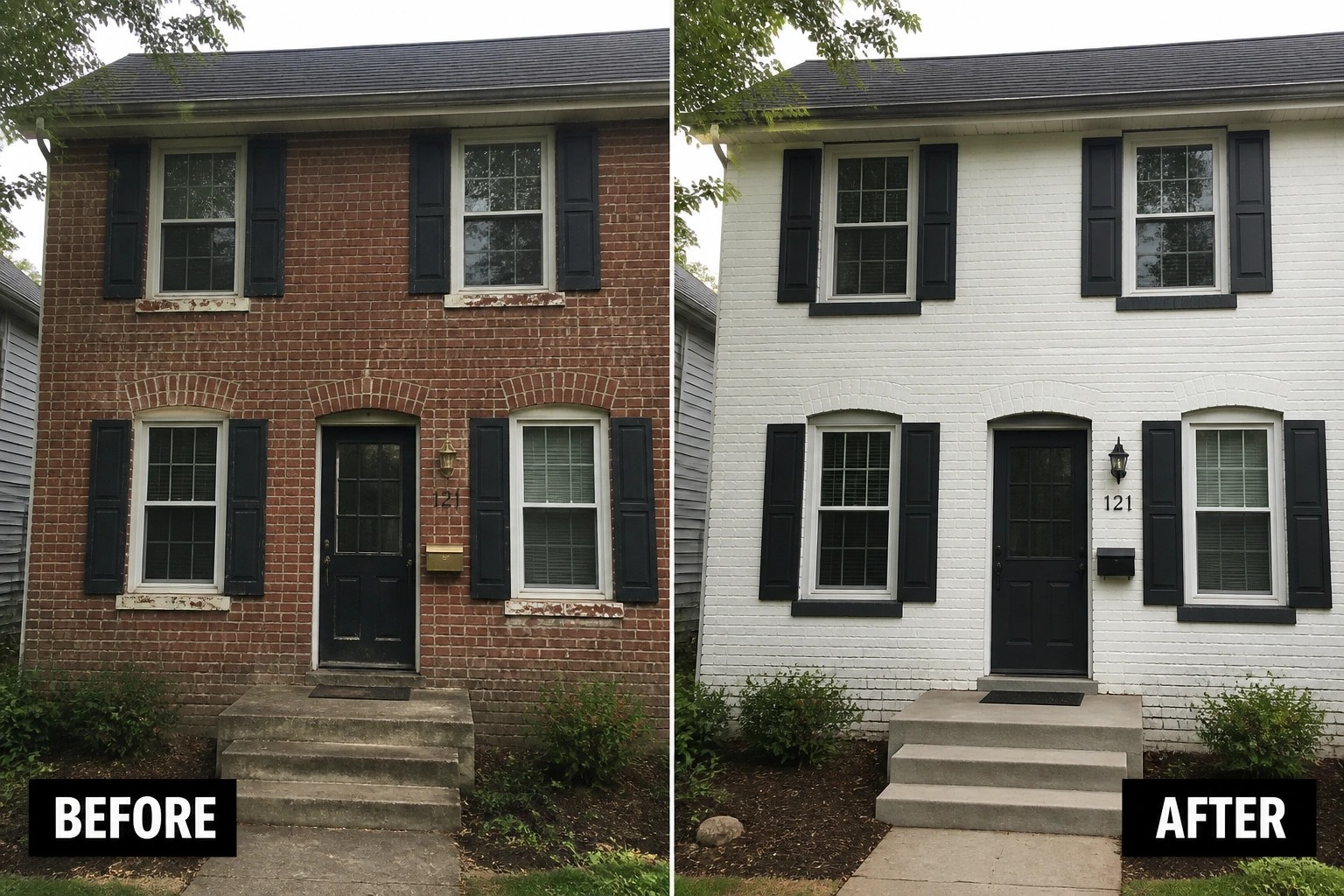
Older homes often carry layers of faded or mismatched paint that make the whole exterior feel neglected even when the bones are still good.
I have seen how a careful repaint on siding and trim can bring back definition to the facade without any need for new windows or roofing.
Choosing colors that respect the original architecture helps the house look settled rather than patched over.
Paint changes more than you expect.
A couple of the classic combinations seem worth testing on a sample board before committing to the full job.
Refresh Older Brick Homes With A New Exterior Paint Color
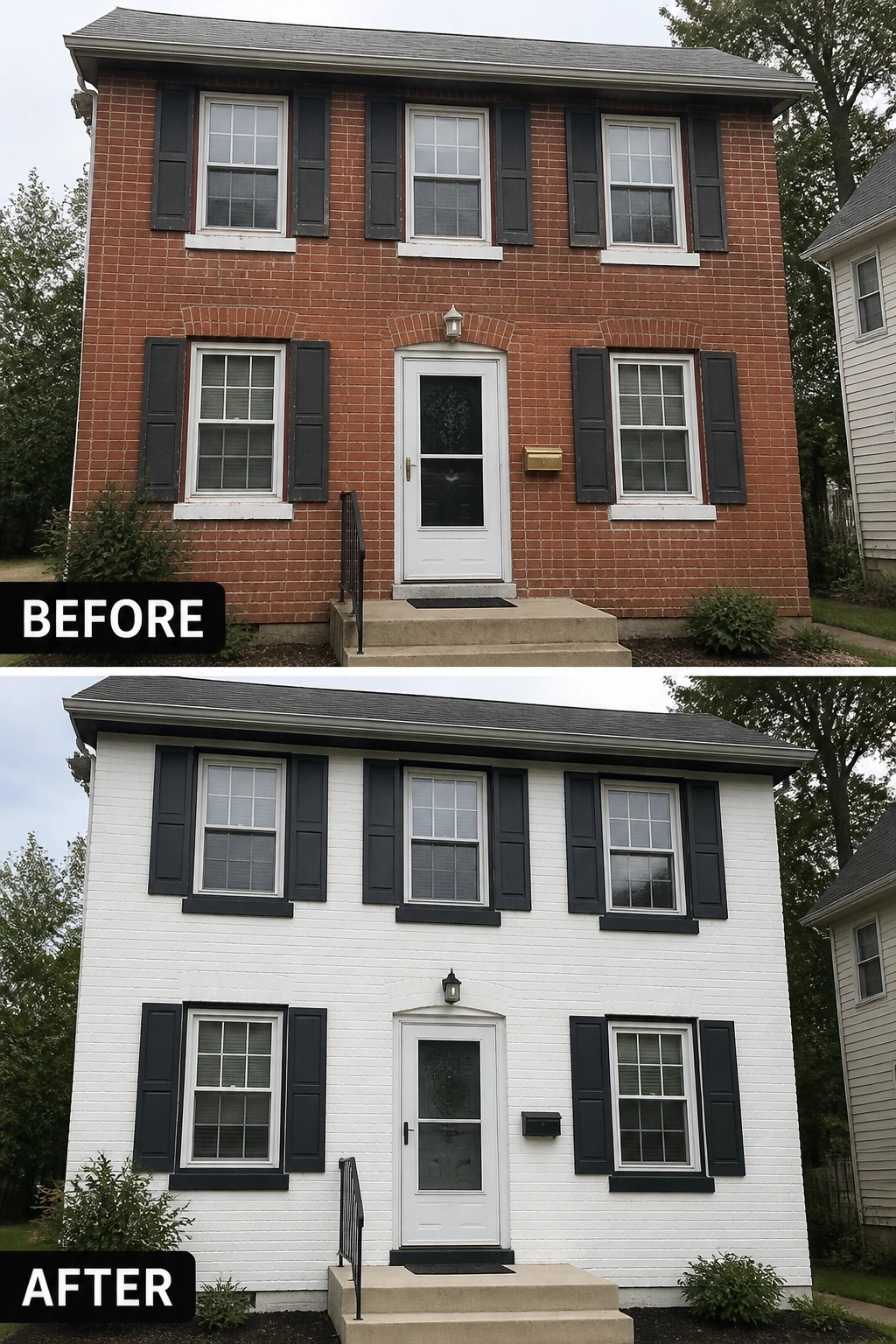
Many older brick houses start to look heavy or dated as the original color ages. Painting the brick a clean white and switching the shutters and trim to black lightens the whole front and gives it a sharper, more current appearance.
This works well on two-story homes where the brick no longer matches the neighborhood. Choose a masonry paint built for exterior use, and keep the front door a light color so the entry stays welcoming.
Update An Older Home Exterior With Two-Tone Paint
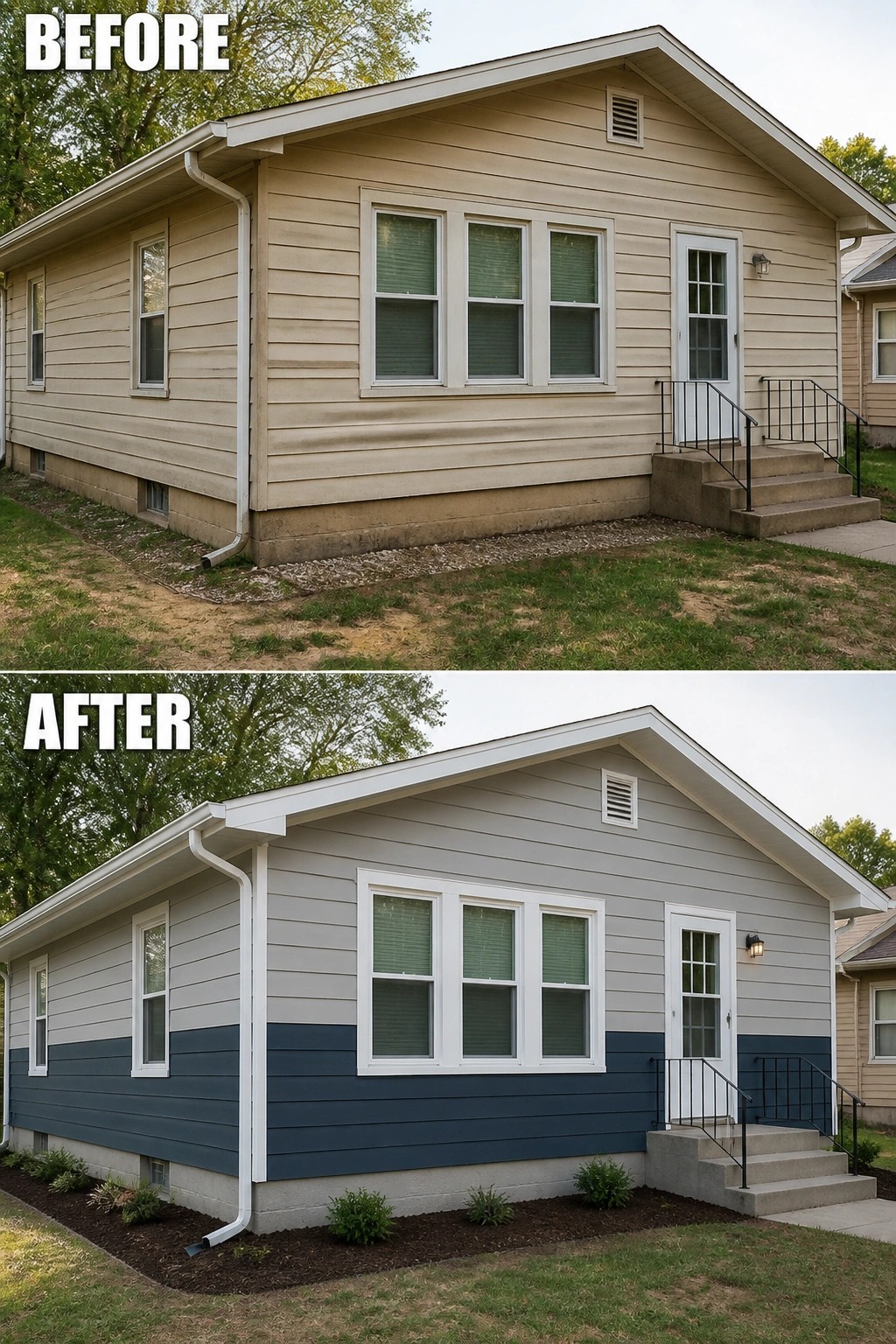
Many older homes end up with flat, single-color siding that makes the whole house look plain. Switching to a two-tone paint scheme gives the exterior more structure without any structural changes.
This idea works best on simple one-story homes where the foundation sits a little high. Keep the darker color on the lower half and use a lighter shade above so the division feels intentional rather than busy.
Refresh An Older Home Exterior With A New Paint Color
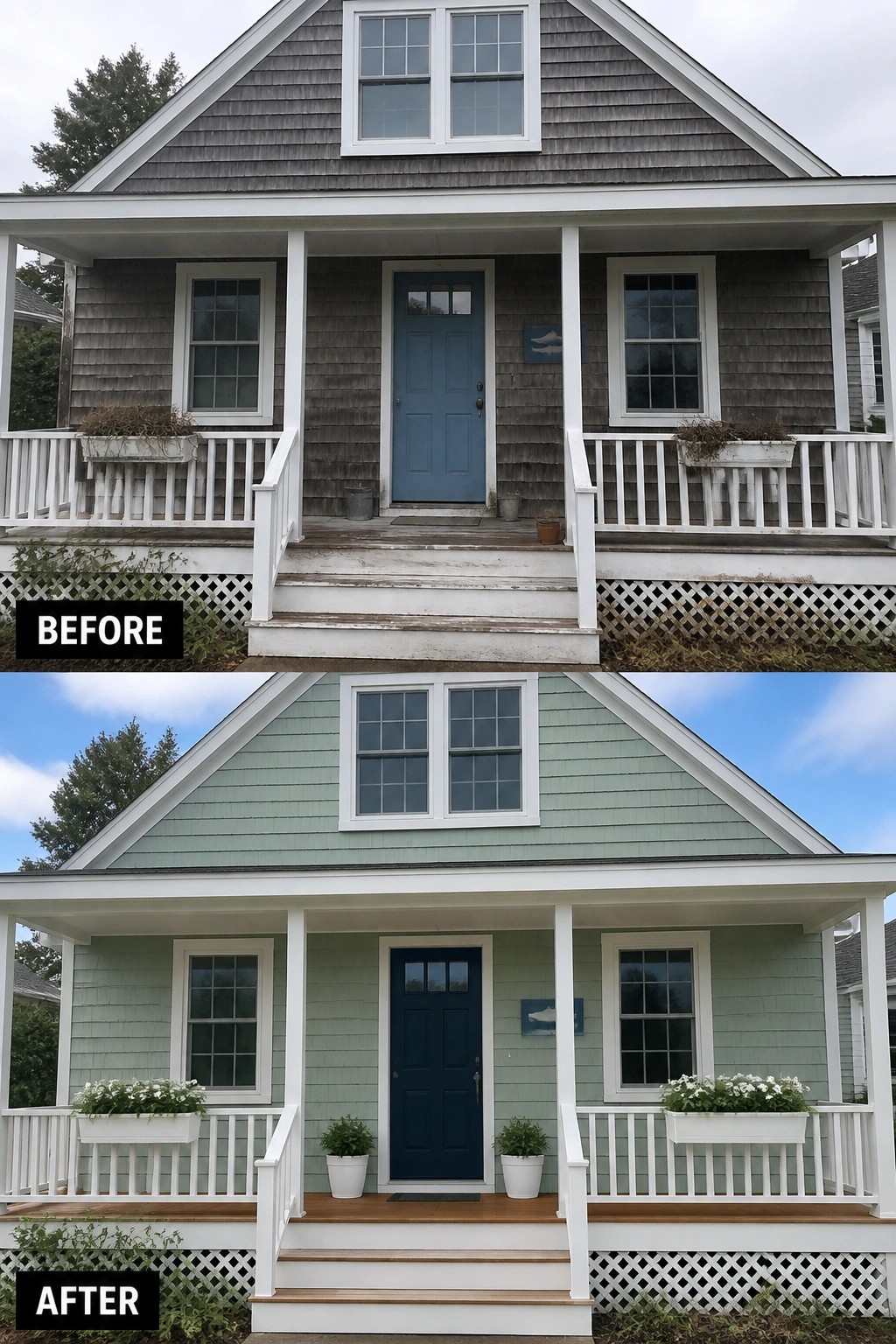
A simple change in exterior paint can make an older house feel much more current. In this case the weathered gray siding was replaced with a soft green that lightens the whole front, while the door was switched to a deeper blue. The porch also looks cleaner once the dead plants were swapped for fresh ones in matching white boxes.
This approach works well on homes that still have good structure but need an easy update. Choose a light or mid-tone color that fits the neighborhood, then pick one darker accent for the door. Start with paint before spending on bigger fixes like new windows or roofing.
Paint The Foundation And Steps To Refresh An Older Exterior
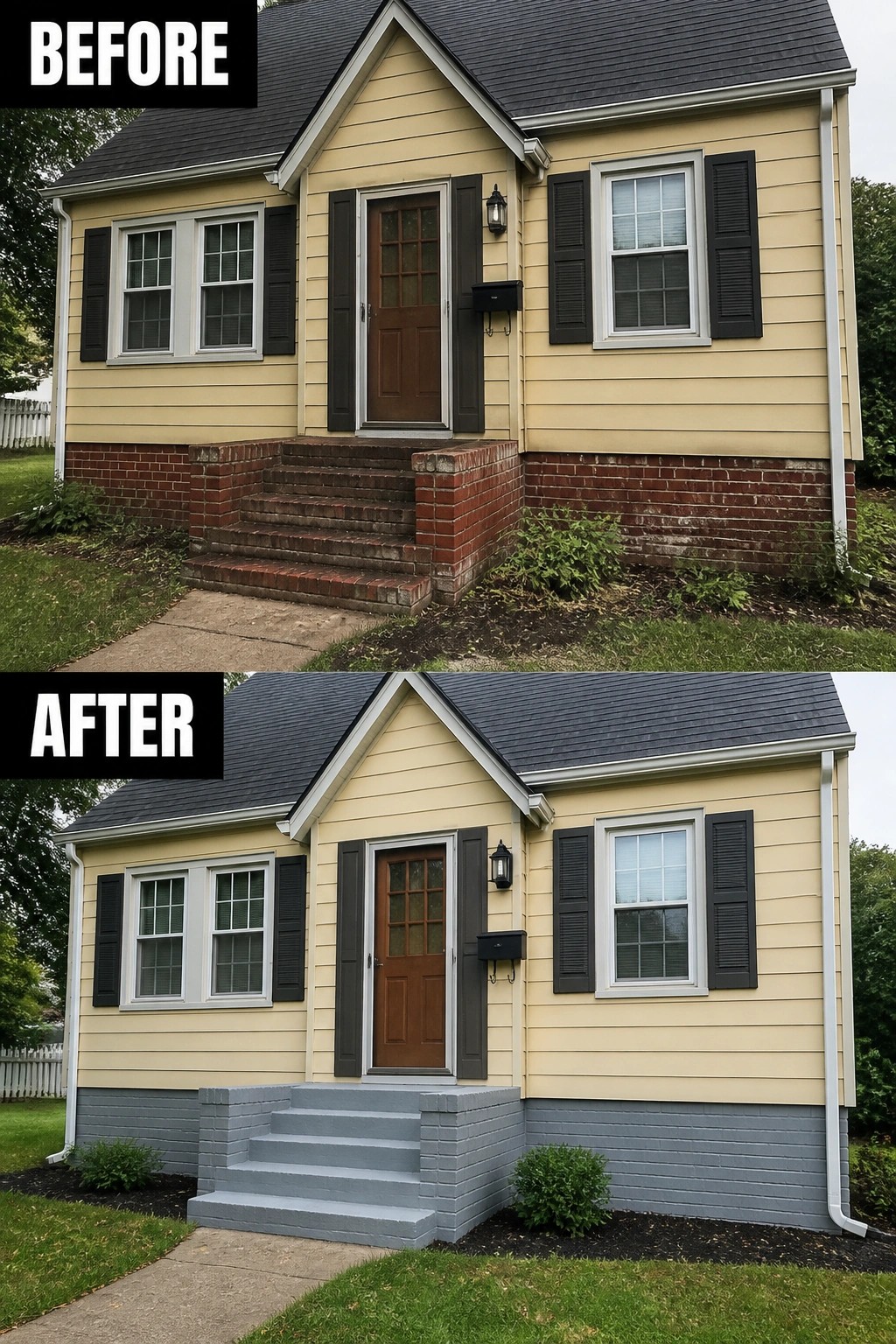
Many older homes have a brick foundation or steps that no longer match the rest of the house. Painting that lower section a single color pulls the whole front together and makes the entry feel more finished without major construction.
This works especially well on homes where the brick has aged or clashes with the siding. Keep the color close to the siding or a soft neutral so it blends rather than stands out, and make sure the paint is made for masonry so it holds up over time.
Paint The Front Door A Bold Color
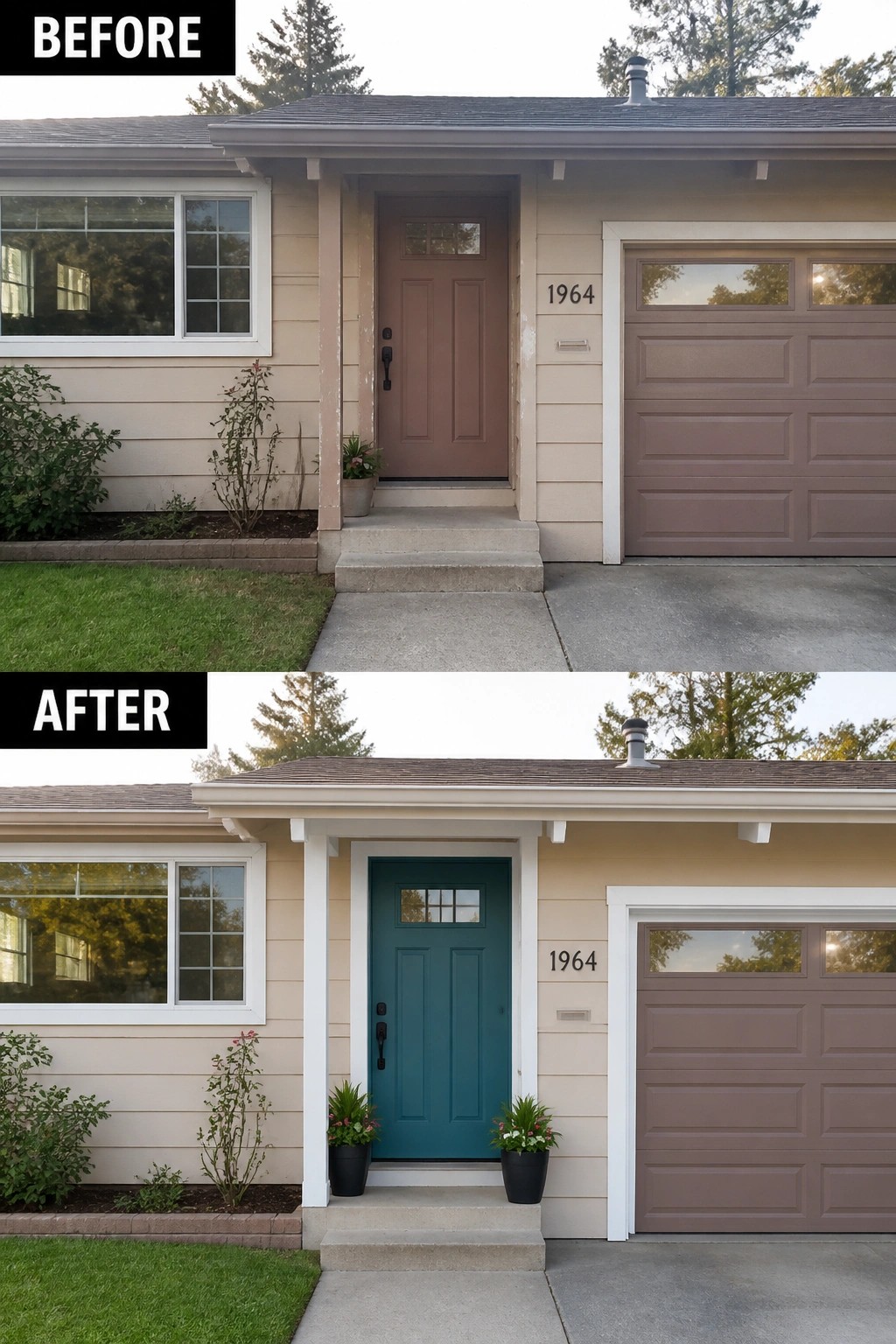
A brown door that blends into the siding can make the whole front of an older home feel flat. Changing it to a strong teal gives the entry a clear focal point without any other major work.
This idea works best on simple facades where the door is easy to repaint and already sits in a visible spot. Pick a color that contrasts with the siding and trim, then keep the rest of the entry clean so the door stays the main feature.
Refresh An Older Home With A New Exterior Paint Color
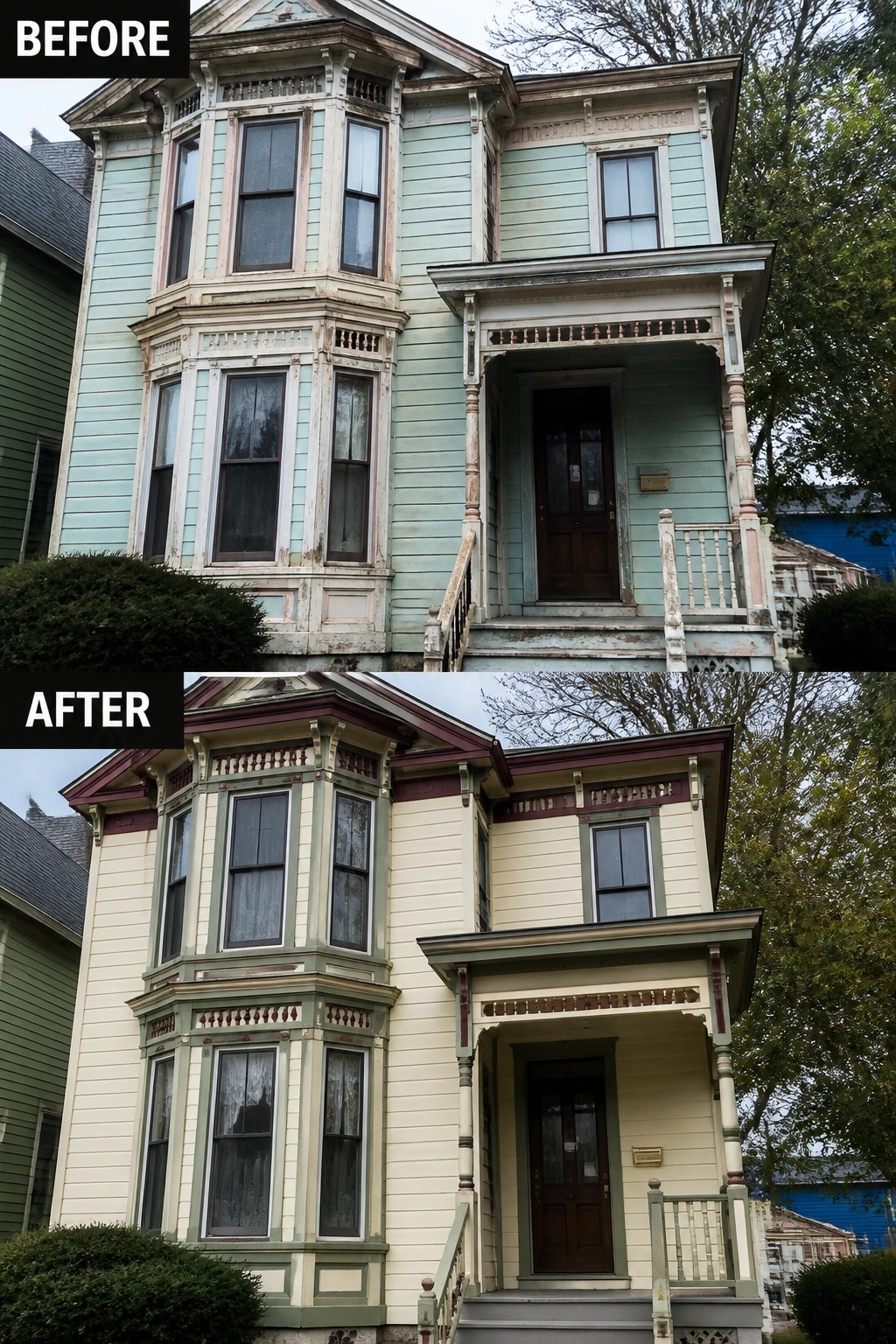
The house had faded, peeling paint that made the details look tired and lost. A new color scheme with cream siding, green trim, and deeper accents on the roofline and porch cleaned everything up and made the architecture stand out again.
This works best on older homes with lots of trim and porches where color can bring back the original character. Pick one main body color first, then choose two accent shades that highlight the windows and entry without going overboard. Test the colors on a small section of siding before committing to the whole house.
Paint Brick To Refresh A Dated Entry
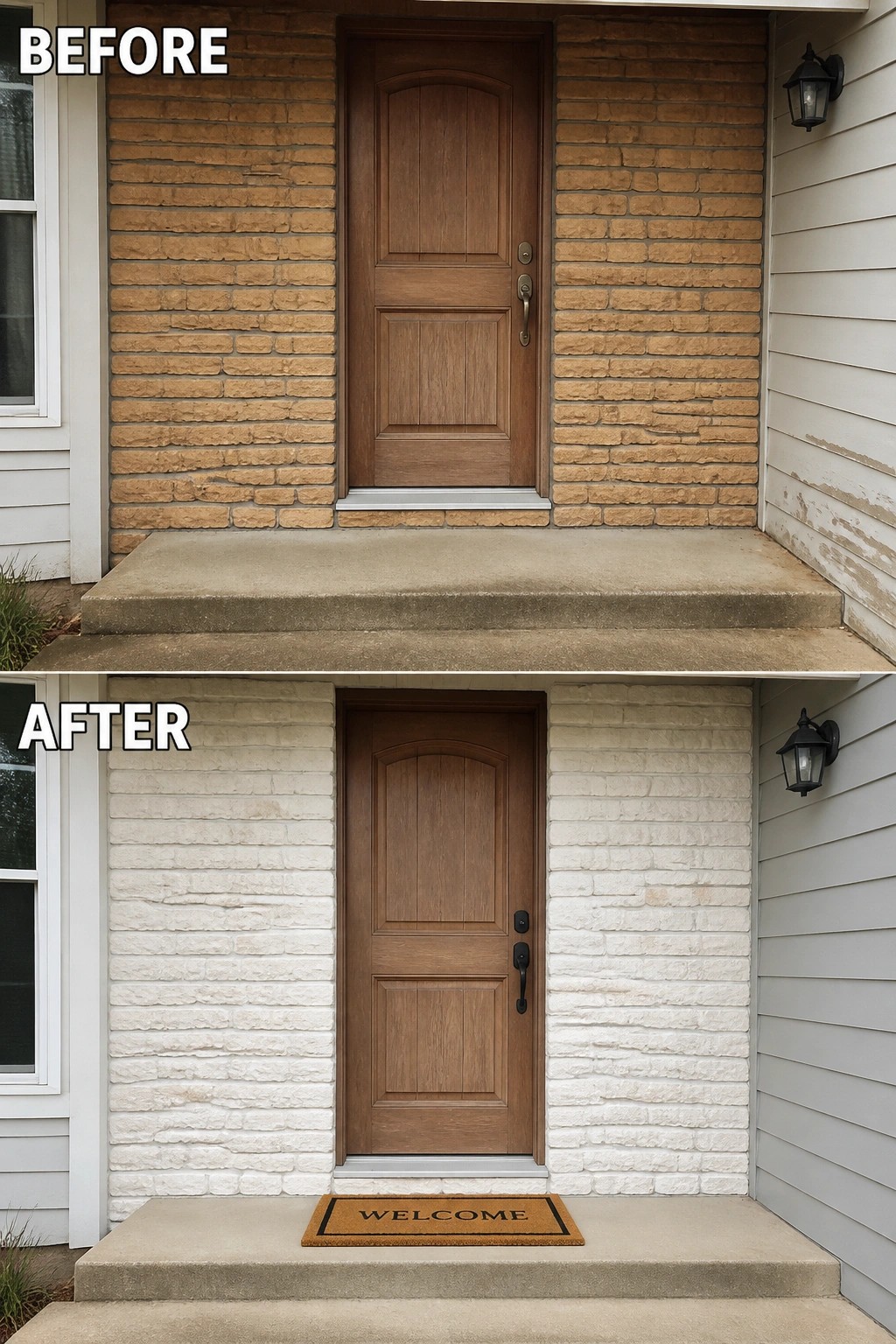
Older homes often end up with brick that has darkened or feels too heavy around the front door. Painting that brick a lighter shade opens up the entry and makes the whole facade feel brighter without changing the door or structure.
This idea suits homes where the brick is still sound but the color no longer works. Clean and prime the surface first so the paint holds up, then pick a color that matches the trim and siding for a simple, lasting update.
Paint Shutters And The Front Door A Dark Color
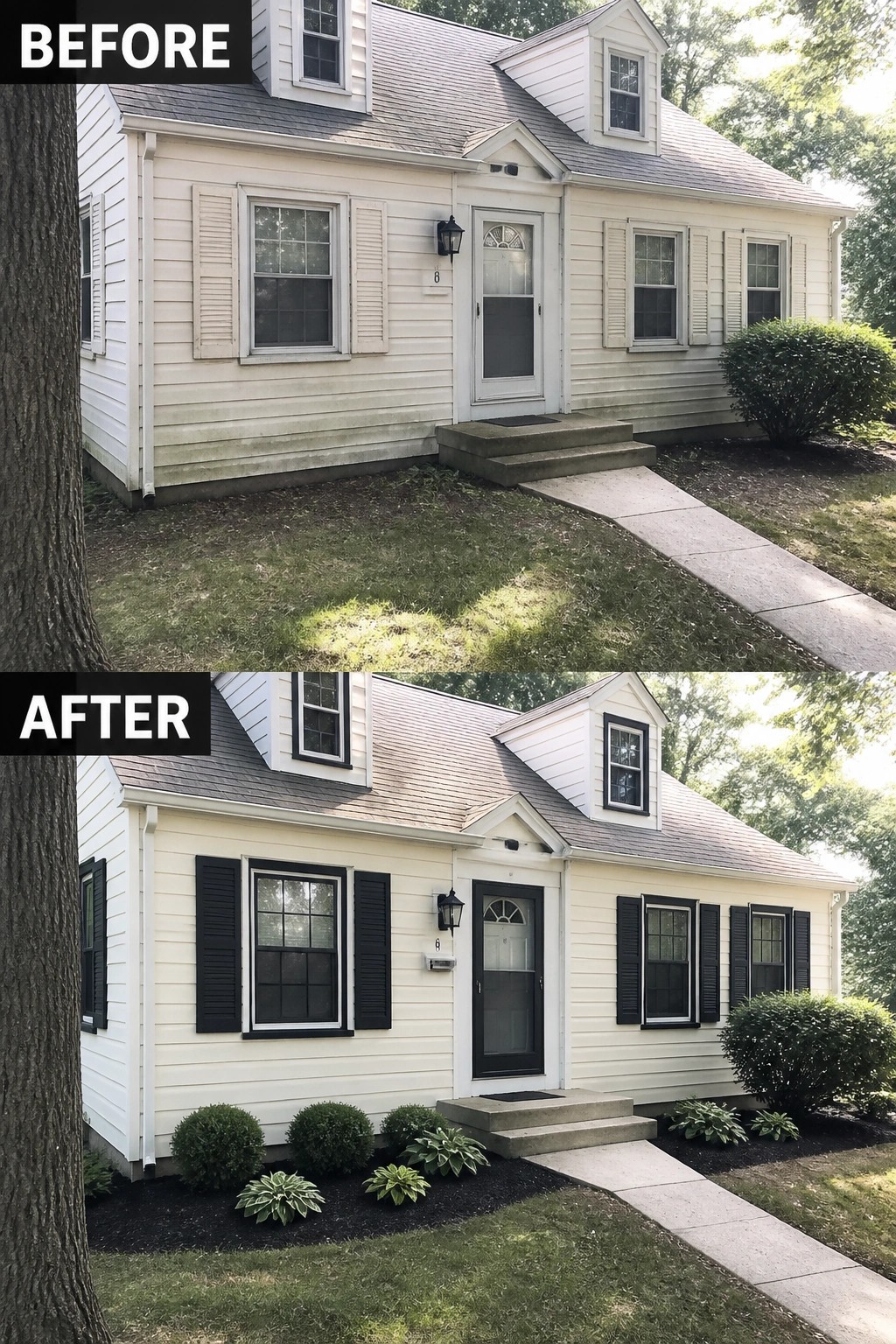
Many older homes have white trim that blends into the siding and leaves the front looking flat. Painting the shutters and door a dark color creates a clear focal point and makes the windows and entry stand out without any other big changes.
This approach works well on simple facades where the main goal is curb appeal rather than a full renovation. Keep the siding light and let the dark accents do the work, but only after the yard is cleaned up so the new colors read clearly from the street.
Refresh An Older Home Exterior With One New Paint Color
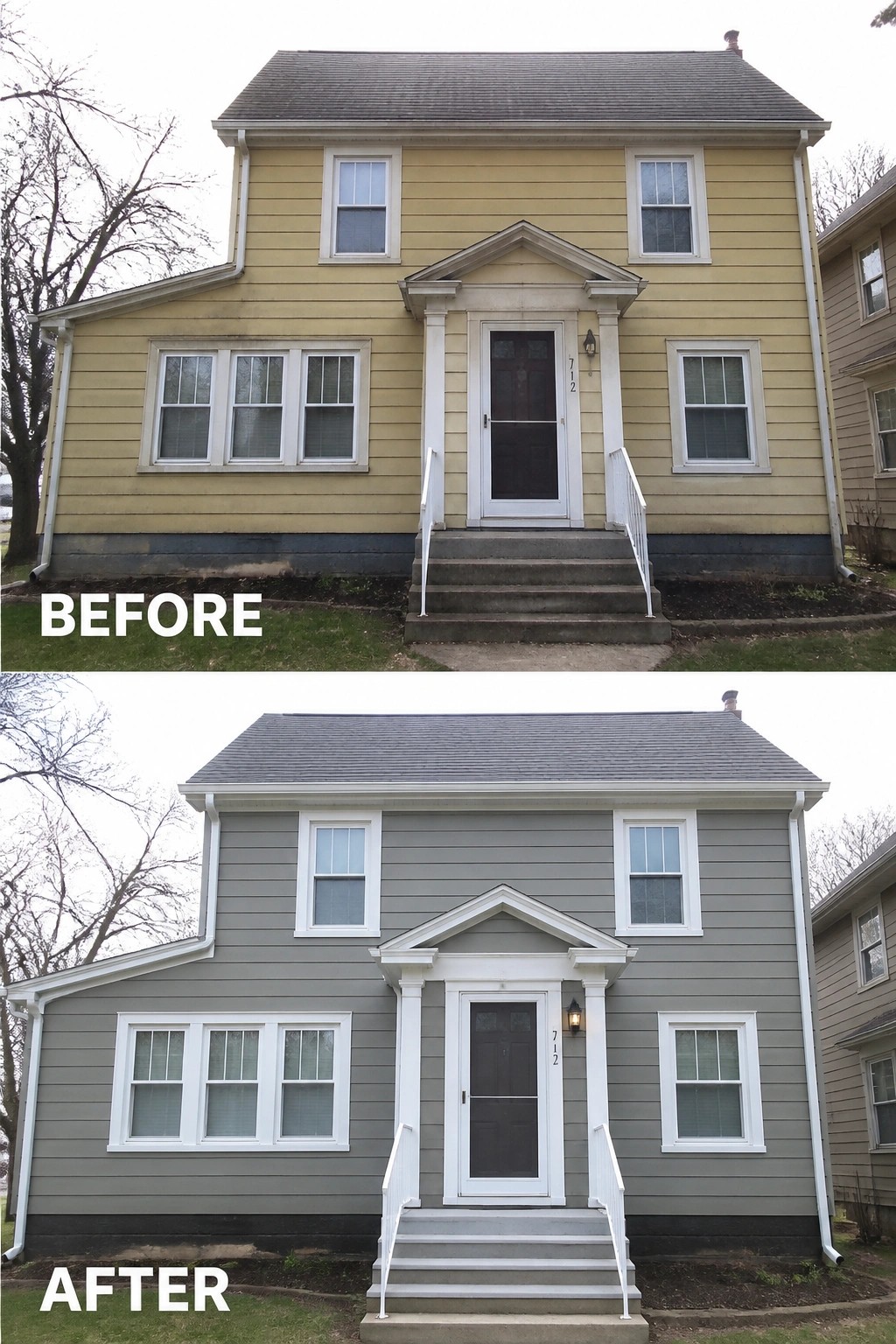
Older homes often end up with siding that has faded or picked up stains over time. A single new paint color across the main walls can pull the whole front together and make the house look cared for again.
This works best on straightforward two-story houses where the roof and trim stay the same. Pick a color that sits well with the shingles and any white trim you already have, and test a patch first so you know how it reads in different light.
Paint The Siding And Garage Door To Update An Older Home
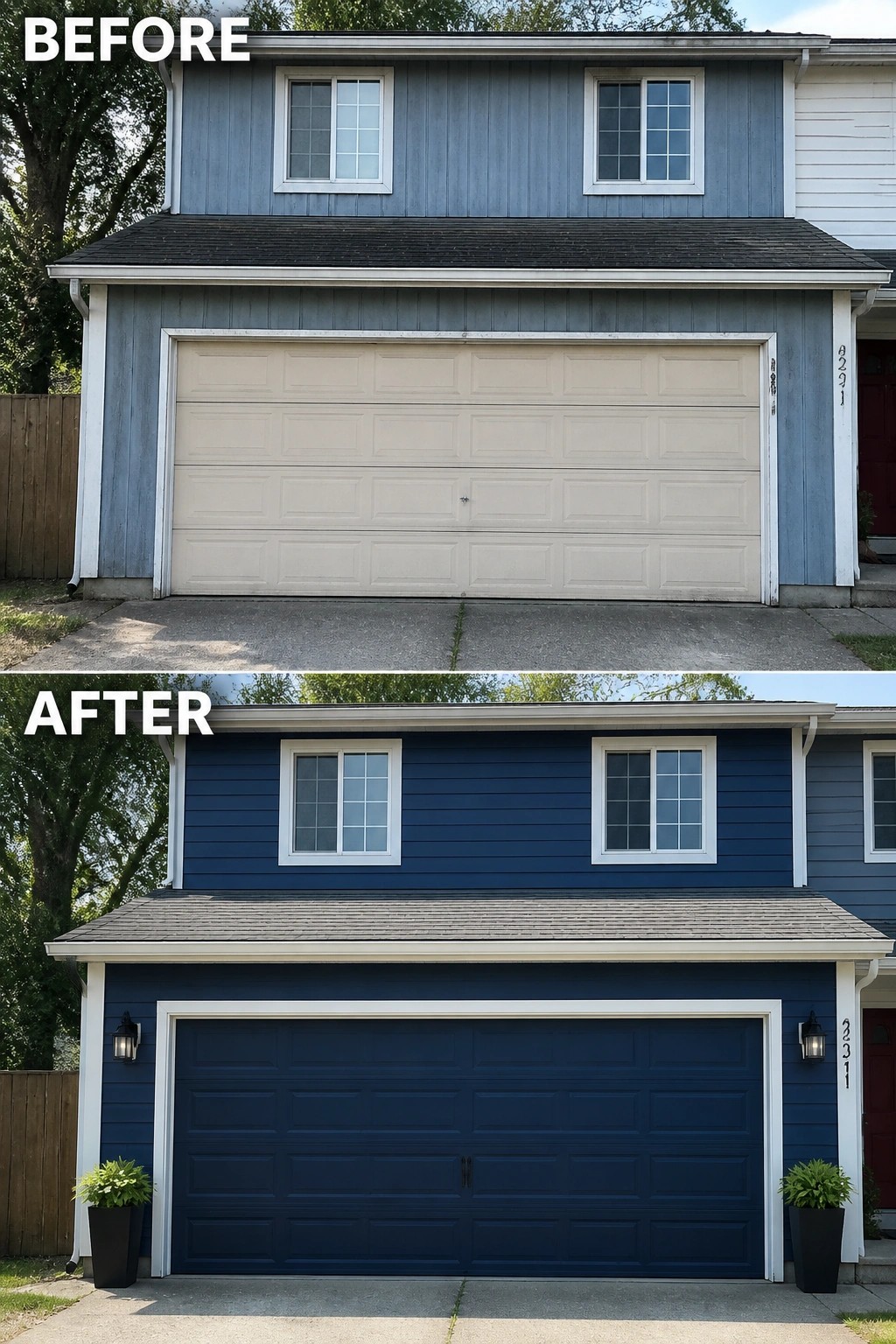
Painting both the siding and garage door the same color gives an older home a much cleaner and more current look. The shift from light blue walls with a beige garage door to a deep navy on both surfaces pulls the whole front together and makes the house feel more intentional.
This idea works especially well on homes where the garage takes up a big portion of the facade. Choose a mid to dark tone that works with the roof and trim, then carry it across both the siding and the door so the front reads as one unified surface instead of separate parts.
Refresh An Older Porch With New Paint Colors
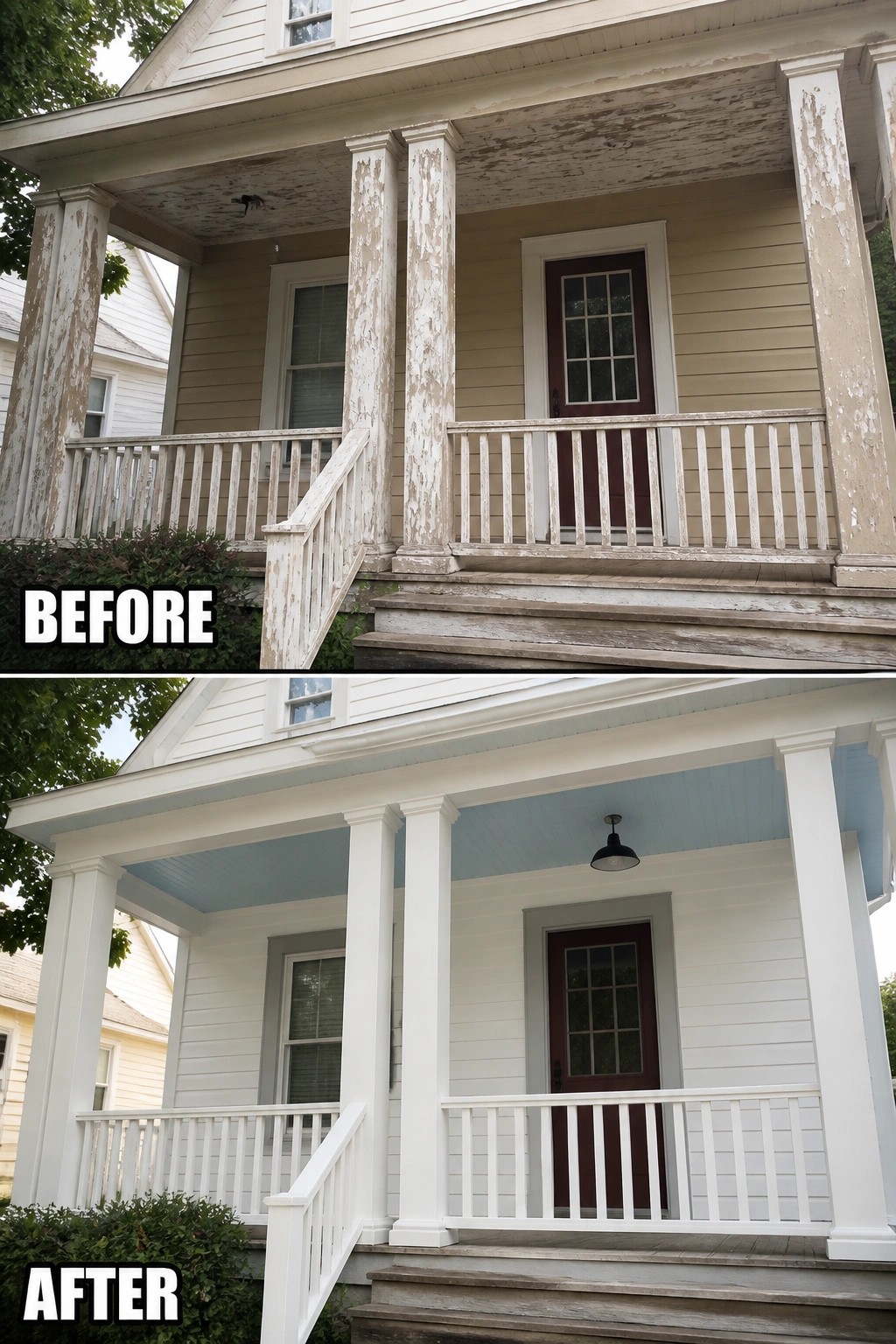
Painting the porch and trim can make a big difference on an older home. The before photo shows peeling paint on the columns, ceiling, and railings that made the whole front look tired. In the after photo the same porch has clean white paint on the structure and a soft blue on the ceiling, which instantly brightens the entry and ties the house together.
This idea works well on homes with simple trim and older siding. Start by scraping and prepping the surfaces, then pick one main color for the body and a second for the ceiling or accents. Keep the door color if it still looks good, and focus the new paint where it will show the most from the street.
Add Contrast With Two-Tone Paint On A Plain Exterior
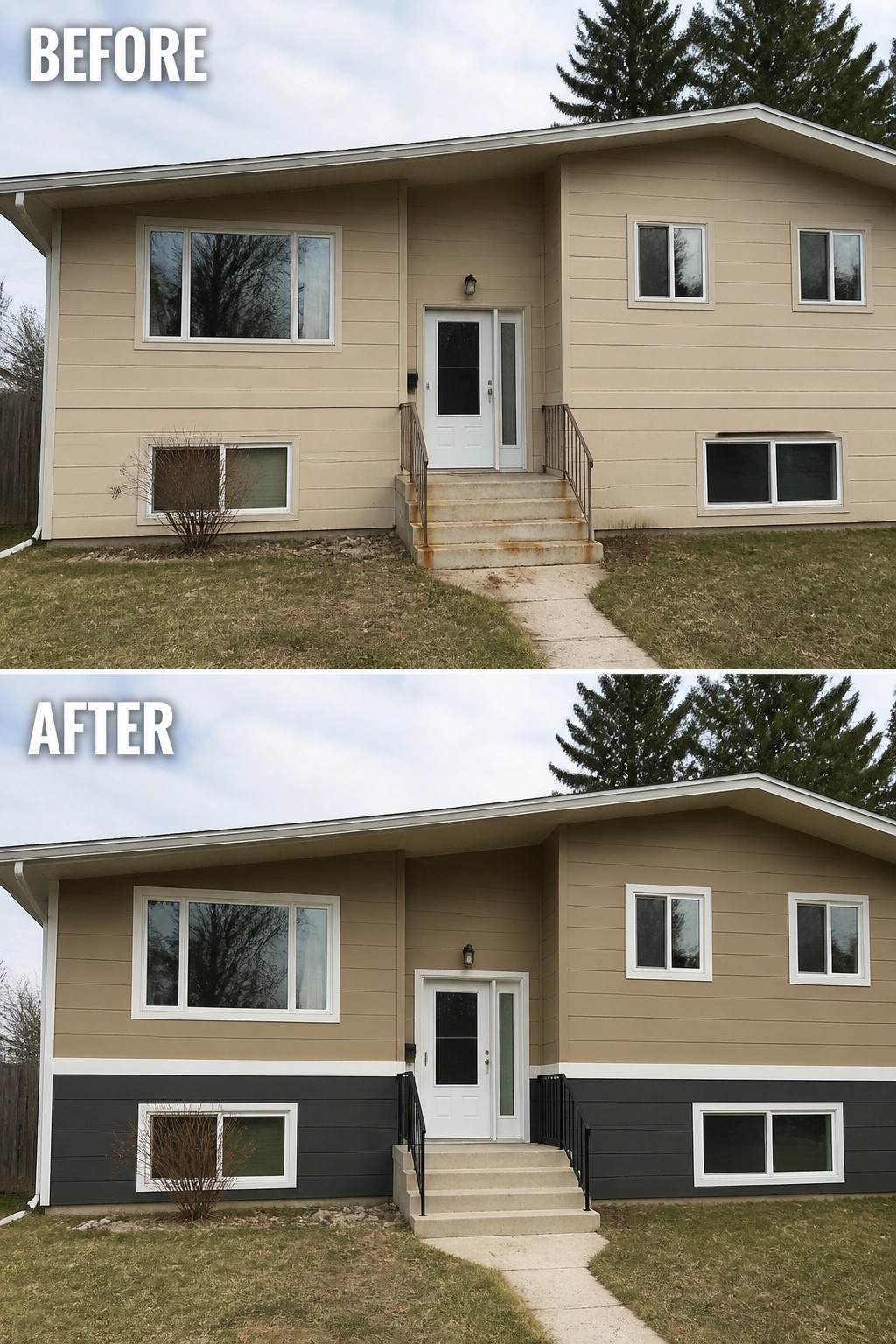
A simple way to update an older home exterior is to break up a single flat color with a darker band along the bottom. In this case the lower siding was painted a dark gray while the upper portion stayed a warm tan. The white trim around the windows and the new horizontal line where the colors meet give the front a clearer shape without any major construction.
This approach works well on ranch styles and split-level homes that tend to look wide and low. Keep the darker color on the bottom third or half so the house still feels grounded. Focus on clean lines where the two colors meet and add white trim if the windows need more definition. It is an affordable first step before considering larger changes like new siding or roofing.
Give An Older Home Exterior New Life With A Darker Paint Color
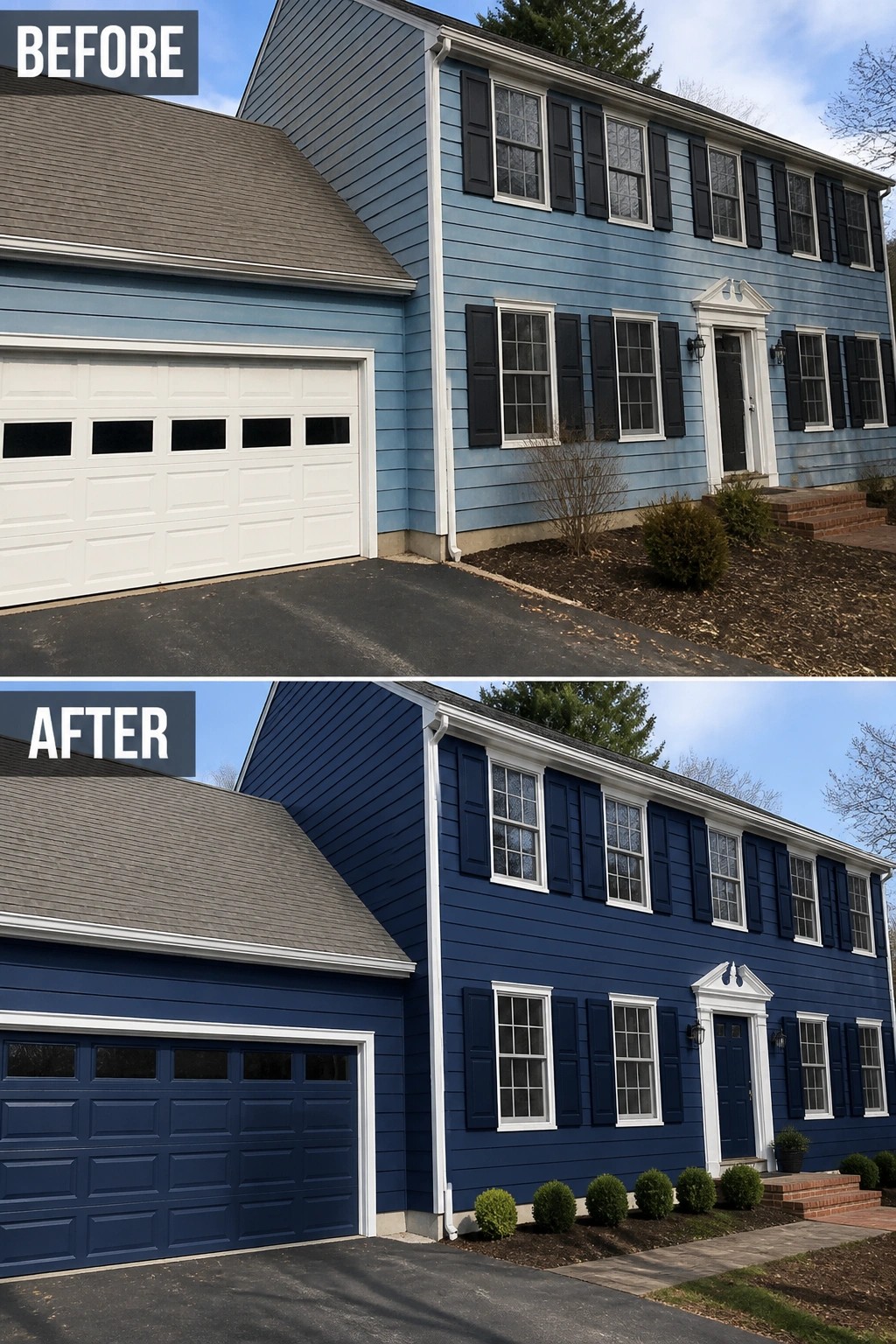
A simple exterior paint change can make a big difference on older homes. The light blue siding gave the house a faded look, while the new deep navy color makes the whole facade feel more solid and current. Matching the garage door, shutters, and front door to the same color keeps everything connected without adding extra work.
This idea works well on homes from the 80s or 90s that still have their original siding. Pick a color that can handle the trim and door without needing a full replacement. Start with a couple of test patches on the largest wall so you can see how it looks in different light before committing.
Paint The Railings And Stairs To Refresh An Older Home Entry
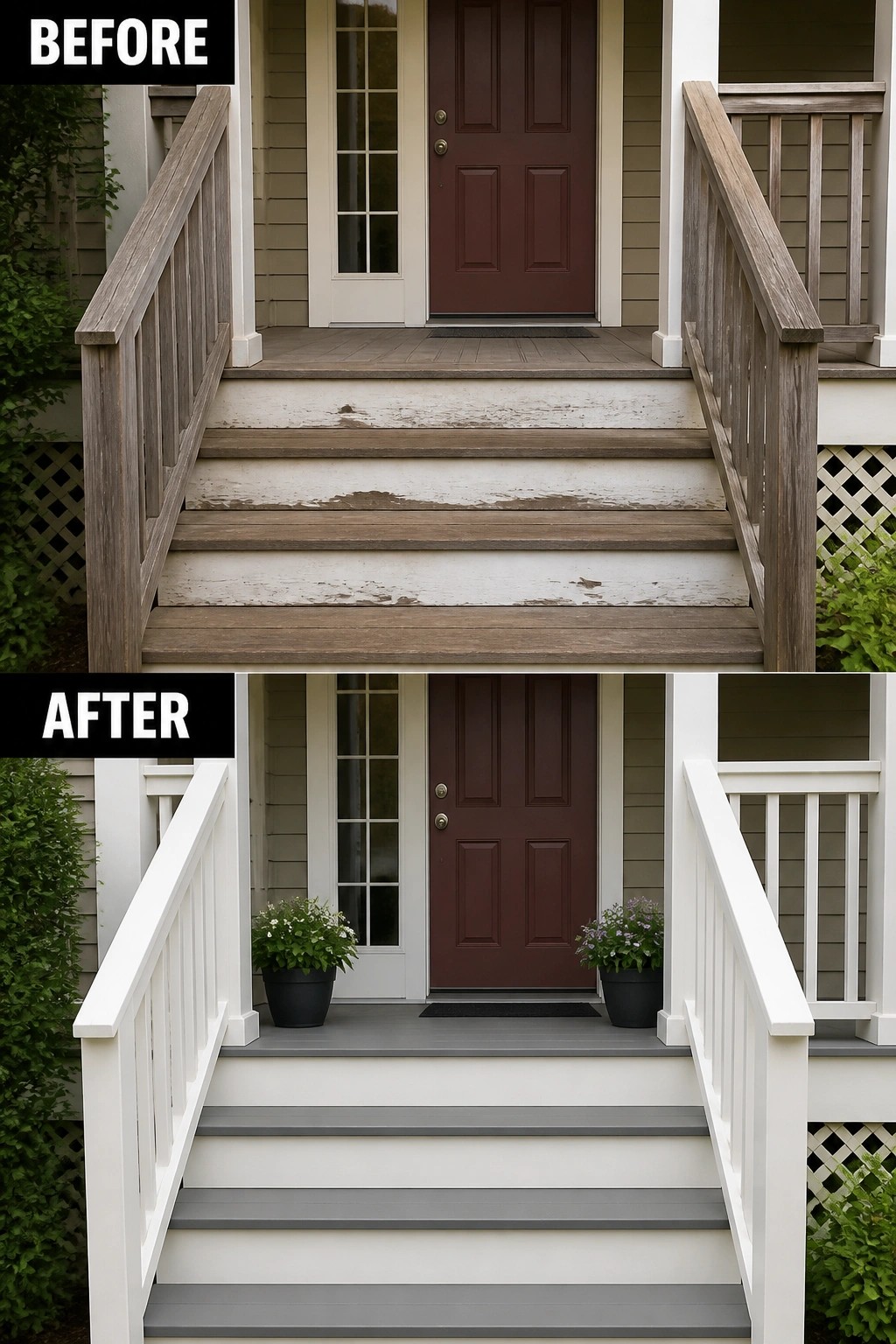
Many older homes have front entries that look tired simply because the railings and stairs have taken a beating over the years. A fresh coat of paint on those surfaces, along with a new color on the stair treads, can make the whole entry feel cleaner and more put together without any major construction.
This approach works especially well on homes with simple porches and visible stairs. Start with a good cleaning and prep, then choose a durable exterior paint that holds up to weather. Keep the rest of the styling light, such as a couple of planters by the door, so the painted trim stays the main focus.
Paint An Older Home Exterior To Brighten The Facade
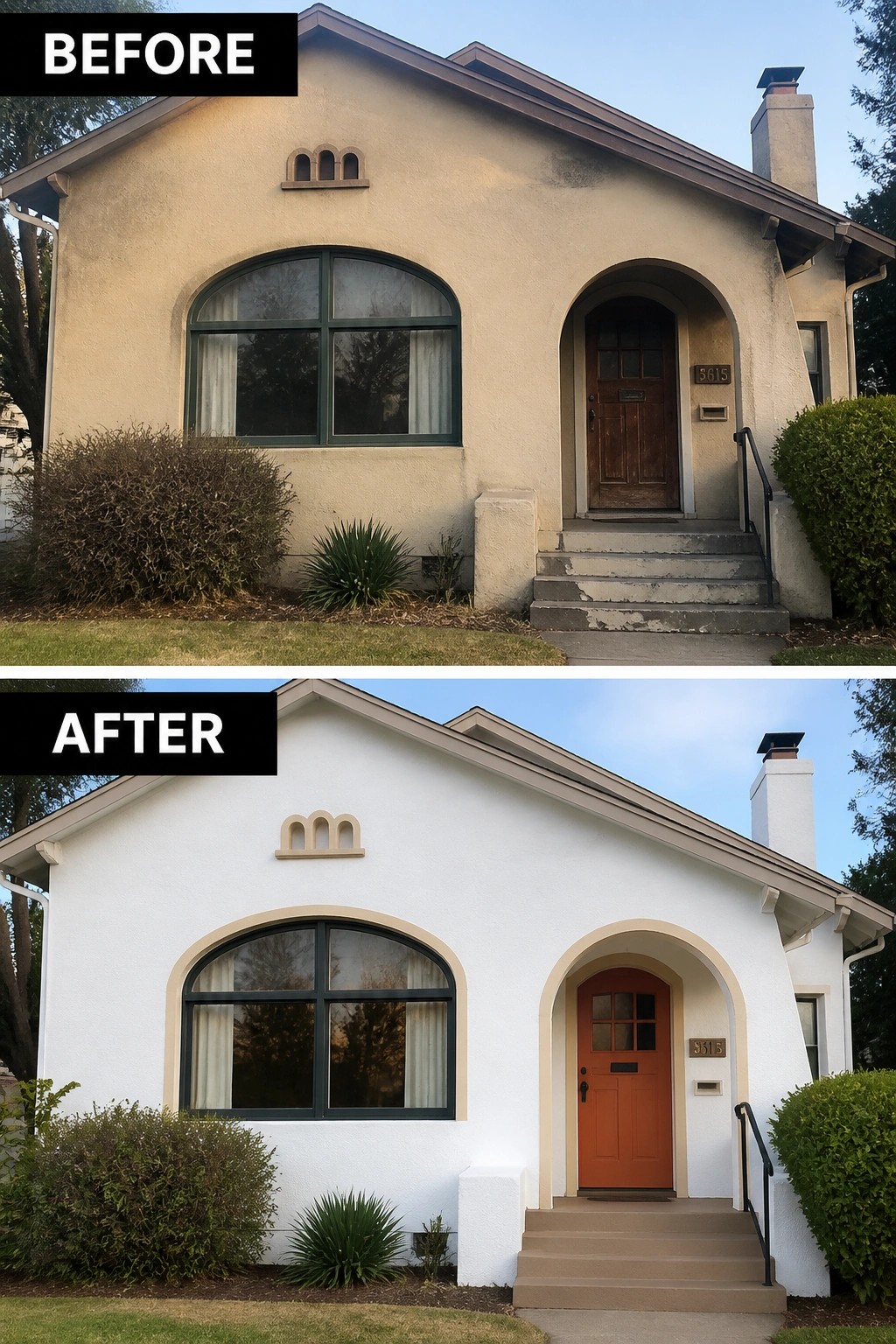
Many older stucco homes end up with faded walls that make the whole exterior feel dull. Repainting the main surfaces white while adding a lighter trim color around the windows and entry arch cleans up the look and makes the house appear larger and more welcoming. Switching the door to a warm terracotta shade adds just enough contrast without overpowering the simple architecture.
This idea works best on homes with basic shapes and few decorative details. Choose a durable exterior paint meant for stucco, then test the door color in natural light so the new shade feels intentional rather than random.
Paint Exterior Details To Refresh An Older Home
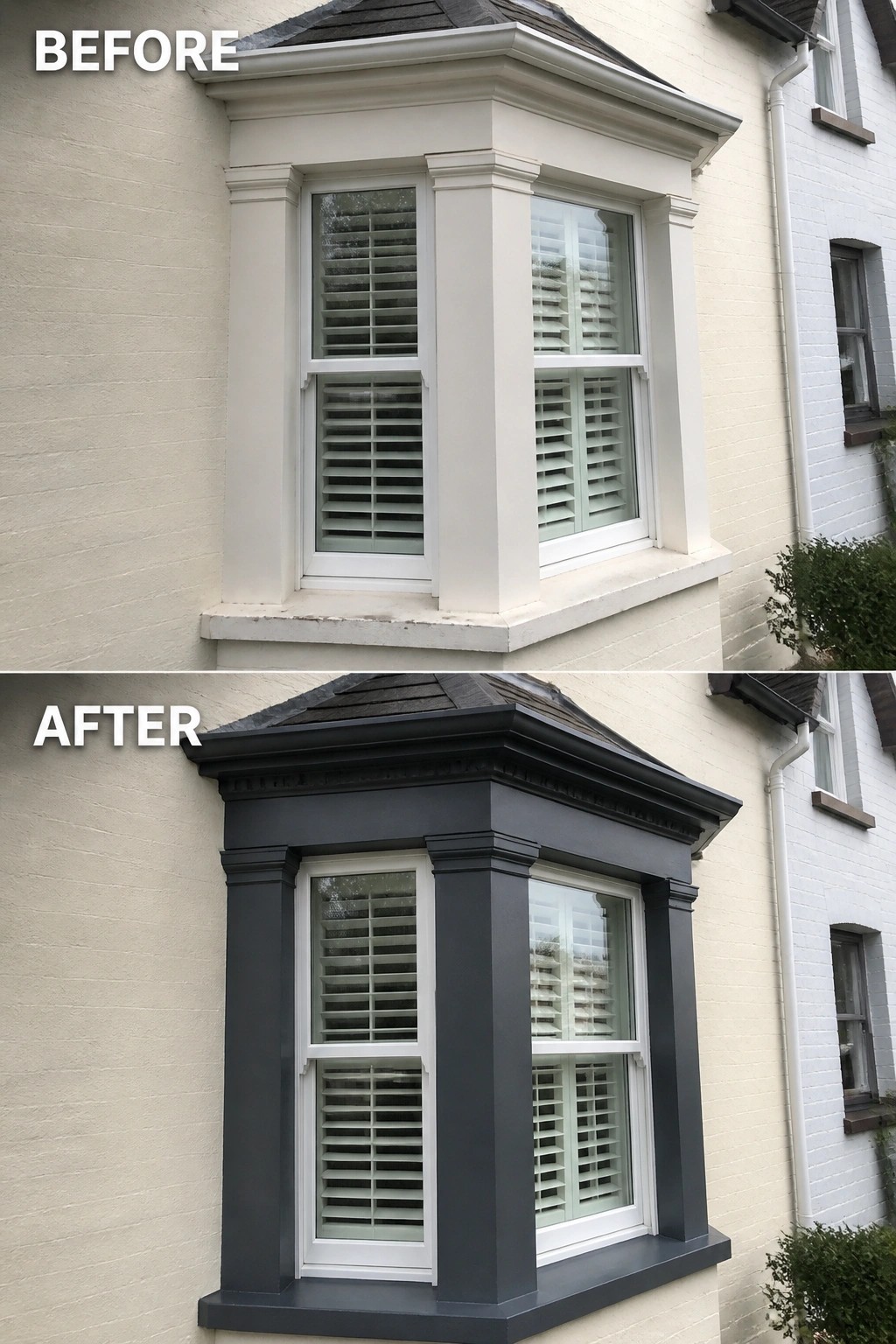
Painting the bay window surround in a darker shade gives the whole front a sharper look. The light color on the before version made the structure blend into the wall, while the dark gray in the after version creates clear lines and makes the window stand out without any other changes.
This approach works well on older homes that already have good bones but need a simple update. Focus on the main architectural features first, choose a color that contrasts with the siding, and keep the rest of the trim consistent so the change feels intentional rather than scattered.
Refresh An Older Home Exterior With A New Paint Color
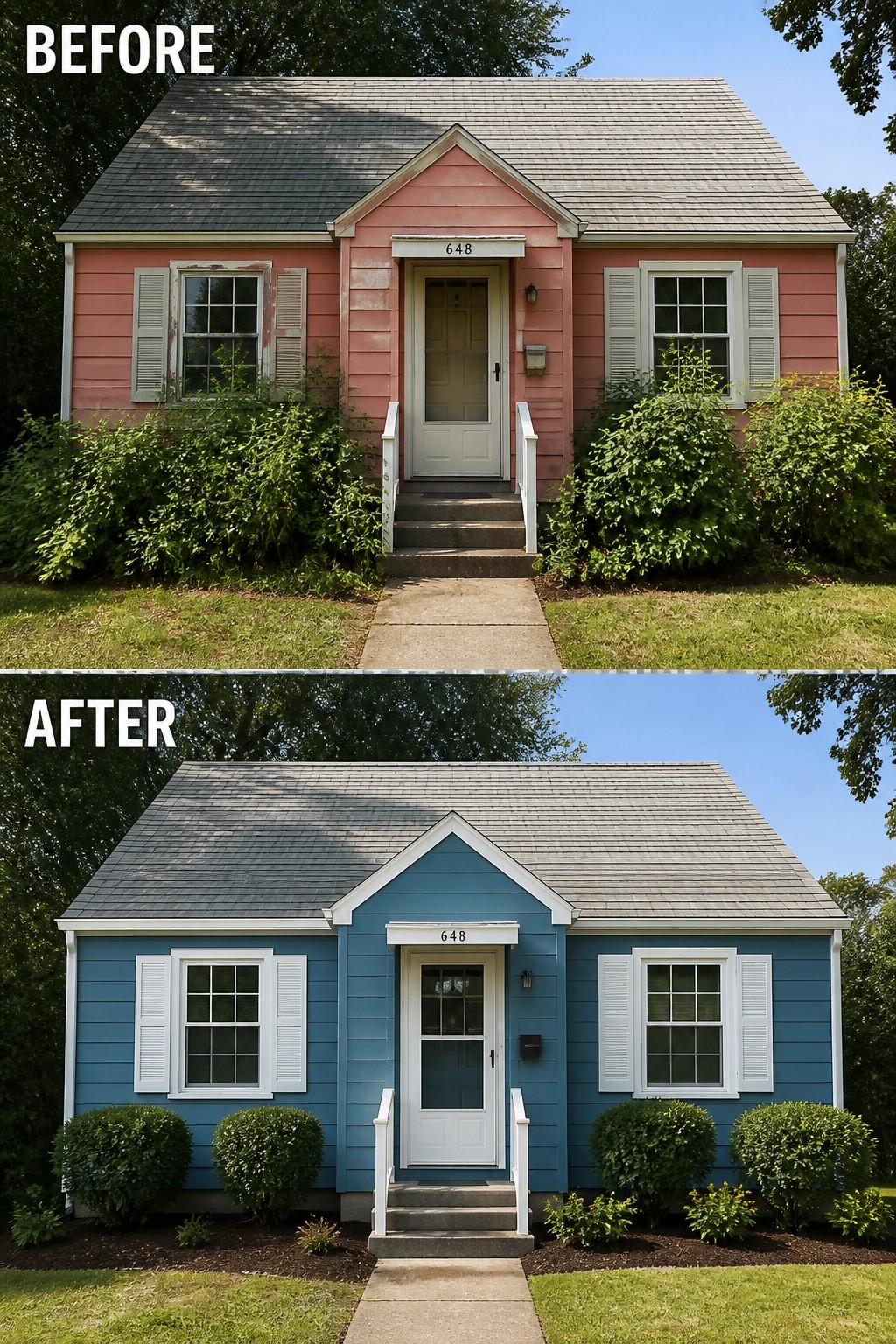
A simple change in exterior paint can make an older home look cared for again. The faded pink siding and worn trim gave this house a tired appearance, while the new blue color with crisp white accents brings back a clean, classic feel that suits the style of the house.
This approach works well on smaller older homes where the original color has faded or no longer fits the neighborhood. Focus first on the main body color and trim, then decide if the front door needs updating too. Keep the new palette simple so the house still feels like it belongs to its original era.
Refresh Older Siding With Two-Tone Paint
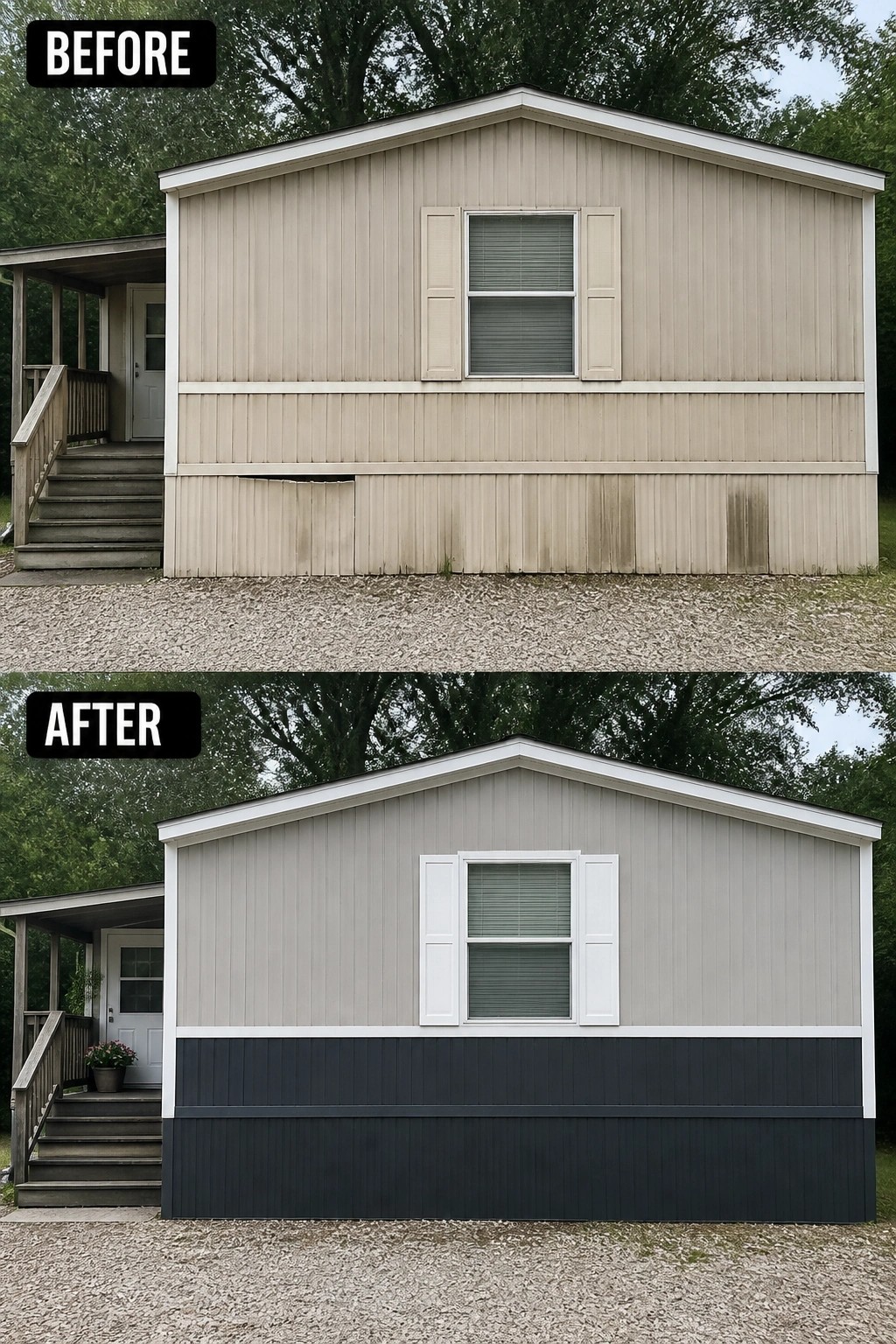
Many older homes end up with worn or damaged siding near the ground that makes the whole exterior look neglected. Painting just the lower section a dark color covers those marks and gives the house a simple, updated shape without repainting everything.
This approach works well on manufactured or ranch-style homes where the bottom half takes the most wear. Choose a color a few shades darker than the upper siding, keep the trim light, and the change feels intentional rather than patchy. It is an easy first step before considering bigger exterior work.
Update An Older Exterior With Fresh Paint And Trim
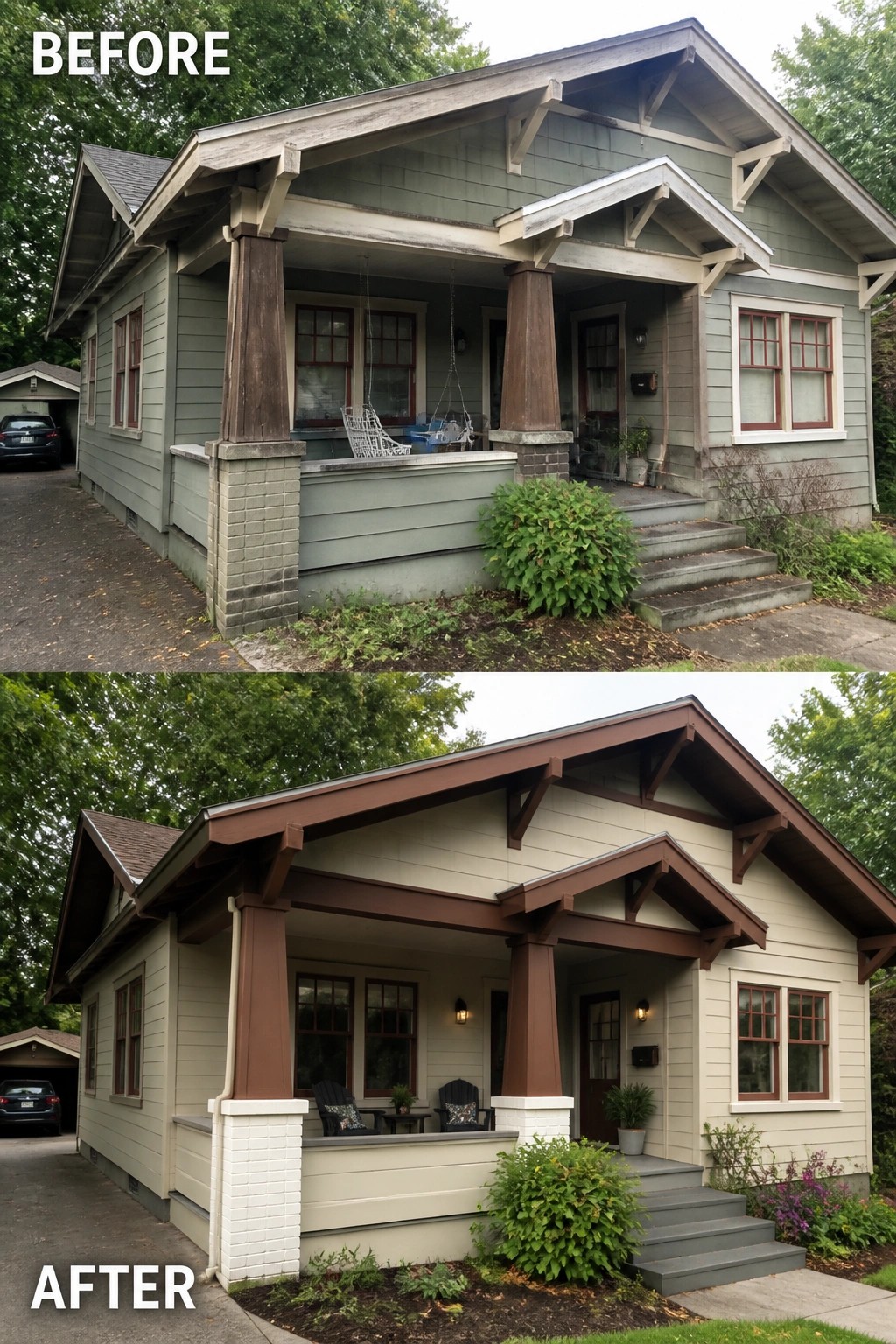
Many older homes lose their appeal when the original paint fades or the trim colors no longer match the siding. A simple color change on the main walls paired with a darker shade on the beams and posts can bring back definition and make the architecture stand out again.
This approach works especially well on bungalows and similar homes where the porch structure is a main feature. Choose a light base color for the siding and let the trim color do the work of framing windows and supporting beams. Keep the changes to paint only if the house is still sound, and test samples on a small section first so the new colors look right in the actual light.
Update The Garage Door For A Quick Exterior Refresh

Many older homes end up with a garage door that looks tired long before the rest of the house needs work. A peeling or faded door draws the eye in the wrong way and makes the whole front feel dated. Swapping it for a wood-tone door and painting the trim a darker color pulls the siding, windows, and entry together without touching the rest of the exterior.
This approach works best when the garage takes up a big part of the facade. Keep the new door color close to the existing stone or siding tones so it blends instead of standing out. Adding a pair of simple lights on either side of the opening helps the change feel finished.
Paint The Foundation To Blend With The House
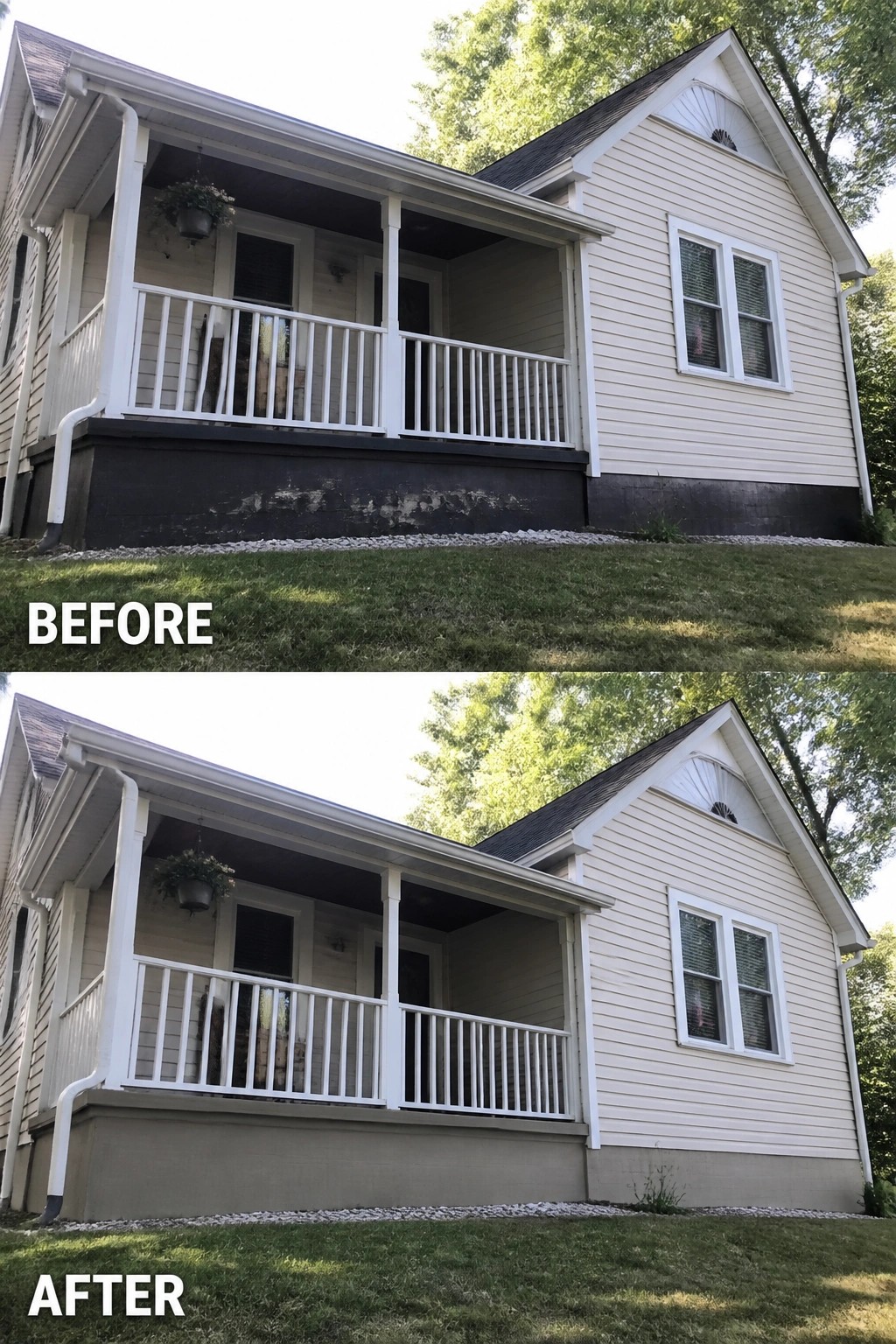
Many older homes have a dark painted foundation that makes the house look heavier than it needs to. Painting that lower section a lighter color closer to the siding color helps the whole exterior feel more balanced and finished.
This idea works especially well on homes where the foundation sits above ground level. Use a good masonry paint, keep the color within a few shades of the siding, and focus on coverage rather than trying to match every detail of the trim.
Paint Trim Darker To Refresh An Older Home Exterior
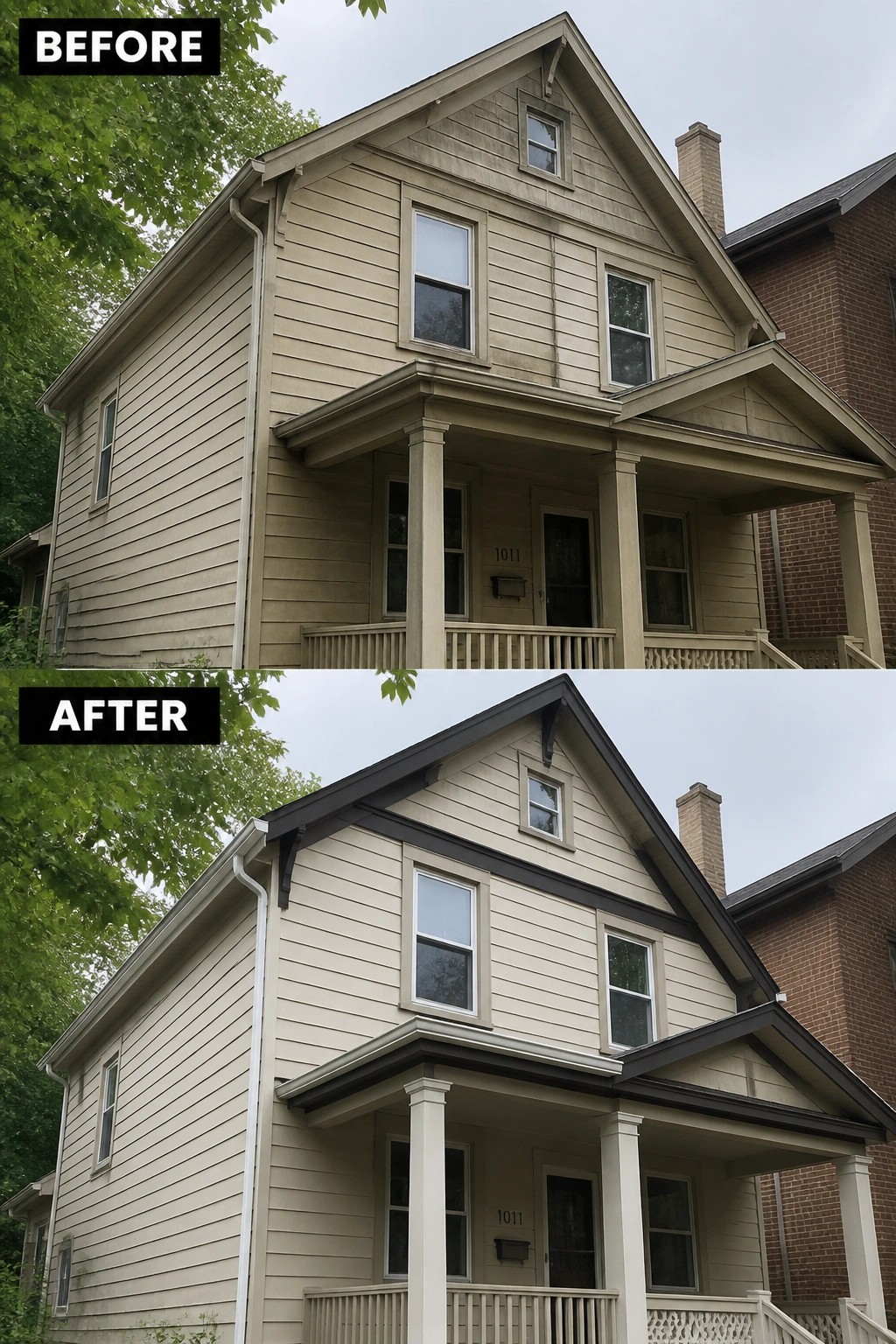
Many older homes lose their shape when the whole exterior gets painted one color. Switching the siding to a lighter shade and adding a dark trim color along the roof edges and porch roof made the lines of the house stand out without any structural changes.
This idea works best on homes that still have clear gables and wide eaves. Choose one dark paint for all the trim so the contrast stays consistent, and check the color from the street before committing to the full job.
Frequently Asked Questions
Q: How do I pick colors that suit an older home without making it look too modern?
A: Start by looking at the original style of the house and pull from period palettes that already exist in your neighborhood. Grab sample pots and paint large patches on the siding to watch how they shift through the day. Keep the main body color soft and save bolder tones for the trim only.
Q: What kind of prep work makes the biggest difference in these transformations? A: Wash the whole exterior with a hose and mild detergent, then scrape any loose flakes before you sand. Repair damaged boards and caulk gaps around windows so the new paint sits on a solid surface. That upfront effort keeps the finish looking sharp for years.
Q: Can I paint over old paint or do I need to strip everything first?
A: You can usually paint right over it if the old coat still feels tight and smooth. Just give it a quick sand and wipe away the dust. Full stripping only matters when the surface shows heavy cracking or peeling layers.
Q: How often will I need to repaint after doing one of these projects?
A: Most older homes need a fresh coat every seven to ten years. Walk around each spring and spot any wear early so you can touch it up before it spreads.