

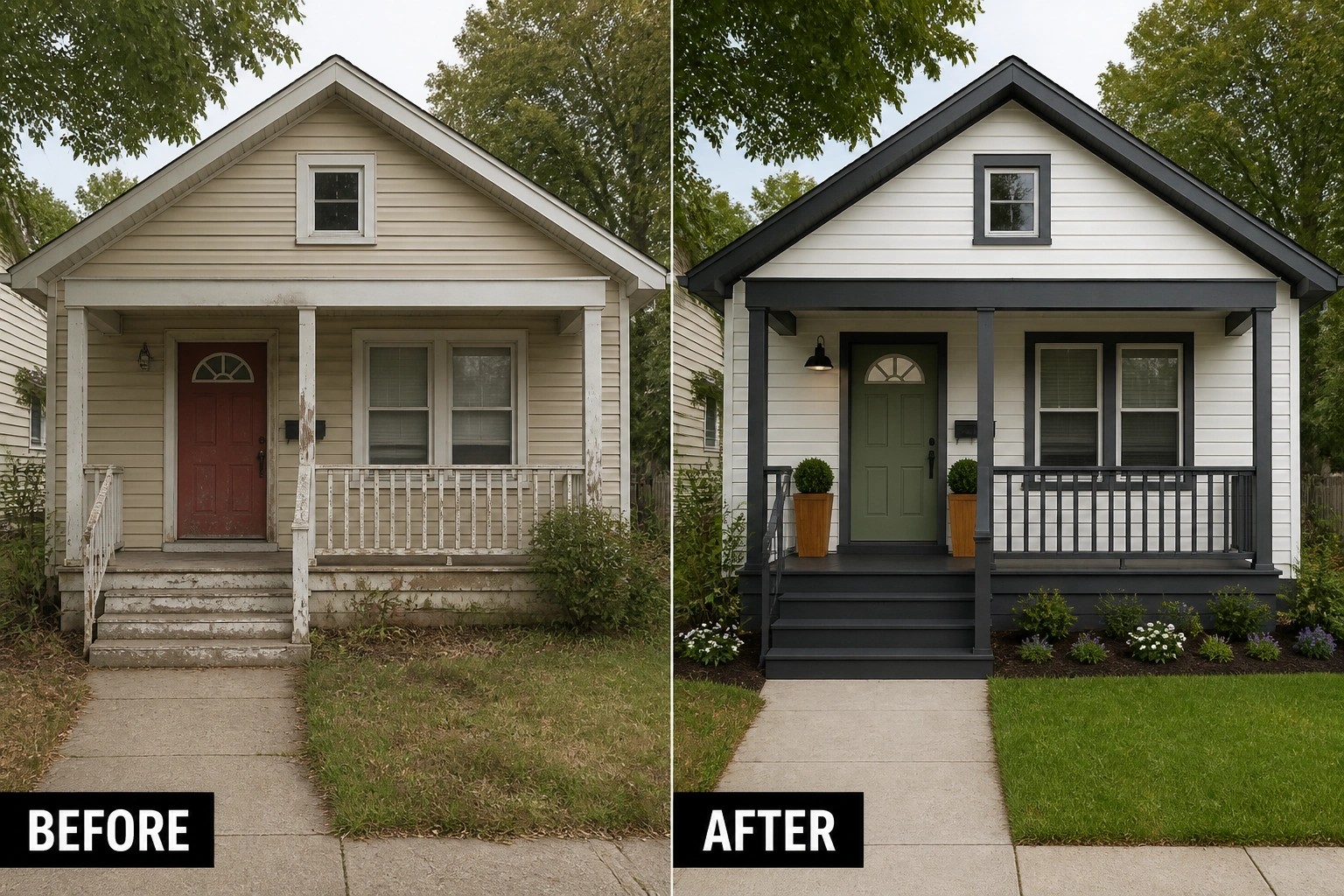
Many houses painted in beige or similar earth tones can start to look a bit tired once the color fades or the trim no longer matches the main body.
A new paint job on the siding and accents often brings back definition to the shape of the house and improves how it sits on the lot.
I like starting with the front door color when testing ideas like these.
The right choices also tend to make any existing landscaping look more intentional without adding new plants right away.
Trying one or two of these approaches on a real home usually confirms whether the shift feels right before committing to the whole exterior.
Update A Beige Exterior With Lighter Paint And Contrasting Trim
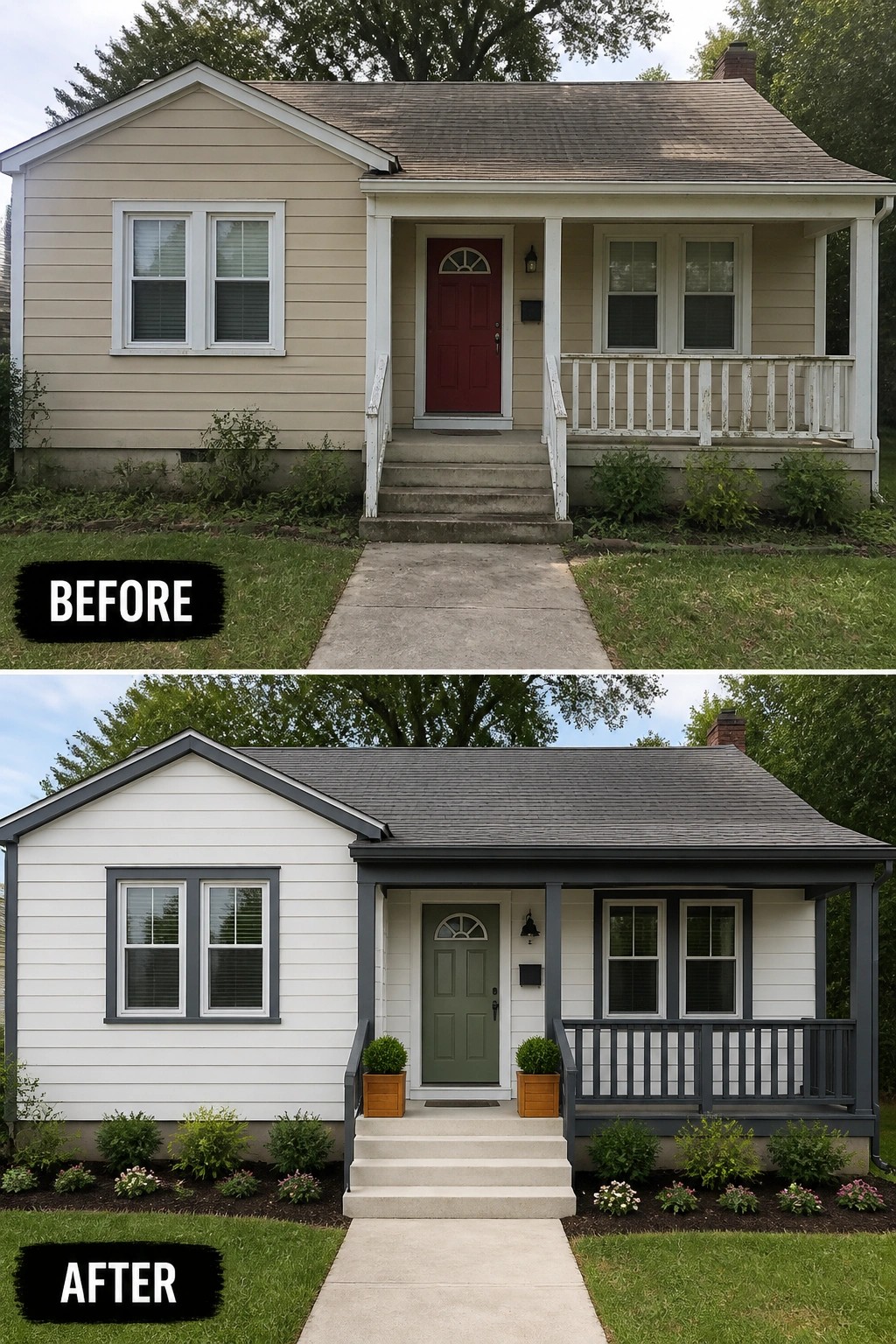
A flat beige exterior often makes a house look older than it is. Changing the siding to white and switching the trim to a dark gray gives the whole front a sharper, cleaner appearance while the new green door adds a simple focal point.
This kind of color shift works best on smaller homes where the goal is quick curb appeal rather than a full remodel. Test the new colors on a small section first so you can see how they look against the roof and any brick details.
Refresh A Beige Exterior With Contrasting Trim
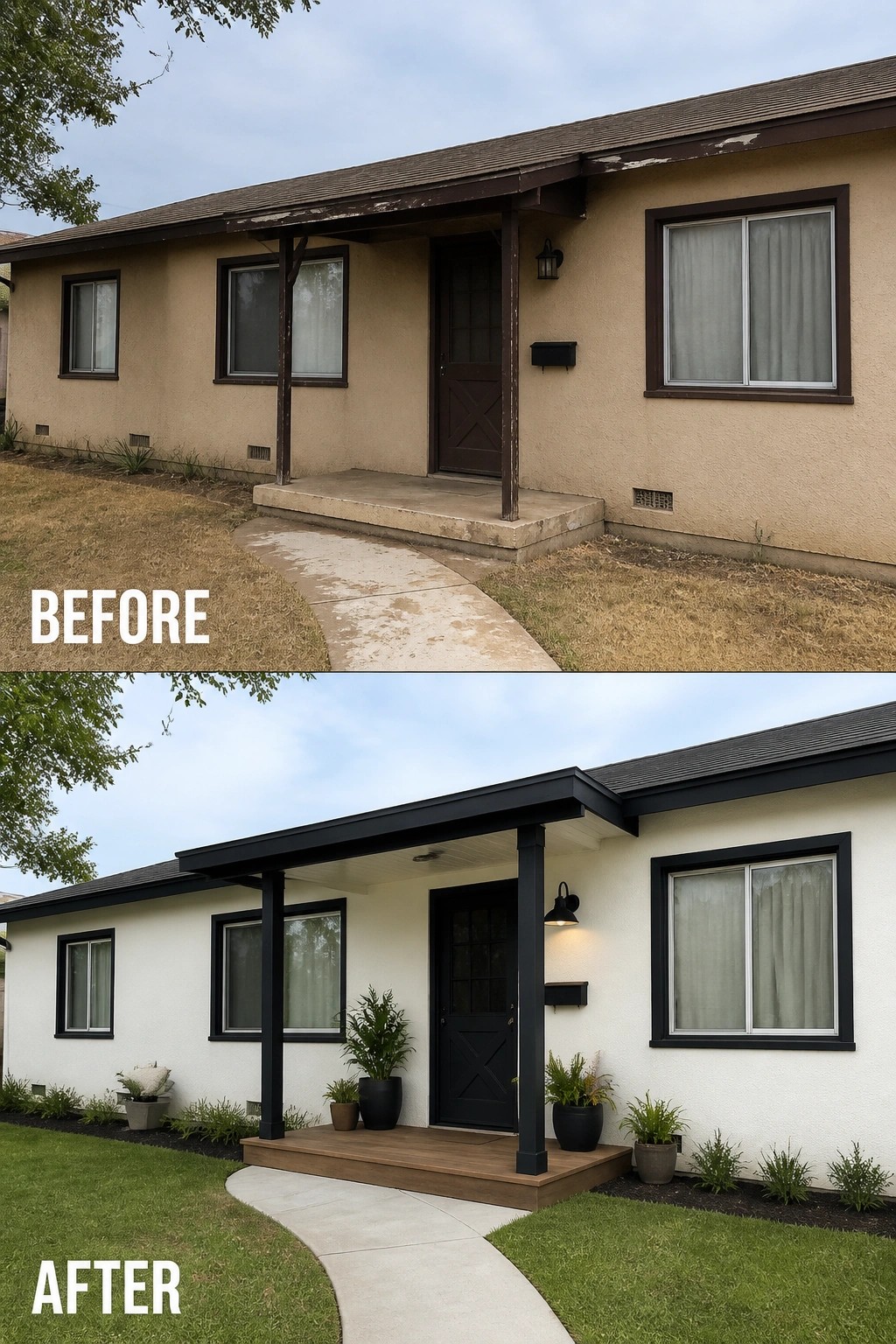
Many beige houses from past decades end up looking flat because the trim and main color sit too close together. Switching the body to a clean white while painting the trim, eaves, and porch structure black creates instant separation and makes the whole front feel sharper without any major construction.
This approach works well on simple one-story homes where the main goal is curb appeal on a budget. Keep the door a solid dark color to match the new trim, and add a few planters near the entry so the updated paint has something to frame. Focus first on getting the paint lines clean rather than adding too many extras right away.
Refresh A Beige Exterior With A Bold Front Door Color

A simple color change can make a big difference on a plain beige house. The before photo shows brown shutters and a faded brown door that blend into the siding. Switching the shutters to navy and painting the door a bright red gives the front a clear focal point and makes the whole facade feel updated.
This idea works well on homes with tan or light siding that need more personality without a full repaint. Start with the door and shutters first since those changes show the most impact. Add a couple of planters and simple lights by the entry if you want to finish the look without spending much.
Lighten A Brown Brick Exterior With Fresh Paint

Brown brick homes from past decades often look heavy and dated, especially when paired with a plain light door. A light gray paint job across the facade instantly brightens the house and gives it a cleaner, more current feel while the black door adds a simple contrast that draws attention to the entry.
This idea suits single-story homes where the main wall surface is easy to repaint. Choose a neutral light color that still works with your roof and trim, and consider adding a wood accent panel or new door color to keep the update from feeling too plain.
Refresh A Beige Exterior With Paint And Shutters
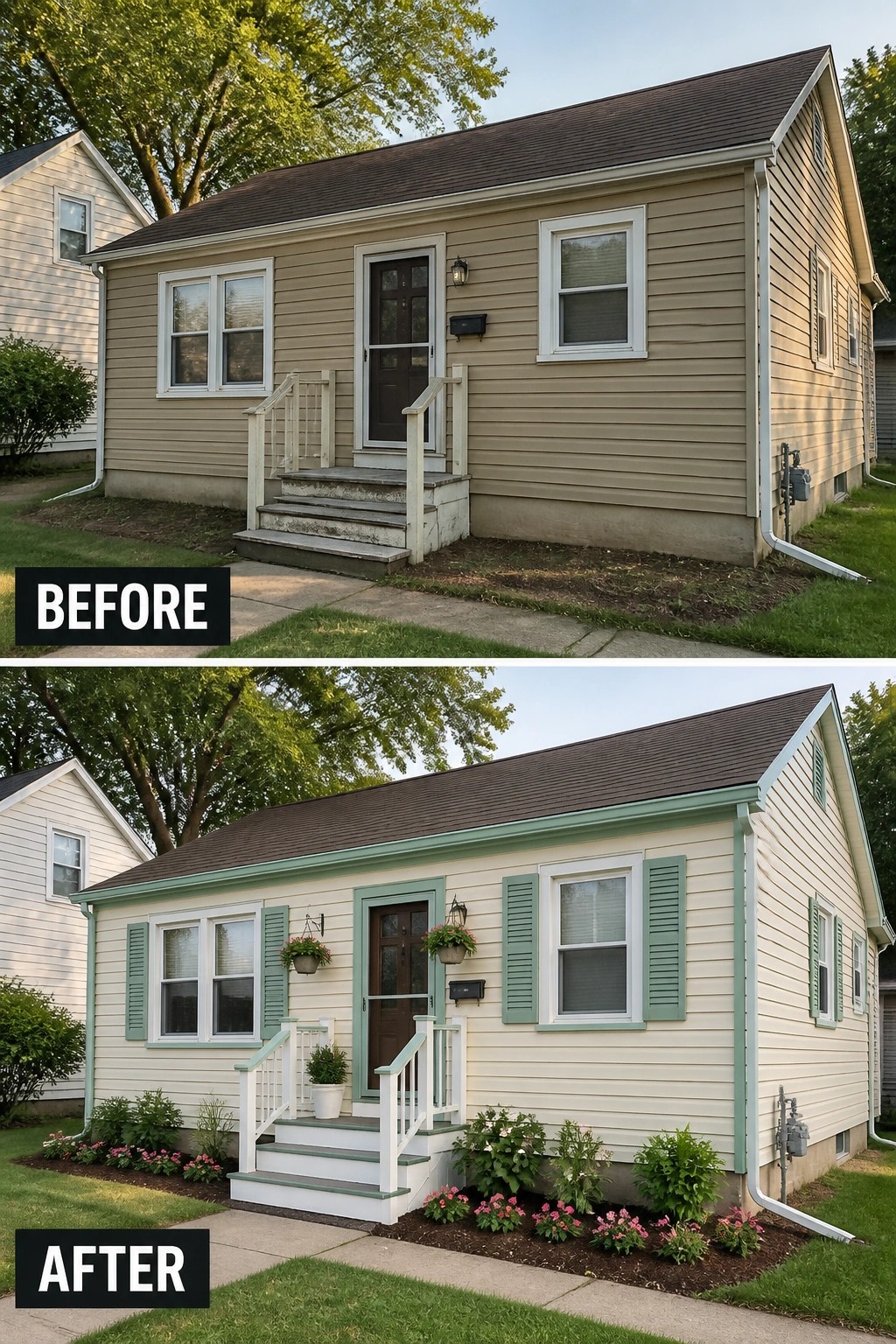
A plain beige house can feel flat and dated, especially when the siding, trim, and windows all blend together. Switching to a lighter cream color with a soft green on the trim and shutters gives the facade more definition and makes the windows and entry stand out. The steps and door stay the same, but they read better against the new colors.
This idea works best on smaller homes where a full repaint is still doable in a weekend or two. Choose one main color for the siding and one accent shade for the trim and shutters so the changes feel intentional rather than busy. Keep the rest simple, like adding a few foundation plants, and the whole front will look updated without major construction.
Paint A Beige Brick Exterior White For A Cleaner Look
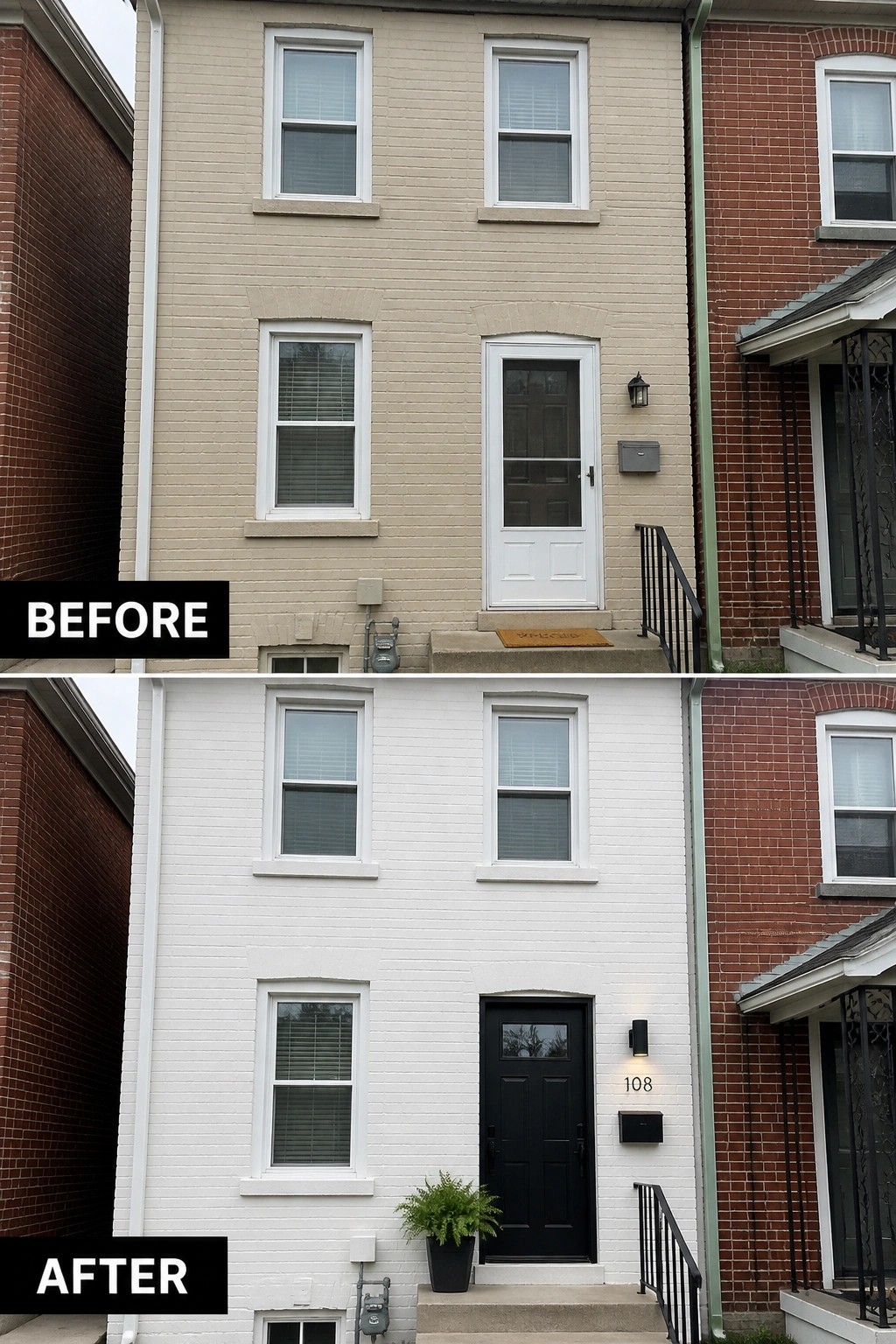
A simple coat of white paint can completely change how a plain beige brick house reads from the street. In this case the shift from tan to crisp white made the facade feel lighter and more current, while the dark door added contrast that draws the eye straight to the entry.
This approach works well on homes with straightforward brickwork and minimal trim. Start with the paint and door color first, then add just one or two accents like a planter or updated light so the update stays simple and easy to maintain.
Refresh A Beige Exterior With Updated Paint And Trim
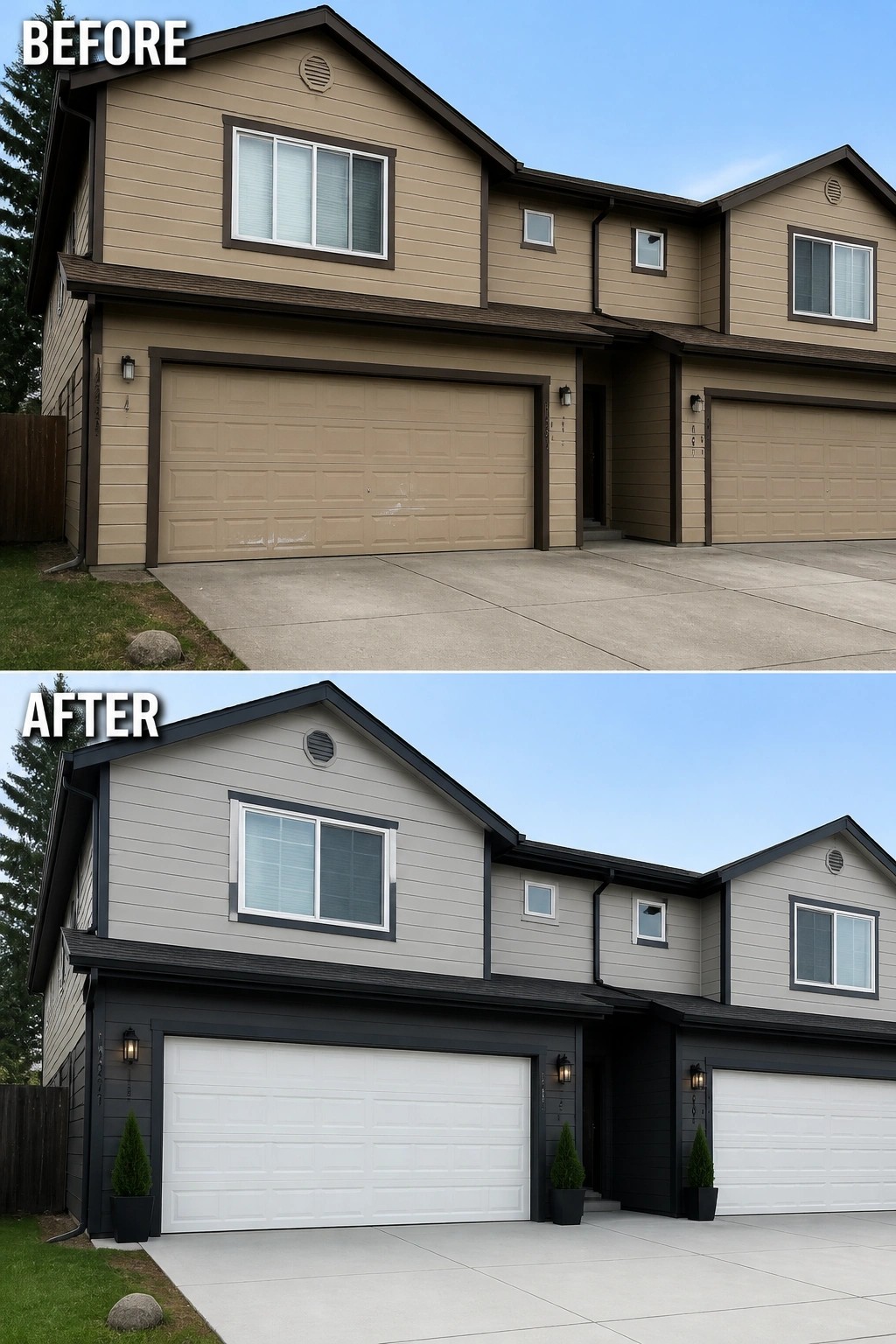
A simple color change can make a big difference on a dated house. The beige siding and brown trim gave the home a flat, heavy look. Switching to a lighter gray with black trim and white garage doors brightens the whole facade and gives it a cleaner, more current feel.
This approach works well on homes with straightforward shapes and large garage doors. Pick a siding color that lightens the overall tone, then use a dark contrast on the trim and a bright white on the doors. Add a few planters near the entry to soften the new palette without adding clutter.
Lighten A Brown Shingle Exterior With Fresh Paint
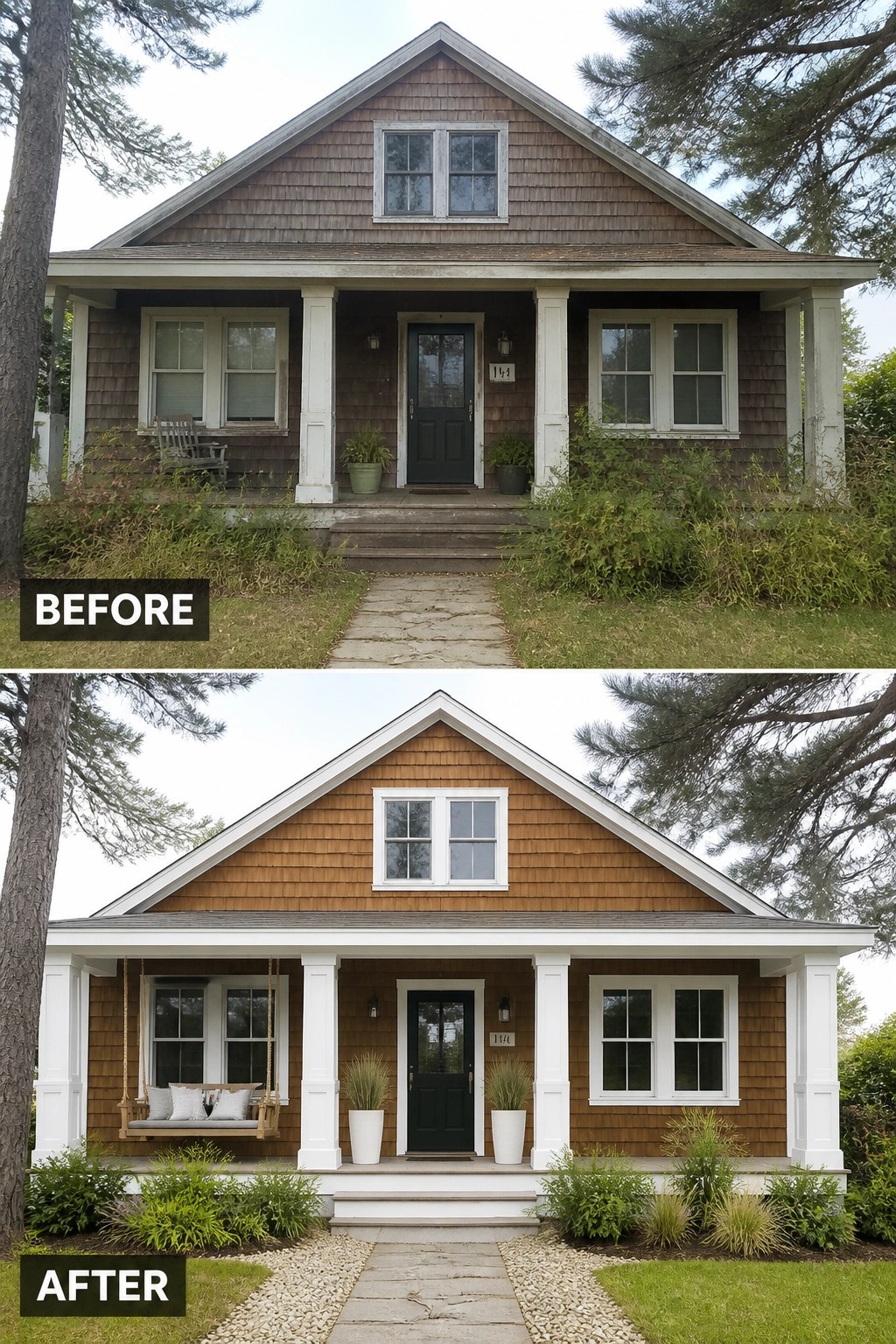
Painting the shingles a lighter warm brown tone made the whole house feel brighter and less heavy. The dark color in the before photo pulled the look down, while the new shade opens it up and works better with the white trim and roof.
This approach suits older homes with shingle siding that have grown dull over time. Start with a few paint samples on the wall and keep the trim crisp so the change stays simple and effective without needing bigger structural work.
Refresh A Plain Exterior With A New Garage Door And Shutters

A beige house can start to feel flat when the garage door, shutters, and front door all blend into the same light tone. Switching the garage door to a dark modern style and updating the shutters to black gives the front a clearer shape and makes the house look more finished.
This kind of update works well on ranch homes where the garage takes up a big part of the view. Focus on the door and shutters first, then decide if the entry door needs to match. It keeps the project simple and gives the exterior a current look without repainting the whole house.
Add White Trim To Define A Beige House
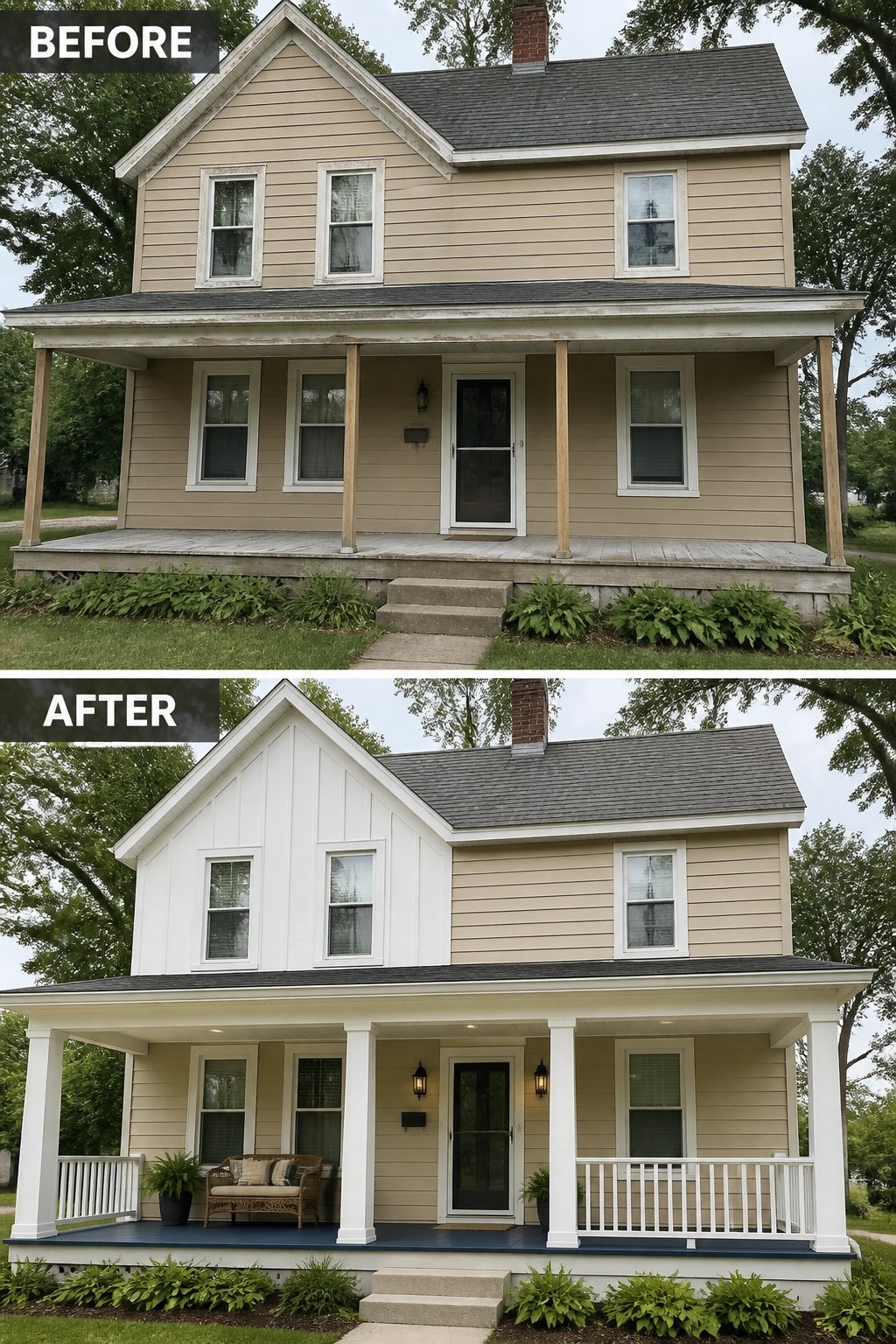
Painting the front gable and porch trim white gives this beige house a much clearer shape. The contrast breaks up the flat siding and makes the roofline and entry stand out without changing the main wall color.
This idea works best on homes with a visible gable or porch that needs more presence. Start with those areas first, then decide if the rest of the house needs more work later. It keeps the project simple while still improving curb appeal.
Add Trim And Shutters To Give A Beige Exterior More Shape
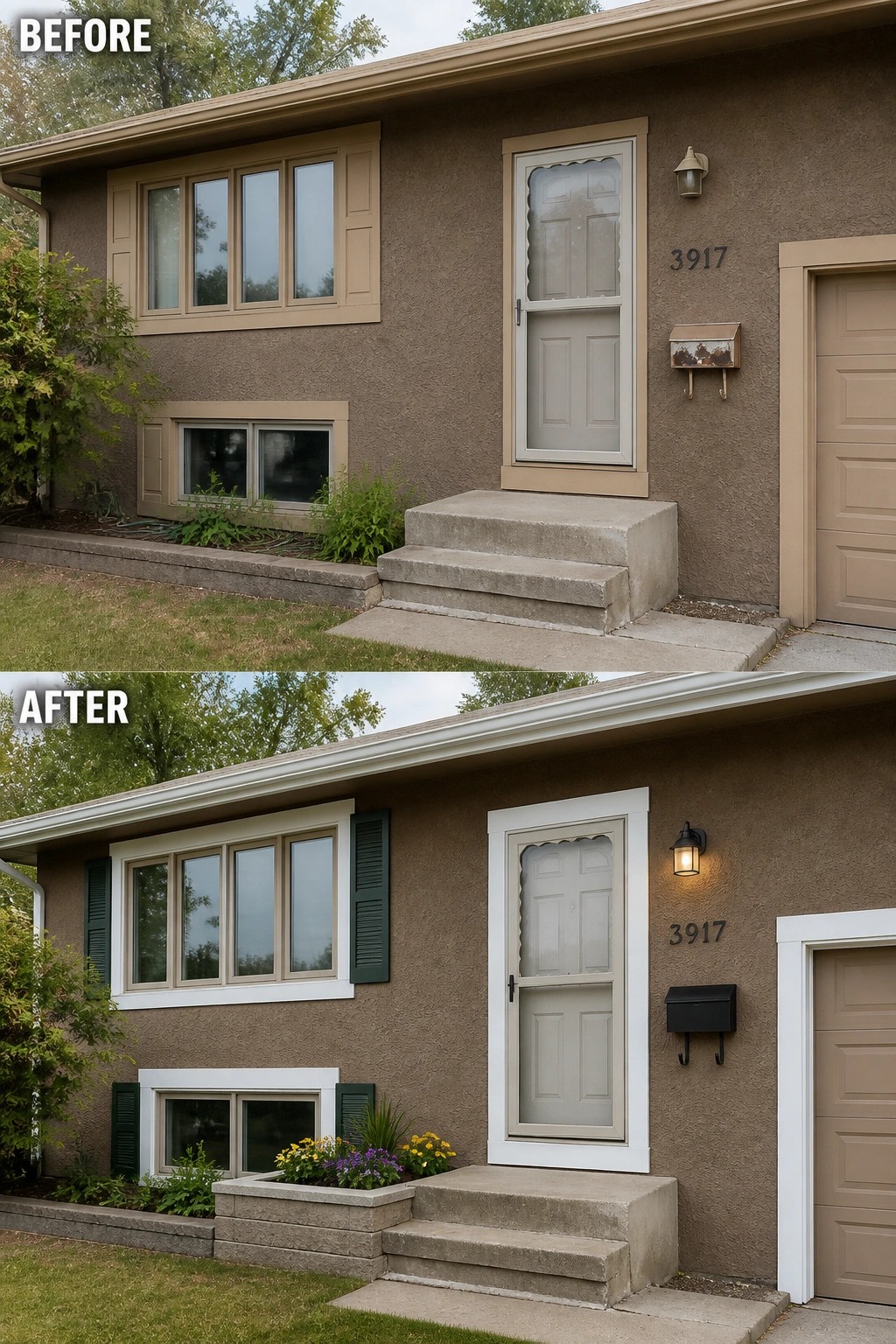
A flat beige house can start to feel a little dull when every surface blends together. Adding white trim around the windows and door plus dark shutters creates clear lines that make the whole front feel more finished. The change is simple but it turns the same paint color into something that reads as intentional instead of just there.
This approach works especially well on ranch homes or stucco exteriors where the original trim is thin or missing. Focus first on the main windows and the entry door, then add shutters only where they fit the window proportions. Keep the new trim color crisp and the shutter color deep so the contrast does the work without needing a full repaint.
Add Shutters And A Matching Door Color
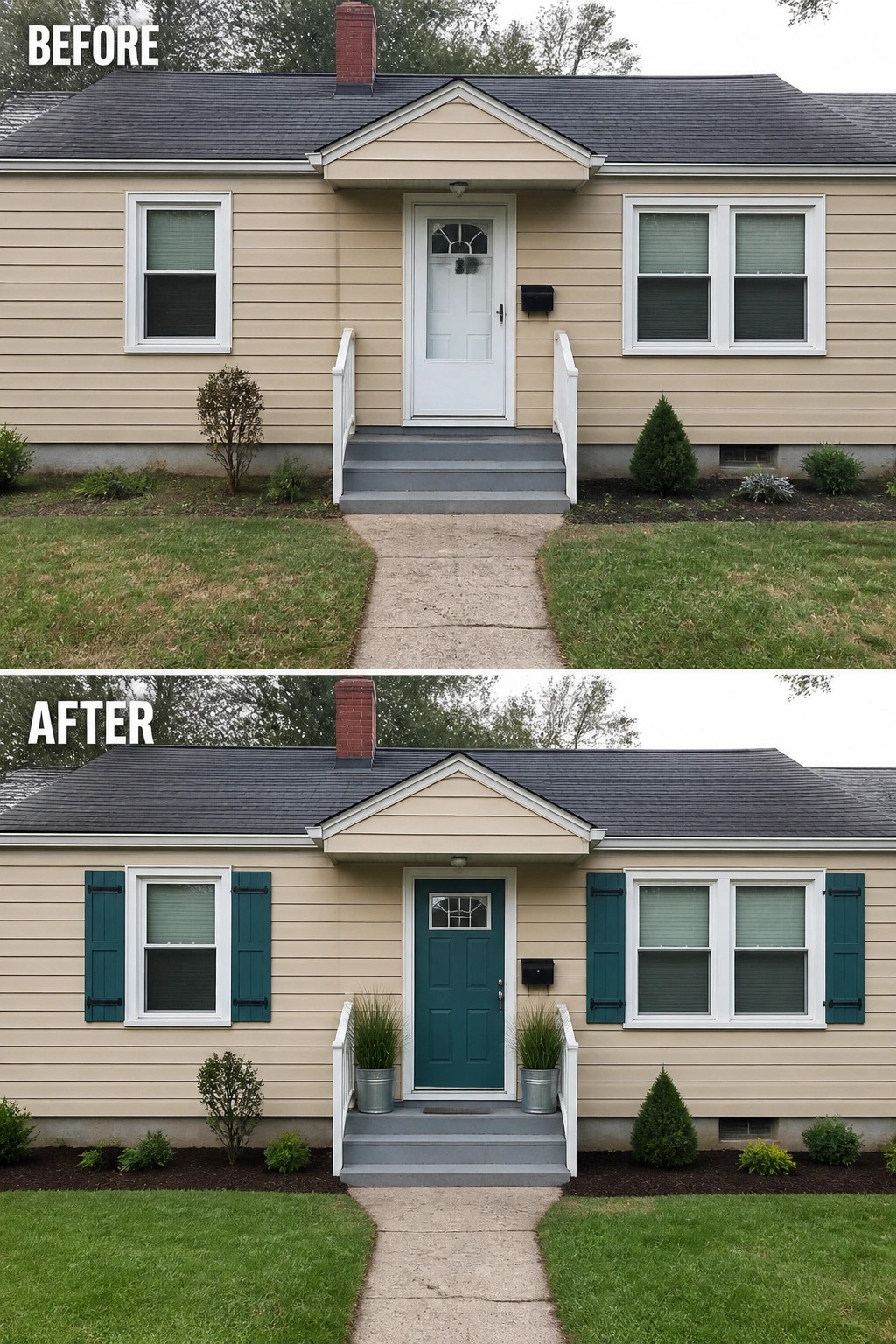
Many beige houses end up looking flat because the windows and entry have no definition. Adding shutters on either side of the windows and painting the front door the same deep color pulls the whole front together without any major construction.
This approach works especially well on simple ranch or cape styles where the siding is one solid tone. Pick a color that contrasts enough with the house but still feels coordinated, then repeat it on the shutters and door so the eye reads the facade as intentional rather than plain.
Update Brown Siding With A Darker Paint Color
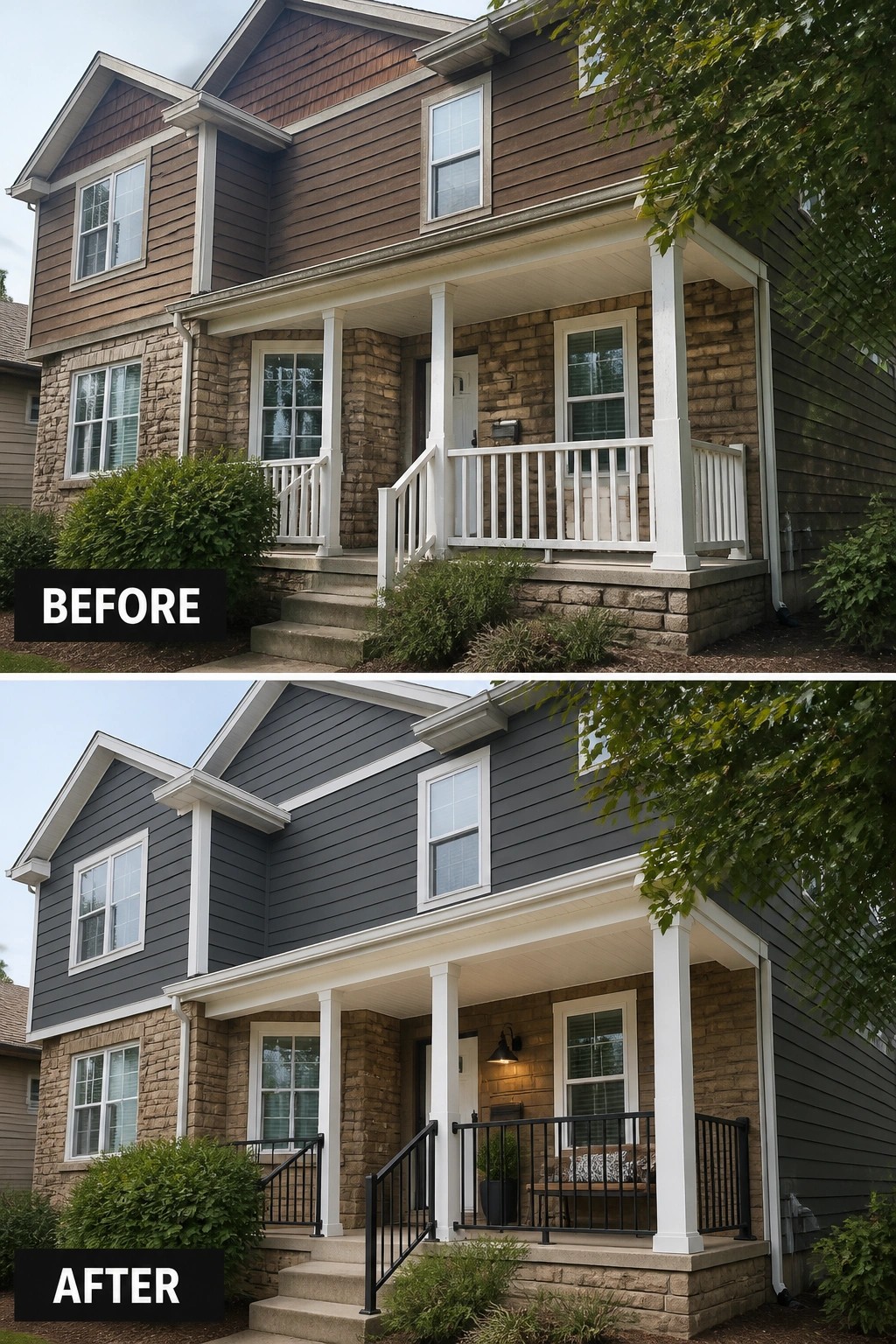
Brown exteriors often start to feel flat after a few years. A darker paint color can pull the whole house together and give it a cleaner look without any major construction. In this case the siding changed from brown to dark gray while the porch railings switched from white to black.
This approach works best on homes that already have stone or brick details. Test the new color on a small wall first because dark shades can look different in full sun. Keep the trim light so the windows stay bright and the change feels balanced rather than heavy.
Paint A Beige Exterior White To Brighten The Whole Look
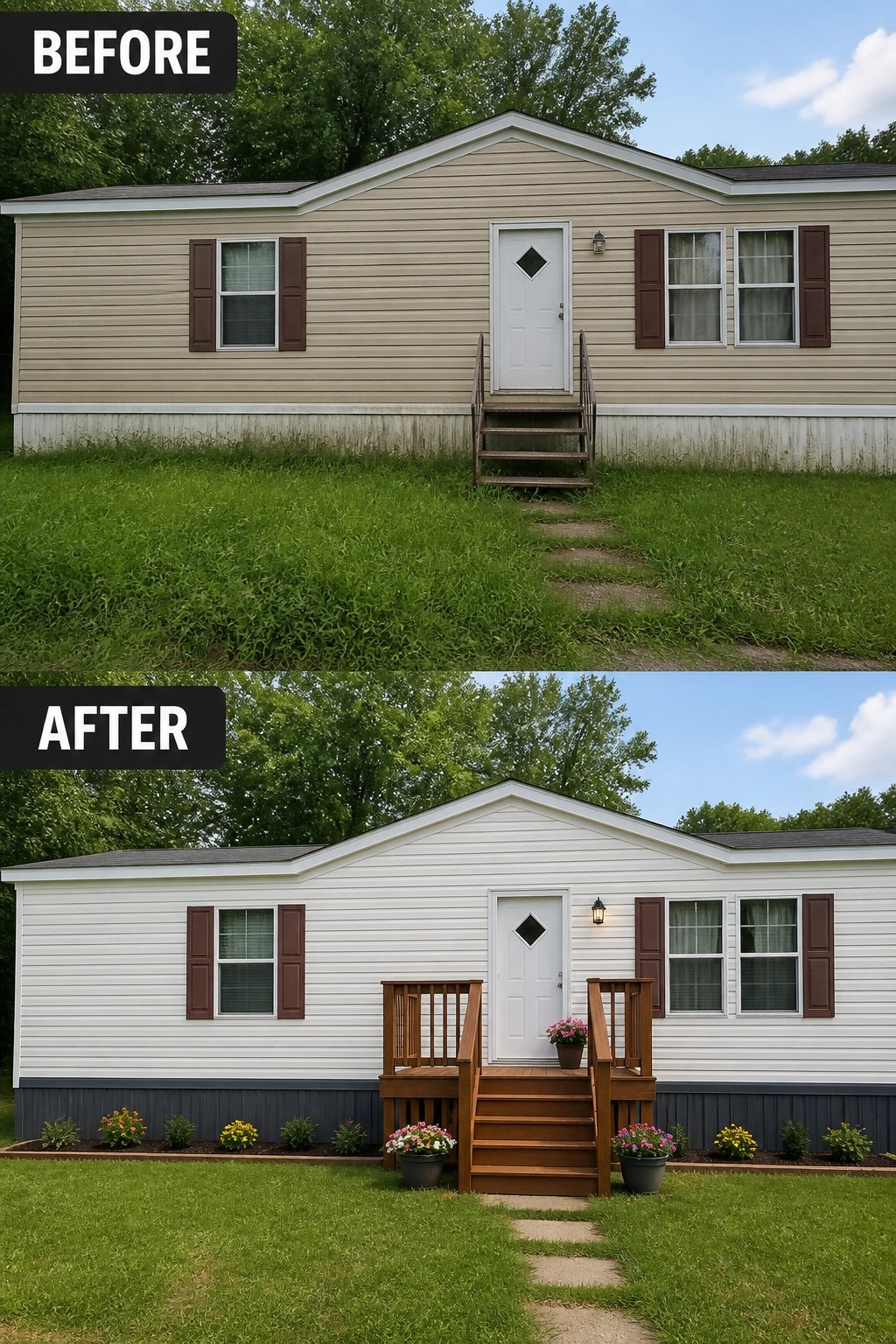
Switching the siding from a faded beige to crisp white instantly changes how the house sits on the lot. The dark foundation band and brown shutters keep the new color from feeling too stark, while the updated wooden porch adds a clear entry point that was missing before.
This approach works well on simple homes where the main issue is a tired base color. Keep the trim and accents limited so the white does the heavy lifting, and add just enough planting along the front to soften the new foundation line.
Give A Beige Exterior New Energy With A Bold Door Color

A plain beige house often blends into the background until the front door gets a strong color. Here the door shifts from a matching tan to a bright orange while the trim turns white. That single change pulls the whole entry forward and makes the house feel more welcoming.
This idea works best on simple siding with basic trim where you do not want to repaint everything. Test the color on a board first and keep the rest of the palette calm so the door stays the focus. Adding matching planters on either side helps the new color feel grounded rather than random.
Refresh A Beige House With Lighter Paint And Dark Accents

A simple color change can make a beige house feel much more current. In this case the siding was painted a soft cream while the lower band and garage door were switched to a dark gray. That one shift creates contrast and helps the house look more defined from the street.
This approach works well on homes with straightforward shapes and little architectural detail. Keep the main color light if the roof is dark, and use the darker shade on the garage door or foundation to add weight. Start with paint samples on the actual siding before committing, since the same color can look very different in full sun.
Lighten A Beige Exterior With Fresh Paint
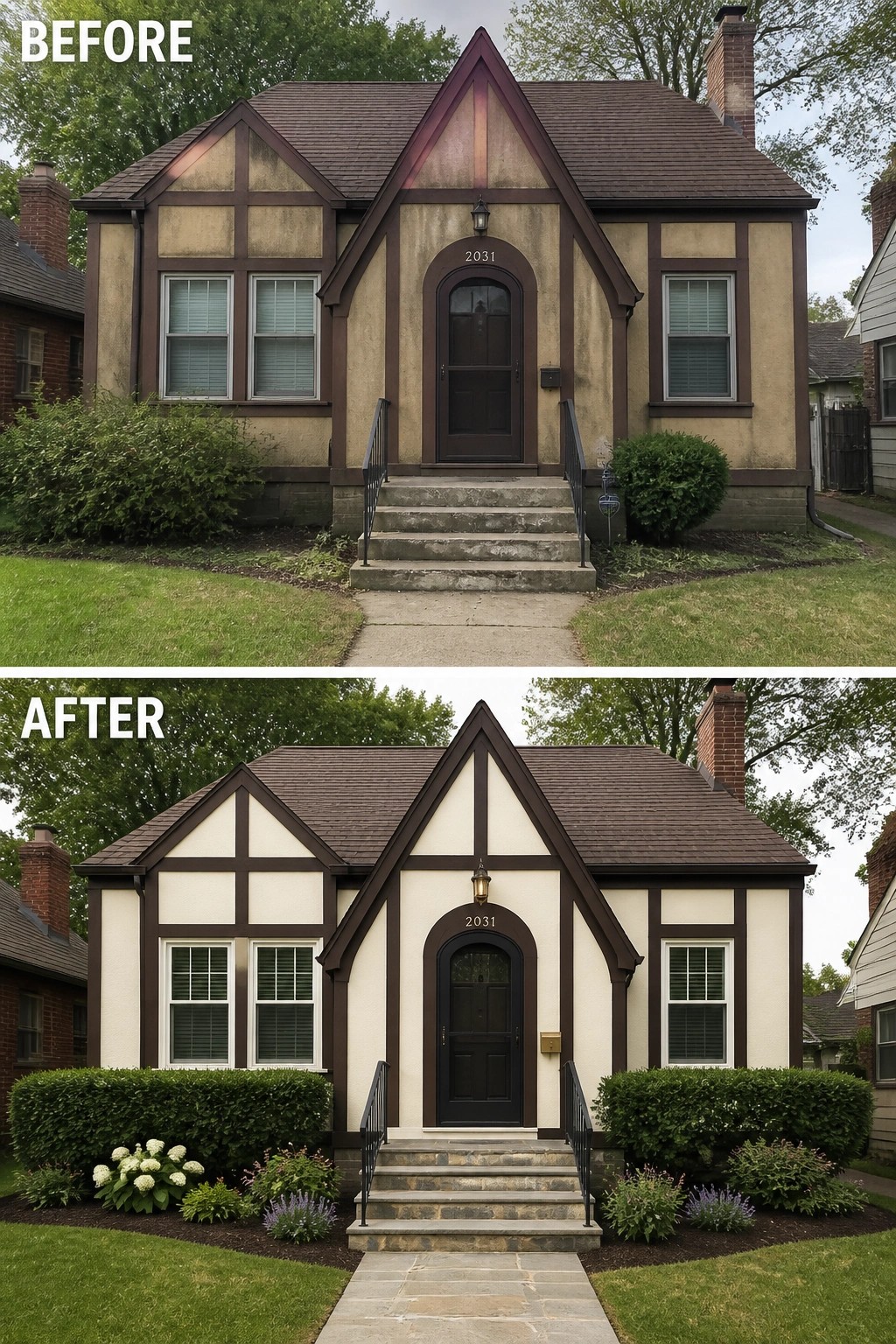
A common issue with older beige or tan houses is that the color starts to feel flat and dated over time. Switching to a lighter cream shade while keeping the dark trim gives the house a cleaner, brighter look without changing the overall style. The entry also feels more welcoming once the walls no longer blend into the surroundings.
This approach works well on homes that still have good architectural details but need a quick refresh. Focus first on getting the paint right, then add or reshape a few planting beds near the front to complete the update. It keeps the project manageable and avoids the cost of major renovations.
Refresh A Beige Exterior With A Simple Two-Tone Paint Job
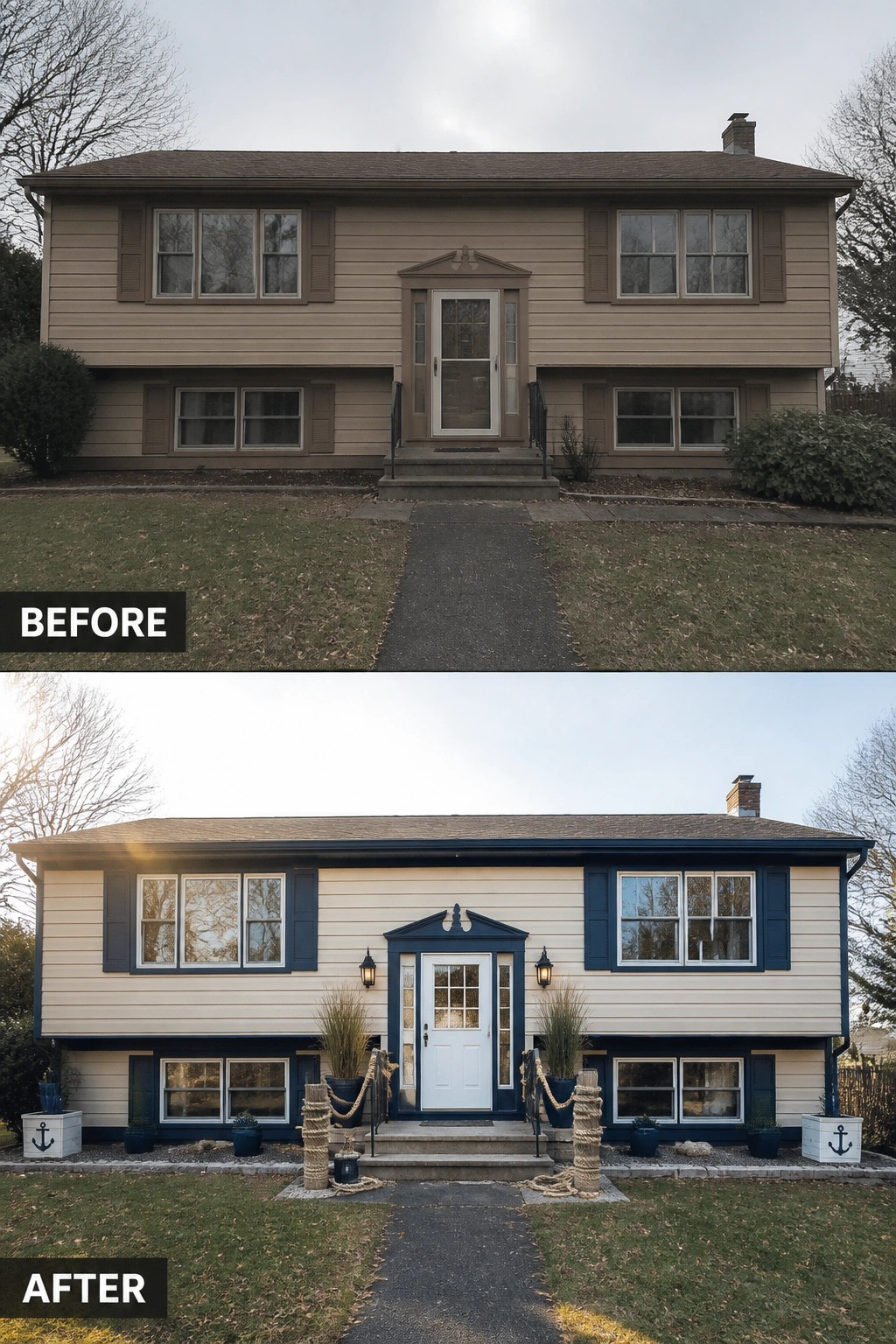
A flat beige house often looks dated because nothing stands out. Painting the siding a lighter cream and switching the trim, shutters, and door surround to a deep navy gives the front a much clearer shape and makes the entry feel more intentional.
This approach works best on straightforward two-story homes where the roofline and windows are already balanced. Pick one light color for the main siding and one darker shade for everything else, then test both on the actual wall before committing.
Paint Brick Exteriors To Lighten The Whole House
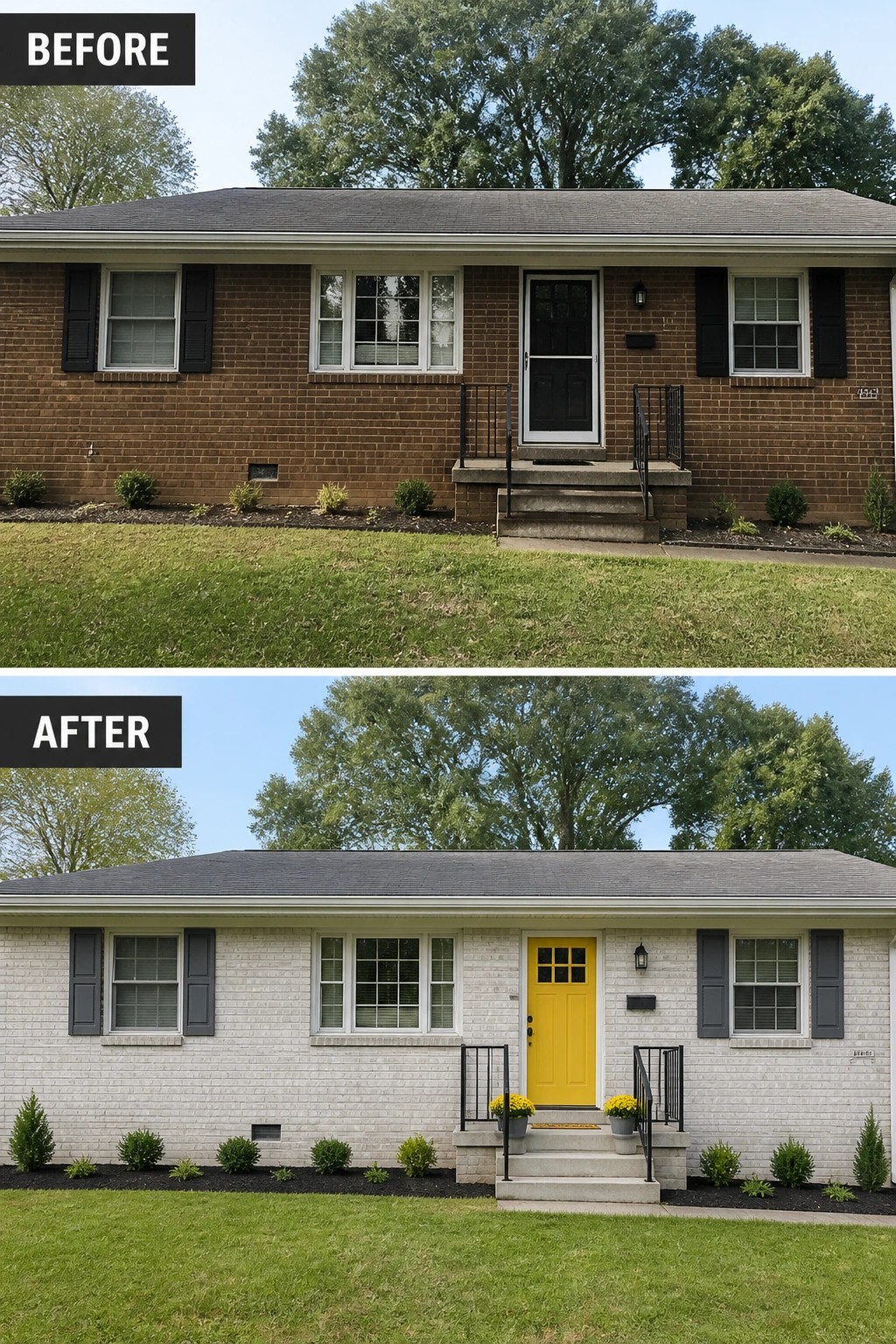
Brown brick homes often look heavier than they need to. Painting the brick white and changing the front door to a bright color removes that weight and makes the house feel cleaner and more open.
This idea works best on simple one-story homes where the lines are already plain. Choose an exterior masonry paint that holds up well, and test the door color against the new wall so it stands out without clashing with the shutters or trim.
Refresh A Beige Exterior With White Trim And Shutters
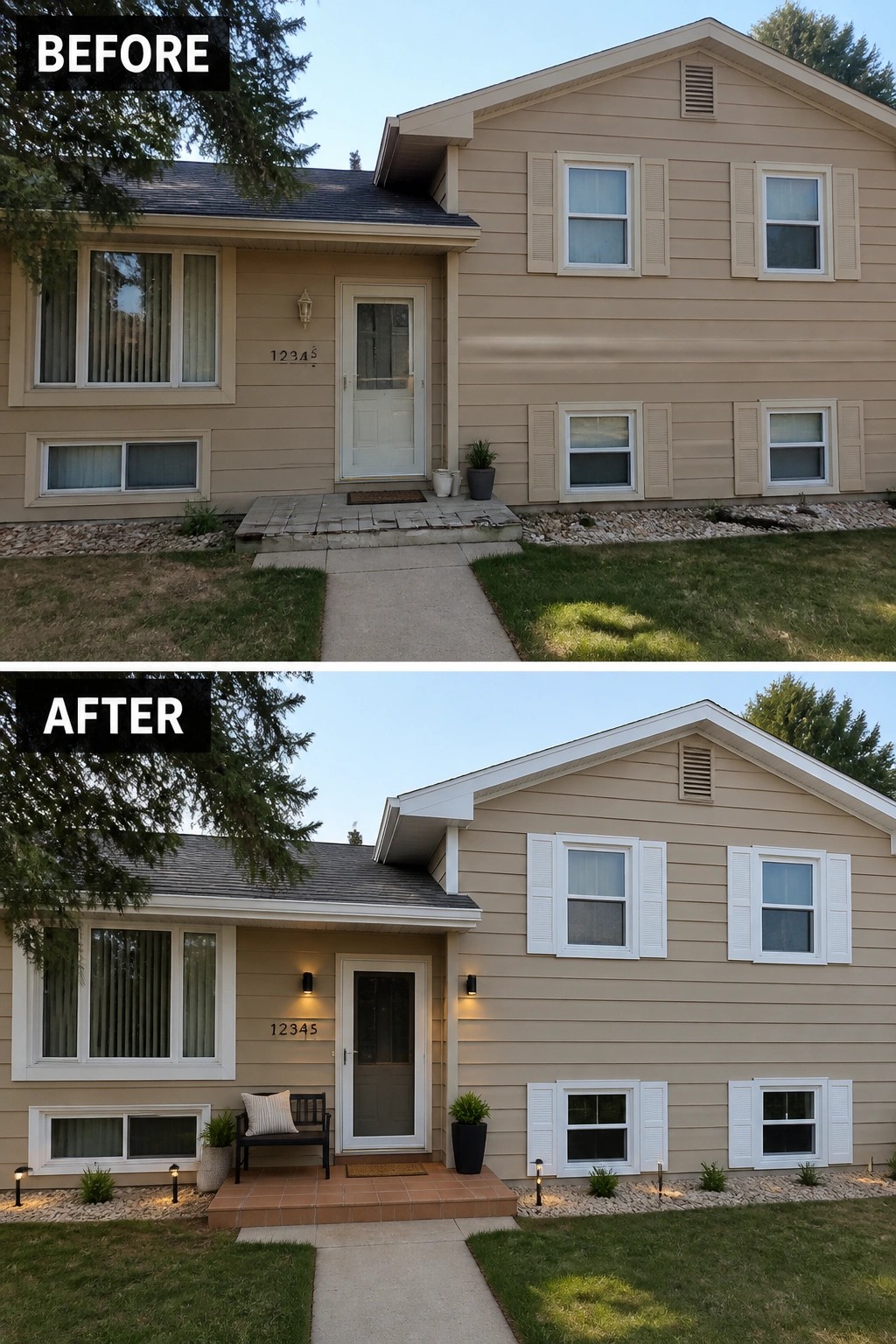
A simple way to update a plain beige house is to add crisp white trim around the windows and door along with matching shutters. The before photo shows how flat the siding looked with the original shutters and basic framing. In the after photo, the new trim and shutters create clear lines that make the windows stand out and give the whole front more structure.
This approach works well on homes that do not need a full repaint. It adds contrast without changing the main color and helps the entry feel more intentional. Focus first on the windows around the front door, then add a couple of lights so the trim shows up at night. Keep the rest of the siding and roof as they are so the change stays affordable.
Paint A Beige House Dark Gray For Stronger Curb Appeal
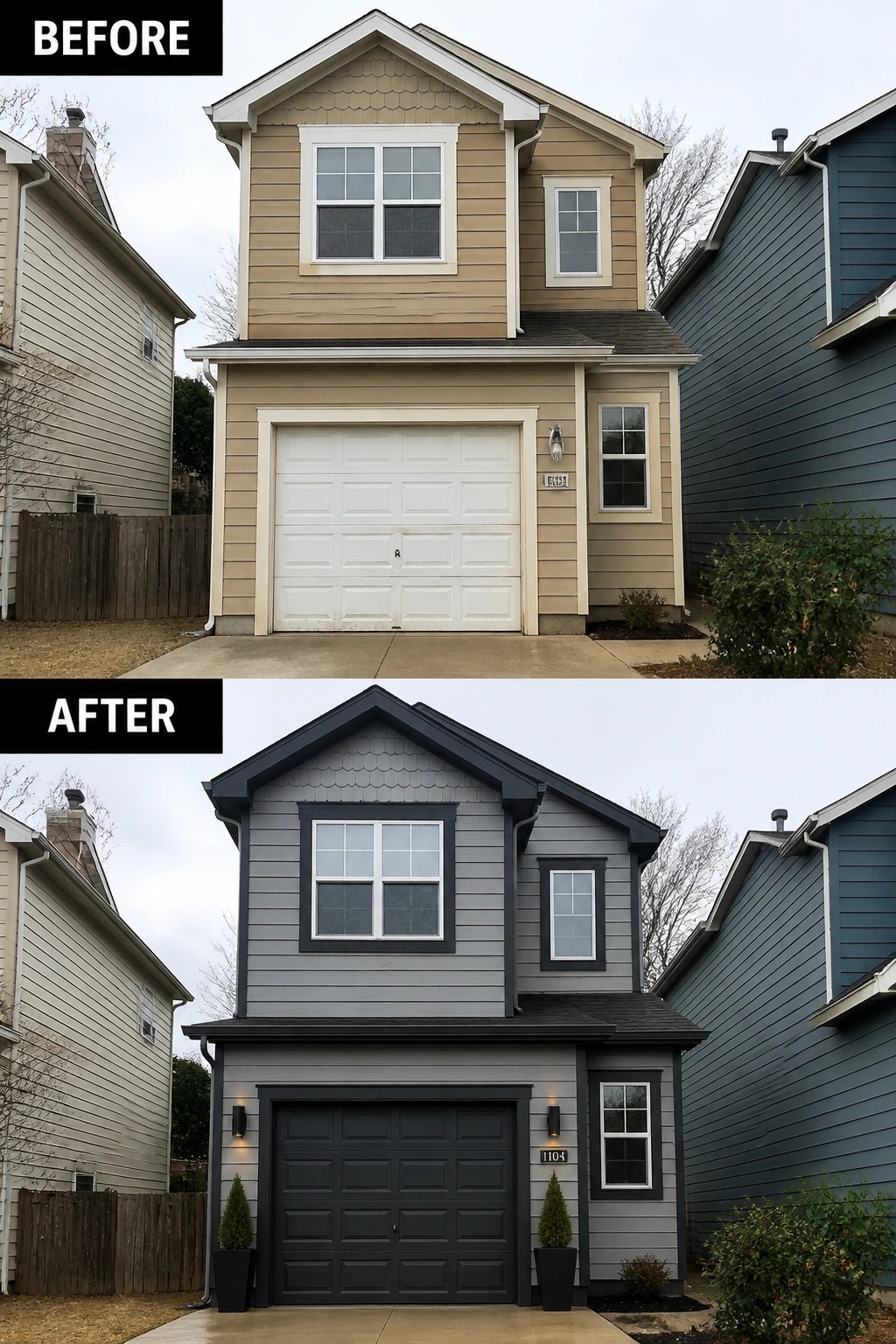
A beige house often looks flat because the color blends into the background and offers little contrast. Switching to a dark gray with black trim gives the siding and roofline more definition. The white garage door in the before photo disappears against the light walls, while the dark door in the after version anchors the front and makes the whole facade feel more solid.
This color change works best on houses with clean shapes and few decorative details. Test the gray on a small section first, since the same shade can look very different in full sun versus shade. Keep the updates simple by matching the garage door, window trim, and light fixtures to the new darker palette rather than adding extra layers of decor.
Refresh A Dated Exterior With Contrasting Trim Color
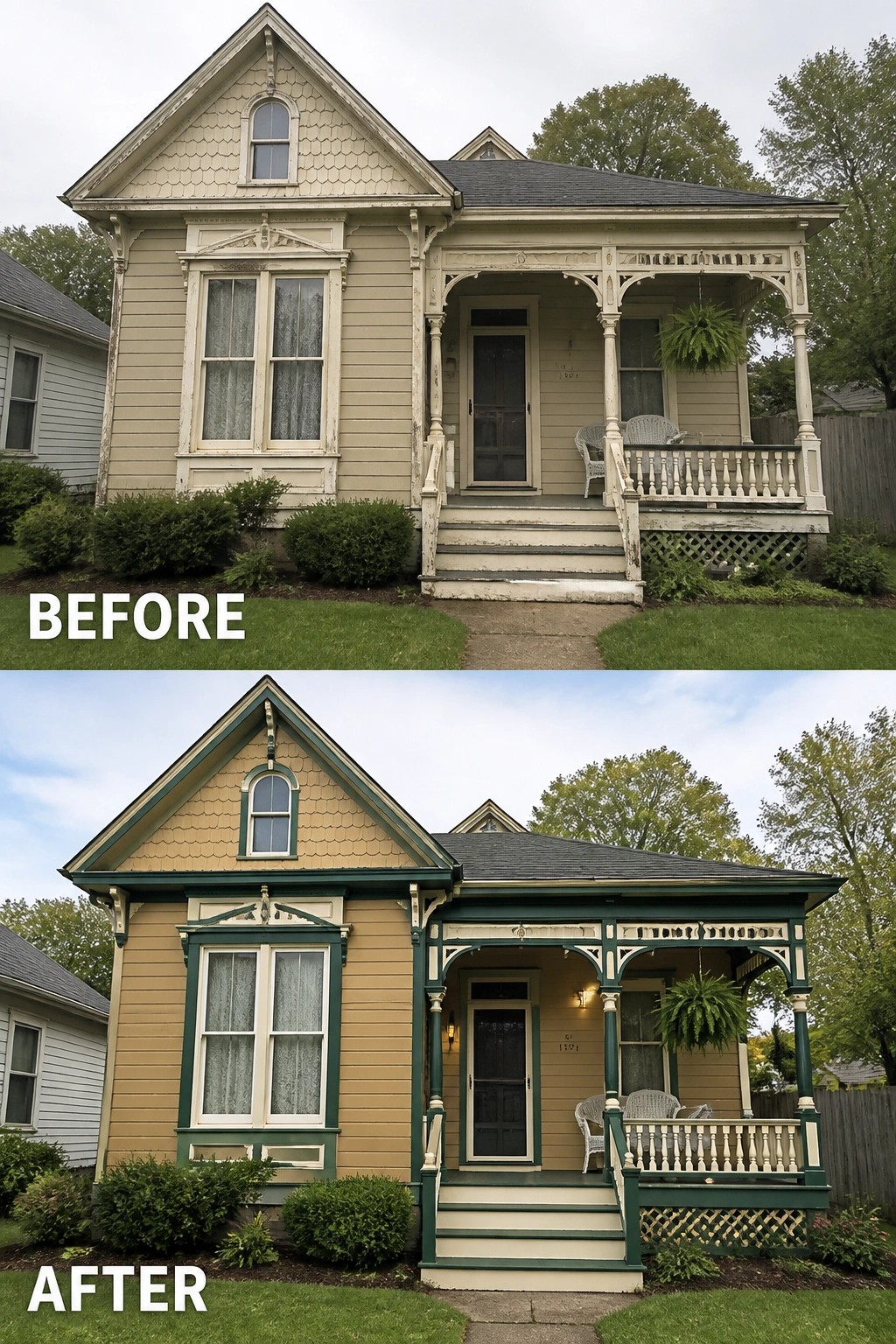
Many older homes lose their shape when the siding and trim fade into the same dull tone. Painting the trim a deeper green against the warmer siding color gives the house clear lines and makes the porch and gable details stand out right away.
This idea works best on homes that already have interesting trim or a front porch. Keep the siding light and use one strong accent color on the trim, posts, and window frames. The change stays simple and does not require new construction.
Refresh A Brown Exterior With A Softer Neutral Paint
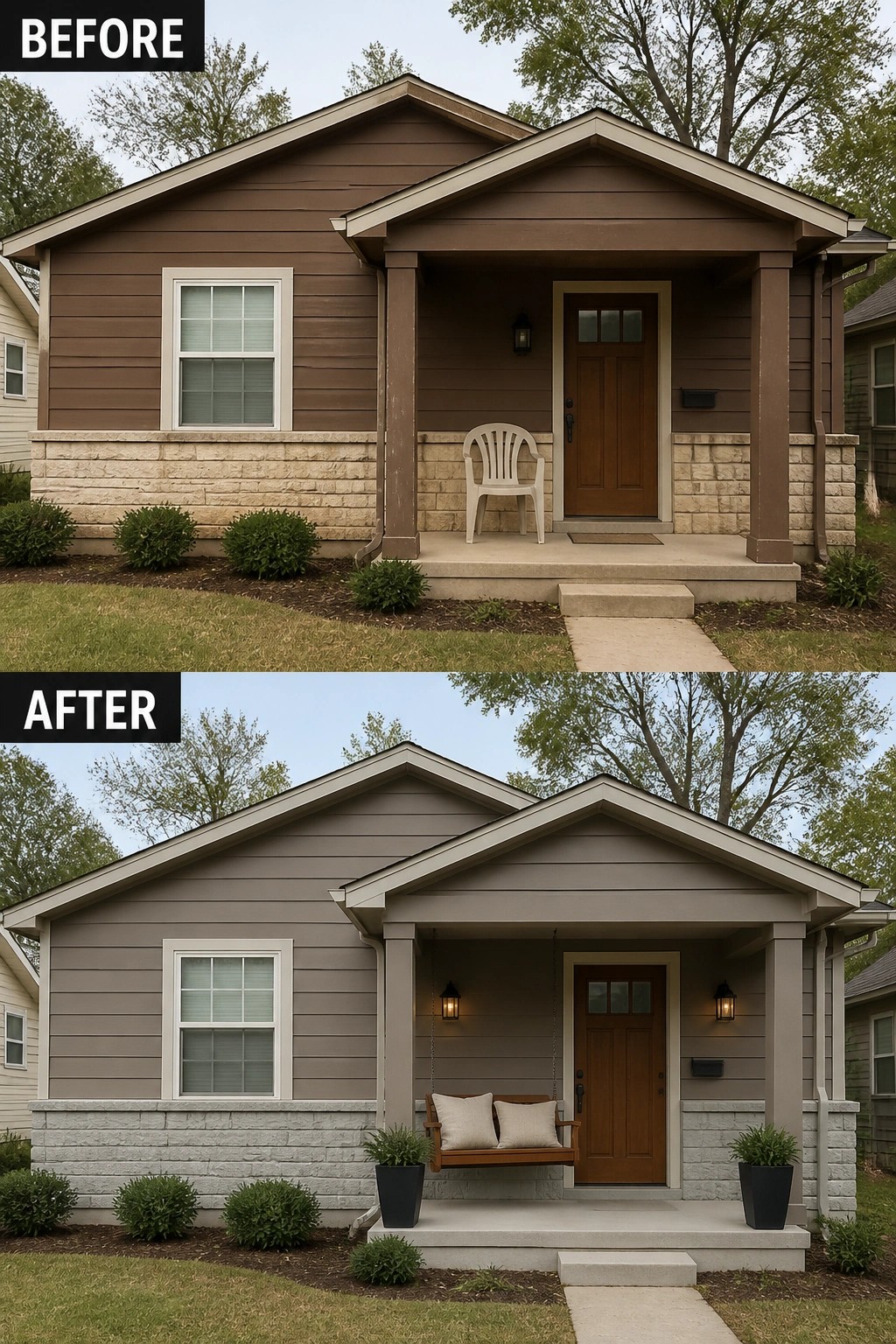
A dark brown house can start to feel heavy and dated over time. Switching to a lighter gray-taupe color lightens the whole look and gives the siding a cleaner, more current appearance without changing the structure.
This approach works well on simple ranch-style homes where the main goal is curb appeal rather than a full remodel. Keep the trim light and let the new color carry most of the update. Adding a few potted plants and a simple porch seat helps the fresh paint read as intentional rather than just a color swap.
Add Seating To Give A Front Porch A Clear Purpose
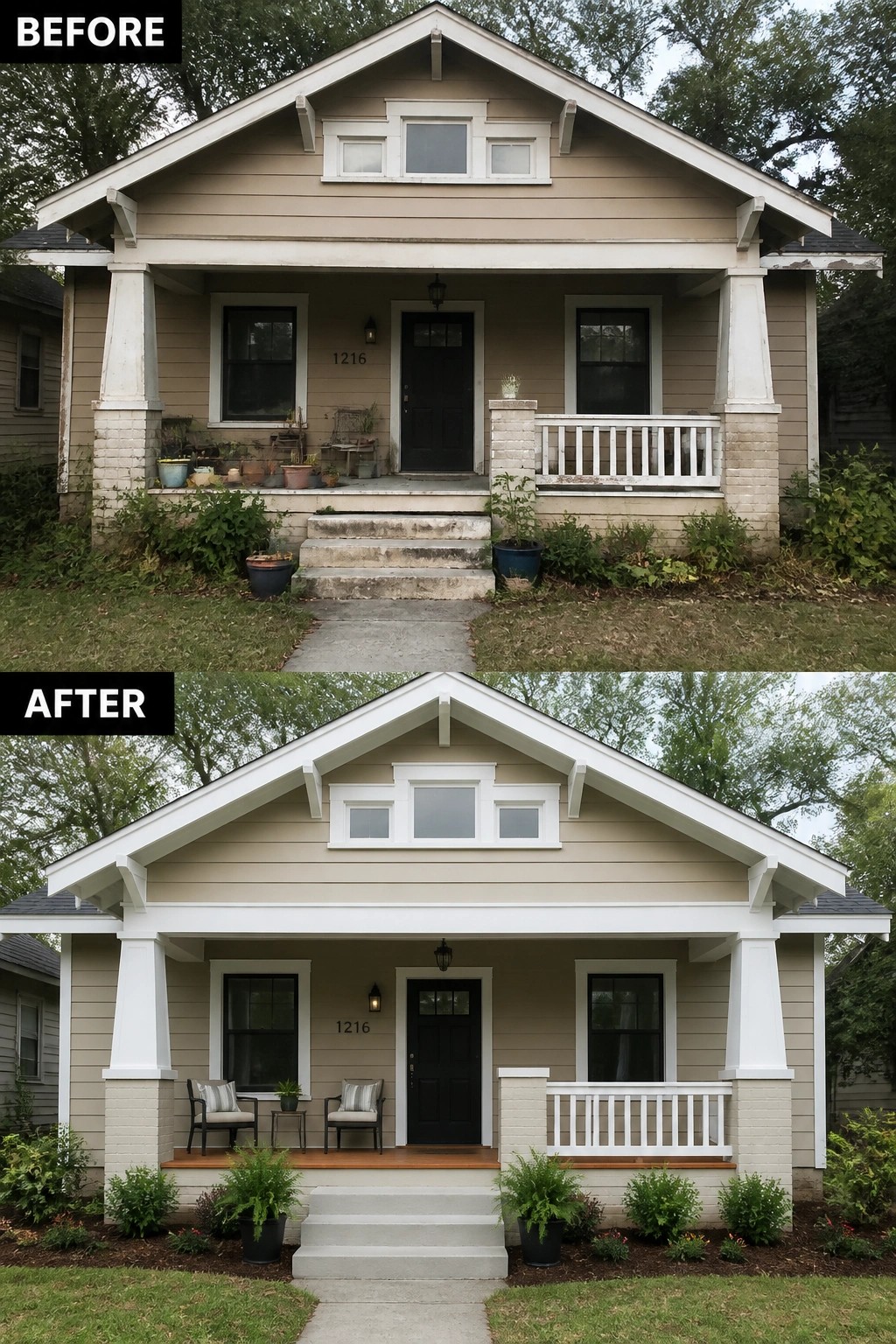
A front porch that holds random pots and old items rarely feels welcoming, even on a house with fresh paint. Clearing the clutter and adding two simple chairs with a small table turned the space into an actual spot to pause before entering.
This works well on beige and tan exteriors because the porch becomes the main point of interest. Choose seating that fits the scale of the house, keep cushions neutral, and let the trim and door color stay the focus rather than competing with too many accents.
Frequently Asked Questions
Q: How do I pick one of these colors if my current beige has a pink undertone?
A: Hold paint chips against the existing walls in morning and afternoon light. Pick shades with gray or green bases to cancel out the pink. This keeps the update looking clean rather than muddy.
Q: Can I paint just the front of a brown house and leave the sides as they are?
A: Yes, if the side walls sit farther back and get less sun. Focus the new color on the main facade and entry. The change still reads as fresh without a full repaint.
Q: What trim color works best with the tan exteriors in these examples?
A: Go with a crisp off white or soft charcoal. Either one adds definition without fighting the warmer base. Avoid anything too yellow or it will blend away.
Q: How soon can I expect to see peeling if I skip primer on old brown siding?
A: Prime first. The paint grabs better and lasts longer on weathered surfaces. Skipping this step often leads to early touch ups.