

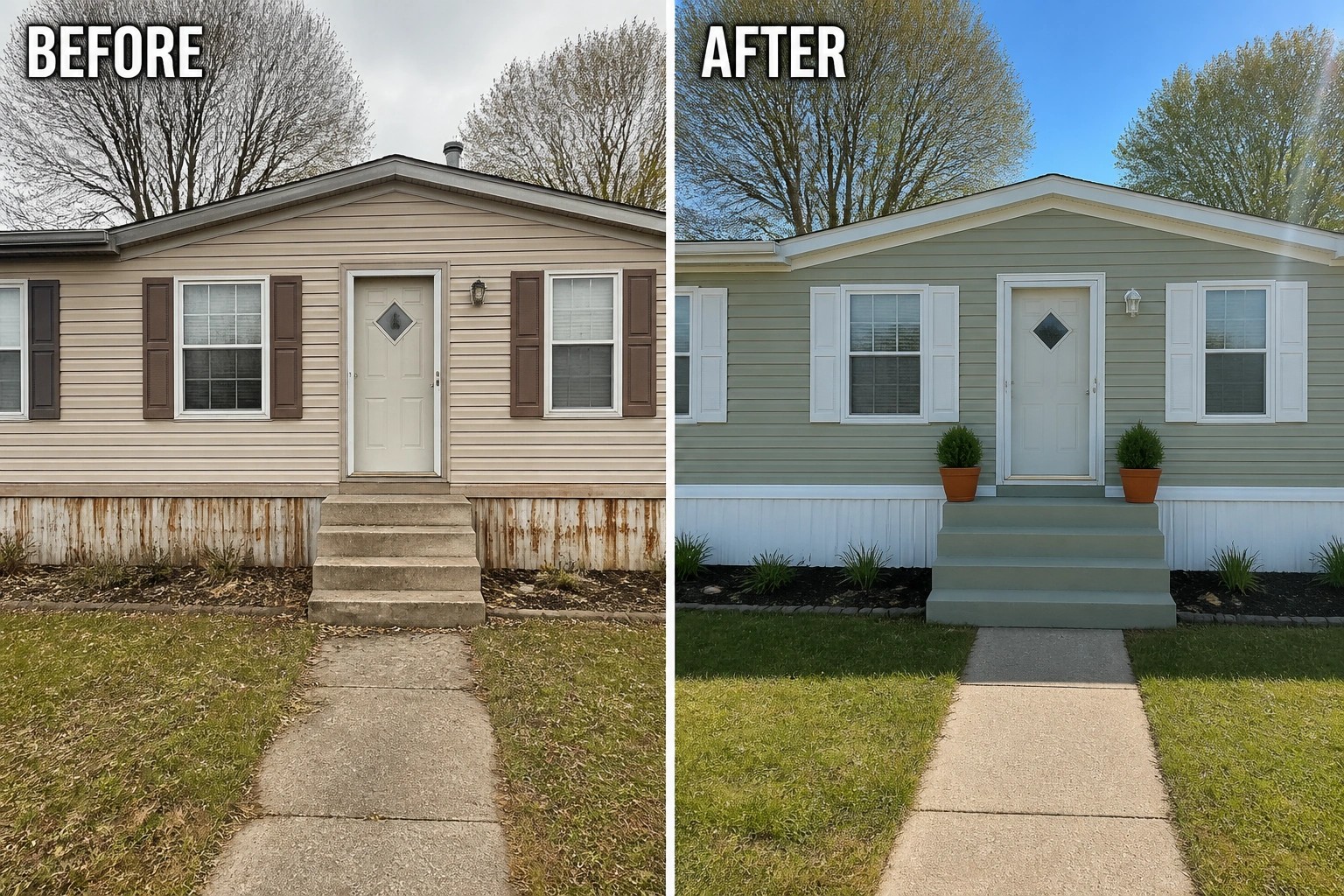
I’ve worked on and lived near several manufactured homes, and I’ve learned that clean trim lines and thoughtful paint make the exterior read as cared-for rather than neglected.
A well-chosen color palette and crisp trim can quiet the busyness of siding, highlight the entry, and help porches and small details finally feel intentional instead of afterthoughts.
Clean trim makes a big difference.
When I update a place I usually test paint on a small section and settle on one trim profile before tackling repairs, because the smaller choices steer the rest of the work.
A few of the ideas are easy to try on a weekend, and I hope they leave your manufactured home looking tidier and more cared-for without a full renovation.
Refresh Your Facade With Crisp Trim And New Paint
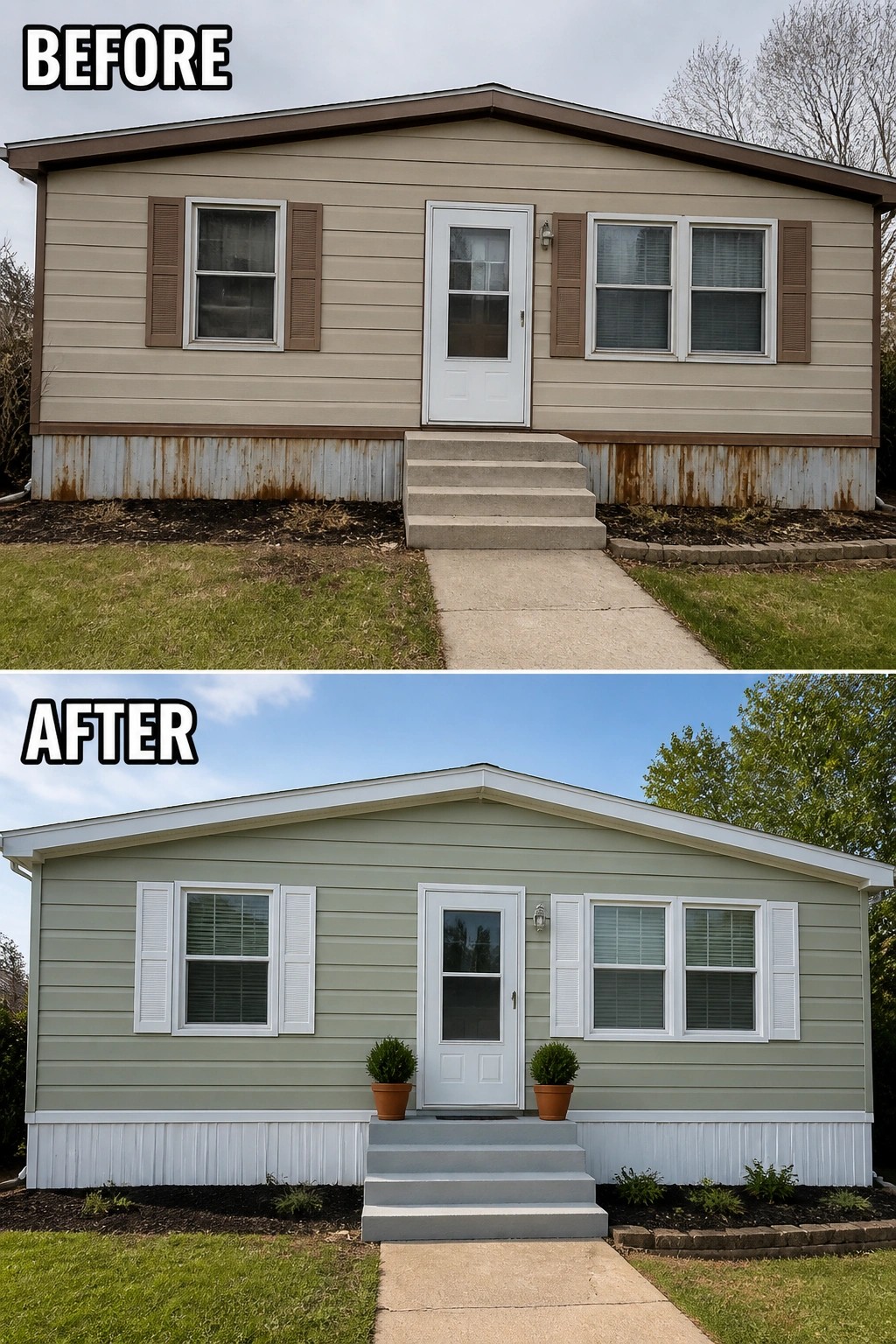
A fresh coat of paint and clean, contrasting trim is one of the quickest ways to improve curb appeal on a manufactured home. Swapping the tired beige for a softer siding color and painting the trim bright white immediately tidies the lines of the facade and makes windows and the entry read as intentional parts of the design.
This approach is simple to copy: start with a good wash and any necessary repairs, pick a durable exterior paint, and choose a trim color that contrasts with the main siding for clear definition. Paint the skirting and steps to match the trim for a cohesive look, and add a couple of small planters by the door to make the entry feel finished without crowding the space.
Give A Bare Porch A Clear Purpose
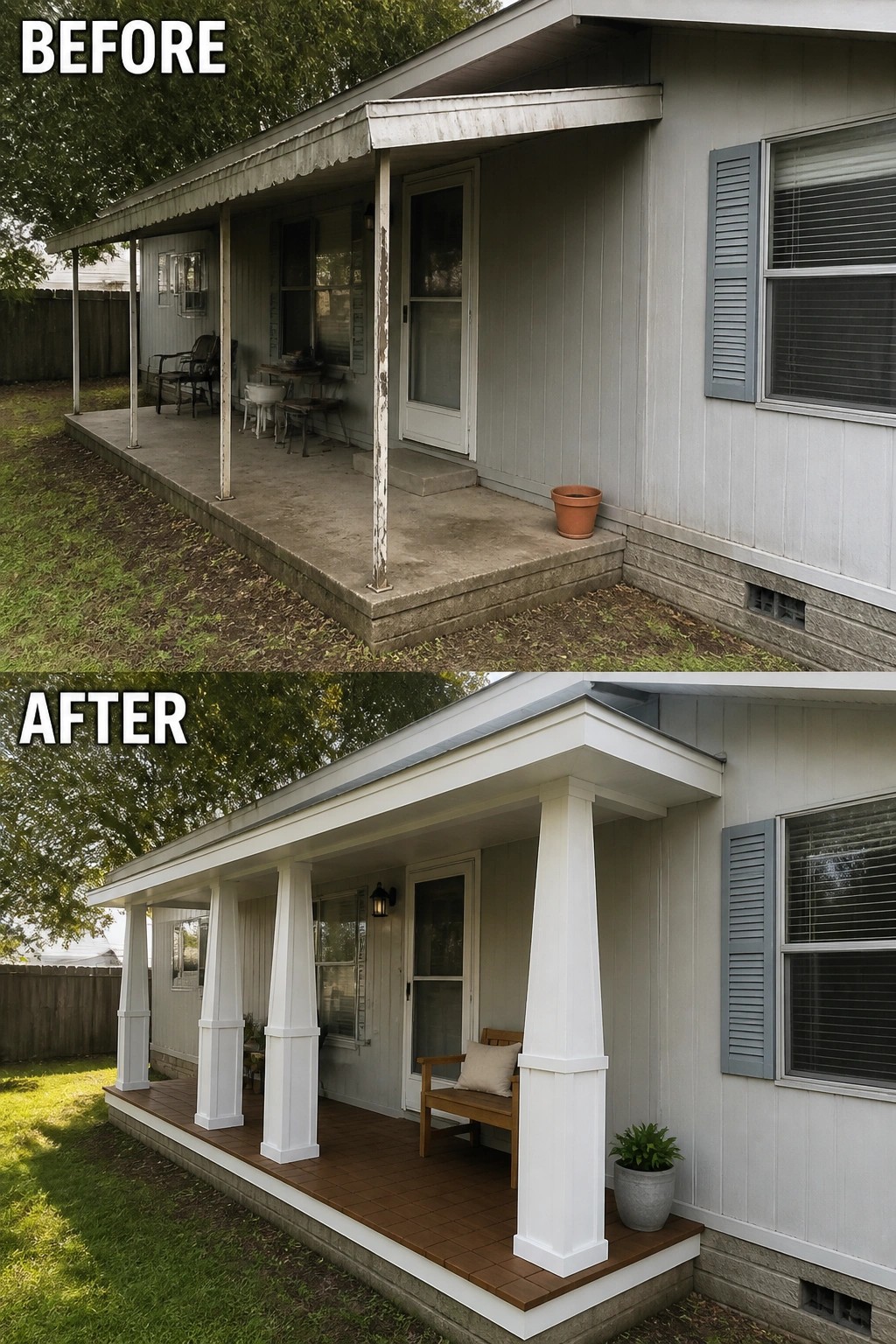
A narrow concrete stoop can feel like wasted space until you define it as a porch. Replacing
Give Your Entry A Fresh Door Color And Clean Trim
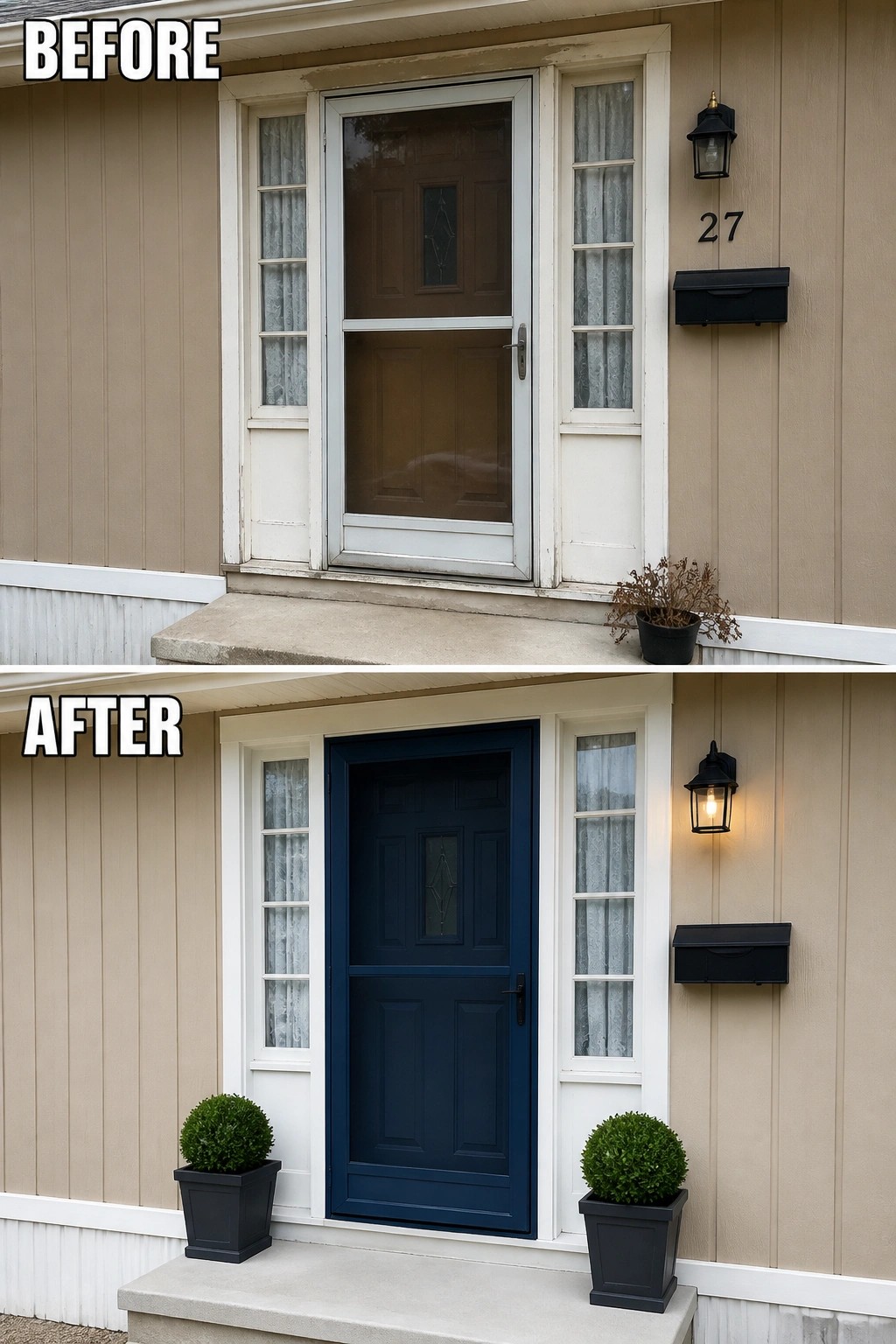
A simple, bold front-door color and freshly painted trim instantly make a manufactured-home entry feel deliberate and cared for. Swapping a dull storm-door look for a deep navy door, adding crisp white casing and a single lantern and matching planters turns a bland facade into a focused entry without major construction.
Do it in a weekend: pick an exterior-grade paint for the door (test a small patch first), paint surrounding trim a bright, easy-to-clean white, and replace or remove the storm door so the color reads clearly. Add one pair of low-maintenance planters and a new light fixture to frame the door; on narrow porches one strong focal point goes a
Refresh Skirting And Add A Low-Maintenance Planting Bed
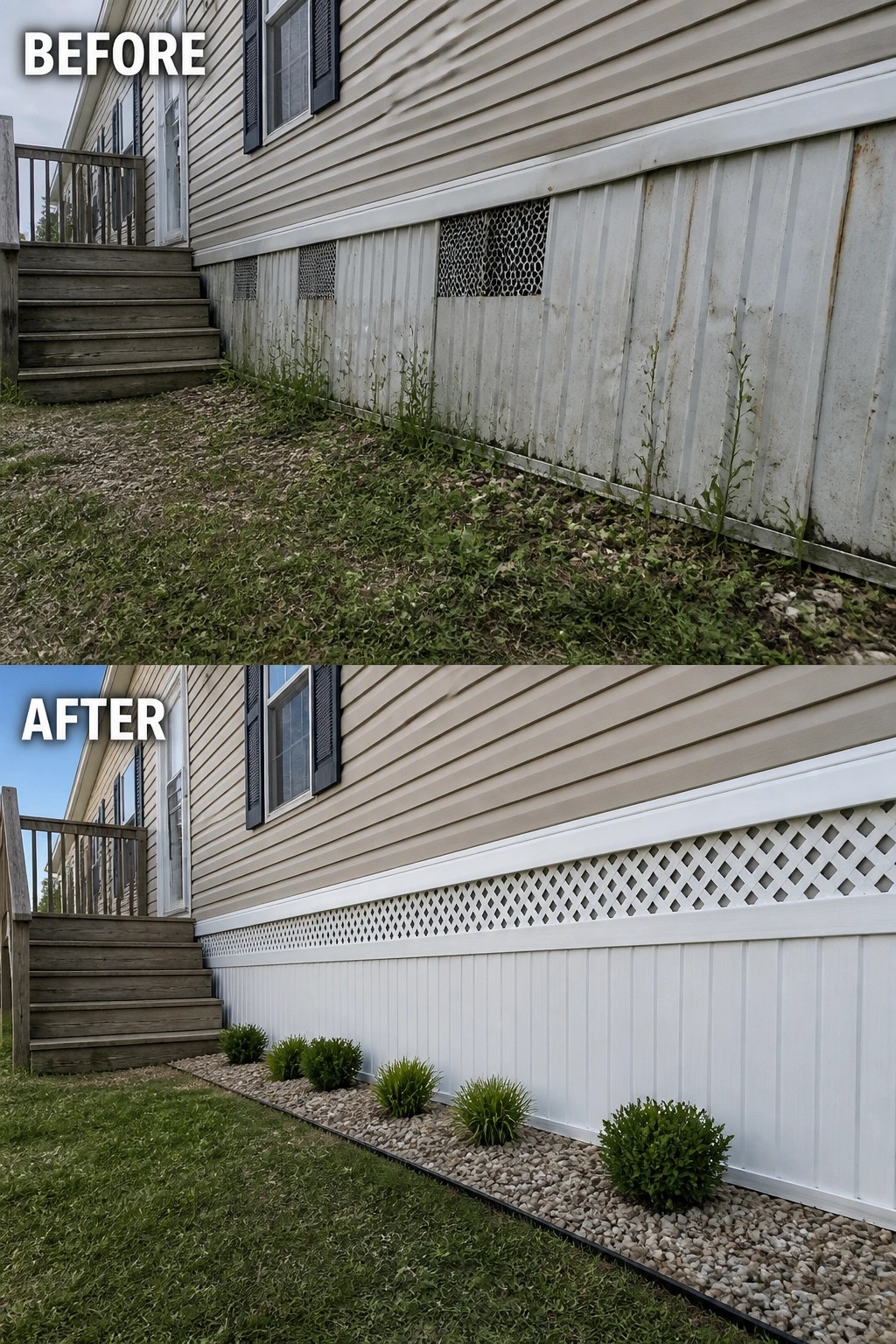
A quick way to tidy a manufactured home is to replace tired, stained skirting with clean, matching trim and a band of lattice, then anchor the base with a narrow gravel bed and a few low shrubs. Swapping the old corrugated panels for fresh vertical skirting and a white lattice cap immediately looks neater and makes the whole facade read as cared for rather than neglected. Simple, effective.
To copy this at home, start by measuring and choosing durable vinyl skirting and a lattice piece that matches your trim color. Install a slim edging, lay down landscape fabric, and cover with gravel so weeds are easier to manage and maintenance is minimal. Pick compact, slow-growing plants that leave access to vents and keep the bed shallow so it does not hide the foundation or block airflow.
Refresh Trim And Gutters For Instant Curb Appeal
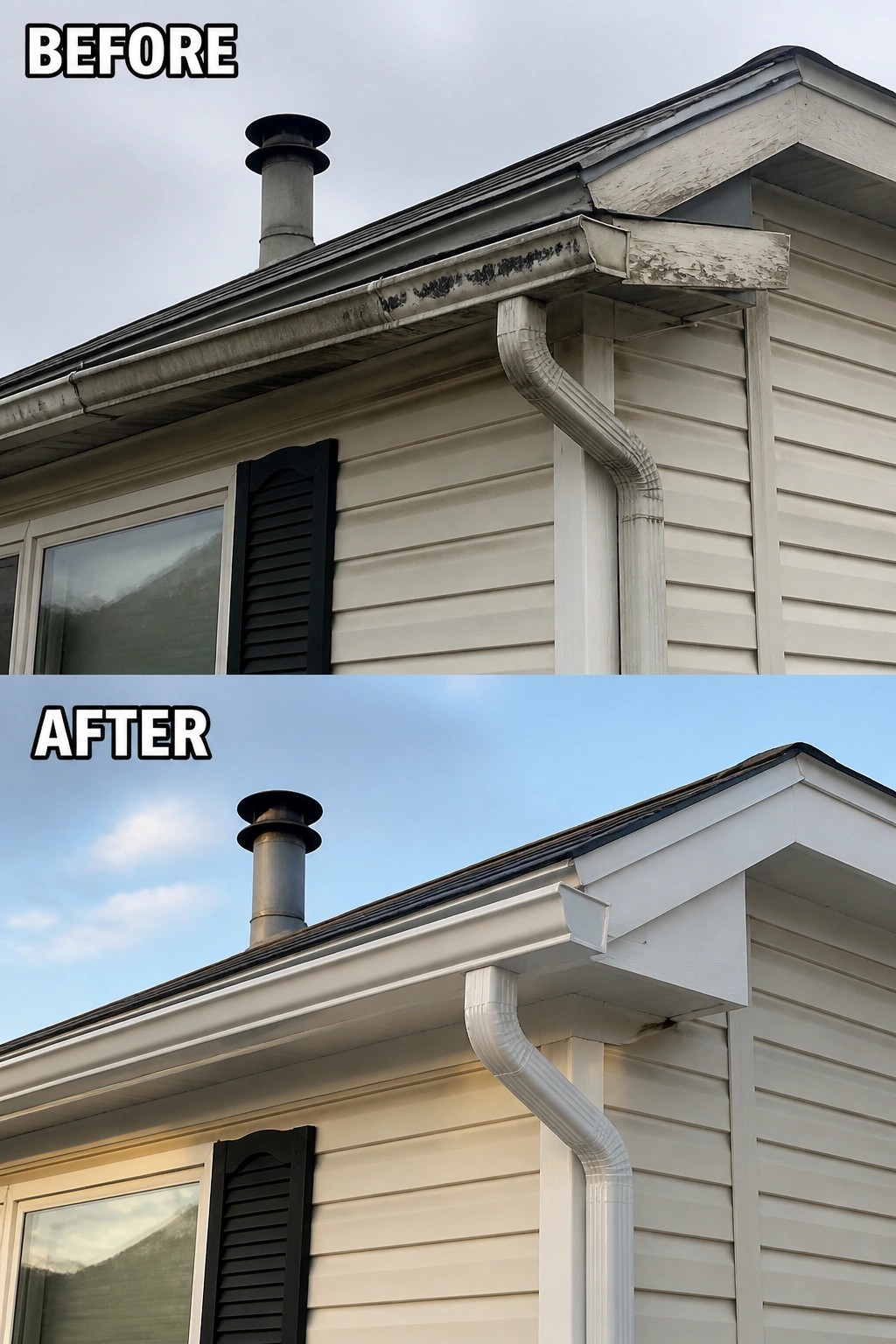
A clean band of trim and a set of fresh gutters make even a simple manufactured home feel cared for. In the before image the fascia paint is peeling and the gutter is stained; the after shows repaired fascia and crisp white trim and gutters, which immediately sharpens the whole exterior without replacing siding or windows.
To copy this at home, start with a good cleanup: wash mildew and debris off gutters and siding, then replace any rotted fascia or trim boards and sand down loose paint. Start with the worst spots. Use an exterior primer and two coats of quality exterior paint, and either paint or replace gutters so they match the trim. This approach works well on vinyl-sided homes and is a relatively low-cost way to lift curb appeal—just check for hidden rot before you paint.
Use Crisp Trim, Shutters, And Window Boxes To Boost Curb Appeal
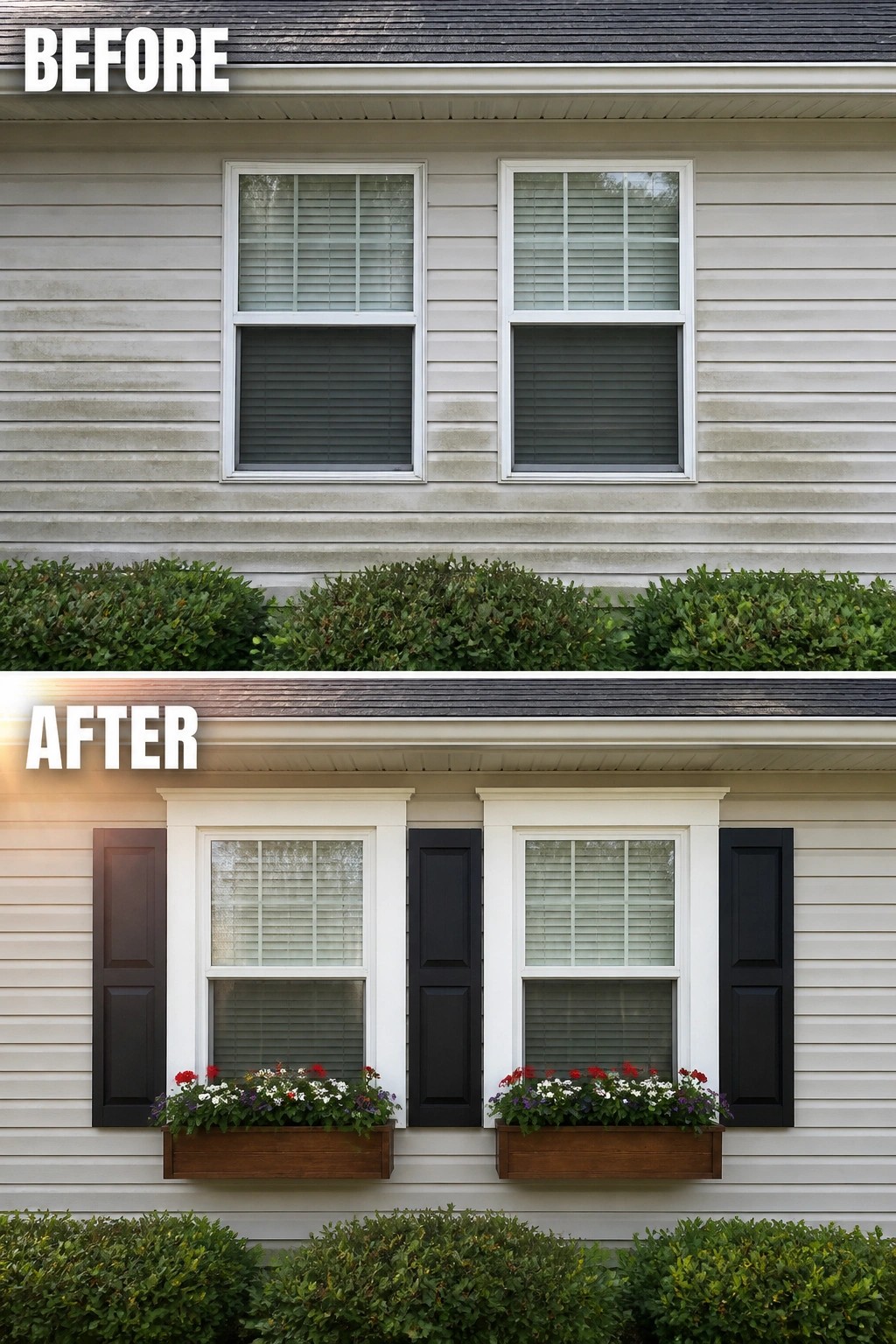
A simple, low-cost update is to frame your windows like architectural features instead of leaving them as holes in a siding expanse. In this example the addition of clean white trim, paired black shutters, and wooden window boxes immediately gives the facade scale and personality, taking it from flat to purposeful with just a few repeatable details.
To do this at home, start by cleaning and repairing the siding so new trim sits flush. Keep shutters proportional to the window height, pick durable materials such as PVC or composite for trim and boxes, and choose a contrasting paint color to make the details read from the street. Add shallow window boxes with good drainage and easy-care annuals, and avoid overcrowding the area—simple, repeated accents go a long way on manufactured homes.
Give A Bare Porch A Clear Purpose
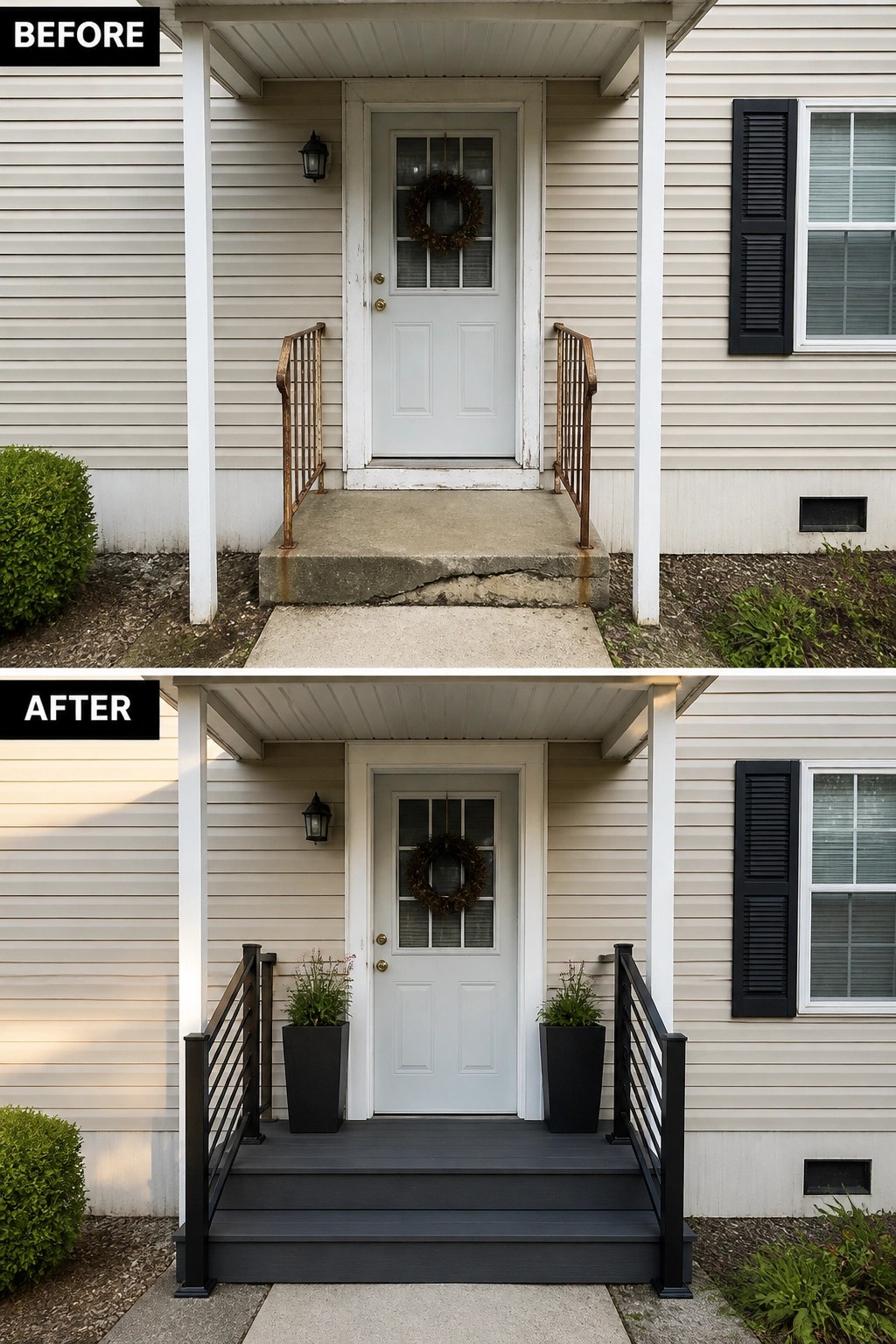
A tiny, cracked stoop can start to feel useful the minute you treat it like an entry landing instead of leftover concrete. Replacing the broken step with a small raised deck, adding simple modern railings and a pair of matching planters turns the approach into a deliberate front entry and makes the door feel intentionally framed.
This idea works especially well on narrow manufactured-home porches where space is limited. Use weatherproof decking or composite for low upkeep, choose railings that are slim but sturdy so the area doesn’t feel crowded, and keep the layout symmetrical with enough room for the door to open and a clear path. Small, practical updates like this make a house feel cared for without a big remodel.
Ground A Plain Exterior With Stone Skirting And Planting
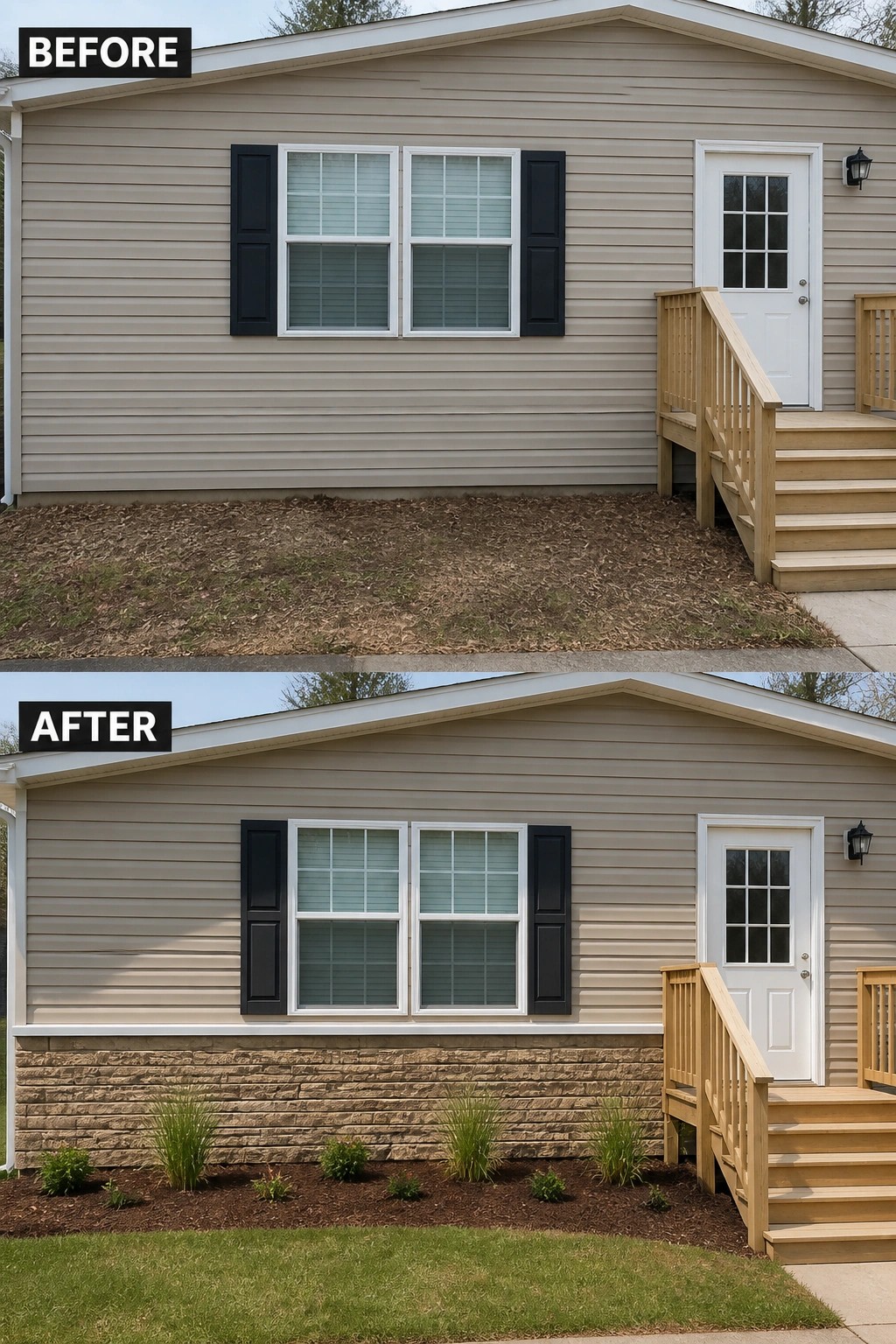
A low band of stone skirting and a tidy mulched planting strip instantly gives a flat, beige facade something to sit on. Instead of raw soil at the base, a textured skirt plus a few clumps of ornamental grass and small shrubs makes the whole front read as intentional and finished. Simple, effective.
Use materials and plants that match the scale of the home — a modest stone or faux-stone skirt keeps costs down and reads right on a manufactured house. Plant low-maintenance, spaced-out shrubs and grasses, lay fresh mulch for a clean edge, and keep access and ventilation for any under-house areas. This approach works well on small lots and is an easy, budget-friendly way to improve curb appeal without a full rebuild.
Use Two-Tone Paint And Clean Trim To Update The Facade
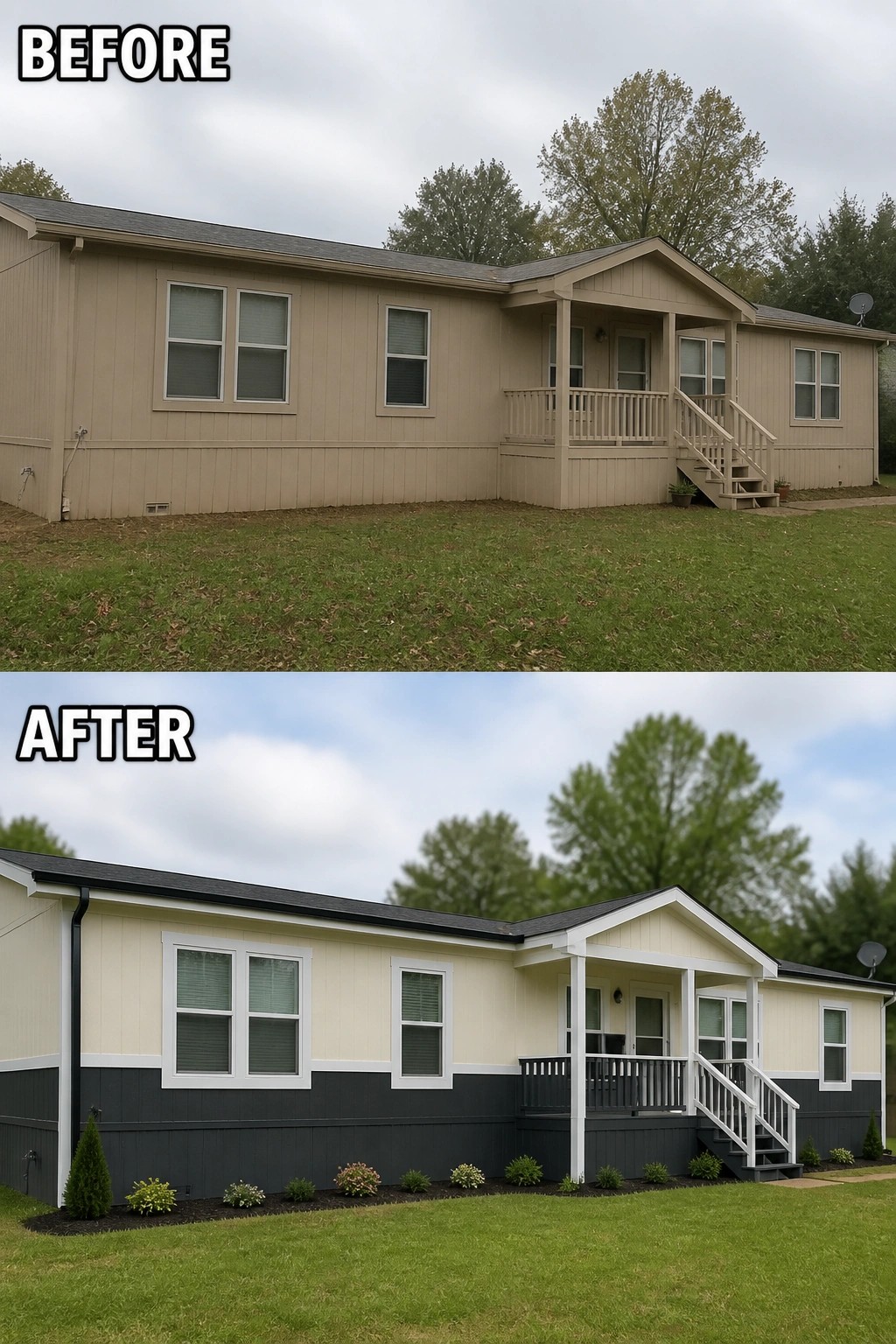
A fresh, simple paint scheme can change the whole feel of a manufactured home. Swapping the single beige tone for a lighter upper color and a darker base, then outlining windows, porch posts, and railings in crisp white, gives the exterior a clearer profile and a tidier, more intentional look. It’s an easy way to make the porch and entry read as a focal point instead of blending into the siding.
To copy this, pick a darker neutral for the lower band to hide skirting dirt and a lighter shade above to keep the house from looking heavy (test samples on the skirting first). Keep the trim and porch elements one consistent accent color, use quality exterior primer
Give A Bare Porch A Finished Soffit And Subtle Lighting
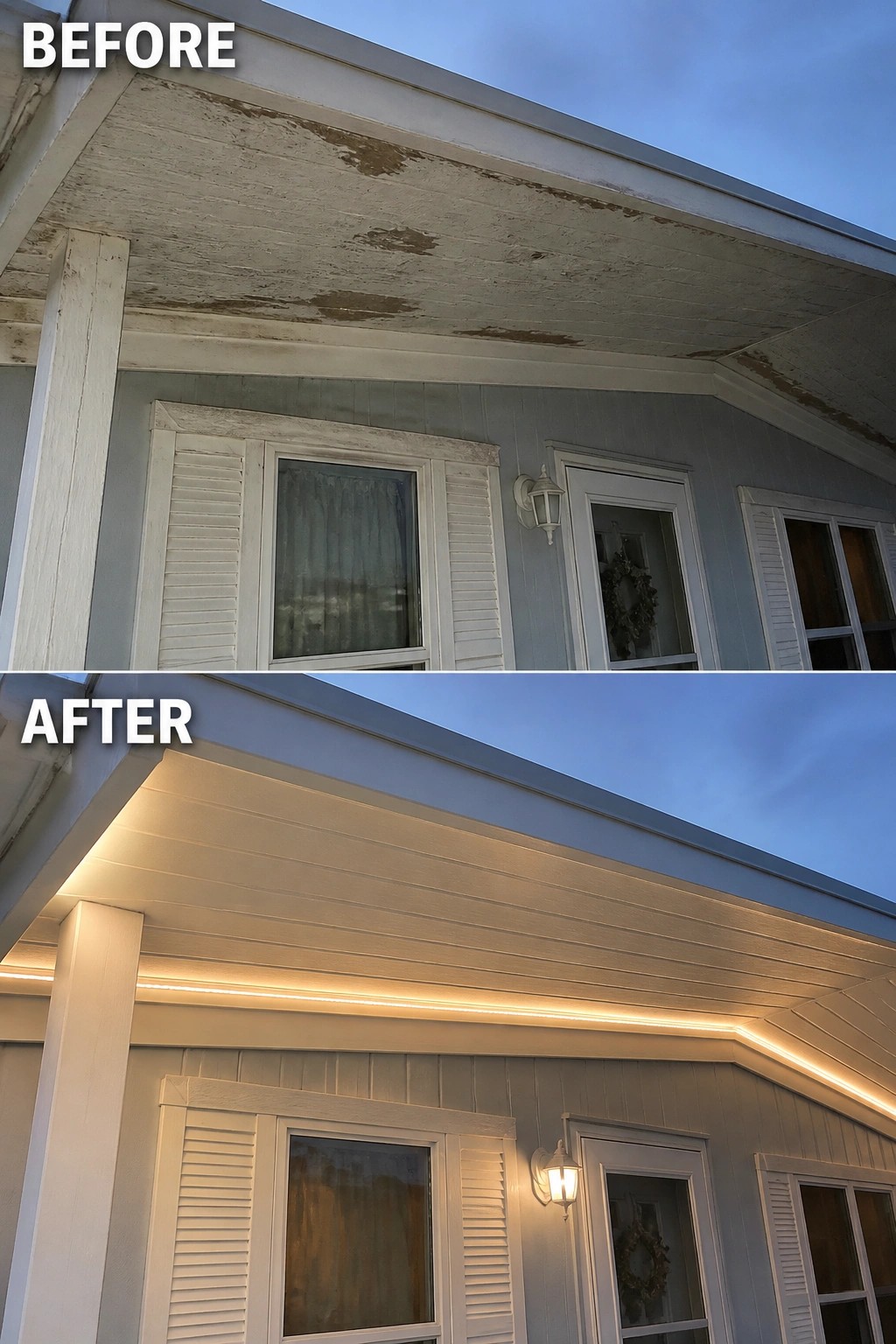
A tired, flaking porch ceiling can make an entire front entry look neglected. Replacing the damaged boards with a clean, paneled soffit and adding a low-profile LED strip gives the space a neat, intentional look while hiding past damage. The paired changes—new soffit and concealed lighting—are a simple way to modernize the facade and make the covered porch usable after dark.
This update works especially well on small or manufactured-home porches. Start by repairing any rot, then choose moisture-resistant soffit panels (PVC or aluminum) and paint the trim to match the house for a cohesive result. Run low-voltage LED tape in a recessed corner or cove for indirect light, and have a pro handle the wiring so the fixtures are safe and easy to maintain. It’s simple but effective.
Give A Bare Porch A Clear Purpose
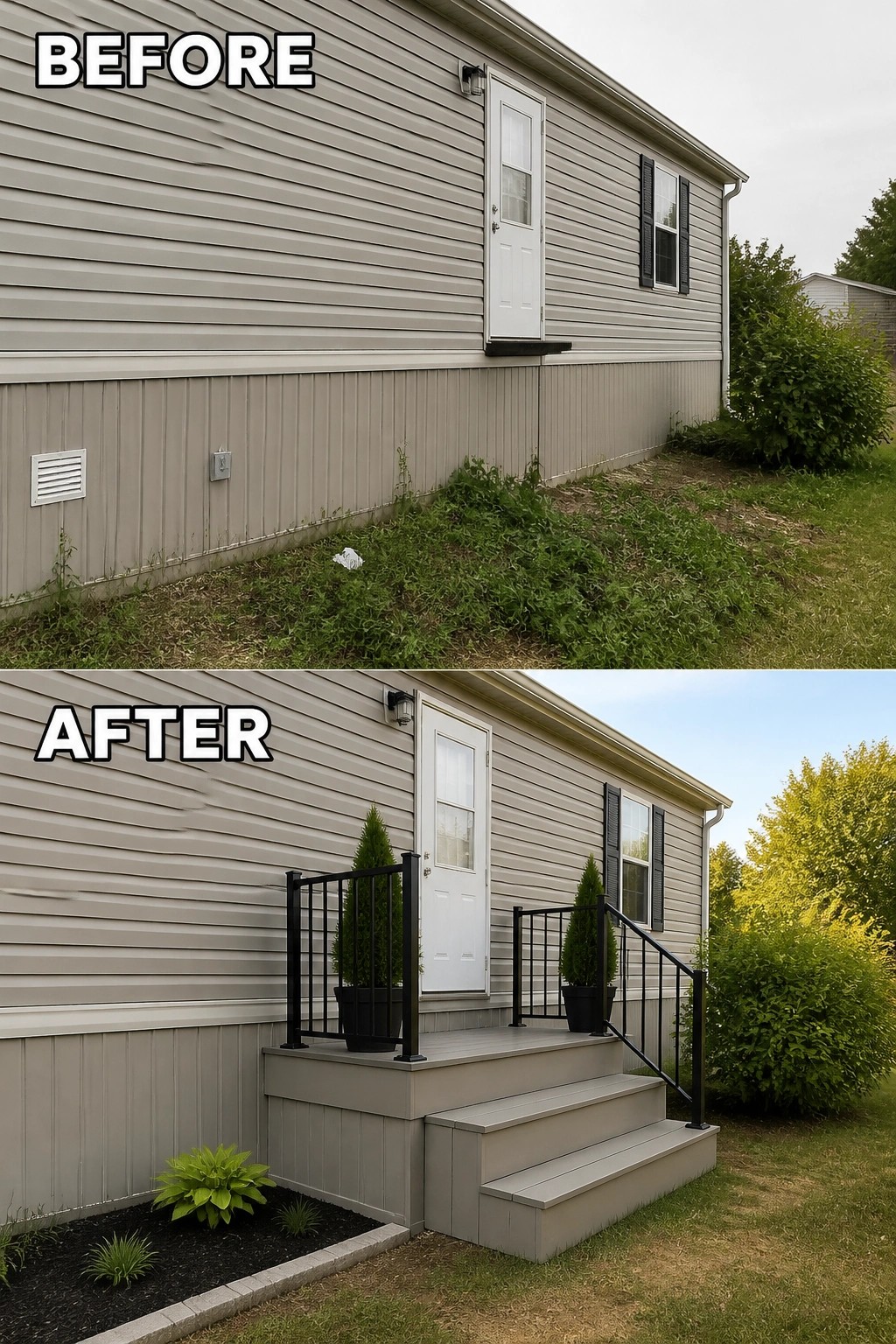
A small, well-proportioned entry platform makes a plain exterior feel finished and useful. Instead of a door that drops straight onto the yard, adding a compact set of steps, a modest landing with railings, and a pair of matching planters instantly reads as an actual entrance rather than an afterthought.
To copy this, size the landing to fit one person standing comfortably and check local railing requirements first. Use durable materials that match or complement the siding, keep the railing simple, and anchor the base with a low planting bed or identical pots for symmetry; on smaller manufactured homes, modest scale and tidy edging make the biggest visual difference.
Use Trim And Shutters To Update A Bland Facade
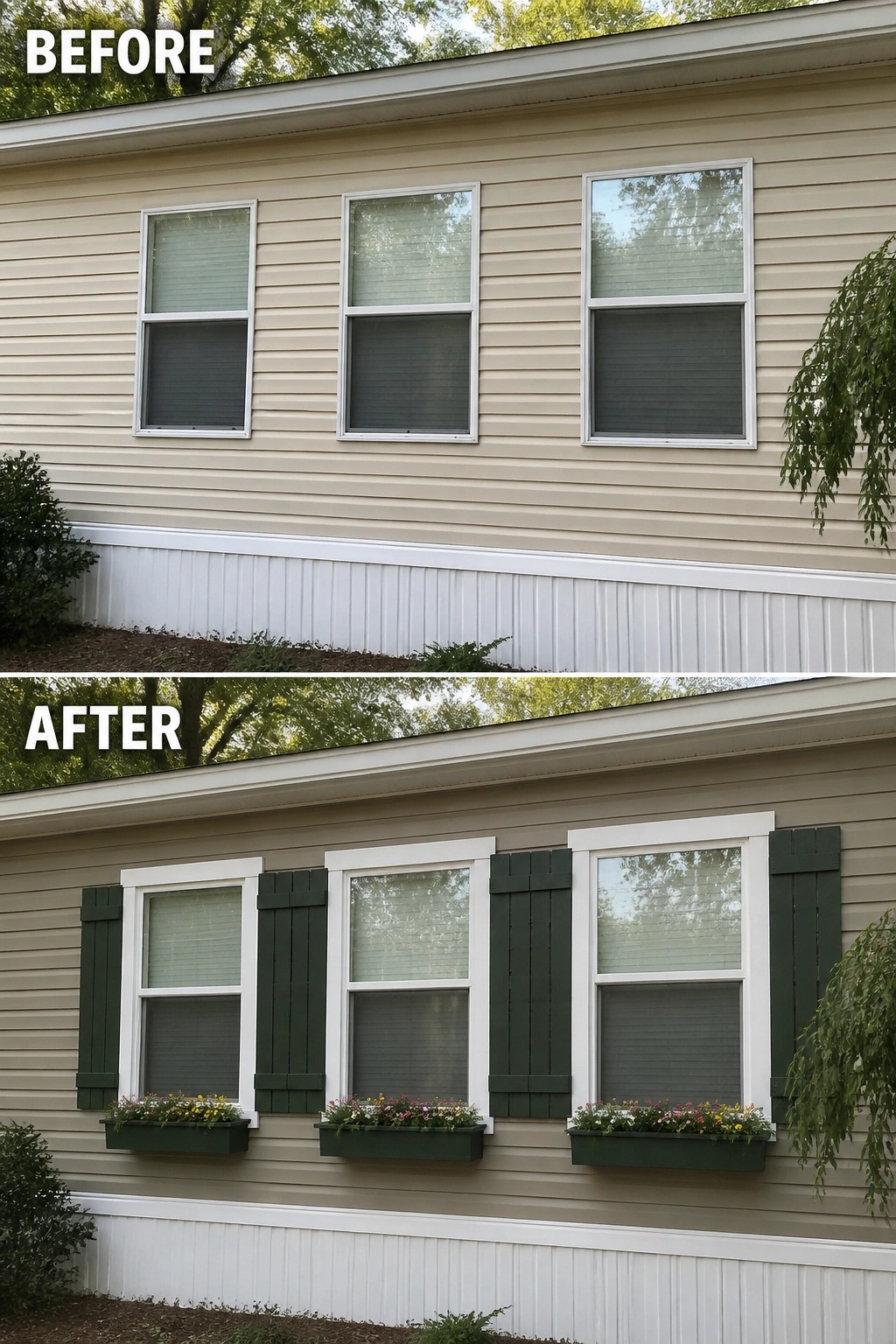
A few simple details—clean white window trim, painted shutters, and matching window boxes—can turn flat siding into a composed, intentional front. Framing the windows and repeating a single accent color gives the whole wall better scale and a finished look without a huge budget or structural work.
To copy it, pick one accent color for shutters and boxes and a crisp contrasting trim color, then size shutters so they read in proportion to each window (around two thirds of the window width for each shutter is a good rule). Use rot-resistant trim and composite boxes, fasten into studs, and choose low-maintenance annuals so the project stays attractive with minimal care. Nice and easy.
Use Lighting To Make A Plain Porch Feel Welcoming
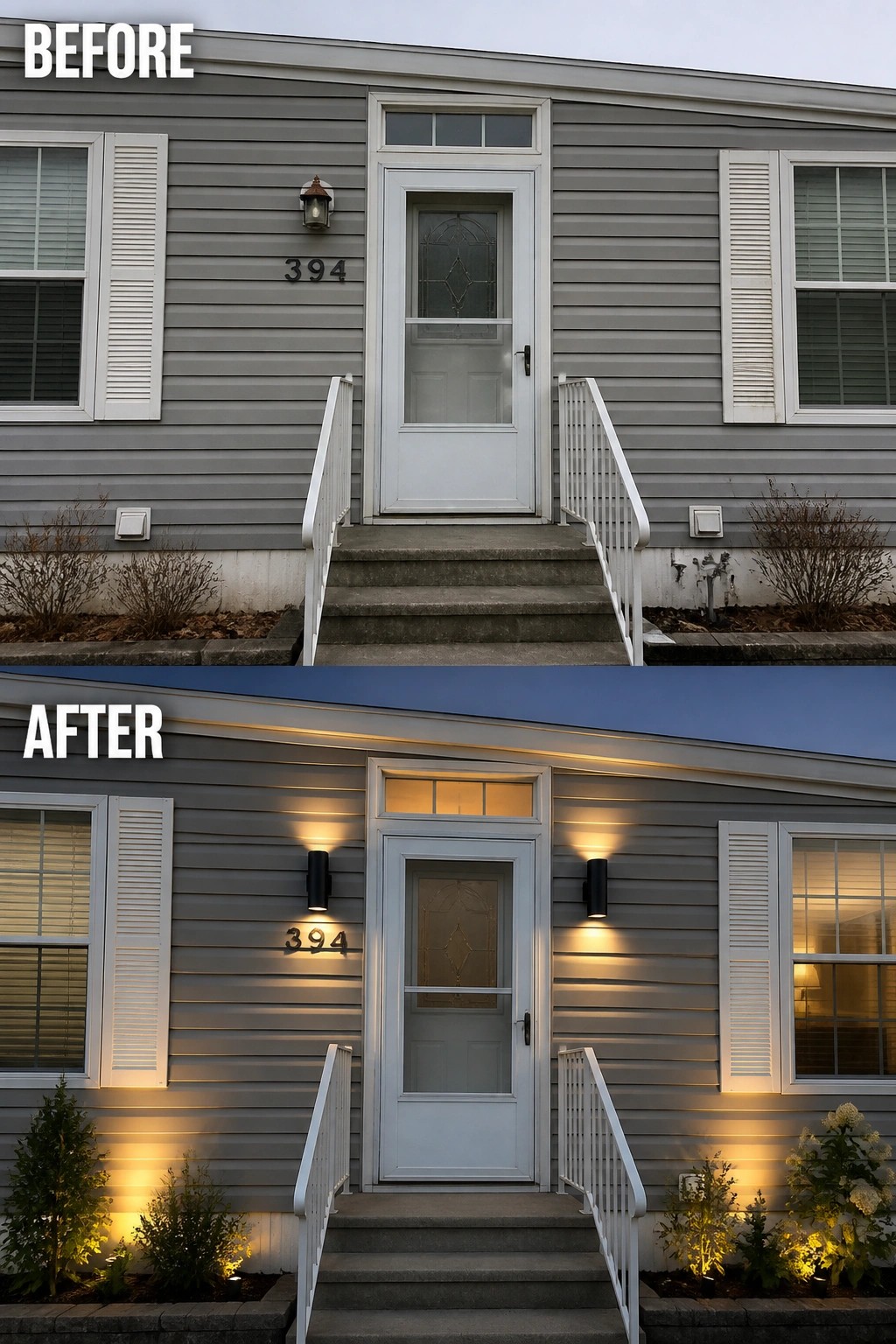
A pair of simple wall sconces and a few low uplights can do more for a blank manufactured-home entry than a fresh coat of paint. In this example, adding up-and-down sconces beside the door and small ground lights that wash the siding and highlight a couple of shrubs gives the facade depth, makes the house number readable, and turns an anonymous stoop into a clear front entrance.
You can copy this on a tight budget. Start by cleaning the area and planting a couple of compact evergreens or seasonal perennials at the base of the porch. Choose warm-toned, low-voltage LED fixtures that aim light where you want it (at the door, the number, and the plants) and mount sconces so they don’t glare into faces. Keep scale small so the lights and plants complement the steps and railings rather than crowd them.
Update A Manufactured Home With Fresh Paint And Clean Trim
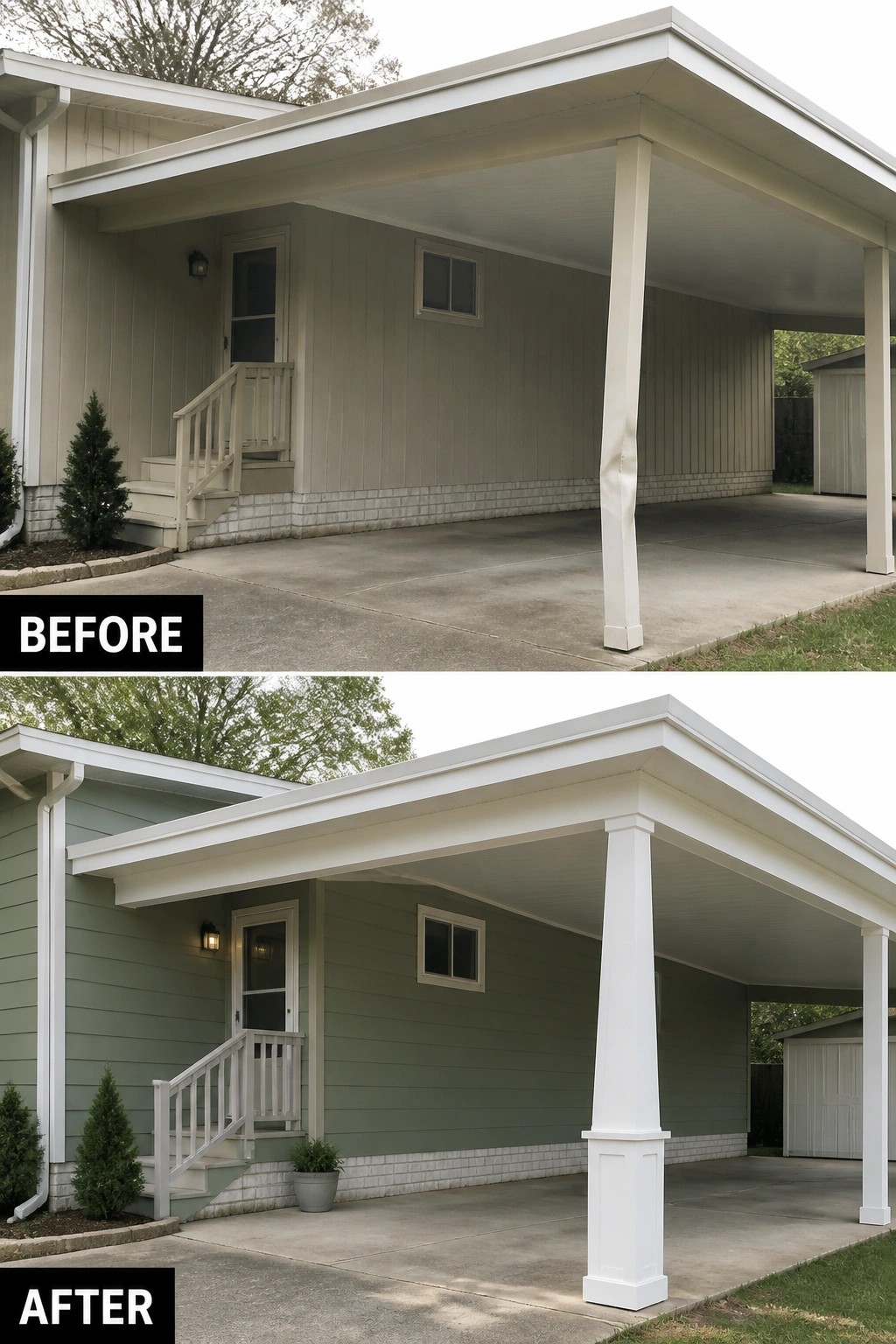
A simple new color and crisp white trim can make a plain manufactured home look cared for and much more intentional. In this example the siding was changed from a flat beige to a soft green while the posts and trim were wrapped or replaced with clean, squared white pieces, which immediately sharpens the whole entry and carport area.
To copy this on a budget, start with good surface prep and one quality exterior paint for the main body and a bright, durable white for trim. Keep the palette small — one body color and one trim color — and consider wrapping old posts with prefabricated column sleeves or PVC trim for a neat look that resists rot. Add a single light fixture and a potted plant or two to finish the space without crowding it.
Freshen A Manufactured Home With Clean Trim And Smaller Awnings
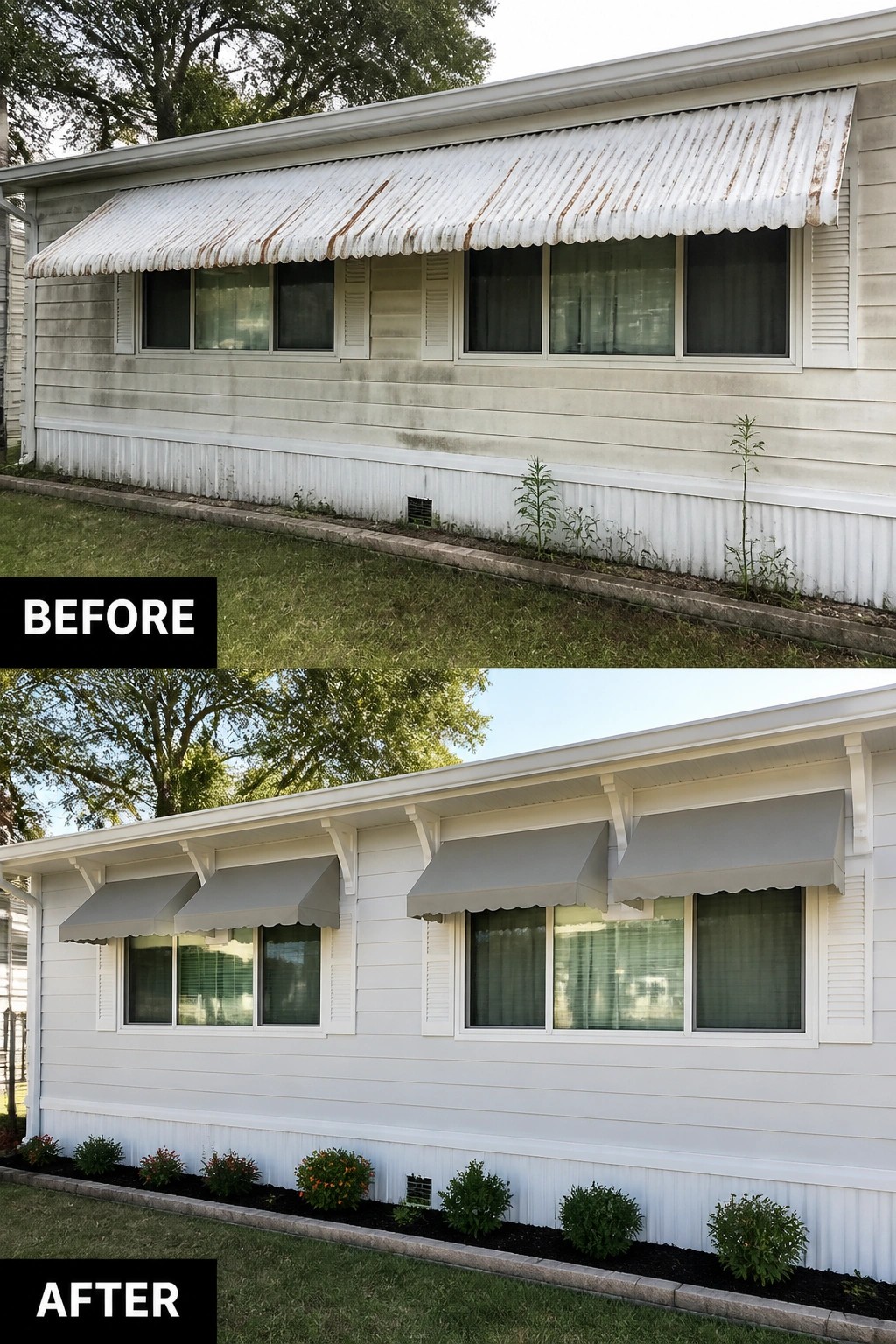
A quick way to modernize a long, flat manufactured-home facade is to simplify the big visual pieces: clean and repaint the siding and trim, then replace an oversized, rusty full-length awning with smaller, properly scaled window awnings. The trimmed-up paint and individual awnings break the horizontal mass, give the home rhythm, and make the exterior look cared for without a major renovation.
To do this yourself, start with a thorough power wash and any necessary siding repairs, then choose a crisp trim color to frame windows. Pick awnings that match each window width and keep the projection shallow so they read as accents instead of dominating the wall (light grey or neutral fabric works well). Finish with a narrow planted bed and fresh mulch to ground the facade and keep maintenance easy and realistic.
Refresh A Boring Facade With Bold Paint And Clean Trim
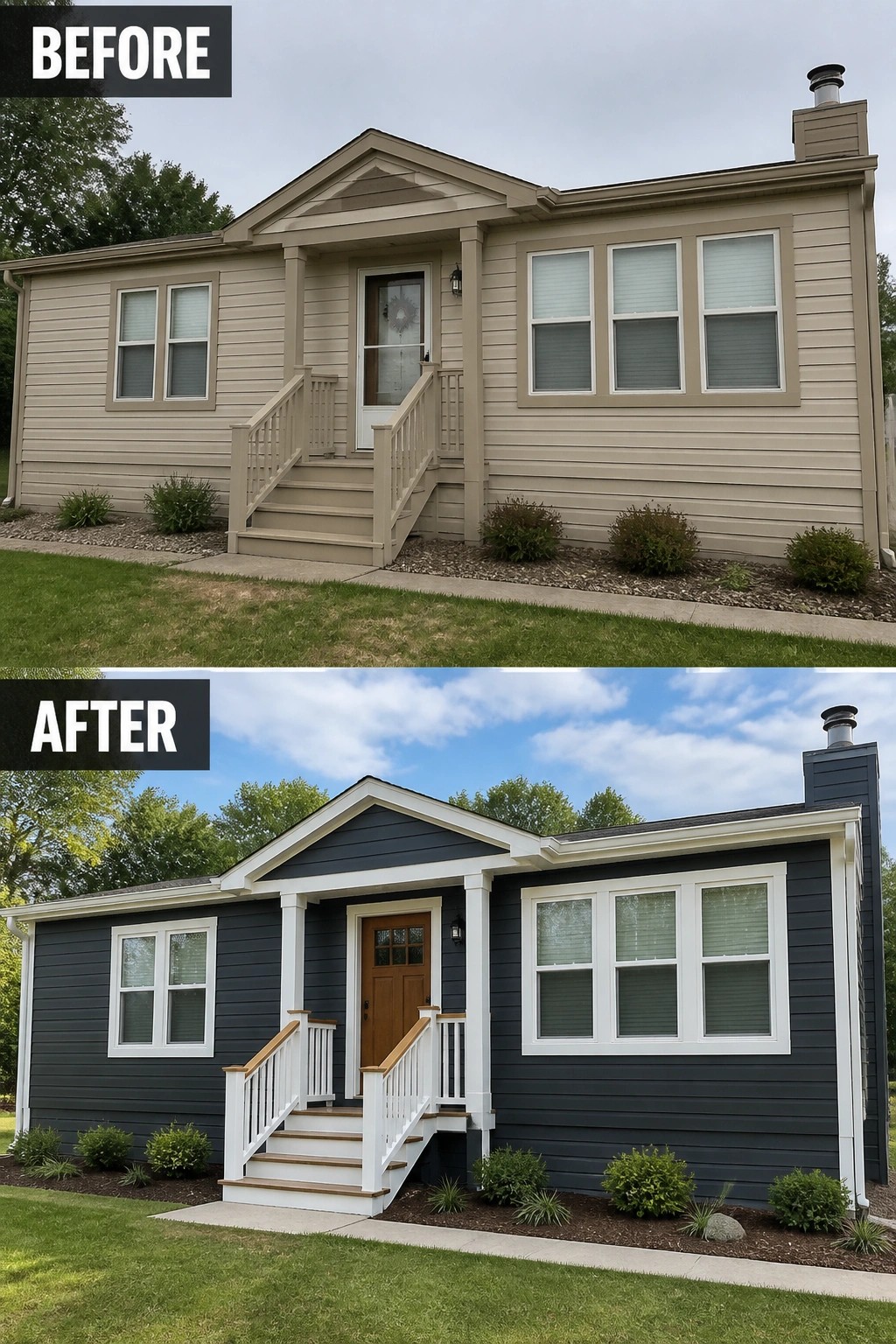
A fresh color and crisp trim are one of the fastest ways to change a manufactured home’s curb appeal. Swapping the flat beige for a deeper siding color and pairing it with bright white trim and a warm wood door (plus updated porch railings) gives the whole front a more intentional, modern look without moving walls or adding square footage.
This approach works best when you keep the palette simple—one strong siding color, white or light trim, and one accent for the door or rail tops. Test a few swatches in daylight, use good exterior primer and paint, and keep trim widths consistent so the lines read clean from the street. It’s an affordable, high-impact option for boxy or smaller homes where architectural detail is limited.
Give A Bare Porch A Clear Purpose
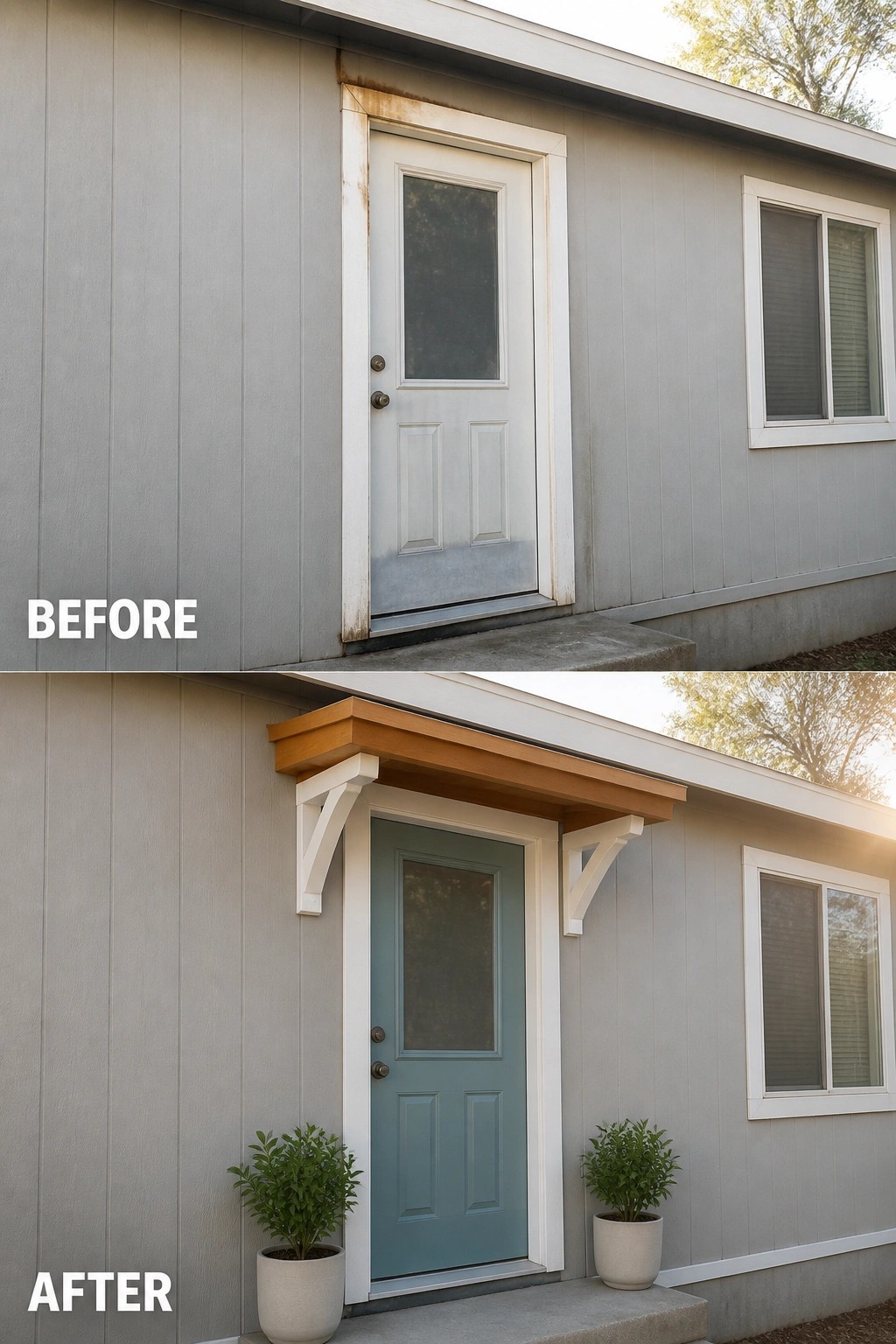
A small entry upgrade can make a plain facade read as intentional instead of forgotten. Swap a washed-out door and tired trim for a new door color and a simple header or awning, then anchor the step with a pair of matching planters. That single focal move gives the front a purpose and makes the house feel cared for without a big remodel.
Use elements that fit the scale of the home: a modest overhang or two brackets, a painted door that complements the siding, and low-maintenance planters or a slim bench. Start small. Pick durable finishes for weather, keep everything proportionate to the landing, and leave enough room for people to step through comfortably.
Refresh Manufactured Siding With Clean Paint And Trim
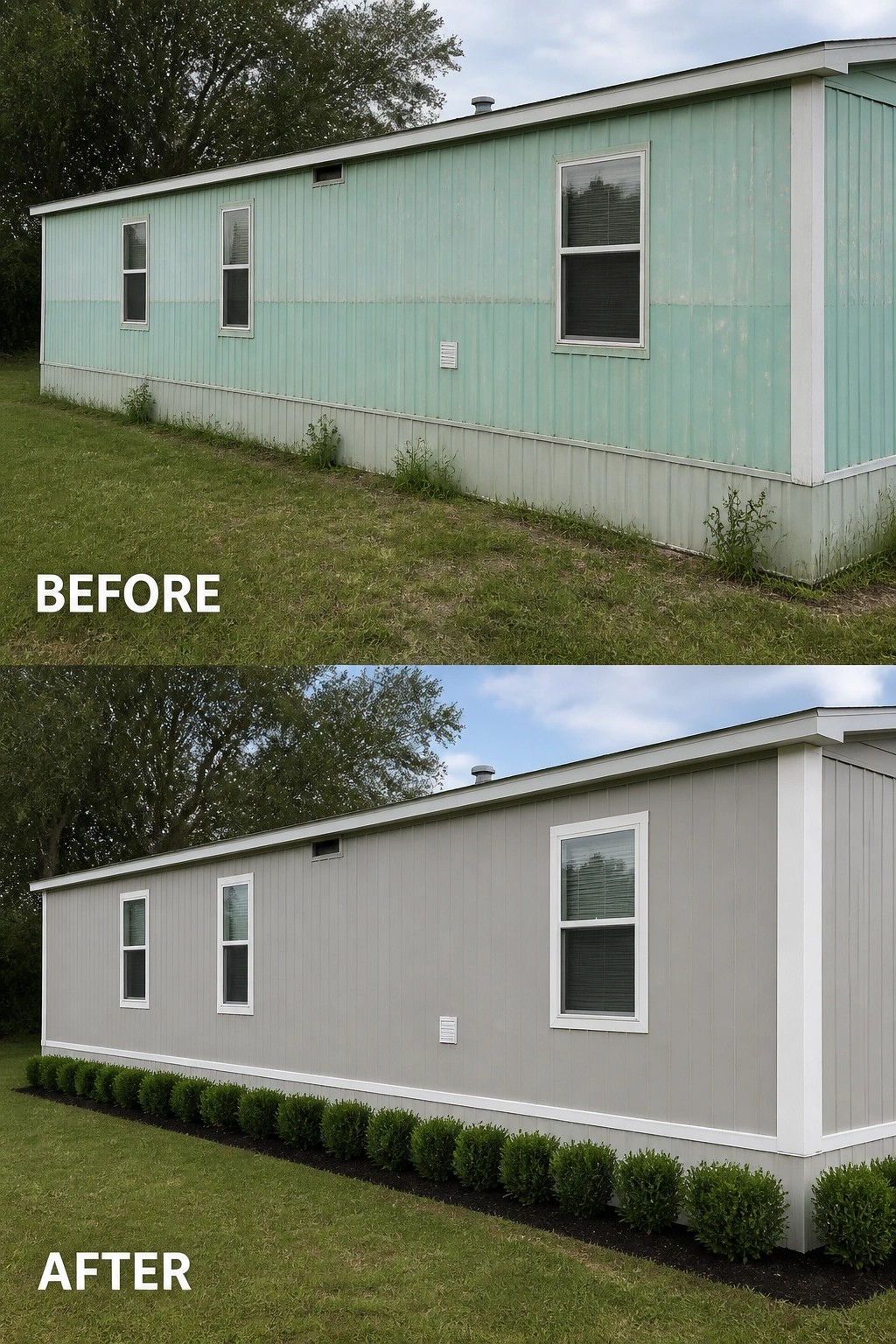
A simple repaint and crisp trim instantly make a plain manufactured home look cared for. Swapping a dated teal for a neutral gray and painting the window and corner trim bright white sharpens the lines of the building and gives the whole facade a neater, more intentional appearance.
Do the prep first: wash, patch any splits, and prime before you roll on color (a pressure washer helps). Pick a durable exterior paint made for siding, choose one main body color and a contrasting trim color, and keep the application tidy around windows and corners. This approach works especially well on budget-conscious homes—it’s relatively quick, inexpensive, and pairs nicely with a narrow planted bed to finish the curb appeal.
Give A Bare Porch A Clear Purpose
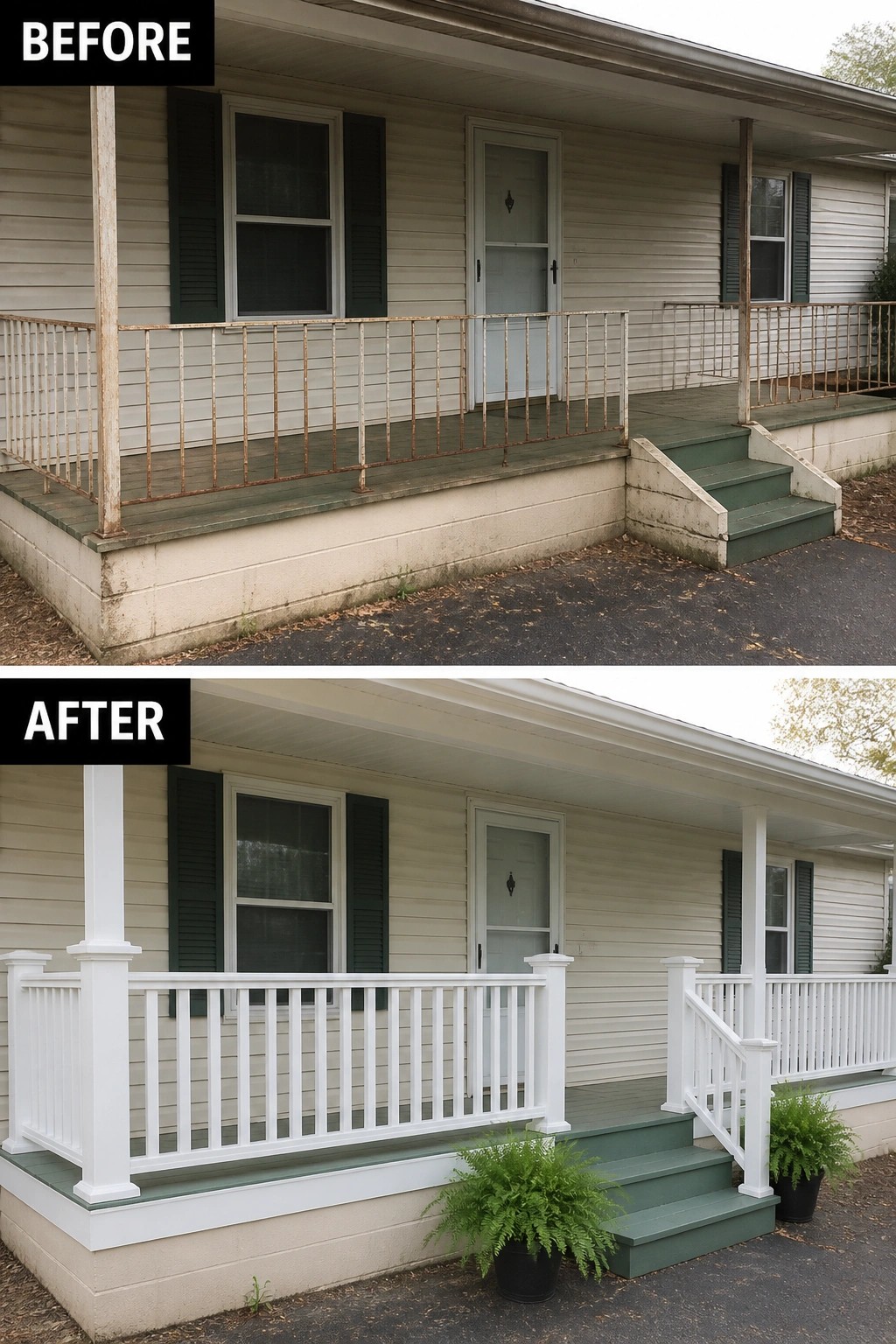
A simple, well-defined porch makes a house feel cared for without a big renovation. In this case, swapping rusty metal rails for clean white posts and a matching railing, then repainting the steps and skirt, instantly reads as a real entry rather than an afterthought. Add a pair of matching planters and the porch stops being a leftover space and becomes a small, usable welcome area.
To copy this, start with the trim and railing: either paint existing metal after proper prep or replace it with low-maintenance PVC or painted wood that matches your siding trim. Repaint the porch floor and skirt in a complementary color and add two symmetrical plants or simple seating so the scale feels right. This approach works well for older manufactured homes or any modest facade—focus on neat lines, easy-care materials, and just a couple of coordinated accents.
Make Siding Look Fresh Using Clean Trim And Paint
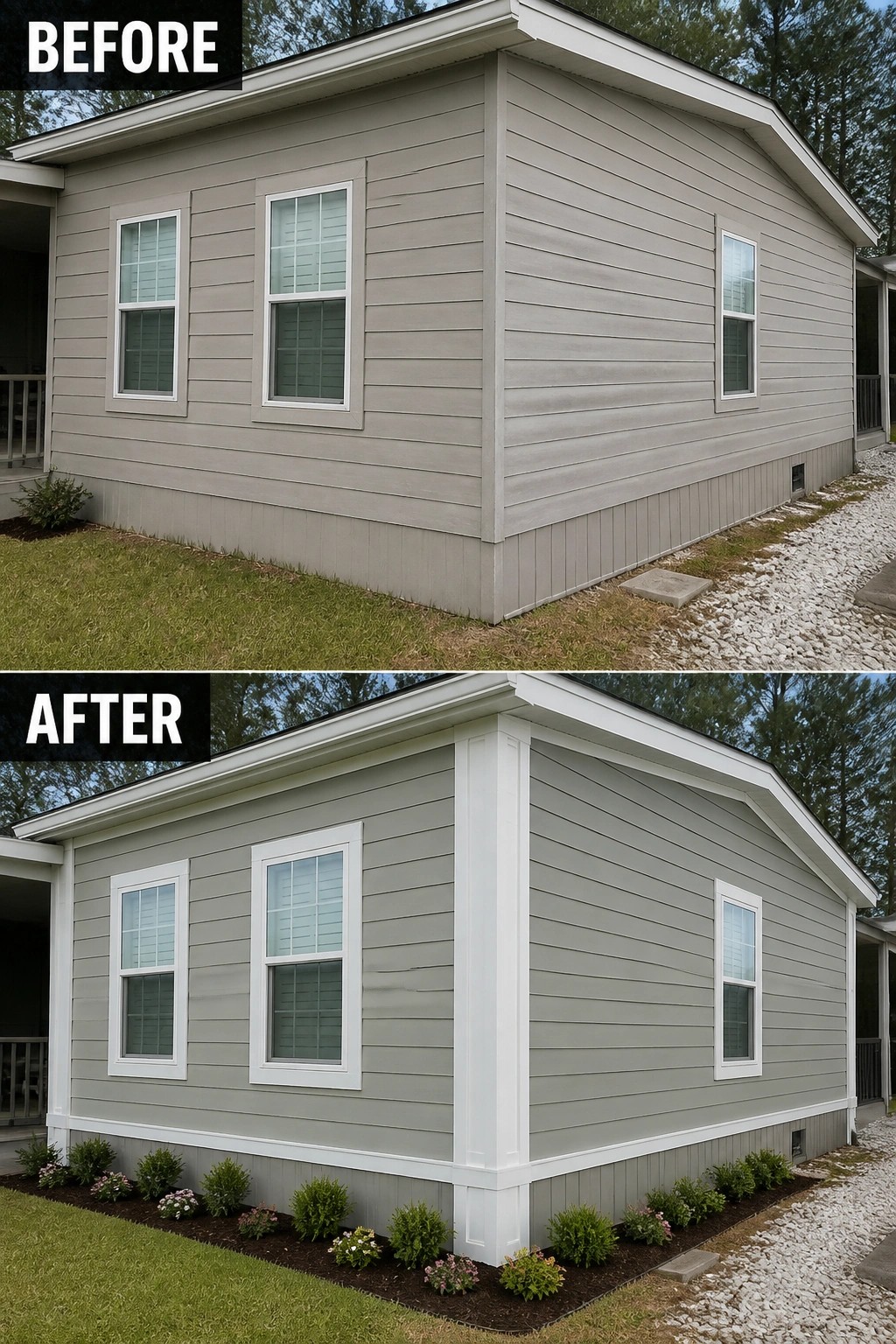
A quick way to modernize an older manufactured home is to simplify the palette and sharpen the trim lines. In this example the siding was repainted a soft gray and the corners, window casings, and base were swapped to crisp white trim, which immediately reads cleaner and more intentional — a couple of shrub beds along the foundation finish the look without overdoing it.
To copy this at home, start by pressure-washing and repairing any loose siding, then pick one neutral for the field and a high-contrast white or off-white for trim and corner boards. Add simple corner trim and a painted skirt to give the shell structure, and plant low, spaced shrubs with mulch to hide the foundation line (budget-friendly). This works especially well on narrow or boxy facades where clean lines and a limited palette make the whole house feel newer.
Give A Bare Porch A Clear Purpose
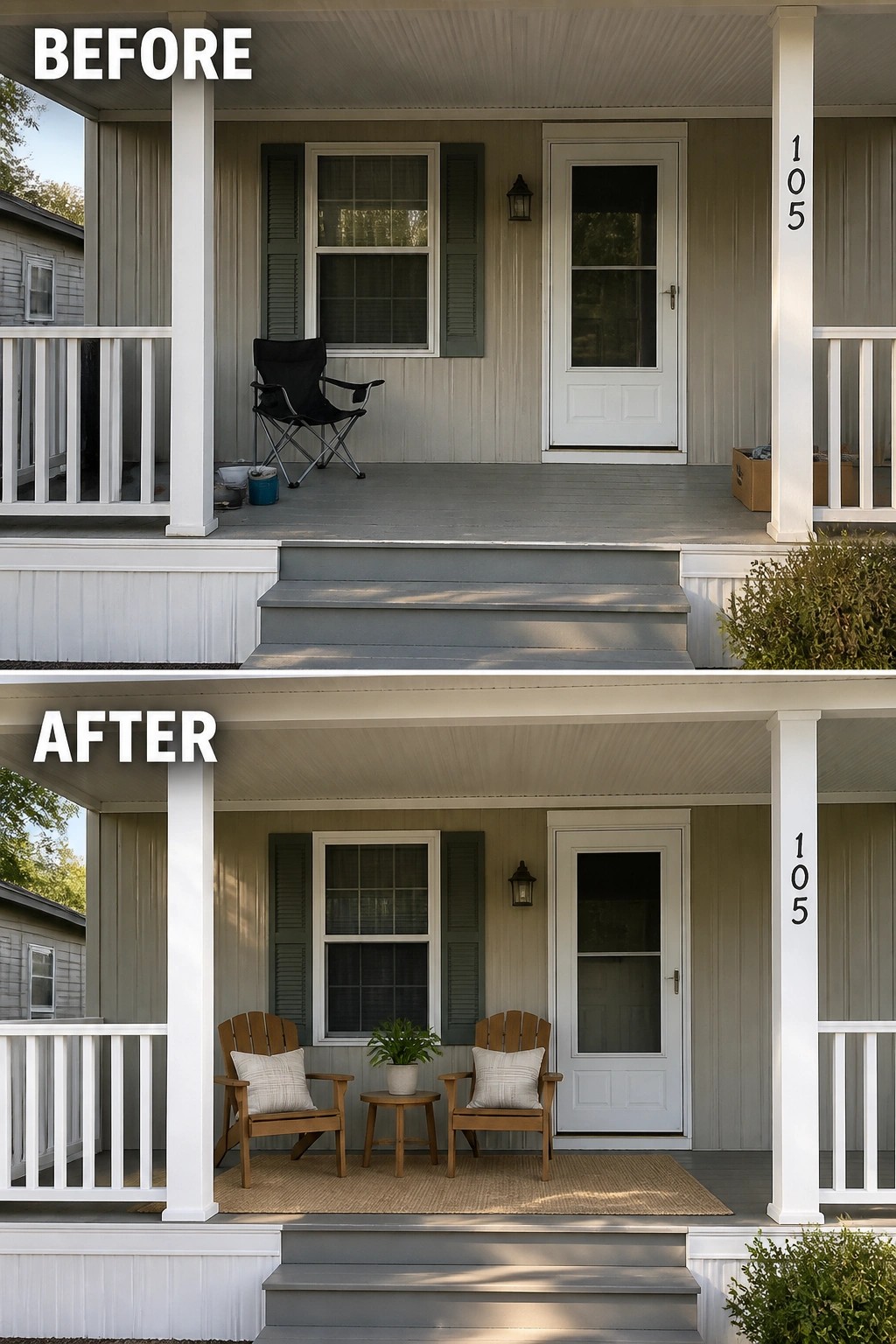
A plain porch becomes a usable outdoor room when you give it a clear purpose: seating. Replacing a lone folding chair with two matching chairs, a small side table, and a woven rug instantly defines a spot for conversation or morning coffee and makes the entry feel intentional. Small change, big difference.
To copy this, pick furniture that fits the porch depth and leave enough space to get to the door. Anchor the setup with an all-weather rug, choose durable cushions and a single planter or lamp for interest, and limit pieces to keep the area from feeling crowded. This works well for narrow covered porches and manufactured homes where scale and function matter most.
Refresh Skirting And Trim With Clean Paint
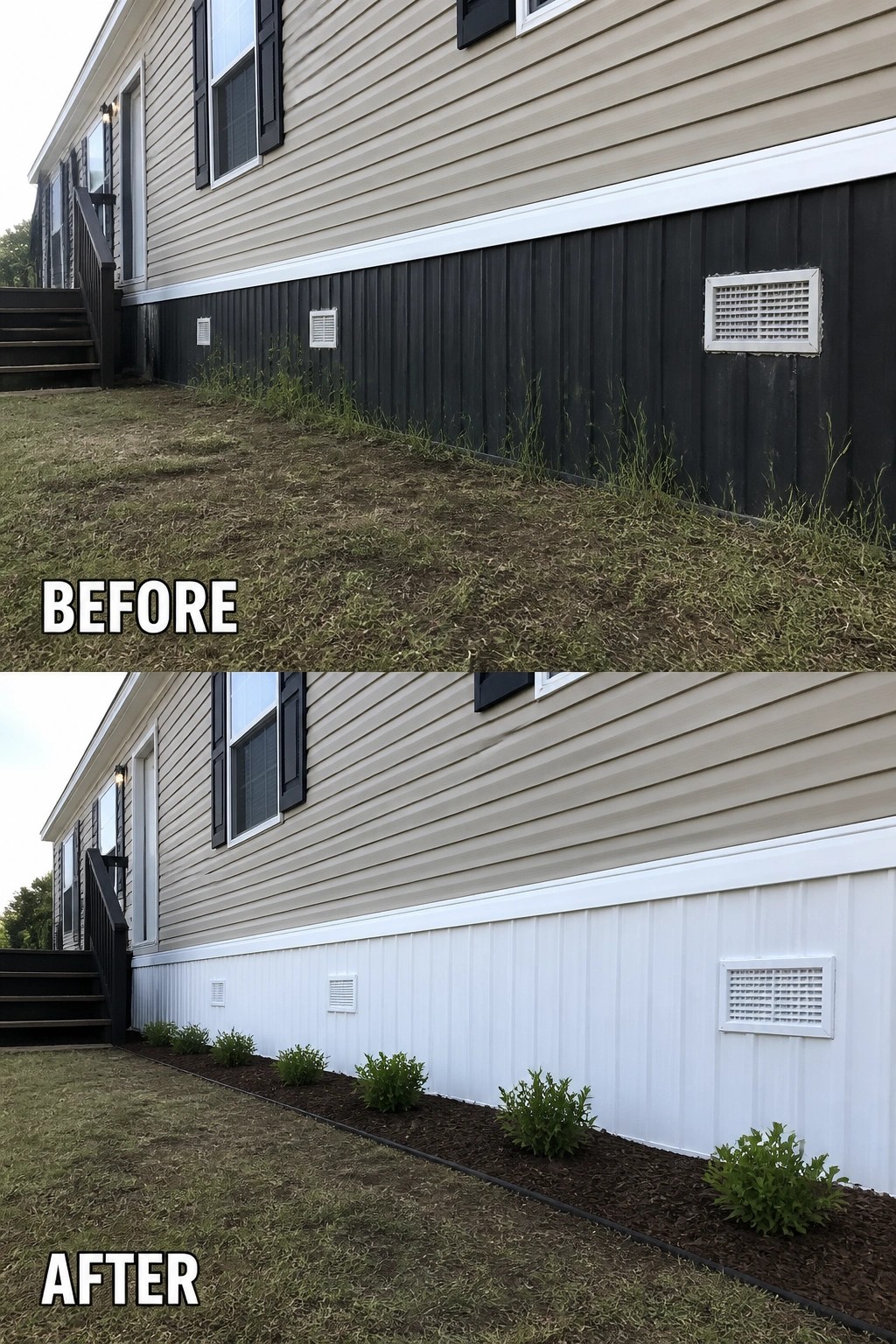
A fresh, contrasting paint job along the skirting and trim is an easy way to tidy a manufactured home and boost curb appeal. In this example the dark, weathered skirt was painted bright white (and the vents refreshed), which visually lifts the whole facade and makes the siding and shutters read cleaner and more intentional.
Start by cleaning or pressure-washing the skirt, then use a primer and an exterior paint formulated for vinyl or metal surfaces (test a small area first). Pick a trim color that ties back to your siding or shutters, paint vents to match, and finish with a simple mulch bed and repeating low shrubs to hide the gap and reduce maintenance—just keep vents accessible and allow airflow.
Use Clean Trim And A Contrasting Door To Boost Curb Appeal
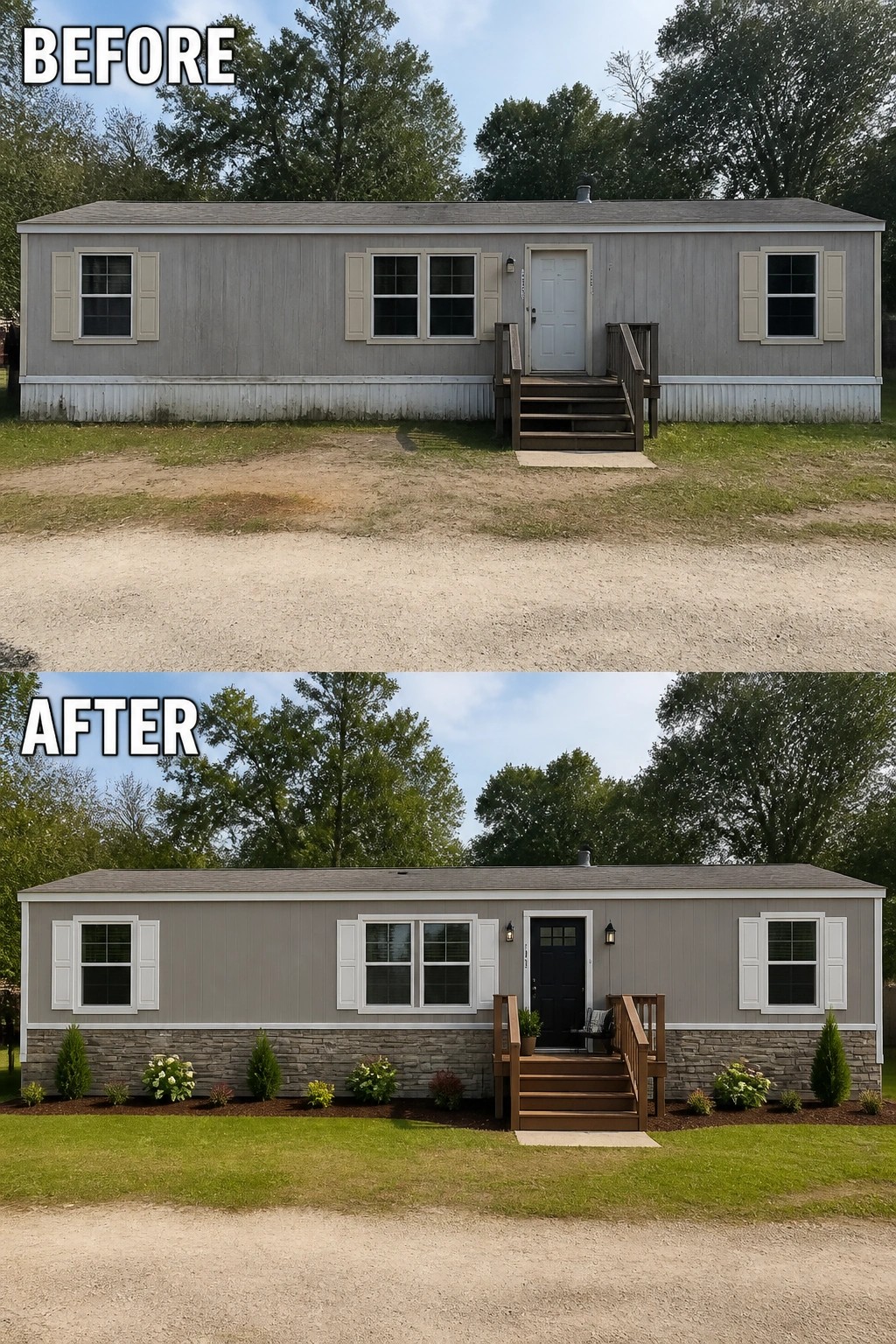
A simple palette swap—fresh white trim and a dark-painted front door—can change a plain manufactured home’s face without a major remodel. In this example the clean, crisp trim lines and a stronger door color give the whole exterior a more intentional, finished look while the new low planting bed softens the base and hides worn skirting.
To copy this, start by power-washing and repainting trim and shutters in a bright, durable exterior paint, then pick a deeper color for the door to create contrast. Add a modest band of stone or painted skirting and a narrow mulch bed with small shrubs to anchor the house; keep plantings low so windows and trim stay visible. Small, well-chosen updates like these are inexpensive and work especially well on single-story or manufactured homes where proportion and simplicity matter.
Frequently Asked Questions
Q: How do I pick trim and paint colors that make a manufactured home look fresh without feeling flashy?
A: Pick a trim color that sits one or two tones away from the main color so the lines read cleanly from the street. Stick to a limited palette—body, trim, and one accent—and let contrast highlight architectural details rather than compete with them.
Q: What prep work actually matters before painting the exterior?
A: Clean the siding thoroughly, scrape loose paint, and caulk any gaps around windows and trim so the new paint sticks and looks smooth. Skipping that makes the job look fresh for a season but fail faster.
Q: Can I tackle a full exterior trim and paint update myself?
A: Yes, many people can do it with basic tools, some ladders, and one weekend per siding side for smaller homes. If you’re uneasy on ladders or have damaged siding, hire a pro for safety and a neater finish.
Q: How do I keep the new trim and paint looking good year after year?
A: Rinse the exterior once a year, touch up chips quickly, and re-caulk where gaps form to stop water from undermining paint and trim. Small fixes now save you from big repaint jobs later.