

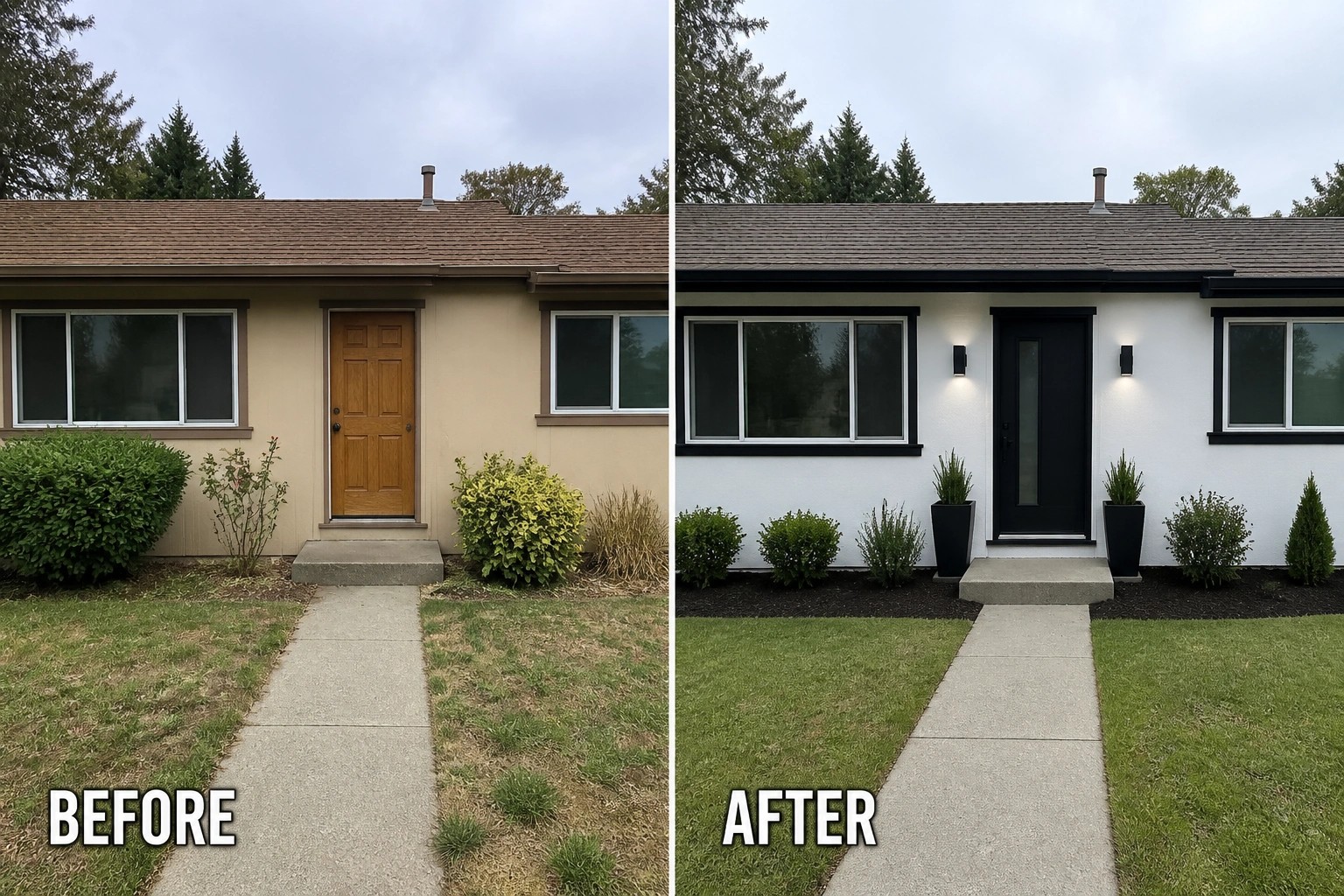
I often notice how a faded or flat facade can make the whole house feel a bit overlooked, even when the inside is in good shape.
Simple swaps like fresh paint or updated trim details tend to lift that tired look without requiring major construction.
Those changes stand out more than I expected.
When I think about testing ideas on my own place, I start with the entry area because it sets the tone for everything else that follows.
The suggestions here cover a range of options that work well on common beige or brown surfaces, and many of them build on each other in practical ways.
Update A Dated Exterior With A Fresh Color Scheme
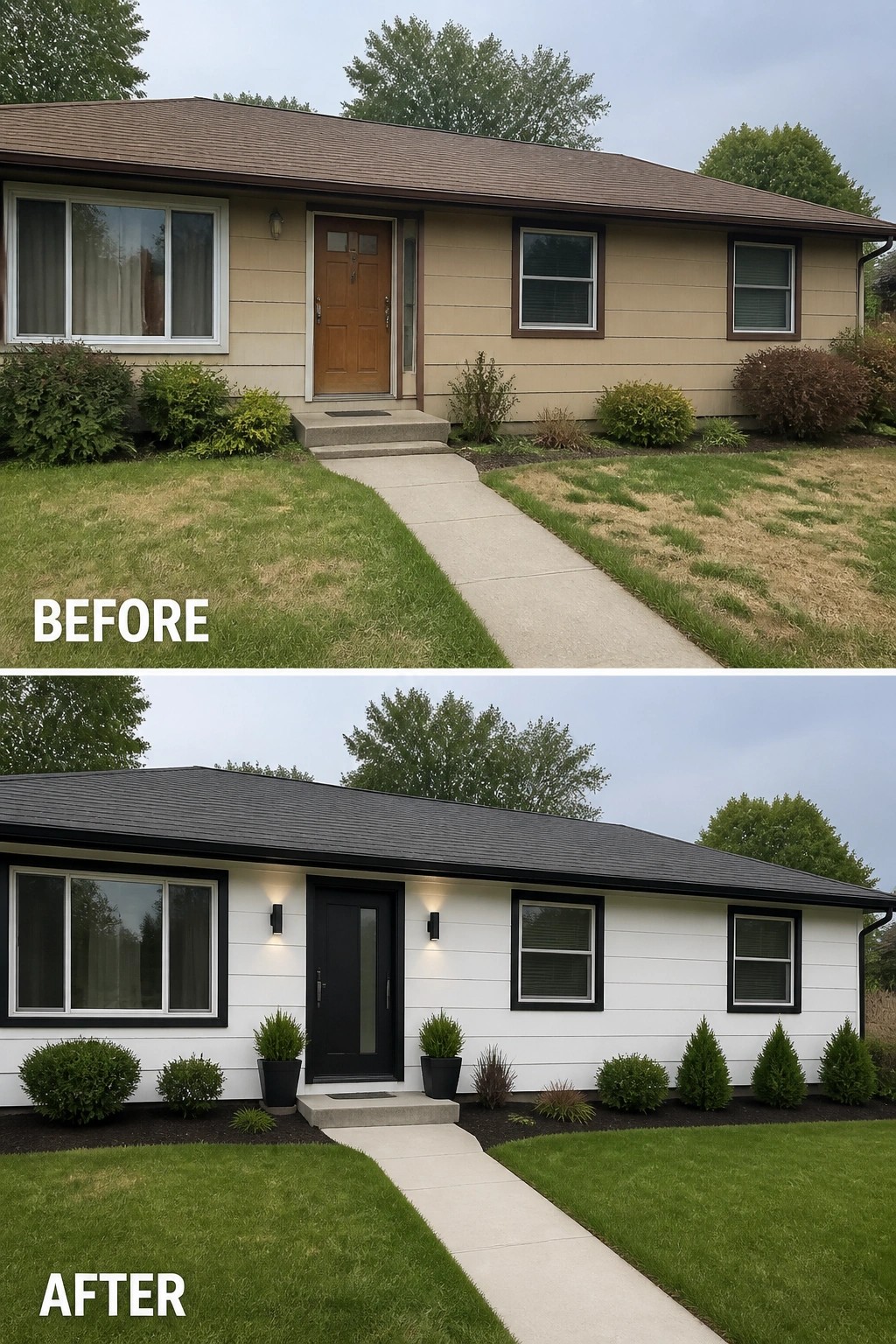
Many beige homes from past decades start to look flat and tired after years of sun exposure. Changing the siding to white with black trim around the windows and roof gives the facade a cleaner, more modern shape without major construction.
This works best on simple single-story homes where the goal is better curb appeal on a budget. Focus first on the main body color and trim, then add a darker door and a couple of wall lights near the entry to finish the update.
Paint Brick Exteriors To Brighten Older Homes
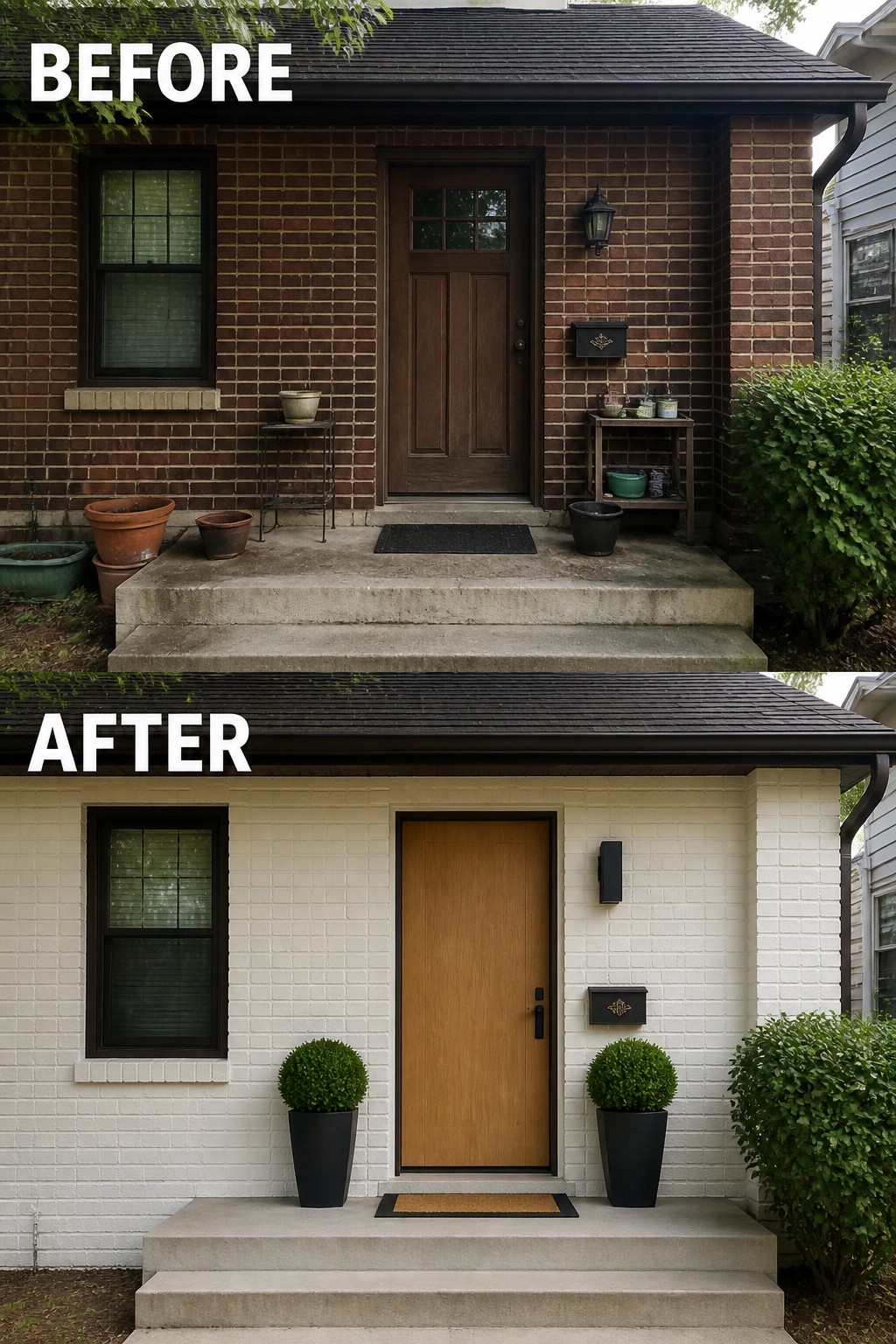
Painting tired brick is one of the simplest ways to update a dated exterior without major construction. In this case the brown brick was covered in white, the dark door was swapped for a lighter wood style, and the cluttered entry was cleared in favor of two matching planters. The result feels much cleaner and more current.
This approach works well on smaller brick homes where the facade needs lightening. Stick to a light neutral paint made for masonry, keep accessories minimal, and focus on the entry first. It is an affordable starting point before considering bigger changes like new windows or siding.
Refresh A Dated Exterior With Dark Siding
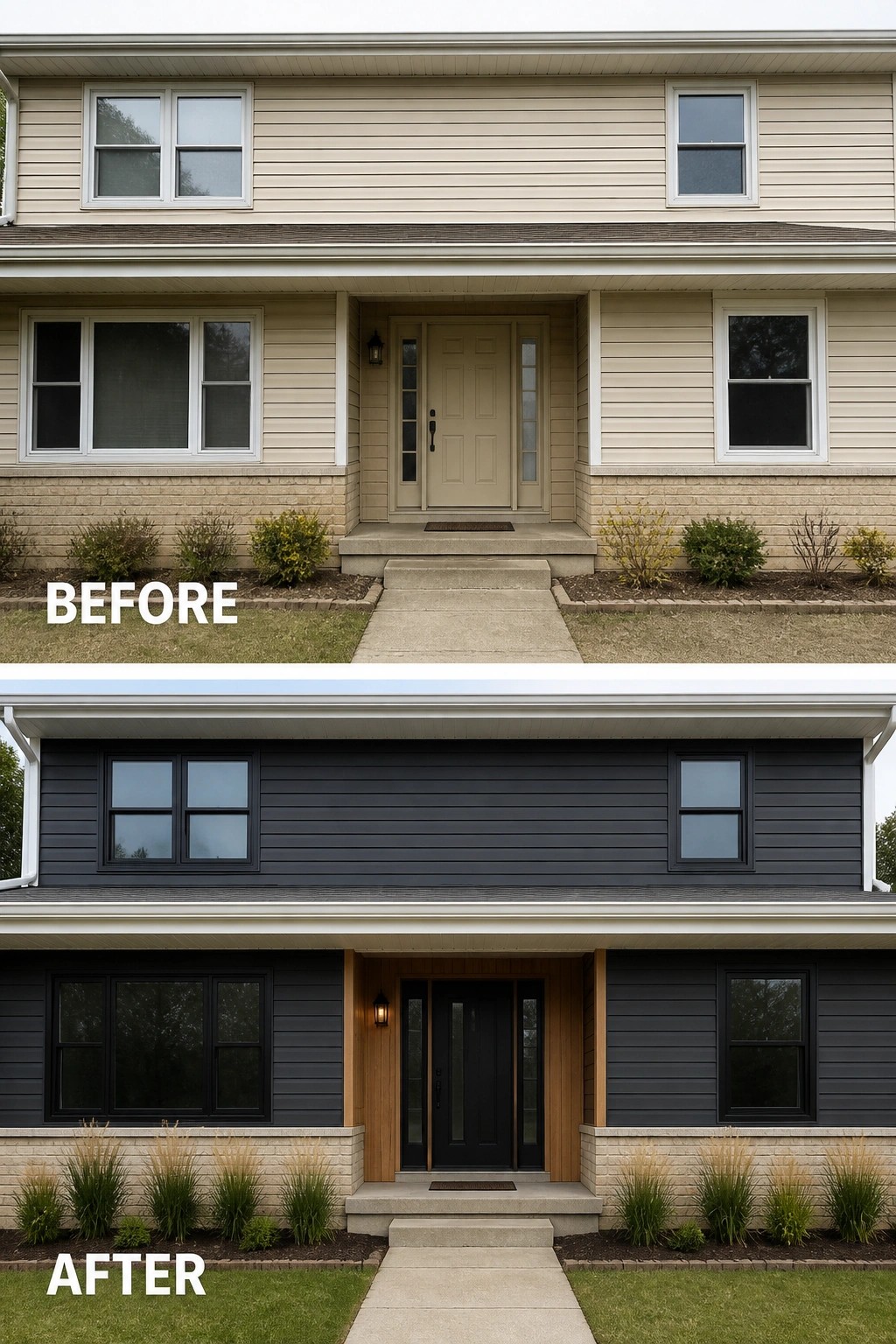
Many beige homes start to look tired once the siding fades and the details feel outdated. Switching the upper level to a dark color instantly gives the house more weight and makes the windows and entry stand out without any structural changes.
This idea works best on two-story homes where the siding is still in good shape. Start with the color change, then update the windows and front door to match. Keep the landscaping low and simple so the new siding stays the focus.
Use Stone Veneer To Refresh A Plain Exterior
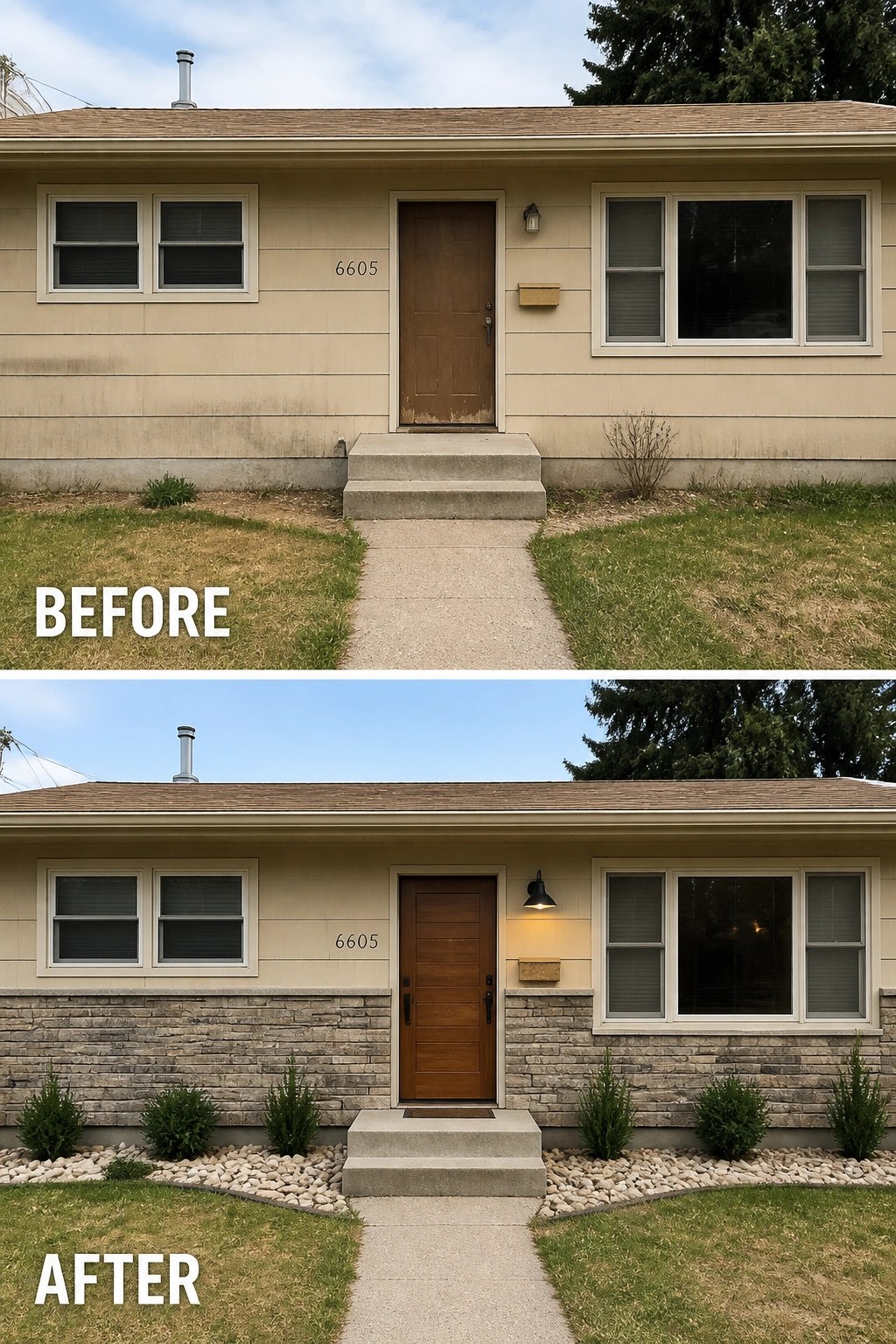
Many beige houses end up looking flat because the siding runs all the way to the ground with nothing to break it up. Adding a stone base along the bottom gives the facade more weight and makes the whole front feel more finished, especially when the front door is updated at the same time.
This works best on simple single-story homes where you want a noticeable change without repainting or re-siding everything. Keep the stone color neutral so it blends with the existing siding and roof, and focus the update on the entry area first.
Update A Tired Exterior With Fresh Paint Colors
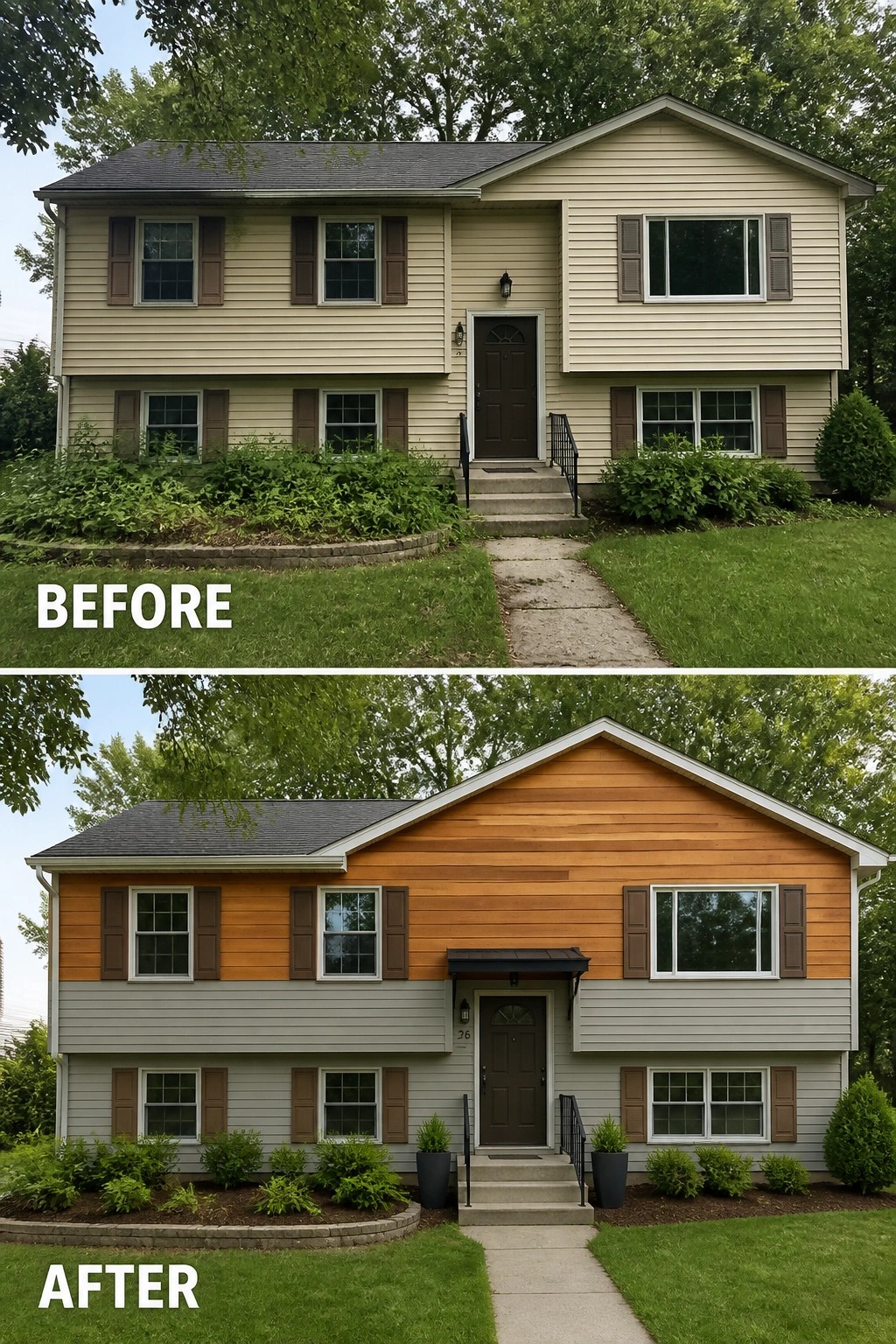
A house with all one color siding often starts to feel flat and dated after a while. Switching to a two tone scheme with a wood tone on the upper level and a solid gray below adds depth and makes the whole facade feel more current.
This approach works especially well on simple two story homes where the upper section can stand out without needing new materials. Test samples on the actual siding first and keep the entry simple so the color change does the main work.
Update A Dated Garage Door For Fresh Curb Appeal
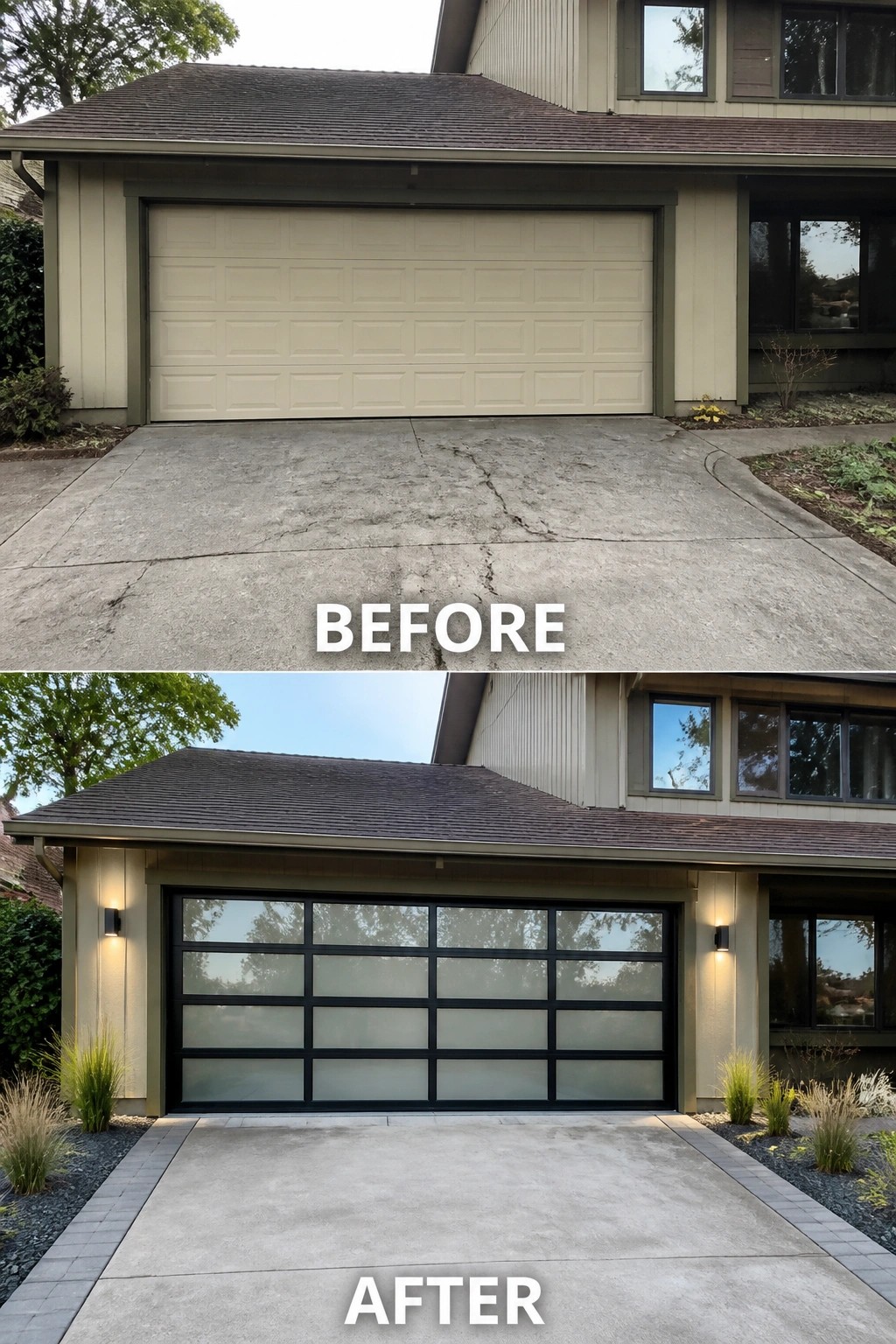
A large garage door often takes up most of the front view on many homes. Replacing a flat panel door with one that has glass sections and dark frames gives the whole facade a cleaner, more current look without touching the rest of the house.
This change works especially well on neutral or beige homes where the garage sits front and center. Keep new lighting simple and close to the door, and use low planting on either side so the updated door remains the main point of interest.
Replace Concrete Steps With A Wooden Deck And Railings

Many older homes have simple concrete entries that feel flat and hard to use. Switching to a wooden deck with proper steps and black railings gives the front a cleaner look and makes the space feel more finished. The dark door color also helps tie everything together without needing major changes to the siding.
This approach works well on homes with basic beige or brown exteriors where the entry looks tired. Start with the deck and railings first, then add one or two small pieces like a bench or planters so the area stays usable. Make sure the new deck height and railing style match the house scale so the change feels natural rather than oversized.
Update A Tired Entry With A New Awning And Shutters
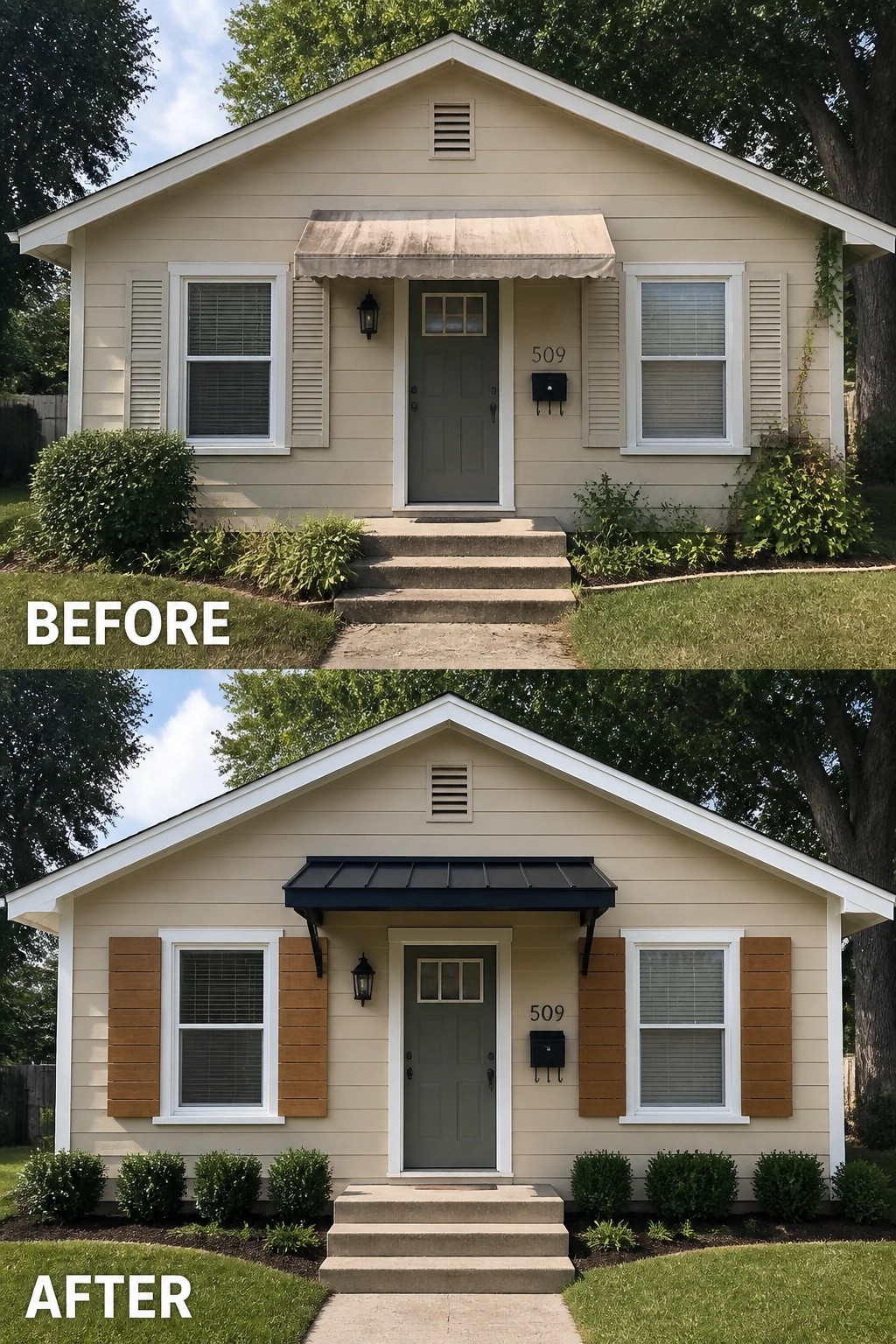
A faded canvas awning and mismatched shutters can make even a simple house look dated. Swapping the old awning for a clean metal one and adding wood shutters gives the front a sharper, more current look without changing the whole house color or layout.
This approach works well on smaller homes or ranch styles where the entry needs a focal point. Keep the awning size modest so it fits the roofline, and choose shutter material that holds up to weather. Start with those two changes before adding more details like new lighting or plants.
Update Exterior Paint And Trim On A Beige Home
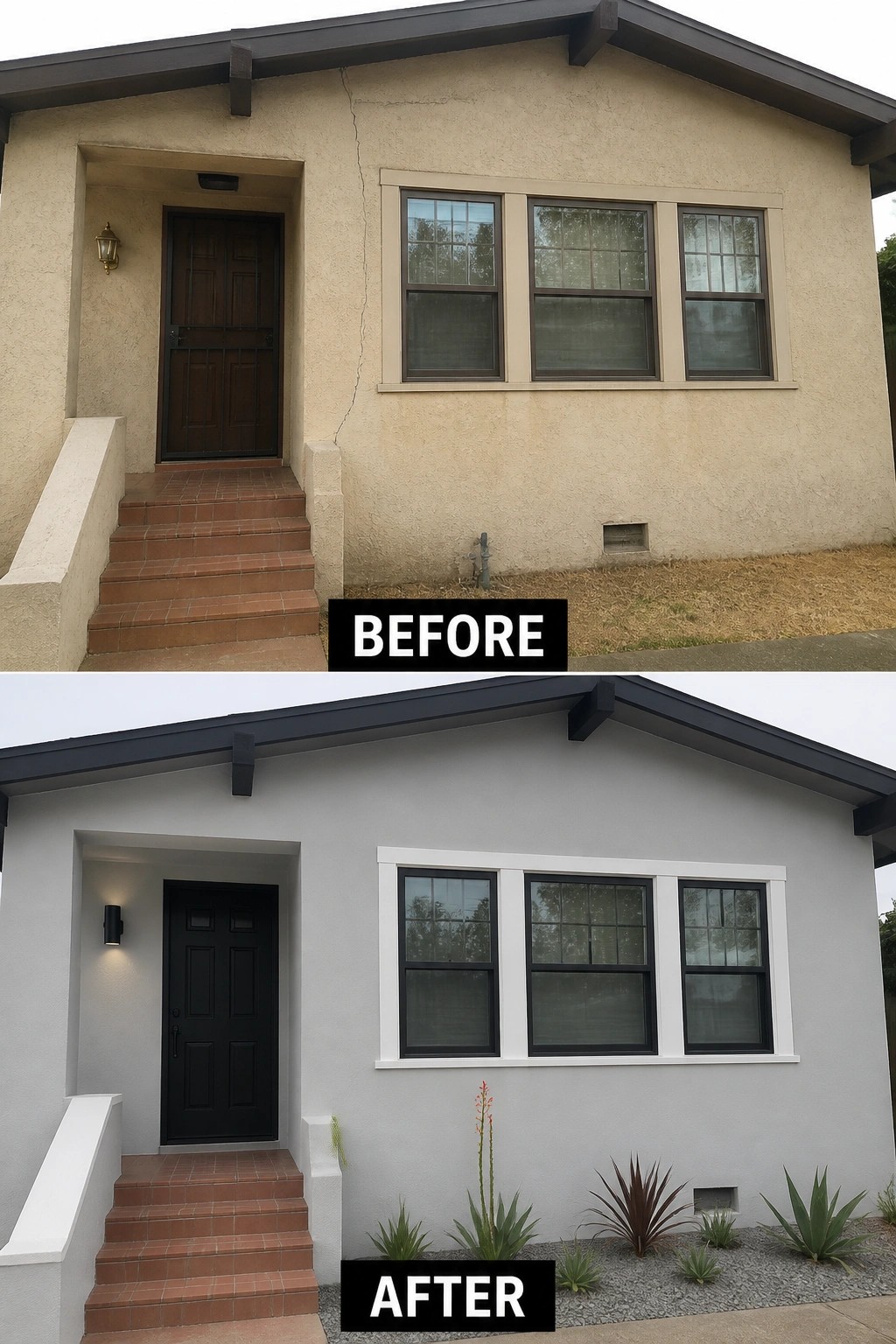
Many beige stucco homes start to look flat and dated after a few years. A simple color change can shift the whole feel without touching the structure. In this case the house went from a tired beige to a soft gray, with the door painted black and the window frames updated to white. Those two moves alone made the facade feel current again.
This approach works well on homes with basic stucco or siding where the shape is already sound. Pick a light neutral for the main walls, then use a darker color on the door and a crisp shade on the trim so the windows stand out. Keep the landscaping simple at first so the new paint stays the main focus.
Add Structure To A Plain Front Yard
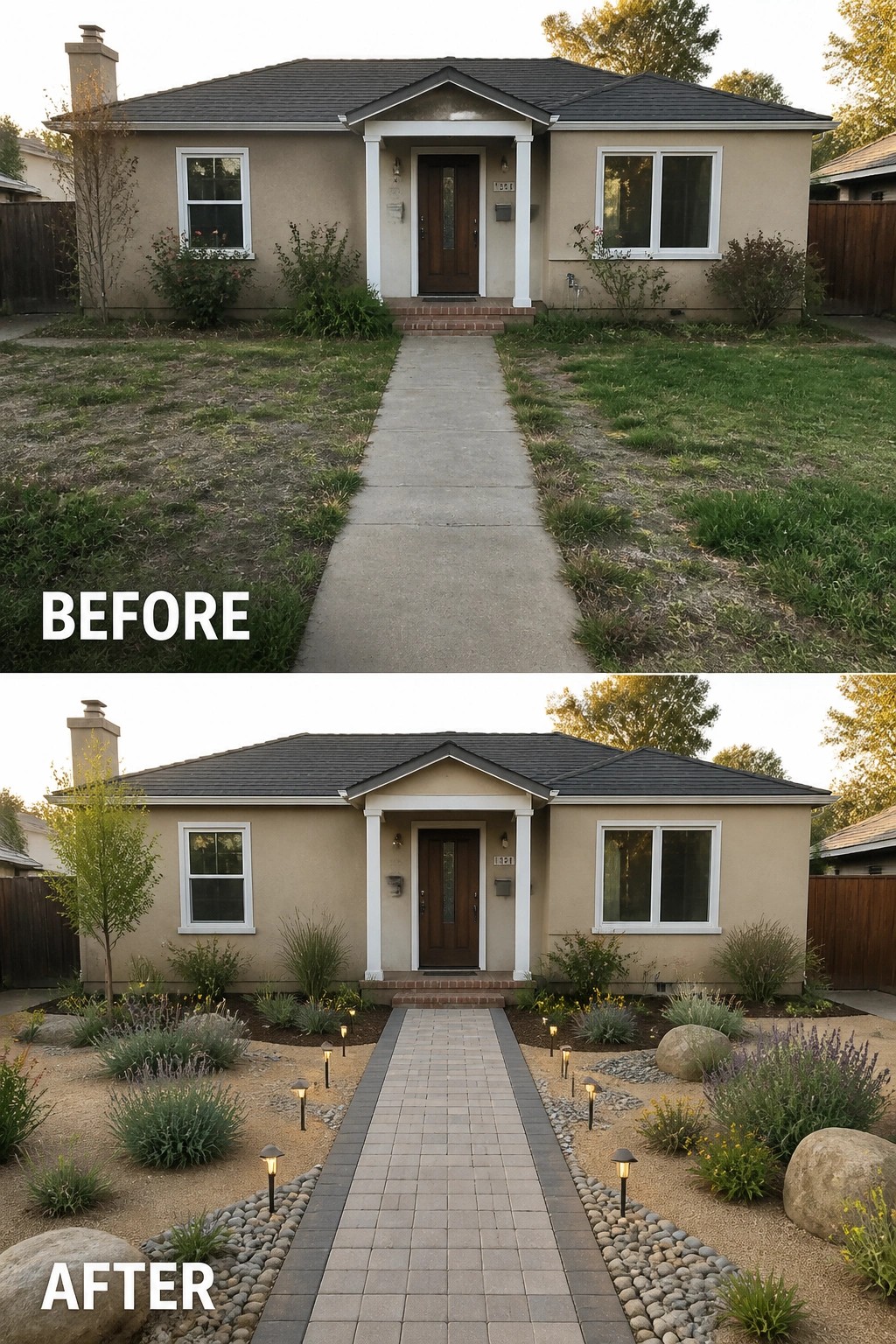
The main change here is replacing an uneven lawn and bare concrete path with a clear layout of pavers, gravel borders, and planted beds. This gives the whole front area a finished look instead of feeling like leftover space around the house.
The idea works best on homes with simple facades that need help connecting to the street. Start by deciding where the main path should run, then build planting areas around it rather than scattering plants across open grass. Keep the plant choices low and repeat a few varieties so the beds stay easy to maintain.
Give A Bare Porch A Clear Purpose
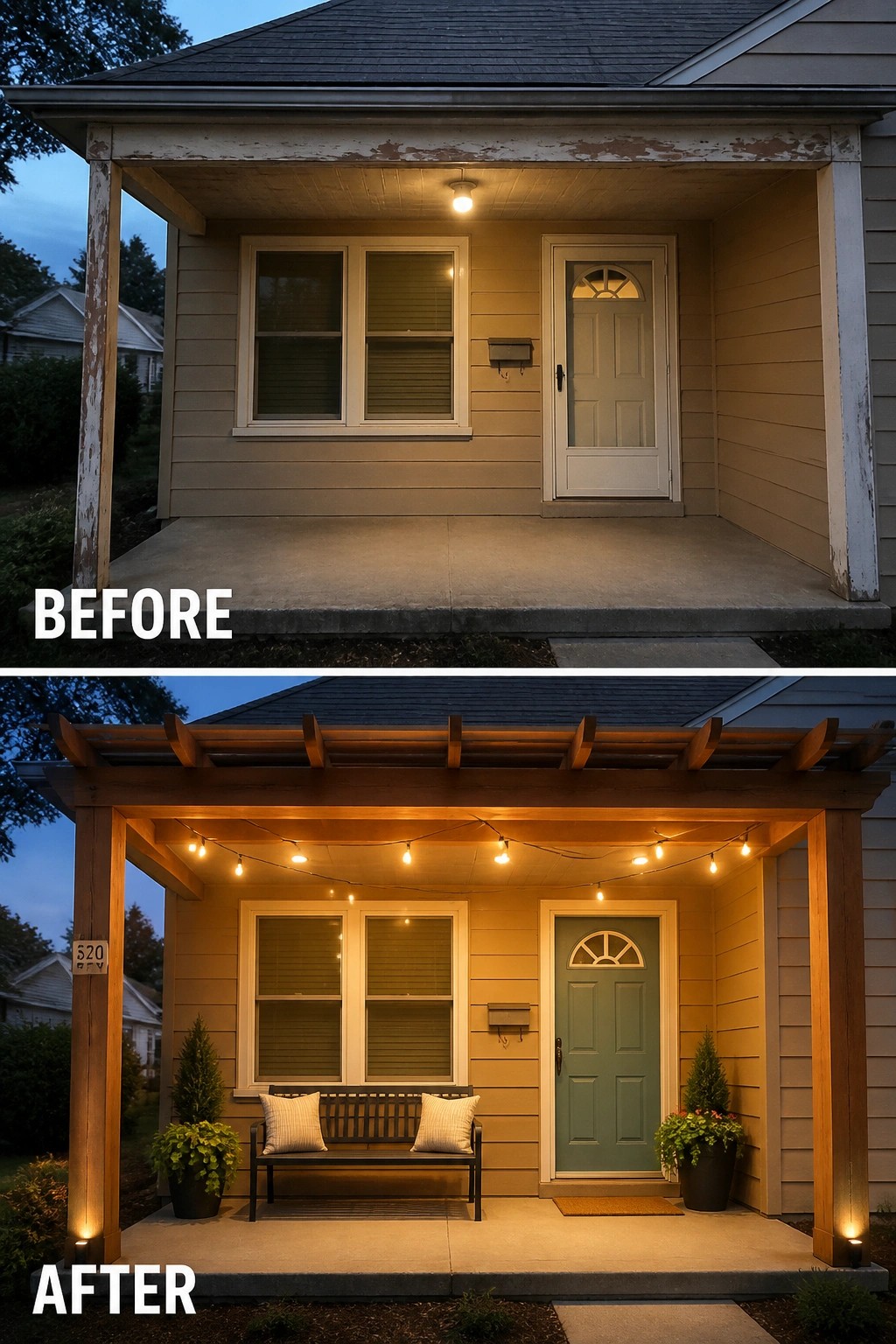
A plain concrete porch often feels like wasted space until you give it a reason to exist. Adding a pergola overhead and a simple bench below turns the area into a defined spot that invites people to stop and sit instead of just passing through the door.
This approach works best on homes with a small front entry that already has some roof coverage. Keep the furniture scale modest, use weatherproof pieces, and add just enough lighting so the space feels usable after dark without overwhelming the house.
Update Window Frames And Add Window Boxes
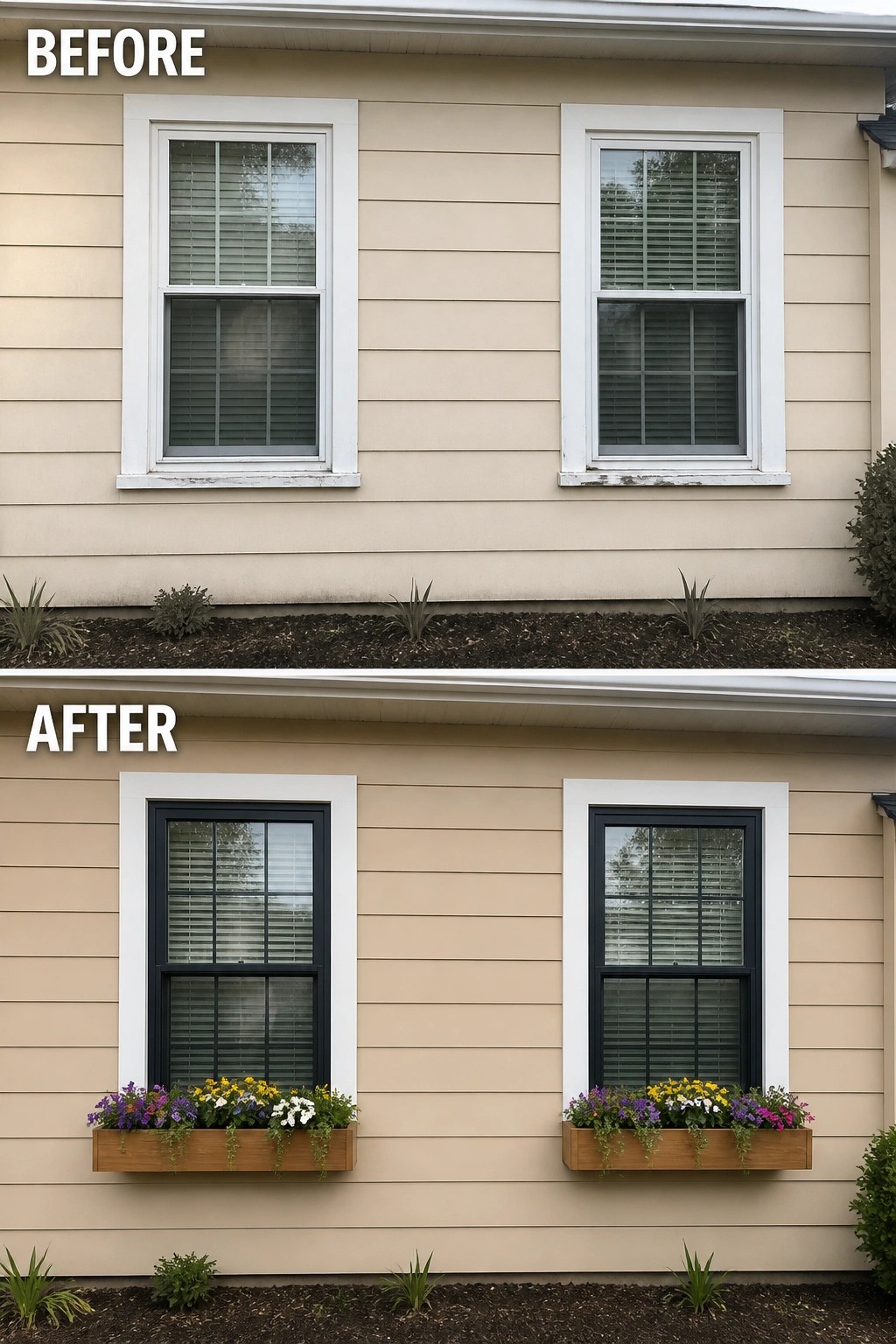
Switching the window frames to black makes the whole front of the house look sharper against the beige siding. Adding simple wooden window boxes with flowers brings color and life right where it is most visible.
This idea works best on homes with plain siding and several windows in a row. Start by painting the frames, then choose boxes that sit neatly under the sills without crowding the walkway below.
Paint The Columns And Door To Refresh The Entry
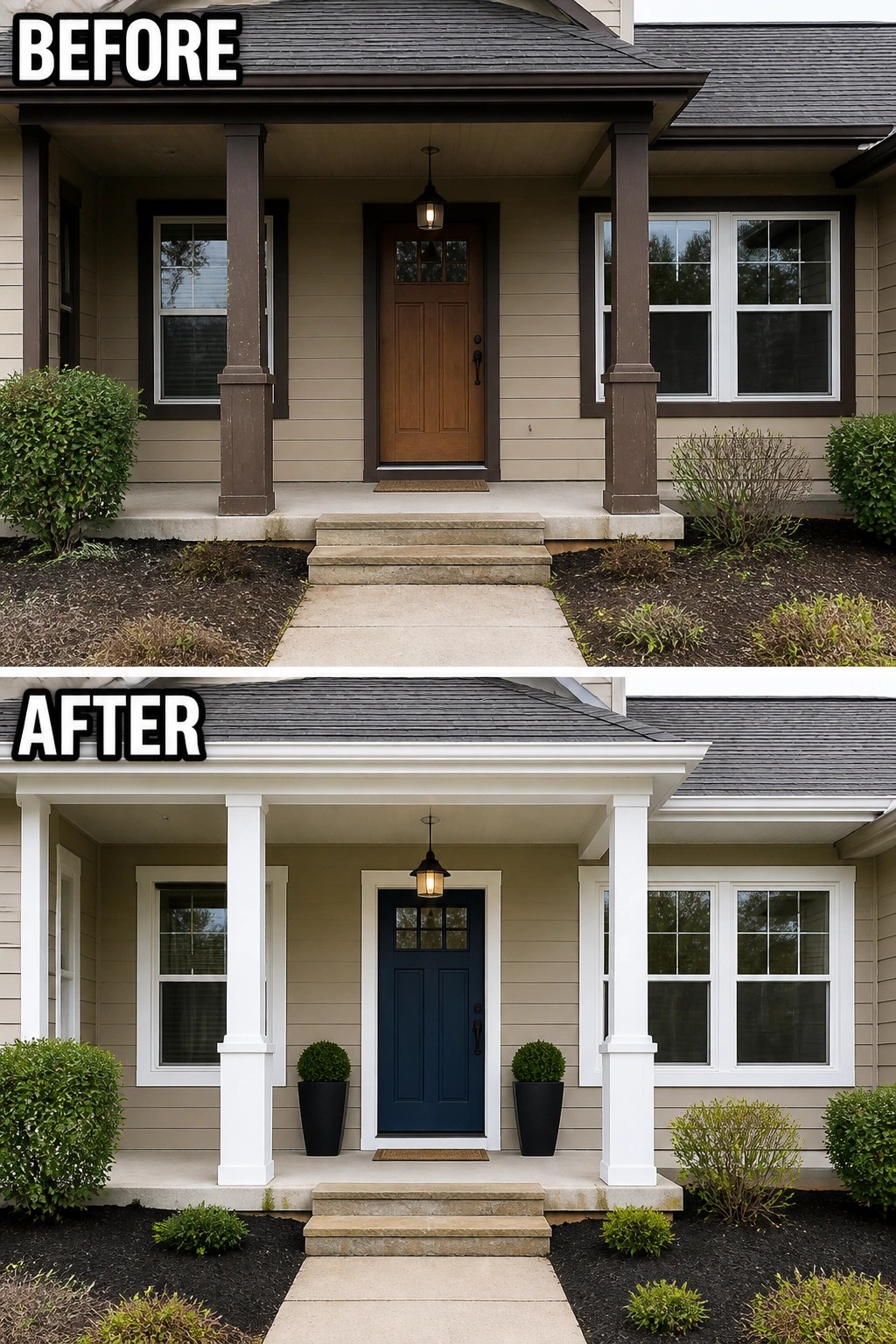
The shift from dark brown columns and a matching brown door to white columns and a deep navy door makes the front of the house feel lighter and more current. A couple of matching planters help tie the new look together without adding much else.
This idea works best on homes that already have a solid porch structure but need a quick update. Choose a white that matches your existing trim and pick a door color that contrasts with the siding. It is a low-cost change that can be done in a weekend and often looks better than adding lots of new details.
Add Wood Accents To Refresh A Plain Entry
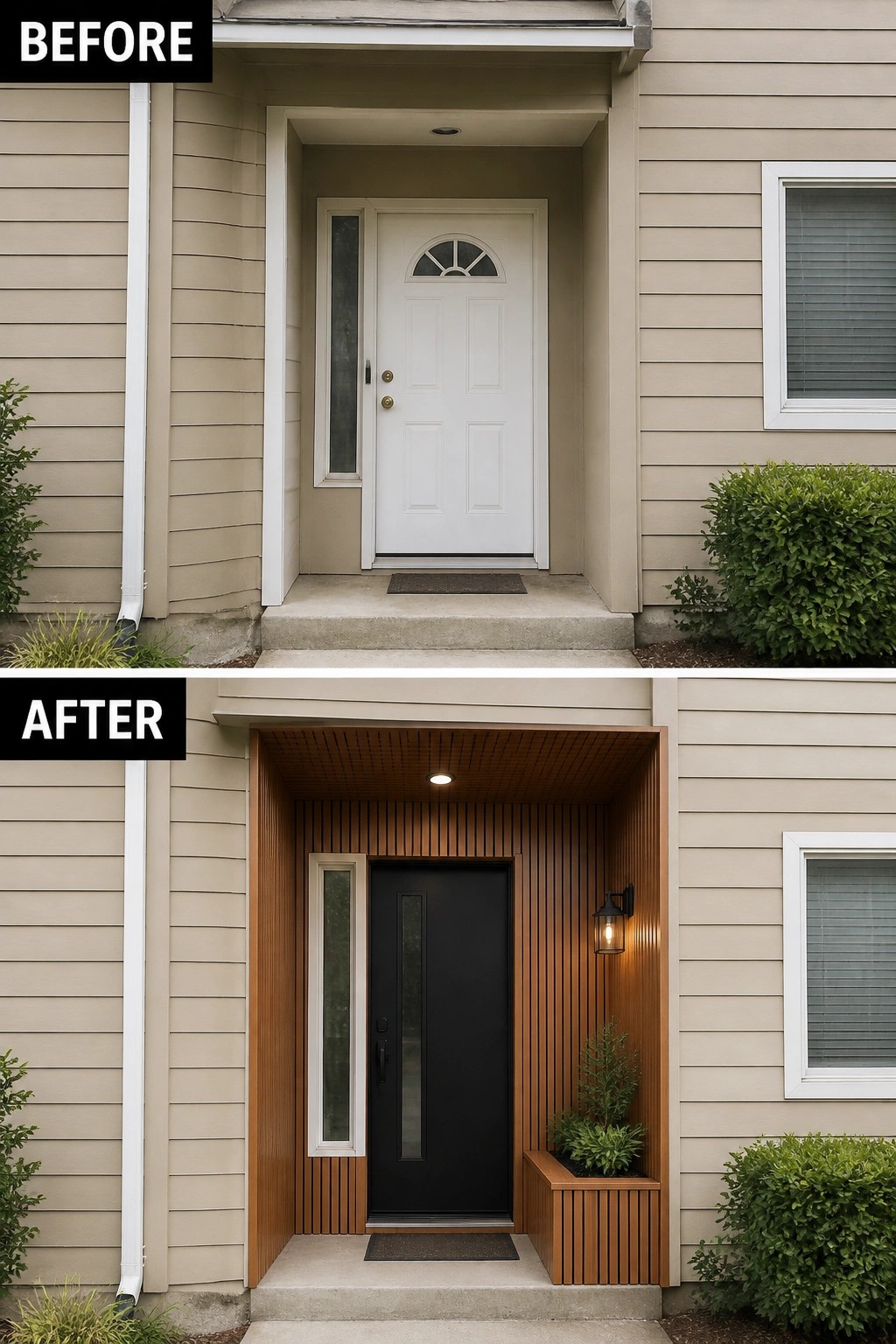
Many beige houses have entries that sit flat against the siding with little definition. Adding vertical wood slats around the door recess creates a clear frame, gives the space depth, and pairs well with a darker door color.
This idea works best on homes where a full siding change is not practical. Keep the wood area limited to the entry walls and ceiling, then add one wall light and a simple planter. The result feels updated without requiring a large budget or major construction.
Update A Cracked Concrete Path With Pavers And Gravel
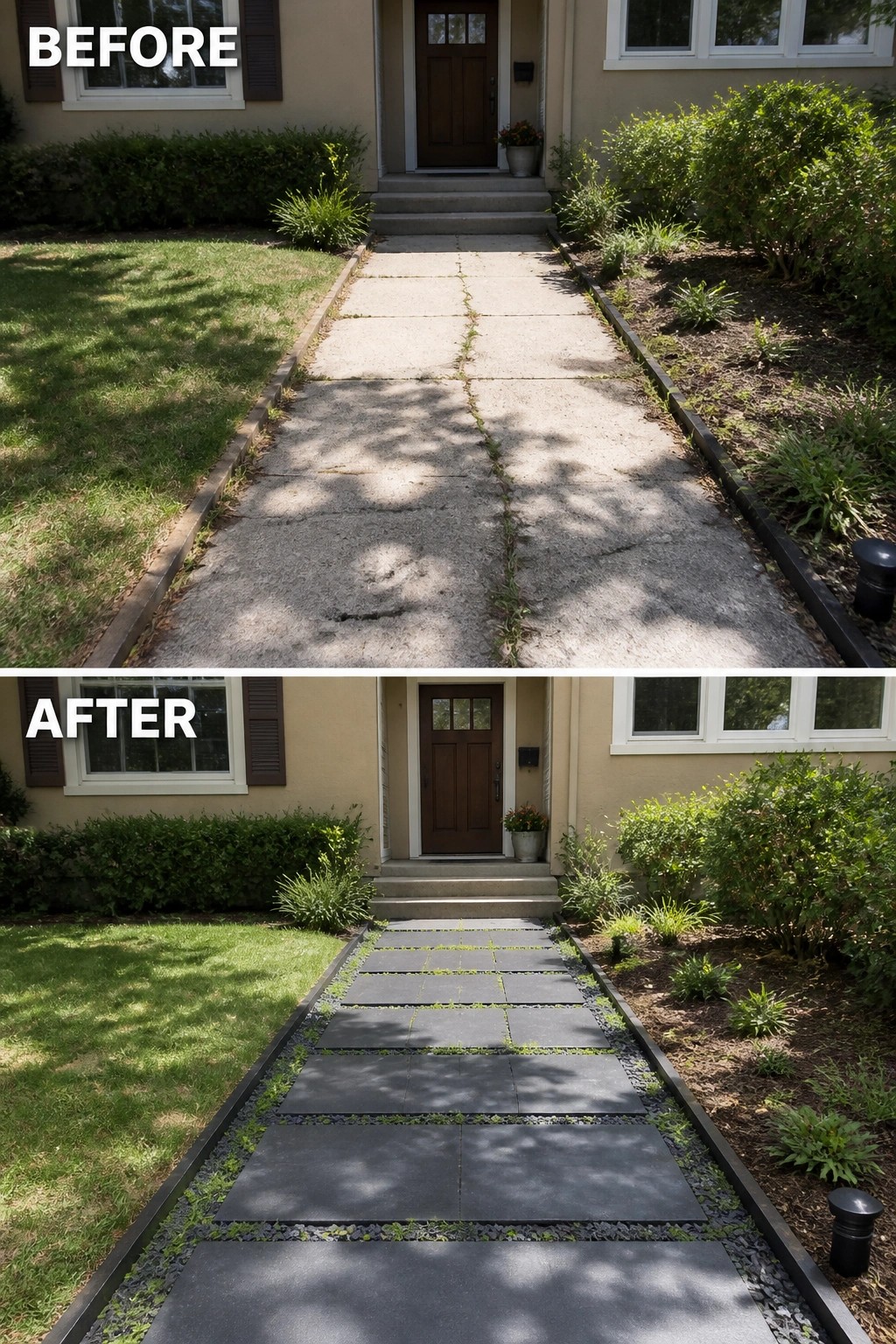
An old concrete walkway often shows its age first through cracks and weeds. Switching to dark pavers set in gravel gives the path a cleaner line, improves drainage, and makes the whole front approach feel more finished without changing the house itself.
This works best on straight or gently curving walks where you want low maintenance and a simple modern look. Keep the paver color darker than the house so it contrasts with the siding and plantings, and make sure the gravel is contained by edging so it stays neat over time.
Add An Overhang To Define The Front Entry
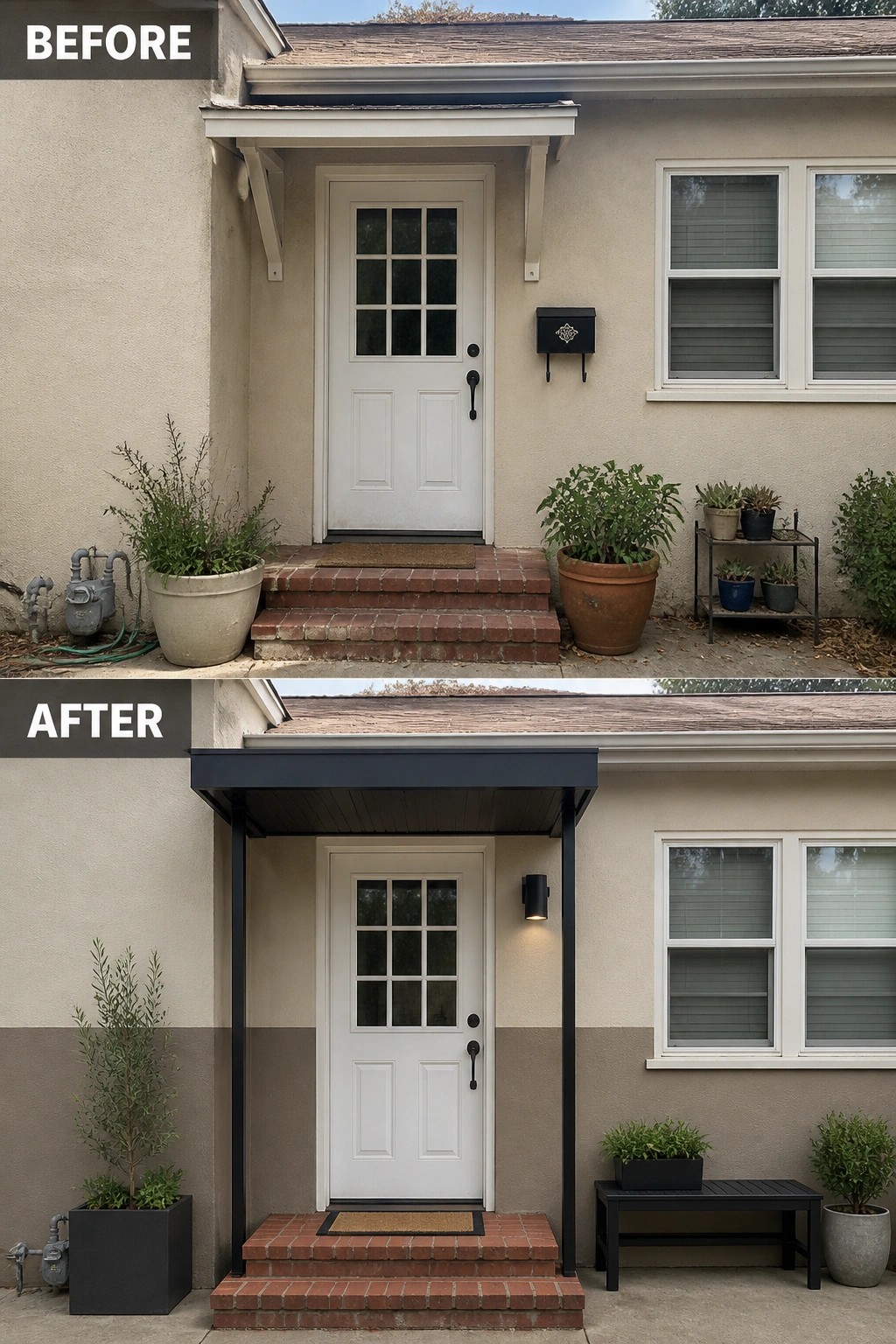
A simple overhang can give a plain front door more presence without a full renovation. The before photo shows a basic entry that sits flat against the house with no real cover or focus. Adding the black structure in the after photo creates a clear entrance and helps the door stand out.
This idea works best on ranch homes or houses with simple facades. Start with the overhang to set the shape, then keep the rest of the updates light with one bench and a few matching planters so the space stays easy to maintain.
Give A Tired Porch A Clear Purpose
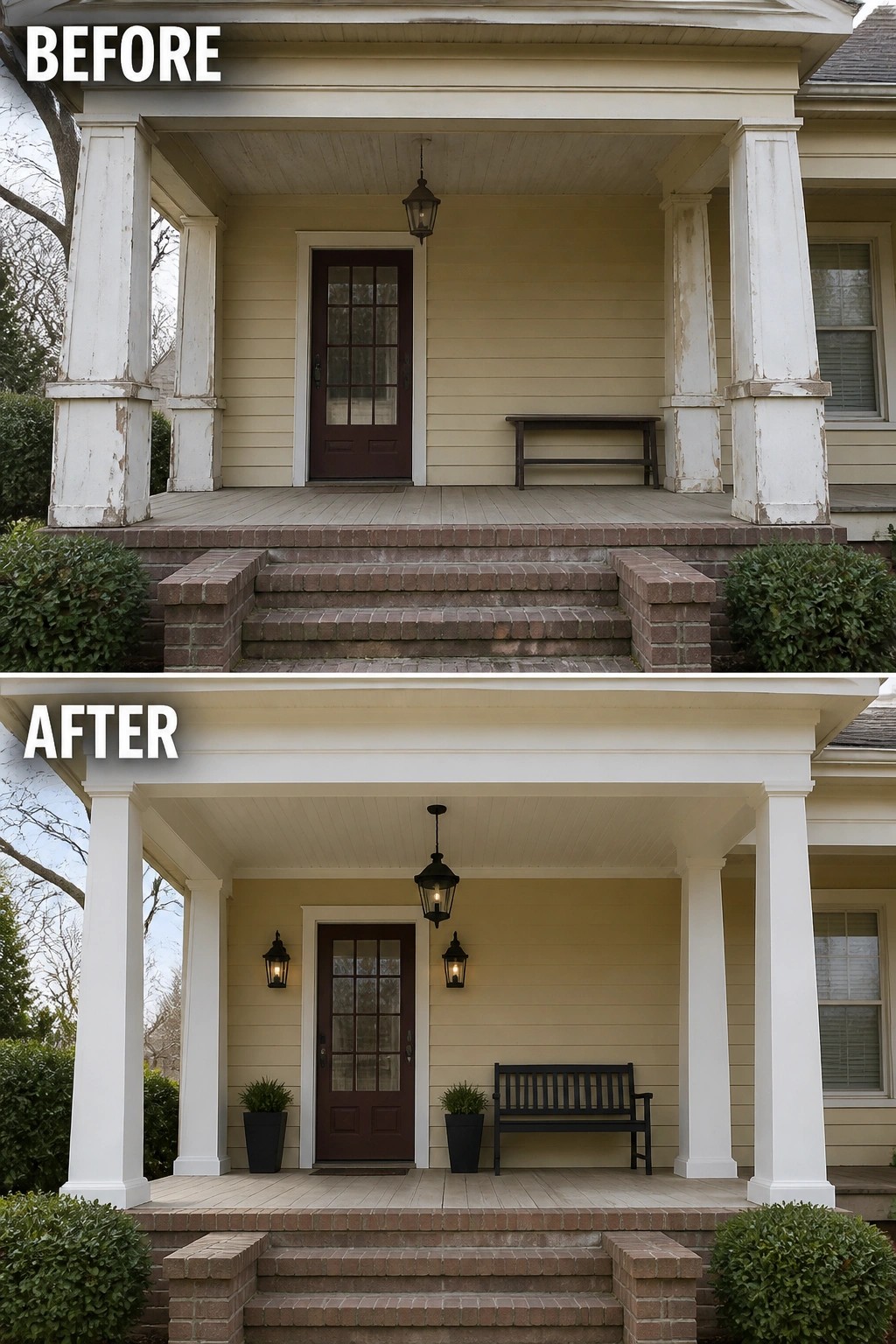
Many older homes have front porches that feel empty because nothing anchors the space. A fresh coat of paint on the columns, a couple of wall sconces beside the door, and a hanging light overhead can quickly change that. Placing matching planters on either side of the entrance and centering the bench also helps the porch look intentional instead of leftover.
This idea suits homes with simple trim and neutral siding where the entry needs a little structure. Keep the furniture to one main piece and choose lights that match the scale of the porch so the walkway stays open. It is a practical way to improve curb appeal before taking on bigger exterior projects.
Add Outdoor Lighting To Highlight A Plain Exterior
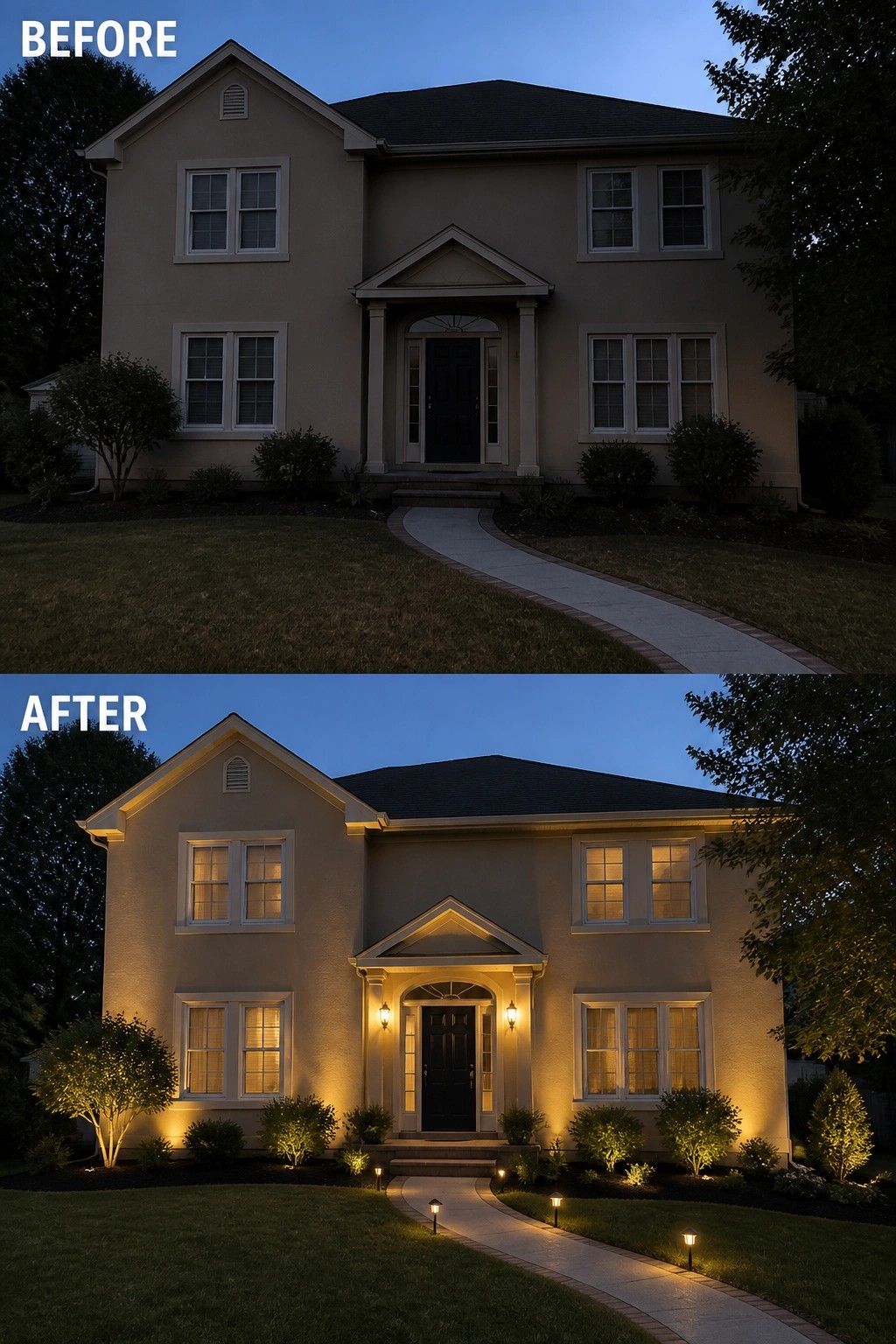
Many homes look flat and uninviting once the sun goes down because there is no light to show off the shape of the house or the front door. In this case, a few well-placed lights on the walls and along the walkway turned a dark beige facade into something that feels much more welcoming without any major construction.
This approach works well on houses that already have decent proportions but need a little help at night. Start with lights that point up at the main roofline or frame the entry, then add a few low path lights so people can see where they are walking. Keep the fixtures simple and the bulbs warm so the house does not end up looking like a parking lot.
Refresh A Dated Exterior With Dark Paint
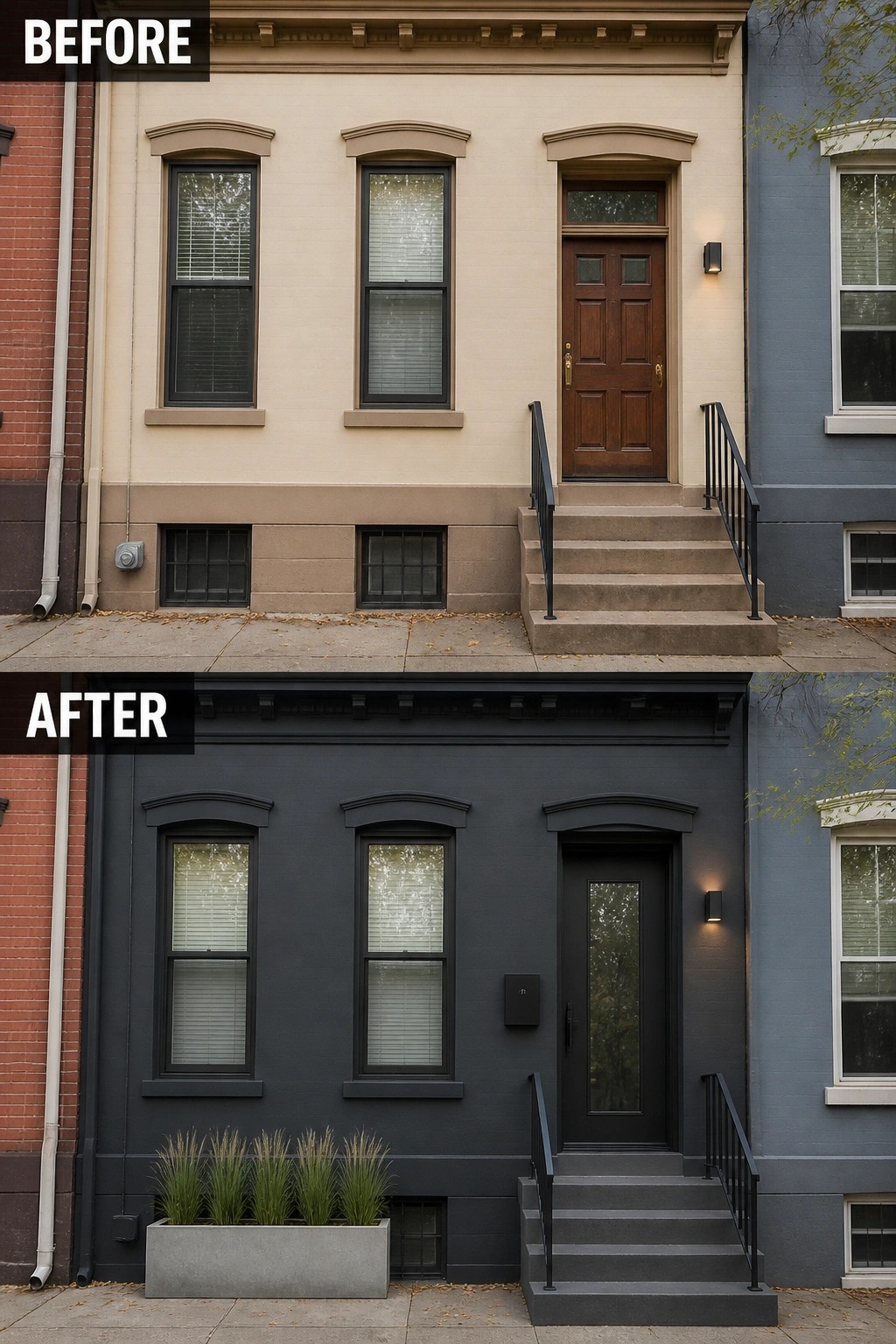
A tired beige facade often makes a house look older than it really is. Switching to a deep charcoal paint covers the entire front, including the trim and base, which pulls the windows and door into a cleaner, more modern look without any structural changes.
This works especially well on attached homes or row houses where the goal is simple curb appeal. Choose a paint made for exterior masonry, test a sample on the wall first, and keep the focus on the main body of the house rather than adding too many extra details.
Refresh A Tired Facade With Updated Shutters And Window Boxes
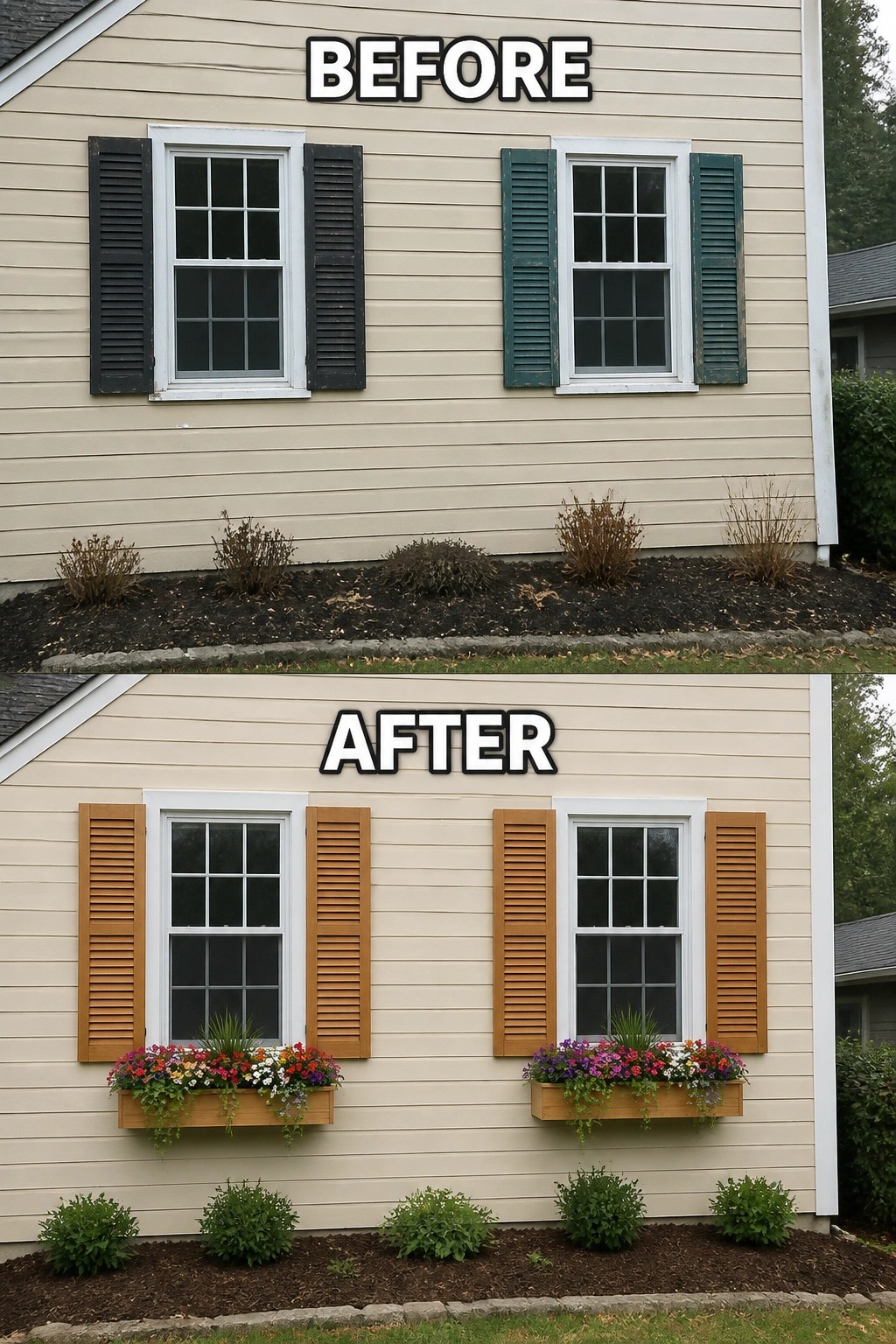
Many beige homes lose definition around the windows, which makes the whole front look flat. Changing the shutters to a lighter tone and adding simple window boxes underneath brings the windows forward and gives the siding more shape.
This idea works best on straightforward exteriors where the windows sit evenly across the wall. Keep the new shutters in a warm wood tone and choose flower boxes that match so the update stays easy to repeat on other homes with similar siding.
Add Structure With Front Yard Planters
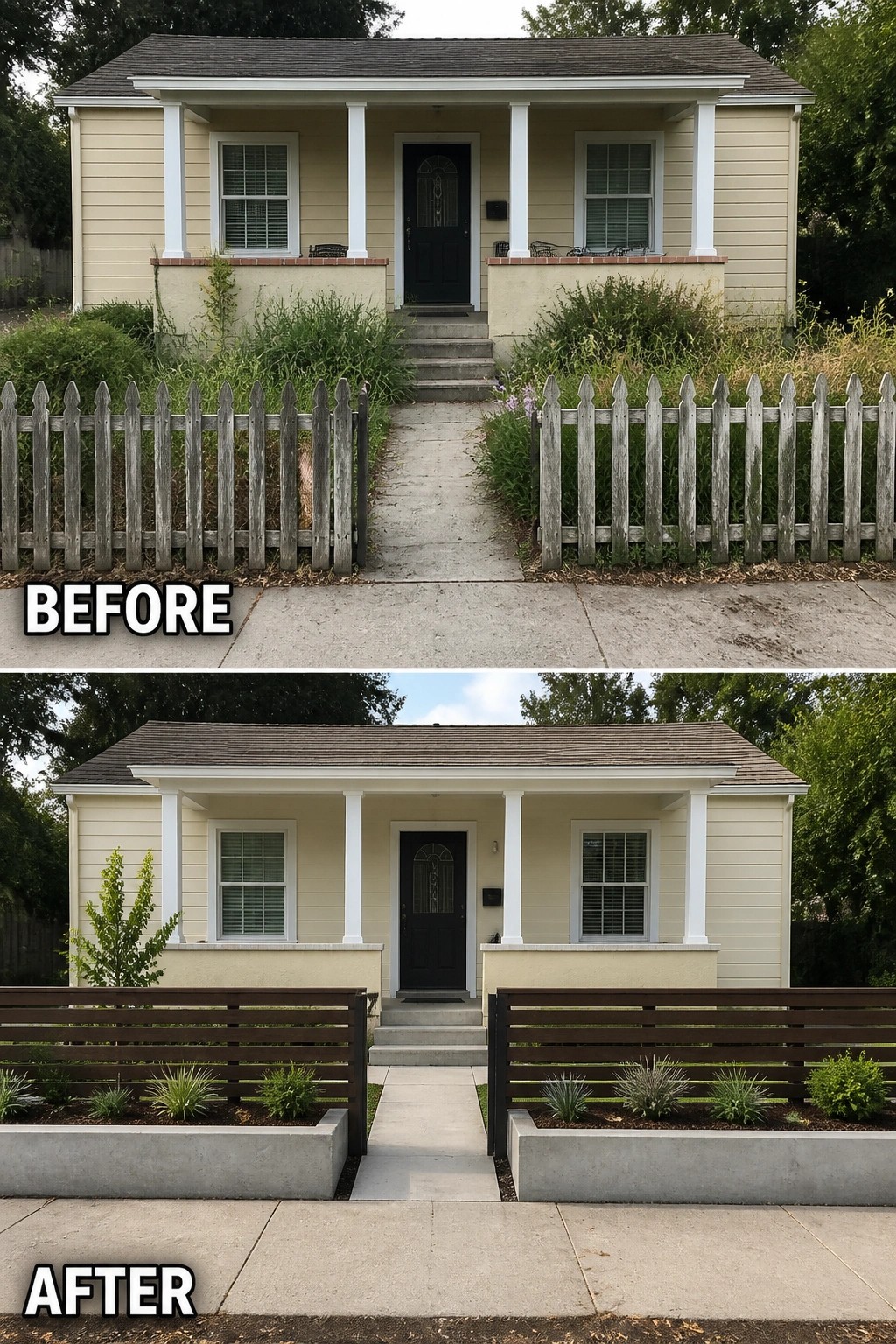
An old wooden fence and overgrown shrubs often make a front yard feel messy and dated. Switching to low horizontal fencing paired with raised concrete planters gives the house a much clearer edge and makes the walkway feel more intentional. The change keeps the space open while adding just enough definition to the facade.
This approach works well on simple one-story homes where the front feels flat. Start by replacing the fence line first, then add planting beds that match the width of the porch. Keep the plants low so they do not block windows, and choose a fence color that contrasts lightly with the house siding.
Add A Covered Entry To Refresh A Plain Facade
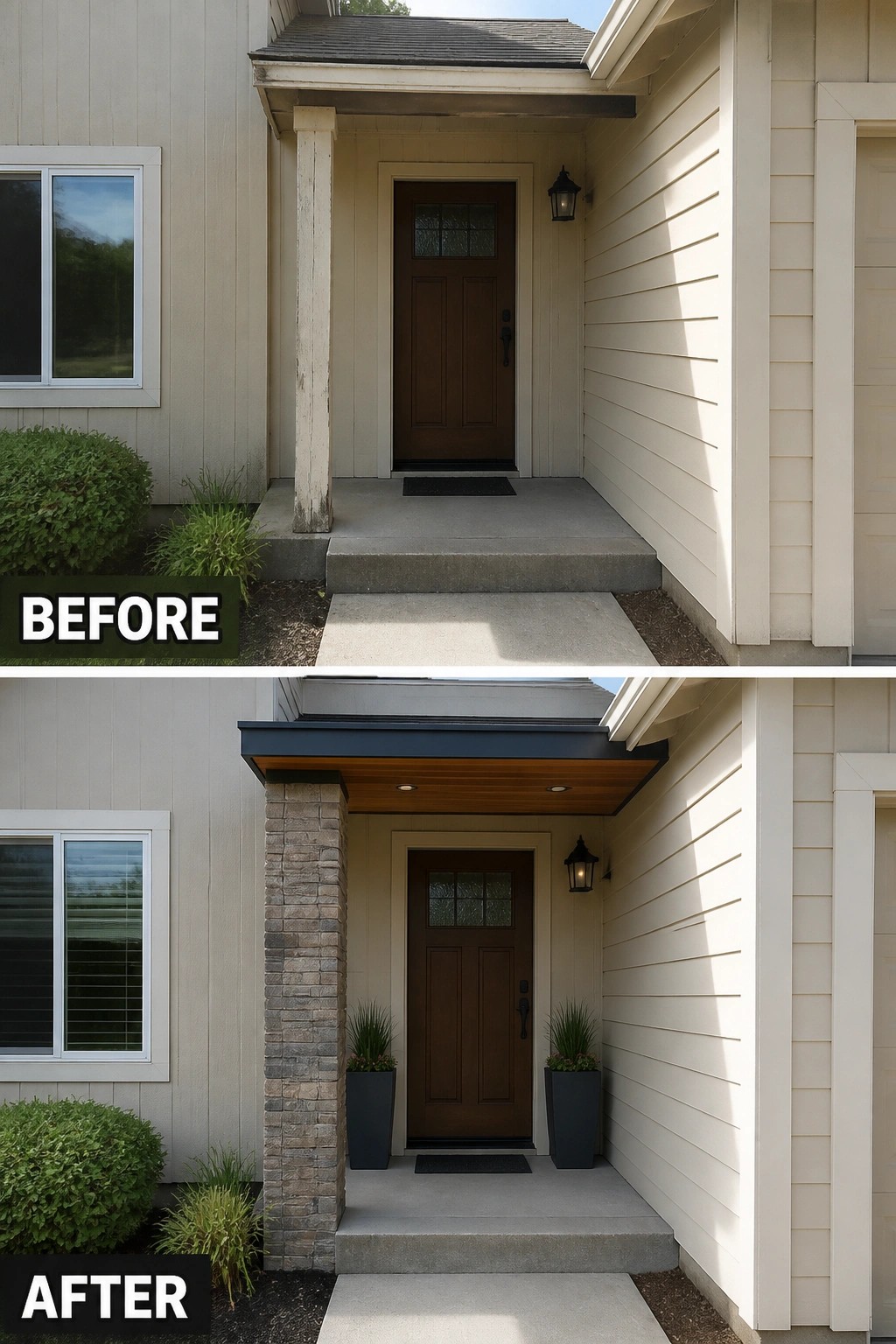
A basic front door and simple concrete steps often leave a house looking unfinished. Adding a covered entry with a dark roof, wood ceiling, and a stone column gives the door real presence and makes the whole front feel more put together.
This approach works well on beige or neutral homes that need a focal point without a full repaint. Keep the scale modest, match the roof color to existing trim, and add a couple of tall planters so the entry feels intentional rather than empty.
Update The Garage Door And Entry For A Fresher Facade
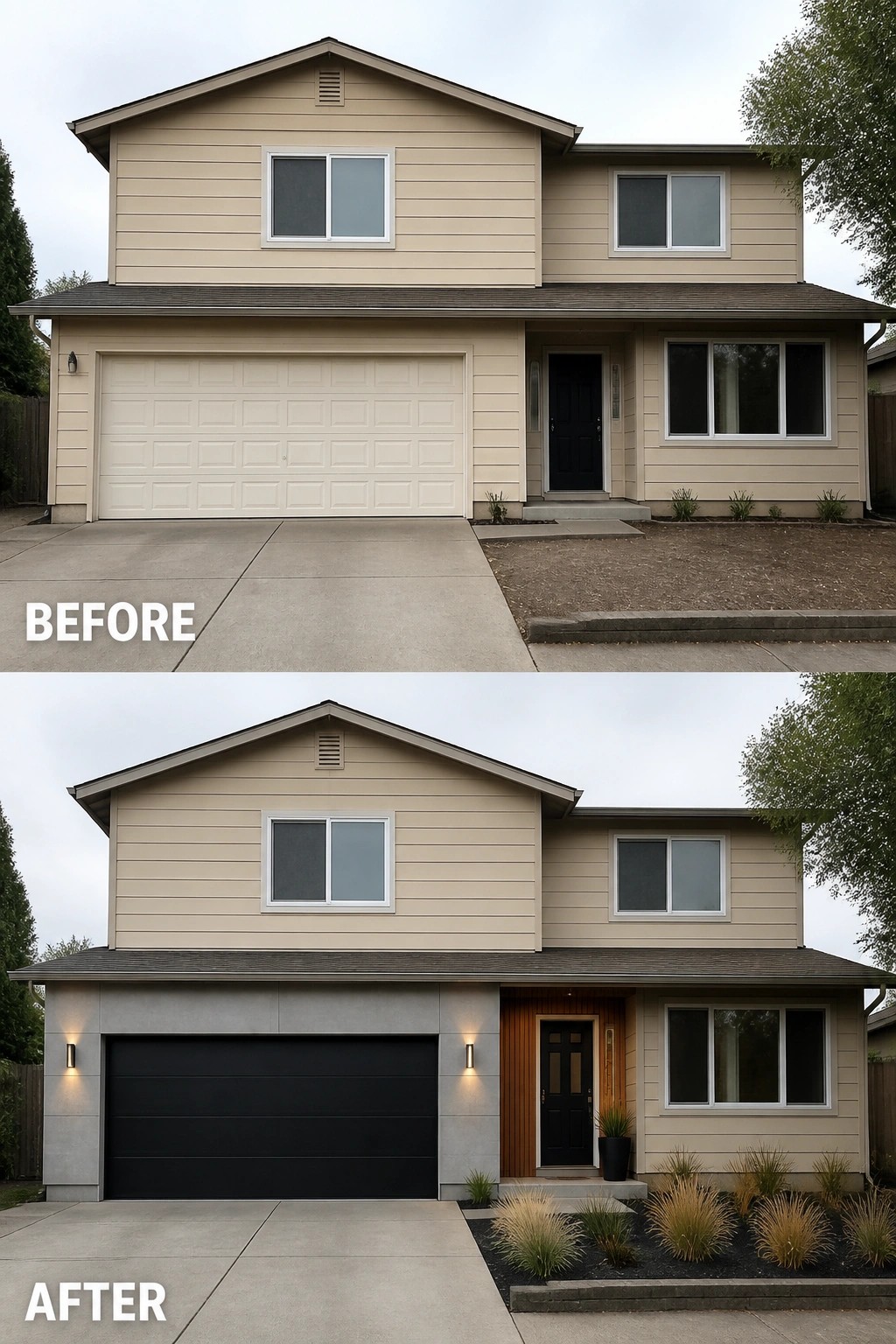
A dated beige house with a plain white garage door can start to feel flat and uninviting. Switching the garage door to a dark color, adding wood accents around the entry, and installing simple wall lights gives the whole front a cleaner and more current look without a full repaint or major construction.
This approach works well on homes where the garage takes up a large part of the facade. Focus on the door color and entry area first, then add a few lights so the front feels safe and welcoming at night. Keep the rest of the siding and roof as they are so the changes stay affordable and targeted.
Frequently Asked Questions
Q: How can I update my beige siding without replacing the whole thing?
A: Paint it a crisp off-white or soft gray to brighten the tired surface right away. Add slim black window frames next to sharpen the style and make the house feel current.
Q: What works best for adding modern details to a brown brick exterior?
A: Install simple metal railings on the porch or steps to contrast the brick. Swap the old shutters for none at all and let the clean lines stand out instead.
Q: How often will I need to clean or touch up these new exterior changes?
A: Check the surfaces once a season and hose off dirt before it sticks. Touch up paint on high-wear spots as soon as you notice fading so the update lasts.