

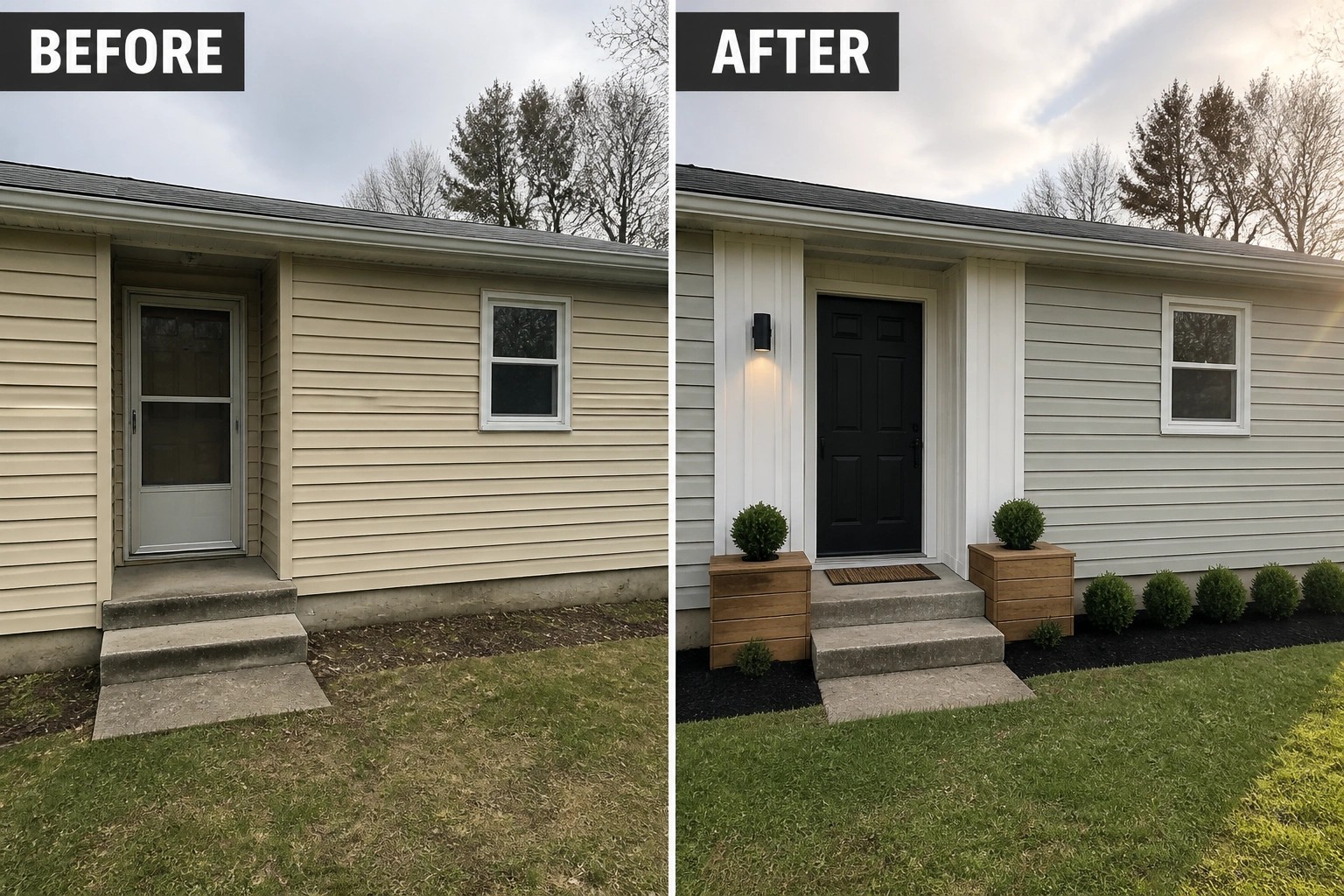
Many homes end up with front sides that feel unbalanced because of window spacing or a lack of any real focal point.
I have found that changing the siding color or adding trim around the door often makes the whole place look more intentional even when the layout stays the same.
Simple fixes to the entry can shift the feel.
Working with the existing roofline and adding a small overhang tends to give better proportion than trying to cover everything up.
Testing one or two of these adjustments on a sketch first usually shows whether they will work with the rest of the house.
Update The Front Door Color To Make The Entry Stand Out
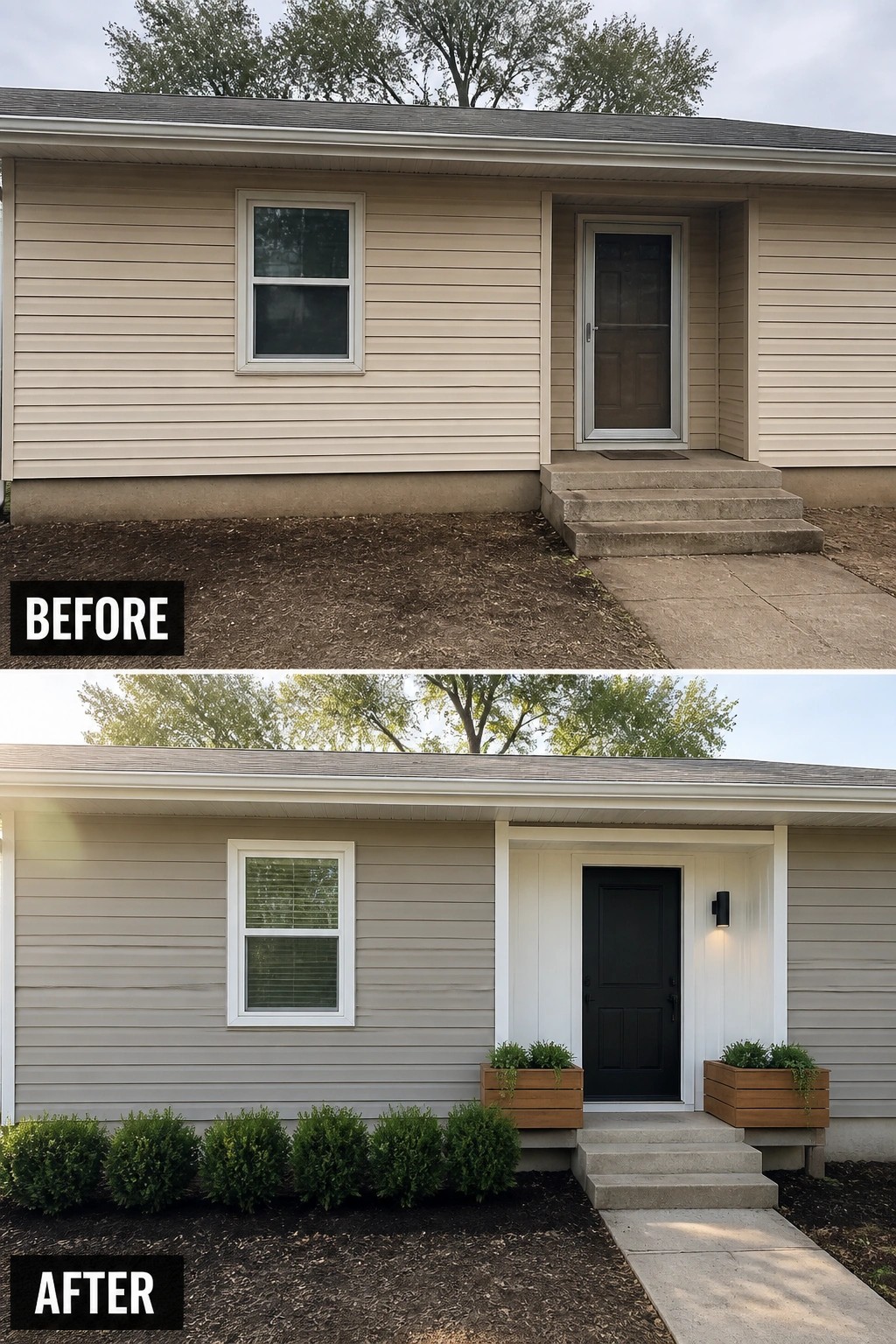
A simple color change on the front door can shift how the whole front of a house feels. In this case the old brown door blended into the beige siding, while the new black door creates a clear focal point. Adding white vertical trim around the entry also helps frame the door and gives the facade a bit more structure without any major construction.
This approach works especially well on smaller or plain homes where you want quick impact. Start with a durable exterior paint in a contrasting color, then add basic trim boards if the entry feels flat. Keep the rest of the landscaping simple so the door remains the main feature.
Add A Small Porch To Highlight The Front Door
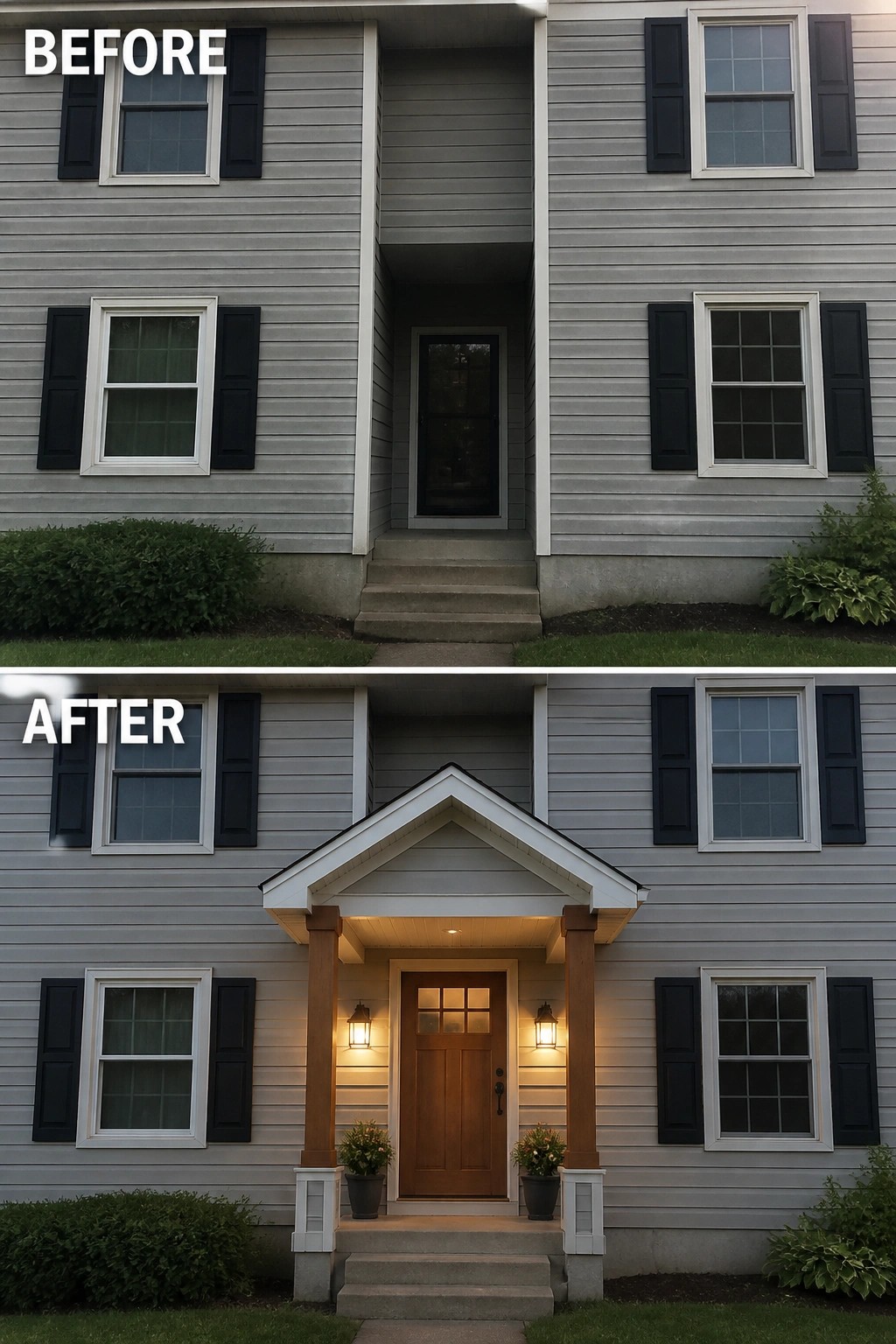
A recessed entry on a plain facade often disappears into the siding and makes the house feel flat. Adding a modest gabled porch with columns gives the door a clear frame and pulls the whole front together without major construction.
This approach works well on homes where the door sits too far back or the facade lacks any strong feature. Focus on the scale first so the porch does not overwhelm the windows or steps, then add simple lighting on each side to keep the entry usable after dark.
Add A Contrasting Base To A Plain Exterior
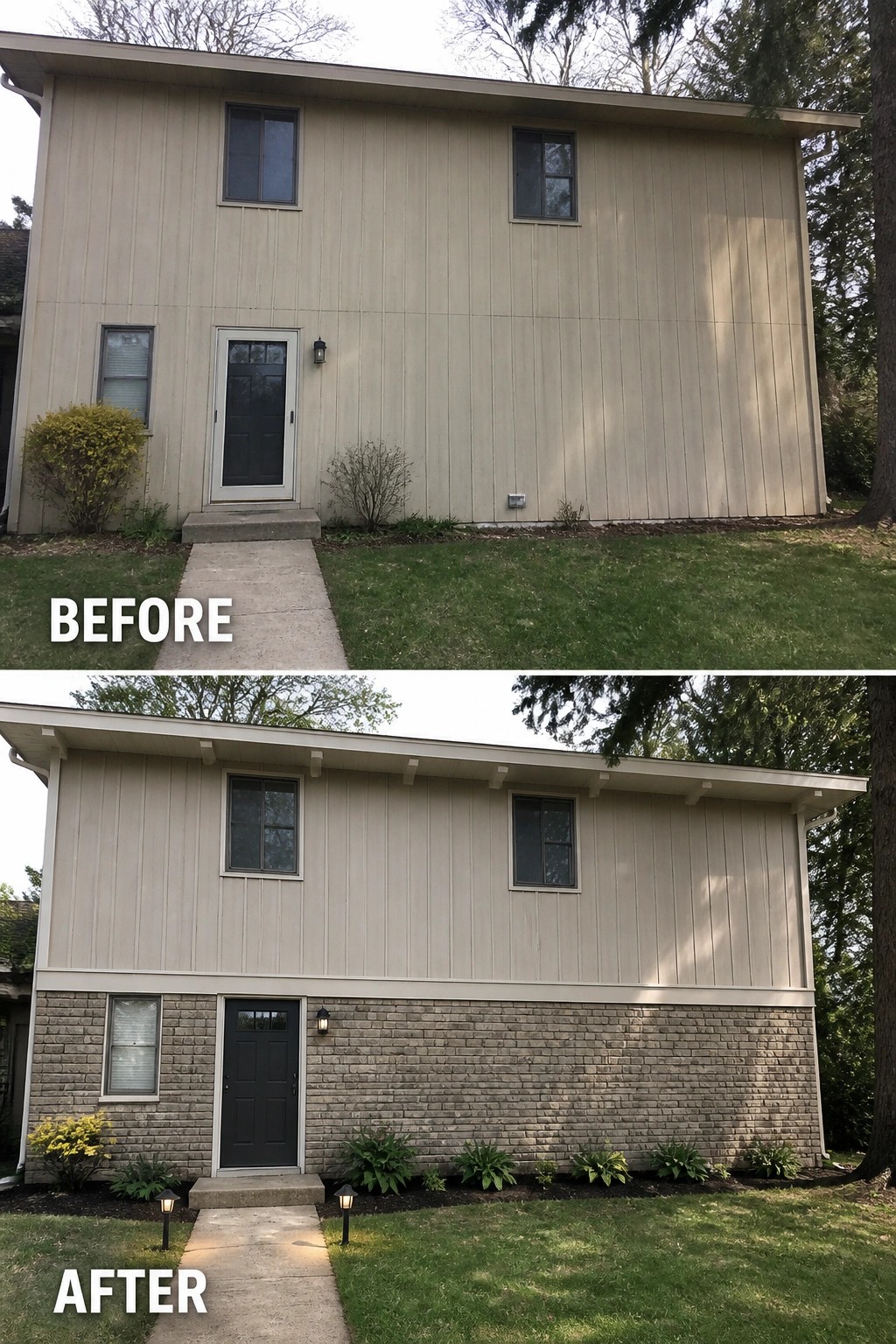
A tall wall of siding can look flat and unfinished, especially on the lower half where the house meets the ground. Switching that section to a brick or stone material gives the house more weight and breaks up the long vertical lines without changing the whole exterior. The dark door color also helps anchor the entry so it feels more intentional.
This approach works well on simple two-story homes with large blank walls. Focus on the bottom third or so of the facade first, then choose a door color that contrasts with both the siding and the new base. Keep the rest of the updates small, such as adding a few lights and shrubs, so the material change stays the main feature.
Paint The Brick To Modernize The Facade
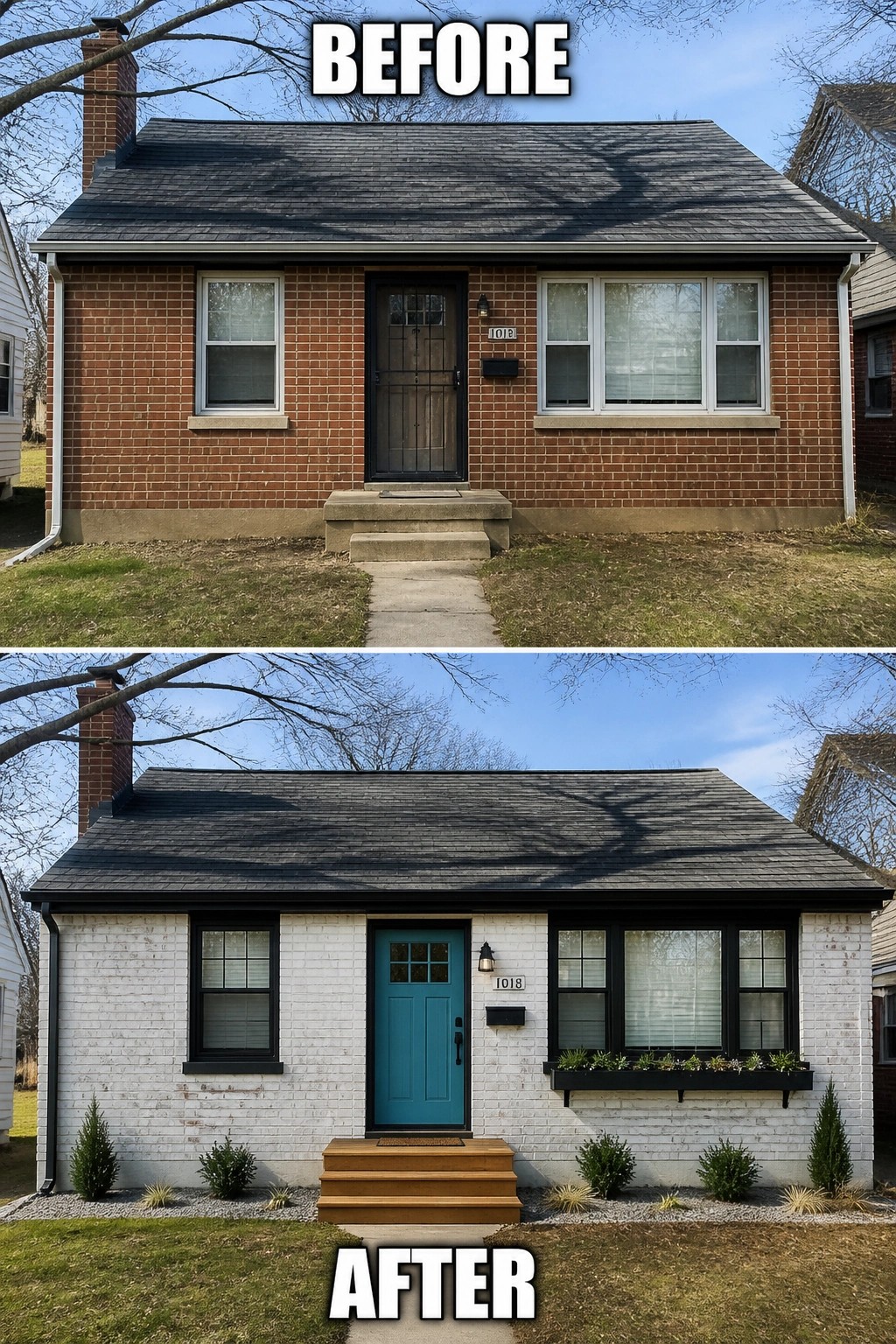
Painting the exterior brick can completely change how a house reads from the street. In this case the red brick was covered in white paint, the trim was switched to black, and the door was painted a soft teal. Those simple color shifts made the house feel lighter and more current without any structural changes.
This approach works well on older brick homes that feel heavy or flat. It is usually cheaper than siding or major renovations, and it gives you room to add contrast with the door and window frames. Just make sure the paint is made for masonry and that you keep the landscaping simple so the new color stays the main focus.
Update The Garage Door To Match The House
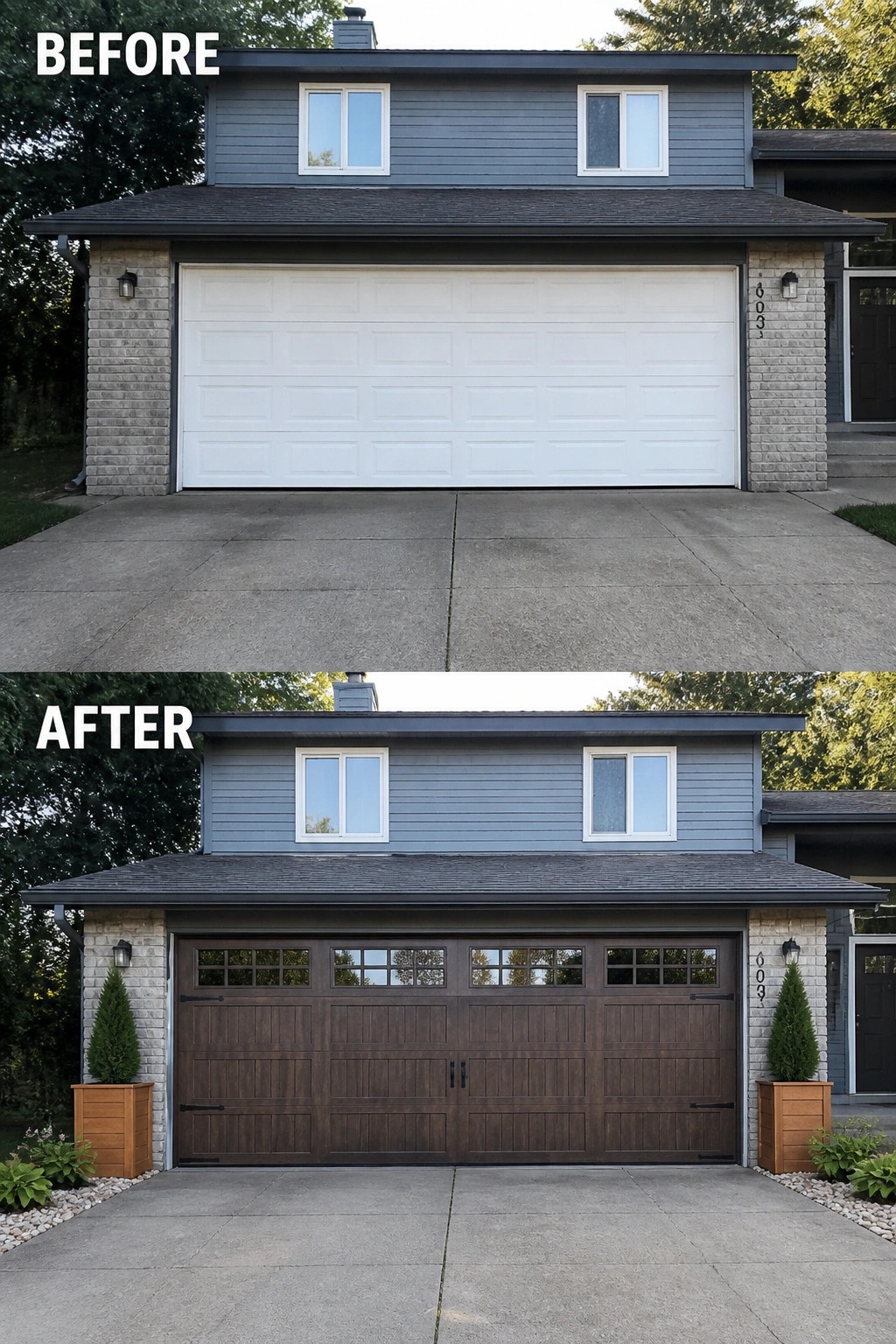
A plain white garage door can make the whole front of a house feel flat, especially when it takes up most of the facade. Switching to a darker wood-style door helps it blend with the siding and roof instead of standing out as a bright rectangle. Adding a pair of simple planters on either side also gives the eye something to rest on and softens the hard edges of the driveway.
This idea works best on homes where the garage faces the street and dominates the view. Focus first on getting the door color and style right, then add just enough planting to frame the opening without crowding the walkway. Keep the planters low and sturdy so they do not block movement or look out of scale.
Replace A Chain Link Gate With Wood For A Better Side Entry
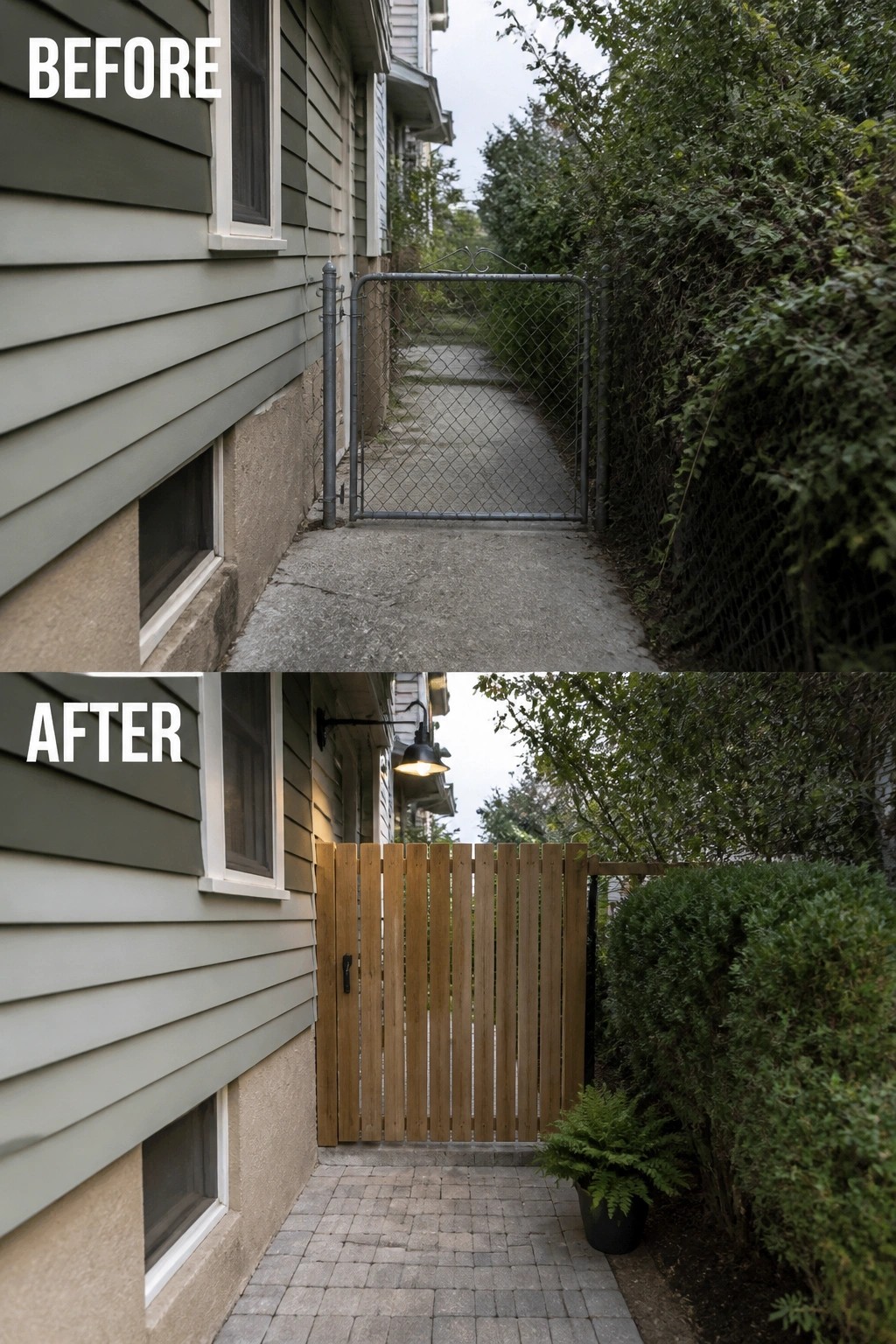
Many homes have narrow side paths closed off with chain link that feels more industrial than welcoming. Swapping the gate for a simple wood version softens the look right away and makes the entrance feel more connected to the house. Changing the concrete to pavers also gives the path a cleaner, more finished appearance without much extra work.
This idea works best on homes where the side access is visible from the street or backyard. Keep the gate design straightforward and match the wood tone to any existing trim so it blends in. Focus on the gate and path first before adding smaller details like lighting or plants.
Use Two Tone Siding To Improve A Simple House Exterior
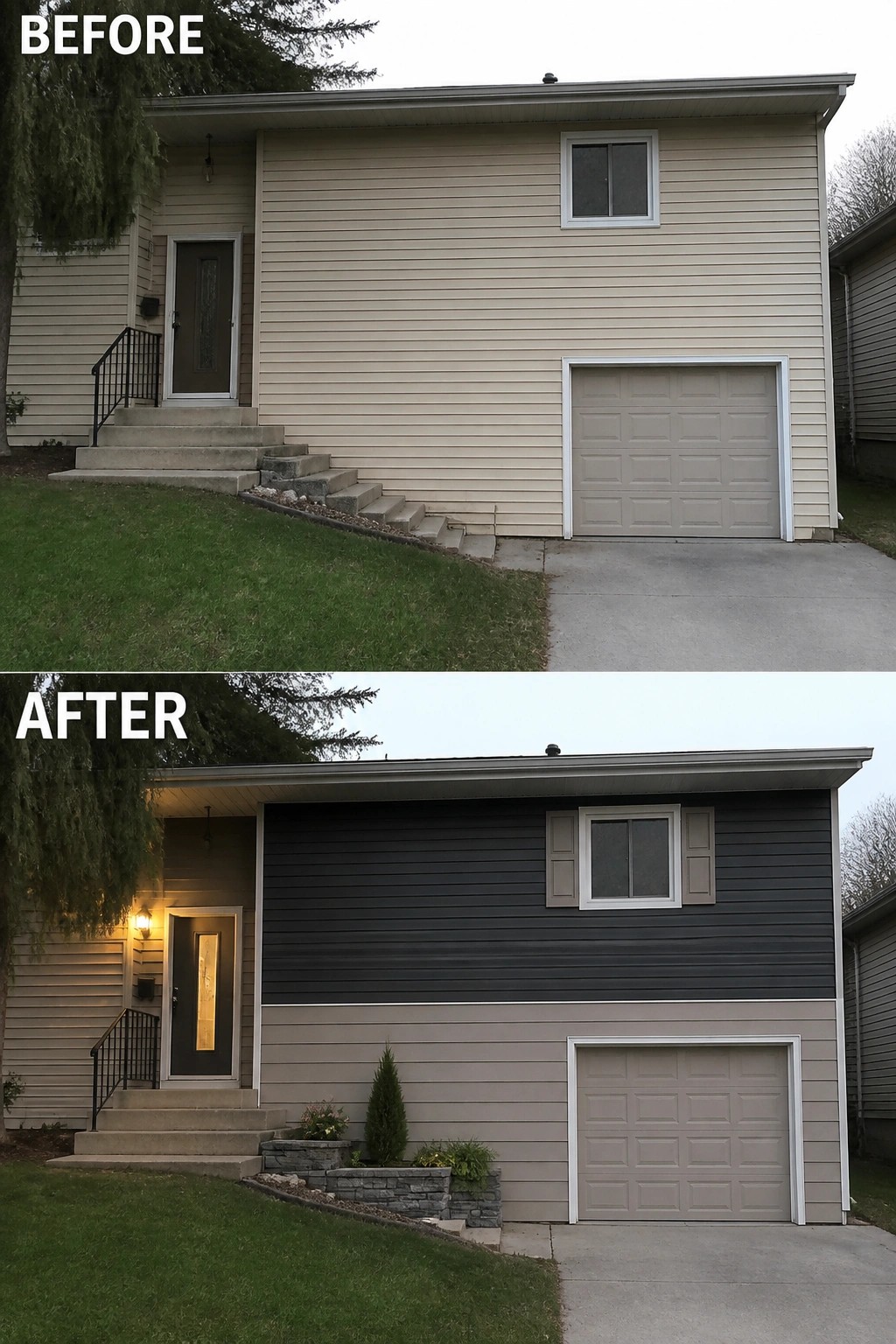
A flat beige exterior often looks unfinished because everything blends together. Switching the upper level to a darker shade while keeping the lower level lighter creates a natural break that makes the house feel more structured and balanced without any major construction.
This approach works well on split level homes or any facade that feels wide and plain. Keep the changes simple by focusing on the color split first, then add one or two small updates like better entry lighting or a low stone border to finish the look.
Add A Small Deck To Refresh A Plain Entry
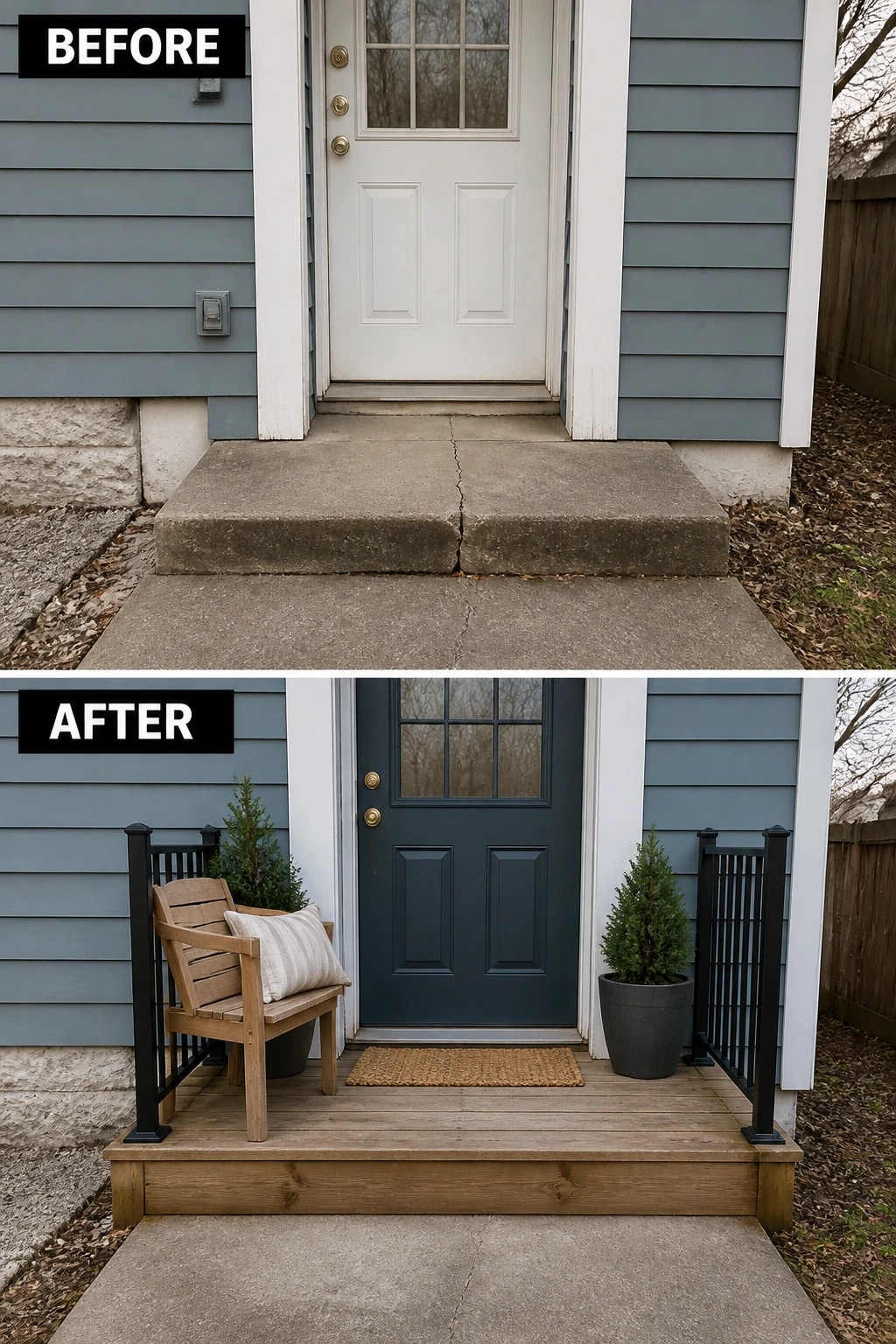
A bare concrete stoop often makes an entry feel unfinished and hard to use. Replacing it with a simple wooden deck gives the front a clear platform, adds height, and creates space for seating or planters without any major construction.
This approach works well on homes with flat facades or low stoops where the door sits close to the ground. Keep the deck modest in size, match the railing style to the house trim, and choose weatherproof furniture so the area stays practical year-round.
Add Shutters And A Raised Bed To Frame A Plain Facade
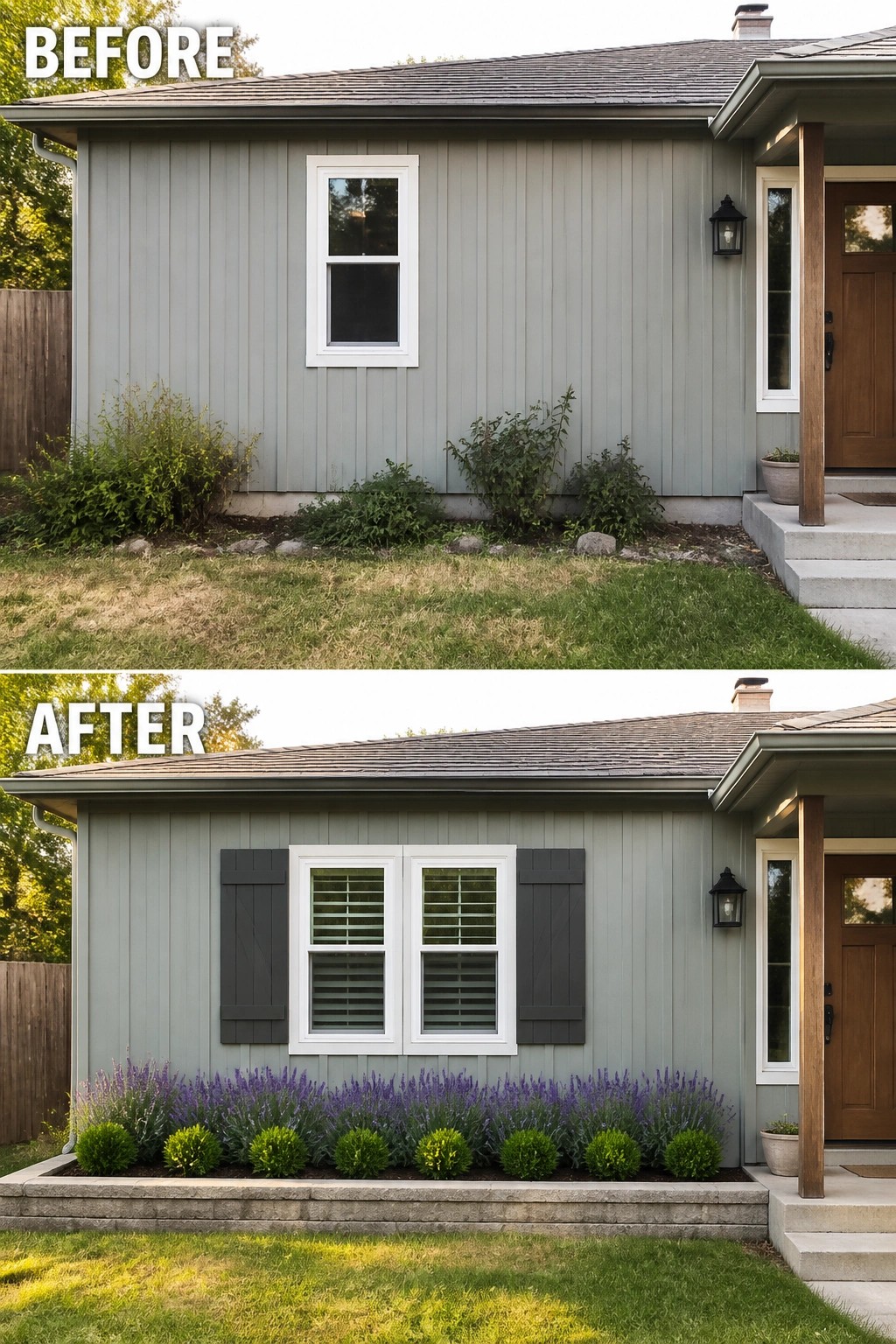
Adding shutters around the main window and building a low raised bed along the front gives this house a much more finished look. The dark shutters create balance on either side of the window, while the bed adds height and a clear line where the house meets the lawn. These two changes alone make the facade feel intentional instead of bare.
This idea works well on houses with simple siding and few architectural details. Match the shutters to your trim or door color so they feel like they belong, and keep the planting simple with a mix of evergreen shrubs and one repeating flower. The bed also helps protect the foundation and keeps grass from creeping right up to the siding.
Add Defined Garden Beds To Frame A Plain House
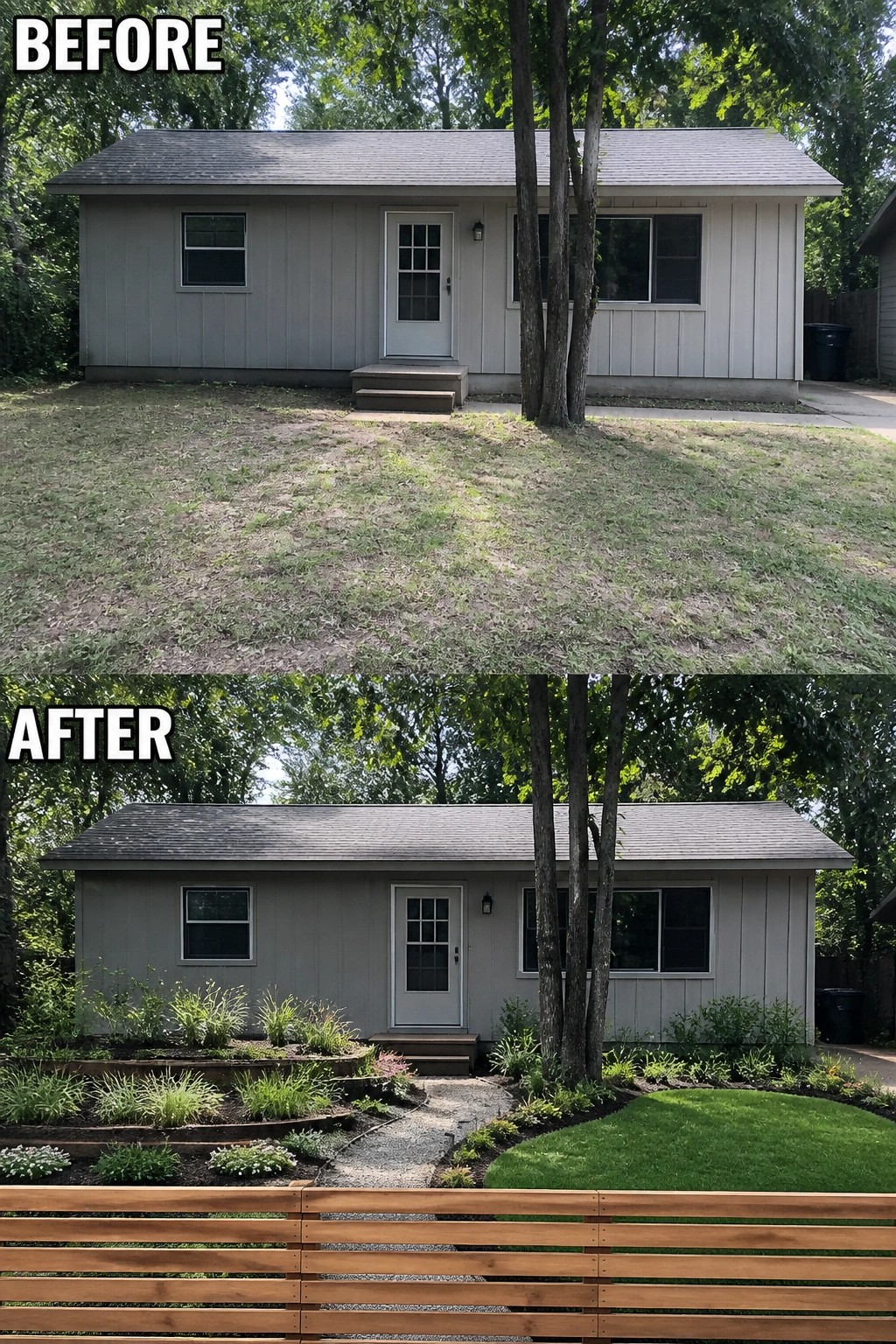
A bare lawn in front of a simple house often leaves the facade looking flat and unfinished. Adding a few structured beds with a mix of heights and a gravel path gives the whole front a clearer shape and draws the eye toward the door instead of the empty space.
This approach works well on houses with basic siding and little architectural detail. Start by outlining the beds with edging or low walls, then fill them with a mix of ground cover, taller grasses, and a few flowering plants. Keep the center open enough for a path so the entry stays easy to reach.
Refresh A Dated Exterior With Two Tone Paint
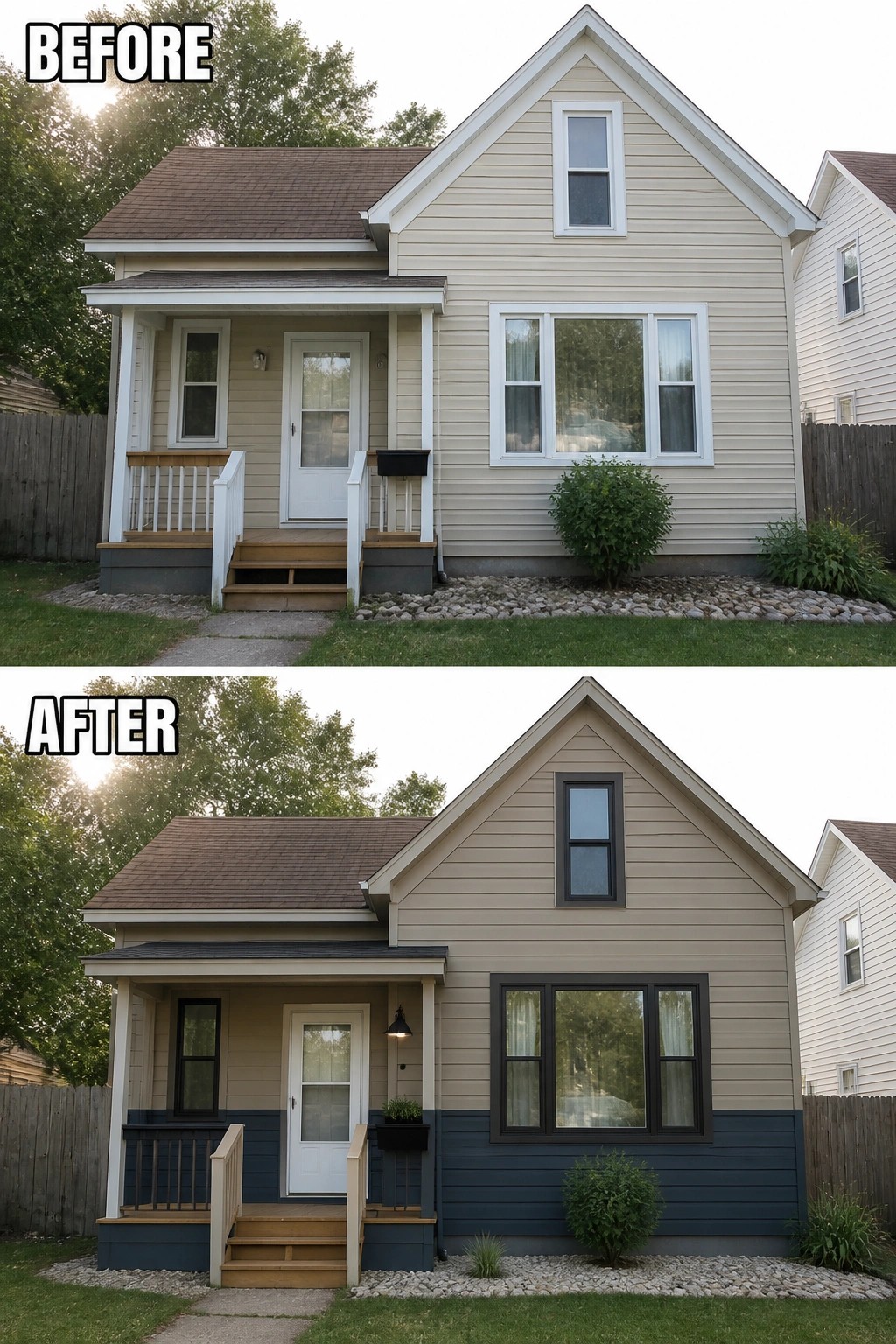
Painting the lower half of the house in a darker shade while keeping the upper portion lighter gives the whole facade more structure. The change also includes swapping the window frames to a darker color, which helps the windows look more intentional instead of blending into the siding.
This idea works best on homes with simple gable shapes and horizontal siding where you want to add definition without changing the roofline or adding trim. Keep the two colors close in tone so the house still feels cohesive, and test the lower color on a small section first to see how it reads from the street.
Turn A Bare Entry Into A Covered Porch With Seating
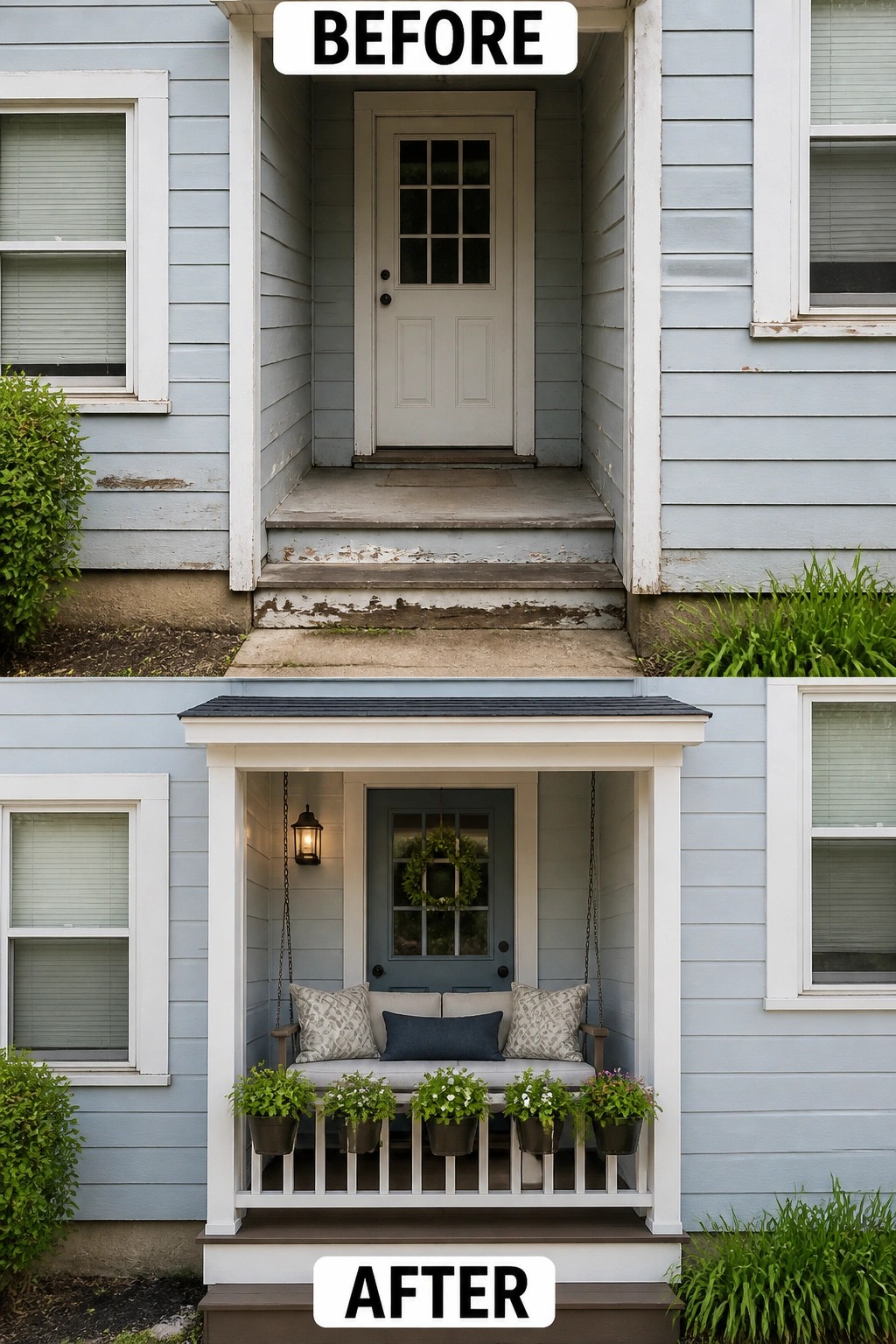
A plain set of steps leading to the front door often feels unfinished and unwelcoming. Adding a simple roof structure, a swing, and a few planters turns the same spot into a small outdoor room that gives the house a clear entry point. The change makes the door feel more intentional and gives people a reason to pause before going inside.
This idea works best on homes with a small setback from the street or a flat front that lacks any overhang. Keep the furniture scale modest so the porch does not crowd the walkway, and choose cushions and planters that can stay out year-round. Start with the roof and basic seating, then add lighting and plants only if the space still feels open.
Add Trellises And Planters To A Blank Wall
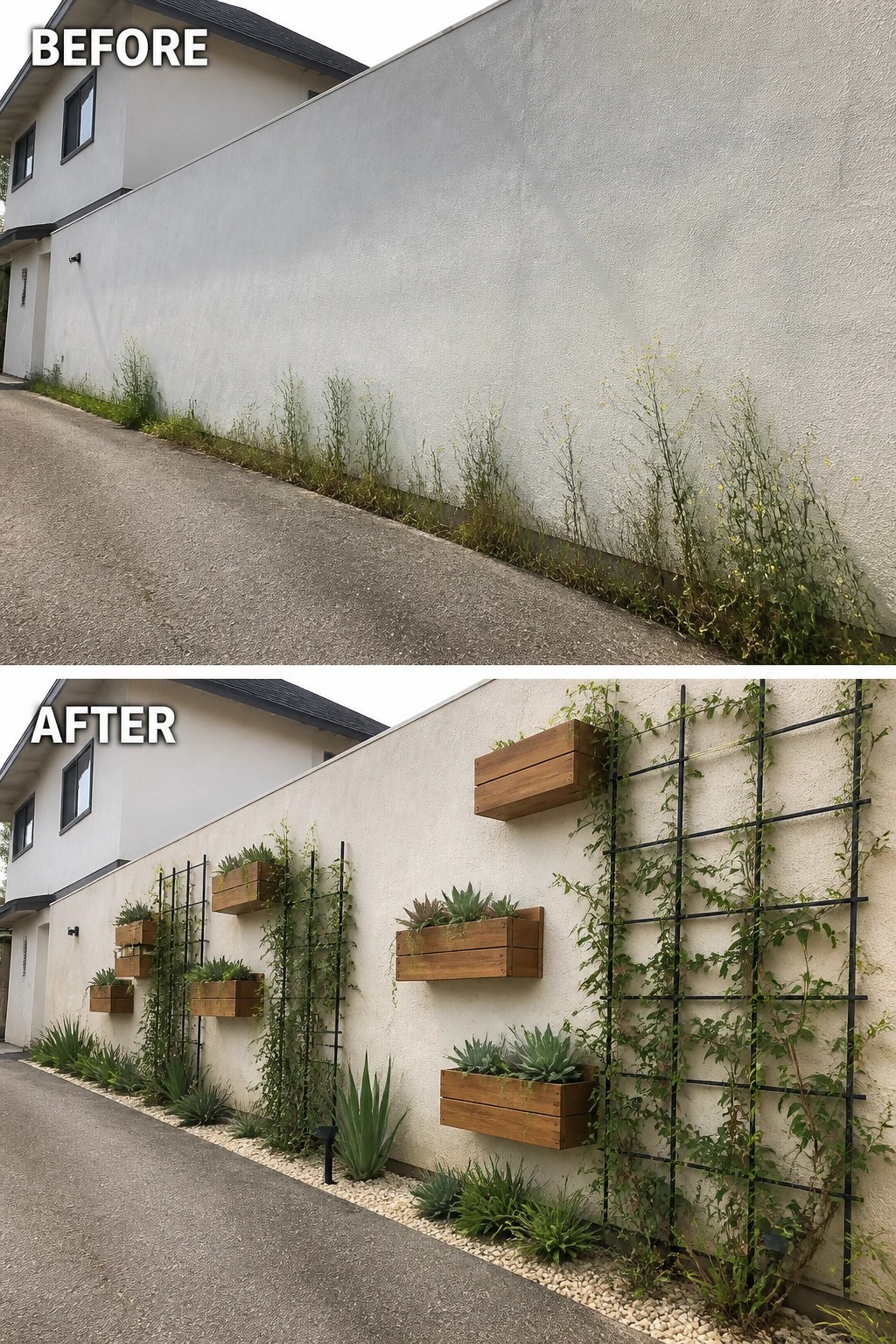
A tall blank wall next to a driveway often feels bare and unfinished. Adding a few wooden planters mounted at different heights along with simple black trellises lets vines climb and breaks up the flat surface without any major construction.
This idea works best on homes where the exterior is mostly one material and lacks depth. Space the trellises evenly, choose planters that match the wall color or trim, and let the plants fill in over a season or two so the change looks natural rather than forced.
Add Lighting To Warm Up A Plain Exterior
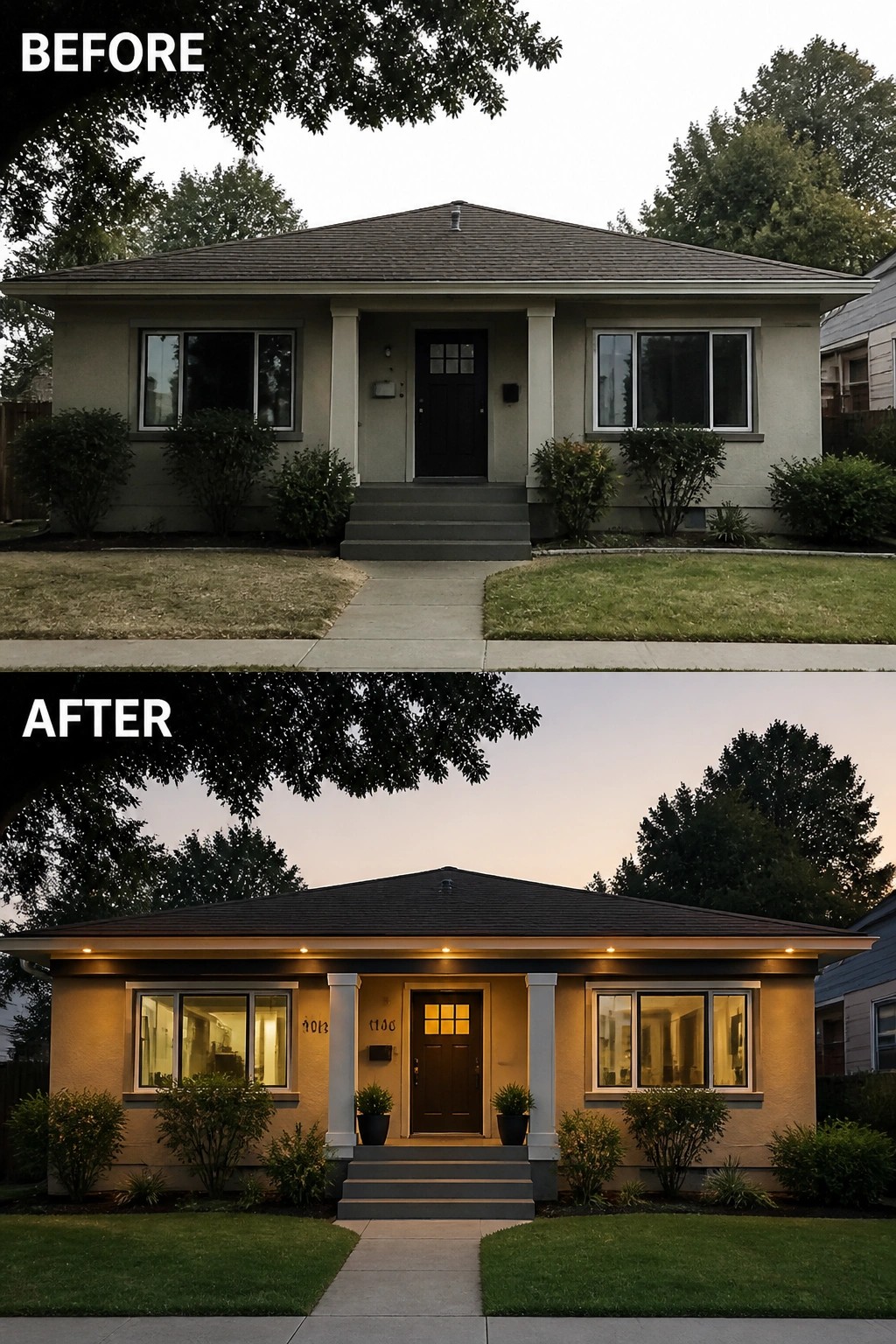
Many houses have a flat look once the sun goes down because there is no light to show the shape of the roof or the entry. A simple line of small fixtures along the eaves and porch ceiling brings out the lines of the house and makes the front door feel like the main point of the house.
This idea works best on single-story homes where the roof edge is easy to reach. Place the lights above the main windows and door first, then add two or three potted plants by the steps. Keep the number of lights modest so the effect stays calm rather than busy.
Add Shutters And An Awning To Update A Simple Exterior
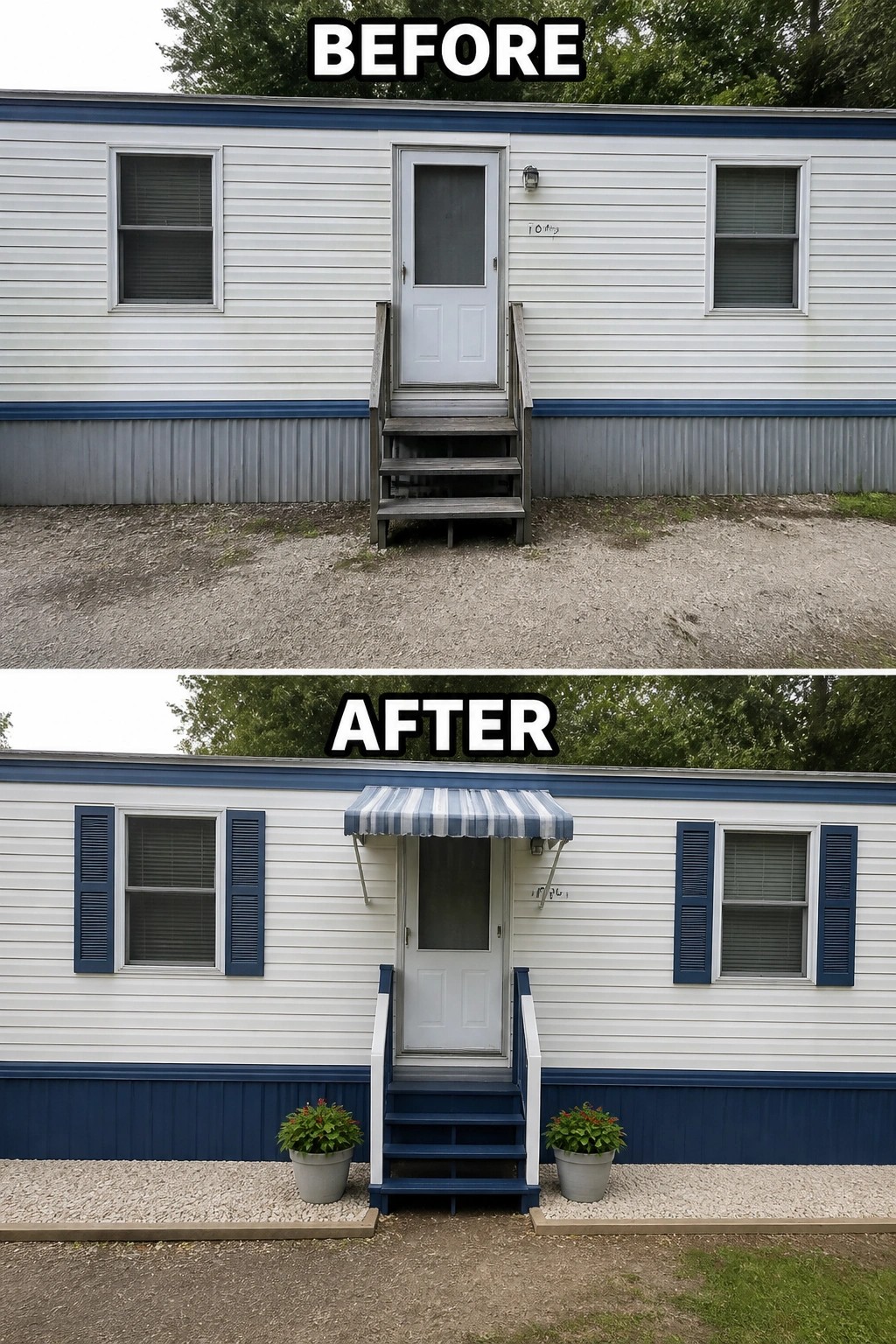
Many plain exteriors look unfinished because they lack any detail around the windows or entry. Adding shutters and a small awning gives the facade structure and makes the door feel like a real focal point instead of just another part of the wall.
This works well on manufactured homes or any house with long stretches of siding. Choose one accent color for the shutters and trim, then add the awning for both shade and visual weight. Keep the rest of the changes minimal so the updates stay practical and easy to maintain.
Add Vertical Planters To A Plain Exterior Wall
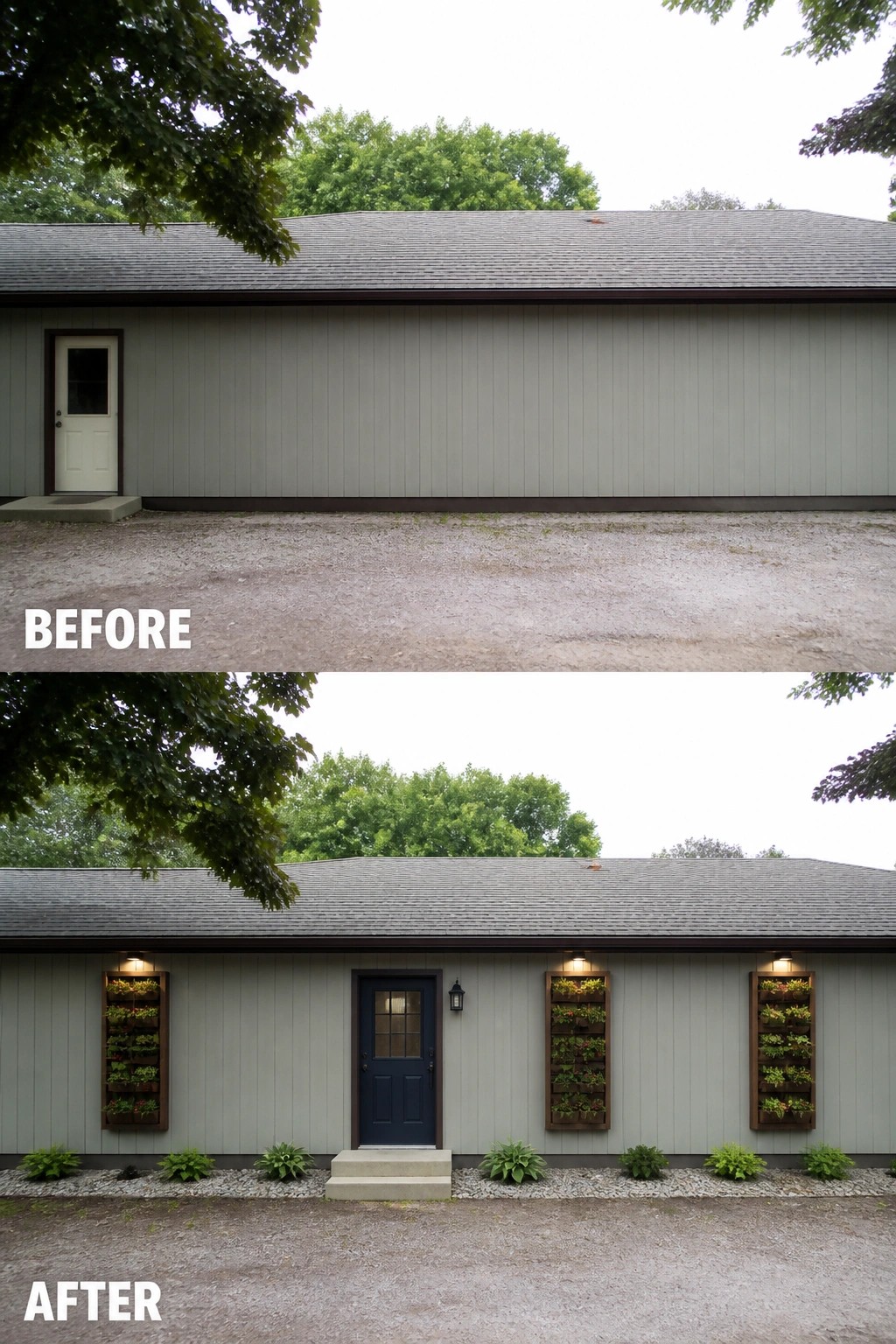
A long, flat wall with nothing on it can make the whole front of a house feel unfinished. In this case, swapping the old door for a deeper color and adding tall vertical planters on each side gave the wall clear points of interest without any major construction.
This approach works well on ranch-style homes or any house with a wide, simple facade. Mount the planters at eye level, add a light above each one, and keep the base planting low and simple so the wall stays balanced. It is an easy way to add structure before considering bigger changes like new siding or windows.
Replace A Cracked Walkway With Stone Pavers
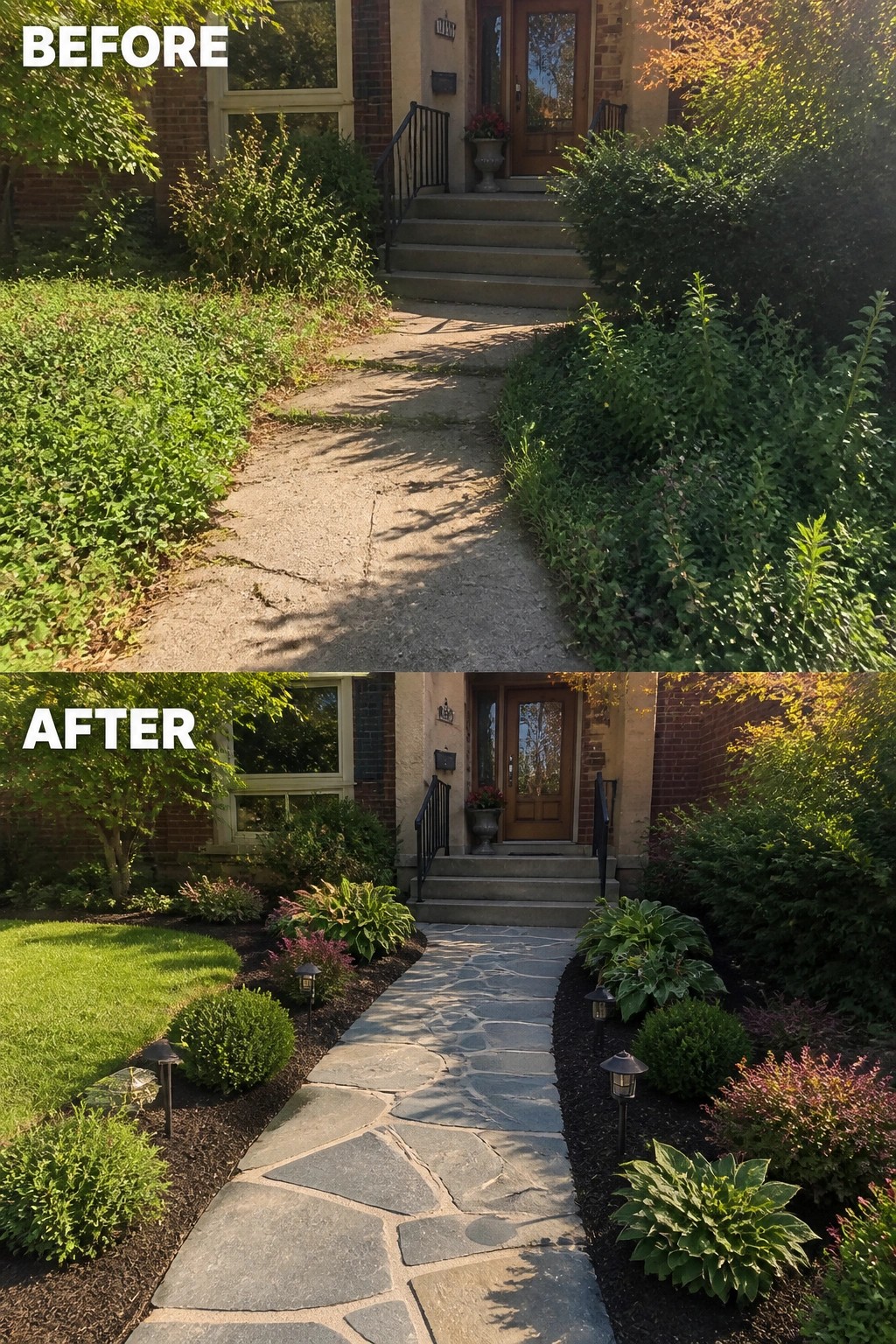
The old concrete path had cracks running through it and no clear edges, which made the front of the house look neglected even though the structure itself was fine. A new stone paver path with defined mulched borders on both sides instantly organizes the space and makes the walk to the door feel intentional.
This idea works best on homes where the original walkway is the main problem area. Start by removing the old surface and setting a wider path that matches the scale of the house, then keep the planting simple so it stays neat over time.
Update An Awkward Exterior With One Paint Color
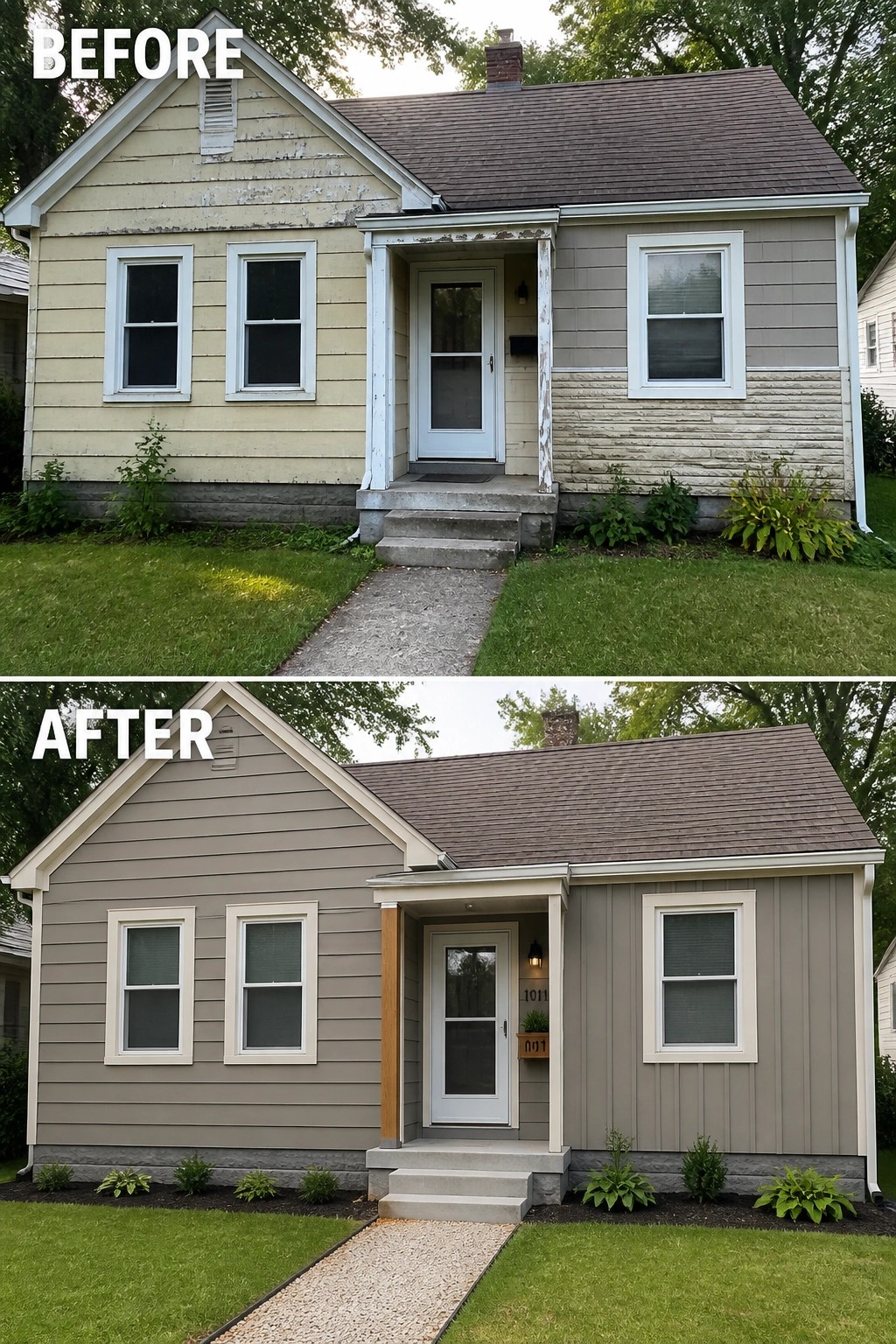
Many older homes end up with mismatched siding colors and patchy trim that make the whole front look unsettled. In this case the house went from a split yellow and beige scheme with peeling white trim to one solid gray across the entire exterior. That single change immediately pulls the facade together and makes the shape of the house read more clearly.
This approach works well on homes that have several different wall materials or colors added over time. Start by picking a mid-tone that sits comfortably between your roof and foundation colors, then carry it across every surface including the gable. Once the paint is done, small entry updates like replacing old posts or adding a simple house number can finish the look without extra expense.
Brighten A Dark Porch With Fresh Paint And Open Railings
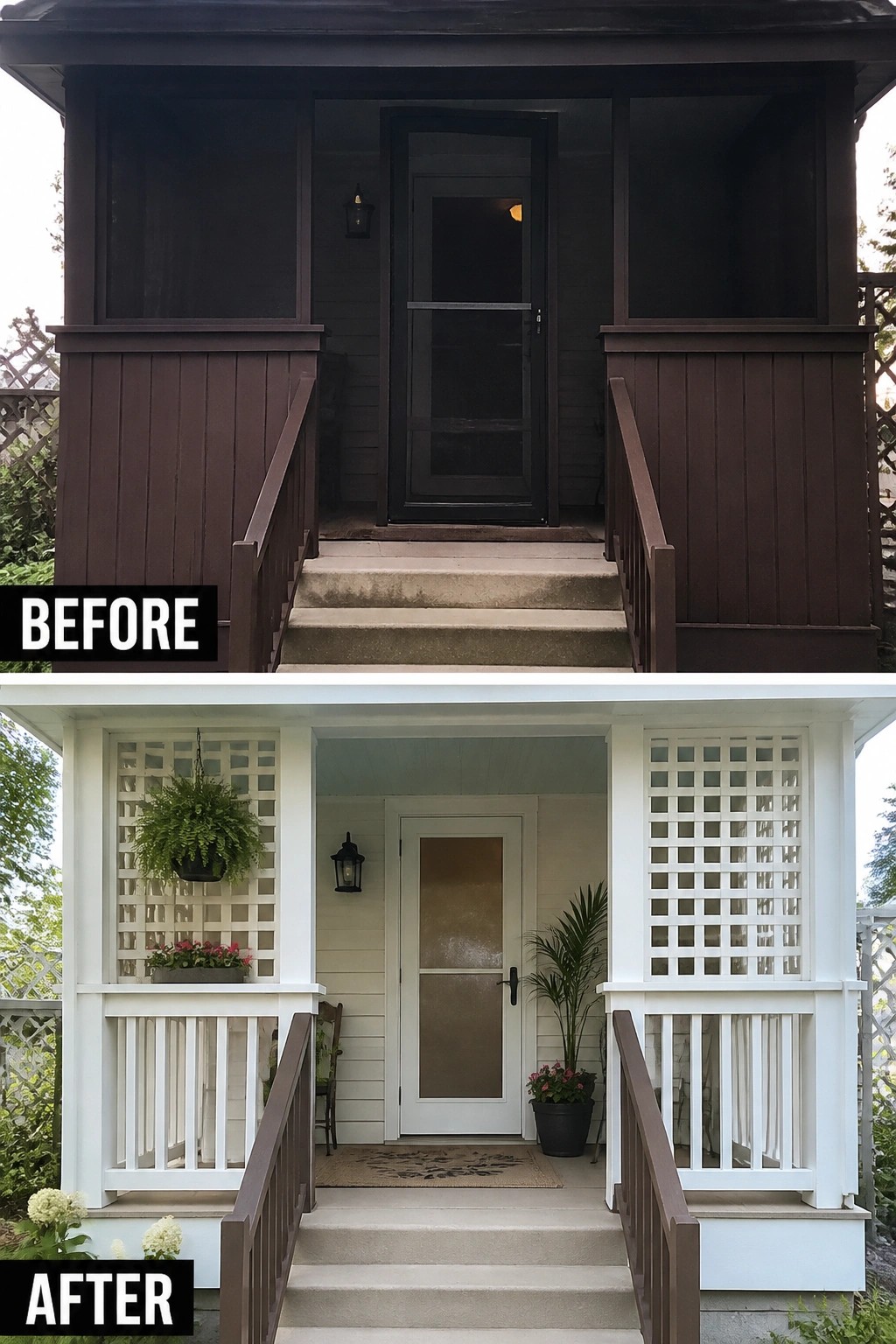
A dark, heavy porch can make the whole front of a house feel closed off. Switching the color to white and replacing solid panels with open lattice railings instantly changes how welcoming the entry feels. The lighter surfaces reflect more light and the new railings keep the structure but let air and views through.
This approach works well on older homes with enclosed porches that have grown dated. Focus first on the paint and railing update before adding planters or furniture. Keep the new color consistent with any trim or siding you plan to refresh later so the changes read as one simple improvement rather than scattered updates.
Screen Off Utility Boxes With Lattice And Planting
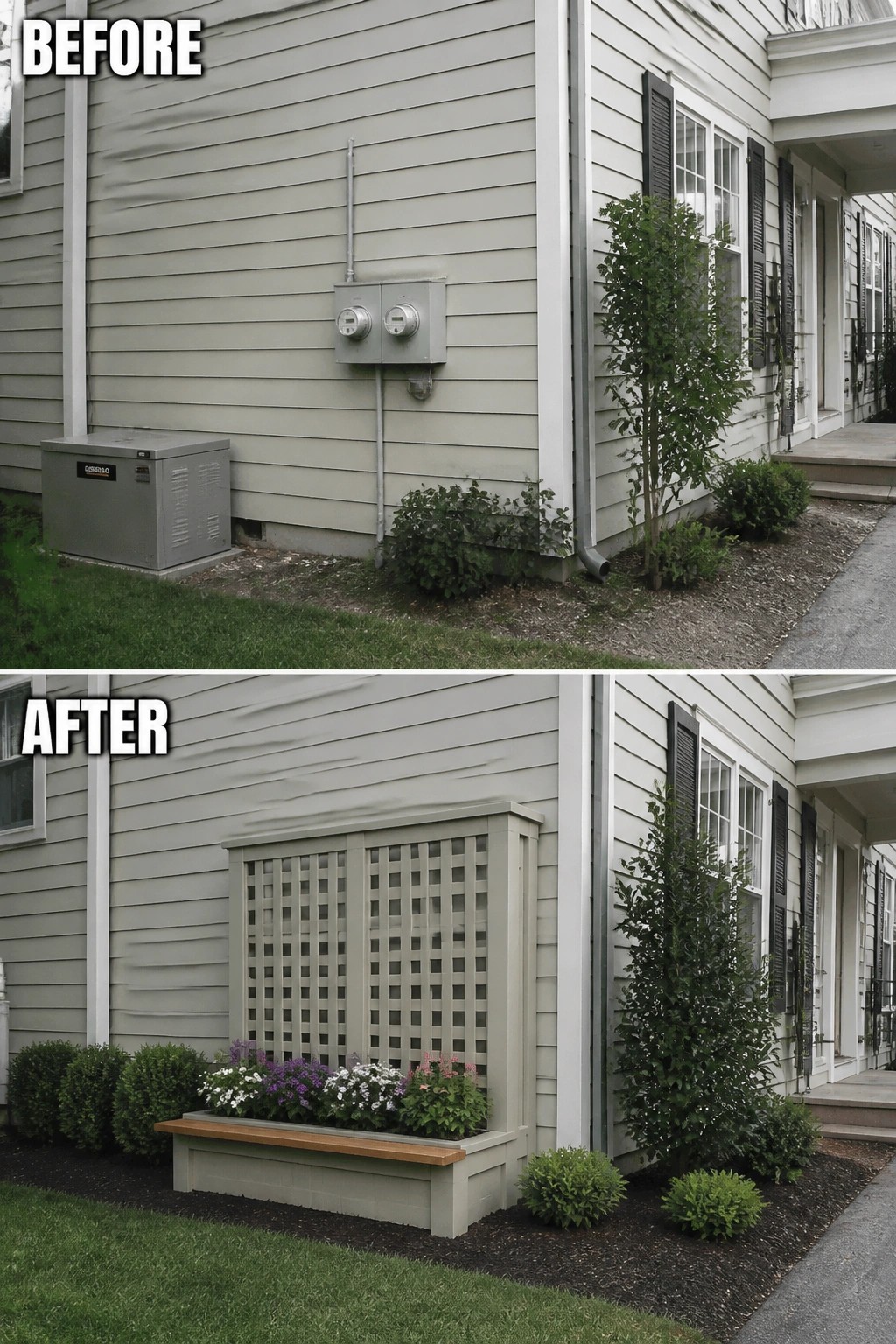
Many homes end up with utility meters and equipment sitting right along the side in full view. A simple lattice screen painted to match the siding covers the boxes without blocking access, and a low planter box along the base turns the spot into something that looks planned instead of just hidden.
This idea works best on houses where the equipment sits near a walkway or entry. Match the screen color closely to the house, keep the planting low, and leave enough room for service access. It is an easy step to improve the look of the exterior before taking on larger changes.
Add An Arbor To Define The Front Entry
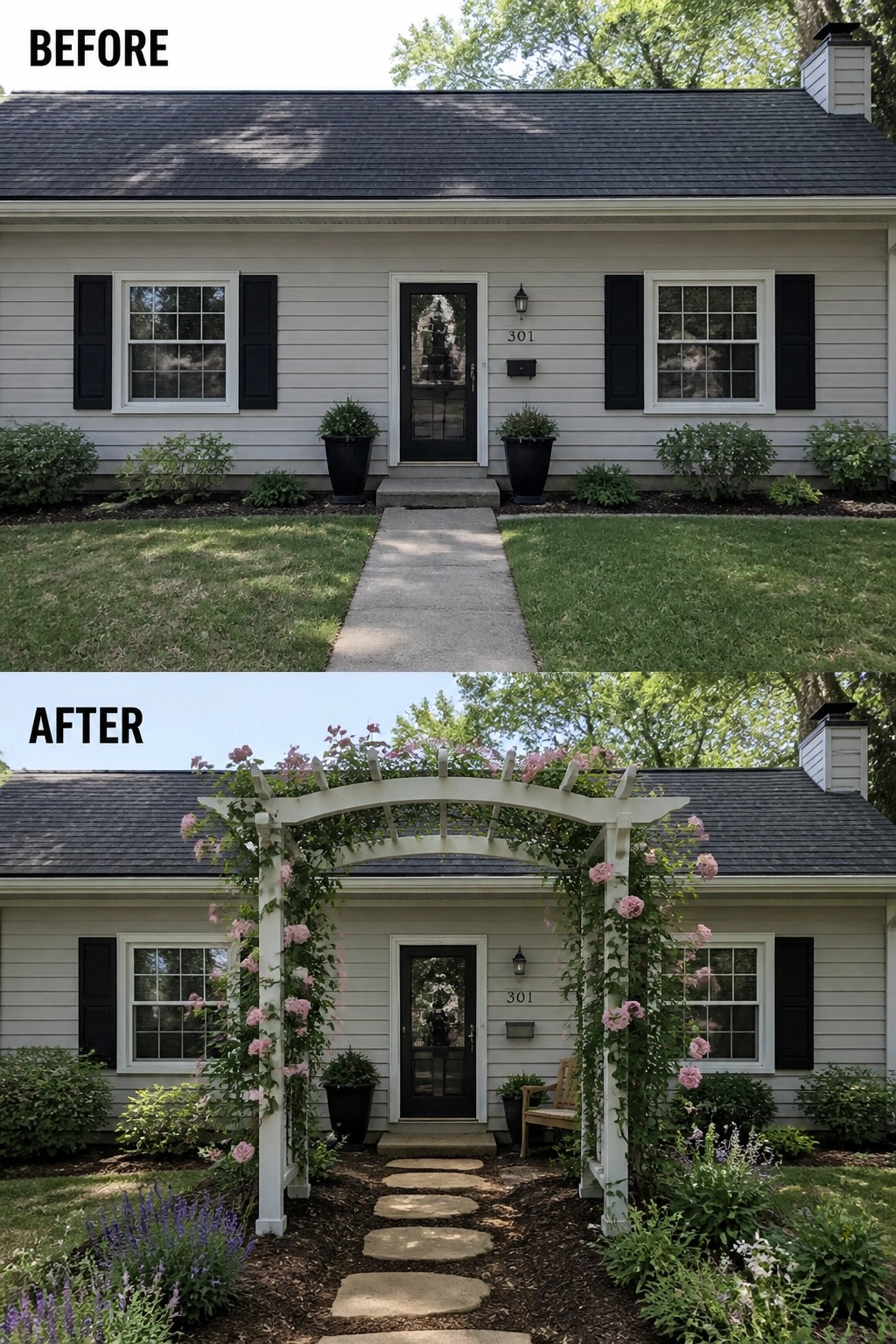
A straight concrete path leading to the door can make the front of a house feel plain and a bit forgotten. Adding a simple arbor gives the entry a clear purpose and breaks up the flat look of the facade without any major construction. The change from a bare walkway to one with structure and planting makes the whole front feel more intentional.
This idea works well on homes with a straightforward layout where the door sits in the middle of the house. Keep the arbor width in scale with the door and choose climbing plants that will not overwhelm the windows. Start with the arbor and path before adding too many extra plants so the entry stays easy to walk through.
Add Structure To A Steep Slope
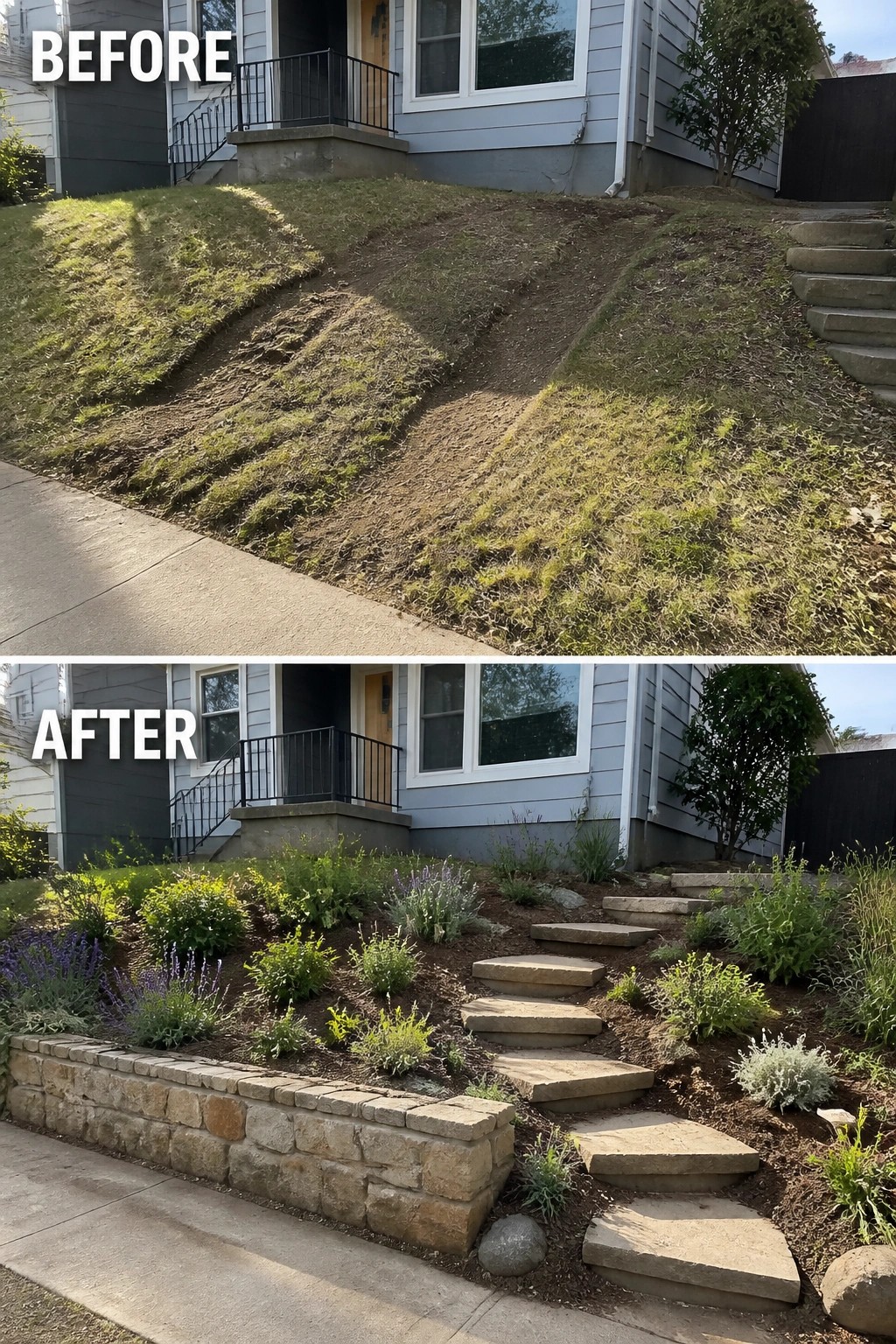
A steep front slope like the one in the before photo often ends up patchy and hard to maintain. The after shows how a low stone retaining wall at the base creates flat planting areas that hold soil in place and make the whole front look more intentional.
This idea suits homes where the yard drops sharply toward the street. Build the wall first to create level beds, then add plants suited to the sun exposure. It cuts down on erosion and gives you spots to add color without fighting the hill every time you mow.
Frequently Asked Questions
Q: Which idea hides a mismatched window layout the easiest?
A: Group similar window treatments together to create balance. Hang matching awnings over the odd ones first. This pulls everything into a cleaner pattern without major construction.
Q: How do I start if my facade looks completely off balance?
A: Walk around the house and note the biggest eyesore. Fix that spot before adding any other details.
Q: Do I need fancy tools for most of these updates?
A: Basic items like a drill and paintbrushes handle the majority. Borrow anything bigger from a neighbor if a project calls for it.
Q: What happens if one change makes other parts look worse?
A: Step back after each update and check how it fits the whole front. Adjust the next step based on what stands out now. This keeps the final result looking intentional.