

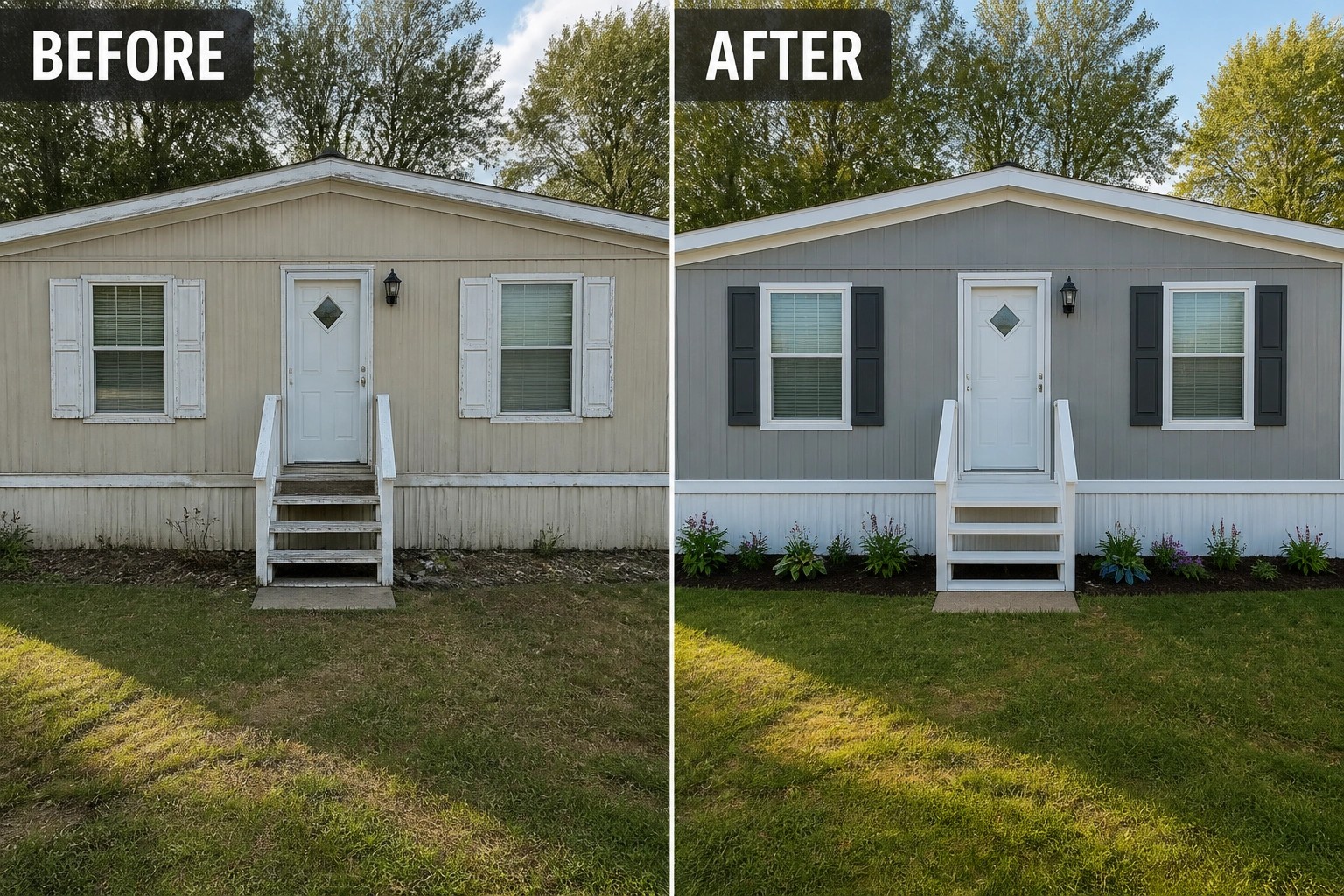
Single wide homes can look neglected not because of their size but because small exterior details are overlooked, like faded paint, tired trim, and an entry that says little about the people who live there.
I find that modest updates to siding, porch hardware, lighting, and a focused planting bed often do more for curb appeal than a big budget renovation and make the house feel cared for.
Small changes add up.
You can test and adapt ideas like fresh trim color, a cleaner walkway, new house numbers, and a few durable plants without calling in a contractor for every step.
Seeing a clear change is quietly satisfying, and I usually recommend saving a few approachable projects to try first so the house starts to feel looked after right away.
Update A Plain Facade With Paint And Trim
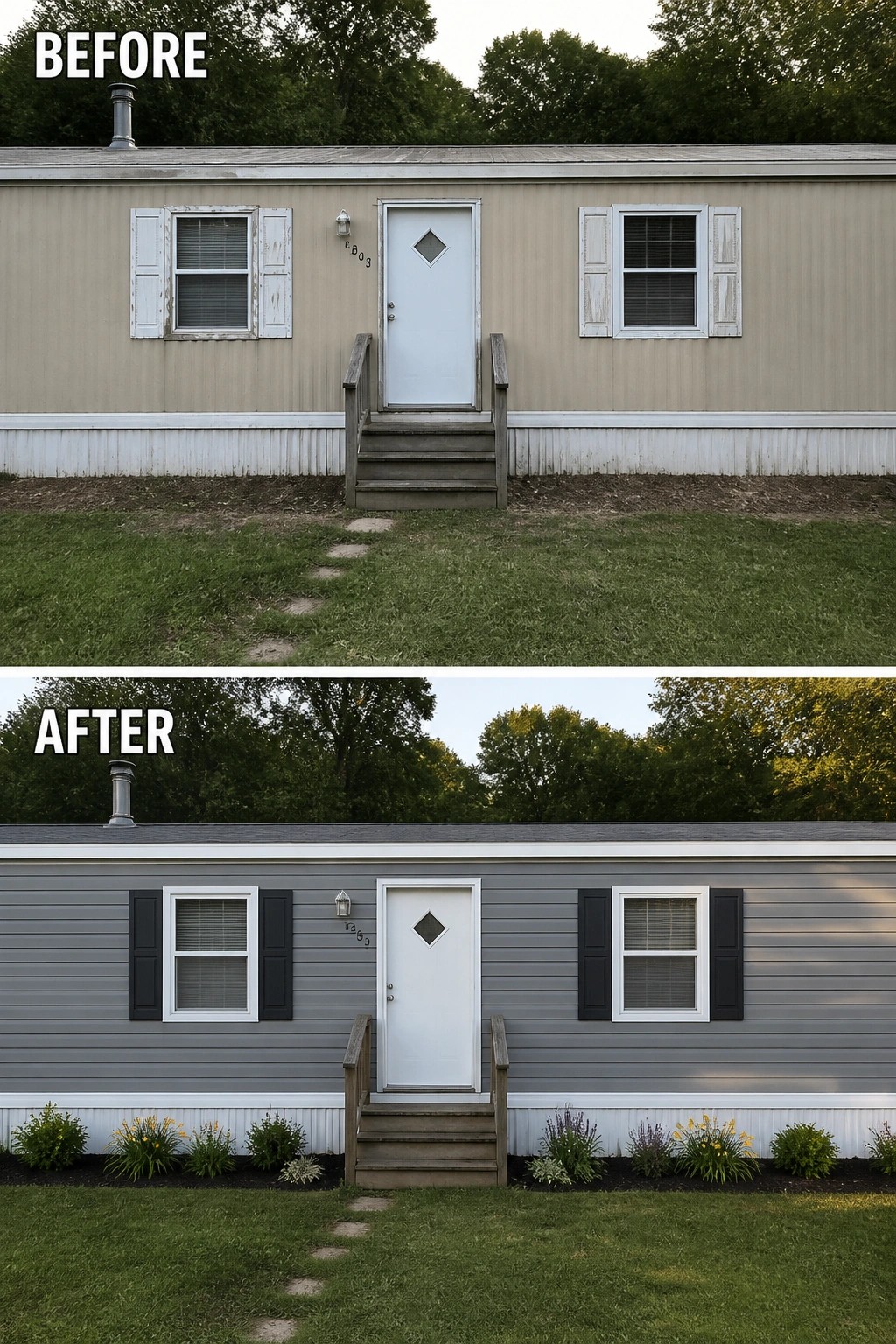
A fresh color and crisp trim are an easy, high-impact way to lift a small single-wide. Swapping tired beige for a cool gray and adding white trim plus dark shutters instantly gives the home a more intentional, finished look without touching the layout. It makes the entry feel like a focal point and helps the windows read as architectural features instead of afterthoughts.
Pick a simple two-color palette and test samples on the siding before committing. Paint or new vinyl siding is fine — the point is contrast: a neutral body color with brighter trim and a darker accent for shutters or the door. Keep details in scale, repair any rotted trim first, and consider a low planted border under the windows to tie the new palette to the ground (start small). This approach works well on narrow facades where a few targeted changes create a cleaner, more thought-out curb appeal.
Update Mobile Home Skirting For Instant Curb Appeal
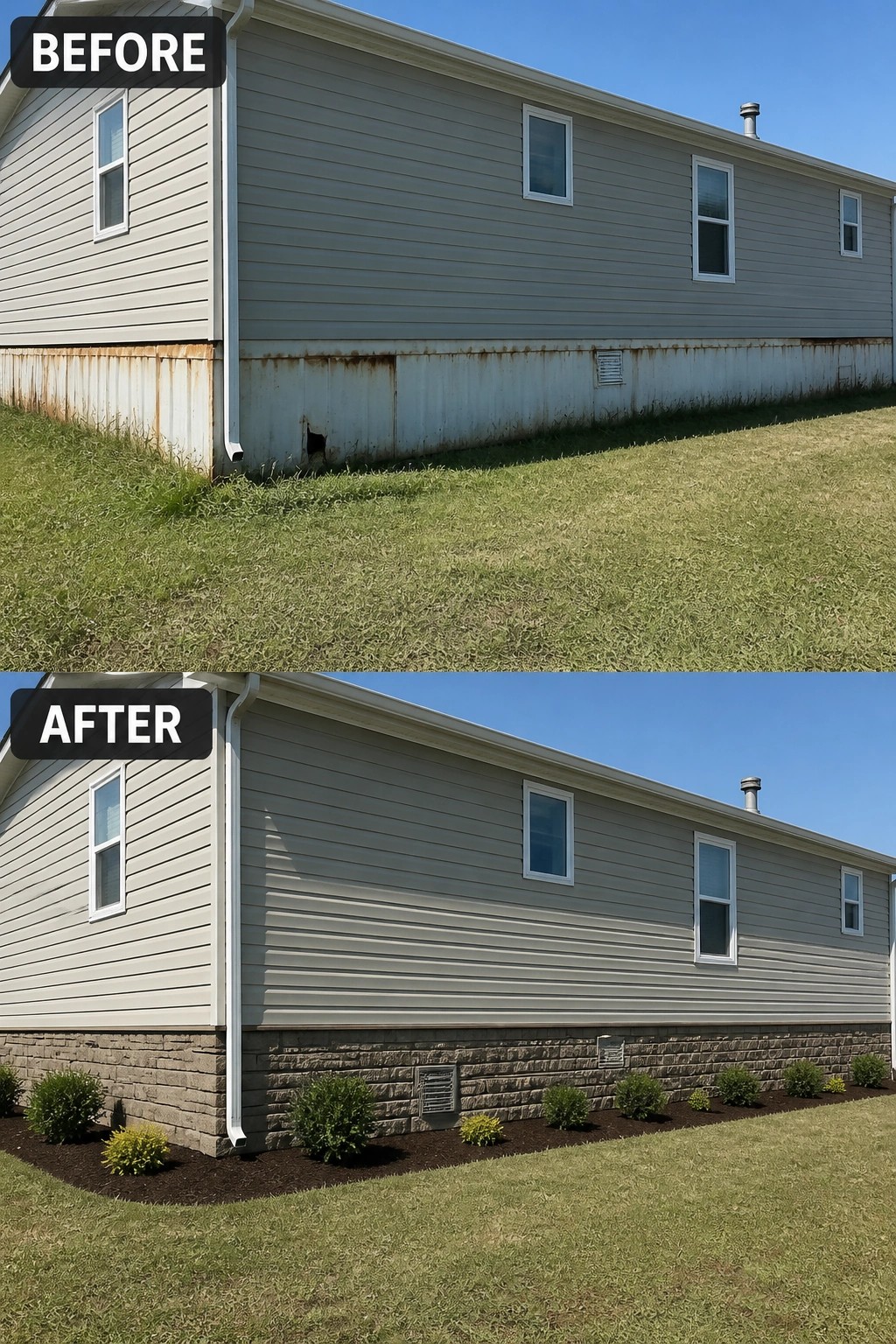
A neat, heavier-looking skirting can make a single-wide feel finished instead of temporary. Replacing rusty metal panels with a stone-look skirting and adding a narrow mulched bed with small shrubs immediately hides damage, grounds the facade, and gives the house a cleaner, more intentional base.
Keep the approach simple: pick lightweight manufactured stone or insulated
Give A Bare Porch A Clear Purpose
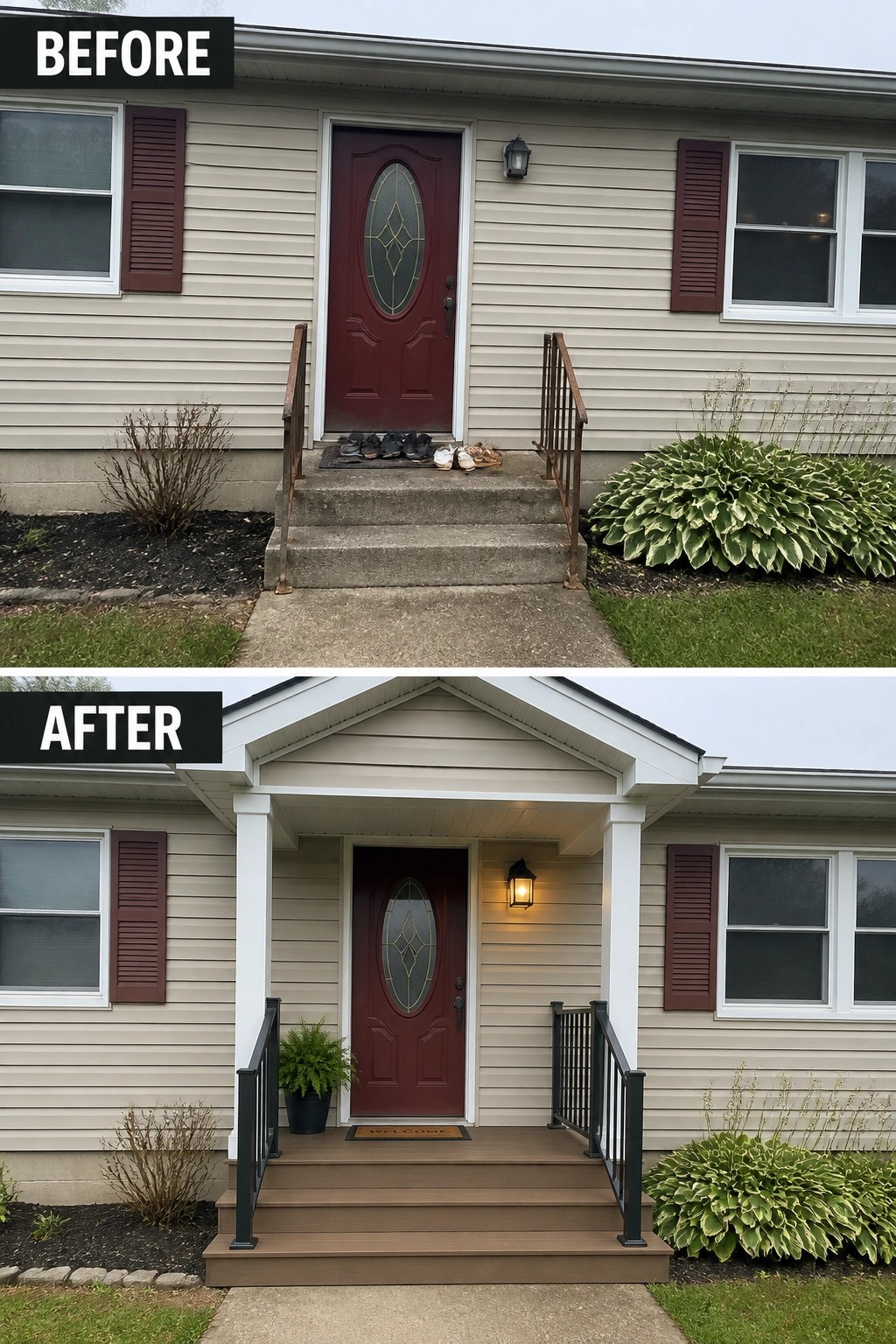
A plain set of concrete steps can look unfinished and unloved. Adding a small covered landing with proper decking, posts, and railings turns that awkward entry into a functional porch that reads like part of the house instead of an afterthought. A single light, a welcome mat, and one planter are enough to signal purpose and make the doorway feel usable.
Start with the structure: a compact roof or portico and sturdy posts will make the biggest difference, then replace or cap the steps with low-maintenance decking and scaled railings so the new porch fits a single-wide home. Keep finishes simple and repeat one color from the house (door or shutters) to tie it together, and make sure the walkway still allows easy passage—small, practical upgrades go a long way.
Build A Welcoming Covered Porch Entry
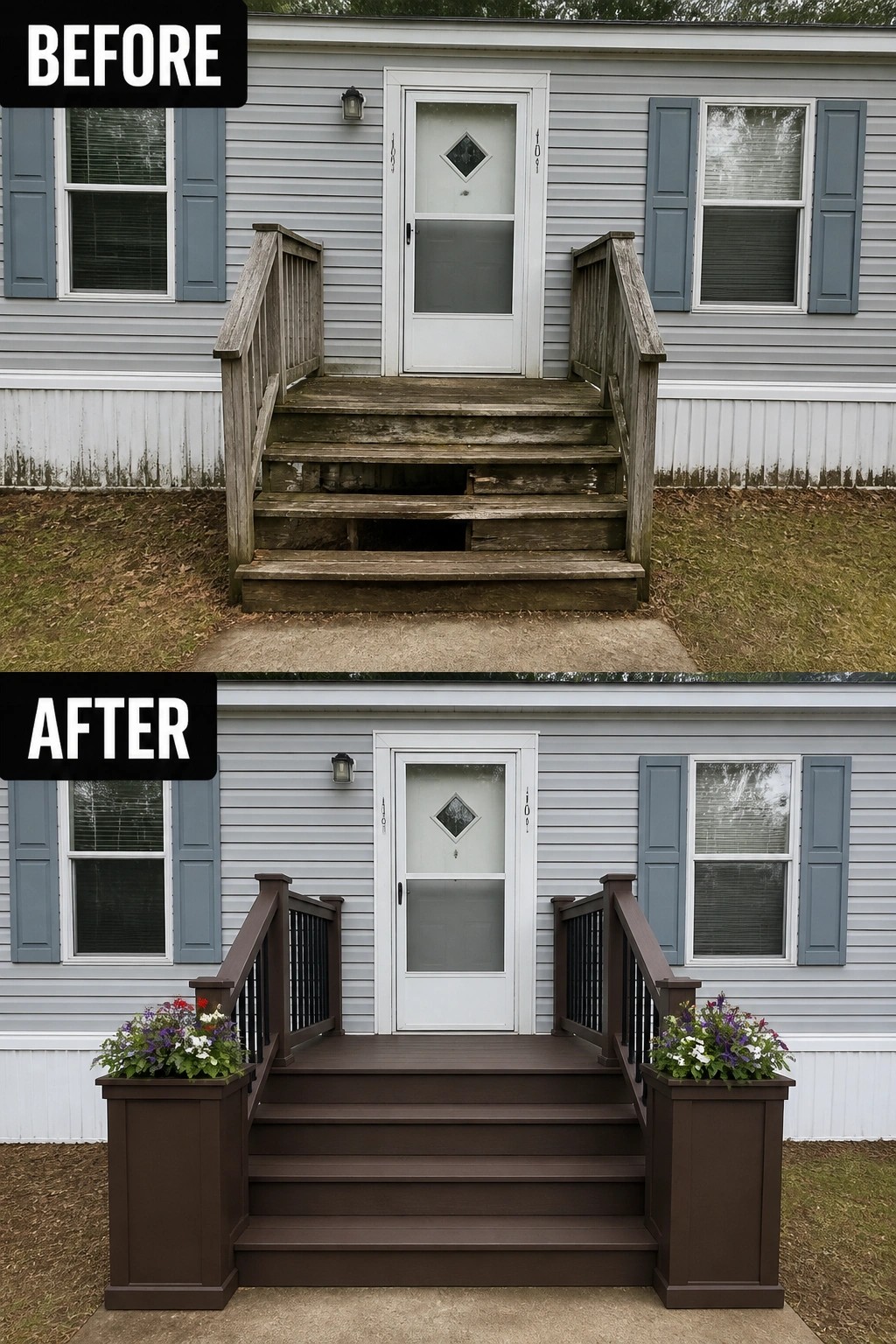
A small, safe entry can make a big difference. Replace narrow, sagging wooden steps with a proper landing, low sturdy railings, and matching planter boxes to turn a purely functional approach into a welcoming front porch. The wider landing adds usable space and keeps people from juggling packages on steep treads, while coordinated materials make the whole facade read as intentional rather than tacked on.
Start by sizing the landing to match the door and the house face so the porch feels balanced. Use low-maintenance materials like composite decking or pressure-treated wood and pick simple railings that meet local code for safety. Add built-in planters or two matching pots for seasonal color, keep the walkway clear, and choose plant heights that won’t block the entry. Simple, and practical.
Refresh Your Entry With A Bold Door Color
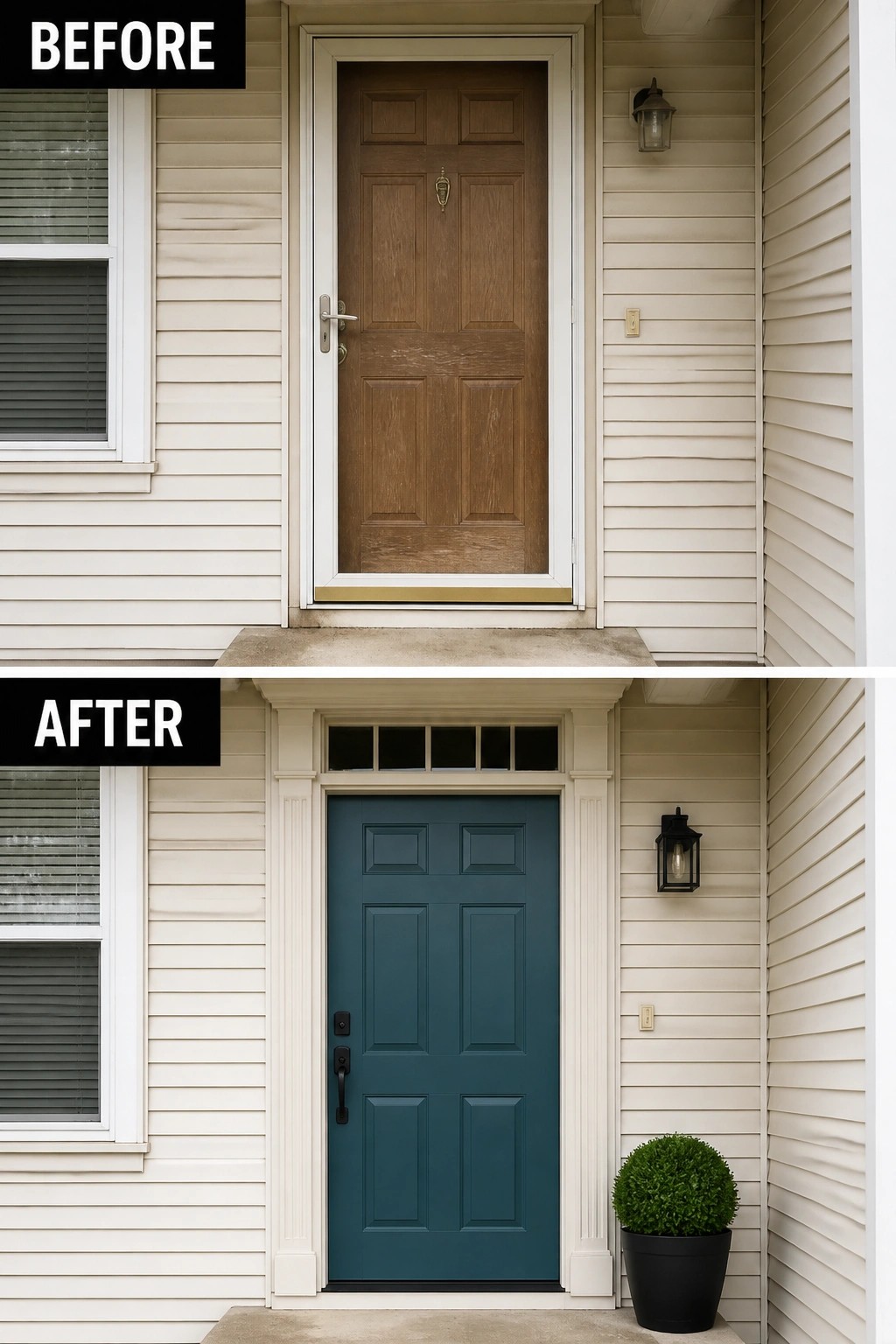
A fresh door color is one of the quickest ways to lift curb appeal without major work. In this example the plain brown door is replaced with a deep teal finish and a single potted plant, which instantly gives the small porch a clear focal point and a more welcoming feel.
Do it yourself by picking an exterior-grade paint color that complements your siding and testing a sample on the door before committing. Swap or refinish the lockset in a coordinating finish, keep accessories minimal (one planter or a simple lantern), and focus on tidy trim lines so the new color reads like an intentional design choice rather than a last-minute splash. No heavy work required.
Add Shutters And Window Boxes To Boost Curb Appeal
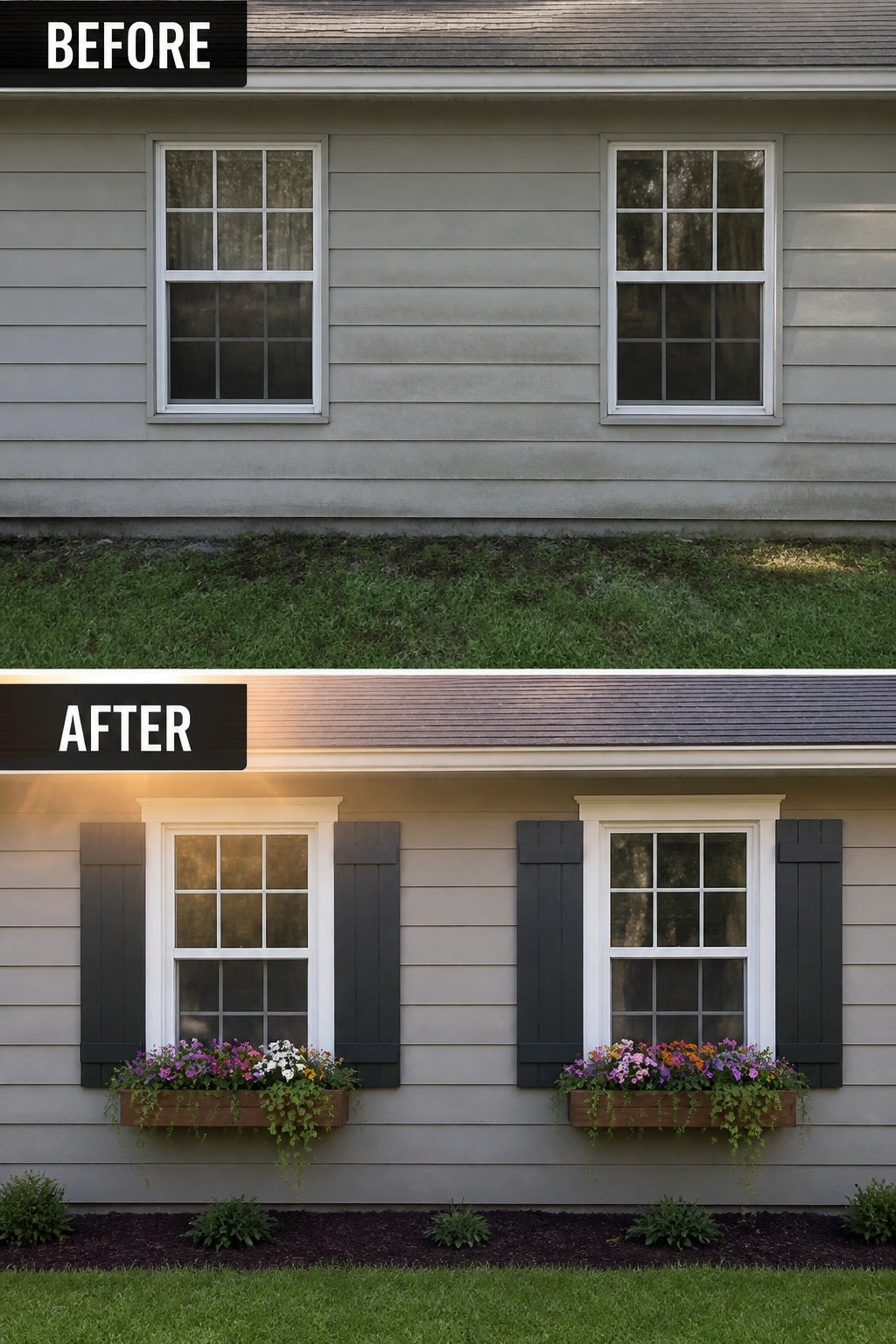
Framing windows with shutters and a simple flower box is one of the quickest ways to make a plain exterior feel intentional. In the before-and-after pictured, basic windows are given immediate personality by dark, vertical shutters and wood boxes filled with seasonal blooms, which break up the siding and create a clear focal point at eye level.
Keep it practical: size shutters to match the window proportions, choose a durable material and a paint color that contrasts the siding, and pick low-maintenance plants that won’t need daily care. Mount boxes on sturdy brackets or use removable containers if you rent, and tie the look together with a narrow mulch bed or a couple of small shrubs below the windows. Small effort, big payoff.
Replace An Old Awning With A Simple Pergola
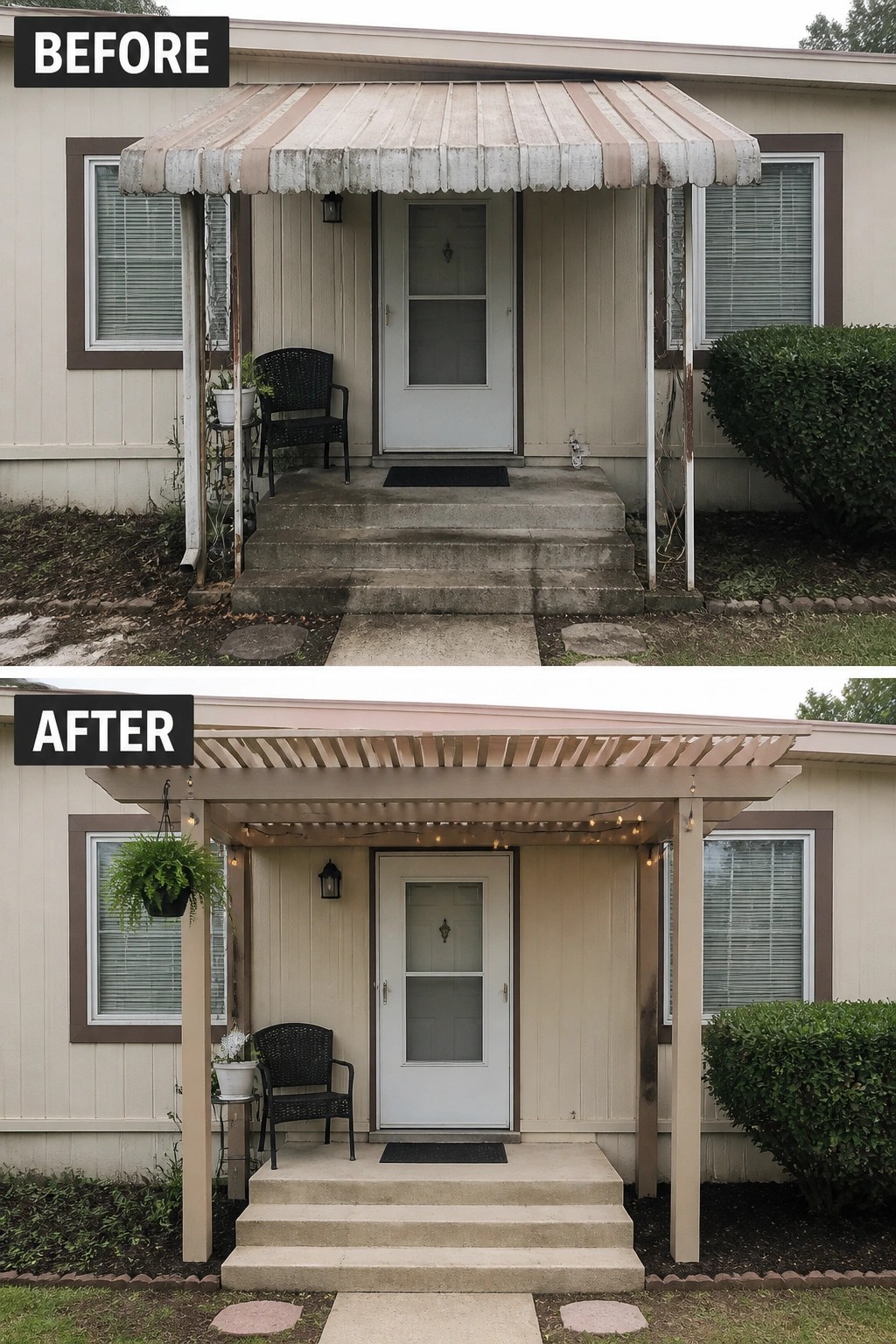
Replace a sagging metal awning with a simple, well‑proportioned overhead structure and a few finishing touches to make a small entry feel deliberate. In this example the old cover was swapped for a painted slatted pergola, string lights, and a hanging plant so the steps and seating read as an intentional porch instead of leftover clutter.
Start by cleaning and repairing the stoop, then add a slim pergola or trimmed header that matches your trim color so it looks like part of the house. Hang weatherproof string lights across the slats, tuck in one chair and a planter, and keep the scale small so the door and path stay clear—works especially well for single‑wide homes with narrow entries. Simple, cheap, effective.
Use A Paver Path And Lighting To Define The Entry
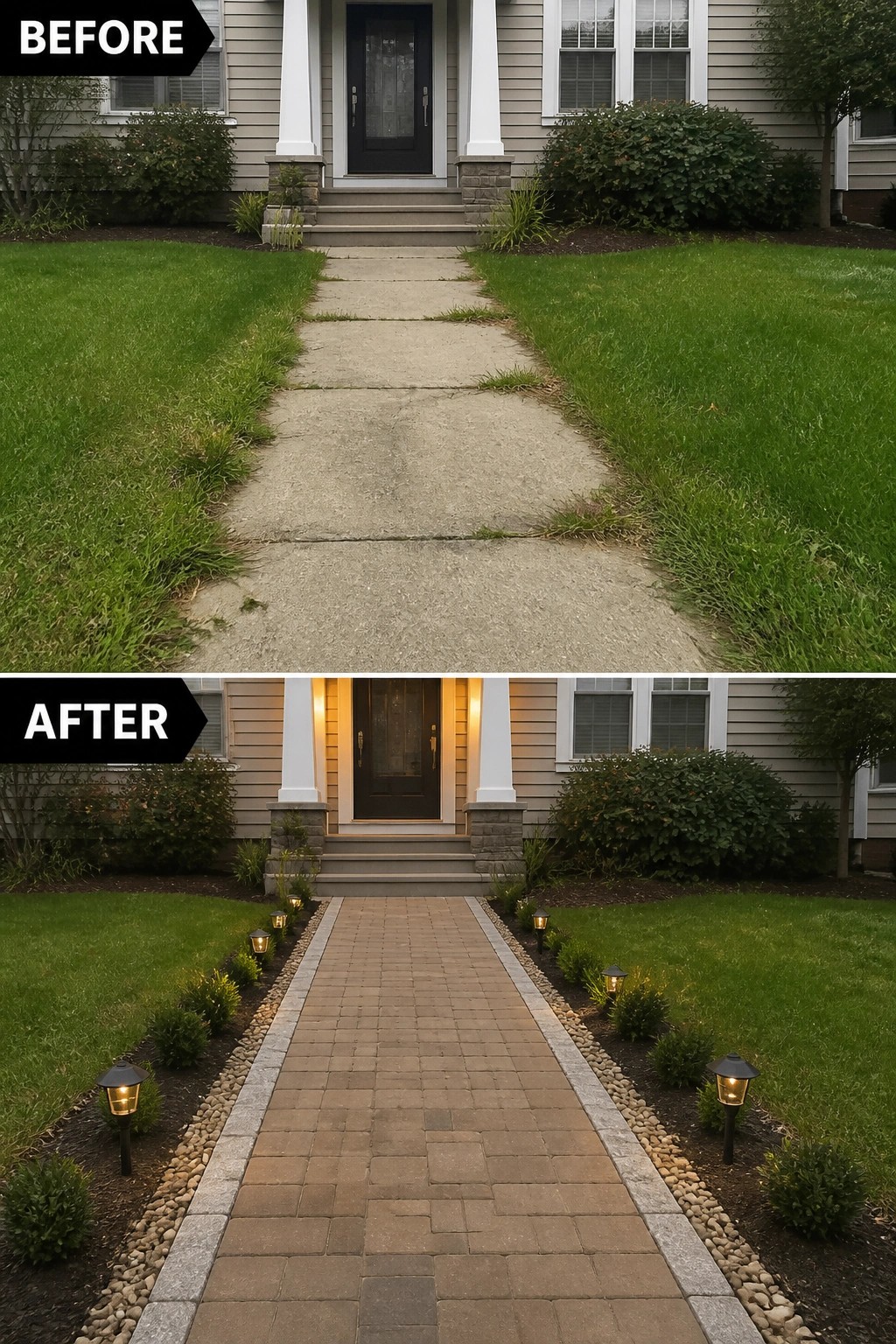
Swapping a cracked concrete strip for a neat paver path with stone edging and low landscape lights instantly gives a small home a cleaner, more intentional entrance. The hard edge of the pavers and the repeat of small plantings along the border make the approach feel finished, while subtle lights make the path usable after dark.
Do it by removing the old slabs, compacting a gravel base, and installing edge restraints so the pavers stay put. Choose a paver color that complements your siding, add a narrow bed of river rock or mulch for low maintenance, and space low-voltage lights about every 6 to 8 feet so they actually illuminate the walk. It’s simple, and it works well for single-wide homes where scale and neatness matter.
Add Defined Garden Beds To Boost Curb Appeal
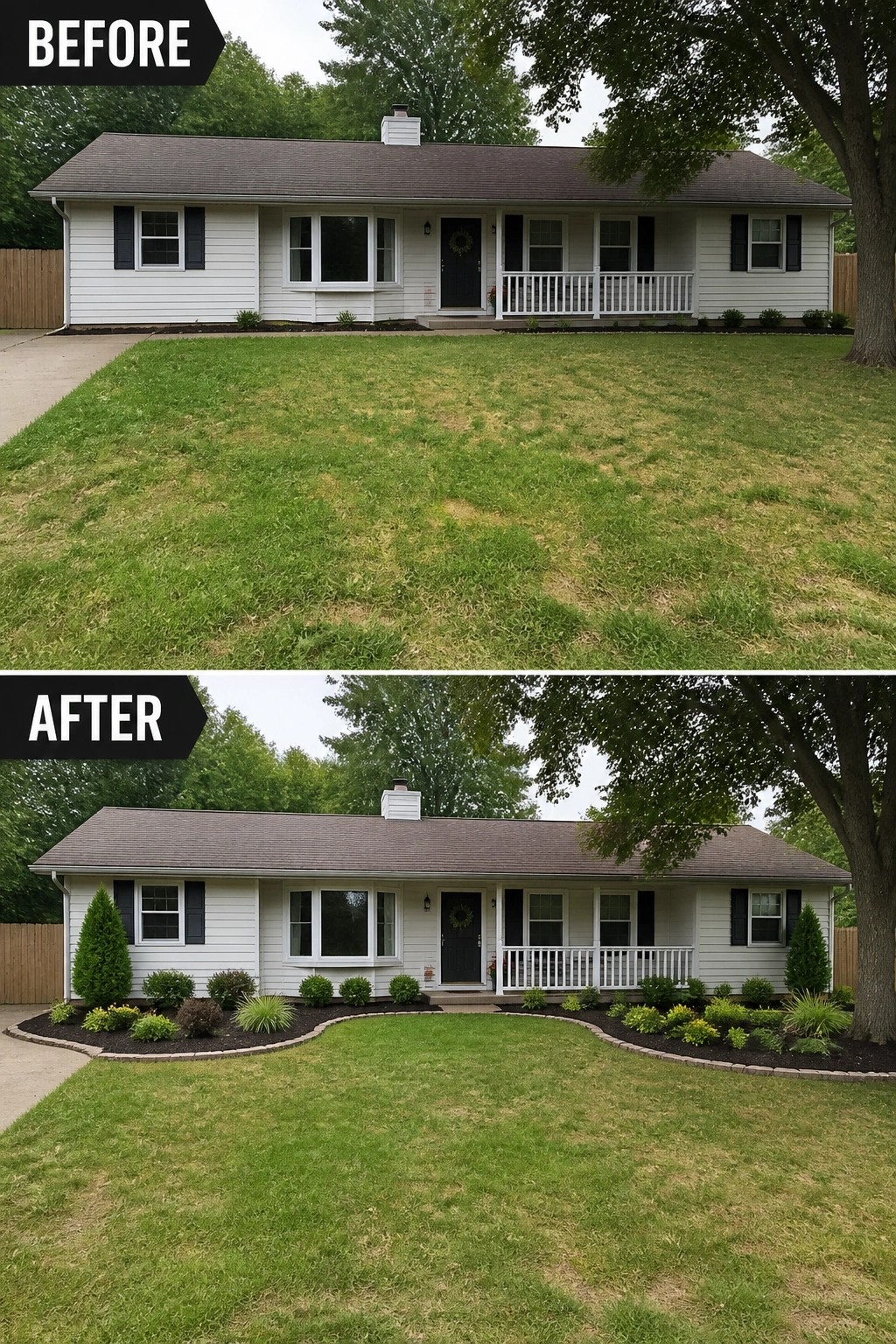
A simple way to lift a plain front lawn is to cut in clean, curved garden beds and finish them with edging, dark mulch, and a few repeatable shrubs. The shaped bed lines and fresh mulch in the after photo give the house a planted frame and make the entry feel intentional without a big project.
To copy this, start by sketching the bed shape with a hose or spray paint so the curves suit your yard and porch. Install inexpensive edging (pavers or steel) to hold the line, add a weed barrier if you like, and plant one or two taller anchor evergreens with smaller shrubs repeated along the bed for rhythm. Finish with a layer of mulch to hide soil and keep maintenance low. Keep the beds proportional to the house and leave room for mowing and walkways so the result looks planned, not crowded.
Use Layered Exterior Lighting To Make The Entryway Welcoming
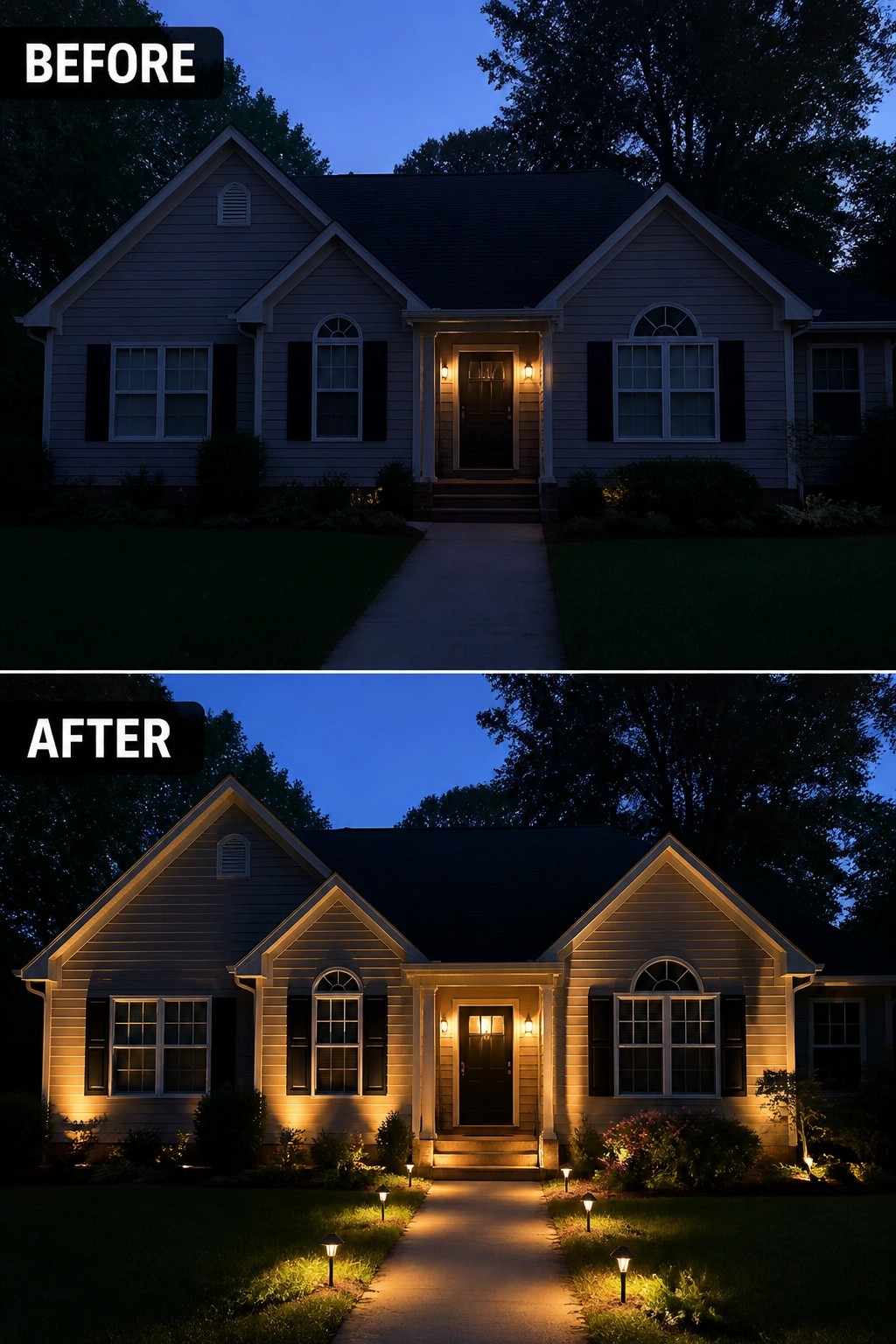
A simple lighting plan can change a plain, dark facade into a clear, welcoming entry. In this example a few pathway stakes plus brighter porch sconces and low uplights around the shrubs turn an unnoticed front into a readable focal point. Good layered lighting improves safety, highlights the house’s shape, and gives visitors a clear path to the door.
Start with practical pieces: a pair of porch sconces and low-path lights spaced about 6 to 8 feet apart, then add a couple of discreet uplights to wash the siding and small shrubs. Choose warm LED bulbs around 2700–3000K, use timers or a photocell so lights come on automatically, and aim fixtures to avoid direct glare into windows. This approach suits modest single-wide homes best—you’ll get a big curb appeal gain without changing the structure. Small changes, big impact.
Refresh Exterior Trim And Gutters For Instant Curb Appeal
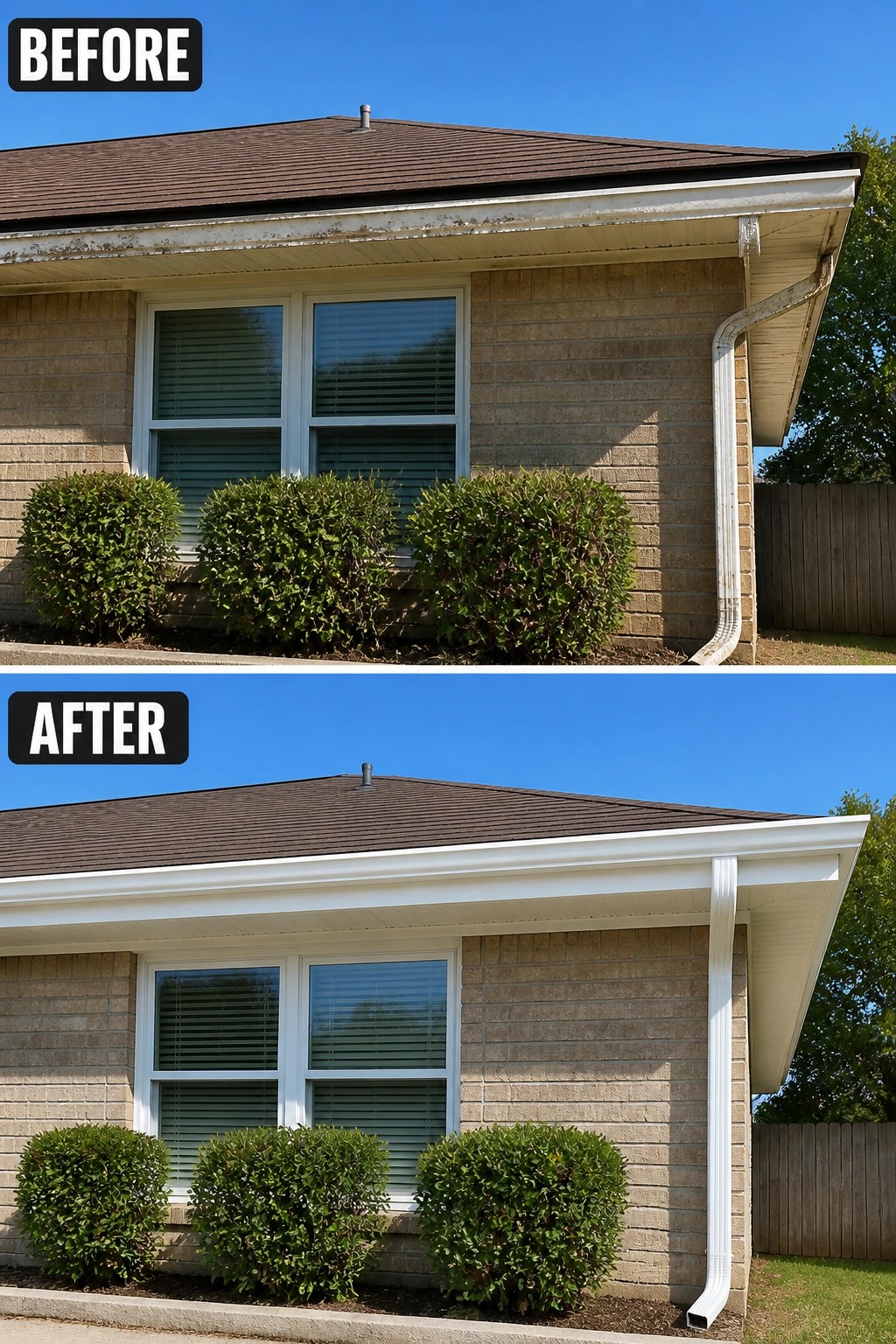
A tidy roofline makes an older single-wide read as cared for rather than tired. In this example the worn, peeling fascia and crooked downspout were replaced with clean white trim and a new downspout, and the whole house instantly looks sharper. This kind of update frames windows and roof edges so the rest of the facade feels fresher without a major renovation.
Start by cleaning gutters and repairing rotten wood, then decide whether to repaint or replace the trim with low-maintenance materials like PVC or aluminum. Match the trim color to existing window frames, check gutter slope and fastenings, and add a splash block or extension for better drainage. Quick, cost-effective fix.
Use A Vertical Screen To Hide A Plain Side Wall
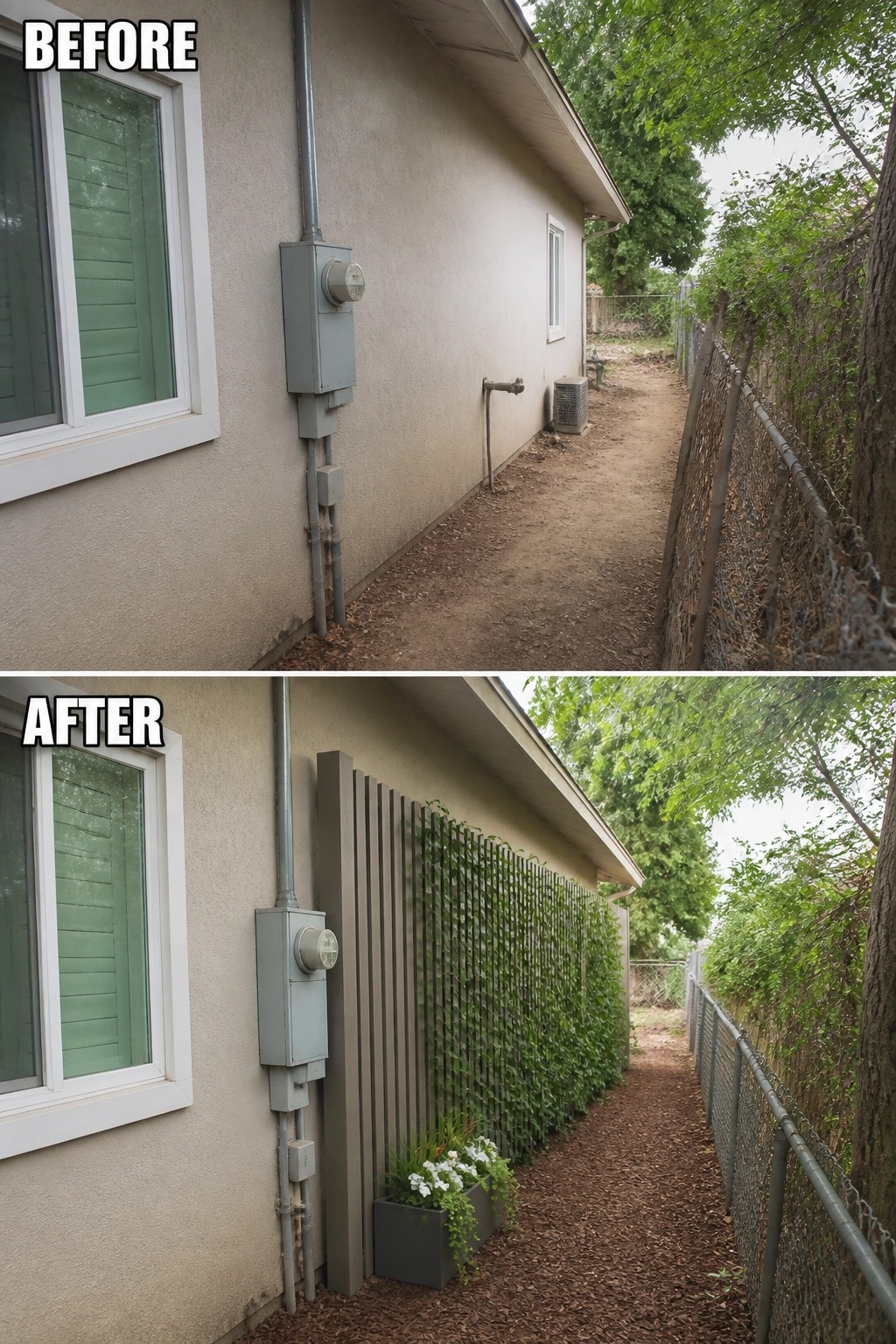
A plain stucco wall and a bare dirt alley can look unfinished, so adding a vertical screen with climbing plants gives the space instant purpose. Replacing the blank expanse with narrow slatted panels and a few planters turns the wall into a living feature, softens the hard lines, and makes the path feel cared for instead of leftover space.
Give The Front Yard A Defined Entry With A Picket Fence
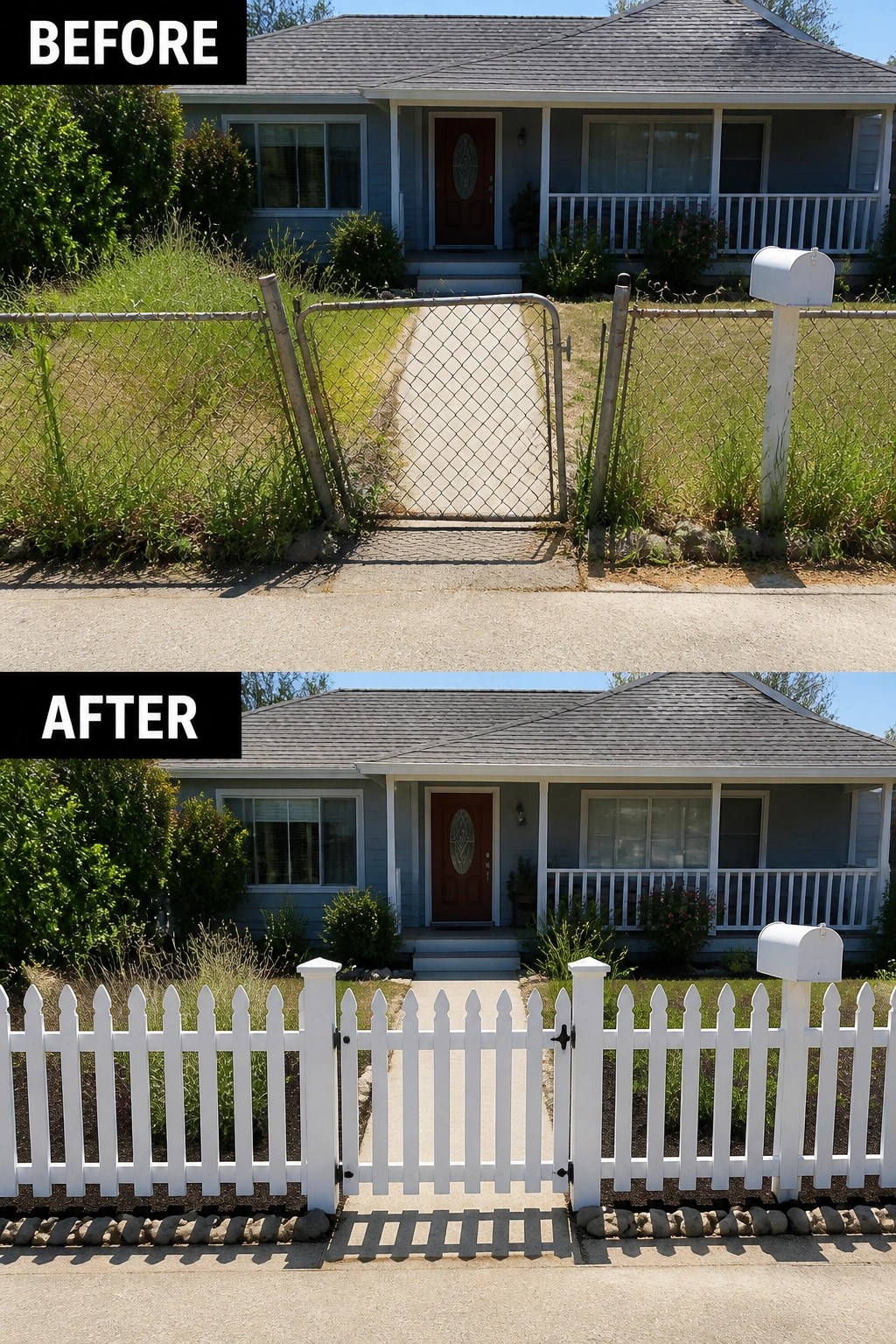
Swapping an old chain-link gate and unruly edges for a low white picket and a centered gate instantly gives a small single-wide home a clear, welcoming entrance. Framing the sidewalk with a simple fence and tidy planting beds makes the house read as cared for, and it separates the yard from the sidewalk without blocking the view.
To copy this on a budget, start by clearing weeds and defining the bed lines so the fence sits on clean edges. Pick a low-maintenance material—vinyl or pre-primed wood—and keep the fence height proportional to the house so it feels balanced. Align the gate with your walkway, use mulch or gravel in the beds, and choose a few low shrubs to repeat on either side of the path. Small investment, big difference.
Create A Clear Path And Planted Beds For Narrow Side Yards
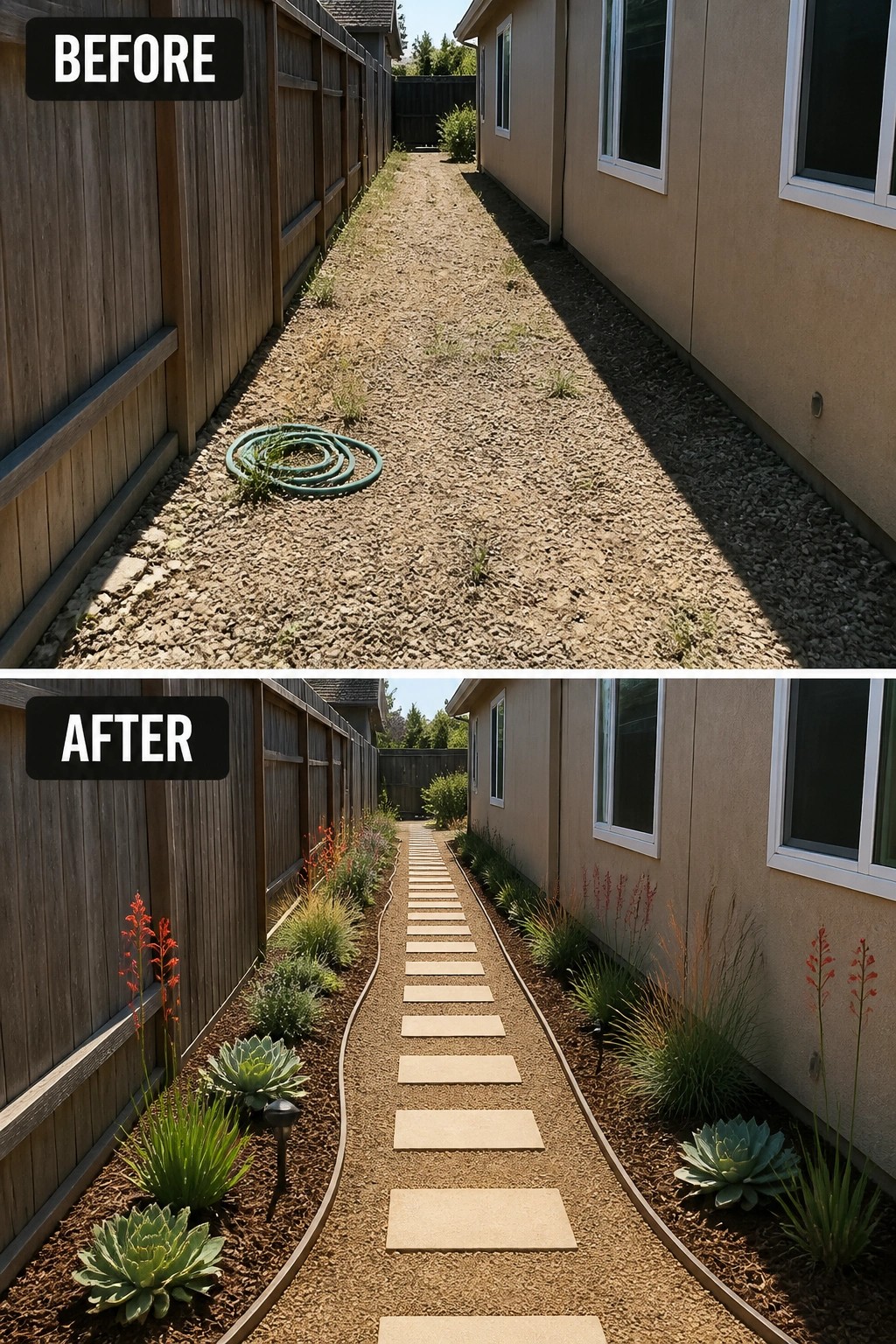
A bland, gravel-covered side yard becomes useful and tidy when you lay a simple stepping-stone path and carve narrow planting beds along the edges. One or two rows of pavers set in compacted gravel plus mulch and low, drought-tolerant plants give the corridor purpose and much cleaner curb appeal.
This idea works best in tight walkways where maintenance needs to stay low and access matters. Use edging to keep the gravel and mulch contained, space the stones for comfortable steps, pick compact sun-loving plants, and drop in a few low lights so the path is safe and attractive at night.
Style A Small Porch With Purposeful Accessories
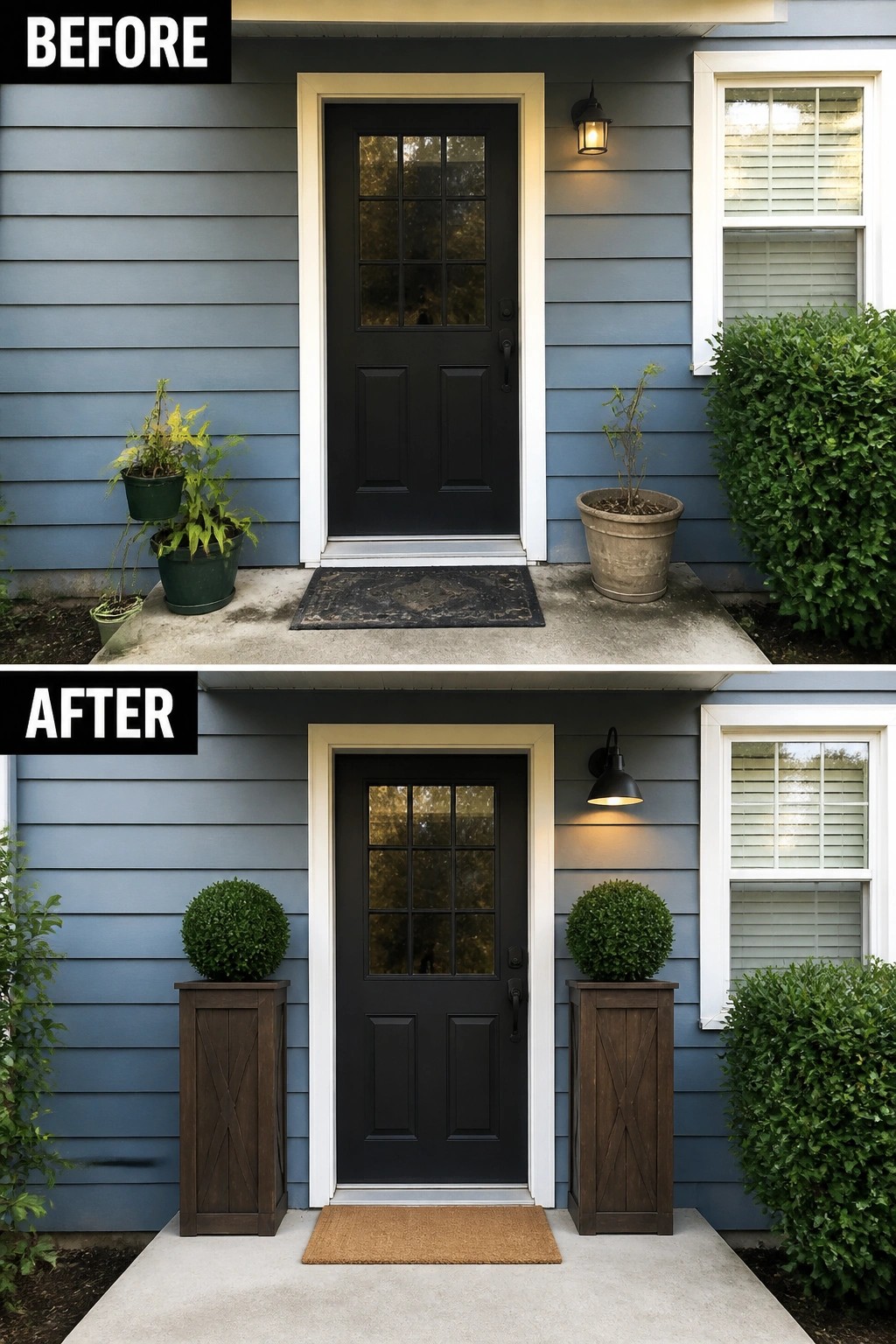
A front entry doesn’t need a lot to feel finished—pick one or two repeating elements and use them as anchors. In this example the cluttered pot group became a purposeful pair of tall planters, a simple coir mat replaced the worn rug, and the single wall sconce was swapped for a more intentional fixture. Those few moves turn a plain stoop into an entry that reads like it has a job: welcome visitors and guide the eye to the door.
Do it where space is tight and you want a tidy, low-effort upgrade—single wide homes, small porches, and narrow walkways all benefit. Choose planter height to balance the door (taller pieces for taller doors), pick hardy plants or faux topiaries for year-round presence, and use weatherproof materials so it stays neat with minimal care. Keep the walking path clear and favor symmetry for a calm, composed look. Simple and practical.
Use Shutters, Awnings, And Window Boxes To Dress A Plain Facade
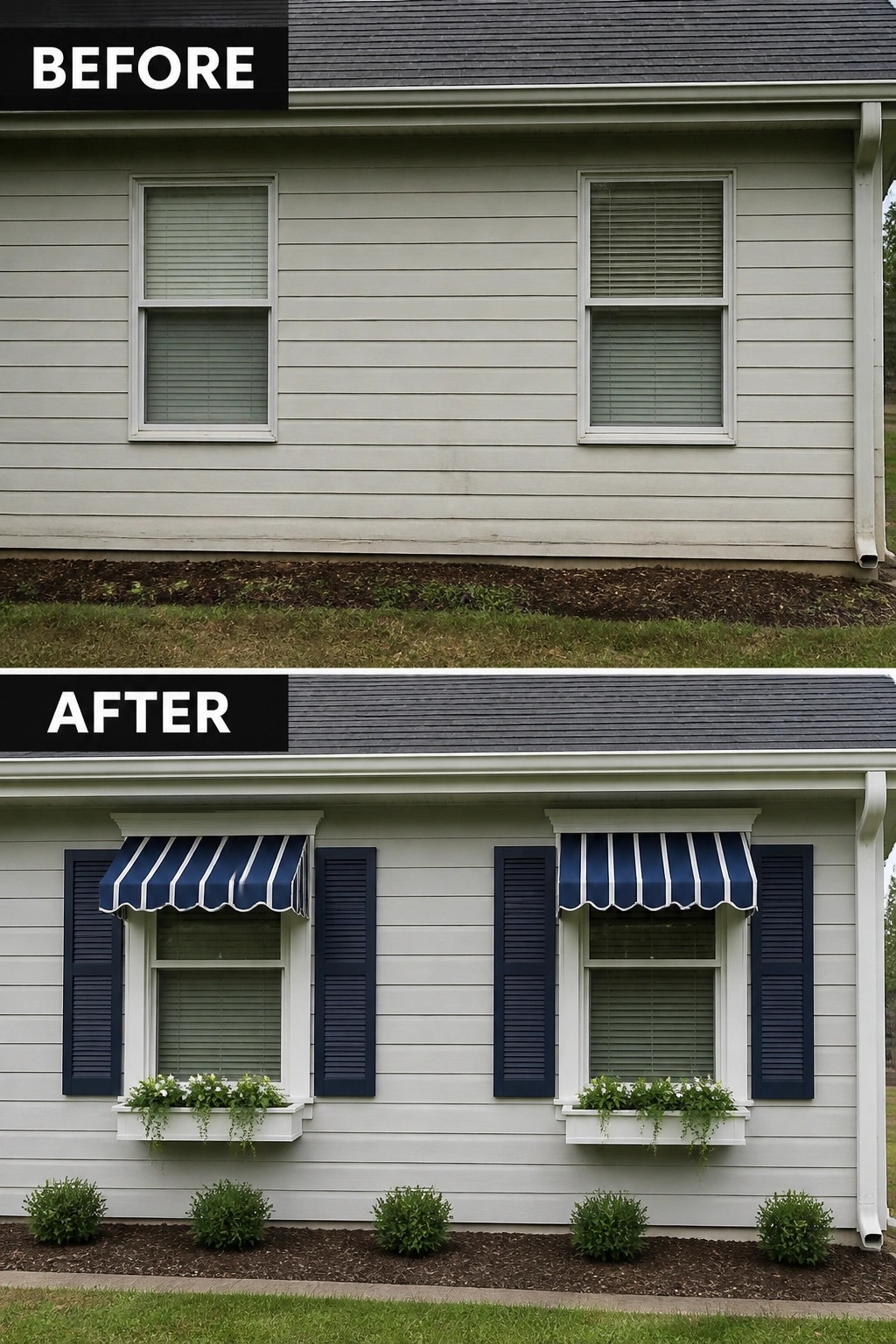
Adding a few simple architectural accents can turn flat siding into a thoughtful front. In this before-and-after the house goes from bare to intentional by adding painted shutters, striped awnings over each window, and matching flower boxes—those three elements create rhythm and color without a big renovation. The result reads like a conscious design choice rather than an afterthought.
To copy this, start by choosing one color or two that repeat across shutters and awnings so the look feels coordinated. Keep scale in mind: shutters should roughly match window height, awnings should clear the top trim, and boxes need proper drainage and hardware rated for exterior use. This works well on narrow or single-wide facades where you want to add character without changing the
Use A Long Raised Planter To Anchor A Plain Facade
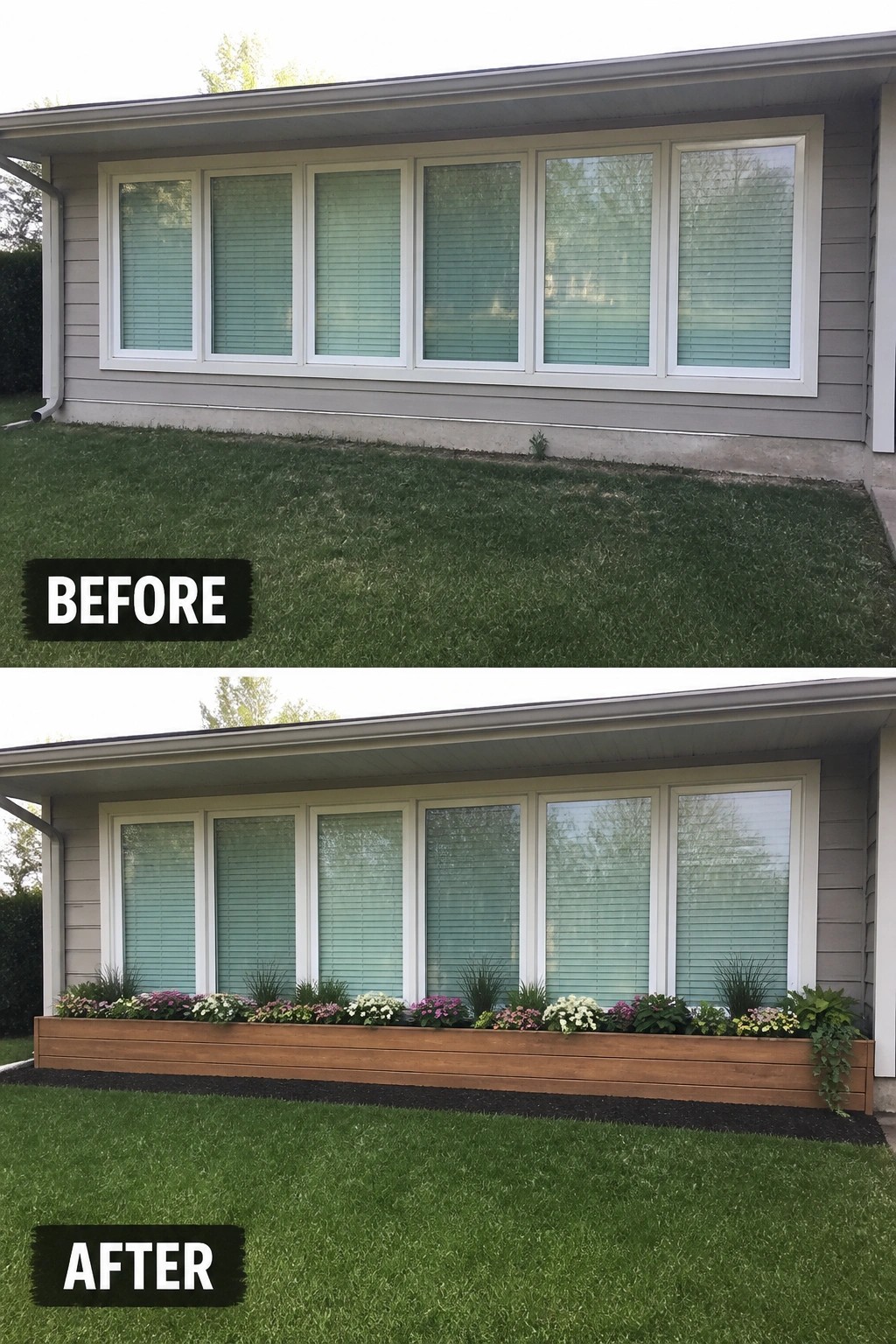
A low, continuous planter under a run of windows is one of the simplest ways to lift a bland front. In the before image the foundation sits exposed and empty; in the after a long wooden planter fills that gap, adds color, and gives the facade a deliberate base line. It’s an easy visual fix that makes the house feel finished without changing the structure.
To copy it, keep the planter scaled to the length of the window run and low enough to let views and light stay usable—knee to sill height works well. Build it from rot-resistant wood or composite, provide good drainage, and use about 12–18 inches of soil for perennials (deeper if you want shrubs). Plant a repeating mix of vertical accents, mid-height flowers, and a few trailing pieces at the ends, then add mulch and a narrow edge of dark soil or rock to read as a clean band from the street. This approach suits long, low facades and small yards where a single strong element can tidy and modernize the exterior.
Give A Bare Porch A Clear Purpose
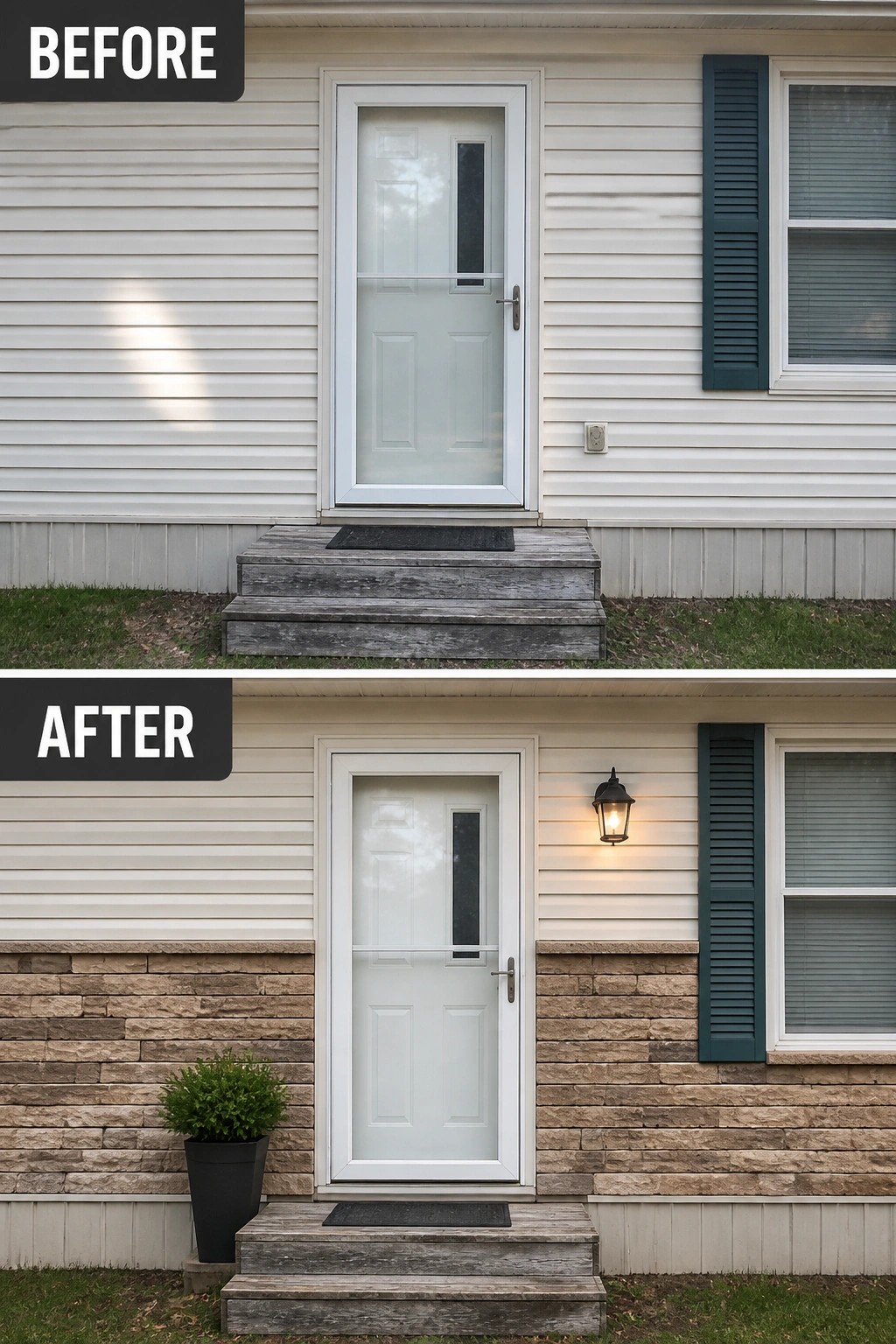
A small, nondescript entry can feel finished with just a few purposeful moves. In this example the lower facade was clad in stone veneer and a single exterior lantern plus a planter were added to one side; those changes give the doorway visual weight and a clear focal point so the porch reads as an actual entry rather than an afterthought.
Do this by picking one anchor material or feature first — a row of stacked stone, a simple timber surround, or a bold light fixture — then add one modest accessory like a tall planter to echo the material or color. Keep scale in mind: low cladding should sit below window height and a wall lantern should be mounted where it lights the steps without blocking the door. Simple, practical updates like these work well on single-wide homes and are easy to phase in on a budget.
Update Siding And Trim To Improve Curb Appeal
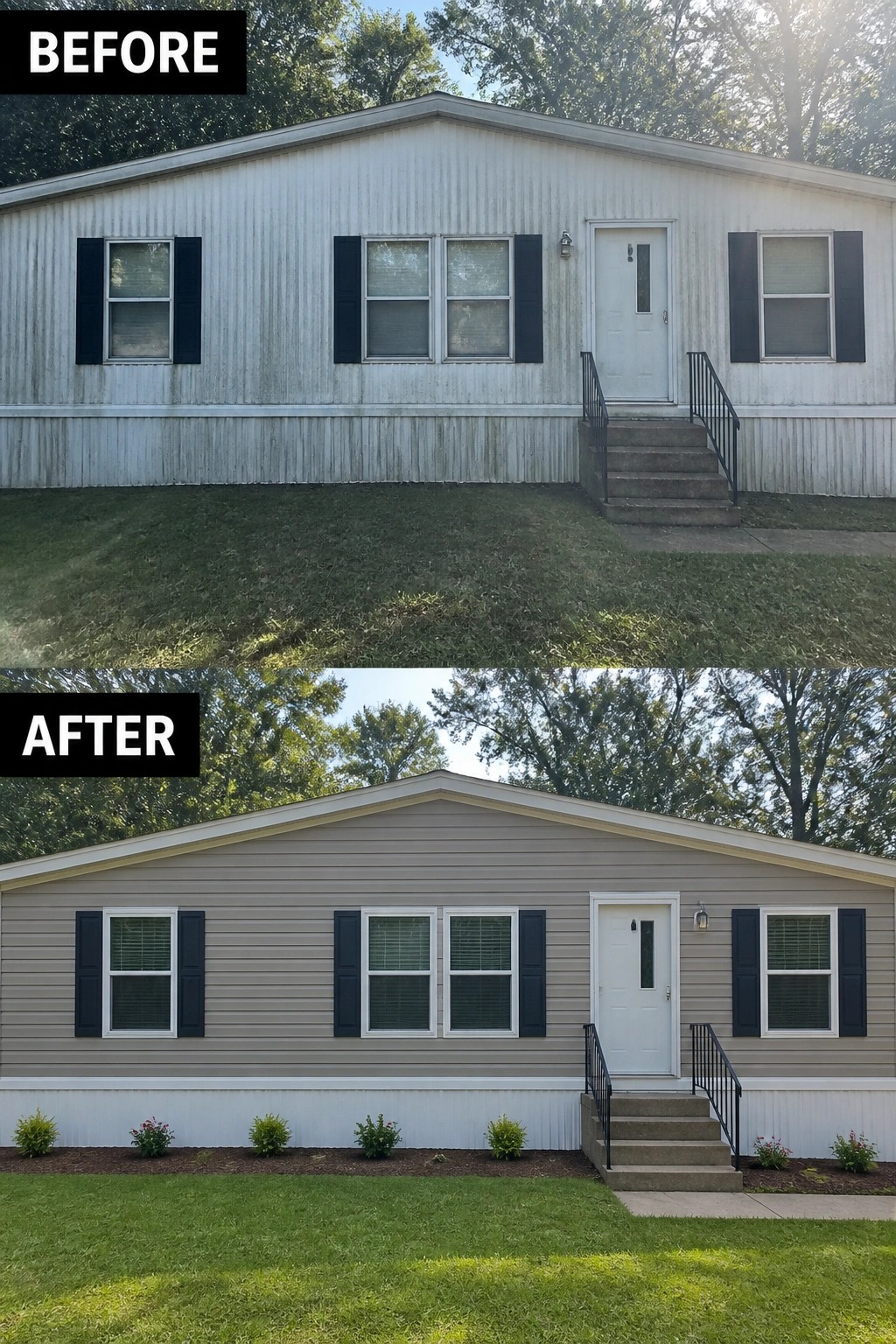
Swapping tired, stained siding for a clean, coordinated siding-and-trim system is one of the fastest ways to modernize a single-wide exterior. In this example the old vertical, dingy panels were replaced with a neutral horizontal siding and crisp white trim, which immediately reads as fresher and more intentional while the small planted bed grounds the facade.
To do this on a budget, start by power washing and repairing any rot, then decide whether to replace the siding or install an over-panel system that sits on top of the existing shell. Pick a neutral siding color and bright trim to frame windows and the door, repeat a dark accent color for shutters or railings, and finish with a narrow foundation bed and mulch so the house meets the lawn cleanly. Keep proportions simple and avoid too many small details on a narrow facade; a clean surface and a couple of matching accents go a long way.
Create Defined Garden Beds For Instant Curb Appeal
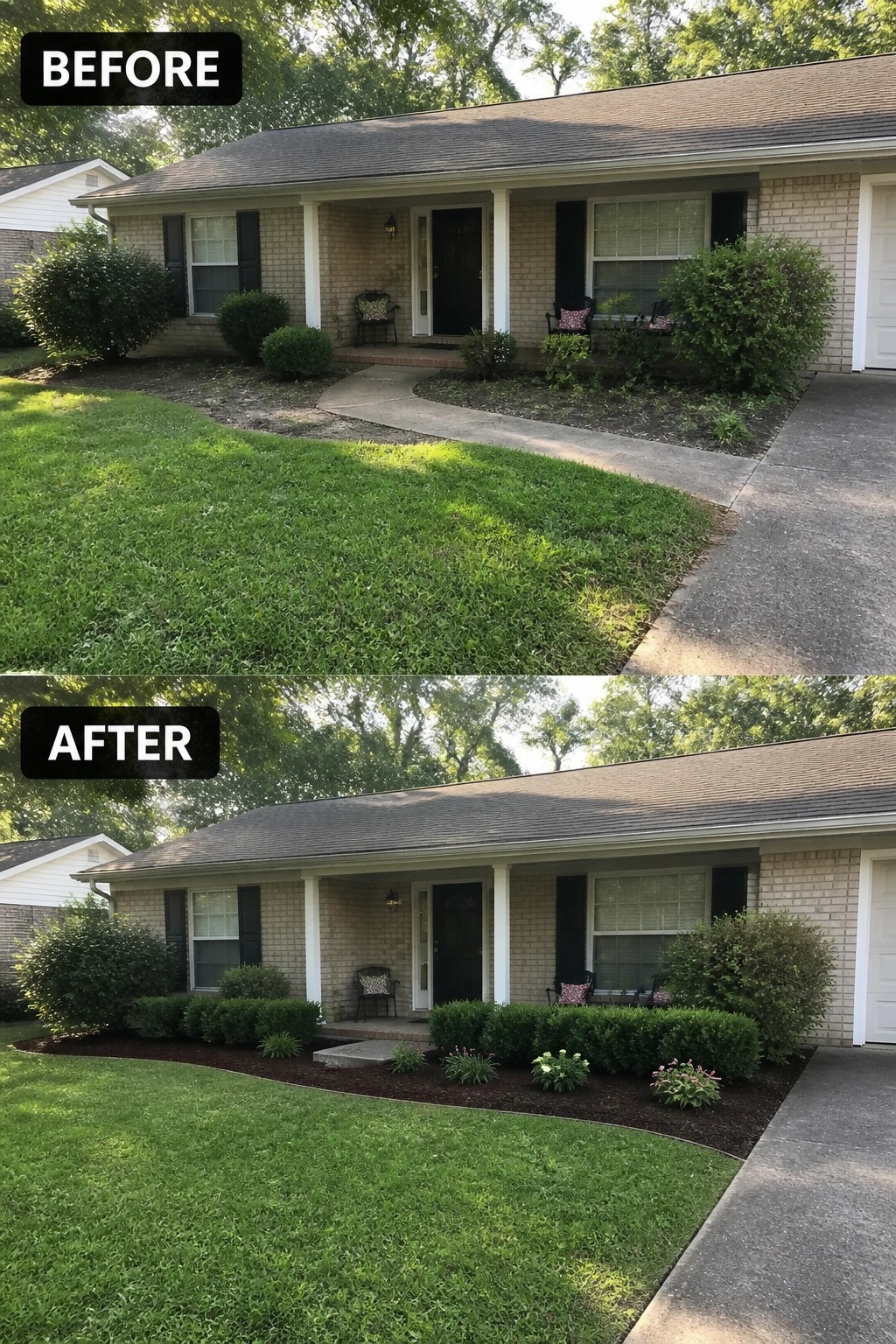
A crisp, mulched bed with a low evergreen hedge can tidy a tired front yard and make the house read as cared-for rather than neglected. In this example the messy, patchy border was cleaned up and given a simple curved edge, dark mulch, and a row of low shrubs to form a neat foreground that frames the porch.
To copy this, start by clearing old growth and mowing the edge. Install a simple physical edge, add a backbone of low evergreens or boxwoods for year-round shape, then plant a few small perennials for seasonal color and cover the soil with mulch. Keep the scale modest so the planting doesn’t overwhelm a small front, leave room to walk to the door, and space plants so they won’t need constant pruning.
Create A Small Covered Porch With Seating And Lights
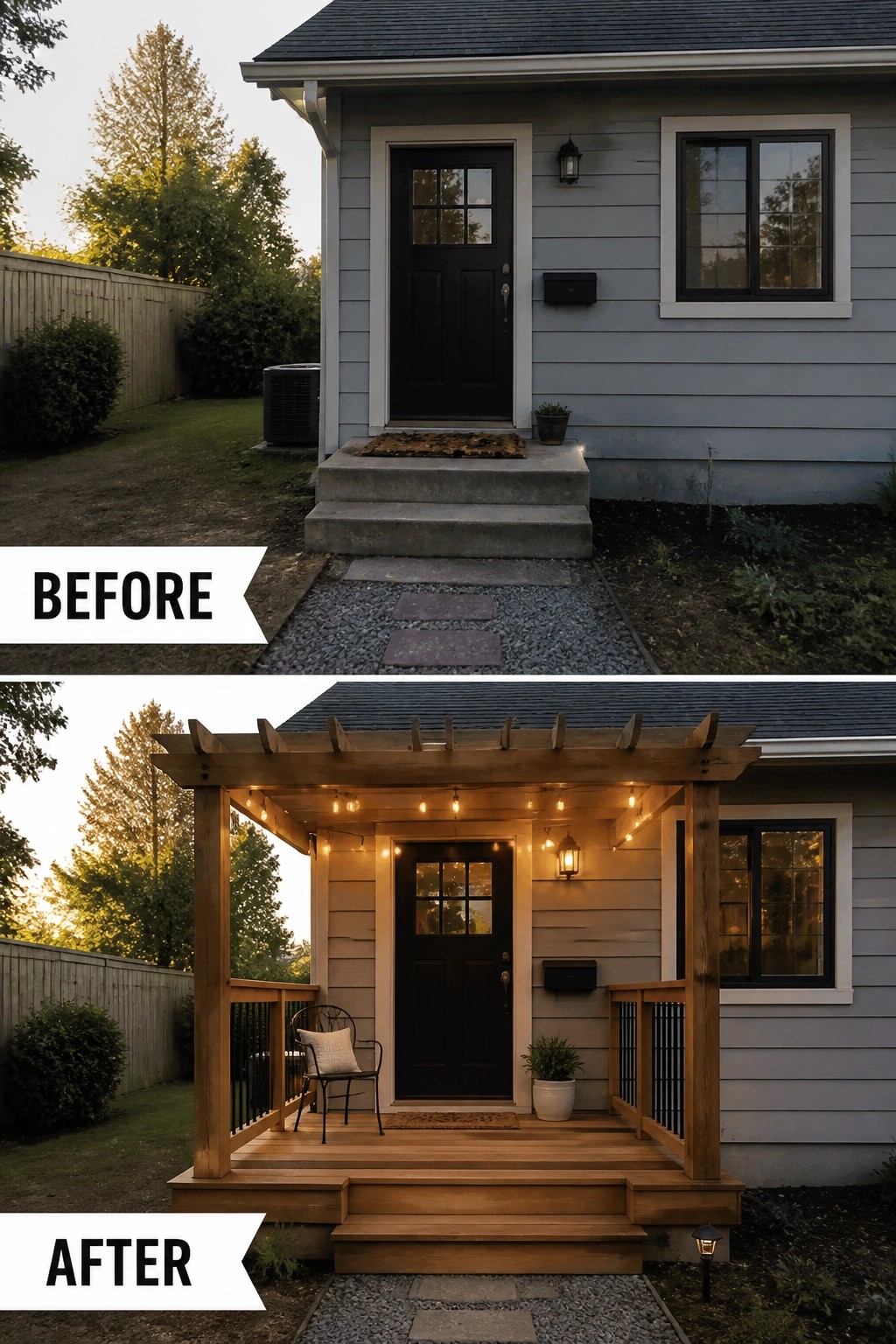
A small, covered porch turns an awkward set of concrete steps into a usable entry and a real outdoor room. In this example the addition of a simple wooden deck and pergola, a single chair with a planter, and warm string lights instantly give the front door a purpose and a place to sit for a minute or two before you go inside.
Keep the approach modest: add a landing sized for one or two seats, anchor it with posts or a low railing that matches your house, and use durable outdoor materials so it lasts. Leave a clear path to the door, pick one focal plant or chair rather than crowding the space, and install lighting where people will actually sit—simple, but effective.
Frequently Asked Questions
Q: How much will these single wide exterior updates typically cost?
A: Small updates like paint, new house numbers, planters, and simple lighting can run from a few dozen to a few hundred dollars. Mid-range projects such as replacing skirting, adding a porch step, or new shutters often fall in the low thousands. Major work like new siding, windows, or a roof usually pushes past the $3,000 mark.
Q: Which makeover gives the biggest immediate curb appeal boost?
A: A fresh coat of paint on the siding or a bold color for the front door delivers the fastest “wow” factor. Pair that with clean trim, improved porch lighting, and tidy landscaping and the place will look cared-for right away.
Q: Can I tackle these projects myself or should I call a pro?
A: You can DIY painting, simple trim work, planting, and light fixture swaps without much risk. Don’t replace roofing, major siding panels, or structural porch supports by yourself unless you have experience — call a pro for those. Hiring a contractor for the big stuff saves time and keeps you safe.
Q: My yard is narrow—how do I make the house look wider?
A: Use low plantings and a clear path that draws the eye horizontally to widen the view. Choose lighter paint colors for the house and trim to reflect light, and add a few horizontal details like wider trim boards or long window boxes (gravel or mulch beds help keep edges low). These small tricks make the whole property feel more open.