

I often notice that the outside of a house starts to look a bit tired when the siding fades or the porch stays plain for years.
Updating those areas can shift how the whole place feels from the street without tearing everything down.
I would probably try matching new siding to a fresh coat of paint on the trim first if I were working on my own home.
Small porch details like railings or lighting tend to pull the front together in ways that feel more lasting than bigger projects.
Some of these updates are the kind I keep in mind for future changes.
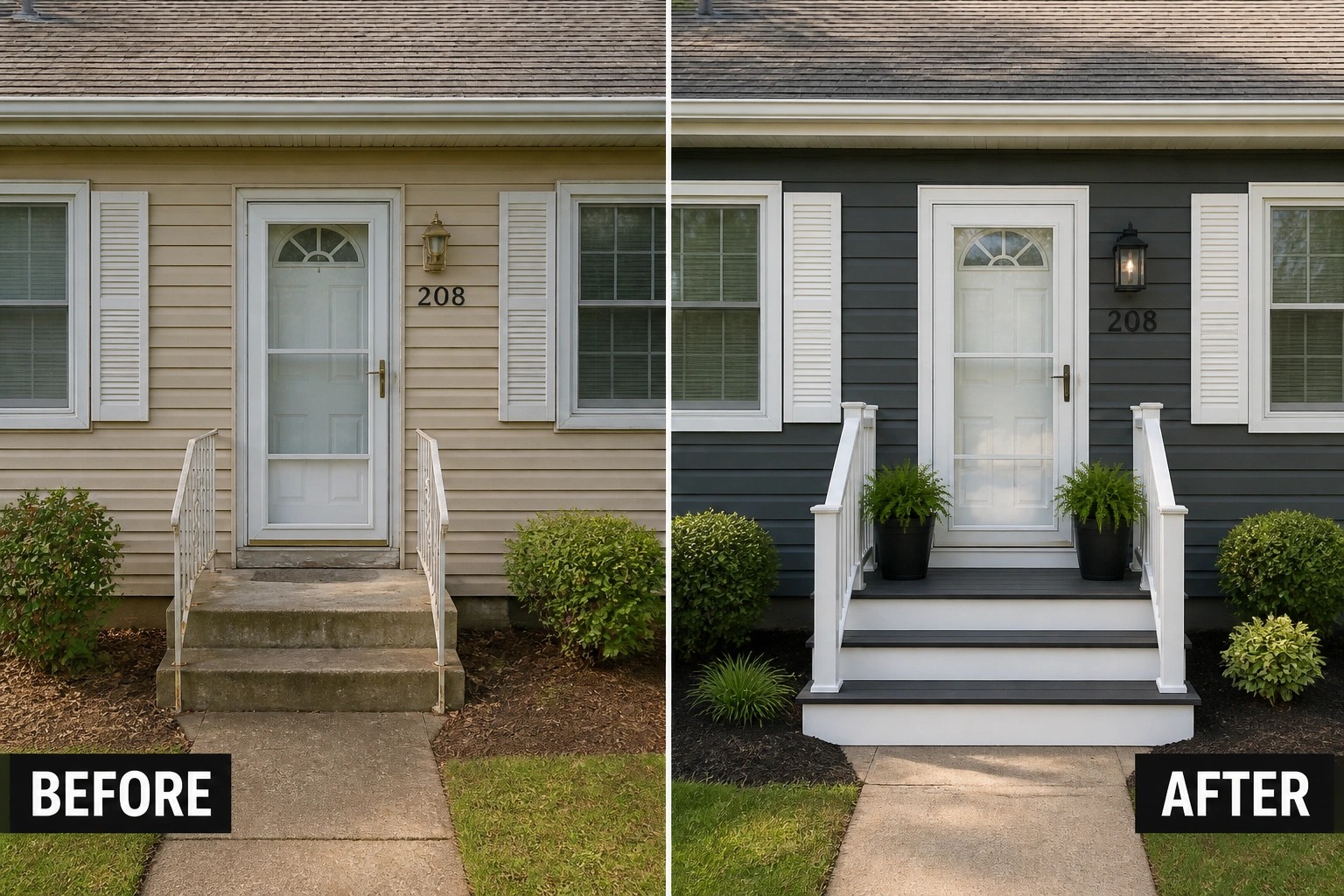
Refresh The Exterior With A New Siding Color And Porch Updates

A change in siding color can shift how the whole house feels from the street. Here the plain beige was switched to a deeper gray while the porch was rebuilt with white railings, a dark deck, and a pair of planters that give the entry a clearer sense of arrival.
This idea suits houses with simple shapes that need more definition rather than major structural work. Pick a siding color that contrasts with the trim and door, keep the porch updates modest, and add just enough planting to soften the steps without crowding the walkway.
Add A Porch To Make The Entry More Welcoming

Adding a front porch gives a plain house a clear sense of arrival. In this case the steps once led straight to the door with nothing to frame them. The new porch with columns, railing, and a covered roof creates a real entry area that feels intentional.
This idea works best on houses that sit close to the street or have a simple facade. Keep the porch depth practical so it does not crowd the walkway, and match the trim color to the existing windows and door. Many older homes gain the most from this change when the siding color is updated at the same time.
Paint The Brick And Update The Front Door
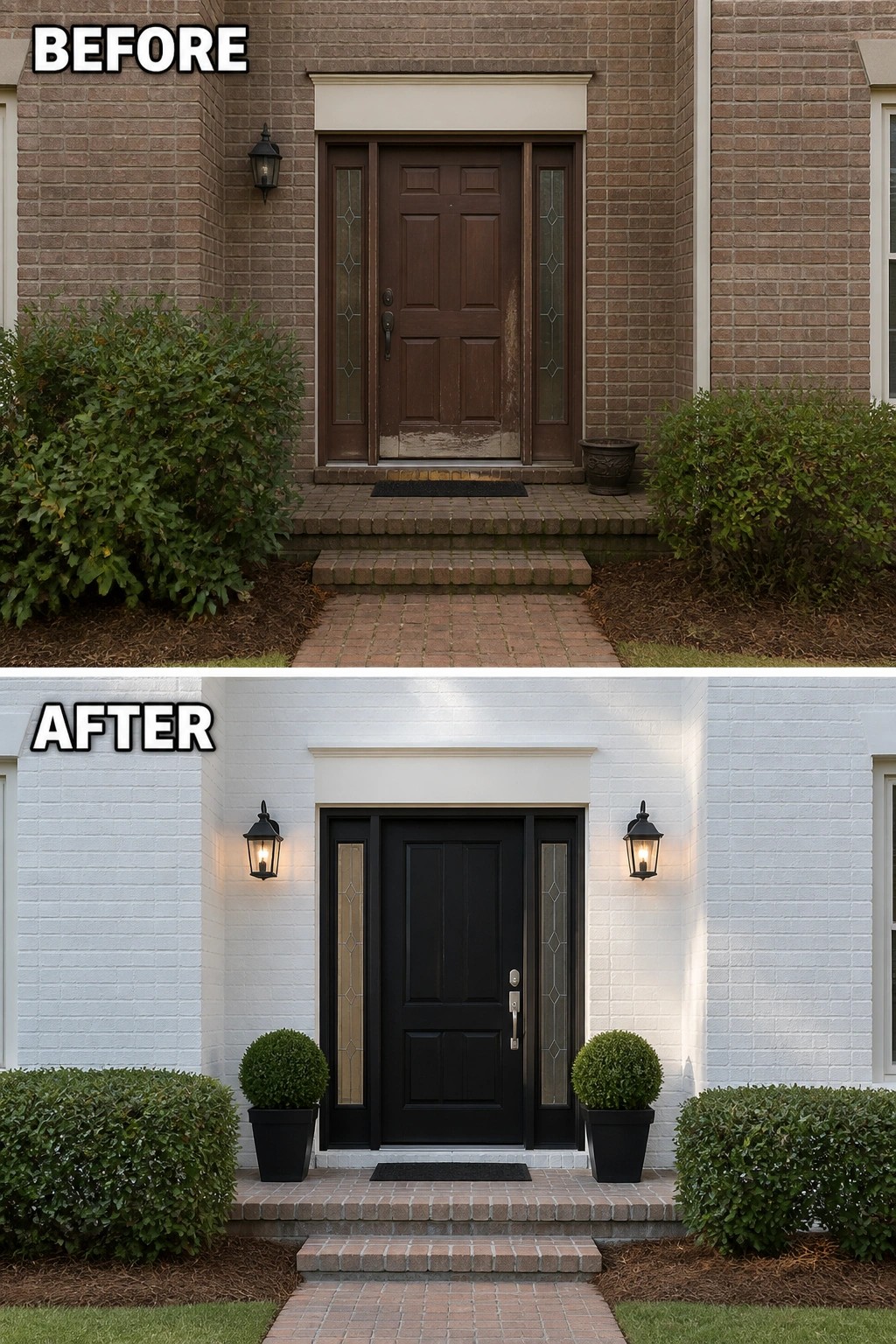
Painting the brick a clean white and switching to a black door can completely change how welcoming a house feels from the street. The dark brick and worn brown door made the entry look heavy and dated, while the lighter siding and darker door create a sharper contrast that draws the eye right to the front.
This approach works well on brick homes that feel a little tired but do not need major structural work. Keep the trim simple, add a pair of matching planters near the steps, and make sure the new door color stands out against the fresh paint so the whole entry feels pulled together without extra clutter.
Update Faded Siding With A New Color And Porch Railings
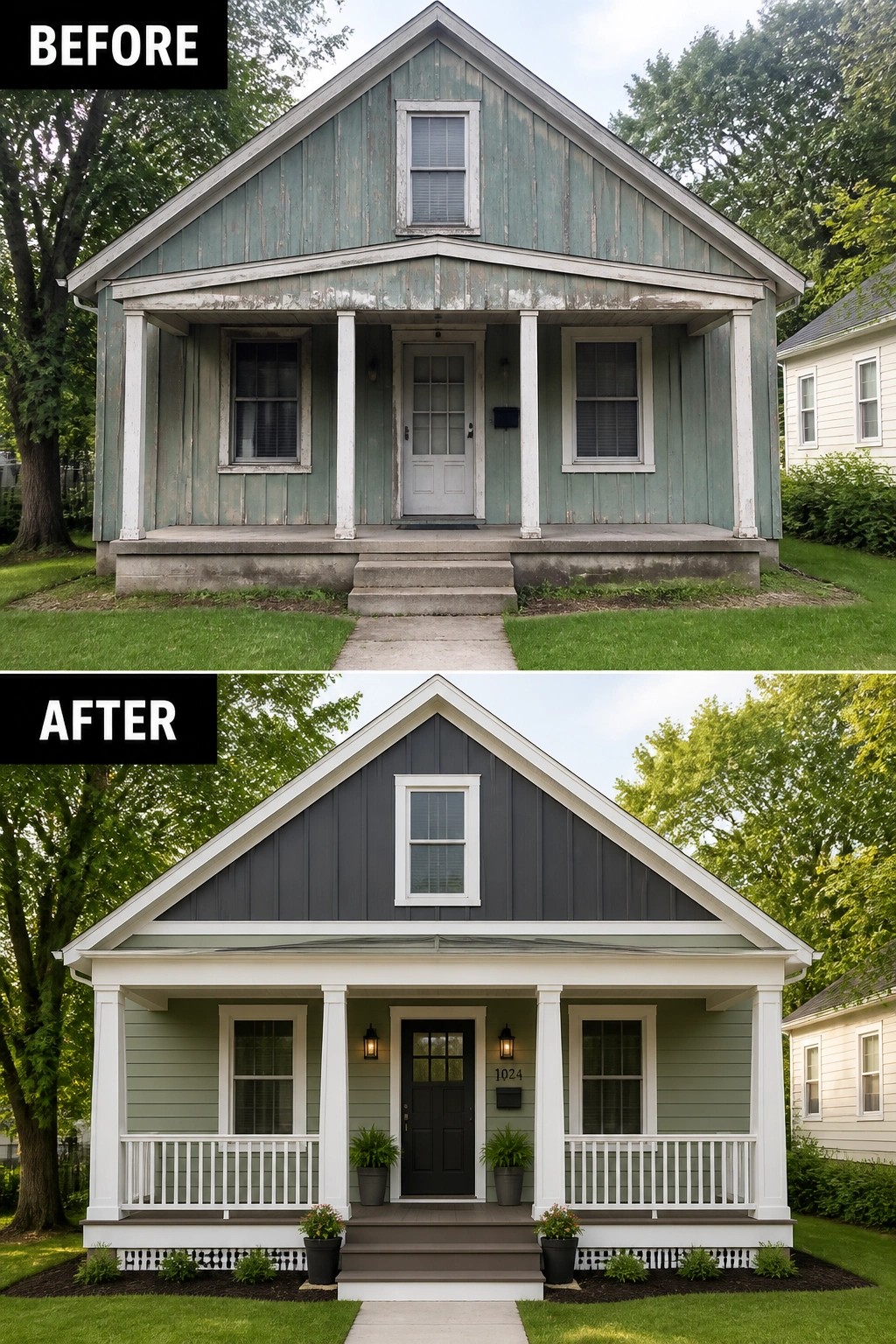
Changing the siding color and adding railings gives an older house a cleaner, more finished front without major construction. The weathered green paint was replaced with a darker shade on the upper portion and a lighter one below, while the open porch gained simple white railings that define the space and make the entry feel more intentional.
This idea works well on homes that still have good bones but need the finishes refreshed. Pick two siding colors that work together, update the trim and door at the same time, and add railings if the porch feels too open. The change stays practical and keeps the focus on the house itself rather than adding lots of extra decor.
Enclose An Open Porch To Create Usable Space
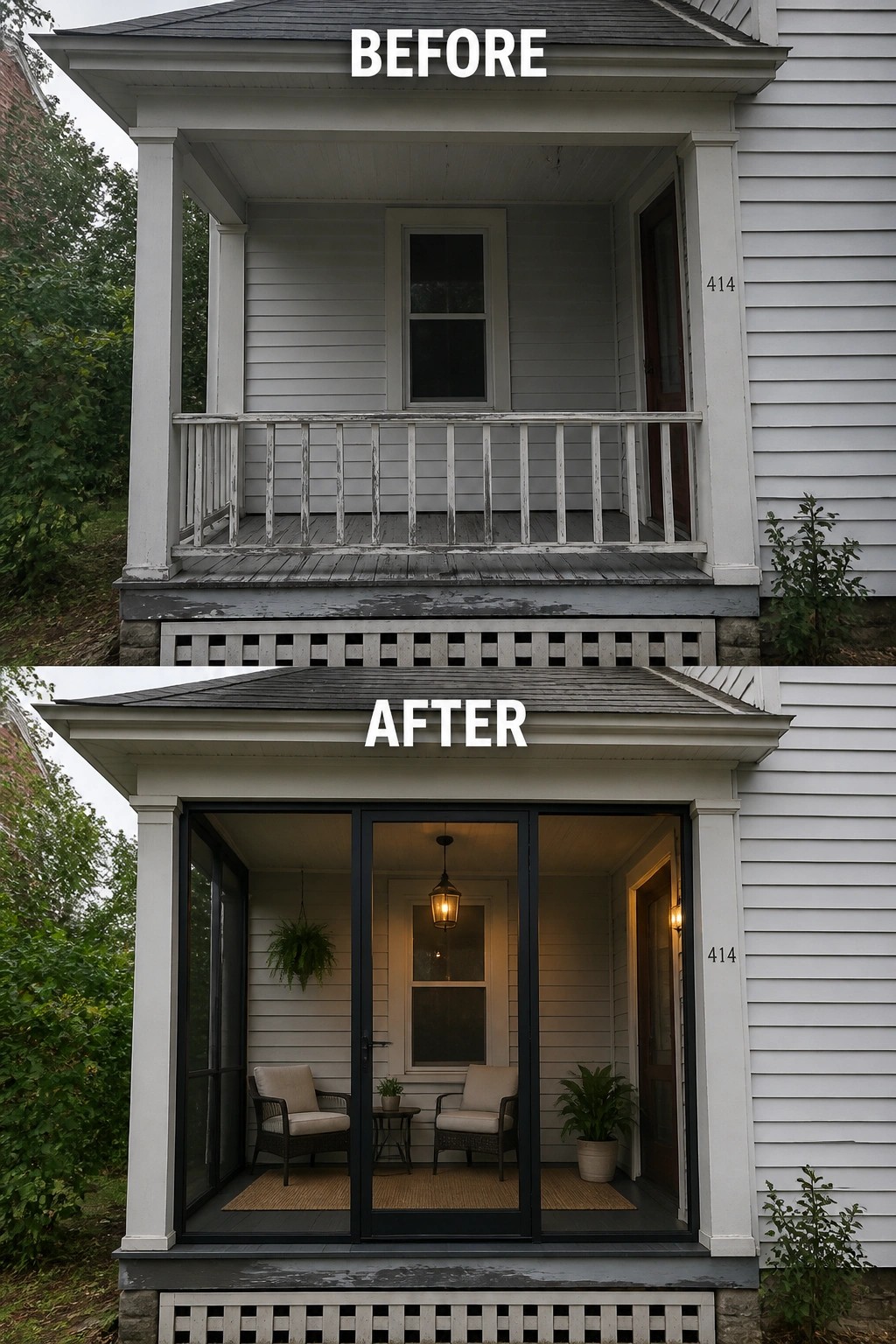
An open porch often sits unused because it offers little protection from weather or insects. Enclosing it with glass panels turns the same footprint into a room that works in more seasons and feels like a natural extension of the house. The main change here is replacing the railing and open sides with framed glass doors and screens, which immediately makes the area feel sheltered while still letting in light.
This idea works best on older homes where the porch structure is already solid. Keep the enclosure simple with dark frames so it does not overpower the original architecture, and add just enough furniture to define the space without crowding it. Focus first on the enclosure itself before worrying about rugs or extra decor.
Update The Front Steps And Path To Boost Curb Appeal
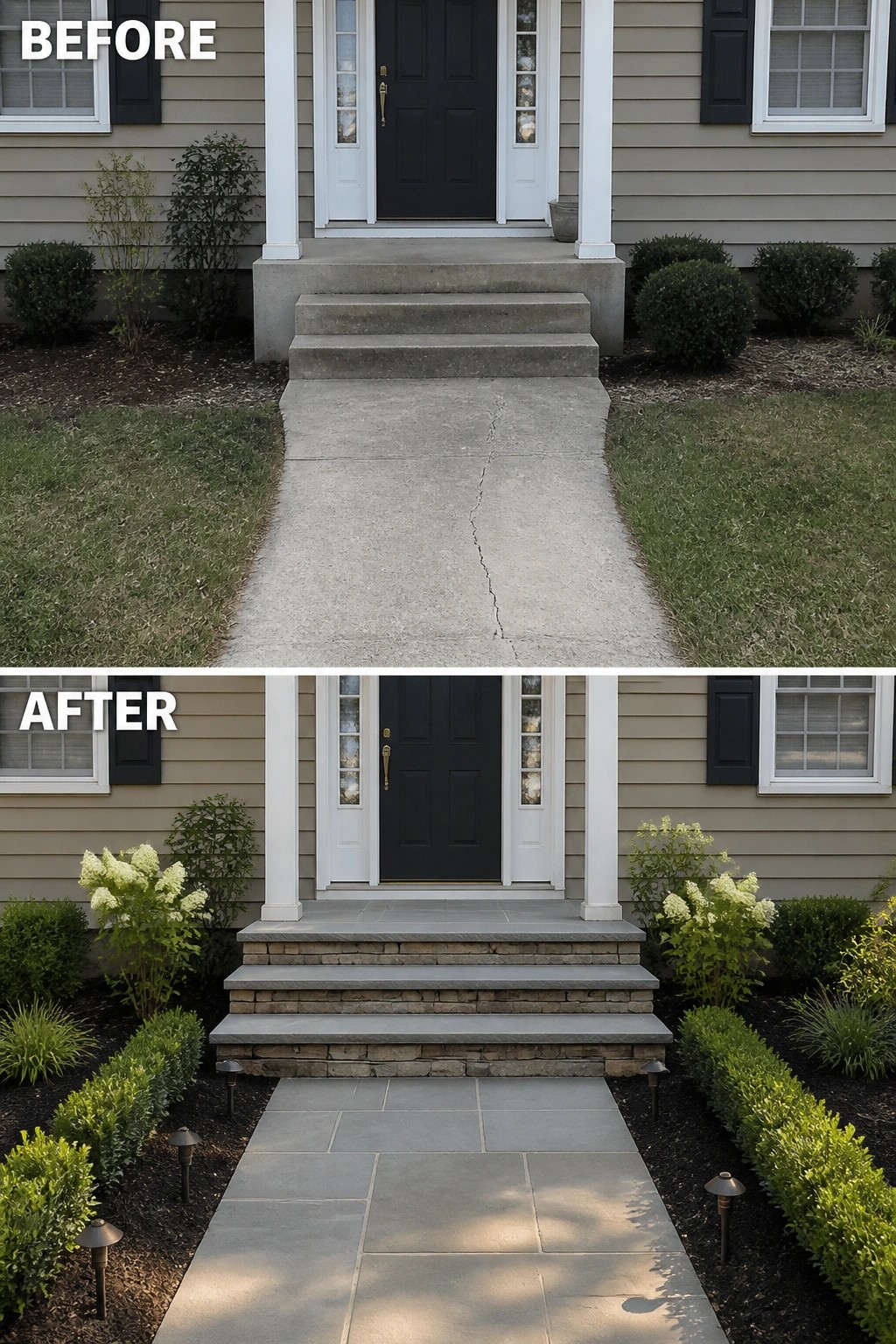
Replacing cracked concrete steps with stacked stone and laying a clean paver path makes the entry feel more solid and connected to the house. The new materials give the front a clearer structure without changing the siding or door.
This idea works best on homes where the walkway has started to look tired. Fix the steps and path first, then add simple garden beds along the sides so the whole approach feels planned rather than leftover.
Paint The Porch Ceiling And Add Planters For A Fresher Entry
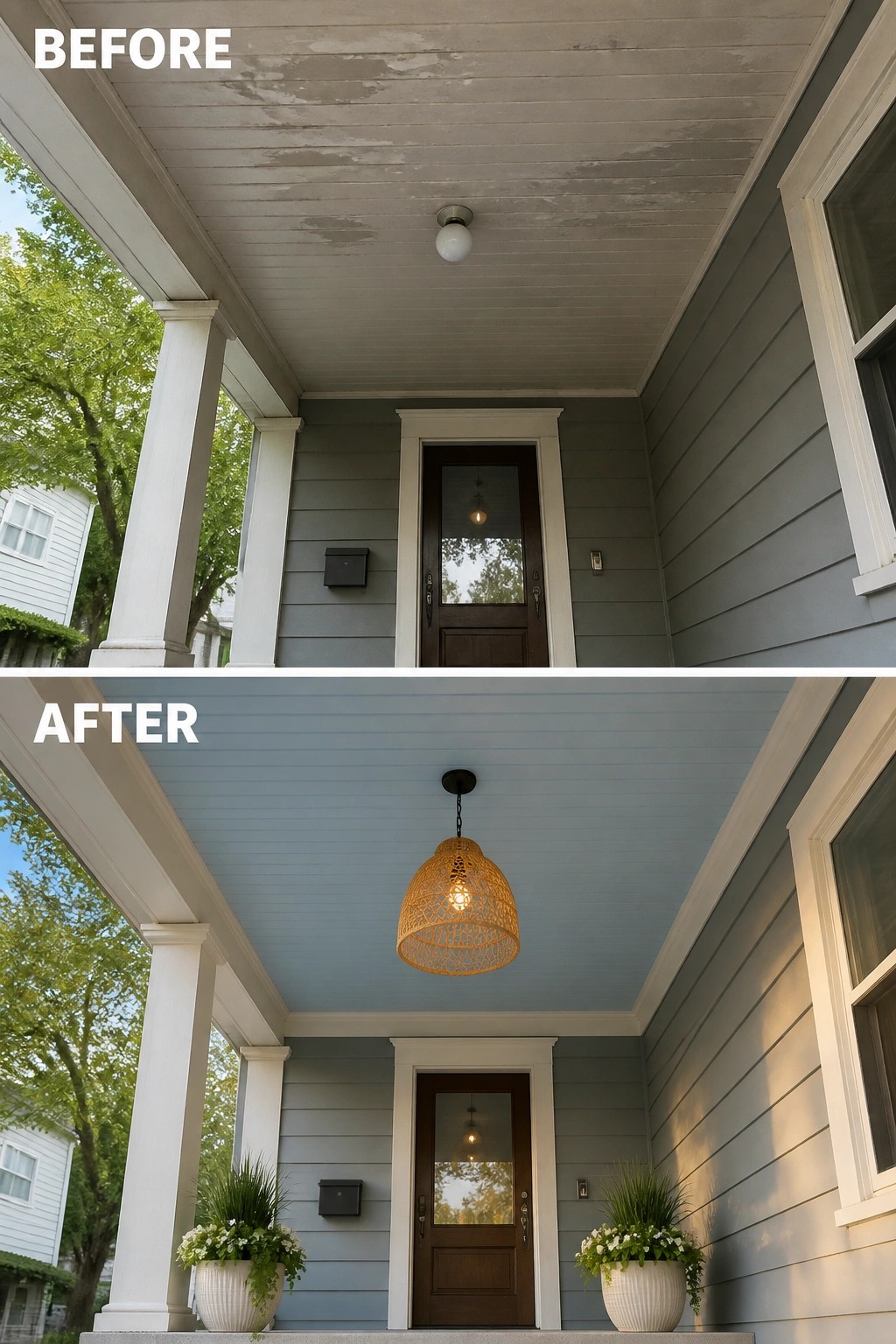
A plain or weathered porch ceiling often makes the front of a house feel flat. Painting it a light color and swapping in a more interesting light fixture can lift the whole entry without major construction. Adding a pair of matching planters on either side of the door gives the space balance and a bit of life.
This idea suits homes with simple siding and a covered porch. Choose a ceiling color that contrasts gently with the house, and pick planters large enough to read from the street. Keep the planting simple so it stays easy to maintain through the seasons.
Refresh A Dated Exterior With Paint And Trim Updates
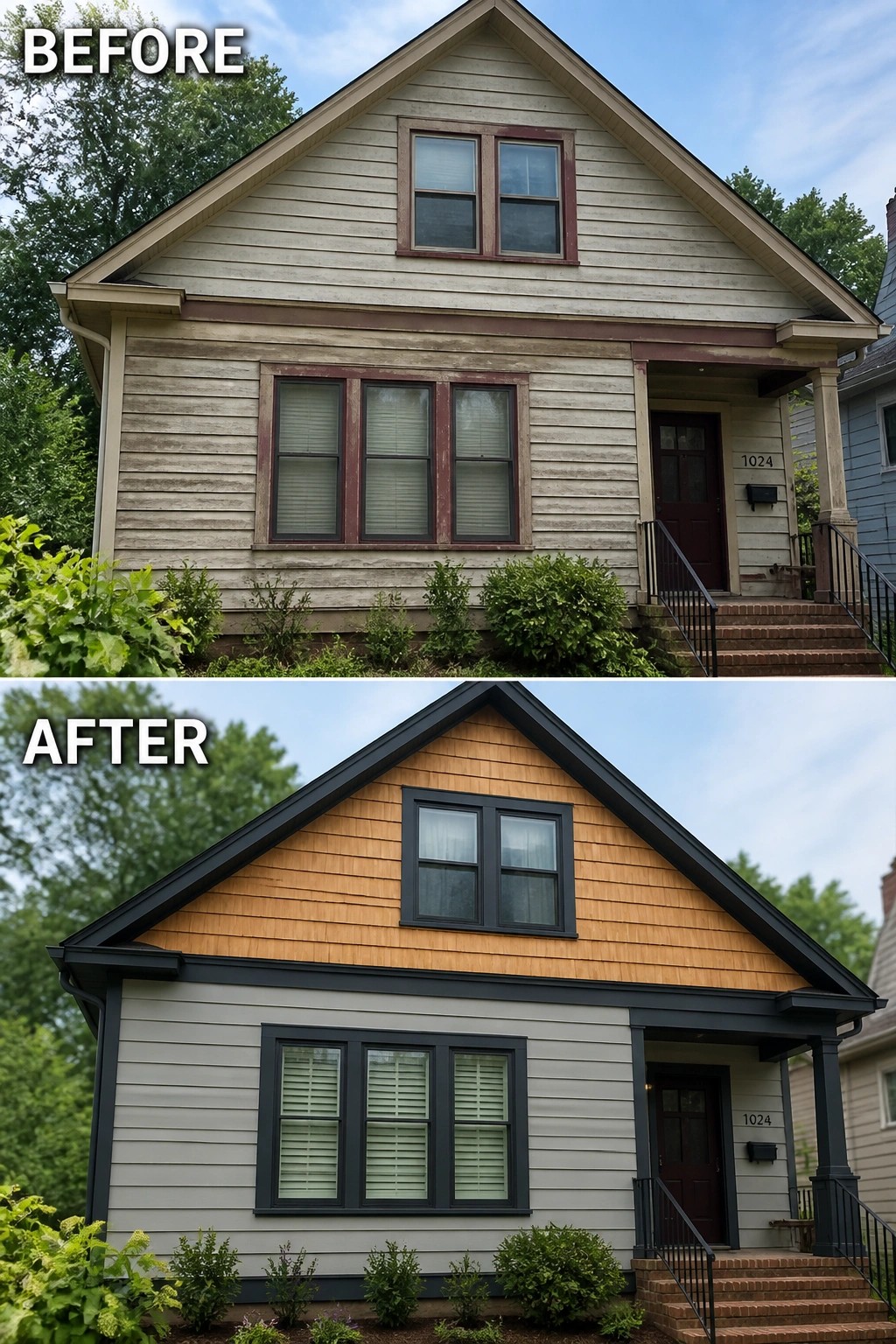
Painting the siding and adding black trim around the roofline, windows, and porch made this house look much more current. The before version had faded wood and mismatched brown trim that made the whole front feel tired. Switching to a two-tone scheme with black accents gave the windows and gable a sharper, cleaner shape without any major construction.
This approach works well on older homes where the structure is still sound but the colors have aged. Start by picking one dark accent color for the trim and stick with it across the windows, eaves, and porch posts so the changes feel intentional. It is a lower-cost update that can be done in stages if needed, and it pairs especially well with simple landscaping cleanup around the front beds.
Replace Dated Railings To Refresh The Entry
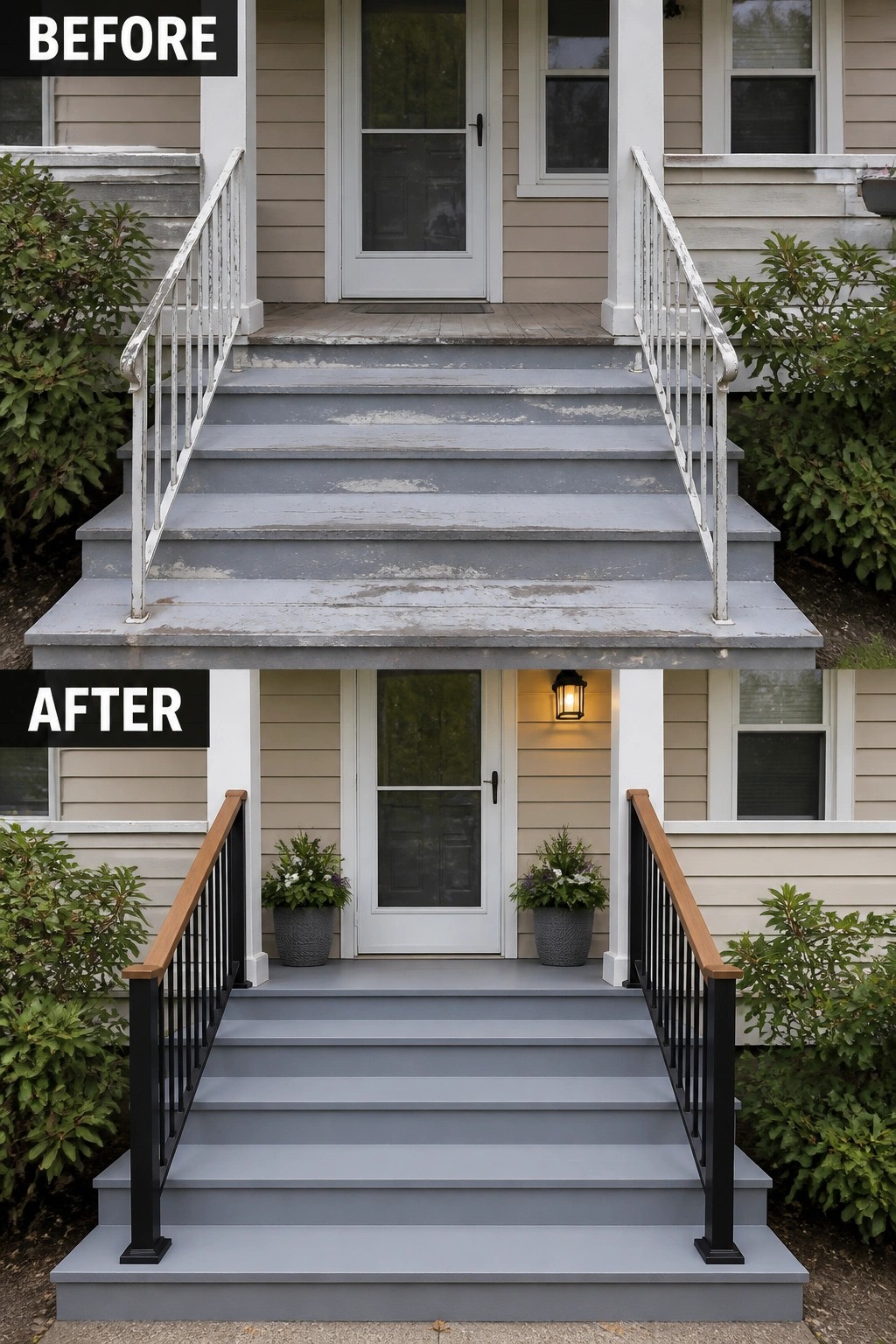
Old railings can make even a solid set of stairs look tired. In this case the white ones had seen better days with peeling paint and a dated look. Swapping them for black metal with wood caps gave the stairs a sharper outline and made the whole front feel more current without touching the siding or the door.
This kind of update works well on any home where the stairs are still in good shape but the railings have aged. Keep the new railings simple so they do not fight the house style, and add a couple of planters at the base to soften the look. The change stays practical because it improves safety and appearance at the same time.
Add Shutters And A Window Box To Refresh Plain Windows
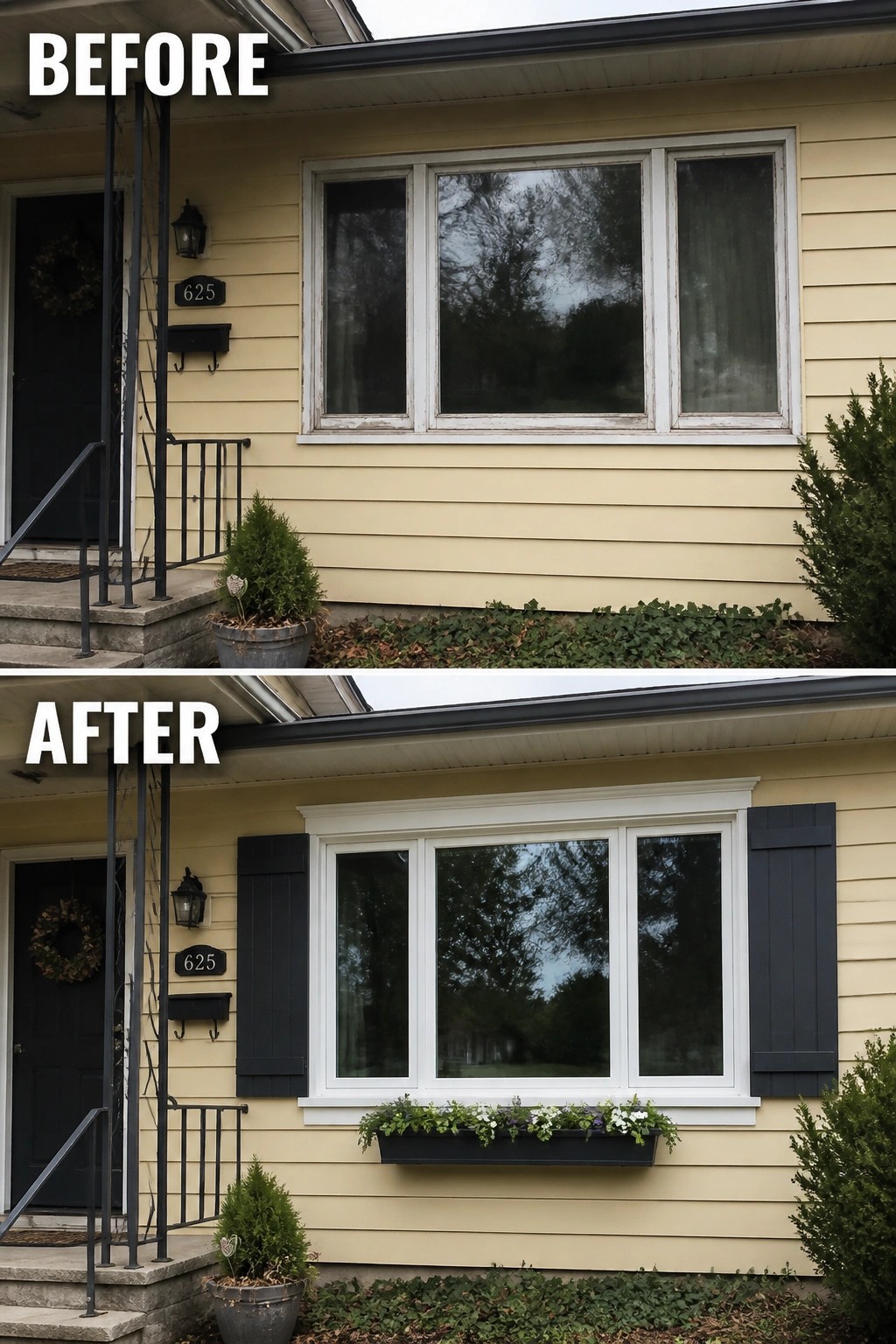
Many houses have large windows that sit flat against the siding and feel unfinished. Adding shutters on both sides and a window box below gives the window clear borders and a bit of depth, which makes the whole front look more put together.
This approach works best on homes with simple siding where the windows need more presence. Match the shutter color to your door or trim for a cohesive look, and keep the window box planting simple so it stays easy to maintain. It is a small change that can make a noticeable difference in curb appeal.
Replace A Plain Garage Door To Refresh The Exterior
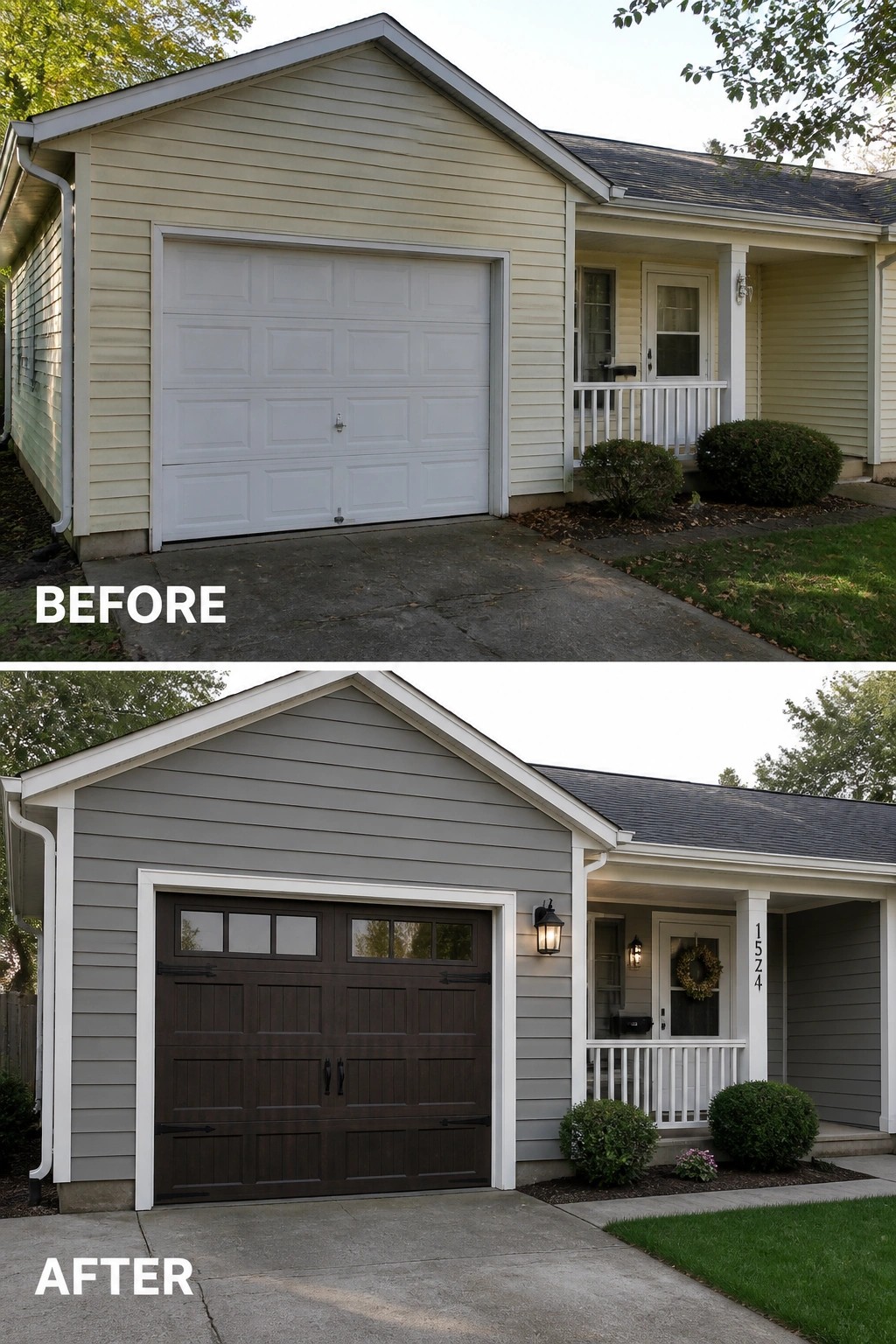
A basic white garage door can make the whole front of a house look flat. Swapping it for a darker door with simple hardware and small windows gives the facade more weight and makes the entry feel more finished. The siding color change helps tie everything together without needing a full rebuild.
This works well on homes where the garage takes up a large part of the front view. Start with the door itself since it is the biggest single surface you see from the street. Keep the rest of the updates simple so the new door stays the main change.
Refresh A Dated House Exterior With New Siding And Shutters
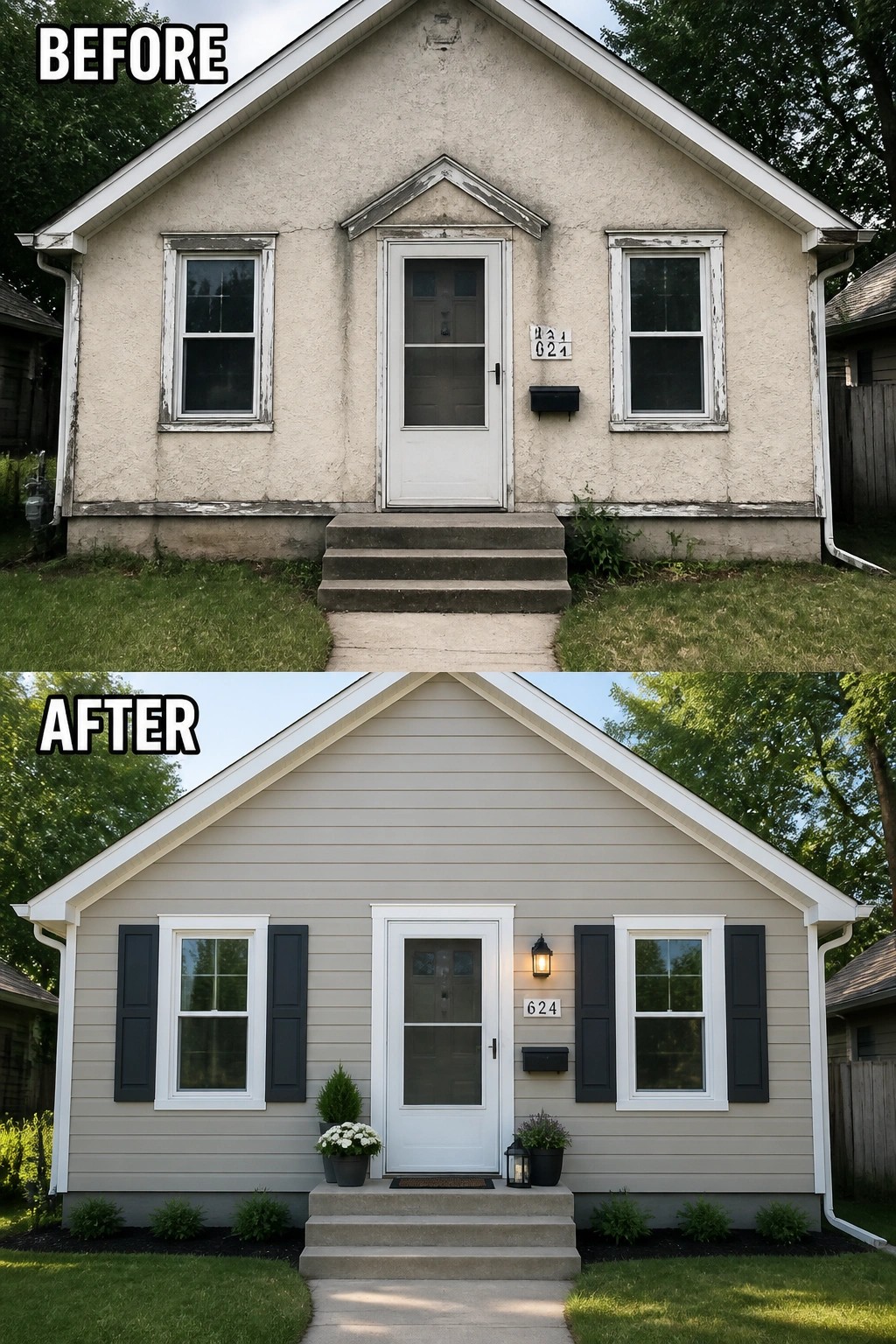
Many older homes end up with faded or peeling surfaces that make the whole place look tired. Switching to new horizontal siding and adding dark shutters gives the facade a cleaner, more finished look without changing the basic shape of the house. The updated door and trim color also help tie everything together.
This approach works well on smaller homes where the front is simple and you want quick visual improvement. Start with the siding and shutters first, then add a couple of planters and a light by the door. Keep the planting low and neat so the house itself stays the main focus.
Update The Front Door And Siding For Better Curb Appeal
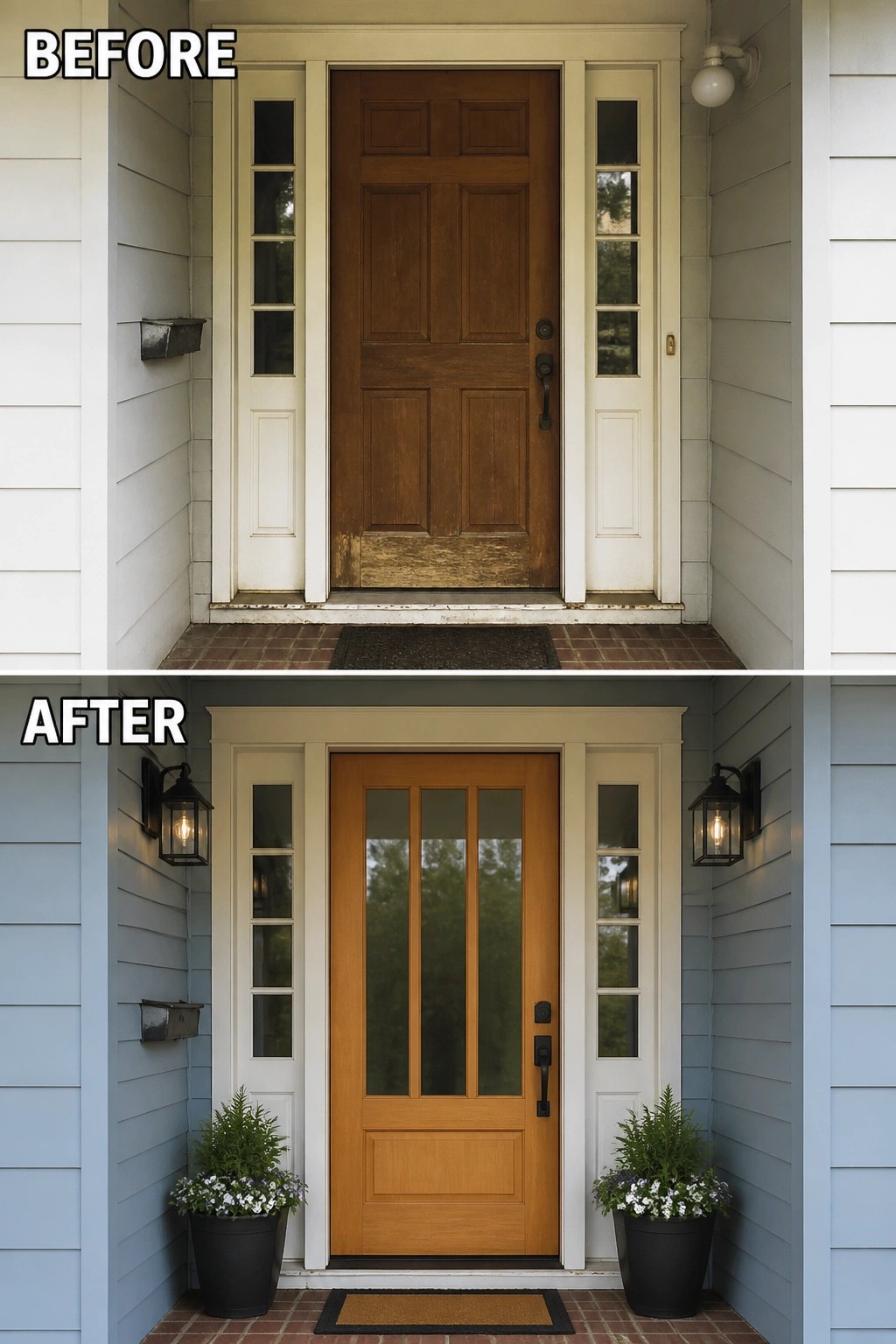
A solid wood door that has aged can make the whole front of a house feel dated. Replacing it with a door that has glass panels and changing the siding color gives the entry a lighter, more current look without major construction.
This works especially well on homes where the door and siding are the first things people notice. Keep the rest of the changes simple so the new door and color stay the focus.
Clear Overgrown Beds Before Adding New Plants
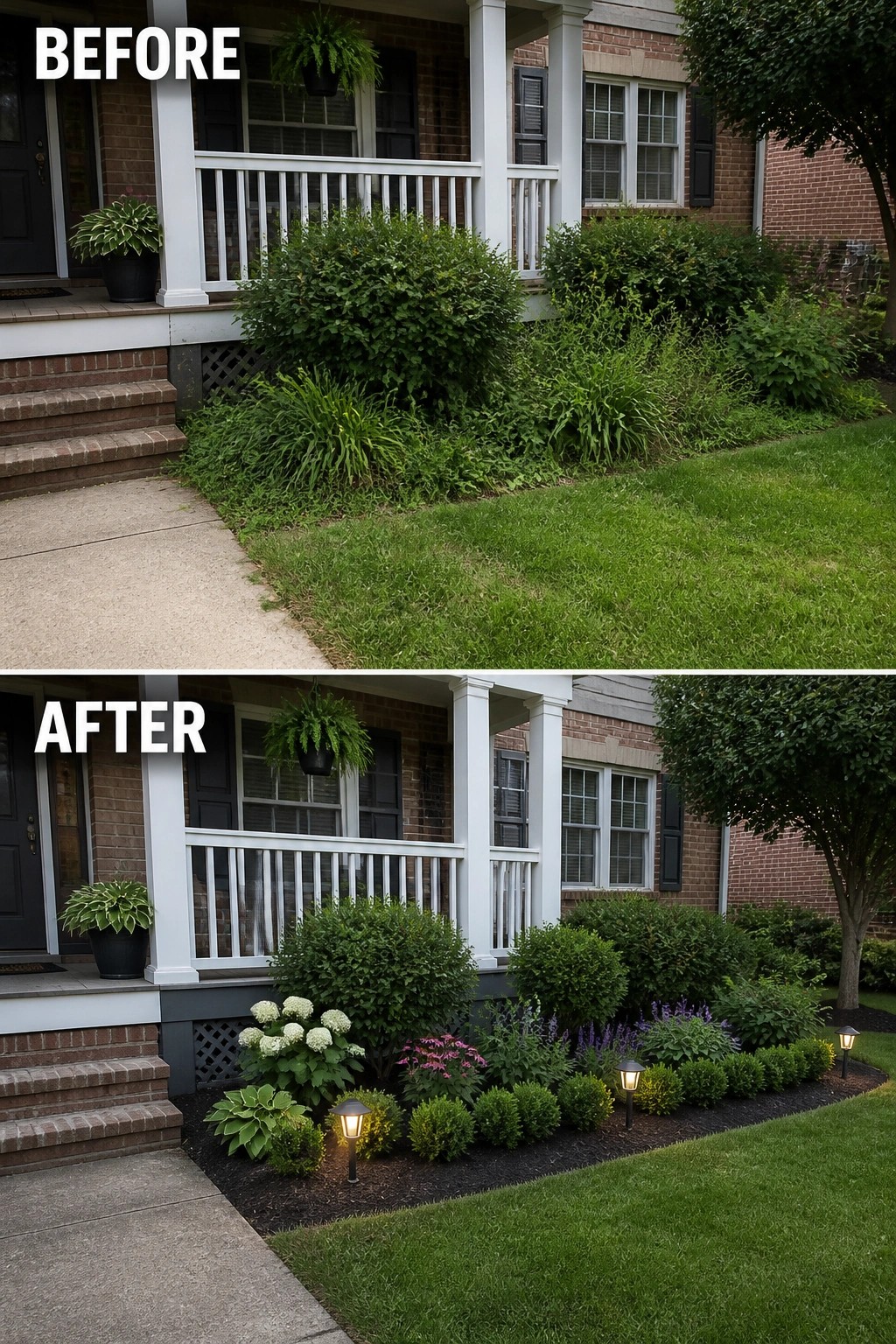
The front beds here went from a tangle of tall, uneven shrubs to a clean line of smaller plants set in fresh mulch. That single step made the whole entry feel tended instead of neglected.
Start by cutting everything back hard so you can see the actual shape of the bed. Once the ground is visible, lay down a simple edge, add mulch, and plant in groups rather than scattering singles. The same approach works on any older home where the original shrubs have grown past the windows.
Update The Front Entry With A Bold Door Color And New Awning
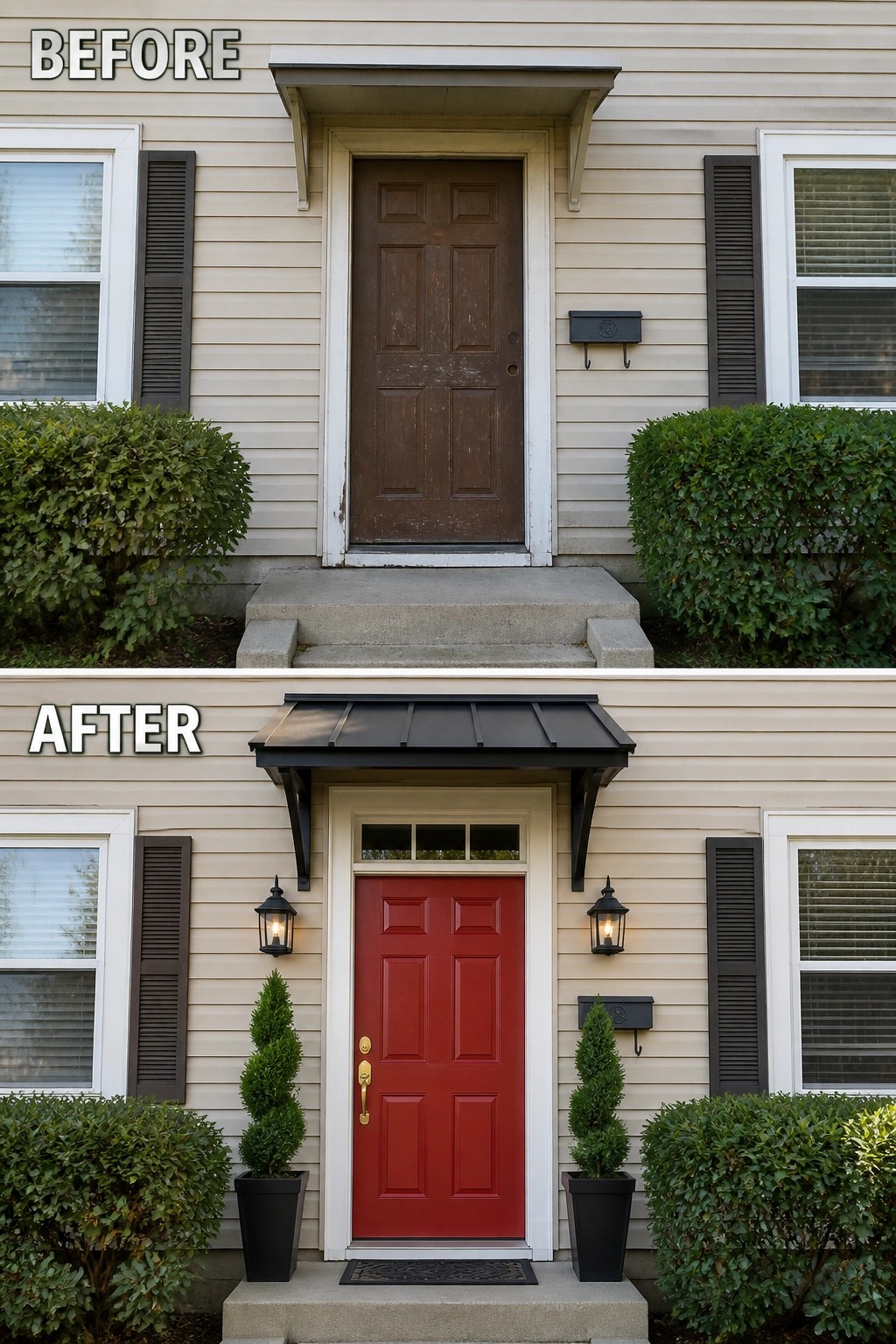
A faded brown door and plain overhang can make an entry feel tired even when the rest of the house is fine. Switching to a bright red door and adding a black metal awning gives the whole front a cleaner, more finished look without major construction.
This approach works well on simple siding homes where you want quick impact. Start with the door color and awning first, then add a pair of lights and a couple of planters so the changes feel balanced rather than crowded.
Give A Bare Porch A Clear Purpose
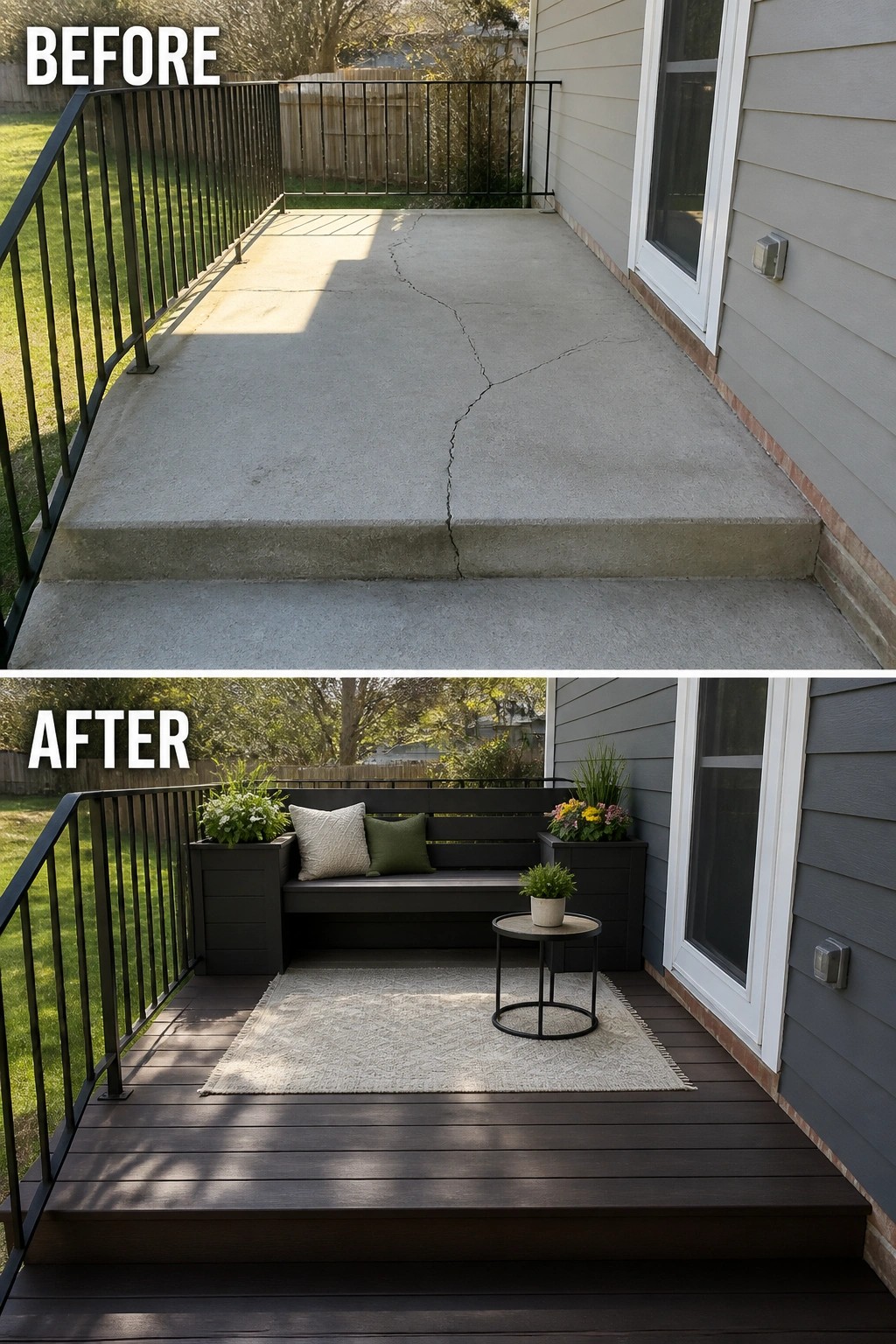
A plain concrete slab often sits unused because it lacks any sense of function. Switching to wood decking and adding one built-in bench with flanking planters gives the space an obvious job as a seating area.
This approach suits small side or back porches that need definition without overcrowding. Start with the deck surface and one main seating piece, then layer a rug and a small table so the zone feels intentional rather than leftover.
Update The Gable With Dark Siding And Trim
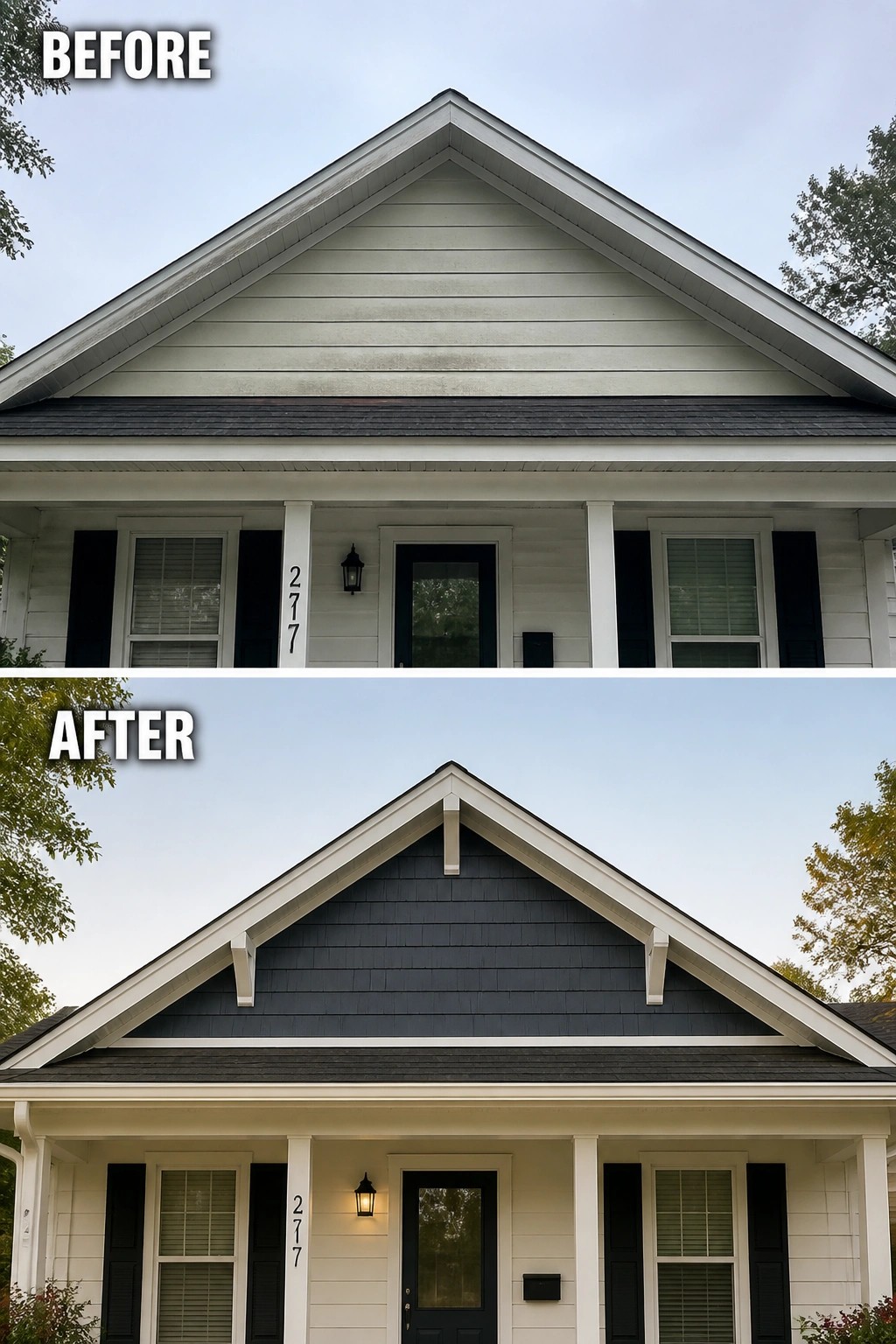
Many homes have a large plain gable that makes the whole front look flat. Switching that section to dark shingles while keeping the lower siding light adds instant contrast and breaks up the height without major construction. The added brackets under the peak give it a bit more shape too.
This approach works well on simple one-story or story-and-a-half homes where the roofline is the main visual feature. Start by picking one area to change rather than repainting the entire house, and make sure the new color echoes something already on the property like the roof or shutters.
Add Stone Bases To Porch Columns
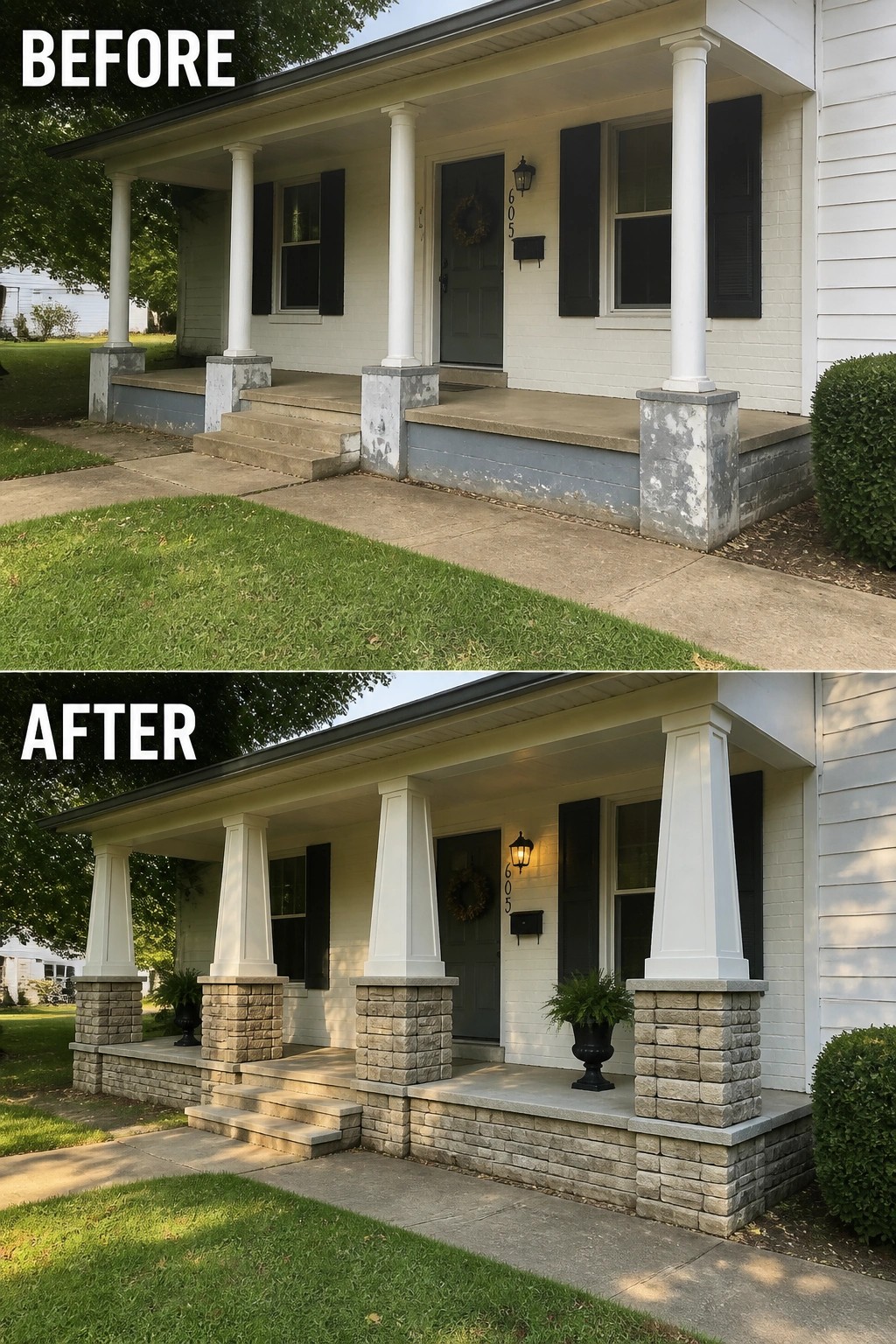
Many older homes have porch columns that sit on simple concrete or painted bases that wear down over time. Switching those bases to stacked stone gives the whole entry a more solid look without changing the roofline or doing major structural work. The change makes the porch feel more grounded and helps the house read as more finished from the street.
This approach works well on homes with existing concrete porches where you want to add texture without a full rebuild. Keep the stone color close to your siding or foundation so it blends in, and make sure the new bases sit level with the steps so the walkway still feels natural.
Update Siding Color And Entry For Better Curb Appeal
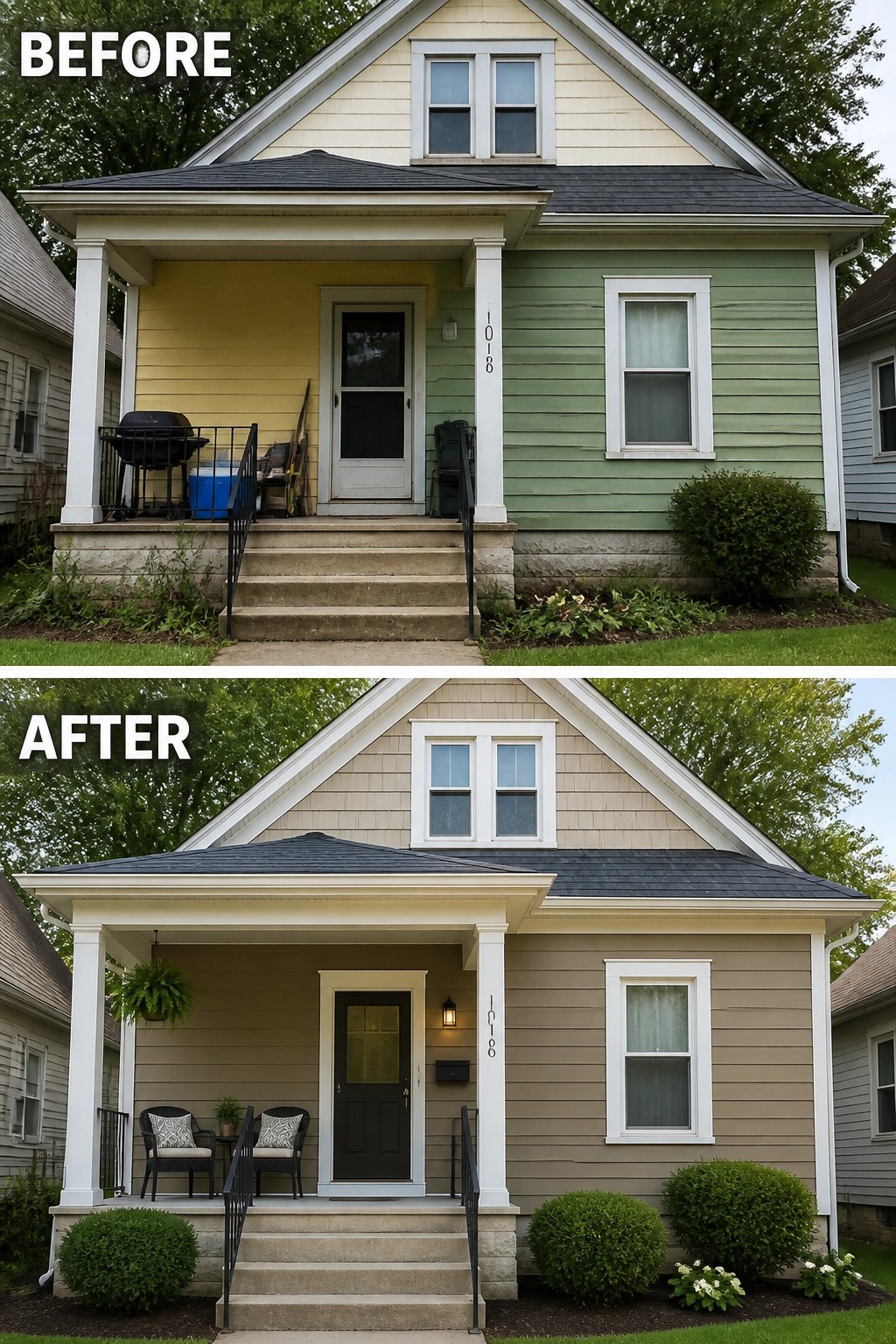
A simple color change on the siding can make an older home feel much more current. Here the shift from the two-tone yellow and green to one soft neutral shade, along with a darker door, removes the visual busyness and gives the front a calmer, more finished look.
This idea suits houses that still have solid structure but feel dated. Choose one main siding color, keep the trim light for contrast, and clear the porch of clutter before adding just a couple of chairs. The result feels intentional without requiring a full rebuild.
Add Railings And Planters To Frame The Front Entry
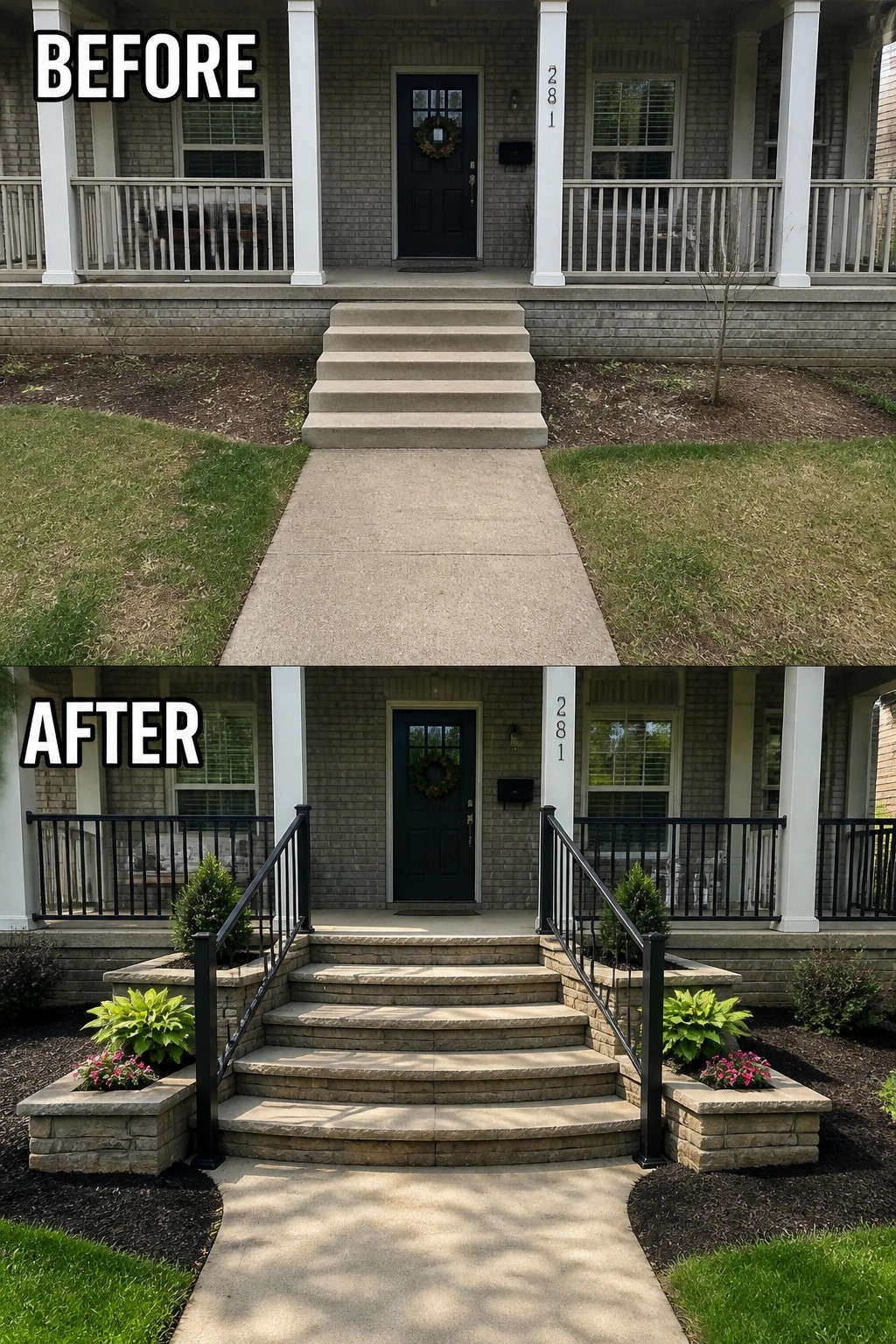
A plain set of concrete steps can make a house look unfinished even when the rest of the exterior is in good shape. Adding black railings along the stairs and wrapping the base with low stone planters gives the entry a clear structure and makes it feel more intentional. The change is simple but noticeable because it breaks up the flat concrete and adds height and detail right where people approach the door.
This idea works well on homes with basic front steps that lack any side definition. Start with the railings first since they improve both safety and appearance, then add the planters to soften the look with a few shrubs and flowers. Keep the planting simple so the focus stays on the steps rather than turning the entry into a full garden.
Refresh A Plain Exterior With Siding And Trim Updates
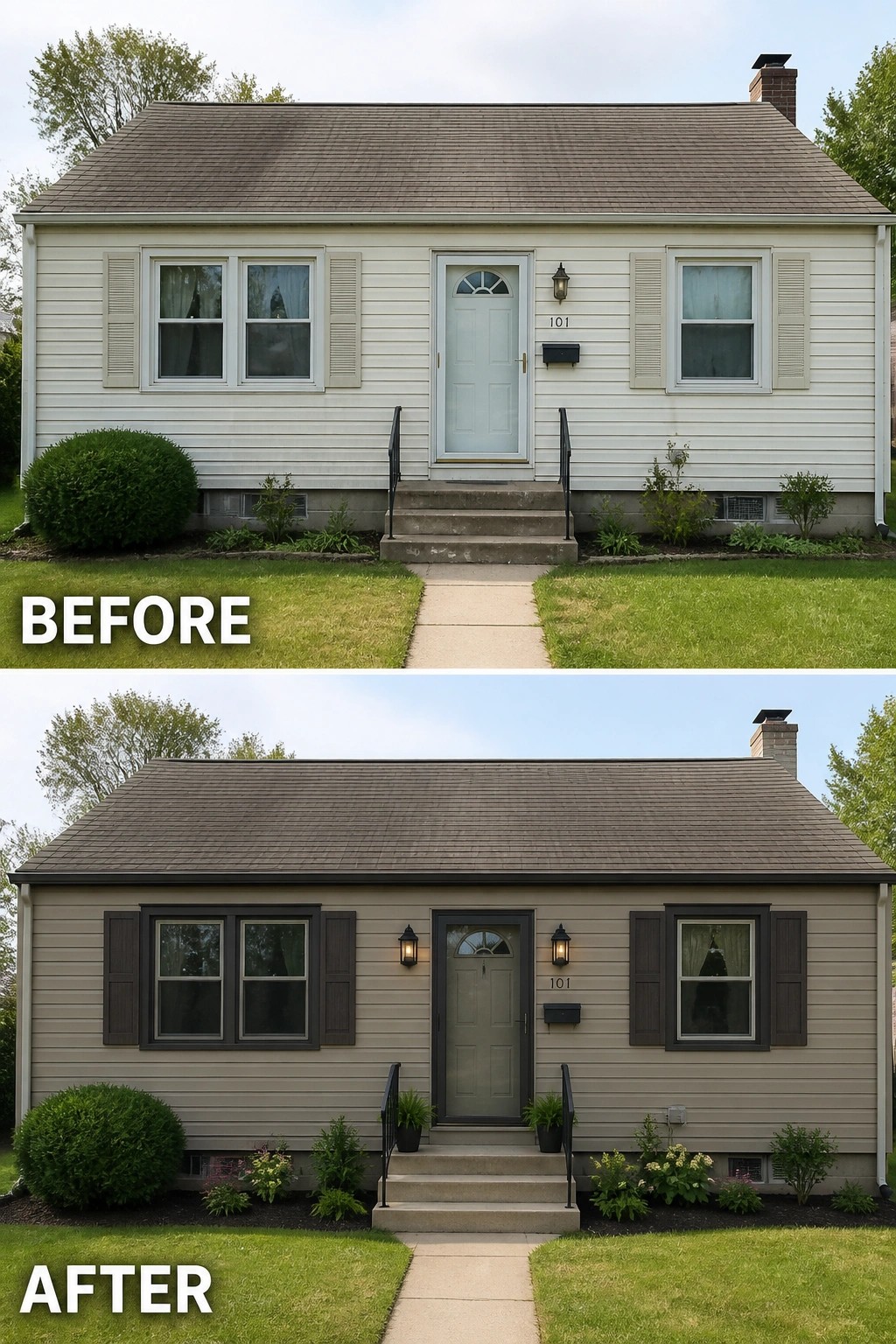
A simple way to improve curb appeal on a basic house is to change the siding color and add darker trim. The light siding was switched to a soft gray, and the shutters plus window frames were painted a deep brown that ties in with the updated door surround and new lights.
This kind of update works best on straightforward one-story homes where the roof and foundation stay the same. Pick a siding color that blends with your shingles first, then add matching trim and a pair of lights by the door so the entry feels more finished.
Add A Covered Porch To Create A Welcoming Entry
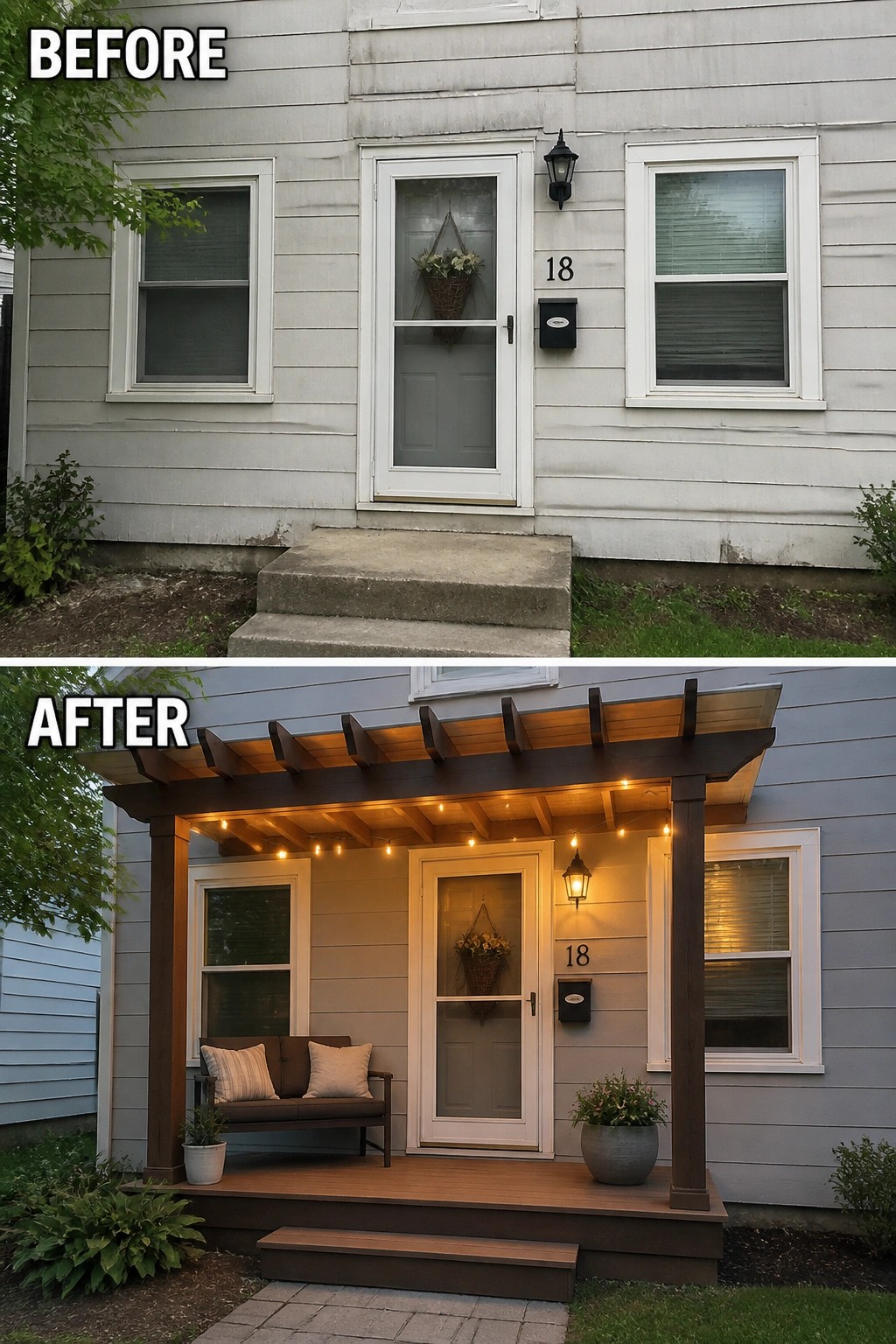
A plain set of concrete steps often leaves the front of a house feeling unfinished. Adding a simple covered porch with a deck and seating area gives the entry a clear purpose and makes the whole facade feel more complete.
This approach works best on homes with basic siding and minimal existing trim. Match the wood tones to your door or window frames, keep the roofline modest, and add lighting so the space stays usable after dark.
Update The Siding To Refresh The Whole Exterior
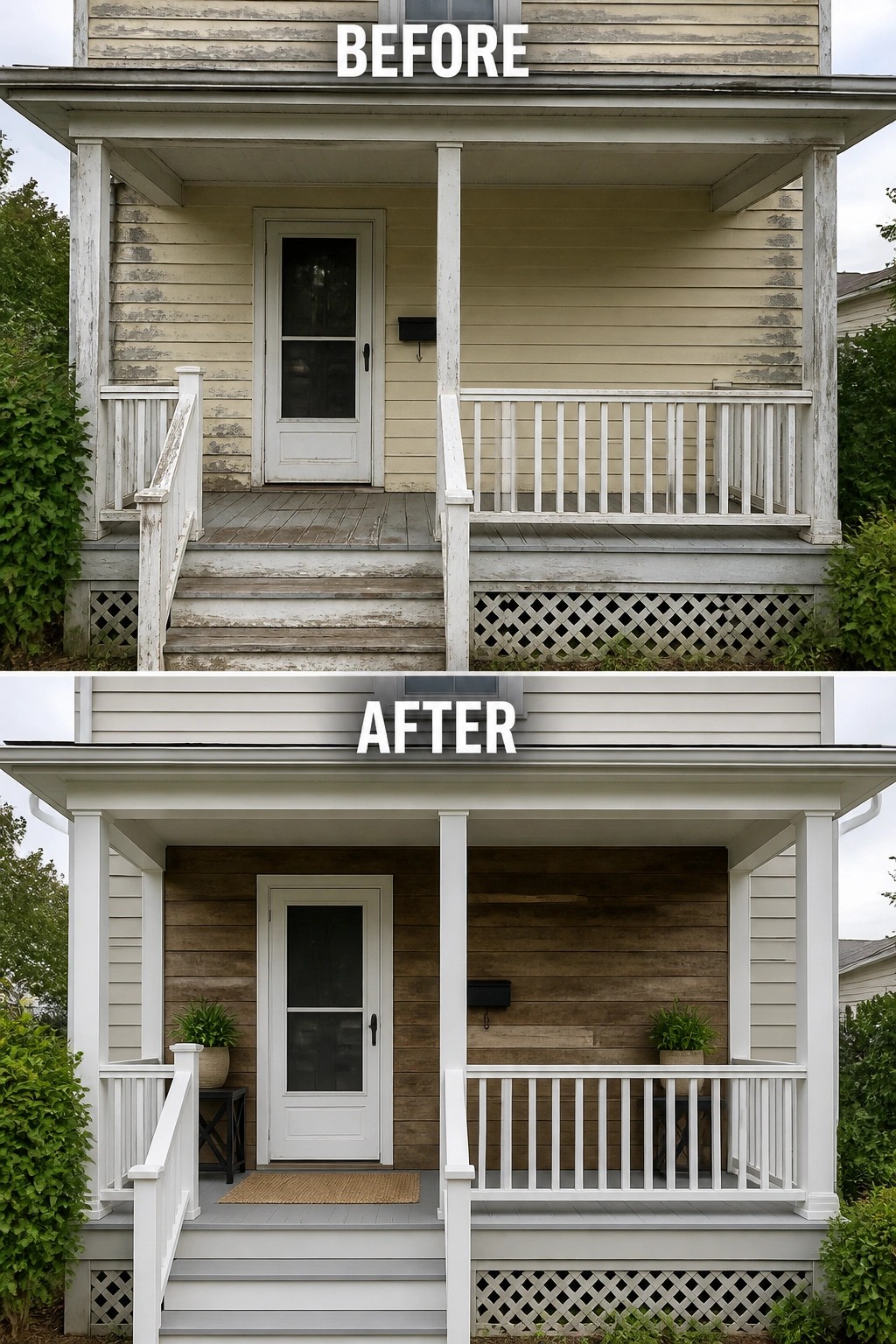
Changing the siding can completely shift how a front porch and entry feel. In this case the old faded paint gave way to clean white siding on top and a warmer wood tone below, which instantly made the porch look newer and more put together without any major structural work.
This approach works well on older homes where the siding has seen better days. Focus on the main surfaces first, then add a couple of simple touches like planters to soften the entry. It keeps the project realistic and avoids trying to change everything at once.
Frequently Asked Questions
Q: My siding is fine but the porch feels dated next to it. Can I just update the porch? A: Focus on matching the porch posts and railings to your current siding color. Add a fresh coat of paint on the floorboards and swap out old lights for ones that echo your house trim.
Q: How do I choose new siding without making the whole house look too different from the neighbors? A: Pick a shade one step lighter or darker than what you have now. Test a small patch on the side first so you see how it plays with your roof and windows in real light.
Q: What if I want to add a small overhang to my porch but worry about rain getting trapped? A: Slope the new roof slightly away from the house and use simple gutters along the edge. This keeps water moving and gives you dry space to stand when you unlock the door.