

I often notice how the front of a house can start to feel a bit neglected after years of the same paint and trim.
A few updates to the siding or the entry area tend to make the whole place seem more looked after without tearing everything down.
Simple paint changes or updated hardware can refresh the look without requiring structural work.
A thought I keep coming back to is how these adjustments make the house feel like someone still cares about it.
Over time the right combination of fixes turns a dated exterior into something that fits the current style of the street.
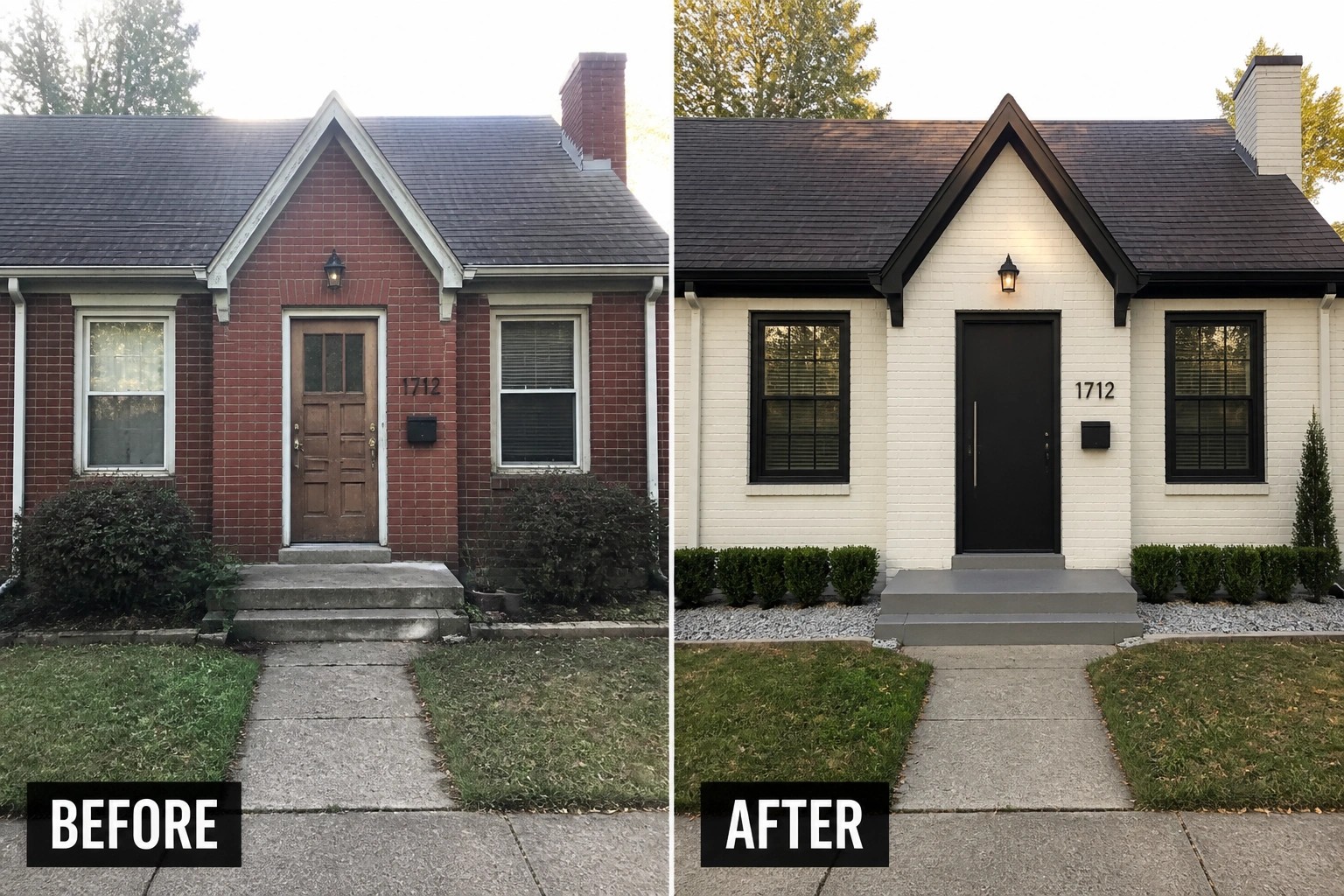
Paint A Dated Brick Exterior For A Fresh Update
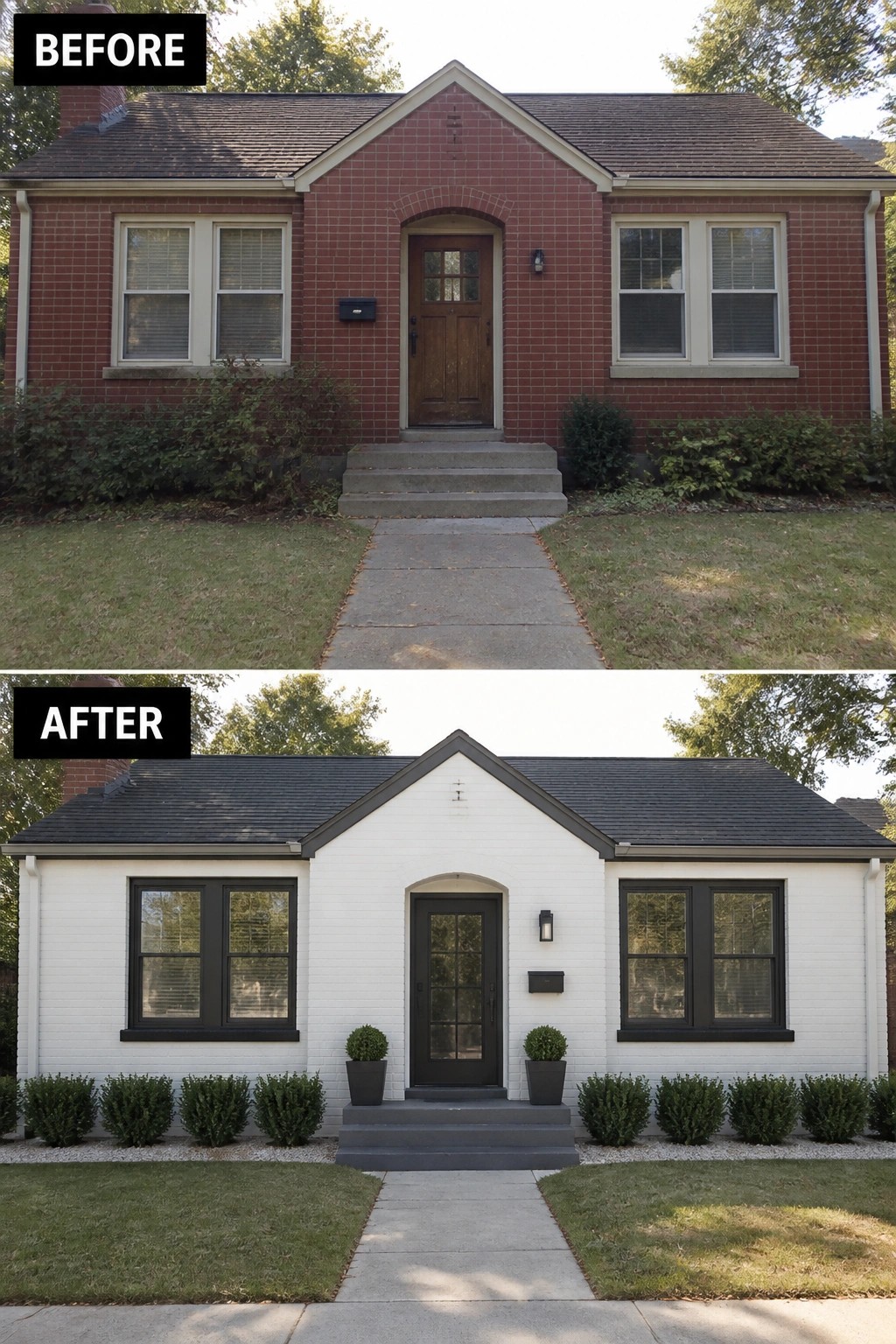
Many brick homes from past decades end up looking heavy once the original color starts to feel tired. Painting the brick a clean white and switching the trim and door to black gives the whole front a lighter, more current appearance without changing the structure.
This idea suits smaller homes where a full rebuild is not practical. Focus first on the main body of the house and the entry, then handle the landscaping cleanup so the new color reads clearly from the street.
Replace A Dated Front Door To Refresh The Entry
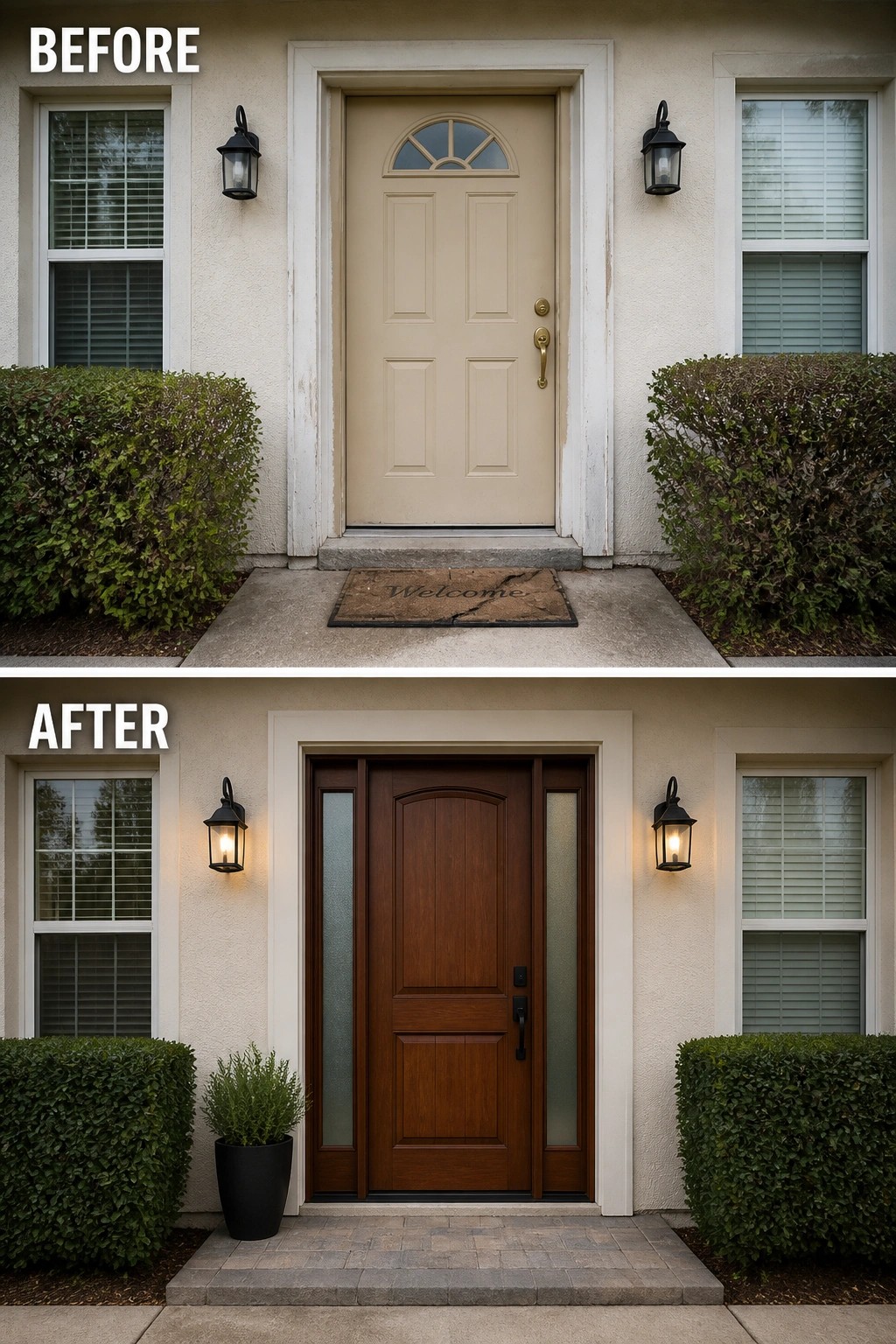
A tired front door often makes the whole house look older than it is. Swapping the old beige door for a darker wood one with sidelights instantly gives the entry more presence and makes the house feel more current.
This approach works on many homes where the door is the main thing that needs attention. Focus on the door first, then add one or two simple touches like a planter or better lighting so the change feels complete without overdoing it.
Update Siding Color To Refresh A Dated Exterior
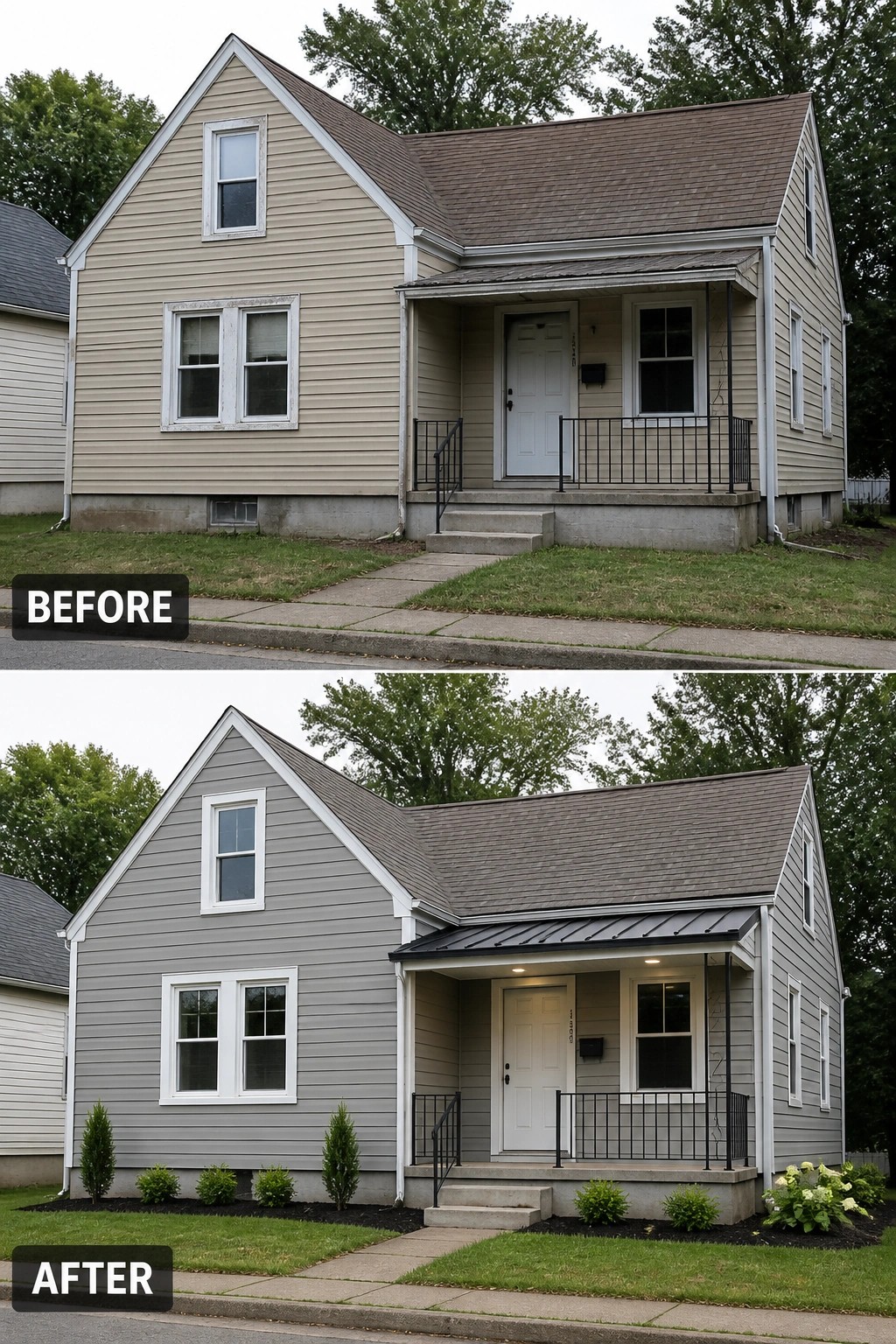
Changing the siding from a faded beige to a soft gray gives the whole house a cleaner, more current look. The addition of a dark metal roof over the porch adds definition to the entry and helps the front feel more finished without any major structural work.
This approach works well on smaller homes where the siding is still in good shape but the color feels tired. Start with the main body color, then add one or two accent details like a porch roof or updated trim so the changes stay balanced and easy to maintain.
Add A Porch To Make The Front Entry More Functional
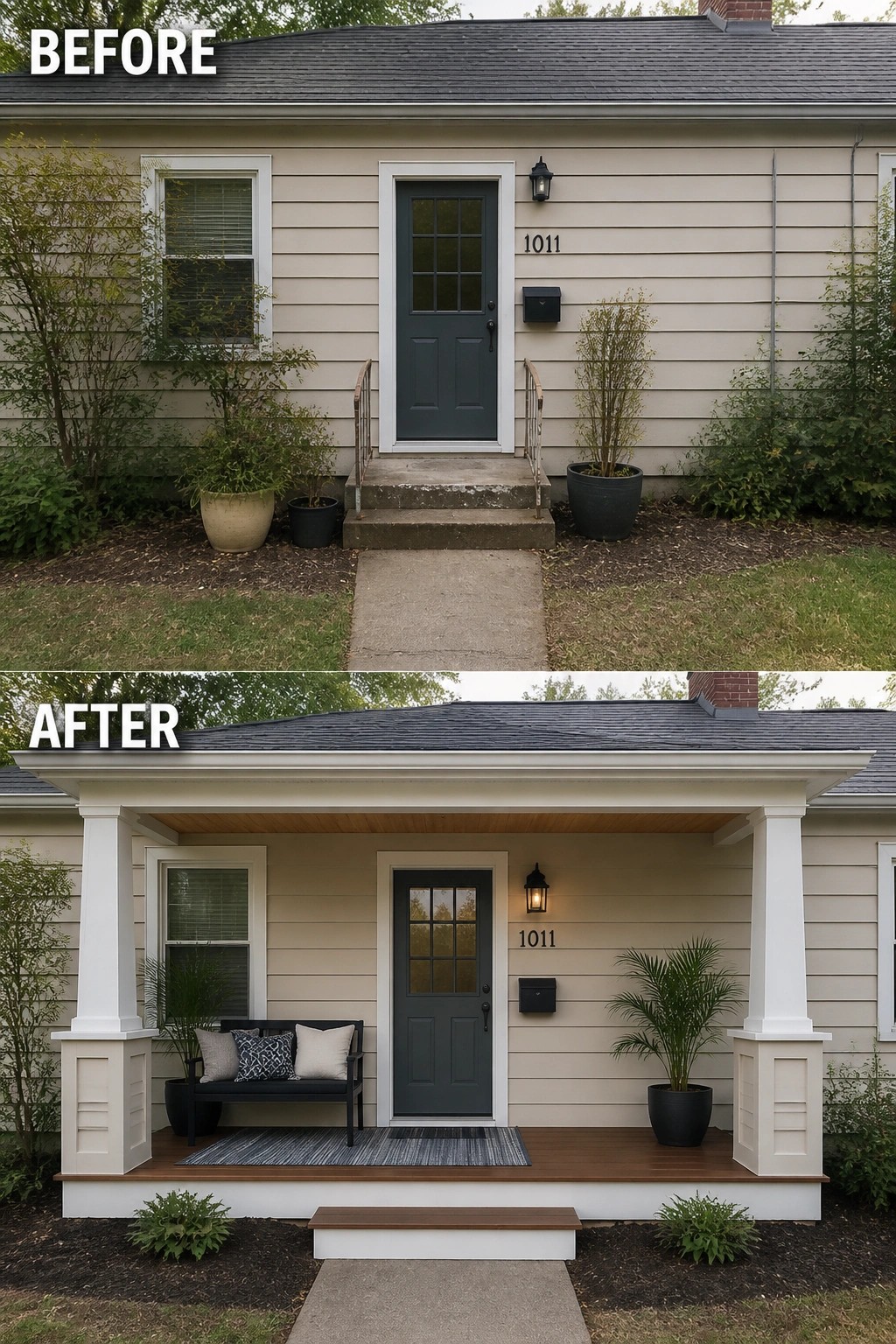
Many houses have nothing more than a few concrete steps leading straight to the door. Adding a covered porch gives the entry a clear purpose and creates a small outdoor space that feels intentional rather than leftover.
This approach works best on homes where the roofline can be extended or a simple gable added without major structural changes. Keep the new porch in scale with the house, use a single material for the floor, and add only one or two pieces of seating so the area stays open and easy to maintain.
Update A Dated Garage Door With Color And Hardware
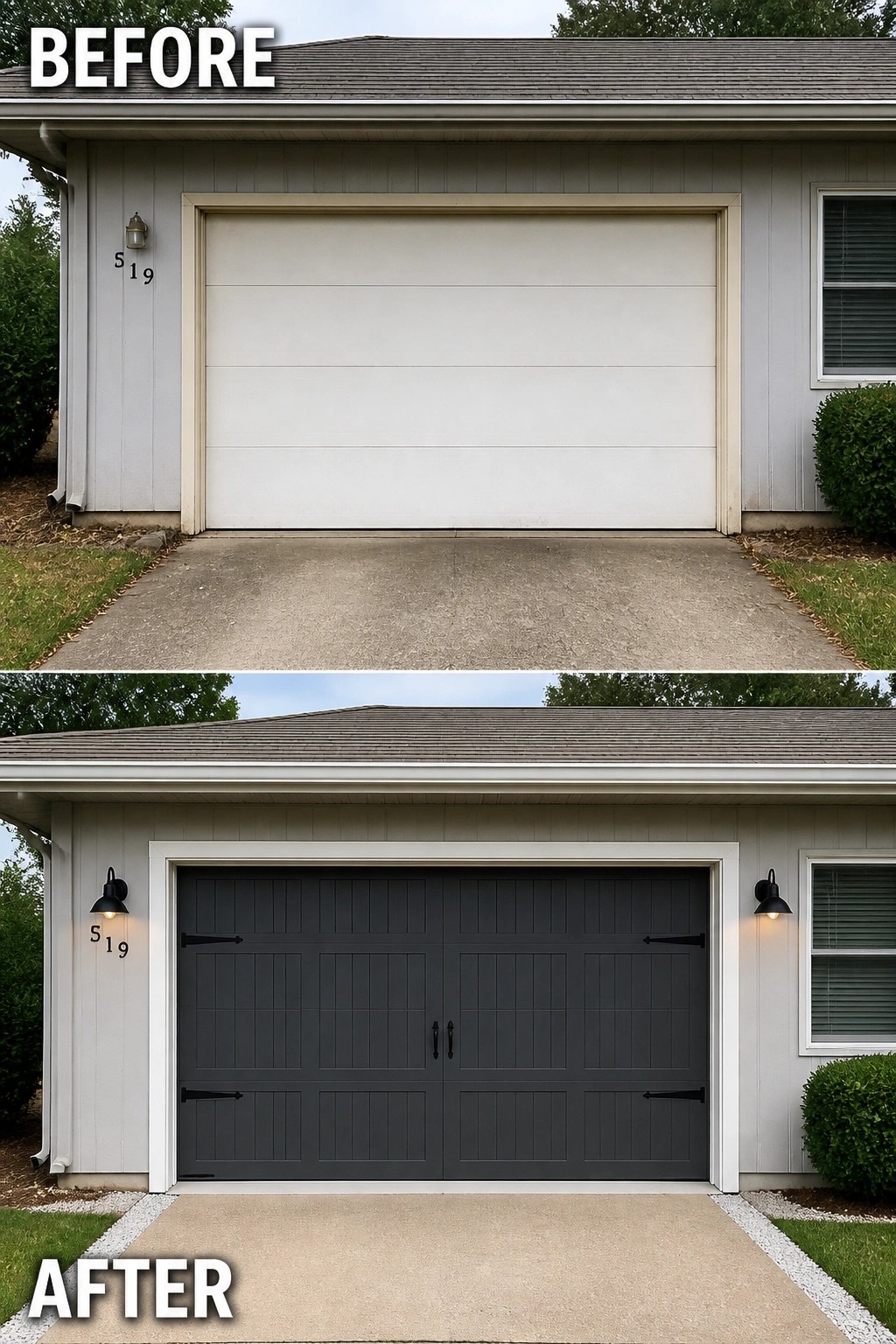
A garage door that blends into the house can make the whole front look flat. Switching it to a darker color with black hardware and new lights on both sides gives the entry more shape and makes the house feel more put together.
This idea works best on homes where the garage takes up a big part of the front wall. Choose a color that stands out from the siding without clashing, and keep the trim simple so the change stays easy to maintain.
Define The Front Beds With Simple Edging
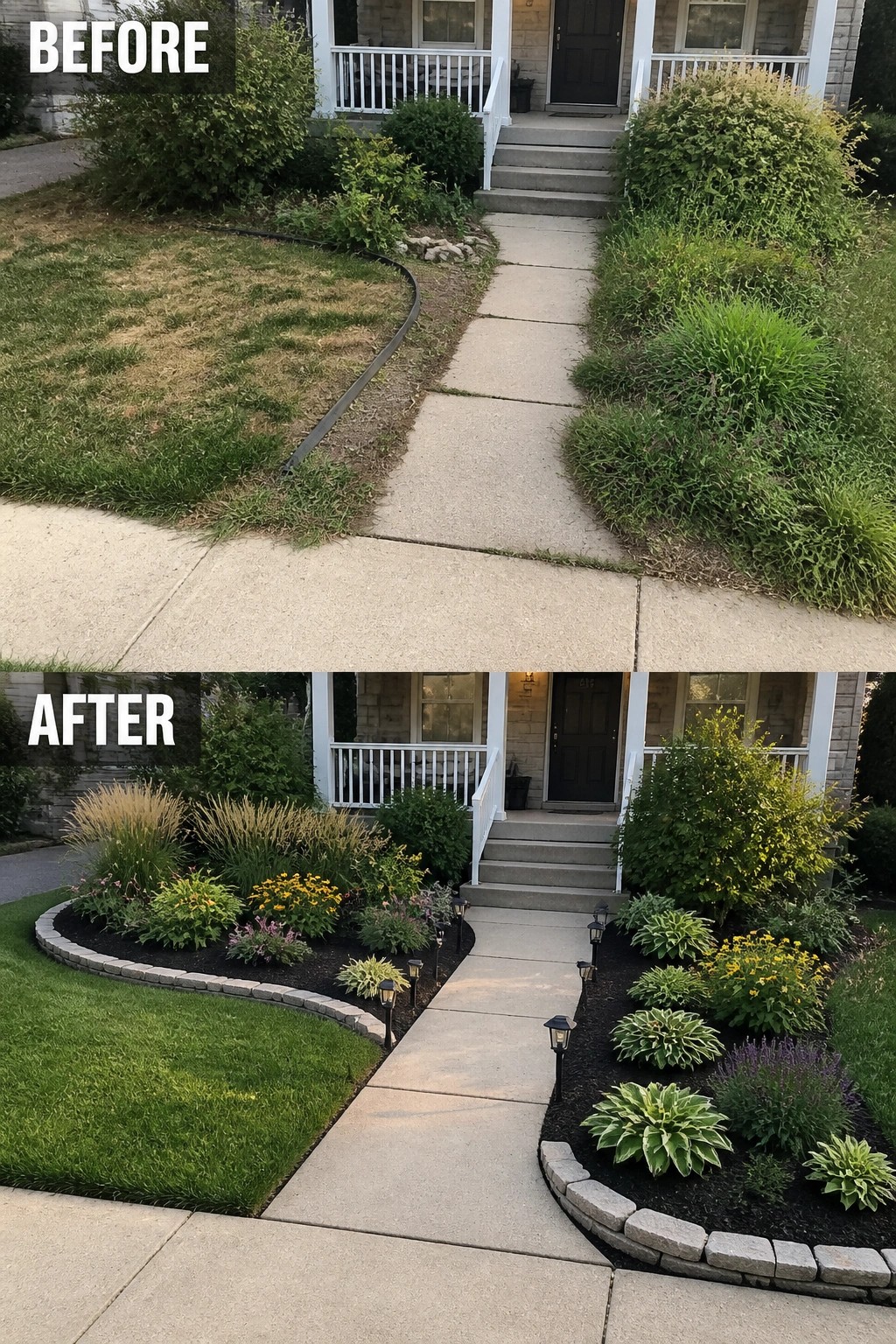
The front yard had grass running right up to the walkway and shrubs spilling everywhere, which made the whole space feel neglected. Adding a low stone border and filling the beds with mulch created clear lines that made the path look more intentional and the house easier to approach.
This idea works best on smaller front yards where the walkway is the main feature. Start with the edging before adding plants, and keep the plant choices simple so the beds stay neat without constant work.
Refresh A Dated Porch With Paint And Lighting
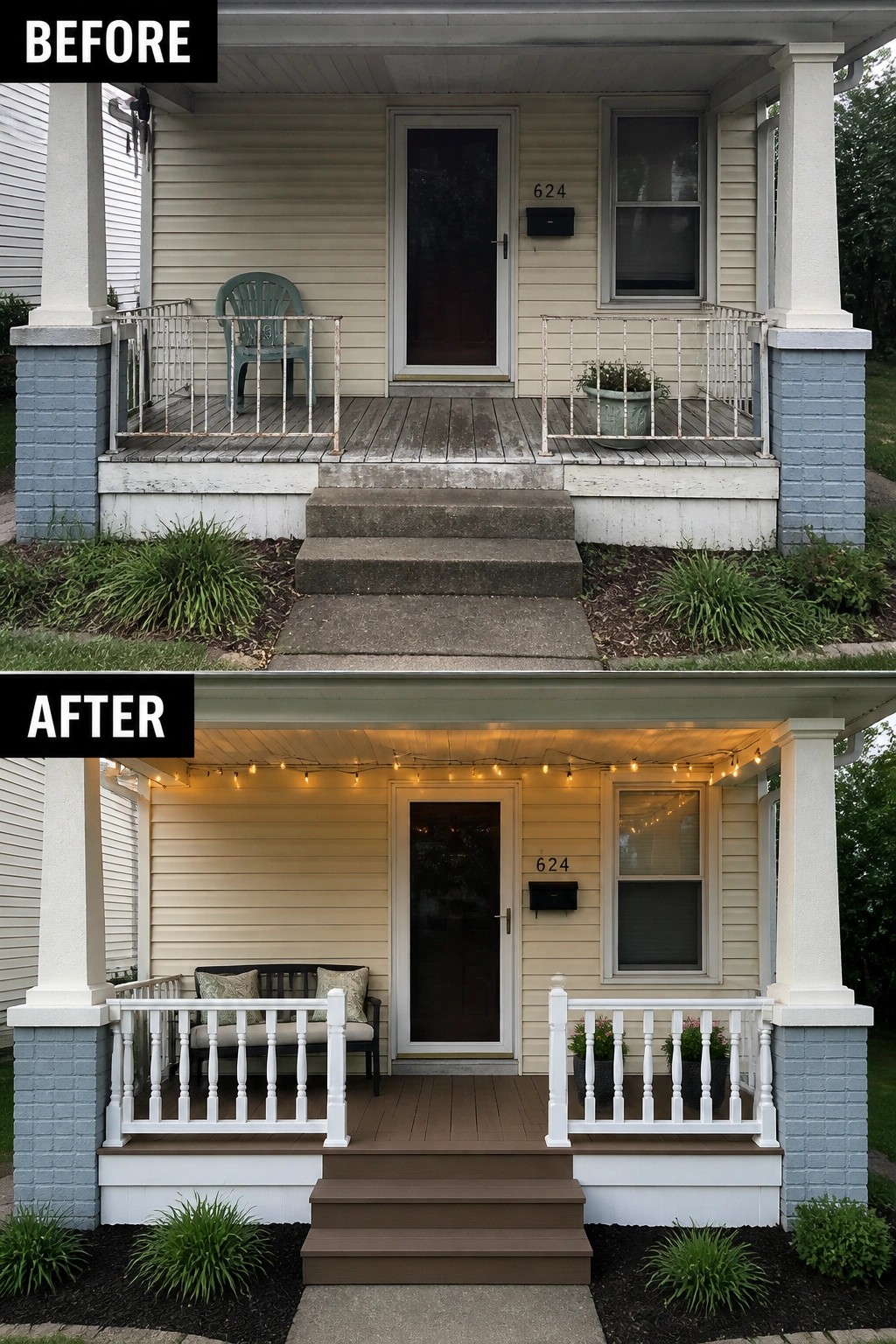
A tired porch often looks worse because of worn railings and faded surfaces rather than any big structural problem. In this case, painting the railings white, switching the decking to a darker tone, and adding string lights made the whole entry feel cared for and much more welcoming without any major construction.
This approach works well on older homes where the porch still has good bones. Start with the railings and trim since those changes show the most, then add simple lighting that can stay up year round. Keep the seating light so the space does not feel crowded, and the same updates can work on side porches or back decks that need a quick lift.
Refresh A Dated Exterior With Paint And Shutters
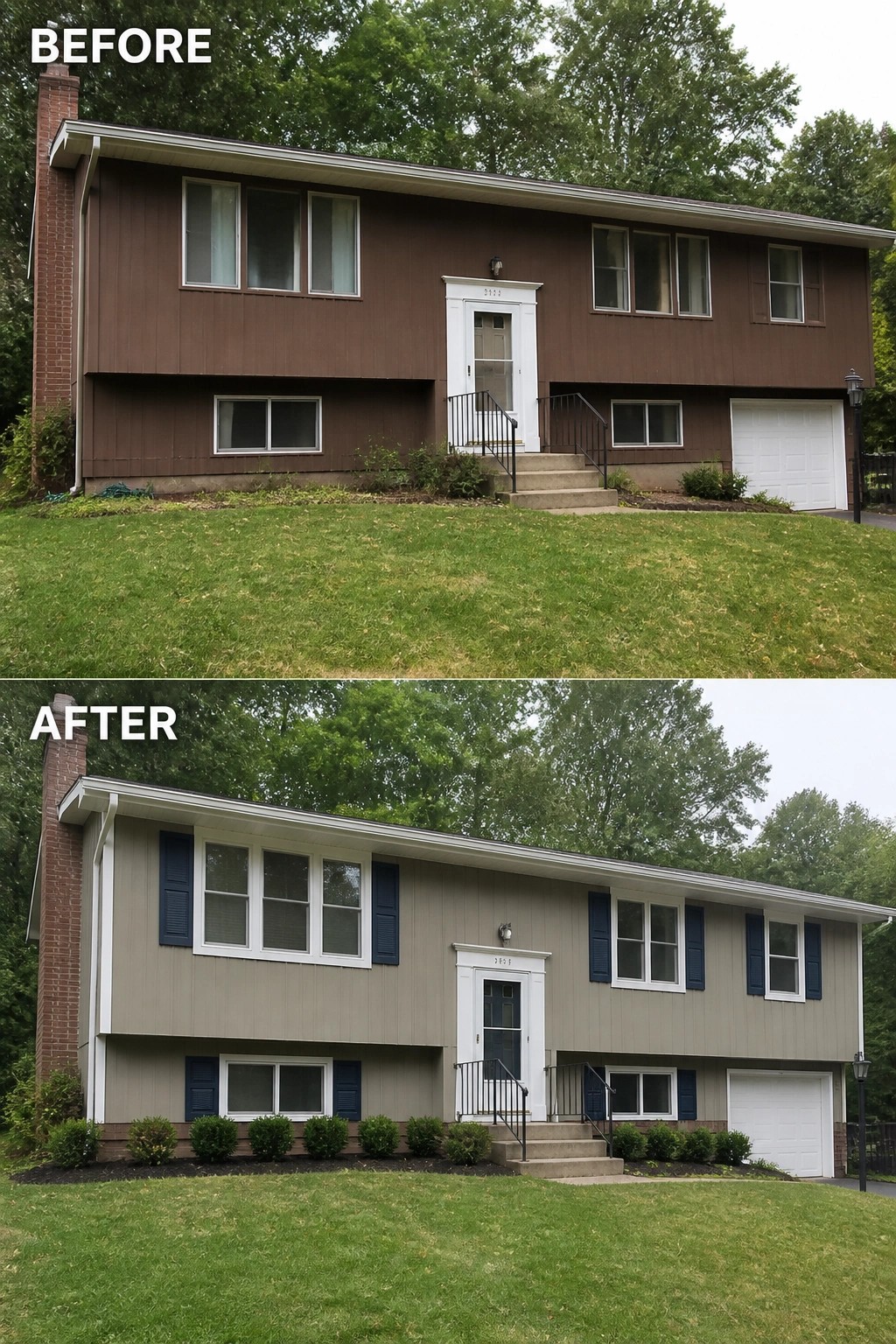
A simple color change often does the most to update an older house exterior. Here the dark brown siding was replaced with a lighter gray, and blue shutters were added to every window. Those two moves alone made the front look brighter and more put together without any major construction.
This idea works especially well on homes from the seventies and eighties that still have their original trim. Choose a light neutral for the siding and a deeper accent for the shutters so the windows stand out. Keep the rest of the updates minimal until the new color has settled in.
Refresh A Brick Entry With Stone And Lighting
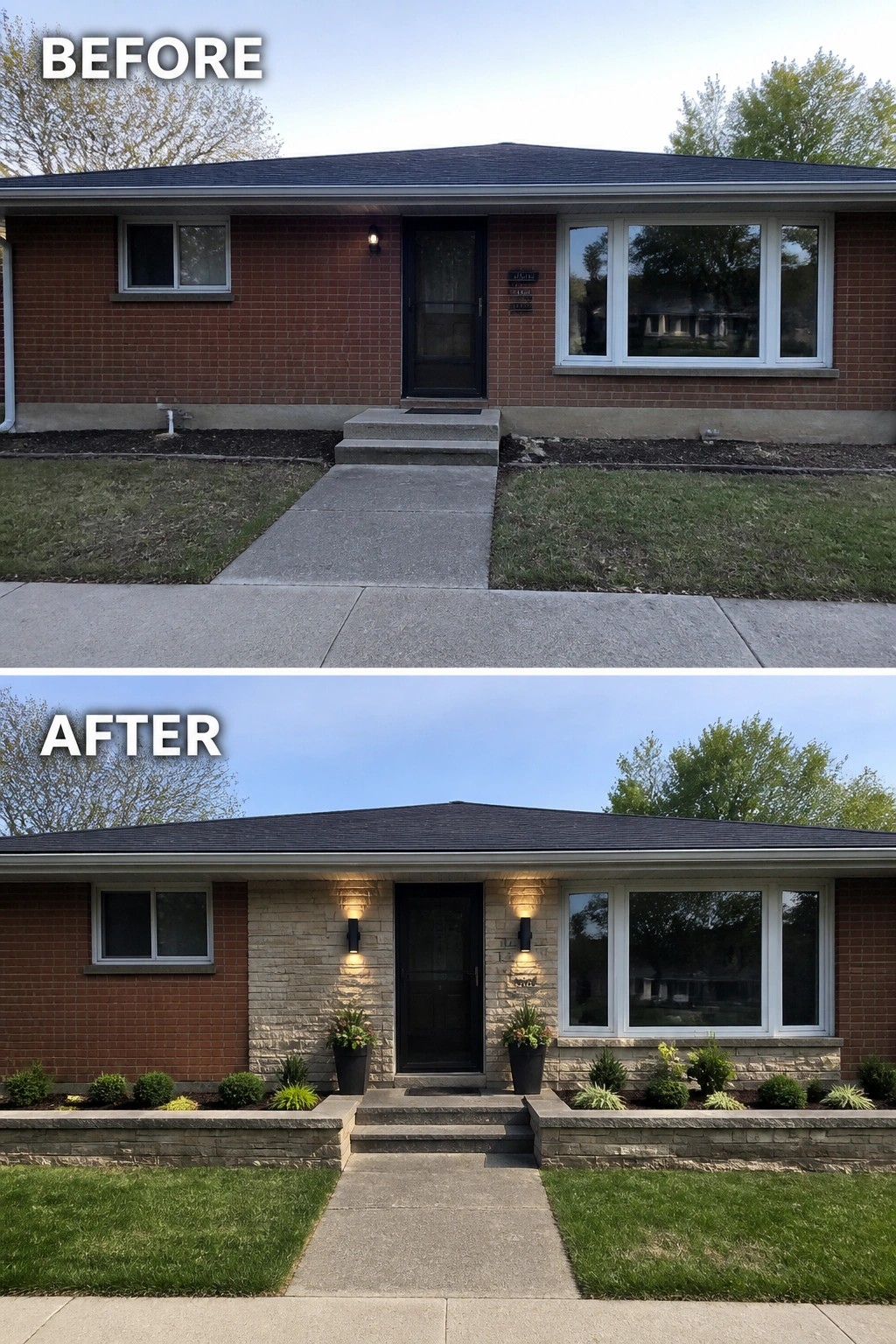
Many older brick homes have a flat entry that makes the front feel dated. Adding a section of stone veneer around the door and a pair of wall lights creates a simple focal point that draws attention to the entrance without changing the whole facade.
This idea works best on homes where the door sits in the middle of a long wall. Keep the stone and lights close to the entry so the update stays focused and the rest of the brick remains untouched.
Refresh A Dated Entry With Door Color And Railing Updates
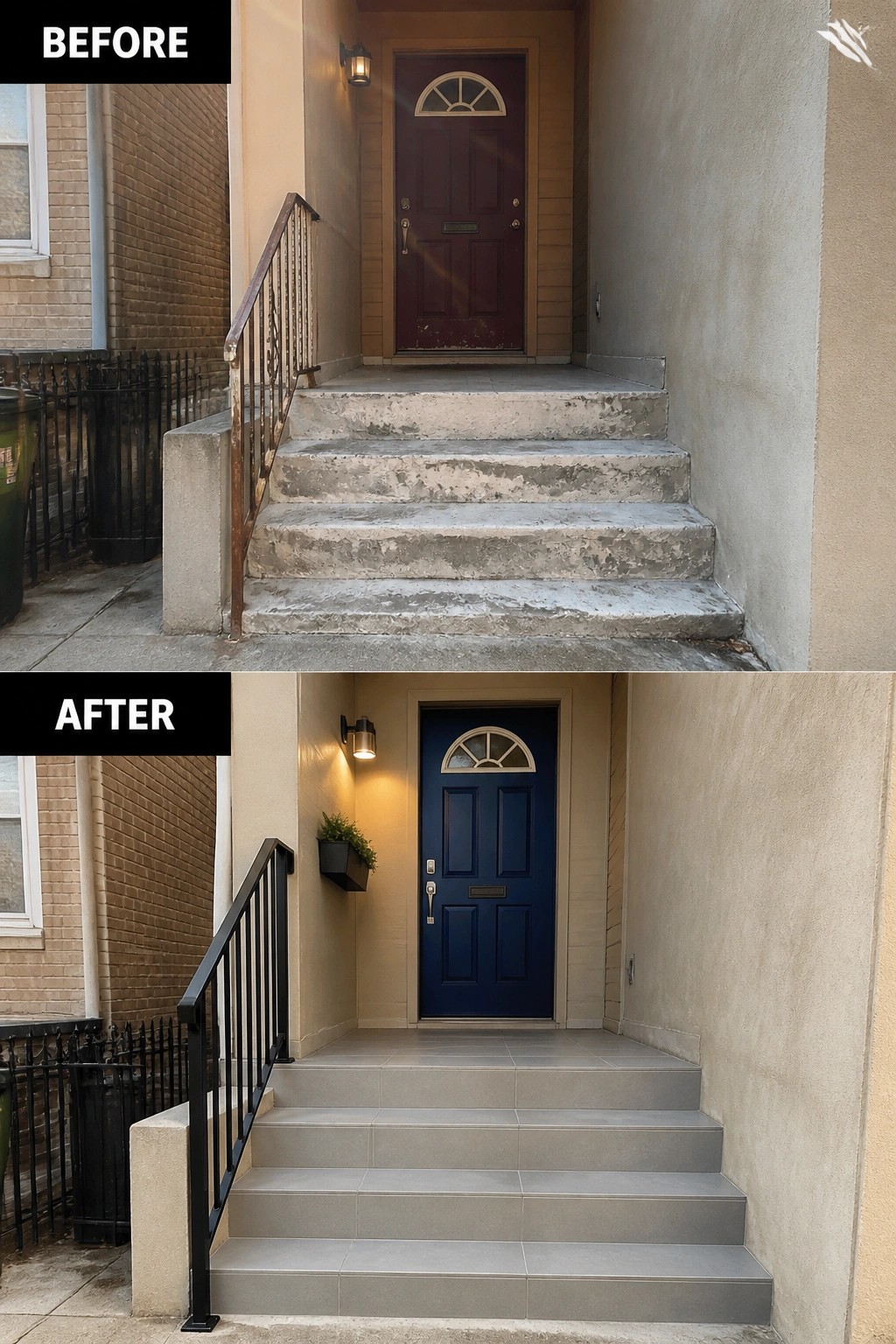
A tired front entry often drags down the whole house, even when the rest of the exterior is fine. In this case the cracked stairs, rusty railing, and faded door made the entrance feel neglected. Painting the door a deep blue and swapping the old railing for a clean black one instantly made the space feel intentional and current.
This approach works well on older homes where a full renovation is not in the budget. Start with the door color since it gives the biggest impact for the least cost, then replace or repaint the railing to match. Keep the changes simple so the entry still feels like it belongs to the house rather than fighting with it.
Clear Overgrown Foundation Beds For A Cleaner Look
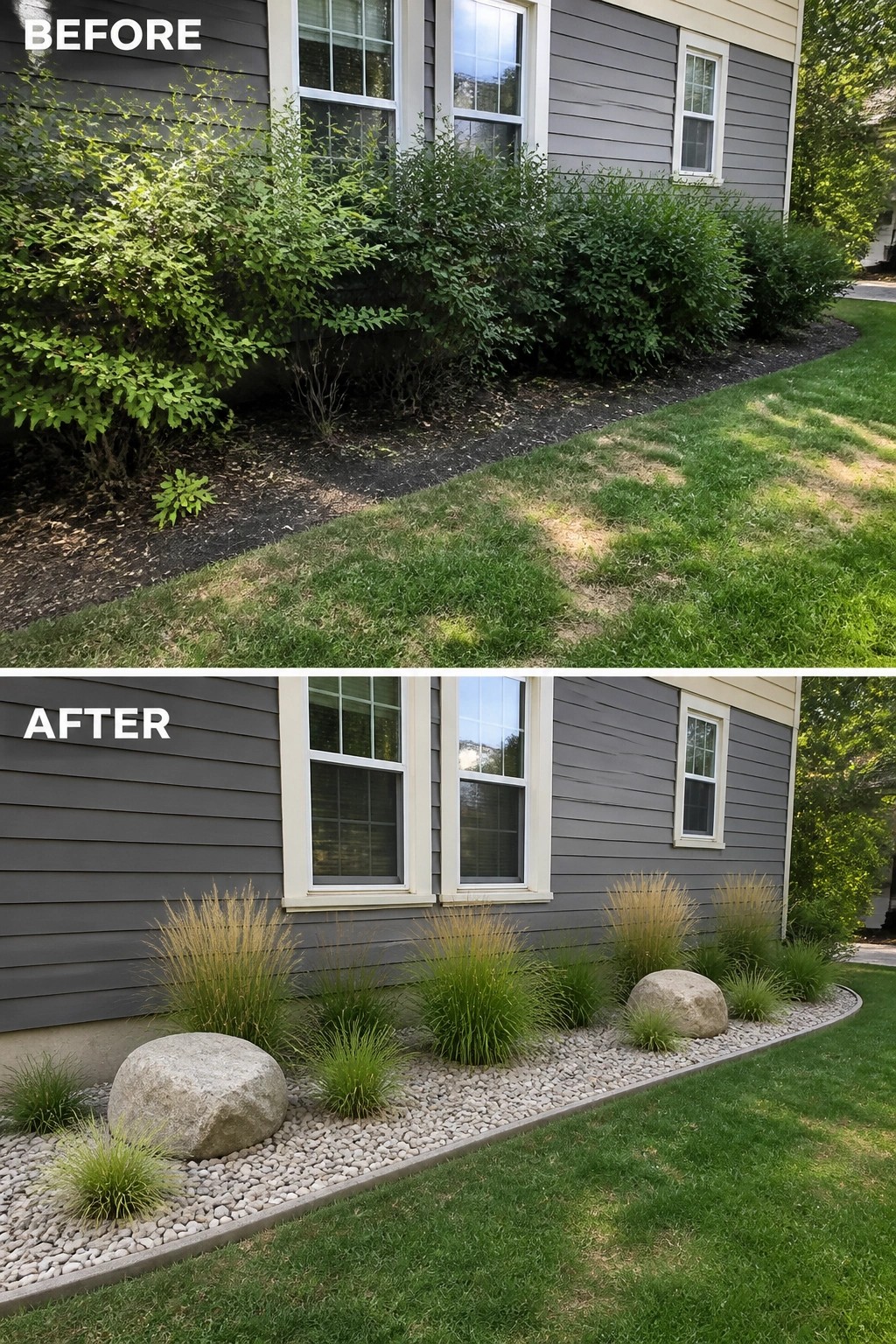
Many homes end up with shrubs that grow too large and hide the house. In this case, the thick bushes were removed and the area was replaced with a neat gravel bed edged along the lawn. Low ornamental grasses and a couple of large rocks keep the planting simple while still adding some texture.
This approach works well on houses where the original shrubs have become messy or blocked windows. Start by cutting everything back to see the actual shape of the bed. Then use gravel or mulch to create a clear line that makes mowing easier and keeps the planting looking intentional year after year.
Update A Plain Entry With Shutters And Lighting
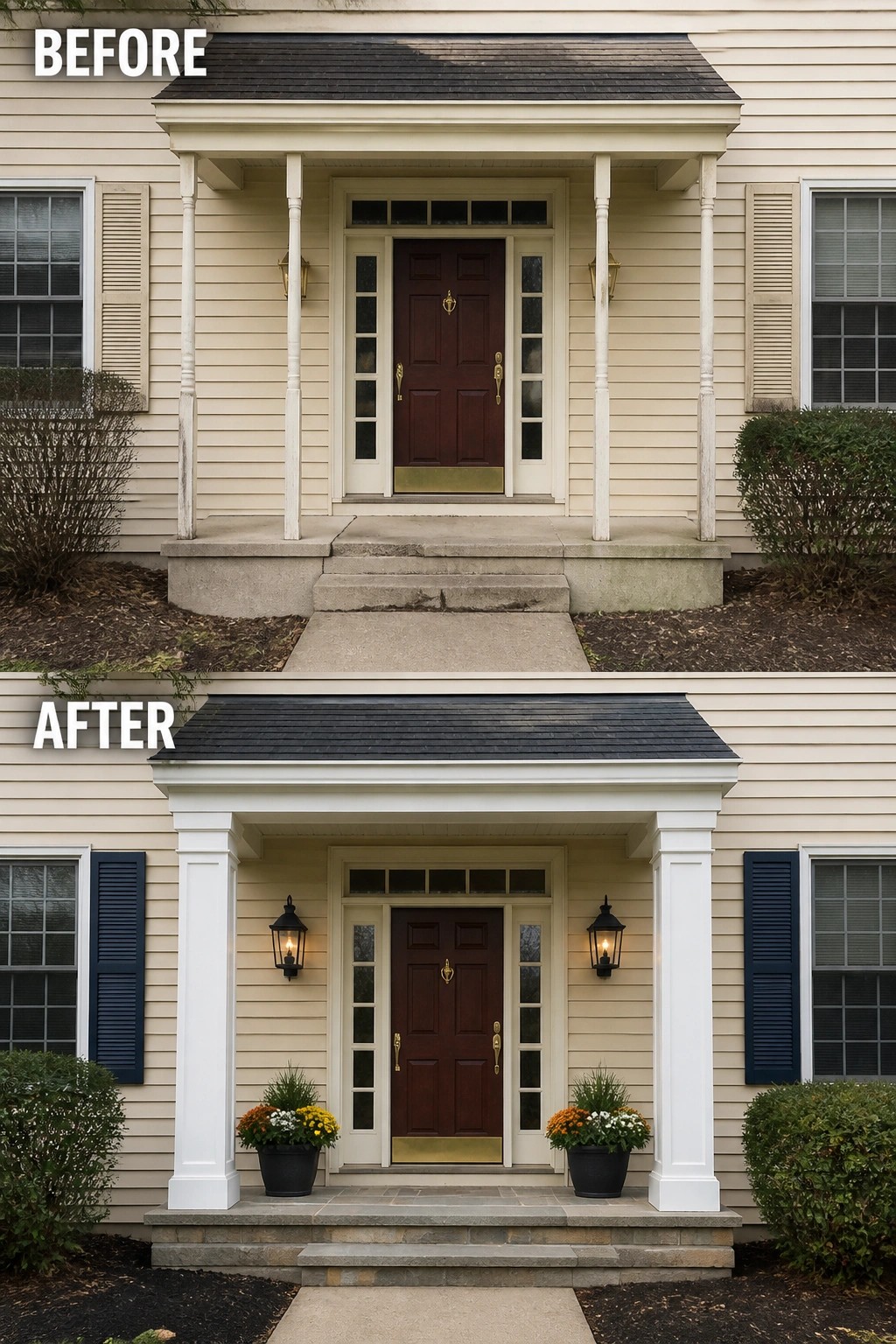
Many homes with light siding end up with an entry that blends into the rest of the facade. Adding dark shutters and swapping small lights for larger lanterns gives the door area clear definition and makes the whole front feel more finished.
This works best on houses that already have decent trim and a solid door. Stick to one dark color for the shutters and lights, then add a pair of planters at the base of the steps. It is a low-cost way to improve curb appeal without touching the roofline or siding.
Refresh A Plain Exterior With Shutters And Window Boxes
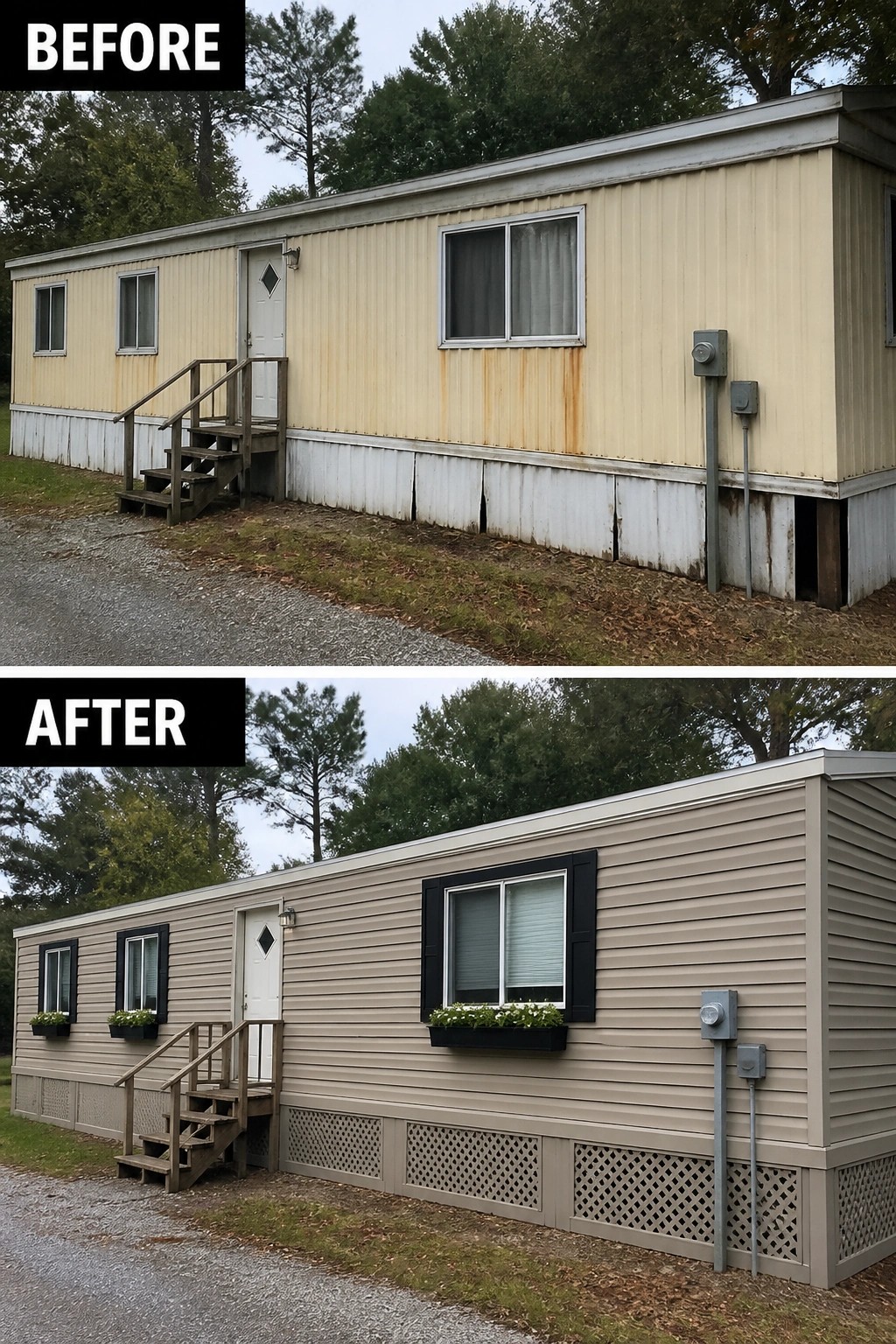
Many older homes and manufactured homes have flat, dated siding that makes the whole front look tired. Adding black shutters and simple window boxes with flowers gives the facade instant structure and breaks up long blank walls. The change from stained siding to a fresh color also helps tie everything together without a full replacement.
This idea works well on simple rectangular homes where the windows are evenly spaced. Focus on one or two windows first, match the shutter color to the door or trim, and keep the boxes narrow so they do not block light. The lattice added along the base in the after photo shows how covering the foundation area can finish the look without major construction.
Use Pavers And Garden Beds To Frame The Front Entry
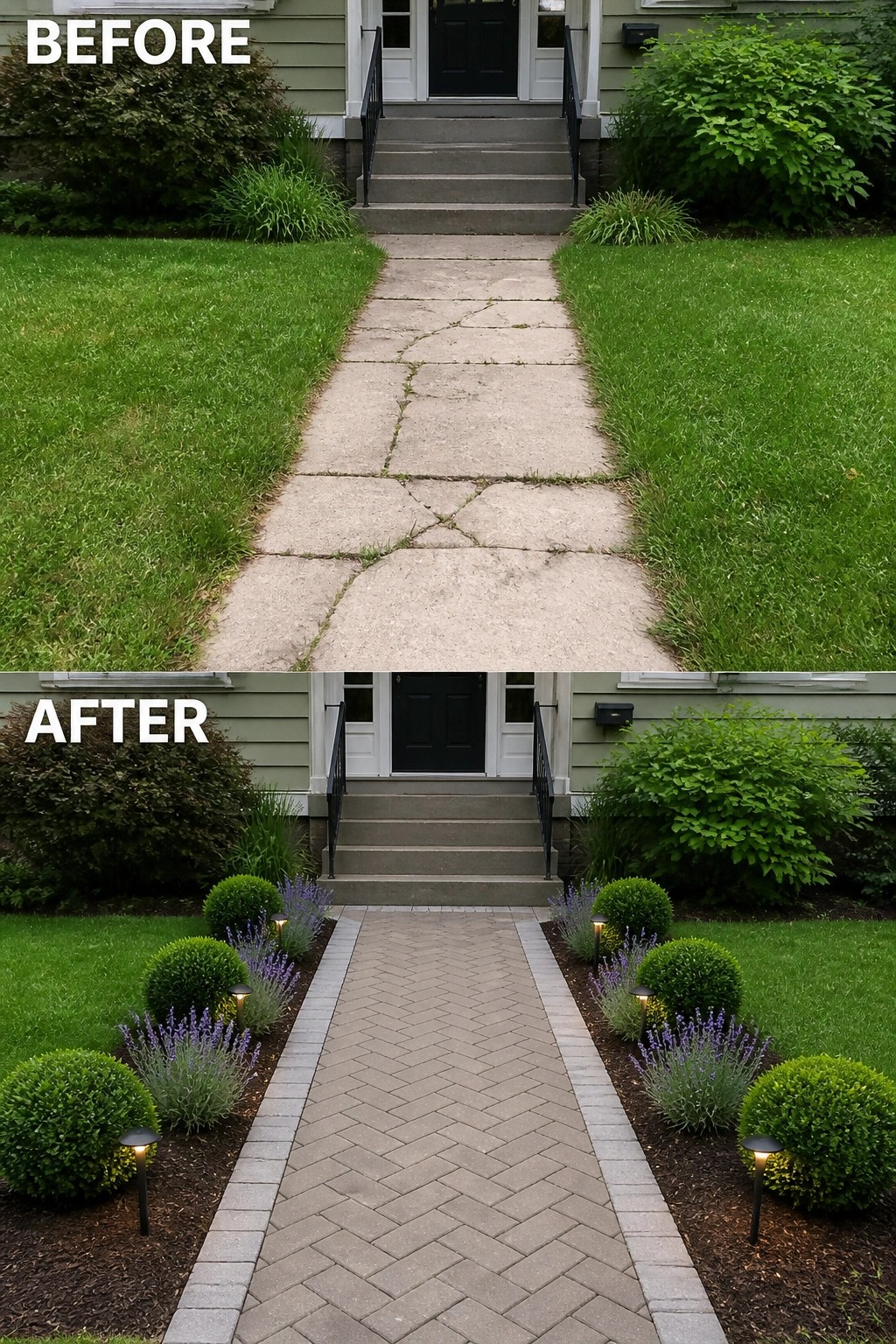
A cracked and uneven concrete path makes the whole front yard feel neglected. Switching to a clean paver walkway with simple planted borders on both sides gives the entry a clear shape and makes the house feel more welcoming without any major construction.
This approach works well on older homes where the original walk has aged poorly. Keep the beds narrow so they do not crowd the path, and choose low shrubs and a few flowering plants that stay neat with basic trimming. The same idea can be used on side yards or back entries where you want a tidy route without adding a lot of new features.
Update The Front Door Color And Trim
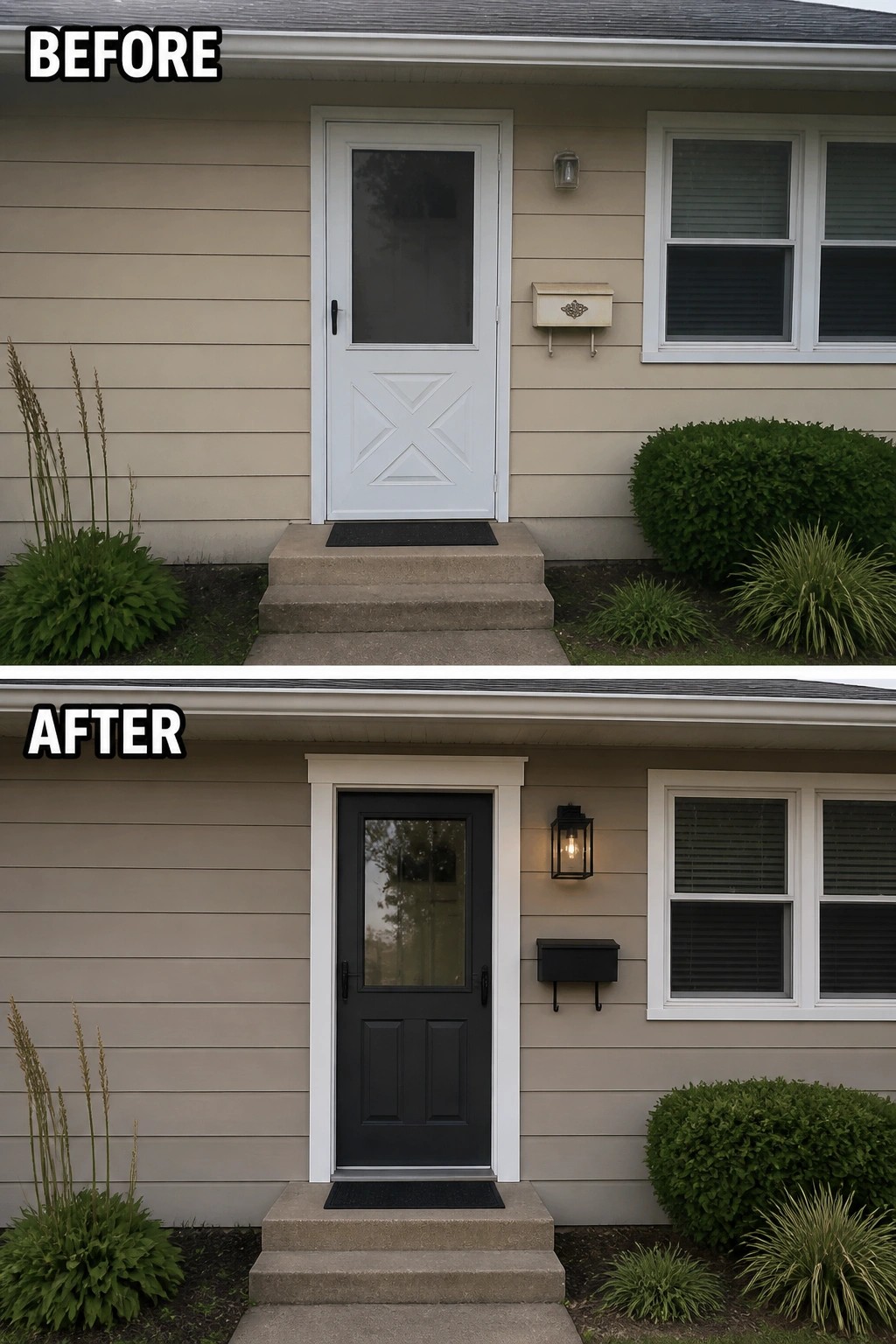
A simple door swap and some fresh trim can make a dated entry feel much more current. In this case the white door was replaced with a dark one that stands out against the siding, and a clean white frame was added around the opening. The old small light was also swapped for a larger lantern style that suits the scale of the door.
This kind of update works well on houses where the structure is still sound but the details feel tired. Pick a door color that contrasts with the siding, keep the trim simple, and match the hardware and mailbox to the new look. It is an affordable change that does not require major construction.
Replace A Chain Link Fence With A Picket Fence
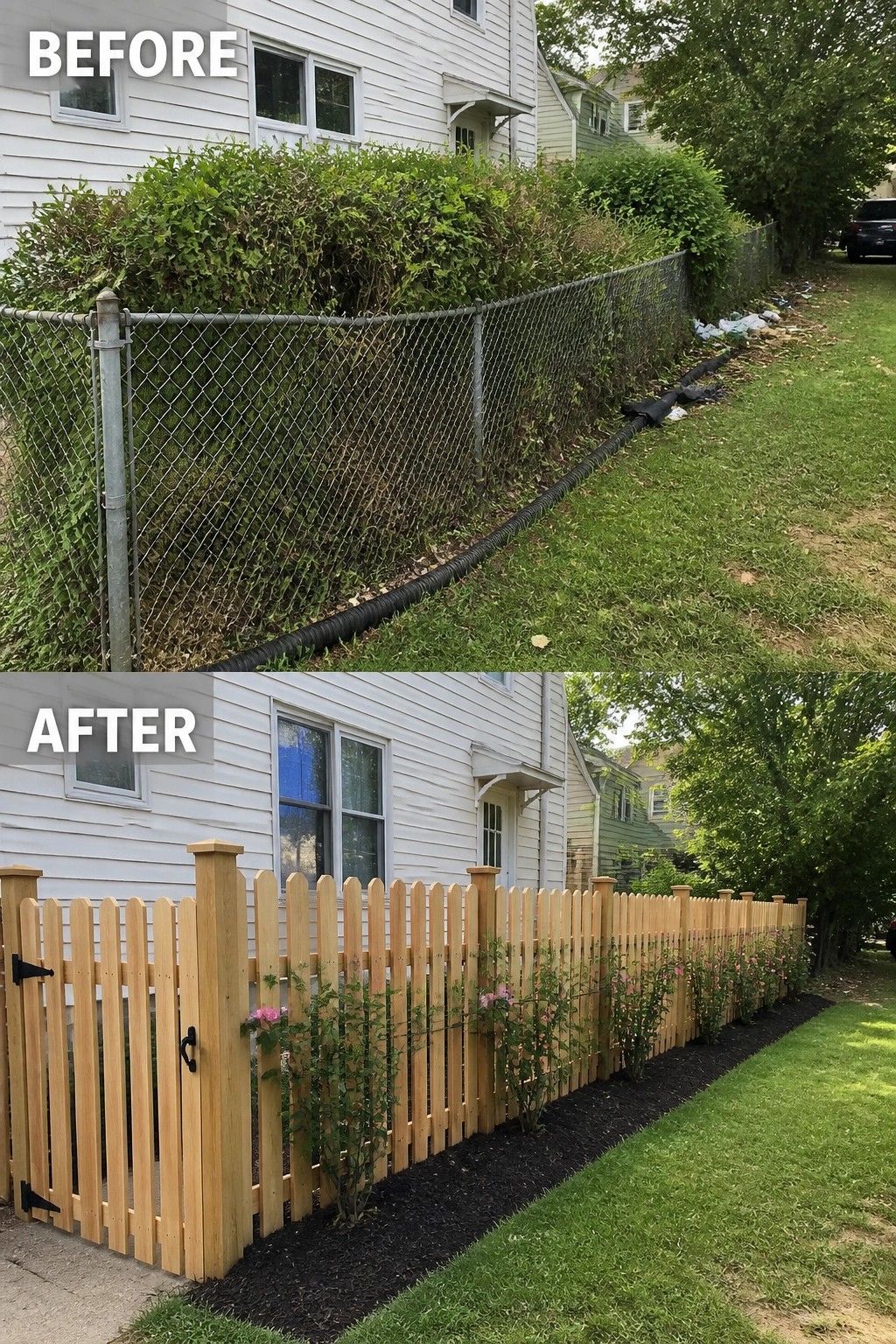
Many older homes still have chain link fencing running along the side or front, which tends to make the whole exterior feel dated and closed off. Replacing it with a simple wooden picket fence changes the look right away and gives the house a clearer boundary that feels more intentional.
This approach works best on modest lots where you want some definition without losing light or airiness. Remove the old fence first, then match the new fence height and style to your house before adding a clean mulch bed and a few shrubs along the base.
Refresh A Dated Balcony With New Railings
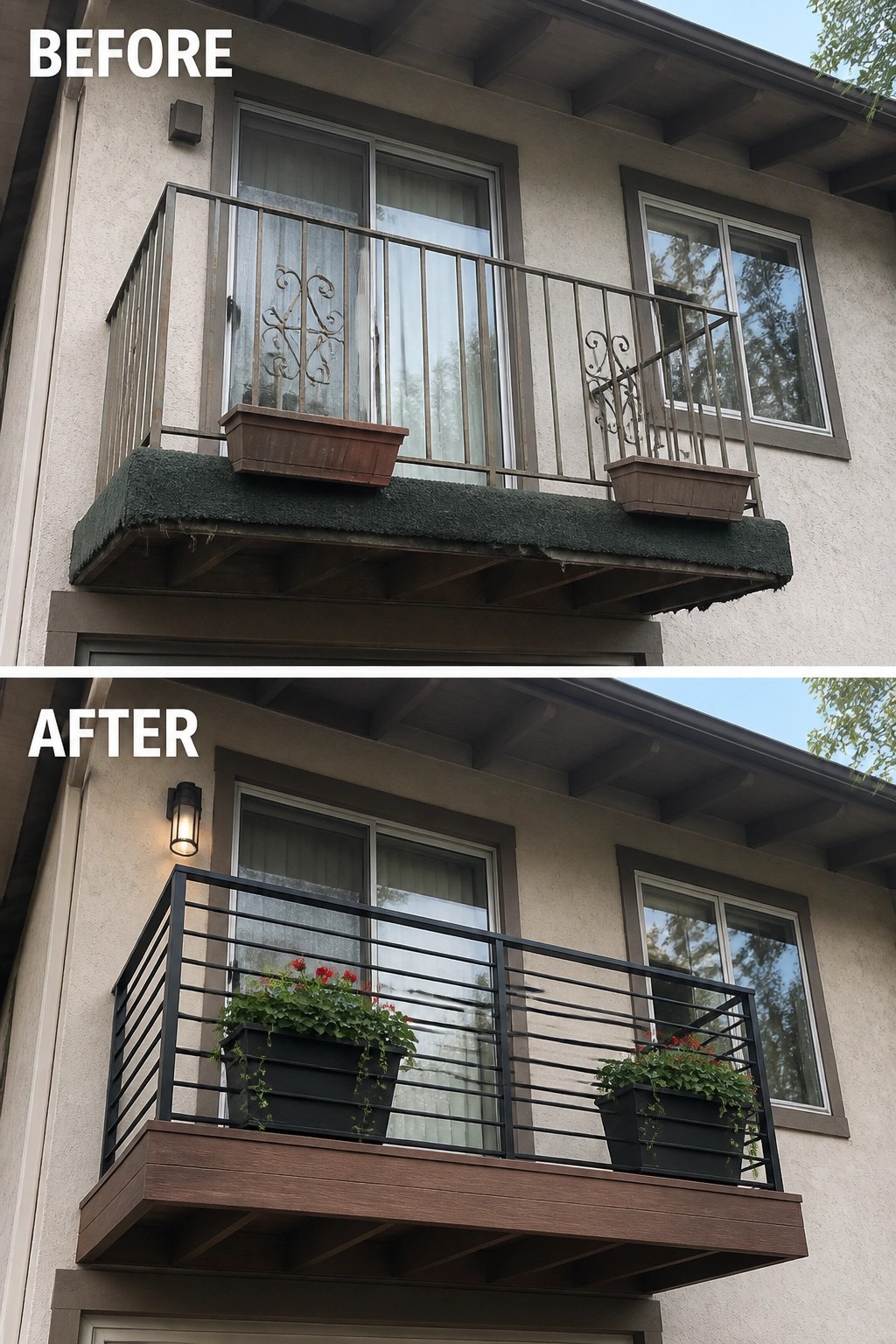
An old balcony railing can make the whole exterior feel stuck in the past. Switching from the heavy ornate metal to a simple black horizontal design, along with replacing the worn surface with wood decking, gives the space a much cleaner and more usable look.
This approach works best on balconies that still have solid structure underneath. Keep the changes focused on the railing style and deck surface first, then add matching planters so the area feels pulled together without adding clutter. It suits homes where the balcony is used regularly rather than just for show.
Add Wood Accents To Refresh A Plain House Entry
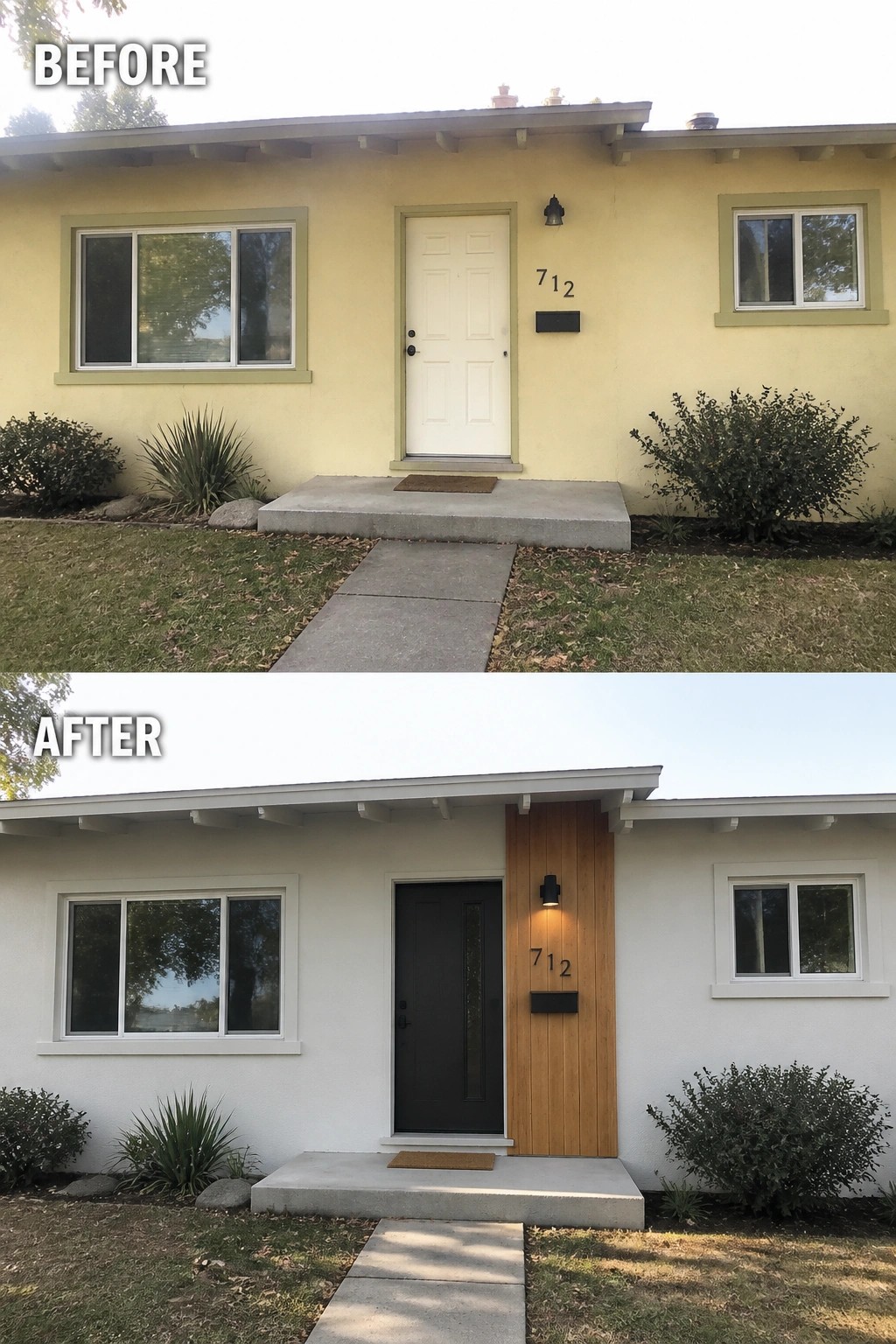
Many homes from this era have a flat entry that does not stand out. Adding a vertical wood panel next to the door creates a clear focal point and gives the facade some texture. The lighter house color and darker door also help the entry feel more defined without major construction.
This idea suits homes with simple stucco or siding where the front door area feels lost. Choose a wood tone that matches other trim on the house and keep the panel narrow so it does not overwhelm the scale. A change like this often improves curb appeal with less effort than a full repaint.
Refresh A Dated Porch With Paint And Lighting
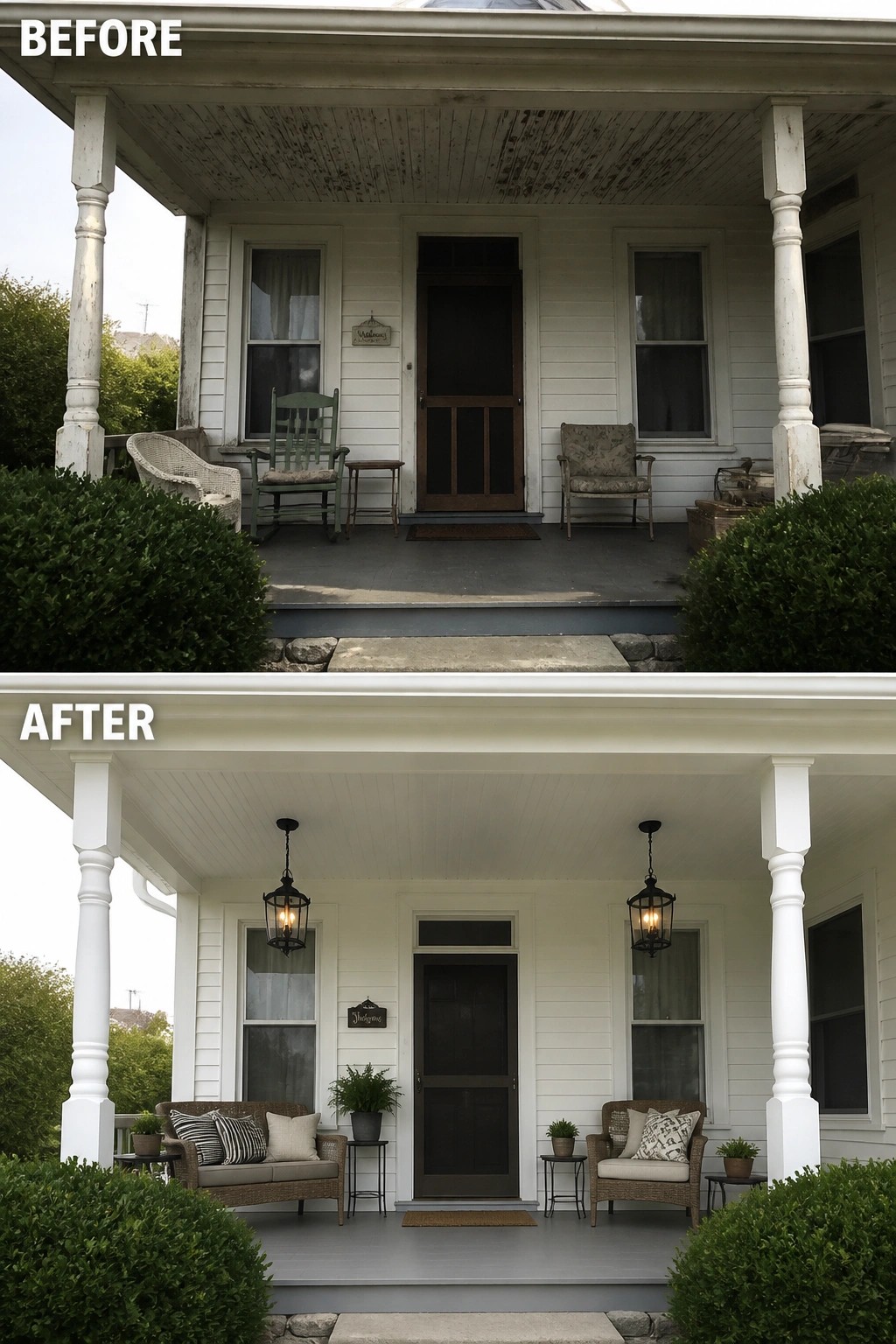
The old porch looked worn down with peeling paint on the posts and a cluttered mix of furniture that did not feel intentional. Fresh white paint on the trim and columns, along with a pair of hanging lights, gave the whole front a cleaner and more welcoming appearance right away.
This approach suits older homes where the porch structure is still sound. Start with paint to unify the look, then add simple lighting over seating areas so the space feels used rather than just passed through. Keep the furniture scale modest so people can still walk easily to the door.
Update Old Windows With Black Frames And Window Boxes
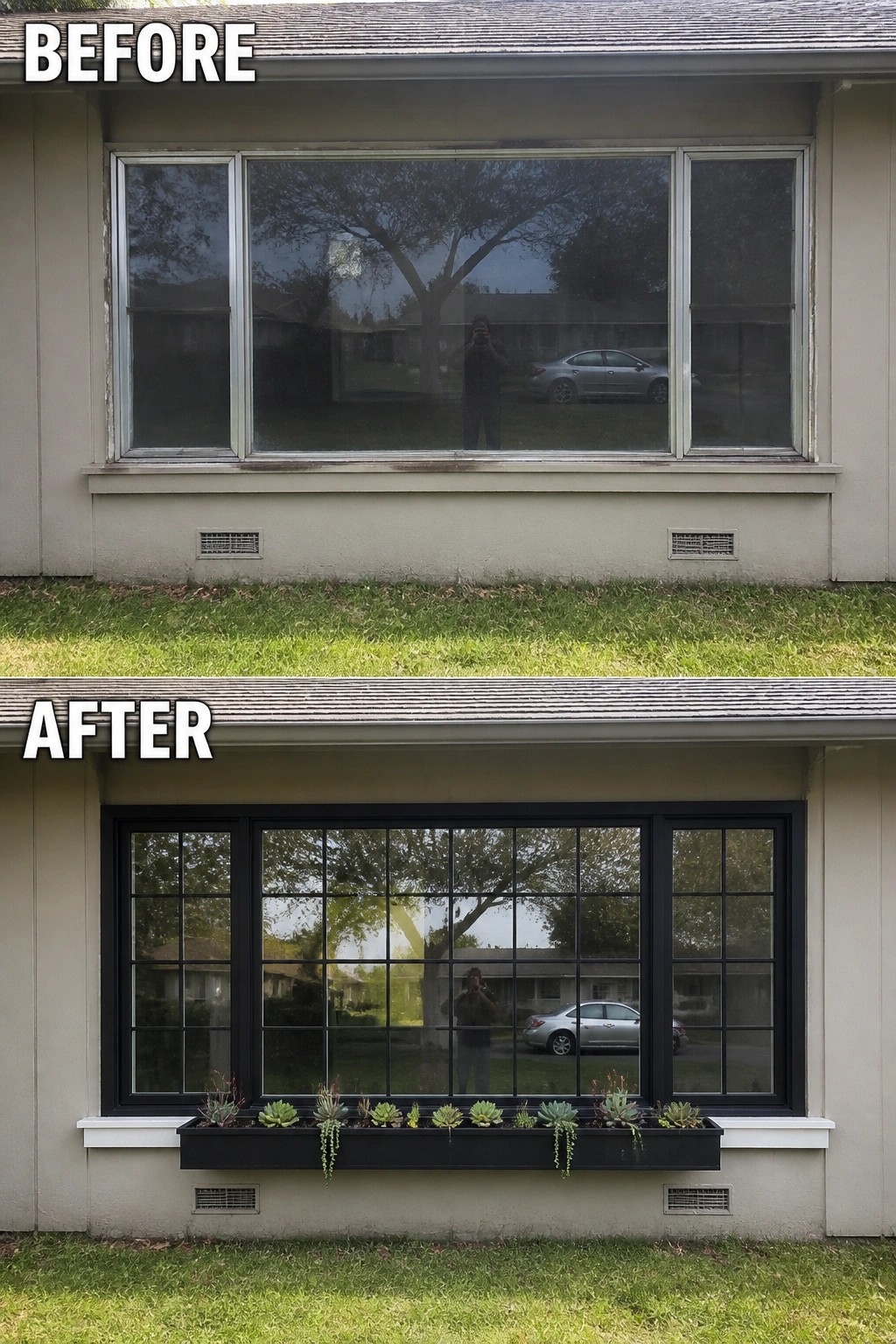
Swapping an old aluminum window for a black grid style immediately gives the front a cleaner, more defined look. The added window box below brings a bit of planting right up against the house without taking up ground space.
This approach works best on houses where the windows sit on a fairly plain wall. Match the frame color to other trim or hardware on the house and use a sturdy box with good drainage so the plants stay healthy through the seasons.
Update Concrete Steps With Stone For Better Curb Appeal
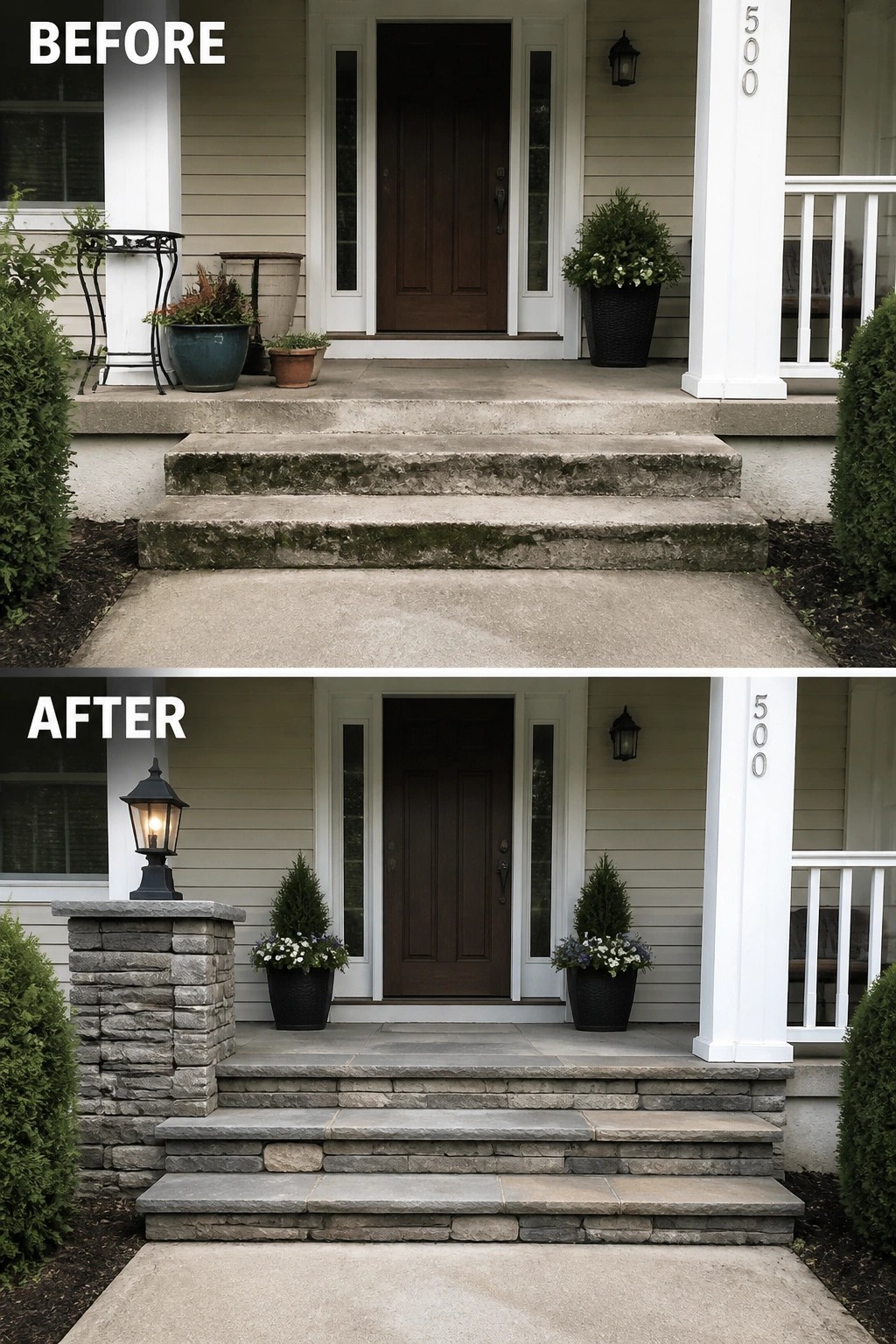
Many homes with older concrete steps end up looking dated because the material shows wear quickly and lacks any real texture. Switching to stone steps and adding a simple stone pillar on one side gives the entry a more solid, finished look without changing the whole porch.
This works best on houses with basic siding where the front needs a bit more weight at ground level. Keep the stone color close to any existing trim or walkways so the update feels like it belongs rather than something tacked on later.
Add Structure To An Overgrown Foundation Bed
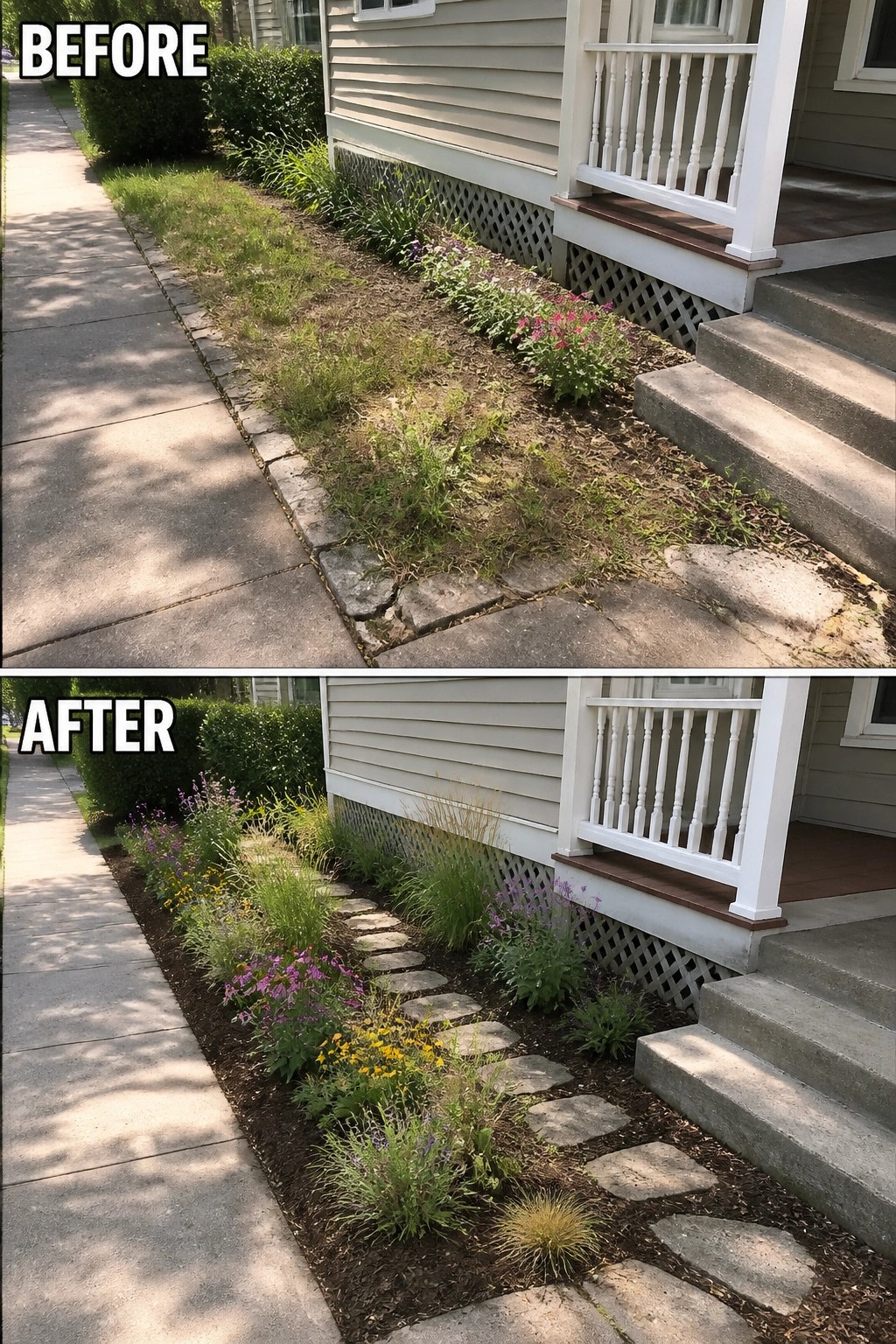
The main change here is clearing out the patchy grass and weeds along the house, then adding mulch and a simple row of stepping stones. This turns a messy strip into something that looks planned instead of neglected, which makes the whole side of the house feel more put together.
This approach works best on narrow spaces between the foundation and a sidewalk where regular mowing is awkward. Start with a thorough cleanup, lay down edging or mulch to hold the shape, and keep the planting simple so the stones stay visible. It is an easy way to improve curb appeal without major construction.
Refresh A Dated Exterior With Paint And Window Boxes
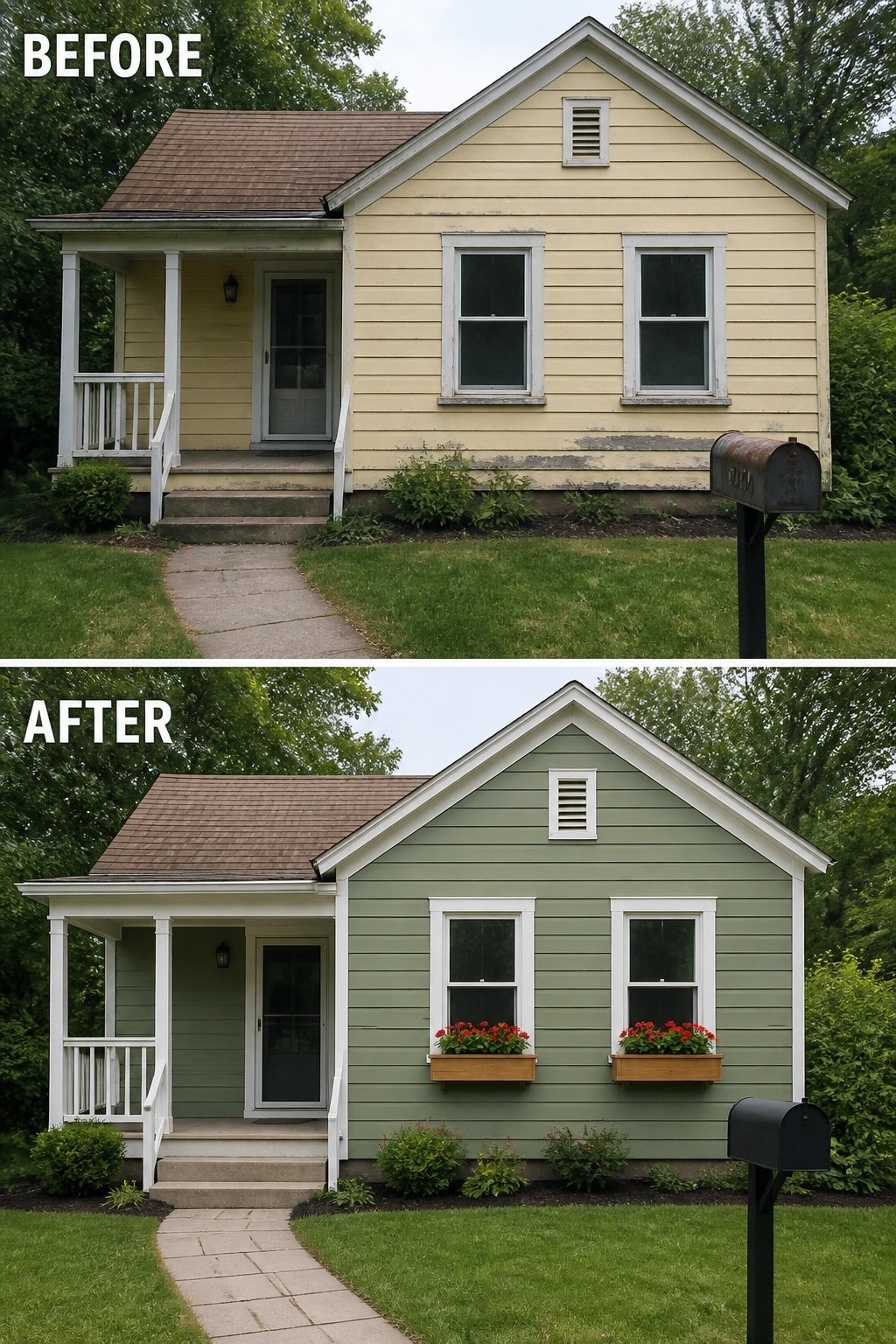
A fresh coat of paint can quickly change how an older house feels from the street. Here the faded yellow siding was replaced with a soft green that makes the front look cleaner and more put together. The simple addition of window boxes adds color and breaks up the flat wall without much cost.
This idea works best on smaller homes where you want to improve curb appeal without a big budget. Choose a paint color that works with the roof and trim, then keep any new details modest so they suit the scale of the house. Focus on the main walls first before adding planters or other touches.
Update The Front Door To Improve Curb Appeal
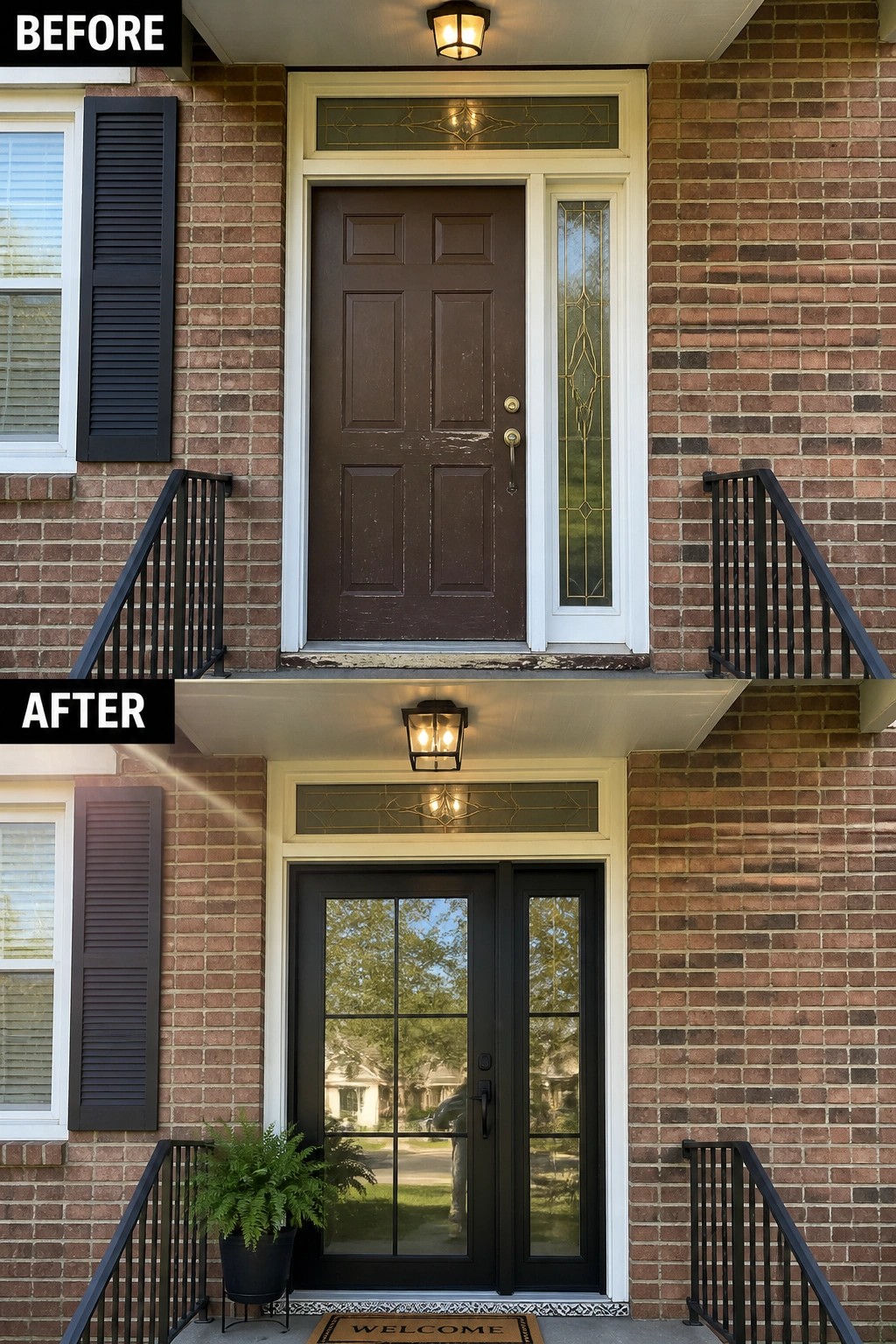
A plain or worn front door often makes an entire house entrance look older than it is. Replacing a solid brown door with a darker modern style that includes glass panels gives the facade a cleaner, more current appearance while still fitting the brick exterior.
This change works best on homes where the door sits front and center. Pick a color that stands out against the brick, update the light fixture above it, and keep any added items like a doormat or single planter simple so the door remains the main feature.
Give A Bare Porch A Clear Purpose
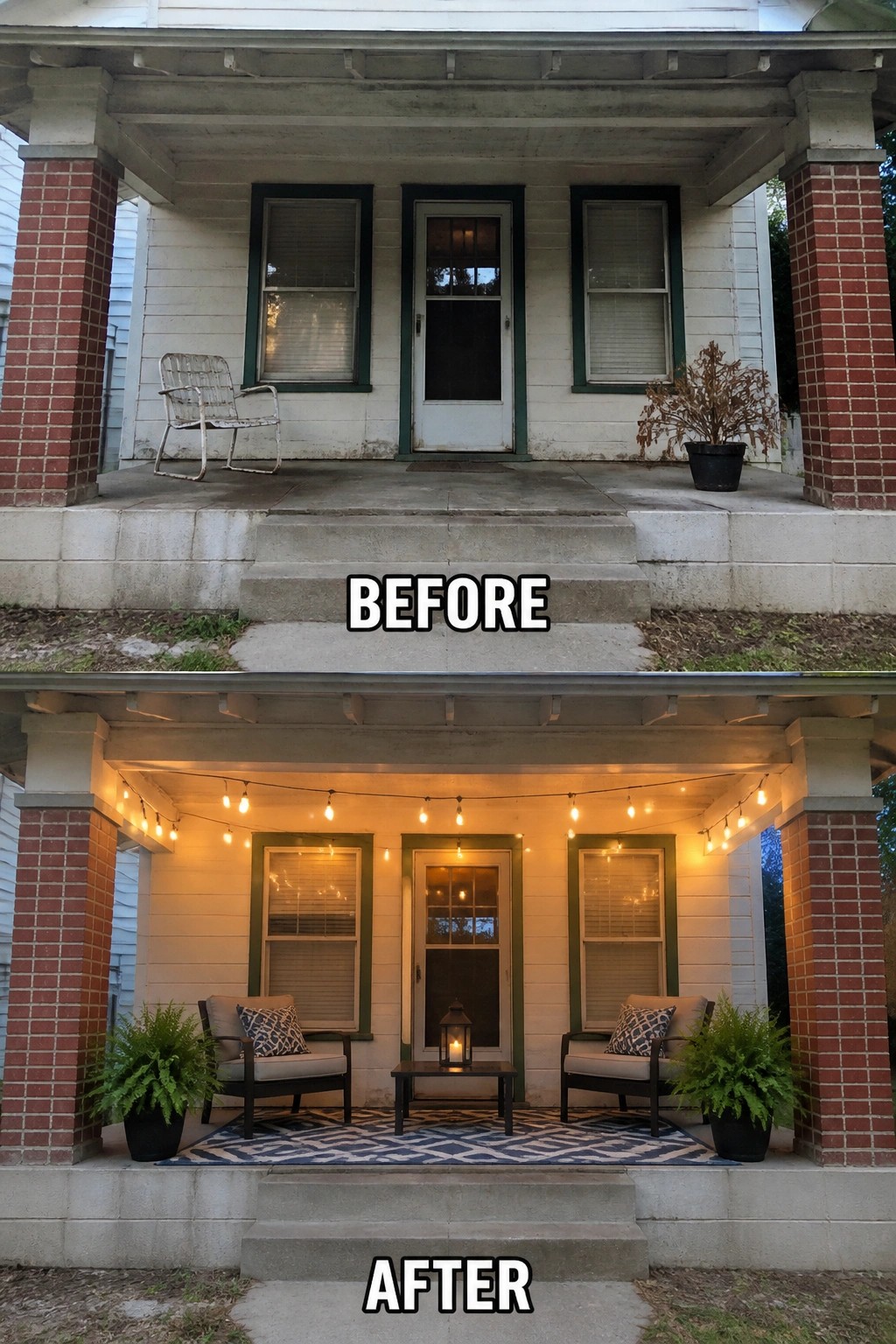
A plain porch often feels like wasted space when it has no furniture or lighting. Adding string lights across the ceiling and a simple seating setup makes the area feel finished and much more welcoming right away.
This idea suits older homes with basic porches that just need a bit of definition. Use sturdy outdoor chairs and a small table that can stay out year round, then run lights that plug into an existing outlet so the space feels usable after dark without major wiring.
Frequently Asked Questions
Q: How do I choose which updates will actually suit my house style instead of fighting it?
A: Walk around the block and note the roof shapes and window sizes on homes built around the same time as yours. Pick two or three changes that echo those lines so the front feels like it belongs. Test the new colors on a foam board first to see them in your light.
Q: Will these front updates raise my property taxes right away?
A: Most cosmetic work like paint, lighting, and plantings does not trigger a reassessment. Anything that adds square footage or changes the foundation usually does. Call your local assessor before you pull permits so you know what to expect.
Q: What if I want to tackle the projects over a couple of weekends instead of all at once?
A: Start with the quickest wins such as swapping the light fixtures and adding shutters. Those give an instant lift while you save for bigger items like siding or a new door. Keep the color palette consistent from the start so the finished front still reads as one plan.
Q: How often do I really need to maintain the new materials?
A: Check the surfaces each spring and hose off dirt before it sets. Touch up any chipped paint the same season so moisture does not reach the wood or metal underneath.