

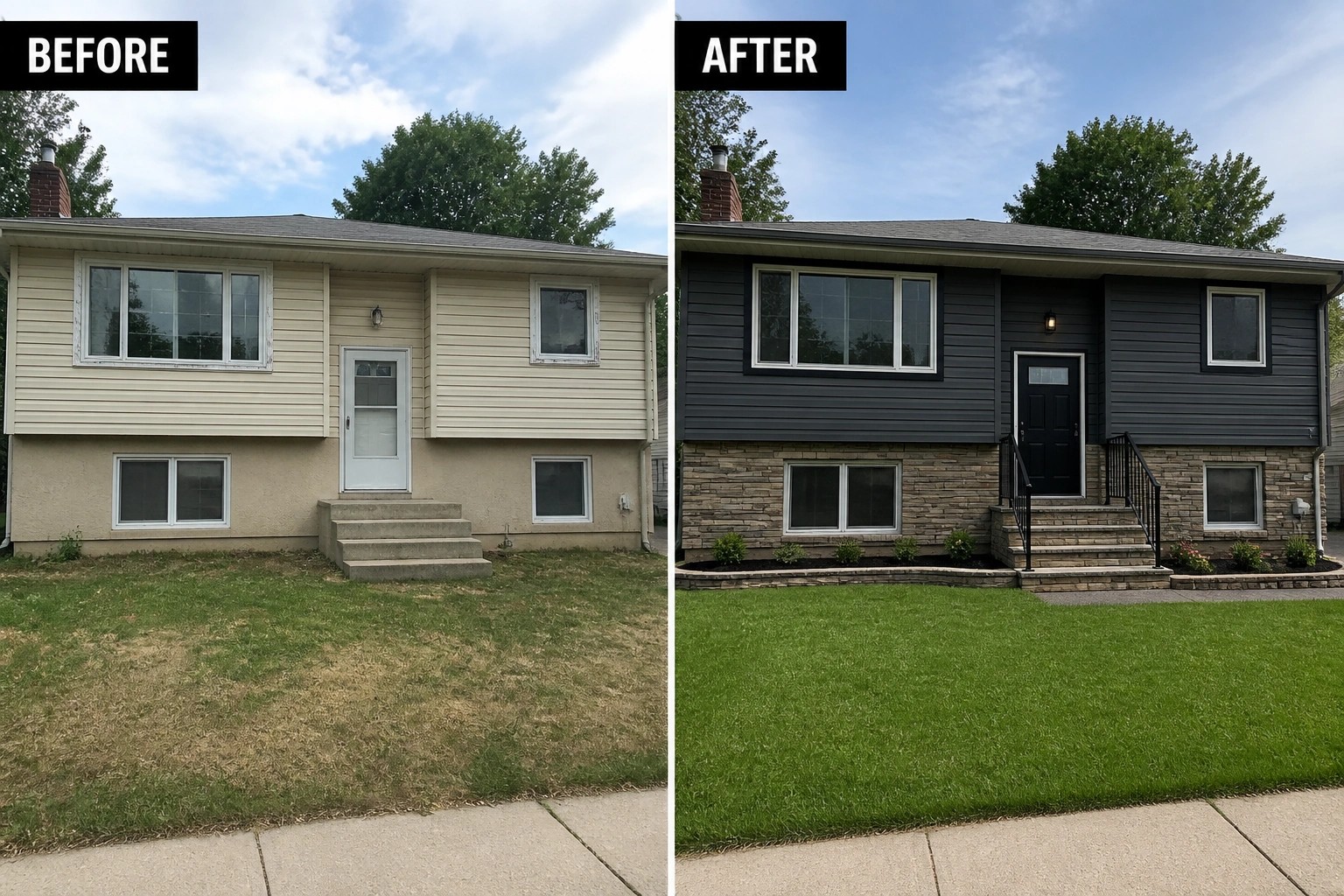
Raised ranches often look stuck in the past because their facades were built for function more than style, so updating siding and adding a bit of stone can do a lot to balance proportion and boost curb appeal.
I often focus on material and color choices that respect the house’s lines, because the right siding profile and a well-placed stone accent can make the entry and windows feel intentional instead of patched together.
Small moves add up.
I usually test changes on a small scale, swap trim color, replace a porch post, or add a stone knee wall first so I can see what reads well on my street before spending more.
It’s satisfying to watch those decisions come together and know you can save, adapt, or repeat the same ideas on different parts of the house without a full overhaul.
Use Stone At The Base To Modernize A Raised Ranch
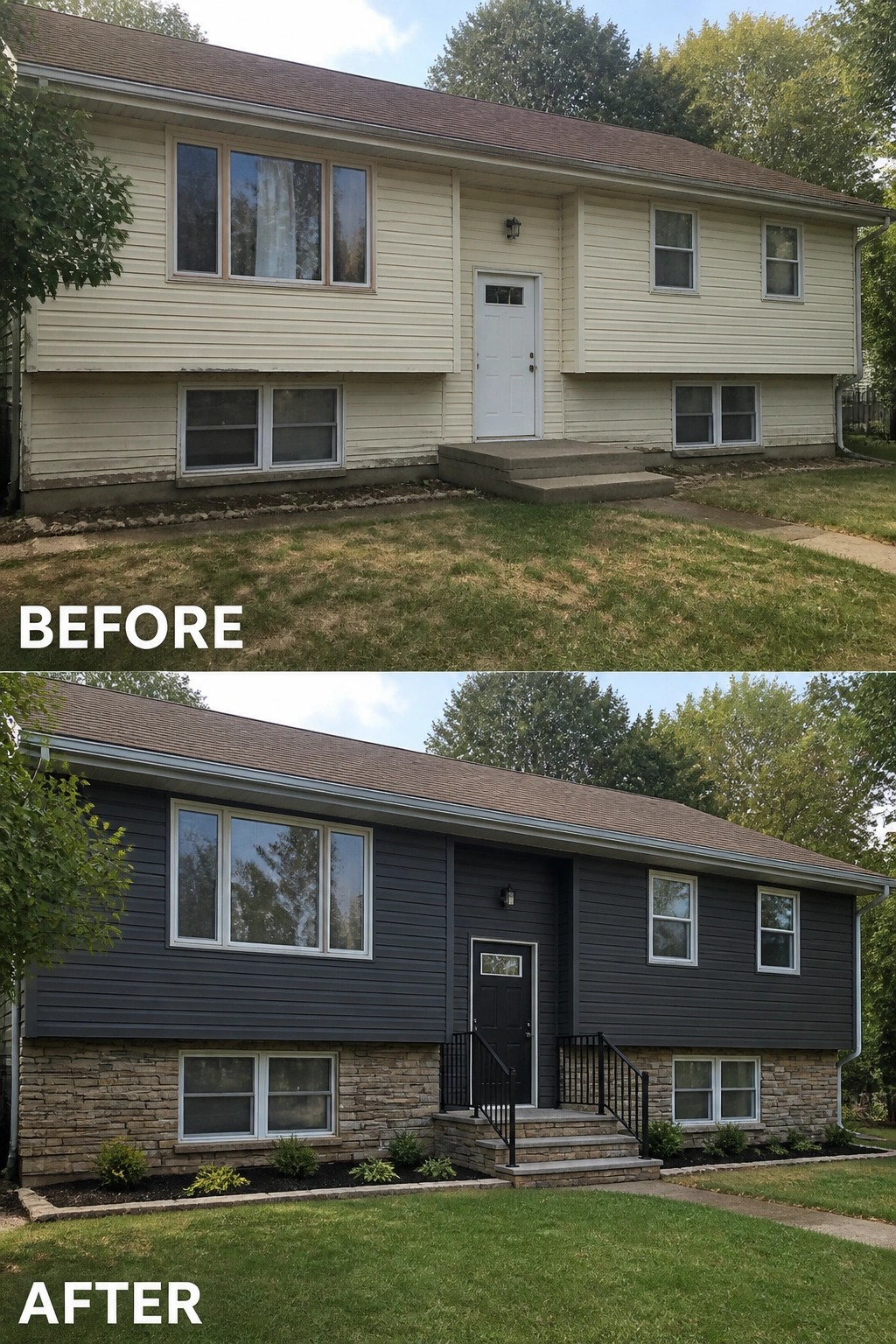
Swapping worn lower siding for a stone veneer and choosing a stronger siding color above is an easy way to give a raised ranch instant curb appeal. The hard material at the foundation visually grounds the house and hides weathered trim, while a contrasting upper siding color adds depth and a more contemporary feel.
This approach works well on homes with an exposed lower level because the stone covers the area that usually looks tired first. Use a thin stacked stone or cultured veneer for budget and weight savings, pick a mortar and siding tone that read well together, and be sure to flash and seal the top edge where stone meets siding. Finish with simple railings and a narrow planting strip to keep the look tidy and practical.
Give A Bare Porch A Clear Purpose
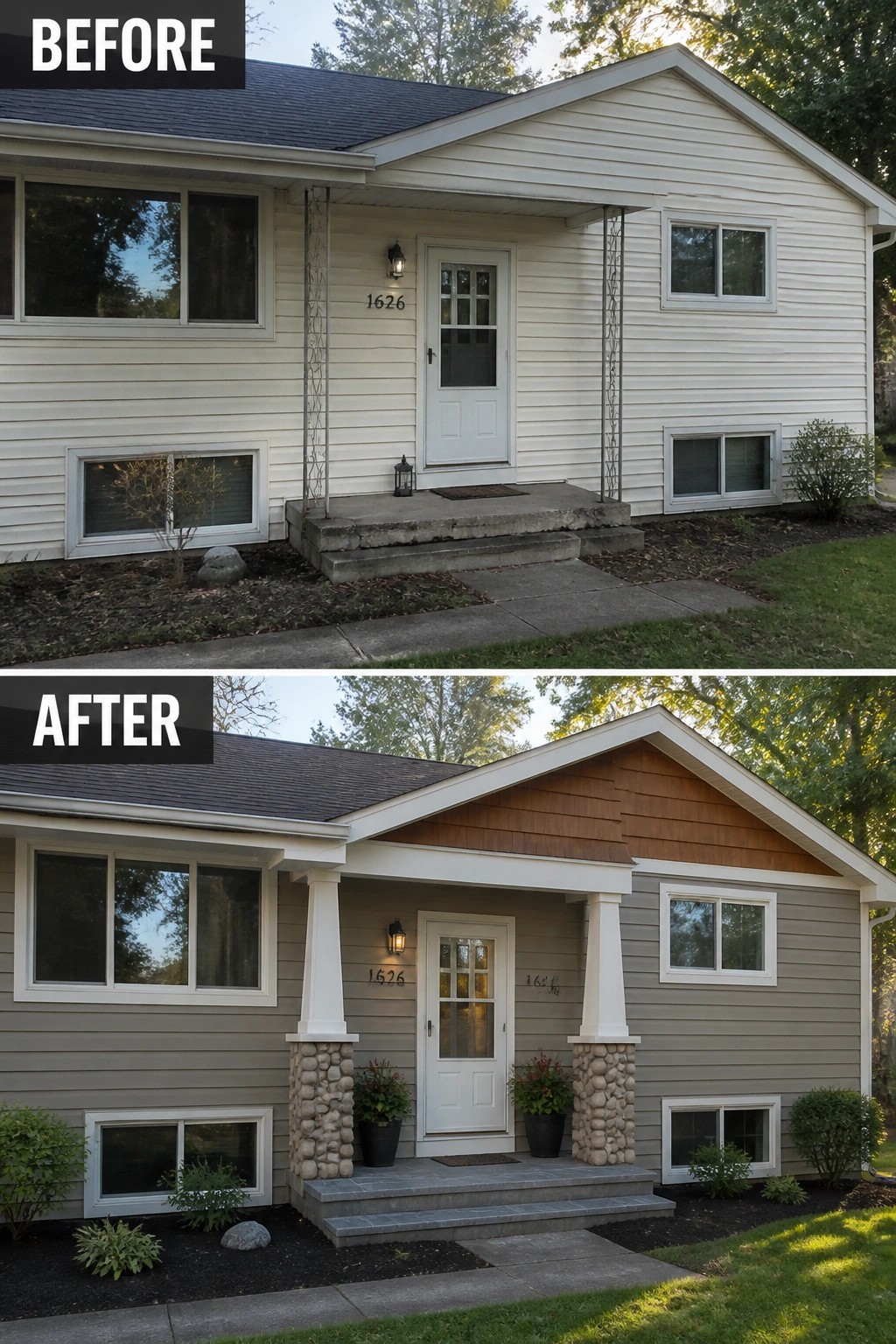
A narrow entry can read as just a utility spot until you give it architectural weight and simple styling. In this example, swapping thin metal posts for tapered columns with stone bases and adding matching planters and a new front light turns a plain stoop into a definite front porch and focal point. The change makes the entry feel intentional rather than leftover.
You can copy the idea even on a small budget. Replace or wrap slim posts with wider columns set on a low stone or brick pier, pick one cohesive trim color for the door and surrounding siding, and add a single pair of planters plus a sconce to signal scale. Keep proportions in mind so the update feels balanced with the house, and start small.
Refresh A Raised Ranch With Siding And Stone
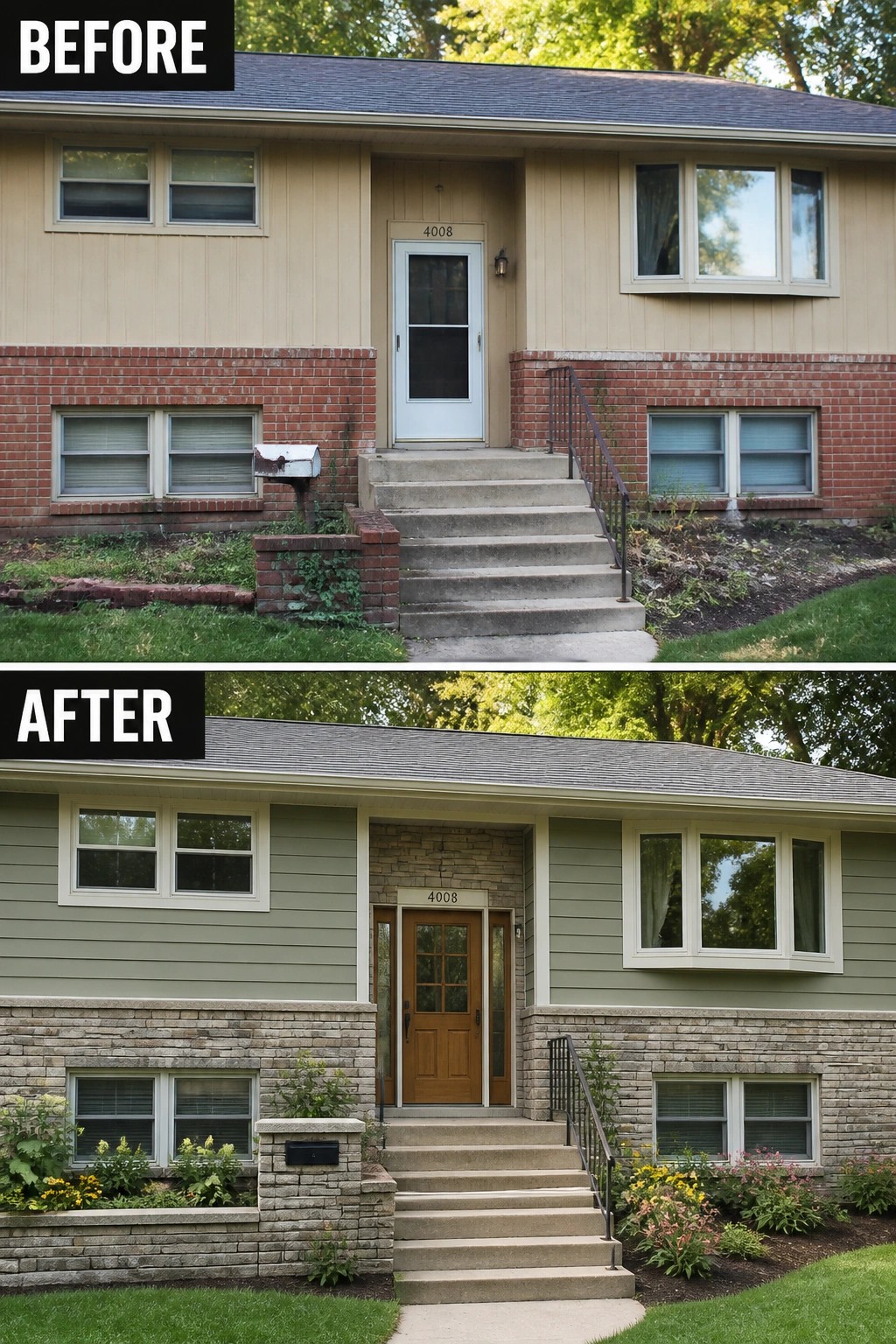
Swapping mismatched materials for a coordinated siding-and-stone palette is an easy way to modernize a raised ranch. In this example the tired beige panels and red brick are replaced with horizontal siding above and a lighter stone veneer at the base, and a new wood front door gives the entry a clearer focal point. The result feels cleaner and more intentional without changing the house footprint.
To copy this idea, keep the stone at the lower level so it reads like a foundation and use a single siding profile above to simplify the facade. Choose siding and stone colors that share undertones so the join looks deliberate. Add a warm door color and a few low plantings to soften the step area, and check flashing and drainage details when you add veneer so the new materials stay dry and long lasting.
Use New Siding And Stone To Instantly Modernize A Raised Ranch
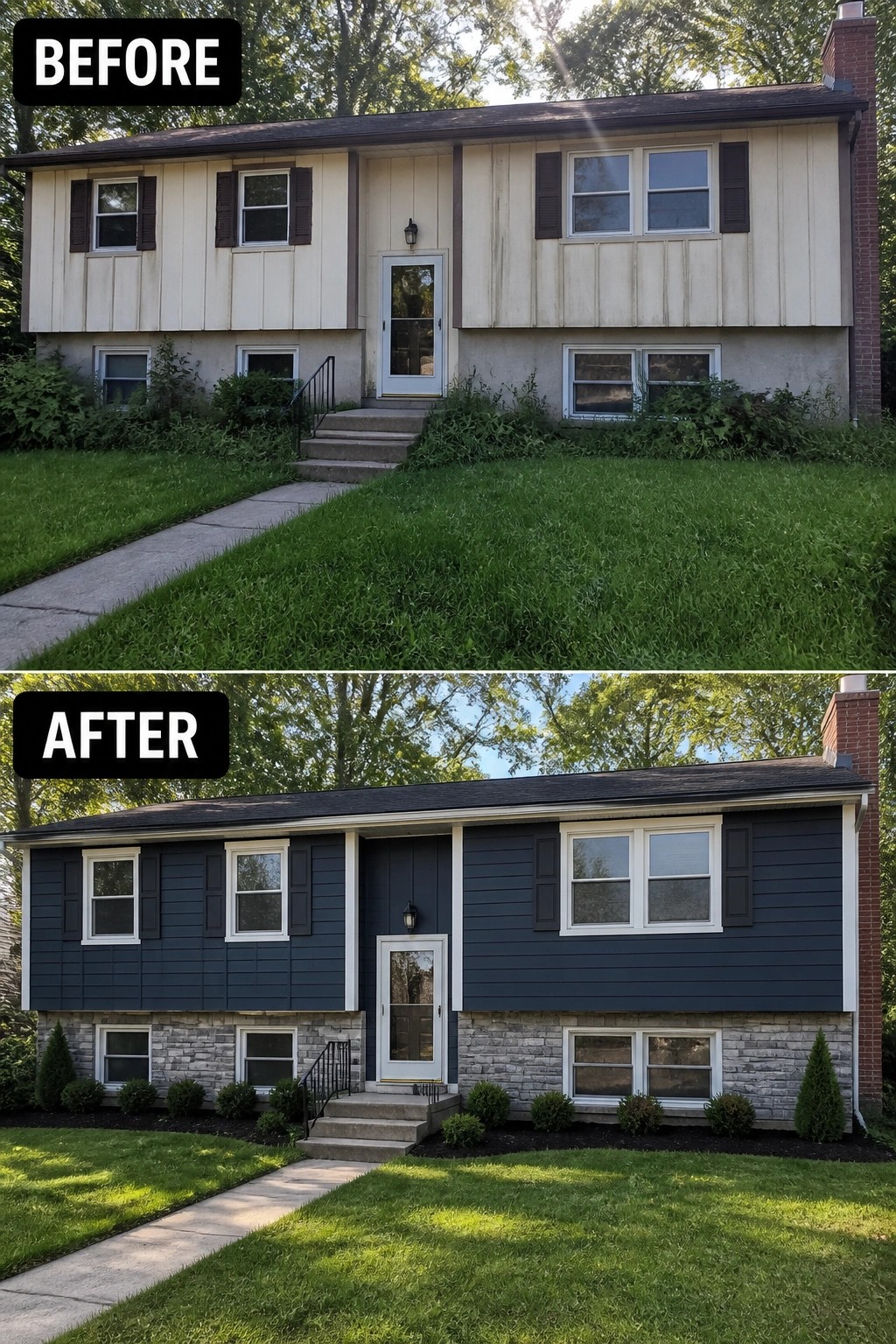
Swapping old vertical panels for darker, horizontal siding and adding a stone veneer to the lower level is a quick way to refresh a raised ranch without changing the footprint. The stronger color and clean white trim create contrast, while the stone adds visual weight at the base so the whole house reads as more intentional and updated.
Start by choosing one dominant change — either a new siding profile or a stone skirt — and then tie the rest of the materials to that choice with matching trim and simple plantings. Darker siding pairs nicely with light trim and mid-tone stone, and a neat row of low shrubs in fresh mulch will keep focus on the new facade. Make sure flashing and grading are correct when installing stone at grade, and keep details like window trim and shutters consistent for a cohesive look.
Refresh A Raised Ranch With Siding, Stone, And A Clear Entry
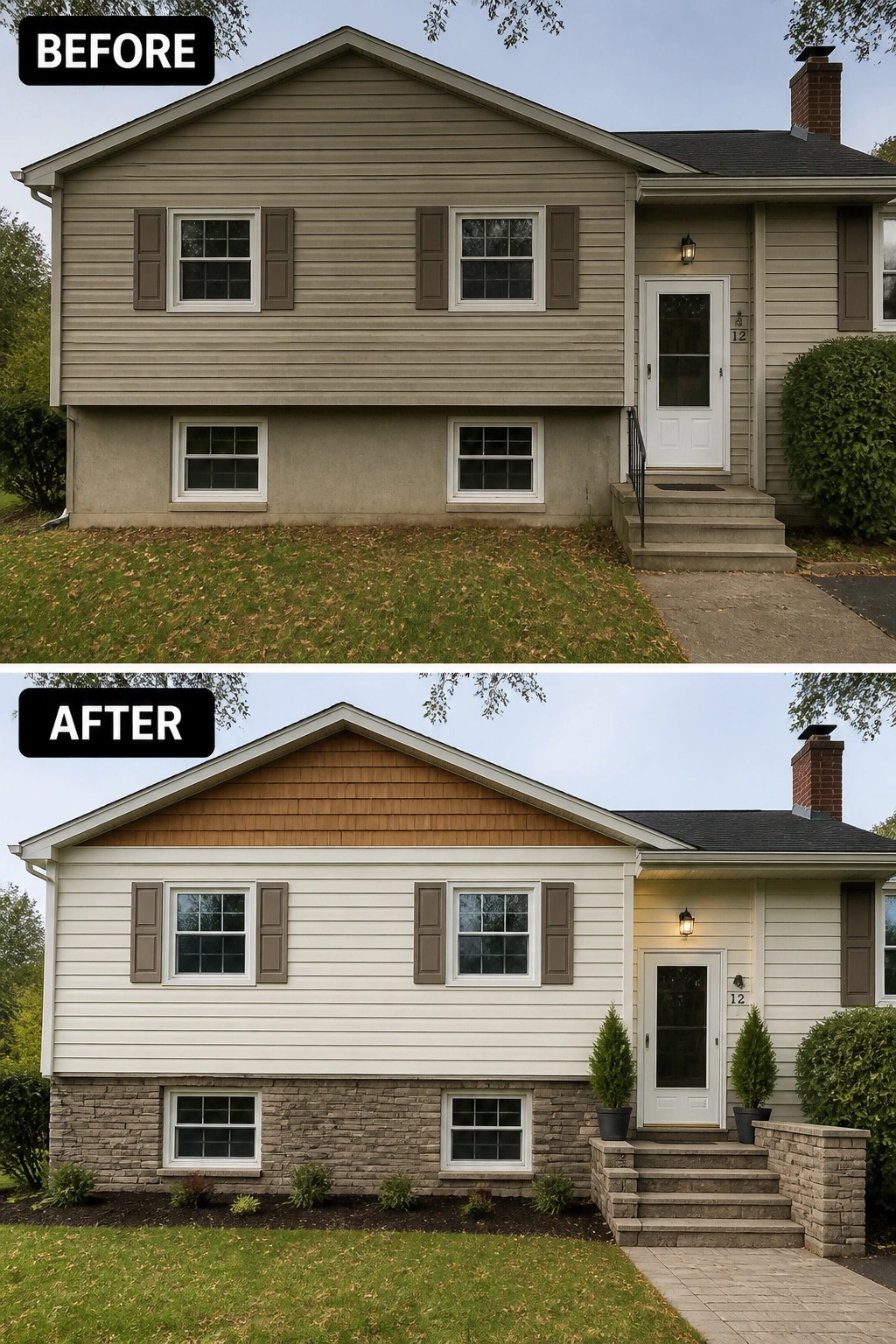
Layering a stone base with lighter horizontal siding and a small gable accent is an easy way to modernize a raised ranch facade. Swapping the single-color, flush exterior for a stone veneer at the foundation and a brighter siding above breaks the elevation into readable sections and makes the porch feel intentional rather than an afterthought. Adding a defined entry with matching stone steps and a pair of planters completes the look with very little fuss.
This approach works well on split-level and raised ranch homes because it visually lowers the heavy concrete base and gives the front a nicer human scale. Keep the palette simple: one stone tone, one main siding color, and one shaker or trim accent. Start with the foundation treatment first, check flashing and drainage, and use modest plantings or potted evergreens to frame the door so the entry feels tidy and welcoming.
Frame A Plain Concrete Entry With A Stone Porch Base
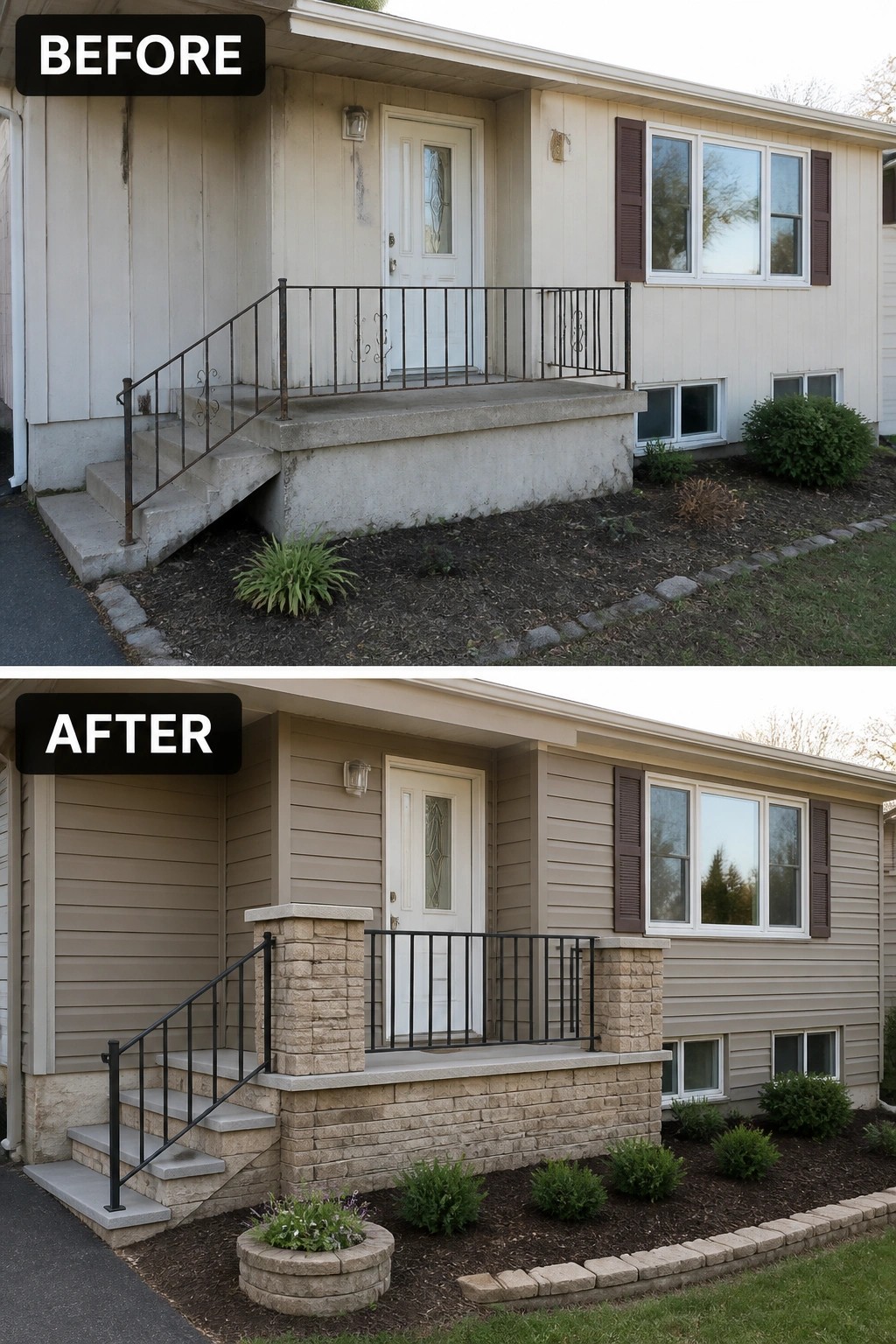
Turning a plain concrete entry into a framed, purposeful porch makes a house feel cared for and finished. In this example the porch was wrapped in a low stone skirt and the planting bed in front was cleaned up and edged, which together give the entry a clear base and a neat foreground so the door reads like an intentional focal point.
You can copy this idea without a major renovation. Start by cladding the porch skirt or adding short stone columns (a low stone skirt and modest columns work well), then tie the material into a simple planted border with mulch and a matching edge. Keep the scale modest so steps and walkways stay easy to use, choose stone and siding tones that coordinate, and finish with a tidy planting scheme for immediate curb appeal.
Make The Front Entry A Clear Focal Point
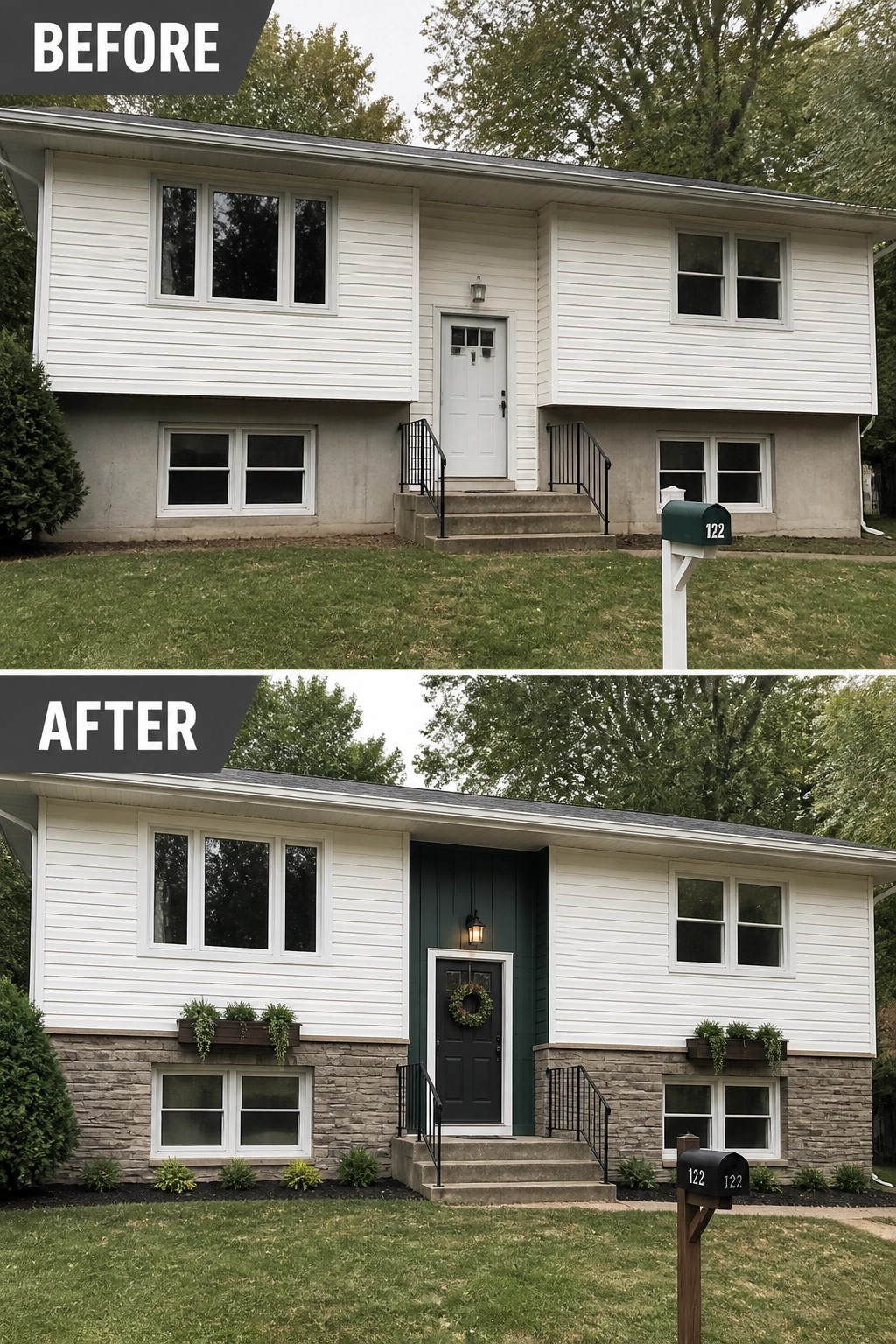
A raised ranch can look anonymous when the lower level is plain concrete. Anchoring the base with a stone veneer and carving out the entry with a contrasting vertical siding and dark door turns a blank facade into a focused front. Those two moves give the house depth and a single place for the eye to rest.
You can copy this on most older split-levels by adding a stone or manufactured stone skirt to the lower half and painting the recessed entry a rich, contrasting color. Keep the palette simple so the materials read together, pick durable exterior finishes, and use a single accent color repeated on the door or mailbox to tie everything in. Small plantings and a simple lantern finish the look without crowding the entry.
Define A Raised Ranch Entry With Stone Steps And Landscaping
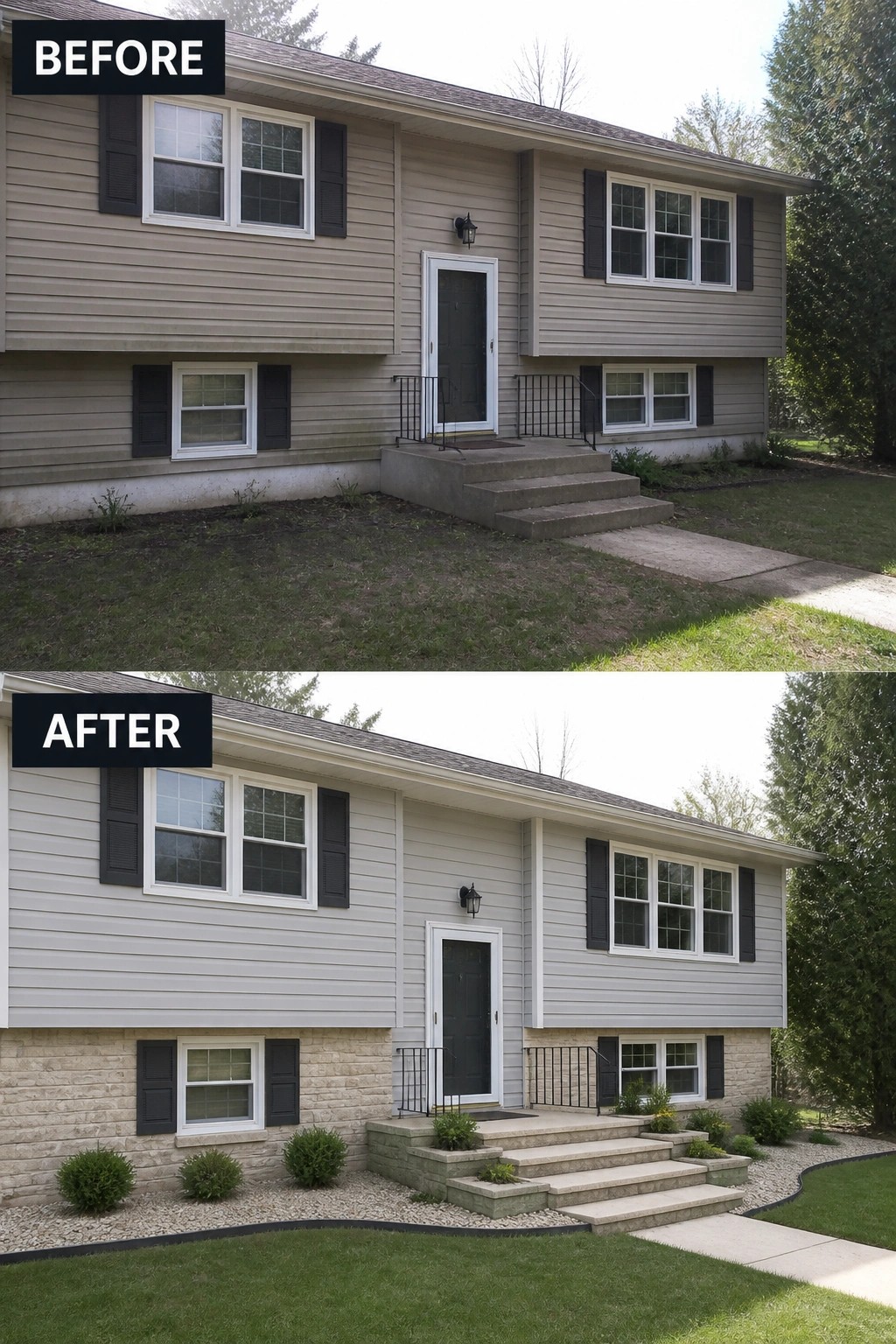
A small raised-ranch entry can feel unfinished when the stoop is just a block of concrete and the foundation is plain. Cladding the lower wall in light stone and reworking the steps into layered, block-style treads instantly defines the front entrance and makes the whole facade read as intentional rather than neglected.
Do this by anchoring the base of the house first: choose a stone veneer that complements your siding, rebuild the steps with wider, shallower treads for a more substantial look, and edge the approach with low, repeatable shrubs and gravel for easy maintenance. Keep plantings low so they don’t hide windows, check step rise for code and comfort, and use a narrow border to keep the lawn tidy — simple moves that give the porch purpose without a big remodel.
Use A Stone Base And Fresh Siding Color To Anchor A Raised Ranch
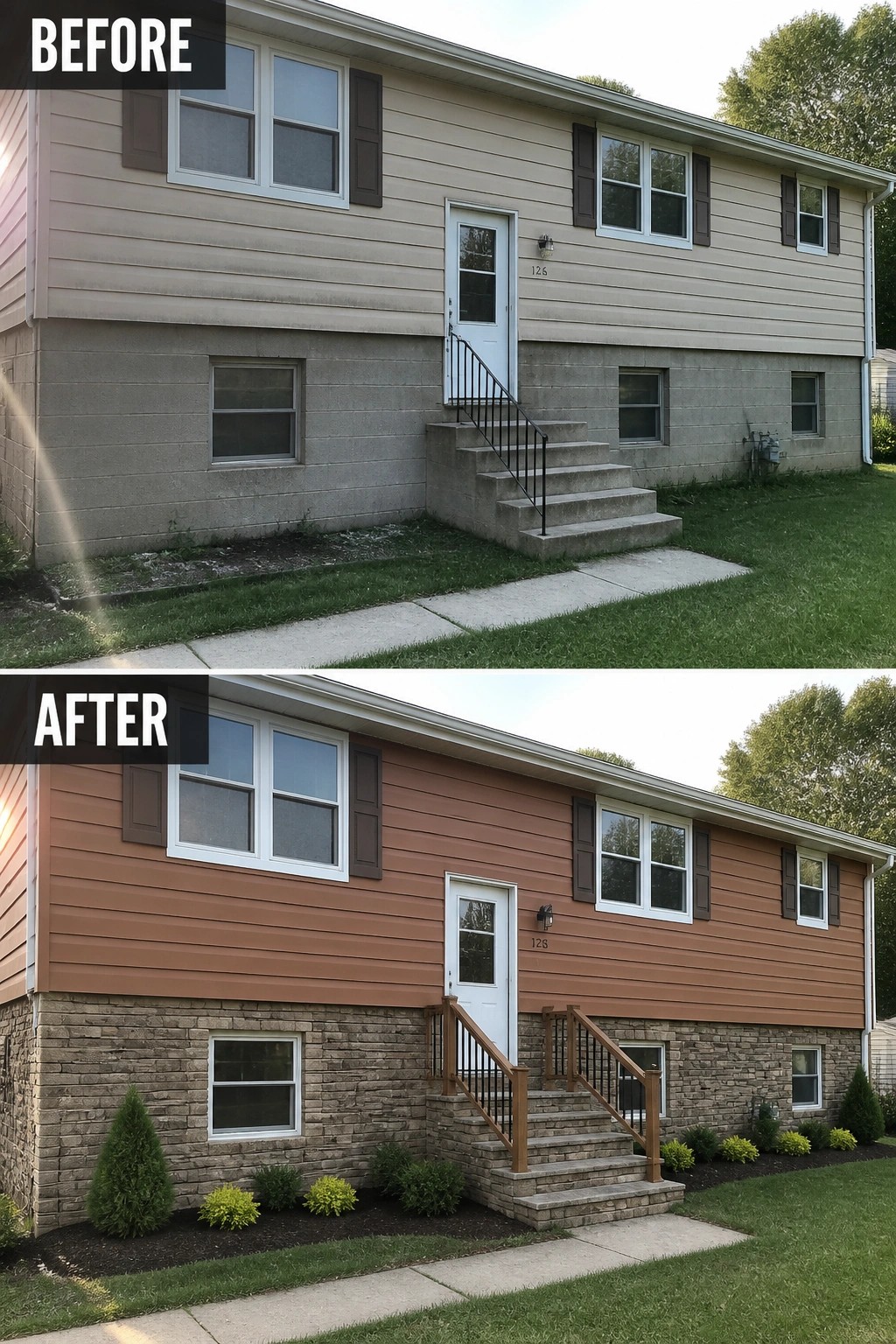
Cladding the lower level with stone veneer and picking a richer siding color is a simple way to give a raised ranch a finished, deliberate look. Swapping the plain concrete block for a textured stone base and updating the upper siding (plus a tidy planting bed) immediately changes the house’s presence without rebuilding anything major.
To copy this idea, focus the stone work on the foundation and entry steps so you get the visual weight without the cost of full masonry. Pick a siding hue that complements the stone tones and repeat one or two low-maintenance shrubs along the base to hide the joint and soften the edge. Small details like matching railings and clean mulch beds keep the update cohesive and easy to maintain.
Use Mixed Siding And Stone To Modernize A Raised Ranch
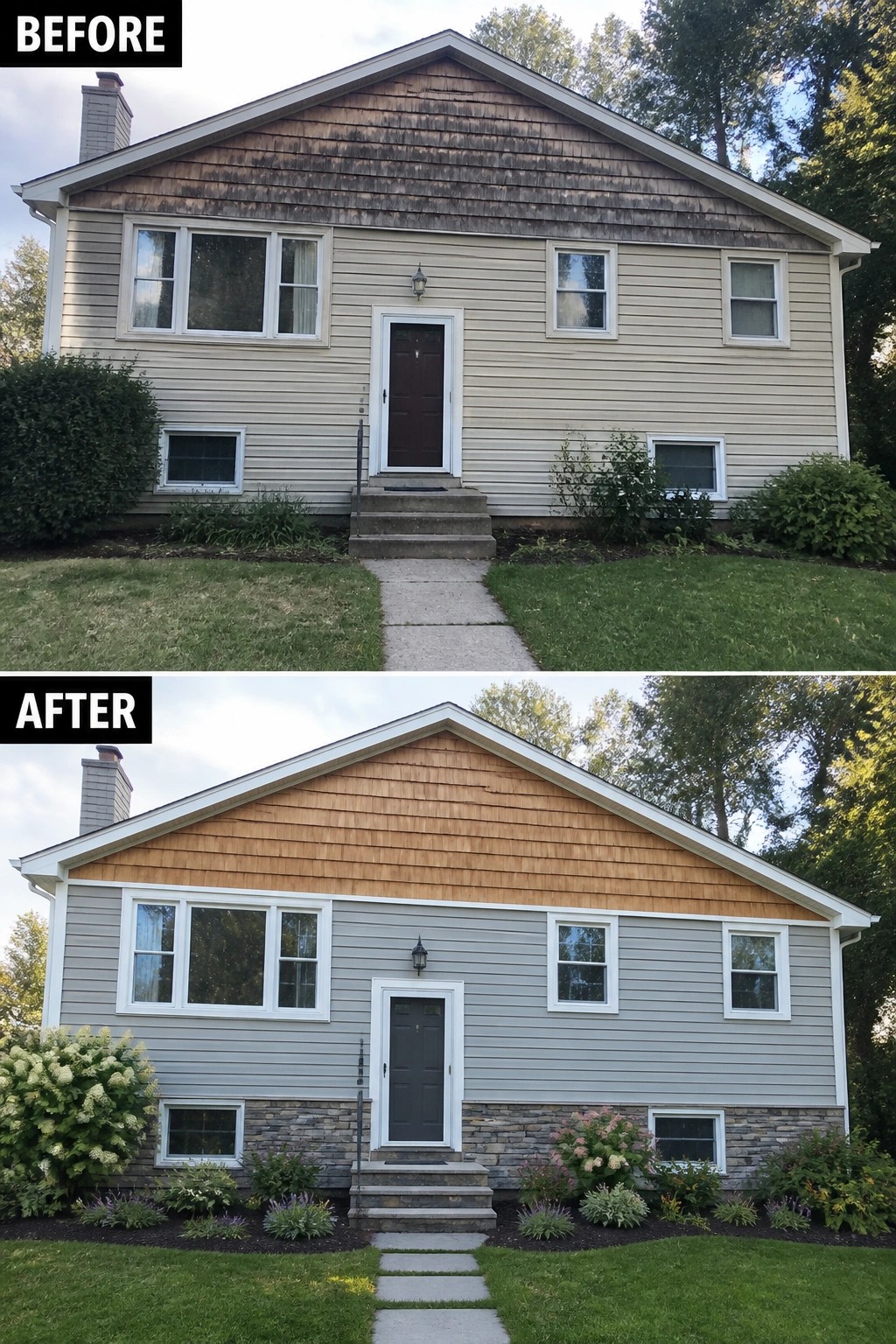
Replacing a single, flat siding color with a few well-chosen materials instantly updates a plain raised ranch. In this example the tired upper shingles were swapped for fresh cedar shakes and a stone veneer was added at the foundation while the main siding was repainted a cooler gray. That simple layering breaks up the long front plane and gives the facade clear horizontal sections instead of one boring expanse.
To copy this idea, pick one dominant surface and one accent material so the look stays cohesive. Use stone low on the wall to visually “ground” the house, keep trim and window frames in a single neutral color, and seal any natural wood so it ages evenly. Start with cleaning and basic repairs, then add materials in stages so the costs and impact stay manageable.
Frame A Walkout Entrance With Stone Planters
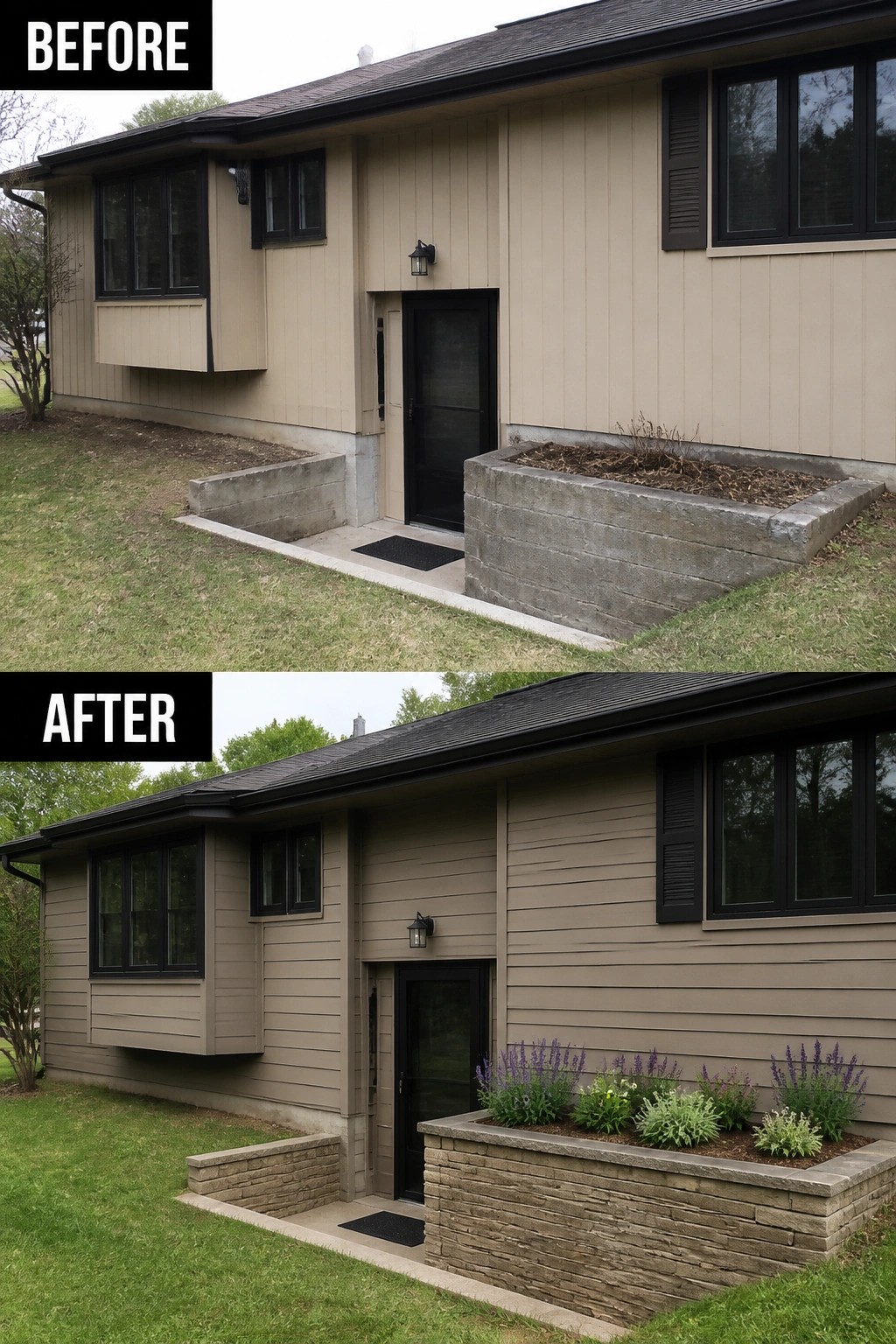
Swapping plain concrete blocks for a low stone planter wall immediately gives a walkout entry some purpose and character. In this example the tired concrete was refaced with textured stacked stone and topped with a planted bed, which creates a clear, finished edge to the door and a bit of vertical interest against the house.
You can copy the idea on most raised-ranch or walkout basements: start by repairing the existing concrete, then add a thin stone veneer or precast stone facing and a simple coping cap to keep moisture out. Use hardy, low-maintenance perennials or ornamental grasses in the bed, match the stone tone to your trim or siding, and keep the wall height low so sightlines and access stay easy.
Update A Raised Ranch With Siding And A Stone Base
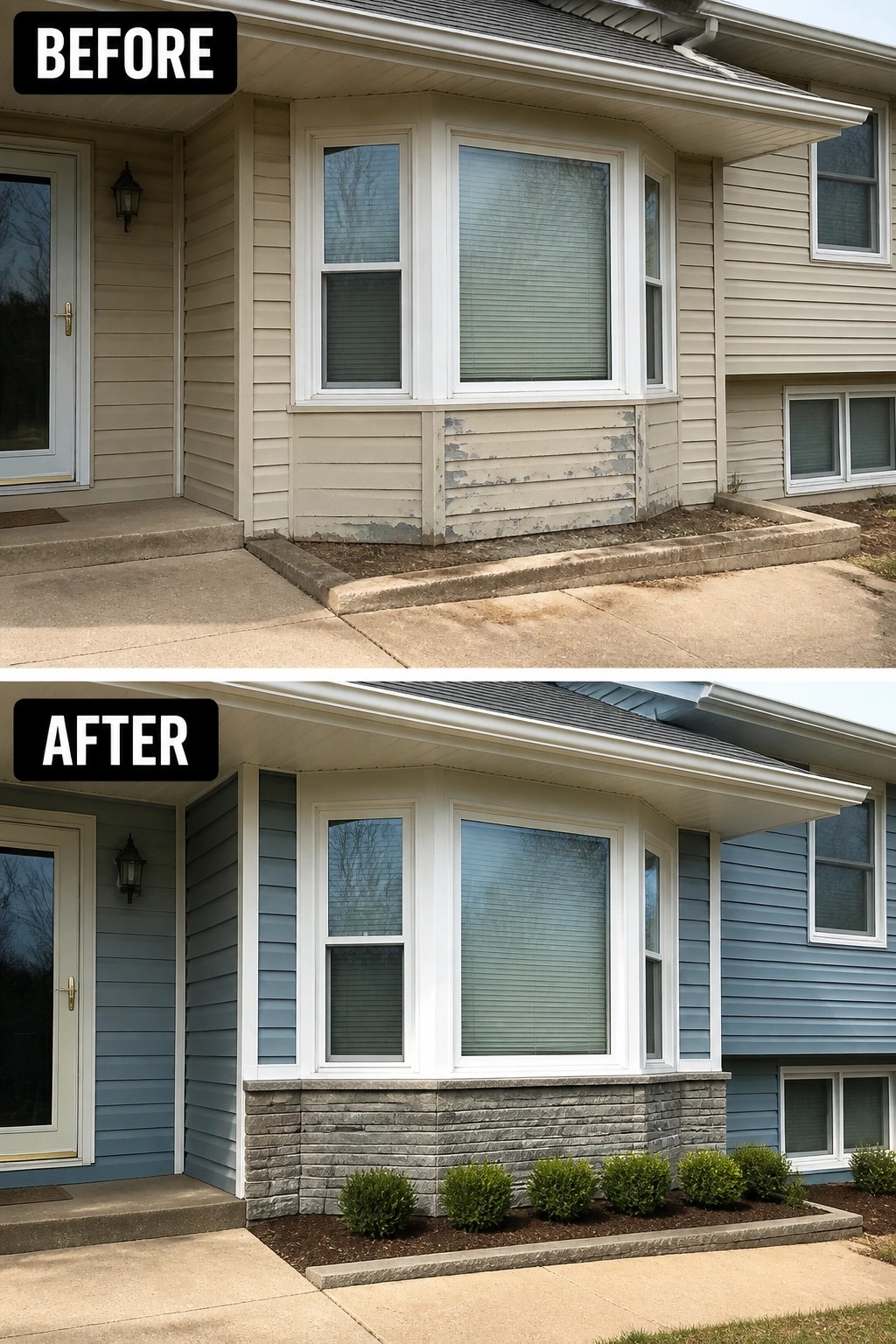
Swapping tired, monotone siding for a fresh color and adding a low stone veneer gives a raised ranch instant curb appeal. In this example the bland beige was replaced with a soft blue siding and the rotted lower cladding was covered with a stacked stone band (plus a neat row of small shrubs), which together make the bay window feel anchored and intentional rather than patched and unfinished.
To copy this idea, start by repairing any damaged siding and framing at the base so the stone sits on a solid substrate. Pick a siding color that contrasts the stone but keeps the trim bright so windows pop. Use a thin stone veneer or manufactured ledgestone to keep costs down and match the scale of the house, and finish with low-maintenance foundation plantings to soften the new edge. Worth it.
Use Two-Tone Siding And Stone To Modernize A Raised Ranch
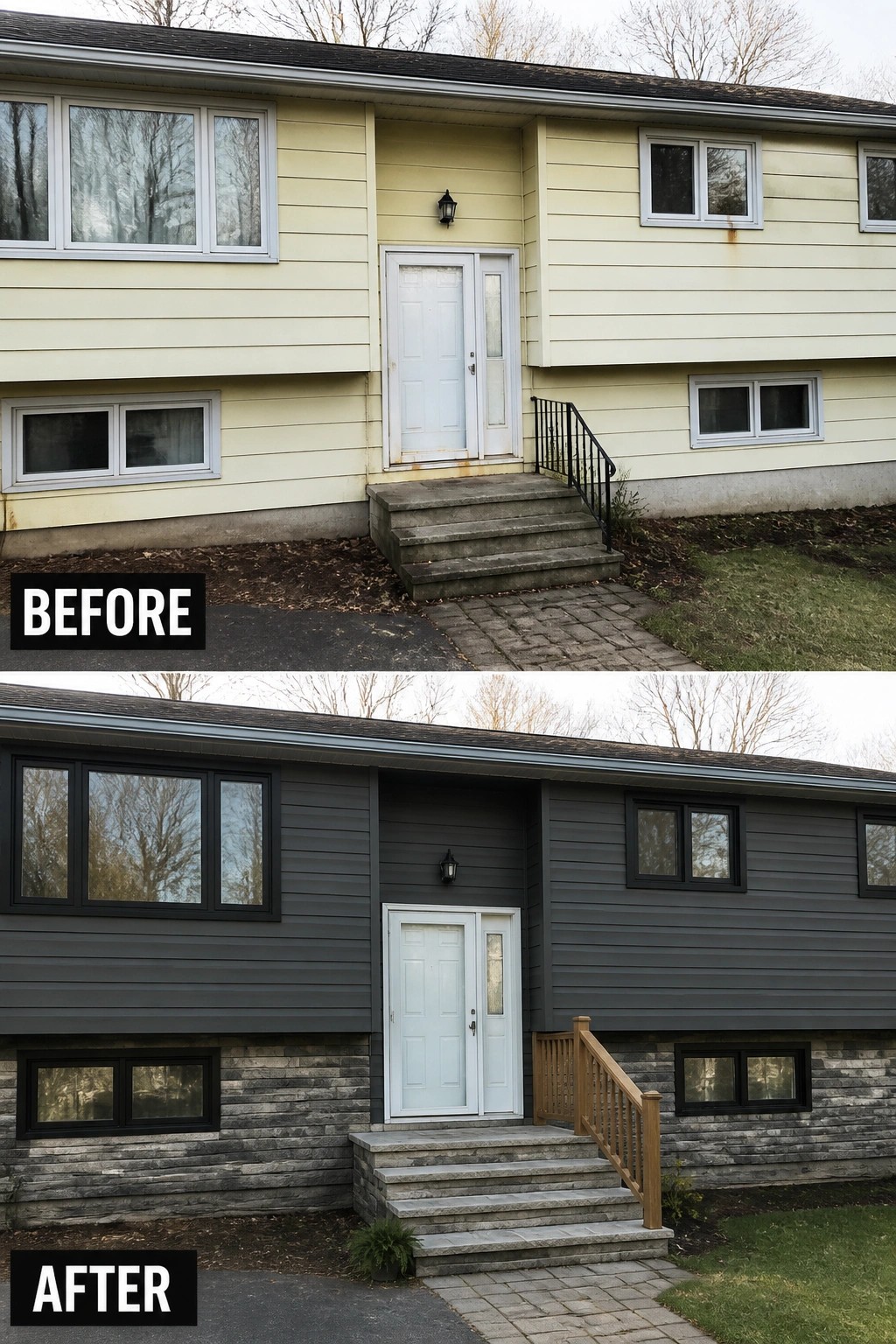
Switching the top siding to a deeper, modern color and adding a stone veneer to the exposed lower level is a simple way to give a raised ranch an instant update. Dark horizontal siding creates a cleaner, more contemporary silhouette while the stone base brings texture and weight so the house reads as more intentional, not just repainted. In this example the pale yellow was replaced with charcoal siding and the foundation was wrapped in stone to steady the overall look.
Try this on homes with an exposed lower story or split entry where the foundation is visible from the street. Pick a stone tone that warms or cools with your siding color so the two read as one composition, and keep a lighter or contrasting door color to mark the entry. Use durable siding materials and proper flashing at the stone-siding junction, and think about matching window trim or frames so the whole front reads as a single, well-planned update.
Use Stone Steps To Finish A Bare Entry
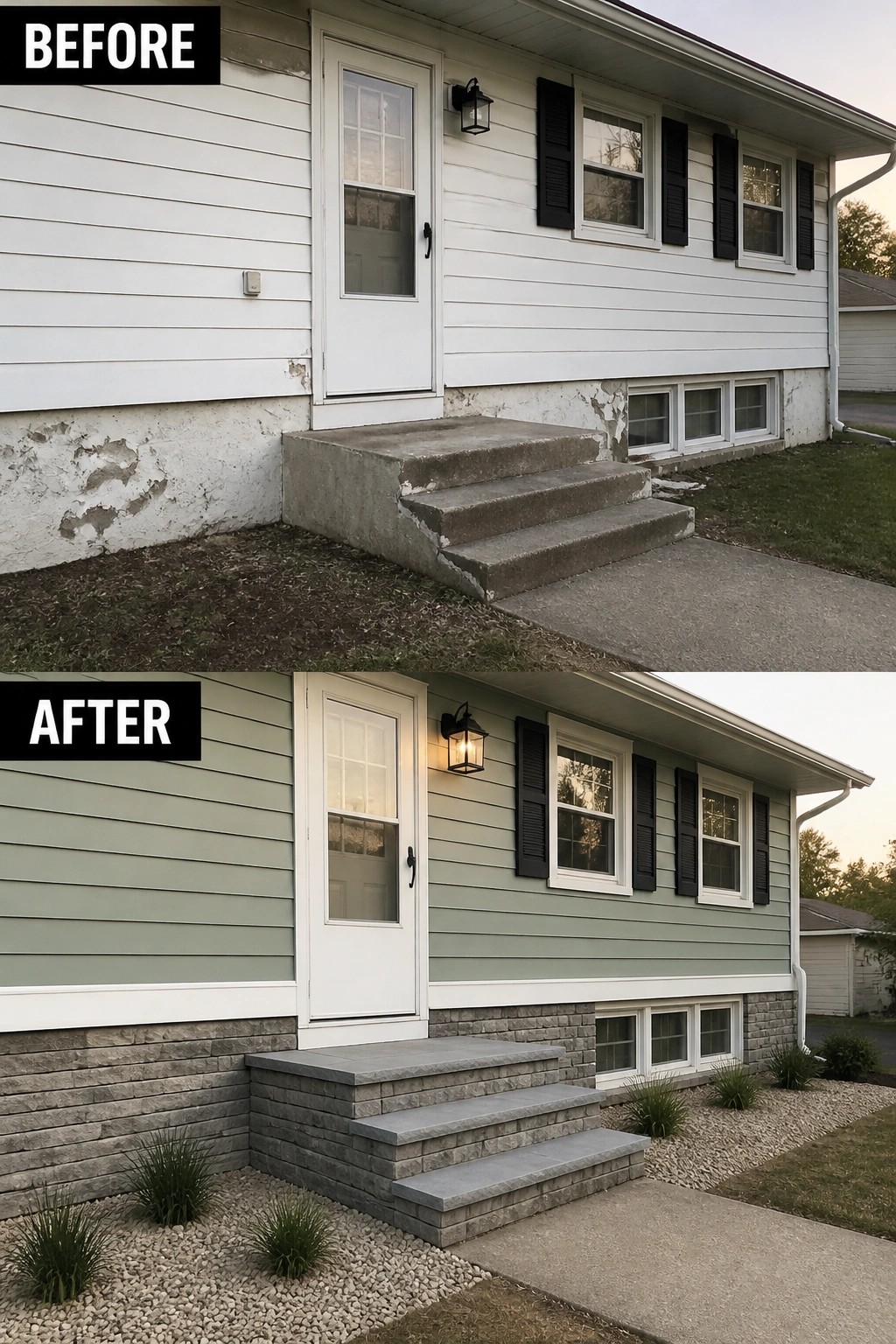
Replacing tired concrete steps and a rough foundation surface with a proper stone entry instantly gives a raised ranch more curb appeal and purpose. Swapping the worn slab for stacked stone steps and a matching veneer ties the porch into the rest of the facade, making the entry feel like a designed element instead of an afterthought. One small visible change—layered stone steps—shifts the whole look from utilitarian to intentional.
Try this on homes with low, exposed foundations or simple entries where the porch feels disconnected. Choose a veneer color that complements your siding and keep the step scale modest so it does not overwhelm the door. Add simple gravel beds and a few low plants to frame the stairs and improve drainage, and make sure the new steps sit on a proper base for frost protection. It’s a straightforward upgrade that works well done by a mason or with quality modular blocks if you prefer a DIY route.
Add A Stone Skirt To Refresh A Raised Ranch
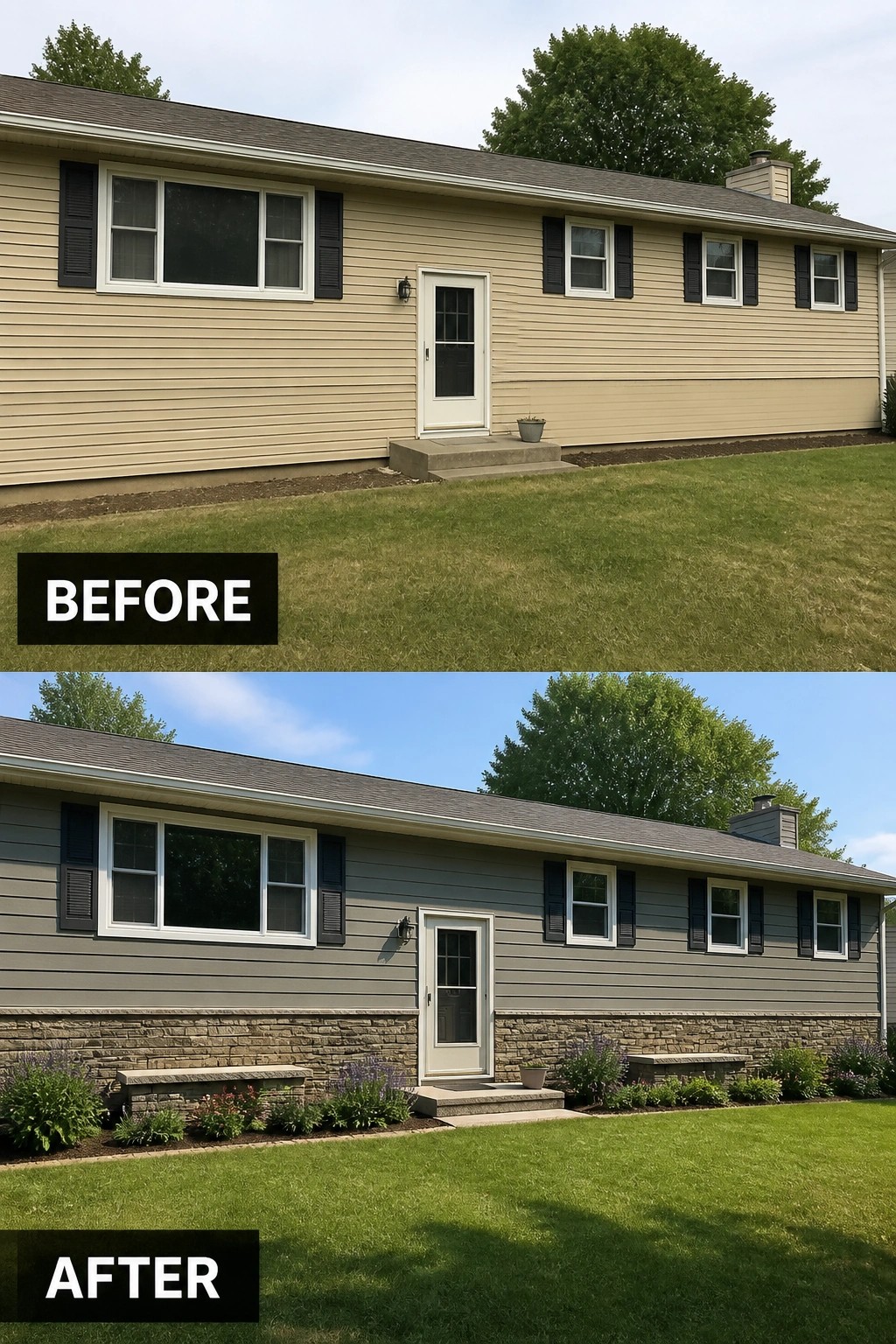
A low stone skirt plus a darker, updated siding color is an easy way to make a raised ranch look rooted and more intentional. Swapping the flat beige siding for a muted gray and adding a stone lower facade gives the house weight at the base and breaks up that long horizontal wall, turning a bland front into something that reads as finished rather than flat.
Try using a thin veneer stone for the lower third of the wall to keep costs down and match the stone tone to your roof or trim so the look feels cohesive. Keep the stone height proportional to the overall elevation (usually one to three courses is enough), paint or replace the siding in a complementary neutral, and add a narrow planting bed to soften the hard edge—simple changes that make the whole facade feel more considered.
Make The Entry The Focal Point Of A Raised Ranch
Replacing the plain door and worn lower siding with stone cladding and
Anchor A Raised Ranch With Stone On The Lower Level
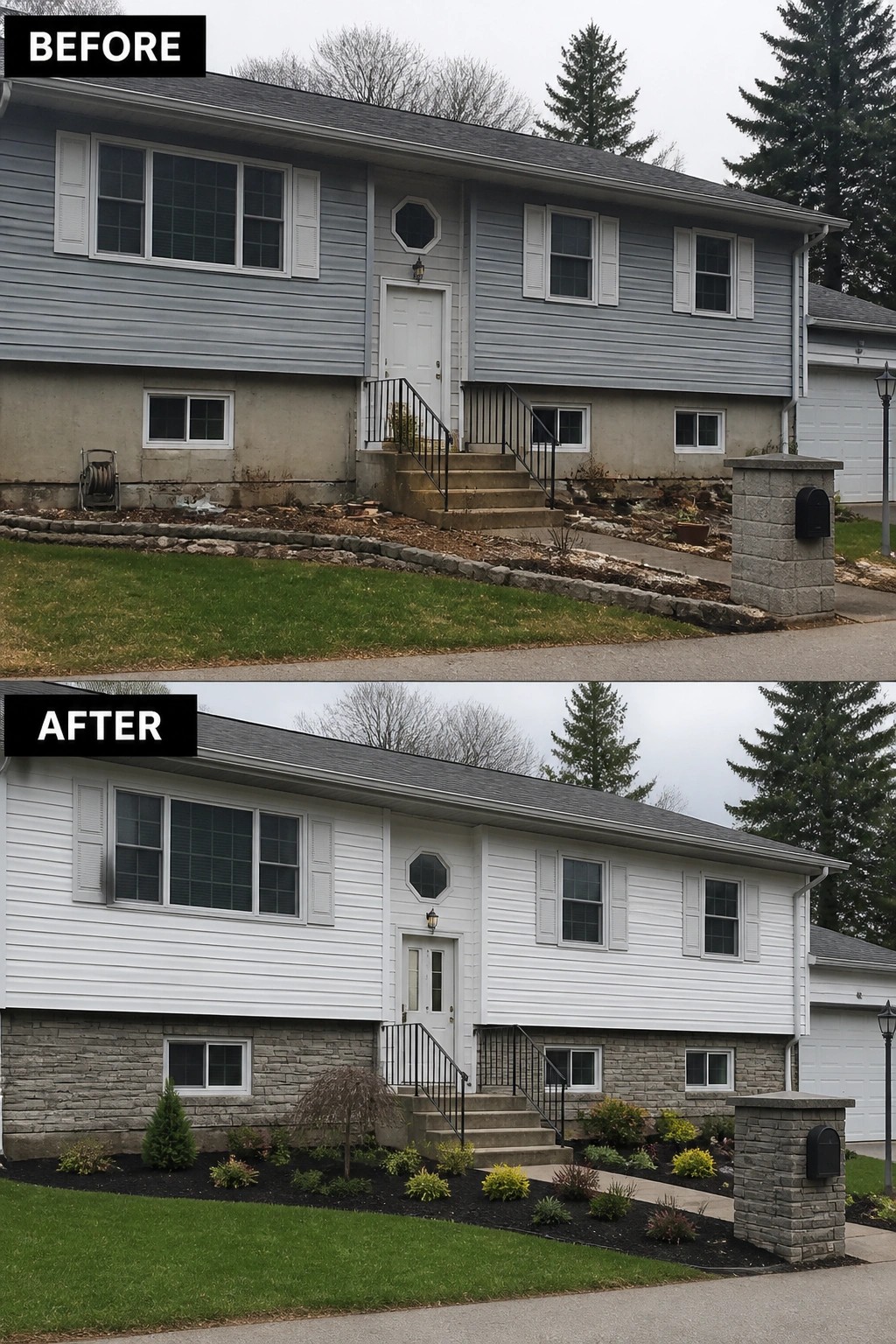
Giving the exposed foundation a real material base makes a raised ranch read as a complete house instead of a split pile of siding and concrete. In this example the tired lower concrete was covered with stone veneer while the upper level got fresh, lighter siding, which visually anchors the home and hides weathered masonry in one move.
This works best on homes with a visible lower level — run stone across the full lower band to balance the proportions and keep the siding clean and simple above. Pair the stone color with your siding and pick low-maintenance plants and mulch at the edge to soften the join. Practical note: use proper flashing and a prosupported veneer system (or a good manufactured product) so moisture and settling don’t become problems.
Update A Plain Raised Ranch With Siding And Stone
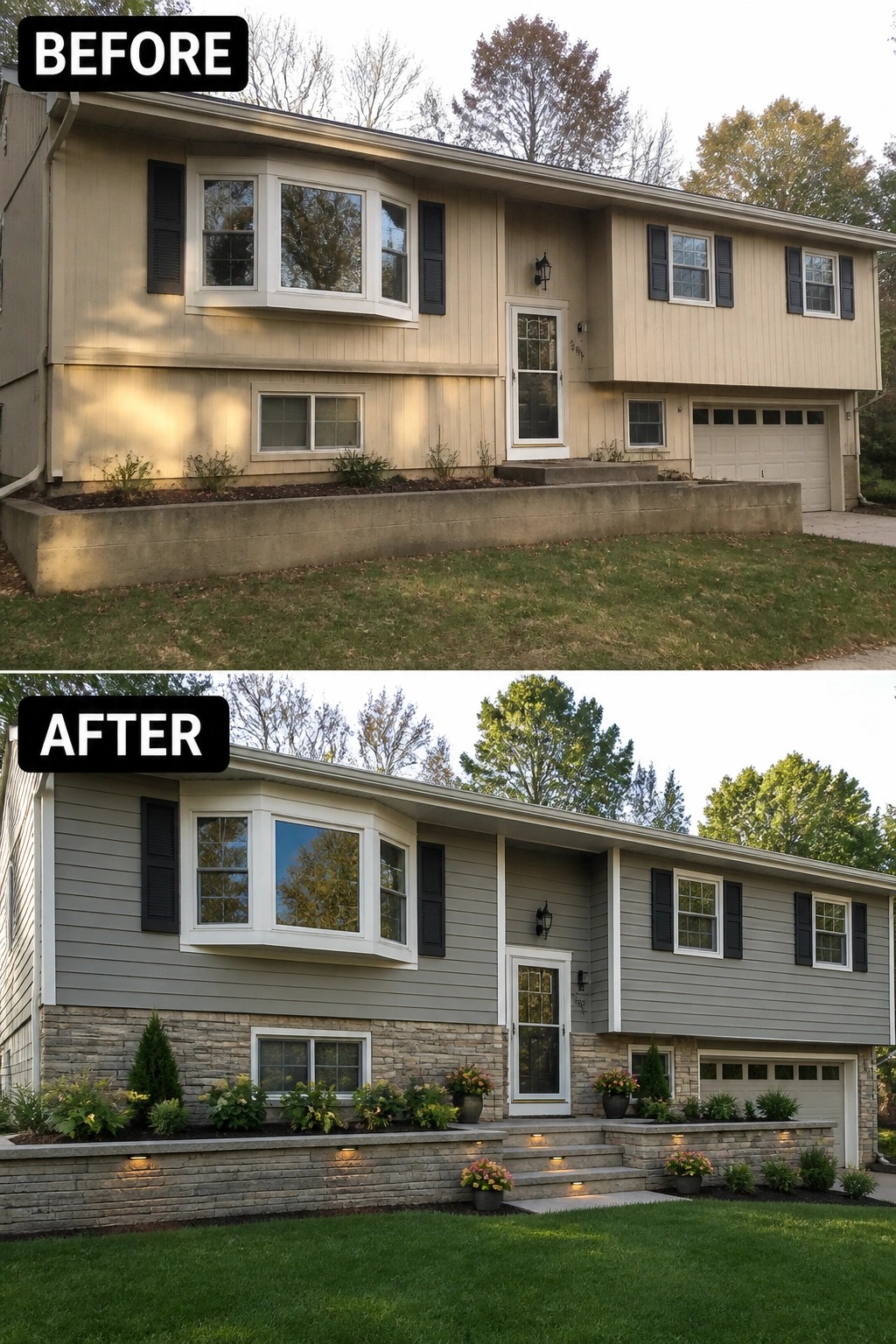
Replacing tired vertical panels with horizontal lap siding and adding a stone veneer at the lower level is an easy way to modernize a raised ranch and give it visual weight. In this example the new siding plus a stone base and low planter walls with step lighting creates layers that make the entry feel intentional instead of flat.
Start by picking one main siding color and a complementary stone for the foundation so the two read as a single composition. Keep trim and shutters simple and add a few low landscape lights or step lights to show off the new materials at night. It works especially well on older split-level or raised ranch homes where the lower wall can take masonry; just mind scale so the stone does not overwhelm the facade.
Use Siding And Stone To Modernize A Raised Ranch
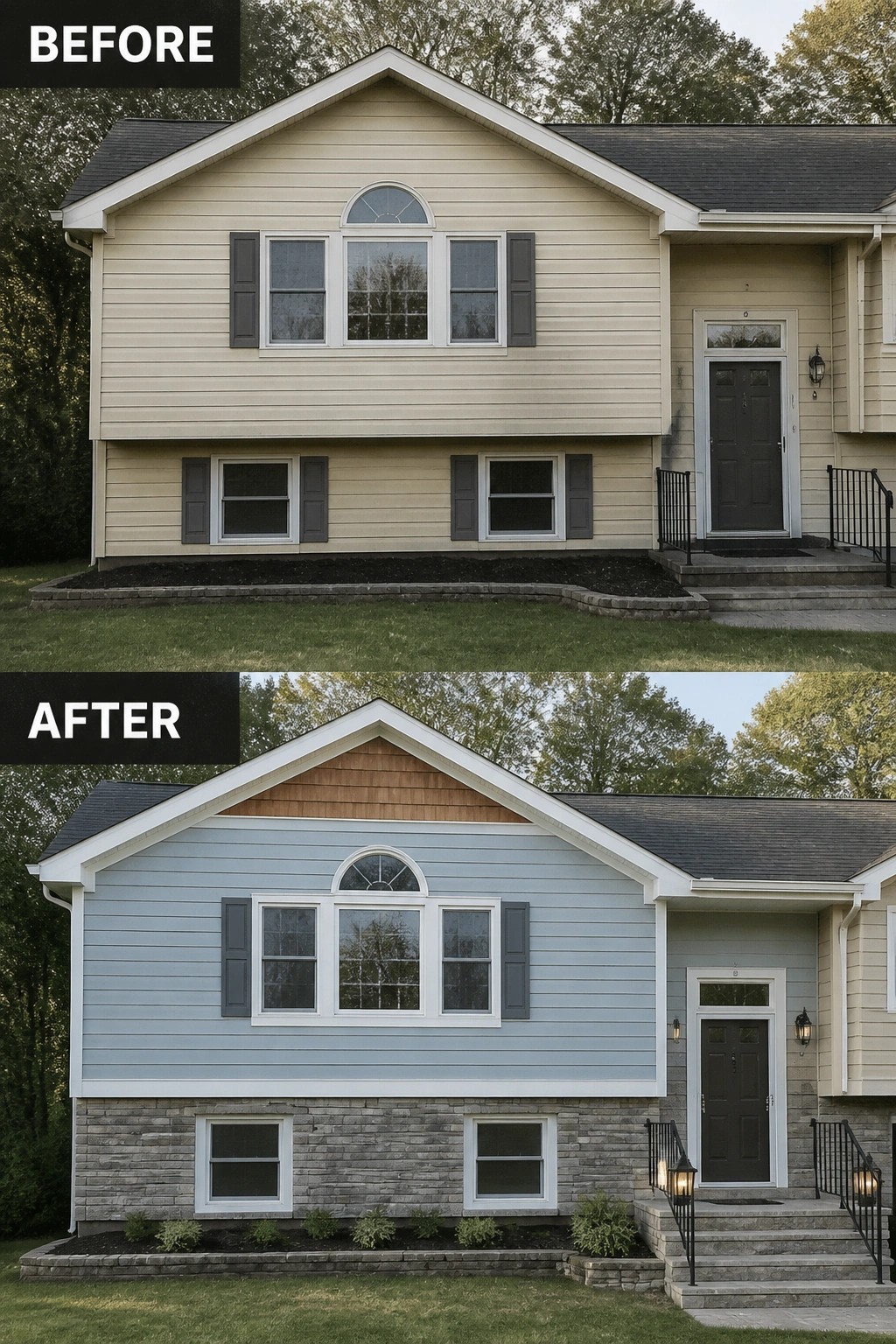
A simple way to lift a raised ranch is to pair a refreshed siding color with a grounded stone base. Swapping the plain beige siding for a cooler, updated hue and adding stone veneer at the lower level gives the facade instant weight and personality without changing the footprint. It reads modern because the house now has a clear base and a lighter top, so the proportions feel more intentional.
To try this at home, keep the stone limited to the foundation or lower half so it anchors the house and save the siding for the upper sections. Pick a siding color that contrasts softly with the stone and use crisp white trim to define windows and eaves. This approach works well on split-level and raised ranch homes where the foundation is highly visible; plan the material transition line carefully and choose durable, low-maintenance stone veneer that matches your local style.
Make A Plain Facade Feel More Welcoming
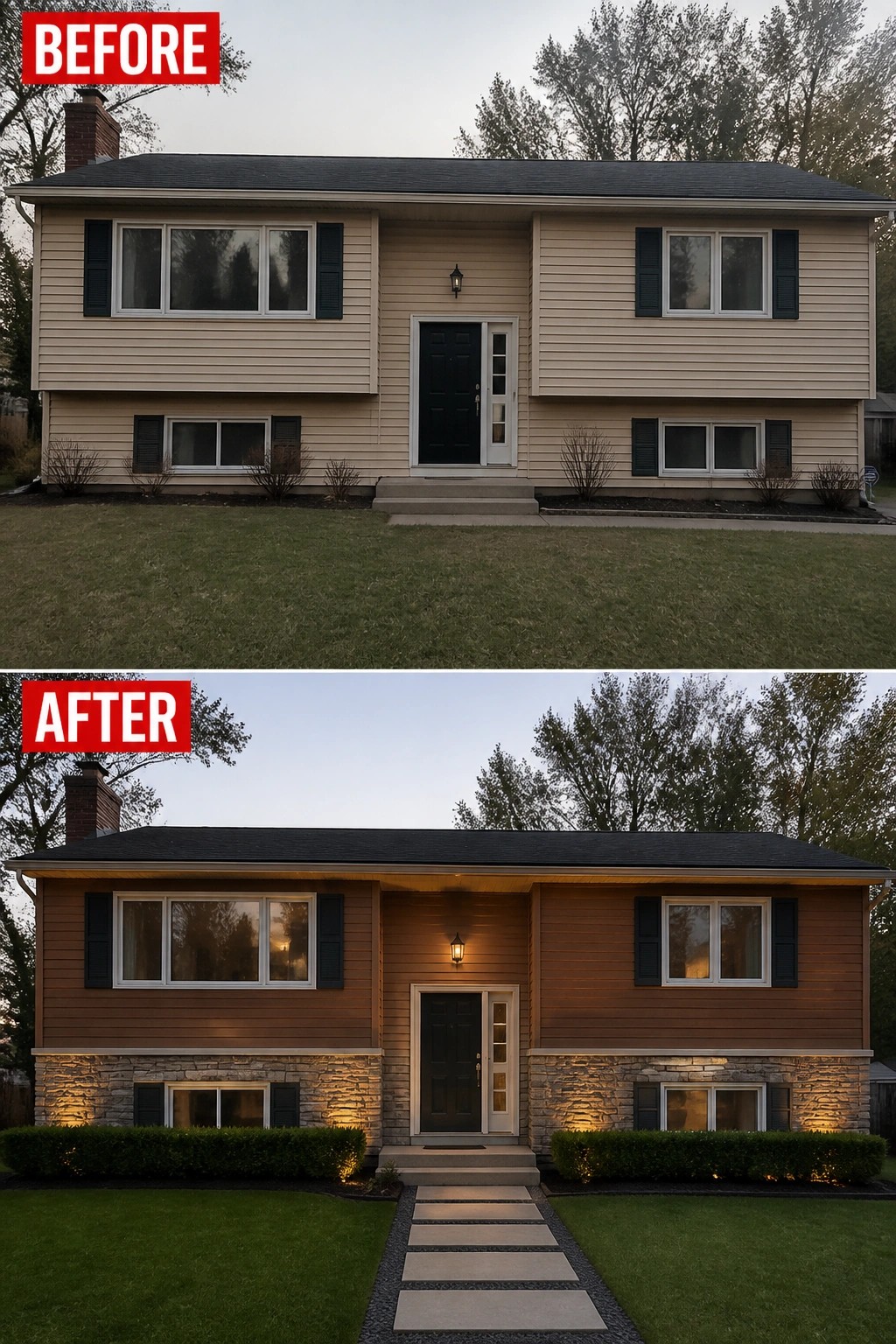
A simple way to lift a raised ranch is to add a grounded material at the base and swap flat vinyl for warmer, horizontal siding up top. In this example the lower level gets a stone veneer that visually anchors the house while the upper siding changes to a richer, wood‑tone finish and a few well placed lights highlight the entry. The result reads as intentional and finished, not just repainted.
To use this idea at home, start by choosing one heavy material for the lower third of the facade, such as manufactured stone or stacked ledge, then pick a siding color that complements it rather than matching exactly. Keep foundation plantings low so the new stone is visible and add pathway or uplighting to show off the texture at night. Small choices like consistent trim and a simple paved walk make the whole update look pulled together without a major rebuild.
Frequently Asked Questions
Q: How much does a siding and stone remodel typically cost for a raised ranch?
A: Plan on a broad range. A common scope with vinyl siding and stone veneer accents often lands between $10,000 and $35,000 depending on house size and labor in your area, while full-height natural stone or structural changes will push the price higher. Get three written estimates so you can compare what each contractor includes.
Q: Can I mix vinyl siding with real stone and still have it look intentional?
A: Yes—focus on balance. Use stone on the lower half, porch, or columns and pick a siding color that echoes a key stone tone. Don’t mix more than two major textures, and keep the trim consistent to tie everything together.
Q: What kind of maintenance should I expect with siding and stone?
A: Stone needs very little beyond an occasional rinse and a quick check of mortar or veneer joints. Siding upkeep depends on material—vinyl usually just needs washing, while wood or fiber cement may need repainting down the road. Recaulk around windows and transitions each few years to prevent water issues.
Q: Should I replace windows and the front door when I redo the exterior?
A: Replacing them can be a smart move since new windows and a fresh door boost curb appeal and energy efficiency, but you can save money by updating trim, hardware (or at least new hardware), and paint if the units are structurally sound. If windows leak, fog, or drafts show up, go ahead and replace; if they only look dated, a targeted refresh often does the trick.