

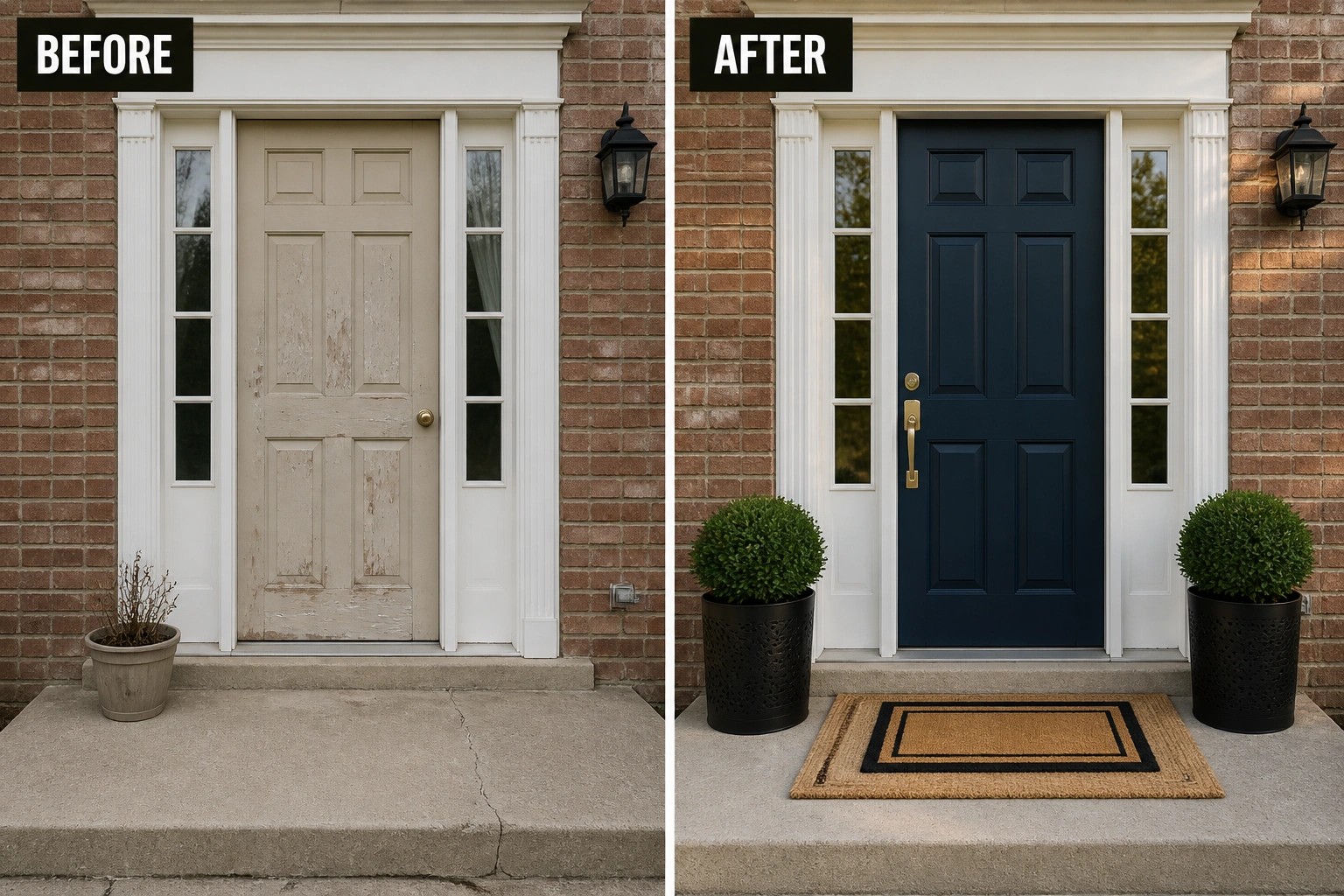
The area right around the front door often gets overlooked until you stand there and realize it needs attention.
Changing out the light fixtures or adding a coat of paint to the door itself can lift the curb appeal in a way that feels proportionate to the effort.
Those updates add up fast.
Paying attention to the steps and any railings nearby also helps tie the entry together so it does not look separate from the rest of the facade.
A handful of the suggestions in the article line up with changes I have seen work well on homes that were not ready for a full exterior overhaul.
Refresh A Tired Front Entry With A Bold Door Color
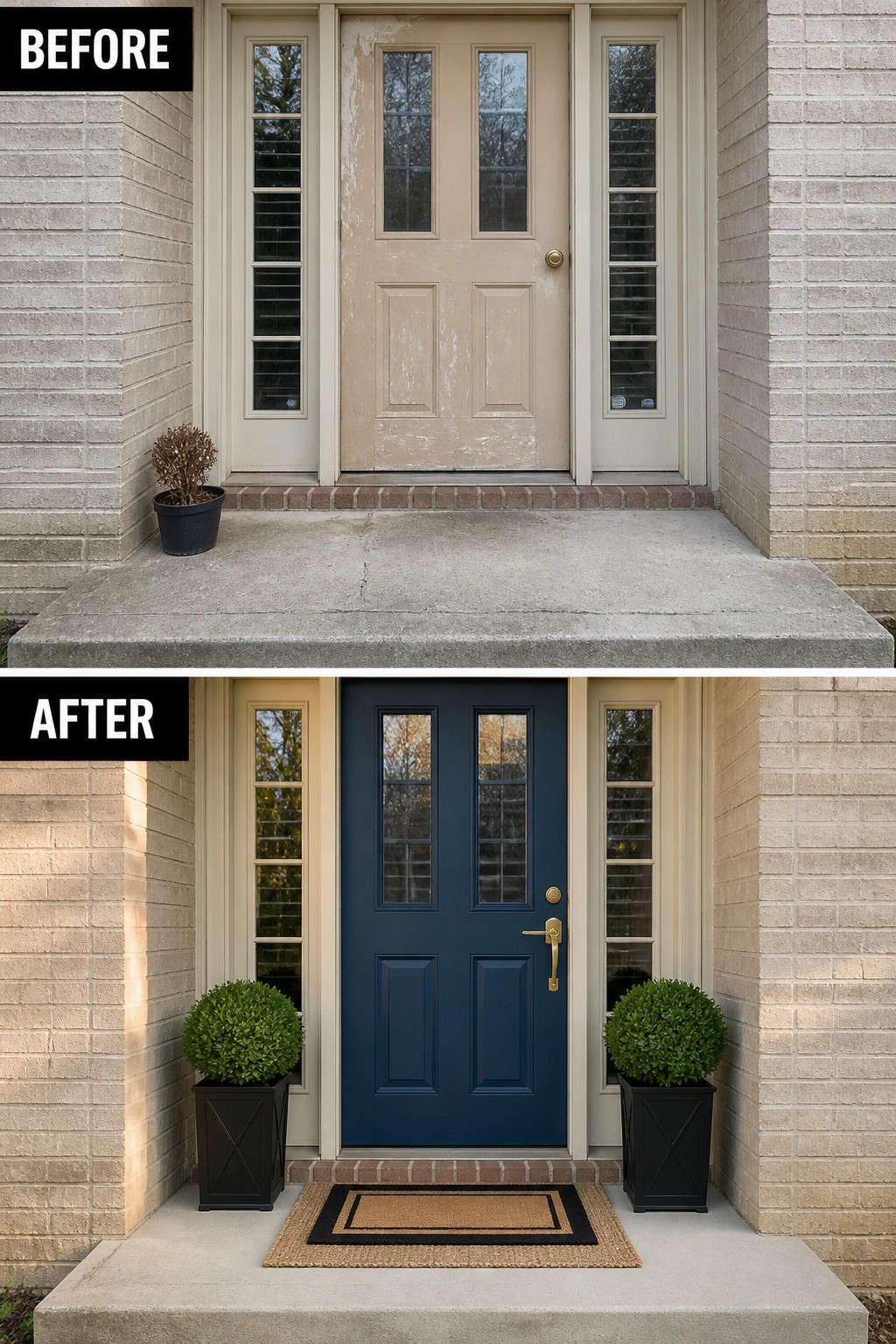
Painting the front door a deep color instantly changes how the whole house feels from the street. The old faded door looked worn and blended into the background, while the new navy shade gives the entry a clear focal point without any major construction.
This approach works best on simple facades where the door is the main visible feature. Start with a good clean and a quality exterior paint, then add matching planters on either side to balance the look. Keep the rest of the entry simple so the door stays the star.
Add Columns And Trim To Frame The Front Door
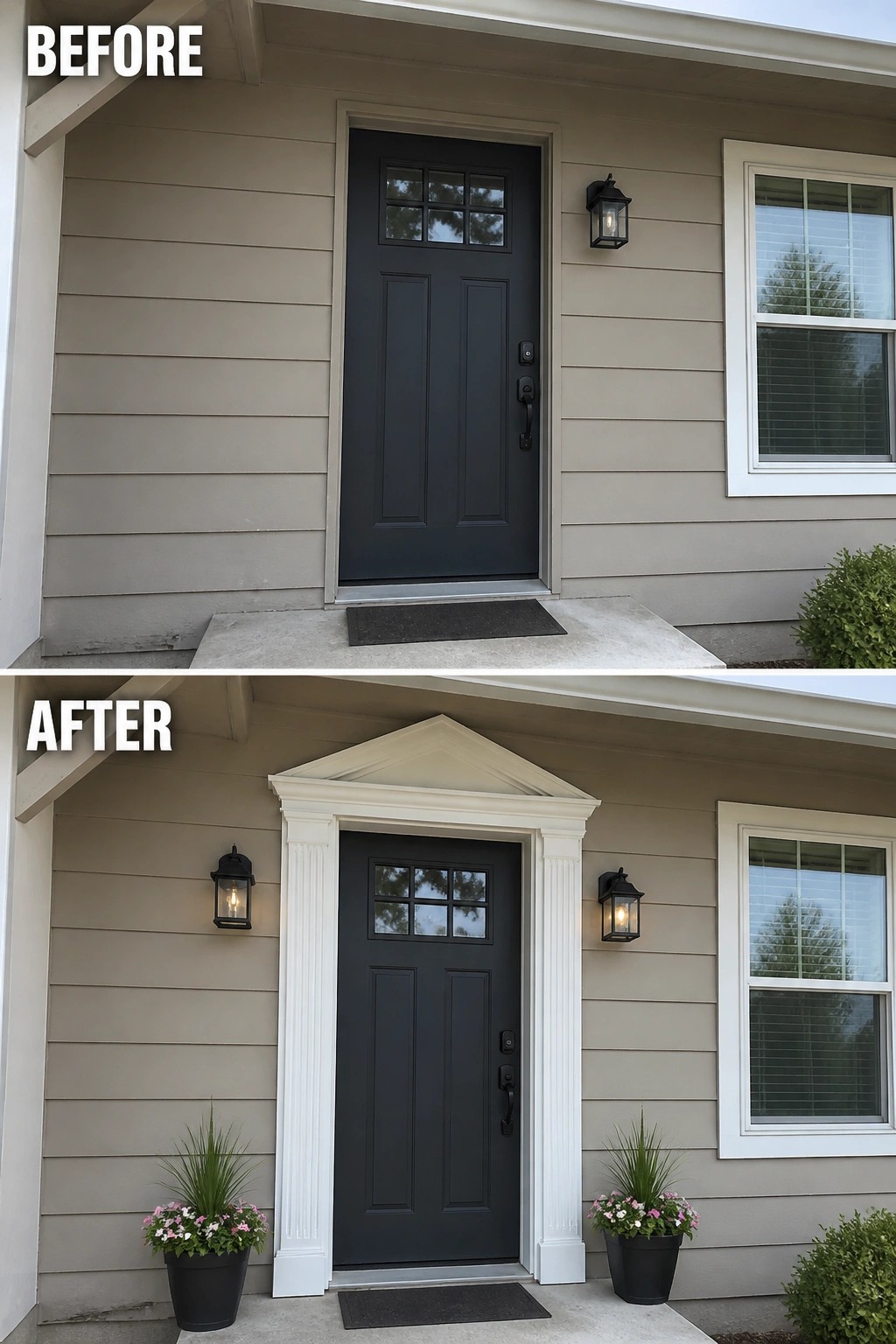
A plain front door on a simple siding house can look unfinished even when the paint is fresh. Adding a white pediment and columns around the door gives the entry a clear center point and makes the whole facade feel more complete without changing the siding or roofline.
This approach works well on homes where the door sits flat against the wall with little detail. Keep the trim color light to contrast with the siding and door, then balance the look with one planter on each side and matching lights. Start with the surround before adding more layers like shutters or new hardware.
Add Matching Sconces To Frame The Front Door
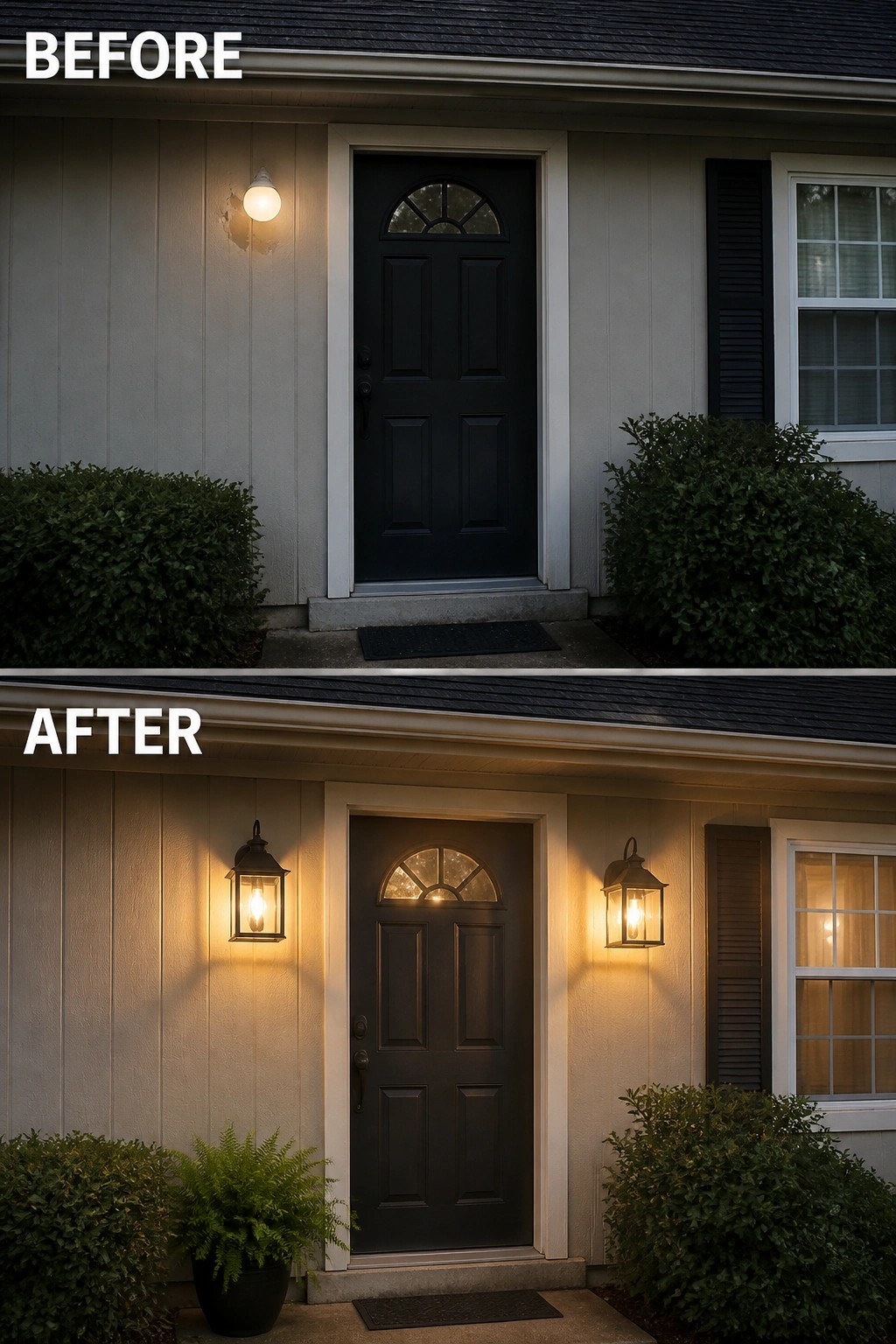
A single light on one side of the door often leaves the entry looking off balance. Adding a matching pair of sconces on both sides pulls the whole front together and gives the door a clearer sense of place.
Keep the fixtures simple and roughly the same height as the top of the door. This approach works on most houses with a centered entry and makes the area feel safer and more finished without any major construction.
Paint The Brick To Brighten An Older Home
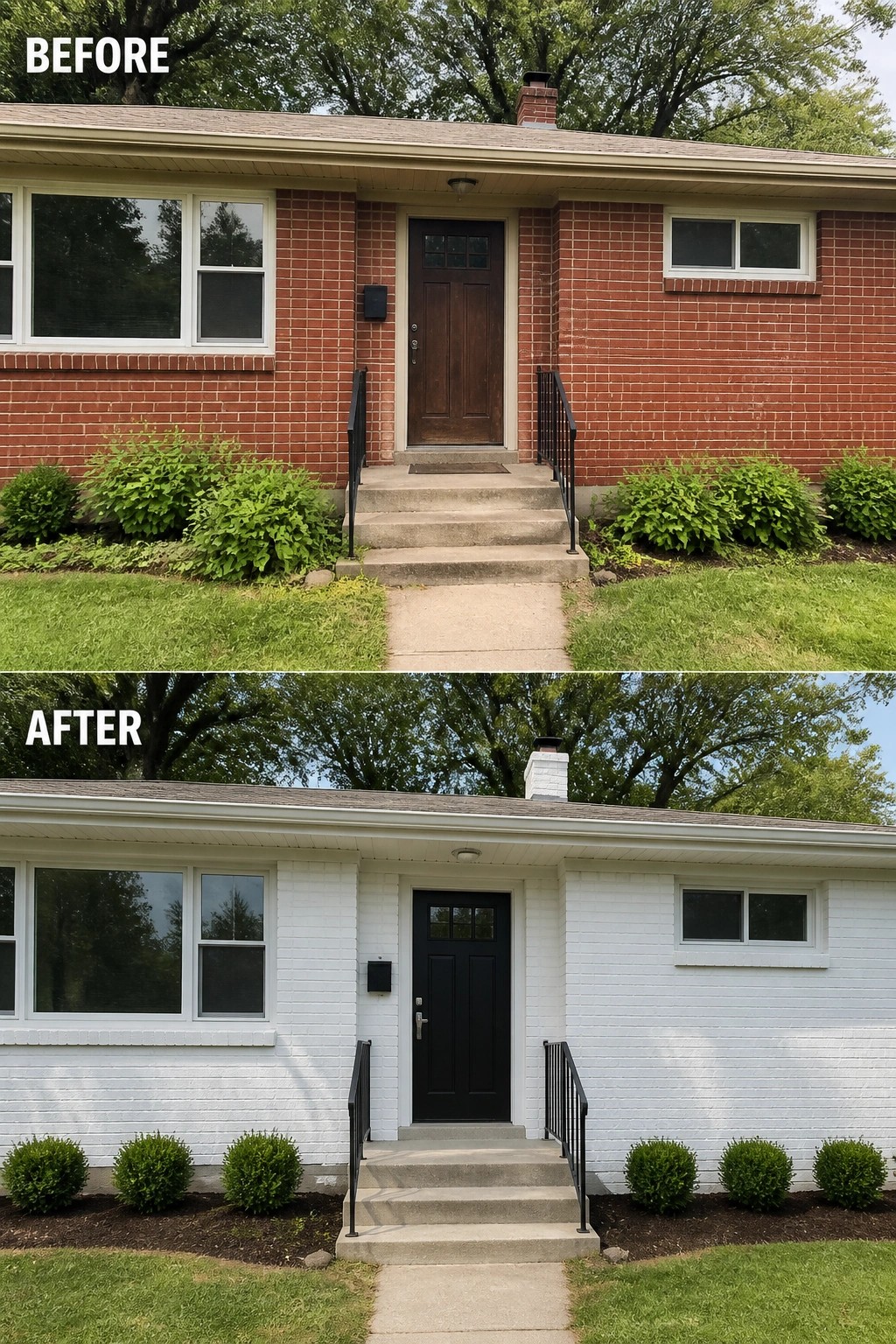
Painting the brick exterior can make a big difference on an older home. In this case the red brick was covered in white paint and the door was changed to black. The result feels much lighter and more welcoming without any major construction.
This approach works well on homes where the brick is still solid but the color feels heavy. Choose a light shade that fits your neighborhood and pair it with a door color that stands out. It is a simple way to improve curb appeal before spending money on larger changes.
Use A Large Planter Box To Anchor The Front Entry
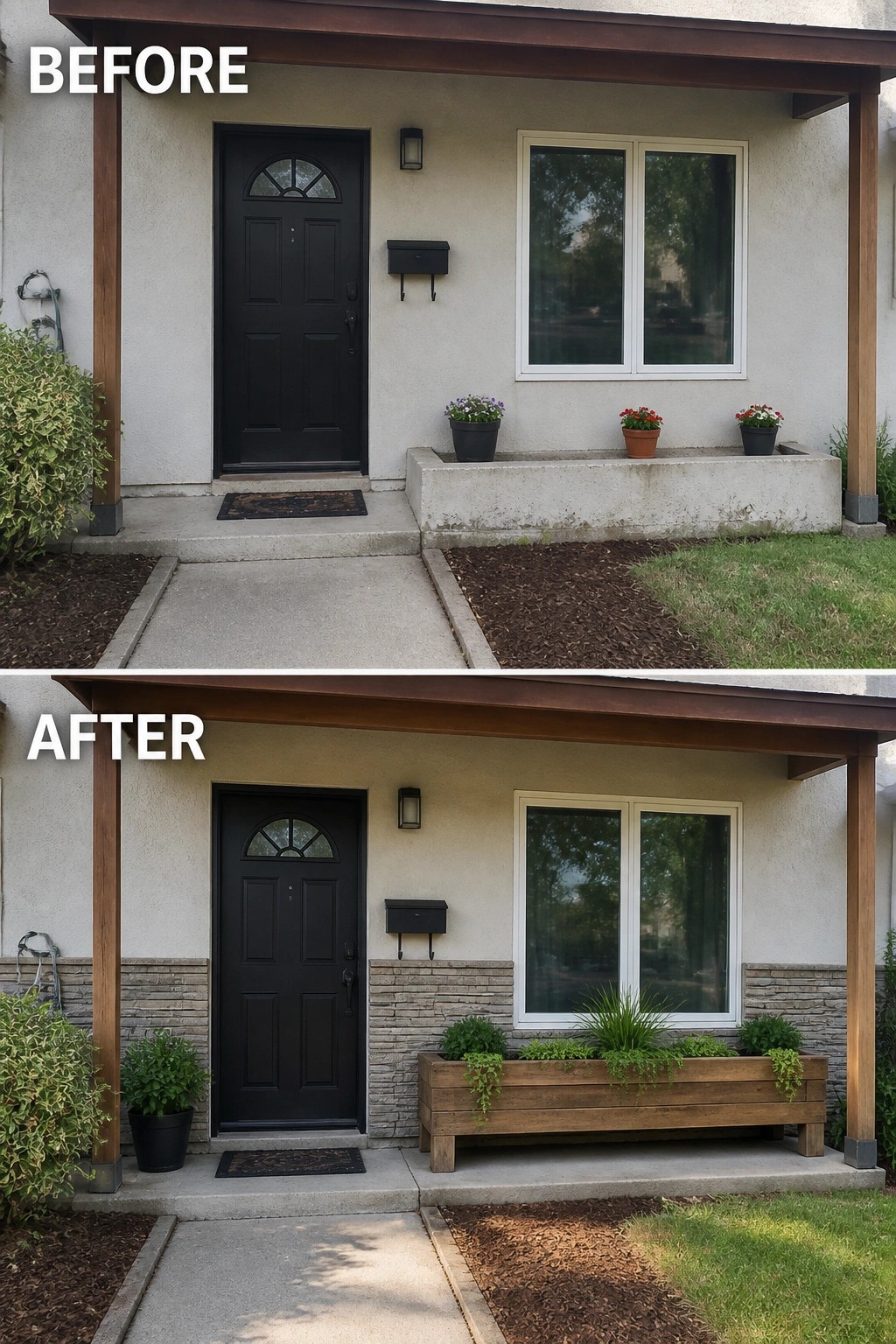
The change here comes from replacing several small pots with one long wooden planter that runs along the porch edge. That single box gives the entry a clear line and brings the plants up closer to the door so the whole area feels more put together.
This idea works on any straightforward concrete porch where the space feels a bit empty. Build or buy a planter that matches the width of your entry, keep it low so traffic still flows, and fill it with a mix of heights that can handle your local weather.
Pattern Concrete Stairs To Improve A Front Entry
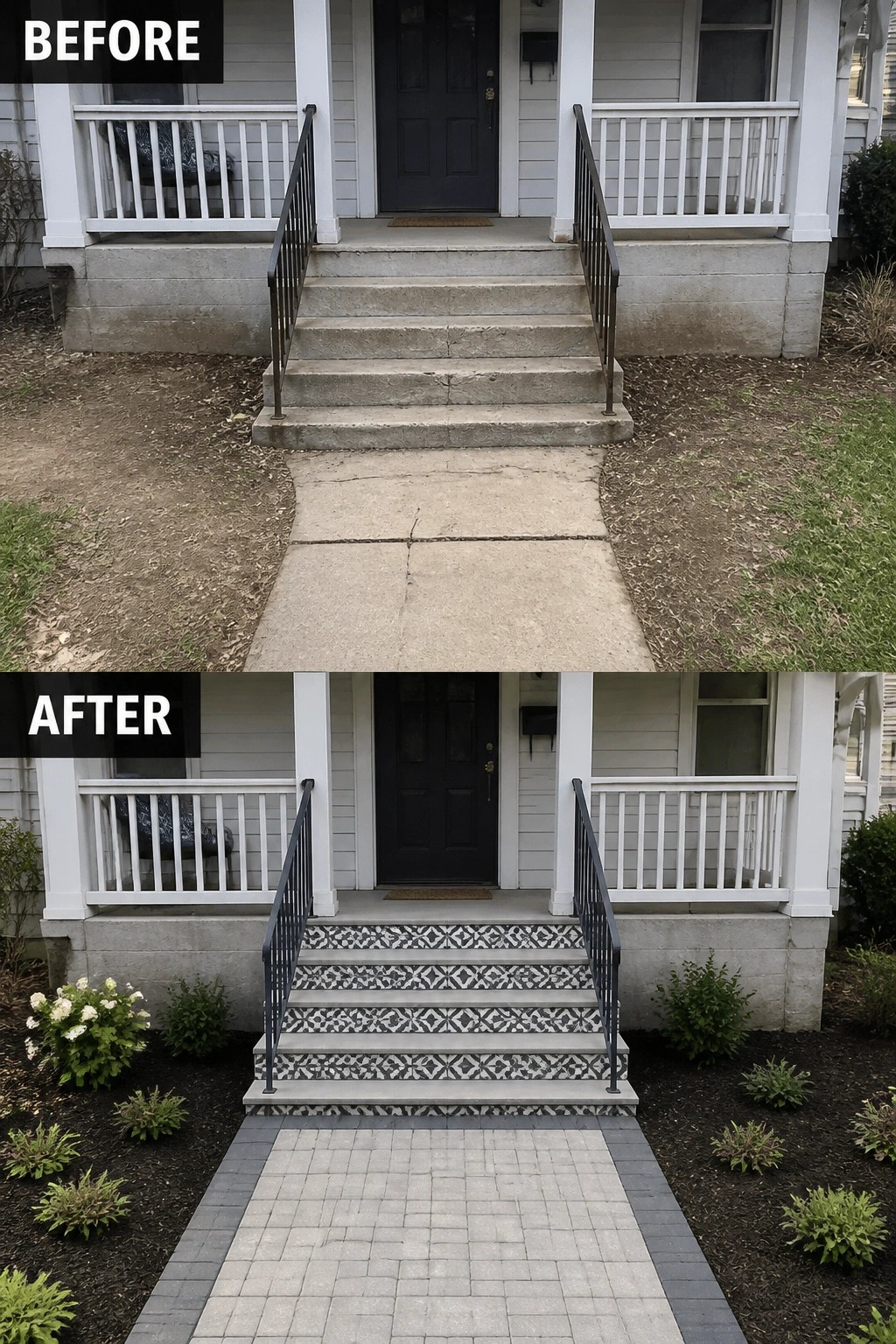
Plain concrete stairs and a cracked walkway can make a front entry feel tired and unfinished. Covering the steps with patterned tiles and replacing the path with pavers gives the whole entrance a cleaner, more finished look without major construction.
This idea works best on homes where the stairs are the main visual focus from the street. Start with solid, even concrete and use outdoor-rated tiles that can handle weather. Keep the pattern simple so it adds interest without overwhelming the house.
Frame The Front Entry With Vertical Siding
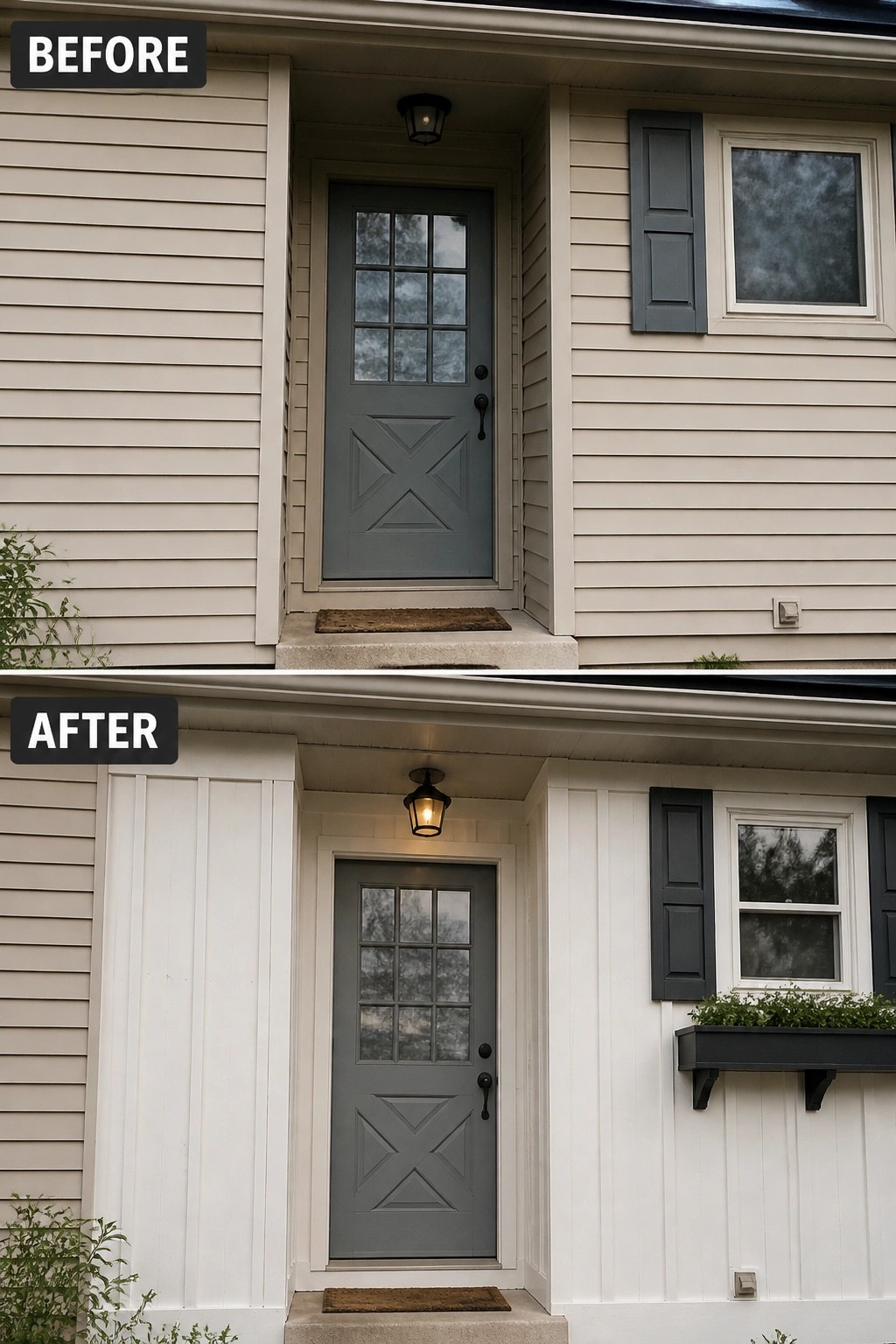
Changing the siding right around the door from horizontal to vertical boards gives the entry a clear frame and makes the door stand out more. The vertical lines also make the space feel taller and more finished without any major construction.
This works well on simple facades where the door blends into the rest of the house. Focus on the area directly beside and above the door first, then add one small detail like a window box if you want a bit more color. Keep the rest of the siding as is so the change stays affordable and easy to manage.
Add Shutters And Window Boxes To Frame The Entry
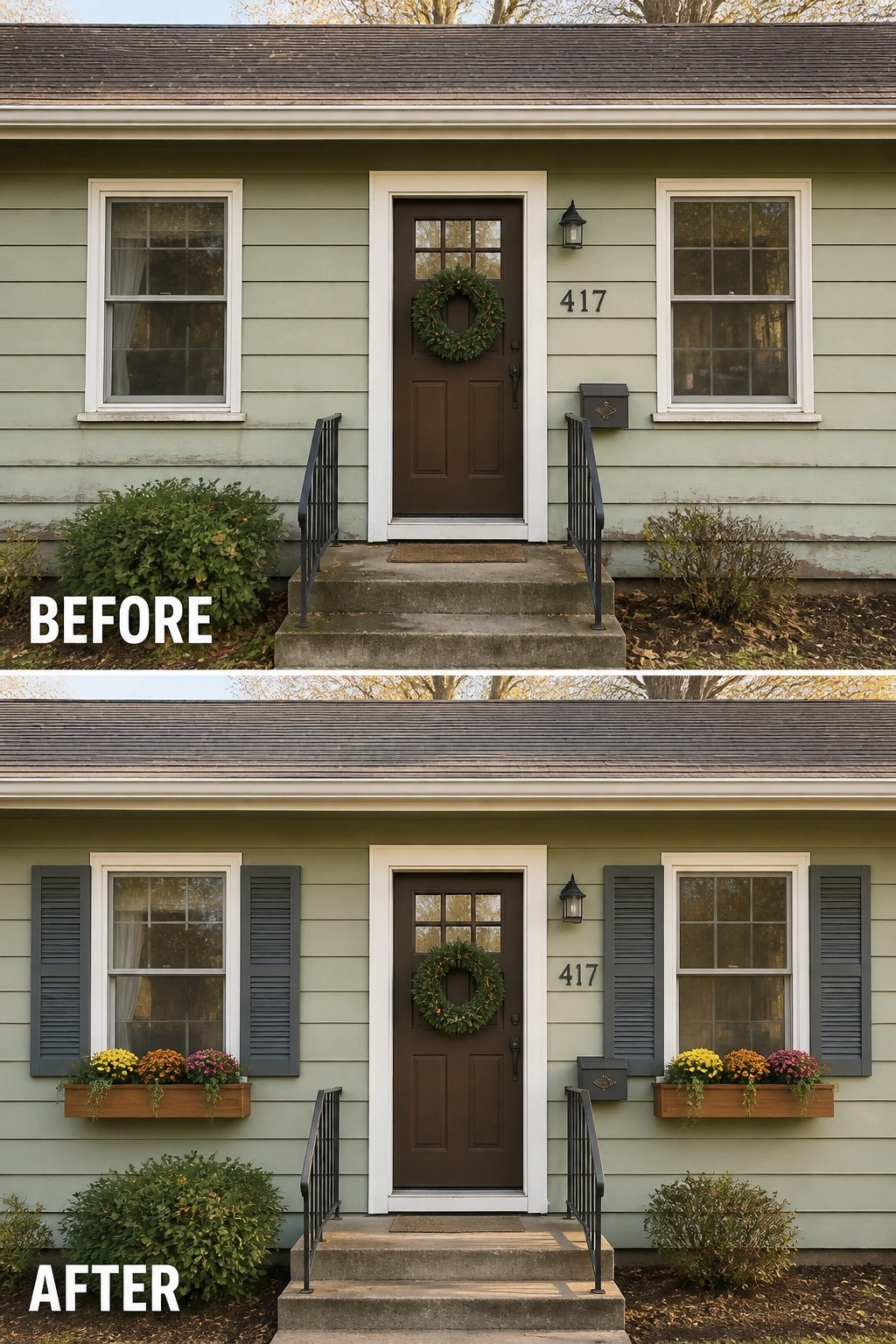
Adding shutters and window boxes gives a plain house front more structure without any major construction. The before photo shows bare windows that make the facade feel flat. In the after photo the dark shutters and flower boxes create a clear rhythm across the front and draw attention to the door.
This idea works well on simple siding homes where the windows look a little lost. Match the shutter color to the door or trim so the details feel connected. Start with one pair of shutters and two boxes to test the scale before adding more.
Add A Pergola To Give The Entry More Structure
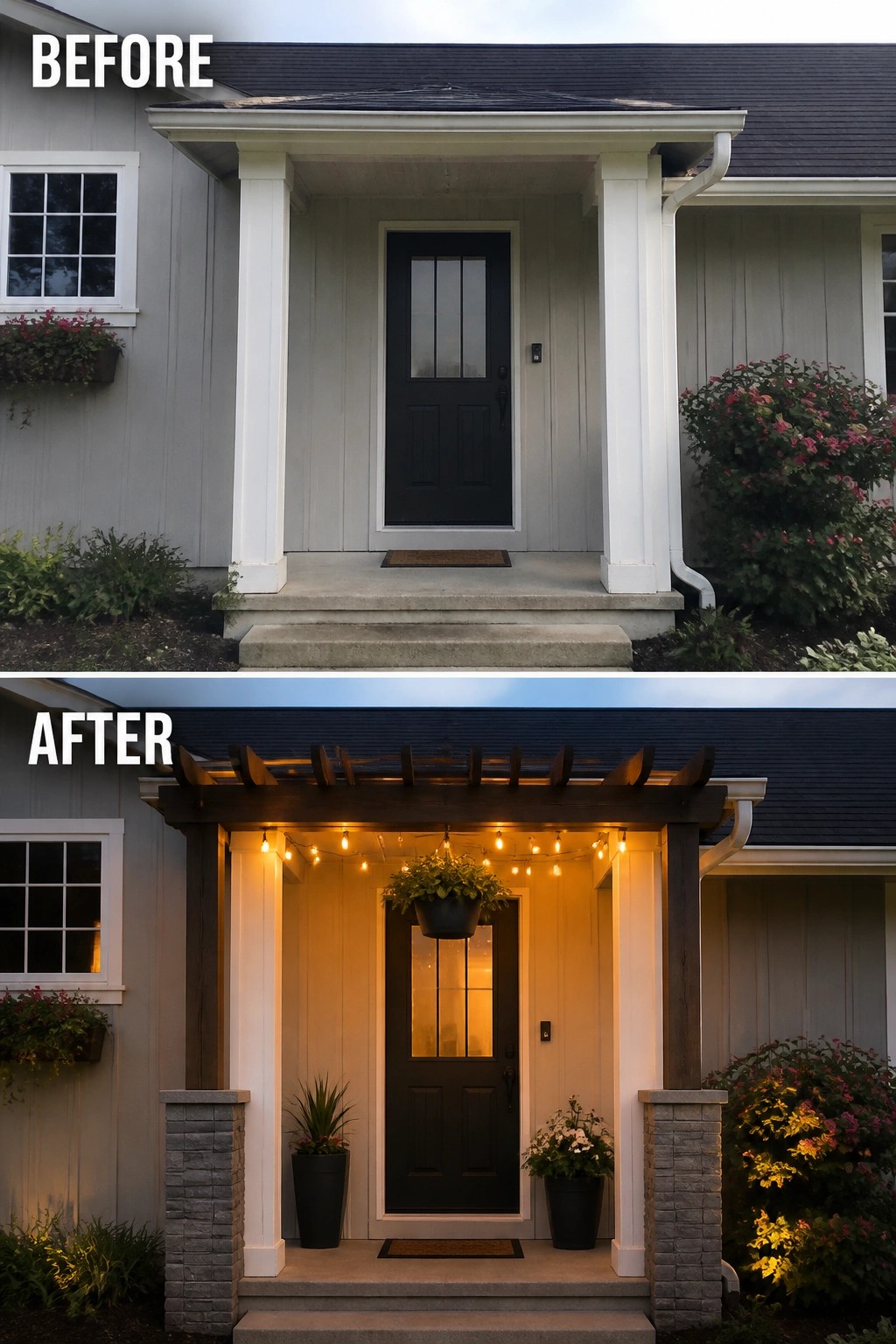
A plain front entry often feels unfinished because it lacks any overhead definition. Adding a pergola creates a clear boundary above the door and makes the space feel more purposeful. The after version shows how a dark wood structure with string lights turns the same doorway into something that reads as an actual entry rather than just a door on a wall.
This idea works well on simple homes where the porch is functional but visually flat. Keep the pergola modest in scale so it fits the house, then add lighting and a few planters afterward. Focus on the structure first. The rest becomes easier once the entry has a defined top.
Update The Front Door To Refresh Curb Appeal
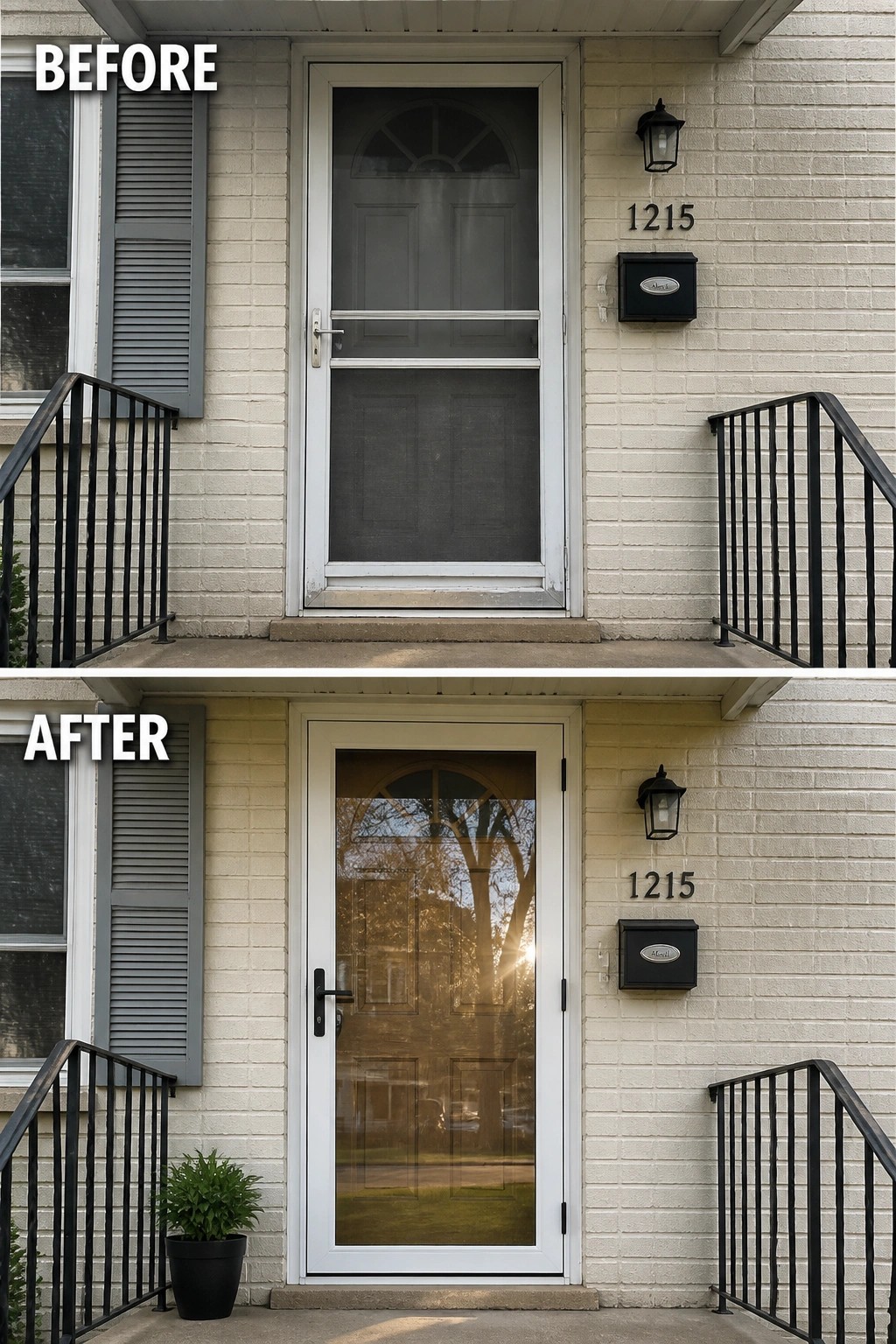
An old screen door often makes an entry look dated even when the rest of the house is in good shape. Replacing it with a full glass storm door opens up the view, brings in more light, and gives the facade a noticeably cleaner line.
This update works on many styles of homes because the door is usually the main focal point from the street. Keep the rest of the entry simple and just make sure the new door fits the opening and weather conditions in your area.
Give A Bare Porch A Clear Purpose
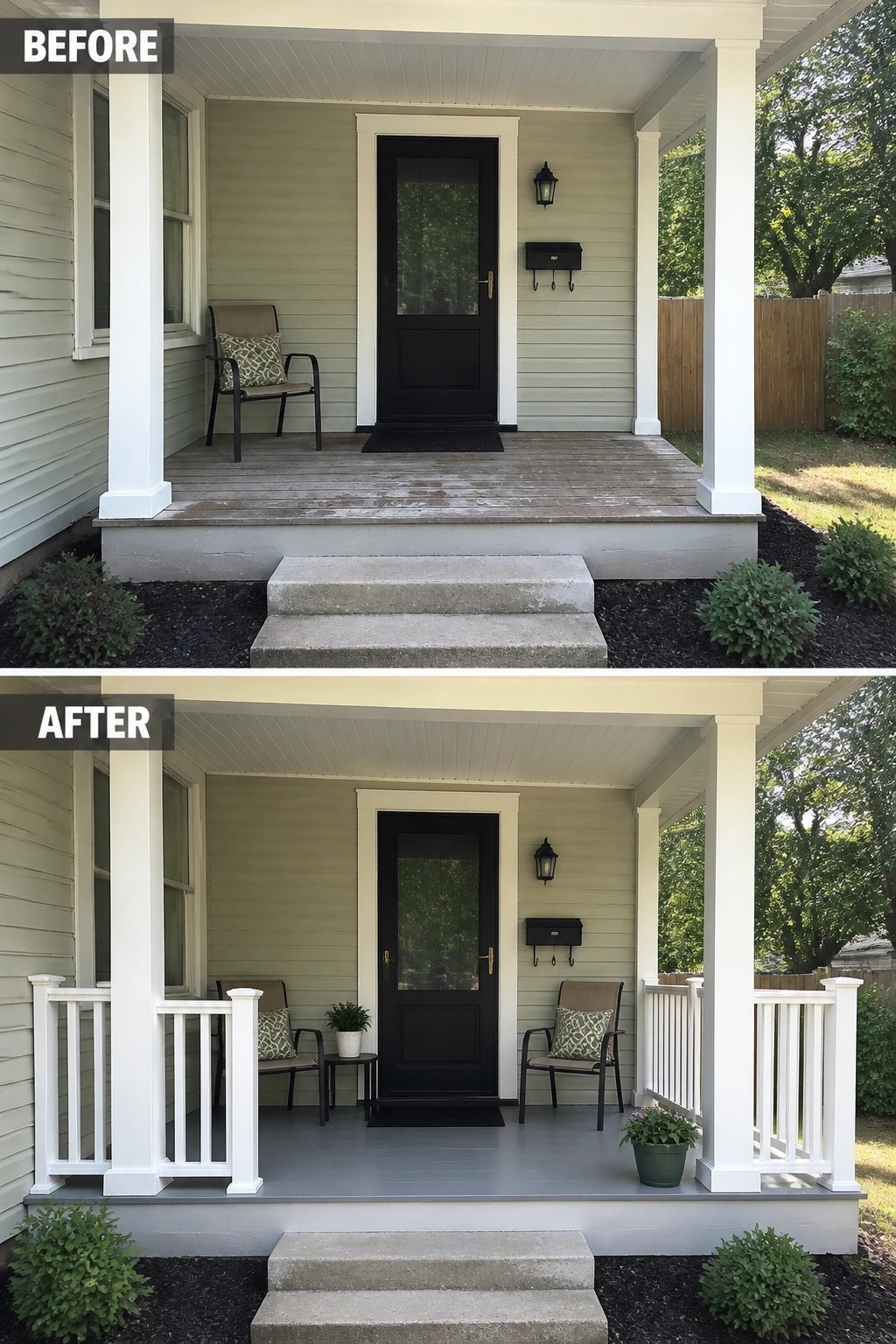
A plain front porch often feels unfinished when it lacks clear edges or balanced seating. Adding simple railings on both sides and placing a matching chair opposite the first one gives the space structure and makes it feel more intentional. The gray floor paint also helps tie everything together without much effort.
This approach works best on small or basic porches where you want to improve the entry without major construction. Keep the railings simple and match them to the existing trim color. Focus on one or two pairs of chairs rather than filling the space, and make sure the layout still leaves room to walk through.
Define The Entry Path With Garden Beds
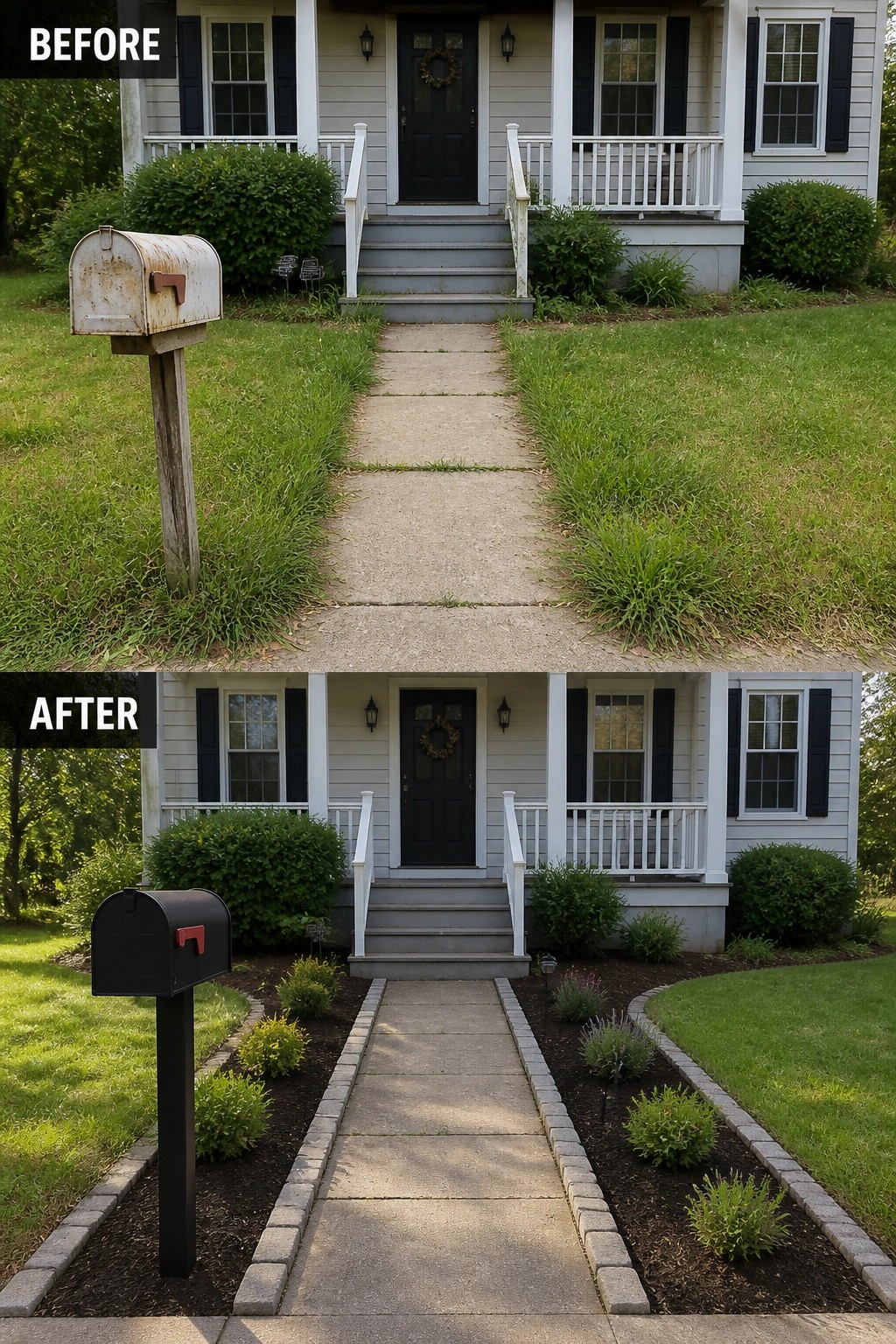
Adding simple borders along a front walkway can turn an ordinary approach into something that feels intentional and cared for. In this case the change came from replacing the ragged grass edges with low stone edging and filling the new beds with mulch and compact shrubs. The result gives the concrete path a clear frame without any major construction.
This idea works well on houses where the lawn meets the walk in a messy line. Start by marking straight or gently curved beds on both sides, then install basic edging and add a few low plants that stay neat year round. It keeps the focus on the front door while making the whole front look more finished.
Frame Your Front Door With Matching Planters
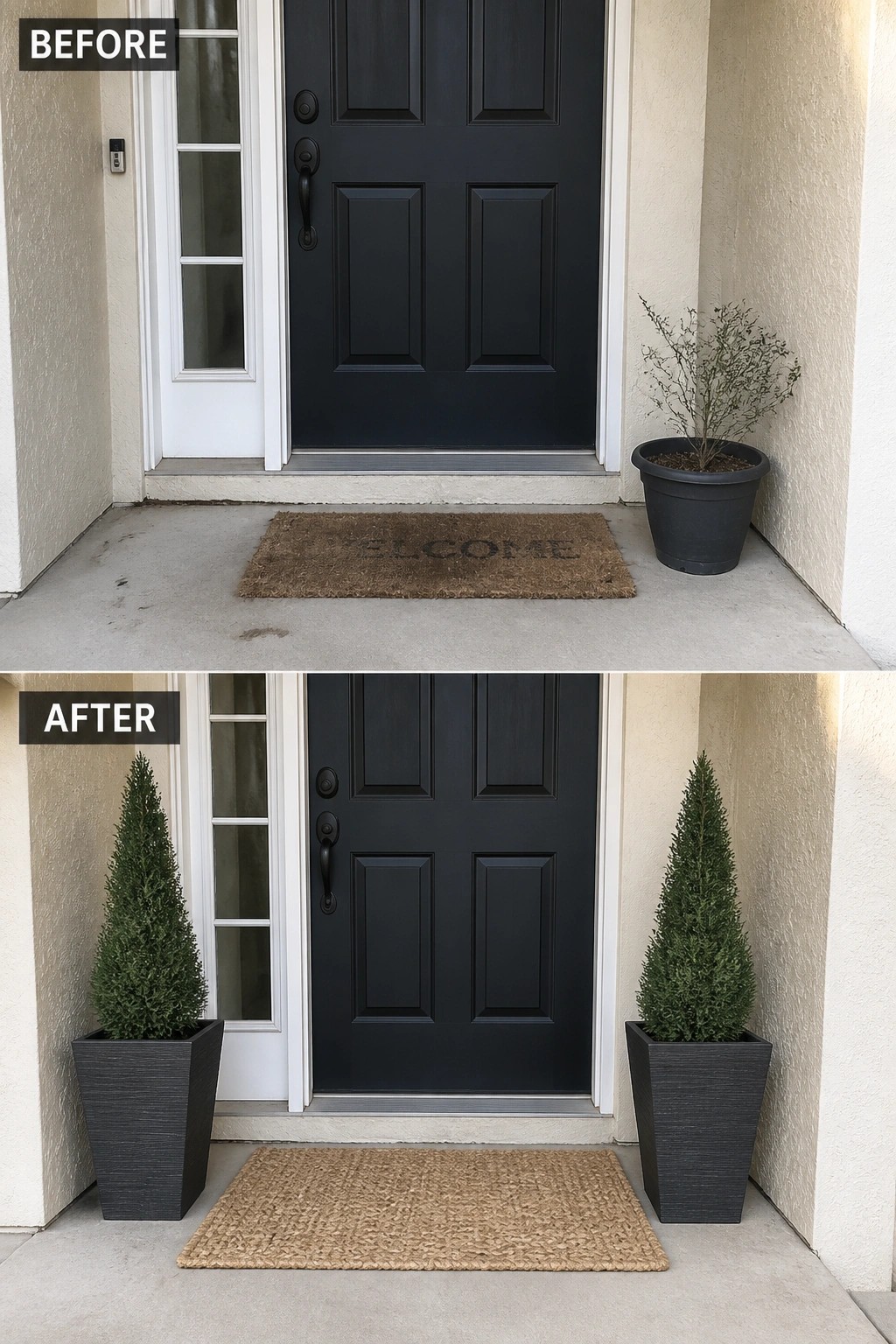
Many front entries feel a little empty when there is only one plant or none at all. Placing a pair of matching planters on either side of the door creates balance and gives the entrance a clearer sense of purpose.
This idea works well on simple facades where you want a quick improvement without big construction. Keep the planters roughly the same height and color, and choose plants that stay compact and green through the seasons. Make sure the pots sit far enough apart to leave room to walk through comfortably.
Warm Up A Plain Entry With Wood Paneling
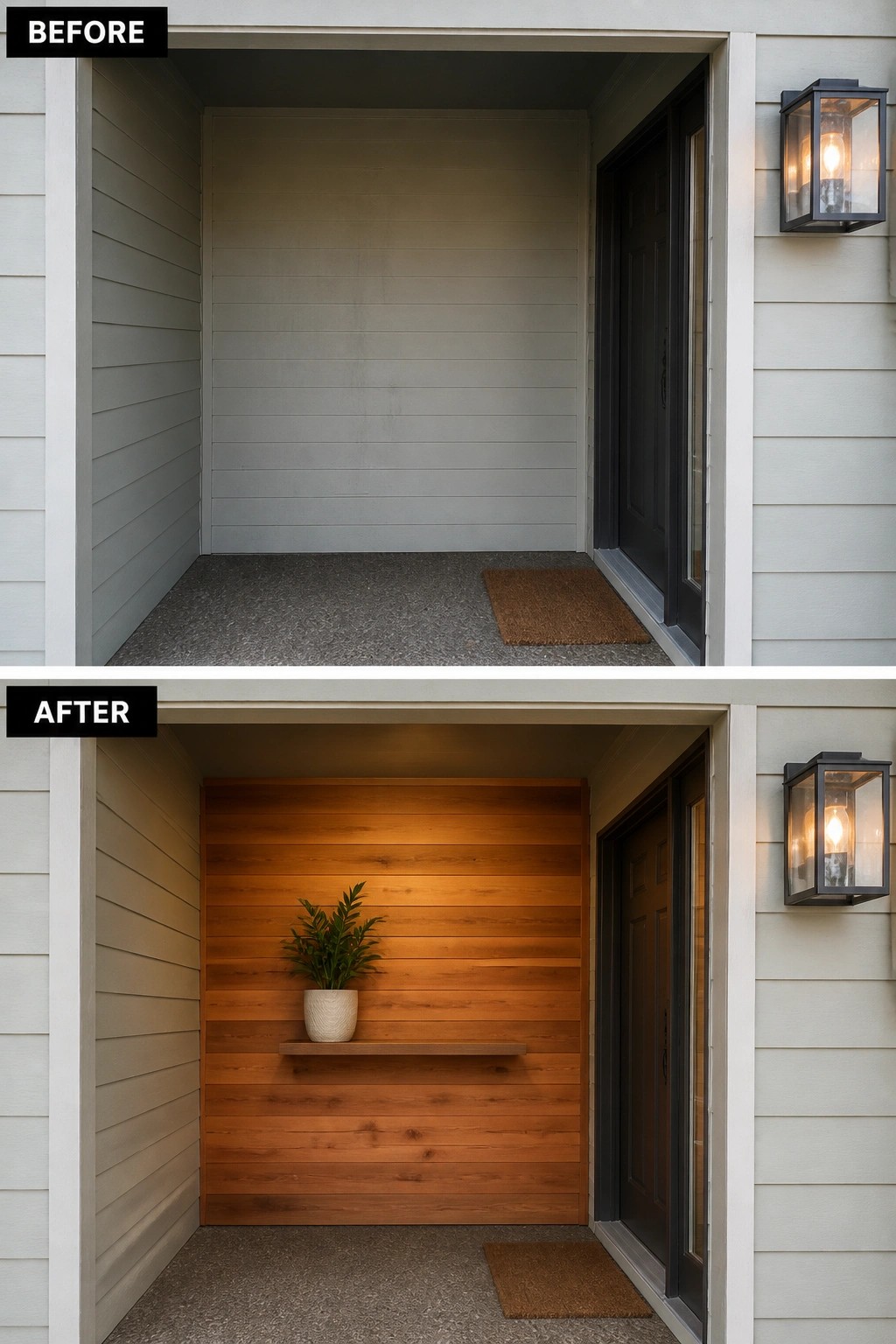
A plain entry with bare siding often feels cold and unfinished even when the rest of the house looks fine. Adding a simple wood accent wall behind the door brings natural texture and warmth that makes the space feel more intentional and welcoming.
This idea works best on covered entries or recessed doorways where you can keep the scale modest. Use a floating shelf and one plant to anchor the wall without crowding the walkway or blocking the door swing.
Refresh Your Front Door With Updated Hardware
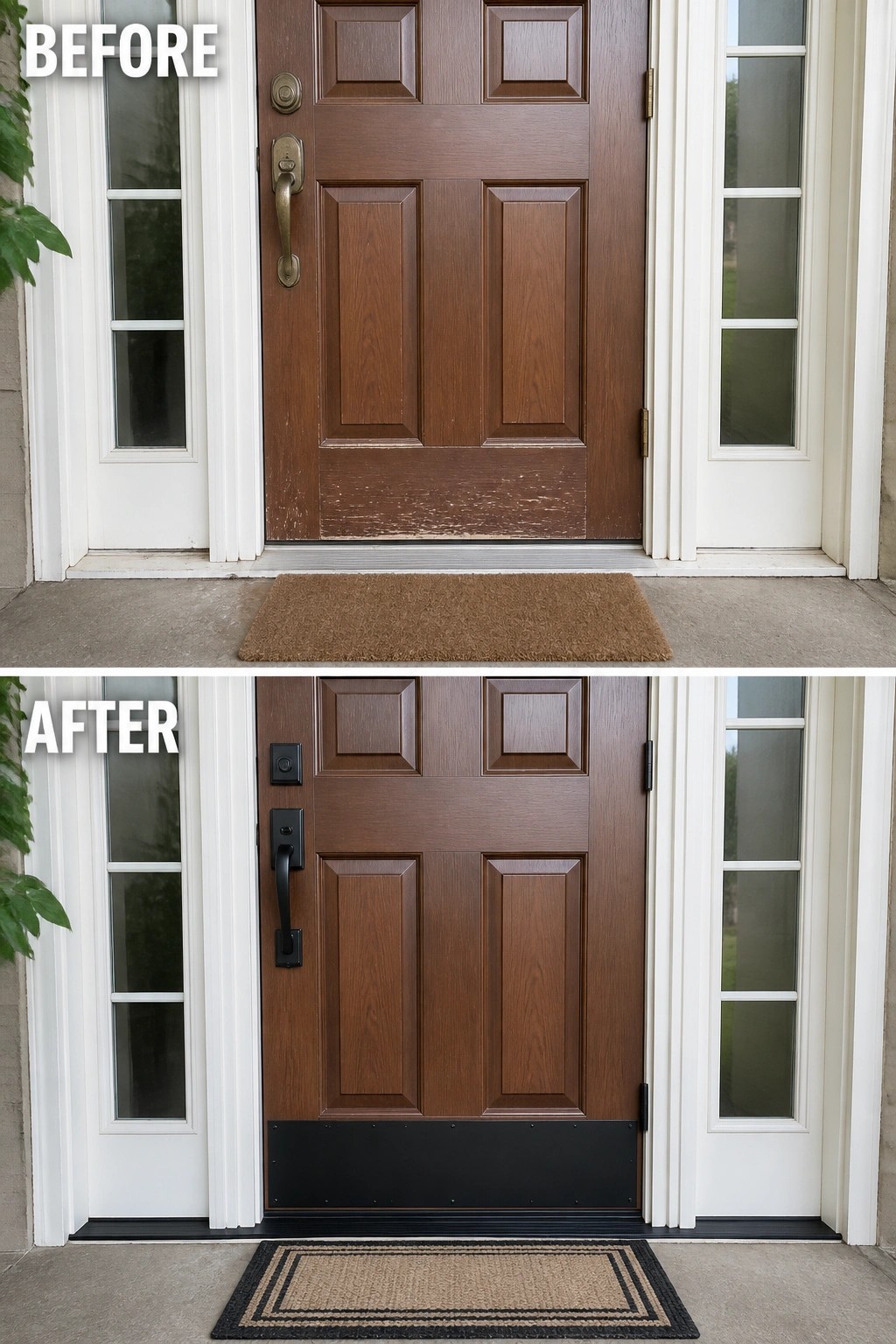
Many front doors still have solid construction but look worn from old handles and scratched finishes near the bottom. Changing to a modern set of black hardware and adding a protective kickplate brings the door up to date while keeping the original wood.
This update suits homes that need a quick exterior refresh without a full door replacement. Match the new hardware to your other exterior metals and keep the doormat simple so the door remains the main feature.
Clear Overgrown Shrubs For A Neater Front
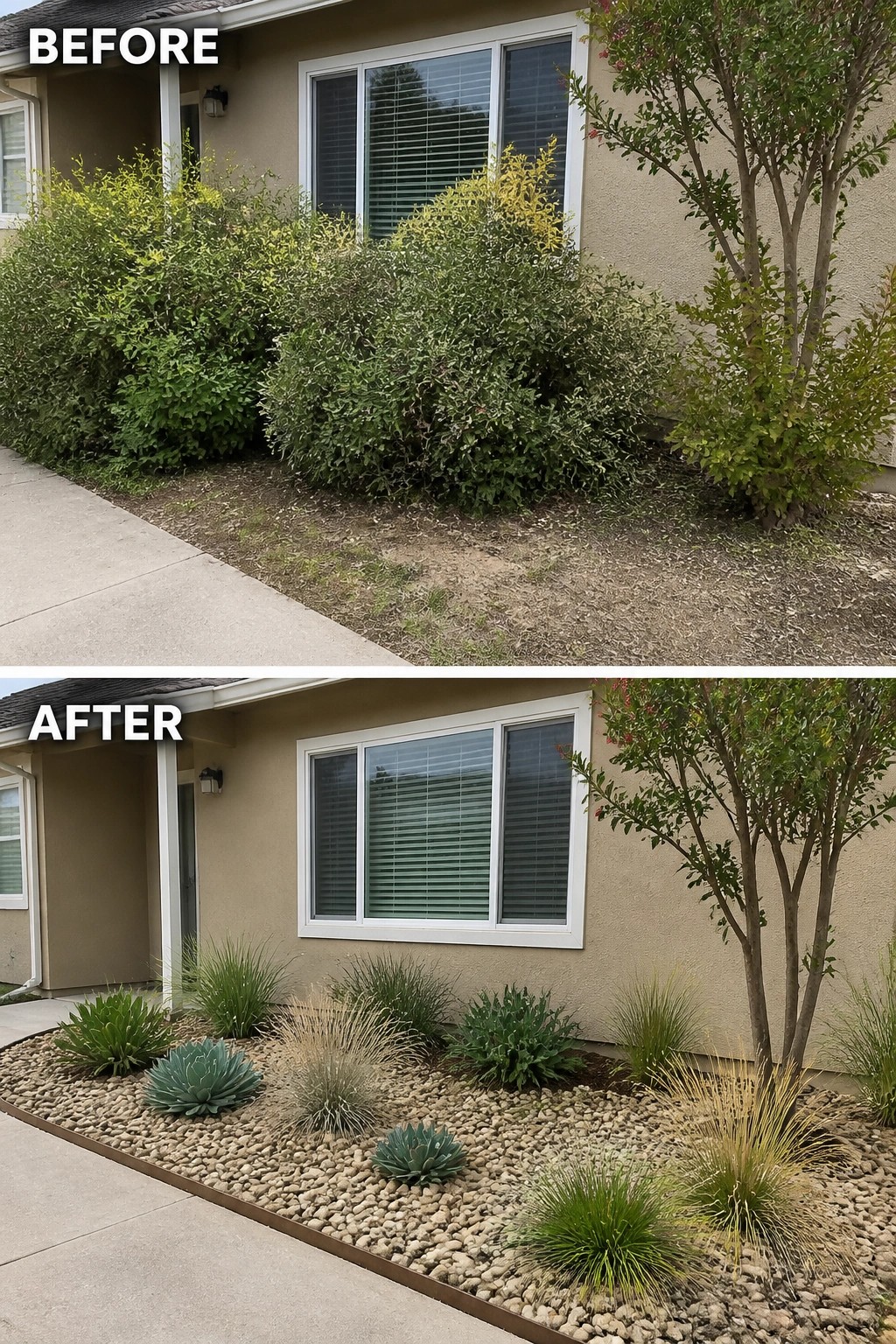
The before photo shows a row of large, messy shrubs crowding the front of the house and blocking the windows. In the after photo, those shrubs are gone and replaced with a clean gravel bed edged in metal, filled with small agaves and grasses. The change makes the house look wider and the entry feel more open without any major construction.
This idea works best on homes where the foundation planting has simply gotten too big. Start by removing the old shrubs completely, then lay down a simple border and gravel to keep the bed defined. Low plants like grasses and succulents stay in scale with the windows and require less trimming over time. It suits any house with a plain stucco or siding exterior where you want the focus to stay on the architecture rather than the plants.
Paint The Porch Ceiling For A Simple Refresh
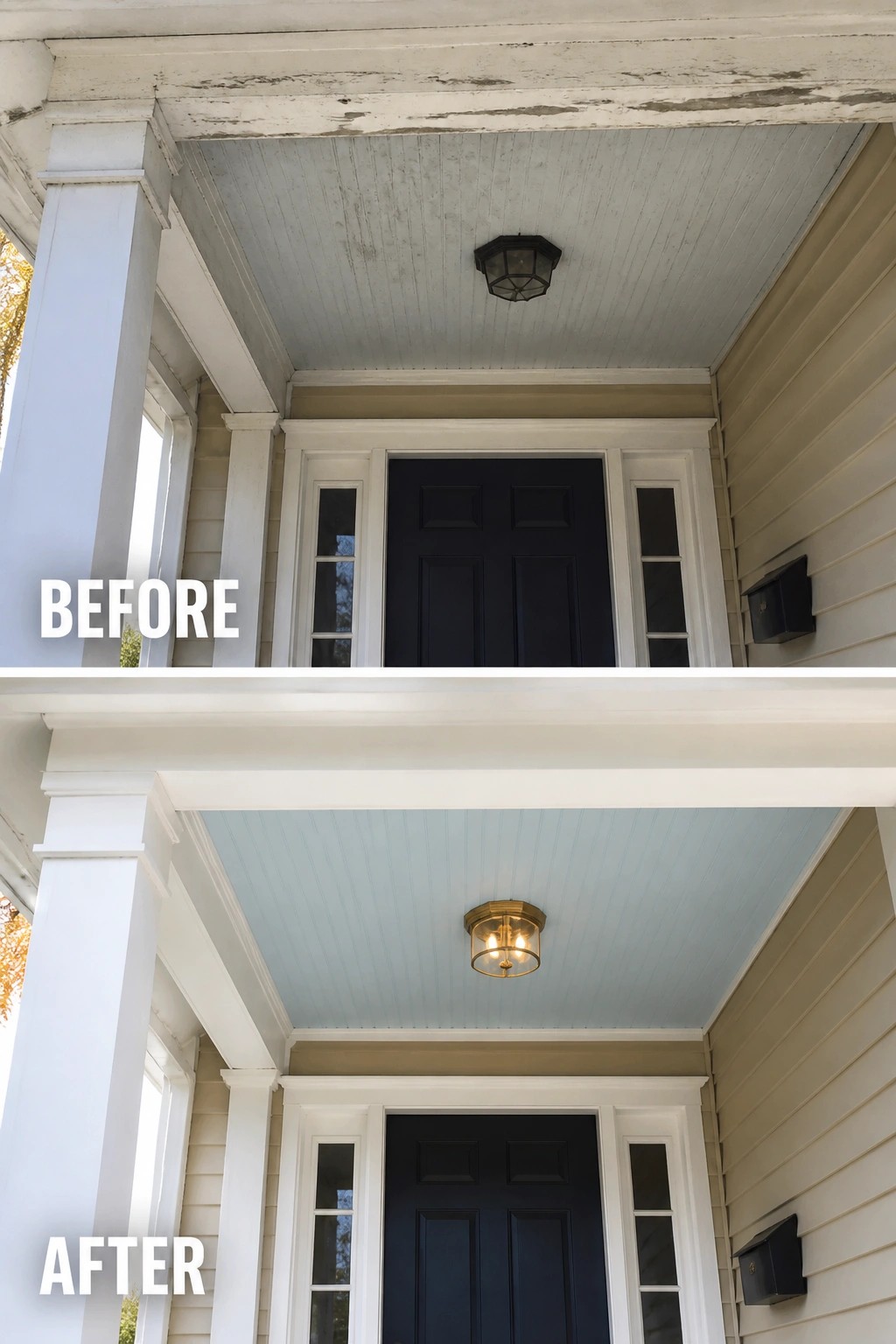
A worn porch ceiling often makes the whole front entry look tired, even when the rest of the house is in good shape. A fresh coat of light paint on the ceiling plus a new light fixture can change that quickly and keep the focus on the door instead of the peeling finish above it.
This approach works best on covered porches where people stand and look up. Use an exterior paint made for ceilings, pick a soft color that bounces light down, and choose a fixture that fits the scale of the space without blocking the view of the door.
Add Trim To Frame The Front Entry
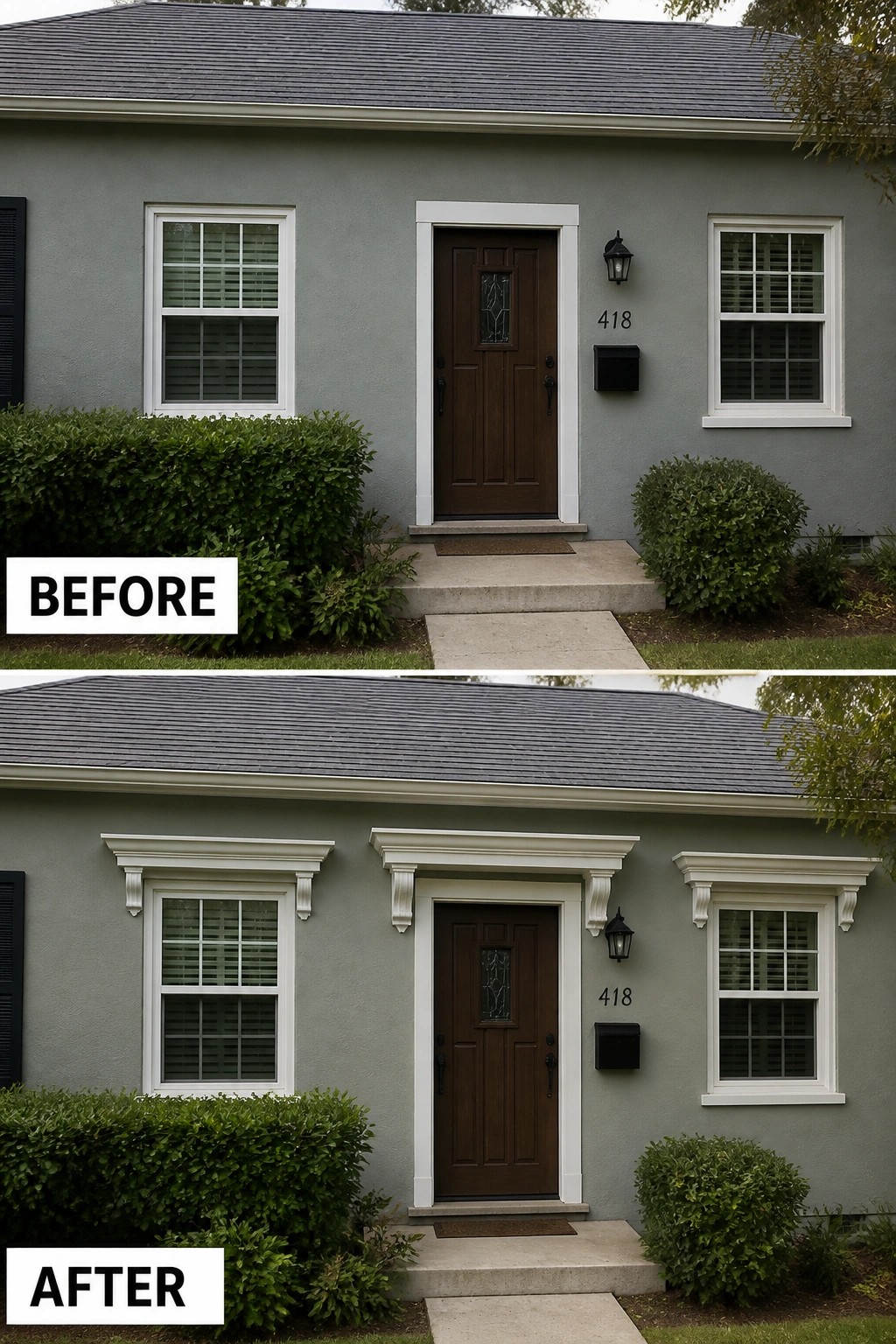
A plain front entry often looks unfinished because the windows and door sit flat against the siding with no detail to separate them from the wall. Adding trim and small pediments above the openings gives the facade structure and draws attention to the door without changing the paint color or replacing anything major.
This idea suits homes with simple exteriors where the architecture feels basic. Start with the door surround if you want the biggest impact, then add matching trim to the windows on either side. Keep the scale modest so the new details fit the size of the house rather than competing with it.
Use Lighting To Brighten A Dark Front Entry
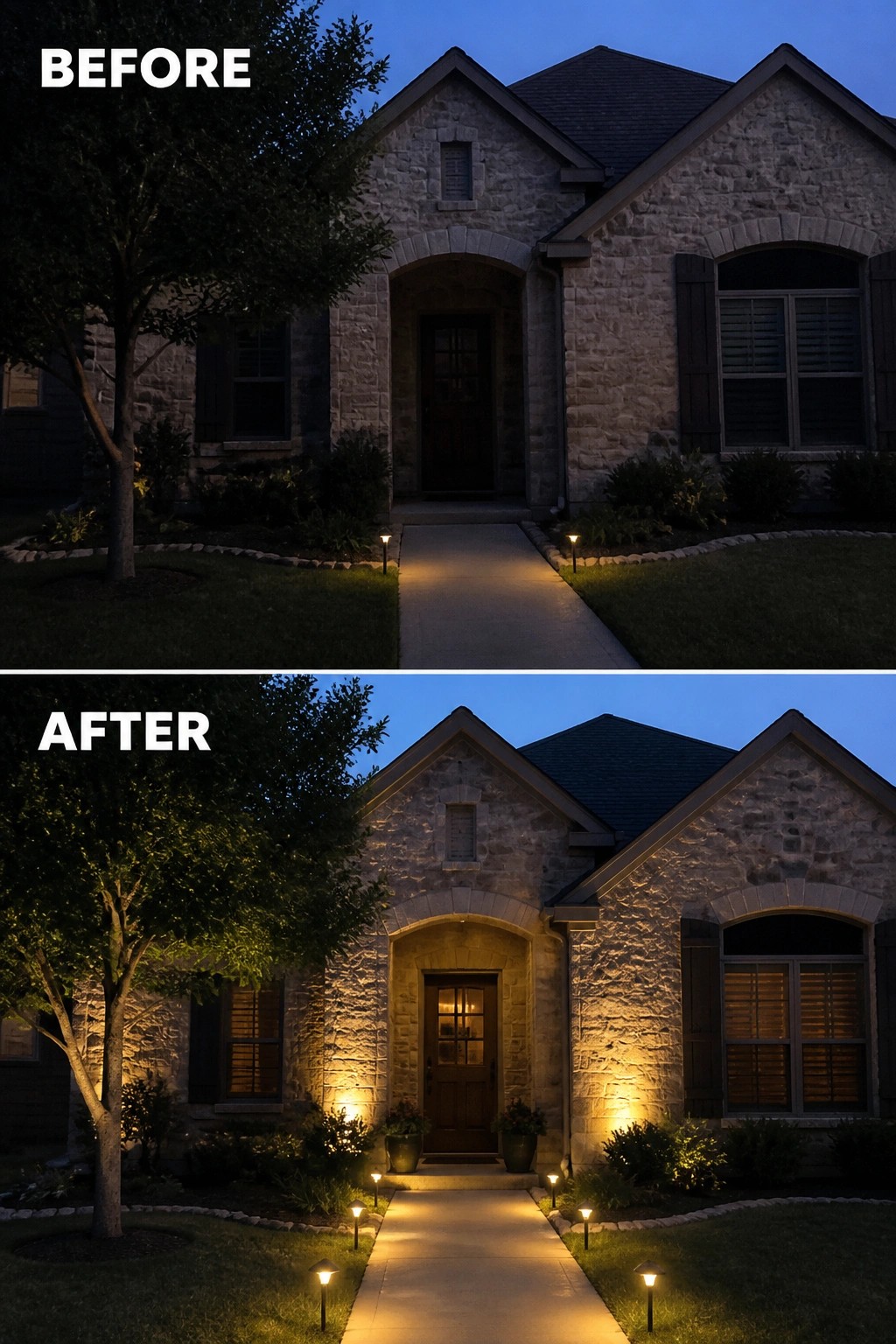
A front entry can look flat and uninviting when it only has a couple of small path lights. In this case the main change came from adding lights that wash across the stone walls and frame the door, which instantly makes the whole entrance feel more open.
This idea works well on houses with textured exteriors like stone or brick. Aim a few fixtures at the main architectural features and keep the path lights simple so they guide people without overpowering the space. It is an easy update that improves safety and makes the entry feel more welcoming at night.
Refresh Worn Porch Flooring With Paint
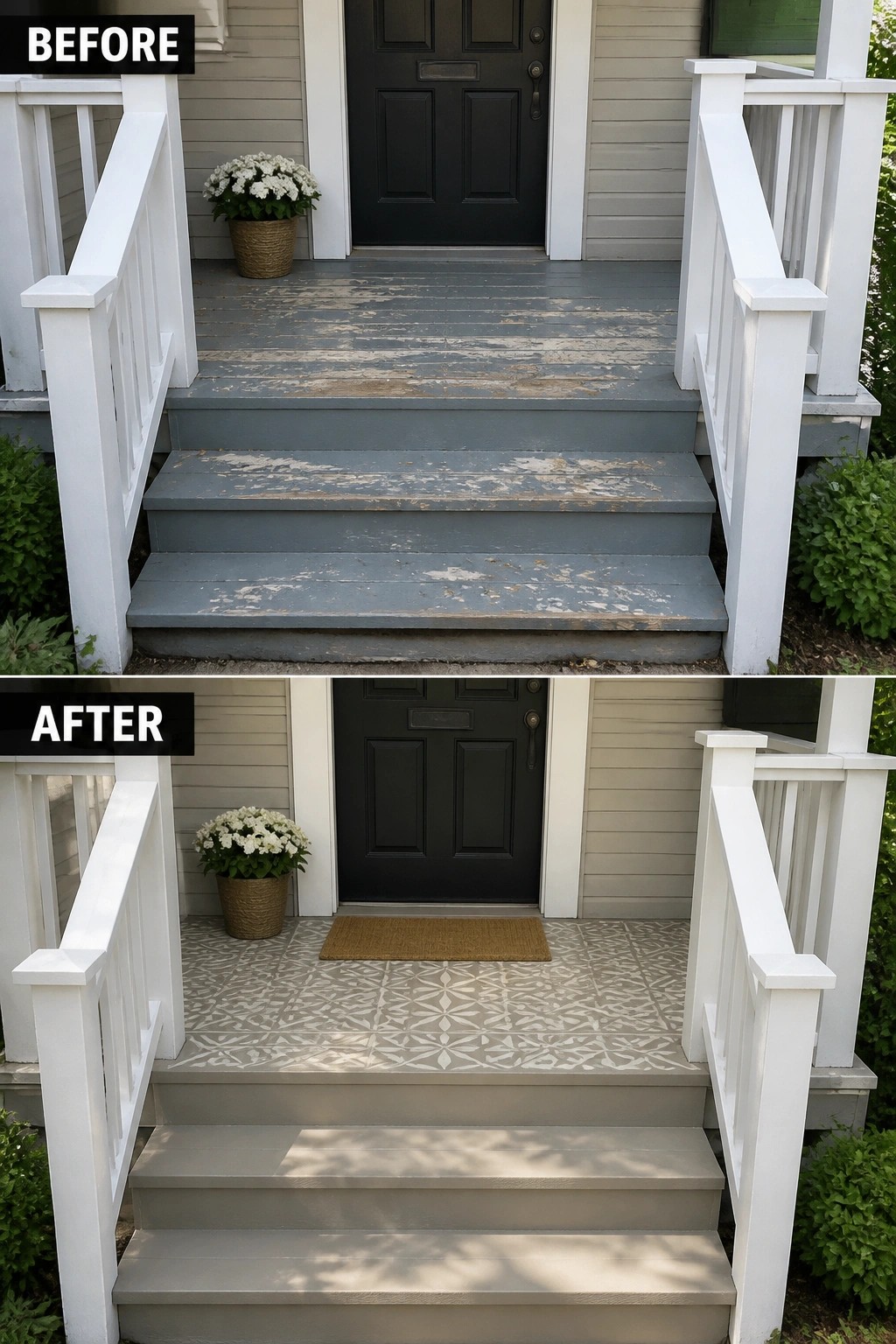
A peeling porch floor and scuffed steps make the whole entry look neglected even when the rest of the house is fine. In this case the fix was straightforward. The old surface was covered with a simple patterned coating and the steps were repainted in a solid color that matches the house trim.
This approach works well on older homes where the porch boards are still sound but the finish has failed. Clean the surface thoroughly first, then use exterior-rated porch paint or a stencil kit meant for decks. Keep the pattern light so it does not fight with the door or railings, and add a plain doormat to mark the entrance.
Give A Bare Porch A Clear Purpose
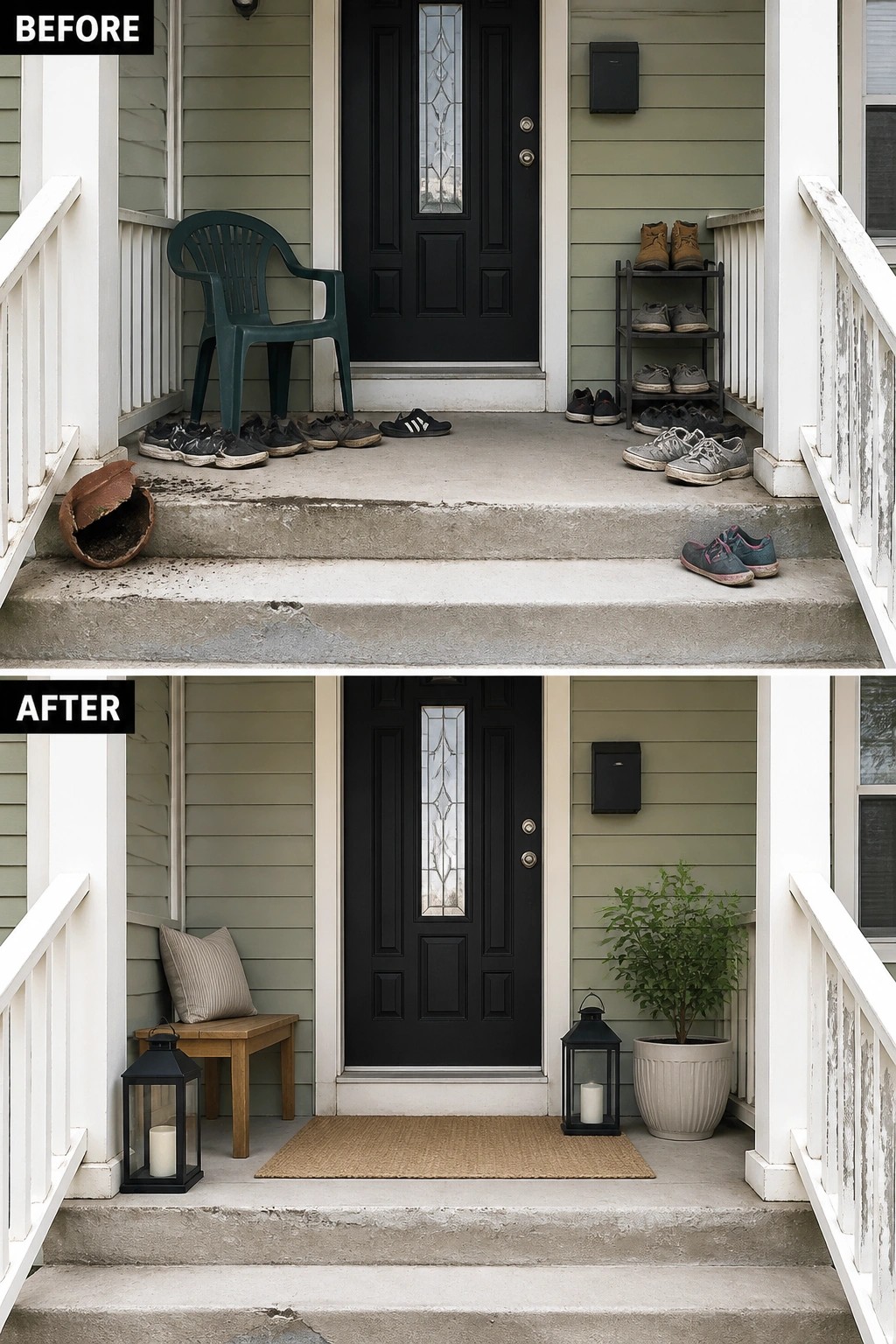
Front porches often collect shoes, chairs, and random items that make the entry feel neglected. Replacing the mess with a small bench, a simple rug, and a couple of lanterns gives the space a reason to exist and makes it easier to keep tidy.
This idea works on most porches because it focuses on function first. Keep the bench narrow, add one or two weatherproof accents, and leave enough room to walk through without stepping around things.
Frequently Asked Questions
Q: What’s a simple way to test a new door color before buying gallons of paint?
A: Grab a few sample pots from the store and paint them on a board you can prop against the door. Live with the look for a few days in different lights. This avoids wasting money on a shade that clashes once it’s up.
Q: How do I keep new entry lighting from looking cheap?
A: Stick to one or two fixtures with clean lines and warm bulbs. Mount them at eye level on either side of the door so the glow hits the walkway evenly. Skip anything with too many dangling parts that collect dust and spiders.
Q: Can I refresh the front step without replacing the whole thing?
A: Sweep it clean then apply a concrete stain in a single coat that matches your trim. Let it dry fully before walking on it. The change makes the entry feel solid and pulled together right away.