

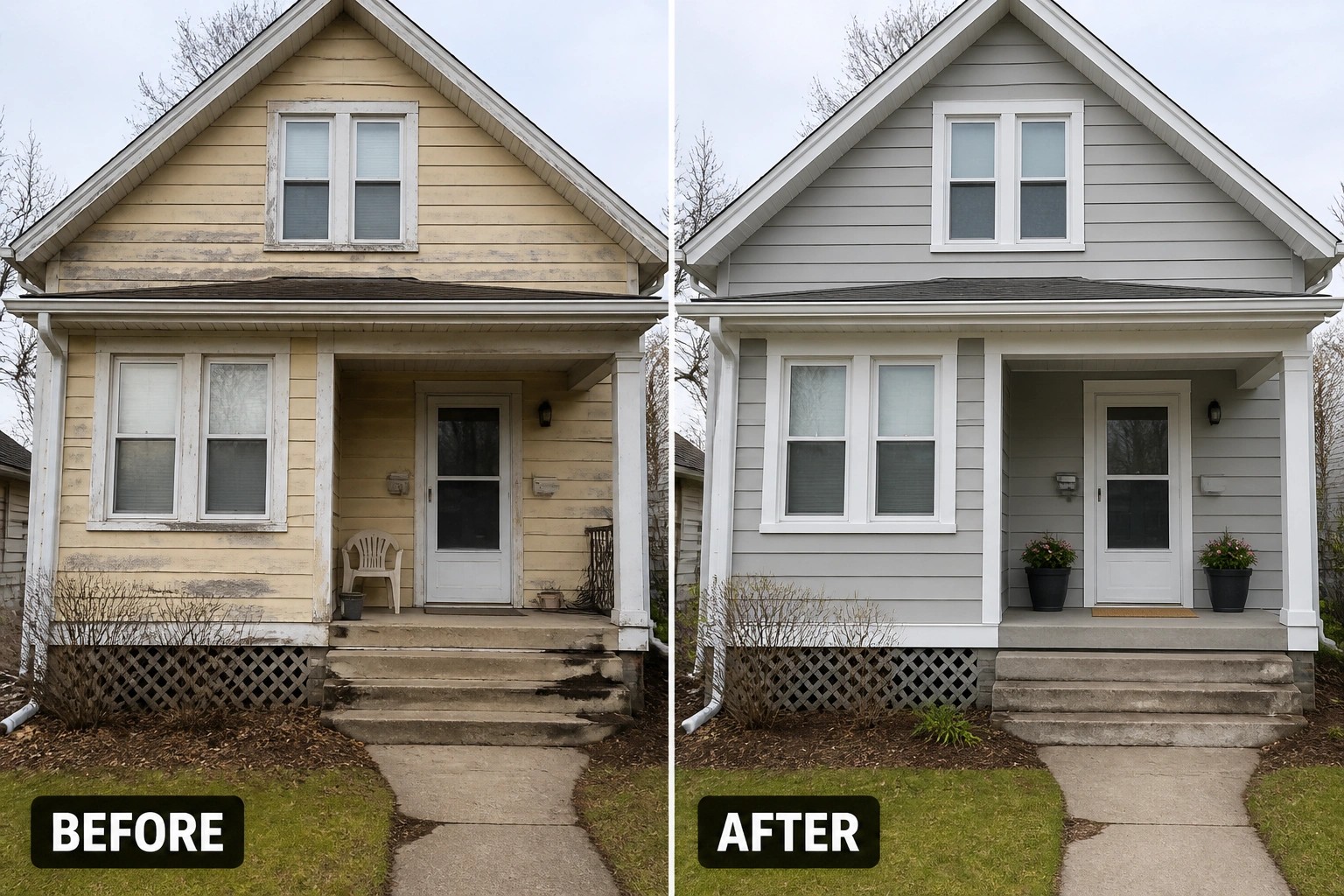
I have noticed that the front of a house often shows wear through faded paint or uneven details long before any larger work feels necessary.
Simple updates to siding, trim, or the entry can shift how the whole property reads from the street.
One change I always consider first is the entry area.
It tends to pull the rest of the exterior together in a way that feels more intentional over time.
I have found that paying attention to balance and cleanup outside helps a home look looked after even when the budget stays modest.
Refresh The Exterior With Paint And Balanced Planters
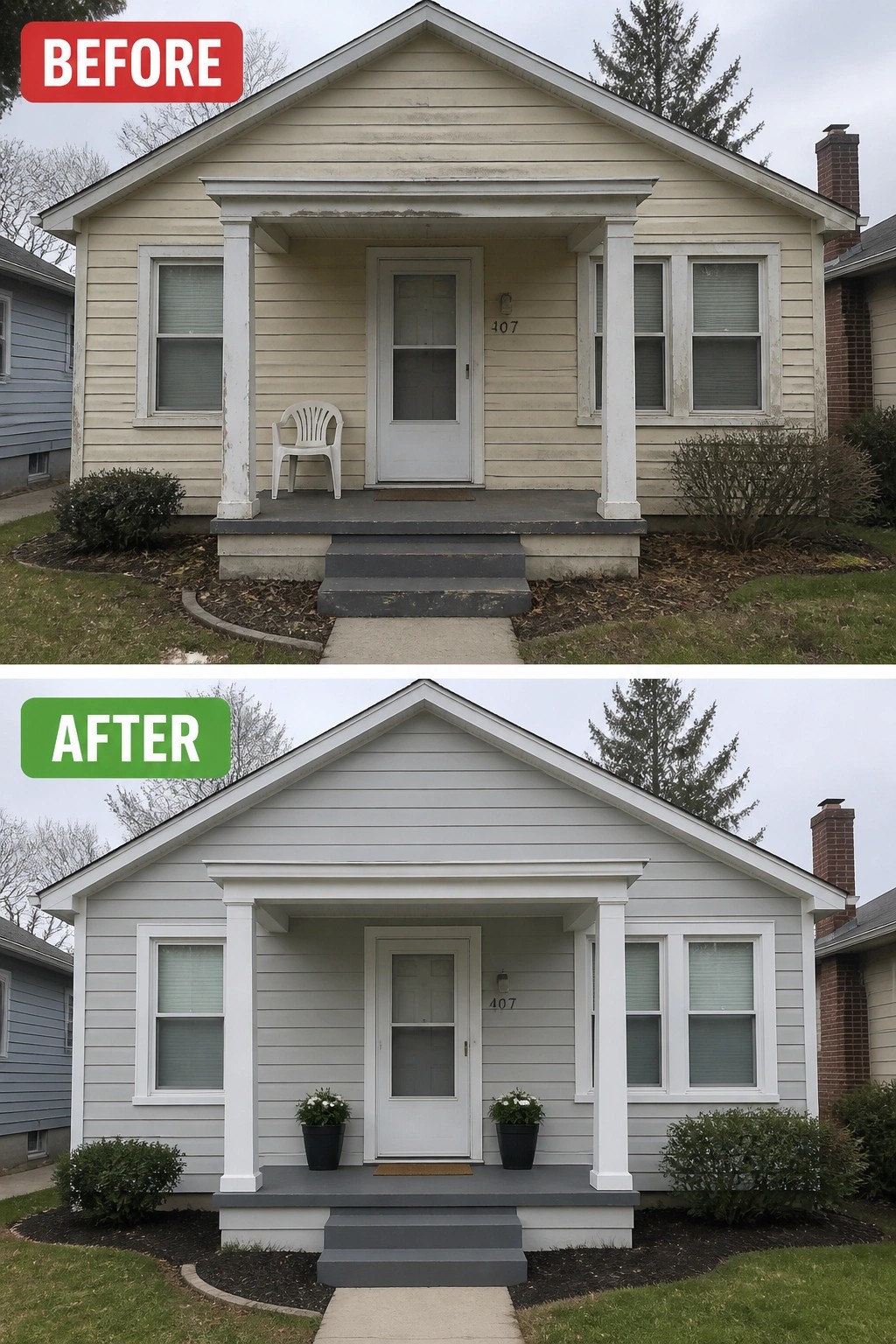
A simple exterior paint update can make an older house look much more put together. Here the faded beige siding was changed to a soft gray that works better with the white trim and dark steps. Adding two matching planters on either side of the door also helped the porch feel more balanced and intentional instead of empty.
This approach works well on smaller homes where the front is mostly porch and siding. Pick a paint color that ties in with the roof and trim, then choose planters in a similar tone or material so they do not compete. Keep the number of accents low so the entry stays easy to maintain.
Paint Brick Exteriors For A Cleaner Look
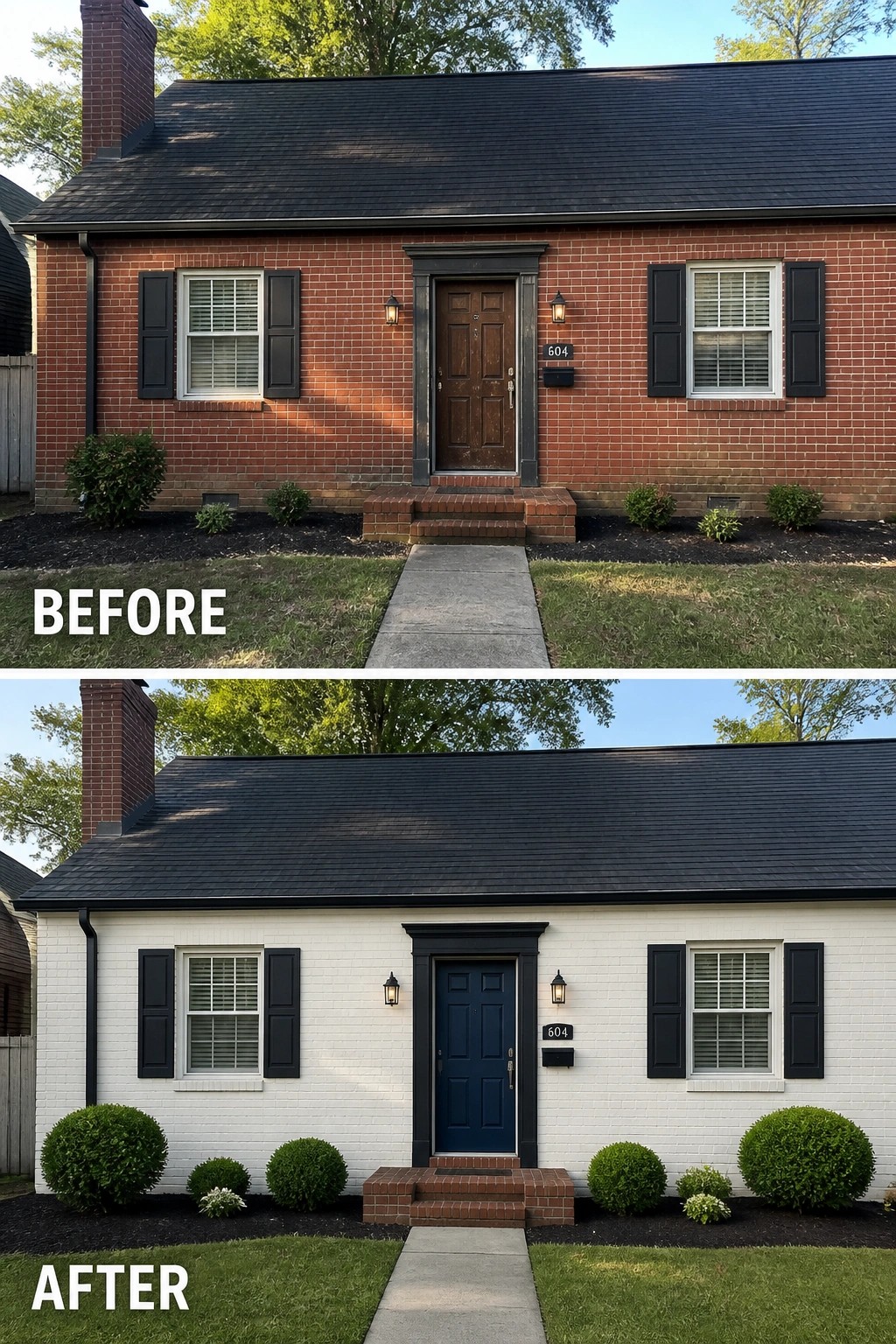
Painting brick can shift the entire feel of a house without touching the structure. Here the red brick was covered in white and the door color was changed from brown to blue. The result reads lighter and more current while the rest of the trim stayed simple.
This idea suits older brick homes that feel heavy or dated. Pick masonry paint and keep the new color in the same tone family as your roof and trim so the change stays balanced. Test a small patch first and focus on the main facade before deciding if the whole house needs it.
Paint The Front Door A Strong Color
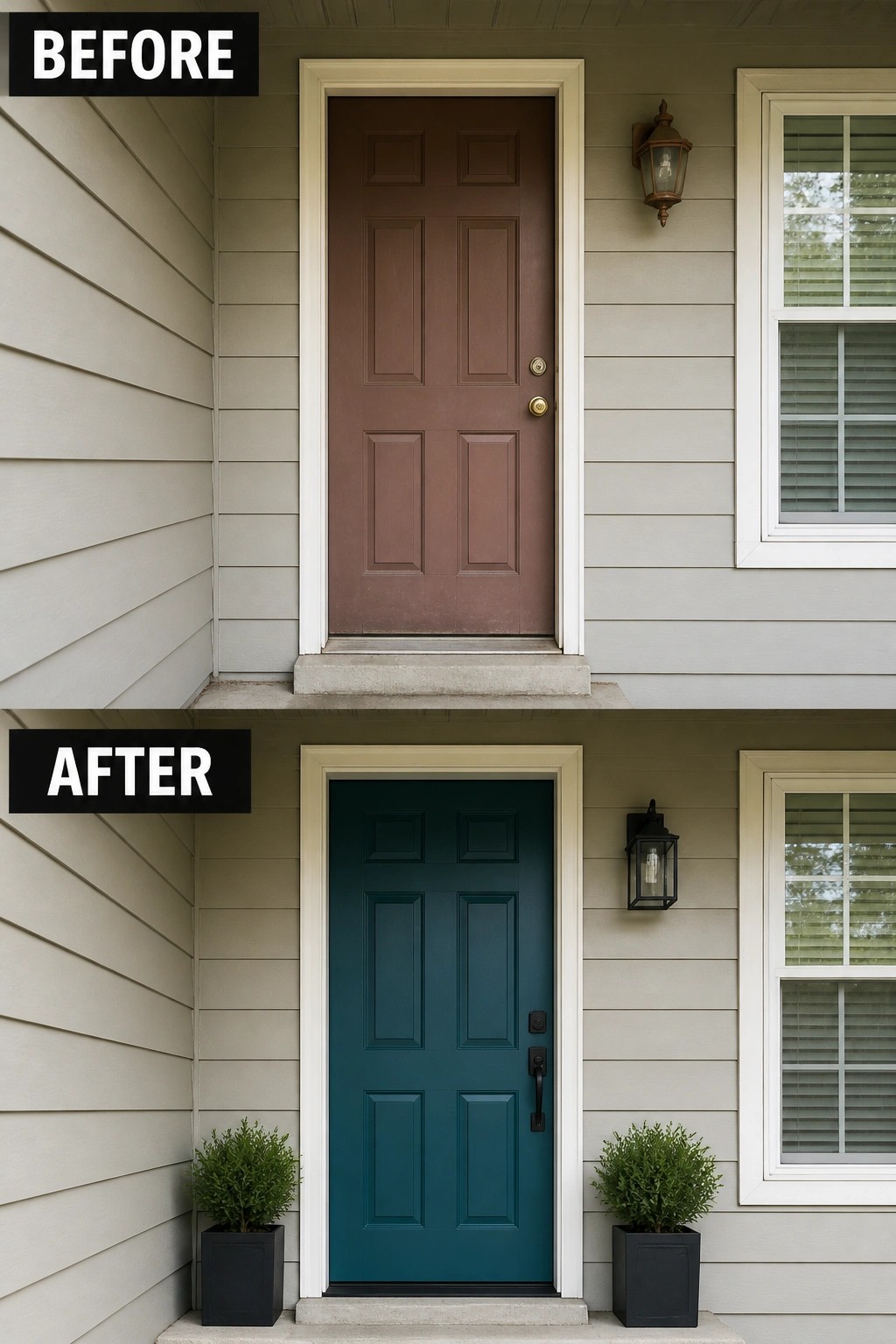
A plain brown door can easily disappear against siding that is close in tone. Switching it to a deep teal gives the whole front a clear focal point and makes the entry feel more intentional. Adding two matching planters on either side helps balance the width and keeps the change from looking too sudden.
This approach works best on simple facades where you want quick impact without major construction. Choose a color that contrasts with both the siding and trim, then keep the rest of the area uncluttered so the door stays the main feature. Start with a good cleaning and a fresh coat of exterior paint before adding anything else.
Add Shutters And Window Boxes To Balance A Facade
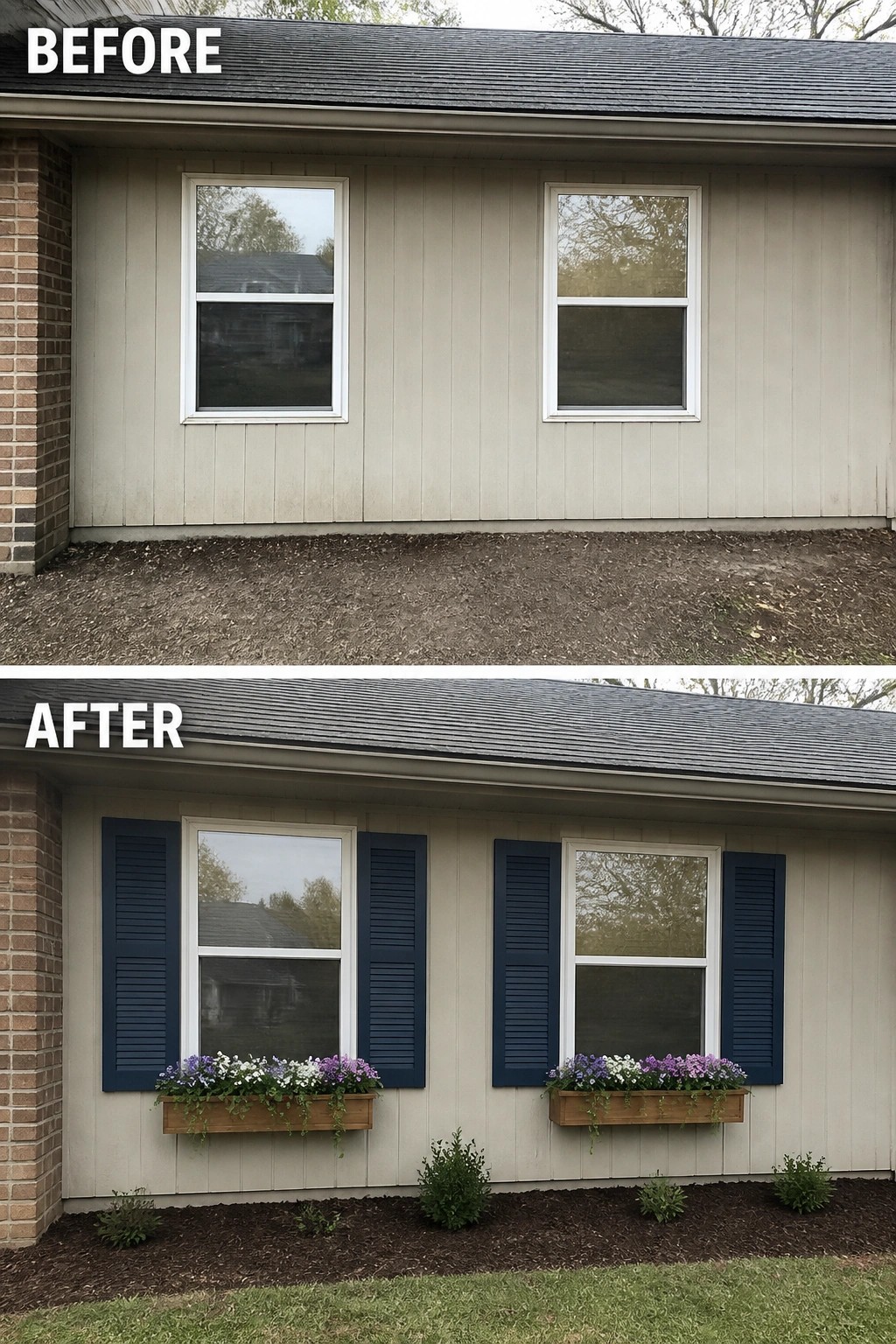
Shutters and window boxes can give a plain exterior more shape and presence without a full repaint or siding change. The before photo shows two bare windows on flat siding, while the after adds dark shutters on both sides and simple wooden boxes with flowers directly underneath.
This idea suits homes where the windows feel too small or lost against the wall. Match the shutter color to your trim or front door, keep the boxes narrow so they do not crowd the siding, and choose plants that stay neat with little upkeep.
Give Foundation Planting Some Structure
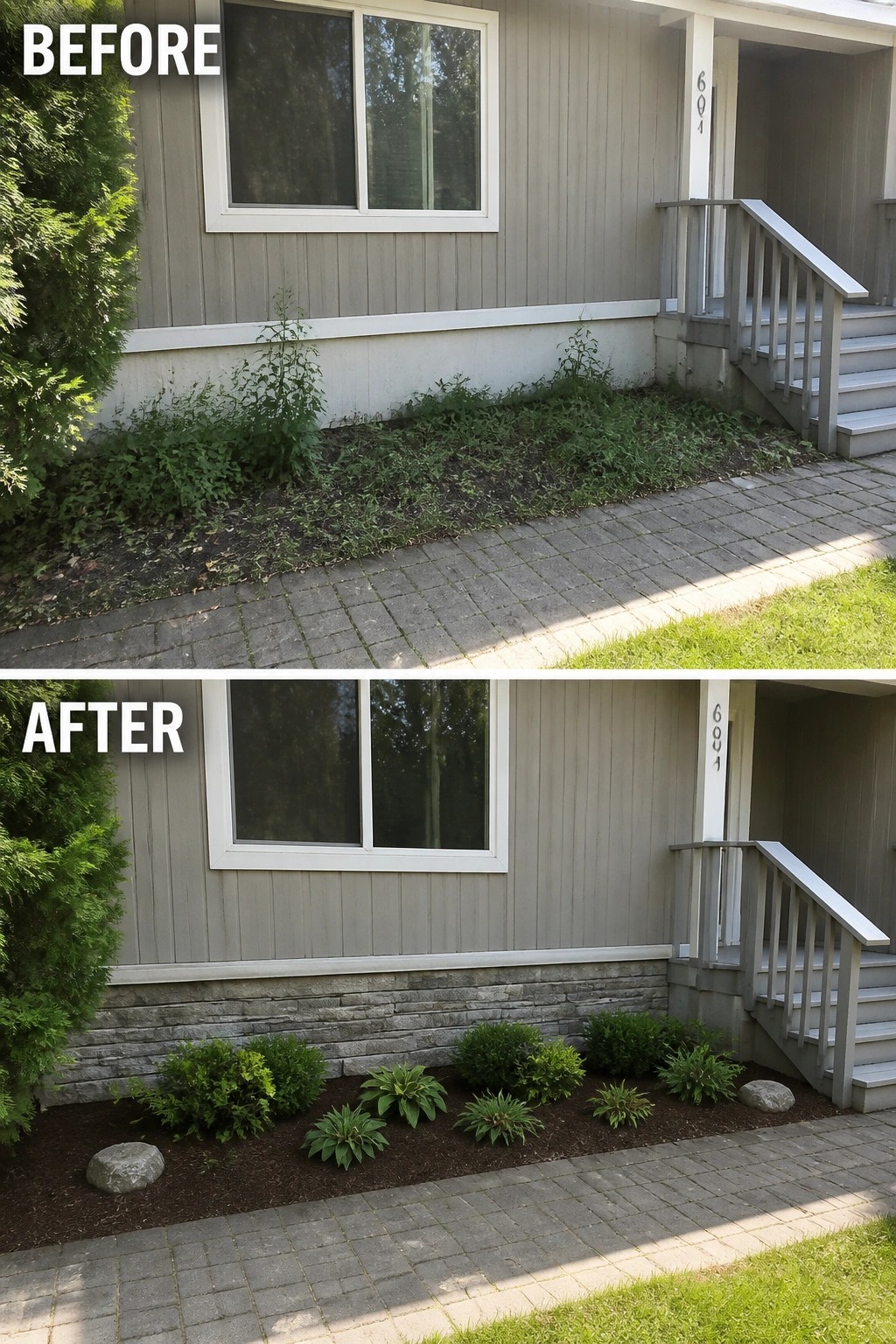
The before photo shows a messy strip of weeds and bare dirt right against the house. In the after, that same area has been cleaned up with mulch, a few simple shrubs, and a row of low plants that actually look intentional. Adding the stone veneer along the base also helps tie everything together and makes the whole front feel more finished.
This approach works well on houses where the foundation sits low and looks plain. Start by pulling out the weeds and adding a clean edge, then choose a handful of shrubs that stay compact. Mulch keeps things tidy and cuts down on future weeding, so the beds stay looking good with less work.
Update The Garage Door For Better Curb Appeal
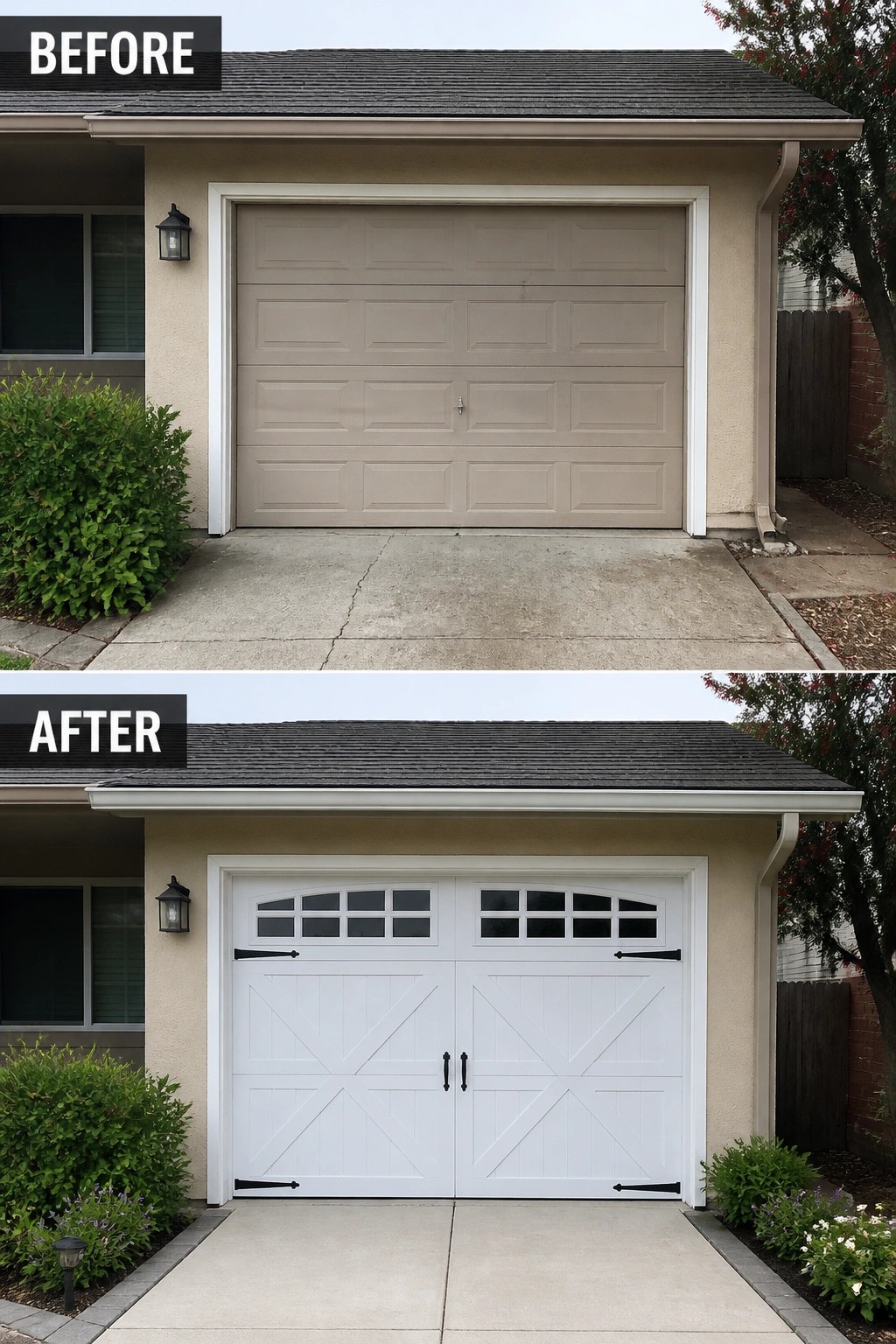
A plain garage door can make the whole front of a house feel flat. Switching from a solid beige door to a white one with divided windows and black hardware gives the facade more shape and contrast without any major construction.
This idea works well on houses where the garage takes up a large part of the front view. Keep the new door color simple so it does not fight with the rest of the siding, and match the hardware finish to other exterior details like light fixtures or railings if you have them.
Add Balance With Matching Planters On Either Side Of The Door
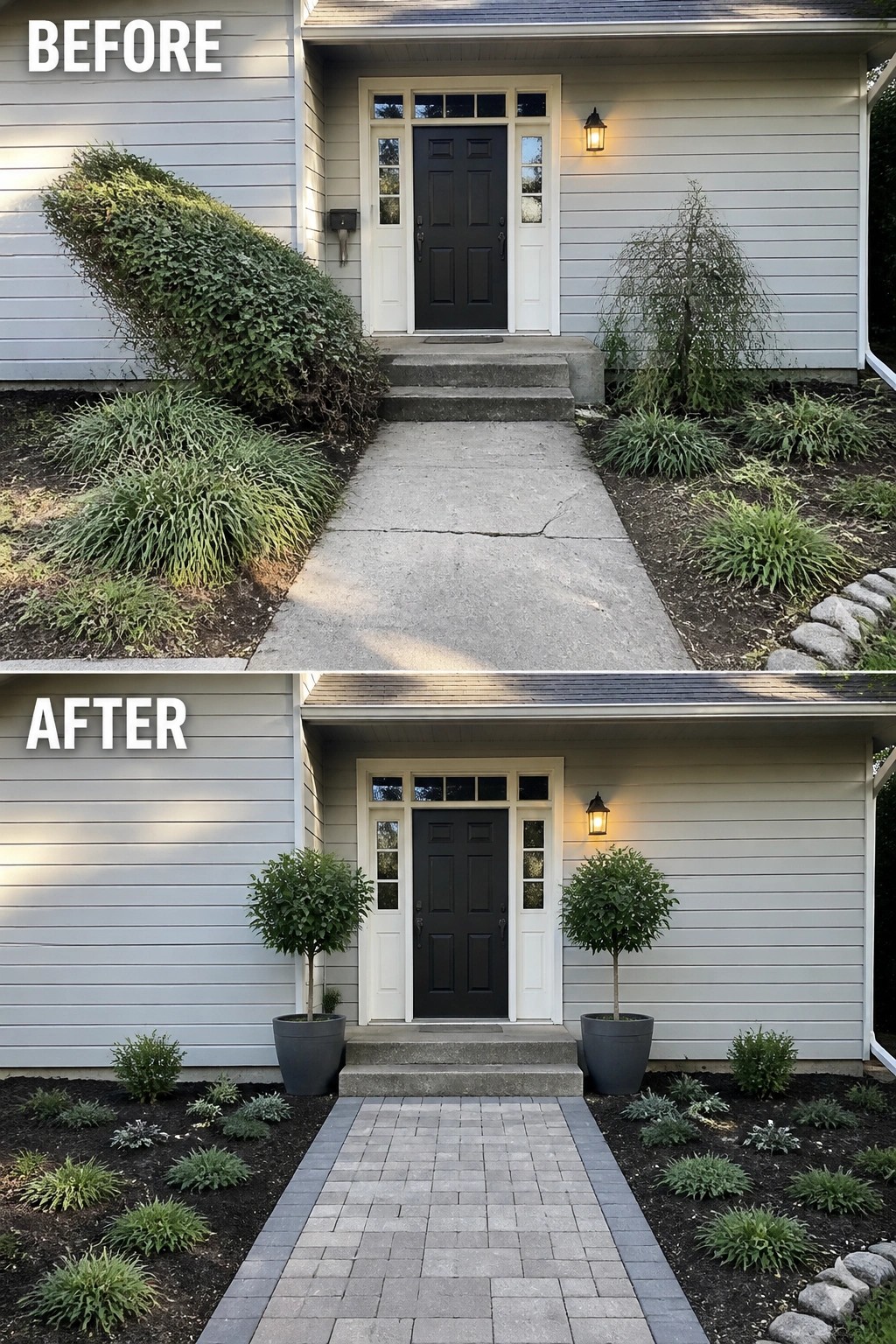
The front entry looked uneven because the planting on the left had grown large and wild while the right side stayed sparse. Replacing that overgrowth with a pair of matching potted trees created a simple frame around the door and made the whole facade feel more balanced.
This approach works well on houses with a centered door and straight walkway. Place the planters at the base of the steps so they sit at a similar height and leave enough room to walk between them. Keep the rest of the beds low and simple so the two containers stay the main focal point.
Add Contrast With Paint And Trim To Refresh A Plain Exterior
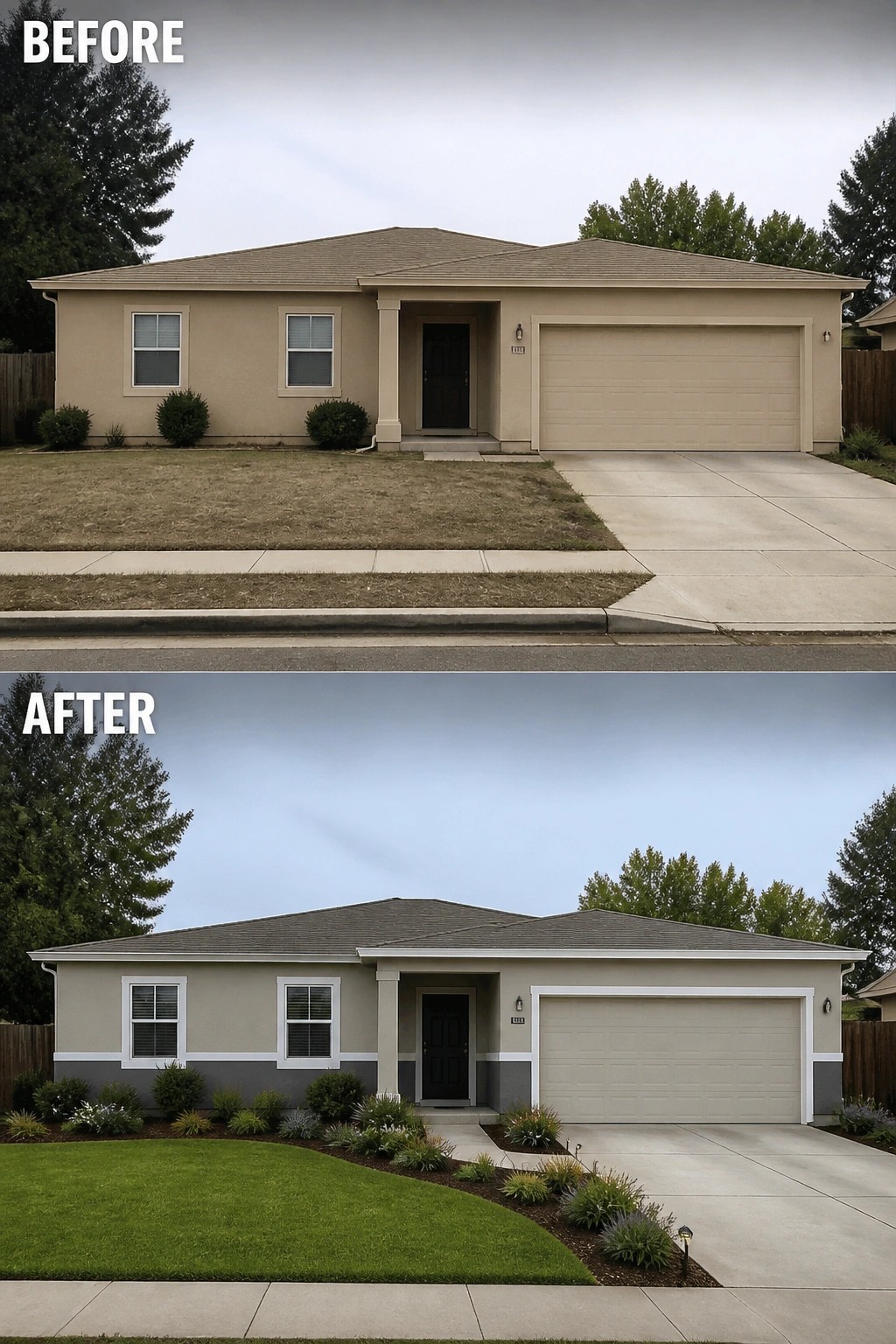
A simple change in paint and trim can make a flat-looking house feel more balanced without major construction. In this case the beige walls gained a darker base color along the bottom third, while white trim was added around the windows, garage door, and foundation line. The result gives the facade clearer shape and makes the entry feel more intentional.
This approach works well on single-story homes with large unbroken walls. Focus first on the main horizontal line where the color changes, then add trim to the garage and windows so the eye has places to rest. Keep the rest of the palette simple so the contrast does the work.
Frame The Front Door With Wood Accents
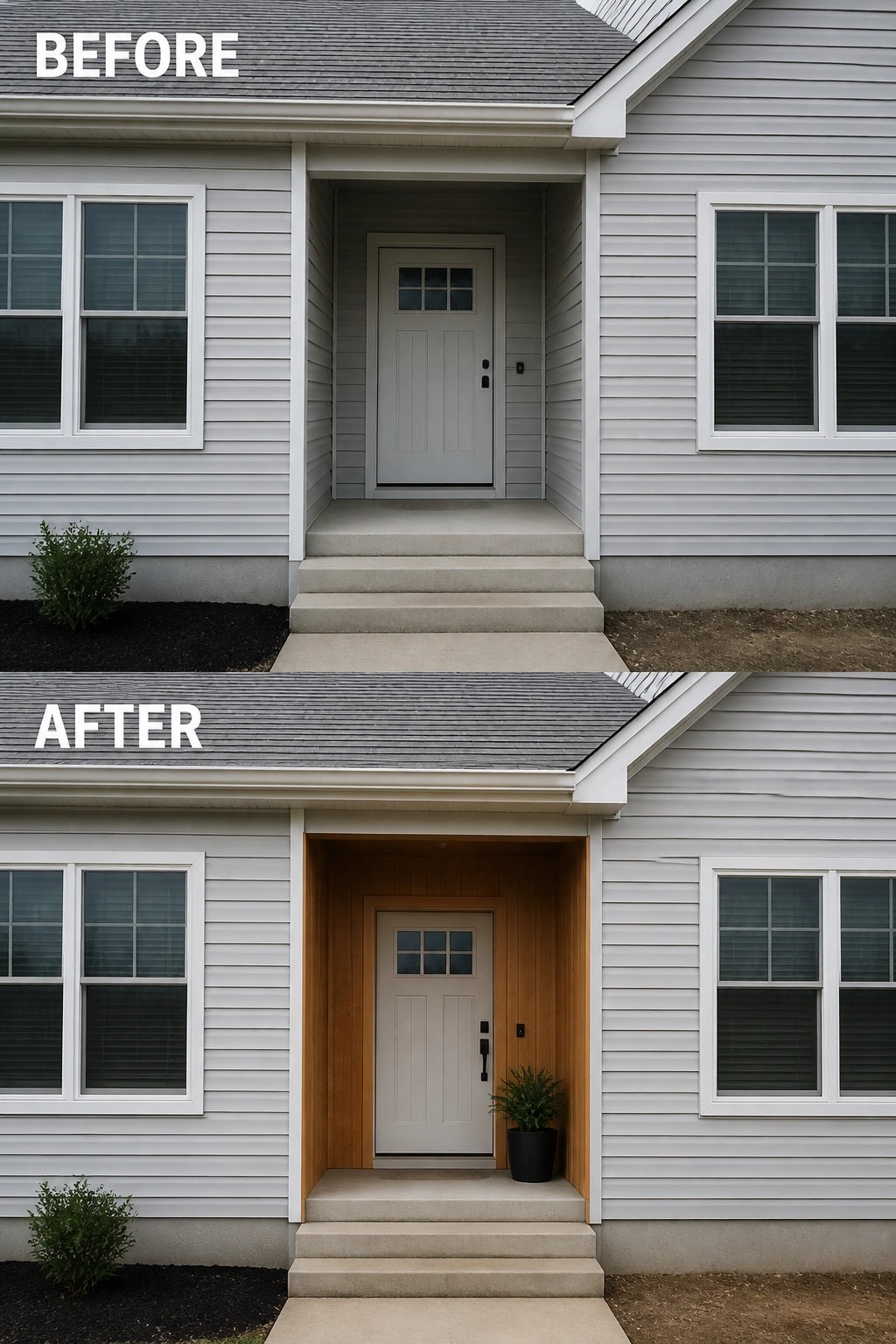
A plain entry can make the whole front of a house feel flat. Adding wood paneling around the door gives the recessed area a clear border and brings in some warmth against the light siding. The change is simple but it shifts how the entrance reads from the street.
This idea works well on houses with basic siding and a recessed door. Keep the wood tone natural so it stands out without clashing, and add one or two plants if the space allows. It is an easy update that does not require changing the whole facade.
Add Shutters To Frame The Windows
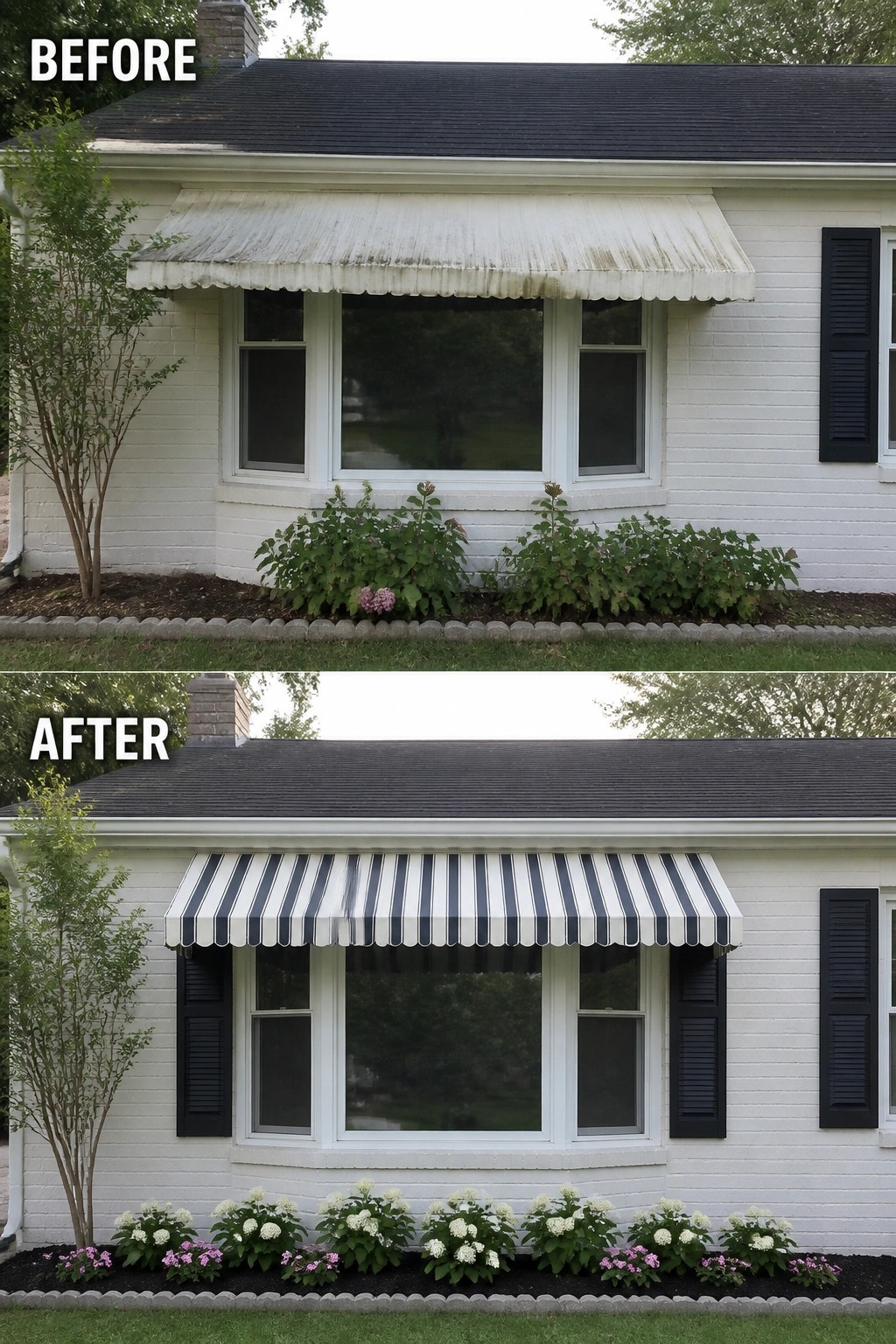
Replacing a faded awning and adding matching shutters on both sides of the window gives the front a much more balanced appearance. The new striped fabric feels crisp, and the black shutters create clear vertical lines that make the window area feel intentional instead of plain.
This approach works well on simple brick or siding homes where the windows need a little extra structure. Keep the shutter color consistent with other trim on the house, and choose an awning pattern that stays simple so it does not compete with the rest of the facade.
Turn An Empty Porch Into A Welcoming Entry
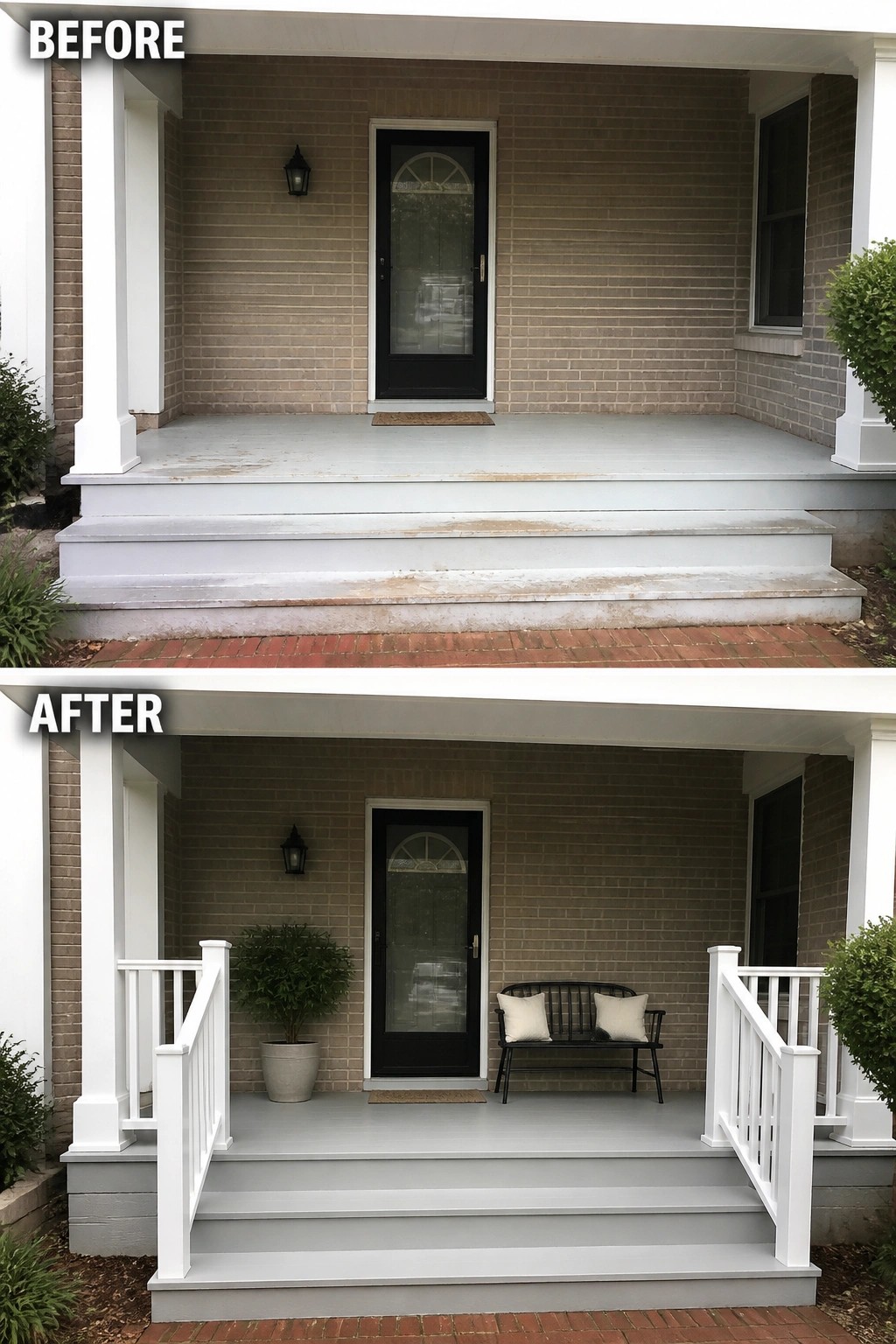
Many front porches begin as open platforms that feel unfinished and underused. Adding railings on both sides creates clear boundaries, makes the steps safer, and gives the whole entry a more settled look. A bench and one large planter then turn the space into an actual sitting area instead of just a walkway.
This idea works best on homes with simple brick or siding where the porch needs a little architecture to feel complete. Choose railings that match the existing trim color, keep seating to a single bench or a pair of chairs, and leave enough open floor space for easy movement. The result is a porch that looks intentional without requiring a full renovation.
Add Shutters And Fresh Trim To Refresh Windows
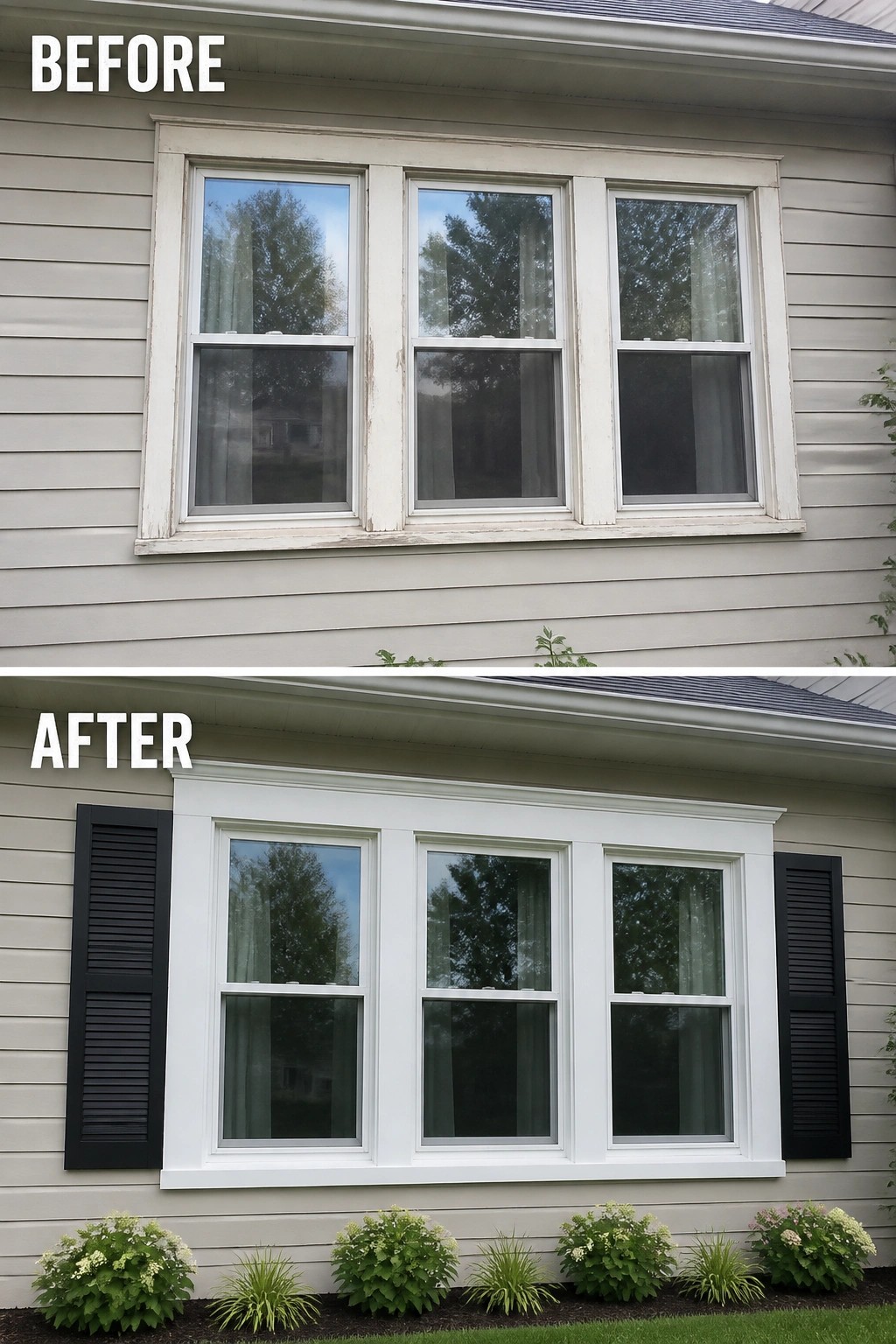
Painting the old trim white and adding black shutters on either side gives the windows a much cleaner outline. The change makes the whole front of the house feel more balanced without any major construction.
This idea works well on homes with several side-by-side windows that look a bit flat. Keep the shutter color simple and high contrast so it frames the glass, and make sure the new trim covers any peeling areas completely before you start.
Update Gutters And Trim For A Fresher Look
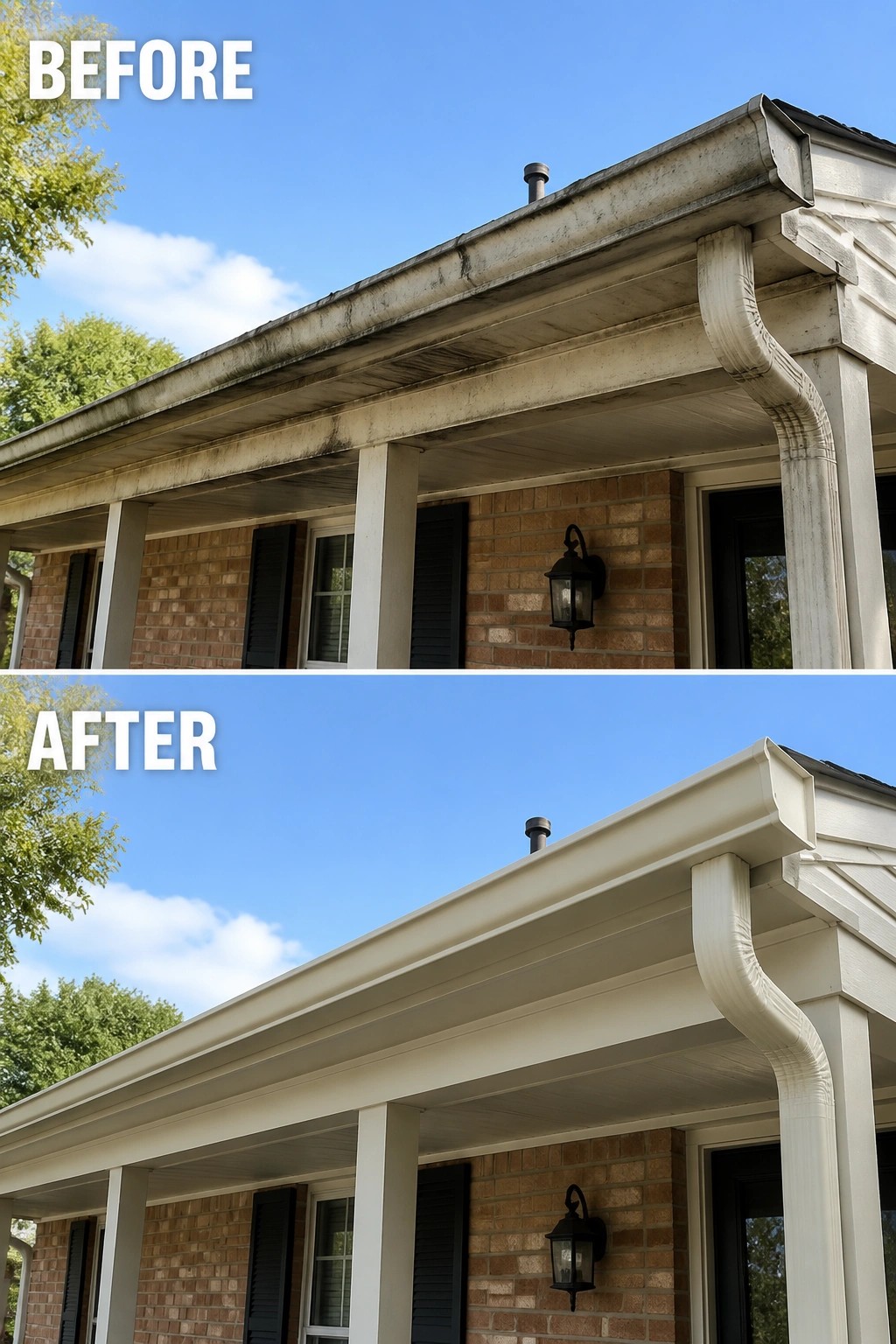
Gutters and fascia often take the worst of the weather and end up looking stained and tired while the rest of the house still holds up fine. Cleaning them up or replacing them with a fresh coat of white makes the roofline look sharp again and brings the whole front together without touching the brick or windows.
This approach works best on homes that just need a surface refresh rather than major repairs. Focus on the areas that are most visible from the street first, and make sure any new sections match the existing trim color so the change feels intentional instead of patchy.
Add Structure With Defined Garden Beds
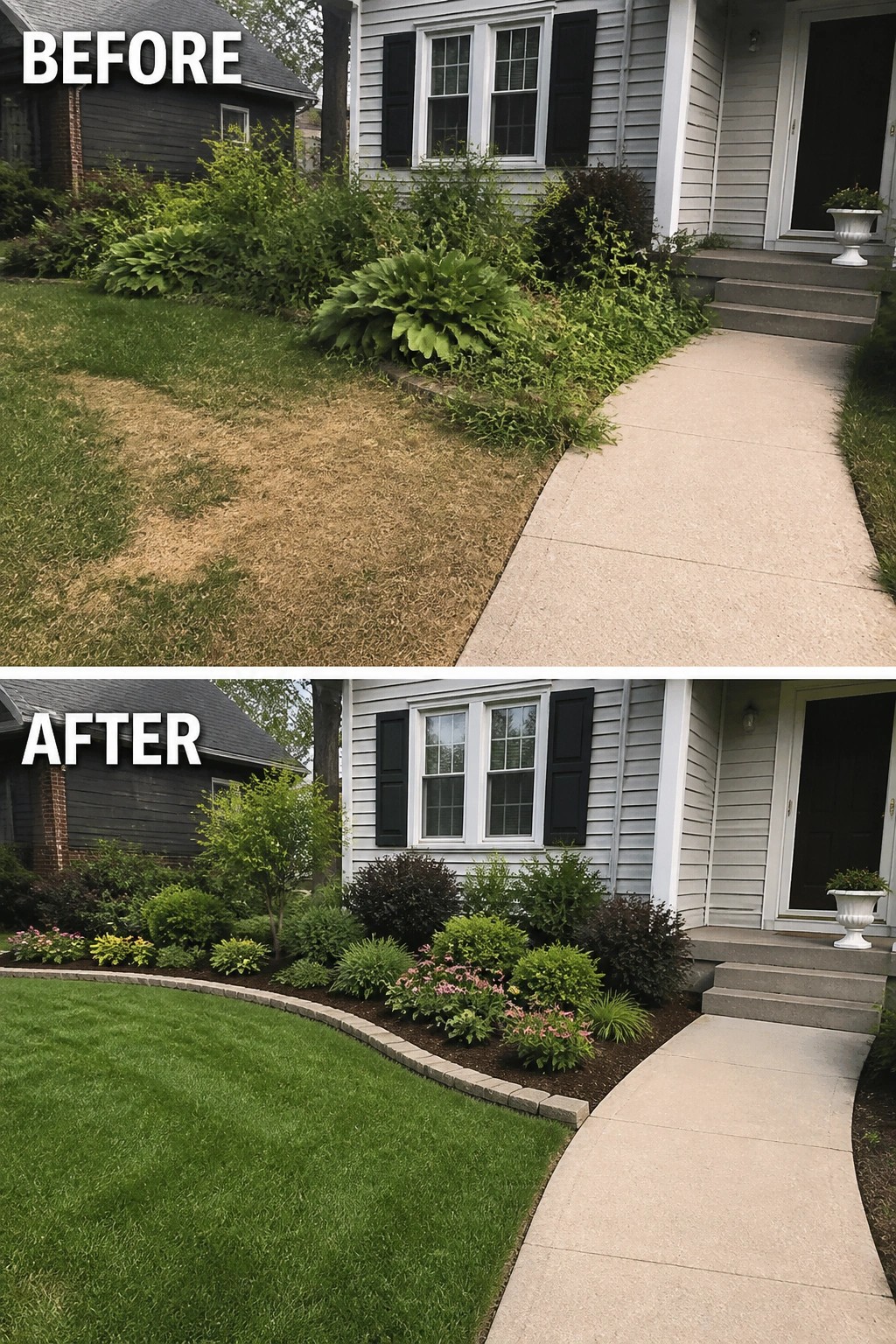
The main change here is turning a messy mix of overgrown shrubs and patchy grass into neat garden beds with a clear edge. Mulch and a simple border keep the plants looking intentional instead of wild, while the lawn gets a smooth curve that follows the walkway.
This approach works well on any house where the foundation planting has gotten out of hand. Start by cutting back the worst overgrowth, then lay out beds that follow the natural shape of your path or driveway. Keep the planting simple, with a few repeated shrubs and lower flowers in front, so the beds stay easy to maintain.
Add Matching Sconces To Balance The Front Entry
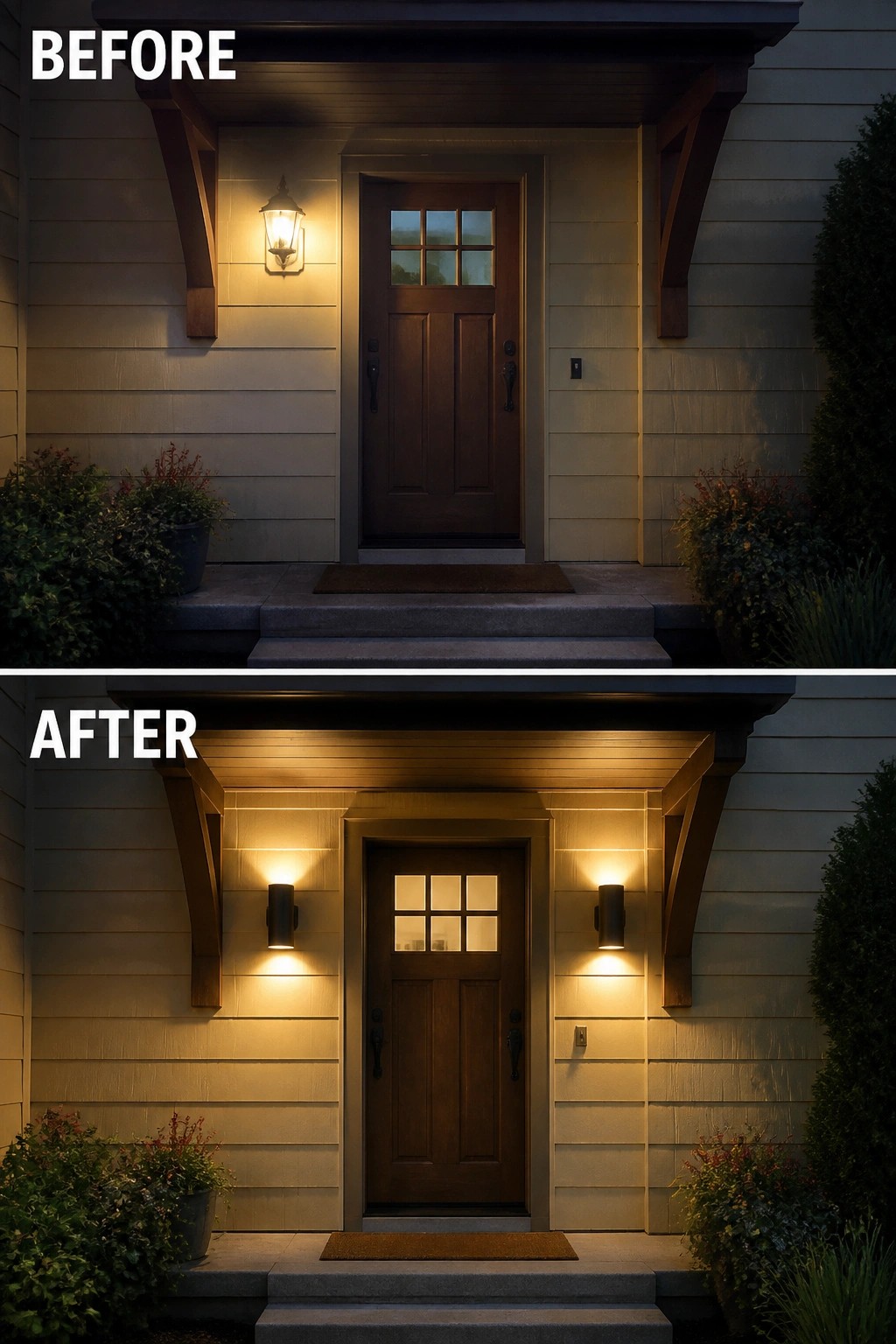
A single light on one side of the door often leaves an entry looking uneven. Adding a matching sconce on the opposite side creates symmetry and makes the whole facade feel more intentional without any major construction.
This approach works well on simple exteriors where the door is the main feature. Place the lights at the same height and choose fixtures that match the scale of the door. Keep the style simple so the lighting supports the architecture instead of competing with it.
Add Outdoor Lighting To Brighten The Front Of Your Home

Many homes look a bit lost at night because the only light comes from a single fixture by the door. Adding a few low pathway lights and small uplights around the beds makes the whole front feel more open and easier to approach. The house itself stays the same, but the added light shows off the shape of the building and the planting without creating harsh glare.
This approach works well on any house that already has decent landscaping but looks flat after dark. Start with a few solar or low-voltage path lights along the walkway, then add one or two small spotlights aimed at key shrubs or the brick area around the entrance. Keep the fixtures simple and the beams soft so the result feels natural rather than staged.
Refresh An Old Fence With Paint And Planting
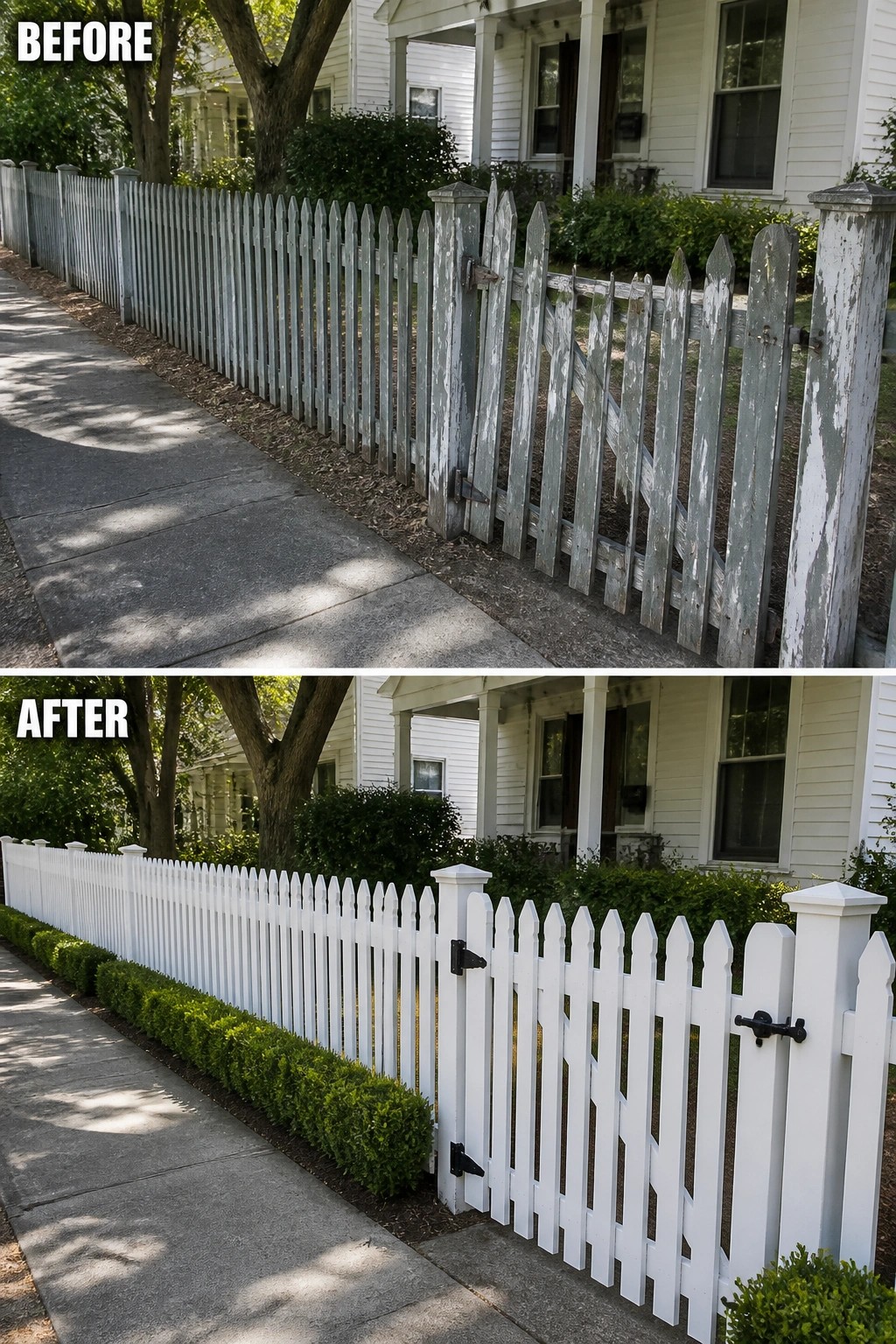
Painting an old fence can make a big difference to the front of a house. In this case the weathered picket fence with peeling paint was updated to a clean white finish, and a low hedge was added along the base to create a neat border between the sidewalk and the yard.
This approach works well on older homes where the fence is still sound but looks tired. Start with a good scrape and primer, then choose an exterior paint made for wood. Keep the planting simple so the fence stays the main feature instead of competing with tall shrubs.
Define The Lawn Edge With Gravel And A Planter
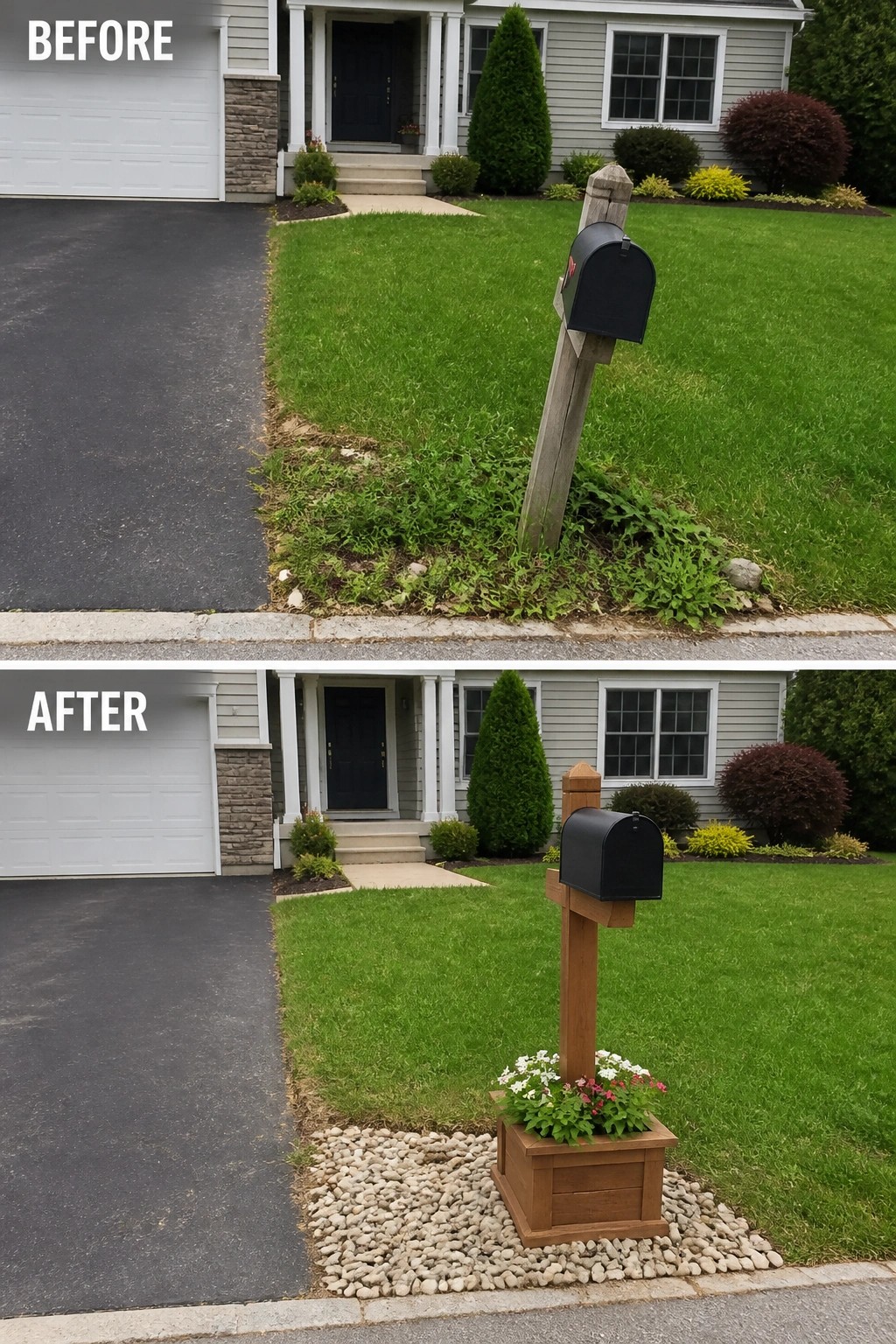
The main change here is how the messy strip of weeds along the driveway got replaced with a simple gravel border and a low wooden planter at the base of the mailbox. That one move gives the whole front edge a finished look without needing new plants everywhere or major digging.
This approach works well on narrow strips where grass is hard to maintain. Start with the border first so the area looks intentional, then add one focal piece like the planter. It suits homes with a straight driveway edge and keeps the mailbox area easy to mow around.
Balance A Plain Entry With Matching Planters
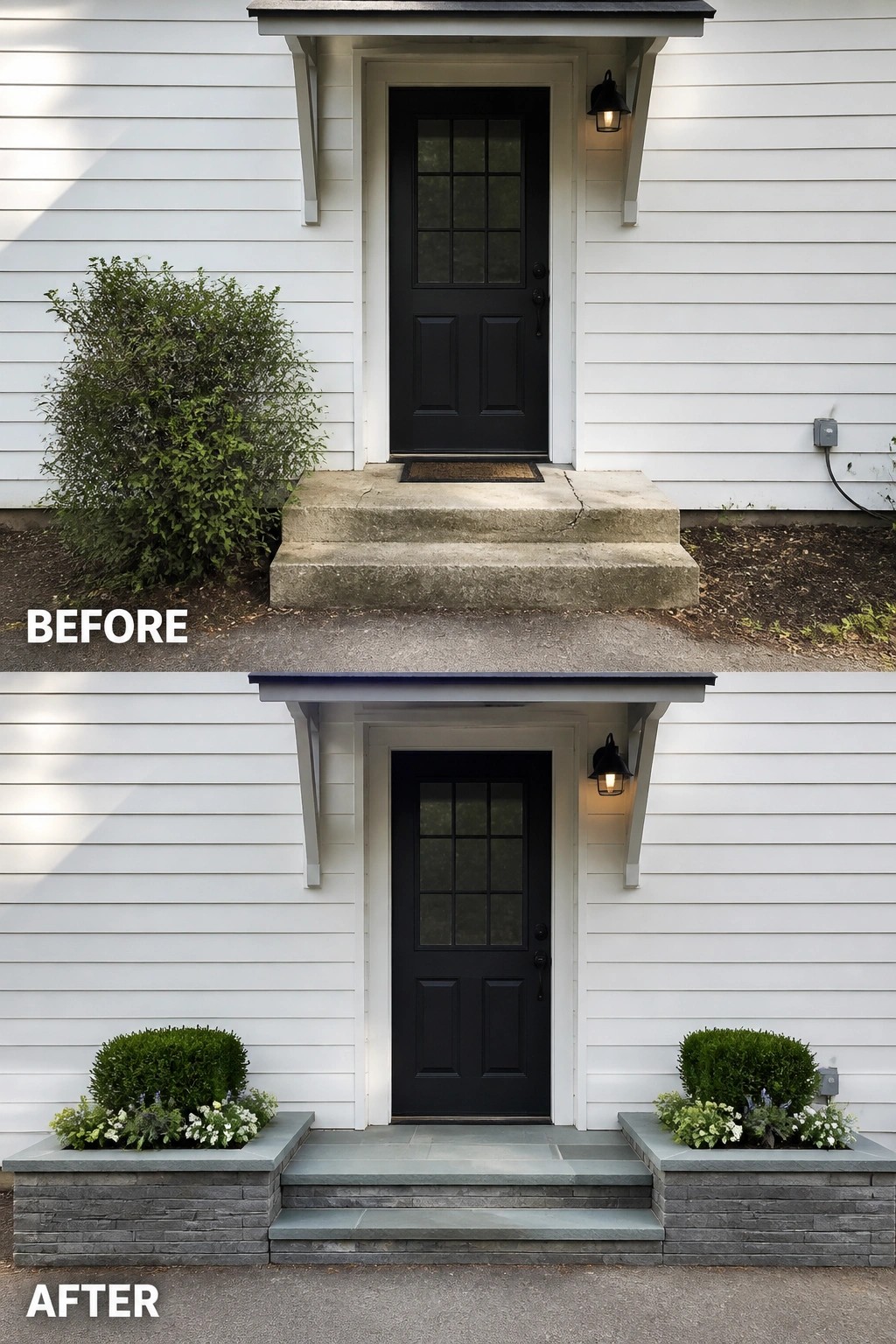
A centered front door can still look a bit lopsided when one side has a lone bush and the steps feel unfinished. Placing matching planters on both sides of the door creates a simple frame that pulls the whole entrance together and makes the facade feel more balanced.
This idea works best on houses with straightforward siding and a centered door. Keep the planters low and use the same material as the steps so everything reads as one clean shape rather than scattered pieces. Start with two sturdy evergreens and a few seasonal flowers so the look stays neat without constant upkeep.
Add Matching Planters To Balance The Entry
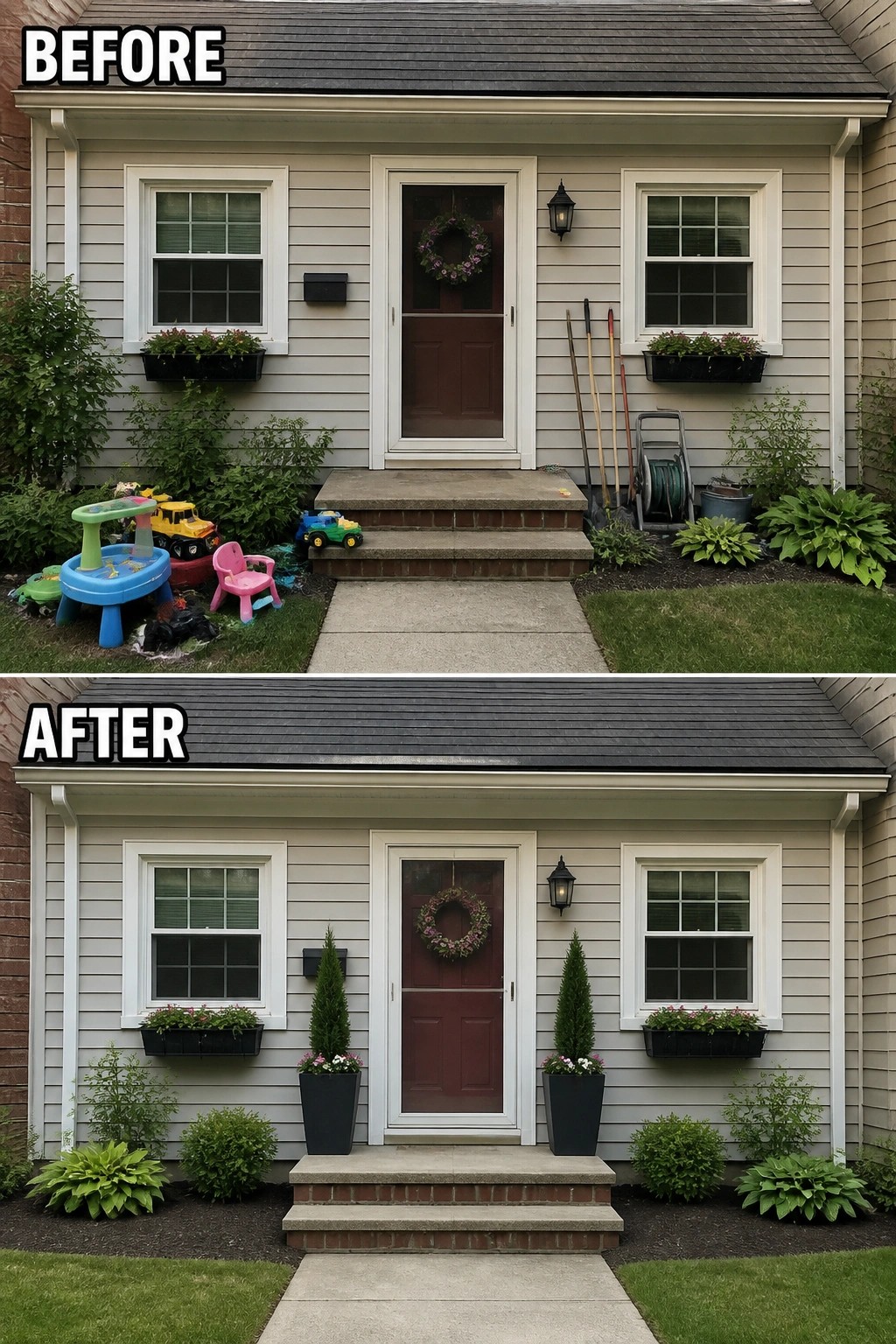
A cluttered front entry can make even a simple house look messy. In this case, the before photo shows toys, tools, and scattered plants around the door. The after version clears everything away and places two tall matching planters on either side of the steps. That one change creates symmetry and draws the eye straight to the door.
This idea works well on houses with a centered door and basic siding. Keep the planters the same size and color, and choose plants that stay neat year-round. Start by removing anything that does not belong near the entrance, then add the planters last so they stand out without competing with other items.
Frequently Asked Questions
Q: How do I decide which refresh idea fits my house best without overdoing it?
A: Walk around the outside at different times and note the spots that look most off balance. Try one small change like new trim paint first to see how it shifts the whole feel. Build from there only if the first step still leaves things looking flat.
Q: Can I combine a few of these ideas without making the front look busy?
A: Pick changes that share similar tones or textures so they support each other. For example add matching planters after you clean the siding. Stop once the eye moves smoothly across the facade instead of jumping around.
Q: What happens if the new elements start to clash with my roof color after I finish?
A: Swap in accessories like light fixtures that pull from both the roof and the fresh updates. Keep testing small additions until nothing stands out in a bad way. Most people find one or two tweaks fix the mismatch fast.