

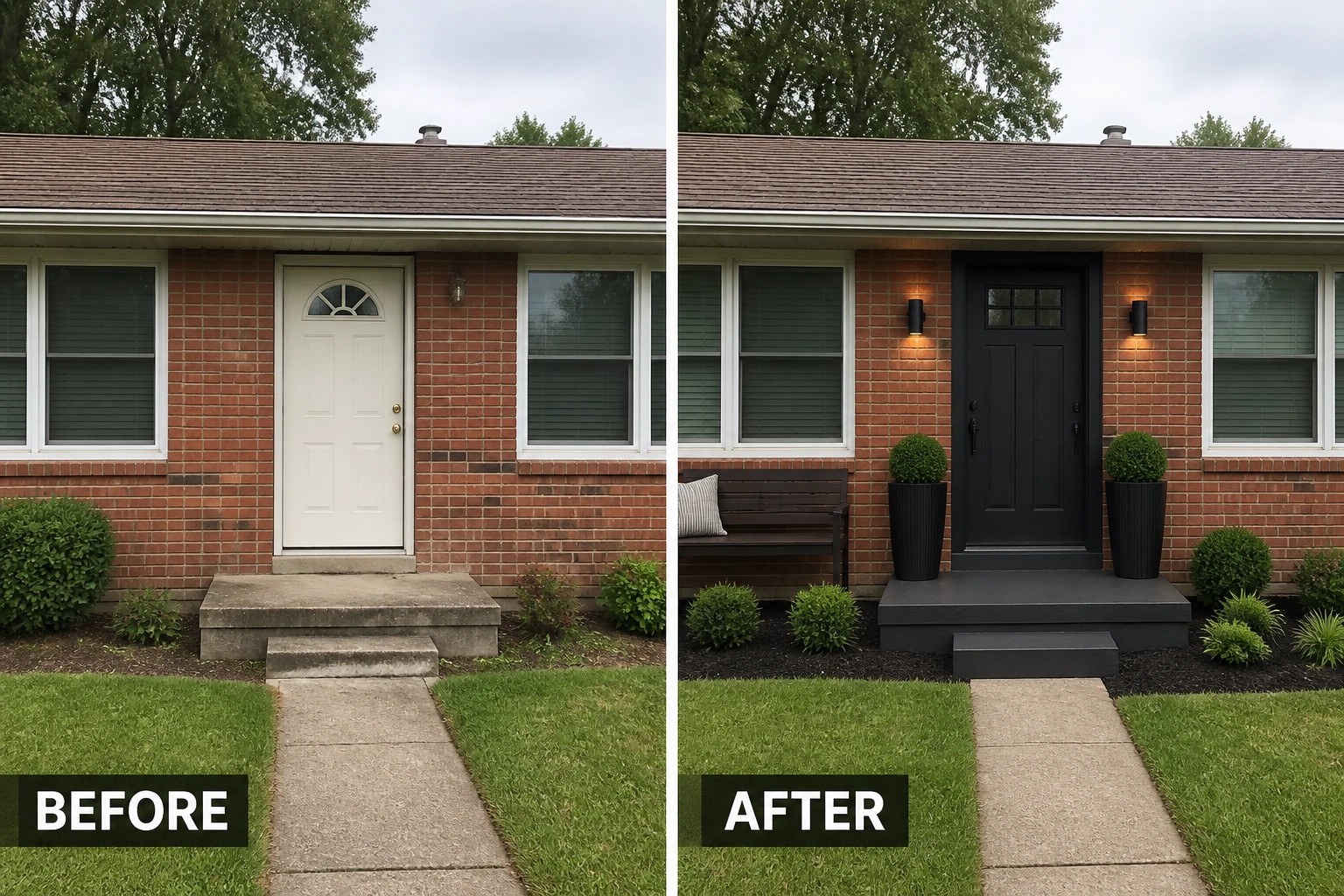
When a brick ranch can read a little flat from the street, a few thoughtful facade tweaks can give it depth and make it look cared for without needing a full renovation.
Contrasting trim, reworked siding patterns, stronger window frames, a bolder door color, or even updated porch posts are simple moves that help the planes of the house read with more dimension and shadow.
I often test a change on one detail, like a new door color or a different light fixture, so I can see how scale and contrast feel from the sidewalk before doing more.
It feels satisfying to watch those modest edits add clarity to the facade and make the home read as intentional rather than neglected.
Many ideas are worth saving to a plan book or trying on a Saturday, since small experiments often show what will work best for your own brick ranch.
Give A Bare Porch A Clear Purpose
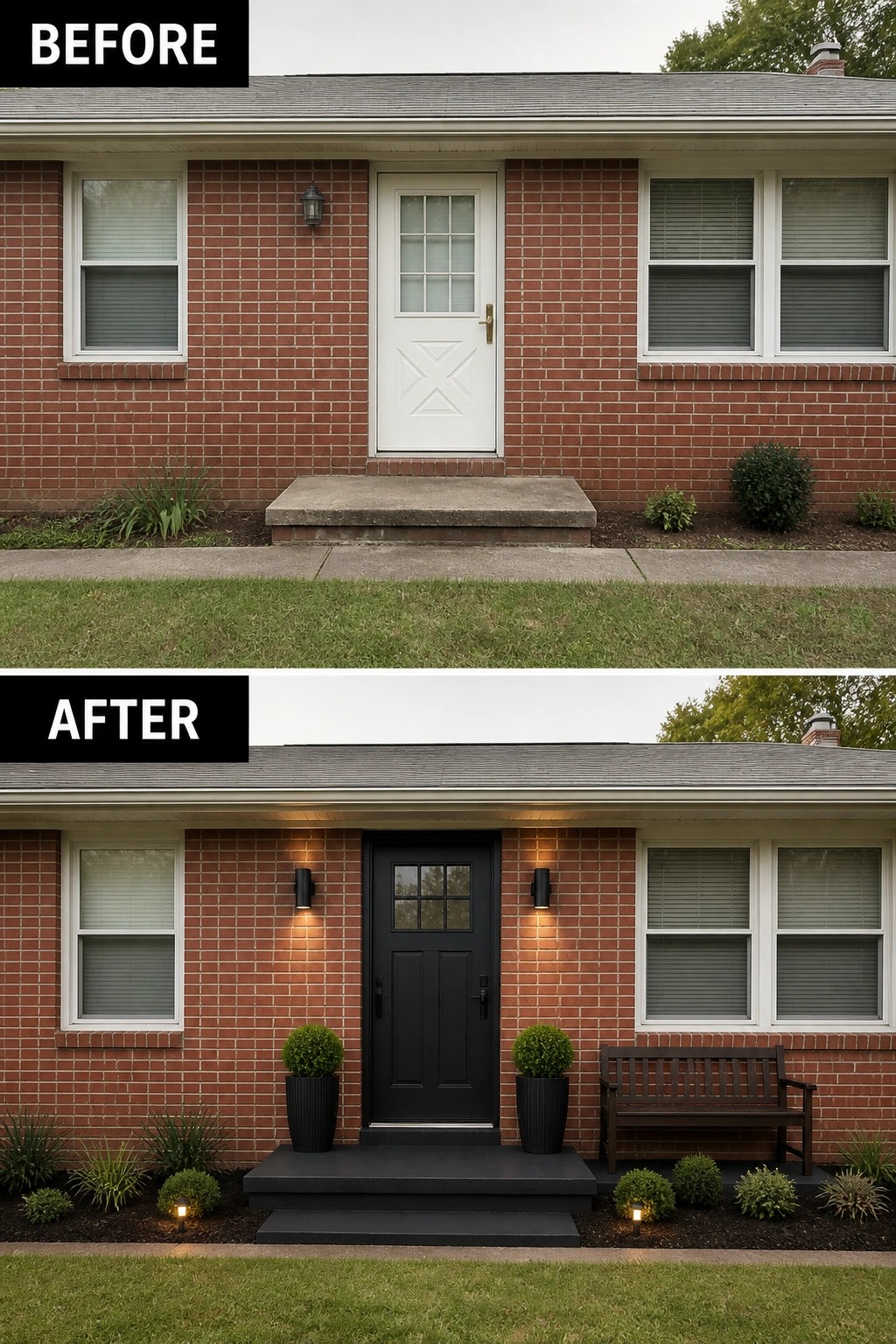
A plain entry can feel unloved and unfinished. Here the fix is simple: make the door the focal point and give it a proper landing. A fresh, dark paint on the front door paired with a raised, painted platform immediately reads as an intentional entrance instead of a random concrete slab, and one or two matching decorative pieces (like tall planters or wall lights) finish the look without fuss.
You can copy this on almost any single-story brick house. Pick a contrasting door color that complements the brick, build steps sized to the door so they feel proportional, and add two identical accents to frame the entry—planters or wall sconces work well. Start small. Choose weatherproof materials and keep walking space clear so the new porch looks both styled and practical.
Use Two-Tone Paint To Modernize A Brick Ranch
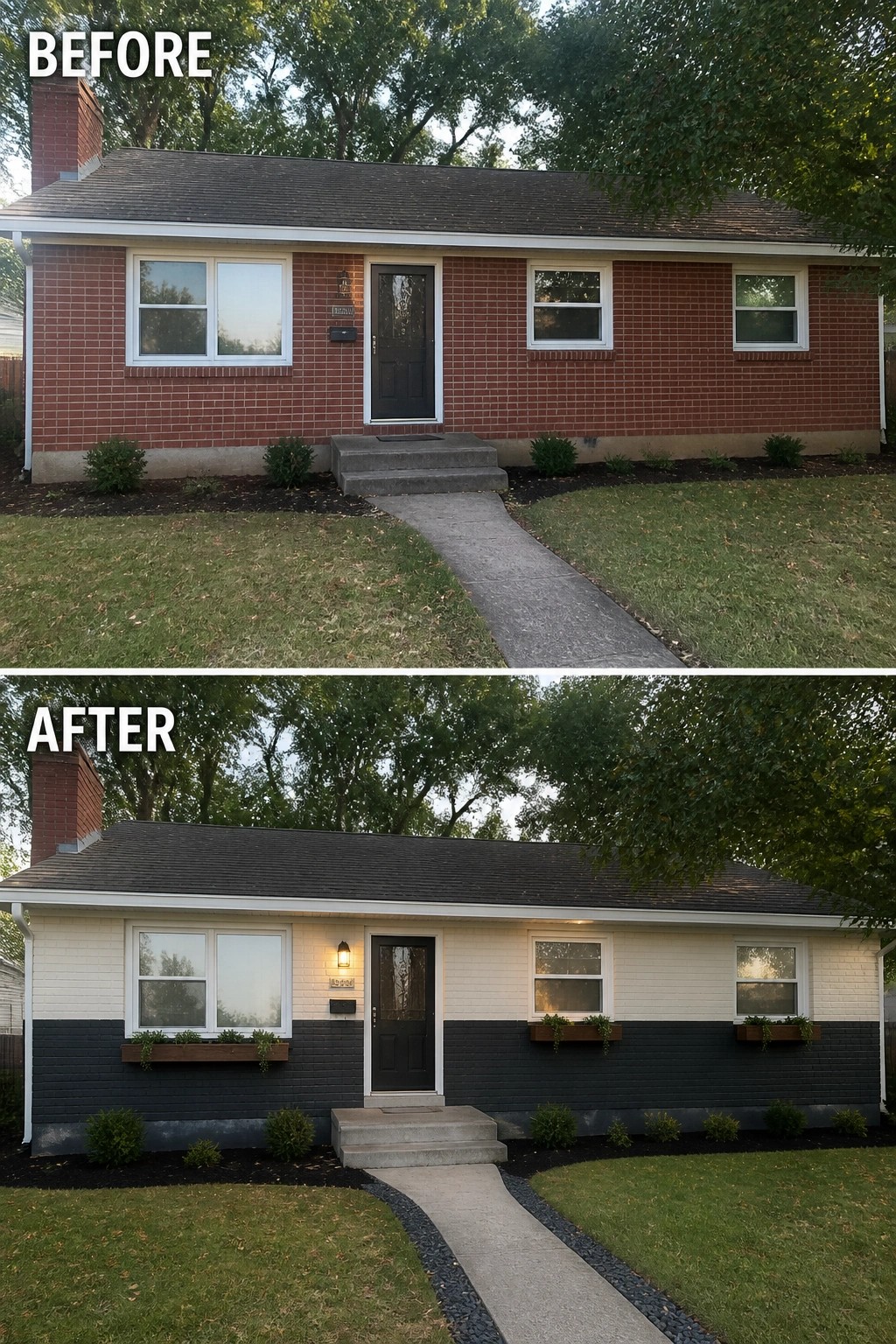
A simple way to refresh a flat brick facade is to split the wall into two contrasting bands of color. In this example the house reads more intentional and wider after the lower half was painted a dark charcoal while the upper portion was lightened, and a new porch light and window boxes tie the look together. That horizontal contrast gives the eye something to follow and turns ordinary brick into a modern backdrop.
This works well on single-story ranches because the change plays with proportion without major construction. Pick durable masonry paint, do a small test patch for color and sheen, and keep the darker tone low where splash and dirt collect. Finish the update with a few matched accents like planters, house numbers, or a new light to make the painted bands feel like part of a coordinated design.
Create A Welcoming Wood-Framed Ranch Entry
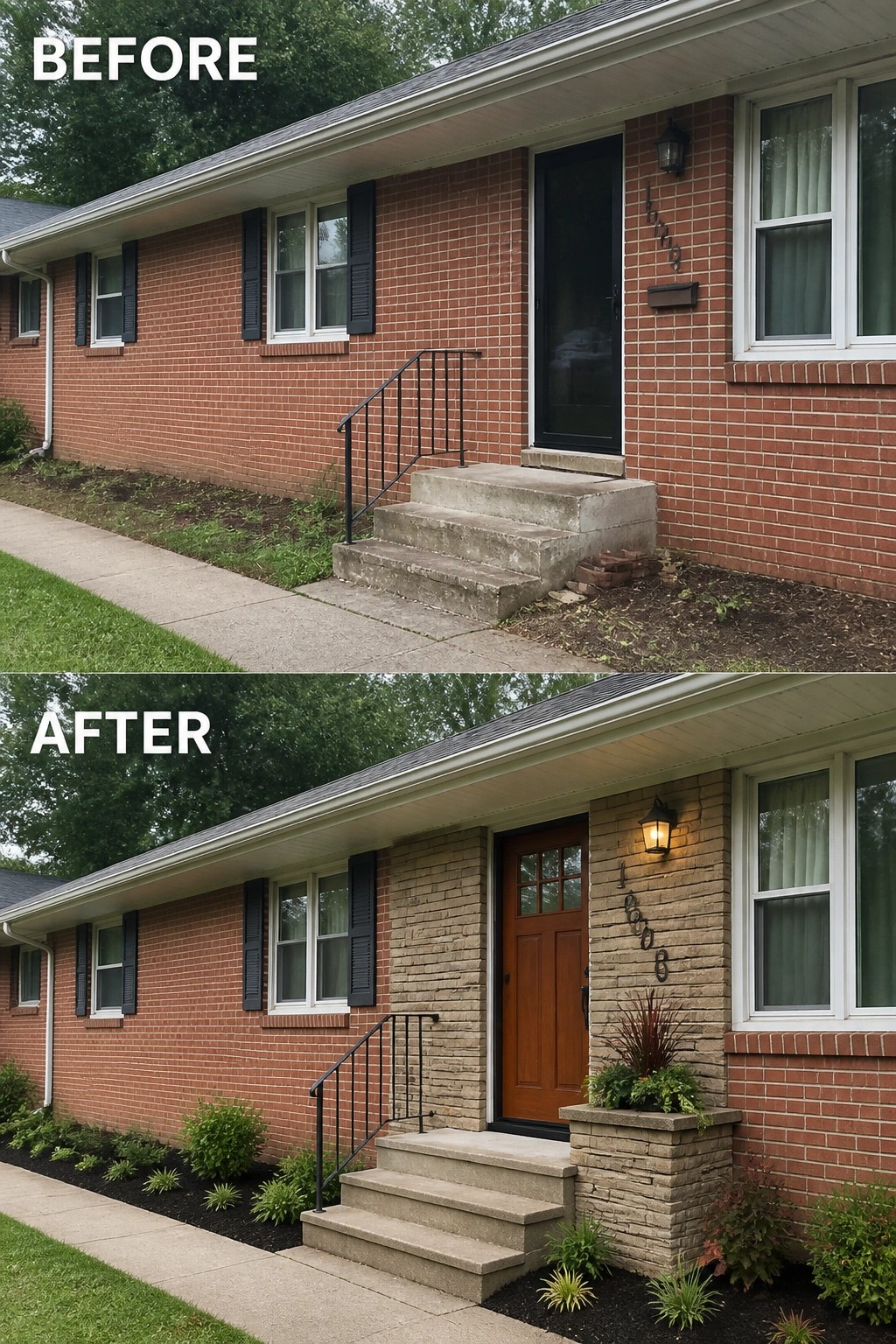
A small stoop can feel like wasted space on a brick ranch. Make one bold change to create a clear entry: pick a new door and frame it. Swapping the plain storm door for a warm wood door and adding a stone-clad surround refocuses the facade and gives the entrance depth and contrast, while a single planter and a wall lantern finish the look without clutter.
Start small. Choose one focal upgrade you can afford first—a painted or new door, or inexpensive stone veneer around the opening—then add one or two supporting details like a planted pedestal, vertical house numbers, and outdoor lighting. Keep elements proportional to the steps, use weatherproof materials, and tidy the planting bed so the entry reads as intentional, not crowded. Start small.
Paint An Accent Section And Add Low-Maintenance Planting
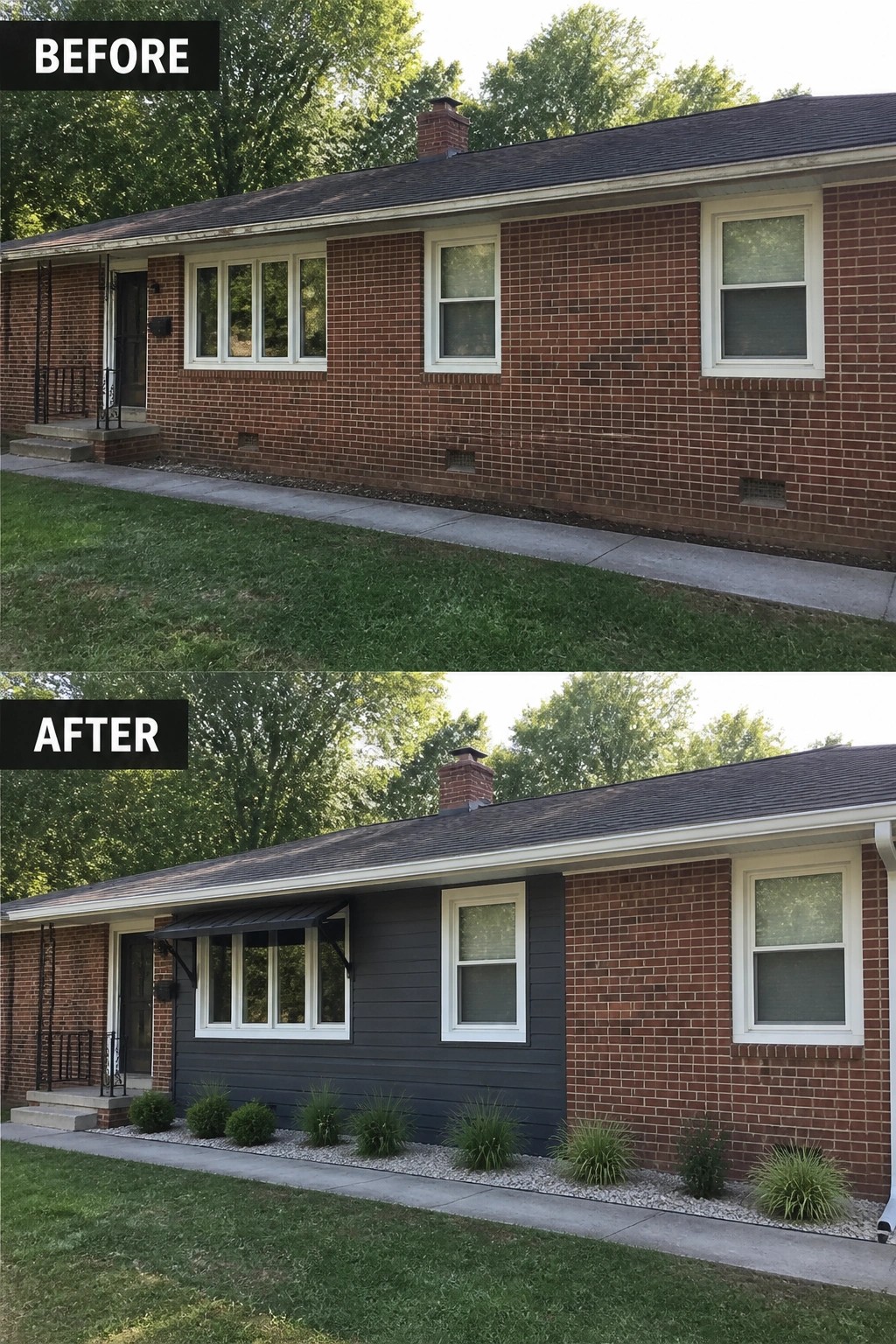
A long brick front can feel flat, so painting one wall section a darker color and anchoring it with a small awning and a tidy planting strip instantly gives the facade a focal point. In the example shown a band of horizontal siding was painted charcoal around the main window and topped with a metal awning, while a narrow gravel bed with ornamental grasses runs along the sidewalk to soften the base.
Try this on a single-story ranch by picking one logical block around a window or entry and keeping the treatment compact so it doesn’t overwhelm the brick. Use a contrasting but complementary color, add a simple awning or trim to define the change, and plant low-upkeep grasses or shrubs in a narrow, mulched or gravel bed (easy to maintain and visually tidy). Keep attachments weatherproof and proportionate to window size for the best, no-big-addition result.
Use Trim And Window Boxes To Break Up A Brick Facade
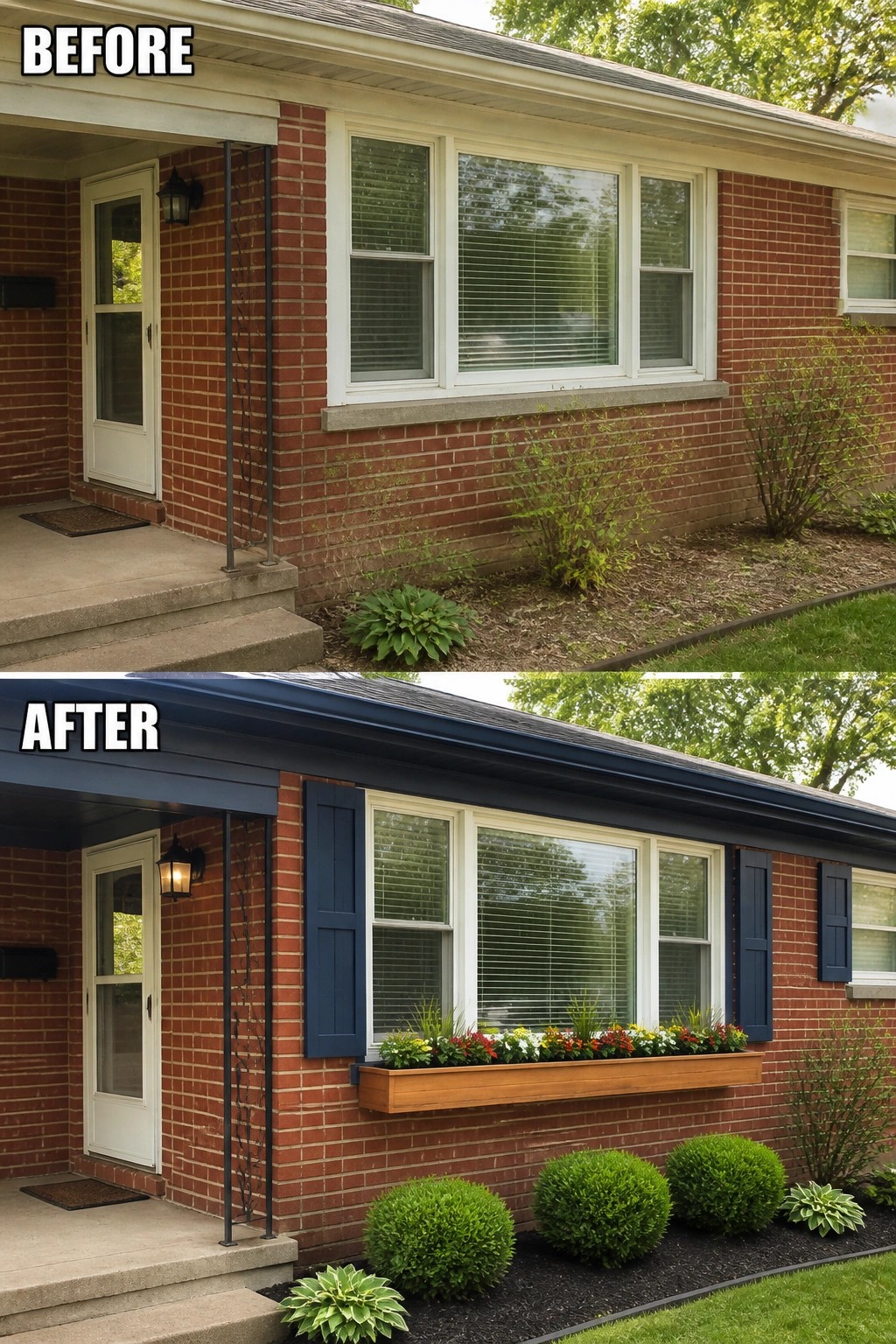
A solid brick front can look one-note, so a small dose of trim and a window box brings instant contrast and shape. In the after photo the deep-painted trim and shutters plus a wooden planter full of flowers create a clear focal band across the facade, while refreshed foundation shrubs tidy the base and help the new accents read as deliberate rather than accidental.
To try this yourself, start by cleaning beds and pruning any overgrown plants. Choose one accent paint color for the soffit, trim, and shutters that complements your brick, then add a window box sized to the central window and plant low-maintenance annuals or small perennials (so you get color without a lot of fuss). Keep everything in scale—
Replace A Plain Garage Door To Boost Curb Appeal
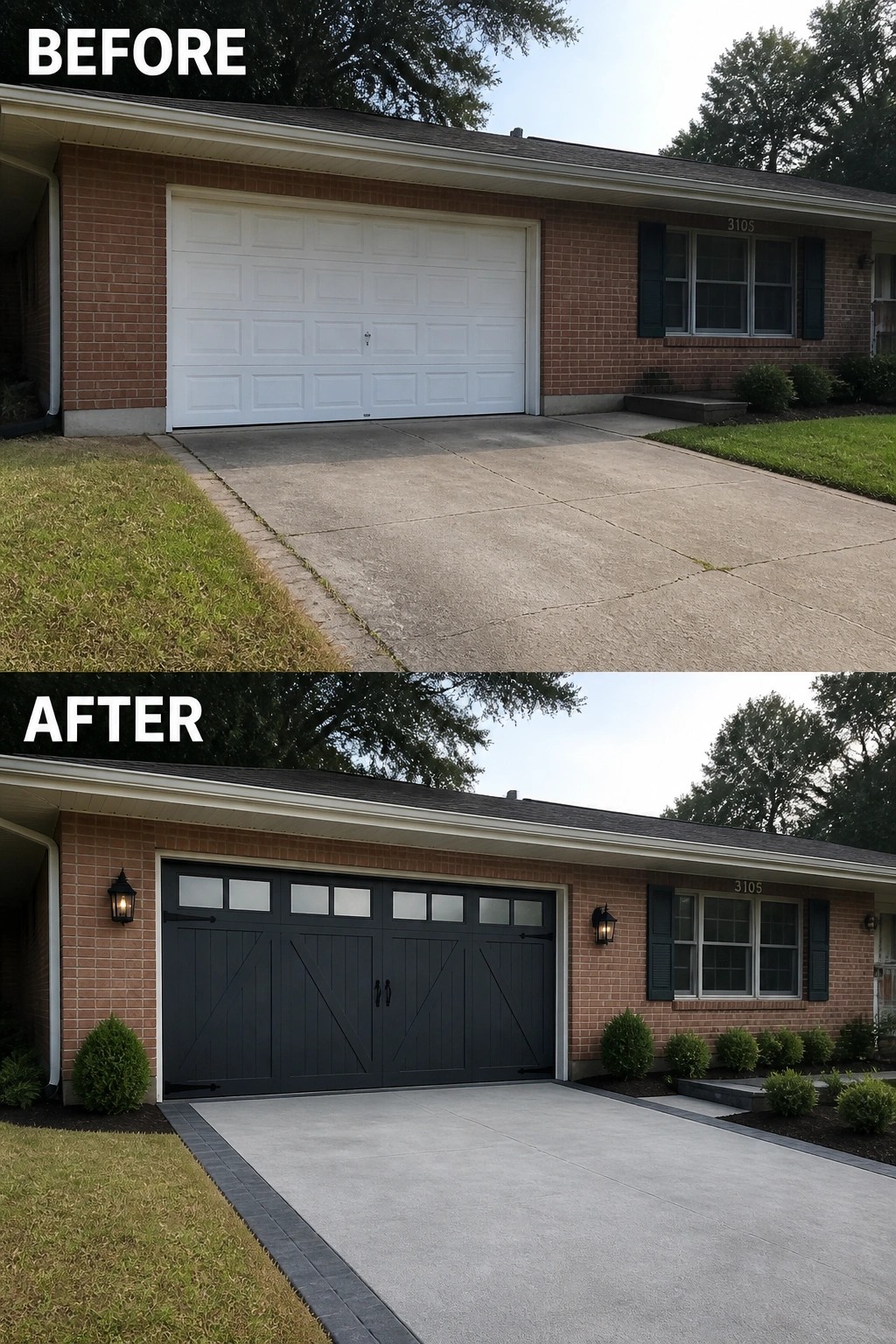
Swapping a plain white sectional door for a darker carriage-style door instantly sharpens the front of a brick ranch. The added top windows and black hardware give the facade a more finished look, and pairing the new door with simple lantern sconces and a bordered driveway ties the change together without a full remodel.
This works best when you match the door color to existing trim or shutters so the contrast feels intentional. Keep scale in mind—the door should read proportionally to the garage opening—and add one or two small, low-maintenance updates like lighting, a concrete edge, or a few shrubs. It’s a relatively low-cost swap that has big visual impact and lasts for years if you choose quality materials.
Frame The Ranch Entry With A Simple Beam And Posts
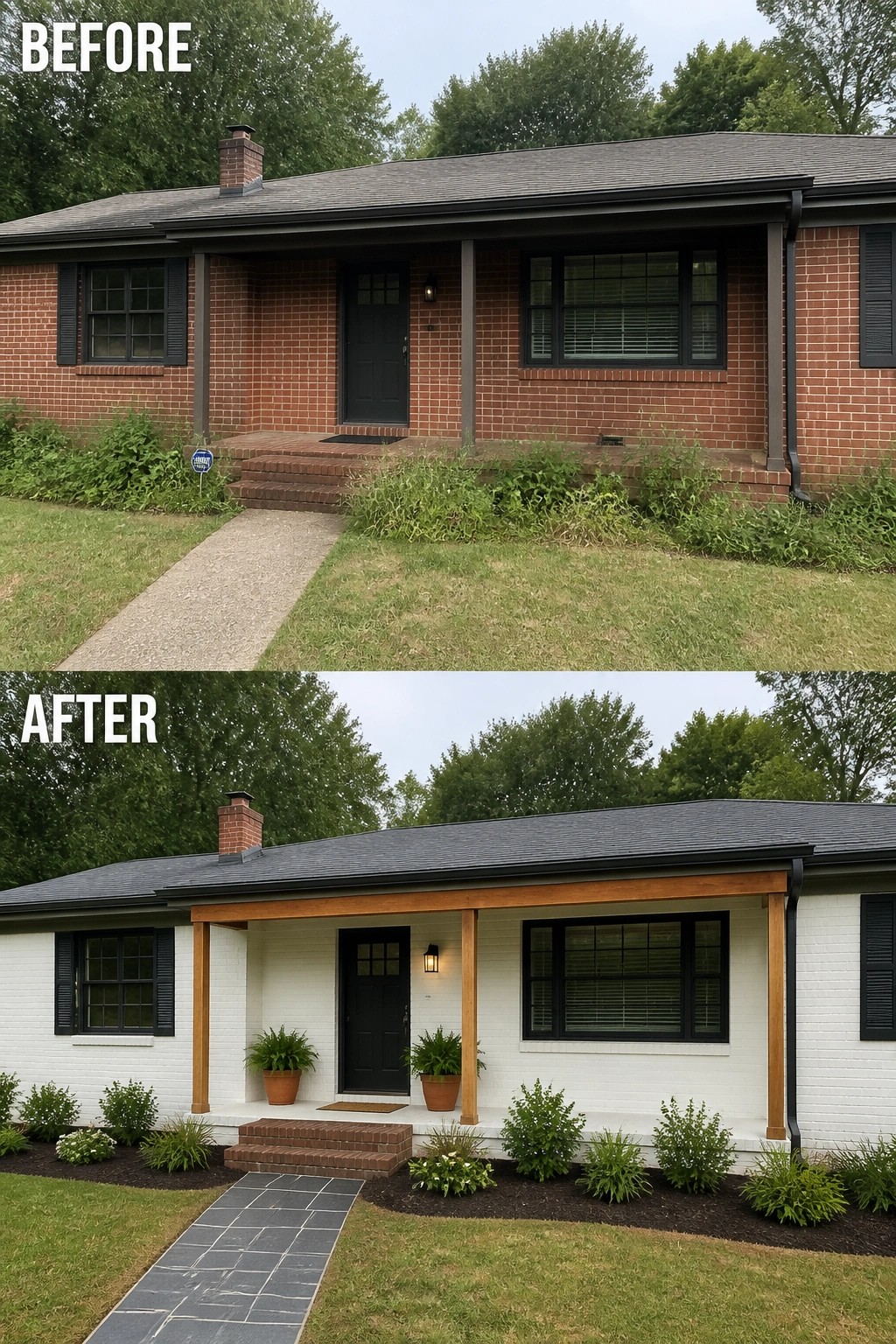
A small but focused update can turn a plain ranch entry into a clear, usable porch. In this example the brick was brightened with paint and the recessed stoop was framed with a simple wooden beam and posts plus matching planters, which immediately reads as an intentional entry rather than just a stoop. That single structural move gives the porch a job: sheltering the door, anchoring lighting, and welcoming visitors.
To copy this, start by cleaning and refreshing the brick or trim so new elements look deliberate. Add one modest structural feature—a beam, posts, or a pergola—finished in a contrasting material to highlight the entry, then reinforce it with two potted plants and a tidy planted border or mulch bed. Keep the palette to two or three colors, pick weatherproof materials, and size the posts and walkway to the house so the new porch feels balanced and not crowded.
Add Dark Accents And Defined Planting Beds To a Brick Ranch
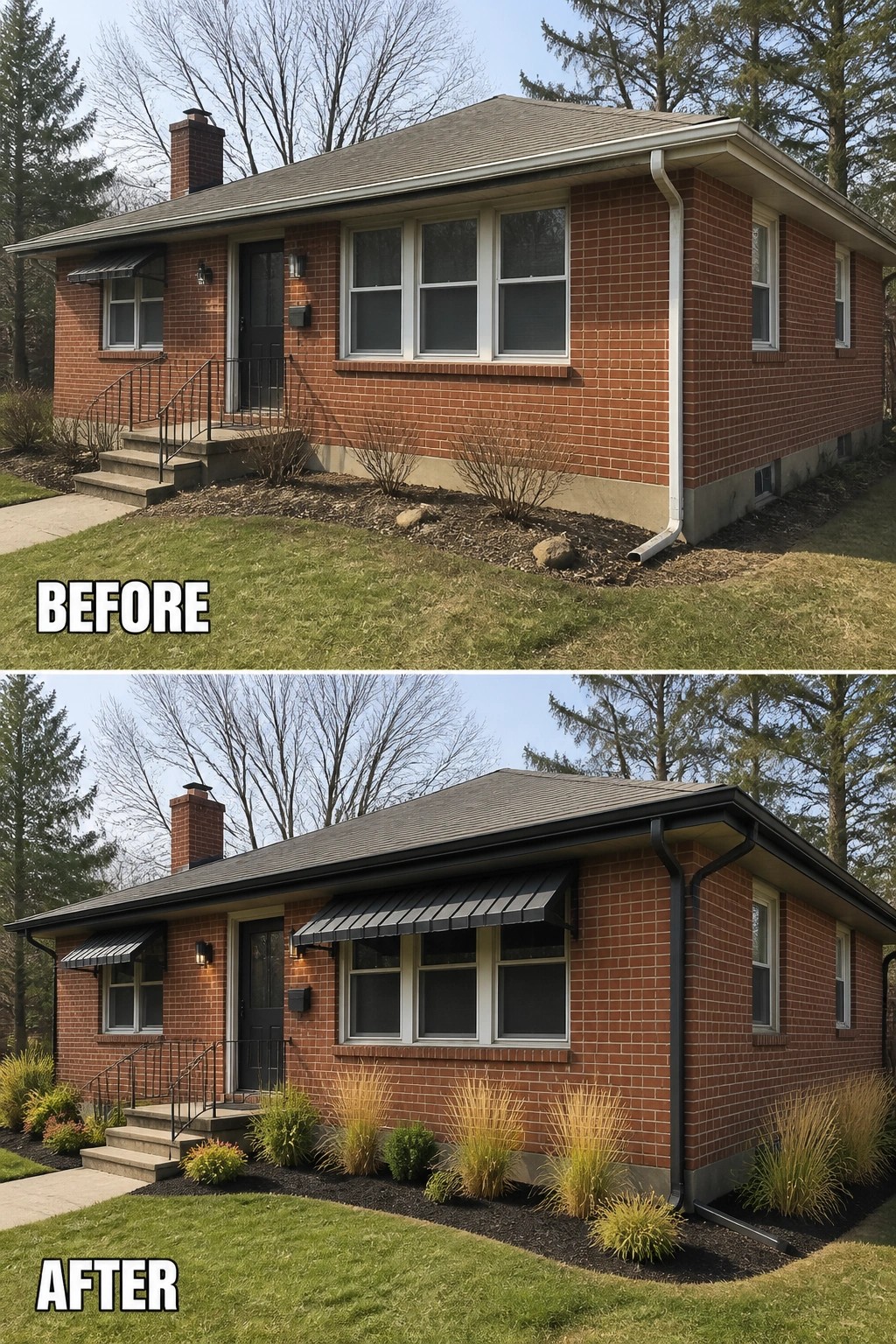
A few well-chosen dark metal accents and a tidy planting bed can change a plain brick ranch into a more intentional, layered facade. In this example the house keeps its original brick, but adding black metal awnings, matching gutters and a black mailbox plus fresh mulch and clumps of ornamental grasses gives the front a clearer edge and a stronger profile without major construction.
To use this approach, start small: pick one dark finish and repeat it on gutters, light fixtures, and small metal awnings or a door. Install a low, continuous planting bed along the foundation and repeat two or three plant types (ornamental grasses and small evergreen shrubs work well) for a neat, low-maintenance look. Keep elements proportional to the windows and leave the path clear so the updates feel intentional rather than crowded. Simple, but effective.
Use Dark Window Trim To Add Instant Contrast
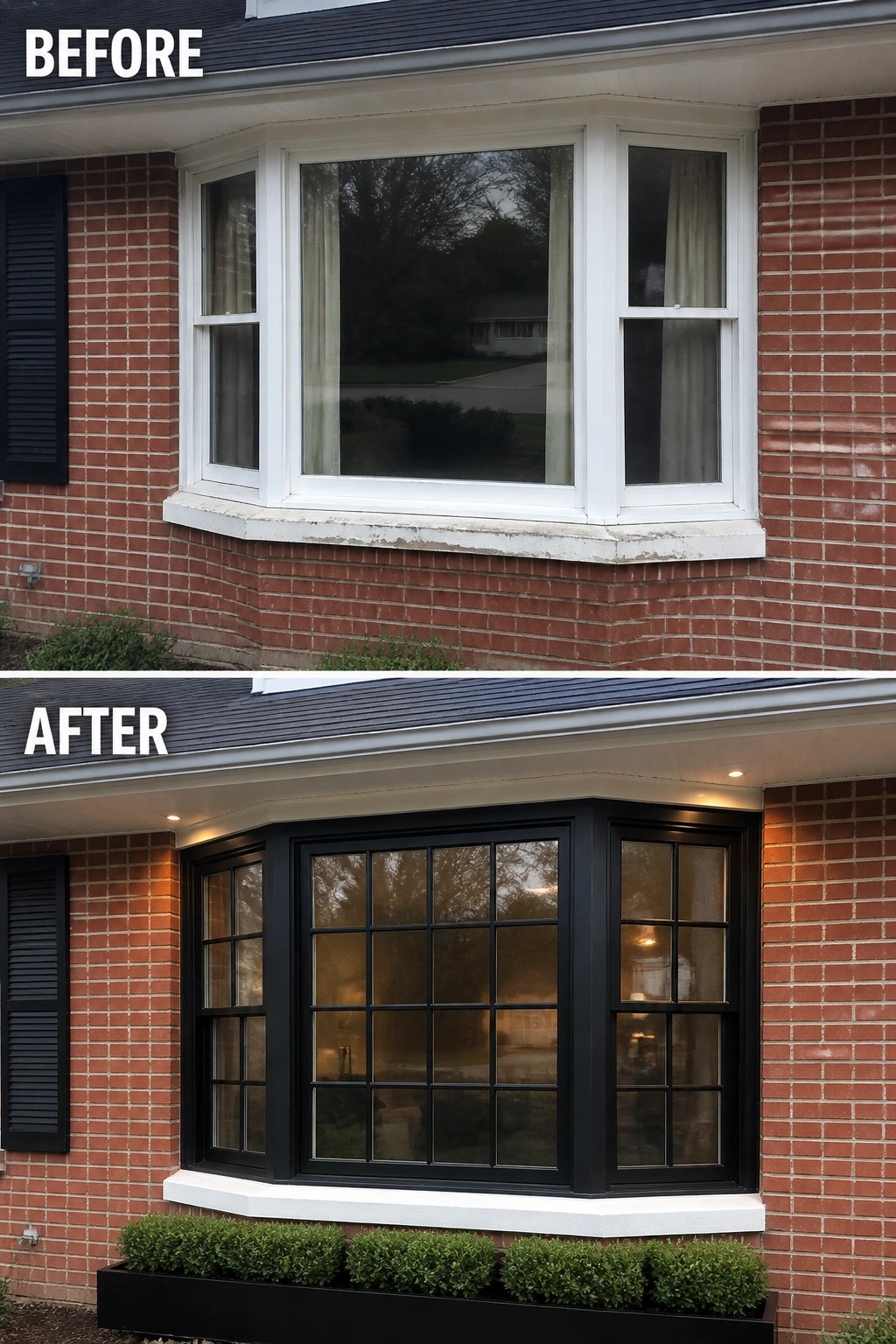
Painting window trim and muntins a deep, dark color is one of the simplest ways to give a flat brick facade more depth and character. In the example here the original white bay window read plain against the red brick; switching to black trim and adding divided-light grilles instantly sharpened the lines and made the opening read as a deliberate architectural feature. A low planter box under the window keeps the look grounded without competing with the new trim.
This works best on homes with warm or neutral exteriors where a single, bold accent color can read as trim rather than clash. If you’re not replacing windows, use high-quality exterior paint made for trim and test a small area first so you like the contrast in different light. Keep muntin spacing proportional to the window size, add simple lighting or a planter for balance, and expect a little more upkeep with darker finishes over time.
Furnish A Small Ranch Porch For Comfortable Seating
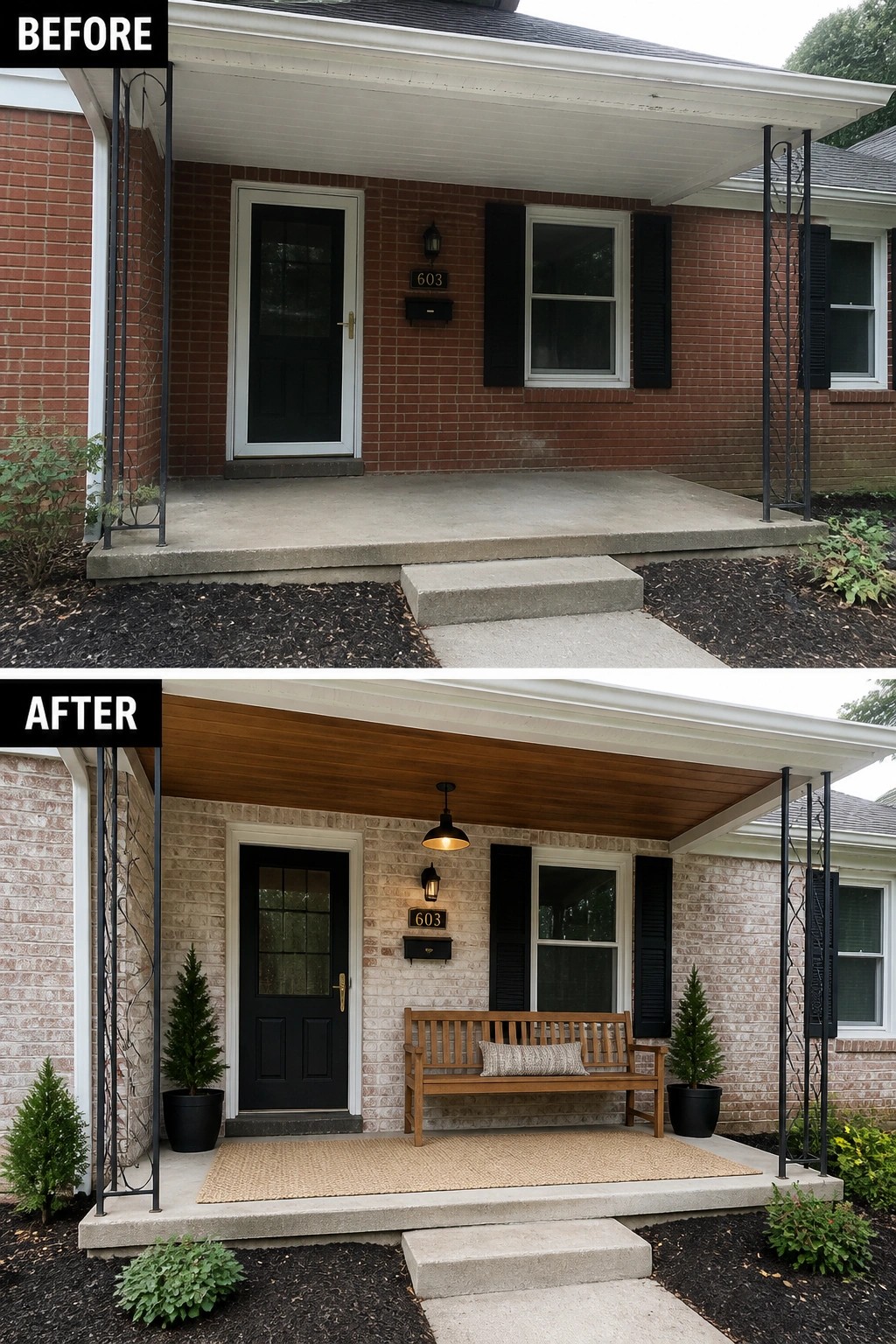
Turning a plain concrete step into a usable entry is mostly about choosing one clear purpose and furnishing for it. In this example a simple wooden bench and a pair of potted evergreens make the porch feel like a place to sit and pause rather than just a walkway. That single decision—furnish the porch for sitting—changes how the whole front façade reads and makes the house feel more lived-in.
To copy the idea, start by cleaning the porch and picking one anchor piece that fits the scale, like a bench or a small bistro set. Keep a clear path to the door, add a weatherproof rug or cushion for comfort, and repeat a few elements (matching pots or two small trees) so the look reads intentional but not crowded. Finish with a working light by the door so the space is usable morning and night.
Create Curved Garden Beds To Frame The Entry
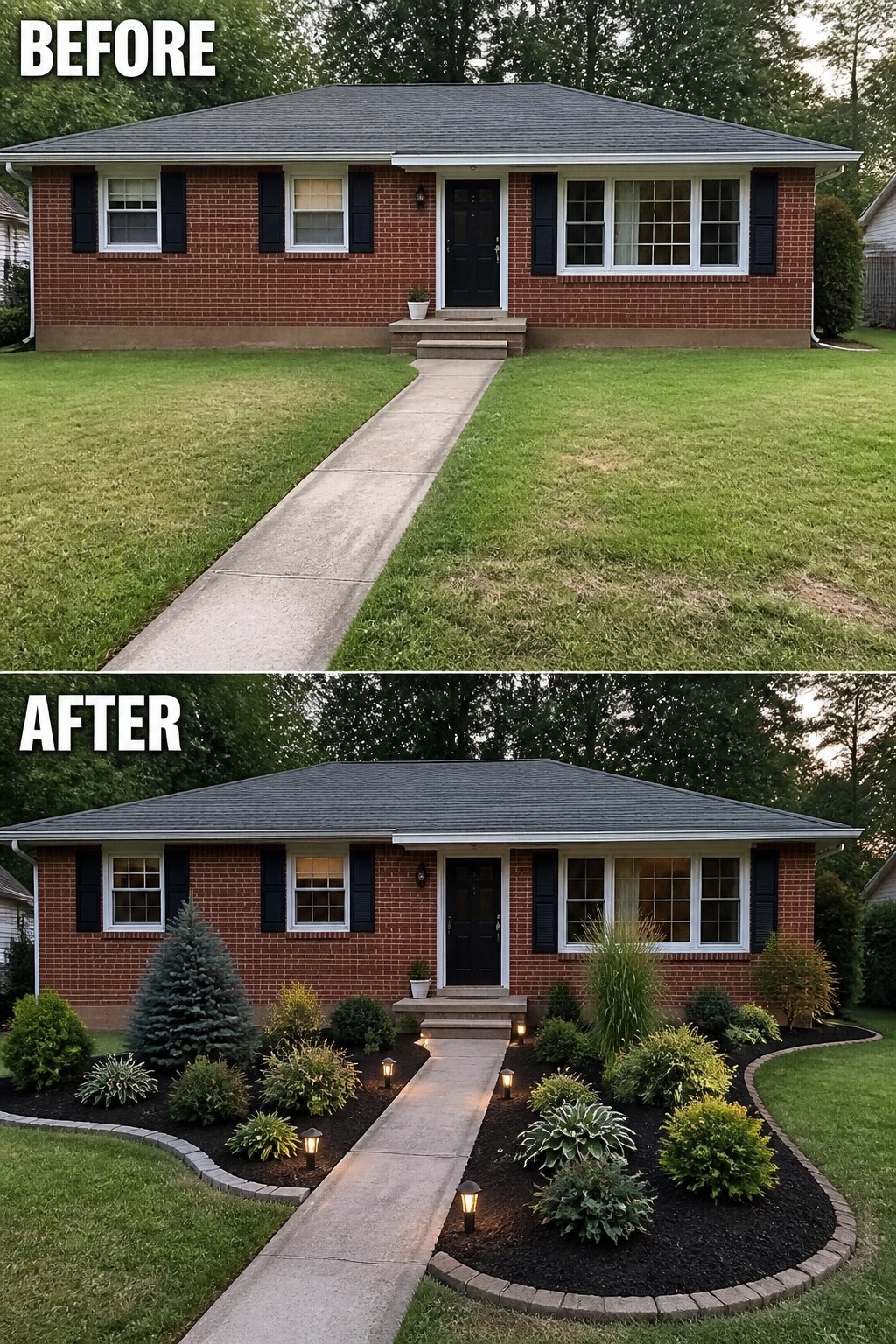
Carving a pair of curving, edged planting beds along the walk is a quick way to stop a flat brick facade from looking plain. Swapping a strip of lawn for low stone edging, dark mulch, and a handful of repeat shrubs and grasses creates contrast and a clear focal path to the door, and adding low path lights helps the whole approach
Define The Porch With Contrasting Columns And Seating
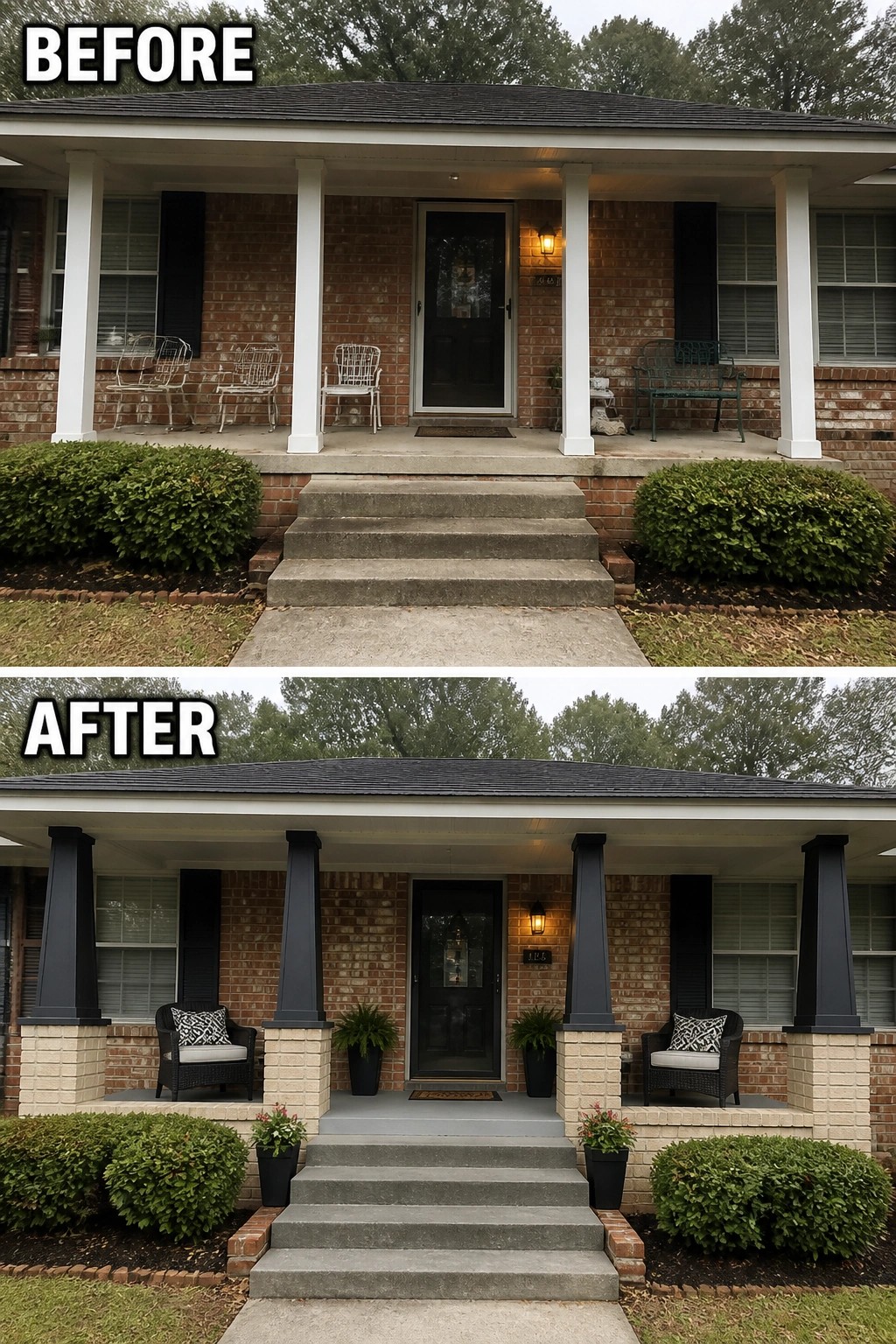
A quick way to lift a plain ranch porch is to create visual anchors that read as an intentional entry instead of just a stoop. Paint the posts a contrasting color and bulk them up with simple bases, then add a pair of chairs and matching planters to define a seating zone—this makes the whole front feel like a porch you can use.
To copy the idea, choose one trim color to repeat on the door and columns so the look ties together, build or buy wider column bases to add weight, and arrange two chairs with durable cushions and planters for symmetry. Keep the scale proportional to the porch so there’s still a clear path to the door, and pick weatherproof finishes so the styling lasts.
Highlight The Front Door With A Bold Accent Color
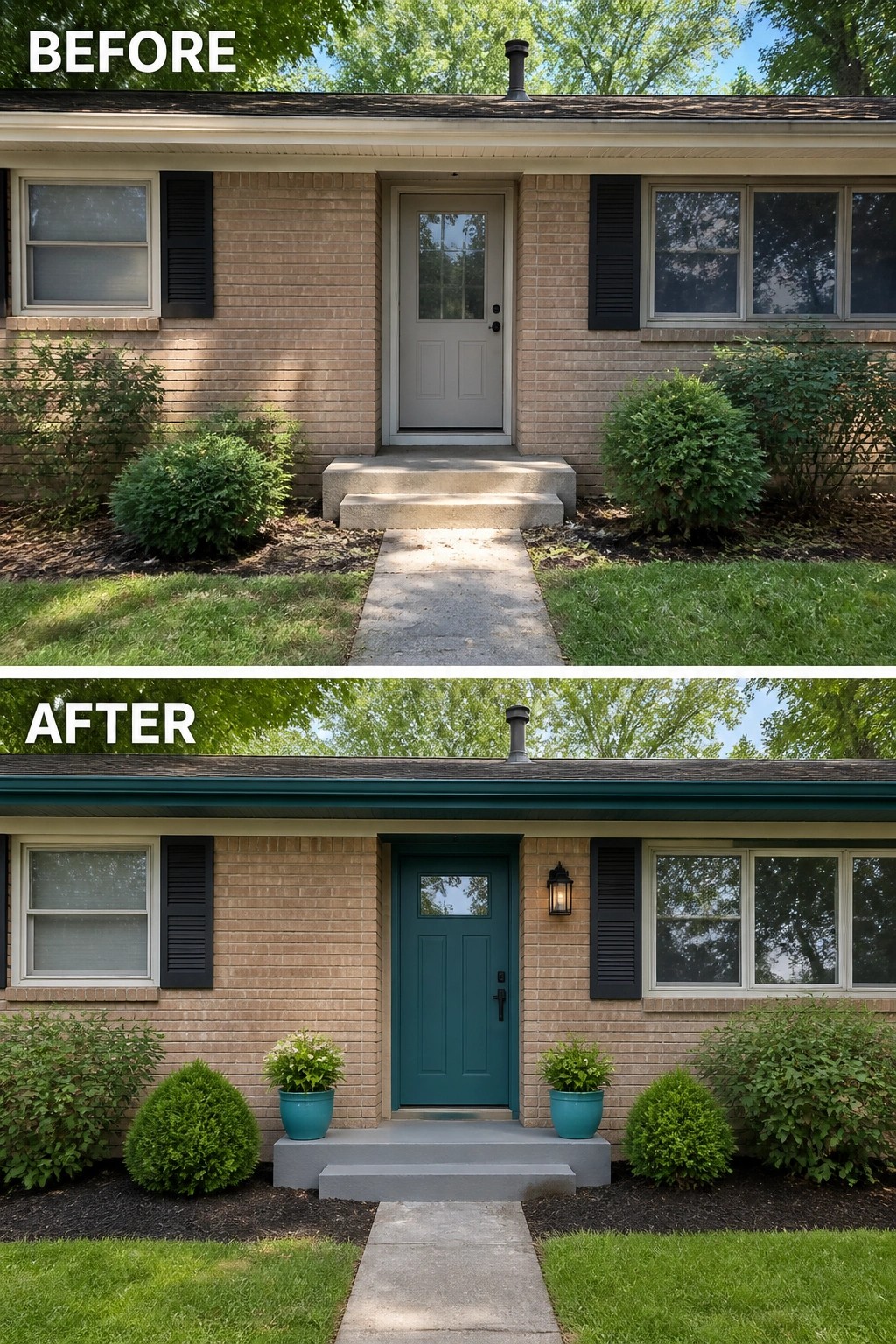
A simple but effective way to refresh a brick ranch is to make the entry an intentional focal point. In this example a plain door was swapped for a richly colored one and the same hue was repeated in matching planters, which immediately signals where visitors should go and lifts the whole facade without changing the structure. The contrast between the new door color and the warm brick gives the front a defined, finished look.
Pick one accent color you like and repeat it in two or three elements — the door, a couple of pots, or the trim — so the change feels deliberate instead of busy. Choose hardware and a single light fixture in a complementary finish, paint any concrete steps a neutral that ties into the color scheme, and scale pots to the porch size. Start small. This approach works especially well on single-story brick homes where a little color and a few weatherproof accessories make a big visual difference.
Add Vertical Wood Detail To Create An Entry Focal Point
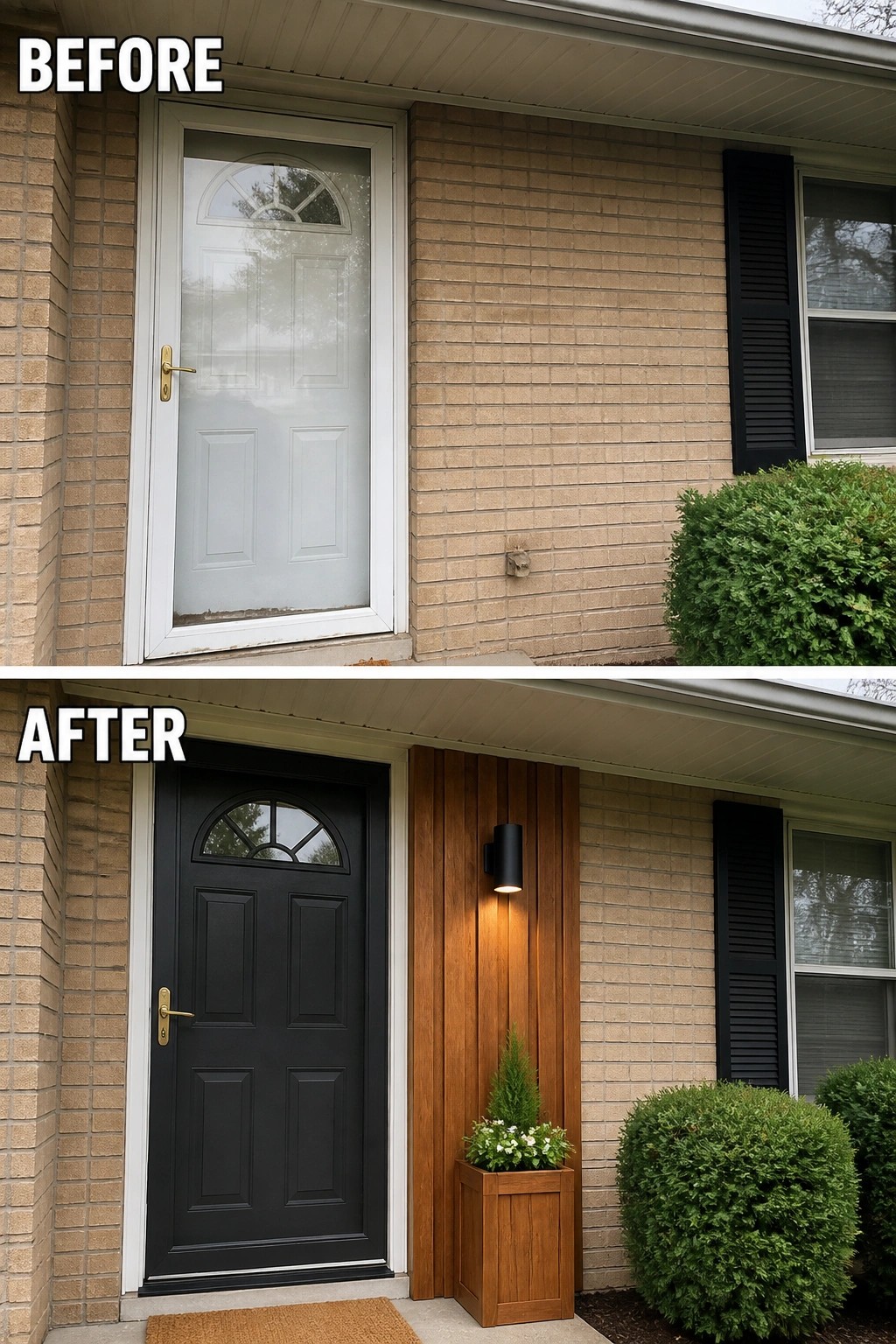
A few focused changes can turn an anonymous entry into a clear, intentional front door. In this example a dark-painted door paired with a narrow vertical wood panel, a wall sconce, and a single planter creates contrast with the brick and gives the porch a defined focal point. Simple, but effective.
Use one bold move as your anchor—either a new door color or a material accent like vertical wood—then add one or two supporting elements such as a light and a planter to make the idea read as purposeful instead of cluttered. This works especially well on low, single-story brick homes where a small accent helps the entrance stand out; keep the scale modest, choose exterior-grade materials, and leave a clear walkable path.
Add A Simple Foundation Garden To Soften A Brick Facade
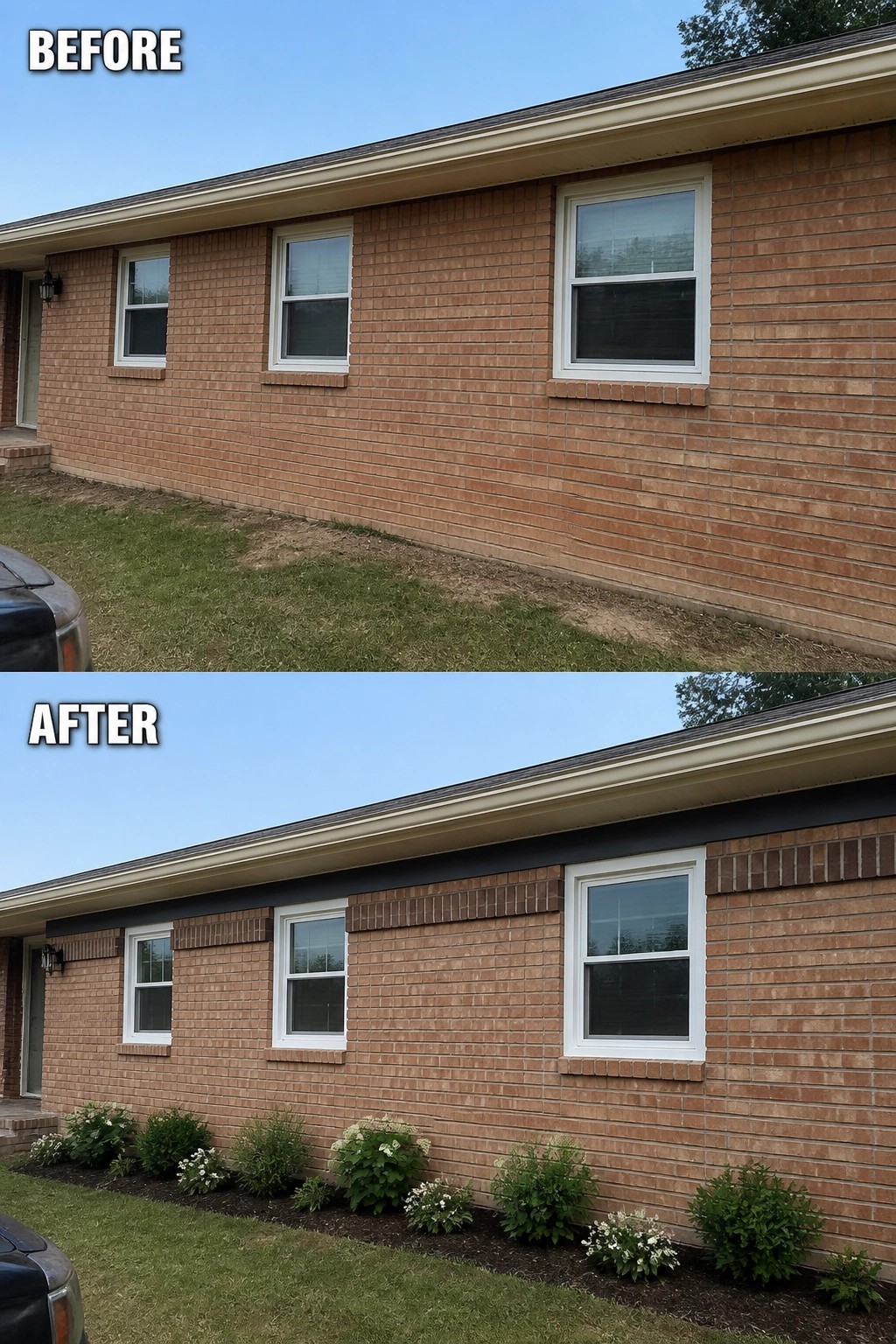
A row of low shrubs and a clean mulch bed is a quick way to change a plain brick wall into a friendlier street-facing face. In this example the blank foundation was edged and planted with repeating shrubs and small perennials, and a slim band of darker trim above the windows ties the look together, so the house reads as intentional rather than spare.
To copy this, pick 2 or 3 hardy plant types you like and repeat them along the length of the wall so the scale feels balanced with the windows. Leave space for growth, add a narrow mulch strip or crisp edging to define the bed, and keep the plants low enough not to block light into the windows. Start small (you can always add more later) and choose plants suited to your light and soil so the bed stays tidy with minimal work.
Use A Paver Path To Define The Entry
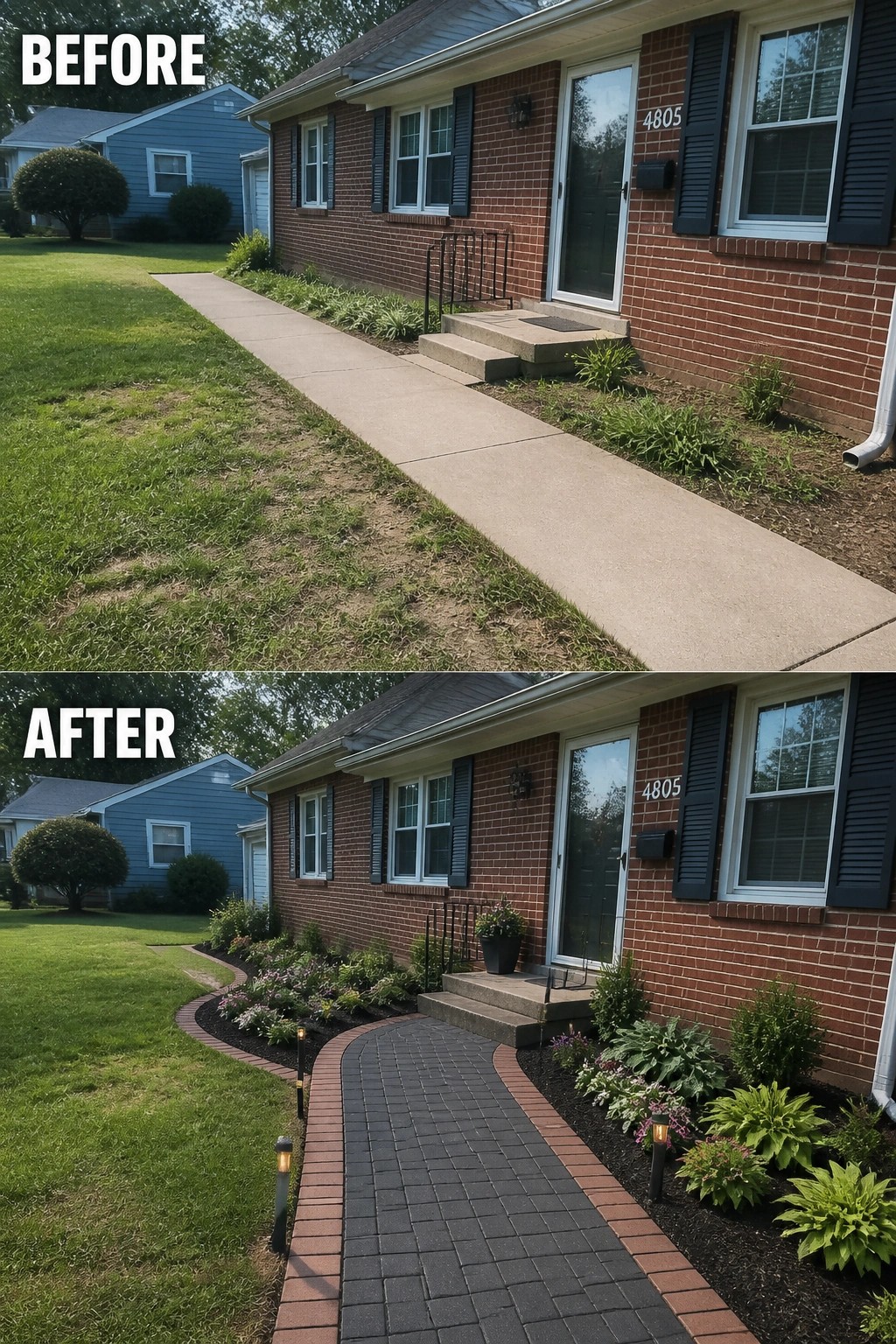
Replacing a plain concrete strip with a curved paver path and a framed planting bed gives a low, linear ranch facade instant character and purpose. In this example the straight slab was swapped for dark interlocking pavers edged in a contrasting brick, and the new curve was backed by mulch, low perennials, and small pathway lights to make the route feel intentional instead of accidental.
You can copy this on almost any single‑story house: pick a paver color that contrasts the house brick, add a simple border to read as intentional edging, and introduce a gentle curve to soften the approach. Keep the path at least 36 inches wide for comfortable walking (wider if you expect two people side by side), use low-maintenance plants and fresh mulch for a tidy look, and tuck in a few low lights so the new route reads clearly after dark.
Create A Simple Door And Planter Focal Point
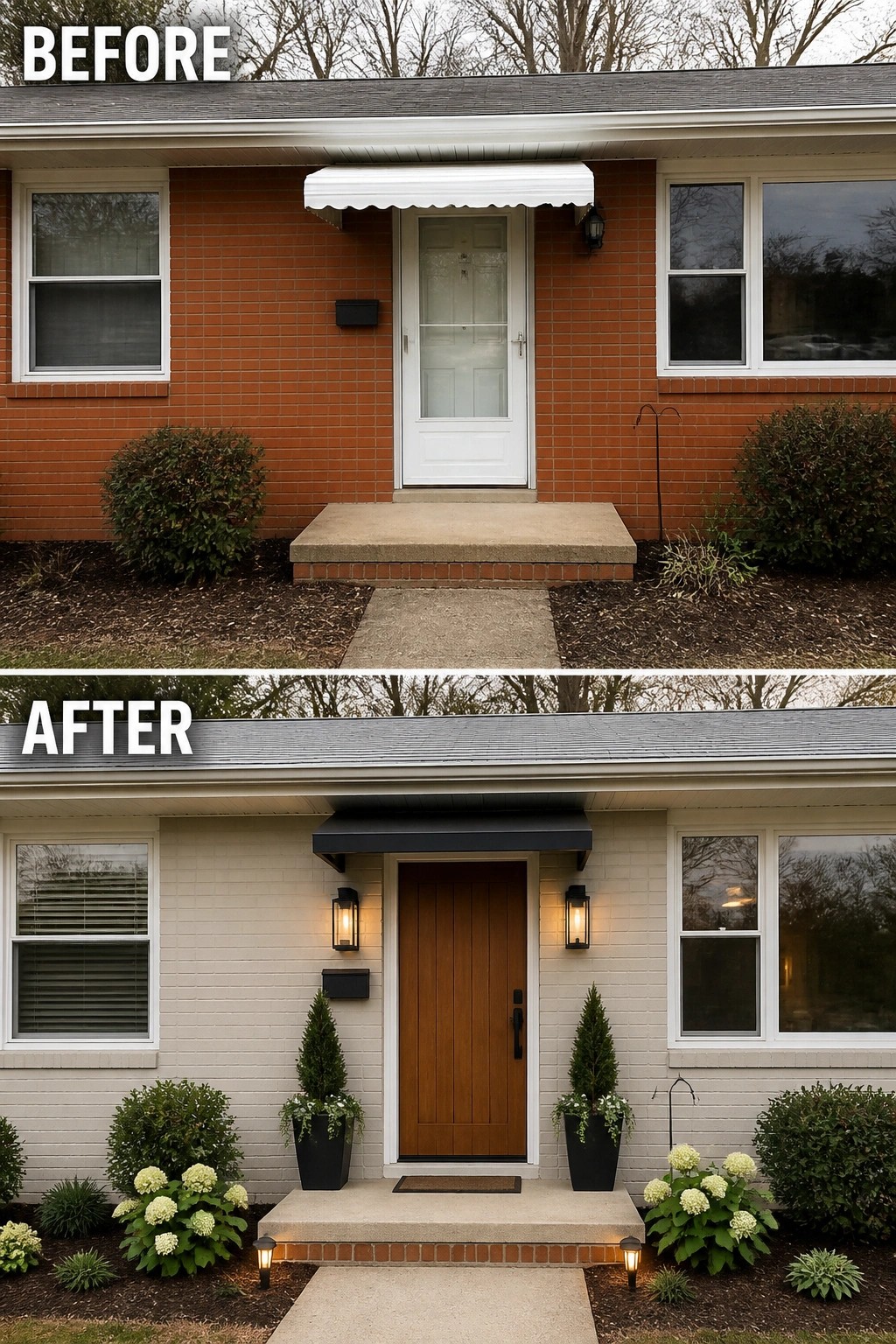
A small change at the entry makes a house read as intentional instead of leftover. Swap a plain door for a warmer, more substantial one and anchor the step with a pair of planters to create a single, clear focal point that signals the front door. That one move makes the whole facade feel planned and usable rather than incidental.
Start small. Pick a door color or material you want to center the design on, then add two matching containers for symmetry and a low-profile mat to define the step. Add scaled lighting and weatherproof plants so the setup works day and night, and keep the walkway clear so the eye lands on the entry, not the clutter.
Alt text
Frequently Asked Questions
Q: Can I paint my brick ranch, or will that damage the masonry?
A: You can paint brick if you use a breathable masonry paint and prep the surface well by cleaning and repairing any crumbling mortar first. Painted brick needs occasional touch-ups, but a fresh color is one of the fastest ways to add contrast and modernize the facade.
Q: What’s the cheapest change that still adds dimension and interest?
A: Swap in a bold front door color, add simple trim in a contrasting tone, and update one or two fixtures like the house numbers or porch light. Those moves cost far less than major construction and give your home immediate curb appeal.
Q: How do I pick colors so the house won’t look dated in a few years?
A: Start with a classic neutral for the main brick tone and choose one accent color for doors or shutters to keep the scheme grounded. Test paint samples on different walls and view them at morning and evening light to see how they age over time.
Q: Will new landscaping and lighting actually make the brick look more dimensional?
A: Yes — layered planting and well-placed uplights create shadows that highlight texture and depth in the brick. Even low-voltage path lights and a few taller shrubs can change how the facade reads without altering the brick itself.