

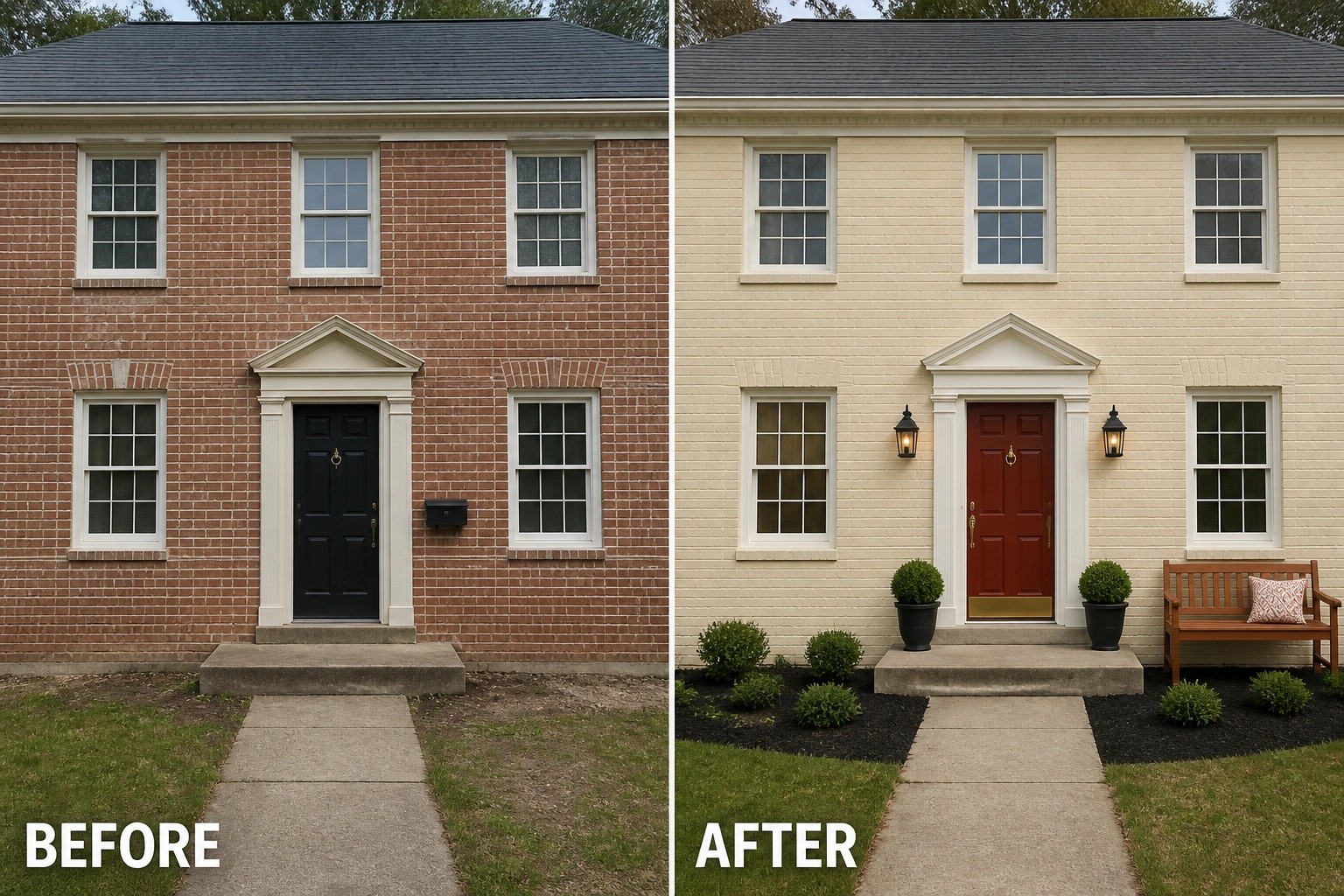
I still think a home’s brick exterior says a lot about its personality, and small changes to color, trim, and entry details can make the whole facade read as cared-for rather than tired.
Over the years I’ve learned that warm traditional palettes—soft creams, muted terracottas, and deep greys with brown undertones—help brick feel cohesive without erasing its character, and often it’s about picking one area to anchor the look.
One paint sample can tell you more than a mood board.
I enjoy seeing modest updates like refreshed trim, a new front door color, or layered porch lighting turn a front elevation into something quietly resolved, and some of the ideas here are ones I’d save to try at home.
You do not need a full renovation to make a brick facade feel intentional, because thoughtful paint choices, hardware swaps, and simple plantings often do the job.
Define the Entry With Pavers, Planters, and Lighting
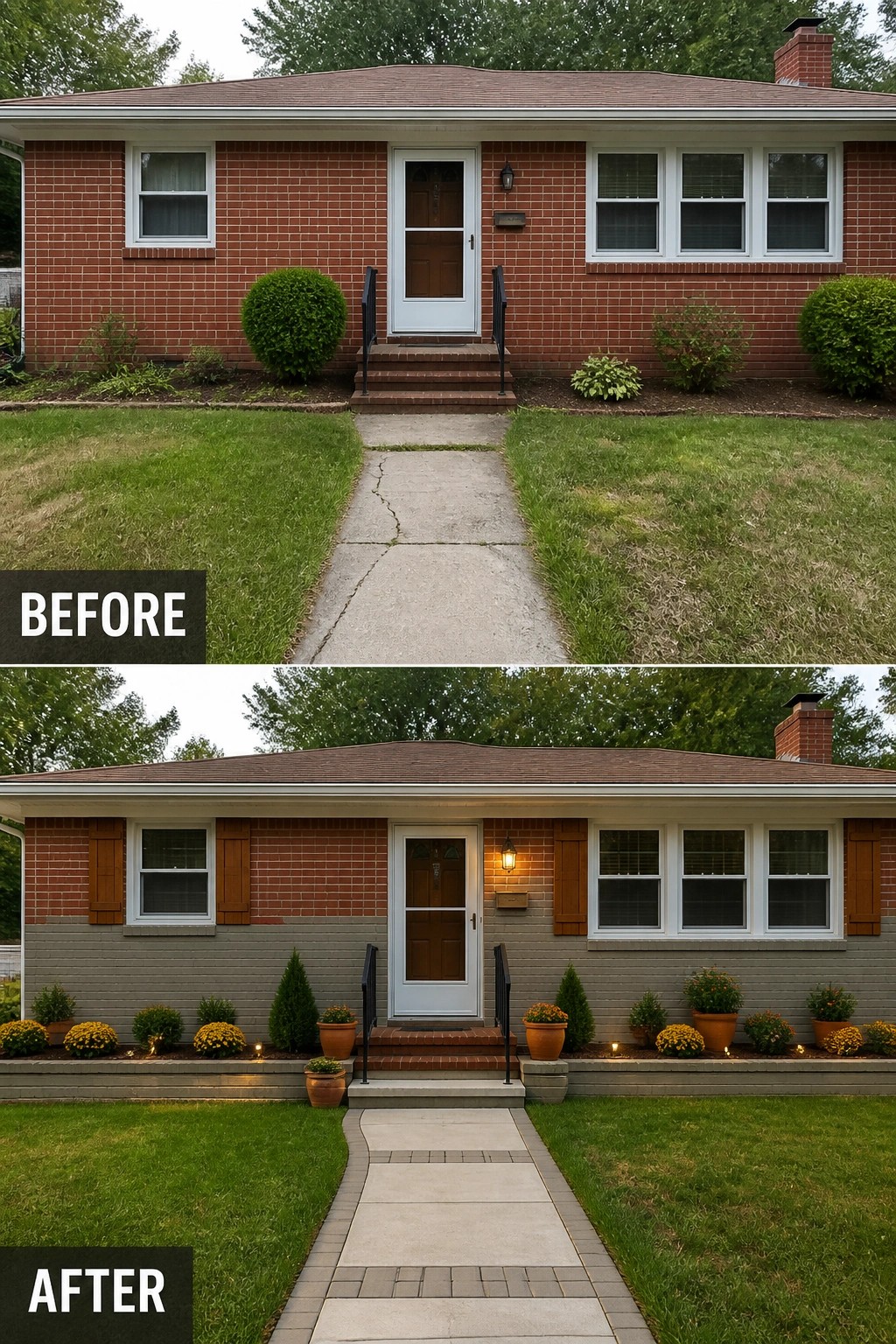
A defined entry makes a plain brick facade feel intentional. Replace a cracked, narrow concrete path with a framed paver walkway, then anchor the door with a couple of matching planters and low-level lights. Those two moves—clean, structured paving plus repeated plant and container accents—turn an overlooked stoop into a purposeful front porch.
You can copy this on almost any traditional single-story home: start with the path so people naturally approach the door, add one pair of larger pots and a few smaller pots for balance, and pick plants that hold form through seasons (small evergreens, mums, or boxwood). Keep materials simple and in warm tones that echo the brick, and avoid crowding the landing so the entry still feels easy to use.
Frame The Front Door With Shutters, Lanterns, and Symmetry
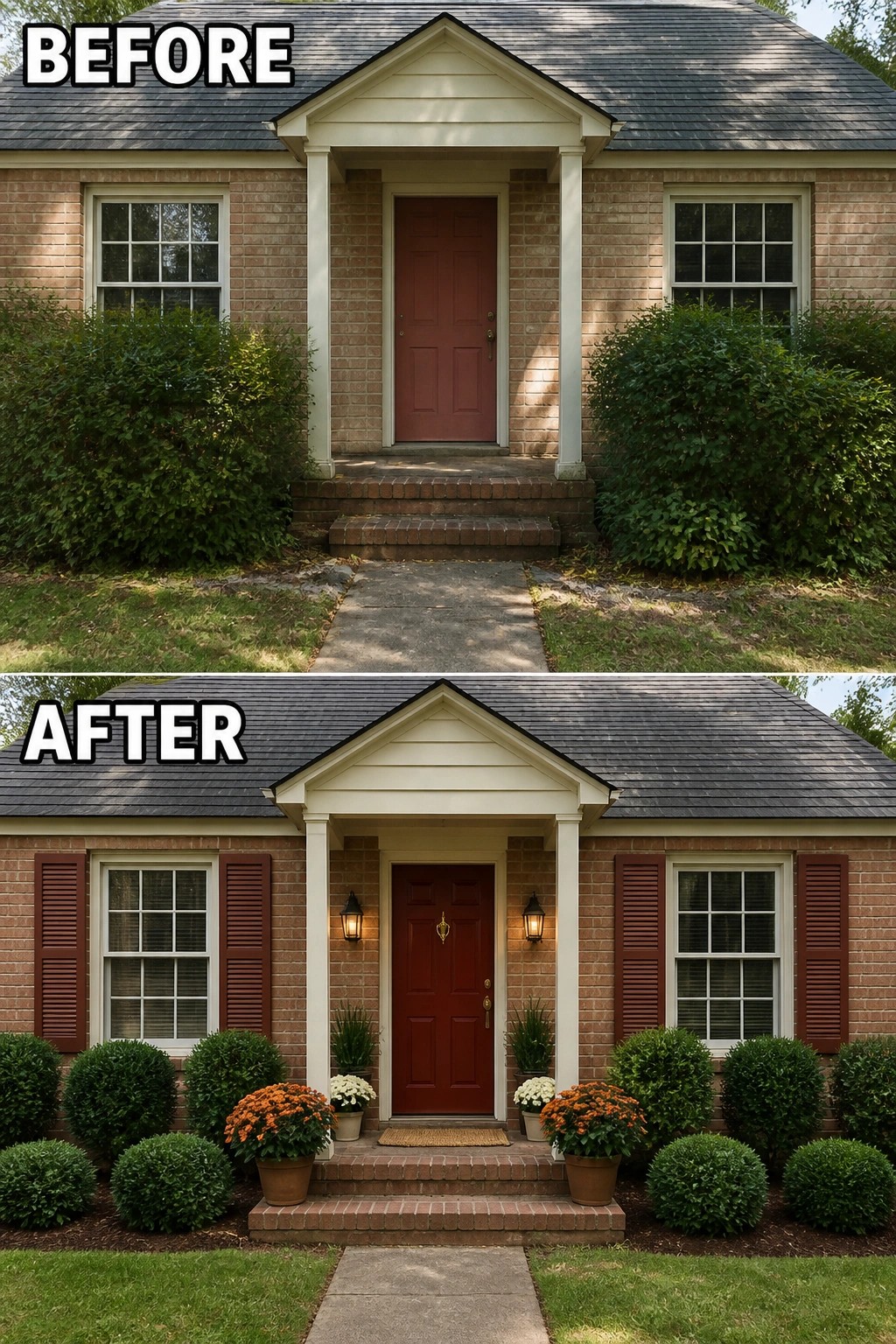
A simple front-porch update can make an older brick house feel cared for and intentional. In this case, pairing matching shutters and wall lanterns with a painted door, a welcome mat, and symmetrical potted plants turns a plain entry into a defined threshold. The changes are small but coordinated, so the porch reads as one finished spot instead of an afterthought.
Start by clearing and shaping overgrown shrubs so the steps and door are visible, then pick one or two accent colors to repeat (shutters, door, pots). Use symmetry—matching lights and planters—to make a small porch feel composed, and choose hardy container plants that fit the scale so maintenance stays easy. Keep the path unobstructed and focus on a few well-placed elements rather than crowding the steps.
Update A Plain Garage Door To Boost Curb Appeal
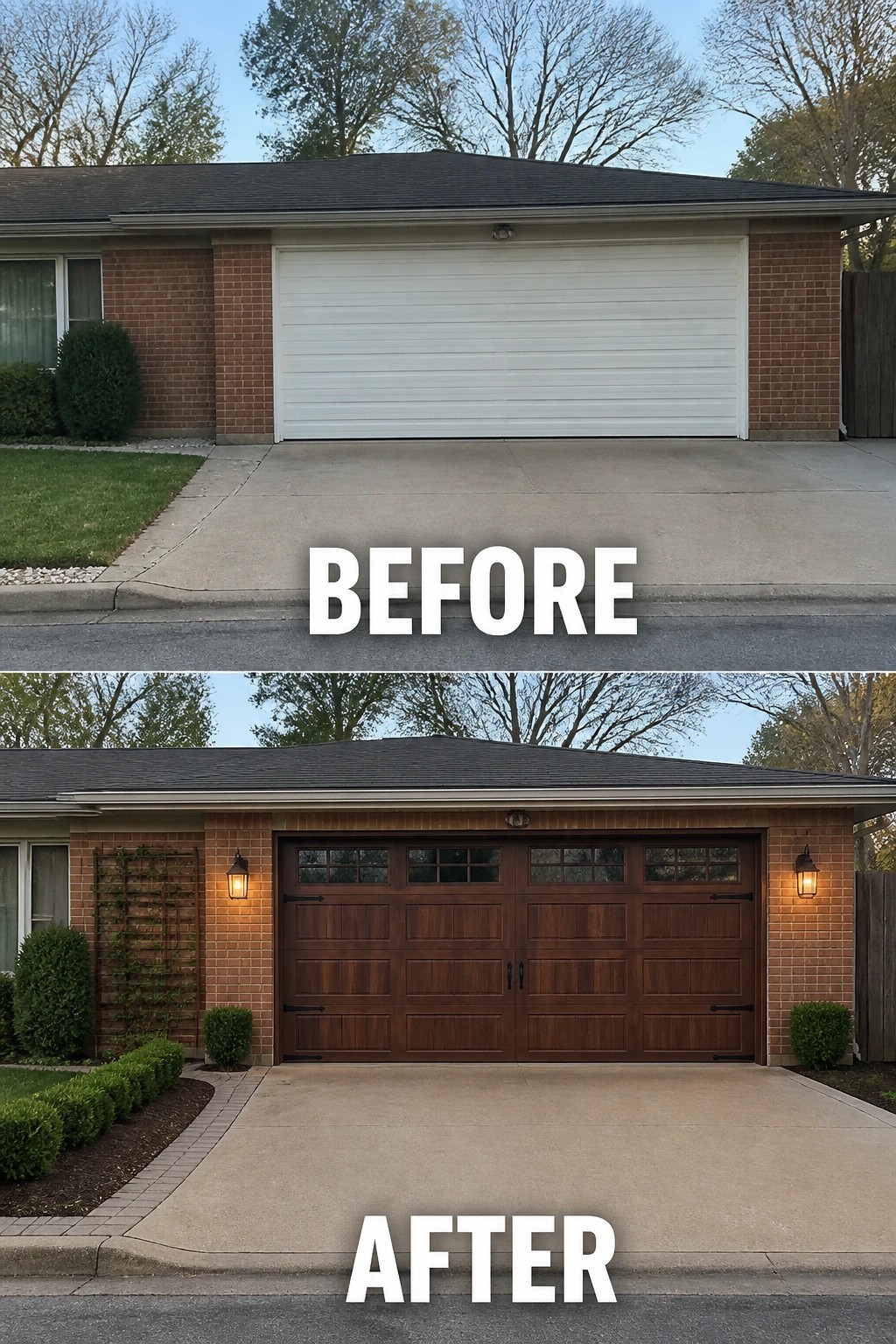
Swapping a flat, featureless garage door for a carriage-style, wood-look door instantly changes the house’s face. Choose a model with divided windows and simple hardware, and add a pair of matching wall lanterns so the new door reads as an intentional design element rather than an afterthought.
Use a durable material that mimics wood if real wood is too much maintenance, and pick a stain or finish that complements the brick. Add modest edging or small shrubs at the door edges so the upgrade feels anchored to the landscaping, and keep the scale and hardware choices consistent with the home’s traditional look.
Add A Gabled Porch Roof To Create An Inviting Entry
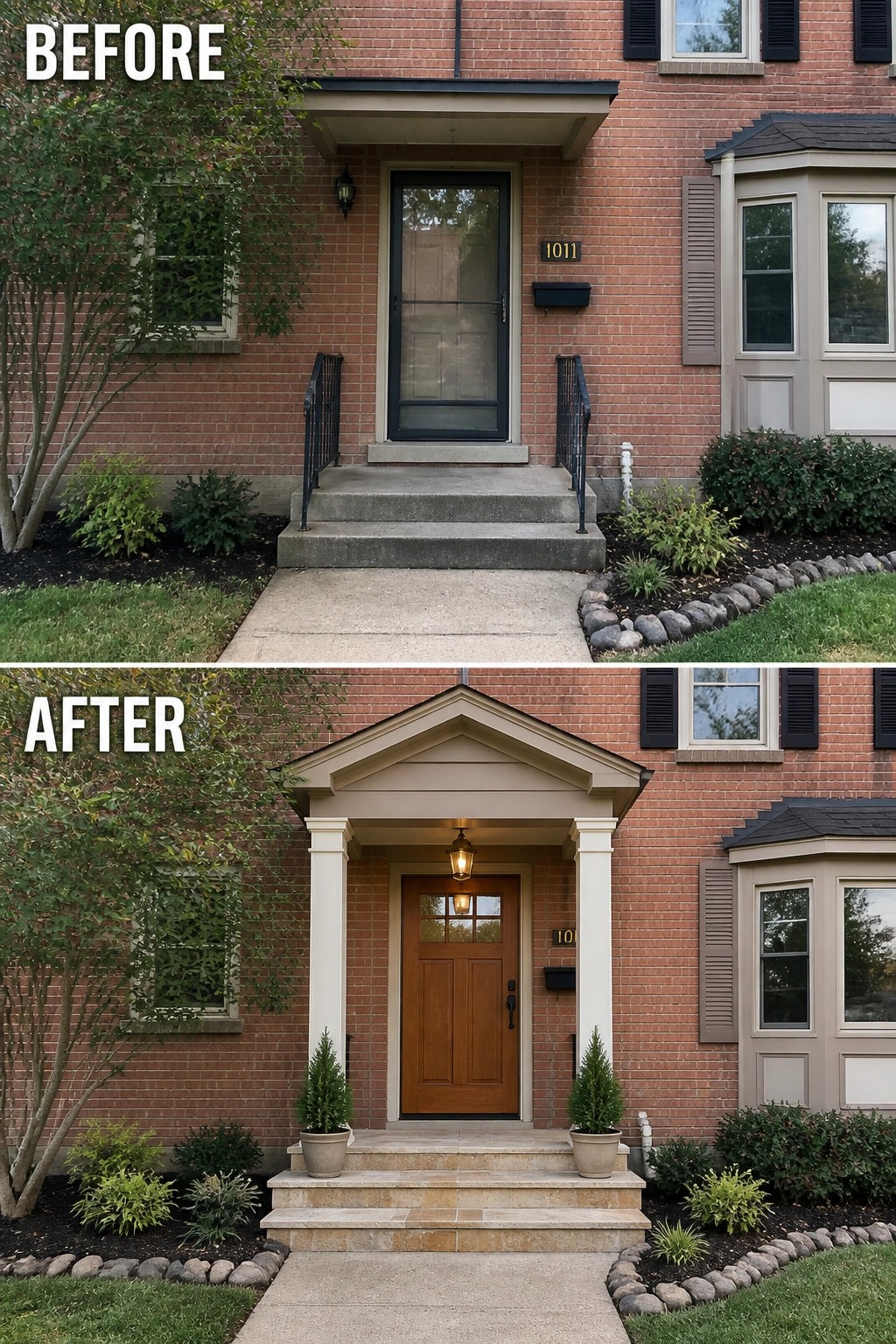
A plain entry can feel unfinished and uninviting, so define it as a proper porch instead of an afterthought. In this example the house moves from a simple stoop to a composed entry by adding a small gabled roof with columns, a solid wood door, a hanging lantern, and matching planters. Those few changes turn a utilitarian spot into a focal point you notice as you approach.
You can use the same idea on most traditional brick homes: pick one clear focal element for the entry, then support it with simple architectural detail and a couple of accessories. If a full roof addition is too much, start with a substantial door and quality light, add symmetrical planters or a pair of steps that match the home, and keep materials and scale proportional to the facade. Durable finishes and low-maintenance plant choices will keep the new entry looking intended, not staged.
Add A Low Stone Base And Simple Planting To Anchor The Facade
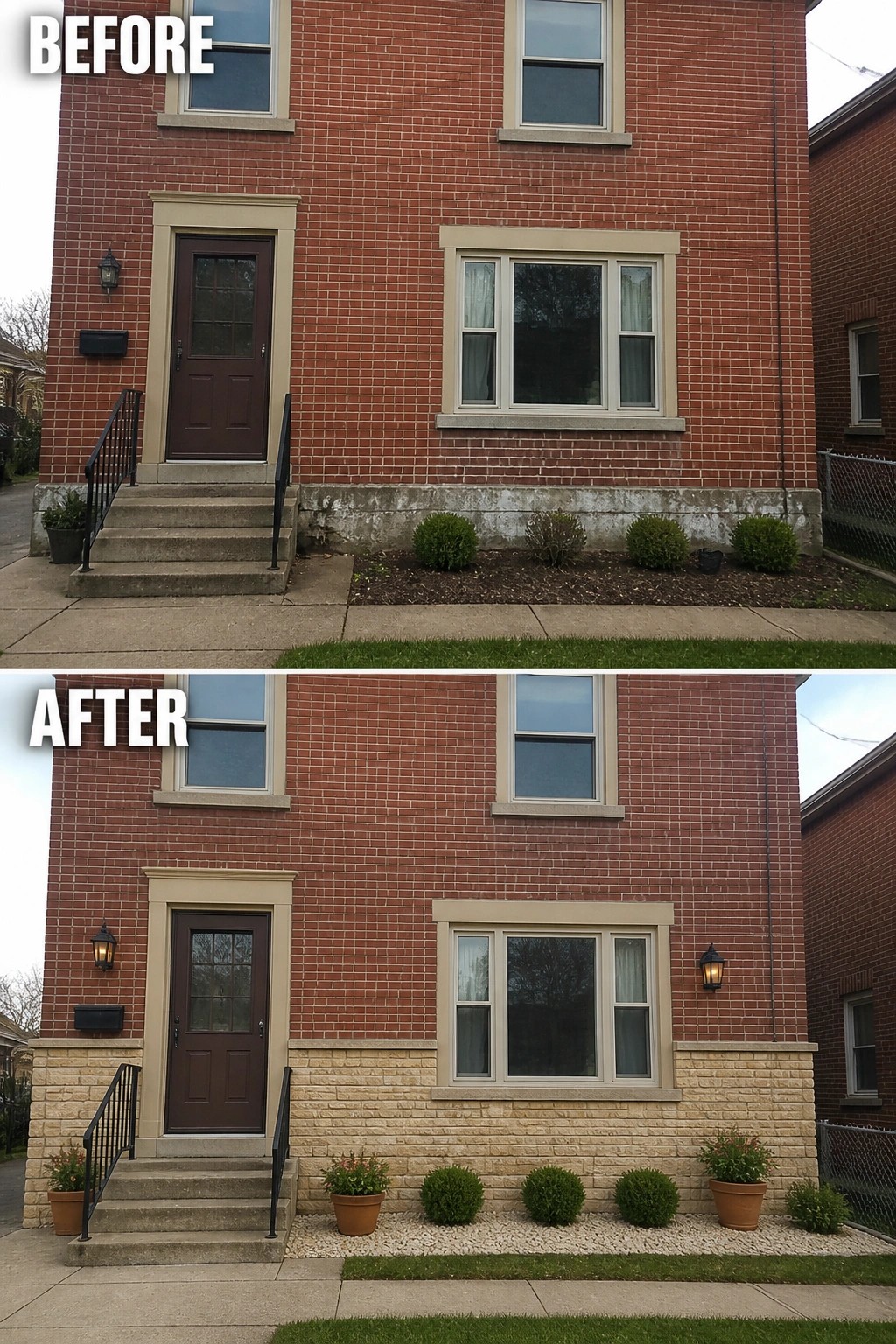
A short band of stone at the bottom of a brick house instantly gives the exterior a finished, intentional look. In this example the worn concrete foundation was covered with a light-colored stone base and the planting was simplified to repeated clipped shrubs, potted flanking plants, and a neat gravel bed, which together make the front feel grounded and cared for.
This approach works well on traditional brick homes where you want to add texture without changing the main wall material. Pick a stone tone that sits comfortably with your brick, keep plant choices simple and repeated for rhythm, and use gravel or mulch for low upkeep. If you add new masonry, pay attention to flashing and proper drainage so the upgrade looks good and lasts.
Create A Cozy Sitting Area On A Small Front Porch
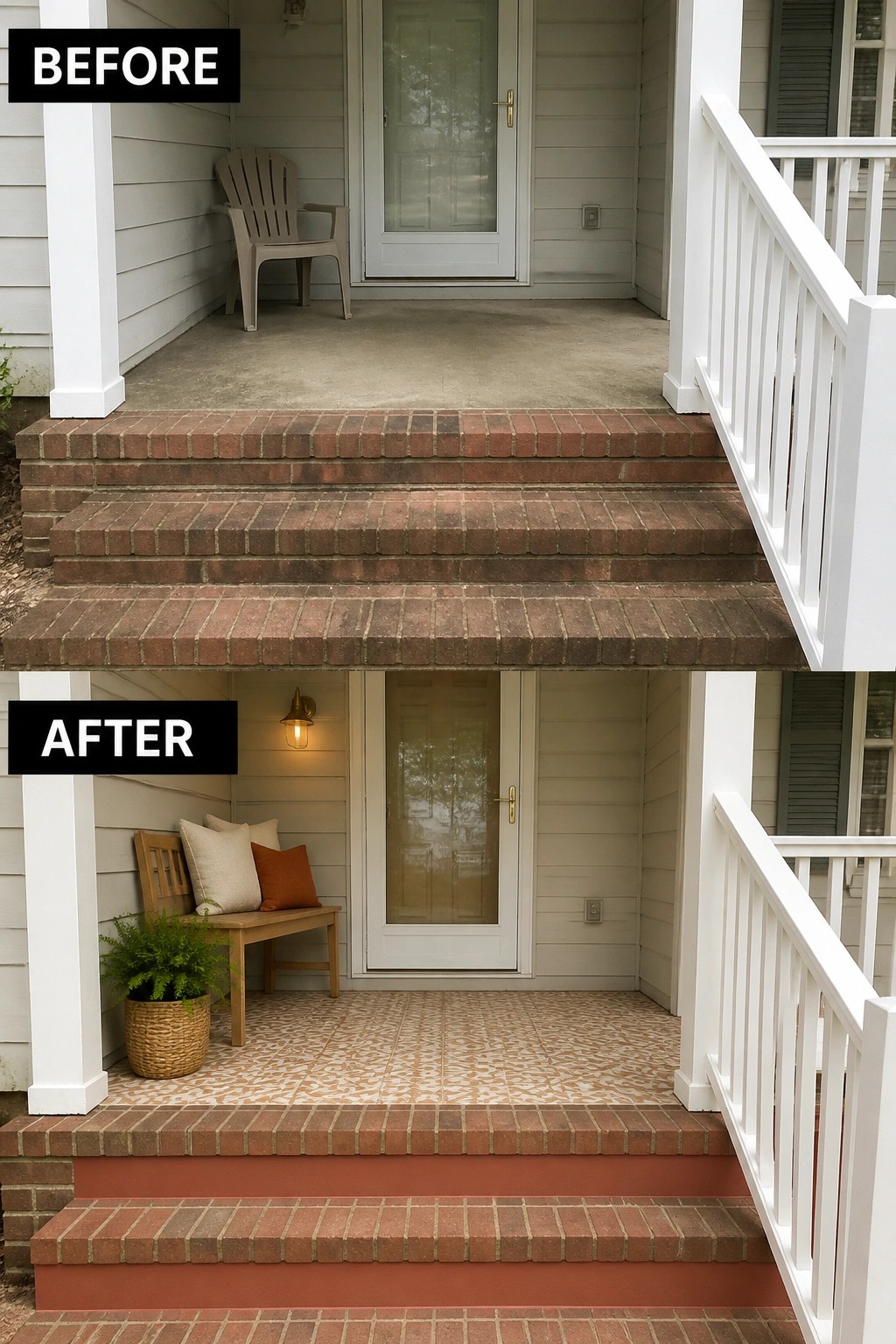
A small front porch doesn’t need a lot to feel finished—just a clear purpose. Swapping plain concrete for a patterned tile or an all-weather rug and adding a simple bench with cushions immediately defines the space as a place to sit and wait or greet neighbors. A painted stair riser that repeats a warm brick tone and a single wall sconce make the entry feel intentional without overdoing it.
To copy this on your own porch, start with a durable surface treatment or outdoor rug to anchor the zone, pick one comfortable seating piece that fits the depth, and add a planter for a touch of green. Keep materials weatherproof, leave a clear path to the door, and use one repeated color (on cushions, a riser, or a light) to tie the look to your brick or trim. Simple choices like these make a small porch useful and welcoming.
Add Trim And Window Boxes To Improve Curb Appeal
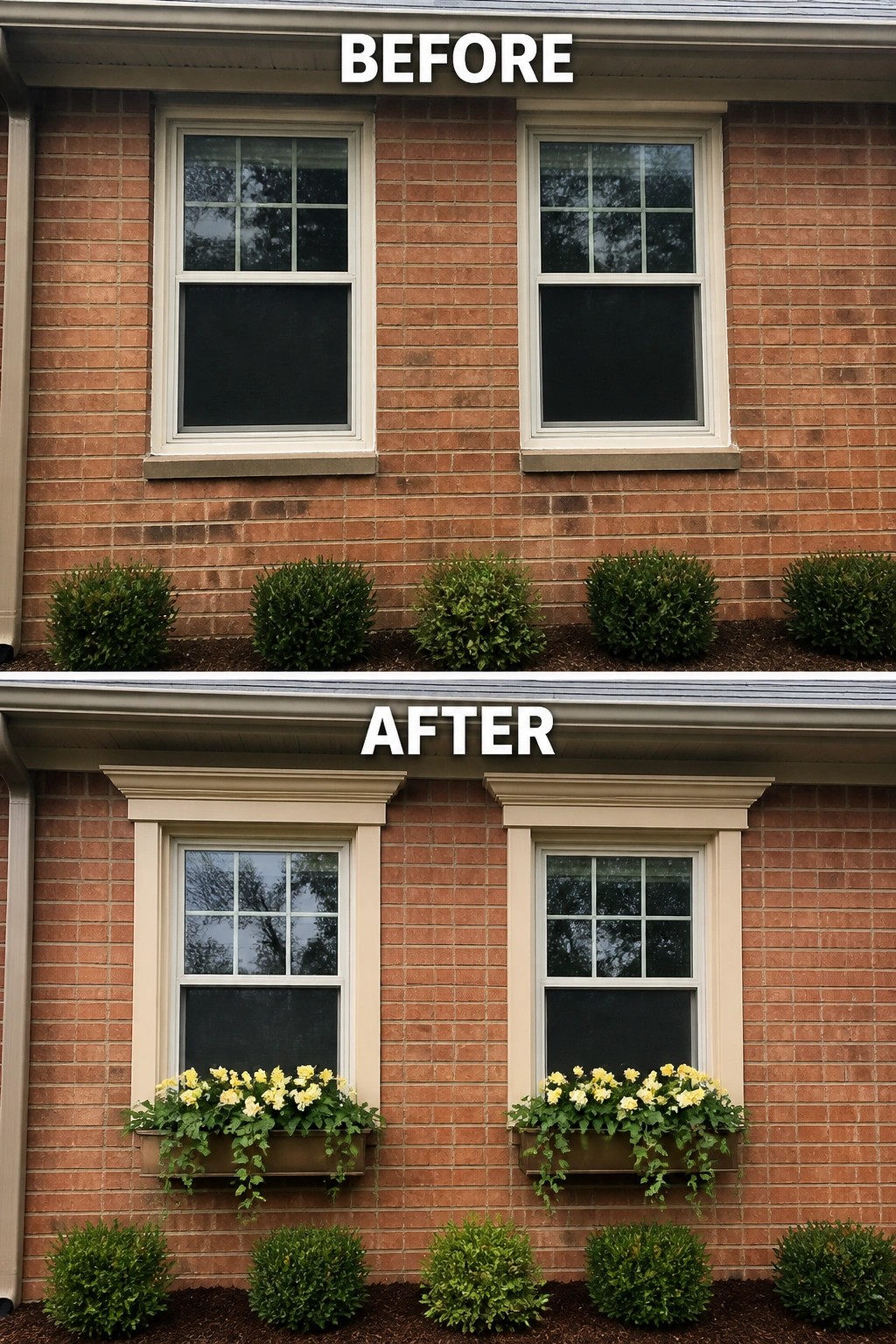
A little architectural detail goes a long way. Adding modest crown trim above the windows and simple window boxes gives a plain brick facade more proportion and color; the trim frames each opening and the boxes bring seasonal planting right to eye level. You get more character without changing the brick or repainting the whole house.
To try this at home, pick a trim profile and paint that harmonize with your existing gutters and shutters so the new pieces look intentional. Keep the scale appropriate for narrow windows, choose shallow boxes for easy maintenance, and add liners or drainage so the planters are practical through the seasons.
Refresh The Front Door With Terracotta And Brass Accents
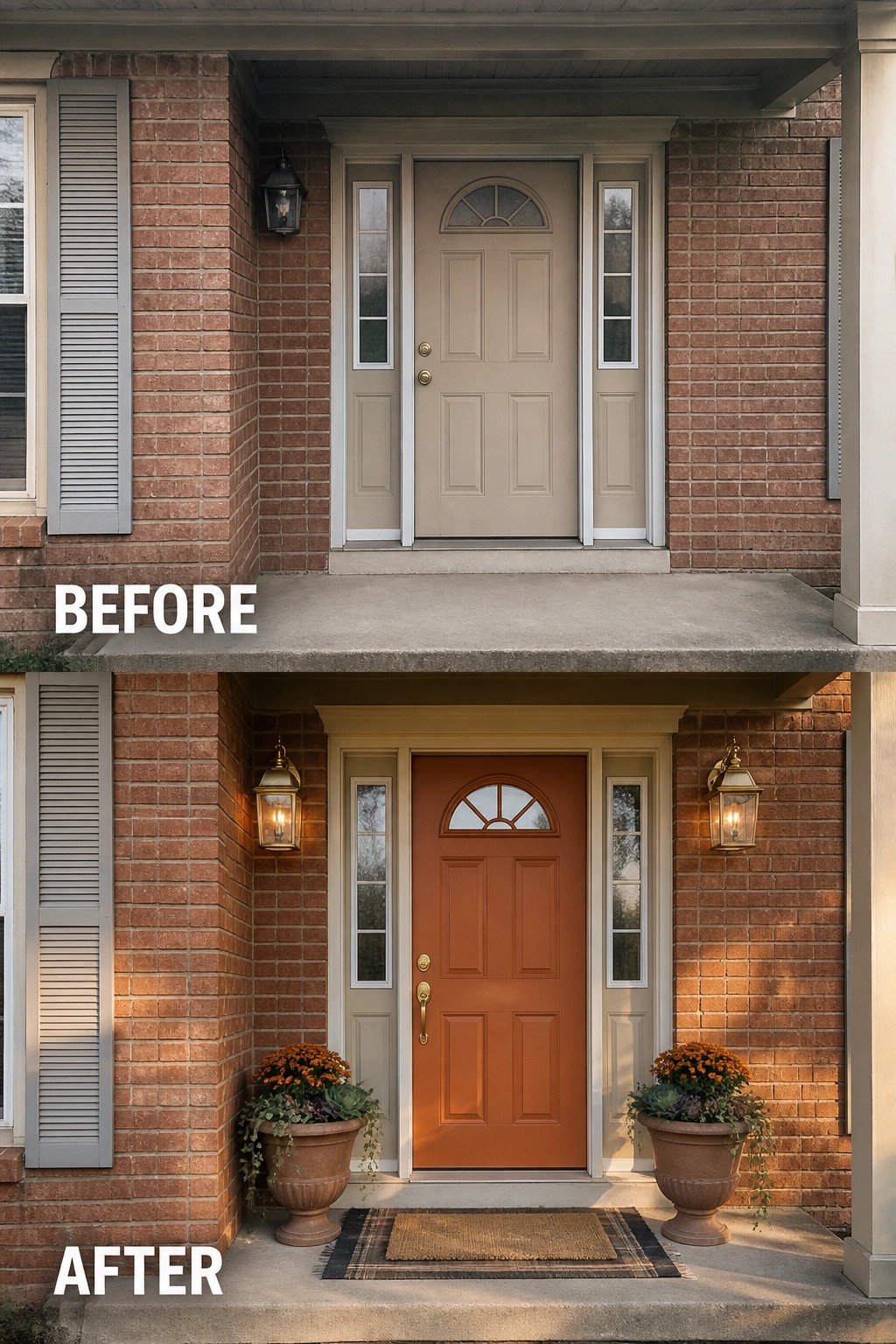
A simple front-door update can make an empty porch feel cared for instead of neglected. In this case a neutral door was swapped for a warm terracotta tone and paired with brass lanterns and matching planters, creating a clear focal point and a balanced entry that reads intentional rather than leftover.
To copy this idea, start with one bold move—the door color—and add two supporting elements like symmetrical lights and a pair of pots or a durable doormat. Repeat a finish (for example, brass hardware and lanterns), choose weatherproof materials, and keep the layout compact so the porch stays easy to use. Simple, effective.
Use Pavers To Turn A Worn Path Into A Formal Entry
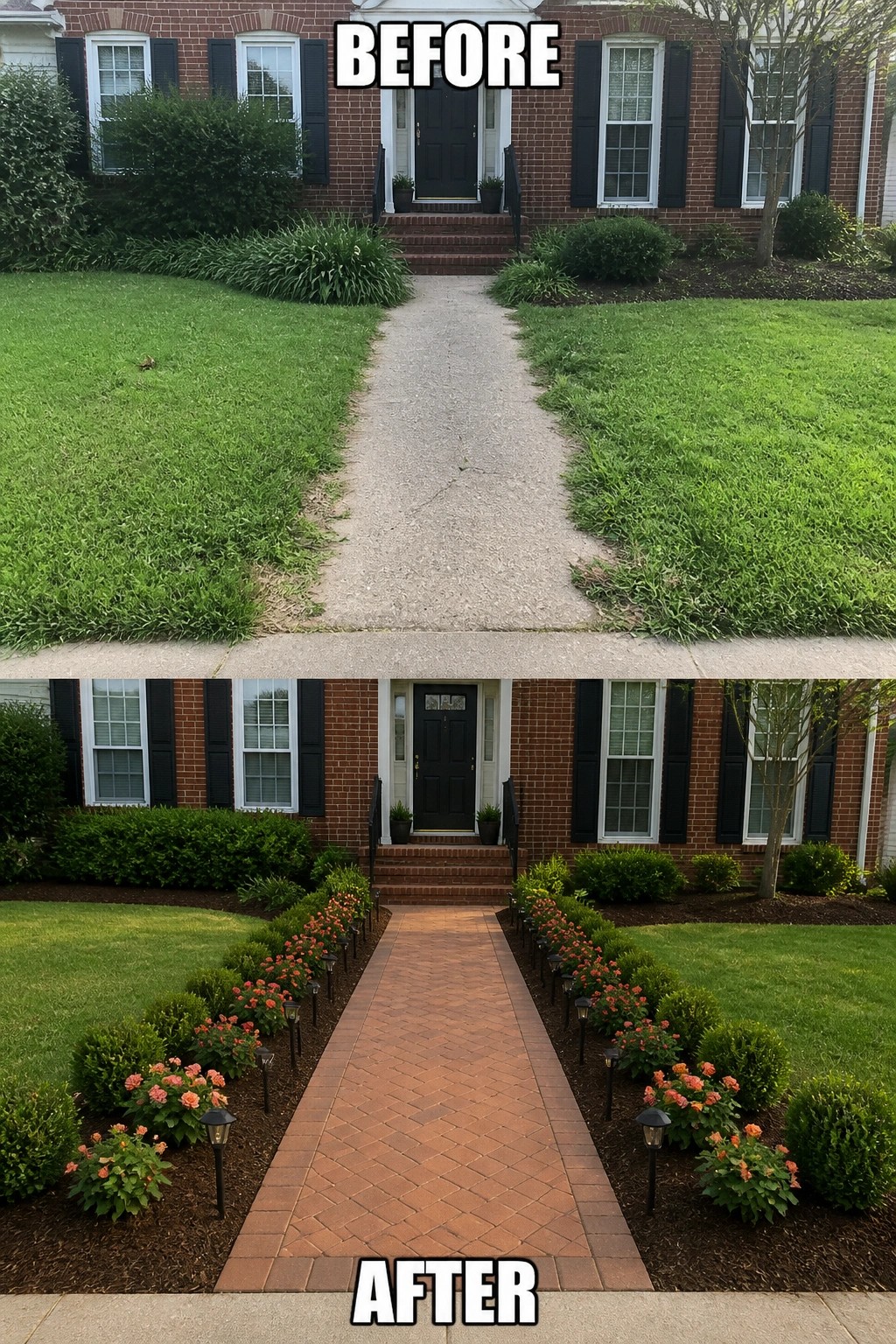
Swapping a plain concrete strip for a laid paver walkway instantly gives a front yard purpose and polish. A warm brick herringbone path (paired with low planting and small lanterns) visually links the ground to the house and makes the approach feel intentional rather than leftover. That single upgrade sets the tone for the whole facade.
To do it yourself, start by removing the old slab, grade and compact a stable base, and pick a paver color that complements your exterior brick. Keep the path wide enough to walk comfortably, add a clean edge, then plant low shrubs or perennials and install simple low-voltage lights for rhythm and safety. Proper base and drainage matter more than perfect stones, so spend on preparation rather than the top layer alone.
Make A Bare Brick Facade Feel Welcoming
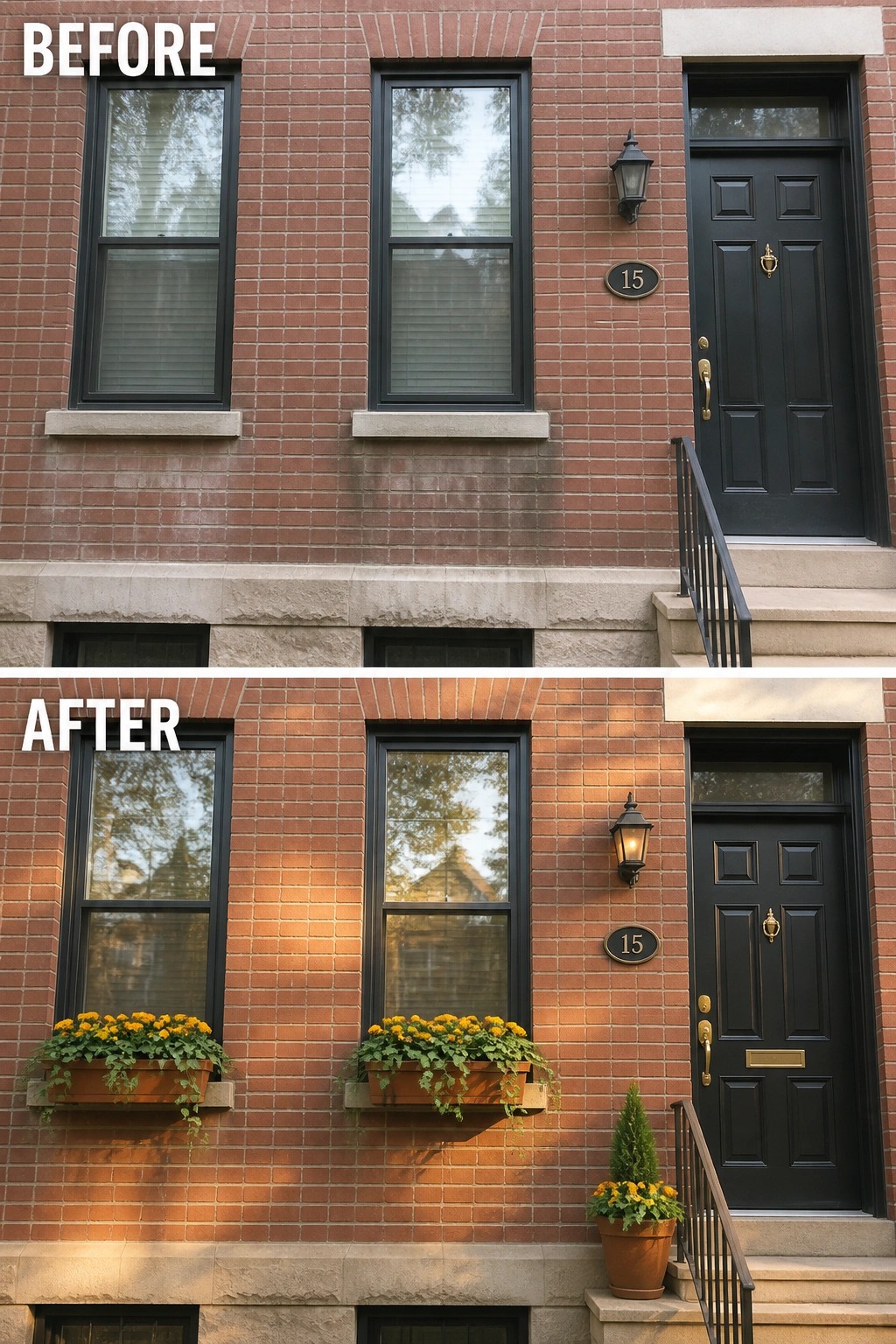
A few well-placed planters and refreshed entry hardware are an easy way to turn a plain brick front into a friendlier approach. Adding window boxes with repeating blooms and a single potted plant by the steps gives the facade color, a soft texture, and a clear focal point without any major work.
To try this at home, choose containers that match the scale of your windows and repeat one or two plant colors so the look reads as intentional. Pick hardy, seasonal plants and include a trailing variety for instant movement, then anchor the doorway with one larger pot or a simple lantern so the entry feels balanced and easy to maintain. It works especially well on traditional brick homes and narrow stoops.
Make The Front Entry The Main Feature
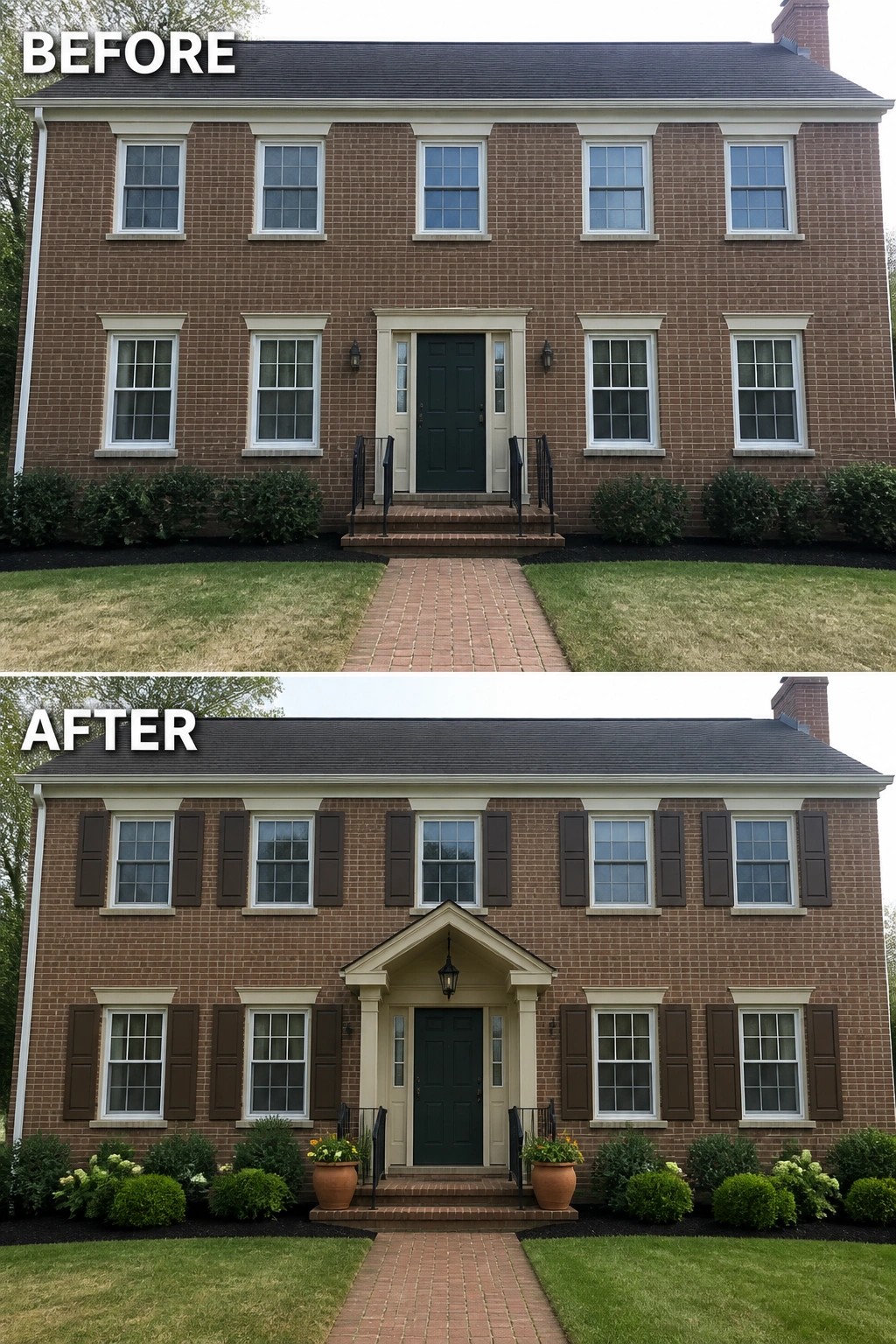
A plain brick facade can feel anonymous until you give it a clear front entry. In this example the house went from a flat look to having a proper focal point by adding a small portico over the door and matching window shutters, which immediately read as intentional architecture rather than empty wall. Those two moves alone make the entrance feel considered and easier to style.
You can use the same idea on almost any traditional home: pick a modest portico sized to the door, add shutters in a color that repeats elsewhere, then layer in a pair of planters and a hanging light to finish the scene. Keep elements symmetrical and in scale with the windows and step width, and choose materials that weather well so the entry stays tidy with minimal upkeep. Simple, small moves have big effect.
Add Warm Terracotta Tile To A Plain Front Stoop
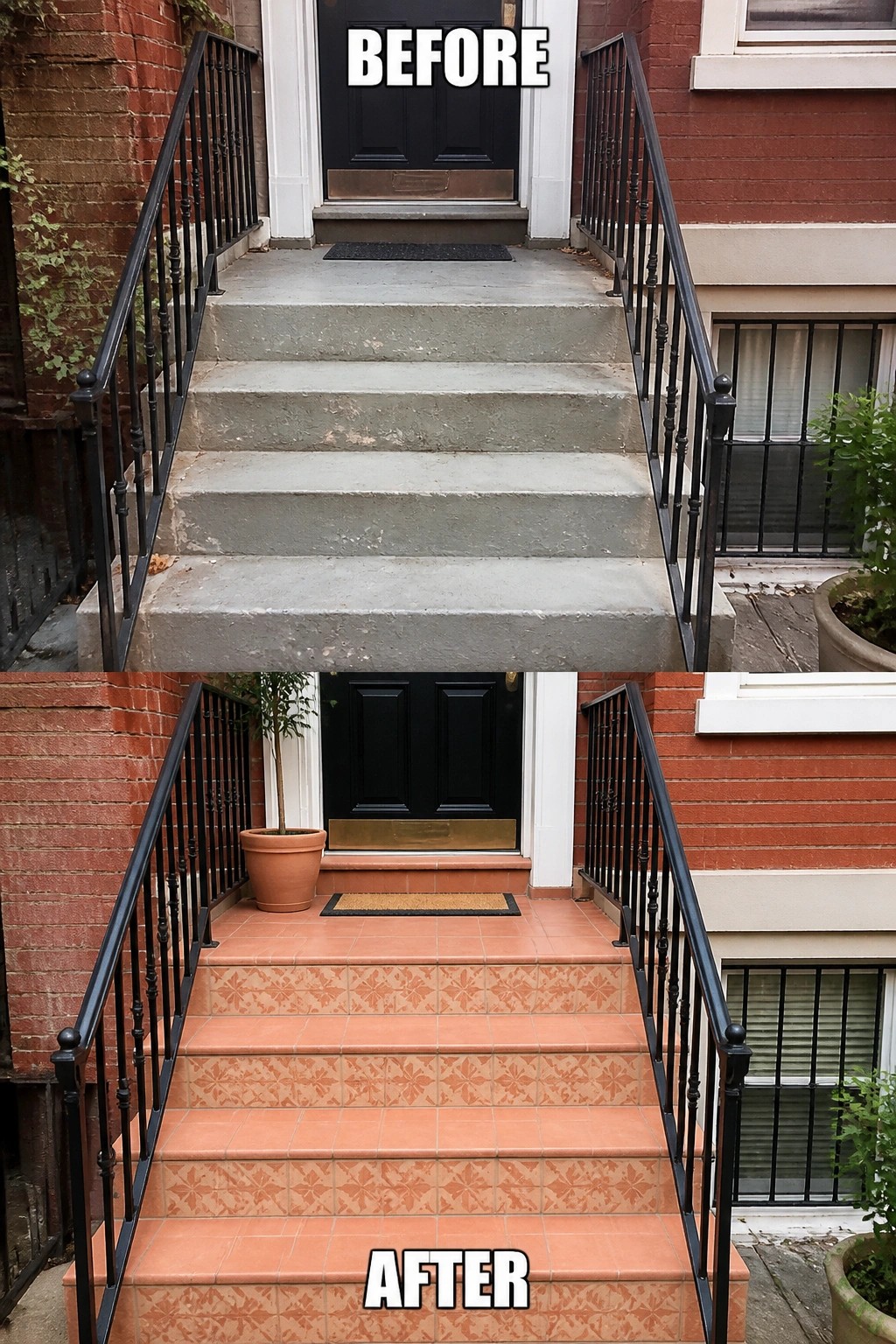
Updating a plain concrete stoop into a small, purposeful entry instantly raises curb appeal and makes the front of the house feel considered. Replacing chipped concrete with patterned terracotta tiles and adding a single potted plant and a doormat turns a purely functional step into a welcoming pause before the door. The change is simple but effective: a finished surface plus one or two accents gives the entry a clear role.
You can copy this idea without a big budget. Pick outdoor-grade, non-slip tiles that echo the home’s brick tones, keep grout lines neat, and leave enough room for people to step and pass. Add just one planter and a slim mat rather than crowding the space, and use finishes (like a brass kickplate or a dark door) to tie the look together. It works especially well on traditional brick facades where a warm tile color will feel cohesive and easy to maintain.
Add A Pergola And Seating To Define The Front Entry
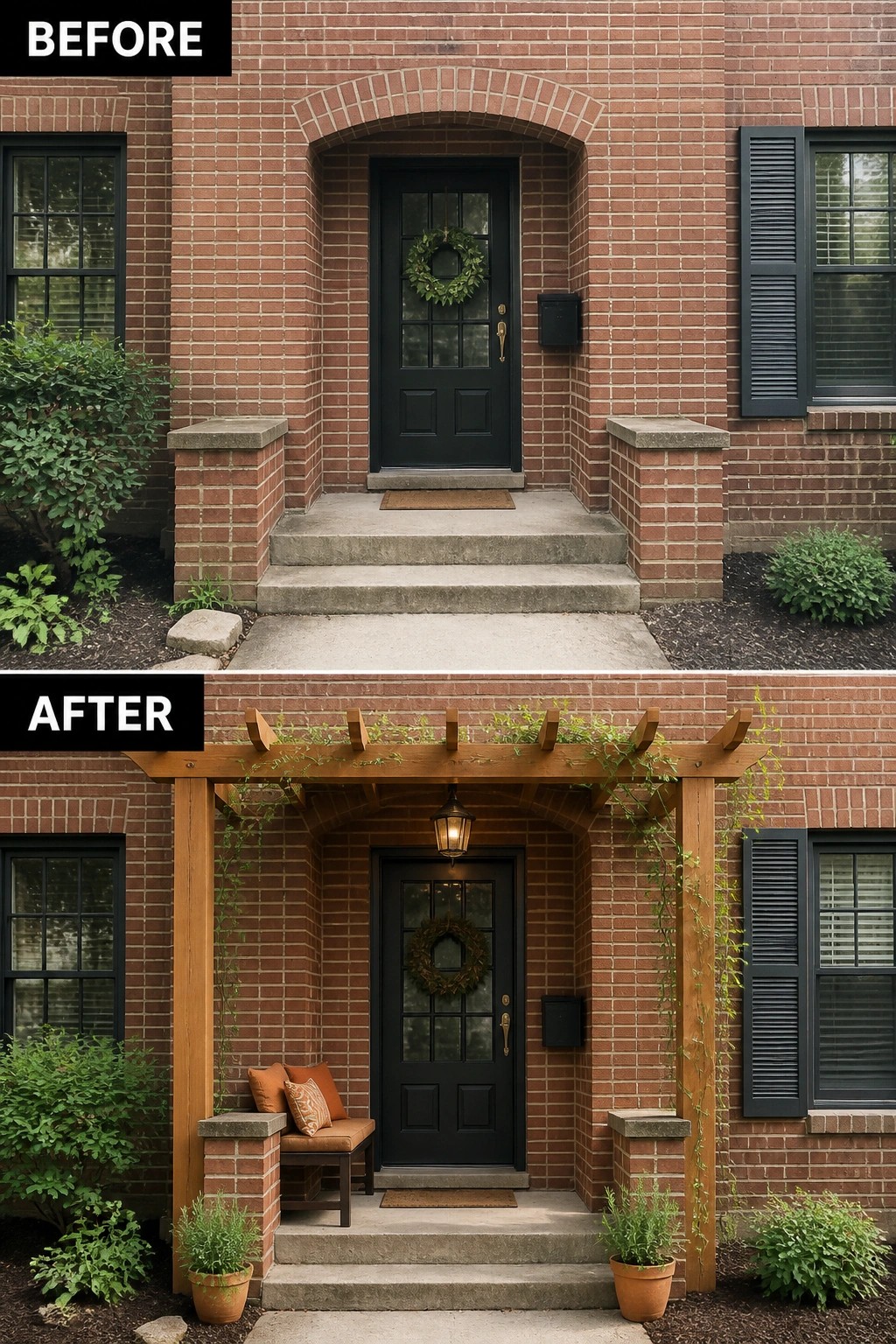
A simple front entry can feel finished when you give it a clear purpose: a sheltered spot to sit and a few well-placed plants to frame the door. In the after photo a modest wooden pergola, a small bench with cushions, a hanging lantern, and terracotta pots turn a plain stoop into a usable, welcoming pause point that complements the brick facade.
Start small. Choose compact, weatherproof seating that leaves the main path to the door clear, add one overhead light where people actually sit, and anchor the steps with matching pots or a single pair of planters. Repeat one material or color from the house—like warm wood tones or rust-colored cushions—to tie the look together, and consider a climbing vine on the pergola to soften the brick over time.
Use Lighting To Make A Front Entry Feel Welcoming
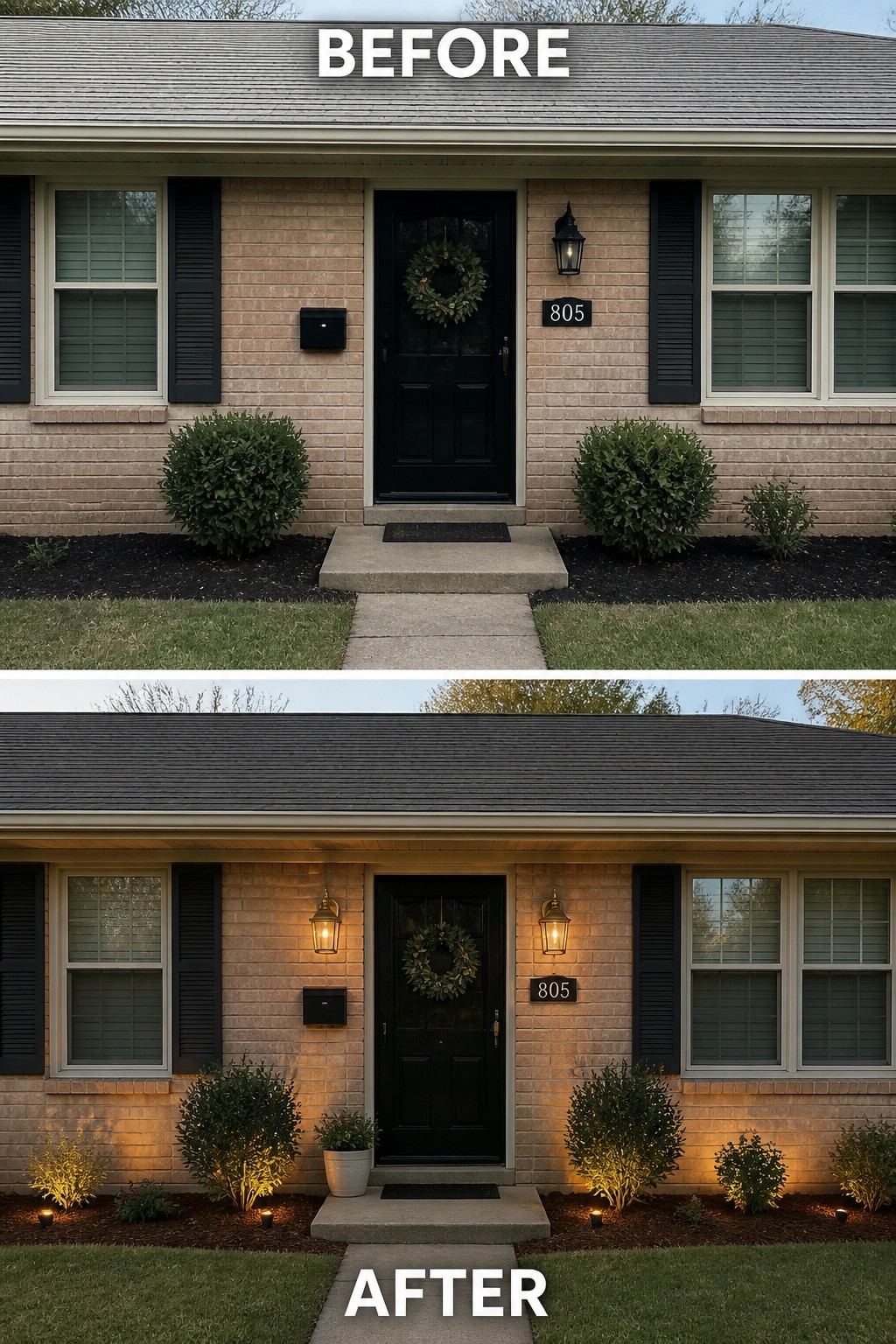
A few well-placed lights can turn a plain brick front into a purposefully styled entry. In this example, wall lanterns beside the door and low uplights aimed at the shrubs give the facade depth and a lived-in look without major construction. The lighting highlights the front door and plants, so the porch reads as an intentional space rather than just a stoop.
To copy this idea, start with one or two wall fixtures at eye level and add small stake uplights in the planting bed to wash the brick and shrubs. Pick outdoor-rated LED bulbs in a warm color temperature, keep fixture scale proportional to your door, and hide wiring under mulch or behind trim. This works well on modest brick homes where you want an easy curb-appeal boost—use a handful of lights rather than many, and place them to illuminate features, not blind visitors.
Create A Defined Garden Border To Frame The House
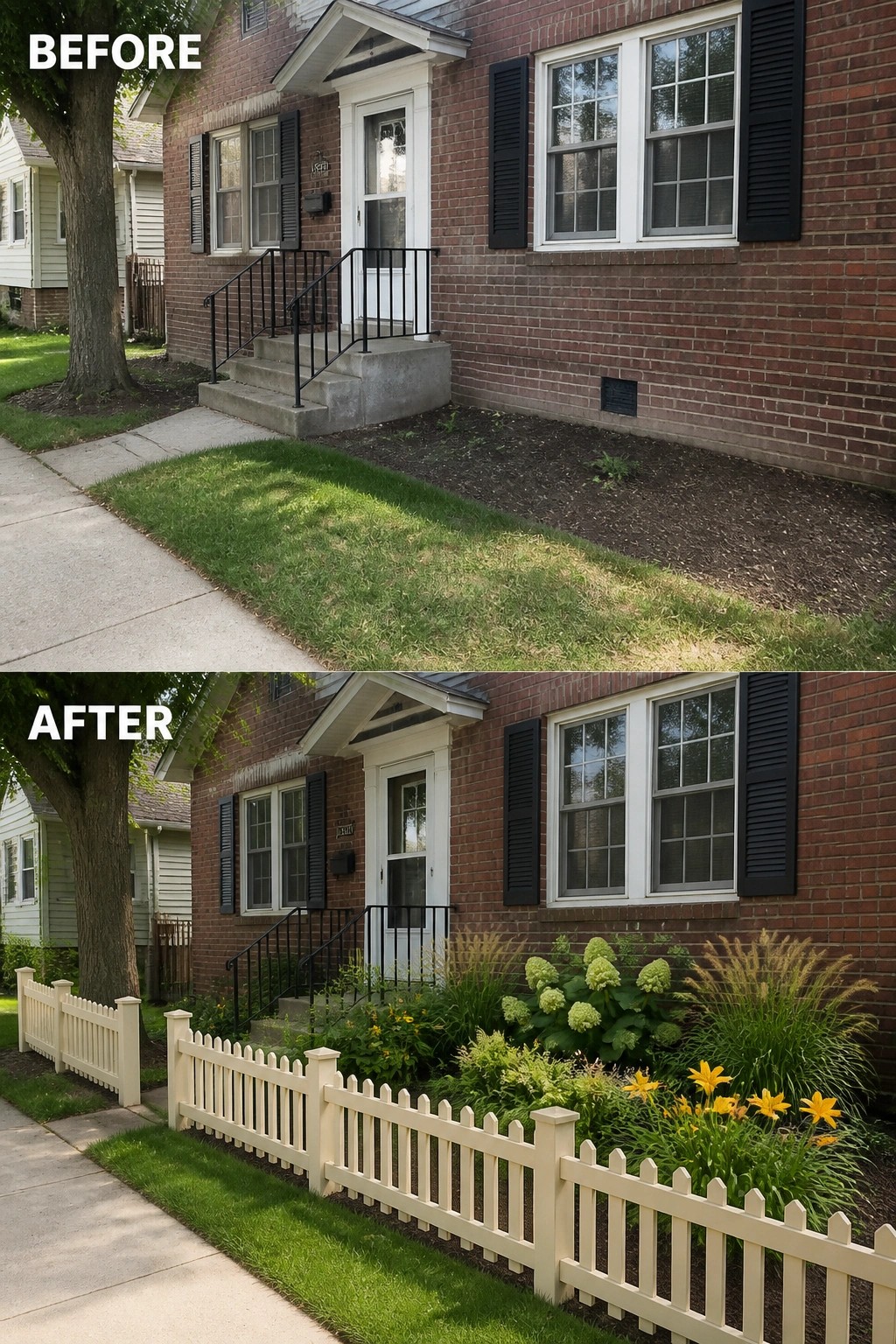
A simple, planted border gives a brick facade instant curb appeal. Replacing bare soil with fresh mulch, layered perennials and a low picket fence creates a clear foreground that complements the home instead of leaving the area feeling unfinished. The fence provides scale while hydrangeas and ornamental grasses add texture and seasonal interest.
To copy this, start by cleaning and edging the bed, then lay mulch to define the space. Choose three or four plants in staggered heights, repeat a color family for cohesion, and place taller specimens closer to the house with low bloomers at the front so the fence and sidewalk stay visible. Pick a low-profile fence that matches the home’s scale and select hardy perennials for easy upkeep.
Use A Window Box To Soften A Brick Facade
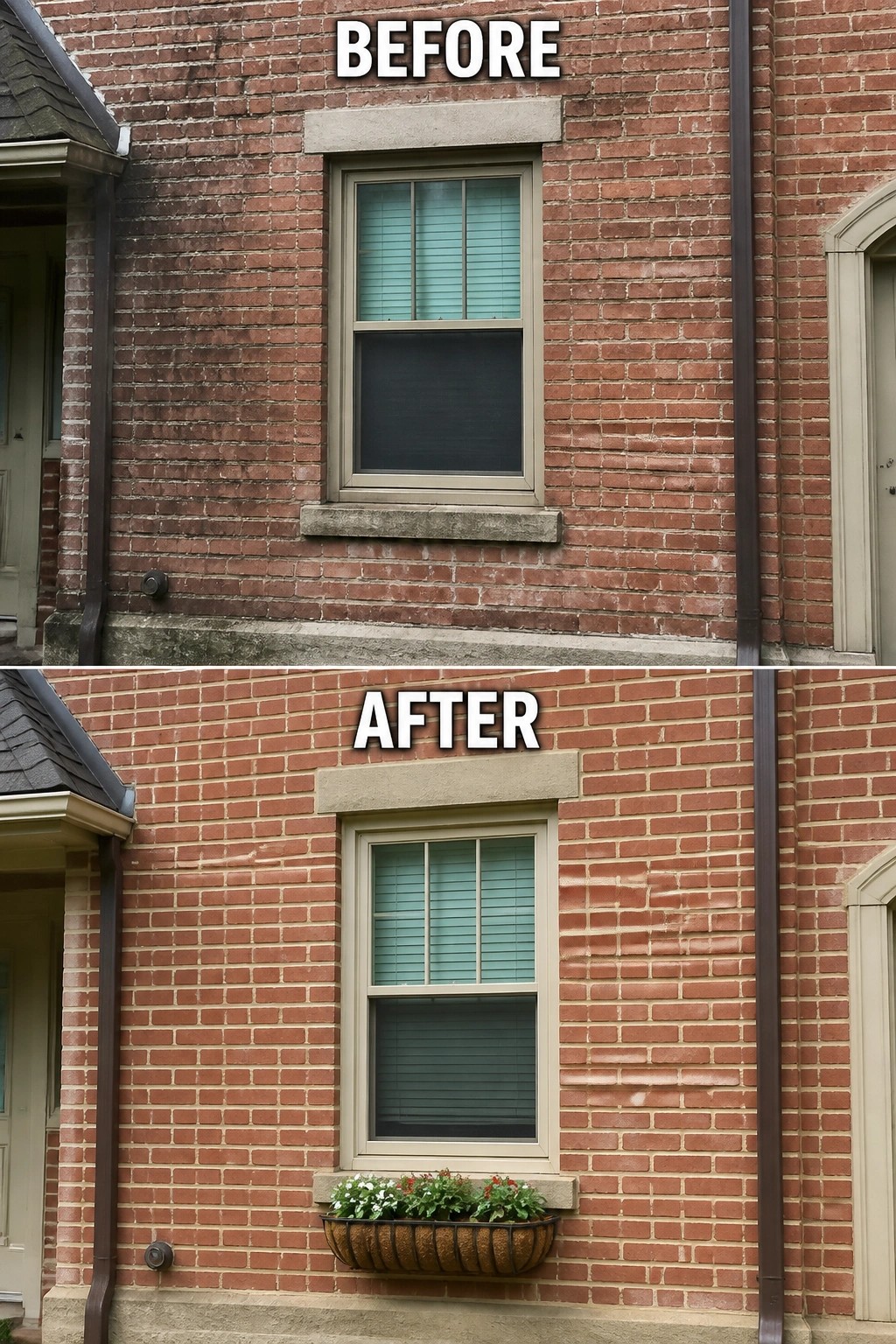
A simple window box is an easy way to make a plain brick wall feel more intentional and welcoming. In this example the homeowner cleaned up the brick and added a shallow planter under the window, which breaks the hard plane of masonry and gives the facade a friendlier, finished look without a big remodel.
To copy this, pick a planter sized to the window so it reads like part of the architecture, and mount it on secure brackets rated for the weight of soil and plants. Choose low-maintenance, weather-tolerant plants with a mix of spillers and upright varieties for year-round interest, and consider a lighter-weight liner or foam soil if you need to reduce weight. Start with a quick brick cleaning or light repointing first so the planter sits against a tidy backdrop and the whole change looks deliberate.
Frequently Asked Questions
Q: Can I paint my existing red or brown brick to fit a warm, traditional color palette?
A: Yes, painting brick is a quick way to warm up or soften the look. Clean the surface, use a masonry primer and breathable exterior paint, and test a small patch so you’re happy with the shade before doing the whole house.
Q: What trim and accent colors pair well with warm brick without feeling matchy?
A: Pick one neutral trim color like creamy beige or warm gray for the largest areas, then use a deeper accent—think rich chestnut or olive—for shutters, doors, or window frames. Bring sample boards outside to see them in morning and evening light before you commit.
Q: Will warm brick clash with a more modern landscape design?
A: Not at all; warm brick actually anchors contemporary plantings and clean hardscape lines. Use simple geometry in pathways and pick plantings with varied leaf textures to balance the brick’s warmth.
Q: Do I need to seal my brick to keep the color looking fresh?
A: You don’t always need a sealer, but a breathable, matte masonry sealer can help protect against staining and moisture without trapping water. Avoid high-gloss sealers that make brick look plastic and check product labels for vapor permeability.