

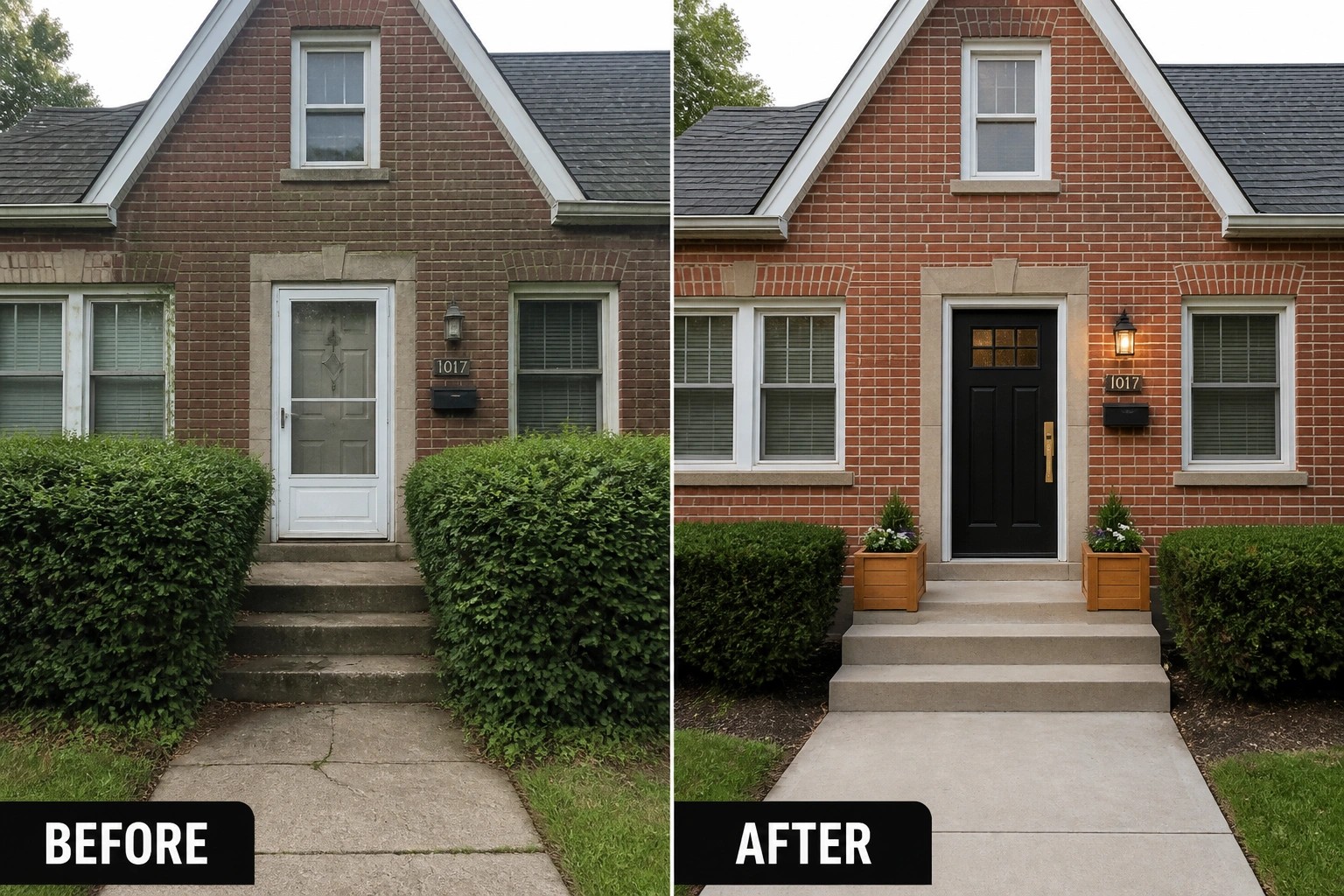
A brick house can feel stuck in time because of flaking paint, heavy siding additions, or an entrance that reads muddled, yet the original masonry often holds the best part of its personality.
I’ve learned that small moves, like replacing porch railings, adjusting trim color, or adding a purposeful walkway, can highlight the brick instead of covering it up.
That kind of restraint matters.
Seeing a house read cleaner and more cohesive after modest updates is quietly satisfying, and some of the ideas I favor are simple enough to test on a weekend or adapt to different styles of brick.
I’ll point out practical options that respect the masonry, cut clutter from the facade, and suggest changes you can save for later depending on budget and comfort level.
Give A Bare Porch A Clear Purpose
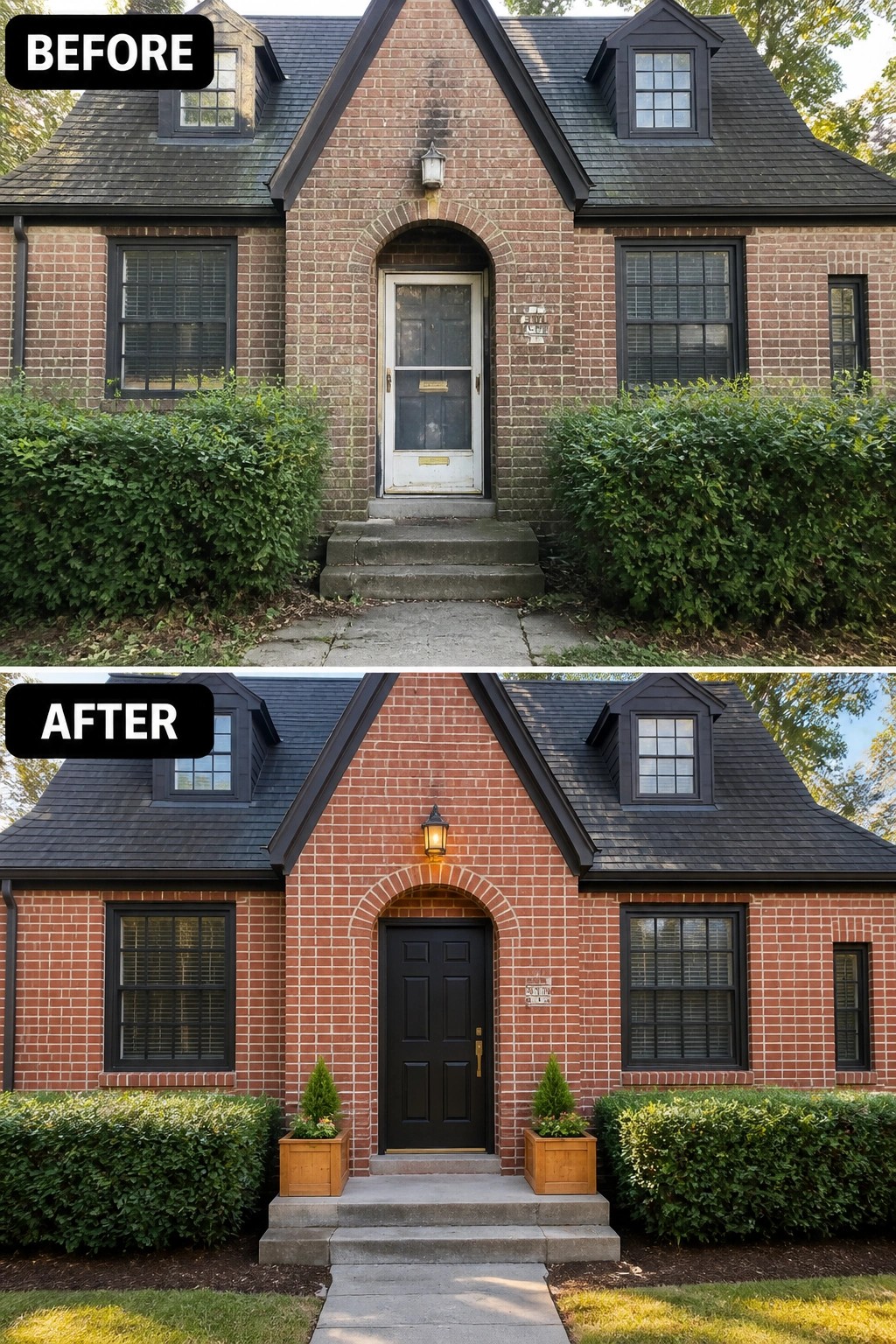
A tidy, purposeful entry lets original brick stay the star while the house finally looks finished. In this example a tired storm door was replaced with a painted solid door, a coordinated porch light was added, and simple planters flanking the steps define the approach. Those few changes create a clear focal point and make the front feel cared for without touching the masonry.
To copy the idea, start with cleanup: trim hedges, repair the steps, and paint or replace the door in a contrasting but classic color like black or deep blue. Add one exterior-rated light above the door and two matching planters sized to the step width so the entrance reads as intentional (simple but effective). This works well on small brick cottages and older homes where you want curb appeal without major construction—just be careful not to block the walk or overwhelm the scale.
Use Shutters, Window Boxes, And Lighting To Improve Curb Appeal
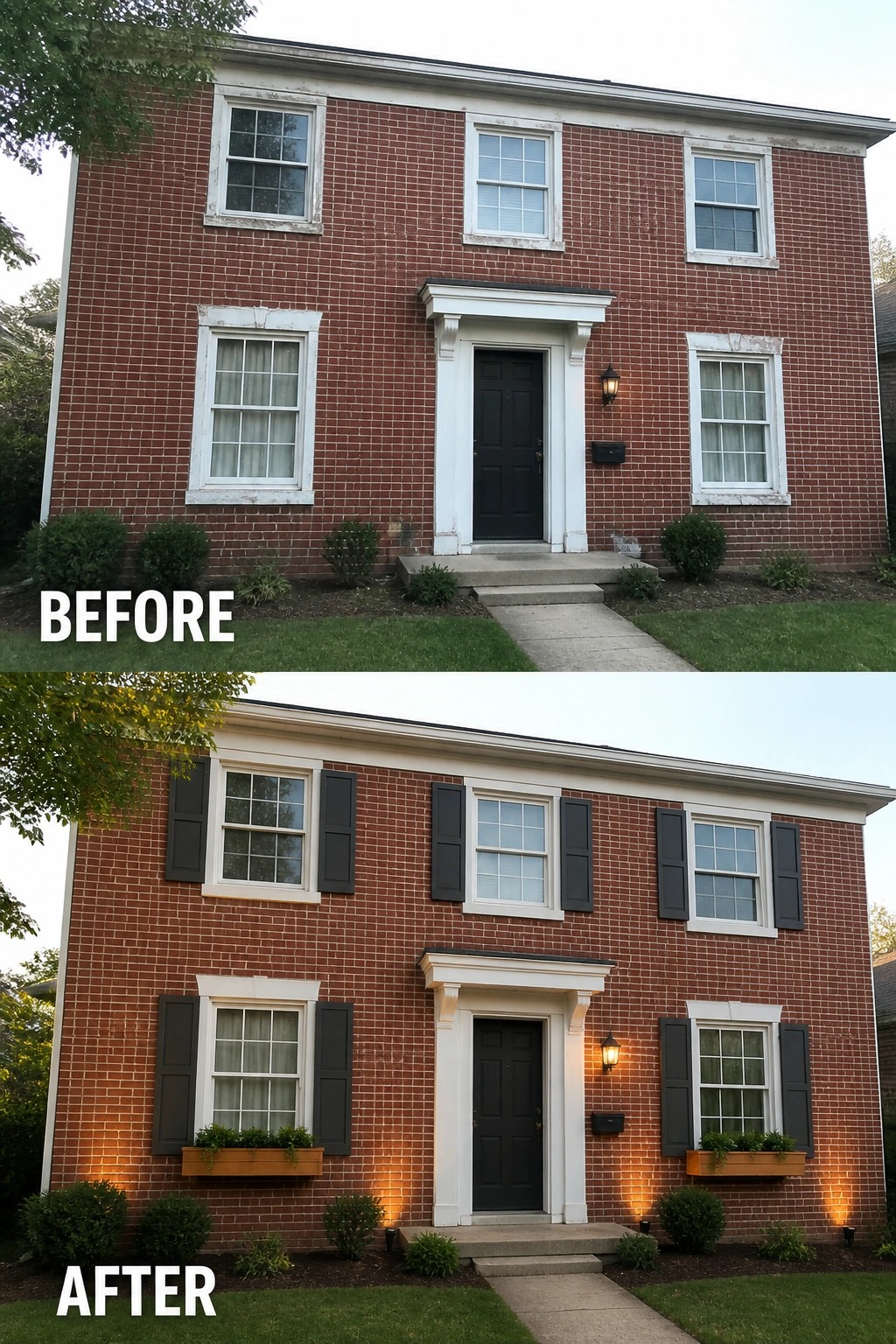
A few small exterior additions can make an old brick house feel finished without touching the masonry. In this example, installing dark shutters and wooden window boxes frames the windows and gives the facade clear visual rhythm, while fresh painted trim ties the doorway to the rest of the house. It’s a simple way to keep the original brick and add personality at the same time.
Try a high-contrast shutter color to read from the street and choose shallow window boxes with easy-care plants so maintenance stays low. Paint or repair trim before mounting hardware, and consider low-voltage uplights near foundation plantings to extend the effect into evening. Simple, reversible changes work best on older brick where you want to preserve the original material.
Turn A Raised Porch Into A Comfortable Seating Area
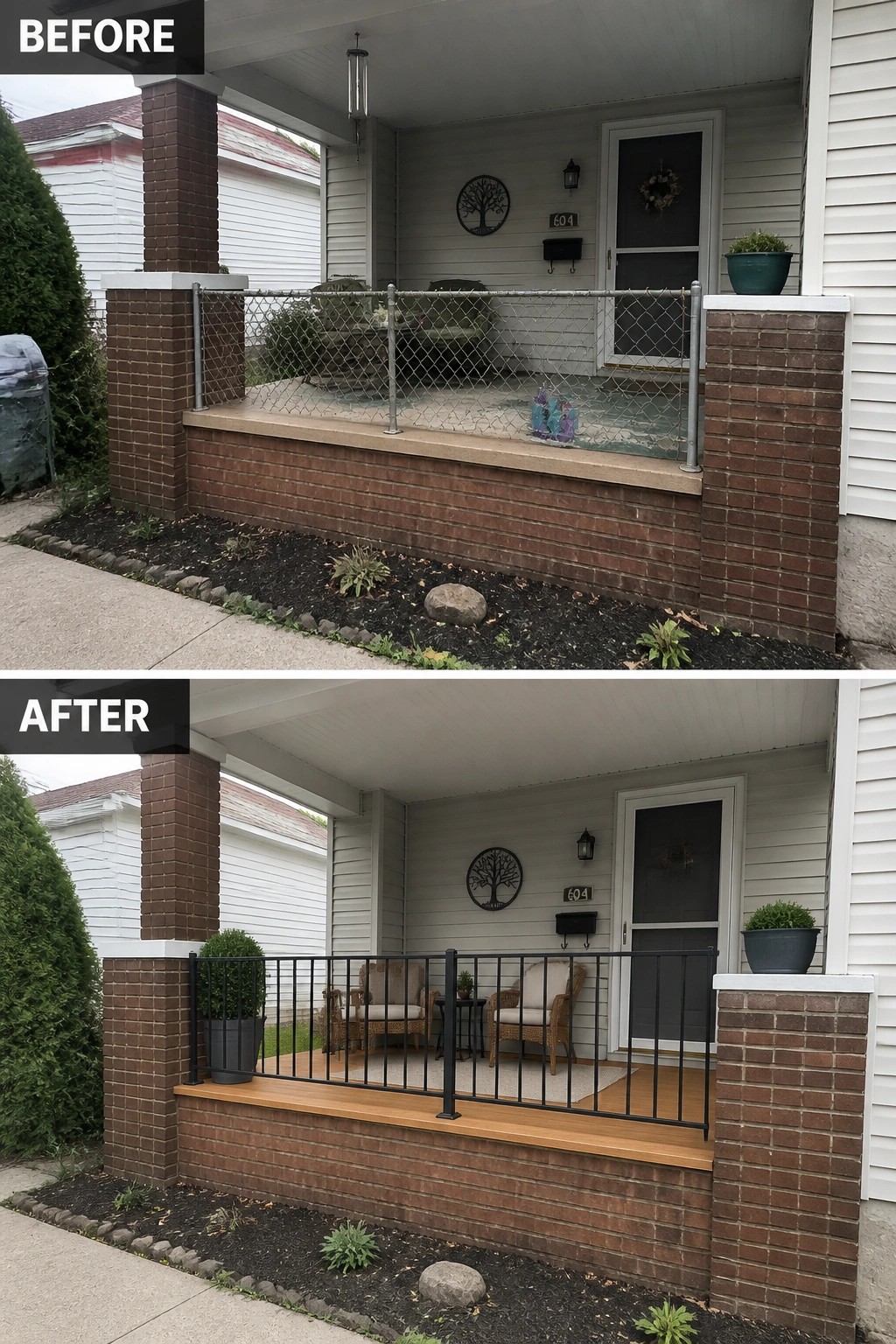
A raised porch that was once just concrete and a chain-link barrier becomes useful by focusing on one simple goal: make a place to sit. In this example a narrow wood deck overlay and a low metal railing replace the old guard, and a couple of chairs, a small table, and a planter turn wasted space into a real outdoor sitting area.
You can copy this idea on almost any small front porch. Start with a stable surface—deck boards, a composite overlay, or wide decking tiles—then swap or hide an unattractive barrier with a slim railing so the original brick still shows. Pick compact, weatherproof seating and an outdoor rug to define the zone, and keep a clear path to the door so the space feels intentional, not crowded.
Upgrade The Garage Door To Boost Curb Appeal

Swapping a plain, dated garage door for a carriage-style door and adding simple exterior lanterns is a quick way to refresh the front of a brick house without touching the masonry. The darker, textured door and a couple of coordinated iron accents give the opening real character so the original brick remains the star.
Keep it practical: pick a door color and finish that complements the brick—mid to dark neutrals usually work best—and match hardware and lights in one finish. If a full replacement is outside your budget, add decorative straps, handles, and new lanterns or choose a faux carriage door that fits your existing opening; just avoid oversized trim so the brick still reads as the primary material.
Use Lighting To Make A Front Path Feel Welcoming
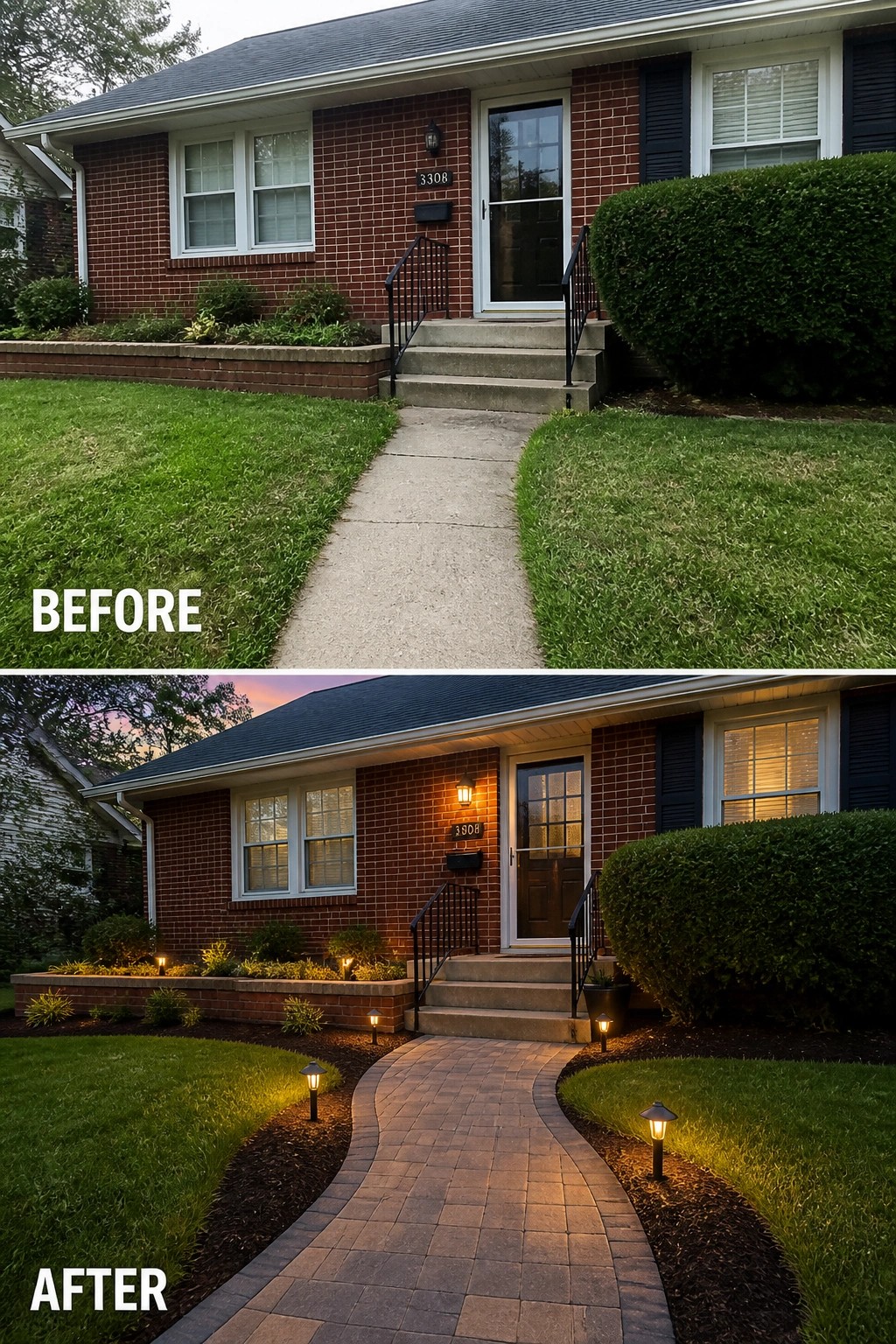
A simple stretch of concrete can make an entry feel forgotten. Lining a new or improved walkway with low, warm path lights instantly gives the approach purpose and presence while keeping the original brick facade as the star. In this example the straight concrete path becomes a gentle paver curve with evenly spaced lantern-style lights that guide the eye and make the house feel cared for even after dark.
This idea works on almost any older brick house because it focuses on circulation and visibility rather than changing the masonry. For DIY or pro installs, pick lights that match your budget—solar for easy placement or low-voltage for consistent output—and space them close enough to illuminate foot traffic, about 6 to 10 feet apart depending on brightness. Pair the lighting with a defined edge and fresh mulch or low planting so the path reads clearly but the brick and entry remain the focal point. Watch for glare into windows and keep fixtures low so they help you see the steps without overpowering the porch light.
Define A Small Stoop With A Finished Front Entry
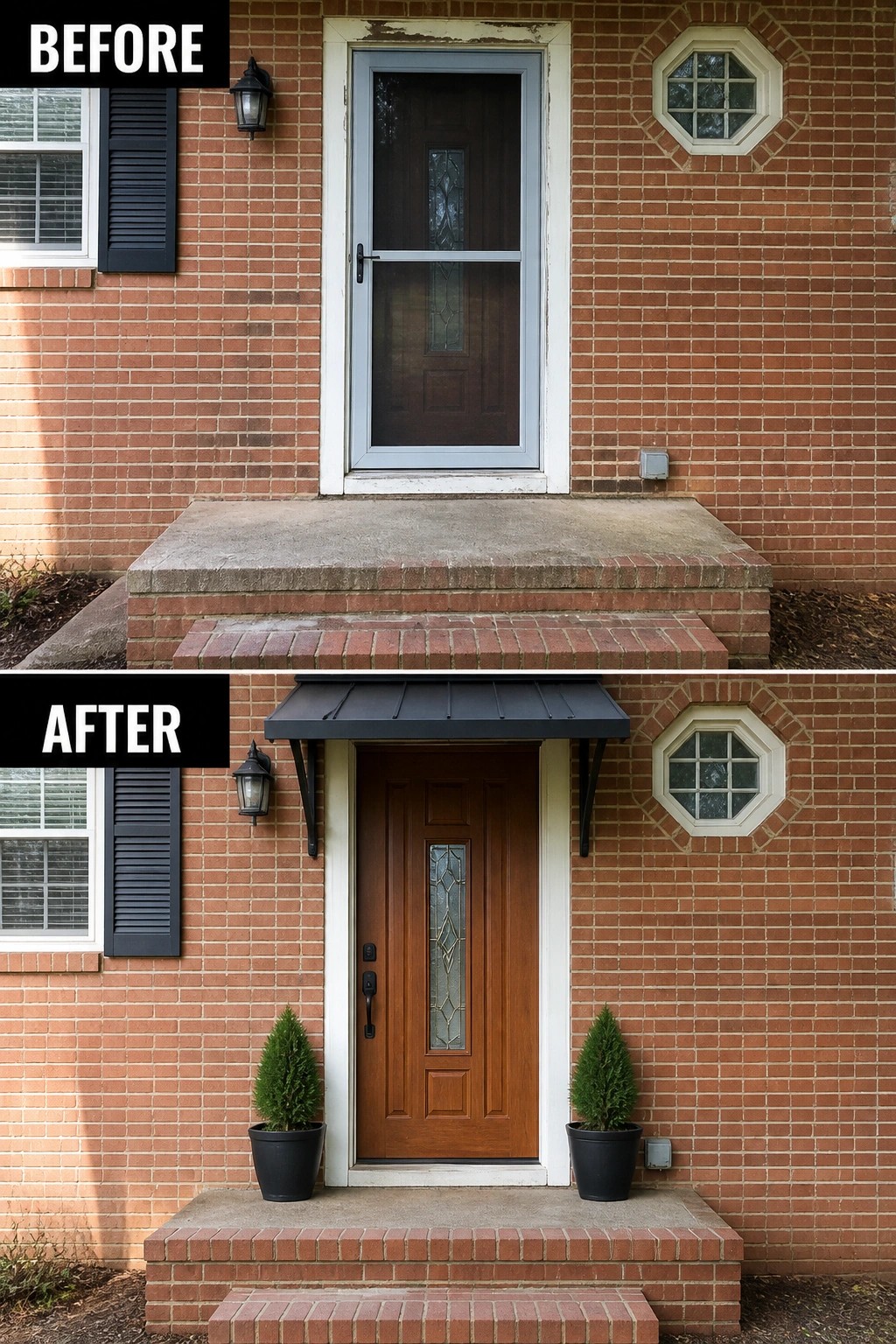
Swap an anonymous stoop for a defined entry by installing a proper front door, a small protective canopy, and a pair of matching planters. Replacing a plain storm door with a solid door that has a narrow glass insert, plus a slim awning and simple wall lantern, immediately signals this is the home’s entrance and works with the existing brick rather than covering it up.
Use this approach on narrow or small porches where you want a clear focal point without doing major construction. Choose a door style and hardware that complement your brick color, size the awning so it shelters but does not overpower the facade, and add two simple pots for symmetry and seasonal interest (pick weatherproof finishes). Keep the step area uncluttered so the door can open fully and visitors can approach safely.
Add A Low Raised Bed To Frame The Brick
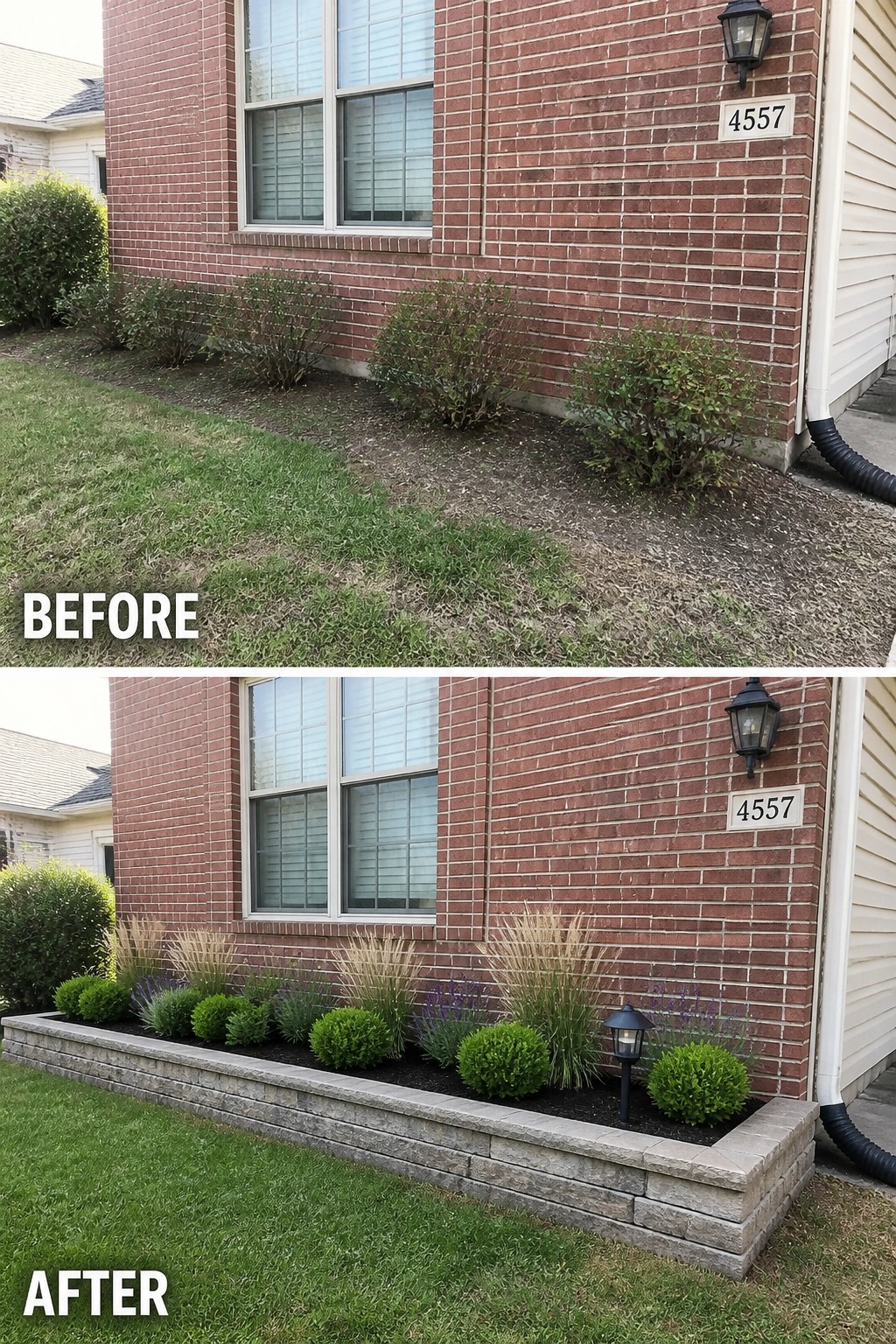
A thin, undefined strip at the base of a brick wall can look neglected and distract from the house. Building a low stone raised bed and planting simple, repeating shrubs and grasses gives the facade a tidy edge and clear rhythm without covering the brick. In this example a short stacked-stone wall plus round evergreen shrubs and tall ornamental grasses instantly reads more intentional and finished.
This approach works well on narrow front beds and under windows where you want structure but not heavy planting. Keep the wall low so it stays below the window sill, pick two or three plant types and repeat them for a neat look (repeat one plant for rhythm), use mulch to hide bare soil, and leave enough space for growth and upkeep. Add a small path light or two for evening interest, and choose stone that complements the brick so the new feature feels like part of the house.
Refresh A Worn Exterior With Clean Siding And Trim
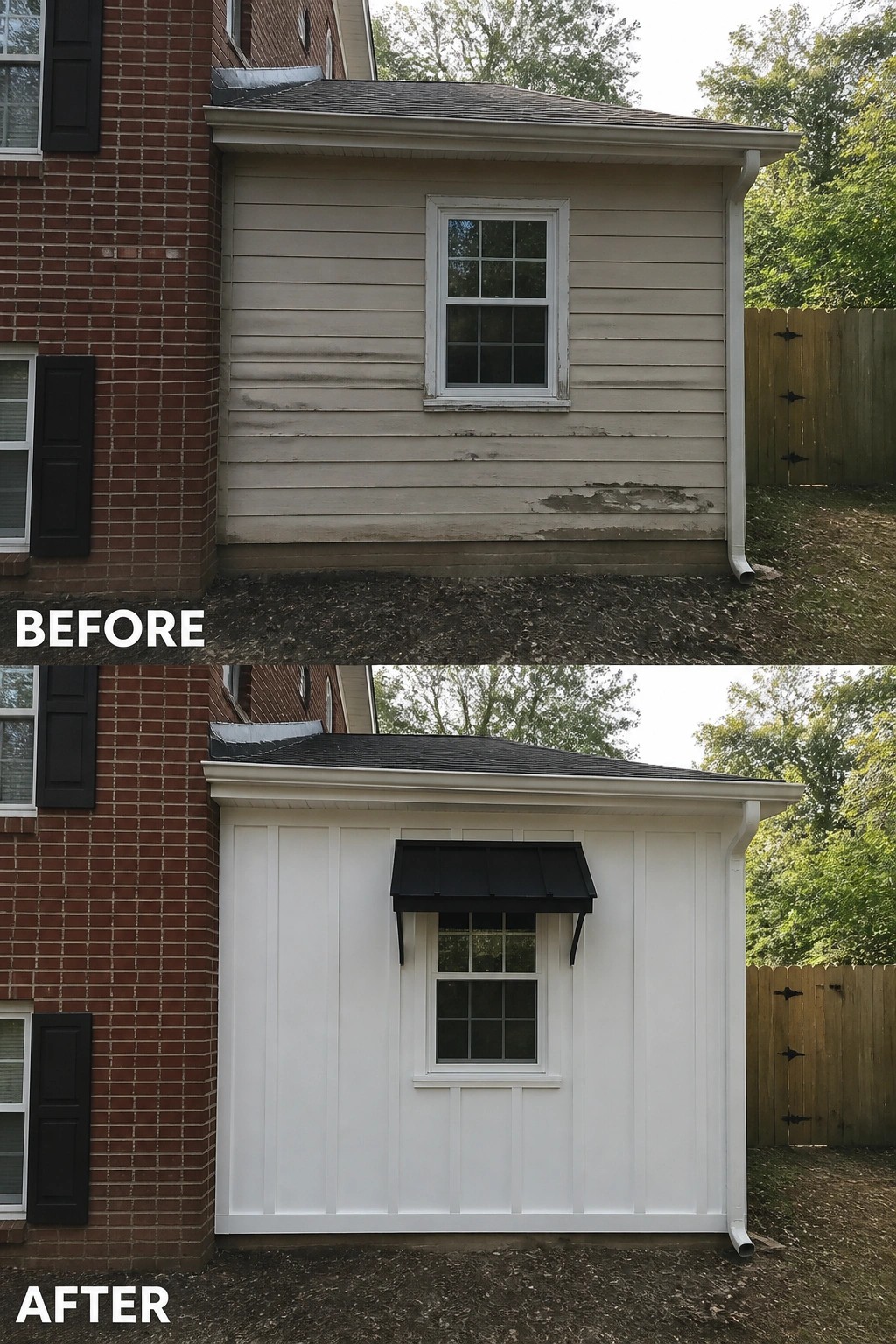
A tired stretch of peeling horizontal siding next to original brick can pull down the whole facade. Replacing the old boards with painted board-and-batten, adding crisp window trim and a small black awning gives the addition a fresh, intentional look while keeping the brick as the permanent anchor.
Start with basic repairs so new siding sits on a sound substrate, then choose a simple two-tone palette that complements the brick instead of matching it exactly. Use vertical trim and a modest awning to add proportion and shadow, keep details scaled to the bump-out, and pick durable materials (fiber cement or painted trim) so the tidy look lasts.
Use Exterior Lighting To Make A Plain Facade Feel Welcoming
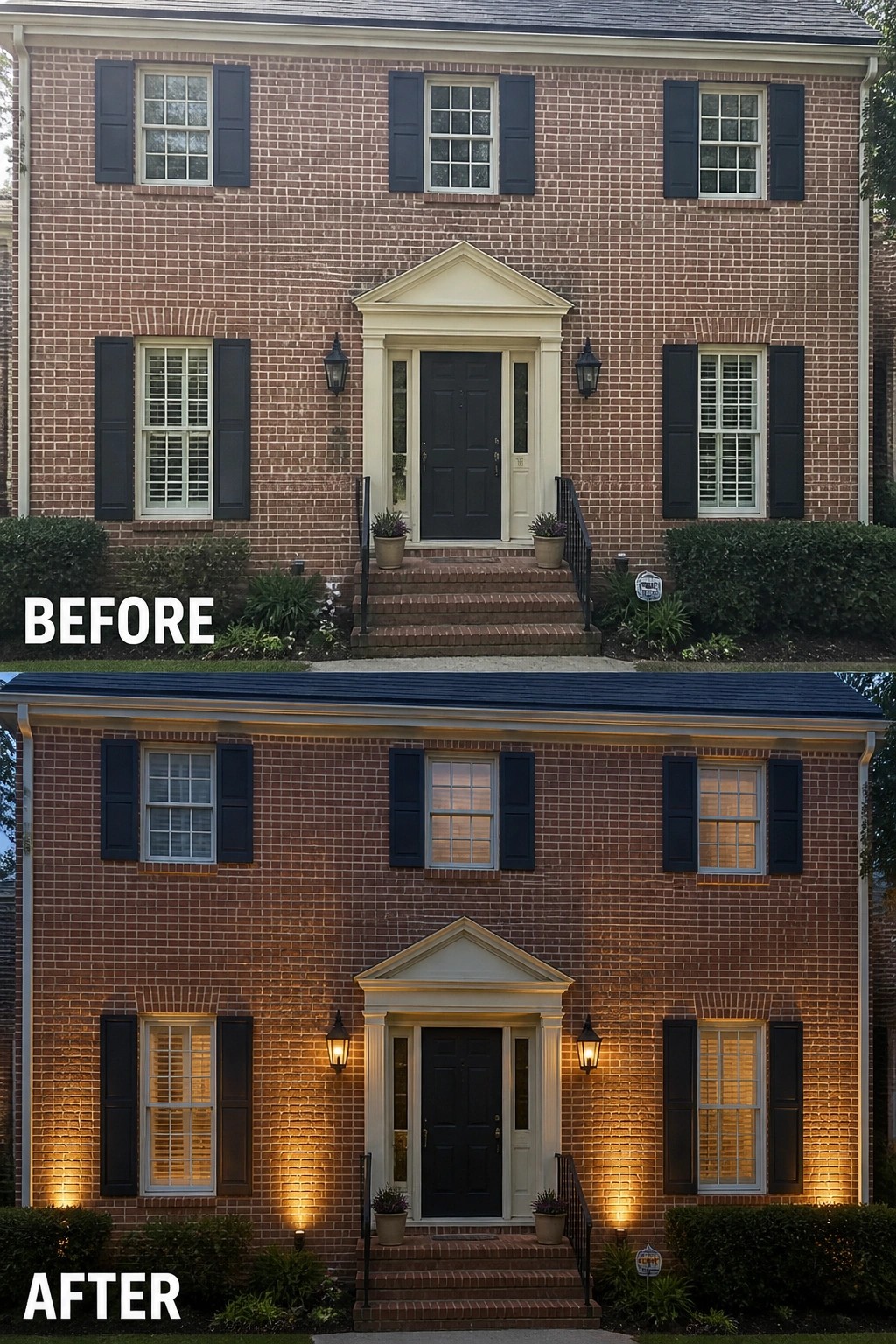
A few well-placed lights can do more for a brick front than any repaint or big remodel. In this example the homeowners kept the original brick and simply added traditional wall lanterns by the door and subtle ground uplights that wash the brick in warm light. The fixtures draw attention to the entry and reveal the brick’s texture while keeping the overall look true to the house.
To try this at home, start with two lanterns at eye level beside the door and add one or two low-voltage uplights spaced along the foundation (2700–3000K bulbs work best). Choose dark, simple fixtures so the hardware disappears during the day, aim uplights to avoid glare into windows, and use timers or a dusk-to-dawn control so the effect is effortless. This approach suits classic brick homes and is easy to scale up later if you want more drama.
Style A Small Stoop As A Simple Outdoor Seating Spot
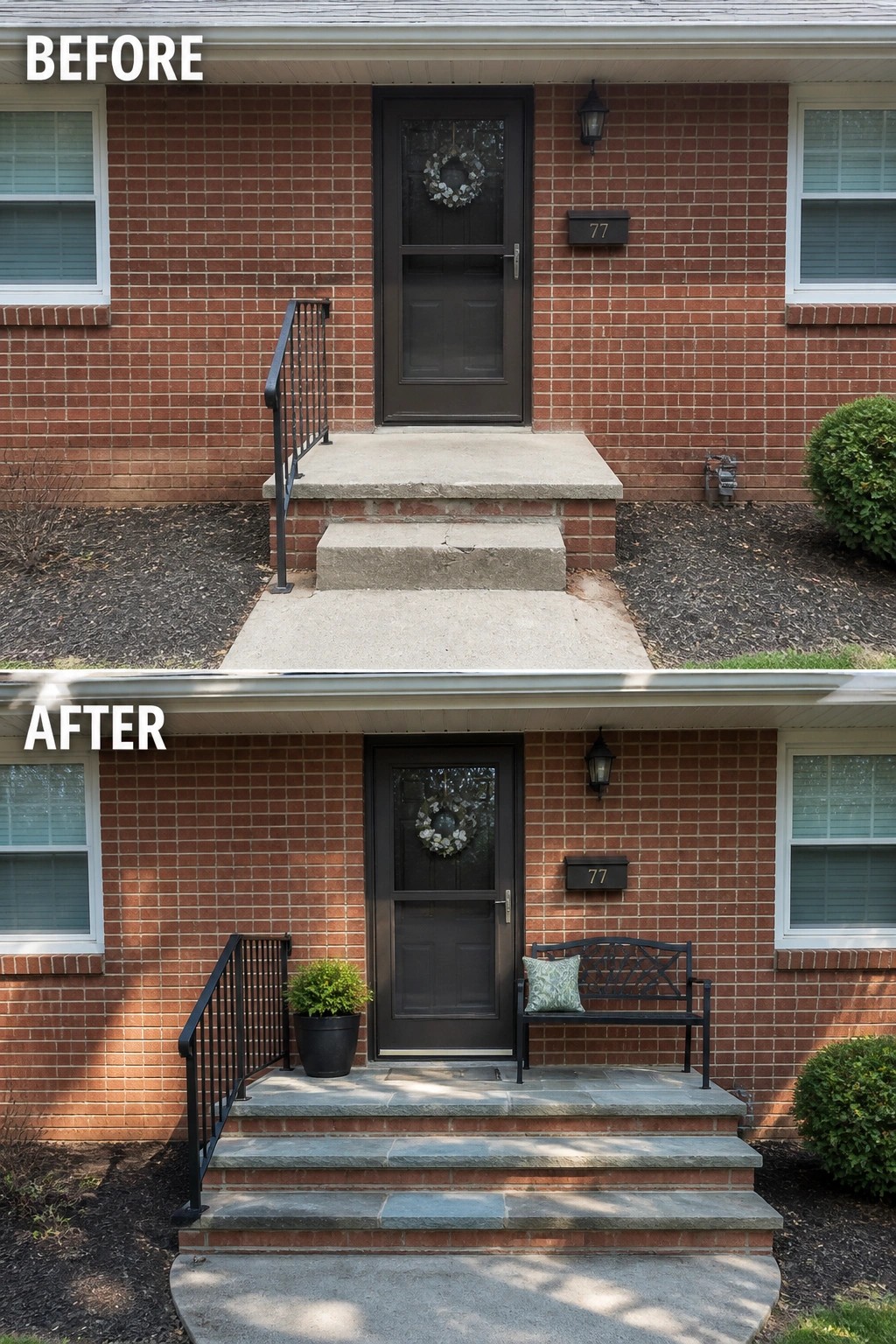
A small, undecorated stoop can feel like wasted space. Replacing or covering plain concrete with a simple stone tread and adding one focused piece of furniture plus a planter turns the entry into a usable spot without changing the brick facade. The changes are modest but make the porch read as a destination rather than a pass-through.
Keep it simple: pick a single seating piece sized to leave the door clear, a weatherproof planter, and a material palette that complements the brick (natural stone and matte metal work well). This approach suits modest midcentury and colonial homes especially, and it’s an easy first step before bigger renovations—start with basic repairs, then add the bench and pot so the porch feels practical right away.
Create A Comfortable Porch Seating Zone With Simple Decor
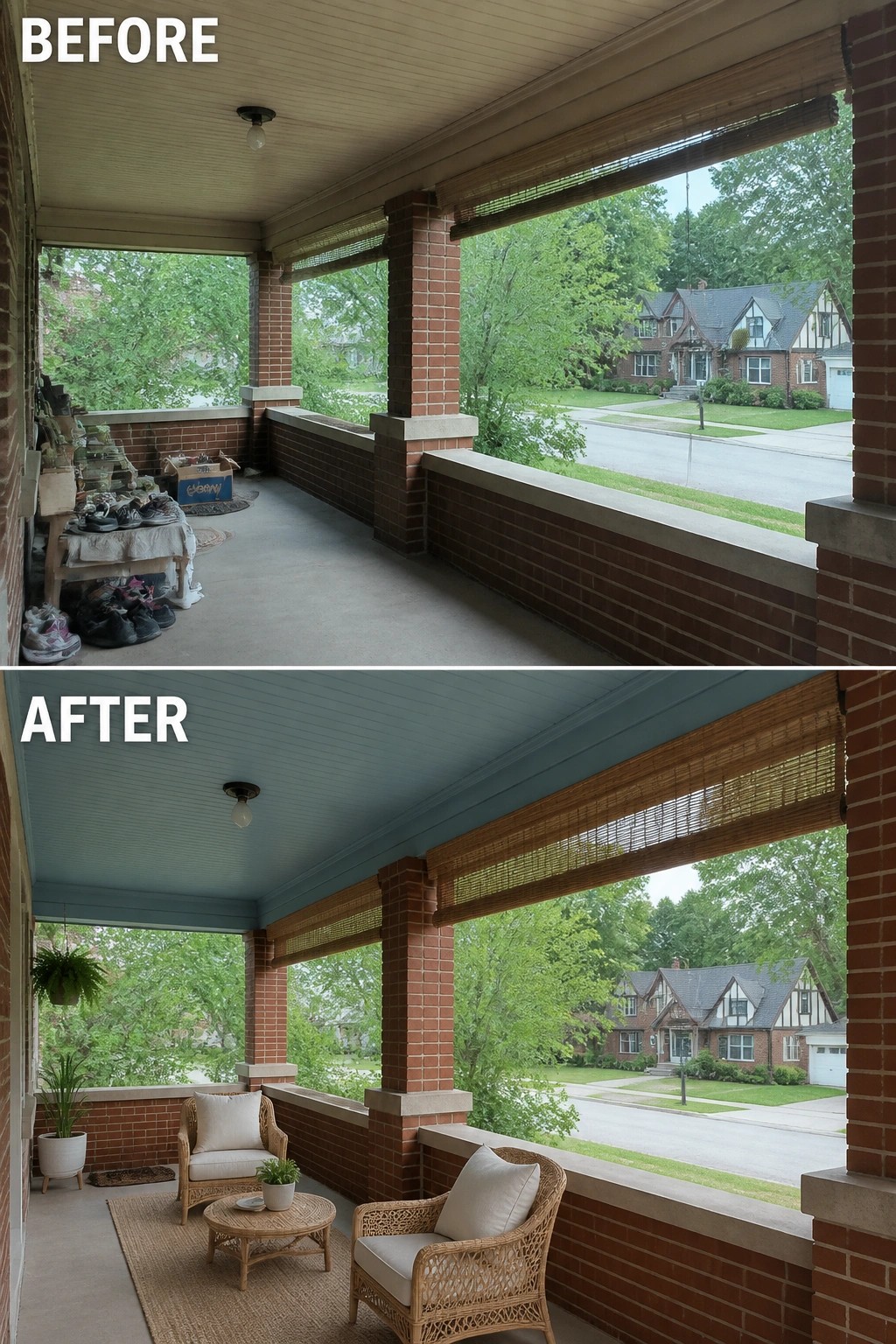
An empty porch becomes useful the moment you give it a purpose. In this example the plain concrete ledge was left as-is to preserve the original brick, while a natural-fiber rug, two weatherproof wicker chairs, a small table, a few potted plants, and a light-painted ceiling define a comfortable seating zone you actually want to use. That single change turns unused space into a spot for morning coffee or a quiet read without altering the house’s character.
To copy this, start small: choose outdoor-rated seats that match the scale of your porch, add a rug to anchor the zone, and keep a clear path for walking. Use repeat materials (rattan, jute, woven shades) to complement brick, hang one plant or two for vertical interest, and paint the ceiling a pale color to lift the space. Leave the brick exposed so the porch feels like an intentional outdoor room rather than an indoor add-on.
Use Small Architectural Accents To Update A Brick Facade
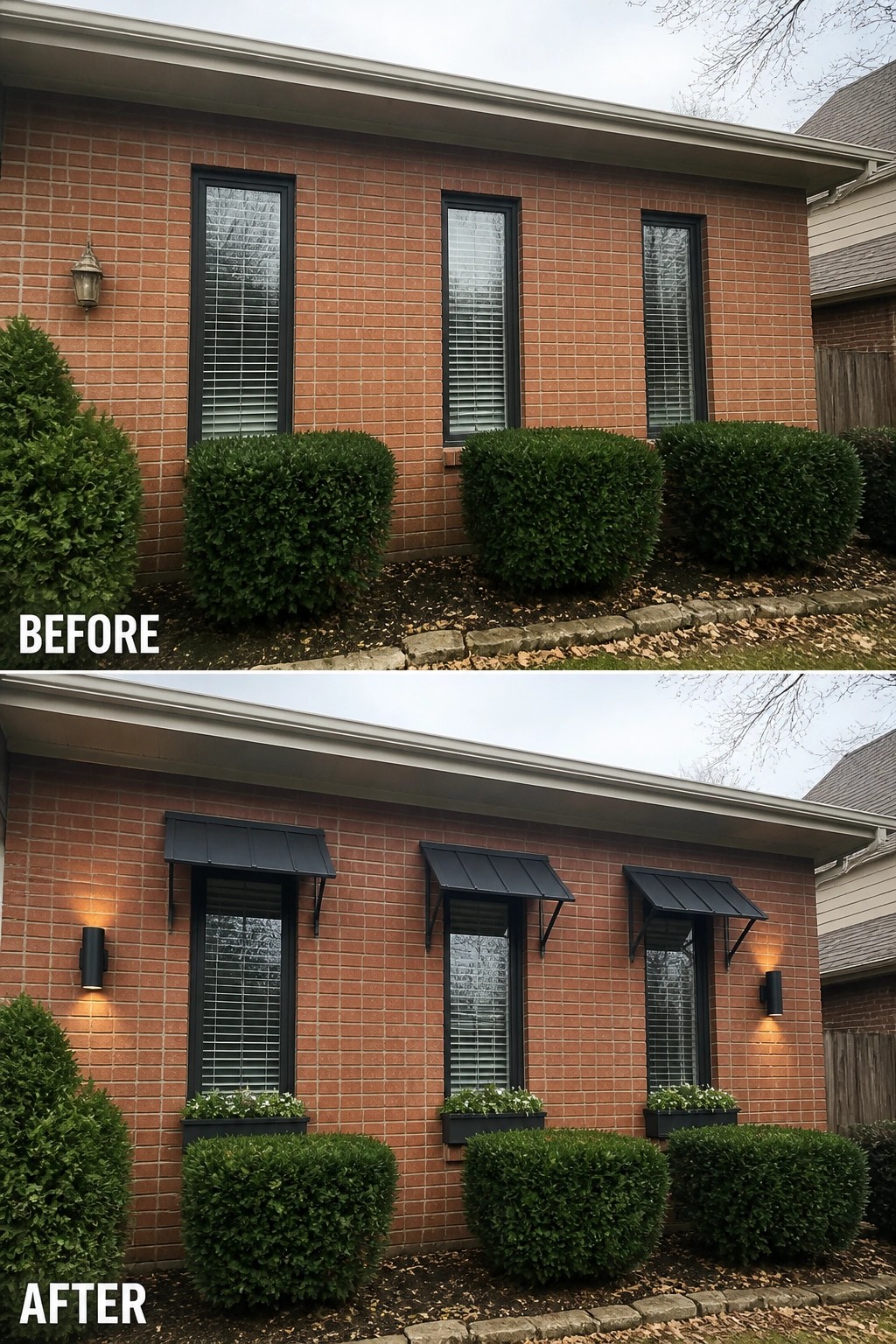
You do not need to paint or clad brick to give it more presence. Adding small, repeatable details—like low-profile metal awnings, matching wall sconces, and window boxes—introduces scale and rhythm while leaving the original masonry intact (reversible updates).
Choose one color and one accessory style to repeat across the elevation so the new pieces read as a single idea. Size awnings to the window width, pick corrosion-resistant finishes, and use proper masonry
Turn An Overgrown Side Strip Into A Clean Garden Path
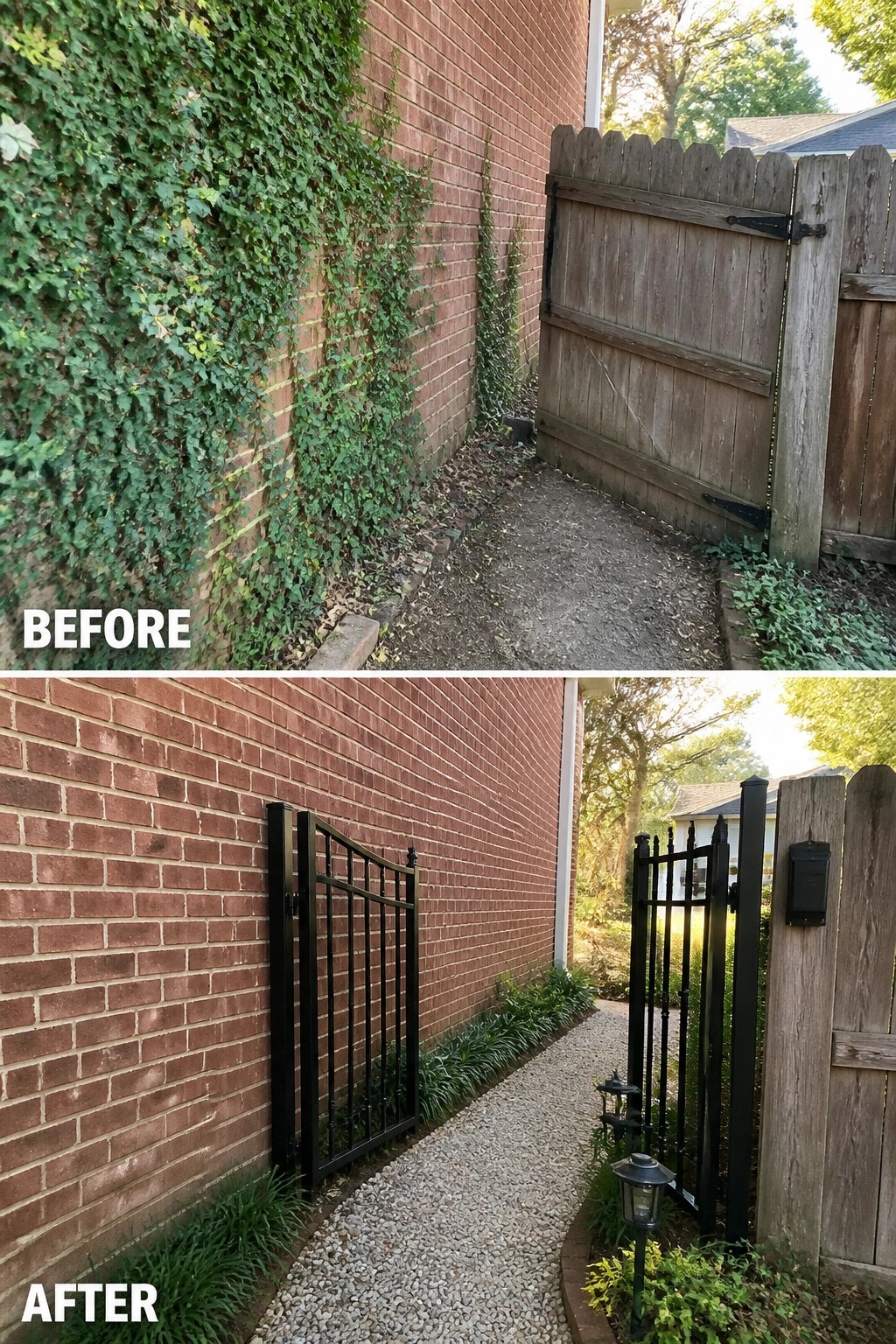
A narrow side yard often looks neglected when vines cover the brick and the ground is bare. Clearing the climbing plants and installing a simple gravel walkway with a low planted border lets the original brick face show and gives the space a clear, usable purpose.
Start by removing vines carefully so you do not damage the mortar, and rake away roots and debris. Lay a compacted gravel path with a shallow brick or metal edge, and plant tidy, low-growing species like liriope, mondo grass, or thyme that stay contained. Finish with a small gate or a couple of path lights at the entrance so the route reads as intentional, and keep soil back from the brick to avoid long-term moisture problems.
Define The Front Entry With A Wood-Look Door And Sidelights
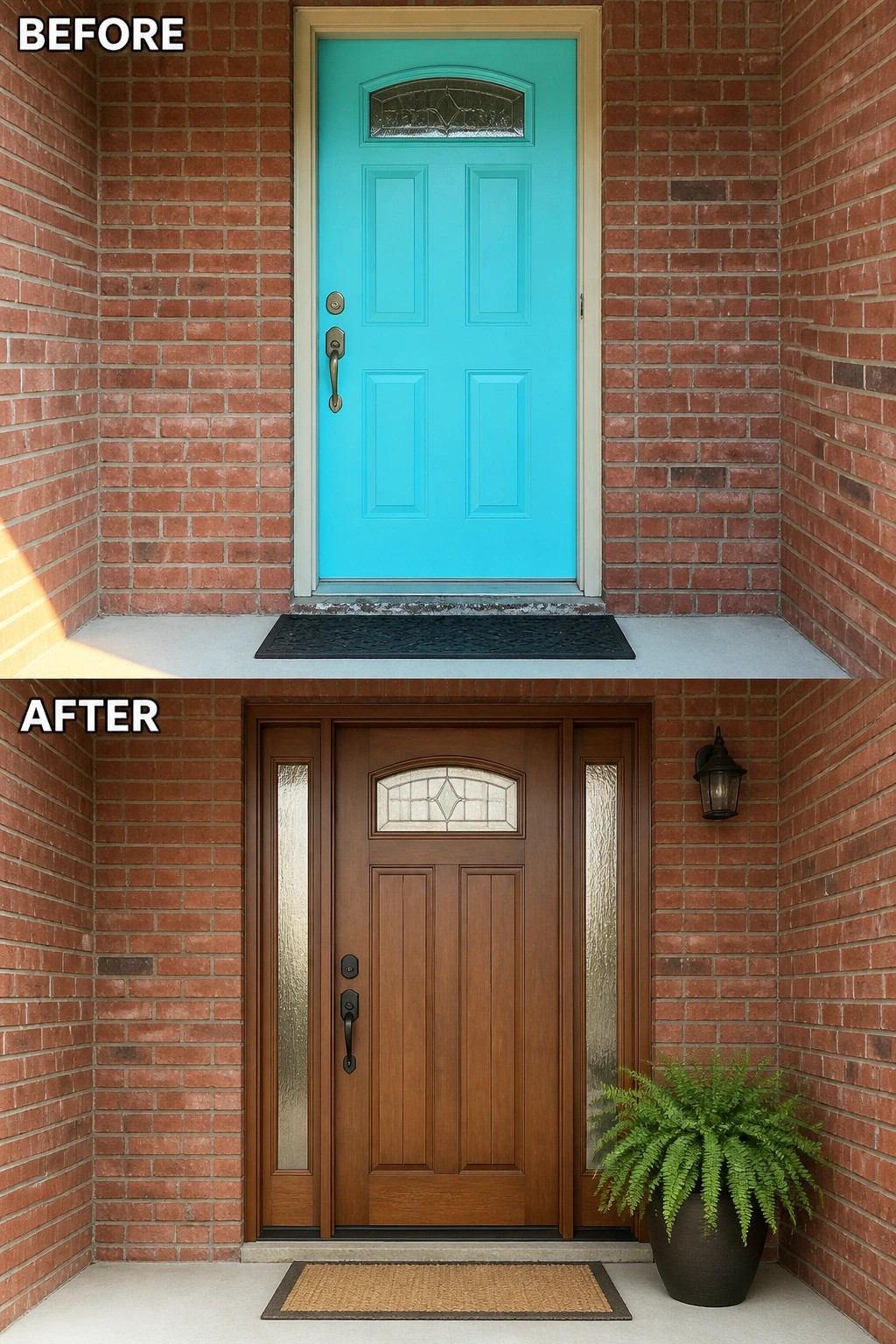
A simple front-entry update can change how the whole facade reads without touching the brick. Replacing an anonymous painted door with a richer wood-look door, adding narrow sidelights, new hardware and a proper wall lantern instantly defines the porch as an intentional entry rather than just a threshold. The changes give the space scale and light while letting the existing brick remain the backdrop.
This works best when you pick one clear focal move — a new door or sidelights — then add a couple of practical accents like a weatherproof mat and a single planter. Choose finishes that echo the brick tones, use textured or obscured glass for privacy if needed, and keep the footprint clear so the entry still functions. Small steps, big curb appeal.
Highlight Original Brick With Dark Trim And Simple Porch Styling
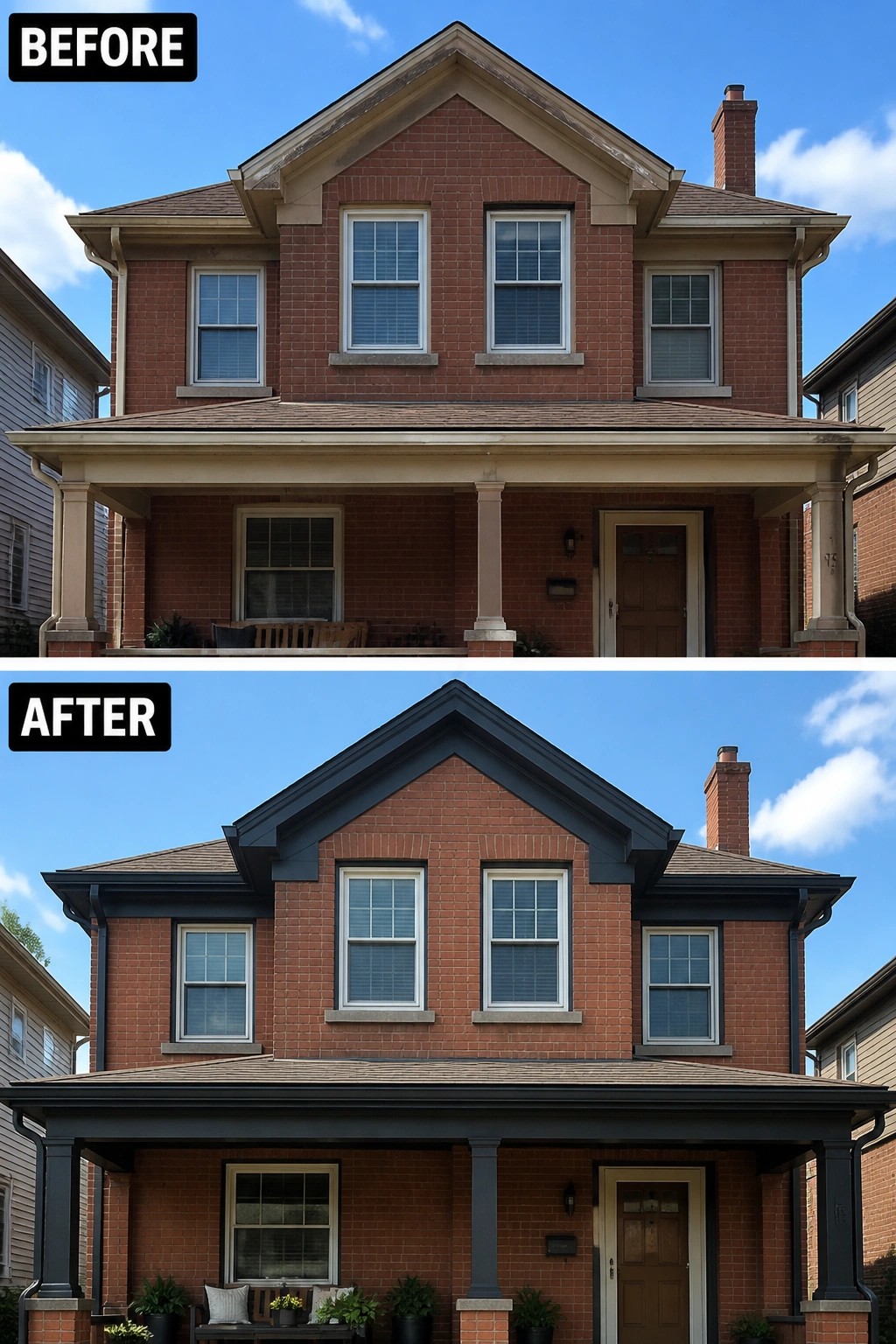
A quick way to modernize a brick house without touching the masonry is to paint the trim, gutters, and porch structure a strong contrasting color and add a few well-placed porch pieces. In this example the beige trim was switched to a deep charcoal and the porch gained simple seating and planters, which lets the brick remain the star while the overall look reads cleaner and more intentional.
Try this on traditional brick homes where you want to keep the original material but refresh the curb appeal. Test a small section of trim first, carry the trim color across eaves, columns, and gutters for a unified look, and add 1–3 matching porch elements like a bench, pots, or a doormat so the space feels used but not crowded. Weatherproof finishes and modest contrast go a long way.
Turn An Unused Stoop Into A Cozy Seating Area With Lighting
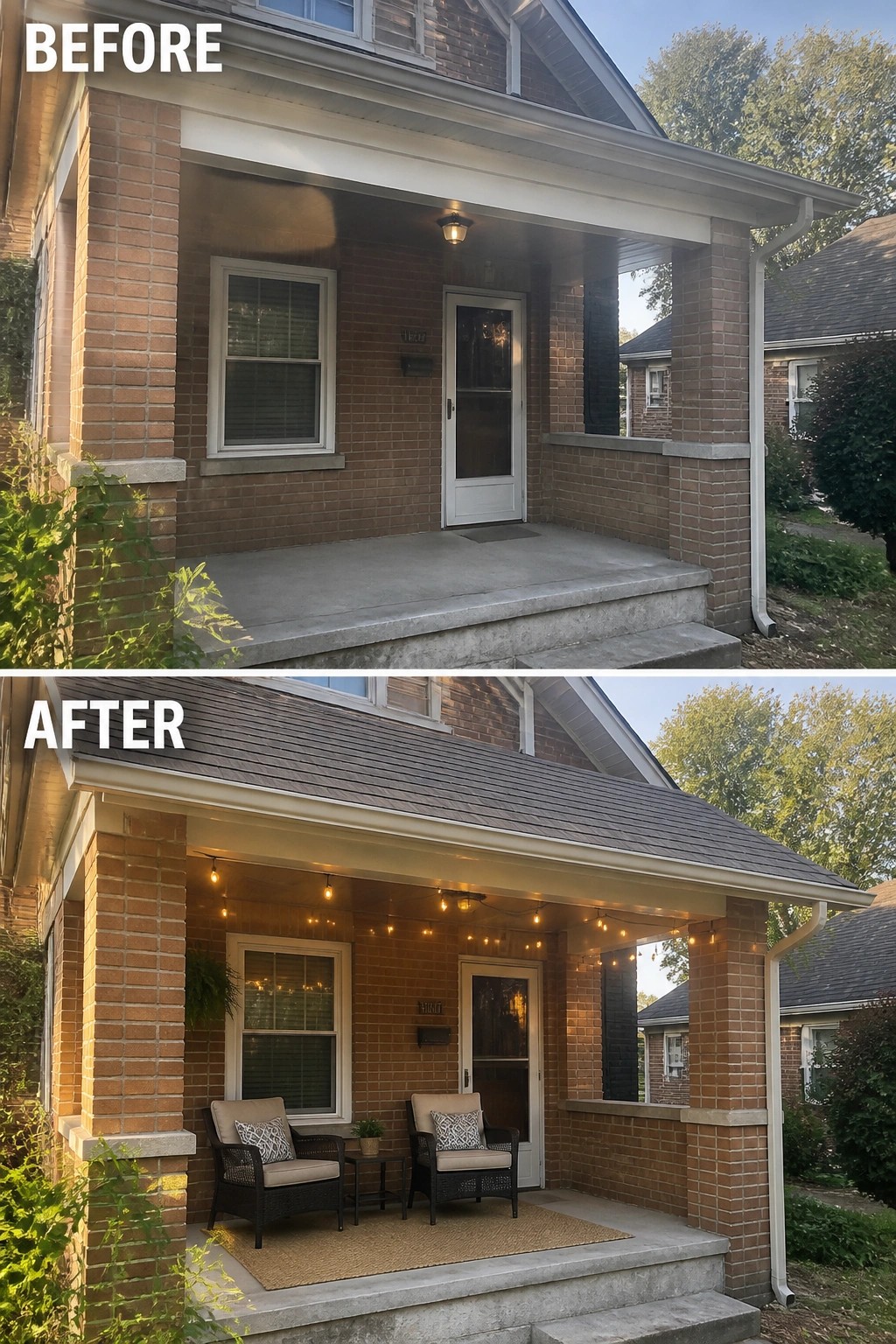
A simple porch can be much more than a concrete landing. Here the change is small but effective: two chairs, a low side table, a woven rug, and string lights turn an unused stoop into a cozy spot where you actually want to sit. Those few elements define a purpose for the space while leaving the original brick and entry intact.
To copy it, start with scale and flow—pick seating that fits the depth of your porch and leave a clear path to the door. Anchor the zone with an outdoor rug and a small table, add a plant or hanging fern for softness, and install low-hung string lights or a couple of warm bulbs where people sit so the space works in the evening. Start small. Keep pieces weatherproof and easy to move so the porch stays practical as well as pleasant.
Update The Front Entry With Simple Fixture Swaps
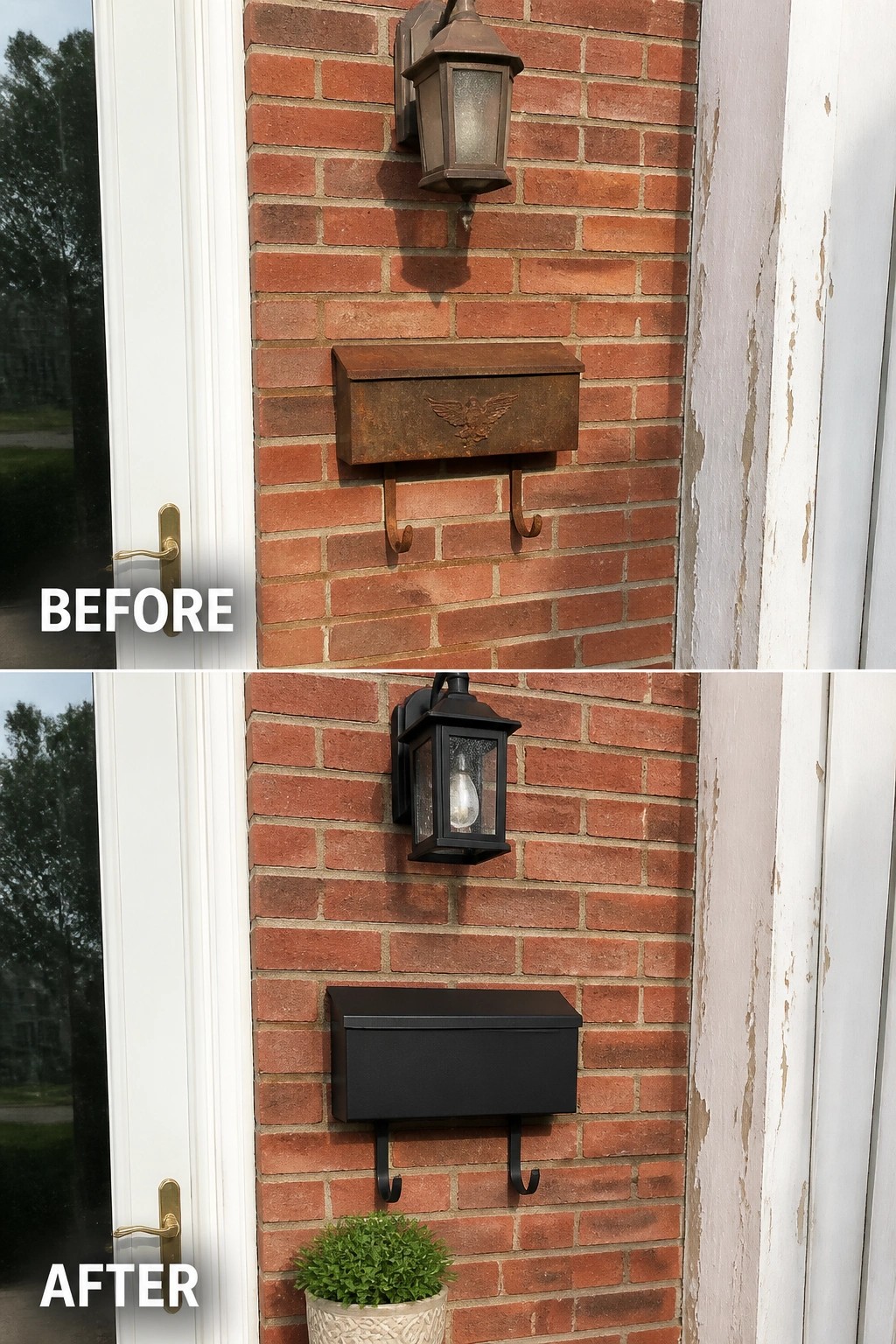
A few small swaps can freshen a brick facade without touching the masonry. Replacing a rusty mailbox and worn lantern with matching black fixtures and a single planter makes the entry read as intentional rather than neglected, while keeping the original brick as the main feature.
This approach works well on older homes where you want curb appeal without a big renovation. Pick weatherproof, powder-coated finishes that contrast the brick, match the new hardware to existing trim or the door, and keep accessories minimal so the scale stays right. Reuse existing mounting points when you can and choose pieces that are a touch larger than the originals for better visibility from the street.
Create A Defined Low-Maintenance Planting Bed
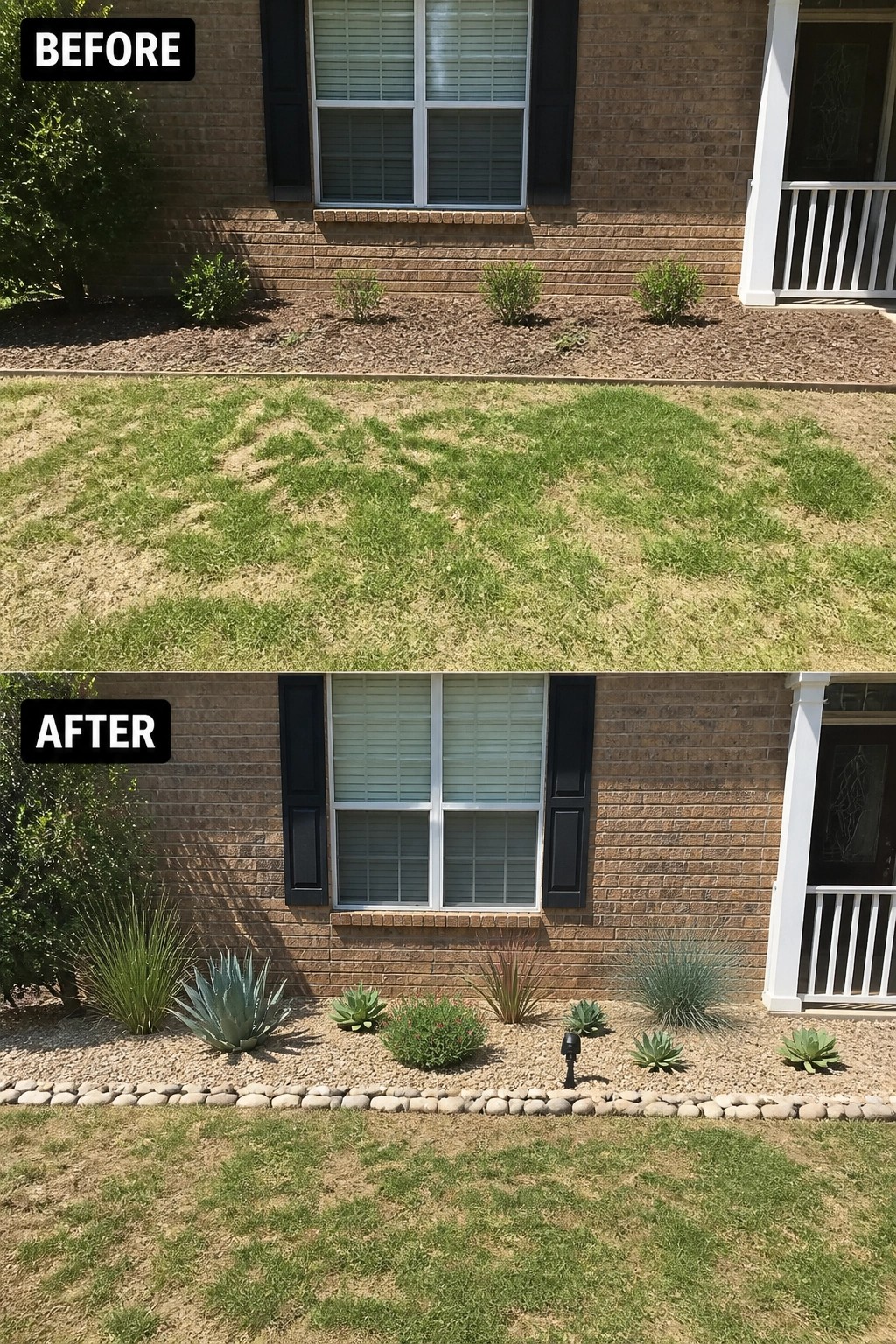
A narrow, messy planting strip becomes a tidy, low-water bed by adding simple hardscape and a few structural plants. In this example the old mulch strip is replaced with light gravel, a short river-rock edge and a handful of agaves, small succulents and ornamental grasses plus a single ground light — the result feels intentional and keeps the original brick untouched.
To copy this idea start by clearing out old growth and installing a clean edge so the bed reads as its own element. Lay landscape fabric, add an even layer of gravel, then pick three to five drought-tolerant plants and repeat each species for rhythm (agave, a grass, and a small succulent are an easy trio). Keep plants well away from the foundation, leave space for mowing, and finish with one or two low-voltage lights aimed at the plants to lift the bed visually at night.
Turn An Empty Porch Into A Screened-In Seating Area
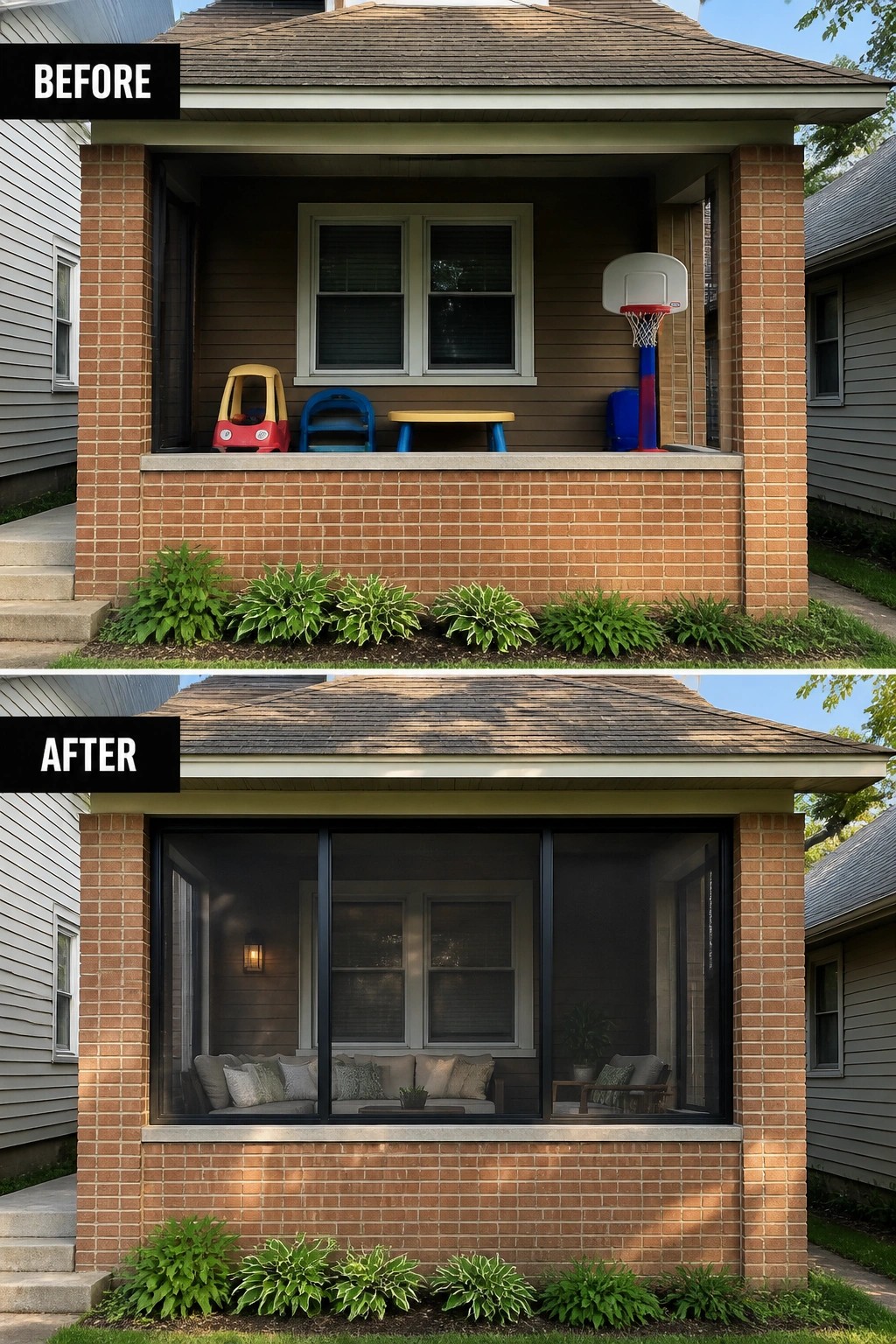
Turning an underused open porch into a screened-in seating area makes a small front space feel finished and functional without covering the brick. In this update a slim, dark-framed screen was added and simple outdoor seating and a wall light were brought in, which protects the space from bugs and weather while leaving the masonry visible.
To copy the idea, measure the opening and pick low-profile screen frames so the brick and sill remain a feature (keep the brick visible). Choose compact, weather-rated furniture that fits the porch depth, add a wall sconce where people actually sit, and avoid heavy trim that would hide the existing brickwork. Simple changes like these make a porch usable most of the year and keep the original character intact.
Add A Vertical Wood Accent To Update A Brick Garage
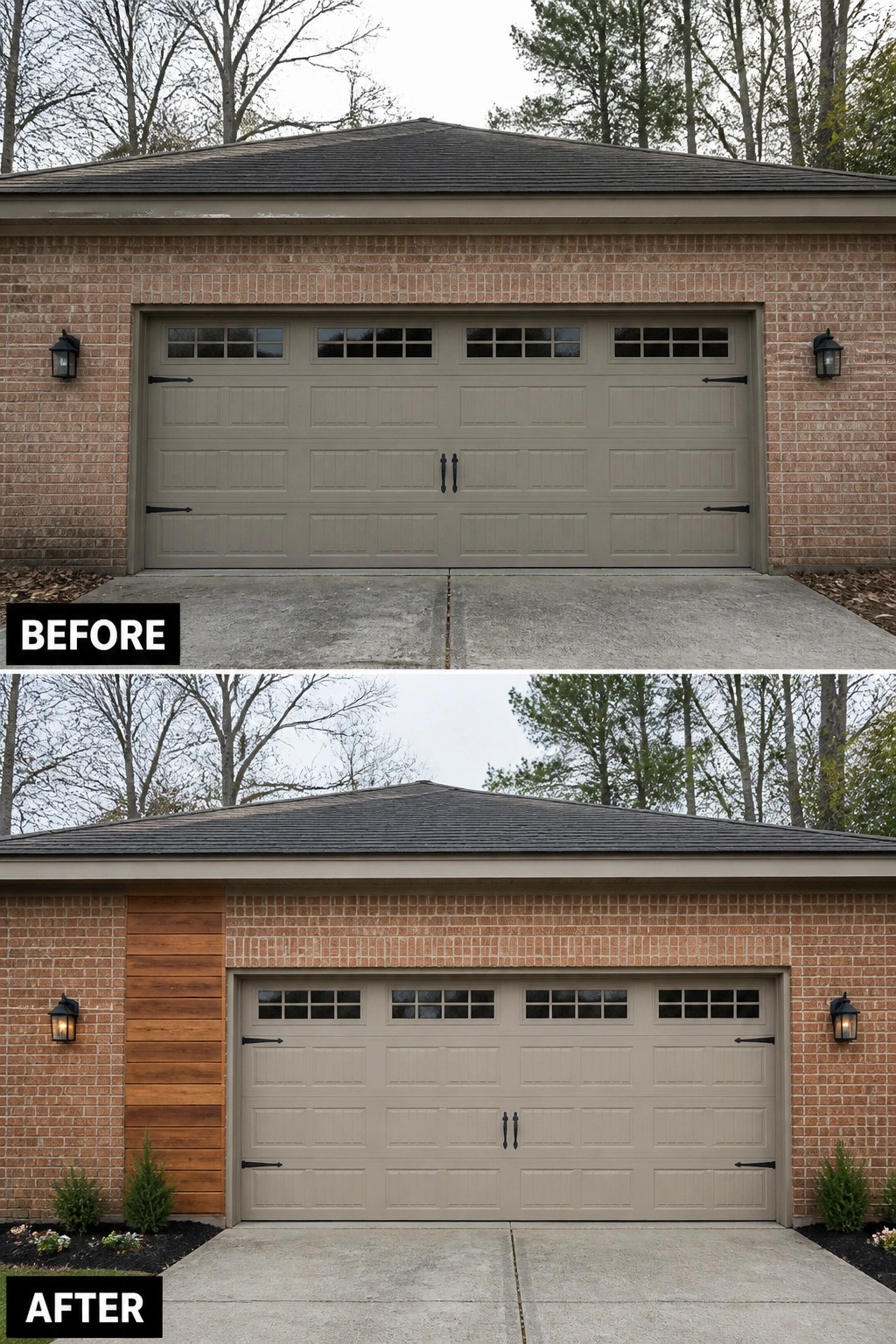
A narrow vertical strip of wood alongside the garage door is an easy way to make a plain brick facade feel more deliberate and welcoming. In this example a cedar panel was added next to the garage opening and paired with a single lantern and small plantings to create a focused, low-effort focal point while leaving most of the original brick exposed.
To copy the idea, keep the accent band modest in width so the brick
Add A Bench And Simple Lighting To A Bare Front Stooprpose
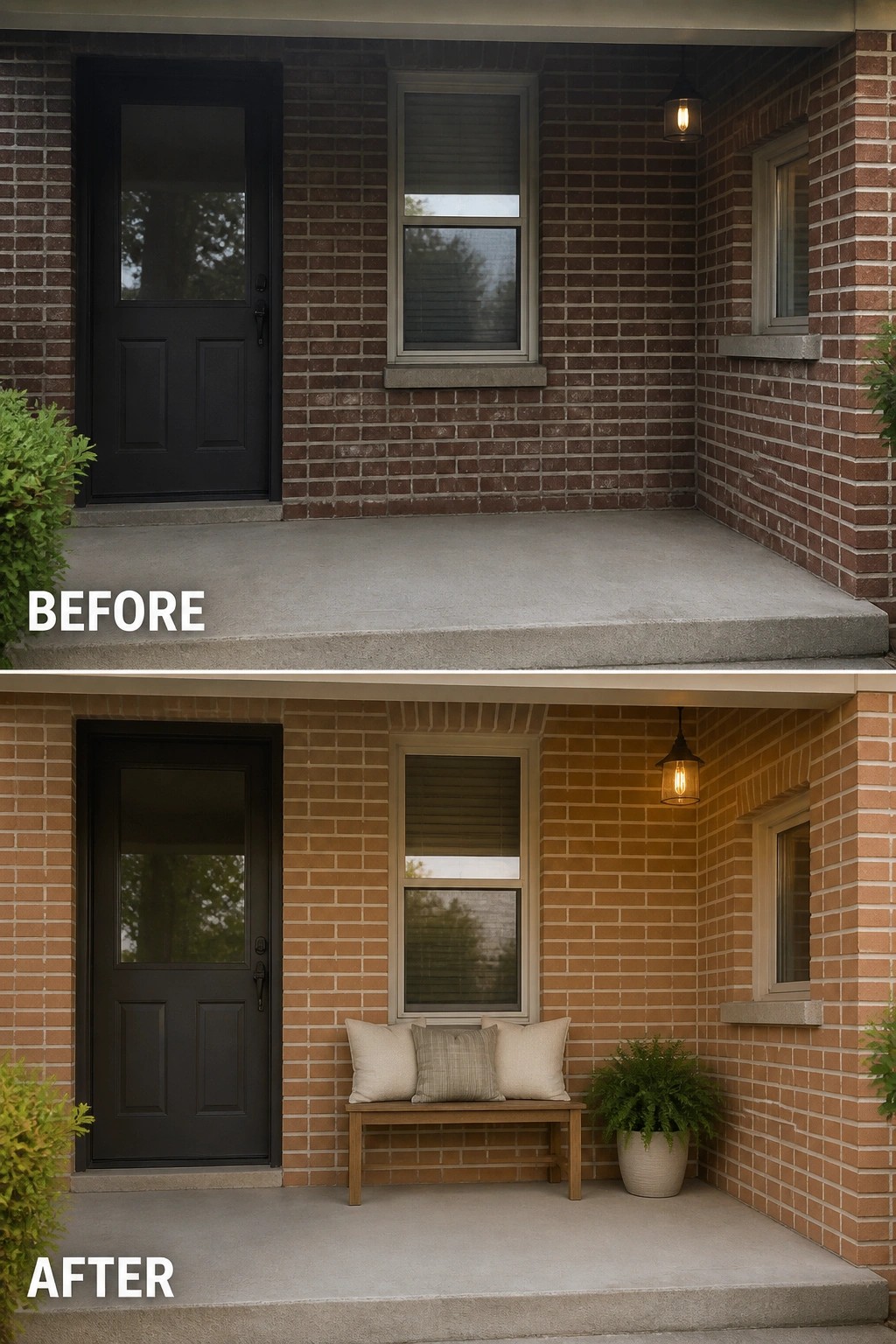
A few simple additions can turn an empty concrete stoop into a usable porch. Placing a narrow bench with a couple of cushions, a single potted plant, and a hanging light creates a seating spot and a focal point while keeping the brick facade visible and uncluttered.
Choose furniture that fits the step depth and leave room for the door to open. Pick outdoor fabrics and a low-maintenance planter, hang lighting where people will actually sit, and repeat one material or color to keep the look cohesive. Start small.
Frequently Asked Questions
Q: Can I paint my brick without losing its original character?
A: Yes, but be selective. Test a small, hidden section first and consider a limewash or a thin translucent paint so the texture and mortar lines still show through. Keep at least some areas unpainted or use a contrasting trim color to preserve that original-brick feel.
Q: What’s the gentlest way to clean old brick and mortar?
A: Start with a soft brush, warm water, and mild dish soap, rinsing with a garden hose or low-pressure power wash. Avoid sandblasting and harsh acids that erode mortar; if stains persist, try a masonry-specific cleaner on a tiny patch first.
Q: My mortar is crumbling — can I just paint over it to hide the damage?
A: No, paint will mask the issue but won’t fix loose or missing mortar and can trap moisture. Repoint the joints by a mason or tackle small spots yourself with matching mortar so the brick stays sound and looks original.
Q: I want a quick update that still honors the brick — any easy ideas?
A: Swap dated shutters or hardware, replace worn caulk around windows, and refresh porch lighting to make the brick read as original rather than neglected. Even a tidy planting bed and a new front door color can change the whole vibe without covering the bricks.