

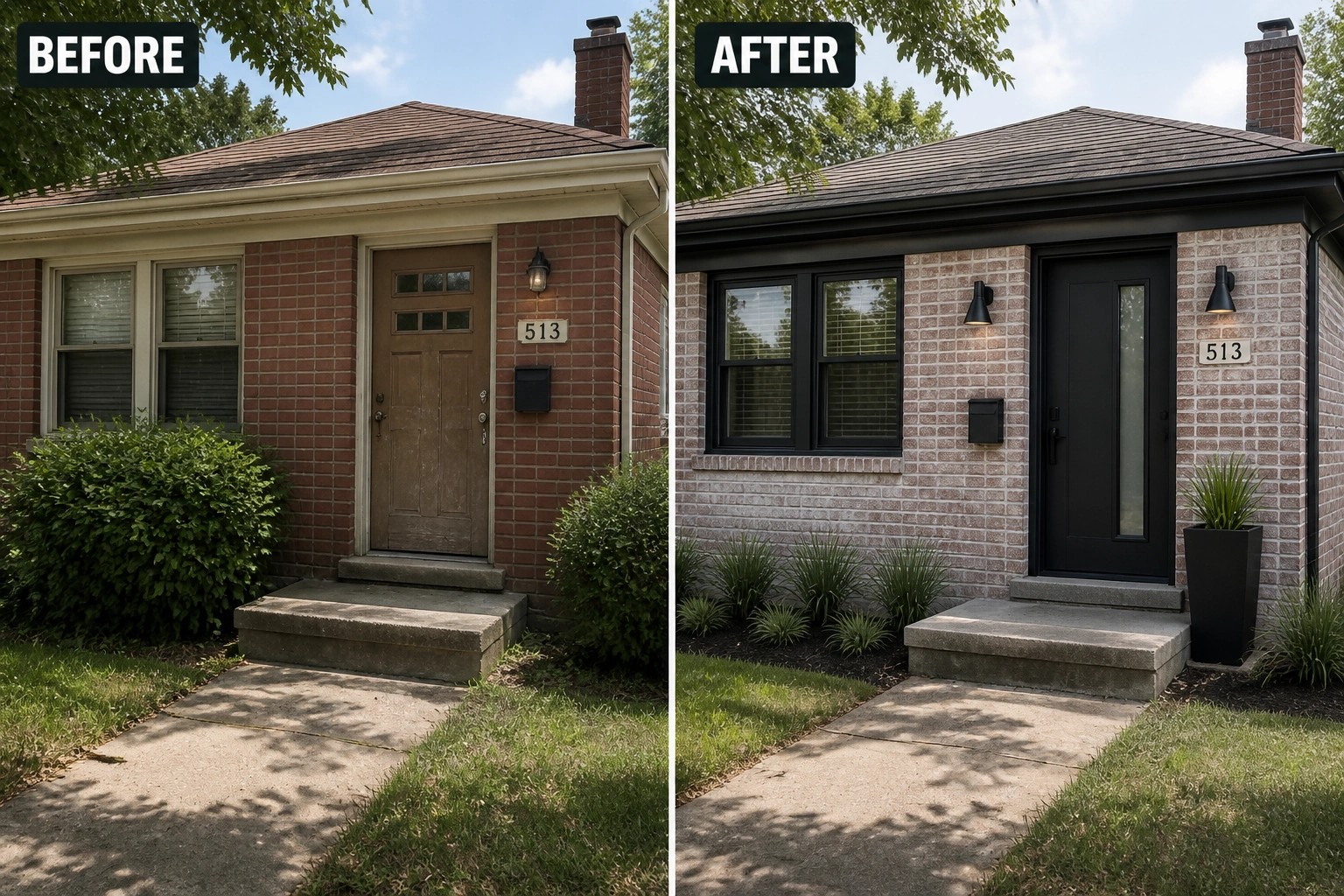
Brick houses can feel solid and fussy at once, and I’ve learned that a few careful gestures like dark trim, simpler hardware, and cleaner entry details can make the facade read more intentional.
You don’t need a full renovation to sharpen curb appeal.
Often, swapping trim color, updating light fixtures, and streamlining railings or house numbers is enough to clarify the architecture and give the entry more presence.
Some updates are mainly visual while others make the porch or walkway more usable, so it’s worth saving a few ideas to try on your own schedule.
Seeing the house read cleaner from the street is quietly satisfying and makes routine upkeep feel more worth the effort.
Give The Front Entry A Clear Purpose
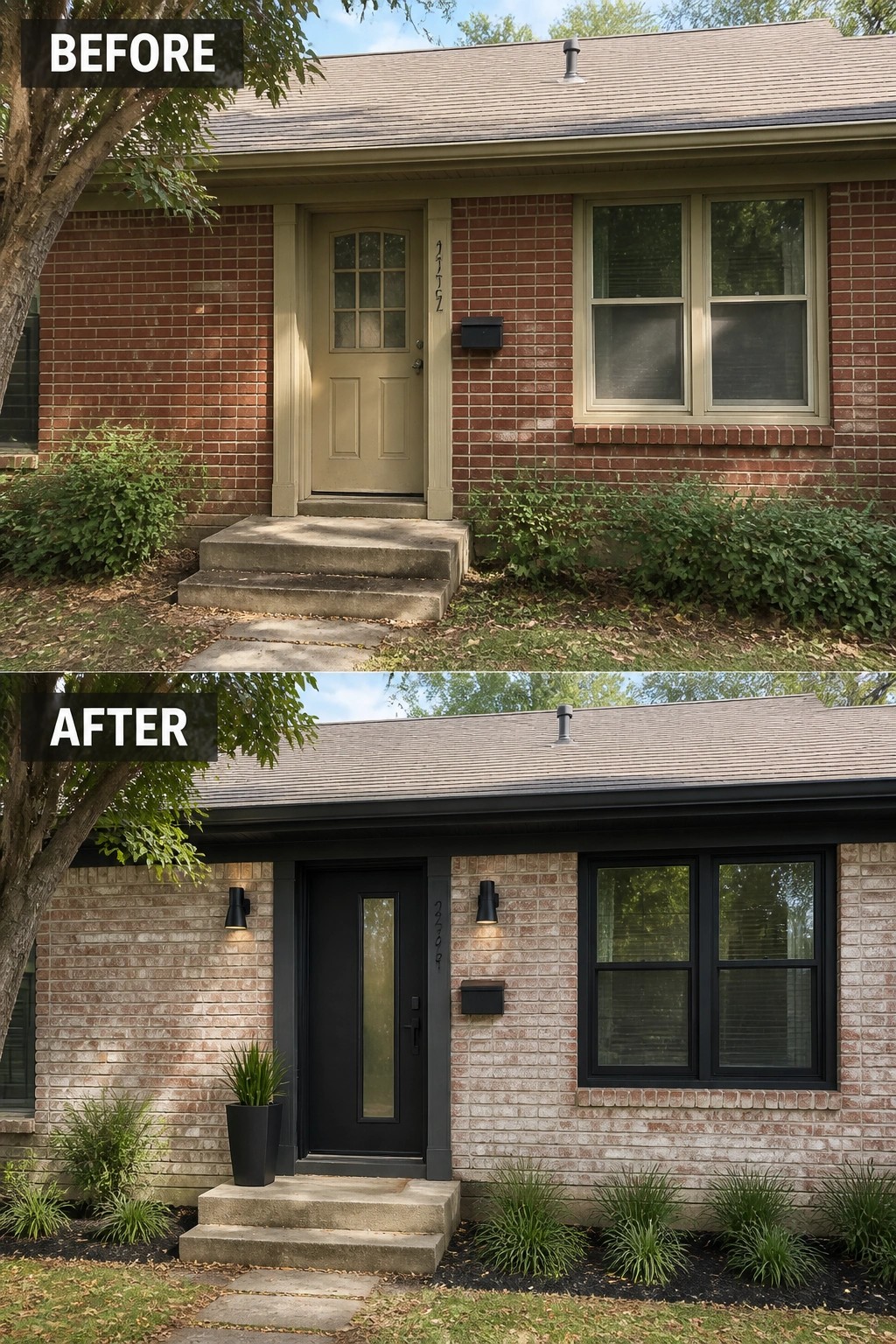
A few focused updates can make a plain porch feel intentional. Paint the door and trim a deep, dark color, add modern wall sconces at eye level, and place a couple of simple planters to frame the steps. Those moves turn the doorway into the home’s focal point and make the existing brick read fresher without major construction.
To copy this idea, choose one strong trim color and repeat it on the door, window trim, and mailbox so everything reads as a single element. Pick lighting sized for the entry and low-maintenance plants that suit the step width so the approach stays usable. Start with a good cleaning of the brick and update hardware first; small, coordinated changes go a long way on modest homes.
Give A Bare Porch A Clear Purpose
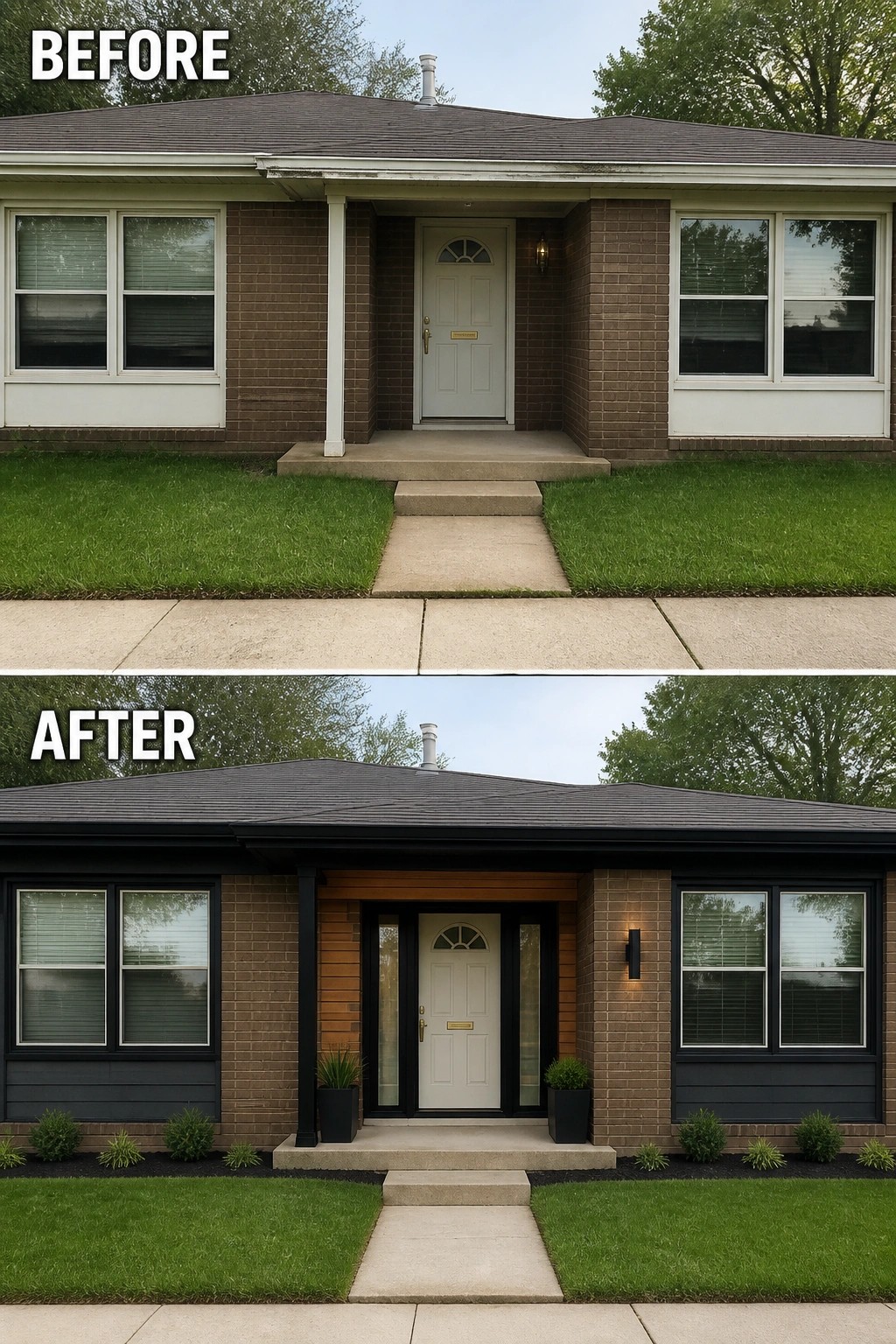
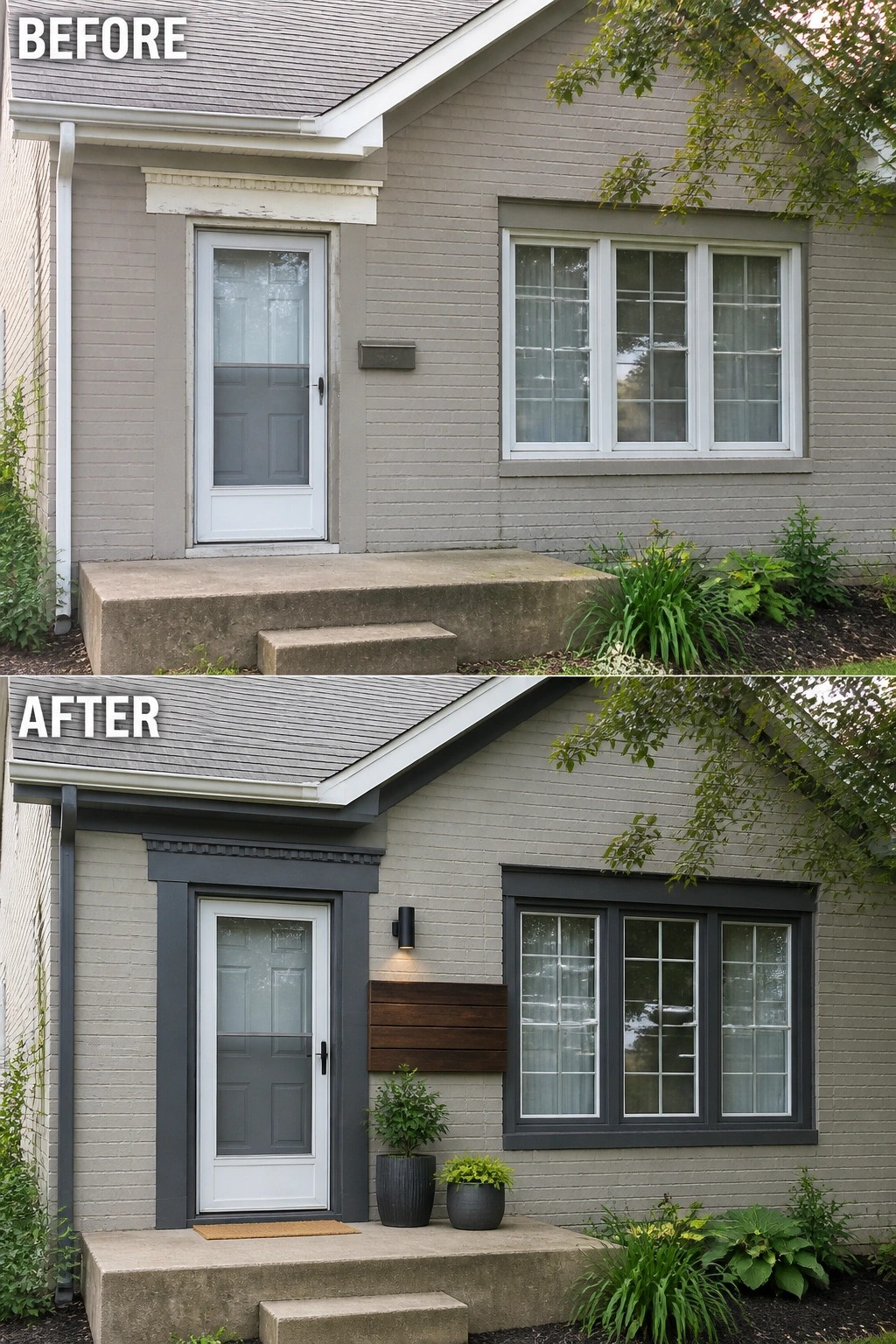
A simple reframe around the front door can change an anonymous facade into a clear, usable entry. In this update the homeowners painted the trim dark, added a narrow wood-clad surround, and introduced a modern sconce and tall planters — just a few measured moves that make the doorway read as intentional and contemporary instead of an afterthought.
To copy this, start with the trim: a deep, neutral paint around windows and posts brings instant contrast against brick. Add one modest material accent (a stained wood header or vertical slats) to warm the entry without overdoing it, then pick two matching planters and an exterior-rated light to flank the door. This approach works well on single-story brick homes or ranches; keep the scale small, refresh the planting bed with simple mulch and repeat plants, and leave the path clear so the entry remains functional.
Use Dark Trim To Modernize A Brick Facade
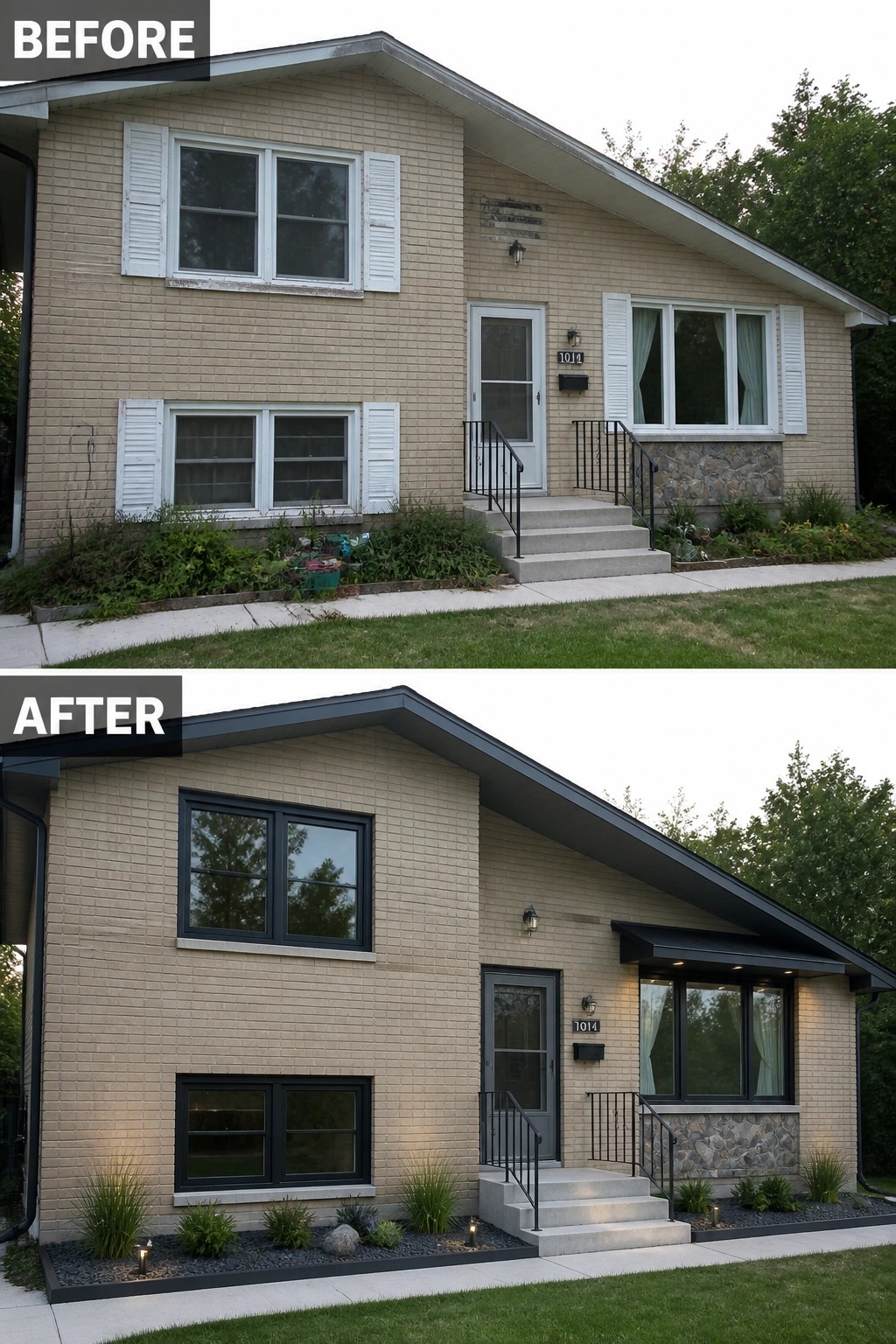
A fast way to give an older brick house a current look is to replace pale, fussy trim with deep, matte trim and a couple of crisp modern details. Swapping the white shutters and window frames for charcoal window and door trim and adding a simple black awning tightens the lines and makes the whole front read cleaner and more deliberate.
To try this yourself, pick one dark paint color and repeat it on windows, the front door, and any metalwork so the change feels unified. Keep the planting low and tidy with gravel or mulch beds and a few well-placed uplights to show the new trim at night. Works especially well on brick homes that need style updates without major construction. Simple, but effective.
Use A Modern Dark Garage Door To Refresh Brick Curb Appeal
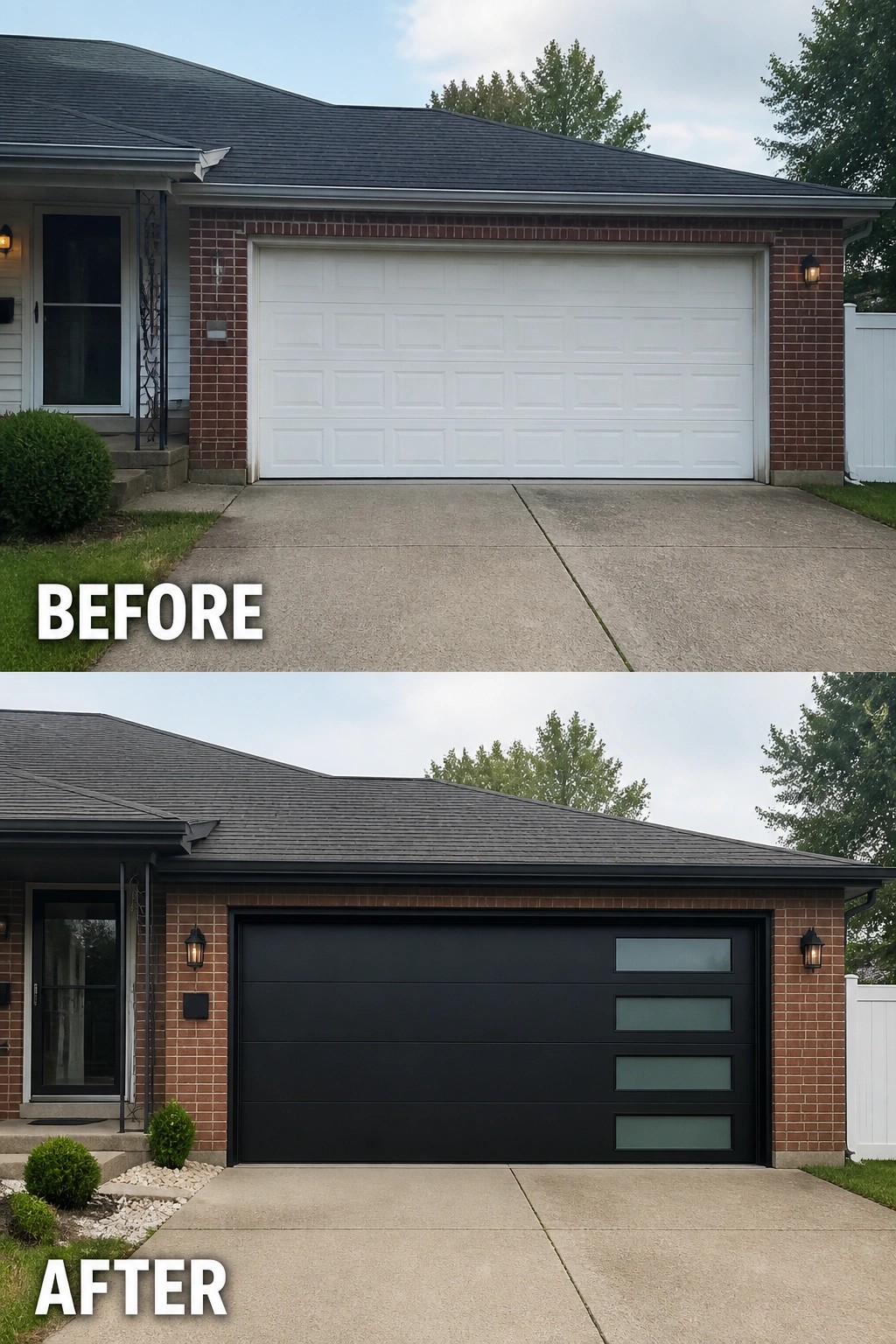
Swapping an old white garage door for a simple, matte-black panel door with a row of frosted windows instantly sharpens a brick facade. The darker door creates clean contrast and reads like a deliberate design choice rather than an afterthought, especially when you carry the dark finish to the door trim and exterior lights.
This works best on brick or neutral exteriors that need a focal update. For a similar result, pick a minimal panel style that fits the garage opening, align any glazing for privacy, and match hardware and lighting so the change feels cohesive. If a full replacement is out of budget, start by painting the trim and fixtures to see the effect before committing to a new door (and choose an insulated door if you want better performance).
Turn A Bare Porch Into A Usable Outdoor Room
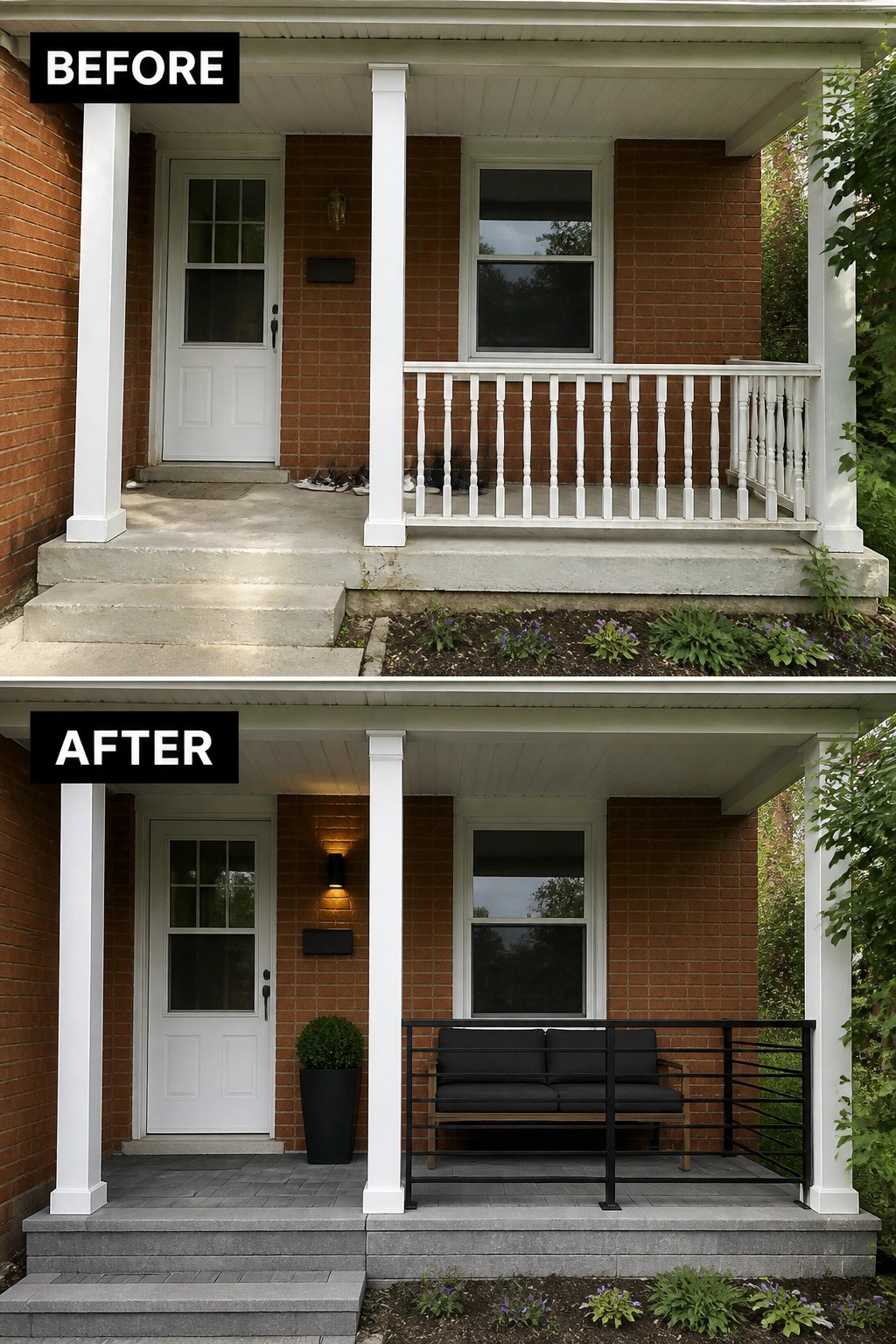
A tiny porch can feel useful the minute you give it a clear purpose. In this example the plain concrete step was swapped for pavers, the old spindle rail replaced with a low black metal rail, and a slim two-seat sofa plus a single planter and wall light were added to define a seating zone. Those few moves make the porch feel intentional and ready to use without a lot of fuss.
Use the same approach at home: start by defining the floor so the area reads as a room, then pick one main seat that fits the width of the porch. Add a simple railing or screen if you need safety or separation, a hardwearing cushion for comfort, and a single light and planter to finish the entry. Keep scale in mind so the door stays usable and leave a clear path to walk through.
Use Pavers To Create A Defined, Modern Entry Path
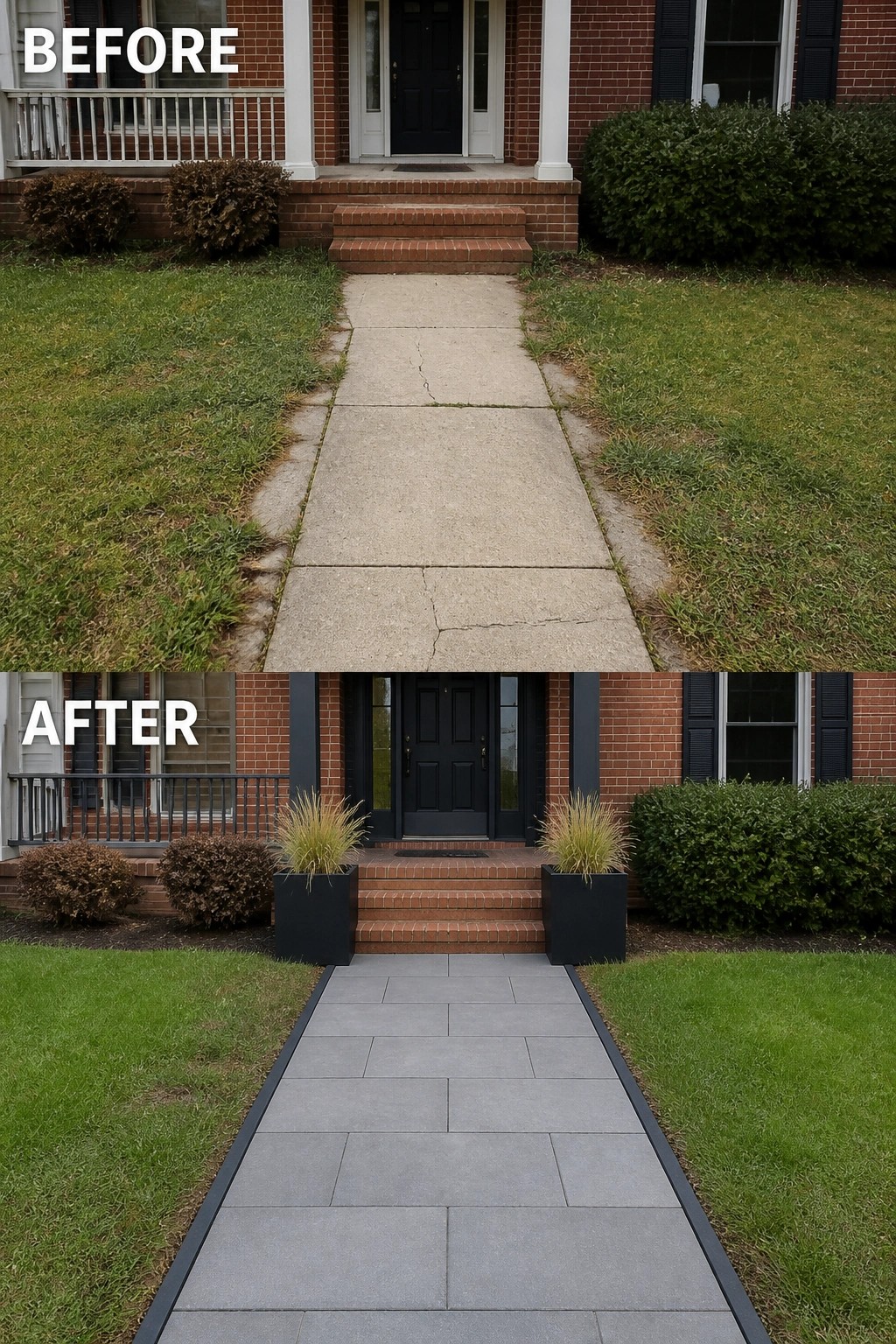
Swapping a cracked concrete strip for large-format pavers and a slim dark border immediately gives the front entry purpose and polish. The cleaner paving line makes the way to the door obvious, and pairing the new path with matching dark planters ties the hardscape to the house trim for a cohesive, modern look.
This approach works well on older homes that need a quick curb-appeal boost. Choose pavers in a scale and tone that complement your brick or siding, keep the path wide enough to walk comfortably (about 3 to 4 feet), and install a proper compacted base so the slabs stay level. Add a contrasting edge to stop grass creeping in, and finish with one or two low planters or narrow planting beds so the entry reads as intentional, not crowded. Simple, effective.
Give A Plain Front Entry A Modern Update
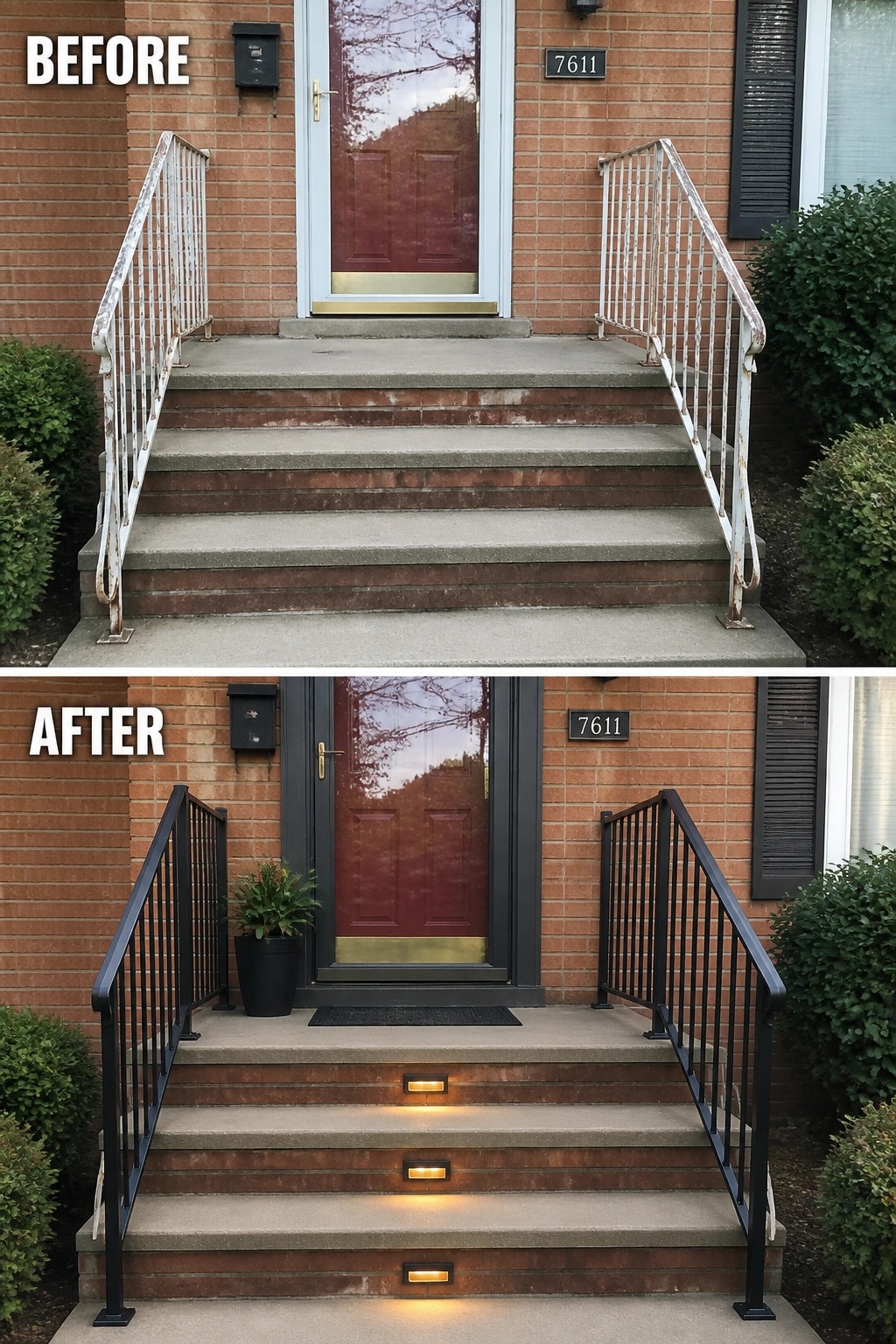
Swapping tired white railings for slim, dark metal and adding low-profile step lights is an easy way to modernize a brick entry without a full renovation. The darker trim visually sharpens the doorway and the recessed lights make the steps safer while reading as a planned, contemporary detail rather than an afterthought.
This works well on older brick houses or any porch that feels stuck in an earlier era. Start by repairing concrete and reusing existing anchor points where possible, choose a powder-coated black or charcoal railing for weather resistance, and install small LED riser lights for even, glare-free illumination. Keep profiles simple and coordinate the new trim color with other exterior accents so the change feels intentional.
Give A Bare Porch A Clear Purpose
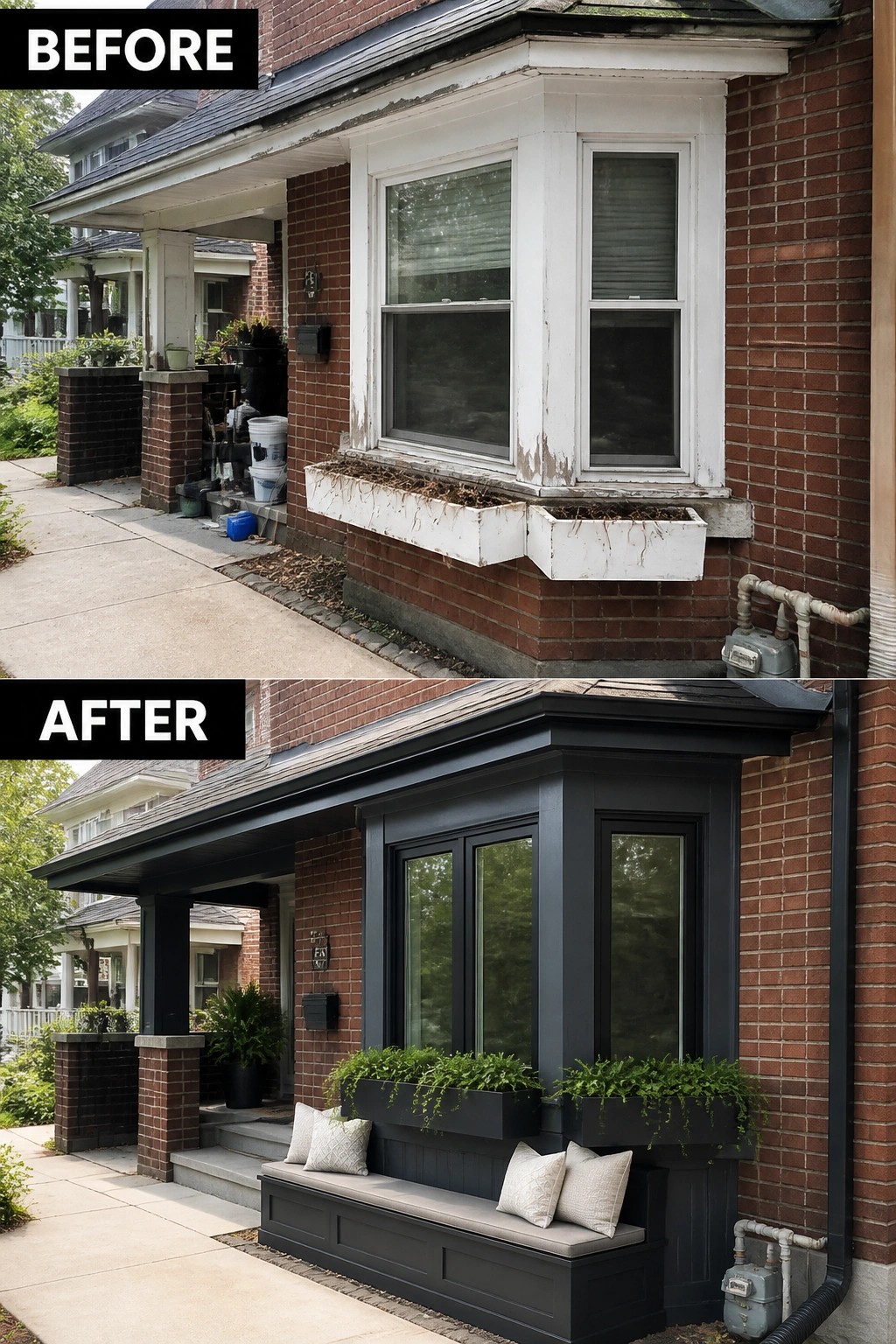
A simple way to modernize a brick facade is to give the porch a clear function. Here a deep trim color and a low built-in bench with matching planter boxes turn a neglected entry into a composed seating nook, so the whole front reads as intentional instead of tired.
Start by repairing and painting the trim in one dark, durable color to tie the brick and wood together. Then add a bench sized so people can sit without blocking the path, use weatherproof materials and cushions, and repeat the trim color on planters or shutters for a coordinated look. This works especially well on older brick houses with small porches—keep the scale modest and leave room to move.
Give A Bare Front Entry A Clear Purpose
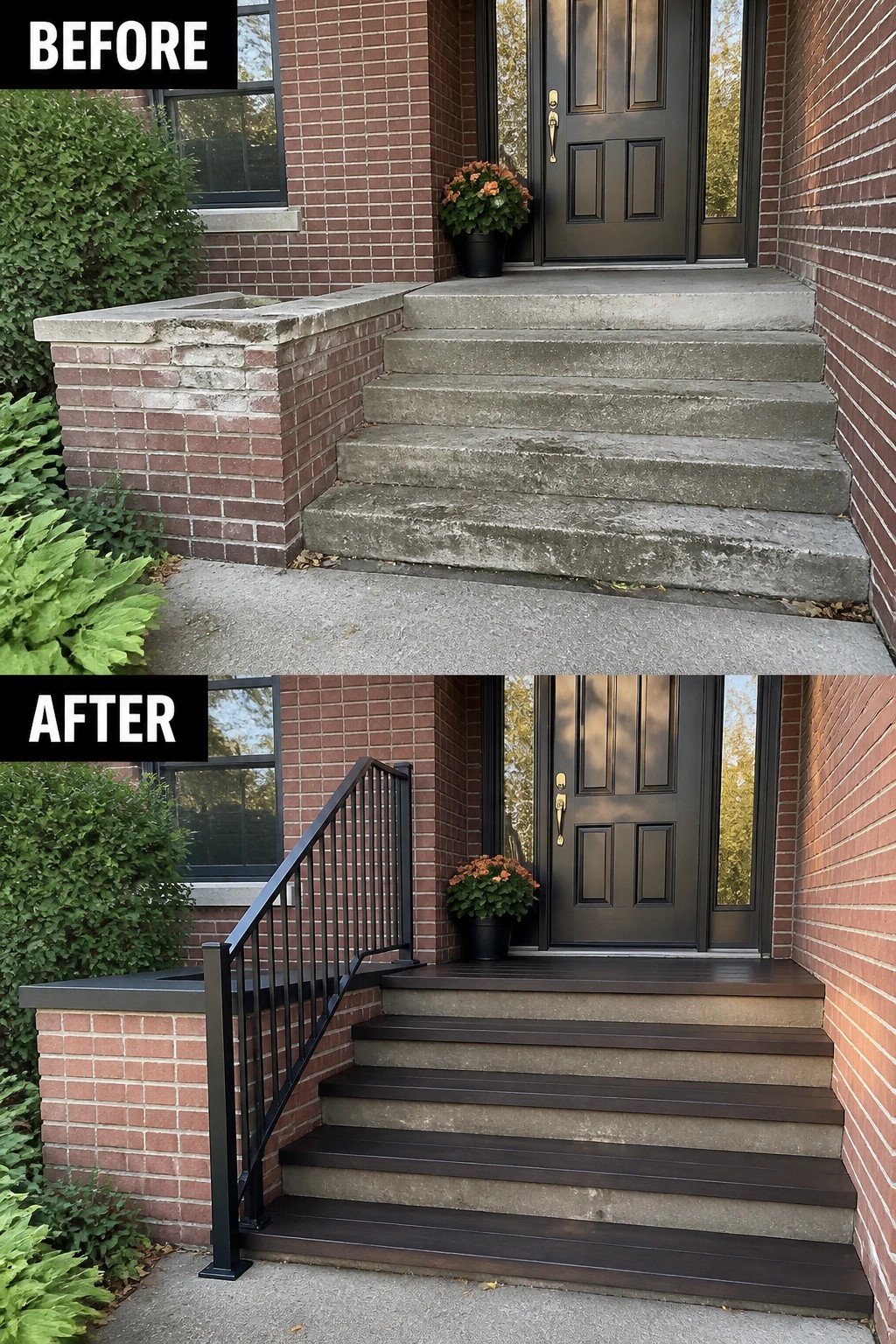
A couple of simple, durable details can turn an anonymous concrete stoop into a purposeful entry. In this example, installing dark, weatherproof stair treads and a slim black metal railing instantly refines the approach and makes the steps read as part of the home’s design rather than leftover concrete.
To copy the idea, start with a good clean and a safety check of the existing steps. Pick composite or treated stair treads and a railing that fits your local code (and your house’s scale), then repeat the dark trim color on a planter or the door hardware to unify the look. This works especially well on brick or stone facades where a crisp, dark edge gives a modern, finished feel.
Give A Bare Porch A Clear Purpose
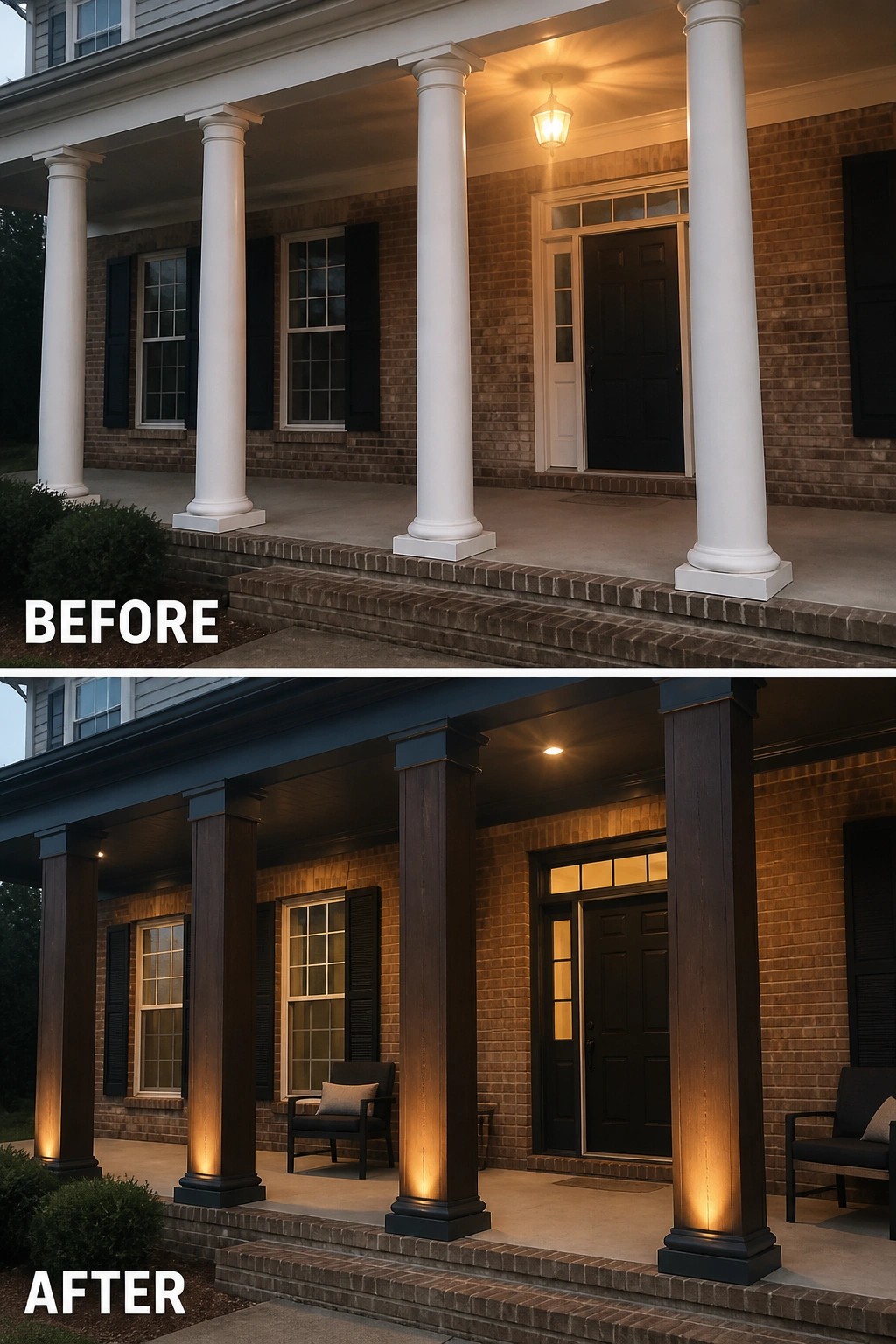
Swapping plain white posts and a bare concrete porch for darker, squared columns and low uplighting is a simple way to make an entry feel intentional and welcoming. In this example the change to dark trim and the addition of warm base lights (plus a couple of chairs) turns an unused stoop into a defined place to sit and a stronger focal point for the facade.
Try this on brick or traditional homes that need a modern update: either replace or wrap railings and posts in a darker stain or paint that matches shutters and the door, then add discreet uplights at the column bases to highlight texture and sightlines. Keep furniture scaled so the path to the door stays clear, choose weatherproof pieces, and use warm LED bulbs (2700–3000K) to avoid harsh glare — and call an electrician for trim lighting if you’re not comfortable with wiring. (LED pucks work well for this.)
Modernize A Brick Facade With Dark Trim And Clean Planting
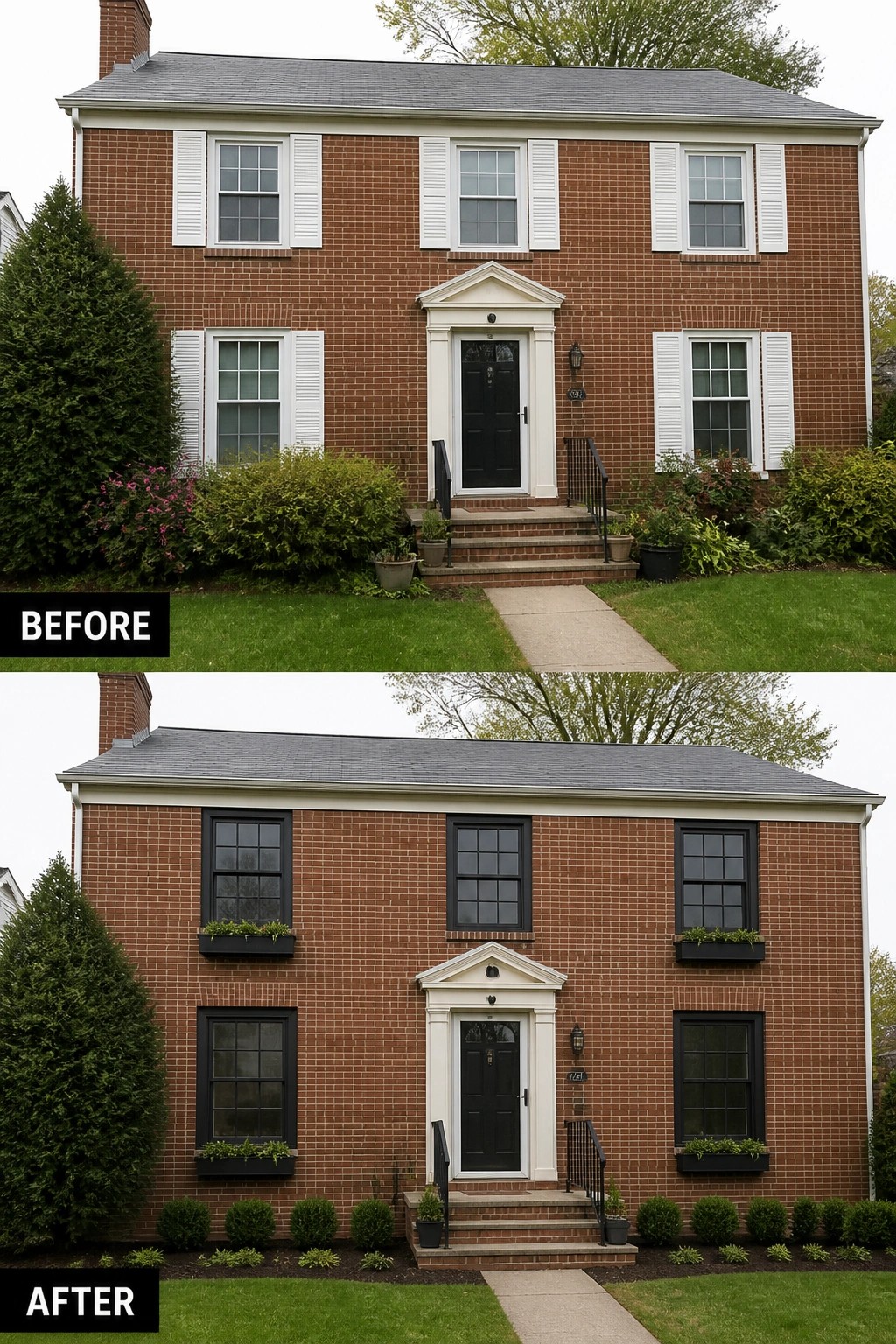
A simple, high-impact idea is to swap light shutters and busy foundation plantings for dark window trim, matching window boxes, and a tidy row of low shrubs. Dark trim sharpens the geometry of windows and doors so the brick reads as a backdrop rather than the only feature. Paired with smaller, evenly spaced plantings, the result feels purposeful and much more contemporary without changing the brick itself.
This works especially well on red or warm-toned brick where contrast makes details pop. Choose one dark paint color and repeat it on window frames, the front door, and any boxes or hardware for cohesion. Keep foundation plants low and regular in spacing so the facade stays visible and is easy to maintain, and add a couple of simple planters or a matching light by the door to finish the look.
Use Dark Trim To Modernize A Brick Facade
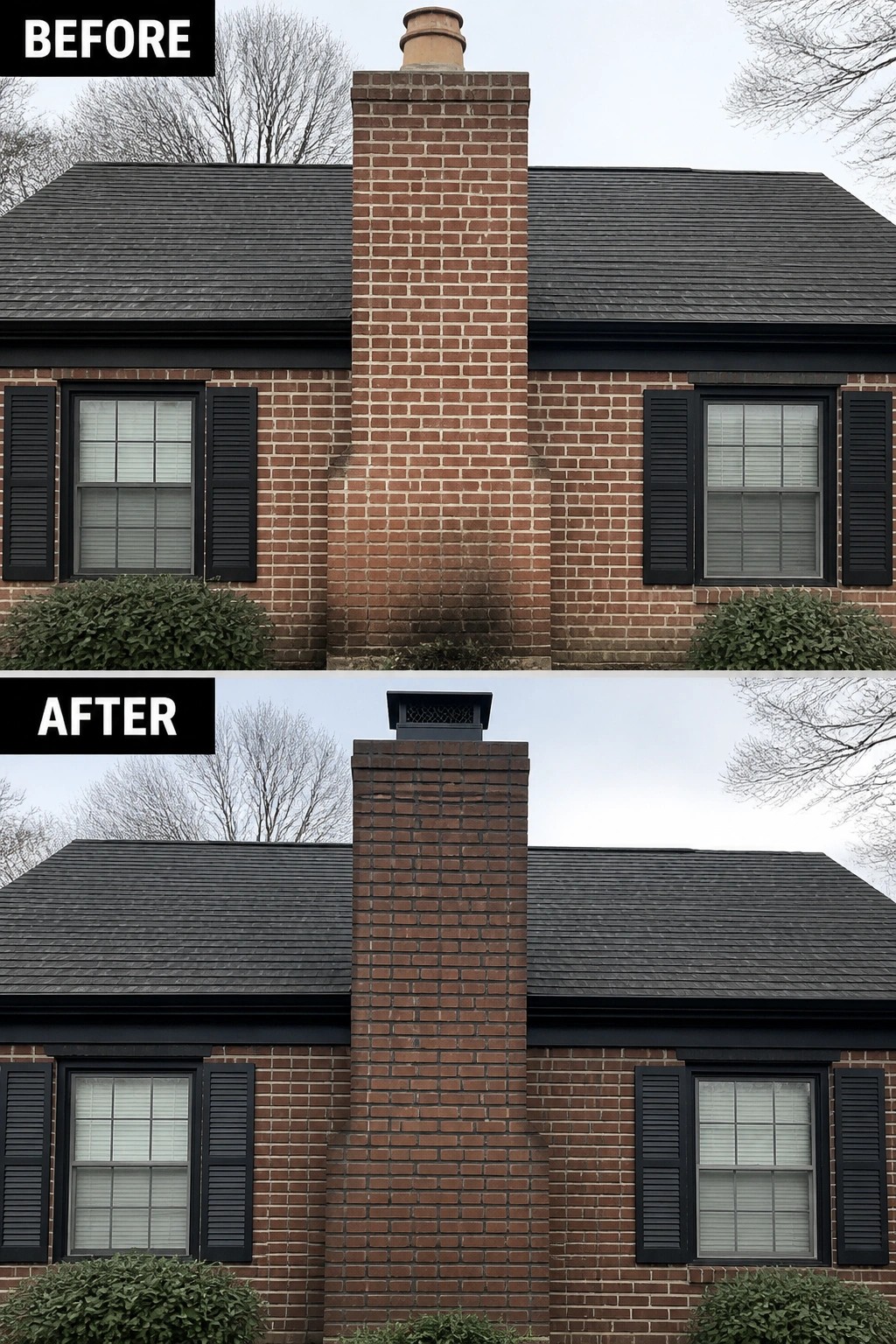
A simple and effective update for an older brick house is to unify the trim in a deep, modern color and finish the chimney line with a metal cap. In the image the shutters and window trim are darkened and a clean metal chimney cap is added, which pulls the roofline and facade together and makes the brick read as a deliberate material instead of a dated backdrop.
To copy the idea, pick one dark tone and repeat it across shutters, fascia, gutters, and the chimney top so the house reads as a single, refined composition. Test the color on a small area first and use exterior-grade paint in a low-sheen finish. Add a weatherproof metal chimney cap or paint the chimney crown to match the trim (check local codes and heat safety). This works especially well on red or orange brick and on modest-sized homes where a strong trim band can make proportions feel more intentional.
Use Dark Trim And Simple Planting To Modernize A Garage
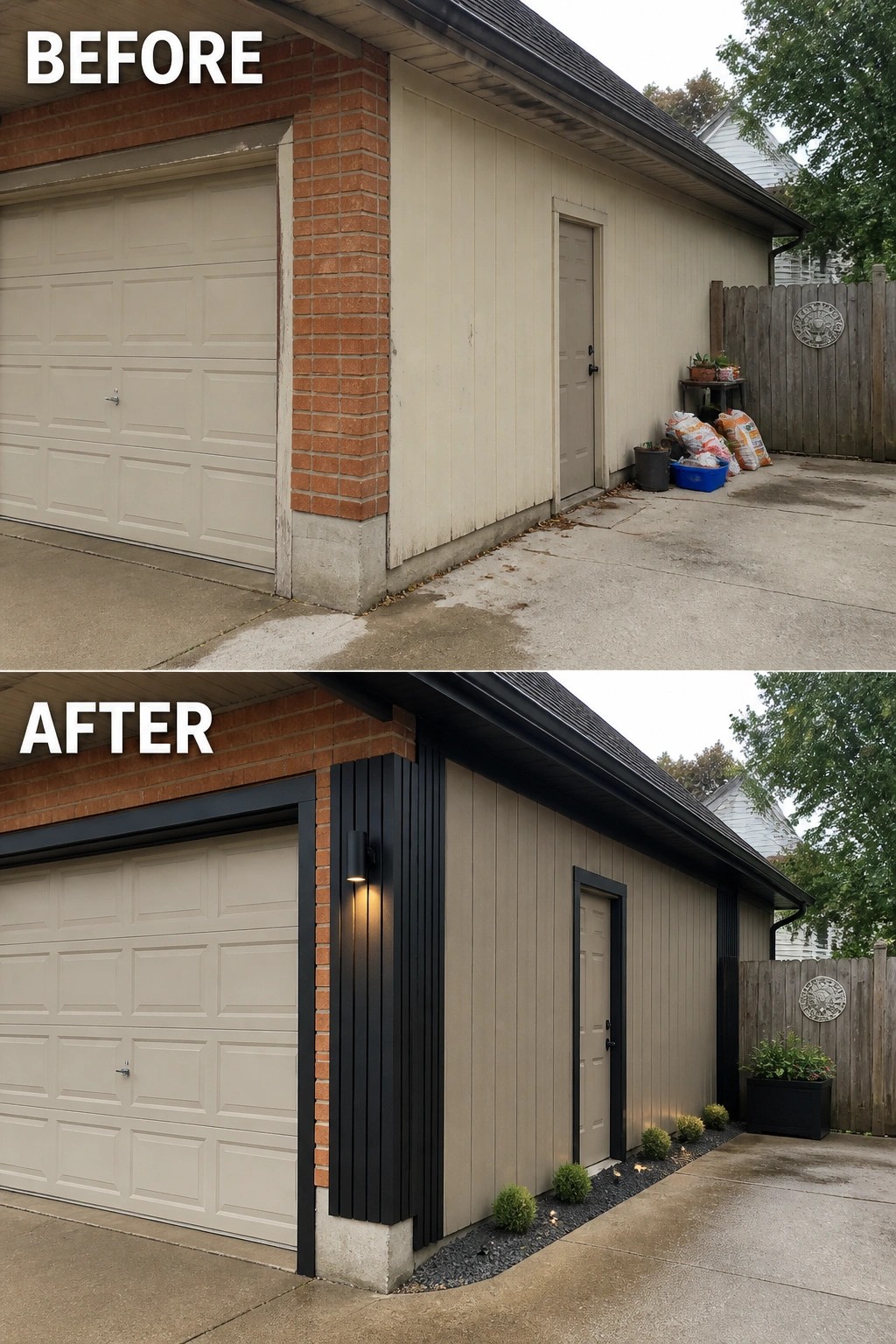
A quick, high-impact update is to frame an ordinary garage wall with bold, dark trim and a tidy planted edge. Painting or adding narrow vertical slats around the garage opening and entry door gives the facade crisp lines and contrast, while a thin gravel bed with a few small evergreen shrubs and low uplights makes the entrance feel intentional rather than neglected.
This idea works well on older brick-and-siding homes where you want a modern look without a full re-clad. Keep the planting low and low-maintenance, repeat the dark trim color on hardware or a light fixture for cohesion, and use gravel or slate to keep the edge neat and easy to maintain. It’s an affordable update that reads polished at a distance and is simple to do in stages.
Use Dark Trim To Sharpen Brick Curb Appeal

Swapping tired white window trim for a deep charcoal or black frame is a quick way to modernize a brick facade. In this example the old chipping white sashes are replaced with clean, dark trim, which makes the brick read cleaner, visually tightens the openings, and gives the whole front a more intentional, updated look.
To try this at home, pick one dark trim color and repeat it around windows and other exterior details so the change reads deliberate. A matte or low-sheen black works well (matte finishes read modern) and pairs easily with black or oil-rubbed hardware and simple light fixtures. If the existing trim is damaged, replace it with a low-maintenance material before painting, and always test a small swatch to check how the color plays against your brick in different light. Simple, effective.
Make A Plain Facade Feel More Welcoming
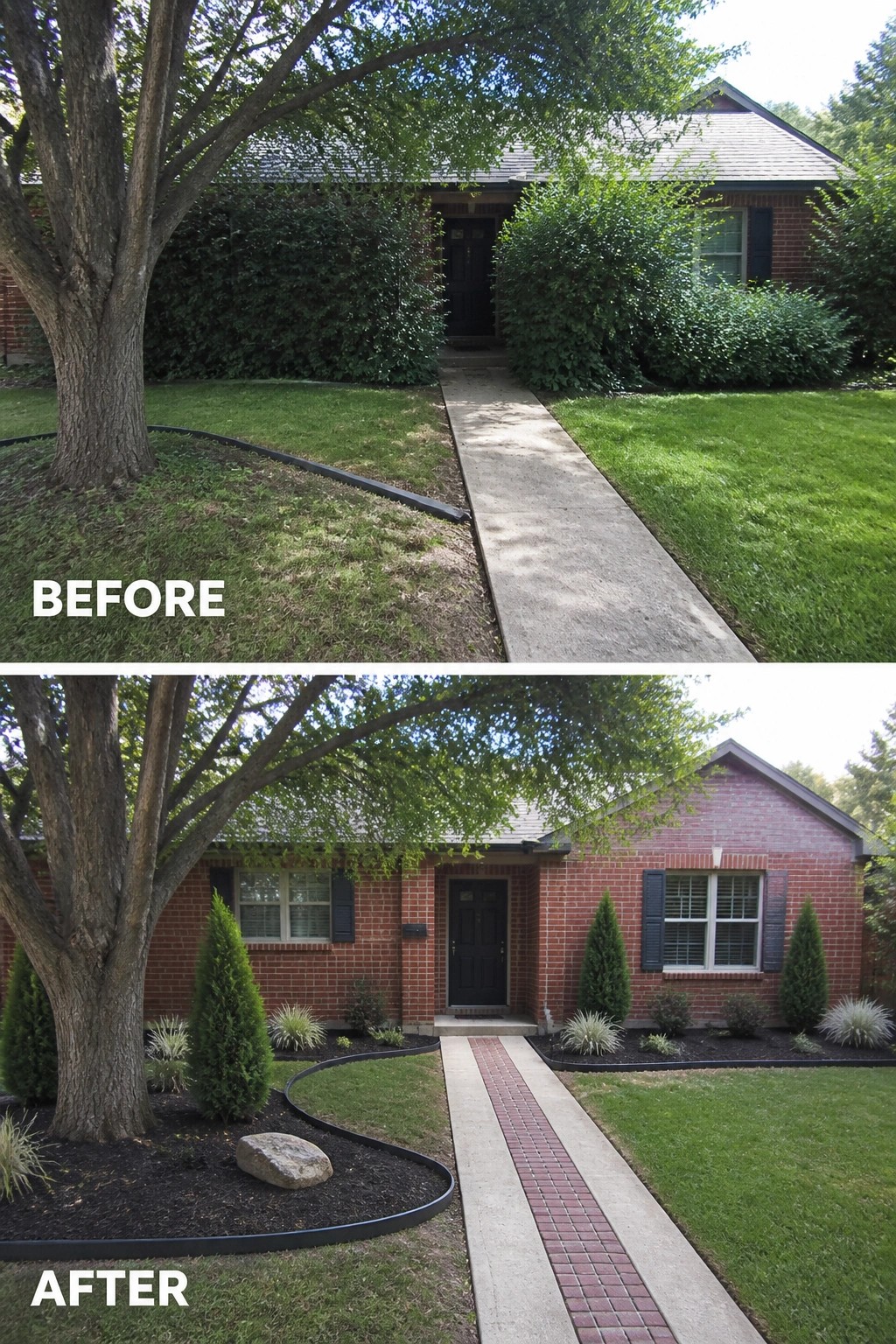
Clearing away overgrown shrubs and giving the entry some simple structure is an easy way to refresh an older brick house. In this example the dense plant mass was pared back and replaced with defined planting beds, crisp edging, and a brick-inset strip down the sidewalk, which immediately reveals the front door and the home’s architecture and makes the entry feel intentional.
To copy this, start by removing or pruning anything that hides windows or the porch, then lay a clean edge and add dark mulch for contrast. Choose two or three low-maintenance plant types and repeat them on both sides for balance (evergreens, ornamental grasses, and a small accent rock work well). Finally, tie the walk to the house with a material repeat, like a brick strip or pavers, and paint the door or trim a dark color to give the facade a modern, cohesive look. Clean and simple.
Give A Bare Porch A Clear Purpose
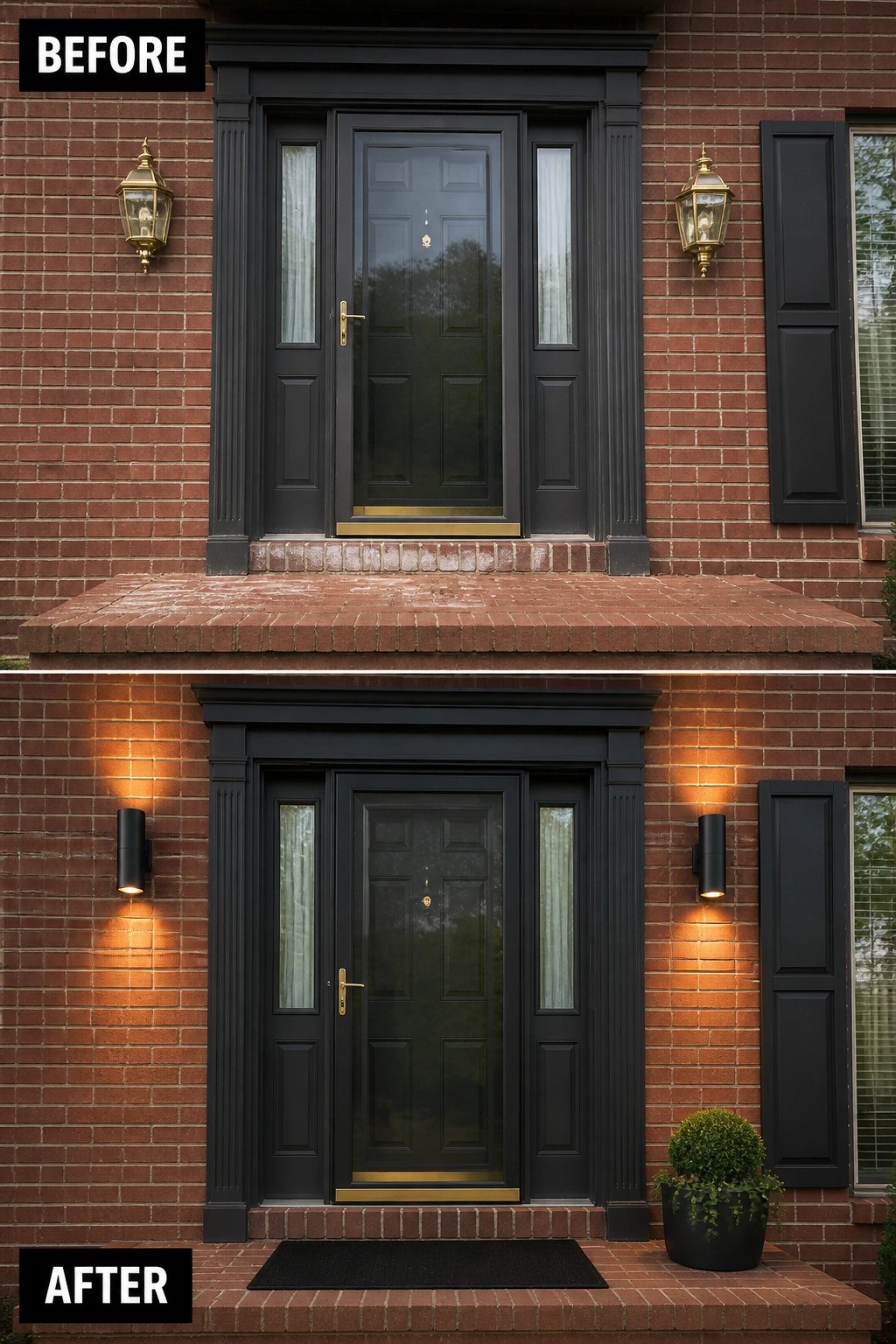
Swap dated fixtures and empty steps for a few purposeful updates to turn a plain entry into a welcome, polished porch. Replacing old brass lanterns with slim, modern up-and-down sconces instantly frames the doorway and highlights the dark trim, while a simple doormat and single planter make the space feel used rather than forgotten. The focused changes make the entry read as intentional without a big budget.
Do it where a small stoop needs definition: choose wall lights sized for your wall height and a finish that repeats the trim or door hardware, add one low-maintenance planter (boxwood is a safe bet), and put down a weatherproof mat that leaves the path clear. Keep pieces few and proportional so the porch reads as an entry, not a storage spot. (One focal tweak goes a long way.)
Make A Narrow Side Entry Feel Polished
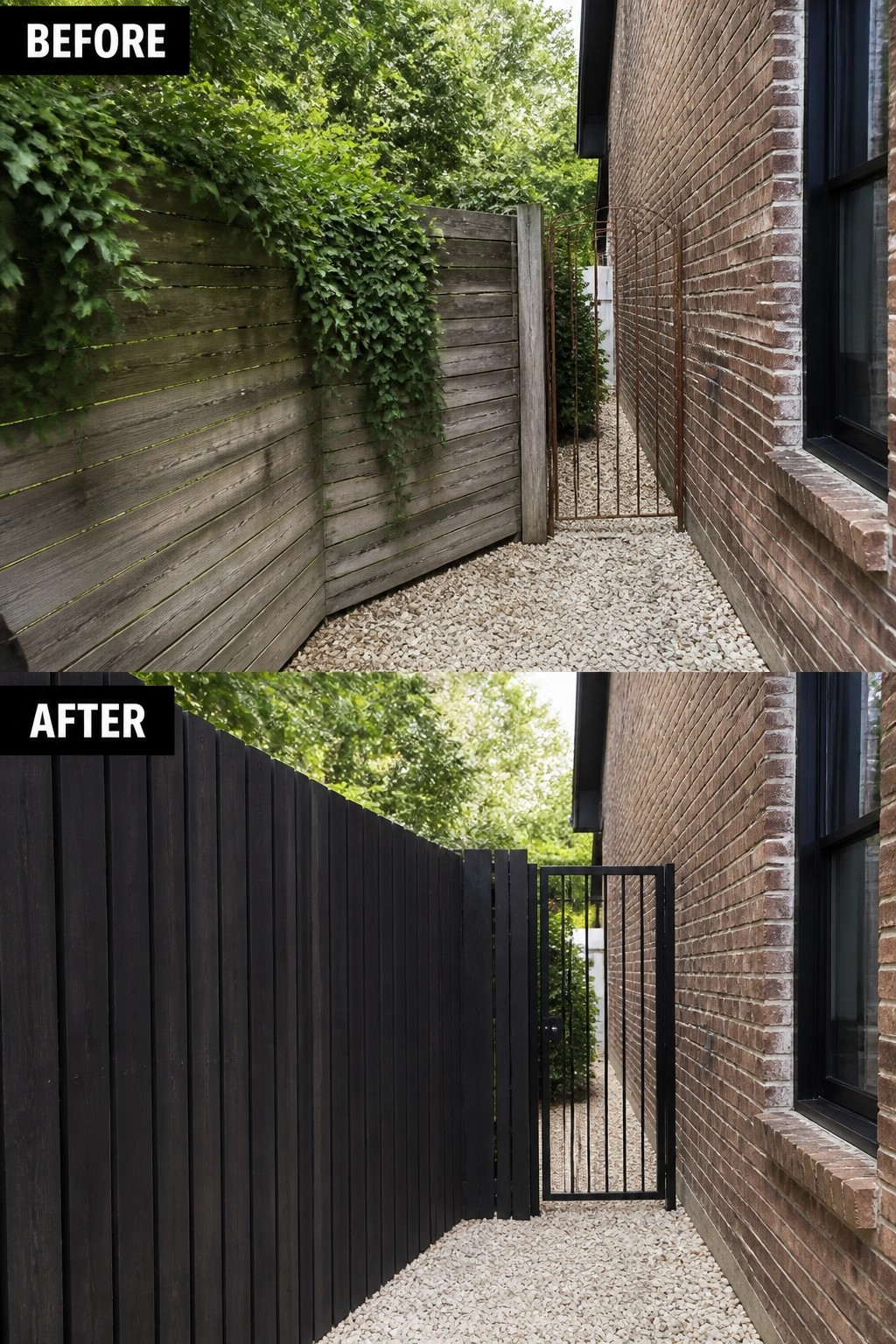
A fresh coat of dark paint and a simple, slim metal gate can instantly tidy a cramped side yard. Swapping weathered horizontal boards for taller, vertically aligned planks painted charcoal (and replacing a rusty gate with a sleek black metal one) creates a clean, continuous backdrop that hides wear and gives the house a more intentional, modern edge.
This trick works great for narrow passages and service paths where space is limited. Start by cleaning and repairing the fence, then use an exterior primer and a matte or satin dark stain for durability and low maintenance. Match the gate finish to existing trim or window frames so the new detail reads as part of the house, and keep the path surface simple (gravel or pavers) so access stays easy and upkeep stays minimal.
Make A Plain Porch Feel Polished With Dark Trim
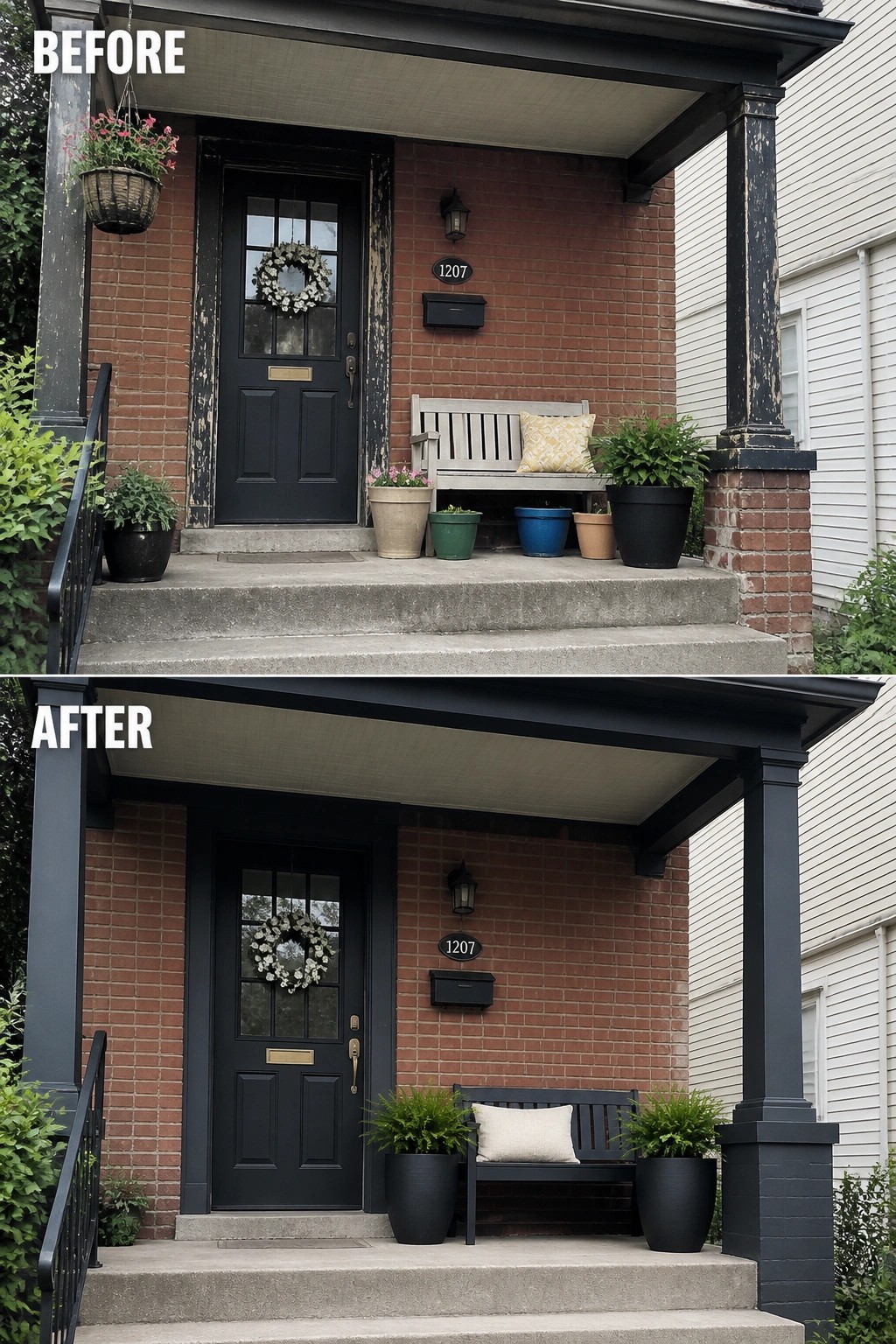
A quick way to lift a tired brick entry is to paint the door, columns, and trim a deep charcoal or black. That single color change sharpens the architecture, and pairing it with a few coordinated planters and a simple bench cushion makes the whole porch read as intentional instead of patched together.
Prep the trim well, use an exterior primer, and pick a low-sheen paint that complements your brick tone. Keep accessories limited to one or two colors and choose larger matching planters rather than many small mismatched pots so the scale stays right for a small covered porch—simple choices, practical results.
Give A Bare Porch A Clear Purpose
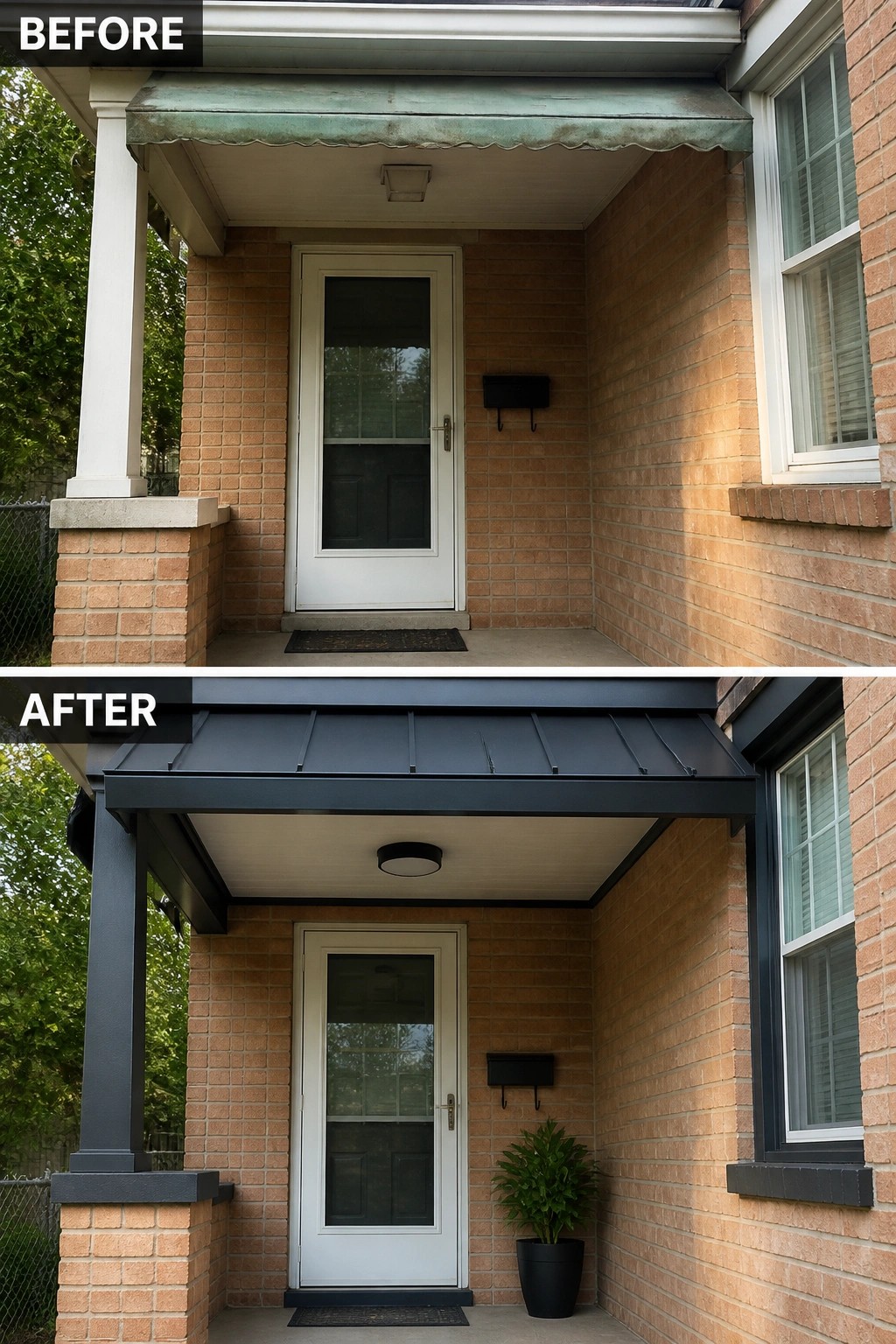
Swapping a tired fabric awning and white trim for clean, dark metal and matching trim instantly defines this small entry as intentional rather than leftover. The darker canopy frames the doorway and reads as a single architectural element, while a single potted plant and a flush ceiling light add scale and function without cluttering the small space.
Use this on narrow porches or stoops where you want a neat, modern look. Keep the scale simple: pick a canopy depth that shelters the door but leaves room to move, repeat the dark trim color on one or two accents like a mailbox or window sill, and choose a low-maintenance evergreen in a weatherproof pot so the styling stays tidy year-round.
Modernize A Brick Porch With Dark Trim
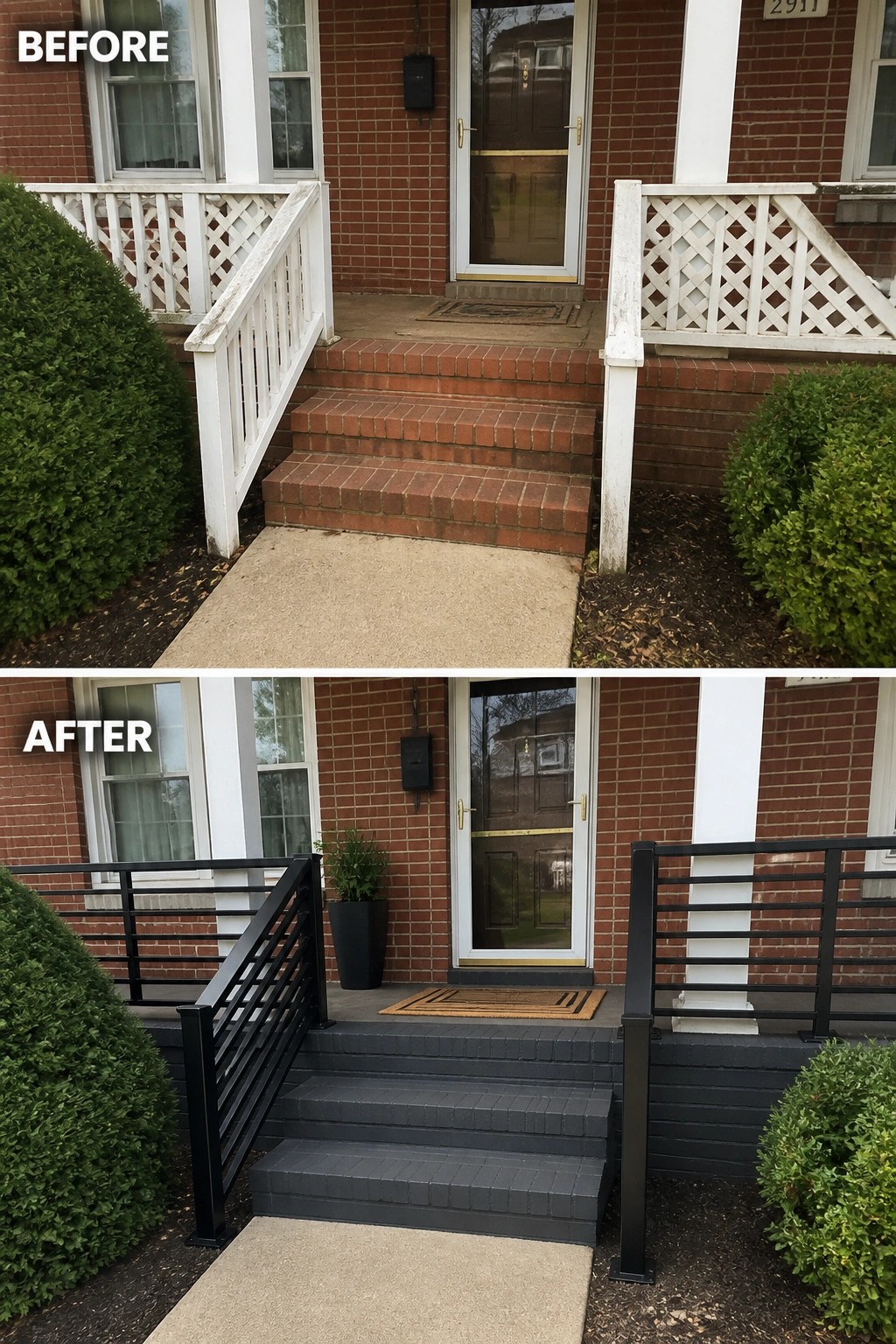
Update a tired brick entry by replacing fussy white lattice and light stairs with clean, dark trim. Swapping the old railing for black horizontal metal and painting the brick steps a deep charcoal instantly gives the porch a contemporary edge, and a single planter plus a doormat finishes the look without clutter.
This approach suits red-brick homes where you want a bold but simple change. Start with a thorough clean and any needed brick repairs, choose powder-coated metal rails and an exterior masonry paint rated for steps, and repeat the dark finish in one or two accessories. Keep the path clear and confirm the new rail meets local safety codes.
Add Structure With Pavers And Gravel
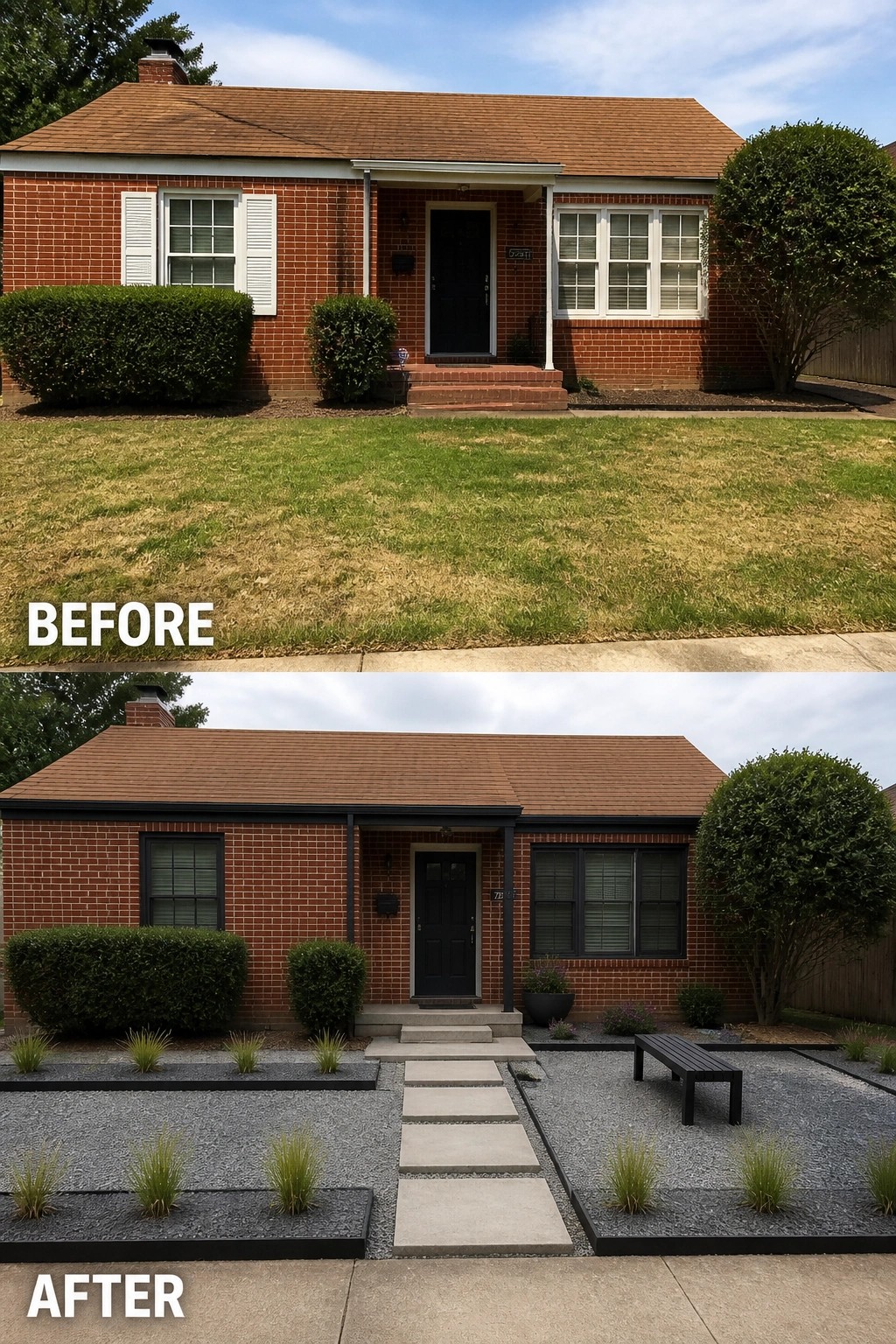
Swapping an unremarkable strip of lawn for a simple paver path and gravel beds gives a brick house a neat, modern curb without a full remodel. A row of large concrete stepping stones set into crushed stone immediately creates direction and purpose, while clean-edged planting strips and a dark-trimmed door/window surround tie the hardscape back to the house. The result reads intentional and low-maintenance instead of neglected.
To copy the idea, start by removing the grass where you want hardscape and install a compacted base with landscape fabric to reduce weeds. Use oversized pavers so the path feels proportional to the facade, add metal or timber edging to hold the gravel, and plant small clumps of ornamental grass or low shrubs for softness and scale. Pick a trim or door color that repeats in your hardscape accents so the whole look reads cohesive. Easy to maintain.
Use Dark Trim To Modernize A Front Porch
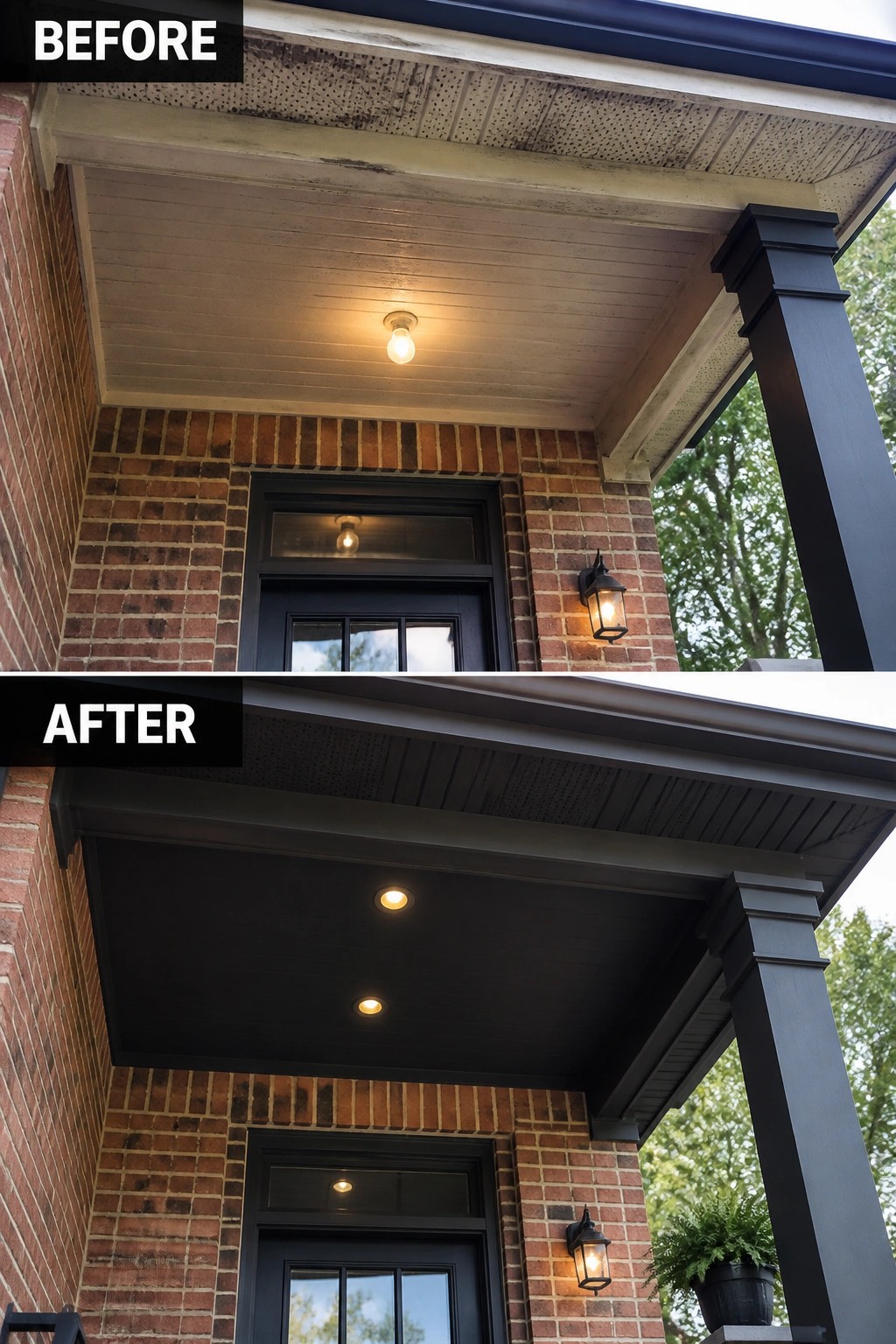
Painting the porch ceiling and trim a deep charcoal and swapping the exposed bulb for recessed downlights is a simple way to make an old entry feel intentional and current. The darker trim hides weathered wood and small stains, while compact recessed lights give a cleaner, more finished profile that matches modern black doors and columns.
To try this at home, start by testing a dark, exterior-grade paint on a small section (a notebook-sized swatch on the ceiling is enough). Choose fixtures rated for outdoor use and space them so they light the door and step evenly; keep one wall sconce for character if you like. This approach works especially well on brick houses and narrow porches—dark trim makes the architecture read sharper, but balance it with a lighter door, a plant, or a welcome mat so the entry doesn’t feel too heavy.
Update A Drab Entry With Modern Steps And Railings
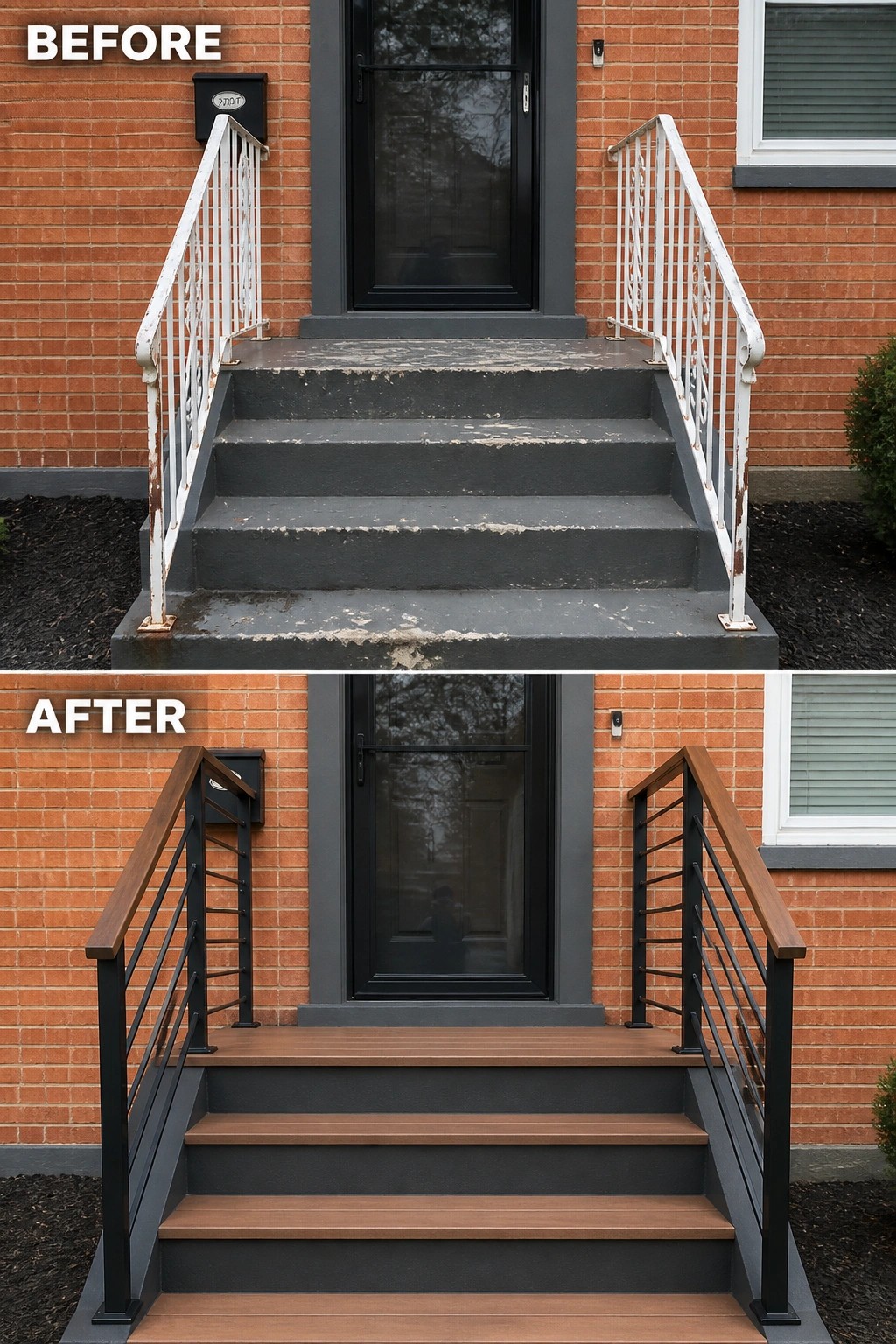
Swapping tired concrete treads and an old ornamental railing for clean wood-look steps and a slim black metal railing instantly makes a front entry read as intentional and cared for. The change you see here — from peeling gray steps and white ironwork to warm plank treads and horizontal black balusters — refreshes curb appeal while improving footing and style in one move.
You can copy this idea without rebuilding the whole porch: replace just the tread surfaces with composite or rot-resistant wood, and fit a powder-coated steel railing to match your trim color. Keep proportions in mind so the new handrail and treads feel balanced with the doorway, choose non-slip nosing, and confirm handrail height and attachment points meet local code (no heavy demo needed). A few coordinated dark accents, like a painted door frame or mailbox, ties the update together.
Turn An Empty Patio Into A Covered Seating Area
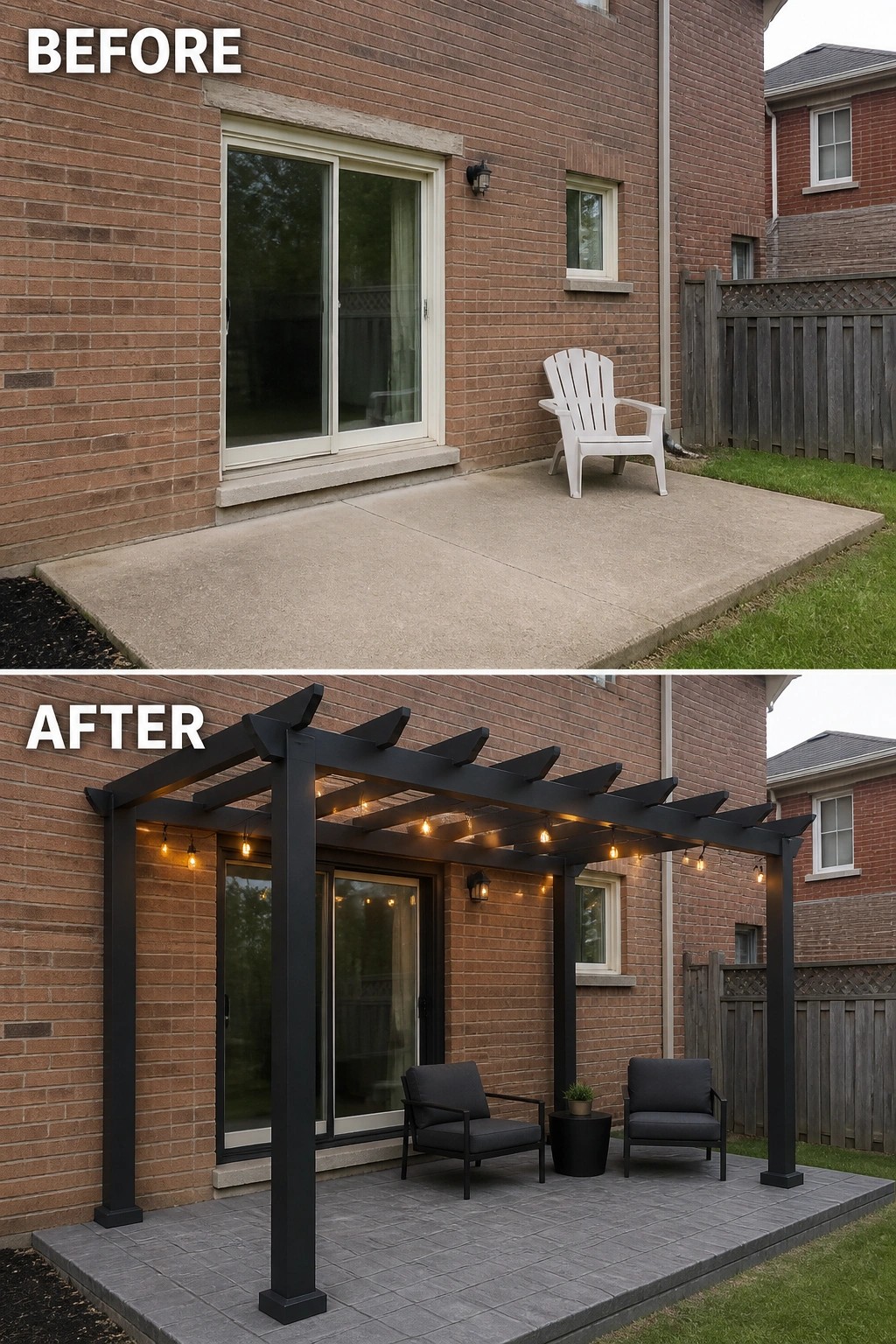
A small overhead structure and a real floor make all the difference. Replacing the bare concrete with patterned pavers and adding a dark pergola with string lights takes an unused slab and makes it feel like an outdoor room where you actually want to sit.
Keep the approach simple. Match the pergola scale to your house, set it on a paved or anchored base, and pick low-profile furniture so the space doesn’t feel crowded. Hang lights where people will sit, repeat one dark trim color to tie the look to the brick, and use weatherproof cushions and a planter or two to finish the space. Simple, effective.
Frequently Asked Questions
Q: Will dark trim make my brick house look smaller or too heavy?
A: Dark trim tends to ground the facade and add a crisp frame rather than shrink it. If you worry about heaviness, break the dark with lighter porch ceilings, railings, or landscaping and keep trim lines clean to maintain balance.
Q: How can I choose a dark trim color that complements my existing brick?
A: Match the trim’s undertone to the brick—warm bricks like deep chocolate or oil-rubbed bronze, cool bricks pair well with charcoal or blue-black. Test large paint swatches on different walls and view them at morning and evening light before committing.
Q: Do I need to change a lot to get a modern look, or will small updates work?
A: Small, focused updates go a long way: paint the trim and door, swap old hardware and light fixtures, and simplify window trim to clean lines. Those moves refresh the whole look without a full renovation.
Q: Is painting dark trim something I can do myself, or should I hire a pro?
A: Painting trim is a doable DIY if you’re comfortable on ladders and willing to prep surfaces properly. For window replacement, major masonry work, or high elevations, hire a contractor to avoid problems and save time.