

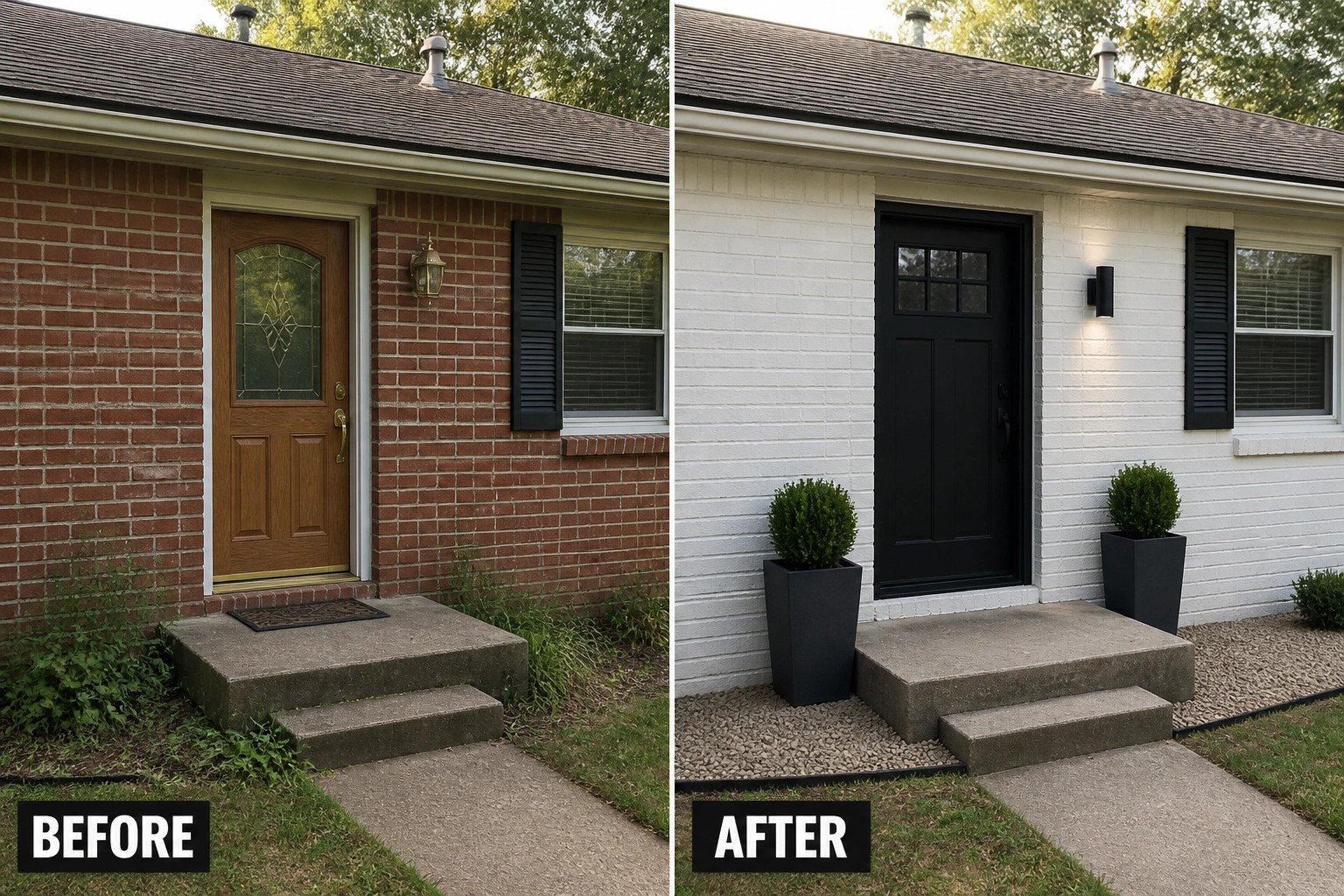
When I look at an older brick house the things I notice first are tired mortar, outdated trim, and an entry that feels closed off, so I value fixes that target those spots without gutting the structure.
Simple moves like cleaning or repointing brick, swapping bulky shutters for sleeker trim, upgrading lighting and hardware, or adding a modest covered porch can sharpen the whole facade and make the house read as cared for.
Small edits go a long way.
I usually try one change first, often new lighting or fresh paint on the trim, to judge scale and mood before committing to larger choices, and that careful approach keeps projects manageable.
You can save and adapt several of these ideas to fit your budget and style, and there’s real satisfaction in watching a facade feel more modern and composed without a full renovation.
Use Paint And Simple Accents To Modernize Brick
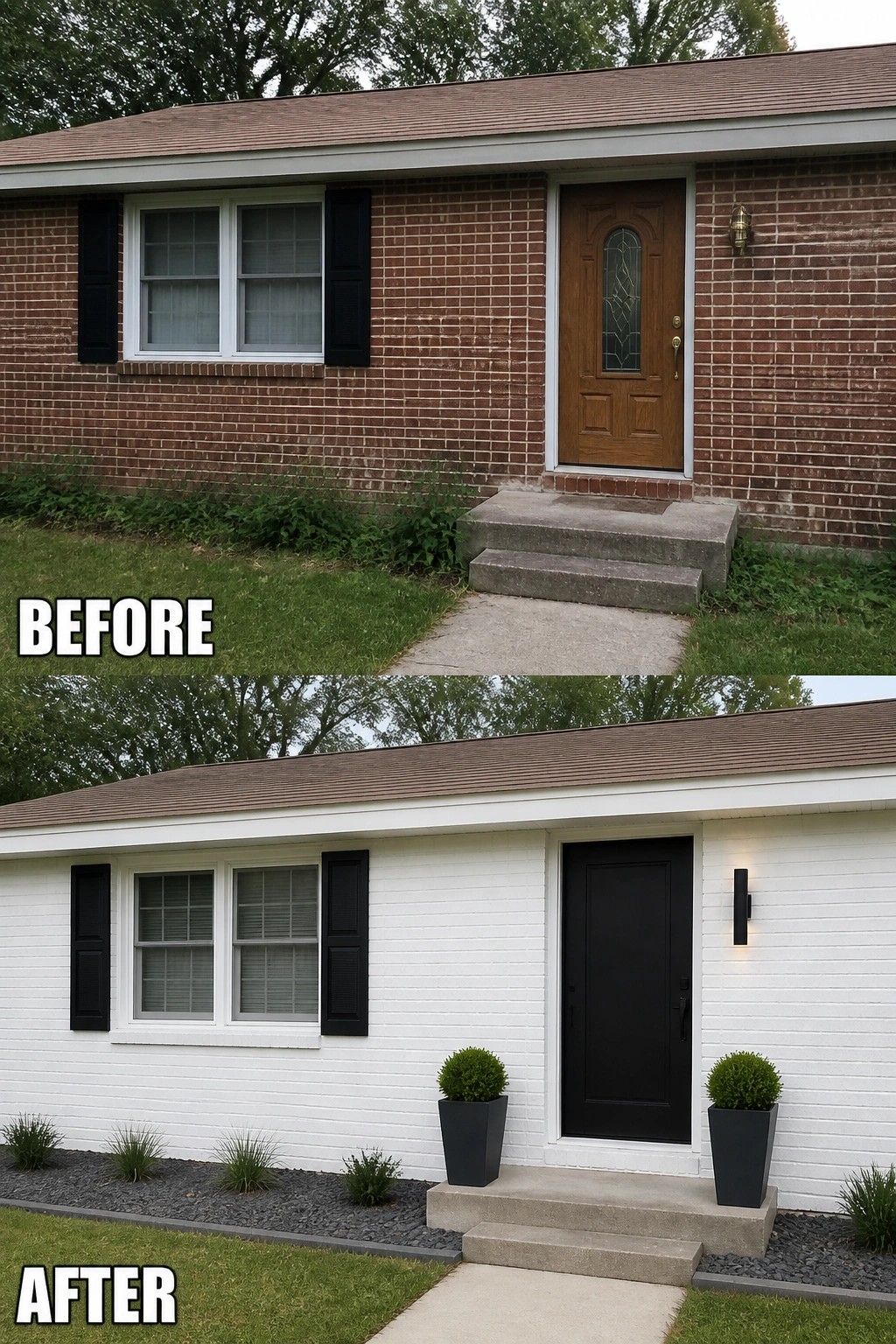
Painting the brick a light neutral and repeating one strong accent color is an easy way to modernize a dated facade. In this example the red brick is painted white and a deep black is used on the door and shutters, while matching planters and a clean gravel bed tighten the look—small changes that read fresh and intentional.
Start with proper prep: clean the brick, repair any mortar, and use a breathable masonry paint so moisture can escape. Pick a neutral for the brick and one contrasting color for the door, shutters, and a couple of planters to keep things cohesive. Add a narrow planted bed or gravel edge to hide overgrown growth, and choose a simple modern light by the door to finish the update. This approach works especially well on single-story homes where large surfaces benefit from a single color change.
Make The Front Entry The House’s Main Feature
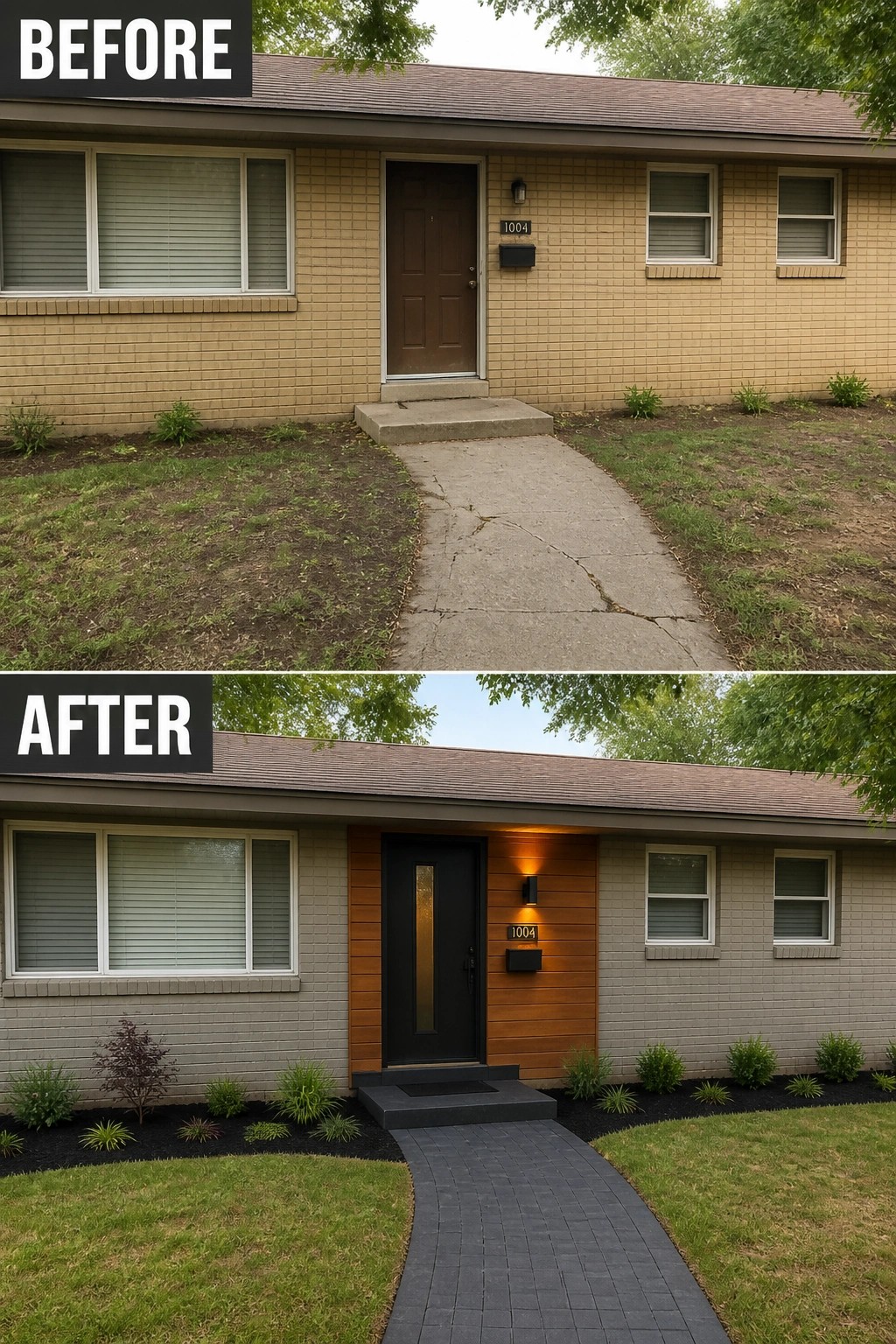
A small, well-defined entry can modernize an otherwise plain brick facade. Swap a bland door and crumbling concrete for a darker, contemporary door framed with a contrasting material (like warm wood siding) and replace the cracked path with a neat paver walkway—those two changes alone give the home a clear focal point and a more intentional feel.
This approach works best on single-story or midcentury brick homes where you want a simple update without redoing the whole exterior. Keep the palette limited to two or three materials, add a single wall light and tidy, low plantings with fresh mulch, and make sure the new step and path align for easy access—practical, durable choices will make the entry look planned rather than styled.
Make A Plain Facade Feel More Welcoming
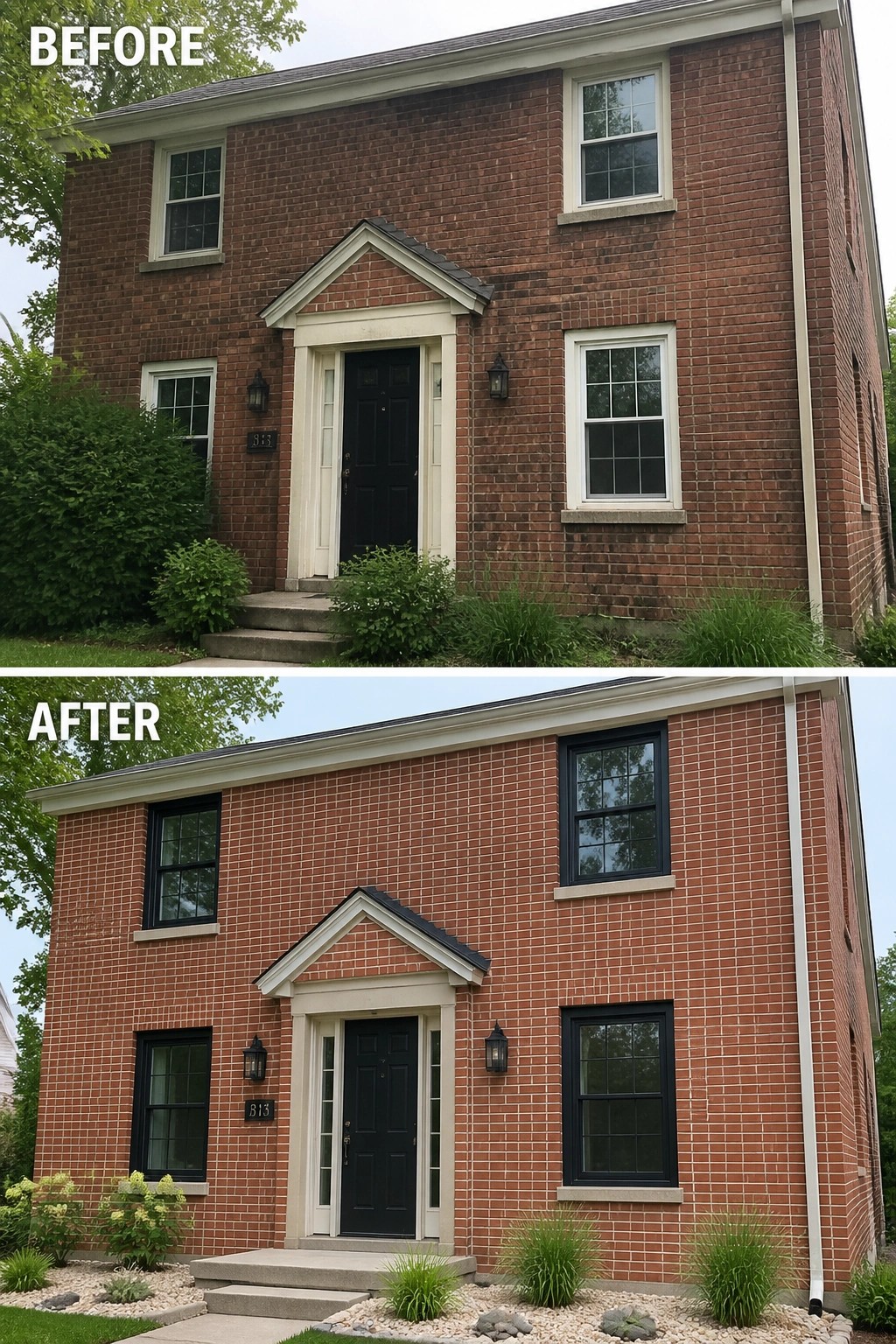
A few small, focused changes can lift a dated brick house without a major remodel. In this example the owners cleared away overgrown shrubs, added low-maintenance rock beds with a few repeated grasses, and darkened the window and door trim while swapping in matching lantern-style lights. Those moves sharpen the lines of the facade, make the entry read as the focal point, and give the whole front a tidier, more intentional look.
You can do this in stages. Start by cutting back or removing large, messy shrubs so the architecture is visible. Paint or replace trim and windows a contrasting color to define shapes, then add scaled lighting and a simple planting palette (three plant types or fewer) with gravel or mulch for low upkeep. Keep the path to the door clear and choose plants that stay proportionate to your home so the changes look balanced and last easily.
Define A Small Stoop With A Covered Entry
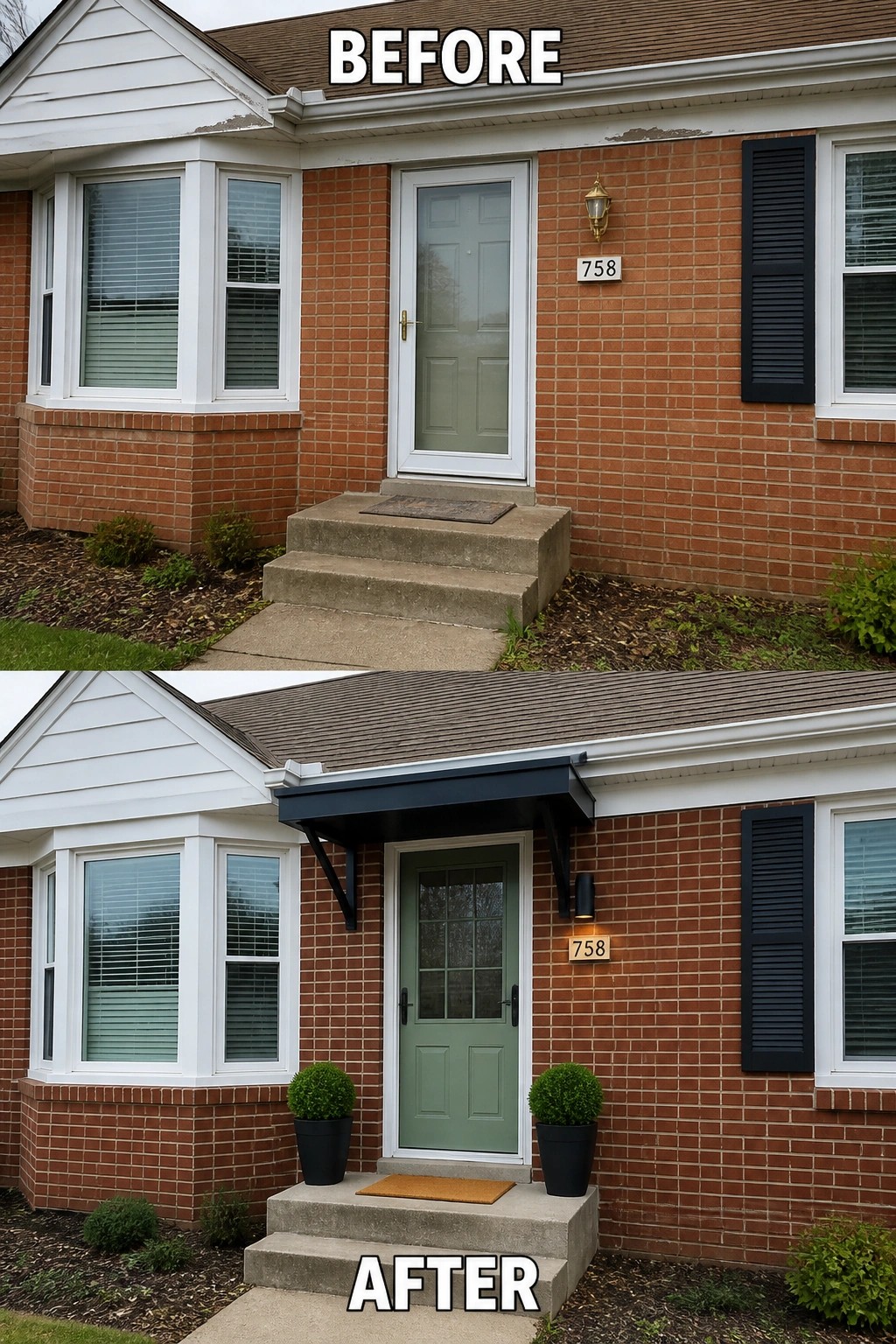
A small entry can feel forgotten until you give it a clear job. Swap a plain storm door and empty stoop for a painted front door and a simple overhang to mark the entrance. That single change creates a focal point and makes the porch look intentional instead of leftover space.
Use proportion and a few weatherproof accents to finish the idea. Pick a door color that stands out against the brick, add a modest canopy or awning for shelter, and mount a single wall sconce and house numbers at eye level. Flank the steps with matching planters or a doormat to reinforce the purpose without crowding the walkway (choose finishes that resist scuffs).
Update Your Front Steps And Railing For Instant Curb Appeal
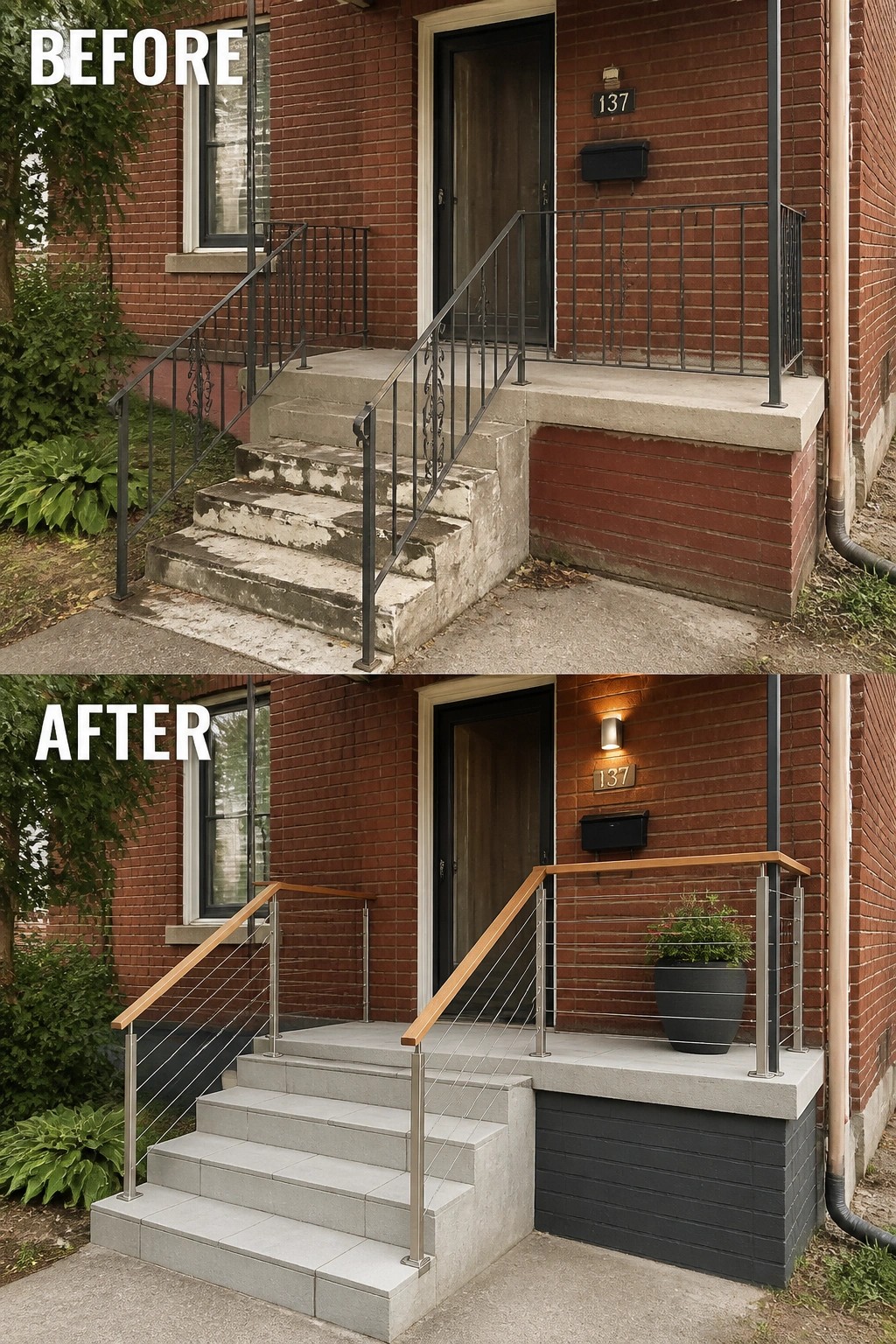
A worn set of concrete steps and an old iron railing can make a good brick house look neglected. Replacing the damaged treads with clean, weatherproof steps and swapping the ornate metal balustrade for slim stainless posts and cable rails with a wood handrail tidies the entry and gives the facade a modern, intentional look.
This approach works well on small stoops and older homes that need a simple, high-impact refresh. Pick durable materials sized to the scale of your porch, keep the landing clear for movement, and add one practical accent like a porch light or a single planter to finish the look. Small details matter.
Turn A Small Porch Into A Functional Entry Zone
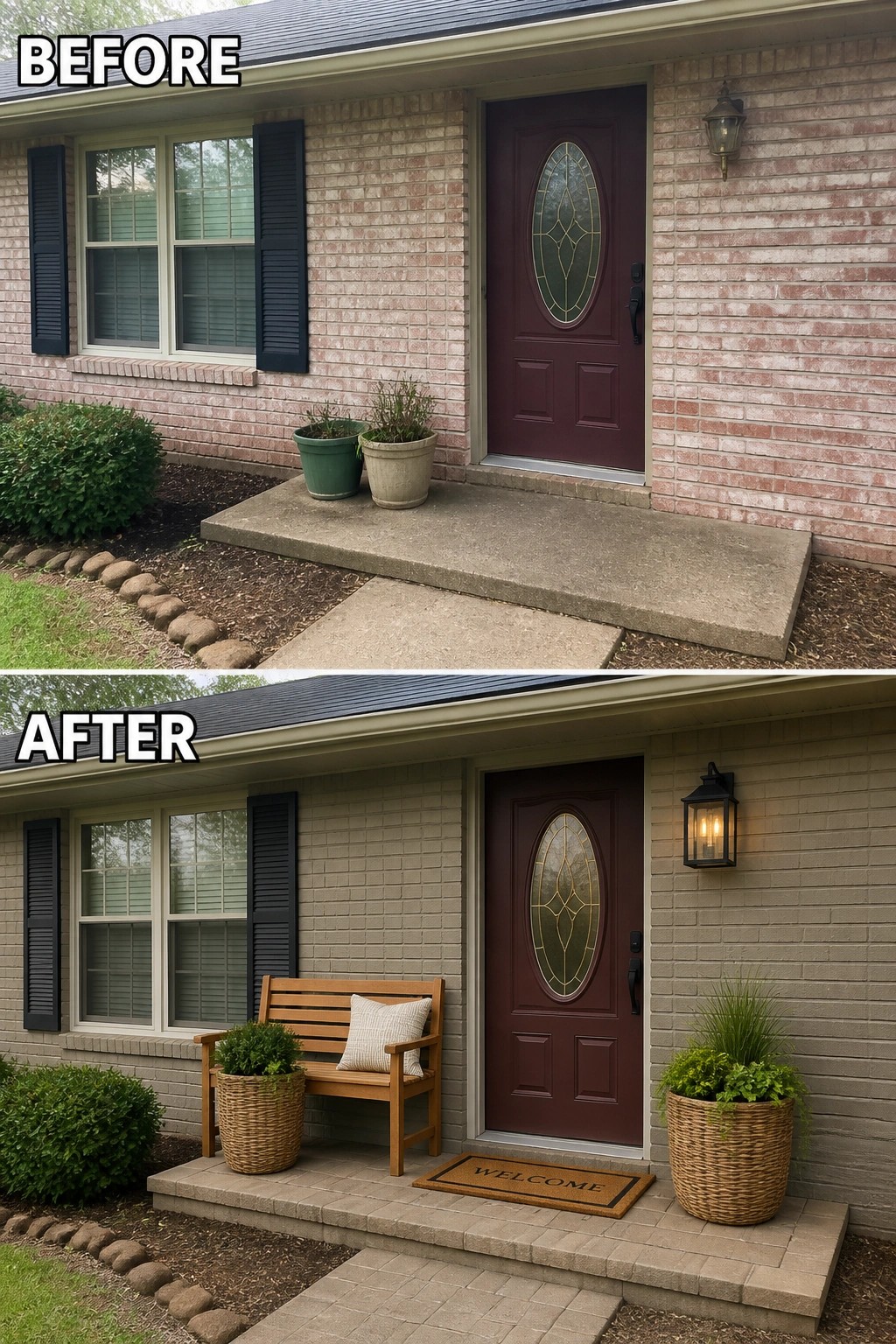
A small porch can feel useful instead of wasted when you make it a defined entry zone—swap plain concrete for a modest paver landing, add a simple bench and matching planters, and install a practical wall lantern. Those one or two changes turn a neglected stoop into a place people actually use, and they make the entrance read as intentional rather than afterthought.
Keep it realistic: pick furniture that fits the step depth and leaves room to walk, use weatherproof materials, and choose low-maintenance plants or evergreen clippings for year-round interest. Start small. A welcome mat, a single light placed where people sit, and a repeatable material or basket texture will pull the look together without crowding the space.
Use Lighting To Modernize A Plain Brick Facade
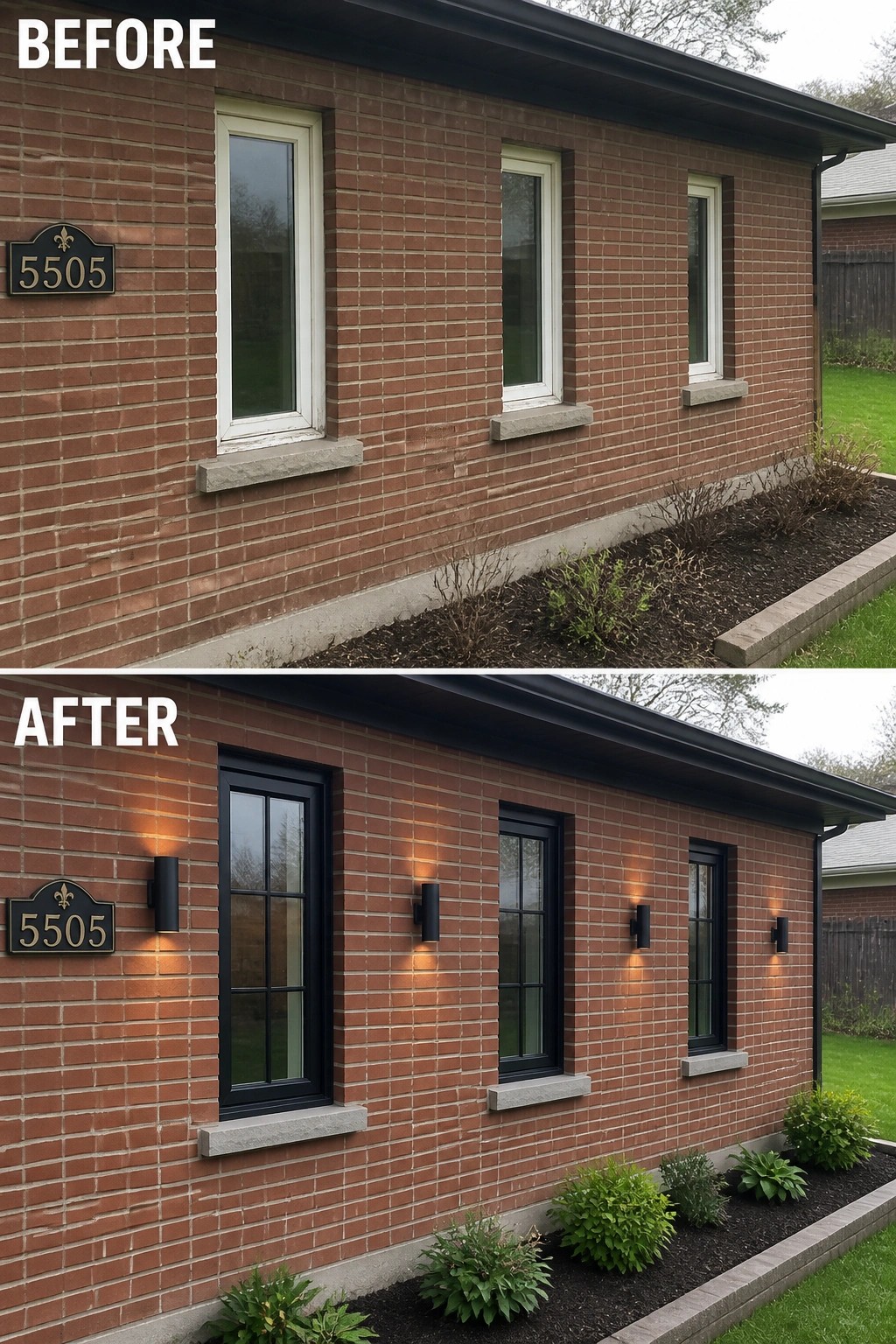
A few well-placed wall lights can do more to update a dated brick wall than a full renovation. In the after photo, sleek vertical sconces added between the windows (paired with darker window frames) create vertical rhythm, highlight the brick texture, and give the facade a cleaner, more contemporary feel without changing the masonry itself.
Try this on any single-story or bungalow-style home: pick narrow up-and-down fixtures that match your trim color so they read as a unified detail. Mount them roughly centered between windows and at a height that lights both the wall and the window to create evening interest. Keep plantings low under the windows so the light is visible, and choose LED bulbs with a warm tone to flatter the brick.
Update A Plain Facade With Warm Vertical Siding
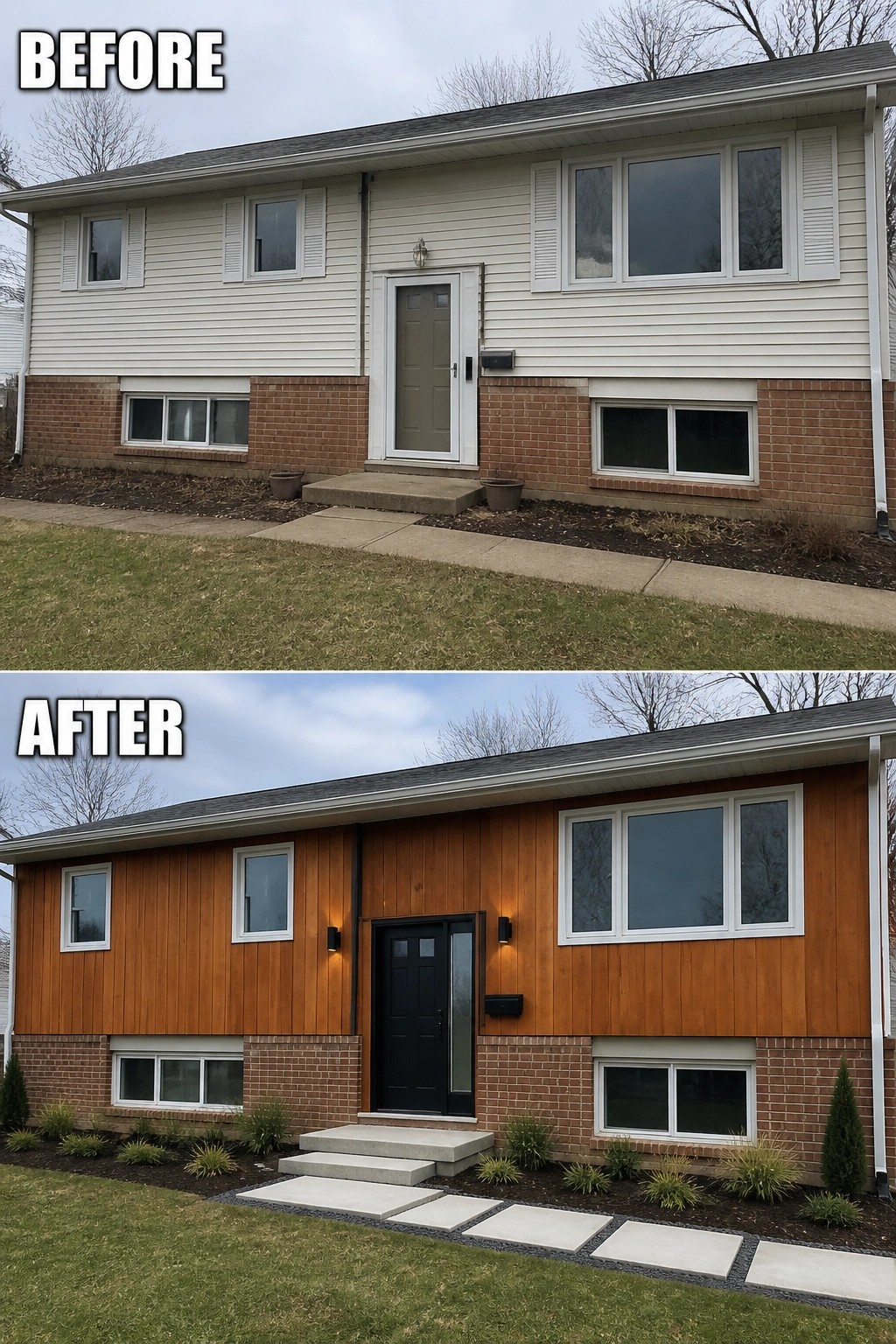
Replacing tired horizontal vinyl with warm vertical siding and a crisp dark door is a quick way to modernize a frontage without touching the whole house. In the photo the upper level was swapped for vertical wood-look cladding and the entry got a black door plus simple wall lights, which makes the whole front read as intentional and current while leaving the brick base intact.
This approach works well on split-levels and homes with a masonry lower half because the new siding gives the upper story a cleaner, more contemporary plane. Use a durable material or a good exterior stain, pick one strong contrasting door color, and keep foundation plantings low so the new vertical lines and entry remain the focal point.
Use Lighting And Simple Planting To Modernize A Plain Entry
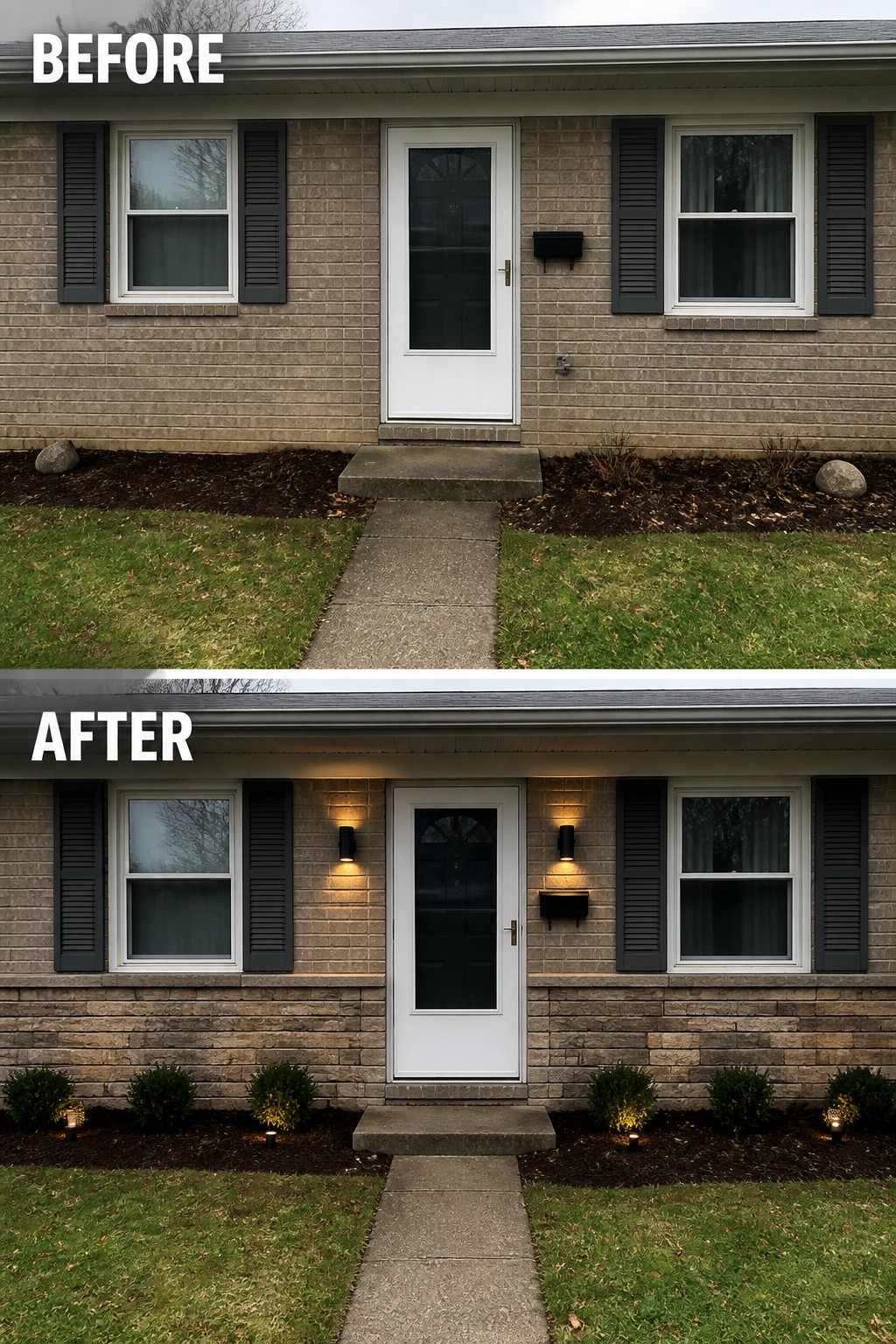
A couple of well-placed wall lights and a tidy row of low shrubs change a forgettable front door into a purposeful entry. Lighting creates a focal point and gives the facade dimension at night, while small evergreen planting and fresh mulch clean up the ground plane and make the house feel maintained rather than neglected.
To copy this, start by cleaning the bed and choosing compact, low-maintenance shrubs that won’t block the walkway
Update The Garage Door To Modernize A Brick Facade
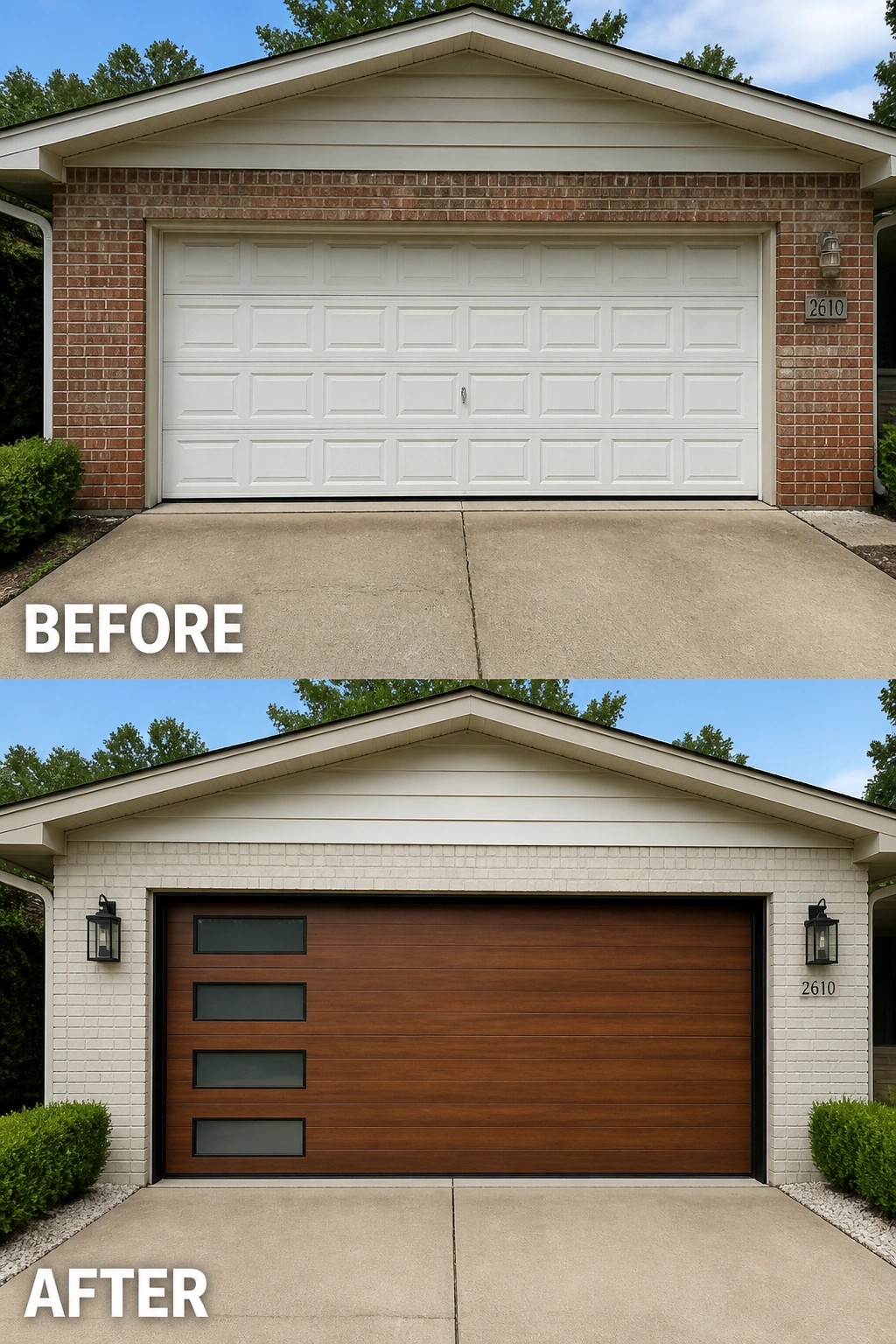
Swapping out a dated garage door is one of the fastest ways to modernize an older brick house. In the example shown, a plain white, recessed-panel door is replaced with a horizontal, wood-look sectional door with narrow frosted windows, while the brick and trim are lightened and darkened respectively to create a clean contrast. That single, well-chosen change refocuses the front and makes the whole facade feel fresher.
To use this idea, pick a door style and finish that match your house lines—horizontal planks and slim windows suit low-slung ranch and midcentury homes. If the brick color feels heavy, consider painting or whitewashing it before installing the new door so details like black trim and lanterns read clearly. Choose a durable, insulated door and keep hardware and lighting simple so the update looks intentional, not overdone.
Brighten A Brick Porch With Trim, Columns, And A Dark Door
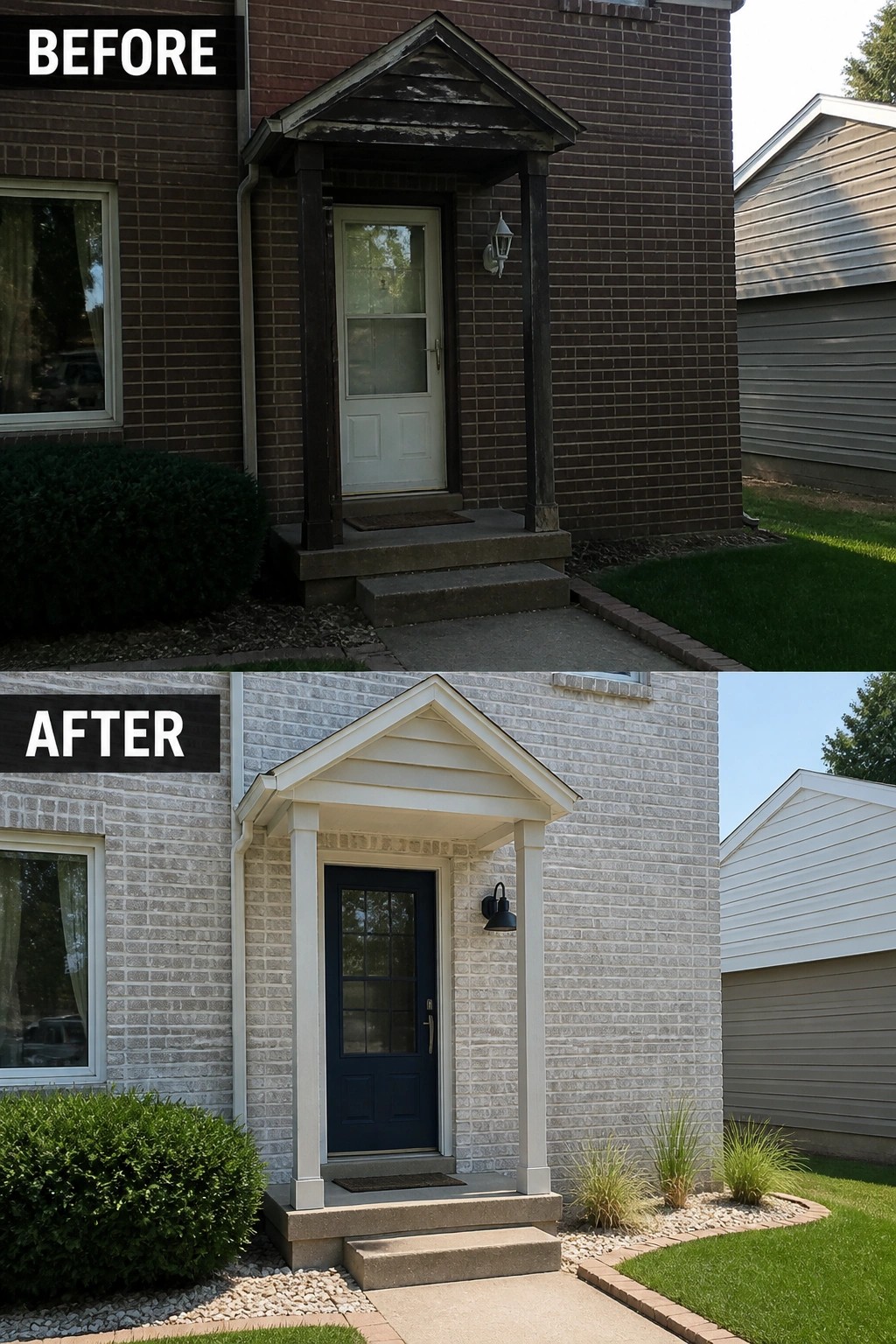
A tiny front stoop needs a job, and this approach shows how to give it one without a major renovation. Painting the brick a lighter shade, adding clean white trim and columns, swapping the old door for a darker, styled door, and installing a simple outdoor sconce turn an anonymous entry into a clear, welcoming doorway. The changes make the entrance read as intentional rather than neglected.
To copy this idea, start with the basics: clean or paint the brick to brighten the face of the house, then add trim or modest columns to define the porch roof. Pick a contrasting door color so the entry reads from the street, and mount a practical wall light where it’s actually useful. Finish with low-maintenance edging and a couple of hardy grasses or small shrubs to frame the path—small moves that keep costs down and curb appeal up.
Update The Entry With Clean Trim And Lighting
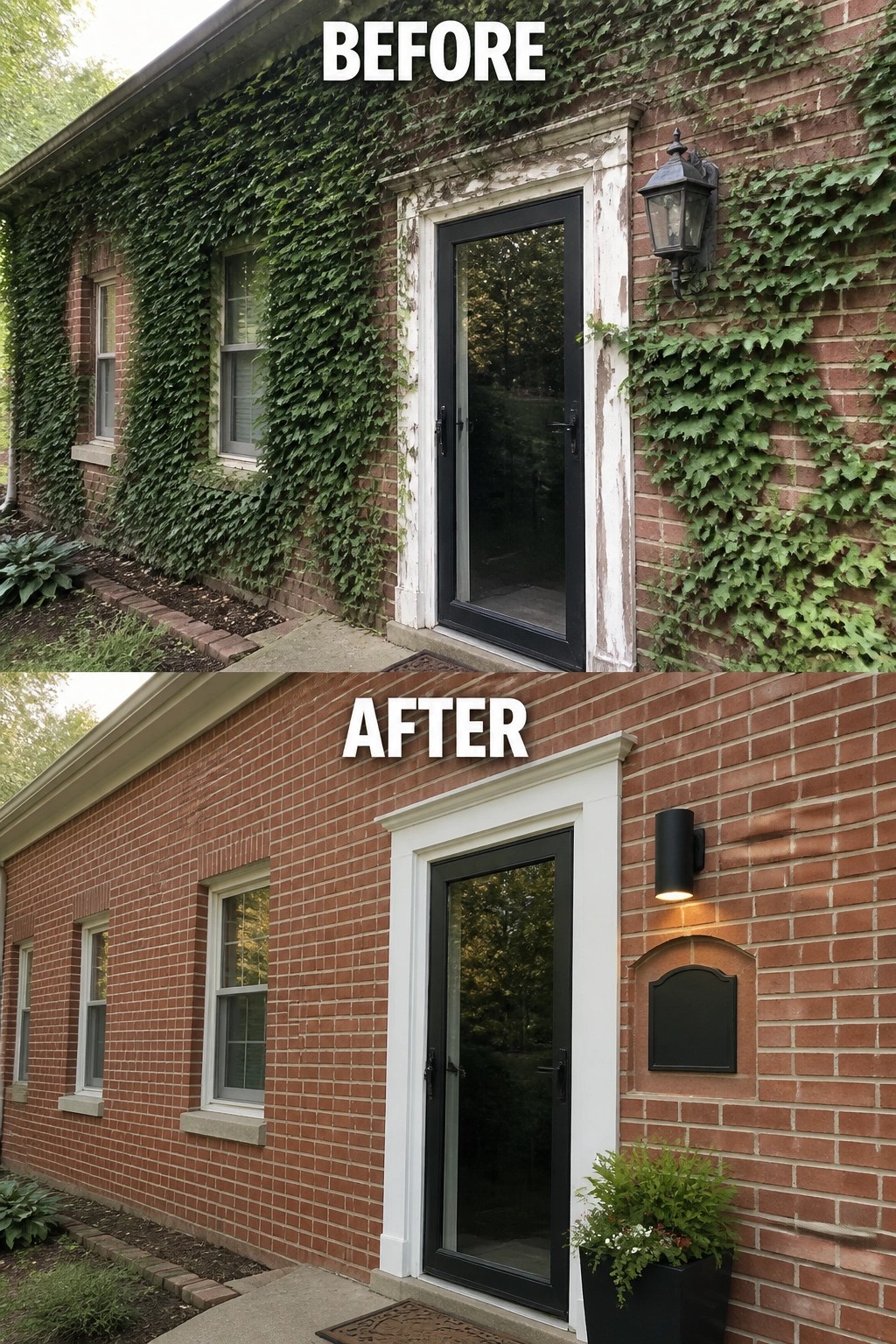
A quick way to modernize an old brick facade is to clear away overgrowth and give the doorway simple, fresh details. Removing the vines that crawl over the brick and repairing or repainting the door surround instantly reveals the architecture, and swapping an aged fixture for a clean, contemporary wall light makes the whole entry read as intentional and cared for.
Start by trimming back vegetation and checking the wall for any damage before you paint. Keep the changes few and visible: fresh white trim, a single strong light, and one modest planter will do more than a long list of finishes. This approach works especially well on traditional brick homes where you want a modern update without major construction—just be careful when removing roots and consult a pro if mortar or brick shows damage.
Create A Clean Porch Landing With Matching Planters
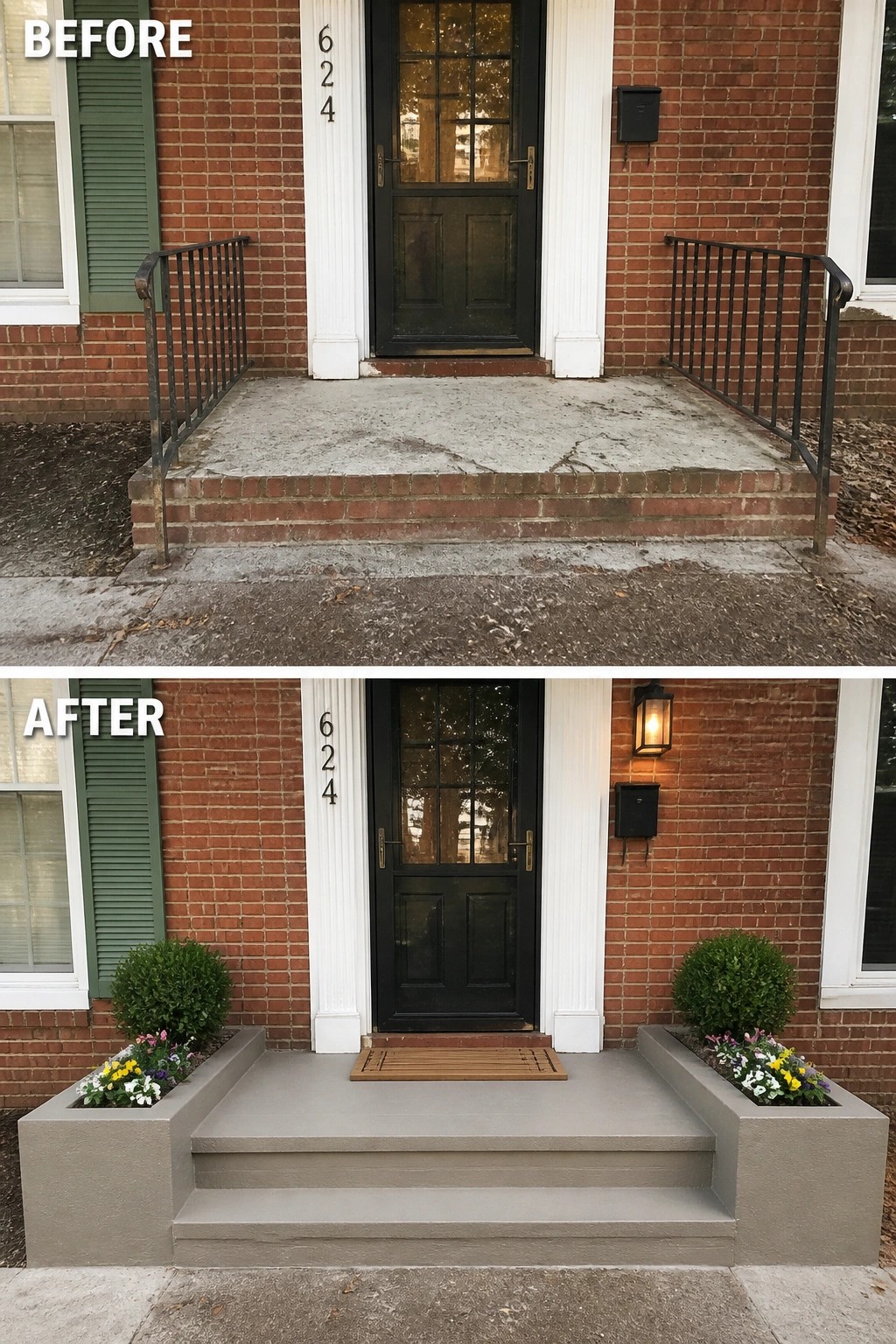
Replacing a worn concrete slab with a clean, uniform landing and low planter boxes instantly makes the entry feel intentional. Instead of a leftover patch of concrete, a smooth finish and matching steps create a simple stage for the door, while paired planters frame the approach and add color without clutter.
Start by repairing or skim-coating the existing concrete so you have a flat, paintable surface. Add shallow planters on either side to balance the doorway—evergreen spheres for year-round structure plus seasonal bedding for color—and include a weatherproof light and a doormat so the space reads as an entry. Keep the scale modest, check step height and drainage, and choose durable exterior finishes for easy maintenance. Simple and practical.
Refresh Trim And Simple Planting For Instant Curb Appeal

A quick, low-cost way to modernize a dated brick facade is to tidy the foundation planting and refresh the trim and gutters. Repainting the window trim white and the downspout and shutters a dark accent, then pruning overgrown shrubs and adding fresh mulch, immediately sharpens the look without changing the brick itself.
Do this where scale is already simple — single-story or ranch-style homes benefit most. Start with a good clean, then sand and use exterior paint made for metal and wood (a weekend project for most homeowners). Keep plantings low and regular in shape, choose long‑wearing mulch, and pick one contrast color for trim and accents so the whole front reads clean and intentional.
Update Windows And Trim To Modernize A Brick Facade
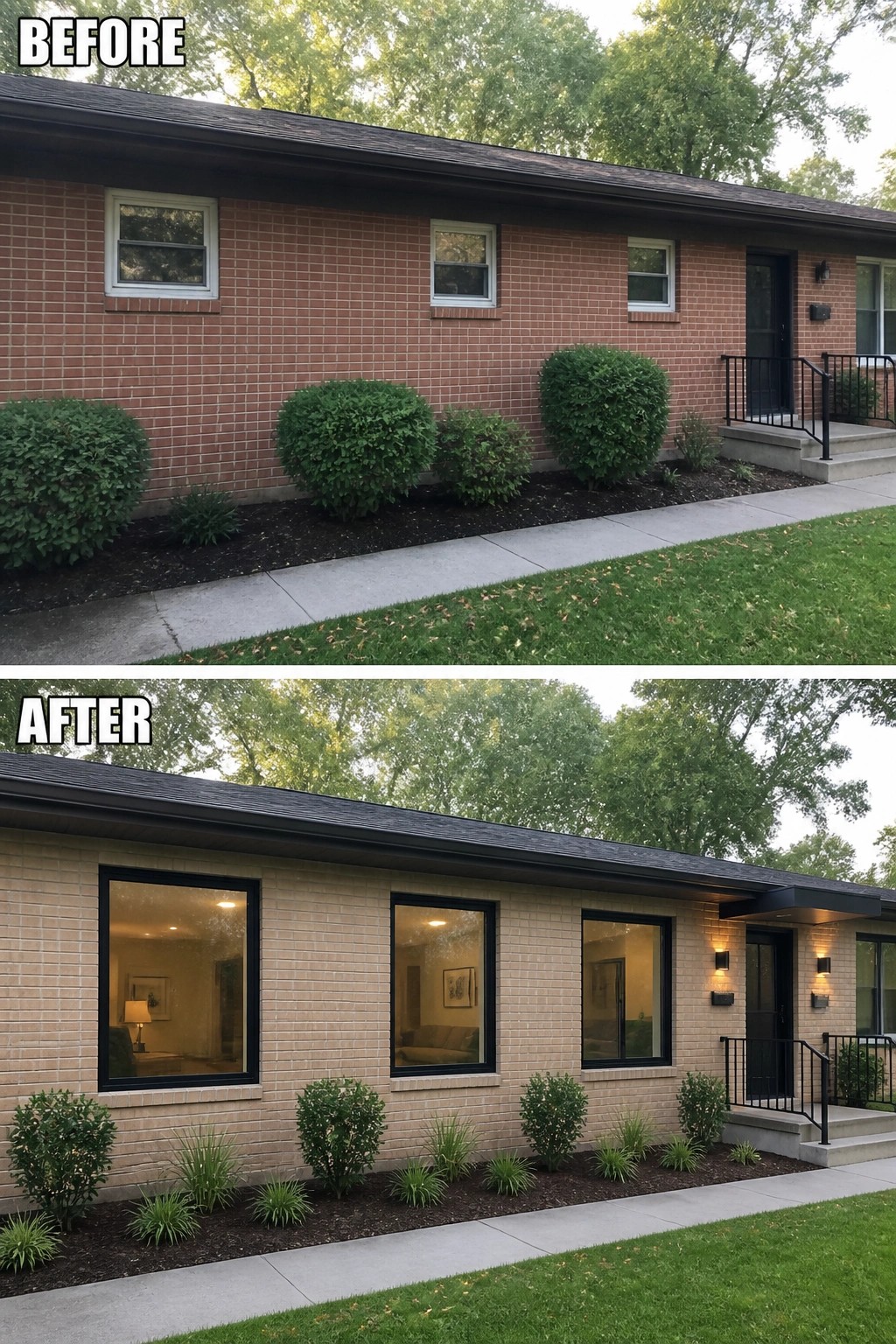
Swapping small, dated windows for larger, slim-framed units is one of the fastest ways to bring a midcentury brick house into the present. Bigger panes and dark trim create a crisp, modern contrast against the brick and immediately brighten the interior, while a few simple additions like low, structured plantings and updated wall lights complete the cleaner look without fuss.
To use this idea, pick window proportions that match the room and the rhythm of the facade, and choose frames with narrow sightlines for a contemporary feel. Plan on a structural contractor for any larger openings, invest in energy-efficient glazing, and pair the new windows with minimal landscaping and a couple of exterior lights so the update reads intentional from the street.
Add A Raised Planter And Vertical Screen
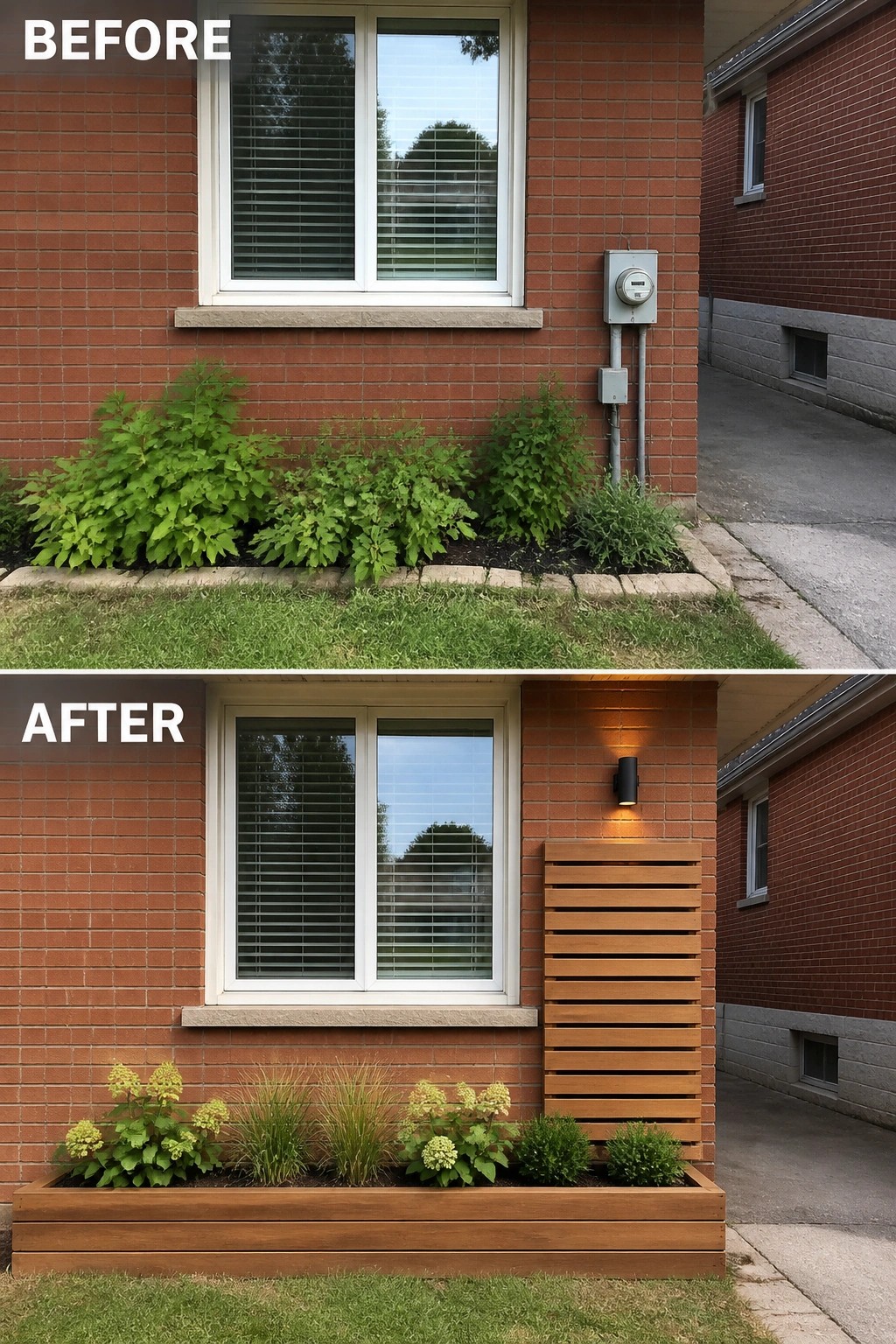
Swap messy, overgrown planting for a long, low planter and a matching vertical slatted screen to give a plain brick wall instant structure and purpose. The wood box defines the bed, hides an awkward base edge, and the slim vertical screen covers a utility area while providing a backdrop for upright plants and a simple wall sconce — a small number of well-placed changes makes the facade feel cared for and modern.
To copy this idea, size the planter to the window span so it feels deliberate, and use rot-resistant wood or a composite that matches your house tones. Leave access for meters, add simple drainage, and plant a few repeating species (one or two flowering shrubs plus an ornamental grass and a small evergreen) so maintenance stays low. Finish with a focused exterior light to highlight the screen and make the entry feel intentional at night.
Add A Pergola And Warm Lighting To Anchor A Small Porch
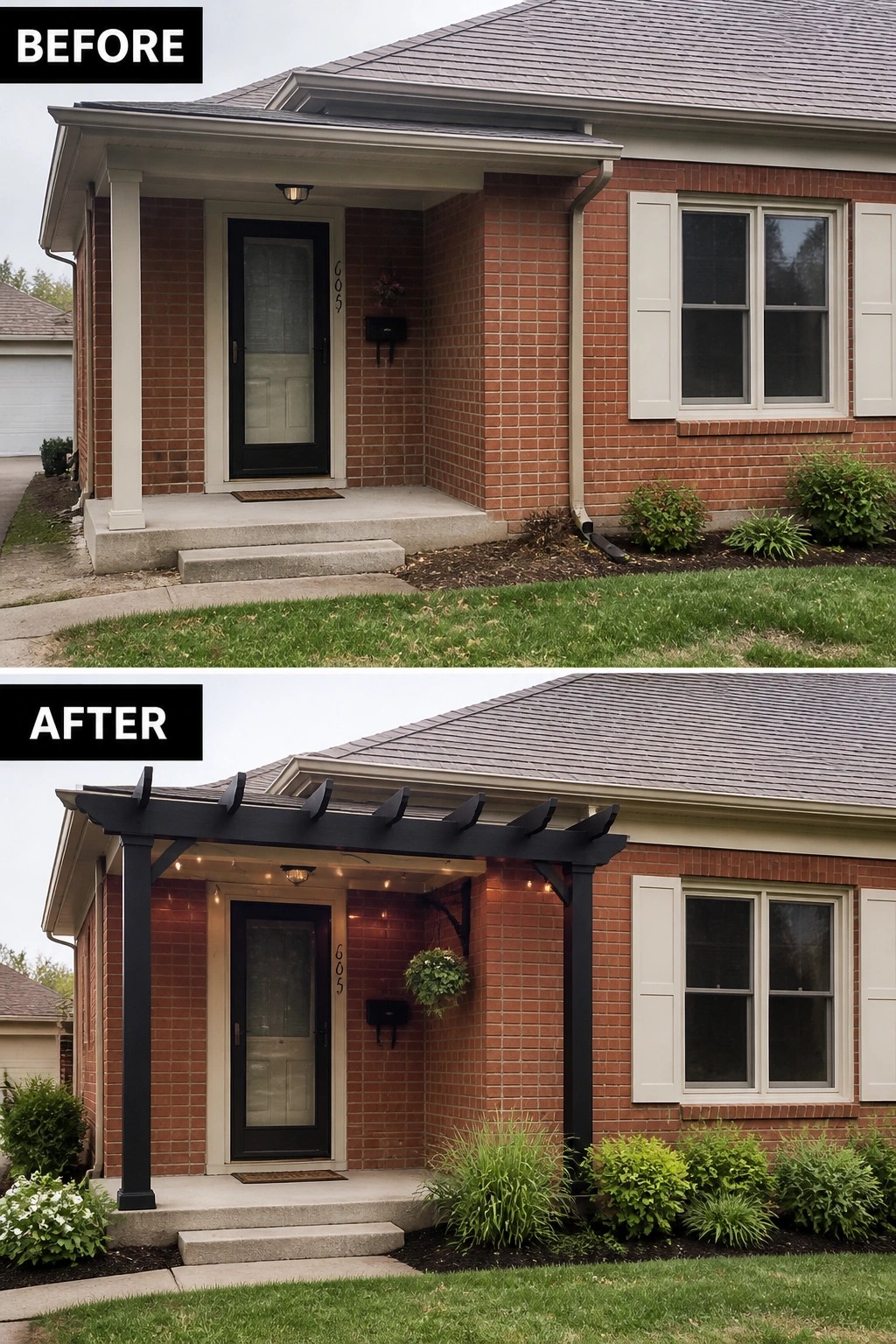
A small, undecorated stoop stops being an afterthought when you give it simple structure and a focal point. Adding a lightweight pergola or thicker, painted posts above the entry, plus one hanging plant and a few warm lights, immediately makes the porch read as a purposeful, covered space instead of just a step up to the door. That single structural change visually anchors the entry and makes the whole facade feel more considered.
Define A Tiny Entry With A Modern Door And Slim Awning
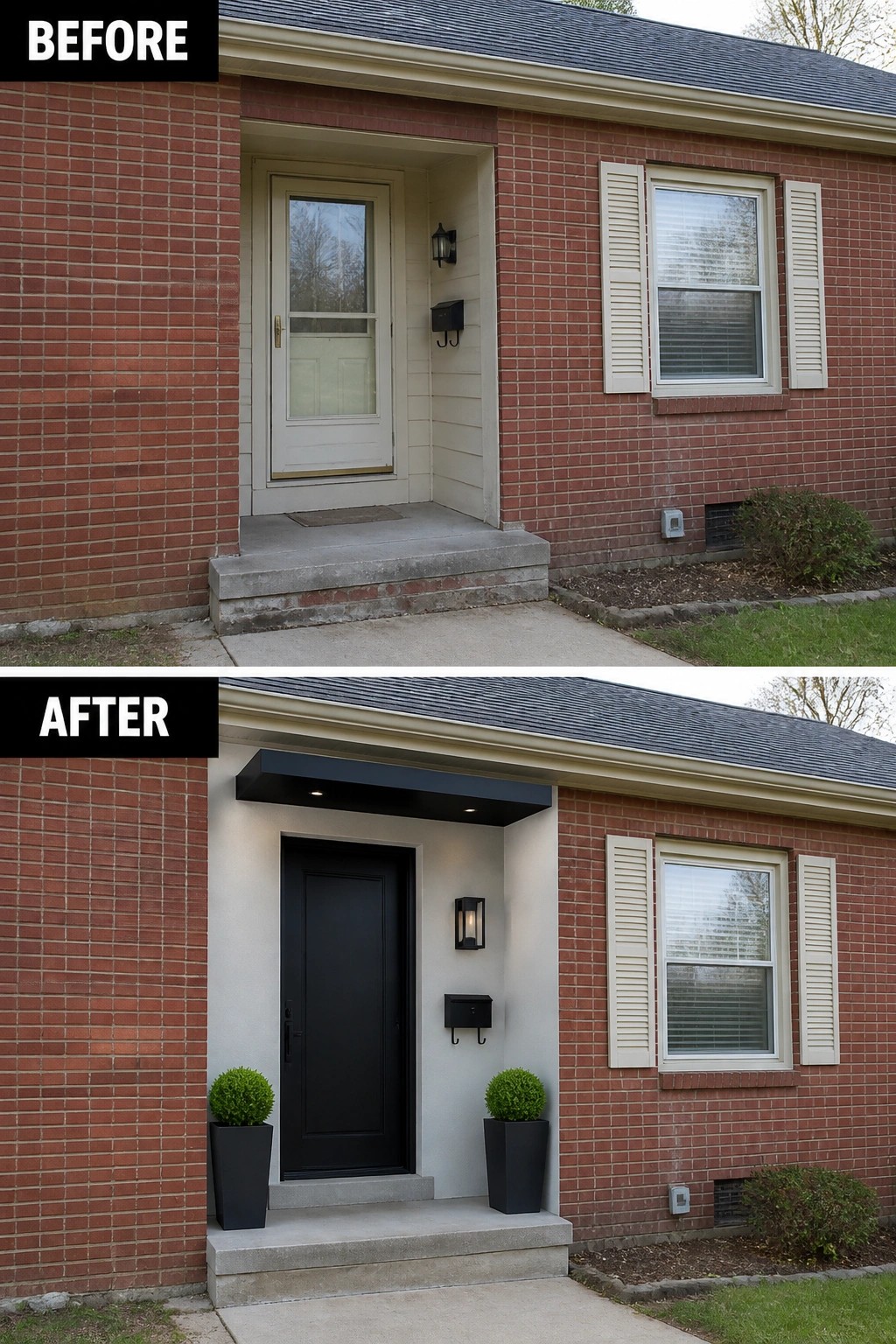
A tiny, nondescript entry can feel unfinished even if the rest of the facade is solid. Replacing a dated storm door with a solid, contrasting front door and adding a slim overhead canopy plus focused lighting immediately defines the doorway as a deliberate entrance. In this example the plain door was swapped for a matte black door and a simple black awning with recessed lights, and two matching planters were added to anchor the steps.
Use this approach on small porches where you want a clear focal point. Paint or replace the door first so the color ties everything together, then add a modest awning sized to the porch so it feels intentional but not heavy. Flank the entry with two identical planters and pick hardy, low-care plants; choose outdoor-rated lighting and hardware and keep proportions in mind so the upgrades fit the house, not overwhelm it.
Refresh The Garage Door And Trim To Modernize A Brick Facade

Swapping a dated white sectional door for a low-profile, dark panel door and adding a narrow wood slatted band above is an easy way to modernize a brick front. The darker door and clean horizontal lines simplify the look, while updated light fixtures and a couple of small plantings help the entrance read as intentional rather than leftover.
To try this at home, pick a garage color that contrasts the brick but ties to your trim or front door, and choose horizontal panels or planks for a contemporary feel. Add a slim wood or composite fascia (or weather-resistant cladding) above the opening, swap in properly scaled fixtures, and finish with low-maintenance greenery at the sides—small changes that keep the update realistic and affordable.
Turn A Plain Concrete Porch Into A Simple Seating Area
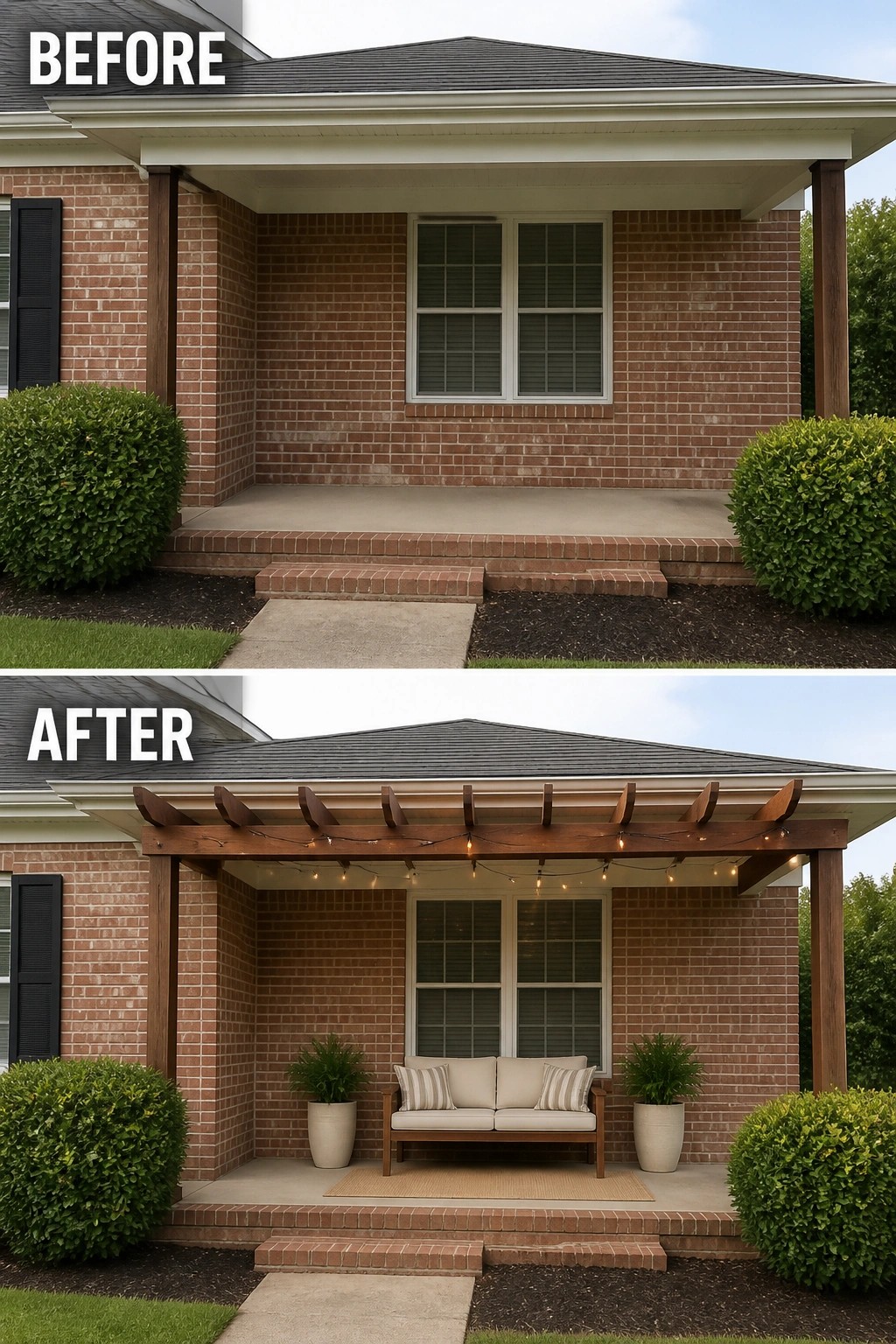
A plain concrete porch is an easy win: add a simple overhead frame and a small seating zone and it becomes a usable outdoor room. In this example a timber pergola and a compact bench with matching planters turn empty space into a spot where people can actually sit, relax, and use the entry rather than just walk past it.
Start small and practical. Clean the porch, anchor a lightweight overhead structure or shade element so you can hang lights, pick narrow-scale furniture that leaves the path clear, and tuck in two matching planters or a rug to define the zone. Use weatherproof fabrics and keep circulation in mind so the porch feels intentional without feeling crowded.
Frequently Asked Questions
Q: Can I paint my brick house to get a fresher, more modern look?
A: Yes, many brick homes look great with paint, but prep is everything. Clean the brick, repair any crumbling mortar, and use a breathable masonry paint so moisture can escape (test a small area first). Painting instantly unifies the facade and makes new trim or doors pop.
Q: I don’t want to replace all the brick — what small changes make the biggest impact?
A: Swap or repaint trim, update the front door, and add contrast with new siding or painted shutters. Those moves cost less than a full reface and shift the eye away from dated brick patterns. Even thoughtful lighting and house numbers give a fresh, modern vibe.
Q: Will swapping windows and the front door really modernize the facade?
A: Yes, new windows and a modern door change the face of the house more than you expect. They improve the look, add comfort, and often boost curb appeal. Pick clean lines and finishes that match any new trim or cladding.
Q: Can I tackle these updates myself or should I hire a pro?
A: You can handle painting, replacing fixtures, and simple landscaping if you have basic skills. For structural work, repointing, or changing window openings hire a professional, because mistakes are costly. Don’t try to wing complicated masonry repairs.