

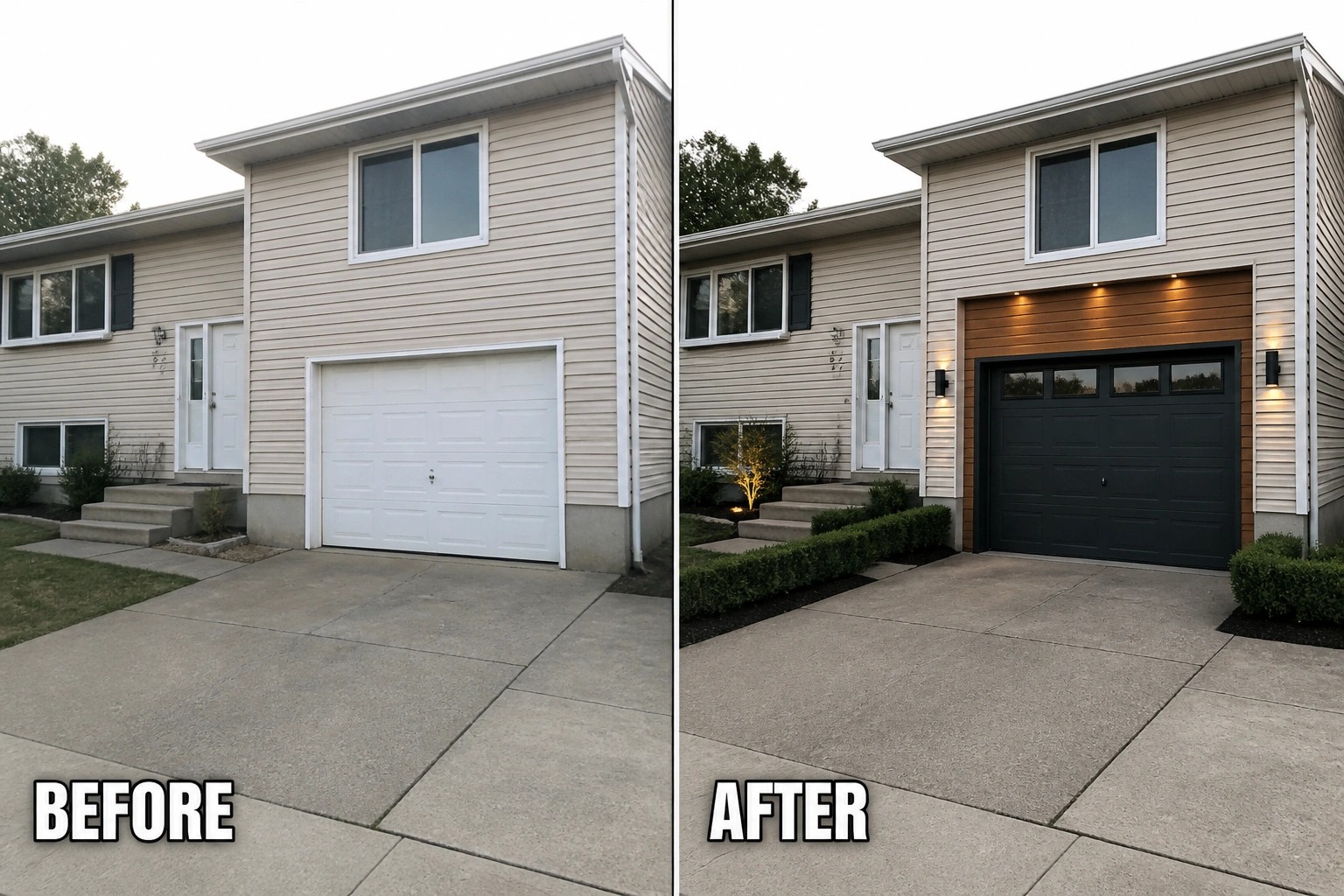
Split-level houses often read as lopsided on the street when a garage takes center stage, so I tend to look for small ways to shift the eye toward the front door and upper levels.
Swapping siding textures, adjusting paint tones, softening hard edges with layered plantings, or adding a modest porch roof can quietly balance mass and make the facade feel more intentional without tearing into the structure.
Small moves can do a lot.
If I were starting at my own place, I’d test a darker garage door color and a brighter entry trim, then add foundation planting to tuck the garage visually, because that’s usually the most satisfying and least disruptive route.
Many of the suggestions are practical tweaks you can save, adapt, or try in phases until the front of your home feels more composed and cared for.
Give A Bare Porch A Clear Purpose
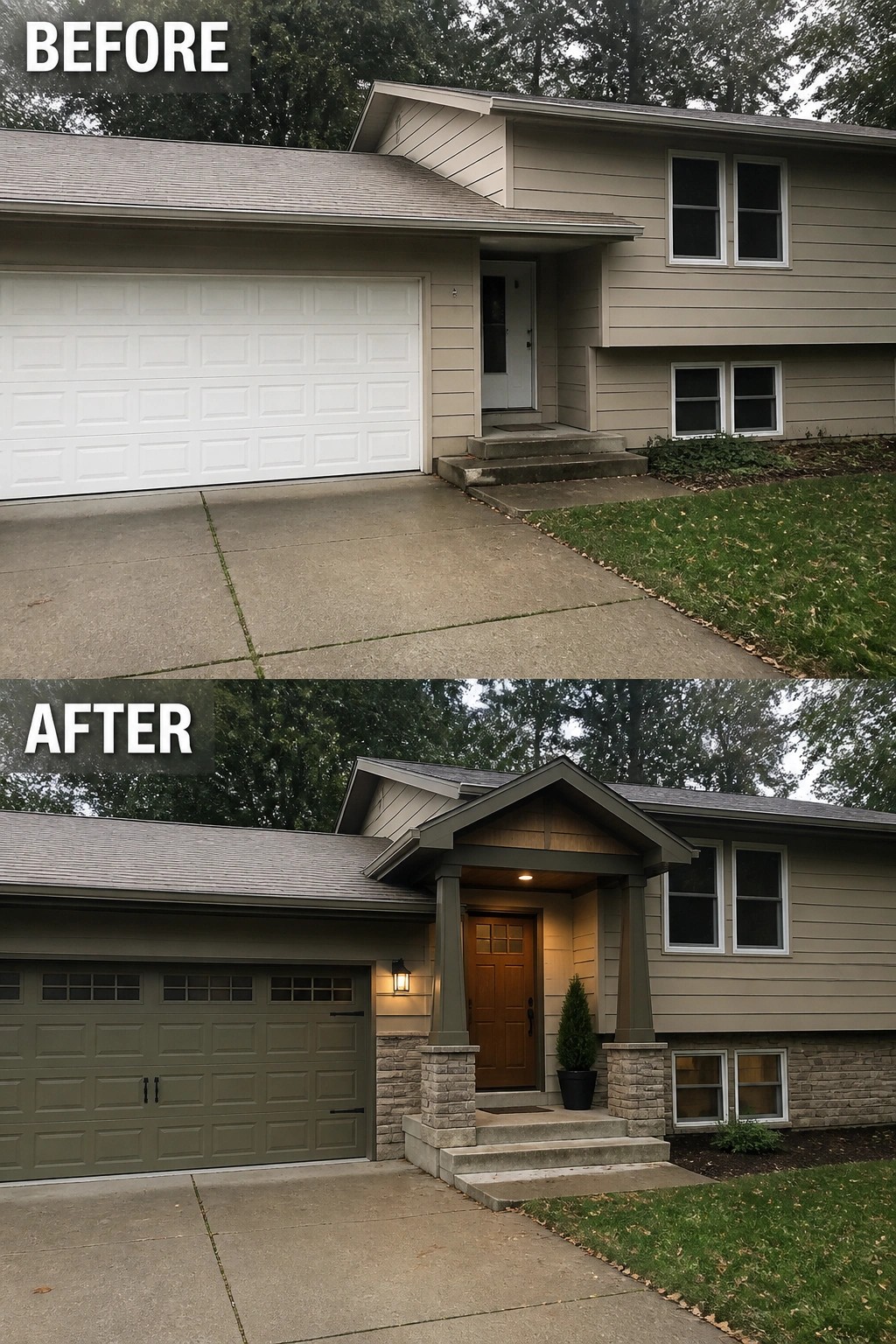
A small covered portico and a properly scaled front door can quietly shift attention away from a garage-heavy facade. In this example a gabled porch, tapered columns on stone piers, a warm new door and a single lantern turn an anonymous entrance into a clear focal point. Just a couple of well-chosen elements make the entry readable from the street, so the garage no longer dominates the view.
This works best on split-levels or ranches where the driveway and garage sit forward of the house. If budget is tight, start with a new door, exterior light and a planter, then add columns or a porch roof later so everything lines up visually. Keep proportions in mind (columns and roof should match step height), repeat one material or paint color to tie the garage and entry together, and leave the walkway clear so people actually use the new door.
Minimize A Garage-Dominant Facade With A Small Upper Volume
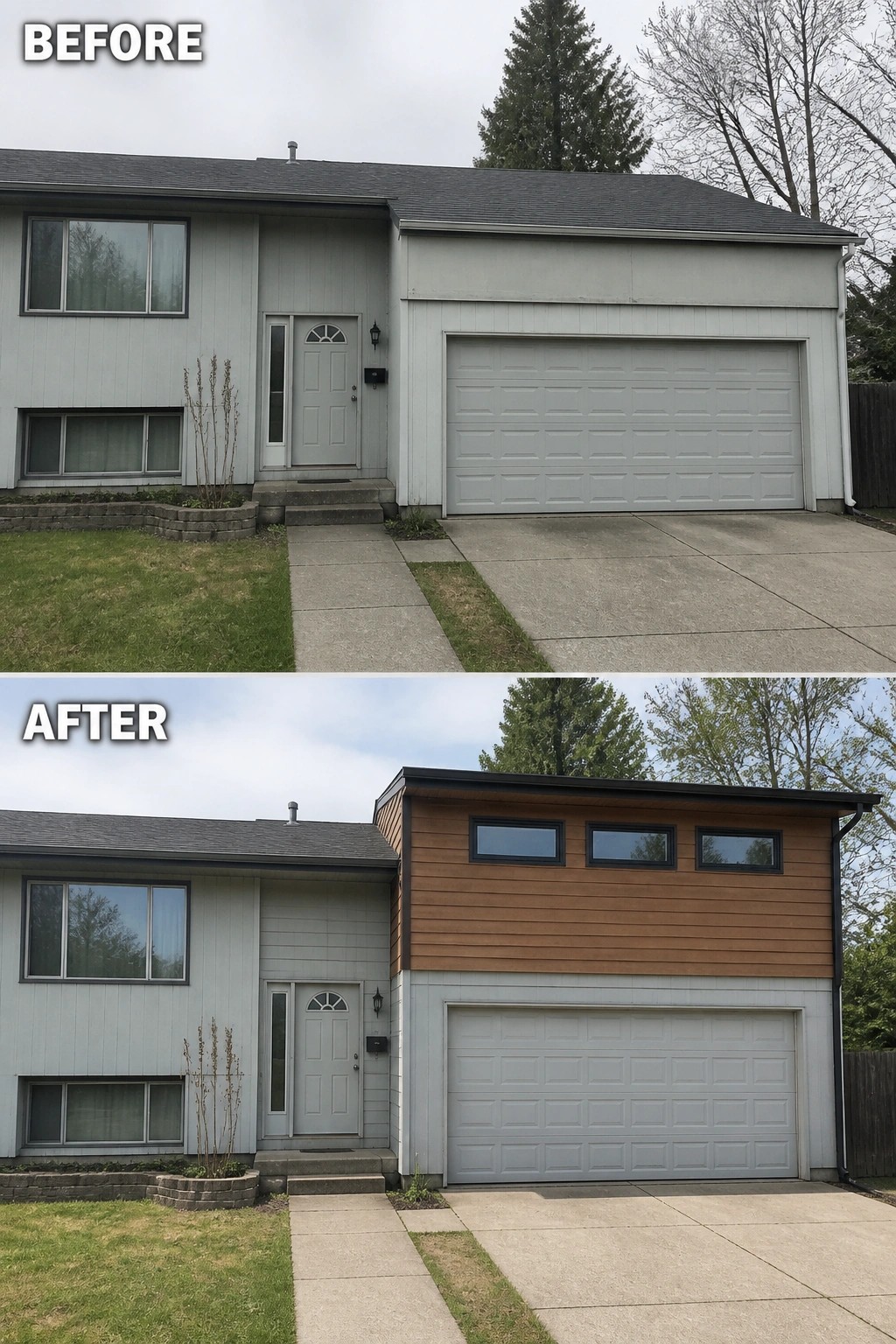
Adding a modest upper box above the garage and cladding it in a contrasting material is a quick way to break up a flat, garage-heavy front. In the example, a warm wood-clad volume with narrow horizontal windows replaces a plain expanse of siding, giving the facade a new focal point and pulling attention upward instead of toward the garage door.
Keep the change simple and proportional: make the new volume slightly narrower than the garage, use a durable siding that contrasts the main house, and add clerestory windows so you get light without losing privacy. It works best on split-levels or homes with a recessed entry, and it’s an easy visual upgrade—just check structural needs and permits before you start. Small addition, big effect.
Use A Slatted Wood Screen And Planters To Soften A Garage-Heavy Front
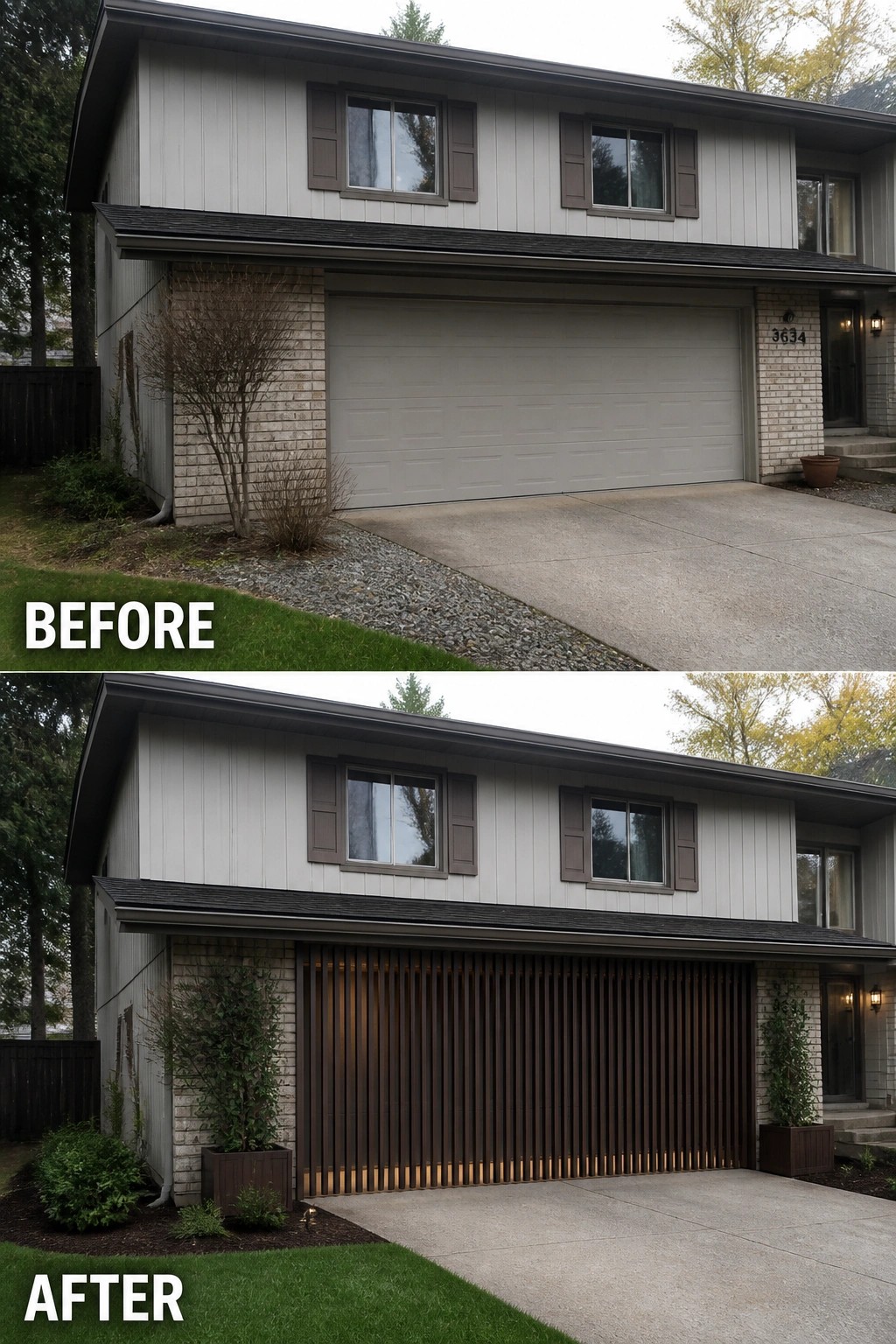
A vertical slatted screen in front of a plain garage door instantly reduces the visual weight of the garage and gives the facade texture and rhythm. In the example, the homeowner swapped the flat door for a dark vertical slat screen and added planters with lighting at the base. The result breaks up the big flat plane and reads more like a crafted architectural element than a garage door.
Try this on split-level or suburban homes where the garage dominates the lower half of the house. Either mount a decorative slatted screen in front of the existing door or invest in a custom slatted door (or a metal option) that still allows the opener to work. Use weather-treated materials, keep planters low and narrow so the driveway stays usable, and add subtle low LED lighting to highlight the slats at night. It’s a simple change that lets you keep function while giving the facade a much cleaner, more intentional look.
Split A Garage Door Visually With Matching Carriage Doors
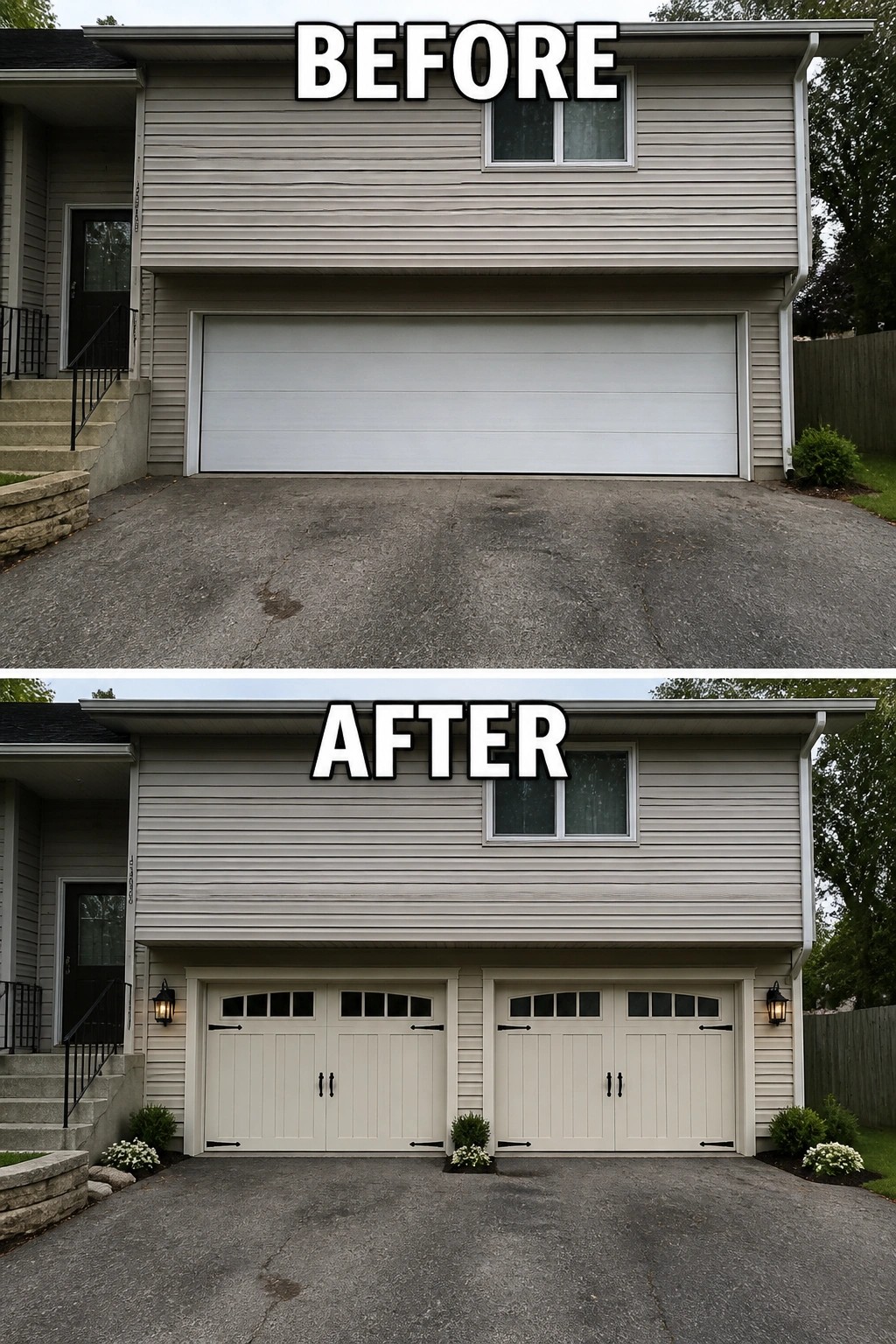
A single, flat garage door can dominate a split-level facade and make the front look heavy and unbalanced. Replacing it with two matching carriage-style doors, adding simple trim, iron hardware, and a pair of wall lanterns (plus a few small planters) breaks the mass into human-scale pieces and gives the entry a more finished, intentional look. The change is mostly about proportion and detail rather than a full rebuild.
This works best on homes with a wide, low garage opening where you can keep the original opening but add visual divisions. Keep the new doors in a neutral tone to match the siding, choose hardware that reads like real hinges and handles, and add lighting at eye level so the new vertical lines read clearly at night. Small planting or potted evergreens at each door softens the base and keeps the approach welcoming without cluttering the driveway.
Highlight The Entry With Glass And A Framed Door
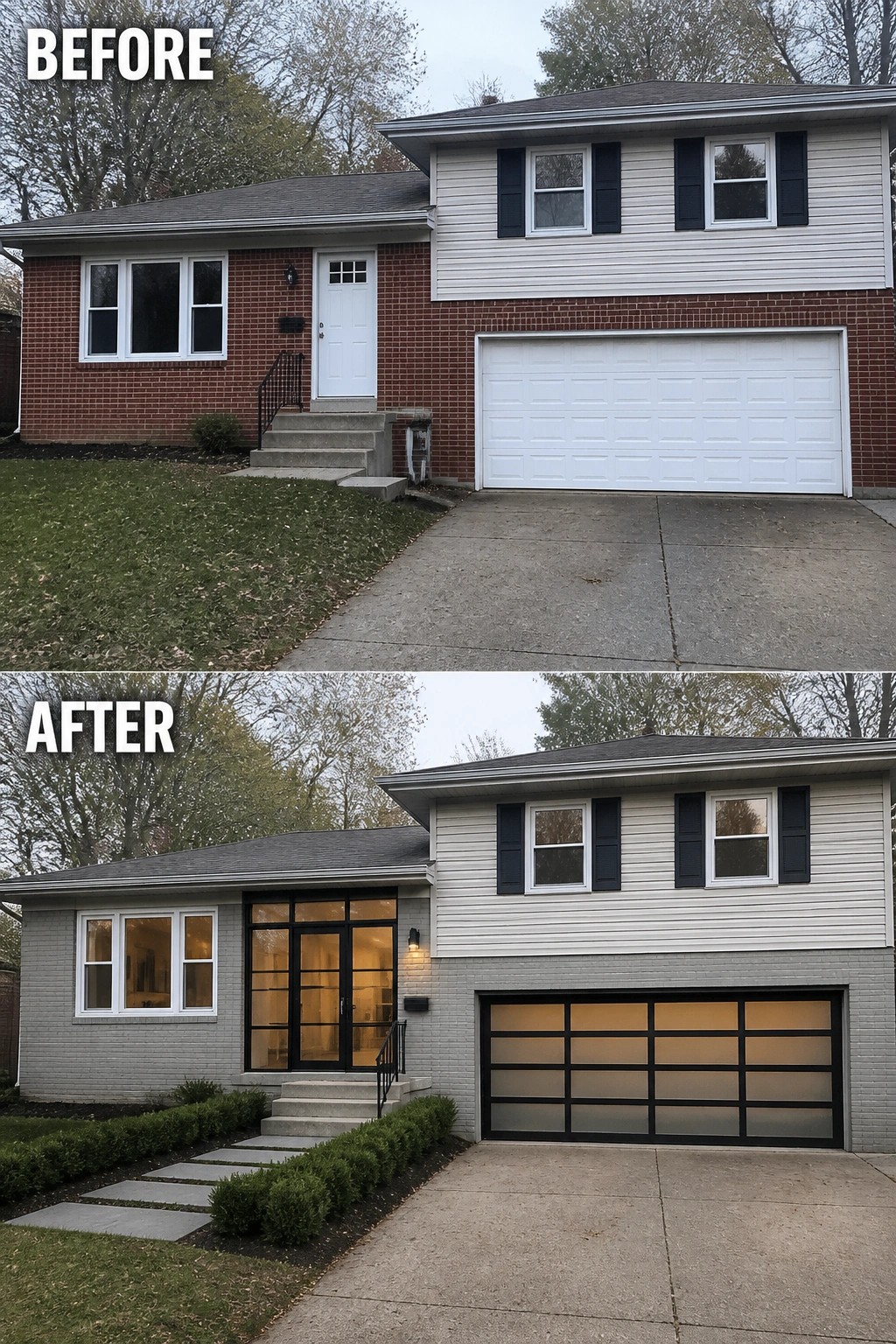
If the garage dominates your facade, make the entry the new focal point. A taller, framed glass entry and a modern frosted-panel garage door (plus a fresh, neutral paint on the brick) in this redo pulls attention toward the door and lets natural light into the front of the house, so the garage no longer reads as the only feature.
To copy the idea, raise the visual profile of the entry rather than trying to hide the garage. Add a taller door, sidelights, or a framed glazed vestibule in a contrasting trim color, and consider a translucent or segmented garage door to soften that mass. Finish with a simple path and low hedging to lead the eye, and choose frosted or high glazing for privacy so the entry feels open without feeling exposed.
Break Up A Garage-Forward Facade With A Small Balcony
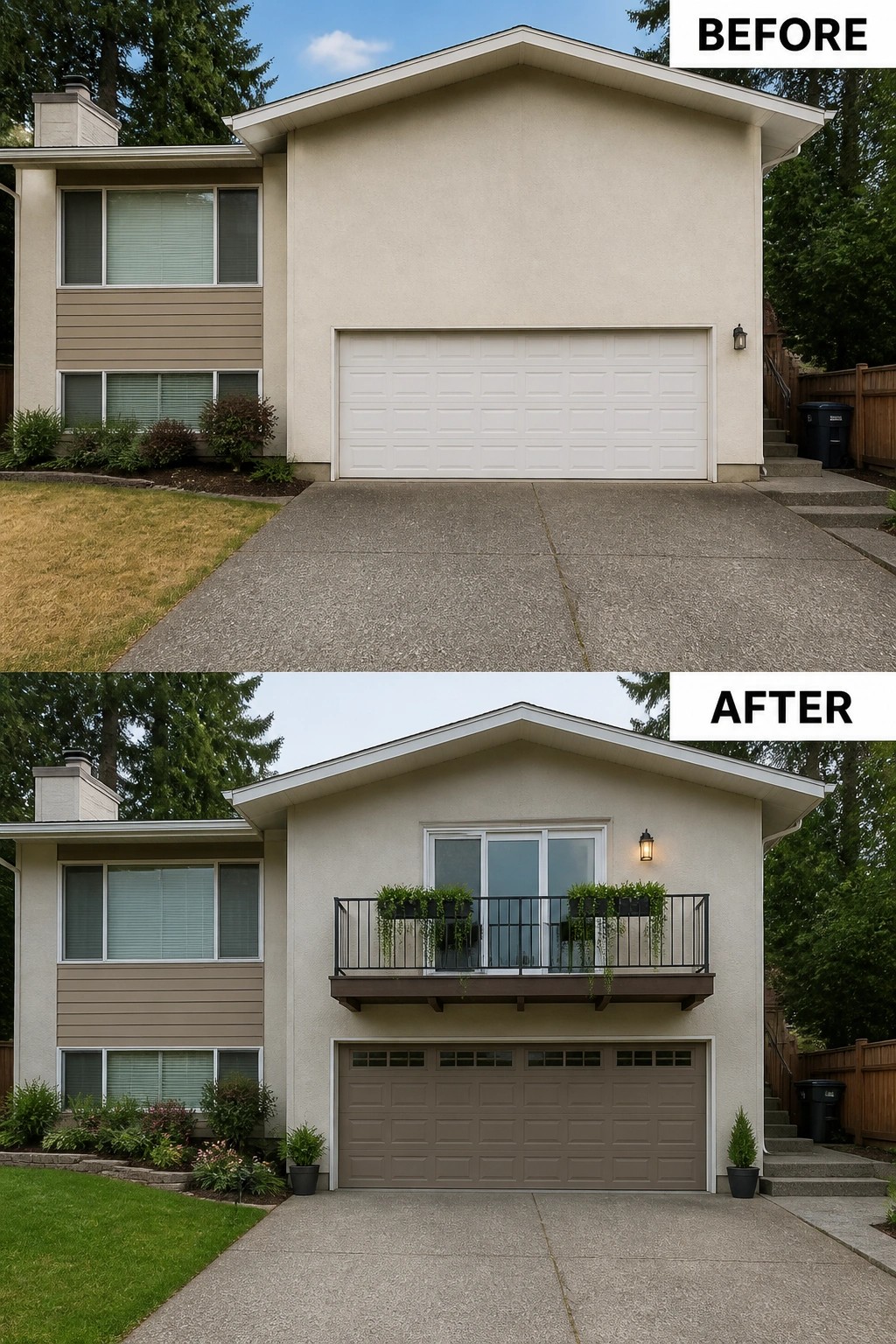
A narrow balcony or Juliet-style platform above the garage is an easy way to reduce that heavy, garage-dominant look. In this example a plain wall and white door were softened by adding a modest balcony with a railing, planter boxes, and a warmer garage door color, which creates a new eye-level focal point instead of the garage taking over the whole front.
Use this on split-levels or homes where the upper level sits directly over the garage. Keep the balcony small so it reads as an accent, not another room, and match the railing and trim to other exterior details so it feels intentional. If a full deck isn’t possible, a shallow shelf or Juliet balcony (with planters and a light) gives much of the same curb appeal with less structure and cost. Small flanking pots or a change in garage door tone will help balance the look without blocking access.
Use Material Contrast To Shrink A Dominant Garage
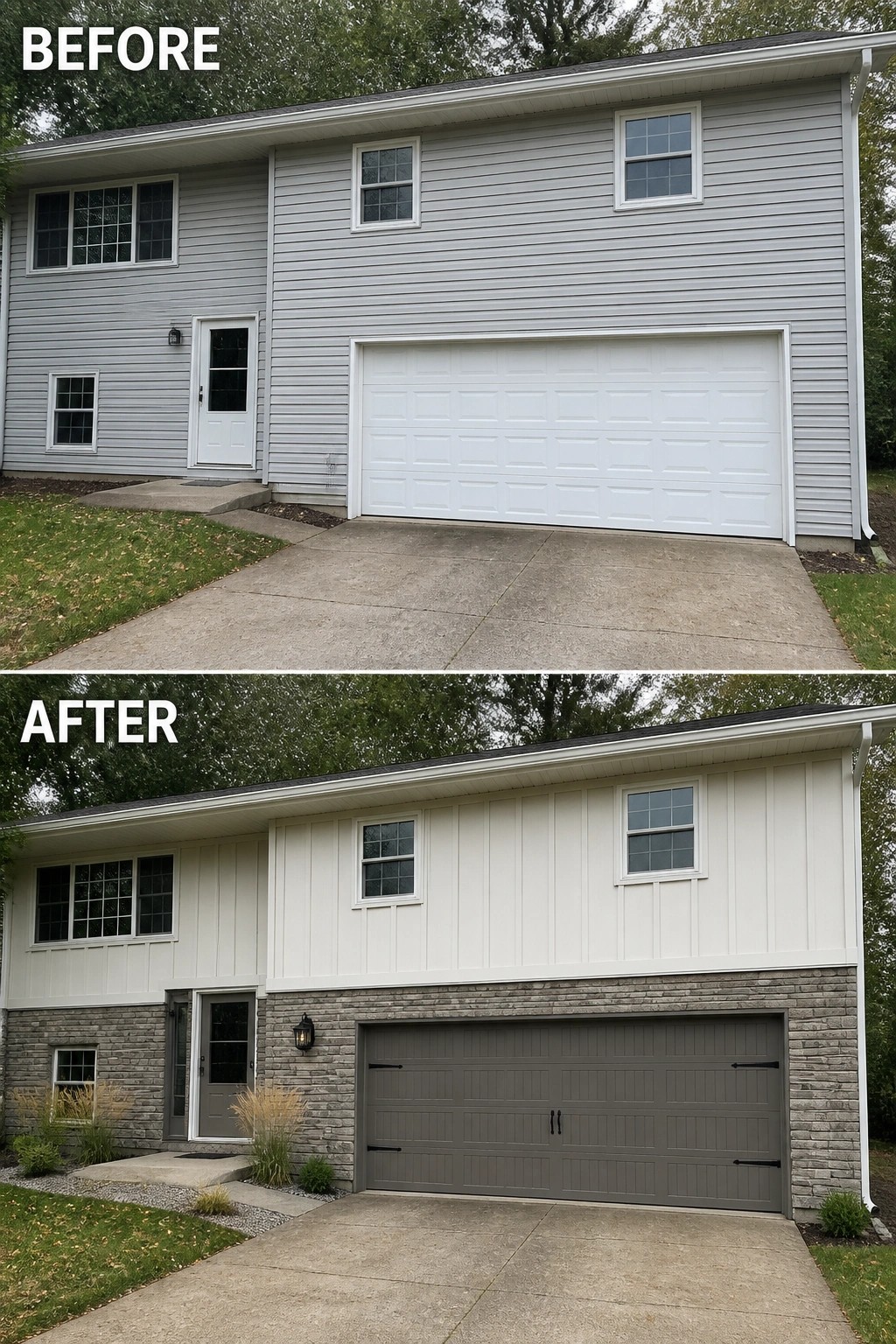
A simple way to downplay a front-facing garage is to break up the big, flat facade with a band of a different material and a darker, carriage-style door. In this example the lower half gets a stone veneer while the garage door is swapped to a muted, deeper color with vertical paneling and hardware, which visually pulls attention away from the garage and toward the entry.
You can copy this on most split-level or ranch fronts: add a durable lower band (stone, brick, or manufactured veneer) and choose a garage door color a few shades darker than the house trim. Keep the changes to a couple of elements so they read as one move — stone or brick at eye level, a new door, a simple lantern and a few low plantings — and you’ll reduce the garage’s dominance without rebuilding the facade.
Soften A Garage-Heavy Facade Using A Curved Paver Drive
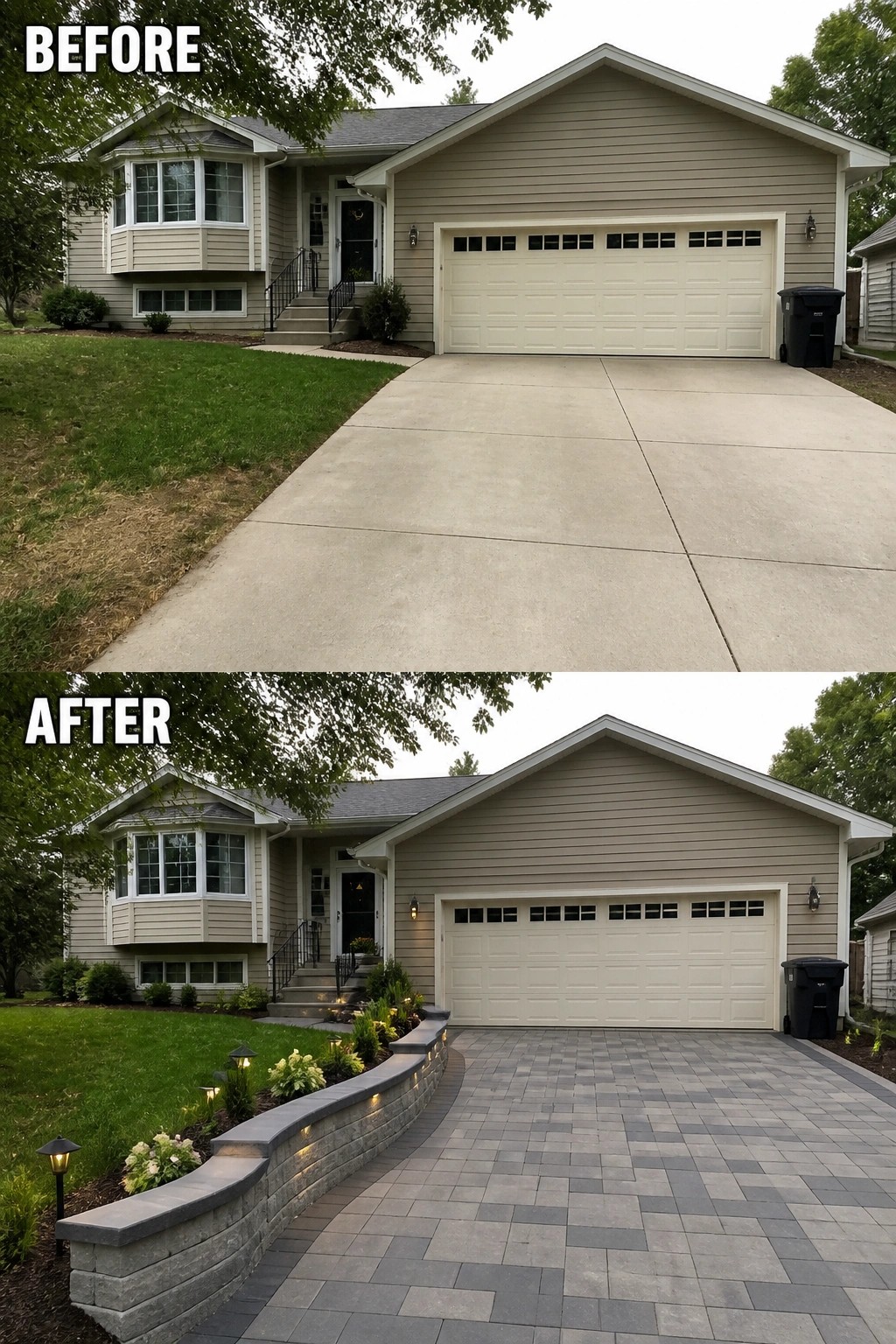
A broad expanse of plain concrete makes a garage take over a front yard. Replacing that slab with a patterned paver drive and a shallow curved garden wall breaks the visual weight, guides the eye, and gives the entry a purposeful edge. A few planted pockets and low path lights along the wall are enough to turn the driveway into an architectural feature instead of just a functional surface.
To copy this idea, plan the curve so it feels natural with your walk and front steps and pick pavers in tones that match your siding. Keep the wall low enough to preserve sightlines and use hardy, low-maintenance plants in the bed behind it. Add subtle uplighting or bollard lights for evening impact, and make sure the new paving keeps proper drainage and turning room for cars—the look should improve the curb appeal without making daily use awkward.
Make The Entry The Focal Point
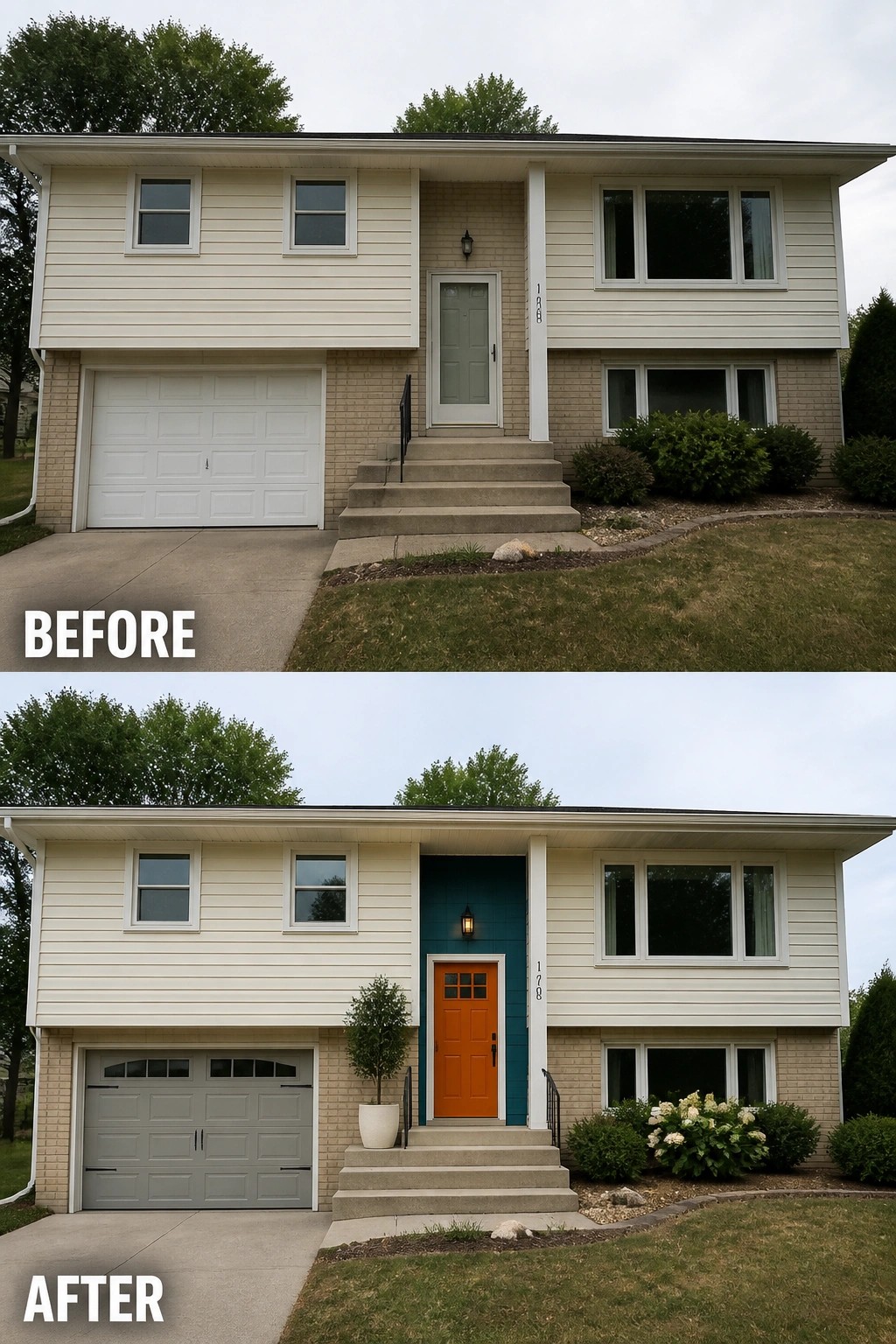
Give the eye one clear place to land instead of trying to compete with a large garage. In this example the homeowners painted a bold front door and the recessed entry wall a contrasting color, swapped the garage door to a quieter neutral, and added a statement light and a large planter to create a purposeful front porch. The result makes the door read as the primary feature rather than the garage.
You can copy this on most split-levels: pick one strong accent color for the door and the small surrounding wall or trim so the color feels intentional, not accidental. Keep the garage in a subdued hue so it recedes, add a single oversized planter and a quality exterior light to suggest scale and use, and use exterior-grade paint so the finish lasts. Simple and effective.
Break Up A Garage-Heavy Facade With Trim And Low Planting
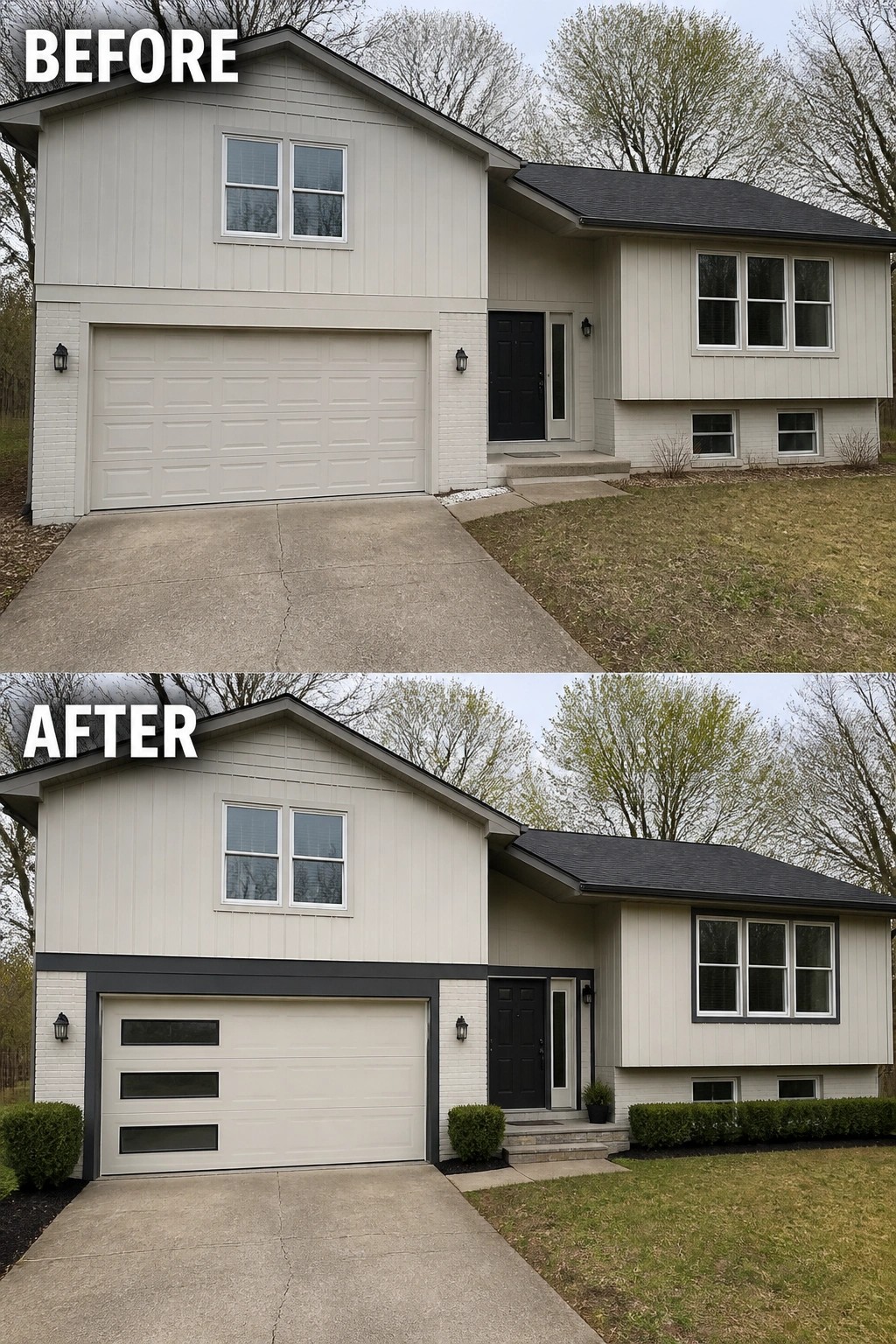
A wide, uninterrupted garage door can make a split-level house read as all garage and no home. Add a contrasting horizontal trim band and swap the plain door for a modern option with narrow windows to visually shorten that mass, then anchor the base with low hedges and a couple of flanking planters. That single band of darker trim plus new garage glazing instantly reads as intentional detail rather than blank expanse.
This approach works best on modest suburban homes where you want the entry and living areas to feel more prominent without a full remodel. Choose a trim color two to three tones darker than the siding, pick a garage door style with modest windows (not full glass), and plant low, evergreen shrubs so the line stays neat year-round. Keep the driveway clear for access and avoid tall planting that hides sight lines or overwhelms a small front step.
Frequently Asked Questions
Q: Can I reduce the visual impact of my garage without major construction?
A: Yes — start by treating the garage like part of the house instead of a separate box. Paint the door to match or slightly recede behind the main siding color, add simple trim or horizontal boards to break up the mass, and draw the eye to the entry with a small porch roof or a bold front door color. Those moves deliver a big change for relatively little money.
Q: What fast landscaping tricks will help balance a garage-heavy front?
A: Plant a row of taller, narrow shrubs or small trees along the garage edge to add vertical interest and soften the slab. Add a low planting bed or a raised planter near the entry to give the eye a destination away from the driveway. Even a few well-placed pots can shift the focus.
Q: How should I pick paint and materials so the garage doesn’t steal the show?
A: Keep the garage surface simple and quiet — neutrals or a slightly darker tone than the main body help it recede. Use more expressive textures or colors on the chimney, porch, or upper facade so those elements catch attention instead. A coordinated trim color ties everything together without screaming “garage.”
Q: Will changing the driveway layout make a big difference?
A: Yes, small changes like narrowing the paved width, adding paving bands, or inserting a planted strip can reduce the garage’s dominance and make the front feel more pedestrian-friendly. Full reroutes are costly, but subtle reworking gives strong curb appeal benefits.