

Having lived in a split-level, I know a worn front step, scuffed railing, or faded paint can make the whole facade look neglected, even when the rest of the house is fine.
Small moves like replacing a handrail, adding a potted landing, or swapping hardware and paint tend to improve curb appeal more reliably than big budgets.
I start with safety and sightlines.
I often notice how a new railing profile, a thoughtful paint contrast, or better step lighting makes the entrance read as part of the home’s personality instead of an afterthought.
If you’re thinking of testing ideas on your own porch, note which ones match your budget and skill, since some are simple DIYs, others need a pro, but all show how focused attention to steps and rails pays off.
Give A Bare Porch A Clear Purpose
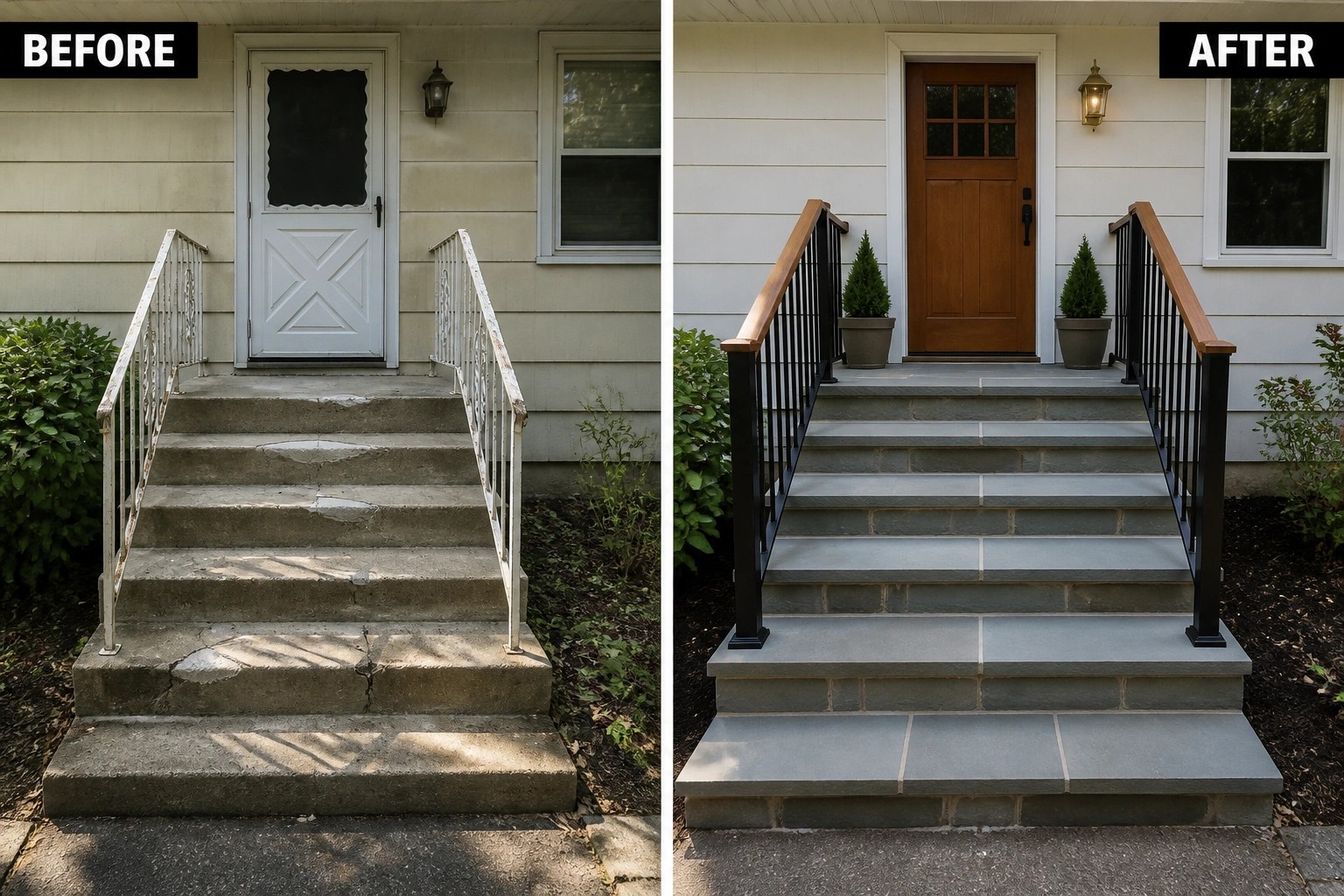
Replacing worn concrete steps and flimsy railings with properly built treads and a sturdy railing instantly turns an unloved entry into a purposeful front porch. In this example the old, crumbling concrete is replaced by clean stone steps and a black metal railing that reads as intentional design instead of an afterthought. That single change makes the whole approach feel finished and easier to style.
If you want the same effect at home, start with structure: fix or replace damaged steps before adding new finishes. Pick a railing style that fits the house proportionally and matches a material on the entry, like a wooden top rail to warm metal balusters. Keep plantings and accessories simple — a pair of pots or a single lantern — so the stairs and door stay the focal point. And remember to check local codes for step rise, run, and handrail height before you buy materials.
Create A Defined Porch Zone With A Raised Deck
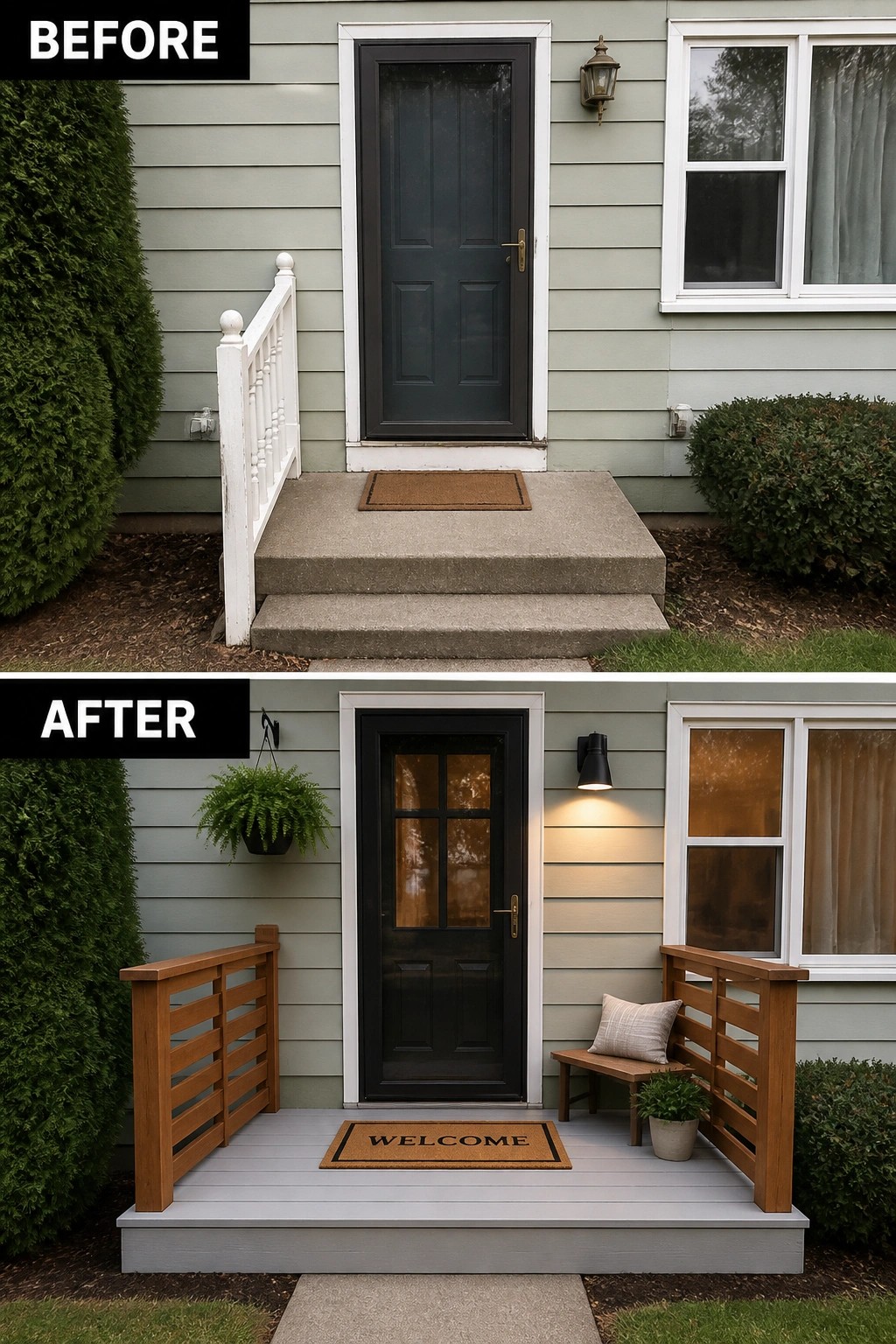
A small front stoop can be much more than a landing. Replace plain concrete steps with a modest raised deck and a low railing to create a defined porch zone that feels intentional rather than an afterthought. Framing the entry with a simple wood rail, a welcome mat, and one bench or planter turns that awkward step into a place you can actually use and style.
This idea works well on split-level and narrow entries where you do not have room for a full porch. Keep the scale small, pick durable decking and rail materials, and limit furniture to one compact seat and a planter so movement and the walkway stay clear. Add a wall sconce at door height for practical evening light, and repeat one material or color (for example warm wood tones) to make the new porch read as part of the house.
Upgrade Worn Steps With Finished Treads And New Railings
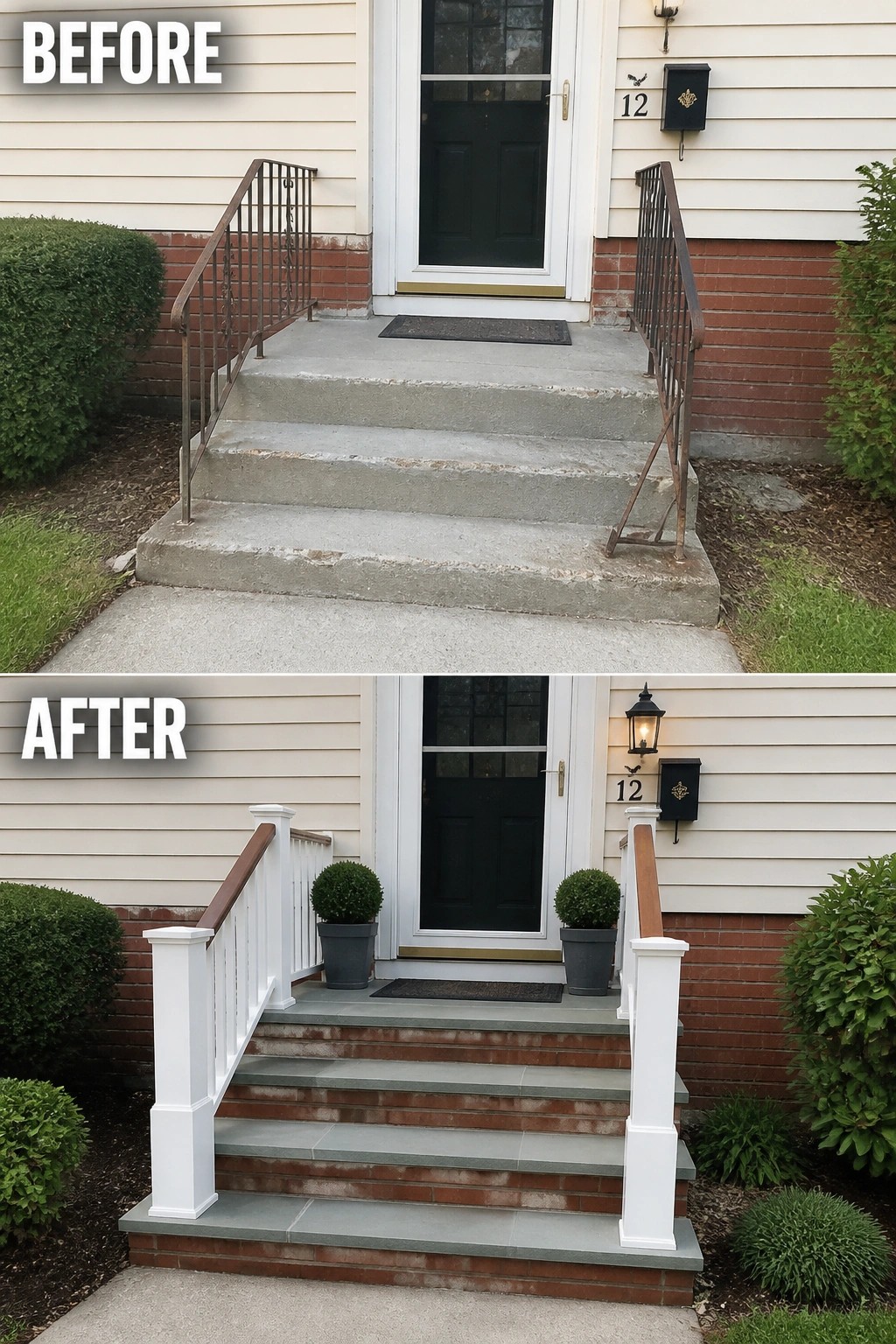
A quick way to lift a split-level entry is to give the steps and rails a proper finish instead of leaving rough concrete and thin metal. Swapping the crumbling treads for stone or tile, adding solid new posts and a painted handrail, and flanking the door with simple planters makes the whole approach read as intentional and well cared for. It’s one visible change that makes the house feel put together.
You can use this idea on almost any older home: replace or cover worn concrete with slip-resistant stone, thin pavers, or composite treads, then add proportionate new posts and railings that match your house trim. Keep it practical—confirm step dimensions and railing height with local code, choose low-maintenance materials for the northern climate, and use two matching planters or a single light to finish the look without crowding the porch.
Define A Small Entry With Planters And Step Lighting
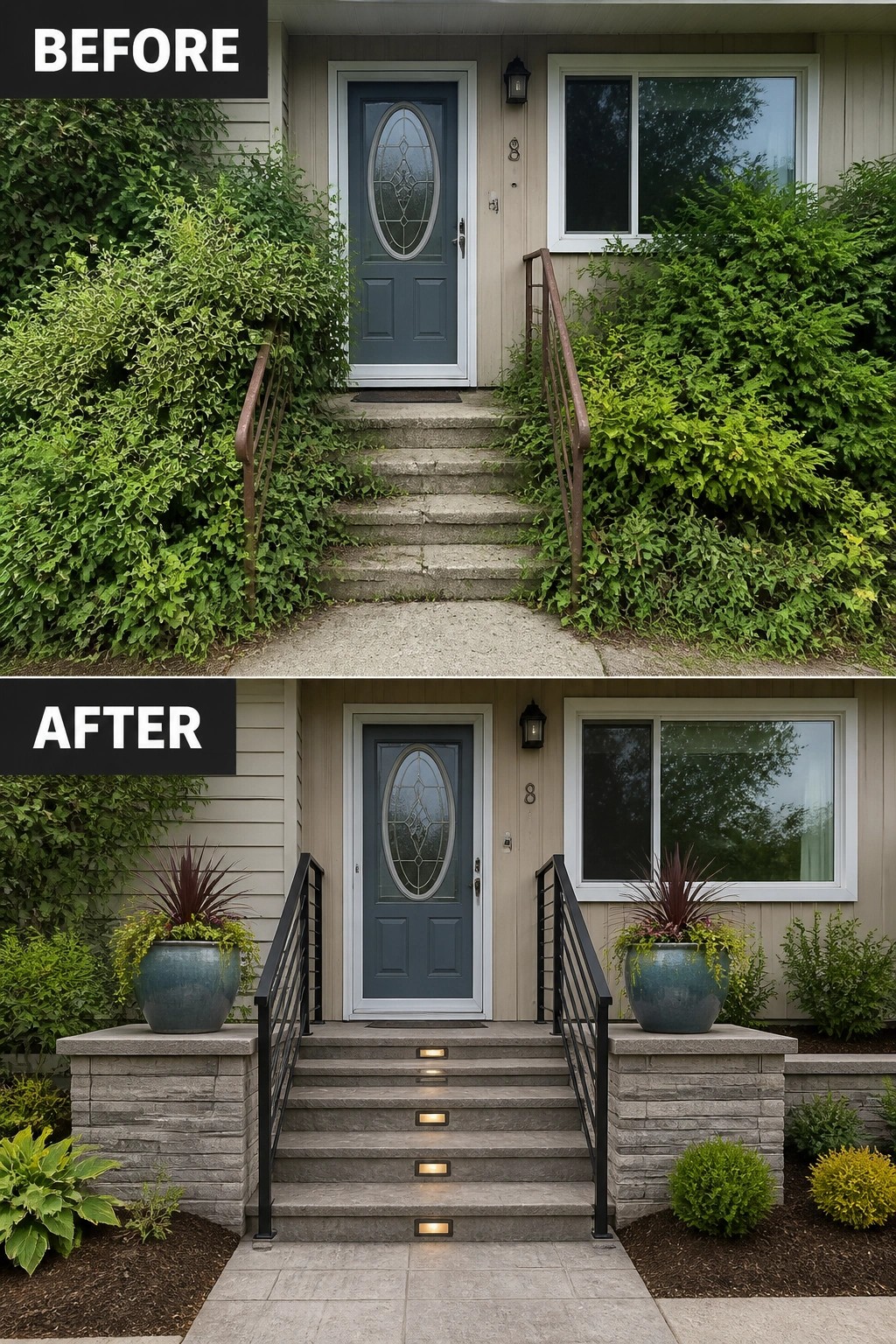
A simple front-step refresh can make an older split-level feel intentional instead of overgrown and forgotten. Replace messy shrubs with a clean landing, add a pair of matching planters and sturdy metal railings, and tuck low lights into the risers so the approach reads as a purposeful entry rather than just a path to the door.
Start by clearing and leveling the steps, then pick one or two strong elements to repeat — a material for the steps and a matching planter or railing finish works well. Keep scale in mind: large pots and a low wall make small porches feel more substantial, while step lights improve safety and curb appeal. This idea suits modest homes where a small, focused upgrade can change the whole first impression.
Replace Worn Stairs With A Finished Wooden Staircase
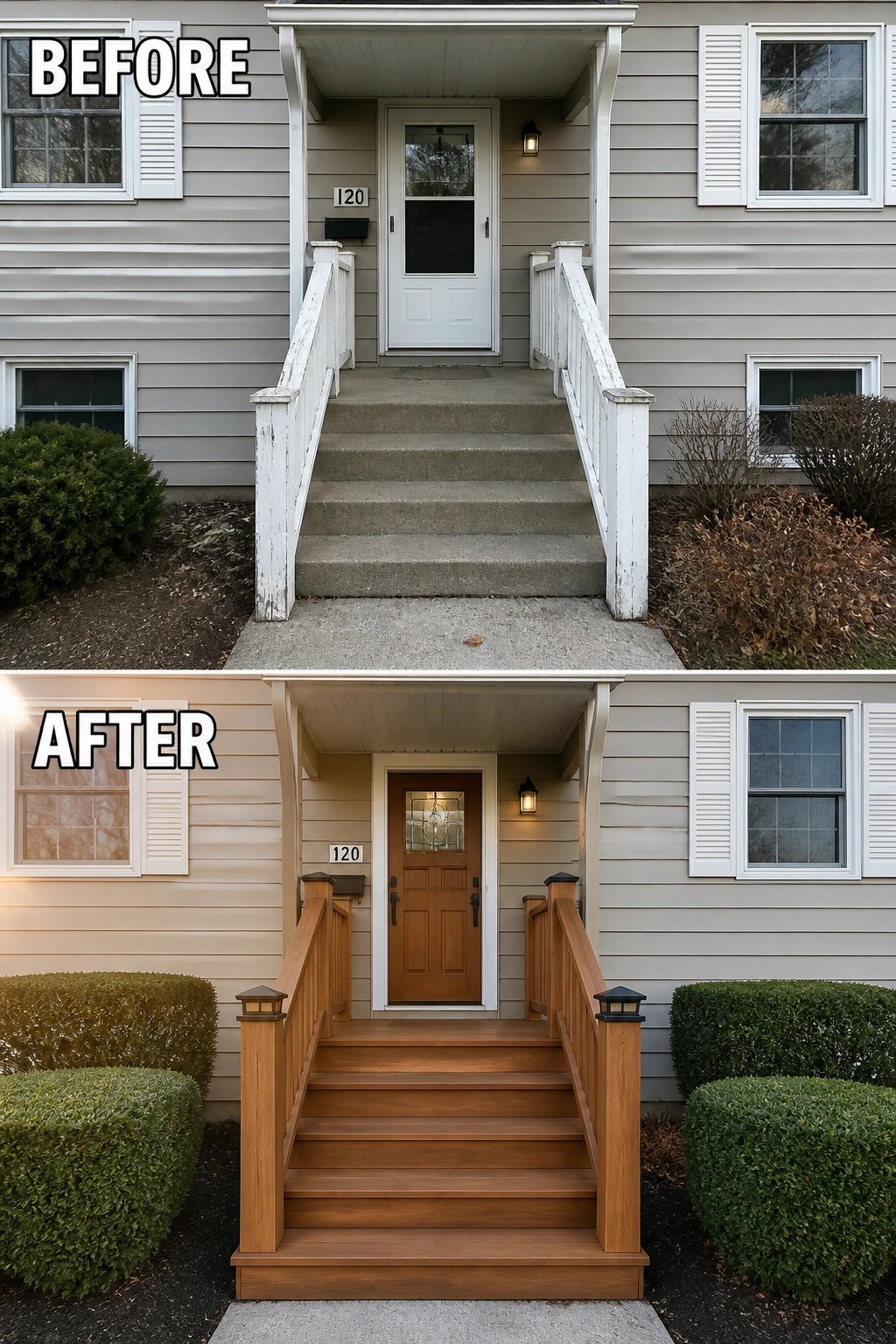
Swapping a plain concrete stoop and tired railings for a proper set of finished stairs instantly changes how a house reads from the street. Here the simple idea is to make the entry look intentional: replace the worn concrete and peeling rails with a finished wooden staircase, clean square new posts with low-profile post lights, and a coordinating door to anchor the whole approach.
Do this where the entry feels unloved but the footprint is fine — most split-levels and modest front stoops are perfect. Pick a durable material that fits your maintenance goals (composite or sealed wood), keep tread and riser proportions to code, and add small lighting on the new posts so the steps are safe and visible. Trim or reshape nearby shrubs so the eye goes to the stairs, not the clutter. Small swap.
Upgrade Front Steps With Railings And Lighting
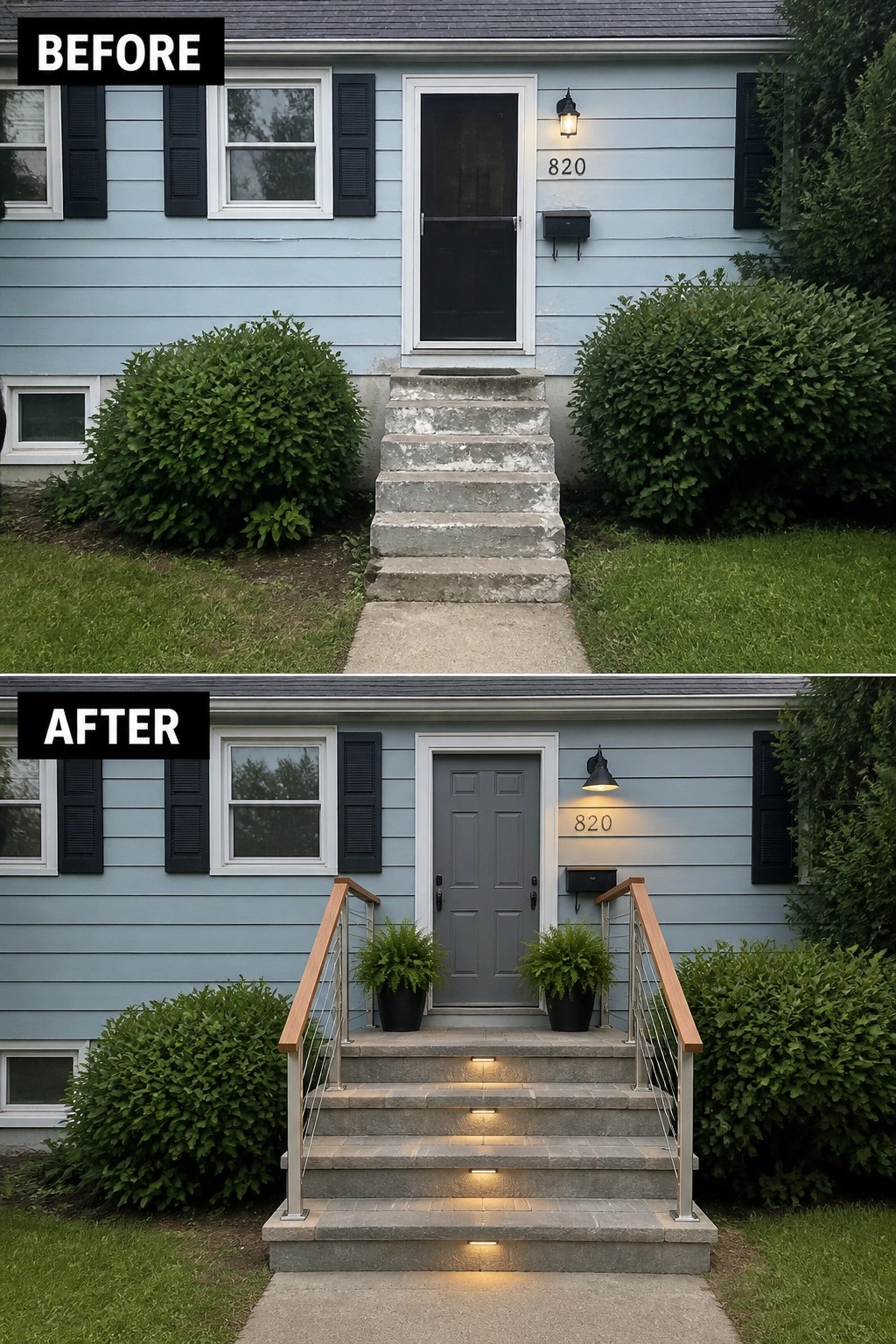
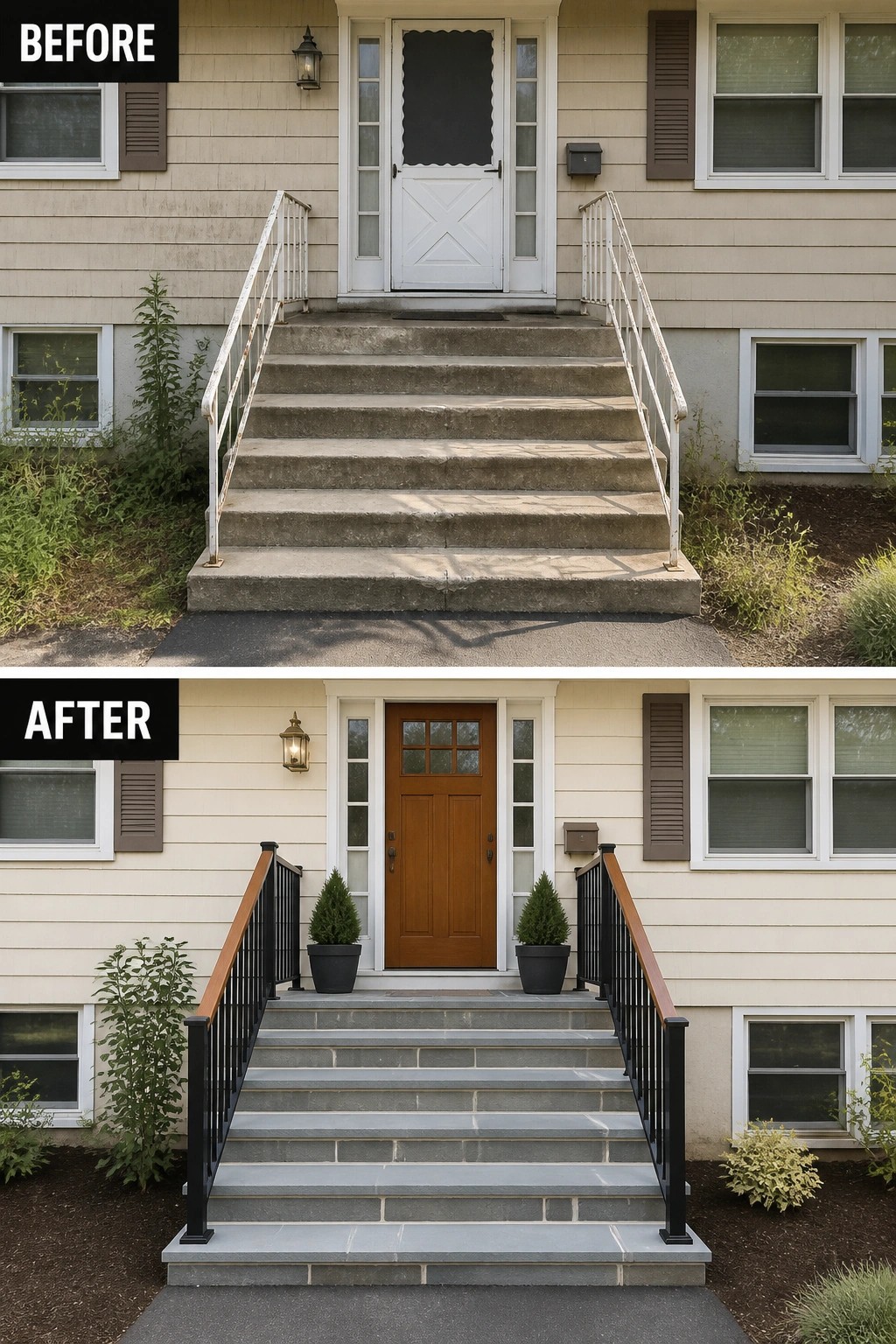
Replacing tired, crumbling steps with new stone treads and a simple, low‑profile railing instantly gives a split-level entry purpose and polish. Add recessed step lights for safety and evening curb appeal—those two changes alone make the approach feel intentional instead of an afterthought.
Do the structural work first, then choose a railing that keeps sightlines open (thin metal or cable with a warm wood top works well). Plan the step lights so they don’t glare and check local code for handrail height; a pair of matching planters or a new door color can finish the look without crowding the landing.
Add Planters And A Sconce To A Tiny Split-Level Entry
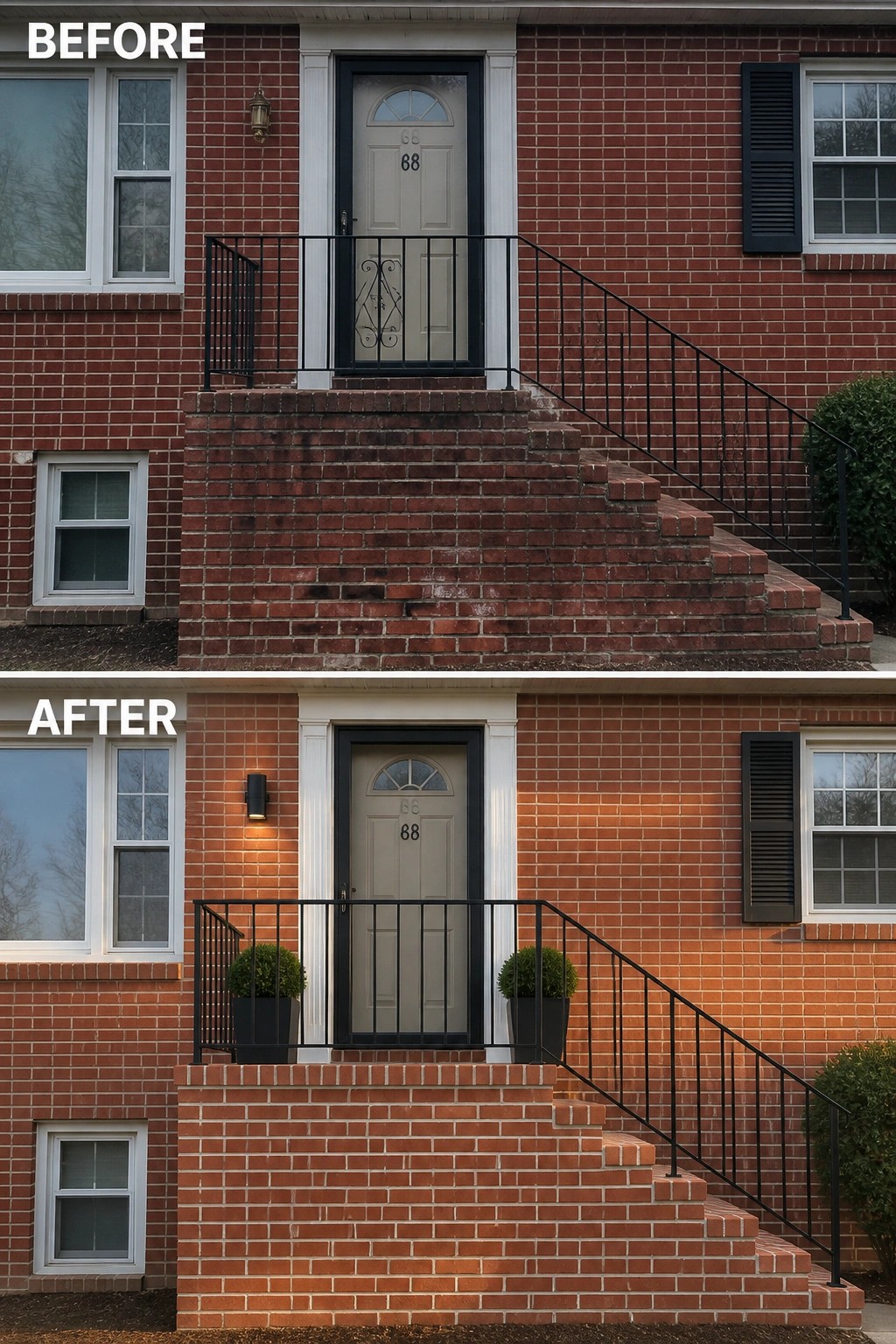
A tiny split-level entry doesn’t need a full renovation to stop feeling forgotten. In this makeover a couple of matching planters and a single modern wall sconce turn a plain landing into a clear, usable front porch — the idea is to pick one focal move that signals purpose and scale, not to crowd the small space.
To copy this, choose planters that fit the landing (tall pots for a narrow stoop, wider for deeper landings) and use simple, low-maintenance plants like boxwoods or ornamental grasses for year-round shape. Add a single exterior light at eye level to make the entry feel intentional and safe, keep the rail and step area clear for access, and refresh the brick or masonry if needed so the new accents read crisp against the facade. Small, well-proportioned touches go a long way.
Refresh Your Entry With Painted Steps And New Balusters
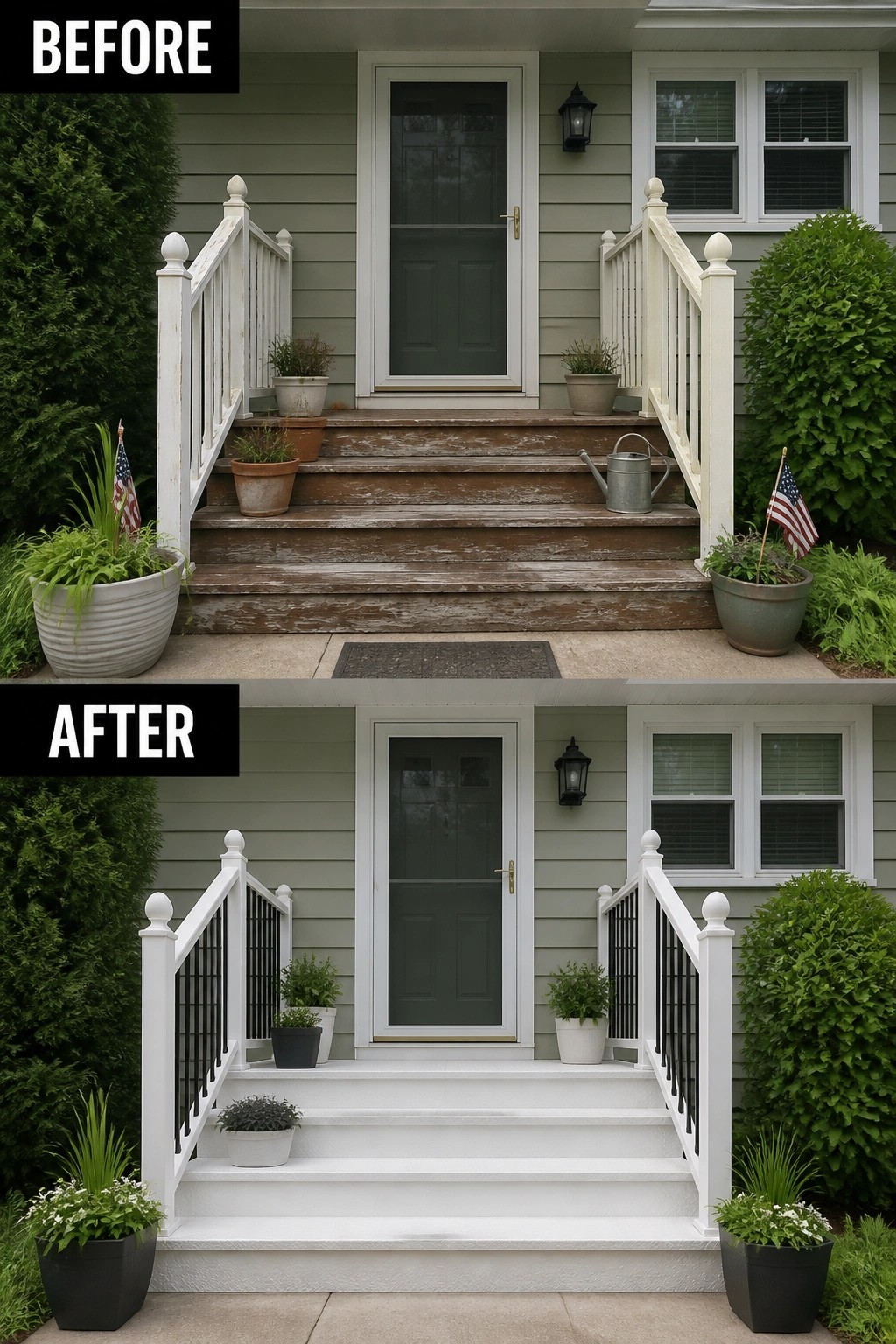
A quick way to lift a tired split-level entry is to refinish the steps and simplify the railing. Replacing or painting the worn wood treads a bright, durable white and swapping thin, weathered spindles for dark metal balusters creates an immediate clean contrast and a more modern, cared-for look. Adding matching planters keeps the change from feeling stark and gives the stoop a clear sense of purpose.
Start by repairing any rotten wood, then use an exterior porch paint or composite tread covers and add an anti-slip additive so the surface is safe when wet. Choose a strong contrast—light steps and darker balusters—to read well from the street, and keep planter sizes proportionate to the stair width so you don’t block the path. Small effort, big payoff.
Replace Wood Steps With Masonry Treads And Metal Railings
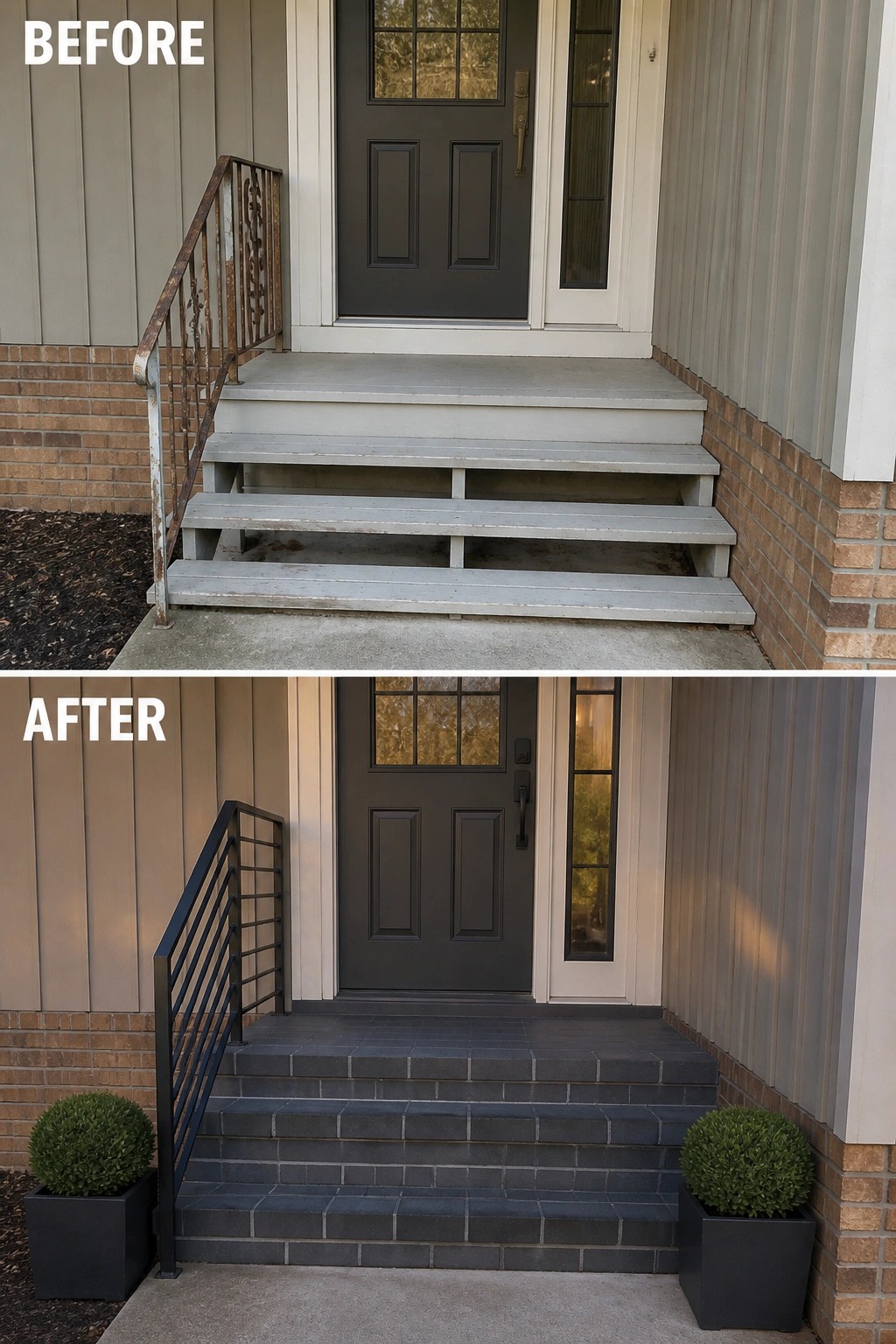
Swapping tired, open wood steps and a rusted railing for solid, masonry-style steps and a simple horizontal metal railing instantly gives a small entry a clear purpose. Adding a pair of matching planters frames the approach and makes the landing read like an intentional, usable space instead of a leftover stoop.
If you want to try this at your house, start by
Update Front Steps And Railings For A Polished Entry
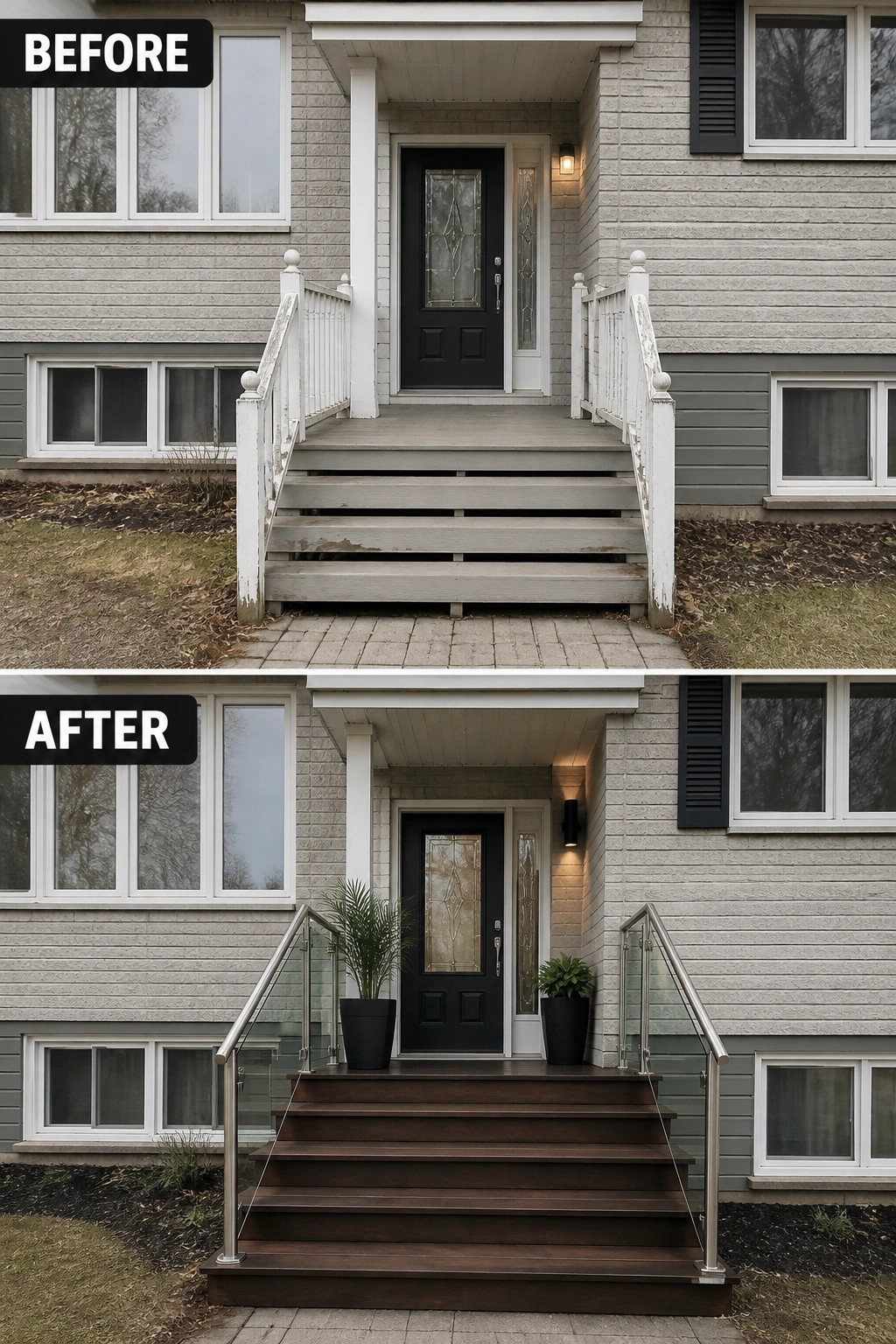
Replacing worn wood steps and old spindle rails with a low-maintenance stair material and a sleek glass-and-stainless railing is an easy way to give a split-level entry a clear purpose. The heavier, darker treads read as an intentional landing rather than an afterthought, while the glass balustrade opens sightlines and lets the door and a single wall light stand out.
This approach works well on compact porches where the structure itself is fine but the finishes look tired. Choose durable materials that match your home’s style, keep planters and a light simple so they frame the entry without crowding it, and double-check railing height and step dimensions to meet local code. Small change. Big new curb appeal.
Give A Narrow Entry Purpose With A Privacy Screen
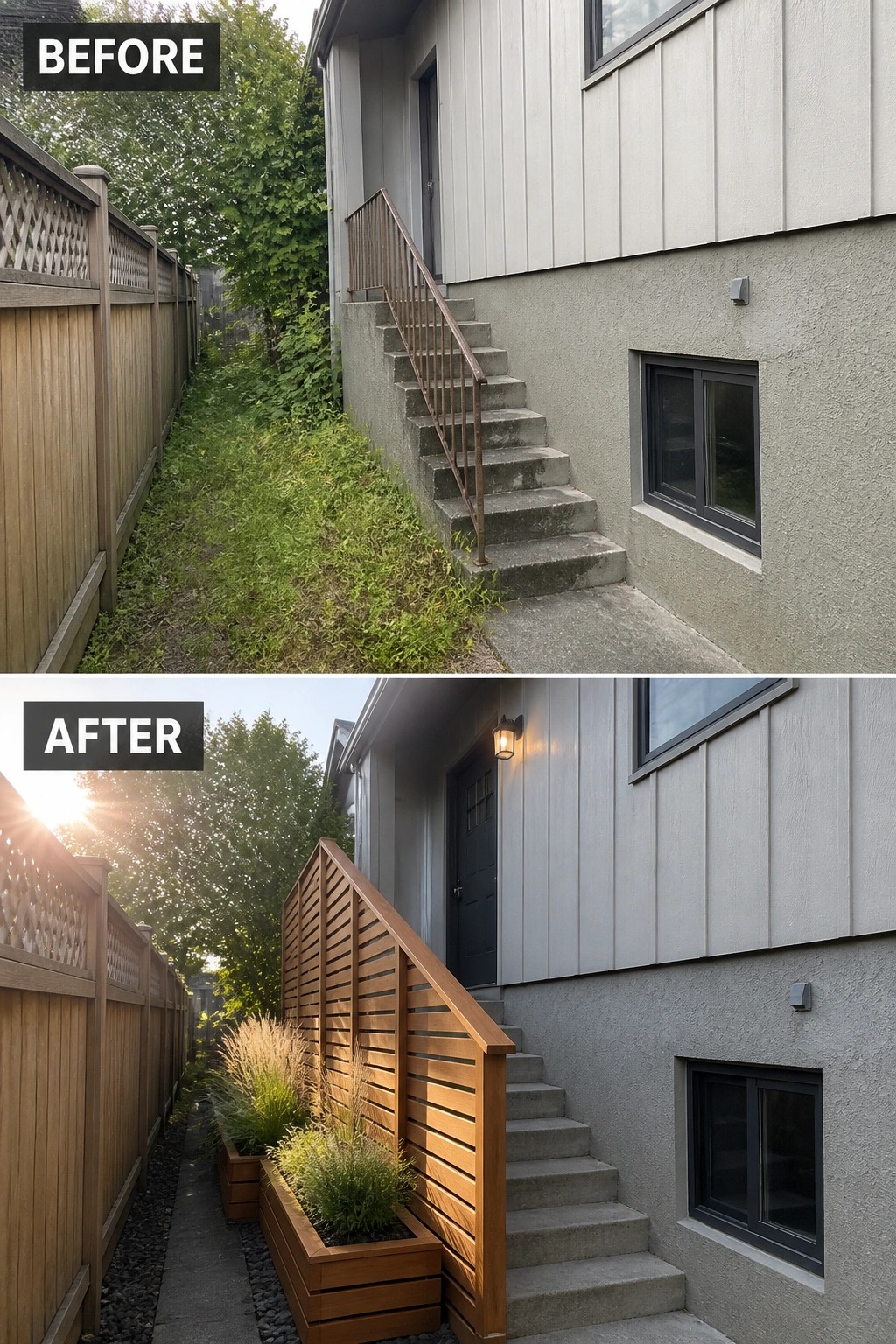
A tall wooden slatted screen and a couple of planter boxes can turn an awkward, forgotten side stair into a purposeful entry. In this example the old metal rail and overgrown strip were replaced by a full-height slatted guard and raised planters, which tidy the approach, hide the stair profile, and add texture without taking up the narrow path.
This idea works best on split-level and side entries where space is tight. Keep the screen proportionate to the steps so it still lets light and air through, leave enough clearance for the walking line, and choose rot-resistant materials for the screen and planters. Plant low-maintenance, upright grasses or shrubs in shallow boxes and use a narrow gravel strip for drainage and easy upkeep. Simple, but effective.
Turn A Plain Staircase Into A Polished Front Entry
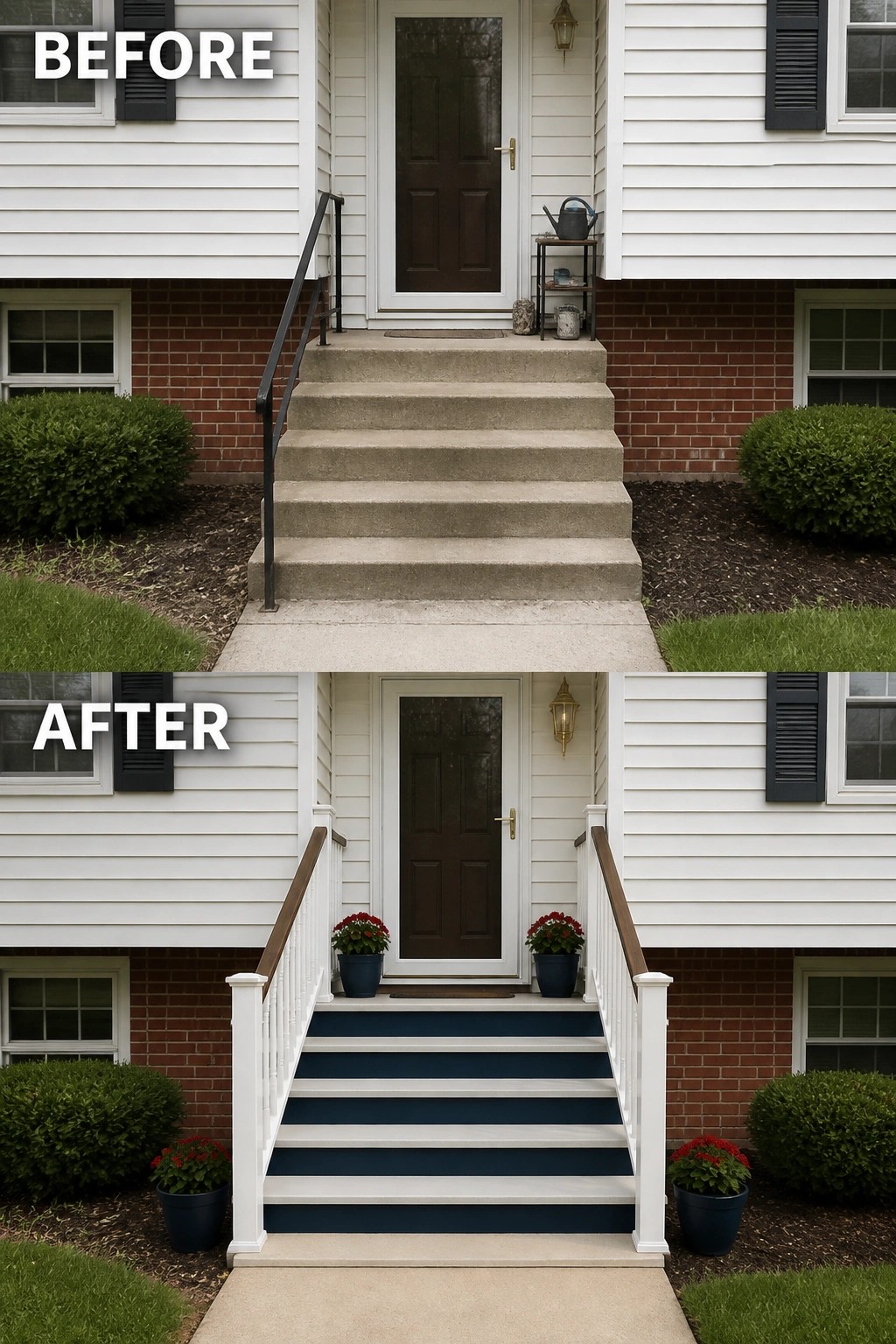
A quick, focused update to the steps and railing can change a split-level entry from anonymous to composed. Replacing the bare concrete and skinny metal rail with a proper balustrade, a warm stained handrail and painted risers gives the approach clear edges and a bit of personality, while a pair of matching planters finishes the look without fuss.
To try this at home, pick one standout color for the risers and keep treads light or slip-resistant, then swap the rail for a scaled set of posts and balusters with a stained top rail for contrast. Use exterior-grade paint and hardware, balance the proportions with your house’s scale, and add two identical pots for symmetry—small, weatherproof changes like these make an entry feel intentional and welcoming.
Anchor Brick Front Steps With Black Metal Railings
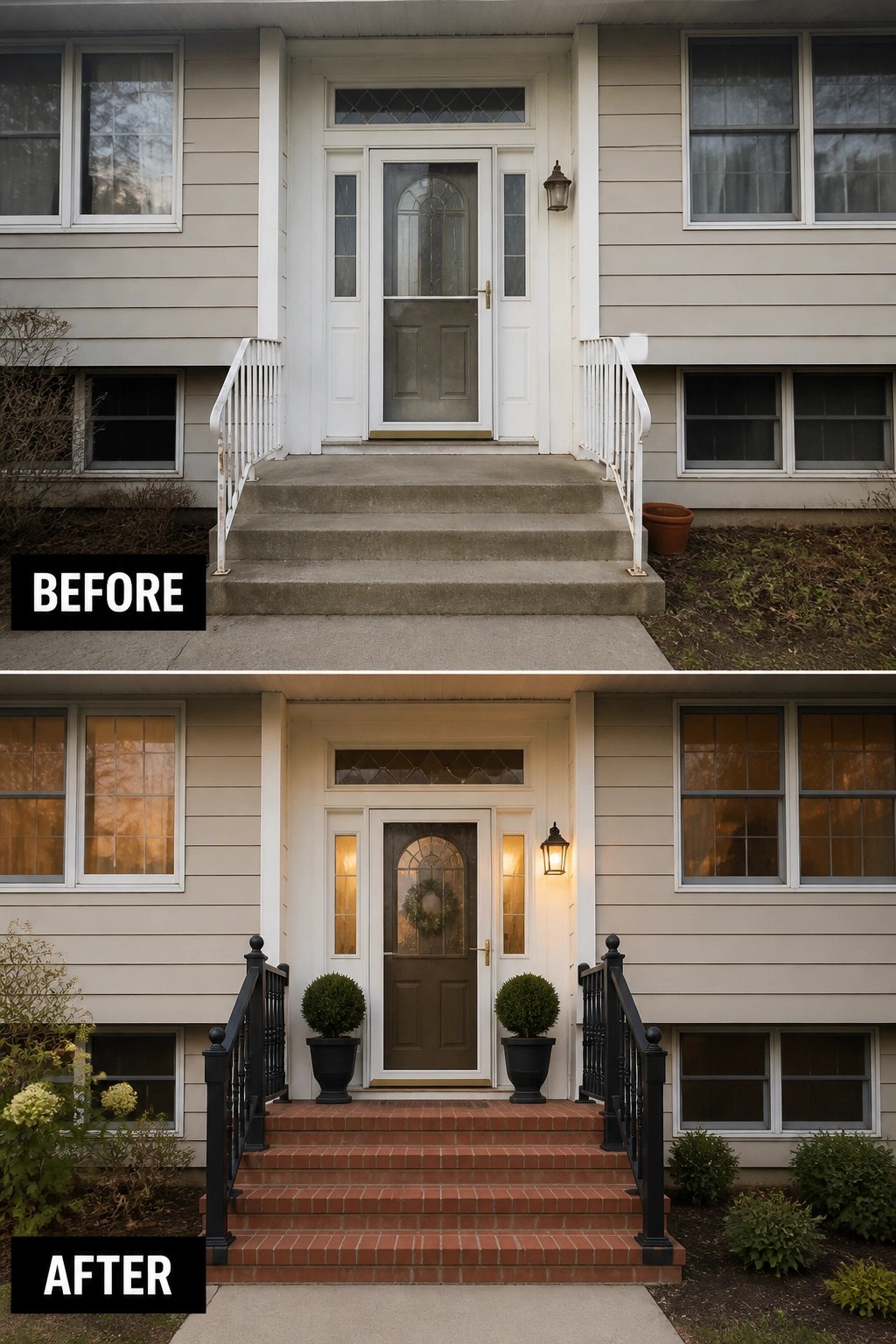
A plain entry gets a purposeful lift when you treat the steps and railings as the main upgrade. Replacing worn concrete with brick treads and swapping thin white railings for a sturdier black metal option immediately anchors the facade, and a pair of matching planters plus a wall lantern finish the approach without overdoing it.
To copy this on your own house, pick one structural change first (start with the stairs) and then add two or three matching accents—planters, a porch light, a wreath—to reinforce the new look. Use durable materials that suit the scale of a split-level, choose low-maintenance plants, and check rail height and mounting so the entry is both attractive and safe.
Give A Small Entry Instant Curb Appeal
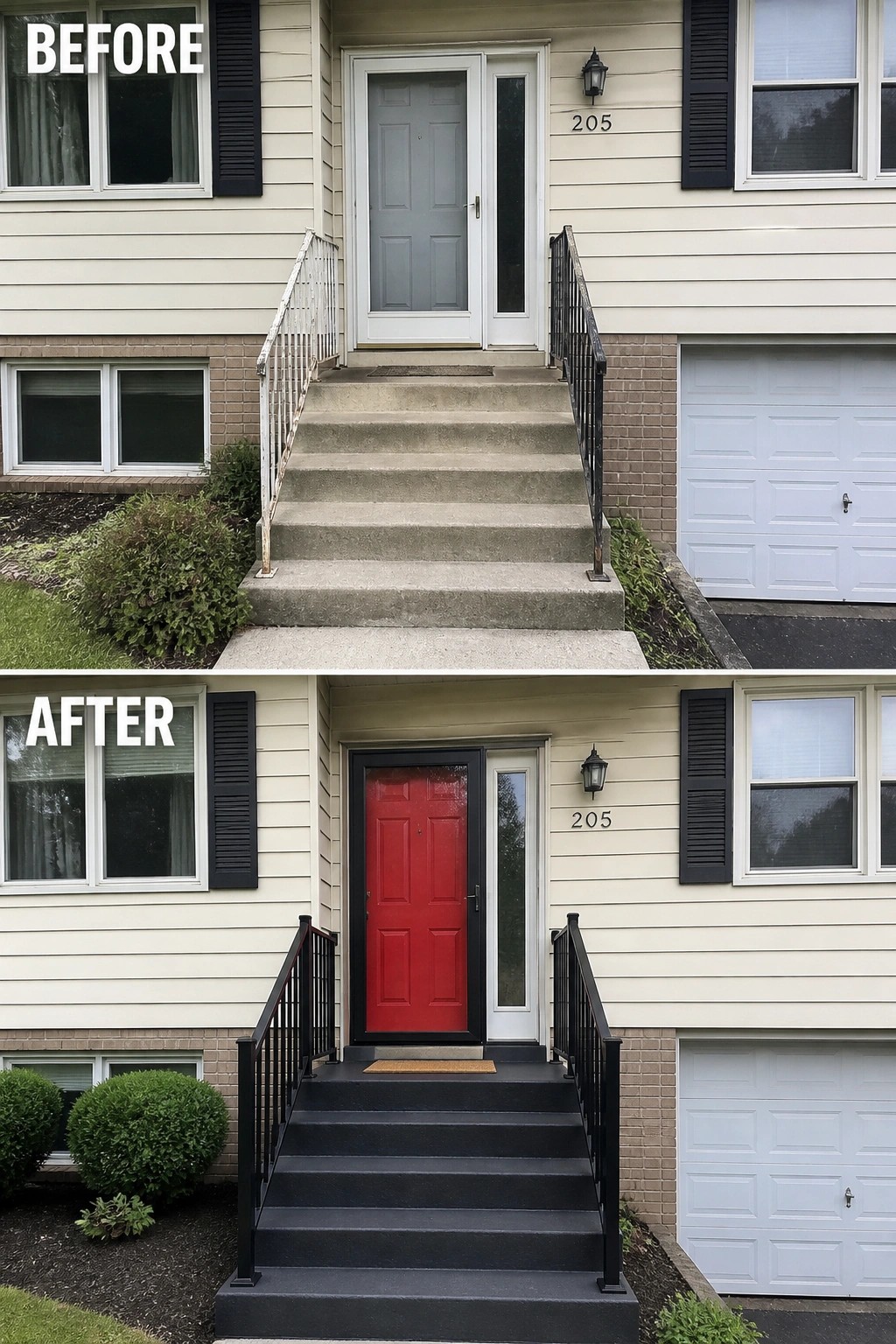
A simple, focused update to the steps and door can make a tiny stoop read like a proper porch. Painting the concrete steps and risers in a single dark tone and switching to clean black railings immediately unifies the entry, while a bright red door provides a clear focal point. That small contrast makes the approach feel intentional instead of neglected.
Do the prep work first: clean and repair cracks, then use a quality porch-and-floor paint with a non‑slip additive so the surface is safe. Paint or replace railings in a matching dark finish, pick one strong door color and repeat it in a small accessory like a mat or planter, and keep surrounding planting neat so the entry stays the star. Small changes, big payoff.
Finish A Neglected Entry With Weatherproof Tile And Railings
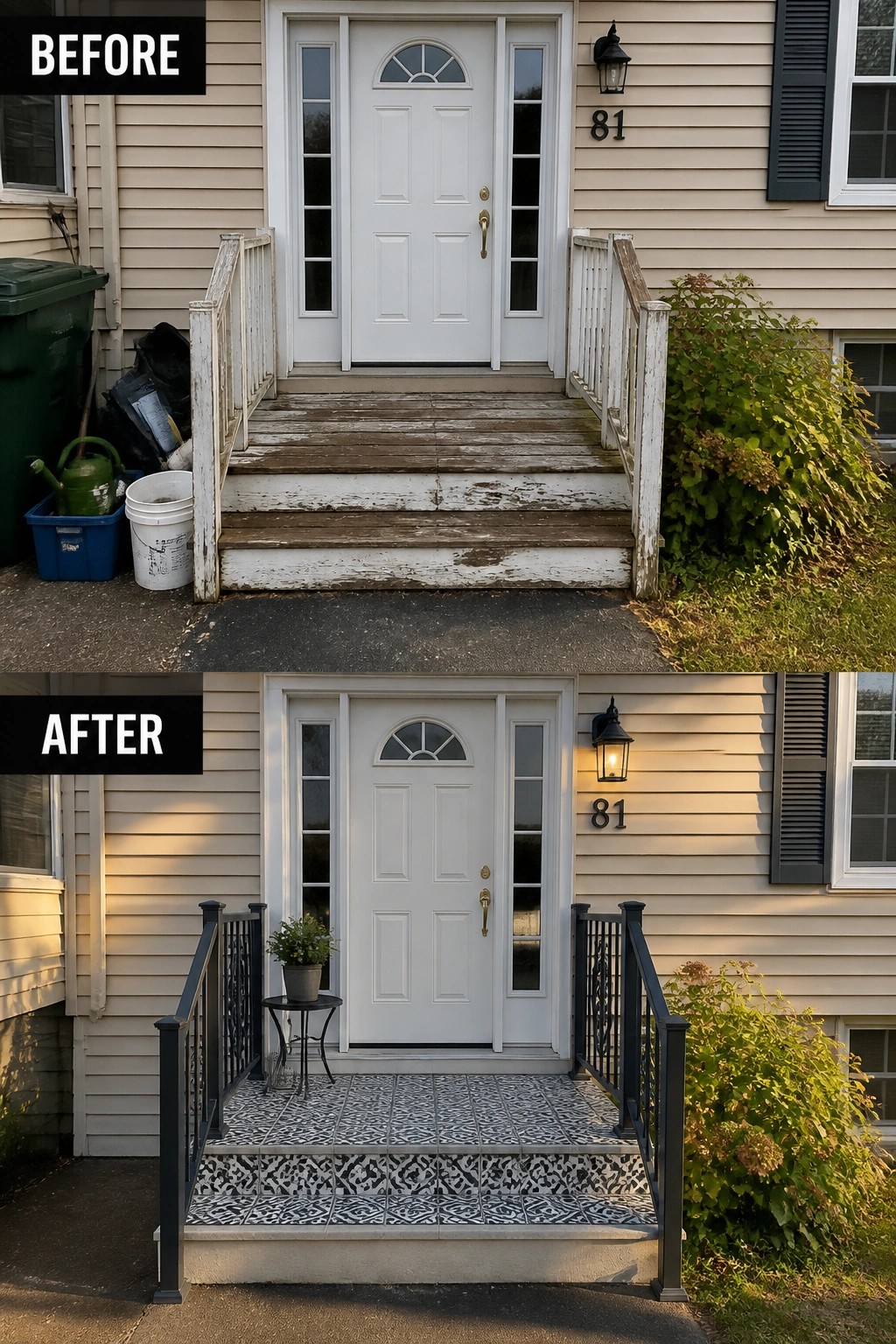
A small, neglected entry becomes useful simply by choosing a durable floor and a clear frame. Replacing rotted wood with a patterned, weatherproof tile and installing clean metal railings turns an anonymous landing into a finished front step that reads as an intentional space rather than an afterthought.
Start the project by fixing any structural issues and leveling the surface, then pick an outdoor tile with grip and a railing style that matches the house scale. Keep styling minimal — one planter or a small table and a properly sized light — and leave enough room for people to pass comfortably so the porch feels welcoming without feeling crowded.
Give A Bare Entry A Defined Staircase
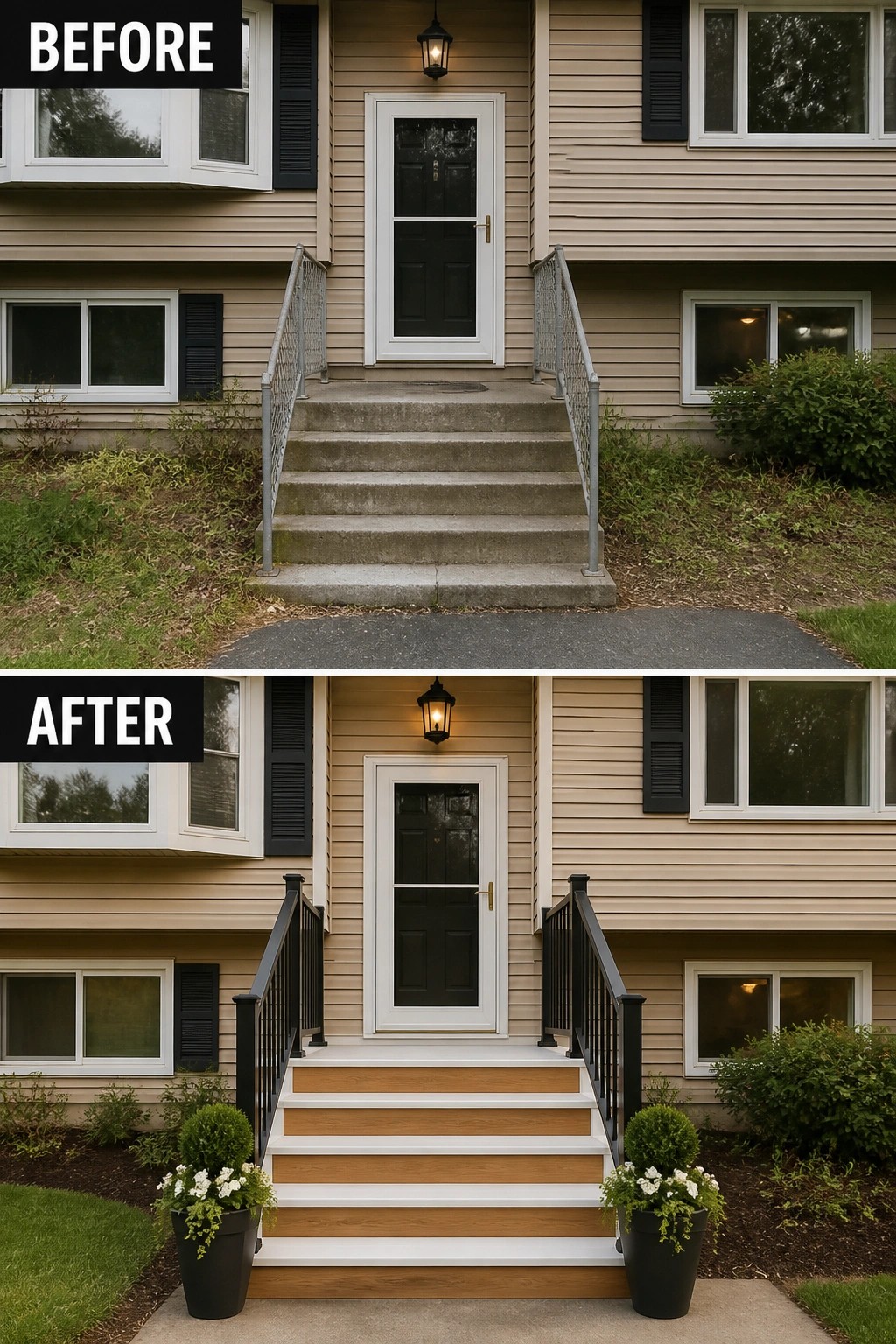
A simple swap of the stairs and railings can make a split-level entry read as intentional instead of neglected. In this example the worn concrete steps were replaced with skirted, wood-look treads and crisp white trim, and the thin, dated railings were swapped for sturdy black metal ones. Adding matching planters ties the look together and gives the small landing a clear purpose.
This approach works well for narrow or raised entries where the stairs are the first thing people see. Start by checking structure and safety, then pick low-maintenance materials like composite treads and powder-coated railings (composite holds up well). Keep proportions in mind so the rail height and newels match the house scale, and finish with one or two matching accessories—planters or a welcoming light—to make the whole thing feel finished without overcrowding the approach.
Define The Front Approach With Pavers And Step Lighting
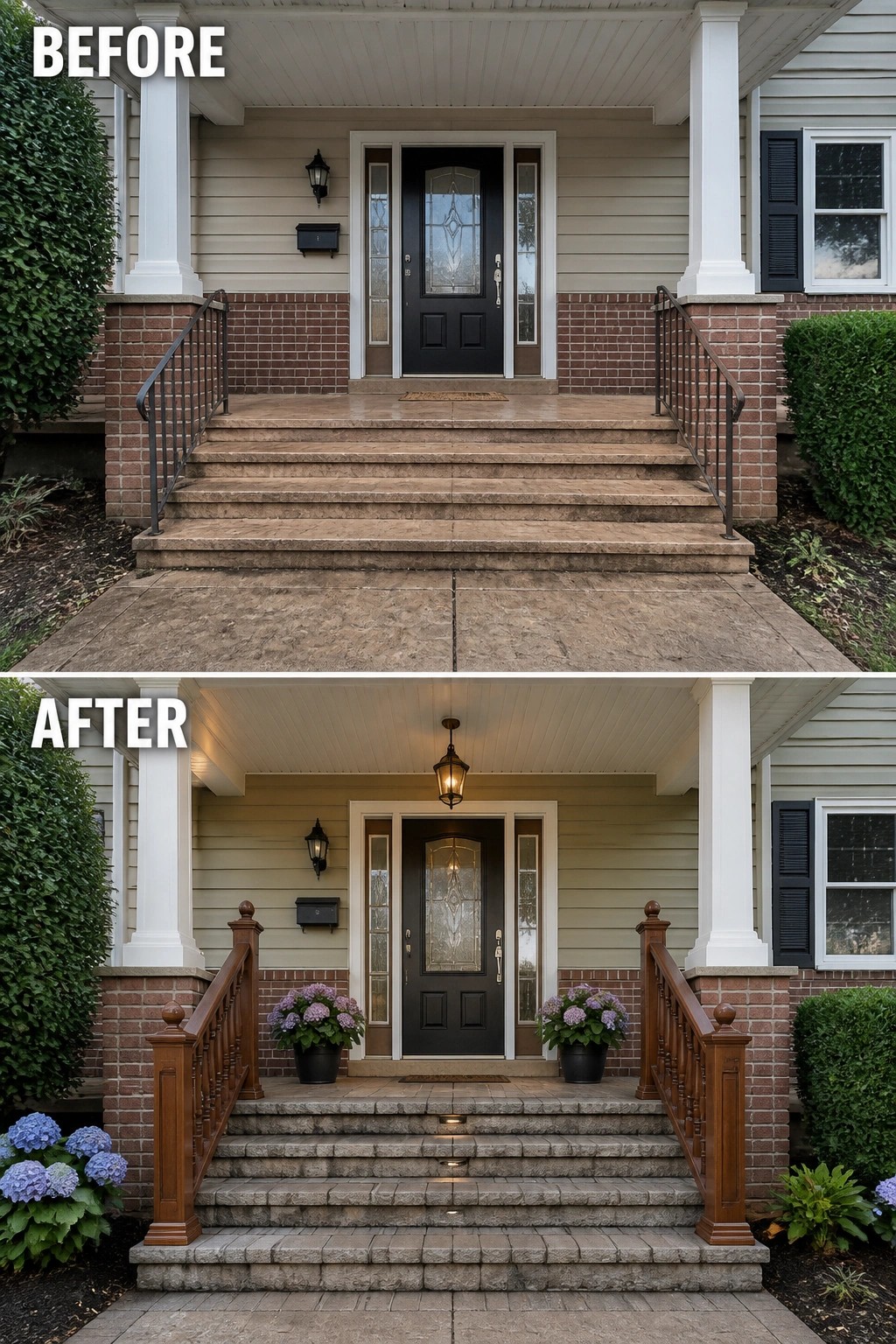
Updating the front steps and railings can turn a forgettable entry into a purposeful, welcoming approach. Swapping thin metal rails and plain concrete treads for sturdier wooden balusters, textured pavers, a pair of matching planters, and subtle step lighting defines the path to the door and makes the porch feel like a real arrival spot.
Use materials and scale that match the house so the new railings and steps look intentional, not tacked on (even on a small porch). Add low-maintenance pots for seasonal color, install low-voltage lights in the risers for safety, and seal wood or stone for weather protection. Keep the walking width clear and pick a railing height that meets code so the upgrade is both attractive and practical.
Give A Bare Entryway A Clear, Welcoming Approach
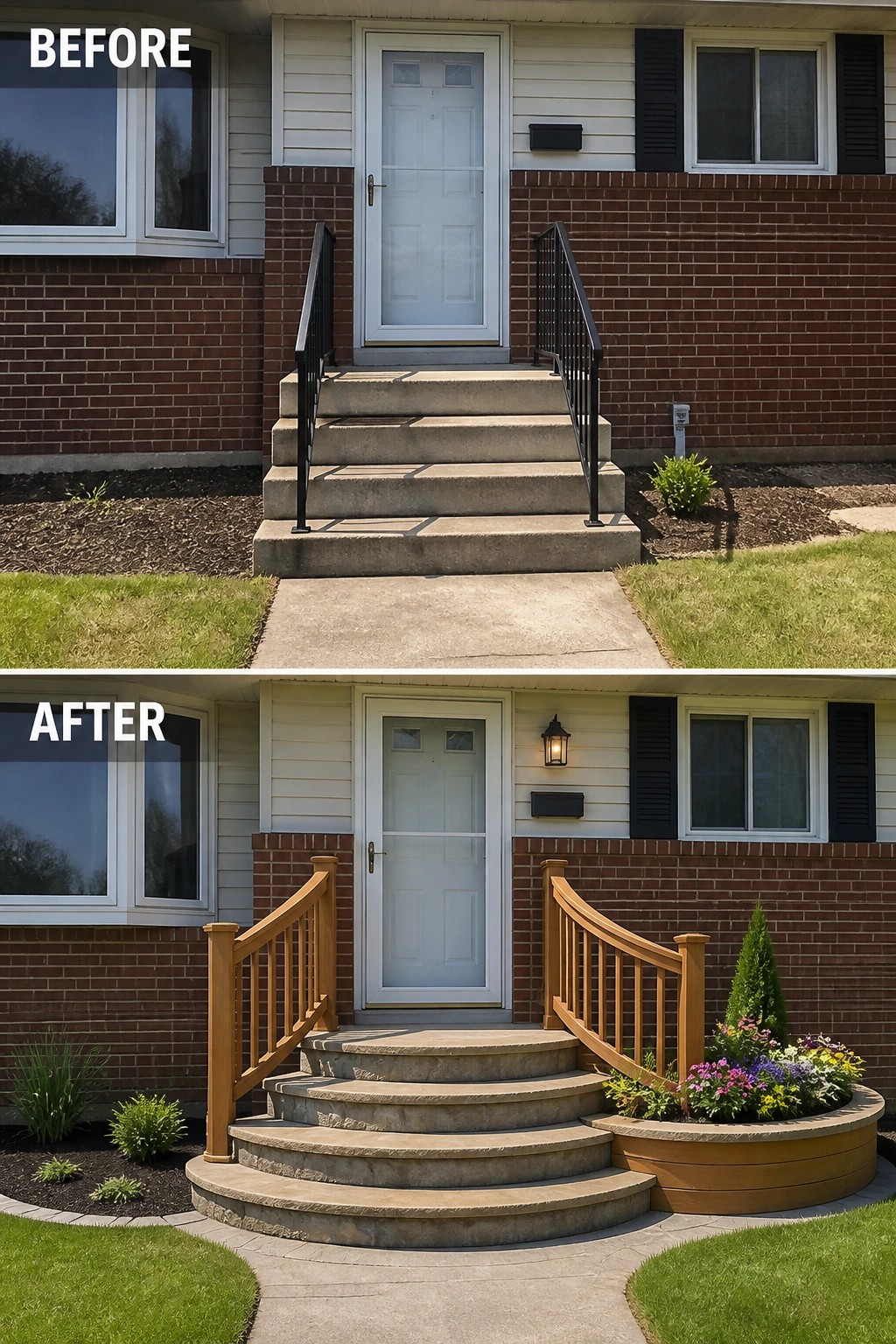
Updating plain concrete steps and thin metal railings into a wider, curved set of stone steps with sturdy wooden railings instantly gives a front entry purpose and presence. One well-considered focal change—new tiered steps and a single planter at the side—makes the approach feel intentional rather than an afterthought, and a small wall light completes the picture so the entry reads as a place you want to use.
To do this at home, start by sizing the new steps to the door and the walk so people can pass comfortably, then pick materials that match the house and your climate (stone or cast concrete for durability, wood or composite for railings). Add a low planter or seat wall to break the straight line of the walkway and include at least one down-facing light or lantern by the door (check local code for handrail height and tread depth). Keep the scheme simple and scaled to the house and you’ll get a welcoming entry without overbuilding.
Refinish Front Steps And Add A Sturdy Railing
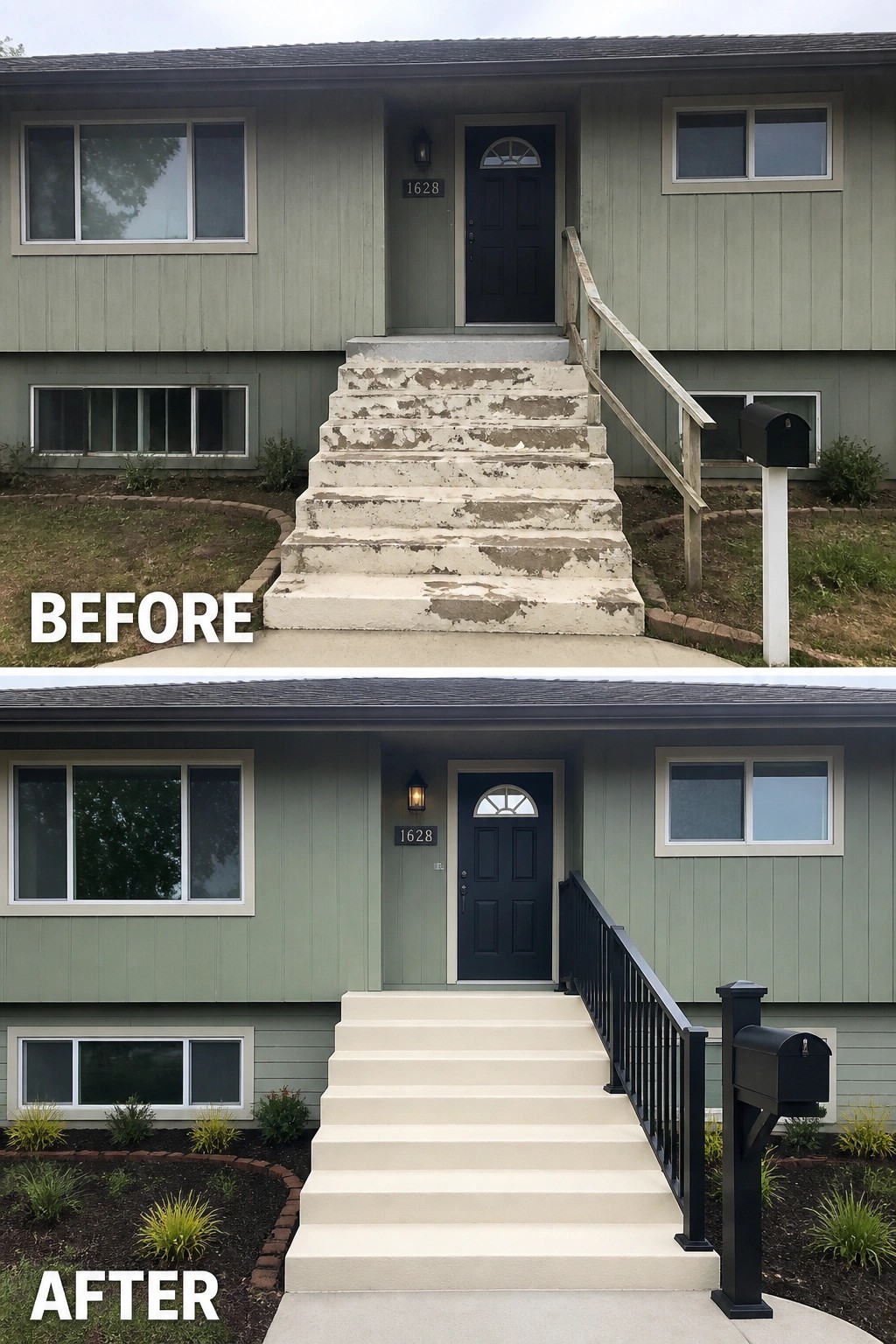
A worn concrete stair run can make a tidy house feel neglected. Resurfacing the treads with a smooth, light-colored overlay and swapping the improvised wooden handrail for a powder-coated metal railing (and a matching mailbox post) immediately cleans up the entry while improving safety. Fewer visual flaws and a simple dark railing give the whole facade a more intentional, finished look.
To copy this, start by removing loose concrete, clean the surface, and use a concrete patch and polymer resurfacer for an even, long-lasting finish; add a non-slip additive if the steps get wet. Choose a rail style and color that links to existing fixtures, anchor posts to the concrete per code, and keep any extra elements—like a mailbox or low plantings—simple so the new stairs stay the focal point.
Add Structure To A Narrow Split-Level Entryway
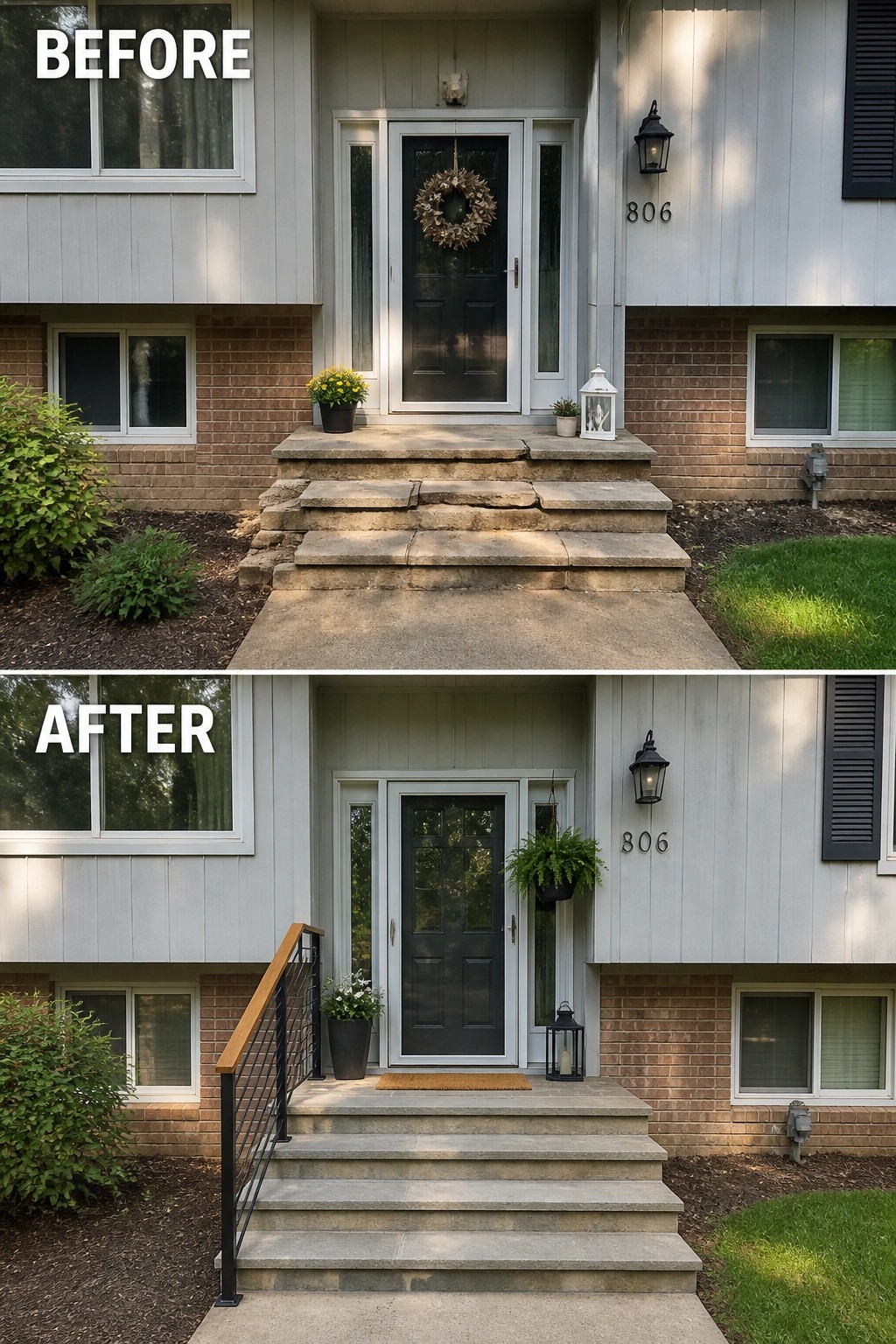
A narrow split-level entry can look unfinished and awkward unless you give it a bit of structure and a clear focal point. Replacing the anonymous, weathered landing with a slim metal railing and a couple of well-placed planters and a doormat instantly reads as a purposeful doorstep — the railing defines the approach and the planting makes the entrance feel considered rather than neglected.
You can copy this idea on most older homes: pick a railing style that matches your house scale and install it so it leaves plenty of room to pass. Use two matching planters or one hanging fern and a single lantern to keep things simple, and choose durable, weatherproof materials so the look stays tidy with minimal upkeep. Small changes. Big difference.
Frequently Asked Questions
Q: How do I choose a railing style that actually suits a split-level entry?
A: Look at the home’s main material and roofline and pick a railing that echoes those lines—clean, simple metal for modern homes, wood or painted metal for traditional ones. Bring a sample board or photo to the store so you can compare finishes in the real light, and choose a handrail height that feels comfortable to grab when climbing the steps.
Q: Can I freshen up worn concrete steps without tearing them out?
A: Yes—start by pressure washing and filling any chips or cracks, then use a concrete-friendly paint or stain to even the color. Add a textured sealer or non-slip treads for safety, and a few pots or new lighting to distract from minor imperfections.
Q: Do new railings need permits or special measurements?
A: Most places require railings to meet basic safety rules like height and spindle spacing, and some jobs need a permit, so call your local building department before you start. If the post foundations look shaky, hire a pro to anchor them properly rather than guessing.
Q: What quick change will make my split-level entry look more polished right away?
A: Paint the front door and the step risers, swap out the light fixture, and add matching house numbers—those moves give instant curb appeal. A single pair of balanced planters completes the look.