

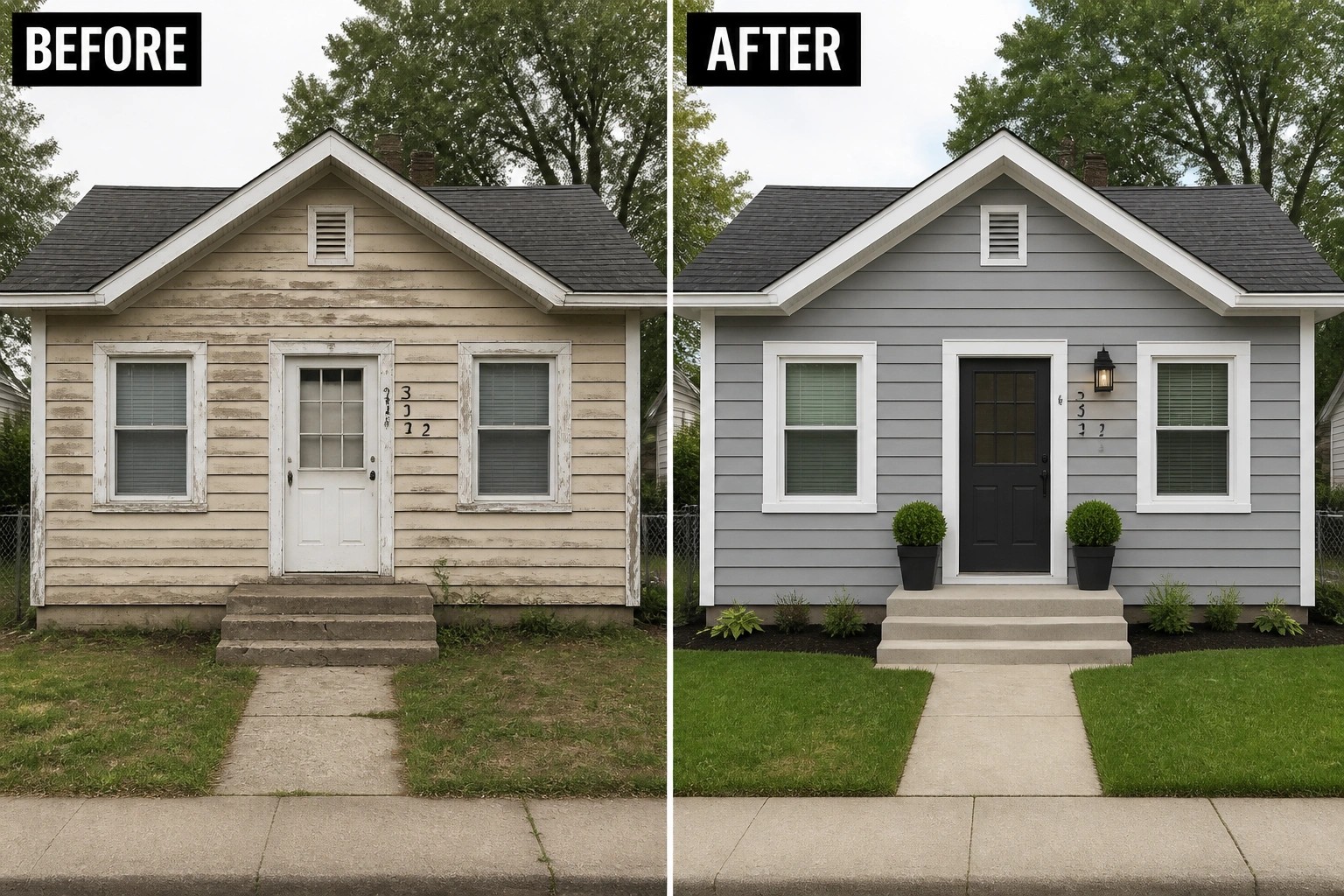
As someone who has nudged several modest houses toward better curb appeal, I know how much a fresh coat of paint, new hardware, or a neatly framed entry can change the way a home reads from the street.
You don’t need a full renovation to address tired siding or to make a small porch feel more inviting, and practical edits like swapped light fixtures, trimmed planting beds, and painted trim often do most of the work.
Small changes add up.
I usually test a paint color on one panel, try new house numbers, or lay a short row of pavers before taking on a bigger project because those small experiments save time and money.
If you save a few of these approachable ideas and adapt them to your house, you’ll likely enjoy seeing clear, steady improvement without tearing anything down or spending a lot at once.
Give A Bare Porch A Clear Purpose
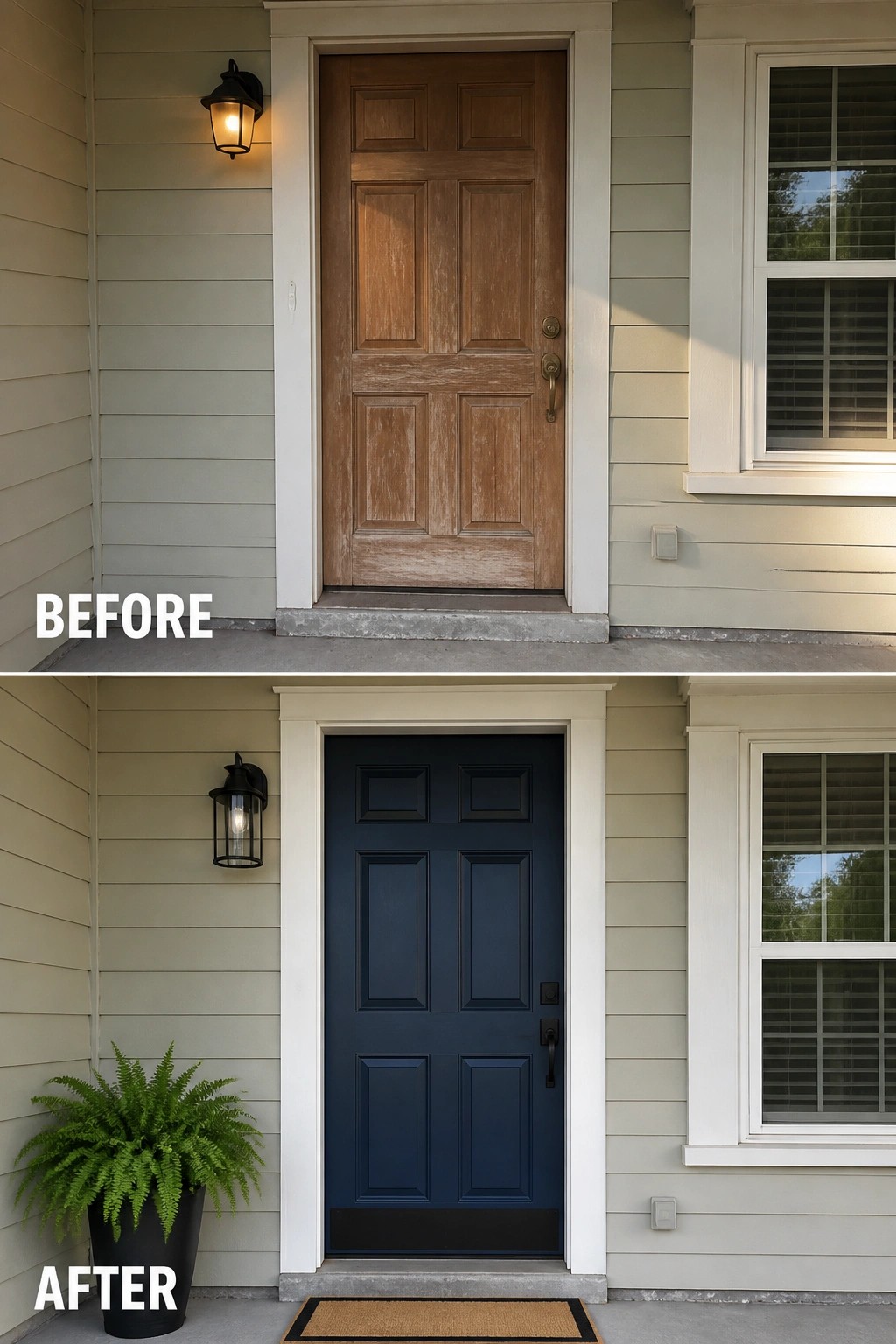
A bold coat of paint on your front door plus a couple of purposeful accents is one of the quickest ways to make a porch feel finished. In the photo the old, scuffed door is replaced with a deep blue focal point and paired with new hardware, a lantern-style light, a doormat, and a single potted plant to signal this is an intentional entry.
You can do the same on a small budget: pick a contrasting door color that complements your siding, use exterior-grade primer and paint, and swap the lockset or light for one consistent finish. Add one large planter and a simple mat to define the spot without crowding it (no designer needed). This approach works well on modest facades and tight porches—just keep scale and weather resistance in mind.
Frame Windows For Instant Curb Appeal
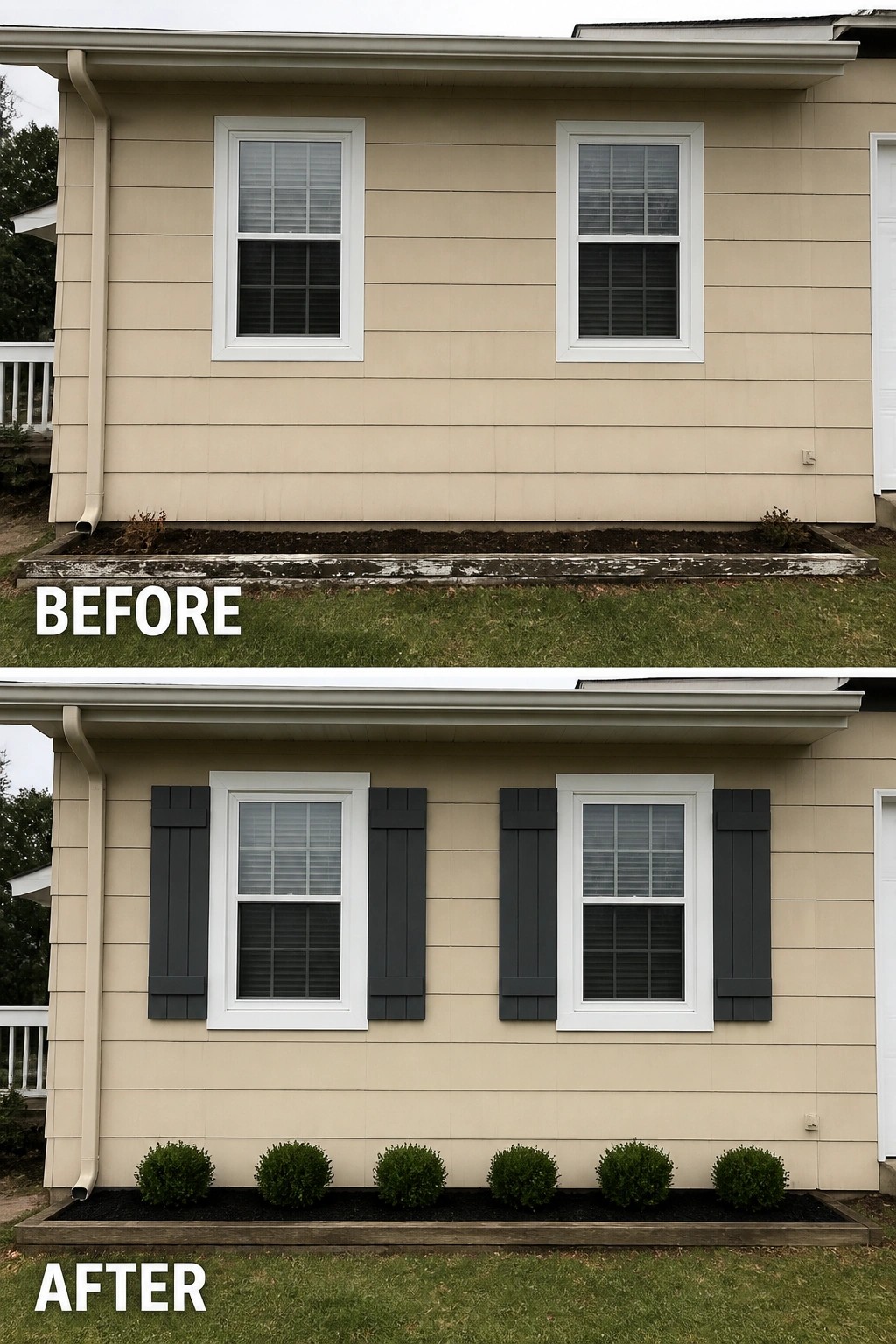
A simple way to upgrade a plain exterior is to give the windows a clear frame. Adding contrasting shutters and a neat row of low shrubs immediately tightens the look and makes the facade feel intentional without a big budget.
Pick shutters sized to the window and a color that contrasts the siding, then plant low-maintenance evergreens like boxwoods or dwarf hollies evenly in front and cover the bed with fresh mulch. This approach works well on small homes — it’s low-cost, easy to stage in a weekend, and keeps your yard manageable as long as you leave space for mowing and routine pruning.
Brighten A Brick Porch With A New Entry
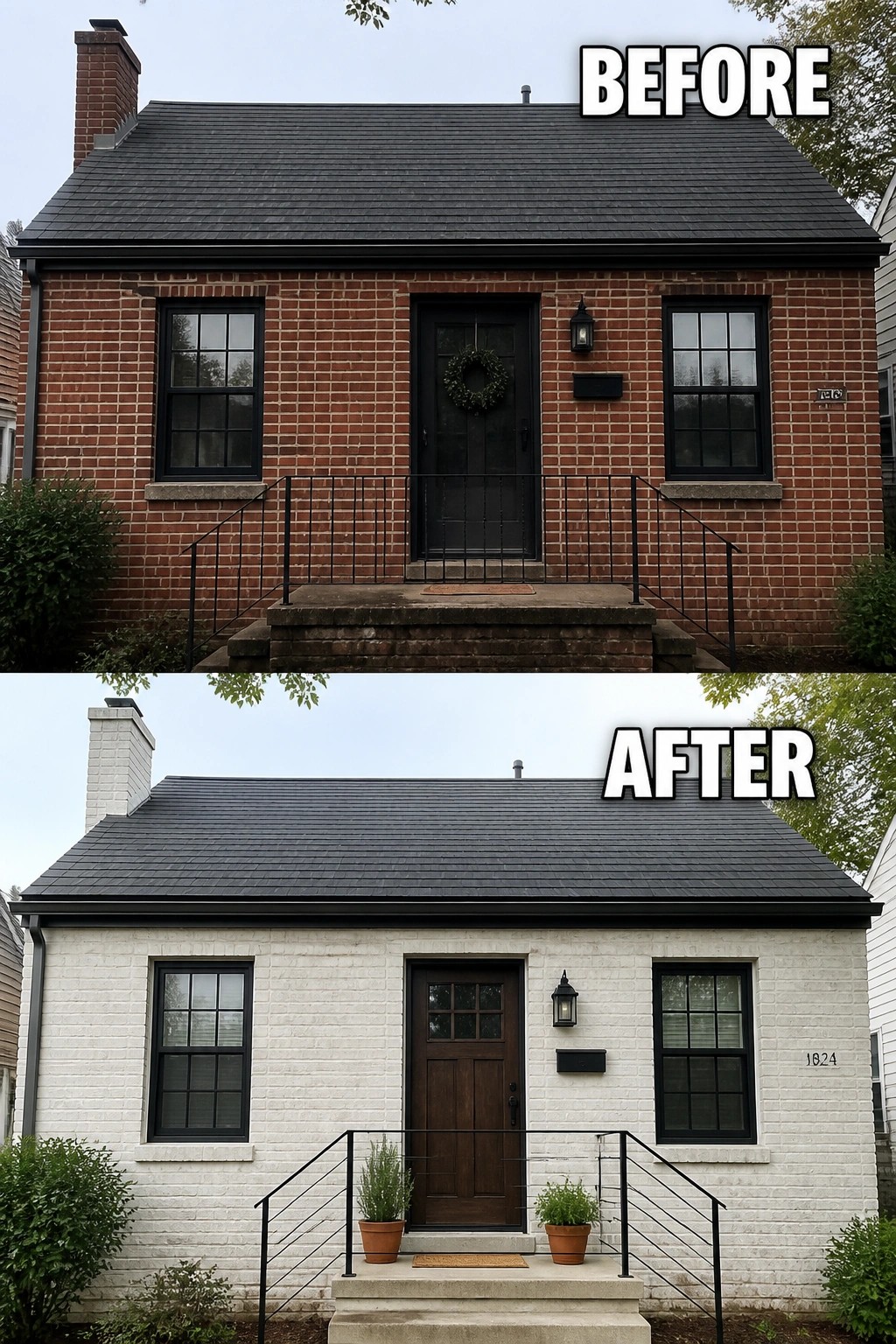
A simple front-porch refresh can make a small house look cared-for without big expense. In this example the owner brightened the brick and swapped the flat entry for a wooden door, metal railings, and a couple of potted plants to create a focused, usable entry. Those two moves—lightening the facade and adding a clear focal point at the door—turn a plain stoop into a place that actually feels welcome.
To copy this idea, start small: clean the masonry, then decide whether paint or limewash is right for your brick (test a small area first). Pick one focal upgrade such as a new door or a pair of matching planters, add a simple wall lantern and a mailbox, and keep other changes minimal so the entry reads as intentional. This works best on modest homes where scale is small; keep furniture and accessories to a minimum so the path and steps stay easy to use.
Turn An Empty Porch Into A Seating Area
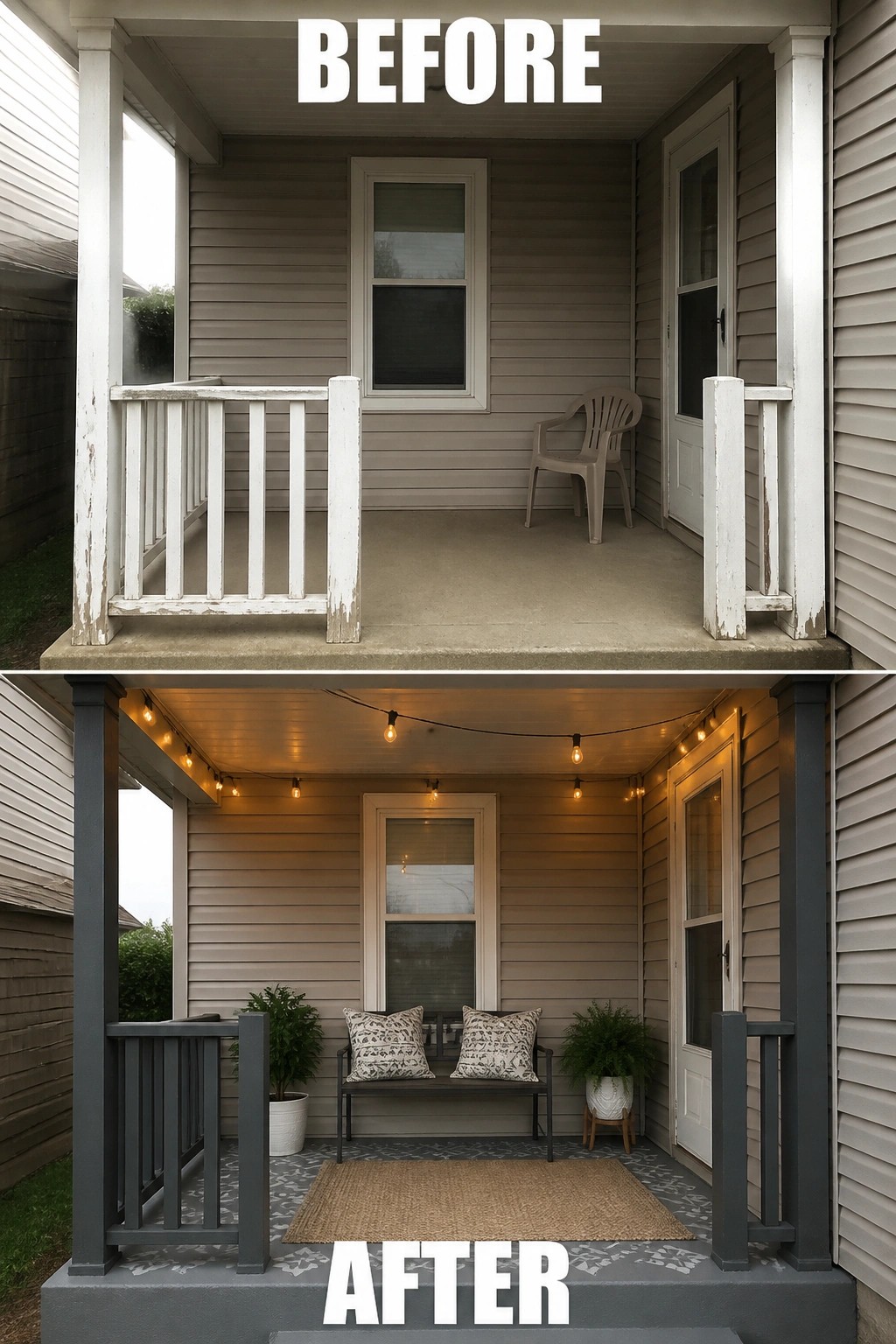
A small, unused porch can feel like lost space until you give it a clear purpose. In this update the plain concrete step becomes a cozy seating nook by adding a slim bench and a string of overhead lights—simple, low-cost changes that define the spot and make you want to sit there more often.
To copy this, start with a quick clean and one focal piece, like a weatherproof bench or loveseat sized to fit the porch depth. Anchor the area with an outdoor rug, hang string lights where people will sit, add one or two hardy planters, and leave a clear path to the door. It works well on narrow porches and rental homes (no heavy tools needed), and it’s easy to change up as seasons or needs shift.
Give A Bare Entryway Instant Curb Appeal
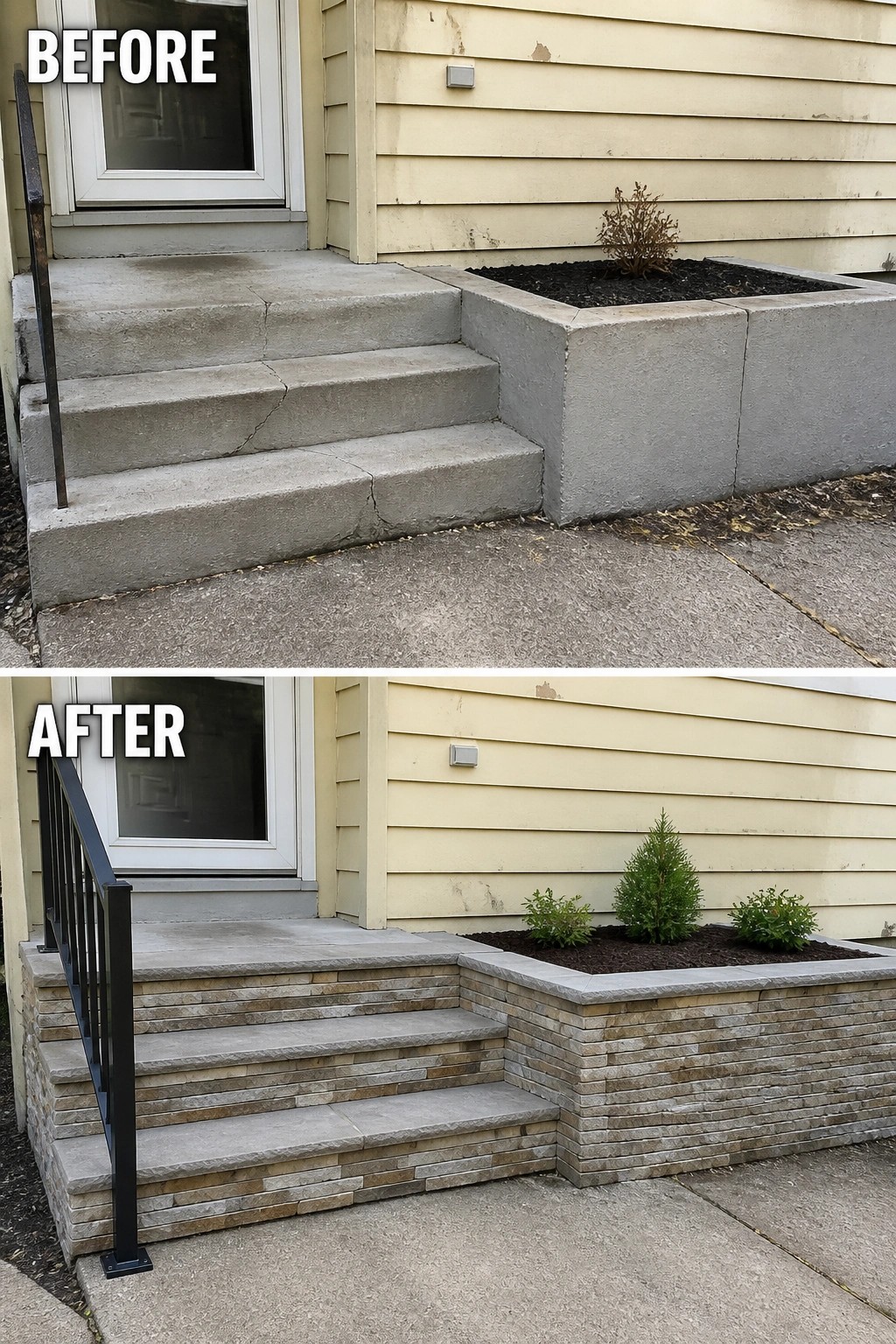
Refacing tired concrete steps with a thin stone veneer and adding a simple metal railing and a planted bed can change a plain front entry into something that looks cared for and finished. Covering cracks with a stacked stone facing hides damage, introduces texture, and makes the whole approach read as a deliberate architectural detail rather than an afterthought.
This works well on small houses where a full rebuild would be too costly. Start by cleaning and repairing the concrete, then install a lightweight veneer or stone-look tiles and cap the top edges for a clean line. Add a low-maintenance shrub or two and dark mulch to frame the entry, and be sure the railing is anchored to code and the veneer is weatherproofed. Small change, big impact.
Update Your Garage Door For Instant Curb Appeal
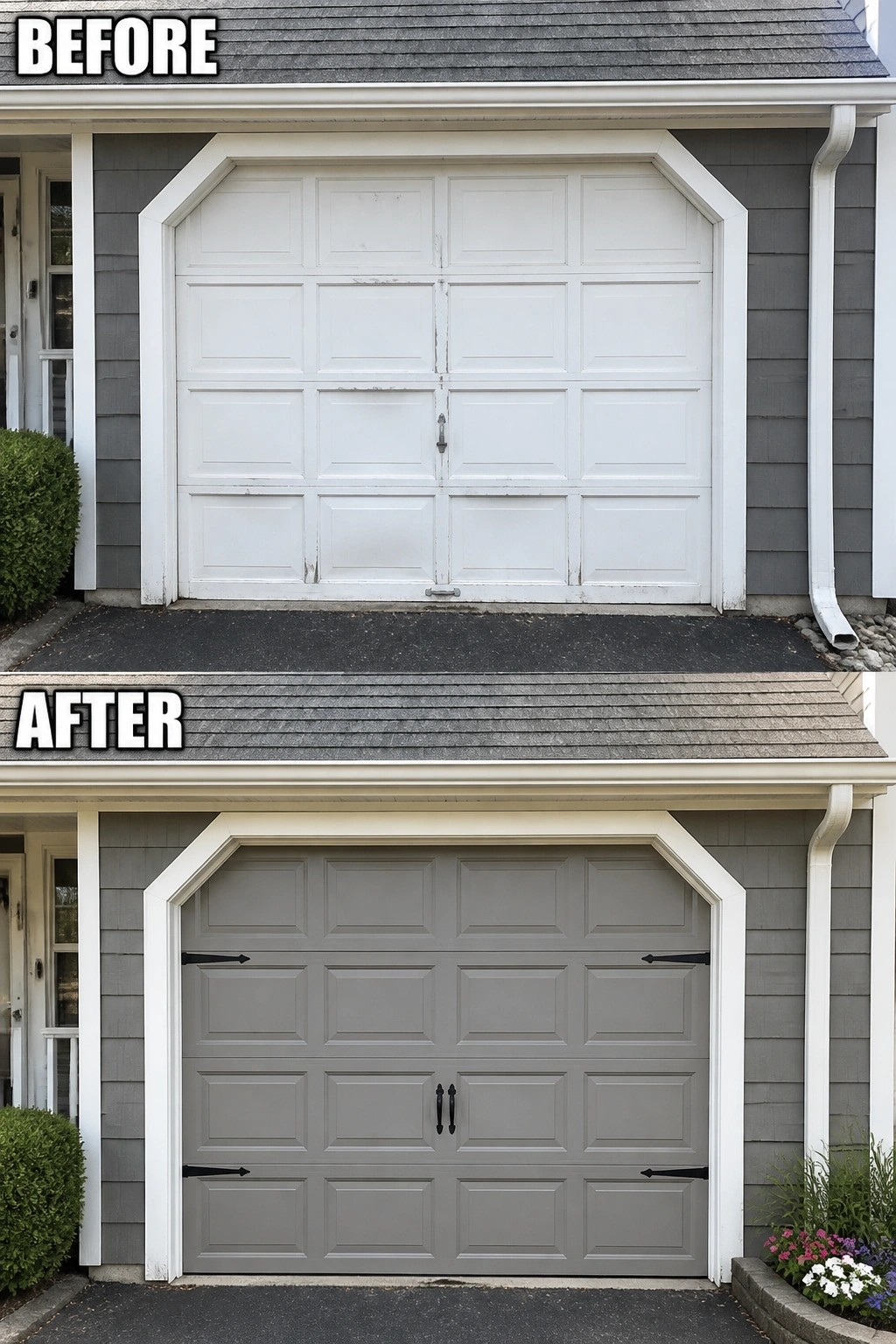
A simple garage door refresh—one fresh, modern paint color and a few pieces of black decorative hardware—gives a small house an immediate facelift without a lot of expense. Swapping tired white for a muted gray and adding handles or strap hinges covers scuffs, adds visual weight to the entry, and creates a clear focal point for the facade.
This works best when you pick a door color that contrasts the trim and repeat the hardware finish elsewhere, like house numbers or light fixtures. Prep the surface, use paint made for the door material, and consider affordable faux hinges or bolt-on handles if you do not want to replace the whole door. Small, weatherproof updates like these are quick, budget friendly, and easy to scale for any home.
Create A Clean, Low-Cost Front Path With Pavers
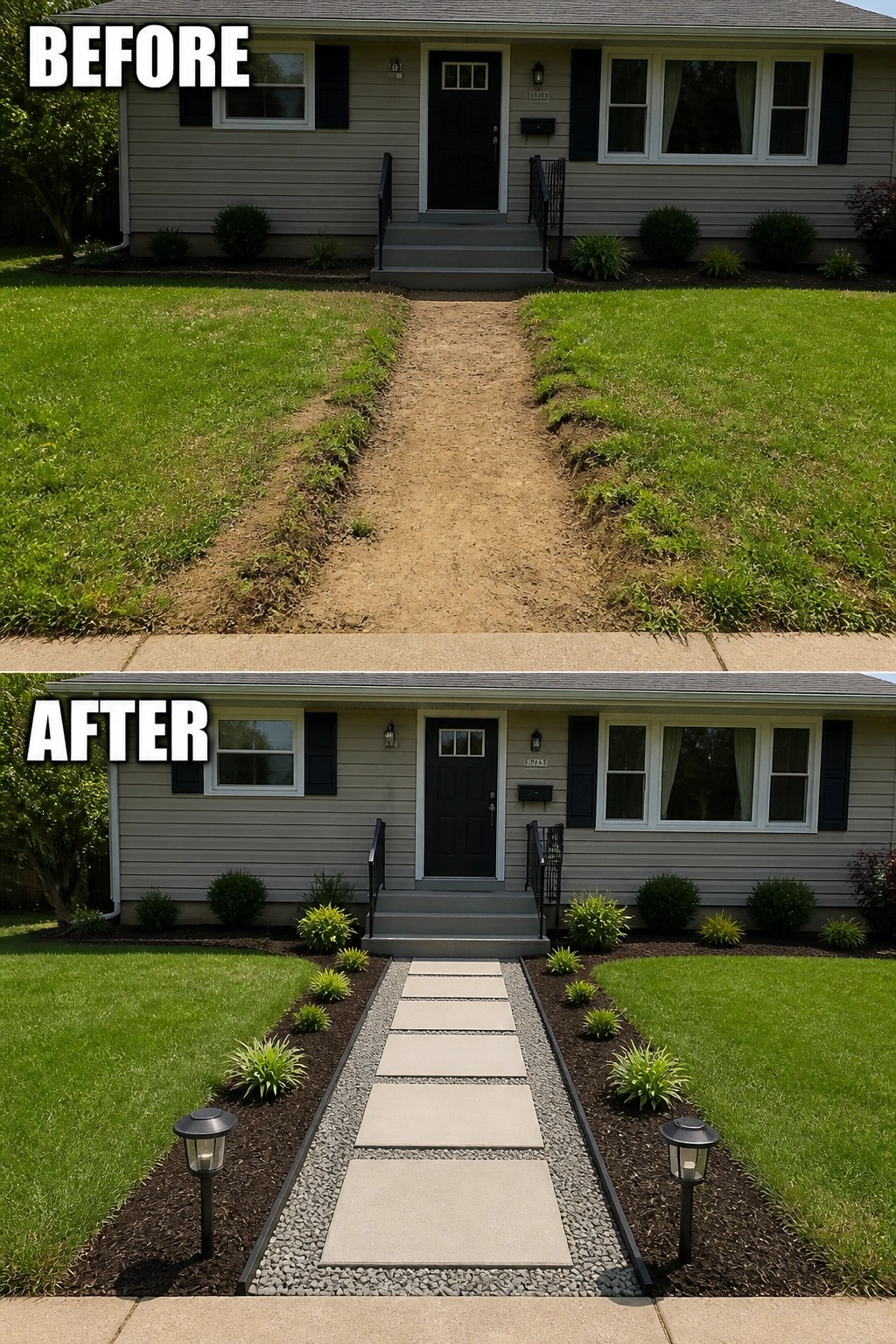
A beaten dirt trail in front of the house can make even a tidy yard look neglected. Laying a row of large concrete pavers set into a strip of gravel and edging it with mulch and low plants gives you a crisp, functional walkway that looks intentional and handles foot traffic and water much better than bare soil. Mentioning the change: dirt path becomes pavers with gravel and planted borders.
To copy this on a budget, pick oversized square or rectangular pavers, compact a crushed-stone base, set the pavers on a layer of sand, and fill the joints with pea gravel for a stable, no-maintenance finish. Add simple metal or plastic edging and a few clumps of hardy perennials in mulch to keep the beds tidy, and finish with a couple of solar path lights if you like. Simple and affordable.
Make A Plain Entry Feel Welcoming
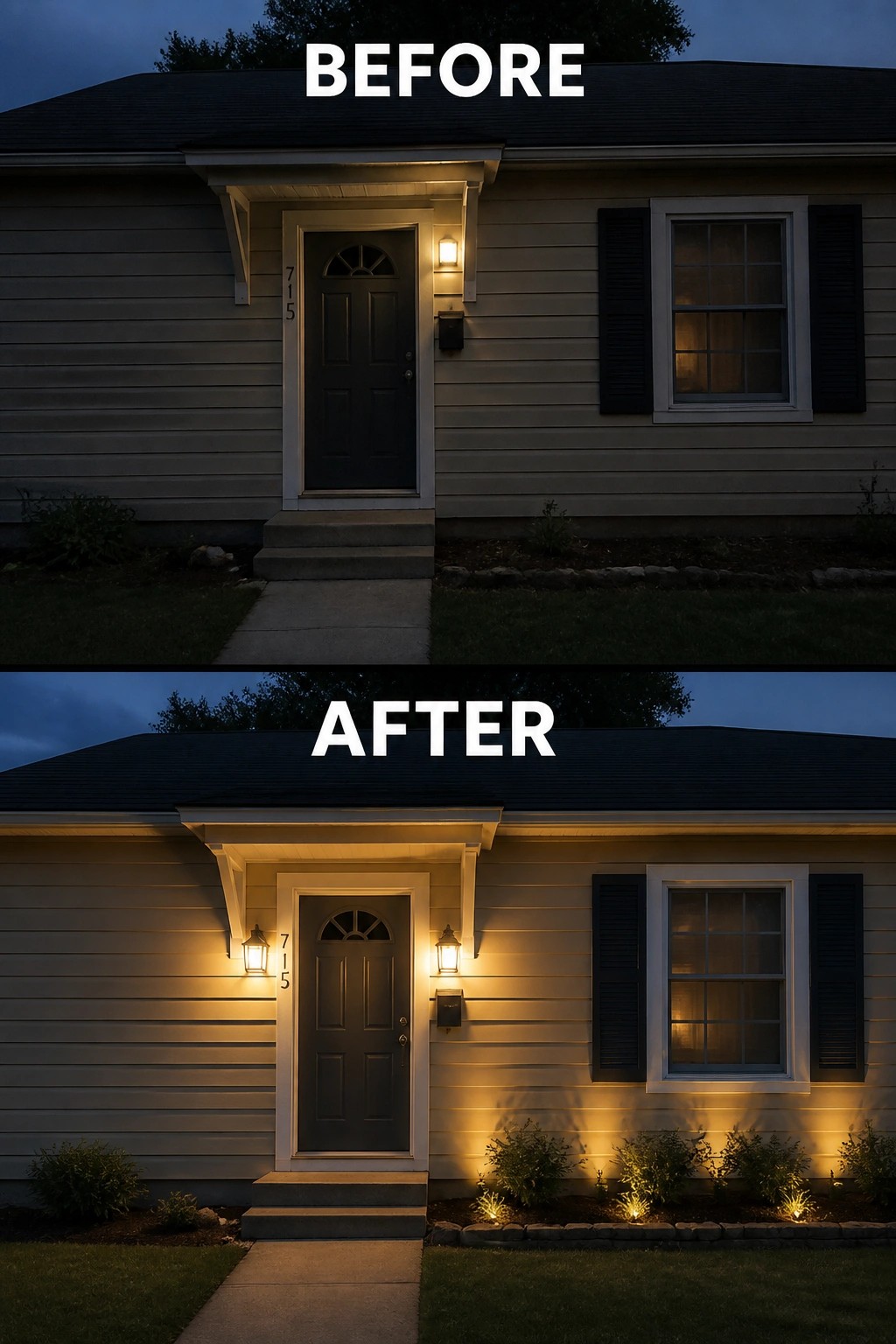
A few well-placed lights and a low row of shrubs can change a bland front into a friendly entry. In the after photo the addition of matching wall lanterns by the door and small ground uplights along the foundation highlights the doorway and plants, giving the facade structure and purpose without a big budget.
To copy this, pick fixtures sized to your porch and mount them at roughly eye level so they light faces and steps, not just the house. Use low-maintenance, compact shrubs and aim uplights at the siding or plants to avoid glare; set lights on a dusk-to-dawn timer or motion sensor for convenience. Small, simple changes like these work well on modest homes and can be phased in one side at a time.
Refresh A Worn Picket Fence For Instant Curb Appeal
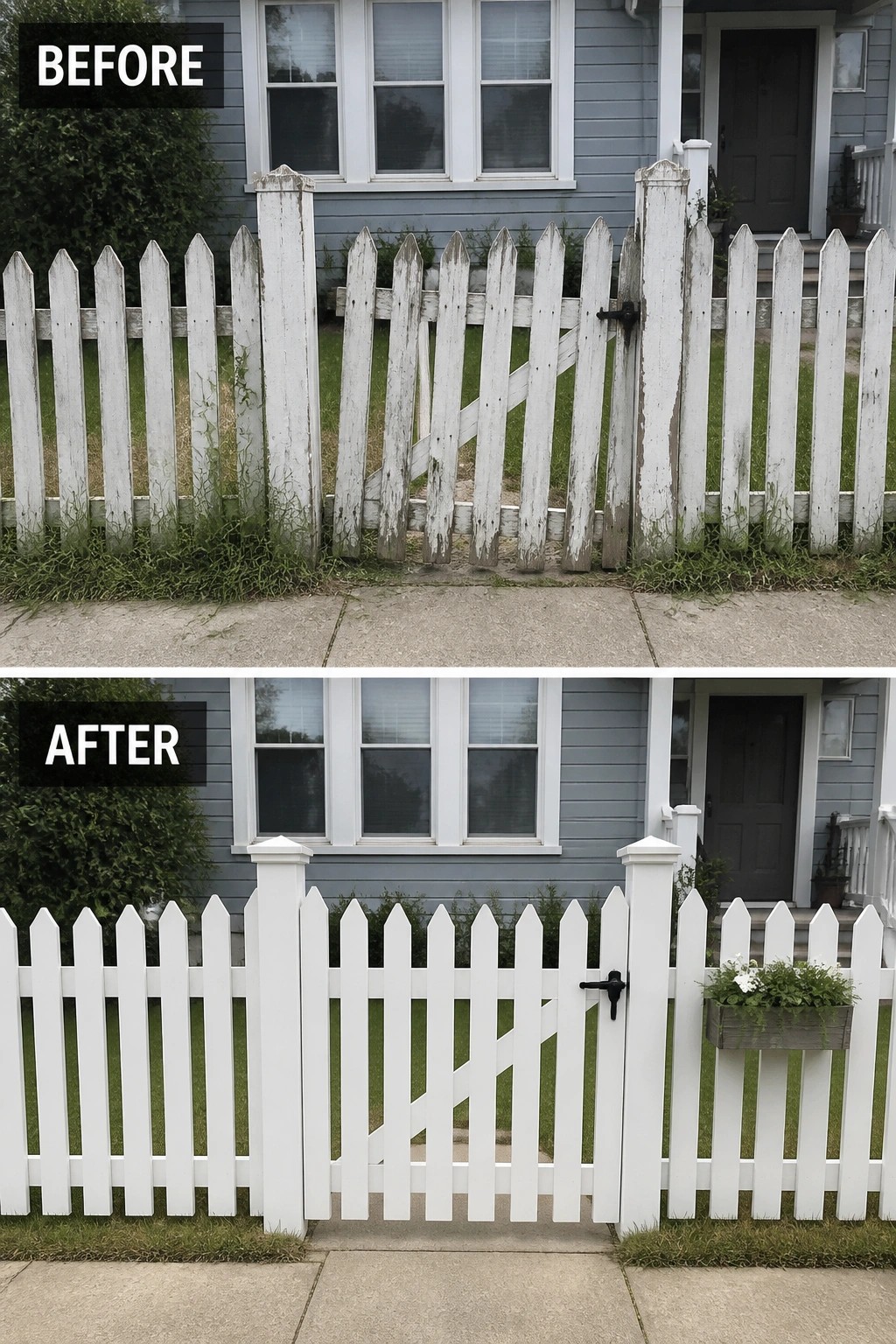
A shabby, peeling fence makes the whole front yard look tired. Replacing or carefully restoring the pickets and posts to a clean white finish (and swapping hardware for a dark latch) is a relatively small job that immediately tidies the facade and reads as intentional rather than neglected.
Decide first whether you can repair and paint or if a few rotten boards mean a partial replacement. Sand and prime failing paint, replace posts where needed, then finish with exterior-grade paint for longevity. Add one small detail like a simple planter or new latch to make the new fence feel finished. Small project, big payoff.
Upgrade A Concrete Porch With Deck-Style Flooring
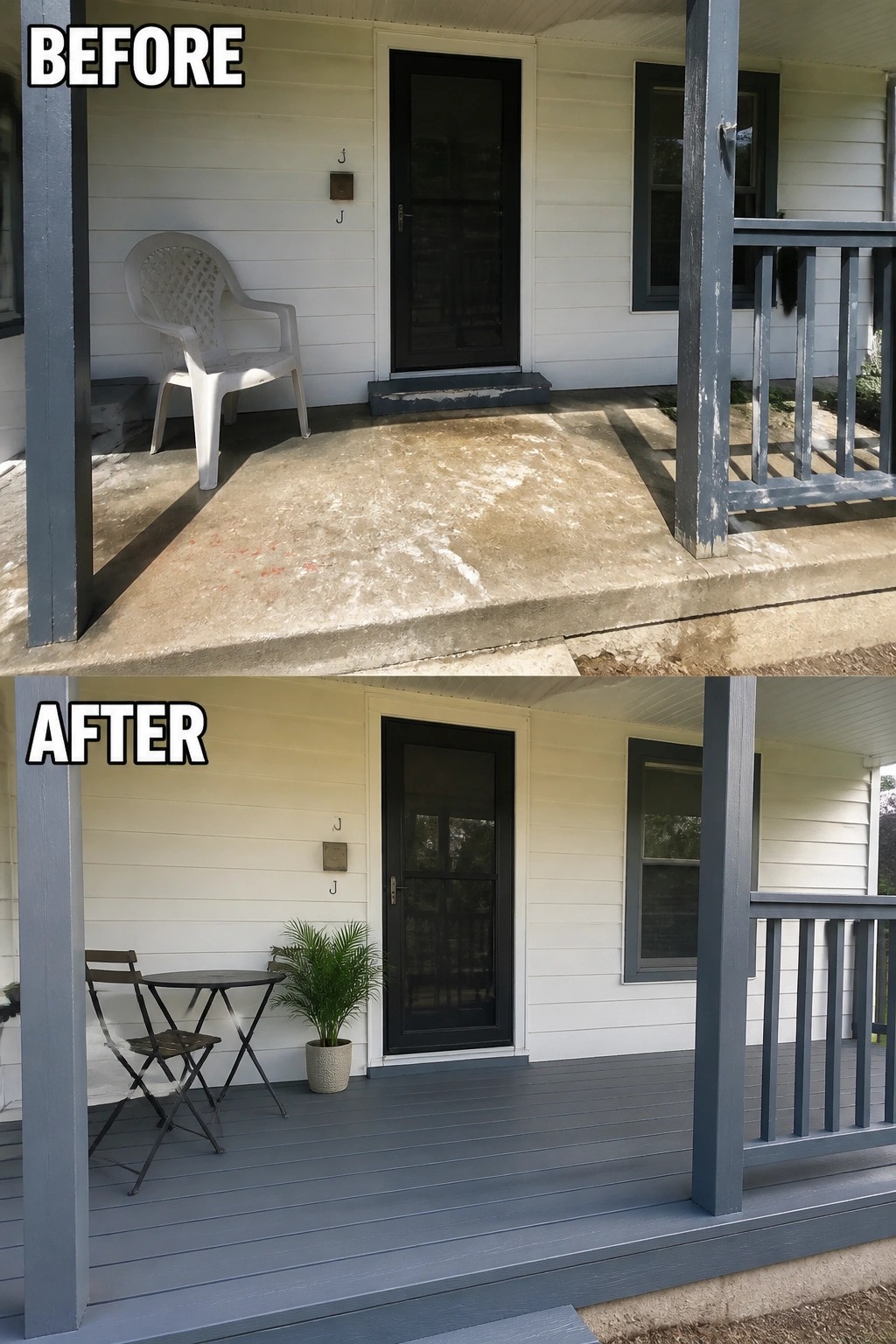
A plain concrete porch becomes useful and welcoming when you give it a surface and a function. Covering or painting the floor to read like a deck and adding a small bistro set with a potted plant instantly turns an empty entry into a place to sit, wait for guests, or enjoy morning coffee.
Start by cleaning and repairing the concrete, then choose an affordable finish: exterior porch paint, deck stain, or interlocking deck tiles for a quick upgrade. Keep furniture small and weatherproof so you don’t block the path to the door, use a non-slip topcoat, and repeat one color from the trim or railing to tie the look together. Works especially well on covered porches and narrow entries—just avoid trapping moisture under temporary decking and seal edges where water can collect.
Add Window Boxes To Boost Curb Appeal
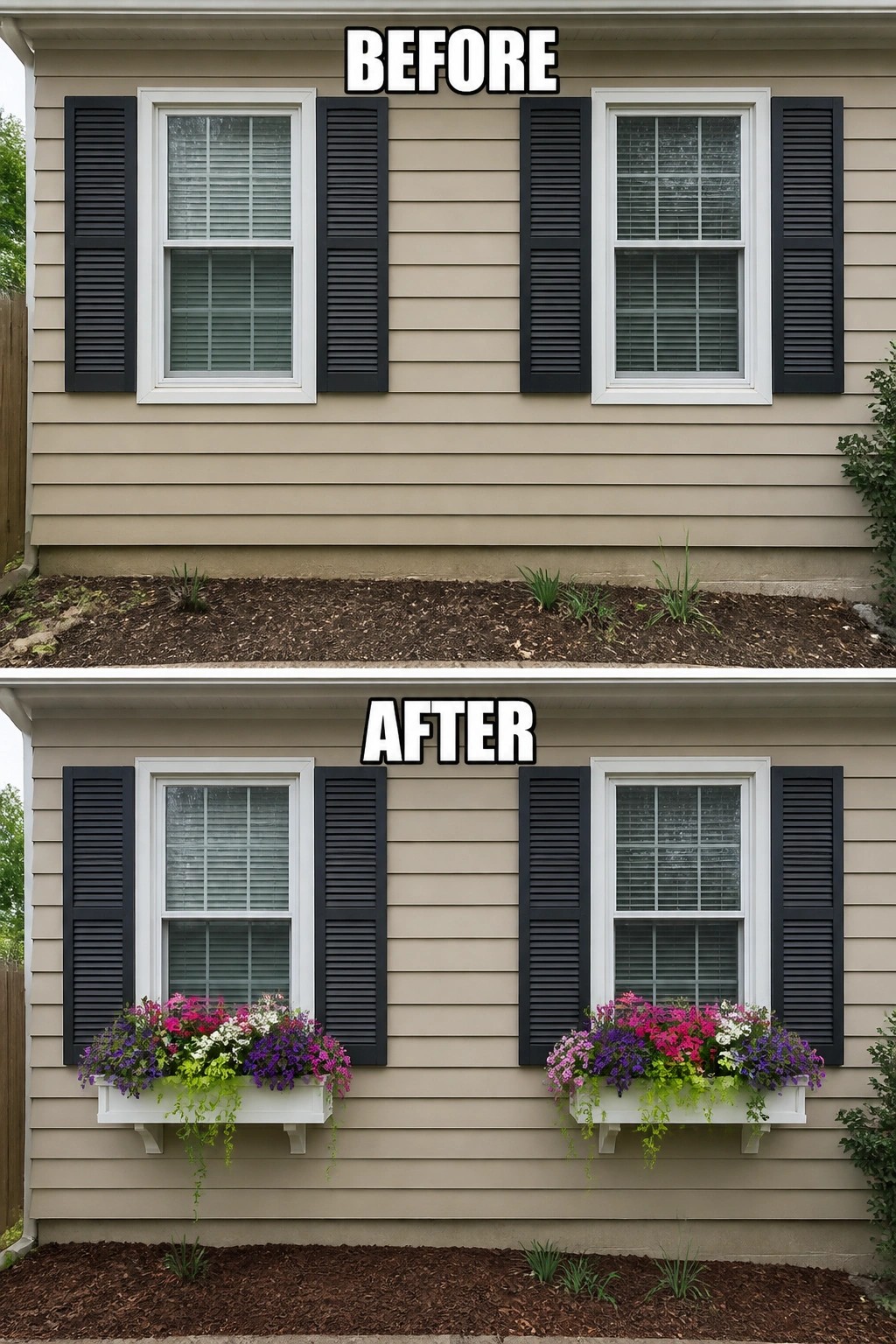
A pair of simple window boxes can change a bland facade into a friendlier, more finished exterior. In this example the plain siding and bare planting bed are given instant color and texture by white boxes filled with mixed, trailing flowers—one small change that reads like intentional styling rather than an expensive renovation.
To copy this, pick boxes sized to the window width and a lightweight material that will stand up to weather (PVC or cedar work well). Fill with a mix of trailing, filling, and upright plants for continuous interest, and use a good potting mix plus a drip line or self-watering liner so they stay low-maintenance. Match the box color to existing trim for cohesion, and consider sun exposure when choosing plants so the boxes keep looking good all season.
Refresh Trim And Gutters To Instantly Improve Curb Appeal
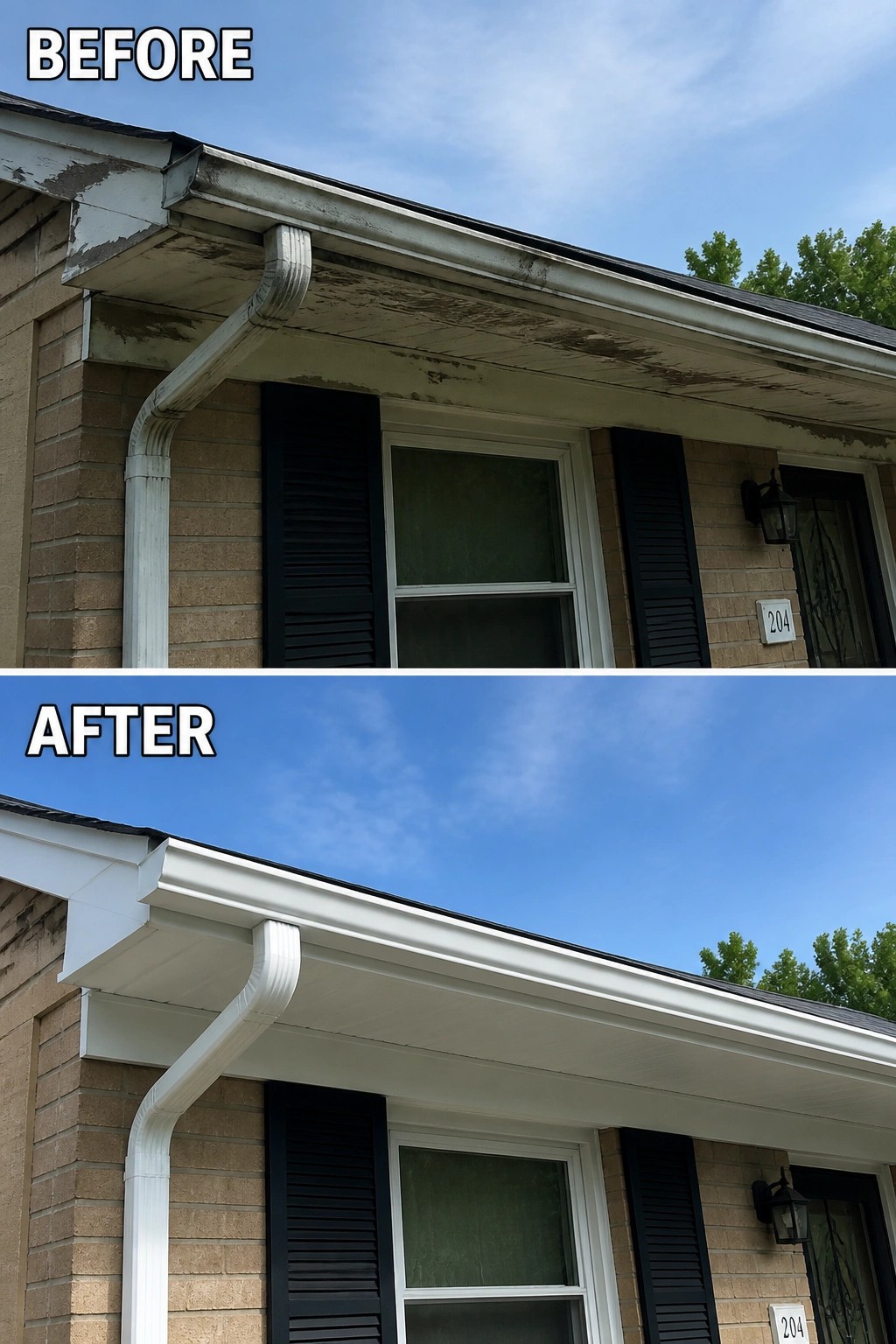
A tidy roofline goes a long way. Replacing or repainting the soffit and fascia and installing a clean new gutter takes care of the peeling paint and water stains that make a house look tired, and the result reads as a deliberate, low-cost upgrade rather than a patch job.
Start by assessing wood for rot and only replace what needs it, then choose low-maintenance materials like aluminum or vinyl for the new trim and gutters. Keep the trim color consistent with shutters or the door, check that gutters are properly pitched and fastened, and consider getting a pro for any roofline or flashing work—this approach gives small homes a noticeable curb-appeal lift without a major renovation.
Add Defined Garden Beds With Mulch And Edging
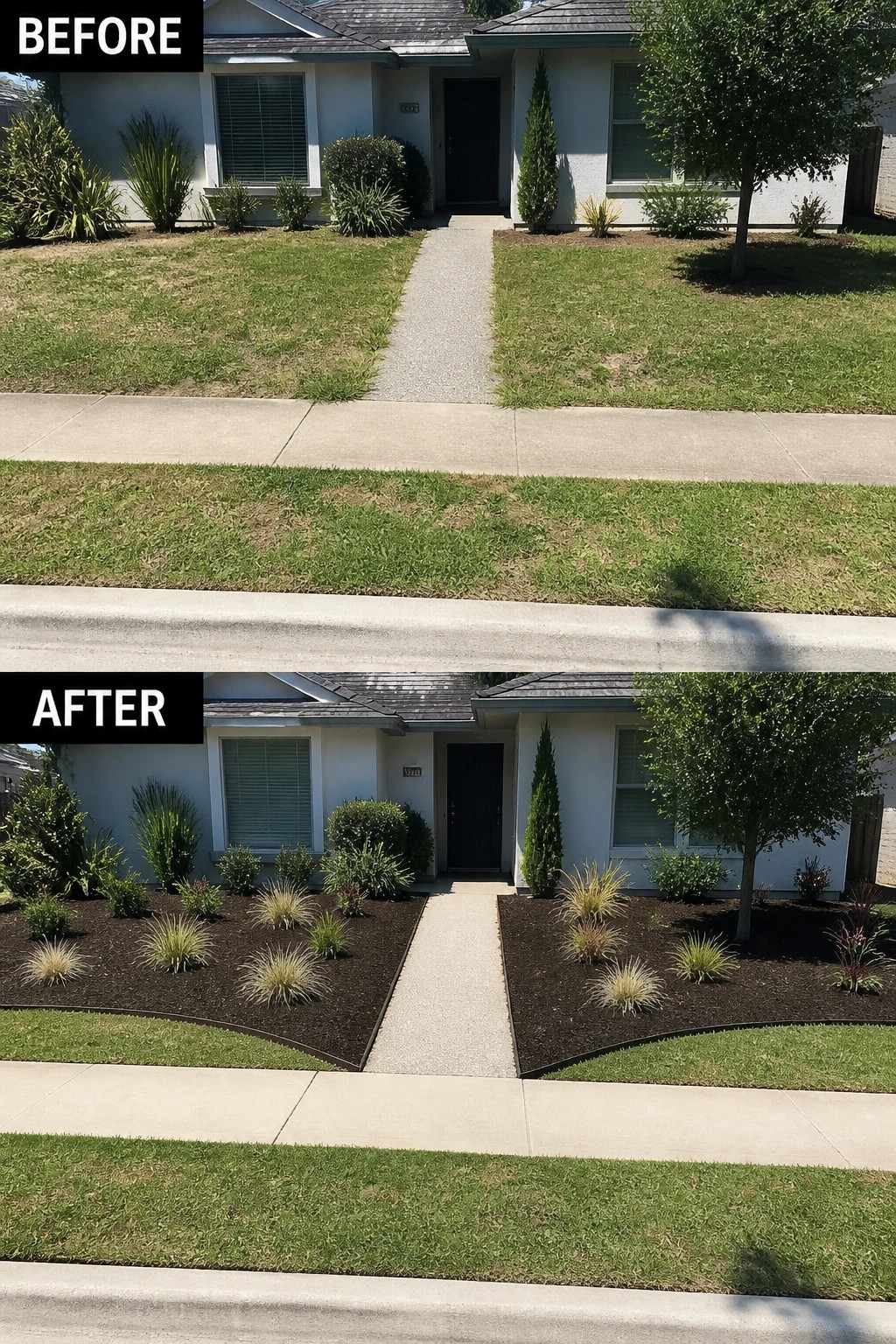
Tidy planting beds can rescue a tired front yard fast and cheaply. In this example the patchy strip of grass beside the walkway was dug out and replaced with crisp edged beds, dark mulch, and a few repeated ornamental grasses to give the facade instant polish and low maintenance contrast against the sidewalk.
To copy it at home, start by clearing the weedy areas and lay a simple steel or plastic edge to hold a clean curve. Add 2–3 inches of mulch to suppress weeds and pick a few hardy, well-spaced plants that match your home’s scale so you won’t overcrowd the windows as they grow. Simple and affordable.
Use Trim To Update A Plain Facade
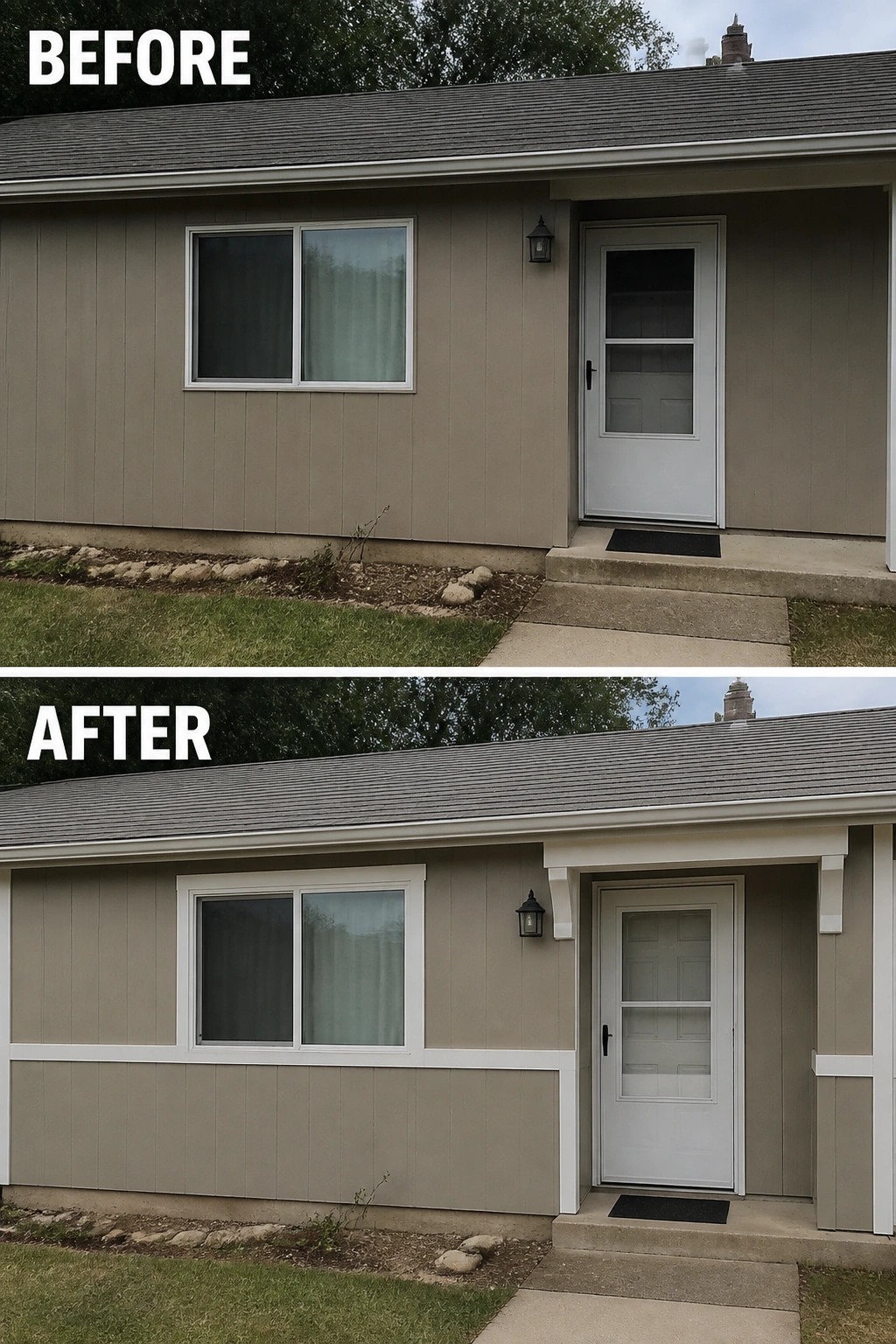
A few simple pieces of trim and a small porch overhang can take a flat exterior from forgotten to finished. In this example the homeowners framed the window and door in white trim and added a modest covered entry with brackets, which gives the whole wall a clear focal point and makes the entrance read as intentional rather than an afterthought.
You can copy the idea without a big budget. Pick one contrasting trim color, frame the door and a key window, and add a small header or porch roof scaled to your house. Use rot-resistant PVC or primed lumber for low maintenance (easy weekend projects), caulk and flash properly where trim meets siding, and finish with a simple light fixture so the newly framed entry actually feels used. This works especially well on small ranches or simple facades where a little architectural detail goes a long way.
Use A Low Horizontal Fence To Define The Front Yard
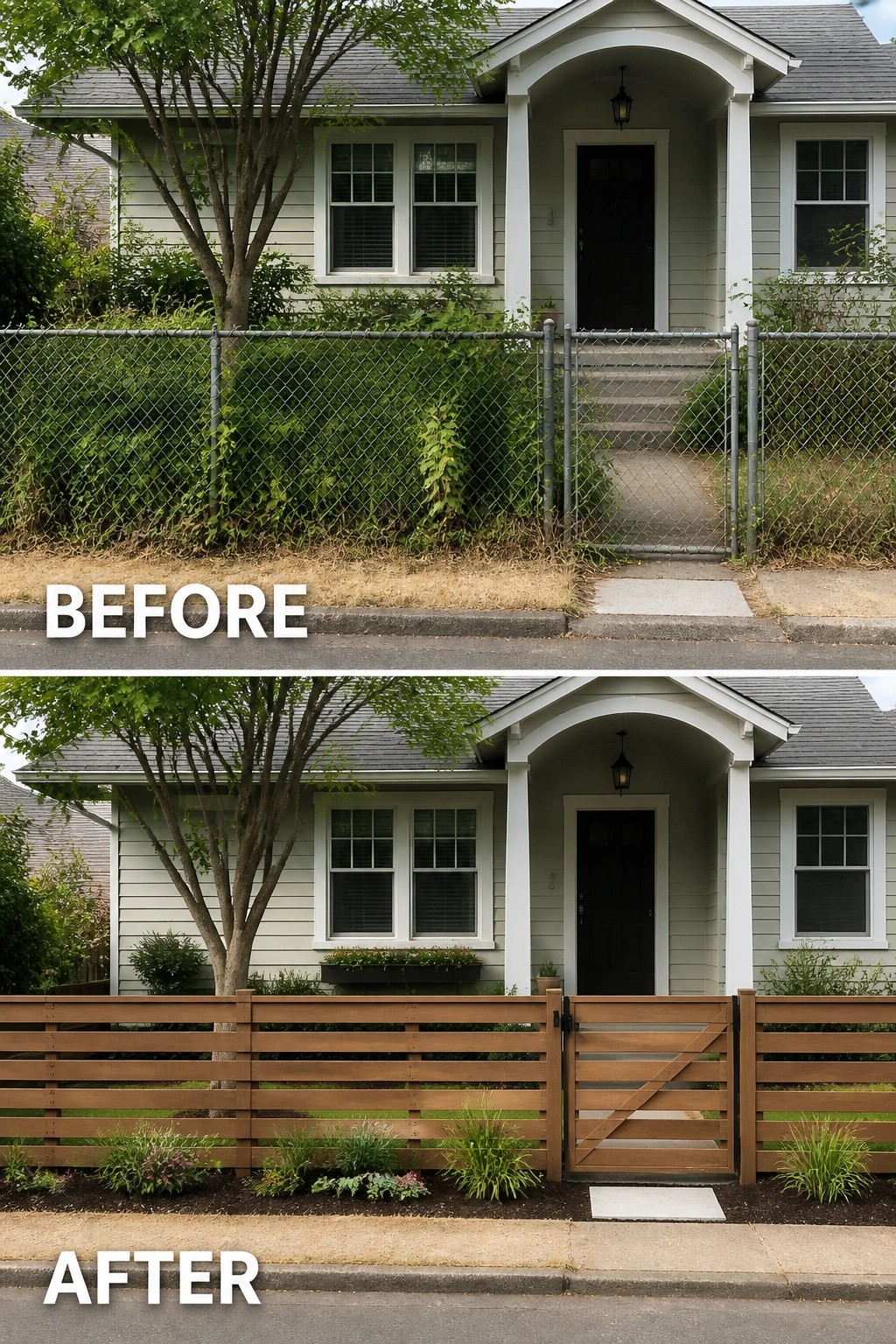
Swapping an old chain-link barrier for a low horizontal wooden fence instantly tidies the facade and gives the entry a purpose. In this example the new slatted fence keeps the porch visible while creating a clear edge for a narrow planted bed, so the house reads as cared-for without losing openness to the street. Simple, but effective.
This works best on small lots or modest homes where you want definition without blocking the view. Keep the fence around 3 to 4 feet high so the front door and windows stay visible, choose rot-resistant wood or composite for low maintenance, and align the gate with the sidewalk for an obvious path. Add a thin mulch bed and a few low perennials in front to soften the wood and keep the budget down.
Create A Compact Porch Sitting Nook
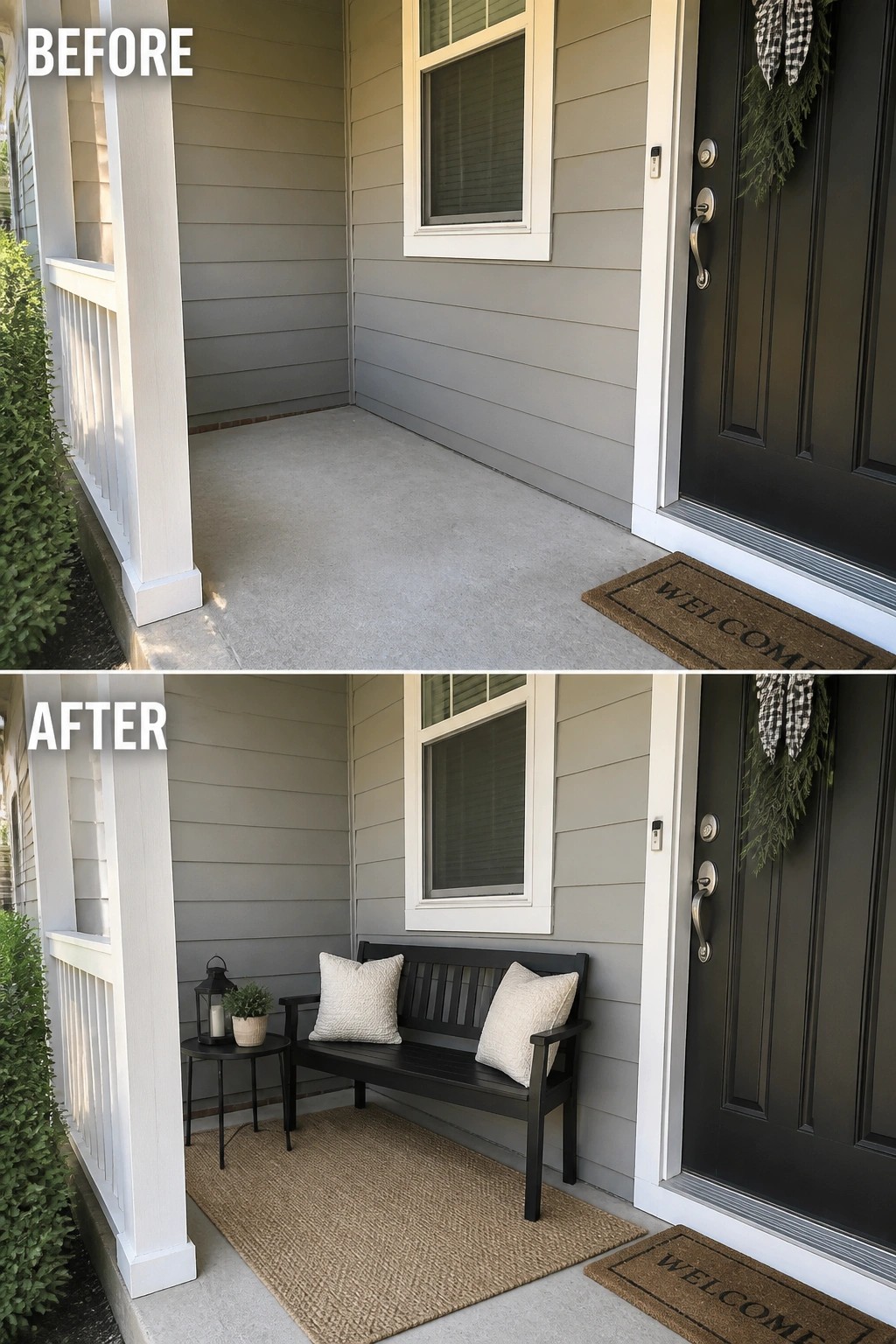
A small, empty porch can feel neglected and awkward. Placing a narrow bench, an outdoor rug, and a small side table turns wasted concrete into a purposeful sitting spot and makes the entry read as intentional rather than unfinished.
When you try this, keep furniture scaled to the porch depth so the door still opens and people can pass. Use weather-resistant materials, one simple rug to anchor the area, and a couple of cushions or a lantern for comfort and light (just leave room to move). This works best on covered porches and narrow entries where a full seating set would be too bulky.
Refresh Exterior Trim With Fresh Paint
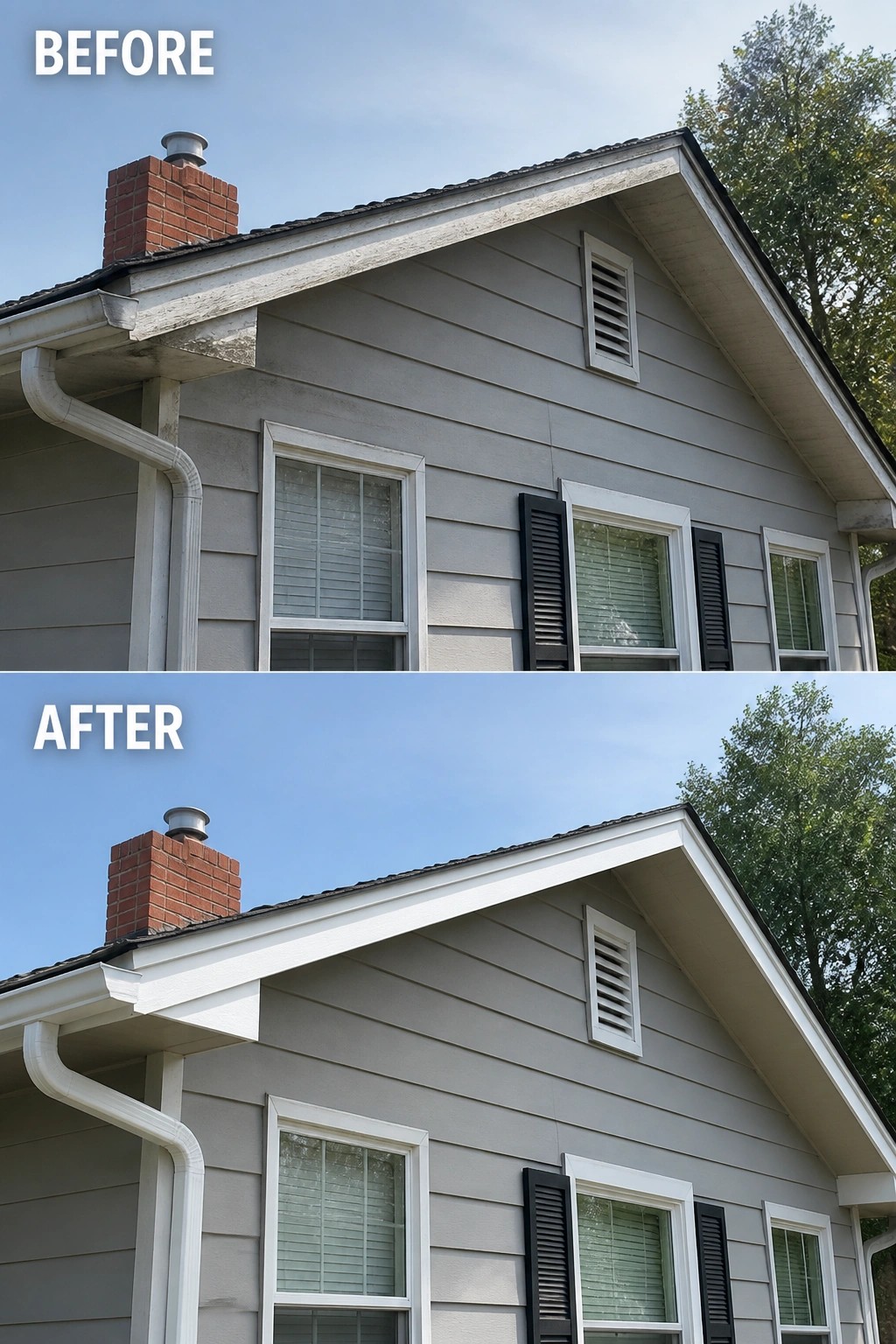
A quick coat of paint on eaves, fascia, and window trim is one of the most affordable ways to lift a small house. In this example the old, weathered trim was cleaned up and painted bright white, which instantly sharpens the roofline and makes the siding and shutters feel more intentional. It’s an easy visual fix that looks much more expensive than it costs.
Start by scraping loose paint, washing mildew away, and touching rotten wood with epoxy or small replacements before you paint. Use an exterior primer where needed and finish with a high-quality exterior paint made for trim. Choose a trim color that contrasts the siding a bit to highlight architectural lines, work on a calm, dry day, and take basic ladder and caulking precautions. Start small if you’re nervous, and you’ll see curb appeal improve quickly.
Add Patterned Risers To A Plain Concrete Entry
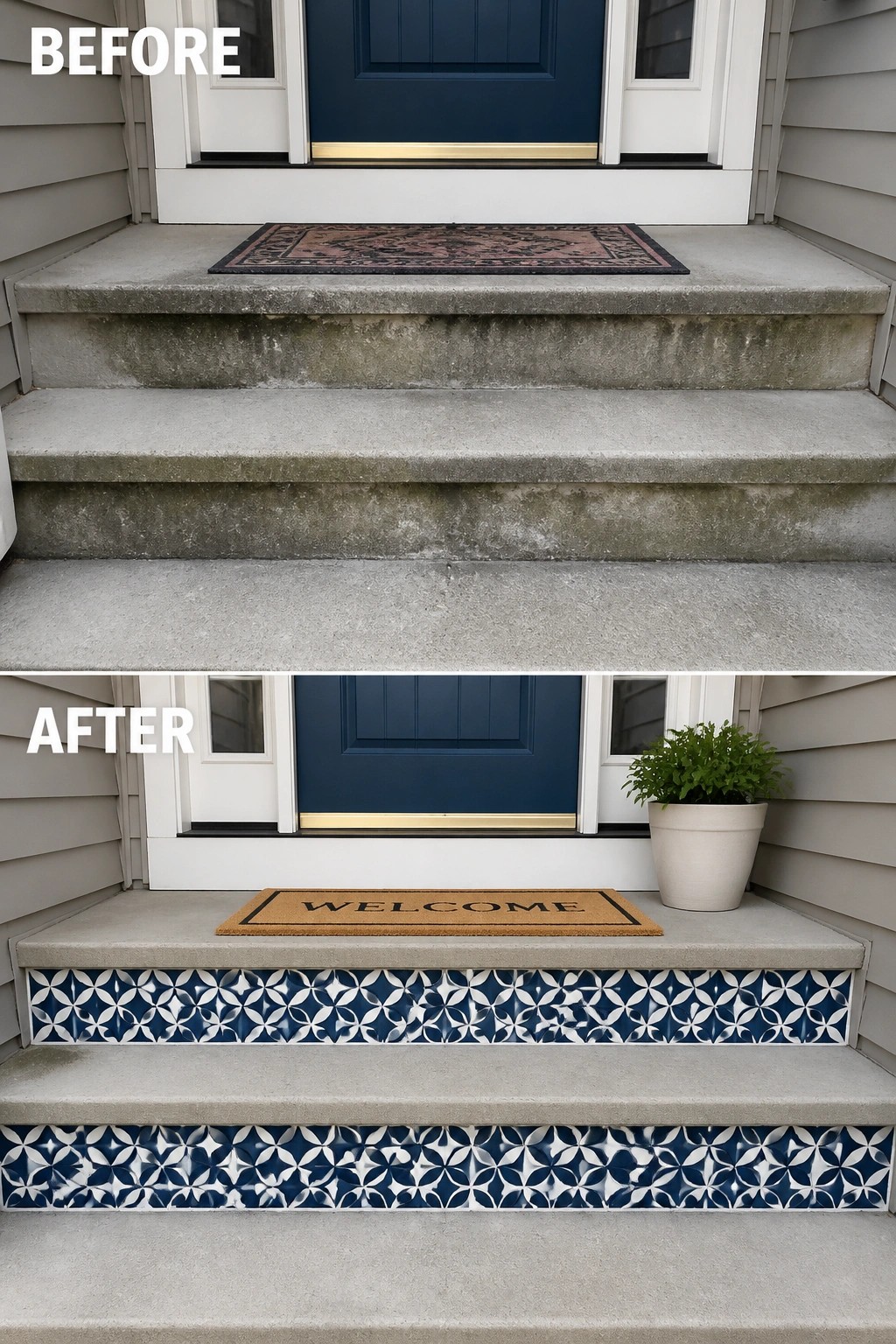
A few simple additions can make an uninviting concrete entry feel intentional. Swap plain risers for patterned outdoor-rated tile or peel-and-stick riser decals, then anchor the top step with a welcome mat and a single potted plant. The patterned risers add instant personality while the mat and planter give the porch a clear purpose: a small, usable landing instead of just a step.
To copy this on a budget, start by cleaning the concrete and repairing any cracks. Use weatherproof materials sized to your steps (outdoor tiles or heavy-duty stickers), pick one color from your door or trim to repeat in the tile, and keep accessories minimal so the walkway stays clear. Check slip resistance and secure installation so the look lasts through rain and foot traffic.
Clean Up The Front Beds And Add Simple, Defined Planting
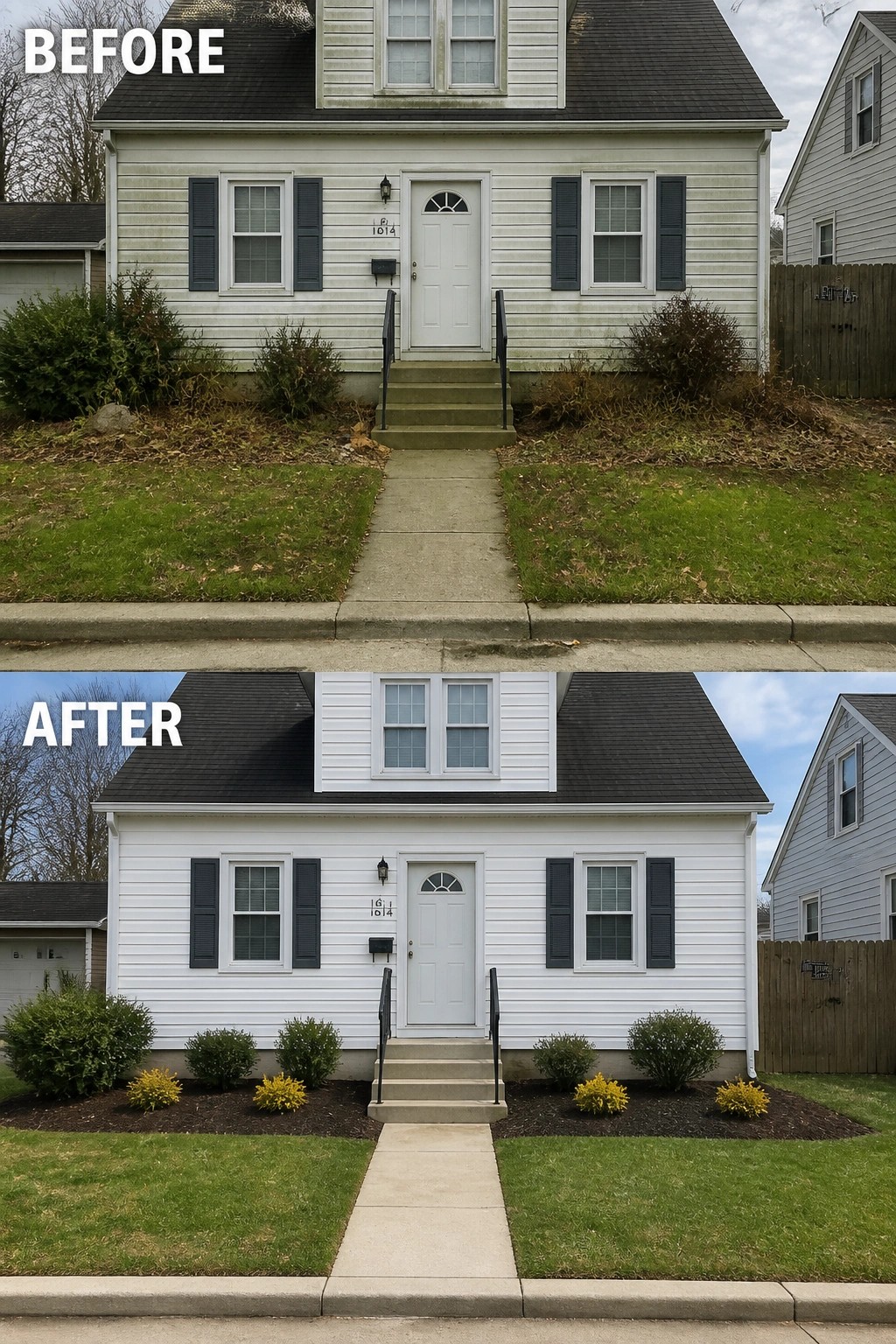
A neat, mulched planting bed and a few well-placed shrubs can make an older facade look cared for without a big budget. In the before image the beds are overgrown and undefined; in the after they are cleared, edged, and filled with low-maintenance shrubs and small accent plants. That clean edge and repetition of plant shapes give the house a finished, intentional look.
Start by clearing brush and pulling weeds, then define the bed edge with a spade or simple edging material and lay fresh mulch to hide soil and reduce future weeding. Choose two or three hardy plants to repeat across the bed so the scale reads right for a small house—evergreen shrubs for year-round structure plus one low, seasonal accent. Keep plant sizes modest so the yard stays tidy and maintenance stays low. Simple, affordable, effective.
Frequently Asked Questions
Q: How much do these small exterior updates usually cost and how should I budget?
A: Expect a wide range: tiny fixes like fresh paint on trim or new house numbers can be under $200, while larger swaps like new siding panels or a simple porch update might run into the low thousands. Pick two or three projects that hit the biggest visual payoff first and set a simple budget for each so you don’t overspend chasing everything at once.
Q: Which projects can I realistically do myself and which ones should I hire out?
A: You can handle painting, replacing hardware, planting beds, and installing simple lighting on your own if you have basic tools and patience. Hire pros for anything involving structural changes, major electrical work, or complicated roofing so you stay safe and avoid code problems.
Q: Will I need permits for these kinds of exterior updates?
A: Most cosmetic updates like paint, plants, and small decorative features do not need permits. Check with your local building department before doing electrical changes, replacing windows, adding decks, or altering load-bearing elements.
Q: What’s the quickest, cheapest way to boost curb appeal this weekend?
A: Honestly, clean first—power wash siding, sweep the porch, and clear away dead plants—then add a bold front-door color or swap out old hardware for a fresh style. A couple of planters and a new welcome mat finish the look without breaking the bank.