

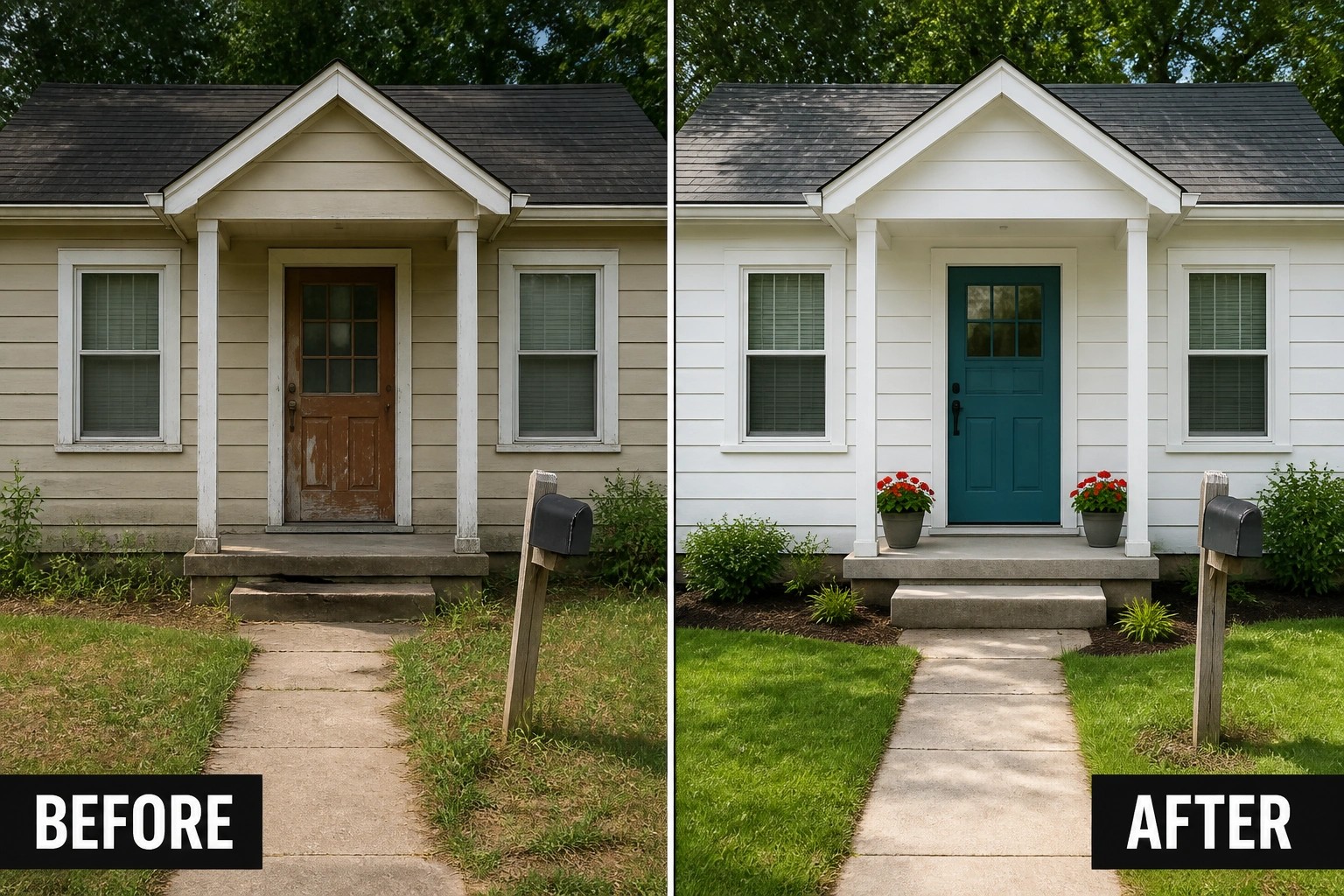
Small cottages often feel bland not because they lack character but because their facades are muddled by mismatched materials, a faded front door, or an entry that gets lost from the street.
I usually start with small, practical fixes like fresh paint on trim, a new doorknob, or a well-placed planter, then test one bolder change such as reworking porch lighting or adding shutters to see what actually improves curb appeal.
Some ideas here change the apparent scale of a narrow front, others focus on materials and color that read well from the sidewalk, and a few show how to add charm without a full reconstruction.
Small choices add up.
If you save a handful of photos and try one idea at a time, you can make a compact cottage look cared for and more legible to visitors without a big budget or a messy project.
Update A Small Cottage With Fresh Paint And A Colorful Door

A quick way to lift a compact facade is to repaint the siding and trim and choose a contrast front-door color as your focal point. In this example the house goes from dull beige to crisp white while a teal door and matching planters give the entry a clear, friendly center. That single color move makes the whole front feel cleaner and more intentional.
To copy it, start with a good clean and minor repairs, then paint the body a light neutral and keep trim bright for contrast. Pick a door color that stands out but complements the home, add two small planters or low evergreen shrubs for symmetry, and keep the planting scale modest so the front remains easy to maintain. Simple, but effective.
Give A Bare Porch A Clear Purpose
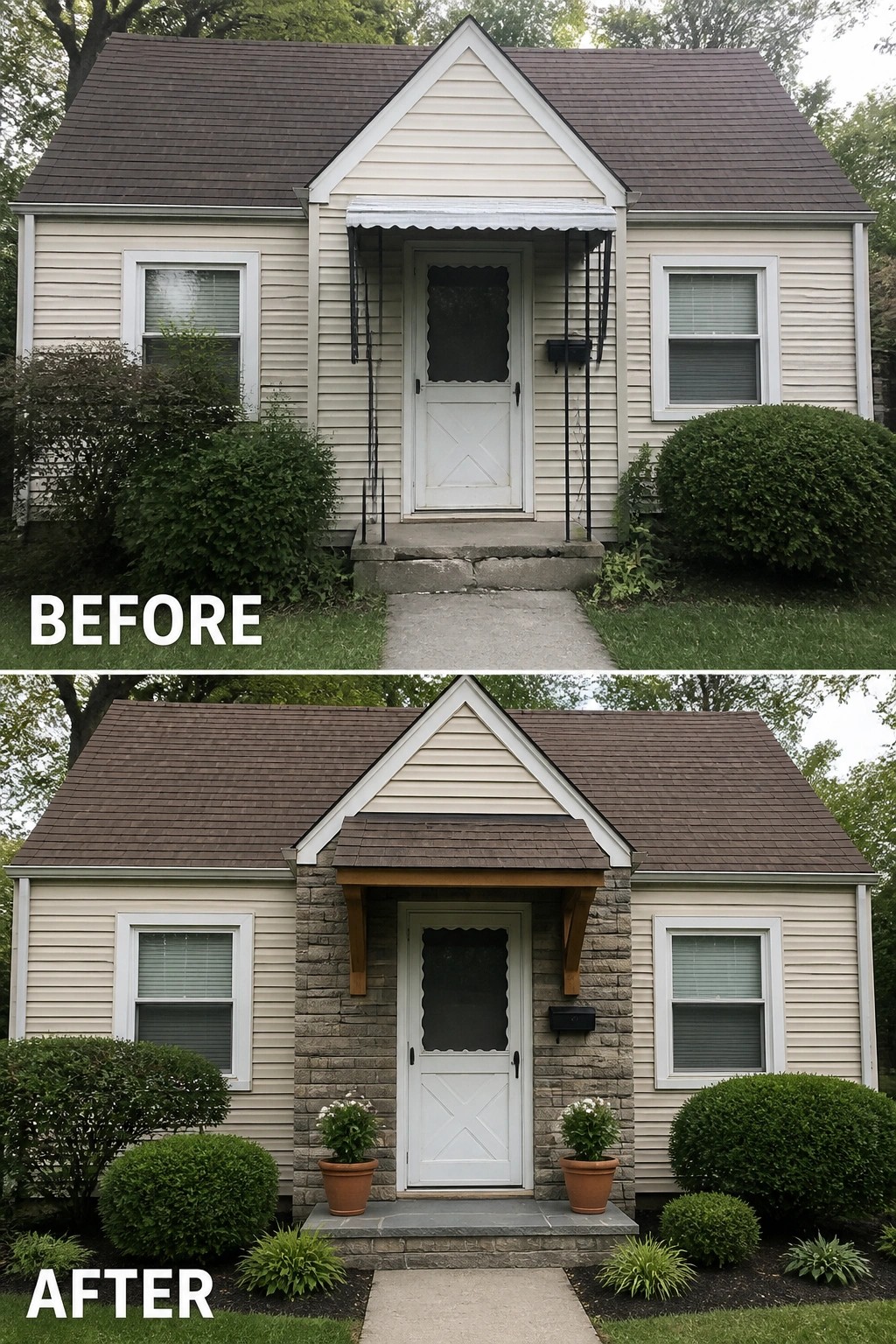
Small entries can feel forgotten on a compact cottage facade. Framing the doorway with a simple roofed portico and a different surface around the door makes the entrance read as intentional rather than an afterthought. In this example, swapping thin metal supports and a flimsy awning for a compact wood porch roof and a stone-clad surround instantly gives the front door presence, and a pair of matching planters helps tip the scale toward a welcoming focal point.
To try this at home, start small: pick one durable material to frame the door—stone, brick, or painted trim—and add a modest overhang sized to your house so it feels in proportion. Anchor the look with two matching pots or low-evergreen shrubs and keep the path clear so the entry stays functional. Less is more; aim for a clear, scaled focal point that fits the size of your cottage and can handle weather and everyday use.
Add A Compact Covered Porch To Define The Entry
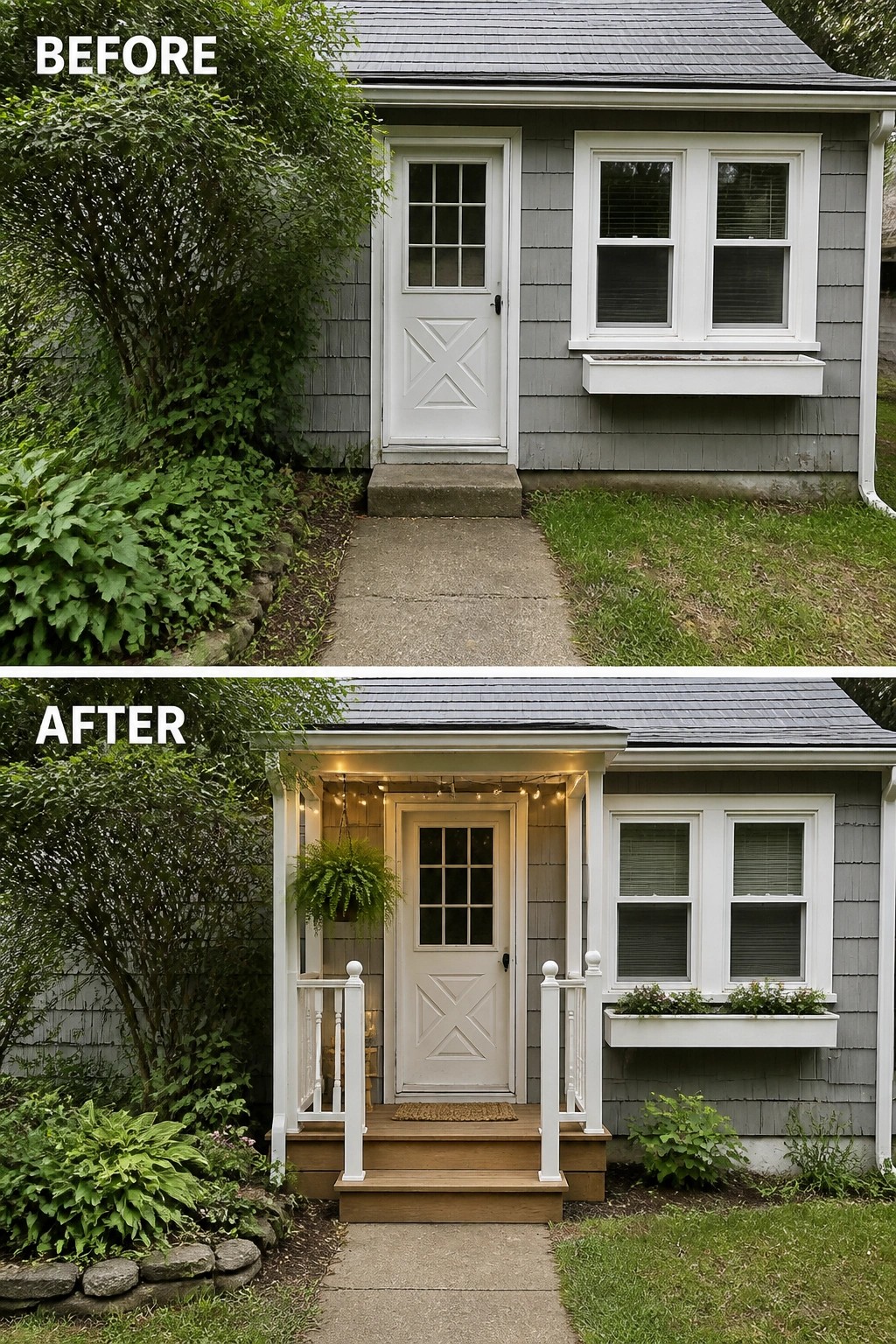
A tiny entry can look forgotten, so add a small covered porch to make the front feel intentional and usable. In this example the plain step is replaced by a compact platform with a couple of wooden steps and simple white railings plus a hanging fern for instant curb appeal and a welcoming touch.
Keep the scale modest so the porch fits the cottage facade: a shallow platform, two or three steps, and low-profile railings do the job without crowding the yard. Use weatherproof decking, match the trim color, and add a small doormat and soft lighting (string lights or a wall sconce) so the space works day and night. Small change, big payoff.
Refresh A Small Brick Cottage With Paint And Dark Trim
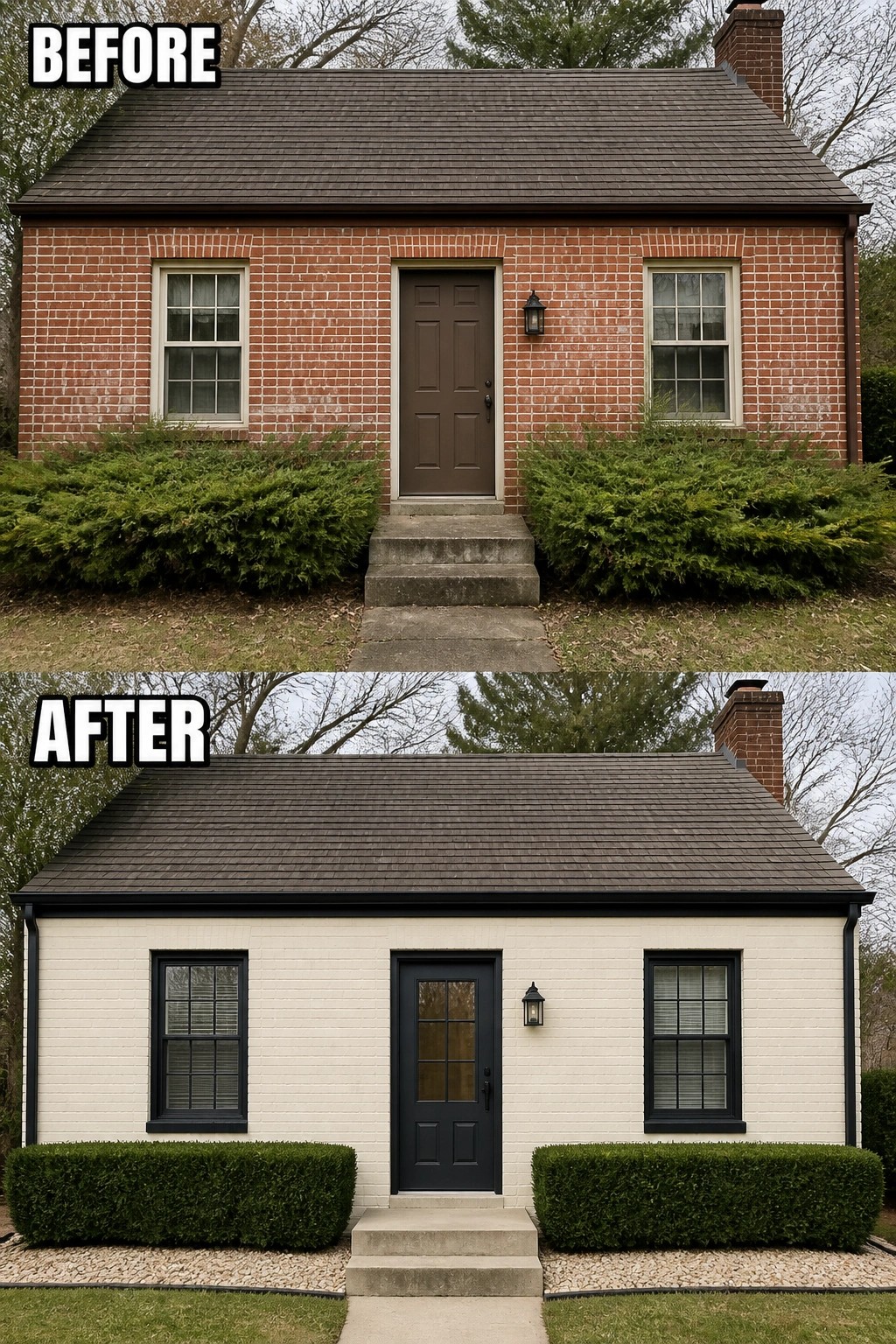
A coat of masonry paint and a strong trim color can do more for a tiny cottage than a major remodel. Painting the red brick a soft, neutral tone and switching the door and window trim to a dark, contrasting color immediately brightens the facade and gives the house a clearer, more intentional look. Pairing that with a neatly edged planting bed keeps the front tidy without crowding a compact layout.
To copy this on your own home, start with a small test patch and make sure the brick and mortar are sound before you paint (start with a test patch). Choose a breathable exterior paint made for masonry and pick one dark accent color for all trim and the door so the small face of the house reads as one cohesive design. Keep foundation plantings low and shaped, add simple gravel or edging to define the bed, and use durable finishes on hardware and lighting so the update stays crisp with minimal upkeep.
Use Layered Planting To Frame A Narrow Cottage Entry
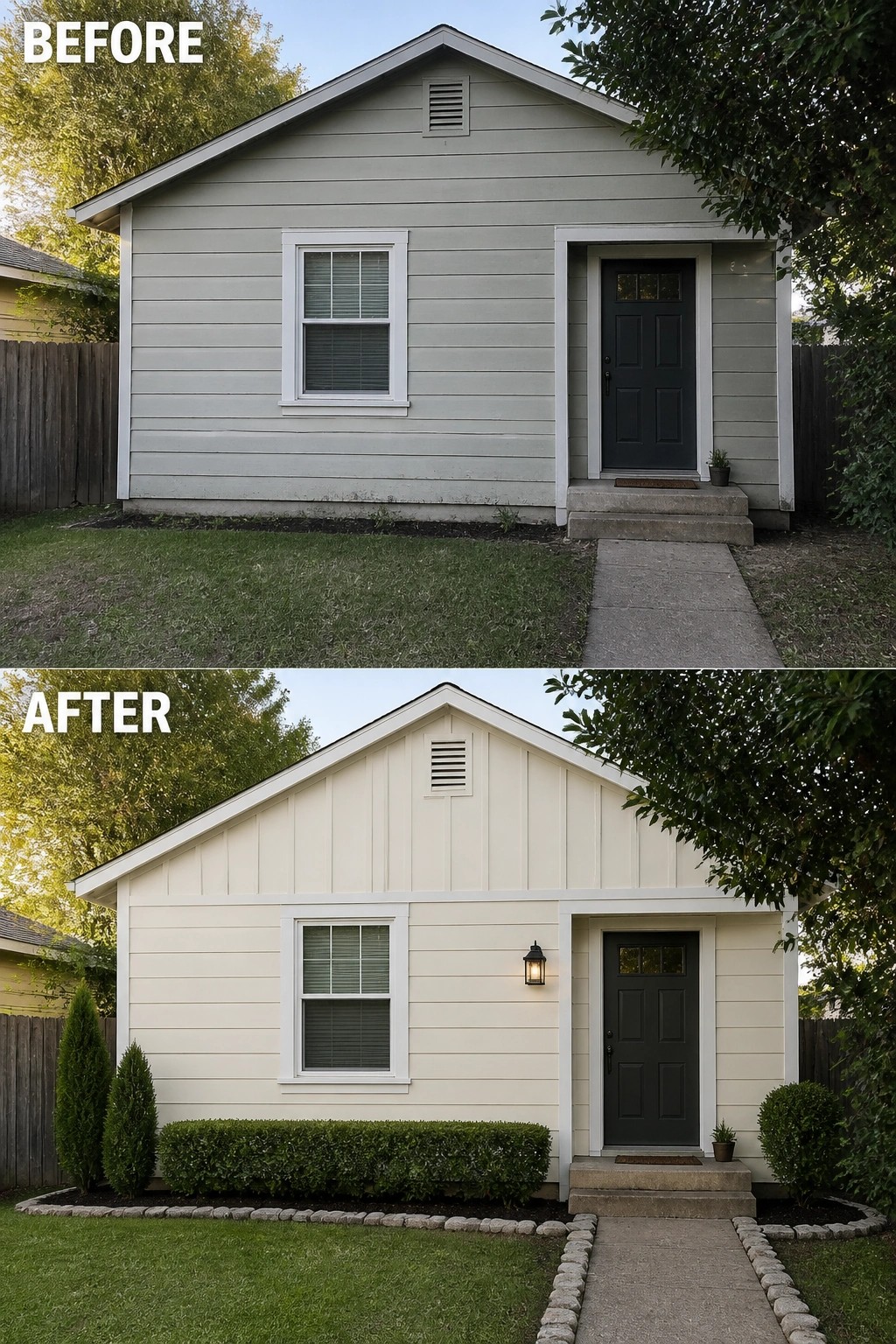
A narrow cottage entry does not need a big remodel to feel finished. Framing the doorway with low planting and a clear edge turns an anonymous step into a purposeful front entry. In this example, a clipped hedge, a pair of vertical evergreens, simple stone edging and a single exterior lantern create scale and guide the eye to the door without crowding the small facade.
To copy this, start by cleaning up the foundation line and laying a narrow planting bed that follows the walkway. Choose low-maintenance, small-scale shrubs and one or two upright evergreens at the corners so the house reads taller without overwhelming the porch. Add a modest wall lantern at eye level and a simple stone or paver edge to separate lawn from bed. Keep plant heights lower than the window sills and leave clear access to the steps so the entry stays practical as well as styled.
Create A Small Gabled Portico For Added Curb Appeal
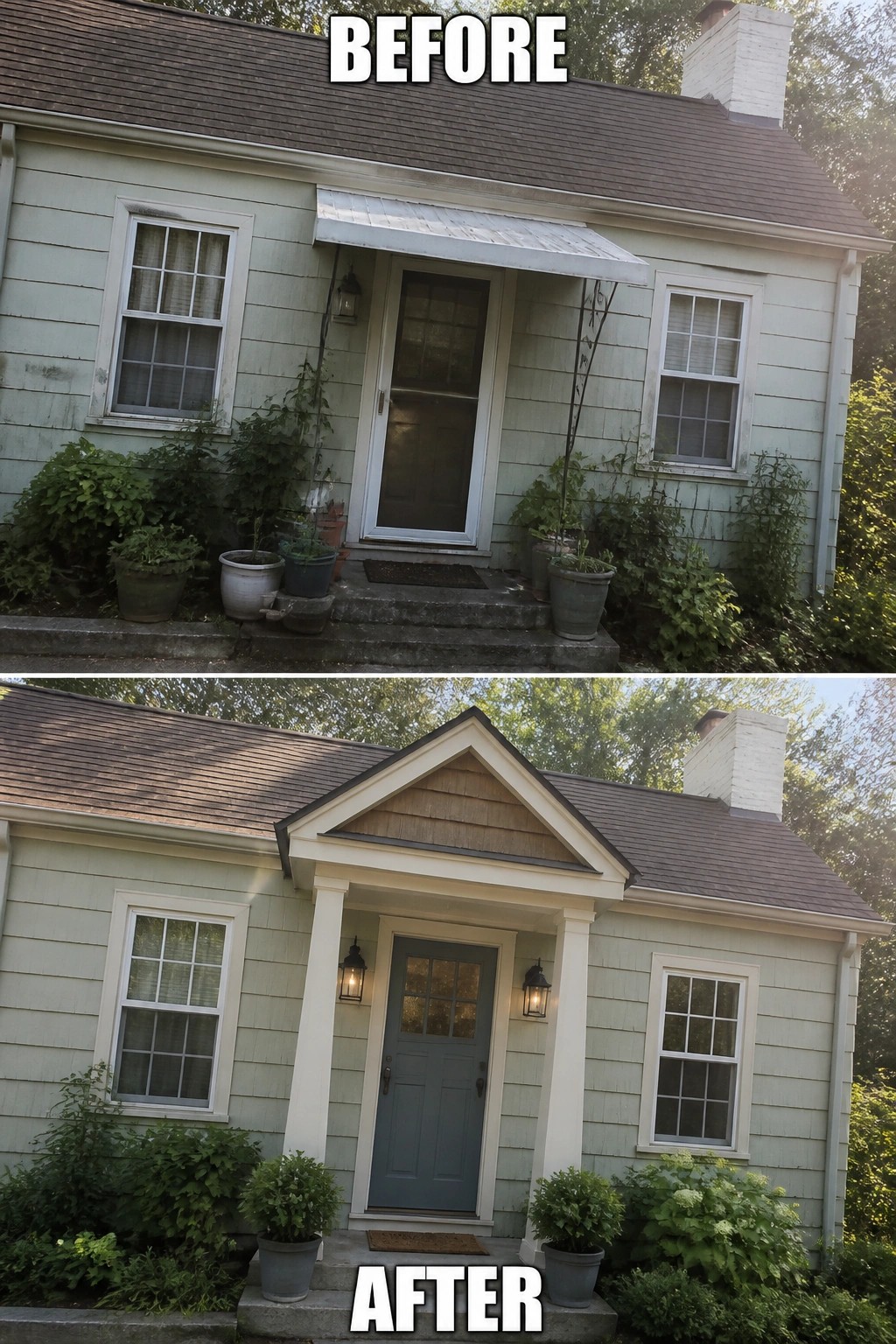
A tiny covered entry can feel more intentional by swapping an awkward metal awning for a small gabled portico and adding a clear focal point like a painted front door with matching lanterns. That single architectural gesture gives the facade scale, shelter, and a sense of arrival without a big remodel.
Use this idea on compact cottages where the porch feels undefined. Start with a cleanup of plants and steps, choose a modest roof and columns that match your house proportions, and add durable lighting and a single bold door color to repeat elsewhere on the house. Keep plant pots small and the path clear so the new porch reads as a purposeful, usable entry (start with the basics).
Define The Entry With A Low Fence And Path
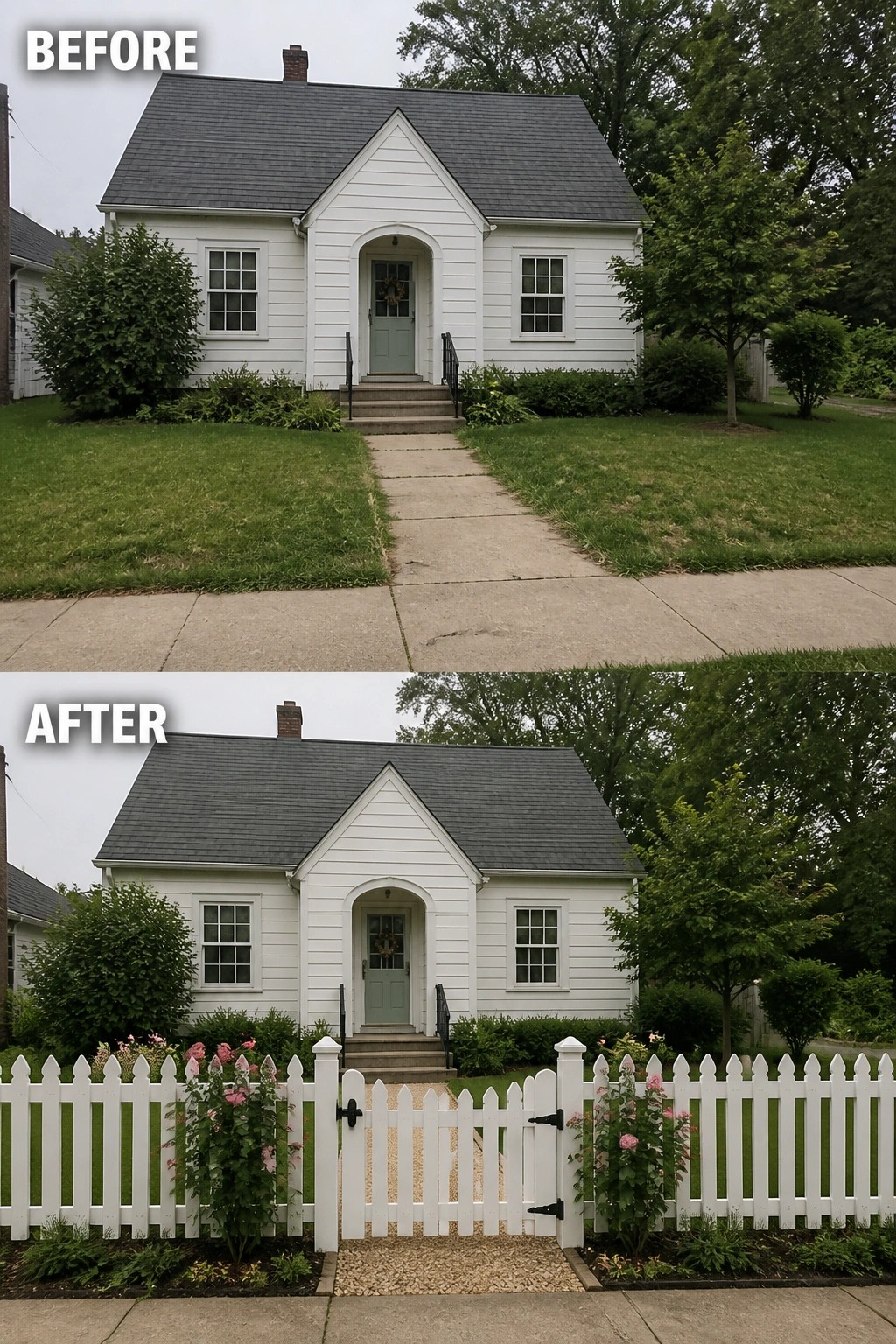
A small, well-placed fence and a clear center path can turn a plain front lawn into a purposeful entry. In this example a low white picket and a gravel walkway give the cottage a front yard “room” and a direct route to the door, while a couple of flower clusters soften the approach. The change is simple, but it immediately makes the facade feel finished and welcoming.
This idea works best on compact lots where you want to keep the scale modest. Choose a fence no taller than knee height so the house stays visible, place the gate on the main axis to the door, and use a low-maintenance surface like gravel or compacted stone for the path. Plant repeatable, easy-care shrubs or perennials on either side (think hydrangeas or salvia) and leave enough space for mowing and access. Small moves, right proportions, and durable hardware make this an easy curb-appeal upgrade.
Create A Defined Pathway With Low Lighting
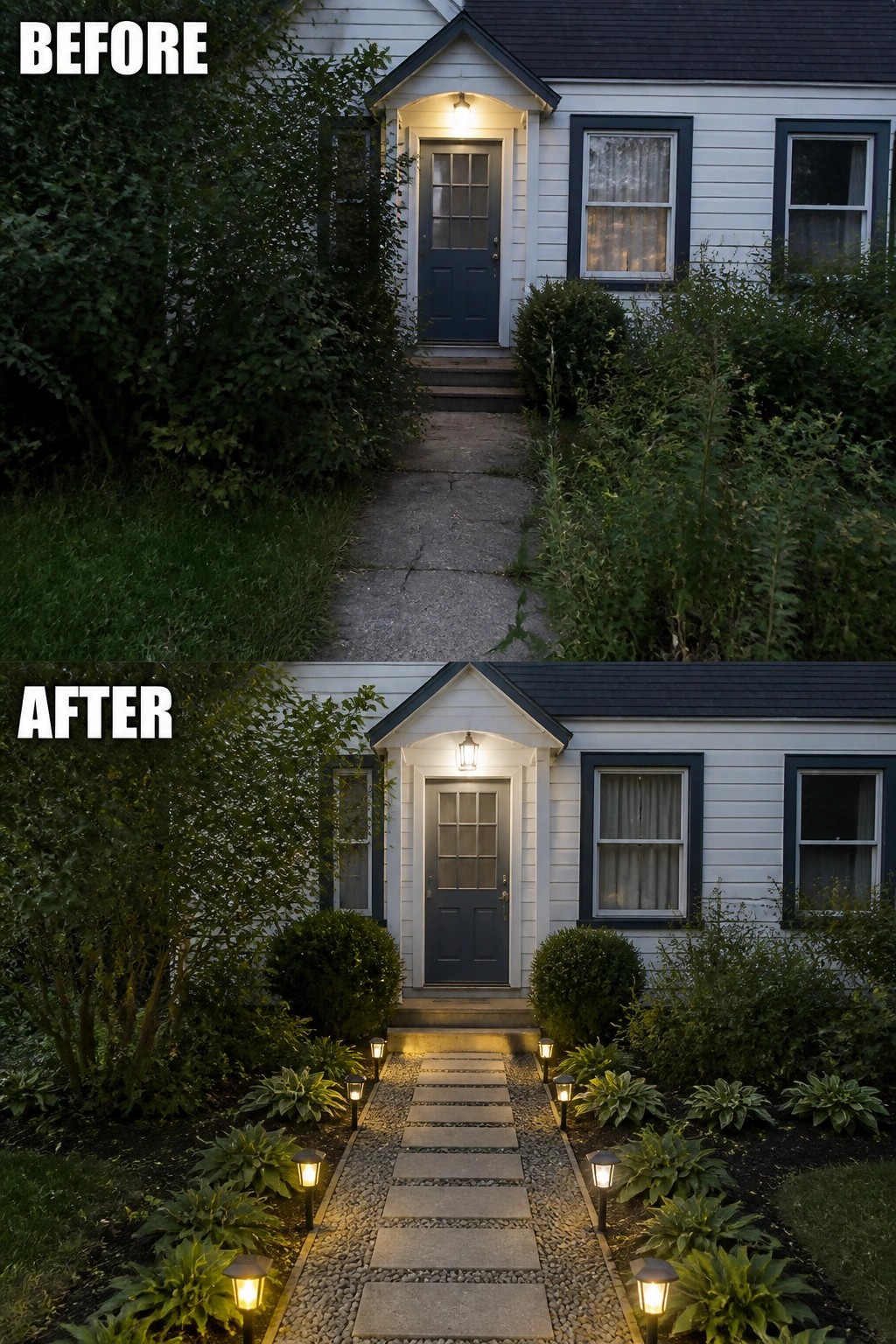
A clear, well-lit path can make a cramped, overgrown entry feel purposeful and cared for. Replacing the uneven concrete with stepping stones set in gravel and adding low lantern-style path lights gives the small cottage a simple axis that leads the eye and guides visitors. Small changes, big impact.
Start by cutting back the overgrowth so the route has a clean edge, then lay pavers on a compacted base with gravel or pea stone between for drainage and low upkeep. Add low-voltage or solar lights spaced evenly and keep planting low and repeatable—think hostas or boxwoods—so the path stays usable and the narrow facade doesn’t feel crowded.
Use Siding And Trim To Give A Small Cottage Character
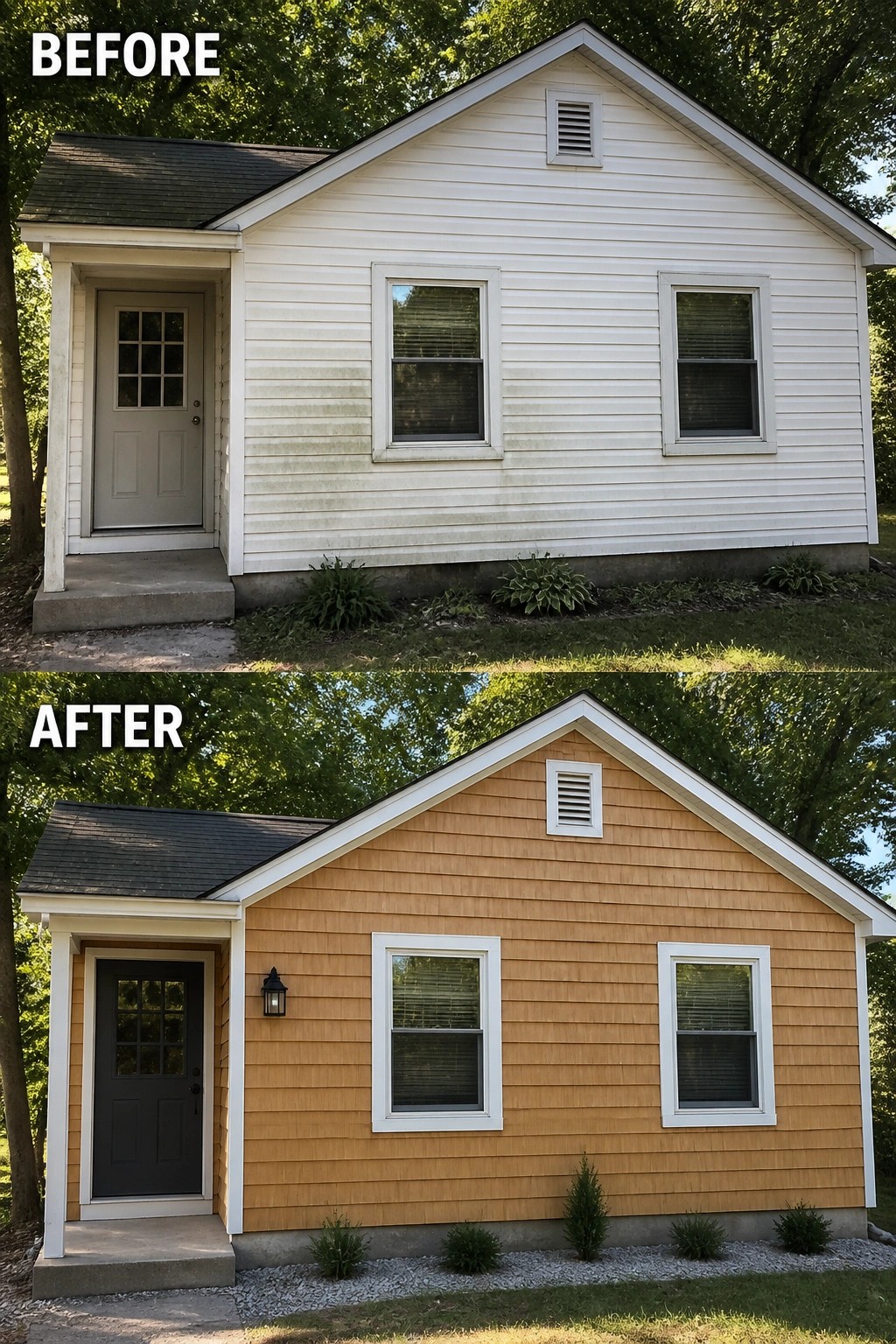
Swapping flat, tired siding for a warmer, textured cladding instantly changes the curb appeal of a compact cottage. In this example the plain white facade was replaced by cedar-style shingles and crisp white trim, while a darker front door and a simple porch light help anchor the entry. Texture and a restrained color choice make the little house feel intentional rather than plain.
You can use this idea on tight facades where footprint changes aren’t possible. If budget is tight, paint or stain existing siding and add new trim and a contrasting door color instead of a full replace. Keep plantings low and simple so the new siding reads clearly, and choose a single trim color to keep the look cohesive. Small changes go a long way.
Give A Plain Facade A Welcoming Entry
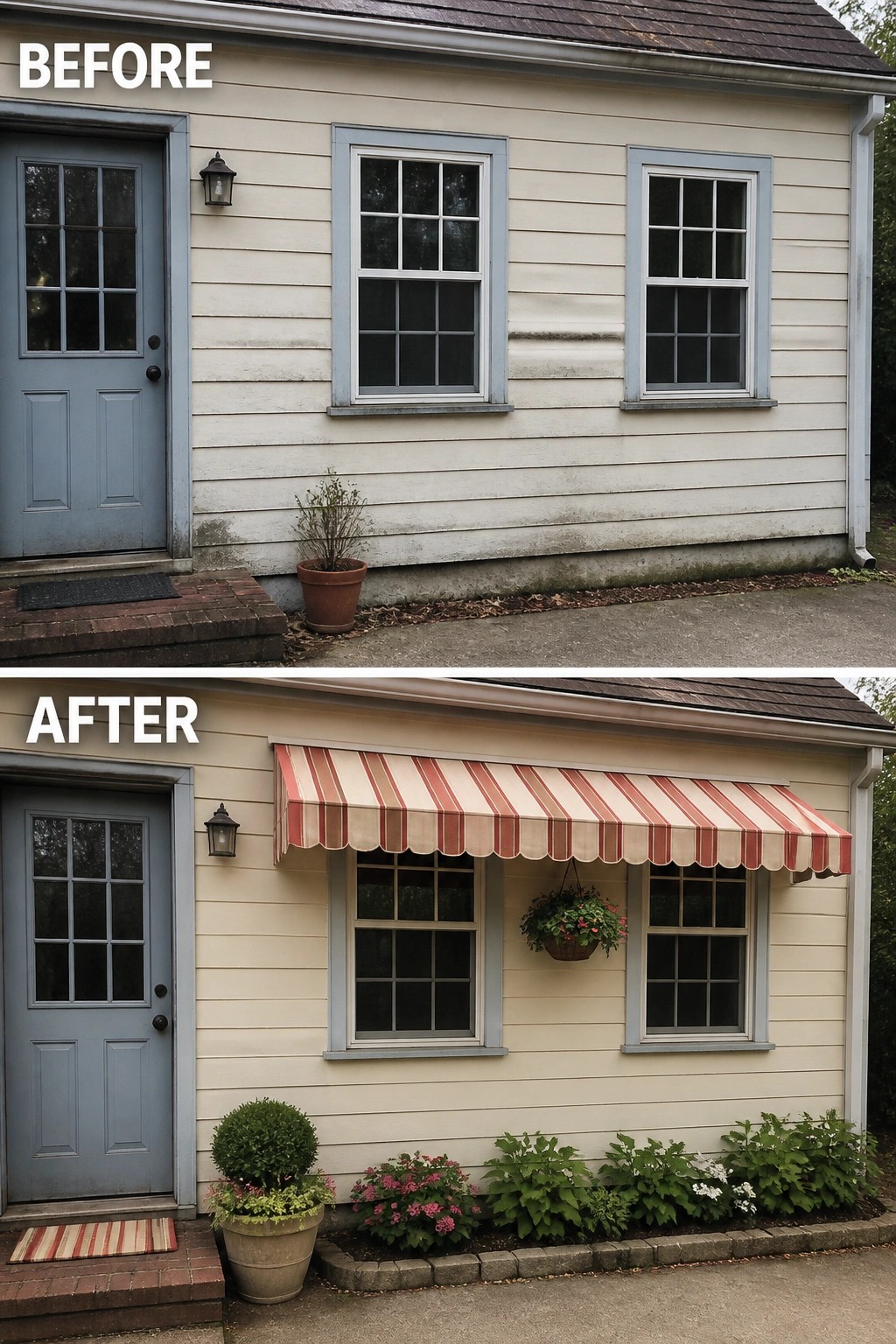
A small awning and a few well‑placed planters can turn a bland cottage wall into a purposeful entry. Adding a modest striped awning plus a hanging basket and a row of low beds creates a clear focal point and makes the front feel like it has intent rather than just being a side wall.
To copy this, start with a good clean of the siding and one main element—a canopy or a large statement pot—then layer a couple of matching planters and a hanging basket to repeat color and shape (keep scale small for narrow facades). Choose weatherproof fabrics and low‑maintenance plants, leave the path clear, and pick one repeated trim color to tie the whole look together.
Turn A Small Stoop Into A Functional Mini Porch
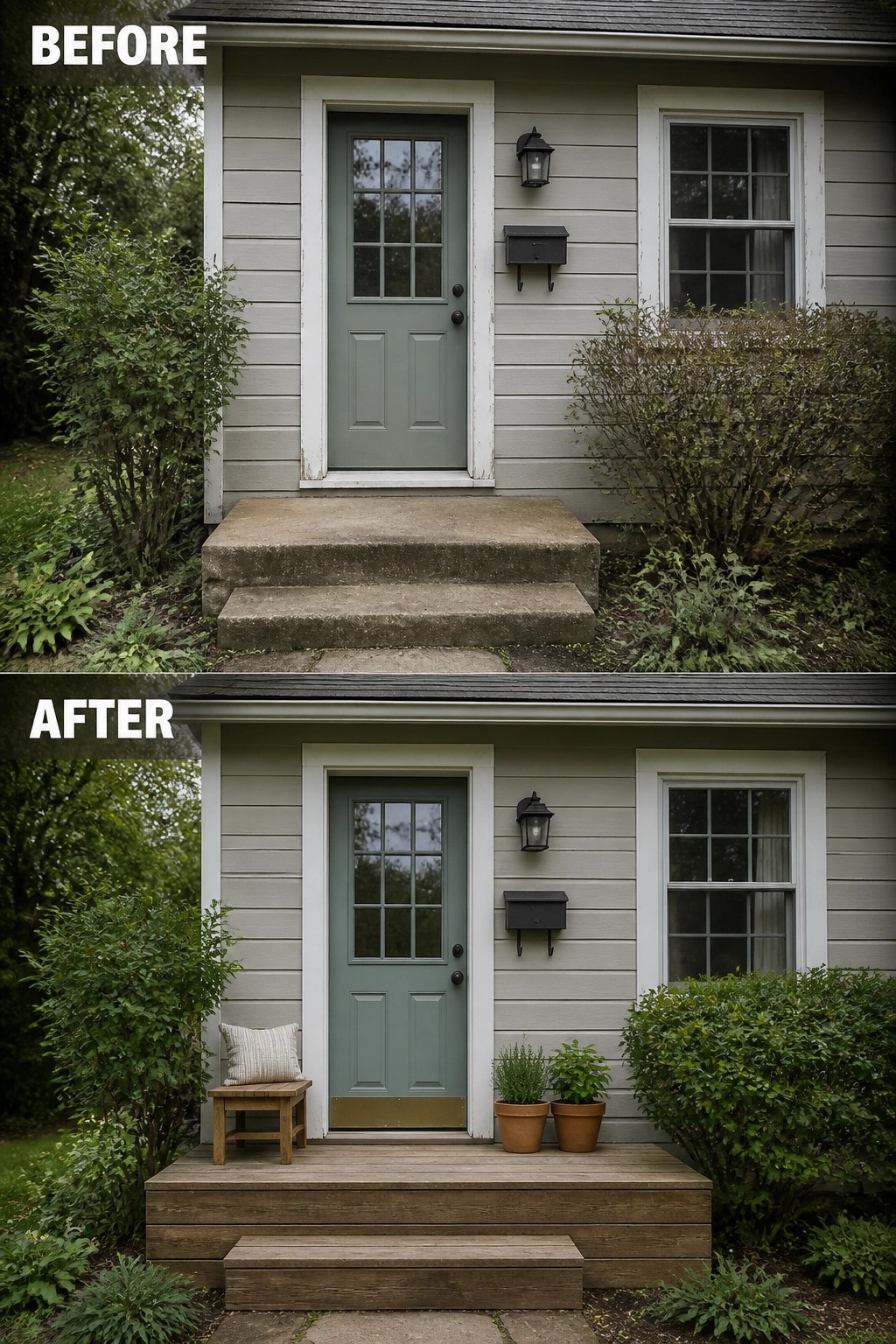
A tiny, awkward entry can feel finished with one practical move: replace or cover worn concrete steps with a low wooden platform and add a simple seat and a couple of pots. In the before image the entrance was just bare concrete; the after shows how a small deck, a bench, and two terra-cotta planters make the door feel used and welcome without changing the house.
To copy this, start by sizing the platform to fit the facade and leave enough room for the door to open—keep the furniture small and multiuse, like a narrow bench that doubles as a spot to set groceries. Use rot-resistant lumber or a composite deck board for low maintenance, pick two matching planters to frame the entry, and repeat one metal finish from the door hardware on a kickplate or mailbox to tie it together. Simple, small moves go a long way on compact fronts.
Use Low Garden Lighting To Boost Curb Appeal
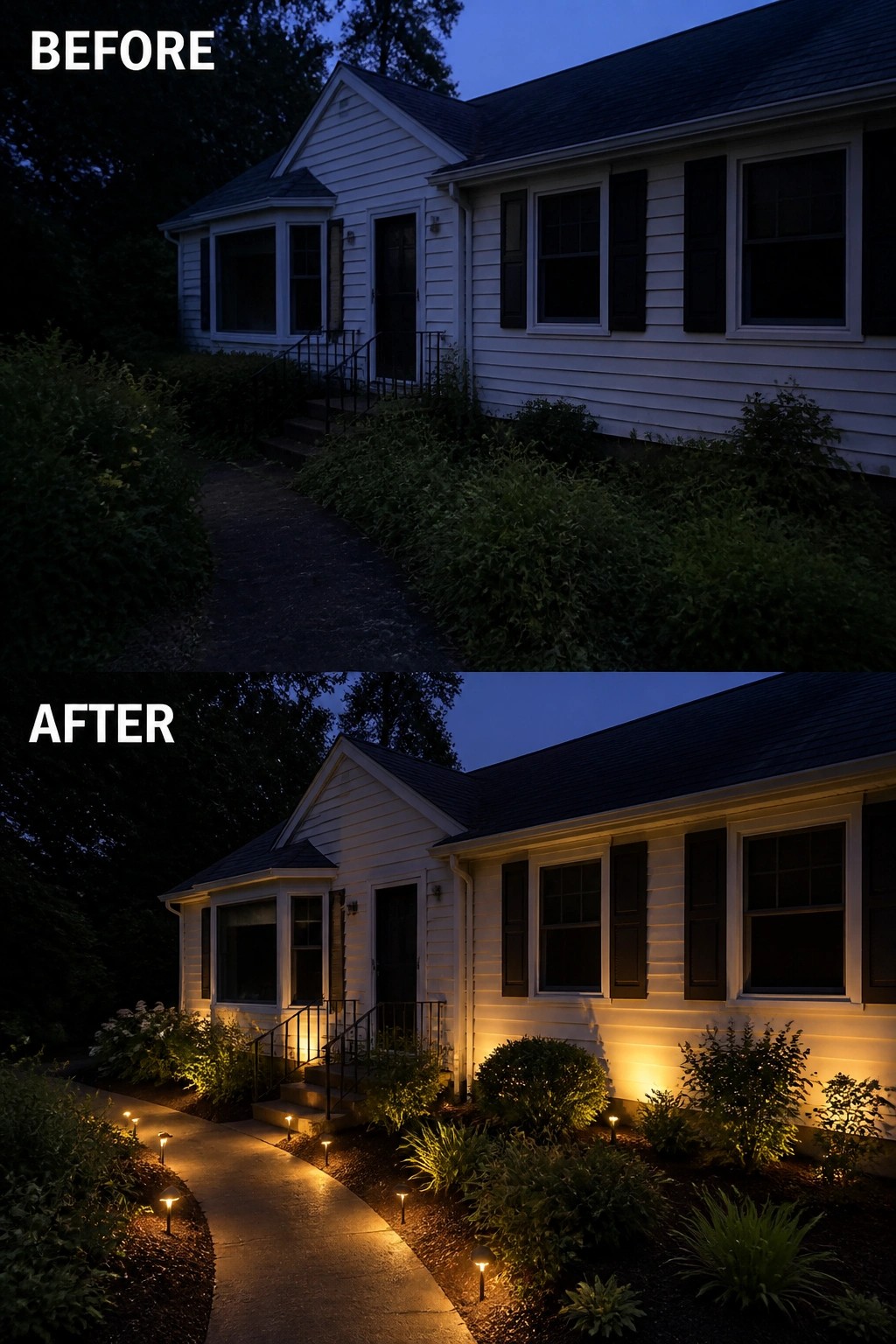
A few well-placed lights can make a small cottage feel cared for and usable after dark. In this example the homeowner added low path stakes and subtle uplights on the house, which clarify the walk, highlight the entry, and make the facade read as intentional rather than forgotten. You get more presence from modest fixtures than from a single bright porch light.
To copy the idea, start by clearing back overgrown planting so light reaches the path and walls. Space low-voltage stake lights about 4 to 6 feet apart along the walkway and add a couple of uplights aimed at the porch or foundation plantings; choose warm 2700–3000K LEDs to keep the glow gentle. Use a timer or smart switch, hide wiring in mulch, and test placements at night so you avoid glare and keep the look simple and proportional for a compact facade.
Create A Cozy Seating Nook Beside The Cottage Entry
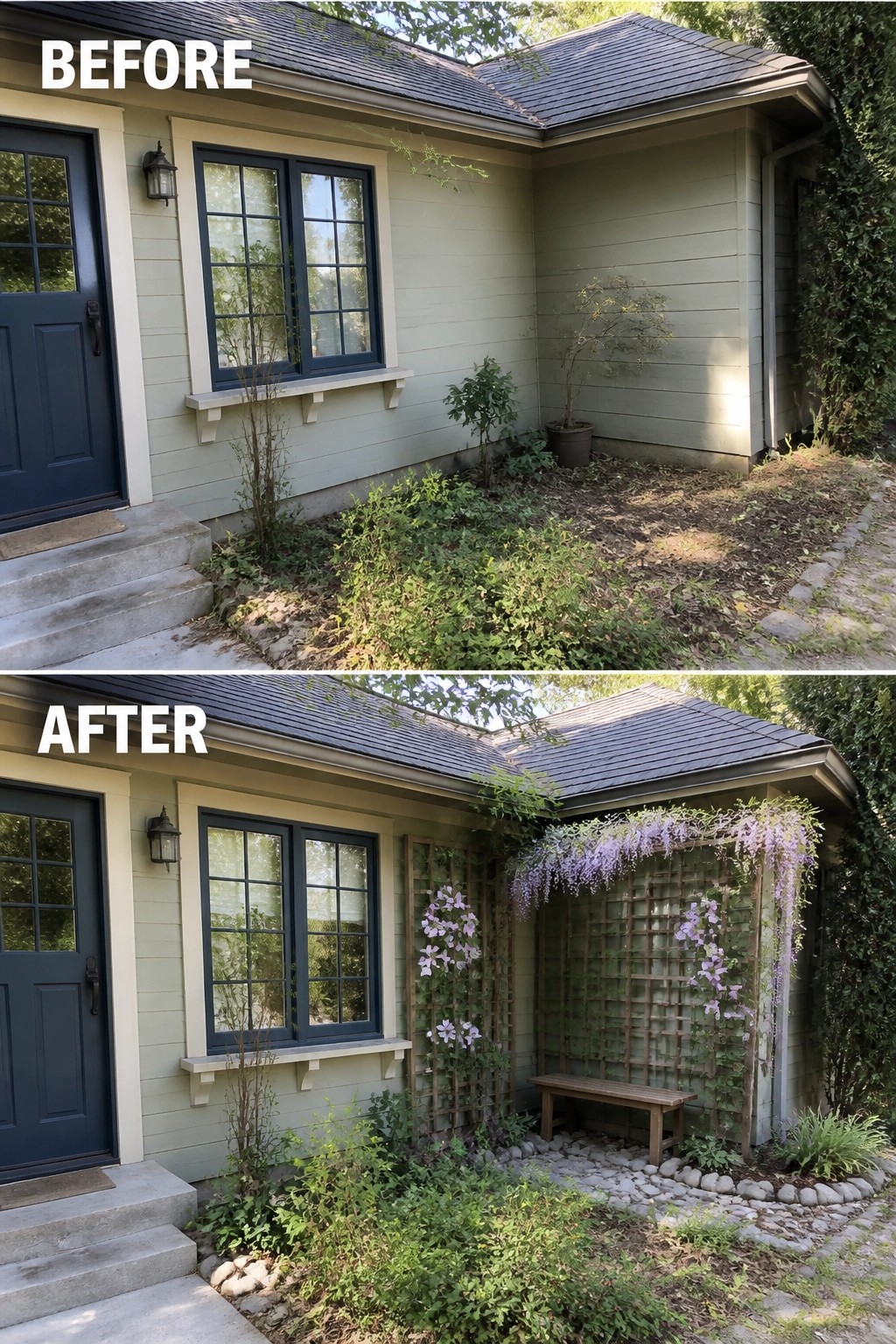
A narrow, overlooked corner can become a tiny outdoor room with one clear move: add a simple structure and a place to sit. In this example an empty planting bed was replaced by a wooden trellis, a small bench, and a stone ground plane so the corner reads as a deliberate seating nook instead of wasted space. The climbing flowers provide quick privacy and a soft overhead canopy without a full remodel.
To try this at home, start by clearing and leveling the area, then choose a slim bench and a freestanding or wall‑mounted trellis that fits the facade. Plant manageable climbers (clematis, compact wisteria, or honeysuckle) and train them gradually, use river rock or pavers for a low‑maintenance floor, and make sure the seating leaves room to move past the entry. Small and simple.
Brighten A Tiny Porch With A Glass Panel Door
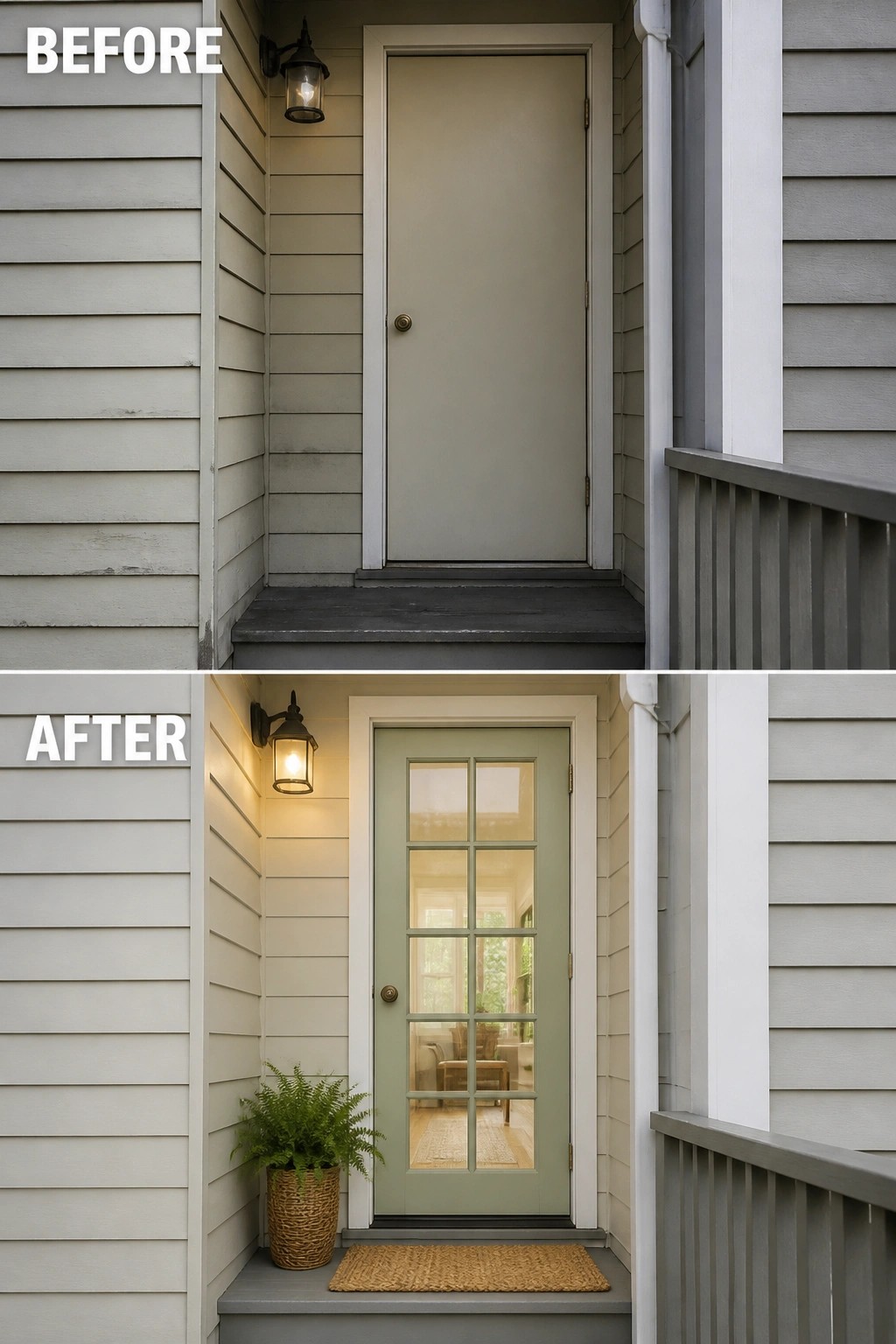
Swapping a plain, solid front door for a glass-panel door and adding a single rug and planter instantly gives a tiny porch a reason to exist. The change brings light, a hint of the interior, and a clear focal point, so the entry no longer reads as an afterthought but as a small, usable space.
You can copy this on any compact facade by choosing one main upgrade—like a windowed door or a bold light—then keeping accessories minimal and weatherproof. Use a narrow, low planter and a simple doormat to add texture without crowding the step (keep it small), and pick exterior-rated hardware so the little setup stays easy to live with.
Turn An Empty Patio Into A Seating Area
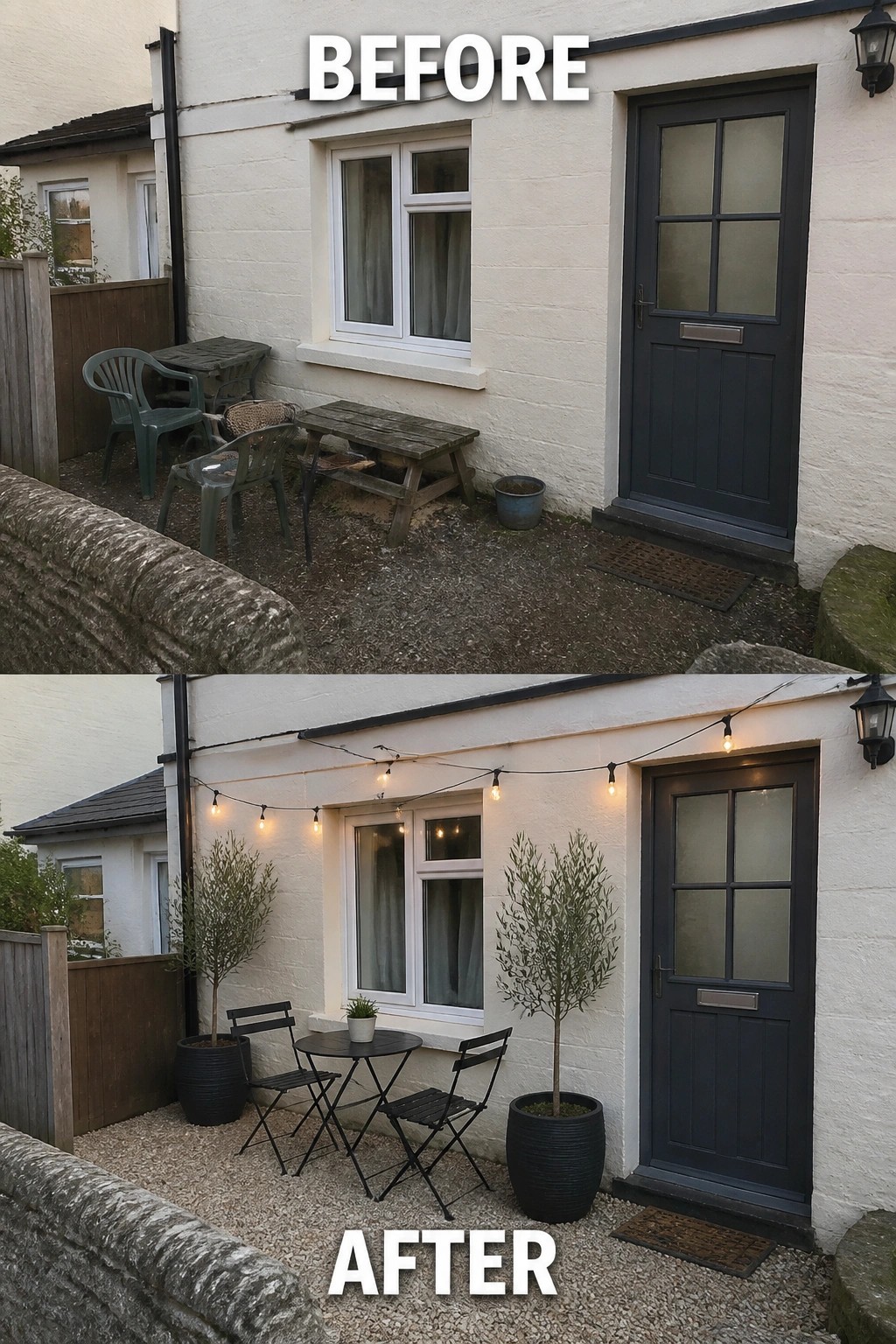
A narrow, neglected front strip can become a usable outdoor room with a few focused moves: clear away old clutter, lay a simple gravel surface or compact paving, add a small bistro table and folding chairs, and frame the space with two matching potted trees. The change works because it gives the area a clear purpose and improves scale — compact furniture and vertical planting make a small width feel intentional rather than accidental.
To copy this, start with a cleanup and a defined surface so gravel or paving sits level and stays tidy. Choose slim, weatherproof furniture that folds for storage, place taller pots to anchor the ends and keep a clear path to the door, and hang a single strand of lights where people will sit. It’s an easy, low-cost way to make a front facade feel used and welcoming without blocking access.
Use A Meandering Path And Low Hedges To Define A Small Front Yard
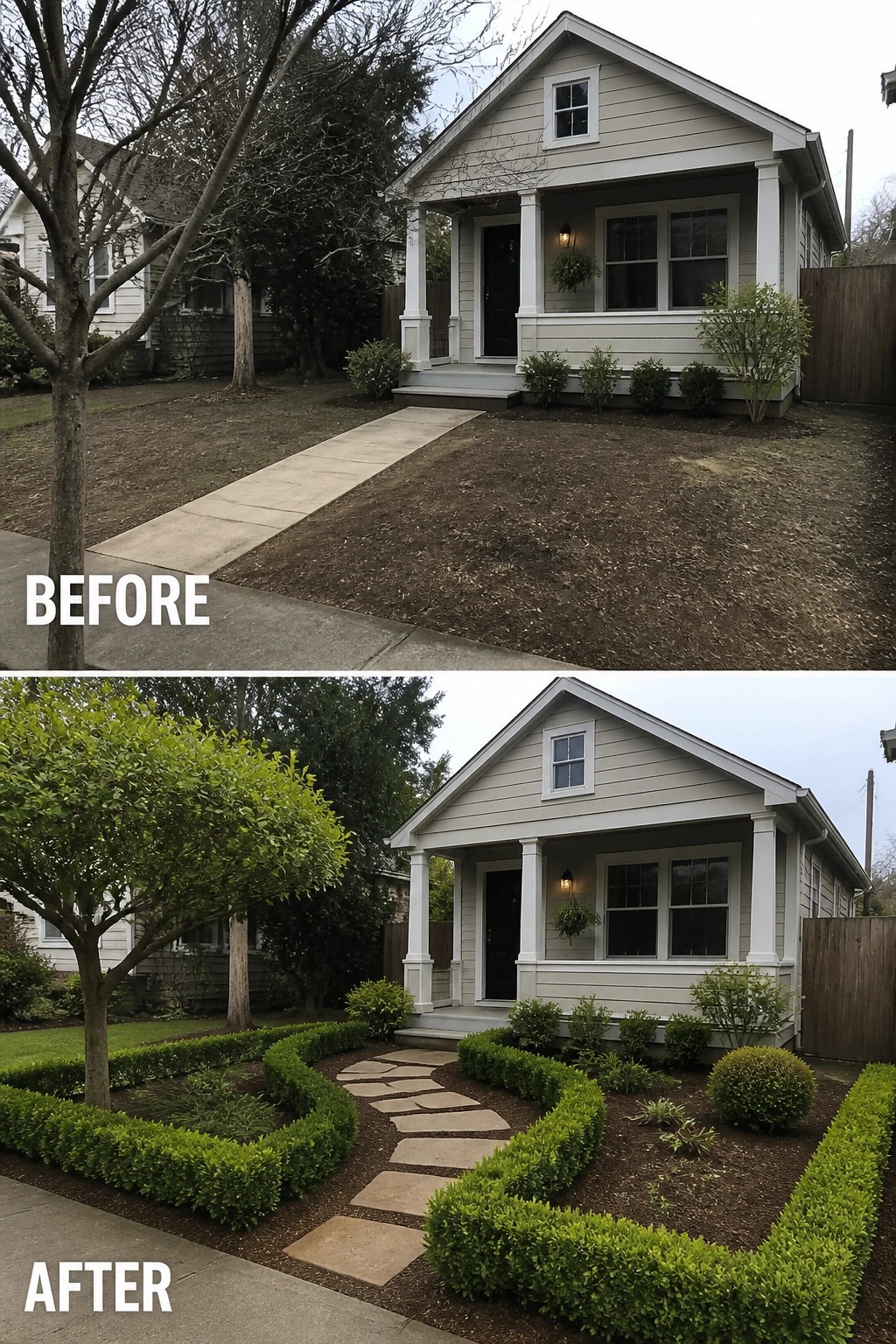
A simple curved path and a line of low hedges can turn an empty strip of dirt into a clear, cottage-style entry. In this example the straight concrete walk is replaced by irregular stepping stones and trimmed boxwood-style hedges, which give the facade a clearer approach and a tidy sense of scale without adding hard-to-maintain features.
To copy this idea, start by cleaning up the area and laying a gently curving path that leads the eye to the door. Plant low, evergreen hedging to frame the beds and use mulch or groundcover inside them so the layout reads as intentional. It works best on compact lots where you want a neat, structured look that’s easy to maintain and still feels lush.
Style A Small Concrete Stoop As A Cozy Sitting Area
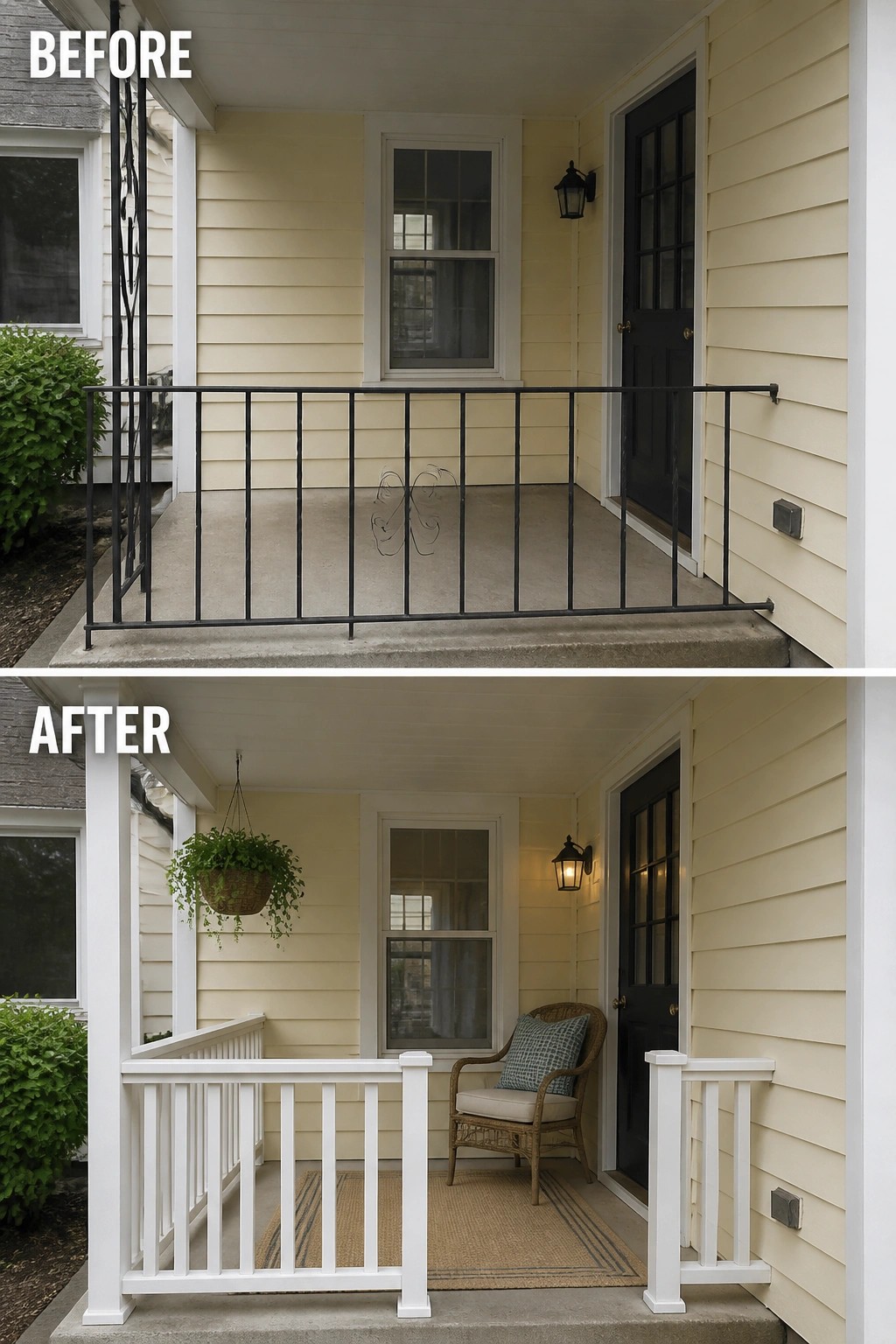
Turning a small concrete stoop into a purposeful porch is mostly about simple structure and one clear function. In this update the old metal railing was replaced with a short white post railing and the area was anchored with a single wicker chair, a rug, and a wall lantern so the porch reads as a tiny sitting spot instead of wasted space.
You can copy this on almost any compact facade: start by giving the porch a modest frame that matches your trim, then add one appropriately scaled seat and a rug to define the zone. Keep the layout minimal so the door and step stay usable, choose weatherproof materials, and add a light near the chair so the space works in the evening (and isn’t just decorative).
Update A Garage Door With Color And Carriage-Style Details

A plain roll-up door can make a compact cottage look bland. Replacing it with carriage-style doors and a bold paint color—plus a few black strap hinges and a simple wall lantern—creates a clear focal point and gives the whole facade a more intentional, cottage-y look without a big rebuild.
Do this where the garage sits close to the house and the scale is small: pick a color that ties to existing trim or planters, choose weather-resistant exterior paint, and size the hardware so it reads from the street. If you need a budget or quick option, use faux overlays and replace the light with a hardwired or solar lantern (check clearances if you keep an automatic opener). Small changes, done with the right scale, go a long way.
Frame A Small Entry With Defined Garden Beds And A Path
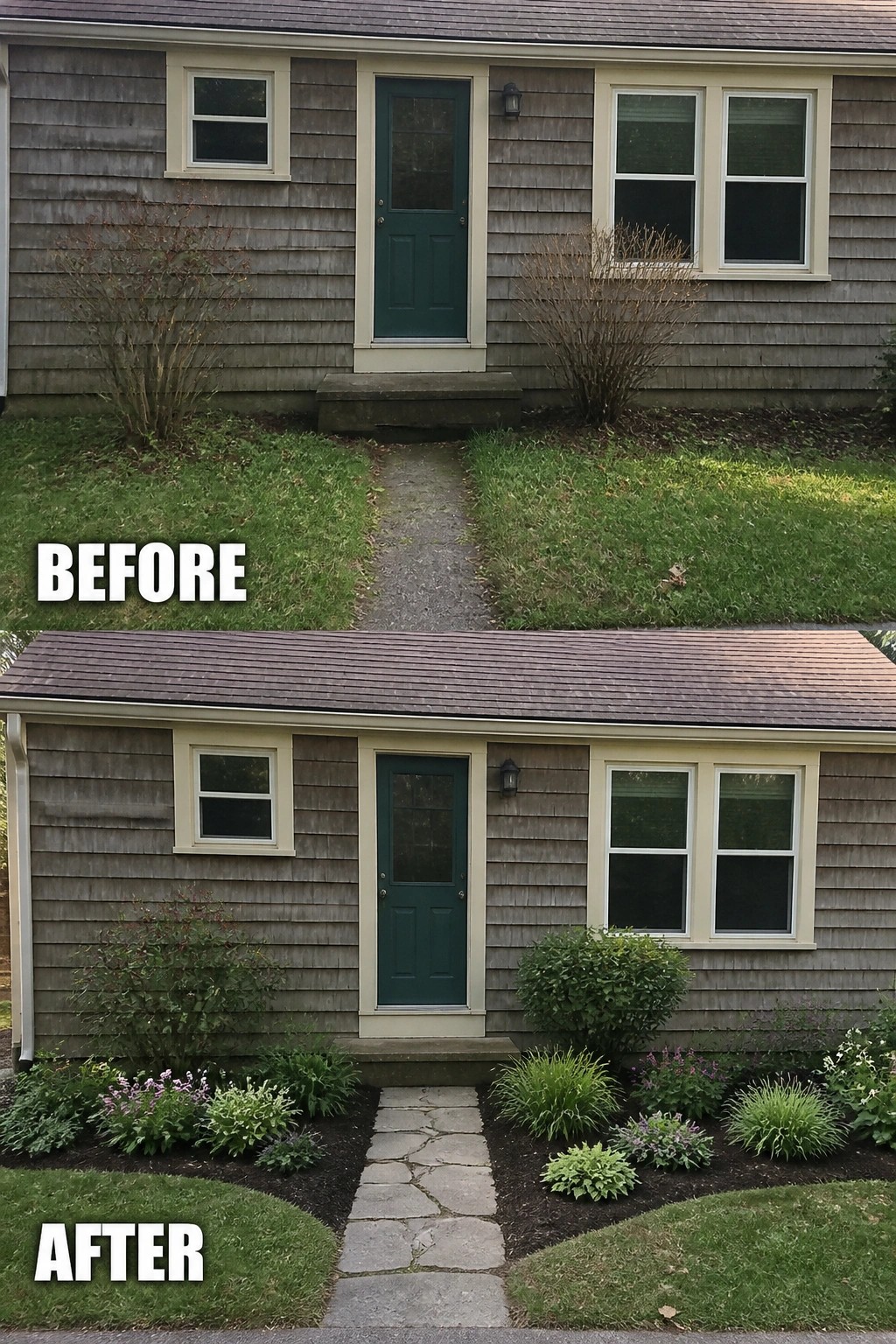
A narrow, unremarkable approach can be fixed by giving the door a clear frame: swap a worn lawn strip for a simple stone path and carve out mulched beds on either side. The heavier edging and low, repeatable plantings create a neat visual corridor that guides the eye to the front door and makes a compact facade feel intentional rather than neglected.
Start by removing the thin turf where the path will go, then lay flagstones or pavers sized for a comfortable step. Edge the beds and add dark mulch to make plants pop; choose a mix of low shrubs and clumping perennials and repeat them for rhythm. Keep plant heights lower near the doorway so the entry stays visible, and allow a little room to walk and prune—simple upkeep keeps the look tidy and welcoming.
Frequently Asked Questions
Q: How can I make my tiny cottage look larger from the street?
A:
Use a light, simple color palette, keep landscaping low and tidy, and aim for one clear focal point like a bright door or a pair of matching lights. Pull plantings to the edges so the entry feels open and create an uninterrupted sightline from the sidewalk to the door. Less clutter does more than fancy details.
Q: What are low-maintenance plants that work well with a small cottage front?
A:
Choose compact, slow-growing shrubs, ornamental grasses, and Mediterranean herbs like lavender or rosemary for fragrance and structure. Add a couple of succulents or potted evergreens for winter interest and easy care. These choices give cottage charm without constant pruning.
Q: Can I add a porch or awning to a narrow facade without making the house feel cramped?
A:
Yes — a small portico, a simple overhang, or a recessed entry can add shelter and character without overwhelming the facade. Keep columns slim and the roofline in scale with the house, and use open railings or no rail at all to avoid closing the space in. Check local building codes before you start.
Q: How should I pick paint colors so a compact cottage stays cozy, not tiny?
A:
Start with a light base color to visually expand the facade and pick one stronger accent for the door or shutters (a pale warm gray or cream often works). Use a slightly darker trim to define windows and eaves, and test samples on the actual wall to see them in different light. Choose a durable exterior finish so the colors stay fresh longer.