

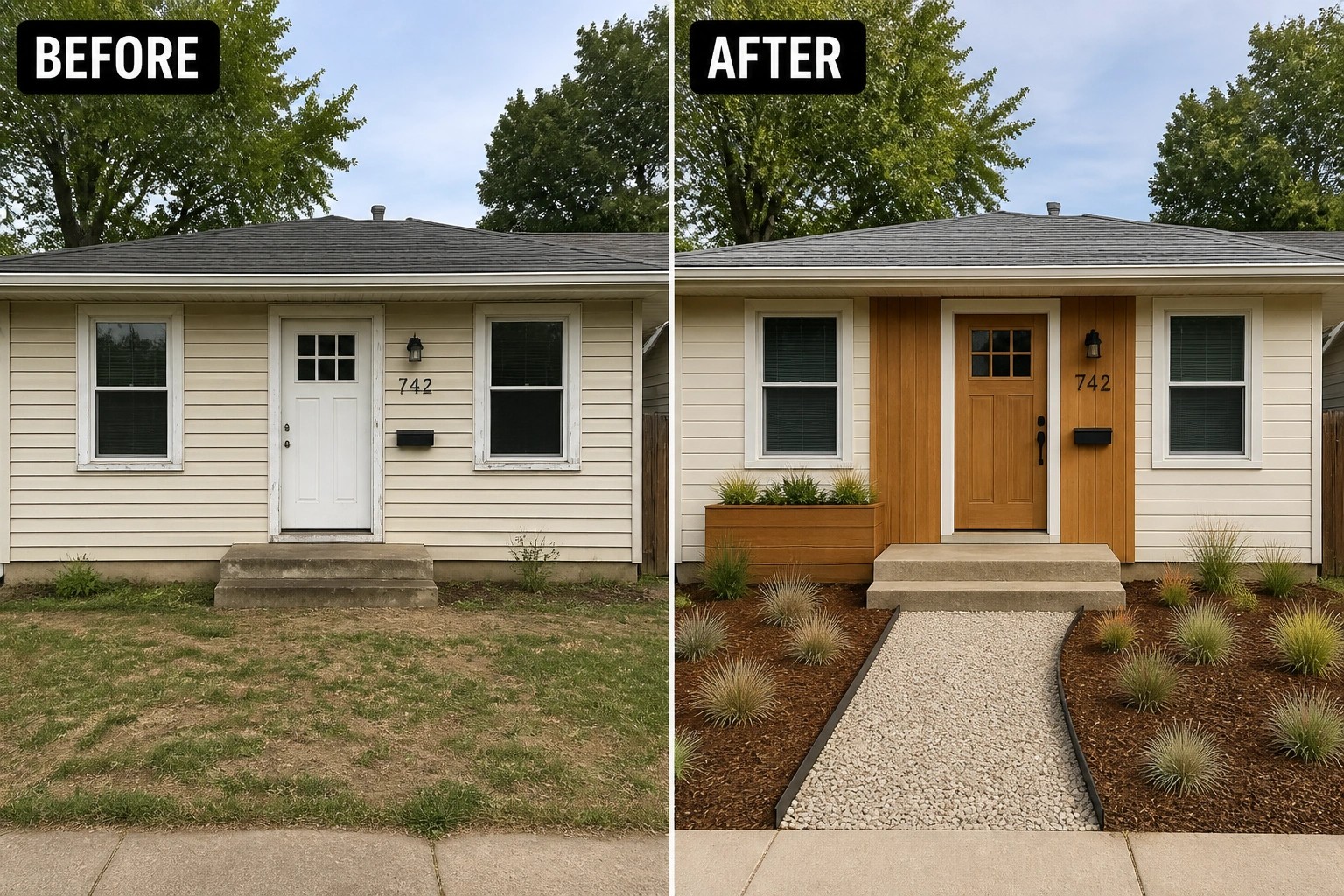
Small homes can fade into the street, but a few careful tweaks to siding, entry details, and porch trim can make a compact facade feel warmer and more intentional.
I find warm wood accents and soft neutral paints calm a busy roofline and help modest landscaping sit in the background instead of competing with the house.
It’s surprising how much difference a new front door and updated lighting make.
I treat changes like replacing dated siding panels or adding a modest porch rail as small, budget-friendly moves, and I always test a wood stain on a sample board before committing.
Saving a handful of these ideas, such as lighter trim, natural wood accents, and calm neutral siding, lets me build curb appeal gradually in ways that feel purposeful rather than overdone, and that steady improvement is quietly satisfying.
Create A Welcoming Wood-Paneled Entry
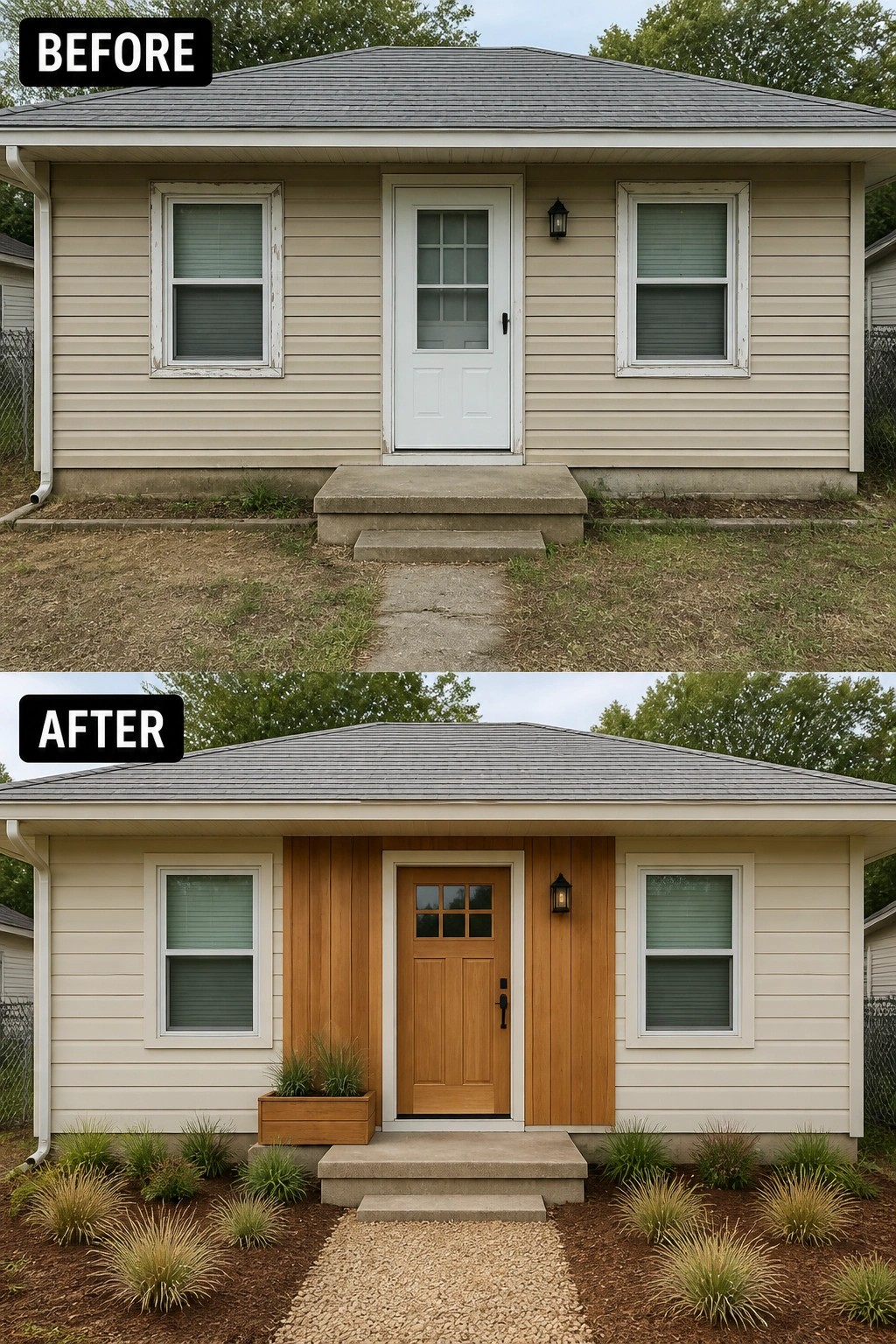
A focused entry update can make a small house feel intentionally finished without a big renovation. Swap a plain door for a wood-paneled door or add a vertical wood surround to create a clear focal point, then anchor that focal point with a simple planter and low-maintenance grasses. One or two well-chosen elements tell the eye where to go and make the porch read as an actual doorway instead of just a stoop.
To do this yourself, pick one main change first—the door, the trim, or a wood accent wall—and keep other additions modest so the entry still feels open. Use durable materials and finishes for the door and siding, add a single planter box and a short gravel or mulch path, and pick plants that stay tidy in small beds. Works especially well on cottages and small bungalows where scale matters and upkeep should stay simple.
Warm Up The Entry With Wood And Planters
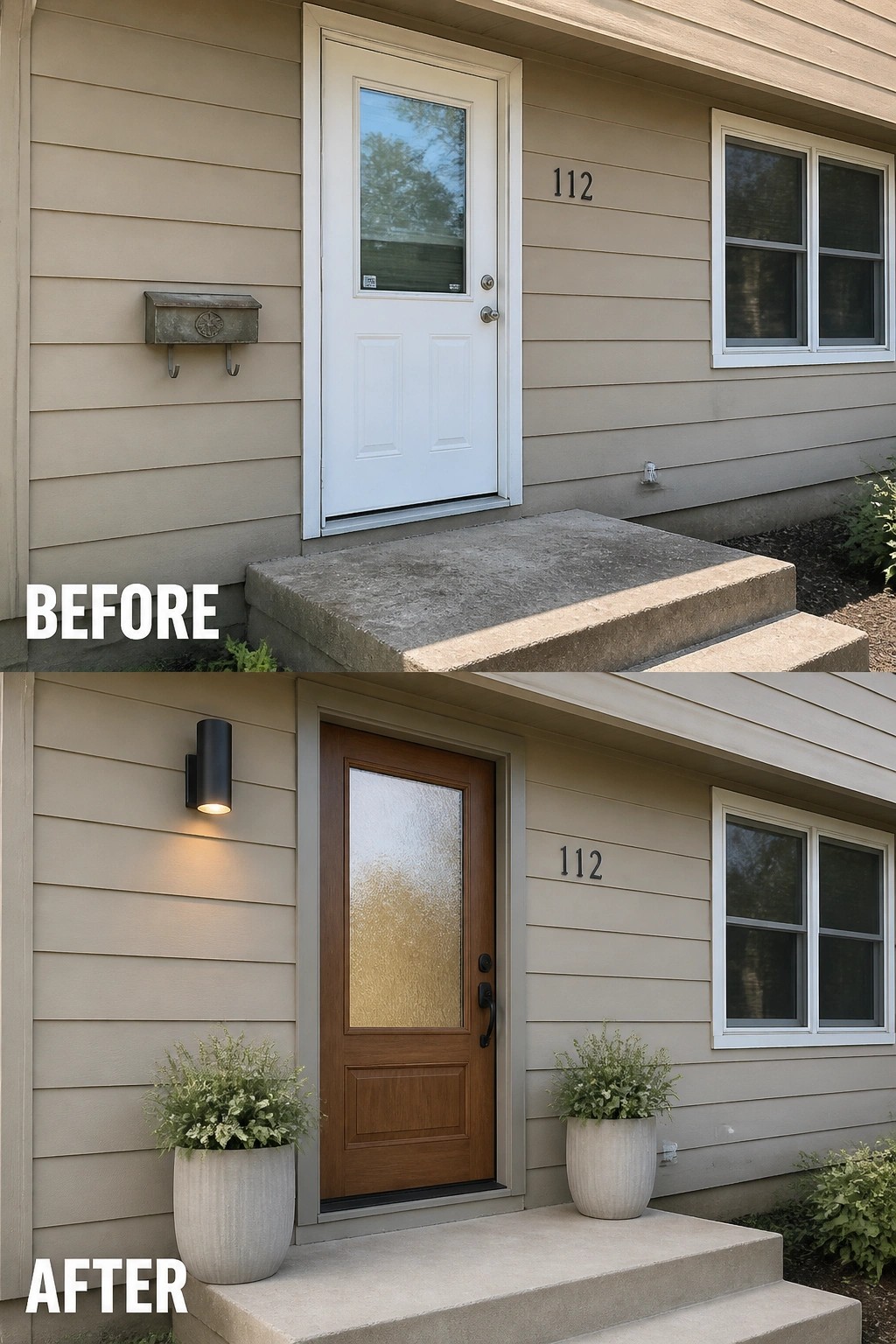
Swapping a plain door for a warm wood door and adding a pair of matching planters gives a small entry instant purpose and personality. The change signals an obvious front door instead of a leftover step, and the wood tone makes the facade feel more considered without a major renovation.
To copy this on a budget, start with one focal upgrade—the door—and then add two simple accents that repeat color or texture, such as concrete or ceramic planters with tidy, weatherproof plants. Keep hardware and lighting in a single finish so the look reads cohesive, and make sure the door swing and step stay clear for safe entry. Simple, effective.
Add A Small Wood Gable Over The Door
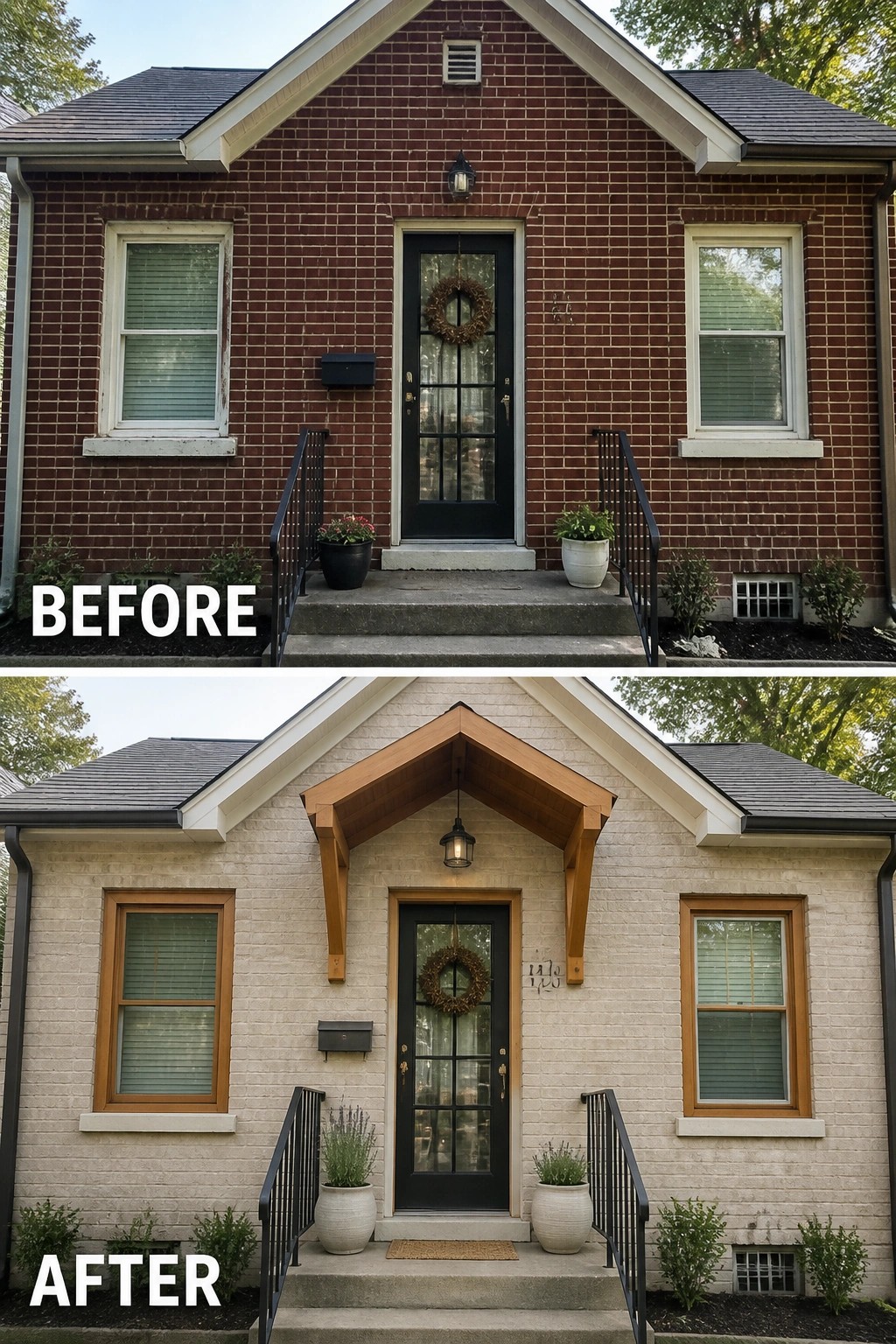
A small, focused change—like adding a modest wood gable above the door and a pair of matching planters—can make a plain entry read as a deliberate porch instead of just a landing. That single architectural accent creates a focal point and gives you something to style around, so the whole facade feels more finished without a major renovation.
To copy this at home, keep the addition simple and in scale with the house: a shallow overhang or small gable, a single hanging lantern, and two pots are often enough. Use durable materials (cedar or painted trim), repeat the wood tone in window trim or mailbox for cohesion, and choose low-maintenance plants so the entry stays tidy and welcoming.
Build A Defined Entry With A Wood Platform
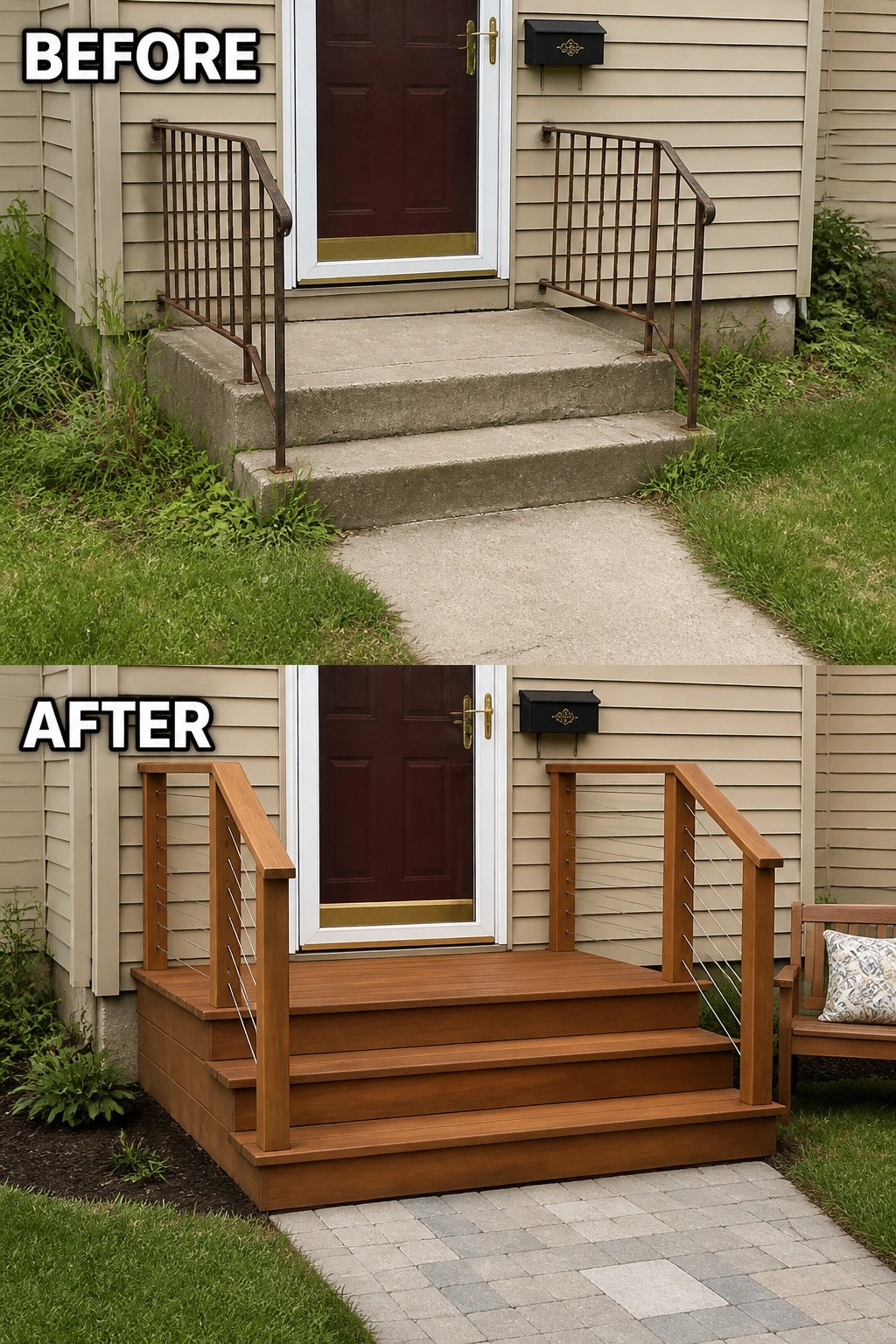
A small, plain concrete stoop can feel like wasted space. Cladding the steps with a shallow wood platform and adding simple cable railings turns that narrow landing into a defined entry you actually want to use and walk up to. The change uses material and scale to make the doorway read as an intentional porch rather than an afterthought.
This works best on modest homes where you want impact without a big addition. Build a low-profile deck sized to the door, use rot-resistant decking (or composite), and choose minimalist railings so the house still feels open. Keep the footprint tight, leave a clear path, and add one easy accessory—a bench or planter—to show the space is for more than just stepping inside. Start small.
Turn A Small Porch Into A Cozy Sitting Area
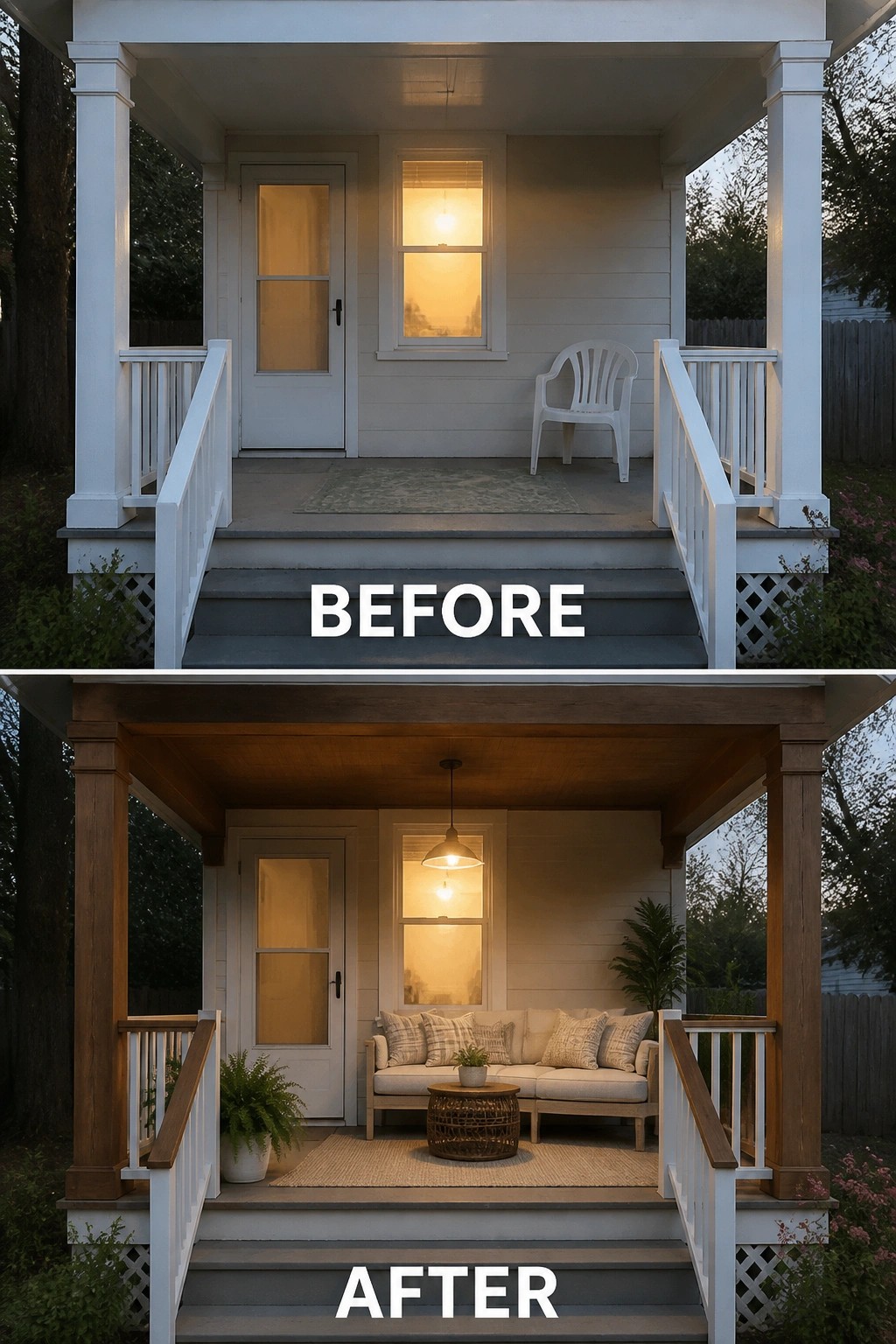
A plain entry porch becomes useful when you treat it like a small outdoor room. In this example the lone plastic chair is replaced with a compact sofa, a woven rug, a hanging pendant, and a couple of plants so the porch reads as a place to sit rather than just a step. The overhead light and defined seating area are the simple changes that make the space feel finished and usable in the evenings.
To copy this at home, start with scale: pick seating that fits the depth of your porch so you can move around it. Anchor the zone with a weatherproof rug, add one overhead fixture or a focused lamp near where people actually sit, and use potted plants to soften the edges. Keep the palette neutral and repeat one material, like warm wood or rattan, so the space looks intentional without feeling crowded. Small steps, clear purpose.
Make A Plain Garage Door Feel Warmer
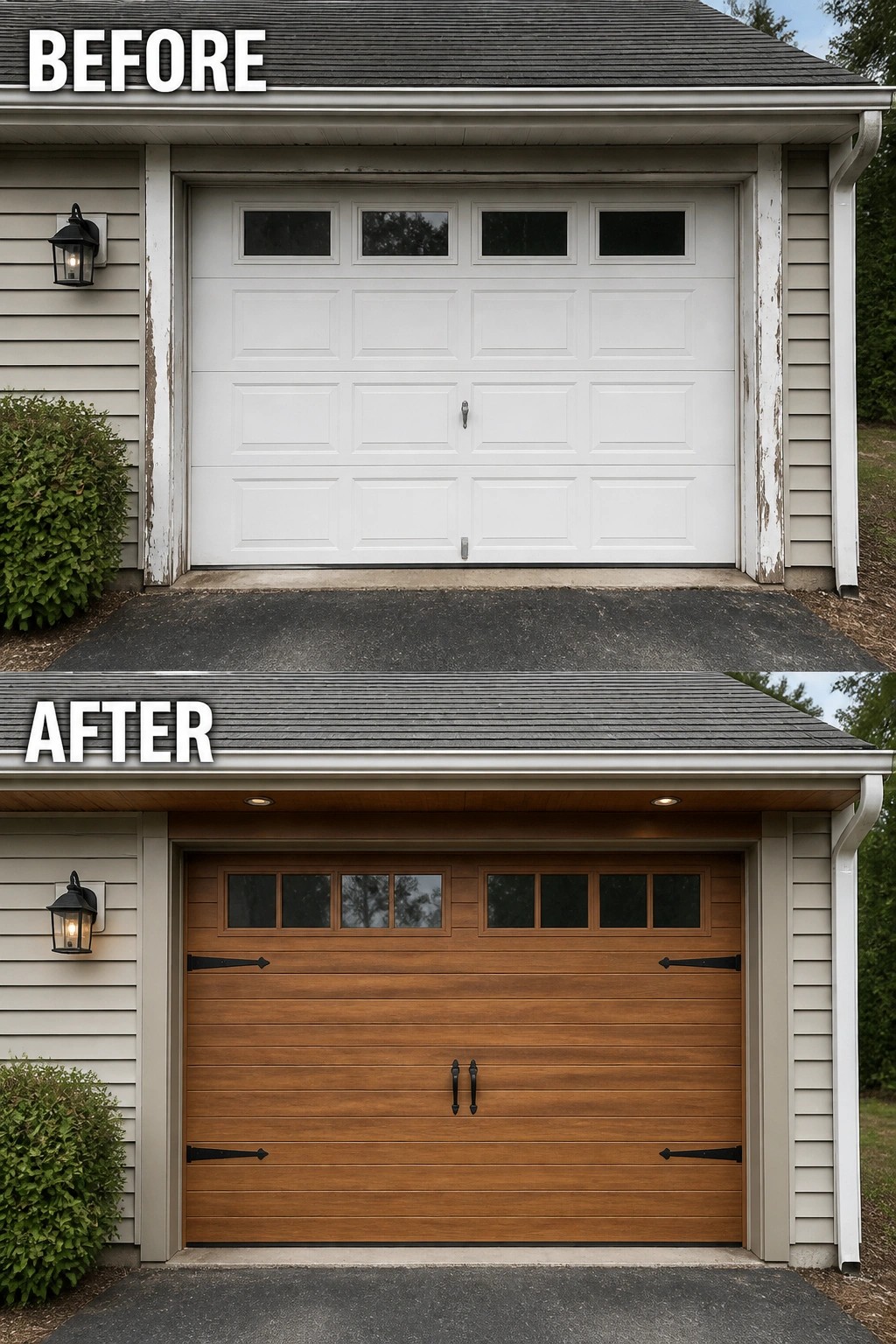
Swapping a flat white door for a warm wood-look panel instantly lifts the whole facade. A row of small windows and simple black hardware give the garage a handcrafted feel without reworking the whole house, so the entry reads as a purposeful, single feature rather than an afterthought.
You can get the look without a huge budget by choosing a low-maintenance steel door with a woodgrain finish or by adding a stained wood overlay if the frame is sound (or a wood-look composite). Pick window proportions that match your home’s scale, add a couple of carriage-style pulls or hinges for character, and coordinate the trim and overhead light so the new door sits naturally with the siding and roofline.
Create A Defined Path And Garden Beds
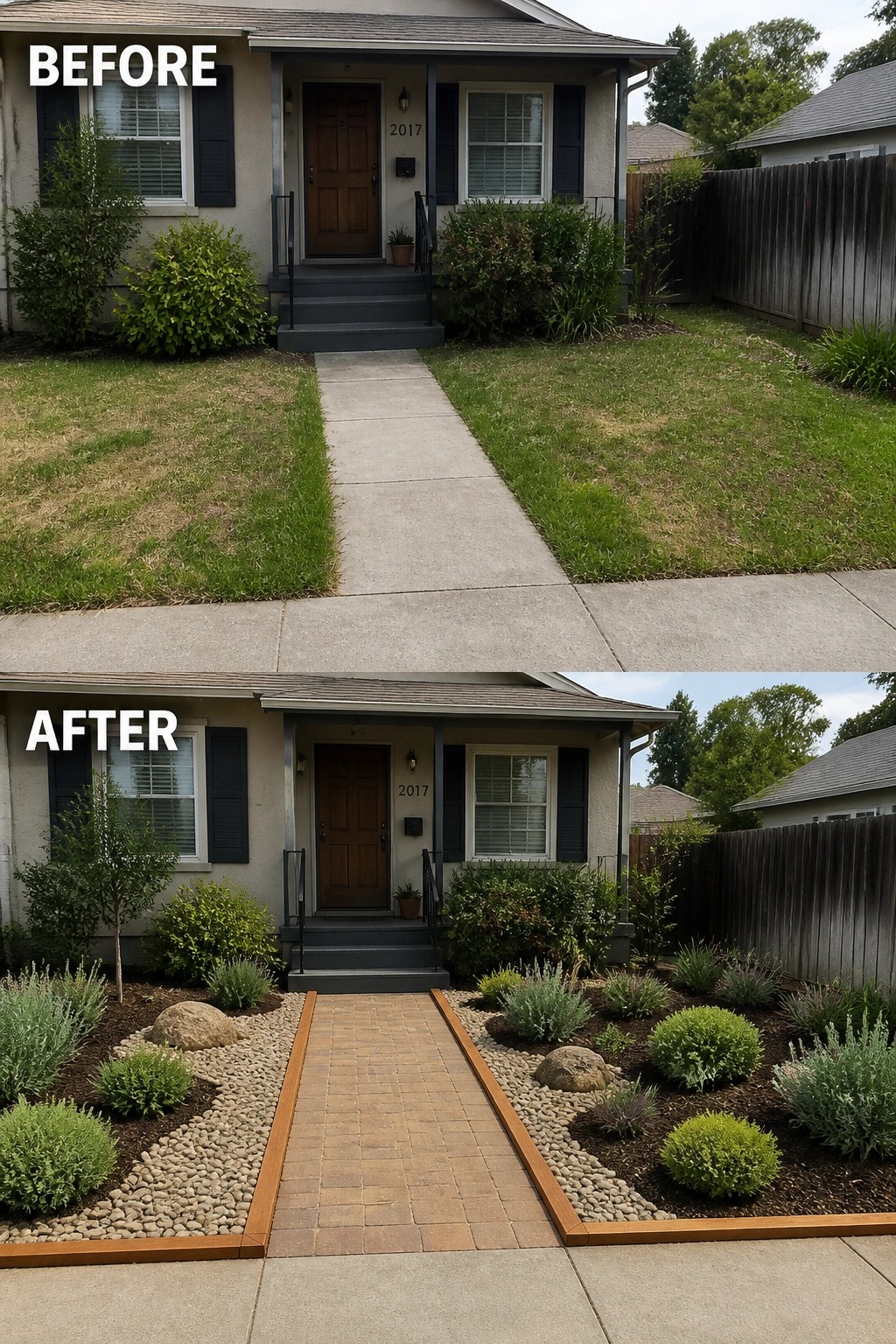
A narrow, undefined front lawn looks instantly more purposeful when you replace the worn concrete strip with a centered paver path and carve planted beds along the sides. The hard line of the pavers and simple edging gives the entry structure, while gravel and mulch keep the plantings tidy and low maintenance — a small change that reads as a deliberate design choice.
Start by marking the route and removing only the turf where the new path and beds will sit. Use pavers scaled to the width of your porch and run a modest edge to hold gravel and mulch (wood or metal both work). Plant compact, repeatable shrubs and a few textural perennials so upkeep stays easy, and keep space for drainage and access when laying out the beds.
Define A Narrow Side Yard With Pavers And Planters
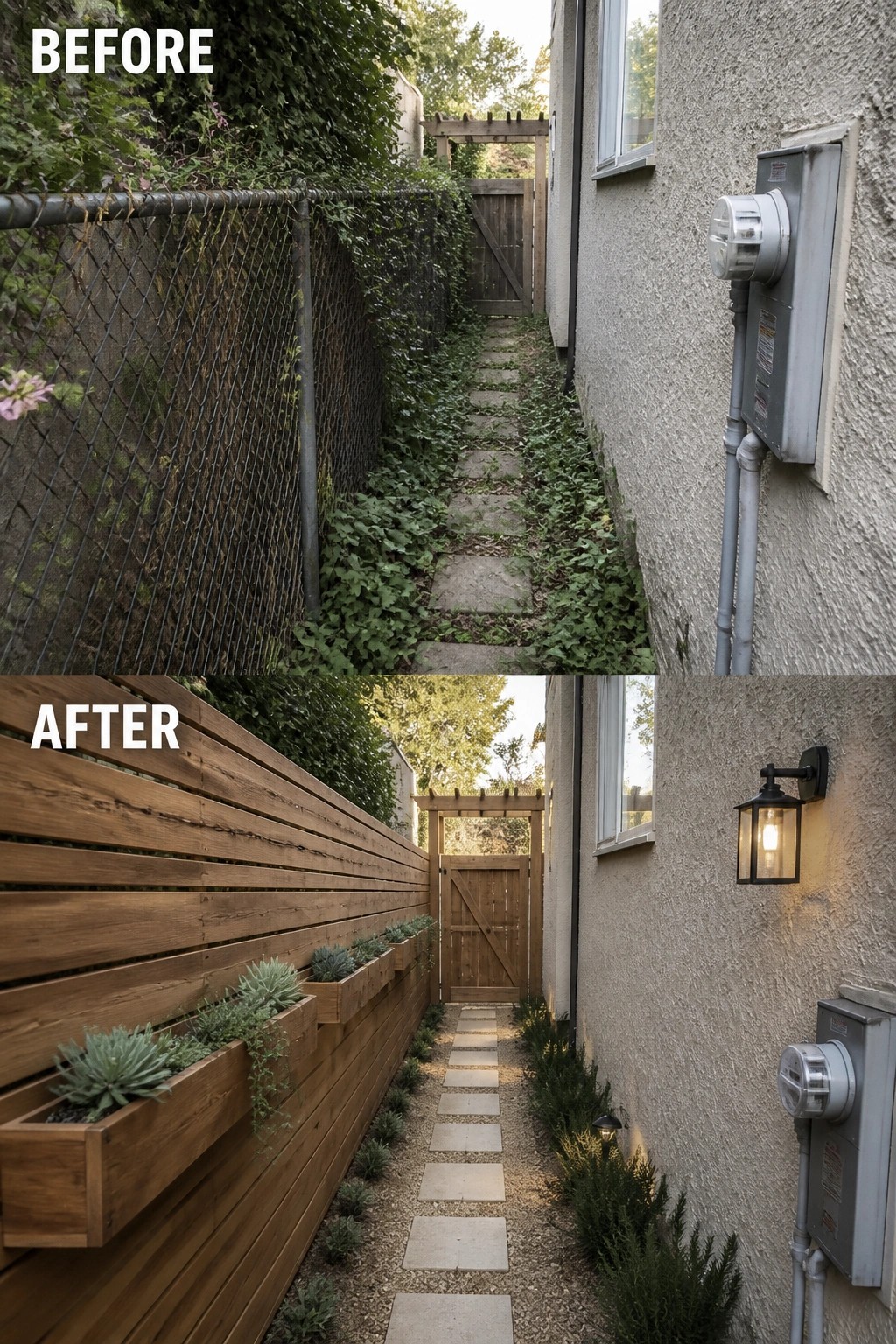
A straight-line side path becomes useful the moment you give it structure. Replacing overgrown groundcover with a simple gravel bed, evenly spaced square pavers and a long raised planter along the fence cleans the sightline and creates a tidy, low-maintenance corridor. The paired wood fence and planter also make the space feel intentional instead of neglected.
Start by clearing weeds and checking for any meters or utility access you must keep clear. Lay a compacted gravel base and set pavers with enough room to walk comfortably, then stack or attach narrow planter boxes to the fence to save floor space. Choose hardy, low-growing plants like succulents or small herbs and add a couple of low lights so the path works at night. This approach suits narrow side yards and small lots where a neat, linear planting bed and a clear walking route are key.
Use Warm Wood Shutters To Refresh A Plain Facade
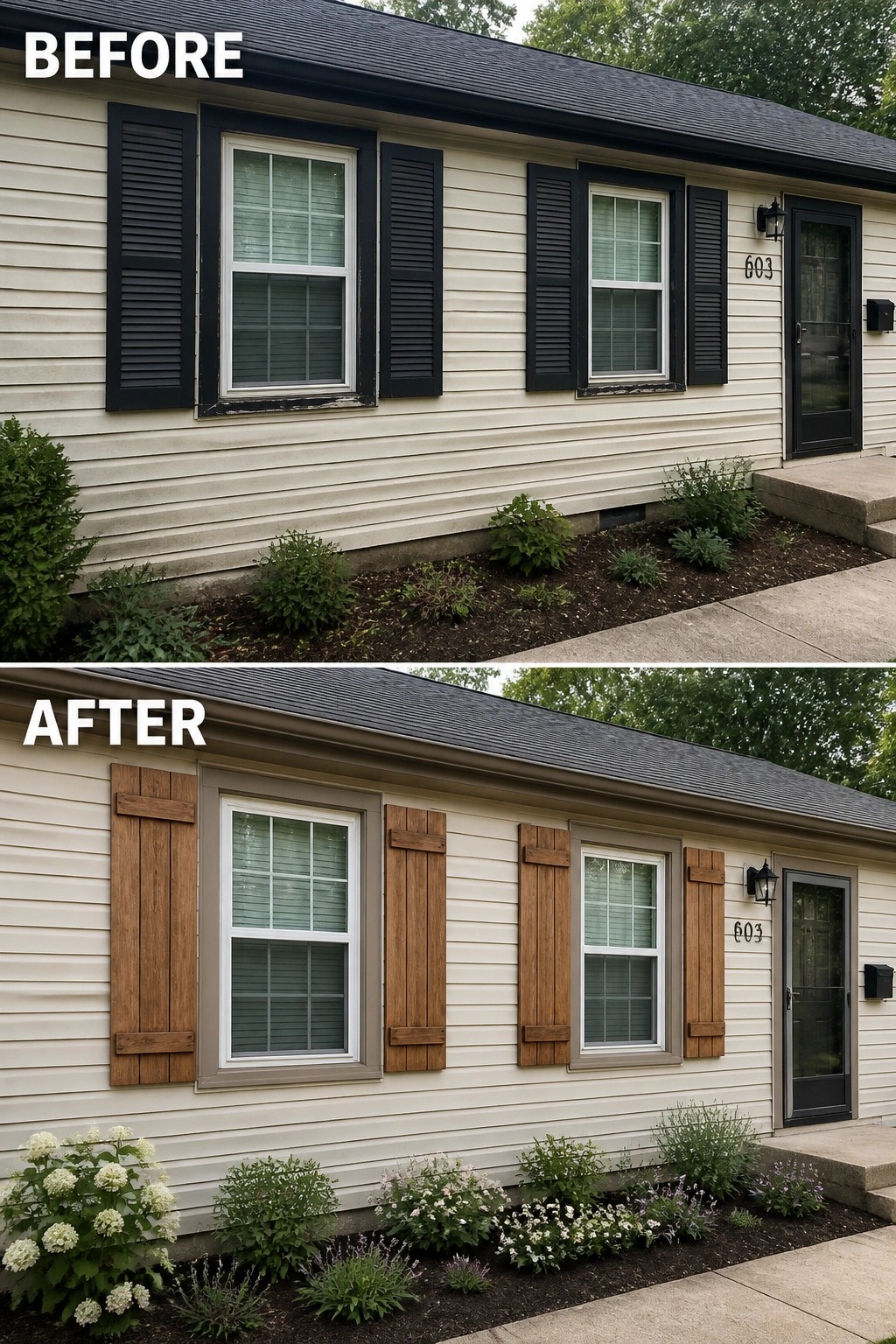
Swapping tired black plastic shutters for simple stained wood planks is an easy way to make a modest house feel more considered. The change from louvered, chipped shutters to vertical board-style shutters and refreshed window trim gives the exterior a cleaner, more crafted look without redoing the whole house.
Start small. Fit narrow board-and-batten shutters to window proportions, pick a mid-tone exterior stain (cedar or pine work well), and paint the window casing a soft neutral to connect the new wood to the siding. Finish with a sealed coat for weather protection and tidy up the planting bed beneath the windows so the new shutters read as part of a single curb-appeal update.
Create A Simple Sitting Landing At The Door
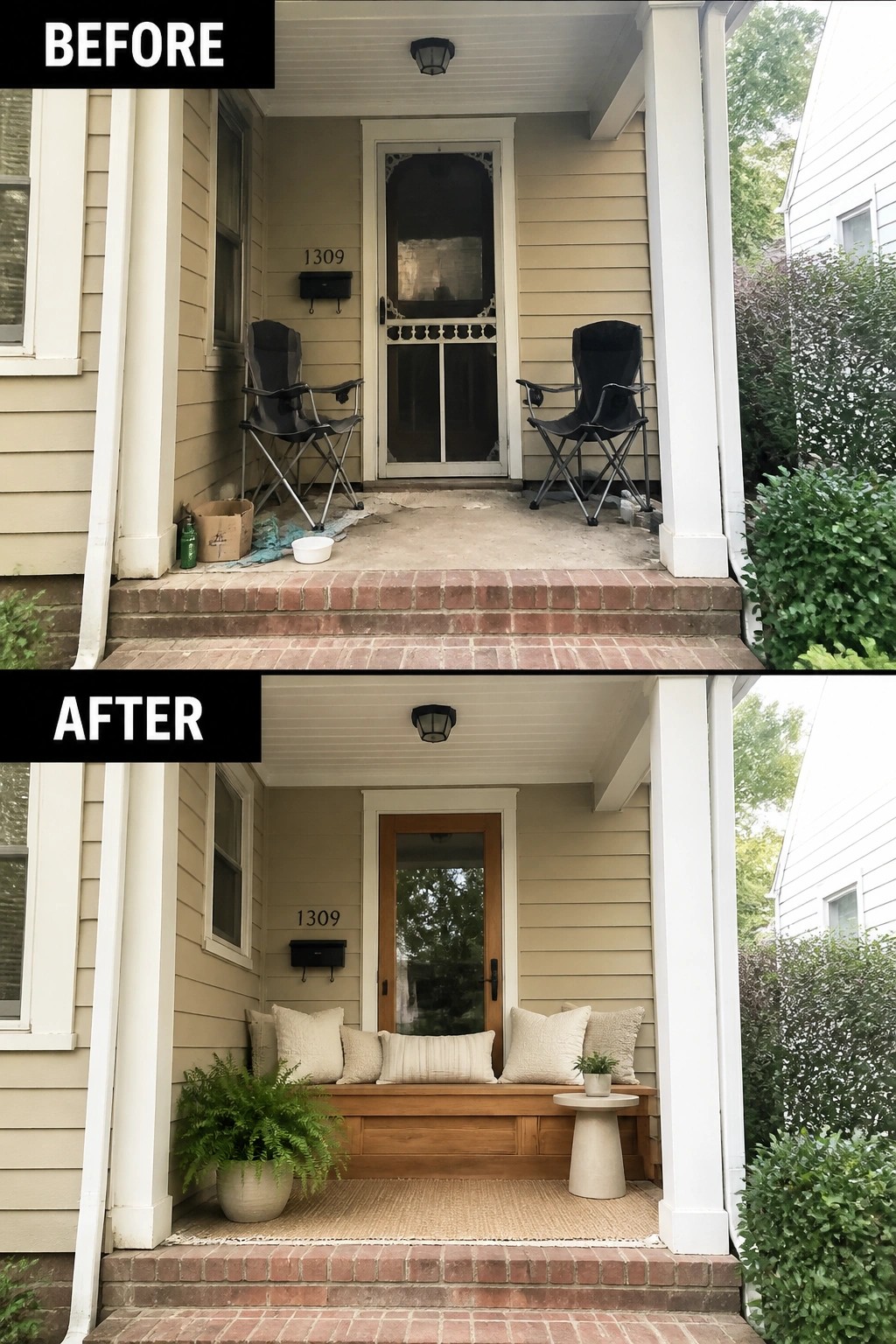
Turn an underused entry into a single-purpose spot—a sitting landing—rather than trying to fill it with random pieces. Swapping folding chairs and clutter for a low wood bench, a simple outdoor rug, and one planted pot immediately defines the space and makes the porch feel intentional instead of neglected.
To copy this, start with a quick cleanup and choose one main piece sized for the porch depth, like a storage bench or narrow settee. Anchor it with a weatherproof rug and one or two durable cushions, add a planter for softness, and keep the walk-up to the door clear so the space looks styled but still works day to day.
Update A Plain Facade With Warm Wood Trim
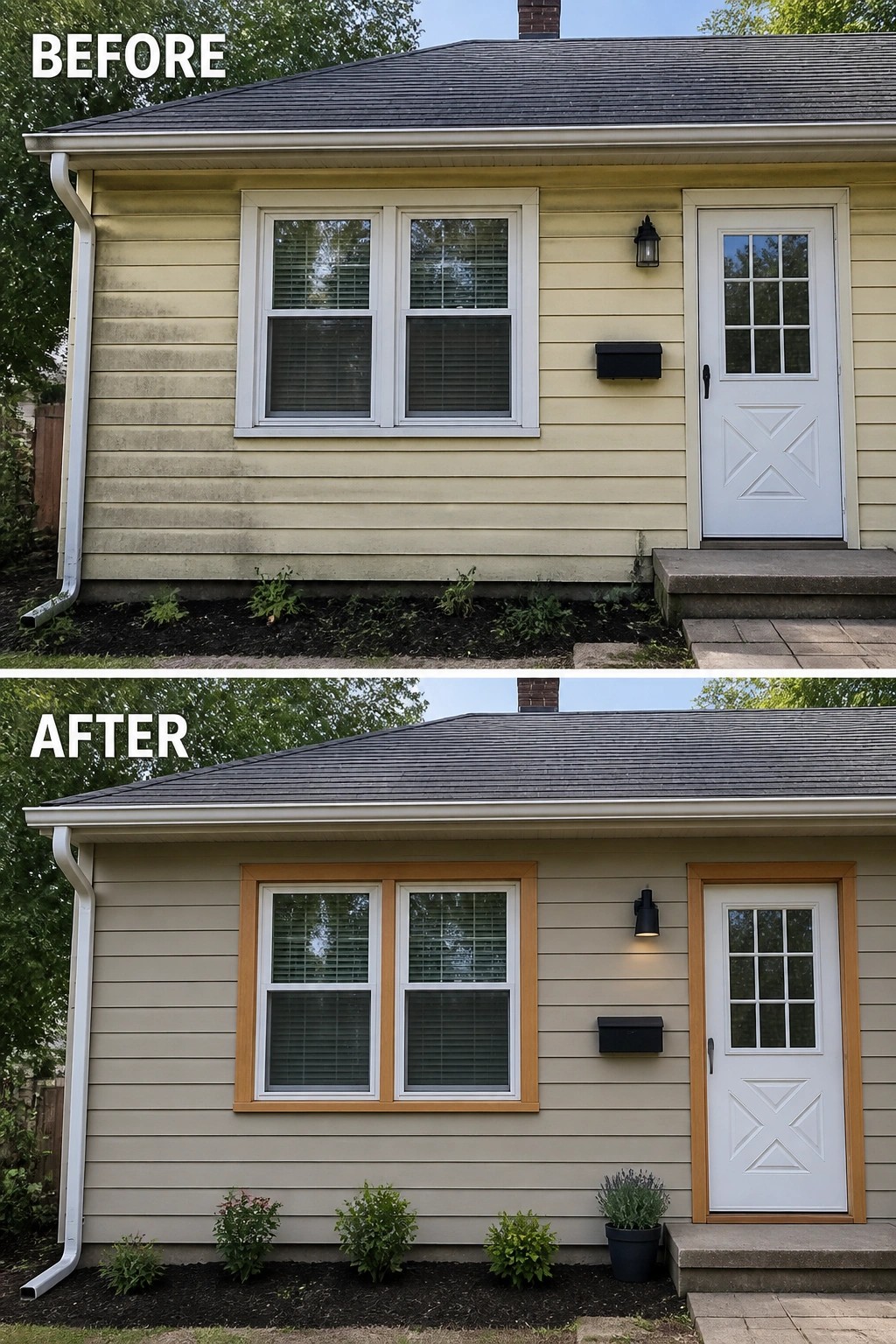
A quick way to lift a small house is to pair a soft, neutral repaint with simple warm wood trim around key openings. Framing the windows and door in a natural-stained trim instantly breaks up a flat facade and reads like deliberate detail rather than a big renovation, while a single new wall light and a few neat shrubs finish the look.
To use this idea, start with a clean, even base color for the siding, then add modest-width wood or composite trim around the windows and entry—match the stain to the home’s tones rather than trying to stand out. Keep the trim proportions small so the house still reads as compact, add one exterior sconce by the door, and plant a few low-maintenance shrubs or a potted plant to anchor the entry. Simple and inexpensive.
Define The Entry With A Stone Path And Gravel Beds
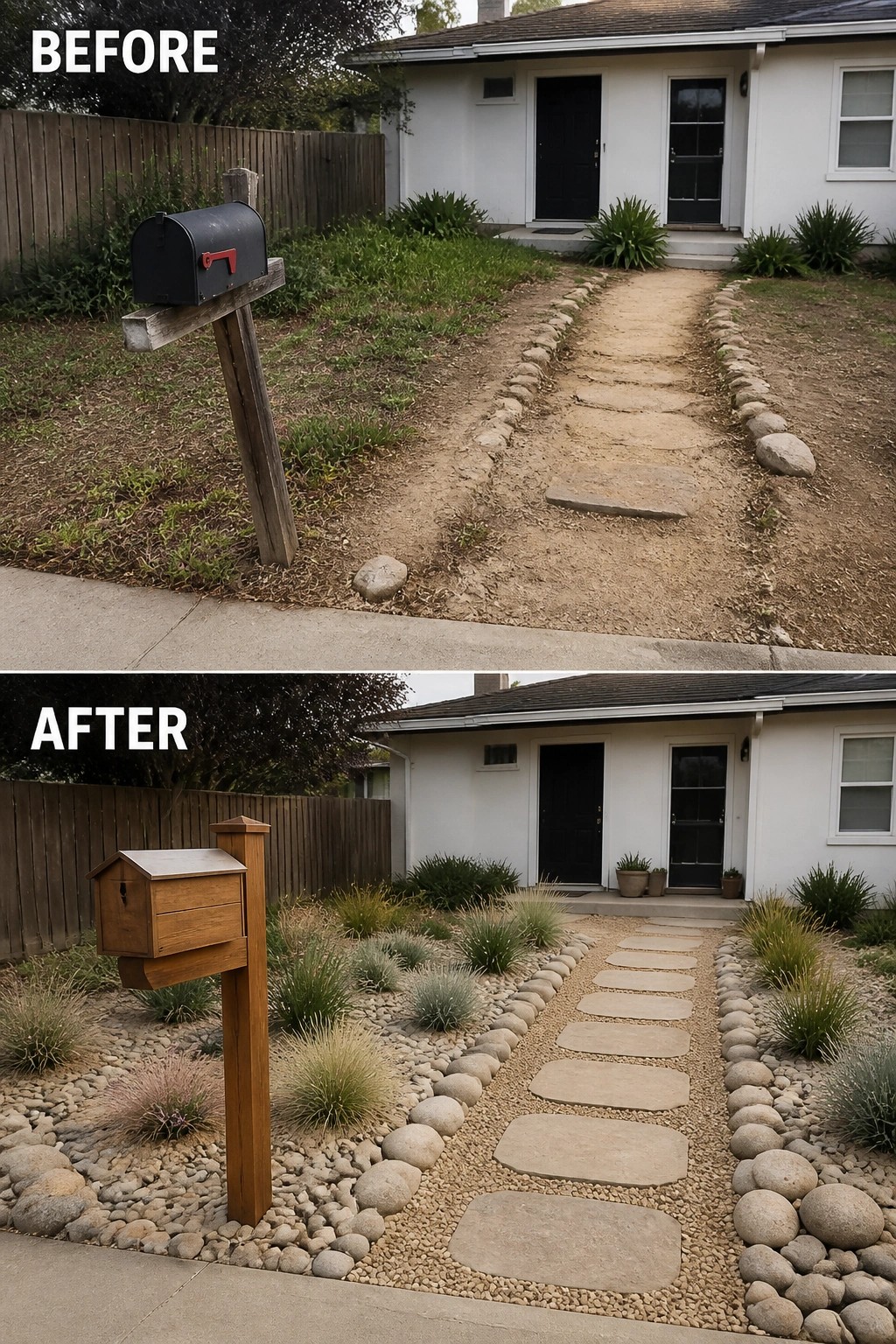
A clear stepping-stone path set in fine gravel and edged with round river rock can instantly tidy a messy front yard and give a small house a purposeful entry. Swapping patchy dirt for a simple gravel corridor and repeating a few clumping, drought-tolerant grasses makes the approach feel intentional while cutting back on mowing and watering.
This works best on narrow or dry-front yards where you want low upkeep and clear sightlines to the door. Start by clearing and grading the route, set large flat stones at comfortable intervals, fill between them with pea gravel, and plant small clumps of ornamental grass or succulents on either side (use native or drought-tolerant varieties). Keep plant spacing simple so maintenance stays easy and the path stays the main focus.
Turn An Empty Patio Into A Seating Area
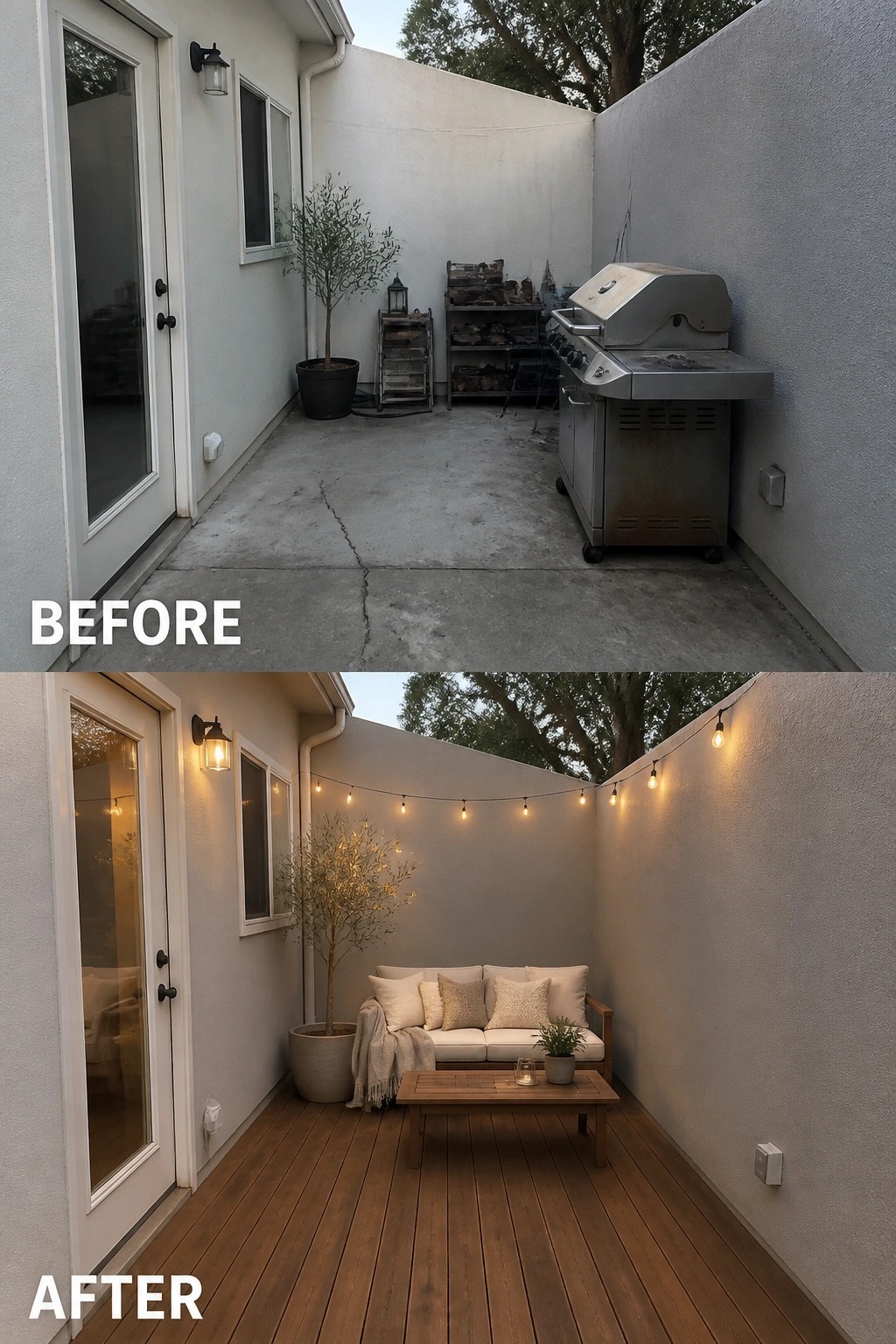
A narrow concrete alcove can be made useful with just a few focused changes: add a wood deck surface, pick a slim outdoor sofa, and hang string lights to define where people will sit. Replacing the concrete and grill with a low couch, coffee table, and soft overhead lighting gives the space a clear purpose and makes it comfortable after dusk.
Keep it simple when you copy this idea. Use interlocking deck tiles or a raised wood platform instead of demolishing concrete, choose compact, weatherproof furniture that leaves a clear path to the door, and anchor a single run of string lights to the walls for evening use; one tall planter in the corner is enough to soften the hard edges. Small changes, big result.
Frame The Front Door With Wood And Lanterns
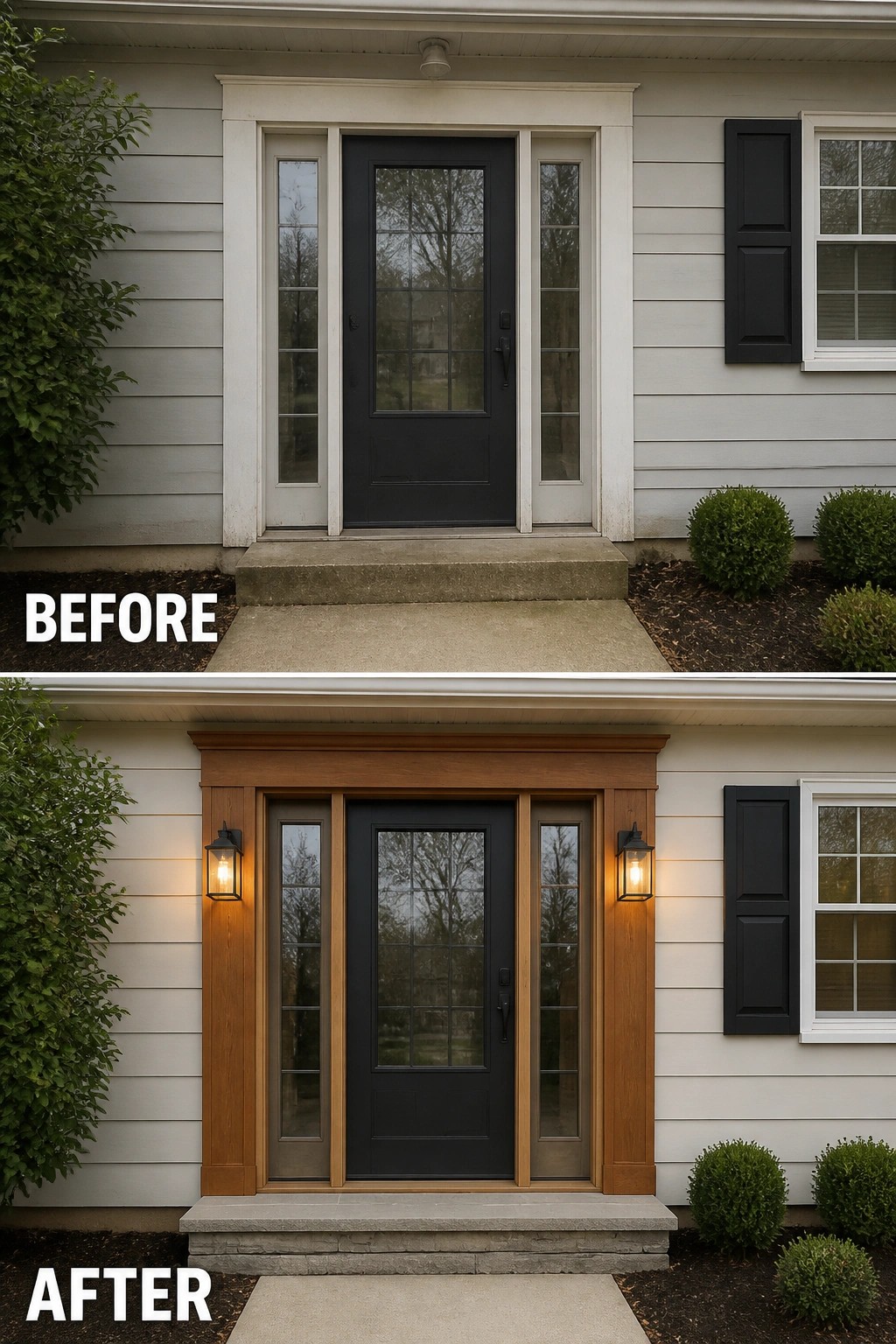
Framing the front door with a simple wood surround and balanced wall lanterns can turn a forgettable entry into a clear, welcoming focal point. Swapping plain white trim for a warm wood surround and adding matching lights creates depth and a sense of proportion, so the entrance reads as intentional rather than an afterthought.
To try this at home, pick a durable exterior wood or composite trim and size it so the vertical pieces line up with the door glass and the horizontal top reads like a small header. Add one light on each side at eye level, keep the color palette limited so the trim contrasts the siding, and leave enough room on the step for easy access—small choices, big difference.
Create A Clean Low-Maintenance Foundation Bed
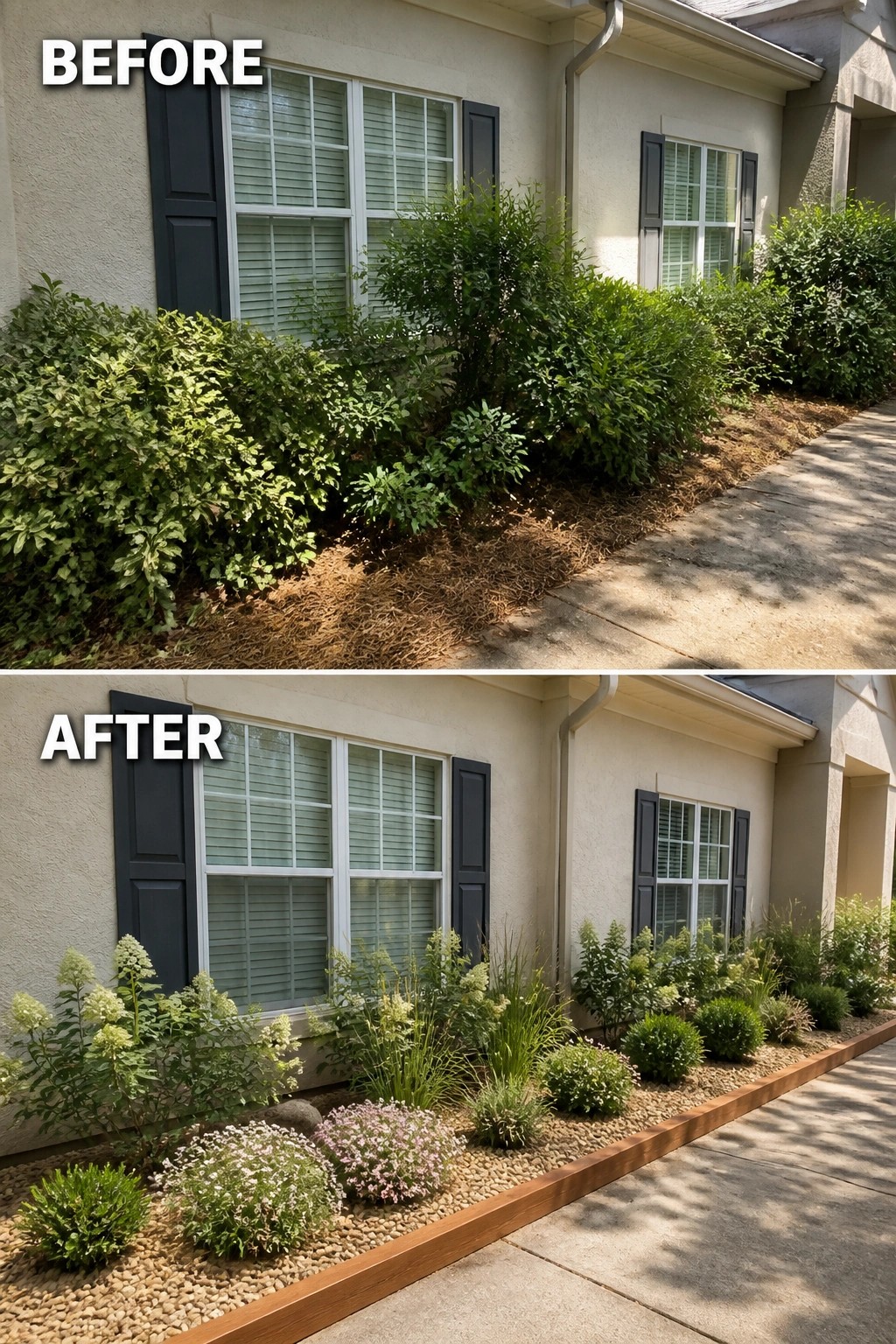
Strip back overgrown foundation shrubs and give the front of the house a clear edge. In this example the messy hedge was replaced with a low wood border, river rock, and a few repeated plant shapes—rounded evergreens, tall airy grasses, and upright flowering shrubs—so the whole strip reads tidy and intentional instead of wild. The result is easier to maintain and keeps the windows visible, which immediately improves curb appeal.
To copy this, start by removing the old massing and lay a simple border (wood, metal, or stone) to define the bed. Use gravel or river rock as a mulch alternative to slow weeds, then plant in groups of three or five with one or two repeated forms for rhythm (pick plants suited to your zone). Space generously so each plant can mature without crowding, and plan for a yearly tidy-up rather than constant pruning—very manageable.
Refresh The Facade With Soft Neutrals And Wood Trim
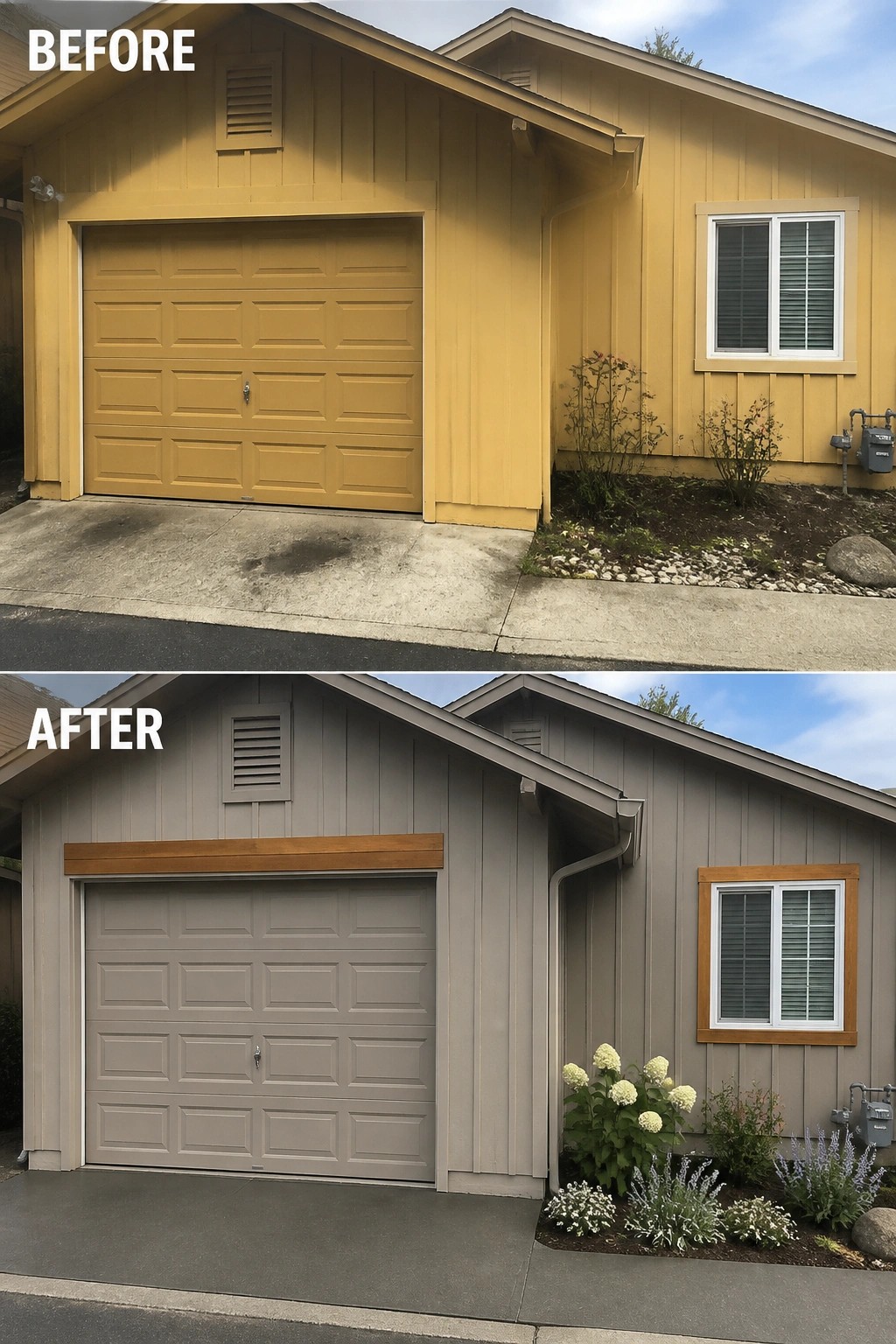
Replacing a shouty or dated exterior color with a soft, mid-tone neutral and adding a few warm wood accents is an easy way to modernize a small house. In the example, swapping yellow for a muted gray and introducing simple wood trim above the garage and around the window makes the facade read as more intentional and less busy. The neutral paint evens out the surface while the wood brings a human scale and subtle contrast.
To try this at home, start by choosing a neutral that complements your roof and hardscape (mid-tones are forgiving). Add wood or wood-look trim only at focal points—around the door, a window, or a small header—so the detail reads as intentional, not cluttered. Do basic cleaning and minor repairs first, then pick finishes rated for exterior exposure, and keep plantings restrained so the paint and trim can do the visual work.
Use A Low Wood Planter To Define A Small Front Garden
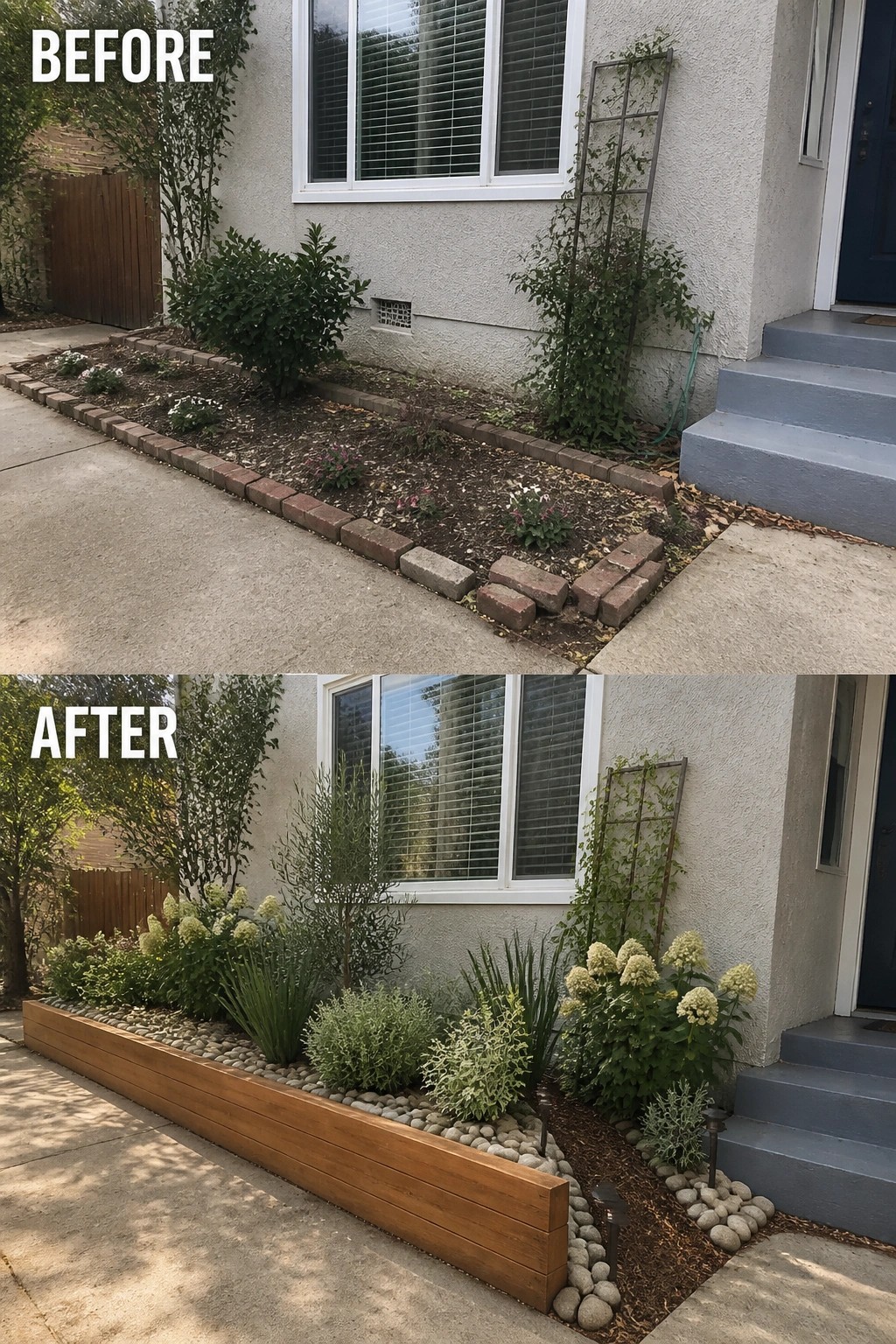
A narrow planting strip can look unfinished and cluttered, and replacing a loose brick edge with a low, horizontal wood planter gives the space instant structure and purpose. The warm wood tone and a tidy band of river rock raise the plants visually so a few shrubs read as a deliberate border instead of sparse filler.
This idea works well on small front yards and beside steps—keep the planter low so windows and sightlines stay clear, and choose rot-resistant wood like cedar or a durable composite. Plant a mix of upright and rounded shapes, finish with pebbles or mulch for low maintenance, and add a couple of low path lights so the edge looks intentional
Add A Modest Wood Overhang To The Entry
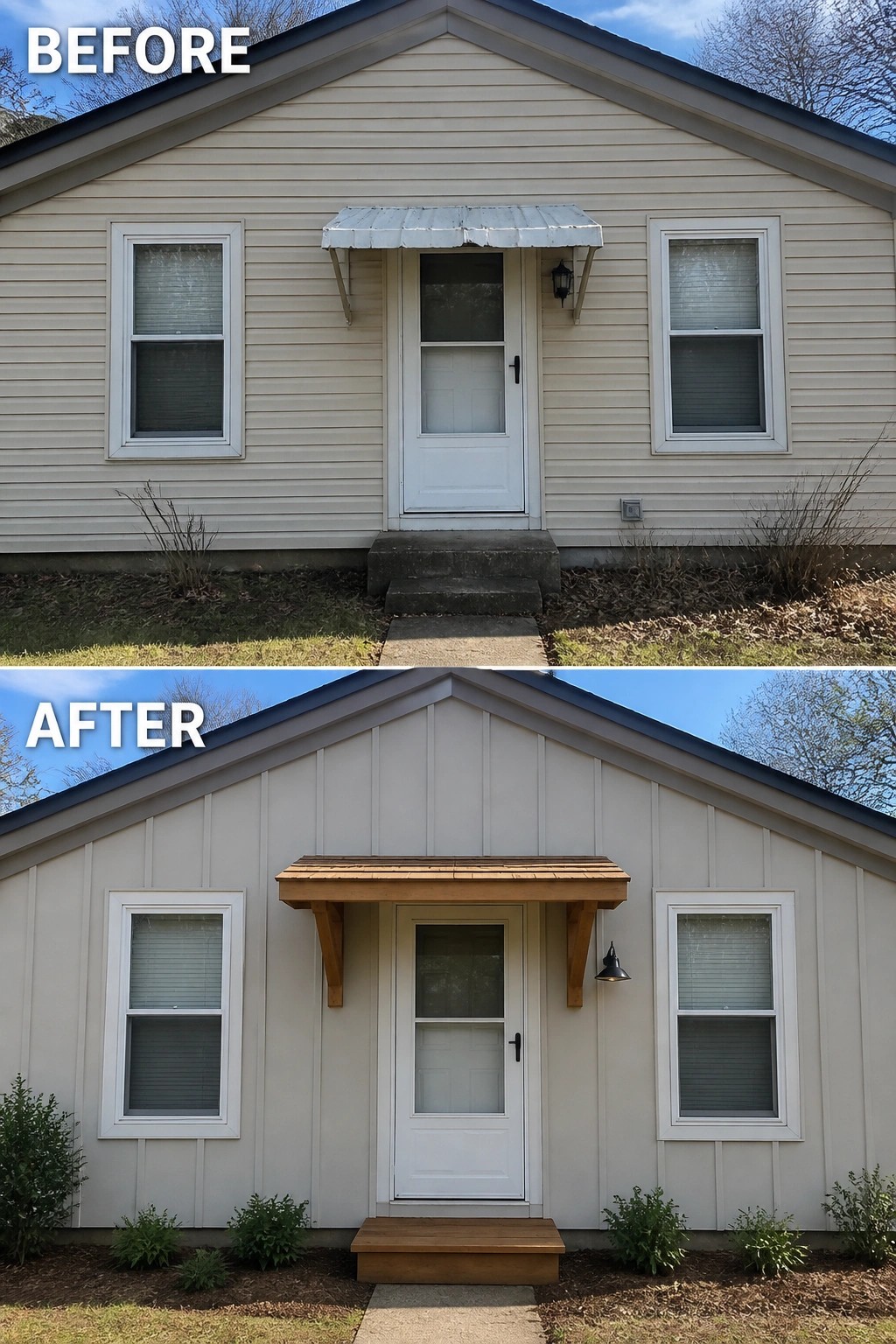
A small, undefined entry can feel intentional with one architectural move and a little planting. Replacing a tired metal awning with a modest wood overhang and framing the door with low, mulched beds turns a plain facade into a focused front entry that reads as purposefully finished.
To copy this idea, pick an awning sized to your door and support it with simple brackets in a honey-toned wood that contrasts soft siding. Add one wall-mounted light at door height and keep plantings low-profile—compact shrubs or perennials with fresh mulch—so the entry stays tidy and easy to maintain. Small change, big effect.
Warm Up A Recessed Entry With Wood
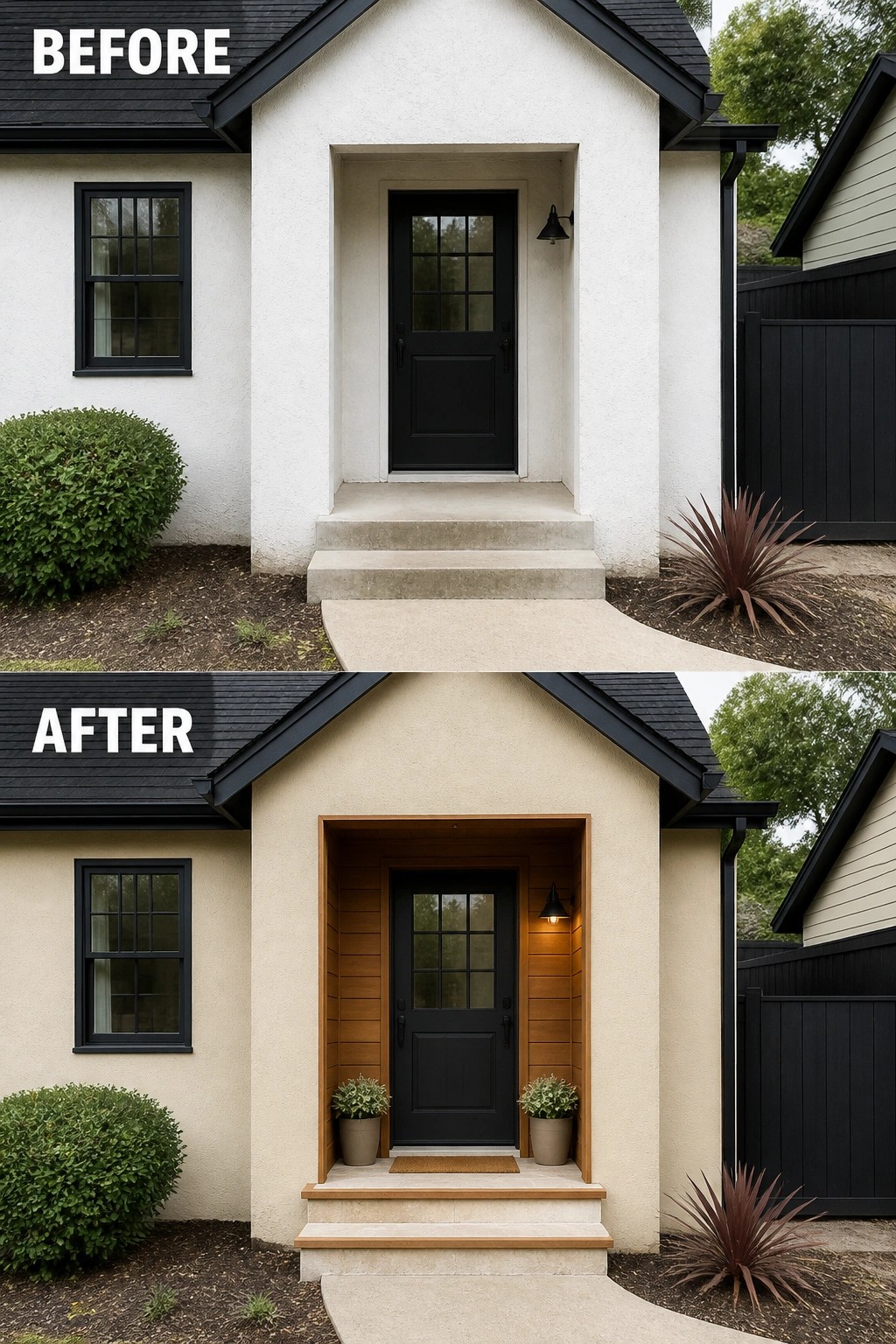
A tiny recessed entry often reads as leftover architecture rather than a real doorway. Plane the recess in warm wood, add a simple light and two matching planters, and the space instantly reads as an intentional entry: sheltered, scaled for the house, and ready for a welcome mat. Mentioning just the wood lining and a couple of pots captures the idea without overdoing it.
This approach works best on small homes where you want a focused, easy update. Use exterior-grade wood or a low-maintenance composite, keep the trim simple so steps stay usable, and place the light at a height that illuminates the door but won’t glare into faces. Start small and test finishes on a hidden patch so the new wood feels right with your door and siding.
Frequently Asked Questions
Q: Will warm wood siding work in rainy or humid climates?
A: Yes, warm wood siding can work well if you pick rot-resistant species and seal them properly. Make sure the cladding has good ventilation behind it and that rooflines and flashing keep water away. A simple maintenance routine—cleaning and recoating every few years—keeps the wood looking cozy instead of worn.
Q: How often do I need to refinish outdoor wood accents to keep that soft, cozy look?
A: Most wood finishes will need attention every 2 to 5 years depending on sun and rain exposure. Give pieces a light clean yearly and plan a fresh coat when the finish starts to dull or the wood looks dry. If you want less upkeep, choose a penetrating oil that weathers more gently.
Q: Can I paint the front door a bold color and still keep the neutral, calming vibe?
A: Yes, use the door as a single pop of color against the warm wood and soft neutrals to add personality without overwhelming the façade. Pick a hue that shares the warm undertone of the wood so it feels intentional, and keep trim and hardware simple so the door stands out for the right reasons. That little contrast makes the whole house feel friendlier.
Q: My small house looks boxy from the street. What quick changes can make it feel more inviting and larger?
A: Paint the trim the same warm neutral as the siding to soften hard edges and create visual flow. Add a modest porch or a deep, painted landing plus a couple of potted plants to introduce depth and a clear focal point. Finish with layered low plantings and warm porch lighting to make the entry feel pulled together without a full remodel.