

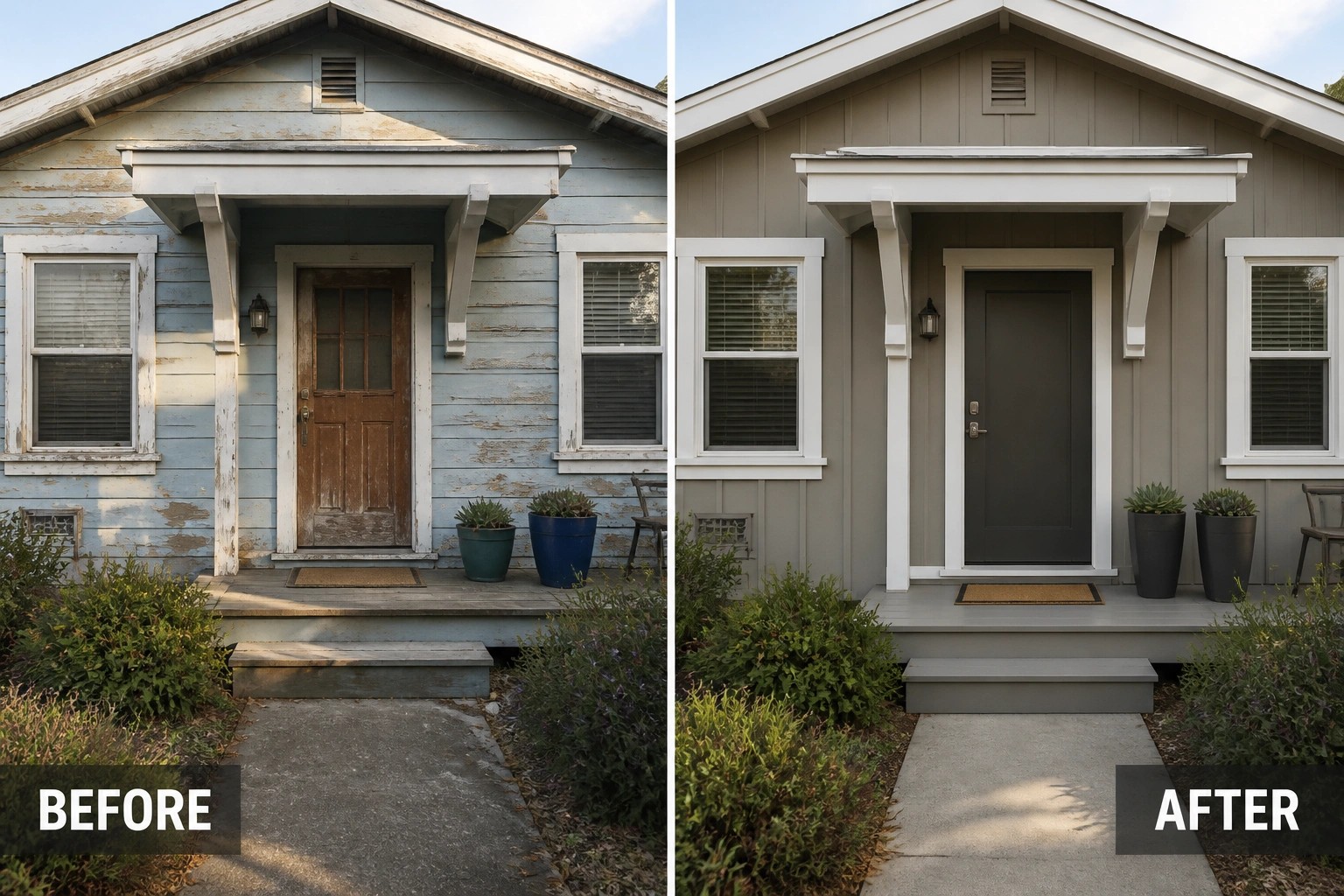
Keeping a small home’s exterior tidy can feel like a constant chore, so I focus on fixes that cut down on upkeep while still improving curb appeal.
Faded paint, high-maintenance plantings, and fiddly details are what make a facade look tired, and swapping them for durable materials and cleaner lines makes a noticeable difference.
I often try one small change first, like switching to composite trim or planting a simple drought-tolerant border, to see how it steadies the look without creating more work.
Small updates add up.
Low-maintenance siding choices and simple porch details can be adapted to most small homes, so you can make upkeep feel manageable rather than overwhelming.
Refresh The Front With Low-Maintenance Siding, Trim, And Planters
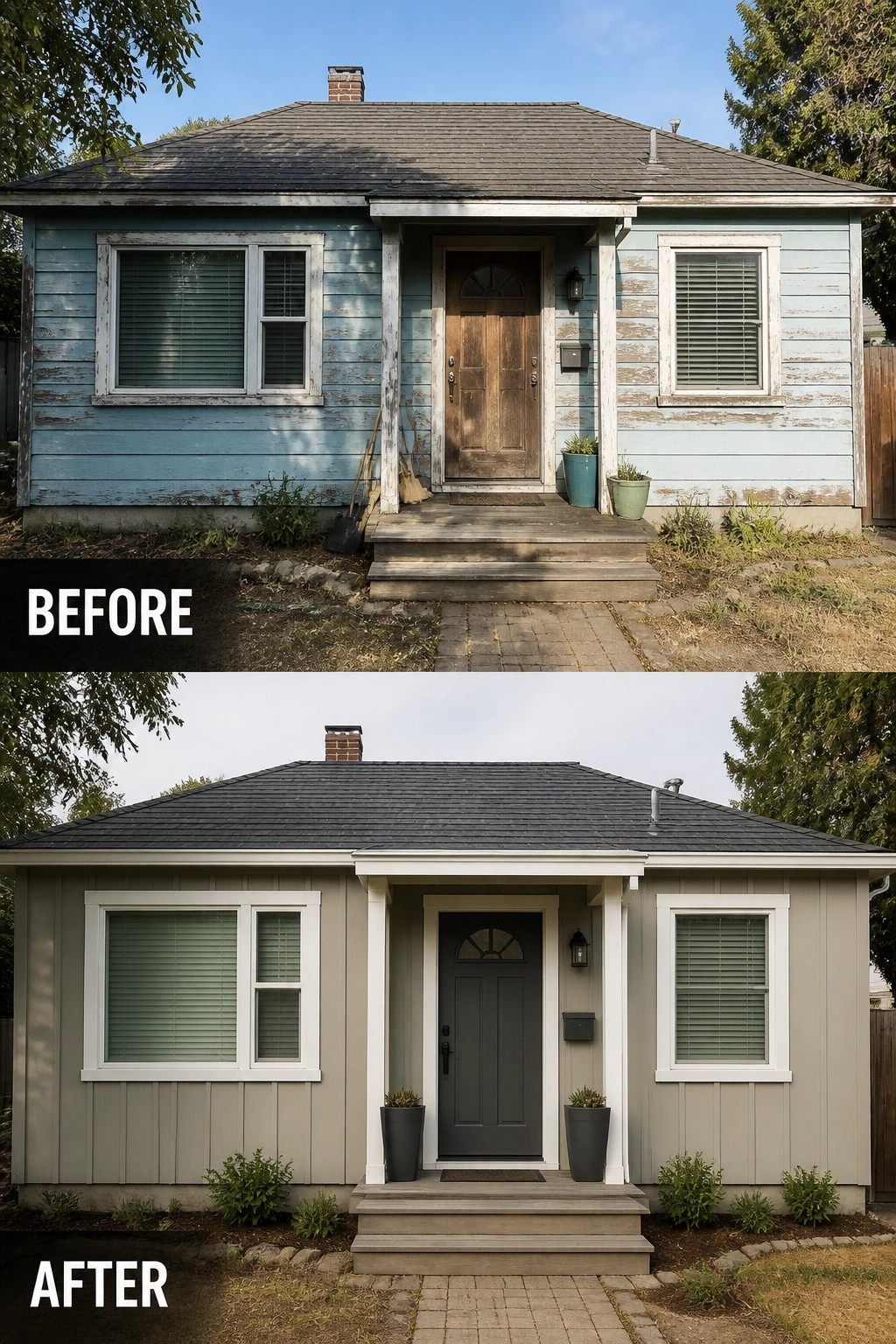
Start by choosing a durable, neutral siding and clean white trim to simplify upkeep and instantly tidy the look of a small house. In this example the peeling painted clapboard was replaced with smoother, low-maintenance panels, a darker entry door, and a pair of simple planters to give the porch a clear focal point without extra work.
To copy this at home, repair any rotten boards, pick a durable cladding like fiber cement or quality vinyl in a mid-tone that hides dirt, and use a contrasting trim color to make windows and the door read crisply. Add two matching pots with evergreen or drought-tolerant plants so you get year-round structure with almost no care, and keep the entry clear so cleaning and snow removal stay easy.
Define The Entry With Pavers And Low-Care Planting
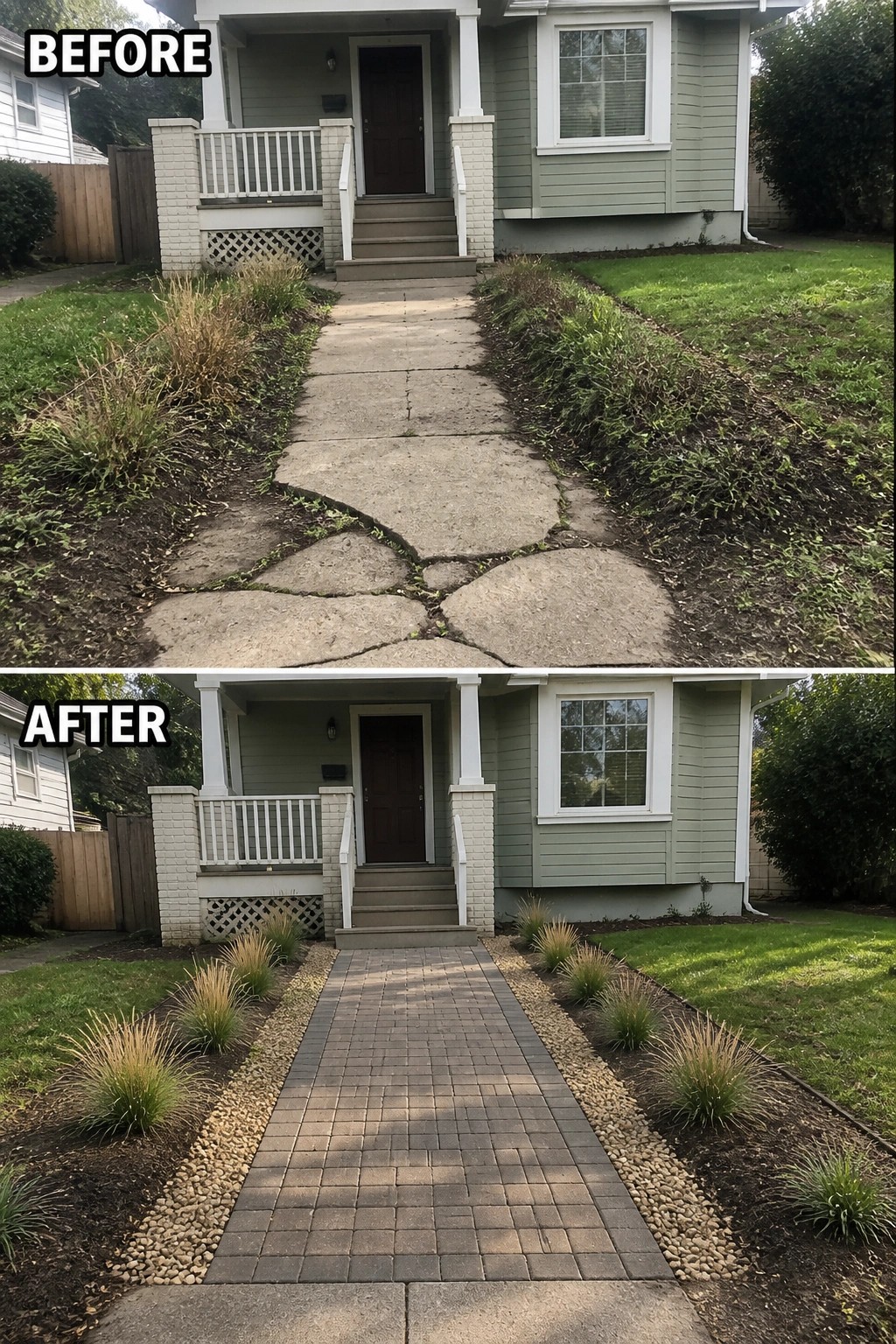
Swapping a cracked concrete path for a run of interlocking pavers with gravel strips and clumping ornamental grasses gives a small house an instantly neater, easier-to-maintain entry. The solid pavers create a stable, repairable surface while the gravel edge keeps weeds down and reduces mowing along the border—two small moves that cut future upkeep.
This works best on narrow front yards where you want a tidy, low-fuss approach. Use permeable pavers or sand-set pavers for better drainage, install a simple edging to keep gravel in place, and choose drought-tolerant, clumping plants (ornamental grasses or natives) spaced so you can still mow or weed easily. Top up the gravel and trim the grasses once a year and you’ve got a durable, low-maintenance path that looks intentional without a lot of care.
Replace An Old Garage Door With A Low-Maintenance Model
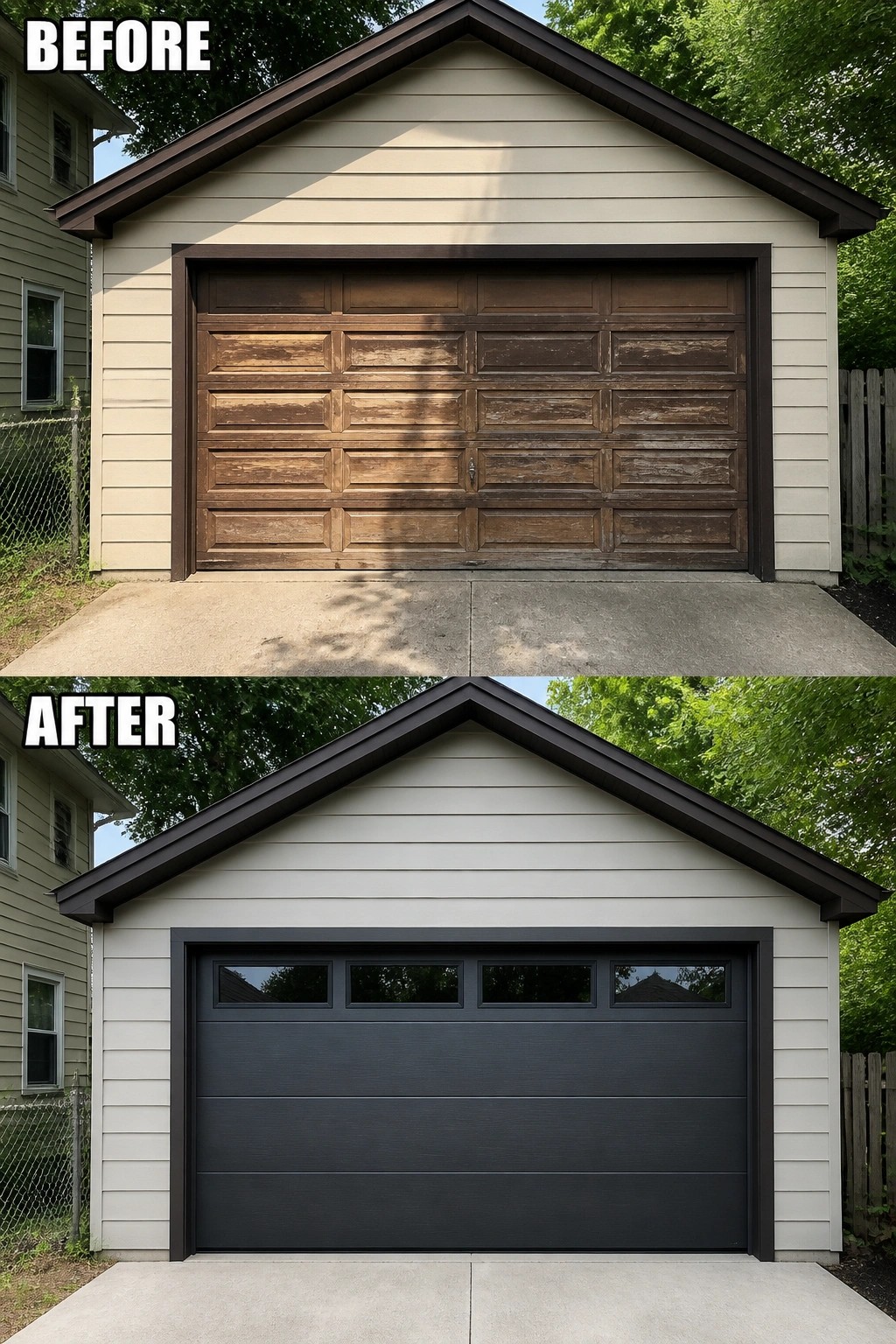
A tired, weathered garage door can make the whole front of a small house look worn, so swapping it for a simple, modern door is an easy way to cut upkeep and lift curb appeal. In the photo the old peeling wooden door is replaced by a smooth, dark panel door with narrow top windows — fewer seams and a factory finish mean less sanding, staining, and repainting over the years.
When planning this update, pick a durable material like powder-coated steel, aluminum, or fiberglass that resists rot and holds color. Choose a clean panel style with small windows to admit light without extra trim work, and match the door color to existing fascia or trim to keep the look cohesive. Have a pro handle the balance springs and weatherstripping, and you’ll end up with a lower-maintenance front that still feels intentional. Worth the investment.
Install A Low-Maintenance Privacy Fence
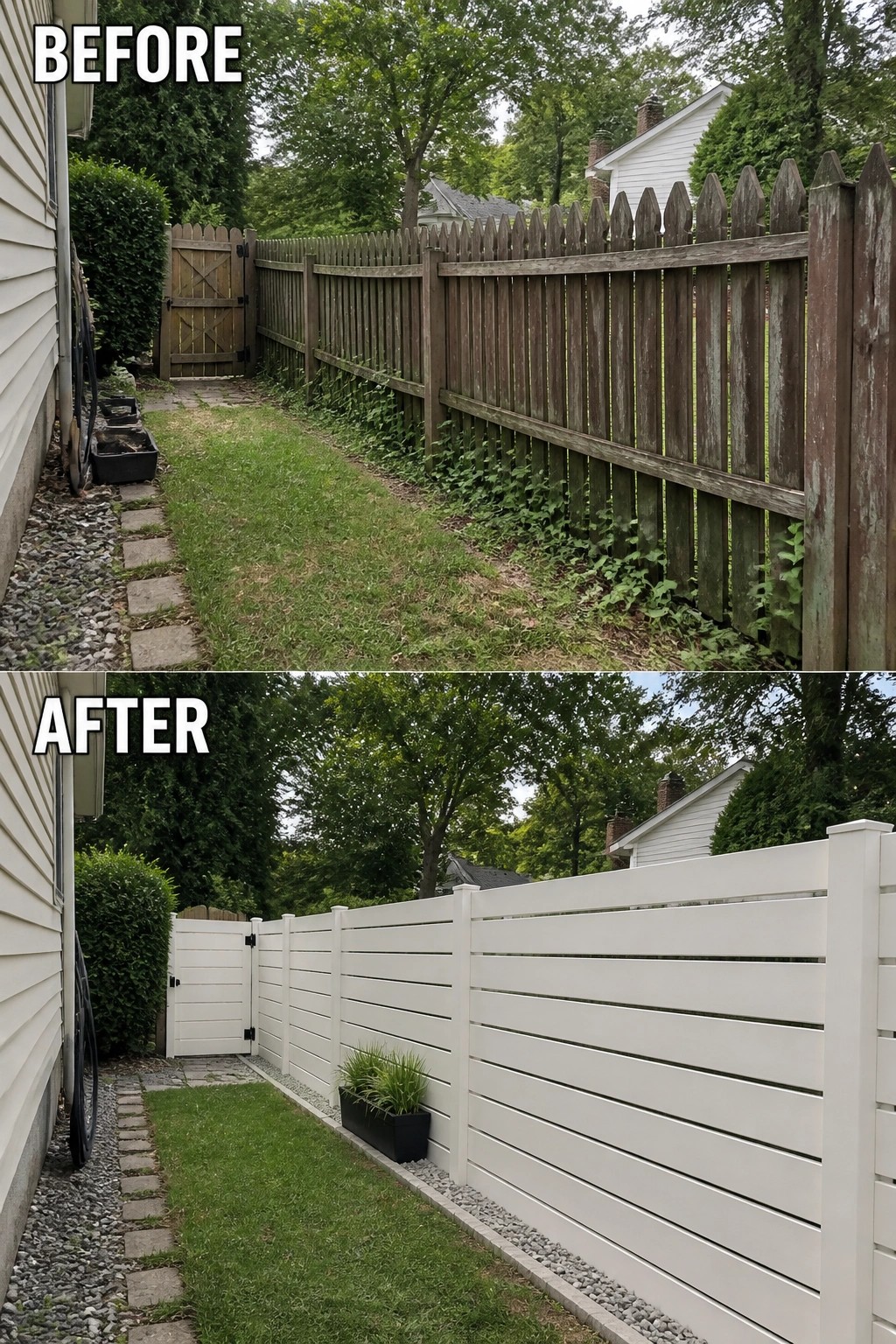
Replacing an old, weathered picket with a simple white horizontal fence instantly cleans up a narrow side yard and cuts ongoing upkeep. Swapping to vinyl or composite panels not only hides neighbors and street views but also eliminates yearly staining, sanding, and rot that come with wood, so the space looks fresh with much less effort.
This works best along tight walkways where you want privacy and an easy-to-maintain edge. Choose durable materials (vinyl or composite), pick a panel height and spacing that balance airflow and screening, and finish the base with gravel or a narrow planting strip to stop weeds and simplify mowing. For a quick upgrade, use prebuilt panels or hire an installer for straight lines and sturdy gates—small details like good hinges save headaches later.
Turn An Overgrown Bed Into A Low-Maintenance Rock Garden
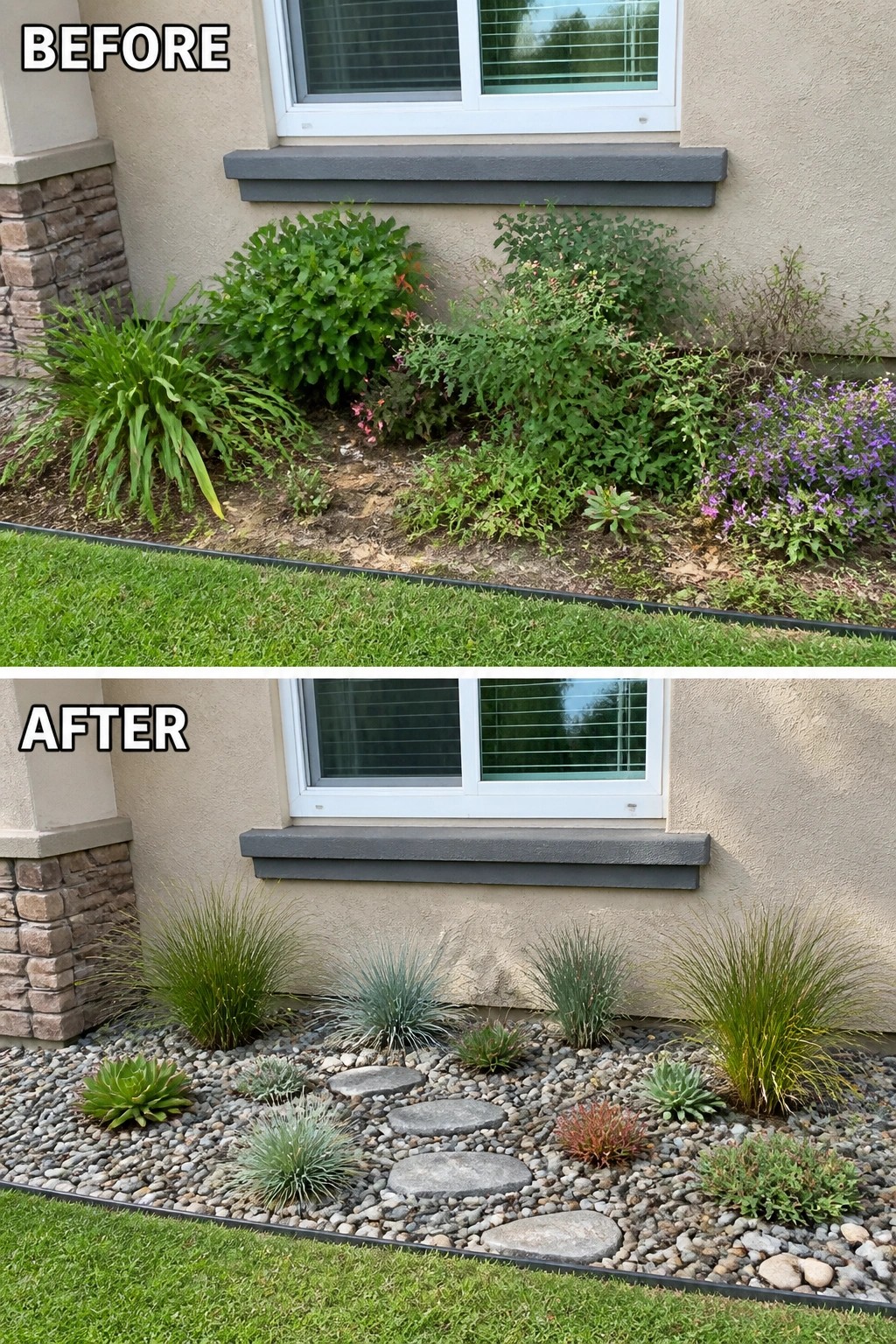
Swap a crowded, high-maintenance planting strip for a simple bed of river rock, a few stepping stones, and drought-tolerant clumps of grasses and succulents. Removing the overgrown shrubs and replacing mulch with pebbles cuts down on watering and pruning while giving the house a tidier, intentional edge.
Start by clearing unwanted plants and defining the bed edge, then lay landscape fabric if you like and cover with gravel or small river rock. Plant small groups of low-water species (ornamental grasses, agave, sedum) with room to grow and add stepping stones for access; this works especially well on narrow front beds or in drier climates and only needs occasional weeding and light trimming.
Paint Brick To Simplify And Modernize The Facade
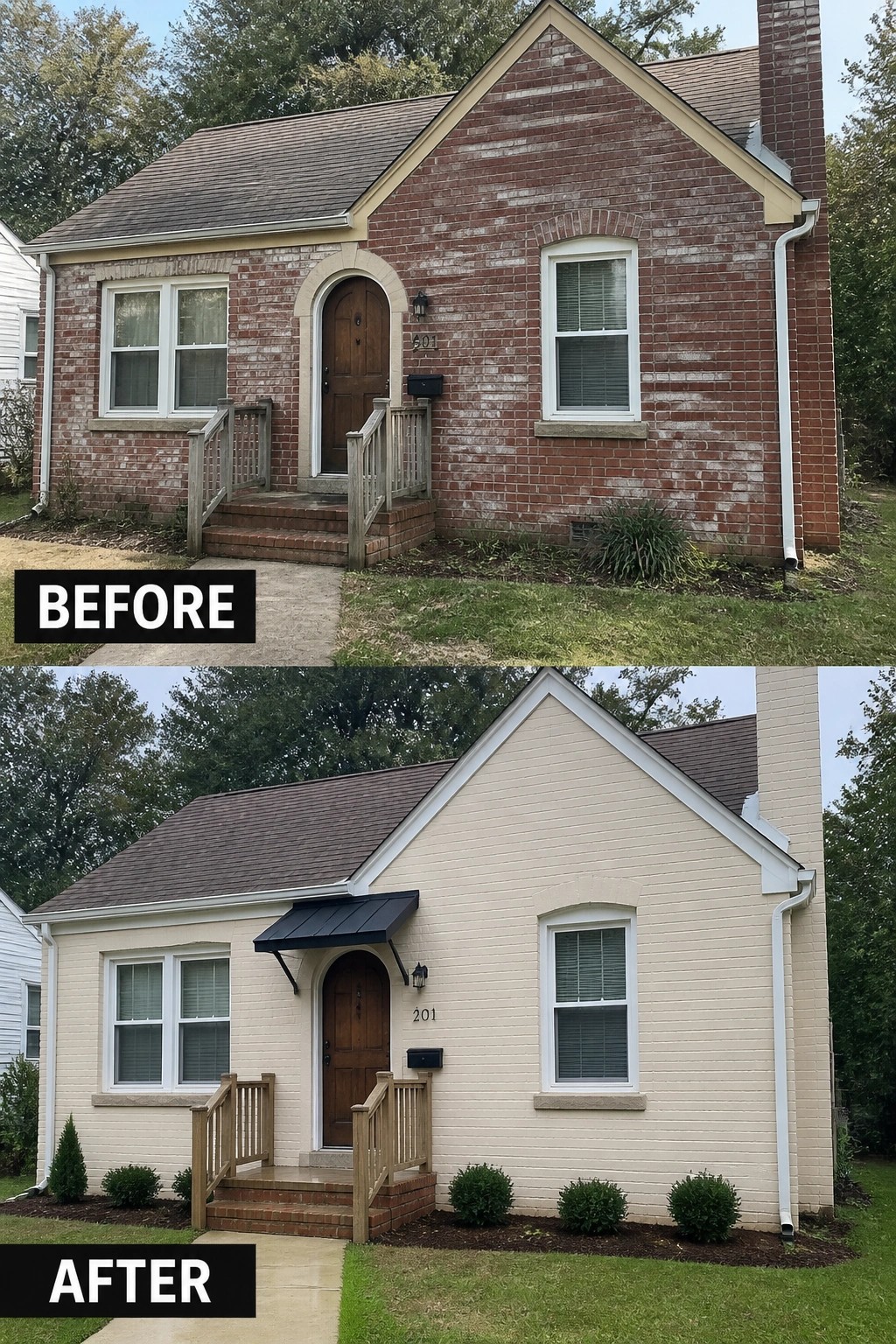
A fresh coat of exterior masonry paint can do more for curb appeal than you might expect. In this example the red brick was painted a soft neutral and the entry got a simple metal awning and a few low shrubs, which immediately tidied the look and hid uneven mortar staining. Painting evens out color, makes the house look updated, and gives you a clean base to pair with durable accents like metal trim or a neat mailbox.
If you try this, start with a small test patch and use a breathable masonry primer and paint so moisture can escape. Pick a light, neutral tone for smaller homes to make them feel larger, then repeat one contrasting trim color for windows and the door so the details remain clear. Add a couple of dwarf evergreen shrubs and fresh mulch rather than a lot of annuals—low upkeep, neat lines, and easier long-term care.
Update Worn Entry Steps With Low Maintenance Materials
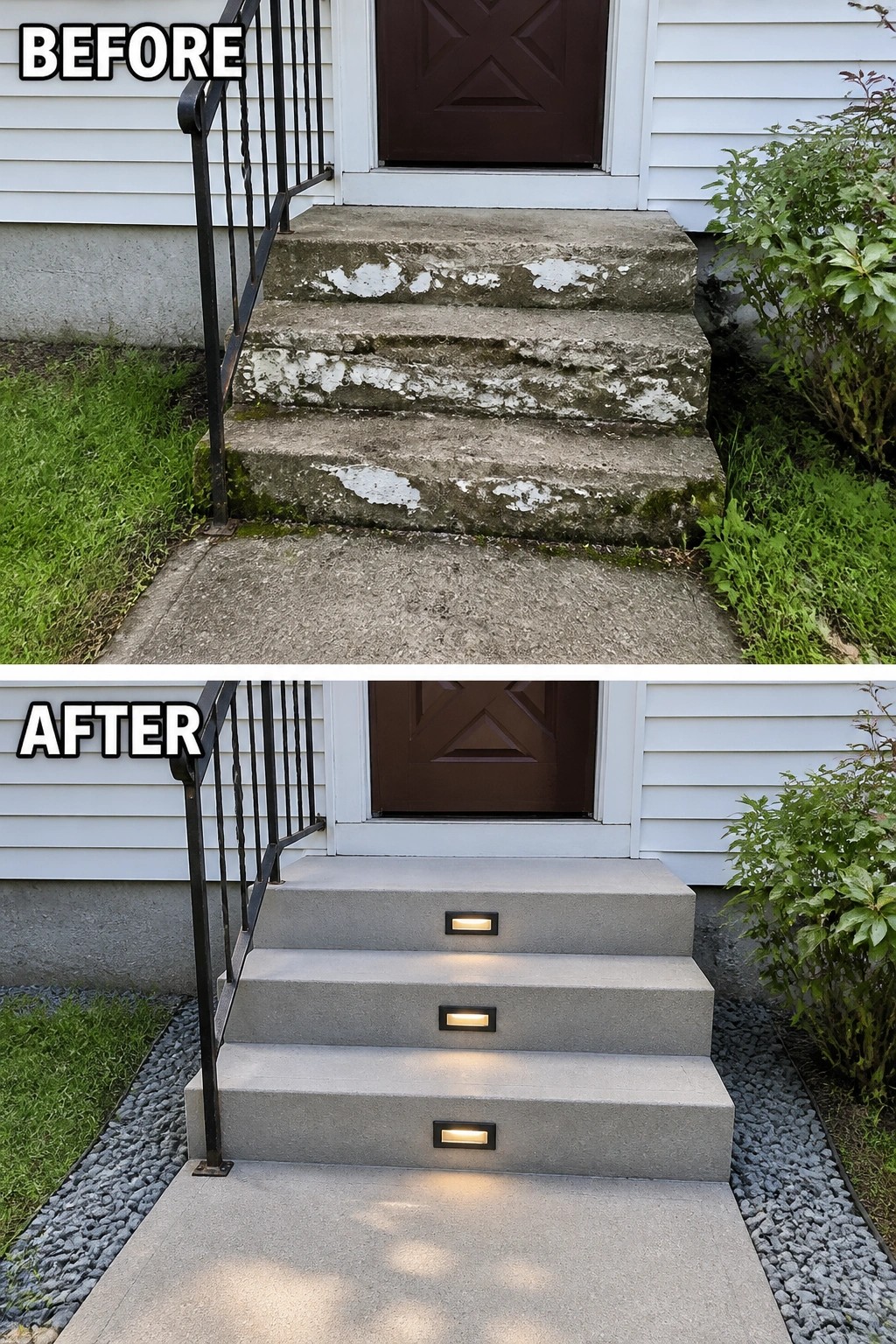
Tired, crumbling concrete is an easy place to get big curb appeal for little ongoing work. Resurfacing or replacing worn treads with a smooth concrete finish and adding recessed LED step lights gives a clean, safe entry that needs far less scraping, painting, and patching than old painted or flaking concrete. The built-in lights also solve nightly safety without portable fixtures to maintain.
To copy this idea, consider a concrete resurfacer or a local mason who can pour new treads or apply a thin overlay for a long-lasting finish. Add low-voltage recessed step lights for safety and choose a textured, non-slip topcoat so you avoid constant sanding or repainting. Keep the planting and edging simple too—gravel or pea stone at the sides reduces weeds and mowing and improves drainage. (Check for serious structural cracks first and call a pro if the steps are unstable.)
Update Shutters And Trim For Easier, Low‑Maintenance Curb Appeal
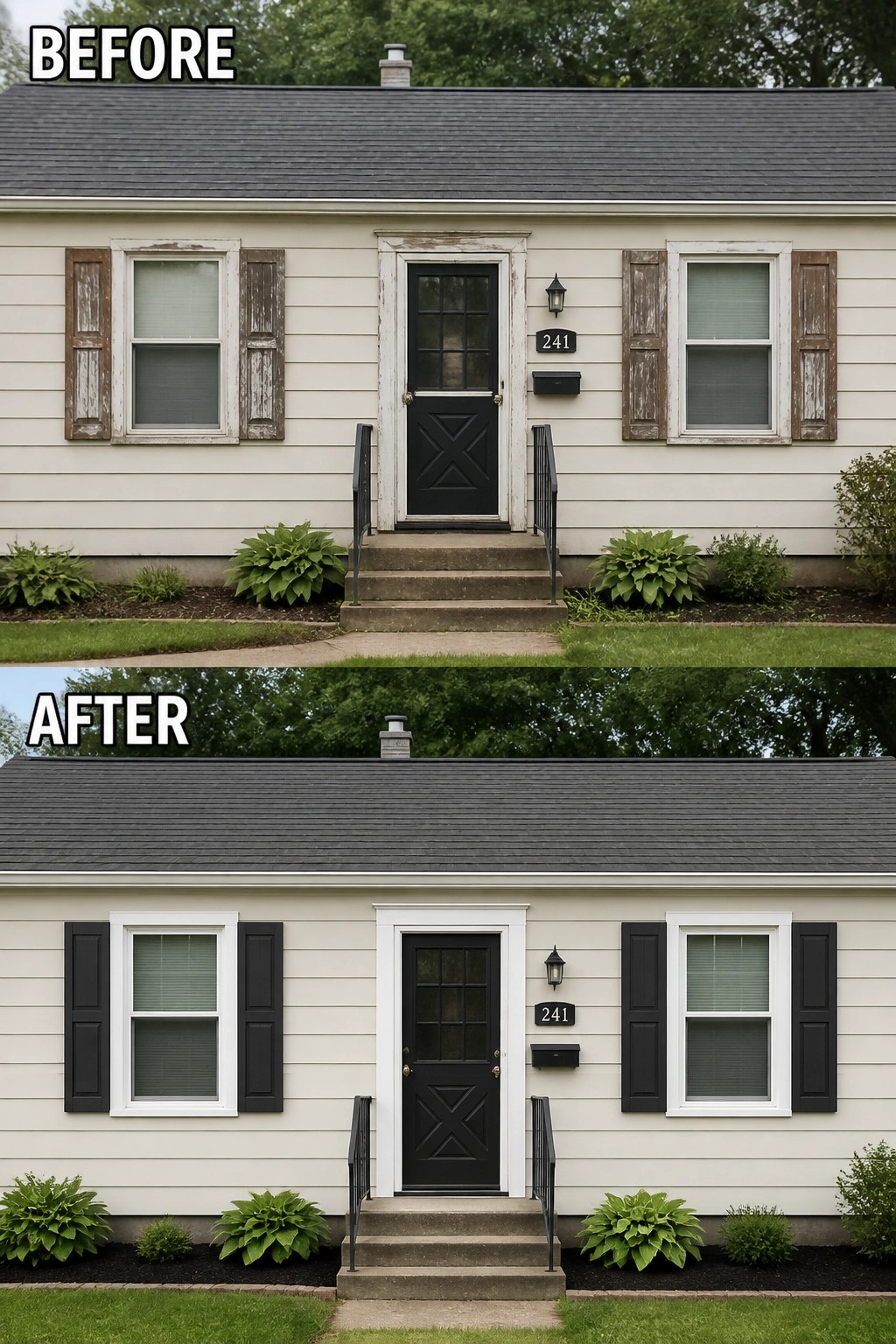
A simple swap of tired, peeling shutters and worn trim for clean, painted trim and low-maintenance shutters can make a small house look cared for without big work. In the photos you can see the weathered wood replaced by crisp white trim and dark, durable shutters around the windows and door — a small change that sharpens the whole facade and reduces the need for constant scraping and repainting.
Use long-lasting materials and a limited palette to keep upkeep low: pick PVC or fiberboard trim and composite or painted metal/plastic shutters, and choose a high-quality exterior paint or factory finish. Keep details modest, seal and flash around windows properly, and pair the update with simple mulch beds or small, easy-care shrubs so you don’t reintroduce maintenance through landscaping. Works best on small bungalows, ranches, and cottages where one coordinated change makes a big visual difference.
Give A Bare Porch A Clear Purpose
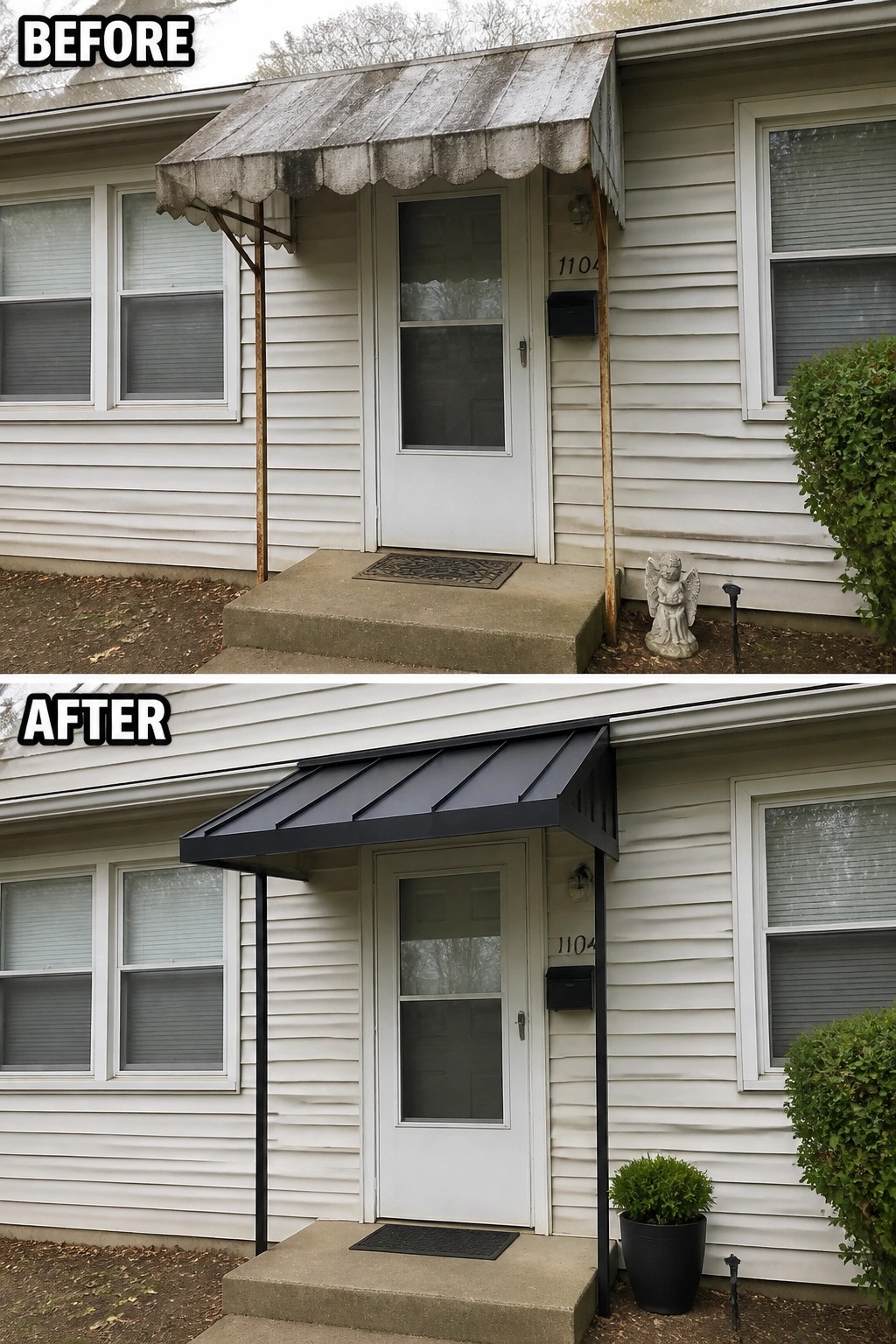
Swapping an old, worn awning for a simple metal canopy and adding one clean planter turns a forgettable entry into a purposeful front porch. The change focuses attention on the door, uses durable materials that need less upkeep than fabric, and keeps the look tidy—one small upgrade makes the entry read as intentional rather than leftover.
This works well on small homes with modest stoops: choose a powder-coated aluminum or steel canopy in a neutral color, make sure it has a slight slope for runoff, and anchor posts so they do not wobble. Keep accessories minimal (a single planter or a matched pair and a practical mat), leave plenty of room to step, and match the metal finish to other trim or fixtures for a cohesive, low-maintenance look.
Use Large Pavers And A Raised Planter To Cut Side‑Yard Upkeep
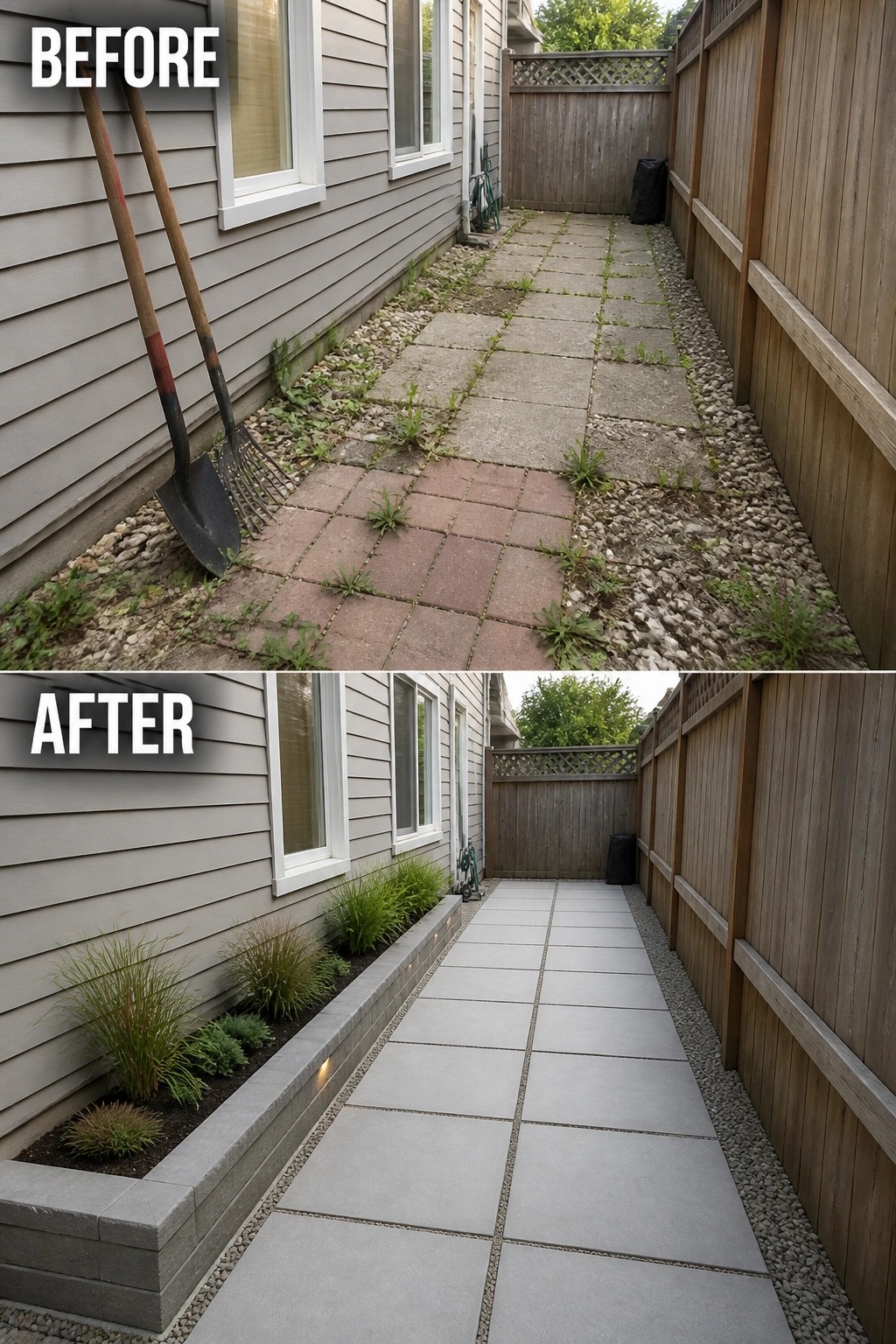
Swap a jumble of small, weedy slabs for a run of large concrete pavers with narrow gravel joints and a single raised planter along the house. Big slabs mean fewer seams to scrape or pull weeds from, gravel joints allow drainage and make reweeding simple, and the planter keeps all the greenery contained so you’re not managing plants scattered across the path.
This approach works best in narrow side yards or service paths where you need clean lines and easy access. Start by clearing and leveling the base, then set large-format pavers on a compacted base and fill joints with pea gravel. Keep the planting simple—drought-tolerant grasses or small shrubs—and add low built-in lights if you want safe, low-effort night visibility. Works especially well in small, tight spaces.
Replace An Overgrown Trellis With A Low-Maintenance Screen
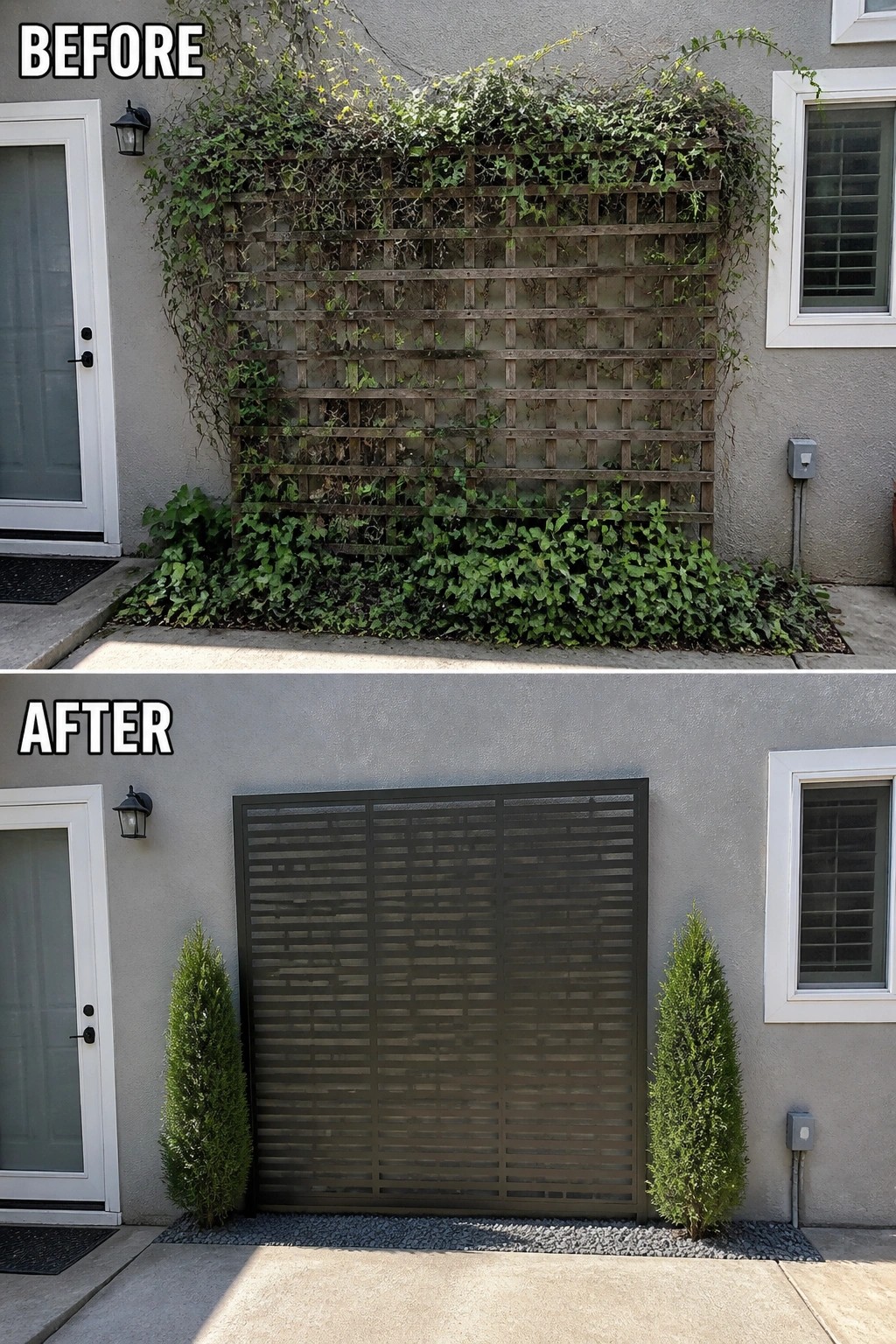
If you’ve been wrestling with a climbing vine that needs constant pruning, swap the wood lattice for a simple metal or composite screen and keep the plantings minimal. In this example the tired vine-covered trellis was removed and a slim slatted screen was installed with two narrow evergreen accents and a gravel bed, which instantly looks tidier and needs far less ongoing care.
To copy it, pick a durable, weatherproof panel (powder-coated metal or composite) and mount it a few inches from the wall so air can circulate and moisture won’t sit on stucco. Plant one or two slow-growing columnar evergreens or use tall pots, and lay gravel or low-maintenance groundcover to suppress weeds and keep access clear. It’s a good solution for small courtyards and narrow entries where you want structure and greenery without daily trimming—no constant vine clipping required.
Turn A Scrubby Corner Into A Low-Maintenance Patio
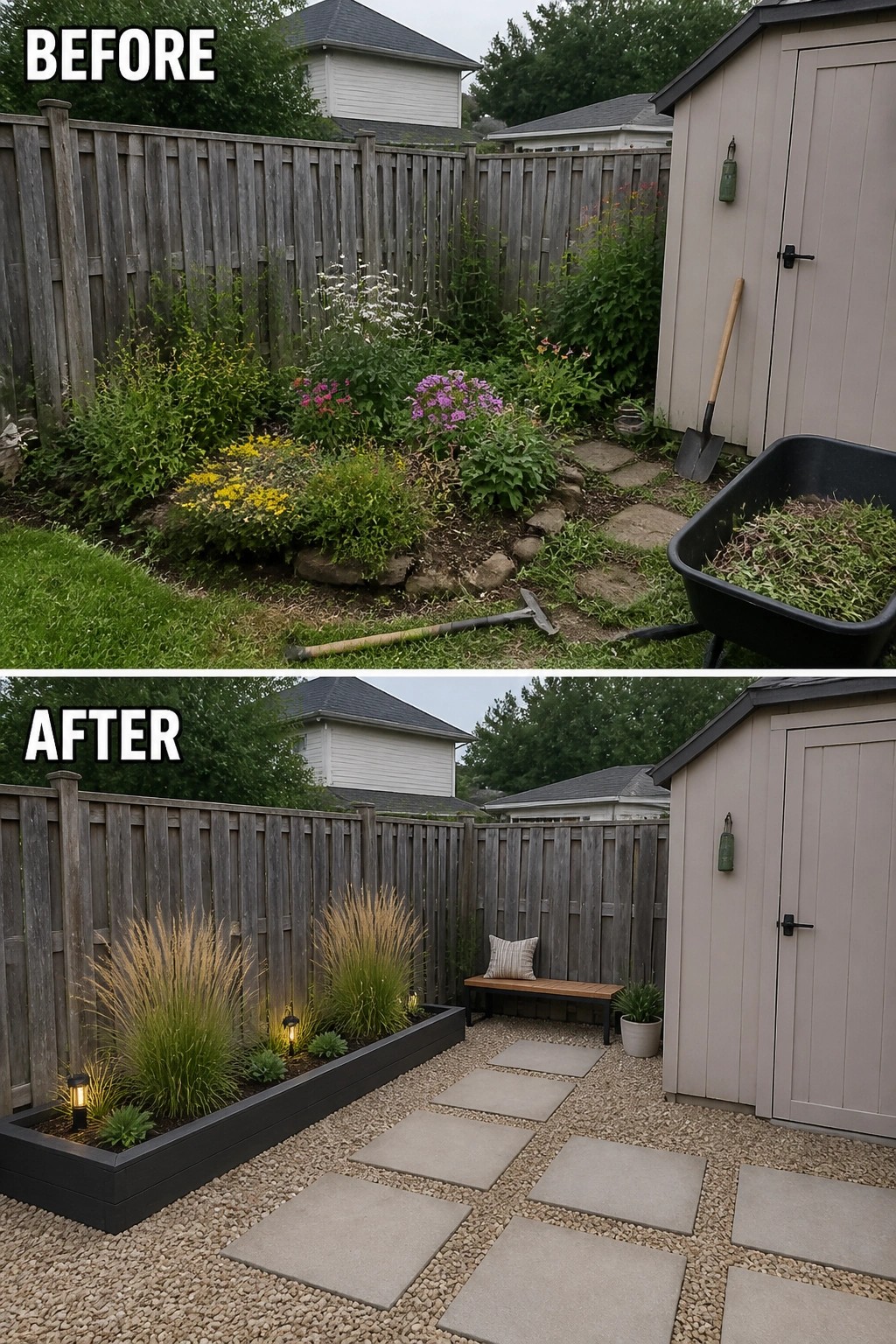
Swap an overgrown planting bed for simple hardscape and one contained planter to make a small yard instantly easier to maintain. Clearing the jumbled plants and laying compacted gravel with a few large stepping pavers creates a clear path and usable floor, while a single raised planter keeps plantings tidy and low-effort.
To copy this idea, start with cleanup and a weed barrier, then compact a layer of gravel so it stays put. Use oversized pavers spaced for comfortable steps, and build or buy a shallow raised planter for drought-tolerant grasses or succulents that need little care. Finish with a small bench and a light or two where people sit so the space feels like a real outdoor room without the usual upkeep.
Switch To Vertical Low-Maintenance Siding
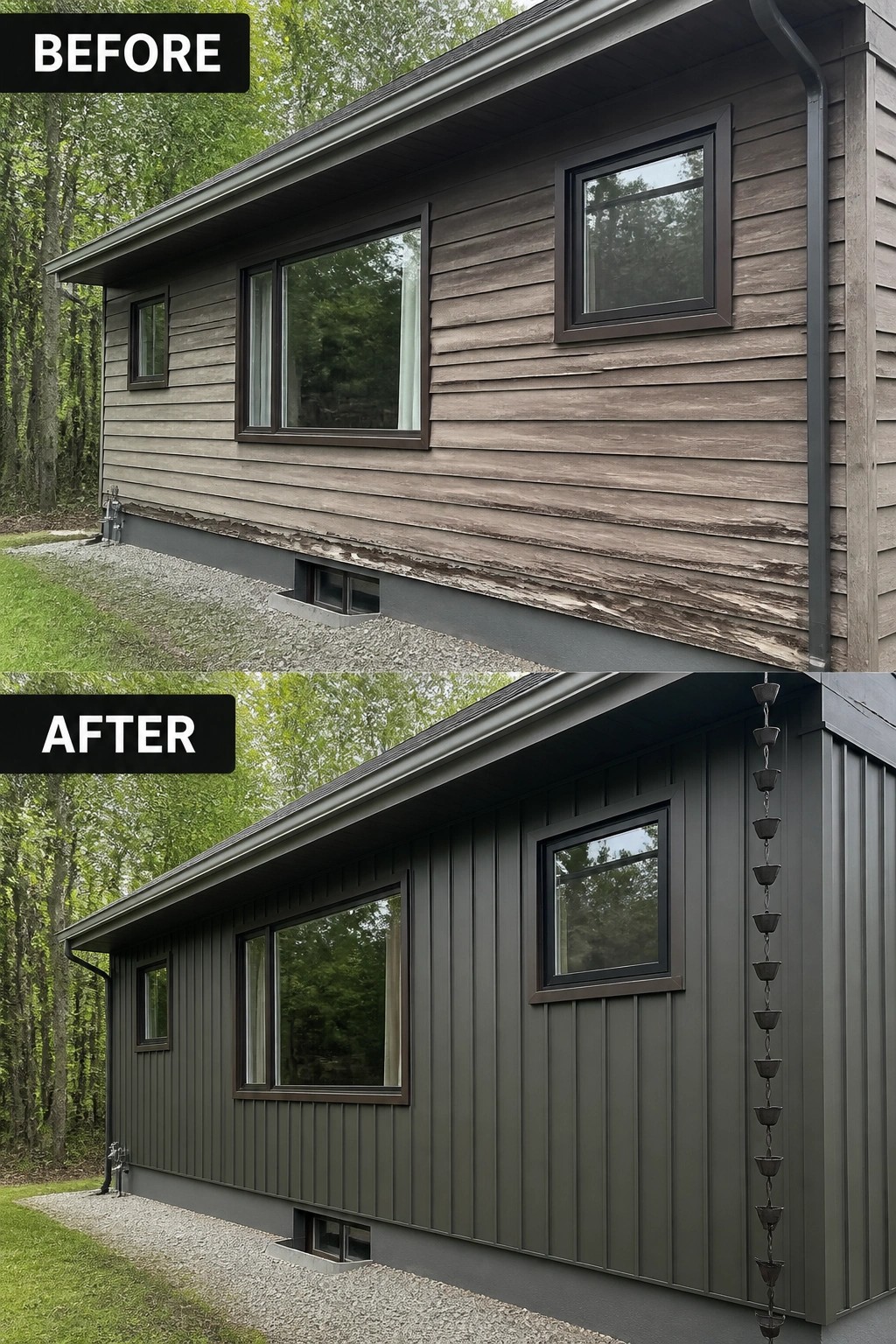
Replacing old horizontal wood boards with vertical, low-maintenance panels is an easy way to refresh a small house without endless painting. In this example the worn, peeling horizontal siding is swapped for smooth dark vertical panels, which immediately cleans up the look and reduces places where water and dirt collect. The long vertical lines also help a simple facade read as more intentional and modern.
To try this, choose a durable panel type—standing-seam metal, fiber cement vertical boards, or interlocking vinyl—then match trim and window frames for a cohesive finish. Pay attention to proper flashing, underlayment, and a short gravel or paved buffer at the base so the siding never touches damp soil. Works well on cottages and ranch-style homes where you want lower upkeep and a tighter look. Simple, practical.
Give A Small Porch A Clear Purpose
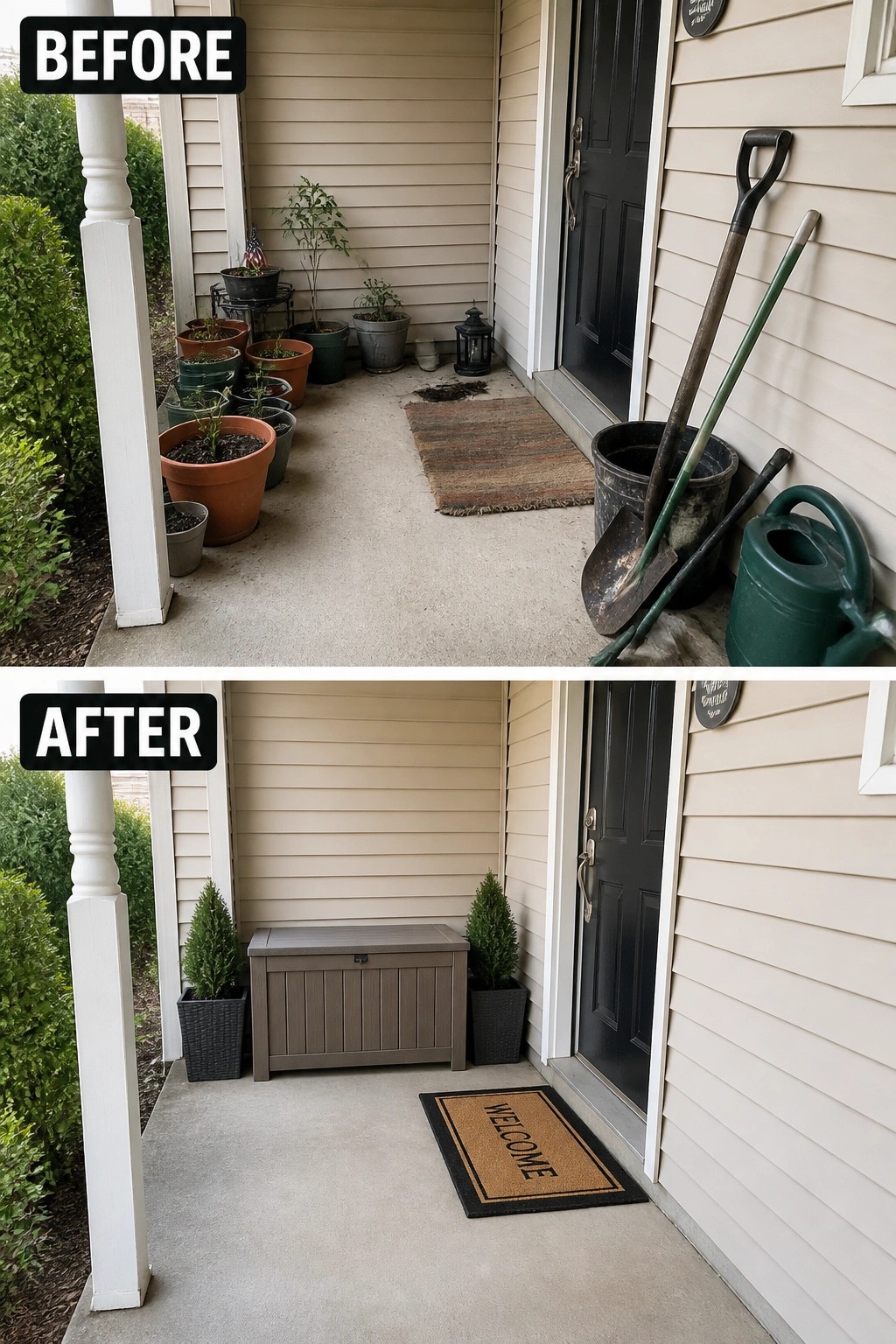
Turn a cluttered or unused entry into a tidy, low-maintenance spot by choosing one clear function—storage, seating, or display—and arranging pieces to suit that role. In this makeover a weatherproof storage bench replaces a cluster of pots and loose tools, while a pair of matching planters and a doormat define the entry. The result is neater and much easier to keep clean because everything has a place.
To copy this, pick a single focal piece that does double duty, like a lockable bench that holds cushions and garden gear. Keep plantings simple and evergreen (or choose faux) so you’re not constantly tending them, and size everything so there’s still a clear path to the door. A small rug and two symmetrical planters finish the look without crowding the porch, making upkeep quick and painless.
Add A Stepping‑Stone Path And Gravel For A Low‑Maintenance Side Yard
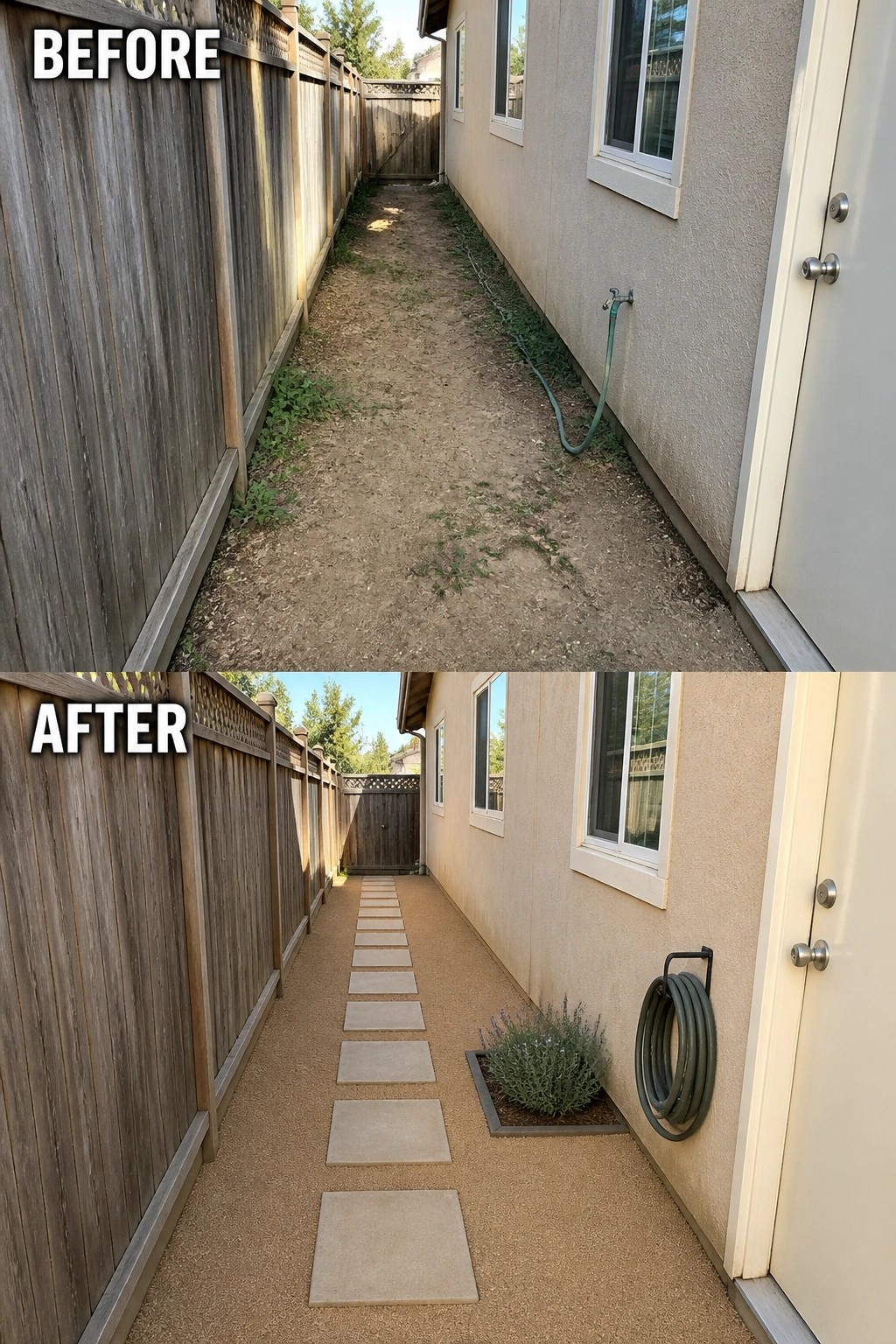
Turning a narrow, weedy strip into a defined path instantly cuts maintenance and looks neater. In this makeover the dirt was replaced with a compacted gravel or resin surface and a row of square stepping stones, which gives a clear walking line and stops weeds from spreading while keeping the space simple and usable.
To copy it, clear and level the area, lay landscape fabric, then add a compacted base and your chosen surface (decomposed granite, resin-bound gravel, or pea gravel). Set the pavers at comfortable stride spacing and leave one small planting pocket for a drought-tolerant shrub or perennial to soften the wall. Fit practical touches too, like a wall-mounted hose reel, and check slope for drainage so water doesn’t pool. Simple and durable.
Frequently Asked Questions
Q: What’s the simplest upgrade I can make to cut exterior maintenance on a small house?
A: Replace or cover high-maintenance wood elements with composite trim or fiber-cement panels and choose a durable paint or factory-finished siding. Add gutter guards and you’ll cut the time spent cleaning and repainting each year.
Q: How often should I clean and inspect the exterior, and what should I check first?
A: Do a quick walk-around twice a year to clear gutters, look for cracked caulk, and spot-check paint or siding for damage. Once a year, power-wash dirty areas and inspect roof edges so small fixes don’t turn into big jobs.
Q: Can I have attractive landscaping that barely needs attention?
A: Absolutely—use native, drought-tolerant plants grouped by water needs and cover beds with mulch to suppress weeds (native plants often need less water and pruning). Keep planting beds simple and add a low-maintenance groundcover to reduce mowing and edging.
Q: My small yard feels cluttered. What easy design tricks keep it tidy without lots of work?
A: Stick to a limited palette of materials and colors so everything reads as one simple plan, then add one vertical focal point like a column of planters or a neat trellis. Clear pathways and a small gravel or paved area make the space feel bigger and much easier to maintain.