

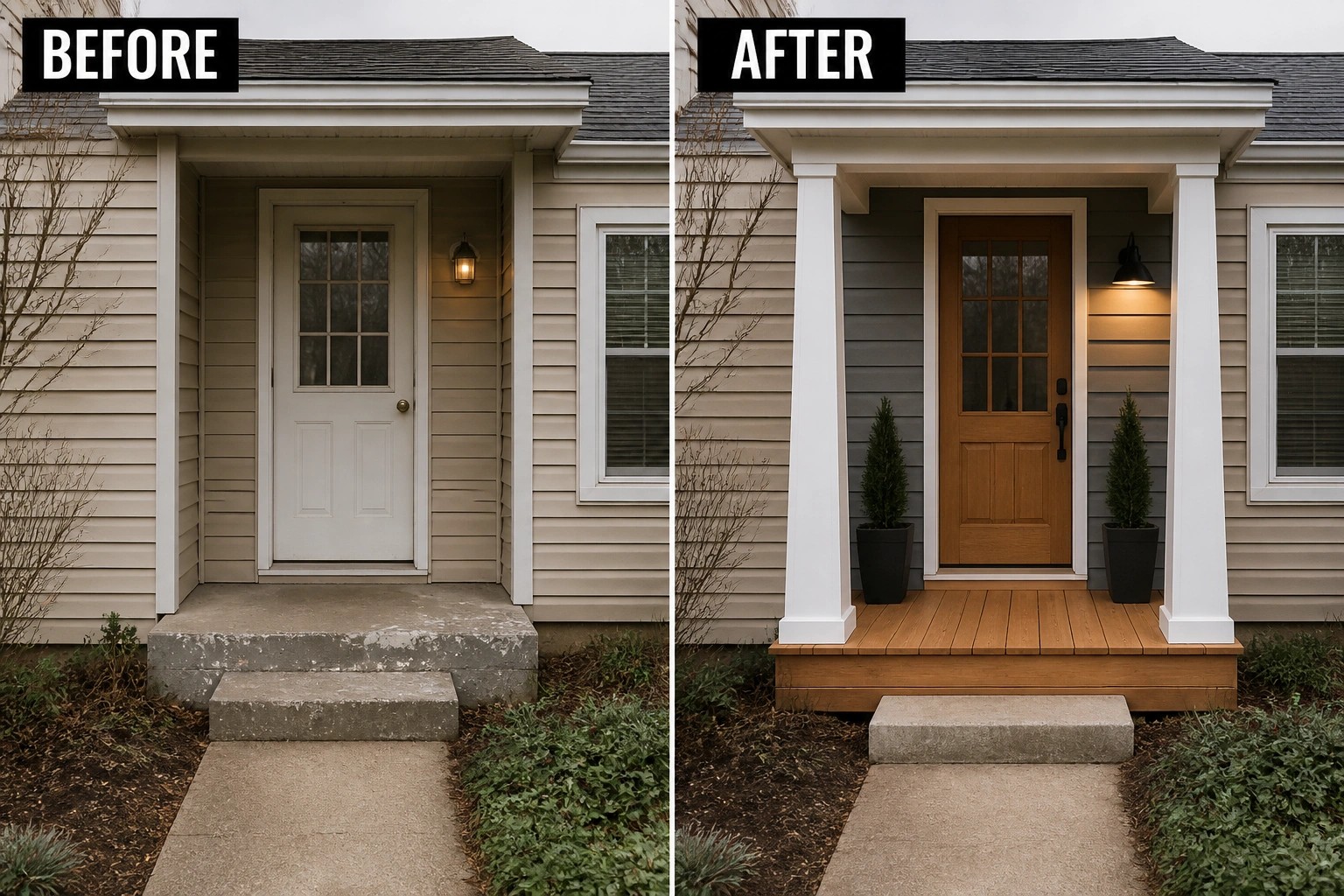
Narrow porches and shallow front elevations can leave a house feeling a bit unbalanced, with an entry that looks functional but forgettable.
A few smart choices go a long way.
I usually start by testing a new light, a narrow bench, or a door color to see how the proportions read in real life rather than committing to anything bigger.
Framing the entry with compact planters, scaled-down railings, layered lighting, and a focused color palette helps a small porch look intentional instead of cramped.
Save a few ideas to try, adapt what fits your home, and enjoy the quiet satisfaction when the front finally feels like part of the whole.
Give A Bare Porch A Clear Purpose
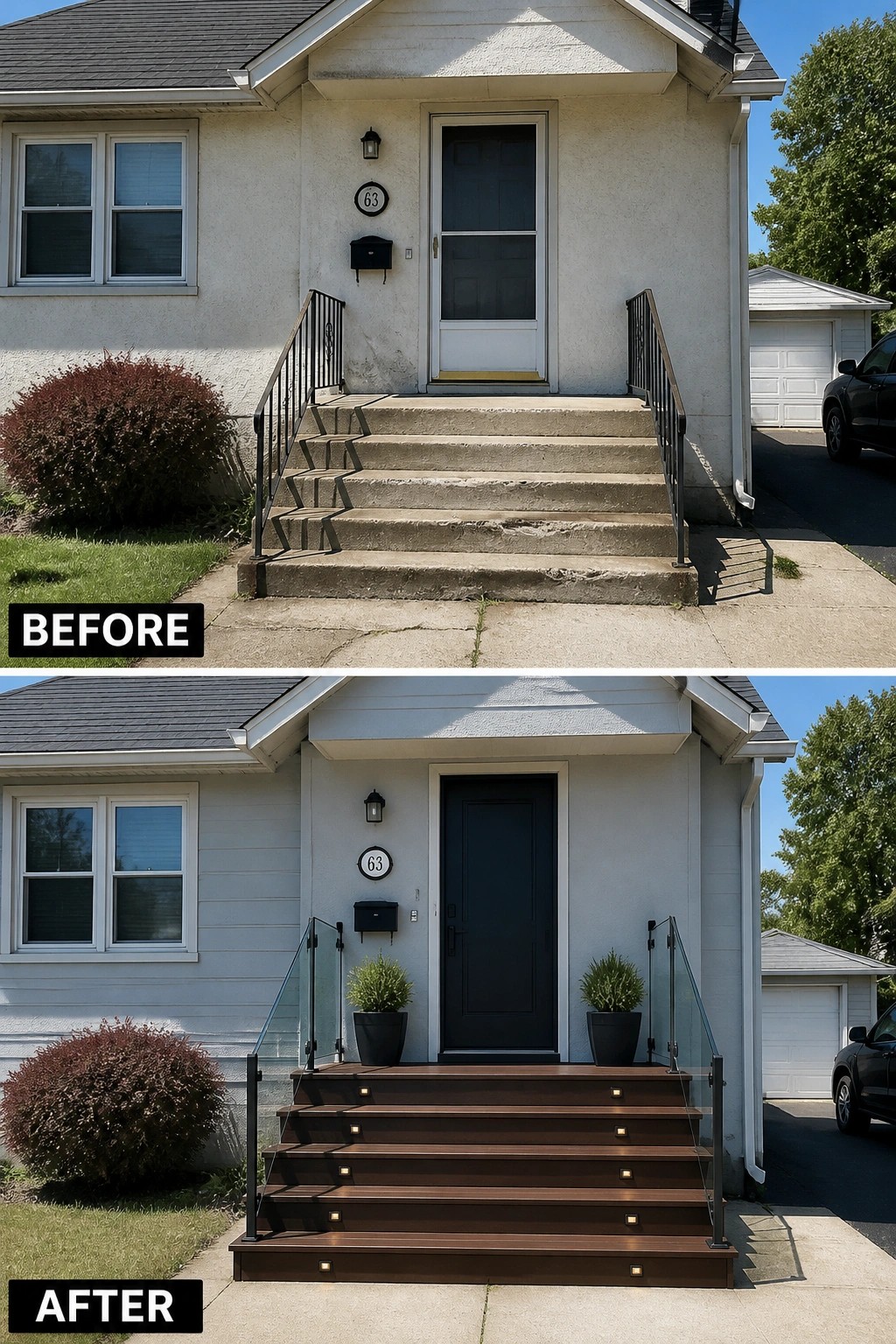
A shallow, featureless entry can be fixed by treating the steps as a small staged space rather than just circulation. Replacing worn concrete with a finished stair and landing, adding low-profile glass railings and a pair of matching planters instantly frames the door and signals this is the front entrance.
To copy the idea, keep scale and maintenance in mind: pick narrow-profile treads and slim railings so the porch doesn’t overwhelm a small facade, add recessed step lights for safety, and use durable materials (composite decking is low maintenance). Keep accessories minimal—one planter on each side, a single wall light—so the entry reads intentional without crowding the walk path or blocking the door.
Give A Shallow Porch A Clear Purpose
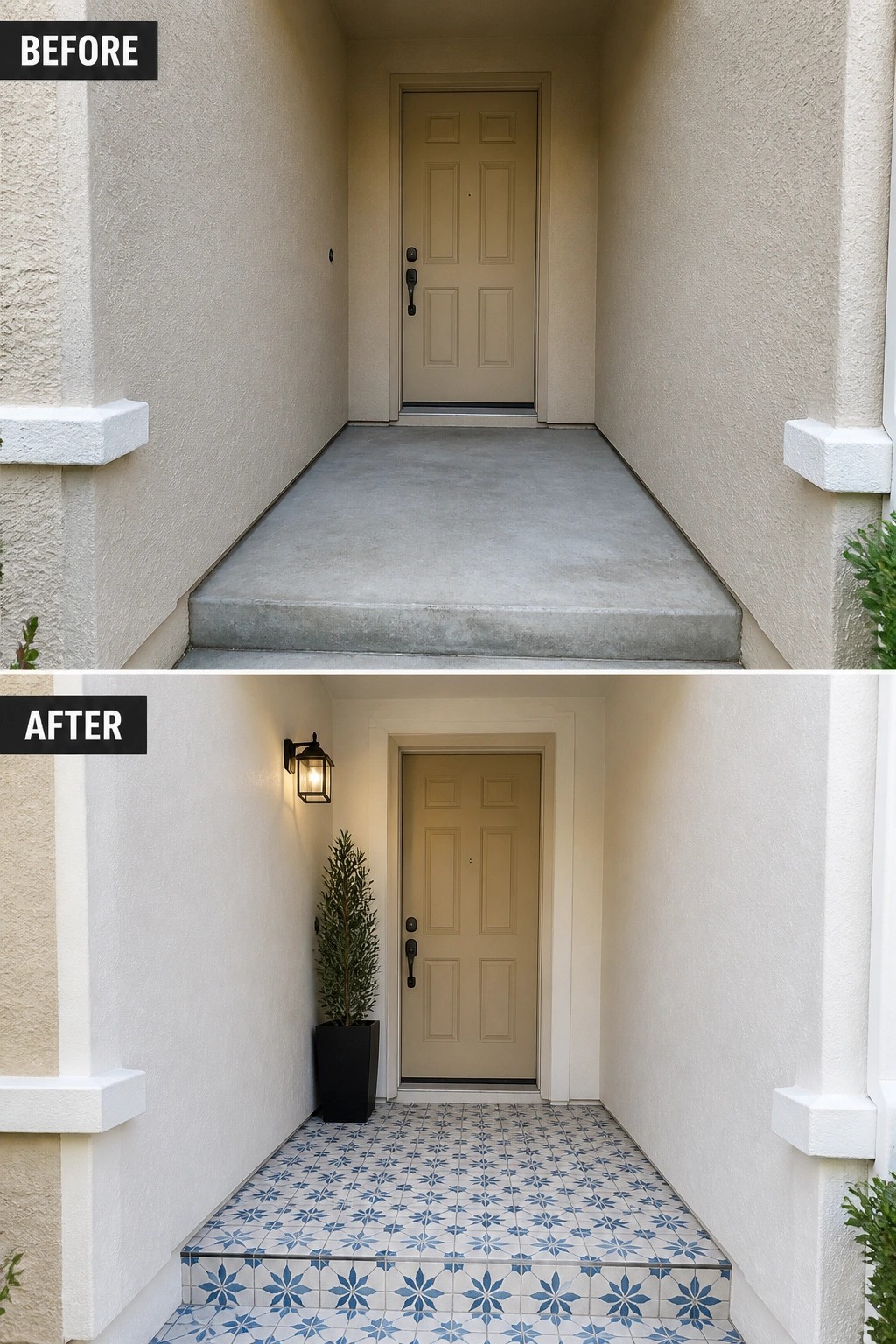
A narrow, unused entryway can feel like wasted space. Laying a patterned, weatherproof tile and keeping the styling simple — a single tall planter and a wall lantern — turns a bare stoop into a defined entry zone that looks thought-out without crowding the area. The tile gives the porch personality and visual depth while one vertical plant and a light give scale and function.
This approach works best for covered, shallow porches where you need impact without furniture. Pick slip-resistant outdoor tile or a durable cement tile, choose one or two scaled accessories, and keep the path to the door clear. Match a tile color to the door or house trim for cohesion, and use a hardwearing planter and exterior-rated light so the small upgrade lasts.
Frame the Entry With Tall Planters and a Bold Door
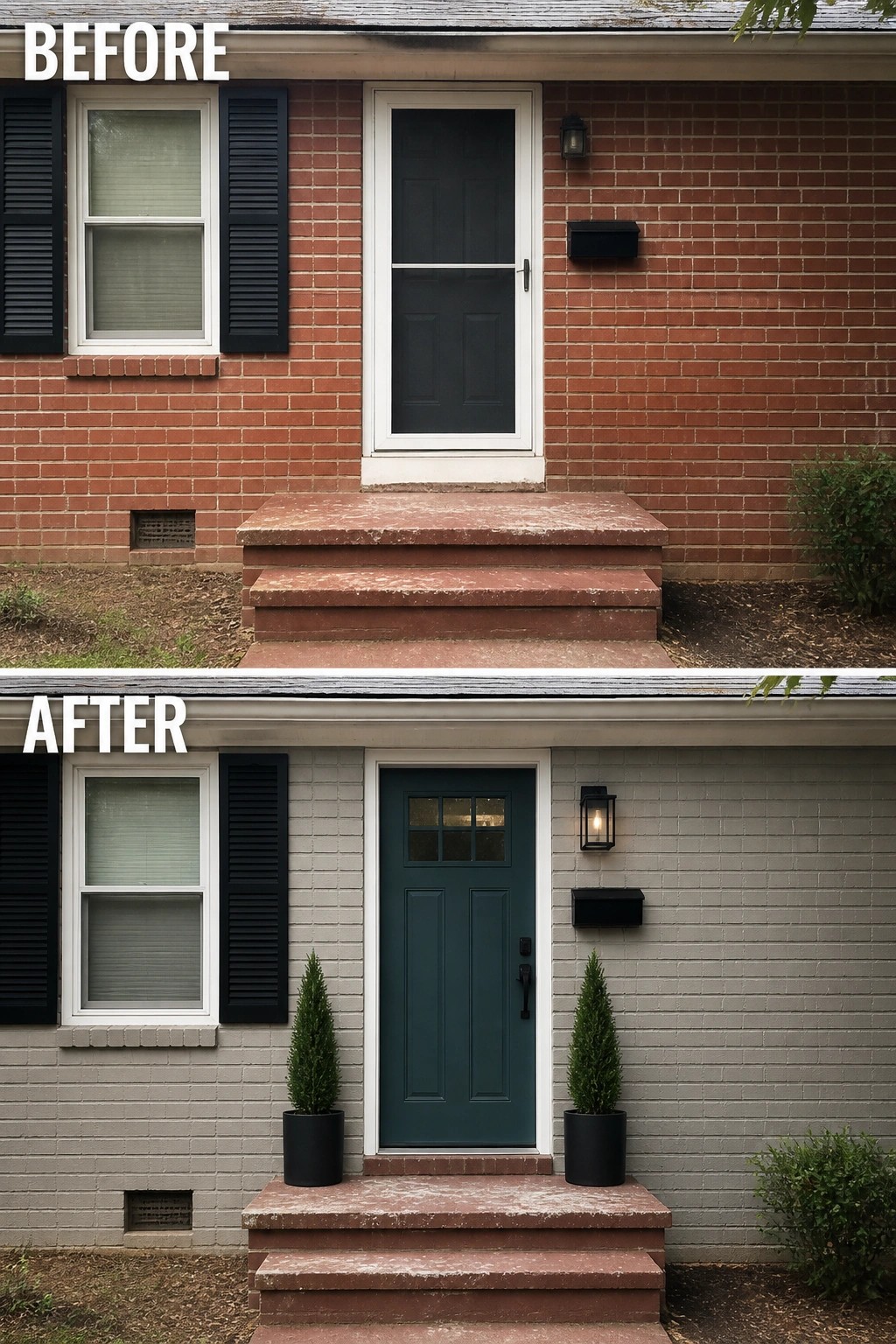
A shallow porch can stop feeling like an afterthought when you give it a clear focal point. Paint the front door a confident color and add a pair of tall, narrow planters to frame the entrance; those two moves turn plain steps into a purposeful entry without crowding the space.
This approach works especially well on small, narrow stoops where furniture would be impractical. Choose a hardy, low-maintenance plant in slender pots so you keep room to move, pick a door color that contrasts the facade, and use one simple light or piece of hardware to finish the look—small additions that make the entry read as intentional.
Define a Small Porch With Planter Boxes and Screens
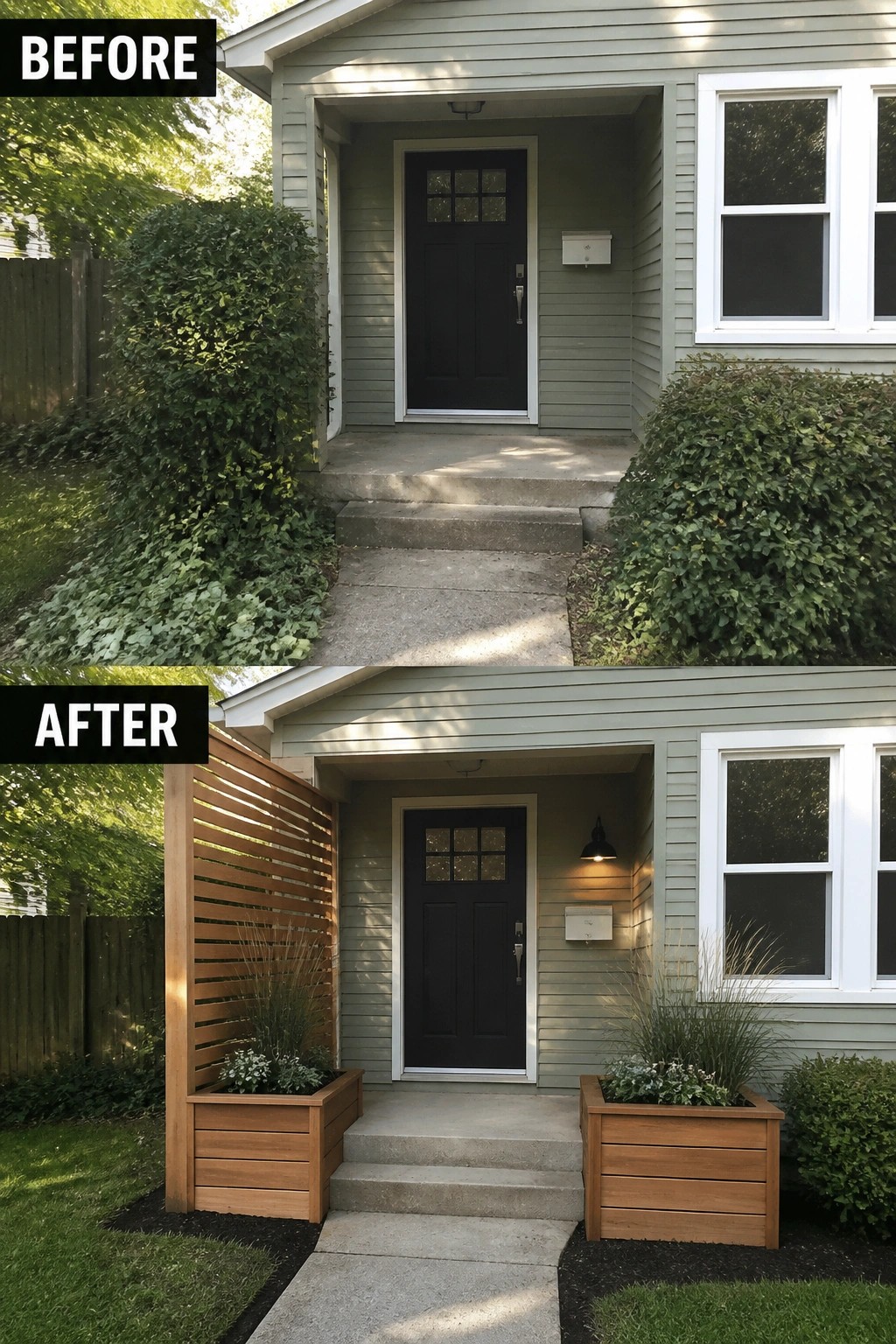
A small entry can feel more intentional by framing it and adding a few large planters. Swapping the overgrown shrubs for matching wooden planter boxes and a vertical slatted screen defines the porch, creates a sense of arrival, and keeps the walkway clear. A single wall light finishes the look and makes the entry usable at night.
This works best on narrow or shallow porches where floor space is limited. Choose planter sizes that leave enough room to pass, pick tall, narrow plants for height plus low fillers for texture (choose varieties that stay tidy), and use rot-resistant materials so the boxes hold up. Repeat one material or color from the house for cohesion, and keep lighting simple so the space feels purposeful without being crowded.
Add a Low Overhang and Simple Seating
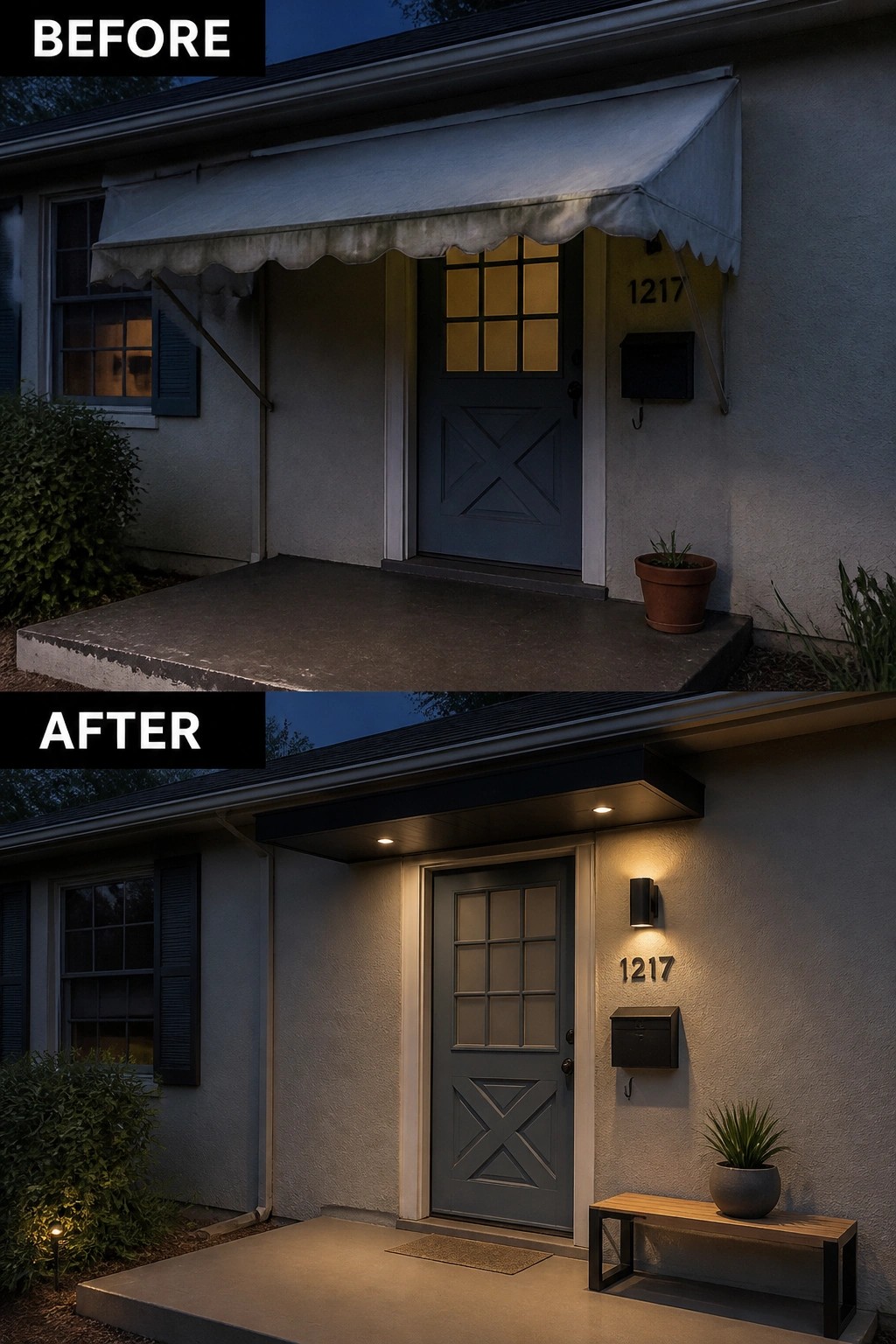
A shallow entryway can feel like wasted space until you give it a simple, clear function. In this makeover the sagging fabric awning was replaced with a low-profile overhang and focused lighting, and the concrete step was softened with a small bench and planter. Those two changes make the porch read as an intentional place to pause instead of just a doorway.
To copy the idea, pick one or two focal moves that fit the scale of your porch—an updated canopy or a wall sconce plus a slim bench are enough. Start small. Choose narrow, weatherproof seating so you can keep the path open, add a readable house number or vertical accent to draw the eye, and use downlighting or a wall light aimed at the door so the space feels useful at night.
Create a Cozy Screened-In Entry
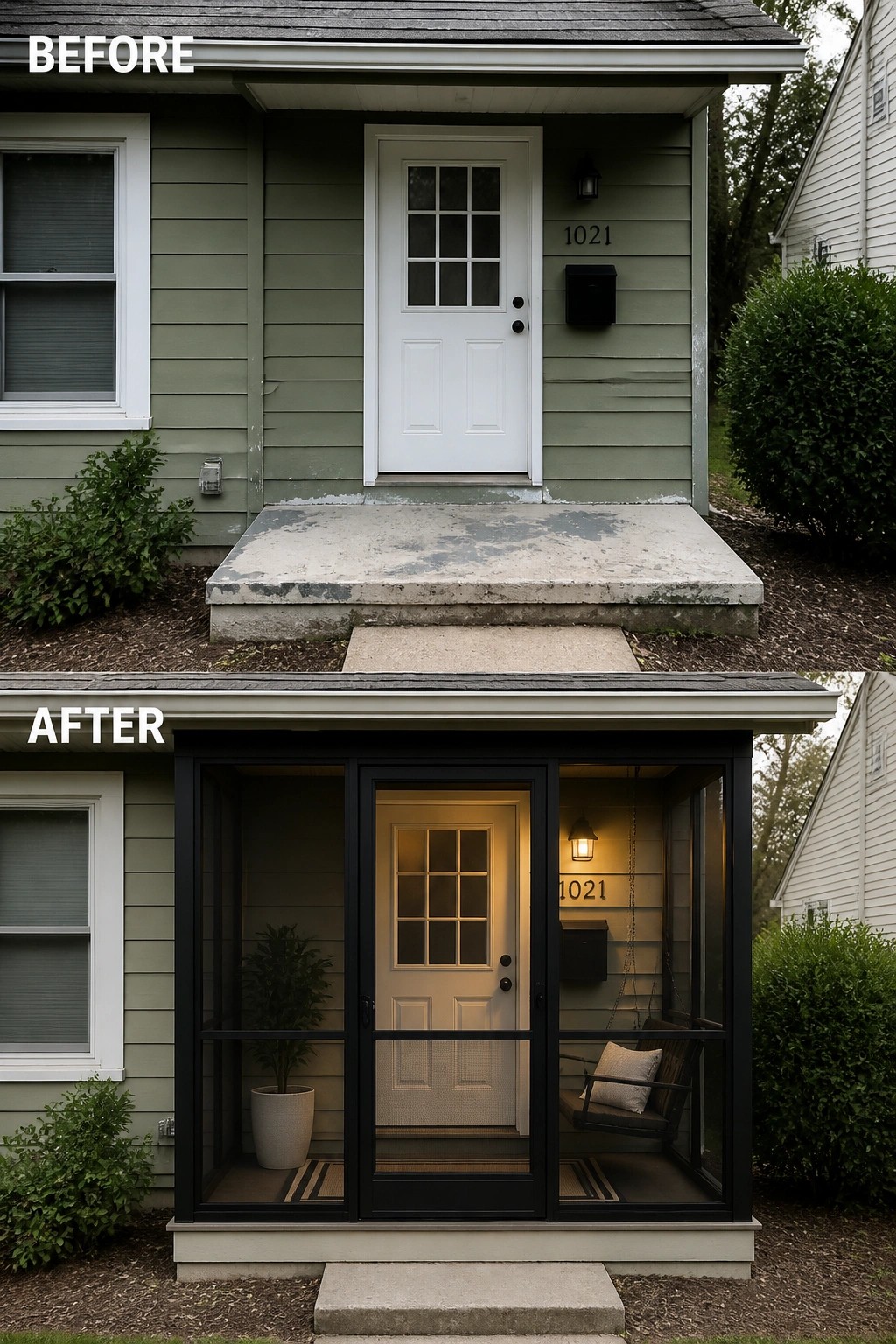
A shallow concrete stoop can feel like wasted space. Enclosing that narrow footprint with a slim screened frame and adding a simple seat and a wall light immediately turns it into a small, usable porch you can actually enjoy instead of avoid.
This approach works best on modest front entries where you want function without losing light. Keep the screen frames narrow, choose compact, weatherproof seating and a rug to define the spot, add one potted plant for softness, and place lighting near the seat so the space is useful in the evening. Small but useful.
Add Built-In Storage to a Narrow Porch
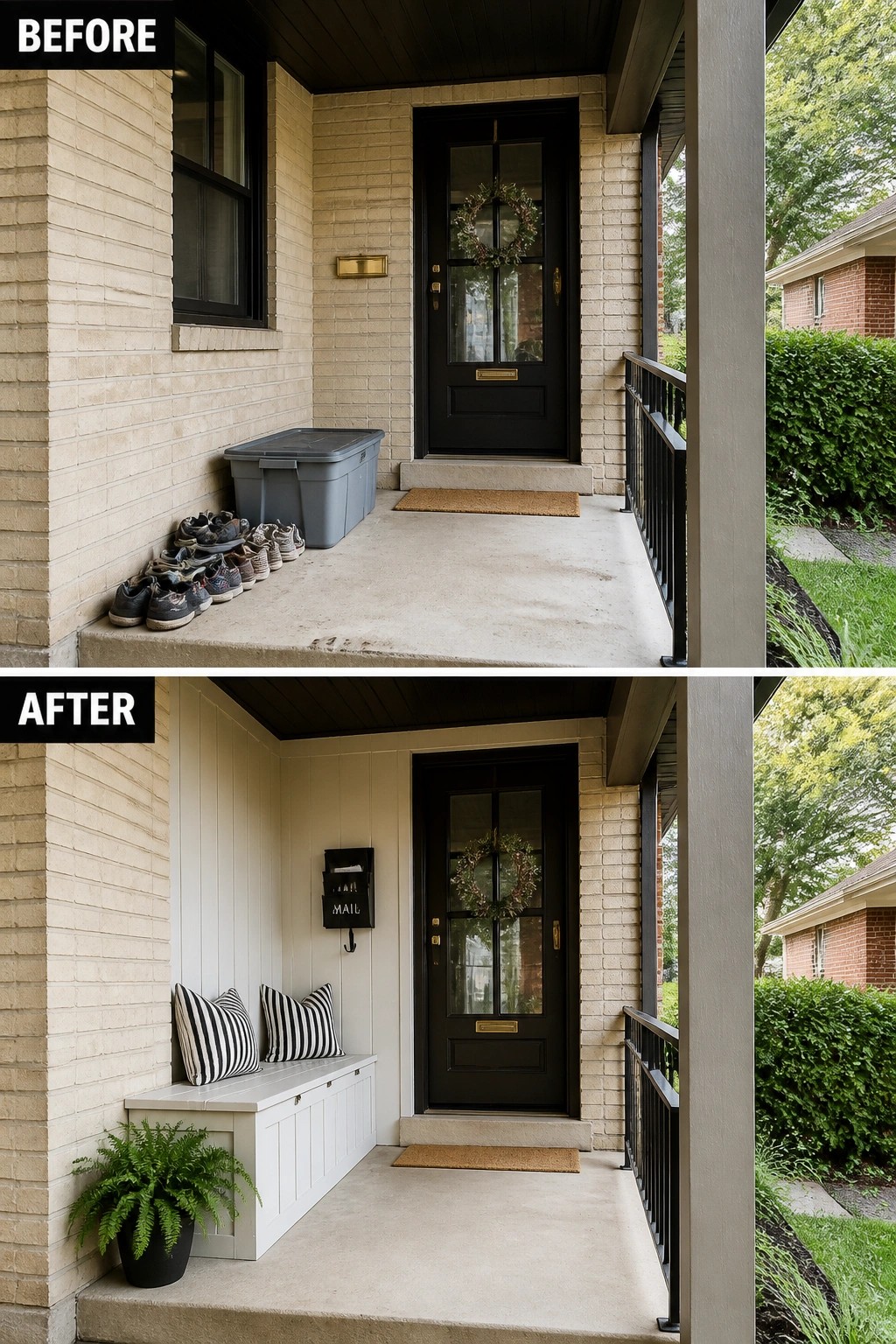
A shallow porch can feel like wasted space when it’s only used for boxes and shoe clutter. Adding a simple built-in bench with hidden storage and a couple of outdoor cushions instantly turns that little landing into a purposeful entry where you can sit, stash shoes, and drop mail. One or two accessories—a wall mail holder and a potted plant—finish the look without crowding the walkway.
This works best on narrow porches where floor space is limited. Keep the bench low and the seat depth shallow so you still have room to pass by, use weatherproof materials and removable cushion covers, and aim for one dominant color so the small area reads tidy. Add storage to hide everyday mess and a hook or mailbox for function, and you’ll get a porch that’s useful and calm.
Create a Small Portico With Simple Columns
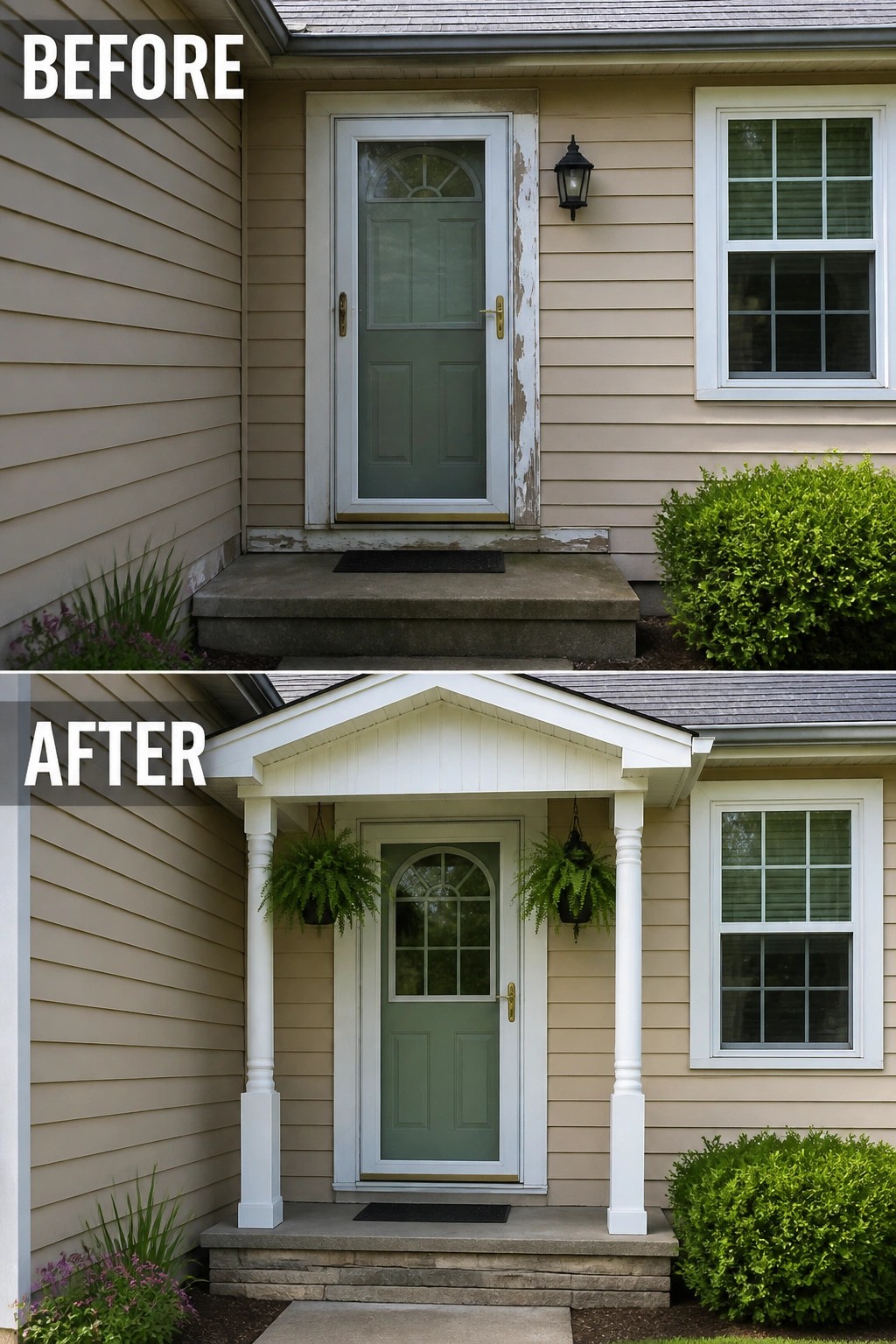
A tiny gabled portico and a pair of simple columns can turn an undecorated entry into a purposeful front porch. Replacing worn trim with a small roof, posts, and a couple of hanging plants creates a clear focal point and gives visitors somewhere to pause — plus it hides weathered details without a full renovation.
This works best on shallow front elevations where you need presence without a big footprint. Keep the scale modest, match the new trim color to existing windows, and consider a prefabricated portico or post-and-beam kit to save time (prefab kits make this fast). Finish with a weatherproof light and one or two planters so the entry reads as intentional but still leaves room to move.
Define the Entry With Patterned Tile and Planters
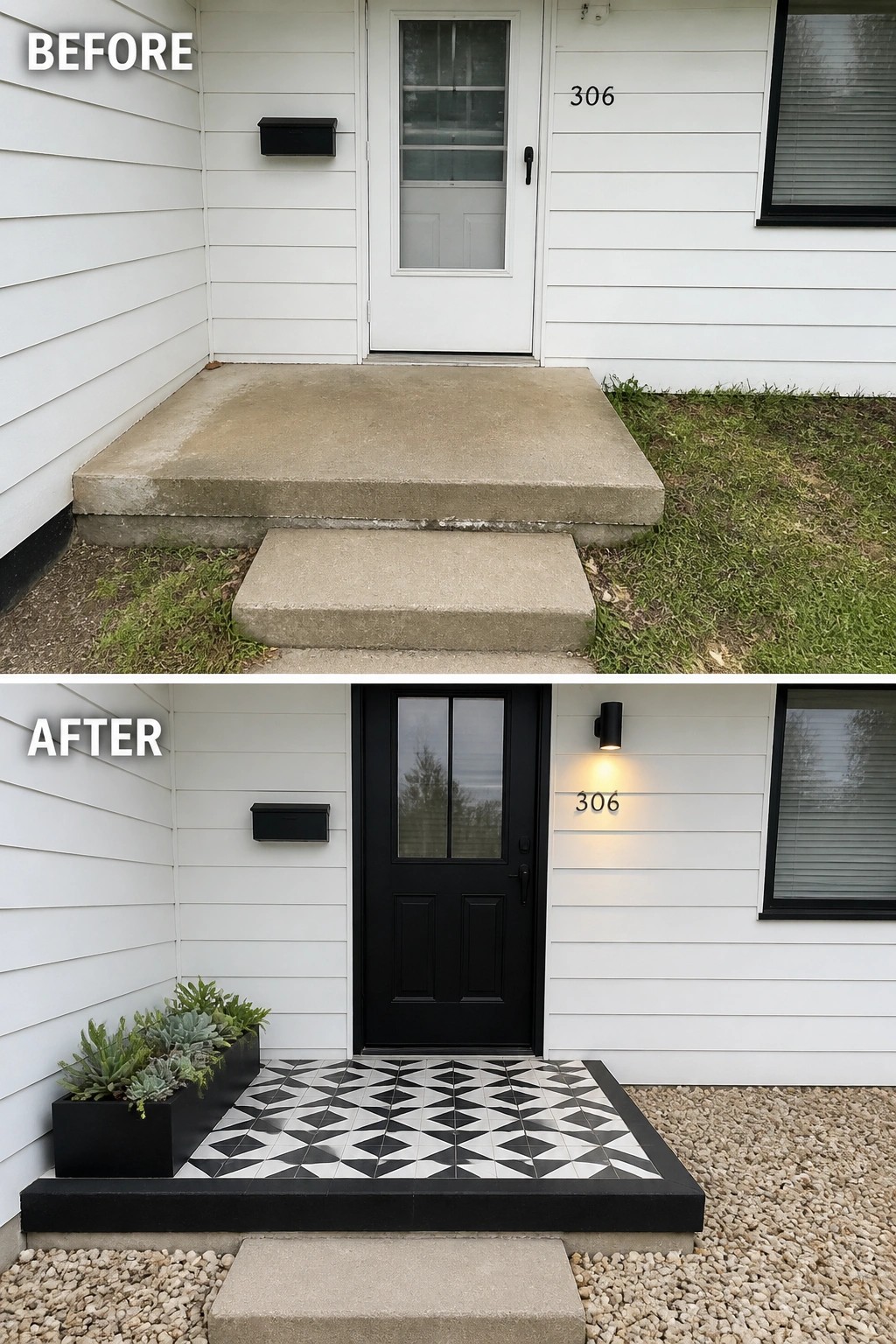
A shallow concrete stoop stops feeling like an afterthought when you give it a defined surface and a simple focal point. Replacing the plain slab with bold patterned tile and adding a long, low planter turns the landing into a purposeful entry—suddenly it reads as a porch where you can pause, not just a bit of leftover concrete.
You can do this on almost any small front elevation. Pick a durable outdoor tile or a weatherproof rug to define the zone, repeat one accent color for trim or planters, and keep accessories minimal so the step stays easy to use. For renters or tight budgets try freestanding planters and pea gravel edging for a neat, low-maintenance finish.
Turn A Small Stoop Into A Usable Porch
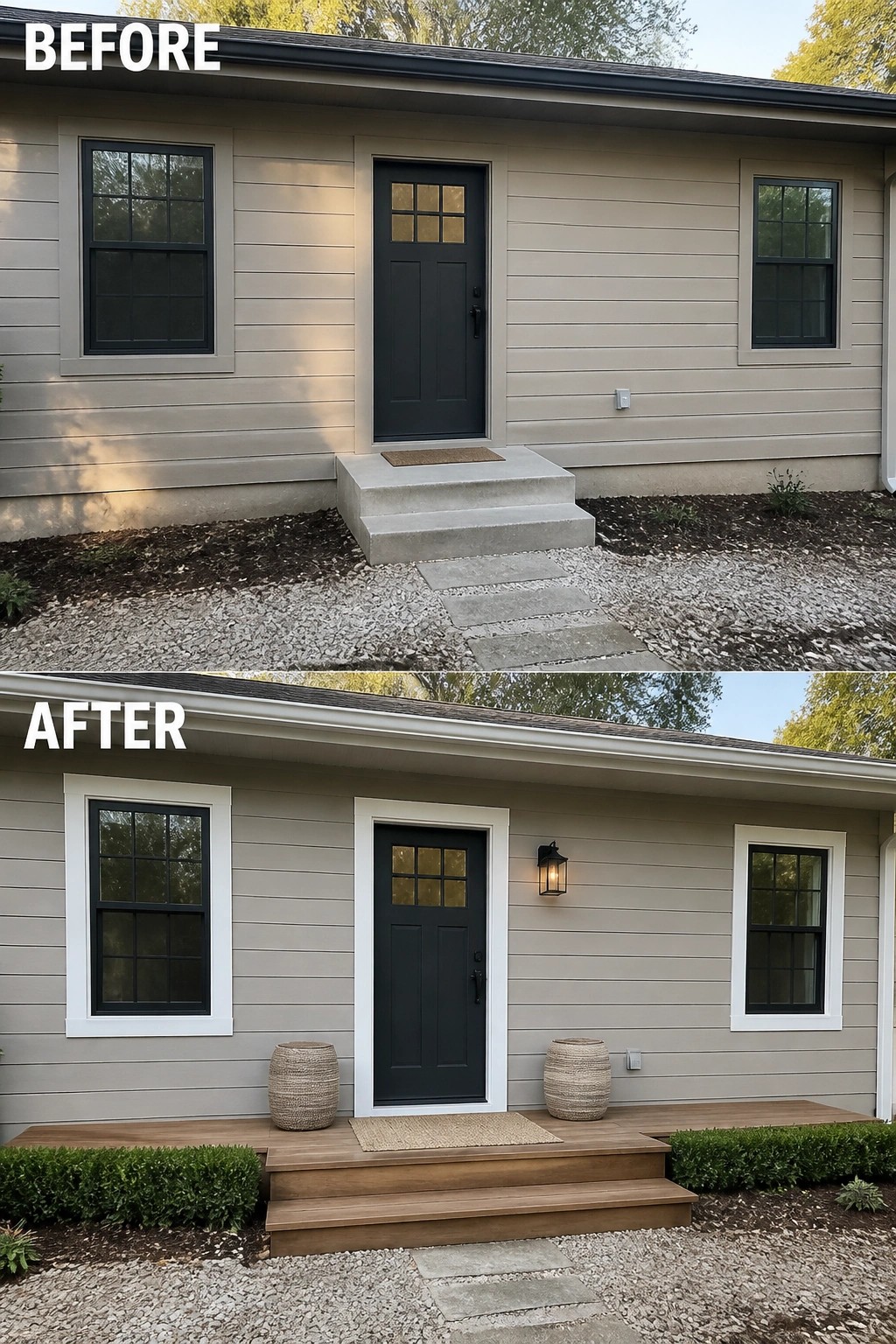
A tiny concrete step doesn’t give a front door much presence. Replacing it with a low, shallow wooden porch and a single wall lantern instantly defines the entry as a usable outdoor space and gives guests somewhere to pause. That small change makes the facade read as intentional rather than unfinished.
This idea works especially well on narrow or shallow front elevations: keep the porch shallow so it doesn’t overwhelm the facade, use compact planters or low hedging to anchor the edges, and choose a decking material that matches the house tones. Stick to one light source and a simple doormat or two baskets instead of bulky furniture, and check local step and railing rules so the small upgrade stays safe and practical.
Create a Compact Seating Zone
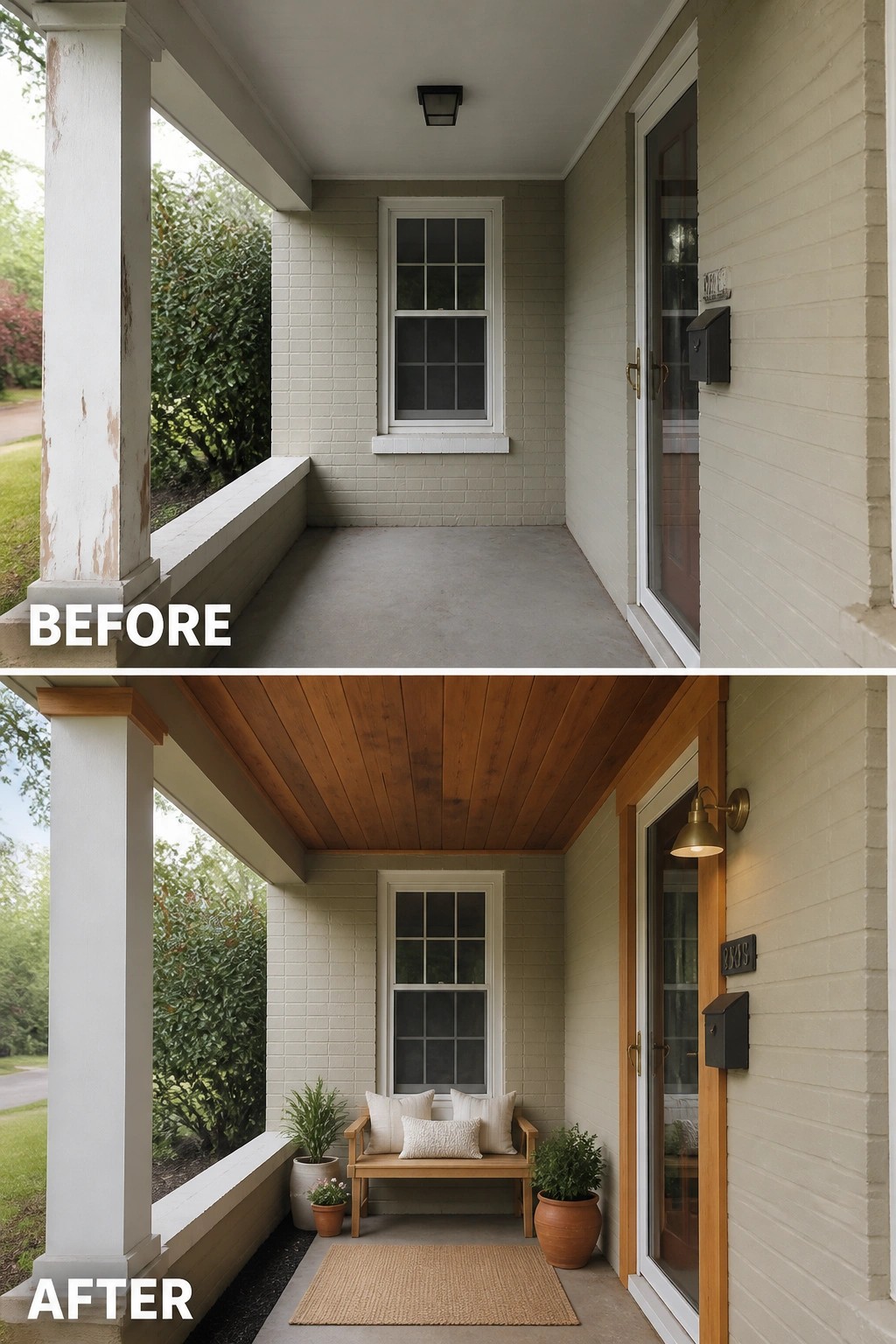
A shallow front porch can stop feeling like wasted concrete by defining a small seating zone. In this makeover a simple bench and a compact outdoor rug turn the space from empty to purposeful, showing how one clearly defined spot makes the whole entry feel used and welcoming.
Keep the pieces small and weatherproof so the area never feels crowded — small bench, narrow rug, and one or two low pots are enough. Leave a direct path to the door, choose durable fabrics, and add a single wall light near the seat for evening use. Small scale is key. (Works best on covered, shallow porches.)
Upgrade Steps With Wood-Look Treads and Lighting
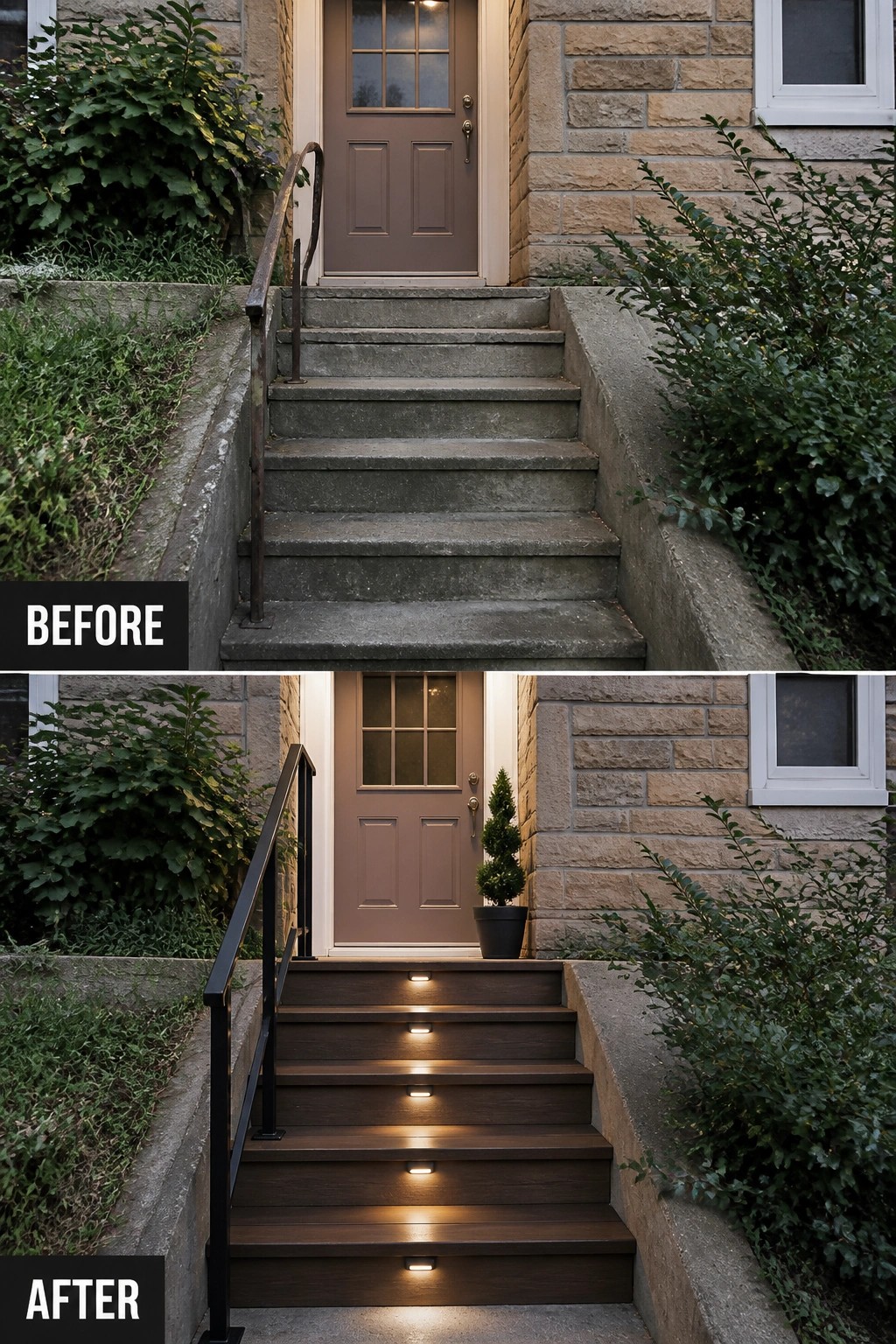
A shallow front entry doesn’t need a lot to feel like a real welcome. Re-cladding plain concrete steps with wood-look treads, adding a slim metal handrail and a row of low-profile recessed step lights instantly defines the approach, improves safety, and makes the house feel cared for rather than neglected. One small planter beside the door finishes the look without crowding the landing.
To copy this, start by cleaning and leveling the steps, then fit narrow treads or composite decking over the concrete so the scale feels softer and warmer. Choose a slim railing that keeps sightlines open and add discreet LED lights on the risers or under the lip of each tread for dusk-to-night visibility. Keep accessories minimal — a single pot or bench is enough — and match materials to the door or façade for a cohesive, small-entry upgrade that works on narrow or shallow porches.
Refresh the Entry With a Dark Door and Planters
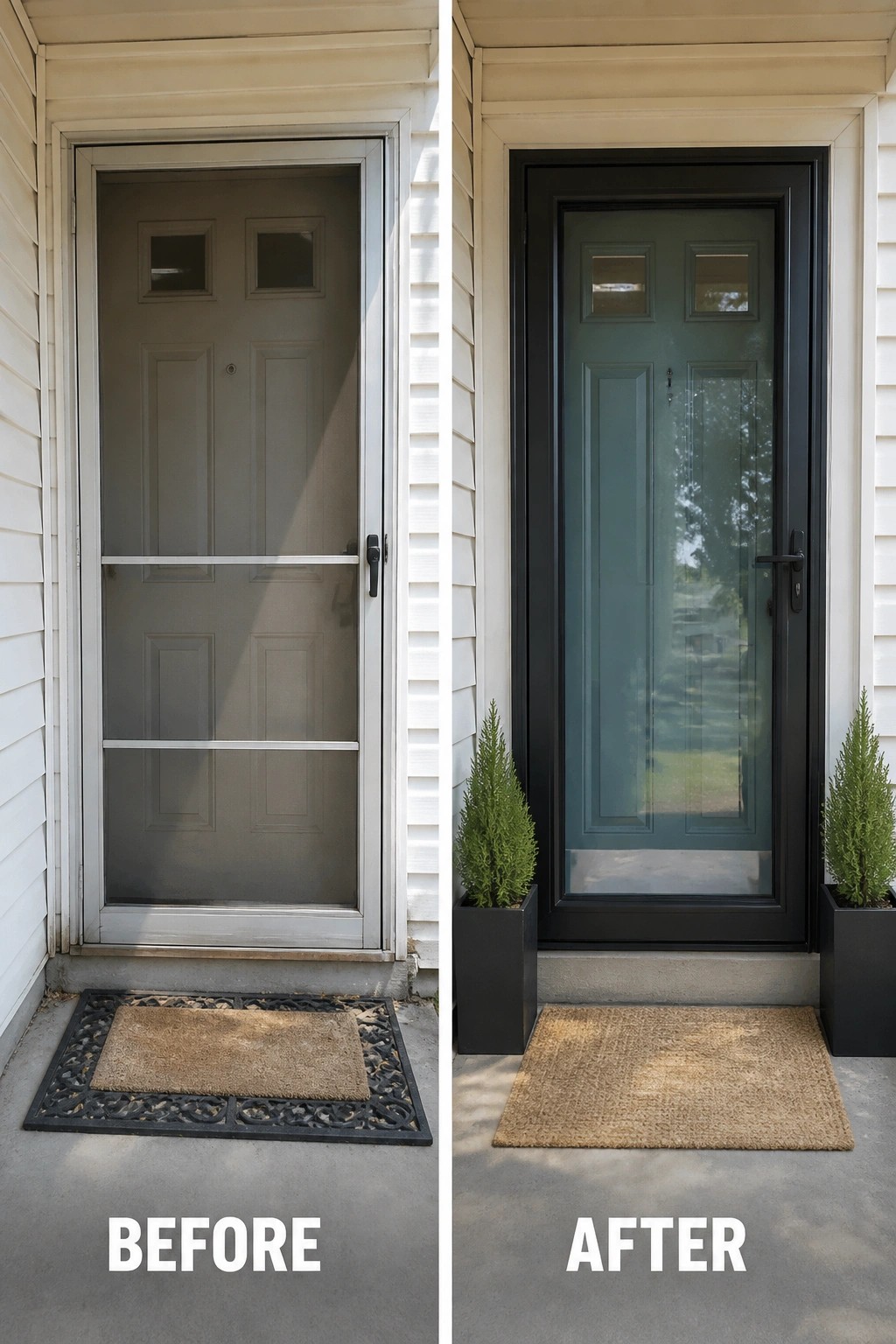
A shallow entry can feel like an afterthought, but a couple of purposeful changes make it read as an intentional space. Swapping a thin, dated storm door for a darker, more solid frame and adding matching narrow planters plus a larger coir mat creates a clear focal point and a tidy approach to the door.
To copy this on a tight porch, pick one main move—new door/trim color or a pair of tall planters—and keep everything else simple. Use a rug that is a bit wider than the doorway so the area reads larger, choose slim planters that don’t eat up depth, and stick to weatherproof materials so the setup stays low maintenance.
Anchor the Porch With a Bold Door and Lanterns
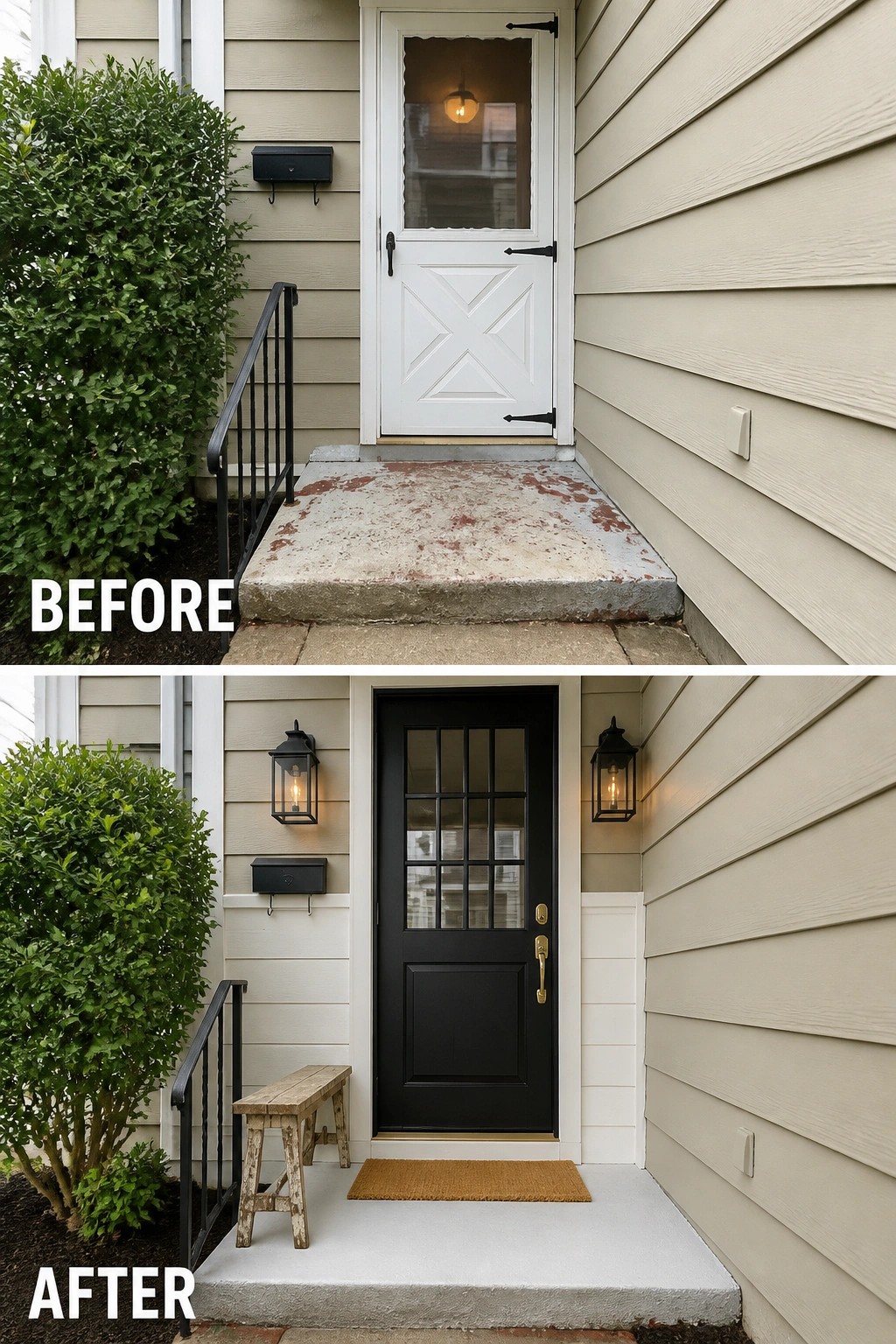
A shallow front step can feel like wasted space until you give it a clear purpose. Pick one bold focal move, like painting the door a deep color and adding matching lanterns, then add a practical touch such as a narrow bench and a simple doormat. The door becomes the anchor and the seating says this small area is meant to be used, not just passed by.
This works best on narrow porches and entry stoops where floor space is limited. Choose compact, weatherproof pieces so you do not overcrowd the landing, keep the path to the door clear, and use lighting at eye level so the entry reads as intentional after dark. Simple finishes and one strong color will make the space feel considered without requiring major construction. Simple, but effective.
Add Patterned Stair Risers to a Small Porch
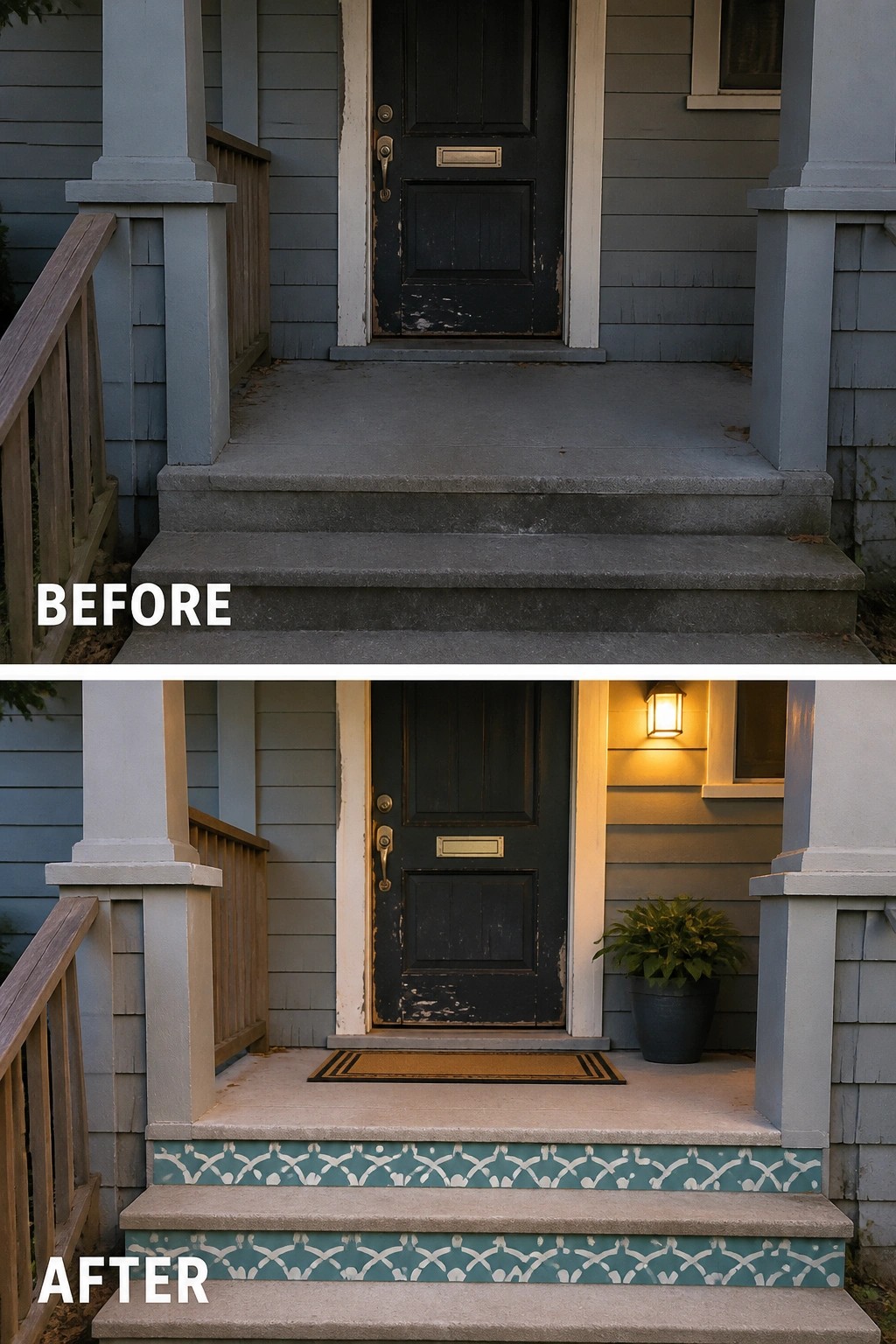
A shallow porch can feel like an afterthought, but a single focused update makes it feel used and welcome. Here, decorating the stair risers with a repeat pattern and adding a simple doormat and potted plant turns blank concrete into a deliberate entry point without taking up space.
This works best on small front porches where there is little room for seating. Pick one bold element — patterned tile, painted risers, or a statement light — then add low-profile accents like a weatherproof mat and a compact planter. Keep the walking path clear, choose non-slip finishes, and repeat one or two colors so the small area reads as intentional rather than cluttered.
Upgrade a Narrow Stoop With Stone Treads
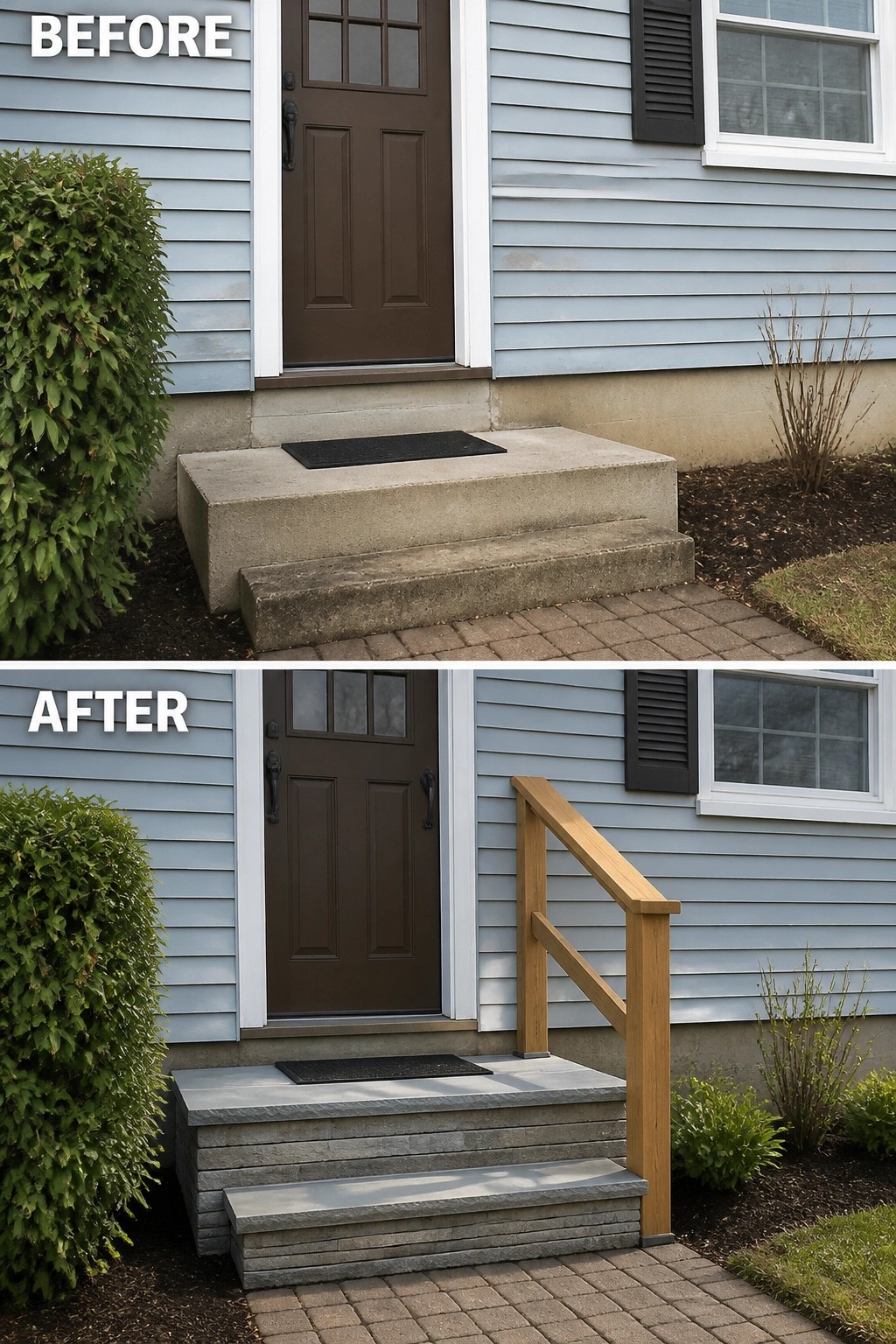
A tiny, shallow stoop can feel like an afterthought. Replacing plain concrete with a compact set of layered stone treads and a simple wooden handrail turns that leftover step into a purposeful entry—it defines where people should approach, improves safety, and adds texture without widening the footprint.
Keep the fix modest and practical. Choose slim, frost-proof treads that match the house tones, anchor one neat post for a railing, and keep planting low so the step remains visible and easy to use. Small but effective: a defined step and a rail make even the narrowest front elevation feel finished and usable.
Boost Curb Appeal With a Painted Door and Matching Accents
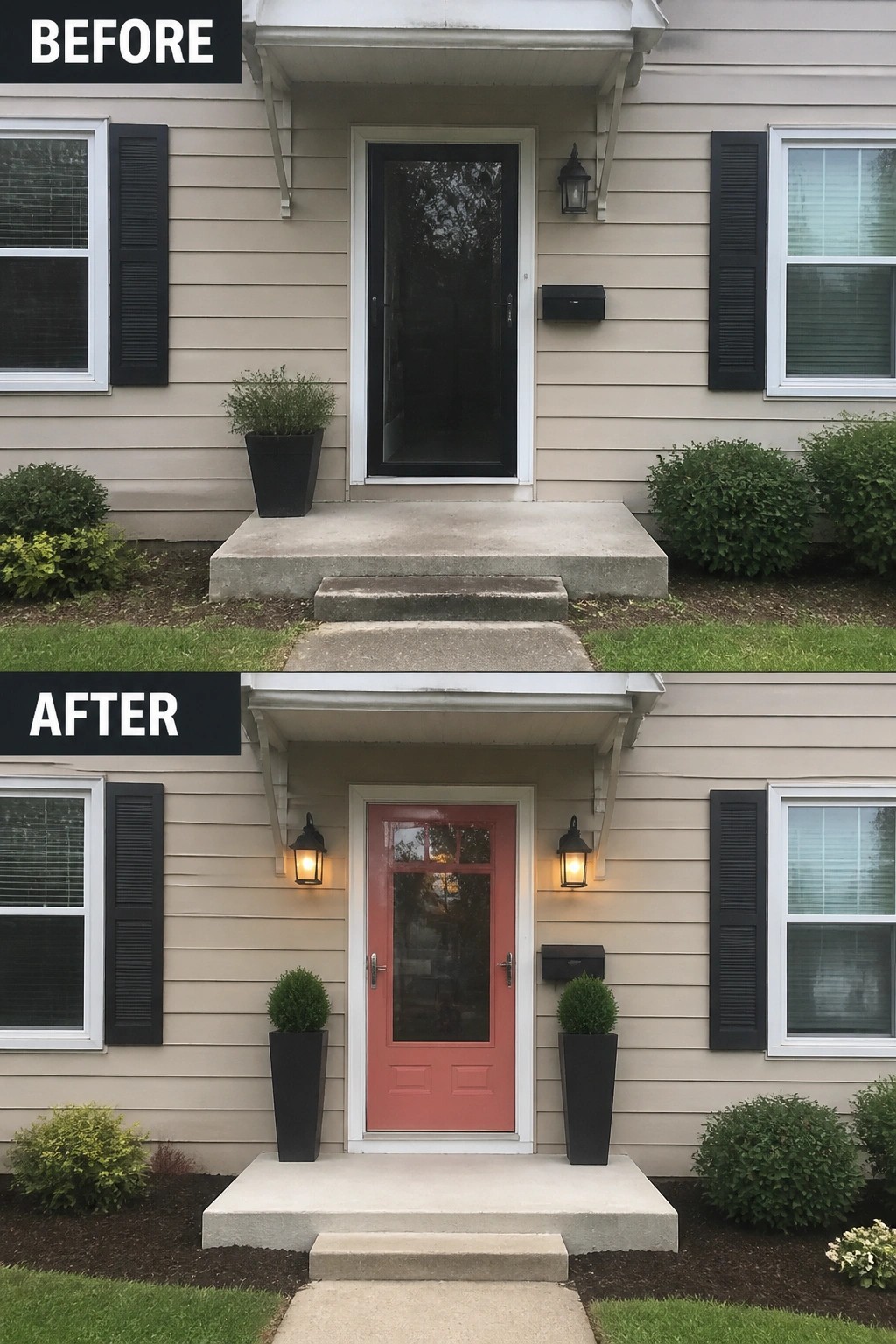
A plain shallow porch can be made useful and welcoming with one clear idea: pick a focal door color and frame it with matching accents. In this makeover a new painted door plus matching lanterns and a pair of tall planters turns an anonymous concrete slab into a defined entry. It’s a small set of changes that gives the porch a purpose and an instant curb-appeal boost.
To copy this, choose a door color that complements your siding and repeat that choice in one or two nearby elements (lights, pots, or a mailbox). Keep planter scale tall and narrow for a slim porch so they don’t eat the walking space, and mount lighting at about shoulder height for usable evening light. Use weatherproof finishes and simple, evergreen plants so the look stays tidy year-round. Simple, but effective.
Add Shade and Seating With a Compact Bistro Set
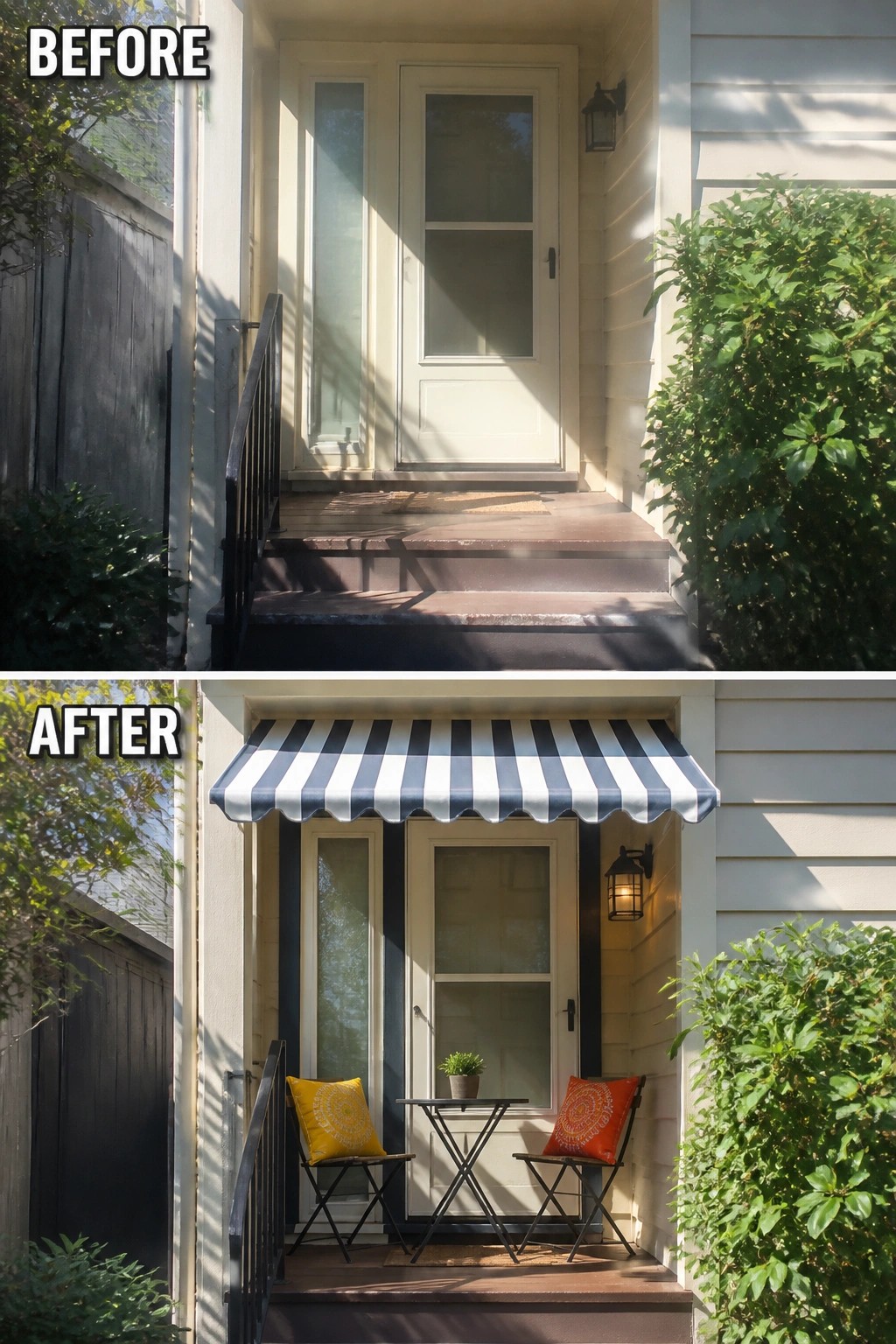
A shallow front stoop becomes useful when you pick one clear role for it. Adding a small striped awning and a compact bistro set turns an empty landing into a shady spot to sit for coffee or wait for guests. That single decision — shade plus seating — makes the porch feel intentional instead of leftover space.
Keep the scale tiny and practical: choose foldable or slim chairs and a narrow table so the door still opens and there’s room to move. Use weather-resistant cushions and a hardwearing mat, add a simple wall light for evening use, and repeat one or two colors to keep the look tidy. This approach works best on narrow porches and townhomes where space is limited but a purposeful seat can change how you use the entry.
Frequently Asked Questions
Q: What plants work best on a shallow front porch?
A: Pick narrow, vertical, or hanging plants that free up floor space, like columnar shrubs, grasses, and trailing vines. Use a couple of taller pots to draw the eye up and small hanging baskets for color. Choose varieties that match the porch’s sun and wind exposure.
Q: How can I fit seating on a very narrow porch without it feeling cramped?
A: Install a built-in bench or a slim wall-mounted fold-down seat to keep walkways open. Add a cushion for comfort and hidden storage under the bench to reduce clutter. Don’t overstuff it.
Q: Any quick, low-cost ways to refresh a shallow porch?
A: Paint the front door a lively color and swap the light fixture or house numbers for instant personality. Lay down an outdoor rug sized to the porch and add one or two portable planters for cohesion. Those small touches make the space feel intentional without a big budget.
Q: How do I add privacy without making a small porch feel closed in?
A: Use slatted screens, a low lattice, or tall planters to block direct sightlines while still letting light through. Sheer outdoor curtains give softness without sealing the porch off. Place screens only where needed so the rest of the porch stays open.