

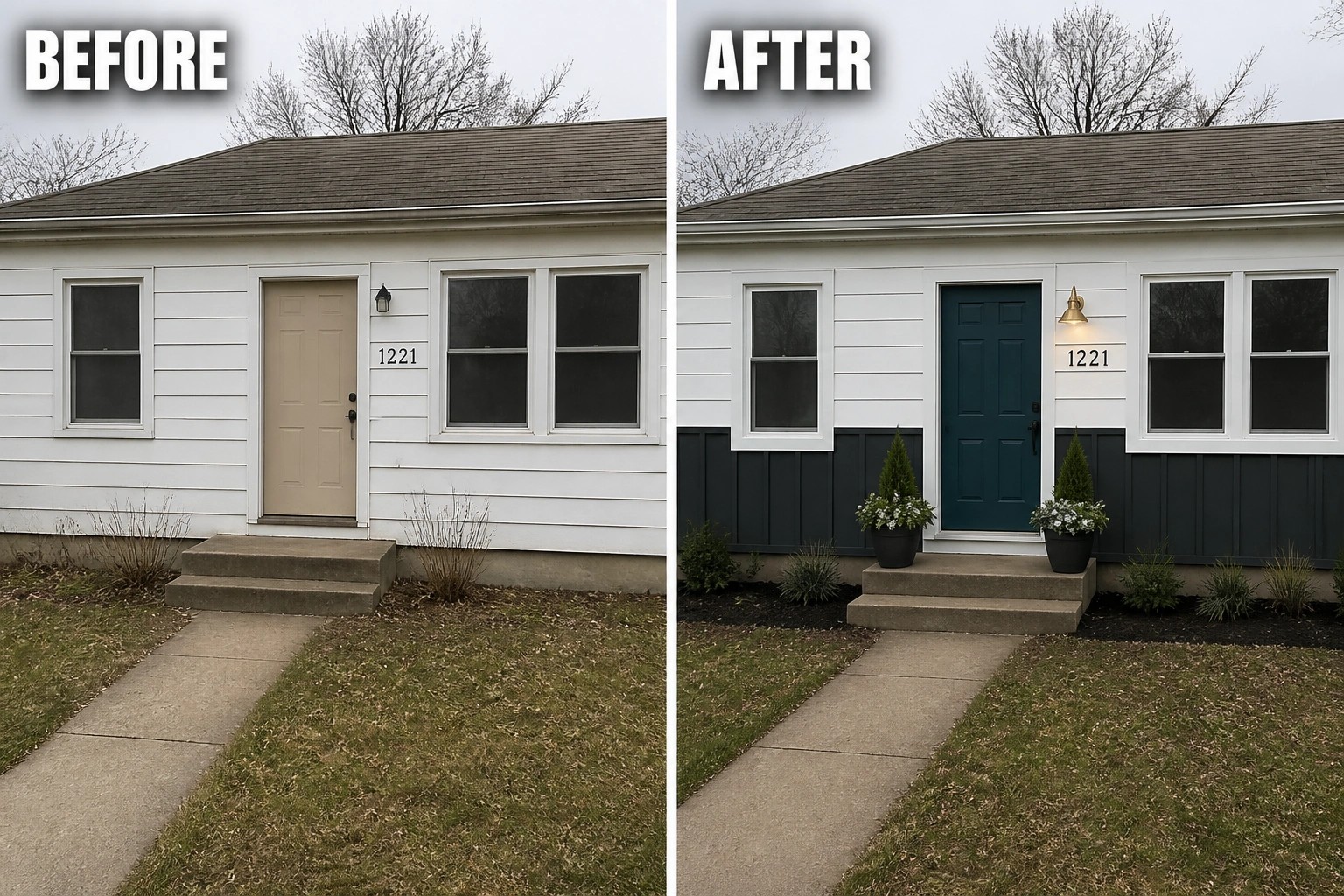
I’ve learned that small changes around the outside of a house can lift a plain facade and make it feel more intentional without a full renovation.
Simple moves like fresh trim paint, swapped hardware, better lighting, a new porch column detail, or carefully placed plantings add texture, shadow, and scale that make the front of a home read as well cared-for.
I often test a new light fixture and a painted door on opposite sides of the entry before committing, because those two elements tell you whether a scheme will work on the whole house.
The payoff is quietly satisfying.
If you like ideas that are easy to try, save a few looks and begin with something simple, like replacing a mailbox, adding trim accents, or layering a couple of shrubs to see which adjustments suit your house and neighborhood.
Make A Plain Facade Feel More Welcoming
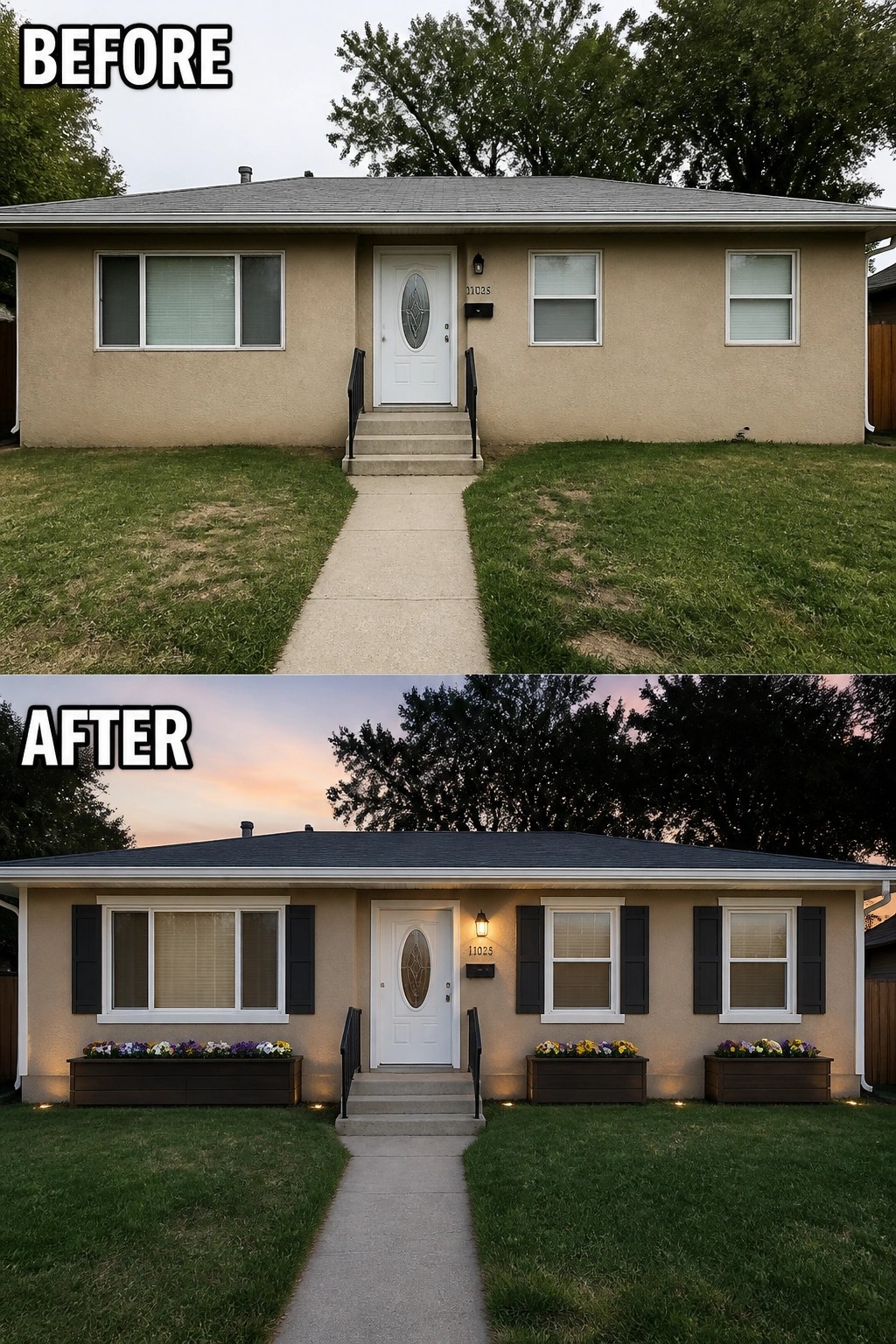
A simple way to lift a flat front is to add a few measured accents that give the facade purpose. In this case, adding painted shutters and matching window boxes with flowers frames the windows and gives the house rhythm and color, while a single new light and clear house numbers focus attention on the entry. Those small, repeatable elements make the front read as intentional rather than unfinished.
Do it where a modest budget and limited space matter — small single-story homes, starter houses, or rental facades. Choose shutter proportion to match your window size, pick a darker trim color for contrast, and install low-maintenance window boxes with seasonal plants. Keep the walkway clear and avoid oversized ornament so the added pieces read as accents, not clutter.
Define The Front Entry With Paint And Accessories
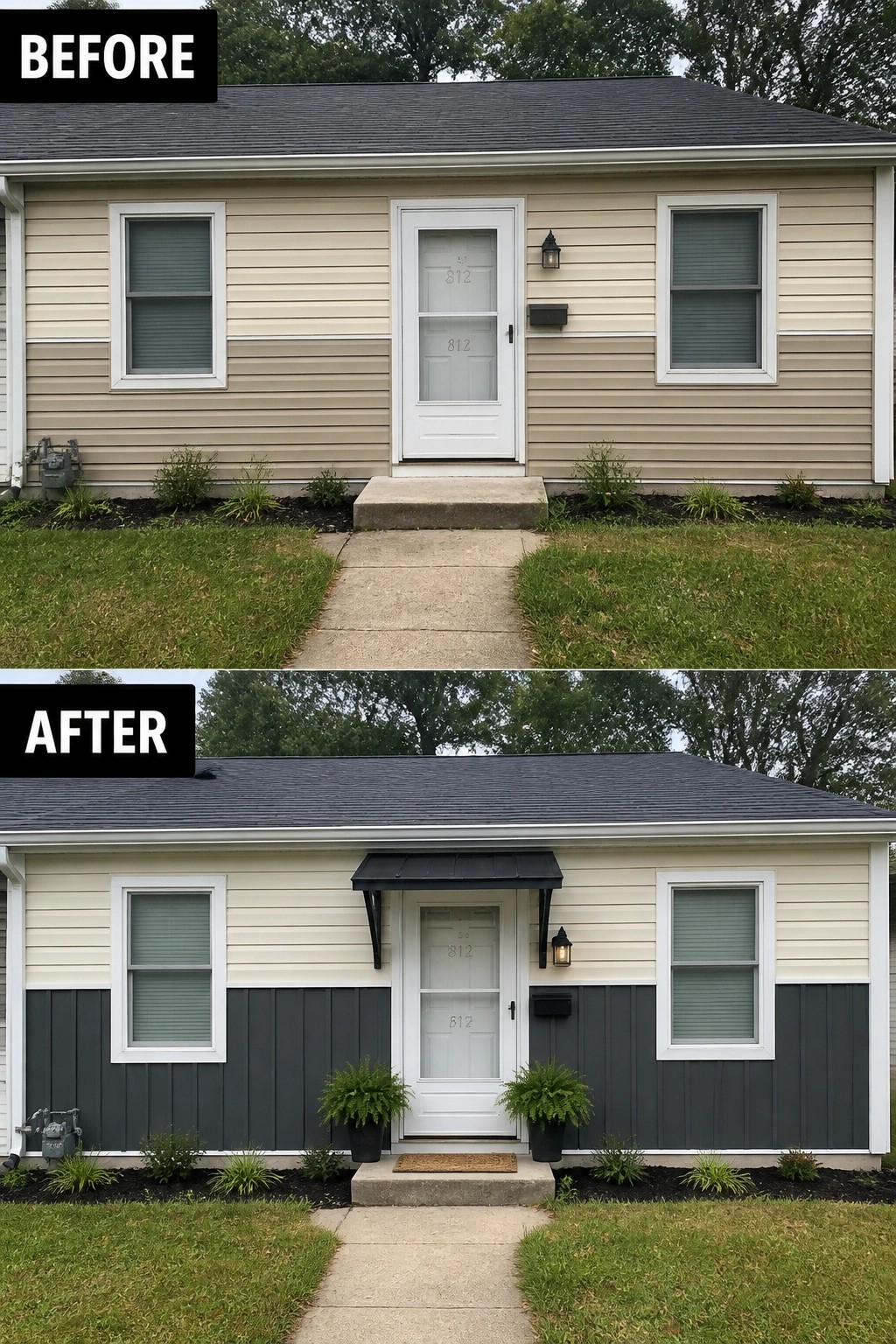
A simple band of darker paint on the lower half of the facade, plus a small awning and a pair of pots, gives this tiny house an instant focal point. The contrast and added architectural detail visually anchor the door so the whole front reads as a deliberate entry instead of a leftover afterthought. Small changes, big effect.
To copy this, start by cleaning and touching up the siding, then paint a single horizontal band or the lower panels in a durable, contrasting color that works with your trim. Add one modest overhead element and a matching exterior light, then place two similarly scaled planters to frame the step. It works especially well on single-story homes where you want to suggest height and purpose without a full remodel.
Create A Functional Covered Porch
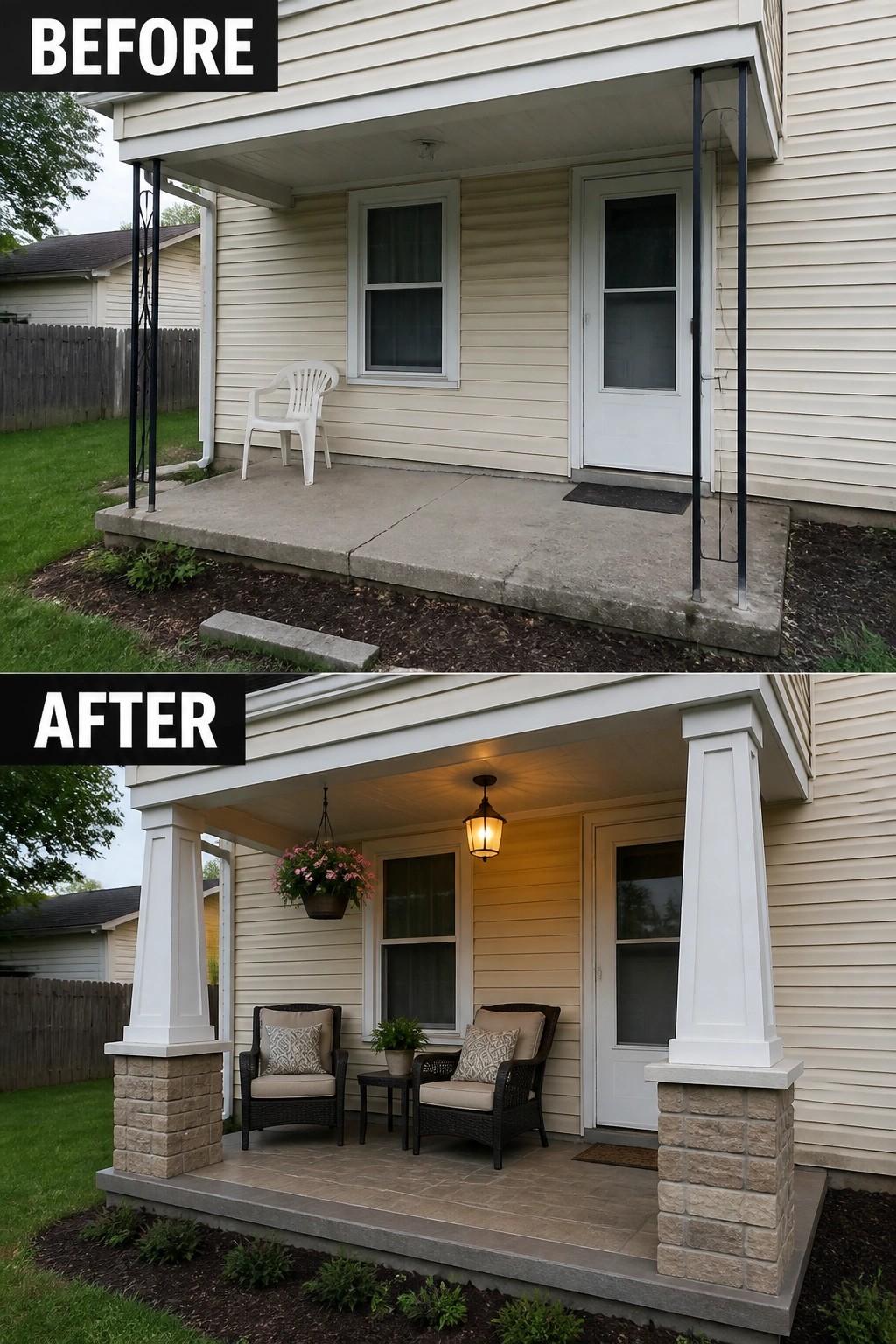
A small covered porch doesn’t need a major overhaul to feel useful—pick one clear purpose and make a few focused changes. Swapping thin metal posts for substantial columns, finishing the floor, and adding two comfortable chairs plus a hanging lantern turns an empty slab into a simple conversation spot that feels intentional.
Start with the function you want (coffee nook, reading corner, drop zone) and scale everything to fit; choose compact seating and a small side table so you still have a pathway. Add an overhead light for evening use, a hanging plant or two for softness, and durable, weatherproof materials so the space stays practical and low-maintenance.
Use Paint And Trim To Modernize A Plain Brick Facade
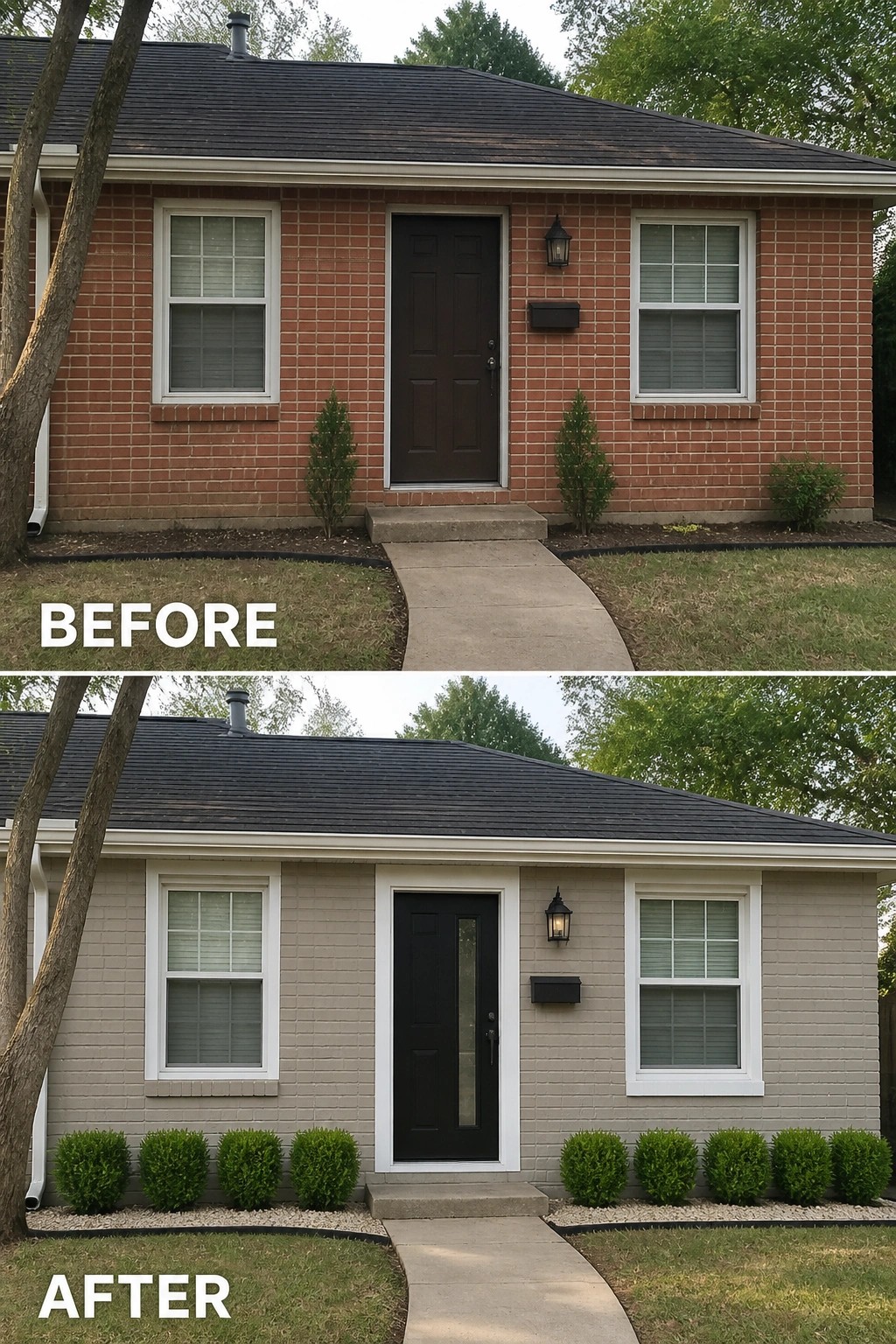
A fresh coat of paint and a bit of crisp trim can completely change how a small brick house reads. In this example the red brick was painted a neutral gray and the windows and door were framed in white, while a new black door and low, repeated shrubs in a clean bed give the front a more deliberate, layered look. The result is a simple, more modern face without changing the structure.
You can try this on any modest facade where you want a faster curb appeal boost. Start with a small test patch and use paint made for masonry so moisture can escape. If you want a reversible option, paint only the mortar lines or add bright trim around windows and the door instead of painting all the brick. Finish with a tidy low hedge, gravel or mulch bed, and an updated light or mailbox to make the look feel pulled together.
Frame The Entry With A Small Gable And Planters
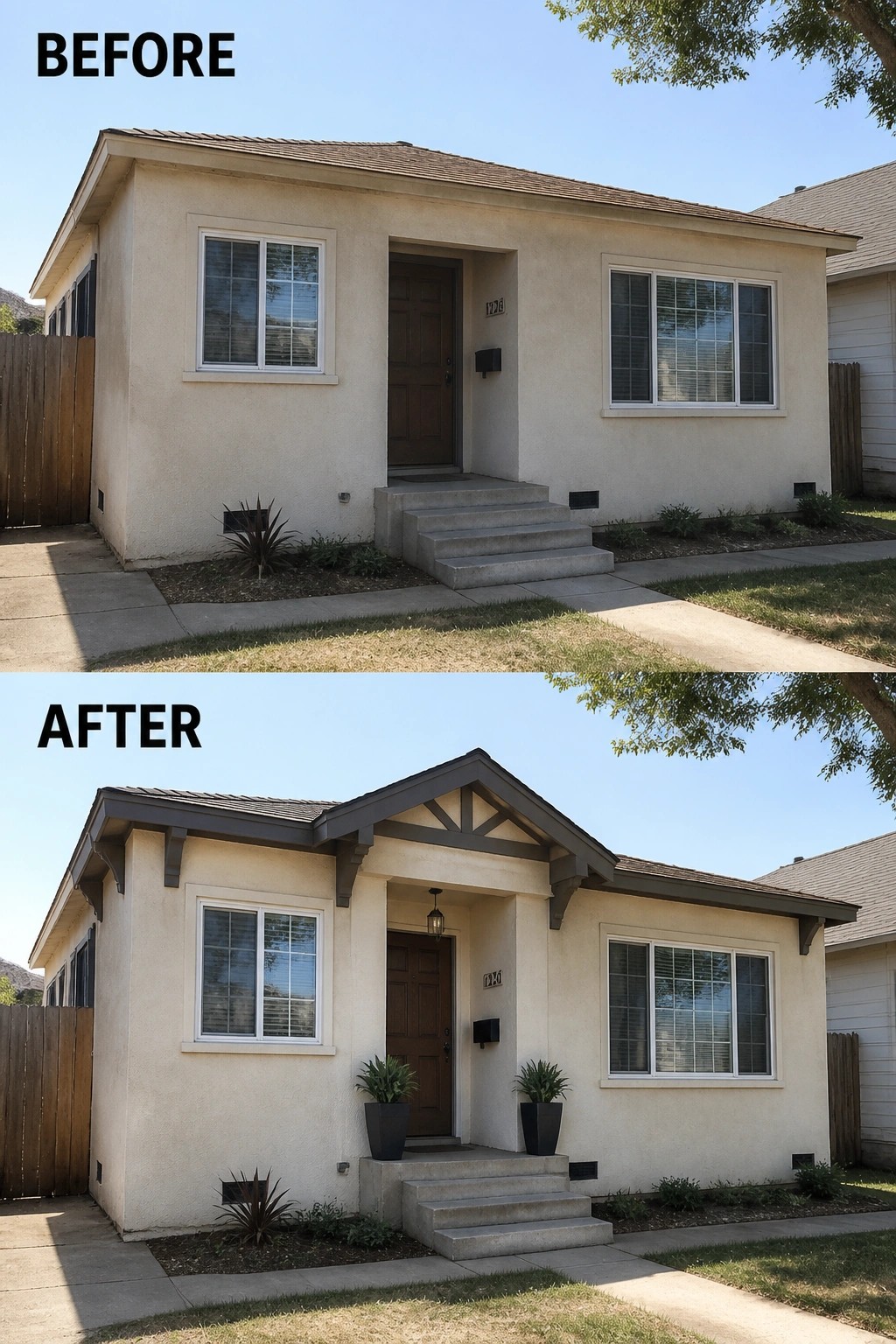
A small, plain entry can feel forgotten, so make the porch read as a real front door. Adding a modest gable and exposed trim above the stoop, a hanging lantern, and a pair of matching planters instantly frames the doorway and gives the facade a focal point without a big remodel.
This approach works well on compact homes where you want more presence without overbuilding. Start with one architectural change (a small gable or updated trim) and add functional accents like a centered light and symmetrical pots for scale and greenery (start small). Keep proportions in mind, choose weatherproof fixtures and plants, and leave room on the steps so the entry stays usable.
Upgrade The Front Walkway With Layered Steps And Pavers
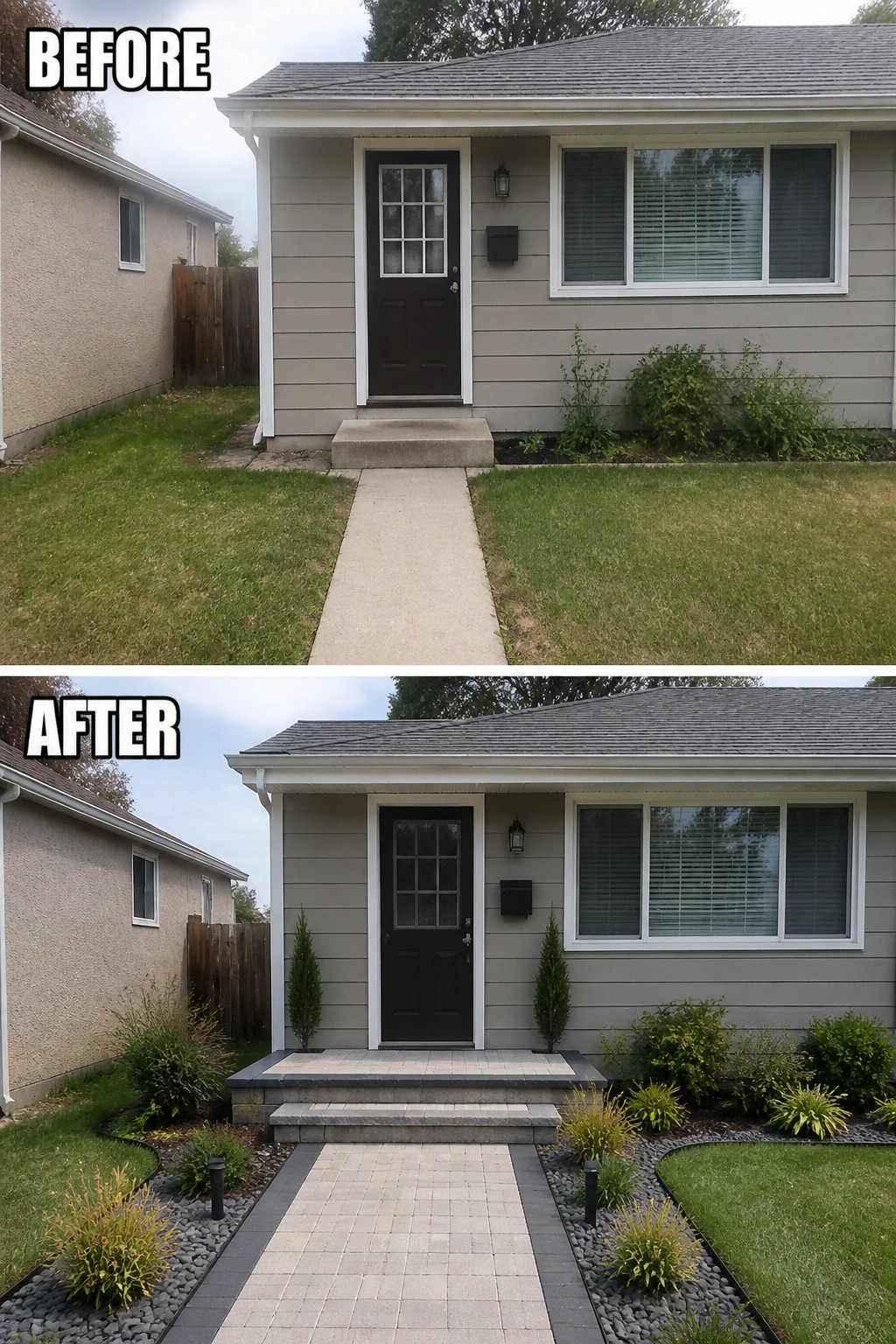
A narrow front step can be more than a place to wipe your feet. Framing the entry with a proper landing and a bordered paver path instantly makes the doorway feel intentional and easier to use. Swapping plain concrete for a layered step, contrasting paver border, and a couple of slim plantings gives the small facade scale and a clear route to the door without changing the house itself.
To try this at home, start by measuring the approach and picking a simple paver and border color that complements your siding. Keep the path wide enough for two people to pass and add low-profile lights so the route reads well at night. Use small evergreens or shaped shrubs to frame the door and keep plantings low so they do not block the window or overwhelm a compact lot.
Highlight The Door With Paint, Lighting, And Planters
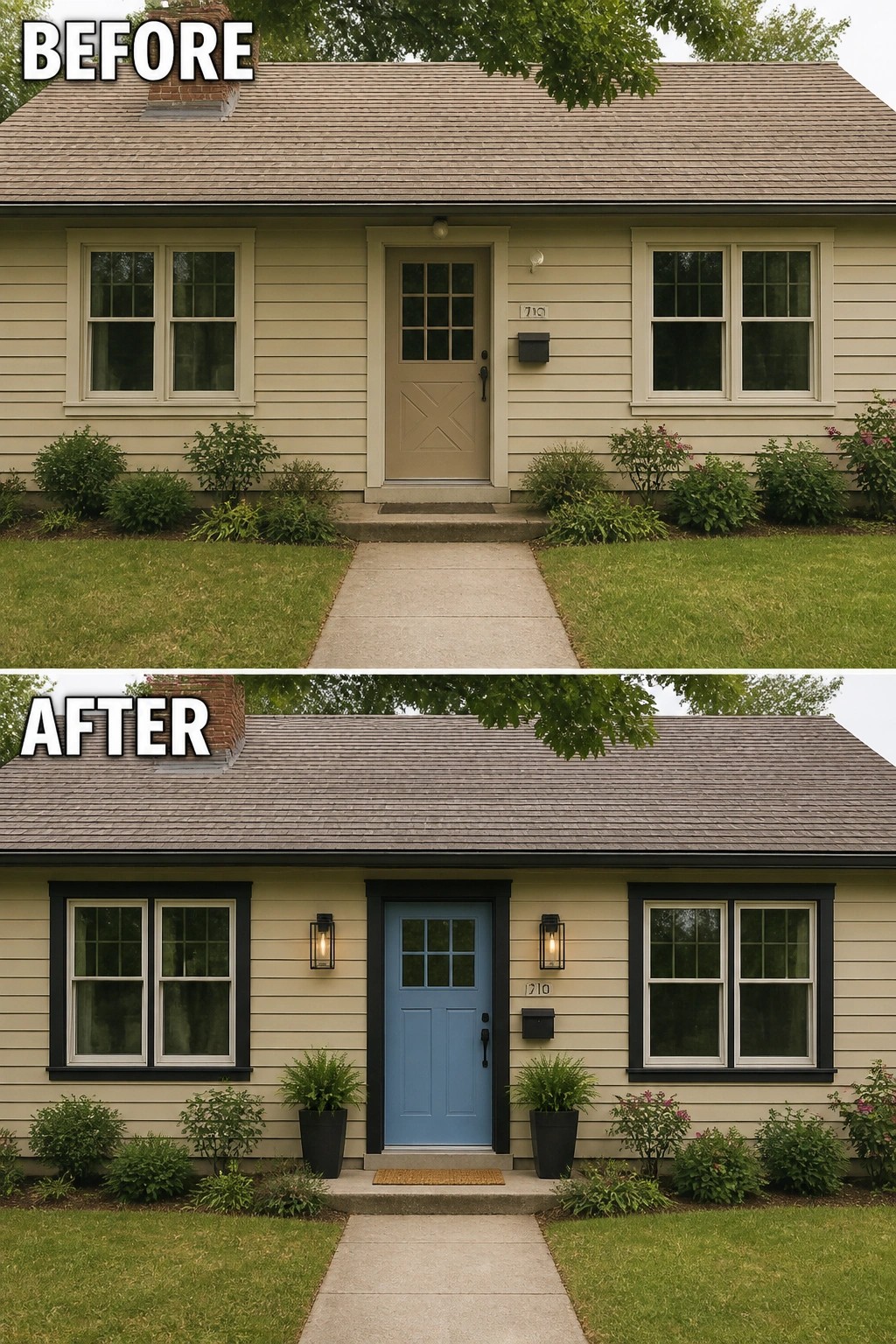
A small house front can feel anonymous until you give the entry a clear role. Paint the door in a confident color, add contrasting trim and a pair of wall lanterns, and place matching planters to frame the entrance — that single cluster of changes makes the doorway read as the focal point instead of just another wall.
You can do this in stages: start with paint and new hardware, then add lighting and one or two tall planters to balance the step height and keep the path open. Pick exterior-grade finishes and lights mounted at eye level, and repeat the trim color on window frames for cohesion. Works well on modest bungalows and cottages where a small, intentional edit goes a long way. Simple but effective.
Add A Low Curbed Garden Bed To Frame The Front
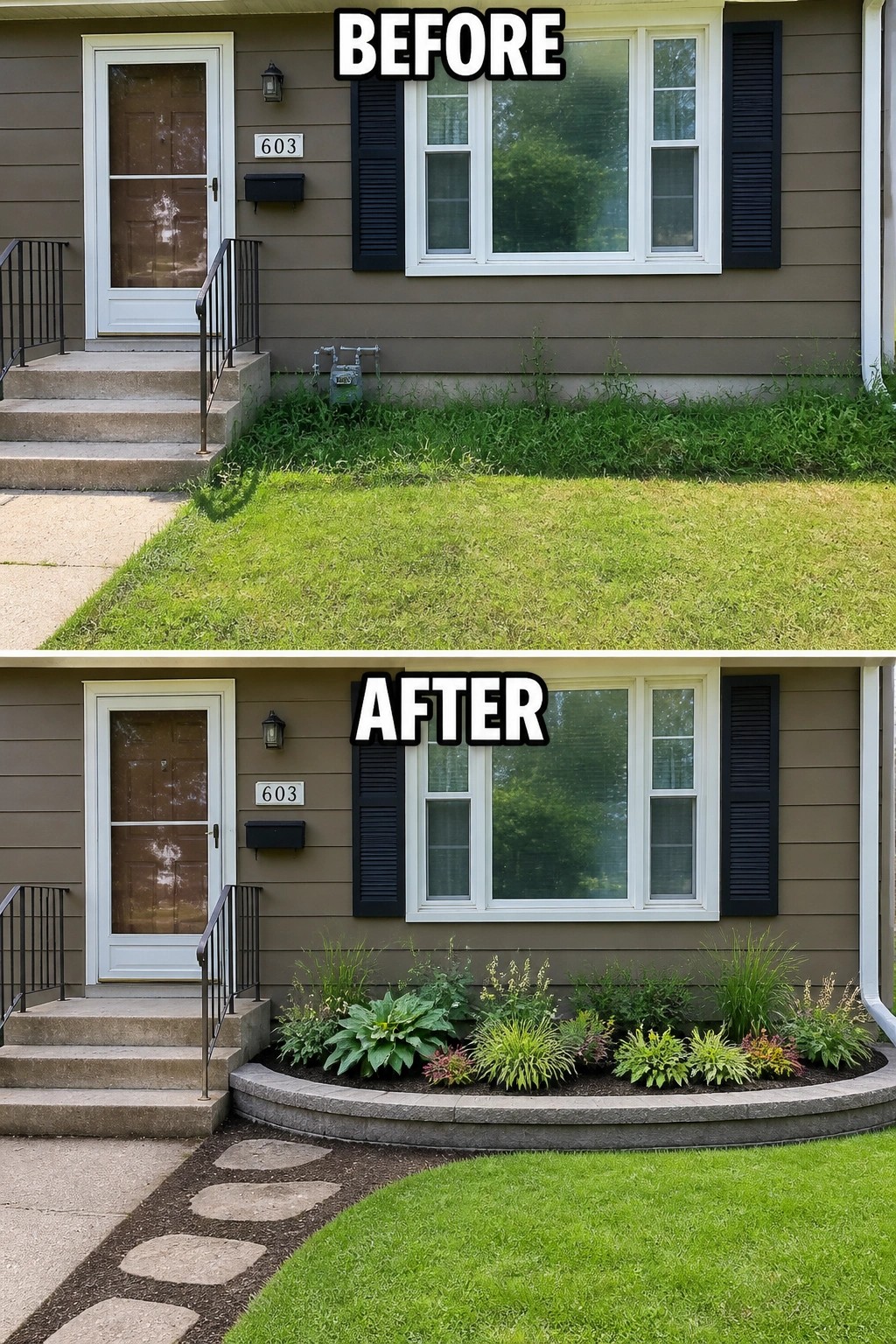
Replacing a narrow, weedy strip with a shallow, curved stone bed instantly organizes the facade and gives the entry something to sit against. In the photo a plain grass edge was cleared and a low stacked-stone curb installed, then filled with mixed perennials and mulch to create a tidy, planted border that reads like intentional design rather than an afterthought.
To copy this, start by clearing weeds and installing a simple edge or two rows of pavers to define shape. Choose a handful of low-maintenance plants with varied heights and repeat them for rhythm, then cover with mulch to reduce upkeep. Keep the bed narrow enough to fit the scale of a small house, leave access to meters and the door, and stick to one stone or brick choice so the look stays clean and cohesive. Small but effective.
Give A Bare Porch A Clear Purpose
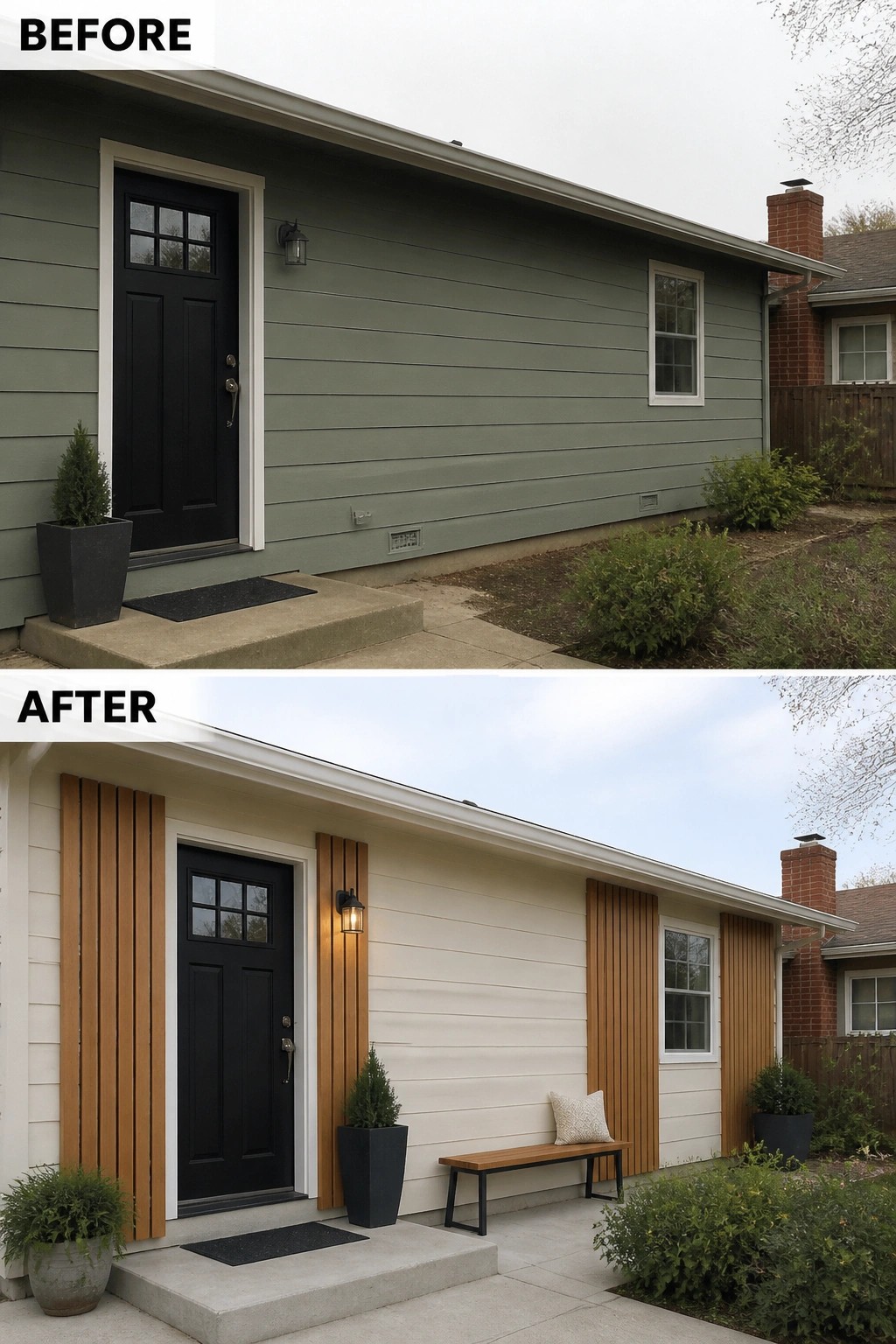
A flat, undecorated entry can feel anonymous. Framing the door with narrow vertical wood slats and adding a slim bench and matching planters turns that flat wall into a real porch area while keeping the change simple and affordable. The slats break up the siding and the bench signals a spot to pause, so the facade reads like intentional design rather than an afterthought.
To copy the idea, keep everything to human scale: pick narrow vertical boards that won’t overwhelm a small front, choose a bench that still leaves room to step up, and use two matching planters to anchor the sides. Use weatherproof materials or painted boards for low maintenance, repeat one accent color in the trim or containers, and start with a clean surface so the new details feel crisp and considered.
Add Texture And Color Contrast With Stone And Paint
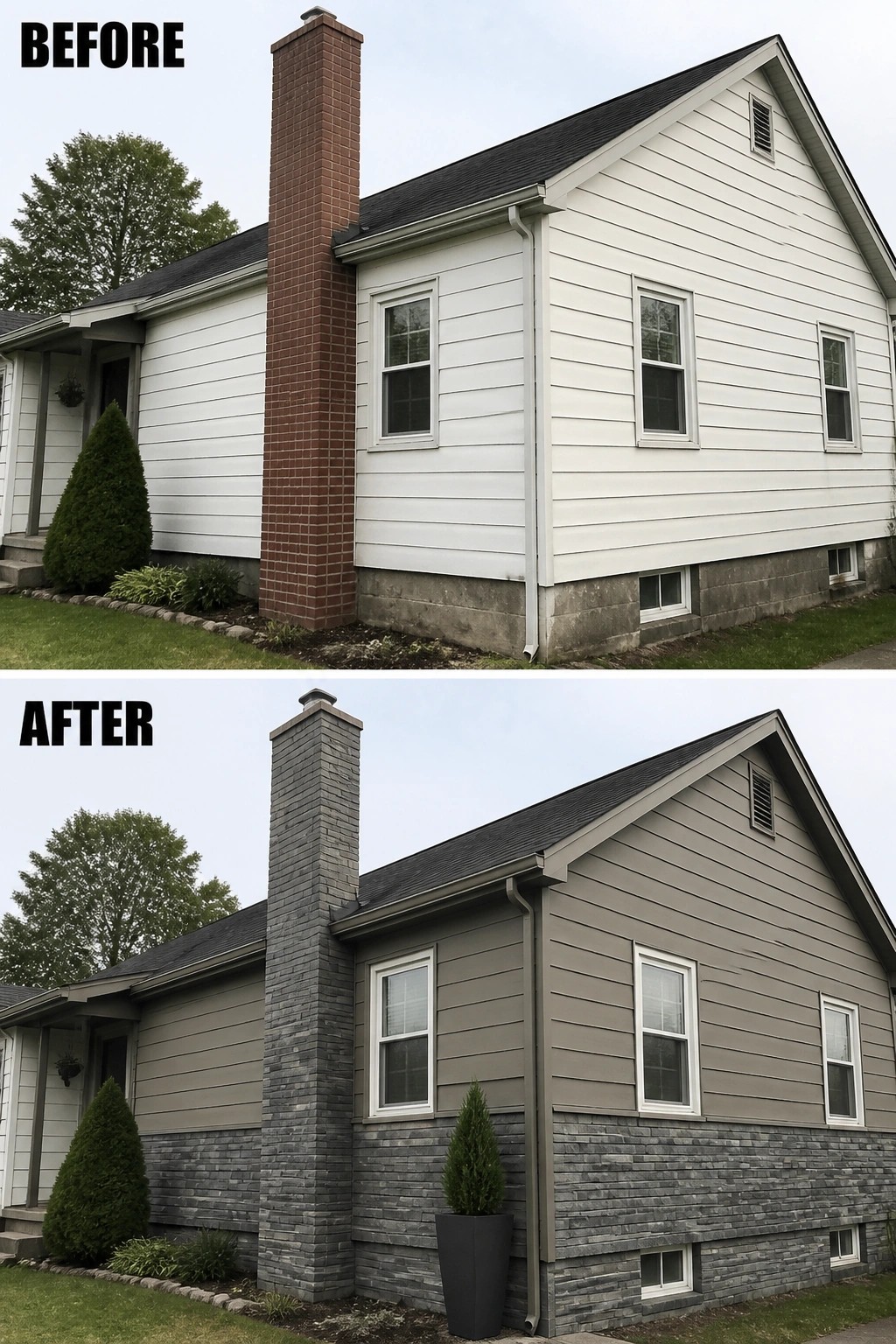
A simple way to give a small house more depth is to combine a darker, cohesive siding color with a stone or masonry wainscot and chimney cladding. Swapping bright white for a warm gray-taupe and adding stone at the lower wall and chimney (instead of full replacement) breaks up a flat facade and creates layered visual interest without a major footprint change.
Start small. Limit stone to the foundation line, porch, or chimney so the house keeps its scale, and pick a siding color that ties into the roof and trim. Manufactured stone veneer is a budget-friendly option, and painting first helps you choose the right stone tone. Keep vents and window wells accessible, repeat one trim color to unify the look, and add a single planter or two to finish the composition.
Layer Plants And Lighting Along Plain Front Steps
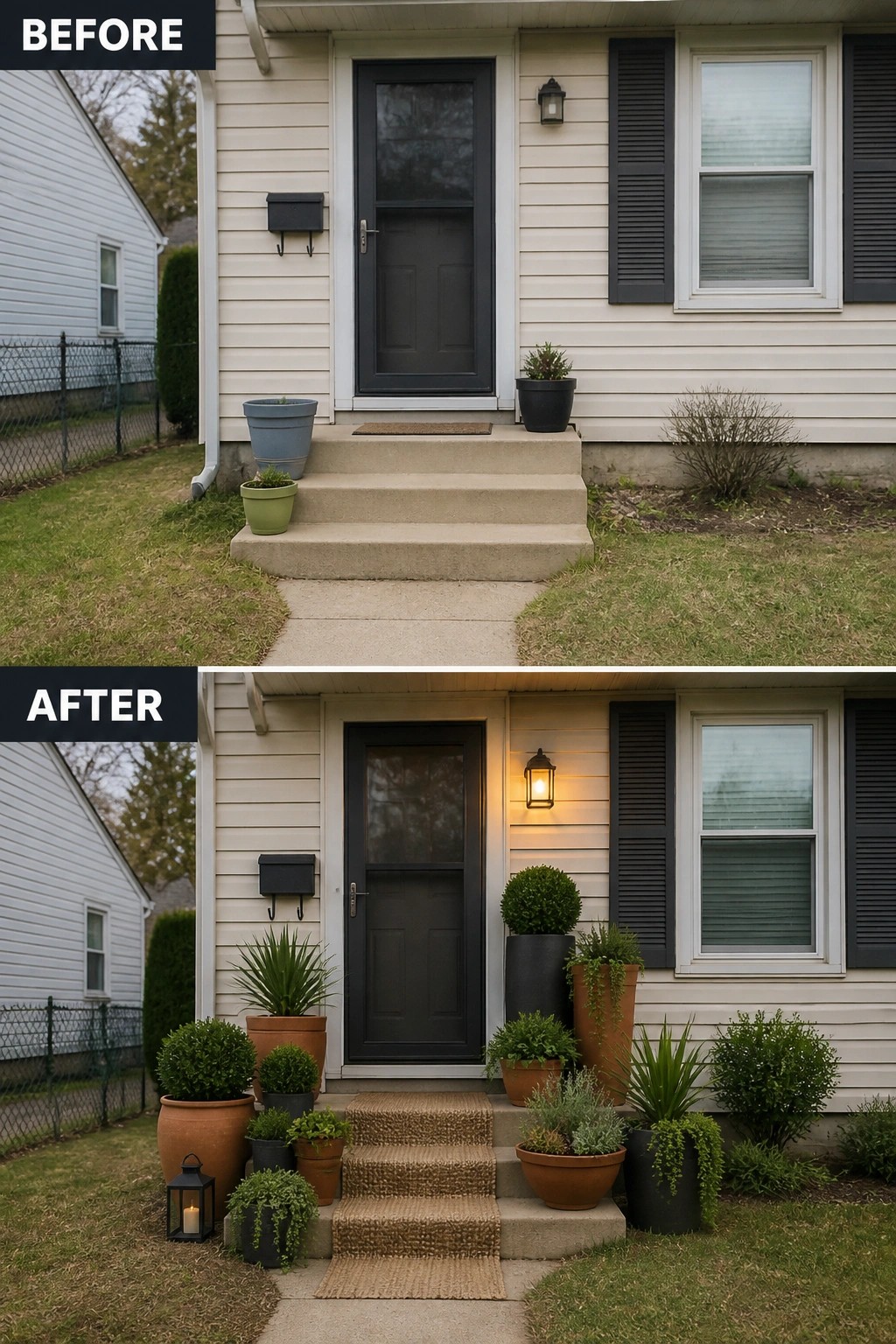
A few well-placed layers can turn plain concrete steps into a purposeful entry. In this makeover the homeowner added a textured stair runner, a cluster of potted plants at varying heights, and a simple lantern plus a wall light to make the approach feel intentional instead of empty. Those small choices frame the door and give visitors somewhere to look and step.
To copy this, start with scale: pick one or two large pots and a couple of smaller ones to create height and repetition, and place them so the door still opens freely. Add a narrow, weatherproof runner to lead the eye up the steps, and a durable outdoor lantern or wall sconce for evening use. Use hardy, low-maintenance plants and repeat a material or color so the styling reads as one idea rather than a cluttered collection.
Break Up A Tall Blank Wall With Color And Planters
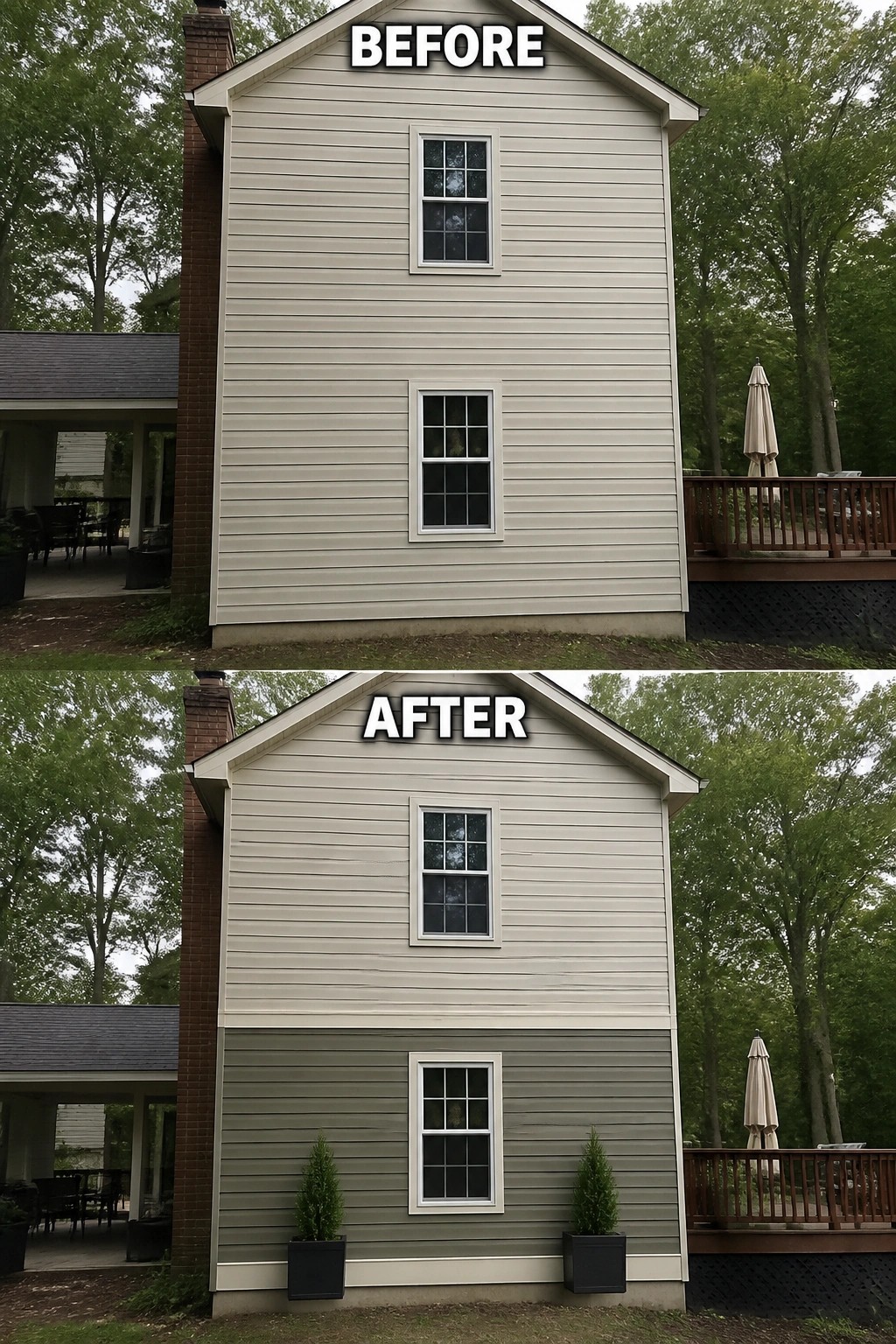
A simple way to add dimension to a plain facade is to introduce a horizontal color band and a pair of planters to anchor the lower wall. In this example the homeowner painted the bottom half a darker, complementary color and added matching planters beneath the window, which instantly reduces the perceived height and gives the wall a clearer base.
To copy this, pick a darker or muted shade for the lower third (or align the band with an existing sill or trim line) so it reads like intentional architecture rather than random painting. Keep the band proportional to the wall, place two symmetrical planters under a window to provide scale, and choose low-maintenance evergreens or seasonal pots that suit the site. This works especially well on narrow side walls or simple siding where you want a quick, low-cost curb appeal boost.
Use Exterior Lighting To Define The Entry
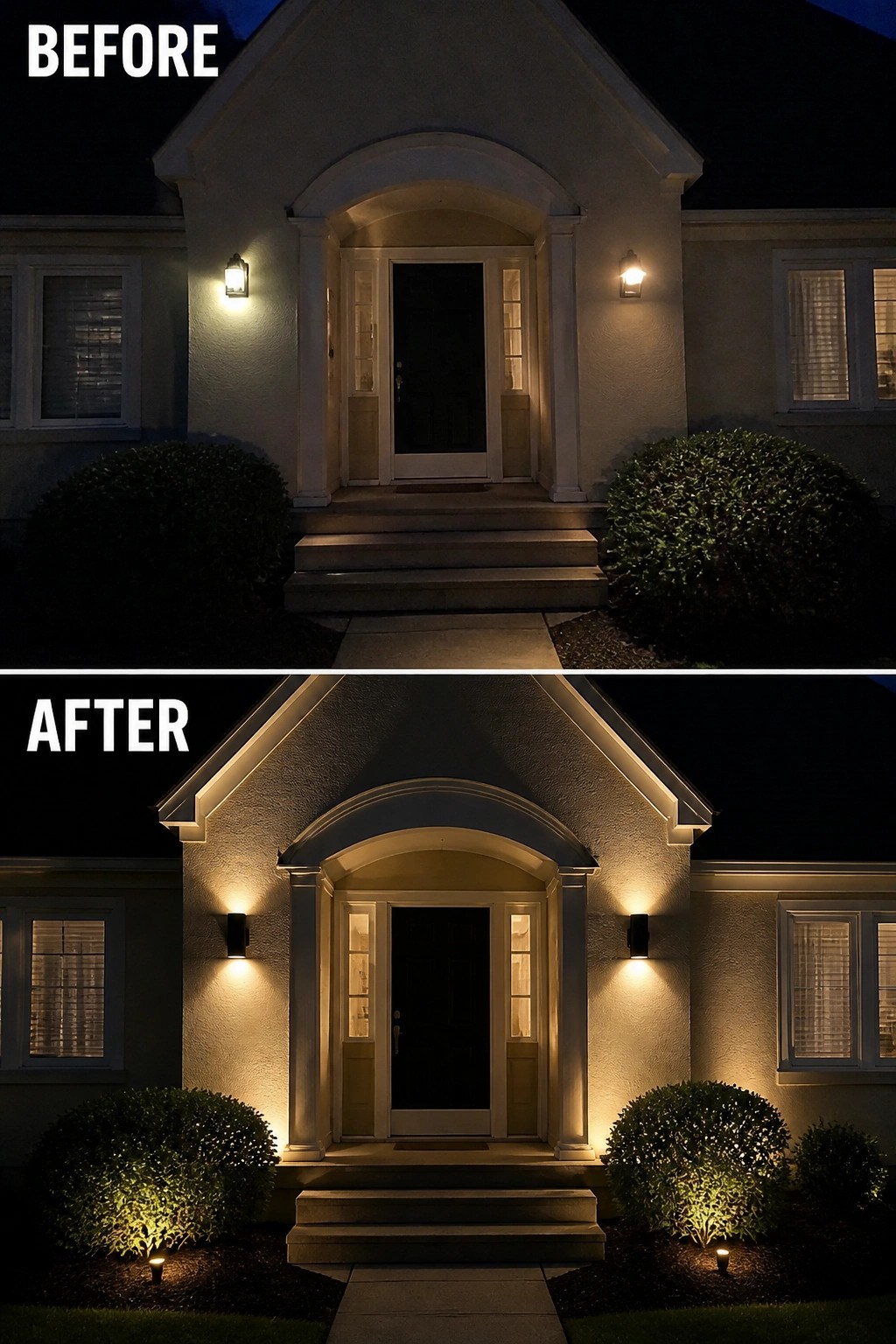
A pair of coordinated wall sconces and a few low-voltage uplights can change a plain facade into a readable, welcoming entry. In the before photo a single dim light left the doorway and porch in shadow; in the after photo matched up-and-down sconces plus small ground lights at the shrubs and steps outline the columns, stairs, and planting so the porch feels deliberate instead of lost at night.
To try this at home, start with one clear focal light on either side of the door and add a couple of ground spotlights aimed up at architectural details or shrubbery. Choose warm 2700–3000 K bulbs, keep fixture sizes in scale with your doorway, and use timers or dusk-to-dawn controls so the effect is automatic. Start small, test the angles at night, and adjust brightness so you get gentle pools of light rather than glare.
Refresh A Recessed Entry With Paint And A Wall SconceGive A Bare Porch A Clear Purpose
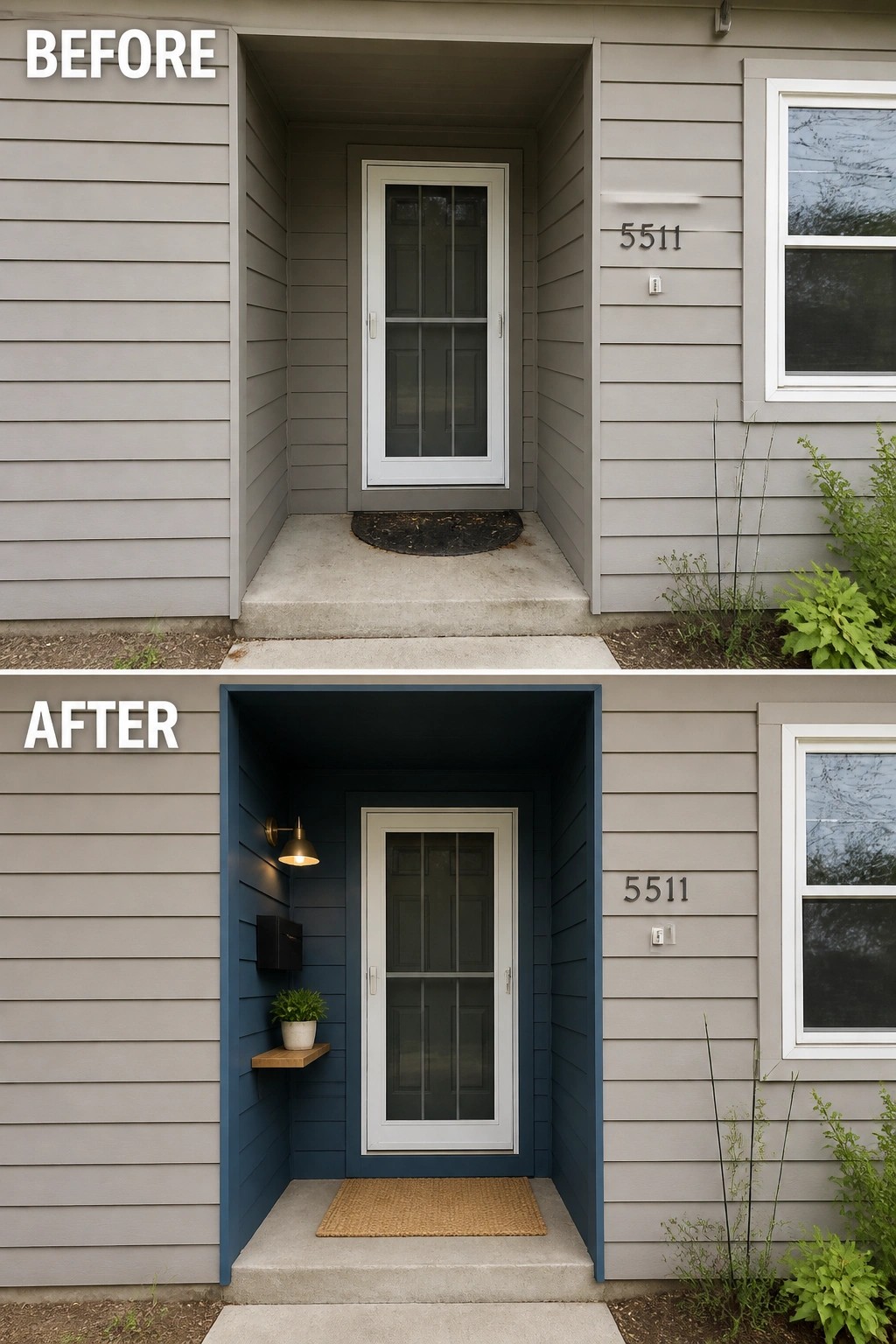
A small, recessed entry can feel like wasted space until you decide what it should do. In this example a fresh coat of darker paint inside the recess, a single wall sconce, and a narrow shelf turn a bland concrete alcove into a purposeful entry. The change is simple, but painting the nook makes it read as a distinct place rather than an afterthought.
Use this idea on any tight porch or stoop: pick one unifying move first, usually paint or a contrasting trim color, then add one or two practical touches—a weatherproof light for evenings and a slim shelf or mailbox for function. Keep accessories small so the step stays usable, choose finishes that stand up to weather, and place the light where it actually illuminates the door and path.
Frequently Asked Questions
Q: What’s the easiest update from that list to make my simple facade feel more layered without a big budget?
A: Start with contrast—paint the trim, front door, or window frames a darker or complementary color to give planes definition. Add one small architectural accent like a new light fixture, window box, or a slim vertical plant to create a focal point; frankly, a fresh door color does more than most people expect.
Q: Will using darker trim or accents make my small house look smaller?
A: Darker trim actually reads as depth when used sparingly because it outlines features and creates shadow. But keep scale in mind: use darker accents on smaller elements like trim, shutters, or a porch post rather than painting the whole facade.
Q: I have almost no budget—what updates from the article give the biggest impact for the least money?
A: Paint, hardware, and lighting give huge returns: a new door color, updated house numbers, and a bright porch light change first impressions fast. Add inexpensive planters and tidy the walkway for instant polish without major work.
Q: Which landscaping or lighting ideas make a small yard feel deeper rather than crowded?
A: Use narrow, vertical plantings and layered heights to draw the eye upward and back along the lot, and keep large shrubs away from the facade. Soft path lights and a couple of low uplights on textured siding or a tree add depth after dark without eating space.