

I often notice that older homes have front porches that still carry the original lines but lack the finishing touches that would bring everything together.
Choosing details that match the house’s age can make the entry look intentional rather than patched over time.
In my own experience, swapping out mismatched fixtures for ones from the right period usually does more for the overall look than adding new layers of decor.
These updates tend to improve how the house sits on the street without requiring major construction.
Small choices like that are worth trying.
Restore Charm To An Older Porch With Paint
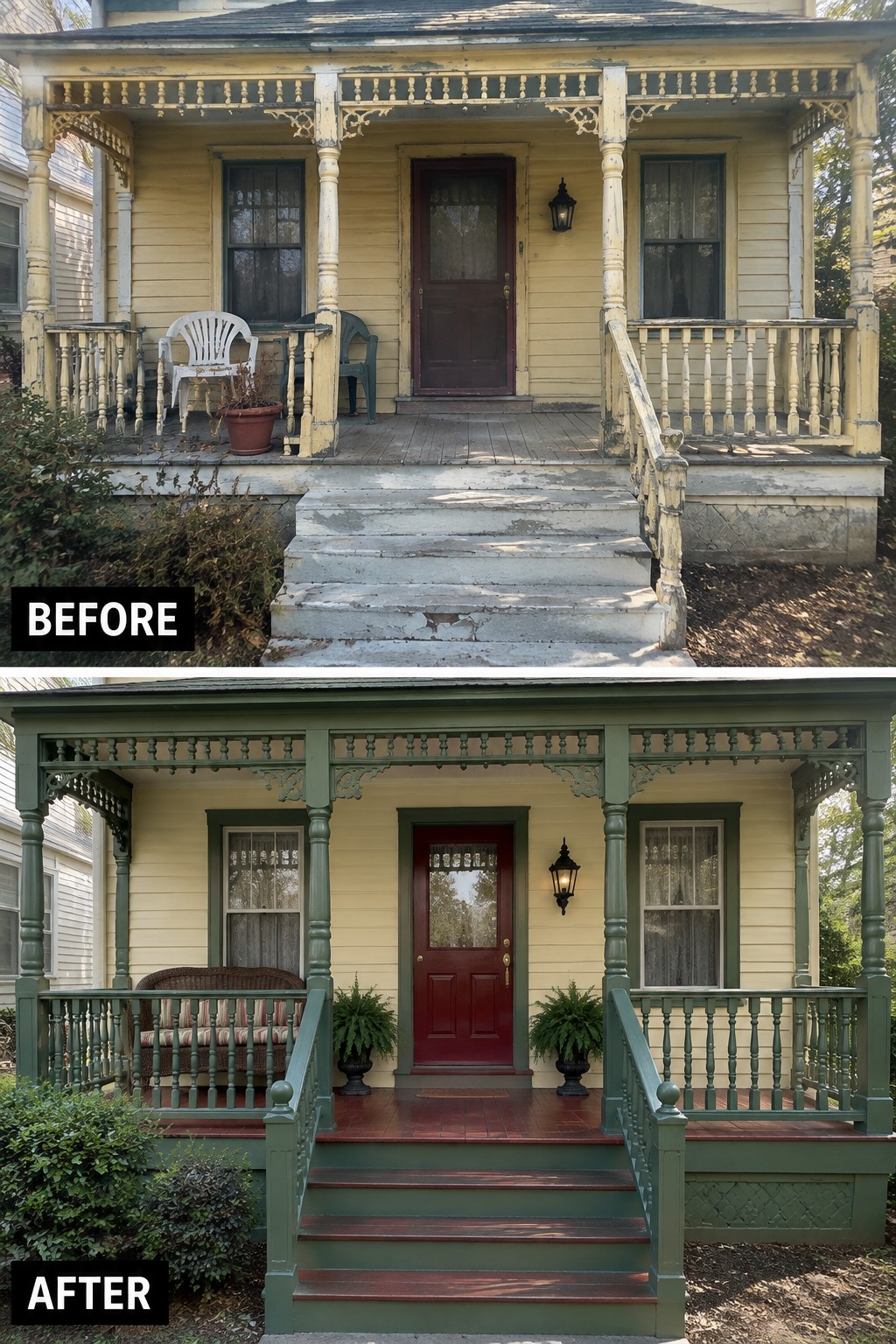
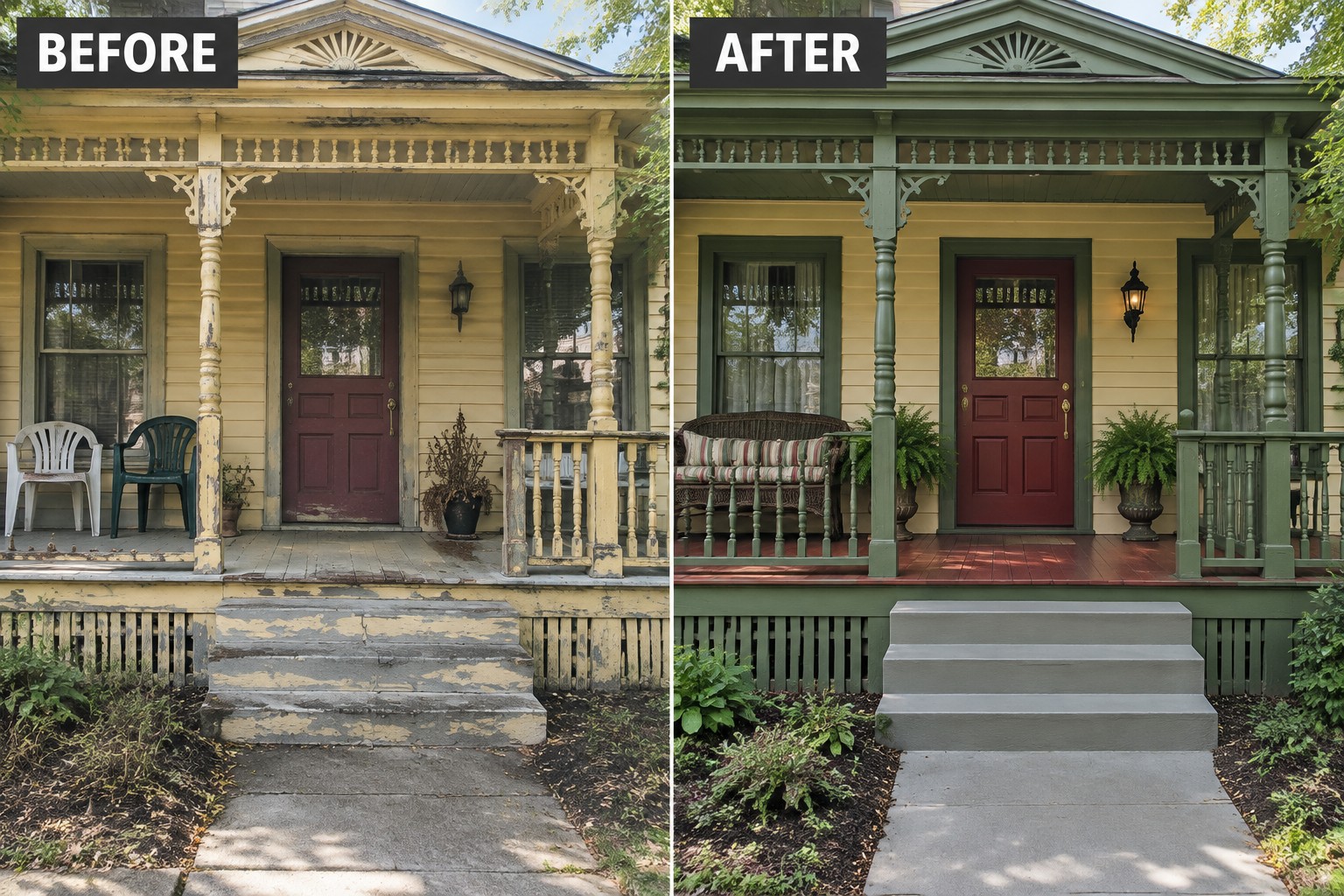
A tired porch often loses its appeal when the paint peels and the details fade into the background. Here the main fix was a full repaint in a soft green that highlights the columns, brackets, and railings, paired with a deep red door and new porch flooring. The concrete steps were also painted to match, which instantly made the entry feel cared for instead of neglected.
This kind of refresh works best on older homes that still have their original trim and structure. Choose colors that suit the age of the house, keep the furniture simple and scaled to the space, and add only a few period-friendly pieces such as a wicker settee or classic planters. The goal is to let the architecture show again rather than cover it up with too many extras.
Strengthen An Older Porch With New Columns And Decking
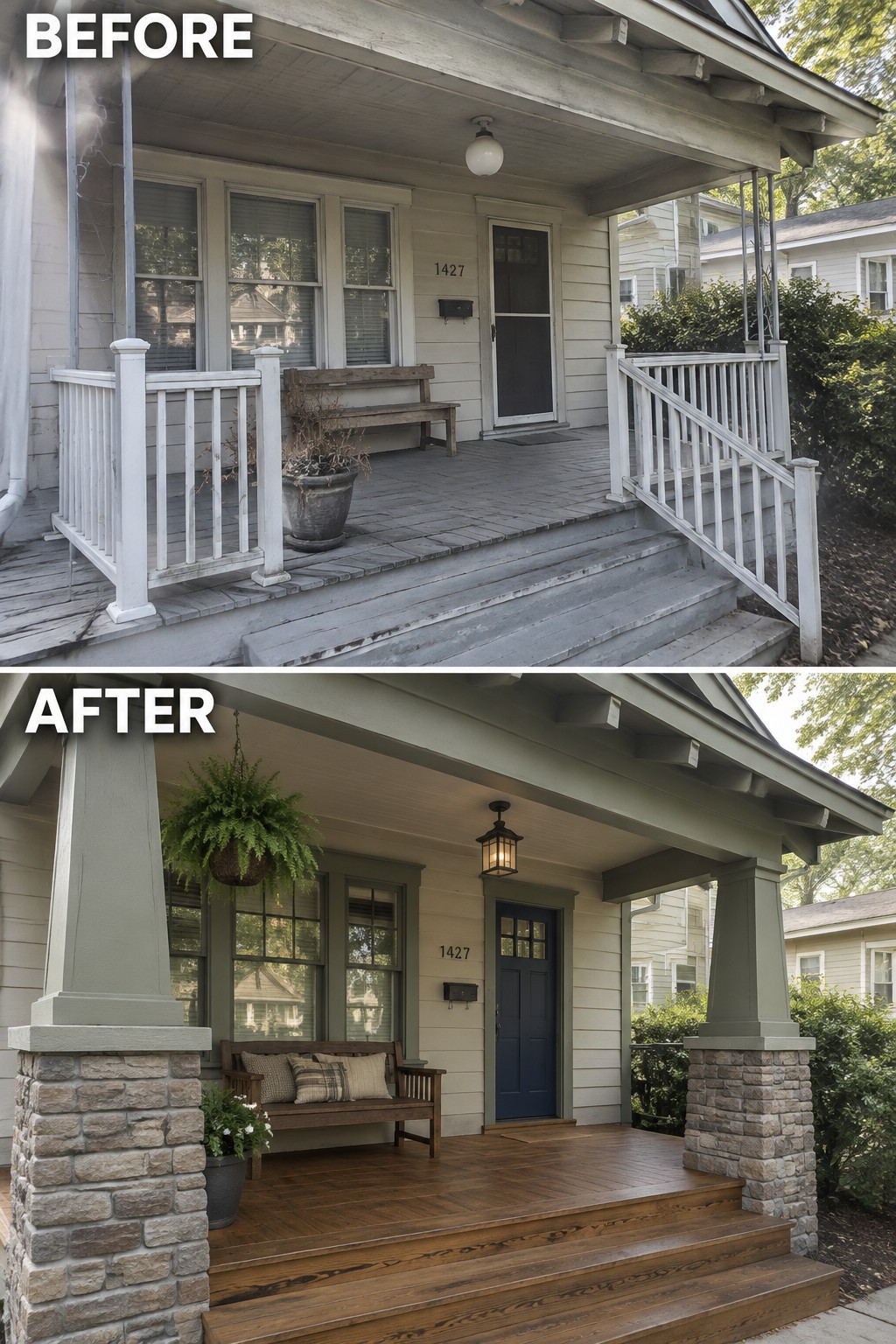
Many older porches start with thin posts and worn deck boards that make the whole entry feel light and dated. Replacing the posts with wider stone bases and laying a fresh wood deck gives the space real weight and makes it feel more connected to the house.
This approach works especially well on homes that already have some trim detail or classic proportions. Focus on the main supports and flooring first, then add seating and one or two hanging plants so the porch reads as a finished outdoor room rather than a collection of furniture.
Refresh An Older Entry With A Strong Door Color
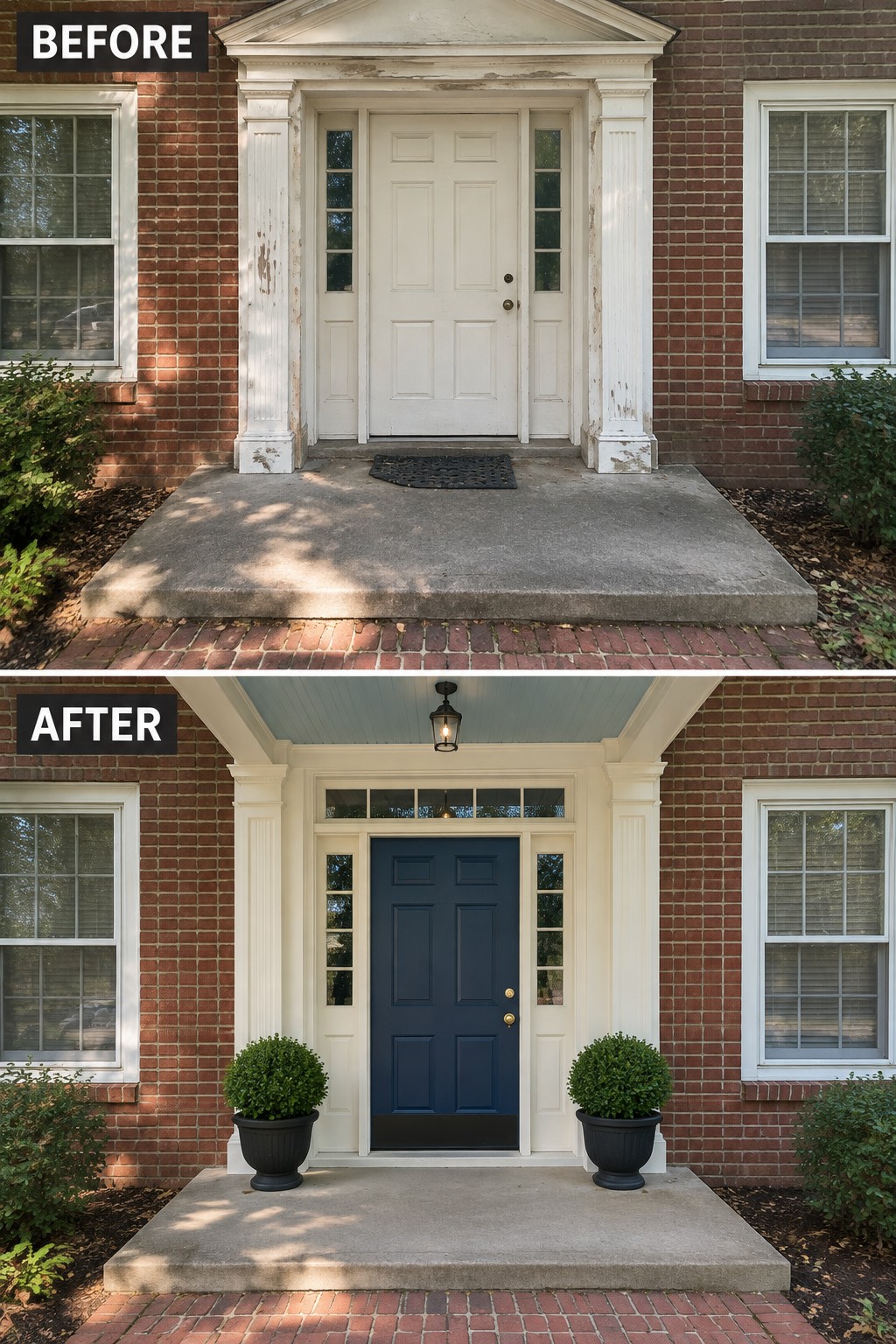
Many older homes have front doors that have faded or no longer suit the brick and trim around them. Painting the door a deeper color and placing matching planters on either side gives the entry a clearer focal point and makes the whole facade feel more cared for.
This approach works best on homes where the architecture is already solid but the entry feels flat. Choose a color that contrasts with the brick without clashing, and keep the planters simple so they frame the door rather than compete with it. Start with the door and trim before adding more details.
Update Entry Railings To Suit An Older Home
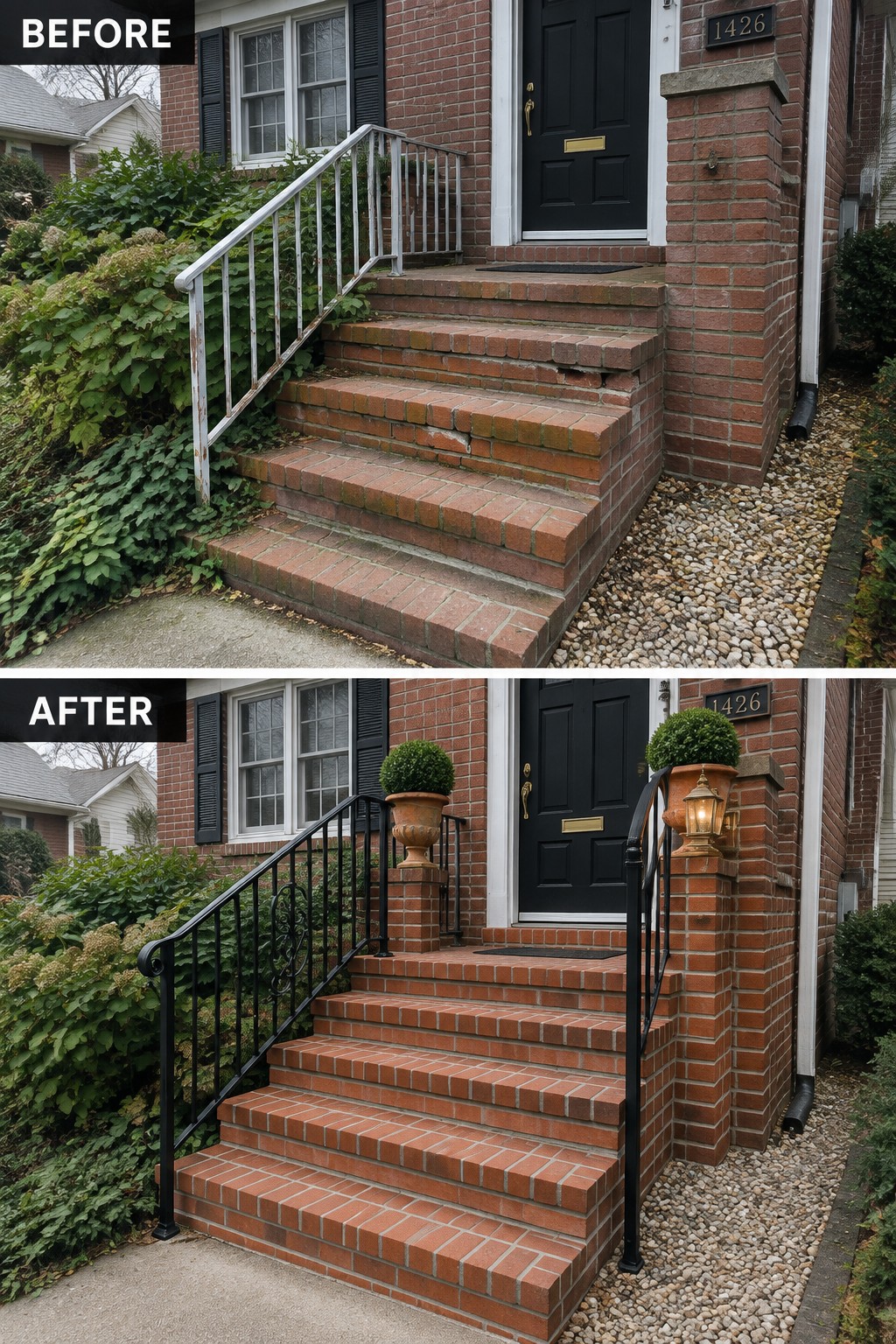
The biggest change here is swapping the old, rusty white railing for a new black metal one with simple scrollwork. That single swap makes the whole front entry feel more finished and better matched to the brick house. The steps look cleaner too once the railing no longer draws attention to the worn edges.
This approach works well on older homes where the original railings are missing or damaged. Pick a style that echoes the house details rather than something too modern or too ornate. Keep the rest of the entry simple so the new railing stays the main focus.
Refresh Worn Front Steps With Tiled Risers
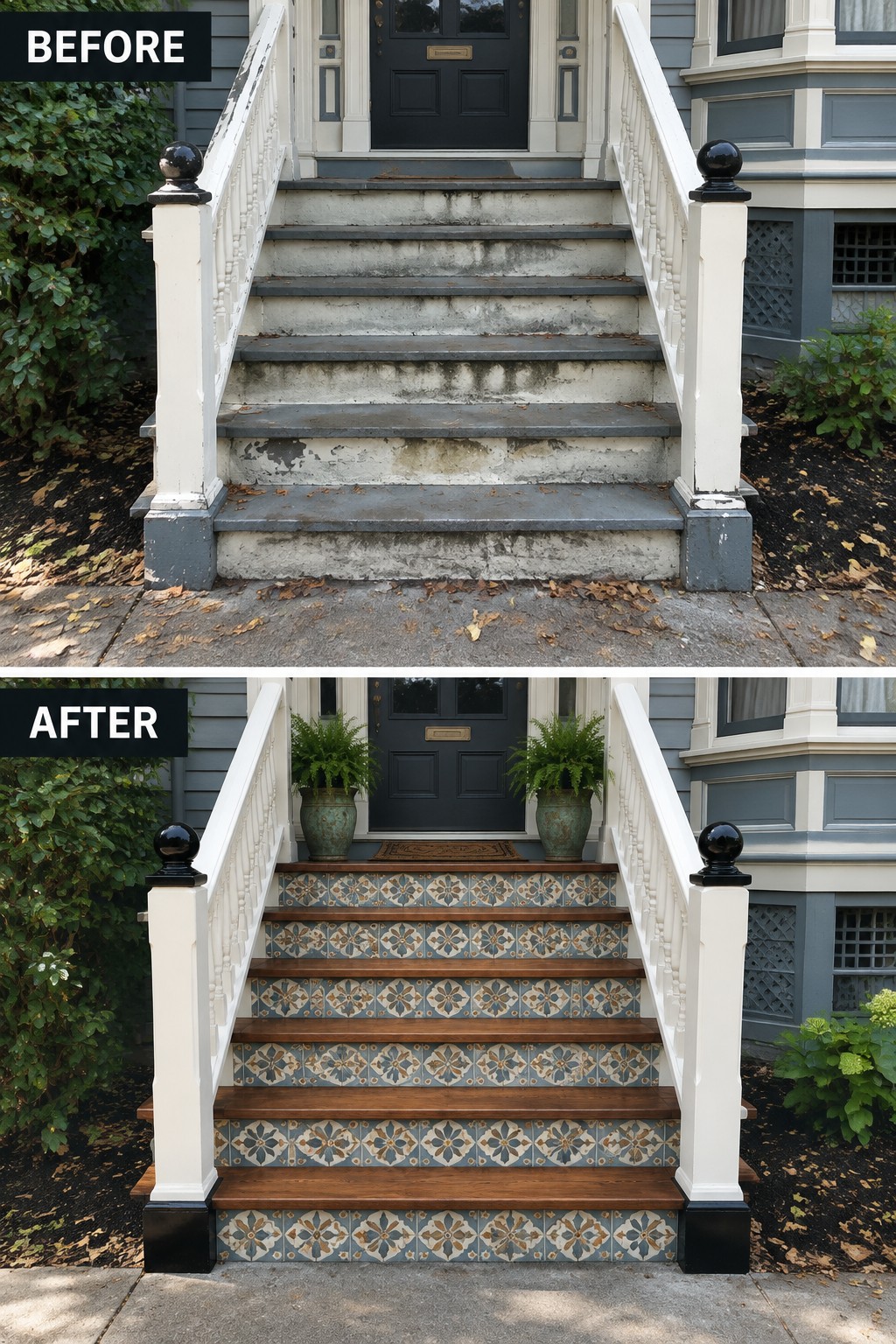
Older homes often end up with front steps that look tired after years of wear. The concrete stains, the paint flakes, and the whole entry starts to feel neglected. Swapping in wood treads and adding patterned tile to the risers gives the stairs a fresh surface while keeping the original shape and railings intact.
This idea suits older homes because the tile can pick up on historic patterns without needing a full rebuild. Focus on the steps first, choose a tile that fits the age of the house, and keep any added planters or mats simple so the stairs stay the main point of interest.
Give A Bare Porch A Clear Purpose
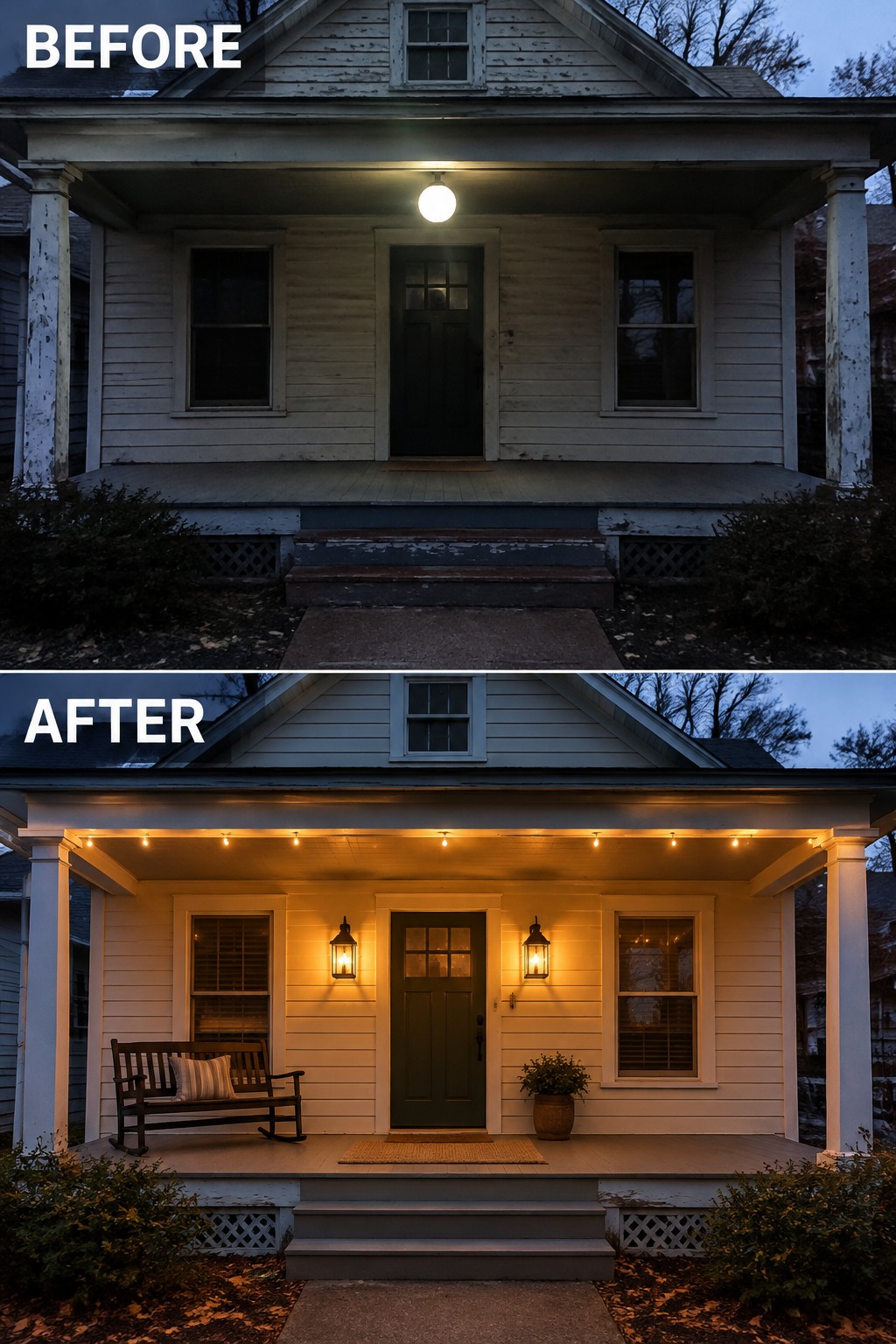
Many older homes have front porches that stay empty because there is nothing to draw people out there. Adding one bench, a simple rug, and a mix of string lights with two wall lanterns gives the space an obvious reason to be used.
This idea works best on houses with existing porches that already have good structure. Keep the furniture scale modest so it does not crowd the walkway, and use lighting that stays low and warm rather than bright overhead lights that wash out the whole facade.
Give An Empty Porch New Flooring And Rocking Chair
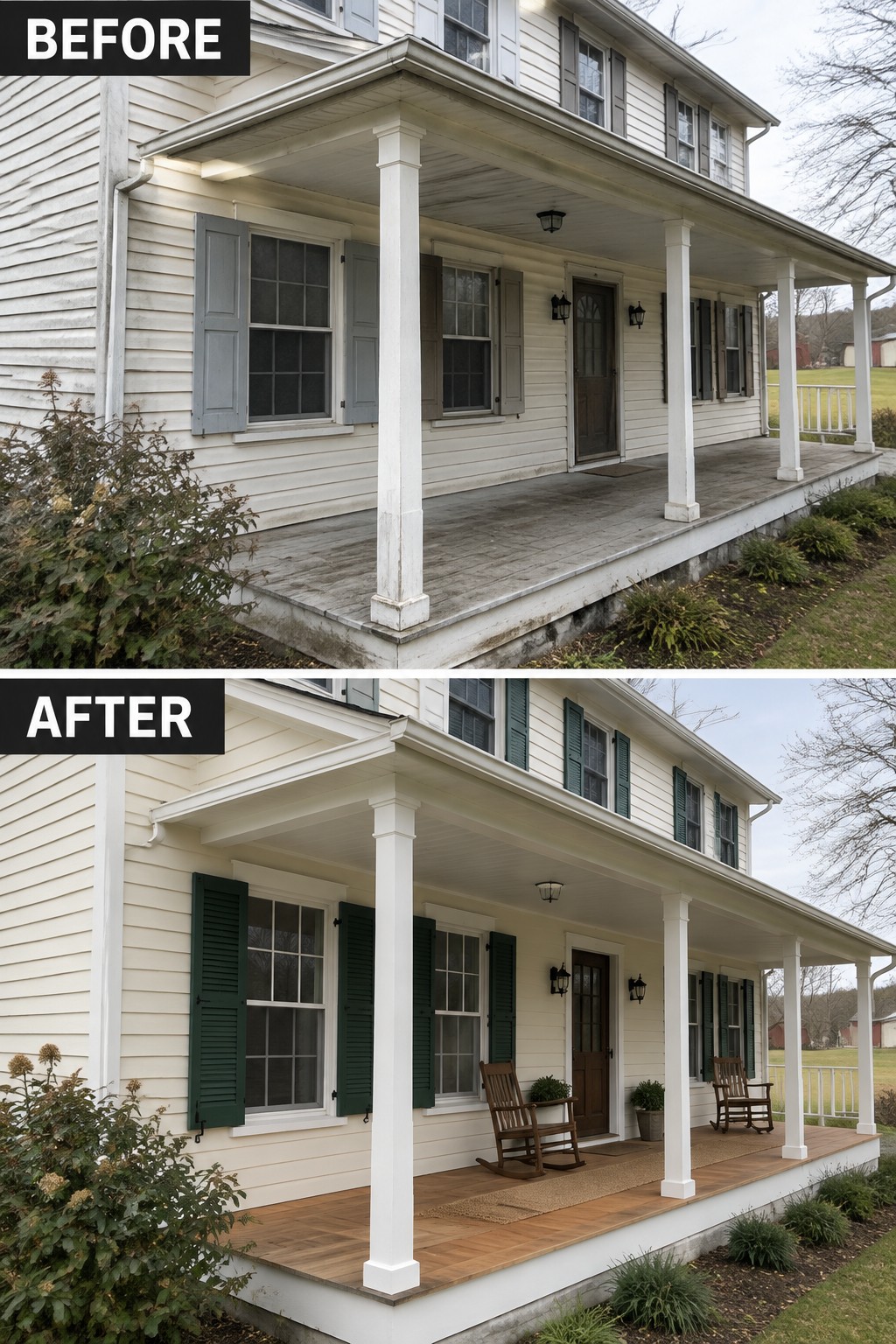
Many older homes have front porches that sit empty because they lack a clear reason to be used. The worn surface and lack of furniture made this one feel more like a pass-through than a place to spend time. Adding a wood floor and a couple of rocking chairs gave it an immediate function.
This idea works best on porches that already have decent structure but need a simple refresh. Focus first on the floor if it looks tired, then add seating scaled to the space and one rug to mark the sitting area. Two or three pieces are usually enough. Too many extras can make a smaller porch feel crowded.
Update The Front Door And Add Matching Planters
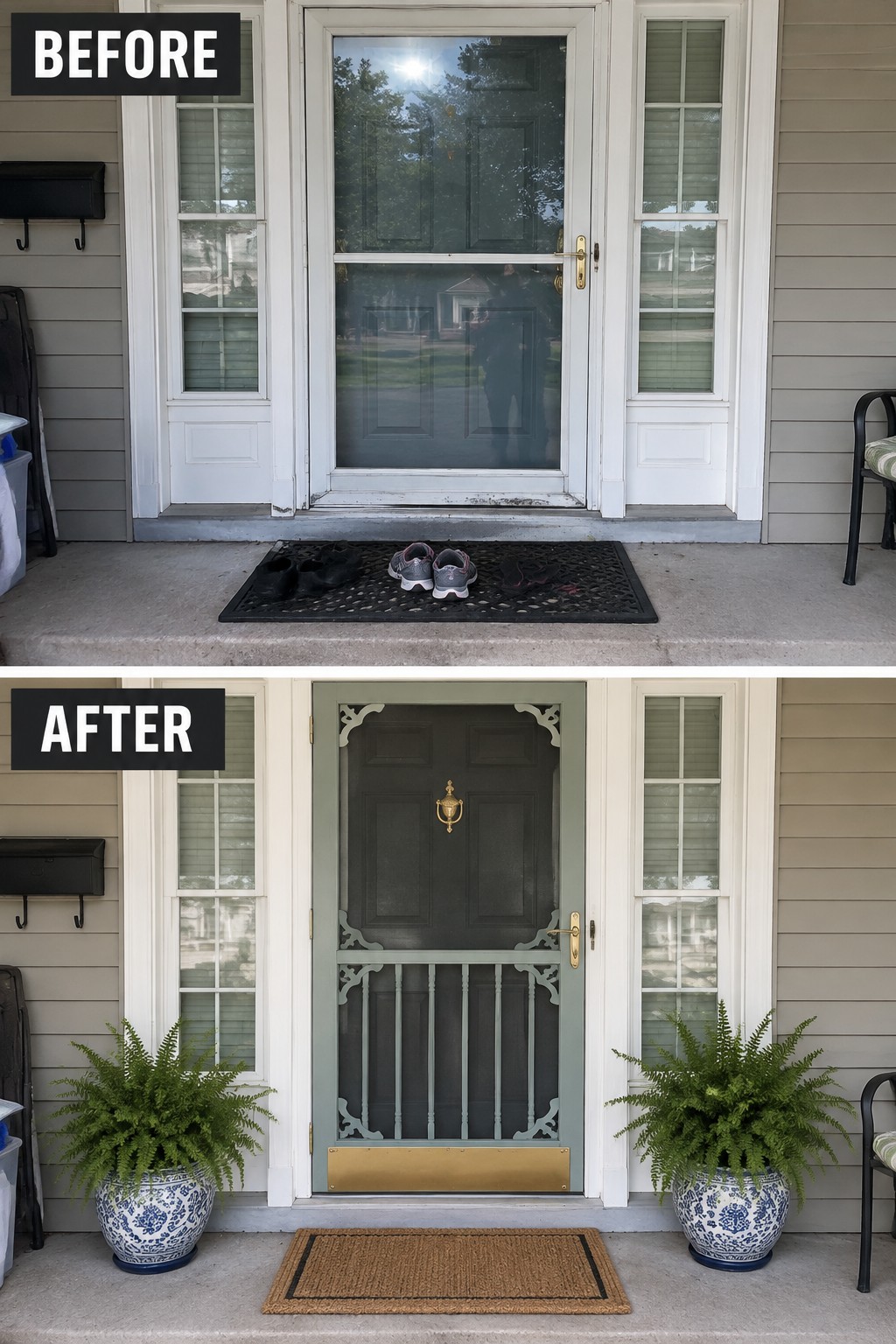
Many older homes have front entries that look plain because the door blends into the trim and nothing draws the eye. A new door color plus two matching planters on either side gives the entrance a clear focal point and makes the whole facade feel more intentional. In this case the shift from a plain white door to a soft green with added trim details and balanced planters changed how the entry reads from the street.
This idea works best on older homes where you want to keep the original architecture but still make it feel cared for. Pick a door color that suits the age of the house, use identical planters so the arrangement feels balanced, and leave enough room on the porch for people to walk through. Start with the door if you are working with a small budget, since that single change usually gives the biggest return.
Refresh A Dated Porch With New Columns And Railings
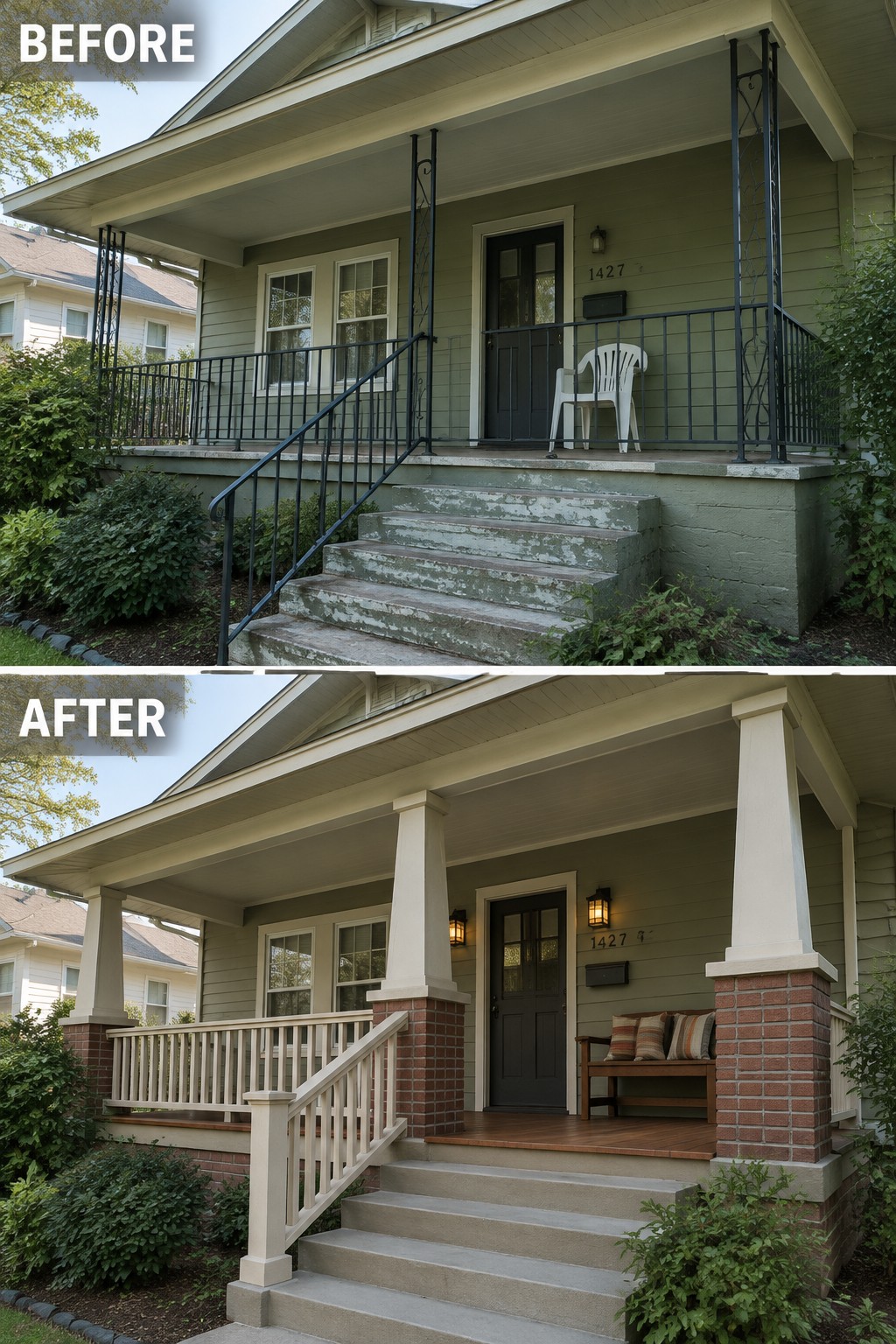
The main change here is swapping the thin metal railings and adding solid columns set on brick bases. This single update gives the porch a sturdier frame that matches the scale of the house and makes the entry feel more intentional.
Older homes often benefit when you fix the vertical lines first before adding smaller details. Choose columns and railings that echo the original trim style, keep the colors simple, and make sure the new materials can handle weather without extra maintenance.
Add A Pediment To Frame The Front Entry
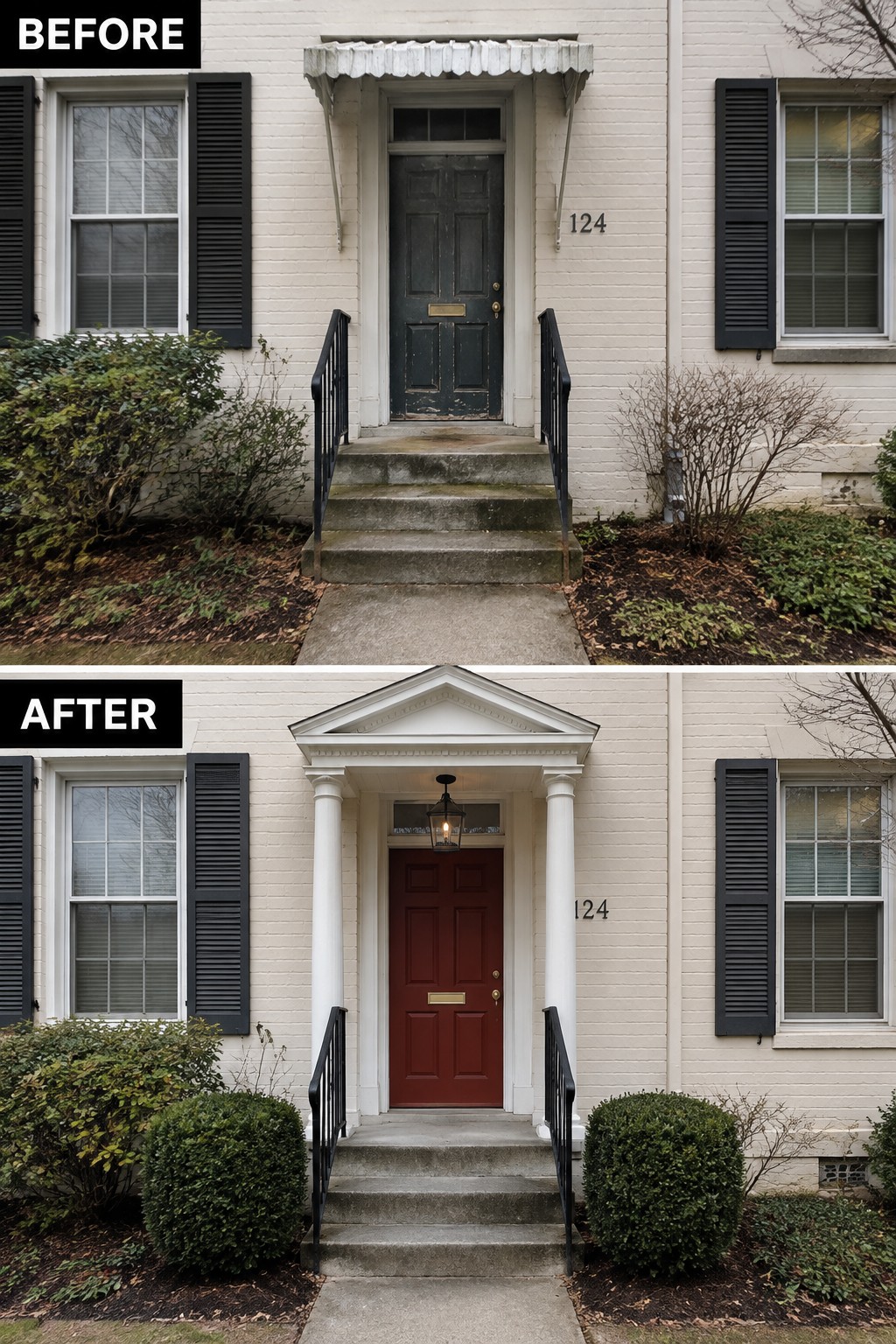
Adding a pediment with columns over the door gives the entry a clear focal point that fits the style of an older brick home. The before photo shows a flat surround that made the door feel tucked away, while the after version uses that one architectural detail plus a richer door color to make the entrance read as intentional and welcoming.
This approach suits homes from the early to mid twentieth century where some original trim may be missing. Measure the door width first so the pediment stays in proportion, then choose a paint color for the door that contrasts gently with the brick. The rest of the facade can stay simple once the entry has that bit of structure.
Paint The Porch Ceiling To Refresh The Entry
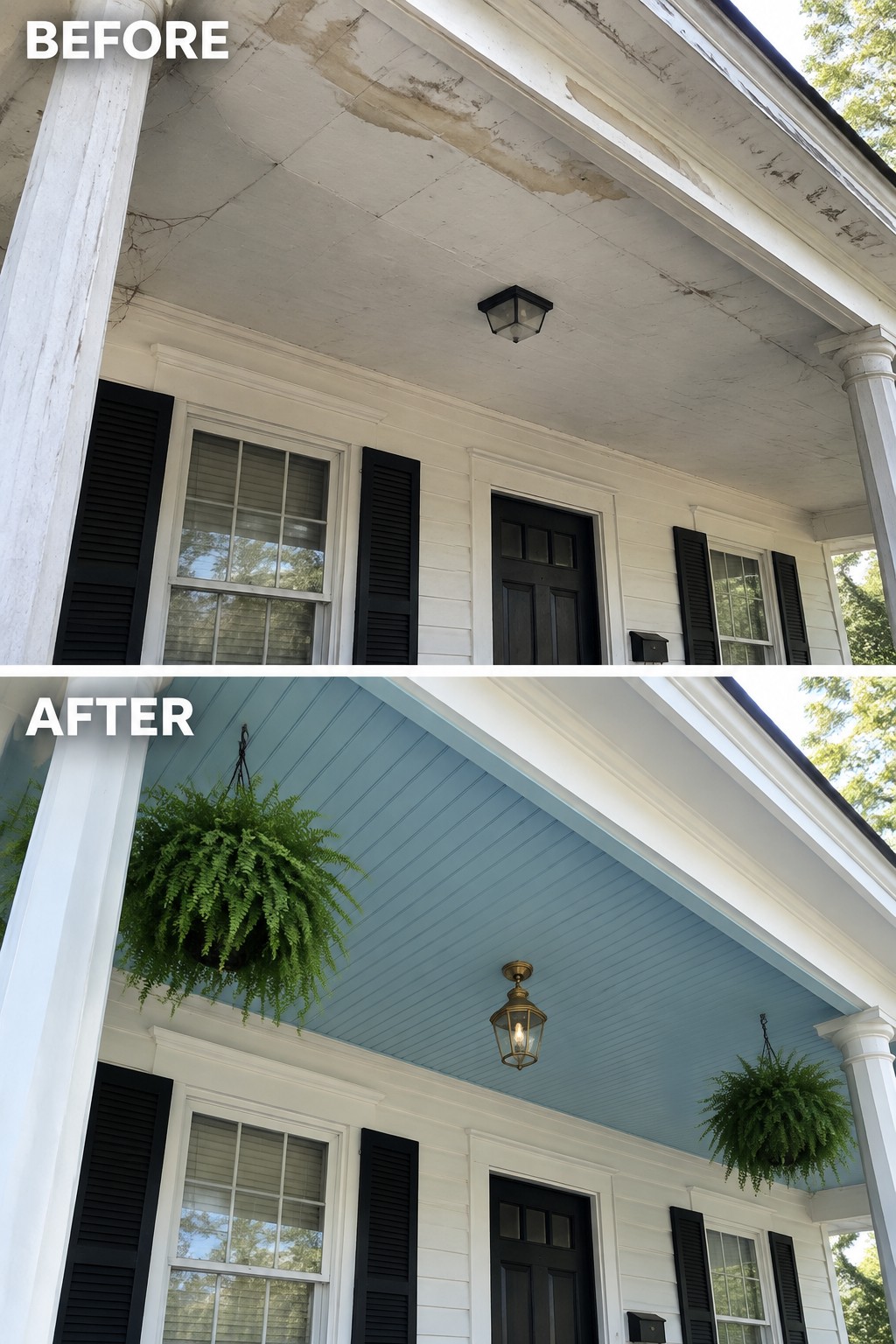
Many older porches end up with ceilings that look tired and neglected after years of weather exposure. A simple coat of paint in a soft color, paired with a few hanging plants, can shift the whole feel of the entry without any structural work.
This idea suits homes that already have period trim and details because it keeps the focus on the existing architecture. Clean the surface well first, then use exterior-grade paint so the finish lasts. Adding just one or two plants keeps the look balanced instead of crowded.
Refresh An Old Concrete Porch With Stone Pavers
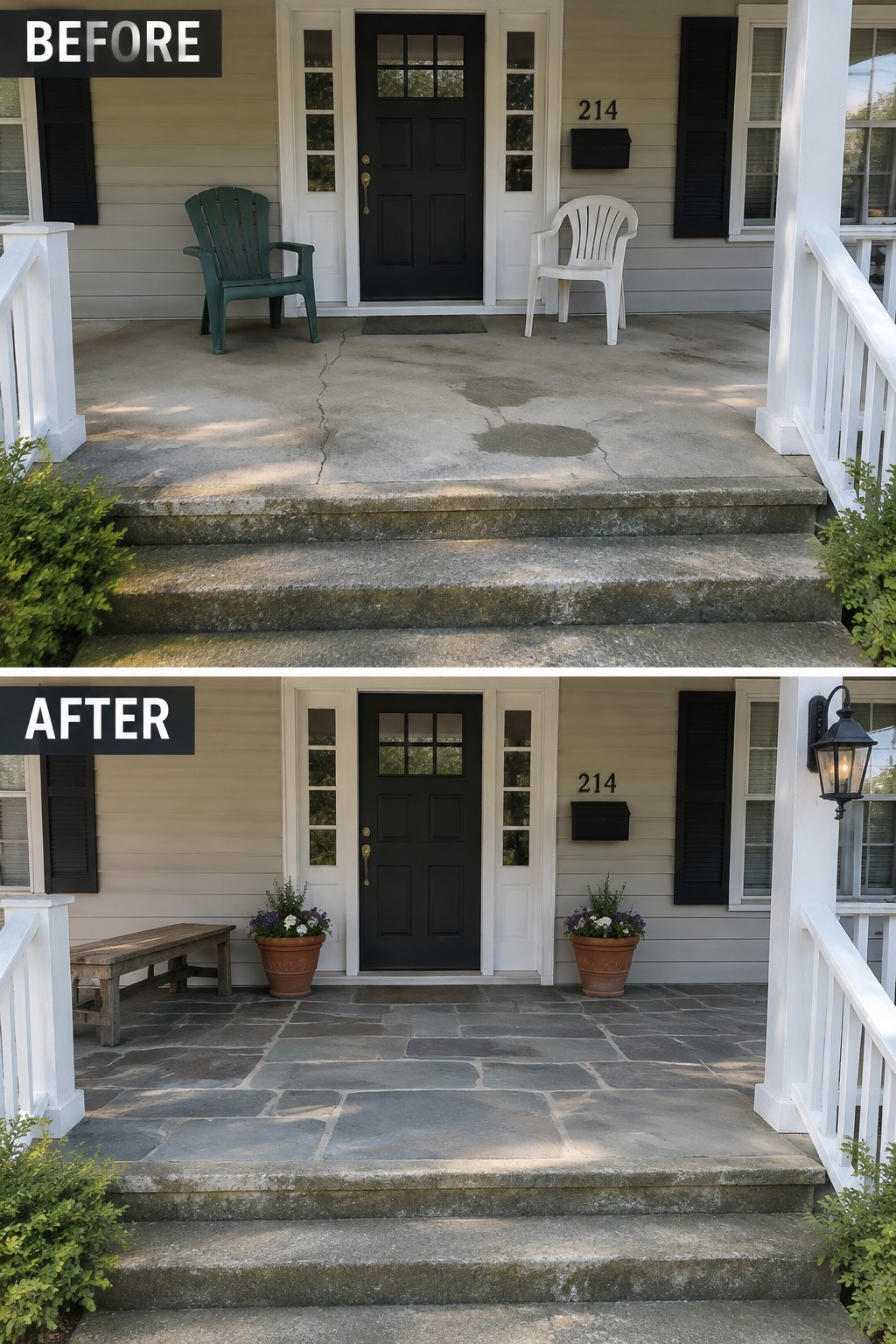
Many older homes have front porches with cracked or stained concrete that makes the whole entry feel tired. Switching to stone pavers gives the surface a cleaner, more solid look and instantly makes the porch feel more intentional without changing the house itself.
This approach works well on homes from the early to mid 1900s where the original porch floor has simply aged. Start with the flooring first, then add just a few planters or a simple bench so the space stays open and easy to move through. Keep the paver color fairly neutral so it ages gracefully with the rest of the exterior.
Clear Porch Clutter And Create A Relaxing Seating Space
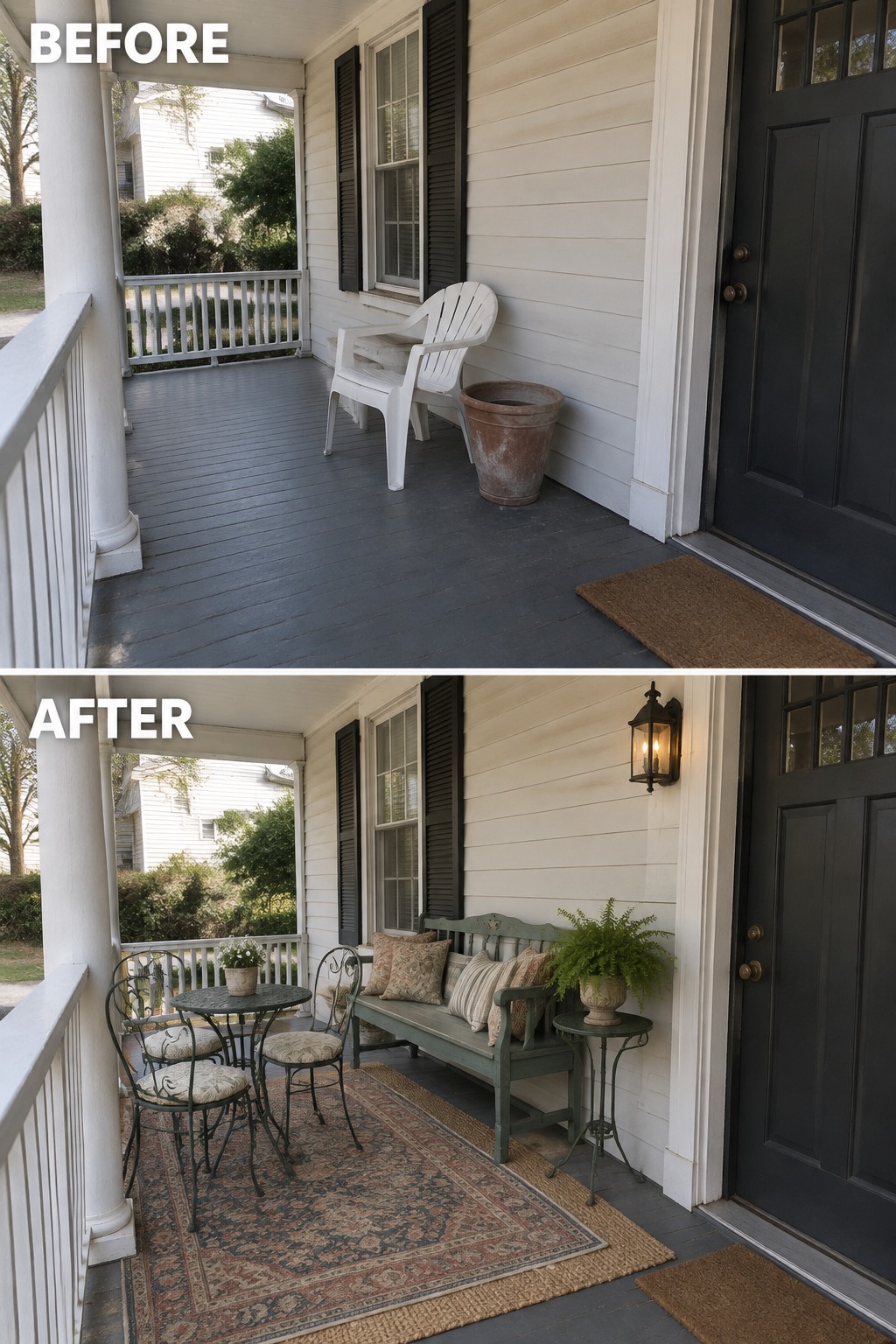
Many older homes have front porches that stay empty because they lack a clear purpose. Adding a bench, a small table set, and an outdoor rug gives the space a defined spot for sitting while keeping the scale right for the house.
This idea works best when you start with the largest pieces first and let the rug anchor the layout. Choose furniture that can handle weather and fits the width of the porch so there is still room to walk through.
Paint The Shutters And Door To Refresh An Older Porch
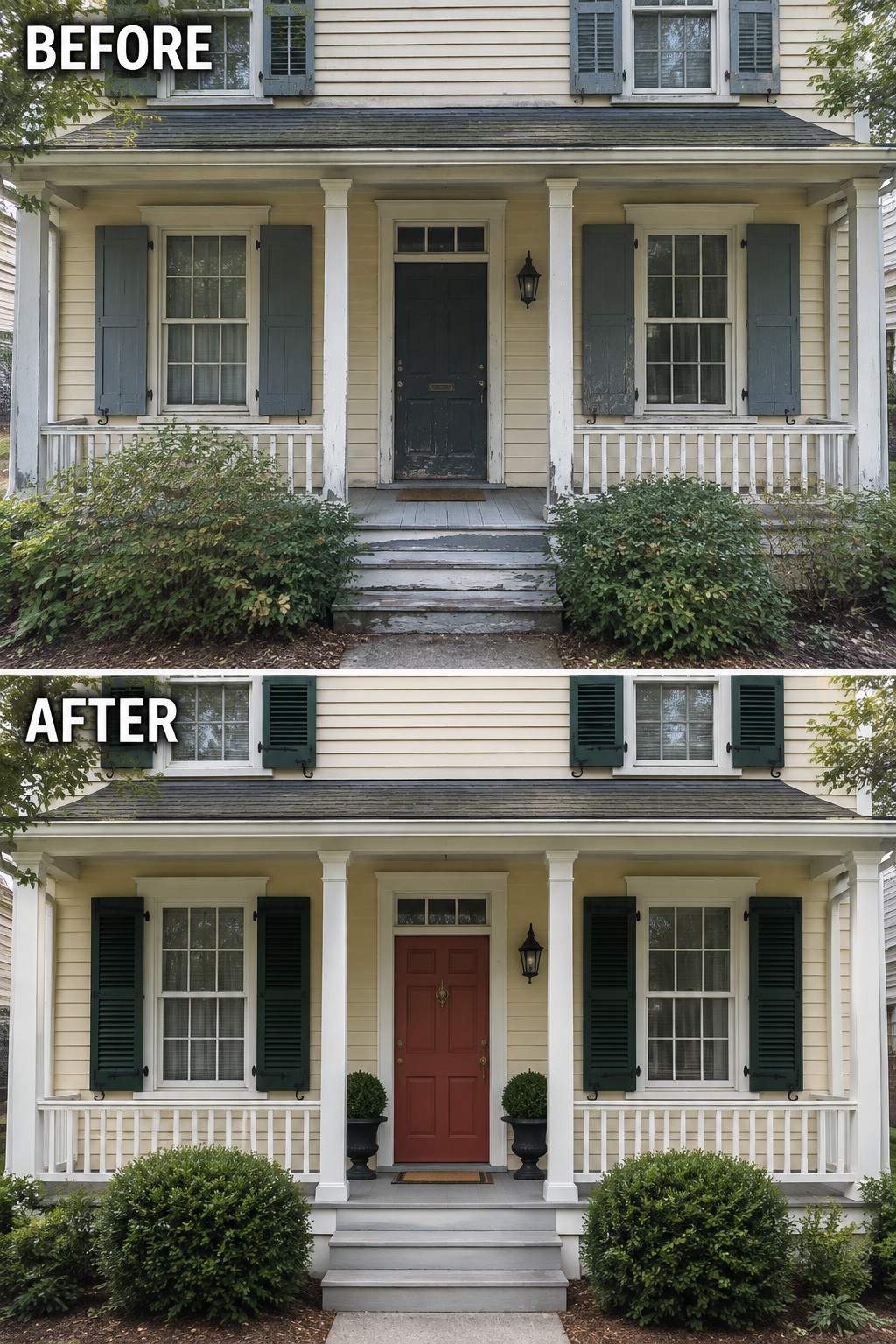
Many older homes lose their charm when the trim and door start to fade. In this case the before photo shows worn gray shutters and a tired dark door that made the whole entry feel neglected. Switching the shutters to a deep green and painting the door a warm red instantly lifts the facade and gives the porch a clearer focal point.
This approach works well on homes with simple porches and period details because it respects the original lines while adding color. Start with the door and shutters first, then match the trim if needed. Keep the rest of the planting low and neat so the new colors stay the main feature.
Give A Bare Porch A Clear Purpose
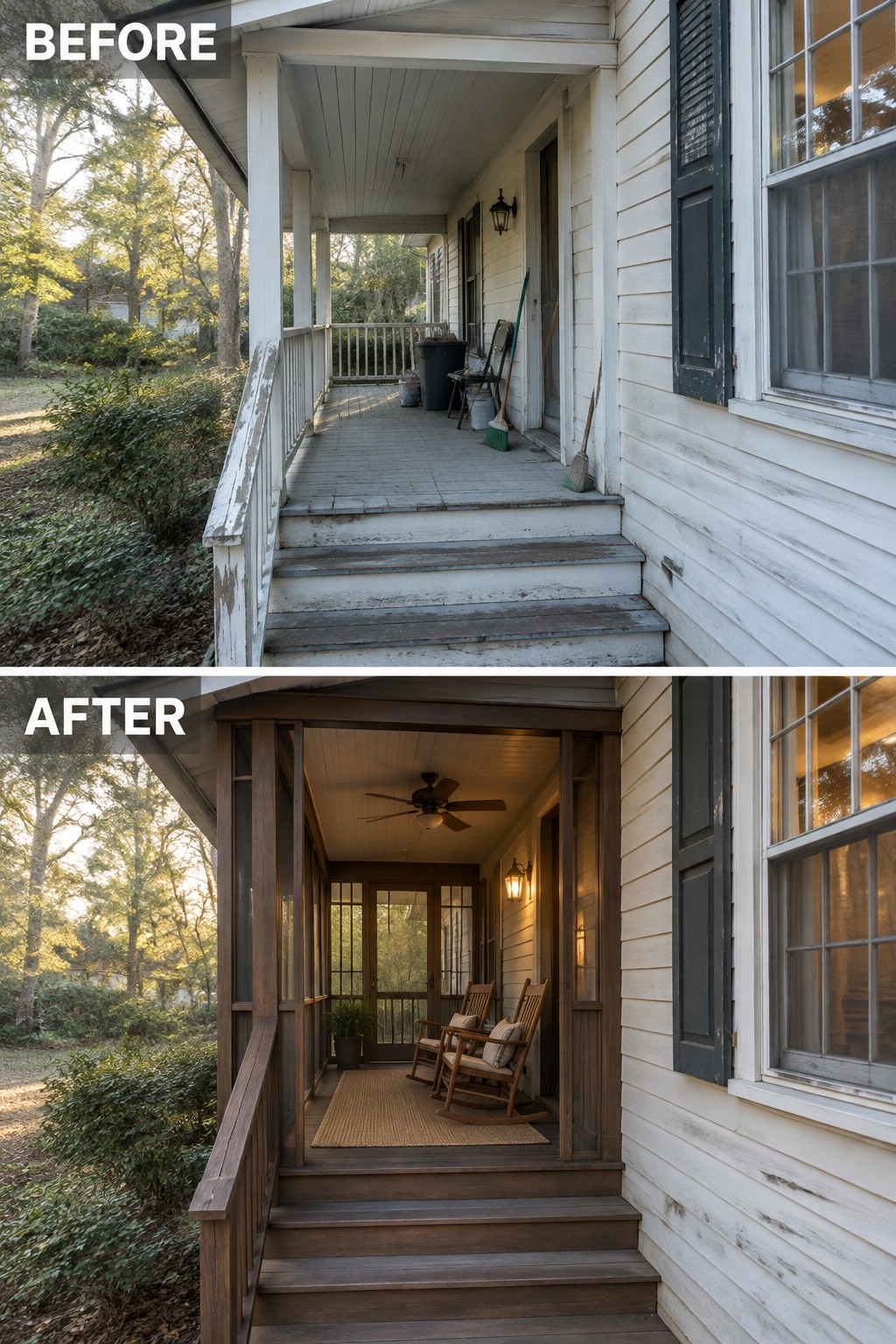
Many older homes have front porches that collect tools and clutter instead of serving as actual living space. This porch shifted from an open, worn platform with random items scattered around to a defined seating area by adding a rug, two rocking chairs, and a ceiling fan that anchors the space and makes it feel intentional.
The same idea works on similar homes when you start with cleanup and then pick one or two main pieces of furniture. A rug helps mark where people should sit, and the scale stays realistic so the porch does not feel crowded. Darker wood tones on the structure also help the area read as part of the house rather than an afterthought.
Refresh Tired Trim With Fresh Paint
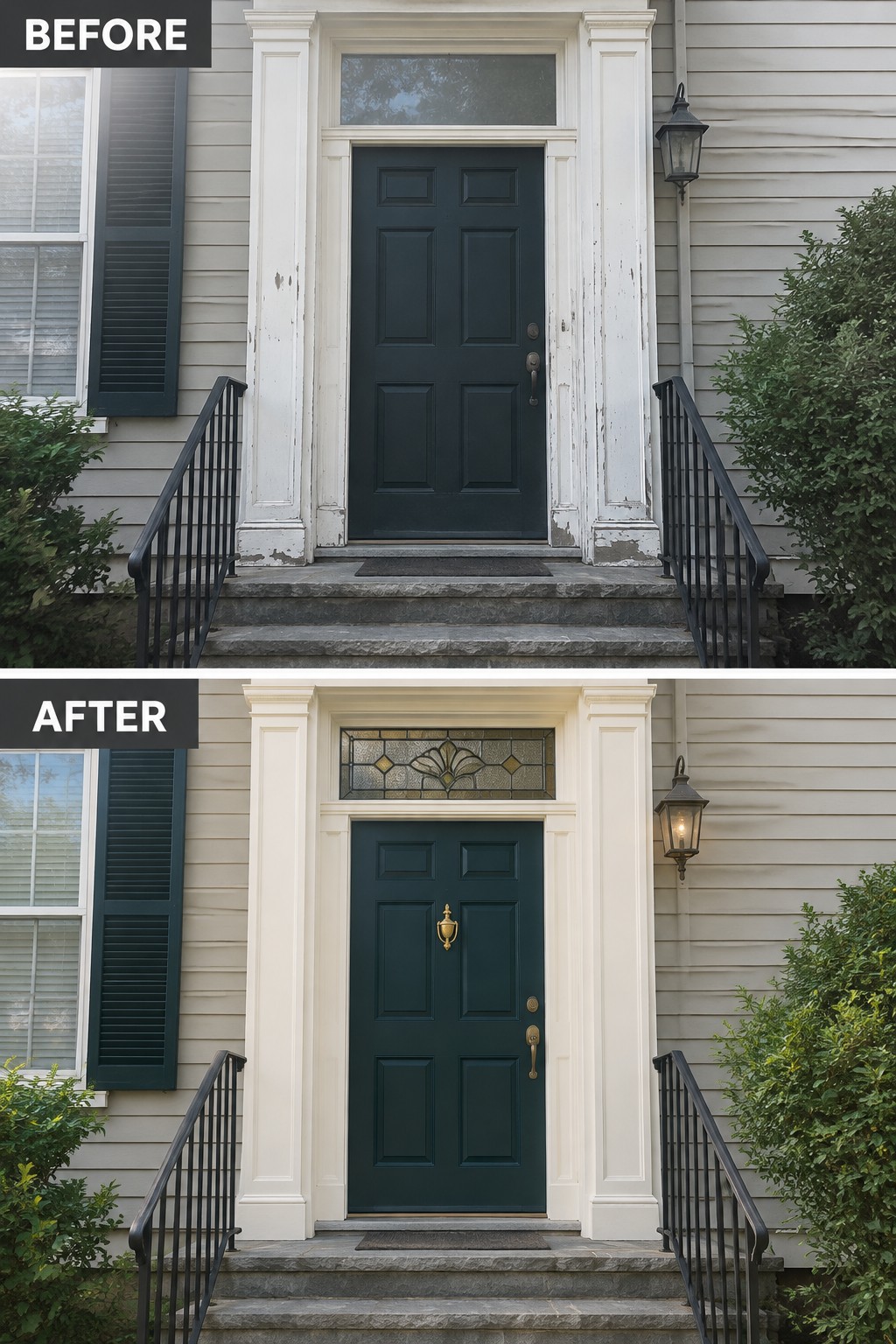
Many older homes lose curb appeal when the trim around the front door starts peeling and the hardware looks dated. In this case, a simple repaint of the columns, casing, and surrounding wood brought back clean lines and made the dark door stand out instead of blending into a worn background. Swapping the old knob and lock for brass pieces gave the entry a more finished, period-appropriate look without changing the door itself.
This approach works well on homes from the early to mid 1900s where the original trim details are still intact. Focus first on scraping, sanding, and priming so the new paint lasts. Keep the color light if you want the entry to feel brighter, and match the hardware finish to any existing porch lights or railings you plan to keep.
Clear Overgrowth Before Adding Structure
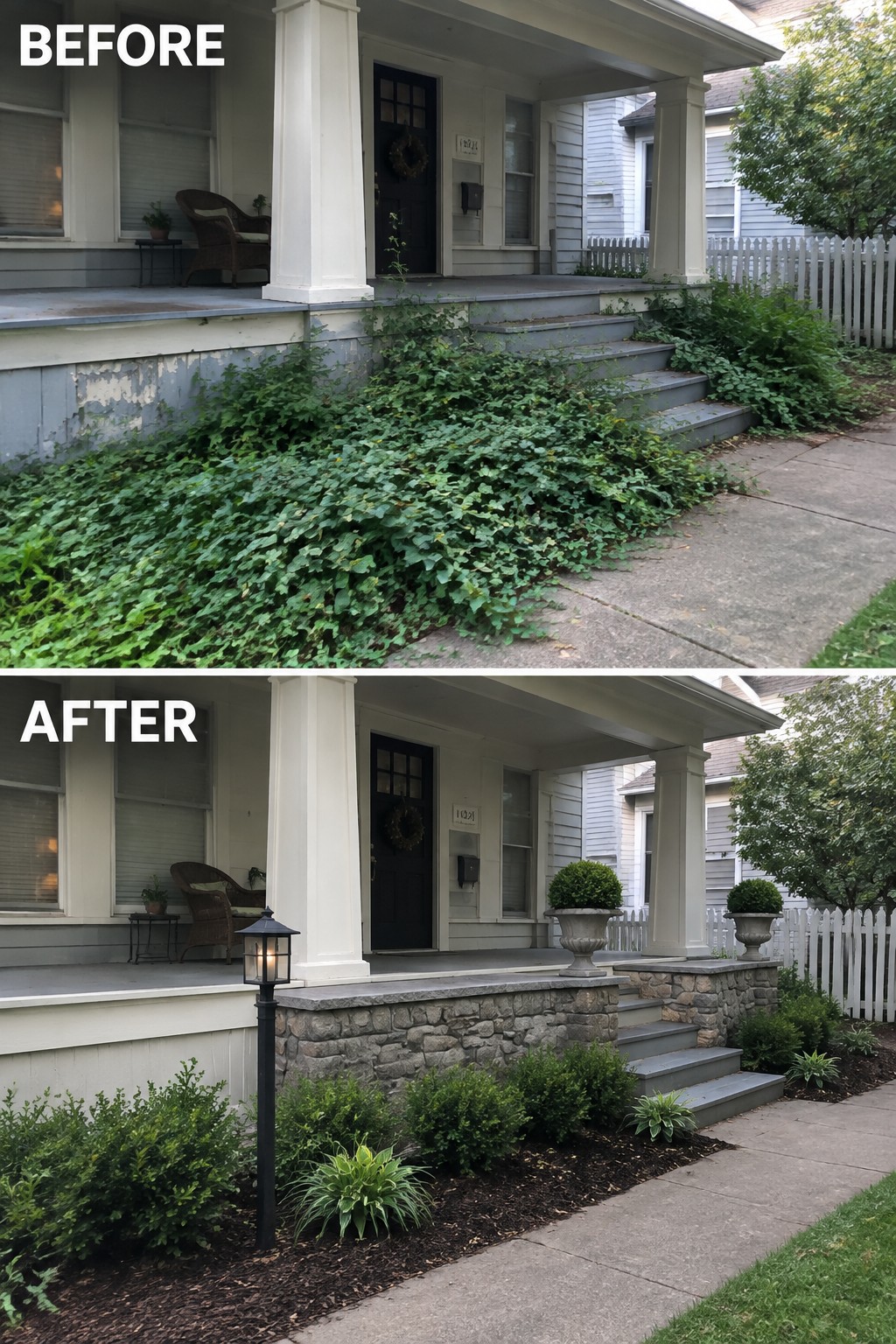
Many older homes end up with front entries that disappear under fast-spreading vines. Clearing that growth first lets you see the actual shape of the porch and steps so you can work with what is already there instead of fighting it.
Once the vines are gone, a simple stone facing along the porch base and a few defined beds filled with mulch and low shrubs give the entry a finished look without covering the original architecture. This works best on period homes where the goal is to keep the house visible rather than bury it in plants.
Update The Front Door On An Older Home
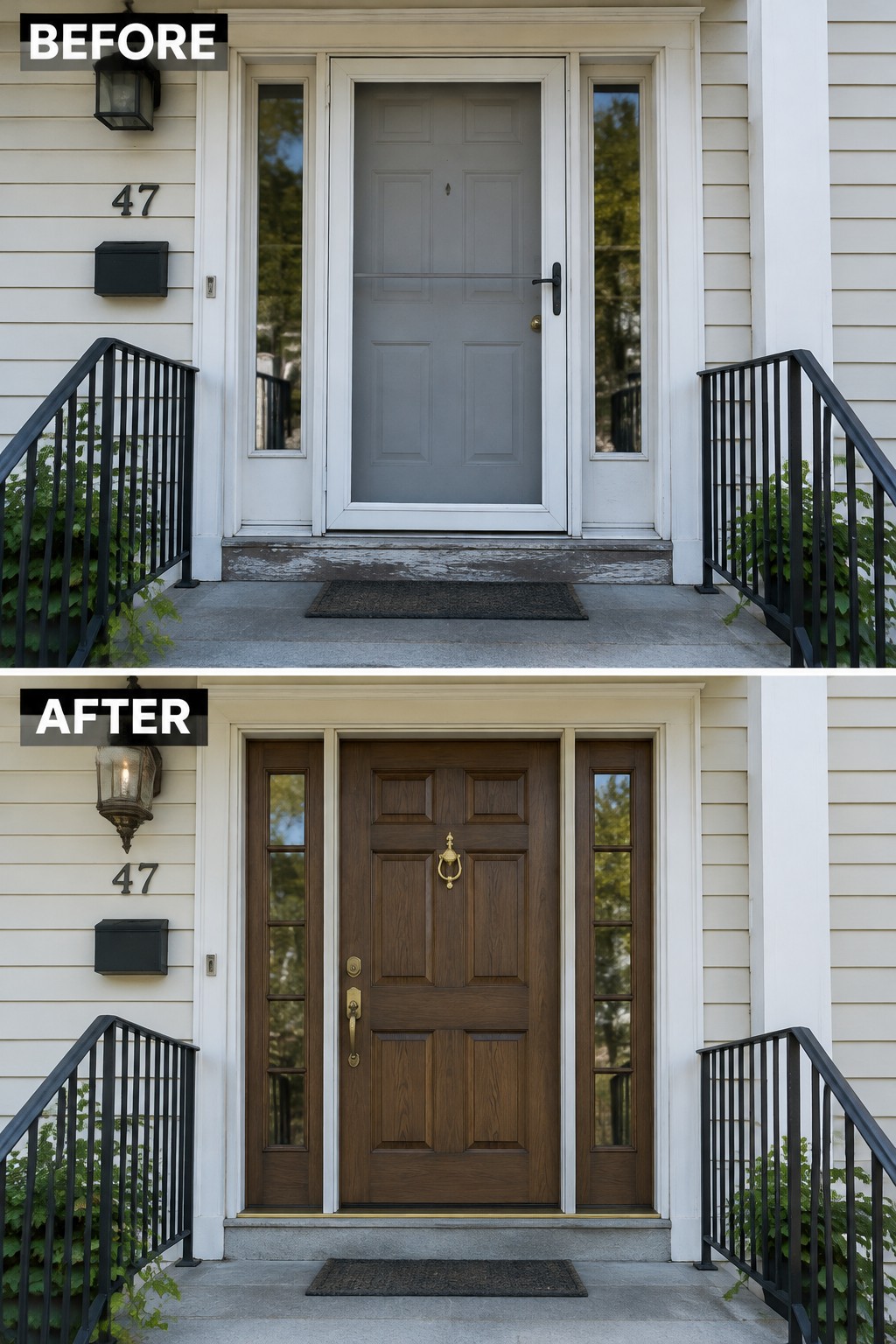
Many older homes still have the original steel or fiberglass doors from past renovations, and those flat panels do little for the overall look. Replacing the door with a solid wood model that has divided glass and proper hardware immediately gives the entry more presence and better proportion to the trim around it.
This approach suits homes where the siding and trim are still in good shape. Focus on matching the door style to the age of the house, and keep surrounding colors neutral so the new door stands out without competing with everything else.
Update The Entry With Paint And Simple Seating
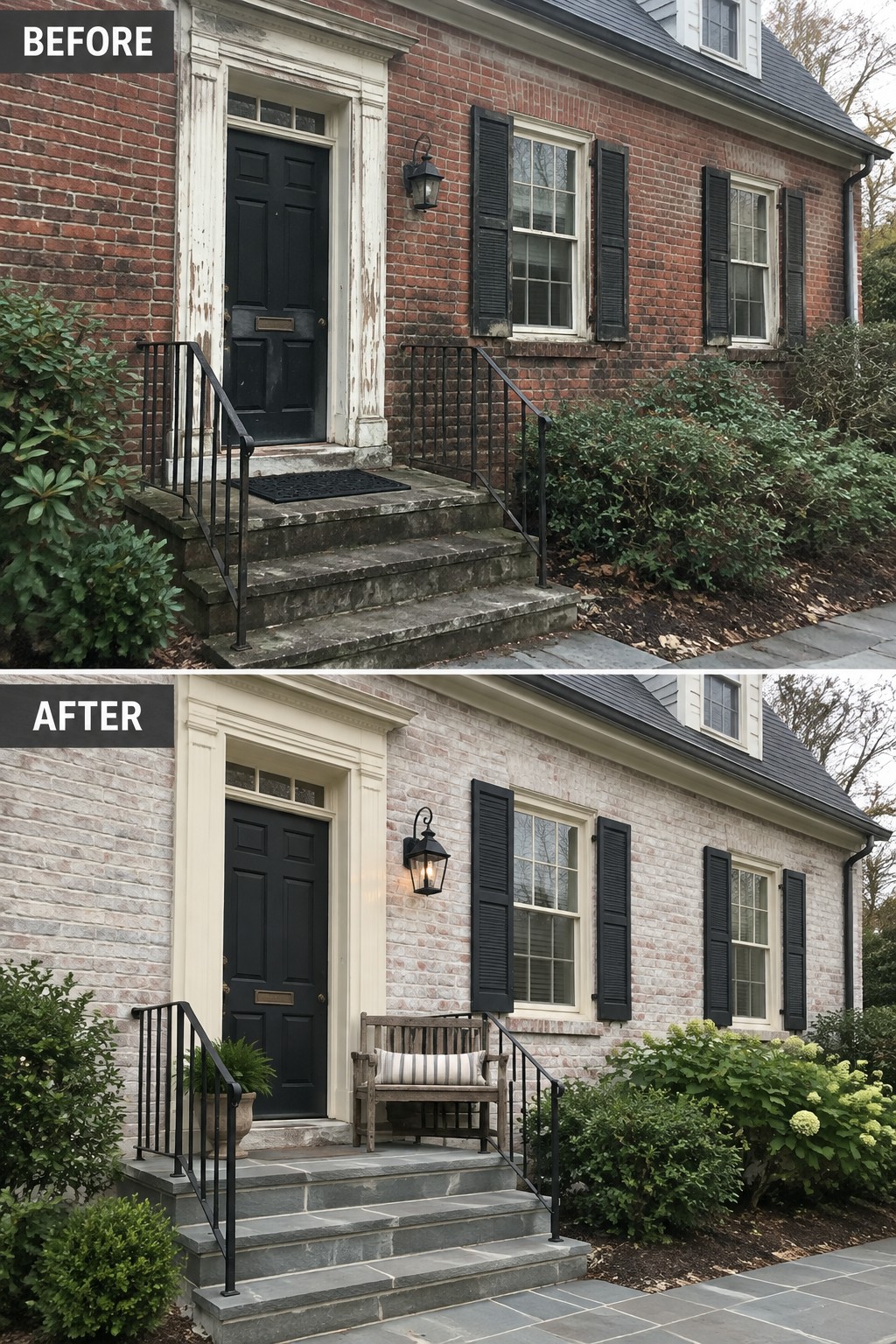
Older brick homes often end up with darkened surfaces and worn trim that make the front feel heavier than it should. Painting the brick a lighter tone and freshening the trim around the door and windows lifts the whole facade and makes the entry feel more open without changing the original architecture.
This approach suits period homes that still have good bones. Clean the brick first, use paint made for masonry, and add one bench near the door so the porch has a clear reason to be used. Keep the bench simple and weatherproof so it does not compete with the steps or railings.
Add Outdoor Lighting To Make The Front Entry Feel Inviting
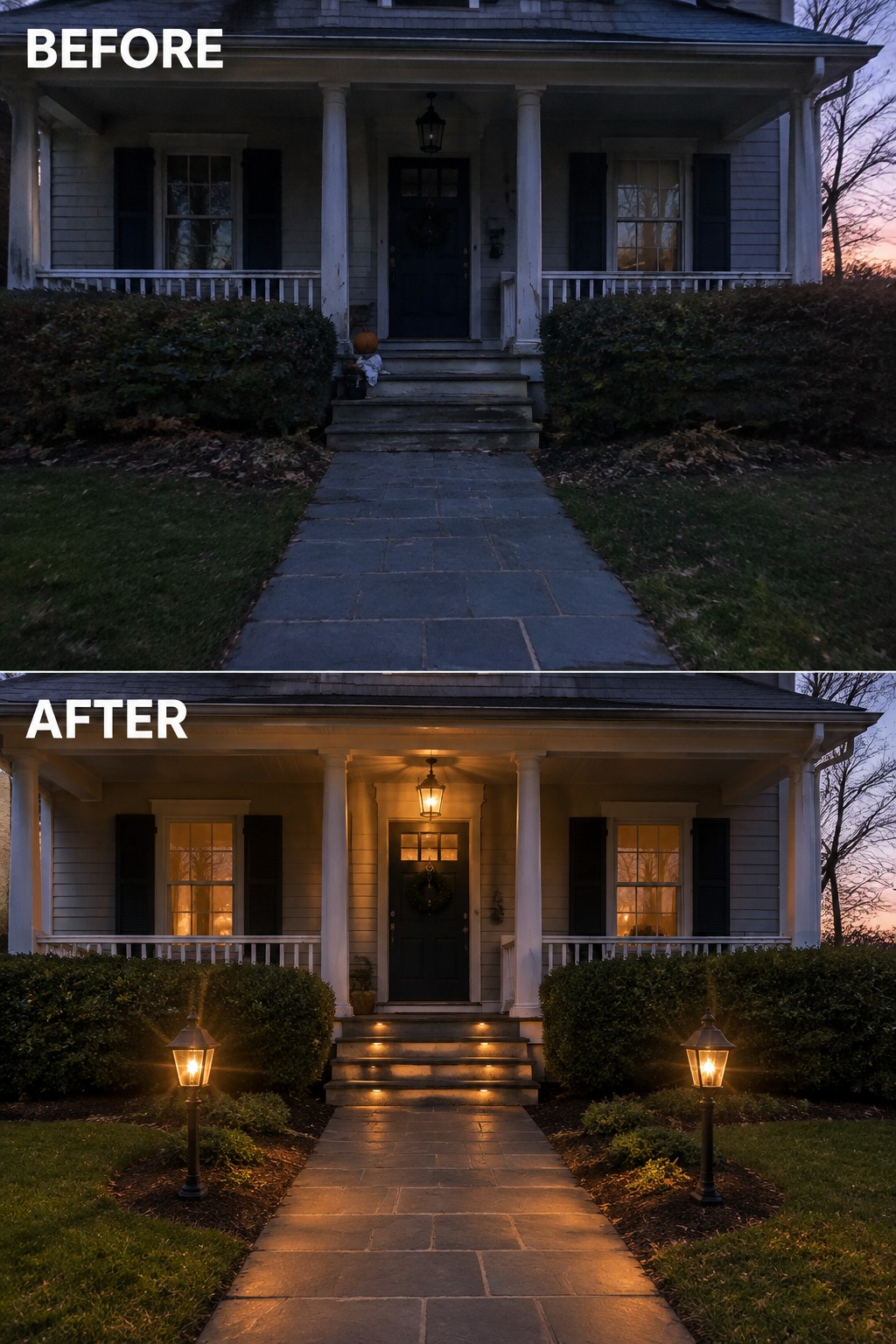
Many older homes look a bit forgotten once the sun goes down. The porch and path sit in shadow, the steps disappear, and the whole front feels closed off. Adding a few well-placed lights changes that quickly. A lantern over the door, small fixtures along the path, and subtle step lights turn the same house into one that feels lived in and easy to approach.
This idea works especially well on homes with period details because the lighting highlights the architecture instead of fighting it. Keep the fixtures simple and in scale with the house. Start with the main path and the top step so people can see where to walk, then add one or two accents near the door. The goal is enough light to feel safe without turning the yard into a spotlight.
Frequently Asked Questions
Q: How do I pick new lighting that fits a 1920s porch without making it look updated? A: Check the shapes already on your house like the brackets or door hardware. Stick to simple glass shades and dark metal finishes that echo those lines. This keeps the whole front feeling pulled together.
Q: My original wood floors have some wear. Should I refinish them or cover them up? A: Refinish what is there if the boards are solid. A light sanding and fresh coat brings back the warmth without hiding the age. Full replacement often stands out too much next to the rest of the house.
Q: Can I add seating that feels comfortable but still suits the period details? A: Go for simple wooden benches or wicker with straight lines. Skip anything too chunky or bright so it blends with the trim and railings.