

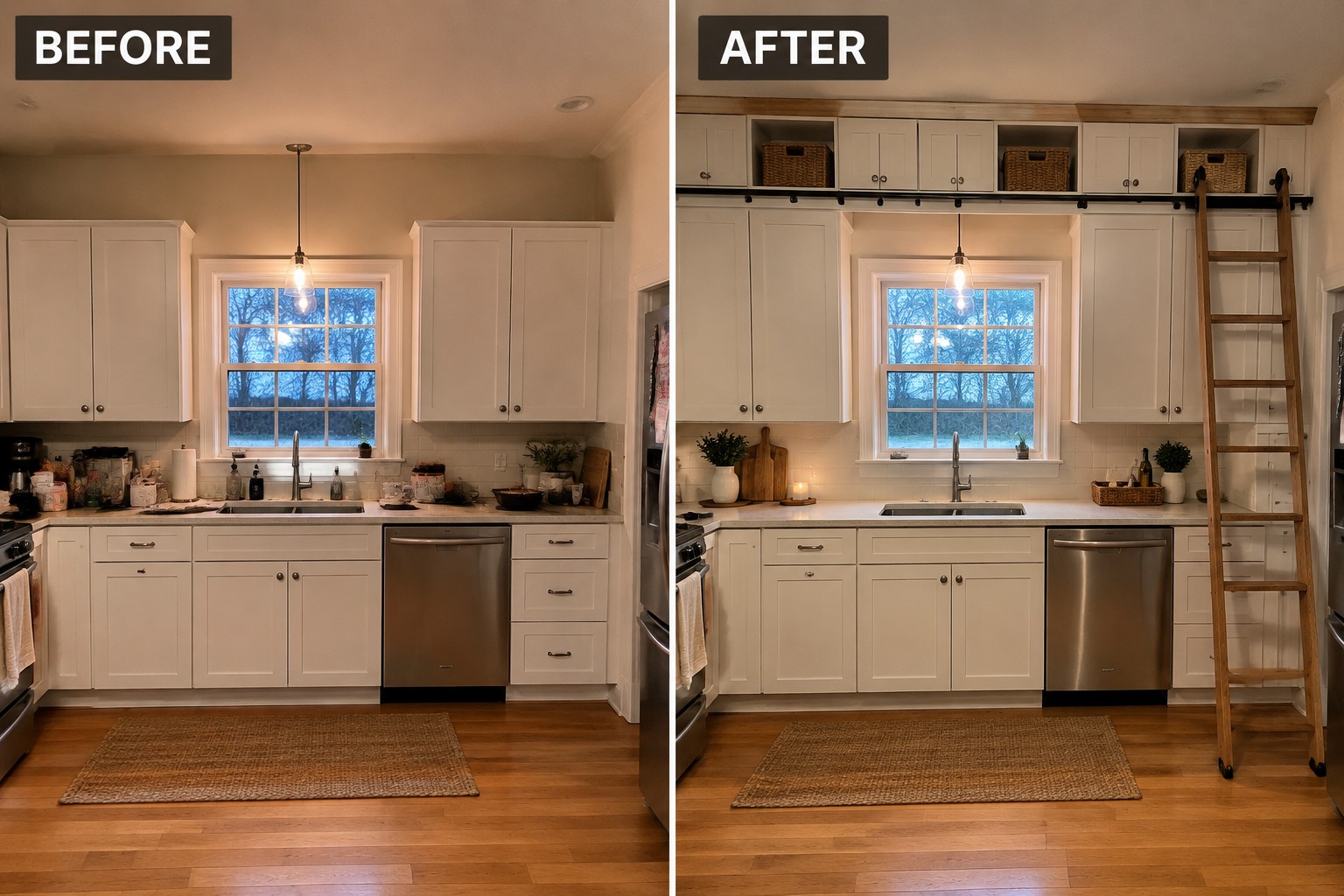
Tall cabinets can hold a surprising amount, yet the space near their tops and sides often goes unused while counters and shelves feel crowded.
I find that a kitchen works better when storage follows the room’s full height, especially in older layouts with awkward gaps and limited cupboard space.
Simple additions like stacked shelves, narrow pullouts, or hanging rails can make everyday tools easier to reach and help the kitchen feel more orderly.
The change can be subtle, but it is satisfying to see a cluttered corner become useful without taking on a full renovation.
Some of these ideas are easy to adapt to the cabinets you already have, while others may be worth testing during a remodel.
Use Vertical Cabinet Space For Extra Storage

The space above the existing cabinets was going unused. Adding a row of upper cabinets with open cubbies makes room for baskets and less-used kitchen items without taking up more counter space.
This idea works well in kitchens with high ceilings and limited storage. Keep everyday items in easy-to-reach cabinets, and use the higher shelves for things you only need now and then. A sturdy library ladder can help, but make sure it parks safely out of the way.
Use A Narrow Pullout For Spice Storage

A slim pullout cabinet turns the awkward gap beside a refrigerator into useful vertical storage. Instead of keeping spice jars across the counter, the after photo shows them arranged on narrow shelves that slide away when not in use.
This idea works well in a small kitchen where every cabinet opening matters. Measure the gap carefully, and choose shelves with enough height for your tallest jars. Keep the most-used spices within easy reach.
Store Plates Upright To Free Cabinet Space

A vertical plate rack turns a crowded cabinet into a more usable storage spot. Instead of stacking dishes in tall piles, the after setup keeps them upright and easier to take out without shifting everything above them.
This works well in a lower cabinet with enough height for the plates to stand securely. Measure the space first, and choose dividers that fit the dishes you use most. It is a simple way to make stored plates easier to reach.
Make Better Use Of Vertical Pantry Space

Replacing crowded shelves with pull-out drawers and clear containers makes a narrow pantry easier to use. The contents stay visible, and items at the back are easier to reach without shifting everything in front.
This approach works well in a tall cabinet or small pantry where floor space is limited. Measure the shelves before choosing drawers, and leave enough room for taller packages so the storage stays practical.
Store Baking Pans Upright In A Cabinet
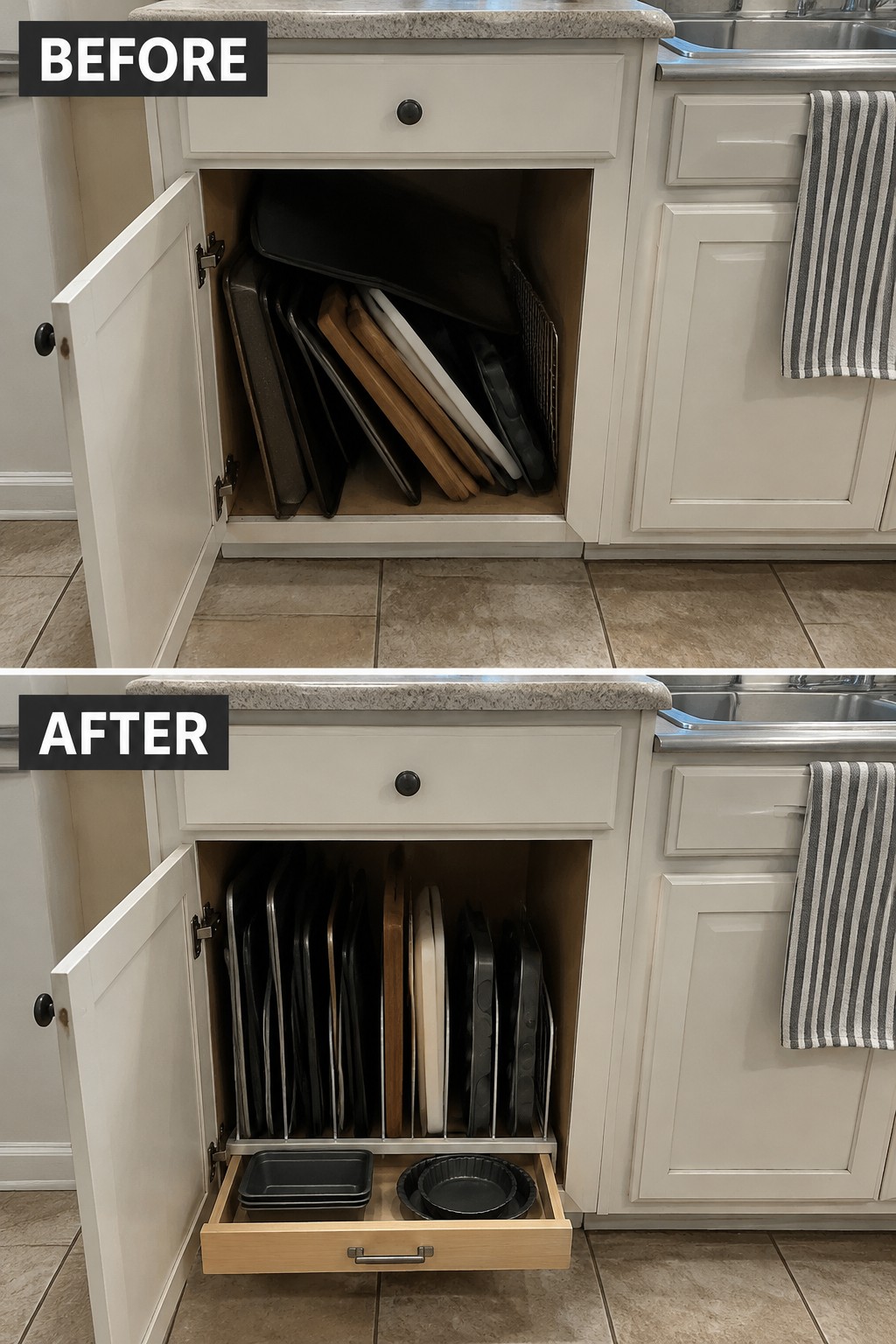
Storing baking sheets and pans upright makes a deep cabinet easier to use. Instead of stacking them in a pile, the after setup keeps them in separate slots, so you can pull out the pan you need without moving the others.
A vertical rack or divider can work in a lower cabinet, especially near the oven. Check that it fits the cabinet’s height and depth, and leave enough room to slide pans in and out easily.
Organize A Pantry Door For Extra Storage
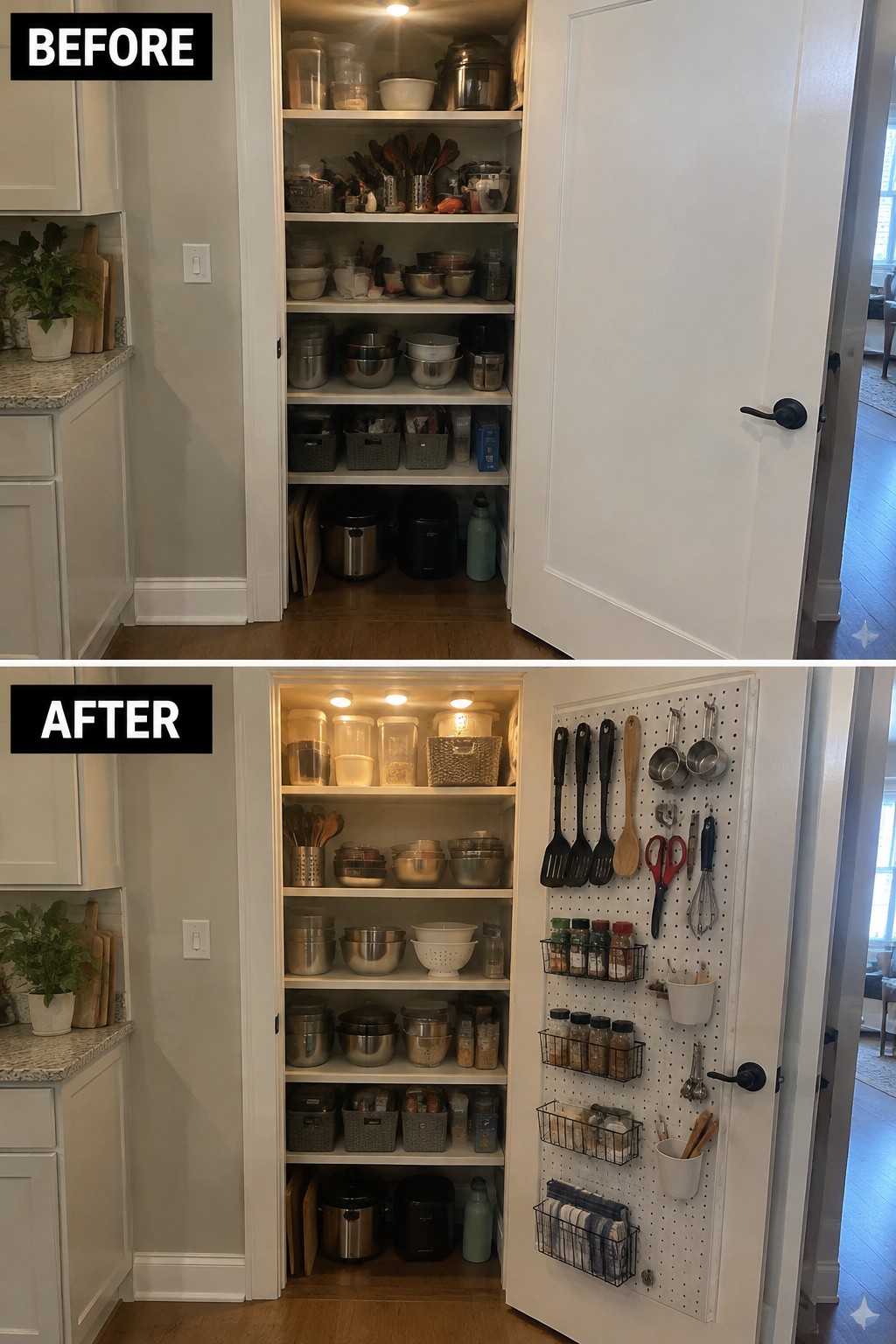
The pantry door can provide useful storage when the shelves are already full. In this makeover, a pegboard on the inside of the door holds cooking tools and small baskets, while the pantry shelves are grouped more neatly.
This works well in a kitchen with a deep pantry and a door that swings clear of nearby counters. Use hooks for tools you reach for often, and keep baskets shallow so the door closes easily and the shelves remain accessible.
Add A Pull-Down Shelf To A Tall Cabinet

A tall cabinet can hold more than dishes on the top shelf and a step stool below. In this makeover, a pull-down shelf brings everyday bowls and glasses within easy reach, while leaving the upper shelf available for items used less often.
This works well in kitchens with high cabinets and limited counter space. Store heavier dishes on a sturdy shelf, keep the mechanism’s weight limit in mind, and leave the lower cabinet area clear so the shelf can move freely.
Add A Corner Carousel For Pots And Pans
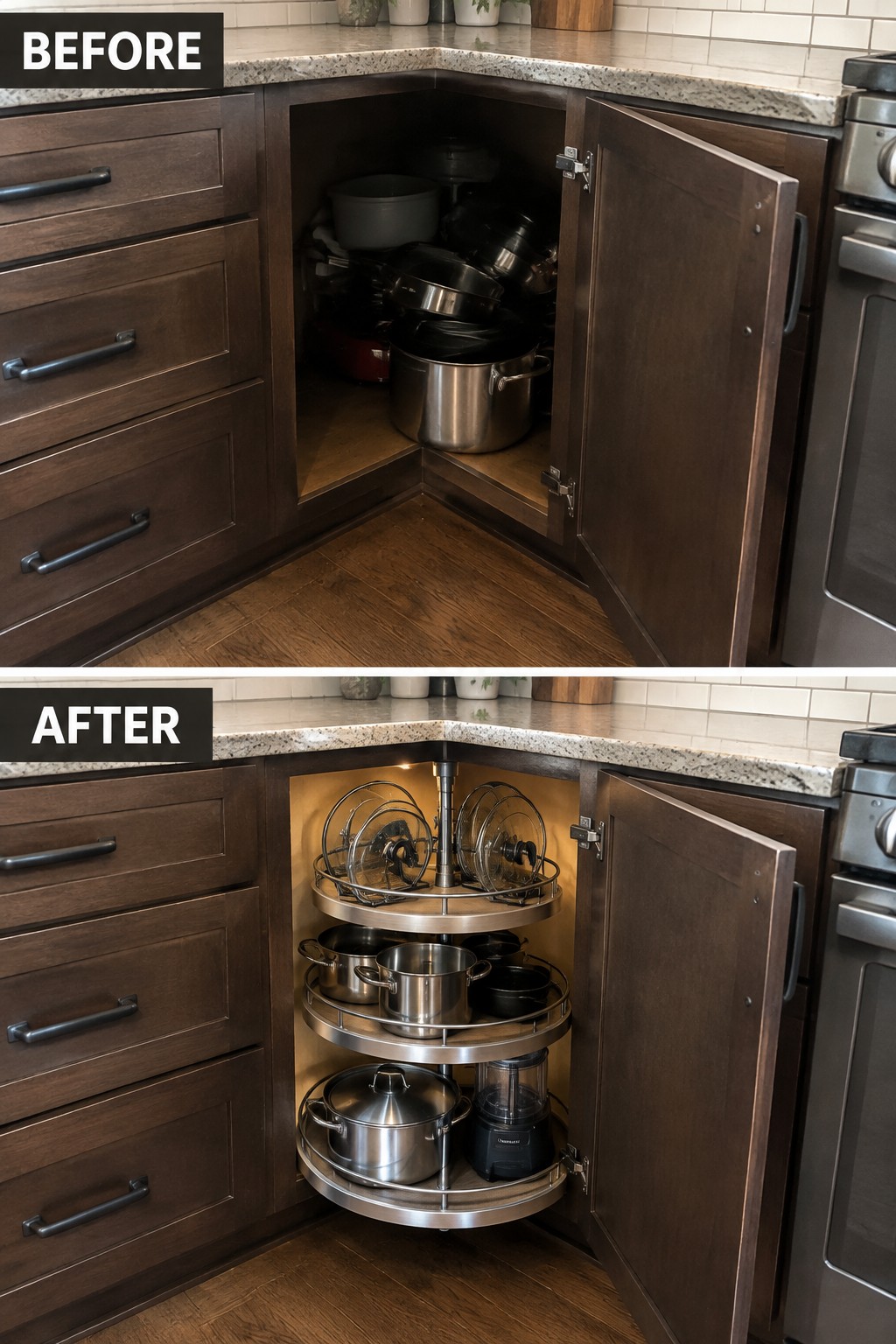
A corner cabinet can hold a lot, but stacked cookware is hard to reach and easy to leave in a jumble. A rotating tiered organizer brings the pots and lids forward, so the cabinet’s height is easier to use and items are simpler to put away.
This works well in deep corner cabinets where fixed shelves waste space. Choose a unit that fits the cabinet opening and leave enough room for cookware handles to turn without catching.
Mount Kitchen Tools On The Wall
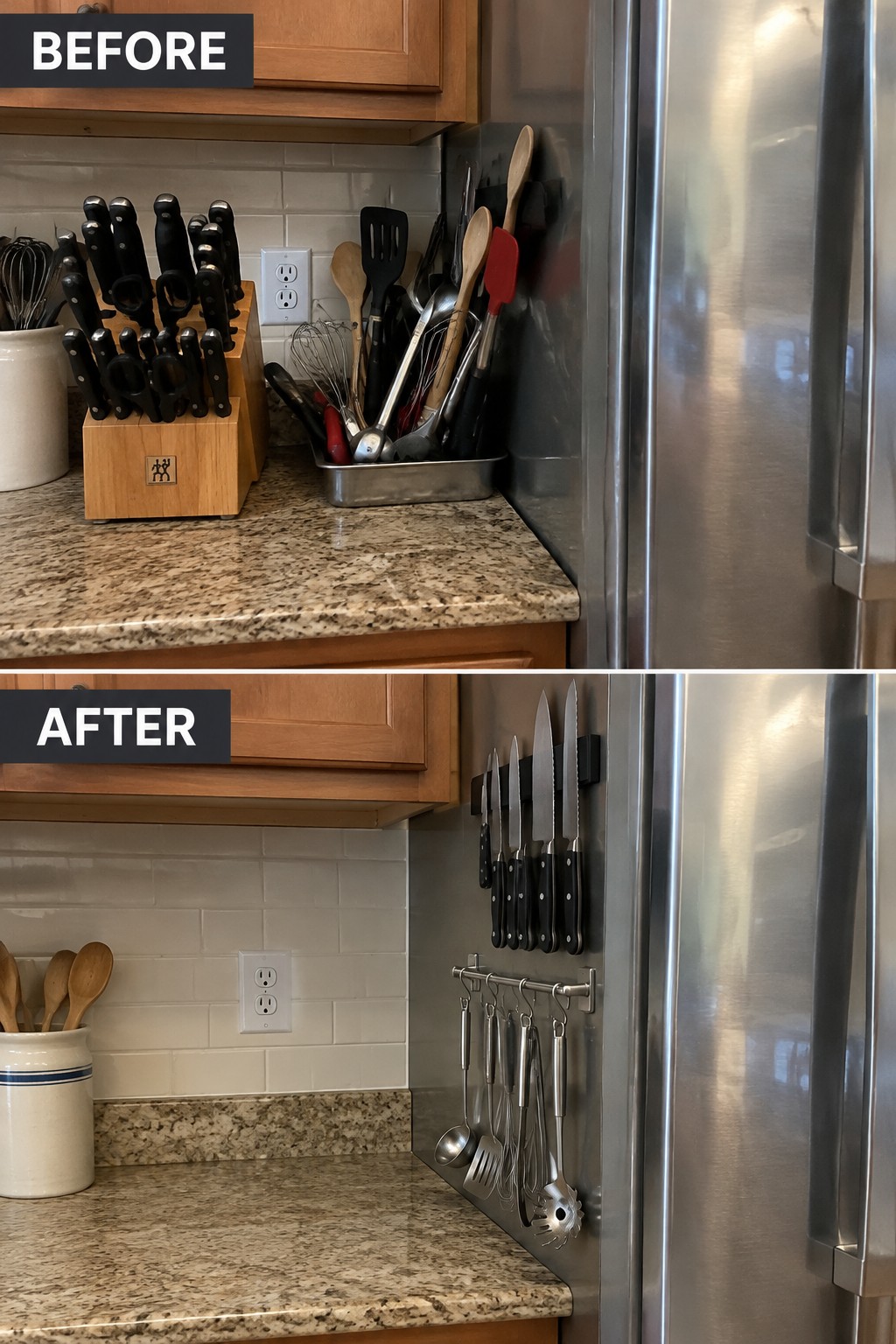
Moving knives and cooking utensils off the counter makes a crowded prep area much easier to use. In the updated kitchen, a wall-mounted knife strip and hanging rail keep the tools close by without taking up valuable worktop space.
This works well beside a stove or prep counter, especially in a small kitchen with limited drawers. Check that the wall is clear of doors and other traffic, and hang sharp knives high enough to stay safely out of reach of children.
Turn A Narrow Gap Into Vertical Storage

The cleaning tools beside this cabinet were taking up floor space and making the kitchen corner feel cluttered. A tall, slim cabinet turns that unused gap into enclosed storage, so long-handled items can stand upright and stay out of the way.
This works well beside a refrigerator or at the end of a cabinet run, as long as the door can open without blocking nearby walkways. Measure the gap carefully and choose shelves or hooks that fit the items you plan to store.
Add Pull-Out Drawers Beneath Your Cabinets

The cabinets hold plenty, but items stacked inside can be hard to reach. Adding shallow pull-out drawers beneath the doors makes use of that low, often overlooked space and keeps baking sheets and cutting boards easier to sort.
This idea works best where there is enough clearance for drawers to open without blocking a walkway or appliance. Measure carefully, and keep the stored items within easy reach so the extra storage stays useful.
Store Small Appliances In A Vertical Cabinet
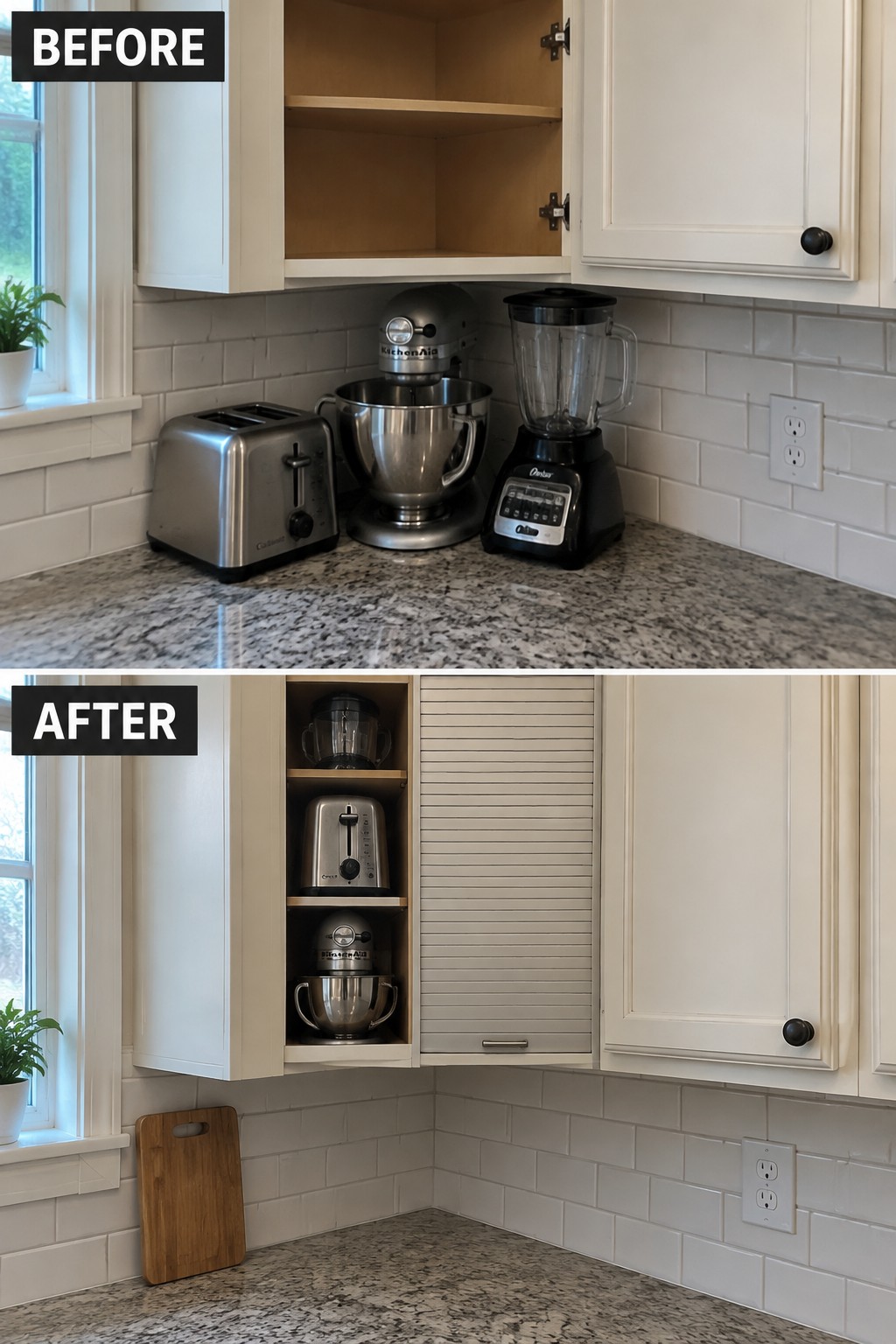
Moving the toaster, blender, and stand mixer off the counter makes a small kitchen work better. In this makeover, the appliances fit into separate shelves in a tall cabinet, leaving the counter clear for everyday prep.
This setup works well when you have a narrow stretch of cabinet space and appliances you use often. Measure each one before setting shelf heights, and leave enough room to lift it out without a struggle.
Turn A Cabinet End Panel Into Wine Storage

A deep cabinet end panel can hold more than a plain finished side. Here, open shelves make room for wine bottles, using space that was otherwise closed off while keeping the counter clear.
This works well at the end of an island or cabinet run, especially where a full cabinet would make the kitchen feel crowded. Check that the shelves are deep enough to support bottles securely, and keep the opening easy to reach.
Add A Roll-Out Cabinet For Pantry Storage
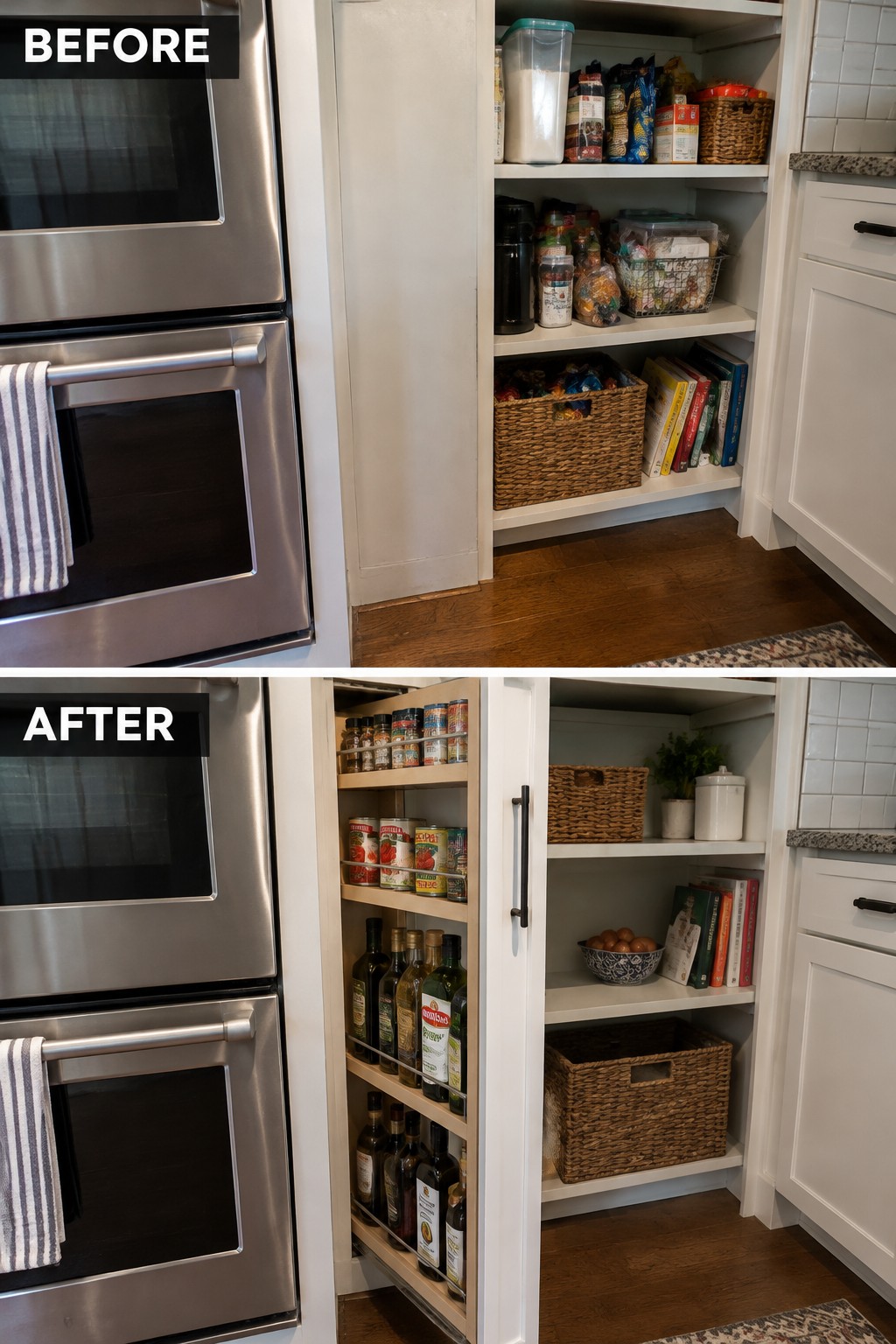
A narrow cabinet beside the oven can put pantry goods in easy reach without taking up much floor space. In the after image, shelves for jars, cans, and bottles slide out from the slim cabinet, making better use of the vertical space than the crowded open shelves did before.
This kind of pull-out works well in a small kitchen or in the gap beside an appliance. Measure carefully so the shelves clear the door frame, and keep heavier bottles on the lower levels.
Store Pot Lids On The Cabinet Door

A door-mounted rack gives pot lids a proper place instead of leaving them piled in the cabinet or on the floor. In this makeover, the lids sit upright in separate slots, while the pots stay on the shelves.
This works well in a cabinet with enough clear door space and lids that fit the rack. Check that the rack won’t interfere with the hinges or shelves, and leave room for the door to close easily.
Give Devices A Dedicated Cabinet

A charging counter can quickly turn into a knot of cords and scattered devices. Moving the phones and tablets into a cabinet clears the worktop, while separate shelves keep them upright and easy to find.
Use an existing tall cabinet or add a simple divided insert, making sure shelves leave room for plugs and cords. Keep the most-used devices at a comfortable height so everyone can put them away without crowding the counter.
Hide Sorting Bins In A Narrow Cabinet

The open space beneath the counter held several separate bins, leaving them in plain view and taking up floor space. A slim pull-out cabinet keeps the waste and recycling bins together but tucked away when they are not in use.
This works well in a kitchen with a narrow gap between cabinets. Measure the bins and opening carefully before adding a pull-out, and leave enough room for the door and bins to slide out easily.
Store Mugs On The Cabinet Door

A crowded mug shelf can be hard to use, especially when cups are stacked in front of one another. Moving the mugs to hooks on the inside of the cabinet door frees shelf space for glasses and dishes, while keeping the cups easy to reach.
Choose sturdy hooks or a mounted mug rack, and check that the cabinet door still closes without the handles hitting the shelves. This works well in a small kitchen where everyday cups take up more room than they need to.
Turn A Tall Cabinet Into A Glass-Front Display
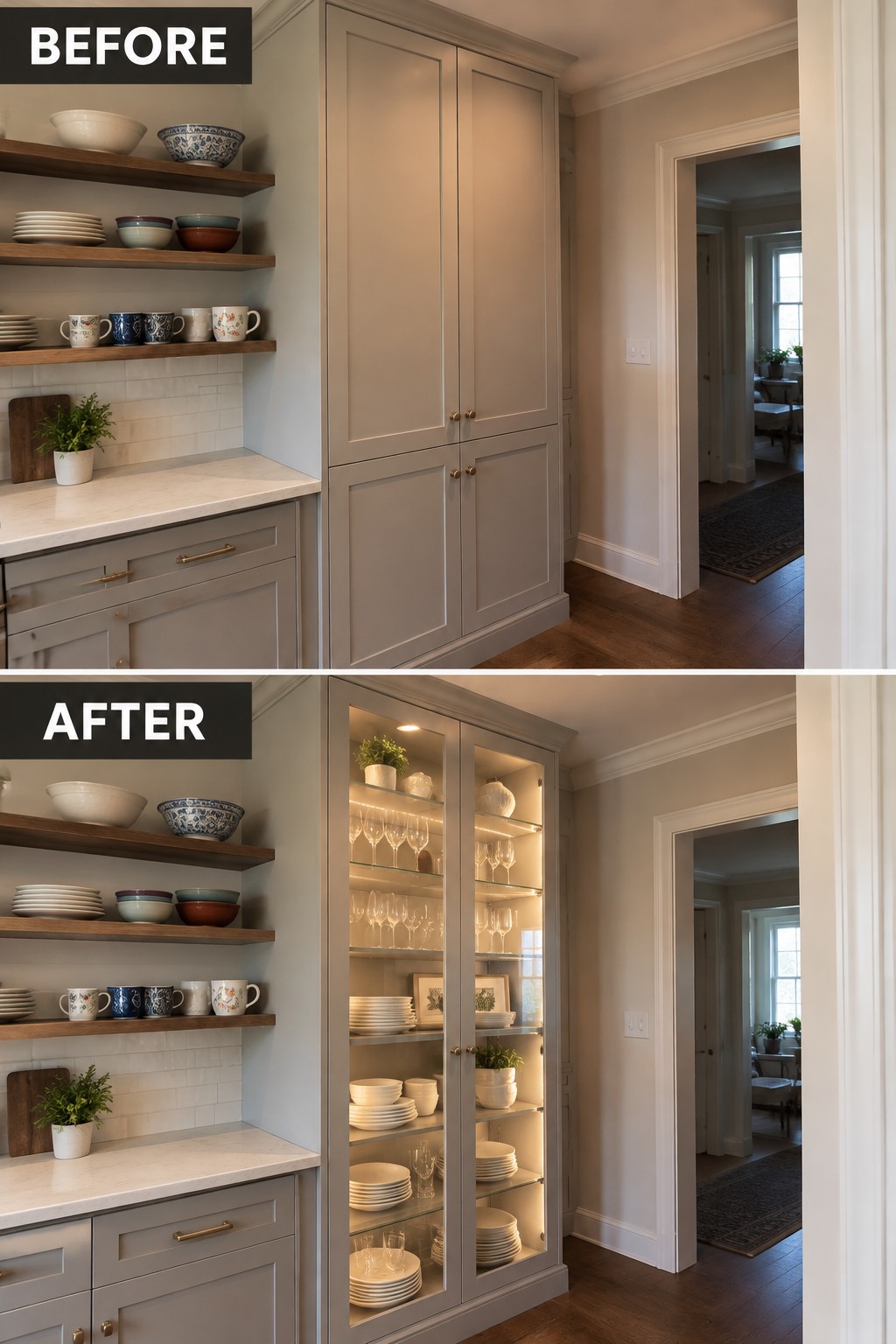
Replacing solid cabinet doors with glass fronts makes a tall cabinet useful for both storage and display. In the updated kitchen, shelves hold dishes and glassware while interior lighting makes the contents easy to see, instead of hiding everything behind closed doors.
This works well when you have a full-height cabinet and want everyday tableware within reach. Use sturdy shelves and keep the items you use most at a comfortable height; glass doors also mean the shelves need to stay reasonably tidy.
Store Baking Sheets Upright On The Pantry Door
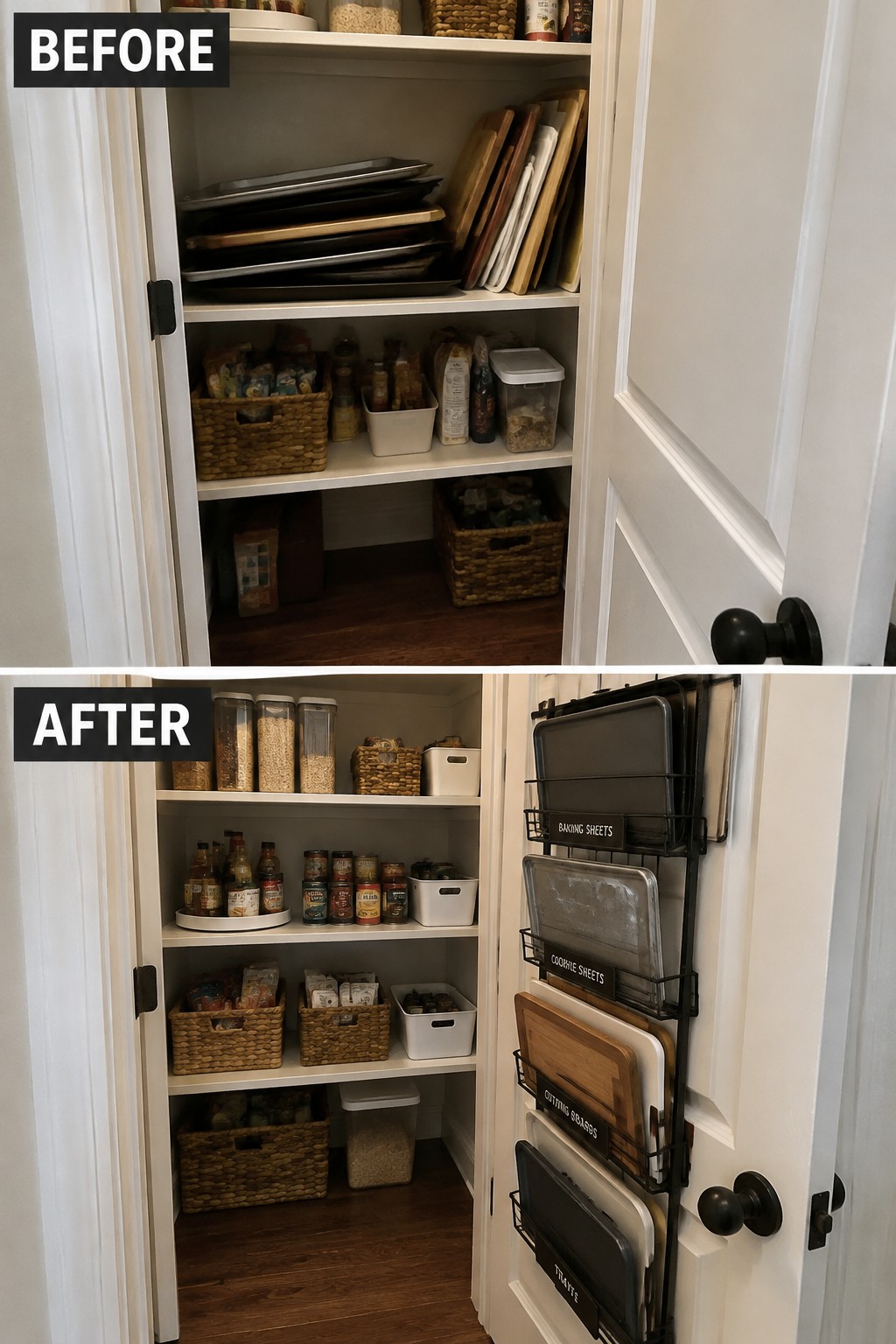
The baking sheets were taking up a whole shelf, but mounting racks on the pantry door puts them in a slim vertical space instead. The sheets are easier to reach, and the shelf can be used for pantry items instead.
This works well when a pantry door has enough clearance to close without bumping the racks. Use sturdy holders sized for your pans, and keep heavier boards or trays in the lower slots.
Add Open Shelving Above Tall Cabinets
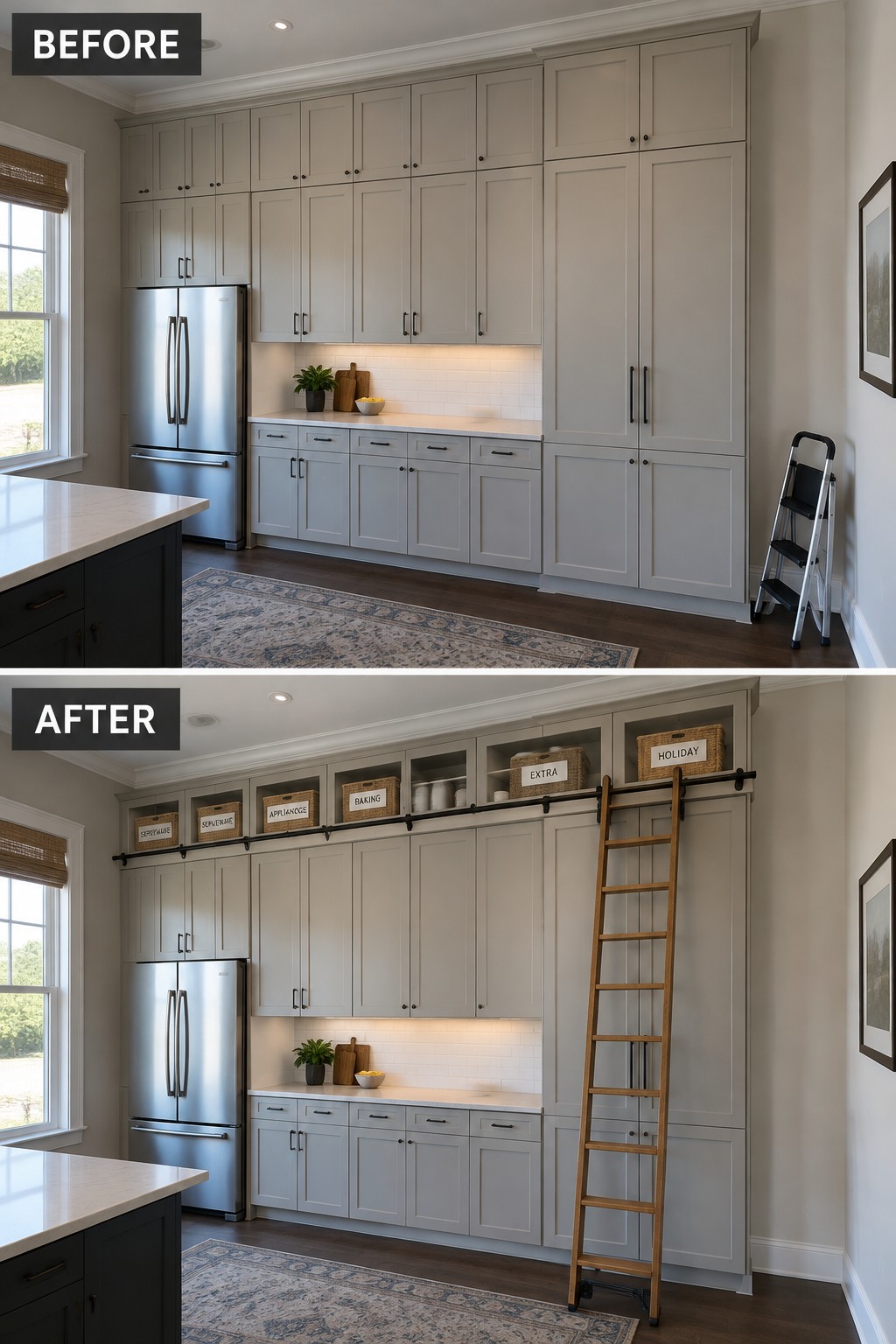
The space above tall cabinets can hold useful items instead of sitting unused. Here, open cubbies and a rail create a place for labeled baskets, while a rolling ladder makes the upper storage easier to reach.
This works well in kitchens with high ceilings and cabinets that stop short of the ceiling. Store seasonal or seldom-used supplies up top, and keep everyday items within easy reach. Make sure the shelves are sturdy and the ladder has a secure track.
Frequently Asked Questions
Q: How do I use the space above my cabinets without making the kitchen look cluttered?
A: Keep the display simple, with a few baskets or larger pieces instead of lots of small items. Matching containers can also make useful overflow storage look tidy.
Q: Are vertical dividers worth adding inside a cabinet?
A: Yes, especially for cutting boards, baking sheets, and serving trays. They keep flat items upright, so you can pull out what you need without shifting a stack.
Q: What can I store in a narrow pull-out beside the fridge?
A: Use it for items you reach for often, such as spices, oils, or snack packets. Check the shelf depth before buying containers so they slide in and out easily.
Q: Can I add shelves inside tall cabinets without remodeling?
A: Often, yes. Adjustable shelf pins or stackable shelf inserts can make better use of the height you already have, as long as the cabinet can support the added weight.