


A farmhouse kitchen can feel dated or awkward when the sink area is cramped, the counters lack workspace, or the finishes do not work well together.
I like how an apron-front sink can give this hardworking spot a clear focal point while making everyday washing and prep feel more comfortable.
The best remodels balance that classic sink with practical storage, durable surfaces, and a layout that suits the way the household actually cooks.
Even a few thoughtful changes can make a plain kitchen feel more useful and pulled together.
I’d save the details that fit your space and adapt them to make your own kitchen work better.
Make An Apron-Front Sink The Kitchen Focal Point

Replacing an older, crowded kitchen setup with an apron-front sink gives the work area a clear focal point. Here, the sink sits beneath the window, while open shelves and wood countertops keep the remodeled kitchen practical and easy to use.
This idea works especially well in a narrow kitchen, where a sink centered on the back wall can make the layout feel more deliberate. Choose a sink size that fits the existing cabinets, and leave enough counter space on both sides for everyday tasks.
Make The Sink The Center Of A Farmhouse Kitchen

Replacing dated cabinets and counters with a clean, simple layout gives an apron-front sink room to stand out. Here, the deep white sink becomes the main feature, while the pale cabinetry keeps the kitchen feeling open.
If you’re planning a similar update, choose the sink early so the cabinet and counter dimensions suit it. A farmhouse sink works well in a kitchen where it can be used every day, but leave enough clear counter space on either side for food prep.
Replace A Tired Sink With An Apron-Front Style

Swapping an old, shallow sink for a deep apron-front sink gives the kitchen a clearer focal point and makes room for larger pots and pans. Here, the white sink replaces a worn stainless-steel one, changing the look of the whole work area.
This style works well when the sink sits in a prominent spot, especially beneath a window. Check that the cabinets and countertop can accommodate the sink’s size and installation before choosing one.
Update The Sink Area With A Farmhouse Focal Point

Replacing a worn sink cabinet with an apron-front sink gives the kitchen a clear centerpiece and makes the work area feel more considered. Here, the copper basin stands out against simple green cabinetry and open shelving, a more practical and cohesive look than the cracked sink surround.
This idea works well when the sink is already the busiest part of the kitchen. Choose a basin that fits the existing cabinet run, and keep nearby finishes simple so it doesn’t feel crowded.
Make A Small Kitchen Feel Brighter And More Open

Replacing dark cabinets and a cramped sink area with white cabinetry and an apron-front sink changes the feel of this narrow kitchen. The lighter finishes help the room seem more open, while the farmhouse sink gives the work area a clear focal point.
This approach works well in older kitchens where a full layout change is not practical. Keep the counters clear and choose finishes that suit the room’s size, so the sink remains useful rather than crowded.
Make The Kitchen Island The Main Work Area

The old kitchen had a long stretch of counter but little room to prep or gather. Adding a central island with an apron-front sink gives the room a more useful work area and makes the sink easy to reach while cooking.
In a kitchen with enough floor space, an island can hold the sink and provide extra counter room without crowding the perimeter. Leave clear paths around it so doors and appliances can open comfortably.
Update A Worn Sink Area With An Apron-Front Sink
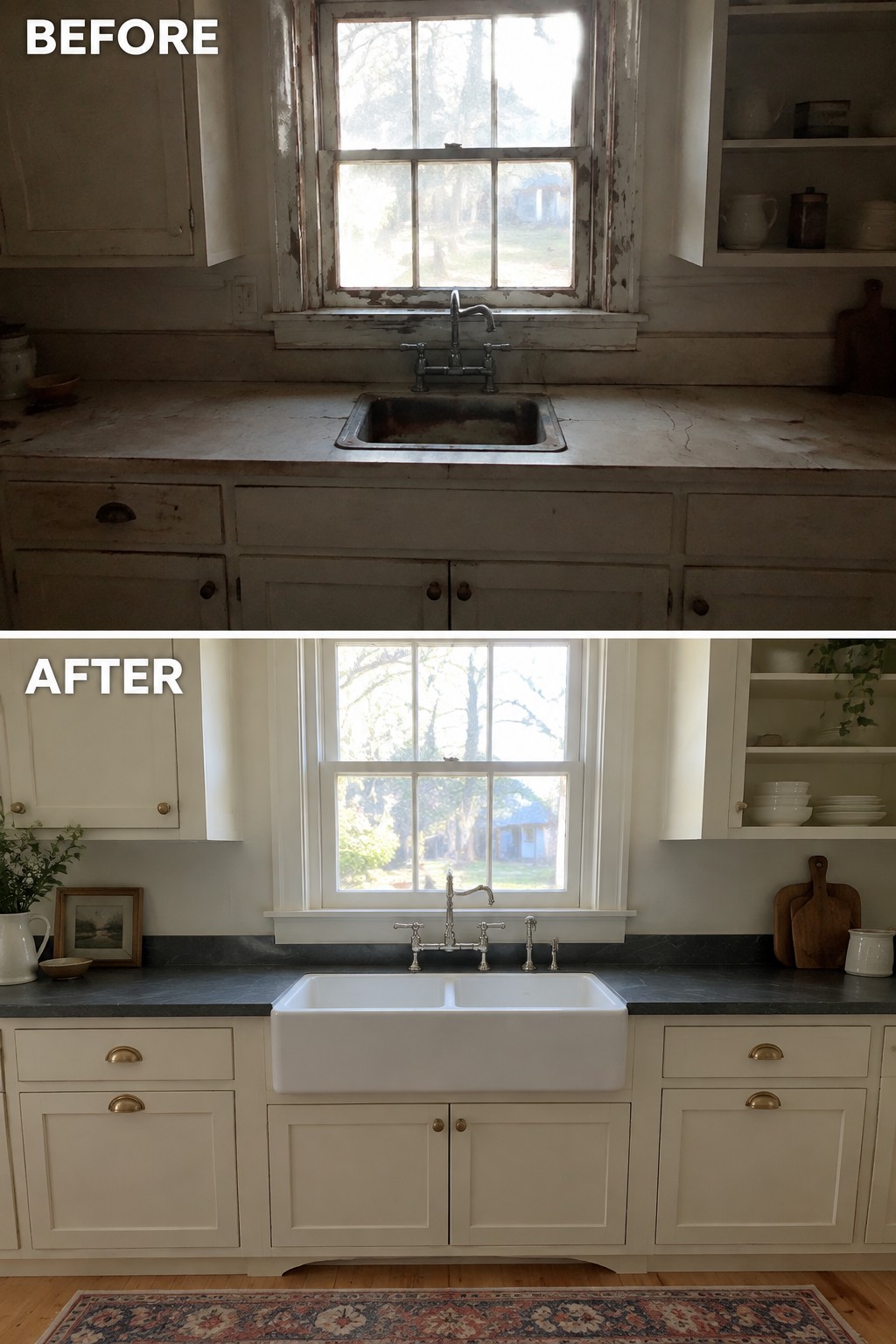
Replacing a tired, inset sink with a large apron-front style gives an older kitchen a clear focal point. Here, the bright white sink and dark countertop make the sink area feel more finished without changing the basic layout.
This idea works well when the cabinets are still useful but the sink has seen better days. Keep the new sink in scale with the counter and cabinet opening, and check the plumbing before choosing a replacement.
Refresh The Cabinets Around An Apron-Front Sink

Replacing plain cabinets with simple, light-colored fronts gives the sink area a clearer farmhouse style. The apron-front sink becomes a natural focal point, while the pale cabinetry helps the kitchen feel brighter and more put together.
This approach works well when the layout is already practical but the finishes feel dated. Keep the cabinet details simple, and choose a sink size that fits the existing counter space so the update feels cohesive rather than crowded.
Use An Apron-Front Sink To Refresh The Kitchen

Replacing a dated sink and counter area can change the feel of an older kitchen without reworking the whole room. Here, the apron-front sink and butcher-block countertop give the sink area a clearer farmhouse look, while the updated backsplash helps it feel more finished.
This idea works well when the cabinets are still usable but the kitchen feels worn. Keep the new counter practical for your household, and measure carefully before choosing a deep apron-front sink so it fits the existing cabinet space.
Open Up A Narrow Kitchen With A Farmhouse Sink

The old galley kitchen felt dated and closed in, while the apron-front sink and open shelves give the remodeled room a more practical, lived-in feel. The sink becomes a useful focal point without changing the narrow layout.
This idea suits a small kitchen where every inch of counter space matters. Keep the shelves for items you use often, and leave enough clear counter space around the sink for everyday prep.
Turn An Empty Kitchen Corner Into A Breakfast Nook

The empty corner beside the sink becomes a useful place to eat once a built-in bench and small round table are added. The bench makes good use of the wall space, while the round table leaves room to move through the kitchen.
This idea works well in a kitchen with an unused corner or a little extra floor space. Keep the table small enough that chairs can slide out without blocking the sink or doorway, and use a bench with storage if you need somewhere to tuck away kitchen items.
Refresh An Older Kitchen With A Farmhouse Sink
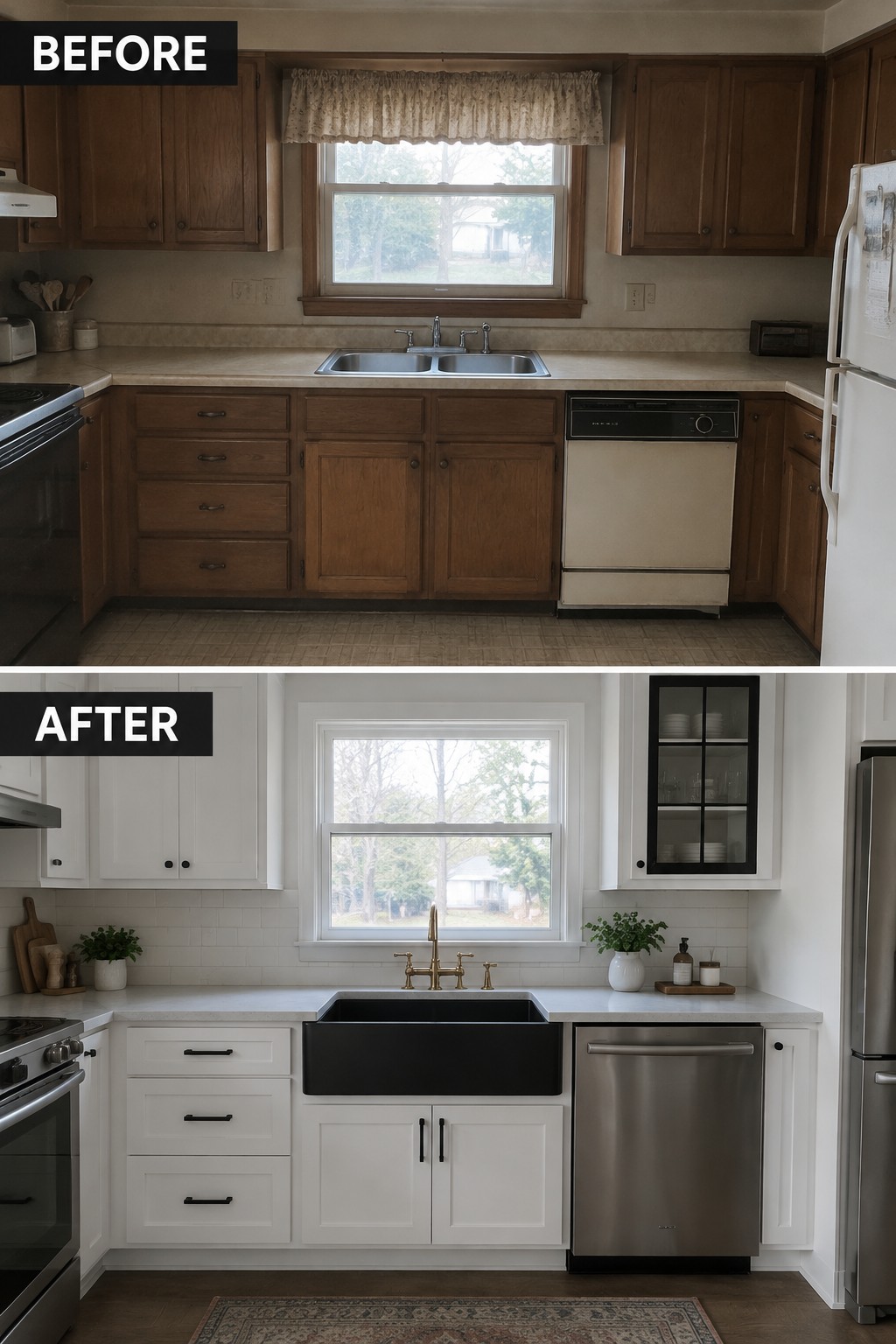
Replacing a dated sink area with a large apron-front sink can give an older kitchen a clearer focal point. Here, the dark sink stands out against the white cabinets and counters, while the lighter finishes make the room feel more open.
This approach works well when you want to update the kitchen without changing its basic layout. Keep the counter space practical on either side of the sink, and check that the cabinets can support the sink’s size and weight before choosing one.
Replace A Dated Sink And Counter With A Farmhouse Focal Point

The old sink and worn counters made this kitchen feel tired. A deep apron-front sink and butcher-block counters give the work area a simpler, more cohesive look while keeping the kitchen’s existing layout.
This idea suits a farmhouse kitchen where the sink is already a natural center of activity. If you’re updating your own space, check that the cabinet opening can accommodate the sink, and choose a counter material that can handle regular use near water.
Replace Cluttered Counters With A Simple Sink Area

The old sink area is crowded with everyday items, while the updated kitchen keeps the counter clear and makes the apron-front sink the main feature. That simple change gives the work area a cleaner, more settled look.
If you’re planning a similar update, clear the counter first and decide what you truly need within reach. A farmhouse sink can suit both older kitchens and newer, simple layouts, but leave enough open counter space nearby for food prep.
Replace A Small Sink With A Useful Apron-Front Basin

The old counter and compact sink made this kitchen work area feel cramped. Replacing them with a deep apron-front sink gives the space a more practical focal point, while the open area below keeps the small kitchen from feeling crowded by bulky cabinetry.
This approach suits a cottage kitchen or a tight work area where a full remodel is not practical. Check the wall and plumbing before choosing a wall-mounted faucet, and leave enough clear counter space beside the basin for everyday tasks.
Refresh The Kitchen With An Apron-Front Sink

The deep apron-front sink gives this older kitchen a clear focal point, while the patterned backsplash and wood counter make the sink area feel more finished. Keeping the sink in its original spot helps update the room without changing the basic layout.
This approach works well in a farmhouse kitchen where the sink is used every day and deserves a little extra attention. Pair the basin with a practical counter surface, and keep nearby accessories to a few useful pieces so the work area stays clear.
Make The Apron-Front Sink Part Of A More Practical Kitchen
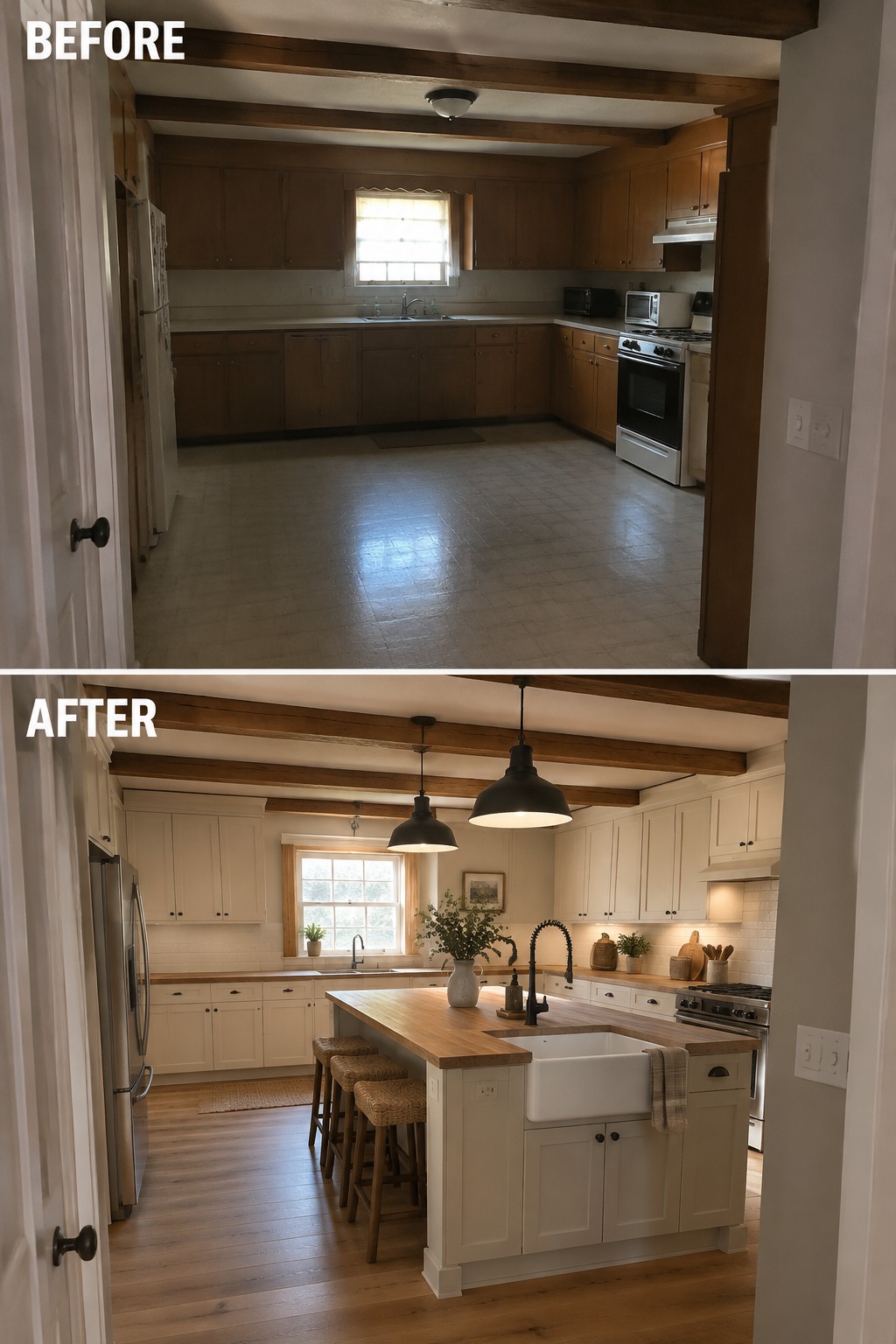
The old kitchen felt dated and closed off, while the remodel makes the sink area part of a brighter, more useful workspace. A large apron-front sink set into the island gives the kitchen a clear place to prep and clean up, with room to work around it.
If you have enough floor space, an island sink can make cooking and cleanup easier without pushing everyone against the wall. Keep the island large enough for comfortable movement, and plan the faucet and plumbing before choosing the countertop.
Refresh A Dark Kitchen With An Apron-Front Sink

Replacing dark cabinets and a small drop-in sink with light cabinetry and a deep apron-front sink changes the whole feel of this kitchen. The larger basin gives the sink area a clear purpose, while the lighter finishes make it feel less closed in.
This idea works well in an older kitchen that feels heavy but has a layout worth keeping. Pair the sink with light, practical counters, and check that the cabinet size and plumbing can accommodate it before choosing a style.
Turn A Storage Closet Into A Farmhouse Kitchen

Replacing a crowded utility closet with a compact kitchen makes the sink area feel purposeful and much easier to use. The apron-front sink becomes the main feature, while the surrounding counter gives you a little room for everyday prep.
This idea can work in a small space, but plan storage before choosing finishes. Keep frequently used items close at hand, and leave enough clear counter space around the sink so the kitchen stays practical.
Update Worn Cabinets Around An Apron-Front Sink

The old cabinets made this kitchen feel tired, even though the sink sat in a useful spot beneath the window. Replacing them with muted green, paneled cabinets and a white apron-front sink gives the room a fresher farmhouse look without changing its basic layout.
This approach works well in older kitchens where the cabinet boxes and plumbing can stay in place. Choose a cabinet color that suits the room’s light, and check that the sink base is built to support the apron-front basin before ordering.
Frequently Asked Questions
Q: Are apron-front sinks practical for everyday cooking?
A: Yes, they’re roomy enough for large pans and make it easier to rinse dishes without bumping into a cabinet edge. The front can get splashed, so wipe it down as part of your usual kitchen cleanup.
Q: Do I need special cabinets for a farmhouse sink?
A: Usually, yes. The sink base needs to fit the sink’s size and support its weight, so choose the sink before ordering or modifying cabinets.
Q: Which countertop works well with an apron-front sink?
A: Most common countertop materials can work, including quartz, granite, and butcher block. Ask your installer how they’ll support the sink and seal the countertop edge, since that area sees plenty of water.
Q: Will a farmhouse sink look right in a small kitchen?
A: It can, especially if you choose a compact sink and keep the surrounding counters simple. Check the sink’s depth, too, so it doesn’t crowd your prep space.