

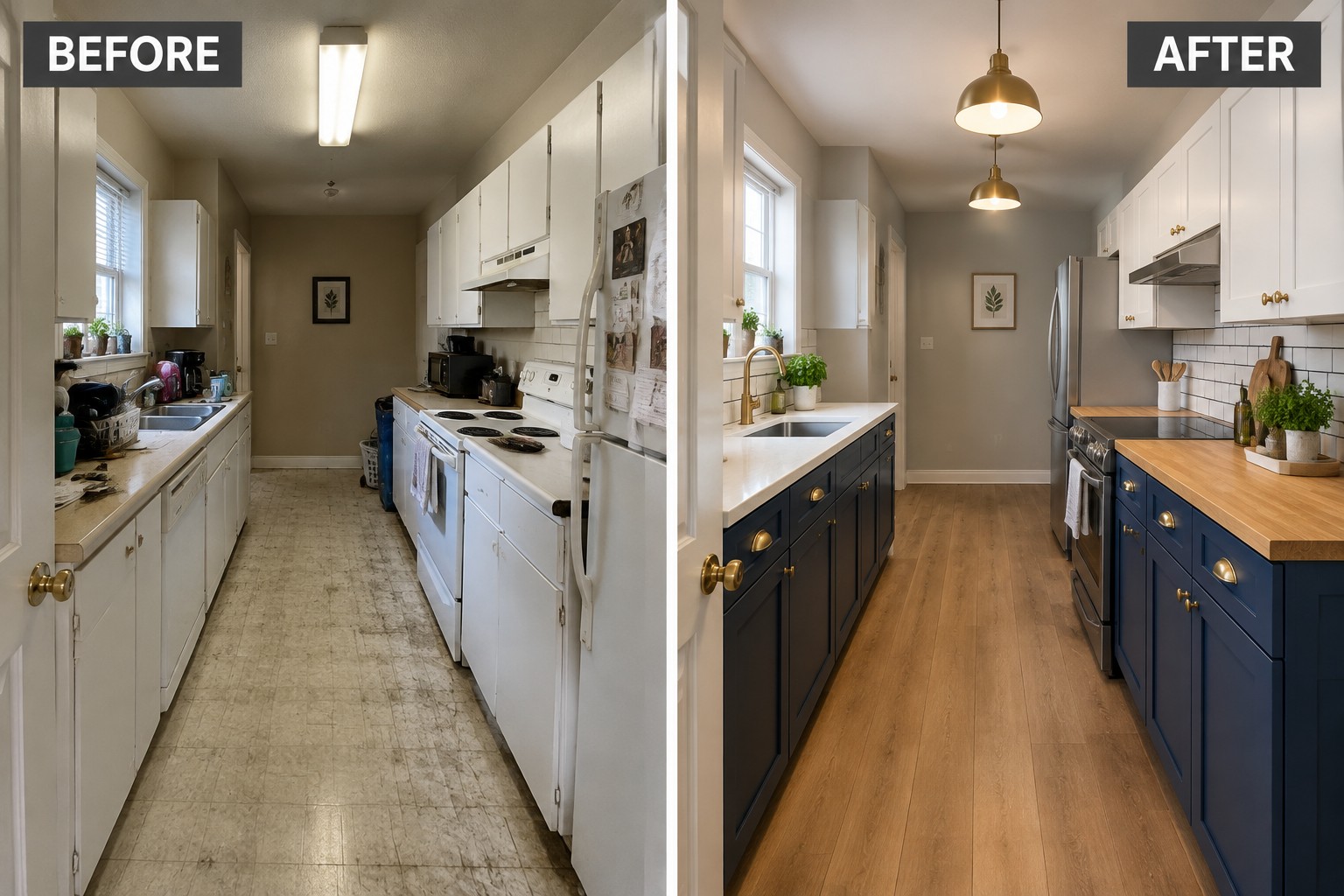
A kitchen can feel flat when the cabinets blend into the walls or the whole room relies on one heavy color.
I like how two-tone cabinetry adds contrast while helping define different parts of the kitchen, from an island to the upper and lower cabinets.
The right pairing can make a dated or awkward layout feel more balanced without changing every surface.
Even a modest shift in color can bring the room together and make everyday cooking feel a little more pleasant.
I’d save the combinations that suit your light and layout, then test a sample at home before committing.
Use Two-Tone Cabinets To Update A Narrow Kitchen
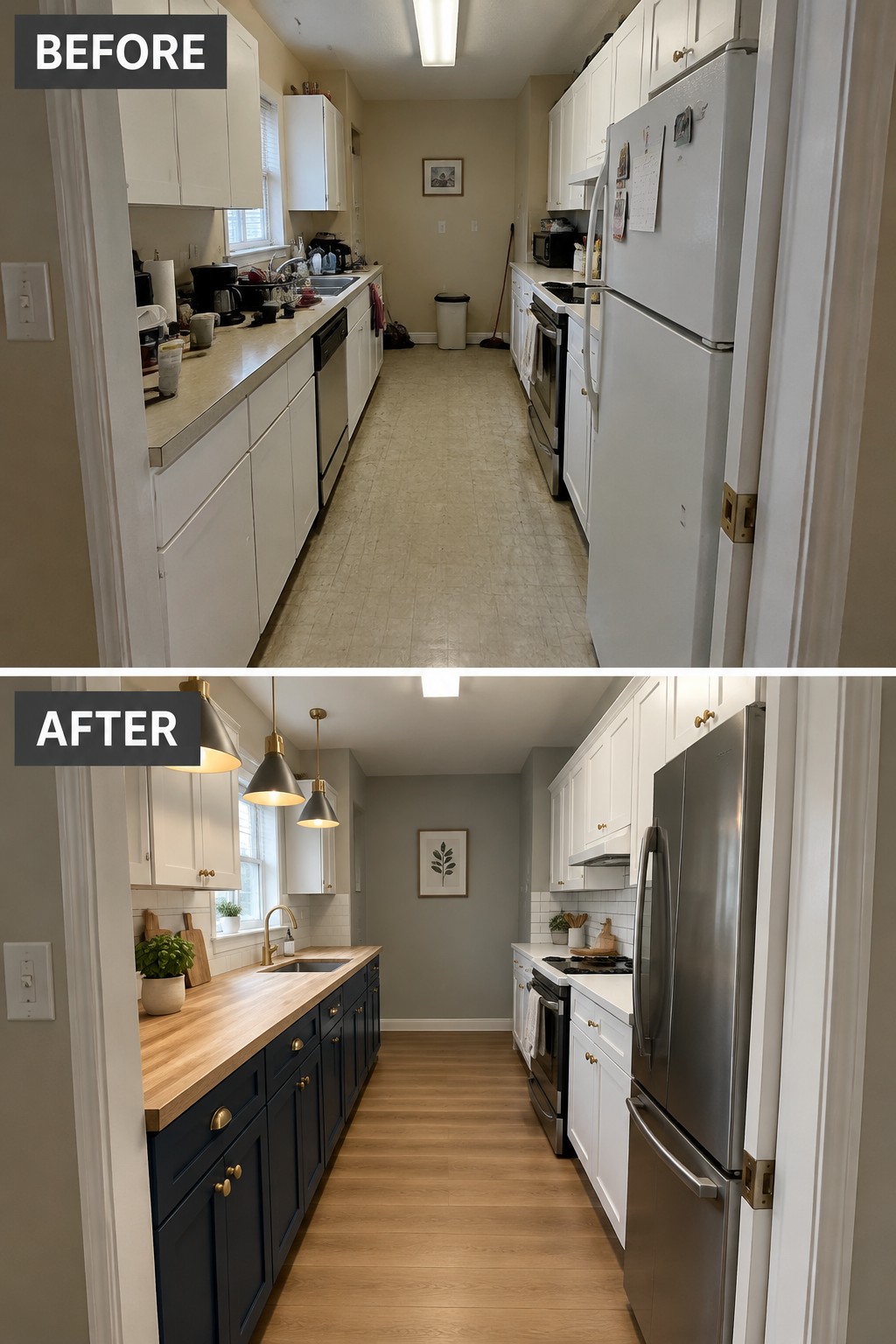
Replacing the worn, all-white cabinetry with white uppers and dark lower cabinets gives this narrow kitchen a clearer sense of contrast. The look feels more considered without making the room feel closed in.
For a similar effect, keep the upper cabinets light and use a darker color below, especially in a galley kitchen where the cabinets run along both sides. A wood countertop can bring in another warm tone, but keep the finishes simple so the walkway still feels open.
Use Two-Tone Cabinets To Refresh A Tired Kitchen
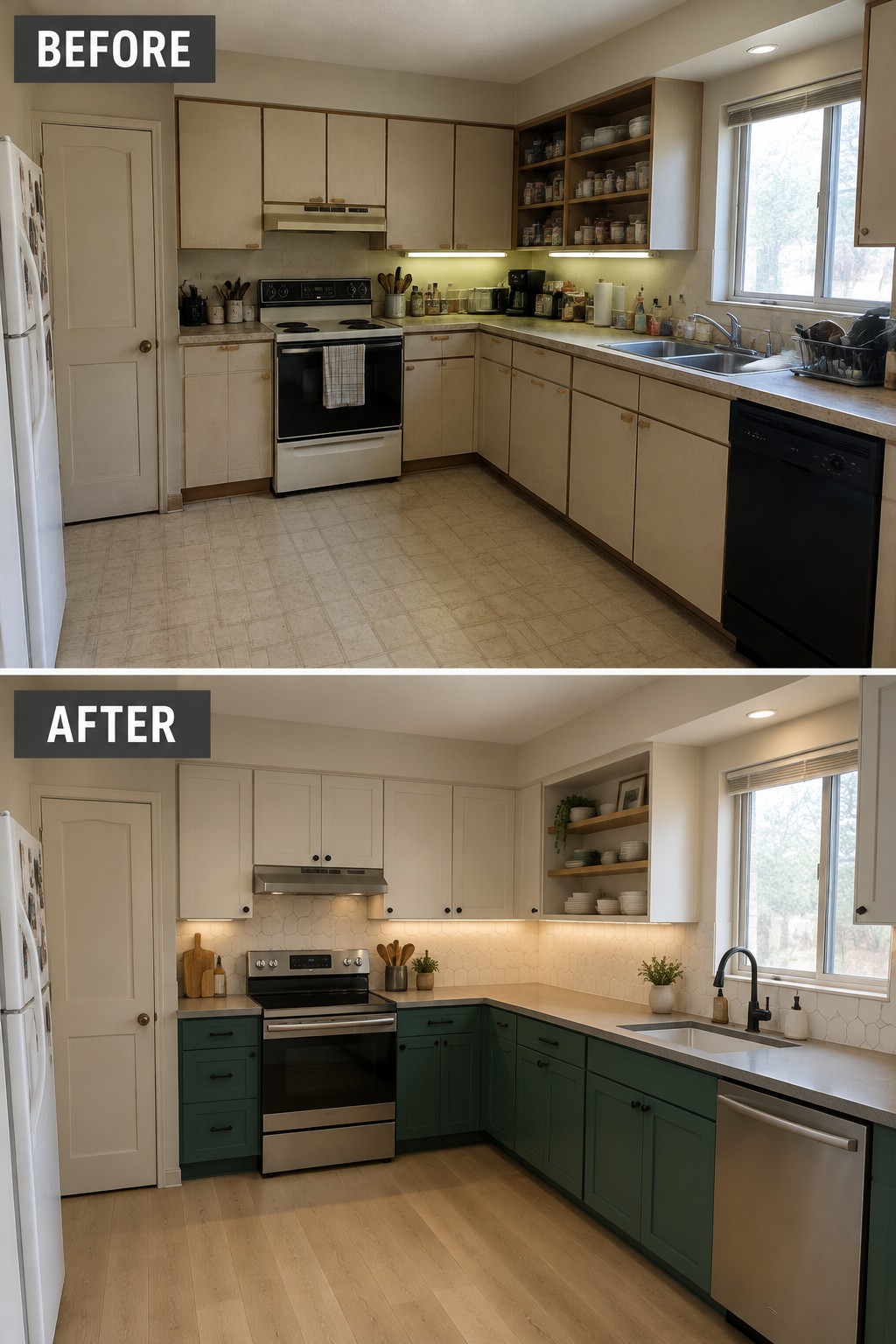
Replacing worn beige cabinets with white uppers and deep green lowers gives this kitchen a clearer, more current look without changing its basic layout. The lighter upper cabinets keep the room feeling open, while the darker lower ones bring color to the part of the kitchen that gets the most use.
This approach works well when you want color but do not want every cabinet to feel bold. Keep the countertop and backsplash fairly simple, and choose a lower-cabinet shade that suits the light in your kitchen. A muted green is one option, but navy or charcoal can work too.
Use Two-Tone Cabinets To Brighten A Small Kitchen
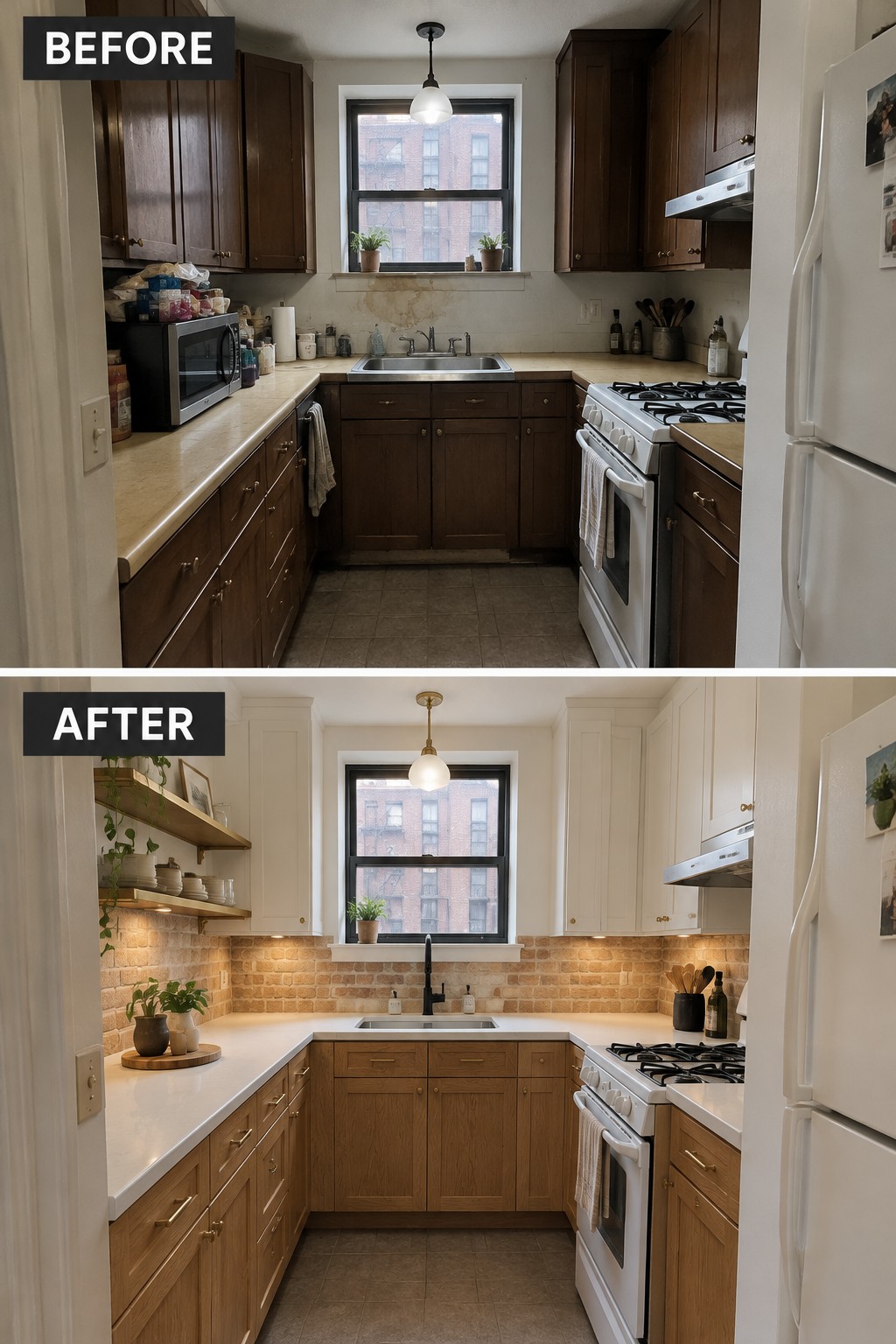
The dark upper cabinets made this narrow kitchen feel closed in. Replacing them with light cabinets while keeping the lower cabinets in natural wood makes the room feel brighter without losing the warmth of wood.
This approach works well in a small kitchen where all-white cabinetry might feel plain. Keep the lighter color on the upper cabinets to open up the walls, and choose a wood tone for the lower cabinets that suits the floor and counters.
Use Two-Tone Cabinets To Refresh The Kitchen
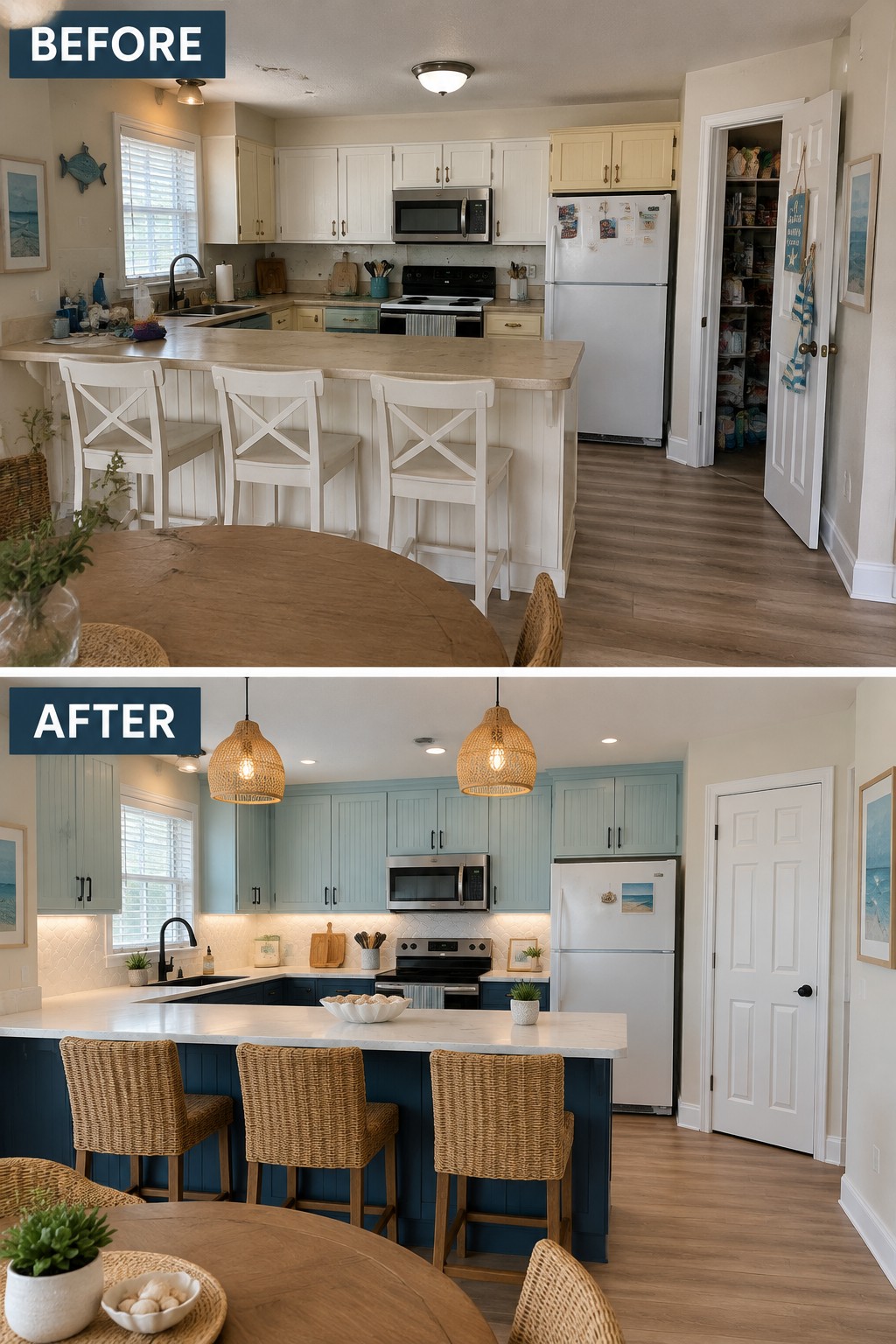
Painting the upper cabinets a soft blue and the lower ones a deep navy gives this kitchen a clearer, more updated look without changing its basic layout. The two colors add contrast while keeping the room connected through a light countertop.
This approach works well when you want color but do not want every cabinet to feel heavy. Keep the counters and backsplash fairly simple, and test the paint shades in your kitchen’s light before committing.
Use Two-Tone Cabinets To Give An Older Kitchen A Fresh Look
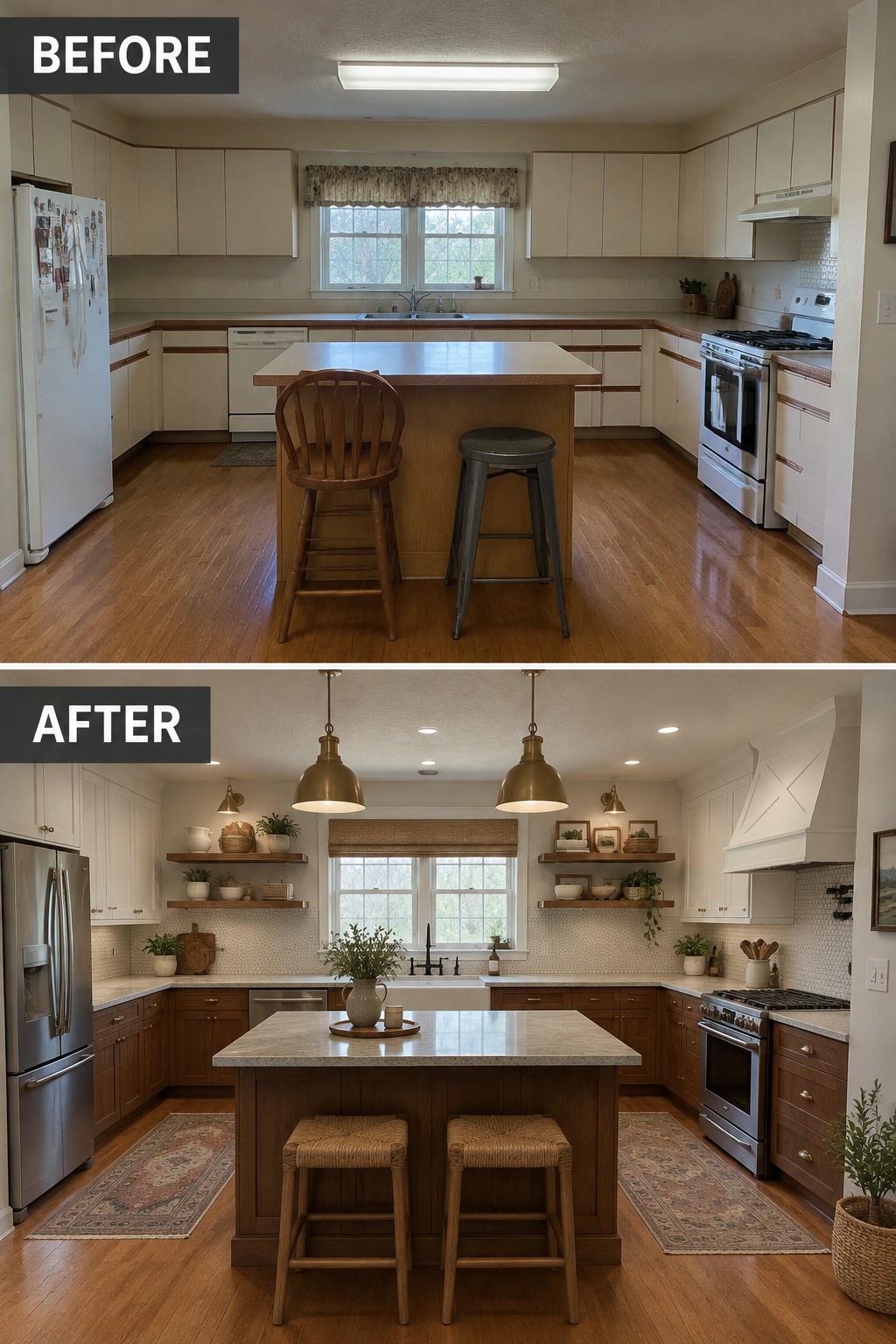
The kitchen feels more current because the dark lower cabinets contrast with the light upper cabinets. This simple color split updates the room without making every cabinet feel heavy.
Try darker tones on the lower cabinets and keep the uppers light, especially in a kitchen with limited natural light. Replacing every cabinet may not be necessary; repainting or refacing can give the room a similar change.
Use Light Upper Cabinets To Balance Dark Lower Cabinets
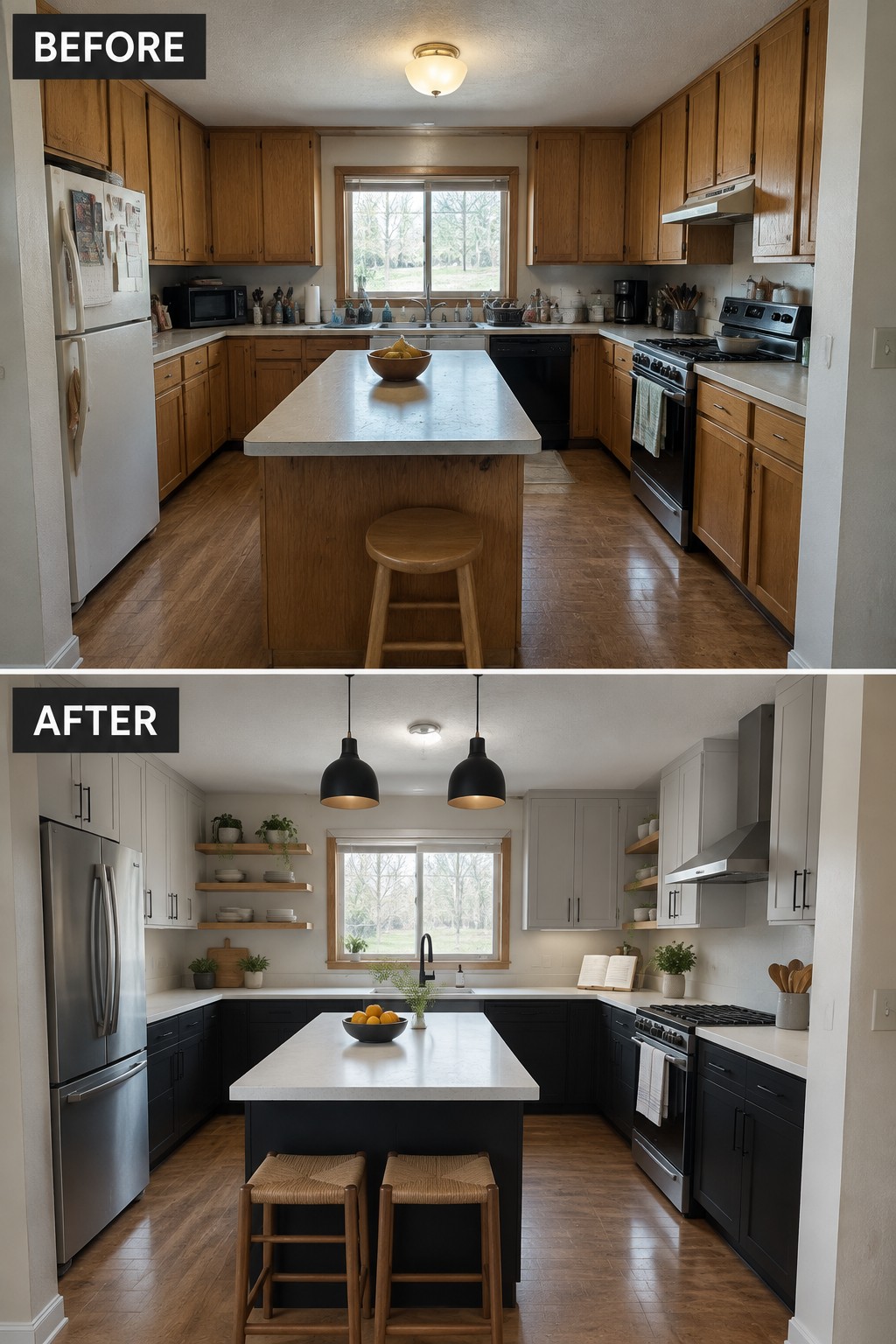
Replacing the worn wood cabinets with light uppers and dark lowers gives this kitchen a clearer, more current look without changing its basic layout. The contrast also keeps the darker color from taking over the room.
This approach works well when you want an update but prefer to keep existing cabinets or avoid a full renovation. Paint the upper and lower cabinets in colors that suit the room, and use simple hardware to tie them together. Check that the cabinets are in good shape before painting.
Use Two-Tone Cabinets To Give A Kitchen More Contrast
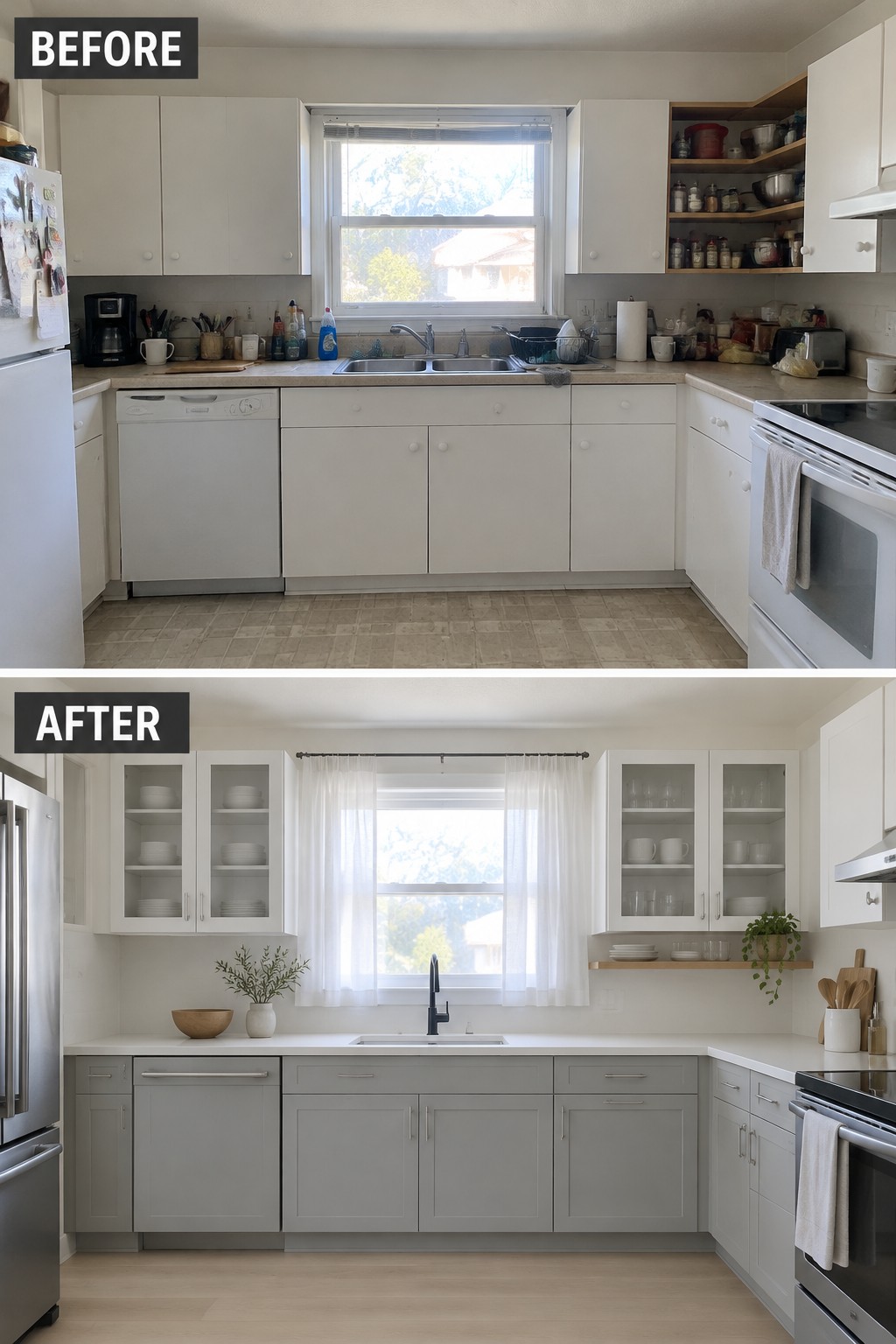
Changing the lower cabinets to a soft gray while keeping the upper cabinets white gives this kitchen a clearer sense of contrast. The two colors break up a long run of cabinetry without making the room feel busy.
This approach works well when you want to update plain cabinets but prefer a light, easy-to-live-with kitchen. Keep the upper cabinets a lighter color and choose a muted shade for the lowers; matching hardware helps the different finishes feel connected.
Use Two-Tone Cabinets To Give An Older Kitchen New Life
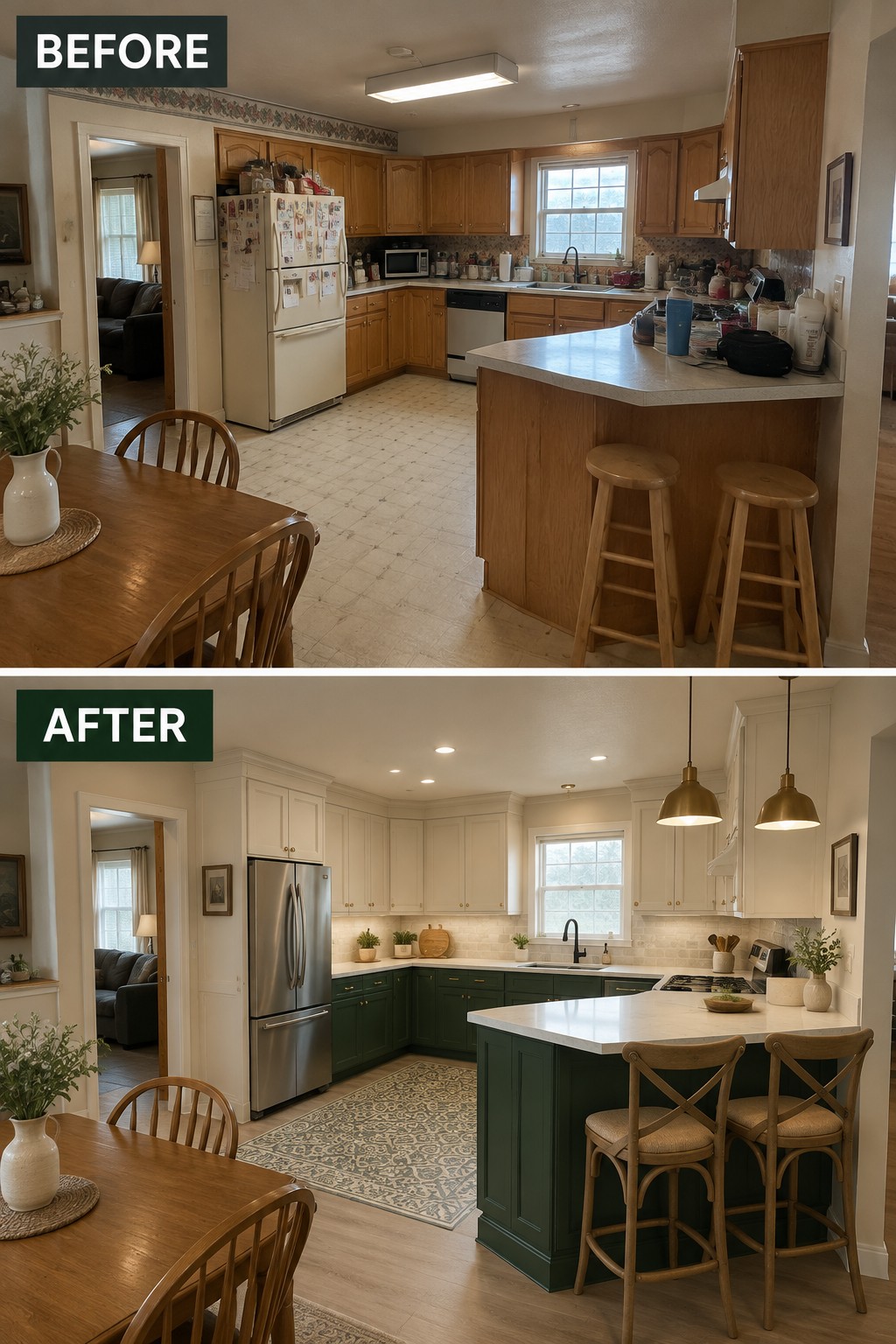
The dark green lower cabinets and warm white uppers make this kitchen feel updated without making every surface the same color. The change works especially well in a kitchen with lots of cabinetry, where a single cabinet color can feel a bit overwhelming.
For a similar look, keep the upper cabinets light and use a deeper shade below, especially around an island. Test paint colors in your kitchen’s natural light, and choose finishes that work with the countertops you plan to keep.
Use Two-Tone Cabinets To Update An Older Kitchen
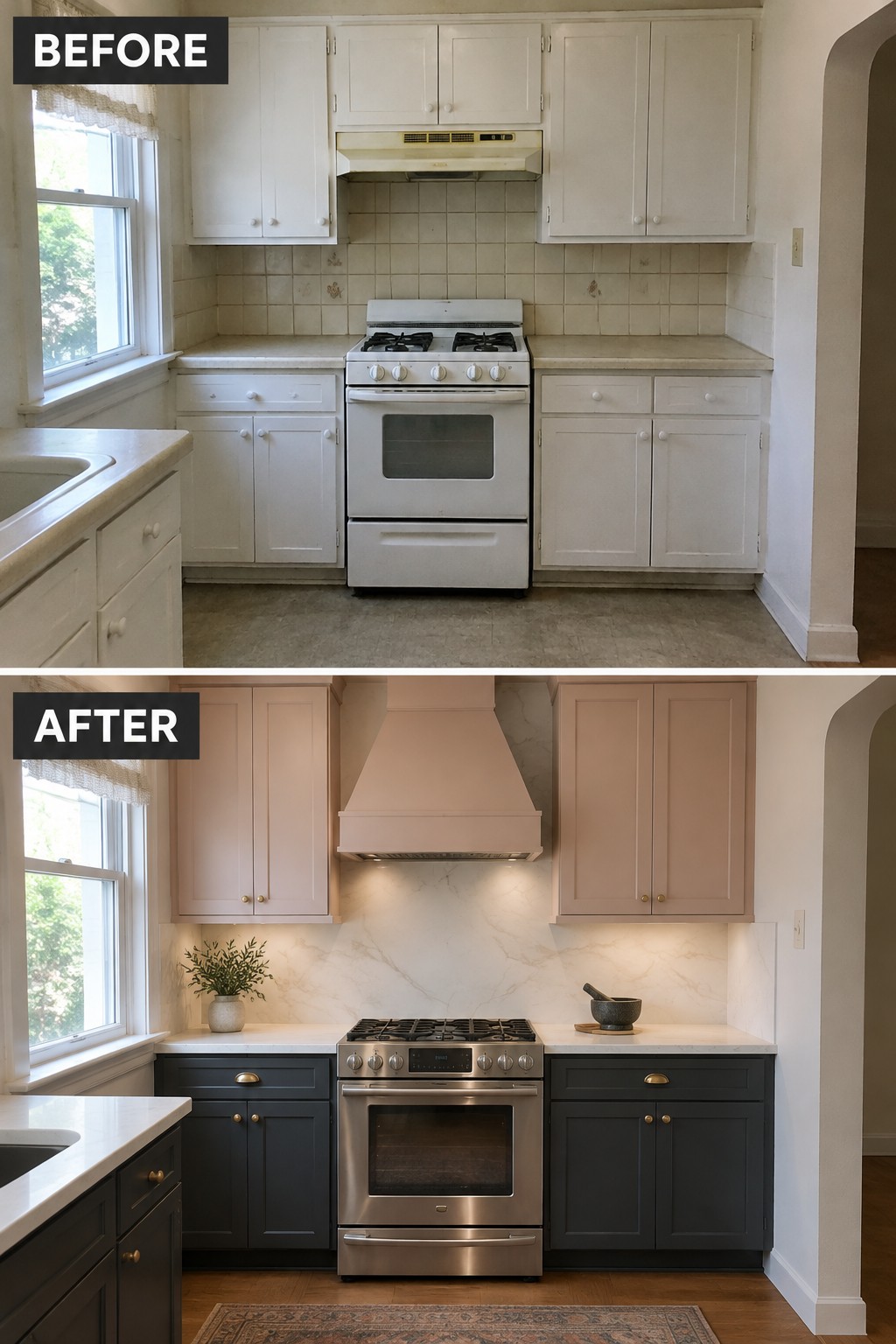
The old kitchen felt dated partly because the cabinets and tile all blended together. Painting the upper cabinets a soft, warm shade and the lower ones a deep charcoal gives the room contrast without changing its basic layout.
This approach works well when the cabinets are still in good shape but need a fresh look. Keep the countertop and backsplash fairly simple so the two cabinet colors remain the main feature, and check paint samples in the kitchen’s natural light before committing.
Replace Upper Cabinets With Open Shelving
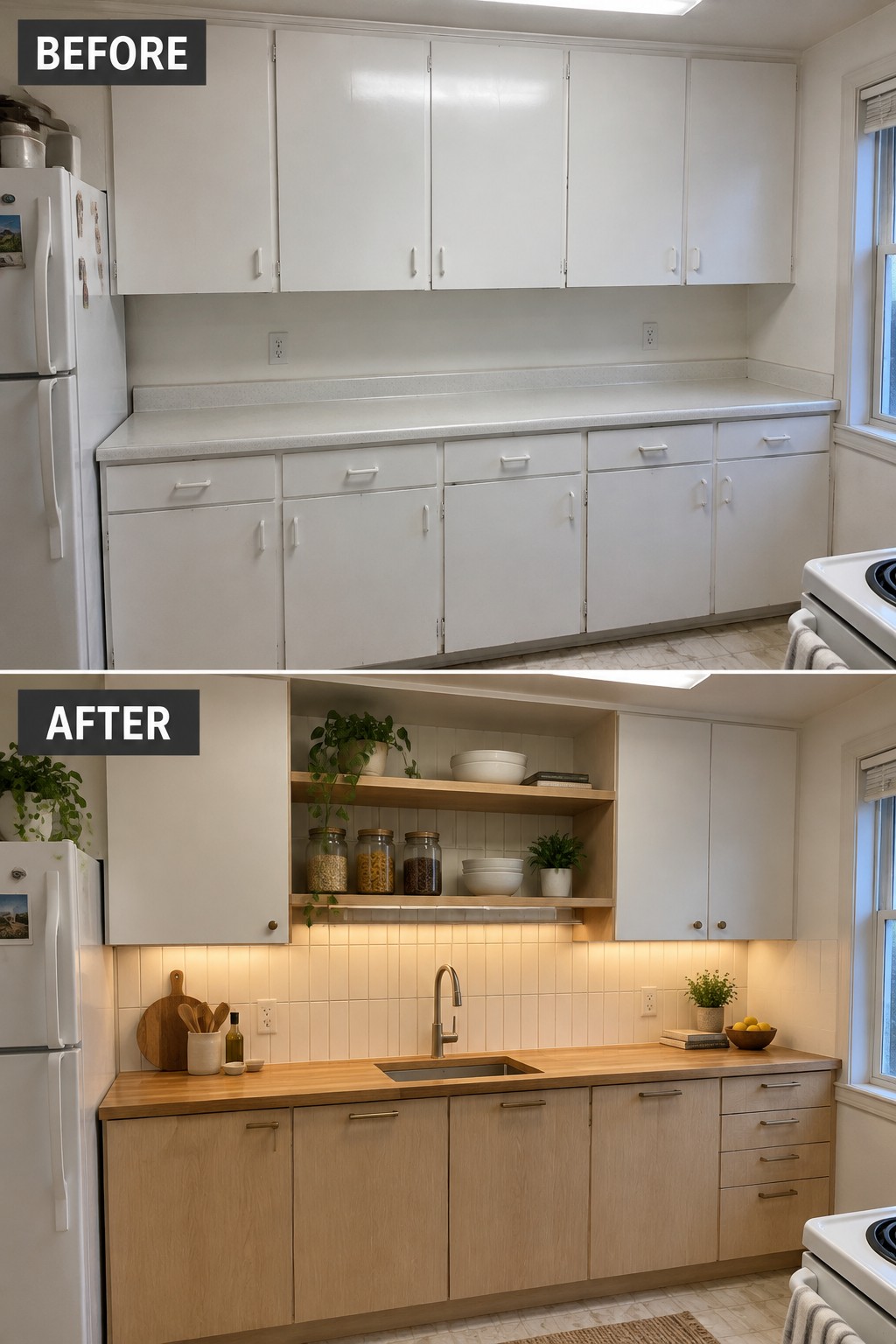
The old kitchen felt dated and closed in. Replacing some upper cabinets with open wood shelves makes the wall feel less bulky, while the pale wood lower cabinets and countertop give the room a more current look.
This idea works well when you have a stretch of wall that can spare some closed storage. Keep everyday dishes and a few pantry jars on the shelves, and leave room between items so they stay practical rather than crowded.
Use Glass-Front Cabinets To Lighten Dark Wood
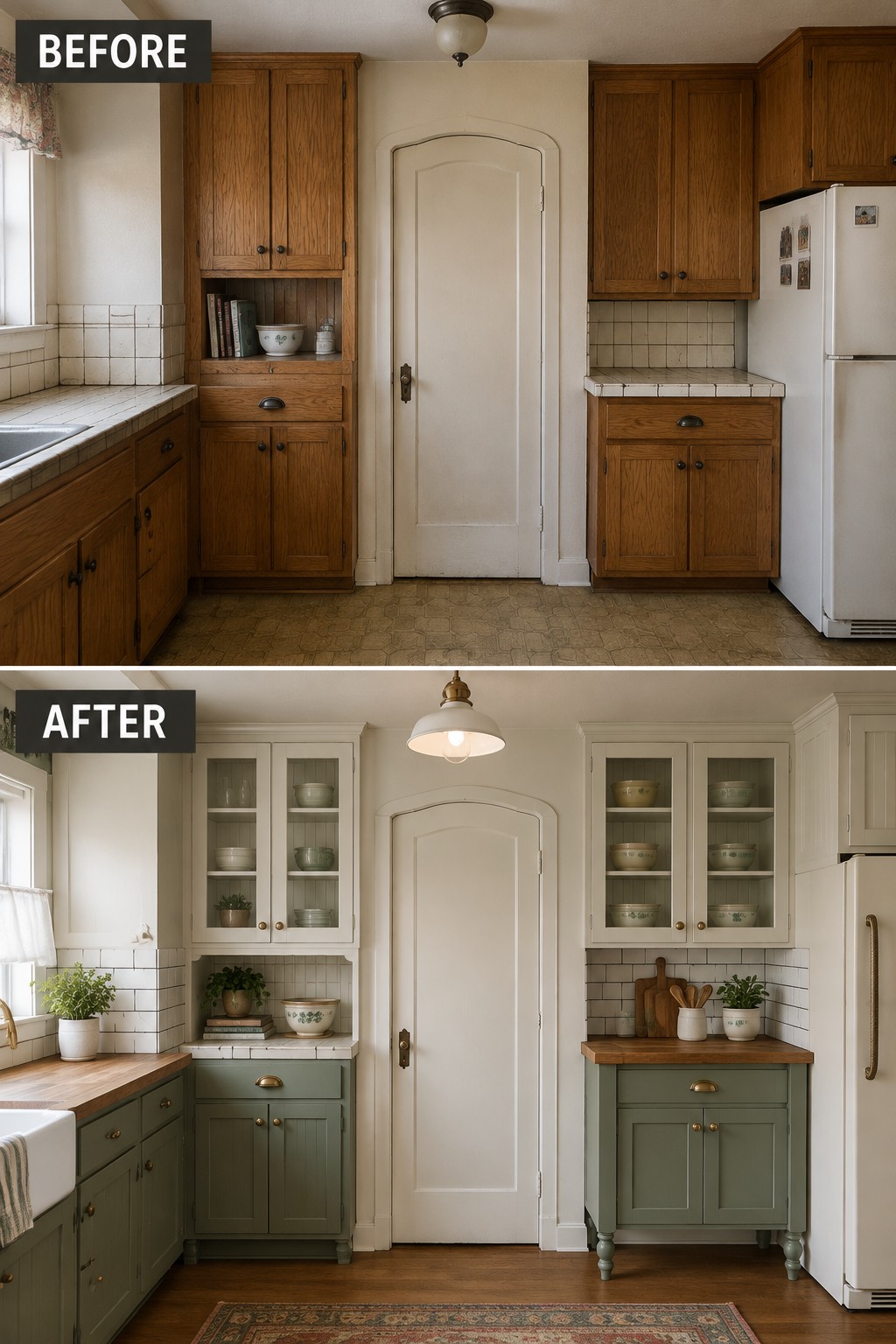
Swapping heavy, dark cabinets for two-tone cabinetry makes an older kitchen feel lighter without removing its character. Here, muted green lower cabinets and glass-front uppers open up the room while keeping everyday dishes easy to reach.
This approach works well in smaller or older kitchens where a full wall of solid cabinets can feel bulky. Keep the upper cabinets a light color, then use a deeper shade below for contrast and practical wear.
Use Two-Tone Cabinets To Define The Kitchen Island
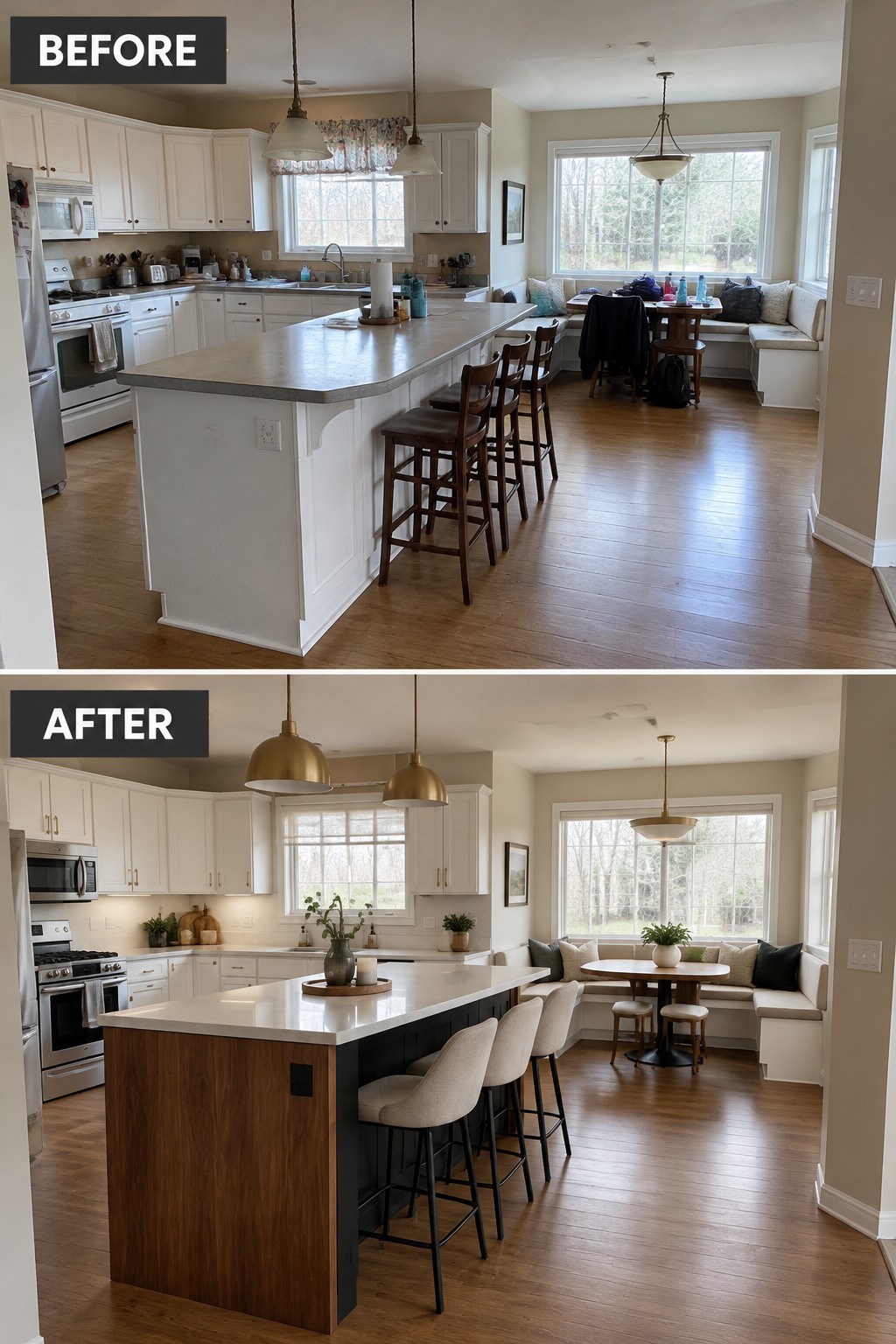
A two-tone island can give an open kitchen a clearer focal point without changing all the cabinetry. Here, the island’s dark sides and wood end stand apart from the white cabinets, making the kitchen feel more considered while keeping the room light.
This idea works well in an open kitchen where the island also serves as a gathering spot. Keep the surrounding finishes simple, and choose a contrasting island color or material that suits the cabinets and flooring already in place.
Use Contrasting Cabinets To Refresh A Tired Kitchen
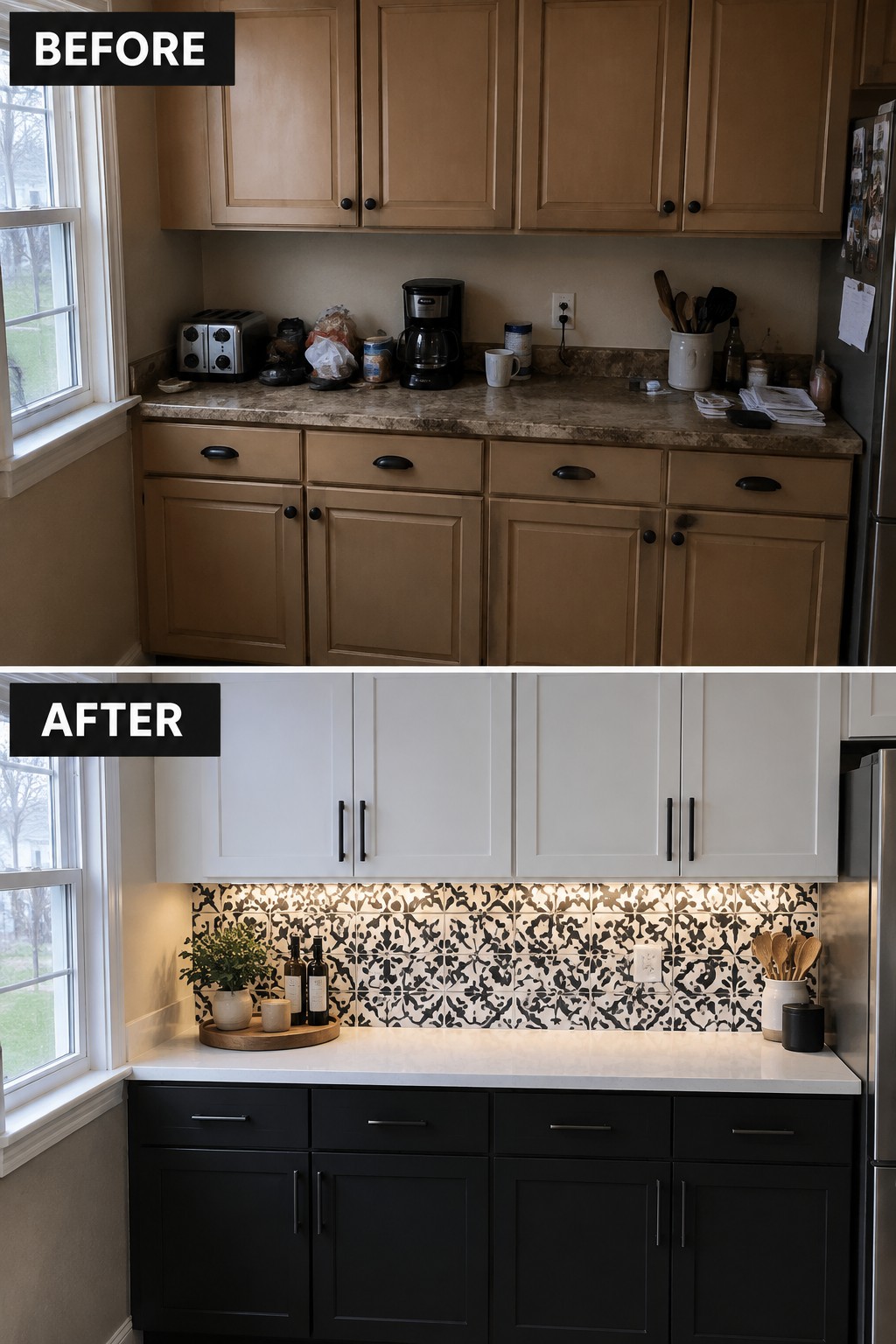
The dated wood cabinets in this kitchen gave way to white uppers and dark lower cabinets, a simple two-tone update that makes an older kitchen feel cleaner and more current. Keeping the countertop light helps the contrasting cabinet colors feel balanced.
This approach works well when replacing every cabinet is not practical. Paint the upper and lower cabinets in shades that suit the room, and use durable finishes made for kitchens. A patterned backsplash can add personality, but keep the rest of the surfaces fairly simple.
Use Light Upper Cabinets To Brighten Dark Wood
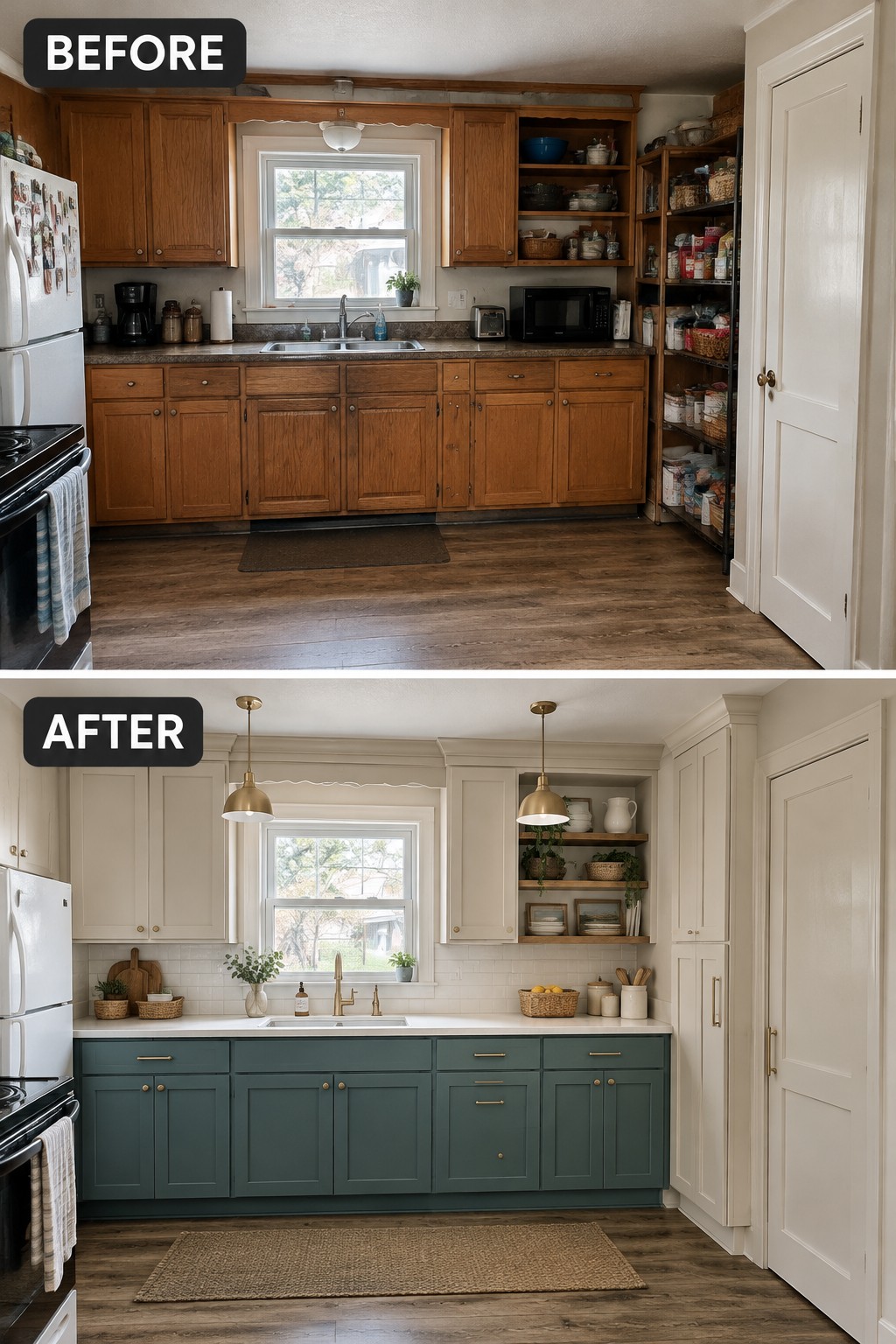
The old wood cabinets made the kitchen feel heavy. Painting the upper cabinets a warm cream and keeping the lower cabinets a muted green gives the room contrast while preserving color and character.
This approach works well when you want to update older cabinets without replacing them. Use a light shade above and a deeper color below, and keep the countertop and backsplash fairly simple so the two cabinet colors stay clear.
Use Dark Lower Cabinets To Update An Older Kitchen
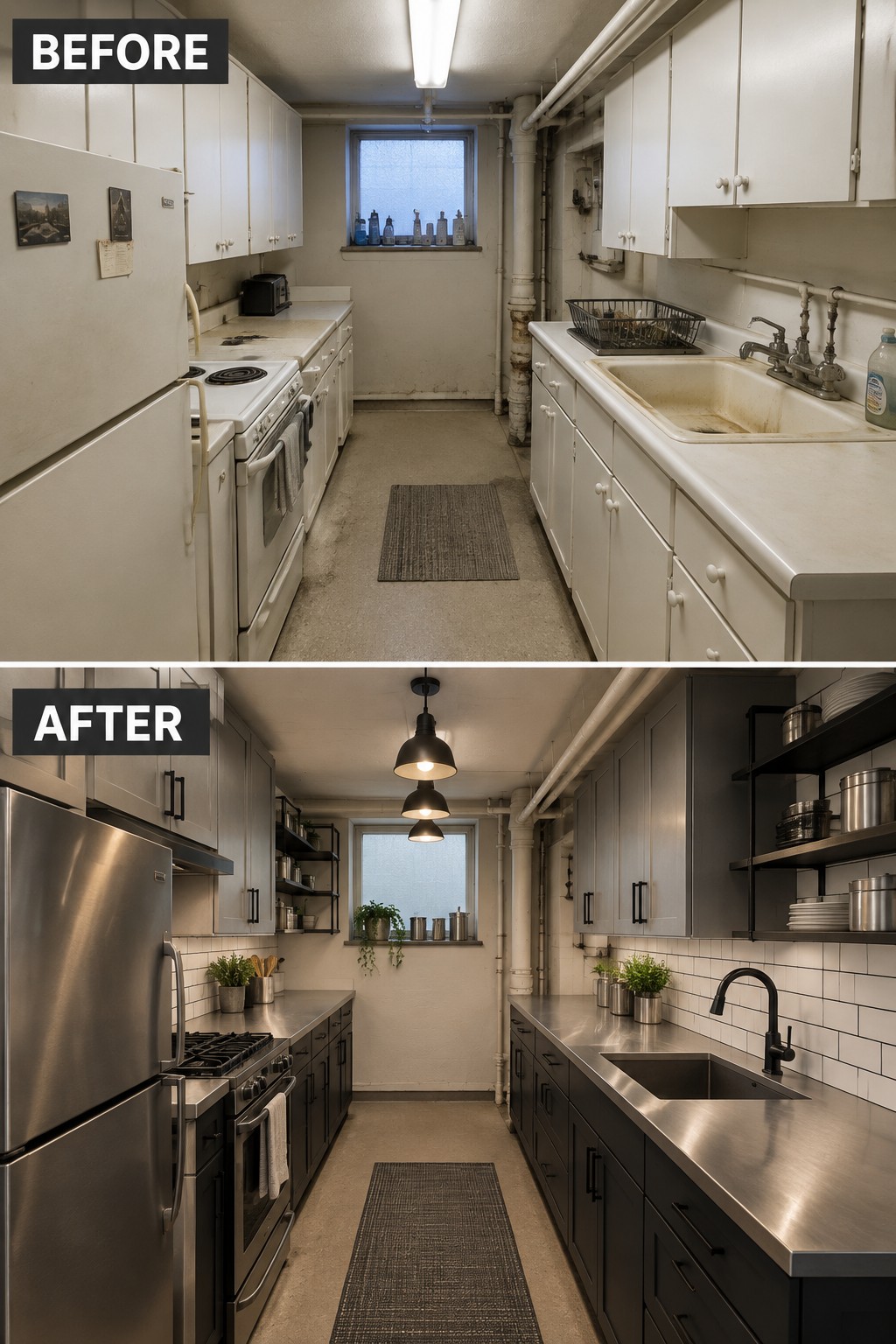
Replacing worn, all-white cabinetry with dark lower cabinets and lighter uppers gives an older kitchen a clearer, more current look. The contrast works especially well in a narrow room because the lighter upper cabinets keep the walls from feeling too heavy.
For a similar update, keep the darker color on the base cabinets and choose simple hardware that repeats across the room. Pairing the cabinets with durable counters and a practical backsplash can make the change feel cohesive without requiring a larger layout renovation.
Pair Warm Wood Cabinets With Light Uppers
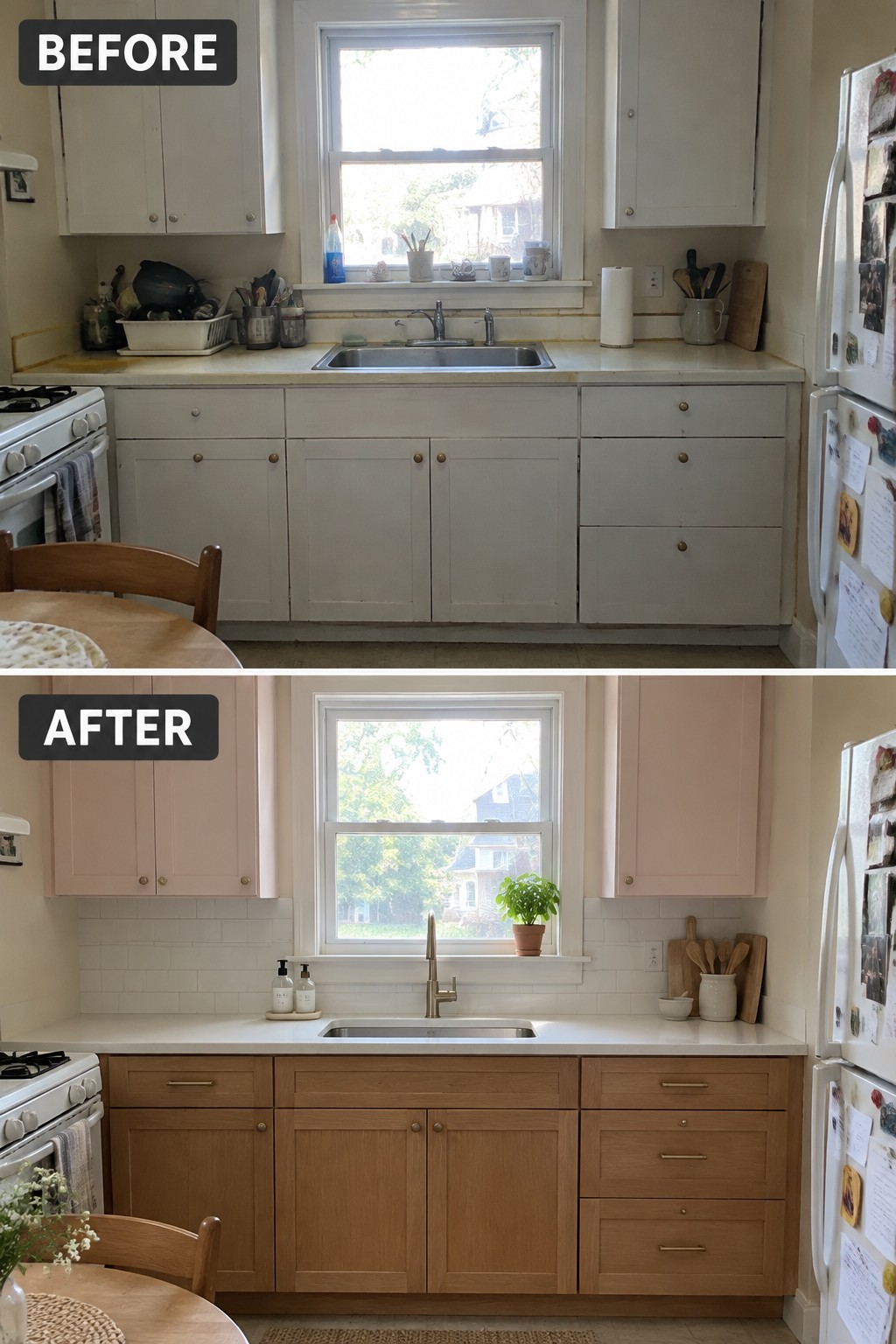
Replacing worn, all-white cabinets with warm wood lowers and soft pink upper cabinets gives this older kitchen a fresher look without making the room feel dark. The two finishes add contrast while keeping the kitchen bright.
This approach works well when you want to update dated cabinetry but still keep a light, open feel. Choose one wood tone for the lower cabinets and a lighter color above, then keep the backsplash and counters fairly simple so the finishes stay easy to live with.
Use Blue And Gray Cabinets To Refresh A Traditional Kitchen
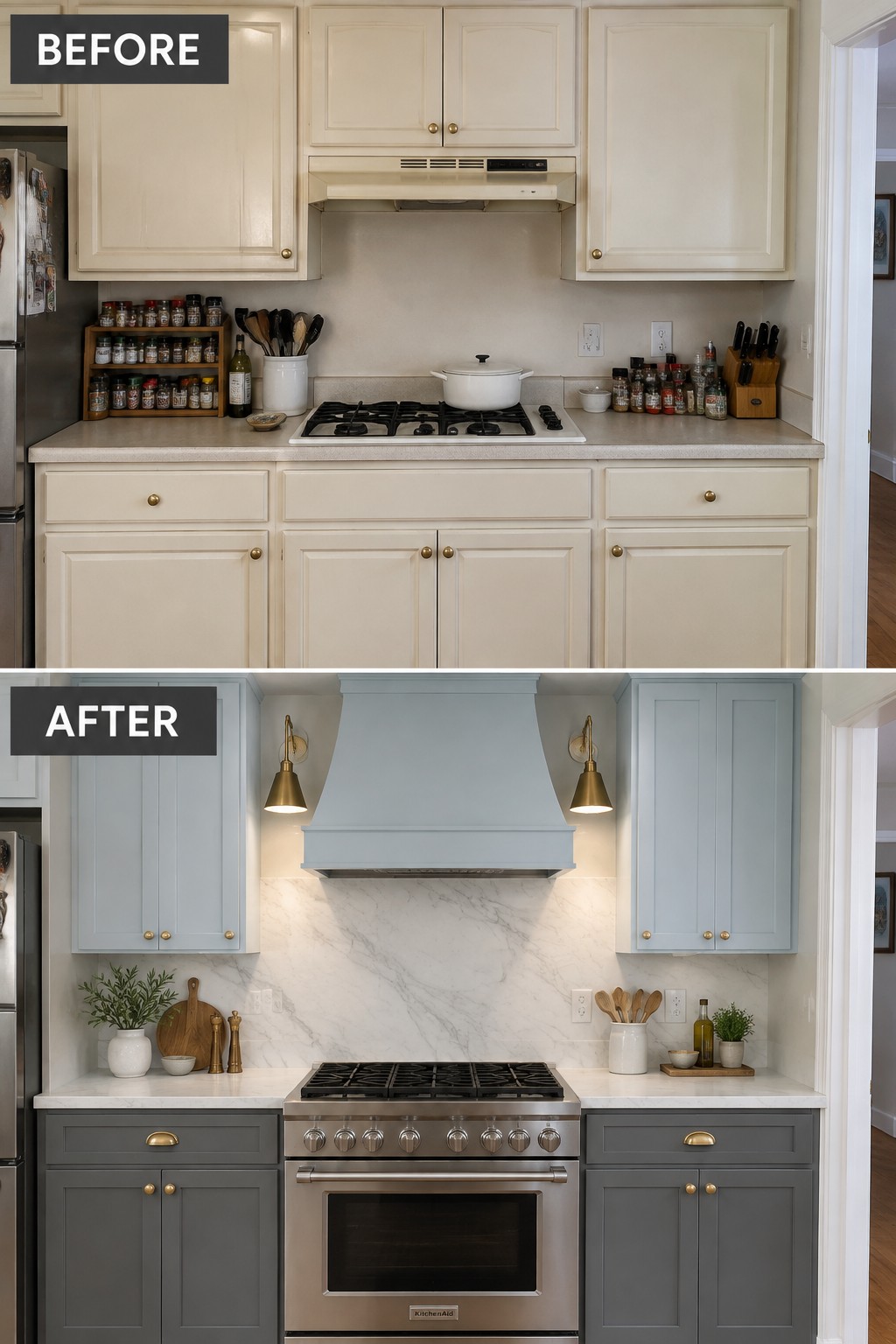
Replacing the all-beige cabinetry with pale blue uppers and gray lowers gives this kitchen a fresh look without changing its basic layout. The two cabinet colors add contrast while keeping the room light, and the marble-look backsplash helps tie them together.
This approach works well when you want to update older cabinets but prefer a softer look than stark black and white. Choose two colors that share a muted quality, and keep the countertop or backsplash fairly simple so the cabinets remain the main change.
Refresh Older Cabinets With A Two-Tone Look
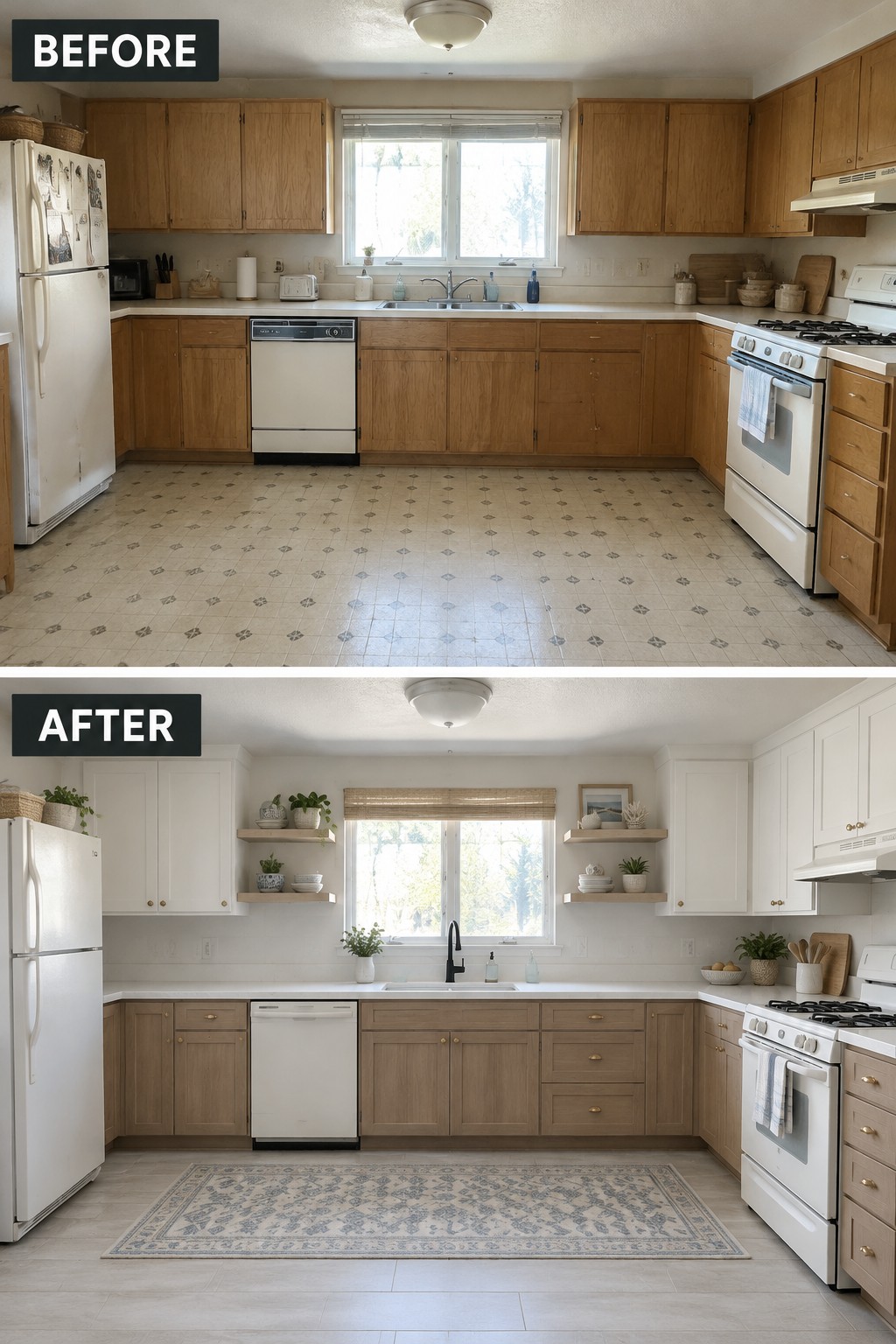
Painting the upper cabinets a light color while keeping the lower cabinets in warm wood tones gives an older kitchen a fresher feel without replacing every cabinet. The contrast brightens the room and keeps some of the original wood character.
This approach works well when the lower cabinets are still in good shape but the kitchen feels dated or heavy. Use a light, simple color for the uppers and keep the wood tones fairly consistent so the two finishes feel intentional.
Use Dark Lower Cabinets To Modernize A Kitchen
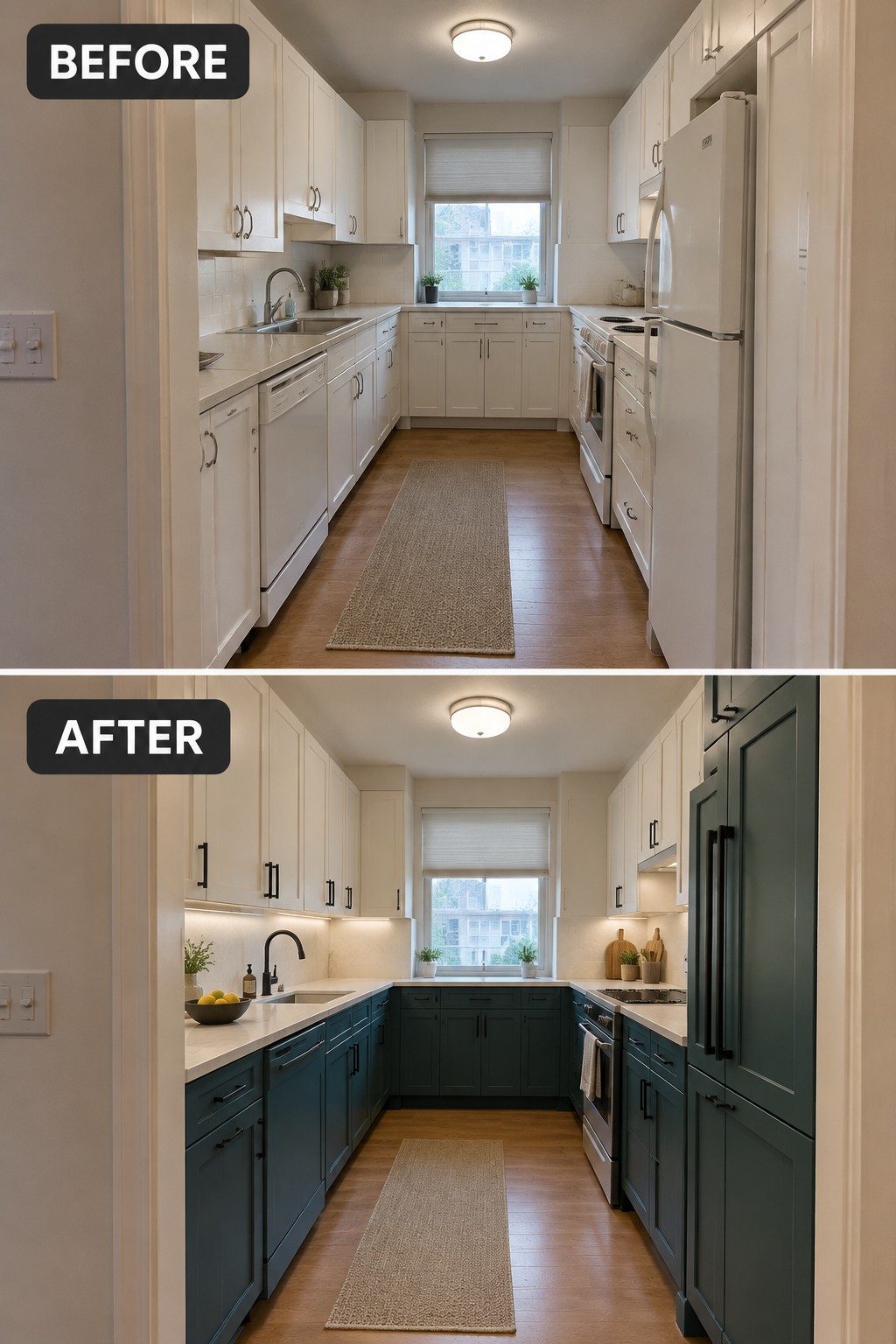
Replacing the all-white cabinets with deep teal lowers and light upper cabinets gives this narrow kitchen a clearer two-tone look. The darker color makes the lower cabinetry feel more current, while the pale uppers keep the room from looking closed in.
This approach works well when you want a noticeable update without changing the kitchen’s layout. Keep the lighter color on upper cabinets, and use dark lowers for contrast; in a compact room, a deep shade can look rich without taking over.
Add Warm Mustard Lower Cabinets For A Colorful Update
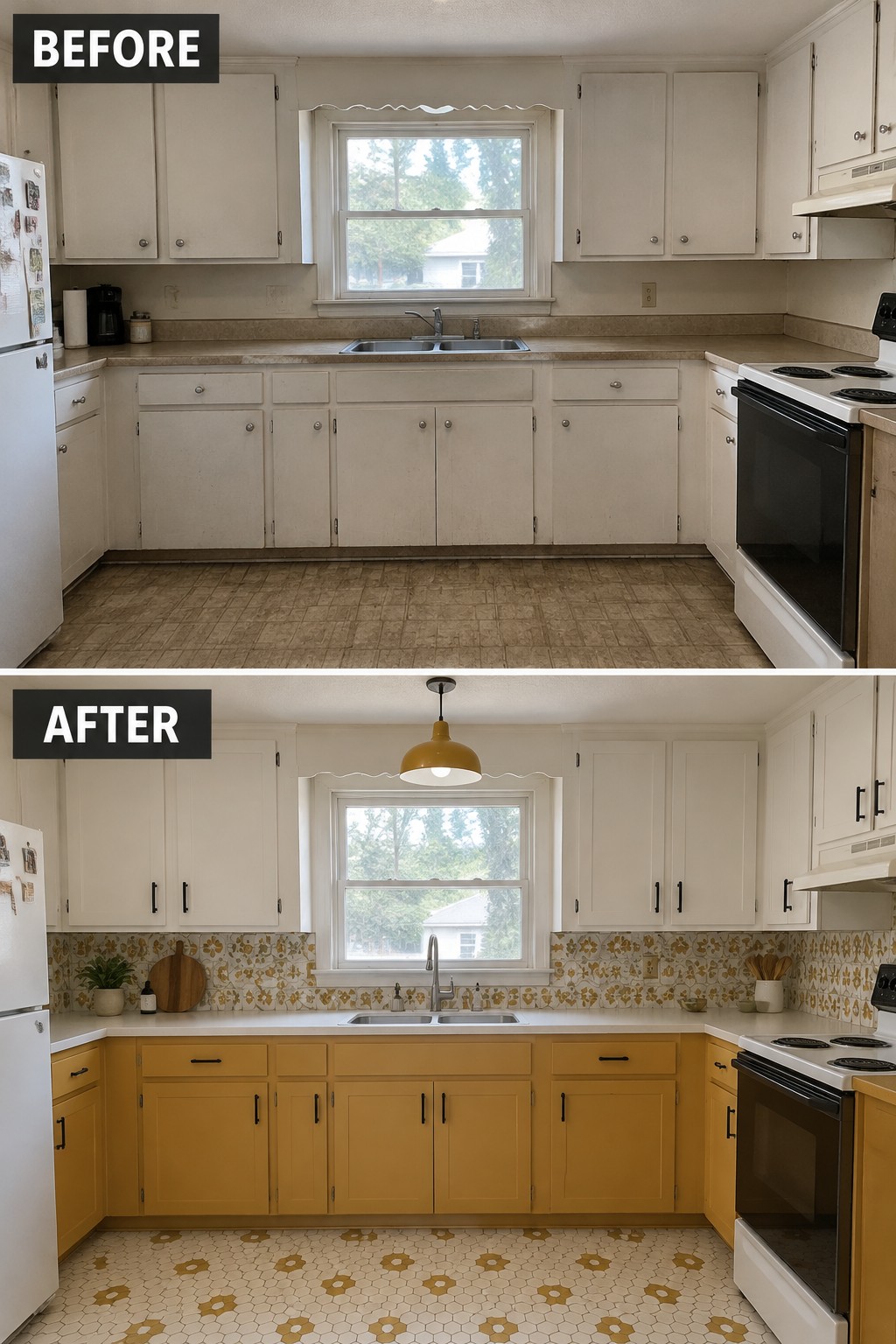
Painting the lower cabinets a warm mustard shade while keeping the uppers light gives this older kitchen a fresh look without replacing every cabinet. The two-tone color scheme adds contrast and makes the existing cabinetry feel more intentional.
This idea works well when the cabinet boxes are still in good shape but the room feels dated. Choose a lower-cabinet color you can live with, then keep the upper cabinets lighter so the kitchen stays open. A patterned backsplash can support the change, but let the cabinet colors remain the main focus.
Use Glass-Front Cabinets To Make Storage Feel Lighter
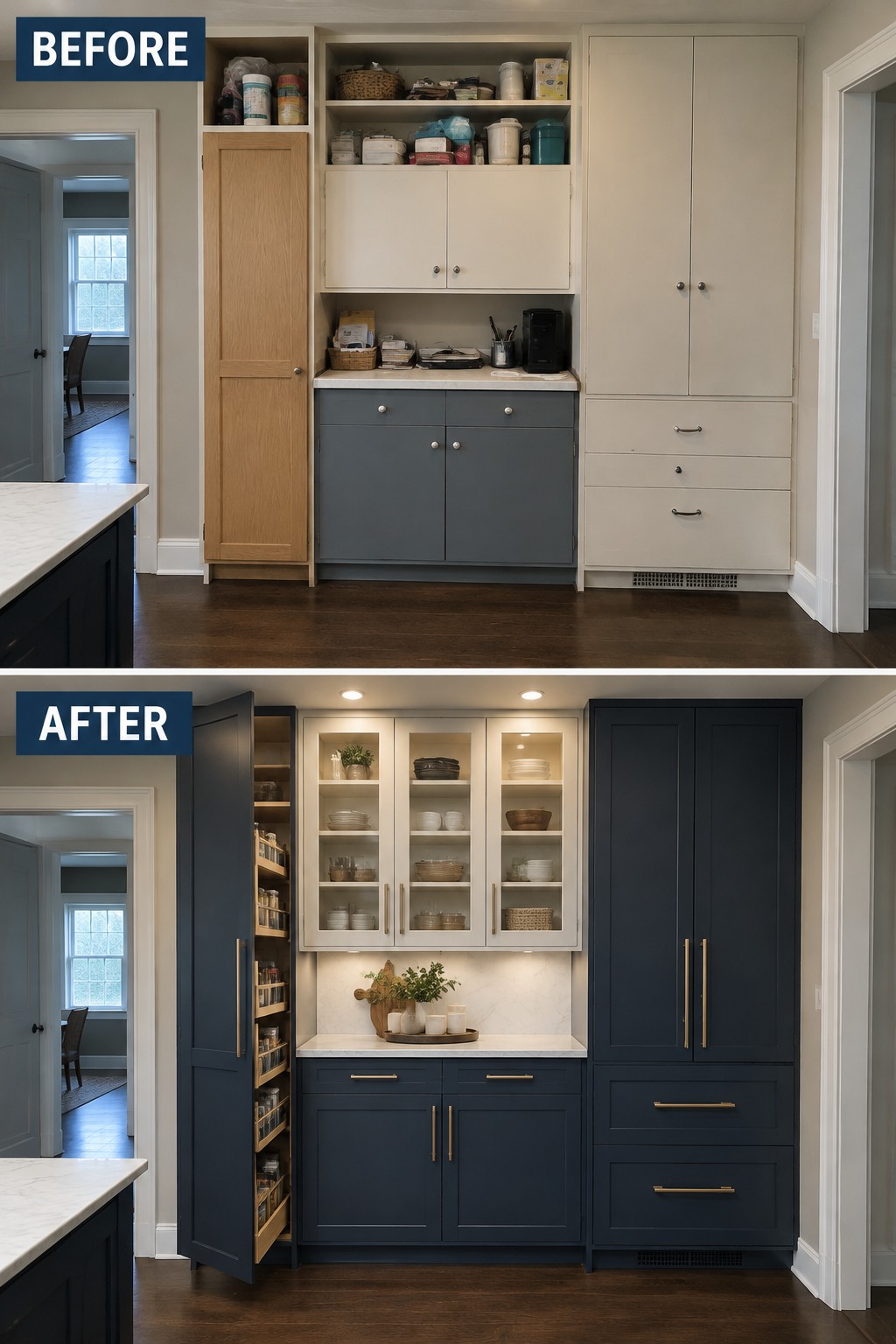
Replacing a jumble of older cabinets with dark lower cupboards and light glass-front uppers gives this kitchen storage a clearer, more open look. The two-tone approach adds contrast while keeping the display area from feeling too heavy.
For a similar update, use glass fronts for dishes you’re happy to keep neatly arranged, and choose solid doors for everyday clutter. This works especially well in a kitchen where built-ins take up a large stretch of wall.
Frequently Asked Questions
Q: Which cabinet colors work best together in a two-tone kitchen?
A: Start with a pairing that feels balanced, such as light upper cabinets with darker lowers, or a colored island against neutral cabinets. If you love two bold shades, keep the countertops and backsplash simple so the room doesn’t feel busy.
Q: Should the upper or lower cabinets be the darker color?
A: Darker lower cabinets can ground the room, while lighter uppers help it feel open. But if your kitchen has tall ceilings or lots of natural light, dark uppers can look striking too.
Q: How do I keep two-tone cabinets from looking mismatched?
A: Repeat one of the cabinet colors in a small detail, like the island, trim, or open shelving. Matching the cabinet hardware across both colors also helps the kitchen feel intentional.
Q: Can I try two-tone cabinets without replacing all my cabinets?
A: Yes. Painting just the island or lower cabinets is an easy way to test the look before taking on a bigger project. Check that your chosen paint works with the cabinet material and existing finish.